Tag: Coaches

  • (Press Release) NNF Announces Inaugural Trail to Gold Fellows

    (Press Release) NNF Announces Inaugural Trail to Gold Fellows

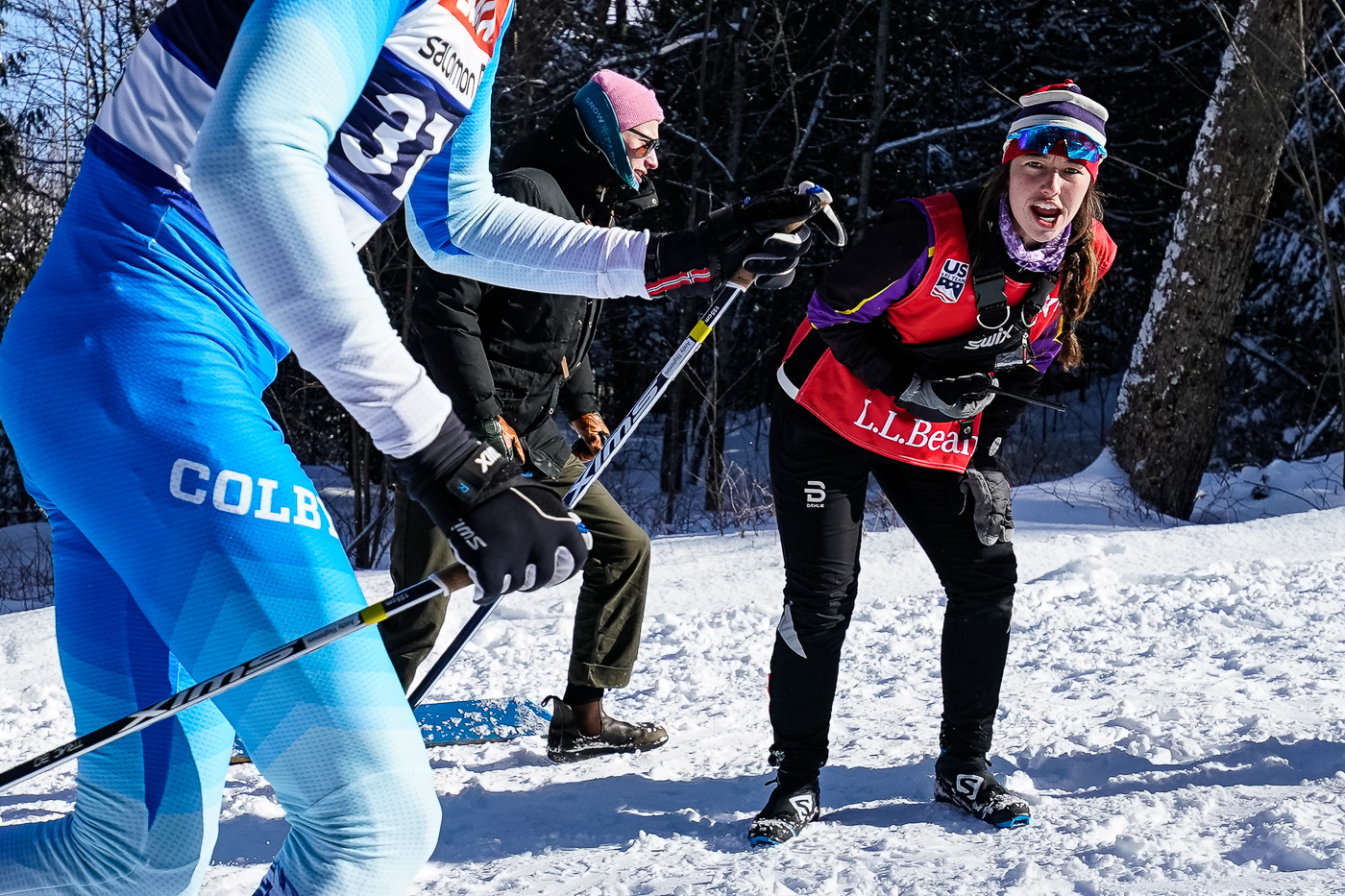
    (Photo: NNF/Steve Fuller).


    The National Nordic Foundation (NNF), Women Ski Coaches Association (WSCA), and Olympic Women’s Cross-Country Book Project are excited to announce the selection of the inaugural Trail to Gold Fellows. The selection committee determined that the following Fellows represent extraordinary coaching talent, and will have the opportunity to gain international experience and credentials while working with the US Ski Team coaching staff over the course of the upcoming 2022-23 World Cup season:

    Trail to Gold Fellows:

    • Naomi Kiekintveld (Alaska Pacific University Nordic Center), Ruka and Lillehammer.
    • Annika Martell (Williams College), Beitøstolen and Davos.
    • Liz Stephen (Park City Ski and Snowboard Club), Tour de Ski.
    • Caitlin Gregg (Team Birkie), Milano and Les Rousses.
    • Lizzie Larkins (Montana State University), Tallinn and Lahti.

    Each Trail to Gold Fellow will receive a grant to complete a two-week immersive internship with the US Ski Team this World Cup season. This hands-on professional development program is designed to introduce them to all aspects of World Cup coaching, including waxing, logistics, and race preparation with US Ski Team athletes. Funding is provided by the Oly. Women’s XC Book Project, who invested $10,000 of proceeds from the sale of Trail to Gold towards the inaugural Fellowship, and through the National Nordic Foundation.

    The Trail to Gold Fellowship is designed to help address a historical gender inequity in US coaching. Fellows were selected from an exceptional applicant pool that represented the diversity and extensive talent of American women coaches at all levels of the US skiing development system. The depth and talent present in the applications points towards a bright future for US skiing, and an ongoing need to invest in exceptional coaching development programs.


  • Ask a Sports Psychologist: How Do I Deal with My Team?

    Ask a Sports Psychologist: How Do I Deal with My Team?

    Sometimes in skiing, there are issues that can’t be solved by just pushing through that last interval, getting a good night’s sleep, or spending a couple extra hours in the gym each week. Whether in high school or college, a full-time elite athlete or a master blaster with a desk job, skiers have to balance their athletic goals with their everyday lives. And a lot of the time, life creeps into athletics, whether you want it to or not.

    Sometimes it’s in a good way – the support of family, friends, and teammates can make an athlete more confident and perform better. But sometimes it’s not in a good way. Whether it’s the stress of school or difficulties in relationships with other people, all of this can affect the outcome on race day. These are things that coaches may not be able to help with – and athletes may not want to share their personal life with their coach, either. The relationship with the coach may even be part of the problem (we hope not – love you, coaches!).

    Luckily, there’s an entire field dedicated to understanding how sport life and normal life interact. Sports psychology is the study of human behavior in sports; another way to say that is that it looks at the influence of psychological state on athletic performance, and conversely at the impact of performance on an athlete’s psyche. Sports psychology has an academic, research-oriented branch, but you can also meet up with a sports psychologist to get help with your own performance. They reside in hospitals and clinics; national teams have psychologists available, often through national Olympic committees, and so do many universities through their athletic departments.

    If you’re serious about approaching your athletic goals from this viewpoint, you should meet with a sports psychologist in person. But for an idea of how to deal with some of these situations, read on. We reached out to Dr. Mark Hiatt, a clinical psychologist at Dartmouth College, both in the school’s general Health Services and as a member of the athletic department’s interdisciplinary Peak Performance team. The FasterSkier staff came up with some common scenarios that skiers might face, and asked Dr. Hiatt for a quick overview of what’s going on and what tools they might use to improve their performance.

    A lot of these – like goal-setting and visualization – are things that athletes are probably already familiar with, if in a less-formal framework. Others are not – and we’ll explain more along with his answers.

    We’ve divided the scenarios into two general categories. This week, we’ll talk about team dynamics and other personal relationships; next week we’ll deal with the pressure of big races.

    Scenario 1: A student has just arrived at college, is living away from home for the first time, and is faced with more challenging classes than she saw her senior year of high school. She’s very excited to make new friends and spending a lot of time socializing as well. Faced with a new training plan, she is nervous about where she will fit in on her college roster, too, and whether she should make all the changes suggested by her coach. How can she stay focused and calm, even if the first races of the season turn out to go pretty badly?

    Mark Hiatt: “One place to start with a student in this situation is to talk about goals and aspirations both with skiing and with life in general. I think it is very important for collegiate athletes to find a healthy balance between the demands of their sport, academic life, and social life. I would encourage this athlete to be patient and work on both long term and short term goals, including goals for individual practices. The athlete may benefit from relaxation strategies and visualization techniques, as well as cognitive strategies when she experiences thoughts that create a lot of doubt or anxiety.”

    Highlights: The idea of goal-setting is commonly used by coaches, and some teams specifically practice setting short-, medium-, and long-term goals at the beginning of each training year. This can help in a lot of different ways. First, coming up with a goal for each individual training session can ensure that other concerns don’t become distracting, or that no matter how tired or stressed an athlete is, he or she can get the most possible out of that afternoon’s practice. It can also help keep an athlete realistic, by focusing on small things rather than overreaching. On the opposite end of the spectrum, setting some long-term, multi-season goals can keep motivation going even if current race results aren’t as good as he or she had been hoping for.

    For more on “cognitive strategies”, check out scenario 4.

    Scenario 2: A college athlete is at a camp over Christmas break with all of his teammates, sharing a room with three other guys who are all competing for varsity starts. They’re his friends, but sometimes he secretly wishes they would have a bad day (or break a leg?) so he could get the carnival start. How can he compete against his friends?

    Mark Hiatt: “This is a very difficult situation for a lot of collegiate racers, and students can come up with different ways of managing these relationships. I would support the student to have a sense of acceptance that these relationships in particular involve multiple roles. He is friends with his teammates and (not ‘but’) they are also competitors. It’s okay to be competitive with your teammates and to want to do well for yourself. I think the important think is to try to strike a balance with these feelings. Another strategy is to focus on goals that are more team focused than individually based. I would encourage him to work on strategies that focused on his performance rather than that of his teammates. With swimmers and track and field athletes we have talked about it in terms of ‘staying in your lane’ and ‘running your race’.”

    Highlights: Study after study has shown that having good relationships among teammates can make a team, and all the individuals on it, better. Peer support is crucial and on of the reasons that society views sport as creating something good. Does it suck to compete against your teammates? Yes, a little bit. But that’s not what skiers should focus on. There’s not quite room for everyone on a six-person varsity, a four-person relay team, or a three-person NCAA squad (or a four-quota-spots World Cup start list), but to some extent, teammates can all succeed, together. Coaches and older team members should try to create this dynamic, but anyone can do it – particularly if they are a talented athlete, but even if they are not. A study of 10 U.S. Olympians, who had won 32 medals between them, found a trend that most of these successful athletes were deemed “good teammates”. One athlete’s parent said that one of his good qualities was to “infect his teammates with his drive and intensity.” Aim for that.

    Scenario 3: Another college skier came into school as a mediocre skier who loved the sport but also had many other interests, and many friends who were not athletes. Now, she has improved and is taking skiing more seriously, which means more hours of training, sleeping, and careful time management. She’s feeling guilty that she is now turning down many invitations from her friends even though she would love to see them, and she is losing sleep worrying that she will lose these relationships – it’s beginning to make her resent the sport that she loves. What to do?

    Mark Hiatt: “I would encourage the skier to reflect on her values and goals across skiing, social life, academics, etc., and to develop a sense of balance that is meaningful to her.  There are always going to be trade-offs when you are competing at this level, and athletes make tremendous sacrifices for their sport. It may be that this athlete has been neglecting other areas of her life and needs to rebalance a bit to make her participation more healthy and sustainable. I would also recommend that she reflect on what she enjoys about the sport so as not to lose sight of this as she goes forward.”

    Highlights: Balance is hard, but important. A paper in the International Journal of Sport and Society found that having interests, hobbies, and friends outside of your sport can help you perform better. The authors surveyed elite Australian athletes and noted that “Elite athletes are faced with increased training and competition demands. As a result, they are in danger of developing a one-dimensional identity as an ‘athlete’, may lack life balance, be more prone to burnout, be less prepared to transition into life after sport and fail to recognise that life-skills acquired through sport can be transferred into other settings… More than 90% of athletes indicated that actively engaging in non-sporting pursuits helped to lengthen their sporting career.” Seeing friends less often does not mean losing them, and taking some extra time off from your training from time to time may help you out in the long run.

    Scenario 4: An athlete has realized that she doesn’t get along very well with her coach – maybe it’s a personal issue or maybe he doesn’t believe in the training system anymore. However, it’s only the beginning of the race season and this is his team. He has to stick with for the remainder. How can he focus on getting his best performances without letting these issues get in the way?

    Mark Hiatt: “I would recommend cognitive strategies to dismiss or counter negative (unproductive) thoughts and focus more on his goals and performance. Visualization strategies and time to process his feelings about the coach may also be helpful.”

    Highlights: The coach-athlete relationship has been studied a lot. It’s called a “dyad”: both people’s behaviors are interconnected and affect the other. Much research has gone in to determining how athletes should act and approach their job in order to maintain the best possible relationship, and recent work has revolved around the three “C”‘s, Closeness, Co-Orientation, and Complementarity. Psychologists believe that when coaches and athletes are incompatible in one of these areas, or when they perceive differently how the other behaves or thinks of them in one of these areas, problems arise. But that doesn’t help much in real time, with coaches and athletes who are who they are and are unlikely to change their approach to their side of the relationship.

    So just what are these “cognitive strategies” that Hiatt has been talking about? Self-instruction. Self-motivation. Stress management. Self-monitoring. After all, even with a good coach-athlete relationship, skiers can’t rely on other people to do everything for them. According to one review article, these strategies are beneficial to training and skills acquisition: “Differential self-monitoring is the process of systematically observing and recording successful (positive self-monitoring) or unsuccessful (negative self-monitoring) behaviors. In situations where subjects display low task mastery, positive self-monitoring, compared to negative self-monitoring, appears to enhance performance. However, when subjects are highly skilled, the addition of negative self-monitoring may provide information for further refinement of the self-regulated behavior.” If your coach can’t help you, then learn to help yourself.

    Or maybe cognitive strategies can be ways to trick youself. Here’s one example: the New York Times recently posted on its fitness blog, Well, about a study that found that self-talk, for instance telling yourself that you’re feeling good even if you aren’t, actually does improve performance. You can trick your mind into perceiving fatigue differently – just as you can focus on different aspects of any situation. One cognitive strategy is taking a negative thought and replacing it with a positive one. Instead of thinking, “we shouldn’t be doing this workout at this time of year,” focus on some other aspect of the coach-athlete relationship, one that is going well. Or, as Hiatt suggests, stop thinking about the coach (or parent, or frenemy), and think about yourself, the aspects of your training and performance that you can control, and what you can do given the circumstances to fulfill your goals.

  • Inge Braten

    In some very sad news, we learned recently that Inge Braten passed away rather suddenly. It is difficult (and probably slightly foolish) to try to quantify a coach’s impact on skiing results, so let’s consider this post a rememberance, rather than an analysis.

    Perhaps most famously, Braten coached the Norwegian men during their “Golden Era”:

    (My records only go back to the 1991-1992 season.) Norway has certainly continued to enjoy success since then, but I will always remember that period as one of extraordinary depth, as indicated by the number of top thirty results per race.

    His next two major coaching stints were much shorter, first with the Swedish men:

    And then with the Canadian men basically just in time for the 2010 Vancouver Olympics:


    Related posts:

    1. <Is It Panic Time For The Norwegian Men’s Distance Skiers?
    2. <NOW Is It Panic Time For The Norwegian Men’s Distance Team?
    3. <Sweden’s Men’s Sprinting


  • Getting to Know Jonne Kahkonen

    Getting to Know Jonne Kahkonen

    Sara Studebaker and Jonne Kahkonen
    USBA coach Jonne Kahkonen instructs Sara Studebaker during a workout at Soldier Hollow this October. Photo: Marike Rogers.

    Jonne Kahkonen was hired by the United States Biathlon Association this summer to be the new women’s head coach. Kahkonen, who hails from Finland, just finished a four-year stint as head coach of the biathlon program. Finland’s top performances last season came from Kaisa Makarainen, who finished the year ranked 22nd in the overall World Cup Standings.

    How did Kahkonen end up in the United States? U.S. Biathlon Association President Max Cobb said that he got to know Kahkonen when they overlapped at biathlon events over the last few years.

    “We knew that the Finnish program might be restructuring, mainly for financial reasons, and that he might be interested in taking a job with us. I had seen that he had a great personality and an ability to connect with athletes. He was a good teacher,” Cobb said.

    Asked what he hoped Kahkonen would accomplish with the women’s team, Cobb said he believed that the U.S. can capture top-10 finishes in the 2014 Sochi Olympics. In the next year, he hopes Kahkonen can send the women into the top 20 on the World Cup.

    Lanny Barnes, who along with her sister Tracy is the most senior member of the women’s squad, said that working with Kahkonen has been productive so far. “Jonne is going to be great,” she said. “We have struggled in the past with coaches who didn’t really connect with the women, but with Jonne, it has been really positive. There have been big changes in both training and the general team atmosphere.”

    We caught up with Kahkonen for a brief interview, and to introduce him to the American ski audience.

    FasterSkier: Could you tell us a little bit about your background as a coach?

    Jonne Kahkonen: I started coaching when I was still an athlete myself. Mostly I was doing cross-country skiing, but also a little bit of biathlon during my military service in Finland. The coaching started with some regional and provincial teams in Finland, moving up to the national development team for cross-country skiing in 1999.

    After that, I was hired as a full-time coach at the Canadian National Team Development Centre in Thunder Bay, again working with cross-country skiers. I coached there for three years, from 1999 to 2002.

    In 2002, I moved back to Finland and started as the junior biathlon team coach (2002 to 2003), and at the same time I was assisting with the senior team and working as a wax tech on the World Cup. From 2003 to 2005, I was the youth manager and coach for Lahti Ski Club, coaching both skiing and biathlon. After the Olympics in 2006, I started with the senior national biathlon team as the head coach, finishing after the Games last year.

    The level of athletes has been greatly varied, from beginners and young stars to [those with] international level success. The greatest thing about that has been to see athletes taking the next step, whichever step it was at the time.

    FS: You are coming from coaching the Finnish team, where one of your athletes had a podium finish on the World Cup last year. The American women are much less experienced. Could you talk about the switch?

    JK: As I said, the most rewarding thing about coaching is to see an athlete stepping up, taking it to the next level – regardless of which level it is. For sure, I enjoy the success when it comes, but the greatest thing about switching here was to be able to do coaching every day. In Finland, the system works through camps. Pretty much all the athletes have their individual coaches on top of the team coaches, and there, [my work was] a lot of communication with the personal coaches in between the camps. For long periods of time, I wouldn’t see the group athletes at all.

    FS: Biathlon is huge in Europe, but not so much in the United States. What are the pros and cons of crossing the Atlantic?

    JK: The media coverage is great in Europe, but unfortunately not as much in Finland. So in that way, I’m used to being ‘the small player in the game.’ Also, I had to work hard on recruiting new athletes, and this is the same here now. It’s not the perfect situation, but we know it and will work hard on getting more athletes involved.

    And for things that are in fact better here: The everyday coaching is really something that I appreciate. Also, part of that is the setup here in Lake Placid, which is really good for top-level athletes. All the training can start right from your front door – which is the Olympic Training Center building with boarding, a good cafeteria, sports medicine, etc. It’s a facility that not all nations can enjoy having, and it’s here and available for us.

    FS: What is your impression of the women’s team so far, and what are your goals for them?

    JK: It’s only been a couple of months that I have really had the chance of working with the women, but I can see a lot of potential. The things that they need to work on the most are pretty simple: training volume in general, [and] to be able to handle hard training in the following years. And this I think goes for both physical and shooting training. One goal in particular I want the women to focus on is group training. We are far away from the ‘heart of biathlon’ and don’t get the chance to train with the European biathletes that often, so we will definitely have to make sure we gather all the best Americans together for training here.

    For competition goals, I don’t have a wide background of setting goals for them specifically, but seeing the potential there is, I would really like…a couple of them placing in the World Cup points consistently this season.

    FS: Since the primary men’s coaches, Per Nilsson and Armin Auchentaller, are often in Europe,  you’re often the one in charge of everyone in Lake Placid, in addition to acting as the women’s coach. What are your day-to-day duties there?

    JK: The normal routine here is training one or two times per day, depending on the training block, and including both men and women. The men are part of the training group here whenever they’re not gone in Europe for a camp. When all the athletes are in town, we have a group of six men and four women training together.

    FS: Apart from the coaching job, are you happy to have moved to the United States with your family?

    JK: The move here has been great. For sure, moving in with a family of five is not a walk in the park…I’ve got three boys who are three, eight and ten years old, so it’s been a lot of work, but now it seems like we’re settling in. The two older kids have started school at Lake Placid Elementary School, and it’s going great. They are learning more English every day with their new buddies, which makes me really proud of them and will be a huge asset for them in the future. Also, the community here in Lake Placid has been warm and welcoming. All in all, it has been a lot of work relocating, but totally worth it.

  • USST Seeking Coaches for J1 Scando Trip

    The U.S. Ski Team is offering two coaching positions for the 2011 J1 Scandinavian Cup Race Series. Both positions are fully funded by NCCSEF. Coaches looking to apply for these positions should have experience working with athletes aged 15-20, a strong background in waxing and testing skis, and be willing to work hard for two weeks.

    Successful applicants will also be positive role models for high school aged athletes and have a willingness to share their experiences and love of ski racing. We are looking to develop coaches and welcome all applications from coaches wishing to gain new experience and willing to share their own.

    Please send a resume and brief cover letter to mwhitcomb@ussa.org by October 25th. The staff will be selected by November 1st.

    Selection criteria for athletes are posted at www.ussa.org – go to “Sports,” “Cross Country,” and then “Advancement.”

    Trip Details
    Location: Sweden- (venue undecided)
    Approximate Trip Dates: Jan 26 through Feb 9.
    Coaching Staff:
    Head Coach: Matthew Johnson (Burke Mountain Academy)
    Coach (NCCSEF Funded): TBA
    Coach (NCCSEF Funded): TBA

    Trip Schedule
    A detailed schedule will be posted as soon as possible. The trip will be between January 26
    and February 9, but exact dates and details will not be known until the venue has been set.

    Race Schedule
    February 4-6 (according to the Swedish Ski Association)

    Event Website
    http://www.skidor.com/sv/Varagrenar/Langdakning/Tavling/Internationellt/
    NOTE:  There is no official website posted yet, it should be posted near the bottom of this page under “Nordiska juniorlandskampen” when available.

  • USST Seeking Coaches for World Junior/U-23 Championships

    The U.S. Ski Team is offering four coaching positions for the 2011 World Junior and U23 World Championships. All four positions are fully funded by NCCSEF. Coaches looking to apply for these positions should have experience working with athletes aged 16-22, a strong background in waxing and testing skis, and be willing to work hard for two weeks and seven races. That said, we are looking to develop coaches and welcome all applications from coaches wishing to gain new experience and willing to share their own.

    Please send a resume and brief cover letter to mwhitcomb@ussa.org by October 25th. The
    staff will be selected by November 1st.

    Selection criteria for athletes are posted at www.ussa.org – go to “Sports,” “Cross Country,”
    and then “Advancement.”

    Trip Details
    Location: Otepaa, Estonia
    Trip Dates: Jan 16 – Feb 1, 2011

    Coaching Staff:
    Head World Junior Coach: Matt Whitcomb (USST)
    Head U23 Coach: Bryan Fish (USST)
    Head Wax Tech: Randy Gibbs (USST)
    Asst. Wax Tech (NCCSEF Funded) TBA
    Coach (NCCSEF Funded): TBA
    Coach (NCCSEF Funded): TBA
    Coach (NCCSEF Funded): TBA
    Physical Therapist: TBA (USST)

    Trip Schedule:
    Depart U.S. Jan 16, arrive Helsinki, Finland Jan 17
    Pre-camp in Vierumaki, Finland Jan 17-23
    Travel to Otepaa, Estonia Jan 23

    Race Schedule:
    Jan 26 Junior 5/10 Freestyle
    Jan 27 U23 10/15 Freestyle
    Jan 28 Junior Sprint C
    Jan 29 U23 Sprint C
    Jan 30 Junior 10/20 Pursuit
    Jan 31 Junior 4 x 3.3/5 Mixed Relay and U23 15/30 Pursuit

    Event Website
    http://www.tehvandi.ee/njwsc

  • With Fish’s Hiring, USST Completes Staff Reorganization

    Under Bryan Fish, CXC sent its first athlete to the Olympics in Garrott Kuzzy

    There are very few coaches for whom taking a job with the U.S. Ski Team (USST) is a step down in intensity. But after 300 days on the road last year as head coach of the Central Cross Country (CXC) program, that might just be the case for Bryan Fish.

    Last week, Fish was announced as the USST’s new Continental Cup coach, completing a USST staff reorganization that began in April when Chris Grover took over head coaching duties from Pete Vordenberg.

    Next year, Vordenberg will focus on younger athletes as the head development coach, while Matt Whitcomb will work primarily on the World Cup as a replacement for Justin Wadsworth, who left the USST to coach the Canadian team. Fish will fill the shoes of both Whitcomb and Pat Casey, who, according to Grover, was dismissed earlier this spring.

    “I have a lot of respect for the work Pat does and did for the ski team,” Grover said. But the fit, he added, “wasn’t right…and we had to make a change.”

    Casey did not respond to a request for comment.

    In his new post as Continental Cup coach, Fish will report to both Grover and Vordenberg. In the past, staff members in Fish’s position have spent much of their time supervising USST B-team athletes—overseeing training sessions and providing race support. But with a small B-team for next year, Fish’s responsibilities will be more disparate.

    As a liaison between the USST and local clubs and regions, Fish will help identify and support promising young athletes at camps around the country. He’ll spend time as service staff at international races like the World Junior and U-23 World Championships, and at smaller European events. And he’ll also assist Whitcomb with the USST’s coach’s education program.

    As the head coach of CXC’s elite team since its inception in 2006, Fish has overseen the growth of the program into a regional powerhouse; it sent its first athlete to the Olympics this year in Garrott Kuzzy, as well as four others to the World Cup races in Canmore, Alberta.

    “He’s done good work for that program, not only in terms of having athletes qualify for World Championships and Olympic teams, but also [in] raising the whole standard of that CXC group,” Grover said. “What it really came down to was my responsibility…to go out and find the very best person I could hire. And to me, right now, that’s Bryan Fish.”

    For the next three months, in order to smooth the transition for the two programs, Fish will split his time between CXC and the USST.

    He’ll attend part of the inaugural National Training Group camp in Park City in June, which is for the country’s top developing athletes, as well as a portion of the new J2 camp in Michigan later this summer. He’ll also be present at the Regional Elite Group session in the Midwest.

    Another of Fish’s responsibilities will likely include oversight of a new national development program, which was proposed by CXC Executive Director Yuriy Gusev at the recent meetings of the U.S. Ski and Snowboard Association in Park City.

    Under that program, each of the nation’s regions would appoint a coach to work with its most talented junior athletes. Fish would then serve as the link between those programs and the USST.

    With all the transitions occurring this spring, and with Vordenberg on vacation in Nepal for nearly two months, each USST coach’s exact responsibilities have yet to be finalized. Grover said that roles during his first season at the helm would be “a little bit fluid.”

    “We’ll come out of this year with a slightly modified staff, with a much better idea of where everybody fits into the job descriptions,” he said. “I’m not concerned that in the meantime, we won’t be able to provide excellent service for the athletes and the community.”

    Fish’s departure leaves CXC without a head coach for next year, which Grover said was his only concern about making the hire—especially since the team had achieved such success under Fish’s tenure.

    But Gusev said that one of the aims of his program is to develop coaches, not just athletes, for the USST program. The team is already in the late stages of choosing a replacement, and Gusev said that he will select a new coach next month.

    “We’re pretty much just finalizing—we have great candidates,” he said.

    For Fish, the decision to leave the program was an agonizing one, after all the time he’s invested in his team and its athletes.

    But in Fish’s view, high-level coaches have “finite careers,” with their jobs entailing such demanding levels of work and travel. And a job offer from the USST doesn’t come along every day.

    “Recognizing that, and walking away from those strong ties and those strong bonds is difficult,” Fish said. “But the reality is, an individual like myself might get one opportunity in his life to take a role with the USST, and see what you can do with it.”