From the FasterSkier archive — posts syndicated from athletes’ and coaches’ own blogs between 2004 and 2012, kept online as published. Current coverage is at fasterskier.com.
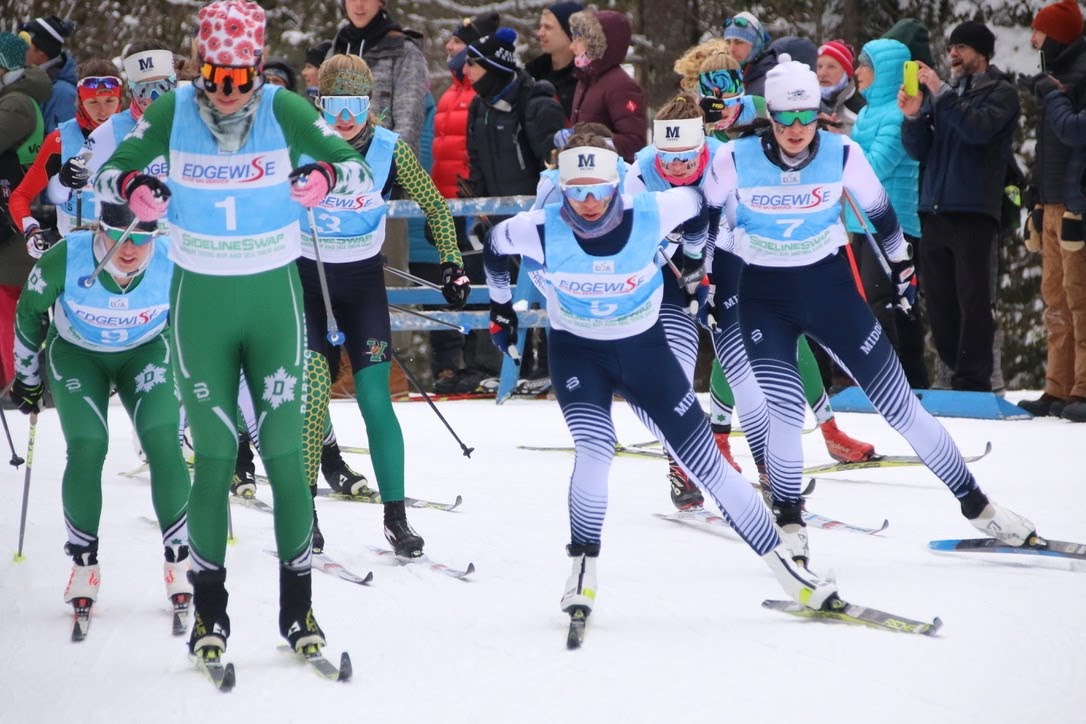
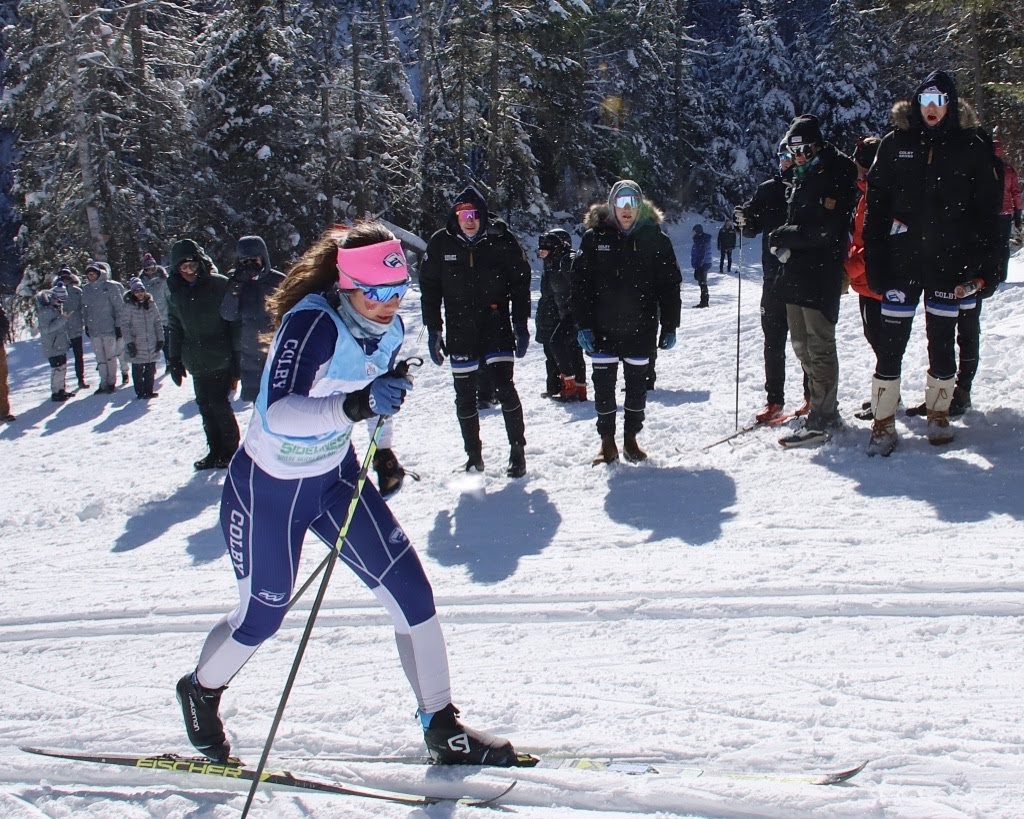
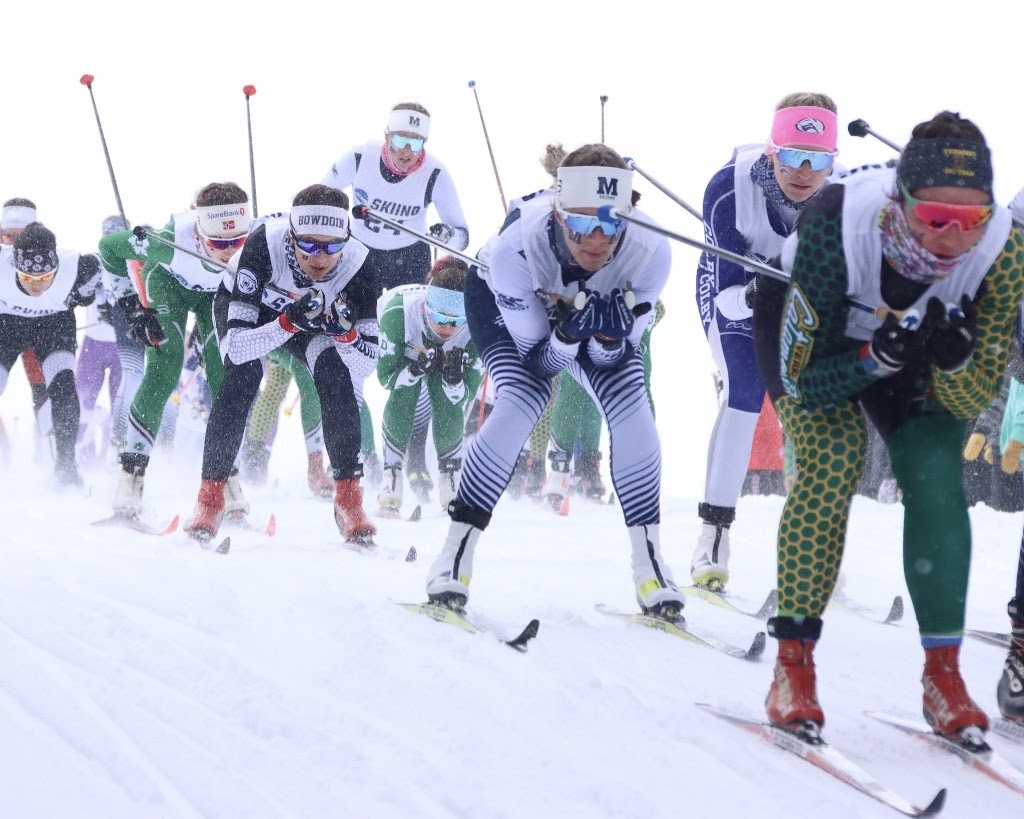
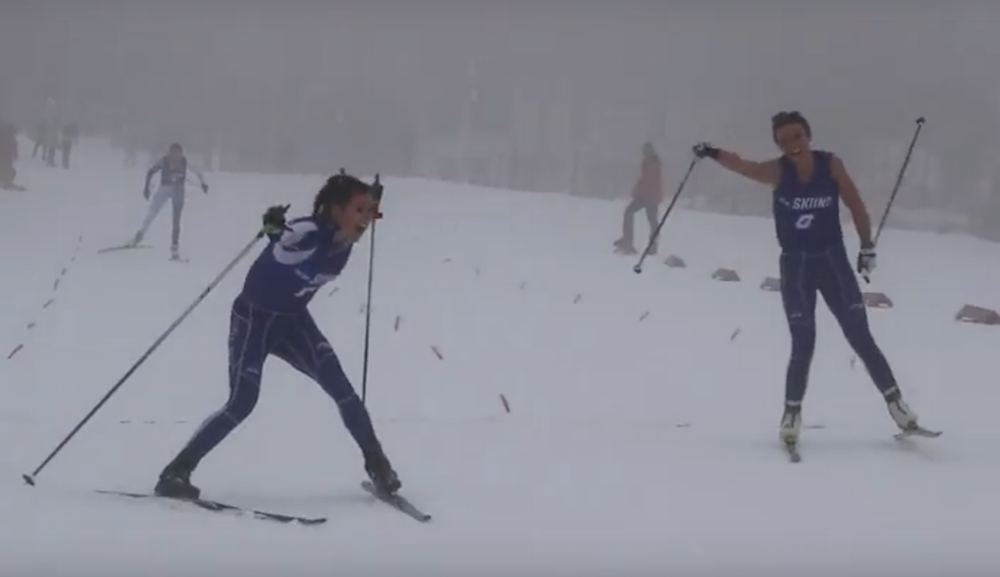
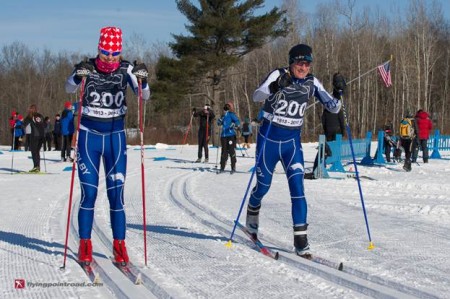
Annika Martell racing during the NENSA club relays, Saturday, March 28, 2026 at Craftsbury. (Photo: Phil Belena)
The Craftsbury Green Racing Project has named Annika Martell as its new Head Ski Coach.
Martell brings a resume that spans nearly every corner of the Nordic skiing world. A Minnesota native, she headed east to ski at Colby College, where she captained the team and earned recognition for her leadership before graduating with a degree in economics and environmental science.
Her coaching career has taken a similarly wide path. Early on, she interned with the US Biathlon Association and coached juniors at Ford Sayre and the Berkshire Nordic Ski Club, before moving into elite-level work as an assistant coach with the Stratton Mountain School T2 Team. She spent four years as an assistant coach at Williams College, during which time she completed two stints as a Trail to Gold Fellow with the US Ski Team and served twice on the wax staff for Team New England at Junior Nationals.
Most recently, Martell was the Head Nordic Coach at St. Michael’s College, where she guided the program to highly competitive results.
Her background extends well beyond the ski tracks. She is a certified weightlifting coach and handled strength and conditioning duties at Williams. She also has experience in finance and operations management, and holds a Master’s degree in Sports Business from Drexel University.
The Craftbury Green Racing Project is still accepting athlete applications for the incoming 2026 snow class — Apply Here
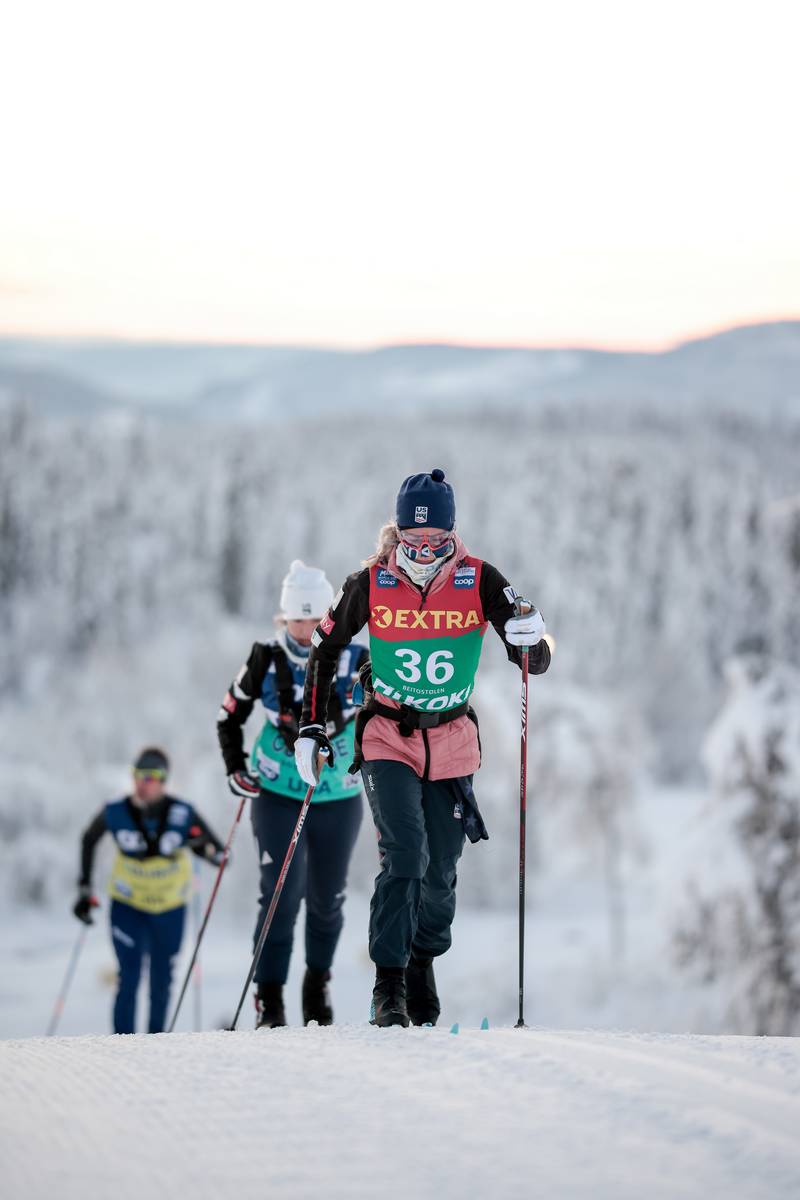
Martell follows Jessie Diggins on course in Beitostolen in 2022. (Photo: Nordic Focus)
On the Wednesday before the World Cup season opens in Ruka, Jack Young sits in a small condo, looking out at over a foot of new snow that’s been drifting down all morning. The air is much warmer today than it was before he and the U.S. Ski Team loaded onto a six-plus hour bus ride yesterday — “Muonio was friggin’ cold,” he says — and the mood is calmer, quieter, the way he wants it. This is his final runway before an Olympic year truly begins, and he is spending it doing almost nothing.
Not nothing-nothing, of course. But nothing extra. No bonus minutes, no filler skis, no threshold for confidence, no volume for psychological reassurance. “The biggest thing right now is taking these two weeks absolutely as seriously as possible with rest and just not doing anything extra training-wise that I do not need to be doing,” he says. “I’m training so little right now because of how important Ruka and Trondheim are for me.”
Growing up in Northern Vermont, Jack Young had an All-American childhood. (Photo: Courtesy Photo)
Outside, the classic sprint course cuts through the forest — the first of two classic sprints in Period 1. They matter—more than they ever have. To make the Olympics, he must qualify. To qualify, he must have transformed himself into something he has never consistently been: a classic sprinter capable of making heats on the hardest stage in the world.
That he is even here, on the cusp of an Olympic selection fight, is strange enough. Stranger still is the way he got here — not built from the standardized American skiing pipeline but stitched together from its edges. A football quarterback. A baseball outfielder. A skier whose parents “didn’t know what Nordic skiing was.” A D3 athlete who reverse-engineered sprint training out of 800-meter track plans and the writings of a Swedish speed skater. A young man who kept such detailed training logs that, by the time he made the World Cup, he could begin writing his own plan.
In a sport that often rewards conformity, Young’s ascent is something close to a jailbreak.
Jack Young as he started his racing for Craftsbury. (Photo: Courtesy Photo)
A Vermont Childhood Without the Usual Skiing Script
“Neither of my parents knew what Nordic skiing was,” he says with a laugh. They loved the outdoors, yes — mountain biking, alpine skiing, the typical northern Vermont mélange of mud, woods, and winter — but their son’s athletic identity formed somewhere else entirely. “I played every sport. I loved baseball. I played basketball through elementary school. I started football as soon as I was allowed to, which I think was in fourth grade.”
He became the kind of athlete rural towns understand intuitively: the quarterback on fall afternoons, the center fielder chasing down balls in the summer dusk, the kid who could pick up anything and find competition in it. Skiing entered sideways, almost accidentally, through his sister Callie. She joined the small Nordic program in Newport, and he was brought along because that’s what families do — pack the car, hand over snacks, make it work.
“I immediately fell in love with racing,” he says. “I just love the competition.” Running around on skis made sense to him. Movement, speed, chaos — he could do that. But even with training days at Craftsbury beginning around sixth grade, he didn’t think of skiing as his primary outlet. “I wasn’t as focused as my sister was, but I would still get dragged along,” he says. “I loved skiing, but I loved football and baseball just as much.”
The irony — one he now sees clearly — is that he was training for skiing without realizing it. “All summer was spent doing fun things in the woods. We’d go to Craftsbury a couple of times per week. But I never thought of skiing as my main sport. I weighted those sports equally, even though I was putting a lot more time into skiing.”
If northern Vermont had offered a travel football club or competitive baseball without days of driving south, the story may have gone a different way. But mountain running and biking were nearby, and elite baseball diamonds were not. “I’d so much rather go for a long run in the mountains or go mountain biking than I would hit on the tee for two hours,” he says.
Sometimes this is what talent looks like in real time: a kid choosing the fun version of hard work without realizing he’s choosing a future.
When we spoke, Jack Young sat in a small condo in Ruka wearing a Boston Red Sox baseball hat, just added evidence for how important the game has been for him since he was a boy. (Photo: Courtesy Photo)
The Late Bloom: A Breakthrough and a Decision
He kept skiing in the winter, of course. Not obsessively. Not in the way some junior skiers live their lives by FIS points before they have a driver’s license. But enough to stay close. Enough to remain good. Then came the summer after his sophomore year of high school — the first time he trained like someone who had decided to see what was possible.
“I put a good summer of training in,” he says. “Had a bad football season… but that was the first time I was really starting to push the limit on what I could do training-wise while in season for football.”
He mountain-biked in races on weekends, squeezed workouts around football practices, and tried to make the whole geometry hold together. Then came Junior Nationals, and with it, proof. “I had a pretty good result in the sprint. I think I was like 18th or something… and that was the moment where I was like, okay. I am decent at least at this sport. I’m doing a lot better than I’ll ever be at baseball.”
That spring, Young emailed coaches — the NESCAC schools, Dartmouth, and UNH. Bowdoin and Dartmouth joined Colby on his shortlist. Colby won on something less quantifiable: belief.
“Tracy [Cote] was very excited about me,” he says. “And I think that resonated with me. Maybe it’s my ego, but it was nice to hear.”
He would later call it “a perfect decision.”
Jack Young enjoying some backcountry skiing in Jay. (Photo: Courtesy Photo)
Colby: Building an Athlete in a Place That Shouldn’t Have Worked
Winters in college can blur into one another — classes, training, snow, the strange mix of exhaustion and euphoria that defines 19-year-old life. But Young remembers his freshman fall with clarity: meeting people, finding balance, doing “good, not great” training, and then, once the season started, traveling west for Senior Nationals.
There, in Soldier Hollow, everything sharpened. “I think I qualified in the top 20 in the skate sprint,” he says. “That was an absolutely massive result for me. I never had anywhere near that level of success on the national level.”
He didn’t transform overnight — not yet. His sophomore season brought a “fine college season,” a top-30 at NCAAs in the 10k skate, and the sense that distance skiing was finally, mercifully making progress. But the turning point came not in results but in imagination. He learned that the U.S. would receive twelve start spots for the Canmore World Cup the following year. Twelve starts. “I was like, 12 starts… that’s not that far off,” he says. “I kind of feel like I’m in contention for that.”
To chase it, he would need to master something specific: the sprint qualifier.
And this is where the story breaks from the template completely.
Jack Young hits some big lactate numbers during a hard training session. (Photo: Courtesy Photo)
Reinventing Sprinting from Scratch
“I’ve always thought that sprint qualifiers were really similar to an 800-meter race on the track,” he says. Physiologically, mechanically, conceptually — they looked more alike than different. So he dug into 800m training. He looked for the extreme version, the distilled essence of what sprinters do when they train specifically for the thing that matters. Qualifiers are discrete. Defined. Precise. Why train them like a generalist?
Then he read Nils van der Poel.
The legendary Swedish speed skater’s manifesto, How to Skate a 10k, isn’t a skiing manual, but to Young, it may as well have been scripture: the idea of building huge aerobic capacity, then sharpening with brutally specific intervals at exact race pace. “He wants to skate as many possible laps at world record pace as possible,” Young says. “And that really struck me. I’m like — I can apply this to skiing.”
He wasn’t going to become a single-event specialist, not in college. But he could take the principle and adapt it. So he built a sprint-qualifier program composed of things like:
6 × 1 minute
4 × 90 seconds
10 × 30 seconds
8 × 45 seconds
All at precisely what he believed to be his sprint qualifier pace.
“That was the bread and butter,” he says. “I’d do those workouts once or twice a week. I didn’t actually find them that strenuous, but I was accumulating a good amount of time at exactly what I thought sprint qualifier pace was.”
He went completely dry that fall — no beer, no casual nights out, nothing that compromised sleep. “I was just recovering a lot better all the time,” he says. “I didn’t get sick at all.”
Meanwhile, Colby head coach Tracy Cote allowed him to blend his ideas into the fall plan. “We were working together. I think we ended up writing the training plan together that fall,” he says. “She was pretty stoked about the focus on recovery… and she’d let me get away with doing things a bit more geared towards sprinting.”
He trained more overall, too — a heavy summer that gave him the resilience to handle so much intensity once fall arrived. “My freshman year, I trained a little under 600. Sophomore year was around 650. My junior year I trained like 750 or something.”
This was not an American development pipeline approach.
It was an experiment.
A smart one.
A successful one.
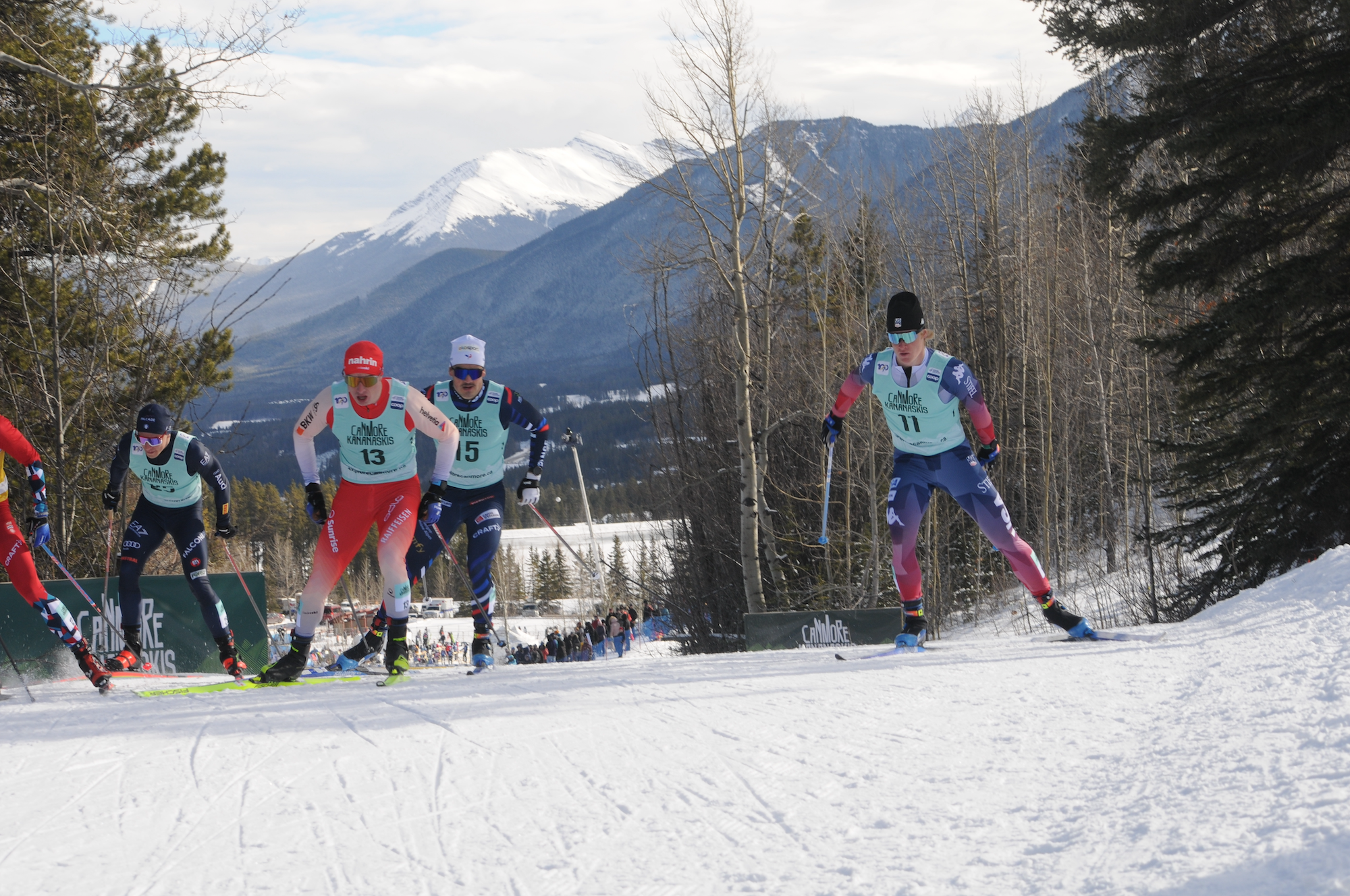
Jack Young, who a week earlier had a 3rd and 5th place in the EISA college races for Colby College delivered the 11th fastest qualifying time in the freestyle sprint at the Canmore World Cup in 2024. (Photo: Cockney/FasterSkier)
Anchorage, SoHo, Canmore — and the Race That Changed Everything
He targeted Anchorage for his first chance at the Canmore World Cup spot. He knew what he had to do: fly across the country in the early winter, race well, then perform at Senior Nationals in Soldier Hollow. Anchorage was the linchpin.
“I went into Anchorage with a lot of confidence,” he says. “I won that qualifier; it was such a surprise.”
He didn’t replicate the magic at Soldier Hollow — “I think I got like 11th” — but the Anchorage win held. He made the Canmore start list.
And then came the race of his life.
“That’s still my lowest FIS points ever,” he says. “I didn’t match that last year.”
When he crossed the line, something shifted internally. “Once I did that in Canmore… that was the first time I really thought I wanted to keep skiing after college,” he says. “That was the moment I realized how good I thought I could get.”
Call it the ignition point, the place where belief calcified into ambition.
Where a multi-sport kid from a non-skiing family, attending a D3 school, doing self-designed intervals, suddenly saw himself in a World Cup heat map and thought: Yes. Here.
Jack Young training on Eagle Glacier this past summer. (Photo: Courtesy Photo)
Writing His Own Plan on the World Cup
Two years later, he is living in Europe, often for months at a time. He is in his second year of racing full-time on the circuit. He is older, stronger, andmore certain. And he is, in many ways, coaching himself.
“For this time of year, it’s entirely guided by what I’ve done the last two years,” he says. “Which workouts worked in which places, which workouts didn’t… the comments are much more important than the hours.”
He still works closely with Pepa Miloucheva at Craftsbury — “She’s the number one on that” — but when he’s on the World Cup, he is the primary author of his training. He reads his patterns. He analyzes sensations. He looks for the combinations of stress and stimulation that make him feel dangerous on race day.
He isn’t reinventing his body now — he’s listening to it.
The independence he cultivated at Colby has become his competitive advantage.
With the Olympic sprint being in the classical technique, Jack Young (USA) hopes to find the form he has historically shown in freestyle sprinting during the early season World Cup stops. (Photo: Modica/NordicFocus)
The Classic Sprint Problem — and the Olympic Dream
To make the Olympics, the math is simple, even if the execution is brutal.
“The simplest answer is: make a big jump in classic sprinting,” he says. “If I can start qualifying for classic sprints consistently, I have a very clear path to making the Olympics.”
Last year’s results would meet the published criteria — “hypothetically, if I had the exact same season… I would technically make the team,” — but this year is different. The Olympic sprint is classic. Period 1 has two classic sprints and only one skate sprint. Some of the contenders for Olympic spots are stronger in classic than he is.
So the path is narrow: qualify in Ruka. Qualify in Trondheim. Hold form in Davos. Don’t step back. Don’t stagnate.
At the philosophical level, the criteria are simpler still.
“It’s all about execution at this point,” he says. “A good season is continuing with progress I’ve made… scoring more World Cup points than I did last year. Anything else is a step back.”
He knows progress isn’t linear. He knows failure is part of sport. But he also knows what a step backward would feel like. “I’d be lying if I said I could look at this season as successful if I don’t maintain what I’ve been doing in skating and at least make a little bit of progress in classic skiing.”
It is clear-eyed. Unsentimental. The kind of assessment you get from someone who has built his career on self-honesty.
Jack and his sister Callie after winning a slow pitch softball tournament. (Photo: Courtesy Photo)
What It Means to Make It This Way
There’s a certain poetry in the fact that Young’s rise mirrors the very way he races: a precise, deliberate accumulation of moments. Nothing in his career came from the prescribed steps, the standard routes, the familiar trophies of a groomed junior-star life. Instead, his path looks more like a map drawn after the fact — connecting points that didn’t seem aligned until the picture emerged.
A sister’s Craftsbury workouts.
A baseball-heavy early adolescence.
Mountain biking and football collisions.
A D3 program that let him try things.
A manifesto by a Swedish speed skater.
A dry collegiate fall at age 20.
A logbook of sensations.
A day in Canmore.
A belief.
There is no template for this. There never was.
But here he is anyway — on the World Cup, in an Olympic year, taking the biggest swing of his life.
And as he sits in a Ruka apartment, resting more than he ever has before a race that matters more than most, he reflects not on what’s missing from his résumé but on what got him here in the first place: a way of building a skier that is his alone.
Love Stories Like This? Help Keep Them Coming.
Feature interviews like this one take time, access, and care to produce. If you value thoughtful storytelling and independent ski journalism, please consider becoming a Voluntary Subscriber. Your support directly fuels the work we do to cover the people, places, and moments that make our sport special.
This reporting costs money. Please support this coverage with a voluntary subscription (below) so FasterSkier can provide this level of access to the sport we all love year-round.
Jack Young, in bib 11, races to the finish line in the World Cup freestyle sprint Saturday, February 10, 2024 in Canmore, Alberta. (Martin Jalkotzy for FasterSkier)
CANMORE, ALBERTA — Jack Young’s home in Vermont is two miles from the Canadian border. So it makes sense that he skied like he was right at home in Canada on Saturday, in a smoking fast finish in his first-ever race on the World Cup—the top-level circuit that saw him lining up against a bevy of Olympic medalists.
Young, 21, placed 11th in the qualifying round of Saturday’s sprint race in Canmore, and 23rd in the final. His qualifier made him the second-fastest American, slotted him ahead of Norwegian stars like Erik Valnes, Even Northug and Harald Østberg Amundsen and earned him the adulation of his U.S. teammates.
“It was a lot of hugs, a lot of expletives,” Young said afterward. “It was a pretty fun, happy scene.”
His U.S. teammates were much more emphatic.
“That was insane,” said Murphy Kimball, a 17-year-old Alaskan who also made his World Cup debut Saturday.
“I was speechless to see that,” said Ben Ogden, a fellow Vermonter and sprinter. “Jack Young is crazy,” added Gus Schumacher, another proven American talent. “So sick to see a truly legit sprint result.”
“Oh, my God. Unbelievably stoked,” said Julia Kern, a veteran U.S. sprinter. “Popping off an 11th is just unreal.”
Jack Young (11), who a week ago had a 3rd and 5th place in the EISA college races for Colby College, delivered the 11th fastest qualifying time in the freestyle sprint on Saturday in Canmore. (Photo: Cockney/FasterSkier)
Young, a junior at Colby College in Maine, grew up in northern Vermont and was a football quarterback through high school.
He began skiing in a youth program called the Bill Koch League. In junior high school, he started training with the club at Vermont’s Craftsbury Outdoor Center—where coaches, he said, once helped motivate him through a long run by dangling gummy bears out a window of a team van.
His results have picked up in the past three years, he said, and early this season, he won a qualifying round at a national level SuperTour sprint race in Anchorage, which he called a huge confidence boost.
“Just knowing that I can be the best in the U.S. on a day—meaning that I can hopefully mix it up here,” he said after Saturday’s race.
At the World Cup, Young said he wasn’t expecting to make the heats, which required him to place in the top 30 in the qualifier. “But I knew I could do it,” he added.
Once he made it into the heats, Young got a little advice from Ogden, who shared some tactical insights from his own race.
Young’s heat included heavy hitters like Chappaz, Amundsen—who’s the leader of the overall World Cup standings—and Switzerland’s Janik Riebli, all of whom had slower qualifying times. He was waiting for those competitors to line up at the starting gates until he discovered that as the fastest qualifier, he was supposed to go first.
“I was just standing there,” Young said. “And someone was like, ‘Come on, Jack, get your skis on.’”
The racing itself, he added, felt much more normal.
His heat, like many others, started slow, with participants waiting until the top of the last hill to make their moves. Young finished fifth out of six, but he said he felt “in the mix.”
“It’s just a real validation,” he said. “I always have been looking at World Cup result, curious, like, ‘If I were to get this start, where would I be?’ And now, I know that I can mix it up with these guys.”
Kern, the veteran U.S. sprinter, said Young’s result is impressive not just on its own, but also underscores the level of skiing in her home country—and the value of bringing the World Cup circuit to North America, which provides opportunities to new U.S. talents.
“I think there’s a lot of people who, if they were given the chance—that can really just bolster your confidence and help you make that jump,” she said. “It’s so cool to see that the depth is there in the U.S.”
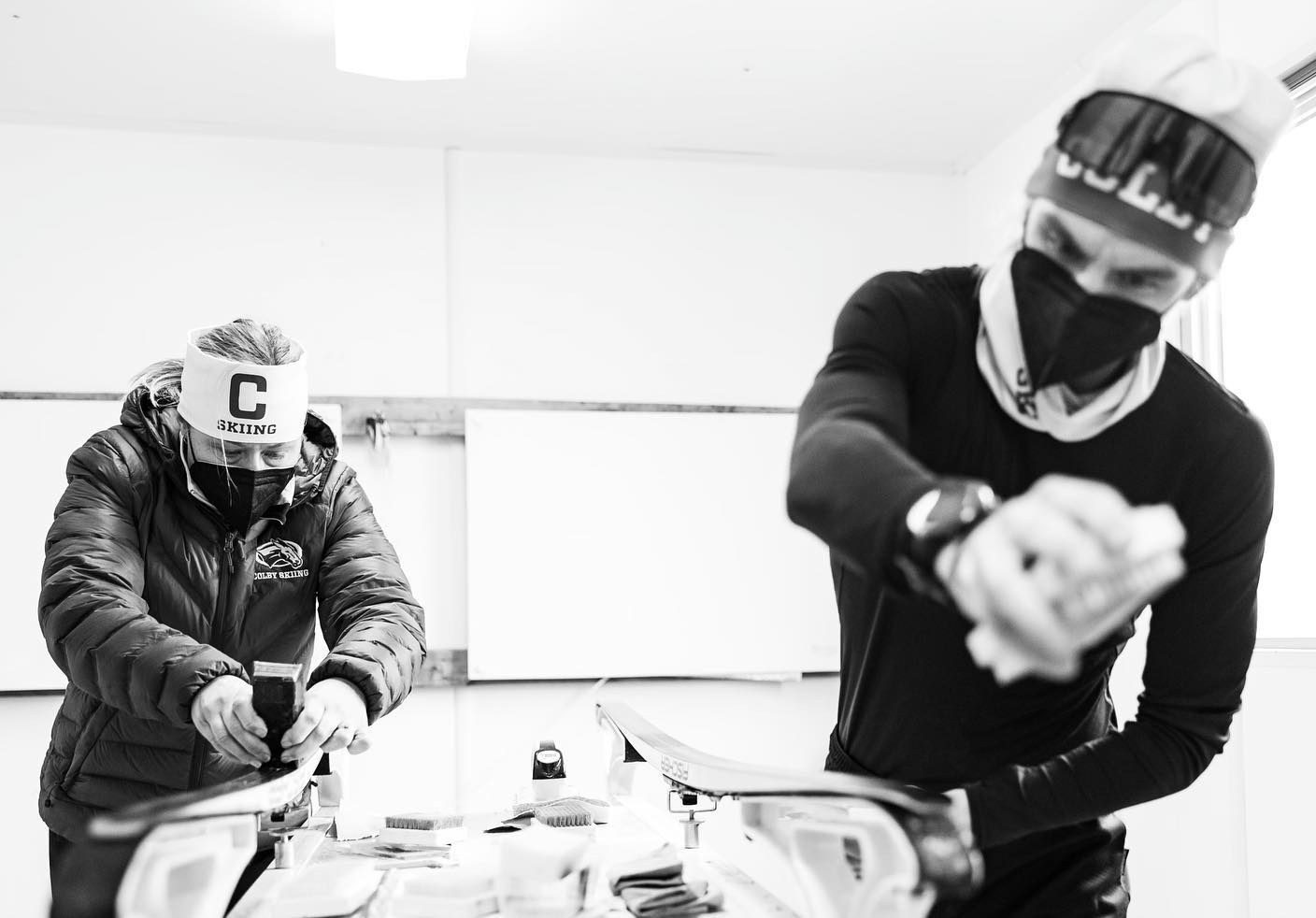
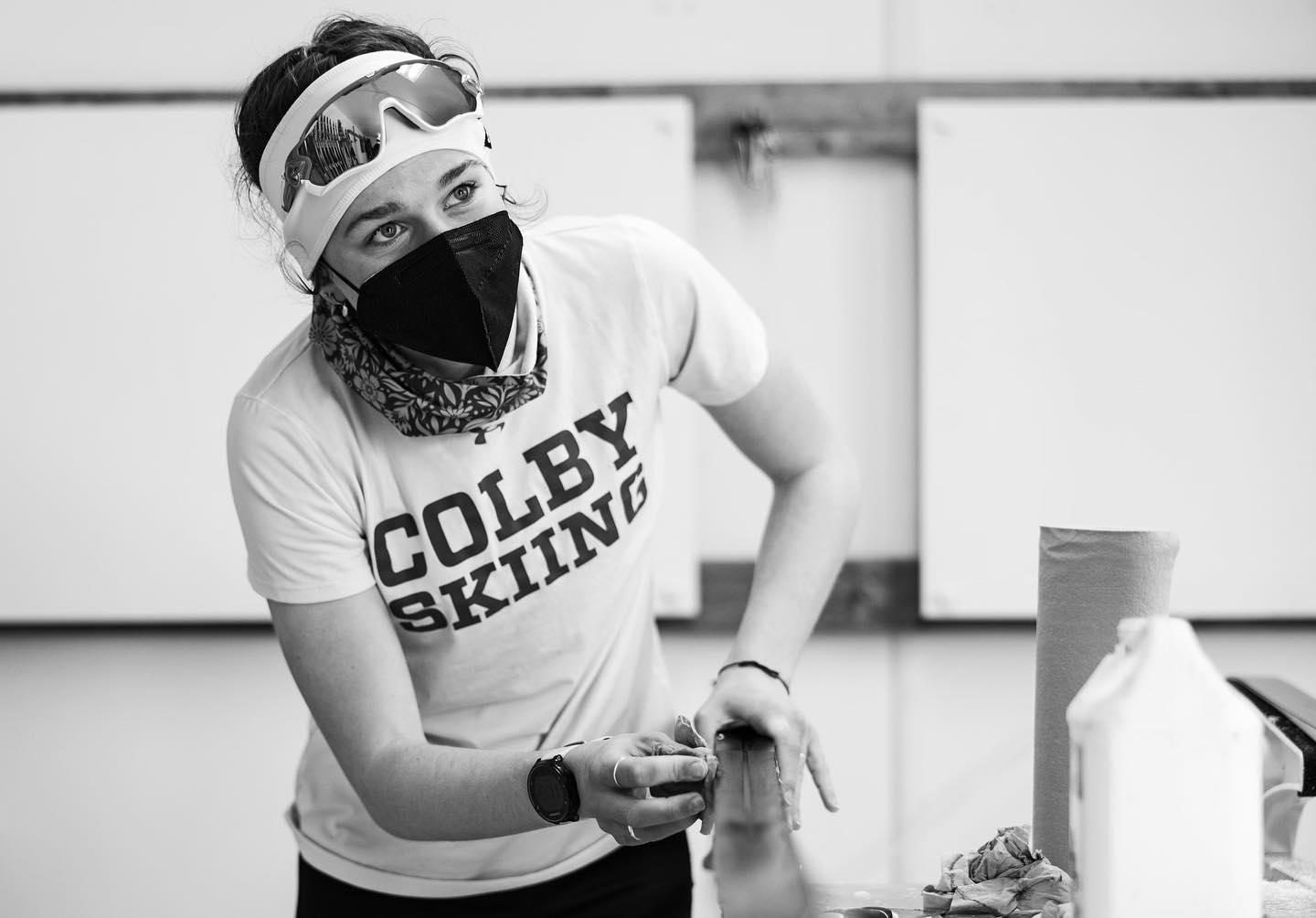
Colby College Head Coach Tracey Cote and Assistant Brad Ravenelle at work in the wax trailer. (Photo: Colby College Ski Team)
The International Ski Federation (FIS) recently announced that next season will be the first where the use of fluorinated ski waxes—fluoros—will be banned at the World Cup.
Or rather, the FIS are planning on enforcing a ban that initially was announced in 2019, and has been delayed year-to-year ever since.
In its rationale behind the latest delay last August, the FIS responded to reports by the Swedish Newspaper Expressen that the chosen field test for fluoros, the Alpha II, was ineffective in identifying fluoros on ski bases in a quick and enforceable manner. The announcement in March 2023 directly addressed these concerns, saying “the device will provide reliable results to ensure fluor-free competitions.”
The whole saga has brought to light the tricky, often testy, balancing act of levying ethical obligations to the environment and to health while upholding principles of fair competition.
Fluoros, which on a molecular level are composed of extremely hydrophobic long-chain fluorocarbons, have been the standard for high performance ski wax since their introduction in the 1980s. Fluoros not only were used to produce glide waxes but used as an additive to aid glide in kick wax, with typical race wax applications using multiple layers of the substance to produce skis that could cover any snow, especially warm and wet snow, faster than any substance on Earth.
The evolution of ski wax to purer and purer forms of fluorocarbons saw ski waxes become some of the most concentrated per- and polyfluoroalkyl substances, PFAs or PFOAs, in the world. When research a decade ago began revealing that PFAs could be linked to immune suppression and act as carcinogens, their wide-spread use in industrial uses—from firefighting foams to waterproofed textiles—came into question.
PFAs’ extreme ability to repel water also made them extremely durable in the environment. Once into an ecosystem, PFAs were transported through the water cycle, eventually ending up in water and food systems. A study last Fall found that an estimated 80% of waterways in America are contaminated with PFAs.
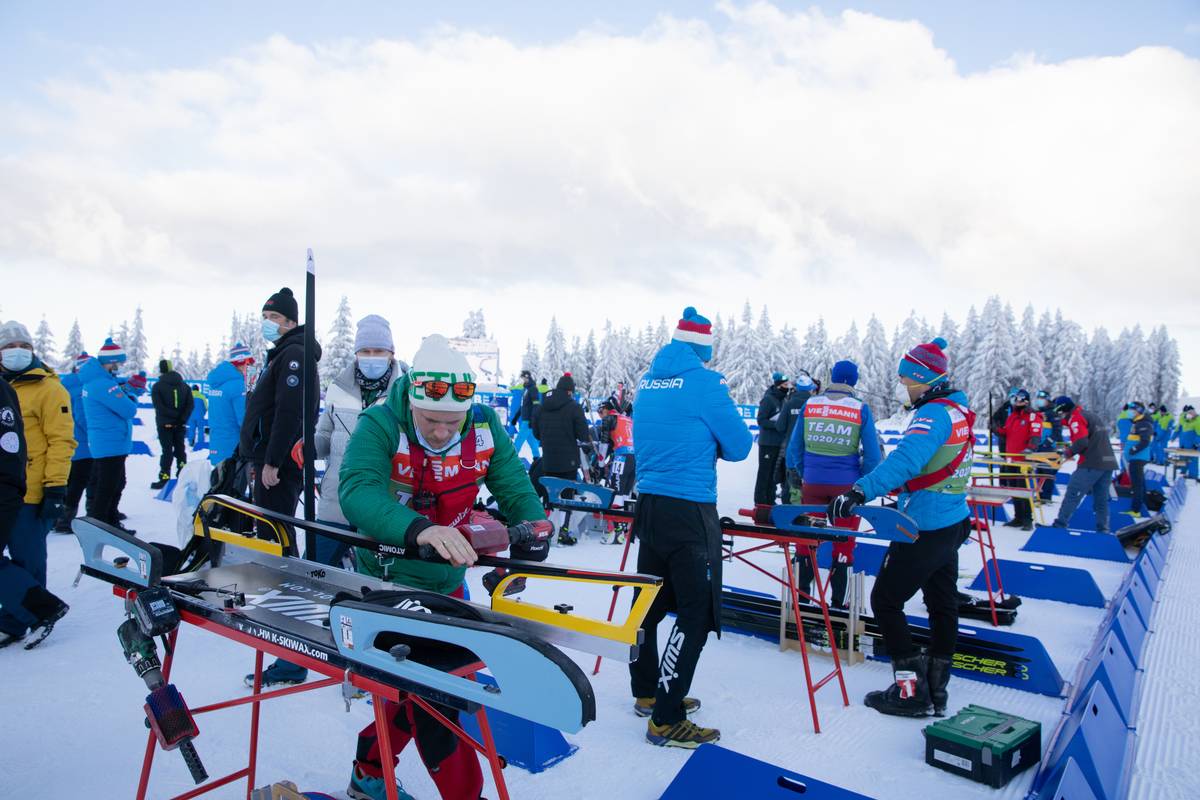
A typical busy waxing scene in Oberhof, Germany (GER) ahead of a IBU World Cup Biathlon event in 2021. (Photo: NordicFocus).
The results pointed back to the risks of using PFAs in consumer products, especially when the concentration of the material was the main selling point on the box (such as in ski waxes). A group of Environmental Science students regularly dealing with the substances outside of the classroom—members of the Colby College Nordic Ski Team in Waterville, Maine—saw a unique opportunity to contribute to the emerging body of research on when, where, and what impact, the use of fluoros in ski racing was having on their environment and their health.
Colby Assistant Professor of Environmental Studies, Gail Carlson, was ready to partner with them. Carlson’s academic expertise focuses on how the environment impacts human health in all its complicated forms. As the mother of a junior racer, her knowledge of skiing made the PFAs issue especially intriguing. Fluoros were a bug in the system: a winter sport that relies on healthy environments, and contributes to the human health of its participants, had a major environmental concern that it would now have to address. Those realizations drove straight to complicated, often difficult questions, about balancing the place of skiing in a world beset by environmental and health concerns. And for every concern about the environment and human health, another sport-driven concern about fairness and competition equity could be raised as a counterpoint.
What resulted from those conversations was a a first-of-its-kind study that sought to measure the impact that using fluoros at a single ski race had on the environment. Carlson, Colby skier Skylar Tupper, and Colby Ski Team Head Coach Tracey Cote cooperated in creating the study that was published in Chemosphere in 2020. Conducted at the Colby Carnival NCAA race in January 2020, their study put quantifiable evidence behind long-standing conjecture around how effective fluoros were in making skis go fast, how durable the waxes were, and where all that wax was going once it went into the snow.
Amid the rapidly changing policy framework in skiing, Carlson’s research has been ongoing. In a conversation with FasterSkier’s Ben Theyerl, Carlson covered her latest findings, the dynamics of fluoros in an ecosystem, their place in the widespread PFAs crisis, and the policy and ethics questions that skiers face in confronting the PFAs problem.
(This interview has been edited for length and clarity.)
Colby College Assistant Professor of Environmental Studies Gail Carlson. (Photo: Colby College).
Gail Carlson (GC): It started off with me teaching about PFAs as a family of toxic chemicals in my class. I used the studies that had been done on the Norwegian and Swedish national team wax technicians as an example of the bioaccumulation that these chemicals have in the human body, and a real example of how understanding the link between environmental and human health hazards is still an ongoing process.
I always had Colby skiers in my class, and naturally, they perked up with cross country skiing getting a billing in a science class. The first person to really want to pursue the issue of PFAs and Fluorocarbons with me was a skier, Jeff Tucker, who actually is currently Head Coach at the Quarry Road Ski Club. It’s cool because when I’m out sampling now, he’s still very actively engaged in the issue when I talk about it with him.
It took a few years though to have a student to really put the pieces together, and that was Skylar Tupper. She took the ongoing nature of this issue to heart and really pointed out to me that it wasn’t like PFAs and fluorocarbons were being used off in a far-away land, they were being used every weekend at the races that she was racing during the winter, including at Quarry Road, which is literally down the hill from my office. She simply asked me, “why aren’t we testing this?” And it clicked for me.
We got a small grant from the Buck Lab for Environmental Change, which was to actually get samples tested. My understanding is that is the main issue in governing the use of fluoros in the ski world right now, and I will say that while it’s incredibly easy to get samples, getting them tested is difficult. We had to send our samples down to the State Department of Environmental Protection in Massachusetts. That was the closest lab that could test for PFAs. It’s not super-efficient to study them yet, which has contributed to the issues they cause. We were very limited as a result in that first year that we were doing this study as a result.
What we did have were pretty easy questions to ask, because they hadn’t been studied at all. Where do the fluoros you put on your skis actually end up? How do they abrade into the snow? And how does that snow melting contribute to adding PFAs to water supplies?
Colby had a Carnival race that winter, January 2020. The EISA had put policies in place already governing when they could be used, but it wasn’t a full ban yet (the EISA has since moved to a full ban). I don’t remember the exact details, but Colby Head Coach Tracey Cote worked with me ahead of time to let me know that we needed to test during the Individual Freestyle race, because that’s when pure fluoro top coats were being used.
Carlson’s Research Assistant, and former Colby College skier, Skylar Tupper competing at an EISA Carnival in 2019. (Photo: Gary Solow)
So, props to Skylar, after she raced, she changed out of her race suit and went right back out to take snow samples. We took samples right at the start, sampled at different points on the lapped course, so 100m, 1 k into the course, and 3.9 k (which is a hill on the course), and then collected snow that wasn’t on course to hopefully act as a negative control ((how much fluoro was detected there could be measured against the detection on course). We also sample water in the actual supplies at Quarry Road, which is a shallow groundwater well, and then run-off to Messalonskee Stream, which sits at the bottom of the ridge that Quarry Road is built into.
We found the most concerning stuff in those last two sampling sites, because they showed measurable amounts of PFAs in the sources of water that touch Quarry Road which are part of the municipal water supply. There were enormous quantities of snow contamination pretty much all the way around the course from the start line to the very last hill.
FS: What did the breakdown of the contamination look like?
GC: Most of the sampled PFAs were right at the start line. There was a chemical fingerprint present later in the course, but it was markedly less at 1 k, and even markedly less at 3.9 k.
That, after talking to Tracey Cote, wasn’t really all that surprising. The rules at the time didn’t allow for ironing in pure fluoro top coats, and without it, the fluoros were pretty much immediately abrading onto the snow.
FS: I think to skiers, the figures on just how abrasive the fluoro top coats were are pretty striking. These were a regular part of ski prep for some thirty years, and at various times, they were sold by the ski industry as being not just faster, but more durable, than the hydrocarbon waxes that were cheaper. In your study, they weren’t even making it to 4 k in a race…
GC: It was that finding that kind of changed our scope for the study. I think going in, we expected to be looking for trace amounts in the run-off or water supplies, but as soon as we saw the sample detections from the sites right at the start-line, we had to take a step back. The values were so high that we were like, what? This is insanity. We’re looking at a whole different scale of contamination that we would have thought.
FS: You mention that the chemical fingerprint was unique for the ski wax. What allowed you to determine that?
GC: What we were looking for is just how long the chain of carbons is attached to the fluorine molecule. So most other forms of PFAs you’re looking at 4 molecules of carbon bonded to one molecule of fluorine, what we call C4 fluorocarbons in discussions around this topic. But ski waxes, according to the one study that had been done on them, were majority C6, C8, or sometimes even C10 or C12. And once we got readings from the sample sites on course of what exactly was in the latest and greatest wax, so to speak, we could match the chain signature in the water supplies off the course. We did find that there wasn’t exactly the same signature in the groundwater, which is where the follow-up study is being directed.
FS: There was another study that showed near the end of their time being on the market en masse, the major companies were essentially creating longer and longer chains of fluoros. Does the length of these fluoros, C4, C8, differ as to how they effect the environment?
GC: It should be clear, short-chain fluoros are not really an acceptable alternative. The fluoros still are too hydrophobic to break down in the environment, and they still pose the same negative health risks in humans. The other thing to keep in mind is that was is in the wax when you buy it off the shelf is different than the substance that makes it on your ski through ironing and that’s different than the chemicals that actually abrade into the snow.
FS: Do you have any sense on whether any of the additives to those fluoro waxes—or to non-fluoro alternatives—are being added to make them more resilient to the abrasion factor?
GC: I really don’t know what exactly they would do with Fluoro waxes to make them more durable. There’s always going to be a super high abrasive factor when you’re looking at the mechanical friction involved in making a ski glide, and when that is facilitated by water, a hydrophobic substance is going to easily abrade. And I don’t have a sense of what is now going into the higher performance line of ski waxes now. I don’t know if anyone has a great sense because the ski companies have a vested interest in not disclosing what exactly they’re using if they don’t have to.
FS: Right, once the secret was out regarding what was in the fluoros early on, everyone decided that fluorocarbon wax was the standard. But now, we are back to a shroud where if your company can figure out the best alternative first there is a potential to really gain a lot of the market?
GC: I don’t know the history of the wax industry as well as you, but based on what I’ve seen in terms of what the bigger companies are doing now, branding by “performance-grade” or “speed” rather than how much fluorocarbon is in the wax, I would think that dynamic is at play, especially if you can avoid disclosure by putting stuff into the wax that isn’t controlled under TSCA (the Toxic Substance Control Act), which is a lot. That was what kind of kicked all of this off right, TSCA was amended in 2016, and it was disclosed that the stuff being imported as ski wax contained PFOAs and PFAs that we were learning were pretty nasty chemicals that didn’t breakdown in the environment.
FS: And wax companies would like to avoid that kind of major shift again…
GC: Exactly.
FS: The whole ski world has mobilized around those discoveries made around 2016-17. US Ski and Snowboard banned fluoros at races this past season. Some circuits—like the one I coach in in Colorado—are under wax protocols that dictate exactly which waxes we can use, and the FIS has again announced they’re going forward with the ban they originally announced in 2019.
The reasoning given for the delays is there’s no field test that is ready and reliable. Does that track with your experience, having actually tested for fluoros in the field?
GC: If they’re looking for like a gun that you can hold up to the bottom of a ski, zap it, and get a reading, that would be extremely difficult, especially on a hard surface like the base of a ski. I’m not surprised that it has been more difficult than we think to get a reliable field test. The simplest version would be a little handheld spectrophotometer, which could just give you a spike in Flourine. That would be hard to do, but if you’re asking to get readings on the specific make-up of chemicals, then you run into even more issues.
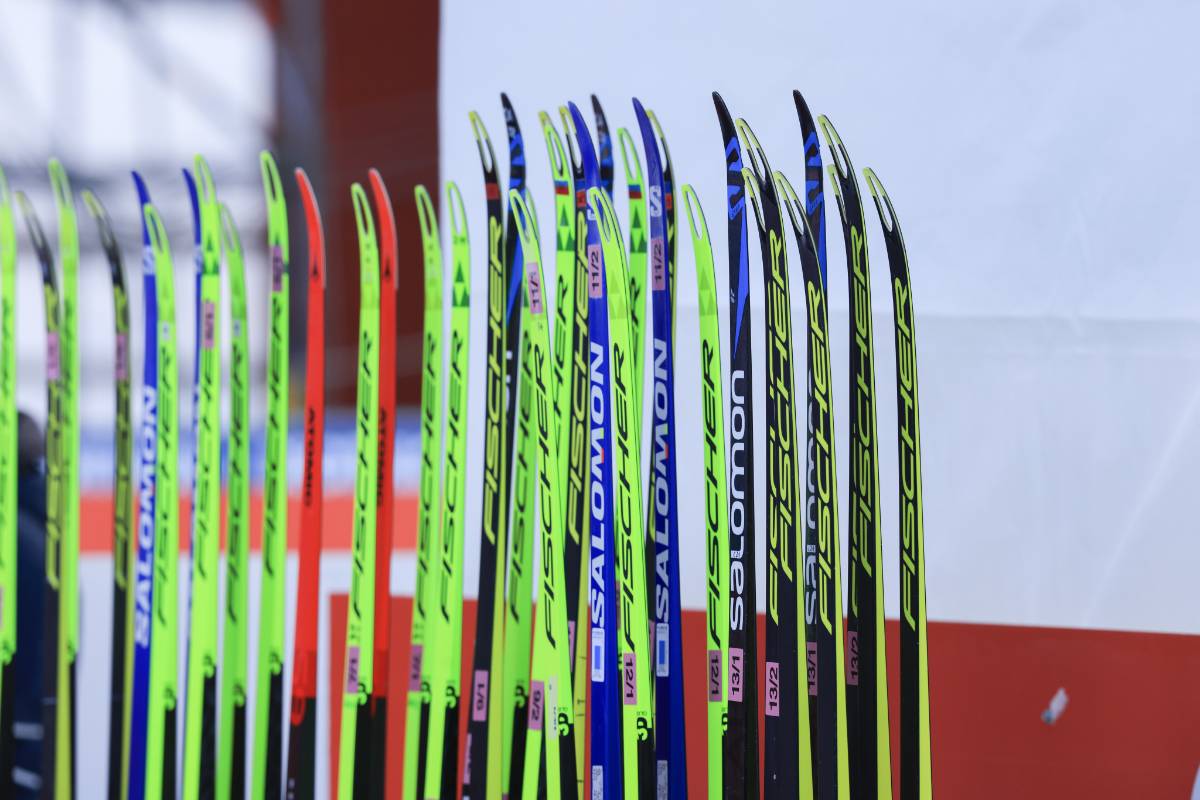
Skis lined up for Fluoro testing at an IBU Biathlon World Cup test event in Ostersund, Sweden last month. (Photo: NordicFocus)
FS: There’s a spectrometer, the Alpha II, introduced in 2022, but there were reports pretty immediately that it wasn’t reliable enough to just identify fluoros…
GC: That would be along the right path. I would hazard a guess that the problem comes when you are having to use such a hard surface to test in the field. Most Spectrometers you end up breaking substances down-putting them in an aqueous solution. You couldn’t do that in a field test on a ski surface, and I would guess it’d be hard to get something that immediately distinguishes the fluoro chemicals from all the other stuff that is in a ski base.
The answer to the hard surface problem is to take samples of the snow the ski goes over, rather than the ski itself. But that would obviously be a retrospective test, and you know, we’re doing that now and the turnaround time for it in the lab is weeks.
If you take a step back, it is a good example of where science intersects with policy. We can do a fluoro test right now, but does that test fit the parameters to where it’s useful for the purpose it’s needed for? Is it ok to do retroactive bans for breaking the rules, or is that not incentivizing following them enough…
FS: It strikes me as reminiscent of the dynamics at play when you start talking doping in sports, and those debates have been going on for years and years…
GC: There is definitely a similar dynamic at play. Does the USSS ban cover collegiate and high school races and all those circuits?
FS: Pretty comprehensively, but it is questionable whether that eliminates the market. The other issue I’m sure you’re familiar with is that there is no firm guidance from the EPA yet on how to actually dispose of fluoro waxes, so while buy-back programs have been attempted, the people working on them have had a hard time seeing how they scale.
GC: You bring up a really interesting point with that issue. The disposal programs are really, truly, all over the map when it comes to PFAs, both in the ski world, and in more industrial uses like firefighting foams. Like at Quarry Road, we did a wax take-back program in partnership with the Maine Department of Environmental Protection, and they ended up just landfilling that wax, which we’ve now shown doesn’t contain the problem.
FS: The interim guidance released in 2020 mentions incineration…
GC: The problem with that is that fluorine and fluorocarbons are a halogenated chemical. So if you incinerate, the fluorine is going to go somewhere, it’s not just going to disappear. And, they’re reactive too, they’ll react with anything organic, so what incineration would end up doing is creating a whole new set of chemicals which you either have to contain, or it’s going to release these PFAs in gas form, which, again, with what we know about the health risks, could be worse.
There is emerging research that shows that it may be possible to do a safe, chemical conversion on some classes of PFAs, so there is hope on this, but from a consumer safety standpoint, this is very similar to the problems we experienced with lead back in the day. The science quickly moved to show that what we thought was an innocuous material used for a lot of things is just simply not, it poses a big risk to the environment and to human health. A lot the reasons that make them unhealthy for humans are the same reasons that make them hard to dispose of, so I’m not surprised the EPA has been very cautious.
FS: Do you think there are additional measures whereby the ski world could get rid of their stockpiles, or to store them for when guidance does come from the EPA?
GC: I’m of the opinion that the simplest way is the best way here; hold onto them. Trust that when disposal guidelines do come out, there’ll be a better process to organize, collect, and dispose of these chemicals. You want to make sure that the PFAs that you’re giving over are being really disposed of or destroyed in a safe manner.
In the meantime, I don’t understand the incentive to use this as a reset for the ski community. If everyone is on the same type of wax, then what is the competitive advantage.
FS: You bring up an interesting ethical set of concerns for the ski community. The Fluoro issue brings up a lot of existential questions about why people in the sport do the sport. Personal health, or the idea that skiing gives you an appreciation of our environment, are central to many people’s relationship with the sport. In the competitive world, though, concerns towards health and the environment often take a back seat to competitive concerns, and that dynamic really has been the impetus for the story of PFAs and skiing. I’m curious how you—a researcher focused on environmental health—communicate the prescience of your findings?
GC: It’s a great question that colors all of our research on this issue of PFAs.
There was an interesting moment for me in January 2022, there was another Colby Carnival, and so myself, my son, and a research assistant, Megan Anderson, used it as an opportunity to do a follow-up. When I talked to Tracey Cote beforehand, I was surprised to find out that there had been pretty swift action on the EISA. She was clear that there were no fluoro waxes allowed, and that collegiate racing was all under a ban. I was surprised by the swiftness of the action there, but Tracey had also said that our research at Quarry Road had been enough to persuade the circuit that erring on the side of acting in this case was a good idea.
FS: That Colby Carnival was January 14th-15th, 2022. So it was the first race of EISA season, but in the middle of the ski calendar. Notably, it was right after the Cross-Country National Championships in Soldier Hollow, Utah, which still allowed Fluoros under US Ski and Snowboard policy at the time. In your follow-up study, did you find that had any bearing on the findings?
GC: In fact, it was the finding of that follow-up study. We still found the same pattern of abrasion, with the same chemical footprint, around the course at Quarry Road. Was it less than in 2020? Yes, it was substantially less, like one-hundred times less, but the footprint was remarkably identical. The footprint really reiterated that it couldn’t be recreational skiers that we were measuring, we were measuring residual fluoros from competitive skiers.
FS: How do you take that result then? It was a lot less, but still there…
GC: Yeah, there’s two parts. 1) The significantly reduced amount of fluoro in the snow is a powerful sign that banning fluoro products does work. 2) The significant amount we found still on course and in the water supply speaks to why a patchwork policy towards fluoros and PFAs doesn’t really work. PFAs are a problem because they are incredibly persistent, so our policy towards them has to match that persistence.
FS: What does that level of PFAs in the snow and environment look like in real-terms?
GC: So I think it’s still a problem, even at reduced levels in the environment, because if you think about it, the sources are all acute, and then the material is dispersed into the environment. I remember when my son first started waxing with the Quarry Road Ski Club, they would all be in a closed wax cabin burning these waxes into the ski. That represents an insane concentration of the risks associated with PFAs right at the source of how they’re getting into the environment. Then the risk disperses when it gets out into the air and deposits in the snow, but when it seeps into the water supplies, it again accumulates on the other end.
In short, skiers are exposed to concentrations of risky material when that material is concentrated. We’re in a uniquely vulnerable position to these chemicals.
FS: When you talk about the process of these PFAs going from being applied onto the ski, and then transferred to the environment, what does that look like? Do you have a sense of how great a concentration a single race or event creates, and how large is the area of diffusion for these waxes?
GC: I don’t think you can extrapolate the amount of material from our one study, per se, but conceptually we can think about it this way; the defining characteristic of PFAs in the environment is that they are extraordinarily hydrophobic. They do not dissolve. That makes them extremely mobile, because wherever water goes, they get carried with it.
Let’s take our environment in Maine as an example. The PFAs in Quarry Road get carried in the stream here, and that makes its way ten miles downstream to where it cuts through a farmer’s land. If that farmer is using the water from the stream as a drinking source for livestock, or as an irrigation source for crops, those PFAs are making their way into whatever that farmer is producing.
Maine has a unique problem here. The state started testing for PFAs contamination and found that one of the biggest sources was biosolid fertilizer – essentially human and animal waste that was being sold to farmers – and that is creating a crisis in our agricultural industry, which is a huge part of our economy. And the problem there is we’re one of only two states testing for it (Michigan has also began a biosolids testing program), so there’s no reason to believe that this won’t be a problem across the United States.
I’d underscore that because the half-lives of these PFAs is in the order of decades, and they have multiple ways of moving through the water and food systems that are part of our everyday lives, they potentially pose an environmental risk that is on the order of something that we haven’t seen before. DDT, PCBs, their half lives were shorter, and they weren’t able to make their way completely through our food and water cycles. PFAs can.
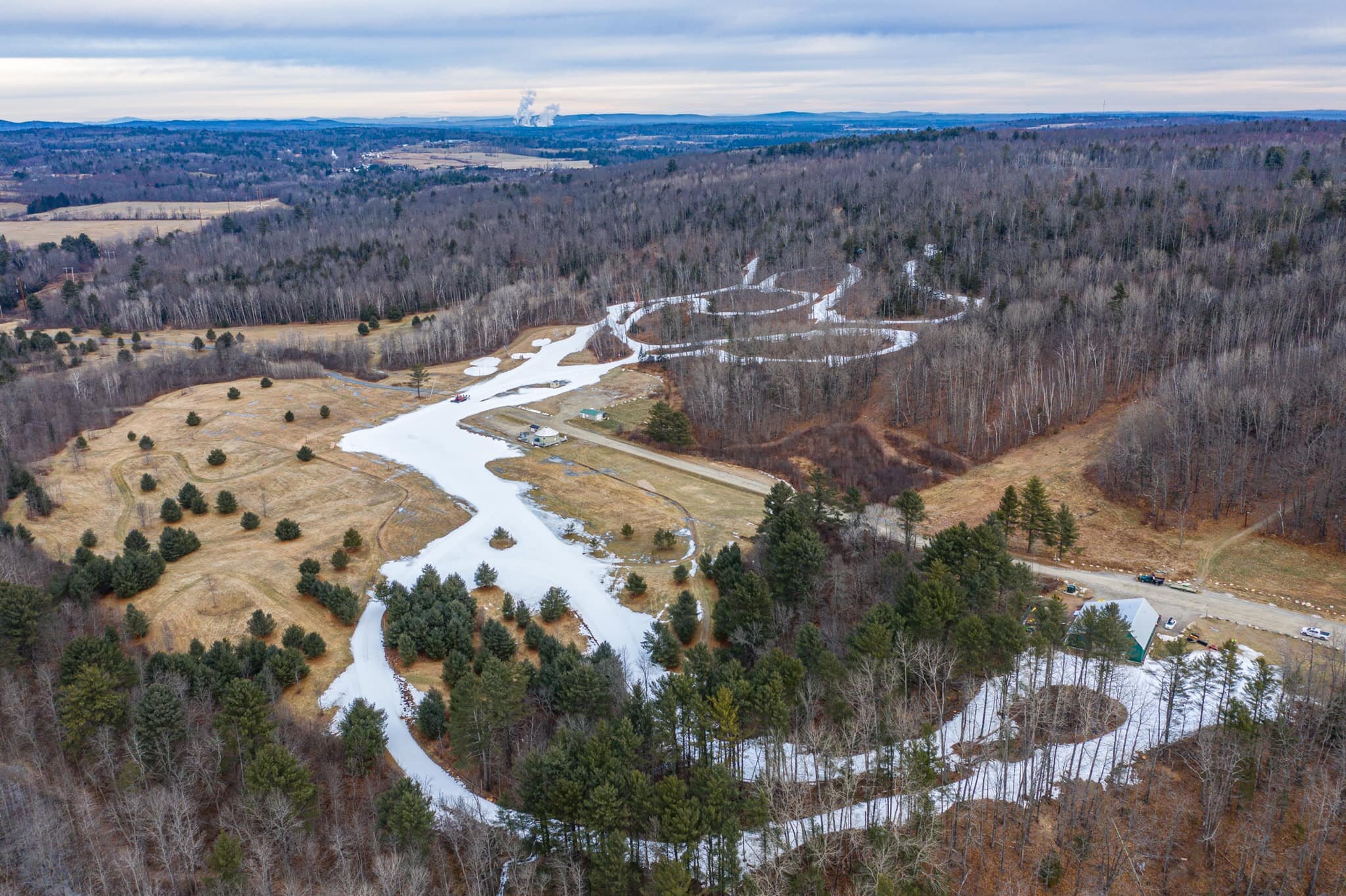
Quarry Road Ski Area in Waterville, Maine, which sports a snowmaking loop that is increasingly relied on during lean New England snow years. (Photo: Friends of Quarry Road)
FS: The regulatory framework that is being developed for PFAs looks similar in scale to those previous sets of chemicals that we now look back to in the history of Environmental Policy as a watershed. DDT was the subject of Rachel Carson’s Silent Spring. The Toxic Substance Control Act (TSCA) was a result of concerns around PCBs. What do you think that will look like?
GC: I still think it’s impossible to say, we’ve only really started to understand the scope of the problem in last couple of years. The recent study finding it’s in something like 80% of water supplies in the United States, like that changes the whole scope of action. State-by-state US action won’t be super effective, this has to be federally regulated by the EPA (Environmental Protection Agency). The European Union (EU) has been looking at a total ban, and even there, the debate over how capricious the definition of what constitutes this class of chemicals is forcing delays and opposition.
What I think you can say for sure is that regulation is coming, and so, it would be smart for the ski industry to get ahead of it. It’s still, in the grand scheme of things, a very small contributor to the problem. When we’re eating food that contains PFAs in levels that are similar to what we found leached into the water supplies, even a total move away isn’t going to solve the health risks for skiers, but it will remove the additional risk to PFAs exposure that has been part and parcel to being active in the sport for many years now.
FS: We’ve touched on the ethical concerns posed to the ski community, but I was wondering what you see as being special concerns to our community that you may not see elsewhere with PFAs?
GC: The hopeful thing is I think by nature of having to think about the impacts of climate change on the sport, and other environmental concerns, skiers are probably pretty well equipped to understand the far-reaching impacts that doing something directly damaging to the environment like using fluoros in your wax has. There is a few though I can think of…
One is that by the nature of where snowfall accumulates, skiers have an outsized impact on the water supply putting PFAs into the snow. In Waterville, we’re maybe in the middle of our watershed, but especially in the West…
FS: If you don’t mind, I’ll use myself as an example here. I’m in Crested Butte, Colorado, where the snowfall at 9,000 feet on the western slope has a direct impact on the water supplies as far away as California…
GC: Perfect example.
FS: There’s also the different communities from your own that really covers.
GC: Yes, that’s part of what makes this an Environmental Justice issue. Think about the wealth concentrated in the ski community, and if it’s having a direct negative impact on agricultural communities, that is only worsening persistent problems of inequality.
It all comes back to the fundamental truth about the environment we are a part of. Even when we are doing the activity that takes us away from the concerns that we have to think about way off in some other place, we still have an impact. I think there is a lot to consider there as skiing looks towards the future.
Colby College skier Rose Clayton cleans ski base at Senior Nationals in Soldier Hollow, Utah in January 2022. (Photo: Colby College Ski Team)
As the largest NCAA circuit in the nation prepares for a return to a full schedule, anticipation, anxiety, and lessons from a pandemic year abound in New England.
Carnival, as a noun, has perhaps had its moment. We’ve been building towards ennui, not excitement, for nearly two years now. Maybe it’s time to dispel the anticipation, let the moment fade, and let “Carnival” go along with it.
But then again, calling a collegiate race circuit a “carnival” has always been a bit old-timey. One of those New England-isms – like calling your town park a “common.” My alma mater Colby College hasn’t had a winter carnival, festival, ball, or snow sculpture on its grounds in years. Those memories are confined to dusty old photographs hung in student unions throughout New England — all distractions from another time. Nonetheless, in January eleven New England schools will gather at Colby to start the NCAA collegiate racing season, and it will be all jubilation, camaraderie, and competition. There will be the return of the possibility to mark time by the traces of human emotion that linger on in memories, rather than case counts and travel restrictions.
All-too-well then, that Colby will still call it a Carnival.
The Eastern Intercollegiate Skiing Association (EISA) Carnival circuit is set to return to a full calendar on January 14th-15th, 2022 after a season that saw heavy modifications in response to the COVID-19 pandemic. With it comes lessons learned, appreciation, and excitement from both athletes and coaches across New England.
The 2021 Carnival Circuit
The EISA last year could, at its best, be described as disjointed. Each team was subject to individual state COVID-19 policies — in a region with a lot of states — on top of their own institutional policies. Vermont teams couldn’t travel outside their state for competition due to state restrictions. Colby couldn’t travel out of Maine per school policy. Many of Harvard and Bowdoin’s skiers weren’t on campus at all for the fall or spring semester. Some skiers were being tested daily, others twice a week. The means and ends were shifting constantly.
Athletes responded in different ways. Some pressed on with their education and their athletic career. Some re-evaluated and decided that enjoyment in skiing could be found elsewhere. Others chose to compete in their home regions towards skiing goals separate from the NCAA ranks.
For one, Foss Kerker, who is serving as Colby College’s team captain this year and will graduate in January, the missed season was serendipitous. A shoulder injury left him unable to race what was set to be his senior year, and so he decided to focus on recovering, training, and looking forward to this season. After taking the semester off, he returns this year feeling renewed, saying in an interview with FasterSkier that “On the whole, I am more grateful for skiing and ski racing. Not being able to ski or race last winter has made me refreshed and just excited to get out and race in the fun and competitive environment of the EISA, whatever the results might be.”
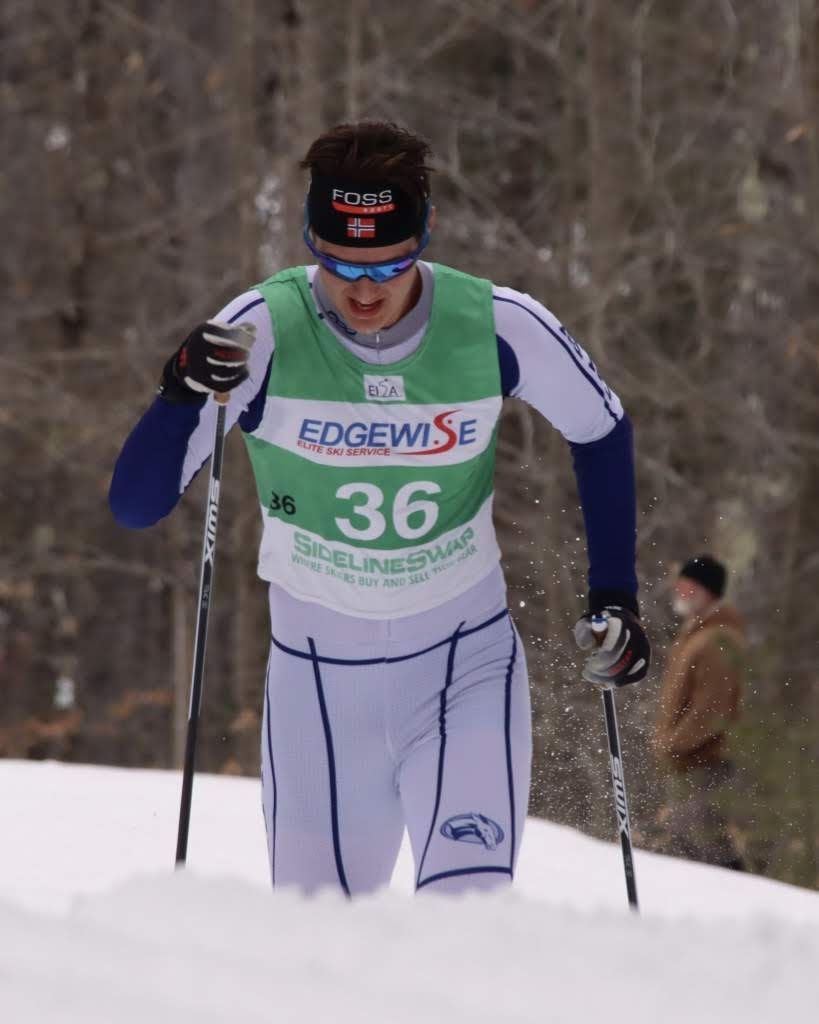
Foss Kerker attacks a climb at the last Colby Carnival, held at Quarry Road in Waterville, ME in Jan. 2020. (Photo: Gary Solow)
Gratitude for Skiing and Ski Racing
Kerker extends this newfound sense of gratitude to how he is helping prepare the Colby team to race. It has been an anecdote to the quick and rapid changes precipitated by the pandemic in skiing, in the world, and in life. As Kerker reflected:
“[Coach] Tracey has talked a lot about this recently – not knowing what is going to happen with schedules, conditions, or travel was something that was really hard to deal with before. That has sort of become the default now and being able to go with the flow and continue to perform is something that is only going to help us in the long run.”
Colby head coach Tracey Cote also touched on how the return of the traditional run-up to the EISA carnival season has helped her team build off of the flexibility that was required in training last season, saying in a response to the author via text that “I’m really excited about my team as we’re off to great start with our Canada training camp and the first Eastern Cups on our home course at Quarry Road.”
As other coaches look back at their own takeaways from last year, the lessons all point back to a re-centering of their roles around the joy of skiing.
Becky Woods, head coach at Bates College in Lewiston, ME, said her team now has a sense of how “important [it is] to embrace opportunities when they are put in front of you, and we see this season as a great big opportunity to come together, race fast and have fun on skis!” While Molly Peters, head coach at St. Michael’s College in Burlington, VT stated that “we appreciate every day we can practice and every opportunity we can race!”
Peters also added that this re-found joy has seeped into her team’s race preparations. “The team spent a lot of time backcountry skiing and having fun on skis last year. We will definitely keep these fun days this winter to take a step back and remember what it’s all about. Fun!”
In a way then, the year off from the carnival circuit looks only to have added to its carnival spirit. With that sense of joy, the EISA looks ready to maintain its traditions and do as its skiers have always done, make the sport fresh and exciting.
The women’s field, headed by (from L to R) Katharine Ogden (DAR), Margie Freed (UVM), Annika Landis (MID), and Alexandra Lawson (MID), heads out on course at the last Harvard Carnival, held in Craftsbury, Vermont in February 2020. (Photo: Gary Solow)
A New Field with New Faces
That strong spirit though, is accompanied by a sense of anxiety. This is, after all, a different group of skiers than the one that finished the last full EISA carnival at Middlebury in February of 2020.
As Williams College Assistant Coach Annika Martell responded to the question, “How do you think the carnival circuit will look differently this year than it did before the pandemic?”:
“Besides half the field being new to the eastern racing circuit?!? There will be a lot of new faces for sure!”
She has a point.
Martell is uniquely positioned in the EISA. She finished the last full Carnival in 2020 as an athlete with Colby, and now will start the first full Carnival in 2022 as a coach with Williams.
Annika Martell, Colby alumnus and current Williams Assistant Coach, racing at the Williams Carnival, held in Lake Placid, New York in 2020. (Photo: Gary Solow)
Two classes of graduates since the pandemic began, along with athletes like Kerker who have remained on the circuit longer than the traditional four years, mean a shakeup in who is on the circuit, and how familiar they are with one another.
Martell thinks that while this doesn’t change the way that athletes have prepared themselves for the season – the training hours are still high, the periodization the same – but it does change how an athlete might evaluate their performances.
“I’m excited because all sense of expectations have been dismantled with two new class years and a year of not being able to really race each other,” Martell said.
That lack of preconceived order in the field – which individuals and which teams fall where – provides opportunity, but also a unique variable. As Bates coach Becky Woods stated, “[This] brings some challenges as we’ll really have to evaluate performances from a new perspective. Relying on past results is not a method we can really use this year because so many had to take time away from racing.”
That leaves the forecasted results nearer to an unknown than they have been in past seasons. Without continuity comes a chance for individuals to reach with tenacity, grit, and discipline for top placings, without the hesitation that might come from lining up next to more experience collegiate racers whose resume’s have been followed. This combination promises to introduce new characters into the mix of the top collegiate ranks.
Still Not “Normal”
Of course, amidst overcoming many of the obstacles the pandemic has presented looms the reality that we haven’t yet overcome it. The EISA returns not because COVID is gone, but because the organization has been able to put into place substantial measures to control the spread of the virus while engaging in competition.
Martell reflected on this, pointing out that some of the energies that add vibrance to the Carnival circuit will still have to be subdued.
“Prior to the pandemic, I think there was a lot of organic inter-team bonding,” Martell explained. “Athletes had their home, region and team friends that all got to socialize in a unique way that other sports don’t experience. But out of an abundance of caution and in order to keep everyone safe and healthy, there may be slightly less mask-less mingling than previous years.”
That will leave a Carnival with its core intact, but with less of the frills that tend to animate the EISA from week-to-week.
The energies will still be there in some form. There will still be the warmth of seeing friends from far-and-wide all together in the New England woods, the glimpse at the future of US skiing that the top-end of the Carnival circuit consistently provides year-after-year, and of course, the good ol’ fashioned collegial competition whose atmosphere can be best described as, well, collegial.
They may come attached to signs of the time though. Masks to keep each other safe, shouts from slightly further off the v-boards along the sides of the trail, and Carni Crushes (an annual Valentine’s Day tradition whose details will be left fuzzy here) that this year will no doubt include a couple of really bad puns regarding something about social distancing.
Scenes from the sidelines at Bates Carnival in 2020, with Bill Kerker making sure no one lets hunger get in the way of the festivities. (Photo: Gary Solow)
All of those involved, especially those that have spent the most time on the EISA carnival circuit — the coaches — are adjusting to this world in a way that will keep the timeless camaraderie of the circuit alive. As Becky Woods says, “Health and safety first. Always. We certainly focused on that in the past but it has taken on a new level of urgency.”
The best summary though, of what has carried the Carnival Circuit through the pandemic and into its return this year may come from the coach on the EISA Circuit who’s had to transition and grow along with it. Martell ended her reflections by saying that she “[feels] well-equipped to empathize and connect to athletes and what they have been dealing with over the last few years.”
And what we’ve all been dealing with. It’s a poignant message that anticipates the jubilee — the Carnival — that ski racing brings.
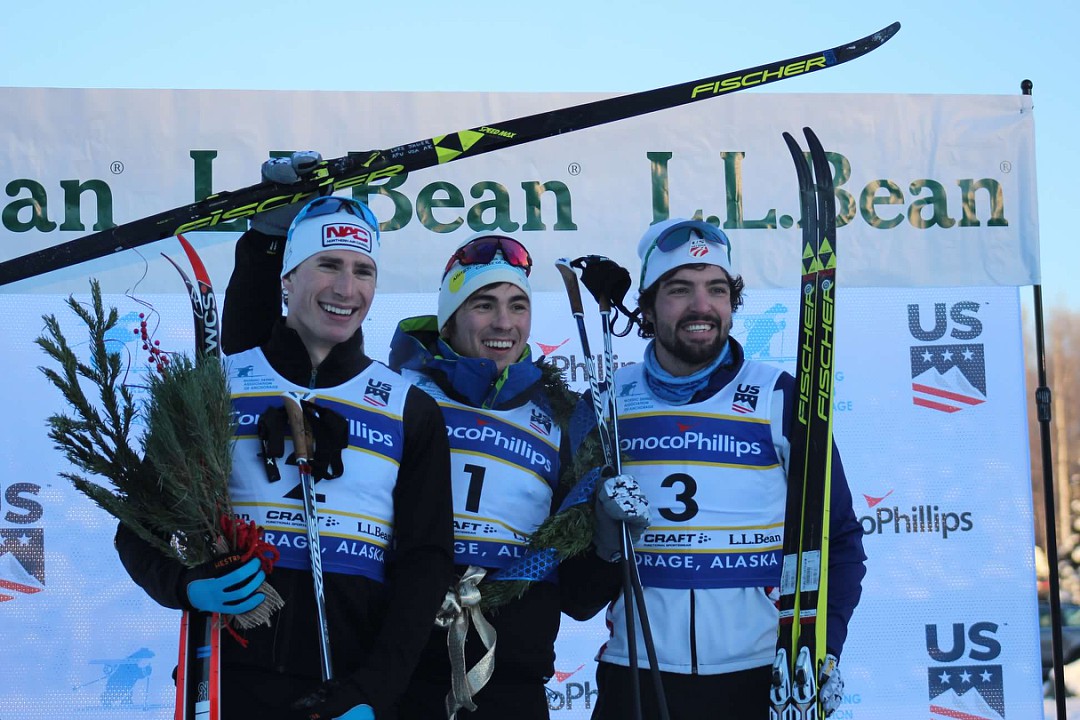
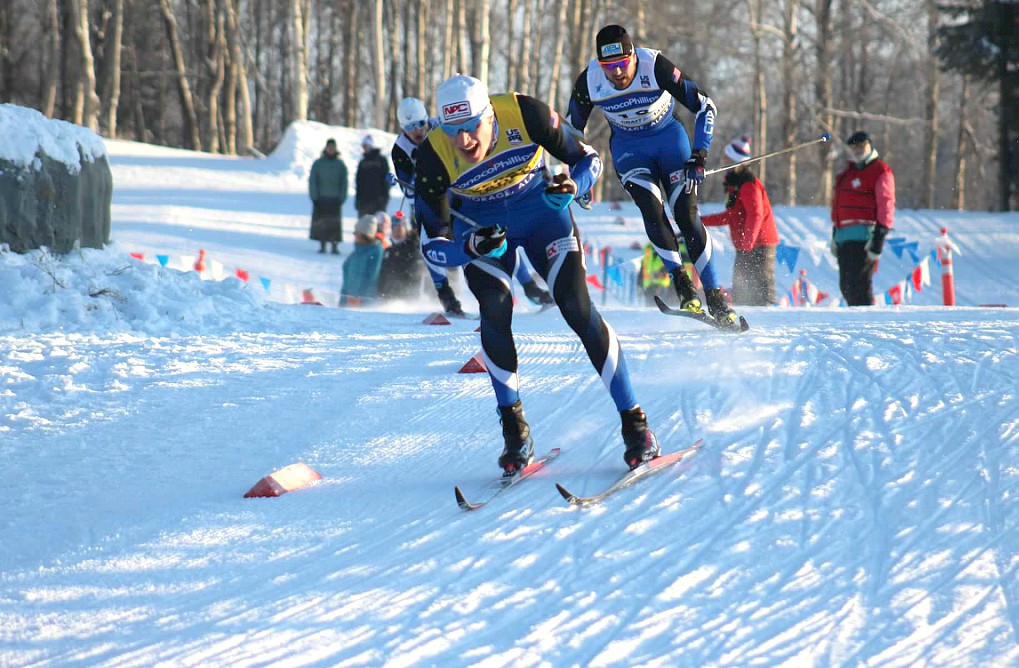
Left to right: Tyler Kornfield (APU), Reese Hanneman (APU) and Ben Saxton (SMS) as the top three finishers in the men’s 1.6 k classic sprint final on Monday, the last day of 2018 U.S. Cross Country Championships in Anchorage, Alaska.
ANCHORAGE, Alaska — No two races are exactly alike, the saying goes, and there’s a lot of truth to this cliché. But if you step back just a little bit, two race days can start to look awfully similar to one another.
For example, for the second time this week, a Hanneman brother won the sprint qualifier, Reese Hanneman won the final, and Alaska Pacific University (APU) put three athletes in the final and two on the podium on a perfect day for sprinting at Kincaid Park. That was the story on Monday, when Reese Hanneman led teammate Tyler Kornfield and Ben Saxton of the Stratton Mountain School (SMS) Elite Team across the line in the men’s classic sprint at 2018 U.S. Cross Country Championships. But it was also the case on Friday, when Reese was first and Kornfield was third in the freestyle sprint. It’s been a good week for the Hanneman family.
The classic sprint, the final race of this year’s U.S. nationals, had a slightly more subdued feel than the three that preceded it.
The fields were 50 percent smaller; a combined 160 athletes skied in the qualifier on Monday compared to 337 on Friday, as many juniors opted out of a race whose results did not bear on qualification for international trips and championship teams, and some athletes had already left town. The spectator numbers were smaller, measuring in the dozens rather than the hundreds after three days of packed parking lots and raucous crowds, as the first day of school following winter break sent local students back to the classroom. And the athletes were tired, too, after a full week of racing.
“I was just running on fumes out there, especially after the 30 k yesterday,” fifth-place finisher Kevin Bolger, of the Sun Valley Ski Education Foundation (SVSEF) told FasterSkier after the men’s final.
But cross-country skiers are nothing if not resilient, and so, just after 10 a.m., Dakota Blackhorse-von Jess (Bend Endurance Academy) once again led 95 men out onto the qualifying course at 15-second intervals. The temperature was 10 degrees Fahrenheit, according to the display on the stadium scoreboard. The sun had yet to rise and start burning off the morning’s dense fog. It felt cold.
“It’s a very quintessential Alaskan day,” women’s domestic podium bronze medalist Becca Rorabaugh (APU) said after. “It’s like an Alaska temperature, and I feel like a lot of the Alaskan teams have great skis, it’s hard-wax skiing, and it’s just a classic race day. It’s very Alaskan.”
Hanneman Brothers Headline Qualifier
https://www.instagram.com/p/BdsyQTkB945/
APU skiers did very well in the time-trial portion of the morning, which has added, if not exclusive, significance for Olympic qualifying purposes slightly a month before the 2018 Winter Olympics begin in PyeongChang, South Korea.
Reese Hanneman, 28, who grew up in Fairbanks, covered the brand-new, 1.6-kilometer sprint course in 3:21.93, a time good for the fastest qualifying mark on the day. And he did so by nearly three seconds. Next best was his APU teammate and younger brother, Logan Hanneman, 2.84 seconds back. Third was his APU teammate Tyler Kornfield, 4.23 seconds off Reese’s mark.
Alaska Pacific University’s Reese Hanneman during the men’s 1.6-kilometer classic sprint heats on Monday at 2018 U.S. Cross Country Championships in Anchorage, Alaska. Hanneman won the qualifier and eventually, the final for the national title.
In light of the bonus points awarded for U.S. nationals podium performances, FasterSkier’s unofficial calculations put Logan first on the 2018 Olympic Winter Games domestic sprint qualifying list, with 80 points (45 for first at U.S. nationals and 35 for second), and Reese second, with 71 points (45 for first and 26 for third).
In Monday’s classic sprint, Benjamin Ogden (SMS) was fourth in qualifying, 5.12 seconds back. Blackhorse-von Jess was fifth (+5.16), Zak Ketterson of Northern Michigan University sixth (+7.56), Cole Morgan (SVSEF) seventh (+7.61), David Norris of APU eighth (+7.85), Saxton ninth (+7.88), and Bolger tenth (+9.09).
Just like the skate sprint, Brian Gregg, of Central Cross Country (CXC), Loppet Nordic Racing (LNR) and Team Gregg, was the final athlete to make the heats, 16.53 seconds back in 30th.
“I would say all the top sprinting guys, everyone’s focusing kind of on the qualifier, more so than normal,” Reese said on Friday after he had qualified third in the skate sprint. “There’s no margin for error, and you just have to ski it absolutely as fast as possible. It’s definitely different tactics than in the heats… but if you’re fast, you’re fast.”
Reese Hanneman Wins Everything En Route to Final
On Monday, Reese was pretty darn fast. He won his quarterfinal, the first of the day, as well as his semifinal, the first of the day, to make the final with the maximum amount of rest possible. And then, of course, he won the final as well for his fourth national title — and second of 2018 nationals.
In the day’s first quarterfinal, Reese was in the lead by the first turn at 200 meters, followed closely by Bolger. The two of them had a big lead by the time they were coming off Gong Hill. The rest of the field caught up to them somewhat by the finish, but Reese and Bolger still took the top two spots with relative ease.
In the second quarterfinal, U18 skier Ogden led the field into the first turn, with Morgan and Bill Harmeyer, of the University of Vermont, right behind. Ogden was still into the lead coming back into the stadium, but Kris Freeman (Caldwell Sport) had caught up into third. Coming into the finish, Freeman won a four-way lunge for second over Thomas O’Harra (APU), Ben Lustgarten (CGRP), and Harmeyer. O’Harra’s third place in a fast heat was good enough to send him on to the semifinals with the day’s first lucky loser spot.
In the third quarterfinal, Andrew Egger (Colby College) took the lead out of the stadium, but it was Blackhorse-von Jess in the top spot by the time they came back. Blackhorse-von Jess entered the finishing stretch with a 10-meter lead. Ketterson took second, 1.2 seconds back, with Egger another second back by the finish.
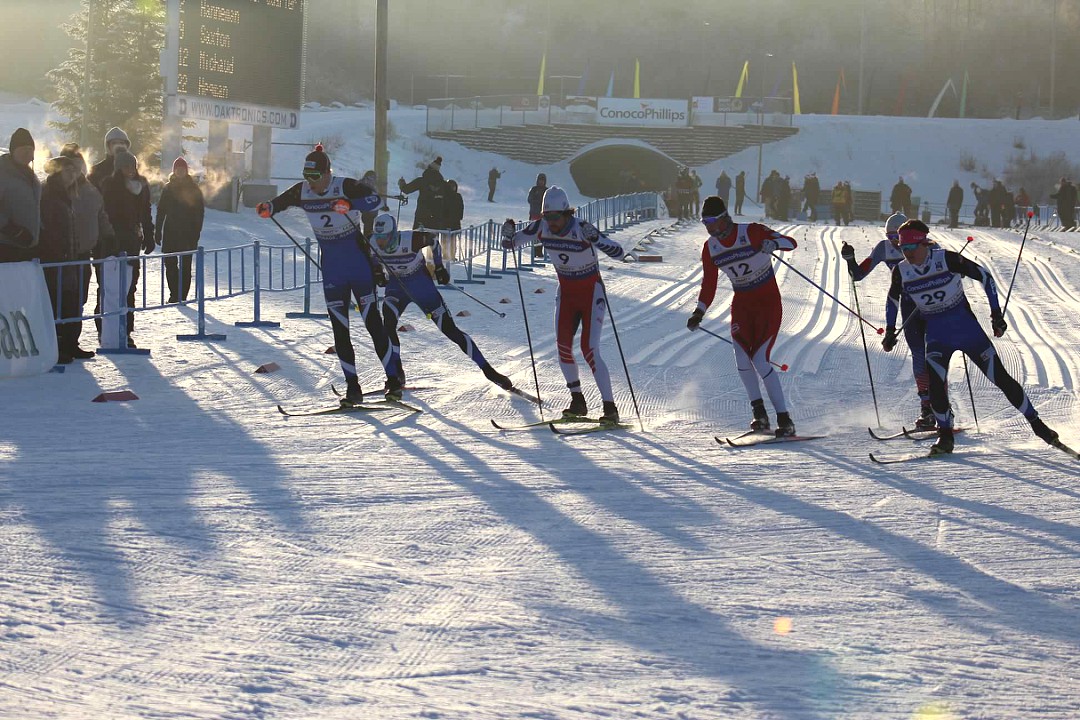
From left to right: Logan Hanneman (APU), Like Jager (APU), Ben Saxton (SMS Elite Team) Nick Michaud (BSF), Scott Patterson (APU), and Jack Hegman (SVSEF) at the start of their quarterfinal in the men’s 1.6-kilometer classic sprint on Monday at 2018 U.S. Cross Country Championships in Anchorage, Alaska.
In the fourth quarterfinal, Saxton and Logan Hanneman left the stadium with the early lead, alongside a quick-starting Luke Jager (APU), one of three U18 skiers who made the senior heats. It was Saxton in the lead coming back to the stadium two minutes later, with Logan leading Jager. Saxton came into the finishing stretch with a healthy lead, but Logan made a powerful move to pull around him and come alongside. Saxton won the heat by 0.37 seconds over Logan. Yesterday’s medalist, Eric Packer (APU), was out in third.
The fifth quarterfinal was heavy on local pride, with three APU skiers and a fourth from University of Alaska Anchorage. Erik Axelsson (Montana State University) led Kornfield and Logan Diekmann (University of Utah) into the first uphill. But two minutes later it was all APU, with Kornfield, David Norris and Forrest Mahlen with a sizeable lead on the rest of the field. Kornfield took the win; Mahlen came around Norris for second, but Norris moved on with the day’s other lucky loser spot. Axelsson was nearly five seconds back of Norris in fourth.
In the first semifinal, Blackhorse-von Jess flashed his ski speed and momentum by dropping into a tuck within the first 200-meter straightaway in the stadium, then still led the field over the top of the first, smaller climb. Ogden and Reese Hanneman were nearby. When they returned to the stadium, Reese had a 20-meter lead over Ogden on the downhill. As happened throughout the day, though, that lead shrank to half that size by the time the skiers entered the finishing stretch. But Reese still had the lead, which he held to the finish. Bolger was second, 0.32 seconds back. Ogden was relegated for obstruction.
The second semifinal featured a predominantly blue color scheme, between four suits from APU and the blue accents on Saxton’s SMS suit. Saxton again led out of the stadium, with Ketterson and Kornfield close by. By the time they came off Gong Hill two minutes later, it was Kornfield in the lead, with Ketterson close behind him. Kornfield led into the finishing stretch, but Ketterson overtook him to place first in the heat.
Behind them, Logan Hanneman made a strong push for third. He closed down Saxton, edging him by 0.04 seconds for third behind Ketterson and Kornfield. In practice, both Logan and Saxton advanced to the final as lucky losers; Norris’s fifth place in this heat would have won the day’s first semifinal by nearly a second.
Reese Hanneman Wins Final, Again
Slightly after 2 p.m., six men lined up in the south end of the Kincaid Stadium. From racer’s left to right, it was Logan, Kornfield, Ketterson, Reese, Bolger, and Saxton in the starting blocks. The sun was out, the temperature was in the high teens, and the course was firm and fast. There was no wind. Conditions were once more basically perfect.
The field had a clean start at the sound of the starter’s pistol, double poling in six separate lanes over the first 200 meters slightly downhill through the stadium. As the racers turned right to go up the first hill it was the Hanneman brothers in the lead, with Kornfield immediately behind them and Ketterson to Kornfield’s right. The pack double poled up the first part of the climb, then strode up and over the top of the hill.
A quick descent followed, then a high-speed, double-pole section leading to the start of the course’s main hill. Reese pushed the pace going up the hill, and not everyone was able to respond.
“I basically started at the base of the big climb,” Reese recalled of the 24-meter vertical gain B-climb in the middle of the sprint course. “I just kind of led in the climb and then just threw down the hammer and just tried to drop everyone going up that thing, and just continue to pound it over the top and take it all the way home.”
The largest climb on the course is “tough for classic skiing,” Bolger explained. “That hill definitely adds a different dynamic to your whole approach to every heat you do. To be able to ski up that hill four times, strong, it’s a challenge.” (Bolger added that he didn’t think anyone would have attempted to double pole a hill of that size, saying that “it’s a challenging enough hill to where it’s going to rule out double poling for anyone.” But just to be sure, race organizers placed a no-double-pole technique zone up the entire length of the climb for both the qualifier and the heats.)
By the time the field descended the waterfall downhill back into the stadium, Reese had a substantial gap over Kornfield, who in turn had a sizeable lead over Ketterson.
Kornfield made up some of this gap going down and around the final 180-degree turn, but Reese still entered the final straightaway with a sizeable lead. Saxton had moved into third, ahead of Ketterson, by the time they reached the 100 meters to go mark.
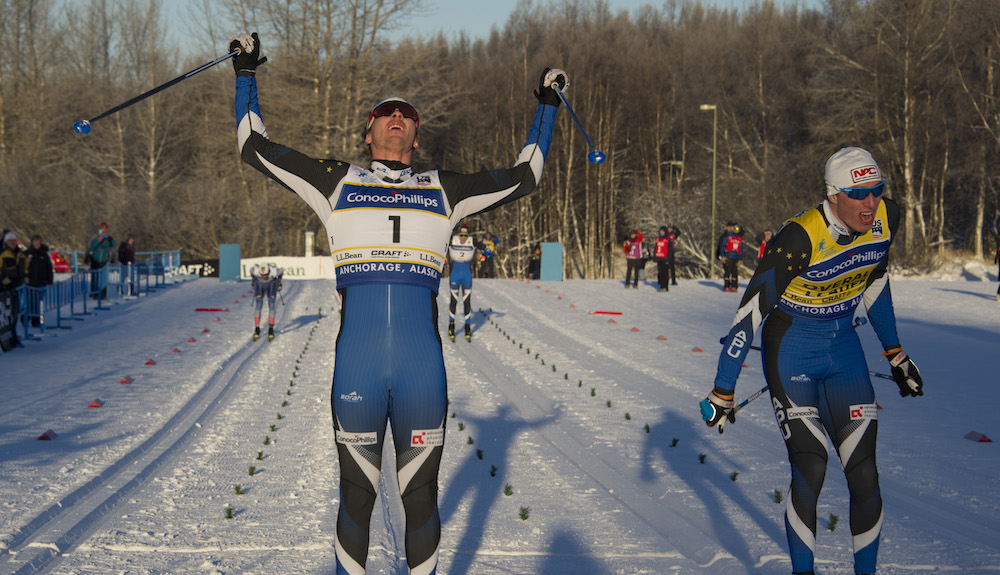
Reese Hanneman (1) of Alaska Pacific University celebrates his second sprint title of the 2018 L.L.Bean U.S. Cross Country Ski Championships on Monday with a win in the classic sprint final, just ahead of teammate Tyler Kornfield (r) in Anchorage, Alaska. Ben Saxton (SMS Elite Team) rounded out the podium in third. (Photo: Michael Dinneen Photography)
Kornfield barreled down the slight uphill of the finishing straight with grace and fury, closing in on Reese with each extension of his lanky frame. But he was still in the same finishing lane as his APU teammate, getting closer to Reese, but still immediately behind him. With roughly 20 meters to go, Kornfield moved one lane to his left, then lunged as he approached the finish. But Reese’s lead was still too much, and he crossed the finish with his second sprint national title of the week.
Reese’s time for the final was 3:20.62. Kornfield was 0.2 seconds back in second.
Some distance behind them, Saxton crossed the finish line in third, 4.78 seconds back of Reese, with a slight lead over Logan and Bolger. Ketterson finished sixth, 6.83 seconds back, in his second sprint final of the week.
“He is obviously on super-good form right now,” Reese continued. “I just have to know that I have a little more speed than he does. … But he’s really cranking right now. He is skiing great, but it definitely motivated me to know to just drive that thing so hard in the final.”
The second national title in as many races was “an answer to a lot of prayers from this morning and in the heats,” Reese said. “I just feel really lucky and stoked that I could put it together and be in such good form right now in January. It was a great day, an amazing day.”
Tyler Kornfield leads his APU teammate Forrest Mahlen in the men’s 1..6 k classic sprint on Monday at 2018 U.S. Cross Country Championships in Anchorage, Alaska.
Although Kornfield was second today, he “probably got the all-around performance of the week for the men,” Reese said of his teammate. Kornfield reached the podium in every race this week save the opening 15 k freestyle individual start, where he was 14th.
Kornfield’s race series was “a dream come true a little bit,” Kornfield told FasterSkier, “a little unexpected, but I knew I had it in me. The start of the season didn’t go as planned, I got sick for a month before it started, I also sprained my wrist for another month and so I was pretty frustrated with the lack of performances, but I knew there was something there and it was just a matter of time.”
“In this sport there are a lot of ups and downs,” he continued, “and it’s really easy to get caught up in the downs and not realize that just because you have a few bad races doesn’t mean you lose your ability to succeed, so just have to keep your head up and keep trying and hoping for the doors to open.”
When it comes to possibilities for potential Olympic selection, “I don’t know anything,” Kornfield said. “I can let you know in a couple weeks.”
Mathematically speaking, Kornfield currently ranks second to APU teammate Scott Patterson on the most recent version of the Olympic selection distance points list, which reflects both distance races from U.S. nationals.
For now, Kornfield plans to leave Alaska on Tuesday (that is, today) for a previously planned trip to Austria. He plans to work out precisely what races he will contest soon; he had planned on racing a Ski Classics marathon, but is currently uncertain where he will be racing next.
While Kornfield’s week at U.S. nationals exceeded his expectations, Monday’s third-place finisher, Saxton, didn’t have the week he was hoping for.
“I came here, like many people, with goals of heading to Korea and representing the country racing in the Games,” Saxton said after the final. “I fell short of that this week and that’s nothing to be ashamed of, but I was really disappointed I wasn’t in the mix as much as I would have hoped to be. This week was difficult because I don’t feel like I put forth a representative effort.”
Saxton was quick to offer sincere congratulations to the skiers who had had more success this week.
“I am incredibly proud to know and am happy for Logan and Scott and Reese and all of the other champions from this week,” he said, “and incredibly happy that those are going to be the skiers going to over to represent us. I think it’s just, from a personal standpoint, people can understand I was disappointed not to feel like I had my absolutely best days out there, but I am really proud to end the day on a podium, representing the hard work that all my teammates and my coach and the program at Stratton have done all year, and to reward them for that work and that effort is a great feeling.”
Saxton also enjoyed the “playground mentality” of the sprint day.
“I think a lot of the times racing we can get lost in the technical aspects of it,” he mused, “but one of the reasons I love racing heats so much is, it just kind of reminds me of being back in elementary school and pointing to something in the far end of the playground, basketball hoop, or whatever it is, and just saying, ‘Let me race you there.’ And there’s no rules, there’s no anything, it’s just the feeling of you and the other person just going all out, and that’s a beautiful way to live and that’s a beautiful way to compete, and sprints are a wonderful thing like that.”
Strong Alaska Performances Throughout the Week
What a difference a year makes. One year ago this week, in the classic sprint at Soldier Hollow, APU didn’t put any athletes into the heats for the first time in at least a decade, done in by a combination of illness, seeding, weather conditions, and wax choice. This time around, head coach Erik Flora’s squad sent eight men through to the heats, six to the semifinal, three to the final, and two to the podium.*
The classic sprint capped a successful week for APU, and for Alaskan skiers more generally. Caitlin Patterson, who skis for CGRP, took all four gold medals for the women. Then APU skiers took all four golds on the men’s side, between Scott Patterson on Wednesday, Reese on Friday and Monday, and Kornfield on Sunday. Chelsea Holmes, Kornfield again, Hannah Halvorsen, Rosie Frankowski, Eric Packer, Becca Rorabaugh, and Kornfield again also stepped on the domestic podium for APU. All told, that’s 15 out of a possible 24 medals going to athletes who hail from or ski in Alaska.
(Although if you slice the data another way, there were also seven out of 12 possible medals in women’s races won by CGRP, between Patterson’s quadfecta and Kaitlynn Miller’s trifecta.)
This week’s results “just show the depth” of the team, Reese told FasterSkier after his race. “It speaks to the hard work of our coaches, especially Erik Flora. That guy will not be outworked, he just puts so much into us. I’m just really happy that we can have a week like this and go four for four in the men’s with APU, just to show that what he is doing works and how hard he works for us. … To get to this point that we can do that and crush all week and just give them a good show is really rewarding.”
“We’re all Alaska born-and-raised,” Reese added of the APU men. “Can’t beat that.”
*(Full disclosure, this reporter skis on the APU Masters team, and receives direct coaching from Flora roughly once a year at Masters Camp.)
In Part III of “The Road to Jackson”, we hear from Colby College’s Olivia Amber, Amy Bianco, Silas Eastman, and Zane Fields, all of whom qualified for NCAA Skiing Championships, which open Thursday at the Jackson Ski Touring Center in Jackson, N.H.
“NCAA’s to me, is just kind of that icing on the cake, one last time to give it your all, just do it for all the years that we put so much work into this sport and just enjoy it.”
Colby College President William D. “Bro” Adams skiing at the Quarry Road trail system on Saturday. Photo, flyingpointroad.com
Forget wrangling over curricula and departmental budgets—Colby College President William D. “Bro” Adams had some real problems to contend with this weekend.
Namely, his pair of Peltonen classic skis, which were not cooperating with some tricky snow conditions as Adams made his way around a 2-kilometer loop at the Quarry Road recreation area in Waterville, Maine.
“I think we missed the wax a little bit,” Adams said.
As the ceremonial forerunner for the first-ever collegiate competition at his school’s new home trail system on Saturday, Adams was a Colby White Mule without kick. But the spandex-clad 65-year-old didn’t let that—or a less-than-presidential pair of ski boots—diminish his enthusiasm for the event.
“We had a great time,” he said in phone interview Sunday night. “It was a big-time scene, and seeing all those skiers, and all that excellence, in this little place right nearby—it was really thrilling.”
Adams with Colby ski coach Tracey Cote. Photo, flyingpointroad.com
As for his athletic endeavors on Saturday, Adams’ plight was made somewhat more manageable by the fact that his forerunning companion—Colby ski coach Tracey Cote—was also grappling with some recalcitrant equipment.
She had grabbed the wrong pair of skis, and consequently had even less purchase on the climbs than Adams.
“Bro was just killing me on the uphills,” she said.
Adams, who raced cross-country at his New Hampshire high school, maintained that his pace was not testing Cote’s fitness. Nonetheless, he added, the crowd enjoyed watching.
“There seemed to be pleasure that I was out there—I know it meant a lot to the Colby team,” he said.
Despite the waxing problems, Adams said that the Colby coaching staff did not have to worry about its job security.
“If I was racing, I might have been upset, but I wasn’t racing,” he said.
One thing he would change, however, was his pair of ski boots, which broke as he was putting them on and had to be held together with duct tape.
Cote said that the event organizers also had learned a few lessons from the first set of races run on the new trail system—some snowmaking problems cropped up, as well as a few injuries, including one that left Colby’s top male skier with a broken finger.
“We’re kind of questioning some things, but until you run races, you don’t know where the issues are,” Cote said. “I think things will only get better from here.”
Adams’ performance, though, will be tough to top.
“To have a college president put on a full spandex suit and ski a course is just crazy,” Cote said. “He’s just an amazing guy—I’m really impressed.”
Colby College President William D. “Bro” Adams will be a forerunner at the Colby Carnival this weekend. (Courtesy photo)
It’s a safe bet that Colby College’s first starter at one of its home races this weekend will not finish in a time that’s fast enough to keep his spot on the team.
But, cut the guy some slack: he’s 65 years old, and he has a few other things on his plate.
Colby President William D. “Bro” Adams will be forerunning one of the first-ever competitions at the Quarry Road Recreation Area in Waterville, Maine, this weekend — his way of punctuating the completion of a trail system that he hopes will be a draw for both his college and the surrounding community.
Adams, who cross-country ski raced for his New Hampshire high school, said he’s looking forward to the challenge — he just wants a decent head start.
“I don’t know how much time they give the forerunners, but I don’t particularly want to be lapped by the field in the first two minutes,” he said in a phone interview. “Hopefully, I’ll be upright, and working hard, and having fun.”
Adams, who started his term as Colby president in 2000, has been an enthusiastic booster of the school’s cross-country ski program for years, occasionally riding his road bicycle with team members and, once, he said, even competing in an end-of-season time trial.
“That was pretty embarrassing,” said Adams.
He has also made a habit of cross-country skiing once or twice a week during winters on the school’s converted running trails, which go right past the president’s house.
Under Adams’ direction, though, Colby has invested what he said was close to $300,000 in the development of a big upgrade, in the form of the 10 kilometers of new race trails at Quarry Road.
The project had several other big donors, but the college’s role in developing the system was instrumental, according to Pat Cote, the former director of the New England Nordic Ski Association whose wife, Tracey, coaches the Colby cross-country team.
“I think everyone would agree that there were several close-to-dead-end points in the project where Colby came in to save the day,” Cote said.
The Cote couple was out skiing with Adams earlier this winter when, Pat said, it occurred to them to float the forerunning idea.
“It’s the first major event, and Bro personally, hugely supports the project,” said Cote, who is acting as race director this weekend. “He stays in great shape. He’s not going to be setting the course record, but I think people will be pretty blown away when they realize it’s the president of the college.”
Adams jumped at the suggestion. He owns a set of Colby ski team warm-ups, and said that he would even consider slipping into a White Mules spandex uniform if the Cotes supply him with one.
Coincidentally, Adams’ brother Mike is an executive at Amer Sports, the parent company of Atomic and Salomon, so he’ll be sporting those two brands’ skis and boots, as well.
Adams hasn’t yet decided whether he’ll be forerunning on Saturday or Sunday; he said he also has to make an appearance at Colby’s home alpine races at Sugarloaf in Kingfield, and attend a pair of receptions.
Regardless of the day, though, Adams clearly relishes the opportunity to promote Waterville’s new venue, which he said he’d like to see hosting even more high-profile events in the future—perhaps even a national championships.
Before any of that happens, though, he’s going to have to negotiate his way around this weekend’s race course, in front of a home crowd.
“Maybe we’ll all regret this after Sunday,” he said. “But I’m looking forward to it.”