
Tag: cold

  • Female Skiers Accumulate Airway Injury and Cough During Race Season

    Female Skiers Accumulate Airway Injury and Cough During Race Season

    Racing and training in cold weather causes airway damage and inflammation to a much greater extent for female than for male skiers.
    Racing and training in cold weather causes airway damage and inflammation to a much greater extent for female than for male skiers.

    Dr. Michael Kennedy, a researcher at the University of Alberta, is a cardiovascular specialist. He has spent time working on a variety of different projects: studying muscle oxygenation, fatigue in athletes, the relationship between fitness and injury, even the effects of caffeine.

    But recently he returned to a question which had kept him curious since his days as a wax technician with x-c.com, a Canadian senior race team in the mid-2000’s.

    “In Silver Star [early season] the big house we rented was always quiet but by the time Nationals rolled around [in March] you could hear the women hacking away while they tried to sleep,” Kennedy wrote in an email last week. “This sparked a conversation with my colleague and friend Neil Eves whom at that time was working in respiratory health… it became clear from Neil’s standpoint that the cough was not a respiratory infection, but a chronic cough much like he would see in clinical populations.”

    So last year, Kennedy and some colleagues recruited 18 Canadian women who were competing full-time as cross-country skiers, and surveyed their lung inflammation over the course of a season using a technique known as sputum sampling.

    What the team found was that, indeed, airway inflammation and injury increased significantly over course of a season in ways that were completely unrelated from the prevalence of colds and respiratory infections. By the end of the season, the cough was affecting the women’s ability to sleep and recover.

    The paper was recently published by the Scandinavian Journal of Medicine & Science in Sports.

    “We were very careful to make sure that we were investigating what we thought was inflammation and chronic cough,” Kennedy explained. “We did not test a participant at a time when they had a cold or felt they were coming down with something. It made things certainly more challenging in terms of testing, but we feel like we did a good job of not having a participant who had some sort of infection going on.”

    Kennedy explains that this syndrome is different for women and men: because women have smaller lungs, they are operating at peak airway respiration much earlier in the max-effort race or training session. That leads to greater airway damage in dry, cold weather.

    We caught up with him by phone to learn more about the study, and what it means for the health of female cross-country skiers. This interview has been edited and condensed.

    FasterSkier: So between your work on the cardiovascular system and Neil Eves’ expertise, it sounds like this was an interdisciplinary project.

    Dr. Michael Kennedy: I was always interested in respiratory issues. It’s something that lots of skiers talk about on a weekly basis.

    But yes, it really was. I know a lot about respiratory physiology because obviously the respiratory system and the cardiovascular system are deeply attached. But Neil, and working with a few key clinicians in Calgary, made it interdisciplinary. Warren Davidson, who is a respirologist, and Richard Leigh who developed the sputum analysis technique. So you put together cellular biology with clinicians and respiratory physiologists to pull off the project.

    FS: What was the process of the sputum sampling?

    MK: In our development of the project, Neil and I discussed ways in which we could explore analyzing inflammation in the lungs. Really there’s two ways you can do it. You can do it invasively through a tissue sample, so you put a scope down someone’s throat and clip off a little bit of the airway and analyze the cells within that sample. That really still is the gold standard because you have a physical tissue sample. There are some risks, and it’s very difficult on people, it’s not the funnest.

    The new technique, the sputum sample, is non-invasive. It doesn’t require being in a sterilized environment with a scope. By inhaling a high dose of what we call nebulized saline, so basically a big breath of water vapor with a lot of saline in it, which basically begins to activate and draw cells off the airway wall – by doing that, it’s like trying to scrape paint off of siding. You peel off little sputum chunks.

    Then through a deep cough that you coach the person through, you cough those out. It’s a way to basically get the same cells that you would with a physical tissue sample, without having to clip off a piece of the airway.

    FS: What were you looking for in the sample?

    MK: We went after the key inflammatory cells which would be indicative of airway injury. The key ones would be neutrophils, which are an early responders to injury, and eosinophils which are inflammatory responders. And then macrophages, which come along and are like the garbage trucks but also very involved in the inflammatory reponse. And lymphocytes which are ones that are often activators stimulating the immune system to fight the infection or the inflammation.

    FS: How did the findings link to quality of life indicators that you checked in your questionnaires?

    MK: The fundamental question was, first is there inflammation occurring that increases as you move into fall and winter month, and second, whether that leads to cough and quality of life symptoms.

    With the quality of life indicators, we chose what we believe was the most valid measure of quality of life, which is this recovery-stress questionnaire, REST-Q. We didn’t see any changes in REST-Q, because my experience with these female athletes was that they really were struggling towards the end of the season. But what we did see was certainly an increase in cough-related symptoms and disturbed sleep due to coughing bouts.

    I think what you can take home from that is that the cough is prevalent and does improve through the season, but that athletes don’t feel like athletes feel like it’s affecting their quality of life necessarily. It comes with the territory and they’re coping pretty well.

    FS: If these are longtime skiers, do you think it’s possible that they just see it as normal winter quality of life, and don’t realize that it’s abnormal?

    MK: That’s a really good point. Normal for them might be this persistent cough, and so when they fill out a quality of life index it might not seem different, even though relative to a healthy population it might be quite different.

    And I’m sure you’ve experienced post-race cough, which is frustrating and affects your conversations and you feel a tight chest and then it goes away. And you just deal with that and say, well it’s winter, that’s normal for me.

    FS: You talk about why women might be more prone to airway damage due to their smaller lungs. But because of that, women are also moving less air through their airways, right? So how does that work?

    MK: It’s an interesting phenomenon. Ironically, with the cardiovascular system, these years and years of training essentially overdevelop the cardiovascular system in relation to the respiratory system in female athletes.

    In male athletes, you get the same overdevelopment of the cardiovascular system relative to another adult at the same age, but men’s lungs are significantly larger. They have a larger capacity. So with the overdevelopment of the cardiovascular system in males, they don’t operate at this same maximum percent of airway function because they have a bigger thorax.

    In female athletes, that overdevelopment of the cardiovascular system puts them right at the upper limit of their respiratory system. They just don’t have the same amount of volume to operate with. So that does then create really really hard shear stress. So there is higher flow along the airway which potentially increases the amount of injury and inflammation.

    This has been documented a number of times, where basically on a flow-volume measurement of the respiratory and expiratory volumes and flow rates reaches the maximum very early on in intensity. So put another way, if you’re doing a VO2max test, at about 75 to 80% of VO2max female athletes are at their absolute maximum respiratory flow rate. They can’t increase their ventilation any more essentially. For male athletes that occurs at 95 or 100%. Their respiratory capacity is much more matched to their cardiovascular capacity.

    FS: In terms of how this injury happens, do you have any sense of whether it is primarily the day-to-day wear of training in winter, or is it worse if you have one super cold day, maybe weather that’s not legal to race?

    MK: I think there’s two things. One, I would be remiss to not say that these very cold days or races where organizers still have people race, they can create airway that some athletes never recover from. I’ve known female athletes who have to leave the sport because of one really horrible cold race where they did severe airway damage.

    But I think in general, there’s some knowledge of that. The athletes and participants we had in our study were pretty savvy of that. I would say that they don’t train on those days. So it really it is really that general accumulation, ventilation with dry air that happens in the fall, and cold dry air in the winter especially with intensity. And that’s just part of being a ski racer.

    As part of my concern for the well-being for endurance athletes, I’d like to say that [even without cold weather] if someone is struggling with cough symptoms, or wheeze, or tight chest, go and get screened. Go and get tested. Get a full pulmonary function test done, so that it’s medically documented and so that if there’s potential that any of the new classes of inhalers or corticosteroids could help you, that’s really helpful not only to your performance, but also probably to your long-term lung health. That’s the public health message: people really should go see a respirologist.

    FS: You mentioned at the end of the paper that there are some more testable hypotheses out there. Is this the end of your research on this subject?

    MK: No, I’ve become much more interested in this area!

    One thing is that in January we will look at the acute response. We’ll find some really cold days in Edmonton, and have some skiers run a 5 k at race pace and then measure their acute airway inflammation responses. So we will track them immediately, and then 12 hours, 24, 48, and 72 hours after. We want to try to get some more information around this post-race inflammation and cough pattern.

     

  • Rested Randall Aims to Stay on Top of Sprint Standings

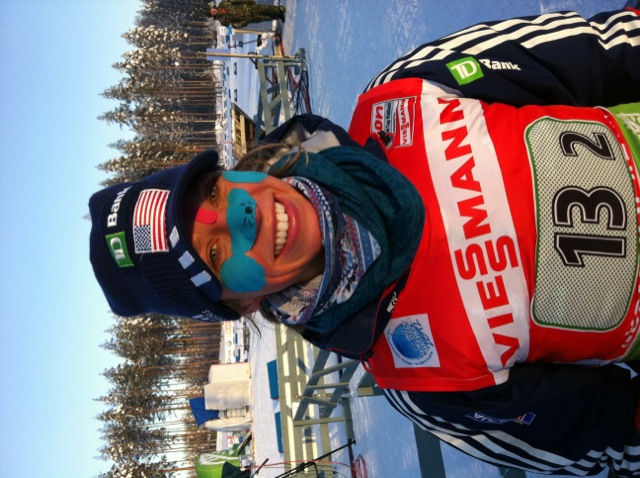
    Randall lunging for the line at the Milan World Cup freestyle sprints in mid January.

    When it comes down to it: health matters. That’s what Kikkan Randall and her coach at Alaska Pacific University, Erik Flora, reasoned when the U.S. Ski Team veteran decided to sit out a few races nearly two weeks ago.

    After feeling slightly rundown, Randall first skipped the 15 k freestyle mass start on Feb. 4 in Rybinsk, Russia. She pulled through the 15 k skiathlon the next day, but came down with a cold shortly after.

    Last weekend, Randall missed both races after originally planning to ski the relay.

    “Even though I really wanted to race the relay and had been looking forward to it all season, I felt I had to play it safe and make sure I was fully recovered for the Poland races,” she wrote in an email.

    On Friday, Randall needs to compete in Szklarska Poreba, Poland, if she wants to continue leading the World Cup sprint standings. Not only are the freestyle sprints the last of their kind this season, there wasn’t much room between those at the top of the standings.

    She led Russian Natalia Matveeva by 109 points heading into Friday’s sprints. Justyna Kowalczyk of Poland was about 40 additional points back in third.

    “Racing fast this weekend will help me hold on to my lead in the sprint cup and will also be good to pull myself out of the rough patch I’ve had the last few weeks,” Randall wrote. “I know my fitness is still there.”

    Flora knew it, too. In an email, he wrote that this wasn’t the time of year to be “building fitness” anyway. With all of the racing she did this year, which was more than normal, Randall was mostly trying to find a balance after initially chasing both the overall World Cup and sprint titles.

    “It has been important to focus with the goal of being healthy first,” Flora wrote. “This unfortunately impacted the overall. This is always a difficult decision, but important, when you consider the long-term impacts on a career. If she is healthy now, she will be even stronger in the future!”

    In the overall rankings, Randall was fifth, 22 points behind Charlotte Kalla (SWE) in fourth. She trailed leader Marit Bjørgen (NOR) by more than 800 points.

    We looked at this season as an experiment, try racing a lot and see what happens,” Randall wrote. “We knew there would be a potential to have some low periods, especially in the middle of the season.  So it’s not a surprise that I’ve been sick a few times.  I’ve done a lot of racing, and without the ability to be at home in between races, it’s a big load physically and mentally.  I’m definitely learning a lot.”

    Randall explained she skied easily in preparation for Friday’s sprints and Saturday’s 10 k classic race.

    “She is stronger now than last week,” Flora wrote.

    Topher Sabot contributed reporting.

  • Americans Collect Another Best-Ever Day, Taking Sixth in Frozen Mixed Relay in Kontiolahti

    Americans Collect Another Best-Ever Day, Taking Sixth in Frozen Mixed Relay in Kontiolahti

    Jay Hakkinen, Sara Studebaker, Annelies Cook, and Tim Burke pose after their sixth-place mixed relay resuly in Kontiolahti, Finland on Friday. Photo: NordicFocus/USBA.

    When the temperatures outside drop down to -26 Celsius like they did in Kontiolahti, Finland on Thursday morning, ski racing becomes a game of survival. Breathing in cold air while asking lungs to work their hardest isn’t anybody’s idea of a healthy decision.

    And the extreme cold is even more tricky in biathlon, where nimble fingers are required to pull triggers and bulky mittens just get in the way. In Fort Kent, Maine last winter, Slovenian World Cup star Jakov Fak sustained third-degree frostbite on his index finger, and only narrowly avoided being forced to amputate. As it was, he lost all of the skin on the finger and wasn’t able to resume training for months.

    All of these issues weighed heavily on athletes’ and coaches’ minds going into Friday’s World Cup mixed relay in Kontiolahti, where temperatures were just as cold.

    “Here in the North there is a simple rule: when it gets cold, the strong race and the sick and weak stay in the hotel,” U.S. biathlete Jay Hakkinen told FasterSkier in an e-mail.

    The world’s best biathletes might object to being called weak, but there’s no denying that they played it safe. The top three men and women in the World Cup standings all sat out the relay, which would not gain them any points in the rankings.

    Studebaker (l) and Estonia's Kadri Lehta cut through the cold. Photo: NordicFocus/USBA.

    For the U.S., selecting a relay team did turn out to be about health. Lowell Bailey and Susan Dunklee, two of the top Americans, had been sick for several days, and then Russell Currier fell ill the morning of the race, necessitating a last-minute roster change.

    In the end, who were the strong ones? Hakkinen, Sara Studebaker, Annelies Cook, and Tim Burke – and they were indeed plenty strong, racing to sixth place, the best mixed relay finish in the history of U.S. biathlon.

    The squad was roughly three and a half minutes behind the winning French team of Sophie Boilley, Anais Bescond, Jean Guillaume Beatrix, and Vincent Jay. Of those four, only Boilley was a member of France’s last mixed relay outing; like most countries, the French had benched much of their “A” team.

    The sixth-finish meant that the U.S. got to attend the podium ceremony, which was a new occurrence for Studebaker and Cook.

    “That was such a cool experience!” Cook gushed in an e-mail. “Sara and I didn’t even know what to do. Do we wear our rifles? Do we need our bibs? Does sixth even go up? It was pretty funny. Luckily we had our experienced men’s team to tell us what to do.”

    Conditions in Kontiolahti were frigid, as they had been all week; while the temperature at race time was officially -20 Celsius, the legal limit for racing, several athletes said that they believed it was actually colder. (Max Cobb, the United States Biathlon Association president who is also a TD, said that “-20 C is a firm line for IBU events, colder is a no go for the race.”)

    While the Americans were cautious, they weren’t fazed, according to Cook.

    “We all got nice and taped up with physio tape, and I think our team was totally on it and ready to go,” she wrote. “I knew from all those cold Minnesota and Lake Placid races that we would survive.”

    Studebaker kicked things off as the scramble leg, and said her race was “chaotic,” but turned out all right in the end.

    Annelies "The Biathlon Cat" Cook models temperature-appropriate attire in the stadium. Photo: Armin Auchentaller.

    “We didn’t have much time between zero and race start, only 45 minutes as opposed to the usual hrour, which made me feel a little rushed and not quite ready on the start line,” she explained. “Because of that I felt I struggled a little in the first loop, but luckily shot well and found my stride in the last two loops to keep us in contention.”

    Studebaker used a single spare round in each shooting stage, and then put on a charge on her last loop, turning in the fourth-fastest time and moving from tenth to sixth.

    Cook, the second-leg skier, struggled in prone, using three spare rounds and dropping to ninth position. Even after cleaning her standing stage, she was unable to make up ground, and said that the cold weather was partially to blame.

    “On my last lap after the big hill, I felt like I totally hit a wall and it was exactly like hitting a wall at altitude,” she said. “I think that cold air just doesn’t always provide you with all the oxygen you need.

    “I just hung on for dear life till I got to Jay to tag off.”

    Hakkinen turned in a clutch performance, moving the team back into sixth despite using three spare rounds in prone.

    “For me, it was important to catch the group just ahead of me, so it was a good feeling to pass by them standing on the mat,” he said.

    And finally, Burke took over, and put on the kind of show that he’s come to be known for. He had the fastest course time of all of the anchor legs, and kept the U.S. team in sixth place.

    “He was skiing like a maniac,” Cook said. “It was awesome.”

    The consensus on the team was that to in spite of the best-ever result, the athletes could have done even better.

    “I think we all had pretty standard days…nothing super special, just solid,” Studebaker said. “It’s pretty cool to see that we can easily be top six when things go ‘normally,’ and it definitely gives us a lot of confidence as we head towards Ruhpolding.”

    “Although we had a few small mistakes and mishaps here and there, we were still able to move forward which means our team has a good level,” Hakkinen agreed. “This is the best mixed relay performance for the us, and we were rewarded with the flower ceremony for our effort, so it was a good day.”

    The Americans aren’t sure whether they will field the same team at the upcoming World Championships in Ruhpolding or not; that decision will be made based on who seems the strongest in the last week of February.

    “It could very well be a different group of people,” Cook said. “But it is cool to know that we have a bit of depth, so that we can mix and match and good things will still happen.”

    The Canadians did not field a team as most of the athletes are at home for a training camp.

    Full results

  • Health Risk: Skiing Can Cause Asthma

    OSLO, NORWAY – It’s a well known fact that cross-country skiing is among the worst offenders when it comes to increasing risk of exercise induced asthma and has some of the highest use of asthma medicine among elite athletes.

    According to the Norwegian TV station NRK, as many as half of the skiers on the Norwegian national team have asthma.

    “These are not exact numbers, but we test the national team every year, and about half of them show sure signs of asthma,” says Kai-Håkon Carlsen, professor at the Norwegian College of Exercise Science (NIH).

    Cold and stress to blame

    Brutal competitions and training in at times extreme cold is part of the reason why so many cross-country skiers suffer from asthma.

    “Asthma is particularly prevalent in cross-country skiers. The longer an athlete is pursuing the sport, the higher the risk of developing asthma problems,” the expert says to NRK.

    “Events such as Tour de Ski where the athletes have several events back to back put extreme stress on the airways,” Carlsen explains.

    Athletes who develop asthma through extreme training also put themselves as increased risk of other health problems. “A regular physician would suggest these patients reduce their stress level. But for these athletes, their training is the most important pursuit in the world. And they have to train that way in order to perform and produce the results they expect,” Carlsen says.

    From www.langrenn.com, August 5, 2010 (Source: www.nrk.no.) Translation by Inge Scheve

  • Cold Weather Threatens Sprint Cancellation in Anchorage

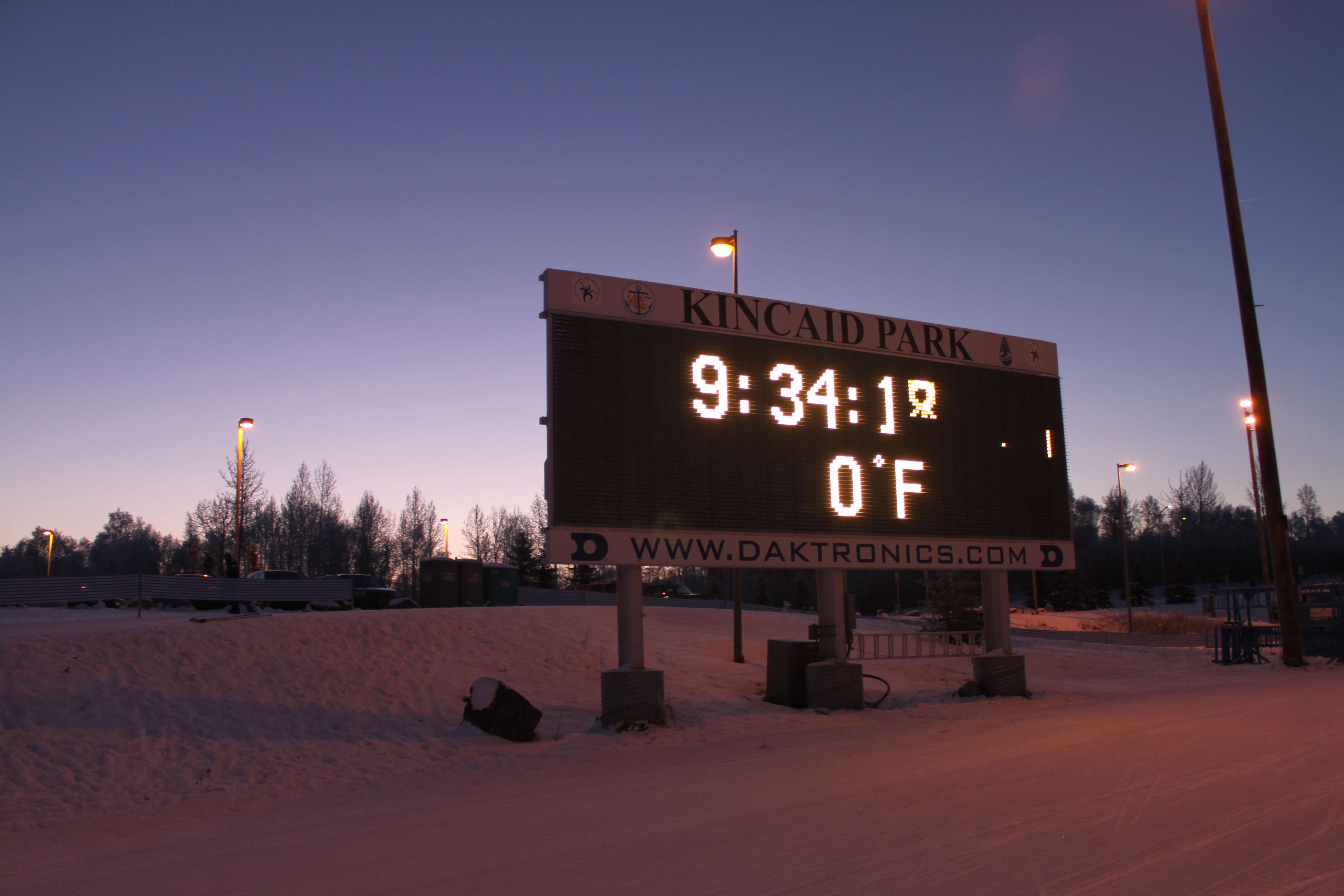
    The temperature has been at or below zero during the day for the past few days at Anchorage’s Kincaid Park in Anchorage, which will host the first day of the US Cross Country Championships tomorrow morning. Snow conditions couldn’t be better for the nation’s biggest week of ski racing, with most competitive skiers enjoying three months of snow in the Anchorage area. Even with around $150,000 dollars of the city’s donation-funded grooming budget lost to a dodgy fee collection company, local skiers have seen near-perfect grooming along the 120 kilometers of trails within the municipal park system. But with the high temp hovering around the legal cutoff at -4F, running an exceptionally difficult sprint course up to four times Saturday morning could be a little rough, to say the least.

    To protect their lungs from the cold, skiers out to preview and train on the official courses have been using Norwegian “Varm Pust” mouth pieces and other face masks to warm the air entering their lungs. It’s like a nuclear test facility out there, even at high noon in a day that lasts only 5 1/2 hours. The local teams are taking precautions, as well. UAA ditched a time trial on Wednesday’s 10K classic course in favor of less intense L3 intervals to avoid the typical potential problems that skiers deal with like airway infection and inflammation from asthma.

    Other Alaskan towns are enjoying a particularly pleasant icy winter weather, and might consider Anchorage residents weak in the knees. NOAA is reporting -40F to -55F with fog around Fairbanks, around 350 miles north of the Pacific, while Barrow has -20 down to -38 with the wind chill on the Arctic Ocean. Other areas like McGrath will see even colder temperatures.

    Despite the colder temperatures and a postponement to 11:30am Saturday morning, the incoming competitors will enjoy a terrific venue organized by a local ski community out in force. A foggy skate ski on slow, abrasive snow through difficult trails donning well deserved names like “Ice Box,” “Mize’s Folley,” “Stairway To Heaven,” and “Compression”, might not be on everyone’s list of top destinations for the weekend, but the tracks on Kincaid’s shiny new sprint course have been set rock solid for several days and sunny weather and terrific stadium lighting will make for an exciting day of racing for the spectators.

    This will be the second season for the park’s new sprint course, and the first season for the final modifications made during the summer of 2008. The course includes a monster 300 meter climb with 17 meters of vertical directly out of the stadium with no remorse from a tight drop and turn at the top before blasting back into the Daytona-like stadium terrain. Crashes are most likely upon reentry into the stadium, right in front of the majority of the spectators, since stronger skiers will be able to take a chance in the heats by cutting the difficult turn tightly to gain a small advantage, where every move counts.

    This will be one of the two most exciting series of spectator races that Anchorage has seen. If you can make it out to the races, dress smart and be sure to bring your sunglasses.