Tag: Cole Morgan

  • Inside the Lahti World Champs Roster with Chris Grover

    Inside the Lahti World Champs Roster with Chris Grover

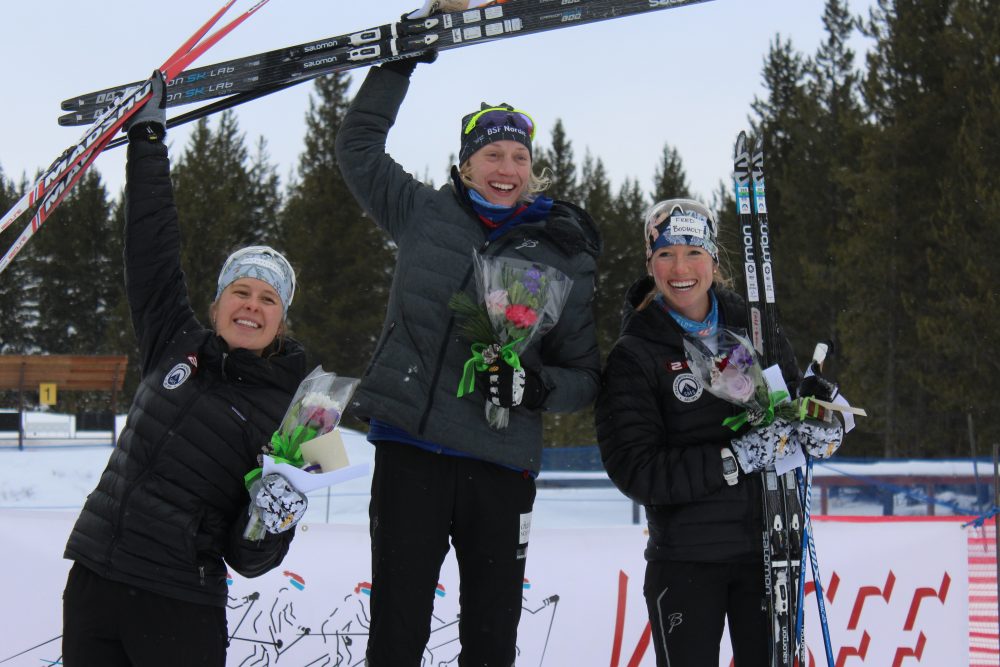
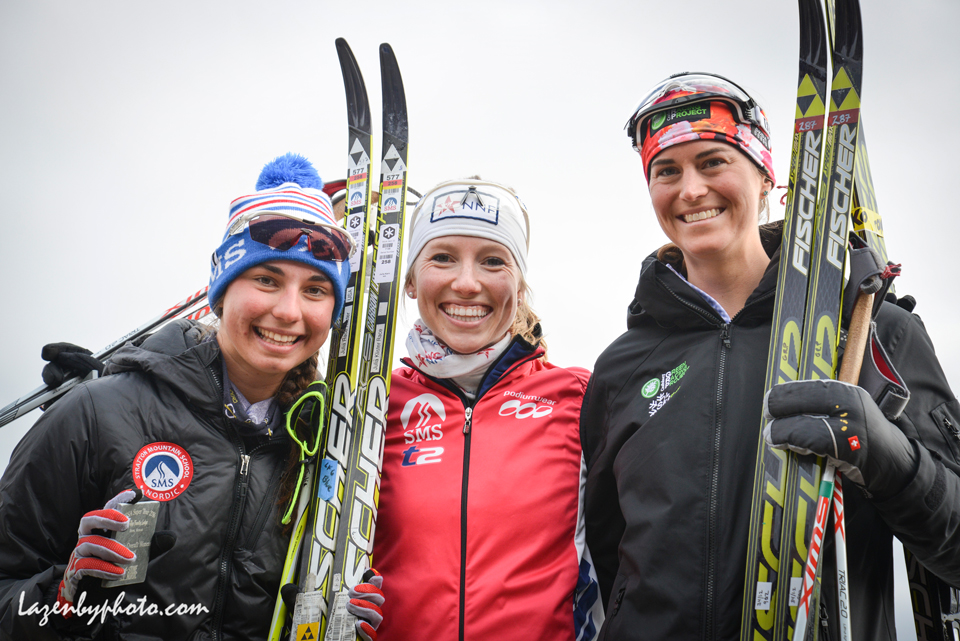
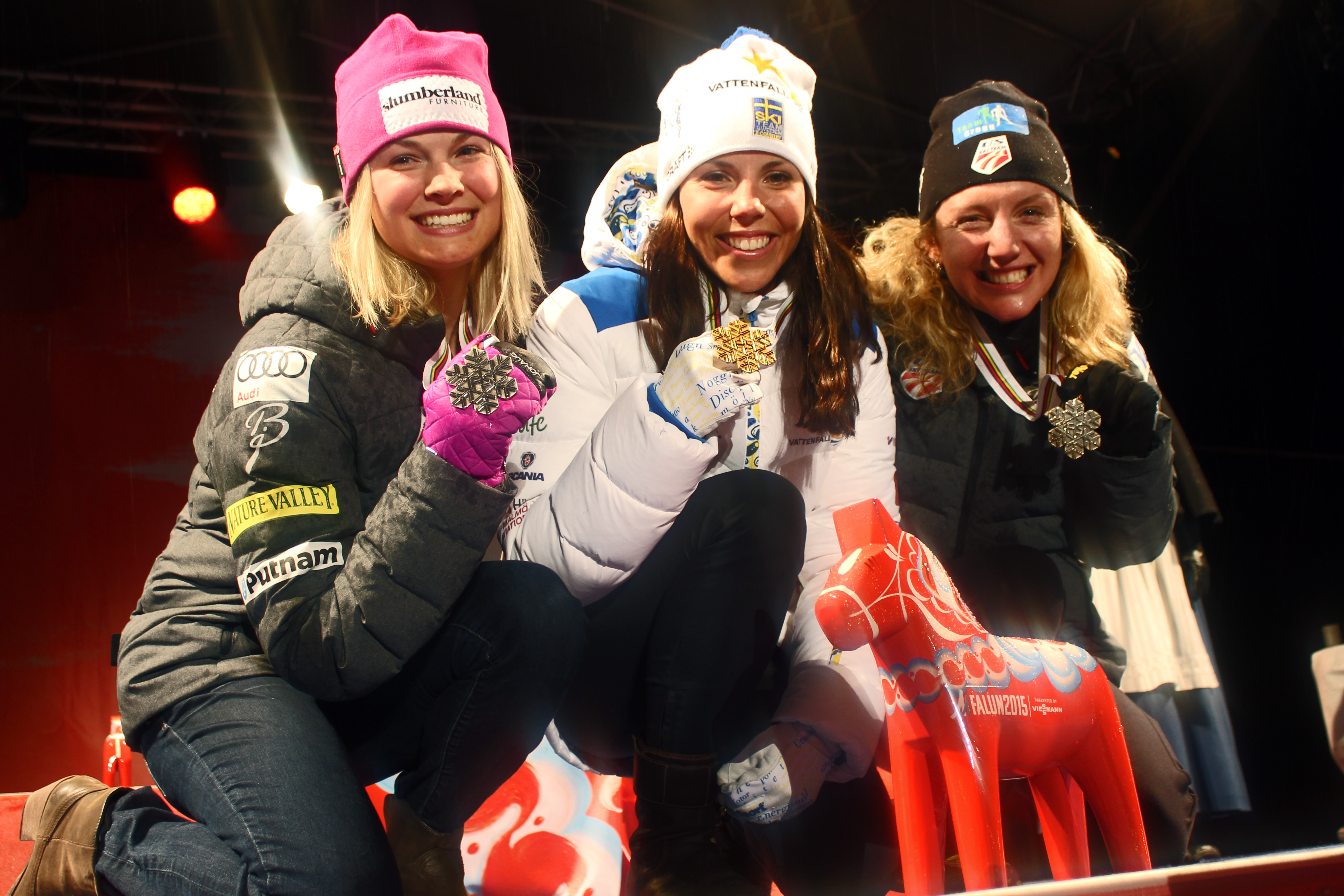
    The U.S. took two out of three spots on the podium in Tuesday's 10 k freestyle at 2015 World Championships. From left to right at the medals ceremony: silver medalist Jessie Diggins (USA), gold medalist Charlotte Kalla (Sweden) and bronze medalist Caitlin Gregg (USA) at the medals plaza on Tuesday night in Falun, Sweden.
    You may remember this from the last World Championships: The U.S. took two out of three spots on the podium in the 10 k freestyle at 2015 World Championships. From left to right at the medals ceremony: silver medalist Jessie Diggins (USA), gold medalist Charlotte Kalla (Sweden) and bronze medalist Caitlin Gregg (USA).

    On Wednesday, the U.S. Ski and Snowboard Association (USSA) announced its team nominations for the International Ski Federation (FIS) 2017 Nordic World Ski Championships, scheduled for Feb. 22-March 5 in Lahti, Finland. Following the announcement, FasterSkier spoke with U.S. Ski Team Head Coach Chris Grover to discuss the reasoning behind some specific skiers who were or were not named to the team.

    Applying the criteria

    First, a quick review: FasterSkier has previously discussed the substance and the operation of the objective selection criteria based on World Cup performance. These objective criteria placed the following members of the U.S. Ski Team (USST) onto the Lahti team based on their performance during the 2016/2017 World Cup season: Sadie Bjornsen, Rosie Brennan, Sophie Caldwell, Jessie Diggins, Simi Hamilton, Noah Hoffman, Andy Newell, Kikkan Randall, Ida Sargent, and Liz Stephen.

    All 10 athletes were ranked in the top 50 of the sprint and/or distance standings that were released earlier this week. USST member Erik Bjornsen ranked slightly outside the top-50 cutoff for both disciplines (59th for sprint and 60th for distance), and so is technically a discretionary selection.

    That leaves six additional athletes without USST status who were also selected through the exercise of discretion by the Selection Committee: Kyle Bratrud, Tad Elliott, Ben Lustgarten, and Cole Morgan for the men, and Caitlin Gregg and Chelsea Holmes for the women.
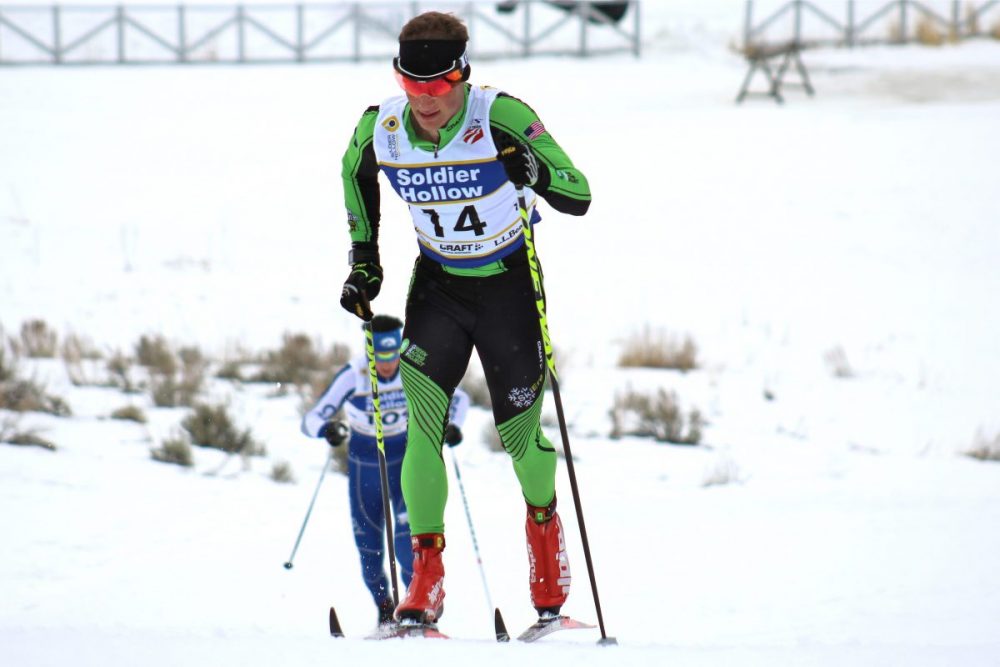
    Craftsbury Green Racing Project's Ben Lustgarten on his way to winning the 30 k classic mass start at U.S. Cross Country Championships on Tuesday at Soldier Hollow in Midway, Utah.
    Craftsbury Green Racing Project’s Ben Lustgarten on his way to winning the 30 k classic mass start at U.S. Cross Country Championships on Jan. 10 at Soldier Hollow in Midway, Utah.

    Lustgarten (70 points), Bratrud (63) and Elliott (56) are the top-three men in the distance ranking of the 2017 Championship Selection List. (The list takes an athlete’s best two finishes per discipline, including bonus points for U.S. nationals.) Morgan (70 points) is facially tied with Ben Saxton (also 70) on the men’s sprint list. (For more on why Morgan over Saxton, keep reading.)

    Holmes (80 points) and Gregg (63) are top two on the women’s distance list, followed by Katharine Ogden (60) and Caitlin Patterson (52). The top-ranked domestic skier on the women’s sprint list, Kaitlynn Miller (60 points), was not selected for Lahti.

    The principles of discretionary selection

    This summer, USST Women’s Coach Matt Whitcomb told FasterSkier that making discretionary picks was one of the harder parts of his job, saying, “We love not to do it.” But, he added, “in any criteria, discretion can often be one of the most important pieces.”

    Grover previewed how USST coaches might apply that discretion when he spoke with FasterSkier earlier this week, following the individual skate sprint in Toblach but before Wednesday’s announcement.

    “We do pay very close attention to what is happening in those races [at U.S. nationals],” Grover said. “And we are following them live as best we can from over here. We’ve been paying very close attention, and we’ve had some discussions.”

    Grover added that they had specifically been discussing “who we would start in which races in Lahti, because we absolutely want to fill every start spot, and we want to be able to have an alternate there in most cases as well, and that makes for some tough choices. Who’s skiing well domestically, who’s skiing well on the World Cup; it’s occasionally challenging to figure out which athletes are faster when they have the Atlantic Ocean between them.”

    Grover mentioned at the time that he hoped to follow and apply the selection criteria fairly rigorously and systematically.
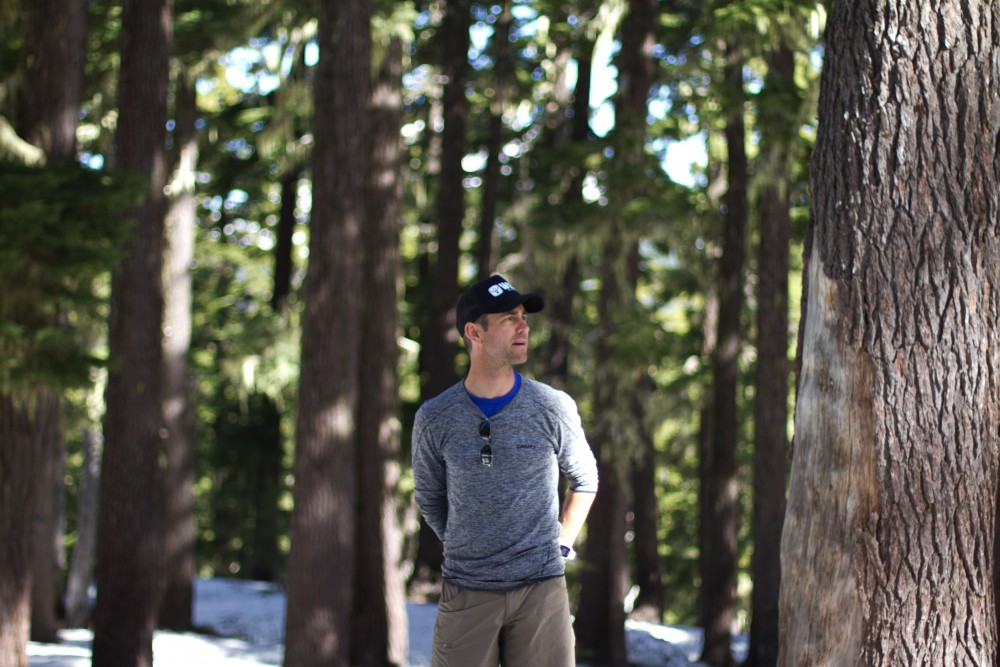
    U.S. Ski Team Head Coach Chris Grover supervises a classic-technique drill at an on-snow camp last month at Mt. Bachelor in Bend, Ore.
    U.S. Ski Team Head Coach Chris Grover supervises a classic-technique drill at an on-snow camp in May at Mt. Bachelor in Bend, Ore.

    “The real key thing is that, at the bottom of the selection, we followed the selection criteria,” Grover said. “That’s key. Discretion really belongs to be used at the top, for those athletes who have a chance to come over and have big races at World Championships, and by big races I mean someone who can go on the podium, or the top five, top 10, or top 15. Look for some selections from USA, but I wouldn’t look for a lot of discretion at the end of the day. That doesn’t mean that we won’t use some, but we have a selection criteria, and we’ve created a clear path for athletes to visualize, and see how they are going to make it to the World Championships team, and we have to be very careful to honor those athletes, and their coaches, and their programs, and their hometowns, by selecting the athletes who came to the table, and raced fast, and won races. That’s the key for us.”

    Grover seemed willing to temper the strict application of objective rankings with some more objective consideration of conditions on the ground, particularly following a U.S. nationals where some races featured rather variable weather.

    “Of course we’re going to take everything into account,” Grover said, “take the waxing situation into account, tough waxing days. I know that some people struggled, I know that some teams struggled, that’s unfortunate. You absolutely want to see a national championship where it’s easy waxing, and then you get to see who is the best athlete out there. I’m also getting petitions from athletes who are like, ‘Yes, I felt sick during U.S. Nationals.’ And that’s tough too. You want to see everybody healthy, and having an easy wax day.”

    “It’s occasionally challenging to figure out which athletes are faster when they have the Atlantic Ocean between them.” — Chris Grover, U.S. Ski Team head coach

    But “at the end of the day,” Grover concluded, “we set up a selection criteria that was designed to give athletes a chance to have a bad race, to be sick for weekend, to give teams a chance to miss the wax, that’s why we only take the best two out of four distance races, and/or the best two out of four sprint races. That’s why the selection period is more than just U.S. nationals, but also includes the races from Yellowstone and Silver Star, so athletes have the chance to demonstrate their ability over a longer period of time, and to be able to throw out some bad races.”

    FasterSkier previously discussed the theory that the bonus points given for podium finishes at U.S. nationals made solid performances there potentially decisive for an athlete’s selection.

    Naming names

    As Grover adumbrated earlier this week, the selection of the male skiers not currently on the USST was based directly on skiers’ standing on the Lahti points list. Those selections “are very straightforward,” Grover told FasterSkier on the phone on Thursday. “We went right off of the Lahti selection list.”

    Grover added that they felt the need for only one more sprinter, in light of already having Hamilton, Newell and Erik Bjornsen on the team.
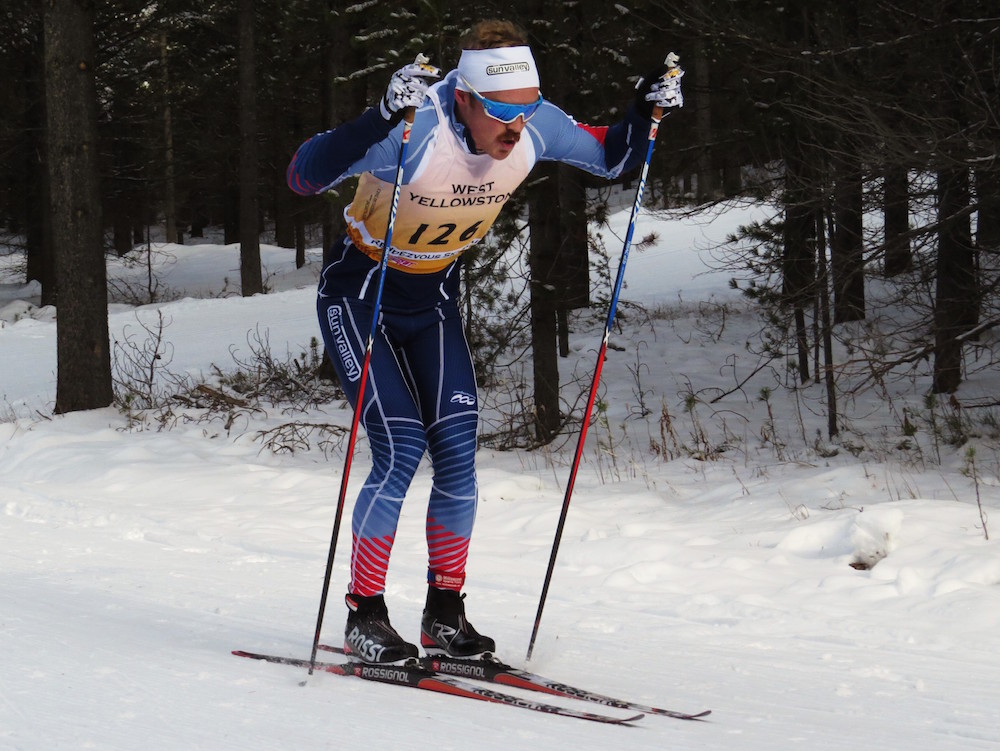
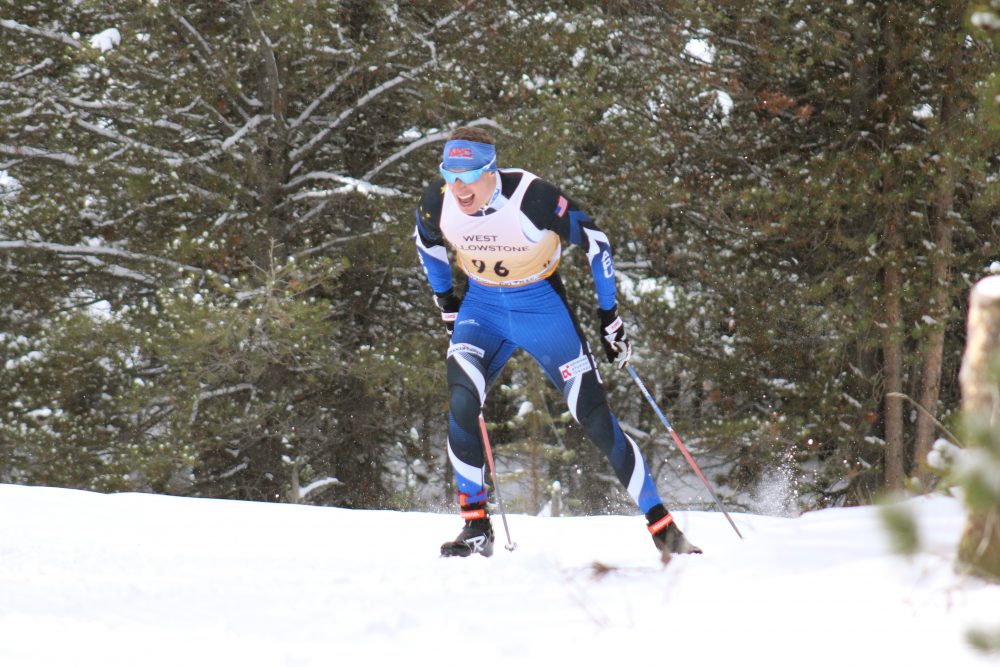
    Cole Morgan (SVSEF) racing to 12th in the men's 10 k classic FIS race in late November in West Yellowstone, Mont. (Photo: Ian Harvey/Toko)
    Cole Morgan (SVSEF) racing to 12th in the men’s 10 k classic FIS race in late November in West Yellowstone, Mont. (Photo: Ian Harvey/Toko)

    So why Morgan over Saxton for that one sprint spot, when both athletes had 70 points and were tied for first on the selection list? Tiebreakers.

    “That had to go down to like a four-way tiebreak procedure in order to determine which athlete to select,” Grover recounted. “Because they both had a first place from SuperTour, they both had two second-place finishes, and so it was only by going to their fourth race, where Cole prevailed over Ben. So that was tough, and definitely as excited as we are for Cole, that was tough for Ben, to be in that situation.”

    The tiebreaking race was “the skate qualifier only in Nationals.” Morgan finished 5.11 seconds and 17 places ahead of Saxton in Thursday’s demi-sprint, with Morgan clocking 3:20.23 and sixth vs. Saxton’s 3:25.34 and 23rd.

    Turning to distance skiers, Grover said, “So then we had four sprinters that we wanted to start, and then we obviously needed some distance skiers. And we felt like with Erik Bjornsen and Noah Hoffman on the team, that if we went out and got three more additional distance skiers that we would have the depth that we needed to effectively fill start rights, plus have an alternate, in the distance races at Lahti, which is why we went and got the three guys. We just went right off the distance points list.”

    That’s it for the men. As for the women, among American distance skiers, Gregg has a sterling championships résumé: bronze in the 10-kilometer freestyle at Falun in 2015. This performance, and Gregg’s ability to peak for it, figured heavily in the decision to go down to second on the women’s distance list and name Gregg, Grover noted.

    “We definitely … view Caitlin as a really incredible distance skier,” Grover said, “somebody who has the ability, or at least has proven the ability in the past, to be able to target an event, train for an event, a certain event, prepare for it, and then ski quite well at that event. And of course I’m referencing the Falun 10-kilometer race from two years ago. We named her to the team as a potential starter for the women’s 30 k freestyle. And typically Caitlin has been somebody who’s great at the long-distance skating in particular, and gets stronger as the race gets longer. So we’re not guaranteeing start positions for any athletes right now, but Caitlin for sure will be a strong contender to race that last race for women at the World Championships.”

    So Gregg was second on the distance list, but why not go down to Katharine Ogden (often referred to as “KO”) in third? In large part because of her youth – Ogden is still only 19 years old – and a concern for appropriate development.

    “We absolutely agree that athletes should first aim to be successful at – in the age group that they’re competing against,” Grover said. “So for KO, that means World Juniors, and being successful at World Juniors. And that should be, in my opinion, the absolute focus of her year this year.”
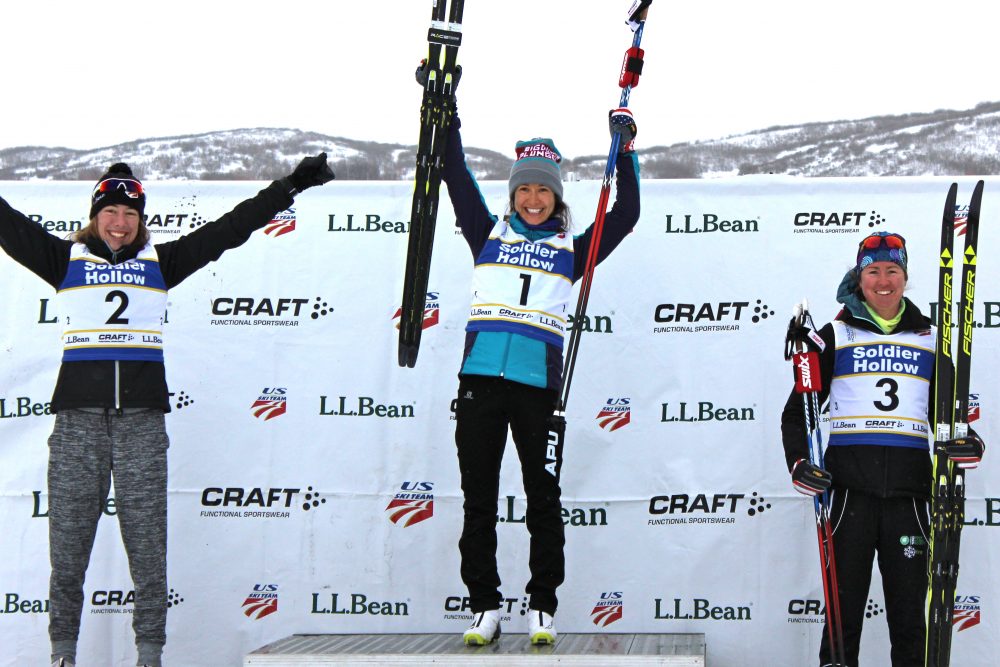
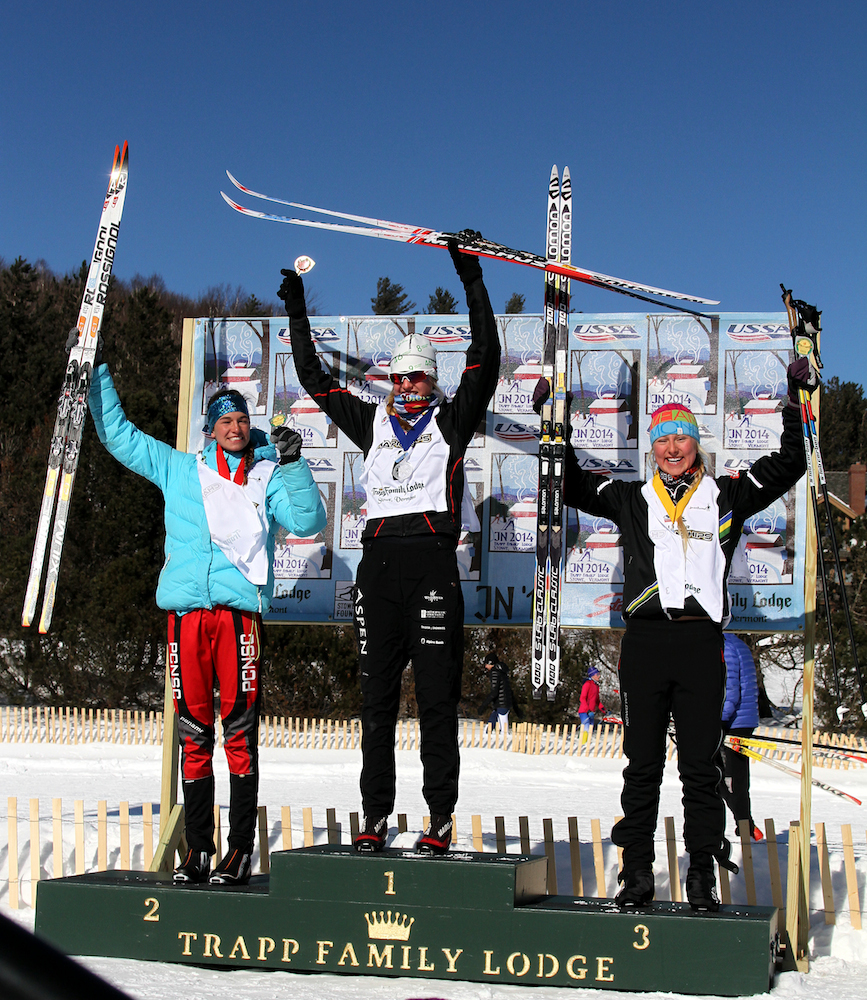
    The women's 20 k classic mass start podium on Tuesday at 2017 U.S. nationals at Soldier Hollow, with winner Chelsea Holmes (c), runner-up Katharine Ogden (l), and third-place finisher Caitlin Patterson.
    The women’s 20 k classic mass start podium on Tuesday at 2017 U.S. nationals at Soldier Hollow, with winner Chelsea Holmes (c), runner-up Katharine Ogden (l), and third-place finisher Caitlin Patterson.

    He added that the strength of the current American women’s team made it questionable whether Ogden, despite her talent, would necessarily be stronger than any other option. The coaches would ask, “‘OK, yes, if we were to bring you to the [senior] World Championships, what are the actual events that we would start you in? Are you one of the best four women in the United States in those events?’ There most likely, at this particular moment, is not starting space for her. … She’s going to be an absolute talent for the future, but we also have one of the strongest, if not the strongest women’s team in the history of U.S. skiing. So it’s tough to break into that group when you’re limited to four starts.”

    And what about Caitlin Patterson, an athlete who began the 2016/2017 season in Europe and scored World Cup points in the opening weekend, but never quite made the top 30 thereafter?

    Patterson was “one that we talked about, for sure,” Grover said. “However, she was not even the next woman on the points list behind Caitlin Gregg. That was Katharine Ogden. … So any time you’re talking about using discretion and using it at the bottom of the list, and then jumping over athletes that are on the list to use that discretion, then it becomes quite complicated.”

    Much as with Ogden, Grover noted that the strength of the current women’s team made it difficult to easily pencil Patterson in as a starter: “Our women’s team is so strong,” Grover said, “we didn’t necessarily see a race where we said, ‘You know what, Caitlin Patterson is within the top four women that we want to start in that particular event.’ It would have been a different situation if we didn’t have so many women making the objective criteria for World Cup in front of her.”

    But Grover noted that Patterson was not necessarily off the team for good: “So it puts Caitlin Patterson in a really tough spot, and we definitely want to see her have more opportunities, and we are in fact trying to provide her more opportunities by actually offering her some World Cup starts in the next few weekends that she’s going to take advantage of. And we’ll see what happens. If she’s able to have some outstanding results, we may reconsider.”

    As Grover alluded to regarding Patterson, the U.S. roster is not quite set in stone. “I think it’s important to recognize that we … may decide to add a man, or a woman, later to the World Championships Team,” Grover emphasized.

    “We have not maxed out what our quotas are for that event by any means,” he continued “And if we see an outstanding result of some kind, either at World Cup or say U23s/World Juniors, we may choose to add somebody to the team, which we did … two years ago in Falun, when we added Ben Saxton after he’d been sixth in the sprint at the World Juniors. So nobody has guaranteed start rights at the Lahti World Championships. And it may be that our team grows slightly. Or it may stay the same; we just don’t know yet.”

    End of an era?

    And finally, a look back for a historical note before everyone looks forward to next month’s races in Lahti: Assuming that he is not added to the roster in the next few weeks, this will be the first American international championship team without Kris Freeman since 1997. Freeman, currently of Team Freebird but a USST member for 11 years before that, was named to a total of 15 championship teams from 1997 to 2015. He was at Falun in 2015, Sochi in 2014, Val di Fiemme in 2013, Oslo in 2011, Whistler in 2010, Liberec in 2009, Sapporo in 2007, Torino in 2006, Oberstdorf in 2005. He was at Val di Fiemme, for the first time, in 2003, Salt Lake City in 2002, Lahti in 2001, and before that, he was also at three FIS Junior World Championships: Štrbské Pleso, Slovakia, in 2000; Saalfelden, Austria, in 1999; and Pontresina, Switzerland, in 1998.
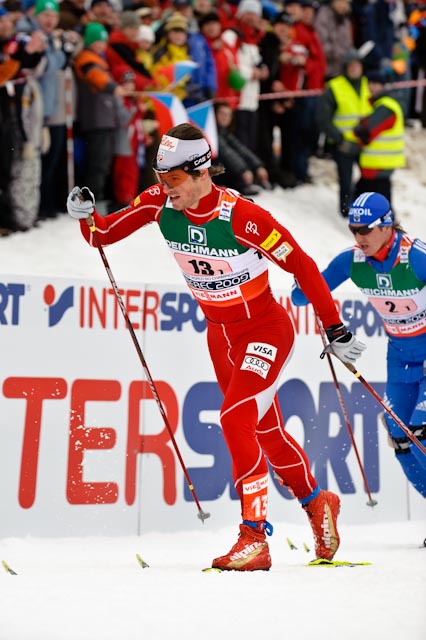
    Freeman at the 2009 World Championships in Liberec.  (Photo: Swix Sport)
    Kris Freeman competing at 2009 World Championships in Liberec, Czech Republic. (Photo: Swix Sport)

    The last time Freeman was not named to an American championship team was Junior Worlds in Canmore in February 1997. To put that in perspective: top junior skiers at those races included Kristina Smigun, Axel Teichmann, Per Elofsson, and Lukas Bauer. American juniors racing at Canmore in 1997 included Rob Whitney, Pat Casey, and Lars Flora. Recent national champion Kevin Bolger (University of Utah) was 3 years old. Recent Nationals podium finisher Katharine Ogden was not born yet.

    Freeman told FasterSkier a week ago at U.S. nationals that, even if he were not selected to his second Lahti team, he intended to keep competing for at least one more winter with an eye to Pyeongchang: “Still in it, I’ll be back next year and hopefully make the Olympic team.”

    USST athlete Kikkan Randall keeps alive a streak going back to World Juniors at Štrbské Pleso in 2000. Counting 2017 in Lahti, she has been named to 16 championship teams (nine World Championships teams, four Winter Olympics teams, and three World Juniors teams) in that time.

    And USST skier Andy Newell was named to his 14th championship team, continuing a streak that dates back to World Juniors at Szklarska Poręba in 2001.

    Races in Lahti begin with the skate sprint on Feb. 23.

  • On Crazy Championships Day, University of Utah’s Bolger Wins Classic-Sprint Title

    On Crazy Championships Day, University of Utah’s Bolger Wins Classic-Sprint Title

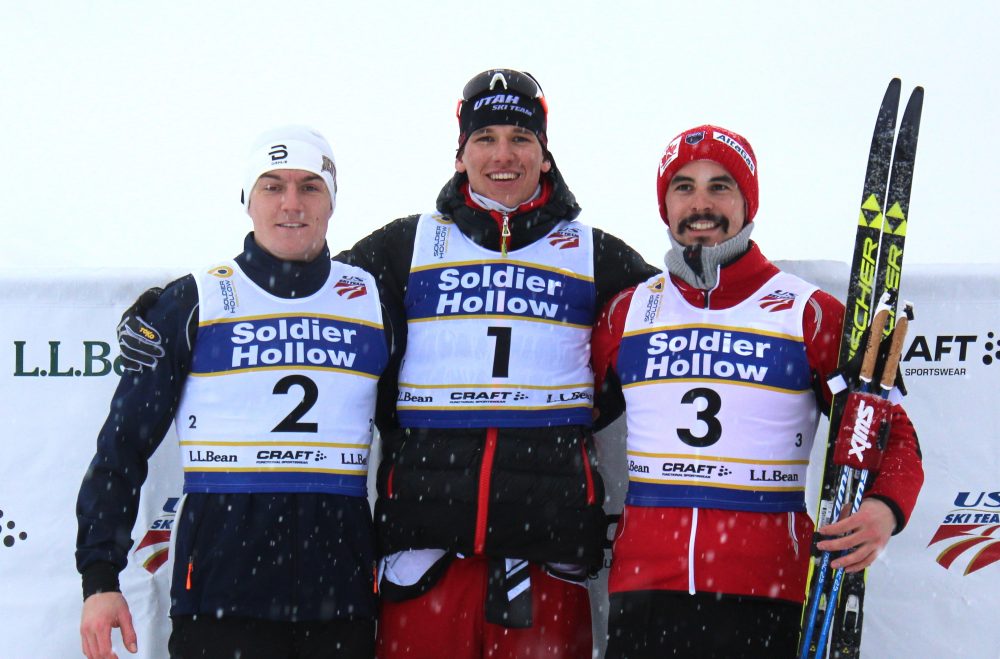
    Left to right: University of Denver skier Moritz Madelner, University of Utah's Kevin Boldger and Canada's Jesse Cockney on top of the podium for the men's 1.5-kilometer classic sprint n Sunday at U.S. nationals in Midway, Utah.
    Left to right: University of Denver skier Moritz Madlener, University of Utah’s Kevin Bolger and Canada’s Jesse Cockney on top of the podium for the men’s 1.5-kilometer classic sprint on Sunday at U.S. nationals in Midway, Utah.

    MIDWAY, Utah — Classic sprint day at U.S. Cross Country Championships. Nothing was simple. The 9:05 a.m. start time brought a daylong chess match for athletes and wax techs. Temperatures hovered near freezing all day — the entire spectrum of precipitation seemed to fall: drizzle, swollen wet snowflakes, and graupel.

    One by one the big names set off at 15-second increments. There was Bend Endurance Academy’s Dakota Blackhorse-von Jess, then Reese Hanneman, of Alaska Pacific University (APU), followed by an elite list of North America’s best sprinters absent those few racing on the World Cup.

    The men’s course featured three climbs, the last of which was positioned before a sweeping descent back into the stadium about 0.5 kilometers from the finish. Early on, even with the first few starters, it was evident on this hill that the chess match’s checkmate move pivoted on the wax.

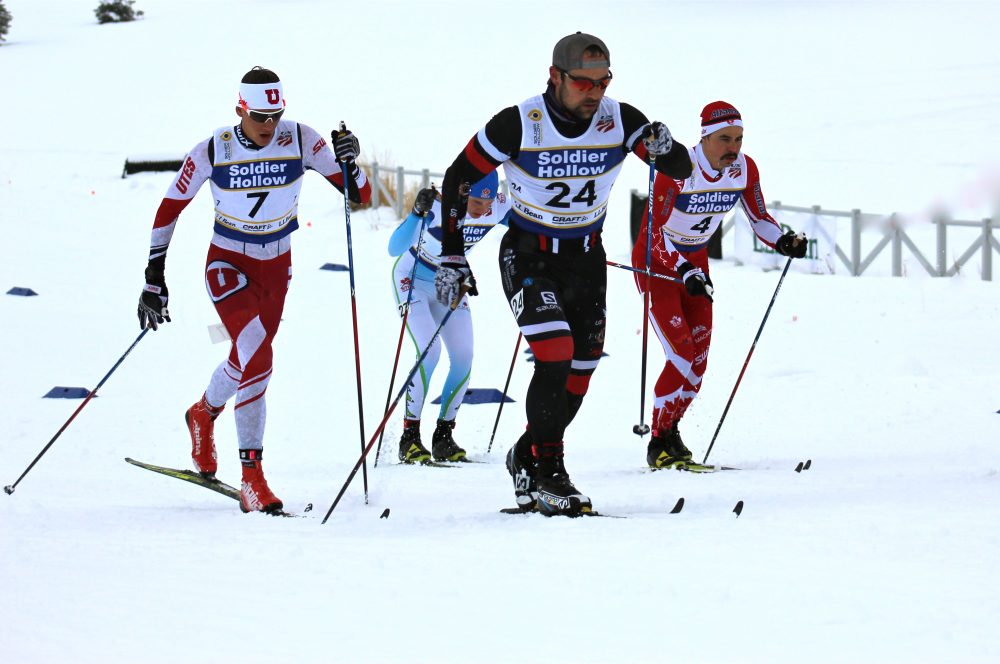
    Dakota Blackhorse vonn Jess of Bend Endurance (24) leads University of Utah's Kevin Boldger (7) during the first quarterfinal of the men's 1.5-kilometer classic sprint n Sunday at U.S. nationals in Midway, Utah.
    Dakota Blackhorse-von Jess (24) leads Kevin Bolger (7) and Jess Cockney (4) during the first quarterfinal of the men’s 1.5-kilometer classic sprint on Sunday at U.S. nationals in Midway, Utah.

    Up that hill, some skiers strode, many slipped. Some athletes employed a herringbone-run mash up, some double poled on skate skis. Others suffered the indignity of balled up snow under foot and the awkward dance of shedding that snow and attempting to make forward progress.

    APU Head Coach Erik Flora helped put the qualifier in perspective.

    “This is the first time ever that I have been in a sprint race when we haven’t had any men in the heats,” Flora said about his men’s results. “And that’s the first time in ten years.”

    For a club like APU, it’s clearly rare when a perfect storm impacts an entire men’s side.

    “I don’t think it was one thing, it was a combination of a few things,” Flora said after the racing was completed. “We have a few guys that came in sick and that didn’t help. And we have a lot of guys that are seeded really high in the start list with points and if you look through the top 30, there’s a lot of unusual places.”

    On many days, a high race seed correlates with good results.

    “But sometimes there are those days when being in a certain place in a seed helps. I think for the leading men it was a disadvantage today,” Flora added.

    Along with some recent sickness, the seeding and weather conditions, and skis that Flora noted weren’t “anything special”, APU’s qualifying positions portended a rough day for many.

    Some athletes’ misfortune opened doors for others. No one kicked that door open with more force than University of Utah’s 23-year-old Kevin Bolger. He was the only American in the men’s final and won his first-career national title outright by winning the final over second-place skier Moritz Madlener (University of Denver), and Canadian national-team member Jess Cockney in third.

    “100 percent. Absolutely,” Bolger said when asked if he was surprised by the end result. “Usually just qualifying for the heats is kind of my biggest goal. And today, I just, with the qualifying seventh I was in awe, actually.”

    Bolger qualified seventh in 3:41.69, only a few seconds behind best qualifier, Ben Saxton of the Stratton Mountain School (SMS) Elite Team, who rounded the 1.5 k course in 3:38.35.

    The Utah skier had a four-leaf-clover day. Bolger said his coach nailed the wax every round which complemented his fitness. In his quarterfinal, Blackhorse-von Jess set the tempo.

    “I knew he was a good sprinter, I kind of look around in my heats before each, kind of see who I’m around, who I can play with,” Bolger said. “And I saw he was there, I knew he wanted to get to the final, so I was like, ‘He’s going to try and race well.’ And I got in behind him, he made a move and I stuck with him.”

    On the back hill, where the skiers race up and away to the backside of the course, Blackhorse-von Jess played his hand.

    “I think he got 10 meters off on me,” Bolger said of Blackhorse-von Jess’s stamp of authority.

    But on the descent into the last kicker climb, Bolger’s skis were running.

    “And my skis just – they glided right up to him,” Bolger described. “And I came up to that hill and they kept going, and I was like, ‘All right, I’m going to run up this sucker.’ And I went for it.”

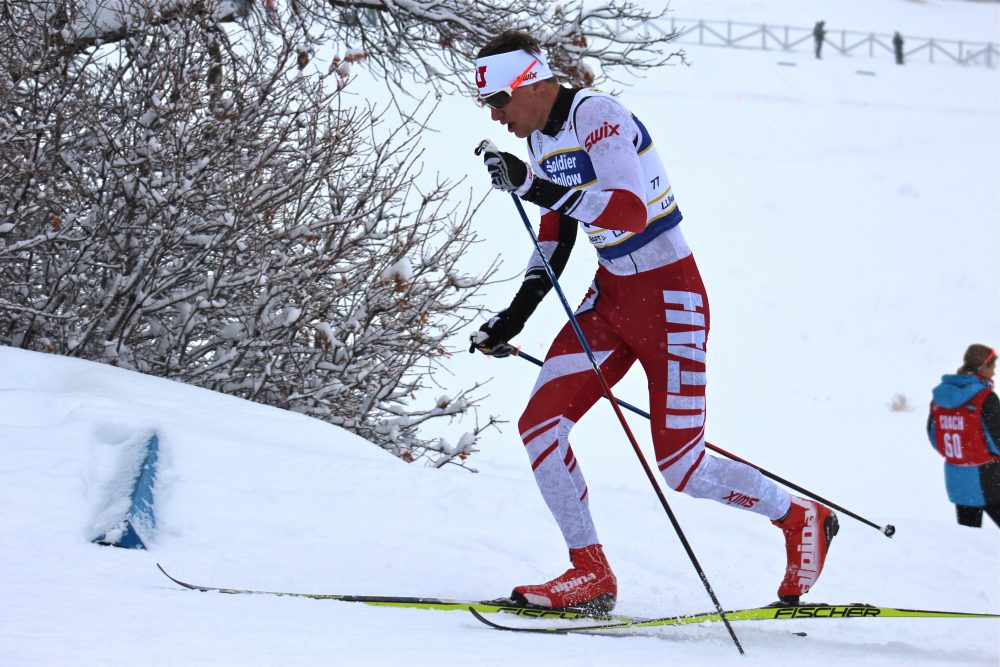
    The University of Utah's Kevin Boldger during the qualifier for the 1.5-kilometer classic sprint n Sunday at U.S. nationals in Midway, Utah.
    The University of Utah’s Kevin Bolger during the qualifier of the 1.5 k classic sprint on Sunday at U.S. nationals in Midway, Utah.

    Now Bolger was off the front widening a small gap. Behind, it appeared Blackhorse-von Jess’s skis momentarily stalled out, resulting in a fall and snapped pole. Unaware of changing fortunes behind, Bolger cruised in. But he’d not simply cashed out, satisfied with a quarterfinal win. He banked some important knowledge. He wasn’t slipping on his skis when kicking at decisive moments.

    “Knowing that I can charge up that [last] hill 100 percent and trust my skis, that’s huge, I think, in our sport,” Bolger said.

    Luck struck again in his semifinal — Bolger placed fourth in a fast first semifinal; he was the second lucky loser, both of whom came from his semifinal.

    In the final, Cockney made a bold move from the start, but the group behind yo-yoed, never losing significant contact. And on that same last hill, Bolger charged again.

    “I was like, ‘OK, I think this is the time to go,’ ’cause I don’t have quite the turnover in my double pole,” Bolger said. “I know I’m big, strong and powerful, but the turnover I think isn’t quite there. So I thought that that was my time to go.”

    Up and working over the top, Bolger was gone for his first national title.

    “It kind of hit me like 10 meters from the finish that I was gonna win this sucker, and I was like, ‘Holy sh*t,’ ” he said.

    Second-place finisher, 23-year-old Madlener is a student in the U.S. but grew up skiing in Germany. (It was Madlener’s second podium in as many races at senior nationals. He placed third in Saturday’s 15 k freestyle.)

    Madlener is a multiple NCAA podium placer.

    “I had second and third in NCAAs last year, and second the year before during my sophomore year,” Madlener explained in a post-race phone interview.

    Although pleased with his podiums at Soldier Hollow this week, he explained his year-end goal remains winning an NCAA individual title.

    “I want to win it at some point,” Madlener added. “This is my senior year, this year is it. I am aware it is difficult to win a race at NCAAs but that is my goal and of course to win again as a team, which I think we have a good chance to do.”

    Madlener told FasterSkier he will not be pursuing a post-collegiate ski career and has accepted a job that will eventually base him in Salt Lake City after graduation.

    The U.S. Podium

    As part of U.S. nationals, a separate, U.S.-only podium is also recognized. Bolger still stood atop in first, 22-year-old Sun Valley Ski Education (SVSEF) Gold Team member Jack Hegman was second, and his teammate Cole Morgan, also 22, third.

    Hegman and Morgan both skied in the second semifinal and neither advanced; Hegman finished third, Morgan fourth.

    For Hegman, it’s his last year as a U23 so his main goal this week at nationals is qualifying for U23 World Championships.

    “I’ve had two really solid races so far, so I’m pretty stoked on that,” Hegman told FasterSkier after the race, referring to Sunday’s classic sprint and Saturday’s 15 k skate. “Yesterday I ended up sixth, I think, fifth American, and second U23. So that was a really awesome race for me, I was pretty fired up.”
    Double poling was Morgan’s golden ticket. He qualified fifth on skate skis.

    “Then it started raining before the quarters,” Morgan explained. “I came out to do the warmup, and it was super icy when I warmed up, I was like, ‘Oh, I’m definitely going to double pole it again in the quarterfinal.’”

    In the third quarterfinal, Morgan took second place to automatically advance.

    Like Hegman, Morgan’s ride ended in the semis. But his goal of obtaining an U23 World Championship berth remains.

    New names, emerging names, and some old ones: a crazy day in SoHo.

    Results: QualifierBrackets (final)

  • Sovereign Lake NorAm/SuperTour: Photos, Notes & Quotes

    Sovereign Lake NorAm/SuperTour: Photos, Notes & Quotes

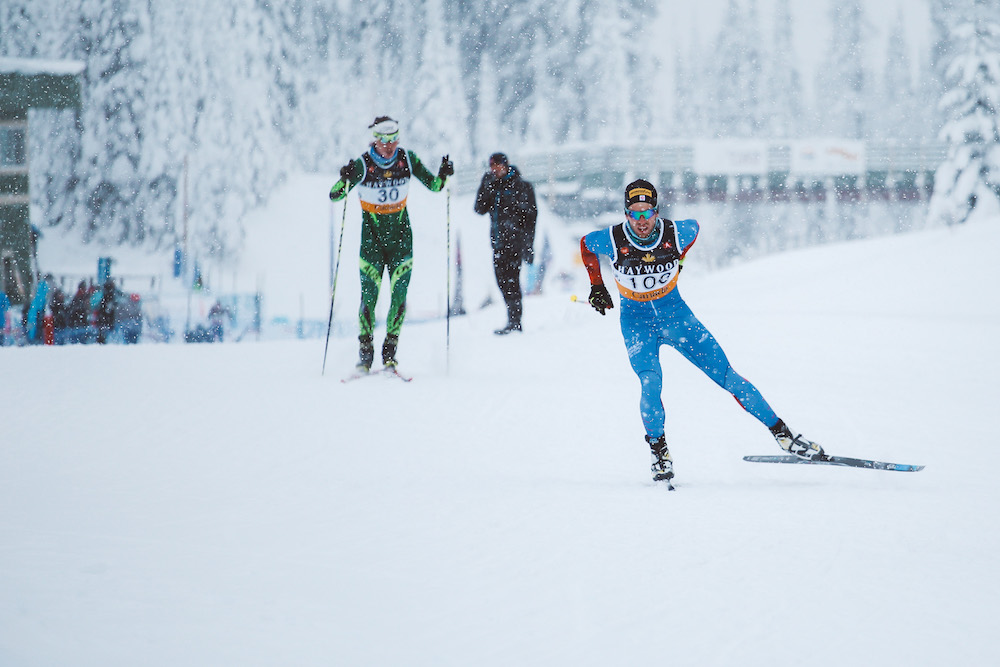
    Team RAD's Russell Kennedy powering through the snow to be top Canadian in the 15 km. (Photo: Marie-Éve Bilodeau-Corriveau)
    Team R.A.D.’s Russell Kennedy (r) powering through the snow to finish at the top Canadian in ninth in the men’s 15 k freestyle on Sunday, Dec. 11, at the Sovereign Lake NorAm/SuperTour. (Photo: Marie-Éve Bilodeau-Corriveau)

    VERNON, B.C. –The combined Noram/SuperTour last weekend at Sovereign Lake, British Columbia, produced some exciting skiing and some challenging photography conditions with almost non-stop snowfall both days. Some of our best photos that didn’t make the two-day race recap are included below, but first, a little background and feedback:

    The NorAm circuit has not been a fully North American circuit since 2006. This year, Canada and the U.S. planned two combined NorAm/SuperTour events in Bozeman, Montana, and Sovereign Lake, B.C. With the relocation of the Bozeman event to West Yellowstone, Sovereign Lake became the only combined event of the season.

    While many athletes dream of a return to the glory days of this series, the 2006/2007 birth of the SuperTour coincided with a second Continental Cup quota spot, allowing each country to send one “COC” leader of each gender.  Effectively, each country became a “continent” in the eyes of the International Ski Federation (FIS). Combining the two series could reduce North America to one COC position per gender.

    FasterSkier asked athletes and organization leaders what they thought of the 2016 combination of the early season NorAm and SuperTour:

    “I think what became very clear last year [in] the discussion with the coaches and the Canadian people, instead of trying to send to our athletes East to West, maybe it’s better to send them North to South. In terms of saving cost, obviously, and more competition between better athletes, [this] is better to improve the quality of our athletes in Canada and the US.”Robert Lazzaroni, U.S. Ski & Snowboard Association (USSA) nordic domestic program director

    “If you back to the NorAm races, when we used to do them with the U.S., when Devon Kershaw was racing Justin Wadsworth … ‘x’ number of years later, the one guy is coaching the other guy. Crossing over generations is very important.”Thomas Holland, Cross Country Canada (CCC) high performance director

    “The altitude at West Yellowstone is too high to use it as a selection race for the Canadian team.” — Holland, on applying the FIS limits to selection races.

    “I think it’s an incredible opportunity. I think we as North Americans don’t get the opportunity to have such a competitive field and I think coming together and making each other better is super important and think there’s just so much more to learn.”Julia Kern, Stratton Mountain School (SMS) Elite

    I really like it. This has been a very well-run, well-organized event. It’s really fun to race against other athletes, more people than the usual SuperTour field. It would be awesome to have more.”Kaitlyn Miller, Craftsbury Green Racing Project (CGRP)

    I can’t express to you how much I love it and how happy I am. I’ve been telling everyone I run into that I absolutely love it, and I would wish that the entire circuit could be combined the way it is today. I know that logistically, that’s not totally possible, but it’s so good for us, it adds such a depth of field. It’s just so much more fun, I love it. Yeah, I love it.”Olivia Bouffard-Nesbitt, Alberta World Cup Academy (AWCA)

    “I think it’s awesome. I think we should do more of these, for sure. Rossland and Silver Star and Canmore, it’s always beautiful snow and great grooming, and a really hilly, challenging course. I think all three of those have some really good terrain; it’s always fun to come up here and get a little bit different than our usual back courses back home.”Jennie Bender, Bridger Ski Foundation (BSF)

    It’s been great. I’ve been amazed at the professionalism here. They’ve put on an amazing event. For us in North America, we have it unique that we are separate from Europe and it’s cool to be able to challenge each other against the Canadians, and I think we should have more of it.”Heather Mooney, CGRP

    It’s just great. In sport and in skiing, I always believe that you need to race against the best.  That’s why we’ll be racing in Europe in February. It’s a super good idea, and I don’t know why we didn’t do it earlier.  They’re so close to us, so we need to race against them, and they need to race against us.”Antoine Briand, Pierre-Harvey National Training Centre (CNEPH)

    I think it’s incredible. Last year at our athlete meeting at Canadian Nationals, I made that point very strongly a couple times. I raced U.S. nationals in Houghton last year. That was an awesome event, I thought. Having a higher level of competition benefits everyone and then when we get to racing deeper fields in Europe, we’re not caught quite as offguard.”Evan Palmer-Charrette, Thunder Bay National Team Development Centre (NTDC)

    I think it’s awesome. I think it’s better for both the Americans and the Canadians. Everybody that I’ve talked to likes it. It raises the level of competition, we’re still competing for SuperTour points and NorAm points respectively. It just makes a deeper, faster field.”Reese Hanneman, Alaska Pacific University (APU)

    It raised the level of competition a lot, brings everyone’s game up, I think it’s good for North American skiing.”Cole Morgan, Sun Valley Ski Education Foundation (SVSEF)

    “It’s the best, we need to do this all the time. It’s so good to mix it up and see all of our best racers. I think if you look back generations, guys like [Chris] Jeffries and [George] Grey and Kersh [Devon Kershaw], like [Ivan] Babikov, they cut their teeth on a combined circuit. I think their success on the world cup is definitely in part due to that. I hope we get a couple more opportunities to keep racing each other.”Ben Saxton, SMS Elite (Note: Jeffries is the AWCA head coach, Grey placed eighth in the skiathlon at the 2010 Vancouver Olympics, Kershaw was second overall in the 2012 World Cup,  and Babikov is one the Canadian World Cup coaches.)

    I think it’s a great idea. It’s really nice to get some deeper fields, to get the Americans and Canadians racing together. It wasn’t so fun to watch the podium here, to watch it filled up with Americans, but when all the Canadians go down in the semi, that was happens. We’ll be down at US Nationals for sure.”Angus Foster, NTDC Thunder Bay

    It’s really good, because the level is really high with the U.S. Good for us to see other skiers, and other fast guys.”Alexis Dumas, CNEPH, the second Canadian and 15th overall in the men’s 15 k

    I love it! I think it’s like the best thing for our sport. The camaraderie, and also you learn so much from your peers, it’s super important and so valuable.”Chelsea Holmes, APU

    I love it, I hope we do more. I think it’s awesome for everyone involved.”Katharine Ogden, SMS Elite

    I love it. It’s fun having a bigger field and a new venue. I love Silver Star, this place is hard to beat.”Erika Flowers, SMS Elite

    More photos: XTS Photography | Team Gregg


  • Americans Lock Out Canadians at Sovereign Lake NorAm/SuperTour

    Americans Lock Out Canadians at Sovereign Lake NorAm/SuperTour

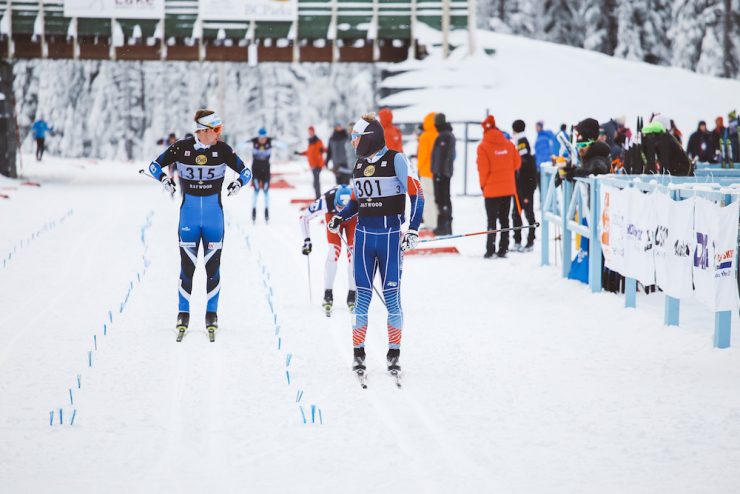
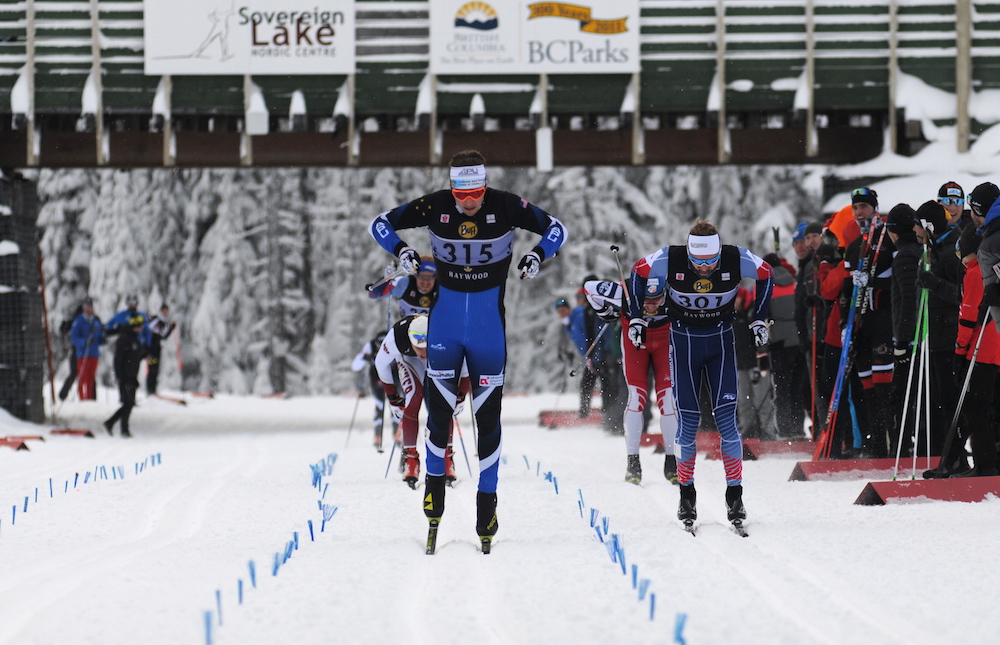
    APU's Reese Hanneman (315) leading down the finishing stretch, with Sun Valley's Cole Morgan (r), Moritz Madlener (behind Hannneman) and Ben Saxton (behind Morgan) chasing. (Photo: Doug Stephen)
    APU’s Reese Hanneman (315) leading down the finishing stretch of the Sovereign Lake NorAm/SuperTour men’s classic sprint final on Dec. 10, with Sun Valley’s Cole Morgan (r), the University of Denver’s Moritz Madlener (behind Hanneman), Stratton’s Ben Saxton (behind Morgan), and Sun Valley’s Matt Gelso (behind Madlener) chasing. (Photo: Doug Stephen)

    VERNON, B.C. — It might’ve been the first Canadian NorAm of the season, but the Americans made it all about themselves in what also doubled as their second stop on the U.S. SuperTour circuit this past weekend at the Sovereign Lake Nordic Centre.

    U.S. skiers kept Canada off the podium in the classic sprints and freestyle intervals starts on Saturday, Dec. 10, and Sunday, Dec. 11, with Olivia Bouffard-Nesbitt, of the Alberta World Cup Academy (AWCA) and Canadian U25 Team, coming closest in fourth on Day 1.

    On Saturday, Bouffard-Nesbitt started off the very first NorAm race, a 1.2 k classic sprint, with a qualifying win. She went on to advance in second in her quarterfinal and third in her semifinal, before finishing fourth in the A-final, 1.49 seconds out of first.

    American Julia Kern of the Vermont-based Stratton Mountain School (SMS) Elite Team (formerly the T2 Team) won the women’s final in 3:17.04, after qualifying fifth and placing second in both her quarterfinal and semifinal. Kern led two Craftsbury Green Racing Project (CGRP) teammates, Liz Guiney and Kaitlynn Miller, in second (+0.67) and third (+0.91) on the podium, respectively.

    Bouffard-Nesbitt leads the American's through the bridge turn. Kern's tactical choice over a minute earlier gave her the inside position on Miller and the advantage she needed. (Photo: Peggy Hung)
    Olivia Bouffard-Nesbitt (AWCA) leads the Americans through the bridge turn in the women’s classic sprint A-final on Saturday, Dec. 10, at the Sovereign Lake NorAm/SuperTour. Stratton’s Julia Kern (second from r) made a tactical choice more than a minute earlier, which gave her the inside position on Craftsbury’s Kaitlynn Miller (l) and the advantage she needed to win. (Photo: Peggy Hung)

    Bouffard-Nesbitt led the six finalists into the finishing straight after opening up a wide gap at the top of the second climb.

    “Yeah, those Americans,” Bouffard-Nesbitt told FasterSkier after the race. “I was in first until we hit the final finishing straight, and then I just got out-double poled by three of the girls.”

    Kern, a U.S. Ski Team Development Team member and Dartmouth student, credited tactical choices for her victory.

    “In the quarterfinal, I made the mistake of not taking the outside, which turned into the inside turn on the second downhill,” Kern said.

    The second downhill on Sovereign’s sprint course has a gentle right turn leading into a high-speed left, followed by the long climb and then two sharp left turns to the finish. Keeping control of the inside for the last three turns gave Kern the ideal position to take the second skied-in finish lane to cross the line first.

    Guiney followed Kern to second, leaving Miller with the fresh snow in lane three.

    “I was in third the first half of the course, just stayed in the mix,” Miller said of the final. “I really like the striding hill at the end.”

    Despite being slowed in the final straight, Miller loved the conditions.

    “This course is really nice, the conditions are awesome,” she said. “I love all the fresh snow. We had really great skis today, so that always helps.”

    While Bouffard-Nesbitt was disappointed that there wasn’t a Canadian on the podium, she was happy with her day.

    “I haven’t really sprinted this year,” she said, referring to a stress fracture in her foot that put her on crutches for several months this summer. “The intensity I’ve done since I’ve been back on my feet has been almost exclusively controlled Zone 3.”

    The fourth American in the top five, Jennie Bender of the Bridger Ski Foundation (BSF) qualified third and finished fifth overall (+3.8). The SuperTour leader after West Yellowstone’s first two races of the season, she was disappointed with fifth.

    “It was a tough field out there,” Bender said. “It’s a really short course, lots of turns, three different 180-degree turns. I kind of got swallowed up on the last downhill and lost a little gusto.”

    Asked if she was tempted to double-pole the course, Bender laughed and said, “I was! I might of been interested to do it during the qualifier, but I was third, and yeah, I’ll keep the striding.”

    A third Craftsbury skier in the A-final, Heather Mooney qualified ninth and went on to finish sixth in the final (+19.84).

    “It’s a really fun course, fun with lots of transitions,” Mooney said. “Off the start of the final, I was really excited that we had three from our team. I just didn’t quite have it at the beginning, caught back up a little bit, but I was definitely on and off the back of the pack. Came in last, but it was a good day.”

    All six of the women’s B-finalists were American, with Becca Rorabaugh of Alaska Pacific University (APU) ultimately placing seventh, Erika Flowers (SMS Elite) eighth, Mary O’Connell (CGRP) ninth, Jessica Yeaton (APU) 10th, Mary Rose of the Sun Valley Ski Education Foundation (SVSEF) 11th, and Anne Hart (SMS Elite) 12th.

    Maya MacIsaac-Jones, who had earned the opportunity to race World Cup Period 1, raced the NorAm sprint after sesamoiditis changed her early season plans.

    “I definitely wasn’t skiing as fast as I would like to be,” MacIsaac-Jones said, “but I am definitely just happy to be racing and on snow.”

    She was eliminated after placing fifth in her quarterfinal and skipped the 10 k freestyle on Sunday for a distance training session instead.

    ***

    The men's final on the first downhill. Hanneman leads Madlener, Briand, Gelso, and Morgan (Photo: Peggy Hung)
    The men’s final on the first downhill at the Sovereign Lake NorAm/SuperTour on Dec. 10 near Vernon, B.C. Sun Valley’s Cole Morgan leads Denver’s Moritz Madlener, CNEPH’s Antoine Briand, Sun Valley’s Matt Gelso, and Stratton’s Ben Saxton Saxton in pursuit of APU’s Reese Hanneman (not shown). (Photo: Peggy Hung)

    The men’s classic sprint shared the same 1.2 k course and the same American domination of the podium after a semifinal crash took three Canadians out of contention.

    Reese Hanneman (APU) double poled to the win in 2:38.08 after qualifying 15th. Cole Morgan (SVSEF) and Ben Saxton (SMS Elite) rounded out the podium in second (+0.87) and third (+1.92), respectively.

    “I had a really bad qualifier, for me. I chose a classic ski,” Hanneman said of his qualification round. “But I think [grip wax] was much slower, as the heats showed.”

    He described the A-final as fast from the start.

    “I had a decent start; I was in second behind Cole up until the top of the first climb. I made a pass, double poled by him, and I was kind of leading into the big climb,” Hanneman recalled.

    “Then he and I were side by side, one and two, with a little gap. Then up the steep pitch, he took the lead and I tucked in behind him and just followed him over the bridge. I was able to close down the gap and then pass him and then turn on the jets coming in the final double-pole section.”

    Morgan, who won the qualifier and was one of the four others on skate skis in the final, was also pleased with his tactics.

    “I did the same tactic as I did in every heat, try to be in second place coming into the big downhill before the last hill,” Morgan said. “[I] was able to lead over the top, but didn’t have the same finish as Reese did.”

    Saxton double poled all four laps, as did Hanneman, Morgan and many of the top men.

    “I think that was the faster call, but it was definitely a physical task those last heats there,” Saxton said.

    Another double poler in the final, the University of Denver’s Moritz Madlener ended up fourth (+1.92) after qualifying third.

    “Considering how much we trained the last couple of weeks, it was a great result,” he said.

    For Madlener, who is originally from Germany, this marked his first visit to Canada.

    “This is German territory. The last time there was a World Cup here, the first five were Germans,” he said, probably not realizing that it was 11 years to the day since that 30 k pursuit event.

    The lone finalist on grip wax, Matt Gelso (SVSEF) finished fifth (+3.88) after winning his crash-marred semifinal. Antoine Briand of the Pierre-Harvey National Training Centre (CNEPH) was the lone Canadian in the A-final, with a lucky loser time that was faster than Gelso’s winning time from the other semifinal.

    Angus Foster untangles himself as Evan Palmer-Charrette waits underneath. The ski through the big belongs to Simon Lapointe. (Photo: Shelley Woodman)
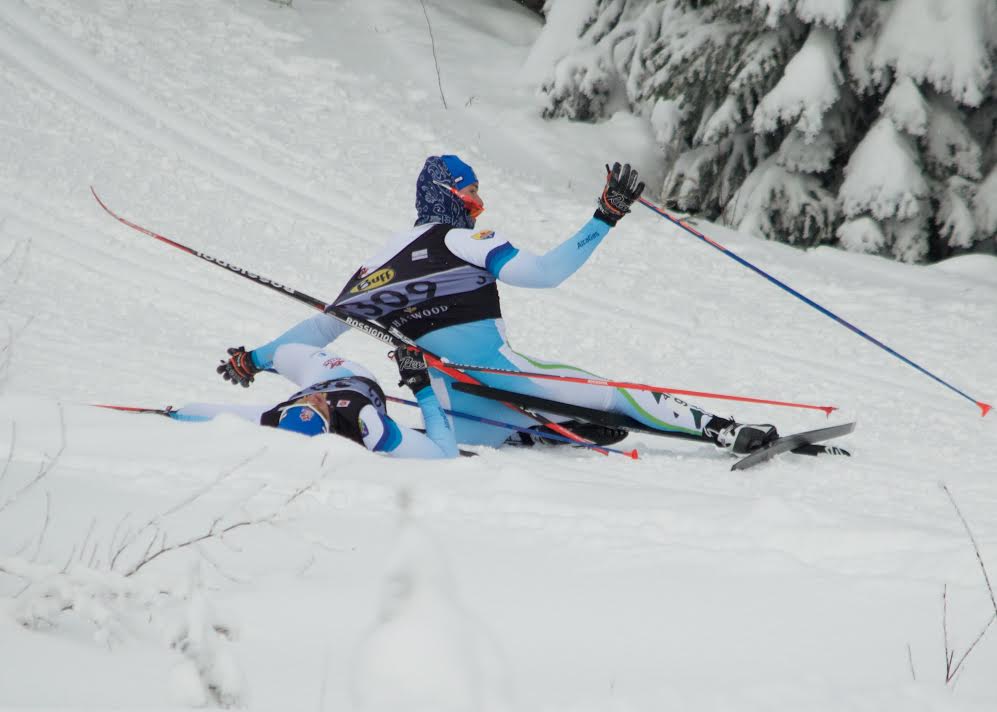
    Angus Foster (309) untangles himself after a semifinal crash at the Sovereign Lake NorAm/SuperTour on Dec. 10, as his NTDC Thunder Bay teammate Evan Palmer-Charrette tries to get his breath back. The ski through the bib belongs to Simon Lapointe. (Photo: Shelley Woodman)

    For a few Canadian athletes, the crash in the second semifinal was the defining moment of the day. Only 50 metres into the race, Gelso used his inside position in the tight pack to pull in front of Angus Foster, of the Thunder Bay National Team Development Center (NTDC), but Gelso skied over Foster’s ski, triggering a chain reaction.

    “[Gelso] got through, but I went down, had two other Canadians go down with me,” Foster said after. “Probably the hardest crash we’ve ever had.”

    Foster fell sideways in front of NTDC teammate Evan Palmer-Charrette.

    “I just got unlucky, [Foster] fell right in front of me, and I just pitchforked over him, got the wind knocked out of me pretty bad,” Palmer-Charrette said. “Unfortunate, but that’s racing.”

    CNEPH’s Simon Lapointe was the third skier in the tangle. Lapointe got up quickly, but a broken binding required him to wait for a coach to run over with a spare ski.

    Palmer-Charrette was slow to get up, leaving Foster pinned in place. Foster finished the heat with three holes in the back of his race bib and likely a few ski-shaped bruises underneath.

    Lapointe, one of the top Canadians sprinters, was the most frustrated with the semifinal crash. He left the finish area with a quick French-language “nothing to say” before going on to win the B-final by 1.06 seconds over Palmer-Charrette in 2:43.31.

    None of the three Canadians protested to the jury member at the finish. Asked directly about whether there was cause for a protest, Foster said “That wasn’t a clean move, but that happens. People make mistakes.  Still frustrating, but….”

    Gelso was surprised to find only one skier with him at the top of the second climb. “We both went for a track at the same time, and I don’t know what happened,” Gelso said later, “but I’ve been on both ends of that.”

    Everyone interviewed spoke favorably of the combined NorAm/SuperTour weekend.

    “It’s really nice to get some deeper fields, to get the Americans and Canadians racing together,” Foster said. “It wasn’t so fun to watch the podium here.”

    Day 1 results: Classic sprint brackets

    ***

    APU's Scott Patterson leading Canadian junior Ty Godfrey (Team R.A.D.) during the men's 15 k freestyle interval start on Sunday, Dec. 11, at the Sovereign Lake NorAm/SuperTour. (Photo: Peggy Hung
    APU’s Scott Patterson leading Canadian junior Ty Godfrey (Team R.A.D.) during the men’s 15 k freestyle interval start on Sunday, Dec. 11, at the Sovereign Lake NorAm/SuperTour. (Photo: Peggy Hung)

    Day 2 at Sovereign proved to be more populated with Americans sweeping the top five and nearly the top 10 in the men’s and women’s distance freestyle interval starts.

    In the men’s 15 k, Scott Patterson (APU) topped the field by 13.2 seconds with a winning time of 40:00.2. Gelso reached the podium in second — his third this season in four SuperTour races — and Tad Elliott (Ski Club Vail) placed third (+26.6).

    The U.S. swept the top eight with Brian Gregg (Team Gregg) in fourth (+54.8), Paddy Caldwell (SMS Elite/Dartmouth/USST) in fifth (+1:20.5), Ben Lustgarten (CGRP) in sixth (+1:27.4), Madlener in seventh (+1:31.3), and Kyle Bratrud (CXC Team) in eighth (+1:33.5).

    Russell Kennedy of the Canmore-based Team R.A.D. was the top Canadian* in ninth (+1:38.8), and John Hegman (SVSEF) finished 10th (+1:44.2).
    (*While Kennedy lives and trains in Canada, he is originally from Truckee, Calif.)

    Out of 112 finishers in the men’s race, nearly 50 were American, and two were Australian national team members.

    “Gelso’s definitely in good shape so it was good to hear splits out there that I was leading,” Patterson said. He started in bib 94 behind Gelso in bib 80.

    “Fifteen k skate’s kind of been my game, one race I can always fall back to and know I can ski pretty fast,” Patterson added.

    Asked about the event doubling as a SuperTour, he said it added competition.

    “I would have loved to see the Canadians in West [Yellowstone], but it’s a weird course, makes sense to skip it,” he said of the SuperTour’s usual first stop on the circuit (one of the few places in the U.S. with reliable early season snow) at the Rendezvous Ski Trails in West Yellowstone, Mont. The SuperTour opener was originally scheduled for Bozeman, Mont., which would have been a NorAm as well, but moved because of low snow.

    “It’s always fun to have a bunch of people that you don’t know all that well,” Patterson added. “This is my first time in Silver Star and it’s been great.  Real winter, and we’ve been lacking that in Anchorage [Alaska].”

    After spending a good chunk of last season in Europe on the World Cup, Patterson noted that even those venues tend to rely on manmade snow.

    “It’s nice to have dumping snow out here,” he said.

    “I think the third lap, things started to slow down,” Patterson added about the race itself. “I was getting ice through my glasses and eyes. It made things feel a little more closed in, feel like it’s snowing harder. I think it slowed down a little bit, but maybe that’s just getting tired, too.”

    Sun Valley's Matt Gelso (front) charging a false flat on his first lap of the men's three-lap 15 k freestyle on Dec. 11 at the Sovereign Lake NorAm/SuperTour. (Photo: Peggy Hung)
    Sun Valley’s Matt Gelso (front) charging a false flat on his first lap of the men’s three-lap 15 k freestyle on Dec. 11 at the Sovereign Lake NorAm/SuperTour, followed by Welly Ramsey (Ford Sayre). (Photo: Peggy Hung)

    Gelso recalled a slower last lap as well, but was pleased with his effort.

    “It’s a great course, and it was fun,” he said.

    Gelso was strongly in favor of combining the two North American circuits whenever possible, recalling a conversation he had with some U.S. and Canadian national-team members at 2015 World Championships.

    “Devon Kershaw and a bunch of the Canadians and Americans were staying in the same hotel, and we were talking about how cool … instead of having one Canadian, one American that goes to the World Cup on the Continental Cup, why [doesn’t the International Ski Federation] give North America three spots for Canada and the US, and all of our races are together?” he said. “Sometimes it will be three Americans, sometimes it will be three Canadians, sometimes it will be two and one, whoever’s racing fast. The more we are racing together, I think the better we’re going to fare internationally.”

    “I mean, we’re friends with these guys, we know who they are,” Elliott said of racing with Canadians. “Michael Somppi, Kevin Sandau, they’ve been visited us at U.S. nationals last year. Silver Star’s gorgeous, great skiing, great course, well-run races, so it’s always a pleasure to visit here.”

    Elliott, a former U.S. Ski Team distance skier, described feeling surprised with his effort on Sunday after what he called a “great sprint” in West Yellowstone (in which he placed 14th) followed by a head cold, which forced him to skip the West Yellowstone distance race.

    “I rested all week indoors, and I felt incredible today,” he said.

    Kennedy in ninth called his race a solid start, but had hoped to finished a “little higher up.”

    “The U.S. guys are skiing super-strong right now, you could just see it out there,” Kennedy said. “I thought I was skiing pretty well, and then got some splits off of Gelso, and OK, they’re moving. I am hoping when we have [World Championships] trials in Park City, we’ll be a little bit more up there, but we’ll see. It’s good to have that competition, too. You can’t rest anywhere, you have to push everywhere, so that’s good.”

    Asked about the NorAm/SuperTour combo, he was also positive.

    “It’s good for us to have the extra competition and it’s good to race new faces,” Kennedy said. “Especially in sprints, you get used to the same tactics from the same people. When you have someone new, it’s nice to have to adjust your tactics and be prepared for what they’re going to do when you don’t know them as well. In distance, it’s really cool to have new guys to chase. I can kind of know the Canadians, what’s happening with them, but I was chasing down David [Norris] today, and he kind of surprised me how strong he was on the last lap, it was good to have that extra push, for sure.”

    The second-fastest Canadian man of the day, Alexis Dumas (CNEPH) placed 15th (+2:13.1).

    “I feel really fast on the one-skate, and the uphill was good, too,” Dumas said after. “I improved a lot my offset this summer, so it was good for this course.”

    In terms of season goals, he’s looking to qualify for U23 World Championships, where he’d like to achieve a top 20.

    ***

    Chelsea Holmes leads Erika Flowers at the 5 k mark of the women's 10 k freestyle interval start on Sunday, Dec. 11, at the Sovereign Lake NorAm/SuperTour. (Photo: Marie-Éve Bilodeau-Corriveau)
    Chelsea Holmes leads Erika Flowers at the 5 k mark of the women’s 10 k freestyle interval start on Sunday, Dec. 11, at the Sovereign Lake NorAm/SuperTour. (Photo: Marie-Éve Bilodeau-Corriveau)

    In the women’s 10 k, Chelsea Holmes (APU) took the win in 30:42.9, topping the time of the race’s previous leader, Katharine Ogden (SMS Elite) by 13.4 seconds. Stratton had two on the podium with Flowers in third, 36.4 seconds back from Holmes.

    “The course was really hard, but my techs and coaches gave us really good skis,” Holmes said after. “Today, I had the most amazing team, all the boys finished and they were cheering so hard.”

    Holmes started 30 seconds after Flowers and 1 minute behind her APU teammate Rosie Frankowski.

    “Chelsea started right behind me, and her and Frankie [Frankowski] and I all skied together for most of it, which made it a lot more fun cruising through the snow,” Flowers recalled. “We had a good little crew going, so it was hard, but hard with friends.”

    Frankowski finished with Holmes and 59.9 seconds off her winning time in sixth place, behind Gregg in fourth (+40.8) and Rose in fifth (+51.7). APU had three in the top seven with Rorabaugh in seventh (+1:09.8). Craftsbury’s Guiney placed eighth (+1:17.9), Deedra Irwin (SVSEF) was ninth (+1:18.4), and Kern, Saturday’s sprint winner, 10th (+1:24.8).

    For the second day in a row, Bouffard-Nesbitt was the top Canadian woman, placing 13th (+1:51.8). Of the top 20, the U.S. swept all but three places: 13th, 18th with NTDC’s Annika Richardson, and 20th with Sovereign Lake’s own Hannah Mehain. (Both Richardson and Mehain belong to Canada’s Junior National Team.)

    “I’ve never had an easy race at Silver Star,” Bouffard-Nesbitt said after Sunday’s 10 k. “It was really hard as usual. To be honest, all morning, I feel pretty wrecked from yesterday’s race. Whole body, that sprint really took a toll on me. I was kind of just trying to play the hand I was dealt the best I could, make the most of it. I think I’m happy with it.”

    Asked how she felt about being the top Canadian for the second-straight day, albeit outside the top 10, she replied, “Let’s say, bittersweet. Obviously, we want to have Canadians represented at the top of these fields, among the Americans, but of course I’m happy to be top Canadian.”

    Regardless, she was glad to have the competition.

    “We not coming here to have easy wins; we’re coming here to be challenged,” Bouffard-Nesbitt said. “I’m very happy to have them here, and I’m very happy when they can show us what fast racing looks like.”

    Sixty-two women finished the distance race, and about half were American. Most of the NorAm field is headed to Rossland, B.C., for next weekend’s NorAm, which is not a SuperTour and will not count toward the U.S. Ski & Snowboard Association’s (USSA) national ranking list.

    Day 2 results: 10/15 k freestyle


  • Saturday Rundown: Davos, Pokljuka & Sovereign Lake (Updated x3)

    Saturday Rundown: Davos, Pokljuka & Sovereign Lake (Updated x3)

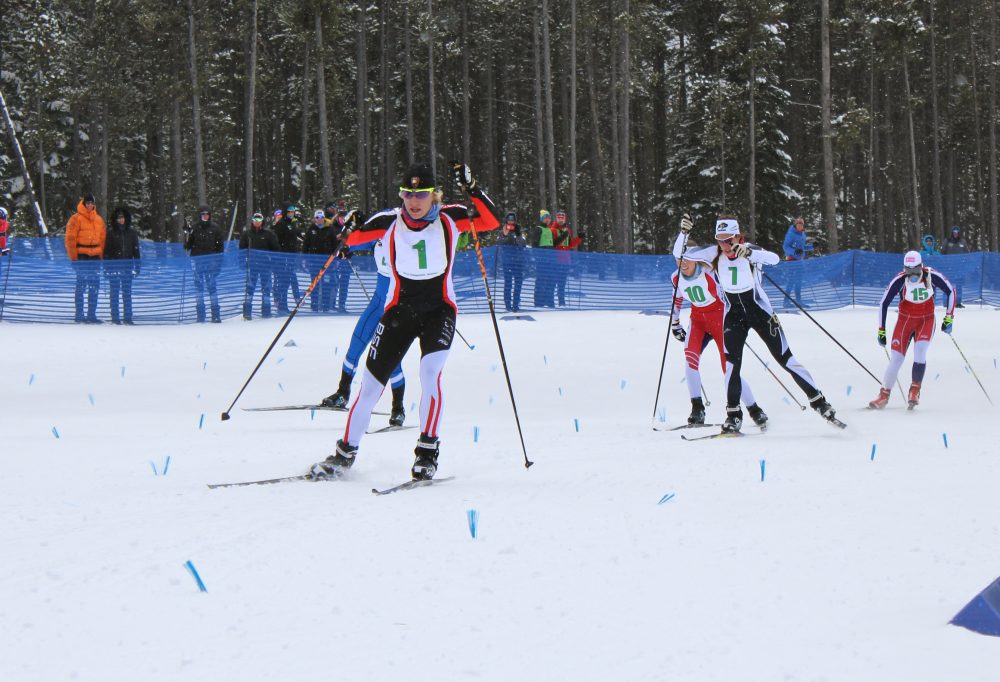
    AWCA's Olivia Bouffard-Nesbitt leads the American train around the bridge corner into the finish straight in the A final (Photo: Peggy Hung)
    Olivia Bouffard-Nesbitt of the Alberta World Cup Academy (AWCA) leads the American train around the bridge corner into the finish straight in the A-final of Saturday’s NorAm classic sprint at Sovereign Lake in British Columbia. She went on to finish fourth behind Julia Kern (second from r), Liz Guiney (back left) and Kaitlynn Miller (l), respectively. (Photo: Peggy Hung)

    Welcome to The Rundown, your quick primer of need-to-know information about the day’s racing. We’ll be updating this digest as the day goes on with additional results, photos and quotes. The Rundown is NOT a race report; stay tuned for complete race reports later today with interviews from the day’s top racers.

    ***

    Canadian NorAm/U.S. SuperTour at Sovereign Lake: Classic sprint

    [UPDATE] U.S. skiers filled the open category podiums on the first fully North American NorAm event in recent years on Saturday at Sovereign Lake near Vernon, B.C. With NorAm points, SuperTour points and FIS points on the line there was a great turnout of the top skiers.

    In the open women’s 1.2-kilometer classic sprint, Julia Kern of the Stratton Mountain School (SMS) won in 3:17.04 after qualifying fifth. Liz Guiney of the Craftsbury Green Racing Project (CGRP) finished second, 0.67 seconds back, and her CGRP teammate Kaitlynn Miller rounded out the podium in third (+0.91). Olivia Bouffard-Nesbitt (Alberta World Cup Academy) was the top Canadian in fourth (+1.49) and the lone Canadian in the final. Jennie Bender (Bridger Ski Foundation) placed fifth (+3.8) and Heather Mooney was sixth (+19.84).

    On the same 1.2 k course, Reese Hanneman (Alaska Pacific University) made up for his 15th qualifying time to take the men’s final win in 2:38.08. Cole Morgan of the Sun Valley Ski Education Foundation (SVSEF) took second in the final (+0.87) after winning the qualifier, and Ben Saxton (SMST2) was third (+1.92). Matt Gelso (SVSEF) finished fifth (+3.88), after precipitating a semifinal crash that took three Canadians (Angus Foster, Simon Lapointe and Evan Palmer-Charrette) out of contention, but didn’t result in a protest. The lone Canadian man in the final, Antoine Briand (Pierre-Harvey Training Centre) placed sixth (+11.98).

    Sprint brackets

    IBU World Cup in Pokljuka: 10/12.5 k pursuits

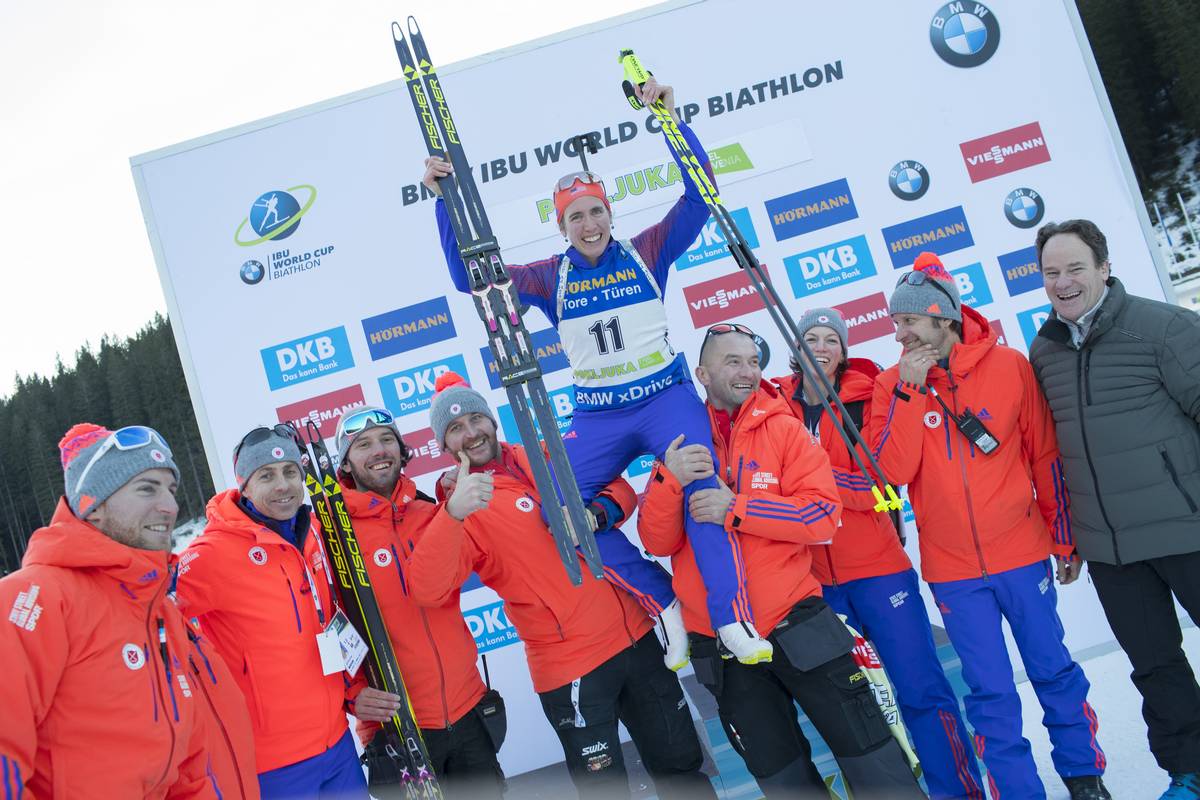
    Susan Dunklee being hoisted up by her US Biathlon support team at the IBU World Cup in Pokljuka, Slovenia, after tying her career-best result in a pursuit. Dunklee placed fifth on Saturday for a season best as well. (Photo: USBA/NordicFocus)
    Susan Dunklee being hoisted up by her US Biathlon support team at the IBU World Cup in Pokljuka, Slovenia, after tying her career-best result in a pursuit. Dunklee placed fifth on Saturday for a season best as well. (Photo: USBA/NordicFocus)

    Women’s report | Men’s report

    Another day at the front of the pack, and another day of (nearly) perfect shooting for Susan Dunklee, who raced from 11th to fifth for her first flower ceremony (top six) of the season at the IBU World Cup in Pokljuka, Slovenia.

    Dunklee (US Biathlon) cleaned the first three of four stages in Saturday’s 10-kilometer pursuit to move into second with one standing stage remaining. In that final shooting stage, she had her first miss of the day, yet still left the range in second, 22 seconds behind Germany’s Laura Dahlmeier in first. Dunklee finished out the race with the 21st-ranked course time on the last loop (her first-loop time was the fastest in the 56-woman field) and placed fifth, 24.1 seconds behind Dahlmeier — who won her second-straight race in Pokljuka. Dahlmeier finished first in 30:43.1 despite two prone misses on the second stage, which put her as far back as fifth (0+2+0+0). Finland’s Kaisa Mäkäräinen finished second, 16.8 seconds back, with two penalties as well (0+0+1+1), and Eva Puskarcikova of the Czech Republic reached the podium in third (+18.7) with a single miss followed by three clean stages (1+0+0+0). One spot ahead of Dunklee, reigning World Cup champion Marie Dorin Habert of France clawed her way up to fourth (+18.8) after starting 17th, with one penalty (0+0+1+0).

    For Dahlmeier, it was her 10th World Cup victory and fifth in a pursuit.

    “My motto is ‘Scheiß da nix, dann feid da nix’,” Dahlmeier told Germany’s ZDF, which vaguely translates to “Don’t worry be happy,” or “Just do it.”

    “That was worth gold today. I was a bit surprised about my two misses in prone. Apparently I already had an aberration in the first stage, then I clicked [adjusted the sights] and was a bit surprised that the two misses still happened,” she added. “… Then came the standing shooting, and there I tried to keep calm again. The race is only over once you cross the finish line, and that became true again today. I am happy that the race flipped again like this.”

    Canada’s Julia Ransom cleaned three consecutive stages before missing two on the last standing. She finished 34th for the second day in a row, 2:33.5 behind Dahlmeier. Rosanna Crawford placed 49th with three penalties (2+1+0+0) and Clare Egan of the U.S. was 56th with six misses (2+0+1+3).  Canada’s Megan Tandy, with seven penalties (1+1+3+2) did not finish.

    In the men’s 12.5 k pursuit, the first man out of the start, Martin Fourcade of France, held his lead to the finish, hitting all 20 targets and winning in 30:27.4. Norway’s Emil Hegle Svendsen rose from fourth at the start to second at the finish (+6.0) with clean shooting as well, and Russia’s Anton Shipulin placed third for the second-straight day (+6.2), with one penalty in the last stage (0+0+0+1).

    Friday’s sprint runner-up, Johannes Thingnes Bø of Norway, ended up fourth (+48) with two misses on the last stage (0+0+0+2), Germany’s Simon Schempp placed fifth (+59.8) after starting sixth, and had one miss (0+0+1+0), and Michael Rösch of Belarus cleaned for sixth place (+1:21.0) after starting 16th.

    Lowell Bailey (US Biathlon) finished 18th (+2:01.6) for the second day in a row, with one prone penalty in the first stage (1+0+0+0).

    Biathlon Canada’s Christian Gow picked off two places for a new career best in 31st (+2:41.7) with a single prone penalty (0+1+0+0).

    Tim Burke placed 42nd (+4:09.8) for the U.S. (after starting 53rd) with five standing penalties (0+0+2+3), Canada’s Scott Gow finished 48th (+4:39) with five misses as well (2+1+0+2), and the third Canadian in the race, Brendan Green was 57th (+5:36.4) with five penalties (+5:36.4).

    Results: Women | Men

    ***

    FIS Cross-Country World Cup in Davos: 15/30 k freestyle

    Women’s report | North American women’s report | Men’s report

    Norway's Ingvild Flugstad Østberg (c) won her first World Cup race of the season on Saturday in the 15 k freestyle individual start in Davos, Switzerland. Joining her on the podium: Norway's Heidi Weng (l) in second and Finland's Krista Parmakoski (r) in third.
    Norway’s Ingvild Flugstad Østberg (c) won her first World Cup race of the season on Saturday in the 15 k freestyle individual start in Davos, Switzerland. Joining her on the podium: Norway’s Heidi Weng (l) in second and Finland’s Krista Parmakoski (r) in third.

    Norway’s Ingvild Flugstad Østberg is back on top of the podium after a 7.9-second win in Saturday’s 15-kilometer freestyle in Davos, Switzerland, over — you guessed it — her teammate Heidi Weng.

    Østberg started 38th (out of 59) and led at every split to take the win in 37:44.4, her first this season and her first in a 15 k. Weng started a minute ahead of her in bib 36 and ended up second, while Finland’s Krista Parmakoski notched third (+16.7) for her third podium of the season, ninth in her career and second skate podium.

    The next fastest woman, American Jessie Diggins finished 37.6 seconds off the podium in fourth (+54.3), ahead of Russia’s Yulia Tchekaleva in fifth (+1:00.5) and Switzerland’s Nathalie von Siebenthal in sixth (+1:05.6). Ragnhild Haga of Norway was seventh (+1:10.8), Finland’s Riitta-Liisa Roponen eighth (+1:21.4), Italy’s Ilaria Debertolis ninth (+1:32.2), and Sweden’s Anna Haag 10th (+1:35.5).

    The U.S. had two in the points with Liz Stephen in 28th (+2:17.5). Kikkan Randall was 2.3 seconds outside the top 30 in 33rd (+2:30.2), and Caitlin Patterson placed 44th (+3:21.6). Rosie Brennan did not start.

    Emily Nishikawa led Canada in 34th (+2:33.5) for her best result this season, Dahria Beatty was 42nd (+3:15.2), and Cendrine Browne 54th (+4:07).

    Weng remains the Overall World Cup leader by 70 points over Østberg, Parmakoski ranks third, and Norway’s Marit Bjørgen, who is not competing this weekend in Davos, is currently fourth.

    [UPDATE] In the men’s race earlier on Saturday, Martin Johnsrud Sundby racked up another victory in Davos’s 30 k freestyle, beating his fellow Norwegian Anders Gløersen by 13.7 seconds with a winning time of 1:07:31.6 hours. Gløersen took second for his first podium in a year (he was third in the Davos 30 k last December) and Finland’s Matti Heikkinen reached the podium for his second-straight race in third (+25.7).

    Canada’s Alex Harvey placed 12th (+1:29.4) and his teammate Graeme Killick notched 21st (+2:24.2) for his second-best World Cup result (after placing 19th in a skiathlon last March at the Ski Tour Canada).

    Devon Kershaw was the next top North American in 43rd (+3:52.9), six seconds ahead of the lone American in the race, Noah Hoffman in 44th (+3:58.9). Canada’s Andy Shields placed 64th (+6:33.9).

    Results: Women | Men


  • Gelso Wins First SuperTour Sprint; ‘Big Win’ for Bender in West

    Gelso Wins First SuperTour Sprint; ‘Big Win’ for Bender in West

    From left to right: Alaska Pacific University’s Reese Hanneman, Sun Valley Ski Education Foundation’s Matt Gelso and Alaska Pacific University’s Tyler Kornfield on the podium for the men’s SuperTour 1.3-kilometer freestyle sprint on Saturday in West Yellowstone, Mont.
    From left to right: Saturday’s third-place finisher Reese Hanneman (APU), winner Matt Gelso (SVSEF) and runner-up Tyler Kornfield (APU) on the podium at the men’s SuperTour 1.3-kilometer freestyle sprint on Saturday in West Yellowstone, Mont.

    WEST YELLOWSTONE, Mont. — With a little less than a kilometer left, the pack started to panic. Saturday marked the first SuperTour sprint of the season and the gap Sun Valley Ski Education Foundation (SVSEF) Gold Team veteran Matt Gelso had put on the five other skiers in the men’s sprint final was not getting smaller.

    The winner of last year’s SuperTour sprint season opener, Reese Hanneman of Alaska Pacific University (APU), saw the nearly 15-meter lead Gelso had established halfway through the 1.3-kilometer men’s freestyle sprint final heat as a sign.

    Alaska Pacific University's Tyler Kornfield racing during the qualifier for the men's SuperTour 1.3-kilometer freestyle sprint on Saturday in West Yellowstone, Mont.
    Tyler Kornfield (APU) racing during the qualifier of the men’s SuperTour 1.3-kilometer freestyle sprint on Saturday in West Yellowstone, Mont.

    “I was in third or fourth thinking, ‘Uh, OK, we better start closing this down,’” Hanneman said during an in-person, post-race interview.

    The odds seemed against Gelso. Racing behind him was not only Hanneman (a two-time national sprint champion), but also APU’s Tyler Kornfield (a 2012 national sprint champion), Bend Endurance Academy’s Dakota Blackhorse-von Jess (winner of three national sprint titles), as well as American junior sprint star Cole Morgan (SVSEF), and sprint specialist Ben Saxton of the Stratton Mountain School (SMST2).

    “Basically in the final it was five sprinters and then Matt,” Hanneman said. “So I think he knew that he had to go out like … and then I think none of us thought that [Gelso] could hold it all the way. … It was really impressive skiing by him to just go for it the whole time.”

    Yet, as Gelso began to climb the final hill of the course on the Rendezvous Ski Trails, he proved his gap on the other five finalists would take a strong challenge to beat. Hanneman pushed around Morgan, Saxton and Blackhorse-von Jess, while racing behind his teammate Kornfield. The two APU racers began gaining on Gelso, but not soon enough.

    With 100 meters to go, Gelso, a 28-year-old SuperTour regular best known for his distance skiing, left the two sprint champions chasing, and crossed the finish line first in a time of 2:36.85 for his first SuperTour sprint win.

    “I was pretty fired up,” Gelso said after. “I didn’t know going into the semifinal and final if [leading from the start] was going to still work … but I had the body and the skis to stay consistent with my plan.”

    Crossing 1.94 seconds after Gelso was Kornfield, who indicated that his second-place finish was his best performance on the West Yellowstone sprint course since the start of his sprint career.

    “The first year [I raced] here I didn’t even qualify,” Kornfield said after. “This is the first year I’ve moved on from the quarters…[last year] I got taken out and I took Eric Packer out too.”

    “I think none of us thought that [Gelso] could hold it all the way … It was really impressive skiing by him to just go for it the whole time.”— Reese Hanneman (APU), on Matt Gelso’s sprint performance Saturday

    The final podium finisher for the day was Hanneman, finishing 2.27 seconds after Gelso and 0.33 seconds out of second place.

    “I didn’t feel that good in the qualifier,” Hanneman said. “I was skiing a couple gears lower than I needed to be but then I started feeling better in the heats … I think after today I’ll definitely wake up and feel a little bit better.”

    The final three finishers included Saxton in fourth (+5.1), Morgan in fifth (+5.34) and Blackhorse-von Jess in sixth (+22.85).

    Results: Qualifier | Heats

    ‘Big Win’ for Bender

    In the women’s 1.3 k freestyle sprint, it was Jennie Bender of the Bridger Ski Foundation (BSF), who took first, besting SMST2’s Erika Flowers and Annie Hart.

    Bender, 28, started the day by winning the women’s qualifier in 3:08.76, holding off Hart by three hundredths of a second.

    “My goal is to do better in qualifying, and I did that today, so that was a big win for me,” Bender said. “I love this course and I hope to repeat last year, get back to Europe and race some World Cups.”

    From left to right: Stratton Mountain School skier Annie Hart, Bridger Ski Foundation skier Jennie Bender and Stratton Mountain School skier Erika Flowers on the podium for the women’s SuperTour 1.3-kilometer freestyle sprint on Saturday in West Yellowstone, Mont.
    From left to right: Saturday’s third-place finisher Annie Hart (SMST2), winner Jennie Bender (BSF), and runner-up Erika Flowers (SMST2) on the podium at the women’s SuperTour 1.3-kilometer freestyle sprint in West Yellowstone, Mont.

    After winning the qualifier, Bender’s course time only got faster. She won her quarterfinal in 3:08.24 and her semifinal in 3:06.86. By the time she finished the women’s final in first, she had covered the 1.3 k course in 3:04.78, almost four seconds faster than her qualifying time.

    With a strong headwind challenging many of the racers who chose to lead, Bender decided in her final to follow the other finalists for the first half of the course before making her move.

    “There’s a lot of wind happening so … you kind of have to play with the wind and whether or not you want to be the only one blocking it or not,” Bender said of the heats. “I led my quarter, and I was like  ‘Holy sh*t, I took all the wind myself!’ so I was trying to kind of mess around with sitting behind people the next two heats, and that felt way better.”

    While Bender’s plan for the final was to tuck in and conserve for the first half, then surge to the front in the second half, Hart decided to lead out of the start.

    “Because we had some big headwinds [today] … the debate was whether to lead or follow,” Hart said. “I went into the rounds and decided to lead most of them, because I ski better generally when I kind of feel like I’m in control.”

    Hart skied at the front of the pack up until the course’s last climb, where her teammate Flowers passed her on the right side and Bender cruised by on her left.

    “I just, one, didn’t have much energy left, and two, there really wasn’t anywhere to go,” Hart said of her attempt to hold onto the lead. “I typically don’t do very well in West Yellowstone, so this year was by far the best first race I have had … I will take it.”

    Bridger Ski Foundation skier Jennie Bender (bib 1) leading her semifinal during the women's 1.3-kilometer freestyle sprint on Saturday in West Yellowstone, Mont.
    Jennie Bender (1) of the Bridger Ski Foundation leading her semifinal during the women’s 1.3-kilometer freestyle sprint on Saturday in West Yellowstone, Mont.

    Rounding the final turn, Bender took the inside lane while Flowers remained to the far outside left. The two raced head-to-head through the final 100 meters, lunging to the line for a photo finish.

    Bender was eventually awarded the win and Flowers took second by a mere 0.09 seconds. Hart crossed in third, 1.94 seconds behind Bender.

    “I needed a lane, so I moved outside early and zoomed up the hill as fast as I could, and then into the finish,” Flowers said of final move up the course’s last climb. “I don’t think I quite realized I was as close to Jennie as I was until about ten feet from the finish line. It was exciting, I’ve never thought of myself as a sprinter, so it was fun to do well.”

    “She was behind me the whole time until that hill,” Bender said of Flowers. “And you just save so much energy, due to headwind, so I think that helped both of us. It’s funny, we talked about it before our quarter — she was in my quarter, I was like, ‘it’s better drafting,’ and it worked out!

    “I feel pretty fit compared to previous years, I would say, and I’m hoping for a good season,” Bender concluded.

    Also in the final was Hannah Halvorsen of the Sugar Bowl Ski Academy and U.S. Ski Team in fourth (+2.0), APU’s Chelsea Holmes in fifth (+3.86), and University of Colorado-Boulder (CU) skier Petra Hyncicova in sixth (+4.53).

    Results: Qualifier | Heats

  • ‘Fake It Until You Make It’, Flowers and Freeman First in Craftsbury SuperTour 10 k Classic

    ‘Fake It Until You Make It’, Flowers and Freeman First in Craftsbury SuperTour 10 k Classic

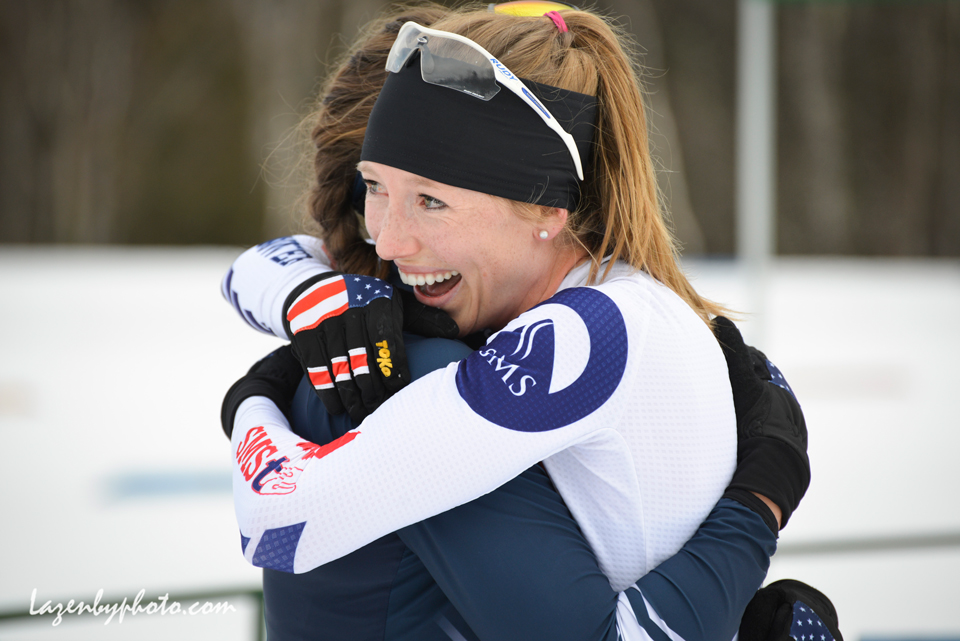
    Erika Flowers (SMST2) (r) getting a congratulatory hug after winning the women's SuperTour 10 k classic individual start on Sunday in Craftsbury, Vermont.  (Photo: John Lazenby/Lazenbyphoto.com)
    Erika Flowers (SMST2) (r) getting a congratulatory hug after winning the SuperTour women’s 10 k classic on Feb. 7 in Craftsbury, Vt. (Photo: John Lazenby/Lazenbyphoto.com)

    The pre-race flurry of ski racers running about wax trailers and tents.

    The tell-tale countdown beep indicating racers already on course.

    The nagging notion that this race will be just like the last: not terrible, but not the desired outcome.

    How does one put these distractions to rest, and instead, focus on the present?

    That’s how Erika Flowers — the overall winner of the SuperTour women’s 10-kilometer classic individual start this past Sunday in Craftsbury, Vt. — started the past two weekend’s of racing. How she finished them was a different story.

    “As a skier you set big goals and throw everything you have at them and sometimes you reach them but the truth is that sometimes you don’t,” Flowers of the Stratton Mountain School (SMS) T2 Team wrote in an email. “I didn’t have great races last weekend [in Lake Placid] but my goal never changed — I still wanted to win!” 

    After finishing some of her earlier races this season still hungry for more, Flowers explained that she entered the Craftsbury SuperTour weekend with the goal of “staying focused,” which left her bound and determined to summon a victory.

    Erika Flowers (SMST2) racing to a firs place finish in the women's SuperTour 10 k classic individual start on Sunday in Craftsbury, Vermont.  (Photo: John Lazenby/Lazenbyphoto.com)
    Erika Flowers (SMST2) racing to first place in the SuperTour women’s 10 k classic on Feb. 7 in Craftsbury, Vt. (Photo: John Lazenby/Lazenbyphoto.com)

    “I think finding ways to put racing in perspective and enjoy it is the biggest ‘secret weapon’ out there. I’m obviously not always happy with my results or a specific training session but sometimes you have to fake it until you make it,” she wrote.

    Reinforced by Saturday’s 5 k freestyle podium — and, according to Flowers, a little post-race cheesecake and a lot of water — Sunday found her fueled and raring to go.

    “I started fast and as soon as I saw Anne [Hart] ahead of me I was on a mission to catch her,” Flowers wrote of her teammate, who won the 5 k the day before. “She was also great today — she heard splits that I was in the hunt for the win and really pushed me the last two laps.

    “She started charging and basically tracking people and clearing traffic in front of me. That’s an awesome teammate right there,” Flowers added.

    With a cleared set of classic tracks ahead of her, Flowers cruised around the 4 x 2.5 k course to finish in 27:19.6, about seven seconds ahead of second place, for her first SuperTour win.

    “Today was my first SuperTour win ever and it feels so good!” she wrote. 

    Flowers found both focus and perspective on Sunday not only from within herself, but others competing on course as well.

    “This is the best job in the world and we are pretty lucky to get to do it everyday. I was also completely inspired by one of my friends who recently lost his dad but had a smile on his face all weekend, just happy to have the opportunity to ski and race. That is perspective if you need some,” she wrote.

    “I think finding ways to put racing in perspective and enjoy it is the biggest ‘secret weapon’ out there.” — Erika Flowers, Craftsbury SuperTour 10 k classic winner

    Two other new faces, at least to this year’s SuperTour podium, were Craftsbury’s own Liz Guiney (Craftsbury Green Racing Project) and Stratton’s Julia Kern, a U.S. Ski Team D-team member.

    Kern and Guiney both finished 7.4 seconds off of Flowers’ time in a tie for second.

    “Racing at home is always great, can’t beat sleeping in your own bed!” wrote Guiney, who not only celebrated a second-place finish, but her 25th birthday on Sunday.

    With her mother, stepfather, and Craftsbury GRP Head Coach Pepa Miloucheva out cheering on course, along with plenty of skiers around her during the race, Guiney kept her focus.

    “There were probably around 100 racers on the loop at once between the college skiers, elite skiers, and juniors, and it almost felt like a mass start at times,” Guiney wrote. “I started out 15 seconds behind Rosie Frankowski from APU who was double poling on skate skis.”

    Left to right: Julia Kern (SMST/USST), Erika Flowers (SMST2), and Liz Guiney (CGRP) after taking second, first, and second respectively in the women's SuperTour 10 k classic individual start on Sunday in Craftsbury, Vermont.  (Photo: John Lazenby/Lazenbyphoto.com)
    First and a tie for second: Erika Flowers (c) of the SMST2 Team won the SuperTour women’s 10 k classic on Feb. 7 in Craftsbury, Vt., and was joined on the podium by Julia Kern (SMS/USST), left, and Liz Guiney (CGRP), right, who tied for second. (Photo: John Lazenby/Lazenbyphoto.com)

    Though a few other women chose to double pole the course on skate skis, Guiney opted for classic skis. She and Frankowski raced the rest of the course together.

    “It was great having some back and forth where I would get ahead on the uphills and then she would catch up on the flats, and I think forced me to push harder than I might have if I were on my own,” she added.

    It wasn’t until she and Frankowski crossed the finish line together, that Guiney realized she was tied for second place.

    “On the last hill my coach Pepa told me I had to go for it, and it wasn’t until I crossed the line that I figured out I had tied for 2nd,” she wrote.

    Kern, who shared the second step on the podium, also chose to race on classic skis.

    “I am very glad I was on classic skis because I had perfect kick and glide, thanks to our great wax techs,” she wrote.

    A course with minimal striding and maximal transitions, Craftsbury’s 10 k classic course played to Kern’s strength: indefatigable double poling.

    “One of my strengths is the ability to ‘muscle through it’, so my double pole felt pretty strong today,” she wrote. “I also would say I am pretty experienced with transitions since I grew up skiing on the Weston Ski Track golf course [outside of Boston], which has a lot of turns and flatter terrain.”

    Despite not classic skiing since last Sunday’s 10 k in Lake Placid due to New England’s “lack of snow, tricky waxing conditions,” Kern found her body responding well during Sunday’s classic race.

    Julia Kern (SMST/USST) (l) chases Brandy Stewart (r) during a lap of the women's  SuperTour 10 k classic individual start on Sunday in Craftsbury, Vermont.  (Courtesy photo)
    Julia Kern (SMS/USST) (l) chases Brandy Stewart (r) during a lap of the SuperTour women’s 10 k classic on Feb. 7 in Craftsbury, Vt. (Courtesy photo)

    “My body felt surprisingly good today. I felt pretty strong in the arms for the double pole section and my legs felt pretty springy,” she wrote.

    Even so, Kern did not leave the day unchallenged, earning her spot with the top podium contenders.

    “One of the challenges for me today was the lack of rest. The course is very much a steady output course with no long downhills to recover. I had to pick spots where I would tuck a little longer than I should so I could catch my breath,” she wrote.

    After the two second-place finishers, Chelsea Holmes of Alaska Pacific University (APU) crossed in fourth, 19.7 seconds back from Flowers.

    “These past two weeks have been fun with great racing in the East!” Holmes wrote in an email.

    After racing two weekends on the World Cup in Europe, Holmes described her transition back to the U.S. as going fairly well.

    “Honestly the jet lag was a little harder coming back than going, but I think it all chalks up to plenty of racing combined with a quick trip with a big time change, basically it just caught up to me,” she wrote. “Other than that it’s been good, and I certainly am extremely glad that I had the opportunity to race the World Cup in Czech, I would have travelled to Europe just for that.” 

    Freeman Finds His Form in the 10 k Classic

    Left to right: Cole Morgan (UVM), Kris Freeman (Team Freebird), and Jørgen Grav (UVM), standing on the podium in second, first, and third respectively for the men's SuperTour 10 k classic individual start on Sunday in Craftsbuty, Vermont. (Photo: John Lazenby/Lazenbyphoto.com)
    The SuperTour men’s 10 k classic podium on Feb. 7 in Craftsbury, Vt., with Kris Freeman (Team Freebird) in first (c), Cole Morgan (l) of the University of Vermont in second and his UVM teammate Jørgen Grav (r) in third. (Photo: John Lazenby/Lazenbyphoto.com)

    Not many individuals know their own bodies better than athletes. Not many athletes know their bodies better than Sunday’s overall SuperTour winner in the men’s 10 k classic individual start, Kris Freeman.

    In preparation for Sunday’s 10 k classic event, which he won in a time of 23:30.8, Freeman listened to what his body told him to do.

    “I cooled down well after the skate race and stretched for about an hour before bed. I was still sore and tight this morning so I did some yoga this morning and warmed up for about and hour and half before the classic race,” he wrote in an email on Sunday.

    “I wanted to be free of any twinges in my hamstrings and lower back because I knew I was going to double pole the race,” he added.

    Kris Freeman (Team Freebird) (r) leads Jørgen Grav (UVM) during the men's SuperTour 10 k classic individual start on Sunday in Craftsbuty, Vermont. (Photo: John Lazenby/Lazenbyphoto.com)
    Kris Freeman (Team Freebird) leads UVM skier Jørgen Grav (297) during the SuperTour men’s 10 k classic on Feb. 7 in Craftsbury, Vt. (Photo: John Lazenby/Lazenbyphoto.com)

    Though viewed by many as an athlete and a Type-1 diabetic, when it comes to racing, Freeman no longer distinguishes himself between the two.

    “Diabetes is always a challenge to control.  It is impossible to know how much of a role it plays when things go bad so I no longer try to separate it from my training and performance,” he wrote. “When I am rested and feeling good my glucose is more stable and I ski well. When I am tired and ragged the opposite happens.” 

    Thus, he entered Sunday as an athlete ready to climb back to the top.

    “I really wanted to hit the early season in great shape. Instead I exhausted myself before the season even started. I have been working on rebuilding since US Nationals,” he explained.

    However, he made the right call on Sunday, and double poled to first overall in the 10 k. Last month, Freeman also double poled to a victory in a 30 k classic marathon, the White Mountain Classic in Jackson, N.H., beating Tad Elliott by 1 second.

    Finishing 6.6 seconds after Freeman was University of Vermont (UVM) skier Cole Morgan.

    Morgan, currently a senior at UVM, also chose to double pole Sunday’s SuperTour course in Craftsbury.

    “This course is kind of a perfect opportunity for me. I’m usually strong in short, flat classic races with a lot of double pole and today was just that,” Morgan wrote in an email.

    With not much time to work into the race, Morgan wasted no time getting out from the start.

    “My tactic today was to start fairly hard and try to build throughout the race. There’s not much time to ease into it when it’s such a fast course,” he wrote.

    While Morgan was the first UVM skier on Sunday’s men’s SuperTour podium, as well as the first college skier in the Eastern Intercollegiate Ski Association (EISA) race, UVM recorded another podium finish with Norwegian Jørgen Grav finishing third, 10.7 seconds back from Freeman.

    Jørgen Grav (UVM) (l) double poles ahead of Eric Packer (APU) (r) during the men's SuperTour 10 k classic individual start on Sunday in Craftsbuty, Vermont. (Photo: John Lazenby/Lazenbyphoto.com)
    UVM’s Jørgen Grav (l) double poles ahead of APU’s Eric Packer (296) during the SuperTour men’s 10 k classic on Feb. 7 in Craftsbury, Vt. (Photo: John Lazenby/Lazenbyphoto.com)

    “Extremely fun to have Cole up there on the podium with me in his first career college win, he has worked incredibly hard for that and there is no one who deserves it more,” Grav wrote in an email.

    Deciding to double pole for the first time and starting 15 seconds ahead of Freeman, Grav found his hours spent double poling in the summer all worthwhile.

    “Since the course was so flat most people decided to double pole it. Super fun to try that for my first time and since Freeman started only 15 seconds behind me I got a pretty good ride with him for a lap,” Grav wrote.

    “I did focus more on DP this summer and it looks like that paid off!” he added.

    With the conclusion of the season’s fourth SuperTour event, many SuperTour racers’ paths diverge for a bit, some heading home for volume training.

    “Despite the poor New England winter, Waterville Valley has had skiable snow since I have been home.  I always enjoy putting in volume training there and I have responded well to it so far,” Freeman wrote.

    Even though low snow presently plagues much of the east coast, most racers remained grateful to the volunteers and race crew and all they did in hosting the SuperTour event.

    “Craftsbury has done an amazing job with the course out here, pulling off some amazing trails in spite of nature’s refusal to cooperate,” Holmes wrote.

    Results: Women | Men

  • Video: Bender, Freeman Claim Craftsbury Sprints

    Video: Bender, Freeman Claim Craftsbury Sprints

    Having trouble viewing the video? Click here. Also, check out our post-race interviews with the top-3 finishers at the bottom of the article. 

    CRAFTSBURY, Vt. — The cold spell that hit Vermont’s Northeast Kingdom couldn’t stop competitors from heating up the sprint course in the opening day of the Feb. 6-8 Craftsbury SuperTour. Skiing 1.4 and 1.6-kilometer loops at the Craftsbury Outdoors Center, the country’s best – in addition to the EISA college circuit – gave it their all in the freestyle event.

    In the men’s 1.6 k sprint, Kris Freeman (Freebird) skied a tactical race to overcome Alaska Pacific University’s Reese Hanneman in the closing meters and win the final. Coming into the stadium he trailed Hanneman, but accelerated to ski even with the APU athlete. When they reached the line the two lunged, with Freeman barely besting his competitor. With a time of 2:59.07 Freeman bested Hanneman by 0.06 seconds to take the win.

    Freeman, who trailed the pack after the start of both the final and semifinal, said that despite a slow begging he was able to maneuver his way to the front of the pack.

    “I have a horrible start in skate sprints. The douple-pole only transition into skate is particularly difficult for me. I had to fight really hard to get into positioning,” he said in a post-race interview. “Reese [Hanneman] is really good at taking up two lanes and so he managed to keep me behind him the whole time. Coming in the finish, in the semi and the final, it was me and him. He got me in the semi an I got him in the final.”

    After the Craftsbury SuperTour weekend Freeman is traveling to Falun, Sweden to compete in the 2015 World Championships. He explained that his preparations are going well before the eighth World Championships of his career.

    “I’ve been feeling really good and it’s fun to feel good. My body feels good and I’m recovering in races. That’s all I can ask for,” he added.

    In third was Eric Packer (APU) who skied in sixth for much of the race before surging through the pack on the final hill. He trailed Freeman’s time by 2.03. Behind Packer in fourth and fifth were a pair of University of Vermont skiers – Jørgen Grav (+2.72) and Cole Morgan (+2.84), who were the first college skiers. Friday’s race also served as the opening day of the Dartmouth Carnival, and the two UVM skier led their team to a convincing lead in the men’s nordic portion of the event.  Rounding out the heat was Alexis Turgeon (CNEPH) who trailed by 9.44 seconds.
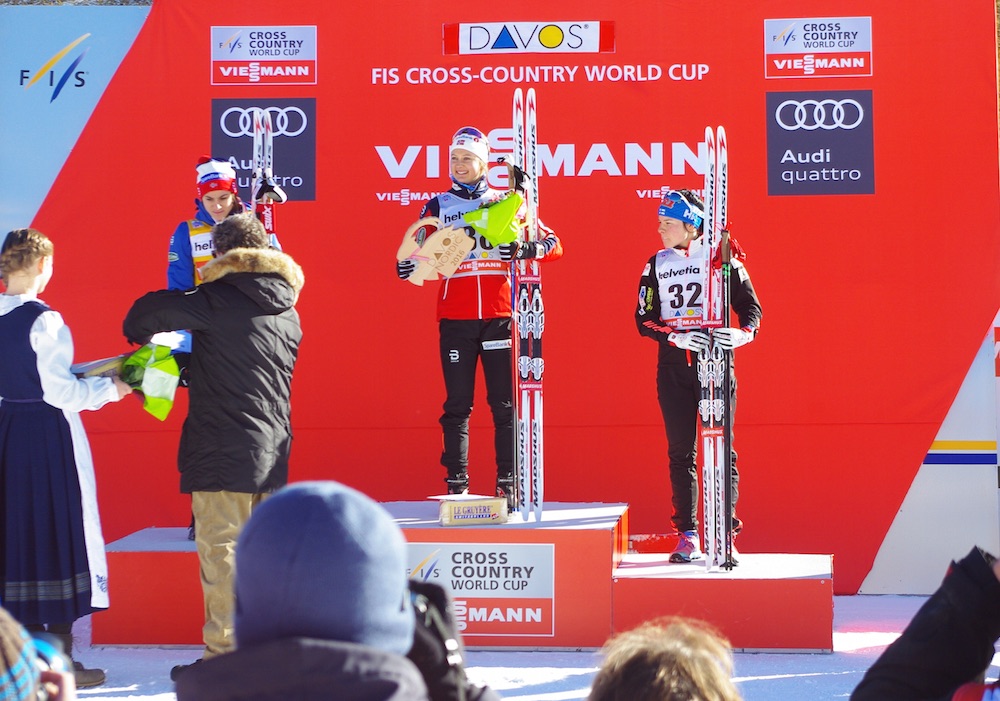
    The women’s 1.4 k sprint was equally exciting, with Bridger Ski Foundation’s Jennie Bender claiming victory by a large margin. Bender crossed the line with a time of 3:01.29, outlasting a late charge by Erika Flowers of Stratton Mountain School T2.

    Bender almost missed a shot at the podium after a fall in the semifinal, but recovered to place first in the heat.

    “Sometime breaking stuff and falling takes you out and sometime it gives you a little bit of extra fire,” she said of the fall in the semifinal. “It fired me up so I was able to catch back up. I was nervous that I would be lost in that shuffle but it ended up working out in my favor.”

    Bender entered the final worried that the energy she spent to advance from the semifinal would hinder her performance in the final. However, she skied the heat with a cool head and a sound plan that ultimately earned her the victory.

    “There was a group of four of us jockeying for a position the whole way up. I knew the most important part was staying with the pack and saving it for the finish,” she said of the final.

    Behind Bender was Flowers, who trailed the BSF skier by 1.90 seconds. Claiming the final spot on the podium was Middlebury’s Heather Mooney who was the first college skier in Friday’s competition and finished 4.25 seconds behind Bender. She, along with teammate and ninth-place finisher Kelsey Phinney, led the Middlebury team to win the women’s nordic portion of the day’s Dartmouth Carnival.

    Rounding out the final were Becca Rorabaugh (+4.95) of APU, Chelsea Holmes (+8.26) of APU, and Kaitlynn Miller (+9.81) of the Craftsbury Green Racing Project.

    SuperTour and EISA competition continues tomorrow with a 10 k freestyle individual start for both the men and women at 10:30 and 12:00 EST. Saturday also marks the addition of Eastern Cup racing, which, in addition to the 10 k, will include a 5 k for both junior boys and girls that begins at 9:30.

    Results: Men | Women

  • Snowstorm and Cold Temperatures Set Backdrop for EISA Racing at St. Michael’s Carnival

    Snowstorm and Cold Temperatures Set Backdrop for EISA Racing at St. Michael’s Carnival

    EISA Women await the start of the 4x3 mixed-gender relay
    EISA Women await the start of the 4×3 mixed-gender relay (photo: Silke Hynes)

    Huntington, VT

    It is only once every few years that Saint Michael’s College hosts an EISA event. Before this past weekend the most recent SMC Carnival was in the winter of 2010, just prior to the Vancouver Olympics. For their competitions this year, racers were treated to great snow and enthusiastic hosts at the Sleepy Hollow Ski and Bike Center in the woods of Huntington, Vermont. It was a weekend of classic-only racing on narrow, wooded trails, and heavy snowfall throughout the first day of racing contributed even more to the scenic locale.

    Friday’s races were 5 and 10-kilometer classic races in individual-start format, while Sunday featured a rare and exciting event: a 4×3 kilometer mixed-gender classic relay.

    Friday: 5/10 kilometer classic

    Heather Mooney (Midd) powers to a snowy win in the 5k classic
    Heather Mooney (Midd) powers to a snowy win in the 5k classic (photo: Silke Hynes)

    Racers arriving and skiing Thursday afternoon were greeted by a relatively flat course featuring long, non-technical descents and smooth gradual climbs. With the recent World Cup exploits of Petter Northug and Dario Cologna double-poling an entire 15k classic race on skate skis in Davos, Switzerland earlier this season, there was hushed talk of some racers attempting the same on Friday. The fast snow and gradual nature of the course certainly lent itself to the idea.

    Upon waking the morning of the race, competitors were greeted with three to four inches of fresh snow on the race loop, with more falling heavily. A relatively benign course was suddenly transformed into a grueling test through slow conditions.

    That didn’t stop two UVM skiers, Cole Morgan and Tobias Trenkle, from opting out of kick wax and putting their poling power to the test: the two Catamounts took to the course on skate skis and were able to earn top-15 finishes. Despite the commendable upper-body devotion of Morgan and Trenkle, kick wax proved to be the way to go this day, as Fabian Stocek of Dartmouth strode his way to a win in the men’s 10k event. The win marked the first EISA victory for Stocek, a sophomore from the Czech Republic who honed his US skiing chops at Holderness before racing for the Big Green.

    Stocek was followed by UNH racer Eirik Fosnaes in second and UVM’s Jack Hegman in third. Hegman is a native of Huntington, Vermont and spent much of his formative years training and racing at the venue. Another Hegman, younger sibling Ben, also finished in the top-10 with a tenth place result.

    A very notable race on Friday was that of Colby skier Silas Eastman. Eastman, with a previous best finish of 12th in this season’s Bates Carnival 20k classic, burst into the top-10 for the first time in a big way. Eastman narrowly missed the podium and nabbed fourth place in the  grueling blizzard conditions.

    For the first time this season, Fosnaes led the UNH men to the top of the team score, besting UVM by just three points. Dartmouth finished in third another four points back, likely hindered by the absence of common scoring members Patrick Caldwell (racing at U23 World Championships) and Silas Talbot (racing down the road in the Craftsbury Supertour)

    Cole Morgan (UVM) tackles the 10k classic on skate gear
    Cole Morgan (UVM) tackles the 10k classic on skate gear (photo: Silke Hynes)

    Conditions were consistent all day, and the women raced through blizzard conditions as well for their event. Absent from the race was the previous weekend’s double-victor Annika Taylor of UNH, and topping the results was Heather Mooney of Middlebury.

    Between the two of them, either Mooney or Taylor have won every EISA race this season, and neither show signs of slowing down. Mooney took the win with a commanding 30 second margin over runner-up Mary-kate Cirelli. A fresh face to the UVM squad but no stranger to the Vermont scene after racing just down Route 7 in Rutland during high school, Cirelli has been on the podium in nearly every race this season. Despite her consistently-strong performances Cirelli is still searching for her elusive first EISA victory.

    In another mark of a strong day for the Mules of Colby, Olivia Amber skied to 3rd place to round out the podium, though the Middlebury women owned the top-10 en route to another strong team finish. Stella Holt (seventh) and Kelsey Phinney (eighth) helped the Panthers top both UVM and UNH on the day.

    Saturday: 4x3k Mixed-gender Classic Relay

    Second-leg male racers await the tag from their first-leg female teammates
    Second-leg male racers await the tag from their first-leg female teammates (photo: Silke Hynes)

    Cold temperatures and new snow from the day prior combined to create slow conditions for this event, but bright sunshine and a lack of wind made for an incredibly bright atmosphere. It seemed everyone was excited to take part in such a unique event: a mixed-gender relay had not been held for at least eight years on the EISA circuit, and team spirits were running high with flags, glitter and face-paint in abundance.

    For racers and spectators alike, the race could not have unfolded with more excitement. The lead changed several times over the course of each leg as skiers fought hard over two steep climbs and a chaotic exchange zone.

    Six top teams stuck together for much of the first lap, but a strong race by Middlebury’s second-team scramble leg Kelsey Phinney gave her teammate Jacob Voltz the lead heading up the first of two significant climbing sections on the course.

    Voltz was eventually chased-down by a group of skiers including Silas Eastman of Colby, who had shown his top form in the classic technique the day prior. Eastman was able to tag off at the front of the race to his Mule teammate and perennially-strong classic skier Amy Bianco. Bianco led with a small gap to the field up the long climb on leg three.

    The lead for Colby wouldn’t last, however, as Middlebury’s hard-charging Heather Mooney caught up to the front of the race during her leg of the event. Mary-kate Cirelli also moved up to put UVM in a scoring position.

    In the final exchange Mooney tagged her teammate Patrick McElravey only a few seconds before Cirelli handed off to fellow Catamount Jack Hegman. Up the first significant climb Hegman had McElravey in his sights and was pushing hard to give chase. Despite the gutsy effort by Hegman, McElravey was able to hold the gap. In the end the first Middlebury team of Stella Holt, Adam Luban, Mooney and McElravey was awarded the victory over UVM.

    Though they rarely spent much time leading the race itself, the top team from Dartmouth was consistently in the mix, and took the final spot on the podium.

    Results for both Friday and Saturday’s events can be found via Bart Timing or EISA Skiing

    Photo Gallery: Exchange zone excitement! (all photos courtesy of Silke Hynes)


  • Blackhorse-von Jess Plows Through Competition for U.S. Champs Sprint Victory (with Gallery)

    Blackhorse-von Jess Plows Through Competition for U.S. Champs Sprint Victory (with Gallery)

    Dakota Blackhorse-von Jess strides to a near seven-second win in Tuesday's 1.5 k classic sprint at the 2015 U.S. Cross Country Championships in Houghton, Mich. (Photo: Jake Ellingson)
    Dakota Blackhorse-von Jess strides to a near seven-second win in Tuesday’s 1.5 k classic sprint at the 2015 U.S. Cross Country Championships in Houghton, Mich. (Photo: Jake Ellingson)

    HOUGHTON, Mich. — As the heavy, wet snow fell on the trails of the Michigan Tech Nordic Skiing Center Tuesday morning, the first starter in the men’s 1.5-kilometer classic sprint at the 2015 U.S. Cross Country Championships emerged from the dense cloud of white.

    Plowing through the roughly seven inches of snow that had fallen in three hours, Dakota Blackhorse-von Jess (Bend Endurance Academy) notched the second-fastest time of the day. But much like the wind and snow, he wasn’t going to stop there.

    Similar to his female counterpart, Rosie Brennan of Alaska Pacific University (APU), Blackhorse-von Jess breezed through the quarterfinal and semifinal – earing the top spot in both. Once in the final, it was more of the same for the 28 year old, who surged over the course’s second-to-last hill to enter the stadium far ahead of his competitors and across the line with a smile and a winning time of 4:06.16.

    The next competitor, Ben Saxton (SMST2/USST), crossed the line 6.29 seconds after Blackhorse-von Jess in second, while Michigan Tech skier Håken Hjelstuen of Norway rounded out the podium in third, 7.12 seconds back.

    While Blackhorse-von Jess had the task of tackling the slow, new snow in qualification, he said it was a common factor between he and the other first starters. Once in the heats, he explained, the unusually slow nature of the race made tactics less important.

    “In a four-and-a-half minute long race you just go ski and you wait and see what happens. Obviously there are certain spots on the course where certain people do different things better than other people. [For me] it wasn’t a goal to lead and it wasn’t a goal to be in last,” he said of his strategy in a post-race interview.

    Although he wasn’t aiming to lead, it was a position that Blackhorse-von Jess found himself in during the quarterfinal. Entering the stadium with a sizable lead over David Sinclair (GMVS) and Forrest Mahlen (MSU), he skied across the line with the speed of a 30 k instead of a sprint.

    In the semifinal it looked as if the same would happen as the heat of six skiers sped up the ultimate hill. However, there was one competitor who held onto Blackhorse-von Jess – Cole Morgan of the University of Vermont.

    “In the semifinal Cole Morgan was on my tail and wouldn’t let go and it made it sound like there were a lot more people around. So I had to push it into the finish,” Blackhorse-von Jess said.

    The Bend Endurance Academy skier held off the challenge and the two automatically advanced to the final, where a similar situation took place. On the second-to-last hill, again, Blackhorse-von Jess felt Morgan on his tails. At that point he made the push to lose the 20-year-old college skier.

    “I said, ‘well, I’m done with this,’ and I took off. Suddenly the woods got quite and I was by myself, so I went for it,” he said.

    Men's 1.5 k classic sprint at the 2015 U.S. Cross Country Championships in Houghton, Mich.
    Dakota Blackhorse-von Jess (Bend Endurance Academy) leads Cole Morgan (UVM) in the semifinal finish in the men’s 1.5 k classic sprint at the 2015 U.S. Cross Country Championships in Houghton, Mich.

    Tuesday’s win is Blackhorse-von Jess’ second national championship. Although he has landed on the podium multiple times, his only other win was in a 2013 freestyle sprint at Soldier Hollow. He explained his win in that race was more meaningful because it was unexpected and “something I really had to fight for.”

    The 2015 title is different for Blackhorse-von Jess because it’s been a part of his season plan for a long time, and the highlight of that plan is not a national championship.

    ”This year everything has been geared toward Word Championships so this is a stepping-stone. The goal was to put myself in a position to win and see if I can do it. So everything worked out really well and I’m excited. Obviously I can’t control if I go to World Championships but I know that the way we set up the training, we are on the upswing and things will continue to rise in February,” he said.

    Blackhorse-von Jess will not be selected for World Championships based on the objective criteria outlined by USSA, which includes a top 60 ranking in the overall World Cup. However, he does have a chance in the additional objective criteria, which is based on USSA sprint and distance points. Blackhorse-von Jess currently sits in third position behind World Cup skiers Andy Newell and Simi Hamilton in the most recent sprint ranking list released Jan. 2.

    While he has no control over whether he will be selected for World Championships, Blackhorse-von Jess does have a say in earning the 2015 SuperTour sprint title, which could result in World Cup starting spots later this season.

    “I think that being the best of the rest is best I can do. The only thing in my control is winning the sprint SuperTour so I can secure those two world cup starts at the end. Obviously it would be great to go to World Championships, but two years ago I had a first and a third and I still didn’t go,” he said.

    In the meantime, however, Blackhorse-von Jess is skipping the 30 k classic mass start on Thursday to focus on Saturday’s freestyle sprint. He explained that, historically, the second sprint of nationals has always been a challenge for him but this year he’s hoping that will change.

    “The goal for us is to figure out how to get through the next four days to be able to have a good race, because I haven’t had an awesome race the second time,” he said.

    The Fight for Second

    Saxton’s silver medal finish is his second in two years. In 2014, he was the runner-up to the national title behind Torin Koos in the freestyle sprint at Soldier Hollow.

    En route to this year’s podium finish, Saxton had to maneuver a challenging quarterfinal to advance to the next round. In what he called the “quarterfinal of death,” Saxton faced a collection of strong sprinters including Reese Hanneman (APU), Tyler Kornfield (APU), Eric Packer (APU), Matt Gelso (SVSEF) and Welley Ramsey (MWSC). The heat was the fastest quarterfinal of the day, but Saxton crossed the line in first followed by Packer and Hanneman, both of whom advanced.

    Men's 1.5 k classic sprint at the 2015 U.S. Cross Country Championships in Houghton, Mich.
    Ben Saxton holds his position over APU’s Eric Packer and Reese Hanneman during one of Tuesday’s quarterfinals in the men’s 1.5 k classic sprint at the 2015 U.S. Cross Country Championships in Houghton, Mich.

    “You could have taken those six names and said this will be the A-final for today, and I wouldn’t have doubted you for a second. They are all really strong skiers, so I felt really lucky to advance out of that,” he said in a post-race interview.

    By the time he reached the final Saxton was ready to fight for the top spot. At the start, however, he had trouble finding his top speed and suffered the consequences.

    “In the final it was the first time all day I had a bad start and it came back to bite me. There were only two or three lanes in play when you’re going around the course, so when I fell down to sixth from the gun there was no way for me to move myself up,” he said of the final.

    But he did move himself up, and by the time he reached the bottom of the last climb Saxton was third with a considerable distance to make up on Hjelstuen who was sitting in second. With a surge of energy Saxton reached the Norwegian and skied past him to gain an advantage on the straight away into the finish and earn silver.

    While Saxton said he was hoping to win Tuesday’s race, he explained that a podium finish is never disappointing.

    “Dakota is a good friend and he is the standard for domestic sprinters so there is no shame in watching him do his thing. I’m barely 21 and Dakota is almost 8 years older than me so there’s some catching up to do. I have so much to learn from him and I’m just psyched to do that for now,” he said.

    The finish comes after Sunday’s 15 k freestyle in which Saxton finished 57th – a result that he said left him shaken.

    “It’s nice to have some mojo back. It was a pretty tough day on Sunday,” Saxton explained.

    Men's 1.5 k classic sprint at the 2015 U.S. Cross Country Championships in Houghton, Mich.
    Brian Gregg (l) Logan Hanneman (c) and Håken Hjelstuen Men’s 1.5 k classic sprint at the 2015 U.S. Cross Country Championships in Houghton, Mich.

    Hjelstuen, a student at local Michigan Tech and native of Oslo, Norway, qualified first and had a successful campaign throughout the quarterfinals and semifinals. However, by the time he reached the final, his kick wax was deteriorating.

    “My kick was not good in the semifinal. We tried to fix it for the final, but it got worse. Up the last hill I was fourth or fifth and I really wanted that podium so I was just double-poling all I could. Maybe with better kick I could maybe fight Dakota. I would have been fun to have a fight close to the end,” he said after the final’s completion.

    While he is a student at MTU, Hjelstuen has yet to become a racing member of the Huskies’ ski team. Since he is an exchange student, his eligibility for NCAA racing has been up in the air. However, he predicted that within the next week the issue would be resolved.

    A Strong Showing for Vermont

    Men's 1.5 k classic sprint at the 2015 U.S. Cross Country Championships in Houghton, Mich.
    Men’s 1.5 k classic sprint at the 2015 U.S. Cross Country Championships in Houghton, Mich.

    Despite challenging Blackhorse-von Jess in the middle of the course, Morgan ultimately ended his day in fourth. The University of Vermont senior from Bozeman, Mont. originally worried that the day would be a “grinder” due to the slow snow he faced in qualification, but found that conditions improved once organizers had groomed the trail between then and the heats.

    While Morgan said he normally has a tendency to start too hard, a key factor in Tuesday’s strategy was to hold back until it the second third of the race.

    “I just tried to tuck behind people for most of those heats until the last half kilometer where it was just rolling. It worked in the quarter and the semi, but in the final I got a little tired so I didn’t really have quite the punch as the other ones,” he explained.

    Morgan was the second U23 skier behind Saxton, thus earning valuable points for a possible bid to make the U.S. U23 World Championship team. In regards to the U23 Championships, Morgan said he’s more focused on the season’s college races, but will see where he stands when the selections are announced Saturday.

    That wasn’t one of my big goals coming into here. I’m just looking to get some good racing before the college season. We’ll see how it ends up at the end of the week and how I feel there,” he said.

    The University of Vermont saw another of its skiers in the final in the form of Jørgen Grav.

    Grav, a junior from Oslo, Norway, said that he felt faster in the qualification and quarterfinal because he could ski his own pace. In the semifinal and final, he said it was more difficult to ski efficiently due to the grouping of the pack.

    Men's 1.5 k classic sprint at the 2015 U.S. Cross Country Championships in Houghton, Mich.
    Men’s 1.5 k classic sprint at the 2015 U.S. Cross Country Championships in Houghton, Mich.

    “Other than that I’m pretty satisfied. I didn’t expect to get to the A-final. I would say I was a very lucky loser,” Grav, who advanced to the final as a lucky loser, said after the race.

    With their fourth and fifth place finishes, Morgan and Grav, were the top affiliated college skiers (as Hjelstuen has yet to gain eligibility). Prior to Tuesday’s race, UVM was ranked second behind Northern Michigan University in the Championship’s College Cup rankings.

    “We worked pretty hard and we tried to hang on. We finished strong… It was great having a teammate in the final,” he said.

    Taking the last spot in the final was Sun Valley’s Miles Havlick, who said that despite making a few tactical errors, he was happy with his result.

    “I think the longer sprint and the conditions played in my favor as more of a distance skier,” he said in a post-race phone interview.

    The 2015 U.S. Cross Country Championships continue Thursday with a 20/30 k classic mass start for senior skiers and a 10/5 k classic mass start for juniors.

    Results

    — Alex Kochon contributed reporting

  • An Editor’s Report of the Bridger Ridge Run

    An Editor’s Report of the Bridger Ridge Run

    The course of the Bridger Ridge Run looms ahead from the top of Sacajawea Peak in Bozeman, Mont. The Ridge Run is a 20-mile race that traverses the Bridger Range. The race attracts runners from across the country and many from the nordic ski community participate each year.
    The course of the Bridger Ridge Run looms ahead from the top of Sacajawea Peak in Bozeman, Mont. The Ridge Run is a 20-mile race that traverses the Bridger Range, finishing at the base of Baldy Peak (seen in the far distance.) The race attracts runners from across the country and many from the nordic ski community participate each year.

    The Bridger Ridge Run has been called one of the most rugged running races in the U.S. It was named one of America’s top trail running races by Runner’s World, claiming the title of “Most Raw Exposure” in 2012. In 2013 Outside Magazine included the race as one of its top 10 trail runs in its bucket list.

    It’s no secret that the Bozeman, Mont. race is a challenge. The course begins at the base of Sacajawea Peak and continues along the ridge of the Bridger Range for 20 miles until runners descend and finish at the “College M” that overlooks town. Over the course of the run, racers climb 6,800 ft. and face 9,500 ft. of steep decent. For much of the course, the trail is barely distinguishable and racers must maneuver their way through the sharp and unforgiving rocks.

    The only thing more difficult than finishing the race is entering. The run allows roughly 300 competitors to register each year. Guaranteed spots are reserved for those who have either previously won the race or have participated at least 10 times in the past. Everyone else must be chosen by lottery.

    The race was founded by Bozeman local Ed Anacker in 1985 in an effort to bring attention to the acclaimed trail running in the Montana town. Since its inaugural race, the Ridge Run has become a Bozeman staple and draws runners from across the country.

    The Bridger Ridge Run is an attraction for the many nordic skiers in the area as well, and many former and current ski racers from the nordic community participate every year.

    Mountain goats are a common site during the Bridger Ridge Run.
    Mountain goats often act as race spectators during the Bridger Ridge Run.

    This past May, I made the fateful decision to enter the Bridger Ridge Run. Having ended my ski racing career several years before, I missed working towards a specific athletic goal and the Ridge Run sounded like the perfect race to get me on a regular training plan over the summer.

    When I was chosen as one of the entrants in June, however, the training did not follow. Due to an extremely painful IT band related knee issue, I was stuck biking most of the summer and a month before the race, it seemed as if I wouldn’t be lining up for the race on August 9.

    However, after several weeks of physical therapy and a few practice runs just weeks before the race I deemed myself “ready” for the to run. At this point my main goal was only to finish.

    Come race morning participants wound their way up Bridger Canyon to the start of the race. With the sun just beginning to rise, moods of the racers and their chauffeurs were incredibly high considering the early start.

    At 7:00 am the first wave of racers, including University of Vermont’s Cole Morgan and 2002 Olympic biathlete and former Montana State University assistant nordic coach Dan Campbell, took off.

    As part of the second wave, I began five minutes later.

    From the very start racers face an unforgiving climb. As we made our way from the base of Sacajawea Peak to it’s summit, which sits at 9,839 feet, I instantly regretted starting near the front of the second wave. However, the adrenaline and cheering crowds made the pace manageable.

    Halfway up the peak we met more encouragement in the form of a lone bagpiper. Every year he and his pipes make the journey to provide racers a distraction with his belting tunes that echo on the mountain cliffs.

    From the top of Sacajawea, the bagpiper’s tune was no longer audible but a new sight had caught our attention. The remaining 18 miles of the course appeared before us, both stunning and daunting at the same time.

    Heading down from the summit into our inevitable “pain cave,” we faced multiple descents where I felt a fall was imminent. Fortunately I never tumbled off the trail, but every so often I’d hear someone go down around me or pass a fellow racer with bloodied knees and elbows.

    Looking back at Ross Peak with Sacajawea Peak (the start of the Bridger Ridge Run) far in the distance.
    Looking back at Ross Peak with Sacajawea Peak (the start of the Bridger Ridge Run) far in the distance.

    As we made our way along the rolling Bridger Range the trail became less apparent, the rocks more jagged, and fatigue started to set in. Fortunately, I was stocked with Shot Bloks and HoneyStinger waffles that kept me well fed and energized. Former University of Denver skier and past participant of the Ridge Run, Kate Dolan had advised me to eat every 20 minutes, so I set the timer on my watch and did my best to pop in a sugary Blok every time the alarm went off. After two-and-a-half hours had passed I was thankful for her advice.

    Passing the halfway point at the top of the local ski area, Bridger Bowl, my legs were starting to feel a bit shaky and my energy started to wane. There were two major climbs and a steep, unforgiving 5-mile decent between me and the finish.

    By the time I reached the final aid station at the top of Baldy Peak, volunteers, friends, and other spectators gave me words of encouragement. While I wanted to believe their statements that the race was almost over and that it was an “easy” downhill from there, I knew my legs were shot and that the nearly vertical decent for the next five miles was going to be painful.

    Even armed with my skepticism of the spectators’ encouragement, I was not prepared for the difficultly of the decent. The mixture of dust, loose rocks, and jello-like legs kept me at a turtle’s pace. Each step made it feel as if knives were repeatedly stabbing my legs. At this point, the lack of preparation was starting to haunt me.

    Finally I reached the finish to find a cheering crowd. With the last bit of energy I could muster, I crossed the finish line, a grimace-like smile plastered to my face, with a time of 5:04:49.

    I later found that Peder Andersen had garnered the best time of the day, finishing the race with a time 3:28:41. Campbell earned sixth, with a time of 3:56:02 and UVM’s Morgan finished eighth, with a time of 3:57:10.

    For the women, ultra-marathon veteran Nikki Kimball, who earned multiple NCAA All-American distinctions during her time at Williams College, was the top finisher with a time of 4:02:47. Bridger Ski Foundation coach, Emily Allison finished fifth with a time of 4:29:08. Former and current Bates College skiers, Samantha Forrest and Maddy Ekey finished with times of 5:21:55 and 6:26:51.

    After ample time spent relaxing in the finish line hot tubs filled with ice, I already began to forget the pain I had experienced only minutes before. I even began talking with other finishers about training for next year’s race.

    That’s the magic of endurance sports: one minute it feels as if mental and physical collapse is imminent; the next you’re ready to get out and conquer the next big adventure.

    2014 Bridger Ridge Run Results

  • Junior Nationals Video: Classic Sprints Galore

    Junior Nationals Video: Classic Sprints Galore

    STOWE, Vt. — It was a jam-packed day of classic sprinting up at Trapp Family Lodge on Wednesday, with 54 heats determining six champions at Junior Nationals between the U16, U18 and U20 men’s and women’s categories.

    While some races were snowy, others were windier, and a few were neck-and-neck to the line, the conditions remained relatively consistent throughout in temperatures around 10 degrees throughout the day. The sun began to set soon after the U20 and U18 women’s finals, making for a picture-perfect ending on Day 2 of 4 at Junior Nationals.

    For more about the top finishers: Top-10 Recognition

    Extensive qualifier photos: U16 men | U16 women | U18/U20 men | U18/20 women

    Results

    Day 1: Video | Top 10

    Trouble viewing video above? Click here.

    Peter Holmes (Unleashed Coaching/Far West) racing to the top U18 men's classic-sprint qualifying time at 2014 Junior Nationals in Stowe, Vt.
    Peter Holmes (Unleashed Coaching/Far West) racing to the top U18 men’s classic-sprint qualifying time at 2014 Junior Nationals in Stowe, Vt.
  • Junior Nationals: Classic Sprint Top-10 Recognition

    Junior Nationals: Classic Sprint Top-10 Recognition

    Julia Kern (r) racing to a classic-sprint title at Junior Nationals on Wednesday in Stowe, Vt., edging Mattie Watts (c) and Vivian Hett, both from the Midwest.
    Julia Kern (r) racing to a classic-sprint title at Junior Nationals on Wednesday in Stowe, Vt., edging Mattie Watts (c) and Vivian Hett, both from the Midwest.

    FasterSkier’s coverage is made possible through the generous support of Madshus.

    STOWE, Vt. — Four-hundred and thirty-four athletes whittled down to 180 in 30 quarterfinals. Fifty-four heats total, all on the top of the mountain at Trapp Family Lodge over the course of nine hours.

    It was a full day of racing on Day 2 of U.S. Junior Nationals on Wednesday, with men’s and women’s 1.4-kilometer classic sprints determining six national champions.

    Below you’ll find the list of who made the top 10 in the U16, U18 and U20 races. Every athlete that did so raced Trapp’s open-aired sprint course four times — nailing fast-enough times to advance after each round. The top six made the A-finals, and the next six battled for seventh through 12th place (and All-American status in the top 10). Complete results

    Stay tuned for a video recapping Wednesday’s action and follow us on Twitter and Instagram, as well as the 2014 Junior Nationals website for updates, photos and videos.


    The Junior Nationals U16 men's classic sprint podium with New England's Forrest Hamilton (c) of Mansfield Nordic, the Pacific Northwest's Leo Lukens (l) of Mt. Bachelor in second, and Intermountain's Zach Williams (r) of Sun Valley in third.
    The Junior Nationals U16 men’s classic sprint podium with New England’s Forrest Hamilton (c) of Mansfield Nordic, the Pacific Northwest’s Leo Lukens (l) of Mt. Bachelor in second, and Intermountain’s Zach Williams (r) of Sun Valley in third.

    U16 Men

    1. Forrest Hamilton (Mansfield Nordic/New England)
    2. Leo Lukens (Mt. Bachelor/Pacific Northwest)
    3. Zach Williams (Sun Valley/Intermountain)
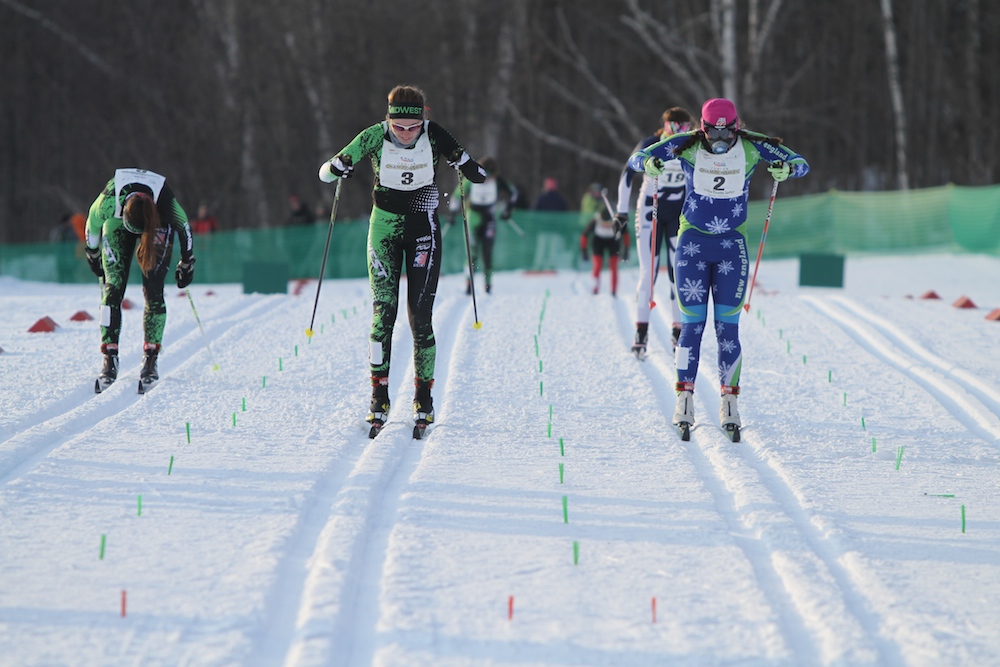
    4. Benjamin Koenig (NSCF-Fairbanks-FXC/Alaska)
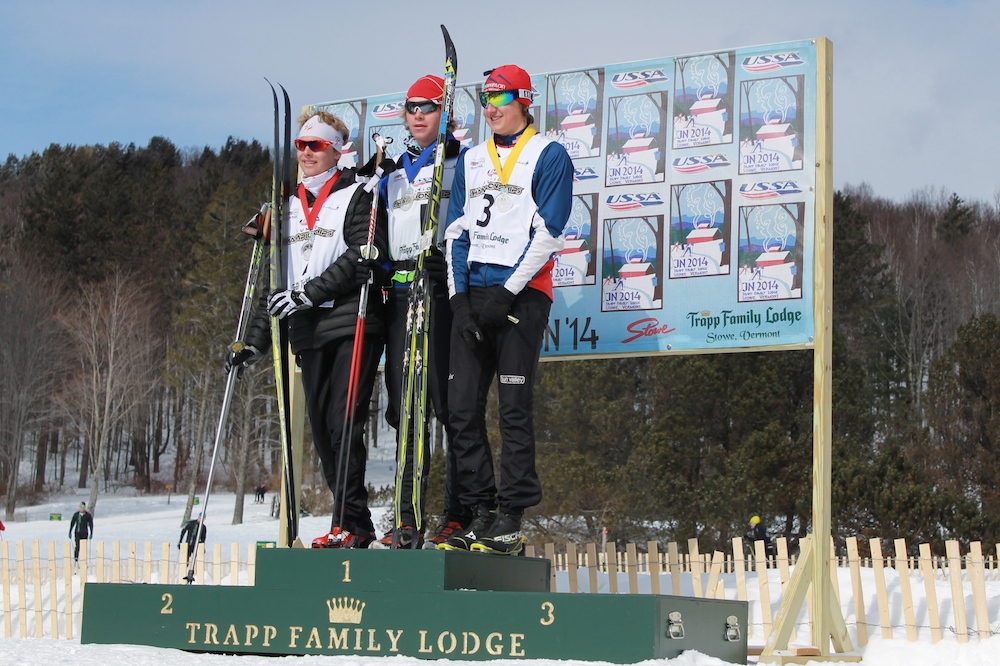
    5. Everett Sapp (New York SEF/Mid-Atlantic)
    6. Tracen Knopp (Alaska Nordic Racing/Alaska)
    7. Daniel Streinz (Maine WSC/New England)
    8. Matthew Hoefler (Alaska Winter Stars/Alaska)
    9. Dawson Knopp (ANR/Alaska)
    10. Will Balcao (AWS/Alaska)

    Fun Facts: Hamilton didn’t have to travel far to win his first national title; he’s a student at Champlain Valley Union High School 40 miles from Stowe in Hinesburg, Vt. His longtime teammates call him ‘Fo-Money.’ “I guess that’s my ski-trail name,” he says.

    Amanda Kautzer (r) of Loppet Nordic Racing/Midwest, crests the final hill in Wednesday's 1.4 k classic sprint A-final before winning her first title at Junior Nationals, ahead of runner-up Hailey Swirbul (Aspen/Rocky Mountain), in Stowe, Vt.
    Amanda Kautzer (r) of Loppet Nordic Racing/Midwest, crests the final hill in Wednesday’s 1.4 k classic sprint A-final before winning her first title at Junior Nationals, ahead of runner-up Hailey Swirbul (Aspen/Rocky Mountain), in Stowe, Vt.


    U16 Women

    1. Amanda Kautzer (Loppet Nordic Racing/Midwest)
    2. Hailey Swirbul (Aspen Valley SSC/Rocky Mountain)
    3. Leah Lange (Park City NSC/Intermountain)
    4. Hannah Halvorsen (Sugar Bowl/Far West)
    5. Leah Brams (Cambridge Sports Union/New England)
    6. Claire Benton (LNR/Midwest)
    7. Jordan Floyd (Steamboat Springs/Rocky Mountain)
    8. Chloe Levins (Mountain Top/New England)
    9. Lizzie Larkins (Auburn/Far West)
    10. Anna Johnson (Mesabi East/Midwest)

    Fun Facts: Mini Kikkan? Kautzer has pink hair just like the three-time World Cup Sprint champion from Alaska, and she just nabbed her first Junior Nationals victory after placing fifth in the 5 k classic on Monday. “I was not expecting anything like this this week,” Kautzer says. She’s originally from Southeast Asia and lived there until she was 3. “I was born in Singapore, which is about as far away from a snowy climate as you can get,” she says. “From super warm to super cold, I like the transition.”


    Far West's Peter Holmes (1) leads his semifinal in Wednesday's 1.4 k classic sprint at Junior Nationals in Stowe, Vt. He went on to win his second national title in as many races.
    Far West’s Peter Holmes (1) leads his semifinal in Wednesday’s 1.4 k classic sprint at Junior Nationals in Stowe, Vt. He went on to win his second national title in as many races.

    U18 Men:

    1. Peter Holmes (Unleashed Coaching/Far West)
    2. Jack Bassett (AWS/Alaska)
    3. Thomas O’Harra (Alaska Pacific University/Alaska)
    4. Karsten Hokanson (Wasatch/Intermountain)
    5. Zak Ketterson (LNR/Midwest)
    6. Henry Harmeyer (Mansfield/New England)
    7. Forrest Smith (Crested Butte/Rocky Mountain)
    8. Logan Diekmann (Bridger Ski Foundation/Intermountain)
    9. John Farr (APU/Alaska)
    10. Juho Muhonen (Teacup Nordic/Pacific Northwest)

    Fun Facts: This was Holmes’ second title in as many races at Junior Nationals. “I always wear the same socks when I race,” he says.“I haven’t washed them since I’ve been here.”


    U18 Women:

    1. Julia Kern (Cambridge Sports Union/New England)
    2. Mattie Watts (Endurance United/Midwest)
    3. Vivian Hett (LNR/Midwest)
    4. Zoe Snow (CSU/New England)
    5. Sarah Bezdicek (LNR/Midwest)
    6. Katharine Ogden (Stratton/New England)
    7. Emily Hyde (Mt. Bachelor/Pacific Northwest)
    8. Hannah Peterson (Durango/Rocky Mountain)
    9. Olivia Ekblad (Methow Valley Nordic/Pacific Northwest)
    10. Racquel Wohlk (Nordicwerks/Midwest)

    Fun Fact: With at least five national titles in the last two years, Kern, 16, racked up her first victory of the 2014 championships. In her free time, she says she likes to surf around New England in places like Cape Cod or Hampton “and do photography and film stuff.”


    Three New Englanders race for gold in the U20 men's classic sprint A-final: with Fabian Stocek (2) ultimately taking first, Cole Morgan (l) placing second overall and Jack Hegman (5) finishing third at Junior Nationals in Stowe, Vt.
    Three New Englanders race for gold in the U20 men’s classic sprint A-final: with Fabian Stocek (2) ultimately taking first, Cole Morgan (l) placing second overall and Jack Hegman (5) finishing third at Junior Nationals in Stowe, Vt.

    U20 Men:

    1. Fabian Stocek (Holderness School/New England)
    2. *Cole Morgan (University of Vermont/New England)
    3. Jack Hegman (UVM/New England)
    4. Jack Schrupp (Gunstock/New England)
    5. Patrick McElravey (Middlebury/Far West)
    6. Haakon Sigurslid (Durango/Rocky Mountain)
    7. Scott Harrison (LNR/Midwest)
    8. Luke Brown (LNR/Midwest)
    9. Connor Gray (BSF/Intermountain)
    10. Andrew Egger (LNR/Midwest)

    *Top American

    Fun Facts: Originally from the Czech Republic, Stocek, 19, is a freshman at Dartmouth College and according to a NENSA blog post from a couple years ago, a fierce competitor at the game Twister. Morgan, a UVM sophomore, won his second-straight U.S. title in as many races at this year’s Junior Nationals. He shared the podium with his college teammate, Hegman, who hails from Huntington, Vt. 


    New England's Heidi Halvorsen after winning Wednesday's classic sprint for her first national title at 2014 Junior Nationals in Stowe, Vt.
    New England’s Heidi Halvorsen after winning Wednesday’s classic sprint for her first national title at 2014 Junior Nationals in Stowe, Vt.

    U20 Women:

    1. Heidi Halvorsen (New England)
    2. Ulrika Axelsson (Michigan Tech/Great Lakes)
    3. Kelsey Phinney (New England)
    4. Hannah Benson (Williams Outing Club/New England)
    5. Kristen Bourne (Northern Michigan University/Midwest)
    6. Sadie James (Bates College/New England)
    7. Nora Gilbertson (St. Olaf College/Midwest)
    8. Marion Woods (Alaska Winter Stars/Alaska)
    9. Joelle Rommo (BSF/Intermountain)
    10. Maddy Pfeifer (Andover Outing Club/New England)

    Fun Fact: According to Halvorsen, 18, she has podiumed five times at Junior Nationals, and this was her first victory. A 2013 graduate of the Green Mountain Valley School Ski Academy, Trapps was her home course. When she’s not skiing: “I have a lot of grannie pastimes,” she says, “like knitting and troll making and quilting.”

    Complete results

    Day 1 All-Americans

  • Junior Nationals Day 1 Video: Classic Individual Starts in Blustery Vermont

    Junior Nationals Day 1 Video: Classic Individual Starts in Blustery Vermont

    FasterSkier’s coverage is made possible through the generous support of Madshus.

    STOWE, Vt. — It was a chilly one up at Trapp Family Lodge on Monday for the first set of races of this week’s U.S. Junior Nationals, but the sun was out and skiers moved even faster in the single-digit temperatures. As U18 men’s 20 k classic champion Peter Holmes said, it’s all about the layers. And lots of ’em.

    Complete results (Day 1)

    The U16 women's 5 k classic podium on Monday at  2014 Junior Nationals in Stowe, Vt., with winner Hailey Swirbul (c) of Aspen Valley SSC/Far West, runner-up Leah Lange (l) of Park City NSC/Intermountain, and Hannah Halvorsen (Sugar Bowl Academy/Far West) in third. (Photo: Mark Nadell/MacBeth Graphics)
    The U16 women’s 5 k classic podium on Monday at 2014 Junior Nationals in Stowe, Vt., with winner Hailey Swirbul (c) of Aspen Valley SSC/Far West, runner-up Leah Lange (l) of Park City NSC/Intermountain, and Hannah Halvorsen (Sugar Bowl Academy/Far West) in third. (Photo: Mark Nadell/MacBeth Graphics)
  • Russia Reigns Junior Worlds 5/10 k Classic; Two Canadians in Top 15 (Updated)

    Russia Reigns Junior Worlds 5/10 k Classic; Two Canadians in Top 15 (Updated)

    Russia Roman Kaygorodov racing to his first Junior World title on Sunday in the 10 k classic individual start in Val di Fiemme, Italy. (Photo: Fiemme2014)
    Russia Roman Kaygorodov racing to his first Junior World title on Sunday in the 10 k classic individual start in Val di Fiemme, Italy. (Photo: Fiemme2014)

    Note: This article has been updated to include comments from Canadians Ricardo Izquierdo-Bernier, Scott Hill and Katherine Stewart-Jones.

    Russia went out on a high note on the last day of individual racing at Junior World Championships in Val di Fiemme, Italy, with Natalia Nepryaeva and Roman Kaygorodov winning the women’s 5- and men’s 10-kilometer classic individual starts, respectively, on Sunday.

    Russia's 18-year-old Natalia Nepryaeva celebrates her 2.7-second victory in Sunday's 5 k classic individual start for her first title at Junior World Championships in Val di Fiemme, Italy. (Photo: Fiemme2014)
    Russia’s 18-year-old Natalia Nepryaeva celebrates her 2.7-second victory in Sunday’s 5 k classic individual start, her first title at Junior World Championships in Val di Fiemme, Italy. (Photo: Fiemme2014)

    For Nepryaeva, 18, the victory was her first at the world championships and she did so by edging Sweden’s Sofia Henriksson by 2.7 seconds in 14:05. Another Russian, Anastasia Sedova rounded out the podium in third, 13.6 seconds after her teammate.

    “I am exhausted, but winning a gold medal in a world championship is an incredible satisfaction,” Nepryaeva told FIS after the race. “I kept focused on my pace throughout the whole race, although I wasn’t sure I was going to be able to climb the last uphill. There was another girl in front of me and I kept skiing really close to her to keep control of my pace. I am really happy for the other girls in my team too, it’s a great day for Russia.”

    For Henriksson, 19, the silver marked her first individual podium at her fourth Junior World Championships.

    “I feel so happy today because I have been struggling for this medal for so long,” she told FIS. “In 2012 in Erzurum in the 5km Classic I finished fourth, only one second behind the bronze medal. It feels good to break up the three Russians.”

    As Nepryaeva and Henriksson passed through the intermediate checkpoints, it was clear they were gunning for top two. Nepryaeva narrowly prevailed on a hilly and challenging course at Lago di Tesero, leading four Russians in the top six, with Alisa Zhambalova in fourth (+16.4), Germany’s Julia Belger in fifth (+24.2) and Russia’s Yulia Belorukova in sixth (+27.4).

    In the men’s race, Kaygorodov, 18, won his first race at the championships in 26:36.9 for his first title (and podium) as well, beating Swedish runner-up Jens Burman by 5.5 seconds. Norway’s Petter Reistad was another 0.3 seconds back in third.

    “I can’t believe it!” Kaygorodov told FIS. “In the first part I didn’t want to push too much, the snow was pretty slow and I wanted to save most of my energy for the last lap. When I finished this race I was totally exhausted, and for me this result will be unforgettable.”

    Burman said he felt like he had good power and energy throughout his race.

    “I think that was a good race for me,” he told FIS. “I don’t do anything in particular to get encouragement or motivation, I only think I have to go fast.”

    Canada's Ricardo Izquierdo-Bernier leads a teammate at 2014 Junior World Championships in Val di Fiemme, Italy. (Photo: Ricardo Izquierdo-Bernier)
    Canada’s Ricardo Izquierdo-Bernier leads a teammate in the 20 k skiathlon on Jan. 31 at 2014 Junior World Championships in Val di Fiemme, Italy. (Photo: Ricardo Izquierdo-Bernier)

    France’s Jules Lapierre and Valentin Chauvin were fastest through the first checkpoint, but Kaygorodov picked it up for the last half of the race and put time into his competitors over the final kilometers.

    Lapierre ended up fourth (+12.9) and Chauvin placed seventh (+18.4), while Sweden’s Simon Lageson placed fifth (+13.5) and Marcus Ruus took sixth (+16.9).

    Monday’s relays were the final races on the schedule, with Sweden winning the women’s 4 x 3.3 k, defending their title from last year with Anna Dyvik, Henriksson, Maja Dahlqvist, and Jonna Sundling.

    Canada placed 10th with Frédérique Vézina, Dahria Beatty, Anne-Marie Comeau, and Katherine Stewart-Jones. The Americans finished 12th of 14 teams with Nichole Bathe, Marion Woods, Stephanie Kirk, and Sloan Storey.

    Norway won the men’s 4 x 5 k with Eivind Krane Heimdal, Reistad, Johan Hoel, and Eirik Sverdrup Augdal. The U.S. men placed 12th of 18 teams, with Adam Martin, Lars Hannah, Thomas O’Harra, and Patrick Caldwell Canada was 13th with Ricardo Izquierdo-Bernier, Alexis Dumas, Scott Hill, and Benjamin Wilkinson-Zan.

    Two Canadians in Individual Top 15

    Izquierdo-Bernier (Fondeurs Laurentides), who’s living in France with his family until August, when he’ll return to Montreal, notched 14th in the 10 k on Sunday.

    In an email, he xplained his goal was top 20 in one race at his first Junior World Championships.

    “I had identified the skiathlon to be my best chance to accomplish it, but bad skies in the classic part ruined my race … it’s part of cross country,” he explained of the preceding race, in which he placed 57th.  “Sunday morning I had no expectations, my only goal was to do a good race in classic and keep a steady pace for the 2 laps. Up to now this year in classic, I didn’t have any good race and the result of Sunday morning surprised me a little!”

    Throughout the 10 k, he focused on managing himself and his effort.

    “I knew that I had a good race but I was not expecting to finish in the top 20,” Izquierdo-Bernier wrote. “After the race I was watching the screen with the timings, as the other skiers were ending their race and my time was staying tin the top ones. As the last racer  finished, I was very happy and my goal was achieved.”

    Izquierdo-Bernier moved to the French Alps, specifically the Vercors, for his father’s sabbatical year.

    “Last summer I trained at the training center in Québec and when I came to France I trained 2 months with some French athletes and had finalised my preparation alone with a personal coach,” he explained.

    Dahria Beatty (Alberta World Cup Academy) racing to 29th in Friday's 10 k skiathlon at Junior World Championships in Val di Fiemme, Italy.  She notched 15th in the 5 k classic on Sunday. (Photo: FlyingPointRoad.com/Proceeds go to the National Nordic Foundation)
    Dahria Beatty (Alberta World Cup Academy) racing to 29th in Friday’s 10 k skiathlon at Junior World Championships in Val di Fiemme, Italy. She notched 15th in the 5 k classic on Sunday. (Photo: FlyingPointRoad.com/Proceeds go to the National Nordic Foundation)

    The lone Canadian man in the top 40, he shared a personal best in the top 15 with Dahria Betty of the Alberta World Cup Academy (AWCA), who was 15th in the women’s 5 k.

    For Beatty, 19, the result was her best in three world championships after she placed 20th in the freestyle sprint on Jan. 29. She explained in an email that her goal was top 15.

    “I am really happy to have achieved that,” Beatty wrote. “The 5k classic was the race I was most looking forward to as I prefer classic races to skate races. I’d like to think I can be both a sprinter and a distance skier, and I hope that I showed that with my 20th place finish in the skate sprint the first day!”

    Her plan for the 5 k was to start fast but relax on the climbs, then push hard over the remaining parts of the course.

    “I didn’t push enough on the second last climb in the skiathlon Friday so I made sure not to make that mistake again today and went all all out up the climb at 3.5km,” she wrote. “All along I was getting splits that I was leading at my bib, which is what I was hoping for. It’s always great to cross the line in first and see your name with a 1 beside it even if you know it won’t last. I had the chance to sit in the winners chair for a minute too which is always great!”

    The 2014 U.S. women's Junior World Championships team (Photo: Sloan Storey)
    The 2014 U.S. women’s Junior World Championships team (Photo: Sloan Storey)

    Two Americans tied for the best U.S. result of the day in 26th: Nichole Bathe (University of Alaska-Fairbanks) and Adam Martin (Northern Michigan University). For both, it was their first top 40 at their first world championships.

    “My goal going into to today’s race was to top 40 and to just feel like I was skiing strong and to really leave it all out there,” Bathe wrote on Sunday. “I didn’t know what place I was in while racing, I went off third so there where only two girls started ahead of me so I just went out as hard as I could and tried to hold on and set down a time that would hold to a certain extent.”

    After breaking through with her first podium at U.S. nationals a month ago, Bathe explained that results like third-place in the nationals classic sprint gave her confidence, but she also knew she would be racing at another level internationally.

    “I knew … these girls … are the fastest juniors in the world and that it was going to be tough to even hang in there,” she wrote. “I’m feeling pretty good about where I am at, I’m looking ahead to the next couple weekends of racing leading into the end of the collegiate year knowing that those are going to be some tough races so I’m just gonna try and keep everything going for another month and a half and hope that it all goes well.”

    Martin wasn’t sure how he’d stack up in the 10 k after placing 40th in the preceding 20 k skiathlon on Jan. 31. He thought top 30 “would be cool,” but tried not to dwell on results — instead focusing on having a strong race in difficult conditions. He remembered seeing the thermometer read 8 degrees Celsius (46 Fahrenheit) at one point.

    “The race was back seeded with the best ranked skiers starting last, so I tried not to think too much about splits, but they did help me gauge that I was picking up a few spots towards the end,” Martin wrote. “I was pleased when I saw that I was 26th. More so,  I was happy that I was 1:24 off of the leader. While this certainly is a notable amount of time back in a 10k, it seems like a margin that I can hopefully work with.”

    About 3 1/2 seconds after Martin, Caldwell (Dartmouth College) placed 29th. Two days earlier, he notched 10th in a 20 k skiathlon.

    Woods, a University of Vermont freshman, placed 34th, and her U.S. teammate Storey (University of Utah) was 43rd.

    Canada’s Katherine Stewart-Jones (Nakkertok) finished 36th, Anne-Marie Comeau of the Pierre-Harvey Training Centre (CNEPH) was a second behind in 38th. Also of CNEPH, Vézina finished 51st of 72 women.

    Stewart-Jones wrote in an email that she was aiming for top 25 and felt good before falling on a downhill after the first 2 k.

    “After that I really picked it up,” she added. “I have had a lot of fun so far. … I also improved my placings in every single race, so it is encouraging to see that improvement!”

    Comeau, 17, wrote than her goal was to have fun and give 100 percent. She had already placed 21st in the 10 k skiathlon, and two years ago at Junior Worlds, she was 18th in the skiathlon.

    “I’m happy about the result,” she wrote Sunday. “I felt good during my race and I gave all that I had! I think that’s important.”

    Also for Canada, Hill (NDC Thunder Bay) placed 45th, Dumas (Skibec) was 1.2 seconds behind in 46th, and Wilkinson-Zan (NDC Thunder Bay) placed 66th of nearly 100 men.

    “Going into this season I had my sights set on a top 10 at world juniors,” Hill wrote in an email. “Unfortunately I wasn’t feeling that great leading into the championships and I knew that I wasn’t going to get to the top 10 unless I was in good race shape.

    Rain before his race, which made the snow wet and heavy and ruined the tracks on the hill made things tougher.

    “I knew I wasn’t capable of reaching my original race goal but I was still hoping for a top 30 so I was disappointed with where I ended up,” he explained. “I have been disappointed with my racing in Italy but I really like the venue and courses, more than last year in the Czech Republic. This year I was solely focused on my racing and results compared to last year where I was more just trying to get experience. My season has been good up until now and I hope I can rest up and finish the season on a strong note at nationals.”

    Among the U.S. men, Hannah (Steamboat Springs Winter Sports Club) finished 57th in the 10 k and Cole Morgan (University of Vermont) was 68th.

    Sunday’s 5/10 k classic results: Women | Men

    Monday’s relay results: Women | Men

  • Diggins Charges to Second in U23 Freestyle Sprint, Bjornsen Leads U.S. Men

    Jessie Diggins (U.S. Ski Team) skiing to first place in the qualification round of Wednesday's freestyle sprint. She finished second overall in the finals, a best-ver finish at a Junior/U23 World Championships. (Photo: FlyingPointRoad.com)
    Jessie Diggins (U.S. Ski Team) skiing to first in the qualification round of Wednesday’s freestyle sprint at U23 World Championships in Val di Fiemme, Italy. She finished second overall in the finals, a best-ever finish at U23 World Championships. (Photo: FlyingPointRoad.com/Proceeds go to the National Nordic Foundation)

    Jessie Diggins once again demonstrated that she’s a skier with a lot of heart at the 2014 U23 World Championships in Val di Fiemme, Italy. On the same course where she earned a historic gold in the World Championship team sprint with Kikkan Randall in 2013, the 22-year-old was once again the talk of Lago di Tesero as she powered through the rounds of the 1.2 k freestyle sprint.

    With perfect conditions blessing the quaint Italian village of Tesero, Diggins started the day with a blistering pace that was boosted her to top of the field in qualification. Continuing to build confidence and speed, she just kept going.

    Deciding to go hard from the sound of the gun, Diggins sped to the front of the pack in her quarterfinal, semifinal, and the A-final en route to her silver medal. Although she breezed through her quarterfinal, the semifinal proved more challenging.

    Jessie Diggins (l) was second in Wednesday's freestyle sprint at the U23 World Championships in Val di Fiemme, Italy. She was joined by Germany's Elisabeth Schicho (c) and hometown skier Giulia Stuerz (r). (Photo: Gerry Furseth)
    Jessie Diggins (l) was second in Wednesday’s freestyle sprint at the U23 World Championships in Val di Fiemme, Italy. She was joined by Germany’s Elisabeth Schicho (c) and hometown skier Giulia Stuerz (r). (Photo: Gerry Furseth)

    Trying to save energy, the Minnesota native relaxed at the top of the main hill, allowing her competitors to step in behind her, draft, and then slingshot around her into the finish. She finished third in her heat, hopeful that the other semifinal would be slower.

    Fortunately for Diggins, her heat was significantly faster and she was the first lucky loser into the A-final.

    Diggins knew that in order to perform well in the final, she needed to learn from her previous mistakes and take her strengths into account. “In the final I knew that I hadn’t been skiing the finishing lanes very well today but if I could tire people out, that was going to be my chance to win it,” said Diggins in an interview.

    Tire them out she did. One by one her competitors dropped until it was just Elisabeth Schicho of Germany who clung to the heels of the charging American.

    Coming down the hill, Schicho blew by Diggins and after that the German “just skied off.”

    Despite being unable to hold her lead, Diggins was extremely happy with best ever finish at a Junior or U23 World Championships.

    Diggins’ main goal was to make the heats and have fun in the process. After coming off a large training week, Diggins was fatigued and she knew she wasn’t at her best. Despite her tiredness, there were valuable lessons to gain from the sprint.

    “It was so good to practice dealing with pressure and use this as a tune up race to get more experience,” she said “All I wanted to do was to make the final, get the experience, and get the tactical practice.”

    Annie Pokorny (SMST2) skiing in the qualification round of Wednesday's freestyle sprint at the U23 World Championships in Val di Fiemme, Italy. Pokorny finished 28th, a career-best international result. (Photo: NNF/Flyingpointroad.com)
    Annie Pokorny (SMST2) skiing in the qualification round of Wednesday’s freestyle sprint at the U23 World Championships in Val di Fiemme, Italy. Pokorny finished 28th, a career-best international result. (Photo: FlyingPointRoad.com/NNF)

    Roughly a week and a half out of Sochi, it certainly didn’t hurt the U.S. Ski Team member to receive a confirmation that she can ski well even when she isn’t feeling up to par.

    “This has been a great confidence booster going into Sochi knowing that when I hit my peak I’ll have more energy. Gaining the experience of skiing through to the finals has really great for me because it’s been so long since I’ve been in finals.”

    The freestyle sprint is Diggins only race at the U23 World Championships, and she will return to train with the U.S. Ski Team to prepare for the Olympic Games in Russia.

    The only other American to make the heats was Annie Pokorny (SMST2) who earned her best international result to-date after qualifying 28th and finishing in the same position.

    “When we woke up, the valley was sunny for the first time since we arrived, so I had a feeling that, whether for me or my teammates, today would be a good day,” said the Spokane, Washington native in an email. “Today was my first time starting an international championship sprint, so I focused most on keeping myself calm before the qualifier. I’ve been focusing more on sprinting this year, and wanted my races to speak to that.”

    Rounding out the American women’s results were Elizabeth Guiney (Craftsbury GRP) who finished 39th and Mackenzie Kanady (UAA) who placed 40th.

    In the U23 men’s 1.5 k two Americans cracked the top 20. Erik Bjornsen of the U.S. Ski Team and Tyler Kornfield of APU finished 18th and 19th after finishing fourth in each of their heats.

    Erik Bjornsen (U.S. Ski Team) in the qualification round of the freestyle sprint at the 2014 U23 World Championships in Val di Fiemme, Italy. Bjornsen finished 25th in qualification and 18th in the finals. (Photo: Flyingpointroad.com)
    Erik Bjornsen (U.S. Ski Team) in the qualification round of the freestyle sprint at the 2014 U23 World Championships in Val di Fiemme, Italy. Bjornsen finished 25th in qualification and 18th in the finals. (Photo: Flyingpointroad.com/Proceeds go to the National Nordic Foundation)

    Bjornsen who is also headed to Sochi in the coming weeks wasn’t pleased with his result, but viewed it as a learning experience.

    “The two guys that won my heat ended up going 2-3 in the final so that’s a good sign. I took some notes on how I think I can improve, for now I will put those in the safe and try to just focus on tomorrow,” said Bjornsen, who won the 15 k classic at U.S. Nationals earlier this month. “I know that tomorrow is another great opportunity to have a good result.”

    Unlike Diggins, Bjornsen isn’t treating the Championships as a tune up for Sochi. Instead he plans on racing as he normally would, aiming to earn his best results in the two distance races.

    A two-time classic sprint national champion in 2010 and 2012, Kornfield was excited that this was his first time qualifying for the heats in the three years that he’s been to the Junior/U23 World Championships.

    “I am definitely happy to be in the mix, but I know that I am capable of more. There were portions of the course that I was dead even with the field, but it was when I got boxed in that I lost time,” he said. “I may have had better days over the past few weeks, but I felt like my fitness did not hold me back today.”

    Ben Saxton (SMST2) finished just outside of the top 30 in 33rd. He was followed by Benjamin Lustgarten (Middlebury) in 48th.

    In the junior men’s 1.5 k Cole Morgan was the only American to advance to the heats, after qualifying in 14th position. Morgan, who ended his day in 17th, was motivated by his good qualification result because it showed him that he “could be competitive in the rounds.”

    The University of Vermont skier had only raced internationally once before Wednesday’s race, but didn’t let the advanced level of competition get to his head. “I don’t like to think of international racing as anything different,” he wrote in an email. “Regardless who is racing you just have to go out there and race your own race. Getting hung up on where the other skiers are from is only going to hurt your chances.”

    Patrick Caldwell (SMS) followed Morgan in 39th. Jack Hegman (UVM) and Thomas O’Harra (APU) were 53rd and 54th.

    The American junior women were unable to place any of their starters in the top 30. The top finisher was Stephanie Kirk (UVM) finishing 36th. She was followed by Marion Woods (AWS), Sloan Storey (UU), and Nicole Bathe (UAF) in 51st, 54th, and 56th.

    The Americans will continue racing in Val di Fiemme Thursday with the 10 k and 15 k classic for the U23 skiers.

    U23 Women’s Freestyle Sprint Results

    U23 Men’s Freestyle Sprint Results

    Junior Women’s Freestyle Sprint Results

    Junior Men’s Freestyle Sprint Results 

  • Stock Secures Individual J1 Title Sweep; Morgan Bounces Back To Win 10 k Classic

    Stock Secures Individual J1 Title Sweep; Morgan Bounces Back To Win 10 k Classic

    Corey Stock (New England/Cambridge Sports Union) climbing to the top of Hermod's Hill at Soldier Hollow on Friday. She won her third straight race at Junior Nationals with the conclusion of the 5 k classic.

    All 2012 Cross Country Junior Nationals coverage is brought to you through the generous support of The Memory Clinic, in Bennington, Vt., committed to caring for the mind since 1987. Currently conducting clinical research on the Alzheimer’s disease vaccine.

    MIDWAY, Utah — On yet another bluebird day at Soldier Hollow, the last 2012 Junior Nationals individual titles were decided with the conclusion of the classic distance races. Corey Stock (NE/Cambridge Sports Union) kept her streak alive with a 24.8-second win in the J1 girls’ individual start 5 k over Heather Mooney (NE/Stratton Mountain School). Marion Woods (AK/Alaska Winter Stars) took home the bronze (+29.9).

    The J1 girls' 5 k classic podium.

    Since her first gold medal as a first-year J2, Stock has now won nine career national titles in total. But for the Dartmouth-bound Lincoln-Sudbury senior, winning still isn’t getting old — every victory is just as sweet as the last.

    “Everyone is so supportive of one another, it’s great,” Stock said as she waited to take the top spot on the podium for the third time this week.

    “This is such a fun week,” she added. “I definitely like to win, but it’s also just a ton of fun.”

    As if she needed any advantage, Stock prefers the 5 k classic to other distances. While she was out on the course in a race against the clock, she couldn’t help but enjoy herself.

    “It was a fun, really fast course,” she said of the 2002 Olympic venue trails.

    The 5 k loop featured plenty of variation: gradual climbs, screaming descents, and fast double-pole sections. For the early-starting J1 girls, the snow was also still icy and fast.

    “I was just maximizing speed as much as possible,” Stock said.

    With Stock as the probable anchor for New England’s A-relay on Sunday, and several teammates who have also consistently placed near the top this week, the blue, green and white-clad skiers are the clear favorites for the 3 x 3 k.

    “We’re definitely going for the win,” she said. “Yeah New England!”

    Morgan Rebounds To Win 10 k Classic By Huge Margin

    Cole Morgan (Intermountain/Sun Valley SEF) skiing to a win in the J1 boys' 10 k classic.

    After his 22nd-place showing in the 10 k skate on Wednesday, Cole Morgan (Intermountain/Sun Valley SEF) had decided to take Friday’s 10 k classic out slowly. When he kept getting splits that he was in the lead, he just put his head down and upped the tempo.

    “I just kept feeling good the whole way, and pushed it at the finish,” said Morgan. “Yeah, it was a good one…the season is winding down and I thought I was kind of done, so it’s nice knowing I can still go.”

    Morgan’s shins had bothered him on Wednesday, but he put the pain behind him on Friday to ski to a 45.3-second victory over Paddy Caldwell (NE/SMS). Cal Deline (Rocky Mountain/Ski and Snowboard Club Vail) took home the bronze (+46.0).

    Caldwell was an early starter on Friday, and after crossing the finish line in the top spot, he held onto the position as more skiers came through. For a time it appeared as though the Vermonter had won his second race in a row, but Morgan finished by an untouchable margin a few minutes later, and the race was all his.

    “Today everything felt good; everything felt loose,” Morgan said.

    Though Hermod’s Hill is plenty intimidating, Morgan said the toughest part of the course for him was the first climb out of the hollow, which is long and gradual.

    Overall, the snow was still fast for the J1 boys.

    “I double-poled a lot that I wouldn’t have if it had been slower,” he said.

    His victory marked the first in the J1 category not won by a New Englander this week. Though it’s not Morgan’s first gold medal from Junior Nationals, it was perhaps a bit more meaningful to him.

    “I had a couple [wins] when I was a J2, but this one feels a lot better,” he said. “More legit, I guess.”

    Complete results

    The J1 boys' 10 k classic podium.
  • Hoenig and Stock Claim Double Gold for New England and CSU in Junior Nationals Sprint

    Hoenig and Stock Claim Double Gold for New England and CSU in Junior Nationals Sprint

    Eli Hoenig (NE/Cambridge Sports Union) cruising around a corner on the back side of the sprint course in Solder Hollow. Hoenig won the J1 men's classic sprint at Junior Nationals on Monday.

    All 2012 Cross Country Junior Nationals coverage is brought to you through the generous support of The Memory Clinic, in Bennington, Vt., committed to caring for the mind since 1987. Currently conducting clinical research on the Alzheimer’s disease vaccine.


    MIDWAY, Utah — Eli Hoenig (New England/Cambridge Sports Union) knows how to make himself hurt.

    He got off to a fast start and skied in front as the A-final pack moved up the first hill.

    By the time he group came within sight of the finish line, Hoenig trailed teammate Paddy Caldwell (NE/SMS). But Hoenig didn’t doubt the speed in his double pole as he gained on Caldwell, who was striding down the straightaway

    The J1 boys' sprint podium. Hoenig (1), Caldwell (2) and Morgan (3).

    Inch by inch, Hoenig pulled ahead, and won by a slim 0.63 seconds. After crossing the line and managing to congratulate Caldwell on his race, his stomach protested to the ordeal of skiing four all-out sprints in one day and emptied itself in the finish pen.

    “I don’t know, maybe it was something I ate, or I just went really hard,” said Hoenig once he’d recovered. “I feel great mentally—physically I’m kind of down in the dumps.”

    It would be unsurprising if Hoenig’s finish line discomfort were simply a matter of exerting himself beyond his limit. His father confirmed in the finish area that it wasn’t the first time his son’s lunch had ended up on the snow after a race.

    Hoenig and Caldwell’s battle left the rest of the J1 boys’ final a full 11 seconds back from the winning time. Cole Morgan (Intermountain/Sun Valley Ski Education Foundation) took the bronze medal, Nick St. Clair (Pacific Northwest/Bend Endurance Academy) took fourth, Zach Goldberg (Midwest/Minnesota Valley) finished fifth and Harris Dirnberger (MW/Central Cross Country JDP) was sixth.

    J1 boys qualifier results

    J1 boys sprint brackets

    Overall sprint results


    Stock Knocks off Another National Title

    Corey Stock (NE/CSU) raising her arms in triumph after winning the classic sprint at Junior Nationals on Monday.

    As junior skiers grow through the age-class ranks, there are certain names that routinely pop up near the top of results at Junior Nationals. Corey Stock’s (New England/Cambridge Sports Union) is one such name. But she isn’t simply fast; she consistently performs at the very top of her game when it counts the most, destroying her competition.

    Monday’s classic sprint at Soldier Hollow was no exception. After posting the fastest qualifier that morning, Stock went on to win the J1 final 4.36 seconds ahead of Jesse Knori (Intermountain/SVSEF). She opened an early lead and never let up.

    “I was trying to just go all-out from the beginning and open a gap early,” said Stock after her win. “There are big hills in the beginning, and hills are probably my strong suit.”

    A solid double-pole was also crucial to surviving the sprint. As the sun warmed the snow to well above 40 F, the course became soft and slow. The J1 girls’ were some of the last heats to go off, and featured with the worst of it. For the finals, the weather changed its mind again, and cloud cover began to cool the tracks back down.

    “It was definitely pretty slow and sluggish in the [heats], but it’s good practice to learn to change it up in the different conditions,” said Stock.

    The Lincoln-Sudbury senior doesn’t take each new win lightly; her triumphant fist pump as she crossed the line could easily have been in celebration of her first national title.

    “It feels really nice—to be skiing against all these awesome athletes back in the U.S.,” said Stock, who was in Erzurum, Turkey at the end of February for her first World Junior Championships.

    Behind Stock, Knori claimed the runner-up spot in front of third finisher Mary O’Connell (Rocky Mountain/Steamboat Springs WSC). Heather Mooney (NE/Stratton Mountain School) was fourth, Lucy Newman (RM/SSWSC) finished fifth and Emily Hannah (RM/SSWSC).

    Qualifier results (scroll for J1 girls)

    J1 girls sprint brackets

    Overall sprint results (scroll for J1 girls)

    The J1 girls' sprint podium: Stock (1), Knori (2) and O'Connell (3).


  • Russian Men Unsurprising In Junior Worlds Relay Victory

    Russian Men Unsurprising In Junior Worlds Relay Victory

    Sergey Ustiugov (RUS) on his way to taking his fourth gold medal of the week in Sunday's 4 x 5 k relay at World Juniors.

    ERZURUM, Turkey — As was to be expected given their performances the rest of this week, Russia was in control of the 4 x 5 k relay at World Juniors on Sunday from start to finish. Anchor leg Sergey Ustiugov secured his sweep of all four available gold medals when he crossed the line an untouchable 44.8 seconds ahead of Kazakhstan’s Roman Ragozin. Norway, anchored by Sindre Bjoernestad Skar, took home bronze.

    “The relay is always a very special race,” said Ustiugov. “The joy from the success is always bigger when you can share with your teammates.”

    The Russian relay team rushing to celebrate with Ustiugov after winning the gold medal.

    Russia presented other nations a formidable opponent on Sunday, as they’d swept or nearly swept every men’s race leading up to the relay, but in the scramble classic leg, Italy’s Mauro Brigadoi managed to stick with Artem Maltsev (RUS) through the tag-off.

    Italy faded to sixth in the second leg, but Kazakhstan’s Sergey Malyshev moved up from third to second to push Ermil Vokuev (RUS) from behind, and came through for the tag to only eight seconds down.

    The third leg was where Russia truly opened up the race. Dmitriy Rostovtsev (RUS) skied twelve seconds faster than the next closest competitor, and opened Russia’s lead to 20 seconds.

    “Dmitriy did a great job on the third leg,” said Ustiugov. “I felt comfortable before my 5 k.”

    The triple gold medalist looked as thought he was skiing at full force early in his leg, but as he came into the stadium for the final time, Ustiugov coasted through the finish with no one in sight.

    “I never expected I could be so successful,” he said. “I am leaving [for] home very satisfied.”

    Team Kazakhstan celebrating its first World Juniors medal since 2008.

    Barring severe equipment malfunction, Russia’s victory on Sunday had been close to guaranteed, but Kazakhstan’s silver-medal performance was a complete surprise for many.

    As Norway’s anchor, Skar thought he’d be the one racing for silver. When he got the tag, Norway was over 40 seconds behind Kazakhstan, and though he managed to pull within 15 seconds of them, it wasn’t enough to challenge them.

    “I opened it up hard but the anchorman from Kazakhstan was stronger than I thought,” said Skar. “I was not able to come closer to him.”

    When Roman Ragozin (KAZ) crossed the line in second, his team’s celebration was so great one would have thought they had won.

    “We were waiting a long time for the medal success,” said Nikita Tkachenko, Kazakhstan’s third leg. “Next time we might eve be fighting for the gold medal.”

    Canada and U.S. Finish 10th and 11th

    Further back in the pack featured a North American showdown of sorts, at least later in the race, as Canada and the U.S. finished 10th and 11th, respectively. The U.S. scrambler, Logan Hanneman, went out strong and put the Americans in fourth at the end of his leg, while Canada’s Alexis Turgeon had the Canucks sitting in 10th.

    In the subsequent two stages, the U.S. moved back while the Canadians moved up. Sebastian Dandurand (CAN), a Nordic Combiner, got put in as ringer for the Canadians as their fourth man had been unable to race this week due to naturally high hemoglobin levels.

    Cole Morgan (USA) skied the ninth-fastest anchor to hold off Finland’s Lahdemaki, and pulled to 5.7 behind Dandurand.

    Results.

  • Ustiugov Dominates For Skate Sprint Title at World Juniors

    Ustiugov Dominates For Skate Sprint Title at World Juniors


    The junior men's A-final finish in the skate sprint at World Juniors on Monday.

    ERZURUM, Turkey — For elite skiers under the age of 20, the FIS Junior World Championships are a focal point of the previous year’s training. No matter the national team, an athlete’s success at World Juniors causes elated finish-line celebrations, as it confirms he can ski as fast, or perhaps faster, than he ever thought possible.

    The freestyle sprint, the opening events of the 2012 championships at Kindalli Nordic Ski Center, was no exception. For the second year in a row, Sergey Ustiugov (RUS) claimed the top of the podium, having won last year’s classic sprint in Estonia. He raised his arms in triumph as he crossed the line ahead of two Norwegians, Sindre Bjoernestad Skar in second (+0.7) and Sondre Turvoll Fossli in third (+1.1).

    Roman Schaad (SUI) took fourth after a gap (+5.1) to lead a respectable showing for the Swiss—three in the top 10 on the men’s side. Ermil Vokuev (RUS) was fifth (+6.9) and Erwan Kaeser (SUI) sixth (+34.3), who suffered a fall and got left behind by the goup.

    Ustiugov was dominant all day on the 1.6 k course, having won the qualifier and every single one of his heats. During the final, he skied from the front right from the gun and never looked back. As the lead group of three free skated back down into the stadium, Ustiugov still led the Norwegians, and afterwards he remarked that he had been confident all day that he could win again.

    Skar and Fossli, close friends and competitors on the Norwegian squad, said in the press conference that they had each been aiming for the win, but still seemed pleased with podium finishes. Brit Baldishol, one of the Norwegian coaches, said she was “very happy” with how her athletes had performed.

    Asked if she had expected multiple podium finishes on Monday, Baldishol said, “It was not unexpected… But, you never know in sprints, how people will do.”

    The US men get started at World Juniors in the sprint qualifier.

    American Men Come Close, But Miss Heats

    In their first test against the best junior skiers in the world, the Americans Logan Hanneman and Cole Morgan came within a second of the top 30, but didn’t quite make it. Hanneman was 0.7 seconds out of qualifying in 34th, and Morgan was just behind him in 35th, 1.0 second back from 30th.

    Hanneman, a sprint-specialist, had been aiming to both qualify and move onto the semifinals, and was subdued after his inaugural World Junior Championship run.

    “I went fast, but it wasn’t quite fast enough,” he said after his qualifier. “Those guys are pretty quick.”

    In describing the course, Hanneman said it favored strong V2 skiers, as the climbs weren’t steep and the rest of the course was either transition or free skating.

    “It’s just on the gas all the time, and at altitude that’s a hard thing to do. Near the end you’re dying pretty good,” he said. “But, if you have something left in the tank, you didn’t go hard enough.”

    Hanneman thought he’d had plenty of time to adjust to the 5,000-plus feet of elevation, and though disappointed he’d fallen short in his main event, he was optimistic for the 10 k classic on Wednesday.

    “We have a whole week left.”

    Morgan, like Hanneman, was competing in the first Junior Worlds race on Monday. He took the one-second difference between himself and the heats as a source of confidence rather than disappointment.

    “I’m a little bummed about not making the heats,” Morgan admitted. “Those guys are fast; I was happy to be close. I wasn’t too far away, so it was kind of a confidence boost that I can ski a little bit with those guys.”

    Will Wicherski was the next U.S. finisher behind Morgan in 72nd (+25.39). As a distance-specialist, Wicherski hadn’t originally been planning on entering the sprint, but decided to ski to get another start under his belt.

    “I’m not much of a sprinter, so for me it was just hard to get that kind of power you need on these courses,” he said of his race.

    During the free-skating transitions of the course, Wicherski felt he skied well, but knows that he needs to develop his V2 power. His man focus this week, however, will be the 20 k pursuit. There, he’s hoping for a top-30.

    Forrest Mahlen was the fourth American in the qualifier in 87th (+38.46). He skied what he thought was a good sprint until the final downhill before the stadium, where his ski caught on the unusually wide corduroy and he fell, losing valuable momentum.

    “On the final descent, a coach was yelling for me to tuck skate, and I was just tucking,” Mahlen recalled. “My ski got caught in the grooming, and I took a little spill. Up to that point thought it was really good.”

    Mahlen didn’t appear to be taking his fall too hard, and was already looking forward to the 20 k pursuit.

    “I’m super stoked for that, it’s a mass start, it should be good… I’m feeling pretty ready to go.”

    Final results

    World Junior men's podium (l to r): Sindre Bjoernestad Skar (NOR) 2nd place, Sergey Ustiugov (RUS) 1st place, Sondre Turvoll Fossli (NOR) 3rd place, Roman Schaad (SUI) fourth place and Emil Vokuev (RUS) fifth place.