Tag: Colette Bourgonje

  • Canada’s 10-Time Paralympian, Bourgonje Bows Out, Keeps Spreading Paralympic Message

    Canada’s 10-Time Paralympian, Bourgonje Bows Out, Keeps Spreading Paralympic Message

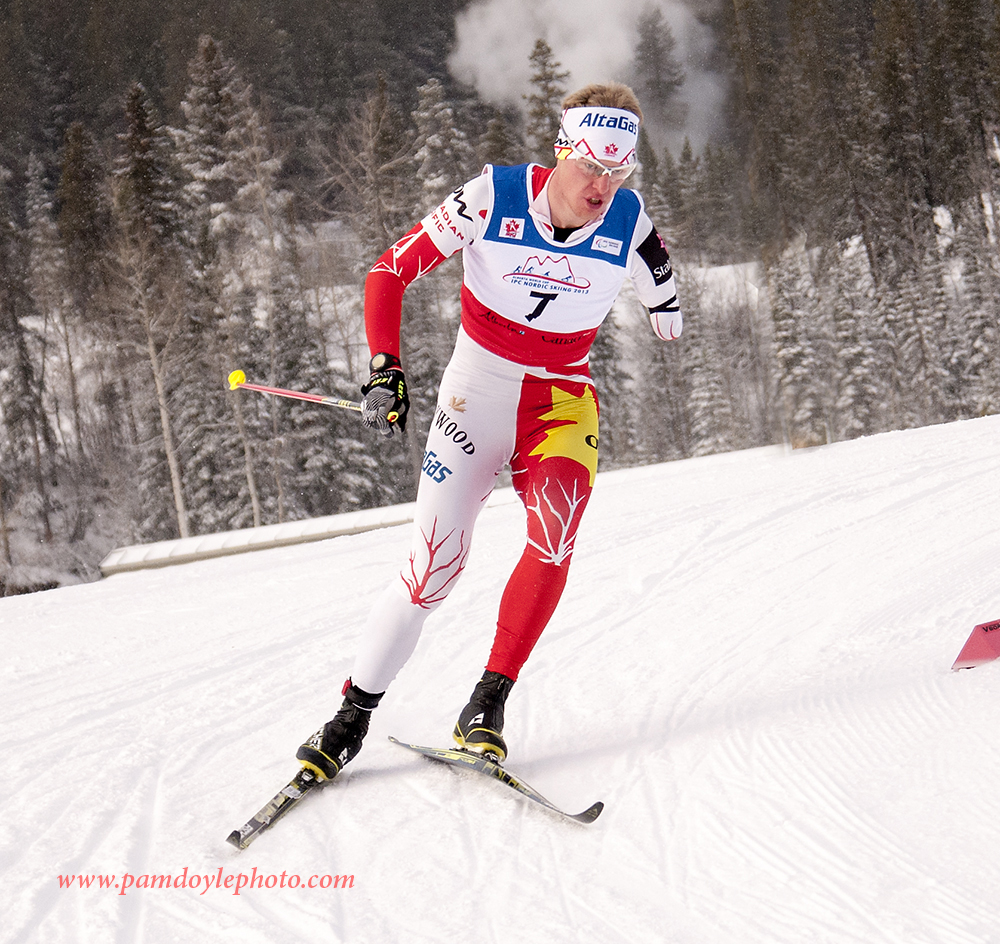
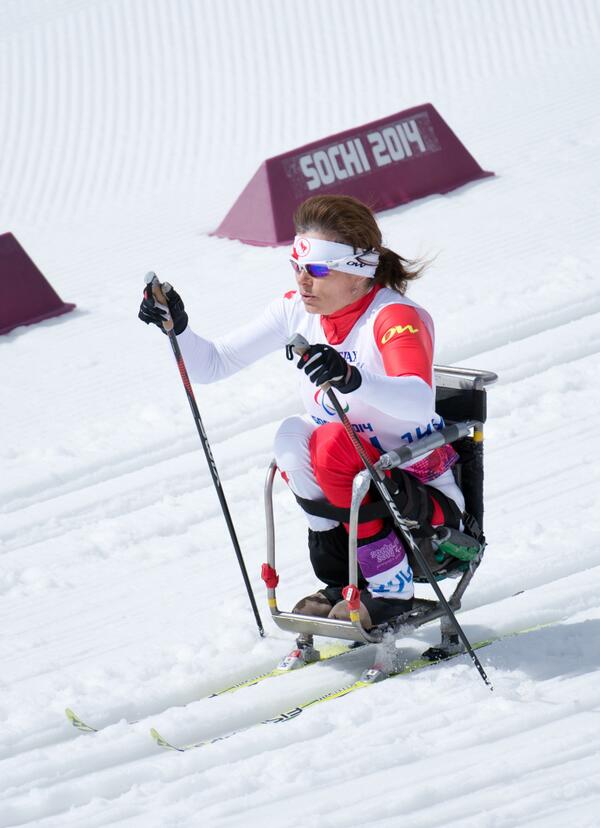
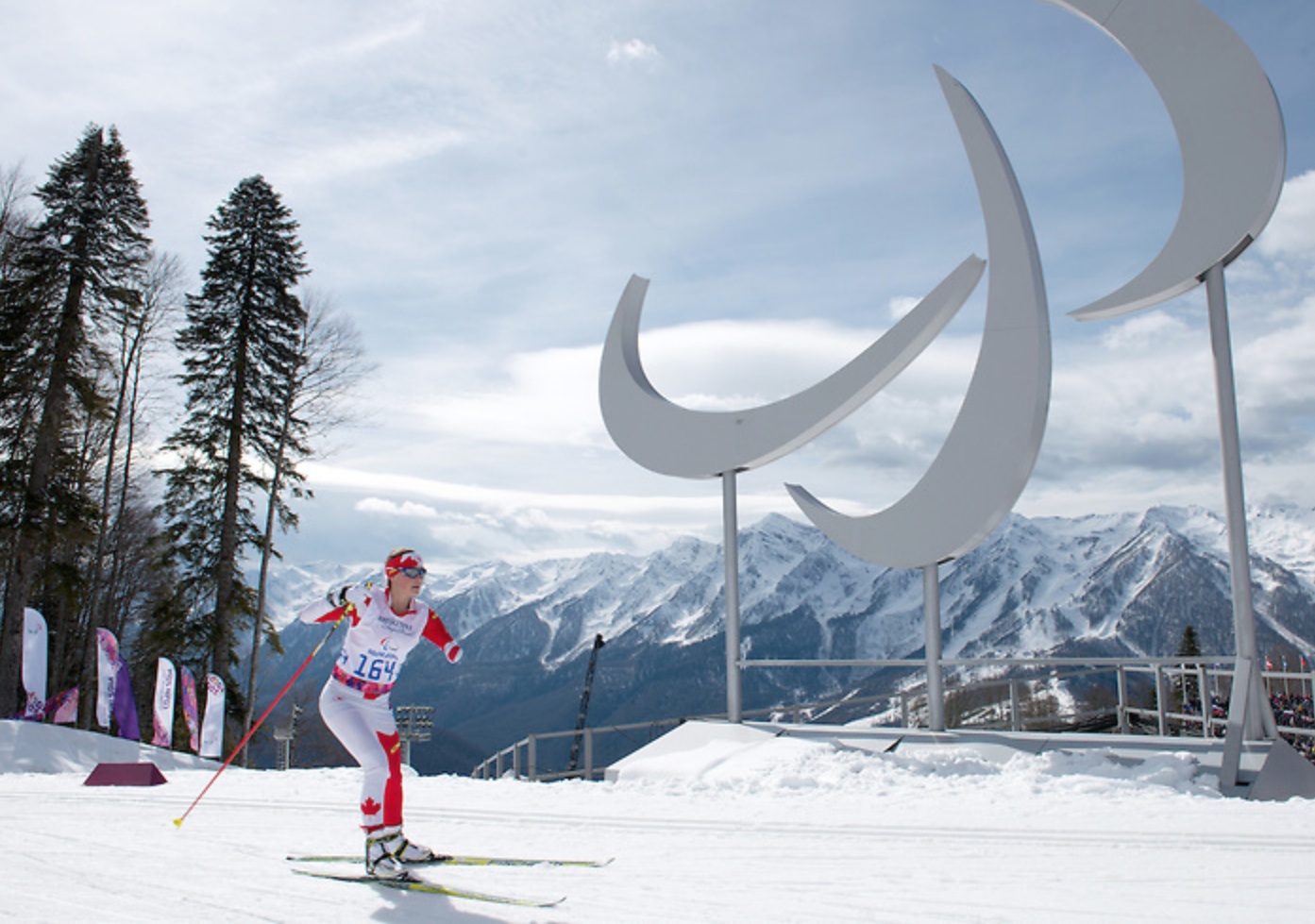
    Colette Bourgonje racing at her 10th Paralympics in March, the 2014 Winter Games in Sochi, Russia. (Photo: Cross Country Canada)
    Colette Bourgonje racing at her 10th Paralympics in March, the 2014 Winter Games in Sochi, Russia. (Photo: Cross Country Canada)

    Twenty-two years ago, Colette Bourgonje was a grade-school teacher with a ticket to the Albertville Paralympics in France. A Saskatchewan native, she had learned how to nordic sit ski a year earlier — all while teaching physical education in Saskatoon.

    But the school wasn’t about to let her take off to compete at her first Paralympics. At the time, Bourgonje was paying her own way to do so, and since landing a temporary teaching contract in 1989, she was trying to secure more job stability.

    Yet passing up the Paralympics wasn’t an option, she told herself. Bourgonje quit her job and resolved to find another one when she returned.
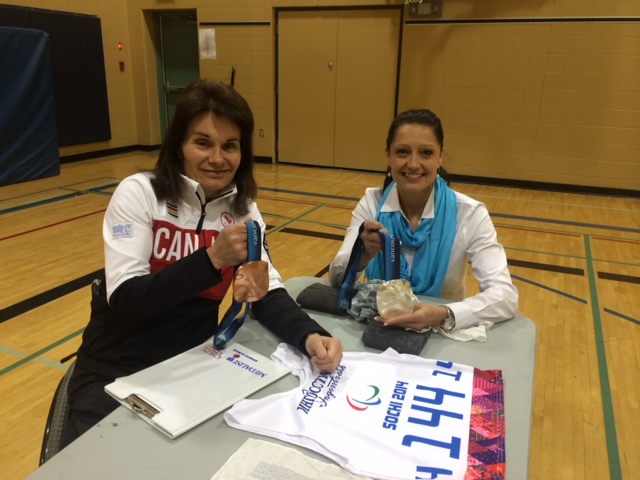
    Ten-time Paralympian Colette Bourgonje (l) with Melanie Florizione, vice principal of a school in Regina, Saskatchewan. (Courtesy photo)
    Ten-time Paralympian Colette Bourgonje (l) with Melanie Florizione, vice principal of a school in Regina, Saskatchewan, during an appearance after the Sochi Paralympics. (Courtesy photo)

    A national-level cross-country runner as a teenager, Bourgonje was in a car accident her senior year, leaving her paralyzed from the waist down. Four years later in 1984, she took up wheelchair racing and became the first to graduate the University of Saskatchewan’s physical-education department in a wheelchair.

    With the competitive bug back in her system, she tried sit skiing for the first time in 1991 and immediately fell in love. More similar to cross-country running than wheelchair racing, she began to work at improving in that sport as well.

    After competing in Albertville in the winter of ’92, Bourgonje qualified for the Barcelona Olympics that summer. There, she won two bronze medals in wheelchair racing, and went on to claim two more bronze medals at the 1996 Atlanta Summer Games. She also raced at the 2000 Summer Olympics.

    Not one to take a breather, Bourgonje became the only athlete in the world to compete in all seven Paralympic Winter Games from 1992 to 2014. She tallied six Winter Paralympic medals — three silver and three bronze — between the 1998, 2006 and 2010 Games, and went down in history as the first Canadian to win a Paralympic medal at home in Vancouver (she earned silver in the 10 k sit ski).

    On the phone from her home in Prince Albert, Saskatchewan’s third largest city along the North Saskatchewan River, Bourgonje reflected on some of her career highlights in the last 24 years. At 52, she announced her retirement from the Canadian Para-Nordic Team late last month.

    “Carrying the flags out in Nagano and Torino, carrying the Canadian flag out was absolutely fantastic,” she said of her flag-bearing honors. “Getting the first medal in Canada was an amazing experience. Being on the podium in that 10 k was just like, whoa. I was so happy.”

    At Vancouver’s closing ceremony in 2010, she received the Whang Youn Dai Achievement Award, given to an individual at each Paralympics who has shown to conquer adversities through sporting excellence.

    In her third nomination for Saskatchewan’s Female Athlete of the Year award, she won it in 2010. She remembered writing the acceptance speech, which she never expected to deliver, before a friend attended the awards ceremony for her in Saskatoon.

    “I just whipped it off in five minutes really thinking I would never get that award,” she recalled. “We were in Russia and I think the other thing that happened that same week … I finally got a [World Cup] medal in Russia that was the only gold I ever won. I was just like, I cant believe this is happening! That’s why I would’ve been satisfied to say this was a great career.”

    After finding success in Russia, Bourgonje decided to commit to another season through 2011 World Championships in Russia. There, she racked up another gold medal to add to her growing list, which included two overall International Paralympic Committee (IPC) World Cup victories in 1998 and 2005.

    “After 2010, I did say that was going to be my last Paralympics,” she recalled.

    Around that time, she asked one of her coaches, Peter Eriksson, the Athletics Canada Olympic and Paralympic head coach, how you know when you’re ready to be done. “He said you’ll know,” Bourgonje said. “And I did.”
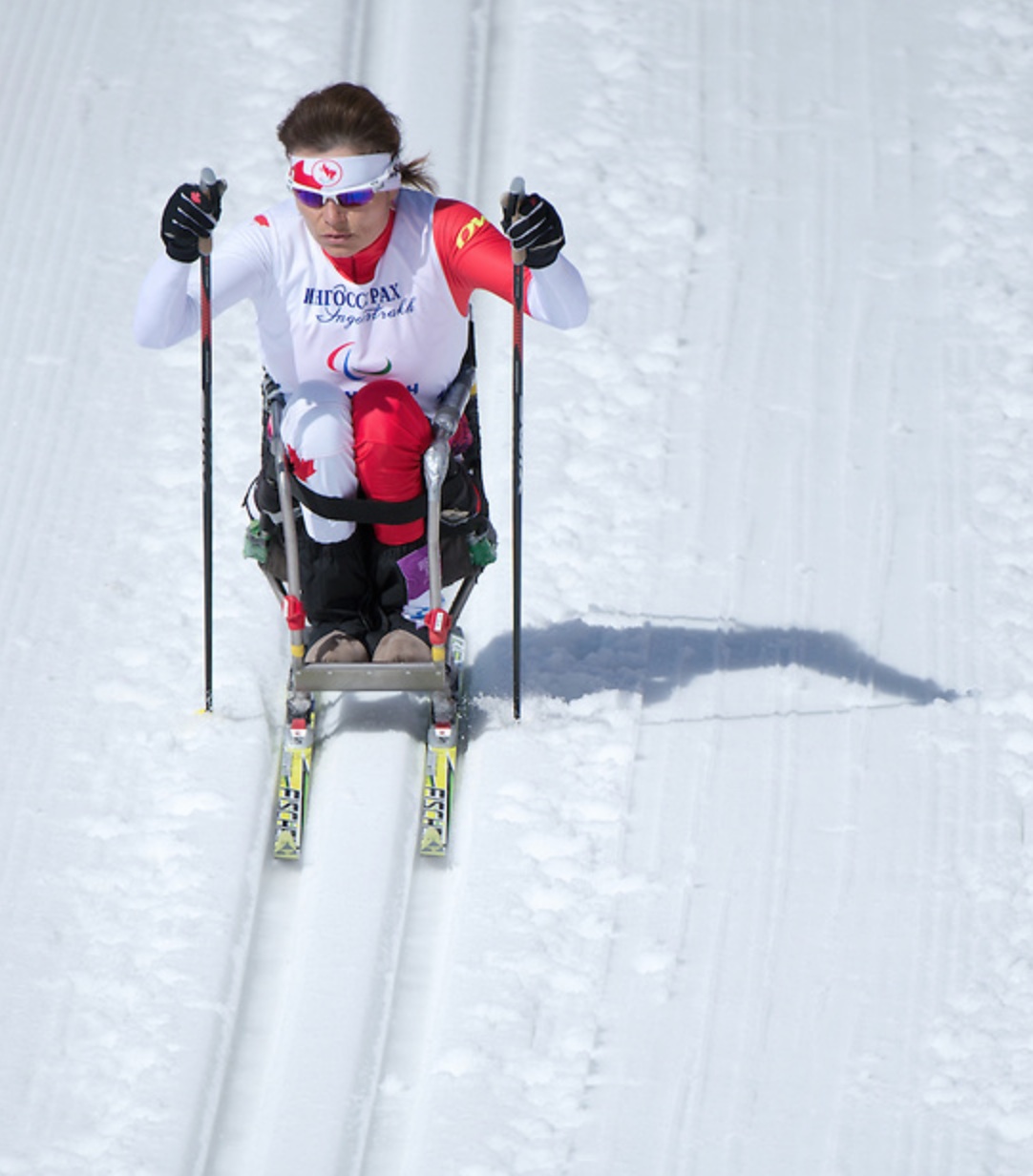
    Colette Bourgonje competes in Cross Country Skiing Women's 5km Sitting at the 2014 Paralympic Winter Games in Sochi, Russia. (Photo: Matthew Murnaghan/Canadian Paralympic Committee)
    Colette Bourgonje competes in the 5 k sitting at the 2014 Paralympic Winter Games in Sochi, Russia. (Photo: Matthew Murnaghan/Canadian Paralympic Committee)

    The courses in Sochi simply weren’t for her. “It’s a great course for double amputees,” she said, with  massive climbs and descents, not the kind of flowing course she favored. She had raced well at the December World Cup in Canmore, Alberta, placing fourth and fifth, but suffered from low iron and vitamin B12 levels in Sochi.

    “I knew I did everything I could to be physically ready to race,” she said.

    But she was tired. In three races, Bourgonje placed 13th twice (5 k and 12 k) and 16th in the sprint.

    “It’s all good; it was fun,” she added.

    Perhaps one of her greatest sports successes was Brittany Hudak, Bourgonje explained. Two years ago, she met Hudak, now 20, working at a local Canadian Tire in Prince Albert and persuaded her to try nordic skiing. Not exactly sure how to coach an arm amputee at the time, Bourgonje quickly became her mentor.

    This past season, Hudak made her World Cup debut and qualified for the Sochi Paralympics.

    “This year traveling and training with Brittany was great — it was great to see a different kind of success,” Bourgonje said. “She’s just having the time of her life.”

    Without Bourgonje on the team this coming season, she said three men remain on Canada’s Para-Nordic World Cup squad and Hudak is the lone development-team member.

    “She has a lot of people willing to help her,” Bourgonje explained. “I’ve been her mentor and the person she’ll come to asking questions, but she definitely has it all together and will get what she needs  … I would like to see her racing in Korea [in 2018]. That would be pretty awesome.”

    One of Bourgonje’s early coaches (along with Para-Nordic Head Coach Robin McKeever), Bruce Craven will continue to work with Hudak on her training plans.

    “[Craven] has been providing me with programs since July of last year and still continues to write them but we are in the process of trying to get me on a yearly training plan which is different from what I did last year,” Hudak wrote in an email.

    “Colette has had a huge impact on me in the sense that she was first an inspiration and a role model for me. Then she became a mentor for me which really helped me become a better skier in a short period of time.
    Brittany Hudak competes in Cross Country Skiing Women's 5km Standing at the 2014 Paralympic Winter Games in Sochi, Russia. (Photo: Matthew Murnaghan/Canadian Paralympic Committee)
    Brittany Hudak competes in the 5 k standing at the 2014 Paralympic Winter Games in Sochi, Russia. (Photo: Matthew Murnaghan/Canadian Paralympic Committee)

    “Since I was new to the sport I didn’t know who I could contact to learn more about getting started in the sport so Colette helped me out a lot with the resources that were available to me and informed me of what steps I needed to take in order to get to a high performance level of sport,” she added. “Colette was also willing to chat with me at any time if I ever had questions and wanted some advice so I think she was very good with being a friend and a mentor.”

    As for what Bourgonje’s up to now, she recently returned from an Olympic/Paralympic tour at schools around the province and will continue to do similar speaking appearances throughout the summer.

    “The Paralympics have not really been in the forefront — every speaking opportunity I get, I say it’s a parallel event to the Olympics…” she said. “It’s picking up, but it’s not yet at an equal … [or] seen as a parallel movement yet.

    “When you medal at the Paralympics, you don’t come home to $20,000 dollars for medaling,” she added. “It’s a great movement, but it’s not well known.”

    Between traveling around the Canada to deliver her message, Bourgonje also wants to return to teaching. While she’s taught everything from phys ed to health, math, and science, it’s the energy of the students she’s missed. Substitute teaching could be a good remedy for that, she said.

    During her full-time racing days, Bourgonje taught part time until 2008, largely paying out of pocket to compete until 2005, when Team Visa started sponsoring her. She met Canada’s carding (government-funding) criteria for wheelchair racing at the Atlanta marathon in 1996, then received assistance from Cross Country Canada for nordic in 1998 leading up to the Nagano Olympics.

    “You can be carded in one sport and they give you [$]1,500 a month at that time (that was the highest funding at the time),” she explained in an email. “Carding has now increased to [$]1,800 a month to live and train on.”

    Eighteen months before the 2010 Olympics, she quit her Saskatoon elementary school job and moved to Canmore for what she thought was one final push.

    “It was very stressful. I’d put everything on the line,” she told The Star Phoenix.

    After the ’92 Winter and Summer Paralympics, she landed a job in Saskatoon’s recreation department. In 1994, the Burnsville school district hired her.

    “I do feel that teaching part-time kept me grounded and very appreciative of what I received,” she told FasterSkier. “You know what they say whatever doesn’t kill you makes you stronger. I also loved my job and was only stressed out when I had to apply for leaves in the winter to go to compete.”
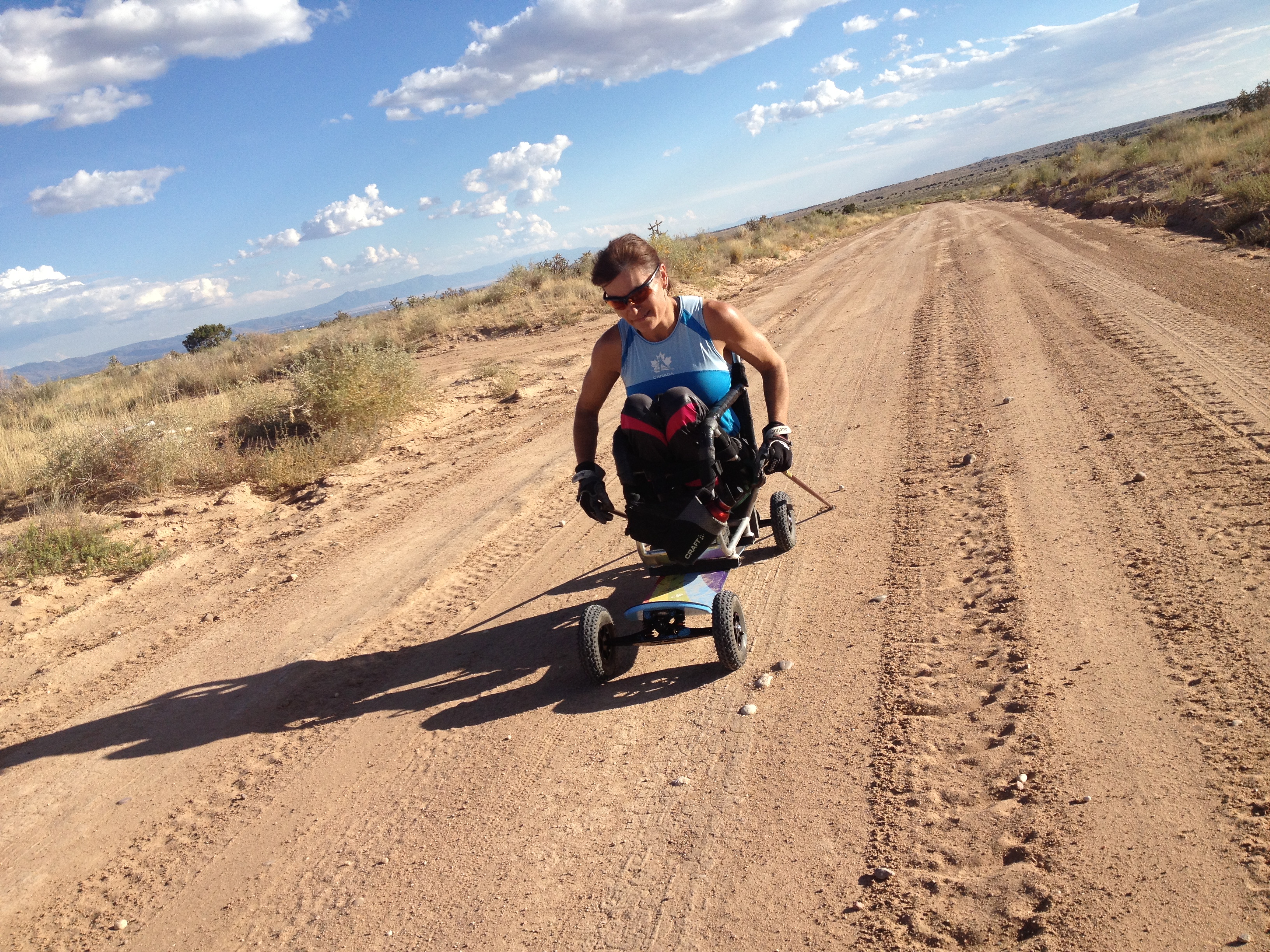
    Colette Bourgonje doing some mountain-board work during a Canadian Para-Nordic Team training camp in Arizona two years ago. (Photo: Robin McKeever)
    Colette Bourgonje doing some mountain-board work during a Canadian Para-Nordic Team training camp in Arizona two years ago. (Photo: Robin McKeever)

    In the last couple months Bourgonje has backed off full-time training to enjoy more recreational outings — like kayaking — and said she’s looking forward to skiing in the Nisbet Provincial Forest with her partner George, who grooms the trails right out of their backyard.

    “I’m really wanting to enjoy and not feel stiff and tired — no more four-hour skiing for me,” she said. “A couple hours to enjoy wherever we are absolutely [doing] … or skiing with kids.”

    Last year, she met an 8-year-old boy named Tyrese, who’s missing part of his arm, while shopping for batteries for her heart-rate monitor.

    “He was getting into a little red car they have set up at the mall, I asked him if he liked skiing he said he did so I asked him where his parents were,” Bourgonje recalled.

    She talked to his mother, gave her a card with her contact info and asked where Tyrese went to school — just in case they forgot to get back to her. After a training camp last October, Bourgonje went to his school to see if he was still interested.

    “We set him up with skis/poles but he had no boots. While we were in Canmore, the school bought boots for him,” she explained.

    Later, Bourgonje brought him to ski on the trails near her house. When she returned from Russia in March, she took Tyrese and a sit-skier out on less-than-ideal conditions. But they stuck with it.

    “Right now we have another 12 year old with no arms, Tyrese, Kristen, a girl in the hospital, a six year old, and a girl I am [bringing] a racing chair to today…” she wrote on Friday. “So setting up something for all of them to be active seems to be the way to go.

    “[Tyrese is] a reason to stay in shape and go skiing with him and see the smile on his face,” she said. “Exercise is a lifestyle and you can’t just stop.”

  • Wednesday Workout: Mountain Boarding Anaerobic Workout with Colette Bourgonje

    Wednesday Workout: Mountain Boarding Anaerobic Workout with Colette Bourgonje

    Colette Bourgonje doing some mountain-board work during a Canadian Para-Nordic Team training camp in Arizona two years ago. (Photo: Robin McKeever)
    Colette Bourgonje doing some mountain-board work during a Canadian Para-Nordic Team training camp in Arizona two years ago. (Photo: Robin McKeever)

    This week’s workout comes from Colette Bourgonje, a 10-time Paralympian who recently retired from the Canadian Para-Nordic Team to enjoy other hobbies at her home in Prince Albert, Saskatchewan, including kayaking, biking, and sitting outside sipping coffee. Over the last two decades, she’s racked up 10 medals between the Winter and Summer Paralympics (three silver and three bronze in sit skiing, and four bronze in wheelchair racing).

    While Bourgonje, 52, won’t miss four-hour training sessions that leave her stiff and tired, she’s looking forward to going out and doing something of her choosing for a couple hours at a time.

    “I just don’t feel good if I don’t do something,” Bourgonje says. “Exercise is a lifestyle and you can’t just stop.”

    While she does the following speed workout on a mountain board, which sit skiers use for dryland training, this could be done as a double-pole rollerski workout on pavement or trail running with poles (although the latter won’t give you as much of an upper-body workout).

    “I like this workout because of the change in pace, which makes you focus on technique with speed and adds variety with the distance you end up putting in,” Bourgonje explains.

    The Workout: Mountain Boarding Anaerobic Workout

    Total time: Up to 2 hours

    Warmup: 20-30 minutes with 3-4 accelerations

    Intervals: 3 x 4-minutes in Zone 4, with fully recovery in between each (3-4 minutes of easy movement in Zone 1)

    Rest: Take a 10-minute set break.

    Repeat: 3 x 4-minute intervals (with recovery periods) once more, for a total of 24 minutes of work.

    Cool down: 20-30 minutes with stretching after

  • Wasn’t Pretty, But McKeever/Nishikawa Nab Second Gold in Paralympic Sprint

    Wasn’t Pretty, But McKeever/Nishikawa Nab Second Gold in Paralympic Sprint

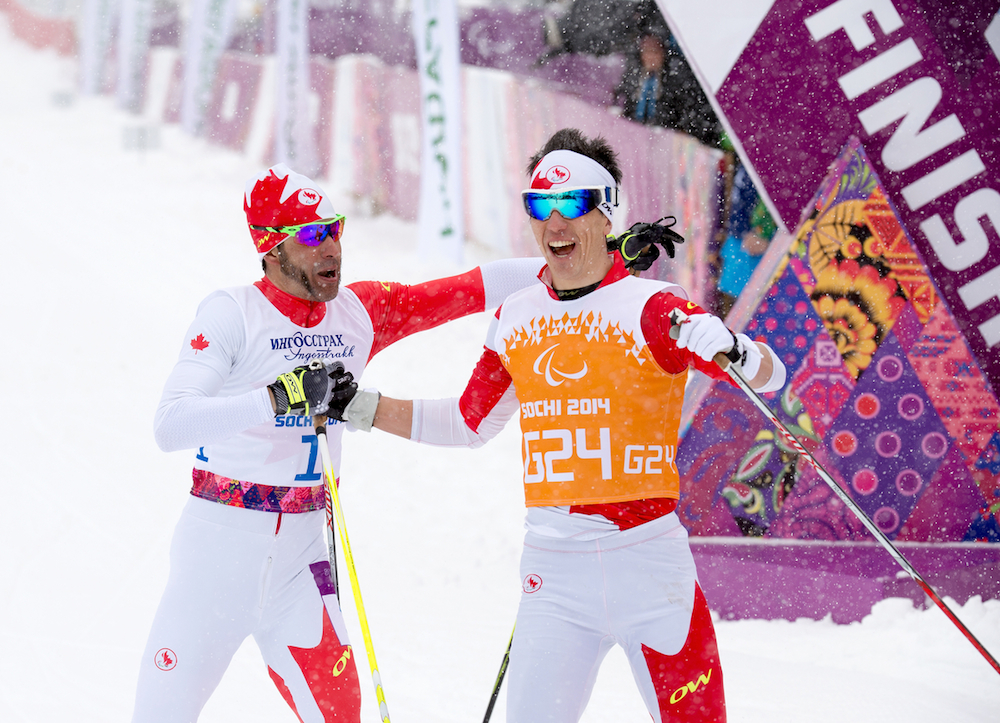
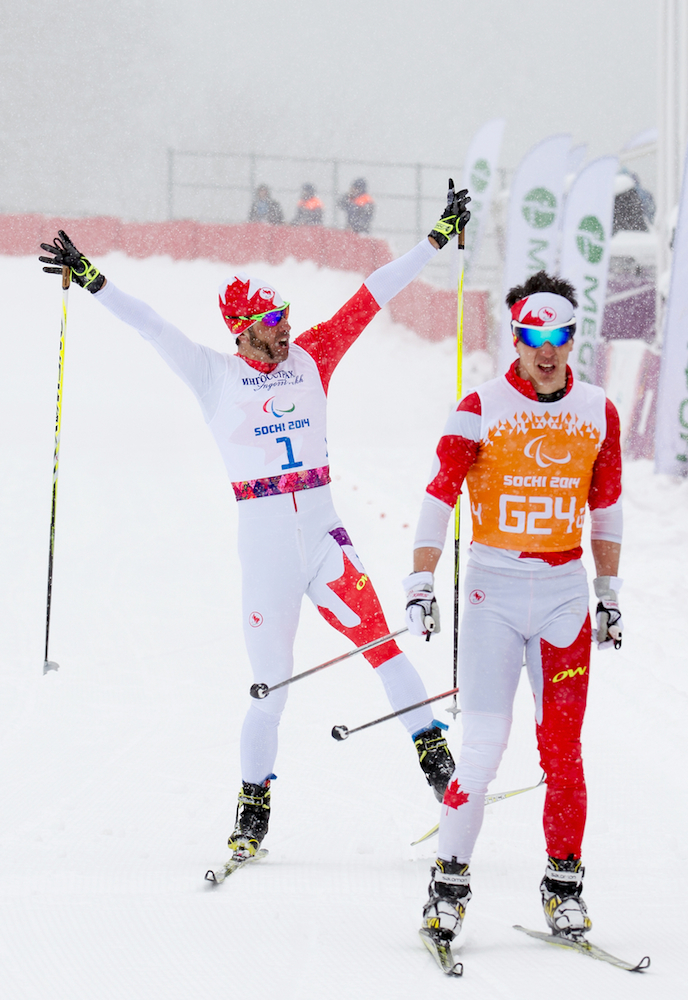
    Canada's Brian McKeever (l) and his guide Graham Nishikawa win the gold medal in the Men's 1 k visually impaired sprint final at the 2014 Paralympic Winter Games in Sochi, Russia. (Photo: Matthew Murnaghan/Canadian Paralympic Committee)
    Canada’s Brian McKeever (l) and his guide Graham Nishikawa win the gold medal in the Men’s 1 k visually impaired sprint final at the 2014 Paralympic Winter Games in Sochi, Russia. (Photo: Matthew Murnaghan/Canadian Paralympic Committee)

    (CCC press release)

    McKeever rebounds from crash in final to take down world’s best for ninth-career gold medal

    SOCHI, Russia —Brian McKeever is certainly capturing the world’s attention in Sochi, Russia. And it is not just because he skied to his ninth Paralympic gold medal on Wednesday in Sochi, Russia.

    McKeever and guide, Graham Nishikawa, ploughed through the field and more than 30 centimetres of fresh snow to win their second gold medal of the week in spectacular fashion in the visually impaired sprint races at the Paralympic Winter Games.

    Leading all qualifiers in the head-to-head heats with the top-12 athletes, the two Canadians handily advanced to the final where the 12-time Paralympic medallist faced the biggest adversity of his career.

    Stacked against two Russians, and a Swede in the final, the 30-year-old Nishikawa (Whitehorse) appeared to have led McKeever (Canmore, Alta.) through the cluttered pack of guides and athletes into clear trail until the unthinkable happened near the 200-metre mark.

    A Russian skier stepped on McKeever’s pole – sending the 34-year-old airborne and onto his backside – before bouncing back up and hunting the leaders, and his ninth career Paralympic gold medal down.

    “Wow, that was stressful,” sighed McKeever at the finish. “It wouldn’t be right for me to tell you what I said in my head, but once the cuss words were out, the only thing you can do is get back up and race.

    “I thought we were clear, but that is normal and it happens in sprinting when you are all fighting and tight. Everyone is going flat out. It is intense and everyone is at their limit. We are just fortunate it happened in the first 200 metres and not at the end so we had time to catch up.”

    “It wouldn’t be right for me to tell you what I said in my head, but once the cuss words were out, the only thing you can do is get back up and race.” — Brian McKeever, nine-time Paralympic gold medallist

    After taking a deep breath, Nishikawa took control, putting the throttle down and commandeering the Canucks back into contention in the action-packed one-kilometre sprint race.

    Canada's Brian McKeever (l) celebrates his ninth-career Paralympic gold, which he won Wednesday in the 1 k visually impaired sprint with guide Graham Nishikawa in Sochi, Russia. While Nishikawa helped him win his first gold of the week in the 20 k classic with guide Erik Carleton, this was Nishikawa's first Paralympic gold. (Photo: Matthew Murnaghan/Canadian Paralympic Committee)
    Canada’s Brian McKeever (l) celebrates his ninth-career Paralympic gold, which he won Wednesday in the 1 k visually impaired sprint with guide Graham Nishikawa in Sochi, Russia. While Nishikawa helped him win his first gold of the week in the 20 k classic with guide Erik Carleton, this was Nishikawa’s first Paralympic medal. (Photo: Matthew Murnaghan/Canadian Paralympic Committee)

    “When I saw him go down, I immediately panicked and just thought ‘OH NO! Not now,’ ” said Nishikawa. “It wasn’t until we got back up around the Russians and had the Swedes in sight that I felt a huge relief.”

    “What a set of wheels on Graham today. That was impressive,” said McKeever. “The snow was so heavy today. He basically towed me up that hill and got me around the Russian roadblock out there and gave us a chance. It is not how we planned things, but that was a pretty awesome day.”

    Sweden’s Zebastian Modin hung on for the silver medal, while Russia’s Oleg Ponomarev outraced his countryman for the bronze.

    Adding to the dramatics, it was the first time Nishikawa had guided his friend, and training partner, on his own in international competition. After racing together over the last decade in Canada, McKeever recruited Nishikawa into his training group this fall with the goal of bringing two guides to the Paralympics for the first time ever.

    Earlier this week, Nishikawa, who races able-bodied both domestically in Canada and on the World Cup circuit, shared guiding duties with Erik Carleton to lead McKeever to his first gold of the 2014 Games. Recognizing the stress the warm weather, and heavy snow conditions was putting on the guides for the long-distance races, the innovative Canadians leveraged both guides – switching at the midway point. With McKeever dropping into third place, Nishikawa stepped in to blaze a trail to the gold medal step of the podium.

    Carleton’s name was on the start list so he was the only one to receive a gold medal. But on Thursday, Nishikawa will get his due and receive a gold medal of his own.

    “It feels absolutely awesome,” beamed Nishikawa. “I said earlier this is a whole new world for me. I’m so impressed by everything. This whole experience has been amazing and I just wanted to do whatever I could to be here and help Brian. We have been friends for a long time so this is very special.”

    From sunny T-shirt weather, to pouring rain, to dumping heavy snow on Wednesday, Mother Nature is sending the world’s top Para-Nordic wax technicians into a daily frenzy at Laura Stadium.

    “This whole experience has been amazing and I just wanted to do whatever I could to be here and help Brian. We have been friends for a long time so this is very special.” — Graham Nishikawa

    “These conditions are definitely stressful on the wax techs,” said McKeever. “Every day they basically start from ground zero based on the conditions. We had amazing boards today and the guys deserve a lot of credit. We were so fast on the downhills which really got us back into the race today.”

    The victory brings McKeever’s career medal haul to 12 at the Paralympics, including his nine gold. If he can chalk up one more victory this week he will become the first Canadian Winter Paralympian with at least 10 gold medals, and third Paralympian in Canada overall to accomplish the feat.

    A handful of other Canadians also competed in the sprint races. Chris Klebl, of Canmore, Alta., qualified for the men’s sit-skiing heats, but did not advance to the final. Robbi Weldon, of Thunder Bay, Ont., along with her guide Phil Wood, of Canmore, Alta., also had their day come to an end in the semifinals of the women’s visually impaired category, while Paralympic rookie, Brittany Hudak of Prince Albert, Sask., could not advance past the women’s standing semifinals.

    Other Canadians that did not qualify for the heats included:  Ottawa’s Margarita Gorbournova and her Regina-based guide, Andrea Bundon, in the women’s visually impaired race.

    Louis Fortin (Fredericton, N.B) did not qualify in the men’s standing class, Saskatoon’s Colette Bourgonje also competed in women’s sit-skiing, while Quebec City’s Sebastien Fortier, and Yves Bourque (Becancour, Que.) also did not qualify for the men’s sit-skiing heats.

    Following a day off on Thursday, the final biathlon competition of the 2014 Paralympic Winter Games will take place at the Laura Nordic Stadium on Friday.

    Results

  • Canadian Paralympic Preview: McKeever, Bourgonje, Arendz Lead the Way to Sochi

    Canadian Paralympic Preview: McKeever, Bourgonje, Arendz Lead the Way to Sochi

    Brian McKeever (r) with guide Erik Carleton celebrating gold at the 2011 World Championships. (Photo: IPC)
    Brian McKeever (r) with guide Erik Carleton celebrating gold at the 2011 World Championships. (Photo: IPC)

    In Vancouver 2010, the Canadian Paralympic team placed third in the overall medal count with 19, behind Russia, which racked up 38, and Germany, with 24.

    Canada has set a goal of being in the top three again this year overall at the Winter Paralympic Games held March 7 to 16 in Sochi, Russia, according to an Own the Podium press release.

    Canada’s recently announced 14-athlete Paralympic nordic team has the horsepower and experience to do their part in bringing home medals.

    Sochi, RUSSIA - Mar 4 2014 -  Colette Bourgonje from Canada's Nordic team arrives prior to the 2014 Paralympics in Sochi, Russia.  (Photo: Matthew Murnaghan/Canadian Paralympic Committee)
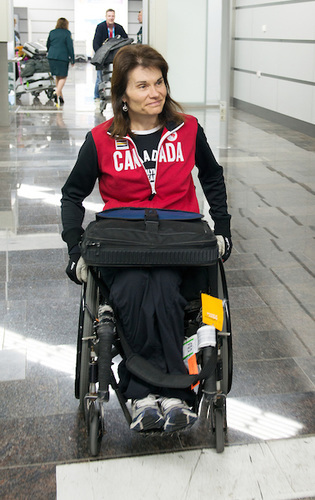
    Colette Bourgonje from Canada’s Nordic team arrives prior to the 2014 Paralympics in Sochi, Russia. (Photo: Matthew Murnaghan/Canadian Paralympic Committee)

    The team will be led by 10-time Paralympic medallist Brian McKeever along with his guides Erik Carleton and Graham Nishikawa, and eight-time Paralympic medallist Colette Bourgonje. Her silver at the 2010 Games was Canada’s first medal at home.

    McKeever, who races in the visually impaired category, will be appearing in his fourth Paralympic Games including Salt Lake City 2002, Turin 2006 and Vancouver four years ago.

    The triple-gold medallist from 2010 tweeted on Tuesday: “Woke up with a virus yesterday. Timing couldn’t be much worse. Not the ideal prep for the #Paralympics. It’s been a bumpy #RoadToSochi.”

    In 2010, McKeever, 34, was named to both Canada’s Paralympic and Olympic teams. In the Olympics, he qualified to compete in the men’s 50-kilometre cross-country race; however, Canada’s coach decided to replace him with a skier who did well in earlier race at the Games.

    Bourgonje, 52, is one of Canada’s most recognized Paralympians, having participated in all six Paralympic Winter Games in addition to wheelchair racing at three Summer Paralympics. She is the reigning world champion in the sit-skiing distance race and she captured a silver and bronze medal at the 2010 Paralympics.

    In an interview with Canada.com, Bourgonje said, “My goals for Sochi are to be in the top five.”

    Biathlete Mark Arendz, 24, is a multiple International Paralympic Committee (IPC) World Cup medallist and is first overall in this season’s World Cup standings. He will be competing for his first Paralympic medals in the standing division in his second Winter Paralympics.

    Last season, Arendz won the overall IPC World Cup Biathlon title, and won a gold and two bronze medals at IPC World Championships, and won a gold, two silvers and four bronzes throughout the World Cup season.

    Canadian World Cup Veteran Mark Arenz in the Standing Division Sprint at Canmore. (Photo Courtesy Pam Doyle)
    Canadian World Cup veteran Mark Arenz in the standing sprint at the IPC World Cup in December in Canmore, Alberta. (Photo: Pam Doyle)
  • Now a National Champ, McKeever Again Adaptive Skier of the Year; Bourgonje Top Female

    Now a National Champ, McKeever Again Adaptive Skier of the Year; Bourgonje Top Female

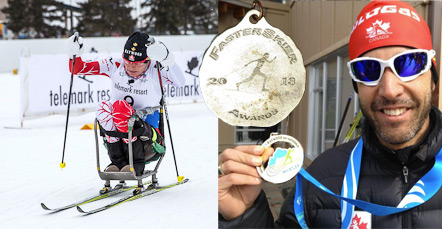
    Canadian Para-Nordic World Cup skiers Colette Bourgonje and Brian McKeever are FasterSkier's Adaptive Skiers of the Year. (Photos: James Netz/CCC & Gerry Furseth)
    Canadian Para-Nordic World Cup skiers Colette Bourgonje and Brian McKeever are FasterSkier’s Adaptive Skiers of the Year. (Photos: James Netz/CCC & Gerry Furseth)

    Brian McKeever is one of those guys that seem to keep getting better with time. At 33, Canada’s Para-Nordic World Cup visually impaired skier once again dominated the International Paralympic Committee (IPC) World Cup scene last season, winning every IPC cross-country event he participated in.

    With guide Erik Carleton, McKeever tallied two golds at 2013 World Championships in Solleftea, Sweden, and two more at World Cup Finals in Sochi, Russia.

    “I don’t think the guides get nearly as much recognition as they should,” McKeever told Cross Country Canada in February. “It is tough being the guide because you are out front and not skiing your own race. … When I need him to hold off he has to, and when I need him to increase the pace he needs to do that as well.”

    Brian McKeever (r) with guide Erik Carleton celebrating World Championship gold (Photo: IPC)
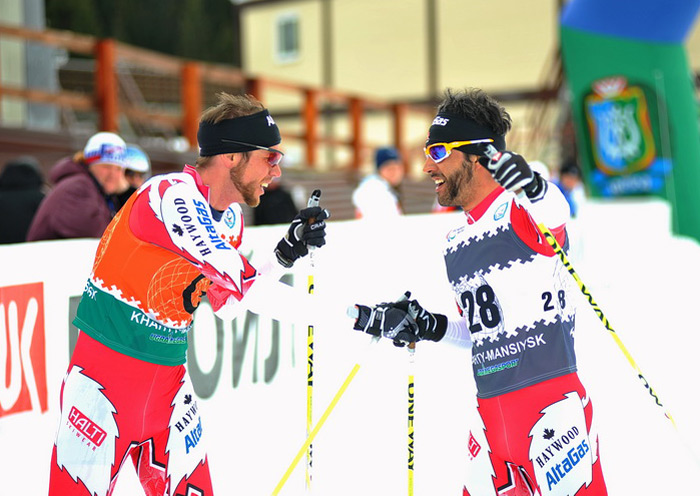
    McKeever (r) and guide Erik Carleton celebrate their 2011 World Championships gold. (Photo: IPC)

    Childhood friends from Calgary, the duo didn’t waste any time getting from their last World Cup Finals race in Sochi to Whistler, British Columbia. There, McKeever captured his first national title in the 10-kilometer freestyle on March 24, just four days after racing in Russia.

    “You never really know how you are going to feel after getting off the plane from Russia,” McKeever told FasterSkier after arriving two days earlier. “First national championship win in my career, I am really happy about that.”

    To start the season, both McKeever and Carleton individually qualified for the able-bodied World Cup races in Canmore, Alberta. They decided to skip the opening IPC World Cups to compete in Canmore, where McKeever notched a career-best 38th in the skiathlon in mid-December.

    In February, the 10-time Paralympic medalist double poled the entire Canadian Birkebeiner 55 k classic in Edmonton, Alberta, and won by nearly three minutes. Carleton, 35, placed second.

    McKeever took on the Vasaloppet 90 k classic in early March for the second-straight year, finishing 45th overall – a vast improvement from 83rd in 2012.

    Another 10-time Paralympic medalist, Canada’s veteran sit-skier Colette Bourgonje, 51, isn’t showing signs of slowing down before the 2014 Winter Games (which will be her seventh Paralympics). In January, she raced to silver and bronze at the IPC World Cup in Cable, Wis., and went on to place eighth at World Championships and sixth at World Cup Finals. Bourgonje landed fifth overall in the IPC World Cup.

    Honorable Mention:

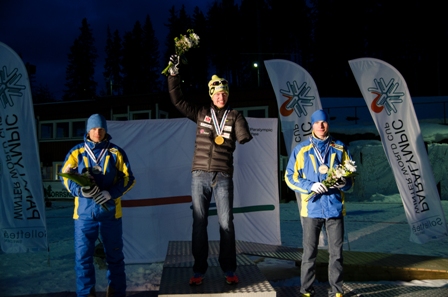
    Canadian Para-Nordic World Cup member Mark Arendz (c) tops the podium for the first time at 2013 IPC Biathlon World Championships in Solleftea, Sweden. (Photo: CCC)
    Canadian Para-Nordic World Cup member Mark Arendz (c) tops the podium for the first time at 2013 IPC Biathlon World Championships in Solleftea, Sweden. (Photo: CCC)

    Further proving the depth of Canada’s Para-Nordic team, 22-year-old Mark Arendz won his first IPC Biathlon World Championships gold in February in the 7.5 k sprint. Also in Solleftea, Arendz claimed bronze in the 12.5 and 15 k distance races and finished eighth overall in the World Cup.

    After trying out sit skiing for the first time at U.S. Nationals in January, Tatyana McFadden went on to represent the U.S. at the IPC World Cup in Cable, where she finished right behind Bourgonje in two races in fourth and fifth, respectively. Her results were hardly a surprise; the 24-year-old University of Illinois student has 10 Paralympic medals in wheelchair racing and at least six marathon titles (including one in Boston and other in London this month). Despite a late start, she ranked 14th in the overall World Cup.


    medal-final-layer-2013

    Previous Winners:

    2011

    Brian McKeever (CAN)

    Jody Barber (CAN)

    2010

    Brian McKeever (CAN)

    Andy Soule (USA)

    Colette Bourgonje (CAN)


    See also:

    Nordic Combined Skier of the Year

    Breakthrough Skier of the Year

    Continental Skier of the Year

    Junior Skier of the Year

    Rookie of the Year

    Collegiate Skier of the Year

  • McKeever, Barber Lead Canadian Sweep of FS Adaptive Skier of the Year

    McKeever, Barber Lead Canadian Sweep of FS Adaptive Skier of the Year

    FasterSkier Adaptive Skier of the Year

    Adaptive Skier of the Year (men):

    Brian McKeever (CAN) McKeever continued his dominance of the adaptive skiing circuit, collecting three cross-country golds at the IPC World Championships and a silver in biathlon.

    All this hardware came without longtime guide, brother Robin McKeever, who suffered an injury not long before the start of the Championships. Long-time friend, and Erik Carleton took over, and McKeever did not miss a beat.

    McKeever, who skis in the visually impaired category, did not race on the IPC World Cup this season, but as in the past, he contested a number of elite able-bodied events.

    The 2010 Olympian posted a seventh place finish in the Canadian National Championship 50k and placed third in the final stage of the February NorAm mni-tour.

    McKeever ended the season ranked a career-best 14th in the overall NorAm standings.

    Brian McKeever (r) with guide Erik Carleton (l) celebrating World Championship gold (Photo: IPC)

    Honorable Mention:

    Chris Klebl (CAN) Klebl switched allegiance in 2011, moving north and taking Canadian colors. The move obviously suited him as he left the IPC World Championships in Khanty-Mansyisk, Russia with a gold and silver in the 15km cross-country and the sprint respectively.

    Klebl, skiing in the sitting classification, contested all seven IPC World Cup events, and was ranked fourth in the world when the season came to an end.

    Mark Arendz (CAN) Arendz won three IPC World Cup biathlon races, and had two seconds and a third on his way to second in the overall standings – just four points down Nils-Erik Ulset (NOR).

    Arendz was shut out of the medals at the World Championships, but had two fourths and a sixth in three starts. He also raced cross-conutry World Cup events, scoring points in four races, including a

    Sean Halsted (USA) Halsted lacked the top results of his Canadian counterparts, but had an impressively consistent season, racing both cross-country and biathlon.

    Halsted scored points in six of seven World Cup biathlon races, ranking tenth overall. He was even better on the cross-country side, finishing in the points in every race – good enough for sixth in the World Cup standings.

    [poll id=”58″]

    Adaptive Skier of the Year (women):

    Jody Barber (CAN) Barber, like Halsted on the men’s side, was the ultimate renaissance woman on the trails in 2011.

    She placed fifth in the biathlon World Cup, finishing in the top six in six of seven events. In cross-country, she skied to a sixth in the overall, buoyed by two podium appearances.

    At the World Championships, Barber came close to a medal, finishing fourth twice and fifth twice in four starts.

    Barber, a teacher and mother of five, is in just her fourth season of competing in cross-country and biathlon.

    Jody Barber brings it home at the World Championships (Photo: IPC)

    Honorable Mention:

    Colette Bourgonje (CAN) Last year’s winner of this award, Bourgonje took a break from World Cup racing, but did make the trip to Khanty-Mansyisk for the World Championships.

    The journey was worth it as she won gold in the 10km sit-ski event, bettering the silver she won last year.

    [poll id=”59″]

    Previous Winners:

    2010
    Brian McKeever (CAN)
    Andy Soule (USA)
    Colette Bourgonje (CAN)

    FasterSkier Awards 2011:

    Rookie of the Year
    Breakthrough Skier of the Year
    Collegiate Skier of the Year
    Adaptive Skier of the Year
    Continental Skier of the Year
    Biathlete of the Year
    Nordic Combined Skier of the Year
    Performance of the Year (cross-country, biathlon, nordic combined)
    Cross-Country Skier of the Year

  • Post-Olympic Budget Cuts Hit Canada Para-Nordic Team

    Post-Olympic Budget Cuts Hit Canada Para-Nordic Team

    Brian McKeever (r), a member of Canada's Para-Nordic Ski Team, racing with his brother and guide, Robin, at the 2010 Paralympic Games. Photo used under Creative Commons from Mafue – http://bit.ly/d3DeMX

    Four months after the conclusion of the Vancouver Paralympic Games, Canada’s Para-Nordic Ski Team has suffered cuts amounting to roughly one-third of its total budget.

    According to Cross-Country Canada Executive Director Davin Macintosh, the cuts represented 56 percent of the program’s funding from Own the Podium (OTP), the high-performance sports initiative that was set up to propel Canadian athletes to medals at the 2010 Olympic and Paralympic Games in Vancouver.

    The exact impacts of the cuts are still uncertain, as Cross-Country Canada (CCC) works to restructure its program in the next few weeks. But Macintosh said that the cuts, first reported by the CBC, will force the team to scale back its athlete support.

    “In the long term, we’ll have to run a more streamlined program, which probably means fewer staff who can do a wider variety of jobs,” he said.

    Over the past five years, Canada’s Para-Nordic program had enjoyed a large infusion of cash from OTP, which was founded in 2005 and has since poured more than $100 million into Olympic sports.

    Cross-Country Canada’s Able-Bodied program fared much better in its level of funding from Own the Podium (OTP).

    According to Cross Country Canada (CCC) Executive Director Davin Macintosh, the able-bodied ski team received a three percent decrease in support from OTP in its budget for the coming year. (CCC received roughly $1.2 million for its able-bodied cross-country program in 2009-2010.)

    While that number may look bad when juxtaposed with the 56 percent cut to Para-Nordic, Macintosh said that the cuts merely reflect the quality of the athletes on each team—not a prioritization of able-bodied skiers.

    “If they knew we had three Para-Nordic athletes who were on the cusp of winning all the international competitions, they’d give us more money there, and that’s what we have on the able-bodied side,” Macintosh said. “Our Olympic results showed that we have a strong team of people who will be around for the next Olympics, and have obvious and proven potential to reach the podium.”

    According to OTP Director of Winter Sport Ken Read, his organization conducts yearly reviews, in which each sport receiving OTP funding is categorized according to its recent and historical results, as well as its future potential. The higher the category, the more support a sport receives.

    Able-bodied cross-country is a category two sport, as is visually impaired cross-country, given Brian McKeever’s success at the 2010 Paralympics, where he won three gold medals. But the other Para-Nordic disciplines are rated one rung down on the ladder, as a category three.

    “Those that have earned it get the broader…support,” Read said, “and the deeper down it will go. So it’s into supporting camps, supporting coaches, supporting the integrated support teams.”

    “That’s where you have the able-bodied program,” he continued. “The hope is, going forward to 2014, that Devon [Kershaw] will find a couple hundredths of a second, and…we are working with them right now on a nordic consortium of trying to entrench some of those programs that worked well.” One example he cited was a project involving base grinding and ski technicians.

    Read said that the categorizations were evaluated on a year-to-year basis, and that the level of support for the Para-Nordic team would be reconsidered next spring, “based on results.”

    The initiative was designed to provide extra financing specifically earmarked for athletes with strong chances of winning Olympic and Paralympic medals. But over time, the money allotted to the Para-Nordic Ski Team—some $630,000 last year—had come to finance a large portion of its operations.

    “When OTP first came into being, they put a lot of money into the development side,” said Jeff Whiting, who recently retired from his job as a Para-Nordic development coordinator for CCC.

    “The program grew extremely rapidly over the past four years thanks to rapid increases in support from OTP, and that created a much larger budget,” Macintosh said.

    After the conclusion of the 2010 Games, though, OTP’s future was uncertain, since funding from the soon-to-be-dissolved Vancouver Organizing Committee had made up a large proportion of its bottom line.

    While the Canadian government doubled its share of OTP support in the federal budget this spring, the total amount of funding available for high-performance programs was still reduced—$20 million, instead of $23 million, according to OTP Director of Winter Sport Ken Read.

    And while OTP had targeted three athletes during the 2010 Paralympics—Brian McKeever, Jody Barber, and Colette Bourgonje—only McKeever will continue to receive money for the next four-year Paralympic cycle.

    Bourgonje has said that Vancouver was her last Paralympic Games, and “the remainder of the athletes in the program weren’t seeming to have gold medal potential,” Read said, referring to OTP’s standard for funding Paralympic athletes.

    “In Paralympic [sports], it’s gold medal potential, not deep athlete development,” Read said. “The sport is supposed to be taking on that role of upkeep.”

    An increase in funding to CCC from Sport Canada, a separate arm of the federal government, has softened the impact of the OTP reductions slightly, but not entirely, according to Macintosh.

    CCC was informed of the cuts roughly two weeks ago, Macintosh said, and he called a meeting with athletes immediately. The team has been forced to cancel a planned summer training trip to New Zealand, and while funding exists for a trip to World Championships in Norway next year, the extent of the team’s participation in World Cup races earlier in the winter remains unclear.

    “We will probably be able to finance fewer athletes to go on the general World Cup circuit, although we will ensure that our athletes are well-prepared for [World Championships],” Macintosh said.

    No staff members have been laid off, but job descriptions will probably have to change, Macintosh added.

    CCC is currently negotiating with Para-Nordic Head Coach Kaspar Wirz, who Macintosh said will likely continue in a “less-than-full-time capacity.” Technical Coach Robin McKeever—who also serves as a guide for his brother, Brian—would have to take on “a few more responsibilities” to remain with the team.

    “We don’t have signed contracts with them,” Macintosh said. “It’s up to them.”

    Wirz wasn’t surprised at the cuts—just their magnitude.

    “We were thinking maybe 20, 30 percent,” he said. Reductions after Olympic cycles are typical, Wirz added, especially for Paralympic sports.

    But Robbi Weldon, a 2010 Paralympian and a member of the Canadian Para-Nordic team, said that she didn’t blame OTP for the cuts.

    “If an organization has strict criteria, and that’s what they put our in their documentation, I’m not going to bash them—that’s their mandate,” she said. Nevertheless, she continued, “it’s a huge hit, and I think there’s definitely a lot of questions to CCC—how they’re going to support us, and support the team.”

    Macintosh said that he hoped to be able to make up for some of the cuts by finding new sponsors for the Para-Nordic team. CCC has been discussing options with potential backers, and the exposure gained by the athletes during the Vancouver Games should go a long way towards helping them find potential supporters, Wirz said.

    “I think now, the public is ready to support that,” he said.