Tag: Colin Rodgers

  • Colin Rodgers and the Culture of SMS T2

    Colin Rodgers and the Culture of SMS T2

    This article was made possible through the generous support of our voluntary subscribers. If you value coverage like this, please support FasterSkier with a voluntary subscription.

    The first time I saw Colin Rodgers, he was climbing onto a podium in the basement of a hotel in Biwabik, Minnesota. I honestly can’t remember the name of the hotel, but I can remember the rooms, the enormous lobby complete with an indoor minigolf course, and the basement where the awards were taking place. It was Junior Nationals, 1997, and he’d just won the opening U16 race. We were there with the New England contingent. They held the awards in this low-ceilinged basement room, and although he wasn’t the tallest of boys, his blonde hair almost touched the ceiling tiles. Colin went to Holderness School in New Hampshire, and as I looked up at his smiling face, it was obvious that he was the kind of kid who was going somewhere.

    A few years later, I was watching him again, but this time from behind as he skied away from me up one of the small climbs on Woodpecker during the 3 x 5 k Classic Relay at the Williams College Carnival. Colin raced for Middlebury, and I raced for UNH, and at carnivals, he’d ski away from me. That was the deal. He was always a step, or a lot more, ahead.

    We caught up over Zoom last week. Colin was in a hotel room in Falun, Sweden, traveling with the U.S. Ski Team on the World Cup circuit. I was sitting on a rocking chair in the foyer of our local dentist’s office while my boys were inside getting their teeth cleaned. That’s how FasterSkier interviews happen sometimes.

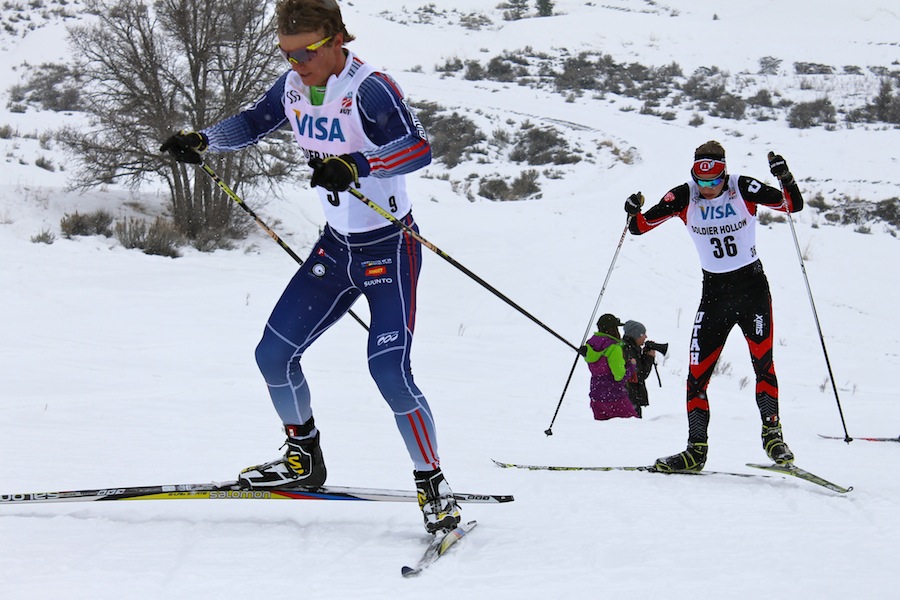
    Colin Rodgers (SVSEF) – 4th Place

    Since his competitive career ended, Colin has given himself fully to coaching. First with the SVSEF Gold Team, who he had raced for at the end of his career, and later junior skiers at Green Mountain Valley School, where he spent nine years. And now, as head coach of the SMS T2 Team at Stratton Mountain School in Vermont, he works with some of the best cross-country skiers in the world.

    The team this year included Jessie Diggins, Ben Ogden, Julia Kern, and Canadian skier Remi Drolet, as well as collegiate skiers Fin Bailey and Jack Lange. Of the professional skiers, three of them finished in the top six at the Olympics. All four were in the top 20. Ben Ogden came home with two silver medals and ended a 50-year Olympic medal drought for American men in cross-country skiing. And Jessie Diggins, who is currently wrapping up a career that is the best of any American skier ever, added a bronze medal to her collection.

    Colin still seemed a little stunned by it all when we spoke.

    “We were so far beyond wherever I thought we were going to be,” he said. “I had a good feeling about this year. But for Ben to take home two silvers, and Jesse a bronze, and Remi to be in the top 20 and really help Canada with a historic relay finish, and Julia in the top six. It’s stuff that I could never believe was truly going to happen. And here we are talking about it.”

    SMS T2’s Rémi Drolet, Ben Ogden, Julia Kern, Jessie Diggins, and coach Colin Rodgers. (Photo: courtesy photo)

    Colin grew up in Westford, Vermont. His father was the program director for the U.S. Biathlon team from 1984 to 1988, which brought the family to northern Vermont. His parents built a house in Westford that year and never left.

    He went to Holderness, then Middlebury, and after college, he headed to the Maine Winter Sports Center, where coaches like Jens Johansson, Eli Brown and Will Sweetser were building something in the northern reaches of the state. From there, he moved to Sun Valley, Idaho, where he joined the SVSEF Gold Team and kept racing.

    Colin was good. He raced on the World Cup. But the jump he’d always hoped to make didn’t quite happen.

    “I think as a nation now, we’re so much more educated,” he said. “I had amazing coaches. But we were just kind of, maybe sometimes trying too hard.”

    He talked about spending time in Scandinavia and being around athletes who were significantly better than him. What he noticed wasn’t that they worked harder. It was that they were smarter about the work.

    “I probably trained at level two way too much of the time,” he said. “Especially being a little more anaerobic and linked to the sprint side. I really needed to be doing the easy training even easier.”

    He paused.

    “When it’s time to go, you’ve got to let the dog run,” he said, quoting his old Middlebury coach Terry Aldrich. “And that was the exact opposite. Like, now it’s time to really peak, and you let it loose.”

    I told him I’d heard a version of that from the other direction. When I was coaching, I used to tell my kids about Matt Whitcomb, who had been a teammate of Rodgers at Middlebury, previewing a course at Junior Nationals and telling the athletes they had to “walk the f-ing dog.” Every time they got to a climb, they were pulling back on the leash. Walking the dog.

    Two coaches. Related metaphor. Opposite leash relationships. That’s about as clean a summary of training philosophy as you’ll find in this sport. Keep the dog relaxed in training often, until it is time to let it run when it matters.

    Matt Gelso on the finishing stretch with coach Colin Rodgers encouraging in West Yellowstone (Photo: Toko)

    Before Stratton, the coaching experience that shaped Colin most was the time he spent around Rick Kapala at Sun Valley.

    Kapala ran the Sun Valley Education Foundation for nearly 30 years and built a program Colin still talks about with real admiration.

    “It was serious training, but it was also really creative,” Colin said. “You’d go out for long mountain adventures, do different kinds of workouts. It kept people engaged.”

    That stuck with him. When he moved to GMVS to coach high school athletes, he kept coming back to a simple question.

    “What would make me really want to go to practice today?”

    He laughed when he said it.

    “It sounds basic. But it actually matters a lot. If people don’t want to be there, something’s probably off.”

    He talked about his coaching years at GMVS and how, for him, the job was about getting kids to believe in what they could do.

    “When kids are in high school, they’re questioning everything. How they look, how they’re growing. And you’re just like, no, dude, this is fun. This can be a real blast. And believe. Like, damn, I can do a good job at this. If I’m doing this every day, I might as well be good at it, right?”

    He spent nine years doing that work. And then the SMS T2 job came along.

    “It was an opportunity there’s no way I was going to pass up,” he said. “It’s changed my life. Literally.”

    The program at Stratton operates under a mission statement crafted by Colin’s predecessor, Sverre Caldwell: international excellence and local inspiration.

    Colin said that phrase was part of what sold him on the job.

    “It’s everything I believe in. We’re trying to be the best we can be, win races, kick ass internationally. But then also, along the way, inspire the next generation of skiers coming up.”

    At Stratton, those two things aren’t separate. The T2 athletes train on the same roads and trails as the younger skiers in the school’s Nordic program. When Stratton kids show up for a summer or fall practice, and the older athletes are there, everyone just funnels in together and heads out.

    “It doesn’t even need to be talked about, really,” Colin said. “It’s just showing up, doing the work. This is how it’s done. And if you keep working really hard for a long time, you’re probably going to get really good too.”

    He brought up the chain of inspiration that runs through American skiing. Jessie Diggins was inspired by Kikkan Randall, by Andy Newell, by Simi Hamilton. Kern was inspired by Diggins.

    “When you get motivated by somebody who’s special and inspiring to you, if you have some talent and the fire to go for it, you realize you can chase that person. And then it’s like, oh, I can maybe be them. And then it’s like, oh, maybe I can be better than them.”

    One of the more interesting aspects of Colin’s role at SMS T2 is that he’s not the only coach in the picture. Not even close.

    Kristen Bourne and Colin Rodgers out for a run during the OD run at Park City camp, 2025. (Photo: Matt Whitcomb)

    Diggins works primarily with Jason Cork on the U.S. Ski Team staff. Ogden’s training has long been guided by Patrick Weaver, his college coach at UVM. Kern has a deep relationship with Kristen Bourne, who is also a national team coach. Drolet works with Dave Wood, a former coach of the Canadian national team. And Bailey goes to UVM and skis for Weaver, while Lange goes to Dartmouth and is coached by Brayton Osgood.

    Colin sees his job as connecting the dots.

    “Each athlete comes in with their own support network,” he said. “Jason has been working with Jesse forever. Ben has a really close connection with Weave. And I’ve been able to learn a lot from Patrick about how Ben ticks.”

    He was honest about what that requires.

    “When you step into a role like this, you have to check your ego,” he said. “It’s not about being the only voice in the room. It’s about helping the athlete succeed.”

    What he brings is proximity. He sees the athletes more frequently than some of their other coaches, especially during training blocks in Vermont. He can offer technique advice, fill gaps when someone else isn’t available, and keep everyone communicating.

    “I think one of my strengths is the ability to connect people,” he said. “And to connect with people.”

    Colin has watched American skiing grow up. When he was racing, relatively few American men were competitive at the highest levels. The development pathways weren’t as clear. The coaching wasn’t as sophisticated.

    “We’re closer as a nation now to what it means to go to that next level,” he said. “We know what to do. As coaches, we’re totally clued in on this systematic, long-term idea of how to periodize correctly, and also how to make it fun.”

    Colin Rodgers, Jessie Diggins and Julia Kern. (Photo: courtesy photo)

    He pointed to results at every level. At the time we spoke, American athletes were fighting with the best in the world at the World Junior Championships. On the World Cup, Diggins, Kern, and Ogden, along with the APU-based skiers, are proving it can happen at the very top.

    “A lot of people have helped build this,” he said. “It’s not just one program or one coach.”

    But the jump from junior skiing to the World Cup is still enormous. And programs like SMS T2 exist to help athletes survive that transition.

    “Having environments where athletes can develop during that stage is really important,” he said. “The gap is huge.”

    Before we wrapped up, I asked Colin what success looks like for him five years from now.

    He went big picture with a slightly longer lens. The 2034 Olympics will be in Salt Lake City. There’s a generation of young American skiers who have already raced at Soldier Hollow, the Nordic venue, during their youth careers. Now they’re looking ahead to competing on home soil.

    “We’re working towards 2034,” he said. “And we want to be successful there. If we stay on this trajectory, we can have medals. That’s our ultimate goal.”

    Within Stratton, he wants to grow the team thoughtfully. This year was lean, focused on supporting the Olympic athletes. Going forward, he wants to build back toward four or five athletes on each side, men and women, plus NCAA skiers.

    “We have to do it the right way,” he said. “We don’t want to take on too many people too fast.”

    Jessie Diggins (USA), whose World Cup career will conclude in a week and a half, celebrates her bronze medal in the Olympic 10 k Freestyle in Tesero, Italy. (Photo: Vanzetta/NordicFocus)

    He’s also thinking about the athletes who won’t be there. Jessie Diggins is retiring. That will leave a void at SMS T2 and on the World Cup, where Colin noted she currently sits at 380 career starts, more than any other skier.

    “Jesse’s going to go on and do a lot of really cool things and still inspire the next generation in new ways,” he said. “And then there’s going to be up-and-comers who are going to step up and be inspired by everything she’s done, and by everything Ben and Julia and Remy are already doing.”

    International excellence. Local inspiration. It’s a simple mission. But Colin Rodgers has spent a career learning that the simple things are usually the ones that matter most.

    He’s been chasing the highest levels of this sport since he was 15 years old, standing on a podium in a hotel basement in Minnesota. The path just looks different now.


    Help Support Our Olympic Coverage!

    If you value the thoughtful work and access FasterSkier provides, please consider becoming a Voluntary Subscriber. Your support directly fuels our work to cover the people, places, and moments that make our sport special.

    Join the FasterSkier community!


    Rémi Drolet and Colin Rodgers. (Photo: courtesy photo)
  • 2018 Gallagher Cup and Eastern Cup Champions

    (Press release)

    In 2014 NENSA began the tradition of honoring the top ranked male and female Eastern Cup skiers with the Gallagher Cup. NENSA is honored to announce that Rena Schwartz (GMVS) and James Kitch (CSU) are the 2018 Eastern Cup Champions – their inspired efforts are a perfect way to celebrate Mike Gallagher’s legacy as an athlete, coach, and community leader. The two skiers who win this award each year do so by being consistently dominant in New England’s premier race series (winners are determined by averaging points from 7 of 8 EC events).

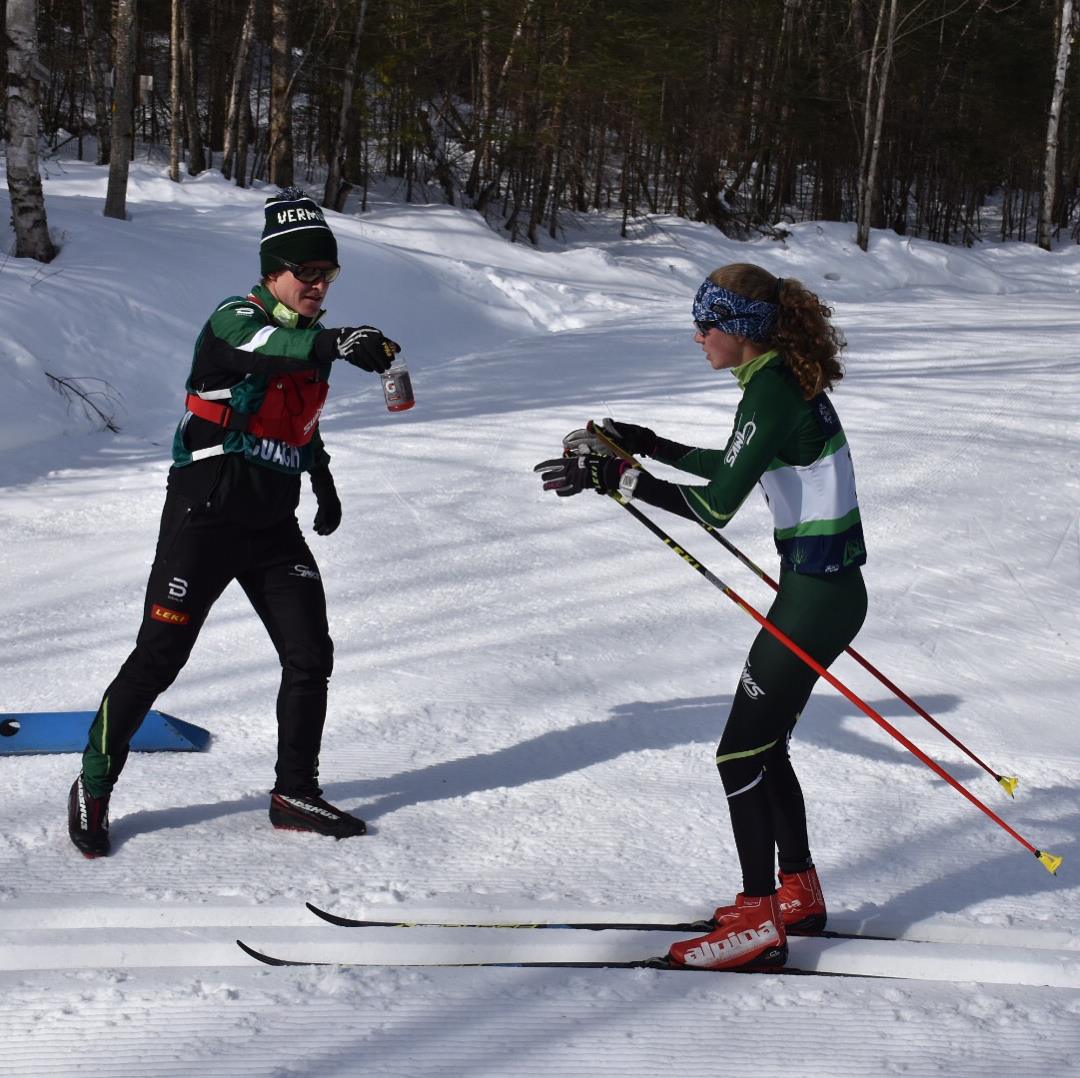
    Schwartz receiving a feed from coach Colin Rodgers during Super Tour Finals at the Craftsbury Outdoor Center.

    Rena Schwartz skied for the Green Mountain Valley School, raced in seven Eastern Cup races, with one victory and three podiums, and ended the year atop the New England Junior National Ranking List.  She competed at Junior Nationals with a top finish of 4th place in the 10km freestyle event. Schwartz also competed at US Cross Country Championships and Super Tour Finals ending the year the 51st ranked female skier in the country.

    Coach, Colin Rodgers, describes Schwartz as a leader, “Rena is an impressive role model for all of the student/athletes on the team, and her drive for success motivates those around her.  Not only does she have extraordinary competitive results, but Rena is a pleasure to spend time with, exuberating kindness, honesty, and dependability.  If you ask anything of Rena, you can expect it to be done with focus and attention to detail.”  Outside of skiing, Schwartz was the Vermont cross-country running champion and a Gatorade Runner of the year, where she won a $10,000 spotlight award to donate to her club of choice (Craftsbury Outdoor Center).

    Kitch with Coach Rob Bradlee at the finish of a Eastern Cup race at the Rikert Nordic Center this season. (Photo: NENSA)

    James Kitch, from the Cambridge Sports Union, competed in all eight Eastern Cup races, where he was consistently in the top-10, and finished 5th on the year-end New England Junior National Ranking List.  Kitch saved his best game for the 2018 Junior National Championships in Soldier Hollow, Utah where he had two top-ten distance finishes, scrambled for the winning U18 relay team, and won his first National Championship in the freestyle sprint. At the conclusion of the 2018 season he is the 82nd ranked male skier in the country.

    CSU coach, Rob Bradlee, describes James as someone, “who correctly assumes that everyone would like to be his friend and so treats everyone regardless of age or status with equal respect and affection.  He has been a leader in CSU and on Team New England in creating a positive team vibe.  He pushes himself hard to be his very best and competes not to beat others but to explore how fast he can be.  I think he became a national champion because that attitude kept his mind open to possibilities and he could see opportunity when it presented itself.”

    We congratulate these skiers and thank them for reminding us of Mike Gallagher’s competitive spirit.  Mike was a three-time Olympic cross-country skier and the Head Coach of the US Ski Team from 1980-86.  You can read more about Gallagher here on Fasterskier.com

    Picture of Vermonter Bill Koch celebrating his winning the FIS Overall WC crown with a very happy coach, the late Mike Gallagher. A very special moment. (Photo and caption courtesy of Peter Graves)
  • Q&A: Beckwith’s Return to Skiing as NENSA Competitive Program Director

    Q&A: Beckwith’s Return to Skiing as NENSA Competitive Program Director

    Justin Beckwith (second from r), as seen in 2014 when he was head coach of the Green Mountain Valley School (GMVS), with former GMVS elite and postgraduate athletes (from l to r) Nick Gardner, David Sinclair and Ian Moore during a fall trip to Italy. (Photo: GMVS)

    About a year and a half after leaving his post as nordic director at the Green Mountain Valley School (GMVS), Justin Beckwith is once again involved with New England skiing at full throttle as competitive program director for the New England Nordic Ski Association (NENSA).

    The news came from NENSA early last month in an announcement that stated Beckwith would be filling in for Amie Smith, the association’s high-performance director for the last two years, who was promoted to executive director.

    Justin Beckwith (l) and Gus Kaeding in the wax room at 2017 U23/Junior World Championships at Soldier Hollow in Midway, Utah. (Photo: Flyingpointroad.com)

    Beckwith, of Warren, Vt., spent nine years from 2006 to 2015 building the GMVS program. When he left in the fall of 2015, he decided to go back to building houses, yet he remained involved with nordic as a wax tech for New England juniors and U.S. skiers at both national and international races, like last season’s OPA Cup Finals.

    Right around that time, in late March when NENSA posted the job opening, Beckwith knew he was ready to return to a full-time position in skiing.

    “It was just sort of, ‘OK, that’s it. That’s what I need to do,’ ” he told FasterSkier last month.

    After graduating from Middlebury College, Beckwith, now 37, spent one year living out west before taking the job at GMVS in Waitsfield, Vt. During his tenure there, he was also a coach for the U.S. Ski Team’s U18 Trip and Junior World Championships as well as the head wax tech for Junior Nationals and Junior Worlds.

    Stepping away from the sport as a coach allowed him to view it in a way he hadn’t before.

    “I went back to Junior Nationals after not being there for a couple years, now being able to watch, coming from the outside and see how our coaches, athletes and organizers are acting and performing, and what a unique perspective it is,” he said. “It is so much different than when you have your own athletes in the race, or you’re supporting your division or whatever your job is. … I am really excited to start to using all my contacts and resources and just bring energy that I think coaches understand what I am all about.”

    ***

    FasterSkier: What made you decide to return to skiing full time?

    Justin Beckwith: When I left GMVS to be a carpenter, I knew I wanted to come back to skiing, but on my own terms and do the piece of the skiing that I absolutely love and am so passionate about. That allowed me to be open to do that, whether or not the bank account reflected that, I just needed to be a carpenter, but I also had the ability to start making relationships with international people, coaches from other nations that are so impressed with what we are doing now in the U.S., and that started happening three or four years ago. Coaches started saying, “Wow, you guys are doing really well down to the national level now.” Then I got to start working with some of our manufacturers and suppliers, like Start Ski Wax specifically, a bunch more this year. I went back to Junior Nationals after not being there for a couple years now being able to watch coming from the outside and see how our coaches, athletes and organizers are acting and performing, and what a unique perspective it is.

    Justin Beckwith getting after it in Hemsedal, Norway. (Courtesy photo)

    So bringing to the present day, I think this [NENSA] position came up one time while I was involved at a certain amount of professional level with skiing. Amie [Smith] took on the job a few years ago, but I was deeply immersed my GMVS culture at that time and I also think that probably was not the perfect fit for me. Just before my wife and I left for our trip to Norway [this year], the job was posted [again]. It was just sort of, ‘OK, that’s it, that’s what I need to do.’ I am really excited to start to working with my contacts and resources and just bring energy that I think coaches understand what I am all about. I have also been able to make that connection with a lot of the young athletes over these last few years.


    FS: What drew you to the NENSA position?

    JB: With this position with NENSA and also what I have been able to do the last couple years, I am not using the microscope anymore, I am using a telescope. It’s totally different, but at the same time, it’s the same. I am going to be able to support GMVS in a great way. I love working with [GMVS Nordic Director] Colin Rodgers. GMVS went through some transitions. I am staying in the Mad River Valley, which is amazing; another great part of the job is that I get to stay where I am and sort of create some of that vision and move it in a way. It’s a pretty cool job, it’s a very cool lifestyle, it’s something that I am so passionate about. I was just talking to [Dartmouth men’s nordic coach] Brayton Osgood, he said he’s so glad to have [me] officially back in skiing. That is the coolest thing, to have those relationships.

    We are going through a transition within the U.S., there is a changing of the guard within our coaches and in our whole community, and we need to hold on to the history. That’s why people like Peter Graves are so interesting. We absolutely need to hold on to that history, but we have so many, because of all the awesome work that Dick Dreissigacker and Judy Geer at Craftsbury, or Sverre at Stratton, Rick Kapala at Sun Valley, or Gordon Lange in Park City, because of what all these people did, they inspired the next generation of not only athletes but coaches. It’s a really exciting time for U.S. skiing that we have such great venues, coaches and organizations. It’s a really cool time and a lot of energy is coming back into it right now.


    FS: How is your role at NENSA going to be different than it was with GMVS?

    JB: The biggest difference is what I tried to do at GMVS is essentially I wanted to be able to do what I am going to be able to do with NENSA. I am able to work with everybody now — and not that I am trying to spread myself too thin; I will obviously be working in a different capacity — I will be in personal contact with a lot of our athletes. … I will have more communication with coaches, whether it is with [U.S. Ski Team Development Coach] Bryan Fish or our club coaches in New England, and coaches throughout the nation, and figuring out that common goal, whether you’re part of a ski academy, or a club, or even a different region at JN’s, the goal is to make U.S. skiing better, and to create that culture and create those results, so that’s the goal.


    FS: How was being at the OPA Cup Finals and what were your takeaways?

    U.S. techs and coaches at 2017 U23/Junior World Championships (from left to right) Justin Beckwith, Andy Keller, Gus Kaeding, and Mike Matteson at Soldier Hollow in Midway, Utah. (Photo: flyingpointroad.com)

    JB: Probably the coolest thing going into that was the fact we were able to pull Caitlin Gregg into that, so we had this mix where we had some of our best juniors were there, we didn’t have the biggest team we’ve had, but we had a great time. And right out of the gate in the OPA Cup Finals — these are big-deal racers — on Day 1, Caitlin won the thing and Hannah Halvorsen was second. World Juniors was of course groundbreaking, but that result showed another level of depth we have in the country, and that was really inspiring to see that and be a part of. It also showed that we are a little bit better at skate skiing than in the European contemporary classic condition, basically slush. We were racing in 10 degrees [Celsius, 50 degrees Fahrenheit], and that is something we are adjusting at the developmental-team level. … That’s something we are going to try address soon. The takeaway from OPA, it shows the depth of where U.S. skiing is now, it shows what happened at World Juniors isn’t a fluke, it shows that we still have work to do, but we very much have arrived, and we are lucky as a nation that the European Nations are recognizing what we are doing and they are interested in what we are doing. We are contemporary now, and it’s pretty cool.


    FS: What are some of your key initiatives moving forward and what does your five-year plan at NENSA look like?

    JB: One of the things is my big initiative to make NENSA a known support structure to our clubs and to our coaches and to our athletes. We are not just putting on races, I want to make coaches’ education cool again. I want to make it popular and fun, and I just sort of want to reinvigorate that a bit. I want to help increase the participation and make it a clear thing that when you ask any coach what NENSA is doing for them, I want them to be able to give a clear answer that we are providing really cool feedback and support for their program. We are helping them coach and inspire their kids, and we are not putting on camps or other events that compete, we are helping make those better. I want to reinvigorate rollerski races. I have one that I want to start with this summer and ideally that would transfer to each state, having an event that we were able to make better for them, whether through promotion or physically bringing athletes to them, bring sponsors and suppliers in there, all part of that goal. … That’s what I want to do with this job, create that that buzz, that energy.

    Another thing I am going to work on is NENSA alumni, if you will, we need to keep them involved. When you’re a junior skier: you love your coach, you love your peer group, love going to Junior Nationals. You don’t necessarily remember that it was Janice Sibilia or Zach Caldwell or NENSA that created these camps and brought you all together two or three times a year. There are so many people that brought it to where it was now. It’s cool to come back and look at it with that perspective. Some of those people are coming back to it in different ways. Kris Seymour has taken a position at running Mount Van Hoevenberg in Lake Placid. Kris Seymour was Lowell Bailey and Tim Burke’s high-school coach; he inspired those guys, he helped to inspire me, now he is at a position where he can do wonderful things not only for his venue and his job, but he can do great things for cross-country skiing. So it’s really neat to meet somebody who cannot just juggle those balls, but bring those balls together.


    FS: Are you still going to be a carpenter?

    JB: I do have a passion for that and creating things especially with wood. I will still be hobby-ing and doing fun projects on the side, but only in a capacity like somebody would play the guitar, not as a business. I am diving right into this as a passion. People who are involved in the country and New England are coaching for the right reasons and I share the same vision.

    The enthusiasm and the support and welcome I have gotten from the staff and board of NENSA, New England and the U.S. ski community is truly humbling. It’s going to be really fun, and I am looking forward to it. I am so fortunate to be a part of it and want to get more people in the sport.

  • A New Chapter for GMVS with Rodgers, A New Start for SVSEF’s Gold Team with Mallory

    A New Chapter for GMVS with Rodgers, A New Start for SVSEF’s Gold Team with Mallory

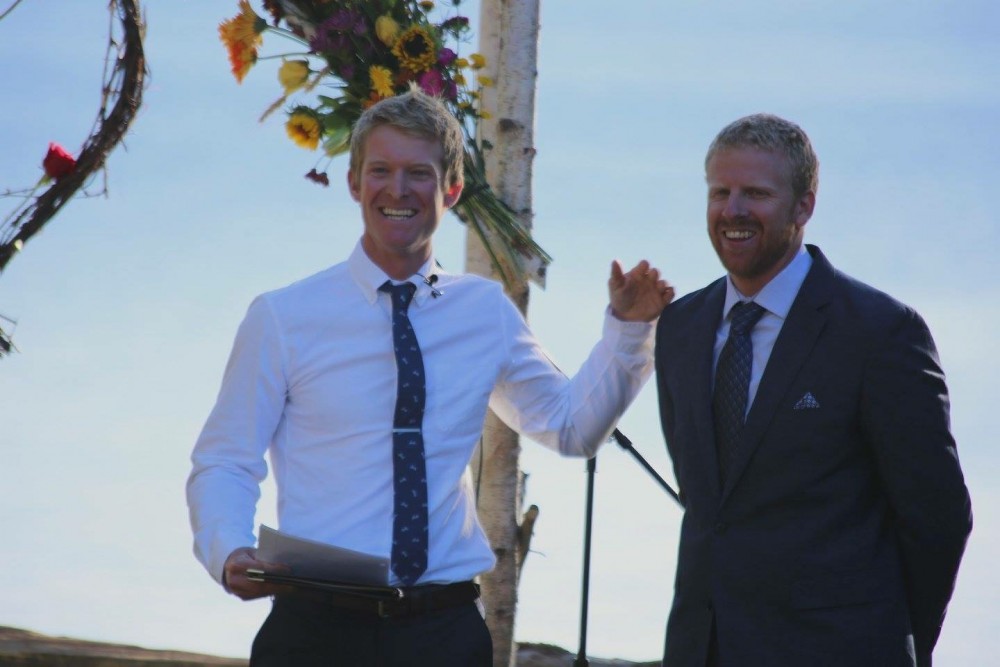
    Colin Rogers (left) as the MC for Chris Mallory's (right) wedding. (Courtesy photo)
    Colin Rodgers (left) as the MC for Chris Mallory’s (right) wedding, September, 2015. The two coaches and former nordic ski racers were grew up about 15 miles away from each other in Vermont. (Courtesy photo)

    Their cars won’t literally pass on the interstate, but the image is worth rendering. Colin Rodgers, five years the head of the Sun Valley Ski Education Foundation (SVSEF) Gold Team, is heading back to his native Vermont to become nordic director for the Green Mountain Valley School (GMVS) in Waitsfield, Vt. (Rodgers is currently in Italy with GMVS leading a training camp.)

    Heading the opposite direction from Vermont to Sun Valley, Idaho, where he recently resigned as assistant coach at University of Vermont (UVM) after three years, is Chris Mallory — also a native Vermonter.

    It’s safe to say that Rodgers’s and Mallory’s lives are seperated by far less than six-degrees: the world of elite ski coaching is small and close knit. That their paths have crossed on their career transects isn’t odd at all when you consider something Rick Kapala, SVSEF’s longtime nordic director, said in a recent phone interview.

    “You know, somebody was asking me is it really hard to lose a guy like Colin,” Kapala reflected. “And of course the answer is yes … but all of our programs, whether you talk to APU [Alaska Pacific University], or whatever, it is part of the game that you if you have really good coaches, you are going to lose really good coaches because they are going to have opportunities to move to another level.”

    There’s two highly qualified and highly recommended coaches in Rodgers and Mallory — it’s no surprise opportunities have arisen.

    Colin Rodgers, formally head coach of the SVSEF Gold Team, has taken the job of nordic director with Green Mountain Valley School in Vermont. (Courtesy photo)
    Colin Rodgers, formally head coach of the SVSEF Gold Team, has taken the job of nordic director with Green Mountain Valley School in Vermont. (Courtesy photo)

    After captaining the Middlebury College Ski Team and graduating in 2004, Rodgers lived the professional skier’s life. He skied for the Gold Team from 2006 to 2011. Since that time, the Westford, Vt., native has been the lead waxer, travel agent, coach, and all-around, go-to leader of the Gold Team.

    According to Kapala, the first word that came to mind when asked about the indelible fingerprint Rodgers left on the Gold Program was: “professionalism”.

    “We have always prided ourselves as trying to run a really pro program,” Kapala said. “But Colin as an athlete, really, I feel gave everything he possibly had to his racing career and the same thing was true as a coach. He demanded a lot of himself in that role, held himself to a really high standard, … worked as hard as he could, cared so deeply about the program and the athletes and the process of getting to the highest levels. I really think that all the athletes that we had engaged in our program benefitted from the approach Colin had, which was leave no stone unturned … look for every advantage, bring your best every day, and I look at it and go, we were very fortunate to have him.”

    Rodgers, 35, takes over a transitioning GMVS program. Last October, longtime GMVS Nordic Director Justin Beckwith stepped down. 2010 Olympian Garrott Kuzzy took over with help from newly hired nordic coach Katrina Howe. Now, nearly a year later, Rodgers will take over a program with 13 athletes — comprised of nine men and four women. Howe will remain as a nordic coach. (According to Rodgers, Kuzzy will be pursuing an MBA in Innsbruck, Austria, this year. Kuzzy could not be reached for comment by press time.)

    Junior skiers are not elite senior skiers. Yet Rodgers mentioned that his core mission remains the same: building bonds.

    “Of course, I will need to make some adjustments to my approach to the younger athletes, but it is all truly about sharing my passion for the sport of cross country skiing,” Rodgers explained. “The age of the athlete is not so important, but rather that you share a common interest with the individual and you can pass along a bit of knowledge that will help them improve. Then you are making a difference. It is still all about building relationships and doing your best to support the team.”

    For Rodgers, directing a program is the biggest new opportunity beyond moving back to his home state. “Running a program in my home state seemed like a fun challenge that I was up for,” he said.

    Back in Vermont, a state with a rich and proud nordic tradition, Rodgers commented that one of his biggest hurdles at GMVS, a private high school, will be making the sport he loves more accessible.

    “The biggest challenge will be in trying to help kids join the program that may not have the financial means to do so,” he said. “Ideally, we want athletes at the school that have the drive to ski fast and work hard. Hopefully, those two un-biased character traits will allow any motivated student/athlete the ability ski for our program.”

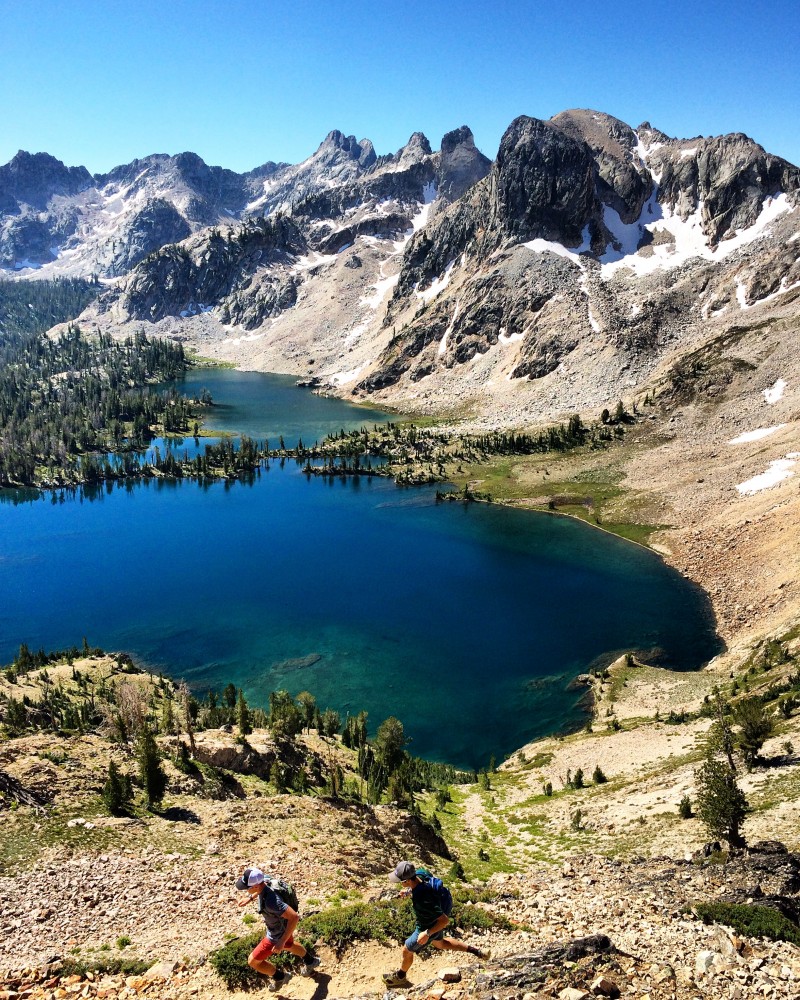
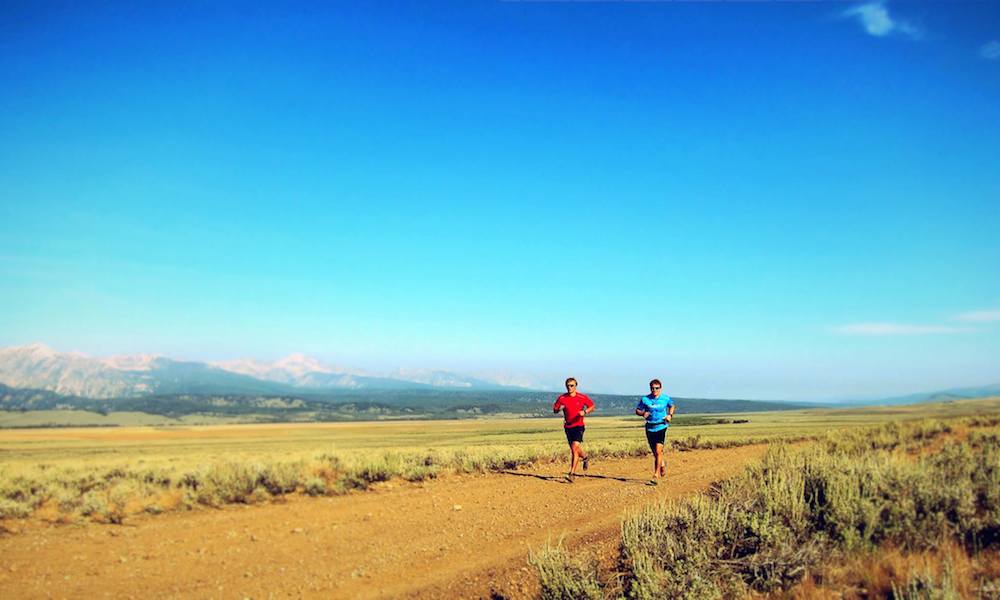
    Gold Team rookies, Cole Morgan and Jack Hegman run above Twin Lakes in Idaho's southern Sawtooths, summer 2016. (Photo: Rogan Brown)
    Gold Team rookies Cole Morgan and Jack Hegman run above Twin Lakes in Idaho’s southern Sawtooths this summer. (Photo: Rogan Brown)

    For SVSEF’s Gold Team, the benchmark for participation isn’t overtly financial, it’s performance based. Be a motivated, willing-to-develop, fast skier and you might make the cut. And for the coach, there’s no study hall to schedule and monitor, less shuttling skiers back and forth.

    “One of the most important things [with this level of senior coaching] is you need to have somebody who has both the depth of experience but also the ability to really keep the ship level,” Kapala said from Sun Valley. “The senior athletes that we have that work with the Gold Team are all highly motivated, so it’s a little bit different than junior coaching. For the junior coaching, I have a lot of kids that are very, very early on in their ski racing career. So you do a lot of really base-level educating and motivating. … The problem with these Gold Team-type positions, whether you are talking our program, Stratton or APU or what not, you sort of have to be able to do everything.”

    With Rodgers’s exit from SVSEF, enters Mallory.

    After skiing at the University of New Hampshire, Mallory headed west to Sun Valley where he began coaching in 2006. That SVSEF stint, where he began as a development-team coach and progressed to head post-graduate coach, lasted eight years. In May 2013, he took the assistant coach position at UVM. He also served as a wax-tech on three separate Junior World Championships trips.

    According to Kapala, Mallory can do a bit of everything, making him a good fit for the Gold Team. The bonus: Mallory has a positive history with the local community. Although deciding to leave a program like UVM for the Gold Team was difficult according to Mallory. “It was a tough decision to leave UVM. There is a big incoming freshmen class this year with some good young energy and it’s hard to leave the athletes on the team who you’ve created relationships with after a few seasons, but these opportunities only come around so often.”

    Like Rodgers, Mallory enters his new position with some challenges. For the 34-year-old Mallory, his is entering a training season already in full swing.

    Chris Mallory on the Haig Glacier, Canadian Rockies. (Courtesy photo)
    Chris Mallory, in 2012, on the Haig Glacier, Canadian Rockies. (Courtesy photo)

    At this point I’m coming in halfway through the training season, so there is going to be a transition for myself and the team,” Mallory, a Colchester, Vt., native, explained in an email while packing for his move West. “It’s going to be important to establish good working relationships with each of the athletes, so they can reach their highest potential. Luckily I’ve worked with half the team in the past, so I look forward to building on those relationships and taking the time to create a strong team dynamic.” 

    For both Rodgers and Mallory their shared history with SVSEF may pay dividends for the broader U.S. cross-country culture.

    “Their will be a time when I’m not the program director here [at SVSEF], and I hope that what happens is the day after I leave, the program is moving just right ahead. Seamless. No hiccups at all,” Kapala reflected as he spoke about coaching changes and building programmatic legacies. “And that will be the sign that you’ve been able to develop a program which isn’t about a personality or one individual it’s about the strength of the program as a whole.”

    Rodgers and Mallory, who grew up about 15 miles away from each other, are on their way.

  • Stoke is High, Temps Low: SuperTour Racers Prep for Opening Races (with Preview Video)

    Stoke is High, Temps Low: SuperTour Racers Prep for Opening Races (with Preview Video)

    An SMST2 Junior athlete looks on before a speed session on Thursday at the Yellowstone Ski Festival. The U.S. SuperTour season starts Friday with the freestyle sprint in West Yellowstone.
    An SMST2 Junior athlete looks on before a speed session on Thursday at the Yellowstone Ski Festival. The U.S. SuperTour season starts Friday with the freestyle sprint in West Yellowstone.

    WEST YELLOWSTONE, Mont. — The 2015/2016 season for the U.S. SuperTour, the highest level of domestic nordic racing in the country, kicks off Friday with a 1.3-kilometer skate sprint at the Rendezvous Ski Trails in West Yellowstone, Mont.

    Originally scheduled for a 9 a.m. start, the organizers recently decided to start the sprint qualifier at 11 a.m. due to predicted sub-zero temps. While changes in start time can sometimes throw a wrench in to waxing and ski preparation plans, that’s unlikely to be the case tomorrow, as the snow conditions in West have been consistent, even as temperatures rise throughout the day.

    Sun Valley Ski Education Foundation (SVSEF) Gold Team coach Colin Rodgers had a simple-enough solution: “Wear your wind briefs!” he advised.

    APU wax techs test skis on Thursday at the start of the sprint course at the Rendezvous Ski Trails in West Yellowstone, Mont.
    APU wax techs test skis on Thursday at the start of the sprint course at the Rendezvous Ski Trails in West Yellowstone, Mont.

    The start list includes 104 women and 154 men, including nearly all of the big names on the domestic race circuit. Much of the field is made up of the usual talents from U.S. elite programs such as the SVSEF Gold Team, Alaska Pacific University, Central Cross Country (CXC) Team, Stratton Mountain School (SMS) T2 Team, Craftsbury Green Racing Project, Bridger Ski Foundation Elite Team, Sugar Bowl Elite Team, Team Gregg, Ski Club Vail, Gear West, and Bend Endurance Academy.

    There are always nerves and a bit of uncertainty, even among the stars of the elite scene before these first races of the season. Athletes have spent the summer working on their weaknesses and tweaking their plans, but until they put a bib on in West Yellowstone — where the SuperTour circuit starts each year — the result of all that hard work is an unknown.

    Video: Skiing the sprint course

    Jennie Bender of the Bridger Ski Foundation (BSF) Elite Team, a two-time sprint national champion and SuperTour podium regular, is excited.

    “This summer has been the first in quite some time that’s felt consistent and uninterrupted, so I am pumped for the season and to travel with my stellar BSF crew,” said Bender, 27.

    Alaska Pacific University (APU) standout and the overall SuperTour leader two seasons ago, Reese Hanneman is looking for some redemption on the trails, but keeping the pressure low. He told FasterSkier that he’s “feeling pretty good, but after last season and so many bad races, I’m just looking forward to getting out there and feeling fast again and rippin!”

    2014 Olympian Brian Gregg, of Team Gregg, is also feeling prepared, while also curious.

    “I’m excited to see how everyone’s summer training stacks up,” Gregg said.

    In addition to these athletes, many of whom compete on the SuperTour circuit throughout the four-month-long season, there are three distinct groups of SuperTour outsiders in West Yellowstone looking to mix things up. They are:

    The Canadians: Some years, there is a strong Canadian presence here in West Yellowstone, and this is certainly shaping up to be one of those years. With nine elite Canadians from various national training centers on Friday’s start list, including women’s top-seed Dahria Beatty of the Alberta World Cup Academy and three of the top-five ranked men, the Canadians will certainly be vying for spots in the A-finals.

    The Collegiates: The NCAA schedule is, for the most part, totally separate from the SuperTour schedule. Generally, these two groups of elite skiers meet up for head-to-head competition only once or twice per year. West Yellowstone is one of those meetings.

    As Montana State Head Coach Matt Johnson points out, “Our athletes aren’t focused on sprinting, and they aren’t focused on peaking this early,” as there is no sprint format in NCAA racing, and NCAA Championships aren’t until March.

    But, he adds, “a lot of our skiers are good sprinters and in great shape right now, and are excited to get out there and see what they can do.” College skiers tend to be a mix of elite European racers in the U.S. skiing on scholarship at the large NCAA Division 1 schools (Utah, Colorado, Denver, Vermont, New Mexico, Montana, etc.) and many of the best young Americans, pursuing their ski careers in tandem with their education. With at least 50 college skiers on Friday’s start list, expect to see some student-athletes in the A-final.

    The Juniors: Every year, at least one fast junior begins to establish their name on the national cross-country scene with a great race in West Yellowstone. It happens most often in the sprint, as shorter races tend to favor younger racers, and it tends to happen more frequently in the women’s field, simply because junior girls are generally more physically on-par with their elite competition than junior boys, who often reach their peak in their early 20’s. With high-ranking juniors form a large number of programs in the mix, and with about half of the field made up of young racers looking to make their mark, expect to see a few juniors mixing it up in the top 10 or 15, especially on the women’s side.

    FasterSkier will be reporting live from the SuperTour opening races Friday (with the freestyle sprint) and Saturday (10/15 k freestyle) in West Yellowstone. Follow us on Twitter for updates.

    ***

  • Two Decades and 20+ World Cup Starts Later, Sinnott Retires from Skiing

    Two Decades and 20+ World Cup Starts Later, Sinnott Retires from Skiing

    Mikey Sinnott on the World Cup last December in Lillehammer, Norway. (Photo: Facebook/MWSC) https://www.facebook.com/maine.Winter.Sports.Center/photos/t.1309153346/10152451352903312/?type=3&theater
    Mikey Sinnott on the World Cup last December in Lillehammer, Norway. (Photo: Facebook/MWSC)

    A freshman skier in Sun Valley, Idaho, Mikey Sinnott was literally a foot shorter than the rest of the guys on his team, or so his longtime coach Rick Kapala says. Small but mighty, Sinnott came up through the Sun Valley Ski Education Foundation (SVSEF) junior ranks, making it to the Idaho youth championships and eventually winning two Junior National titles, and reaching Junior World Championships in 2004 and 2005 and U23 World Championships in 2006, 2007 and 2008.

    But before he was a globetrotter, Sinnott was a fighter — holding his own in a wrestling brawl with two dozen kids and a handful of coaches, an annual lighthearted tradition at the SVSEF. According to Kapala, who was always at the bottom of the pile, Sinnott was forever the last man standing. Everyone else would eventually give up, but not Mikey.

    Mikey Sinnott at the 2011 U.S. nationals classic sprint. (Photo: FlyingPointRoad/flyingpointroad.com)
    Mikey Sinnott at the 2011 U.S. nationals classic sprint, where he place second for a career best. He repeated the feat in 2012 with another silver in the classic sprint in Rumford, Maine. (Photo: FlyingPointRoad/flyingpointroad.com)

    “You could never pin Mikey,” the SVSEF head coach and nordic program director said. “He was the definition of scrappy.”

    As Kapala spoke those words on the phone Tuesday, he almost immediately retracted them. Sinnott would not want to be called scrappy, but that’s what he was. He didn’t tap out, Kapala said, he never quit.

    Looking back, he was glad Sinnott didn’t get overlooked like some U16s that haven’t reached physical maturity do. While Sinnott’s results and performances were promising, an outside coach observing him at a glance might not have picked him to achieve what he later would.

    But Sinnott understood the importance of grit, and paired with an academic gift that led him to study psychology and neuroscience at Dartmouth College, he had punched his ticket to success early on, Kapala said.

    His timing was also ideal. By the time he finished up at Dartmouth, where he was an NCAA All-American and named to the association’s Division I Skiing Championships Team all four years, Sinnott was ready for the big leagues, and his choice to return to Sun Valley was simple.

    They had started an Olympic development team (now the Gold Team) a few years earlier — an attractive option for a hometown skier looking to go pro.

    “At that point, I wasn’t going to go to northern Maine, I wasn’t going to go to the Midwest, I wasn’t going to go to Alaska — there weren’t really any other teams,” Sinnott reflected on the phone two weeks ago. “When I went off to college, that was one of Rick’s goals … to make the Sun Valley Ski Education program one of the cradle-to-the-grave programs like in Europe.

    “I think it’s been a very, very wonderful program,” he added after seven years on the team. “It’s been a model for how we need to start developing more in the U.S. Sun Valley was the model for what’s made the U.S. Ski Team [in the 1960s] … I think we continue to be that model and impress and improve.”

    In five seasons, Sinnott, now 29, amassed more than 20 World Cup starts. He claimed the overall SuperTour title in 2013 to start last season in Europe, where he raced seven of those World Cups.

    But last winter, starting in November, Sinnott didn’t feel anywhere close to on top of the world. He was fatigued and had been feeling that way since late October, yet he couldn’t pinpoint why. His legs lacked power, but he figured he could compensate with mental toughness, which some call ‘grit.’

    “I just kept telling myself that I had to make it work,” he said. “I never really had a lot of explosive energy in my legs for whatever reason, but I kind of knew that was the year, if I was going to fight through any stupidity, that was the year I had to do it … It was an Olympic year.”

    The Continental Cup leader who kicked his season off with the U.S. Ski Team (USST) in Kuusamo, Finland, Sinnott placed 74th in his first race (a classic sprint) and 113th in the 10 k classic the next day. By the end of the three-day series, he was 92nd overall.

    A few weeks later in mid-December, he spoke openly about not being in top form. But he still wanted to perform well at U.S. nationals and give his best shot at making the 2014 Winter Olympics in Sochi, Russia.

    At the same time, Sinnott, widely respected as a master of calculating points in the U.S., knew his domestic ranking wasn’t competitive enough to put him in the running for the Olympic team. If he wanted to make it to Sochi, his first Olympics in two Olympic cycles he’d been training through, he knew he needed a top 30 on the World Cup.

    The closest he’d come after Kuusamo was 78th in the classic sprint at Asiago World Cup in Italy. In late December, he returned to the U.S. for nationals in Utah, where he placed fourth in the 30 k freestyle mass start and fifth in the classic sprint. Even if he’d won all of nationals, Sinnott didn’t expect to make the Olympics. At the same time, he said anyone’s best chance was to ski faster than lone USST male there: Erik Bjornsen.

    “I knew how fast I was skiing and I knew I wasn’t going to beat him,” Sinnott said.

    “The U.S. Ski Team wants to do everything they can to not take any non-U.S. Ski Team members to the Olympics,” he added. “So I knew the only opportunity I had was to get a top 30 on the World Cup … That’s why I stayed [in Europe].”

    Mikey Sinnott (l), of the Sun Valley Ski Education Foundation (SVSEF), climbs up and over a hill in the 30 k freestyle mass start at 2014 U.S. nationals. (Photo: Bert Boer - http://bertboyer.zenfolio.com) All proceeds from photo sales will be directly donated to NNF. Sinnott's former Sun Valley teammate Miles Havlick (5) leads the chase pack during the U.S. Nationals 30 k freestyle mass start while Sinnott (second from l) gets tangled on the way up. (Photo: Bert Boyer/All proceeds from photo sales donated to NNF)
    Mikey Sinnott (l), of the Sun Valley Ski Education Foundation (SVSEF), climbs up and over a hill in the 30 k freestyle mass start at 2014 U.S. nationals. (Photo: Bert Boyer/All proceeds from photo sales  donated to NNF)

    Olympic selections came and went, Sinnott wasn’t picked, and by the time February rolled around, he was back on the SuperTour circuit and feeling drained. He recalled one race in St. Paul, Minn., where he was skiing in the top three with four kilometers to go, and he was bored.

    “I was like, ‘I don’t know, maybe I should just drop out because I don’t even care,’ and that was kind of pathetic,” he reflected.

    He ended up third on the day, and later that month, placed 24th in the American Birkebeiner — an event, like nationals, he said he felt horrible in.

    “I’ve never just been so sluggish through an entire season like that,” Sinnott said. “It wasn’t an overtraining thing, but I just never felt that I had the spark.”

    He ended up eighth in the 2013/2014 SuperTour overall. Because he wasn’t among the closest contenders for an Olympic spot, he wasn’t crushed when he didn’t make the team. But his season did leave him with untied ends he would later have to reconcile.

    “There was no sudden crash or hope lingering on that some people were affected with because I had a better understanding [of the criteria],” Sinnott said. “When I was younger I thought, race your hardest and things will turn out well, and I quickly realized that wasn’t the case. You have to make your own luck and work your hardest because nothing’s going to be given to you … you have to force your way onto a team or force your way into a start race because you earned your way.”

    Change of Seasons, Change of Pace

    A couple Fridays ago, Sinnott was hanging up a piñata midday in his Sun Valley home. He wasn’t recovering from the morning’s training session with the Gold Team, and he wasn’t gearing up for an afternoon workout, either.

    Since last spring, he had been a working man in a different sense: marketing and writing for the Sun Valley Harvest Festival, one of the top 10 fall festivals in the country. And with the September festival in the rearview, he was prepping for a party at his place.

    Mikey Sinnott (lower r, in green) at the Sun Valley's annual Baldy Hill Climb, while Darlene Young (with poles, in blue) pushes on. (Photo: Facebook/Jon Engan) https://www.facebook.com/photo.php?fbid=10203960529367676&set=a.2885261424722.135136.1655738374&type=1&theater
    Mikey Sinnott (lower r, facing camera in green) at Sun Valley’s annual Baldy Hill Climb, while Darlene Young (with poles, in blue) pushes on. (Photo: Facebook/Jon Engan)

    He’d certainly been working out — just not in the traditional sense that he’d been accustomed to for the last seven years. He’d done the unofficial Ultimate Man.Ultimate Woman series, the brainchild of former Sun Valley coach Chris Mallory and a compilation of four local offroad endurance events: the Boulder Mountain Tour (30-kilometer ski race), Backcountry Run (16-mile trail run), Double Galena Grinder (45-mile mountain-bike race), and the Cheeso Double Baldy Hill Climb.

    The series ended Sept. 27 at the top of the 9,020-foot Bald Mountain, where Sinnott placed eighth on the day and fourth overall.

    Rather than run more than 3,000 meters to the summit, the ultimate men and women had to ascend it twice: biking up Baldy, riding the gondola down and running/hiking back up. Twenty-five people started the series, four finished, and among them, Sinnott skied the fastest time in the Boulder Mountain Tour (BMT) and notched the second-fastest time in another event. He lost an hour in the mountain-bike race and was down to fourth — last — by the end of the series.

    “Running after you bike is awful,” he said. “Eleven months ago, I signed up for [this] race series … I know I’m not going to do it again.”

    Meanwhile, after the BMT in February and before the Backcountry Run in July, Sinnott decided whether to continue ski racing through 2014/2015. Still unsure exactly what went wrong last winter — he tried to rest more; he tried to train more — he reasoned it was worth stepping back and trying to put everything back together, and started training again in May.

    Sinnott and Miles Havlick during an August 2013 training run through the sagebrush in the Upper Salmon River Valley, Idaho. (Photo: Facebook/Miles Havlick) https://www.facebook.com/mileshavlickxcskier/photos/t.1309153346/565991460102601/?type=3&theater
    Sinnott and Miles Havlick during an August 2013 training run through the sagebrush in the Upper Salmon River Valley, Idaho. (Photo: Facebook/Miles Havlick)

    It didn’t take long until he realized he wasn’t having fun anymore.

    “I just wasn’t enjoying getting out the door anymore,” he said. “If there wasn’t someone waiting for me, then I wasn’t motivated to go exercise on my own.”

    Reasoning he was “fighting an uphill battle in an uphill sport,” Sinnott said it wasn’t worth wasting his time or his coaches’. Kapala said they sat down and talked about it.

    “We sort of sensed it was coming,” Kapala explained. “There’s a natural lifespan to cross-country careers. Mike was certainly of the caliber that he could’ve chosen to ski another year or two years — I don’t think we would’ve seen any drop off in his production … but I think he looked at it like he was trying to make this Olympic squad …

    “I said, ‘You’ve had an exceptional career in ski racing,’ ” he added. “ ‘You really think the experiences in total that you’ve had in ski racing would be that much enhanced by slugging it out for another four years?’ He was already like, yeah, I think it’s time for some new challenges.”

    Sinnott said conversations with Gold Team head coach Colin Rodgers also helped open his eyes to where he stood mentally.

    Last season's Gold Team, with former skiers Sinnott (third from r) Chelsea Holmes (now at APU, second from r), and Rose Kemp (retired). (Photo: Facebook/SVSEF Gold Team) https://www.facebook.com/SVSEFXCGold
    Last season’s Gold Team, with former skiers Mikey Sinnott (retired, third from r) Chelsea Holmes (now at APU, second from r), and Rose Kemp (retired, second from l). (Photo: Facebook/SVSEF Gold Team)

    “He’s been saying for the last year I just didn’t have the same personality with skiing,” Sinnott said. “And I saw him recently and he thought I’d recovered into my old self. Rick’s super supportive … and they all just care so much. All my coaches just want what’s best for me.”

    Sinnott’s Favorite Moments:

    (as written in an email)

    “A few highlights for myself were the Dartmouth College National Championship, winning the Boulder Mountain Tour, my first European World Cup in Milan, and racing the Holmenkollen. Lots of memories, but those were special for a variety of reasons:I loved collegiate racing. It is the best domestic race series we have. Such comaraderie, and racing for something bigger than yourself. I loved how much of a team we were, and how meaningful it was to so many people to bring home the National Championship. Our school, our alums, the East Coast. I even remember heading straight to U23s while they were still tabulating the scores, and upon arrival getting a hearty cheer from Pat Casey. He was so proud to see a group of Americans, all under 23, be the top team.  It showed US skiing was on the rise, and we didn’t have to look up to the Euros anymore. It was a pretty cool feat, and an incredible group of people to be a part of. I think there were three or four future Olympians, and two future World Championship runners.
    Winning the Boulder Mountain Tour was special because it was my first real professional title, and it was in my home town, in front of family and friends.  Wow. Such a special moment to represent them. My home town is beyond supportive, and it feels great to show them what they are supporting.
    Of course skiing in Milan was all together unreal, and a wonderful new persepective on what could be achieved through skiing. I remember seeing Kikkan on the podium, and seeing her mobbed for autographs. I remember seeing lots of the U.S. team being mobbed for autographs. Riding the bus with all the world elites, joking with them (okay, Simi joked with them, I gawked a little), being in such a world center and to have it lined with fans of nordic skiing.  Wow. I thought it couldnt get any better… But oh did it.
    Finally, racing the Holmenkollen. I had a terrible race that day, and was well out the back from the get go. It was slushy and slow. I loved every minute of that suffer slog. The course was lined by thousands of fans who had camped out for days. They were chanting my name around every corner, before I was even in sight. There was such energy and appreciation and excitement, it was beyond contagious. They willed me onwards no matter how tired I became. I cannot express what that felt like, to be among the worst in the race, and still have this wall of humanity urging you and screaming for you. Wow.  Those Norwegians do it right.
    A lot of my best memories come from the people I met, and the people I shared my career with.  I could list a multitude more stories, but they mostly center around the people and how their interactions left an imprint on me. I stayed and raced for a week with a Norwegian racing team — so generous, so kind. Erik Stange took me for a ski tour outside Lillehammer that ended at a waffle house, only available via skiing. Last season, a friend came to watch me race in Davos and brought a huge poster that had personal remarks from a dozen or so close college friends encouraging, and cajoling me. It was great.”

    Looking back, Sinnott had a long list of career highlights: Dartmouth’s national championship, winning the 2008 BMT, his first European World Cup in Milan in 2012, and racing at Holmenkollen that same season.

    “I loved collegiate racing,” he explained. “It is the best domestic race series we have. Such camaraderie, and racing for something bigger than yourself. I loved how much of a team we were, and how meaningful it was to so many people to bring home the National Championship.

    “Winning the Boulder Mountain Tour was special because it was my first real professional title, and it was in my home town, in front of family and friends,” he added. “Such a special moment to represent them. My hometown is beyond supportive, and it feels great to show them what they are supporting.”

    And that’s why he planned to stick around town and help out while he plans his next move. Throughout the offseason, Sinnott has been working with U18 skiers and younger on the SVSEF Comp Team, shadowing them during workouts to push and motivate them a few times a week.

    “He’s getting ready to transition to the next phase of his life … [and] he’s taking this year to give back to our program,” Kapala said. “We’ve got this group of ten kick-ass U18 guys — think of that workout when they’re going out for this hour-and-a-half roll and Mike is embedded in that workout with them. … That’s huge.”

    Kapala said his program reserves some money for guest coaching, and while it’s not much, he knew Sinnott would do it for free.

    “I’ve been blessed with the coaching that I’ve had over the years … [with Kapala, Ruff Patterson in college, Travis Jones and Rodgers on the Gold Team],” Sinnott said. “I know that I don’t have some of those characteristics especially at a youth level … I don’t have the consistency day in and out required of a quality coach.”

    So he doesn’t necessarily envision himself as a full-time coach one day, but he’s happy to jump in as needed.

    In the meantime, he said he’ll be taking the next year to figure out his new career path and will continue to work with the Sun Valley Harvest Festival through the winter. He started the job in May as a means of keeping him mentally stimulated while training. When he stepped away from skiing in late May/early June, he began to call it his career.

    Sinnott spent the next several months focusing on the leadup to the festival and coaching on the side. He create a life plan beyond that, but he has a few ideas.

    “I thought I was going to map [it] out this summer —  that never happened,” he said. “I want to know exactly what I want to do before I start looking into grad school. Since I graduated, neuroscience has become a more popular field among the smarty pants of the world, and my brain has atrophied…”

    He has yet to find out what that field holds for him, but above all, Sinnott remembers enjoying school, the curriculum, “the knowledge, and the horizon they presented with some of the unknown,” he said.

    He has a Sun Valley mountain pass this winter, so he figured he’d take some downhill runs on powder days to sort it out. This month, he headed east for 10 days for a wedding in New Hampshire.

    “I’ll bring running shoes, but I don’t have to bring rollerskis, so that’s a plus,” he noted.

    And while he might travel a bit, and give races like the Birkie another try (at a more leisurely pace), he’ll continue to call Sun Valley his home.

    “I’ve traveled around and looked at various places and there’s nothing compared to here,” he said. “The Norwegian national team, they [came] here before the Olympics in Salt Lake and Vancouver, and they say this is the perfect training place.”

    And the team has been an integral part of his experiences.

    “It’s always been, the team I want to hang out with on the [domestic] circuit is Sun Valley,” he said. “They’re good people that I have fun with.”

    Leaving the Gold Team, which includes Miles Havlick, Matt Gelso, Ben Lustgarten, Mary Rose, Makayla Cappel, and Paige Schember, Sinnott said it’s in a good place.

    “[That’s] the best team in the country this year. They’re unbelievable,” he said. “There’s definitely times where I’ll see time trials and I’ll say, ‘Oh man, I wish I could be out there.’ If I wanted to be out there, I would be. It’s not like anyone told me no, I just don’t want to be out there anymore. It’s been really good to be more social and adventure with friends. I haven’t really second-guessed it.”

    Kapala said Sinnott could be the poster child of how to have a great life ski racing, which is why it’s so valuable having him around.

    “I’ve learned way more as a coach from Mike than Mike has learned from me,” he said. “I never got the sense that Mikey was just in it for results. Because of that, you get the kind of guy who’s perspective on the sport is really helpful and powerful and now he’s out there training with our juniors. … That’s another piece of us really getting somewhere.”

  • The 12: Sun Valley Gold Team

    The 12: Sun Valley Gold Team

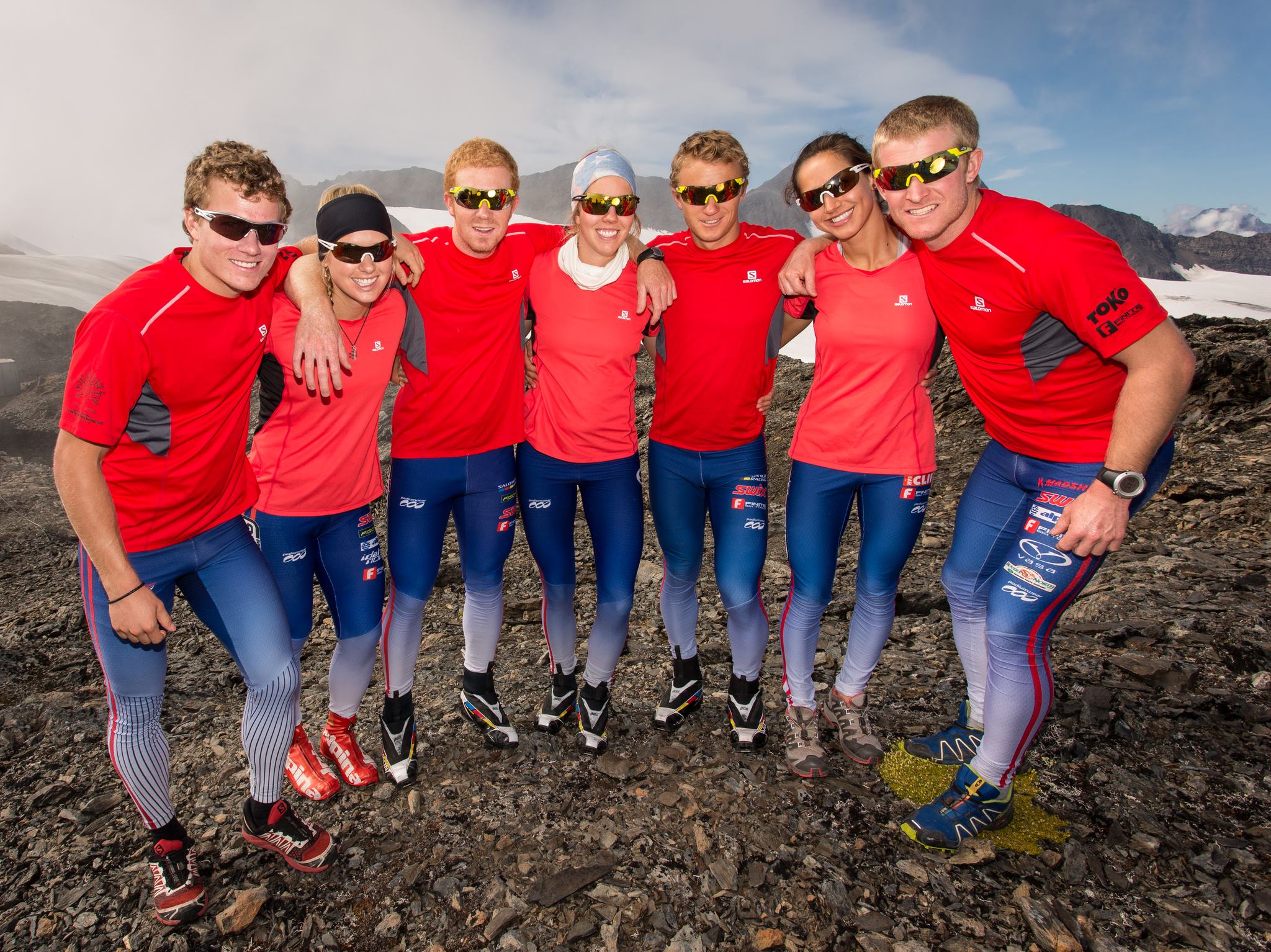
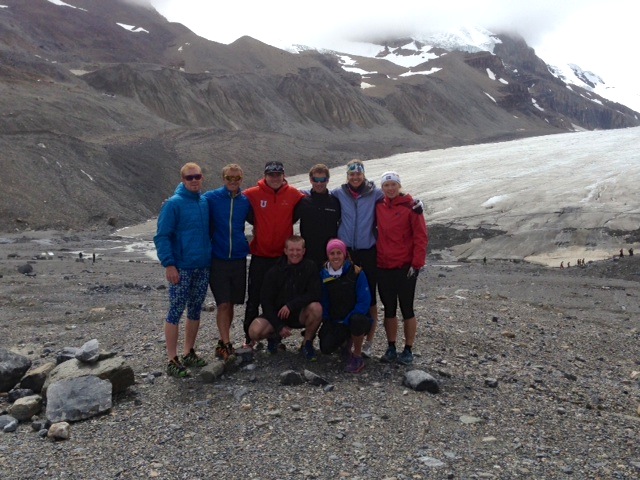
    Most of the Sun Valley Ski Education Foundation (SVSEF) Gold Team with two collegiate summer athletes, Makayla Cappel (DU) and Ben Lustgarten (Middlebury), near Canmore, Alberta. From left to right (back) Matt Gelso, Mikey Sinnott, Miles Havlik, Lustgarten, Cappel, and Rose Kemp. (Front) Head coach Colin Rodgers and Mary Rose. (Photo: Colin Rodgers)
    Most of the Sun Valley Ski Education Foundation (SVSEF) Gold Team with two collegiate summer athletes, Makayla Cappel (DU) and Ben Lustgarten (Middlebury), on the Athabasca Glacier in Banff/Jasper National Park during a recent camp in Canmore, Alberta. From left to right (back) Matt Gelso, Mikey Sinnott, Miles Havlik, Lustgarten, Cappel, and Rose Kemp. (Front) Head coach Colin Rodgers and Mary Rose. (Photo: Colin Rodgers)

    Note: This is the seventh preview in our series on U.S. elite teams, which we’ve dubbed the “The 12.” We asked coaches to tell us what’s new and whom to look out for in the coming season and will publish additional previews in the coming weeks in no particular order.

    Team: Sun Valley Ski Education Foundation (SVSEF) Gold Team

    Coaches: Rick Kapala (program director), Colin Rodgers (head coach), Shane MacDowell (service tech, formerly of Boulder Nordic Sport East)

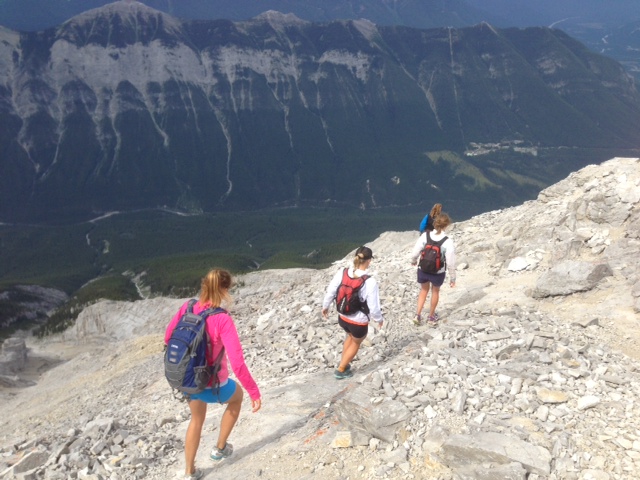
    Sun Valley training-group members Makayla Cappel and Rose Kemp hike down Mount Rundle in Banff National Park, Alberta. (Photo: Colin Rodgers)
    Sun Valley training-group members, including Makayla Cappel and Rose Kemp, hike down Mount Rundle in Banff National Park, Alberta. The team trained in Canmore from July 10-19. (Photo: Colin Rodgers)

    Gold Team roster: Mikey Sinnott, Miles Havlick, Matt Gelso;

    Chelsea Holmes, Rose Kemp, Mary Rose

    Who’s new: Havlick (University of Utah), Kemp (Utah), Rose (University of Colorado-Boulder)

    Who’s missing: Patrick Johnson, Reid Pletcher, Simi Hamilton, Alexia Turzian, Mali Noyes, Lucy Garrec, Clarke Sullivan (former service tech)

    According to coach Colin Rodgers, Johnson, who nabbed his first SuperTour win (and podium) in his rookie season after college last winter, is home in Anchorage, Alaska, for an environmental internship. Pletcher is working as a river guide on the Salmon River about an hour north of Sun Valley in Stanley, Idaho, after stepping back from racing last season due to lingering effects of a head injury. Noyes is also guiding on the Salmon River, and Hamilton – a Colorado native – moved to Vermont to train with fellow U.S. Ski Team sprinter Andy Newell and the Stratton Mountain School T2 Team.

    A Sun Valley local, Turzian is in Boulder, Colo., Garrec is in nearby Ketchum, and Sullivan, Sun Valley’s former head wax tech, is “ripping lips, building single track [mountain] bike/hiking trails, blasting ducks in Bozeman, MT,” Rodgers wrote in an email.

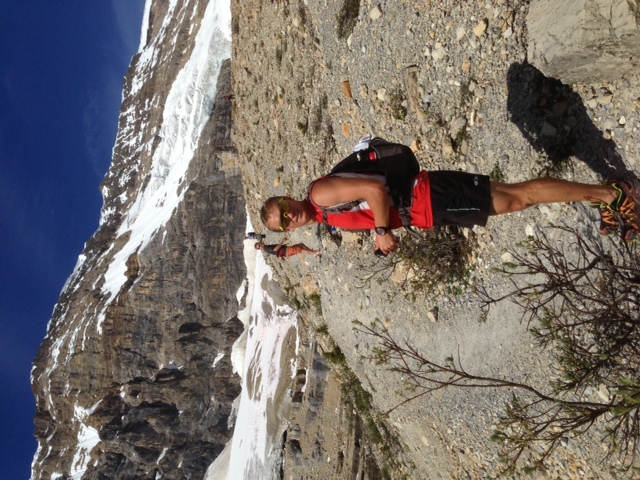
    Mikey Sinnott and Miles Havlik running on the Iceline Trail in YoHo National Park. (Photo: Colin Rodgers)
    Sun Valley Gold Team members Mikey Sinnott (front) and Miles Havlik running on the Iceline Trail in YoHo National Park in the Canadian Rocky Mountains in southeastern British Columbia earlier this month. (Photo: Colin Rodgers)

    Top results last season: Let’s start with Sinnott: the overall SuperTour winner last season with two SuperTour victories (both classic sprints; one in Minneapolis, the other in Aspen, Colo.) and a runner-up finish at U.S. nationals (also in a classic sprint). Sinnott’s finish atop the SuperTour leaderboard secured World Cup starts this fall, which won’t be a new experience, but he’s not taking them lightly.

    “In the past you kind of set up your season to get World Cup starts, so you’re kind of hitting that early season performance and then you’re kind of coming down from it when you get to the World Cup,” the 28-year-old Sinnott told FasterSkier in June. “This year I’ve got months beforehand where I can build and really organize it so that I’m hitting the World Cup in my top fitness.”

    Gelso, 25, podiumed at U.S. nationals in January, placing third in the 15-kilometer freestyle at Soldier Hollow in Midway, Utah. That same week, he placed fourth in the 30 k classic mass start at nationals. Gelso started the 2012/2013 season off with a second-place finish in the 10 k freestyle individual start in West Yellowstone, Mont., which elevated him to the World Cup in Canmore, Alberta, where he was 36th in the 30 k skiathlon.

    Fresh out of college, Havlik is one of the most promising rookies entering the pro scene after racking up his second-straight national title in the 20 k mass start at NCAA Championships in Ripton, Vt. Havlik placed fourth in the other race at NCAAs this season, the 10 k classic individual start, and helped Utah finish second to the University of Colorado in the overall team results. Throughout the course of his senior collegiate season, he won four invitationals.

    Holmes, 26, finished second twice on the SuperTour last season (first in the 10 k freestyle in West Yellowstone, and soon after in the 10 k classic in Bozeman). At SuperTour Finals in Truckee, Calif., she was third in the freestyle hill climb.

    Kemp achieved All-American status at NCAAs this year, placing eighth in the 15 k freestyle mass start at Rikert Nordic Center. She placed third in two 5 k classic races on the Rocky Mountain Intercollegiate Ski Association (RMISA) circuit, and Rose was fifth in a 5 k skate race and seventh twice in collegiate events last season.

    Coach’s comment:

    By Rodgers’ estimations, the Gold Team is well on its way to a successful racing season.

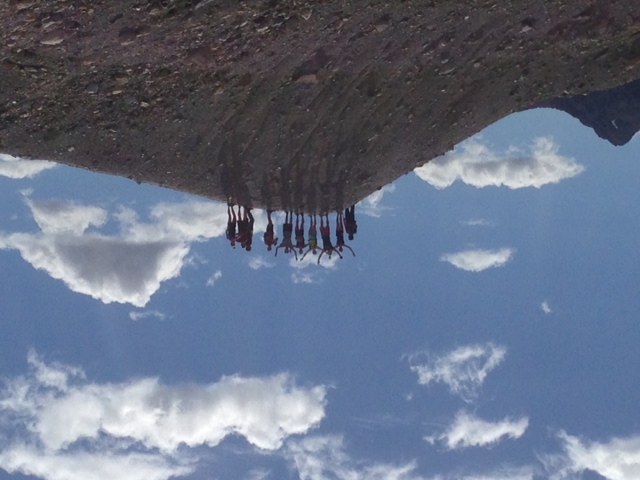
    The Sun Valley Gold Team on the Iceline Trail in YoHo National Park earlier this month. (Photo: Colin Rodgers)
    The Sun Valley Gold Team on the Iceline Trail in YoHo National Park earlier this month. (Photo: Colin Rodgers)

    “We are a mix of old and new faces, but all of the current athletes have roots in Idaho,” he explained. “Mikey, Matt and Chelsea have been a part of the program for many full years while Rose is a Boise native. Combined both Miles and Mary have trained in the Wood River Valley for quite some time so in a sense all are local talent.

    “Although we are a small squad, 3 men and 3 women, ambitions are high for this crew and collectively we are aiming at SuperTour Titles, National Championship Titles, an NNF Cup, World Cup Competition and Olympic starts all this winter!” Rodgers continued.

    The team started the training season in Bend, Ore., in May and met up again in the Wood River Valley in south-central Idaho for a few weeks. The SVSEF recently returned from Canmore, where it had its first dryland camp of the offseason, and has big plans for training on snow at Eagle Glacier in Alaska (Aug. 8-20), working out in Park City and Moab, Utah, in October, and getting back on snow in late October at Frozen Thunder in Canmore.

    “The Gold Team strives to work closely with its younger XC programs,” Rodgers wrote. “We have spent time working in conjunction with the summer collegiate/post-graduate group during weekly sessions. While we were in Canmore, we were just a small part of a large American contingent from the Intermountain West that consisted of junior athletes from the Intermountain Region including Park City, Jackson Hole and Sun Valley.”

    The Sun Valley Gold Team on the Iceline Trail in YoHo National Park earlier this month. (Photo: Colin Rodgers)
    The Sun Valley Gold Team on the Iceline Trail in YoHo National Park earlier this month. (Photo: Colin Rodgers)

     ***

    Other previews: Alaska Pacific University | Bridger Ski FoundationCraftsbury GRP | Maine Winter Sports CenterSSCV/Team HomeGrown | Stratton Mountain School T2

  • Elite Team Preview: Sun Valley Gold Team

    Elite Team Preview: Sun Valley Gold Team

    Sun Valley Ski Education Foundation 2012/2013 Gold Team (SVSEF photo)

    Note: This is the eighth preview in a quick-and-dirty series on U.S. elite teams. We asked coaches to send their 2012/2013 rosters and tell us what’s new for the coming season. We will be publishing additional reports over the next few weeks. Teams are presented in no particular order.

    Team: Sun Valley Ski Education Foundation (SVSEF) Gold Team

    Coaches: Colin Rodgers (head coach), Clarke Sullivan (service tech)

    Roster: Simi Hamilton (U.S. Ski Team), Mike Sinnott, Matt Gelso, Reid Pletcher, Patrick Johnson;

    Chelsea Holmes, Alexia Turzian, Mali Noyes, Lucy Garrec

    Who’s new: Patrick Johnson (2012 Middlebury grad); Lucy Garrec (University of Vermont grad, spent previous summers training in Sun Valley); Mali Noyes (moving up from junior squad, University of Utah grad)

    Who’s missing: Morgan Arritola (2010 Olympian, former USST member)

    Top results last season: A regular on the World Cup circuit, Hamilton landed in the Red Group and earned a spot on the USST A-team this spring. He notched a career best of seventh in March at a classic sprint in Drammen, Norway. Before that, he finished 10th in December at a World Cup skate sprint in Rogla, Slovenia.

    Mikey Sinnott (left) working on his sit-ups during a recent workout with the Lucy Garrec and the rest of the Sun Valley Gold Team in Idaho. (Photo courtesy of Colin Rodgers/SVSEF)

    Sinnott started several World Cup races this year and cracked the top 50 twice, finishing with a season-best 37th in a skate sprint in Moscow. Holmes made the podium at SuperTour Finals, finishing third in the hill climb in Jay, Vt. She was fifth in the 30 k freestyle mass start two days later.

    About six months after suffering serious head injuries in a rock-climbing accident, Pletcher won a SuperTour skate sprint at West Yellowstone last November. After graduating the University of Colorado at Boulder (CU) this spring, the 2011 NCAA champion is back home in Idaho, and SVSEF program director Rick Kapala thinks he’s ready for life as a full-time racer.

    “You can’t help but love his enthusiasm and effort,” Kapala wrote in an email. “I think Reid will be a force on the circuit right away … and that’s good not just for us but for skiing.”

    Another former NCAA champ, Gelso won a SuperTour 10 k in February in Aspen, Colo., and was sixth at U.S. nationals in both the 15 k skate and 30 k classic.

    Turzian worked hard to graduate CU last fall and was back into racing form by the end of the season, placing ninth in the 30 k skate at U.S. Distance Nationals in March. Kapala wrote they were “psyched to have her for a full season” this year.

    Gold Team rookie Patrick Johnson climbing Snowyside Peak near Ketchum, Idaho. (Photo courtesy of Colin Rodgers/SVSEF)

    As a Middlebury senior, Johnson won several NCAA races and EISA titles, and placed ninth at U.S. nationals in the 15 k skate. Kapala explained that Johnson’s distance strengths were important for Sun Valley, which has been “a little sprint heavy on [the] guys team for a couple of years.”

    Garrec had similar success at the college level, tallying numerous carnival victories and helping UVM win the 2012 NCAA championship with third- and fourth-place finishes. In past summers, she trained with Sun Valley as a guest.

    “Adding her was a very easy decision,” Kapala wrote. “She also seems to have a lot of confidence in her approach and we really value that sort of direct, no-bs approach to training.”

    Previously a Sun Valley junior, Noyes posted several strong results – including two SuperTour top 20’s – in her post-grad year. Kapala considers the junior-nationals champ an all-around skier, which is good for the distance-heavy women’s squad.

    From the program director: While Sun Valley will miss it’s longtime racer and former USST member Morgan Arritola, who retired this spring, Kapala wrote they were looking forward to maintaining the strength of both their women’s and men’s teams. Rodgers, an accomplished skier who still competes, enters his second years as head coach, and Kapala said the athletes value his attitude, work ethic and knowledge.

    The Gold Team has a new wax tech in Clarke, a former U.S. Nordic Combined staff member who also worked for Madshus and the Bridger Ski Foundation (and skier Torin Koos).

    “We had to take a step forward on the service side of things. It is just too much to ask someone to coach 8-10 athletes AND manage ski services,” Kapala wrote. “Clarke has been in the game quite awhile and worked for us last year. … He’s really into the process of helping the skiers in every way he can.”

    “Every season poses new challenges,” Kapala continued. “We are establishing our team personality, our  ‘QUAN’ if you will. Those other programs out there are very solid and for sure we can expect that our guys and gals will need to give it their all for us to meet our team goals and for them to meet their own goals. But that’s sport.  That’s what is fun and rewarding about being involved with sport at any level. It’s a blending of the human, the method and the spirit.

    ‘”We are very fortunate to be able to promote skiing in our community and across the US through the efforts of our Sun Valley program and while we are still months from the first big races at the World Cup and at the Super Tour, it also seems like we’ll be there tomorrow.  Every day, every workout is precious.  Today we GET to be cross-country skiers.”

    Coach’s comment: The entire Gold Team is currently training in Sun Valley for the week of July 4th, according to Rodgers.

    “We are doing some dry-land training and preparing for our on snow camp in [Alaska],” he wrote. “ We head up to Anchorage to train with APU on the 10th.  The plan includes 5 days of sea level training with sme speed and intensity followed by 7 days on-snow on Eagle Glacier.  Everyone is looking forward to some great training.”

    ***

    Other previews: Bend Endurance Academy | Craftsbury GRP | CXC | Far West | Maine Winter Sports Center | Methow OD | XC Oregon

  • From Athlete to Coach, Rodgers to Lead Sun Valley ODT

    Colin Rodgers (SVSEF) – Racing to fourth place at the 2011 Lake Placid SuperTour

    Colin Rodgers, a longtime member of the Sun Valley Ski Education Foundation (SVSEF) Olympic Development Team (ODT), has been named its head coach. He is taking over for Travis Jones, who stepped down this spring after three years on the job.

    “I am very fortunate for this opportunity,” Rodgers told FasterSkier in an interview. “I am going to be able to work with some great athletes that I already know really well.”

    A native of Vermont and a graduate of Middlebury College, Rodgers replaces Jones, who was looking for less time on the road and more time with his family.

    “I decided it was time, both for my sake and my kids sake and also for the sake of the athletes on the team,” Jones told FasterSkier in an interview earlier this spring.

    “They need somebody who can be psyched and ready to travel with them that much every winter, and who can really make the team their number one priority.”

    Jones cited the nearly 120 days on the road scheduled for the 2012 season, and a desire to spend more time with his young family as the primary reason for leaving the ODT.

    Rodgers made his mark on the elite ski scene as a sprinter. He had his best season in 2009, winning the SuperTour sprint title on the strength of two victories and two second place finishes.

    He also started five World Cup races that season, including three European events. His Olympic hopes were dashed by injury and he missed the second half of the 2010 season, but came back strong in 2011.

    Coaching has not been a major focus as a potential career for Rodgers, however.

    “I have always like spreading the enthusiasm I have for ski racing to other people. I have always been passionate about skiing since I was very young, but I never said to myself that I would be a coach – this year or down the line. It is something that justhappened.”

    He described the opportunity as “too good to pass up,” and sees the biggest shift in the transition from athlete to coach as an altering of focus.

    “It is about taking a step back about thinking about what I need for myself to succeed as an athlete to thinking about each individual on the team and their needs to reach their potential,” Rodgers said.

    Despite his new role, Rodgers did tell FasterSkier that he may have a few opportunities to pull on a bib over the course of the season.

    The elite ODT is the top level of the robust SVSEF pipeline. Last year’s team consisted of, among others, US Ski Team athletes Simi Hamilton and Morgan Arritola, SuperTour Sprint Champion Mike Sinnott, and collegiate standout Reid Pletcher.

    Rodgers does not see the quick transition from teammate to coach as an issue, noting that coaching is always a challenge, but one he is looking forward to.

    He sees his relationships with the ODT members as a plus, telling FasterSkier that “I think this is…a good opportunity for me because I know them so well as athletes. I have a good idea of what they need to take the next step.”

    Recognized as one of the top senior-level race teams in the country, the ODT will see a number of other changes in addition to the switch at the top.

    Eventual champion Nicole DeYong (152) leads second place finisher Kristina Trygstad-Saari (151) in the 2010 Owl Creek Chase (Photo: Hunter Mooneyham/Sundance Images)

    In an interview this spring, SVSEF Cross Country Program Director Rick Kapala told FasterSkier that a search was on for a full-time service technician to work the five-month competition season.

    Rodgers confirmed that this was still the case, but indicated that the position might not be filled.

    “We are hoping to have someone else help us out, but if we don’t, we have Chris Mallory, who is a huge asset. Between he and myself we can make it work,” Rodgers said.

    Mallory, however, coaches the SVSEF Comp Team – the program for high school aged athletes – a role that he will continue, limiting his availability for the ODT. According to Kapala, SVSEF hired a technician, Cory Wubbels for several projects last season, and he recognizes a need for a season-long staff member.

    “One of the things we think we probably did to Travis unfortunately is that we burned him out a little bit,” Kapala told FasterSkier. “He was on the road oftentimes alone with the ODT guys, carrying the huge load of both coaching those athletes as well as having to do ski service. And we gotta change that.”

    But Rodgers points out that it isn’t always easy finding the right person for the job.

    On the athlete front, there is also some turnover. Nicole Deyong will no longer be competing as a member of the ODT.

    “She won’t be somebody who will be exclusively chasing ski racing a whole lot longer here,” Kapala said, adding “I think the world of her. She is super-legit in every way. If we can keep her around in any capacity that would be great.”

    Holmes racing the 5km classic in West Yellowstone

    Chelsea Holmes, who posted excellent results while skiing for the Far West Farm Team and coaching with Sugar Bowl Academy joins the squad. She spent the spring in California working with coach Jeff Schloss according to Kapala, who sees the benefit of athletes maintaining relationships with multiple coaches.

    “Whatever she can get from our team and whatever she gets from Jeff, we want her to have the best of both relationships,” Kapala said.

    Holmes’ impressive 2011 campaign included two victories at the Canadian National Championships and a tenth place in the overall US SuperTour standings.

    While Holmes is the only brand new face on the team, veterans Morgan Arritola and Alexa Turzian will both have a bigger presence.

    Turzian will spend the summer training in Sun Valley before completing her studies at the University of Colorado in the fall and traveling with the ODT in the winter.

    Arritola, like Turzian, a native of the Sun Valley area, declined a position on the US Ski Team B-Team. Arritola spent four years with the US Ski team, including two on the A squad.

    With possible plans to pursue her education, Arritola may not be based out of Sun Valley for the entire year, but she will be racing with the team.

    Another returning ODT member, Katie Bono should be back at full strength after missing significant time in 2011 with mono.

    In addition to Holmes, Arritola, Turzian and Bono, the 2012 roster consists of Simi Hamilton Matt Gelso, Mikey Sinnott and Reid Pletcher, who is in the process of recovering from a climbing accident.

  • Sun Valley 50 K Notes: Waxing, Sandau, and the Rabbits

    Sun Valley 50 K Notes: Waxing, Sandau, and the Rabbits

    When a race lasts for more than two-and-a-half hours, there’s bound to be a little more material than can fit inside a single race report. Below, some extra tidbits that didn’t make the first cut:

    –The conditions for the race could have ended up being a lot more challenging for waxers, had the temperature warmed more than it did—in the end, hard wax did the trick. While most of the lead men ended up with decent skis, there were a

    Sun Valley's Colin Rodgers re-waxing his skis in the middle of the men's 50 k.

    few horror stories—Sun Valley’s Colin Rodgers, among others, actually stopped to re-wax, and still managed to pull off 15th.

    –A number of men dropped out—some suffered from debilitating cramps, while others, like Canada’s Stefan Kuhn, knew that they weren’t at their best, and opted to save energy for next week’s mini-tour.

    –We didn’t give Canada’s Kevin Sandau much credit for his second-place finish, but his result was the latest in a string of impressive races for the 22-year-old. He notched a fifth in the 15 k freestyle at the U-23 World Championships in Estonia in January, then returned to Canada and took three podiums at his own country’s national championships, including a third place in the 50 k freestyle last Saturday.

    Given that the racing in Sun Valley was only seven days removed from that effort, Sandau said that he tried to conserve as much as possible in the beginning of Saturday’s race.

    “I just wanted to make sure I didn’t use too much energy, because I was probably pretty low on it after that,” he said. “Just

    Kevin Sandau (Canadian National Ski Team) leading Japan's Yuma Yoshida at the end of the 50 k classic.

    hung on in the back, and tried to not do as much work, and I guess that kind of paid off in the end…I guess, in the end, my energy was better than I thought it would be.”

    After losing some of his kick wax, Sandau said that he didn’t have much hope of staying with Kris Freeman on the last seven-kilometer lap, and instead contented himself with reeling in Japanese skier Yuma Yoshida, to secure second place.

    “I kind of broke him on one of the little uphills there, and kind of maintained that gap,” he said.

    –More from Alaska Pacific University on the rabbits they sent out to push the pace in the first part of the race—this time from Head Coach Erik Flora.

    “It was kind of cool, because it benefited both them, and…the field and our team,” he said. “There’s a lot of team tactics being used internationally, and you don’t see a lot of that in the U.S. Since we had guys that weren’t going to race this, but could get something to benefit their skiing from it, we saw it as a perfect scenario. It was for their experience, and also to see what would happen.”

    –Aside from their rabbits, though, the APU men were quiet on Saturday, with Lars Flora, Erik’s brother, leading the team in seventh, and James Southam in 11th. Lars Flora was with the leaders through five of seven laps, but he suffered from severe cramping in his arms and his legs—worse than normal—that he couldn’t explain, though he said it was perhaps related to things being off after returning from Europe less than a week ago.

    “I think if it wasn’t for the cramps…I mean, I know it’s a 50 k, it’s altitude, but it was kind of bizarre,” he said. “Sometimes my body goes haywire after traveling overseas—it was not normal cramps.”


  • With Skate Sprint Victory, Koos Doubles Up in Rumford

    Torin Koos (Methow ODT) winning Saturday's skate sprint at the U.S. National Championships in Rumford, ME. Photo, flyingpointroad.com

    Dumped from the U.S. Ski Team (USST) after a sub-par 2010, Torin Koos (Methow ODT) clearly had something to prove coming into the 2011 U.S. National Championships—and he didn’t disappoint.

    With a victory in Saturday’s skate sprint, Koos collected his second title of the week, coming out on top in a frantic dash to the line with Simi Hamilton (USST) and Lars Flora (APU).

    Torin Koos in one of his early heats. Photo, Hallie Herz.

    Koos’s two victories in Rumford could easily serve as the opening argument in a case to be re-named to the USST, but he said afterwards that he’s simply trying to ski fast.

    “My goal is to be one of the best skiers in the world—so wherever that takes me,” he said.

    On Saturday, that took him around four tight laps of the 1.4-kilometer sprint loop in Rumford.

    The men’s race was originally planned for a slightly longer course, before warm weather came through Rumford and destroyed its snowpack. Though organizers had an off day between Thursday’s distance skate race and Saturday’s sprint, they elected to widen trails with good cover that were used earlier in the week, rather than focus their efforts on extending the sprint loop by a few hundred meters.

    “Our feeling was that spending time working on a trail that hadn’t been touched all week long wasn’t going to provide that much benefit,” said John Farra, a jury member and the nordic director for the U.S. Ski and Snowboard Association.

    Times in the morning’s qualifier were very fast, with Sun Valley’s Colin Rodgers leading the way in two minutes, 44 seconds.

    The quick course made for tight, tactical racing in the afternoon, with few athletes able to open gaps, and many top qualifiers getting bounced out before the finals.

    Many of the heats ending in three-, four-, or five-way drag races on the homestretch, with a number of skiers taking advantage of a slingshot effect provided by the draft on the last descent.

    CXC’s Garrott Kuzzy, who placed second in qualifying, was one of the men who suffered the consequences of trying to win from

    Garrott Kuzzy in one of the afternoon heats. Photo, Hallie Herz.

    the front.

    “You could easily go from fifth or sixth all the way into first from the top into the finish line,” he said. “I had the lead going down the last downhill, and just got engulfed by everybody else coming by… Tried to go left, somebody was there; tried to go right, somebody was there. Couldn’t get any pushes off, and before I knew it they were all gone.”

    Rodgers was another who got stuck in traffic—he was caught up and failed to advance from his semifinal heat when Dartmouth’s Eric Packer crashed on the homestretch.

    It was a disappointing end to the day for Rogers, who looked crisp in qualifying and and in his quarterfinal. After compartment syndrome quashed a run for the 2010 Olympic team and curtailed his season, Rodgers seems to finally be returning to his old self.

    On Saturday, he said, he was trying to ski his way on to the U.S. squad for the 2011 World Championships in Oslo as a

    Sun Valley's Colin Rodgers was shooting for a discretionary berth at the 2011 World Championships. Photo, Hallie Herz.

    discretionary selection—making the hang-up at the finish especially disappointing.

    “I think I could have been on the podium today,” he said. “If I wanted to have any chance for World Championships at all, I would have had to win the qualifier and win the heats.”

    Instead, it was Flora, Hamilton, and Koos who were left to battle in the finals.

    After a disappointing end to last weekend’s classic sprint, Flora finally had a shot to go toe-to-toe with Koos, while Hamilton had been hammered by illness and was competing in his first race of the championships.

    Koos took the lead, but the pace was restrained until Flora took the lead and hammered up the loop’s final climb.

    “Cresting over the top, that was my game plan from the very beginning of the day…[to] really go for it right there,” Flora said. “I knew it was going to be hard with fast skiing, and with those guys. But I gave it a go.”

    Koos said that he had been expecting a surge from Flora, though, and was ready when it came. He had anticipated a similar attack in the finals of last Sunday’s classic sprint, but Flora bonked, and it never came.

    “I could see Lars was charging super-hard over the top, just like I thought he was going to do in the classic race. I felt totally comfortable with that—I just wanted to make sure that when we hit the downhill, I was in second place,” Koos said.

    The draft then allowed Koos to slide into first on the descent, where Flora said that he felt awkward transitioning out of his tuck.

    “It’s just a weakness,” he said.

    That left Koos at the front, with Hamilton along for the ride just behind, and the two of them opened up the throttle for a

    The crash by Eric Packer that held up Colin Rodgers. Photo, flyingpointroad.com

    blistering close to the race. That was the kind of challenge Koos was looking for.

    “I wanted to try to win a race when it was coming like that, in the last hundred,” he said. “I wanted to have that feeling of somebody coming up on my side, and being able to respond to it. It’s a good feeling.”

    Koos appeared to benefit slightly by forcing Hamilton to the far left lane, which the USST member said left things a little scrambled.

    “But he got me by a couple of feet, so I don’t know if it made that much of a difference,” Hamilton said.

    After struggling to overcome a case of the flu he picked up on his way to Maine, a crestfallen Hamilton said that he wasn’t at his best on Saturday. But he also said that he was glad for the chance to ski three rounds.

    “[I] don’t really get that opportunity on the World Cup, or haven’t gotten it, really, yet,” he said. “So it was nice to get some practice, skiing in some traffic.”

    Hamilton now heads home to Aspen for three weeks of training, before flying back to Europe with the U.S. Ski Team to compete in domestic races in Norway.

    Simi Hamilton in the rounds. Photo, flyingpointroad.com

    He’s currently ranked 51st in the World Cup sprint ranking—one spot away from a top-50 position that would automatically qualify him for the American squad for World Championships. He’ll have to wait until the USST announces its discretionary selections later this month to find out if he has been named.

    Koos doesn’t have the World Cup ranking to qualify for the team, either, but thanks to his third-place position on the U.S.’s national ranking list—which is used as a secondary set of guidelines for selection—he should be assured of a spot.

    According to his coach, Scott Johnston, Koos will fly to Europe on Tuesday. He’ll spend few weeks in Davos, Switzerland, with his girlfriend Bettina Gruber, a Swiss skier, before racing at the Norwegian national championships at the end of the month.

    There, he’ll compete with a club he connected with in the fall, Team Susjoen, before traveling to more races in advance of World Championships.

    With Johnston as his coach, Koos said, his current structure is “obviously working.”

    Noting that his sixth-place finish in Wednesday’s 15 k classic was hampered by bad skis, Koos said that he’s “in the conversation to, I think, win most any domestic race.”

    “[Johnston] is the best technical coach I’ve ever worked with, bar none,” Koos said. “And I also believe…probably the best coach for working on physiology, as well. So, we have some things going really well in our direction.”

    Link to full results.

  • Healthy and Fit, Goldsack Snags Double Victory in West

    Healthy and Fit, Goldsack Snags Double Victory in West

    Drew Goldsack attacking one of the climbs in Thursday's skate qualifier in West Yellowstone.

    With temperatures in the single digits for the SuperTour-opening double sprint qualifier in West Yellowstone, it was all about staying warm on Thursday. But Drew Goldsack did better than that—he was on fire.

    Goldsack, racing for the Canadian National Team and the Alberta World Cup Academy, skied to convincing wins in both competitions, showing that he has returned to form after a down Olympic year recovering from injury. In the morning classic race, he won by three seconds over APU’s Lars Flora, then more than doubled that margin of victory in the afternoon, besting Flora again by nearly seven ticks. He earned $250 for finishing with the lowest combined time.

    Mark Iverson (APU) and Colin Rodgers (SVSEF) were third in the classic and skate races, respectively.

    Results from the event were not available until late Thursday, due to problems with the race timing. Organizers wanted to start the two qualifiers just one hour apart, and a large field meant that timers had less than ten minutes to move the finish line ten yards between the classic and skate courses.

    An electronic photo beam wasn’t quite in place by the time the first six men finished the skate race, which meant that their finishes were recorded by volunteers with plungers and had to be cross-referenced for accuracy.

    “Two races back-to-back made it a really challenging day, from a timing point of view” said timer Ernie Page. “We almost made it.”

    Drew Goldsack chasing down Mike Sinnott in Thursday's classic sprint qualifier.

    No timers were needed, though, to tell that Goldsack was on a separate plane. In the classic race, he nearly closed the 15-second gap to the starter in front of him, Sun Valley’s Mike Sinnott—no sprinting slouch himself. In the skate, only three athletes were within ten seconds of Goldsack’s time of 3:44.5.

    Over the past two seasons, Goldsack said that he hadn’t been racing to his full potential, due to a persistent foot injury that he was told was tendonitis. An operation to correct the problem in the spring of 2009 revealed that he actually had an extra, “accessory” tendon in his foot. Doctors removed it, but were forced to perform reconstructive surgery that put Goldsack in a cast and on crutches for three months. That left him “playing catch-up” all year, through the Olympics.

    This season has gone more smoothly for Goldsack. After aligning himself with the Alberta World Cup Academy in Canmore, he focused on the basics and spent less time traveling and in camps.

    “It’s just so nice to be able to train normally,” he said.

    While some athletes said they suffered between heats in Thursday’s frigid temperatures, Goldsack said that he warded off the chill by warming up for the skate leg in his down parka.

    But even without the cold, the tough course and slow snow conditions combined with the 6,600-foot elevation of West Yellowstone made for a taxing combination.

    “It felt like a 15 k out there,” Goldsack said, though he added that he was able to push hard through the full course. So did Flora, the second-place finisher.

    “I didn’t feel like I skied any part of the course really well, but I felt like I skied really well from the start to the finish,” Flora said.

    Not known for his fast-twitch muscle fibers, Flora said that he was “really surprised,” when informed of his result. While Flora

    Lars Flora in the classic qualifier.

    races for APU, he has few opportunities to gauge his fitness, since he said he conducts most workouts with two female members of the XC Oregon program: his girlfriend Kristina Strandberg, and Evelyn Dong.

    “Basically, Evelyn and Kristina are my training partners, so I had no idea where I was coming into the week,” he said. “I think the course definitely helped, and the duration and the format—I think it suited distance skiers better, for sure.”

    Both Flora and Goldsack said that their target for the season was to qualify for the 2011 World Championships in Oslo. Flora’s results here could help him earn the necessary ranking points, while Goldsack won’t be taking much more than confidence back home with him to Canada. According to Goldsack, his country’s world championship team will be selected based on results from a series of qualifying races in Rossland, BC, which he called a “one-shot deal.”

    Strong performances early in the year aren’t always the best indicators of late-season success, and the fact that the first SuperTour was held on Thursday only underscored the potential for top athletes here to turn into “Thanksgiving turkeys” come January. But Chris Jeffries, one of Goldsack’s coaches at the Alberta World Cup Academy, said he wasn’t worried.

    “Our plan is always to get guys in good shape, and keep them there with good training over the course of the winter,” he said. “We’re not going to deviate from that—we definitely won’t try to come into the season in bad shape.”

    Classic Sprint Qualifier Results

    Freestyle Sprint Qualifier Results

  • The Road to Whistler PODCAST: Colin Rodgers

    FasterSkier is pleased to announce the first podcast in The Road to Whistler series, which we hope to continue every few weeks. To listen, just click the play button below (you will need a recent version of Adobe Flash installed to access the player).
    We are still working on our podcasting system, so there may be a few hiccups.  Please email us at info@fasterskier.com with any specific issues.  This will help us perfect the system.
    Colin Rodgers skis for the Sun Valley Ski Education Foundation’s Olympic Development Team, and for Fischer. He is coming off of an excellent season last year, in which he won the sprint discipline of the USSA SuperTour series. He placed sixth in the sprint at U.S. Nationals in Anchorage, and made the heats in sprint at the World Cup at Whistler, ultimately finishing 27th. Rodgers also competed at a number of World Cup races in Europe, with his best finish a 52nd place in the sprint in Trondheim, Norway. Rodgers is about to launch his new website, teamcolinrodgers.com, so check it out in a week or two.
    Colin Rogers at the Classic Sprint at US Nationals in Anchorage. Photo courtesy of Chris Hall, Fischer Sports USA.
    Colin Rodgers at the Classic Sprint at US Nationals in Anchorage (Photo: Chris Hall, Fischer Sports USA).

    FasterSkier: So, last year you got a chance to ski in a couple of World Cups-one in Whistler and one in Europe.

    Colin Rodgers: I got to go to Whistler, and then I got the overall title for the sprint spot, so I got some World Cup starts and I raced in Lahti, Finland and Trondheim, Norway.

    FS: It seemed like you really took your skiing up a notch from last year getting to ski over in Europe. What was different about last year for you-was it the training and the preparation, or you just figured out the racing and tactics?

    CR: I think it’s just a culmination-I’ve been training now for a long time-experience has helped a lot, and I think last year I did some pretty good catering my training, not specifically towards sprints but some key workouts that helped increase my speed and my quickness, and that helped my sprint results jump up a notch.

    FS: What was it like racing over in Europe? Was that your first time there racing in World Cups?

    CR: That’s the first time I’ve raced World Cups over in Europe for sure. I raced a fair amount over in Europe in the past. I’ve been skiing for a long time-I did the Scandinavian series when I was young, and I went to World Juniors and U-23’s, actually those were in Salt Lake, but those were my first World Cups in Europe.

    FS: What was the competition like?

    CR: It was incredible-you race in those Scandinavian World Cups and that’s the ultimate level for competition. You have obviously all the top guys but them when you race in Finland, Sweden and Norway, they have their Nation’s Group spots so those guys are getting to take-last year in Trondheim, they almost had like 20 guys that started. But it was really deep list, at a World Chamionships they only get four starts, plus maybe one or two if those guys have previously medaled, but you have a deep, deep field when you’re racing a Scandinavian World Cup. Maybe not everyone’s at peak fitness at that time, but the fields are deep, to you go over and try to pop some good ones against those guys, it really lets you know where you are.

    FS: The scene must be pretty cool, too.

    CR: Lahti was incredible. The jump is right there too-the Finns are way into jumping. The sports complex there is really sweet-it kind of loops through a big soccer field, and coming in and out of there is wild. In Norway, that was really sweet too-I did the mid-week sprint, and then the 50 k was that Saturday. I don’t think there were quite as many people out for the sprint, because there’s such tradition in the 50 k, but it was still really cool. The wax was really tricky, but it was still pretty exciting, there were still a few thousand fans out there for sure.

    Rodgers racing in West Yellowstone last November.
    Rodgers racing in West Yellowstone last November.

    FS: Before I get into asking you about you plans for this year, you went to Holderness, right? What was it like skiing there?

    CR: I went to Holderness for my sophomore through senior year. I went to Essex High School in Essex Junction, Vermont, for my freshman year.. And then I wanted to keep skiing, so that was a good fit for me. There’s a pretty active community there-they had a good ski program. The education was important to my family, so I would have preferred to actually have gone to a ski academy, but that was what was going to fit for me.

    FS: Now you’re with SVSEF and Fischer-Craft?

    CR: The Fischer-Craft team is more Fischer now. I’m racing with Sun Valley and Fischer-it’s a good fit our here. I spent pretty much my entire life in the East, so coming out west is a fun change.

    FS: So for this year, are you focusing on the sprint for the Olympics, or are you shooting for more than one event?

    CR: I think sprint is my best shot-that classic sprint is definitely where I have my best chance to perform the best, get the best result, but at the same time I have the potent to perform even better with the distance races. I’m not changing my training up too much-I train mostly like a generalist, I’m not 100 percent sprint-specific training. I still have goals of being a faster distance skier and a faster sprinter. The sprint is where I have my best shot for sure, if something else comes up and my fitness is really good, it’d be great to snag another spot.

    FS: In terms of your training, then-is it pretty similar to last year?

    CR: I’m doing some longer threshold stuff. I started that earlier in the spring, just doing continuous bouts of threshold instead of just breaking it up, and doing a lot of four by six to four by eight minutes. Instead, I’m working just straight on through, just trying to get in a really good rhythm. That’s something in my distance skiing I haven’t had as good a grasp on. I think this threshold training will try to help a little bit in the distance skiing and then later on the rounds as well in sprint races. Another thing I changed was just keeping in touch with race fitness in the spring. In the past I’ve gone straight to easy volume training, and I’ve lost touch with what it feels like to push at a higher level. I feel like I’ve kept a pretty good level, and I haven’t totally drifted away from what it feels like to push myself really hard, so I think that will help, especially going into the early part of the season, which is so important this year.

    FS: How many hours are you training?

    CR: I’ve been training between 750 and 800 hours for probably the last four to five years now. Before that I was between 650 and 750. You’re always trying to figure out what works best for each individual-I’ve found that I can’t really handle a ton of volume in the racing season. A few years back I tried keeping the volume pretty high, 12 to 15 hours throughout the racing season, and that was just overdoing it. So now in the wintertime my hours go back to eight to ten-obviously it’s cyclical, but I’m not as concerned about it. I definitely lose a little bit of hours in the winter time, but in May I start with 70 hours a month, and my biggest month is like 85 or 89. This year might not be quite as high-80 to 85 hours for a four-week block.

    Rodgers in the 10k freestyle at U.S. Nationals. Photo courtesy of Chris Hall, Fischer Sports USA.
    Rodgers in the 10k freestyle at U.S. Nationals (Photo: Chris Hall, Fischer Sports USA).

    FS: One of your sponsors is Vasa Trainer-do you use one of those?

    CR: Rob Sleamaker goes way back in my family-my dad used to be involved in biathlon, and Rob was a sports physiologist. He’s an inventor, he has a really cool perspective and inquisitive mind, always questioning what might be right, what might not be great. He’s been great, and I use his double pole machine quite a bit, it’s a great machine. Rob’s a great help and influence in my skiing for sure.

    FS: Outside of skiing-I read on your profile on the FasterSkier site that you work painting houses and cutting wood?

    CR: I mostly paint houses-I’ve done a little bit of timber framing. I have some buddies with a timber framing business-that’s maybe a trade I’d get into a little further down the road. I’m mostly super interested in it, I like to work with my hands, and build my own house some day. I do a bunch of painting in the summertime, that’s how I support myself, painting a lot of homes out here, staining a lot of homes out here in Sun Valley.

    FS: Does that affect your training at all, or is it not too much of a problem?

    CR: It’s definitely a little bit of an issue, but I try to be smarter about it this year than I have been in the past. You’ve got to make some money somehow, so painting is a good way to do it. This year, I work with Chris Mallory, we do some houses, he’s a coach out here in Sun Valley, and so we stain some homes on the side, it’s pretty good, staying busy and I basically worked hard through the beginning of July this year. I’ve taken a break since then, but I’m coming back and will be doing some houses in September again. It’s good not to be thinking about skiing a hundred percent of the time.

    FS: You also wrote on your profile that you’re a quarter collector, and that you still needed a Pennsylvania quarter. I’ve got a Pennsylvania quarter that I found in my room the other day-if you still need one you could trade me for it.

    CR: I’ve completed my collection-my buddies were giving me a hard time for that, so they ended up finding me the Pennsylvania quarter. What was really cool was-Willie Neal, a kid who trained with us, he passed away, but right before they had that accident, he did an internship with John Kerry, and somehow for the internship he got ahold of the Puerto Rico quarter. Willie was a great guy, and that’s like totally completed my quarter collection.

      http://images.fasterskier.com/2009/08/colin-rodgers-interview-final.mp3