From the FasterSkier archive — posts syndicated from athletes’ and coaches’ own blogs between 2004 and 2012, kept online as published. Current coverage is at fasterskier.com.

Tag: college conflict

  • Unraveling the College Athlete Admission Process: A Look Into Post Graduate Gap Year Programs with Paul Smith of SVSEF

    Unraveling the College Athlete Admission Process: A Look Into Post Graduate Gap Year Programs with Paul Smith of SVSEF

    Deciding how to handle the “college conflict”, as aptly phrased by Alayna Sonnesyn, is a daunting and somewhat mysterious prospect, particularly for athletes and families who are unfamiliar with the process. How does a junior athlete know that they are cut out for a collegiate program? NCAA or USCSA? What about a gap year? In this series, FasterSkier spoke with collegiate and junior coaches and athletes who have chosen different pathways to create a resource for the athlete or parent amidst this conundrum. Also check out Part 1 with Craftsbury Junior Program Head Coach Anna Schulz and Part 2 with Dartmouth College head coach Cami Thompson Graves.

    An important piece of the college decision puzzle, post-graduate (PG) programs offer a skier an extra year of development that can serve as a bridge between junior club programs and collegiate or national team level skiing. Though a relatively small in number, programs can be found nationwide at well established ski clubs like Steamboat Winter Sports Club in Colorado and the Bridger Ski Foundation in Montana, and at ski academies such as Stratton Mountain School in Vermont and the Sugar Bowl Academy in California. 

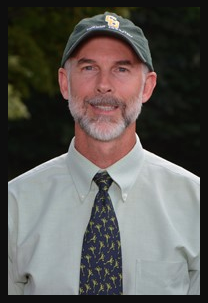
    Paul Smith is the head PG coach at Sun Valley Ski Education Foundation. (Photo: https://svsef.org)

    The Sun Valley Ski Education Foundation (SVSEF) directed by Rick Kapala has offered an official PG program since 2005. The program, which serves five to ten skiers annually, is led by University of Vermont graduate Paul Smith. Now in his second year with the SVSEF, Smith also works with some of the younger juniors and assists senior skiers as a service and wax technician. FasterSkier spoke with Smith and Kapala for their insight into why an athlete might choose a gap year and what can be expected during the PG experience.

    Though athletes elect to take a PG gap year less frequently than joining a collegiate program or leaving ski racing, both Kapala and Smith expressed that the number of skiers selecting this option is trending upward. The reason an athlete might opt into a PG year varies, but typically, the PG athlete enters the year on the cusp of achieving a goal that is just out of reach.

    “[PG’s are] looking to put in a year or more of focused training to make a step forward into their skiing capacities so that they may have college opportunities that were not readily available coming straight out of high school,” explained Kapala in an email. 

    These opportunities include earning a spot on an NCAA team, improving scholarship potential, and increasing the likelihood of making the competition team at a particular school.  

    “Or, they may be looking to achieve top international results as a U20 and want more space to program a bigger training and travel schedule,” wrote Kapala. 
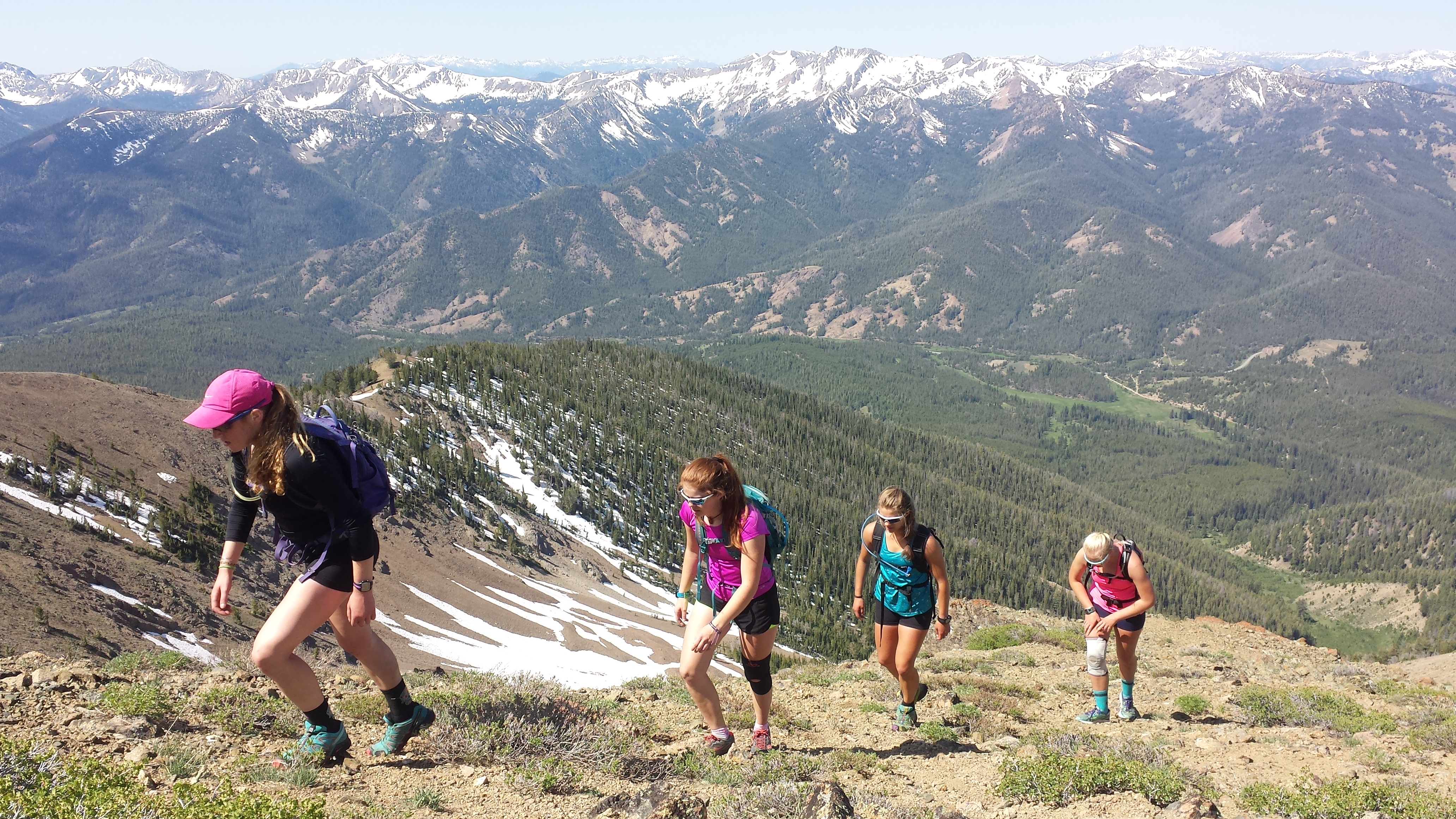
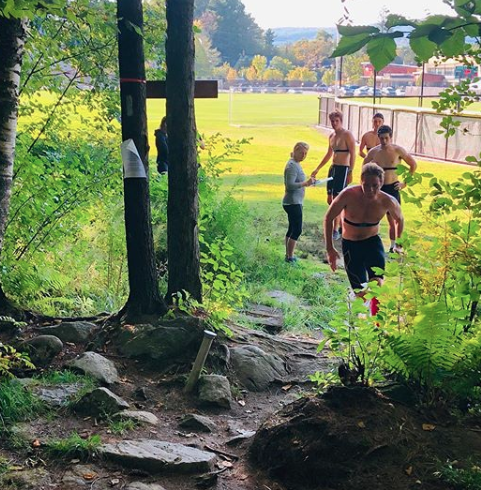
    Members of the SVSEF PG program hike it out during an OD in the mountains. (Courtesy photo)

    He added that outside of skiing, the athlete may be looking to experience independence and develop life skills without the pressures of keeping up with an academic workload. Regardless of long term goal, Smith expressed that anyone who chooses to take a gap year can expect improvement in their skiing. 

    “From a development perspective, just taking a year to just focus on that and not get thrown into the whole gamut of classes can really help a lot,” said Smith in a call.

    “You can always expect to show some improvement, especially if you’ve had a junior have some success while they were doing a bunch of other things and they can now focus on [skiing] for a year. From what I’ve seen, the ones that are committed to the process benefit tremendously.”

    Unlike collegiate programs that typically send information to junior athletes to initiate conversations, Smith explained that athletes typically contact him first regarding interest in the SVSEF PG program. 

    The program originated to serve athletes graduating from the SVSEF junior program, but has since begun to serve athletes coming from a range of other states. Though Smith is not one of the primary junior coaches, he explains that he stays involved with this age group to help connect with prospective athletes. 

    “I try to keep a presence at regional or national camps,” explained Smith. “So I’ve tried to make a connection with a lot of different athletes from different clubs and different regions.”

    Rather than communicating through email, Smith prioritizes phone calls and meeting with athletes at races to establish connections with those considering his program. 

    “I have definitely noticed, for myself and some of our other coaches in Sun Valley, having a presence in the [junior ski] community has helped a lot. We almost always know the kid if they have a genuine interest in taking a gap year with us.”

    Apart from making juniors aware of the PG option, Smith explained that he does very little recruiting. He acknowledged that the choice is not a good fit for all athletes, particularly those with strong academic aspirations.

    “The athlete themselves usually know whether they’d be a good fit. They’ll usually have some idea — going to school, they’re either excited about it or they’re not. For the athlete that isn’t or if taking classes for a year isn’t a priority, that’s where I would say it works the best.”

    The PG program in Sun Valley is heavily weighted toward male skiers, 70-80% on average. This trend holds throughout other programs as well. Smith hypothesized that one reason for this might be that on average, boys finish puberty later than girls. Some male juniors whose biological development might be slower than their peers may not have sufficient time during high school to build the strength and muscle mass needed to excel in ski racing. An extra year to catch up in this arena can help athletes take a big step forward in performance. 

    “There are instances, generalizing a little bit, where a lot of boys who are 16 to 18, their biological age might not match up to their peers, so they feel like, ‘Well I really like skiing and I want to go for it.’ Taking that year for development makes a lot of sense.”

    The program at Sun Valley does not establish performance requirements for admission as it seeks to be flexible enough to cater to the needs of an athlete at any level. 

    “It has been the case in the past few years that we’ve had all of the above,” said Smith. “Skiers that are looking to make the jump to the national team, skiers that just wanted to get into an NCAA program, and then skiers that had kind of figured out that [pursuing skiing] actually wasn’t what they wanted to do. I think all of those athletes are important. Not only does it make a stronger group, it makes a better team functionally.”

    He continued, “As a club we do a pretty good job of thinking of things from the development perspective, the idea that, yeah, we’re coaching athletes that go on to win and maybe go onto race World Cups, but we’re also coaching future parents and future coaches. I think having it open and not narrowing the framework of the program itself is important.”
    Members of the SVSEF PG team mid-workout in Ketchum, ID. (Courtesy Photo)

    Despite not requiring a top twenty finish at Junior Nationals or another performance marker, Smith explains that the athlete should be entering the PG program with a clear goal and a belief backed by evidence from their development that the next step is attainable. Smith explained that these are the broad conversations he has with athlete who express interest in the program.

    “I have a lot of conversations in the spring with prospective athletes and parents about what they saw in their own skiing that puts them at that level. When you look at your results and other aspects of training, what is it that makes you think that the jump will be significant?”

    For athletes who are interested in taking a gap year, Smith provided information on what to consider in weighing options and on what to expect. 

    “Probably on most family’s minds, the cost is going to be the foremost thing.”

    The PG program at SVSEF comes with a price tag of $5,450 which does not include housing or food, which can be significant in small mountain towns like Ketchum. Apart from being expensive, housing can also be challenging to find, particularly since not all housing authorities are keen on renting to a 19-year-old living on their own for the first time. This challenge can be avoided by local athletes, but should be a significant consideration for out-of-towners. 

    “We’ve made it work through the years just piecing together host families, generous families in the ski communities that have helped out. The best thing that has worked is connecting athletes in the program together and their families to go in on housing in the rental market.”

    Additionally, Smith explained that it would be challenging for an athlete to get by without a car, though public transportation and carpool options are possible. Smith added that it is possible to receive financial aid and scholarships for trips such as World Juniors. 

    At SVSEF, most athletes choose to take a part-time job, which can help subsidize the costs. Smith explained that this also provides a life-balance to offset the singular focus of full time ski training.

    “We always recommend that they have something else going on other than skiing. It could be a part-time job, some have taken online classes, and some have gotten pretty good internships. I think we have a good community for that kind of work.”

    He continued that mountain towns offer ample opportunities to work in the tourism or service industry. 

    Smith suggested that the cost and challenge of finding housing might be the biggest drawback to choosing Sun Valley for a gap year. He countered this with the pros of making this decision.

    “Our coaching staff is definitely top level and all of our post grads have the opportunity to work with any of our coaches. Location, being out west, being at altitude but not being too high.”

    He added access to quality rollerski terrain, reliable snow, the ability to perform physiological testing, and having a strong junior and senior team to mix with as additional strengths of his program.

    “I’ll admit that we can’t really have the atmosphere that a ski academy offers. I think at the Sugar Bowl Academy, Stratton Mountain, Green Mountain Valley School, their post grad programs offer that in-house, community, full team feel that admittedly we can’t offer, though I think we come close.”

    Smith explained that these all-inclusive programs are significantly more expensive. Stratton Mountain School rings in at $56,750 for a full term boarding post-graduates (these athletes are also taking classes at SMS) and ski-only PG tuition at the Green Mountain Valley School is $21,500. 

    “For families that can get a lot of financial aid to those programs, I think you can definitely do well there. But I understand that we are better priced compared to them and I think that is where we get a lot of interest.”
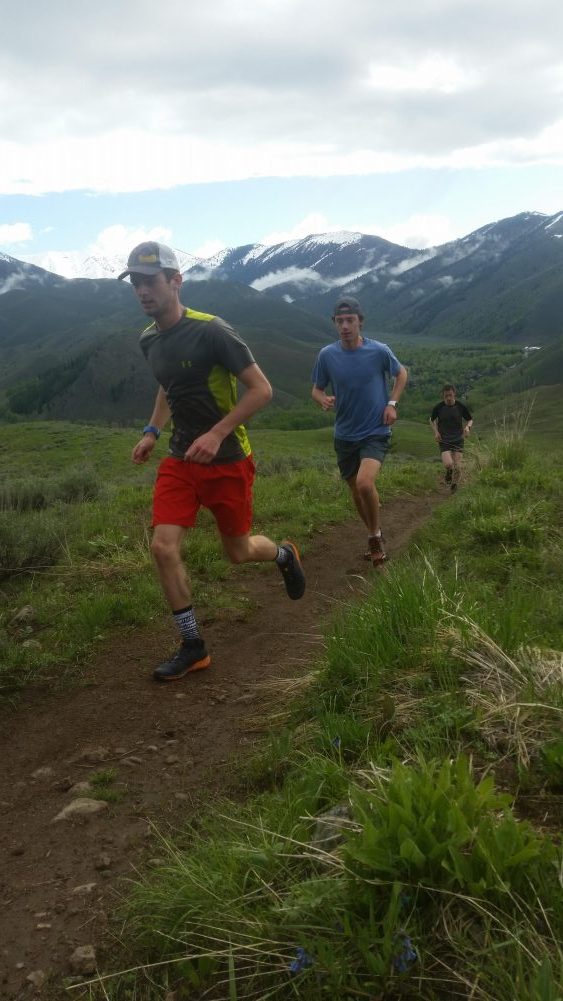
    Members of the SVSEF PG program on a training run in Ketchum, ID. (Courtesy photo)

    Other factors Smith believes are important to consider include whether it is possible to mix in with a strong group of junior and senior skiers and if the program has a coach focused specifically on the PG group.

    “Having a coach that is dedicated to the post grad group is definitely helpful. I think too many times, even though they’re older juniors, just throwing them into senior training or scaled back senior training isn’t the best thing for their development. So having their own coach is definitely a plus.”

    In terms of lifestyle and training load, PG athletes at SVSEF participate in 5-7 coached sessions per week, including strength training.

    “We train most mornings, but the key is being flexible with the program where if an athlete was at a level where they were training twice a day everyday, you can do that.”

    After training, most athletes head to their job, but Smith regularly inputs other touch-points into his athletes daily routine to build the team dynamic and support the athletes’ development of independent life skills.  

    “We’ll have team meals once or twice a month, which is also part of a nutrition program, basically learning how to cook on their own for the first time. Also, having some camps and trips input in there too, which I feel is important. Since they’re not in school, they can do those trips, but we want to make sure it’s cost effective too. If you’re an athlete from the east coast, it’s already a camp being away from home. You don’t need too many, but it helps keep the training lively and exciting.”

    For athletes whose eyes are set on NCAA racing, it is valuable to have an understanding of the eligibility rules. 

    For Division I programs, the eligibility clock starts when a student-athlete enrolls full-time in classes or turns 21, whichever comes first. Once the clock starts, there are five years to complete four seasons of the sport, which allows for a redshirt year or year-in-residence following a transfer between schools. At Division II and III schools, student-athletes have three years following graduation to enroll full-time. Once enrolled, four seasons of competition can be completed over 10 semesters. Semesters are not counted if enrolled either part time or not enrolled without competition.  

    Some PG programs discourage athletes from taking classes if they plan to enroll the following year at an NCAA program as they may be classified as a transfer student, thereby needing to complete an “academic year in residence” before being eligible to compete.

    Athletes may earn prize money from finishes in SuperTour or other races while still remaining compliant with NCAA amateurism rules. The rule states: “An individual may accept prize money based on his or her place finish or performance in an athletics event. Such prize money may not exceed actual and necessary expenses and may be provided only by the sponsor of the event. The calculation of actual and necessary expenses shall not include the expenses or fees of anyone other than the individual.”

    [See this document for more information on NCAA eligibility rules.]

    As a takeaway, Smith encourages families to consider the benefits an athlete might gain from a PG year and to see a gap year as a potential option in the college process. 

    “Taking a year should always be considered as an option, especially for a kid who really wants to go for something. It may not even be skiing, it might be art, or music, or something else. When they’re younger, we always recommend that they’re doing a lot of different things so that they are more well-rounded. By the time they’re 18, picking skiing should be okay and they should be given the option to do that for a year if they want. I think making sure that is an option is an important thing, whether that’s coming from a parent, a college coach, or their coach when they were a junior.” 

    Kapala concluded by explaining the role the PG program plays in the overall cross country program at SVSEF and pointing to athletes who have greatly benefited from their gap year.

    “We consider our SVSEF PG team a really important part of our programming,” concluded Kapala. “It has helped some of our talented juniors take the next step in their skiing and it also has built relationships with skiers who have years later returned to become members of our SVSEF Senior Gold Team. For example, Kevin Bolger and Sam Woods, now members of our Gold Team, were both PGs. We got to know them and when the opportunity came to add them to our Gold Team roster, it was really helpful to know them as people and skiers.”
  • Unraveling the College Athlete Admission Process: Preparing for the Campus Visit with Dartmouth’s Cami Thompson-Graves

    Deciding how to handle the “college conflict”, as aptly phrased by Alayna Sonnesyn, is a daunting and somewhat mysterious prospect, particularly for athletes and families who are unfamiliar with the process. How does a junior athlete know that they are cut out for a collegiate program? NCAA or USCSA? What about a gap year? In this series, FasterSkier spoke with collegiate and junior coaches and athletes who have chosen different pathways to create a resource for the athlete or parent amidst this conundrum. In the first part of the series, Anna Schulz of Craftsbury shared a look into the early conversations between a junior coach and athlete. Next, FasterSkier spoke with Cami Thompson-Graves, head nordic coach at Dartmouth College to learn how to get the most out of the college visit to determine whether skiing NCAA and the school are a good fit. 


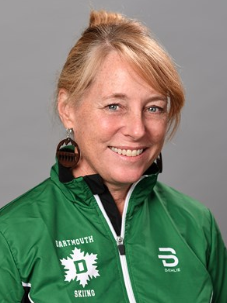
    Cami Thompson-Graves offers insight into the college process from her 30 years of experience coaching the Dartmouth Cross Country Ski Team. (Photo: dartmouthsports.com)

    After over 30 years of leading the program, Cami Thompson-Graves’ name has become synonymous with the Dartmouth Ski Team. During her tenure, she has fostered a thriving program capable of developing athletes whose goals extend far beyond the reaches of NCAA. Three out of the eleven members of the U.S. Ski Team A and B teams (Caldwell, Brennan, and Kern) raced for the Dartmouth Program and in total, ten of Thompson-Graves’ athletes have become Olympians. She also helped guide Katherine Ogden to become the first Dartmouth skier to earn double titles in both the classic and freestyle race at NCAA’s and has mentored numerous All-Americans over the years. 

    While not all athletes perusing their collegiate options are setting goals to race at Dartmouth, Thompson-Graves’ years of experience with the college application and acceptance process qualify her to offer insight to juniors applying to any NCAA program.

    Starting with the initial contact, because the legacy of the Dartmouth program is renowned, Thompson-Graves explained that her recruiting process does not involve a significant amount of reaching out to athletes, however, she is attentive to the results at key junior events throughout the year. 

    “I am generally paying attention to where people are in their junior winter,” Thompson-Graves said in a call. “I’m looking to see who’s doing well and who’s going to [REG and NTG] camps. I know a lot of people in a lot of places, so then I might reach out to their coach sometime later in the year and try to start a dialogue with [the athlete] spring of their Junior year. That’s for the top athletes.”

    She continued that she begins to hear from athletes expressing interest and asking questions about the Dartmouth program most frequently during their junior year and into the fall of their senior year. In total, she communicates with 20 to 30 prospective athletes each year and has two to three openings for each gender on her team. 

    For juniors committed to making an NCAA team, she recommends beginning the process of identifying schools of interest and initiating dialogue early.

    “I think to some degree, people need to be thinking ahead and thinking about what kinds of things are important to them in a program because we’re not all created equally even though we all compete against each other on some level.”

    Once an athlete has determined what colleges and universities are appealing in a broad sense, Thompson-Graves recommends scheduling a campus visit if possible. Typically, this should happen during the spring of junior year or the following summer to allow time to narrow focus on a subset of universities for applications. Thompson-Graves expressed that this visit can help a student decide whether a program suits them beyond the on-paper appeal. 

    “I’m a big believer in people finding the right fit because if they find the right fit, they’re going to be happier and more successful. So I don’t put on a hard sell, I just say ‘This is what we offer. This is what we have.’ And I try to guide people to be asking the right questions and finding a place that suits them.”

    What are the questions that will aptly inform a visiting athlete whether a program jives with their personal, academic, and athletic goals? Thompson-Graves recommends starting with a few key prompts. 

    “Get thinking: What is it I’m looking for? What’s important to me? Where do I see myself?”

    Focusing on the last question, she recommends widening the lens to look beyond the specific school or location an athlete is imagining. It is important to ensure that the program an athlete chooses is equipped to support the athlete’s trajectory and goals long-term. 

    Dartmouth freshman Katharine Ogden racing to her second-straight victory of the 2018 NCAA Skiing Championships in Steamboat Springs, Colorado. She won the 15 k freestyle mass start by more than 38 seconds. (Photo: Dartmouth Sports/Clarkson Creative)

    “It is important that people have some idea where they see themselves in skiing over the next four years. Are they someone who is coming in and just trying to make the carnival team? Are they someone who is coming in and hoping to go on and make a World Juniors or a U-23 Championships? What kind of races do they want to be racing in and what are the goals that they see for themselves? Because some programs are going to make sure that they get to all the races that they need to get to and that they’re supported, and other programs they are basically just going to the carnivals with six people.” 

    Though not all athletes entering college might be on track to make the race team during their time in college, particularly at a program like Dartmouth, Thompson-Graves encourages seeing the value of developing over four years of working with a team that challenges an athlete to reach. However, if a prospective athlete identifies traveling and racing weekly as one of the qualities that aligns with their goals, it might be wise to choose a program where that is more easily achievable.

    “I’m in a lucky position that I have been attracting some of the top athletes and we’ve had some success over time, so I think it’s somewhat easier to attract some of the top athletes, but I maybe scare away that next level because they are like, ‘Oh my god, I’ll never make the Carnival Team if I race there.’ Of course, if you ask someone who is on the team, they would say, ‘It’s worth it, I wouldn’t go anywhere else.’ But there are other people who would say, ‘I’d rather go somewhere where I know I will make the Carnival Team every week.’”

    Apart from the more whimsical questions about goals and opportunities, it is important for an athlete to ensure that the program is within the financial means of the family. While scholarships are available to help with the inherent costs of attending the school, being on a team incurs additional costs that need to be factored in. These costs include travel, equipment, and race entry. These real costs vary depending on the resources of the school and the goals of the athletes. 

    “What is the program supporting for athletes? What are the out of pocket costs? For some people, that’s really important. There are obviously some people that are hoping for a scholarship, but not all ski schools offer scholarship, so everyone is thrown into the pile of need-based financial aid. That aside, what are the other expenses that each individual athlete might have to be a skier? It’s not cheap and depending on where they are on a team or what level they’re skiing at, it might make a difference in how much they have to pay out of pocket.” 

    It is also important for an athlete to ask about the balance of academics and athletics. At some schools, students may be able to arrange their class schedule to keep the academic demands light during the winter race season or take classes over the summer to meet credit requirements. It can also be helpful to identify the support resources offered by academic institutions when athletes are missing classes due to racing or training camps.

    Thompson-Graves also encourages asking about the intangible aspects of a program that are highly impactful in creating a positive experience.

    “How does the team get along? What kind of group is it?”

    She also recommends asking the coach about their style and what their expectations are of athletes as part of the team. 

    “It should be a two-way interview and not a one-way interview.” 

    Per NCAA rules, a prospective athlete is not able to attend practice as part of the campus visit, however, it is possible to observe. Thompson-Graves explained that observation is not always a meaningful way to evaluate the intangibles of the team dynamic, but a coach can facilitate alternative opportunities to meet with the team. 

    “Generally, if they want to meet the team, I’m happy to set up a lunch or meet-up. They often reach out to friends they might have on campus if they know people. With social media, there’s a lot more of that going on than there used to.” 

    Meeting with the team is not an essential component of the campus visit, particularly in the primary stages of the college process. 

    Head coach Cami Thompson Graves sees her athletes off on a time trial in September, 2019. (Photo: Instagram @dartmouthskiing)

    “It also depends if it is a first-time visit versus someone who might be coming for an official visit or an overnight later on in the process. It also depends on where kids live, whether that is the first time they are coming to campus or whether they’ve been through another time then are coming back for an overnight. Sometimes they might just come into the office and I might show them a little bit of what we have for facilities to offer, then another time they might stay overnight with someone on the team, eat some meals in the dining hall, go to a few classes. Generally, those are all options, but if it’s your first time to campus and it’s still early in the process, I don’t think that it’s necessary.”

    Ultimately, a sound evaluation about the fit of the school is one of the key takeaways Thompson-Graves hopes that an athlete leaves the visit with.  

    “I hope they get an idea what the program is all about, what the expectations are, what we have to offer, and to some degree who I am. I have said to people at times in the past, ‘If talking to me makes your skin crawl, then you might want to think about whether you want to be here because you’re going to see a lot of me,’” she said with a laugh. “That’s part of that good fit aspect. I want them to get a sense of the school, the place, the team, me, and what it’s all about.” 

    It is also valuable to have a sense of the qualities and results that a coach looks for in the athletes they recruit. For the Dartmouth program specifically, Thompson-Graves explained how she evaluates whether the prospective athlete is in turn a good fit for her program. 

    “I’m looking for someone who has solid results, and that can be at the very least Junior National Championships. If someone is finishing in the top ten at Junior Nationals then I’m going to be even more interested. But mostly what I’m looking for is someone who is engaged and curious and thinks for themselves and is starting to get a handle on what they’re looking for and is starting to consider skiing for Dartmouth.”

    She shared that she recently had the experience of visiting and touring colleges with her daughter. Though her daughter was not interviewing as an athlete, Thompson-Graves recalled that this process was eye-opening. 

    “You can get a pretty good sense on those early campus visit. Does the place feel right? Do these people feel like my people? Do the programs that are offered here interest me? Can I see myself living here for four years, even if it’s raining some of the time or everything isn’t perfect? So I hope that when someone leaves after the campus visit that they are getting a sense of what it’s all about.”

    She continued that particularly in places like the Northeast where schools with NCAA skiing programs are relatively close together, these visits can offer a template to compare and contrast offerings.  

    “A lot of people visit a number of schools within a week or two, and I think you want to sort of compare the strengths and weaknesses of the different schools and the different programs and then come back and ask more questions. I often will ask someone, ‘Am I your first visit?’ because they often don’t know what to ask, particularly if they are the oldest child in the family. They don’t have any idea where to start or what to ask, so I can babble on for 20 minutes and they just listen and don’t even know where to start. So I think then, following up with questions is important too because the more schools you visit the more you see and the more questions you have.”

    Team USA Nordic athletes representing their alma mater at the PyeongChang Olympics in 2018. Left to right: Head coach Chris Grover, Rosie Brennan, Sophie Caldwell, Ida Sargent, and Patrick Caldwell. Unpictured: Annie Hart. (Photo: Instagram @dartmouthskiing / flyingpointroad.com)

    Though it can be tough for a parent to sit back, Thompson-Graves recommends that the athlete take the initiative in leading the dialogue during a visit rather than the parent. She explained that parents attend her meeting with prospective skiers about half the time depending on the preference of the family.

    “I leave it up to them. The one thing I prefer not to have happen is the parent ask all the questions and the kid doesn’t say anything. I prefer to be talking to the kid and not the parent, but I’m happy to have parents along and if the student is happy to have them there then it works fine for me.”

    She continued that in her experience, there are times when younger athletes who are very early in the process come to the visit unsure of what to ask or what they are looking for. In these cases, she feels it is appropriate for a parent to attend and help facilitate the conversation. Once the athlete has determined that they are interested in her program, she expects the parents to step back and to pass the reins to be passed to the athlete.

    “Further down the road, my expectation is that all my communication will be with the student and not with the parents. I’m happy to answer questions that parents may have, but I’m not recruiting the parent, I’m recruiting the kid. At a certain point, if they can’t ask questions and reach out and follow through with things, then they aren’t going to be successful at Dartmouth, so that is kind of telling for me.”

    Thompson-Graves also noted that communication at all phases of the decision process is beneficial, regardless of how eagerly the athlete is pursuing the program. 

    “I would just encourage people to communicate because even the ones who come and do a tour and I meet with them, they may go home and they’re ready to apply early decision, but if I never hear from them again, I don’t know that. I even appreciate it when someone says, ‘Thank you for meeting with me. I’ve decided I’d rather go to UVM.’ It’s just nice to know what they are thinking, and they don’t have to make me happy.”

    A recent article in The Atlantic exposed the effect of meritocracy on the opportunity for college athletics. Though the cost of junior programs varies geographically, the article illuminates that lower-income families are being priced out of the hyper-specialized and competitive programs that are setting youth up to make a Division I team. 

    In line with this trend, not all families may have the financial means to schedule a visit at all of the programs of interest for a prospective athlete, particularly schools that require transcontinental travel. Thompson-Graves reassured that the inability to connect face-to-face is not a detriment to the admission process and does not impact which athletes she recruits. 

    “From my perspective, the in-person visit is going to be the most beneficial for them, more so than for us. So if they can’t make the visit, it is not by any means mandatory, it just gives people a better sense of what it’s like to be on that campus. Certainly now, there are all kinds of virtual tours and people can Skype and talk to people they know on campus. It’s a small world, so they are going to see someone who skis or has skied for Dartmouth at some race that they go to during the season. Our athletes aren’t recruiting for us, but they are a pretty open and friendly bunch, so they are more than happy to answer questions and talk to people when they’re traveling or at other races.”

  • Unraveling the College Athlete Admission Process with Anna Schulz

    Deciding how to handle the “college conflict”, as aptly phrased by Alayna Sonnesyn, is a daunting and somewhat mysterious prospect, particularly for athletes and families who are unfamiliar with the process. How does a junior athlete know that they are cut out for a collegiate program? NCAA or USCSA? What about a gap year? In this series, FasterSkier spoke with collegiate and junior coaches and athletes who have chosen different pathways to create a resource for the athlete or parent amidst this conundrum. In Part 1 of this series, FasterSkier spoke with Anna Schulz, Head Junior Coach at Craftsbury, about the evolution of the college process during high school, from the early athlete-coach conversations through setting collegiate race goals.

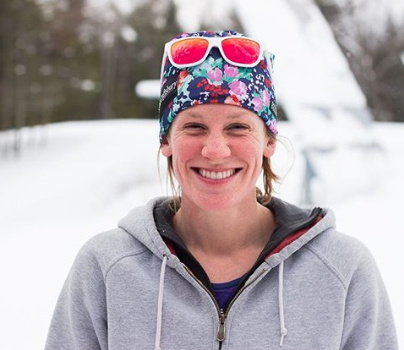
    Anna Schulz is the head coach of the Craftsbury Junior and Bill Koch League Teams. She offers insight into the college admission and selection process. (Photo: Instagram @craftsburyoutdoorcenter)

    A native of the area and alumn of Pepa Miloucheva’s junior program at Craftsbury, Anna Schulz is entering her fifth year as the head junior and Bill Koch League (BKL) coach at the Outdoor Center. Before returning, the 32-year-old Harvard grad spent two years coaching in Bend, OR, then worked with the Mansfield Nordic BKL while earning a master’s degree in public administration at the University of Vermont. Schulz was the 2018 recipient of the NENSA Bill Koch League Leadership Award and attended the 2019 Junior World Championships as a member of the wax team. 

    While much of her insight comes from her time developing as a junior athlete, racing collegiately, and working with young athletes predominantly in the Northeast, her recommendations are relevant to juniors nationwide who are interested in training and competing after high school.

    At Craftsbury, the discussion of whether an athlete has aspirations for collegiate ski racing begins as early as their freshman year of high school. 

    “Every spring, we have all of the high-school-aged kids fill out a goals form for skiing,” explained Schulz in a call. “Some of the questions are really specific — performance and results goals for the upcoming season — and then there are some that are long term. Do you want to try to ski in college? Do you just want to have it as a life-long sport? So we get an inkling as coaches starting in their freshman or sophomore year.”

    As the athlete progresses through high school, the questions increase in frequency and specificity in order to keep track of where they stand in the college process. 

    “When they’re juniors, we start to ask them a lot more questions about what they’re thinking about and what their goals are. We put together a big info packet for our program that’s essentially everything we know about skiing in college. Part of it is a timeline for the kids’ junior year.”

    This timeline includes recommendations on when to take the SAT or ACT, when to begin working on the college essay, and when an athlete should expect to be hearing from potential schools — September 1st of their junior year, per the NCAA rulebook. A robust database of the NCAA and USCSA programs nationwide is also included, along with contact information for the respective coaches, noteworthy team results, and information on training facilities and snow access for each program. [FasterSkier is working on crafting a generalized version of this document which will be shared at a later date.]

    Schulz explained that she meets with each of her athletes to narrow this list based on which programs best suit an athlete’s needs and goals.

    “We try to talk to the kids individually about it, so if we know that skiing is definitely their priority and they don’t care as much about academics they just want to go to a really competitive school for skiing, we’ll recommend, ‘Maybe you should look at these schools.’ And if they’re really excited about academics and maybe their skiing is not super strong or they’re not sure that they want to ski in college, we definitely talk to them about USCSA.” 

    She continued that not many of her racers so far have expressed interest in pursuing a post-graduate program or gap year. 

    Once a subset of potential schools has been identified, Schulz recommends that athletes begin scheduling unofficial visits during the spring of their junior year and the subsequent summer. While evaluating the opportunity to develop as a skier in a particular program is inevitably one of the focuses of these visits, Schulz encourages her athletes to widen their lens to ensure the school is a good fit beyond its athletic offerings. 

    “One thing we try to push them on is, ‘If you were not skiing, would you still like it there? Would you be happy where you are?’ Because kids often go to college and they decide that they don’t want to ski because there’s so much other cool stuff to do, or they get injured, or whatever it might be.”

    She also encourages athletes to meet with coaches and to arrange an overnight stay or meet up with one of the athletes on the team to get a feel for what the environment is like. Athletes can also take advantage of coaches and older peers from their program who may have attended a school of their interest.

    “We are pretty lucky at Craftsbury in that we have the Green Racing Project skiers here. A lot of them are fairly recently out of college, and between our coaching staff and the GRP, we have a whole smattering of college represented. So the kids can talk to someone who went to Williams or Bowdoin or UVM. There are a lot of representatives here to answer questions and I think that really helps them get a sense of what it might be like.” 

    One of the most important aspects of the process that Schulz discusses with athletes and families is the financial aid available at different programs. She believes there are a lot of misconceptions in regard to athletic, merit, and need-based scholarship and recalls not understanding this herself until her older brother went through it.

    “Kids will routinely say, ‘I could never go to Harvard or Dartmouth because I can’t afford it.’ So learning about need-based financial aid is hugely important for some families. Some families will say, ‘Oh, my kid is super fast at skiing. They’re probably going to get a scholarship.’ And then they learn that Ivy League and NESCAC schools don’t offer athletic scholarships and that’s kind of a blow to them. So just trying to talk to families about the money piece is really important.”

    She continued that many families are also misinformed about how much or little results at Junior Nationals can have on admissions. 

    “You can be super fast at skiing, but if you don’t have very good grades or test scores, there’s only so much that coaches can do to help you get in. I think there’s a lot of misperceptions around how recruiting and admissions work.”

    Information regarding GPA and SAT/ACT requirements can be found on most schools’ websites. Schulz recommended a Google search to look at averages and minimums. 

    Apart from selecting a school, Schulz also talks with her athletes about the changes they will experience as they transition into a college program. 

    “The conversations vary a lot depending on where they want to go to school. Especially coming from rural Vermont, if a kid is looking at Harvard, it’s going to be really different and training is going to be really different. So we help them envision what training might look like as far as the physical environment. Are you going to be able to ski from campus? Are you going to have nice trails? Does that matter? What is the rollerskiing going to be like? Trying to get into their heads what the day-to-day training might be like.”

    Apart from training, leaving the home and adjusting to newfound independence can be a challenge for some athletes. With the college experience comes increased social and academic pressure as well as new demands on their time. Schulz explained that these issues are also part of the dialogue on the junior race team, but they are less straight forward than setting a date for the SAT.

    “I don’t think there is a real template for that. Some kids are so anxious for that independence and some kids would just stay at home and we’re more pushing them toward going somewhere farther away and out of their comfort zone.”

    In most cases, skiers miss a lot of class time in the winter. Races typically fall between Friday and Sunday, but with travel, athletes may miss additional class time. Coupled with the increased rigor of collegiate academics, staying afloat can be difficult if an athlete is not prepared. Schultz added that she has not seen the adjustment to keeping up academically as an obstacle for most of her racers. 

    “A lot of the kids that we coach here are pretty well prepared for a lot of the demands on their time in college because they mostly go to public schools, so there’s not really a whole lot of concessions in their schedule to work around ski training. Which is one kind of weird advantage that public school kids have over ski academy kids as far as knowing how to juggle their time and talking with their teachers about a class they’re going to miss and having to figure out some of that stuff on their own.”

    She added that the learning curve has been steeper for her skiers that have attended Craftsbury Academy, which she referred to as a “quasi ski academy” as it enables students to adjust their class schedule to better accommodate their training and racing. 

    During the school selection process, Schulz also discusses setting performance goals for the collegiate race field. Depending on the school, an athlete might expect to race among the top skiers right away, while others might need to focus on developing as an athlete for a few more years before making the race team. 

    “It’s about being pretty honest with them and I think it’s pretty important to have those conversations with them. To say, ‘Hey, it’s cool that you’re really excited about Dartmouth, but just so you know, this is about where you’re probably going to stack up on the team. That means you would go to these open Carnivals but probably you’ll be skiing Eastern Cups with the development team.’”

    If possible, Schulz recommends an athlete race in a field with collegiate skiers to determine where they stack up so they can set realistic performance goals once they have joined a team. 

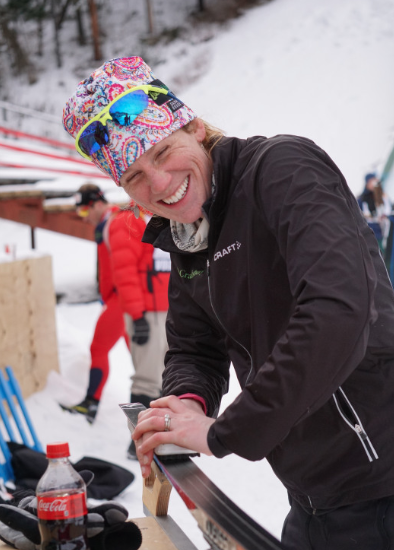
    Anna Schulz, head junior and BKL coach at Craftsbury, waxes her athletes’ skis with a smile. (Photo: Screenshot Craftsbury.com)

    “The East is really lucky to have all of these big races that have college skiers and juniors. Whether its a SuperTour or an Eastern Cup that gets combined with a Carnival, there are multiple times every year where the high school kids are skiing against the college kids. They can kind of get a sense, too, of, ‘Oh. I just beat all of the Bowdoin boys except for their top guy, so maybe I would make the Carnival team there.’ That’s been a really useful tool.”

    After an athlete leaves her program, Schulz leaves her skiers’ training up to their respective new coaches, however, she has increasingly worked with her athletes during the summer.

    “We’re just getting to the point of having a bunch of kids now who we worked with as juniors who have gone off to college. A lot of them are back around for the summer, so we have a little college summer training group.”

    Unless the athlete has a predetermined plan for summer, Schulz resumes writing their plan so they can plug into the rest of the training happening at Craftsbury.

    “It’s really dependent on their college programs and their college coaches, but for the most part in the summertime, their college coaches are saying, ‘Go train with your club and do whatever they’re doing. If you have a strong training group, that’s great. That’s super important.’ So we have a couple of Middlebury and Dartmouth girls, a UVM skier, a St. Lawrence skier who are all around for the summer and we were writing their training plans and they would float between doing workouts with the juniors and with the GRP.”

    When the athlete heads back to school, Schulz hands the reigns back to the college coach but updates them with insight into the athlete’s progress that summer.

    “Some of the coaches I communicate with fairly often, even if it’s just saying, ‘Hey. So-and-so was training a lot this summer and was looking pretty tired.’ Or, ‘Just so you know, this person got a concussion.’ So some of the coaches we’re in touch with a lot, and others I’ve barely ever emailed with. I try to just let them go and only keep tabs on them if needed or if they reach out and say, ‘Hey, I’m having a hard time. Can you give me some advice?’”


    This series will continue with an interview with Cami Thompson-Graves, head coach at Dartmouth College, who will share insight into the college visit and the collegiate coach perspective on the recruiting and admission process.

  • USCSA: The “Hidden Gem” Pathway for Non-NCAA Collegiate Skiers

    USCSA: The “Hidden Gem” Pathway for Non-NCAA Collegiate Skiers

    Last year, 174 athletes in the male and female U18 categories competed at Junior Nationals in Anchorage, AK. This number represents a small fraction of the cross country skiers throughout the country in that age category. As there are only about 30 NCAA programs nationwide that offer Division I or Division II cross country skiing, the opportunity for high-level training and racing narrows significantly after a skier graduates from high school. 

    However, the door to continue to pursue collegiate nordic skiing does not shut on an athlete who does not make or does not wish to compete for an NCAA team. While lesser known, the United States Collegiate Ski Association (USCSA) has created an opportunity for hundreds of additional skiers throughout the U.S. to continue to participate and compete in cross country skiing. In essence, USCSA is Division III skiing, however, because it is not under the NCAA jurisdiction, it allows for much broader entry, making it accessible to both club and varsity programs. 

    The mission statement states, “The USCSA asserts that student-athletes, of ALL levels and abilities, should have access to a quality and exciting venue of competition.”

    USCSA programs can be found throughout the majority of the country at schools like Cornell University, West Point, St. Olaf College, University of Wyoming, and Colorado Mesa University.

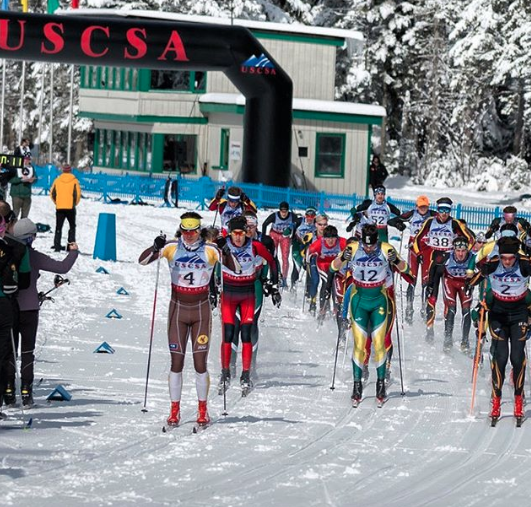
    Athletes take to the course during a mass start classic race at the 2019 USCSA National Championships in Jackson Hole, WY. (Photo: USCSA.com)

    Much like the NCAA, regional USCSA coordinators organize a season of races, each hosted by a member school, leading up to a regional championship in late February. These races are held at many of the same venues as the NCAA races. At the end of the season, the top teams and individuals from each region compete at a five-day national championship in early March in conjunction with the other snowsport disciplines of USCSA. These championships have been held at prestigious venues across the country including Jackson Hole, WY in 2019, Lake Placid, NY in 2018, and Mt. Bachelor, OR in 2017. 

    In contrast to an NCAA program, both men and women race the same distances in both sprint and distance events, promoting equality across genders. The USCSA also prides itself in being team-centric, emphasizing team scoring, as opposed to focusing on individual results.

    In most cases, USCSA programs are not exclusive, meaning teams or clubs are open to anyone, regardless of their previous experience or exposure to the sport. All athletes are welcome to participate in races. In contrast, an NCAA program may have a limited competition team. However, this inclusivity does not indicate that the programs are not competitive or that they would not serve a high-level junior skier. 

    “The flexibility of a USCSA team is incredible because you can have people that have never skied before to people that are – there are USCSA racers that have been Junior National Champions,” said Christi Boggs, Vice-President of Nordic Skiing at USCSA and nordic coach at the University of Wyoming (UWYO). “There are some really high-level racers, but it also allows for someone who just loves to do it to keep doing it or someone that wants to try it can try it.”

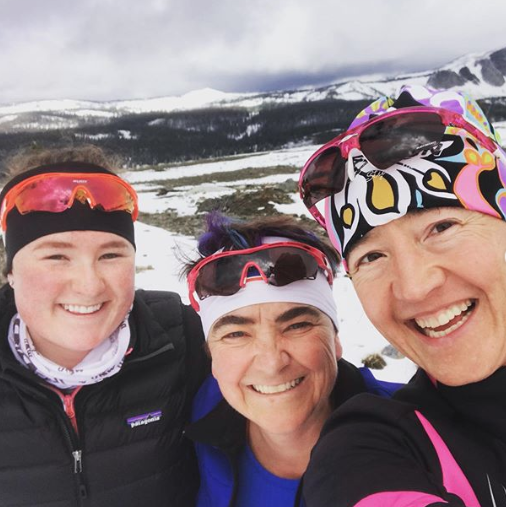
    Christi Boggs (center) of the University of Wyoming on a crust ski with her partner and fellow coach Rachel Watson (right) and athlete (left). Boggs is the Vice President of Nordic Skiing for USCSA. (Photo: Instagram @uwnordicski)

    A graduate of UWYO herself and a faculty member in the School of Culture, Gender, and Social Justice, Boggs has been overseeing the school’s club program for the last 22 years. During her own time as a student and athlete at UWYO, the nordic ski program was a Division I NCAA program and Boggs became a four-time All American, later pursuing biathlon and winning the Rocky Mountain Cup and North American Cup twice each. But like several other programs, the UWYO lacked the funding to support the program. It was cut in 1993.

    While top junior skiers typically do head to NCAA programs, Holly Brooks and Clare Egan, both USCSA alumn, show that the programs can still be stepping stones to elite competition. 

    In reflecting on her decision not to ski for an NCAA team, Egan described her high school self as “not a real serious athlete”, though she did win the Maine State Championships in 2006 and competed in Junior Nationals in both 2006 and 2007. She explained that she did not do any formal summer training in those days, and out of the three sports she participated and had talent in – she also ran cross country in the fall and track in the spring – none held priority for her. Though she did want to continue in athletics, she was very academically motivated and aspired to study abroad and to continue to play music during her college career as well.  To Egan, the idea of being limited as a Division I athlete was off-putting. 

    “When I applied to college, I wasn’t really sure what I wanted to do,” Egan recalled. “I got offered a Division I running scholarship, I got into Middlebury where I would have been focusing on skiing, and UNH, I was offered a scholarship that would have been a combination of running and skiing. But in the end, I decided that I didn’t want to be a full-time athlete at that point, which is what my impression of Division I was.”

    Egan ultimately chose Wellesley College, located 30-minutes west of Boston, MA. 

    While attending Wellesley College, Clare Egan competed in the USCSA in addition to racing in regional NENSA and EISA races. (Courtesy Photo)

    “I ended up picking Wellesley, among other things, because it gave me the opportunity to continue participating and competing in all the sports that I did without having it be Division I,” she explained.

    At the time, Wellesley did not offer cross country skiing, but the campus is located within five miles of the Weston Ski Track, so she knew that she could continue to ski. She would also be able to participate in New England Nordic Ski Association (NENSA) races. Egan also joined the varsity cross country and track teams. 

    “I guess right away my fall at Wellesley, I decided that I did want to do skiing and that I wanted to get involved in some way,” she said. “So I started a club through the student activities and got involved in USCSA.”

    By joining the USCSA, which she referred to as a “hidden gem”, Egan was able to race a full season in the Northeast, participating in USCSA and NENSA races as well as Eastern Intercollegiate Ski Association (EISA) carnivals. As was her hope, she studied abroad her junior year in Italy and Switzerland, where she skied regularly and raced in the Engadin Ski Marathon. In her senior year, Egan qualified individually for and competed at NCAA’s in addition to the USCSA national championships. As she had one remaining year of NCAA eligibility, her path then led her to the ski team at the University of New Hampshire and eventually to the Craftsbury Green Racing Project Team and now the US Biathlon Team. 

    While this trajectory is non-traditional for an Olympic athlete, it demonstrates that an athlete can be successful through a number of different pathways, some more direct than others. Egan attributes some of her longevity in the sport as her career has developed to being in a low-pressure and relatively unstructured environment for so long.

    buy metronidazole online

    “I can say that I’m not burnt out,” said Egan. “I think a lot of other people who are my age, they stopped a long time ago and maybe part of that is because they competed so intensely for so long already by the time they were 22. Whereas, I did not start doing year-round training until I was 23.”

    Egan could not state outright that had she skied four years in an NCAA program she would have fast tracked her career. But the flexibility that USCSA allowed her was a good fit for her and kept her involved with the sport through her collegiate career while focusing on academics. 

    “I do think that being able to stay involved with skiing in a way that worked with the rest of my life allowed me to – I was able to get involved with it again later because I stayed in touch with it,” she concluded. 

    Two-time Olympian Holly Brooks, who attended Whitman College in Walla Walla, WA, attributes more of her success in ski racing to her USCSA experience. 

    Holly Brooks poses with her Whitman Nordic teammates and a Norwegian athlete after forerunning at a World Cup race in Soldier Hollow, UT, in 2001. She explained that they were excited to take a picture with a Norwegian. Little did she know she would one day be racing at the World Cup level herself. (Courtesy photo)

    “My time at Whitman played a really important role in my ski career,” wrote Brooks in an email. “Coming out of Seattle I had never been on a bigger team before, and rarely had coaches other than my dad. I actually choose Whitman because it had a ski team and was on the west coast. I wasn’t nearly strong enough to go to any of the larger, more competitive NCAA programs. Once at Whitman, I had awesome teammates and coaching and my love for skiing grew and grew. 

    “USCSA didn’t really have a ‘regular season’ but Nationals seemed like a big deal and it was enough to motivate us to train hard every day,” she continued. “I have no doubt in my mind that had this opportunity not been available my time and interests would have turned to something else. In essence, USCSA skiing at Whitman served as an important placeholder for skiing in my life. It was the link between being a solo skier in Seattle, to getting me to Alaska, where I truly developed as an athlete.”

    In late May, the Aspen Institute held a forum titled the Future of the U.S. Olympic Movement: Reimagining Goals Beyond Medals. The forum touched on a range of topics including SafeSport, athlete mental health, and more holistic youth sports and development programs. A theme in the development conversation was creating opportunity from a grassroots level, that if an athlete wanted to continue in the sport and compete, they should be able to. The USCSA aligns with this grassroots approach in fostering development as its inclusivity promotes the retention of athletes in cross country skiing during a time frame that many stop participating as well as introducing newcomers to the sport.

    “I do think that USCSA plays a really important role, that I wish more people knew about, as a way to keep people involved in the sport through that 18 – 22 time period,” expressed Egan. “You don’t just have to quit after high school if you’re not going to be a Division I athlete. That’s so ridiculous. Skiing, for some reason, is one of the few sports that we look at that way.” 

    Jim Allott was the head coach at Clarkson University for 19 years during which he led the Golden Knights to 7 USCSA national titles. (Photo: clarksonathletics.edu)

    This viewpoint was expanded upon by Jim Allott who recently retired from his role as head coach at Clarkson University in northeastern New York after 19 years. In seven of those years, either the Clarkson men or women were the top nordic team at the USCSA national championships. Both teams won in 2012.  

    “When you consider how many colleges are not NCAA or skiers for lots of different reasons don’t have the ability to make an NCAA team, you’re turning away hundreds of potential nordic athletes,” said Allott “If you think about what we see here in Potsdam where our regional is 10 to 12 teams, and then you look at our NCAA cohort with EISA, and they have a similar number of teams. So just in that one quick snapshot, you can see that we’ve doubled the number of nordic teams.” 

    Allott also echoed Egan’s words about athlete “burn out”, adding that the dynamic and culture of USCSA programs allows skiers to grow both their ability and love for the sport. Allott described the USCSA experience as “both positive and fulfilling.”

    “It instills the passion that they will want to pursue it when they leave college, and that’s rare in a lot of college athletic sport situations. Many athletes are just done, they’re either just cooked and fried, or they really don’t continue in their sport.”

    During his tenure, Allott has seen many of his athletes continue to pursue cross country skiing after college, whether their involvement is recreational, in leadership roles within USCSA, or as a coach of a youth program. He described USCSA alumni as being “like the growth of a tree”, where each forms a branch to create a nationwide community connected by a common passion.

    “I take a fair amount of pride in how many of my athletes move on and get involved in the sport of nordic skiing,” said Allott. “That ranges anywhere from a Bill Koch level to high school coaching. The last 15 years, our USCSA regional coordinators have all been Clarkson nordic alumni.”

    Boggs seconded Allott’s sentiment about the prevalence of her former athletes in coaching and other areas of sport. She attributes this connection to the sport to the positive culture cultivated within the USCSA opportunity. 

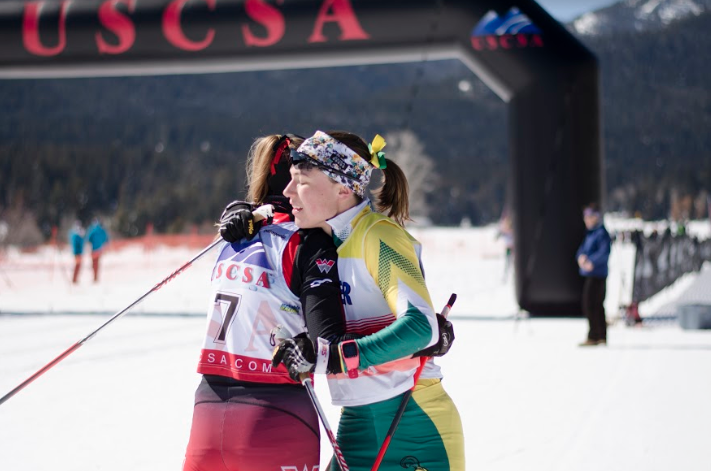
    An athlete from Clarkson University celebrates at the finish with a competitor from Western State Colorado University during the 2019 USCSA National Championships in Jackson Hole, WY. (Photo: USCSA.com)

    “All of that builds opportunity and pathways for athletes to become really important to the sport overall,” said Boggs emphatically. “I think that’s huge.”

    She continued that the nature of students attending USCSA member schools has the power to position them in roles where they can create a large impact on the overall American nordic ski community.

    “A lot of USCSA teams – they’re military academies and Ivy League [schools]. These are people that are really going places and getting graduate degrees and can really make a difference going forward. I think that is super important for building the sport.”

    Both coaches emphasized the impact of USCSA beyond the development of the skier to the transference of the life skills cultivated through the experience, which includes benefits such as better sleep, self-reliance, positive self-image, teamwork, and time-management. They expressed that these traits help alumni obtain and succeed in post-collegiate careers and to lead healthy and active lifestyles. 

    After taking the role of Cross Country Sport Development Manager last fall, Bryan Fish described a system of three metrics to track the success of US development: growth in the number of skiers, retention of those skiers, and lastly, improvement in performance. By promoting inclusivity and creating opportunity, USCSA supports this system, assisting in the development of a healthy and thriving American cross country ski community. 

    “If we don’t maintain and fight for diverse options for people to keep skiing I think our sport is doomed,” wrote Brooks on USCSA’s role in the growth of the sport in the US. “The beauty of cross country skiing is that it can be a lifelong sport. But… we need to make sure that opportunities exist for people to stay engaged.  We need enthusiasts, we need fans, we need coaches, groomers, ski parents, officials, donors, etc. The health of our ski community depends on having options. Unfortunately, the official ski program at Whitman folded years ago. I am thankful that the opportunity existed during my time there.” 

    Boggs reaffirmed this message, furthering the grassroots model of supporting the development of cross country skiing in the US.  

    “Our support base, the next generation of skiers and the support base for the skiers we have, don’t come from the elite athletes,” expressed Boggs. “It comes from all the people watching the races, the parents taking their kids to races, people that are just passionate and excited. That’s who is donating the money, and spending the time volunteering to coach, and driving kids to races. Those are all the people that get really excited. And I think USCSA is uniquely positioned for that.”

    To wrap up her beliefs about the role of USCSA in the success of American nordic sports, Egan offered a concluding message to support high school skiers amidst the “college conflict”.

    “If you’re thinking about being an athlete and you don’t necessarily want or don’t qualify to be on one of those Division I teams, you don’t have to give up skiing at all,” concluded Egan. “Someone might not be ready to do Division I in high school or they might not be interested, but there are plenty of athletes who have the passion and ability to stay involved and we shouldn’t exclude those people.”


  • The College Conflict: Part 2

    The College Conflict: Part 2

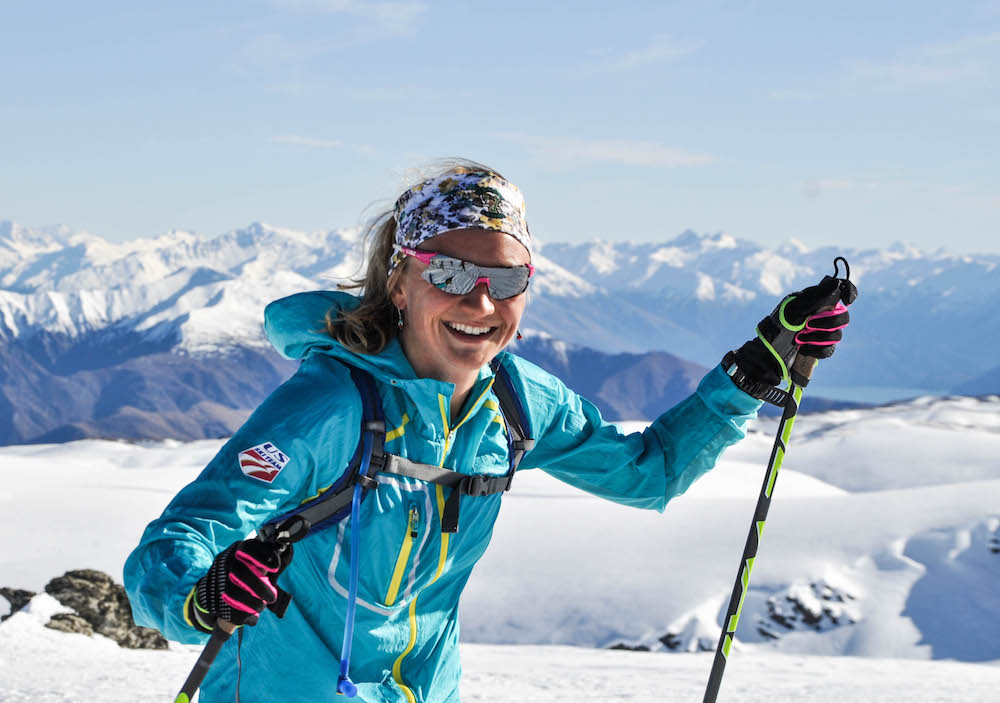
    Author Alayna Sonnesyn during a crust ski at the Snow Farm this summer near Wanaka, New Zealand. (Photo: Matt Whitcomb)

    The following was written by Alayna Sonnesyn, a new member of the Stratton Mountain School (SMS) T2 Team who graduated from the University of Vermont (UVM) this past spring.

    Originally from Plymouth, Minnesota, Sonnesyn, 22, raced on the UVM Ski Team for four years and qualified for four NCAA Skiing Championships teams. She placed second and third in two races at 2017 NCAA Championships, and in her senior season, won the first five Eastern Intercollegiate Ski Association (EISA) races and went on to reach the podium in 10 out of 11 EISA races. Sonnesyn expressed an interest in exploring the dilemma many of the nation’s top skiing talents face out of high school: whether to attend college or get an early jump on a pro-racing career. Part 1 can be viewed here, and the two-part series is also on her blog.

    ***

    According to the Bureau of Labor Statistics about 70 percent of 2017 high school graduates enrolled in some form of college the following fall. In addition, a handful of the working population decided to either start college after a few years or return to classes after a much-needed hiatus. But what happens if you stray from the norm … and something pulls you in another direction? For Jessie Diggins and Andy Newell, there were alternative ideas for the future.

    At the time, both Jessie and Andy followed the same route, exploring collegiate racing right out of high school. Similar to many high school skiers, they went through the process of applying to schools, talking to coaches and establishing academic opportunities for themselves after graduation.

    Jessie Diggins being goofy during our recent training camp in New Zealand. (Photo: Julia Kern)

    “When I decided to go full-skiing, I had deferred a place at NMU, and had that as my Plan B if I decided that full-time skiing was too stressful or not as fun as I wanted it to be,” Jessie said.

    “What I decided to do was defer from UVM, but I was also able to take some classes from the University of Utah with tuition reimbursement and a loaned laptop courtesy of the US Ski Team,” Andy explained.

    At the time, both skiers were still open to going to college, but decided to “take a year off.” The only difference was that they never experienced that longing to go back into full-time school. As previously mentioned in Part 1 of this series, many skiers who decided to take a gap year soon came to the realization that something was missing and that they still wanted a balance in their life. It made sense for them to go back to school and ski in college. But why change something when you’re already happy?

    According to Jessie, “At the end of the day, a happy skier is a fast skier… For me, I was super happy having all my eggs in one basket and making skiing my full-time job. I love having skiing as my career, and I perform well under stress so having the pressure of becoming a professional athlete at a young age didn’t create too much anxiety.”

    This stress worked well for Jessie. With such a unique combination of personality, work ethic, and training load, she knew taking this route would be better for her.

    buy ciprofloxacin online, ajedrezextremadura

    “Personally, going to college wasn’t going to work for me if I wanted to get the grades I wanted and train as hard as I wanted,” she said.

    Jessie went on to note how important it is to figure out your own personality; whether you can do a good job at balancing school and skiing, or whether you’re excited to focus all of your time and energy on one goal. She found that specificity suited her lifestyle really well after high school and carried that momentum for years to follow.

    Similarly, Andy found success from a young age and didn’t see a reason to change what was already working so well for him.

    “To get that kind of international exposure was sweet for a junior, but more importantly it got me hooked on skiing — the addiction to the big show and excitement of European racing,” Andy said of racing at World Juniors, U23’s and World Championships his first year out of high school.

    With the need for speed and an obvious progression into becoming an elite skier, Newell admitted that he pretty much gave up any opportunities for racing in college after he started signing contracts and collecting win money. Although, he notes that the ski racing environment was slightly different at the time he made this choice. In high school, Andy was named to the U.S. D-team, which, at the time, provided free housing in Park City, access to daily coaching, and most of the Winter travel expenses covered.

    “I consider myself lucky that the U.S. Ski Team was in a position then to support D-team members a little bit better,” Andy said.

    He explained that he wouldn’t have given up his opportunities for anything. He was feeding his addiction to the big show of European racing, making decent money, and having the time of his life! What else could he need or want?

    So, the big question is, do all the stars need to align? Do you need to have the right opportunities present themselves at just the right time? Maybe! But it’s important to note that this right moment appears differently for everyone! What is more impactful, is the way you respond to the opportunities presented to you.

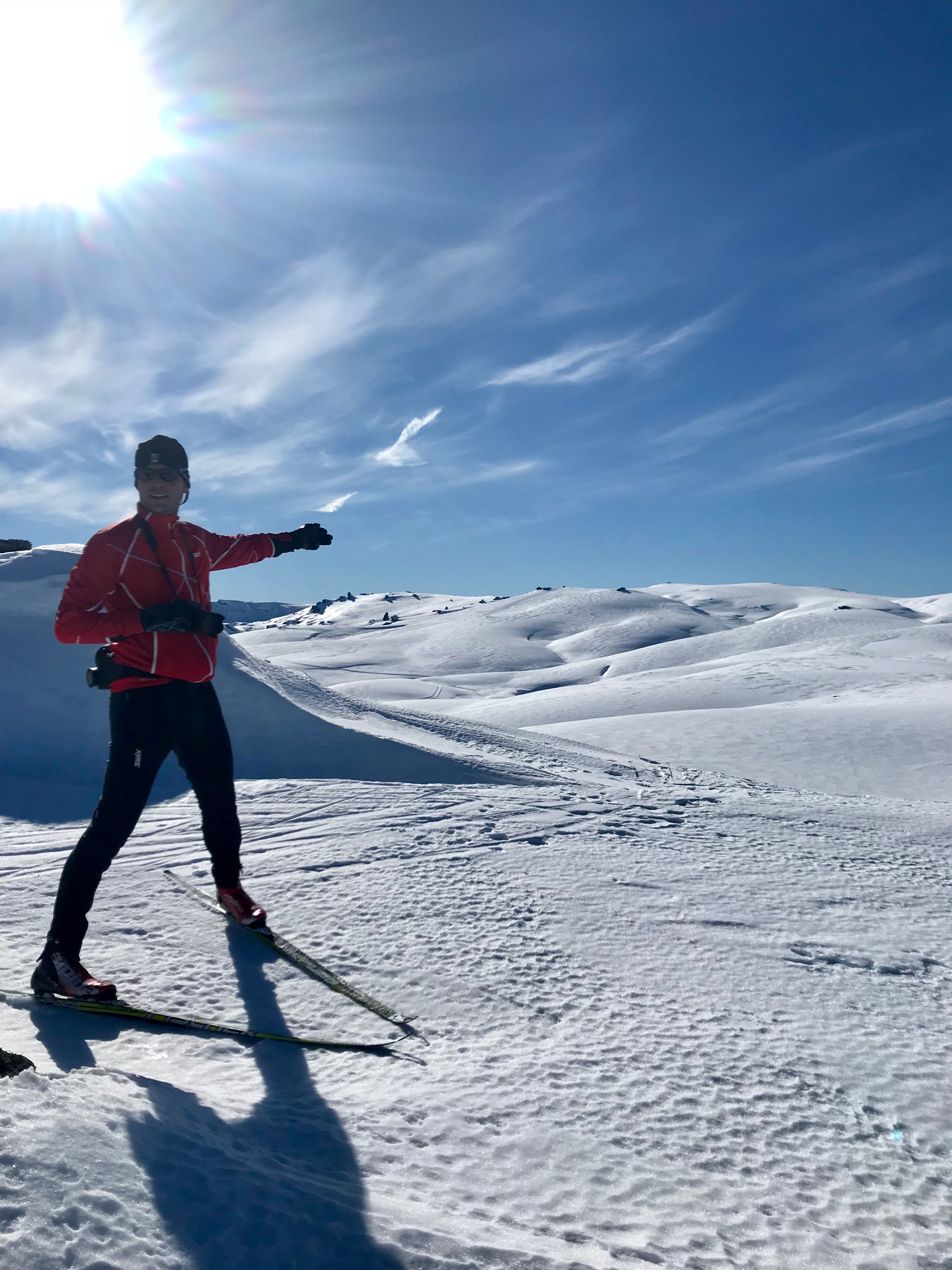
    U.S. Ski Team coach Matt Whitcomb pointing us in the right direction during a crust cruise at the Snow Farm in New Zealand. (Photo: Julia Kern)

    “There are a lot of options these days,” said U.S. Ski Team coach Matt Whitcomb, “but those who become exceptional are the ones who actually pick something from the list, and they run like hell with it.”

    You don’t need to do exactly what your teammate did, or what an Olympic medalist did.

    “Create your own path, get vulnerable,” Whitcomb advised. “Most people just run down America’s path of mediocrity, when they could instead be cutting their own unique route.”

    Every skier can take a different road. Maybe that road is pin-straight without a single bump, or maybe that road has curves and hills and potholes. It doesn’t matter what it looks like or how you approach it, as long as you figure out the best scenario for you and what makes you happiest. One way to solve this solution would be to test out every possibility; take a gap year, go to one school, maybe transfer, take another year off — but this is unrealistic and requires far too many resources. I think that the easiest way to find your way is to talk to others that have faced a similar situation — an older sibling, teammate, coach, or friend. Also, remember that you really can’t go wrong. No matter what choice you make you will still face unexpected fears, experience a new lifestyle, and figure out why exactly you still love this crazy sport!

    goochelaar, lugardepascuais

    For those of you taking a year off from school, I wish you the best of luck in finding the perfect place where you belong. For those heading back to school, I hope you cherish every moment of it, because it goes by far too quickly. Regardless of which road you choose, own it! Make it your decision and give it your best shot/all you’ve got. If you do that, you can’t go wrong.

    “There is no right or wrong decision, do whatever works for you!” — Sophie Caldwell

    “You can be the fittest person out there, but if you are not happy and motivated, it will be very hard to ski fast.” — Julia Kern

    “My only regret in my skiing career is that I was not mentally prepared to win a medal at my first Olympics as a 22 year old…. I thought I had a chance of winning a medal but I didn’t actually BELIEVE I could do it. So above anything else I want young skiers who are graduating from high school to know that four years is not a long time and you can find yourself at the start line of the Olympics before you know it.” — Andy Newell

    “I don’t think there’s one model that fits every person. It’s also important to remember that it’s not forever!” — Jessie Diggins

    “The opportunities will present themselves when the the time is right!” — Ida Sargent

    “If you want to be exceptional, don’t be afraid of being an exception.” — Matt Whitcomb

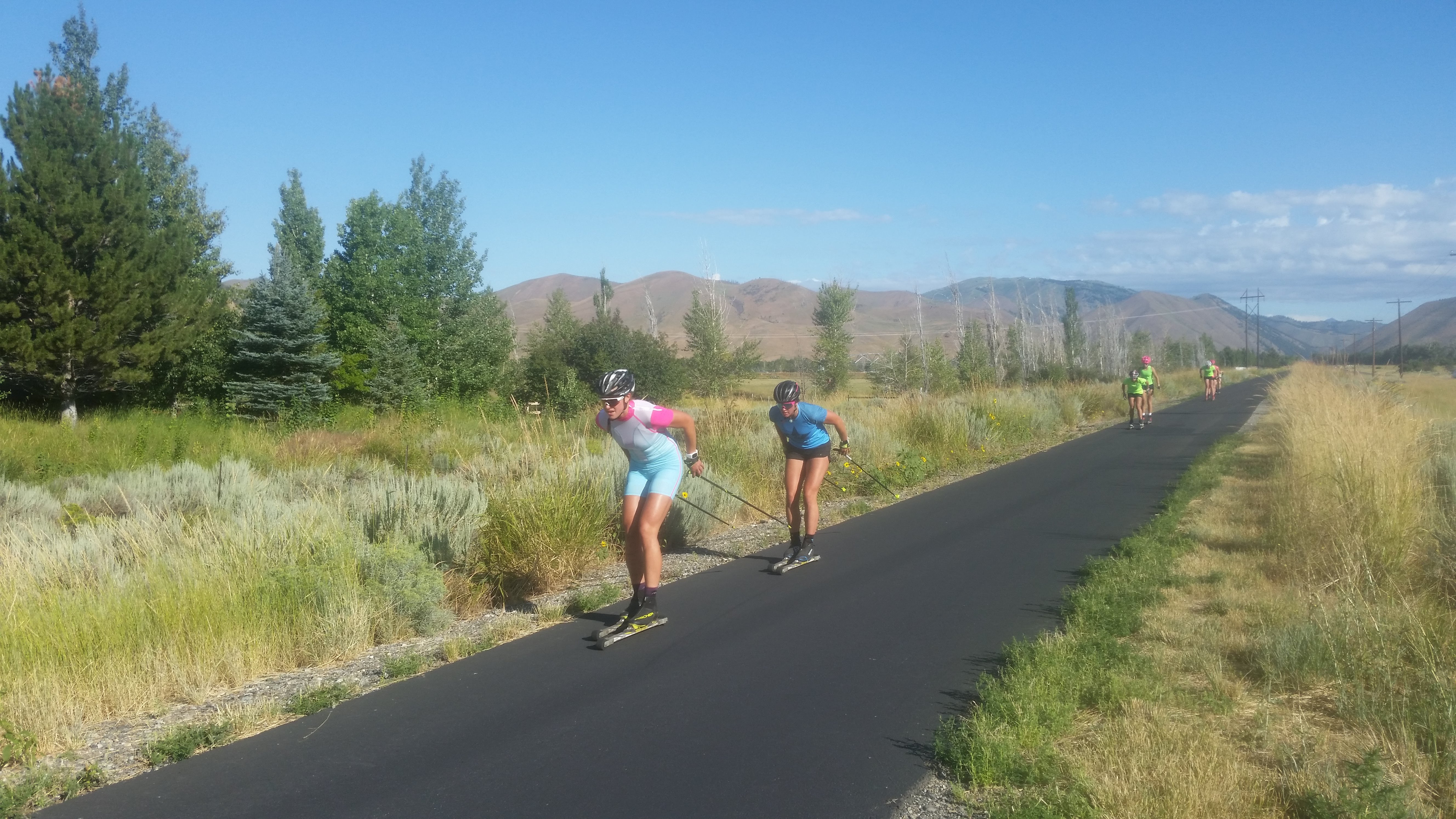
    Alayna Sonnesyn with one of her former UVM coaches Perry Thomas at the 2018 App Gap Challenge Rollerski Race in Vermont this summer. (Courtesy photo)