Tag: Collegiate Ski Racing

  • If we know better, why don’t we do better?

    If we know better, why don’t we do better?

    This article was made possible through the generous support of our voluntary subscribers. If you value coverage like this, please support FasterSkier with a voluntary subscription.

    USCSA Nationals 2024

    Where do High School and USCSA programs fit into our development.

    In a recent article, I laid out the disconnect between what we say about long-term development in Nordic skiing and what we do and the rewards. “Long-Term Development in Nordic Skiing: What We Say vs. What We Actually Do”. Most people that I talk with agree with the premise of long-term development and keeping youth in sport longer. None of this is particularly controversial. We all understand that endurance development, technical skills and learning how to race takes years. We now see this statement across virtual all endurance sports world, that early results are a poor predictor of long-term success.

    So, if we assume there is a consensus then we must ask why the system seems to act in the opposite way. Because systems don’t reflect what we say. They reflect what we reward through early selection, for competition and training opportunities. That’s really the question sitting underneath all of this.

    We’ve reached a point where there’s broad agreement on philosophy. Long-term development matters. Early results don’t predict long-term success. Endurance, technique, and racing ability take years to build. You hear that all endurance sports now, not just skiing.

    None of that is controversial!

    But if that’s true, then we have to be honest about what follows. Because systems don’t reflect what we say. They reflect what we reward. And right now, the system is still rewarding something very different.

    The incentives tell the story.
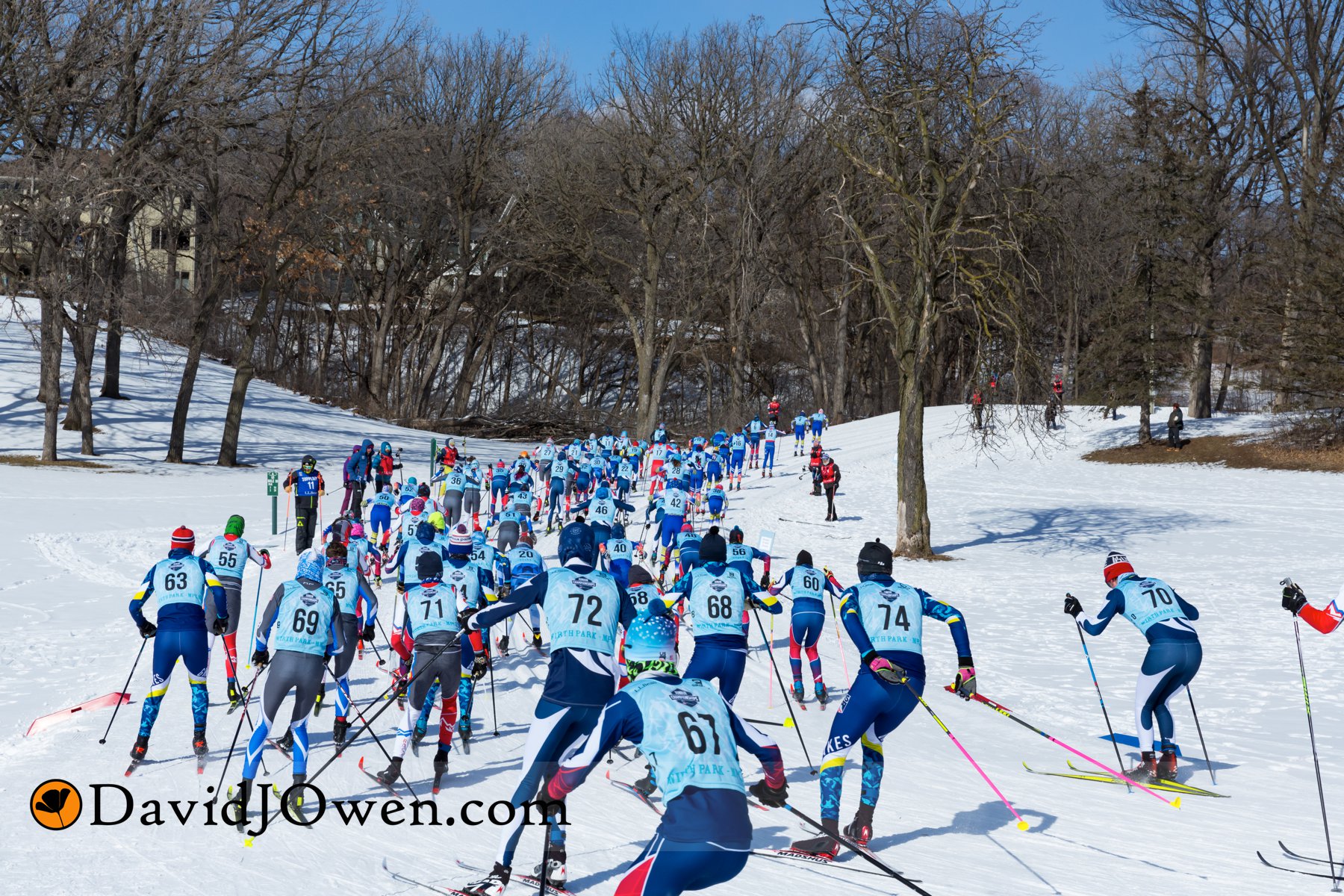
    Skiers from all over the country round the first corner of the Theodore Wirth Park course in the U16 Boys 5 k Classic at Junior Nationals in Minneapolis in 2022. (Photo: David J Owen Photography)

    Junior skiing in the U.S. is quietly organized around early selection. Qualification for Junior Nationals, especially at U16 and younger, carries weight. Rankings matter. Opportunities follow results. No one would say that’s the goal. But it’s the outcome.

    Athletes see it. Parents respond to it. Coaches feel it. And none of that is inherently bad. But when those forces align around early results, the system starts to tilt. Short-term performance carries more weight than it should. And over time, that shows up in participation. The fields in USSS junior races get smaller as the age groups progress. We can debate why, but we can’t ignore that we’re losing athletes along the way.

    The earlier we start selecting, the earlier we start excluding, selecting out athletes. And in a sport like skiing, that’s a problem. Development is long-term, non-linear, and tied to maturation in ways we can’t reliably predict. So, when we sort athletes at 13, 14, or 15 years of age, or younger, we’re making decisions on incomplete information, and treating those decisions as if they’re meaningful. They’re not!

    What we’re really doing is narrowing the pathway at the exact point where it should be widest. If we believe in long-term development, early stages should include more athletes, not filter them out. We don’t lose athletes because they lack talent. We lose them because they stop seeing a path or opportunities forward.

    That loss doesn’t always show up at the top. At the elite level, we can always point to success and say the system works. And in a narrow sense, it does. Every system produces some high performers. But that’s survivorship bias. But even with the perceived success, it is clear that most of those who step onto the World Cup are not prepared and developed for that level of competition, or we see an erosion of their performances over several years.

    What matters more is what happens in the middle. Over time, that middle erodes. Fewer athletes stay. Fewer develop later. Fewer are still around when their best years should begin. And once they’re gone, they’re gone. So, how do we grow the sport and improve the development system? Following are a couple of ideas for the integration of high school and college skiing.
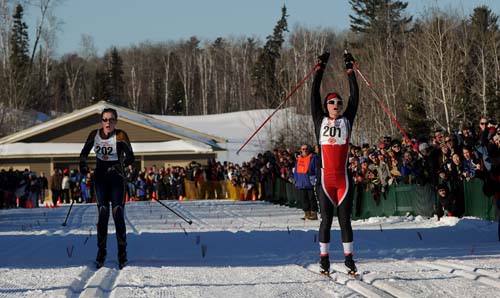
    Stillwater senior Jessie Diggins, right, finishes ahead of St. Paul Academy senior Annie Hart in the 2010 edition of the Minnesota State Meet. (Photo: MSHSL Archives)

    This is where the high school system should come into focus. Whether we acknowledge it or not, it’s one of the most influential environments in the entire pathway. We’re talking about roughly 6,500 high school athletes, compared to about 2,100 in the USSS junior system. That alone tells you something. Most athletes are not in the club pipeline. And there’s very little overlap between the two, in some regions more than others.

    So now you have two systems, often operating in parallel, sometimes in conflict, shaping the same athlete. The club system is year-round, often very expensive, which creates barriers, and it is tied to rankings, qualifications, and progression. Ideally, at least in theory, it is long-term focused. The high school system is seasonal. Compressed. Built around immediate competition, conferences, regional, and state.

    Both have value. But they’re not aligned. And when systems aren’t aligned, the athlete’s abilities are often put in difficult positions. High school seasons are short. That compresses everything. Training, racing, recovery, all of it gets stacked into a three-month season.

    And yet, high school skiing also gets something right that the system needs more of.  It creates a connection. It lowers barriers to entry. It brings athletes into sport who might never join a club. It makes skiing social. It makes it fun. Those values matter!

    Athletes who feel connected to a team stay in the sport longer. That alone makes the high school system one of the most valuable pieces of the entire pathway. The issue isn’t that it exists rather it is not integrated,  where do those high school skiers go after high school, an assumption may be many go into the non-integrated USCSA programs.

    If that gap exists in high school, it becomes even more obvious at the college level.

    Because this is where the pipeline either tightens or disappears. On one side, you have NCAA skiing. Roughly 20–25 programs. Maybe 300–400 athletes. Small, but structured, providing consistent coaching,  clear expectations, and daily training environments that align with the demands of sport.

    On the other side, you have USCSA. Thousands of athletes. Hundreds of active racers. A much broader participation base.  So yes, USCSA is far bigger. But the NCAA is more efficient. In NCAA programs, a higher percentage of athletes improve year over year. More reach FIS relevance. More stay on a performance trajectory. That’s not because they’re inherently more talented. It’s because the environment supports development. Training is consistent. Coaching is present. Progression is clear.

    USCSA shows the opposite. It’s not only a talent problem. It’s a structural problem. You have hundreds of athletes still in the sport. Many have endurance backgrounds. Many are still within a trainable window. But training is inconsistent. Coaching is variable. Development isn’t systematized. And there’s no clear bridge to higher performance levels. So, the conversion rate stays low.

    This is where the pipeline argument starts to fall apart. We tend to focus on the front end, getting more kids into the sport.  But at the USSS level that has been ineffective at best.  And missing the fact that we already have athletes in the system that aren’t welcome or integrated. High school skiing, USCSA, represents a large participation pool sitting right in the middle of the development pathway. What we don’t have is a system that consistently integrates and develops them.

    So, what actually needs to change? Not the philosophy, it seems we already agree on that. What needs to change is how the system behaves across the junior and collegiate level, it means recognizing where the opportunity is not just in the NCAA pipeline, but in the larger, under-structured USCSA system that already exists.

    Even if we integrated the high school athletes and the USCSA athletes into the USSS system, the sport is still tiny. But it seems growing the sport significantly beyond this level is unlikely so we should be looking for ways to include these athletes in the system as much as possible for those who have an interest.

    There are athletes in the system right now, thousands of them, who could or have the potential to improve dramatically beyond high school. Some who could enter the sport late and still become competitive.
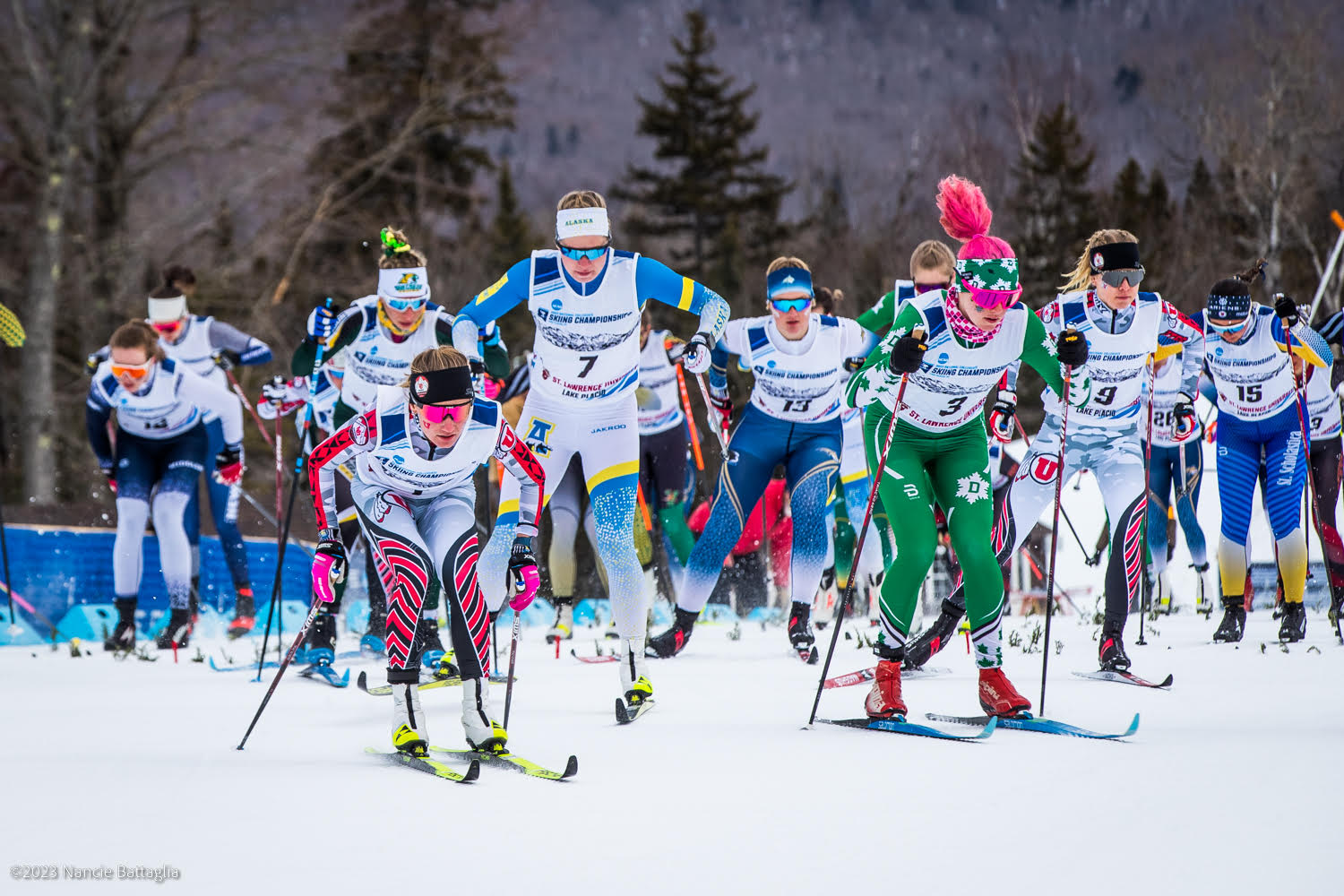
    Novie McCabe controlled the pack for much of the 20-k mass start at the 2023 NCAA Championship in Lake Placid, New York. McCabe became just the fifth three-time NCAA Women’s Champion with her win. (Photo: (c) 2023 Nancie Battaglia)

    At some level, this comes down to a simple choice. Do we want a system that identifies and benefits early performers? Or one that develops athletes over time? Right now, we say the second. But too often, we operate like the first. And the differences are real; we can see it by who improves, who stays in the sport, and when athletes exit the sport.

    We don’t need to overhaul everything. There’s a lot in the system that works. High school brings athletes in. NCAA shows what structured development can look like. Even USCSA shows us how much untapped potential is sitting there.

    But without alignment, those pieces don’t add up. So the question isn’t whether we understand long-term development. It’s whether we’re willing to build a system that actually supports it. Because if we are, the path forward should be clear.

    And if we’re not, we should at least be honest about what we’re choosing instead.


    Help Support Our Olympic Coverage!

    If you value the thoughtful work and access FasterSkier provides, please consider becoming a Voluntary Subscriber. Your support directly fuels our work to cover the people, places, and moments that make our sport special.

    Join the FasterSkier community!
     

  • Unraveling the College Athlete Admission Process with Anna Schulz

    Deciding how to handle the “college conflict”, as aptly phrased by Alayna Sonnesyn, is a daunting and somewhat mysterious prospect, particularly for athletes and families who are unfamiliar with the process. How does a junior athlete know that they are cut out for a collegiate program? NCAA or USCSA? What about a gap year? In this series, FasterSkier spoke with collegiate and junior coaches and athletes who have chosen different pathways to create a resource for the athlete or parent amidst this conundrum. In Part 1 of this series, FasterSkier spoke with Anna Schulz, Head Junior Coach at Craftsbury, about the evolution of the college process during high school, from the early athlete-coach conversations through setting collegiate race goals.

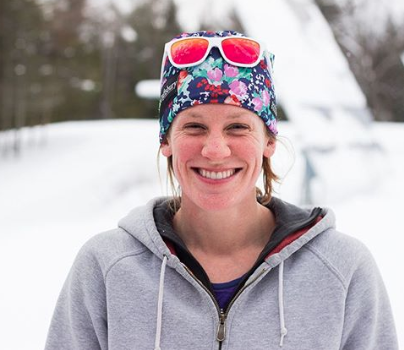
    Anna Schulz is the head coach of the Craftsbury Junior and Bill Koch League Teams. She offers insight into the college admission and selection process. (Photo: Instagram @craftsburyoutdoorcenter)

    A native of the area and alumn of Pepa Miloucheva’s junior program at Craftsbury, Anna Schulz is entering her fifth year as the head junior and Bill Koch League (BKL) coach at the Outdoor Center. Before returning, the 32-year-old Harvard grad spent two years coaching in Bend, OR, then worked with the Mansfield Nordic BKL while earning a master’s degree in public administration at the University of Vermont. Schulz was the 2018 recipient of the NENSA Bill Koch League Leadership Award and attended the 2019 Junior World Championships as a member of the wax team. 

    While much of her insight comes from her time developing as a junior athlete, racing collegiately, and working with young athletes predominantly in the Northeast, her recommendations are relevant to juniors nationwide who are interested in training and competing after high school.

    At Craftsbury, the discussion of whether an athlete has aspirations for collegiate ski racing begins as early as their freshman year of high school. 

    Every spring, we have all of the high-school-aged kids fill out a goals form for skiing,” explained Schulz in a call. “Some of the questions are really specific — performance and results goals for the upcoming season — and then there are some that are long term. Do you want to try to ski in college? Do you just want to have it as a life-long sport? So we get an inkling as coaches starting in their freshman or sophomore year.”

    As the athlete progresses through high school, the questions increase in frequency and specificity in order to keep track of where they stand in the college process. 

    “When they’re juniors, we start to ask them a lot more questions about what they’re thinking about and what their goals are. We put together a big info packet for our program that’s essentially everything we know about skiing in college. Part of it is a timeline for the kids’ junior year.”

    This timeline includes recommendations on when to take the SAT or ACT, when to begin working on the college essay, and when an athlete should expect to be hearing from potential schools — September 1st of their junior year, per the NCAA rulebook. A robust database of the NCAA and USCSA programs nationwide is also included, along with contact information for the respective coaches, noteworthy team results, and information on training facilities and snow access for each program. [FasterSkier is working on crafting a generalized version of this document which will be shared at a later date.]

    Schulz explained that she meets with each of her athletes to narrow this list based on which programs best suit an athlete’s needs and goals.

    “We try to talk to the kids individually about it, so if we know that skiing is definitely their priority and they don’t care as much about academics they just want to go to a really competitive school for skiing, we’ll recommend, ‘Maybe you should look at these schools.’ And if they’re really excited about academics and maybe their skiing is not super strong or they’re not sure that they want to ski in college, we definitely talk to them about USCSA.” 

    She continued that not many of her racers so far have expressed interest in pursuing a post-graduate program or gap year. 

    Once a subset of potential schools has been identified, Schulz recommends that athletes begin scheduling unofficial visits during the spring of their junior year and the subsequent summer. While evaluating the opportunity to develop as a skier in a particular program is inevitably one of the focuses of these visits, Schulz encourages her athletes to widen their lens to ensure the school is a good fit beyond its athletic offerings. 

    “One thing we try to push them on is, ‘If you were not skiing, would you still like it there? Would you be happy where you are?’ Because kids often go to college and they decide that they don’t want to ski because there’s so much other cool stuff to do, or they get injured, or whatever it might be.”

    She also encourages athletes to meet with coaches and to arrange an overnight stay or meet up with one of the athletes on the team to get a feel for what the environment is like. Athletes can also take advantage of coaches and older peers from their program who may have attended a school of their interest.

    “We are pretty lucky at Craftsbury in that we have the Green Racing Project skiers here. A lot of them are fairly recently out of college, and between our coaching staff and the GRP, we have a whole smattering of college represented. So the kids can talk to someone who went to Williams or Bowdoin or UVM. There are a lot of representatives here to answer questions and I think that really helps them get a sense of what it might be like.” 

    One of the most important aspects of the process that Schulz discusses with athletes and families is the financial aid available at different programs. She believes there are a lot of misconceptions in regard to athletic, merit, and need-based scholarship and recalls not understanding this herself until her older brother went through it.

    “Kids will routinely say, ‘I could never go to Harvard or Dartmouth because I can’t afford it.’ So learning about need-based financial aid is hugely important for some families. Some families will say, ‘Oh, my kid is super fast at skiing. They’re probably going to get a scholarship.’ And then they learn that Ivy League and NESCAC schools don’t offer athletic scholarships and that’s kind of a blow to them. So just trying to talk to families about the money piece is really important.”

    She continued that many families are also misinformed about how much or little results at Junior Nationals can have on admissions. 

    “You can be super fast at skiing, but if you don’t have very good grades or test scores, there’s only so much that coaches can do to help you get in. I think there’s a lot of misperceptions around how recruiting and admissions work.”

    Information regarding GPA and SAT/ACT requirements can be found on most schools’ websites. Schulz recommended a Google search to look at averages and minimums. 

    Apart from selecting a school, Schulz also talks with her athletes about the changes they will experience as they transition into a college program. 

    “The conversations vary a lot depending on where they want to go to school. Especially coming from rural Vermont, if a kid is looking at Harvard, it’s going to be really different and training is going to be really different. So we help them envision what training might look like as far as the physical environment. Are you going to be able to ski from campus? Are you going to have nice trails? Does that matter? What is the rollerskiing going to be like? Trying to get into their heads what the day-to-day training might be like.”

    Apart from training, leaving the home and adjusting to newfound independence can be a challenge for some athletes. With the college experience comes increased social and academic pressure as well as new demands on their time. Schulz explained that these issues are also part of the dialogue on the junior race team, but they are less straight forward than setting a date for the SAT.

    “I don’t think there is a real template for that. Some kids are so anxious for that independence and some kids would just stay at home and we’re more pushing them toward going somewhere farther away and out of their comfort zone.”

    In most cases, skiers miss a lot of class time in the winter. Races typically fall between Friday and Sunday, but with travel, athletes may miss additional class time. Coupled with the increased rigor of collegiate academics, staying afloat can be difficult if an athlete is not prepared. Schultz added that she has not seen the adjustment to keeping up academically as an obstacle for most of her racers. 

    “A lot of the kids that we coach here are pretty well prepared for a lot of the demands on their time in college because they mostly go to public schools, so there’s not really a whole lot of concessions in their schedule to work around ski training. Which is one kind of weird advantage that public school kids have over ski academy kids as far as knowing how to juggle their time and talking with their teachers about a class they’re going to miss and having to figure out some of that stuff on their own.”

    She added that the learning curve has been steeper for her skiers that have attended Craftsbury Academy, which she referred to as a “quasi ski academy” as it enables students to adjust their class schedule to better accommodate their training and racing. 

    During the school selection process, Schulz also discusses setting performance goals for the collegiate race field. Depending on the school, an athlete might expect to race among the top skiers right away, while others might need to focus on developing as an athlete for a few more years before making the race team. 

    “It’s about being pretty honest with them and I think it’s pretty important to have those conversations with them. To say, ‘Hey, it’s cool that you’re really excited about Dartmouth, but just so you know, this is about where you’re probably going to stack up on the team. That means you would go to these open Carnivals but probably you’ll be skiing Eastern Cups with the development team.’”

    If possible, Schulz recommends an athlete race in a field with collegiate skiers to determine where they stack up so they can set realistic performance goals once they have joined a team. 

    Anna Schulz, head junior and BKL coach at Craftsbury, waxes her athletes’ skis with a smile. (Photo: Screenshot Craftsbury.com)

    “The East is really lucky to have all of these big races that have college skiers and juniors. Whether its a SuperTour or an Eastern Cup that gets combined with a Carnival, there are multiple times every year where the high school kids are skiing against the college kids. They can kind of get a sense, too, of, ‘Oh. I just beat all of the Bowdoin boys except for their top guy, so maybe I would make the Carnival team there.’ That’s been a really useful tool.”

    After an athlete leaves her program, Schulz leaves her skiers’ training up to their respective new coaches, however, she has increasingly worked with her athletes during the summer.

    “We’re just getting to the point of having a bunch of kids now who we worked with as juniors who have gone off to college. A lot of them are back around for the summer, so we have a little college summer training group.”

    Unless the athlete has a predetermined plan for summer, Schulz resumes writing their plan so they can plug into the rest of the training happening at Craftsbury.

    “It’s really dependent on their college programs and their college coaches, but for the most part in the summertime, their college coaches are saying, ‘Go train with your club and do whatever they’re doing. If you have a strong training group, that’s great. That’s super important.’ So we have a couple of Middlebury and Dartmouth girls, a UVM skier, a St. Lawrence skier who are all around for the summer and we were writing their training plans and they would float between doing workouts with the juniors and with the GRP.”

    When the athlete heads back to school, Schulz hands the reigns back to the college coach but updates them with insight into the athlete’s progress that summer.

    “Some of the coaches I communicate with fairly often, even if it’s just saying, ‘Hey. So-and-so was training a lot this summer and was looking pretty tired.’ Or, ‘Just so you know, this person got a concussion.’ So some of the coaches we’re in touch with a lot, and others I’ve barely ever emailed with. I try to just let them go and only keep tabs on them if needed or if they reach out and say, ‘Hey, I’m having a hard time. Can you give me some advice?’”


    This series will continue with an interview with Cami Thompson-Graves, head coach at Dartmouth College, who will share insight into the college visit and the collegiate coach perspective on the recruiting and admission process.