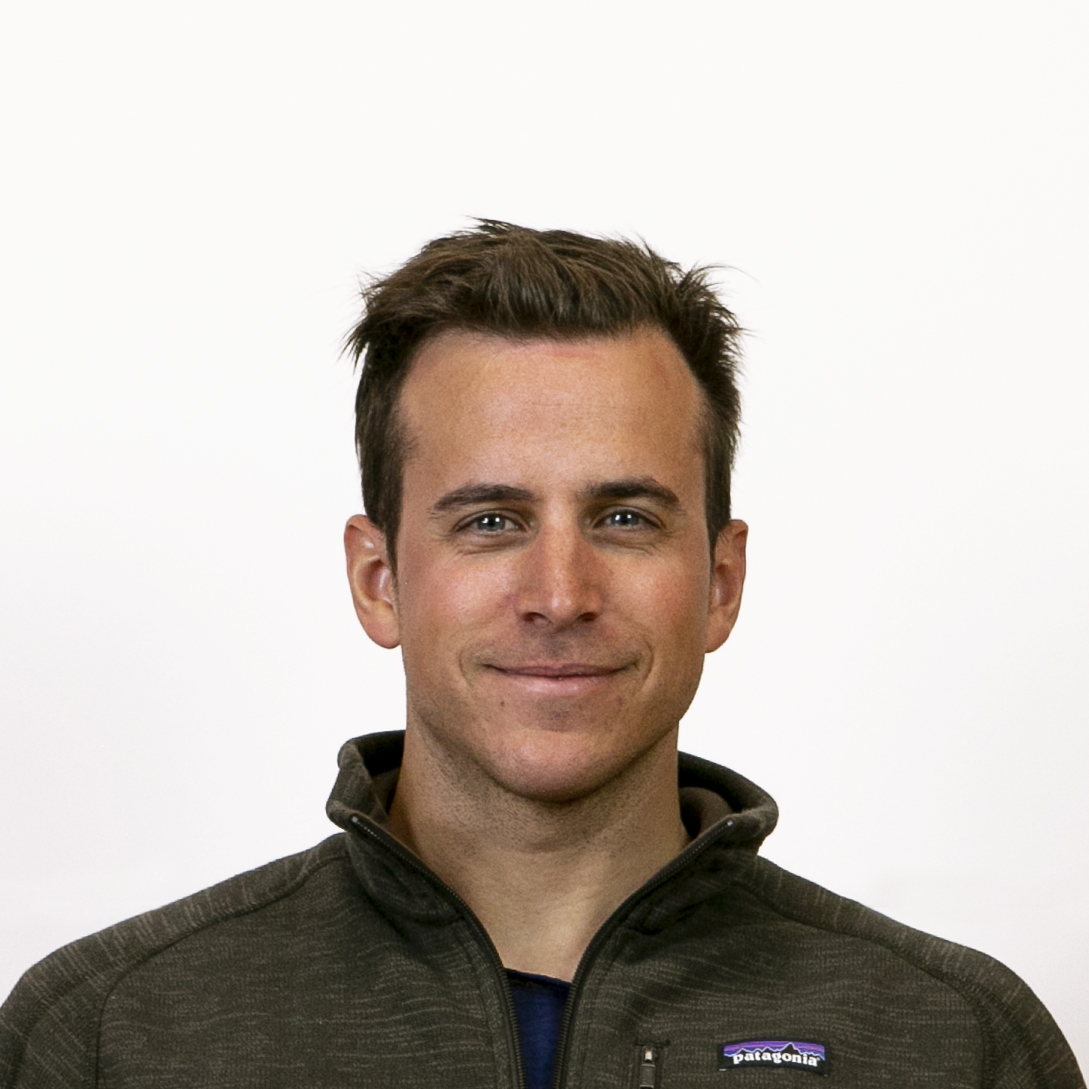
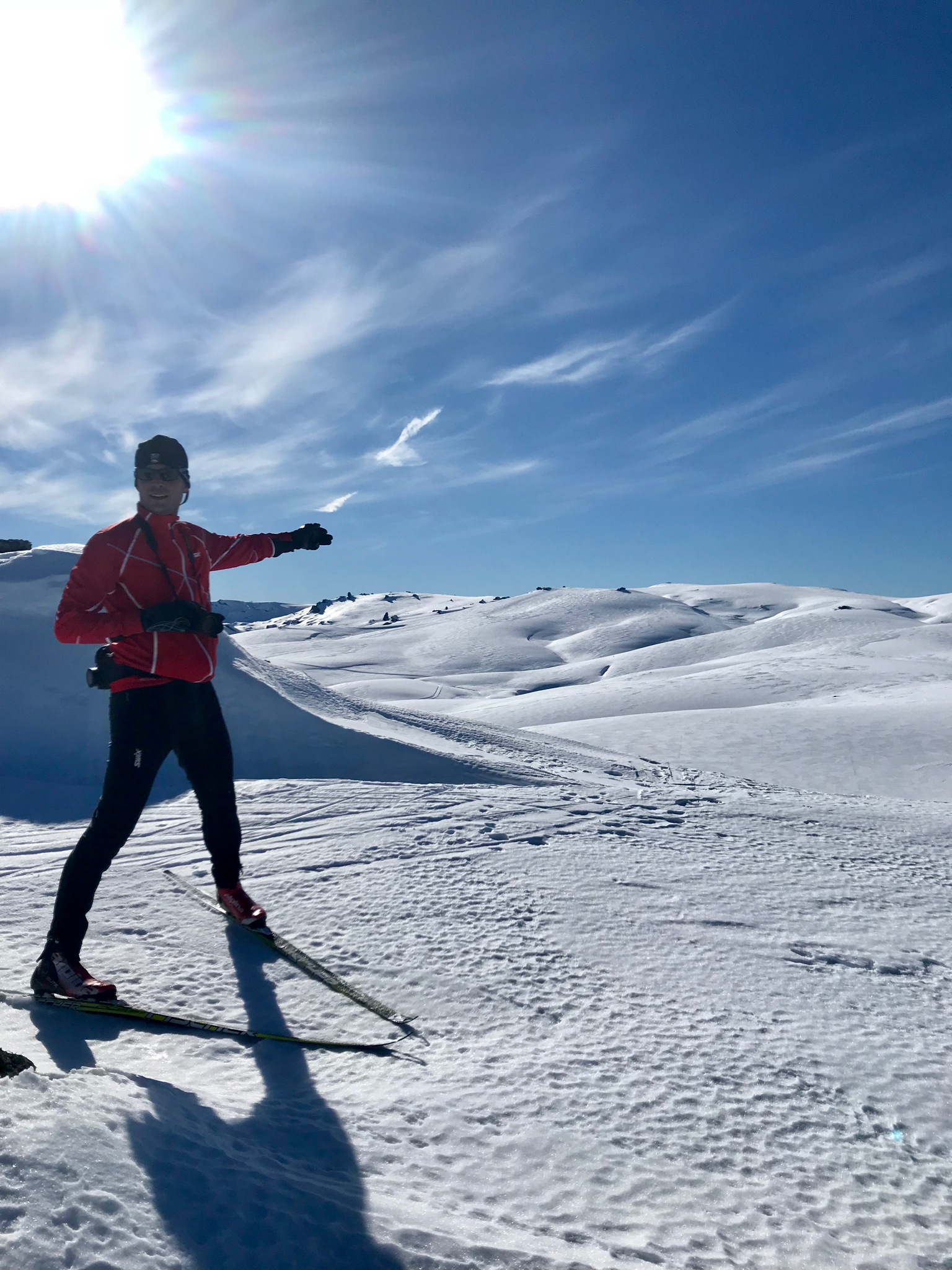
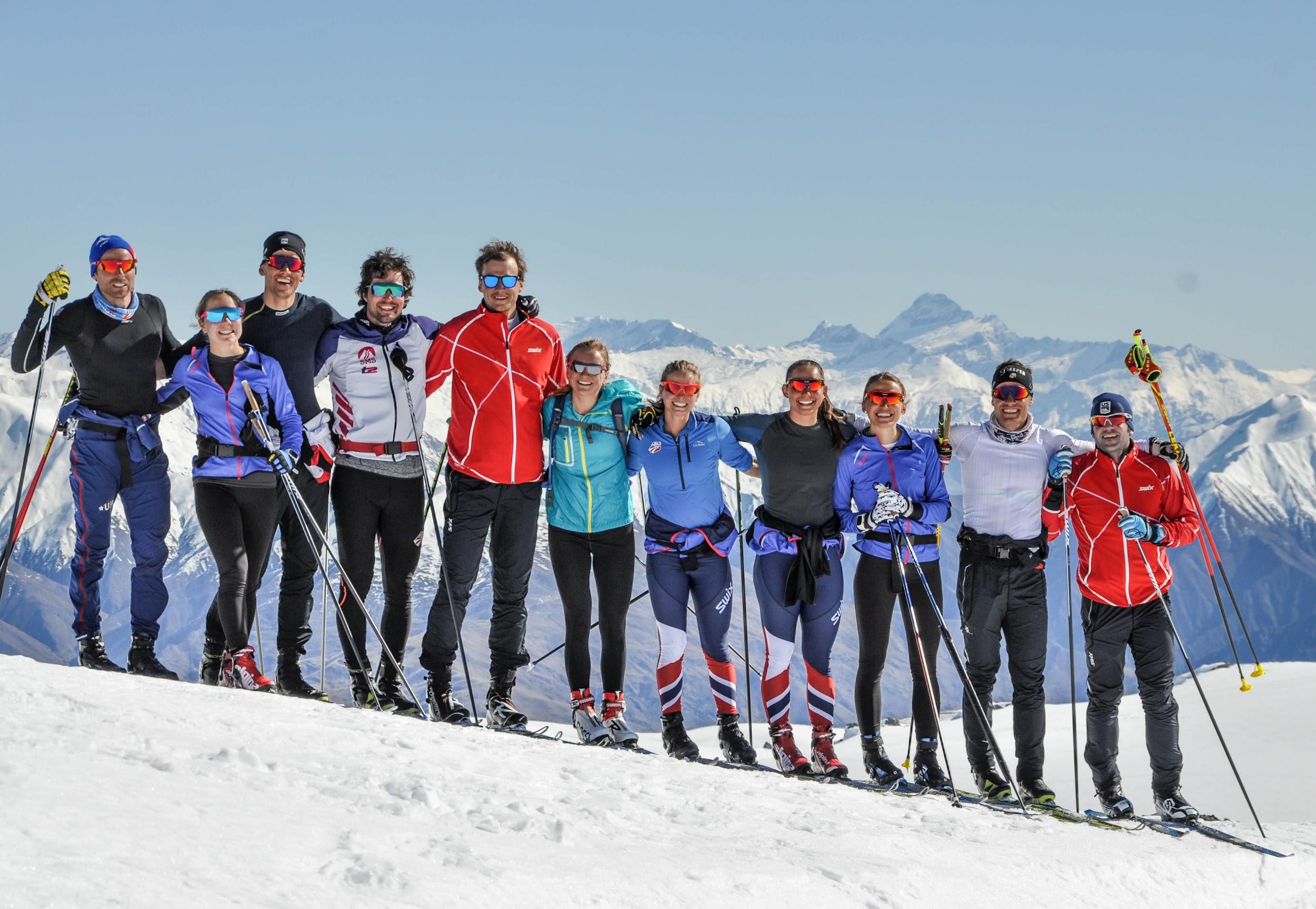
We’re happy to welcome Patrick O’Brien back to the ranks of the Craftsbury Ski Club, this time as the Assistant GRP Ski Coach. Pat, a native of Putney, VT, raced collegiately for Dartmouth before his stint as a professional ski racer with the Green Racing Project from 2010-2014.
While on the GRP, Pat competed in multiple World Cups and also became known to the Craftsbury community as a hardworking jack-of-all-trades with a deep love of skiing and the outdoors. Pat moved on from racing to become the head coach of the SMS T2 team from 2014-2022. Although he coached multiple athletes to international success, he’s most proud of the role he played in building a program that brought together athletes of all ages and rooted the team in its local community.
In recent years, Pat has supported various junior, college, and elite teams as a service technician, all while juggling a job as a builder and wrangling a growing young family. When not up to his eyeballs in ski wax or construction detritus, Pat can often be found outdoors with his wife Ida, who also has deep ties to Craftsbury, and their two kids. Welcome back, Pat!
Saint Michael’s College, a Division III liberal arts institution located in Colchester, Vermont, is seeking a Head Nordic Ski Coach to lead its program. The successful candidate will oversee all aspects of a year-round program, from training and competition to recruiting and budget management, while building meaningful relationships with student-athletes and the broader campus community.
Position Details
Institution: Saint Michael’s College (Colchester, VT)
Status: Full-Time
Salary: $48,000–$54,000
Benefits: Health, dental, vision, employer-paid life and disability insurance, 401(k), generous paid time off, employee and dependent tuition benefits, parental leave, flexible spending accounts, discounted gym membership, paid volunteer time, and access to athletic facilities and the library
Responsibilities
Plan and conduct daily practices during the season
Coach athletes throughout competition
Manage year-round recruiting and maintain prospect database via ARMS software
Counsel student-athletes with a focus on personal development and academic excellence (minimum 3.0 GPA expected)
Collaborate with the Head Alpine Coach to supervise the Kelley Ski Center
Manage program budget, equipment, and travel planning
Serve as event manager for non-Championship segment competitions
Engage the team in life skills programming, community service, and department-wide initiatives
Attend monthly staff meetings and respond to inquiries from within and outside the College
Qualifications
Bachelor’s degree required
Minimum five seasons of coaching Nordic skiing at the collegiate, professional, Olympic, or club level (competitive experience at the collegiate, national, or Olympic level will count toward this requirement)
US Ski and Snowboard L100 coach’s certification required
Current CPR and Basic First Aid certifications
Must meet Saint Michael’s College driver eligibility requirements
Familiarity with Microsoft Office and ARMS recruiting database
Strong communication and problem-solving skills across a range of audiences
Finals week has a way of compressing time. Days shrink into problem sets and exams; nights stretch just long enough to make sleep negotiable. When Jack Lange logged onto Zoom from Hanover in late November, he was finishing his senior fall at Dartmouth, a mechanical engineering major balancing equations while packing for a training block at Silver Star. The snow out west wasn’t cooperating. Races were being reformatted. Nothing felt settled.
That uncertainty didn’t seem to bother him much.
“We’re wrapping up school right now and then heading to Silver Star next Tuesday,” Lange said. “Hopefully, the snow conditions there improve a little bit.”
It was a measured answer—calm, almost deliberately so. Over the next hour, that calm would reveal itself not as indifference, but as something learned the hard way.
Young Jack Lange skiing in a New England BKL race. (Photo: Heidi Lange)
A kid who wasn’t supposed to be good at this
Lange grew up in Vermont’s Upper Valley, skiing out of Green Woodlands and the Ford Sayre Bill Koch League. It was the kind of childhood that feels almost mythic now: full-moon skis to a cabin, hot chocolate on a frozen pond, friends everywhere.
“I’ve always just made sure that that’s the thing that comes first,” he said. “Getting outside and enjoying being outside and enjoying pushing myself and having fun.”
He played everything. Soccer, where he was very aware he wasn’t the best. Swimming, where he gravitated toward breaststroke. Cross-country running. Mountain biking. For a while, he did both alpine and Nordic skiing, until a choice had to be made.
“My sister was doing more Nordic and more of my friends were on the Nordic,” he said. “So I just went with Nordic.”
Lange and friends meeting Jessie Diggins and Sophie Caldwell Hamilton at the Quebec World Cup. (Photo: Heidi Lange)
It wasn’t a natural fit at first. Lange remembers being the odd kid out on relay day—the one paired with a skier from another team because the numbers didn’t work.
“I wasn’t good at it,” he said simply.
What hooked him wasn’t speed. It was curiosity.
“I really like the amount that you can learn from being out in training,” he said. “Not even structured training—just being outside and having fun. I really enjoy the process of figuring out how hard I can push myself.”
By freshman year of high school, something shifted. He trained more. He paid attention. And suddenly the results were better than expected.
“That was kind of the confidence boost that launched me into, like, ‘Oh, this is something I can do.’”
2019 Junior National Championships in Alaska. Lange finished in fifth place with Dartmouth teammate Wally Magill in first. (Photo: Heidi Lange)
The pressure builds—and breaks
Lange’s junior years were uneven. Seasons were disrupted. Races were canceled. One winter meant nine consecutive weekends racing at Craftsbury, all interval starts—an exercise in patience for someone who loved head-to-head competition.
“I love mass starts,” he said. “I love racing next to people. Mind games and competitiveness.”
By his senior year, he had narrowed his focus to Junior Nationals. The goal was simple: qualify. Nothing more.
When he arrived at the 2019 Junior National Championships in Alaska, he was the last skier to qualify from New England. He started near the back in the 5-kilometer skate race at Kincaid Park.
“My goal for the entire season was to make JN’s,” he said. “And I was there, and I was like, I’m in Alaska. This is kind of crazy.”
Mid-race, a coach called out a split.
“One of the New England coaches is like, ‘You’re like three seconds out of top ten,’” Lange recalled. “And I was like, that’s pretty funny.”
He kept skiing. He finished fifth.
“That was way, way beyond where I ever could have expected to be.”
There’s a photo from that day—Lange among a group of skiers who would later become familiar names on the U.S. Ski Team. At the time, it felt surreal. In hindsight, it was clear it wasn’t the performance itself that mattered most, but the conditions under which it happened: no expectations, no fear.
That lesson wouldn’t fully sink in until later.
Lange with his parents, Heidi and Greg. (Photo: courtesy photo)
Dartmouth, and the weight of wanting it too much
Lange chose Dartmouth largely because it felt right. He wanted engineering. He liked the people. He trusted the coach.
“Brayton [Osgood] is such an amazing coach to work with,” Lange said. “He’s never the guy to show up and be like, ‘This is what you’re doing.’ He’s super approachable. He really wants us to find our spot in the sport.”
At Dartmouth, skiing wasn’t isolated from the rest of life—it was embedded within it. That integration became most visible during the most stressful week of the year: NCAAs, which overlap directly with finals.
“My freshman year, that finals week with NCAAs was kind of a dark time,” Lange said. “I was close to tears on the start line of the 20k race. Just so much pressure, so overwhelmed.”
He remembers warming up briefly, then stopping.
“I skied like fifteen minutes in the warm-up and just put my skis down,” he said. “I was completely broken.”
A kilometer into the race, he was in dead last.
And then something shifted.
“I saw Brayton on the side of the trail,” Lange said. “And I was like, you know—I don’t need to take this so seriously. I can show up, do my best at everything, and give 100 percent effort. If I do that, it’s gonna come through.”
It did. That race became one of his best of the season.
Dartmouth Ski Team (Photo: courtesy photo)
The things that make it lighter
The story of Dartmouth skiing is often told through tradition—green suits, first-years with mohawks, time trials. Lange points to different details.
There’s a sauna in the locker room.
“That’s a prime spot to get to know the team,” he said. “We rip this on all the time.”
There’s also life beyond skiing. Every non-freshman on the men’s team is in a fraternity. Lange lives in the Zeta Psi house with teammates and classmates—engineers, computer scientists, people whose lives orbit entirely different centers.
“I’m surrounded by a ton of people who have no clue what skiing means to me,” he said. “And that’s been a really huge part of being at Dartmouth.”
His best season, he said, came immediately after pledging.
“It taught me how to not put as much pressure on myself,” Lange said. “How to make this a sustainable thing that I could really enjoy.”
That balance—academic, athletic, social—isn’t accidental.
“None of the three would be as good without the others,” he said.
Lange’s favorite race: Prospect relay with Cam Wolfe and Cooper Camp. (Photo: Heidi Lange)
“You can’t live nervous”
Lange keeps a training log. He trains consistently. He admits he’s overcooked himself before. What he doesn’t do is chase numbers obsessively.
“I don’t think I’ve ever had an hour’s target that I’m trying to hit,” he said. “I’ve just trained for the enjoyment of it.”
There was a time, early on, when outside voices crept in.
“I was getting a lot of people saying, ‘You’re training too much. You’re doing this wrong,’” he said. “I got a little worked up about it and a little nervous.”
He paused.
“You can’t live nervous.”
It’s the line that keeps resurfacing, whether he’s talking about high school racing, college pressure, or the future beyond Dartmouth.
“I think anyone who’s in high school, middle school—just go out there because you enjoy it,” he said. “You’re gonna have crappy days. But if you go out there every day and just have a good time, and surround yourself with people you like to be around, things will work out.”
That philosophy shapes how he defines success now. Lange talks about team first. About racing in a green suit. About showing up energized.
“The guys here are here for the right reasons,” he said. “They’re skiing because they really enjoy skiing. That’s super energizing.”
Lange with his long time coach and mentor, Dennis Donahue. (Photo: Heidi Lange)
A quiet kind of confidence
Ask Lange where he sees himself years down the road, and he doesn’t reach for outcomes. He talks about process.
“The process of showing up every day,” he said. “How can I be the best athlete I can be today? That’s the most rewarding thing.”
Skiing, he believes, has taught him how to live—how to work, how to recover, how to stay curious.
“Wherever I am fifteen years from now,” he said, “all of the lessons that I’ve learned are still going to be extremely relevant and important.”
For now, there are finals to finish and skis to pack. The snow will either come or it won’t. The races will sort themselves out.
Lange will keep doing what he’s learned to do best: show up, stay loose, and ski without fear.
Because speed, he’s learned, is hard to find when you’re holding your breath.
Love Stories Like This? Help Keep Them Coming.
Feature stories like this one take time, access, and care to produce. If you value thoughtful storytelling and independent ski journalism, please consider becoming a Voluntary Subscriber. Your support directly fuels the work we do to cover the people, places, and moments that make our sport special.
As a snow-starved winter turns to blustery and reticent spring, an ill wind blows across our empty ski trails. What tumbles on that breeze brings relief and celebration to uncounted families; however, the changing season marks a sorrowful loss for the Nordic community. The gusts of April and May whip into mailboxes and under doors, leaving in their breathless wake college decision letters—for so many high school seniors, the start of an exciting next chapter; for too many athletes, the end of their time on skis.
The numbers don’t add up. At the 2024 Minnesota State Championships, 32 Boys’ and Girls’ teams qualified to race; there are nearly 50 Boys’ and Girls’ teams across Wisconsin, and another dozen in Michigan—to say nothing of Colorado, Wyoming, Vermont, or Alaska. There are nearly five thousand high school Nordic skiers in Minnesota alone—a number that dwarfs the total number of collegiate racers in the United States. Every winter, thousands of young athletes are falling in love with our sport. And every spring, thousands of high school seniors are leaving it, for a simple reason: they don’t know they can ski in college.
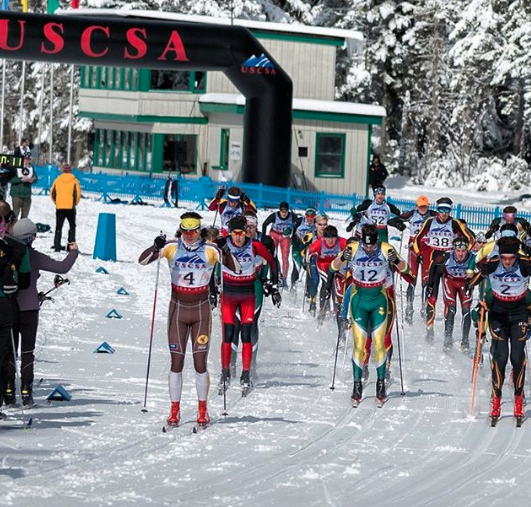
Athletes take to the course during a mass start classic race at the 2019 USCSA National Championships in Jackson Hole, WY. (Photo: USCSA.com)
Even as Gus Schumacher’s World Cup win at Wirth Park in Minneapolis and Jessie Diggins’ yellow-bibbed dominance 0f the 2024 World Cup have electrified American Nordic, the odds of racing after graduation seem much longer when an up-and-coming athlete leaves the dreamlike throng of a home-soil World Cup. The NCAA is, well, elite-level skiing—a Spartan circle of competition that the average high school athlete has neither the speed, nor the resources, nor the desire to pursue. But the NCAA is not the entirety of college skiing—and to continue pretending it is does a grave disservice, not only to students, but to the vitality and durability of our sport. We are letting the next generation of coaches, of volunteers, of Birchleggers slip through our gloves and disappear into the snow. This should not, and cannot, be the case.
The United States Collegiate Ski & Snowboard Association (USCSA) is breaking trail towards a future in which every high school skier who wants to race in college can do so. And the Midwest is at the vanguard of that ambitious effort. This winter marked five years of Nordic competition in the USCSA’s Midwest Collegiate Ski Association (MCSA). Scarce as snow was, the Midwest season began with a record membership of 20 university teams, and culminated at the USCSA National Championships, with no fewer than ten All-American finishers in each day of racing, six Individual and seven Team single-day podiums, and two Individual and Team overall podiums. In scarcely longer than the time it takes an athlete to graduate, the Midwestern collegiate scene has been entirely transformed—from a vacant wound between the Appalachians and the Rockies, to a ruddy artery pumping dozens of new teams and hundreds of new competitors into the USCSA.
Competitors at the 2024 USCSA National Championships, Lake Placid, NY. (Photo: John DiGiacomo)
MCSA teams run the gamut from varsity programs to student-governed clubs. Led Coach Kevin Brochman, the St. Olaf College Women secured their third consecutive USCSA National Championship Title in 2024. Led and coached entirely by the skiers themselves, the UW-Madison Women were the Nationals runners-up this year. Teams may be sprawling of scrappy—over 100 athletes on the UMN-Twin Cities Nordic Ski Club, while fewer than ten skiers compete for Luther College. They may be established or burgeoning, recreational or race-oriented, but they accomplish a common goal: keeping students connected to one another, and connected to our sport, through college and beyond. The same is true of the broader USCSA. A prospective skier can choose from Cornell to Colorado-Mesa, from the Air Force Academy to Maine-Farmington—a program exists that fits their level of commitment, their athletic aspirations, and their academic priorities.
Our job—your job—is to help them find it.
Your task is simple. If you’re reading this article, it’s likely that you have a young skier in your life. You may be sitting across the kitchen table from them; you may race them on a bike this summer, teach them in the classroom in September, or cheer alongside them on some frozen racecourse next January. They have big decisions to make, ambitions to pursue, and formative experiences ahead – and they shouldn’t need to leave the Nordic community to do so.
Those young skiers in your life, please ask them one question: “Have you thought about skiing for the USCSA?”
To learn more about college skiing, visit uscsa.org and skimcsa.com.
Luke Dykowski is the Nordic Coordinator for the Midwest Collegiate Ski Association.
Deciding how to handle the “college conflict”, as aptly phrased by Alayna Sonnesyn, is a daunting and somewhat mysterious prospect, particularly for athletes and families who are unfamiliar with the process. How does a junior athlete know that they are cut out for a collegiate program? NCAA or USCSA? What about a gap year? In this series, FasterSkier spoke with collegiate and junior coaches and athletes who have chosen different pathways to create a resource for the athlete or parent amidst this conundrum. Also check out Part 1 with Craftsbury Junior Program Head Coach Anna Schulz and Part 2 with Dartmouth College head coach Cami Thompson Graves.
An important piece of the college decision puzzle, post-graduate (PG) programs offer a skier an extra year of development that can serve as a bridge between junior club programs and collegiate or national team level skiing. Though a relatively small in number, programs can be found nationwide at well established ski clubs like Steamboat Winter Sports Club in Colorado and the Bridger Ski Foundation in Montana, and at ski academies such as Stratton Mountain School in Vermont and the Sugar Bowl Academy in California.
Paul Smith is the head PG coach at Sun Valley Ski Education Foundation. (Photo: https://svsef.org)
The Sun Valley Ski Education Foundation (SVSEF) directed by Rick Kapala has offered an official PG program since 2005. The program, which serves five to ten skiers annually, is led by University of Vermont graduate Paul Smith. Now in his second year with the SVSEF, Smith also works with some of the younger juniors and assists senior skiers as a service and wax technician. FasterSkier spoke with Smith and Kapala for their insight into why an athlete might choose a gap year and what can be expected during the PG experience.
Though athletes elect to take a PG gap year less frequently than joining a collegiate program or leaving ski racing, both Kapala and Smith expressed that the number of skiers selecting this option is trending upward. The reason an athlete might opt into a PG year varies, but typically, the PG athlete enters the year on the cusp of achieving a goal that is just out of reach.
“[PG’s are] looking to put in a year or more of focused training to make a step forward into their skiing capacities so that they may have college opportunities that were not readily available coming straight out of high school,” explained Kapala in an email.
These opportunities include earning a spot on an NCAA team, improving scholarship potential, and increasing the likelihood of making the competition team at a particular school.
“Or, they may be looking to achieve top international results as a U20 and want more space to program a bigger training and travel schedule,” wrote Kapala.
Members of the SVSEF PG program hike it out during an OD in the mountains. (Courtesy photo)
He added that outside of skiing, the athlete may be looking to experience independence and develop life skills without the pressures of keeping up with an academic workload. Regardless of long term goal, Smith expressed that anyone who chooses to take a gap year can expect improvement in their skiing.
“From a development perspective, just taking a year to just focus on that and not get thrown into the whole gamut of classes can really help a lot,” said Smith in a call.
“You can always expect to show some improvement, especially if you’ve had a junior have some success while they were doing a bunch of other things and they can now focus on [skiing] for a year. From what I’ve seen, the ones that are committed to the process benefit tremendously.”
Unlike collegiate programs that typically send information to junior athletes to initiate conversations, Smith explained that athletes typically contact him first regarding interest in the SVSEF PG program.
The program originated to serve athletes graduating from the SVSEF junior program, but has since begun to serve athletes coming from a range of other states. Though Smith is not one of the primary junior coaches, he explains that he stays involved with this age group to help connect with prospective athletes.
“I try to keep a presence at regional or national camps,” explained Smith. “So I’ve tried to make a connection with a lot of different athletes from different clubs and different regions.”
Rather than communicating through email, Smith prioritizes phone calls and meeting with athletes at races to establish connections with those considering his program.
“I have definitely noticed, for myself and some of our other coaches in Sun Valley, having a presence in the [junior ski] community has helped a lot. We almost always know the kid if they have a genuine interest in taking a gap year with us.”
Apart from making juniors aware of the PG option, Smith explained that he does very little recruiting. He acknowledged that the choice is not a good fit for all athletes, particularly those with strong academic aspirations.
“The athlete themselves usually know whether they’d be a good fit. They’ll usually have some idea — going to school, they’re either excited about it or they’re not. For the athlete that isn’t or if taking classes for a year isn’t a priority, that’s where I would say it works the best.”
The PG program in Sun Valley is heavily weighted toward male skiers, 70-80% on average. This trend holds throughout other programs as well. Smith hypothesized that one reason for this might be that on average, boys finish puberty later than girls. Some male juniors whose biological development might be slower than their peers may not have sufficient time during high school to build the strength and muscle mass needed to excel in ski racing. An extra year to catch up in this arena can help athletes take a big step forward in performance.
“There are instances, generalizing a little bit, where a lot of boys who are 16 to 18, their biological age might not match up to their peers, so they feel like, ‘Well I really like skiing and I want to go for it.’ Taking that year for development makes a lot of sense.”
The program at Sun Valley does not establish performance requirements for admission as it seeks to be flexible enough to cater to the needs of an athlete at any level.
“It has been the case in the past few years that we’ve had all of the above,” said Smith. “Skiers that are looking to make the jump to the national team, skiers that just wanted to get into an NCAA program, and then skiers that had kind of figured out that [pursuing skiing] actually wasn’t what they wanted to do. I think all of those athletes are important. Not only does it make a stronger group, it makes a better team functionally.”
He continued, “As a club we do a pretty good job of thinking of things from the development perspective, the idea that, yeah, we’re coaching athletes that go on to win and maybe go onto race World Cups, but we’re also coaching future parents and future coaches. I think having it open and not narrowing the framework of the program itself is important.”
Members of the SVSEF PG team mid-workout in Ketchum, ID. (Courtesy Photo)
Despite not requiring a top twenty finish at Junior Nationals or another performance marker, Smith explains that the athlete should be entering the PG program with a clear goal and a belief backed by evidence from their development that the next step is attainable. Smith explained that these are the broad conversations he has with athlete who express interest in the program.
“I have a lot of conversations in the spring with prospective athletes and parents about what they saw in their own skiing that puts them at that level. When you look at your results and other aspects of training, what is it that makes you think that the jump will be significant?”
For athletes who are interested in taking a gap year, Smith provided information on what to consider in weighing options and on what to expect.
“Probably on most family’s minds, the cost is going to be the foremost thing.”
The PG program at SVSEF comes with a price tag of $5,450 which does not include housing or food, which can be significant in small mountain towns like Ketchum. Apart from being expensive, housing can also be challenging to find, particularly since not all housing authorities are keen on renting to a 19-year-old living on their own for the first time. This challenge can be avoided by local athletes, but should be a significant consideration for out-of-towners.
“We’ve made it work through the years just piecing together host families, generous families in the ski communities that have helped out. The best thing that has worked is connecting athletes in the program together and their families to go in on housing in the rental market.”
Additionally, Smith explained that it would be challenging for an athlete to get by without a car, though public transportation and carpool options are possible. Smith added that it is possible to receive financial aid and scholarships for trips such as World Juniors.
At SVSEF, most athletes choose to take a part-time job, which can help subsidize the costs. Smith explained that this also provides a life-balance to offset the singular focus of full time ski training.
“We always recommend that they have something else going on other than skiing. It could be a part-time job, some have taken online classes, and some have gotten pretty good internships. I think we have a good community for that kind of work.”
He continued that mountain towns offer ample opportunities to work in the tourism or service industry.
Smith suggested that the cost and challenge of finding housing might be the biggest drawback to choosing Sun Valley for a gap year. He countered this with the pros of making this decision.
“Our coaching staff is definitely top level and all of our post grads have the opportunity to work with any of our coaches. Location, being out west, being at altitude but not being too high.”
He added access to quality rollerski terrain, reliable snow, the ability to perform physiological testing, and having a strong junior and senior team to mix with as additional strengths of his program.
“I’ll admit that we can’t really have the atmosphere that a ski academy offers. I think at the Sugar Bowl Academy, Stratton Mountain, Green Mountain Valley School, their post grad programs offer that in-house, community, full team feel that admittedly we can’t offer, though I think we come close.”
Smith explained that these all-inclusive programs are significantly more expensive. Stratton Mountain School rings in at $56,750 for a full term boarding post-graduates (these athletes are also taking classes at SMS) and ski-only PG tuition at the Green Mountain Valley School is $21,500.
“For families that can get a lot of financial aid to those programs, I think you can definitely do well there. But I understand that we are better priced compared to them and I think that is where we get a lot of interest.”
Members of the SVSEF PG program on a training run in Ketchum, ID. (Courtesy photo)
Other factors Smith believes are important to consider include whether it is possible to mix in with a strong group of junior and senior skiers and if the program has a coach focused specifically on the PG group.
“Having a coach that is dedicated to the post grad group is definitely helpful. I think too many times, even though they’re older juniors, just throwing them into senior training or scaled back senior training isn’t the best thing for their development. So having their own coach is definitely a plus.”
In terms of lifestyle and training load, PG athletes at SVSEF participate in 5-7 coached sessions per week, including strength training.
“We train most mornings, but the key is being flexible with the program where if an athlete was at a level where they were training twice a day everyday, you can do that.”
After training, most athletes head to their job, but Smith regularly inputs other touch-points into his athletes daily routine to build the team dynamic and support the athletes’ development of independent life skills.
“We’ll have team meals once or twice a month, which is also part of a nutrition program, basically learning how to cook on their own for the first time. Also, having some camps and trips input in there too, which I feel is important. Since they’re not in school, they can do those trips, but we want to make sure it’s cost effective too. If you’re an athlete from the east coast, it’s already a camp being away from home. You don’t need too many, but it helps keep the training lively and exciting.”
For athletes whose eyes are set on NCAA racing, it is valuable to have an understanding of the eligibility rules.
For Division I programs, the eligibility clock starts when a student-athlete enrolls full-time in classes or turns 21, whichever comes first. Once the clock starts, there are five years to complete four seasons of the sport, which allows for a redshirt year or year-in-residence following a transfer between schools. At Division II and III schools, student-athletes have three years following graduation to enroll full-time. Once enrolled, four seasons of competition can be completed over 10 semesters. Semesters are not counted if enrolled either part time or not enrolled without competition.
Some PG programs discourage athletes from taking classes if they plan to enroll the following year at an NCAA program as they may be classified as a transfer student, thereby needing to complete an “academic year in residence” before being eligible to compete.
Athletes may earn prize money from finishes in SuperTour or other races while still remaining compliant with NCAA amateurism rules. The rule states: “An individual may accept prize money based on his or her place finish or performance in an athletics event. Such prize money may not exceed actual and necessary expenses and may be provided only by the sponsor of the event. The calculation of actual and necessary expenses shall not include the expenses or fees of anyone other than the individual.”
[See this document for more information on NCAA eligibility rules.]
As a takeaway, Smith encourages families to consider the benefits an athlete might gain from a PG year and to see a gap year as a potential option in the college process.
“Taking a year should always be considered as an option, especially for a kid who really wants to go for something. It may not even be skiing, it might be art, or music, or something else. When they’re younger, we always recommend that they’re doing a lot of different things so that they are more well-rounded. By the time they’re 18, picking skiing should be okay and they should be given the option to do that for a year if they want. I think making sure that is an option is an important thing, whether that’s coming from a parent, a college coach, or their coach when they were a junior.”
Kapala concluded by explaining the role the PG program plays in the overall cross country program at SVSEF and pointing to athletes who have greatly benefited from their gap year.
“We consider our SVSEF PG team a really important part of our programming,” concluded Kapala. “It has helped some of our talented juniors take the next step in their skiing and it also has built relationships with skiers who have years later returned to become members of our SVSEF Senior Gold Team. For example, Kevin Bolger and Sam Woods, now members of our Gold Team, were both PGs. We got to know them and when the opportunity came to add them to our Gold Team roster, it was really helpful to know them as people and skiers.”
Author Alayna Sonnesyn during a crust ski at the Snow Farm this summer near Wanaka, New Zealand. (Photo: Matt Whitcomb)
The following was written by Alayna Sonnesyn, a new member of the Stratton Mountain School (SMS) T2 Team who graduated from the University of Vermont (UVM) this past spring.
Originally from Plymouth, Minnesota, Sonnesyn, 22, raced on the UVM Ski Team for four years and qualified for four NCAA Skiing Championships teams. She placed second and third in two races at 2017 NCAA Championships, and in her senior season, won the first five Eastern Intercollegiate Ski Association (EISA) races and went on to reach the podium in 10 out of 11 EISA races. Sonnesyn expressed an interest in exploring the dilemma many of the nation’s top skiing talents face out of high school: whether to attend college or get an early jump on a pro-racing career. Part 1 can be viewed here, and the two-part series is also on her blog.
***
According to the Bureau of Labor Statistics about 70 percent of 2017 high school graduates enrolled in some form of college the following fall. In addition, a handful of the working population decided to either start college after a few years or return to classes after a much-needed hiatus. But what happens if you stray from the norm … and something pulls you in another direction? For Jessie Diggins and Andy Newell, there were alternative ideas for the future.
At the time, both Jessie and Andy followed the same route, exploring collegiate racing right out of high school. Similar to many high school skiers, they went through the process of applying to schools, talking to coaches and establishing academic opportunities for themselves after graduation.
Jessie Diggins being goofy during our recent training camp in New Zealand. (Photo: Julia Kern)
“When I decided to go full-skiing, I had deferred a place at NMU, and had that as my Plan B if I decided that full-time skiing was too stressful or not as fun as I wanted it to be,” Jessie said.
“What I decided to do was defer from UVM, but I was also able to take some classes from the University of Utah with tuition reimbursement and a loaned laptop courtesy of the US Ski Team,” Andy explained.
At the time, both skiers were still open to going to college, but decided to “take a year off.” The only difference was that they never experienced that longing to go back into full-time school. As previously mentioned in Part 1 of this series, many skiers who decided to take a gap year soon came to the realization that something was missing and that they still wanted a balance in their life. It made sense for them to go back to school and ski in college. But why change something when you’re already happy?
According to Jessie, “At the end of the day, a happy skier is a fast skier… For me, I was super happy having all my eggs in one basket and making skiing my full-time job. I love having skiing as my career, and I perform well under stress so having the pressure of becoming a professional athlete at a young age didn’t create too much anxiety.”
This stress worked well for Jessie. With such a unique combination of personality, work ethic, and training load, she knew taking this route would be better for her.
“Personally, going to college wasn’t going to work for me if I wanted to get the grades I wanted and train as hard as I wanted,” she said.
Jessie went on to note how important it is to figure out your own personality; whether you can do a good job at balancing school and skiing, or whether you’re excited to focus all of your time and energy on one goal. She found that specificity suited her lifestyle really well after high school and carried that momentum for years to follow.
Similarly, Andy found success from a young age and didn’t see a reason to change what was already working so well for him.
“To get that kind of international exposure was sweet for a junior, but more importantly it got me hooked on skiing — the addiction to the big show and excitement of European racing,” Andy said of racing at World Juniors, U23’s and World Championships his first year out of high school.
With the need for speed and an obvious progression into becoming an elite skier, Newell admitted that he pretty much gave up any opportunities for racing in college after he started signing contracts and collecting win money. Although, he notes that the ski racing environment was slightly different at the time he made this choice. In high school, Andy was named to the U.S. D-team, which, at the time, provided free housing in Park City, access to daily coaching, and most of the Winter travel expenses covered.
“I consider myself lucky that the U.S. Ski Team was in a position then to support D-team members a little bit better,” Andy said.
He explained that he wouldn’t have given up his opportunities for anything. He was feeding his addiction to the big show of European racing, making decent money, and having the time of his life! What else could he need or want?
So, the big question is, do all the stars need to align? Do you need to have the right opportunities present themselves at just the right time? Maybe! But it’s important to note that this right moment appears differently for everyone! What is more impactful, is the way you respond to the opportunities presented to you.
U.S. Ski Team coach Matt Whitcomb pointing us in the right direction during a crust cruise at the Snow Farm in New Zealand. (Photo: Julia Kern)
“There are a lot of options these days,” said U.S. Ski Team coach Matt Whitcomb, “but those who become exceptional are the ones who actually pick something from the list, and they run like hell with it.”
You don’t need to do exactly what your teammate did, or what an Olympic medalist did.
“Create your own path, get vulnerable,” Whitcomb advised. “Most people just run down America’s path of mediocrity, when they could instead be cutting their own unique route.”
Every skier can take a different road. Maybe that road is pin-straight without a single bump, or maybe that road has curves and hills and potholes. It doesn’t matter what it looks like or how you approach it, as long as you figure out the best scenario for you and what makes you happiest. One way to solve this solution would be to test out every possibility; take a gap year, go to one school, maybe transfer, take another year off — but this is unrealistic and requires far too many resources. I think that the easiest way to find your way is to talk to others that have faced a similar situation — an older sibling, teammate, coach, or friend. Also, remember that you really can’t go wrong. No matter what choice you make you will still face unexpected fears, experience a new lifestyle, and figure out why exactly you still love this crazy sport!
For those of you taking a year off from school, I wish you the best of luck in finding the perfect place where you belong. For those heading back to school, I hope you cherish every moment of it, because it goes by far too quickly. Regardless of which road you choose, own it! Make it your decision and give it your best shot/all you’ve got. If you do that, you can’t go wrong.
“There is no right or wrong decision, do whatever works for you!” — Sophie Caldwell
“You can be the fittest person out there, but if you are not happy and motivated, it will be very hard to ski fast.” — Julia Kern
“My only regret in my skiing career is that I was not mentally prepared to win a medal at my first Olympics as a 22 year old…. I thought I had a chance of winning a medal but I didn’t actually BELIEVE I could do it. So above anything else I want young skiers who are graduating from high school to know that four years is not a long time and you can find yourself at the start line of the Olympics before you know it.” — Andy Newell
“I don’t think there’s one model that fits every person. It’s also important to remember that it’s not forever!” — Jessie Diggins
“The opportunities will present themselves when the the time is right!” — Ida Sargent
“If you want to be exceptional, don’t be afraid of being an exception.” — Matt Whitcomb
Alayna Sonnesyn with one of her former UVM coaches Perry Thomas at the 2018 App Gap Challenge Rollerski Race in Vermont this summer. (Courtesy photo)
2018 U.S. Ski Team camp at the Snow Farm in New Zealand, with author Alayna Sonnesyn (teal jacket) in the middle of the group shot. (Photo: Matt Whitcomb)
The following was written by Alayna Sonnesyn, a new member of the Stratton Mountain School (SMS) T2 Team who graduated from the University of Vermont (UVM) this past spring.
Originally from Plymouth, Minnesota, Sonnesyn, 22, raced on the UVM Ski Team for four years and qualified for four NCAA Skiing Championships teams. She placed second and third in two races at 2017 NCAA Championships, and in her senior season, won the first five Eastern Intercollegiate Ski Association (EISA) races and went on to reach the podium in 10 out of 11 EISA races. Sonnesyn expressed an interest in exploring the dilemma many of the nation’s top skiing talents face out of high school: whether to attend college or get an early jump on a pro-racing career. She plans to post this two-part series on her blog as well.
***
For the first time in 17 years I will not be going back to school this fall. Saying that out loud is more daunting than I had anticipated. For the most part, the classmates that I graduated with can say that they are “going to grad school,” “starting a new job,” or “taking a year off to travel,” but I still don’t know where I lie. I am not taking any classes this year, I am not working anywhere consistently, and I am doing more than just traveling to explore, I’m traveling to race!
I am wrapping up a three-week training camp in New Zealand with the SMS, Craftsbury, and US Ski Team. When I walked through customs I had to write down my reason for visiting New Zealand: Was I a student? Was I visiting a family or friend? Was I working? What was my job? In the rush of the moment and due to habit, I wrote that I was still a student and continued on my way. I later had a few reflections; I still haven’t reached the point yet where I can say I have a job. I don’t have a salary and there are no company benefits. Yet, I work 24/7 toward my job — my job is ski racing. But why is this so hard for me to admit to myself? Is it because, for my entire life, I’ve been a student? What if I hadn’t taken this route? How do others make this decision?
National Training Group (NTG), summer 2013, in Park City, Utah.
Racing throughout high school, I was given a number of perspectives about picking skiing versus school. My friends were all preparing to go to college and I always assumed I would go to college, too. My parents and older sister went to school, why wouldn’t I go as well? But then I thought about skiing. I never had the most outstanding results in high school (never qualified to race internationally), but I was good enough to qualify for regional and national level camps like REG, NEG and NTG. I traveled to these camps and trained with other high-level athletes, getting more and more motivated by each skier or coach that I met. Then the thought came to me… what if I didn’t go to college? I could focus on training, make those vital steps toward international racing, and continue along the “pipeline” that so many Olympians had followed. Maybe I would make bigger jumps and improve my skiing exponentially? I was entering the unknown and I was unsure how to pick the right choice for me. Looking back on this four years later, I realize that I was far from alone in this predicament.
I have since had the opportunity to talk to a wide variety of skiers and competitors and have learned so much that I wish I knew in high school. It’s OK to be confused. It’s OK to make your own path. Every athlete is in a different situation, comes from diverse athletic and academic backgrounds, and has various goals that they hope to achieve post-high school.
“I’ve always believed that the most important thing to remember when discussing the decision to go to school or not (or when to go to school) is that is it a completely individual decision and the right decision for one person might not be the right decision for the next.” — Sophie Caldwell
Personally, I finally decided that taking a gap year might be too big of a jump for me. I wasn’t ready to focus on skiing and I had a lot of goals for myself academically. I decided to attend the University of Vermont and upon reflection, can admit that this was one of the best decisions of my life. Similarly, SMS teammate, Kelsey Phinney, went from high school in Boulder, Colorado, directly to Middlebury College.
“The reason I chose Middlebury College was simple: I went to visit and I was ready to unpack and stay for good. I loved the people, the area, the ski team, and the classes I sat in on.” — Kelsey Phinney
Carnival love, with Kelsey Phinney (top) and Katie Feldman.
Kelsey and I both fell in love with our schools from the start and knew we were where we belonged. We took these college experiences as learning opportunities; maybe we wouldn’t have been ready to jump right into the professional circuit but we both determined this was the right path for us.
“I loved the experiences I had on the Carnival circuit. Both good and bad times taught me a lot about life and skiing, and I felt like the balance of school and sport made me better at both,” Kelsey reflects.
Similarly, Sophie Caldwell had her mind made up without the need to hesitate over a gap year or jumping into full-time skiing.
“I chose to go to college right out of high school, and it was something I had always known I wanted to do. I knew there was a good chance I wanted to ski professionally at some point in my life, but when I was 18, I wasn’t ready to 100% commit to skiing,” Sophie, a Dartmouth graduate, explains.
With academic goals in mind and the confidence to pursue skiing in the long run, sometimes there’s no need to question it. Going directly to college might challenge you more than you think and it might make you question what you’re doing. The balance of school and skiing is great, but it’s TOUGH! At least you worked through those challenges and figured out where you want to be though.
“I definitely had my ups and downs throughout college and at times I considered not pursuing skiing after college, but by the time I entered my senior spring, I knew I wanted to give skiing professionally a shot and knew it was because it was what I wanted to do, not what I had to do,” Sophie notes.
Over the course of four years, we were able to say goodbye to our homes, grow into adults and develop as skiers, allowing a much smoother transition into the professional racing circuit post-college. This decision to go right to college made sense for Kelsey, Sophie and me — it was simple; but I recognize that this choice isn’t as straightforward for everyone.
***
“I loved my time at Burke and wasn’t quite ready to leave. I also didn’t know where I wanted to go to college as part of me wanted to go out west while part of me wanted to stay closer to home.” — Ida Sargent
The conflict of picking a school, a place we are willing to spend at least four years of our lives at, can be intimidating to anyone. Taking a year off to think and explore what motivates you once the structure of school is taken out of the picture can be extremely vital to one’s skiing longevity. Other times, this year off can be done to test out what skiing professionally is actually like.
“I wanted to test out whether I could do only professional skiing.” — Katharine Ogden
A feat that might sound easy to accomplish — ski, eat, sleep, repeat — can’t be THAT hard! But what happens when you suddenly put all of your time and energy into one goal?
“Ironically, my gap year did not turn out even close to how I had planned or imagined!” reflects Julia Kern.
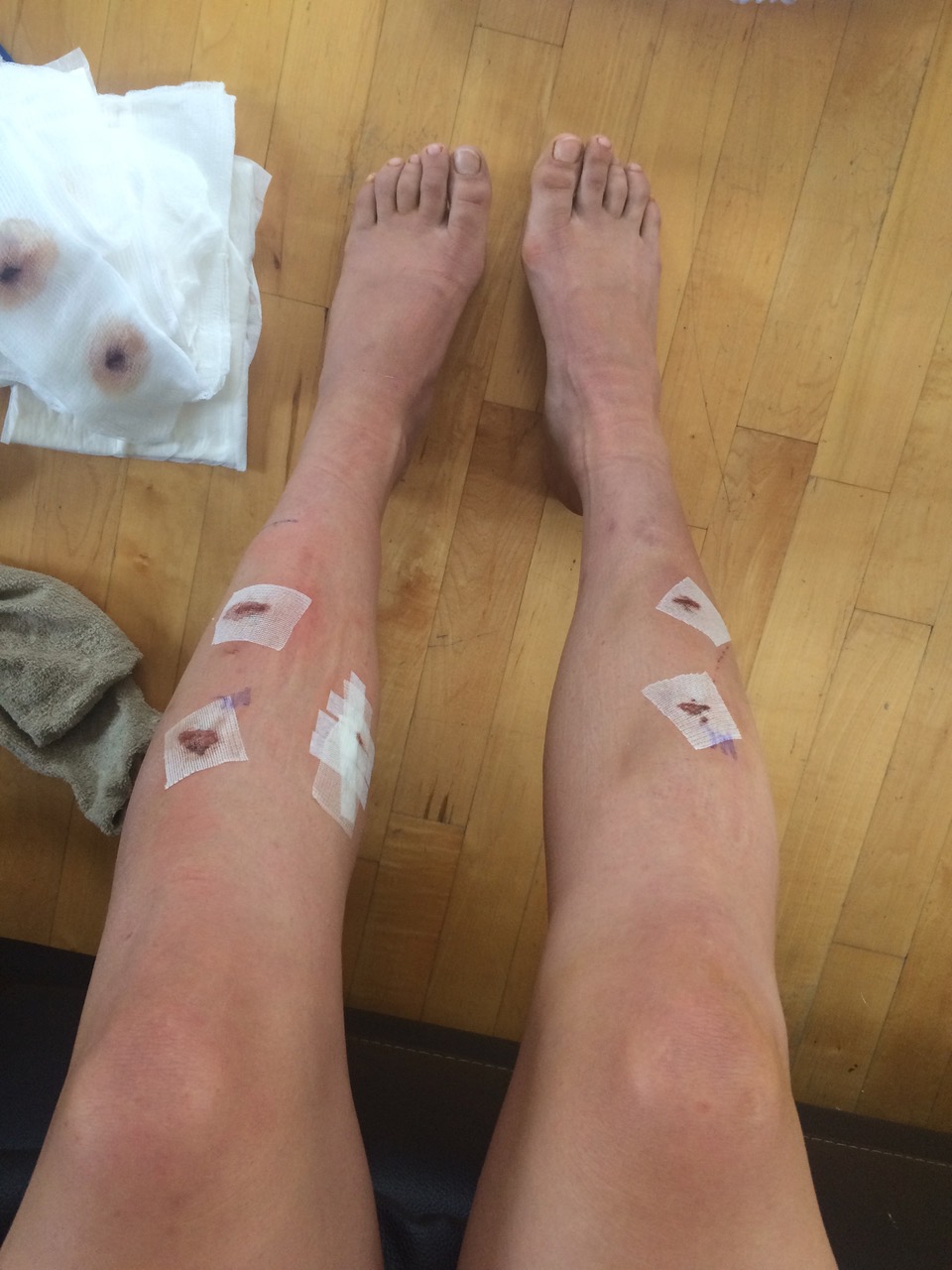
Julia Kern with swollen legs after surgery, requiring A LOT of physical therapy during the summer.
After facing an early summer surgery for compartment syndrome and then an untimely back injury in the fall, Julia notes that her gap year was extremely tough with plenty of lows and setbacks.
Ida Sargent offers, “My PG year was a bit of a disappointment as I wasn’t as happy as I was expecting and I also didn’t feel like I made as big of a jump with my results as I had hoped.”
“I think in hindsight it was a good philosophy but I think I approached it wrong. I didn’t do a good job securing other things to do besides training and was thus pretty bored, which led to me putting a lot of stress on skiing and racing,” says Katharine Ogden.
Maybe taking a gap year isn’t as easy as it sounds? Coming face-to-face with this type of ski-focused intensity as an 18 year old can be challenging.
“It showed me how much I really wanted to go to college,” offers Katharine.
It can also be validating, as it can prove to oneself where they really belong at that point in their life.
“It made me realize that I wasn’t ready to ski full time and I still needed balance in my life,” reflects Ida.
What might be the most beneficial aspect of taking a gap year are the lessons you learn throughout. How to deal with the pressure, free time, potential obstacles, and how to respond when you’re suddenly put in an unfamiliar situation.
“My gap year turned out to be far from ideal from a training/fitness standpoint, but I became very in tune with my body, learned how my body responds to training, became mentally tougher, and learned that I love the skiing lifestyle (even if it is tough sometimes) and that I want to ski at the highest level possible,” says Julia.
Some things you just can’t learn in a classroom.
Julia Kern (on table) still smiling!Julia Kern taking the time to think about something other than skiing during her gap year. (Photo: Julia Kern) How to pass the time away, when you have so much of it. (Photo: Julia Kern)
After taking a gap year to figure out what skiing was like full-time; Ida, Katharine, and Julia attended Dartmouth College (via various routes):
Ida states, “I started by going to school full time and I raced for Dartmouth for three years and then made the National team so I took my senior winter off to race for the USST and then I went back for a spring term my fifth year.”
“One year in [as a traditional student], I am very happy at Dartmouth and racing the collegiate circuit last year reignited my love for the sport,” adds Katharine.
While Julia contributes, “I chose Dartmouth because I wasn’t sure what skiing and school balance I wanted to have, but I did know that I wanted to be able to take terms off to race internationally.”
Regardless of which Dartmouth plan they followed, all three skiers seem to have enjoyed the choices they made. Whether taking a gap year is or isn’t part of your plan, the most important takeaway is that you should TAKE SOMETHING AWAY! Learn something new about yourself, about skiing, or about classes you want to study.
So what about other options for pursuing a ski career? Jessie Diggins and Andy Newell both chose to skip college and go straight into skiing. Stay tuned for my next post when I’ll include input from both of them as well as what U.S. Ski Team coach Matt Whitcomb has to say on this topic.
Reid Pletcher charging hard in West Yellowstone last fall
Three weeks after being flown out of Boulder Canyon with serious head trauma, Reid Pletcher is ready to head home to Sun Valley after his expected discharge from Craig Hospital in Denver this Friday.
The 2011 NCAA Champion from CU fell 20 feet on May 26 when, during a fall, two pieces of climbing protection came out of the rock face. His girlfriend Mali Noyes, who was belaying Pletcher on what was going to be their last climb of the day, described what happened.
“He was leading the climb on a 5.11b hand crack, requiring pro placement for protection. When he was about 20-30 feet up the wall he unexpectedly fell. He had four trad pieces in at this point, but the top two pulled out,” she said. “It’s rare for two pieces of equipment to pop, but there was a very old tree root in the crack that was hard to see, so what looked like really good placement actually wasn’t.”
Pletcher, who learned to climb at a young age from his father, wasn’t wearing a helmet when he fell. “For a climber of Reid’s ability, it’s common not to wear one unless you’re doing a multi-route. This was a single pitch without any loose rock,” said Noyes.
“He’ll always be wearing one now.”
Reid Pletcher and Mali Noyes on his first day in the hospital. Photo: Mali Noyes.
After the fall, Noyes called for help and assessed Pletcher’s condition. “He landed on the rock ledge next to me, and because it was downward sloping, I had to keep Reid on belay to keep him from sliding off the ledge. For the minute or two while I waited for help I could see Reid slowly moving his arms and legs. He had a laceration on the back of his head and was bleeding a lot from his left ear. Reid was very confused and uncooperative—he kept trying to stand up.
“I applied pressure to the laceration on the back of his head and treated him the best I could for shock. For the first few minutes after the fall, he was conscious and knew his name, but had no idea where he was, what had happened, or the date.”
Noyes said she feels incredibly lucky to have taken a first aid and CPR class earlier this year. While she applied pressure to his head, nearby climbers flagged someone down on the road to call an ambulance, and help arrived within the half hour.
“The ledge made it difficult to treat, access, and transport Reid, but the rescue team did a great job,” she said. “I would also like to thank the climbers who helped. Reid was very lucky and I was grateful that they were so close and so knowledgeable.”
Pletcher was first flown to Trauma 1 at St. Anthony Central in Denver. “With head injuries they’re always careful. They can look good and then go bad, so for 72 hours or more you don’t know the full extent of the injury,” said Bruce Cranmer, the head coach at CU. Noyes called Cranmer immediately after getting back in cell range, and together they headed straight to the hospital.
Pletcher and his father Del about a week into recovery. Photo: Mali Noyes.
“When we got there, Reid knew who we were, but that was about it. Even days later, he would say, ‘Really, what happened? Why am I here?’ But his memory has been getting better every day,” said Cranmer, who has been posting regular updates on Facebook to let Pletcher’s friends know how he’s doing.
According to Noyes, he had two skull fractures and brain contusions—bruising of the brain—with a subdural hemorrhage, which means his brain was bleeding on the surface. His only other injury was a wrist contusion.
“His doctors kept saying, ‘This is one lucky kid,’” Cranmer recalled. The doctors are confident that Pletcher will make a full recovery.
Pletcher was in the ICU at St. Anthony’s for a week and a half due to a sodium imbalance, which can frequently happen with brain injuries. Doctors wanted to make sure he was stable before transferring him to Craig. Due to a contusion on his left frontal lobe, he also currently has no sense of smell, which may or may not come back with time. When FasterSkier spoke with Cranmer, Pletcher no longer needed an IV and was able to leave the hospital to go to dinner with friends. Now he is set to be released on Friday.
As far as training goes, Cranmer says he’s going to have Pletcher take it one day at a time. “There’s plenty of time to be fit by January or February. I know he’ll be chomping at the bit, but his dad is an orthopedist, so he’ll make sure Reid takes things slow.”
Pletcher working on his reflexes earlier this week. Photo: Mali Noyes.
Yet another collegiate ski program is on the chopping block.
Due to budget shortfalls in Minnesota, the St. Cloud State University cross-country ski program could be shuttered by the 2011-2012 season. The closure of that program is included in one of three cost-cutting measures being considered by university administrators, who will make a decision by December 6th.
“After the last couple of years, when a bunch of schools out west have gone down, it’s not what we want to hear,” said Head Coach Jeremy Frost.
Due to the economic downturn, collegiate programs have lost varsity-level funding at the University of Nevada and at Whitman College, in Washington, over the past two years. Both of those schools were members of the Rocky Mountain Intercollegiate Ski Association, which now includes just seven members.
St. Cloud’s ski team is part of the 11-member Central Collegiate Ski Association, and it is women’s-only: The program was added a decade ago as part of a gender-equity move, Frost said.
Its elimination is included in one of three proposals before the school administration, as part of an effort to close a $552,000 budget deficit for the 2011-2012 fiscal year.
The first proposal would leave all the university’s teams intact, instead relying on a combination of fundraising, administrative cutbacks, and increases in student fees to make ends meet.
A second option would eliminate the school’s football team, while the third proposal would cut the ski program, along with men’s golf, men’s swimming and diving, and men’s tennis.
According to documents released by the university, closing the ski program would save roughly $32,000 in 2011-2012—$25,000 in operating costs and $7,000 in scholarships. By comparison, cutting the football team would net the school $303,000.
As a full-time employee of the university, Frost coaches for half the year, and spends the rest of his time teaching health and physical education courses. He said his contract runs through the 2011-2012 school year, which leaves his job secure until then, regardless of the status of the ski team.
In an interview, Frost said that the program’s fate likely hinges on two factors: decisions by the Northern Sun Intercollegiate Conference (NSIC) and the St. Cloud student body.
Football is required for a school to be part of the NSIC, Frost said, and since St. Cloud is a member, the proposal to cut the football team would require the conference to amend its by-laws. The NSIC is currently examining those rules, Frost said, and it will make a decision on whether to change them by mid-November.
Any increases in student fees—which are included as part of all the plans—have to be approved by a student referendum, according to an article in the St. Cloud Times. That vote would also happen in mid-November—if it is authorized by the student government.
The final decision, though, is up to the St. Cloud administration, and Frost said he thought that their preference was to close the budget gaps without cutting any sports.
“I really believe that that’s the way they would prefer to proceed,” he said. But, he added, “it’s up to the students, [and] it’s also potentially affected by what the conference says.”
Tyler Kornfield racing in Fairbanks earlier this year. Photo courtesy of John Estle.
Who the heck is Tyler Kornfield? That’s what a sizable portion of the U.S. skiing community was left asking yesterday, as the 18-year-old skied his way to a fourth place finish in the freestyle sprint national championship.
Though the name may be unfamiliar to many around the country, Kornfield is known around Alaska as the 2009 state champion in the 7.5k classic race. When he signed to ski at the University of Alaska, Fairbanks (UAF), the school’s web site trumpeted him as a “supreme talent.” At 6’1 and 180 pounds, he cuts a big figure on the race course.
After Kornfield’s big finish yesterday, FasterSkier got him on the phone to answer some questions about his training and his performance in the sprint.
FasterSkier: So you’re from Anchorage, and you are in your first year skiing at UAF?
Tyler Kornfield: I’m a freshman at UAF. I’m from Anchorage, and I went to Service High School and skied for Alaska Winter Stars for the past eight or nine years.
FS: And you’re redshirting this year? Who does that mean you’re training with?
TK: No, that was a misprint [online]. I’m racing with NCAA eligibility—yesterday, I was skiing with [UAF coaches] Scott [Jerome] and Matt [Dunlap].
FS: Has your training this year been going particularly well?
TK: Not really. I hadn’t noticed leaps and bounds—I’ve always been a pretty decent sprinter and I’ve shown up pretty well at the Junior Olympics, but the Besh Cups (an Alaskan race series) a couple of weekends ago were the first feedback that I was doing something right. I didn’t think this would get me that far, with the training that I’ve been doing, but something worked.
FS: Have you made any big changes in your training in the last year?
TK: Nothing really changed—with the Winter Stars, we’ve been able to use the same training methods that [Coach] Jan [Buron] has been using for years, and it’s just all come together this year for some reason. It really helps that we’ve had a lot of good juniors—Eric Packer, Andrew Dougherty, and Lex Treinen—that help me race faster and the whole team race faster. That’s really what gets us going. But really, training-wise I didn’t change anything special this year.
FS: Do you train with all those guys [Packer, Dougherty, Treinen] over the summer?
TK: All of my training is with Winter Stars—I just started getting in with Scott and his program. Before that our group had been together for the last five years, so it’s just us. Actually, it’s also Mike Hinckley, who got second yesterday. He was with Winter Stars as well—we always looked up to him, and he always really pushed us.
FS: How many hours have you trained so far this year, and how many do you have planned?
TK: I think I have maybe a bit more than 400 so far this year. I’m planning on getting upwards of 600, but we’ll see if I can get it with all the races I have coming up. That’s the plan.
FS: Do you focus on the sprint in training?
TK: I definitely feel like I have been a sprinter, but I don’t want to specialize. We didn’t do specific sprint training [with Winter Stars]. I feel like the things that we do incorporate intervals a lot more, and maybe less distance, but it’s not specifically for sprinting. If I were to choose, I wouldn’t choose just sprinting. I’d rather be an all-around skier.
FS: What were your goals for yesterday? I noticed last year you didn’t even qualify for the heats at all.
TK: Definitely qualifying [for the heats], that was my first goal. When I saw that I was twelfth, I knew that I had done what I wanted to do that day. To a point, because there were also seven other juniors in the top 30. My main goal for this championships is to qualify for World Juniors, so I knew that I had to take [the seven others]. At that point I made it my goal to beat all of them, and somehow I made it to the A-final.
Last year I messed up a little bit with the sprint—the cold definitely had something to do with it—but this year it came together.
FS: Walk me through your quarterfinal and semifinal heats.
TK: For every [heat], I’m not a fast starter, so I was in the back of the pack up until the top of the steep hill [the one major climb on the course]. Then going around the [ensuing] turn, I was able to pass at least one person each heat, except the final. Every single turn I cut as sharply as possible, and that enabled me to pass a lot of skiers, just by doing that. It was a really tactical race for me, and when I got free space I just hammered.
FS: And then in the finals, what were you hoping to do there? It must have been pretty exciting to line up with guys like Chris Cook and Garrott Kuzzy, who have raced on the World Cup.
TK: I really had no idea what to expect. First of all, I knew that I was going to be the top junior, which almost solidified my spot at World Juniors, so however I did beyond that point was pretty much icing on the cake. When we started I was off the back again—I was right with the pack but I was at the back—but I felt like I could still stay with them. I just hung in there and used the same tactics that I had before. Going back into the stadium I got cut off a little bit, so I had to swing around the group, and I had to make up the ground that I didn’t get there. But I knew that I could stick with them, and then Mark Iverson broke a pole with 200 meters to go. That definitely improved my placing because I was able to get behind Cook and out-sprint him at the line.
FS: While fourth place in the National Championships is a very solid result, was there anything about the finals, any moment where you felt like you missed an opportunity?
TK: I’m definitely not unhappy, but there are parts that I could have improved. For instance, getting off the line better, I would have been able to get a better position coming back into the stadium. With sprinting, anything can happen, and there are always portions that you could have done better, even if you win.
Another shot of Kornfield racing in Fairbanks. Photo courtesy of John Estle.
FS: It must have been pretty cool racing at home, presumably in front of your family and friends.
TK: It definitely was. I had a huge crowd cheering for me, especially with the announcer Adam Verrier saying that I was the hometown favorite. It was really exciting going through that—it’s close as I’ve ever gotten to the World Cup crowds, and it was fantastic. It encourages me for what might come later on, if I move up a little bit more.
FS: Did the crowds give you a boost?
TK: It definitely does give a boost—the adrenaline gets pumping when the crowd roars. But I feel like a lot of the people were affected by the crowds. They were definitely the best crowds I’ve ever been in.
FS: Do you know the course really well, given that it’s in your home town?
TK: In the summer, I’ve run it dozens of times, and I’ve skied it this winter and last year dozens of times, if not hundreds. So I definitely know every single bump and every single corner like the back of my hand. That helped me with my tactics—I had an advantage.
FS: What was the first thing you did yesterday after you got home from the race?
TK: I just wanted to stay in the moment—I didn’t really do anything fantastic. I just relaxed, getting ready for tomorrow.
FS: Does the result yesterday change your outlook on the rest of the season?
TK: Since all those skiers are more World Cup-caliber, if I go to World Juniors, I think that I have a strong chance of qualifying and a strong chance in the heats. It gives me some encouragement—I didn’t expect this, so it’s definitely going to help me out.
FS: The fact that [yesterday’s winner] Simi Hamilton was fourth in a nationals sprint two years ago—what does that say to you?
TK: The Middlebury coach just told me that, so it’s definitely a good sign. Sometimes you see a junior have an amazing race, and then you never see them again, but I just need to keep doing what I’ve been doing. Hopefully within the next few years I’ll be able to do the same thing.
FS: There were a few mentions on our site yesterday after the race that you had kind of ‘scored a point’ for college skiing. Does the result represent that for you?
TK: I think it is. When I went to UAF, I didn’t feel like the U.S. Ski Team was an option at that point, so I’m very satisfied with college skiing at the moment. I’m just starting, and the base that I have right now is mostly off of Winter Stars, so I can’t really say that it’s college skiing that has brought me to this point. I guess I’m just going to have to see in three years what happens.
FS: Given that you’re already training at 600 hours a year, do you feel like you’ll be able to keep growing that for the next three years? TK: I think I can improve on what I’ve been doing. Even right now I know that I can train more hours, especially during the summer, and I don’t think that I’m pushing it. I definitely have a lot more room to improve on my training, and I don’t think that college is going to disrupt that. I think I have a while to go for hours and intensity.
FS: I read somewhere online that you speak Japanese. What’s the deal with that?
TK: I was in an elementary immersion program from first grade to eighth grade, and then I took classes at the University of Alaska, Anchorage. At elementary school, half the day was with a Japanese teacher, learning Japanese math and science, and then the second half was in English.
I’ve almost lost that now, though—if I ever go to Japan, then maybe I can pick it up.
In the middle of May, the U.S. Ski Team (USST) dropped seven of the 18 skiers that were on the team. Three of those seven skiers are currently attending college: Matt Gelso and Alexa Turzian at Colorado University (CU), and Rosie Brennan at Dartmouth.
Following those skiers’ dismissals, the USST released a new set of recommendations that called for elite high school skiers to take time off to train before starting college. That announcement spawned abundant discussion on this web site and within the cross-country community, centered on the role of college programs in the development of the nation’s best skiers. Over the last few weeks, FasterSkier spoke with the dismissed collegiate skiers, as well as the staff of the USST, about how these decisions were made, and about collegiate skiing in general.
According to USST staff, these three skiers—and the other four that were dismissed from the team—were not dropped because they were attending college, per se. Instead, they were dropped due to a simple lack of improvement, and a lack of integration into an international-caliber development pipeline.
According to the athletes, the sacrifices they make to participate in a college skiing program are more than offset by the other benefits that their schools have to offer: financial support, opportunities for intellectual development, and—with a social life—a distraction and respite from the rigors of a full-time program. And, some still argue, it can provide a platform for international success.
Toward International Success
According to USST Head Coach Pete Vordenberg, for the nation’s best high school skiers, the college route just hasn’t worked as it is currently structured.
In an e-mail to FasterSkier, Vordenberg wrote that most young American skiers start out behind their international counterparts in terms of fitness. In order to catch up, these athletes need the highest possible level of training and racing—at “the closest level to the best that we can design and carry out,” he wrote.
The closest level to the best, Vordenberg continued, means year-round training on an individually-designed plan; closely monitored and coached training and recovery; and racing as much as possible at the highest level.
Turzian and Brennan were dropped from the USST this year, while Stephen, Mannix, and Arritola were retained
Potentially, Vordenberg wrote, college programs could provide this level of training and development necessary for international success, but that recently, this has not been the case.
“Can a college program provide [the type of support] described above? I don’t see why not,” he wrote. “Can college programs bring skiers toward international success? Again, why not? Have the skiers we have had on the USST and on NCAA teams progressed at the same rate as our non-college athletes? No. And this is where the discussions started.”
“We have had college skiers on the USST for many years, and over the past three years there was a concerted effort to build stronger partnerships with college teams by being sure to work with college skiers and post-collegiate skiers who showed promise and commitment,” Vordenberg wrote. However, he continued, “the way this partnership was working has not been good enough for the athletes.”
Gelso was dropped from the USST, while Hoffman was retained
However, Vordenberg added, the three college skiers were not cut specifically because they were in school.
“This was not college driven,” he wrote. “This was performance and pathway driven…We cut athletes whose results were not showing that they were on track to international success.”
College’s Draw
According to the three collegiate skiers dropped from the USST, there were other considerations in their decisions to attend school aside from support for skiing. First, there’s economics. According to Gelso, CU offers him a scholarship, as well as financial support for training and racing.
“On top of…paying for all the trips and training, if you’re on a scholarship you have tuition and books, which is huge,” he said. Referring to his decision to attend and remain in college, he said that he though he was “a little too economic, but I was thinking, ‘this huge package of benefits and funding—I don’t want to let that go.”
Then, there’s the academic stimulation that academics provide, which Gelso and Turzian said helps them to function better as skiers.
“I kind of need that second thing—I go crazy with just training and I get overloaded with it,” Turzian said. “I think maybe later in life, right before the [2014] Olympics, definitely I’m going to put my full focus into skiing, but really, [college] keeps a good balance. When I was skiing my best in my senior year of high school, I was still playing soccer and taking AP classes.”
Finally, Gelso said, college provides a social scene.
“I know what training camp is like—it’s mind numbing,” he said. “I think time is better spent going training in the morning, going to class, training in the afternoon, hanging out with some friends later—I think school provides a good balance.”
The collegiate skiers interviewed by FasterSkier acknowledged that attending college resulted in moderate limitations on their training and racing, but they also said that they did not feel they were sacrificing their potential for international success.
Gelso said that while college skiers can only feasibly train about 600 hours a year, simply opting to attend school did not necessarily limit your potential.
“I think racing at NCAAs and getting the experience at college—I don’t think that limits your ability to ski fast,” he said. “I think some of the college races have better FIS points than a lot of the SuperTours. They’re competitive races, and they’re every weekend.”
Brennan said that having experienced college, she would still have made the same decision to go to school rather than ski full-time.
“The opportunities in terms of training that I have at Dartmouth are much better than I could have gotten anywhere else,” she said. “I have a great coach, and great teammates.”
Brennan added that she probably would be able to do more hours if she were training full-time, but that she had still been able to increase her training load every year that she’d been at Dartmouth. She also said that she felt that the USST had not given her enough time to fulfill her potential.
“It was my understanding…that Alexa [Turzian] and I were guinea pigs at that point, to see if we could make this work,” she said. “To really make that a good test project we would need to complete college, so I felt kind of short-handed in that regard…Freshman year of college is a little iffy; I’m only a sophomore, so I felt like I didn’t have enough time to see if it was going to work.”
With regard to Brennan and Turzian’s situation, Vordenberg wrote that the USST has a policy to not discuss team issues publicly, but he did write that “the general guideline for being on the team is two years minimum.”
“We try to look closely at the athletes all the way along the way and make changes and adjustments,” he continued. “But at some point, even with injury, we have to say ‘look, something isn’t working here.’ And if something isn’t working, we have to make a change.”
According to Kevin Cutts, who attends Northern Michigan University, colleges can train skiers at an internationally competitive level—it just depends on the commitment of the coaches and the skiers.
One of the problems, he said, is that “half the coaches at these programs don’t know what the hell they’re doing.”
Cutts said that he knew of a number of programs where coaches did little more than drive vans, or import European skiers who already have been training and racing at a high level and require little actual coaching. At NMU, he said, both of his coaches have masters’ degrees in exercise physiology, and their system has produced four skiers in the past few years that have been on the USST.
“College skiers just need to get more education about training,” he said. “They need to realize how hard they actually have to train, and define for themselves whether they’re going to commit to this.”
College, Cutts said, is the closest thing the United States will ever have to a club system.
“Our culture isn’t going to support the actual regional club system like they have in Europe, because our focus is on major, mass media sports like football and basketball,” he said. The problem right now, he said, is “a lack of communication between the college programs and the USST. If they decided they wanted to work together more, you’d see a lot more progress.”
Other Paths
One thing that the dropped athletes said they had realized was that the USST was not the only path to international success.
“My ultimate goal is just to make the Olympics,” Turzian said, “and I now realize that it’s not a part of the USST.”
Brennan said that while she also thought there were other pathways to success, “sometimes, you’re fighting a political battle as well, if you’re not on the [USST].”
According to Farra, the Nordic program director for USSA, qualification for the Olympics and World Championships is based on objective criteria, and “anybody can make that.”
However, for those who are not members of the USST, coming up with the funding to train and race can be difficult.
Caitlin Compton, who attended NMU and was passed over by the USST, has managed to ski full-time for the last four years, but said that she sometimes struggles supporting her training and racing.
“The door is wide open—they say that and they mean that,” she said, referring to qualification for international competition. “The one thing that does become tricky is that without the national team title…you do miss the opportunities sometimes.”
Compton said that while she was able to attend the recent USST camp in Bend, she had missed out on other training camps, trips to New Zealand, and funding.
“You get these opportunities, but you only get one shot, or you get a very small window,” she said. “If you want to be on the international circuit on an ongoing basis, you have to nail those big races.”
Farra said that for the USST and USSA, with their limited resources, “it’s about looking at our imperative: our job is to medal at the Olympics in 2014.”
“How we’re going to do that with limited money is by investing in people we believe are going to be the ones that are going to get it done with us,” he said. “If we had more money, we’d widen the scope.”