From the FasterSkier archive — posts syndicated from athletes’ and coaches’ own blogs between 2004 and 2012, kept online as published. Current coverage is at fasterskier.com.

Tag: Colorado University

  • Once A Buffalo, Always a Buffalo: Jana Weinberger on Her First Season as Head Nordic Coach at CU

    Once A Buffalo, Always a Buffalo: Jana Weinberger on Her First Season as Head Nordic Coach at CU

    Jana Weinberger takes over as head nordic coach at Colorado University in Boulder, CO. (Photo: Screenshot CUBuffs.com)

    At the end of the 2017-2018 season, Bruce Cranmer stepped away from his position as the head Nordic coach at Colorado University in Boulder after 18 seasons with the team. During his tenure, the team was the top nordic team a remarkable seven times at the NCAA national championships, with four of those victories also earning the overall win with their points combined with those earned by the CU alpine team. However, throughout all of these championship wins, there was another key player by his side.  

    Jana Weinberger, then Rehemaa, first became a Buffalo in 2003 when she was recruited by Cranmer to train with their program. Hailing from a legacy of outstanding skiers in Russia and Estonia, Weinberger went on to sweep the NCAA nordic national titles in 2006, claiming the victory in both the classic and skate individual races. Weinberger was recognized as CU’s most outstanding skier that year and was presented the Dick Schoenberger Memorial Award. Her time at CU as an athlete has been a highlight of her career, and is part of the reason she chose to rejoin the program as a coach.  

    “You kind of become a fan of the program and it’s who you are,” Weinberger told FasterSkier in a call. “Once you become a Buffalo, then it’s hard to quit.”

    Her success as an athlete was a testament to both her character and an upbringing that fostered high-level skiing.

    “She was basically national team level in Estonia, and she has a brother who skied on the World Cup for a long long time, so she came from a great tradition,” said Cranmer in a call.

    Weinberger’s aunt, Rutt Rehemaa, was one of the most successful female skiers in Estonia, and her uncle acted as her coach before she moved to the US.

    “Estonians, in general, were always really good classic skiers, so she came with good technique, and she was fit, and a hard worker,” Cranmer added. “Coming from Eastern Europe, I think they just are a little bit tougher in some ways, so she was strong that way. She never complained or thought things were too hard or whatever… she was tough and she knew how to go hard and push herself. She always was willing to step it up, so I think she was a good mentor for other people coming along.”

    Her experience as an athlete helped her develop her coaching philosophy and to connect to the athletes she later guided when she became Cranmer’s assistant coach in 2008.
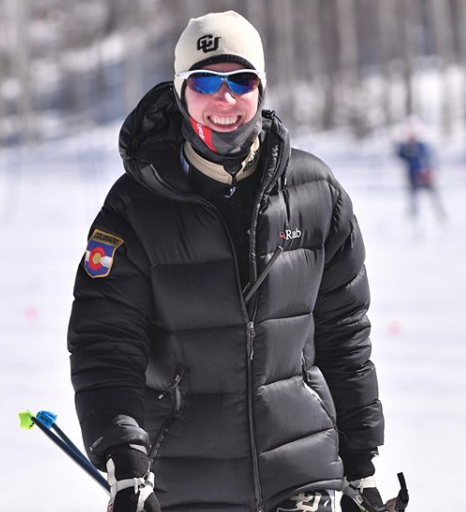
    Colorado University Head Coach Jana Weinberg smiles as she carries spare poles during a race. (Photo: Instagram screenshot @cubuffsskiing)

    “A lot of what I learned was from being an athlete myself,” Weinberger explained. “Learning from my mistakes and trying to teach my athletes not to repeat the same mistakes. What I try to do with my athletes is to approach every athlete individually and see what they need and go from there. I try to make them the best that they can be.”

    Weinberger’s background in the sport meshed well with the training program Cranmer crafted at CU, which helped the two connect in both their athlete-coach and collegial relationship.

    “She came from Europe, and I had European coaches, not from Estonia but from Norway,” explained Cranmer. “Their approach is a little bit different than your standard American model, but that’s not to say that there is one model that fits all either.”

    Throughout the ten years they spent working together, coaching was a collaborative effort as they continued to fine-tune an incredibly successful program.

    “I think we worked together well and supported the team in different aspects,” said Cranmore. “Usually, you start ending up with little niches, and as we went along I started sending more things her way that I thought she could do which freed me up to do some other things, so we each kind of found our own niche a little bit and that evolved as we went along.

    “Certainly, she brought professionalism, coming from a high place race-wise from Europe to America,” he added.

    Transitioning from athlete to coach went smoothly for Weinberger. Cranmore appreciated her ability to take on new responsibilities with confidence, even in the tasks that are beyond the realm of wax bench or training plan, such as driving the team van long distances, sometimes late at night and in inclement weather – not for the faint of heart. He added that her toughness as an athlete also helped her as a coach to encourage others to step it up on tough days.

    “’It’s always cold like this!’ or ‘Sometimes the wax isn’t perfect!’ or whatever it might be,” Cranmer laughed. “So from that standpoint, I think she brought that to the team and she was open and got along well [with everyone].”

    Winning national championships with Weinberger was a highlight of Cranmer’s career and he described it as “always a special experience.” When he decided to retire, both he and alpine coach Richard Rokos, who is also the head coach of the overall CU ski program, felt that the decision to offer Weinberger his position was an easy choice.  

    “It was a pretty easy step. I knew that as long as she was interested, she would be a logical choice,” he explained. “The head coach, Richard [Rokos], who is the alpine coach, he’s been at CU for almost 30 years, so he knew Jana well also and thought that was an easy logical step. She knew everything, knew the program, she had been there for 10 years with me.”

    As Weinberger had already been contributing to the program for some time, she was able to transition smoothly into her new role without needing to alter the structure she and the athletes were accustomed to.

    “It’s been a very successful program so far, so there are not that many things that need to be changed,” she explained. “Probably more of me being a different coach than Bruce was. I definitely learned a lot from him and try to incorporate whatever I learned from my previous coaches into my own coaching.”
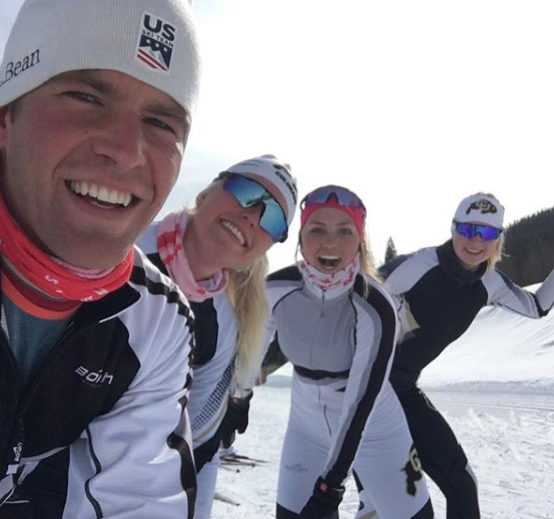
    Colorado University Assistant Coach Austin Caldwell poses with his skiers during a training session in Winter Park, CO. (Photo: Instagram screenshot @cubuffsskiing)

    Following Weinberger’s promotion, Austin Caldwell joined the Buffaloes as the assistant coach. Caldwell was team captain at Dartmouth University, then coached junior athletes at the Putney School in Vermont and post-graduate skiers at the Bridger Ski Foundation in Montana.

    “The transition has been relatively seamless so far,” Caldwell wrote about Weinberger’s promotion in an email. “Bruce has an impressive legacy with the team and he set up a proven system that works for the college. Jana has great relationships with the athletes and has been at CU for many years as a skier and coach making the transition as simple as possible.”

    As Weinberger takes on new responsibilities as the team’s leader, Caldwell is finding his own niches to fill in helping to guide the team.

    “Jana and I come from different coaching backgrounds,” said Caldwell. “She has been coaching collegiate racing for many years and I have been on the Super Tour the last few years. She has a system in place that works very well and I support that and can hopefully add useful insights from my past experience.”

    The team has continued to be a powerhouse in the Pac-12 division, regularly placing athletes on the podium and in the top ten for both men and women.

    “One of the highlights [of the season] just happened in the races in New Mexico where our girls went 1 – 2 – 3 [in the 7.5k classic race] – Anne Siri [Lervik], Hedda [Bangman], and Ezra [Smith], so that was pretty cool to experience as a coach,” said Weinberger. “And overall, this season is different for me because I am the head coach and I feel more responsibility, so I’m trying to take care of the team as best to my abilities as I can. That is exciting for me.”

    Looking ahead, Weinberger aspires to lead the team to more national championships and to help other athletes achieve what she sees as the highlight of her athletic career, winning both races at the NCAA’s.
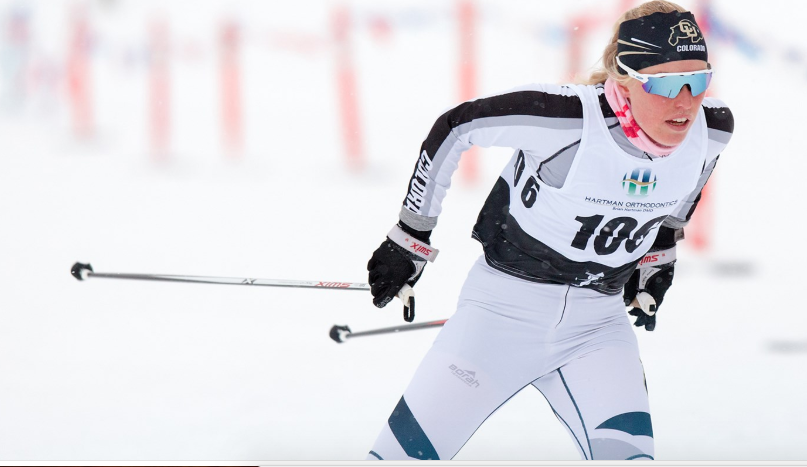
    Christina Rolandsen of the Colorado University nordic team on her way to a third place finish in the 10-kilometer freestyle race in Anchorage, AK. (Photo: Screenshot CUBuffs.com)

    “I guess I had Petra Hyncicova a couple of years ago when I was an assistant coach, she won both races, but I’m hoping in the next couple of years, one of my athletes will win both races as well.”

    She continued, “We always try to win championships, that is our goal every year. What I want to do with our nordic team is I want them to be the best collegiate nordic program in the country. So that is one of my main goals.”

    The CU Team is wrapping up their regular season racing in Anchorage, AK, and will head to Stowe, VT for the NCAA Championships at the beginning of March.

  • With Bjornsen at the Helm, APU Sweeps SuperTour Finals Classic Sprint

    With Bjornsen at the Helm, APU Sweeps SuperTour Finals Classic Sprint

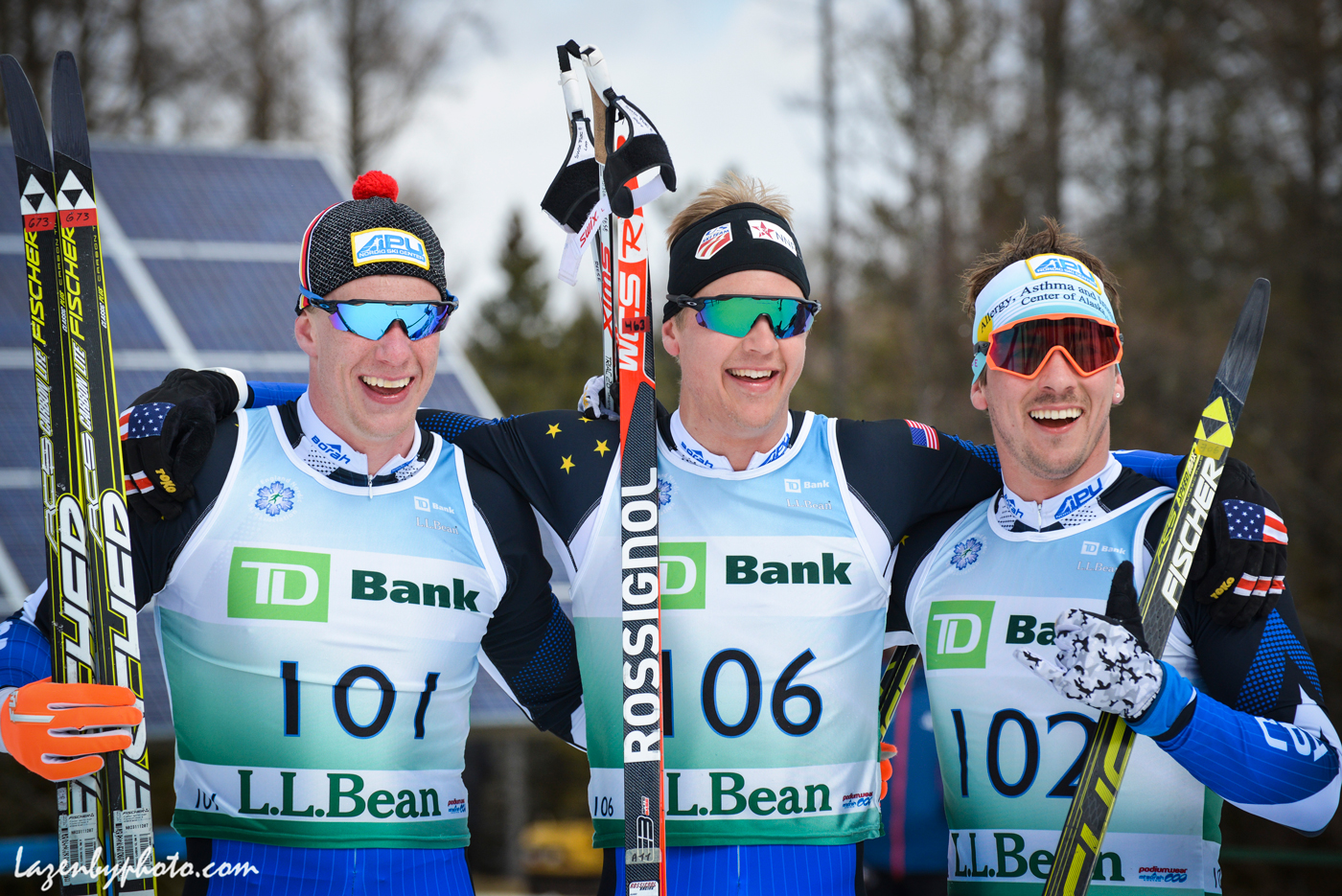
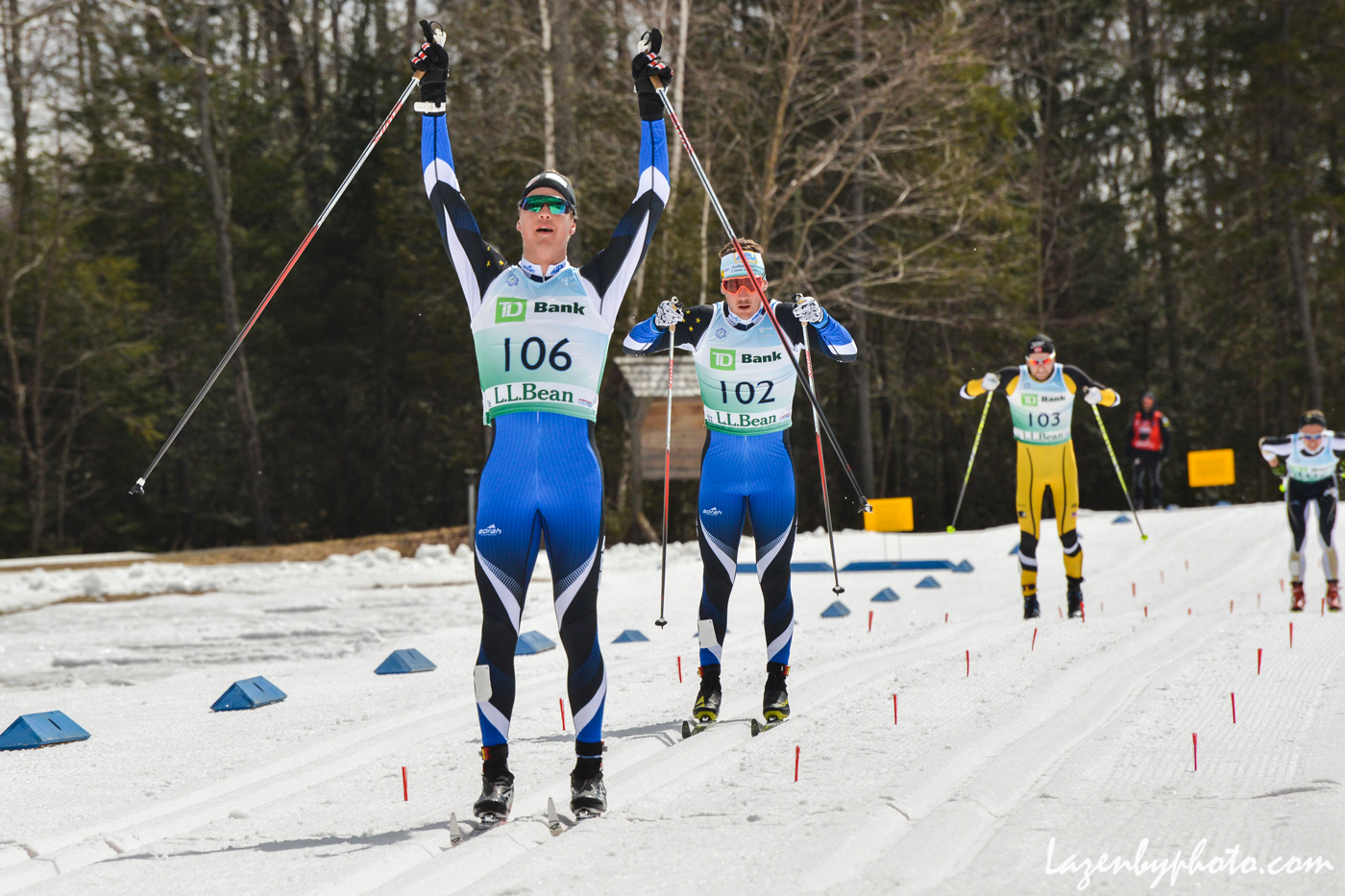
    Erik Bjornsen (106) celebrates his classic sprint victory on Tuesday at SuperTour Finals in Craftsbury, Vt., after holding off APU teammate Reese Hanneman by 1.28 seconds. Logan Hanneman completed the APU podium sweep in third, 4.35 seconds back. (Photo: John Lazenby/lazenbyphoto.com)
    Erik Bjornsen (106) celebrates his classic sprint victory on Tuesday at SuperTour Finals in Craftsbury, Vt., after holding off APU teammate Reese Hanneman (102) by 1.28 seconds. Logan Hanneman (not shown) completed the APU podium sweep in third, 4.35 seconds back, while Michigan Tech’s Didrik Elset (in yellow) missed the podium by 0.34 seconds in fourth. (Photo: John Lazenby/Lazenbyphoto.com)

    Earlier this year at U.S. nationals, Alaska Pacific University (APU) narrowly missed a podium sweep in the classic sprint in Houghton, Mich., taking first, second and fourth in the men’s final. But on Tuesday in Craftsbury, Vt., in the 1.5-kilometer classic sprint at SuperTour Finals, the APU men pulled it off, putting four men in the final and sweeping the top three.

    The APU contingent consisted of Eric Packer (the defending national champion in the classic sprint), Reese Hanneman (the SuperTour sprint leader for Period I who spent the rest of the season on the World Cup in Europe), his younger brother Logan Hanneman (the fastest qualifier of the day in 3:07.24), and Erik Bjornsen (who recently returning to the U.S. after racing a full season on the World Cup circuit).

    They were joined by two Norwegians competing as collegians in exchange programs: Didrik Elset, 22, of Michigan Tech University and Petter Reistad, 21, of the University of Colorado-Boulder (CU). Elset broke up the APU sweep at nationals, placing third in the classic sprint. Reistad helped CU to a runner-up team finish at NCAA Skiing Championships, double poling to ninth in the 20 k classic mass start.

    On Tuesday, the two Norwegians, Elset and Reistad decided to double pole the qualifier as well as the heats, making it all the way to the final. The rest of the field opted to stride the heats. On a wide track with five classic tracks covering most of the course, racers were pleased with a fair-and-minimally tactical course.

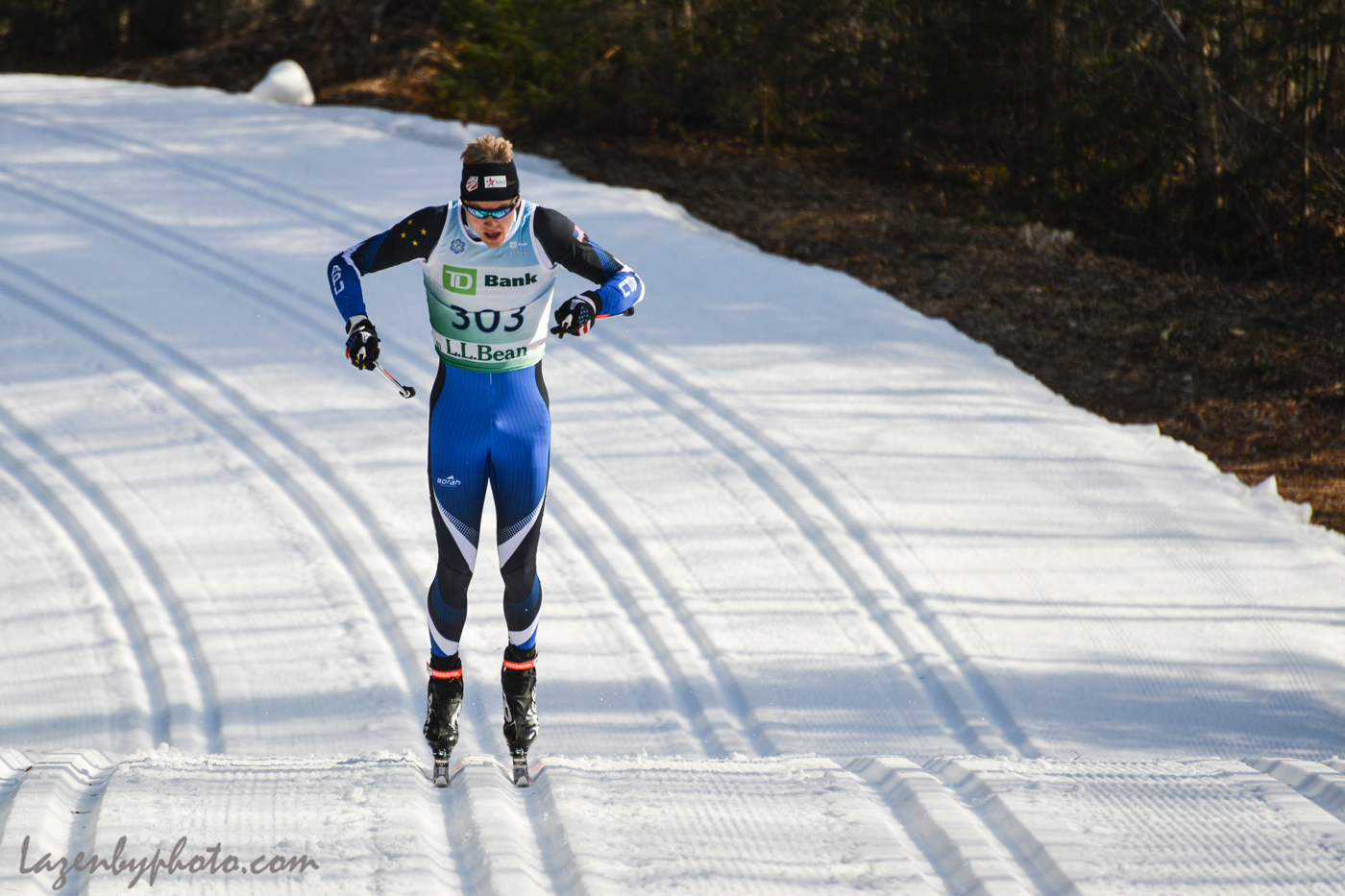
    In the final, Reistad blasted out of the gate and Reese Hanneman tucked in just behind. Heading up the decisive climb on the course, Reese jumped into his own track and surged ahead of Reistad. Bjornsen covered the move and the two gapped the field as they headed toward the slight incline into the finish. Hanneman tucked behind Bjornsen to be sheltered from the headwind and matched his pace, but couldn’t overtake him. Bjornsen secured the win in 3:02.4, beating Reese by 1.28 seconds.

    After gaining on Elset and Reistad on the climb, Logan Hanneman overtook the double polers in the final stretch to notch third (+4.35), just 0.34 seconds ahead of Elset in fourth. Fatigued from double poling with little rest between heats, Reistad faded to fifth (+7.31).

    Notably missing from the podium, current SuperTour leader Packer placed sixth (+50.95) after a crash in the final.

    “I fell on the big downhill in the final, and ended up sliding off course into the dirt and leaves,” wrote Packer in a post-race email. “There was no contact or anything — I just caught an edge and went down. It was a bummer for sure but I am looking forward to the next two races, and defending my Supertour lead in the 50 k.”

    Bjornsen Pushes Through

    The APU men swept the classic sprint podium at SuperTour Finals on Tuesday in Craftsbury, Vt. Erik Bjornsen (c) led the team in first, ahead of brothers Reese (r) and Logan Hanneman (l) in second and third, respectively. (photo credit: John Lazenby/lazenbyphoto.com)
    The APU men swept the classic sprint podium at SuperTour Finals on Tuesday in Craftsbury, Vt. Erik Bjornsen (c) led the team in first, ahead of brothers Reese (r) and Logan Hanneman (l) in second and third, respectively. (photo credit: John Lazenby/Lazenbyphoto.com)

    Although Bjornsen was considered a favorite heading into the race, he was pleasantly surprised with the victory.

    “It was not exactly what I was expecting, I was happy to have enough in the final to take the win,” Bjornsen, 24, said in a post-race phone interview. “I am not feeling great right now, it is not my best shape, but I’m trying to race through it and enjoy the racing in the U.S.”

    After posting the sixth-fastest time in the qualifier, about 2.98 seconds behind Logan, Bjornsen progressively gained momentum, winning both his quarterfinal and semifinal.

    “The legs especially are not responding, just kinda feeling dead,” he described. “I felt pretty good in the heats today. I tried to ski behind people and make my move in the last 60 seconds or so and I think it worked and helped me conserve energy for the final.”

    Reese in second overall was also pleased after feeling beat up after the season-ending World Cups in Canada.

    “It was good. I was just so dead after Ski Tour Canada and I didn’t really know what to expect,” he said on the phone. “I pretty much just felt dead for a week after Canmore and then I had a really, really bad race hack for a long time so I didn’t race [on Monday]. I felt pretty good, the skiing was really nice, they did an awesome job with the course.”

    Although fatigue resonates through all the racers, Reese highlighted that at this point of the season, it is a mental challenge more than anything.

    “Being really tired is kind of a given at this point in the year. … We are all just all a bunch of tired people racing each other,” he said. “It doesn’t necessarily mean that you can’t do well, I think it is important to learn to race when tired because it is not indicative of the result, it’s just mentally hard to get fired up.”

    Although little glory is generally given to sprint-qualifier winners, prize money for the fastest qualifier in Craftsbury placed a bit of incentive for the morning prelim. With that in mind, Logan set an intermediate goal for the day: winning the qualifier. The decision to stride instead of double pole paid off as he claimed the top qualifier in 3:07.24, just 0.71 seconds faster than his brother Reese.

    Logan Hanneman (APU) racing to a 0.71-second qualifying win in the men's classic sprint on Tuesday at SuperTour Finals in Craftsbury, Vt. (Photo: John Lazenby/Lazenbyphoto.com)
    Logan Hanneman (APU) racing to a 0.71-second qualifying win in the men’s classic sprint on Tuesday at SuperTour Finals in Craftsbury, Vt. (Photo: John Lazenby/Lazenbyphoto.com)

    Logan went on to win the first quarterfinal, then advanced as a lucky loser in the semifinal after placing third behind Bjornsen and Reistad, respectively.

    “I went out and in typical Logan fashion, slow out of the start,” Logan said on the phone after.” I was fifth pretty much the whole way until the stadium and I caught and passed the two double polers on that last stretch.”

    Completing the podium sweep was part of his motivation heading down the homestretch.
    “That was cool,” he said. “That was one of my incentives for catching those people. And we had four in the top six. Packer took a little detour off course in the final, which wasn’t quite the fastest detour.”

    Packer echoed the significance of the strong APU showing. “It was really cool to see my teammates sweep the podium today…,” he said. “I think it reflects the training we do in Alaska.  We’re all pushing in training, and that’s starting to show through in the results.”

    Despite missing the podium by 0.34 seconds, Elset in fourth said he has enjoyed racing and training in the U.S. with Michigan Tech and credits coach Joe Haggenmiller and the team with his success.

    “I chose skate skis. It worked pretty well, especially for the quarterfinal and the semifinal but in the final, the APU guys were going too fast for me up the climb and I was getting tired so it was rough,” Elset said. “I was hoping to be on the podium today but being able to ski with these guys who are so fast and be competitive is fun and it gives me a lot of confidence that I am doing something right.”

    Results: Qualifier | Final results | Brackets

  • Patterson Drops Pack for Sun Valley 15 k Win; Strøm Outlasts Packer for 2nd

    Patterson Drops Pack for Sun Valley 15 k Win; Strøm Outlasts Packer for 2nd

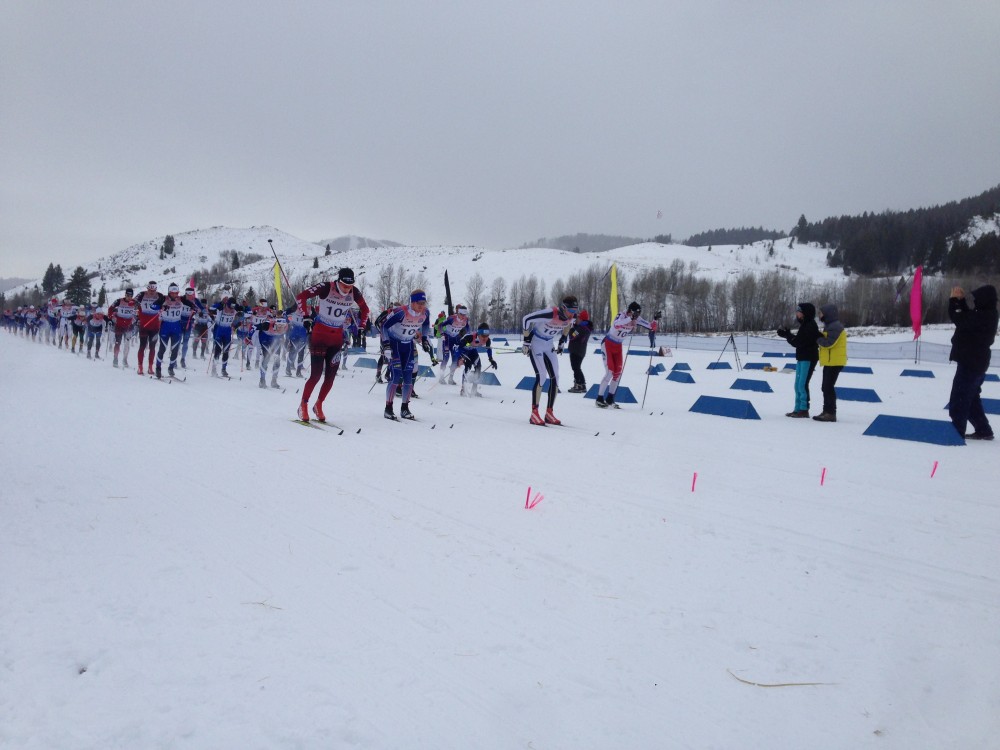
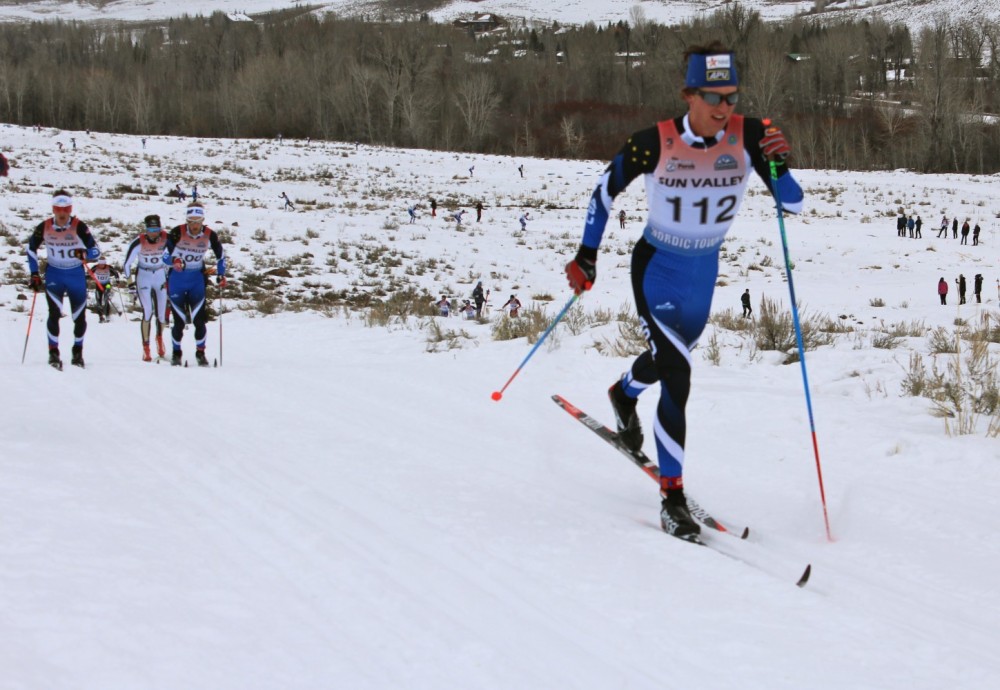
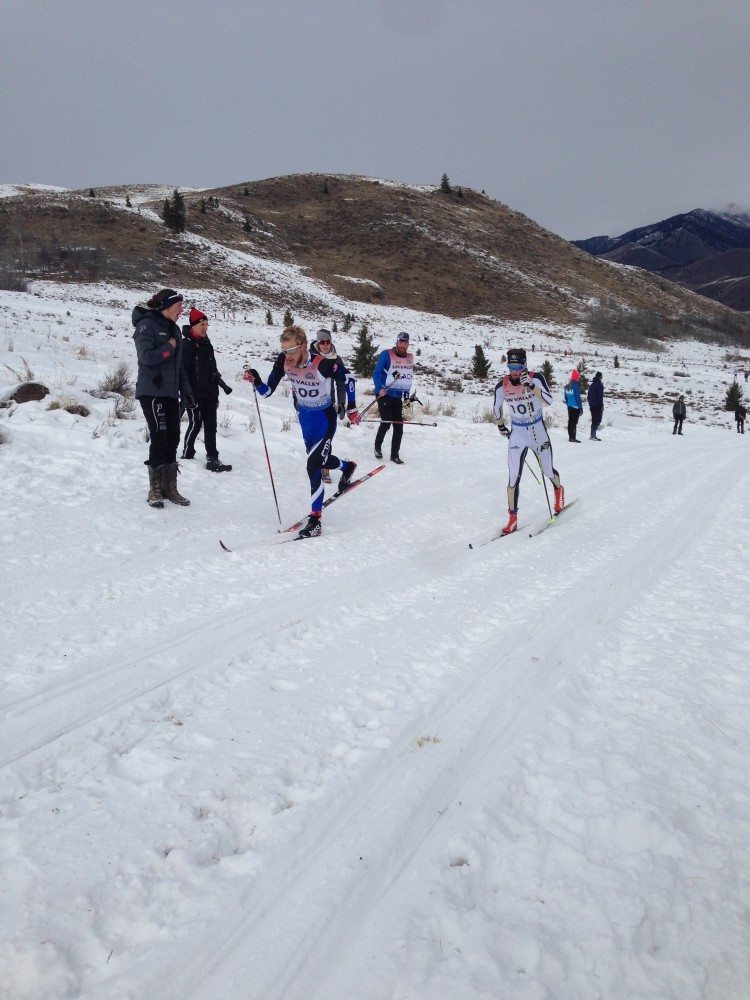
    Mads Strøm (center, in white) leads Niklas Persson (left), Matt Gelso (second from left, in blue), Paddy Caldwell (right), and the rest of the mens field out of the start in the 15 k classic at the Sun Valley Super Tour.
    Mads Strøm of the University of Colorado-Boulder (front, center, in white) leads Niklas Persson (left), Matt Gelso (second from left, in blue), Paddy Caldwell (far right), and the rest of the men’s field out of the start in the 15 k classic at the Sun Valley SuperTour on Sunday.

    SUN VALLEY, Idaho — Alaska Pacific University (APU) skiers Scott Patterson and Eric Packer know a thing or two about persevering through pain. Both have dealt with recent frightening incidents, Patterson with a pulmonary embolism last fall and Packer when he took a rocky tumble this past June. Despite their misfortune, neither let the mishaps hold them back. On Sunday, the duo proved how far they have come since, finishing first and third, respectively, in the Sun Valley SuperTour 15 kilometer classic mass start.

    The men started at 11 a.m. under cloudy skies and light snow flurries. From the beginning, it was clear that the APU athletes were looking to make a statement; the blue-and-black uniforms were ubiquitous in the lead pack. The Sun Valley spectators enjoyed their presence as well, rooting them on as they rounded the course.

    Eventual second-place finisher Mads Strøm, however, was excited to try to spoil the APU party. Early on in the six-lap race, he established himself as a threat, skiing comfortably towards the front of the pack. The University of Colorado-Boulder skier then used the strong APU presence around him as extra motivation to ski fast.

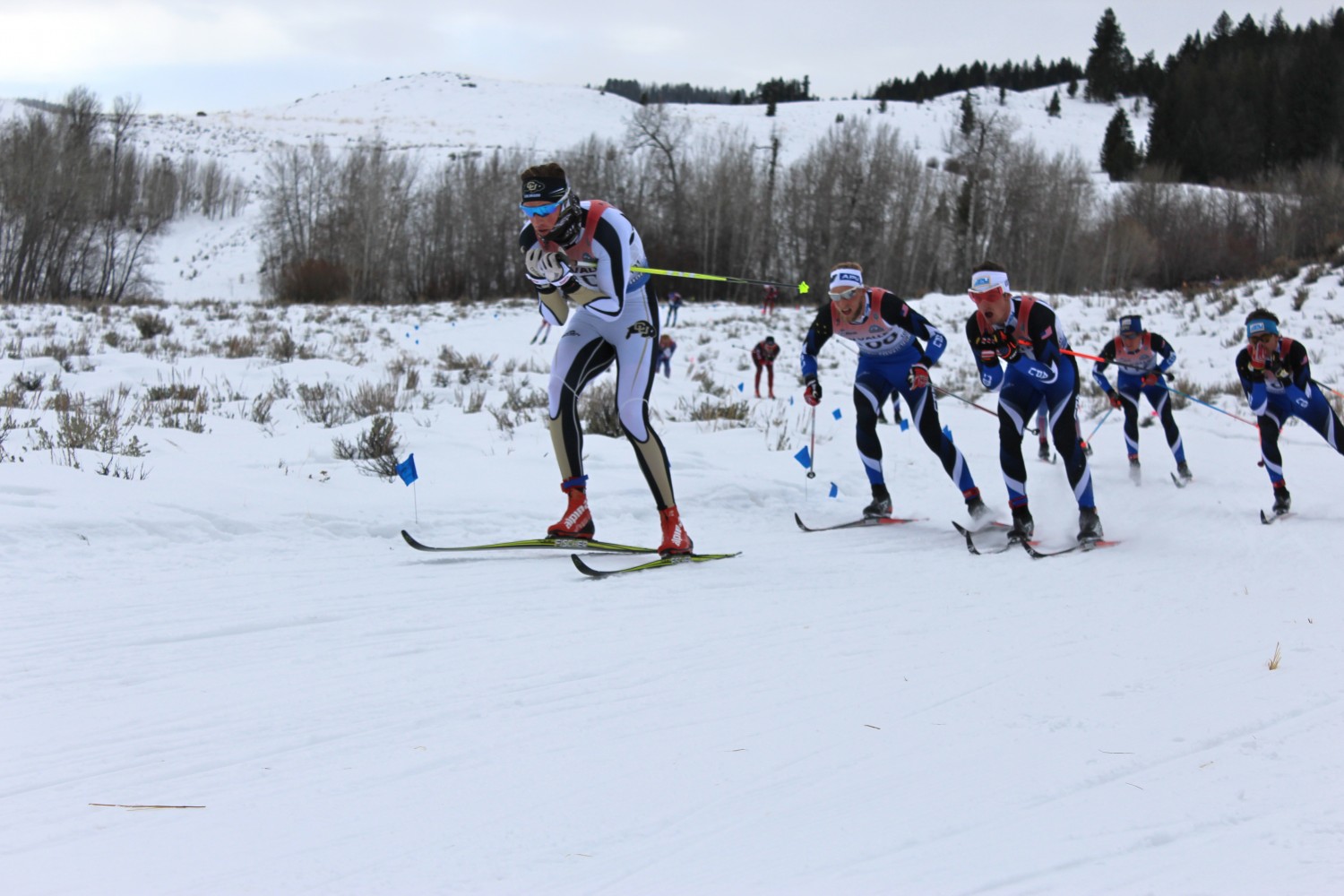
    Left to right: Mads Strøm (University of Colorado Boulder) is trailed closely by Eric Packer (APU), David Norris (APU), Scott Patterson (APU) and Lex Treinen (APU) during the men's SuperTour 15 k classic mass start on Sunday in Sun Valley, Idaho.
    Mads Strøm (University of Colorado-Boulder) leads APU skiers (from l to r) Eric Packer, David Norris, Scott Patterson, and Lex Treinen during the men’s SuperTour 15 k classic mass start on Sunday in Sun Valley, Idaho.

    “Going around [the course], everyone just cheering for APU. I was out there all alone,” Strøm said in a post-race interview. “I was like, I’ve got to beat some of these guys. I have to. For everybody else, I have to beat some of them at least.”

    After two laps where the leaders stuck together, only three seconds separated the top 17, the group broke apart. APU’s David Norris made an aggressive move up Coaches’ Climb on the third lap, and only a handful of racers were able to respond.

    “Norris made a bit of a surge up the biggest hill and I kind of got stuck behind a couple people and pushed over the top,” Patterson explained. “That kind of jump started me into gear.”

    Shortly thereafter on the third lap, the 23-year-old Anchorage native took the lead and didn’t relinquish it, keeping his distance ahead of any potential challengers all the way through the finish. Patterson crossed the line in 40:35.9, over 30 seconds ahead of the runner up.

    Though Norris made the early move to break the pack apart, he was unable to hold the pace, falling back on the fifth lap while a battle for second place developed between Strøm and Packer.

    In the last kilometer before the finish, the two were still neck and neck, battling for position on the final climb. Packer led Strøm over the top, but a mistake on the downhill caused him to lose some momentum and created an opportunity for Strøm.

    Scott Patterson (APU) striding to a decisive lead during the the men's SuperTour 15 k classic mass start on Sunday in Sun Valley, Idaho.
    Scott Patterson (APU) striding to a decisive lead during the the men’s SuperTour 15 k classic mass start on Sunday in Sun Valley, Idaho.

    “It was the last kilometer of a race at altitude, so I knew we were both hurting and that’s a thing to keep in mind; everybody else is hurting as bad as you are,” Packer explained of the Lake Creek venue, some 6,000 feet above sea level. “So I tried to put in a big attack over the top and then almost crashed on the downhill, and when I bobbled Mads came by and he took me at the line.”

    Strøm also was feeling confident heading into the finish. Combining good skis, a desire to disrupt an APU one-two finish and some strong skiing, he was able to claim the second podium spot, 31.6 seconds behind Patterson and 2.3 seconds ahead of Packer.

    “I knew I had fast skis going down and I know I’m a fast finisher after 15 k, I was like, I can’t let them go one-two,” said Strøm, originally from Oslo, Norway. “I have to mix it up a bit at least. But it was fun. [Packer] really tried hard and I just got some confidence in the last hill that, yeah, I should get this.”

    While he was pleased with his race, Strøm said it’s just a step towards his larger focus for the season, NCAA championships, which the University of Colorado will host March 9-12 in Steamboat Springs, Colo.

    “Obviously I wanted to win. I haven’t gotten quite there yet because I have been training almost 100 hours every month since May,” Strøm explained. “I’ve planned that in one month from now I’m going to be in better shape and my plan is to win both races at NCAA’s.”

    Eric Packer (left) and Mads Strøm (right) fight for 2nd place on the last hill of their final lap.
    Eric Packer (left) and Mads Strøm (right) fight for second place on the last hill of their final lap.

    For Patterson and Packer, who also grew up in Anchorage, the APU skiers were excited with their races and happy to have given it their all in Sun Valley. Overcoming their misfortunes only made the moment more special.

    “Every day that we get to race is just an awesome opportunity to go out and have fun,” Packer reflected. “After having a really close call and having a big fall in the mountains, everything, you look at it with a new perspective. I just feel so lucky to be out here really.”

    “I mean, watching him fall in the mountains was definitely an eye opening thing,” Patterson recalled. “We were lucky there and it’s sweet to have Eric here [on the podium]. And then, this is my first year racing this first circuit so, I mean, I’m happy to be here too, happy to not have a ski sticking out of my leg.”

    One spot from the podium in fourth was another APU skier, Lex Treinen, who finished 26.8 seconds after third and 1:00.7 behind Patterson. About a second later, Kyle Bratrud of Central Cross Country (CXC) placed fifth (+1:01.9).

    After two weekends of racing, the SuperTour takes nearly a month break before resuming with U.S. Nationals on Jan. 3 in Houghton, Mich.

    Results | Results with splits

  • A Buffalo On Tour: Du Pasquier Uses Military Service Requirement to Hit the World Cup

    A Buffalo On Tour: Du Pasquier Uses Military Service Requirement to Hit the World Cup

    Arnaud Du Pasquier, a Swiss member of Colorado University's 2014 NCAA Championships squad, competing in the 15 k classic World Cup in Davos, Switzerland, on Saturday. Du Pasquier is using Switzerland's obligatory military service requirement to ski full-time this year.
    Arnaud Du Pasquier, a Swiss member of Colorado University’s 2014 NCAA Championships squad, competing in the 15 k classic World Cup in Davos, Switzerland, on Saturday. Du Pasquier is using Switzerland’s obligatory military service requirement to ski full-time this year.

    After a few seasons at Colorado University, Arnaud Du Pasquier felt the pull of home: he went back to his native Switzerland to do a year of military service.

    “Every man has to do military service, it’s still obligatory in Switzerland,” Du Pasquier explained after finishing the 15 k classic World Cup race in Davos, Switzerland, on Saturday. “So I got called in. There are two reasons you can stop your studies: if you’re pregnant – and I’m not going for that! – or if you have to do military duty.”

    So how did he end up ski racing on the World Cup? There are many ways to fulfill your military service requirement in Switzerland. Many young men actually participate in the army; men and women alike also spend a year doing civilian service. Du Paquier, who hails from Pontresina, just down the road from St. Moritz, is fulfilling his by skiing in the military sports program.

    “Now I’m just racing,” he said. “I raced pretty well last week. The home country gets ten extra start spots, so I raced well last week and that’s how I qualified.”

    Since he didn’t qualify through, and isn’t on, the national team, Du Pasquier showed up to race in his CU Buffaloes suit.

    With this coming weekend’s races in La Clusaz, France, moved to Davos, Du Pasquier will likely get another crack at it, too.

    At CU, he was “basically a walk-on”, head cross-country coach Bruce Cranmer wrote in an e-mail. Du Pasquier snagged a pair of top-tens, including at 2013 RMISA Championships, and considers himself a distance specialist.

    In 2013 he also made the NCAA Division I All-Academic Team while majoring in physics, and received the Buffs’ “Most Improved Student-Athlete Award”. His online bio explains that one reason he chose CU was because of the university’s five nobel laureates in Physics.

    In 2014, he placed 19th in the 10 k classic and 36th in the 20 k freestyle at NCAA Championships, helping CU to fourth place overall.

    “Arnaud has been a very hard worker and has had a full plate taking physics and math while trying to compete at a high level,” Cranmer wrote.

    Du Pasquier hopes that the experience of spending a full year racing in Switzerland and getting some World Cup starts – he finished 82nd – will make him faster when he returns to CU as a senior next season.

    “I don’t think it will change the way I race, but I think I would be able to be more on top,” he said. “Before, usually top 10, that was my goal at the races. I hope that now I can come back and be top three, or something like that. I think that will be way more fun, to be in front in college races.”

    On Saturday, though, he had way more practical worries.

    “I was pretty nervous, for sure,” he laughed. “I was mainly nervous because of my gear. I’m not on the national team so I have to take care of that myself.”

    Dario Cologna’s ski prep, this was not.

    “Luckily I had a guy helping me who was pretty good,” Du Pasquier said. “After I knew that I had okay skis, I was just having fun. I didn’t race as well as last week. I think my skis were just a tiny bit slow, compared to the other guys. But it was fun and I think it’s a really good experience.”

    Cranmer agreed.

    “I think a year in Switzerland, doing some military service and racing some World Cups will be a great experience for Arnaud and give him an idea of what it take to compete at the highest level,” he wrote. “Arnaud is a very upbeat and optimistic person so he strongly believes that he can not only improve but be a top level skier.”

    That infectious enthusiasm certainly was apparent, even in the finish pen of a race where he got pummeled.

    “I hope I can make some guys nervous,” Du Pasquier said. “The guys who saw me on TV, I hope they are getting nervous for next year.”

  • Her College Career Over, Reid Considers Her Next Move

    Her College Career Over, Reid Considers Her Next Move

    2013 NCAA 15 k champion Joanne Reid waves a Colorado University flag after helping her team to a national title. (Photo: flyingpointroad.com)
    Joanne Reid waves a Colorado University flag after helping her team to a national title with her individual win in the 15 k freestyle. (Photo: Steve Fuller/flyingpointroad.com)

    College skier faces a decision at graduation: whether to continue pursuing an athletic career on snow or embark down another, more traditional professional path. As the NCAA is fond of repeating every year during March Madness, most student-athletes “go pro in something other than sports.”

    Joanne Reid currently stands at that crossroads. The 20-year-old completed her fourth year of eligibility with the University of Colorado last season and will be finished with her undergraduate degree this December. The Palo Alto, Calif., native had a near-perfect senior campaign, winning eight regular-season invitationals in the Rocky Mountain Intercollegiate Ski Association circuit on her way to becoming the NCAA Champion in the 15 k freestyle and leading the Buffs to team victory in Rikert, Vt. With that record, it could be argued that no female nordic skier in the NCAA is better positioned than Reid to take the next step in her athletic career.

    And yet Reid is unsure of whether to take that step. Part of her uncertainty stems from having other interests — after she completes her undergraduate degree in mathematics she has ambitions to continue working towards a PhD. The way Reid looks at her options, she believes she would be just as capable of dedicating her life to skiing in four or five years, after earning a PhD, as she is now at 20 years old.

    Joanne Reid (CU) 6th place.
    Joanne Reid at 2012 NCAA Championships, where she was 6th in the freestyle event.

    “Because I’m so young…I feel like I could continue on to a PhD and continue skiing if I want to,” Reid said. “But if I take a break [from school] in the middle, if you get out of the school groove it’s hard to jump back in, especially with a PhD program.”

    Reid’s hesitancy to go pro in skiing goes deeper, however. A year ago, she struggled to find the motivation to continue with the sport at any level. After a life of racing, she started to feel burnt out. Her senior season was unique, therefore, not only because it was so successful — the third-winningest in CU ski team history, in fact. Her success stands out because it was entirely unexpected.

    Last summer, for example, Reid wound up reducing her ski-specific workouts significantly in order to find other ways to enjoy being active. She didn’t rollerski until November, and she recalled losing every single team time trial last fall. She skipped U.S. Nationals in January, an event many college skiers treat as a pre-season warm up, “to find my ski spirit again,” she said.

    “I just lost the sense of joy and fun that you’re supposed to have,” she added. “So I tried to make it fun again without letting my team down.”

    Reid readily acknowledges how she must sound.

    “Don’t I sound like a religious person finding God again?” she asked.

    Whether it was the unstructured training or a new outlook on racing, Reid came back to the start line ready to compete. At her first race of the year, the Colorado Invitational in Steamboat Springs, she handily won the 15 k freestyle. For the rest of the regular season Reid would only suffer two losses in ten races. She was winning and skiing was fun again, but Reid never quite believed it was due to her own fitness.

    “We had so many good skiers [last year] and they all graduated, except for Eliska [Hajkova], and she had an injury,” Reid said. “I was feeling like I was sort of cheating.”

    Right up until NCAAs, Reid thought each successive win would be her last, like it was “some weird fluke situation” rather than proof she was skiing well.

    “It wasn’t until literally NCAAs that I realized I was having a good season,” Reid said. “When you have a bad season, you don’t feel the need to keep having bad seasons; it’s really discouraging. I looked at quitting every year. I was so uncertain and didn’t feel like it was in my future until the end of the year.”

    Joanne Reid leads her Colorado University teammates, Eliska Hajkova (4) and Maria Nordstrom (9) early in Saturday's 15 k freestyle mass start at the 2013 NCAA Championships. Reid won by nearly 27 seconds and Hajkova was second. (Photo: Steve Fuller/flyingpointroad.com. All photo sales benefit NNF)
    Joanne Reid leads Colorado University teammates Eliska Hajkova (4) and Maria Nordstrom (9) early in the 15 k freestyle at NCAA Championships. Reid won by nearly 27 seconds and Hajkova was second. (Photo: Steve Fuller/flyingpointroad.com.)

    Her season-ending victory at NCAAs against a quality field brings Reid to her present dilemma. After operating for months under the assumption she would leave competitive skiing behind after college, her recent success reopened the possibility of a post-college career. Though Reid has applied to several PhD programs, she has also started to think about racing for another year. Rather than look for a club to train with, she thinks she’ll race independently near her parents’ home in Truckee and at a few SuperTours to test the waters. Reid says a teammate recommended she get in touch with the coaches at Ski and Snowboard Club Vail’s Team HomeGrown, but she has not yet explored that avenue.

    “After the season I had, I guess I became uncertain,” Reid said. “Because I had so much fun and I did so well, now I’m not sure if I should continue.”

    Reid is one of those athletes who is as happy winning races as she is working out just for fun. “I never saw a reason to have a big competition to work for, or anything,” she says. She gets this attitude from her mom, Beth Heiden, who was a decorated skier, speed skater and cyclist in the 1980s but now trains twice a day and competes infrequently.

    “The sport itself of nordic skiing is so volatile,” Reid reasons. “Is the wax right, is this the right grind, the right snow? It’s so hard to get everything right, and because of that the best person doesn’t always win. And that always made me hesitant to be in the sport. It takes up so much time and is so controversial… I just like to be outside.”

    Reid’s next step in skiing is about as far as she’s planned. She and her family have traveled to Montana for the West Yellowstone Ski Festival every Thanksgiving since she was two years old, and this November she expects to start her season there again. After the first SuperTours, however, she hasn’t settled on her next move.

    “I figure the plan will come to me as it comes,” Reid said.

  • Photo Gallery: NCAA Championships 15/20 k Mass Starts

    RIPTON, Vt. — It didn’t get much better than Saturday, with sunny skies and spring-like conditions for the last day of the NCAA Skiing Championships at Rikert Nordic Center.

    Colorado University (CU) senior Joanne Reid dropped the women’s field in the 10-kilometer freestyle mass start and teammate Eliska Hajkova hung on for silver, lifting the Buffs ahead of the University of Vermont (UVM) in the team standings.

    In the men’s 20 k freestyle race, the University of Utah took center stage with senior Miles Havlick defending his 2012 NCAA Championships mass-start title. Rune Ødegård placed second to help CU finish on top for its 18th national title, and another Norwegian, Einar Ulsund, finished third for Utah to bump the team to second overall.

    Women’s recap | results

    Men’s recap | results

    For more photos from the 2013 NCAA Skiing Championships, visit Flying Point Road Photography. All proceeds go to the National Nordic Foundation (NNF).

  • Havlick Repeats as NCAA Champion, Leads Utah to Silver: ‘It’s Just Perfect’

    University of Utah senior Miles Havlick celebrates his second NCAA title in the 20 k mass start, 0.6 seconds ahead of Colorado's Rune Ødegård (l) in second and Utah teammate Einar Ulsund (r) in third on Saturday at the Rikert Nordic Center in Ripton, Vt. (Photo: Steve Fuller/flyingpointroad.com. All photo sales benefit NNF)
    University of Utah senior Miles Havlick celebrates his second NCAA title in the 20 k mass start, 0.6 seconds ahead of Colorado’s Rune Ødegård (l) in second and Utah teammate Einar Ulsund (r) in third on Saturday at the Rikert Nordic Center in Ripton, Vt. (Photo: Flyingpointroad.com/All photo sales benefit NNF)

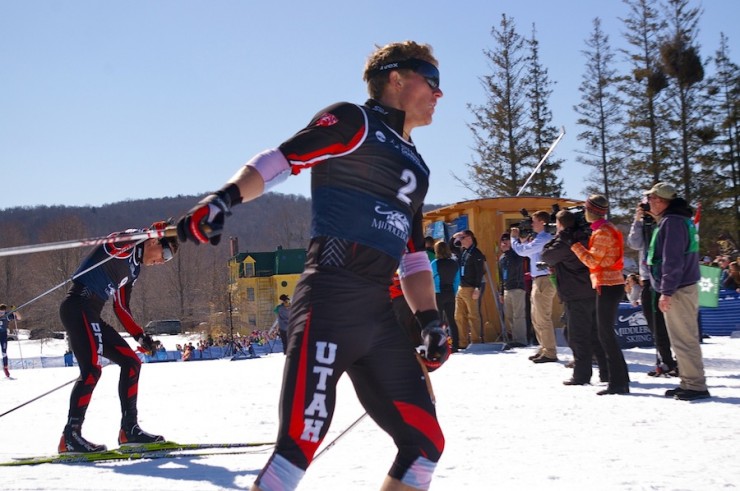
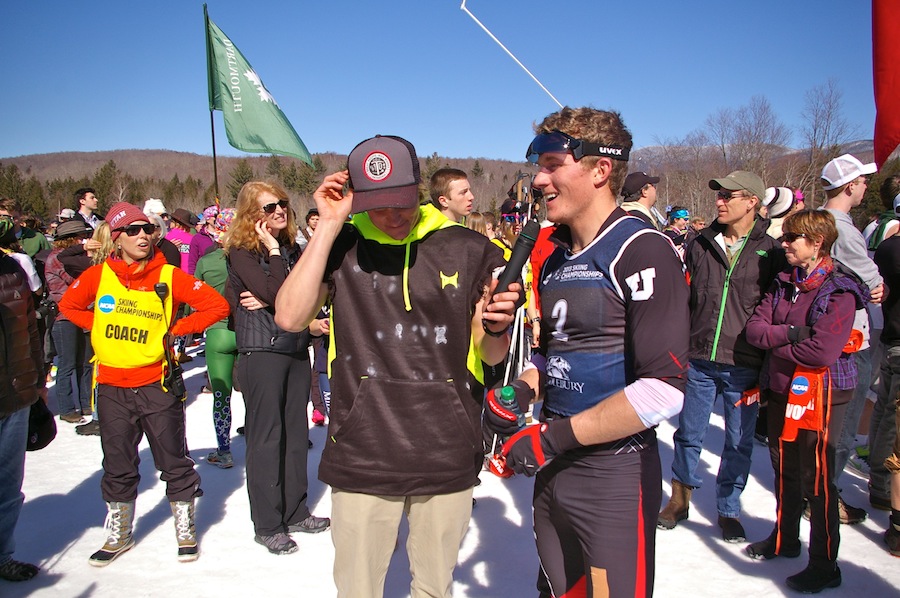
    RIPTON, Vt. – Standing with a microphone in hand shortly after winning Saturday’s 20-kilometer freestyle mass start at the 2013 NCAA Skiing Championships, Miles Havlick smiled as he fielded playful questions from the announcer.

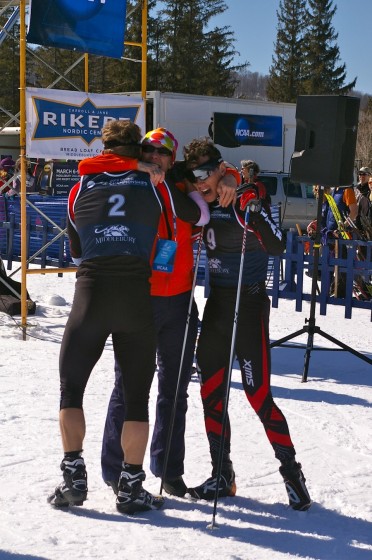
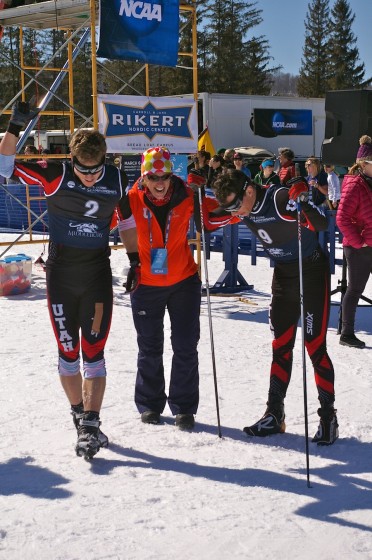
    Friends, fans and impressed spectators surrounded him at the Rikert Nordic Center, and as soon as he was done thanking the crowd and his University of Utah teammates, Havlick was bombarded with hugs.

    Miles Havlick (r), the 2013 NCAA 20 k freestyle mass start champion, during a post-race interview with the NCAA announcer on Saturday at Rikert Nordic Center in Ripton, Vt.
    Miles Havlick (r), the 2013 NCAA 20 k freestyle mass start champion, during a post-race interview with the NCAA announcer on Saturday at Rikert Nordic Center in Ripton, Vt.

    With watery eyes, the two-time NCAA Champion was either emotional or simply tanked after four laps around Rikert’s deceivingly hard 5 k course – probably a little of both.

    The senior had just defended his 2012 national title in the 20-kilometer mass start, this time in a skate race. Skiing up into the stadium with six others less than half a kilometer before the finish, Havlick rose from a possible podium contender to a repeat champion, passing Dartmouth College’s Sam Tarling and catching Rune Ødegård of the University of Colorado, who won Thursday’s 10 k classic individual start.

    In edging Ødegård by six-tenths of a second in 50:13.4, Havlick led a trio of Utes in the top five. With Norwegian teammate Einar Ulsund in third (+1.0) and Swede Niklas Persson in fifth (+3.1), Utah captured second in the final team standings (43 points behind NCAA champion the University of Colorado) and bumped the University of Vermont (UVM) to third.

    “It’s hard to do it again,” Havlick said of his second-straight NCAA mass-start title. “Just an awesome team this fall, all new guys. I was the only one returning and you never know what to expect, but it was an unbelievable senior year.”

    At breakfast Saturday morning, he said they talked about goals – three in the top five – which they knew would be hard, but wanted to strive for nonetheless. Havlick set the tone early, leading Viktor Brännmark of the University of Alaska-Anchorage (UAA) and Tarling through the first downhill. Tarling took the lead up the toughest climb on the loop, while Brännmark, Dartmouth teammate Silas Talbot, Ulsund and Havlick stuck near the front of the large pack.

    Ødegård pushed the pace on the second lap while Ulsund, Brännmark, Tarling and Middlebury’s Ben Lustgarten chased, along with some 20 others. The group remained some 25 strong through the third lap, in which David Norris (Montana State University) made a move to the front. Halfway through the last time around, it dwindled to seven (with Ulsund, Soderman, Tarling, Ødegård, Talbot, Persson, and Lustgarten).

    Utah senior Miles Havlick on his way to winning Saturday's 20 k freestyle mass start for his second-straight NCAA Championships title. Havlick topped Colorado University sophomore Rune Odegard by 0.6 seconds for the victory at Rikert Nordic Center in Ripton, Vt. (Photo: Steve Fuller/flyingpointroad.com. All photo sales benefit NNF)
    Utah senior Miles Havlick on his way to winning Saturday’s 20 k freestyle mass start for his second-straight NCAA Championships title. Havlick topped University of Colorado sophomore Rune Ødegård by 0.6 seconds for the victory at Rikert Nordic Center in Ripton, Vt. (Photo: Flyingpointroad.com)

    Havlick had lost contact, but regained it on the final climbs. Following Tarling up the last ascent into the field before the finish, Havlick watched as Ødegård charged to the front. He responded, outsprinting the Norwegian in the final straightaway.

    “It was deafening skiing up that hill,” Havlick said of the crowd near the finish. “Ears just ringing really takes the pain away.

    “It’s unbelievable today,” he added. “You never know what’s gonna happen in a mass start. It’s just perfect.”

    Sharing the podium with his teammates after with their second-place showing, Utah’s skiing director Kevin Sweeney handed Havlick the large trophy to hoist over his head for photos.

    “This championship is one of the most, I would say, competitive that I’ve experienced and I’ve been collegiate coaching for a long time,” Sweeney said. “So for this to finish up the way it did, it’s a true highlight of my career and such a great group of guys. Everybody skied where they needed to. I’m ecstatic.”

    Even though CU and UVM were the favorites battling it out for first, Sweeney knew his skiers could get into the mix. He just wasn’t sure where they’d stack up against strong teams, including Dartmouth, he said.

    “You know they’re gonna be in it, just exactly where,” Sweeney said. “I was very happy to see the race unfold and see our three guys basically in the top 10. I felt good about that.”

    Last year’s 10 k freestyle individual start champion, Soderman placed fourth (+2.6). Mats Resaland of the University of New Mexico was fifth (+2.8), Tarling seventh (+5.2) and Lustgarten notched his second top 10 of the week in eighth (he was fourth on Thursday). Talbot placed ninth and Kyle Bratrud of Northern Michigan University was 10th.

    “It was a hard race because we were like 20 people pretty much the whole race,” Persson said. “You didn’t really know if you were skiing fast enough, if you were gonna end up top five or top 20, you never know.”

    According to Ulsund, the Utes were out for redemption after Thursday’s race, in which Havlick led the team in sixth, Ulsund was 13th and Persson was 15th.

    “We just decided that this should be our day,” Ulsund said.

    Anticipating an attack from UVM’s Scott Patterson, undefeated in eastern carnival freestyle races this season, Ulsund said it never came (Patterson ended up 26th). Meanwhile, the pace stayed mostly consistent in soft conditions on a 40-degree afternoon.

    “Usually we try to switch the lead, but today our tactic was mostly to stay in the pack and do something on the last lap,” Ulsund explained. “I’m a pretty slow sprinter so I was really worried, like, what’s going to happen now? Thankfully, the others were tired and the first three got the gap and that’s what set my podium spot today.”

    Just about as thrilled with his personal and team performance, CU sophomore Ødegård said the Buffs went into the 20 k thinking they were down to UVM. In reality, they were up by 16 points after Joanne Reid and Eliska Hajkova took first and second, respectively, in the preceding women’s 15 k.

    “We went into today chasing and that’s where we want to be,” he said. “When I saw during the race there were no Vermont skiers up in the lead, I knew we had the team victory. It was just awesome to ski around and do whatever I could to finish.”

    As for doing achieving the highest collegiate honors with his American team, Ødegård said, “We have an amazing group. Everyone’s enjoying being together. This week staying at the peaceful hotel, really team bonding all week, everyone had a good time I think and that’s most important.”

    2013 NCAA men's 20 k freestyle mass start podium (Photo: Steve Fuller/flyingpointroad.com)
    2013 NCAA men’s 20 k freestyle mass start podium. From left to right: Sam Tarling (Dartmouth/7th), Mats Resaland (UNM/6th), Erik Soderman (NMU/4th), Einar Ulsund (Utah/3rd), Miles Havlick (Utah/1st), Rune Odegaard (CU/2nd), Niklas Persson (Utah/5th), Ben Lustgarten (Middlebury/8th). (Photo: Flyingpointroad.com)

    Men’s results | Team results | Photos

    See also: Reid, Hajkova Land Top Two to Lift CU to NCAA Title

    For more photos from the 2013 NCAA Skiing Championships, visit Flying Point Road Photography. All proceeds go to the National Nordic Foundation (NNF).

  • The College Workout: Race-Pace Intervals with Colorado University

    The College Workout: Race-Pace Intervals with Colorado University

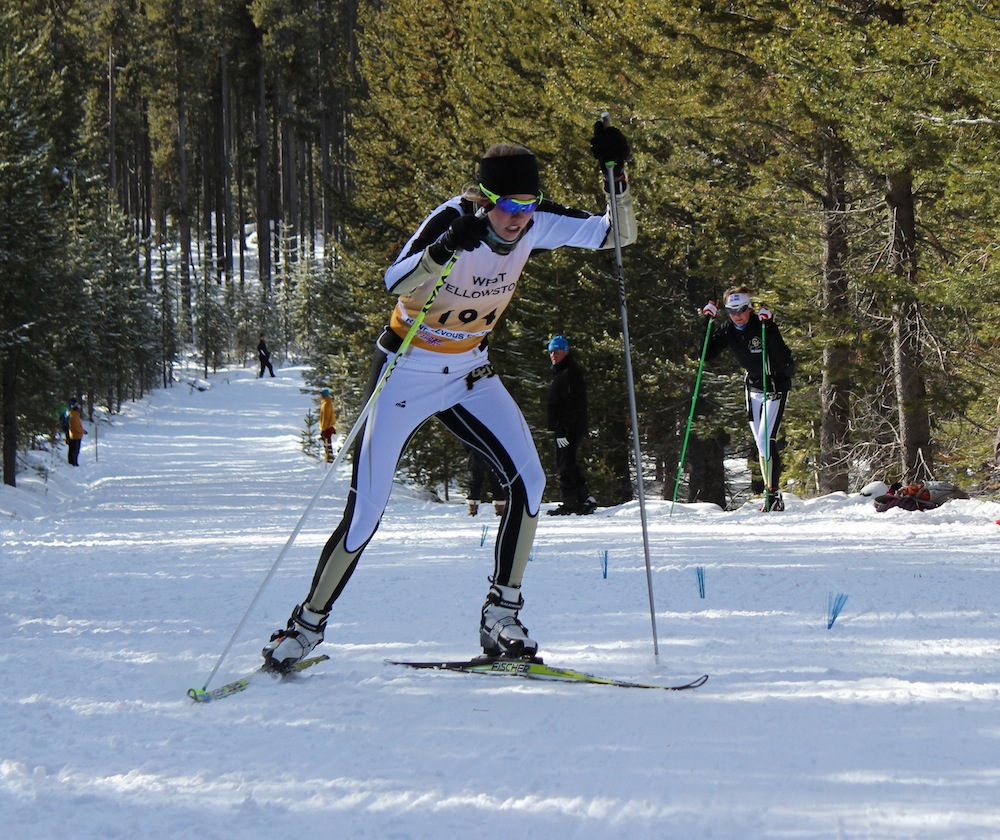
    Colorado Univeristy skier Mary Rose skiing in the West Yellowstone 9 k freestyle.

    If you live and train at high altitude, one of your biggest concerns probably centers on how to log sufficient intensity work without becoming overly tired. It’s easy for an athlete’s heart rate to escalate at even a moderate pace when skiing at or above 7,000 feet; try to do intervals and you’ll find yourself maxed out well below race pace. But scale them back too much and it’s hard to race fast.

    Colorado University Head Coach Bruce Cranmer has to come up with creative solutions to this dilemma, as the Buffs’ nearest training ground at Eldora Mountain begins at 9,200 feet and climbs to 10,800. He is loath to overtire his athletes, but because the NCAA circuit often takes the Buffs to sea level races, Cranmer is careful not to let their fast-twitch languish.

    To that end, the interval workouts he’ll have his team do this time of year take place closer to the CU campus in Boulder at 5,400 feet. As the college season approaches, Cranmer’s training plan starts to include less over distance and more workouts at race pace. Whether there’s snow down in Boulder or not, the harder workouts takes place as low as possible.

    Colorado University Head Coach Bruce Cranmer.

    For one such workout, the Buffs will either run with poles near the fabled Mt. Sanitas or find a good hill to rollerski back and forth on.

    “Often it’s required on rollerskis, but a lot of people prefer running. Some feel you get a better workout running with poles,” Cranmer said.

    The workout begins with a set of 2 x 4 minutes at race pace. The next set is 4 x 2 minutes at a slightly faster pace, and the workout ends with 5 x 1 minute above race pace.

    “We’ll do that to get ourselves up to race pace and get that feel of going faster,” Cranmer said.

    Once the season arrives there’s plenty of weekly intensity to be had from the races themselves. Come January, Cranmer will cease the race-pace workouts and make sure his athletes continue quick speeds no matter where they’re skiing in between competition.

    “Once we’re back in school, we’re racing on the weekends and we don’t do many intervals during the week. During the season we might do 30 seconds to 1 minute of speeds the day before the next race,” he said.

    In addition to the pre-race tune-up, the Buffs will also throw pickups into their distance sessions, at Eldora or otherwise. If his athletes are feeling good, Cranmer has them do 12 x 15-20 second speeds, “to keep the quickness going and not just ski at a slow pace.”

    Speed work is especially important this season, with the NCAA Championships taking place down low in Middlebury, Vermont. Bottom line, Cranmer says, “we do as much intensity as we can at lower elevation.”