From the FasterSkier archive — posts syndicated from athletes’ and coaches’ own blogs between 2004 and 2012, kept online as published. Current coverage is at fasterskier.com.
YMCA of the Rockies is hiring a Nordic Center Supervisor at Snow Mountain Ranch in Granby, Colorado, a seasonal role leading the day-to-day operations of the ranch’s Nordic Center through the winter.
Snow Mountain Ranch sits on 5,100 acres of meadow, aspen and spruce forest in Grand County, about an hour and a half from Denver and near the western entrance to Rocky Mountain National Park. Its Nordic Center grooms more than 80 kilometers of trail and runs rentals, retail, lessons and Nordic programming for guests and groups, along with larger events across the season.
The supervisor works under the Nordic Director and takes charge of the center when the director is away.
Position Overview
The Nordic Center Supervisor runs daily operations of the Nordic retail and rental center and trains, schedules and supervises the center’s staff and instructors. The role coordinates ski lessons, Nordic programming and guest group activities, works with Bryan Mountain Ski Patrol on safety and emergency response, keeps inventory in order, and helps prepare for the bigger Nordic events on the calendar.
The Details
Seasonal position based at Snow Mountain Ranch, Granby, Colorado
$19 to $21 per hour
Reports to the Nordic Director
Weekend and holiday availability required during the winter season
PSIA Level 1 training, waxing knowledge and First Aid, CPR and AED certification can be provided if needed
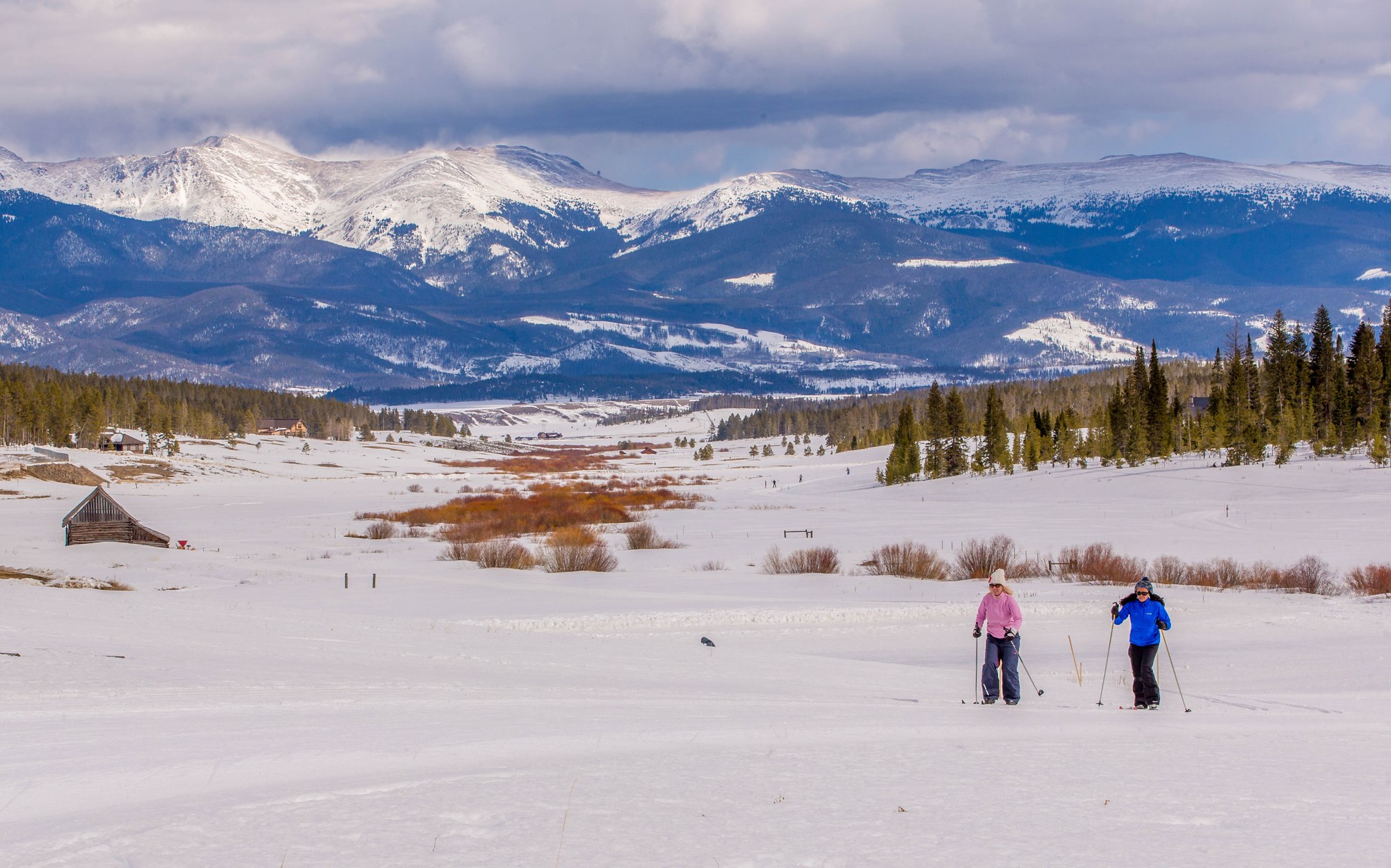
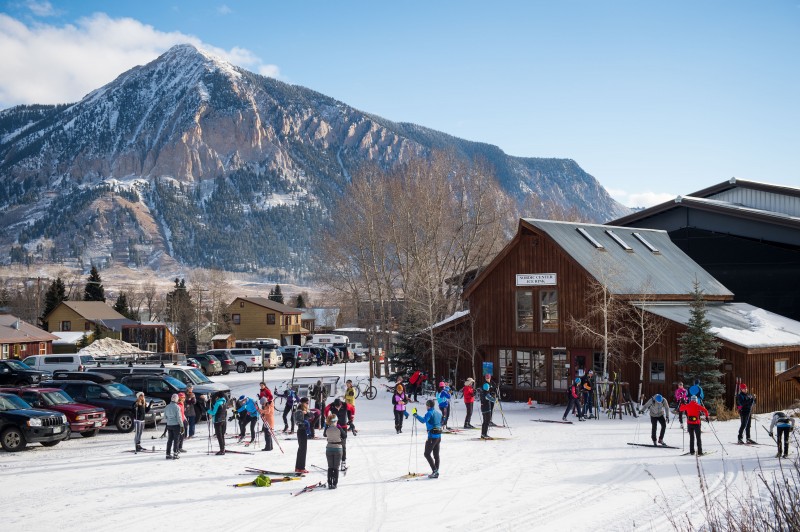
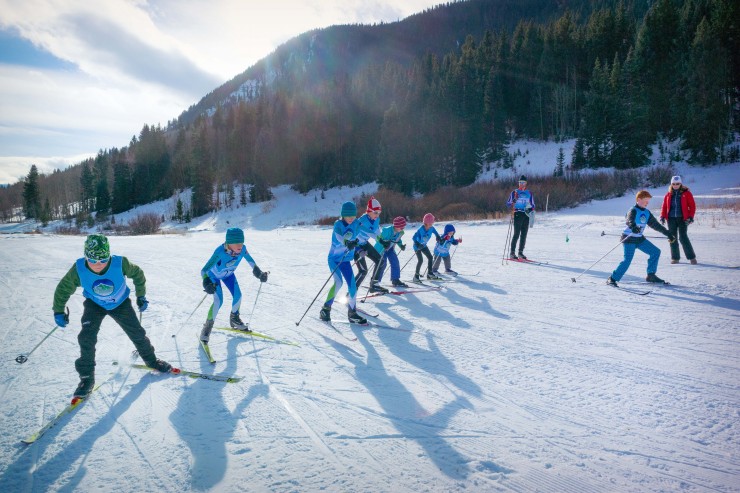
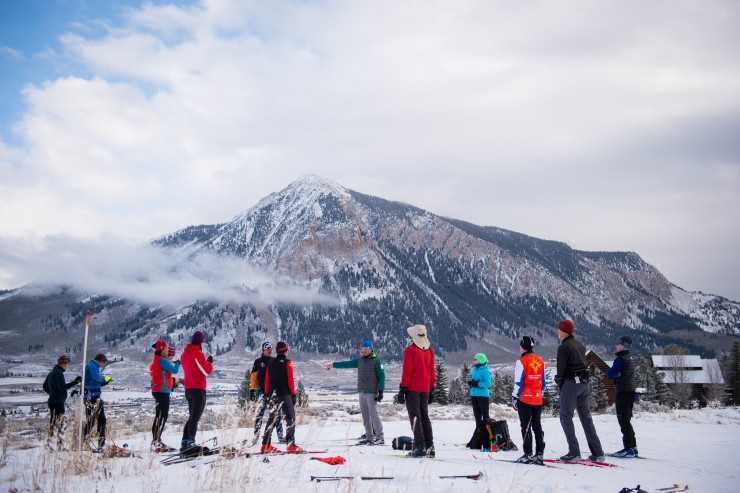
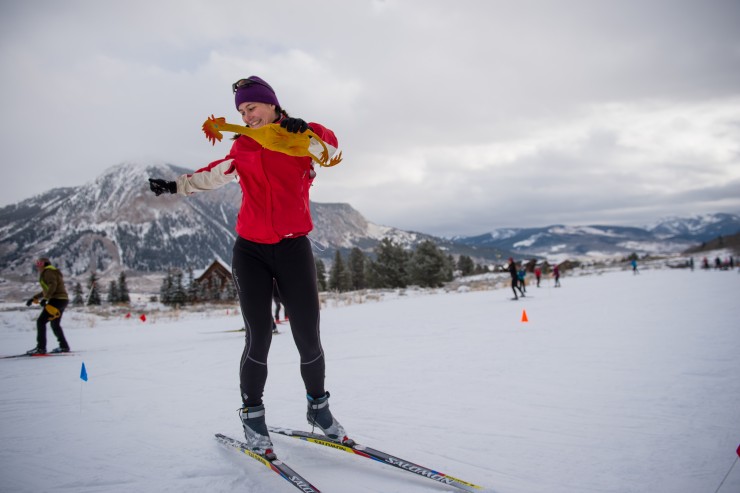
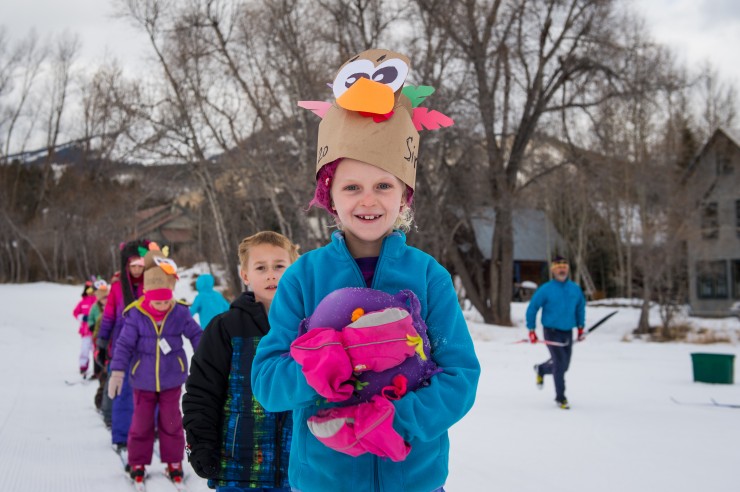
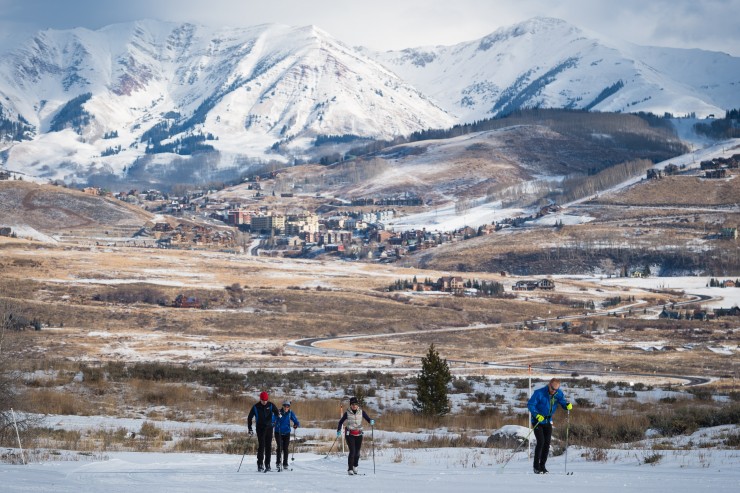
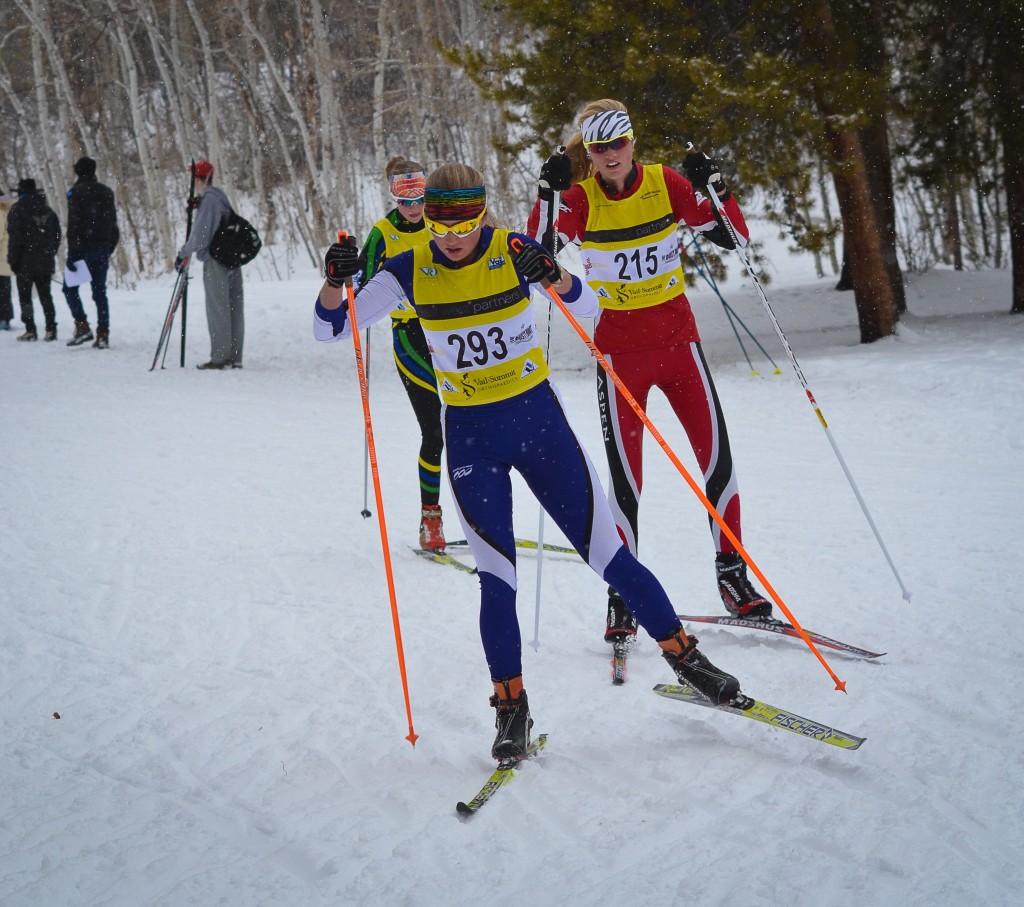
Skiers head out across the meadows at Snow Mountain Ranch in Granby, Colorado. (Photo: YMCA of the Rockies)
What You’ll Do
Lead daily operations of the Nordic retail and rental center
Train, schedule, supervise and support Nordic Center staff and instructors
Coordinate ski lessons, Nordic programming and guest group activities
Teach beginner Nordic ski lessons based on PSIA Level 1 training
Help guests choose the right equipment and offer skiing and waxing advice
Perform and teach practical waxing for classic and skate skis
Maintain inventory and keep the Nordic Center organized and ready for guests
Coordinate with Bryan Mountain Ski Patrol on safety and emergency response
Support larger Nordic events and special programming throughout the season
Step into the leadership role for the Nordic Center when the Nordic Director is away
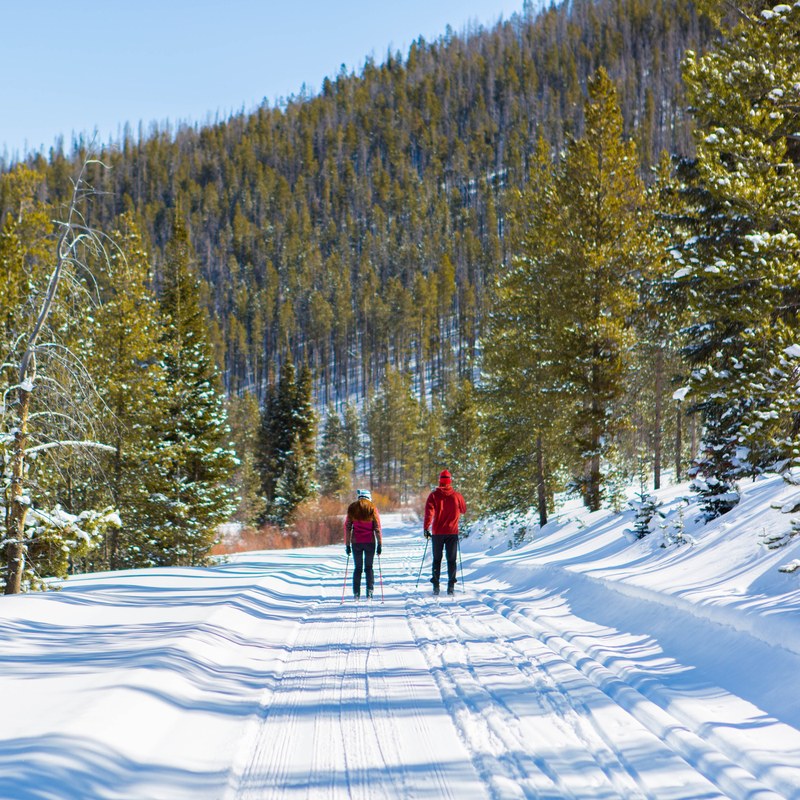
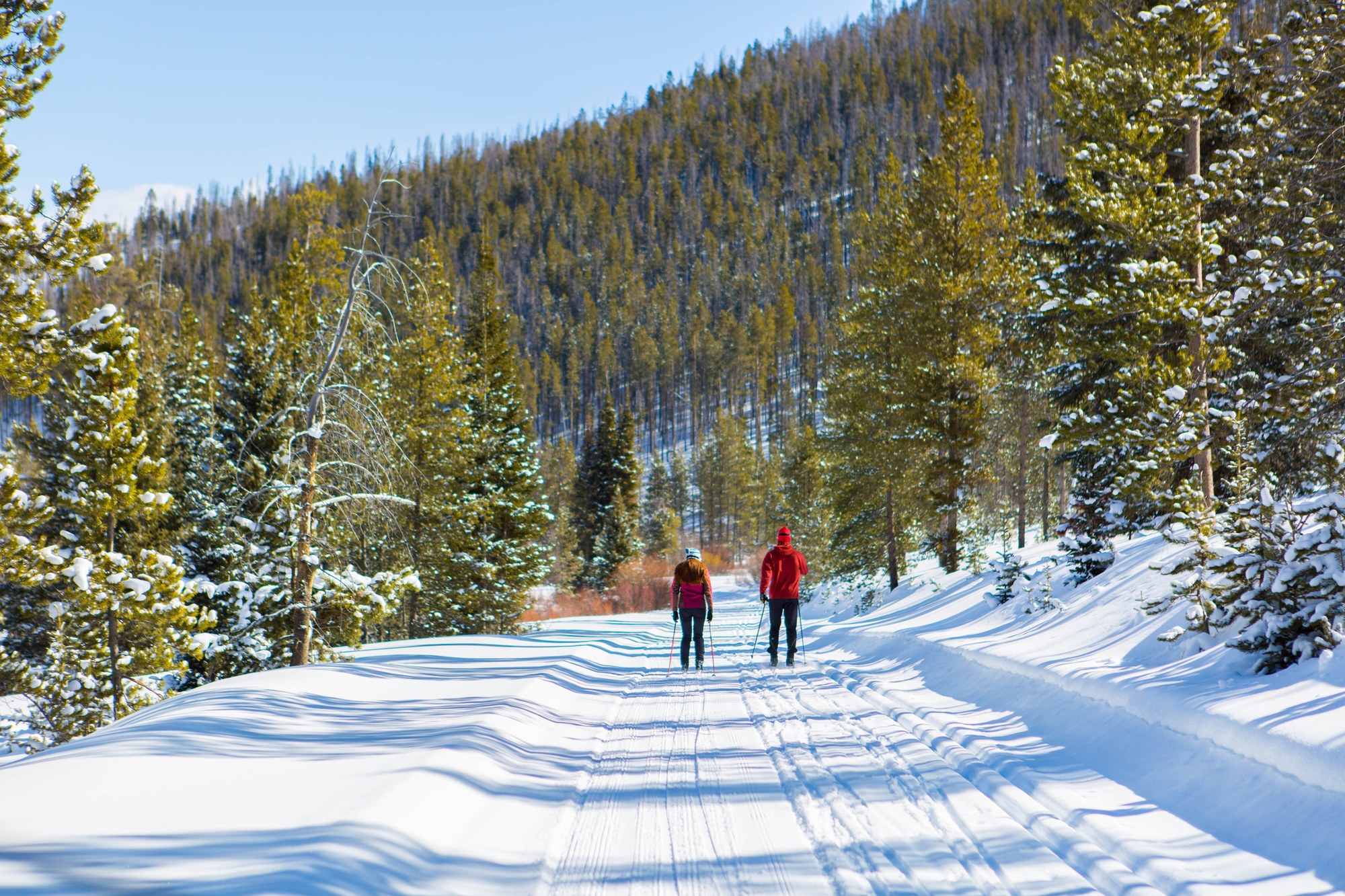
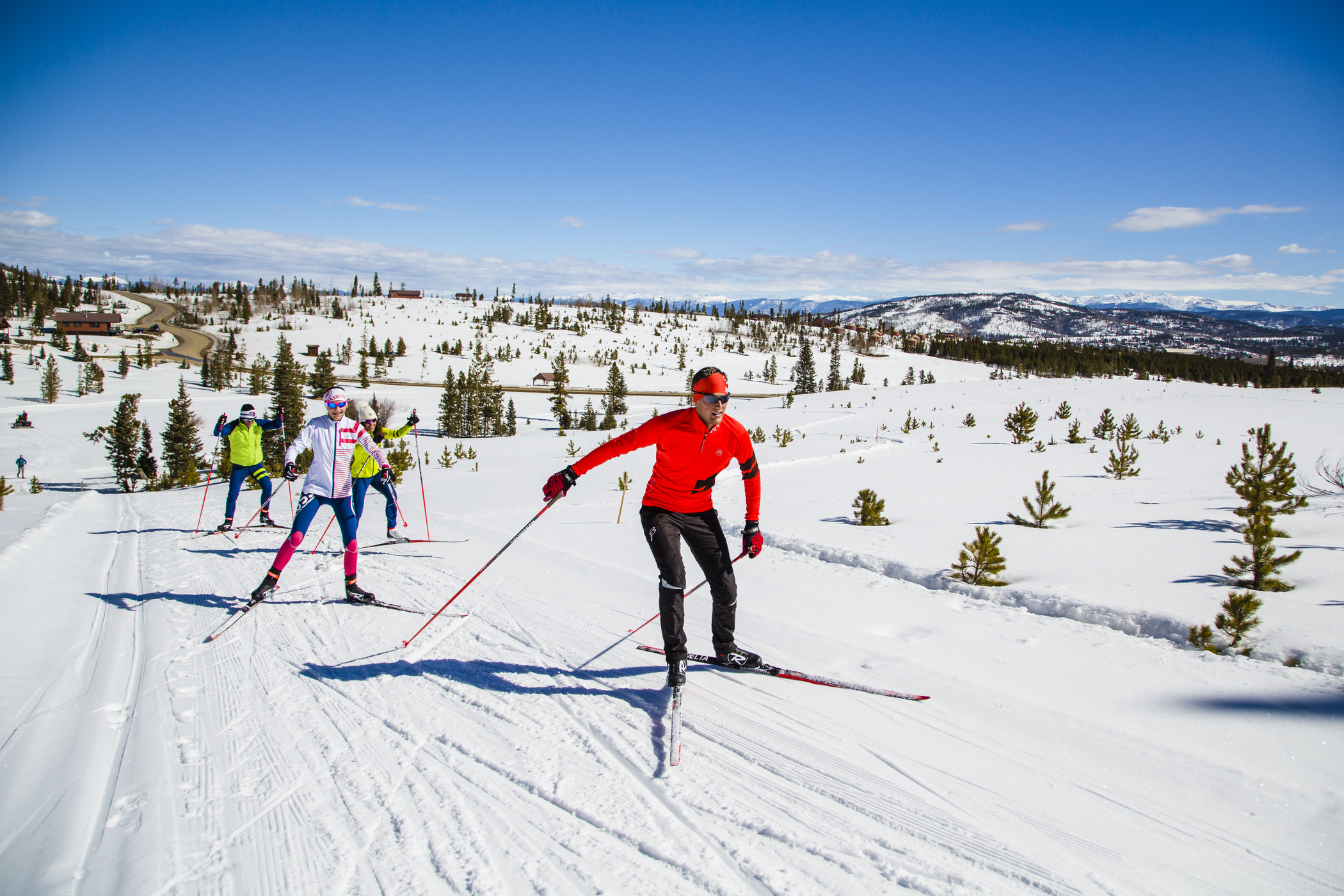
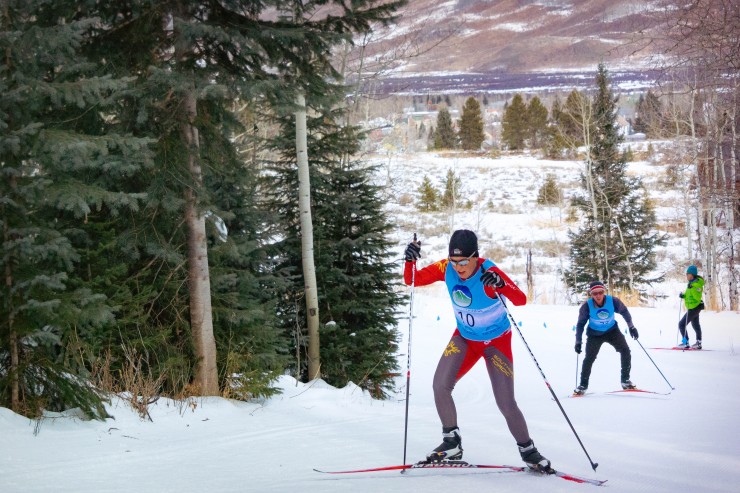
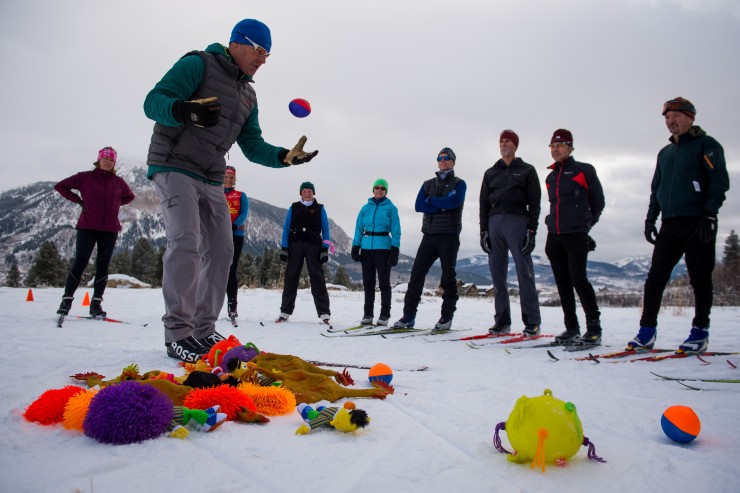
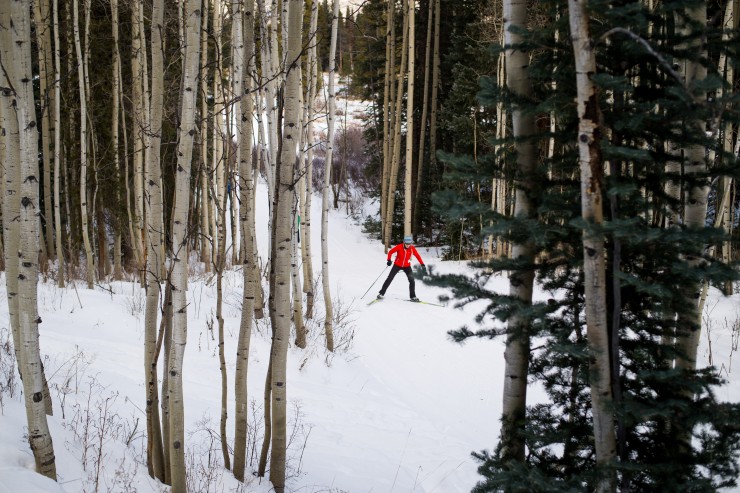
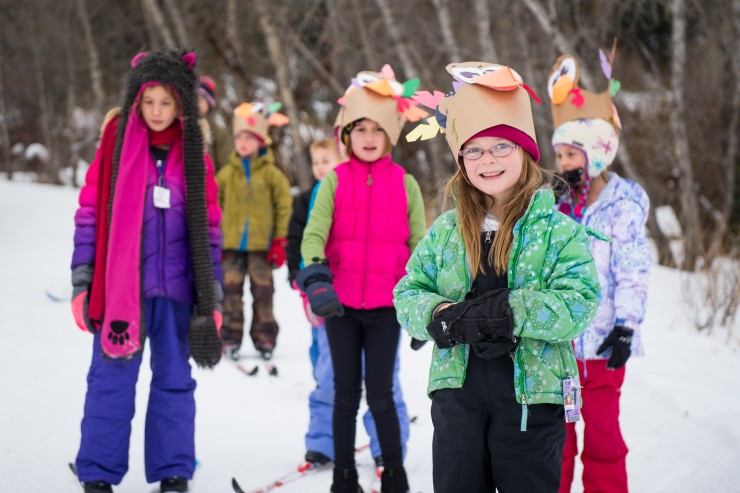
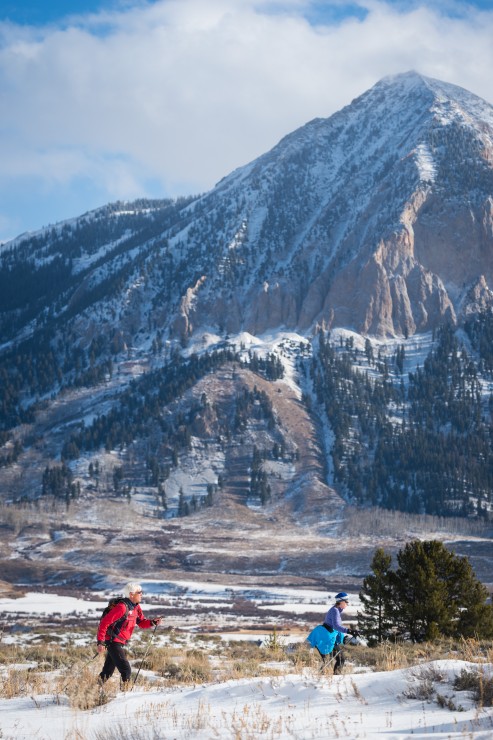
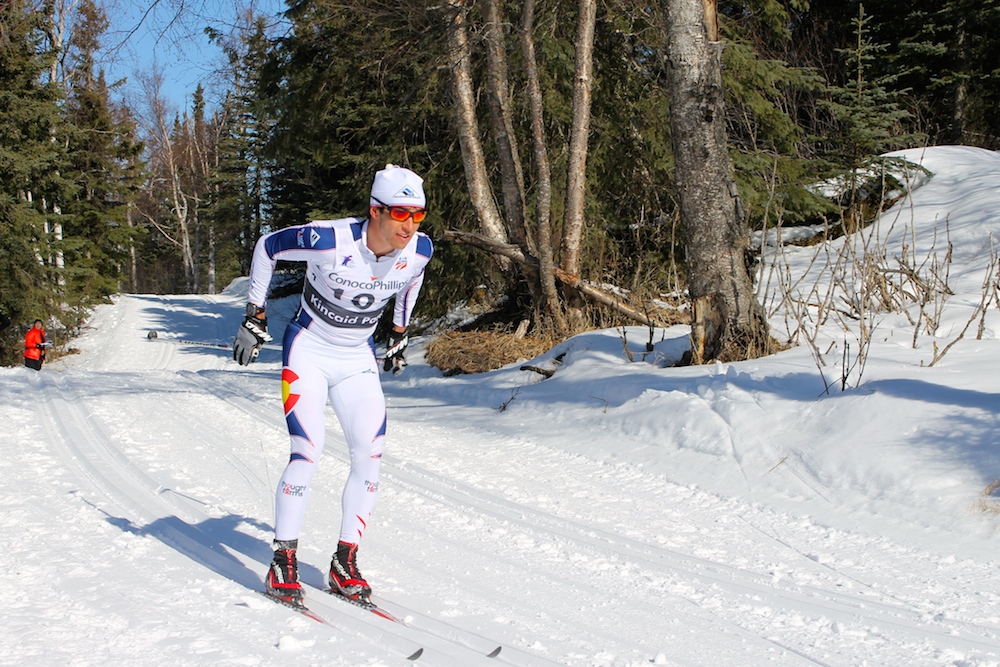
Groomed trail through the pines at Snow Mountain Ranch. (Photo: Brady Robinson)
Why Work Here
The trails start outside the door. The job puts you on skis, in front of guests and in charge of a team every day. At YMCA of the Rockies, staff create meaningful experiences for guests while living out the organization’s values of caring, honesty, respect, responsibility and faith.
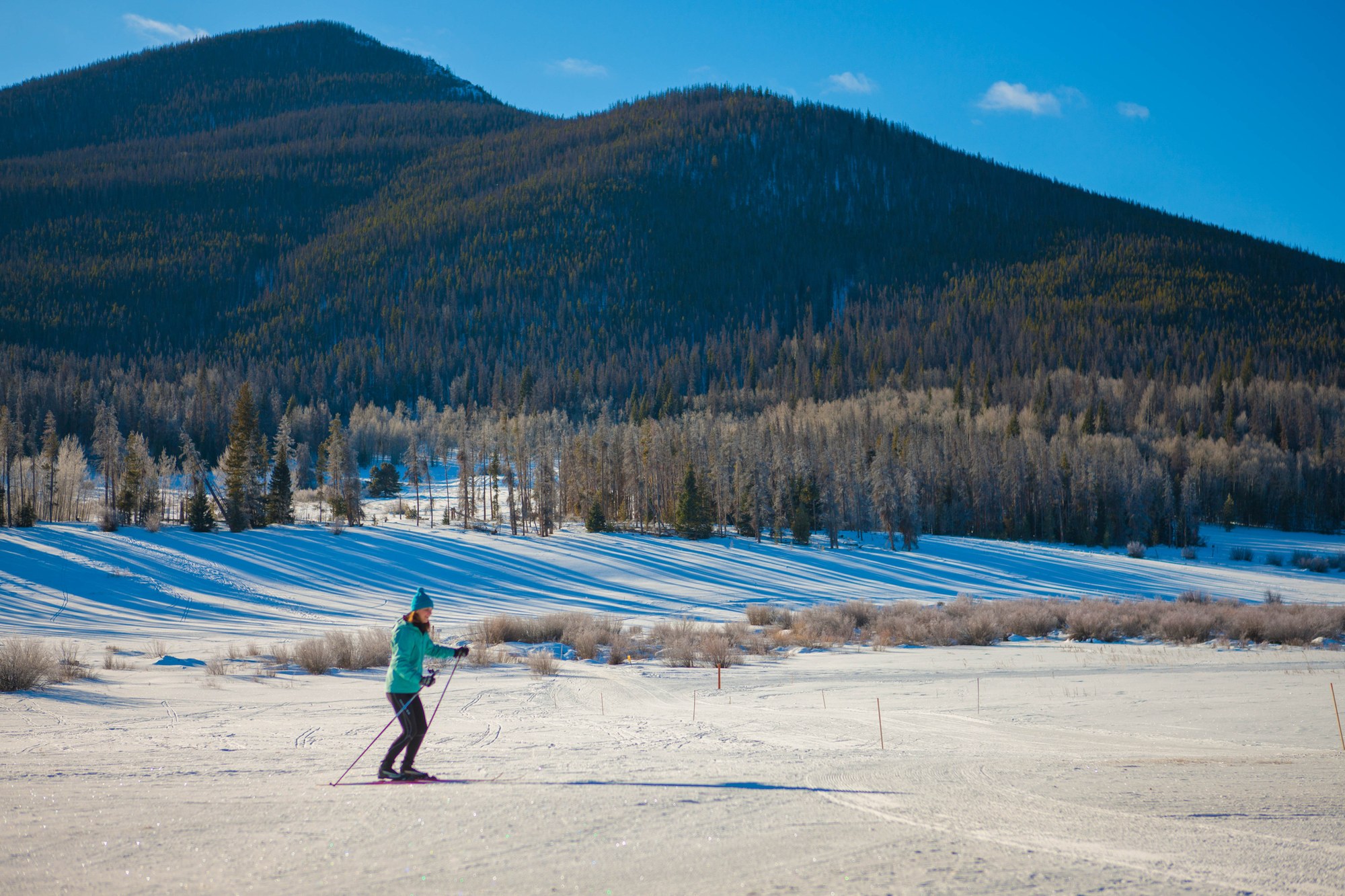
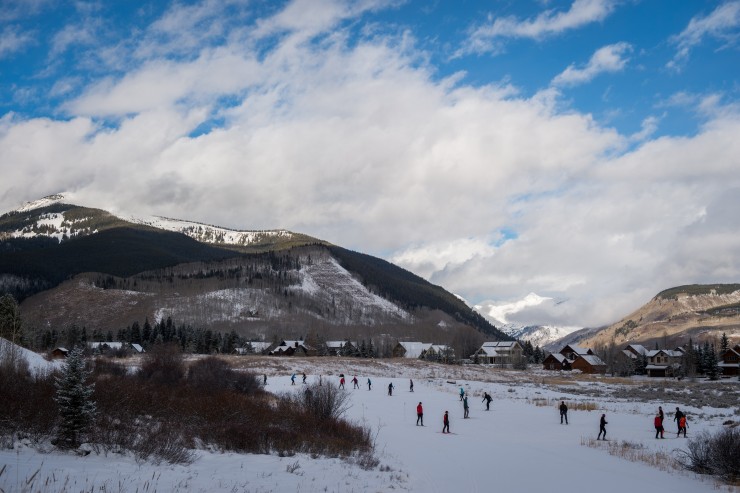
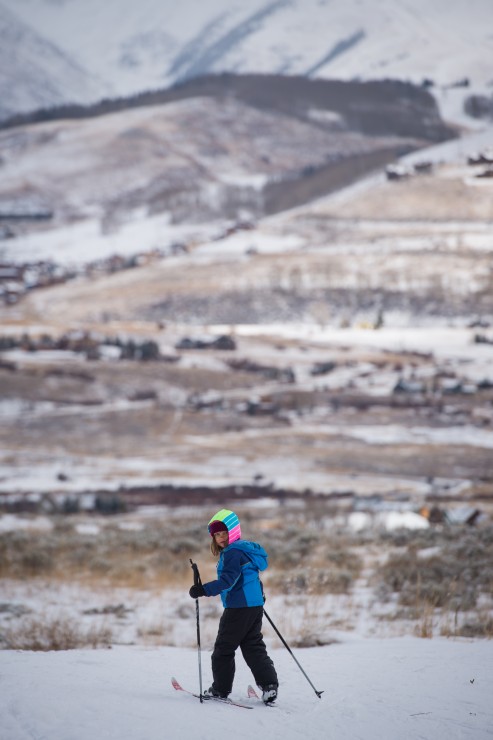
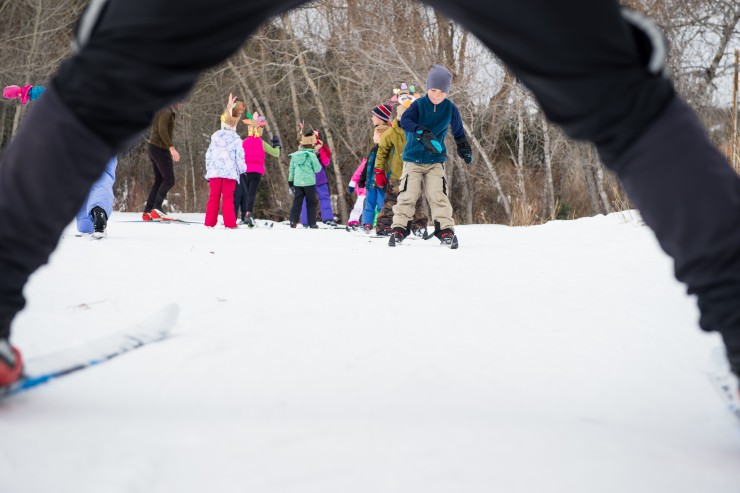
Open meadow skiing below the forested hills at Snow Mountain Ranch. (Photo: YMCA of the Rockies)
You’ll Thrive Here If You
Love Nordic skiing and sharing it with others
Enjoy working outdoors in snow, cold and changing mountain weather
Have strong leadership, communication and customer service skills
Enjoy training and developing a team
Can ski confidently on groomed and ungroomed terrain
Like a job where no two days are exactly alike
Are comfortable working weekends and holidays during the winter season
Bring a positive, professional, problem-solving attitude to a busy environment
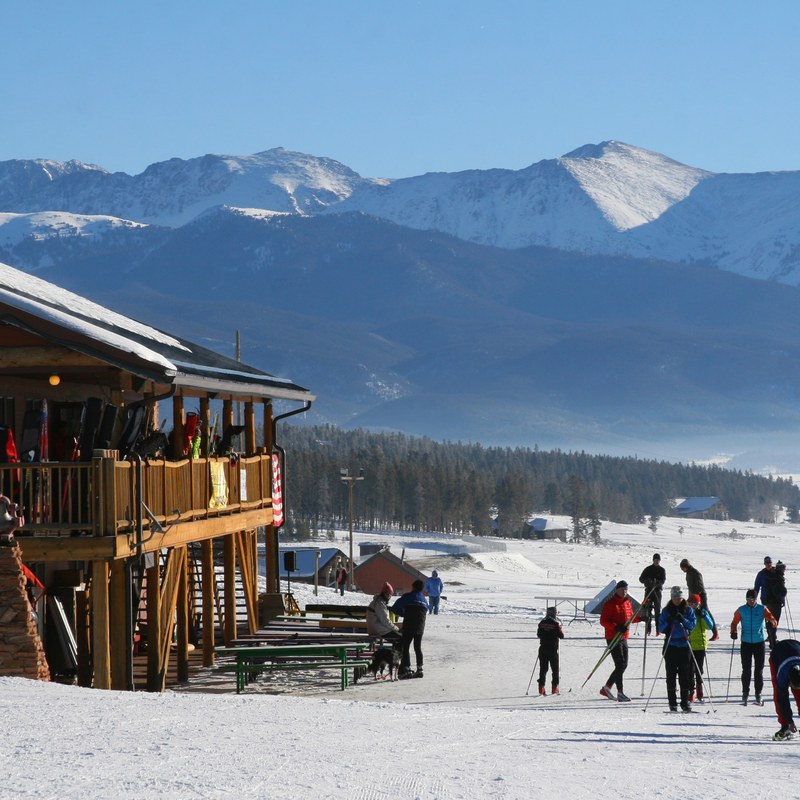
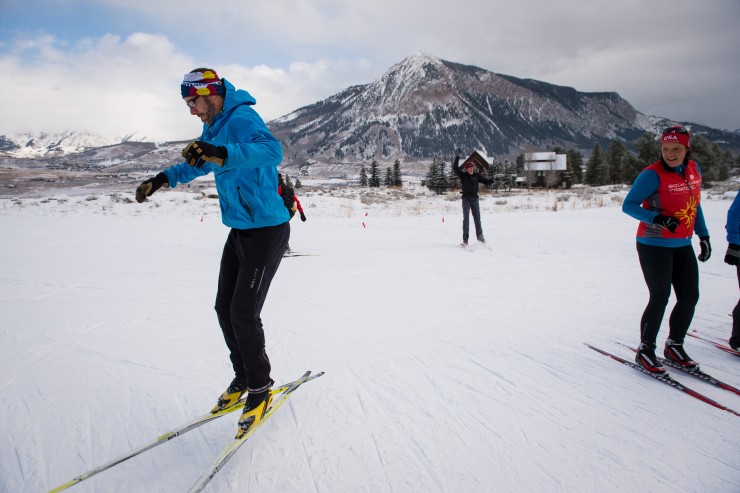
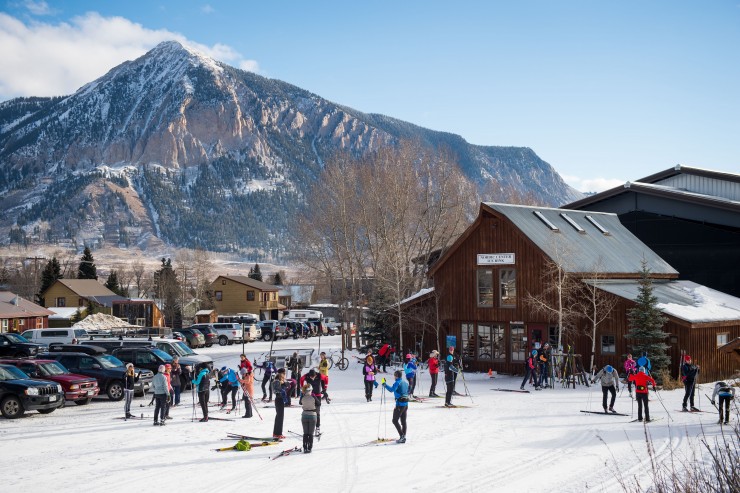
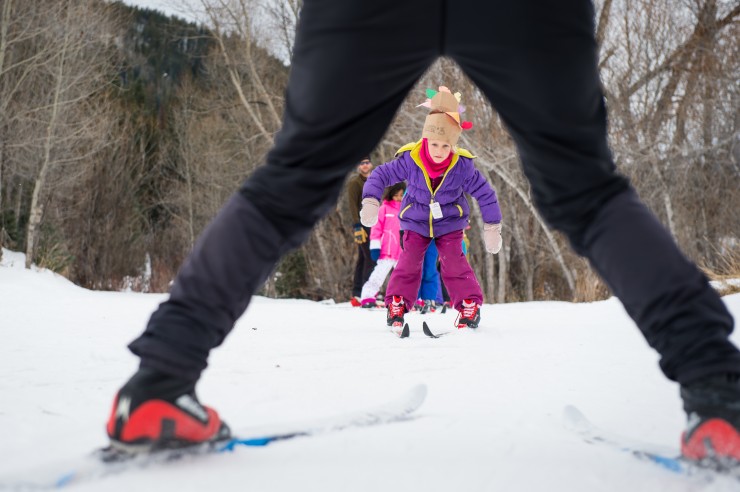
Skiers outside the Nordic Center at YMCA of the Rockies Snow Mountain Ranch. (Photo: YMCA of the Rockies)
YMCA of the Rockies Snow Mountain Ranch and SNØ Racing are joining forces, with Snow Mountain Ranch serving as the Presenting Sponsor of SNØ Racing.
The partnership connects a professional cross-country ski team committed to advancing the sport with one of Colorado’s favorite Nordic destinations. Together, SNØ Racing and Snow Mountain Ranch aim to welcome more people into Nordic skiing, support athletes and the broader ski community, and celebrate a sport built around snowy trails, hard work and the outdoors.
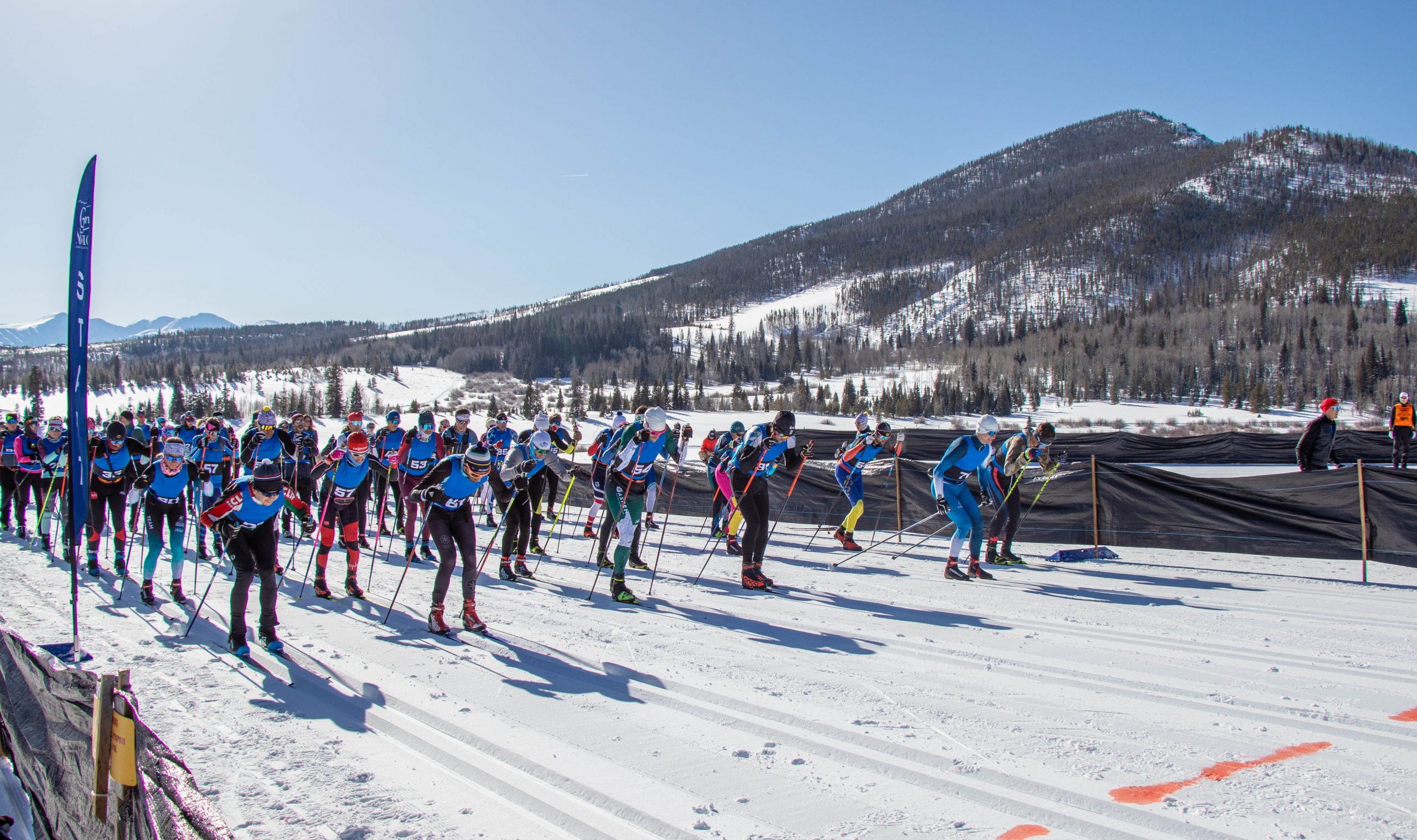
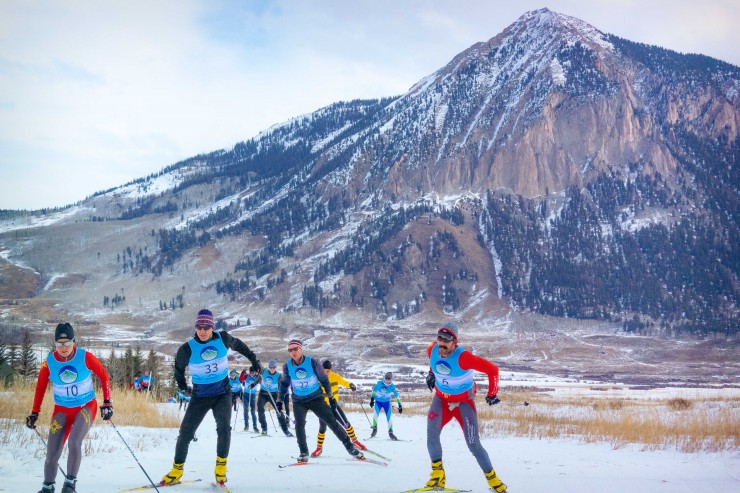
The Stampede mass start at Snow Mountain Ranch in early March. (Photo: YMCA of the Rockies)
What the Partnership Covers
“Snow Mountain Ranch has long been a place where people can experience Nordic skiing at their own pace, whether that means learning to ski for the first time, training for a race, or putting in serious Ks,” said Jeff Paulson, Nordic Director at YMCA of the Rockies Snow Mountain Ranch. “Partnering with SNØ Racing gives us an opportunity to support athletes competing at the highest levels while helping more people see that there is a place for them in this sport, too.”
As Presenting Sponsor, Snow Mountain Ranch will be featured across SNØ Racing’s public-facing team materials and marketing throughout the season. The partnership will also help introduce SNØ Racing’s community of athletes, coaches, clubs, juniors, masters, and recreational skiers to Snow Mountain Ranch as a destination for Nordic training, camps, events, lodging, meals, trail access and meeting space.
Based in Minneapolis, SNØ Racing is a professional cross-country ski team with athletes competing at the FIS World Cup, U.S. SuperTour, and regional levels. The team is focused on advancing skiing in the Central Region while promoting athlete development, partnership, and community engagement.
“Snow Mountain Ranch understands that Nordic skiing is bigger than race day. It’s about the people you ski with, the places that challenge you, the experiences that create lifelong memories, and the community that keeps you coming back. We’re proud to have them alongside our team this season,” said Yuriy Gusev, Chair of the Board of Trustees of SNØ Racing.
The Nordic Center grooms more than 80 kilometers of trail across 5,100 acres at Snow Mountain Ranch. (Photo: YMCA of the Rockies)
Eighty Kilometers at Snow Mountain Ranch
At Snow Mountain Ranch, that community has plenty of room to ski. The Snow Mountain Ranch Nordic Center offers over 80 kilometers of groomed trails across 5,100 acres of terrain, with routes winding through pine and aspen forests, open meadows and challenging climbs with expansive views of the Rocky Mountains. The trail system welcomes skiers across ages and ability levels, from first timers learning classic or skate techniques to experienced athletes looking for big training days.
The partnership also creates an opportunity to connect the Nordic community with the broader mission of YMCA of the Rockies. Snow Mountain Ranch is built around belonging, time together, outdoor experiences, and making the mountains accessible to more people. For both organizations, that shared sense of community is what makes the partnership a natural fit.
“Nordic skiing has a wonderful way of bringing people together,” said Paulson. “You can be chasing a podium or simply chasing a good glide on a bluebird morning. Either way, you belong on the trail. We’re excited to support SNØ Racing and grow that community together. And, stay tuned for the announcement of an exciting new event at Snow Mountain Ranch!”
To learn more about SNØ Racing and follow the team this season, visit snoracing.org. To explore Nordic skiing, lodging, lessons and winter experiences at YMCA of the Rockies Snow Mountain Ranch, visit ymcarockies.org.
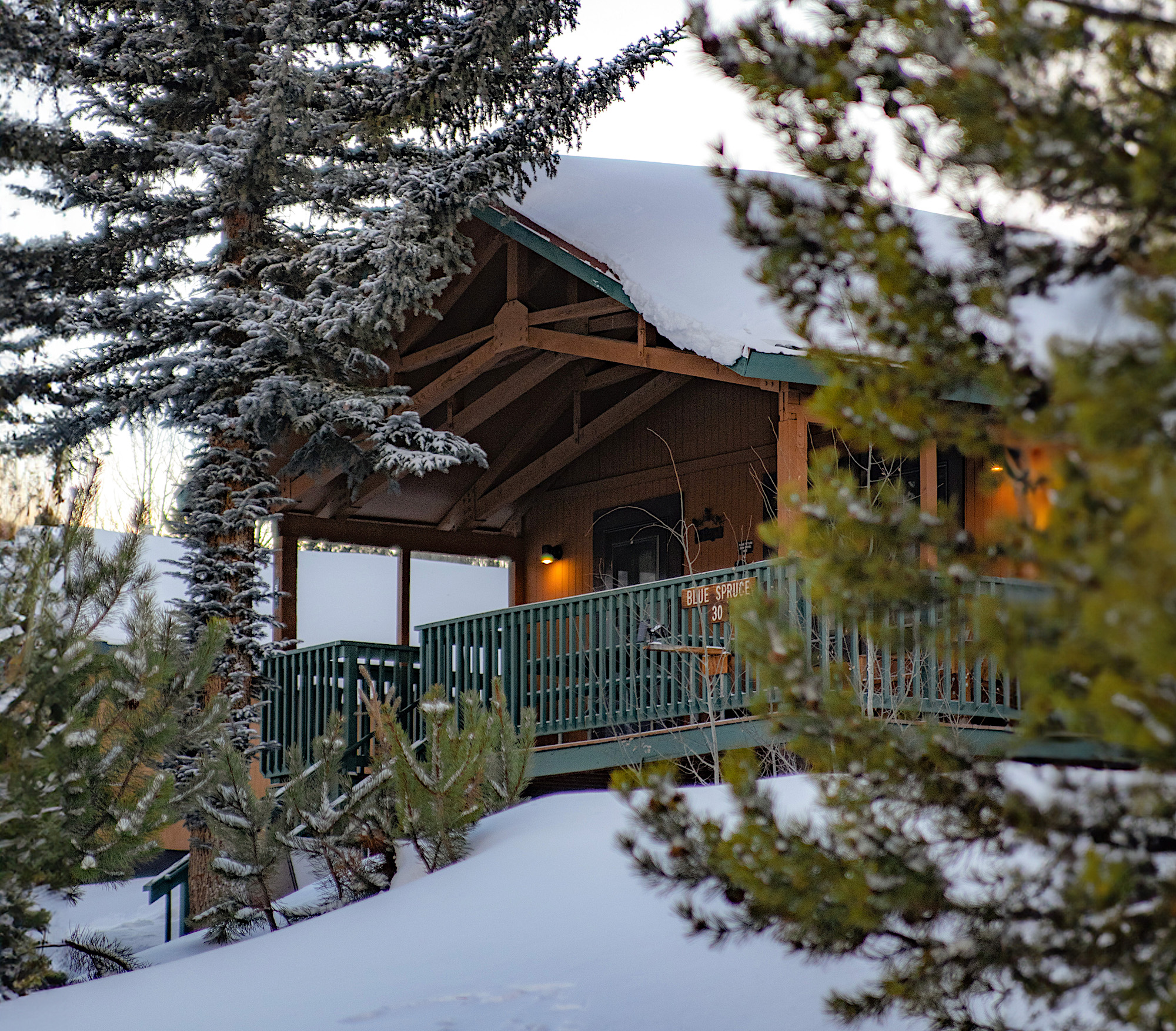
Alongside the Nordic Center, Snow Mountain Ranch offers lodging, dining and meeting space. (Photo: YMCA of the Rockies)
Publishing press releases is a service we offer to the ski community, so please note these articles are not written by FasterSkier and therefore do not necessarily represent our thoughts and standards.
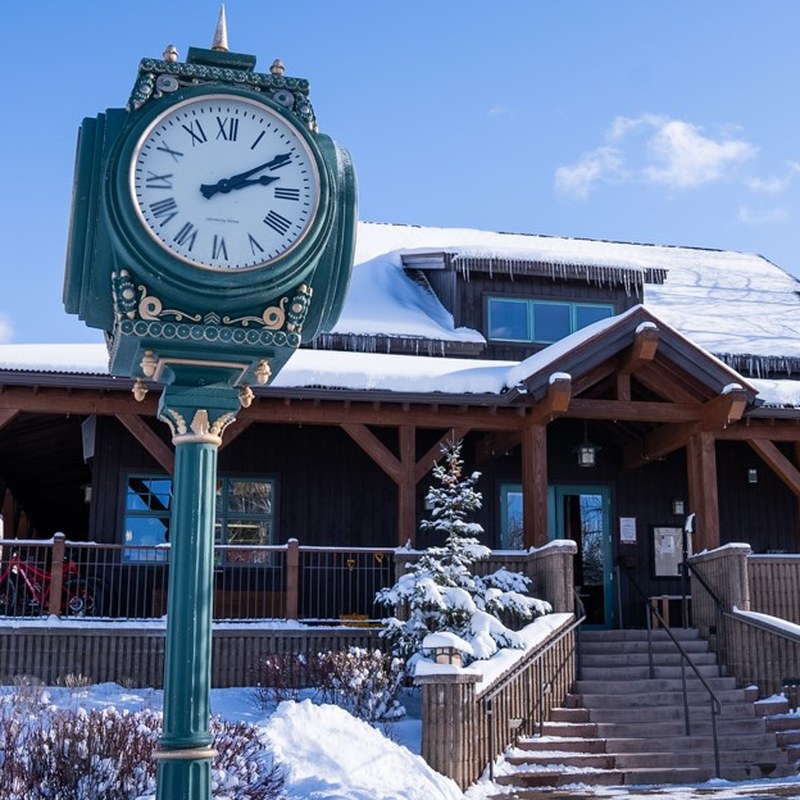
Ute Mountaineer has owned and operated the Aspen Cross Country Center since 1985. The center sits on the Aspen Nordic Trail System, one of the largest free trail systems in the country, connecting Aspen, Snowmass Village and Basalt. It is the only full-service cross-country ski center in Aspen, offering rentals, retail, lessons, ski tuning and repair, a public waxing room, locker facilities, and expert advice on local trails and Nordic equipment.
Ute Mountaineer is heavily involved in the Nordic community. It partners with the Aspen Valley Ski Club and organizes a free demo and lesson day, the Ute Nordic Cup race series, junior seasonal rentals, and a Team Night where local juniors buy equipment at discounted prices.
Ute Mountaineer is now hiring a Manager for the Aspen Cross Country Center to oversee its winter operations.
Position Overview
The manager hires, trains, schedules and motivates a team of Nordic enthusiasts and instructors. The role also covers the ski school, rentals, retail and shop operations, working with the landlord on facilities issues, and organizing and working local Nordic events.
The Details
Full-time seasonal, October 20 through March 31, five days per week
Starting pay $32 to $35 per hour, based on the candidate
Multi-season commitment preferred
Year-round employment also available by working at Ute Mountaineer from April through October
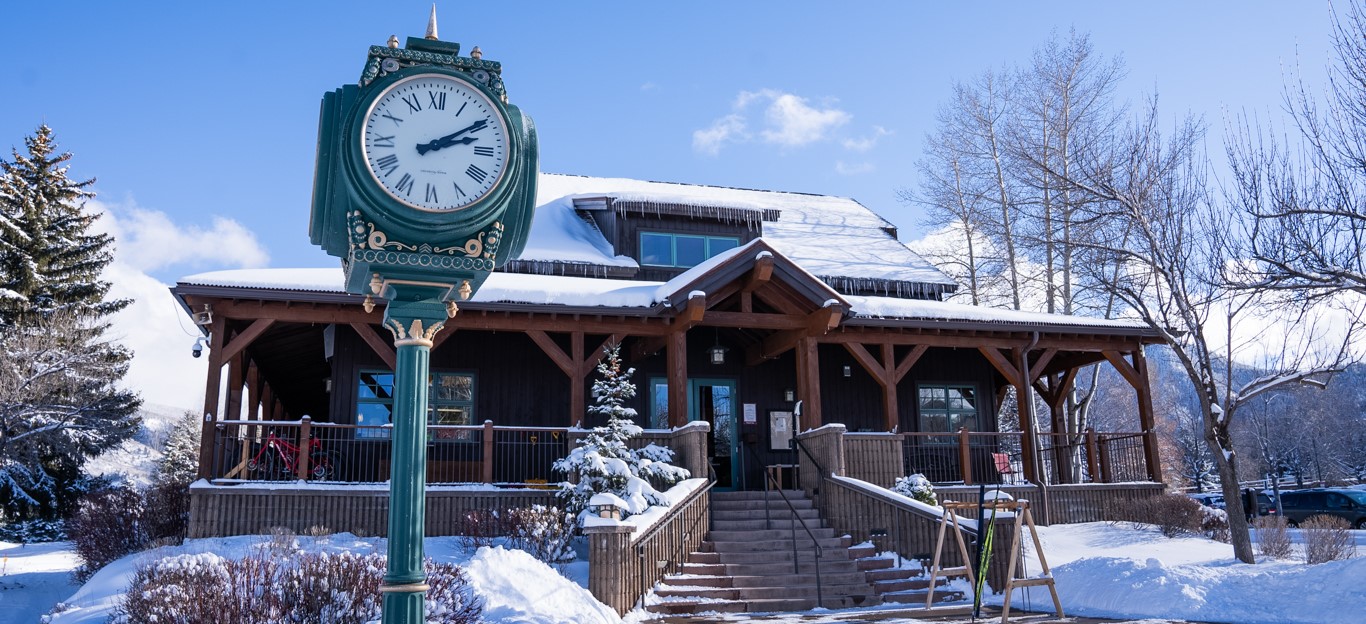
The Aspen Cross Country Center, on the Aspen Nordic Trail System. (Photo: Ute Mountaineer)
Key Responsibilities
Staffing
Hire achievement-motivated, Nordic-loving staff using established interview processes
Create a work environment that listens to, and is responsive to, employee needs and ideas
Schedule and budget payroll according to store needs, weekly, hourly and seasonally
Provide and organize ongoing training on Nordic product, store procedures, policies, skills and sales
Evaluate employees and give feedback based on specific behavior and performance, and use it to motivate staff through further training and collaborative behavior modification
Lead by example in performing all sales associate duties
Sales and Customer Experience
Listen to and identify customer needs, and sell products that fit those uses, abilities, tastes and budgets
Provide an engaging in-store and instructional experience that shares the shop’s passion for the sport
Coach staff on sales training that joins customer needs with the shop’s experience
Learn Nordic product technology, features and benefits
Perform retail sales, rentals, shop work and possibly instruction
Find solutions to customer needs, problems and objections
Store Presentation and Operations
Create, coordinate and maintain the store merchandising plan and standards, working with staff, buyers and the general manager
Delegate and oversee retail, rental, repair shop and ski school operations
Organize and assist in local Nordic events
Requirements
Required characteristics and skills
Nordic skiing experience
Commitment to helping people
Enjoys creating, working with, training and motivating a team
Comfortable making decisions, asking for help and raising company concerns
Able to prioritize tasks and follow up to see them completed
Able to observe behavior, skills and performance, and use those observations to improve the staff and the retail experience
Flexible with time and tasks
Patient with, and approachable for, all staff
Preferred
Prior retail sales experience, ideally in the outdoor industry
Knowledge of local Nordic trail systems
Demonstrated managerial experience
What Ute Mountaineer Offers
Extensive ongoing training on managerial skills, product, procedures, policy and customer service
Seasonal sales bonus program
Exclusive employee pricing on outdoor equipment
Access to rental equipment at Ute Mountaineer and the Aspen and Snowmass cross-country ski centers
Profit sharing after two years for those who move into year-round full-time employment
Vacation pay
Full ski pass
Subsidy toward Ute Mountaineer group health insurance
Possible subsidized housing in the Roaring Fork Valley for year-round employees
The Telluride Ski & Snowboard Club (TSSC) is looking for an experienced cross-country coach to lead its Junior Nordic Race Team.
This is a chance to lead a program on the rise. TSSC Nordic has grown quickly over the past several seasons, and its junior racers now compete throughout the Rocky Mountain Division, including Junior National Qualifiers. Based in Telluride, Colorado, the club wants a coach who can develop that group across technique, fitness, and racecraft — and keep kids in the sport for the long haul.
The Position
Season: October through March
Hours: Approximately 20 hours per week, with potential to grow into a full-time role
Travel: Some travel is required for races
Compensation: $15,000–$25,000 depending on experience
How to Apply
Send a letter of interest and resume — or any questions — to nordic@tssc.org.
At the World Championships last winter, a slushy, rutted corner near the finish line became a proving ground for precision and poise. The turn was taking down skiers all week — an icy edge here, a soft patch there — the kind of technical trap that can shake even the most seasoned racers.
On the U.S. team’s final course preview, Jessie Diggins, Julia Kern, Rosie Brennan, and newcomer Kate Oldham took turns testing different lines. It was part of their customary pre-race ritual — playful, low-stakes, but essential.
“And you know,” Kern recalls, “when we do race prep, we make sure anyone who wants can join. I think those moments are really cool. Like this year, Kate [Oldham] at World Champs — we did race prep together, Jessie, her, and I, and maybe Rosie too. We were practicing that final corner because it was so slushy and tricky, and Kate ended up being the best one out of all of us in that corner.”
Kate Oldham (USA) during the Individual Sprint at the FIS Cross-Country Ski Championships in Trondheim (NOR) last season. (Photo: Modica/NordicFocus)
It was a small moment, but it spoke volumes — the rookie demonstrating to her mentors not through bravado but through calm instinct and feel. For Oldham, it was proof that she belonged.
“Pre-race days are really fun,” she says. “It’s a time to try stuff out in a low-stakes way. You don’t necessarily want to be experimenting once the heats start, so we’ll trade off who goes in front and see how different approaches work. That corner was taking people down left and right — and none of them were Americans, so that was cool.”
For the team, it was just one corner on one course. For Oldham, it was the quiet confirmation that her precision and poise could stand alongside the best in the world — that she could carve her own line through the sport.
From Carbondale to the World
Oldham, who was recently named to the U.S. Ski Team, grew up in Carbondale, Colorado. In this mountain town, Nordic skiing runs through the community as naturally as snowmelt through the Roaring Fork Valley. “My parents just introduced me to it as a little kid,” she recalls. “We played sharks and minnows on skis.” She skied with the Aspen Valley Ski Club (AVSC) development team, more for fun than ambition—until a trip to West Yellowstone changed everything.
Her dad was helping the high-school team with meals, and Kate got to tag along. “I thought they were the coolest kids ever,” she laughs. “I got a little taste of what it was like to train more seriously—but in a really low-stress way. I could ski when I wanted to, hang out with my dad when I didn’t. I just started liking it more and more.”
By freshman year, she had joined AVSC’s National Comp Team, with coach August Teague guiding her progression. “He had a big hand in shaping my love for training and the structure that cross-country skiing brings to your life,” she says. “I love being able to map things out and plan.”
Teague’s wife, Kara LaPoint, became another key influence. “She’s a pro triathlete and just a really badass person,” Oldham says. “We love training together when I’m home.” From the AVSC coaches to her parents to the national-team staff she works with now, Oldham has always been surrounded by people who bring joy and perspective to the grind of elite sport. “The whole community fuels my fire,” she says.
Oldham recharging back home with good friend Kara LaPoint. (Photo: Courtesy Photo)
The College Shift
Oldham began her college career at Middlebury but transferred to Montana State after two semesters, drawn by the environment and energy of Bozeman. She completed a degree in environmental studies with a minor in sustainability. “I absolutely loved MSU,” she says. “Being in Bozeman just fit me.”
The NCAA circuit gave her a crash course in balancing intensity and independence. “It’s extremely competitive now—good skiers in every region,” she says. “You’re racing against Scandinavians, Europeans, all kinds of strong athletes. It’s a great way to get better.”
Equally valuable was learning to juggle priorities. “That balance between school, life, and skiing teaches you communication and time management,” she says. “It’s the same skill set you need later, navigating different coaches and support staff.”
Oldham’s affection for the Bobcats remains strong. “I’m still really close with the team. Sometimes I’ll text my old coach, Sam Benzing—’Hey, do you remember what we were doing at this time last year?‘ They’re always willing to help, and I’m super grateful for that.”
Oldham celebrates making First Team All-American at the 2024 NCAA Championship. (Photo: Courtesy Photo)
A Pro’s Life in Bozeman
When she graduated, Oldham decided to stay in Bozeman and train with Andy Newell and the Bridger Ski Foundation. “Andy’s a great mix of laid-back and professional,“she says. “He’s flexible with what I want to do but still really on top of things.”
Without classes or side jobs, Oldham has ramped up her training—but carefully. “We’ve been cognizant not to make big changes when what I’ve been doing has been working,“she says. “There’s already a lot of change in an Olympic year. I wanted to keep what I could the same.”
Her days follow a rhythm familiar to many full-time athletes: morning training, lunch, laptop chores, a second session, and quiet evenings. “I like to have a routine, but I also adjust based on life,“she says. “That’s a good skill, especially once you’re on the World Cup. Travel, fatigue, sickness—you have to be adaptable.”
This summer included a mix of Bozeman training and U.S. Ski Team camps. “It’s nice to get new perspectives, new venues, and then come home for family time,“she says. “I love riding my bike, hanging out with my family—just that balance.”
Oldham’s focus on recovery is equally pragmatic. “A lot of my body care happens in the gym—PT and strength work. Tschana [Schiller], our strength coach, does a great job keeping us balanced and mostly injury-free,“she says. “Then it’s good food, good sleep, and time to unwind. It’s simple, but it adds up.”
Oldham and BSF teammate Emma Albrecht. (Photo: Courtesy Photo)
Lessons from the Veterans
One of the most significant changes this past year was joining a national team full of skiers she grew up watching on TV. “It’s wild,“she admits. “They’re all so different in great ways. Seeing them up close, you realize—they’re real pros. It’s their job. But they’re also incredibly humble and welcoming.”
She has learned as much from how Diggins, Kern, and Brennan think about training as from what they do. “They all pay close attention to what they need on a given day,“Oldham says. “At a camp, they might all have slightly different plans. Not because they’re doing something special, but because they know what works for them. They balance that with the team sessions so everyone gets what they need.”
It’s a lesson she wishes she’d known earlier. “Even though it’s scary sometimes, it’s okay to be confident in yourself and your plan,“she says. “Doing what you need is a huge asset. Trusting yourself can be hard, but it’s worth it.”
That self-trust carries into her goals for the season. “Obviously, I’d love to make the Olympic team,“she says. “That would be an incredible experience. But I’d also be really happy with some top-30s on the World Cup.”
After spending time with Kate, it quickly becomes apparent that she is cooler than most of us. (Photo: Courtesy Photo)
More importantly, she wants to manage the grind. “I learned a lot last year, and I’m still figuring out what I need to stay happy and motivated through a long season of travel,“she says. “That’s a big process goal—dialing in what works for me.”
She’s also been working on how she handles the inevitable rough patches. “My tendency can be to isolate when something goes wrong,“she says. “But I’m learning to use my support team. There are people who want to help, and when I let them in, they always have a great perspective. Sometimes it’s just someone saying, ‘What did you learn today?‘That can shift the whole mindset.”
Looking Ahead
Oldham envisions a long career—but only if she keeps loving it. “I want to love skiing forever,“she says. “As long as my body’s healthy and I’m enjoying it, I’ll keep going. But not at the expense of that joy.”
Her advice to the younger version of herself, and to the next generation coming up through AVSC, is simple. “Don’t count yourself out,“she says. “So much can happen in a race that you don’t expect. Sticking with it is the only way to find out. Enjoy it, and pay attention to the relationships you build along the way—they’re what you take with you.”
Kate and her father, Nelson, out on a hike. (Photo: Courtesy Photo)
The Roots That Keep Her Grounded
When she’s not training or racing, Oldham gravitates back to Carbondale, where her family’s restaurant—Dos Gringos Burritos—is about to turn twenty-five. She’s been part of it since before she can remember. “I’ve been around it my whole life,“she says. “It’s a pretty important staple in our town, and my parents are huge role models for me.”
Working at the restaurant keeps her connected to real life. “The service industry teaches you a lot,“she says. “Everyone should do it once—how to deal with people, how to work hard behind the scenes. It grounds you.”
Her go-to order? “The summer salad wrap,“she says instantly. “But after twenty-three years of hanging around the place, you have to keep it fresh.”
Outside the restaurant, she finds calm in the same things that shaped her childhood: horses, bikes, and the Colorado mountains. “I grew up around horses and hope to return to that life after skiing,“she says. “Being outside, cooking, baking—it’s all part of keeping balance.”
That balance, she’s learning, is the fundamental foundation of confidence. It’s not just about speed through a corner or times on a results sheet—it’s about knowing where you came from and who you are when the racing stops.
Oldham loves getting outside, especially on horses. (Photo: Courtesy Photo)
Love Stories Like This? Help Keep Them Coming.
Feature interviews like this one take time, access, and care to produce. If you value thoughtful storytelling and independent ski journalism, please consider becoming a Voluntary Subscriber. Your support directly fuels the work we do to cover the people, places, and moments that make our sport special.
The ski community has known there’s a problem for awhile now. Fluorinated waxes, whose extreme hydrophobic properties make them ideal for fast skis, also are by that same property impossible to break down in the environment, allowing them to permeate through the soil into water supplies. The compounds are also known carcinogens, and frequent exposure to these compounds, particularly when heating and inhaling the fumes of waxes in which they are contained, is linked to a myriad of cancers.
That vice has outweighed their virtue, and now, perfluorinated waxes are inching ever so slightly toward taboo in the ski world. That story has been one which FasterSkier has tracked for years, but up until now, there have been insufficient resources on the safe disposal of these waxes, as well as a lack of available options to facilitate skiers safely getting rid of what they have accumulated in their boxes.
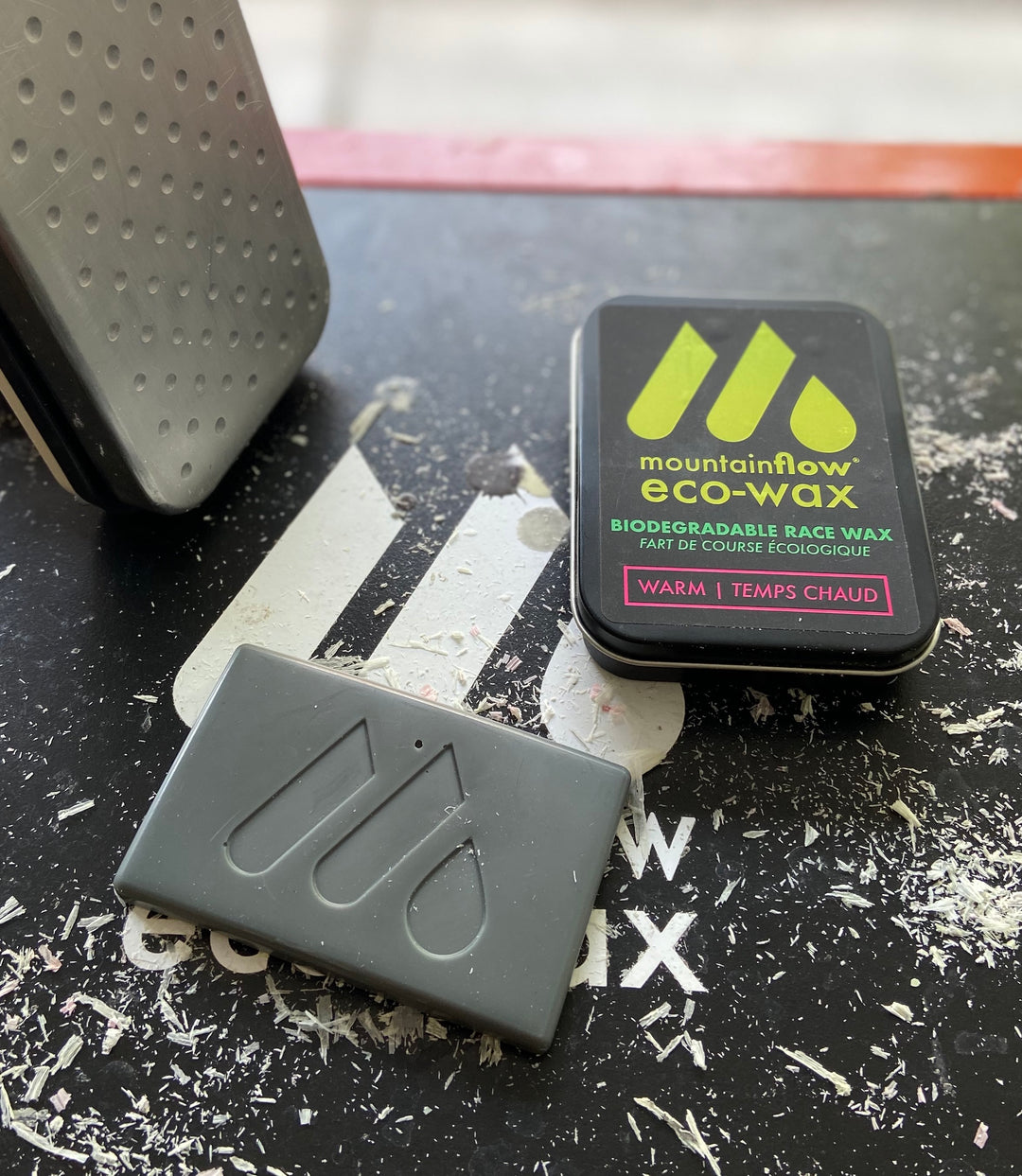
MountainFLOW Eco Wax launches a fluoro takeback program May 1 – 31, 2022, allowing skiers to mail in their stash of harmful fluoros for safe disposal. (Photo: MountainFLOW.com)
That’s when Peter Arlein, the CEO and founder of MountainFLOW Eco Wax, had an idea. “When the FIS started talking about prohibiting fluoros two or three years ago, I visited ski shops and realized they were using the stock of fluoros they couldn’t sell on their rental fleets. I thought that was missing the point – we need something that’s going to take fluoros out of the snow, not just the market. We’re a plant-based wax company, maybe there’s a program we could design where we could take back that fluoro wax from them, and replace it.”
For Arlein, whose company was in the process of pioneering high performance biodegradable alternatives to fluoros, the idea was one that he knew was necessary for the ski world, but also one they wouldn’t have the capacity to institute without willing partners.
Then in 2021, a representative from the state of Colorado’s Outdoor Recreation Industry Office reached out wondering if he would have any ideas for that year’s Wright Collegiate Challenge. The Wright pairs undergraduate and graduate business students across Colorado with partnering outdoor recreation companies to help pioneer new initiatives and niches. Arlein’s idea of a takeback fluoro program seemed tailor-made. “The students at Western [Colorado University] and [Colorado] Mesa came around and not only did they have the bandwidth to get [this] off the ground, but also to bring their ideas as skiers and students too.”
MountainFLOW Eco Wax has created a biodegradable plant-based line of race waxes, allowing skiers to have fast race skis without the harmful environmental impacts of petroleum based products. (Photo: mountainFLOW)
The result, a full-fledged MountainFLOW, is set to launch its first wave of a fluoro take back program May 1st – 31st.
The overall mechanism of the program is fairly simple: skiers donate their wax, and in return get a discount from MountainFLOW on their waxes.
Skiers have the option to donate wax either by mail, sending the wax directly to MountainFLOW’s headquarters in Carbondale, CO, or by dropping off their wax at three retail partners in Colorado; Evo (Denver), Salida Mountain Sports (Salida), or Powder7 (Golden).
MountainFLOW and the team of Wright students will take it from there. The process on the disposal part is, like all things on fluoros, still evolving. Leyla Ericson, an Outdoor Recreation MBA at Western Colorado said in a call with FasterSkier that “there’s only provisional guidance from the EPA right now on PFAs (the environmentally harmful class of chemicals that fluorocarbons belong to) disposal. From our understanding, they’re hoping to finalize those guidelines by summer of 2023, and so if we launch now we can hopefully scale and build a program that’s fully able to quickly process wax when there is a firm procedure for getting rid of these [waxes].”
MountainFLOW’s launch of their take-back program now also coincides with the end of the last ski season where fluoros could be used in races in the US. With the US Ski and Snowboard instituting a ban after the Olympic qualifiers back in January, programs that were hanging on to their fluoro boxes for when the SuperTour came to town now have an opportune window to look for what’s next in the waxing world. That’s a reality that Arlein says will only continue to encompass more and more organizations, especially, as he says “when the FIS inevitably will put a full ban into place.”
Kevin Bolger races a freestyle sprint qualifier in late February, 2022. (Photo: NordicFocus)
With the timing factor for both ski-world and government policy coming together, Ericson said that the Wright challenge students wanted to take the step that many in the wax industry were tip-toeing around with fluoros:
“We got to a point where we said, well someone has to launch this type of program. The idea has been around for a while, but either because people don’t understand the pressing need or because it wasn’t readily available, there’s been no movement on actually making it happen.”
And while the program’s on-the-ground footprint will initially be limited to Colorado, the MountainFLOW team is hopeful it can rapidly expand the buy-back program, with Arlein saying “people all over can mail in right now, and then we’re for sure looking to open up disposal sites with more partners…A good example is this year we were at the Birkie expo (read our story on MoutainFlow’s trip to the Birkie here) and talking to their sustainability people, and they were like, you should come next year and have this be a site. It was pretty remarkable too, we were at the expo and the number one question we got from people was ‘How do I get rid of my fluoro waxes?’”
With enough investment and the right partners, Arlein is hopeful that “we can get all of the fluorinated waxes off retail shelves, and hopefully, off nearly all wax benches too.”
It’s a goal that requires creativity, cross-industry collaboration, and above all, action. With that coming in equal parts from MountainFLOW and the Wright students, the tip-toeing around the fluoro issue is being stamped over by decisive steps towards action.
Action that you, me, clubs and teams can all participate in – starting here.
Note: Skiers wishing to mail in wax to MountainFLOW can send their waxes to 201 Main St., Suite 303, Carbondale, CO 81623. You can also donate to support the MountainFLOW program as it grows and expands here.
Editor’s note: This is the third essay in our series, “Letters to my younger self.” Lauren Fleshman provided the modern locus classicus for this genre, while John Wood and Adam Verrier kick-started the series on FasterSkier.
When the private school at which my husband teaches offered him a sabbatical for the 2020-21 school year, we quickly began to fantasize about the ski town(s) in which we’d spend the following winter. A February 2020 trip to the Alley Loop Marathon had me captivated by the tiny high-altitude town of Crested Butte, which, despite being roughly 40 miles from our home in Carbondale as the crow flies, is over four hours by car in the winter, over 2,000’ higher in elevation, and has a truly magical community surrounding its nordic center. It’s pure paradise for cross country skiing.
We lucked into a rental on Craigslist in mid-February, only a few weeks before the pandemic descended on the US and made such rentals (and prices) impossible to find as a mass exodus from cities began for those who were suddenly able to work from anywhere in the world. We also lucked into jobs at the Crested Butte Nordic Center, myself coaching in the masters programs and instructing private lessons, and my husband coaching the youth programs.
It was in the masters performance group that I had the chance to work alongside Murray Banks, whose reputation as a one-of-a-kind, enthusiastic, high-energy coach with a keen eye for technique preceded him.
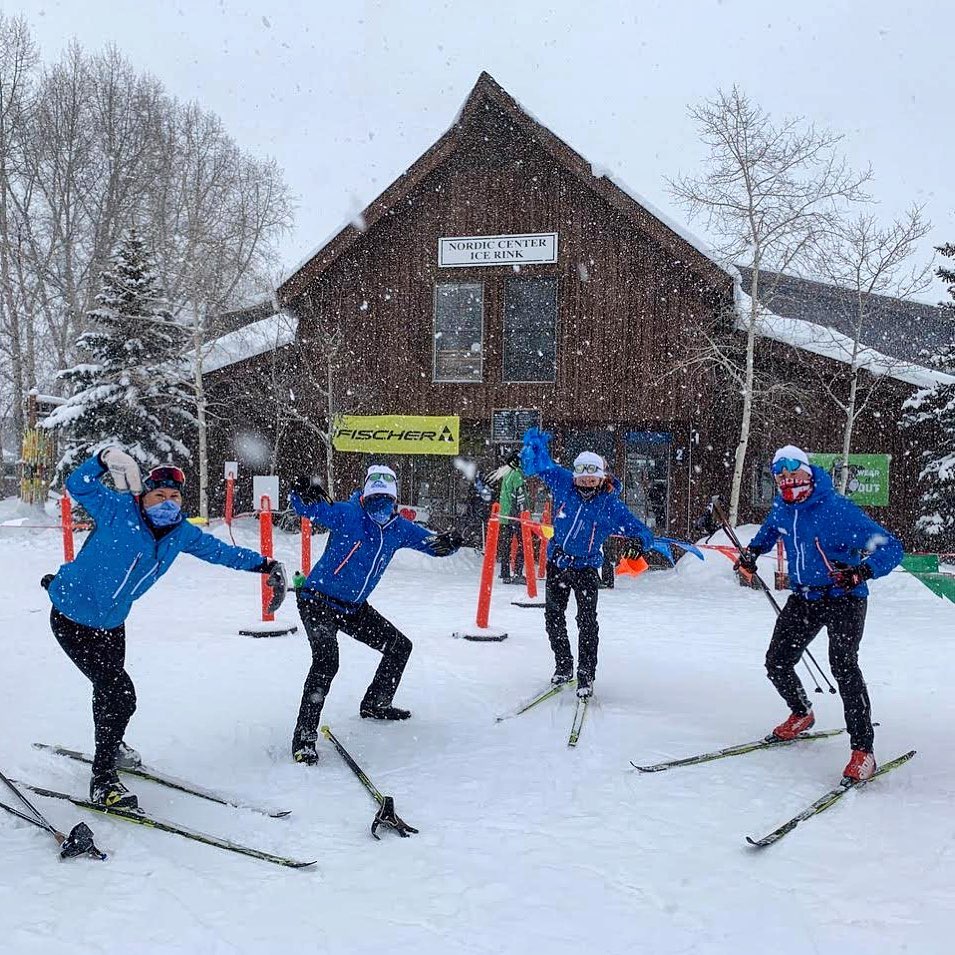
The masked-up smurfs behind the 2020-2021 masters performance group in Crested Butte, CO. From left to right, Rachel Bachman Perkins, Murray Banks, Cam Smith, Woody Martineau.
Coaching with Murray was an unforgettable experience. His energy and positivity are the right kind of infectious – the type that makes you want to be a better version of yourself, overall. The kind that leaves you wanting to ski better, try harder, be kinder, and recognize that attitude is everything, even when life throws you some massive curveballs.
You’d never know that Murray was fighting cancer. Even on the days where most would throw in the towel, Murray would slip into his ski boots and make his way to practice. On days he wasn’t feeling well, he’d ski more slowly and keep the distance traveled to a minimum, but that didn’t prevent him from showing up with an ever-present grin, ready to encourage the group of skiers through technique cues and an interval session.
Though we only worked together for a few months, his impact was lasting. It is my pleasure to share the following letter Murray penned to his younger self.
March, 2015
Hey Murray,
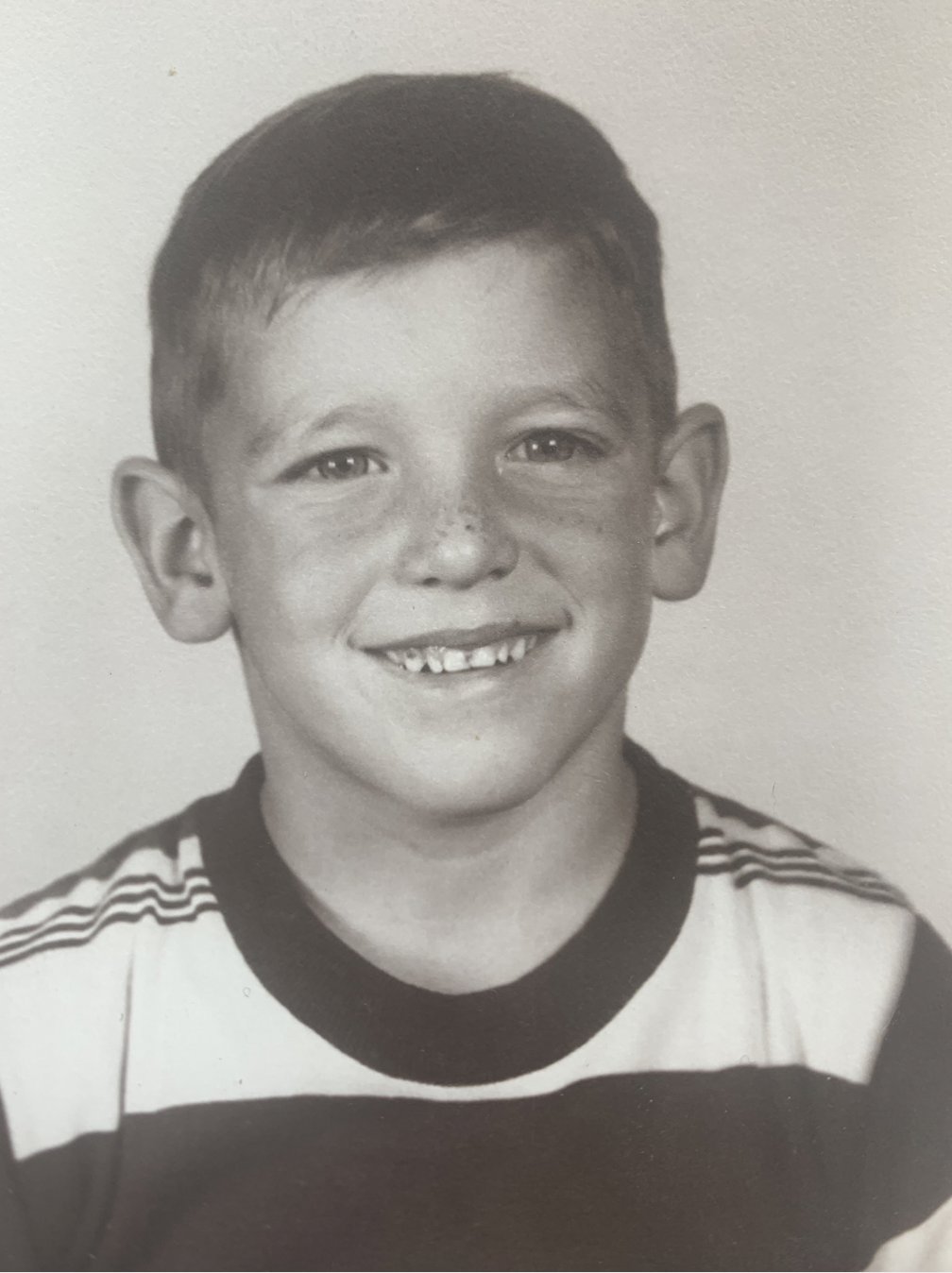
Wow, you look so young! Oh yeah, you’re only 6. Have you got freckles? I don’t remember having freckles. Anyway, this is a bit unusual but a friend here in 2015 asked if I’d write you a letter with a few observations and perhaps a tip or two. Have a seat, this will be long as there has been a lot of water under the bridge over the past 68 years. I’m surprised you are reading this, you’re usually out in the neighborhood playing endless tag games with your friends. Did you have a hockey rink in the yard this past winter? Oops, gotta run, headed out to ski with my/your granddaughter Winter who is actually 6 just like you!
A young Murray Banks. (Courtesy photo)
March 2022
Sorry about that, I started this 7 years ago but got busy. That’s probably good though as you will have a better handle on some of the insights I’ll be sharing with you now that you are 13. OK, here in 2022 you are 75 years old. Hard to believe that you will be as old as your great gramma is now.
As you are learning, yours is an athletic family and we play almost every sport imaginable. And when we’re not playing an official sport, we are riding our bikes, competing in a tenacious whiffle ball game or playing capture the Flag ’til way after dark. Playing sports is our family thing and you are doing them all… baseball, basketball, football and hockey. It is a perfect childhood so I hate to do tell you this, but you will hold your own in sports until high school, then everyone else will grow and you won’t. Hey, it’s ok, you were born in late October and everyone is way older than you.
First, the bad news: you aren’t going to continue to be a star baseball player like you are now. And you aren’t going to make it in basketball either. And the football coach will say to you “Banks, you’re a tough kid but I can only use you when it’s 3rd down and 3 miles to go. You should run cross country.” I don’t think you even know what cross country is!
But, here’s the good news: you’re going to love running and you will become quite good at it in a few years. One more thing, don’t fret about maturing late… when you are in your 40’s and racing triathlons, you’ll go to your 25th class reunion, look around and wonder who all those old people are. Triathlon, bet you don’t even know what that sport is. It’s a cool sport that involves three events you already love and will be invented when you are in your 30’s, more about that later.
Murray Banks joins the cross country team at Cortland State in Upstate New York. (Courtesy photo)
In a few years, you will have to decide on a college — well, if you put a bit more focus on your school work, you will. You will get lucky and choose a school and major that you love and be on championship teams with great guys and coaches. One day while walking to class, a professor with national prominence for his teaching and coaching, will stop you and say, “Ya know Banks, you’re tougher than hell and someday all your training and determination will pay off big time. Keep up the good work.”
That interaction may only last 60 seconds but the eventual benefit will last 60 years. This is important, pay careful attention to older, wiser people you admire and respect.
They see things you can’t possibly see at your youthful, exuberant age. They have perspective that will benefit you in ways you can’t imagine now. Oh, and one more thing about college… you’re going to meet a very special girl on your track team. She’s a sprinter, she’s smart and she’s really attractive. If you don’t mess this up, she will become your lifelong love and training buddy.
With a bachelors degree in hand, you will embark on a teaching and coaching career that will earn you several honors and great satisfaction… slow down and soak it all in. Now this will be hard to fathom, but getting cut from baseball, basketball and football will come in very handy in a few years. As a high school running coach, you will seek out athletes who were rejected from other sports and turn them into championship caliber runners. The energy and imagination that often got you in trouble in school, will produce unique results in your teaching, coaching and racing career — hard to imagine isn’t it? Your struggles academically won’t last, just remember what Einstein said, “Imagination is more important than intelligence.”
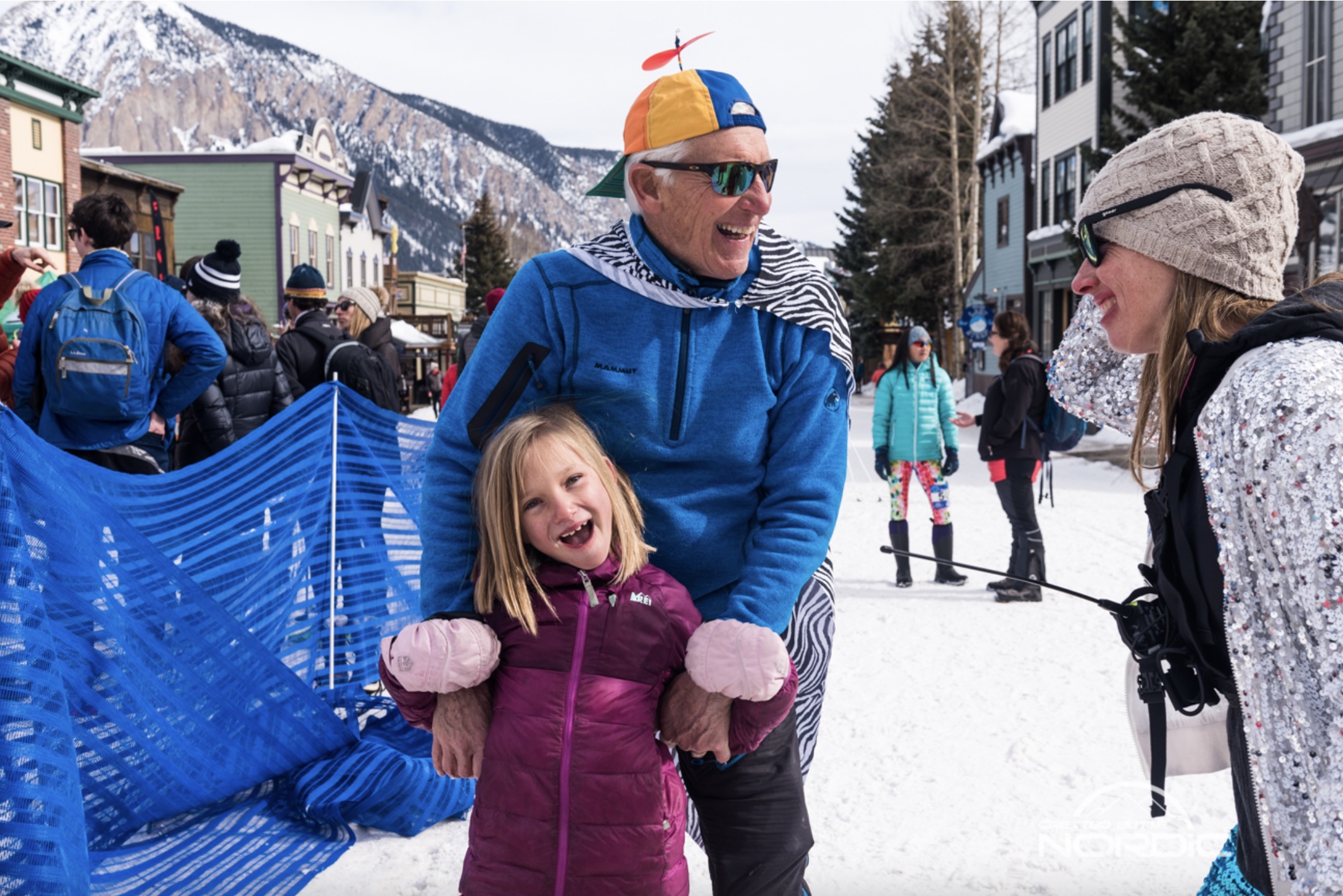
“When you coach kids, you lose 40 years off your chronological age.” – Murray Banks (Photo: Xavier Fane / Crested Butte Nordic)
Now, back to that girl you will meet in college… she is a sprinter and you are a distance runner, that’s how she catches you, you just weren’t fast enough! But, she will become quite an accomplished endurance athlete and the two of you will enjoy years of racing all over the world. And it will be in two sports you aren’t even aware of now: triathlon and cross country skiing. And, as a bonus, when you marry her you will get an island! Yup, your teaching careers will enable you to spend summers on the family island and you can swim, bike & run a lot and become quite proficient at that triathlon sport. Actually, so proficient that you will both race in the world championship and people will pay you to do it. Really, honest, not kidding, this will be your job for a few years, you lucky guy!
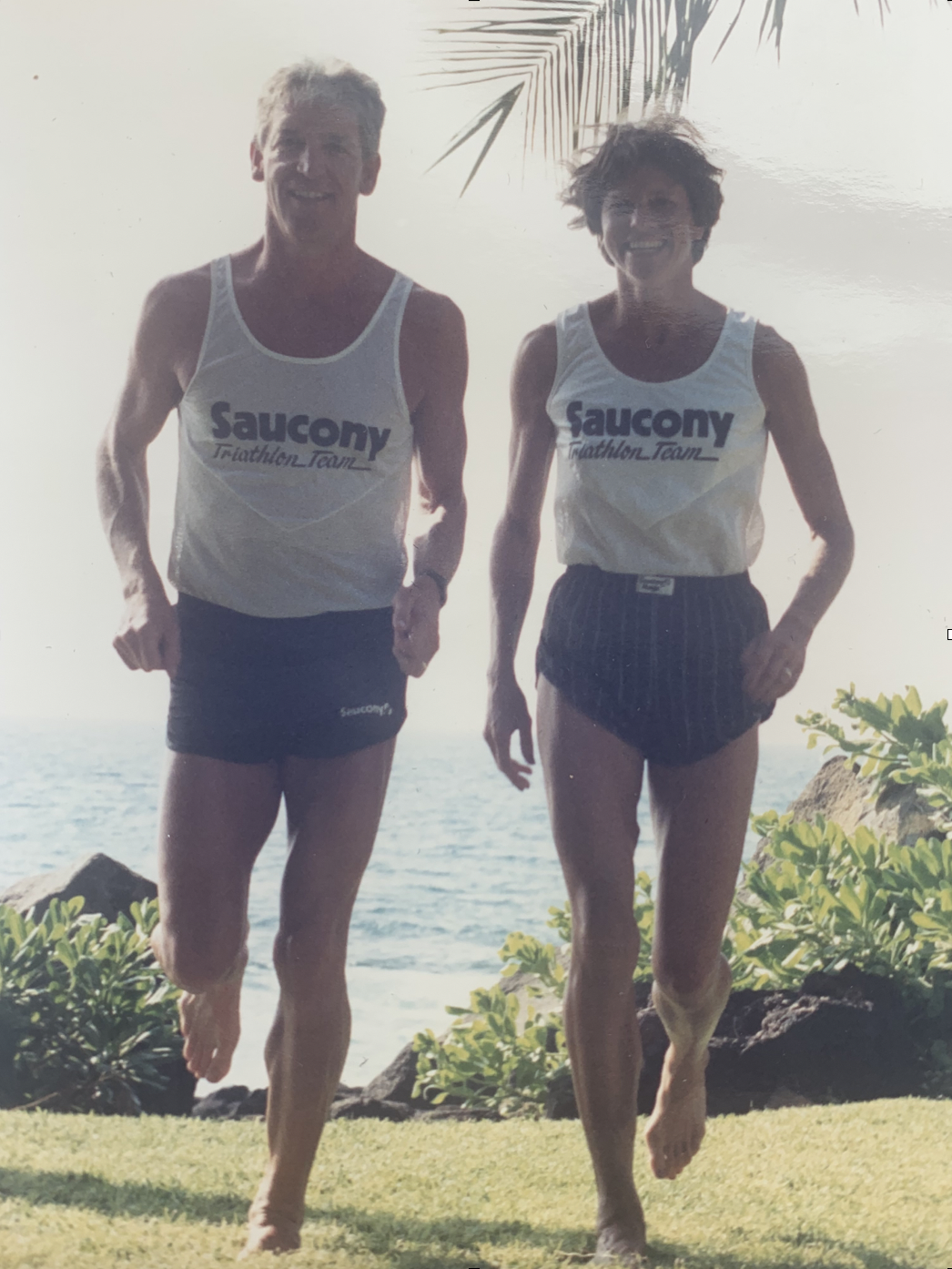
Murray Banks and his wife prepare for Ironman Hawaii, 1988. (Courtesy photo)
Although you will absolutely love teaching, you will have an opportunity to take time off to be a full time athlete. And your 8th grade teacher Mrs Bentley, who will say to you “You’ll never make anything of yourself just playing sports, Mr Banks!” Well, turns out she was wrong, but probably best if you don’t say anything to her.
Instead, you will create a niche as a speaker and corporate trainer that provides the time to train and race nearly full time. It’s an occupation that resembles training and racing in every way… you prepare thoroughly for long periods of time; you need to be focused and goal oriented; you work intensely hard for short periods of time, followed by longer periods of recovery; and, when it’s time to race or deliver a presentation, you really need to be on your game, there is no room for mediocrity. Any time your work, recreation and passions intersect, you have the best of all worlds and so many good things arise. So, younger Murray, keep all options in your life open, there is no predicting what opportunities will present themselves.
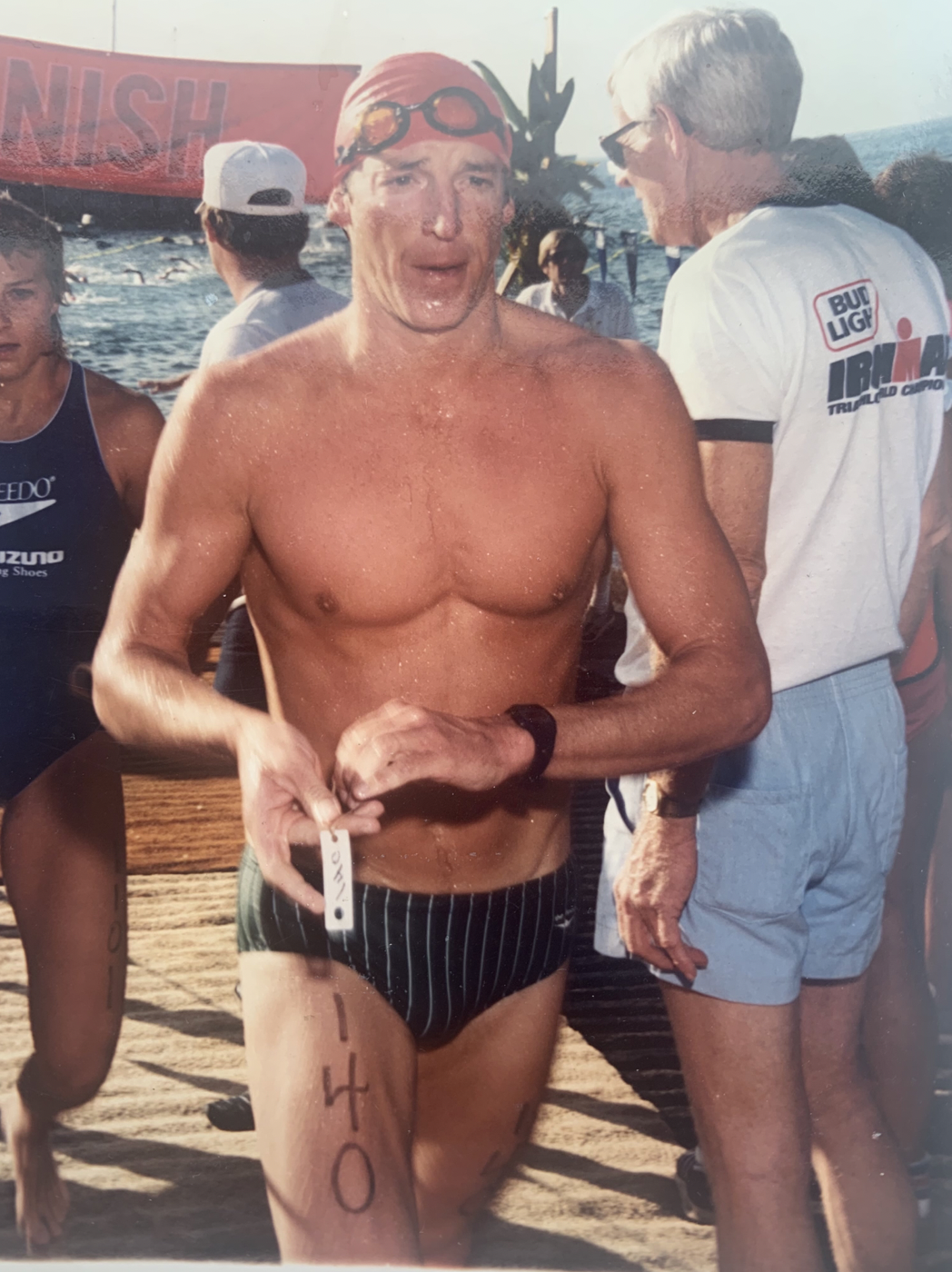
Ironman Hawaii, 1983. (Courtesy photo)
But, I digress. Training for triathlons during long, cold Vermont winters was a challenge so you know what comes next? Cross country skiing.
For several years, skiing will just be winter fitness for triathlons but eventually, skiing will became your favorite family activity. You and Janie will eventually have two rambunctious boys who love to play outside day and night, just like you! They will play all the usual sports but will eventually get into ski racing and soon you will be going to races to cheer for them rather than the other way around.
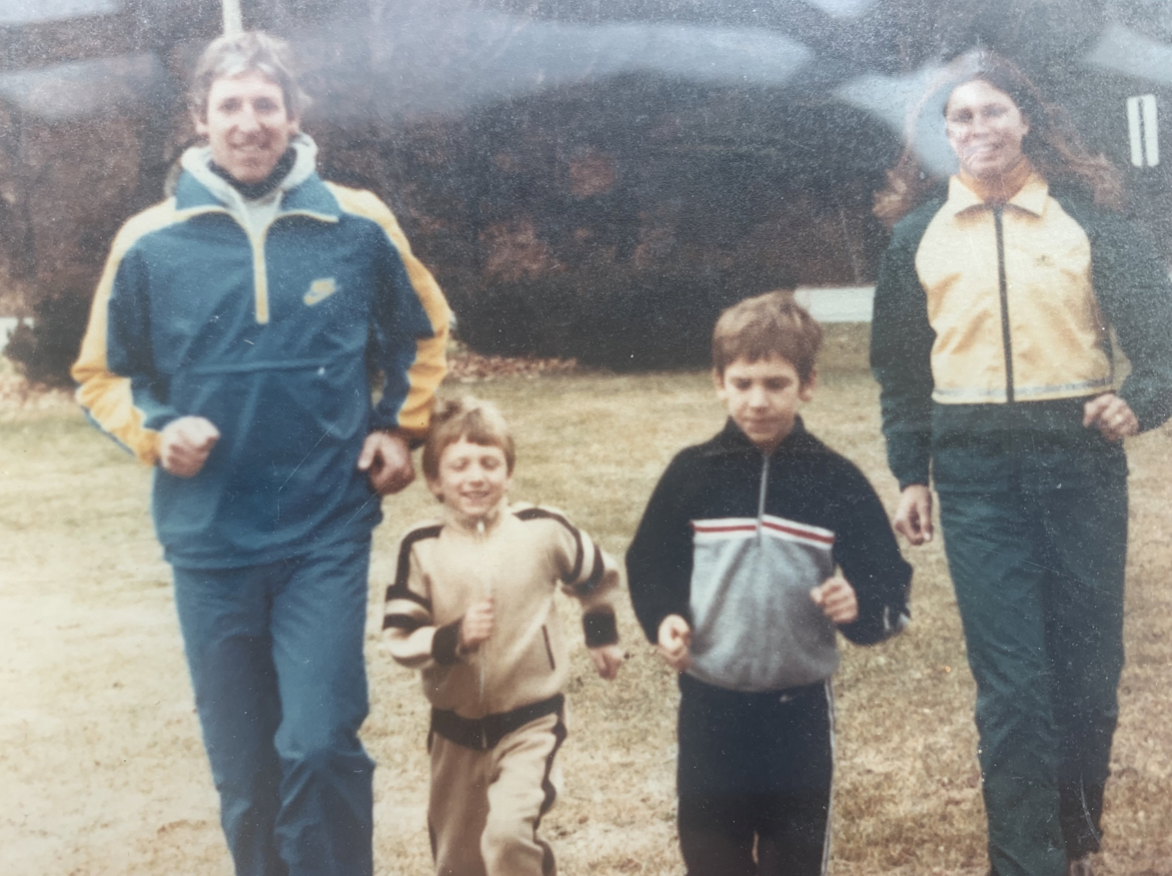
Team Banks at a community fun run in Vermont. (Courtesy photo)
So finally, cross country skiing… get this, skiing downhill is way more fun than running down hill! And, while triathlon training can be tedious, arduous and exhausting, skiing is generally fun and challenging. So, you will retire from triathlons and spend most of your athletic energy training for and racing in cross country skiing and have the opportunity to race in cool places like Norway, Austria and Italy.
Masters World Championship, Asiago, Italy, 2014
You and that sprinter girl will both win gold medals at various masters world championships and you will meet people from those countries that will become lifelong friends. And, you will find that folks in their 50’s and 60’s who continue to ski race are really an energetic and positive group of people to hang out with.
And those boys you and the sprinter girl so enjoyed skiing with when they were kids…they took that joy for snow and mountains and parlayed it into careers as international mountain guides. And the best part? You will get to ski big peaks all over the world with them, which it sure beats playing basketball and baseball!
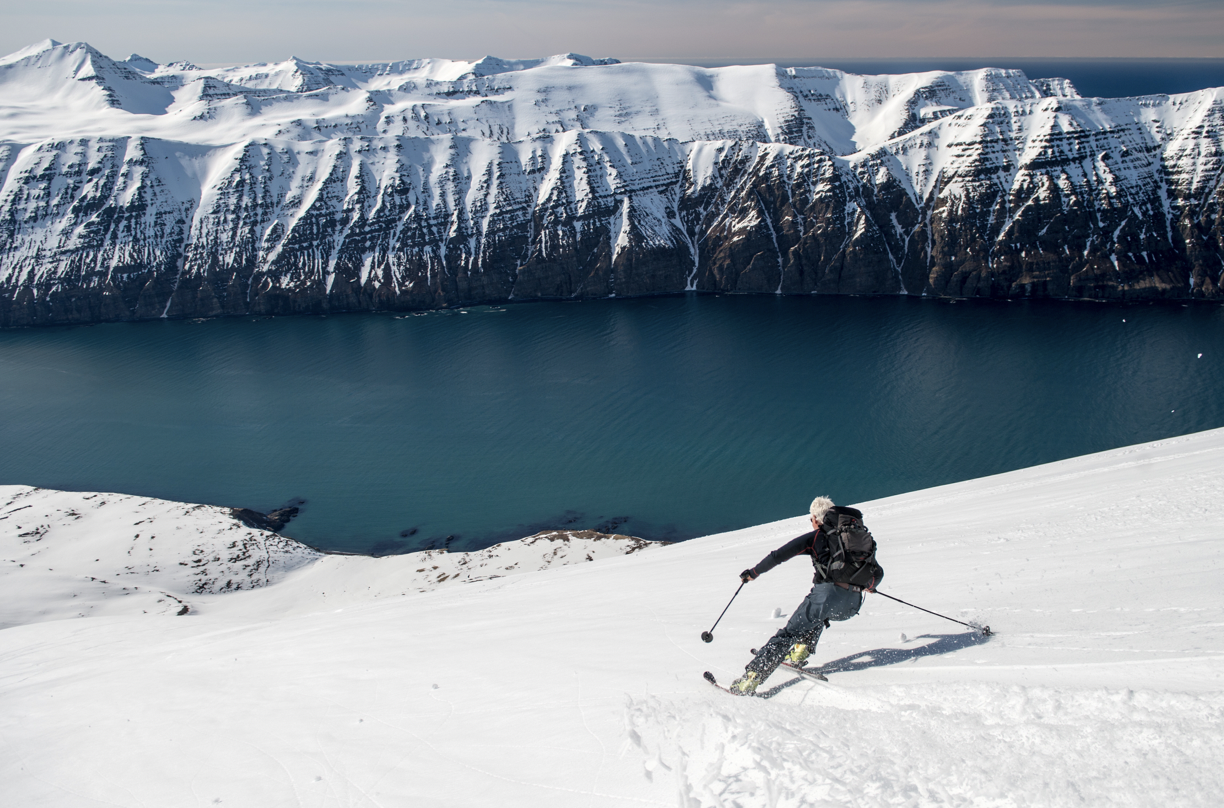
Troll Peninsula, Iceland, 2017. (Courtesy photo)
This all sounds a little too good to be true doesn’t it? Well, as you have probably guessed, it is. At the very pinnacle of your personal, athletic and professional success, life will throw you a curveball… cancer.
Now, at your young age, you may not understand what cancer is, so I’ll break it down a bit for you. Cancer is an insidious disease that eats at you over time and saps the energy and strength that have been hallmarks of your life. In your case, you will endure surgeries, radiation treatments and a bevy of drugs that will end your racing career. You will need every ounce of patience, optimism and tenacity that you’ve spent a lifetime developing through sports.
It will be the greatest test of endurance that you have experienced in your lifetime. But, there is an interesting cancer/ski racing analogy, bear with me on this. Imagine, you are in a 50km classic ski marathon, with temps at freezing and a damp, cold wind that makes the track indiscernible and waxing impossible.
The track is poorly marked and you are never 100% sure if you are on course. There are no kilometer signs and the route is ambiguous. Your kick wax has failed you – one minute you are slipping and the next your are walking on snow stilts. You pass spectators and ask “is this the way?” and they respond “not sure, just keep going.” You ask others “how far to the finish?” and they respond “not sure, just keep going.” The blowing snow and poor markings obscure any semblance of direction and you press on not knowing which trail to take.
Yup, living with an aggressive cancer is very much like a tough ski marathon… you know you have to keep going, but you have no idea how long and you can only hope the ones giving directions know the best path forward.
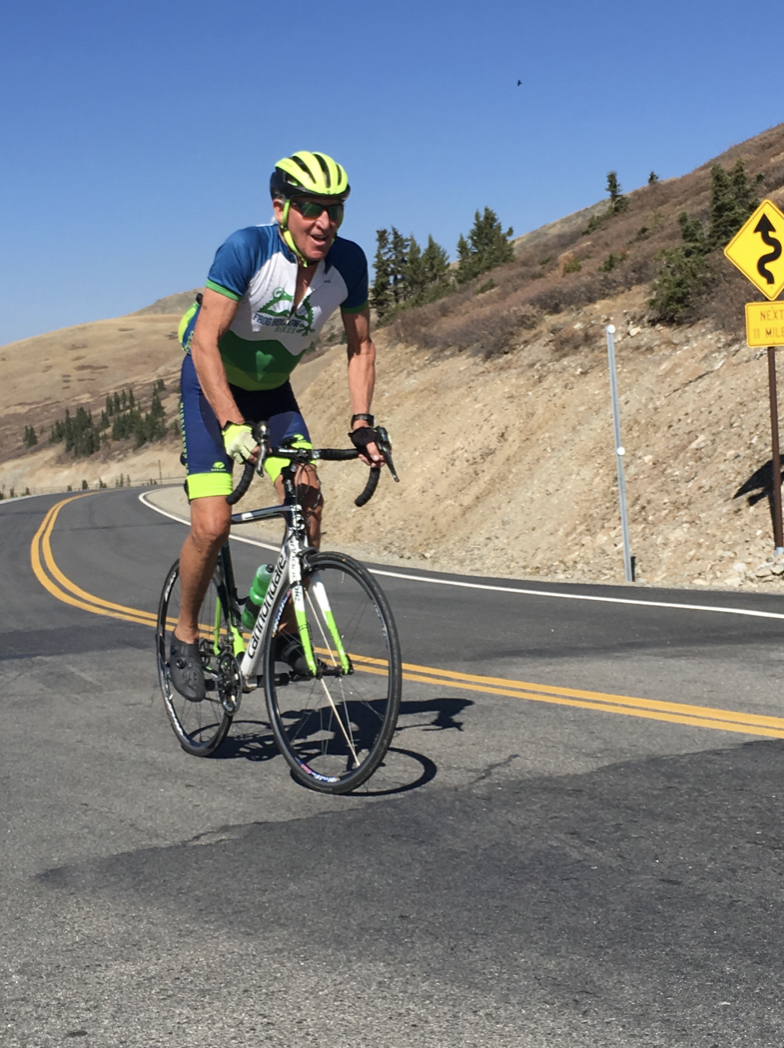
2020 Covid Cancer Climb with buddies at the summit of 12,300’ Cottonwood Pass, CO. (Courtesy photo)
But, my younger self, you are well prepared. All those years of endurance training and racing are paying off now as mental toughness, dealing with pressure, staying focused and learning to exceed your perceived limitations will carry you far longer than you might expect. Those teammates and coaches you loved will support and encourage you, just like they did decades ago. And, no matter how exhausted and frail you may feel, you will find strength and joy in doing what you’ve always done… getting outside in the sunshine to ski and bike with your friends.
At your age here in 1959, sport is a competition that you prepare for and do your best at. You are in the moment and not thinking of the lifelong benefits. But looking back, you will see that training, competition and pushing yourself was the best possible preparation for a lifetime of great joy, professional success and personal satisfaction. But most importantly, it will give you the ability to withstand discomfort, uncertainty and challenges you did not sign up for.
As an endurance athlete, you developed a unique life skill set that you can cash in when you need it most; and here in 2022, you are reaping those benefits.
Murray Banks and “the sprinter girl”, his lovely life partner, Janie. (Courtesy photo)
The Crested Butte Nordic Competitive Team is looking for an assistant coach to work with Head Coach Molly Susla and 15 middle and high school athletes from January through the end of March of 2021. The job is about 20 hours/week, plus occasional travel weekends where all expenses are covered. Starting salary at $3,600 for three months, with opportunity for more money depending on experience. We are looking for candidates with a background in Nordic racing, experience with waxing and experience working with kids. Opportunity for summer work is also possible. Come join a growing competitive team in the Nordic Ski Capital of Colorado. If you are interested please send a resume and cover letter to molly@cbnordic.org.
Time Commitment – 13 weeks from January 4th through March 31st at approx. 20hrs/week Salary – $3,600 for three months, starting salary
Be on time to practices and coaches meeting
Assist Head Coach in creating all training plans
Build relationships with athletes, and coach each athlete individually
Assist Head Coach in goal setting for the comp team
Hold Head Coach and athletes accountable for setting their own goals and following through with them throughout the year
Create a safe and positive environment for all your athletes
Assist Head Coach in leading quality training at every practice
Use video analysis for technique
Follow US Ski and Snowboard and RMN Code of Conduct
Follow CBNT Policies and Procedures
Record any incidents and report them to the head coach (injuries or fights or bullying)
Promote opportunities to athletes and parents (face to face and via email) to race in local races like the U14 series, the alley loop race series, JNQs and the MM7
Occasionally ski with the younger groups and help recruit skiers to the comp team
Take pictures and video during practices
Provide parents with tips on supporting their athletes
Use the team Facebook page for updates, photos, videos and events
Maintain team van and team areas
Attend coaches clinic in November
Help with U14 Race Series
Attend the Magic Meadows 7
Attend all JNQs
Be a superior role model for athletes
Discuss with Head Coach before each practice about each athlete and that day’s training plan
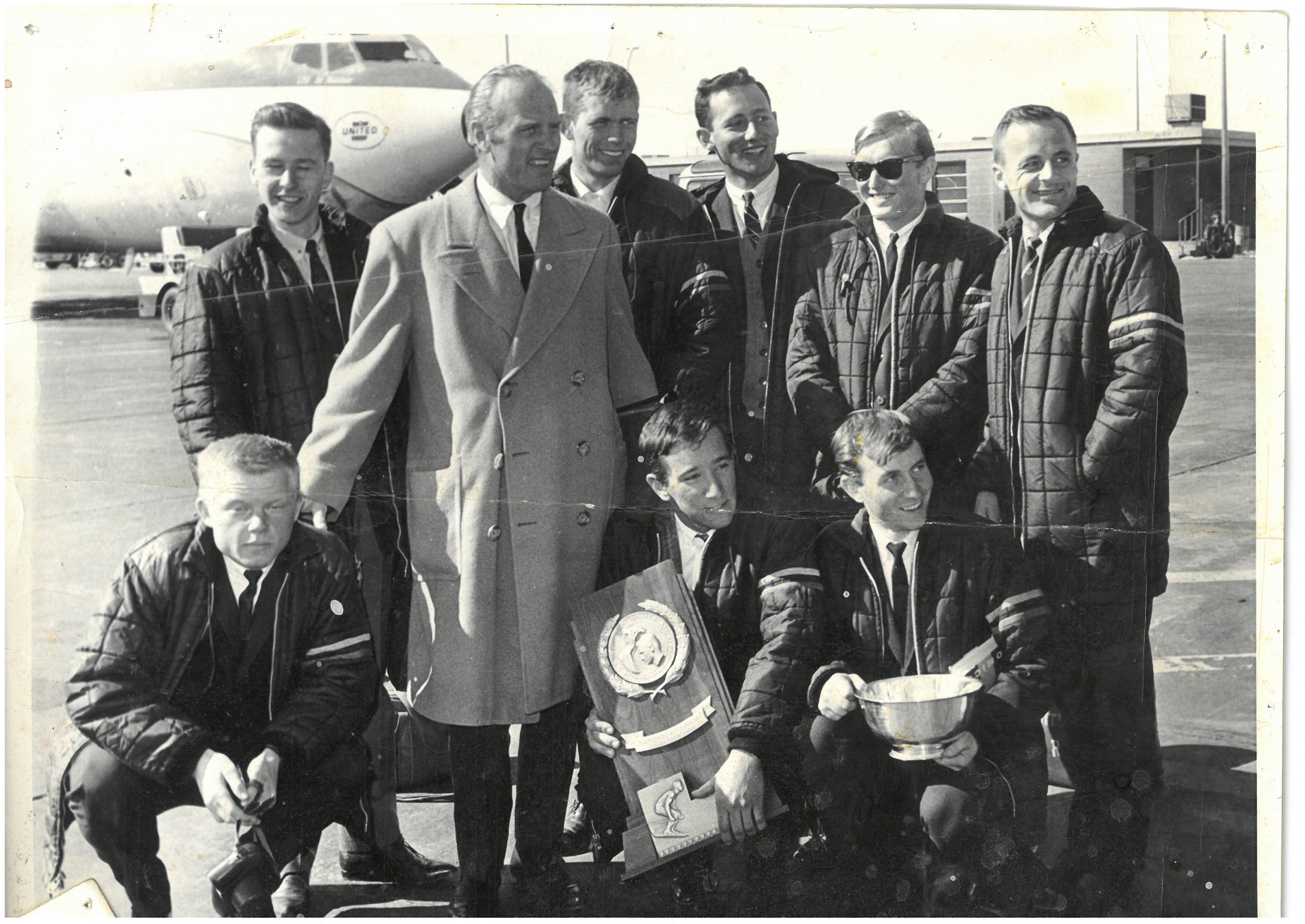
The Denver University Ski Team with its NCAA Championship trophy won at Dartmouth in 1964, at the Logan Airport before flying back West. Front row on knees, from left: Harald Bjerke (XC, Norway), Myke Baar (Alpine, USA), Rolf Dercum (Alpine, USA). Standing, from left, Lasse Ottersen (Jumping, Norway), Willy Schaeffler (Coach, Germany), Erik Jansen (Jumping, Norway), Chris Rounds (Alpine, USA), Don Brooks (Alpine, USA), Aarne Valkama (Jumping, Finland). (Photo courtesy of Harald Bjerke)
As a teenager in 1963, Harald Bjerke decided to move to the United States and attend Denver University.
“I wanted an education,” the septuagenarian said in an interview from Lillehammer, Norway, last week. “It was a very nice way to combine skiing at a high level with getting an education. And I also had some friends from Norway who went to Denver, and they thought it was very nice.”
Besides looking back fondly on his time in the U.S. and making meaningful friendships, Bjerke says his tenure at Denver helped in another way: from 1972 to 2014 he was the product manager for Swix.
“I probably got the job partly because I studied in America,” he said.
He studied business and marketing at the university, but more importantly, learned that there was a whole world to cater to.
“When you go to another country, you learn something in school, but you learn just as much just by being there,” Bjerke said. “That’s also good because [at Swix] we work with the whole world as a market. We cannot just be thinking about what the Norwegians need. You have to think about a lot of different aspects.”
Harald Bjerke, newly-minted Product Manager, in 1973 with one of the original Swix hats. “The colors symbolize the wax colors,” he said. (Courtesy photo)
Now, Bjerke has moved down to the title of Assistant Product Manager as his former protégé has taken over the head job in anticipation of Bjerke’s eventual retirement.
But back then, Bjerke wanted to go to university, and doing so would have been logistically complicated at home. There was no coordination between ski clubs and universities, and no scholarship like the one he received to go to the U.S.
“In Norway, skiing is based upon mainly the club system,” Bjerke explained. “And also at each county or city, they have their own team where they assemble the best skiers from different clubs… I would have had just help through the club, and financially been on my own. That is the way it works in Norway.”
For several years, Bjerke competed with the top skiers in North America on the NCAA circuit and at other races. He was a fierce competitor of U.S. Olympians Mike Elliott, Mike Gallagher, and Edward Demers. In 1964, Bjerke won a North American Championship.
It’s an interesting analog to today’s discussions about NCAA skiing. Upon returning to Norway – Bjerke wanted to stay in the U.S. longer after graduating, but would have potentially had to serve in the Vietnam War – he continued racing, including notching a top-30 in the 1972 Holmenkollen 50 k and several top-10 finishes in major marathons. But he didn’t make his way onto the Norwegian Olympic squad or anything of the sort.
“I continued racing, but I had to work eight hours a day so it was kind of hard to compete,” he explained. “I did decent, not great, but fairly okay.”
Bjerke competing at a regional college meet in Winter Park, Colorado, in 1965. (Courtesy photo)
Neither have most recent foreign graduates of NCAA programs, which leads to the perception in Norway that cross-country skiers who choose to head to the U.S. for scholarships are “giving up” on high-level racing.
(Several Scandinavian NCAA alums have represented their countries on the World Cup, but none have made Olympic or World Championships teams recently.)
That perception isn’t totally fair, though, Bjerke believes.
“I think it’s definitely possible to create training groups in schools in the U.S. where you can become really good, a World Champion,” Bjerke says. “I think [the common attitude] is a lack of imagination. If you had a school that had a person over here that had been to university, and they [came back] really good in cross-country skiing, then maybe that [perception] would be different.”
That may be because coaches in Norway are unfamiliar with the coaches in the NCAA system. Not only are most athletes who head to the U.S. not returning World-Cup ready, but those at home aren’t sure what environment one of their own athletes would face if they decided to go to America.
“Knut Nystad and Trond Nystad, they were coaches at Denver,” Bjerke mused. “And they came back to Norway and Trond became head coach of the Norwegian national team and Knut is still chief of the Norwegian waxing team. If they went back to DU now, it probably would be easier for Norwegians, really good cross-country skiers, to apply for going to school there. But as it is people don’t really know enough about the opportunities over there.”
He also sees a big training opportunity for Scandinavian athletes particularly out west, where they can regularly work out at elevations you’d have to fly to if you still lived in Norway.
“If you really trained well at those high elevations and you go down to sea level, you could really achieve some interesting results,” he said.
And those opportunities would be fully supported. Upon arriving in America Bjerke found out that the Denver team was no joke, and neither was its training.
“It was very professional,” he said. “In many ways it was surprising to see how it was organized. In the NCAA system, it is very much based on teams. Skiing as a team sport, that was completely new for me. And it was a very positive surprise.”
That said, he admitted that he was probably the most fit in the first year he was there.
Hearing about how programs in Alaska and New Mexico are being threatened by elimination, Bjerke considered it a pity.
“I think the NCAA is quite good because you have to have decent grades — you cannot flunk out of school,” he said. “That means you are combining your brain with doing sports, and I think that is a really good combination. If you are only training, and focusing only on that, it’s not so good. You have to use your head for something else than just sports. That will help you in the long run to be better in sports, I believe.”
All in all, heading to another country is an education in more ways than one, and doing so with a scholarship sweetens the deal.
“I would have been more narrow-minded,” Bjerke said of what his life might have been like if he had stayed in Norway. “That’s one way to say it. When you get over there, then you learn another culture and you learn other people. It’s really much more than little Norway. It’s a very good education for the human spirit — for being a human being.”
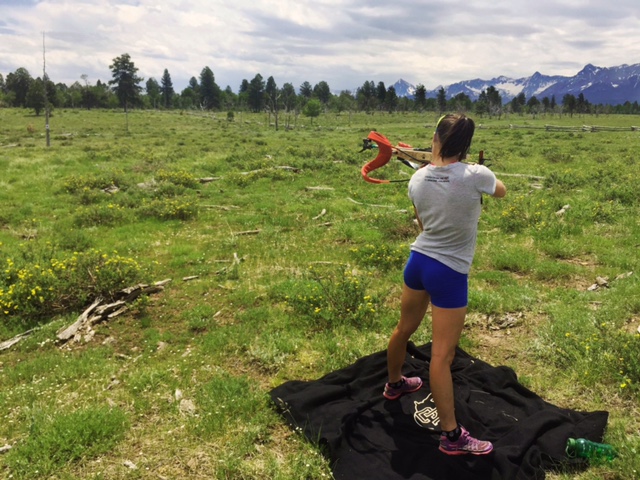
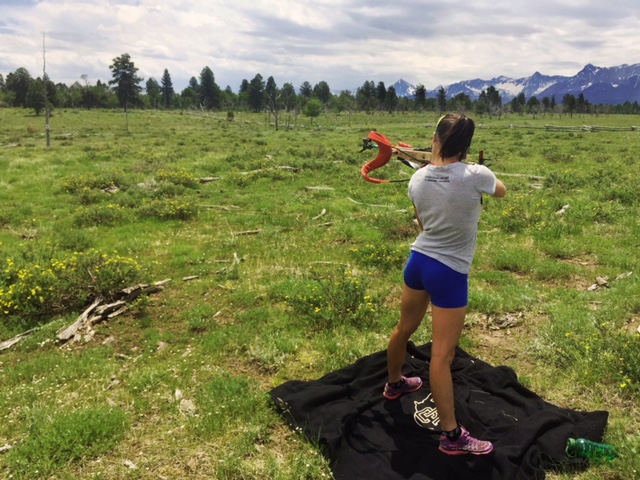
Joanne Reid proving that you don’t need an official biathlon range to train. (Courtesy photo)
Welcome to “17 Questions for 2017″, where we are catching up with American and Canadian national-team members before the beginning of the winter season.
***
Joanne Reid is certainly the newest newcomer in North America to have earned World Cup starts last season, representing the United States in Europe and Canada last season just six months after picking up the sport.
The CU Boulder graduate student had strong races all summer and fall at U.S. Biathlon rollerski trials and earned more World Cup starts for this season’s period one races. She most recently finished on the podium at the Frozen Thunder biathlon races in Canmore, Alberta.
1. Biggest change in your life in the last five or so months since the ski season ended?
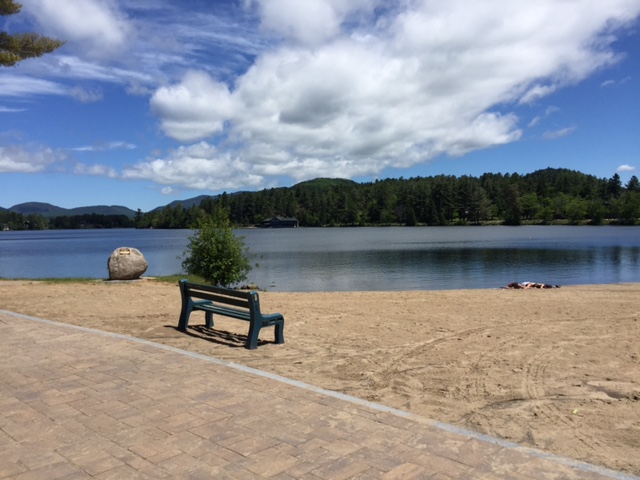
Mirror Lake, near Reid’s part-time home in Lake Placid, New York. (Courtesy photo)
My life has been one constantly shifting situation from the instant I picked up a biathlon rifle, so it’s hard to pick just one change. USBA gave me a resident room in Lake Placid starting in June, so I’ve been living and training there. Not full-time, since I’m still in graduate school, but a large chunk of time. It’s like sliding backwards on the life scale, right back to freshman-year dorm life. Roommates, hallway cameras, alcohol bans, dining hall, no overnight guests, the whole nine yards. I’m 24, and this is the first time in my life I’ve actually been treated like a potentially wild teenager (I graduated high school at 16 and opted out of the dorms when I arrived at University of Colorado). On the other hand, there’s something seriously incredible about living in a place with bonafide housekeeping that cleans your bathroom for you.
2. Biggest change in your training?
Structure. I’m not a person who plans or lives with a structured rhythm of life. I’m a very spontaneous and sometimes reckless person, and my training has always reflected that fluidity. It’s not necessarily a bad thing, I’m very in-tune with my own body and I know when I can push and when I shouldn’t, so I tend to rearrange workouts on the fly. My coach (Jean Paquet), has been trying to find a balance between the school-sport juggling act while also keeping me in a more defined training plan. To his credit, he has been able to rein me in and allow me the flexibility I need while I finish school, and also hasn’t had a aneurism from trying to deal with me. (Yet.)
I decided if I was going to go, I’d go all the way. If my coaches are going to put this much time into me, I owe them an effort back, so here’s things I’ve never done before that I’m trying out:
1) keeping training log
2) using a heart rate monitor
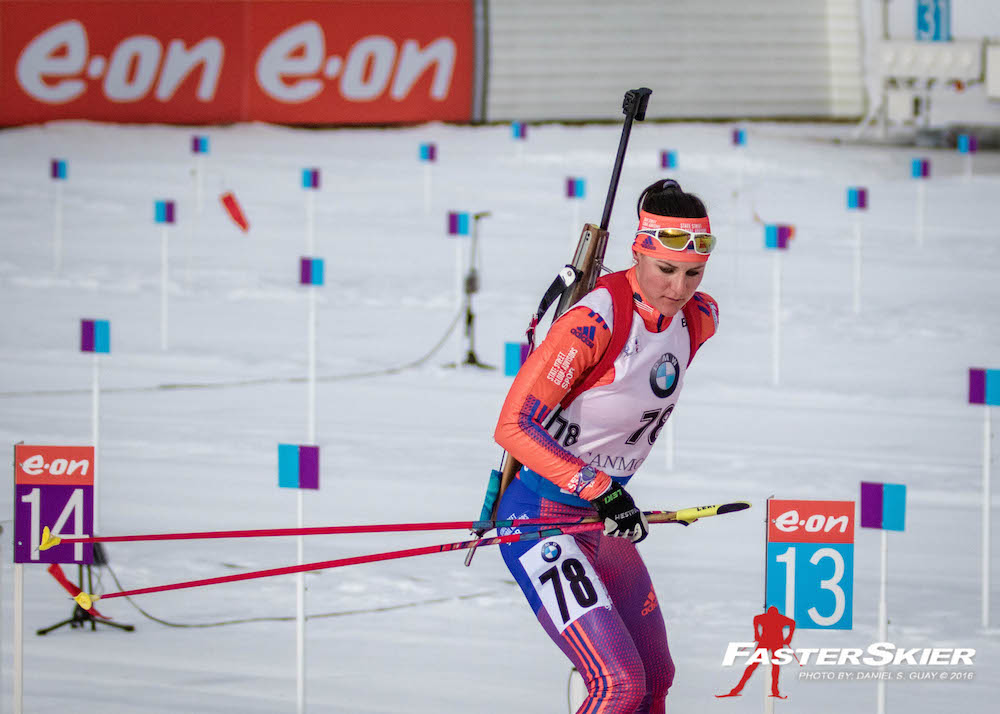
Joanne Reid representing the United States in the women’s 7.5 k sprint at the IBU World Cup in Canmore, Alberta. (Photo: Daniel S. Guay)
3) having technique that doesn’t look like a speedskater taught me to ski
4) hydrating… You want me to carry a rifle AND a drink belt?
5) recovery/actually addressing injuries instead of waiting for them to go away, like the ex-boyfriend you hope will stop texting you
6) not having to classic race, ever again (I’m really enjoying this 83% pole uproar over here)
7) keeping coaches (and USADA!) updated of my whereabouts, rather than wandering to a new city or state somewhat randomly
3. Major areas of improvement you’ve seen so far?
Jean and the USBA coaches have completely redesigned my ski technique. Because I’ve done so little technique work across the years (basically none, ever), I’ve had the same funky style forever. (Funky Style Forever would be a great name for a rock band). For instance, I came into Placid for the first time last October, and within the first three days found out my poles were an inch too short and had been since I stopped growing about eight years ago. I’ve been watering my race poles and keeping them in sunlight, but they haven’t grown any taller, so I think I’ll just have to get new poles for this coming season.
And then there’s that whole shooting thing. Since I only started a year ago, I still have a very steep upward trajectory. At the top, you can work for months and drop only a second off your range time. At my level, I can work for months and drop half a minute off of mine. But sometimes you hit things, sometimes you don’t. It’s all part of the ride. The CBC traditionally utilizes the “spray and pray” method when it comes to big races, so I just might make that my race motto.
4. Whom you’ve been working closest with this offseason (coaches or training partners)?
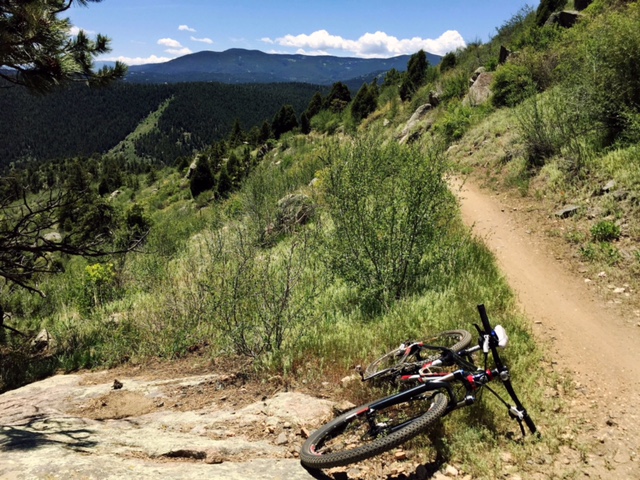
Mountain biking in Colorado. (Courtesy photo)
I’m lucky to have the coaches I do in US Biathlon, they’ve been incredibly patient with me and my long commute back and forth to school. When I’m home in Colorado, I’ve had some help from some of the BNS staff in trying to implement technique work that my Placid coaches have been teaching me. To have them on the same page and helping me focus on the right pieces has been a godsend. On the other hand, having those guys allied may have been the biggest mistake of my life. Big brother is always watching…..
Jennie Bender has been dabbling in biathlon, so it has also been really fun training with her in Placid sometimes. She has always been one of my biggest ski heroes, and is definitely a kindred spirit of mine.
5. Best trip in the last five months (and why)?
I got in my car and journeyed down to Santa Fe, southern Arizona, the Grand Canyon, and back across Colorado. I also drove my car from Colorado to Placid (yeah, that’s as long as it sounds), and I stopped to see my grandparents (and dog) in Madison along the way. I actually love to drive, and I love the heat (worst winter athlete ever), so I had a great time.
The best trip was NOT when I got stuck in the Chicago airport during the great Southwest server meltdown of summer 2016. I’m actually surprised I’m not still stuck there.
6. Favorite cross-training?
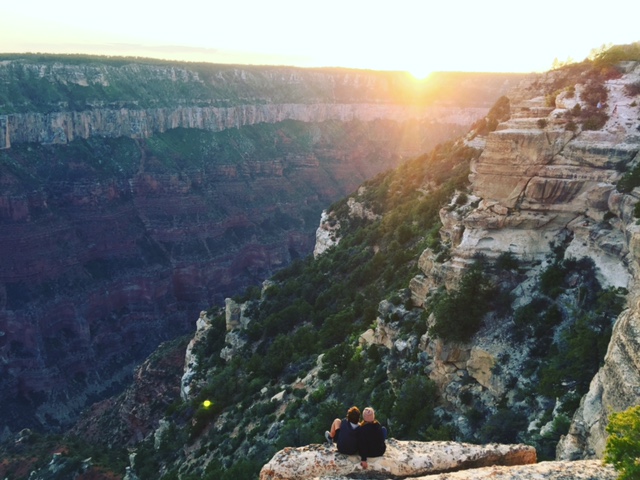
Grand Canyon, Arizona. (Courtesy photo)
Mountain biking, rollerblading, speedskating drills. I have actually done intervals with all three of these training mediums.
7. Favorite non-athletic activity or pastime this summer?
I stood in one place and played a lot of corn-hole.
Don’t be ridiculous. Why would you do that? You only get one life. I ran around with my nerdy engineering friends chasing Pokemon on bicycles (yeah, I said it), brewery hopped at some incredible Colorado microbreweries, climbed some of the mountains in the Rockies, went on spontaneous road trips with my mountain bike and rifle into the Wild West, went to a rodeo, visited the home of a CU astronaut where I also shot an AR-15 (does that count as training?), jumped in Boulder Creek, drove across the country, body surfed in the Pacific. All of those things were my favorite thing to do in that moment, so I did them.
8. Song that was your jam this summer?
Heart’s Desire, Kip Moore (**country alert**) and On the Turning Away, Pink Floyd.
9. All time favorite race moment?
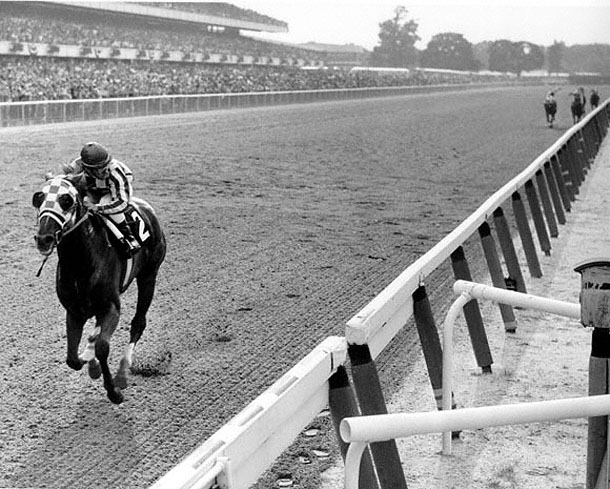
1973, when Secretariat won the triple crown, immortalizing himself as the greatest racehorse of all time and shattering the course record (he holds all three records to this day, in fact: the Derby, the Preakness, and the Belmont stakes).
10. First thing you pack in your bag when you leave for Europe?
My rifle? Oh wait, I put that in the box. Skis in the bag, rifle in the box. You think packing for nordic is hard? Trying cramming all your stuff for three months into a rifle case that, you know, already has a rifle in it.
Other than that, my bag is usually about 30% socks. I love socks, especially the bike socks that come in the crazy designs. I also way overdo down jackets and vests because I don’t do cold well, but I have mastered the art of the rifle on the back, down jacket on backwards technique. Don’t tell me I don’t look cool wearing my down jacket backwards, because I know I do, and the hood keeps my nose warm.
11. Venue/event you’re most excited to visit this season?
The warmest, sunniest one. (Can you tell I grew up in California?)
12. Who will win the World Cup title this year?
Honestly, I follow the NFL (go Seahawks!) much more closely than I follow biathlon or nordic. Fourcade is always a good bet. Just as long as he doesn’t put on the wrong lip balm.
13. Biggest sacrifice you feel you’ve made choosing this career path?
Travel. Travel is ouch. Did you know Susan Dunklee hasn’t been in one place longer than fourteen days for the past four years? Can’t say I’m that extreme, but sometimes it feels like it.
I was stopped at the Canadian border the other day and border control asked me where I live. I was genuinely flummoxed. For the next five minutes, I proceeded to make border control my personal shrink, while I explained the woes of the transient and vaguely homeless, whilst the line of cars grew and grew behind me. I think this was really aided by my Californian license plate.
14. If you could change one thing about your sport, what would it be?
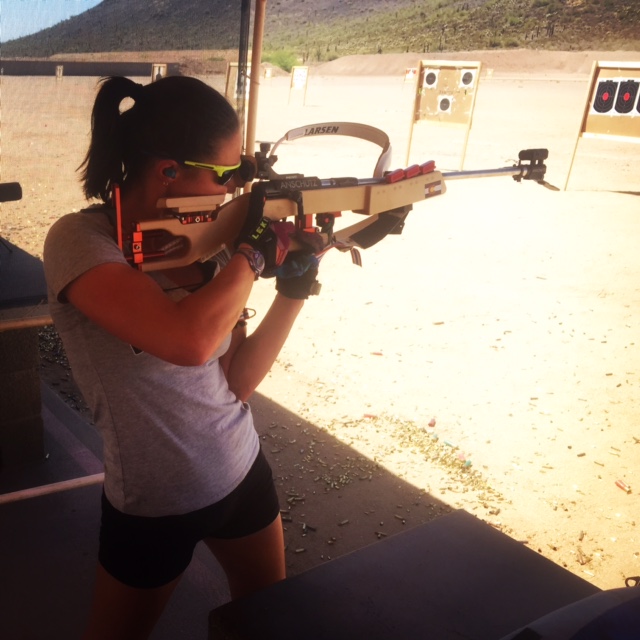
For now though, real rifles. Reid training at Cave Creek, Arizona, the largest outdoor shooting range in the United States. (Courtesy photo)
I would be a huge fan of switching to laser rifles, just because flying with a firearm that shoots live rounds is such an enormous pain in the ….. Arm.
15. What did you have for breakfast this morning?
I’m not really good at breakfast. Usually I roll out of bed five minutes before training, cramming a power bar in my face while I shove on my ski boots with a bleary-eyed, dazed expression. If I’m home in Boulder I don’t usually wake up before 10 or 11, so waking up for an 8am practice AND having time to eat when I shift to the Eastern time zone is an impossible task for me. Morning people…. Morning people are freaks.
I didn’t have coffee. I actually had to give up caffeine when I switched to biathlon, because it makes me shake. I know, cry for me.
16. In 5 years, I’ll be ____?
In the mountains somewhere, smiling at the sky. It’s actually pretty rare for me to know what I’m doing next month, let alone five years from now.
17. In 50 years, I’ll be ____?
Drinking all the coffee I want, doing something completely unrelated to skiing or biathlon, probably residing in a desert in the southwest.
Maria Stuber has spent the last three years coaching at the Aspen Valley Ski and Snowboard Club in Colorado. (Courtesy photo)
Ever since the College of St. Scholastica began its NCAA ski team, the face of the program has been one man: head coach Chad Salmela. Over the last decade, his squad notched its first men’s and women’s team wins and saw its first NCAA Skiing Championship qualifiers. And on the way, he changed the lives of dozens of young athletes.
Now Salmela is shifting roles at the college and will coach the cross-country running team. Taking the reins of the ski team is a new coach coach who is just as excited to build on the program’s burgeoning legacy in Duluth, Minn.
Maria Stuber, a Wisconsin native, has developed her coaching chops over several assignments, most recently in Colorado with the Aspen Valley Ski and Snowboard Club (AVSC). In three seasons with the club, Stuber increased the size of the team and worked with a variety of athletes, from those who just picked up skiing in high school to those who competed in Europe.
“At AVSC, coaches made sure we were encouraging brand new skiers to jump into the sport at any age,” she wrote in an email. “If you decided to join our high school team you get to train right alongside the best athletes in the country… This environment gives every athlete the opportunity to make a quick jump and be the best skier they can be. It can be so fun when it works, as our top male skier last year didn’t get into the sport until he was a sophomore in high school.”
Stuber (second from left) with AVSC athletes. (Courtesy photo)
That attitude seems to be a perfect match for the College of St. Scholastica (CSS), a school which sent two men to NCAA’s in 2012 and two women in 2015 – but which also has a development team and provides growth opportunities for skiers coming in with a variety of backgrounds.
“Chad didn’t really impact my ski career, he started it,” Paul Schommer, an NCAA All-American in 2014 now pursuing elite biathlon, told FasterSkier this spring.
“CSS is unique in that it has a development team serving this purpose at the college level,” Stuber wrote. “Kids with college skiing aspirations that are not quite ready to make that jump can come and work hard, get faster, and have the opportunity to reach the same level as the top junior national athletes we recruit.”
Taking athletes from those two tracks, Saint Scholastica has built teams that compete with the best in the NCAA Central division.
“CSS wants to be a competitive team in the Central Collegiate Ski Associaion conference,” Stuber explained. “In order to do that, we need to be competitive at the national level. What’s really cool about skiing in 2016 is that you need to have international ambitions to be competitive at the national level.”
Salmela used sports science and lab testing to make that happen, and it’s one of the opportunities that drew Stuber to the program. She received a masters degree in exercise science from Northern Michigan University and relishes a data-based approach.
Stuber with the rest of the AVSC staff last year. “I love these people!” she wrote. (Courtesy photo)
“I love that St. Scholastica’s training is all based on science and sound research,” Stuber wrote. “The college has an exercise science lab and the professors are willing to share the space and knowledge with coaches to give the student-athletes more opportunities for success.”
But more than anything, she is pleased to be part of a framework which will make it possible to integrate running and skiing into a cohesive college athletic career. In explaining his job shift, Salmela was clear that he wanted to see more – and smoother – crossover between the two sports at St. Scholastica, for those athletes who have dual ambitions.
“The biggest program draws for me at CSS are Chad & Don Olson’s (athletic director’s) vision to create a collegiate endurance sport epicenter where student-athletes can choose to pursue xc running, skiing or both at a very high level,” Stuber wrote. “Linking endurance sports together will create well rounded, big picture athletes that have the support of a bigger peer group and more coaches and resources. I think CSS is on the verge of something huge.”
Stuber has seen how a variety of teams achieve success. First, as an athlete: she captained the Northern Michigan University (NMU) ski team for three years.
“My time at NMU had a huge impact on my life path and decision to pursue a career in ski coaching,” Stuber explained. “The running and skiing coaches there, Sten Fjeldheim and Jenny Ryan, have both contributed significantly to my coaching philosophy, training methodology and personal values. They have continued to be mentors, advocates and references for me as I find my way. I will feel extremely proud to consider Sten and Jenny peers and to go up against the Wildcats in December and I hope that they feel like a part of our success at CSS. They both know me well enough to not expect any mercy from us on the trails.”
Hailey Swirbul of the Aspen Valley Ski Club races the anchor leg while guiding the American team to eighth place in the 4 x 3.3 k relay at the Junior World Championships in Almaty, Kazakhstan, in 2015. (Photo: Logan Hannneman)
After college, Stuber raced for the Central Cross Country (CXC) Elite Team and then the Craftsbury Green Racing Project. In her senior career, Stuber was a runner-up at U.S. National Championships in 2009.
But since retiring from competition, Stuber has been consumed by coaching. She began her career at Alverno College in Wisconsin, before taking over as head men’s and women’s cross-country running coach for Southern Vermont College for two years. Under her leadership, the men’s squad had their best team results ever.
At AVSC, where the roster eventually neared 200 skiers, Stuber led a team of other coaches. Every year the club sent skiers to Junior National Championships as well as to World Junior Championships or the J1 Scandinavian Cup trip.
“I will never forget our amazing coaching staff at AVSC that welcomed me to the community that they had carefully built over the past 20+ years,” Stuber wrote. “There is no other ski club in the country with the amazing mix of background, knowledge, energy, perspective and compassion. Working with this group of people will be a life-long career highlight for me… I am so proud of the club’s growing numbers and participation in Carbondale, Glenwood Springs and Aspen. The way these three communities work together towards a common goal in Nordic skiing is phenomenal.”
AVSC runs summer training programs and last season organized an end-of-winter race event called Tour de Sea which drew junior skiers from all over Colorado, as well as rave reviews.
Stuber and Cook (second and third from right) with AVSC staff at a competition this winter. (Courtesy photo)
It was difficult for her to decide whether to uproot herself from the Roaring Fork Valley, where she and husband Bryan Cook had just bought a condo. They had been “very happy” in the Elk Mountains.
“We were not feeling 100% certain that we had made the right call until Monday when the CSS announcement was made,” Stuber wrote. “For days straight my phone and email were pinging and beeping non-stop with messages from friends, family, former teammates, fellow coaches and upcoming Midwest skiers and parents from clinics past. The Midwest ski community is a truly special group of people that we are incredibly proud to be a part of. During our racing careers, we leaned on this community for support and they delivered for us big time. I think we missed the Midwest ski culture more than we knew.”
The couple will move in the first week of September and Stuber is looking forward to getting started with her new team; Cook will enter an MBA program at St. Scholastica.
And besides the general homecoming, Stuber knows that the athletes she will be working with in Duluth – as well as those on the teams her skiers compete against – embody the same characteristics of the community which is welcoming her back.
“The CCSA is definitely a powerhouse Nordic conference…. consistently dominating at the US National Championship and NCAA Championship,” Stuber wrote. “The CCSA attracts down-to-earth athletes that want to be great skiers and are willing to work hard to get there. This intrinsic motivation is a recipe for making fast cross country skiers. Midwest kids are tough and they are backed by outstanding club coaches that are looking at the big picture. I can’t imagine a better atmosphere for athlete development.”
SEATTLE, Wash. (November XX, 2015) – Madshus, the world’s leading performance Nordic ski company, is excited to announce its co-branded promotional contest with highly regarded Devil’s Thumb Ranch Resort and Spa in the Colorado Rocky Mountains. This easy, enter-to-win contest brings the two leading brands in the Nordic industry–Madshus and Devil’s Thumb Ranch–together to promote the sport of Nordic skiing and get people excited about winter.
“Everything about the contest is geared towards relaxation and creating a unique experience, from the Madshus skis and gear that winners will be receiving, to the amazing venue that Devil’s Thumb Ranch provides,” stated Carmi Schulman, US marketing coordinator at Madshus. “It truly is an opportunity to experience the best of what Cross-Country skiing has to offer.”
Established in 1938, Devils Thumb Ranch Resort and Spa offers rustically upscale accommodations, fine dining and an array of winter and summer recreational activities to get people fully experiencing Colorado’s outdoors with its 6,000 acres of trails and spaces. Known for its Nordic trails, Devil’s Thumb Ranch Resort and Spa turns into a winter wonderland come the snowy season.
The contest will be opened to the public from November 15, 2015 to January 15, 2016 and anyone in the U.S. is encouraged to apply for a chance to experience the best of what Nordic skiing has to offer. Both Madshus and Devil’s Thumb have generously donated a grand prize package for one lucky winner valued at $5,000.
The prize package includes:
Airfare travel for two
Two full set ups from Madshus including the Terrasonic Intelligrip Classic ski, Nanosonic Carbon Classic Boots, and Nano Carbon Race 100UHM Poles
Two nights stay at the Devil’s Thumb Ranch Resort and Spa in its main lodge*
*Not valid during holidays periods. Subject to availability. Blackout dates apply. Advance reservations required. Does not cover taxes or gratuity. No cash value. Does not apply to previously booked reservations. Does not apply to other promotions.
Two trail passes per person
Breakfast and dinner for two each day at Heck’s Restaurant
The world’s oldest ski brand, Madshus’ Norwegian heritage dates back to 1906. From the original woodworking craftsmanship of its founder, to today’s state of the art production processes and materials, Madshus is the standard to which all other Nordic skis are held. Whether for World Cup level racing, fitness skiing, cruising, metal-edge touring, or cross-country downhill, Madshus continues to apply that same keen craftsman’s eye to each ski, boot, and pole it produces. Over 100 years since it’s founding, Madshus’ storied commitment to the art and craft of ski making resonates today in the same consistent standard of excellence all performance Madshus skiers have come to expect. Madshus is a member of the K2 Sports family of world-leading winter sports and outdoor recreational brands.
About Devil’s Thumb Ranch Resort and Spa
Devil’s Thumb Ranch Resort & Spa is a highly regarded and environmentally friendly year-round Ranch resort and spa offering rustically upscale accommodations, fine dining and an array of winter and summer outdoor activities. Located in the Colorado Rocky Mountains, 65 miles west of Denver and 10 minutes from Winter Park, Devilís Thumb Ranch Resort & Spa encompasses 6000 acres at the foot of the Continental Divide with two grand lodges, stables, spa, two restaurants and 130+km of groomed Nordic trails.
Ski & Snowboard Club Vail skiers (l to r) Gracie Shanley, Annie Blakslee and Lyle Shipp at Pitkin Lake above East Vail in the Gore. (Photo: Eric Pepper)
Five years ago, five ski buddies got together and founded Team HomeGrown. The idea back then, according to Sylvan Ellefson, was to create a sort of all-comers club.
Kevin Hochtl, Josh Smith, Paul Gorbold, Dan Weiland, and Ellefson had all grown up around Vail, Colo., and this was a “homegrown” team they could lay claim to, no matter what stage of life or what stage of their ski career they were in.
“We also wanted to provide a sort of support to the young kids growing up in the sport in the valley,” Ellefson explained. “Being able to look up to somebody, whether it is work or sport, is a very important part of keeping someone engaged in it. That was our belief.”
Sylvan Ellefson representing Team HomeGrown/SSCV last season at U.S. nationals in Midway, Utah. (Photo: Bert Boyer/http://bertboyer.zenfolio.com/) Proceeds from photo sales directly donated to NNF.
Two years later in 2011, HomeGrown — the elite offshoot of Ski & Snowboard Club Vail (SSCV) — reached a new level with the addition of then-U.S. Ski Team members Noah Hoffman, from Aspen (still on the team), and Tad Elliott, from Durango.
In 2012, Ryan Scott, a Montana State University grad from Boulder, came on as a sixth member with Ellefson, Hoffman, Elliott, and postgrads Christian Shanley (from Vail) and Max Scrimgeour (Steamboat Springs).
“It became more of a Team Colorado, but still homegrown in the sense that we all grew up racing each other every weekend through middle school and high school,” Ellefson wrote in an email. “Racing ‘as a team,’ at Junior Nationals really gave a sense of unity. From that point, we wanted to help inspire the next generation of nordic skiers in the state of Colorado. Help them realize that nordic skiing can become a career, and if anything more, a way to develop an amazing tolerance for pain, mental strength, and an iron-clad work ethic.”
This spring, Ellefson, 27, retired from skiing after making a run for the 2014 Olympics. Scott returned to Boulder full time to network and make a living in graphic design and web development.
In a phone interview last month, Scott said he’d been training when he could, despite revving up to 30- to 40-hour work weeks by fall. Since parting ways with SSCV in the middle of last winter, he wasn’t sure what he’d do for support this season.
“I might be figuring it out last minute, or racing independent and racing for Madshus,” Scott said.
Neither Scott nor SSCV Head Coach Eric Pepper chose to elaborate on why Scott left the team.
“I wasn’t involved in that conversation too much,” Pepper said.
Despite battling mononucleosis symptoms as early as last October, Elliott was cleared to race in November and got in two distance starts in West Yellowstone, Mont., and Sovereign Lake, B.C. He placed 14th in B.C. (one place higher than his finish in West Yellowstone), then returned home to Durango, where a doctor diagnosed Elliott with the Epstein-Barr virus — best known as the cause of infectious mono.
Tad Elliott (l) and Sylvan Ellefson (8) of Team HomeGrown/SSCV make their way up the last hill almost halfway through the 30 k freestyle mass start at 2014 U.S. nationals. Ellefson won and Elliott did not finish.
In January, he flew to Park City, Utah, to give the 30-kilometer skate mass start at U.S. nationals his best shot, but he didn’t finish.
“I then took from January until July off of any training,” Elliott wrote in an email. “Really light training in August now a bit more structured training into the ski season.”
Elliott, 26, is making a comeback this season, although he’s not sure how strong he’ll be.
“The doctor who finally diagnosed me was nervous I wouldn’t be able to race again for a really long time,” he explained. “So being out 7 months off of my feet has been really small. I might not get back 100 percent, so there is really no expectations or goals I have to hit. I am coming back because I love skiing especially for Team HomeGrown, and Salomon, Honey Stinger, Caldwell Sport and Oakley. Without them saying get well and we will see you when you are ready, I probably would have retired from racing.”
“I might not get back 100 percent, so there is really no expectations or goals I have to hit. I am coming back because I love skiing.” — Tad Elliott, SSCV Elite member
During his recovery last winter, Elliott coached Durango Nordic juniors once a week.
“That was all I could manage I felt so terrible,” he wrote.
He worked for Salomon Running this spring and summer, and at a Durango mountain-bike shop called Mountain Bike Specialists, where his employers where empathetic and let him rest whenever he needed to.
“All of my sponsors have stayed the same and showed their unconditional support,” Elliott explained. “My support team has stayed the exact same, and a piece of that has always been [coach] Zach Caldwell. We are using Firstbeat training systems in joint with my Suunto [heart-rate monitor] to track my heart rate variability to see how I am responding.”
On Oct. 8, Elliott wrote on Facebook that he had been cleared to train.
Out with the Old, In with SSCV Elite
This season, Elliott will be one of two seniors on the SSCV Elite team — Hoffman being the other.
Hannah Hardenbergh leading a high-school race last December in Colorado. (Photo: SSCV)
Hannah Hardenbergh and Cameron Bobb joined the squad as its two postgrads, and for the time being, HomeGrown is no more.
“We always knew that model is not sustainable if we want to grow the program,” Pepper said on the phone in early October.
Compared to the last two years, Vail’s top-tier nordic team has downsized, and SSCV’s emphasis has shifted to local junior programming. In the grand scheme of things, developing younger skiers is what will make its program thrive, Pepper said.
“We had talked to a number of potential people in the spring and what we really decided was we wanted to stay with who we had and not expand upon that this year,” he said. “Last year was obviously a really big push with Sylvan, being away from junior programing and athletes and families here, and with him not being in the mix anymore, and with Noah really needing minimal support from us, and Tad kind of coming back and seeing where he’s going to be at, it didn’t seem like there was a need for us to really pursue it this year.”
A year-round world traveler, Hoffman stops by Vail a few times each year when he can — most recently working out with the SSCV juniors and Summit Nordic Ski Club earlier this week. Like Elliott, Hoffman also works with personal coach Zach Caldwell.
Pepper has been Team HomeGrown’s coach for the last two seasons; Weiland, the longtime nordic program director at SSCV, coached the first two years before that.
Ellefson said Weiland, Pepper and assistant coach Lenka Sterling essentially waived all coaching fees and worked pro bono for HomeGrown from the beginning.
“I think they saw the potential of being coaches for what had the potential to be one of the best clubs in the nations, which I believe, to a degree we were one of the most competitive clubs, at a least in the men’s division,” Ellefson added. “They had full coaching schedules with the development team, high-school team and club team, so for Eric and Dan to even come out to our training sessions in the summer every single day was pretty instrumental.”
When HomeGrown started in 2009, it was “basically unfunded” for the first year, Ellefson said. The five original team members scraped money together — from savings, their parents and personal sponsors — to self fund.
The next year was better. The Rocky Mountain Nordic Angel nonprofit, which preceded HomeGrown, continued to supplement the team, and SSCV extended its support. The club initially let HomeGrown use its facilities, and by the next year, it granted its two athletes — Ellefson and Gorbold — access to additional training facilities and blew manmade snow for them in November. In 2011, Hoffman and Elliott came onboard to extend HomeGrown’s appeal to broader Colorado.
“To grow the culture in nordic skiing is way bigger than just trying to keep growing team HomeGrown,” Ellefson said. “If you grow the culture, I think the team will grow.”
“To grow the culture in nordic skiing is way bigger than just trying to keep growing team HomeGrown.” — Sylvan Ellefson, one of Team HomeGrown’s founders and SSCV Nordic Future Stars Head Coach
That’s why he wasn’t disappointed to see the name go. Above all, he wanted to see a team that enticed athletes after high school or college to pursue a professional career in ski racing.
“We are also moving more into how to fund these athletes better, and that we can do with the growth of the sport as a whole in the United States,” explained Ellefson, now a part-time coach for SSCV’s nordic future stars program (responsible for 40 to 60 kids ages 6 to 11) and vice president of sales and marketing at Cirque Mountain Apparel.
Noah Hoffman racing to second in the 2014 U.S. Distance Nationals 50 k classic mass start at Hillside trails in Anchorage, Alaska.
“To this point we had all athletes that grew up in Colorado,” Pepper said of HomeGrown’s recruiting pool. “Most of the kids that came to us this year were ones we had an interest in and relationship with, but they weren’t Colorado kids.”
That’s where SSCV had to make a decision. Ultimately, it resolved to focus on developing Colorado juniors rather than open HomeGrown to top skiers across the U.S., like several other elite teams do.
Ten years ago, Pepper estimated SSCV had 10 total athletes.
“Five years ago, it probably had 25 kids and now this year, it’ll probably be close to 80 with all our age groups,” he said. “[We’re] trying to establish a culture and improve trails … We have a ski academy now.”
Vail Ski & Snowboard Academy, founded in 2007. (Photo: SSCV)
The Vail Ski & Snowboard Academy, a public school for grades 5 through 12, was founded in 2007 and has nordic, alpine, snowboard, freeski, and freestyle teams as well as NCAA college programs, with seven kilometers of cross-country trails right outside its doors.
This year, Vail’s two postgrads are from the area and decided to take a year off college. Hardenbergh deferred from Harvard, and Bobb grew up racing for the Summit County Nordic Club. Both are coming back from injury, Pepper said.
“Its unfortunate when a racer post-grads in the U.S., it seems to be the feeling of World Juniors or bust,” he said. “We’re de-emphasizing it a bit … trying to give them more experiences, like a [SuperTour in] Bozeman. Their schedule isn’t that different domestically than a top-level junior, with western early season races, nationals, local races, [and] junior nationals … then [we’ll] look at opportunities.”
SSCV did not go to Spring Series last year in Anchorage, opting for French and Swiss nationals (for the same price of a plane ticket to Alaska) instead. This season, Pepper predicted they’ll have a similar option for postgrads and seniors, depending how each athlete is doing.
2015 SuperTour Finals in Sun Valley, Idaho, is a much more feasible trip from Colorado, “but Europe’s pretty appealing, too,” he said.
Former postgrads Shanley and Scrimgeour are now entering their sophomore years skiing for Denver University and the University of Colorado-Boulder, respectively.
And in terms of Vail’s male-to-female ratio: “We probably have more females than males, which is an interesting flip,” Pepper said, alluding to HomeGrown’s all-male status for the last four years. “In our U16 and older program, we have more females, but it’s pretty close to 50/50. In our older guys’ program, that was mostly coincidence.”
Positions Available: BNJRT Head Development Coach and Assistant Coaches
Boulder Nordic Junior Race Team (BNJRT) seeks candidates for Head Development Coach and Assistant Coaches. The Head Development Coach will be responsible for overseeing development of younger skiers (U14-U8) and assisting (and collaborating with) the Head Coach for older skiers (U20-U16). Assistant Coaches will primarily coach younger skiers with options to assist on race weekends. We seek coaches that are able to teach classic and freestyle techniques to athletes from 8-19 years old with varied skiing and athletic backgrounds and are able to find creative ways to integrate fun into training.
The Boulder Nordic Junior Racing Team is a Cross Country Ski Team for kids from 8-19 years old in Colorado’s Front Range. There are currently over 50 kids on the team. We provide a positive experience for kids who want to have fun while learning to ski fast. Skiers learn both skate and classical Nordic skiing techniques. Positive attitude and sportsmanship are stressed. Some team members seek high-level competition while others take a recreational approach to the sport and do not compete in races. The race season is centered around 4 race weekends sanctioned by Rocky Mountain Nordic in Colorado and Utah. Over the last two decades, many skiers from our team have competed at the national level.
Our season starts with Fall dryland training in and around Boulder. Older skiers train Mon-Thurs after school and younger skiers train Tues/Thurs. After a Thanksgiving Camp at West Yellowstone, we start our on-snow season at the Eldora Nordic Center, with occasional skiing in Boulder (when snow permits). Older skiers practice after school Mon – Thurs. Younger skiers practice Tues/Thurs. All skiers practice Saturday morning 9-11am.
Job description:BNJRT Head Development Coach
Coaching Responsibilities
Responsible for growth and success of BNJRT at the U14, U12, U10, U8 level and assist with growth and development of U16+ skiers
Teach classic and freestyle techniques
Manage assistant coaches to oversee daily training for athletes
Provide race-day athlete support and waxing support
Create and disseminate daily, weekly, and yearly training session plans
Communicate regularly with coaches, athletes, and parents utilizing electronic and personal forms of communication
Attend 6-10 BNJRT board meetings per year and maintain frequent contact with BNJRT Board of Directors.
Assist with goal setting before and during the season. Assess progress towards goals
Attend ongoing coaching education/training when available.
Required Skills
Strong Nordic ski coaching knowledge and skills
Ability to teach classic and freestyle techniques to athletes from 8-19 years old with varied skiing and athletic backgrounds
Experience with waxing and preparation of skis for kick and glide
Strong leadership and organizational skills
Effective verbal and written communication skills
Ability to work independently and delegate responsibilities when necessary
Clean background check required
Ability to find creative ways to integrate fun into your coaching curriculum
Ability to work well with racers, parents and other coaches
Be responsible, reliable and punctual
Attend team training
Winter, on snow, Dec–April:
Monday–Thursday after school, and Saturday mornings
Attend race weekends, West Yellowstone, and possibly additional camps
Spring/Summer, dryland training, May-Aug:
U14 – U8: Twice per week, weekday afternoon/evenings
U20 – U16: Assist with dryland Mon/Wed after school
Preseason, dryland training, Sep-Nov:
U14 – U8: Tues/Thurs after school
U20 – U16: Assist with dryland Mon/Wed after school
Experience and skill driving 15-passenger van in winter conditions (Clean driving record a bonus)
Experience working with school-aged children
Experience with Nordic racing
Compensation and benefits
Salary commensurate with experience
Continuing education support from the BNJRT
Opportunity to organize and/or attend various camps (Bend, Western REG, U16 National Camp, etc.) and expand position
Job description:BNJRT Assistant Coach
Coaching Responsibilities
Work with other BNJRT coaches to ensure safe, fun, and productive training sessions
Teach classic and freestyle techniques
Optional: Provide race-day athlete support and waxing support
Communicate with coaching staff, athletes, and parents
Required Skills
Strong Nordic ski coaching knowledge and skills
Ability to teach classic and freestyle techniques to athletes from 8-19 years old with varied skiing and athletic backgrounds
Clean background check required
Ability to find creative ways to integrate fun into your practice sessions
Ability to work well with racers, parents and other coaches
Be responsible, reliable and punctual
Attend team training
Winter, on snow, Dec–April:
Monday–Thursday after school, and Saturday mornings
Option to attend race weekends and training camps as needed
Preseason (optional) dryland training, Sep-Nov: Tues/Thurs after school
Desired Skills
USSA Level 100 Coaching Certification desired
Experience and skill driving 15-passenger van in winter conditions a plus (Clean driving record a bonus)
Experience working with school-aged children
Experience with Nordic racing
Race-day ski waxing experience
Compensation and benefits
Pay commensurate with experience
Pay is per practice session
Interested applicants please send a resume (PDF attachment) and cover letter (can be the body of the email) to the BNJRT Board of Directors at: bnjrtski@gmail.com The BNJRT BOD will review applicants and conduct interviews in the coming weeks.
Sarah and Sylvan Ellefson showing the love while on a zip line in Kauai, Hawaii, during their honeymoon earlier this month. The two were married Aug. 11 and spent eight days in Hawaii immediately after. (Sylvan Ellefson courtesy photo)
Thousands of miles from the U.S. mainland on the northern island of Hawaii, Sylvan Ellefson tweeted photos from his honeymoon in Kauai. He posted the first the day after arriving with his new wife, Sarah Ellefson, formerly Wright.
“Lounging after a casual 3hr waterfall run,” wrote Ellefson, the 25-year-old defending SuperTour champion.
Friends and family tweeted back in retaliation. Training? They should be relaxing for crying out loud! Ellefson responded two days later.
“She made me,” he tweeted. “All I want is another Piña Colada.”
Sylvan and Sarah Ellefson (formerly Wright) on their honeymoon in Kauai, Hawaii. (Courtesy photo)
Between kicking back at luaus and happy hour, riding zip lines and exploring a 4,300-acre ranch on four wheels, Ellefson and his bride enjoyed plenty of R & R on their eight-day getaway. The two were married Saturday, Aug. 11, at a lakeside ranch near his hometown in Vail, Colo., and left for Kauai the following Monday.
Slightly more than two weeks later, Ellefson was back home resting before an interval session with his Ski and Snowboard Club Vail (SSCV) team. That morning, he ran 30 minutes, did 1 ½ hours of strength and an hour double pole.
“It’s been a big day,” Ellefson said on the phone Monday afternoon.
But he was ready to get back at it since arriving home a few days earlier. Once back in the U.S., the Ellefsons headed to Minnesota, where Sarah – a former University of New Hampshire skier – is from. Then they went to Boulder, where Sarah lives while studying physical therapy, to watch the USA Pro Am Cycling Challenge last weekend.
“I’m jazzed to be moving around again,” Ellefson said. “The wedding week was pretty crazy and then the honeymoon was nice and relaxing, kind of.”
He laughed.
Here’s the rest of FasterSkier’s interview with Ellefson, which details everything from the wedding-day downpour to what the Colorado native and World Championships hopeful has planned for this season.
***
FasterSkier: Now that you’re a husband, how do you feel?
Sarah and Sylvan Ellefson were married Aug. 11 at Piney River Ranch near Vail, Colo. (DavidLynn Photography)
Sylvan Ellefson: Totally different. I feel like a whole different person. No, I’m kidding. It doesn’t feel any different at all other than I’ve got this hunk of metal on my finger. I keep playing around with it, I’m sure I’m going to lose this thing here.
FS: Tell me about the wedding. How did you decide to get married there and how did it go?
SE: We got married at the Piney River Ranch. It’s north of Vail, half an hour by dirt road. We originally wanted to [get married] at the top of Vail Mountain, which is where my parents got married, but then Sarah’s mom came into town and I told them to go check out this one other place just to see if they wanted to do that. They went up to Piney River Ranch last August, I think it was, and checked it out and I’m pretty sure we booked it that same day that they went up there.
Everything [the ceremony, reception, etc.] was up there. It started at four, and it was super nice when we got up there. The clouds were kind of moving around the mountains … and then right before the wedding was supposed to happen, we started the procession and everyone was outside on the wedding deck. It started raining a little bit, and then the rain started coming down pretty hard and people started opening umbrellas. All of a sudden it was a torrential downpour and then it started hailing (laughs). It was crazy. Everyone went back into the dressing rooms and everything, and we had to talk to the ranch owners to figure out what we wanted to do. We looked at the clouds coming, and it just looked like it was going to be some kind of pretty crazy weather.
We ended up having a super-intimate wedding; it was actually really nice. We moved everybody in under the covered area. The lake that was behind us started steaming because of the contrast of the hail and the air and everything. The backdrop was really cool, and obviously I didn’t get to see it because I was looking right at Sarah and the crowd the whole time.
Sylvan and Sarah Ellefson (center) celebrate their marriage with their wedding party at Piney River Ranch on Aug. 11 near Vail, Colo. (Courtesy photo)
[Note: The rain stopped after the ceremony and the skis remained clear all night.]
We did the wedding there and then everyone ate and we danced for a bunch of hours. We had a bonfire and a keg back behind the camping area, right behind where the wedding was, and we just hung out around the fire until two in the morning. It was super fun and everyone that was up there camped and then cruised down the next morning. We stayed in a cabin that was up there.
The next morning we woke up and kind of cleaned everything up and Sarah and I rode down the dirt road back into Vail on this tandem mountain bike. It’s probably like eight or nine miles to Piney River, but it’s a really bumpy dirt road.
FS: How was Hawaii?
SE: We had an awesome trip. We were literally at our hotel maybe five percent of the whole time we were in Kauai. … We got in really late the first night and then the next morning we met with the concierge to kind of figure out what we wanted to do, and it was basically, like, bam, bam, bam, everything after that. Right after that we went for that three-hour run up to a waterfall. That night we went to a luau. The next morning, we went zip lining for a half day and then we found a swimming hole and chilled there for a while. We had to go hit up happy hour at the bar that afternoon, otherwise we were paying like 12 dollars per drink (laughs).
Newlyweds Sylvan and Sarah Ellefson spent a day and a night at Kauai Ranch in Hawaii, where several movies like Tropic Thunder, Dragonfly and The Descendants, were filmed. They explored on a four-wheeler and stayed in a yurt. (Courtesy photo)
Probably the coolest part of the whole honeymoon, though, was we went to this ranch called Kauai Ranch and it is the ranch where, like, “Tropic Thunder” and “Dragonfly” and part of “The Descendents” was filmed. We stayed at this really sweet little canvas yurt-tent. It was like this [4,300]-acre ranch and we went an explored it running one morning and then we got to use this four-wheeler vehicle, the Gator, for another five hours in the afternoon and we didn’t even cover all the trails that were on the ranch.
FS: Did you rest at all?
SE: Oh yeah. We probably slept, like, nine hours a night. It was nice. Leading up to the wedding it was, like, five hours, six hours, five hours, five hours.
FS: When did you and Sarah get engaged and how did you meet?
SE: We got engaged last July 22. We met at Carnival Crush, you know that little tradition that the East-coast skiers have on Valentine’s Day? Sarah gave me a live goldfish when we were juniors in college and it kind of just sparked after that. I think that was four and a half or five years ago. She said it was our first pet together. I didn’t know how to take that. I think she was joking, but I took her seriously, so jokes on her!
Sylvan and Sarah Ellefson take to the dance floor at their wedding on Aug. 11 at Piney River Ranch. (Courtesy photo)
FS: And you two recently had dinner with Kikkan?
SE: I had no idea she was going to be in town and she texted me last Thursday night [Aug. 23], like, ‘Hey I’m in Vail. We should catch up, grab some food or something.’ And I was like, ‘Yeah, Friday night.’ It was good to see her because I haven’t seen her before we left Spring Series.
FS: Whom have you mostly trained with this summer?
SE: [In] May, I did the Bend camp, and then a couple weeks later we came back to Bend with the junior team and a couple post-grad students and the Bend locals, like [XC Oregon’s] Ollie Burruss and Matt Briggs were there, so I trained there for about half of June.
When we came back I mostly trained with a lot of the junior and then the college guys that are here for the summer, like Conor Wallace and Sean Woods and Tony Ryerson. Actually [SSCV nordic director] Dan [Weiland] and [head coach] Eric [Pepper] have been getting out on the rollerskis quite often this summer so they’ve kind of been training partners as well. And then Cal Deline and Parker McDonald, Christian Shanley, all those juniors.
[Team HomeGrown teammate] Ryan Scott was here for a week in July right before the wedding, and we had a good training week together. I just missed [U.S. Ski Team members and Homegrown teammates] Tad [Elliott] and Noah [Hoffman]. They came right after the wedding when I went to Hawaii. I think they did a bunch of skiing with the juniors here and the other college guys.
FS: How’s training gone so far?
Sylvan Ellefson (front) joins the Ski and Snowboard Club Vail junior team in Bend, Ore., for an on-snow camp this past spring. (Courtesy photo)
SE: Training’s actually been really awesome this summer. I think it’s always really great to kick it off with training in Bend in that May-June period. To be on snow that early in the season is kind of exciting instead of being on rollerskis and getting in the habit for the entire summer it’s fun to be able to ski on snow. You’re still kind of used to it. And then come July, you’re just starting to pick things up. I did a lot of running races and biking races this summer and those have been going pretty well and it’s fun because we have a pretty competitive local race series for [trail] running and [mountain] biking, so I’ve been doing those.
FS: You blogged about placing third for the first time in a pro mountain bike race in July. Was that a goal of yours?
SE: It’s a pretty competitive race series. A lot of the guys actually do race pro and race around the U.S. and I scored a third place in one of the races. I was pretty psyched for that because I’m usually like fourth every time.
If I train biking, it’s more like a recovery thing and if I do the bike races, it’s more of an intensity spot. For me, it’s good to keep that race vibe going to make sure I get that race feeling every now and then, and I don’t totally forget before the first race pops up at the beginning of the season.
FS: How does your training plan this summer compare to last year?
SE: Basically when I was over in Europe, I definitely got my butt kicked, which I think was good and bad. It kind of sucks to get your butt kicked sometimes, but it’s also a really good learning experience.
Every time I felt like there was something I could work on, I wrote it down and sent it to Eric and Dan and we compiled a list of things to work on this summer to help me get ready for the upcoming race season. It ranged from doing more double-pole sessions to changing up our intervals a little bit, like, changing formats of races like having the preems. We’ve been doing a lot of intervals where we switch from just Level 3 and just Level 4 to doing a Level 3 piece with some Level 4 in between and then dropping back down to L3 and bringing it up again.
I noticed in a lot of the mass-start races, you can see on TV the front of the pack is usually so calm and collected. When you’re in the front, you get in a really good rhythm. I was watching all these races I was in on the World Cup last year, seeing these guys up front it just looks like it’s so easy. What they don’t show is in the back, it’s just nuts because it’s all the people who are probably racing a couple of their first races or whatever and they’re just really stressing out, me included. They’re trying to get a good spot and it requires more energy to ski at the back of the pack, especially in the beginning of the race. Until I start skiing better, I’m not going to be at the front of the pack so I need to kind of adjust to that back-of-the-pack skiing. For me, that was being able to, maybe fresh off the bat, hold onto like a Level 2 or even a Level 4 pace and then dropping back into a threshold pace without totally going under, being able to recover from it.
FS: How are you feeling heading into this season?
SE: I think my confidence going into this year is much better, which will be good. I’m not going to lie, lining up when I was in Rybinsk for my first mass start, looking at the people that I was lined up next to it was like, ‘Holy crap, these are all the people that I’ve ever watched on TV and now I’m standing next to them.’ Obviously, everybody’s going to have that shock value. I think going into this year, it’s more focused for me on a result more than experience. It’s not in my head that I’m just going to be racing World Cup this year, I want to be racing fast and I want to be getting results.
I think the first period will be good for me. What qualified me to go over to Europe last year were like 10 and 15 k skate and classic races, and I’m pretty excited to race those first races because I think there’s three 15 k’s and maybe one 10 k. I’m excited about that. I’m pretty excited with how my prologue and sprinting has been going, and then this fall, hopefully I’ll be able to ramp it up a little bit in Lake Placid and Park City and Canmore with these top-tier sprinters in the U.S., Simi and Newell.
FS: So you’re going to take advantage of a paid-for trip to the World Cup (as the SuperTour winner) and race Period 1 in Europe and Canada? Are you worried about relying on World Cup results to qualify for World Championships, rather than stay home and qualify domestically?
SE: I wasn’t really sure what I wanted to do. It was kind of a tactical decision because the world champs team is decided off your FIS points, but it’s kind of taking a chance. If I were to race in the U.S. and I was racing as well as I did at the beginning of last season, I would be getting good enough FIS points to bring me to World Champs. On the other hand, I would be giving up and opportunity to go race the World Cup, and I feel like that would be just a wasted opportunity.
Dan and Eric and I all decided that it would probably be best if I just took advantage of that opportunity. Assuming that I go into the first period as fit as I was last year, then I think me on a perfect day, skiing like I would at the top of my game, would land me a top-30 result, which is something that I’m looking for in this upcoming period.
The biggest reason that I’ve decided to go over to Europe this first period, I guess it depends on my ultimate goal. My ultimate goal is to progress U.S. skiing and kind of help the U.S. men to get to that next level. I think if I were to stay home that would be a little bit of a disservice to that.
I’m approaching this season similar to how I approached last season. If I stick to a similar plan just upping my hours from last year, I think that technically my body should react well to it. Hopefully period one shouldn’t be smooth sailing necessarily, but it should hopefully feel good while I’m racing over there. If I’m feeling good, hopefully I’ll be getting that top-30 spot that I want.
FS: What other goals do you have?
SE: I would love to get a top 30 on the World Cup. One of my goals is to win a race at U.S. nationals this year and then I guess another goal is just to rank in the top five for both sprint and distance in the U.S. at the end of next season. I think now I’m ranked fourth in the sprint, somehow, and seventh for distance.
[Note: Last year, Ellefson mostly made the top 60 in his first World Cup starts. He was third in the 15 k skate at U.S. nationals and finished the SuperTour series as the overall winner despite injuring his ankle in Sweden at the end of the season.]
FS: Looking back at the jump you made last year, what do you attribute your success to?
SE: I think my change in training and also it was kind of a change in confidence. The previous year, I had won two SuperTour races and just getting that feeling of winning a race is pretty cool. You know who you’re racing and you can beat them or you’re at that level, so you know you have the opportunity to bring yourself up to that next level.
Actually at the beginning of the [season] last year, I think it was November, I kind of changed [it] up. I never really prepped for a season like I had before last year, and I basically just did more intervals than I ever had the November before. I made sure I gave my body enough time to recover before those first races in Bozeman and West Yellowstone and I seemed to benefit [he won two SuperTour races in Bozeman and was second in two of the openers in West Yellowstone].
I’ve never skied that well early season so I was a little bit worried about U.S. nationals about how I’d be skiing there, but my body I guess … was fit and skied well. Unfortunately I got sick right after [nationals], and then went to Minnesota, skied well [he was second and third at the Minneapolis SuperTour], but got sick again after that. I was on antibiotics twice in, like, three weeks and I think it took a toll on my body before I went to Europe.
Then I had a good experience on the World Cup, and I honestly had no idea what to expect when I cam back to the U.S. I was racing every weekend, but I wasn’t able to train that much because I still wasn’t feeling 100 percent. When I came back to Vermont and I stayed with Liz Stephen, I skied, like, once, I went on a run once and then just kind of went into Spring Series without having trained that much, but I think my body held onto a lot of that fitness from the entire winter. My only goal was I really just wanted to get that World Cup spot for the fall, and I tried to race my butt off and ended up getting that spot, which I was super psyched about.
FS: And now you’re feeling good and the ankle is better?
SE: It’s great. My PT here in Vail has just done wonders for me. It’s all healed up and all that good stuff now. It’s pretty exciting for me not having to worry about that anymore.
FS: Next Monday, you wrote that you’re going back to school at Red Sandstone Elementary. What will you be doing?
SE: I’m a teacher’s assistant at my old elementary school. I go in for about 2-3 hours everyday when I am around. 4th graders. It’s super fun!
***
While Ellefson took care of business in Craftsbury, Vt., where he clinched the overall SuperTour title in late March, he also had some fun while staying at the home of his friend and U.S. Ski Team veteran, Liz Stephen. Her father helped film the following, and if you’re really into their music video, Ellefson said “The Bland” has another one coming soon.
The Aspen Valley Ski/Snowboard Club (AVSC) in Aspen, Colo., is accepting applications for intern nordic coaching positions. Housing is provided. Interested applicants should contact Toby Morse, attmorse@teamavsc.org.
The mission of the Aspen Valley Ski/Snowboard Club is to provide all youth in the greater Roaring Fork Valley the opportunity to develop as athletes and as people through winter sports.
We believe in opportunity, excellence and values.
Opportunity – All children growing up here should have the chance to ski or snowboard.
Excellence – We have to help those who want to reach their full potential – they should not have to leave Aspen to find the training they need.
Our final stop on our SIA Show tour brought us to the Atomic booth, where we met up with Rick Halling. He talked to us about the new camber construction of their classic skis and the changes to their World Cup boots.
We continued on our SIA Show tour over at the Alpina booth, where we met up with Steve Kvinlaugh who talked to us about their responsibility to bring more younger skiers into the sport of cross country skiing and what those skiers specific needs were. From this line of thinking was the development of their new ‘Action’ series of boots as well as a complete bottom up redesign of their elite boots.
Our next stop at the SIA Show was with Madshus where their Marketing Manager Connor Folley walked us through what was new with their 2012 line. He talked to us about their new nano line of boots and their evolving focus on the hydrodynamics of the ski or in other words the tension that exists between the base of the ski and the snow surface.