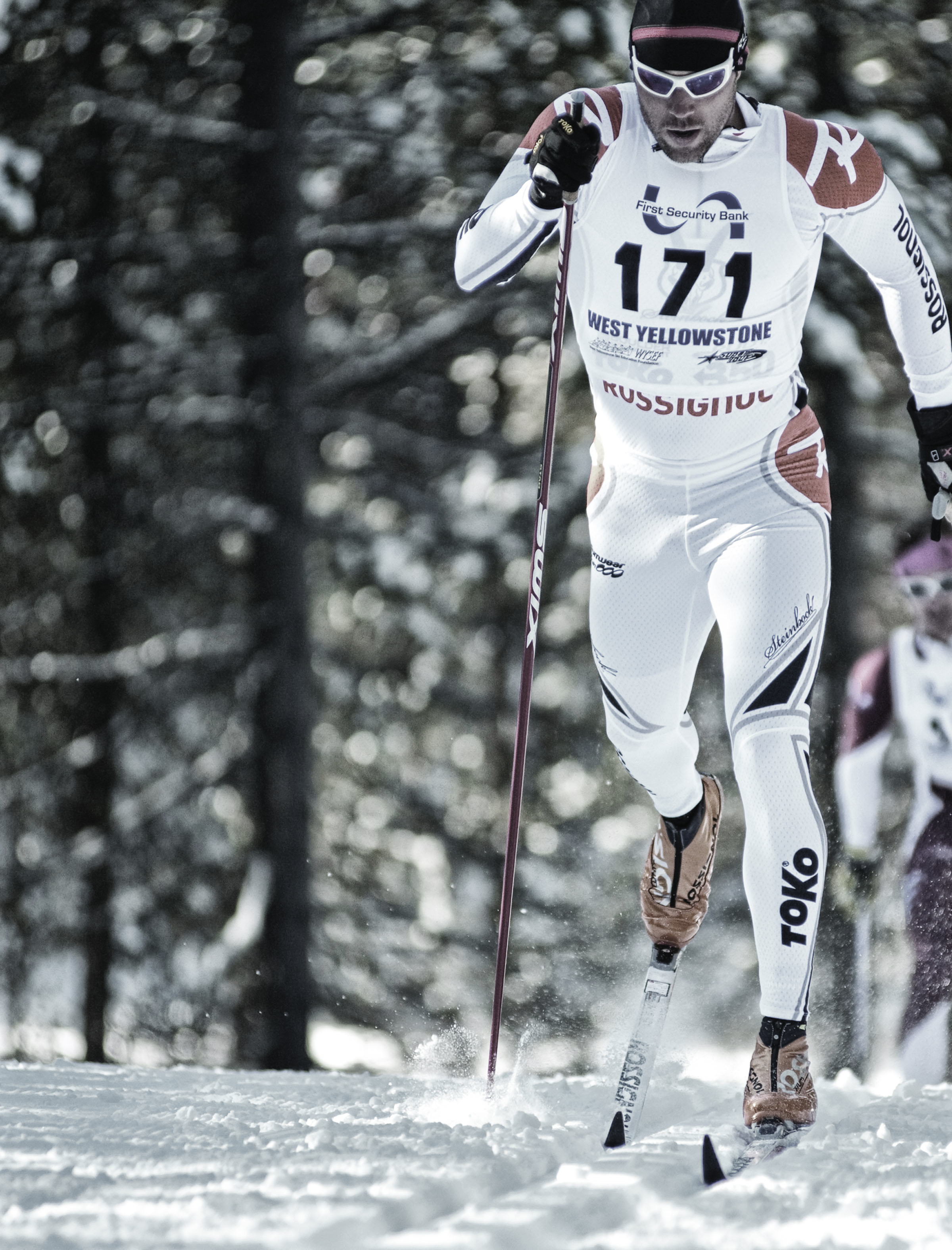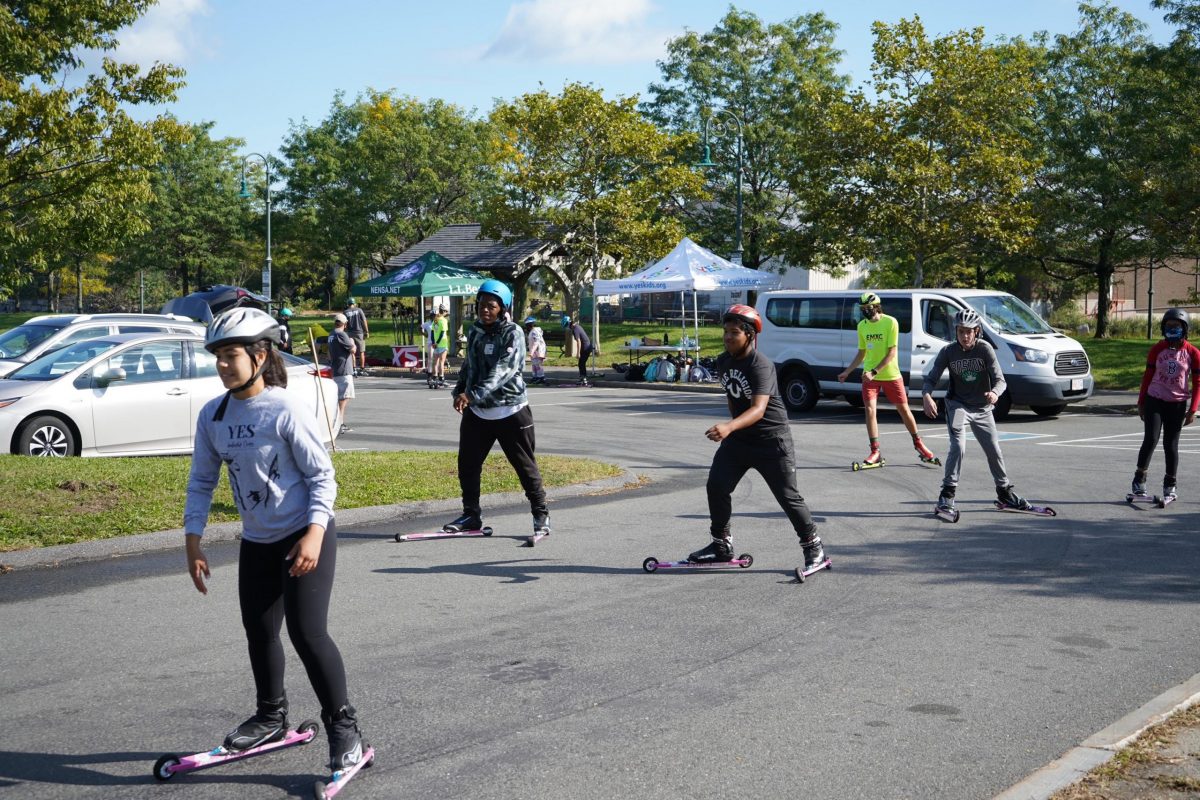
Perhaps the only downside of a love for cross country skiing is the general inability to slide on snow year-round, without significant travel. Consequently, those looking to keep the spirit (and specific strength) alive are bound to find themselves with a pair of wheels strapped to their feet during the snow-free months of the year. The frequency of this phenomenon exists on a spectrum.
For athletes training to race, rollerski sessions are an integral part of annual training volume. For some recreationalists, perhaps it’s a once-is-enough experience, and they part ways with rollerskiing, hopefully not having suffered too much of road-rash in the process. Regardless of level, most people who have tried rollerskiing can remember a time when things went wrong and ended with a skid on the pavement.
Learning to rollerski can be intimidating, particularly since the activity is fast-paced, takes place on an unforgiving surface, and lacks brakes. However, with time, tutelage, and practice, confidence and skill develop, and rollerskiing becomes significantly more enjoyable.

This past summer, the New England Nordic Ski Association (NENSA) piloted a “Learn to Rollerski” camp series. These camps were organized by Kait Miller, who joined NENSA full time as the Youth and Introductory Program Director in June of 2020. Many readers will recognize Miller’s name from her years of cross country ski racing with Craftsbury Green Racing Project, during which she earned a national title, raced in multiple international World Cups, and represented the USA at the 2018 Olympics in PyeongChang.
The next rollerski clinic takes place tomorrow, Saturday October 23rd, at Gould Academy in Bethel, ME. This event will take place alongside “The Maine Event” rollerski race, happening roughly an hour south at Pineland Farms in New Gloucester the next day.
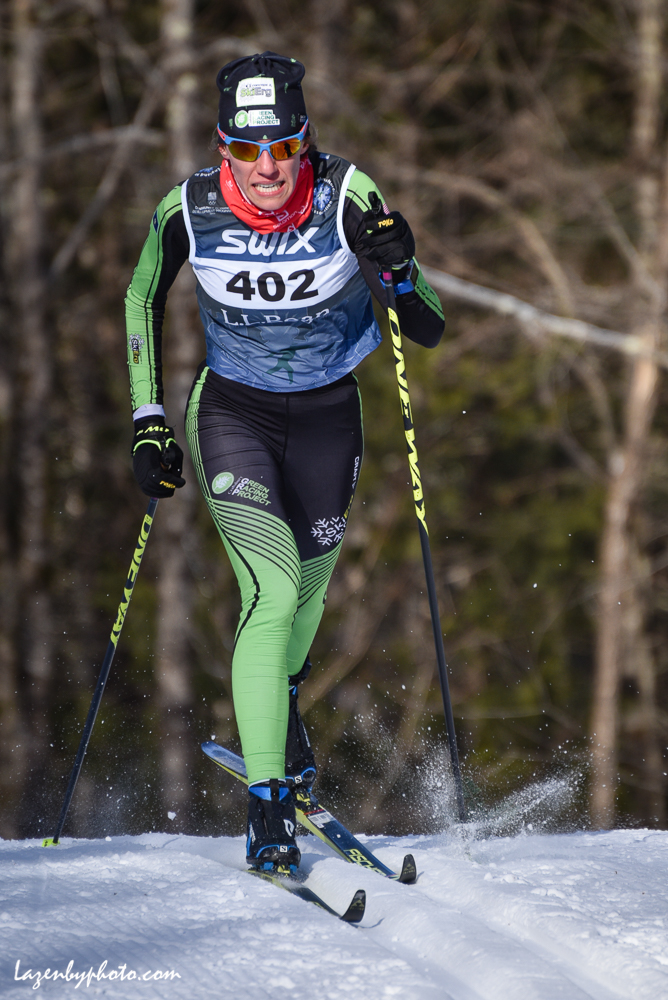
In addition to the “Learn to Rollerski” clinics, NENSA partnered with Youth Enrichment Services for Boston Kids (YES) to host a rollerski camp with participants coming from YES programs as opposed to a ski club or program. (Quick note: find a follow-up article highlighting YES and their work here). Faster Skier caught up with Miller to learn more about these clinics and where she sees the program heading in the future.

Faster Skier: What was the inspiration or motivation to start these “Learn to Rollerski” clinics this summer?
Kait Miller: Over the past few years NENSA has been growing and expanding into summer programming, initially starting with rollerski race events. Thanks to the work and dedication of Amie Smith (Executive Director), Justin Beckwith (Competitive Program Director), Preston Noon (Operations Manager) and our supportive sponsors, NENSA has the foundation and resources to not only grow our race offerings into a series but to also expand beyond competitive events. My position (Youth & Introductory Program Director) went full time in June of 2020 with the goal of putting more focus and resources into summer programming and NENSA recently expanded the role of TD Coordinator Fred Bailey to include event management. Greater staffing availability combined with increased focus on our mission to expand participation and access to the sport, and increased community interest in rollerskiing and skiing in general, lead to the Learn-to-Rollerski clinics.
Our goal with these clinics is not only to introduce current skiers to a dryland version of the winter sport they enjoy but also to use rollerskiing as a vehicle to introduce folks who’ve never skied before to the sport in a fun, welcoming, relaxed, and supportive environment. Rollerskiing can also be a really fun recreational activity in its own right and we aim to incorporate the bicycle bump ramps in almost all of our clinics. We looked a little like a traveling circus this summer with Justin’s truck loaded down with ramps and rollerski racks!
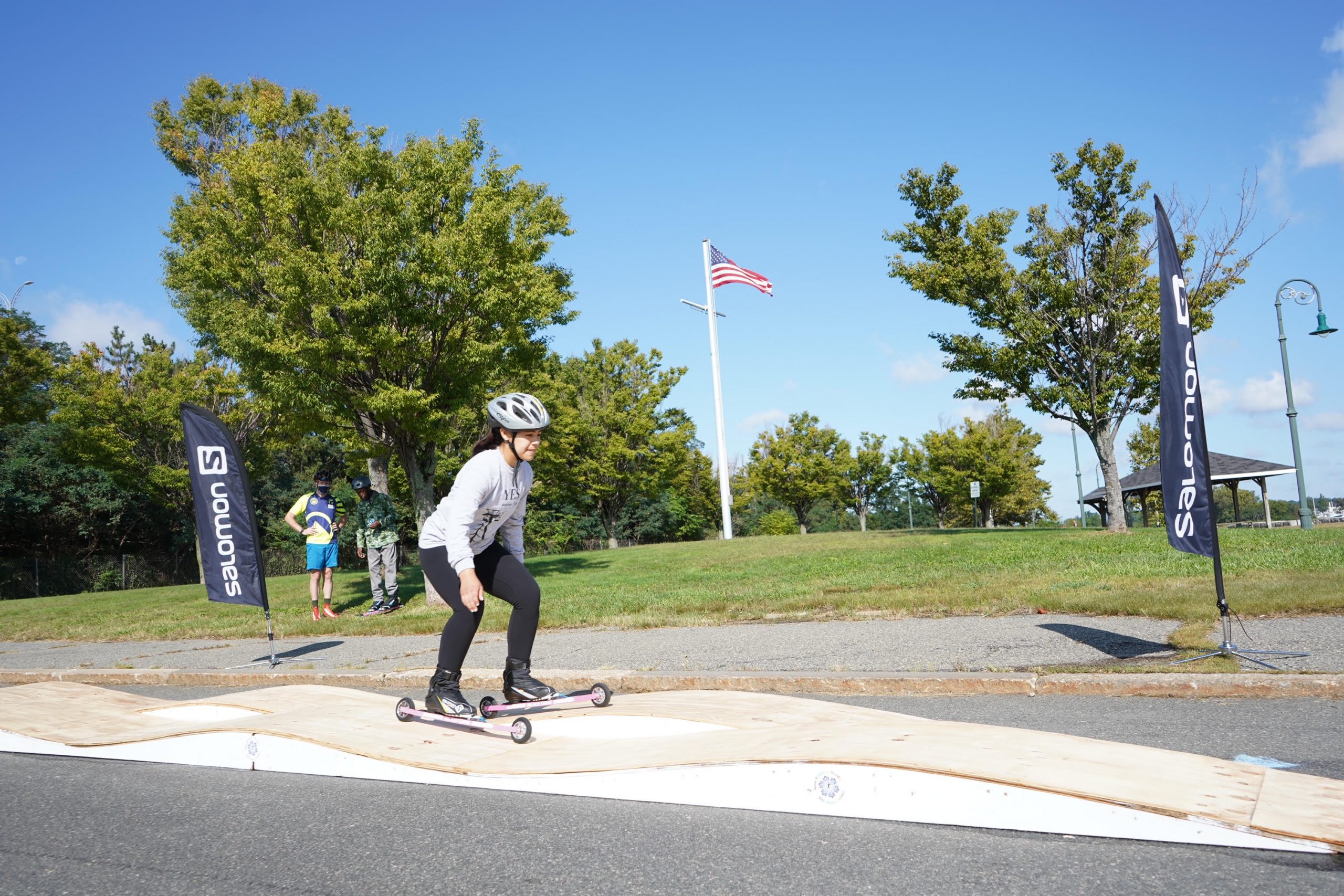
I’ll add that I’m not a proponent of young children doing much rollerskiing. However, a little bit of rollerskiing can be really fun and certainly helps build basic balance and agility skills and develop comfort with the sport.
FS: What was engagement like? Did you get a lot of interest and participation in these clinics?
KM: Participation varied depending on the event. We capped our very first clinic at 10 participants as a sort of a “test event” if you will, but our most recent clinic in Boston had 37 participants. The first clinic was for all ages and we had participants ranging in age from 10-70 while our most recent clinic focused on youth and teens. In addition to some stand-alone clinics and clinics paired with rollerski races, we also visited some ski camps this summer.
At the BKL level some of the campers had rollerski experience but not a significant amount so for many it was a true introduction to the activity. For those who’d rollerskied before, it was an opportunity to gain more comfort and confidence, and to play on the ramps. We keep a really strong emphasis on play with the goal of providing just enough instruction to ensure participants feel comfortable trying new things on their rollerskis without fear.

FS: This past winter saw a big increase in interest in cross-country skiing mainly driven by COVID and social distancing. Do you think this effect was felt at the youth level as well?
KM: Yes, we definitely did see an increased interest in cross country skiing. Many of the New England and New York BKL clubs saw record enrollment and some programs had to cap registration to stay within state gathering limit guidelines. We also had many more schools reaching out about our Nordic Rocks program which provides students at participating elementary schools with the opportunity to experience cross country skiing during the school day with their teachers and classmates.
FS: Describe the recent day in Boston in coordination with YES, had any of the participants ever rollerskied?
KM: The goal of the clinic was to introduce the Youth Enrichment Services (YES) program participants to rollersking, generate excitement for the upcoming winter season, and help strengthen the continuing relationship between the Eastern Mass Cross Country Ski Club (EMXC) and YES by connecting new folks in both programs. About half the YES participants had ski experience from previous YES Ski Program participation (and a few were quite experienced skiers) while the other half were brand new to the sport having never been on cross country skis, or rollerskis, before. A video recap of the camp can be found here.
We’re very grateful for all the work YES Youth Recreation Coordinator & Equipment Specialist, Elliot Simmons-Uvin, put into making this event happen. We’re also grateful to the YES staff and volunteers and the EMXC coaches and juniors who helped facilitate and instruct the clinic. And the event certainly wouldn’t have been possible without the fantastic parking lot at the Massachusetts Department of Conservation & Recreation’s Tenean Beach or all the boots and poles generously loaned to us by the Weston Ski Track.

FS: Does NENSA plan to continue partnering with YES to increase access to skiing?
KM: YES program participants have access to skiing twice a week at the Weston Ski Track so we really see NENSA’s role as building excitement and interest for those who might be new to the sport, providing some additional opportunities like the rollerski clinic with the agility ramps, and facilitating the connection between YES and EMXC. YES and EMXC have worked together for multiple years now but with athlete and liaison turnover, there were new EMXC members looking to volunteer with the YES ski program. Our shared goal is that interested YES program participants could join EMXC youth and junior programming.
As for NENSA’s partnership with YES going forward, we’ve already talked about hosting the clinic again next year and I’d also love to facilitate YES participation at the BKL Festival. I know my predecessor Amber Freeman worked with Elliot when the festival was last held at Weston. It will be much more of a challenge when the festival is not local (and this year it will be in Waterville, Maine) but I’d love to try and figure something out.
FS: The sport of Nordic skiing has a long way to go in terms of increasing diversity, equity and inclusion. Do you see these Learn-to-Ski clinics and/or this work with YES as helping to facilitate that?
KM: Our hope is that Learn-to-Ski clinics are at least a small step in the direction towards bringing more folks into the ski community and increasing diversity, equity, and inclusion in our sport. Change won’t happen overnight but by collaborating with other organizations and creating events and programs that welcome, actively empower, and support young people of all physical abilities, financial means, gender identifies, skin colors, and sexual orientations to learn and grow through the sport of cross country skiing, collectively we may be able to start chipping away at the problem.

FS: What are some goals you have moving forward as the Youth and Introductory Program director for NENSA?
KM: We’re currently in the process of a gear overhaul in the Nordic Rocks program but once that is finalized I hope to intentionally expand that program. Nordic Rocks is a school program funded by Share Winter that provides students at participating elementary schools with gear and the opportunity to try cross country skiing during the school day with their teachers and classmates. I feel that this is one of the most inclusive and equitable programs we run. In addition to expanding, we hope to facilitate more collaboration between local ski centers, Nordic Rocks programs, and local Bill Koch leagues so that schools can take field trips to local trail systems and so that youth who really like skiing have support to join a local league and/or attend the BKL Festival.