Tag: Community

  • The Pastimes App Builds Community in Outdoor Recreation with Ambassador Julia Kern

    The Pastimes App Builds Community in Outdoor Recreation with Ambassador Julia Kern

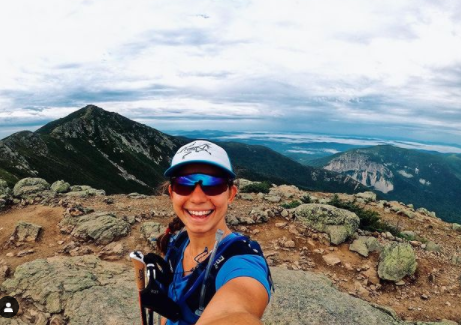
    Titled “my happy place”, Julia Kern shares a scene from atop the Franconia Ridge in Northern NH. (Photo: Instagram @juliakernski)

    If you follow Julia Kern on social media or her blog, you have probably gotten the sense that outdoor recreation is more than just part of her job as a professional cross country skier. A quick scroll highlights a multitude of activities that extend far beyond rollerskiing and World Cup travel. Kern seems to do it all: open water swimming, backcountry skiing, paddle boarding, camping, trail running, rock climbing, and mountain biking. And always with an inviting and contagious grin across her face. 

    This November, Kern shared that she has been assisting from behind the scenes with the launch of a new networking app for outdoor enthusiasts like herself, called Pastimes. In addition to contributing to its evolution, Kern is also a Pastimes athlete ambassador. 

    In a nutshell, the platform is designed to facilitate getting out in the outdoors with friends, new or old. Want some company on your long ski this weekend? Post it to the app to connect with others of similar ability levels. Moved to a new town and want to find some new adventure partners? Here’s your chance. Eyeing a new route but want some company to help you stay on course and safe? Find out who else might be heading that way. 

    “Do what you love.
    Share your Pastimes.” (Photo: Pastimes.io)

    To learn more about the Pastimes App and Kerns role in the design process, FasterSkier reached out with a few questions to which she responded via email. You can find additional information on the Pastimes website and Instagram page, or try it out by downloading from the App Store or Google Play for android. 


    FasterSkier: Tell me about the origins of Pastimes. What was your role in the creation and design process?

    Kern: Phil Belena (a cross country skier, fan, and a former digital consultant for Craftsbury Outdoor Center) reached out to me in August for user testing on their prototype. I have always been passionate about adventuring in the outdoors, so  I was really excited to hear about the app and to give feedback. I also have a background in design work and worked for the DALI Lab at Dartmouth this fall as a designer so I wanted to help in any way I could, using both my passion for the outdoors and my design skills to give productive feedback. After rounds of user testing and exchanging ideas with Phil, I wanted to become more involved because I thought the app had a lot of potential (exactly the type of app I have been wanting) and Pastimes was looking to build an ambassador network so they brought me on board.

    The idea for Pastimes came about amongst the founders who are passionate about community building and outdoor activities. On the whiteboard at the climbing gym they all climb at, they noticed people would write down their phone numbers so they could find climbing partners. This was a need that wasn’t specific to just climbing, but to the greater area as a whole. The Salt Lake City area is concentrated with people who love getting outside for adventures, yet when people move somewhere new, they find it very difficult to break into that community. 
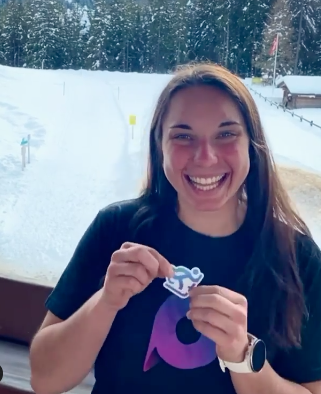
    Julia Kern is an athlete ambassador for the Pastimes App in addition to providing feedback in its design process. (Photo: Instagram @juliakernski)

    Forest Good, the Co-Founder and CEO of Pastimes moved to Salt Lake City about 6 years ago and found himself wanting to get into outdoor activities for the first time. He moved to Salt Lake as part of an acquisition of a company he co-founded called HackHands (acquired by Pluralsight in 2015). It was an online technology mentoring platform for computer programmers and coders. After successfully leveraging technology to connect a community of programmers, he saw an opportunity to connect people who share a passion for the outdoors. Co-founder and friend Rod Liberal shared his vision for how a dedicated app for finding outdoor partners could not only help people do the activities they love more, but make new connections and friendships.

    The process for developing Pastimes evolved over the summer as we conducted interviews with potential users. We interviewed an extensive amount of potential users to understand what features would resonate. These initial interviews drove our feature set and helped guide our design and engineering. Once the app was in a prototype state, we went back to confirm that the features actually worked for this user group. This iterative process continues as Pastimes evolves. We use analytics to understand how our customers use the App, continually improving the user experience to align with their use.

    How has the launch gone so far? Has the pandemic posed any hurdles in terms of creating something that fosters meet-ups and connecting with others?

    The launch has gone well so far. We learned a lot from the initial launch, gathering a lot of user feedback for future updates. We just launched a big update with features that make it easier to connect with others in your local area. These include messaging and profile enhancements, along with the ability to make your availability for an activity discoverable and match with others in your local area. We have a lot more updates rolling out soon! What I love about working with the people working at Pastimes is that they are always looking for ways to improve and love to hear people’s feedback. They want the app to evolve based on the user’s needs, taking a human-centered design approach.

    When Covid hit, it made the founders rethink their idea. They questioned whether a social app would be used by people to meet up during a pandemic, but then the outdoor industry exploded. Every single bike sold out, people were outside going on daily walks, hikes, and bike rides more than ever, finding ways to socially connect with people in a safe, socially distanced way. Getting outside became people’s only way to connect with people in person. Instead of the pandemic being the end to the idea, they designed Pastimes to thrive during this time. The app is designed to create smaller group size events for those doing an activity, removing any worry of having to reject others or manage the bulk coordination of large group events. Users can set party size limits so they have control over the group size. That being said, it is still extremely difficult to build a community, it takes time, especially in a time like right now. Our top priority is for people to stay safe and healthy, and to follow local guidelines so the pandemic has slowed the launch a little bit.

    What are your goals for the app?

    I have always felt there are so many incredible people out there who love to do the same things I like to do, but it is hard to connect with those people. I have randomly met new people out on the trails or in the mountains, but even then, it is hard to reconnect with them again. My goals for the app are to fill this big need I see in the outdoor community, helping people connect over shared passions in a non-exclusive, efficient, and easy way. I hope it not only connects people who already are into outdoors activities, but also to the people who are new to it and don’t know where or how to begin. I have found myself most happy playing in the mountains with people and I want everyone to be able to have access and to able to be experience that feeling. I also think this app could foster mentorship within sports that require a lot of technical knowledge such as climbing. A lot of sports have a steep barrier to entry, whether it is gear or experience, so finding people to link up with to either learn from or mentor is an incredible thing and is one of my goals for the app.
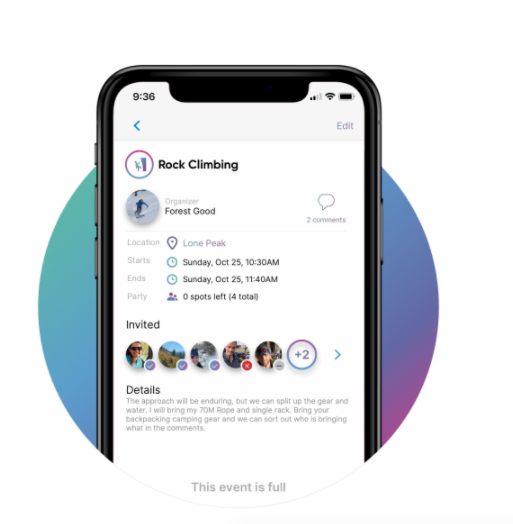
    Pastimes helps connect users with adventure partners and activities to make it easier to get out and play outside. (Photo: Pastimes.io)

    What excites you most about the app and concept? Do you envision yourself posting skis/rides/runs while you’re in the Northeast during the off-season? How does this fit into your training?

    I am really excited to meet new people who share the same passions as me, I am always looking for new adventure buddies! We all have such busy schedules so I really like the matching features, which connect you with people who have a similar availability level, making it easy to coordinate schedules and connect with people in the real world.

    I will definitely be using the app when I home in the off-season! Last year when Covid hit, this was exactly the app I was needing in my life. I would skin up a downhill area or mountain bike alone every day, and it wasn’t until I made a new friend skinning by coincidence and luck one day, that I had a partner to go into the backcountry with. I want to get out and ski, ride, climb and hike with people this spring.

    Since I have been injured a lot over the years, I have had to modify my training plan to what I can do, which often results in training alone. This summer and fall I did a lot of mountain biking so I would link up with friends if they were around to ride. I see myself using the app on cross-training days to connect with friends or meet new people. This summer I was even using dating apps to find people to mountain bike with in a socially distanced way, which isn’t the actual goal of dating apps, but there was nothing out there that could help me discover people in my area to do things with so it was the next best thing. I know many people who use dating/friend apps to find people to do outdoor activities with, highlighting the need that is out there for Pastimes.

    What else do you want people to know about Pastimes?

    I have been in charge of building an ambassador community of people who are passionate about sharing their love for the outdoors with people. It has been really fun to meet incredible people who want to share Pastimes with others and help grow the app user base.
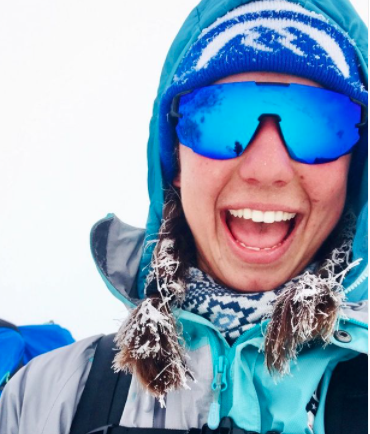
    Julia Kern snaps a selfie while backcountry skiing on Mount Mansfield in Vermont. (Photo: Instagram @juliakernski)

    I think Pastimes can be a great tool for the cross country skiing community. The ski community is filled with people who are passionate about being active outside and value community. Whether it is coordinating your family’s schedule with another family for your kids to go skiing together, or if you are looking for a training buddy for skiing, running, biking, etc., Pastimes can help you connect with others!

    For example, there is a group of people who have been connecting in NYC for group rollerskis on the app. This group is Manhattan Nordic, a mix of elite Master Skiers, serious recreational skiers and curious newcomers who are interested in skiing on one of the most famous roller ski loops in the world – Central Park. The community and discoverability aspect of the Pastimes events has led to an increase in rollerskiers taking advantage of the training and welcoming ski community.
     

  • Gay Junior and College Skiers Face a Community of Acceptance and Solitude

    Gay Junior and College Skiers Face a Community of Acceptance and Solitude

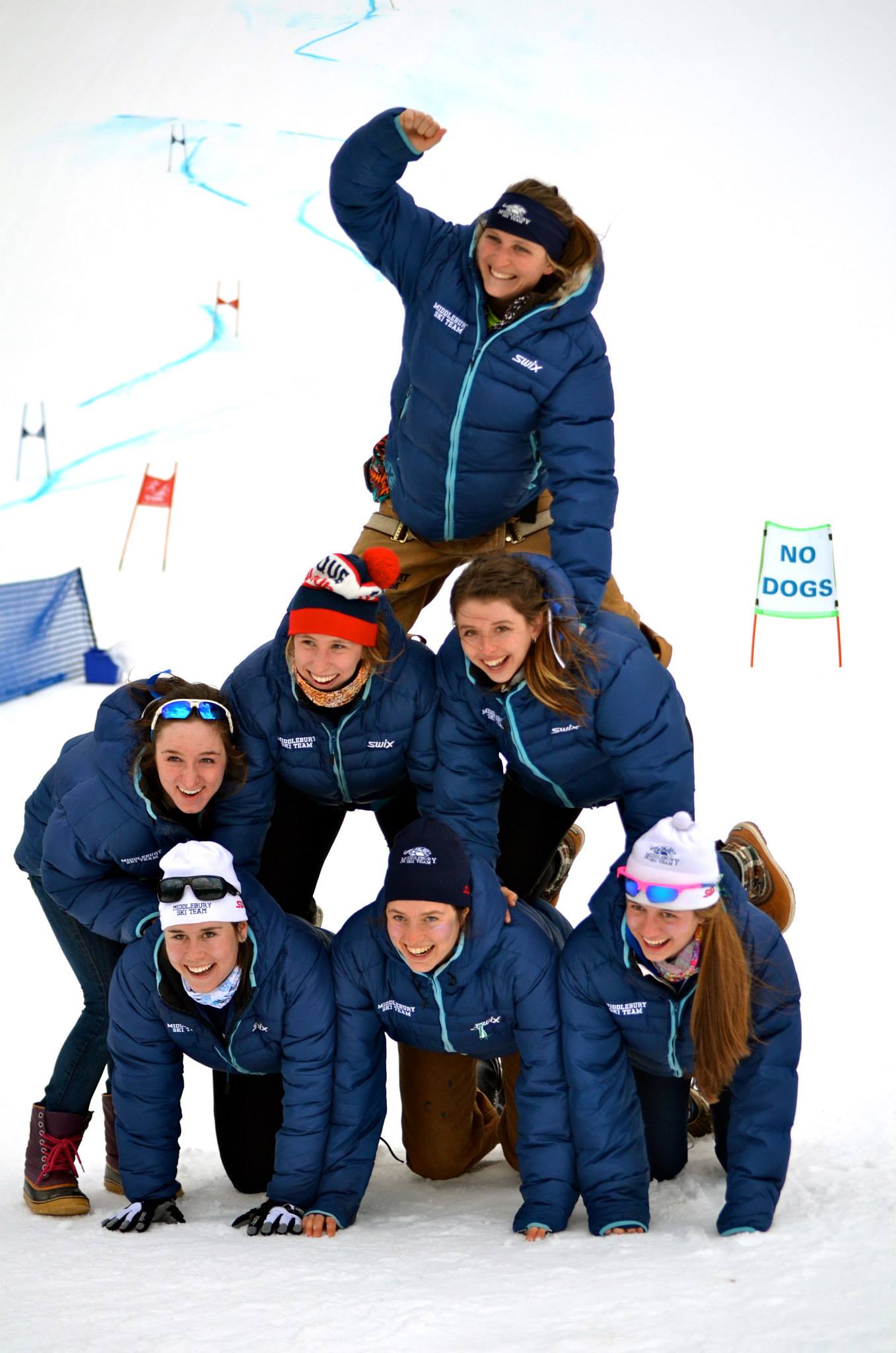
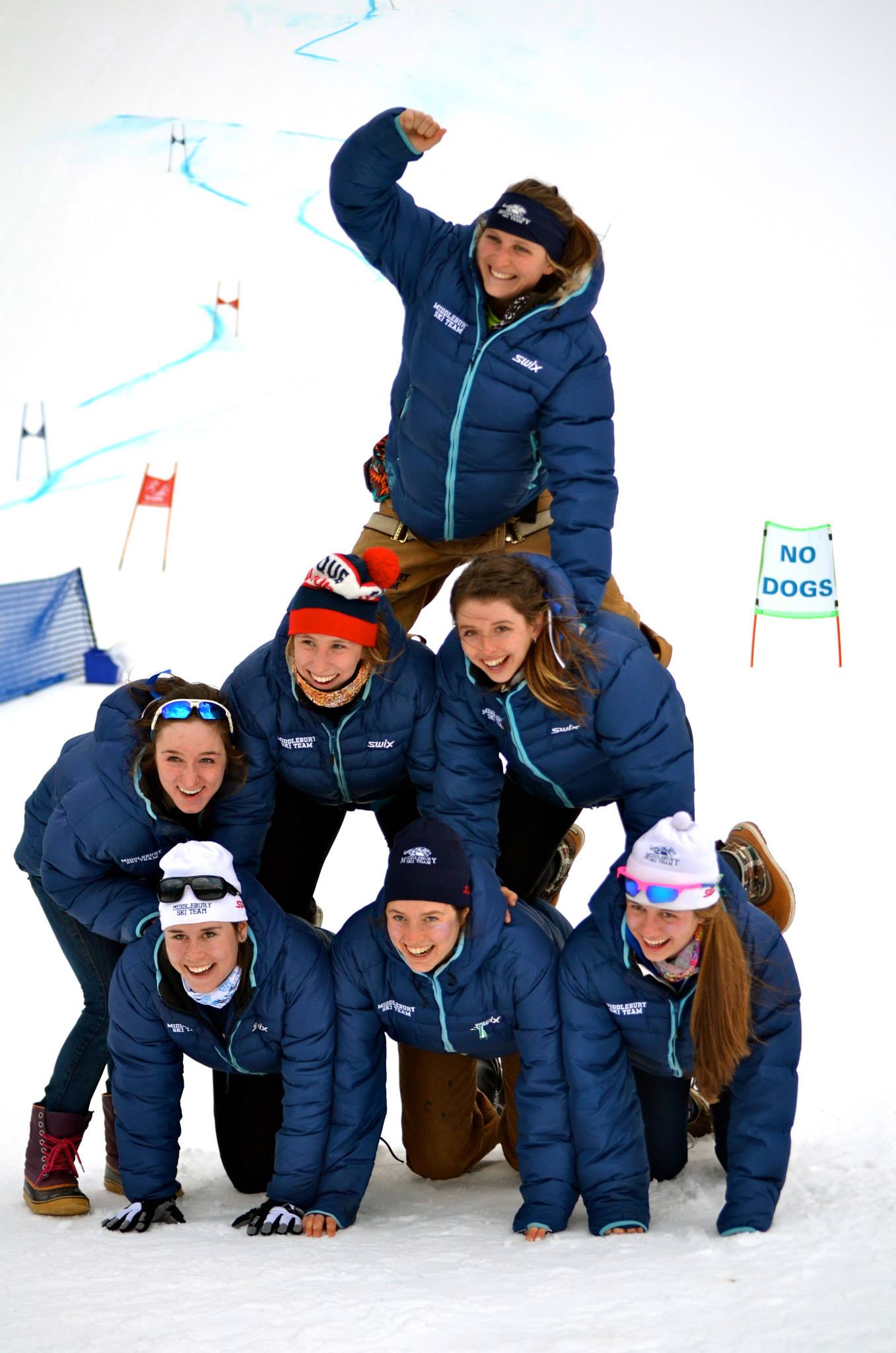
    Emily Attwood celebrates her final college ski race atop a pyramid of her Middbury College teammates. (Photo: Stella Holt)
    Emily Attwood celebrates her final college ski race atop a pyramid of her Middbury College teammates in February of 2014. (Photo: Stella Holt)

    Editor’s note: Growing up as a gay male in the ski community, I always wondered what the experience was like for other junior and college-aged LGBT skiers like myself. The opportunity arose for me this summer when FasterSkier’s editor-at-large, Chelsea Little, published an interview with 2006 Olympic biathlete Brian Olsen. The interview sparked my exploration into the many positives and some of the challenges that arise as a young, gay athlete in the skiing world. Hearing these individuals’ personal accounts has been very inspiring and educating and it is my hope that you, the reader, will be able to appreciate and relate, whatever your experiences may be.    

    Jack Nelson came out as gay to his Williams College teammates in 2005. Not only did his openness create a strong team environment, but Nelson also had the best season of his college career. (Photo: Jack Nelson)
    Jack Nelson came out as gay to his Williams College teammates in 2005. Not only did his openness create a strong team environment, but Nelson also had the best season of his college career. (Photo: Jack Nelson)

    Jack Nelson was a sophomore at Williams College when he realized he was gay. The Hanover, N.H. native struggled with the internal realization, but when he accepted that he was attracted to men there was never a question as to whether he would tell his family-like team.

    So when the Williams’ skiers gathered for New Year’s dinner while at a training camp in Quebec, Nelson made an announcement to the team: he was gay.

    Nelson was met with both admiration and support from his teammates. Head coach Bud Fisher gave Nelson a big hug and his teammates offered him congratulations on his bravery and honesty.

    In the weeks following, Nelson said the bond with his teammates only grew stronger and being gay became a non-issue as his teammates and friends saw him as a well-rounded person rather than a gay male.

    Armed with newfound confidence from both his self-acceptance and the welcoming nature of his teammates, Nelson skied to his best season in his four years at the New England college.

    “That was the best ski season I had at Williams. I was just so much more relaxed and comfortable with who I was,” he said.

    An Accepting Community

    Experiences similar to Nelson’s can be found scattered throughout the nordic community. Given the close family-like bonds often developed during the hundreds of hours of training, it’s not surprising that nordic skiers are supportive of their teammates, whatever their identity may be.

    Bridger Ski Foundation coach and former Harvard skier Tanner Wiegand knew he was gay at the age of 13 and came out to his team when he was a sophomore in high school. Like Nelson, his peers were incredibly supportive.

    Wiegand found that the encouraging environment of his ski community gave him the extra confidence needed to discover who he truly was.

    “Being gay in the ski world didn’t scare me like it did in other spheres of my life,” he explained.

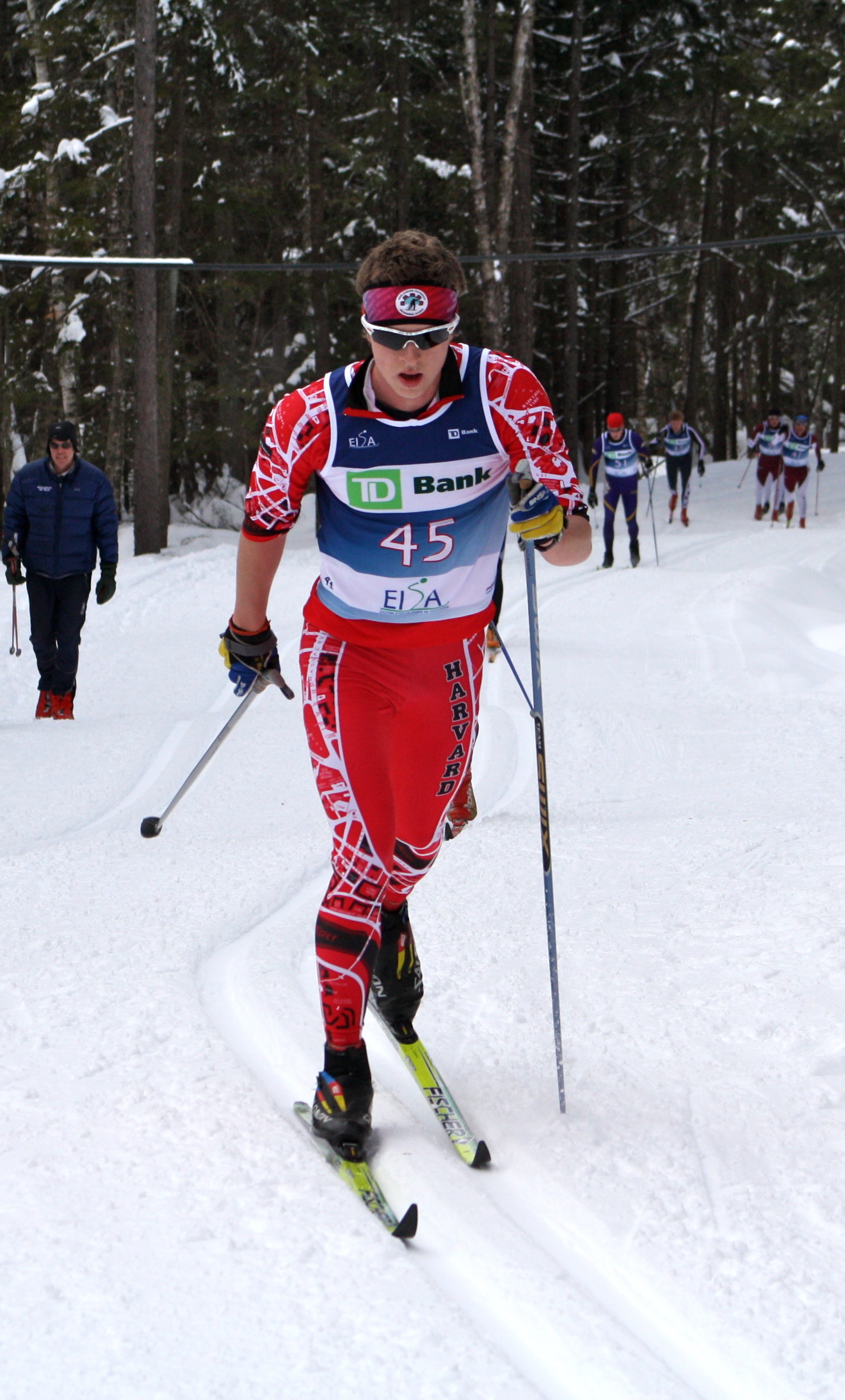
    Tanner Wiegand, a 2014 graduate of Harvard University, races in an EISA college carnival in this undated photo. (Photo: Tanner Wiegand)
    Tanner Wiegand, a 2014 graduate of Harvard University, races in an EISA college carnival in this undated photo. (Photo: Tanner Wiegand)

    Wiegand believes that there were several reasons behind his self-assurance in the ski community, including the co-ed nature of the sport and the tendency of nordic skiers to be more liberal and educated.

    University of Utah alumnus and 2003 NCAA Champion Ryan Quinn has another theory to add. He believes that most endurance sports share the same sense of acceptance.

    “I think the culture of individual endurance sports (skiing, running, triathlon, etc.) lends itself to individuality and acceptance of differences. Those sports attract the kind of people who tend to be introspective and independent,” he said.

    The Alaska-native came out to his team in 2005 and is also author of the acclaimed coming of age book, The Fall. He said that while coming out was a difficult process, it was easier to do so in the college skiing community because of its size and modest visibility.

    “There’s not a lot of media attention; there’s no money at stake. So it’s a less complicated environment to come out in than say on an SEC football team,” he said.

    Emily Attwood, a recent graduate from Middlebury College, had little difficulty being gay in the ski community. However, at a LGBT awareness meeting for the athletic department at the small Vermont school she began to realize that her experience as a nordic skier and cross-country runner was unique.

    “It was interesting to hear the commentary from other sports. I think that we’re lucky in the culture of skiing, because the people are so open,” she said. “It’s not that other sports aren’t like that, but someone on a lacrosse or hockey team has a lot more difficulty coming out in that environment.”

    The Challenges of Being a LGBT Athlete

    When Kate came out to her college team they were nothing but supportive. Both her friends and fellow skiers were intrigued by what it meant to be a lesbian and while it was sometimes annoying, they showed their support by incessantly asking about the love-life for the newly-out skier.

    However, when Kate – who wished to use a false name – sat down with her coach during one of their regular meetings, she was confronted by something that she would never forget.

    Sitting across from her coach, Kate was told that she was drawing too much attention to her sexuality and making the team uncomfortable.

    Kate, whose nature was to be exceptionally friendly and embracing, had no idea what her coach was talking about: she had never done or said anything inappropriate and her teammates had been anything but uncomfortable about her sexuality.

    The assumption of the coach that she was somehow acting inappropriately because she was around a team of fellow women was extremely hurtful to Kate, both in terms of her relationship with the team and her self-esteem.

    However, after investigating the situation further the coach soon realized the mistake and apologized to Kate for the way that she was treated.

    Kate believes that the coach never meant to single her out because of her sexuality, but due to a lack of education and experience regarding such delicate situations, it was handled in the worst possible way.

    Both Kate and the coach were able to treat the incident as a learning experience and move on. Today, the two are very close and are still in constant communication.

    While an experience such as Kate’s is a rare occurrence in skiing, it demonstrates that difficulties are still present for LGBT athletes in endurance sports.

    One of nordic skiing’s attributes that can make acceptance second-nature is often the sport’s greatest challenge: its small size.

    Ryan Quinn, a 2003 NCAA Champion who skied for the University of Utah, believes that one of the biggest barriers for gay athletes is awareness. (Photo: Ryan Quinn)
    Ryan Quinn, a 2003 NCAA Champion who skied for the University of Utah, believes that one of the biggest barriers for gay athletes is awareness. (Photo: Ryan Quinn)

    Gay nordic skiers can feel as if they are the only LGBT person in the community. Given that nordic skiing is frequently a central part of an athlete’s social life, the absence of others with the same identity can be solitary.

    For an athlete who is thinking about coming out, this isolation can often be a hindrance in the process.

    “I think the biggest barrier still is awareness,” said Quinn. “Most straight people continue to just assume that everyone else around them is straight. And for a closeted athlete wrestling with the unknown of coming out, that can be interpreted as intolerance when in fact it’s just oblivion.”

    Quinn said that such an interpretation coupled with a fear of the unknown caused him great anxiety before he told his teammates.

    “When you’re in the closet facing the unknown, your mind really goes to the worst possible scenario more often than not,” he said. “So I was scared and nervous and wasn’t able to form any rational expectation.”

    While his coming out was a positive experience, Quinn said that he guessed many in the community went through a similar fear.

    The size of the community can be equally challenging once a gay skier is open with his or her sexuality.

    During his experience as a junior, Wiegand felt excluded due to his sexuality on certain occasions. It was unintentional but the contrast was stark: his straight friends were free to be themselves and act on any adolescent urges they experienced, while Wiegand didn’t always have the opportunity to participate in his straight friends youthful bliss.

    “Certain rites of passage were closed to me growing up gay in the ski world. Junior Nationals’ dances were never more than a chance to dance with my girl friends. I didn’t get to hold hands with someone special on long van rides, nor was I kissed for the first time at West [Yellowstone] Camp,” he explained. “These experiences and explorations of sexuality that were open to my teammates were inaccessible to me not because I feared recourse for engaging in them, but because I swam nearly alone in a very small pond.”

    A New Era 

    Nelson looks back on his college experience as one of the best times of his life and he still remains in touch with many of the teammates he came out to at the New Year’s dinner many years ago.

    With the changing atmosphere in the United States in regards to acceptance of LGBT individuals, Nelson thinks that it will become easier for nordic skiers to accept who they are and share their identity with their teammates.

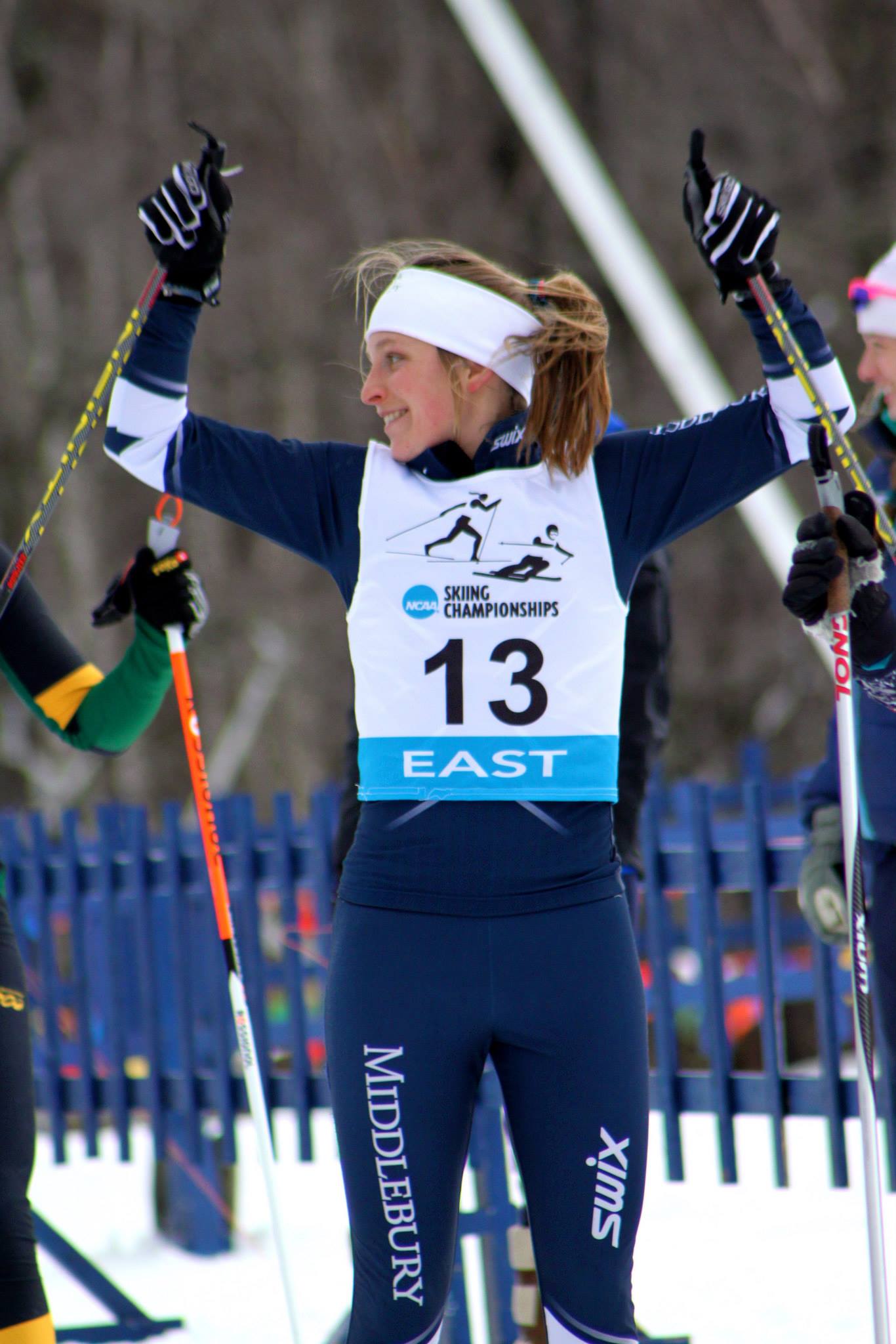
    Emily Attwood celebrates after crossing the finish line at the 2014 EISA Championships in Ripton, Vermont. (Photo: Stella Holt)
    Emily Attwood celebrates after crossing the finish line at the 2014 EISA Championships in Ripton, Vermont. (Photo: Stella Holt)

    “The acceptance of LGBT people, especially in athletics, has changed so quickly. It’s shocking,” he said. “All it takes is for someone’s friend or family member to come out and that changes their outlook. I’ve seen that happen in a lot of different segments in society, including sports so I think the situation now is improving.

    Quinn agreed, stressing that responsibility falls equally on gay athletes and their straight counterparts to make sure that they’re creating a welcoming environment for fellow LGBT athletes.

    “I think gay athletes have the responsibility to be true to themselves and come out, which is the single best way to counter homophobic stereotypes,” he said. “But their straight teammates, coaches, and friends also have a responsibility to foresee that not everyone is just like them and to create an environment that projects acceptance and individuality rather than take it for granted.”

    Attwood believes that being gay is on its way to becoming a non-issue in the sport.

    “Being gay is just like being anything else, and it takes time for acceptance,” she said. “There are identity issues for everyone, and coming out is one of those issues. Having conversations and unraveling people’s experiences is the only way to initiate more acceptance and make it a more encompassing community.”

    While challenges of misunderstanding may be a reality for LGBT skiers both now and in the future, it is apparent that the nordic ski community is well on its way to creating an embracing and tolerant environment. The small numbers and lack of diversity may be speed bumps on the road to complete ease for LGBT skiers, but it is evident that this tight knit community has the ability to overcome its downfalls and ensure that anyone, regardless of their identity, has a place on the trails.

  • August BKL Camp – Success!

    Last week was the second week-long BKL camp of the summer, and I’m happy to announce we escaped without any casualties. In fact, one of the rollerski groups completed their session without any bloodshed! — a landmark accomplishment. Add to that the good weather, enthusiastic campers, and fun activities, and you can imagine that we all finished the week tired but happy.

    Throughout the week, GRP skiers and rowers, coaches from the Center, and other Craftsbury athletes led about 20 BKL-ers on half-day sporting adventures. Like the first camp back in July, the first four days included mountain biking, canoeing, biathlon, soccer & games, bounding & agility, sculling, and rollerskiing. There was also lots of swimming, multiple times a day in fact. Pretty astonishing how much entertainment kids can draw from jumping off the dock into the lake.

    I helped out with a few different sessions myself, including one rollerski morning where I got a glimpse of the East’s next wave of skiing talent! Some of those little rippers ride a better gliding ski than me, I swear. I also worked with Jeremy Nellis to do a morning of agility exercises.

    Bounding exercises on the Upper Soccer Field. Photo: Gordon Vermeer

    Bounding exercises on the Upper Soccer Field. Photo: Gordon Vermeer

    The ladder hones agility, coordination, and speed. Photo: Gordon Vermeer

    The ladder hones agility, coordination, and speed. Photo: Gordon Vermeer

    The full photo album from that morning is posted on the GRP’s facebook page.

    Friday, in a sort of culminating adventure, Dylan and Nils organized a multi-stage adventure race where the campers got to run around the Center doing all sorts of crazy things. It started off pretty tame with a swimming portion and a team log carry, but things started to get exciting when they reached the log bridge — attempting to walk across “Frog Pond” on a bridge of logs tethered to shore and to one another. It was extremely popular, so I imagine the log bridge will feature in future BKL camps. I tried the log bridge myself and fell in the swampy pond shortly after everyone started chanting “fall! fall! fall!” at me.

    Rivaling the log bridge in popularity was the tire roll, where teams got to (safely, I assure you) roll tractor tires down a big hill. “Wait, we actually get to roll it down there?!” they exclaimed when instructed to do so.

    I filmed the whole morning! There’s a highlight video of the race online — lots of good footage of falls into the swamp.

    We capped off the week with a bike trip to the Dreissigacker’s camp and an afternoon of pizza-making and rope-swinging. Judy Geer took a bunch of pictures including the ones below, but check out the whole album here.

    Watermelon and pizza with dough from the Center's kitchen. What more could you want? Photo: Judy Geer

    Watermelon and pizza with dough from the Center's kitchen. What more could you want? Photo: Judy Geer

    One of countless trips out over Hosmer. Photo: Judy Geer

    One of countless trips out over Hosmer. Photo: Judy Geer

    I look forward to seeing all these BKL athletes tearing up the trails this winter!