Tag: Compartment Syndrome

  • Treating Compartment Syndrome Without Surgery: One Skier’s Season

    Treating Compartment Syndrome Without Surgery: One Skier’s Season

    Author’s note: From the PT: a Look at Chronic Exertional Compartment Syndrome is a good introduction to the current article and includes a more detailed description of the anatomy, pathophysiology, and associated research. Since it was published on FasterSkier in 2022, that article has served as a resource for the Nordic skiing community, and I have fielded multiple requests for guidance from skiers around the world with CECS. In that article, I suggested that conservative treatment has potential; however, I was still more optimistic about surgical intervention based on the available research. The published research hasn’t changed, but my experience has, and now I’d like to make the case for non-surgical treatment of CECS. As with any medical information found on the internet, this article should be taken as the opinion of the author and not a replacement for direct consultation with a medical provider.
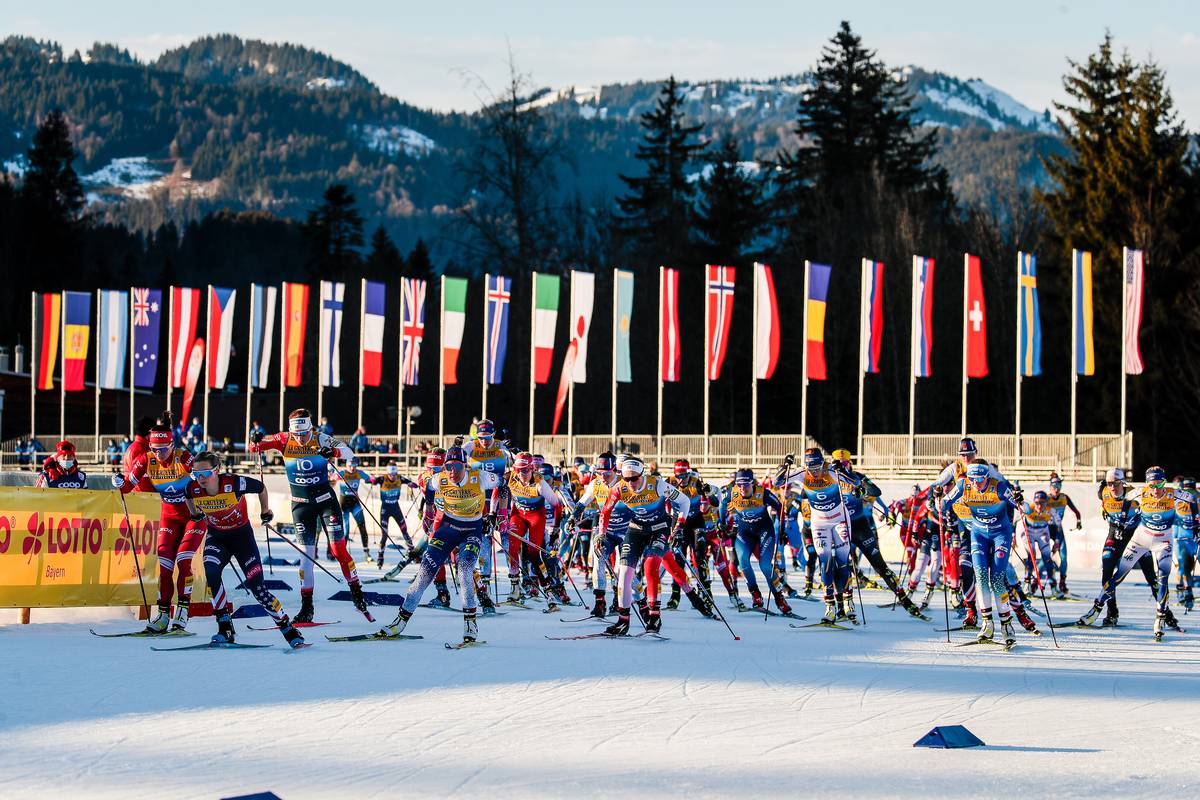
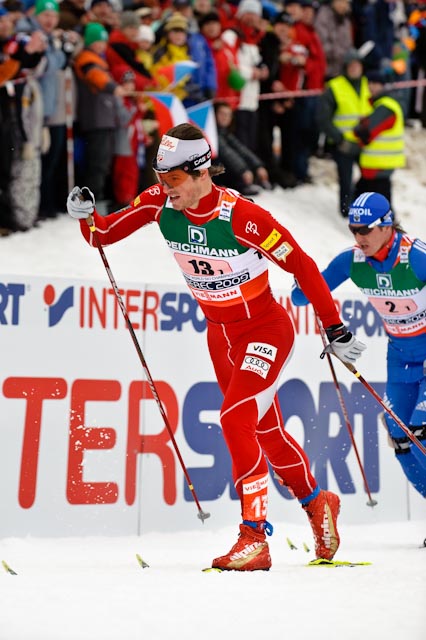
    The start of the women’s 10-kilometer mass start free during Stage 3 of the 2021/22 Tour de Ski in Oberstdorf, Germany. (Photo: NordicFocus)

    The primary symptoms of Chronic Exertional Compartment Syndrome (CECS) include pain, weakness, and/or numbness that only occurs with exertion. These characteristics are fairly distinct, although there can be enough overlap with other soft tissue disorders, namely tendinopathies, that CECS remains a diagnosis of exclusion when everything else has been ruled out. In Nordic skiers, symptoms affect the anterior, lateral, and/or posterior compartments of the lower legs and are most common with (often exclusive to) skating. Typically, or at least initially, these skiers will be symptomatic with high-intensity skating, but will be asymptomatic with classic skiing and running even at the same intensity.

    The physiology is relatively straightforward: our muscles are wrapped in a thin layer of connective tissue called fascia. As muscles repeatedly contract, especially at high intensities, they become enlarged; however, fascia is not elastic and does not stretch. If the muscle size exceeds the volume of the fascial compartment, blood flow is constricted, oxygen delivery is decreased, and the muscle gets strangled. This hypoxia in the muscle triggers a pain response, which is usually a good defense mechanism to make us stop doing something that the body perceives as harmful.

    The why is far more complex: some theorize that the fascia is just wrapped too tightly. Others suspect that the muscles are too big for the fascia. In either case, the common solution is a surgical fasciotomy where an incision is made in the fascia to increase the size of the compartment and decrease its stranglehold on the muscle.

    The why with skiing is even more complex. With CECS occurring with skate vs. classic, the initial theories centered around the ski retrieval phase. This makes sense with the work being done by the tibialis anterior muscle, which dorsiflexes the ankle while the ski is brought back to its glide phase position. Except that CECS can affect other lower leg muscles/fascial compartments which would not be active during the retrieval phase. Arguably the biggest difference between skate and classic techniques, at least as far as the muscles of the lower leg are concerned, is the stability demand of balancing on the gliding ski: the muscles must work much harder with skating.

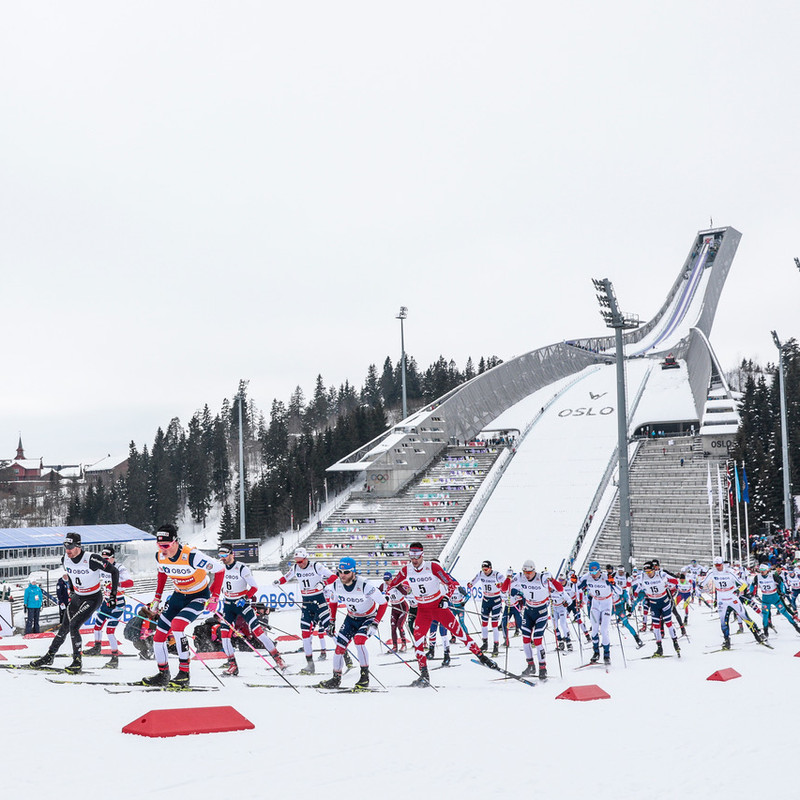
    A dense field of men’s skiers during Saturday’s 15 k mass start classic in Falun, Sweden. (Photo: NordicFocus)

    A case study

    The patient in our story is an 18-year-old male skier. He is a very competitive skier regionally and would have qualified for Junior Nationals had his skate races not been disrupted by leg pain. We had our initial physical therapy visit in mid-January, mid-race season. He reported pain, progressing to numbness, in both shins, which only occurred during high-intensity skate skiing. Symptoms were first noticed the previous winter during a skate race in icy conditions, but he didn’t have any additional episodes for the remainder of that season or during the summer. In October, however, symptoms returned during a skate interval session, persisted with any high-intensity skating, and got progressively worse through the race season. He was unable to finish his last skate race due to severe pain.

    In physical therapy exams and diagnostics, we are keen on reproducing patients’ symptoms. If we can do this in specific ways, we can begin to rule in or rule out anatomical structures which may be involved. For better or worse, I was unable to reproduce the patient’s symptoms in the clinic. This would likely rule out a muscle strain or tendinopathy, both of which tend to be painful with resisted tests (assuming we can make the tests both hard enough and specific enough). Differential diagnosis still included lumbar radiculopathy (nerve irritation at the spine leading to symptoms in the leg) or a bone stress injury (a.k.a. stress fracture), but neither of these fit the picture of symptoms being exclusive to high-intensity skating and absent at rest or especially with other modes of exercise. The symptoms really fit the pattern of CECS. To confirm, the gold-standard diagnostic would be compartment pressure testing; however, this testing is quite painful, fairly inconvenient (unless you have a rollerski treadmill in the clinic), and primarily aimed at determining if the patient is a candidate for surgery. Since this patient was looking to salvage his race season and avoid, or at least delay, surgery, we opted to skip the pressure testing but assumed that he was dealing with CECS.

    The remainder of the physical exam focused on ski technique, or at least the static components we could observe in the clinic: hip strength (fair), balance (compensated with lateral trunk lean), ankle dorsiflexion range of motion (appropriate), and foot stability (notable flexibility and forefoot varus). These findings were significant enough to suspect that the patient’s lower leg muscles were working very hard to maintain balance on his glide ski. The hip weakness and compensated single-leg balance made me suspect that if he was lacking stability from the top down, then he was having to work much harder from the bottom up, thus overloading the muscles at the ankle and leading to CECS.

    The root cause of any musculoskeletal symptoms can be described as an imbalance between load being placed on the body and the body’s ability to tolerate that load. In physical therapy, we are looking to balance that equation. Sure, we can decrease load by telling patients not to do things that are painful, and some of that may be required in the short term, but we’re not in the business of telling people to stop doing fun things. Thus, much of the work we do is aimed at improving the patient’s ability to tolerate load. The trick becomes sorting out where there is room for improvement and how to get there.

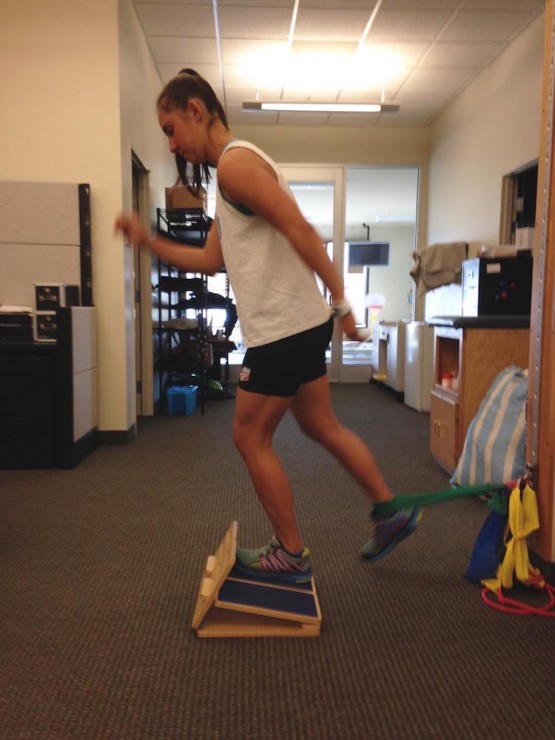
    His first round of exercises focused on balance without compensation (single-leg stance with a Pallof press and lateral hops to balance on one leg) and hip strength (side plank variants and fire hydrants). On the load mitigation side, we discussed using more supportive insoles, which he had only recently acquired, and training modifications with skating limited to short bouts of low-intensity skating and all high-intensity work done in the classic tracks.

    At his second PT appointment, we were very fortunate to have the involvement of his ski coach who attended the visit with the patient. We continued exercise progressions for balance and hip strength; but we also got much more technique specific, identifying areas for improvement and providing corresponding cues: “heel down” (when asked to stand as if he was balancing on the glide ski, he was over-exaggerating the very common “hips forward” cue and shifting his weight so far forward that his heel was no longer on the floor. Arguably this is okay on steep terrain but not in this context), “tripod foot” (equal pressure on the inside, outside, and heel of the foot), and “weight shift with the hips” (get the center of mass over the glide ski via the pelvis vs. leaning to the side). He and his coach then took these cues to technique sessions and eventually higher intensity intervals.

    At our next appointment a few weeks later, the patient reported zero symptoms with hard L4 skate intervals. Unfortunately, the rapid melt-off of snow in the West ended the race season before he could fully test the effectiveness of the intervention. However, as of the time of this writing, he has been skiing and training for five months without symptoms.

    The critical reader (and all readers should be critical) might point out that we have a false sense of accomplishment because he hasn’t raced. I would argue that he has had plenty of pain-free training sessions that would have previously been symptomatic. The reader might say that this is simply a case study and an N=1 is pretty weak research. That is certainly true. A randomized, double-blind, placebo-controlled study with a very large population would be ideal. But a case study is not nothing. Not all skiers with CECS are going to respond to the same intervention. But if we have seen that it is possible to effectively treat CECS without surgery, then we might want to consider exhausting our non-invasive options first. The reader might further pick holes by saying that without compartment testing, we don’t even know for sure if this skier had CECS. That is also very true and should be acknowledged. In the name of science, I should have subjected the patient to the very unpleasant testing before and after our intervention to both establish a baseline and to prove that he was cured. But in the name of practicality and the patient’s well-being (along with the patient’s and family’s input), I declined.

    Again, the story of one skier’s ability to overcome CECS without surgery does not mean that all skiers with CECS will have the same success. But it’s very much worth a try. If you are reading this article because you are a skier with CECS, I would encourage you to take a very detailed look at your skating technique and be very specific about your approach to changing it. This likely means working on the component parts in a low-complexity setting (not on skis) and progressing to technique sessions on skis with a heavy emphasis on the cues that you and your support team (coach, PT, trainer, etc.) have identified. Hopefully this can be a path back to fun, fast, and pain-free skiing.

    Help Support Our Coverage!

    FasterSkier is independent, reader-supported, and free to read. If health and training coverage like this is worth something to you, a voluntary subscription keeps it coming.

    Join the FasterSkier community!


  • Wednesday Rundown: Canadian Nationals Classic Sprint

    Wednesday Rundown: Canadian Nationals Classic Sprint

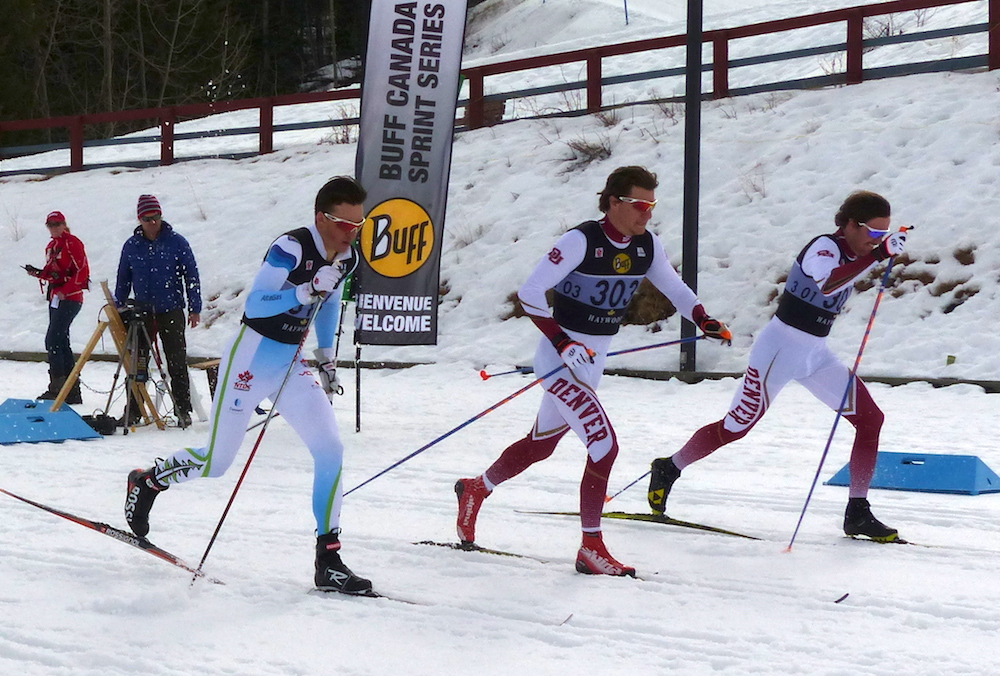
    The start of the men’s 1.3 k classic sprint A-final at 2017 Canadian Ski Nationals on Wednesday in Canmore, Alberta, with Evan Palmer-Charrette (l) with the University of Denver’s Moritz Madlener (303) and Dag Frode Trollebø (301). Madlener went on to win, Trollebø placed second and Palmer-Charrette third. (Photo: Peggy Hung)

    2017 Canadian Ski Nationals (Canmore, Alberta): Classic sprints

    Emily Nishikawa won her second-straight race at Canadian Ski Nationals in Canmore on Wednesday, topping the women’s 1.3-kilometer classic sprint in slushy conditions for her second national title in as many days.

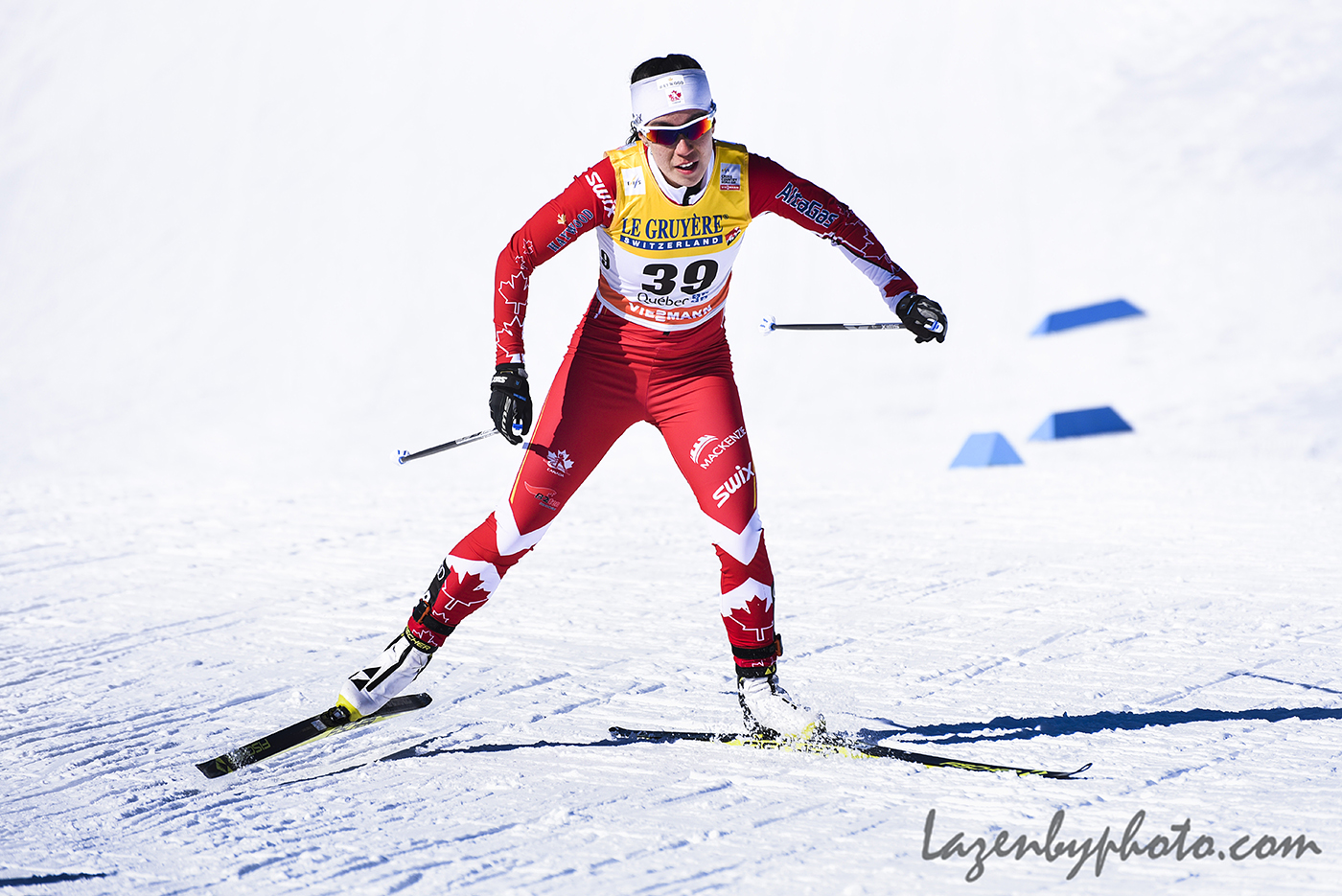
    Emily Nishikawa (Canadian World Cup Team) racing to 38th on the final day of 2017 World Cup Finals on Sunday in Quebec City, the women’s 10 k freestyle pursuit. Wednesday at Canadian nationals marked her fifth race in six days. (Photo: John Lazenby/Lazenbyphoto.com)

    Nishikawa, of the Canadian World Cup Team, initially posted the third-fastest qualifying time, 2.92 seconds behind qualifying winner Andrea Dupont (Rocky Mountain Racers), while junior Katie Weaver (Hollyburn Ski Club/NST Junior Team) qualified second (+0.43).

    Nishikawa went on to win both her quarterfinal and semifinal before besting five others in the women’s A-final in 4:00.86 minutes. Dahria Beatty, of the Alberta World Cup Academy (AWCA) and Canadian U25 Team, finished 2.79 seconds later in second place and Katherine Stewart-Jones (NTDC Thunder Bay/NST U25 Team) followed in third (+3.14). Also reaching the A-final, Annika Hicks (AWCA) finished fourth (+21.37), and Sophie Carrier-Laforte, of the Pierre Harvey Training Centre (CNEPH) placed fifth (+45.63) and Alannah MacLean (NTDC Thunder Bay) did not start.

    “Today with these soft, slushy conditions, it kind of played into my favour,” Nishikawa told FasterSkier in person on Wednesday. “I love classic sprinting, I always have. To pull enough energy together today was really great.

    “It’s my fifth race in six days, so I’m really tired, but I couldn’t be happier right now,” she said. “To win two back to back national titles yesterday and today is really cool.”

    In the junior women’s A-final, Annika Richardson (NTDC Thunder Bay/NST Junior Team) took the win in 4:05. Her Hollyburn club teammate, Weaver placed second (+4.48) and NTDC Thunder Bay teammate Lisle Compton finished third (+7.4). Also in the A-final, Zoë Williams (Nakkertok/NST Junior Team) placed fourth (+11.37), Hannah Mehain (Sovereign Lake Nordic/NST Junior Team) fifth (+25.75) and Catherine Reed-Métayer (Skibec/Quebec Ski Team) sixth (+1:05.44).

    In the senior men’s 1.3 k sprint, Moritz Madlener beat his University of Denver teammate Dag Frode Trollebø by 0.5 seconds for the A-final win in 3:12.56. Madlener started the day by qualifying in third, 1.6 seconds behind Trollebø, the fastest qualifier, while Joey Foster (Team Hardwood) qualified second (+0.88).

    Madlener went on to win both his quarterfinal and semifinal. So did Evan Palmer-Charrette (NTDC Thunder Bay), who qualified 14th and ended up third in the final, 3.76 seconds behind Madlener. With Madlener hailing from Germany and Trollebø from Norway, Palmer-Charrette was the top Canadian, ahead of Antoine Briand (CNEPH) in fourth (+10.53), Knute Johnsgaard (AWCA/NST U25 Team) in fifth (+12.65), and Michael Somppi (NTDC Thunder Bay) in sixth (+13.4).

    “I tucked in behind the two guys from Denver,” Palmer-Charrette explained of his tactics in the final. “I knew they were going to put in a surge on the climb. I went inside to try and go past them, but they were smart, took the two outside tracks, which were still there; inside was really soft. I cut over to get behind them, but I lost a couple metres and just wasn’t able to get that back.”

    Despite finishing behind them, Palmer-Charrette as the first Canadian earned his first national title at the age of 22, after rebounding from compartment-syndrome surgery last summer.

    “[I] trained really hard after that,” he said. “It’s been a great year.  … Awesome to be Canadian champion, surprise for sure in a classic sprint for me. Definitely not quite the Canadian field you’d see at a lot of Canadian nationals, a lot of guys sick and injured after World Cups on the weekend, but awesome nonetheless.”

    Most notably, Canadian World Cup sprinter Len Valjas did not race.

    Étienne Hébert (Quebec Ski Team/NST Junior Team) won the junior men’s A-final in 3:22.09, edging Nicolas Beaulieu (Orford/Quebec Ski team) by 0.55 seconds, and third-place finisher Larkin Wasmuth (Fort Saskatchewan Nordic Ski Club) by 0.68 seconds. Michael MacIsaac-Jones (AWCA) was in contention for a podium before crashing in the soft snow just before the finish. He ended up fifth (+11.63), behind American Nick Matelich (Bridger Ski Foundation) in fourth (+10.55) and ahead of Antoine Blais (Quebec Ski Team/NST Junior team) in sixth (+16.77).

    The next senior races will be the long-distance freestyle mass starts on Saturday.

    Complete results | Schedule

  • Wednesday Workout: Taming Compartment Syndrome (with Video and Mini Podcast)

    Wednesday Workout: Taming Compartment Syndrome (with Video and Mini Podcast)

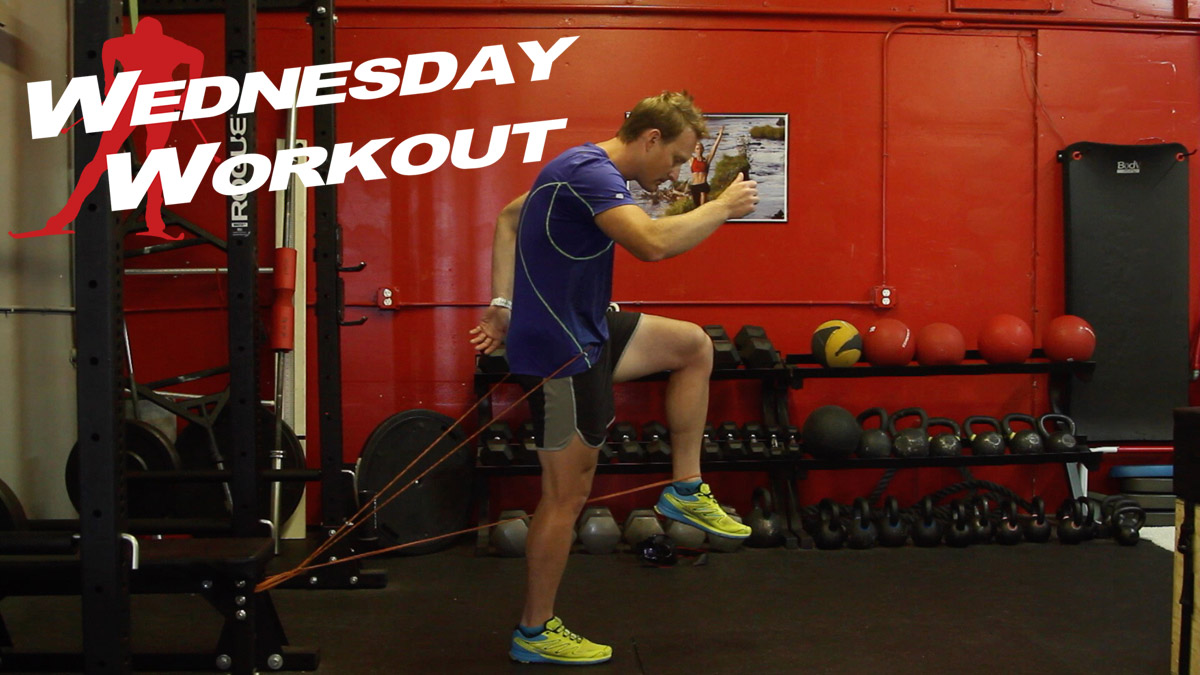
    Taming Compartment Syndrome in this Wednesday Workout
    Bend-based physical therapist and strength/conditioning coach Dave Cieslowski demonstrates an exercise to help tame compartment syndrome.

    BEND, Ore. — Two letters for better or for worse that we often associate with the negative sides of too much skiing are PT— as in physical therapist. Based in Bend, Dave Cieslowski is a licensed physical therapist and certified strength and conditioning coach. He has a core group of cross-country skiers who take his word on injury prevention and treatment — that group includes the U.S. Nordic Combined team.

    One common overuse injury is compartment syndrome, or what specifically is called exertional compartment syndrome. Painful? Yes! If you don’t take my word for it, just read this post from former U.S. Ski Team member and distance skier Kris Freeman.

    OK, it’s painful, but according to Cieslowski, it may be preventable and treatable in some cases without surgery.

    Here are some basics: pain and/or numbness may develop when a muscle becomes swollen during exercise and the compartment containing the muscle does not expand. For skiers, this most often occurs in the lower leg where there are four muscle compartments — commonly, when compartment syndrome is suspected in a skier, symptoms are often evident in either the calf or shin area.

    According to Cieslowski, the onset of compartment syndrome that specifically affects the shin is more likely in skiers who raise their toe up during the return phase (just after the leg push off) while skate skiing. That action, the toe raising, may eventually cause pain in the shin area.

    Here’s a short podcast episode in which Cieslowski describes the reasons for the following exercises (press the play button below).

    What You’ll need for exercise #1:

    • 2 x 3 ft. resistance tubing
    • A secure structure to anchor the resistance tubing
    • Place one piece of tubing around the top of your hips, the other around one ankle
    • Watch the video for more specific details about how to proceed

    What You’ll need for exercise #2:

    • 1 x 2 ft. resistance tubing, both loose ends knotted together to form a circle
    • Step through tubing and position just above the knees
    • Dumbbell and weights appropriate for a single leg step up onto an approximately foot high box
    • Watch the video for more specific details about how to proceed

    For both exercises, use caution and determine the proper number of sets to ensure you are fatiguing the appropriate muscles. You’ll note in the video that Cieslowski’s cycle rate is slow — that is on purpose. These are not meant to be high cycle rate exercises.

  • Ouch! What You Should Know About Shin Pain

    Ouch! What You Should Know About Shin Pain

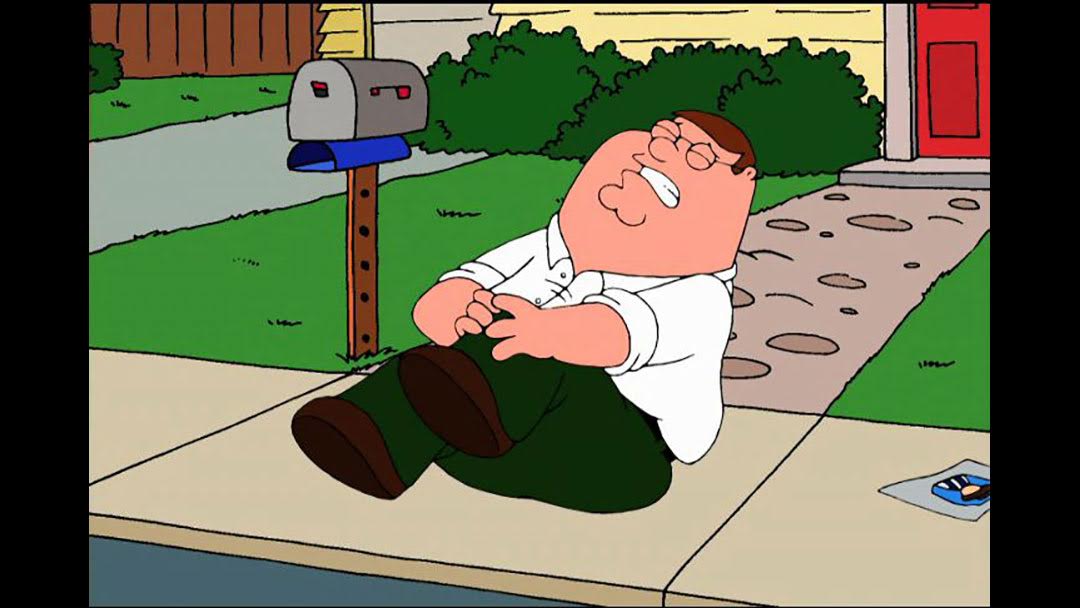
    Peter Griffin of the animated sitcom Family Guy winces in pain. He probably doesn't have compartment syndrome, but should probably look into the symptoms.
    Peter Griffin of the animated sitcom Family Guy winces in pain. He probably doesn’t have compartment syndrome, but should probably look into the symptoms.

    Note: This article has been updated to include comments from U.S. Ski Team development team skier Julia Kern, who had compartment-syndrome surgery last spring.

    Shin pain is an increasingly common complaint among cross-country skiers, causing many lost days of skiing every year. It’s difficult to identify a single reason for the trend, but greater training demands, such as high volumes of rollerskiing in the offseason, increased boot stiffness, diets that don’t meet the caloric demands of training, or single-sport specialization from a young age may play a part. In the individual skier, however, a sports medicine doctor can make a specific diagnosis, find the cause of the problem, and then tailor a treatment plan for the athlete.

    The three most common causes of shin pain are shin splints, bony stress injuries and exertional compartment syndrome. The term ‘shin splints’ is often incorrectly used to describe any shin pain in athletes. However, true shin splints are caused by micro-tearing of the muscle away from the bone along the medial, or inner, part of the lower shin. Pain from shin splints is often spread out along the inner shin, and typically goes away or ‘warms up’ with exercise, but comes back after exercise or after a hard workout.

    Kris Freeman during the 4 x 10 k relay at 2009 World Championships in Liberec, Czech Republic. In the spring of 2006, Freeman had surgery to remedy compartment syndrome in both shins. (Photo: Swix Sport)
    U.S. Olympian Kris Freeman during the 4 x 10 k relay at 2009 World Championships in Liberec, Czech Republic. In the spring of 2009, Freeman had surgery to remedy compartment syndrome in both shins. (Photo: Swix Sport)

    In more advanced cases, the pain can worsen during exercise, limiting a skier’s ability to race and train. Most athletes with shin splints are sore for the first few minutes of a ski, then the pain improves or disappears entirely, and then they are sore again after they cool down.

    Shin splints are often diagnosed without any special testing, and can be managed effectively with relative rest, stretching tight muscles, especially those of the calf, strengthening weak muscles, especially those of the hips and ankles, and working on ski technique and balance. A physical therapist and sports medicine physician can work with the skier to identify underlying biomechanical issues that could be causing their shin splints. An arch support orthotic may also be helpful.

    A bony stress injury is a more serious condition, which occurs across a spectrum. Milder injuries cause some inflammation in the bone; more serious injuries can lead to a fracture, or break, of the bone.

    I often use the analogy of a paperclip to illustrate how these injuries happen. Bend the wire of a paperclip back and forth enough times and the metal will start to get warm. That heat is analogous to a mild bony stress injury. Keep bending the paperclip, and it will eventually break, much like with a stress fracture.

    Bony stress injuries occur in athletes who engage in high volumes of exercise without allowing adequate rest time for the bone to heal between workouts. A skier may be more at risk for this type of injury if his or her diet doesn’t provide adequate energy or nutrition to allow the bone to heal properly. Bony stress injuries can occur anywhere in the lower leg, including both the large shin bone, or tibia, and the smaller shin bone, or fibula.

    The location of pain is often much more focal than in shin splints, with the athlete being able to point, with one finger, to where the pain is most intense. Pain often worsens with activity, causing an athlete to abandon workouts or races earlier and earlier as the injury progresses.

    Because symptoms can overlap with those of shin splints, an MRI is often used to distinguish between the two. Treatment for a bony stress injury requires rest for the bone. If the bone has fractured in a high-risk area, however, surgery may be necessary. Training through worsening shin pain may lead to a more serious stress fracture with a much longer lay-off from skiing, or even a season-ending surgery. It’s important to get a diagnosis and full work-up quickly. If caught early, these injuries can be managed effectively and prevented from worsening.

    Exertional compartment syndrome is a less frequent cause of shin pain in nordic skiers and can be difficult to diagnose. Compartment syndrome occurs when the muscles expand during exercise, due to increased blood flow, but the sheath around the muscle does not stretch adequately, which causes the pressure in the muscle compartment to increase.

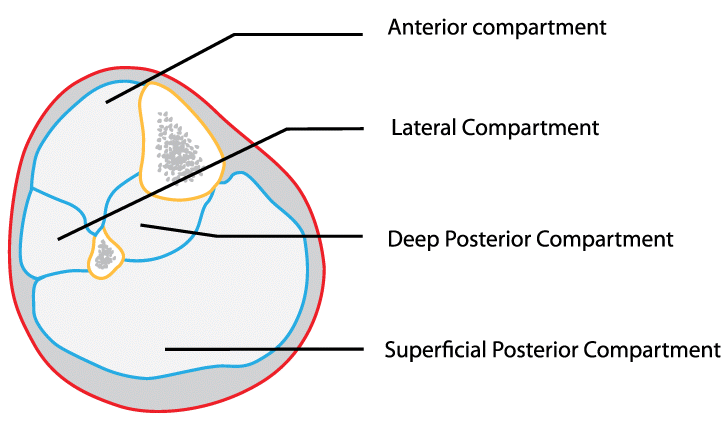
    The four muscle compartments in the lower leg:  one in the front, one on the outside, and two towards the back.
    The four muscle compartments in the lower leg: one in the front, one on the outside, and two towards the back.

    There are four such compartments in the lower leg:  one in the front, one on the outside, and two towards the back of the lower leg (at right). Athletes with this condition complain of crampy pain in the shin or calf that starts a few minutes into exercise, continues to worsen, and then quickly improves after they stop exercising. This pain is caused by the muscle becoming strangulated as the high pressure in the compartment prevents muscle tissue from getting enough blood to continue to work at a high level.

    Depending on which compartment or compartments are affected, and if those compartments contain nerves, athletes can also feel tingling or numbness associated with the pain. They may even experience a sensation that the foot or ankle are weak, causing the skier to more often catch their tips in the snow. A sports medicine physician may order an X-ray or MRI to rule out other causes of pain, and may also suggest a special test to measure the pressure in the compartments before and after exercise. Compartment pressure testing can be uncomfortable, however, and a diagnosis of compartment syndrome can often be reached without it.

    Most compartment syndrome can be treated non-surgically with the proper physical therapy and technique adjustments, but in some cases, surgically opening the compartments of the lower leg can be helpful by opening the muscle sheath and allowing the muscle to expand fully during exercise.

    Shin splints, bony stress injuries and exertional compartment syndrome have similar symptoms, but they require very different management strategies. Skiers who experience shin pain that worsens with exercise or lasts more than two weeks, despite rest, should immediately consult a sports medicine physician who is familiar with the demands of nordic skiing. Addressing the injury early may prevent a much worse injury, and even allow the athlete to continue skiing at a high level while addressing some correctable technique, strength, or flexibility issues throughout the remainder of the season.

    ***

    Firsthand Experience:

    Julia Kern, a member of the U.S. Ski Team D-team and Stratton Mountain School, underwent compartment-syndrome surgery last spring. She shared the following reflections and photos with FasterSkier in a recent email:

    – I think if I had done more calf stretching early on, it could have been a lot better. Also, I assumed that my numb toes were coming from my boots and never had second guessed that it was something else like compartment syndrome. I think technique is also a big factor. I think I may have been able to prevent by altering my technique in skating. With that all being said, part of it can be genetic so I cannot say home much was in and out of my control. In hindsight things are much more obvious and clear. 
    – Through this process I have learned how important it is to listen to my body. For cross country skiers it is often times easy to push pain under the rug because you think it is no big deal and it will go away. From my experience, sometimes this is true, but most of the time the pain or injury escalates and you loose a lot more time from training when you don’t address the issues early. Keeping a very detailed training log is important because it is easier to recognize an injury coming on. 
    – My recovery has been filled with ups and downs, but now I am fully recovered. I took the more cautious, slower recovery because the reoccurrence rate is a lot lower. I was lucky enough to have spent 6 weeks rehabbing in Park City, at the COE with access to PTs and other resources. 

    ***

    About the Author: Krys Bigosinski, MD., is a sports medicine physician in Portland, Maine. He helps provide medical coverage for the US Cross Country Ski Team and is an avid nordic skier. He is also the Associate Program Director for the Maine Medical Center Sports Medicine Fellowship.

    Krys Bigosinski, MD is a sports medicine physician in Portland, Maine
    Krys Bigosinski, MD is a sports medicine physician in Portland, Maine
  • Biathlon Veterans Teela and Barnes Back on the World Cup, Hoping for Olympic Comebacks

    Biathlon Veterans Teela and Barnes Back on the World Cup, Hoping for Olympic Comebacks

    Lanny Barnes (USA)
    Lanny Barnes competing in the World Cup sprint on Friday.

    HOCHFILZEN, Austria – Four years ago at the Vancouver Olympics, the best American results in biathlon came from a pair of veterans: Jeremy Teela, who placed ninth in the sprint in the best-ever finish for a U.S. biathlete at a Games, and Lanny Barnes, whose 23rd-place finish in the sprint was a historical record for a U.S. woman.

    You might not have seen much of either racer last season, but they’re still around – and in fact, you might say they are making their comebacks. Both Teela and Barnes were on hand this weekend for World Cup racing after spending most of last year on the second-tier IBU Cup circuit. In Friday’s sprint, they both placed 65th, just outside the cut for Sunday’s pursuit. But on Saturday they upped their games and turned in strong relay legs: Barnes helped the U.S. women finish eighth, the best result since she joined the team more than ten years ago, and Teela tagged off after the third leg in sixth (the U.S. men eventually finished 11th, but closer time-wise to the podium than they often are).

    Were these the best performances of their careers? Certainly not. But for a pair of athletes who didn’t get to see this level of competition much last season, it’s a step in the right direction.

    “You might say that everything since Vancouver was a down season,” Teela laughed. “But I’ve had a really good season of training.”

    Like Barnes, he is hoping to qualify for the upcoming Sochi Olympics. It would be the third Games for Barnes and the fourth for Teela – definitely his last, he said.

    After Vancouver, Teela began spending more time on other aspects of his life. Maybe most importantly, he now has a child. That changes your priorities a lot, he said. He was still training hard, but wanted to spend time with his family. That’s the main reason he’ll retire at age 37 at the end of this season.

    This year? All of that is suspended temporarily while he tries to go for it one more time.

    “An Olympic year is always extra motivation,” Teela said. “Oh yeah.”

    Both athletes qualified through rollerski races in Jericho, Vermont, and Soldier Hollow, Utah, to take part in a national team trip to Sweden this fall in advance of the race season. There, they raced in the IBU Cup openers. Teela did well enough to earn an immediate promotion to the World Cup.

    Barnes wasn’t so lucky – she started off with a strong race, placing 13th in the opener, but in the second sprint shooting woes knocked her way out of contention. So she spent a second weekend on the IBU Cup while Hannah Dreissigacker got the World Cup starts. But Barnes stayed consistent in the next IBU Cup races, placing 16th and 18th, and got a promotion (the U.S. now has five women traveling with the World Cup despite only having four start spots).

    “It feels good,” Barnes said on Friday of her first World Cup start of the season. “That was one of my goals for the year, was to climb my way back up.”

    While Teela has fatherhood to deal with, Barnes and her sister Tracy faced a different challenge. This spring they had surgery for compartment syndrome, a painful condition that affects the lower legs, particularly in skating. They are now back to 100 percent and feeling better than ever.

    “It’s night and day,” Barnes said. “I was trying to explain to a lot of people how it’s like for ten or twelve years, or maybe my whole career, I’ve learned how to not push in my legs, because I haven’t been able to use them. And now I have to remind myself to actually push with my legs. So I have to work with my technique to keep stepping on them.”

    The fresh snow on Friday’s course tested her legs seriously for the first time this season – if they were ever going to feel painful, the heavy, slow conditions would have done it. But Barnes reported that there wasn’t pain, just a struggle to adjust her technique to the conditions and her new legs. That means she can focus all of her energy on racing well and making the Olympics.

    “It’s always a struggle when you come back from surgery and you’re basically the bottom of the pond,” she said. “So it’s nice to finally be back here and having a chance to fight.”

    Fight they will have to, if the pair want to compete in Sochi. Three athletes – Tim Burke, Lowell Bailey, and Susan Dunklee – are already qualified for the Games. Two more will be picked after this pre-Christmas World Cup period. Teela said he hopes to be that guy so he can avoid the post-Christmas selection trials process, the more painful route towards Olympic qualification.

    Barnes is up against Annelies Cook, Sara Studebaker, and Dreissigacker, among others who may qualify for a January IBU Cup tour that serves as the last set of trials. Cook has the best result of the trio so far and is likely to snag the automatic qualification spot; Studebaker is also a 2010 Olympian, while Dreissigacker is a newcomer to the team who placed in the top 60 at last year’s World Championships.

    For Teela, the main rival for qualifying off the World Cup is Leif Nordgren, a young but veteran World Cup and World Championships racer who is the habitual anchor for the U.S. relay team. The Americans also have Sean Doherty – last year’s World Youth Champion – on the tour, but his results so far don’t make him competitive for the Olympic spot. Racers like Russell Currier, Wynn Roberts, and Jay Hakkinen will vie for the spot available through IBU Cup qualification.

    “He’s 18 years younger than I am,” Teela laughed of traveling with Doherty. “I mean, technically, I could be his father. But it’s great to have the young guys here pushing. Sean is going to be a great biathlete in the future, I just hope he doesn’t expect it to come too fast.”

    Regardless of whether he makes the Olympics or not, Teela is hoping for big things from his team.

    “Tim Burke is so strong and so focused,” he said. “He’s a real threat for the overall. He could medal in any race. Me, I still feel like I could get a medal, but I can’t be so good for the whole season like Tim. I’m focusing everything on being my best for three weeks, for the Olympics, and hopefully that is enough.”


  • The Four: Alberta World Cup Academy

    The Four: Alberta World Cup Academy

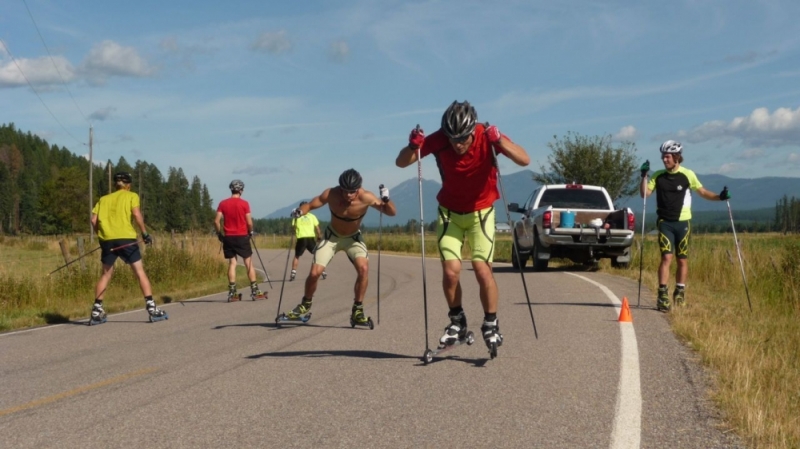
    Alberta World Cup Academy skier Patrick Stewart-Jones leads teammate Phil Widmer in some quick sprints during a dryland camp in Whitefish, Montana, this summer. (Photo: AWCA)
    Alberta World Cup Academy skier Patrick Stewart-Jones (second from r) leads teammate Phil Widmer in some quick sprints during an August dryland camp in Whitefish, Mont. (Photo: AWCA)

    Note: This is the fourth and final preview giving an inside look at Canada’s national training centres. We asked coaches to tell us what’s new, whom to look out for and their outlook for the season. Teams were presented in no particular order. 

    Team: Alberta World Cup Academy (AWCA)

    Coaches: Mike Cavaliere (program director/men’s coach), Chris Jeffries (women’s coach), Stefan Kuhn (assistant coach)

    Athletes: Jess Cockney, Chris Hamilton, Russell Kennedy, Graeme Killick, Yannick Lapierre, Alex Mahoney, Kevin Sandau, Michael Somppi, Patrick Stewart-Jones, Sebastien Townsend, Phil Widmer, Ezekiel Williams; Dahria Beatty, Annika Hicks, Marlis Kromm, Alysson Marshall, Emily Nishikawa, Rebecca Reid, Heidi Widmer.

    With 19 athletes (12 men and seven women), the AWCA is down one from last year, but still boasts quantity and quality with eight skiers on the National Senior Development Team (Cockney, Killick, Sandau, Somppi, Phil Widmer, Heidi Widmer, Marshall, and Nishikawa).

    Who’s new:  Two former Callaghan Valley Training Centre athletes – Lapierre and Townsend – both originally from Quebec. Mahoney hails from Lethbridge in southern Alberta, but has been living in Canmore for the last three years, formerly training with Rocky Mountain Racers. Williams comes from Nakkertok and the Gatineau, Quebec, area.

    Who’s missing: Kate Brennan retired and is now working as a manager at the Paintbox Lodge in Canmore, owned by Sara Renner and Thomas Grandi. According to Jeffries, Brennan “was plagued by many health problems in her final years, from which she seems to be recovering from very well,” he wrote in an email. “She was engaged to former ski racer Phil Wood this summer.”

    Janelle Greer moved back to Whitehorse, Yukon, and was considering attending nursing school next fall, Jeffries wrote. Suzanne Stevenson is studying at Montana State University, and Jeffries didn’t think she was ski racing, and Brittany Evans is also pursuing undergraduate studies at the University of British Columbia.

    Former men’s team leader, Graham Nishikawa – still on the Senior Development Team – has been training with Canada’s Para-Nordic program in the leadup to the 2014 Olympics. Brent McMurtry retired and is studying at the University of Victoria. Matt Wylie also retired and is attending the University of Calgary.

    An AWCA coach for a month and a half last season, Mike Vieira took a new job this spring as Cross Country Canada’s manager of coaching development.

    “We all resumed our roles from last year and have not missed a beat,” Jeffries explained. “[Former AWCA skier and national-team member] Drew Goldsack was contracted for a week this summer to coach the women during a training camp here in Canmore, which gave the girls a fresh perspective and allowed me time to coach the girls of the Alberta Ski Team.”

    The team also brought on an intern, Lars Hanel, a former racer studying to become a coach in Germany. According to Jeffries, he arrived in October and will assist the Academy through the 2013/2014 season.

    Top results last season:

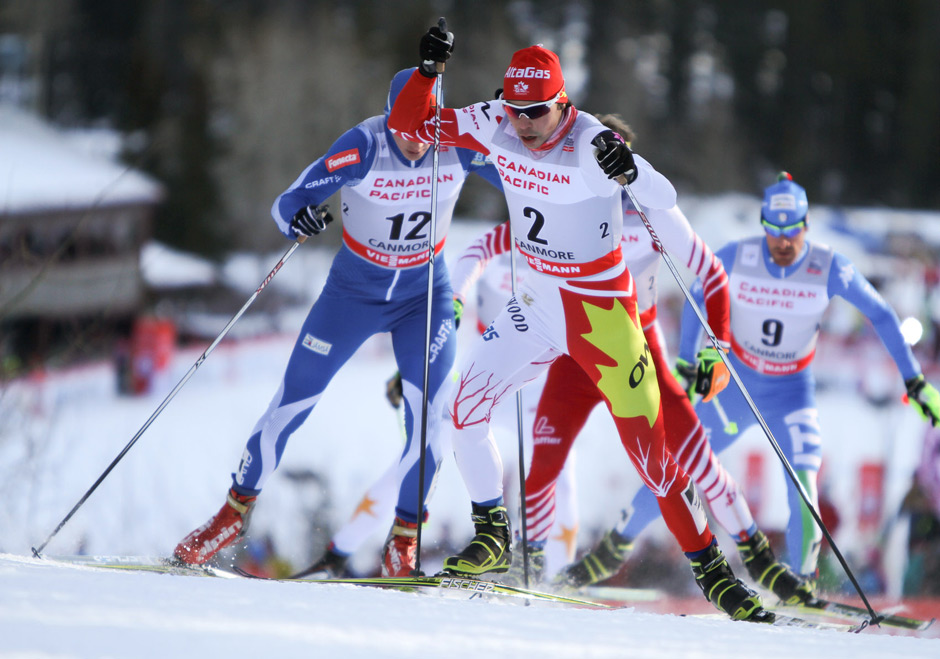
    Canadian Jesse Cockney of the Alberta World Cup Academy and Senior Development Team (2) leads Finland's Anssi Pentsinen (12) and the rest of his quarterfinal in Saturday's World Cup 1.3 k skate sprint in Canmore, Alberta. Cockney won the heat and went on to place ninth overall for a personal best in his fifth World Cup start.
    Jesse Cockney of the Alberta World Cup Academy and Senior Development Team (2) leads Finland’s Anssi Pentsinen (12) and the rest of his quarterfinal in last year’s World Cup 1.3 k skate sprint in Canmore, Alberta. Cockney won the heat and went on to place ninth overall for a personal best in his fifth World Cup start.

    Cockney, 24, had a breakout season starting at the Canmore NorAm, where he placed second in the 15-kilometer classic to earn his way to the Quebec and Canmore World Cups last December. In Canmore, Cockney wowed local supporters and international competitors with the second-fastest qualifying time in the World Cup skate sprint, and went on to place ninth overall.

    He notched several other podiums throughout the NorAm season, made the top 50 in the Lahti World Cup skate sprint (in 50th), and placed fourth in the classic sprint at Canadian Nationals in Whistler, B.C.

    Phil Widmer, who turned 30 last month, and Emily Nishikawa, 24, both earned trips to World Championships in Val di Fiemme, Italy, where Widmer placed 49th in the classic sprint. Earlier in the season, Widmer finished 15th in the Canmore World Cup skate sprint, racked up several NorAm victories, and placed third in the classic sprint at nationals.

    At 23, Nishikawa pulled off 57th in both the classic sprint and 10 k skate at World Championships, despite an unusually rapid heartbeat that turned out to be benign.  At the Canmore World Cup in December, she placed 34th in the 15 k skiathlon and 48th in both the 10 k classic mass start and freestyle sprint. She ended the season in 46th at World Cup Finals in Falun, Sweden.

    After placing 34th in the Canmore World Cup sprint, Heidi Widmer also qualified for U23 World Championships in Liberec, Czech Republic, where she notched 28th in the 10 k skate (and subsequently made the senior devo team in the spring). The 22 year old medaled twice at nationals, placing third in the 5 k and 30 k skate races in Whistler.

    Coach’s comments:

    According to Jeffries, all went as planned throughout the summer and fall, with athletes hitting personal best in field tests and showing “good fitness” on the rollerski-treadmill incremental tests.

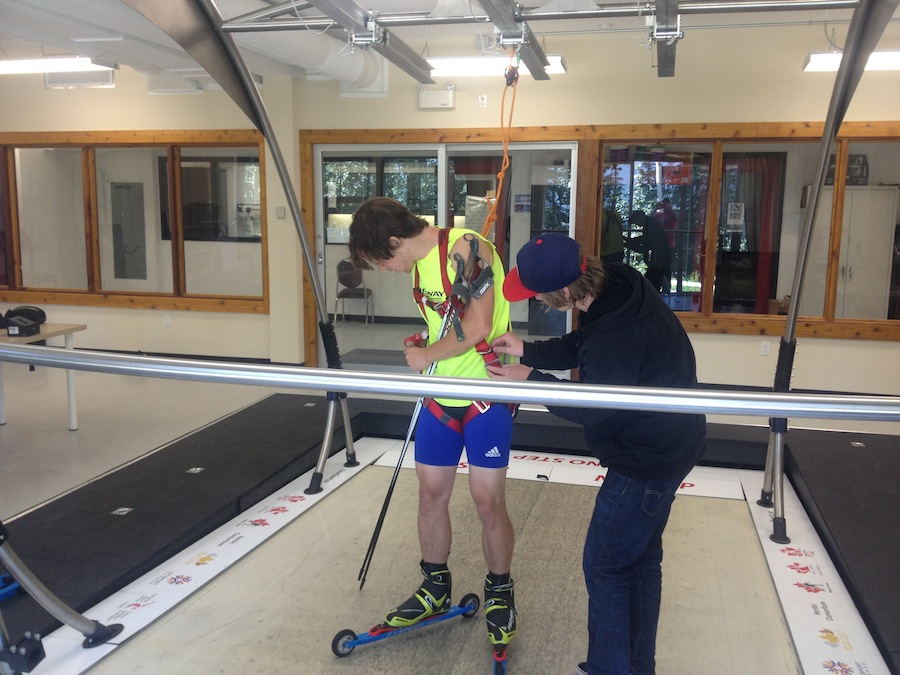
    Sebastien Townsend (AWCA) prepares for a treadmill test at the Bill Warren Training Centre in Canmore, Alberta. (Photo: AWCA)
    Sebastien Townsend (AWCA) prepares for a rollerski-treadmill test at the Bill Warren Training Centre in Canmore, Alberta. (Photo: AWCA)

    The women’s team held seven training camps from May through November, most of which took place around Alberta and British Columbia, but also included trips to Whitefish, Mont., and Whitehorse. The men ventured to similar places, with a total of six camps, including one at home on Frozen Thunder.

    Even in an Olympic year, the team’s goals are generally the same.

    “As always, we want to qualify athletes for international trips (WJC, U23s, Olympics, World Cup, Scando Cup) and ultimately graduate athletes to national teams (World Cup, SDT),” Jeffries wrote. “One of our big goals as a team is to have athletes positioned on the NorAm to win the FIS regional spots, allowing them to race World Cups.  If you ask our athletes what they need to make performance gains internationally, their number one answer is World Cup starts.  The FIS regional spot is the most predictable way to earn those starts in a year.”

    Looking at the men’s team, Jeffries stated their athletes are “healthy and performing at a very high level.”

    “The group is a little more diverse than in previous years, which has likely contributed to a very healthy team environment,” he added. “We have 6 U23 athletes who are all chasing after the older boys, getting stronger in the process.  The non-U23 men are very focused as they work towards being in shape for the Olympic trials in January.”

    The reigning FIS regional leader, Cockney gets to start this season in Europe with Canada’s World Cup Team.

    On the women’s side, Jeffries explained they’ve had a drop in numbers last year: from 12 to seven.

    “As a result, the group is very focused this year and more mature,” he wrote. “Dahria is our only junior, but her drive to be successful internationally puts her more in the category of team veteran as she pushes the other girls and keeps them on their toes.”

    While the group’s general fitness is “very high,” Jeffries stated their women have suffered more injuries than usual. Hicks has been on an adjusted program waiting for compartment-syndrome surgery on her lower legs this fall. “She raced through a lot of pain last winter and we had her diagnosed this spring,” he explained.

    In early September, Heidi Widmer crashed rollerskiing and ended up with her third concussion. She took a few weeks off and was back in action later this fall. “Heidi brought in a great level of fitness from last winter that she has continued to build on this summer, so we are confident it won’t take her long to get ready for the start of race season and the U23/Olympic trials in January,” Jeffries wrote.

    “As a coaching team, we are all very competitive people, so we are always looking internally on how we can become better.  Our overall philosophy though is pretty simple and helps us maintain perspective.  We ultimately try to keep things simple, looking at finding ways to do hard training with high quality, which we generally just refer to as “regular training.”  The attitudes and commitment of the athletes is what I think allows us to try and raise the bar each year.  We have a great group of athletes with a lot of talent who work extremely hard, which allows us to have success annually.”

    See also: Callaghan Valley | NDC Thunder BayPierre-Harvey Training Centre

  • This Month in Journals: Does Compartment Syndrome Diagnosis Method Lead to Unnecessary Surgeries?

    This Month in Journals: Does Compartment Syndrome Diagnosis Method Lead to Unnecessary Surgeries?

    FasterSkier is starting a once-a-month series looking at new research in the field of sports science. Periodically, we’ll flip through some of the world’s best peer-reviewed medical journals and summarize, in plain English, studies that we think will be of interest to skiers. Here’s our second installment; you can check out the first here.

    * Compartment syndrome, the compression of muscles with in a myofascial “compartment,” is prevalent though it has become in cross-country skiing, but is not a well-understood disease. Drs. Andrew Roberts and Andrew Franklyn-Miller of Surrey, England, admit as much in a recent paper in the Scandinavian Journal of Medicine and Science in Sports.

    The pathophysiology of the condition is poorly understood, and the criteria used to make the diagnosis are based on small sample sizes of symptomatic patients,” they write.

    Chronic exertional compartment syndrome, or CECS, can’t be diagnosed just by MRI’s or other non-invasive means. Instead, doctors typically cut a slit in the skin and insert a catheter (in some cases a fluid-filled needle) into the muscle, then ask the patient to exercise on a treadmill or bike and measure how the pressure in the muscle changes from rest to exercise.

    CECS also usually can’t be cured simply by resting or doing physiotherapy. Typically, skiers (and other athletes) with bad cases of CECS have surgery to remove the fascia, or coating, around the affected muscles in their calves or shins so that they can expand without causing pain.

    Nobody wants to have surgery that they don’t need, so it’s troubling that there doesn’t seem to be a quick and easy diagnosis. Drs. Roberts and Franklyn-Miller examined the use of intramuscular pressures to assess the technique’s accuracy. Even before starting their literature review, they knew that some of the studies which were used to set the cutoff values defining CECS had failed to use a control group of healthy subjects.

    So, the pair set out in search of studies that would give them some baseline information. And what they found was troubling: when researchers actually look at intramuscular pressure in healthy people, the values are sometimes above the cutoff currently used to diagnose CECS.

    “If a measured [intramuscular pressure] is above the criteria, clinicians can not have confidence as to whether the subject belongs to the upper end of the distribution curve for healthy subjects or at the lower end of the curve for subjects with CECS,” the authors wrote.

    Furthermore, they found that factors such as how deep the catheter was inserted and its position in the muscle, as well as which activity the patient was doing and even shoe shape contributed to variation in measurements of intramuscular pressure. The authors called the intramuscular pressure method “flawed” and wrote that they would not recommend it as a mode of diagnosis.

    “The [intramuscular pressure] at all the gold-standard time points has shown to be dependent on variables other than the presence or absence of CECS, and considerable overlap exists in the available literature between normal and symptomatic subjects in IMP measurement,” Robers and Franklyn-Miller wrote. “The current diagnostic criteria certainly cannot be applied with reliable certainty… These flaws could potentially lead to false positives and subsequent fasciotomy where it is not indicated.”

    Among other things, the authors suggested that rest and conservative treatments be tried before jumping to surgery. For instance, the fact that shoe shape and construction could determine intramuscular pressure dictates that athletes might want to change their footwear – several times – before going under the knife and losing weeks or months of training. The takeaway message for skiers is not to jump to conclusions when their calves and shins start hurting – and that if pain isn’t severe, having high measured intramuscular pressure doesn’t mean that it’s compartment syndrome.

    * In Acta Physiologica, both an editorial by Dr. Timothy Carroll of the University of Queensland and a paper by researchers from Deakin University in Melbourne argue that a large part of an athlete’s improvement in strength can be tied to adaptations in their brains, not just the muscles themselves.

    The Deakin team, led by Dr. Dawson Kidgell and his graduate student Ashleigh Weier, began from the pattern that athletes generally see improvements in strength very early on in a training program, before their muscles actually get significantly bigger. To examine whether the improvements might be all in their heads, the team used transcranial magnetic stimulation: they sent of magnetic pulses through a subjects head, which then gave them information about synaptic activity and possible inhibitions.

    Briefly, the magnetic pulse technique has been used many times before to examine how the brain controls performance of many tasks, including strength training – where results have been conflicting and inconclusive. The Deakin team took a slightly different approach of comparing single-pulse with paired-pulse stimulations.

    After four weeks of training, university students improved their squats significantly but did not develop thicker muscles compared to a control group. More importantly, the study showed an adaptation to training: the students who had been training showed changes in the motor cortex that led them to perform better.

    The editorial further hypothesized that, compared to other studies, the more complex a task is, the larger the magnitude of change in the cortex will be. Because the maximum-load squats were both taxing and required very specific technique combining multiple muscle and joint movements, the brain changed more to facilitate the difficult task.

    “It seems likely that repetitive muscle actions against high loads alter motor cortical connectivity to facilitate the specific patterns of muscle activity required to produce maximal force in the training context,” Carroll wrote.

    Training: maybe it really is mind over matter….

    * The International Olympic Committee published its consensus statement on thermoregulation and altitude adjustment this month in the British Journal of Sports Medicine. In short, the IOC wants to make sure that environmental conditions don’t adversely affect the health of its athletes. As examples of some conditions they want to control, they listed heat, cold, wind, altitude, and humidity.

    The group, anchored by Dr. Lars Engebretsen of the University of Oslo, noted that it was difficult to set hard-and-fast criteria for conditions given that each sport – summer to winter, from land to water – encountered different challenges.

    In terms of challenges relevant to nordic sports, the IOC started by writing off hypothermia: “And while some Nordic skiing and biathlon events require 2 h to complete, metabolic heat production during these activities is even higher, often reaching 13–18 METS (1250–1800 W)… these very high-metabolic rates will offset heat loss and prevent athletes from developing hypothermia during competition in conditions typifying the past three winter Olympics, and probably even with much more extreme cold conditions.”

    It’s worth noting, however, that the group used as its guidelines only the temperatures from the last three winter Olympics – including, for example, the rather warm Vancouver edition. They wrote that air temperature would have to be below -4° F – the technical cutoff for FIS-sanctioned races – for nordic athletes to get frostbite, and suggested that it was more a concern to worry about coaches, volunteers, and support staff.

    The group went on to note the prevalence of exercise-induced asthma and bronchial hyper-responsiveness in elite skiers and swimmers.  “Furthermore,” the authors wrote, “participation in competitive cross-country skiing over a winter season markedly enhanced airway infl ammation in bronchial biopsies in young skiers with and without asthma.”

    What to do? The IOC helpfully recommends recording temperature and wind speed at events and telling athletes to wear warm, windblocking clothes when training. and notes that inhaled steroids can treat asthma without being performance-enhancing and warned against over-using beta-2 agonists (read more about that issue in our piece from last week).

    While the consensus statement itself was based on many previously published studies and revealed little that was new or exciting, it did provide a pulling-together of the IOC’s thoughts on many medical issues. And perhaps the group failed to make any bold statements because they are waiting on more results from researchers around the world: the piece closed with a call for more work to be done.

    “We urge the Commission and Federations leaders to assertively and openly press further in their pursuit to better appreciate, closely monitor and appropriately respond to the health and safety challenges in all sport venues, so every Olympic and international-level athlete is adequately protected and thus given the opportunity to demonstrate optimal athletic performance,” the group wrote.

  • Burke is Back!

    Burke competing at World Championships in Khanty-Mansiysk, Russia, in March. Photo: nordicfocus.com courtesy of USBA.

    Tim Burke is one of the best biathletes in North America. The Paul Smiths, New York native finished on the World Cup podium three times during the 2009-2010 season, and even donned the yellow overall leader’s bib. But in 2011, he had a disappointing year, with his best finish 18th place in the opening World Cup sprint in Ostersund, Sweden.

    In April Burke told FasterSkier that he had been suffering from compartment syndrome, but hadn’t wanted to publicize his injury. That month he underwent surgery to relieve the pressure in his lower legs. Last week, he was in Jericho, Vermont with the rest of the national team, and FasterSkier snagged him for an interview.

    FasterSkier: To start out with, how is the recovery going?

    Tim Burke: Everything has been super smooth. I’ve had great help from the people at the Olympic Training Center (OTC) in Lake Placid with my rehab, and I’m back to 100 percent now.

    FS: This is your first camp back with the team, right?

    TB: Yeah, the first camp where I’m actually able to do all the workouts with everyone. I participated a little bit in our May camp, but only for some of the double-pole sessions, that was about it.

    FS: So what was your spring like? What were you working on?

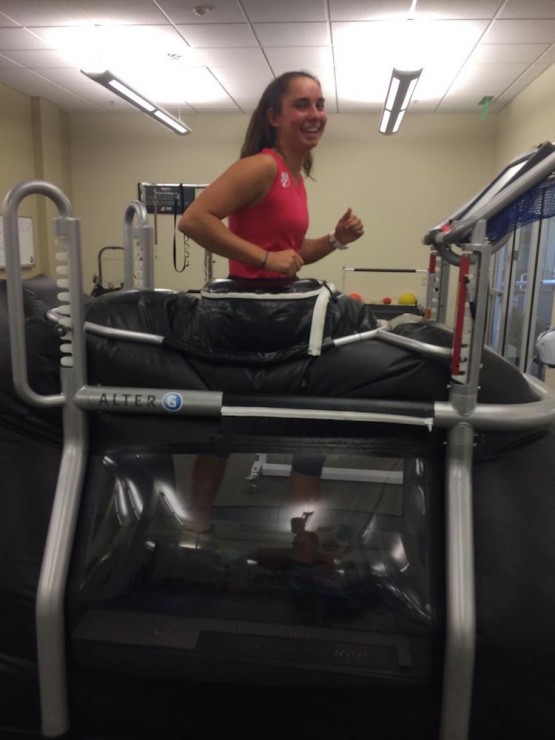
    TB: Well, I was in rehab for a pretty long time every day, at the OTC in Lake Placid. I was trying to train as much as I could every day through doing things like double pole. We had a really cool treadmill at the OTC too, it’s called an Alter-G, and it allows you to run with whatever percent of your body weight that you want to. So I spent a lot of time on that too. Running pretty early on, but with a really low percent of my body weight.

    FS: Wow… I can’t even imagine how that works.

    TB: Yeah, it’s like the lower half of your body is sealed into the treadmill and it pumps up with air. It’s all computerized and you just type in your weight, and then you can tell it you want to run with 50 percent of your body weight or whatever. So it’s pretty easy to run but you can still get your heart rate up and get the motion for running going, so that definitely helped me get back on my feet a lot earlier.

    FS: Obviously surgery wasn’t a benefit, exactly, but did you see any silver linings to having to take spring a little differently than you usually have?

    TB: Yeah. It gave me a good chance to regroup after a tough season and evaluate how everything went, and think about a few changes that need to made, so that when my body was ready I had everything lined up and ready to go.

    FS: So if you’re already back on track in July, it seems like you’re set to be able to have a good season next year.

    TB: Hopefully. I don’t feel like it’s set me back any. Of course, I haven’t been able to train as many hours as I like to in the springtime, but I’m really not that far behind. I feel like if I can stay healthy from here on out, I should be okay for next season.

    FS: Do you feel like after you’ve been training for so many years, and you have such a good base, you have a little more leeway and maybe this isn’t as much of a problem to come back from as it could have been earlier in your career?

    TB: I definitely think that will help. I’ve been training at a pretty high level for quite a while. So that’s made it easier for me to transition back into some pretty hard training right away. And I was also really, really careful in the spring to stay in as good shape as I possibly could, and was even watching my diet and things like that so when I was ready to train I would be able to get back into it as soon as possible.

    FS: You’re in Jericho right now for a camp, which will also be the site of the North American Rollerski Biathlon Championships. Are you going to compete in that?

    TB: Yeah, definitely. We also race here twice this week, tomorrow [Friday] and Saturday, so I’ll do those races and also the races in August.

    FS: Do you know whether the Canadians will bring anyone down for those?

    TB: I don’t know, I haven’t talked to those guys, but I wouldn’t be surprised if the Quebec group comes down.

    FS: Do you see them much in the summer, and is there a benefit in having them around?

    TB: Oh yeah, we both benefit from it. They have some really strong guys now, and to be able to race against other people can give it a little bit more of a race-type feel anyway. If you’re racing against a bunch of guys from your team it can feel a little bit more like practice.

    FS: What do you think about Pyeong Chang being selected to host the Olympics? You’ve actually raced there, unlike most people in the U.S.

    TB: I was honestly pretty disappointed. I haven’t had very many good experiences there. I’ve spent a few weeks there, racing on the World Cup and at World Championships [in 2009]. I had solid races there for myself, personally, but just the experience of racing there was really not great. Both times they struggled with snow conditions and were pretty unprepared for our events. The course there is for us literally on a golf course so it doesn’t ski very well, and it’s also surrounded by windmills, so it’s incredibly windy there. It makes for some challenging biathlon conditions, for sure.

    FS: It doesn’t seem like there’s much of a skiing tradition there, so is it going to be kind of a downer to make a trip to the Olympics and then not have as many dedicated fans?

    TB: Yeah, for the Olympics I wouldn’t expect them to have large crowds. I’d expect it will be smaller than most of our World Cup competitions, which is for sure disappointing, but at the same time you’re racing for an Olympic medal, so I don’t think anyone will have a problem with motivation.

  • After Quietly Suffering Since January, Burke Gets CS Surgery

    Tim Burke racing at the final World Cups of the 2011 season in Oslo. Photo, nordicfocus.com, courtesy of USBA.

    Scattered across the United States are a handful of skiers belonging to an exclusive club—one that includes Kris Freeman, Colin Rodgers, and Morgan Smyth.

    Earlier this month, biathlete Tim Burke became the club’s newest member, but not by choice. Instead, he joined the other three when he lay down on an operating table in Lake Placid and went under the knife, to relieve the symptoms of compartment syndrome.

    Quietly, Burke had endured the condition since January, and he finally had surgery on April 9, after finishing his season on the World Cup circuit. He should be back to full strength by next winter, but in an interview Tuesday, Burke said that the compartment syndrome had been a significant detriment to his 2011 campaign.

    Just how much is unclear, but there’s no question that it helped to quash Burke’s hopes of repeating his banner 2010 season, in which he became the first-ever American biathlete to capture the yellow bib worn by the World Cup overall leader. In 2011, one year after a campaign that included three podiums and a handful of top-10 finishes, Burke failed to crack even the top 15.

    “I had really high expectations this year, and I felt like I had made big improvements,” he said. “It wasn’t to be this year—it’s hard to say how much [compartment syndrome] played a role in that, but it was definitely part of it.”

    Burke had fought some minor problems with his legs in past seasons, but they worsened drastically in January after a World Cup in Rupholding, Germany, in heavy snow. From that point forward, Burke said, his skiing was hampered in “nearly every race.”

    For Burke, the condition wasn’t especially painful, but it still caused him to lose power from his lower legs when he was skiing—forcing him to alter his technique.

    “There were times when I felt great, and I wanted to go, but I couldn’t get my technique together in that area, to really feel the push,” he said. “Some races were worse than others, but it would come back all the time, and in training, as well.”

    His stability in standing shooting was also severely affected, and he said his feet often felt like they were falling asleep, making it difficult to find a comfortable position.

    Burke racing at this year's World Championships in Russia. Photo, nordicfocus.com courtesy of USBA.

    Indeed, between the 2010 and 2011 season, Burke’s overall shooting percentage dropped nearly seven points, from 79.2 to 72.4, according to the website Biathlon.com.ua. (Figures from the International Biathlon Union were unavailable.)

    “At the level we have now, if you have a slight little problem, it’s not so easy to perform,” said Per Nilsson, the U.S. team’s head coach. “He could survive—he was skiing really well this season, still—but he was held down.”

    After the races in Rupholding, Burke knew something was wrong, and suspected that the problem was compartment syndrome. Consultations with doctors proved inconclusive, though, and he wasn’t diagnosed until returning home to Lake Placid in late March, when he could get pressure tests done on his legs.

    In the mean time, he kept on racing, all the way through the World Championships in Russia, and the final World Cups in Norway. While Burke couldn’t ski or shoot the way he wanted, he said he still felt like the condition hadn’t progressed to the point where he couldn’t have a good result—which was why he continued to compete.

    Over that portion of the season, Burke took a number of measures to alleviate his symptoms, including icing, massage, and creative tape jobs; by the end of the year, he said, it was practically a new trick for every race. But none of them really worked, which became more and more frustrating.

    “It was really tough mentally, just starting in the race, and not knowing if, and when, it was going to flare up and slow me down,” he said. “It was always in the back of my mind coming into shooting, too: ‘How are my legs going to react when I try to stand still? Are they going to start shaking?’ That definitely wore—to the point where it made the decision to do surgery really easy, when I came home.”

    Throughout the year, Burke never made his problems public; he said he told only his coaches, support staff, and a few other athletes.

    “I just didn’t want to be answering questions about it after every race, and from the media—just because I was already thinking about it a lot,” he said. “Answering questions about it every day wasn’t going to make it any easier on me, mentally, so I decided to hold off, and keep it under wraps.”

    After arriving home, Burke consulted with a handful of other athletes who’d had the surgery—including Freeman, Rodgers, and Smyth—along with some doctors, and ultimately decided to have the procedure done in Lake Placid. That way, he could recover at home, with easy access to physical therapy at the Olympic Training Center.

    Burke had the surgery done on April 9, and his first day of logged training was on Tuesday, 17 days after the procedure.  He said he expects to be jogging in a couple of weeks—and while he was told that a full recovery would take roughly three months, Burke said he was confident he’d be back up to speed before then.

    Neither Burke nor Nilsson, his coach, said that they expected the surgery or recovery to hinder Burke’s racing in the upcoming winter. In fact, Nilsson said he was excited to see the difference in Burke’s skiing.

    Both said they also see the recovery period as an opportunity to work on aspects of Burke’s training that normally get short-shrift.

    “I’m hoping it will let me address some of my weaknesses,” he said. “I’ll be able to do a lot more shooting. I’m going to be able to do a lot of core strength and flexibility stuff—stuff that I have never been too keen on in my training before.”

    As for what brought on the problem, Burke said he was still unsure, especially since his training hadn’t changed much over the last two years. Nilsson wasn’t either, although he speculated that perhaps some minor technique changes involving the angle of Burke’s feet could have had something to do with it. And, for the coming season, Nilsson said he would like to try to move Burke’s rollerski bindings forward, so that he’s not lifting as much weight with his toe.

    “If you train as much as they do, if you do that for a longer period of time,” Nilsson said, “you will feel it.”

  • Morgan Smyth – Back on Track

    Morgan Smyth (APU) won the silver medal in the women's 10K classic at US Senior Nationals Wednesday.

    In 2009, it seemed like the Vermont native was headed for the stars. Morgan Smyth qualified for the 2009 World Championships in Liberec (CZE), she was the national distance champion in the 5K, she won the team sprint at nationals with Liz Stephen, she was on the US Ski Team.

    But the summer of 2009 marked the start of trouble and derailed her Olympic dreams.

    First, Smyth had surgery to relieve compartment syndrome in August. That didn’t concern her too much, as most recover fairly quickly from that. Then, once the season got started and she entered the West Yellowstone races in November, she realized that her cold was something else. She found out she had come down with mononucleosis. For the second time.

    “They say you can only get mono once in your life. That’s not true,” Smyth said, explaining that she was sick for quite a while before she realized it was mono – again. Despite this bout being a milder case than her first encounter with the disease, Smyth knew that mono is not something that goes away overnight.

    “I was pretty bummed out, it being an Olympic year and all,” Smyth admitted.

    “Many skiers had their eyes set on the Olympics. It was definitely a goal for me,” she said. “It’s not the same to watch it from a couch when you want to be out there racing it.”

    Morgan Smyth won the 2009 national title in the 5K classic (Photo: Lance Parrish)

    Back at it, one step at a time

    Having learned from previous mistakes, Smyth knew that recovering from mono takes time and patience.

    “Last time, I tried to race all the way through. I took a few weeks off, tried to race and realized that just wasn’t the reality,” she recalled. “It’s not like you wake up one morning, open your eyes and just feel amazing. It’s a slow process.”

    At the end of last season, Smyth got back on her skis and then gradually started to enter some races just for fun and to reconnect with her friends.

    “It wasn’t until late in the winter, mid-February, that I was on skis and teaching lessons with the elementary school kids. It was fun to be a part of the ski community again, even at a different level. I can definitely remember being one of those kids. I just love to play on skis,” she said. Then she moved into racing.

    “I raced a little at the end of the season, just for fun. I just love ski racing and most of my friends are in ski racing, so racing was an opportunity to see everyone,” Smyth explained, adding that she also went to nationals in Maine to connect with APU head coach Erik Flora.

    “I wanted to talk with Erik Flora about possibly joining APU, and I liked it a lot. So Memorial Day weekend I packed up my car and headed for Alaska,” Smyth said.

    As it turned out, APU was the perfect match for Smyth.

    “I absolutely love APU. Erik Flora is a great coach, and the atmosphere in the team is really good. We train together almost every day of the week,” Smyth said.

    Looking for tough teams

    Smyth’s strategy for improvement is to challenge herself.

    “I’ve always tried to be on teams whose skiers are kicking my butt. I figured if you are in a race with them, you should train with them. That’s how you get as good as them,” Smyth explained.

    “When I was younger, Stratton Mountain School was that team, then for college NMU seemed to be it. And turns out it has been super fun as well,” said Smyth, who proceeded to go all the way and was named to the US Ski Team for the last two years of her college career at NMU and the following two seasons.

    Winning: a team experience

    To Smyth, being a part of a team is an important part of the winning equation, and the team environment plays a major role in overall success.

    “When you’ve been training together in rain and wind and been super tired, it brings everyone together,” she said, explaining that while cross-country skiing is an individual sport, the team experiences connect.

    “You see your teammates succeed and it makes you happy, you’ve been through the same training, you know what they’ve done. If you have a crappy race, you can still have a good day when they do well.”

    APU women – a tight-knit team. L-R Morgan Smyth, Brooks, Katie Ronsse, and Sadie Bjornsen. Photo, flyingpointroad.com

    Nationals is just gravy

    When Smyth got sick last season and couldn’t race, being away from the sport and the community she was so involved in definitely took a toll on her. On the other hand, Smyth also took away some valuable lessons from the season that didn’t happen. She learned to never take anything for granted in health or racing.

    “Just being here and feeling good and being fit is awesome. I just came to nationals to ski my best and enjoy it,” Smyth said, noting that this is her first time going into the championships on cruise control and that it feels refreshing in some ways.

    “I honestly didn’t have super-specific goals for nationals compared to the past. I’m far down on the USSA points list, and the only team to qualify for here is the World Championships. So with that reality, I just want to ski as hard as I can,” she said.

    As for the rest of the season, Smyth is equally laid back.

    “I don’t have a plan. I take it one race section at a time,” she said, adding that she knows she’ll join the APU team for the SuperTour in Lake Placid, and hopes to go to Sun Valley for the spring series. “I’m just going to try to race fast. What happens happens.”

  • Results Released On Compartment Syndrome Survey

    Cambridge Sports Union has completed its on-line survey examining the prevalence of chronic  exertional compartment  syndrome (CECS) within the competitive nordic ski community in North America.

    The purpose of the survey was to gauge the extent of CECS among cross-country skiers, and to collect data that contributes  to understanding the etiology of CECS.

    Fifty coaches responded to the survey, representing roughly 1,500 athletes. The teams represented include  youth and regional clubs, the U.S. and Canadian national teams, and college and high school  level teams. The geographic distribution of the respondents was New England (35 percent), New York (five percent),  West (23 percent), Midwest (23 percent), Alaska (five percent) and Canada (10 percent).

    56 percent of the coaches  reported skiers with CECS, diagnosed by performing compartment pressure testing. There were a total of 39 cases of CECS reported.  No coach had  more than three cases of CECS on their team that required medical intervention.

    90 percent of the teams had only one case of CECS. Of the 39 reported cases of CECS, 80 percent had surgery to correct it, and more than 90 percent had full recovery post-surgery. There were 3 cases that required a second surgery.

    The percentage of woman and men diagnosed with CECS was 57 percent and 43 percent, respectively.  The age distribution for women diagnosed with CECS was 14 to 30, with the average age being 19. The age distribution for men diagnosed with CECS was 16 to 30, with the average age being 19.

    62 percent of those with CECS had pain in the front of the leg, 24 percent had pain in the side , and 14 percent had pain in the back. The teams that  trained over 500 hours a year had a statistically significant (p value 0.06) higher prevalence of CECS than the teams that trained less than 500 hours a year. Those teams with a higher average vertical gain achieved during skate roller-ski workouts had a statistically significant (p value 0.04) increase in CECS. (The survey did not look at vertical gain during classic roller skiing.)

    Few athletes were reported who were using the food supplement creatine. There was no correlation between CECS and the use of creatine in this study. The study size did not allow us to find statistical relevance in correlating CECS with geography, stretching, off-snow training or body type.

    In summary, there appears to be a high prevalence of CECS in male and female competitive cross-country skiers, particularly among the teams that train at high hours with increased vertical gain during skate roller skiing. We hope that this small study encourages others to work toward understanding the etiology, prevention and treatment of CECS. We are encouraged by the many graduate students and researchers who contacted us and are initiating projects in this direction.

    Peter Hoenig, MD David Brams, MD James Stock, PhD Cambridge Sports Union.  Address questions to: P.Hoenig, 1073 Concord Road, Sudbury, MA 01776. phoenig@massmed.org.