Tag: Concept2

  • SkiErg Training: Training Considerations and Technique

    SkiErg Training: Training Considerations and Technique

    I hate rollerskiing. As much as I try to be a good Nordie, I just can’t get over my fear of hitting the pavement. Between a history of bike racing and the rollerski learning curve, I’ve already lost enough skin. I know it’s good for me and might make me faster on snow, but I’m too old to put up with my heart rate being affected more by fear-induced adrenaline than by quality training.

    My legs and lungs get plenty of work all summer from running, cycling, and strength training, but my typical dryland routine does little for the arms. I’ve tried to swim, but I haven’t progressed past drinking half the pool. 

    A few years ago, I set up some resistance bands to train the arms for double poling. After developing triceps tendinopathy, taking a snapped band to the crotch, and generally finding the bands to be either too hard or too easy, I realized my workouts were far from ideal. 
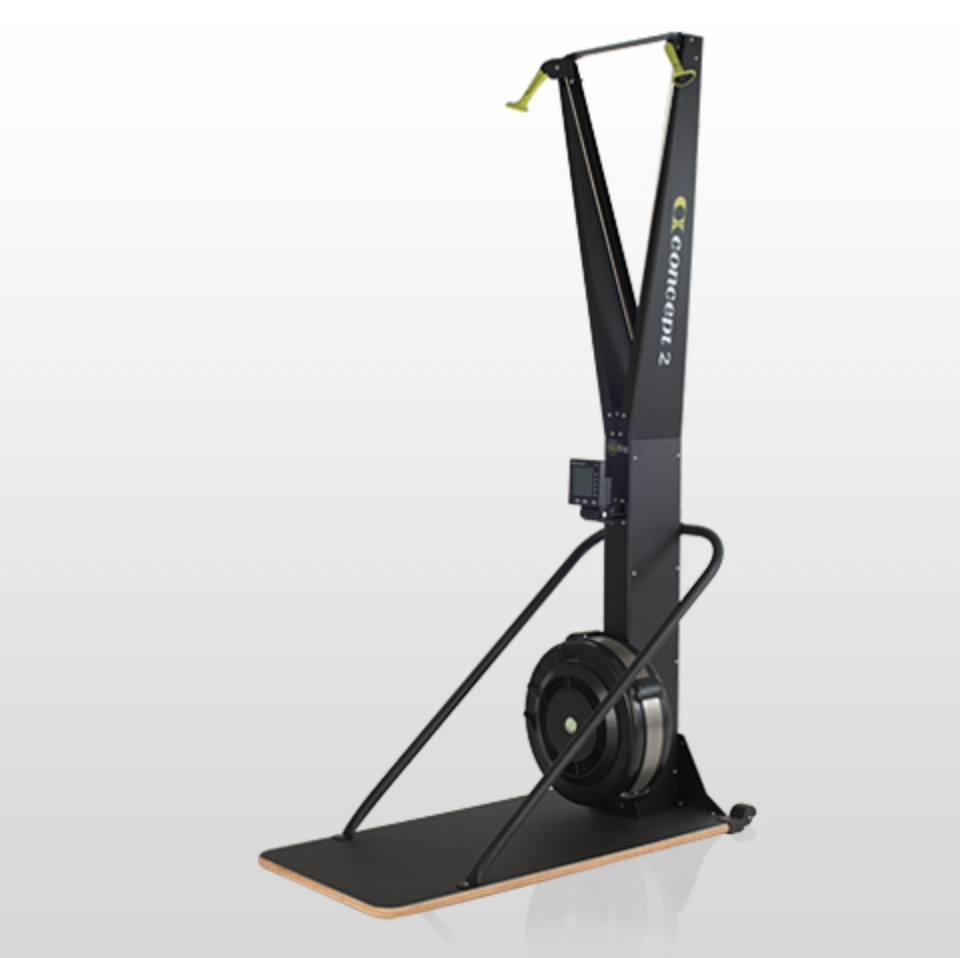
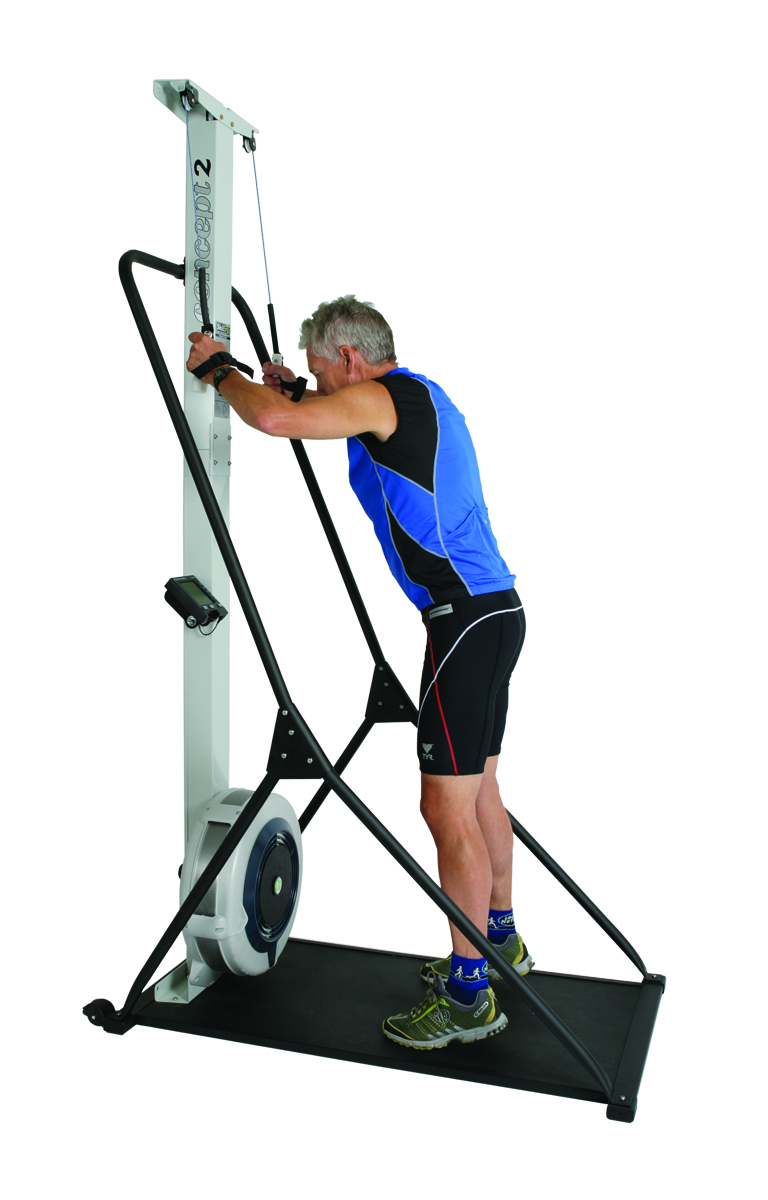
    (Photo: Concept2.com)

    What the bands gain from their price-point, they yield in utility. By their nature, the more you stretch a band, the more resistance it provides. This is the opposite of what happens with poling on snow, where the greatest resistance (or force requirement) takes place near the beginning of the pushing phase and decreases through the end of each cycle. 

    Staring in the face of another hot (and smoky) summer, I splurged on a Concept2 SkiErg last spring. Thus, I was immediately able to avoid rollerskiing (without feeling guilty) while simultaneously shielding myself from the heat and poor air quality. Solved were the resistance bands’ problems of poor adjustability and inverse force curve. This utility continued during the purgatory of shoulder season in the fall, and carried me through the local trails’ annual mid-season melt out here in Salt Lake City. 

    Cool tool. What do I do with it?

    For some expert information, I asked Miles Havlick, head Nordic coach for the reigning NCAA national champion University of Utah Ski Team, some questions about how they incorporate the SkiErg into their training. 

    What are your typical resistance settings? What’s the max you’ll use?

    We almost always use the max resistance setting of 10 during SkiErg workouts. The majority of the time we do sprint type workouts on the SkiErg machines with interval lengths of less than 5-minutes in duration. However, during longer sessions we will lower the resistance in order to keep the intensity lower.

    Author’s comment: 10 is hard! Keep in mind these are elite skiers. In a video blog from Jens Burman, he notes that his max resistance is 7. 

    Better for easy, Z1-2 endurance or higher intensity intervals?

    In my opinion, it is better for high intensity sessions targeting more anaerobic or strength training. Although the muscles are fairly similar to actually double poling, we prefer to perform longer L1 sessions on rollerskis which offers more variety in terrain and more closely resembles double poling on snow.

    Author’s comment: In my opinion, pavement hurts more than snow and I haven’t lost any skin to L1 sessions on the SkiErg.
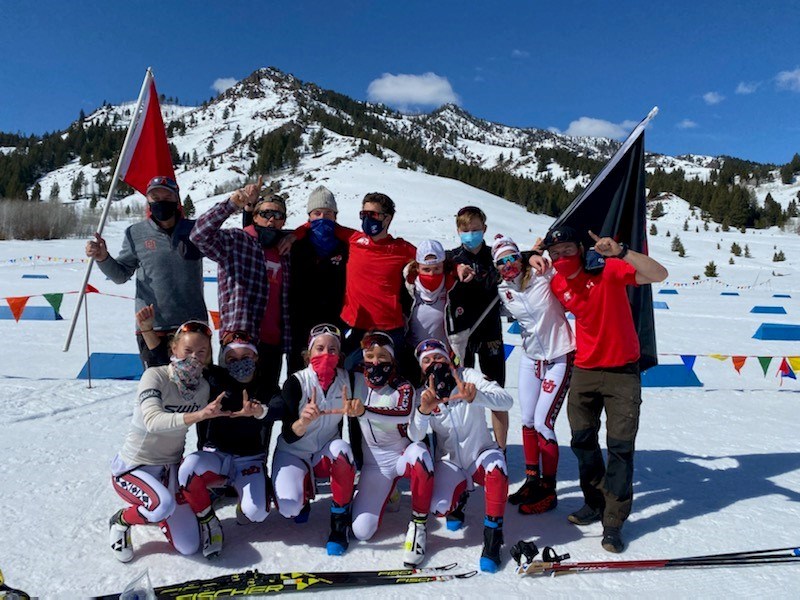
    Head coach of the University of Utah nordic team, Miles Havlick (far right), was named RMISA coach of the year in 2021 following a record setting season for the Utes. (Photo: utahutes.com)

    Do you cue or work on technique during SkiErg sessions?

    We certainly do. It is easy to get higher power numbers when using techniques that are not as effective on snow, however, we are training to be better on snow. Therefore, we are always trying to emulate the most effective on-snow double pole technique on the SkiErg machines.

    Author’s comment: more on this below.

    Do you incorporate drills like balancing on one leg or BOSU?

    We have played around with it but we do not regularly utilize this. It is effective for making L1 workouts more interesting, however during higher intensity bouts, it seems to detract from the quality and focus of the on-snow movements that we are trying to emulate.

    Training sessions on the SkiErg can cover both ends of polarized training with the capacity for both longer duration, low intensity workouts with emphasis on metabolic efficiency and for shorter, high intensity intervals to work power. 

    SkiErg Technique

    While perhaps the best indoor replacement, pulling on the SkiErg is definitely not the same as poling on snow or rollerskis. The notable difference is the lack of balance with a forward trunk lean. Without bindings and the ski to counterbalance, there is much more tendency to fall forward on your face. Or, perhaps, more tendency to sit back so you don’t fall on your face. This is a likely reason why coaches can be critical of spending too much time on a SkiErg, with a nod toward the potential non-ski-specific movements Havlick alluded to when he commented that they are always attentive to form.  

    With that in mind, there are absolutely some technique fundamentals that can be reinforced on the SkiErg. 
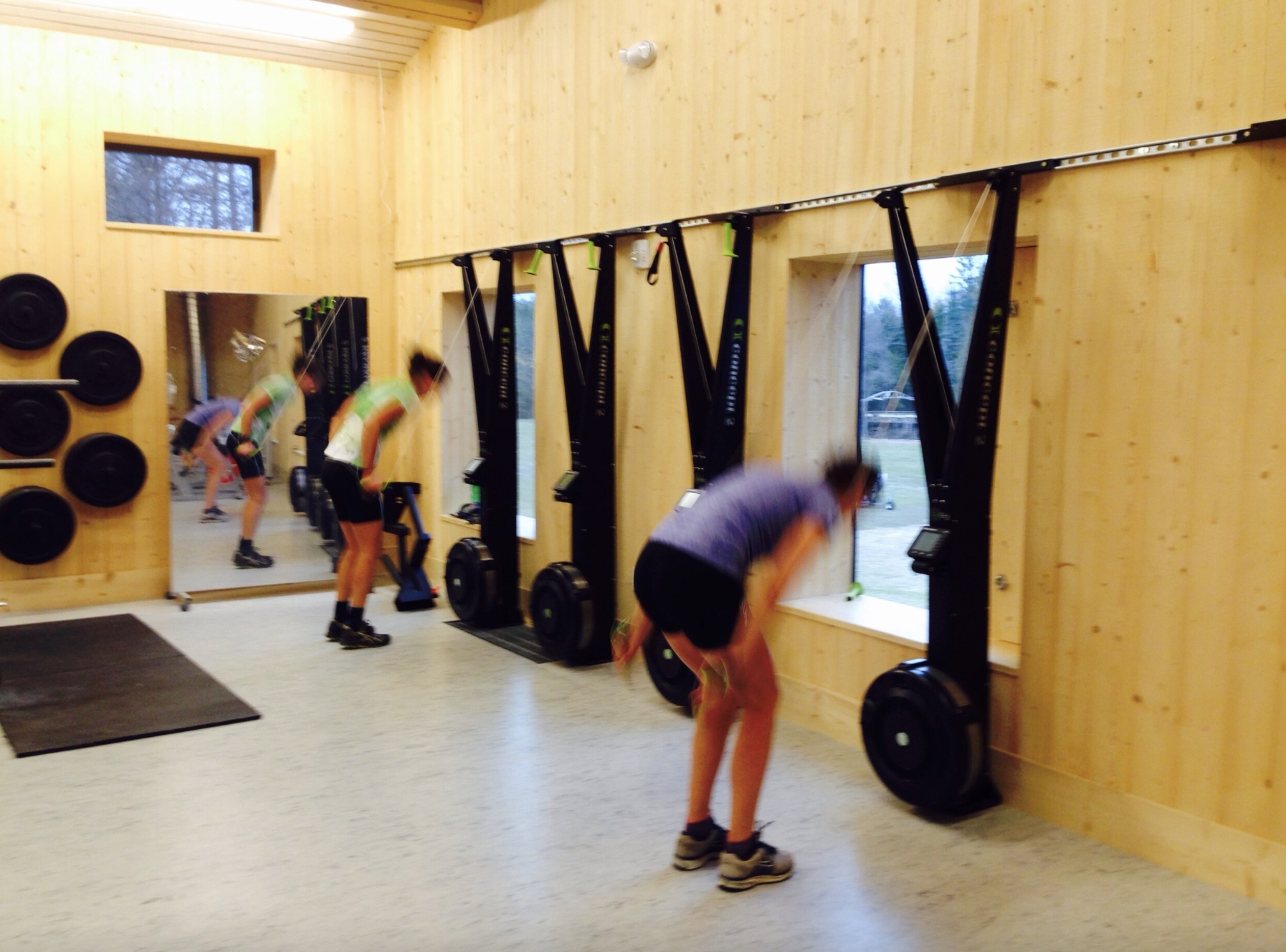
    A pair of Craftsbury Green Racing Project athletes complete a 1k time trial on the SkiErg in November, 2014. (Photo: GreenRacingProject.com)
    The Arms

    The monotony repetition of the poling motion creates a great opportunity to reinforce some key components:

    • Hands high: don’t be lazy, get those hands up
    • Elbows fairly fixed with short swings under higher resistance (think uphill double pole or V1)
    • Elbows extend with long swings under lower resistance (think fast V2 or V2 alternate)
    • Smooth on the power: like starting a car from a dead stop but getting up to speed quickly – if you just stomp on it, the wheels will spin. With poling, we want to achieve peak force quickly but smoothly; setting the poles, then delivering power to them as the upper body drops powerfully onto the poles and the pole angle decreases to deliver the force behind the skier as a push off, versus just stabbing the poles as hard as we can into snow. The latter strategy does not propel forward motion as the peak force is directed into the ground, which incurs vibrational losses in the pole shaft, and robs the system of energy before the pole angle changes toward one more effective for force delivery. 


    The Hips

    “Hips high” might be one of the more overused and less understood cues in Nordic skiing. Without digging too deeply here, the basic premise while on the SkiErg is starting the poling motion from a tall position. As the body compresses with the arm pull, hinge at the hips and ankles. Then, focus on quickly getting back to the tall start position by extending the hips via contraction of the glutes (aka “squeeze your butt cheeks”). Your knees should be relaxed and bend slightly on each cycle, but you’ll want to avoid significant knee bending as it likely indicates that you are sitting back too much. I’ve personally found that one of the biggest gains I’ve found on snow is through focusing on quickly returning to the high hands and hips start position, over and over and over on the Erg.

    As much as high intensity double poling is a full body effort (not just the arms), in skiing it is more about movement across the hips and ankles vs the knees. In CrossFit gyms, this is not necessarily the case. They are after maximum generation of force, not skiing efficiently. Please don’t do this.

    Balance

    While Havlick mentioned that they rarely incorporate balance drills into SkiErg sessions, I think they can be very useful for reinforcing single leg stability, especially if there is a specific component to address like foot pressure distribution, ankle dorsiflexion, or lateral weight shifts from the hips. As with any balance exercise, it is generally more beneficial to work on consistently accomplishing appropriate balance on the floor before moving on to an unstable surface like a BOSU or Dynadisc.

    Visual learner? Here’s a helpful video on the CXC Facebook page with Eliska Albrigtsen, former CXC head coach who now leads the University of Alaska Fairbanks team

    Looking for more? Find a 2017 Wednesday Workout with Sadie Bjornsen here, featuring 30 minutes of 30/30’s on the SkiErg.
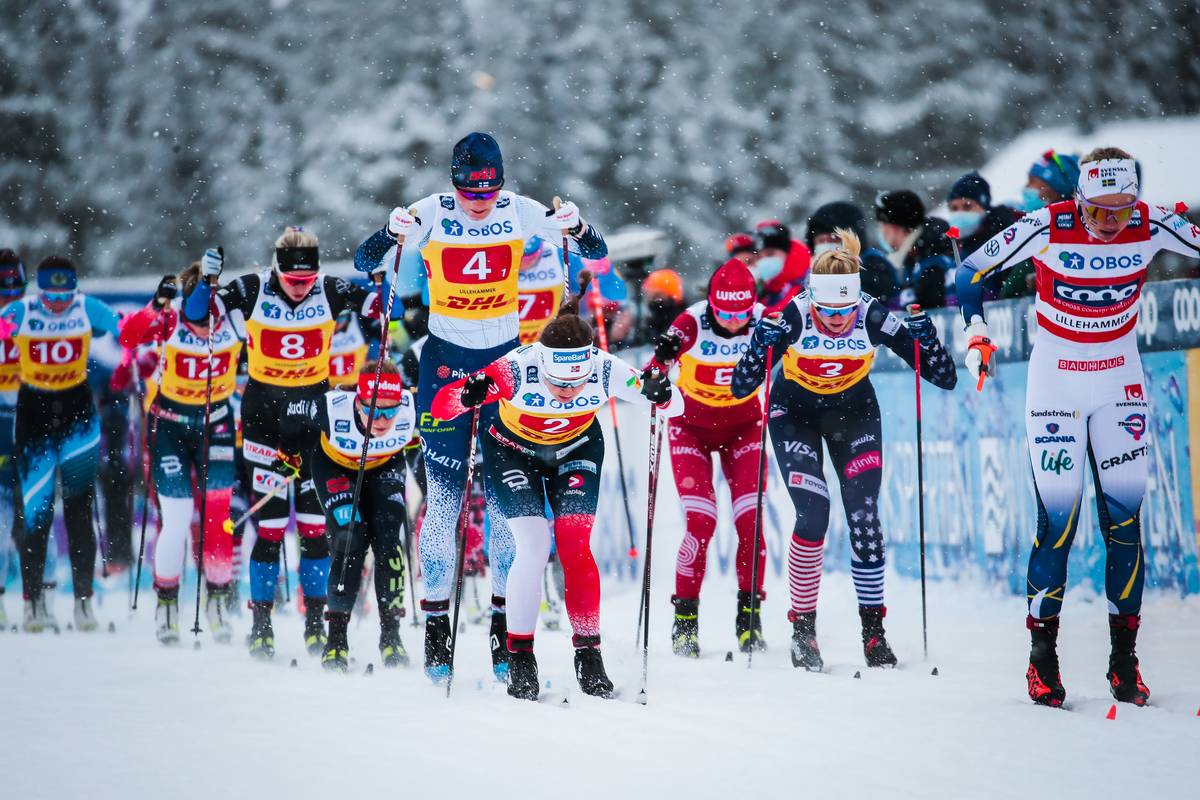
    Doublepole form on display at the start of the 4×5-kilometer relay in Lillehammer. Hailey Swirbul (bib 3) skis the scramble leg for the U.S. (Photo: NordicFocus)

    Author’s Disclosure: Concept 2, manufacturers of the SkiErg, is a sponsor of FasterSkier; however, I purchased mine at full price before I was affiliated with this fine website. In addition to the SkiErg, Abilica makes a very similar device. The Italian company Ercolina makes an upper body ergometer that has the advantage of being much more compact and portable, but it is also more expensive and very hard to find in the US.  

  • Team Gregg Partners with NASA for Zero Gravity Training Research

    Team Gregg Partners with NASA for Zero Gravity Training Research

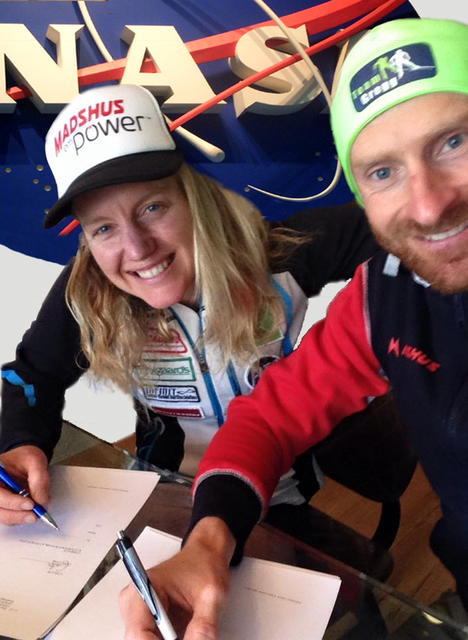
    Husband and wife Brian (r) and Caitlin Gregg recently signed an agreement with NASA to conduct a series of training blocks at zero gravity starting in June.
    Husband and wife Brian (r) and Caitlin Gregg recently signed an agreement with NASA to conduct a series of training blocks at zero gravity starting in June.

    Brian and Caitlin Gregg of Team Gregg have penned an agreement with the National Aeronautics and Space Administration (NASA) to conduct a series of training blocks at zero gravity. Extensive research has been completed on the benefits of high-altitude training, but very little is known about the effects of space on endurance performance.

    “We have found success with blocks of training at altitude and when the opportunity to explore a partnership with NASA came up we decided to look in to it,” Caitlin said. “We both have always wanted to travel to space. Although, we still have a lot of steps to take before the trip to the International Space Station (ISS).”

    The ISS orbits about 200-250 miles above the earth and at that altitude, Earth’s gravity is about 90 percent of what it is on the planet’s surface.

    Caitlin Gregg during NASA's initial testing in a microgravity pool earlier this week in Florida. (Courtesy photo)
    Caitlin Gregg during NASA’s initial testing in a microgravity pool earlier this week in Florida. (Courtesy photo)

    The Greggs were reached in Florida, where they are conducting initial testing and training with the astronauts in their specialized pool, which simulates micro gravity.

    “The pool is really quite a strange feeling,” Caitlin explained. “The greatest challenge will be not losing too much speed, since all movements are so slow.”

    “Water is relatively dense fluid and is available in huge quantity, so we can simulate microgravity in a pool by putting an astronaut into a suit and adjusting that suit’s weight until it neither floats nor sinks — making it neutrally buoyant,” explained resident scientist Kumar Harshit. “Once neutral buoyancy is established all the objects can move freely as in micro-gravitational field. The pool used to train astronauts for spacewalk at ISS, is 202 feet long, 101 feet wide, and 40 feet deep. Equipment which have higher density are covered by Styrofoam.”

    Brian is of particular interest for NASA in this endeavor as he is a twin. His brother Chad will be monitored before, after, and during the study to help quantify the effects of space on the body.

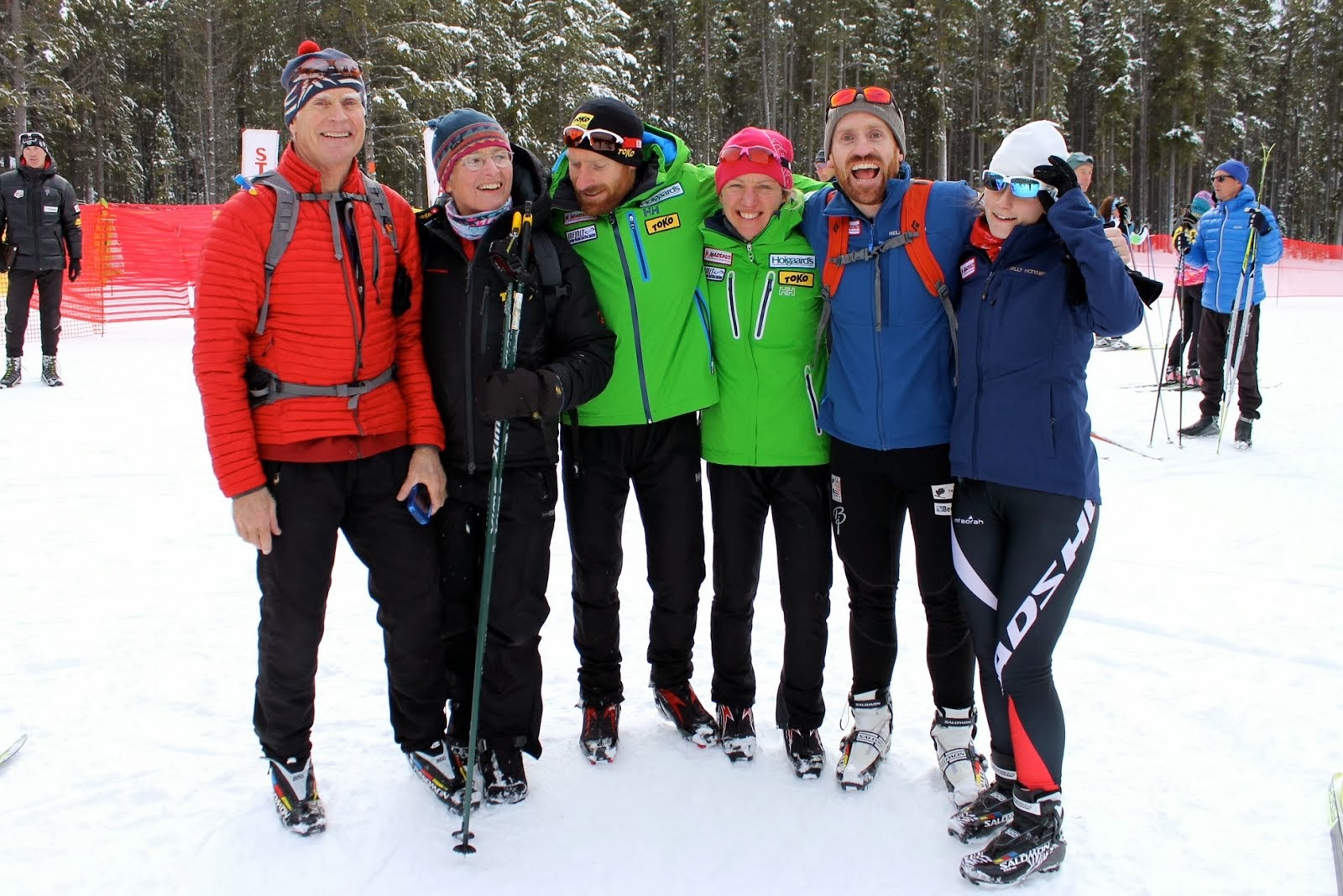
    The extended family that is Team Gregg, with Brian and Caitlin in green, and Brian's twin brother Chad (second from r) along with parents Jim and Jan (left and second from l), and Chad's wife Alieta Gregg (r) in 2013 in West Yellowstone, Mont.
    The extended family of Team Gregg, with Brian and Caitlin in green, and Brian’s twin brother Chad (second from r) along with parents Jim and Jan (left and second from l), and Chad’s wife Alieta (r) in 2013 in West Yellowstone, Mont.

    “Concept2 has actually designed a specialized travel SkiErg that we will be bringing with us to the space station for our training,” Brian said.

    This exercise tool will remain on the space station for all to use and has the Russians in particular excited.

    Initially one of the sticking points for the agreement was that the Greggs’ dog Lahti need to be able to join them for the trips.

    “We spend a lot of time away from him and I have really been looking forward to spending time with him,” Caitlin said.

    NASA conceded to let the pup join them to the space station, but were unable to agree to the costs and risks of bringing him home. Ultimately the Greggs decided to leave Lahti at home.

    If everything goes smoothly the Greggs will be looking at some super-high altitude time at zero gravity in the beginning of June after completing an on-snow training camp in Bend, Ore. The ISS camp would be 12 days with another possible camp in early August where they will look to avoid the high temperatures and humidity of the dog days of summer.

    “This is truly and exciting opportunity and their are still a lot of unknowns. We should know a lot more by tomorrow, April 2,” Brian said.

  • SkiErg Training Tips from Judy Geer

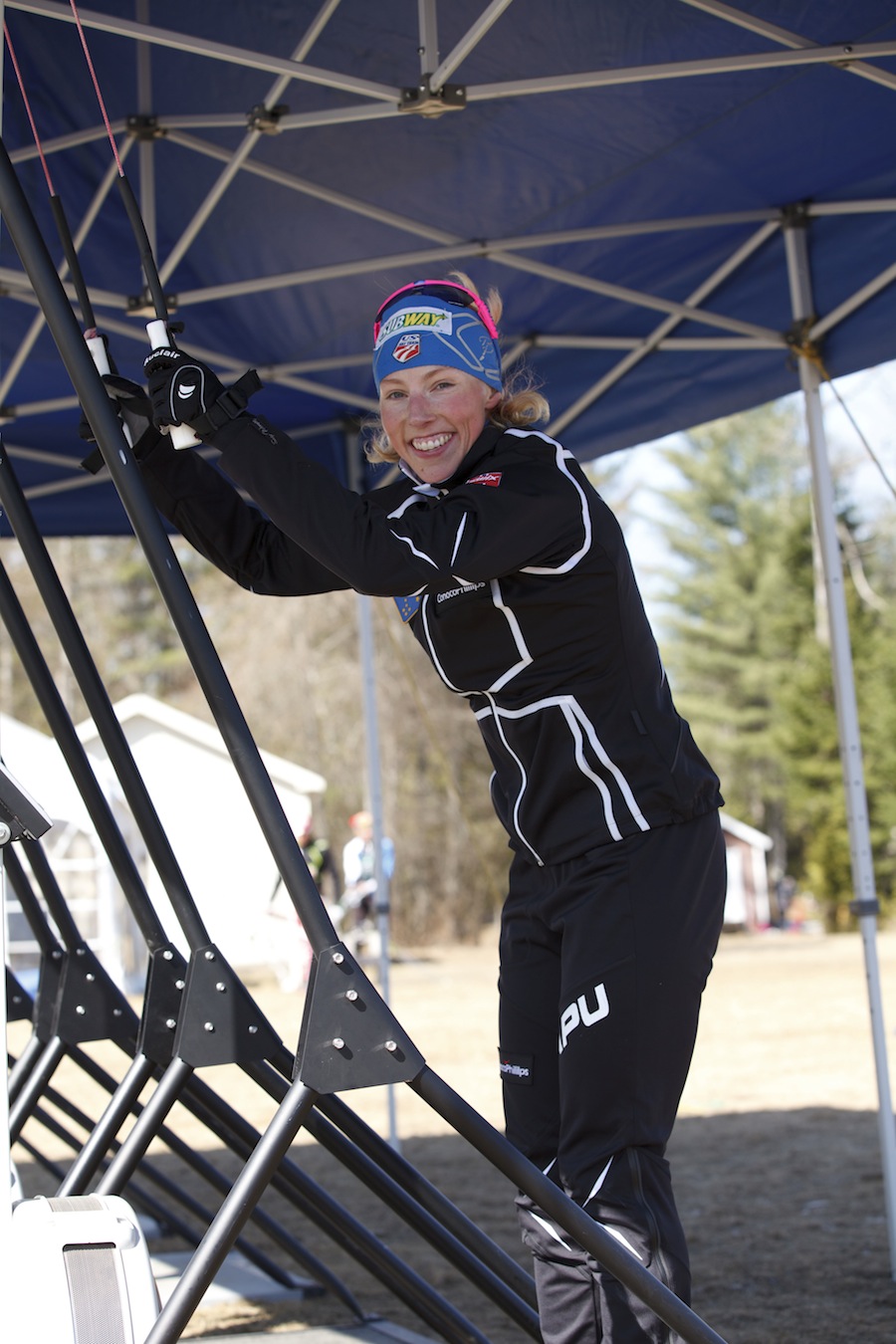
    The U.S. Ski Team's leading woman Kikkan Randall using the SkiErg. She's been using it this year to rehab an Achilles issue.
    The U.S. Ski Team’s leading woman Kikkan Randall having fun with the SkiErg. She’s been using it this year to rehab an Achilles issue.

    Know Where You’re Starting From!

    Over the past month, skiers and biathletes around the world have been getting back to training. For many of those at the upper levels, this means a round of testing. It might be VOmax testing on a treadmill or SkiErg, strength testing of various sorts, uphill runs, double pole rollerski time trials—there’s a wide variety, but the important point is that it makes good sense to test at the beginning of the training year so that you have a baseline from which to measure your progress.

    Most of us don’t have ready access to a rollerski treadmill, or a VOmax lab, so we find other ways to test ourselves. Ideally, the test(s) should be repeatable and accurately measurable, so that results can be compared from one time to another and offer meaningful guidance.

    If you have access to a SkiErg, it’s a good option testing option because it doesn’t have the innate variability of most outdoor tests. And the Performance Monitor is self-calibrating so tests can also be compared from one SkiErg to another. Compare your results with a friend in Europe, or across the US.

    Here are some test distances you might consider using in your own testing protocol. Several of these are also included in the Concept2 Online Ranking, and SkiErg Performance Series, so you can see how you stack up there as well.

    SkiErg by Concept2

    • Speed/Power: 30 seconds
    • Sprint: 1000m
    • Distance: 2000m
    • Distance: 5000m

    …and Make Sure You Get Where You Want to Go

    The one kind of training that we all hope to avoid is rehab, but sometimes it is unavoidable, whether due to overuse or accidental injury. The challenge becomes finding good training activities that can still be done without hindering the recovery of the injured body part. Recovery from injury demands patience, determination and creativity. On the bright side, these are all good attributes to develop and you may find new training modalities that you truly enjoy. And a lower body injury may help you make significant gains in upper body strength and power, and vice versa. But enough of the optimism!  Injuries are not something any skier wants to deal with.

    We’ve heard from a number of skiers who have found that the SkiErg can be a really helpful training tool during the rehab period for lower body injuries. Pull up a stool, or spin bike, and you can do any kind of workout you want: from intervals to distance. Or, if you can stand but can’t bend your knees, you can ski that way as well. Ideally, through your rehab period, you’ll be able to progress from seated to straight-leg standing to full use of your legs.

    We sincerely hope that it is not injury that introduces you to the SkiErg, but if it is, we hope you find it helpful and we wish you a speedy recovery!

  • Concept 2 Coming to Quebec World Cup

     Concept2 will be at the First FIS Cross Country World Cup in Quebec

    Leading Manufacturer partners with Fast and Female

    December 3, 2012 – Morrisville, VT – Concept2 is proud to be a Bronze sponsor of Fast and Female, an organization founded in 2005 by Olympic gold medalist Chandra Crawford and members of the Canadian National Cross-Country Ski team.

    As part of the sponsorship, Concept2 will be exhibiting at the first World Cup in Quebec, Canada, on December 7 and 8, 2012, and is providing Concept2 SkiErgs for athletes’ use. They will also be holding SkiErg contests during the two days of racing. The SkiErgs will then be donated to Fast and Female for their post-race Breakfast of Champions fundraising raffle on Sunday, December 9.

    Fast and Female is dedicated to the empowerment through sport of young women between 9 and 19. With an emphasis on cross-country skiing, biathlon and complimentary summer enduro-sports, Fast and Female hosts events led by athletic champions like Chandra Crawford and Kikkan Randall. These role models inspire girls to gain the confidence and leadership they need to reach their full potential in life and sports. In parallel, Fast and Female educates parents, coaches, and sports leaders to ensure they foster the most supportive environment for their young female athletes.

    ***

  • SkiErg World Sprints a Success Before Ski Season (Updated with Photos from Sweden)

    SkiErg World Sprints a Success Before Ski Season (Updated with Photos from Sweden)

    The SkiErg World Sprints in action earlier this month in Sweden, which was organized by FasterSkier Editor-at-Large Chelsea Little. (Concept2 photo)

    FOURTH ANNUAL SKIERG WORLD SPRINTS: Popular Competition Kicks off the Ski Season

    (Press release)

    November 16, 2012 – Morrisville, VT – The SkiErg World Sprints is an international race of 1000 meters on the Concept2 SkiErg. It’s held annually in homes, gyms, ski clubs and fitness centers around the world—all it takes is a SkiErg and interested people. Sometimes it’s a small group of friends in a home gym; other times it’s a sizeable public event. No matter the venue, the goal is the same—your best effort for 1000 meters.

    Swedish skiers get after it during the SkiErg World Sprints earlier this month. (Concept2 photo)

    This year’s event held November 9-11, 2012, drew 855 participants from nine countries, with ages ranging from 5 to 88. The fastest men’s time was 3:05.1, pulled by 36-year-old Ats Pärnaste of Estonia. The fastest women’s time was achieved by Anika Miller with a blistering 3:51.4. Since its inception, Miller has been a regular competitor at the SkiErg World Sprints at Rudy’s Gym in McCall, Idaho, and she’s only 17!

    All host sites with at least 20 participants were entered in a drawing for a new SkiErg. Club Form, of Littleton, Colorado, was the lucky winner.

    The SkiErg World Sprints, coordinated by Concept2 in Morrisville, Vermont, continues to grow each year. Participants around the world can accurately compare their times from one location to another because the SkiErg includes a self-calibrating Performance Monitor. The SkiErg provides measurable and specific training for Nordic skiers, while also offering a high-quality low impact exercise option for non-skiers of all ages. Concept2 offers rankings and challenges to help keep skiers motivated throughout the year. More information on the SkiErg is available at concept2.com/ski.

    Haven’t tried the SkiErg yet? You can use Concept2’s “SkiErg Finder” to locate a public SkiErg near you so you can give it a try.  http://www.concept2.com/skierg/finder.

    For full SkiErg Sprints results, visit: http://log.concept2.com/challenge/skierg/sprints12.asp

     ***

    Concept2 was founded by Dick and Peter Dreissigacker in 1976. Both competitive rowers and engineers, the two brothers designed and manufactured carbon fiber racing oars, then went on to create the world’s first air­resistance indoor rower. The SkiErg, launched in 2009, builds upon the Dreissigackers’ love of skiing and Concept2’s years of experience in designing and manufacturing high-performance training equipment. For more information about Concept2, visit concept2.com.

  • SkiErg World Sprints Set for Nov. 9-11

    Mark your calendars: 

    4th Annual SkiErg World Sprints will be held November 9–11, 2012

    This 1000-meter race allows you to compare your time against others worldwide in a one-weekend showdown of speed. See how you stack up before you strap on your skis for the season!

    How it works: Race 1000 meters on the Concept2 SkiErg at your club, school or home, November 9–11, 2012. Post your time to the Concept2 logbook by 5 p.m. Monday, November 12, 2012. The winners of each age group will receive a special prize; prizes will also be awarded for the top three times in each age group.

    Don’t have a SkiErg? Find one near you to participate.

    We expect there will be challenges to the current records in all age groups. View last year’s results and get ready to race!

    Happy skiing!

  • Madison Brings Snow for SuperTour (Photo Gallery)

    Madison Brings Snow for SuperTour (Photo Gallery)

    All 2012 Madison SuperTour and American Birkebeiner coverage is brought to you through the generous support of Concept 2, makers of the SkiErg.

    MADISON, Wis. — Here’s a look at how SuperTour race organizers make a city sprint possible in downtown Madison. Starting at 6 p.m. on Friday, some 90 trucks carted manmade snow from an energy facility about a mile or two from Wisconsin’s State Capitol and dumped it on the city streets surrounding the square.

    Madison’s Don Miller Subaru SuperTour features 1 k classic sprints on Saturday, and 1 k freestyle sprints on Sunday. Click here for the event website, and check back for complete race coverage.


  • Concept2 Holiday Challenge Raises Over $31,000

    Concept2 Holiday Challenge Raises Over $31,000


    Concept2 Model D SkiErg

    Vermont Company’s Customers Work Out to Support Disaster Relief Organizations

    Participants in Concept2’s 12th Annual Holiday Challenge not only rowed or skied millions of meters between Thanksgiving and Christmas Eve, they also helped raise over $31,000 for disaster relief organizations, including one that supports the company’s home state of Vermont in the aftermath of Hurricane Irene.

    Concept2 Model D Indoor Rower

    Every year, Concept2, the leading manufacturer of rowing machines, hosts a Holiday Challenge, asking its customers worldwide to row or ski either 100K or 200K between Thanksgiving and Christmas. Over 5900 individuals rowed or skied their way to fitness during the challenge while supporting organizations whose mission it is to offer disaster relief to affected people around the world. Nearly 1.3 billion meters were completed.

    For every person who completed 100K during the challenge, Concept2 donated $.02 for every kilometer (1000 meters) to one of the following organizations: Vermont Disaster Relief Fund (vt211.org), American Red Cross Disaster Relief-International (redcross.org), Unicef—Emergency Relief Programs (unicef.org). For each kilometer beyond 100k, Concept2 donated an additional $.04.
    Participants entered their meters into Concept2’s Online Logbook—a tool that allows participants to track their meters and see the donations accumulate. Throughout the year, rowers can use the Concept2 Online Logbook to monitor their progress, rank their best workouts, and interact in a virtual community.

    “Working out for disaster relief was a rewarding way to end 2011, a year scarred with tsunamis, earthquakes, tornados, and flooding” explained Concept2’s Meredith Haff. The Vermont Disaster Relief Fund was the most popular choice amongst athletes.  “We are touched that our customers worked so hard to help our neighbors in need.  This is a reflection of our customers’ commitment and support.”

    Concept2 extends its thanks to all of this year’s Holiday Challenge participants for helping to make this group effort such a success.


    Concept2 was founded by Dick and Peter Dreissigacker in 1976. Fresh from Olympic training, the two brothers designed and manufactured carbon fiber racing oars, then went on to create the world’s first air-resistance indoor rower. The SkiErg, launched in 2009, builds upon Concept2’s years of experience in designing and manufacturing high-performance training equipment. For more information about Concept2, visit concept2.com.

  • SkiErg World Sprints Attract Old and New Talent Alike

    SkiErg World Sprints Attract Old and New Talent Alike

    A participant in the 2011 SkiErg sprints.
    A participant in the 2011 SkiErg sprints.

    November 18, 2011 – Morrisville, VT – While many ski races in Scandinavia were being canceled due to lack of snow, the 3rd Annual  SkiErg World Sprints took place last weekend in locations around the world and drew a record number of participants. Races were hosted by ski clubs, high school ski teams, CrossFit gyms, fitness centers, and elementary schools, in ten different countries, with competitors ranging in age from 5 to 80. There were over 800 participants—a 50% increase over last year!

    Both skiers and non-skiers alike earned top finishes. Christopher McLaughlin, who uses the SkiErg at home for fitness, is the overall men’s winner for the second year in a row with a time of 3:04.3, while Jennie Bender, also last year’s winner, won the women’s event with a time of 3:52.9. Other results of note include a tie for second place overall and first place in the men’s 30-39 category. Jack Nunn of California and Ats Pärnaste of Estonia both came in with a time of 03:12.9.

    McLaughlin, 40, of New Jersey, started rowing and skiing after years of lifting, work and running had injured his knees. The Concept2 Indoor Rower and SkiErg provide him with a low impact, full-body workout. He uses the Concept2 rankings and logbook for motivation while he works out at home.

    On the women’s side, Jennie Bender is a strong US skier living in Minnesota and training with the CXC program in Wisconsin. The SkiErg is a regular part of her training program, especially when she can’t get out on rollerskis due to darkness or bad weather. In the next couple weeks she’ll start her competitive season on snow.

    In the adaptive field, the men’s win goes to aspiring paralympian for Biathlon David Leach of New York with a time of 4:03.9 (LTA) and the women’s  to Christina Kouros (TA)of Maine in 6:56.0. Kouros is one of the first sit skiers to compete in high school ski races. Full SkiErg World Sprints results can be found here.

    All host sites with at least 20 participants were entered in a drawing for a new SkiErg. Pat’s Gym in Madison, Wisconsin was the lucky winner.

    The SkiErg World Sprints, coordinated by Concept2 in Morrisville, Vermont, is an annual indoor ski race of 1000 meters on the Concept2 SkiErg held in locations around the world. Participants can accurately compare their times from one location to another because the SkiErg includes a self-calibrating Performance Monitor. The SkiErg provides measurable and specific training for Nordic skiers, while also offering a high-quality low impact exercise option for non-skiers of all ages. Concept2 offers rankings and challenges to help keep skiers motivated throughout the year. More information on the SkiErg is available at concept2.com/ski.

    Concept2 was founded by Dick and Peter Dreissigacker in 1976. Both competitive rowers and engineers, the two brothers designed and manufactured carbon fiber racing oars, then went on to create the world’s first air­resistance indoor rower. The SkiErg, launched in 2009, builds upon the Dreissigackers’ love of skiing and Concept2’s years of experience in designing and manufacturing high-performance training equipment. For more information about Concept2, visit concept2.com.

  • 3rd Annual SkiErg World Sprints

    3rd Annual SkiErg World Sprints

    Morrisville, VT – Each year in November, we offer SkiErg users the opportunity to “race” with others around the world during the SkiErg World Sprints. If you’re an on-snow skier waiting for the snow to fall, this is a great way to pass the time. If you’re not a skier but just like the challenge of setting a personal best on the SkiErg—here’s your chance. No matter what your inspiration, we hope you’ll join us for the 3rd Annual SkiErg World Sprints Indoor Skiing Competition.

    This 1000 meter race will be held November 11-13, 2011 at locations throughout the world. The comparable, repeatable results of the SkiErg Performance Monitor allow anyone with access to a Concept2 SkiErg to race against others on a fair, measurable “course.”

    The event is open to anyone who’d like to join the fun. If you’d like to host a race, please email joshc@concept2.com for more information.

    Can’t travel to a Sprints location? If you have your own SkiErg, you can join in from your home! You can even invite friends and teammates over to join you. Pre-set the Performance Monitor for a 1000 meter piece and “race” any time between November 11-13, 2011. Submit your time to the Concept2 Online Logbook to be included in the official race results.

    Concept2 will award prizes for overall men’s and women’s winners, and the top three finishers in each age group and gender. We hope you’ll join the fun!

    Concept2 was founded in 1976 by Dick and Peter Dreissigacker. After competing internationally in the sport of rowing, the two brothers designed the first carbon fiber racing oars, and then went on to create the world’s first air resistance indoor rower. Living in northern Vermont, they quickly adopted Nordic skiing as terrific cross-training for rowing and a great way to enjoy winters in the north country. The SkiErg, launched in 2009, builds upon Concept2’s years of experience in designing and manufacturing high-performance training equipment. For more information about Concept2, visit concept2.com.

  • Concept2 Announces Current SkiErg World Records

    Concept2 Announces Current SkiErg World Records

    Working hard on the Concept2 SkiErg (Photo: Gym Jones)

    Morrisville, VT Just in case you’re curious, or have a competitive streak, here are the fastest SkiErg times recorded for a variety of distances since the Concept2 SkiErg was introduced in June of 2009. Some of these times come from competitive Nordic skiers; others come from the fitness/cross-training community.

    antabuse

    To see all the ranked SkiErg performances, with athletes’ names and home country, visit http://www.concept2.com/sranking03/rankings.asp and select the SkiErg button.

    Event Men’s record Women’s record
    500m 1:24.0 1:48.0
    1000m 2:59.7 3:44.2
    2000m 6:30.9 7:56.0
    5000m 17:24.3 21:05.9
    10k 36:38.3 47:05.6

    Records are set to be broken! It’s free and easy to submit a time online. Visit www.concept2.com/ski and click on Logbook.

    Need a bit of inspiration, or at least entertainment?  Pete Dreissigacker and Greg Hammond of Concept2 challenged each other to a 500m challenge on the SkiErg. You can see the lactic acid accumulation in their facial expressions. Enjoy!  http://www.youtube.com/watch?v=MLmFLzYk1Gk

    Ski season will be here soon (Photo: Kris Dobie)


    Concept2 was founded by Dick and Peter Dreissigacker in 1976. Both competitive rowers and engineers, the two brothers designed and manufactured carbon fiber racing oars, then went on to create the world’s first air­resistance indoor rower. The SkiErg, launched in 2009, builds upon the Dreissigackers’ love of skiing and Concept2’s years of experience in designing and manufacturing high-performance training equipment. For more information about Concept2, visit concept2.com.


  • Concept2 Offers Web-Based SkiErg Performance Series

    Morrisville, VT – Skiers have had limited options for controlled performance testing: not everyone has access to a rollerski treadmill, rollerskis vary significantly in speed, and running time trials aren’t especially ski-specific.


    To help address this need, Concept2 has developed a web-based testing series using the Concept2 SkiErg. The SkiErg Performance Series is a program of consistent, scheduled testing over a range of test distances designed to inform smart training. The web component enables skiers to log and compare their results, from test to test and skier to skier. The series spans the dryland training season starting in May when skiers get back to serious training, and ending in November when races begin on snow. Additional intermediate test periods are offered in July and September, to monitor training along the way.


    The SkiErg, with its accurate Performance Monitor (PM), offers coaches and athletes a training and testing tool that is ski-specific, controlled and comparable. The SkiErg provides useful data and is a measure of a skier’s potential performance.


    Here is a snapshot of the test periods and distances:

    Test Periods: (test may be performed at any time during the month)

    • • Post-season: May 1–31
    • • Early summer: July 1–31
    • • End of summer: September 1–30
    • • Pre-season: November 1–30

    Test Distances:

    • • Speed/Power: 30 seconds
    • • Sprint: 1000m
    • • Distance:2000m, especially for J2 and younger skiers
    • • Distance: 5000m


    Skiers and coaches worldwide are encouraged to submit scores for all or any of the test distances in each of the four test periods so progress can be monitored. Visit skierg.com/logbook/performance-series for complete details including how to submit scores to the online logbook.


    Results will be posted and archived on the Concept2 Logbook so that coaches and athletes may refer back to historical data.


    Concept2 was founded by Dick and Peter Dreissigacker in 1976. Both competitive rowers and engineers, the two brothers designed and manufactured carbon fiber racing oars, then went on to create the world’s first air­resistance indoor rower. The SkiErg, launched in 2009, builds upon the Dreissigackers’ love of skiing and Concept2’s years of experience in designing and manufacturing high-performance training equipment. For more information about Concept2, visit concept2.com.


  • Concept2: Ski Train Without Snow

    Measure Results Now for a Faster Season next Year

    March 31, 2011 – As the winter racing season draws to a close, skiers around the world are asking themselves and their coaches the following question: How can I train better now so I’m faster next winter?

    While there is no single training method or modality that will make the difference for everyone, there are tools that everyone can use to guide their workouts and make sure that their training is working. Now is a good time to take stock of your available tools and be sure you are using them to your greatest advantage.

    Tools seem to fall into two general categories: those that help you gauge and control the intensity of your training and those that measure the effectiveness of your training. In the first category would be heart rate monitoring, lactate testing and physiological (VO2) testing, in increasing order of cost and complexity. The mainstay of the second category is good old-fashioned time trials.

    Time trials can be a very effective way to measure progress and identify training gaps. The key is to establish specific tests that relate as closely as possible to the work and motion of skiing and that can be repeated periodically under stable conditions. For example, a 3k run on a track is quite repeatable as long as you don’t run into uncooperative weather conditions. It’s not the most direct measure of skiing ability, but does give a good measure of general fitness. Rollerski time trials do a better job of simulating the technique and specific demands of skiing, yet the accuracy may be significantly affected by the rollerskis themselves. It’s important to use the same rollerskis—even the same wheels—if you want repeatable results that can be compared from person to person and test to test. Timed strength tests can measure a skier’s improvement in exercises related to skiing, and uphill runs and uphill double poling on rollerskis are some other time trials commonly used.

    One of the newer time trial options is the Concept2 SkiErg, which has been gradually finding its way into more and more ski training locations around the world since its introduction in June 2009. It offers a close simulation of the poling motion of skiing, complete with the involvement of the core and the legs. A recent analysis of the biomechanical similarity can be found at http://www.biorow.com/RBN_en_2010_files/2010RowBiomNews12.pdf. The SkiErg is also one of very few ski training tools to offer accurate measurement of performance. The standard onboard Performance Monitor gives instant feedback on each pull as well as cumulative time, distance and pace data. It’s self-calibrating to take local variables such as elevation into account, so tests results can always be compared from one day to another and from one SkiErg to another.

    Whatever the tools you use to guide your training and measure your progress, the sooner you build them into your program the better. As you develop your training plans for the upcoming dryland season, be sure to include a schedule of periodic tests and time trials.


    Concept2 was founded by Dick and Peter Dreissigacker in 1976. Both competitive rowers and engineers, the two brothers designed and manufactured carbon fiber racing oars, then went on to create the world’s first air­resistance indoor rower. The SkiErg, launched in 2009, builds upon the Dreissigackers’ love of skiing and Concept2’s years of experience in designing and manufacturing high-performance training equipment. For more information about Concept2, visit concept2.com.


  • SkiErg World Sprints Attracts New Talent

    Morrisville, VT – Both skiers and non-skiers alike succeeded in the 2nd Annual SkiErg World Sprints; Christopher McLaughlin, who uses the SkiErg at home for fitness, set a new men’s world- record time of 3:01.9, while CXC Team Vertical Limit member Jennie Bender won the women’s event in 3:51.6.

    McLaughlin, 39, started rowing and skiing after years of lifting, work and running hurt his knees. The Concept2 Indoor Rower and SkiErg provided him with a low-impact full-body workout. He uses the Concept2 rankings and logbook for motivation while he works out at home. When asked about his new World Record, McLaughlin humbly replied “I’m sure there are guys out there who are faster than me, they just haven’t surfaced yet”.

    On the women’s side, winner Jennie Bender, who has skied at the 2008 and 2009 World Junior and U23 Championships, has been using the Concept2 SkiErg for training with CXC Team Vertical limit, a post-collegiate program that supports athletes with elite aspirations. “[The SkiErg] is good for analyzing double-pole technique and getting in a hard effort inside that’s ski-specific” says Bender. Bender competed at The Fix Studio in Minneapolis, MN, which hosted a SkiErg World Sprints race as a fundraiser for her and fellow Olympic hopeful Matt Leibsch.

    The SkiErg World Sprints, hosted by Concept2 CTS on November 12-14, had over 500 participants from 10 countries skiing 1000 meters on the Concept2 SkiErg between November 12 and 14. Participants can compare their times because each SkiErg includes a self-calibrating Performance Monitor. As Bender noted, “Ski racing has so many variables that make comparisons difficult, that its cool to have a universal competition for skiers all over the world.” Skiers submitted their time to be ranked at Concept2 to see how they compare before the official ski season begins.

    Athletes from age 5 to 86 participated in this year’s World Sprints; the SkiErg is a low-impact exercise suitable for all ages. Concept2 offers rankings and challenges to help keep skiers motivated throughout the year. More information on the SkiErg is available at concept2.com/ski.

    Concept2 was founded by Dick and Peter Dreissigacker in 1976. Fresh from Olympic training, the two brothers designed and manufactured carbon fiber racing oars, then went on to create the world’s first air-resistance indoor rower. The SkiErg, launched in 2009, builds upon Concept2’s years of experience in designing and manufacturing high-performance training equipment. For more information about Concept2, visit concept2.com.

  • Concept2 Launches Facebook Application

    Concept2 Launches Facebook Application

    Concept2, manufacturer of the Concept2 Indoor Rower and new SkiErg, has released a Facebook application designed to help friends track and share rowing or Nordic skiing workouts.

    Concept2 Facebook Application
    Concept2 Facebook Application

    “Seeing your friends’ workouts is motivating,” explains Concept2’s Meredith Haff, “because you can see what your teammates or fellow competitors are doing, and support each other while you try to improve.”  The application currently has over 2000 monthly active users.

    To use the application the user must have an account on both Facebook and the Concept2 Online Logbook. The application enables the user to add a box on their Facebook profile that shows the details of their last workout and a summary of past workouts. A special Logbook tab can be added to a Facebook profile that shows recent workouts in greater depth, and allows for the viewing of workouts of Facebook friends who have also added the application.

    The Concept2 Online Logbook is a free web-based application that allows you to record your workouts, track your total meters and, if you choose to, compare your times with other athletes from around the world. You can also participate in the many individual and team rowing or skiing challenges throughout the year.

    The application works for all the different types of workouts entered in the Concept2 online logbook, so whether it’s on-water rowing, indoor rowing or skiing on the new SkiErg, friends and family can keep up-to-date with what you’ve been doing.

    Adding the application is easy. Just log on to concept2.com/facebook and follow the instructions.

  • Concept2’s 10th Annual Holiday Challenge

    WORK OUT TO FEED OTHERS IN CONCEPT2’S ANNUAL HOLIDAY CHALLENGE

     Concept2’s 10th Annual Holiday Challenge to Benefit Food-Related Organizations

     With holiday foods everywhere you turn this time of year, Concept2 offers a way to fend off holiday weight gain and stress while helping others in need with the 10th Annual Holiday Challenge. This year, the Holiday Challenge helps put food on the table for struggling families by supporting organizations whose mission it is to make sure our food is healthy, sustainable and that no one goes hungry.

     Participants choose an exercise goal of 100K or 200K to complete between Thanksgiving and Christmas, and then record their progress online in the free Concept2 Online Logbook. The Holiday Challenge rewards motivation and perseverance, not speed. Finishers are recognized with certificates of completion and honorary pins. In the past ten years, Concept2 rowers have rowed over 5.3 trillion meters! To include even more participants, Concept2 invites skiers to include their Concept2 SkiErg meters as well.

     For every person who rows or skis at least 100K during the challenge, Concept2 will donate $.02 for every kilometer (1000 meters) to one of the following organizations: Oxfam International (oxfam.org), Slow Food USA (slowfoodusa.org), Feeding America (feedingamerica.org) and The Center for an Agricultural Economy (hardwickagriculture.org). For each kilometer beyond 100K, Concept2 will donate an additional $.04. There are awards in kids and adaptive categories as well.

     “Keeping fit and eating healthy can be especially challenging at this time of year,” explains Concept2 Co-Founder Judy Geer, “and the Holiday Challenge provides a great goal to help participants stay focused.” The Holiday Challenge provides incentive to stay healthy during the holidays while also helping those in need. The not-for-profit organizations in this year’s Holiday Challenge were chosen based on their efficient use of funding, reputation and unique programming. Participants have a choice of which organization they choose to support.

     In 2008, Concept2 first supported charitable causes through the Holiday Challenge; over $26,000 was raised for organizations working on environmental issues. This year’s goal to raise $30,000 requires the dedication of rowers and skiers to join together for a good cause, one meter at a time.

     For more information on the 10th Annual Online Holiday Challenge, or for details on where to find a Concept2 Indoor Rower at a health facility near you, please visit www.concept2.com.

                                                                         * * * * *

    Concept2 was founded by Dick and Peter Dreissigacker in 1976. Fresh from Olympic training, the two brothers designed and manufactured carbon fiber racing oars, then went on to create the world’s first air-resistance indoor rower. The SkiErg, launched in 2009, builds upon Concept2’s years of experience in designing and manufacturing high-performance training equipment. For more information about Concept2, visit concept2.com.

  • New Records Set in First Ever SkiErg World Sprints

    New Records Set in First Ever SkiErg World Sprints

    Morrisville, VT – In less than 4 minutes, world records were broken and history was made as two US Biathletes, Jennifer Wygant and Zachary Hall, skied their way to victory in the first annual SkiErg World Sprints.

    “The race was tough… My main goal was to sustain a consistent pace through the entire race. However, I also had some teammates go before me, so I had some times to try and beat” explains Wygant. Wygant held on to a 3.5 second lead over her closest competition, with a final time of 3:45.3. Hall completed the 1000 meters in 3:14.6. More details and results can be found at www.skierg.com/news.

    Over 400 participants skied 1000 meters on the Concept2 SkiErg, an indoor training tool that makes it possible for Nordic skiers to race without snow on a fair measurable course. Each SkiErg includes a self-calibrating Performance Monitor that gives skiers accurate, comparable feedback. This allows skiers to assess output, monitor progress, and compare scores with others. As Hall noted, “since there are few ways to consistently measure fitness against athletes with whom you do not regularly train, it’s great to have a tool like the SkiErg to set up time trials or fun races to see how you stack up.”

    Skiers raced at one of over 30 satellite locations, from Idaho to Norway, and submitted their best times to Concept2 to be ranked in the SkiErg World Sprints. Both Wygant and Hall raced in Lake Placid, New York, where they are hopefuls training for the 2010 Vancouver Olympics.

    Athletes of all ages, from age 9 to 77, participated with the single goal of racing their best time. George Hall, 74, set a new world record for his age group with a time of 4:21.7. “The Sprints were very different with so many others there and so much vocal encouragement. It was a much better output than I ever did alone!”

    Concept2, the leading manufacturer of racing oars and rowing machines, has experience with indoor racing for outdoor pursuits. The annual C.R.A.S.H.-B. Sprints World Indoor Rowing Championship, hosted each February, challenges rowers to 2000-meter sprints on the Concept2 Indoor Rower. US Olympic and World Team athletes began the championship as a way to break up the monotony of winter training with some competition. For skiers, the SkiErg World Sprints allows athletes to measure their fitness just before the competitive racing season begins.

    The SkiErg World Sprints were open to anyone with access to a SkiErg, which encouraged both skiers and fitness enthusiasts to race. The low-impact, high calorie-burning exercise of skiing is suitable for all ages and abilities, making it a terrific exercise for the entire body. More information on the SkiErg is available at concept2.com/ski.

    Concept2 was founded by Dick and Peter Dreissigacker in 1976. Fresh from Olympic training, the two brothers designed and manufactured carbon fiber racing oars, then went on to create the world’s first air-resistance indoor rower. The SkiErg, launched in 2009, builds upon Concept2’s years of experience in designing and manufacturing high-performance training equipment. For more information about Concept2, visit concept2.com.

    Williams College skiers Robby Cuthbert and Alex Taylor hammer it out during their SkiErg race.
    Williams College skiers Robby Cuthbert and Alex Taylor hammer it out during their SkiErg race.
    Hannah Hausman and Holly Whitney of Williams College going for it.
    Hannah Hausman and Holly Whitney of Williams College going for it.
    Williams College skier Dimitri Luthi being cheered on by teammate Evan Dethier.
    Williams College skier Dimitri Luthi being cheered on by teammate Evan Dethier.

  • The First Annual SkiErg World Sprints

    Here in northern Vermont, we are itching for snow but we know we still have weeks to wait.  To help pass the time, we’re excited to present the 1st Annual SkiErg World Sprints Indoor Skiing Competition. An indoor skiing race? OK, it’s a bit wacky – but rowers have been doing it for years, and finding that it’s a great workout and a fun way to get through the last bit of the dryland season. The comparable, repeatable results of the SkiErg Performance Monitor allow anyone with access to a Concept2 SkiErg to race against others on a fair, measurable course.  This 1000 meter race will occur November 14-15, 2009 at locations throughout the world. Can’t travel to a Sprints location? Join in from your home! The official home race venue will be the Craftsbury Outdoor Center, where racing will take place on November 14 from 1 p.m. to 5 p.m. (RSVP here).  The event is open to anyone who’d like to join the fun.   But if you can’t get to Craftsbury, an ever-growing number of satellite races will take place at locations around the world on the weekend of November 14-15. See current list of events below.  Additional locations will be added to this list as we hear about them! If you are interested in learning more about hosting your own Sprints, email Meredith at Concept2. Have your own SkiErg and want to join in from home?  Race your best 1000 meter piece and submit it to the Concept2 Rankings on November 14 or 15, 2009 to be included in the official race results. All participants at satellite events will receive prizes; prizes will also be awarded randomly and for any new records set in each age group and gender.  We hope you’ll join the fun! SkiErg World Sprints Locations (Watch http://www.skierg.com/news for additions to this calendar.) Please contact the individuals below for more details and times for satellite SkiErg World Sprints events. New England

    Bates College Lewiston, ME Becky Woods, rwoods@bates.edu
    Bowdoin College Brunswick, ME Nathan Alsobrook, nalsobro@bowdoin.edu
    Colby College Waterville, ME Tracey Cote,  tacote@colby.edu
    Craftsbury Outdoor Center Craftsbury, VT Oliver Burruss, oburruss@gmail.com
    CrossFit USA Berlin, CT Merle McKenzie, trainermerle@att.net
    Green Mountain Valley School Waitsfield, VT Justin Beckwith jbeckwith@gmvs.org
    Mt. Mansfield Nordic Jericho, VT Don Harmeyer marmotdude@aol.com
    Northeast Passage Durham, NH Cathy Thompson, Cathy.Thompson@unh.edu Cory Schwartz, Cory.Schwartz@unh.edu
    Stratton Mountain School Stratton, VT Sverre Caldwell, scaldwel@gosms.org
    Williams College Williamstown, MA Aubrey Smith, Aubrey.M.Smith@williams.edu

    Mid-Atlantic

    Olympic Training Center Lake Placid, NY Patrick Coffey, ptrck.coffey@gmail.com

    Mid-West

    U Can Row 2 Inc. Houghton, MI Terry Smythe, tsmythe@chartermi.net

    West

    Idaho Nordic Boise, ID Joe Jensen JJensen@aceco.com
    Sun Valley SEF Sun Valley, ID Rick Kappala, xcolaf@mindspring.com
    University of Utah Salt Lake City, UT Eli Brown, ebrown@huntsman.utah.edu

    South

    Velocity Sports Performance Franklin, TN Amy Cotta, AMYCOTTA@COMCAST.NET

    Worldwide: Austria Czech Republic Estonia Italy United Kingdom Please contact your local Concept2 dealer for details. Concept2 SkiErg - logo