Tag: continuous bounding

  • Wednesday Workout: Throwback ‘Continuous Bounding’ with Ivan Babikov

    Wednesday Workout: Throwback ‘Continuous Bounding’ with Ivan Babikov

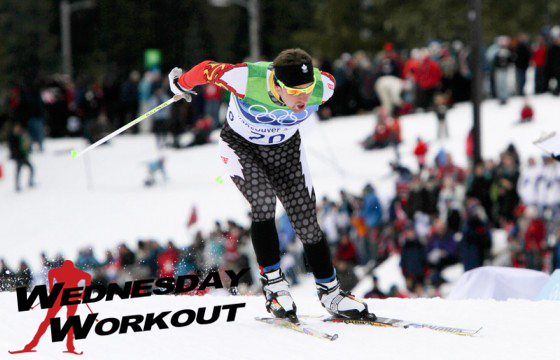
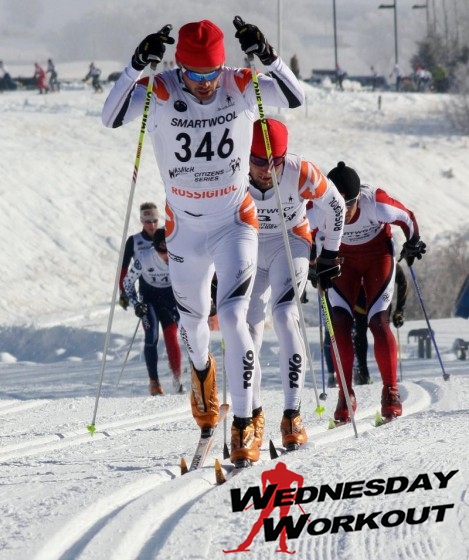
    Ivan Babikov (Canadian World Cup Team) racing to eighth in the 15 k freestyle at the 2010 Vancouver Olympics.
    Ivan Babikov (Canadian World Cup Team) racing to eighth in the 15 k freestyle at the 2010 Vancouver Olympics.

    For this week’s workout, we went back in time five-plus years to a session Canadian World Cup Team veteran Ivan Babikov shared with us in August 2010. The following comes from his days with the Russian national team and involves continuous-and-varied bounding intervals — and it’s brutal.  See the original pro workout here.

    ***

    [circa August 2010]

    The harder the race, the greater the chance you’ll see Ivan Babikov at the top of the result sheet. So it’s no surprise that he uses a brutally difficult training session to prepare himself for the winter.

    In an interview from his home in Canmore, Babikov said that this workout – a variation on bounding intervals – was a holdover from his younger days training in Russia.

    In Canada, Babikov said, most athletes do their bounding on a single hill, “up and down and up and down.” His version is more continuous, and more varied: following the five-kilometer World Cup loop at the Canmore Nordic Center, Babikov bounds all of the climbs, and use the flats and descents for recovery.
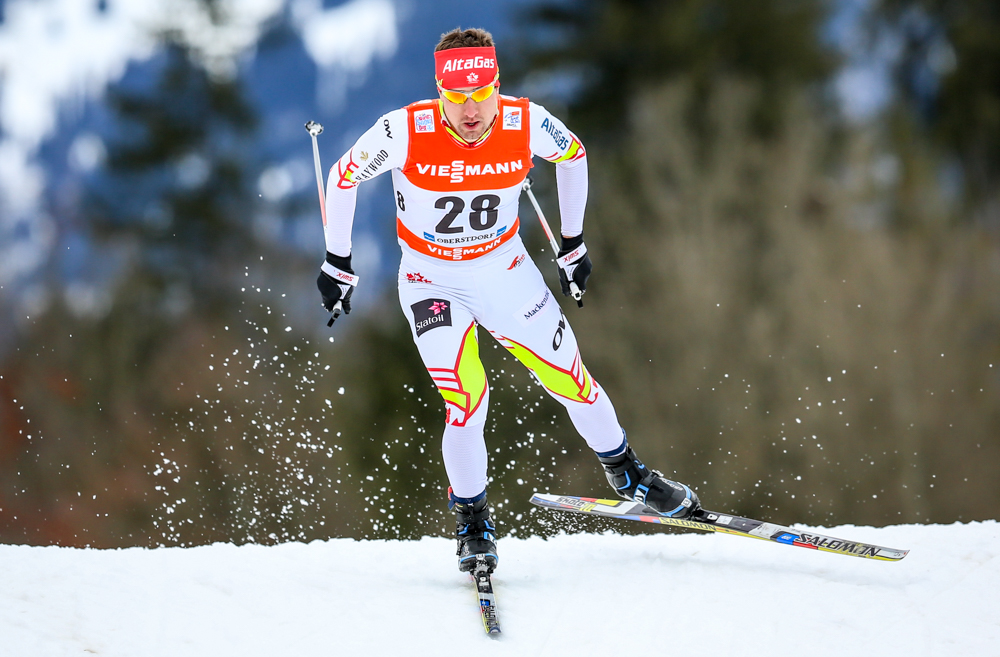
    Canada's Ivan Babikov placed 57th in the 4 k freestyle prologue to start the 2015 Tour de Ski on Jan. 3 in Oberstdorf, Germany. (Photo: Marcel Hilger)
    Canada’s Ivan Babikov racing in the opening stage of the 2015 Tour de Ski, the 4 k freestyle prologue, on Jan. 3 in Oberstdorf, Germany. (Photo: Marcel Hilger)

    Before starting the business end of the workout, Babikov said that he usually pedals his bike to the nordic center from his home in Canmore as a warm-up. He brings standard-length classic poles, rather than the shorter ones that athletes often use for bounding – “so I can reach higher.”

    The workout itself is nothing fancy. Babikov will start off running along the trail at the nordic center, and then begins bounding whenever he gets to an uphill. The technique he uses is a full bound — not like moosehoofs or ski walking.

    “I just do strong, powerfull, uphill, long strides….It’s really like striding; it’s not like running,” he said. “It looks like skiing tempo.”

    Proper technique and intensity pegs Babikov’s heart rate at Zone 3 on the climbs, with the occasional foray into Zone 4. “The longer [the] uphill and the steeper [the] uphill, the higher it gets,” he said.

    When Babikov gets to the top of a hill, he doesn’t stop — he just switches to normal running. It’s not an easy pace, either — just enough to recover to the point where he can work harder on the next climb. He said he usually stays in Zone 2, “just to get the breath back.”

    “You switch right away [at the crest of each climb]. It’s really, really hard, but that’s the point of the training….you’re lactated and really tired,” he said. “That’s how you get in the race — it’s the same. You go hard, hard, hard, but at the top of the uphill is where the best are dropping other guys.”

    Usually, Babikov will complete three or four loops of the 5 k at the nordic center, for a total of two to two-and-a-half hours of training. He likes using the cross-country trails because they offer the same rolling terrain that he’s faced with in winter.

    The workout is “really hard on the legs,” and Babikov ends the session “exhausted.” But the benefits are numerous.

    “I think it’s where I get my strong legs from,” he said, adding that the bounding also helps with core and endurance.

    In Russia, he said that skiers do this type of training all the time, even twice a week. Readers may want to start by trying workout once a week, and perhaps for less than Babikov’s two to two-and-a-half hours.

    The workout: Continuous bounding intervals

    Warmup: Ride your bike to training site

    Bring: Standard-length classic poles

    Start: by trail running, preferably on cross-country trails, then bound (explosive, full bound) when you reach an uphill (should be in Zone 3, occasionally Zone 4)

    At top of each hill: resume running at a pace that is just enough to recover (Zone 2). Resume bounding whenever you reach an uphill.

    Work up to: 3-4 five-kilometer loops, or 2 1/2 hours of training, potentially more than once a week
  • Wednesday Workout: Bound Into Dryland with Andrew Johnson

    Wednesday Workout: Bound Into Dryland with Andrew Johnson

    Former Steinbock Racing skier Andrew Johnson dominating in 2009. (Photo: Toko)
    Former Steinbock Racing skier Andrew Johnson dominating in 2009. (Photo: Toko)
    Welcome to Wednesday Workout, our training series on FasterSkier. During the offseason, we’ll feature components of summer programs from top individuals and teams from throughout the U.S. and Canada at the high school, college and elite club levels. Now get outside and get to work!
    ***
    In the summer of 1996, a promising junior skier named Andrew Johnson attended a training camp in Marquette, Mich., and came away with a workout he would later call on during his eight years with the U.S. Ski Team.

    Now the new coach of the Middlebury College Nordic Team, Johnson continues to use the workout with the athletes under his direction.

    What you need: bounding poles, rolling terrain (ideally an 8-12 minute loop of a ski trail to monitor pacing).

    The workout:

    • 30 minute warmup
    • 25-60 constant L2 on rolling terrain, with poles
    • Cool down

    “The workout instruction is to run the flats and downhills at about a level 2 pace and ski-bound the uphills,” Johnson explained.

    After a 30-minute warmup, the duration of the workout for Johnson’s college skiers is 25 to 60 minutes, depending on time of year, athlete ability and level of exertion during the bounding portion. The length and grade of each hill dictates whether the bounding is at peak intensity or ski walking. The jog down the other side is recovery time, but Johnson stressed that one should maintain a steady effort and find a pace sustainable for the entire workout.

    “I think it simulates skiing quite well without having to be on rollerskis, which is a hard thing to find,” Johnson said. “Anyone who’s done much bounding knows that it’s a great simulation of trying to get up a steep hill in a classic race, and there aren’t many ways to experience that effort and pain without snow.”

    As a coach, Johnson appreciates the simplicity of the workout when he explains it to a large group of athletes. He also likes the infinite variability of the intervals; if the day’s goal is to not exceed Level 3 intensity, the athlete must adjust how they climb and descend accordingly. It can also be ramped up to maximum effort.

    Pete Vordenberg, the accomplished USST racer and eventual coach, was training on the Northern Michigan University campus the summer Johnson first learned of this workout 17 years ago. It was the subject for NMU coach Sten Fjeldheim’s “Continuous Bounding” session, and Johnson recalled a Fjeldheim story claiming the workout was “pivotal” for Vordenberg, too.

    “I can’t remember all the details from the workout that day [in 1996], but I remember it really resonating with me as a fun and quality workout that I knew I wanted to start using in my regular training,” Johnson said.