Tag: course preview

  • Olympics Preview: About That Final Uphill

    Olympics Preview: About That Final Uphill

    Zhangjiakou 5 k course. The final uphill is the topmost orange course segment on this map. (Screenshot from FIS homologation certificate)

    Take a moment to visualize some iconic head-to-head finishes from recent global championships: Klæbo vs. Bolshunov in the 50 k, Oberstdorf, 2021; Nilsson vs. Johaug in the relay, Seefeld, 2019; Schumacher vs. Terentev in the relay, Lahti, 2019; Diggins vs. history in, well, you know, PyeongChang, 2018.

    What do these races have in common, besides drama, high-level skiing, and triumph and tragedy in equal measure? All of them feature a final downhill back into the stadium.

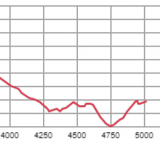
    Photo: screenshot from homologation certificate. Each box is 250 meters long, on the horizontal axis, and 10 meters tall, on the vertical axis.

    The Zhangjiakou courses that will be used for all distance races, by contrast, starting tonight with the women’s skiathlon, do not have such an approach to the stadium. Instead, here is a course profile of the final kilometer of all the distance courses at Kuyangshu Nordic Center and Biathlon Center in Zhangjiakou, China:

    Specifically, note that there is an uphill in this final kilometer. There is a B-Climb with a 14-meter gain, starting roughly 440 meters from the finish, then an effectively flat approach through a hairpin turn and into the finishing strait.

    While it is tough to make sweeping statements about what “most” courses “typically” do, a review of homologation certificates and course profiles suggests that Zhangjiakou will present the first global championship (that is, Olympics or World Ski Championships) with a comparable profile for the final kilometer since Sochi in 2014, and the first championship without a downhill into the stadium in at least 11 years. This conclusion is based on a somewhat unscientific survey of the final kilometer of the “main” five-kilometer course at all global championship venues since Holmenkollen in 2011. (Course profiles and methodology may be found at the bottom of this article.)

    Here’s a look back, including the final kilometer, at the 30k men’s skiathlon during the PyeongChang Olympics in 2018. Spoiler alert, it was won by Simen Hegstad Krüger, who is currently quarantined after contracting COVID-19 last week, leaving him unable to travel to Beijing to defend his title.

     So does this this final uphill matter? If you’ll forgive the lawyer answer, it depends.

    On the one hand, if athletes are skiing together in the final kilometer of a race, a course with an uphill approach to the finish may play out differently than one with a downhill approach. Everything else being equal, you might expect a pure climber to have an edge on the final stretch of the Zhangjiakou courses, while this profile could negate the advantage of greater mass that a larger skier would use to gain more speed coming off a final downhill.

    On the other hand, the shortest mass-start race at these Games is the 15 k skiathlon (honorable mention: the women’s relay, which is 4 x 5 kilometers and could very well feature a final leg that is much more of a head-to-head 5 k, not to mention that the sprint/team sprint course also has this profile for its final 500 meters). So there exist roughly 14.5 kilometers in which athletes may make a move before this final uphill. More broadly, while this article chose to focus on the final kilometer of each distance course as an arbitrary cutoff for purposes of taking analogous screenshots of course profiles (that is, while clearly the entire course is relevant for how the final kilometer skis, I had to set my parameters somewhere), note that the 800 meters immediately preceding the final Zhangjiakou uphill are nearly all downhill, with a substantial drop of roughly 50 vertical meters, so heavier skiers or better descenders could gain an insurmountable advantage on the flyweight athletes before this climb.

    Here is the elevation profile for the entire 5 k course in Zhangjiakou, same scale as above. There is a pretty long downhill before that final B-Climb. (photo: screenshot from homologation certificate)

    And more broadly still, it may be misleadingly reductive to focus on only the final half-kilometer of a 15-, 30-, or 50-kilometer mass-start race, when we’re talking about the world’s best athletes here, and they will all have a plan to use preceding sections of the course to their advantage, lessening if not obviating the implications of this one final uphill.

    One commentator consulted by FasterSkier, Lex Treinen, took an “all of the above” approach when asked for his analysis of the implications of this course profile. Treinen is a former pro skier for APU who reached a national championship podium and multiple SuperTour podia during his racing career, was top American in the 2015 Birkie, and has provided commentary for both domestic and World Cup races, but now describes himself as a “substitute Polar Cubs coach [for the Anchorage Junior Nordic League youth skiing program] and amateur watercolorist.” (Treinen also has a day job as a reporter for Alaska Public Media; disclosure, he was a colleague of FasterSkier reporter Nat Herz until about a month ago.)
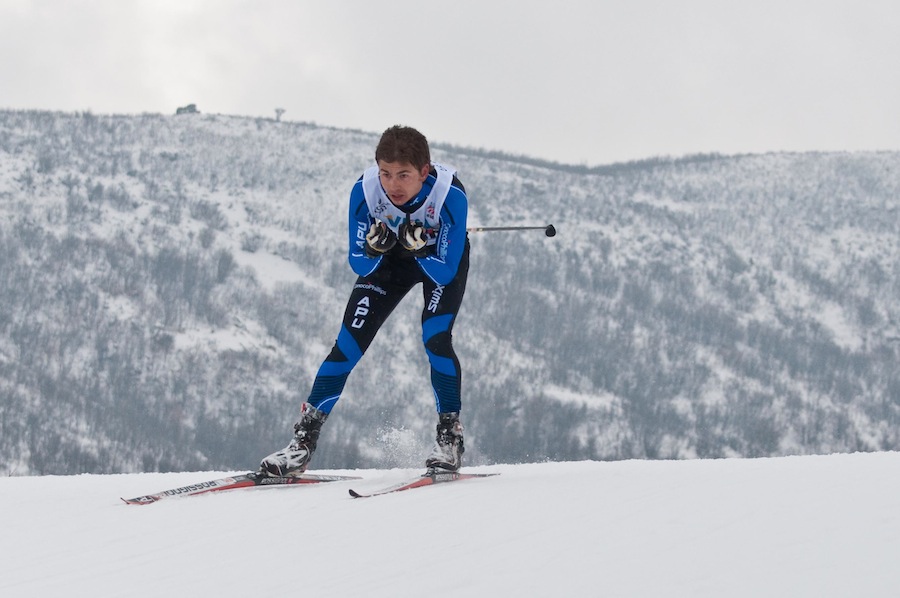
    Lex Treinen (APU) on his way down to the finish, where he placed sixth in the men’s 30 k freestyle mass start at 2014 U.S. nationals at Soldier Hollow. (Photo: Bert Boyer)

    “It’s gonna be a tactical finish but not a crapshoot,” Treinen wrote to FasterSkier earlier this week. “There’s something for everyone in the last kilometer – a descent to bunch the group up, a kicker of an uphill for the fitness freaks, and then a grind for the drag racers into the finish chute.

    “It’s hard to say what sort of racers it would favor,” Treinen continued. “I think there will be a lot of different ways you’ll see the last 500 meters play out, come-from-behinds, scuffles in the downhill, and grinders who wear out the field in the last stretch.”

    So, well, it depends.
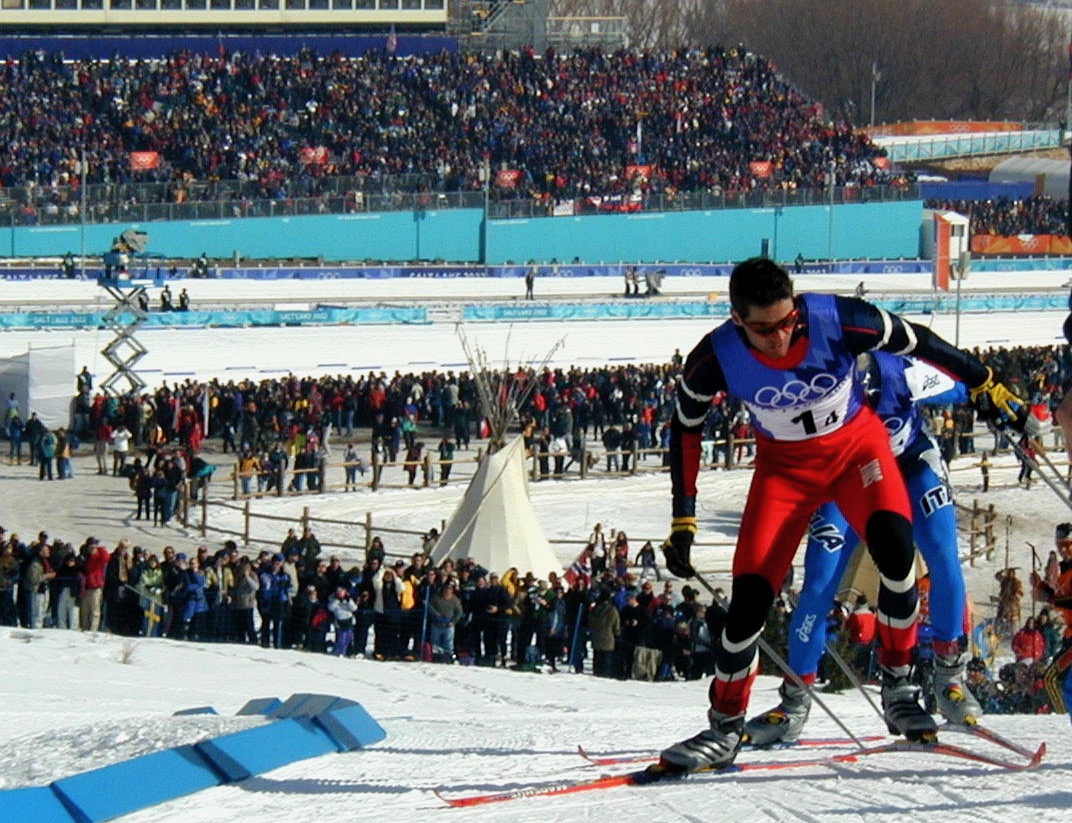
    Thomas Alsgaard of Norway leads Cristian Zorzi of Italy into the final downhill into the stadium in the men’s 4 x 10 k relay at the 2002 Winter Olympics at Soldier Hollow. (Photo: Cory Smith)

    Another expert, course designer John Aalberg, acknowledges the differences between the approach to the finish in Zhangjiakou and that in Soldier Hollow, which he also designed: “I was able to design an even better finish for these 2022 courses, with both a long uphill (similar to Hermod’s Hill), an exciting downhill right above the stadium, and a small uphill coming into the stadium (the high speed coming into the Soldier Hollow stadium is not optimal),” Aalberg wrote to FasterSkier. Aalberg also described the final downhill in Zhangjiakou as featuring a “‘velodrome’ downhill corner.”

    Bottom line – and apologies for the joyful indeterminacy here – these courses have never hosted a FIS race before; no one knows for sure how they will ski under race conditions. Again, it depends. But as a spectator watching at home, you should get ready for two weeks’ worth of athletes coming off a final uphill into the stadium. And if you’ve ever raced at Birch Hill in Fairbanks (19-meter climb starting 360 meters out), Government Peak in Palmer (19-meter climb starting 270 meters out), or Craftsbury in Vermont (17-meter climb starting 730 meters out), brace yourself for some flashbacks.
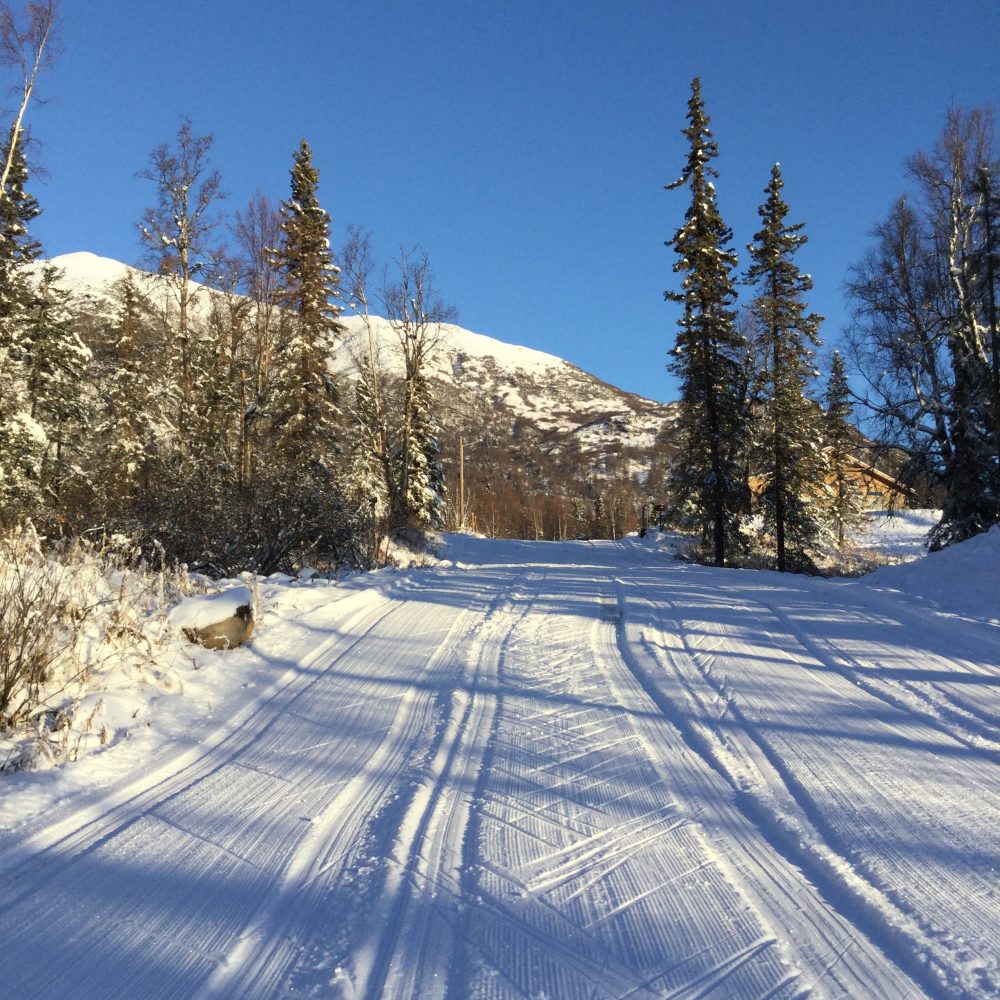
    Part of the final climb leading back up to the stadium on the comp loop, seen in this file photo view from Government Peak Recreation Area, Palmer, Alaska, November 1, 2018. (photo: Gavin Kentch)
    View of the final climb leading back up to the stadium, Government Peak Recreation Area, Palmer, Alaska, November 1, 2018. (Photo: Gavin Kentch)

    Methodology and footnotes

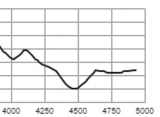
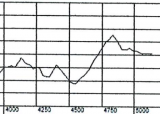
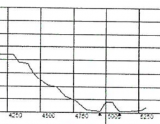
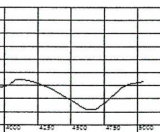
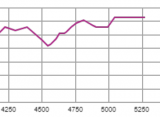
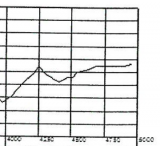
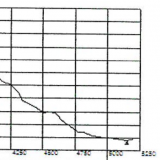
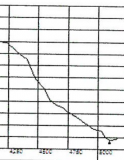
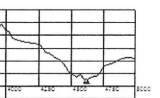
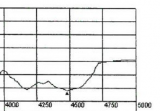
    Immediately below are thumbnails of the final kilometer of the 5-kilometer distance course for all global championships since Holmenkollen in 2011. Below that are comparable thumbnails from all domestic championship venues (U.S. Nationals or Spring Series) from this country in the past decade that have homologation certificates currently available. All images are screenshots from the course profile contained in the official homologation certificate, which may be found here. They have been arranged in a wholly holistic manner, according to my sense of which ones would ski most like the Zhangjiakou distance course, sorted by descending order of similarity. Your sense of this may certainly differ.

    This is an unscientific endeavor that is more art than science. Indeed, note that each venue has multiple different homologated courses; a 10-kilometer race may be three laps of a 3.3 k course, for example, while a 50-kilometer race is often six laps of an 8.3 k course, neither of which uses the 5 k course at all. I chose the 5 k course distance as a common denominator that all venues in this survey have. I think it is likely that most distance courses will typically have the same final-kilometer approach to the stadium, no matter the overall distance of the course, but this is not always the case, cf. the mass start vs. interval start 5 k homologated courses at Birch Hill in Fairbanks, which follow different routes to the same finish line in the same stadium at the same venue for two courses of the same length, and so have different elevation profiles.

    I also acknowledge that the homologation certificates currently available may differ from the course used at the time of a given championship. Historical homologation certificates are not generally available on the FIS site. Again, these are presented as examples for comparison, not as gospel truth.

    As one final caveat, I am painfully aware of the risk of confirmation bias here. I train and race in Alaska… and I ranked a Fairbanks course first among domestic courses. That’s convenient. (I really think it’s a tossup between Birch Hill and Craftsbury South; I slotted the Birch Hill mass start course ahead because the final uphill there starts closer to the finish, but reasonable people may clearly differ.) I have raced at one European venue in my life… and would you look at that, Beitostølen has a 15-meter climb back to the stadium, better list it as an honorable mention course.

    Bottom line, I would be very open to being told why your home course is in fact a better analog for Zhangjiakou; there are hundreds of courses in the global homologation database, and I did not survey most of them. Please take this article as an illustrative sampling of what’s out there rather than as a comprehensive roundup, and feel free to suggest better matches in the comments. And enjoy the races.

    Therese Johaug (NOR), followed by Katharina Hennig (GER), crests the final uphill into the stadium, Ruka mini-tour, earlier this World Cup season. (Photo: NordicFocus)

    Global championship courses

    Zhangjiakou (2022 OWG)
    Sochi 5 k left (2014 OWG)
    Holmenkollen (2011 WSC)
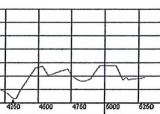
    Oberstdorf (2021 WSC)
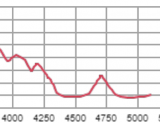
    Seefeld (2019 WSC)
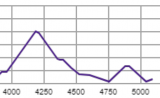
    Pyeongchang (2018 OWG)
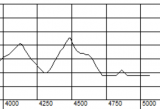
    Val di Fiemme (2013 WSC)
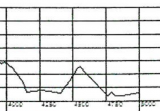
    Lahti blue (2017 WSC)
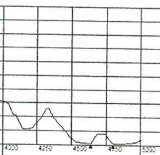
    Falun blue (2015 WSC)
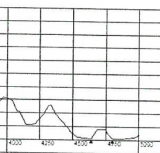
    Falun red (2015 WSC)
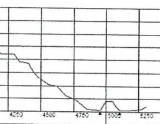
    Lahti red (2017 WSC)
    Domestic championship courses

    Zhangjiakou (2022 OWG)

    Birch Hill 5k mass start
    Craftsbury 5k south
    Birch Hill 5k interval start
    Houghton 5k B
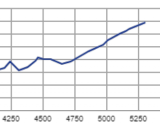
    Kincaid JNs 5k
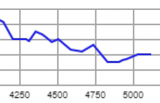
    Soldier Hollow Olympic 5k
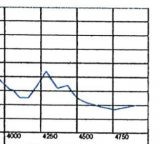
    Sun Valley 5k
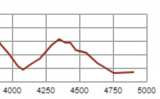
    Truckee 5k B
    Sun Valley 5k

    Truckee 5k A
    Honorable mention

    Zhangjiakou

    Rikert Nordic Center, Vermont (hat tip Bill McKibben)
    Ruka, Finland
    Beitostølen, Norway

    Government Peak Recreation Area, Palmer, Alaska
    Related reading:

    The Enigma of Zhangjiakou and the Kuyangshu Nordic Center (February 2022)

    Olympics Preview: What We Know About the Courses and Venue (January 2022)

  • Quebec Report: Abundant Snow, French Onion Soup and a ‘Brutal’ Sprint Course

    Quebec Report: Abundant Snow, French Onion Soup and a ‘Brutal’ Sprint Course

    QUEBEC CITY — The Plains of Abraham just outside the walls of Quebec City are best known for a major battle that changed the direction of North American history in 1759.  On March 4 and 5, the Ski Tour Canada will reignite international rivalries on the same plains.

    A recent 40 centimeters (16 inches) of snowfall means there is no shortage of snow. Race organizers are spending more effort digging out sidewalks and pathways than covering the course. Thursday’s training day was cold and windy, reaching -15 Celsius (5 Fahrenheit) in the afternoon, and only the Russians used the entire official training session. Temperatures are expected to warm up to -9 Celsius (16 Fahrenheit) for the freestyle sprint heats on Friday, which start at 3:30 p.m. Eastern time.

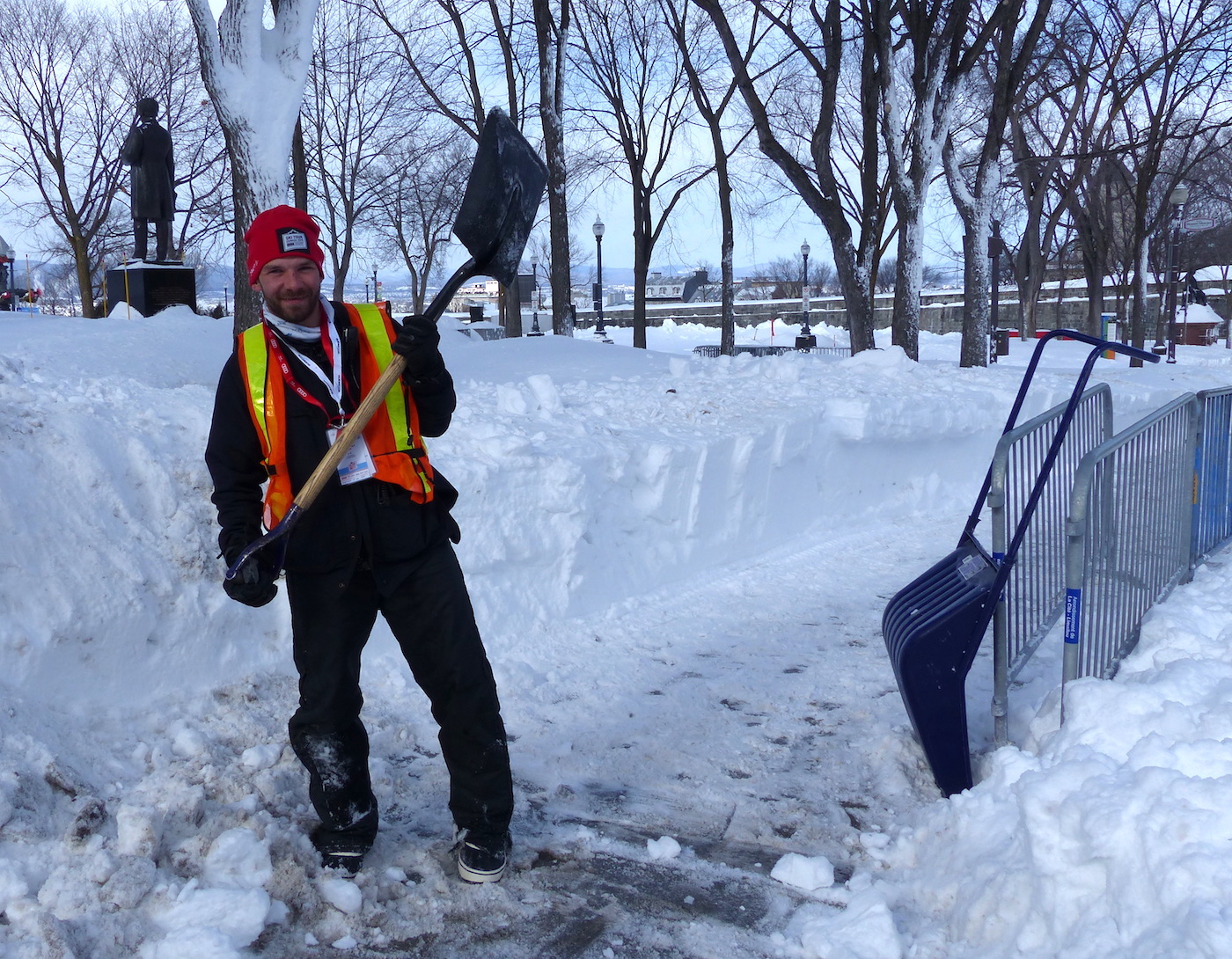
    Digging out the downtown sidewalks on Thursday in Quebec City. (Photo: Peggy Hung)
    Digging out the downtown sidewalks on Thursday in Quebec City. (Photo: Peggy Hung)

    Saturday will be the 10/15 k freestyle pursuits, with the tour leader starting first.  As with the Gatineau sprint, there are very few trees and little protection from the wind.  The feel of the course will change dramatically with wind direction.

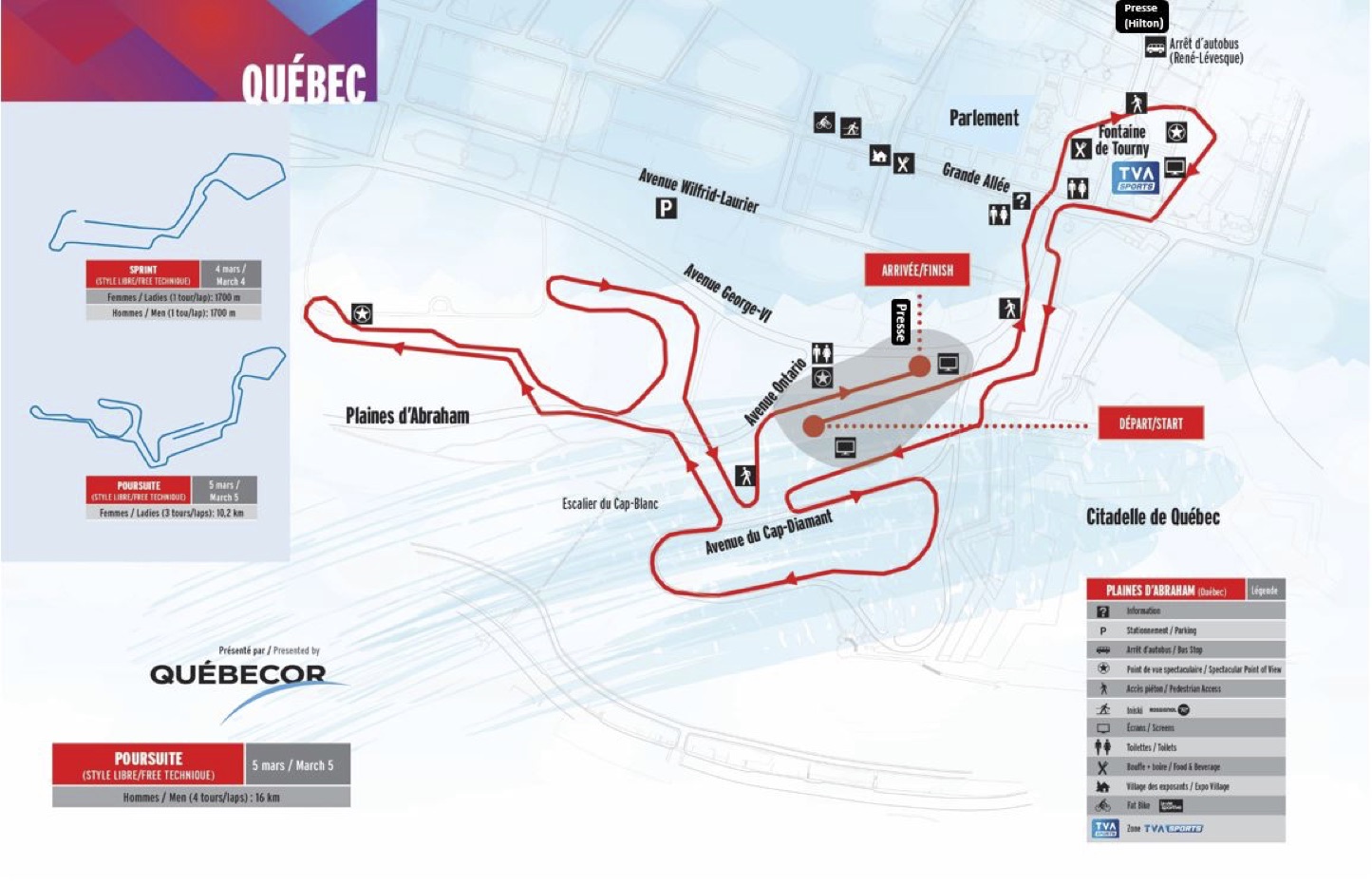
    Despite the name, the plains are not entirely flat, with rolling hills on top of a cliff overlooking the St. Lawrence river. The sprint course (1.7 k for the men; 1.5 k for the women) is relatively flat, with a gentle climb out of the stadium, a long gentle descent to the city walls, and a gentle climb back before a steep-wall climb returns the racers to the stadium.

    The women finish with a gentle descent followed by a wide-open corner into the finish straight.  The men turn sharp left before the women’s final corner for a steep climb up and down a horseshoe, which will make the men’s race tactically very different. 

    “The last 500 meters of tomorrow’s sprint is going to be long and brutal,” Canadian World Cup Team and local racer Alex Harvey said at a press conference on Thursday. “As I get older, I’m a little slower in short sprints, but this is a longer sprint, so it should suit me better.”

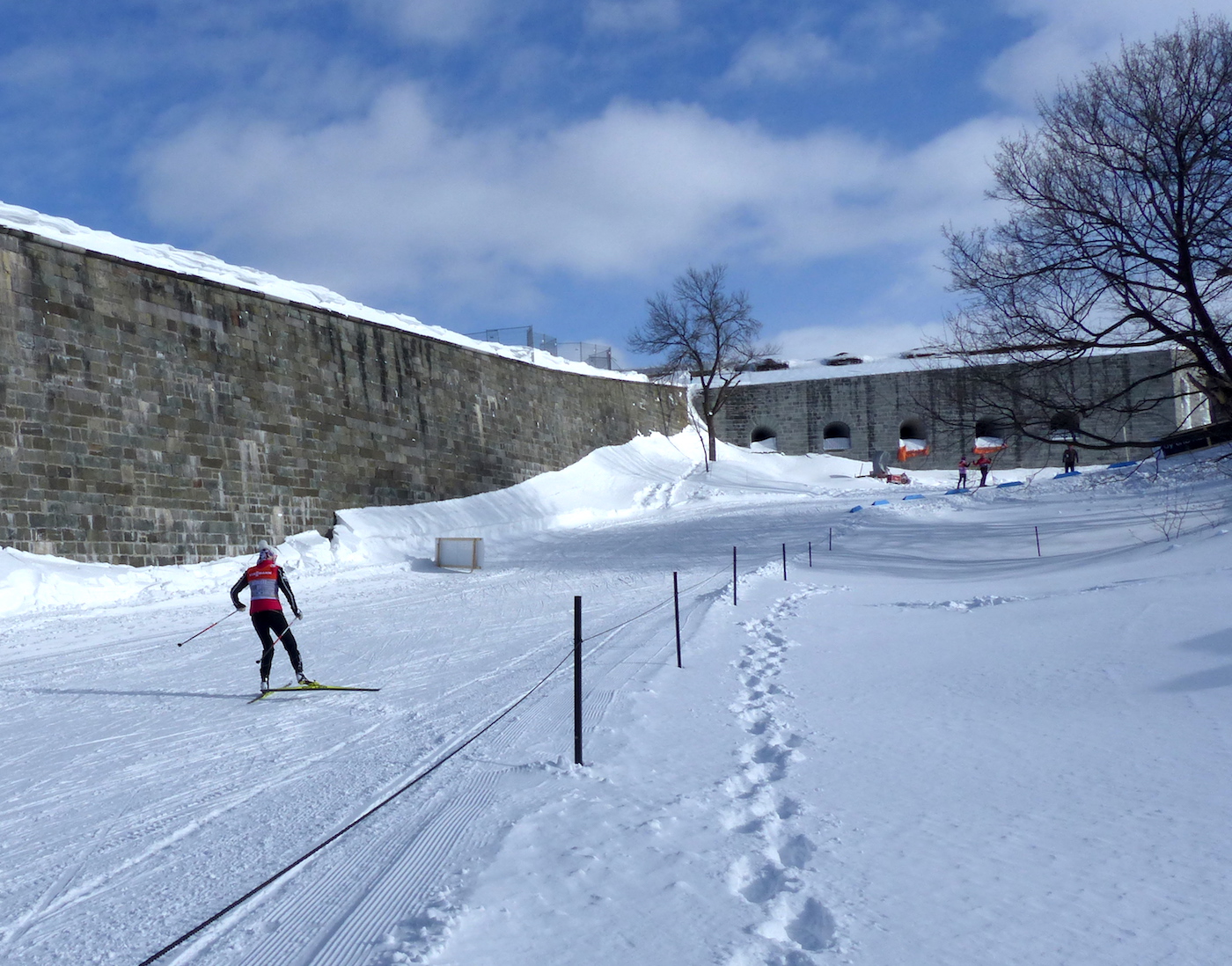
    A skier navigates the sprint course just outside the city walls in Quebec City. (Photo: Peggy Hung)
    A skier navigates the sprint course just outside the city walls in Quebec City. (Photo: Peggy Hung)

    The steep climbs stayed firm on training day, but could easily turn to sugar by the end of the race day.  The turn at the bottom of the course is easy enough in Zone 1, but it will likely be far more exciting in at race pace in in a group.

    The pursuit course spends more time on the top of the exposed ridge with moderate climbs and great views of the river.  Where the sprint course was almost entirely untransformed (squeaky) snow, the more exposed sections of the distance track were heavily transformed and very fast.

    By the end of official training, one of the climbs was a mix of polished transformed snow and windblown squeaky drifts, with the fast line snaking back and forth across the trail.  The longest distance course descent combined particularly fast snow with a strong tailwind, making the crashpads on the trees seem justified. The one tricky turn from the sprint course will be a bigger factor with the entire pack arriving together.

    “Quebec is such a great venue to host a World Cup,” Harvey said. “There’s so much snow here, we never see that in Europe. We have some races in downtown in Europe, but trucks bring the snow, it’s dirty snow. Here it’s white everywhere, the course is great with fun bridges here and there. The European find it really surprising. They keep pointing at the Fleuve [St. Lawrence River] and asking if it’s a lake, a river! For many of them, it’s their first trip here.”

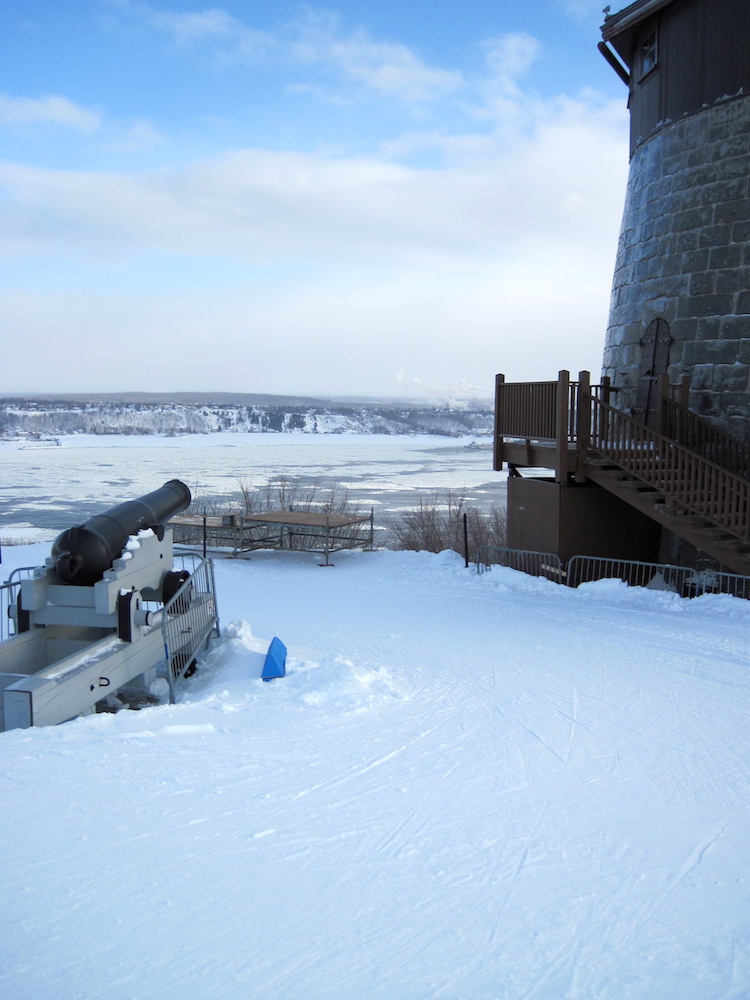
    A hairpin turn around a cannon at the top of the freestyle pursuit course, which will be used on Saturday at the fourth stage of the Ski Tour Canada in Quebec City. (Photo: Gerry Furseth)
    A hairpin turn around a cannon at the top of the freestyle pursuit course, which will be used on Saturday at the fourth stage of the Ski Tour Canada in Quebec City. (Photo: Gerry Furseth)

    The old city of Quebec is one of the few remaining walled cities in North America and has a distinctly Quebecois culture.  Greetings are uniformly in French, although most people will quickly switch to English.

    The city is also known for its food. No visit is complete without a stop at the Chic Shack for their famous poutine, in the Musee du Fort, five minutes walk from the racecourse.  Aux Anciens Canadiens, through the city gates and two blocks straight ahead, mixes traditional and modern food and encapsulates much of the local food history. As the weather is expected to remain cold, a good choice anywhere is the regional specialty soupe a l’oignon gratinee.  Outsiders may know this as French onion soup.

    On Thursday afternoon, the old city was filled with U.S.. family and friends, with nordic logos outnumbering the ‘normal’ tourists.

    More from the press conference with Harvey (translated from French to English):

    “This year’s sprints have been relatively shorter, at 1.3 to 1.4 kilometers, compared to [Friday’s] 1.7-kilometer sprint. Where the shorter sprints last a little over two minutes, this one will go over the three minutes mark. My endurance should enable me to keep pushing after the acid lactic build up, which usually kicks in at two minutes.”

    (In English) “The natural terrain [on the plains of Abraham] is really hard, and then they added a little extra, little bridges, to make it harder.  So this is going to be one of the toughest sprints of the whole circuit tomorrow, everyone agrees to that. It’s long, it’s hard, the last 500 meters is going to be just brutal.”

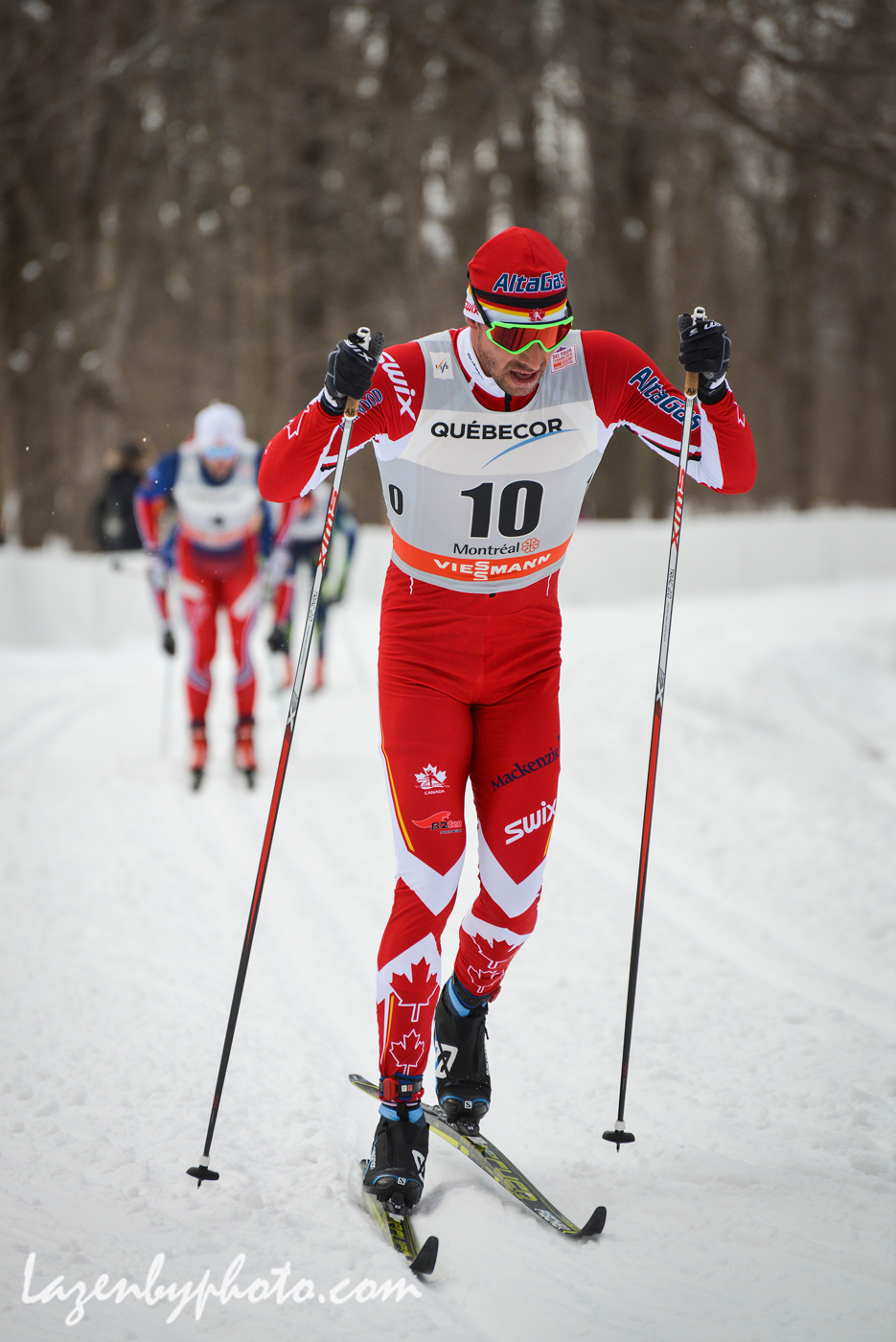
    Canada's Alex Harvey racing to ninth in the second stage of the Ski Tour Canada, the men's 17.5 k classic mass start, on Wednesday in Montreal, Quebec. (Photo: John Lazenby/Lazenbyphoto.com)
    Canada’s Alex Harvey racing to ninth in the second stage of the Ski Tour Canada, the men’s 17.5 k classic mass start, on Wednesday in Montreal, Quebec. (Photo: John Lazenby/Lazenbyphoto.com)

    “I spent ten days training at altitude in Canmore in preparation for the second half of Ski Tour Canada, missing the last World Cup weekend in Finland. I’m really anxious to see the rewards in Canmore next week. The first six days of that altitude training were really frustrating. I felt really tired and weak during intervals session, which pissed me off! Altitude training is tough for everybody. I bet some guys will explode during the skiathlon in Canmore.” [Note: Canmore is at an elevation of 1,400 meters above sea level. Quebec City is at 100 meters.]

    “My goal for [Friday’s] sprint is to qualify for the semis, which would give me a 30-second bonus overall.

    “A top-five placement overall is still realistic, even the podium is not out of reach.”

    FasterSkier: What differences, if any, do you see between the European Tour de Ski and the Ski Tour Canada?

    AH: “The traveling is a big distance. The distances are really small in Europe. You can go from Italy, to Germany, to Switzerland easily and in no time. Here, we have to take a plane to Canmore. The logistics of the Ski Tour Canada are much more complex. That was probably our biggest challenge up to that point. The jet lag is another factor. I did the trip from Montreal to Calgary several times in the past, so I’m used to it. Other Canadians did so as well, so it should play to our advantage.”

    — François Léger Dionne contributed reporting

    The freestyle sprint course in Quebec City.
    The freestyle sprint course in Quebec City. (Click to enlarge)
  • Sun Valley Videos: Chatting with USST Rookies Kern and Ogden (+ Sprint Course Preview)

    Sun Valley Videos: Chatting with USST Rookies Kern and Ogden (+ Sprint Course Preview)

    SUN VALLEY, Idaho — U.S. Ski Team rookies and Stratton Mountain School teammates Julia Kern and Katharine Ogden (last weekend’s SuperTour 10 kilometer freestyle race winner) sat down with FasterSkier this week to discuss their summer training with the U.S. Ski Team (USST) and how they are feeling coming into the race season.

    Kern also provided a unique preview of the 1.3-kilometer course that will be used for Saturday’s SuperTour classic sprint at the Lake Creek trails in Sun Valley.

  • Stoke is High, Temps Low: SuperTour Racers Prep for Opening Races (with Preview Video)

    Stoke is High, Temps Low: SuperTour Racers Prep for Opening Races (with Preview Video)

    An SMST2 Junior athlete looks on before a speed session on Thursday at the Yellowstone Ski Festival. The U.S. SuperTour season starts Friday with the freestyle sprint in West Yellowstone.
    An SMST2 Junior athlete looks on before a speed session on Thursday at the Yellowstone Ski Festival. The U.S. SuperTour season starts Friday with the freestyle sprint in West Yellowstone.

    WEST YELLOWSTONE, Mont. — The 2015/2016 season for the U.S. SuperTour, the highest level of domestic nordic racing in the country, kicks off Friday with a 1.3-kilometer skate sprint at the Rendezvous Ski Trails in West Yellowstone, Mont.

    Originally scheduled for a 9 a.m. start, the organizers recently decided to start the sprint qualifier at 11 a.m. due to predicted sub-zero temps. While changes in start time can sometimes throw a wrench in to waxing and ski preparation plans, that’s unlikely to be the case tomorrow, as the snow conditions in West have been consistent, even as temperatures rise throughout the day.

    Sun Valley Ski Education Foundation (SVSEF) Gold Team coach Colin Rodgers had a simple-enough solution: “Wear your wind briefs!” he advised.

    APU wax techs test skis on Thursday at the start of the sprint course at the Rendezvous Ski Trails in West Yellowstone, Mont.
    APU wax techs test skis on Thursday at the start of the sprint course at the Rendezvous Ski Trails in West Yellowstone, Mont.

    The start list includes 104 women and 154 men, including nearly all of the big names on the domestic race circuit. Much of the field is made up of the usual talents from U.S. elite programs such as the SVSEF Gold Team, Alaska Pacific University, Central Cross Country (CXC) Team, Stratton Mountain School (SMS) T2 Team, Craftsbury Green Racing Project, Bridger Ski Foundation Elite Team, Sugar Bowl Elite Team, Team Gregg, Ski Club Vail, Gear West, and Bend Endurance Academy.

    There are always nerves and a bit of uncertainty, even among the stars of the elite scene before these first races of the season. Athletes have spent the summer working on their weaknesses and tweaking their plans, but until they put a bib on in West Yellowstone — where the SuperTour circuit starts each year — the result of all that hard work is an unknown.

    Video: Skiing the sprint course

    Jennie Bender of the Bridger Ski Foundation (BSF) Elite Team, a two-time sprint national champion and SuperTour podium regular, is excited.

    “This summer has been the first in quite some time that’s felt consistent and uninterrupted, so I am pumped for the season and to travel with my stellar BSF crew,” said Bender, 27.

    Alaska Pacific University (APU) standout and the overall SuperTour leader two seasons ago, Reese Hanneman is looking for some redemption on the trails, but keeping the pressure low. He told FasterSkier that he’s “feeling pretty good, but after last season and so many bad races, I’m just looking forward to getting out there and feeling fast again and rippin!”

    2014 Olympian Brian Gregg, of Team Gregg, is also feeling prepared, while also curious.

    “I’m excited to see how everyone’s summer training stacks up,” Gregg said.

    In addition to these athletes, many of whom compete on the SuperTour circuit throughout the four-month-long season, there are three distinct groups of SuperTour outsiders in West Yellowstone looking to mix things up. They are:

    The Canadians: Some years, there is a strong Canadian presence here in West Yellowstone, and this is certainly shaping up to be one of those years. With nine elite Canadians from various national training centers on Friday’s start list, including women’s top-seed Dahria Beatty of the Alberta World Cup Academy and three of the top-five ranked men, the Canadians will certainly be vying for spots in the A-finals.

    The Collegiates: The NCAA schedule is, for the most part, totally separate from the SuperTour schedule. Generally, these two groups of elite skiers meet up for head-to-head competition only once or twice per year. West Yellowstone is one of those meetings.

    As Montana State Head Coach Matt Johnson points out, “Our athletes aren’t focused on sprinting, and they aren’t focused on peaking this early,” as there is no sprint format in NCAA racing, and NCAA Championships aren’t until March.

    But, he adds, “a lot of our skiers are good sprinters and in great shape right now, and are excited to get out there and see what they can do.” College skiers tend to be a mix of elite European racers in the U.S. skiing on scholarship at the large NCAA Division 1 schools (Utah, Colorado, Denver, Vermont, New Mexico, Montana, etc.) and many of the best young Americans, pursuing their ski careers in tandem with their education. With at least 50 college skiers on Friday’s start list, expect to see some student-athletes in the A-final.

    The Juniors: Every year, at least one fast junior begins to establish their name on the national cross-country scene with a great race in West Yellowstone. It happens most often in the sprint, as shorter races tend to favor younger racers, and it tends to happen more frequently in the women’s field, simply because junior girls are generally more physically on-par with their elite competition than junior boys, who often reach their peak in their early 20’s. With high-ranking juniors form a large number of programs in the mix, and with about half of the field made up of young racers looking to make their mark, expect to see a few juniors mixing it up in the top 10 or 15, especially on the women’s side.

    FasterSkier will be reporting live from the SuperTour opening races Friday (with the freestyle sprint) and Saturday (10/15 k freestyle) in West Yellowstone. Follow us on Twitter for updates.

    ***