From the FasterSkier archive — posts syndicated from athletes’ and coaches’ own blogs between 2004 and 2012, kept online as published. Current coverage is at fasterskier.com.
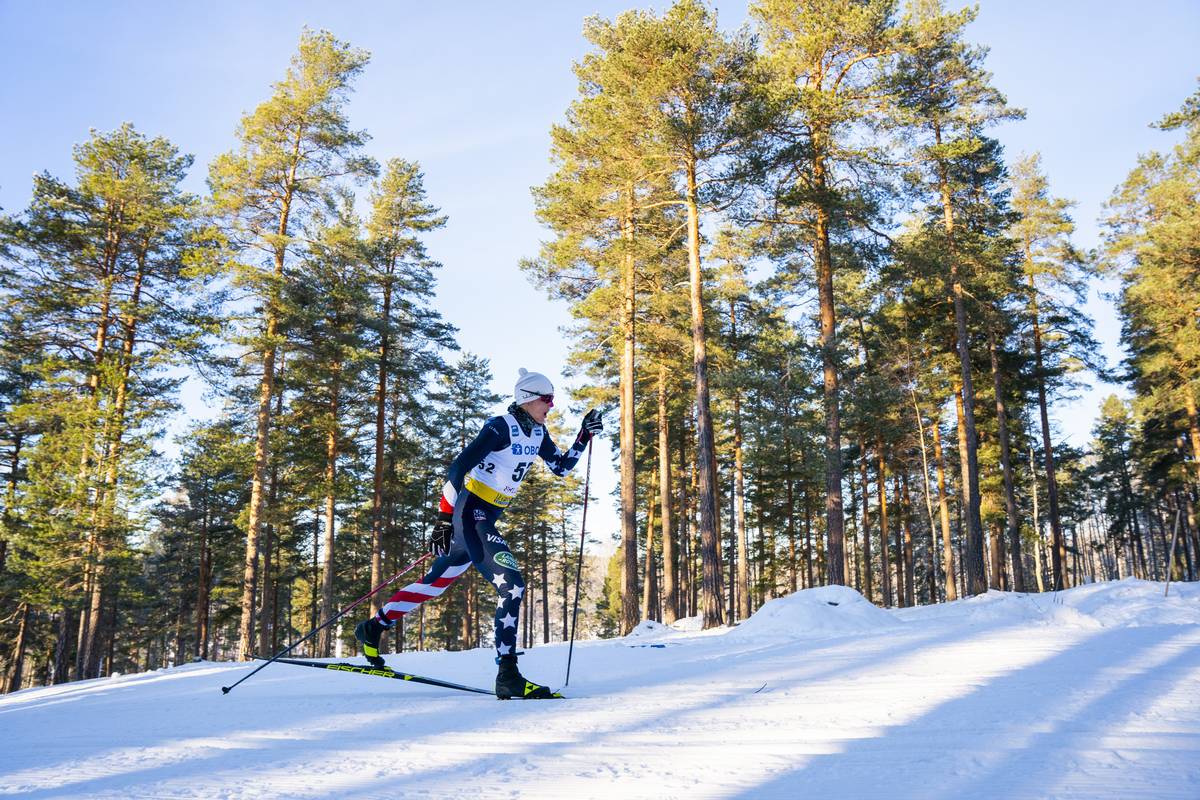
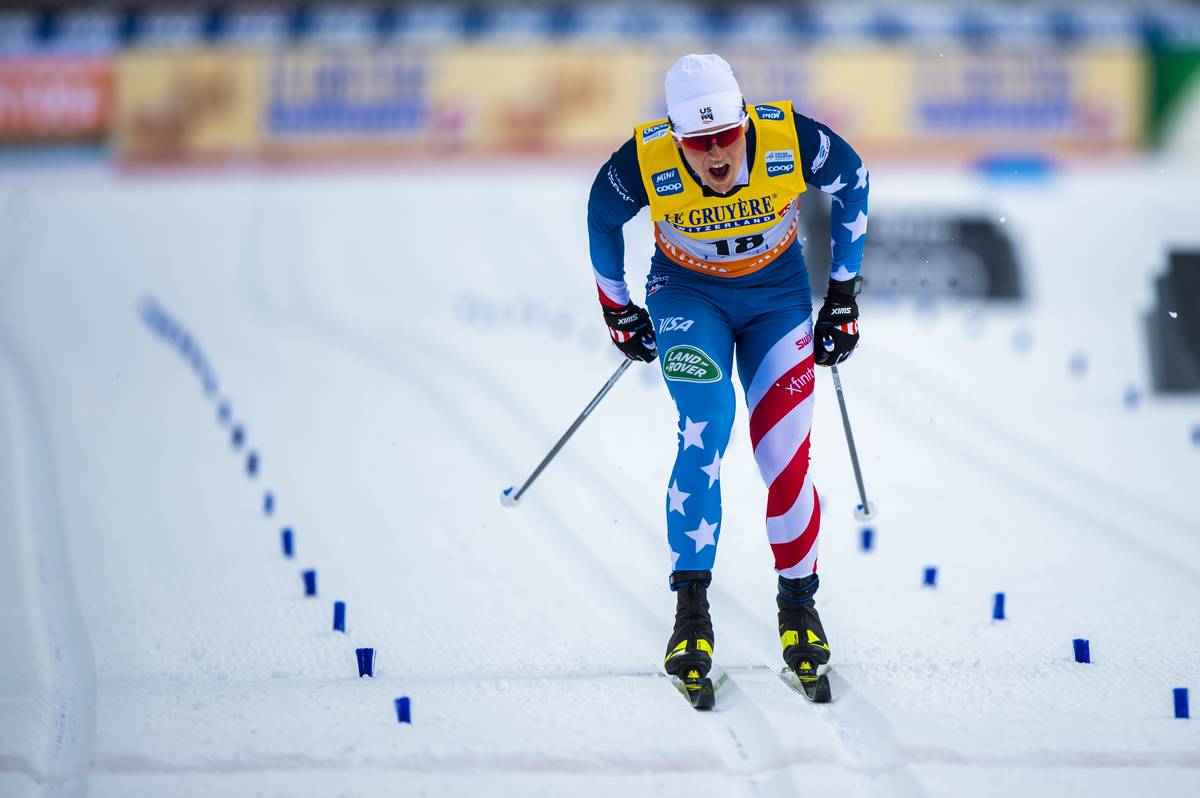
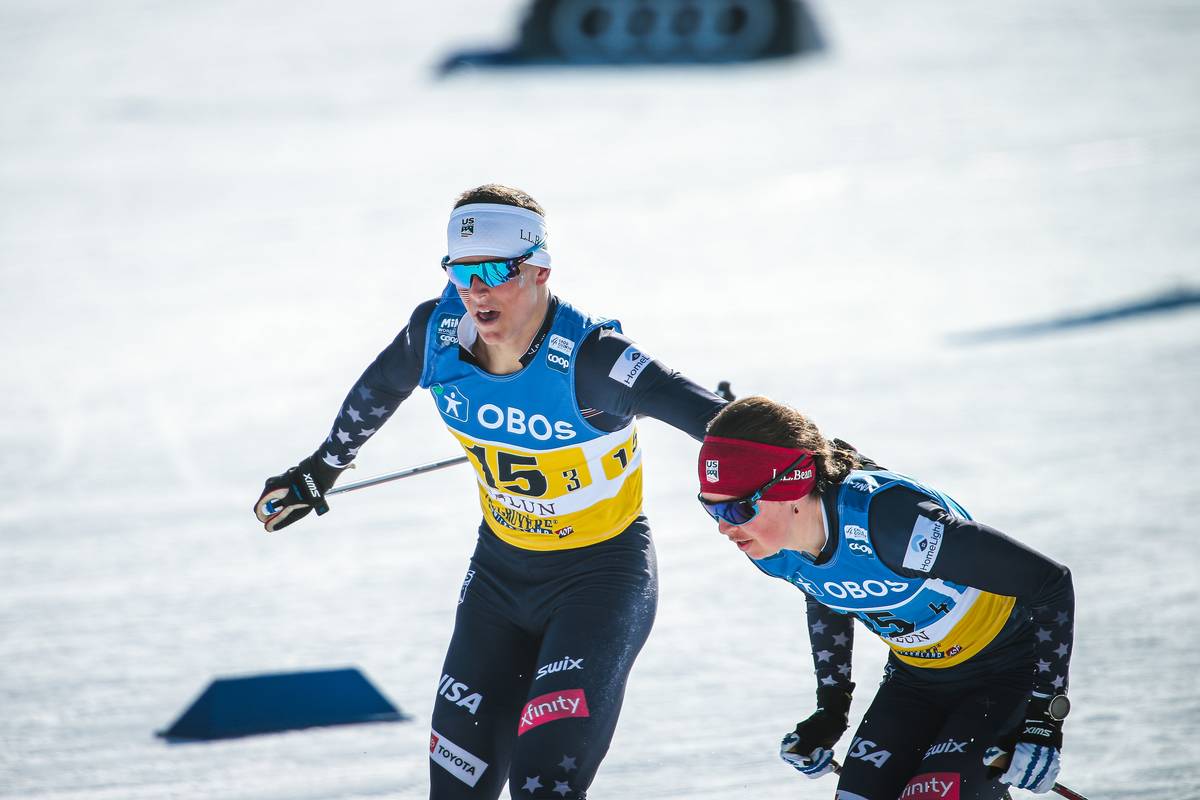
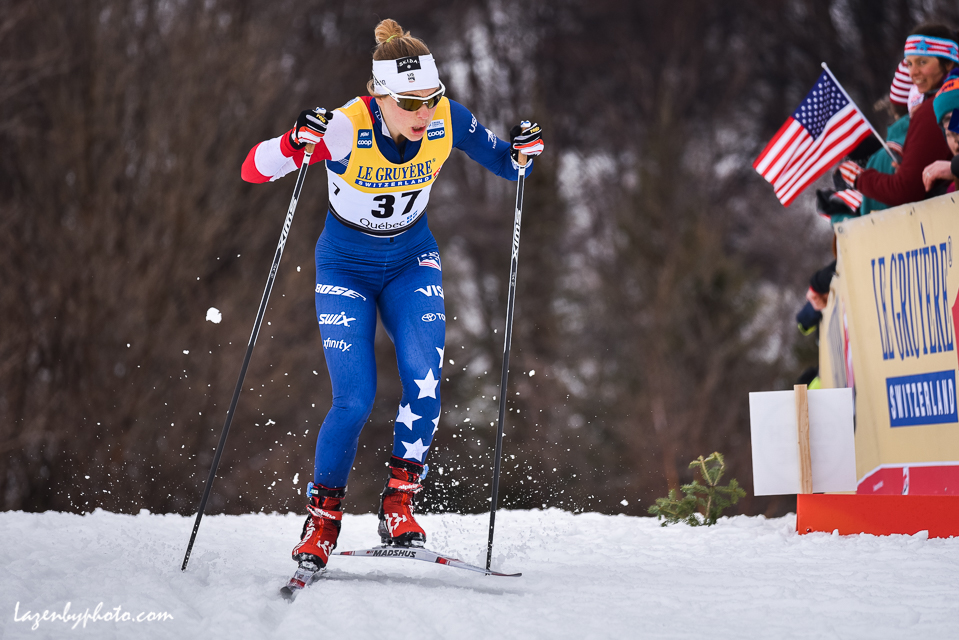
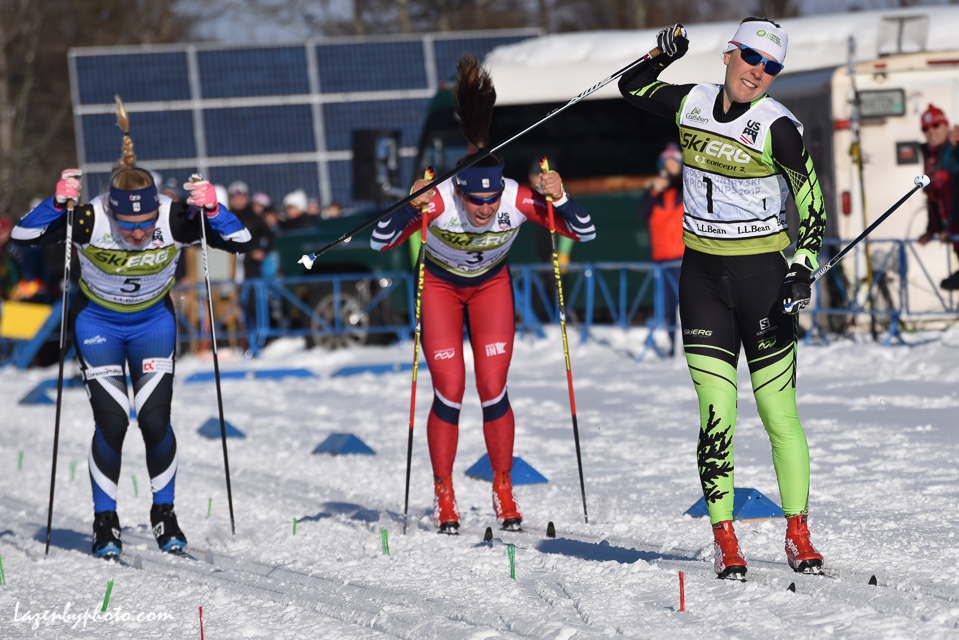
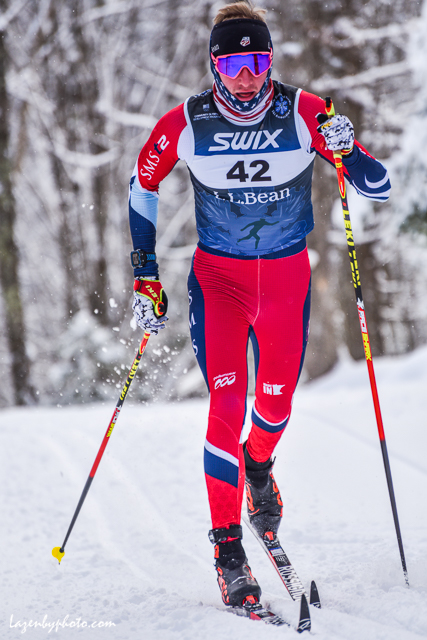
Annika Martell racing during the NENSA club relays, Saturday, March 28, 2026 at Craftsbury. (Photo: Phil Belena)
The Craftsbury Green Racing Project has named Annika Martell as its new Head Ski Coach.
Martell brings a resume that spans nearly every corner of the Nordic skiing world. A Minnesota native, she headed east to ski at Colby College, where she captained the team and earned recognition for her leadership before graduating with a degree in economics and environmental science.
Her coaching career has taken a similarly wide path. Early on, she interned with the US Biathlon Association and coached juniors at Ford Sayre and the Berkshire Nordic Ski Club, before moving into elite-level work as an assistant coach with the Stratton Mountain School T2 Team. She spent four years as an assistant coach at Williams College, during which time she completed two stints as a Trail to Gold Fellow with the US Ski Team and served twice on the wax staff for Team New England at Junior Nationals.
Most recently, Martell was the Head Nordic Coach at St. Michael’s College, where she guided the program to highly competitive results.
Her background extends well beyond the ski tracks. She is a certified weightlifting coach and handled strength and conditioning duties at Williams. She also has experience in finance and operations management, and holds a Master’s degree in Sports Business from Drexel University.
The Craftbury Green Racing Project is still accepting athlete applications for the incoming 2026 snow class — Apply Here
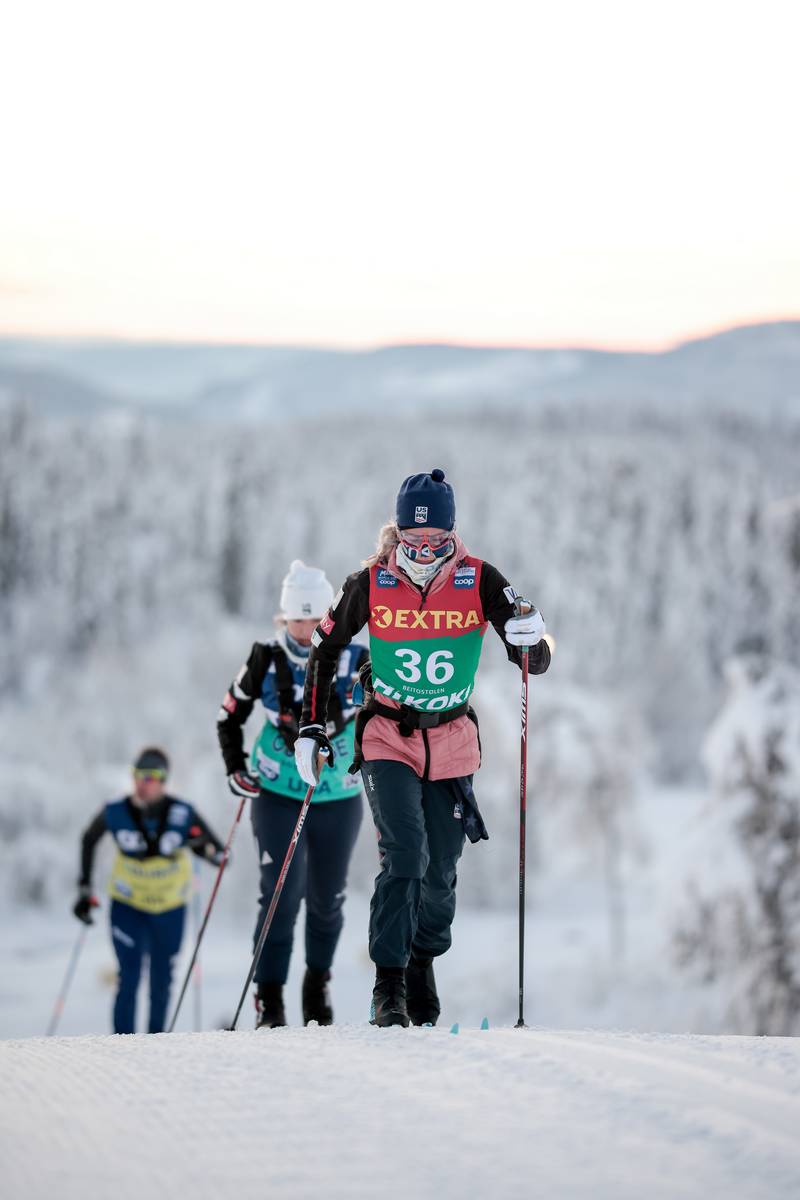
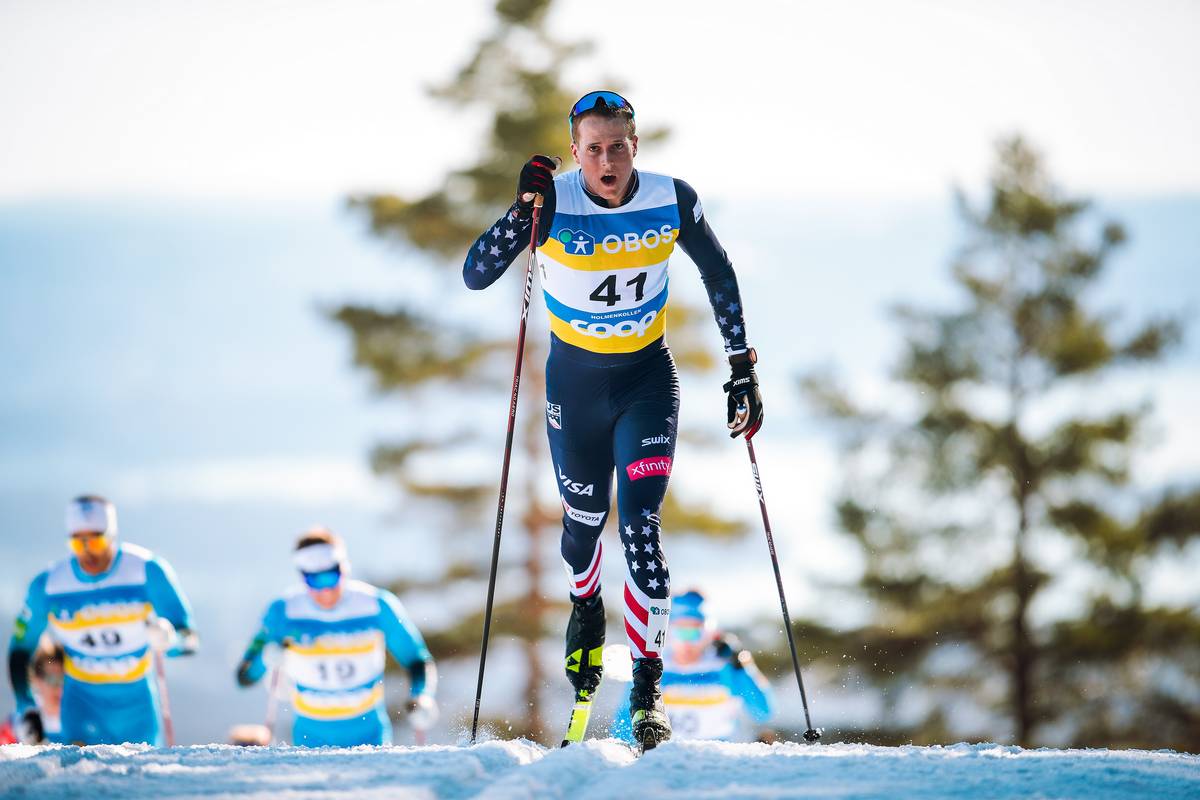
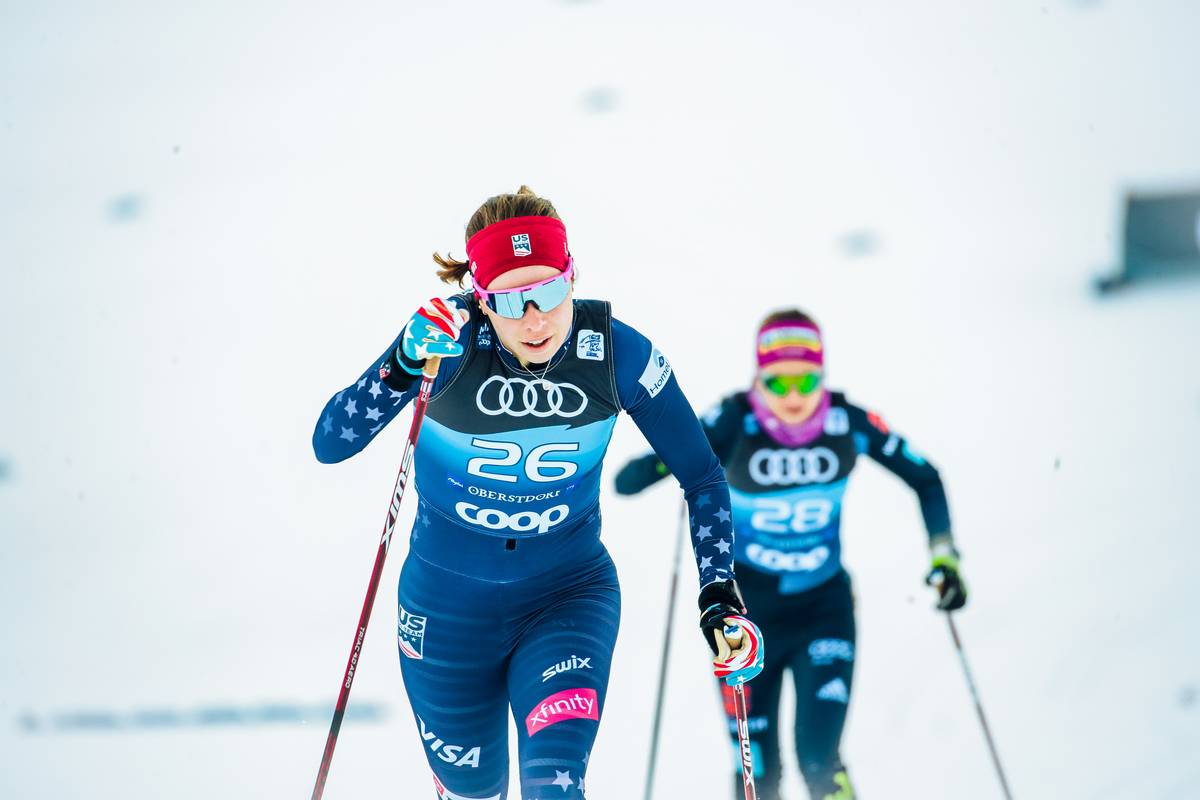
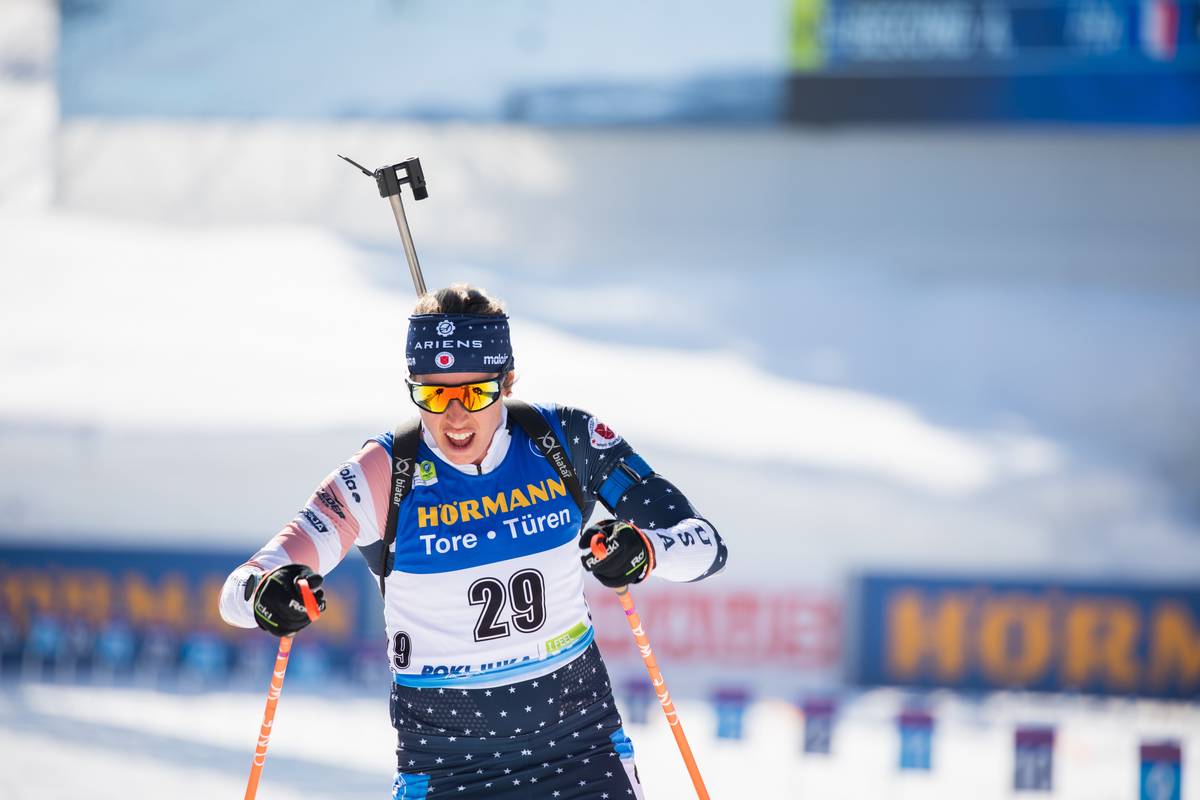
Martell follows Jessie Diggins on course in Beitostolen in 2022. (Photo: Nordic Focus)
The US National Championships got started yesterday with the 10 k Classic Individual Start in Lake Placid, NY. Hunter Wonders (#369 – APU) took top honors in the men’s race. (Photo: Nancie Battaglia)
On a January afternoon in Lake Placid, Mt. Van Hoevenberg did what it has always done best: it asked skiers to be honest.
The 10-kilometer classic individual start is not a format that rewards theater. It doesn’t care how good you looked in warm-up, how confident you sounded the night before, or how convincing your season-long narrative might be. It rewards pacing that’s brave but not reckless, technique that doesn’t unravel under strain, and the ability to keep making good decisions when your legs are trying to renegotiate the terms of the day.
This year, the U.S. National Cross-Country Ski Championships opened with that race—two laps on the 5-kilometer loop—and the timing was no accident. In an Olympic winter, Nationals is never just Nationals. It’s an argument. It’s a week where results don’t merely “count,” they accumulate, and the accumulation becomes the story that follows athletes into selection meetings, petitions, and—if all goes right—onto a plane headed for Italy.
Will Koch (SVSEF) on his way to 8th place on the day. (Photo: Nancie Battaglia)
The Course: Where You Can’t Afford to “Blow Up”
The Van Hoevenberg course is famous for being “fair,” but fairness in skiing is rarely gentle. The climbs arrive in layered sequences—sections where you can press, sections where you can survive, sections where you can lose seconds simply by being a fraction late to a gear change. There are places to win time, and places where you simply try not to hemorrhage it.
Hunter Wonders described the central problem precisely after the finish:
“It has some big hills. And I really think that in this course you can’t afford to blow up. If you blow up, you’re just going to bleed so much time.”
That idea—bleeding time—was the hidden refrain of the day. Not because athletes were exploding spectacularly, but because this loop punishes any lapse in restraint. It is a course that rewards a mind that stays intact.
Corbin Carpenter (UAA) on his way to 10th place in the 10 k Classic at US Nationals. (Photo: Nancie Battaglia)
Men’s Race: Seconds as a Selection Language
At the front of the men’s race, the margins compressed into something almost absurd: a national title decided in a space so small it could be measured in one imperfect corner, one extra step of herringbone, one pole that slips just slightly at the wrong moment.
Hunter Wonders won the men’s 10 k Classic National Championship. Behind him, the podium fight came down to an almost unnerving closeness. The story wasn’t simply that the race was fast; it was that it was tight—tight enough to turn pacing into the defining skill.
Wonders’ post-race reflection didn’t sound like someone who had “controlled” the race so much as someone who had managed it correctly, which is often the same thing in interval start racing:
“Yeah. So going through it never really felt like it was my day. I knew it was going to be a competitive one, and I knew that it would just come to good skis, good feelings in the body, good pacing, and I’m just really happy that I was able to pull it off.”
He returned to pacing again, emphasizing that his strategy wasn’t about heroics, but about avoiding the one mistake that the Van Hoevenberg loop will magnify:
“I think pacing was the biggest challenge for me today… So I was trying to take it out hot to where I could be competitive but not blow myself up.”
What made Wonders’ win especially convincing was how he described staying committed to his plan and then finishing with intent when the splits told him the race was available:
“I never really changed my race plan mid-race. But I did get some good splits, especially near the end, so I just tried to finish as hard as I could.”
And then, because it’s 2026 and everyone knows what this week represents, he said the part that matters most:
“And then, of course, U.S. Nationals does carry some heavy weight in an Olympic year. And I’ve been thinking about this race since the races in Anchorage ended, so I’m just really happy to have it behind me.”
He wasn’t pretending the pressure isn’t real:
“I definitely felt the pressure, and I’m going to continue to feel the pressure throughout the rest of this Nationals. But I think I have good momentum going, and I have good confidence. I know that I’m in shape, and everything else just kind of hopefully falls into place over the next week.”
The finish-line truth of the men’s race is that it created a kind of selection tension that will hang over the rest of the week: the top contenders weren’t separated by a narrative gap. They were separated by seconds.
Luke Jager, who finished second, captured what that tightness means on this course and in this moment:
“Yeah, crazy how close the times were! The course is cool because there are so many different gears in the climb that people can all have different focus spots and still end up so close together at the finish line. It is really cool, fair racing like that.”
That line—different focus spots, same finish—explains why the top of the results can look like a near-tie without being random. You can ski this course well in different ways. But you still have to ski it well.
Jager also spoke directly to the Olympic subtext without overplaying it:
“I’m not naive enough to say that the Olympics aren’t on all of our minds, but I’m also really having fun just trying to do my best and working to solve the puzzle of how to perform on any given day. Italy would be sweet, but I’m super thankful for this opportunity to even be feeling that pressure at all. It’s been fun to have such a big challenge.”
And then the warning embedded in the closeness:
“The close times just show me that you can’t take anything for granted, and each race could be someone else’s day. Fun to have to try and be as dialed and prepared as you can every day when the stakes are high.”
In other words, this wasn’t a day that “settled” anything. It made the next races more consequential.
Hailey Swirbul (APU) on her way to a national title in the 10 k Classic at US Nationals in Lake Placid. (Photo: Nancie Battaglia)
Women’s Race: Swirbul’s Return, and a Course That Doesn’t Flatter Anyone
If the men’s race was defined by a razor-thin margin, the women’s race had a different feel: not less intense, but shaped by a performance at the front that felt like a statement. And the words that followed from the winner did not sound like someone who had stumbled into a good day; they sounded like someone who had been building toward a day like this for a long time.
Hailey Swirbul framed her win as the visible outcome of a longer experiment:
“Winning this race felt like finally getting to watch the outcome of a long experiment unfold! I’ve wanted to approach this season from a place of curiosity to see if I can get fitness and strength back after a 2.5-year hiatus. It has felt so rewarding to get stronger and remember how it feels to race and go hard again.”
She described the way racing itself can re-teach an athlete what “hard” feels like:
“Each race or hard interval session reminds me what it feels like a little bit more.”
And then she said what almost everyone in the finish area seemed to be thinking, whether they admitted it or not:
“This course is legit. I didn’t hear the words ‘I felt good out there!’ come out of a single person’s mouth! It was a battle of self against hill.”
That sentence carries the whole day inside it: not a battle against other people, exactly, but against the course’s capacity to strip away pretense.
Hailey Swirbul (APU) charges up one of the many climbs on that Lake Placid course behind Virginia Cobb (#120 – DAR) and Marit Flora (#76 – UAA). (Photo: Nancie Battaglia)
Swirbul’s race plan—at least as she described it—was deeply personal in its logic. Not a copy of someone else’s pacing, not a response to what she imagined others were doing, but an attempt to ski in a way that matched her strengths:
“I tried to ski true to myself. I wanted to use momentum and my own body weight the most effectively I could to get around that course as fast as I could- regardless of how the pacing looked for others.”
And because it’s an Olympic year, she made the subtext explicit:
“I have my eyes on an Olympic Team spot, and I’m going to continue to fight for it until the team is officially named. I’m not thinking beyond this week of racing here at Nationals. One step at a time, staying present…”
Then the line that reminds you why athletes keep doing this:
“…and enjoying getting to live this life and see so many people from old racing days— it’s a good life.”
Novie McCabe’s post-race comments carried a tone that felt especially relevant to this week: gratitude, yes—but also a clear-eyed description of how fragile a season can feel, and how an athlete can build stability by focusing on what can be controlled.
“It meant a lot to be starting today for sure! I think that being a bit unsure of whether I’d be starting these races made me feel pretty grateful for the opportunity to go out there and give it my best today.”
She described the emotional mix honestly:
“There were, of course, lots of doubts and some nerves going in as well, but I really tried to just enjoy the skiing and made that my main goal going into it.”
And she emphasized that conditions and course feel matter—not as excuses, but as context:
“The conditions were insanely nice today, which helped, and this course is one of my favorites!”
On pacing, McCabe described a strategy rooted in self-knowledge:
“Honestly, I kinda just went out as hard as I could within reason, and tried to relax and hold onto it. I know the splits don’t really make it look that way, haha, but I am not the fastest starter, so it is usually best for me to go out at what feels like a pretty hard pace.”
Then she explained the architecture of her day: not results goals, but process goals. She made a point that’s easy to dismiss until you remember what an Olympic week does to people:
“Being focused on process goals going into a race really helps me develop a framework for success.”
She listed those goals with specificity—how she wanted to feel, what she wanted to focus on, what she wanted her mind to do when discomfort arrived:
“…going out hard but comfortable and trying to hold it, skiing well (not skiing hard), be the focus of the day, keeping up the positive self-talk, and finding the good and noticing what is going well throughout the race.”
And on Olympic pressure, she offered a perspective that will sound familiar to anyone who has ever had a season disrupted by health or inconsistency:
“I think it has honestly helped me out in terms of handling self-imposed Olympic qualification pressure to not have had the best lead up and be pretty unsure of what I would be doing as far as racing goes this year…”
She described her focus as narrower—day by day—because it has to be:
“…it has taken some of my focus off of results… It has just kind of led to an approach where I take it day by day, and don’t really think much further into the future than that.”
That isn’t resignation. It’s an operating system. And it’s one that often works, especially on a course where you can lose time in the exact moment you start racing the future instead of the hill in front of you.
Rosie Fordham (UAF) leaving it all on the course on her way to 7th place overall. (Photo: Nancie Battaglia)
Samantha Smith: A Double Life and a Very Real Result
Samantha Smith’s presence near the top of the women’s results came with a storyline that’s unusual even in American ski racing: balancing elite cross-country skiing with Division I soccer at Stanford, and arriving at the heart of ski season off a long NCAA tournament run.
She spoke about the short transition plainly:
“Yes, that’s correct, that our soccer team’s long run into the NCAA tournament has made for a much shorter transition to the season. I’ve only been on snow for a few weeks, so I know my ski fitness is improving every day.”
She described the emotional carryover of playing for a national title—how it can become fuel rather than a distraction:
“Playing in the National Championship was an amazing experience—we were so close to winning it all. It was a tough way to end such a great season. I’m taking that fire from our final game and pouring it into my skiing.”
And she framed her path as something she’s embracing, not defending:
“I know my path is different from others, but I’m doing what I love, and I think there’s a lot to be said for staying true to that. I’m trying to take everything step by step, live in the moment, and focus on what I can control!”
On the scrutiny that comes with missing ski events earlier in the season, she emphasized the lessons she’s drawn from doing two sports seriously:
“…for me, I feel like there’s actually a lot I can pull from the two sports and use it to my advantage.”
She described last year as a “trial year” and explained how she’s adjusted:
“I needed that test phase to figure out what works and what doesn’t work. I made some adjustments this year in training, switching things up a bit, and I feel like that’s helped me a lot going into this season.”
She credited Braden Becker for helping with training and coaching through the fall:
“I owe a huge thank you to Braden Becker, a retired skier, who’s now a grad student at Stanford. He helped me a lot with training this fall, and it honestly made a world of difference…”
And then she returned to the mental challenge of this week—high stakes, lots of uncontrollables—and the philosophy that keeps an athlete from spiraling:
“…I’m just trying to focus on what I can control—my attitude and effort.”
Finally, she addressed the question of what a distance result might “say” about her:
“I was happy with today’s result… I think today’s race was a good indication of my trajectory for the rest of the week and the rest of the season.”
And she framed versatility—distance and sprint—as part of the argument she wants to make this winter:
“…hopefully showcase some of my versatility in different distances and disciplines, which I think can be important for big competitions like the Olympics.”
Alayna Sonnesyn (Team Birkie) on her way to 10th place overall. (Photo: Nancie Battaglia)
Why This Week Matters So Much
For the men, the arithmetic of Olympic selection is already partly written—and partly unresolved. At present, the United States is allotted seven men’s quota spots for the Olympic team, with the possibility that an eighth could roll down following this weekend’s World Cup races in Oberhof, Germany. That uncertainty is where much of the tension at U.S. Nationals resides.
It is also where most of the speculation comes from—so take it for what it is, informed but unofficial. The six American men who recently raced the Tour de Ski appear, by any reasonable reading of the criteria, to be on solid ground. Each currently ranks in the top 45 on the FIS World Cup sprint and distance overall lists, the threshold set by the US Ski Team that meets the objective requirements for Olympic selection.
Within that group of six, there is also ample sprint depth to cover the four available starts in the individual classic sprint and to form a competitive two-man sprint relay. As a result, Tuesday’s Freestyle Sprint at Nationals is likely to carry less weight for those athletes racing in Lake Placid with dreams of making the Olympic roster. Instead, the races most likely to function as closing arguments—particularly if an additional quota spot materializes—were Sunday’s 10 k Classic and Thursday’s 20 k Freestyle Mass Start. For at least one man, and potentially two, those performances may determine whether this week in Lake Placid becomes a footnote or a turning point.
On the women’s side, the picture is far less settled—and far more fluid. The United States has eight Olympic quota spots available, but only a portion of them is considered secure. Jessie Diggins—if it were ever in doubt—has already satisfied the objective criteria by finishing in the top eight in World Cup races that are part of the Olympic schedule. Julia Kern and Rosie Brennan also appear well-positioned, based on their respective rankings on the sprint and distance overall lists.
That still leaves as many as five remaining spots to be determined, drawing from a complicated blend of results across Period One on the World Cup, the SuperTour events in Alaska, and, critically, U.S. Nationals this week in Lake Placid. For those athletes, Nationals is not simply a domestic championship. It is an audition, a data point, and—in some cases—the clearest remaining path onto the Olympic team.
John Steel Hagenbuch (DAR) on his way to 5th place overall on the day. (Photo: Phillip Belena/EISA)
Grover: “There’s Going to be Space”… and then the Paperwork
US Cross-Country Ski Team Director Chris Grover offered perhaps the clearest explanation for why the opening races at Nationals feel unusually charged—not because they deliver final answers, but because they create space. Space in which athletes can move themselves from the margins of the conversation toward its center.
The story, as Grover framed it, is not simply who wins. It is what a result permits: what doors it opens, what arguments it strengthens, and how it positions an athlete within the broader, inevitably imperfect machinery of Olympic selection.
As Grover put it in an interview with FasterSkier, U.S. Nationals does exactly that—it creates room:
“…it’s going to be a great story because there’s space. There’s going to be space on both the men’s squad and the women’s squad, by the looks of it, for athletes to qualify from Nationals, to have great U.S. Nationals and come over, especially on the women’s side…”
That space, however, is not filled automatically. In an Olympic year, it is accompanied by paperwork, petitions, and deliberation—an acknowledgment that performance, while central, is rarely the entire story.
Grover outlined the petition process that follows Nationals, a step that often receives less public attention but carries significant weight:
“…all athletes who want to be considered for discretionary selection… We’ll put in an application. Or a petition rather, where they will kind of write out what their case is, why they should be considered…”
Those petitions, Grover explained, are then evaluated by a selection committee—six people tasked with translating results, trends, and context into final decisions:
“…we have the six-person selection committee that will pick the team. So as a committee, we’ll read everybody’s application, and then we, as a committee, will decide whether we want to elevate somebody using Coach’s discretion to be selected.”
Even the arithmetic of quota spots, Grover noted, is subject to forces beyond any one athlete’s control. On the men’s side, the possibility of an additional spot remains unresolved:
“…it’s after Oberhof… qualification for nations also closes on January 18… and at that point a spot [might be] available…”
Which is to say: timing matters. So does patience.
Taken together, Grover’s explanation underscores a truth that every athlete racing this week understands intuitively. Lake Placid does not merely crown national champions. It produces evidence—sometimes decisive, sometimes ambiguous—for a selection process that will soon harden from theory into reality. And once it does, the margins that feel abstract today will become permanent.
Ava Thurston (#45 – DAR) on her way to 6th place overall on the day. (Photo: Phillip Belena/EISA)
What Sunday Actually Did
The first day of Nationals did not select the Olympic team. It did something subtler and, in some ways, more powerful: it established the tone of the week.
On the men’s side, it proved that the domestic field is not going to give anyone breathing room. Wonders’ win was decisive in the only way that matters in interval start racing: he was fastest when everyone had to ski alone. But the closeness behind him reinforced Jager’s point—each race could be someone else’s day. In a week like this, that’s not a platitude. It’s a forecast.
On the women’s side, Swirbul’s victory felt like a day where preparation and belief finally aligned. But even she framed the week properly: one step at a time, staying present, not thinking beyond Lake Placid. McCabe and Smith offered two different versions of the same survival skill: build a framework, focus on process, control what you can, and let results become the output rather than the obsession.
If there was a single emotional throughline, it was this: the athletes weren’t pretending the Olympics weren’t there. They were trying, in different ways, to keep that fact from hijacking the work.
A Conclusion in the Shape of an Interval Start
There’s a particular quiet that follows an interval start classic race—not silence, exactly, but the hush of athletes doing their internal accounting. A national championship can feel like a celebration. In an Olympic year, it can also feel like a deposit: something placed into the larger selection ledger, something that will matter later, in rooms the athletes won’t be in, in conversations they can’t control.
What makes Lake Placid different—what makes Mt. Van Hoevenberg feel so permanent—is that it refuses to dramatize any of this. It simply asks the same thing of everyone: ski two laps honestly, manage the climbs, keep your head when your legs get loud, and finish without bargaining.
Wonders said he felt the pressure—and expects to keep feeling it. Jager said the closeness means nothing can be taken for granted. Swirbul described a long experiment that finally yielded its outcome. McCabe described building success from process, not prediction. Smith described a life lived between two sports, and a focus narrowed to attitude and effort.
Taken together, those aren’t just post-race quotes. They’re the first chapter of the week.
And in an Olympic winter, first chapters matter—because the next race arrives quickly, and the story keeps writing itself, one start at a time.
Love stories like this? Help keep them coming.
Feature stories like this one take time, access, and care to produce. If you value thoughtful storytelling and independent ski journalism, please consider becoming a Voluntary Subscriber. Your support directly fuels the work we do to cover the people, places, and moments that make our sport special.
When we spoke, Kristen Bourne was sitting on the couch in her living room in Truckee, California, a small ski town she now calls home. Tibetan prayer flags hung loosely behind her, shifting gently in the morning light that poured through the window. The room felt warm and calm — the kind of quiet space that comes from someone who spends much of her year on the move. Bourne smiled easily as she spoke, her voice’s cadence unhurried, like someone grounded in both her work and the mountain rhythm around her.
She had just returned from camp and was preparing to leave again this weekend to start the World Cup with the U.S. Ski Team. Between talk of travel logistics and packing lists, she mentioned the soundtrack that keeps her company on solo skis. “When I’m skiing by myself? Yes,” she said, grinning. “I really like skiing to Machine Gun Kelly… it kind of brings me back to the Blink-182, Sum 41 days. It feels almost like nostalgic, but newer age.”
That small confession says a lot about Bourne, now in her fourth season on the U.S. Cross-Country Ski Team coaching staff: rooted in rhythm, grounded in joy, and always blending the familiar with the fresh.
Joy, she’ll tell you, isn’t a garnish. It’s the point.
Kristen Bourne, Olivia Nesbitt Bouffard, and Jessie Diggins on an afternoon run in Wanaka, New Zealand. (Photo: Jessie Diggins)
“Happiness goes such a long way in professional sport… our secret weapon as a team is having fun. Our staff genuinely enjoys being together. The athletes genuinely enjoy being together. We love to all come together.”
The proof, for her, is a memory from the day Jessie Diggins won the 10 K at the World Championships in Planica. The scene isn’t what the public imagines. “You’d think everybody is stressed,” Bourne said. “We were ahead of schedule, and we all just sat down in [our wax truck], Yolanda, and made instruments out of whatever we could find for, like, 30 minutes.” The room filled with improvised drums and laughter. “It was so fun,” she said. “That’s the stuff people never see.”
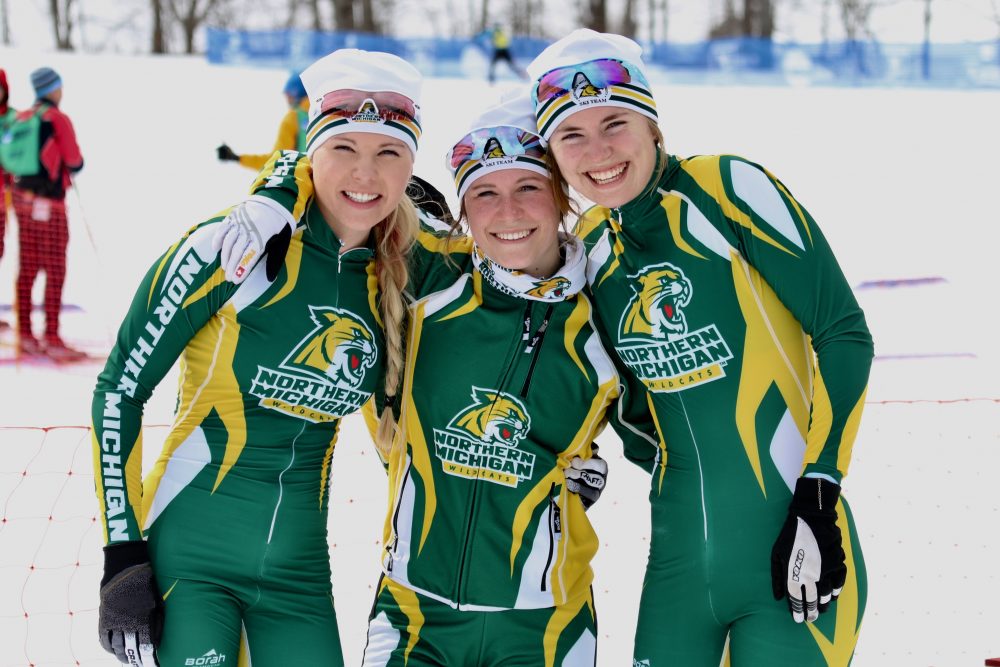
Northern Michigan University’s Kristen Bourne (c) after the 5-kilometer classic race at the 2017 NCAAs in Jackson, New Hampshire. (Photo: Jackie Schneider)
Minnesota Roots, and a Goal Cut in Half
Bourne grew up just outside the Twin Cities, where endurance sport was a family language. “Our family vacations were going to [my dad’s] marathons and triathlons,” she said. She started by hopping into a mile here and there, handing him nutrition at the end of the driveway, learning the cadence and care that go into long efforts.
Skiing arrived as a nudge. A new high-school coach was recruiting runners to cross-country ski at Mounds Park Academy. The first season was rough: “I swore I was going to quit. Every single race I did, I cried after most races,” she said. In a 5k, Jessie Diggins (then a rival in the same section) beat her by 12 minutes. Bourne’s response was characteristic—specific, measurable, gritty: next year, get that down to six.
She continued to run and ski through high school, then headed to Northern Michigan University after spending a semester at the University of Colorado. She transferred mid-winter 2014 and skied at NMU through 2018, working under a rotation of assistants. Her path after graduation would tilt everything she thought she knew about training.
Kristen Bourne spent time in Norway after college training with Lyn Ski / Team Obos. Bourne is pictured here racing in a Norwegian Cup race in Gålå. (Photo: Martin Riseth)
Norway: Where Individual Plans Meet Shared Trails
Right out of college, Bourne moved to Norway for a year and a half. She intended to ski; illnesses complicated the plan. But a concurrent internship at the Norwegian School of Sports Science opened doors into a different coaching world. Back home, she was used to “show up and the coach tells you the workout and everybody does the same thing.” In Norway, she said, “you sit down with a coach and you generate your plan… It was the first time I was exposed to individual planning—thinking about what’s best for you, not necessarily the team.”
Interval days there could look like organized chaos: “Every single person… almost had a different workout, but people would sync up where they could.” At first, she struggled; she missed the mob grind. Then she looked around at a culture of success and realized what was happening: athletes were learning their bodies early, practicing agency. The lesson stuck. “Team workouts are also the way to go,” she said, “but giving athletes a platform to think for themselves—creating this athlete-coach collaborative experience versus coach telling athlete, ‘this is what you should do’—had a tremendous impact” on how she now works.
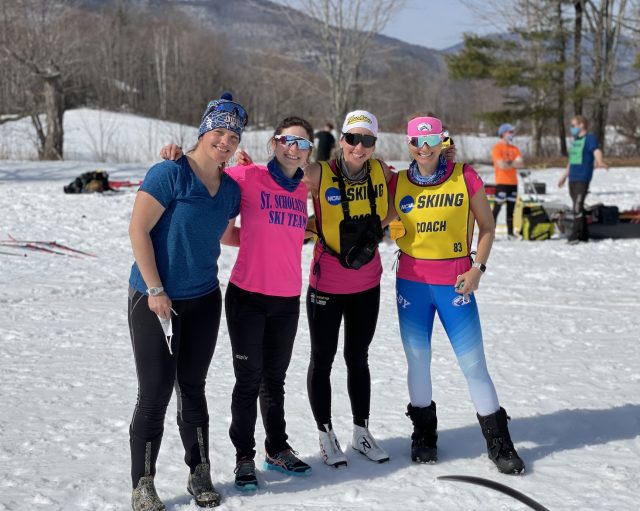
(l-r) WSCA members Maria Stuber (then CSS), Kristen Bourne (then CSS, now with the US Ski Team), Kristen Monahan-Smith (Michigan Tech), and Tracey Cote (Colby College) at the NCAA Championships in Jackson, New Hampshire, in 2021. (Courtesy Photo).
The Parking-Lot Pivot
Her return to the U.S. was abrupt. She lost her residence permit—”turns out it was under the seat of my roommate’s dad’s car”—and flew home with two days’ notice, arriving just as COVID was beginning to ripple into sport. She kept racing a little, then decided she was done.
That’s when a well-timed email—and a parking-lot shout—changed everything. Her dad reached out to Maria Stuber, who was building the Women’s Ski Coaches Association. “Maria found me in a parking lot at U.S. Nationals and yelled out her window, ‘I’m going to call you,‘” Bourne remembered. A call later, Maria offered her a position at the College of St. Scholastica and connected her with Pepa Miloucheva at the Craftsbury Green Racing Project. After two school years at Scholastica, with summers in Craftsbury, Bourne joined the U.S. Ski Team staff.
The transition was, by her own admission, intimidating. “It was this idea of, like, how am I here?“ she said. But Norway’s reminder—that fresh eyes are valuable—kept her steady. “Just because you’re newer and have less experience doesn’t mean your ideas aren’t valid,“ she said. “You’re maybe fresher out of a ski career, you relate with athletes in a different way. There’s a lot of value in that.”
She also learned to de-personalize the miss. “Technique feedback doesn’t always stick. That’s not a reflection of me as a coach or the athlete,“ she said. “We tried that idea; it’s fine. We’ll try something else.“ Each year, she felt more confident; more importantly, she built deeper connections.
Julia Kern—one of the athletes Bourne works with most closely—sees that same quality every day.
“Kristen is unique in the sense that she’s able to connect with just about any personality type on the team,“ Kern said. “One of her strengths is figuring out how to connect differently with different athletes. Every athlete responds differently and has different needs, and she just gets that. She’s very approachable and sees athletes as whole people.”
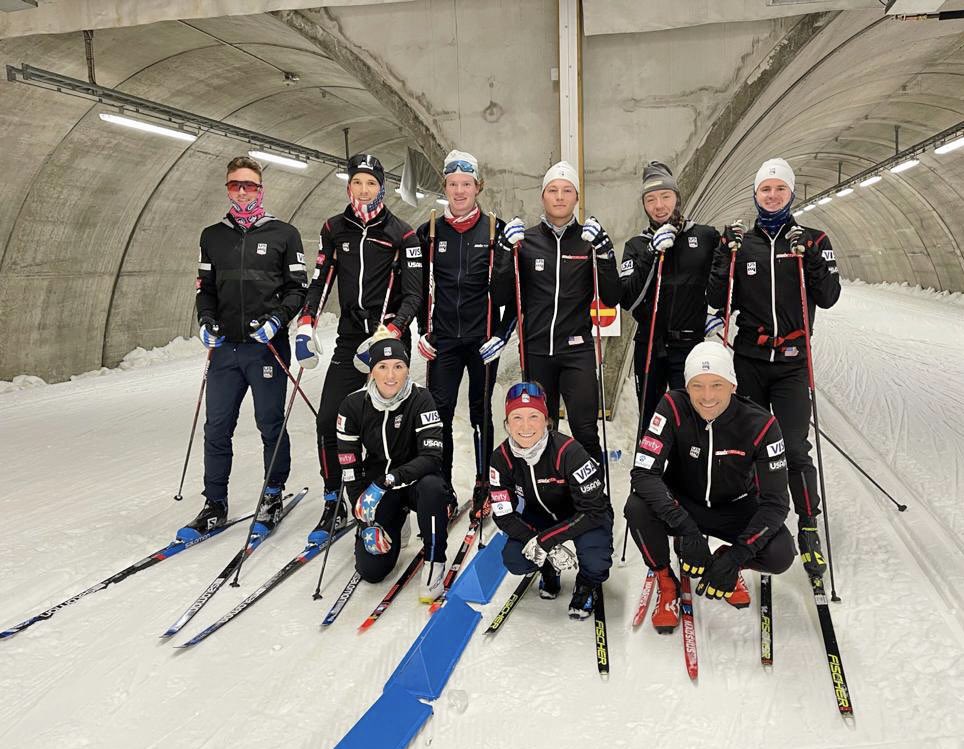
USST athletes and coaches in the Torsby Ski Tunnel, August 2022. Back row, from left: Johnny Hagenbuch, Kevin Bolger, Finn O’Connell, JC Schoonmaker, Ben Ogden, and Walker Hall. Kneeling, from left: coaches Greta Anderson, Kristen Bourne, and Matt Whitcomb. (photo: François Faivre)
Mentors and a Collaboration-First Culture
Ask Bourne about mentors and the names tumble out: Matt Whitcomb, Chris Grover, Jason Cork. “From the very beginning… incredibly supportive,“ she said. “Matt will answer his phone every time. He usually likes to FaceTime… we brainstorm ideas.“ The flow goes both ways: she calls when the connection is hard; he calls when he’s stuck on something.
Her women’s network is just as active. “Maria Stuber, hands down,“ Bourne said. “And Sam Benzing at Montana State—we coached together at Scholastica. She’s younger, but her perspective is so interesting.“ Group FaceTimes are common: Maria, Sam, Kristen, swapping angles and problem-solving. It’s not just helpful; it’s survival. “It would be really hard to be in this job and not have that,“ Bourne said. “The collaboration makes it so much more sustainable.”
That same approach underpins her work with athletes like Kern.
“Kristen’s helped me figure out what kind of training plan works well for me,“ Kern said. “We’ve tried some new things the last few years—different kinds of workouts, always thinking creatively. She’s open-minded, reads up on what other athletes are doing, but also thinks for herself. She’s got such a growth mindset.”
Julia Kern and Kristen Bourne in Sjusjøen at the 2025 pre-World Championships camp. (Photo: Matt Whitcomb)
Coaching Women, Coaching Men — and Being Seen
On the World Cup, visibility is progress measured in inches. FIS’s women-coach bibs created access (up to two additional bibs if teams have women on staff), but change is slow. “Every year, maybe there’s one or two new women… it definitely hasn’t blown up,“ Bourne said. Old assumptions linger. “I probably get asked a couple times a year from male coaches: ‘Are you the massage therapist or PT?’“
For Kern, Bourne’s presence is more than symbolic.
“It’s huge,“ Kern said. “She’s one of the few female coaches on the World Cup level, and she’s down to work hard and just have fun with it too. I hope the next generation of women who want to coach feel inspired that they can do it too. Kristen’s paving the way, even in ways people might not see from the surface.”
Bourne herself agrees that visibility matters. “You can’t be it if you can’t see it,“ she said. “It’s important for young men, too, to see women in leadership roles. Our men’s team has been incredible—they’ve never made me feel like I don’t belong.”
Her advice to aspiring women coaches is emphatic: build a robust support community. “Ask for advice,“ she said. “It makes a world of difference.”
Kristen Bourne and Sophia Laukli on the pre-race day at Val di Femme during the 2025 Tour de Ski. (Photo: Leann Bentley)
Athlete Work: Julia Every Other Day, Gus and Sophia on the Radar
Bourne’s primary day-to-day is Kern. “We’re talking basically every other day—texting or on the phone, training planning. We work very closely, very in depth,“ she said. She also monitors Gus Schumacher and Sophia Laukli.
Kern said that beyond the workouts, Bourne has shaped the team culture itself.
“She’s really good at encouraging athletes to bring their own sense of leadership,“ Kern said. “Not everyone is going to be outspoken—some are quiet leaders, some lead through training. She empowers people to be leaders in their own way. She creates a team atmosphere that’s a judgment-free zone. No idea is a bad idea.”
Gus Schumacher and Kristen Bourne after his 4th place finish in the Davos sprint during the 2023 Tour de Ski. (Photo: Leann Bentley
Season Outlook: Keep the Vibe, Chase the Team Moments
Last year’s long illnesses made for uneasy preseason reading. This year feels different. “People are in a pretty good place,“ Bourne said. “At our camp in Utah, I would assume there would be a little more stress—it’s an Olympic year. Not at all. People were so relaxed and chill and vibing and doing their thing.”
If there’s a metric she’d choose for success, it’s carrying that “happy momentum“ through everything—the Olympics, Lake Placid World Cup Finals. “In a year with so many eyes on cross-country skiing, that would be massive,“ she said.
Results still matter, of course. And she lights up talking about the collective ones. “It would be so awesome to see success in team events,“she said. “Relay and the sprint relay—those mean so much when it’s a collective team event. We want to do well there.”
Lucas Wilmot, Kristen Bourne, Murphy Kimball, Tabor Greenberg in Bend, Oregon 2025 after wrapping up the first L3 intervals at camp. (Photo: Leann Bentley)
Representation, Purpose, and the Long Run
There’s a moment near the end of our conversation when Bourne zooms out to the why. “We are very deeply intertwined in another person’s process and journey,“ she said. “What an absolute privilege to be part of that. It’s impossible not to come to absolutely love and care so much about these people.”
Kern echoed that sentiment from the athlete side.
“Kristen understands there’s life outside of skiing,“ Kern said. “She also knows what it takes to be one of the best in the world—and when it’s time to step away. She helps us stay grounded.”
Five years from now, Bourne hopes she’s doing exactly this, just deeper—”coaching, getting to know these athletes more and more.”
And she hopes the picture around her looks different: more women coaches on staff, on other staffs, in other sports at U.S. Ski & Snowboard; more women wax techs. “If I can have a tiny ounce of contribution into changing that,“ she said, “I’d be so, so happy.”
Kristen Bourne and Colin Rodgers out for a run during the OD run at Park City camp, 2025. (Photo: Matt Whitcomb)
Purpose, Rhythm, and Joy
As our conversation wound down, Bourne slightly rotated her position as the light spilling through the window shifted—yet still filtering across the prayer flags behind her. She laughed when she mentioned her must-pack item: heated socks for Finland. “I get cold fast,“ she said. “Those are my best friend.“
There’s rhythm in that, too: warmth, joy, and purpose, all braided into one.
Because for Kristen Bourne—and for the athletes who work with her—the secret weapon really is fun.
Leann Bentley, Kristen Bourne, and Bernie Nelson at Val di Fiemme the morning of one of the last stages of the 2024 Tour de Ski. (Photo: Matt Whitcomb)
Love Stories Like This? Help Keep Them Coming.
Feature interviews like this one take time, access, and care to produce. If you value thoughtful storytelling and independent ski journalism, please consider becoming a Voluntary Subscriber. Your support directly fuels the work we do to cover the people, places, and moments that make our sport special.
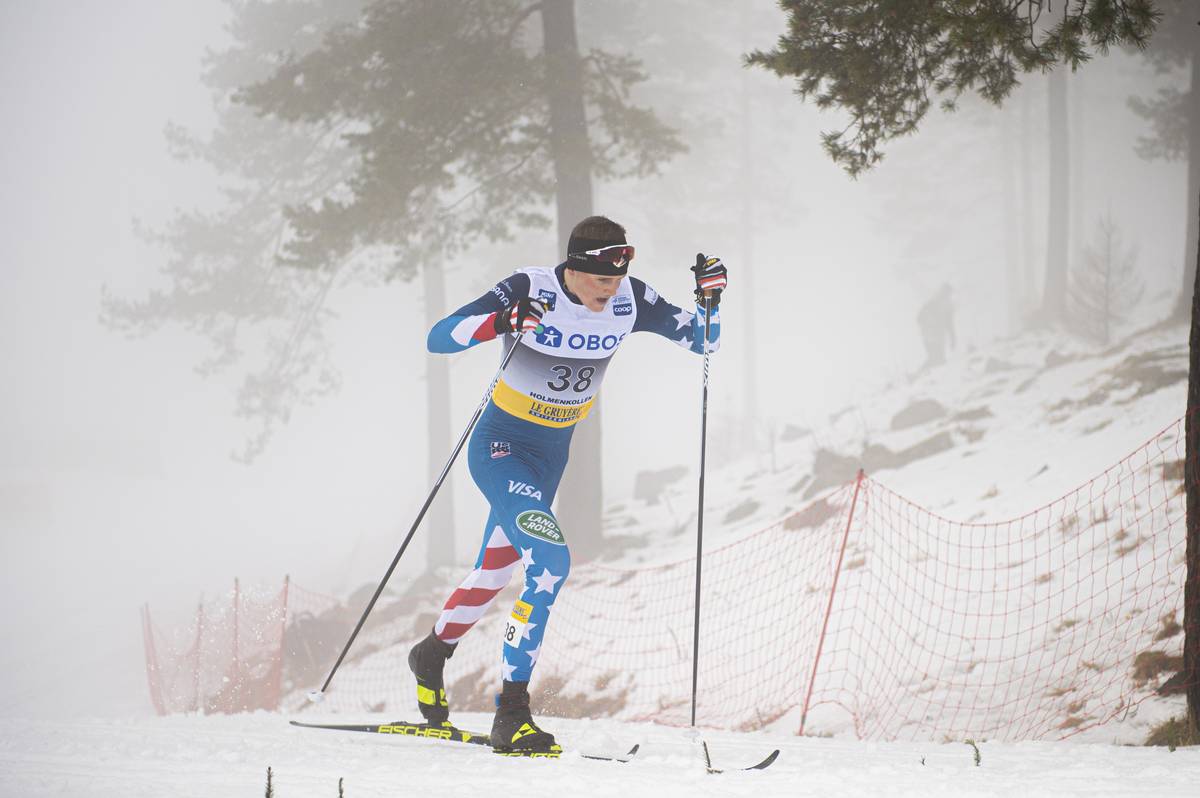
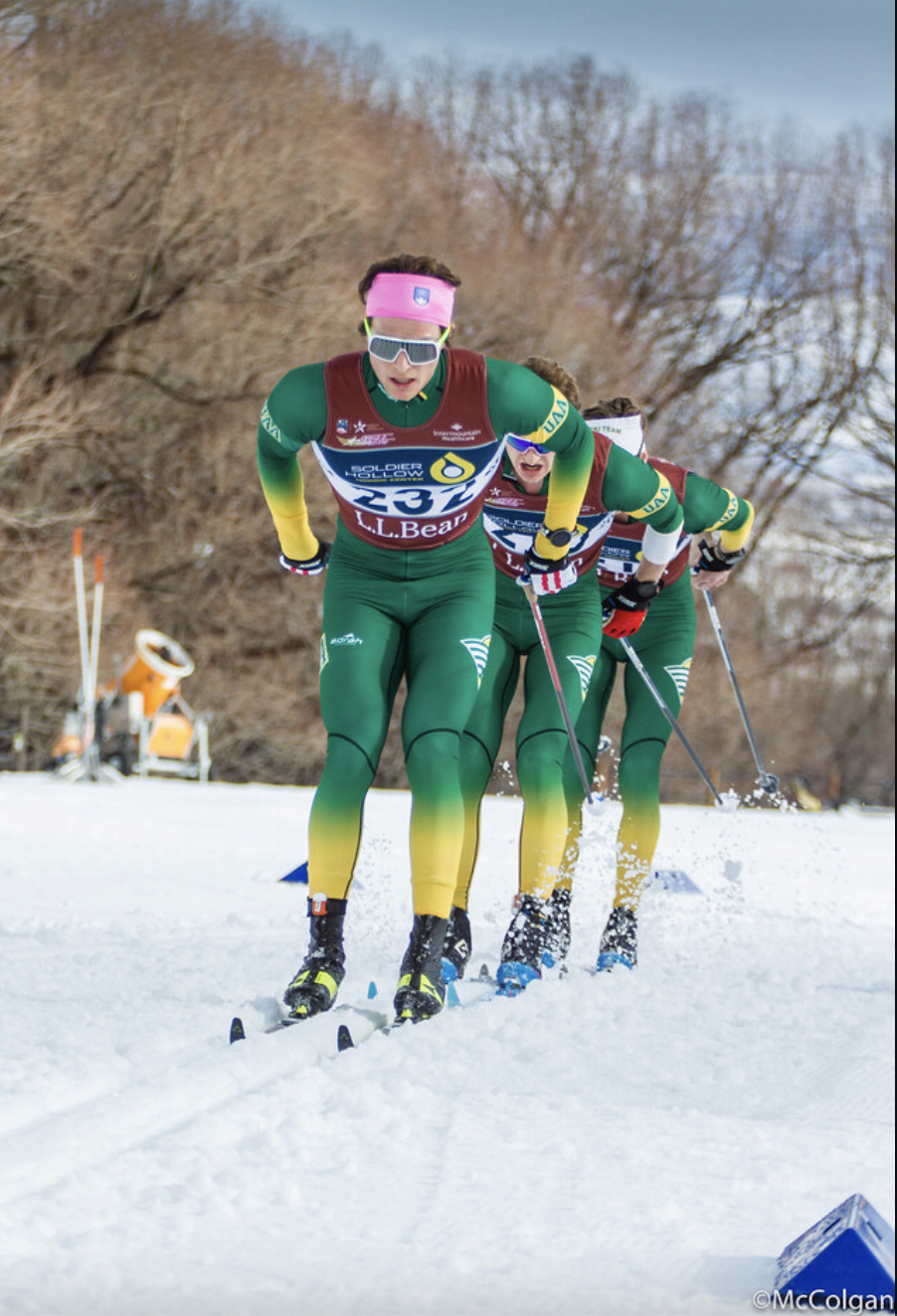
Adam Martin strides at the 2022 Holmenkollen 50 k classic in Oslo, Norway. Martin finished 26th in his third Holmenkollen in March, and recently announced his retirement. (Photo: NordicFoucs).
Adam Martin’s skiing has always tended to be best described in conjunctions rather than disjunctions. He could do this and he would do that.
Or, that’s always how his mentors looked at it. My most distinct memory of Martin is from a CXC (Central Cross Country Skiing) camp about a decade ago when Sten Fjeldheim, then Martin’s coach at Northern Michigan University (NMU), gathered a group of us J2s (U16) around in the lobby of the old Telemark Lodge and said, “there’s proof you can be an All-American caliber skier and have a 4.0 GPA too,” pointing to Martin as the example.
That stuck with me as I watched him as a US skiing fan for years. Martin was giving it everything he could in everything he did, and the juxtapositions that produced were inspiring in their absurdity.
He would run a combined bike/run hill climb andbeat all but one of the cyclists. He would win a local 5 k while pushing for pro runner–caliber paces (seriously, he ran a14:34). He would compete on the World Cup, and his best result would consistently come at its longest and hardest race – theHolmenkollen 50 k.
That pattern strung along almost a decade from his high school career to its final, most striking juxtaposition: Martin had his best season ever in 2021/2022, and now he will retire from professional skiing.
The pattern held all the way through. He gave it all, in every way, and at everything the ski world had to offer.
It was exemplary of his philosophy of inclusiveness, of an and; a persistence in bringing in others’ ideas, their accomplishments, their experiences in skiing, learning what he could, andchanneling it all into his performance out on the course.
That stance towards thoughtfulness and inclusion could be figured as an essence to Adam Martin the skier. Something that reached all the way back and followed him all the way through. When we spoke a couple weeks after his retirement, that was the timescale he reached for. “I was lucky to grow up in the nordic skiing community that I did, with a lot of great people helping me in the sport, both getting into it and supporting me today,” Martin said.
Adam Martin strides through the woods in Falun, Sweden, during a 15 k classic in January 2021. (Photo: NordicFocus)
That nordic community was the one in Martin’s hometown of Wausau, Wisconsin. He first came to skiing as a 10-year-old there – venturing out on skis after the local skating rink shut down and left his then favorite sport, figure skating, an impossibility. “It was a good winter so there was good skiing at 9-mile (Wausau’s trails) for all of March. My mom took me out once or twice a week for a whole month and I think we progressively worked up to 20 k at the end of the ski season. And that was big for me. I didn’t think about figure skating after that.”
It was an understated but persistent start in the sport that matched the ski community that Martin would grow up in. An old timber-boom relic in Wisconsin’s Northwoods, Wausau hums along as a city of 38,000 marked most prominently by Rib Mountain, an erratic that signals that glaciers crept across the land there, carving up knolls and hills under the forests that now surround it. It is as perfect ski terrain as you’ll find in the Midwest. Granite Peak, one of the oldest lift-served ski hills in the country, calls one side of Rib Mountain home. Characteristically of Martin, when I asked him if he skied there as a kid he replied “Never downhill. I used to ski up it after the lifts closed in high school though.” Martin was instead drawn into skiing by the rolling terrain at Nine-Mile County Forest, a network of trails a mile south of Rib Mountain that had already been home to a couple generations of nationally competitive skiers .
Before he joined those ranks though, Martin signed up for the Wausau Night Gliders, the community’s youth program coached by Rachel and Greg Kresse. “We met twice a week, and I was just so excited to see and learn different things in the sport. I remember the first time we learned to skate, and was like thinking, ‘could you V2 in a race?’ Because at that point I was just doing one technique. That was the clincher, I decided I wanted to race. I wasn’t even doing particularly well in the beginning, and getting extremely nervous, but I do remember one race at 9-mile where I had one of my experiences hitting the ‘flow state’ and that was it after that. I was totally hooked on that experience.”
From there, Martin started to look down the road at skiing. Standing there metaphorically, he saw skiers doing what he would one day hope to do. “[In Wausau] the Hugus brothers were three or four years older than me. When I was in 8th grade Ben [Hugus] won the state Championship. One of them was getting top 10s at Junior Nationals, and then I was good friends with Matt and Chris Nichols who were around my age. I had a lot of great competition in Wausau, and in Wisconsin too. I remember Dylan McGarthwrite (from Hayward) making the Scando (Nordic Nations U18) trip when I was a freshman in high school, and I was really hyped up about that.”
After gaining that preview of the Wisconsin nordic world, Martin would chase down each and every one of those goals reached by his role models. By the time he was a freshman in high school, he was qualifying for Junior Nationals. Then, he won the Wisconsin high school state meet, and then qualified for the U18 Scandinavian Cup trip with US Ski & Snowboard. With dreams realized and only good things ahead, Martin decided to go all in on skiing.
Adam Martin pushes over the line during a 15 k classic in Falun in February, 2020. (Photo: NordicFocus)
His time, and his place in Wausau, were serendipitous in presenting a ready-made opportunity in his own backyard. In the early 2010s, the Midwest was home to a grouping of skiers who would go on to define their generation of American skiing. Martin headed to the CXC Elite Team, where an orbit of skiers that included Jessie Diggins and Kevin Bolger, along with coaches like Jason Cork, Igor Badamshin and Bryan Fish, were all forging the philosophies and approaches to skiing that would eventually influence the direction of US skiing for years to come.
That it was happening was almost hidden by the shabby surroundings in which they were pushing forward. After joining up with CXC, Martin split his time between Wausau, and CXC’s main training site at the Telemark Lodge in Cable, WI. The training environment was spartan, but the facilities couldn’t even strive for that aesthetic – they were just run down. The VO2Max-fitted treadmill hung out in what used to be a shop floor in the Lodge’s old mall, most athlete accommodations still donned the dull color tones of the 1970s, and the old Telemark World Cup trails were overgrown and uncut.
It was out of the way, but it was also all about skiing, which let Martin fully lean into his developing thoughtfulness towards his technique and his training. “I took a lot of cues from Igor [Badamshin] there. The thing that stood out for me was that he was so joyful about skiing, and that joy could extend to looking at every little aspect of things. He’d point out a little thing in technique, and would get incredibly excited about it, and that was contagious.” (Badamshin passed away in 2014; read a FasterSkier tribute to him here).
That attitude extended to new areas of interest too for Martin, who began to take an amateur’s interest in the sports science behind cross-country skiing. “I just bought a standard exercise physiology textbook and think I like read it cover-to-cover. … I started reading all sorts of exercise physiology, and still do.”
Martin’s post-grad year was a fruition and a starting point. Going into a year at CXC, Martin was a skier whose results indicated a huge amount of physical talent and mental intelligence. Then, somewhere in the Wisconsin Northwoods, they melded together, and Martin formed a full-on focused approach to skiing.
But there was a paradox at play too. In developing this holistic approach to skiing, Martin realized he had let go of fitting skiing into his holistic approach to life. “Just focusing on skiing and putting all that pressure on one avenue of my life did not work for me. I really needed to challenge myself mentally and take the pressure off skiing after that post-grad year.”
That led Martin to another natural stopping point in his skiing career, college skiing at Northern Michigan University (NMU) under coach Sten Fjeldheim. “I really fell in love with the sport again under the tutelage of Sten, and with the incredible team environment there.” NMU had long been a waypoint for talented Midwestern juniors – the path that stemmed from JNQ wins to Marquette seemed almost ubiquitous. That meant Martin joined up with a group of teammates that could help him push and be pushed by him.
Adam Martin tags Craftsbury Green Racing teammate Caitlin Patterson during a March, 2022 4 x 5 k mixed gender relay in Falun, Sweden. (Photo: NordicFocus)
Like he had when he was a young skier in Wausau, he looked ahead to see what and where his teammates were achieving results, and found cues he could take, saying that “When I was a sophomore, Kyle Bratrud won the15 k skate at Nationals in Houghton. He was a year older than me and that really opened my eyes to say ‘ok, we can do this. That level is achievable.’”
With that long view of what he wanted to accomplish, Martin also found in Sten Fjeldheim a coach perfectly matched to the detailed approach to skiing he had formed. Fjeldheim at the time was somewhere between elder statesmen and guru in his career, which meant that the years that Martin was beyond in his skiing knowledge had found a home. “Oftentimes, before a workout, [Sten] would explain exactly why we were doing it, why we needed to execute it a certain way, and what the physiological effect would be for doing that. That was exciting to me, and it worked really well with how I looked at ski training.”
As important as his coach was the skiers that Martin called teammates during his time at NMU. “That was a rare team environment, we were all super competitive with each other but in a super constructive manner.” During his four years, Martin was part of teams that included former, present, and future US ski team members with Ian Torchia, Zak Ketterson, Kyle Bratud, and biathlete Jake Brown. At the NCAA Championships in 2016, he, Torchia, and Brown combined to put NMU at the top of the team scoring – all earning All-American status in the process. Across both the 10 k Classic and 20 k Skate races, he and Torchia were the top American-born athletes in collegiate skiing.
When Martin graduated in 2017, it was also with a distinction that marked a whole other focus during his time at NMU. He hadtwo degrees – one in mathematics and one in computer engineering. He had taken what he learned about himself during those post-grad days in Wisconsin, moved on up to the U.P., and nailed it.
Adam Martin (NMU) racing to a American-leading 23rd in men’s 15 k classic at 2016 U23 World Championships in Rasnov, Romania. (Photo: Pete Leonard)
With a 23rd in the 2016 U23 World Championships 30 k Freestyle, there were plenty of professional clubs that were interested in seeing Martin continue his skiing career. And he was up for it, if he could continue to take the holistic approach that had seen skiing not be “the only thing” in his life. From a far-flung corner of Vermont’s Northeast Kingdom, a call came in from Pepa Miloucheva, the coach atCraftsbury Outdoor Center’s Green Racing Project. The GRP was a top-level, proven club, and also one uniquely structured to have its athletes take an active role in the sustainability and outdoor recreation–focused activism of the Outdoor Center. “It just made sense,” said Martin on his decision to head to Vermont after graduating. “I was getting into a program that was more than just training…I was able to work with them, take the GRE, take grad school classes, and make it feel like NMU where I was very challenged.”
Again, Martin had put himself in a place where skiing was the thing. A small pocket of rolling hills that were a little bigger than the ones he started out on in Wausau, but rolling, nonetheless.
On the skiing front, things continued to progress for Martin after joining the CGRP. He made his World Cup debut at the 2018 openerin Ruka, where he placed 51st in the 15 k Classic. That season he also notched a pair of 2nd places at US Nationals in the 15 k Classic and the 50 k Classic, while earning consistent World Cup starts throughout that 2018-19 season. Those World Cup appearances culminated in a season-high31st place at the Holmenkollen 50k marathon in March 2019. It was Holmenkollen that year which provided another one of Martin’s realizations about himself as a skier. “I started to learn that my strength as a cross country skier is that my physiology is really geared towards distance – it’s definitely not speed or transitions. Holmenkollen specifically has these grinding features that make you get to your VO2 max and have to stay there for a long time. It’s almost a perfect physiological stress for me.”
Adam Martin during the Holmenkollen 50 k in 2020. (Photo: NordicFocus)
That further stuck out to Martin especially when he returned to the Holmenkollen race the next season, in 2020. “In 2020, it was a low snow year, so we had to do a different course than the traditional 8 k, and it was more focused on transitions. I just learned again, in one race, a lot about myself as a skier. I was just happy to finish.”
That Holmenkollen marathon also marked the end of normalcy in skiing for the next couple of seasons to come. “That was my last race on the World Cup before the pandemic, and then I came home to do the SuperTour in Minneapolis right before the World Cup, and I won. It was my first SuperTour win, and then the pandemic happened.”
Martin was in a weird spot. The markers that he had traditionally used to gauge and reach for new heights in his skiing career would suddenly disappear over the course of the next season. He was making progress, but the road didn’t have as many markers as it did before.
“[The pandemic] was something everyone dealt with differently, right? But I think for me, the big challenge was that the Craftsbury program is traditionally very communal and very close knit. It’s a big group of athletes – like 30 between our skiers and rowers – and traditionally we’re eating in a dining hall, working together, working out together, and sharing the same gym. That was a super vulnerable situation to COVID, so we went from super communal to basically not going into public buildings for that first year.”
Adam Martin races a frosty 15 k in Falun, Sweden in January, 2021. (Photo: NordicFocus)
It was as if someone flipped a switch on the type of training environment that Martin had been in since his days at CXC. His training grounds had always been out of the way geographically, but always included the ability to bounce ideas off his teammates and coaches, to try out new things, and to get feedback then and there. They also had always included a full race schedule, which due to a combination of the COVID situation locally in Craftsbury and Vermont state safety policies, became an impossibility the next season.
When Martin could race, it was internationally. “I was lucky to get a start on the World Cup at Davos in December, but while I was gone, the state of Vermont changed the rules around COVID travel. (At the time, COVID cases were undergoing a spike.) I got back and I couldn’t be on the ski trails in Craftsbury while I quarantined unless it was like before 7am or after 6pm at night. I knew I was lucky to be getting racing in, but it brought restraints that forced you to adapt your training.”
Martin credits the imperatives surrounding COVID compliance with giving him a new adaptability to his training approach, even if the changes he made were more informed by what they always had been – his coaches, his intuition, and his constant searching for knowledge that would lead to improvement. “I think there was some changes in those two years that helped me make some big improvements that were probably independent of COVID, but came about because I felt like the pressure was off again for the first time in a while.”
That intermittent COVID season’s lessons would all come to a fruition in Martin’s skiing at the start of the 2021-22 season. Martin started his season on the US SuperTour circuit, and the SuperTour circuit was to begin in the Midwest. That, for Martin, brought back an extra level of familiarity to the return of a regular racing schedule in 2022. “I was so happy to win that first SuperTour in Cable (in the15 k Classic).”
The early part of the season also saw him call to mind some of the moments that he had once seen teammates achieve back when he was based in his home region. When he came out of the first SuperTour period in 2nd place overall, behind former teammate Zak Ketterson and barely missing out on the automatic World Cup start Ketterson earned, Martin turned towards US Nationals in Soldier Hollow in January.
There, on a sunny Utah day, he won the 15 k Classic, a moment that was “particularly awesome, since it was what I watched Kyle Bratrud do at Houghton.” Over seven years, Martin had had the revelation about who he skied with, and then chased down that moment for himself.
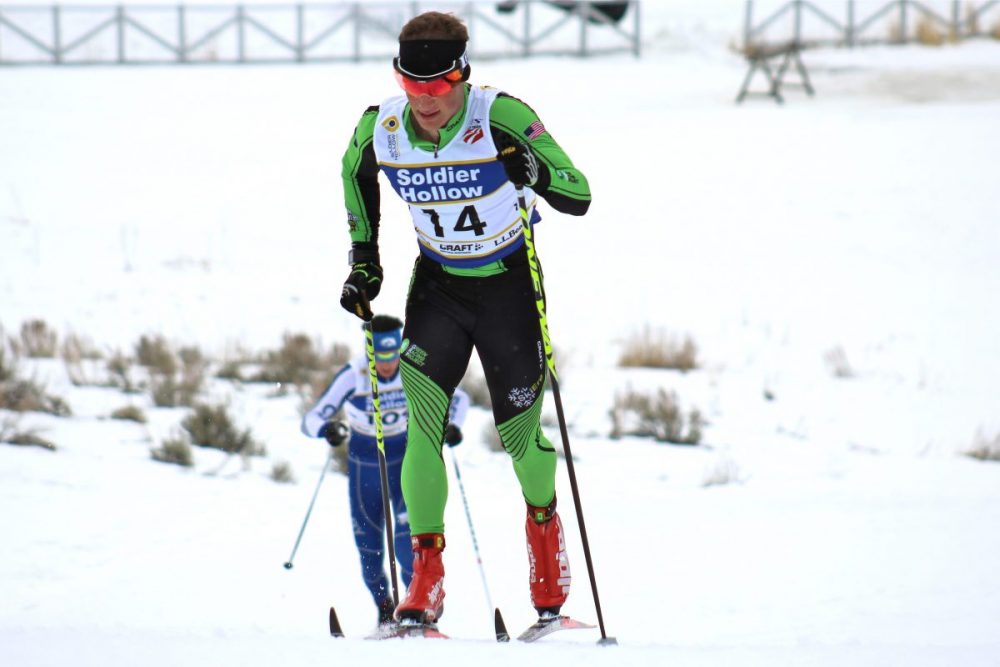
Adam Martin at 2022 Nationals in Soldier Hollow. Martin would become a National Champion in the 15 k Classic, a goal he set 7 years earlier after watching then NMU teammate Kyle Bratrud accomplish the feat. (Photo: Tobias Albrigtsen / @untraceableg)
His National Championship and SuperTour results would, in nearly any other season, have seen him shortly to the start line of a World Cup. But for a second winter in a row, COVID was surging (this time as part of the Omicron wave). A slate of World Cups were canceled in January, and the Olympics in February took out any flexibility in the US Ski Team’s lineup. In the Olympic qualifying period, Martin was just behind Scott Patterson for 2nd place in the standings. With a more competitive field than ever before, Martin just missed out on qualifying for the 2022 Beijing team.
From there, he would continue to race the SuperTour, with his consistency throughout the whole season earning that series’ overall title, which he capped off with a win in the15 k classic at SuperTour finals in Whistler. He also would get the nod to race the final World Cup period in March. A period that included, once again, the Holmenkollen marathon.
Martin had a memory and a goal. “I had been 31st there my first time, so I wanted to notch a top-30 finish. I looked at the points list and my bib and knew it was going to be a challenge, but the way the race went out I felt like I could hang onto the pack a little longer than I had before, and with the course being one I knew I liked, I just skied with a confidence that I might not otherwise of had.” That effort and that approach, as it had throughout his career, saw him through to accomplishing his goal. Martinfinished in 26th.
Martin could continue like that – setting goals that, through the constant refinement of his approach to skiing, he would surely accomplish. But that’s where the paradox of his approach comes in again. In powering his skiing through a fine-tuned balance between focus on skiing and focus on other aspects of life, there came a time when the balance would shift towards life. For Martin, that moment is one he says has come:
“What was important to me in professional skiing is giving it everything I have, and that requires a lot of sacrifices. It’s important to me that I’m giving my best effort, and now I give that to other things in my life. I had so much fun this season, and don’t have to step away with any bitter taste in my mouth. Skiing will always be there – I’ll be doing the Birkie or the Noquemanon next year I’m sure, but I’m ready to push myself in a different sense.”
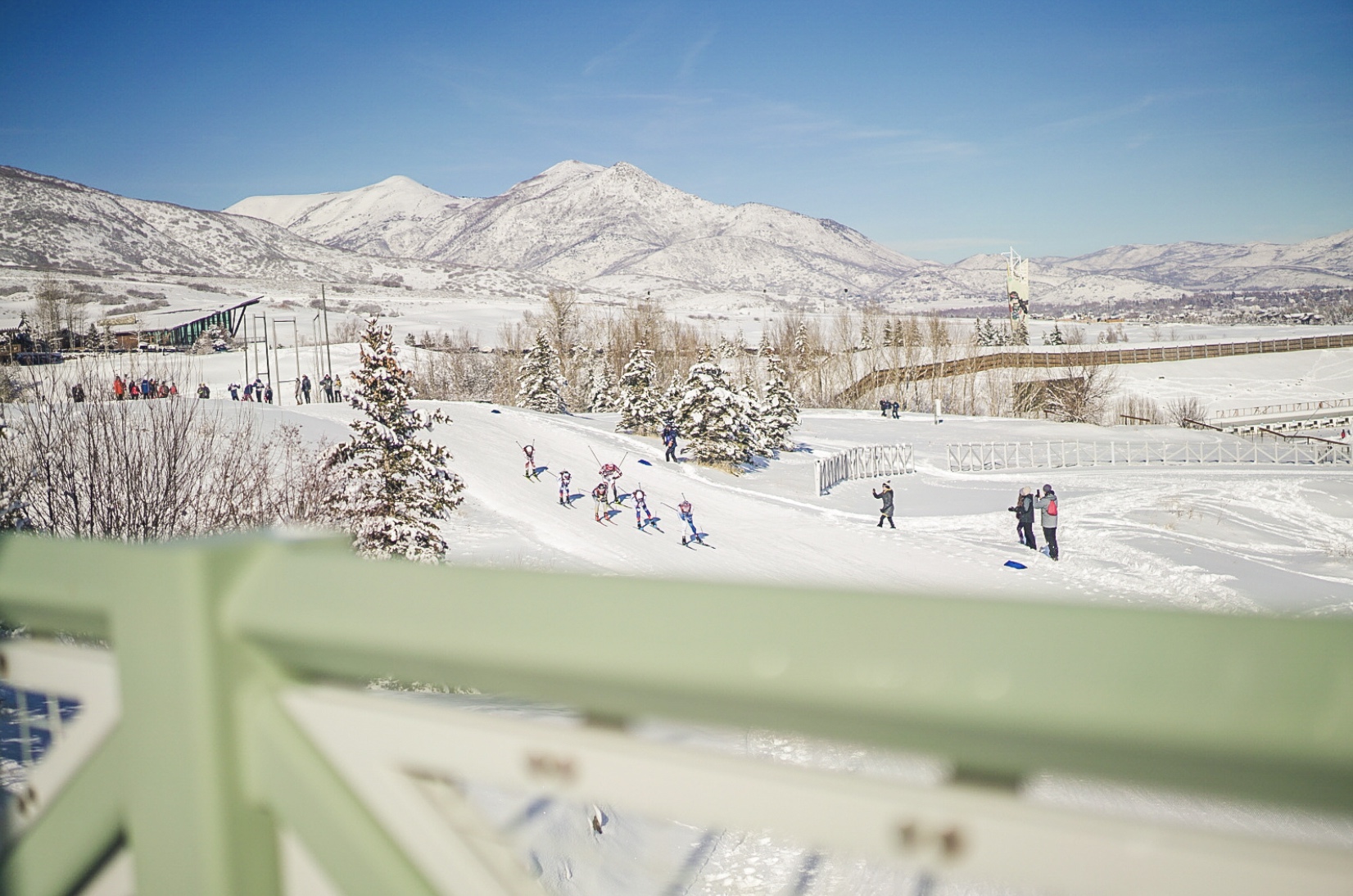
Soldier Hollow, UT offered a variety of conditions over the three days of racing at the 2022 U.S. Cross Country Championships. (Photo: Tobias Albrigtsen / @untraceableg)
By Rachel Bachman Perkins, Ella Hall, and Gavin Kentch
Thursday marked the final day of racing at the 2022 U.S. Cross Country Championships in Soldier Hollow, UT. (Friday’s classic sprint is a SuperTour only, not part of the National Championship series.)
After prime conditions in Sunday’s freestyle sprint and Tuesday’s 20/30-kilometer freestyle distance races, warm and wet weather made its way into the forecast just in time for the 10/15k interval-start classic races. Temperatures that started in the mid 30s for the women’s race climbed into the low 40s for the men’s race. In combination with variable precipitation that was not-quite-white, teams faced a dreaded combination of conditions for classic racing.
Looking like thoroughbreds, skiers shuffled and kicked their skis in the tracks to prevent icing as they lined up at the start gate to begin racing. For many athletes, the shuffling continued even after they pushed through the start wand and headed out onto the course. Even top-10 finishers could be seen slipping, struggling, and doing anything possible to get their skis to kick, while exhibiting technique that looked more like “desperate times call for desperate measures” than “this is what my technique videos should look like.” Classic racing in a warming world can be rough.
Women’s Race: Caitlin Patterson Wins by Nearly a Minute
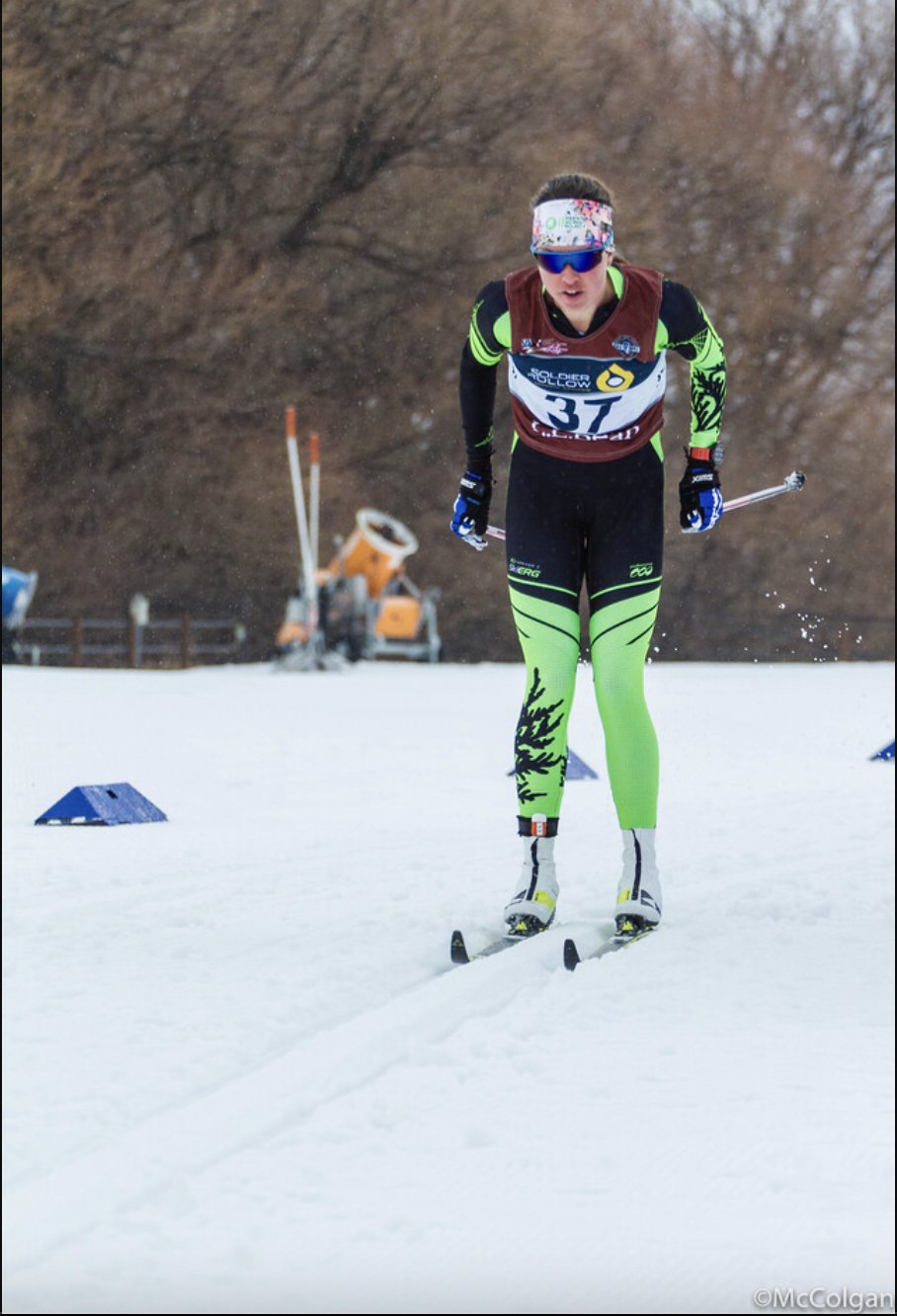
One athlete who had scant difficulty with the variable conditions was Caitlin Patterson of Craftsbury Green Racing Project (CGRP). Starting in bib 37, near the back of the top-seeded field (bibs 21-40), Patterson had the advantage of receiving splits telling her how she was doing relative to the rest of her competition. Tuesday’s second-place finisher in the distance skate race, Rosie Frankowski, started one minute later in bib 39, but athletes starting ahead of her included Katharine Ogden (USST/SMS T2) in bib 23, Master skier Erika Flowers (BSF) in bib 29, and U20 skier Sydney Palmer-Leger (USST/U Utah) in bib 36.
Caitlin Patterson takes the national title in the women’s 10k interval start classic in Soldier Hollow. (Photo: John McColgan)
All that said, Patterson didn’t have to do very complicated math out there. After the first of three 3.33-kilometer laps, she was already in first, by 6 seconds over Palmer-Leger. After the second lap, her lead had grown to a healthy 30.9 seconds through less than 7 k of racing, this time over BSF Pro Team skier Mariah Bredal. Patterson proceeded to clock the fastest third leg in the field, by over 20 seconds, on her way to the finish, ultimately winning by nearly a minute.
Patterson notched the fastest first and second legs, too. The math can sometimes get complicated in interval-start races, but it’s safe to say that if you have the fastest time for each of three legs, you have won the race. Patterson did so by a remarkable margin of nearly one minute over ten kilometers, crossing the line in 28:12.0. No other athlete in the field broke 29 minutes on the day.
“Today was a really nice race for me, and I’m very happy with it,” Patterson wrote to FasterSkier after the race. “I skied my own race, but also felt that I went for it aggressively right from the start. It’s not every day that it’s possible to hold on to an effort like that, but I was able to keep pushing and building into the race. It’s fun to be able to race so hard, dig in deep but also be getting hints of recovery on the downhills. I was getting occasional splits that I was in the lead, but not many details, so I just kept pushing, especially since you never quite know with splits if they’re capturing everyone. However, in my 3rd and final lap, I believe I heard some cheering to the effect of ‘Caitlin you’re putting on a clinic, keep going!’ and I had some ideas that the race was quite a good one in results, to match the feelings.”
Patterson was one of few skiers who looked as if she could trust her skis throughout the race, still keeping her technique shorter and choppier than a traditional stride and glide, but nevertheless consistently achieving grip where her opponents were faltering. She acknowledged the role that the CGRP service team played in today’s success.
“The CGRP waxers – Nick Brown, Jake Barton, Ollie Burruss, and coach Pepa Miloucheva – did an awesome job with skis today and I’d like to thank them for their hard work today and every day! Great skis really helped set us up for success, and I’m proud of my whole team’s efforts this week.”
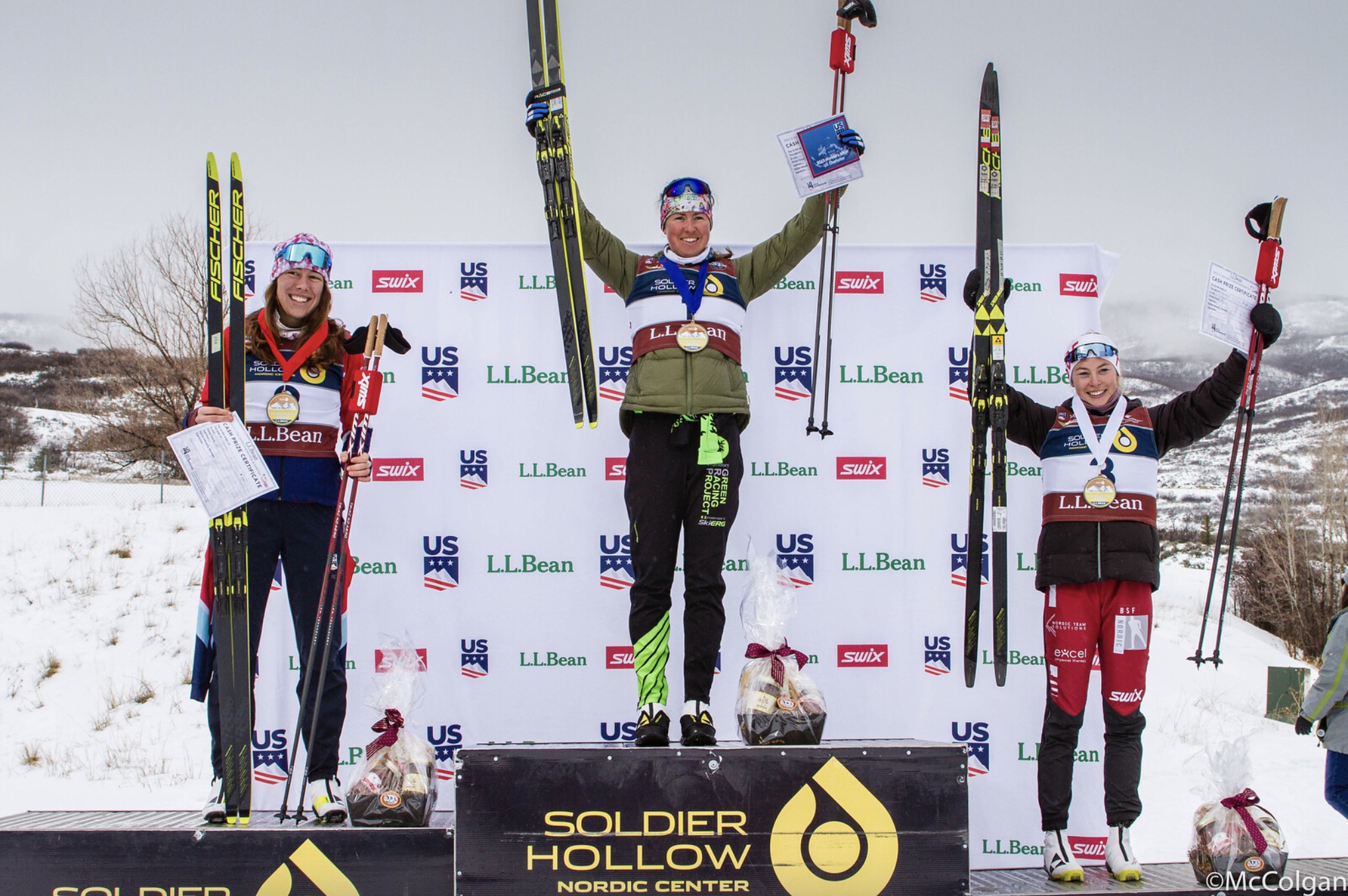
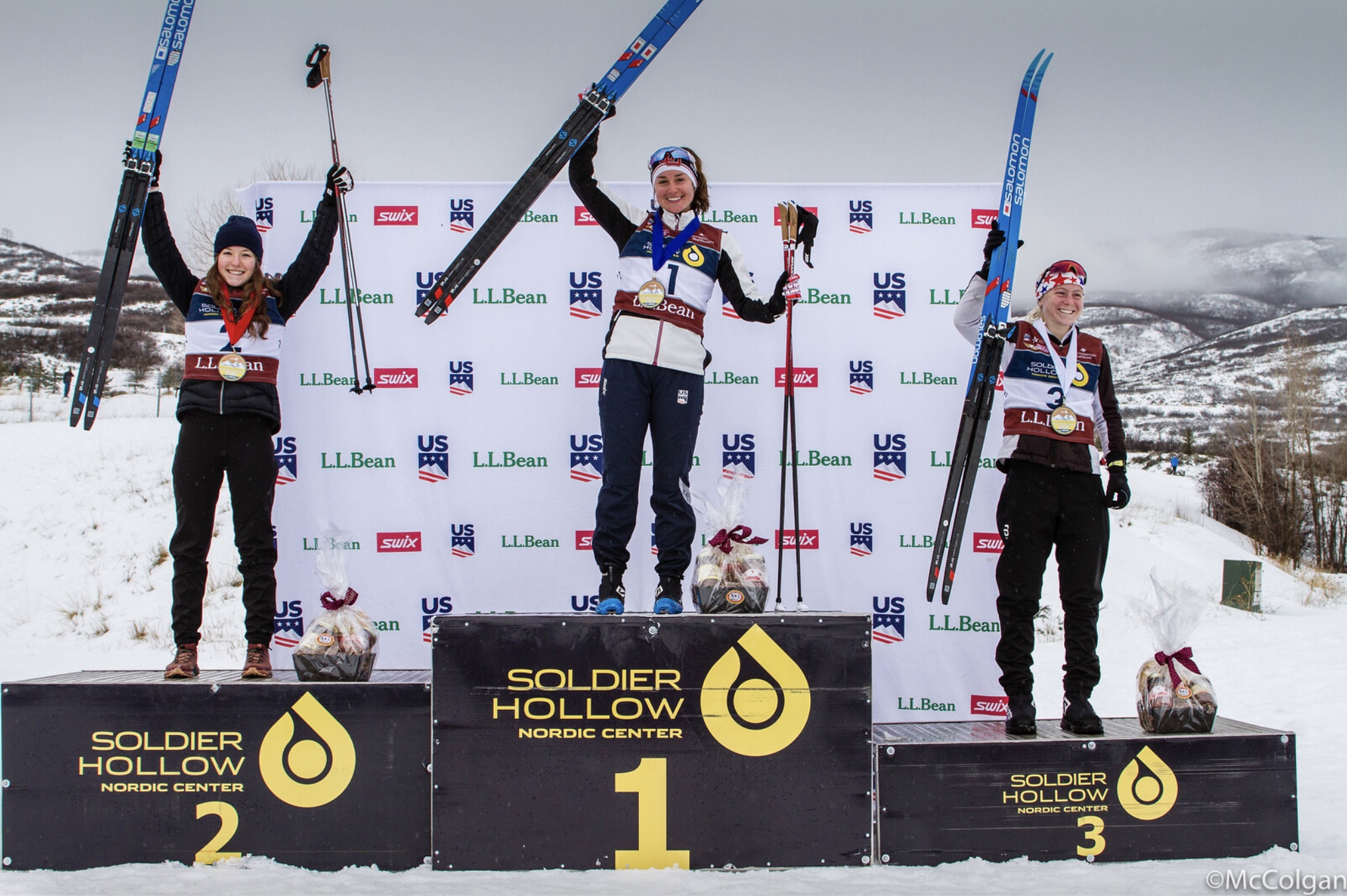
The women’s 10k interval start classic podium at the 2022 U.S. Cross Country Championships in Soldier Hollow, UT: Caitlin Patterson took the national title ahead of Katharine Ogden in second and Mariah Bredal in third. (Photo: John McColgan)
Patterson also reflected on her performance in the three stages of the U.S. Championships as a whole. Putting together a successful week of racing, she took home two wins, today and in the freestyle sprint Sunday, along with a third place finish in the 20k on Tuesday.
“Overall Nationals feelings have been quite good once I’ve gotten into the racing itself. Once I toe the line, my body wakes up and I’ve been able to push hard. It’s not all sunshine though, as many of the off days and even the warm ups before races have been a little rougher around the edges. Most racers I expect are familiar with the restless nights of sleep, the pre-race jitters, and the accumulated toll of so many races in a row – still, that’s part of the challenge to get through. I think the fact that Sunday was my first sprint race of the year, plus going the full four rounds, took more out of me than I would have expected. However everything seems to bounce back pretty well in time for the next race, and I’m looking forward to tomorrow’s sprint and overall enjoying so many chances during the week to dig in and race hard!”
Ogden, very recently returned from Europe after racing to 31st in Monday’s 10 k classic in Val di Fiemme in stage five of the Tour de Ski, took second, 53.4 seconds back, in a steady effort that saw “only” the third- and fourth-fastest individual lap times, but the second-best time overall.
Katharine Ogden races the classic sprint during the 2021/22 Tour de Ski in Oberstdorf, Germany. (Photo: NordicFocus)
“This race was brutally hard!” Ogden wrote to FasterSkier. “The course was hilly and a lot of fun, exactly what we expect of Soldier Hollow. I knew that winning today was a total long shot after racing five races of the tour and then flying [to Salt Lake City] only a day and a half before the race, but I am really proud of the way that I skied today. Even though it wasn’t the miracle race that I was hoping for, it was incredibly fun to race at home in the U.S. and to see so many people that are really special to me and have been instrumental in my ski career.
“Despite how painful the race was today, I can honestly say that I am so incredibly happy to be here and that I have never felt more loved by the ski world. It is always an honor to get a chance to race for Stratton, the team that has supported me unconditionally for the past 10 years. I am also extremely impressed by the way that Caitlin and Mariah skied today. They both work exceptionally hard and it was really special to witness that effort paying off in a big way.”
Bredal raced to third overall (+1:01.2), after moving up from fifth at the first checkpoint.
Originally from Victor, ID, just over Teton Pass from Jackson Hole, WY, Bredal is a 2021 graduate of the University of Utah, where she earned two-time All American and three-time All RMISA honors. Bredal also finished 8th in Tuesday’s 20k freestyle (+4:44.5) and 16th in Sunday’s freestyle sprint.
Mariah Bredal raced to third in the women’s 10k interval start classic in Soldier Hollow. (Photo: Instagram @bsf_pro_team)
“Today’s race was a day that everything fell into place for me and actually ended up being one of my better races ever!” wrote Bredal after the race. “It was pretty fun for that to happen and result in a podium at U.S. Nationals. I felt really good to begin with and was able to push myself a lot throughout the race too. I had amazing skis as well today.”
Speaking to her transition to post-collegiate racing, Bredal also shared her thoughts on joining the Bridger Ski Foundation Pro Team in Bozeman, MT.
“I have enjoyed it a lot so far and feel like my skiing is improving also. It’s been awesome to be on the team and I’m grateful for the quality of training and coaching I’ve had so far! Bozeman is a pretty sweet place too. I feel like I’ve had a pretty good start to the season at the SuperTours, and it’s been nice to start the season a little earlier as well.”
Initially a podium favorite, Frankowski had a rough day, posting the third-ranked time for lap one, but the 17th-ranked time for lap two, en route to finishing ninth overall (+1:41.2). Her APU teammate Becca Rorabaugh, who was second in the 10k classic in the Cable SuperTour races earlier this season, finished in a tie for 14th. Notably, APU may also have had trouble waxing for comparable conditions in the men’s classic sprint at this venue in 2017, when none of its athletes made the heats.
Notable performances from athletes starting outside the seeded group included Hannah Rudd (BSF) in eighth (+1:31.8), U18 athlete Nina Schamberger (Summit Nordic Ski Club) in 10th (+1:48.0), and Annika Landis (CGRP) in 14th (+2:02.0).
The junior women’s podium of the 10k interval start classic in Soldier Hollow. Sydney Palmer-Leger won the junior race ahead of Nina Shamberger in second and Samantha Smith in third. (Photo: John McColgan)
There was no separate juniors race on Thursday; all athletes raced the same course. Extracting the top junior athletes from the results yields an unofficial junior women’s podium of Palmer-Leger (6th overall, +1:23.7), Schamberger, and Samantha Smith (SVSEF, 13th overall, +2:01.7).
Men’s Race: Martin Out-Paces the Field for a Second Craftsbury Title
While temperatures continued to warm, the rain cleared and the sun began to shine at the start of the men’s 15 k classic individual start. Over 100 athletes completed the four 3.75 k laps, and it was Adam Martin (CGRP) who came out on top, winning in 39:18.0. With live timing down for most of the race, it was difficult to tell with certainty how the places were playing out, instead identifying strong contenders based on how skis were kicking and gliding and how well an athlete’s technique was holding together.
Adam Martin lines up to race the 30k mass start freestyle in Solder Hollow earlier this week. (Photo: Tobias Albrigtsen / @untraceableg)
For Martin, it was his first national title after several previous podium finishes, all coming in the classic technique. In 2019, racing on home tracks at Craftsbury, Martin was second in the 15 k classic, finishing behind Kyle Bratrud. The year prior at Distance Nationals in Craftsbury, Martin was second in the 50 k classic mass start. In 2016 at Nationals in Houghton MI, Martin was third in the 15 k classic behind Kevin Sandau (CAN) and Thursday’s second-place finisher, Scott Patterson.
“I wanted to win,” wrote Martin after the race, “However, I have a lot of respect for my competitors, so I knew it would take many pieces falling into place to have a shot at it.” He added, “I’m stoked – this is a dream come true for me!”
Reflecting on the conditions Martin wrote, “The conditions were soft klister skiing, and I was really happy with my skis – a good balance of enough kick and still good glide. I started towards the front of the A seed, so I tried to push a hard pace from the start. I was able to recover well on the course downhills, so even though it was at altitude, I was able to accrue big deficits on the uphills without completely blowing up.”
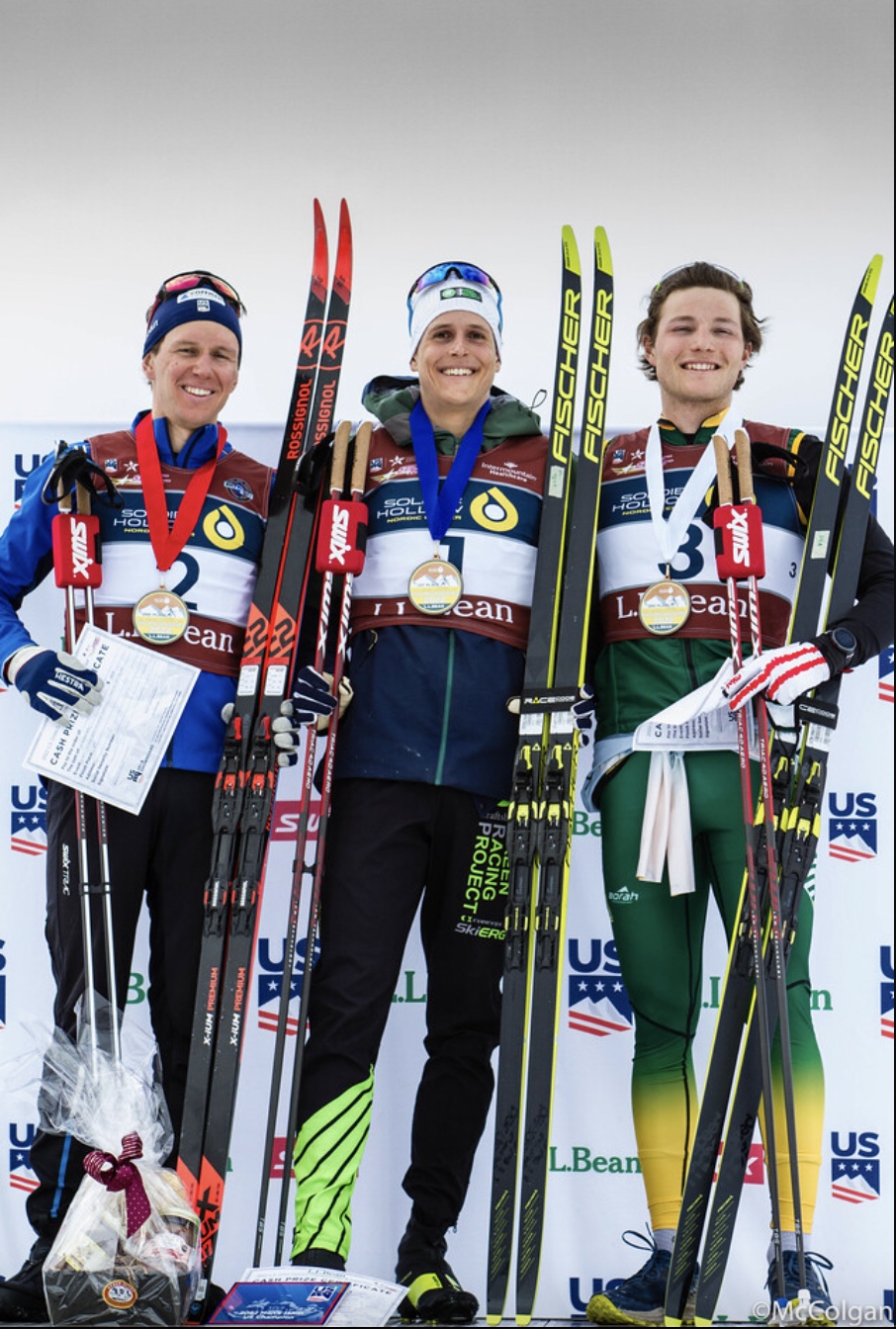
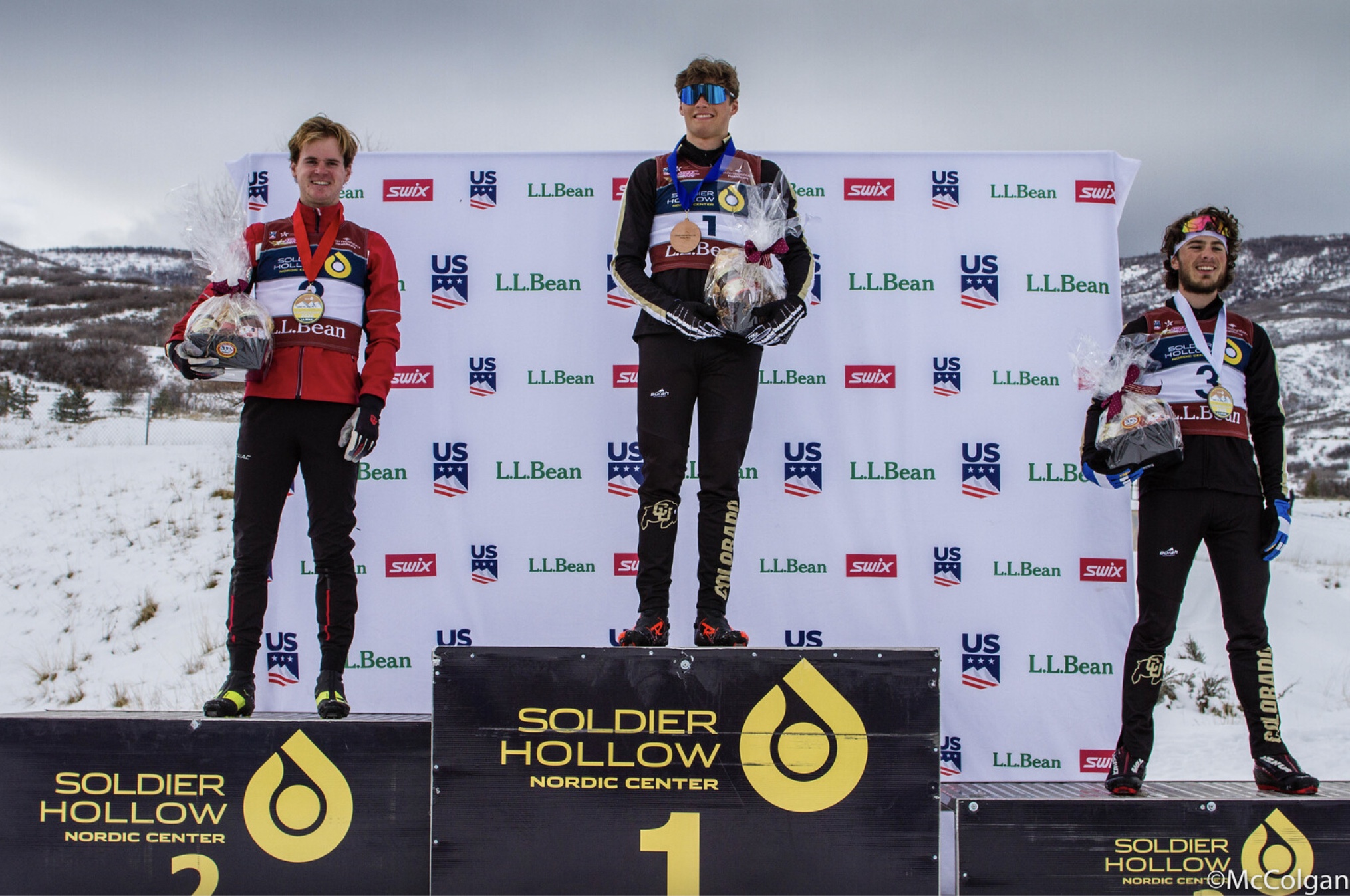
The men’s 15k interval start classic podium during the 2022 U.S. Cross Country Championships in Soldier Hollow, UT. Adam Martin took the win ahead of Scott Patterson in second and JC Schoonmaker in third. (Photo: John McColgan)
Scott Patterson (APU) came in second (+48.9), following up his victory in the 30 k with another podium finish. After the race he wrote, “I felt solid throughout the race. After talking to my sister following her success, I knew it was going to be hard from the start. I had that in my mind and went out for battle. I started quite strong and felt solid early on, but later, I knew my form was falling apart a bit and my arms were tiring. Four months of one pole and limited two pole skiing through the fall following my wrist injury didn’t exactly enhance my double pole endurance. However, I think I fought through that well and made the most of what I had today.”
Regarding the conditions Patterson noted, “Conditions were tough out on the course today. Warming up quite a few of my APU teammates were noting that it felt a bit like skiing on Eagle glacier in the afternoon. The pole troughs were deep, and the tracks were getting a bit wobbly and blown out. Days like today require a lot from both the athletes and the wax techs.”
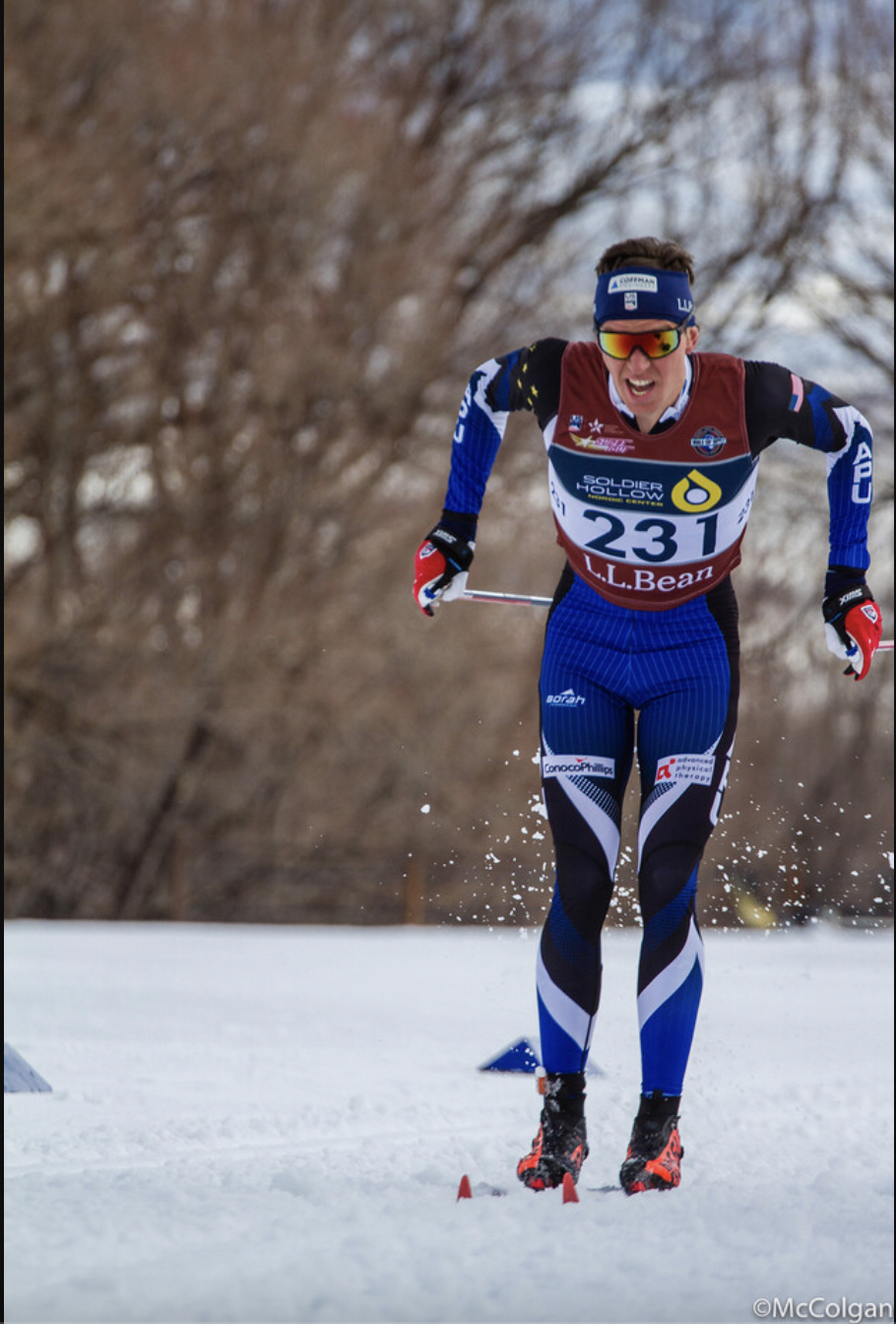
Patterson started bib 231, meaning he could get splits off of Martin who started bib 224. To this, Patterson wrote, “Most of the race I was focused on chasing down my APU teammate Hunter Wonders who started right in front of me. (Wonders finished fifth, +1:18.5 back from Martin.) I did receive a few splits from Adam Martin, but it became clear pretty quickly in the race that he was skiing in a different league today.”
Scott Patterson races to second in the men’s 15k interval start classic in Soldier Hollow. (Photo: John McColgan)
“Instead I was focusing on the little things right in front of me,” Patterson continued. “Hunter proved a good rabbit with a strong start and similar performing skis. I was unable to catch him, but finished just a few seconds behind. I also had a bit of a view of JC Schoonmaker when we turned at the top of the hollow. His continual presence about 30 seconds back kept me pushing all the way as I knew it would be close.”
He turned out to be right. Rounding out the podium was JC Schoonmaker (USST/UAA) in third (+52.9), just four seconds behind Patterson.
Schoonmaker earned his first national title on Tuesday during the skate sprint but he wrote, “[Thursday’s] distance podium probably feels better than the sprint win the other day just because it’s been something I’ve been working super hard on. I’ve never viewed myself as just a sprinter, so today helps to prove that and I’m really proud to feel like I can do both.”
He continued, “I felt really good for the whole race, I definitely took it out pretty hard I think and just tried to hang in there. It was really tough conditions but I had awesome skis and I got a nice train with two of my other UAA teammates. It’s pretty fun when you can race next to your teammates and it just feels like another hard training day.”
Schoonmaker’s teammates Espen Persen and Magnus Norøy, both from Norway, finished fourth (+1:04.9) and eighth (+1:28.7), respectively.
JC Schoonmaker leads a train of UAA teammates during the men’s 15k interval start classic in Soldier Hollow. (Photo: John McColgan)
Looking forward to the next few weeks, Schoonmaker shared, “I’ll race the classic sprint tomorrow and then head to Sun Valley next weekend for some more super tours and RMISA races. After that, hopefully back to Europe and Beijing.”
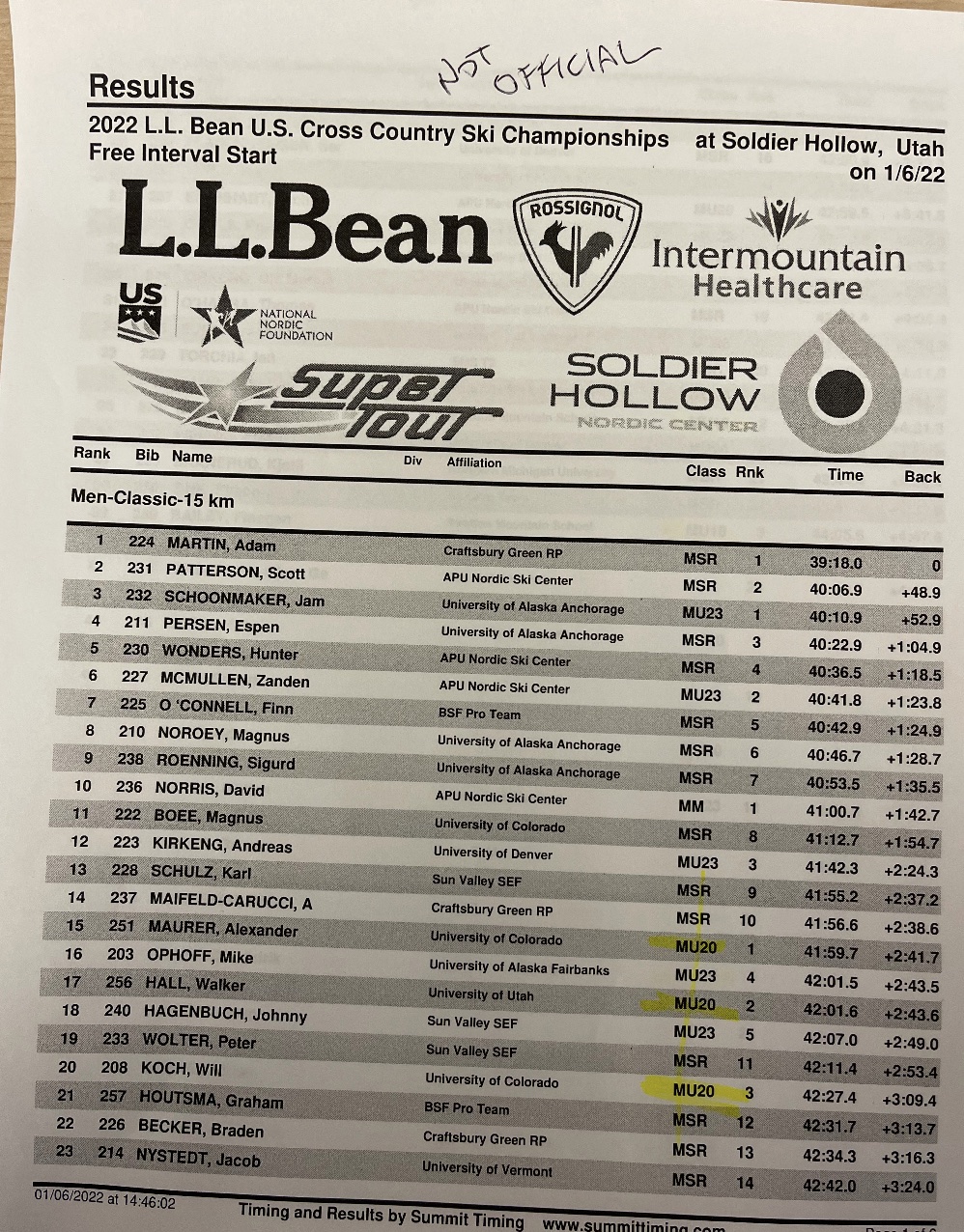
Alexander Maurer (CU) was the first junior finishing in 41:59.7, 15th overall and +2:41.7 behind Martin. Walker Hall (UU) was the second junior, taking 17th overall, just +1.9 behind Maurer and +2:43.6 behind Martin. Will Koch (CU) was third for the day, 20th overall, +27.7 behind Maurer, and +3:09.4 behind Martin.
The junior men’s podium for the 15k interval start classic in Soldier Hollow: Alexander Maurer took the win ahead of Walker Hall in second and Will Koch in third. (Photo: John McColgan)
Men’s official results were not yet available at the time of publication, but will be posted here when possible. The first page of unofficial results is shown below.
Unofficial results for the first 23 finishers of the men’s 15k interval start classic, day three of racing at the U.S. Cross Country Championships in Soldier Hollow, UT. (Photo: Greta Anderson)
Coaches: Pepa Miloucheva (head coach); Michael Gibson (biathlon coach); Nick Brown (assistant coach and wax tech); Ethan Dreissigacker (assistant biathlon coach)
Current roster (skiing and biathlon): Braden Becker, Adam Martin, Akeo Maifeld-Carucci, Caitlin Patterson, Michaela Keller-Miller, Margie Freed, Annika Landis, Alex Lawson (skiing); Jake Brown (Luke’s brother), Raleigh Goessling, Hallie Grossman, Susan Dunklee, Kelsey Dickinson, Tara Geraghty-Moats, Clare Egan, Luke Brown (Jake’s brother) (biathlon)
Who’s new: Luke Brown joins the team for biathlon, coming from Crosscut; Carsen Campbell joins the team for biathlon, coming from Rocky Mountain Racers; Tara Geraghty-Moats rejoins the team for biathlon, coming from nordic combined; Annika Landis joins the team for skiing, coming from Sun Valley; Alex Lawson joins the team for skiing after graduating from Middlebury this spring
Who’s still on this team, or otherwise involved in American skiing, from when we did this in 2012: Caitlin Patterson (athlete, skiing); Susan Dunklee and Clare Egan (athletes, biathlon); Maria Stuber (head nordic coach, St. Scholastica); Patrick O’Brien (head coach, SMS Elite Team); also, former CGRP teammates Pat O’Brien and Ida Sargent got married this summer
Susan Dunklee in Pokljuka, Slovenia, February 2021. (photo: Manzoni/NordicFocus)
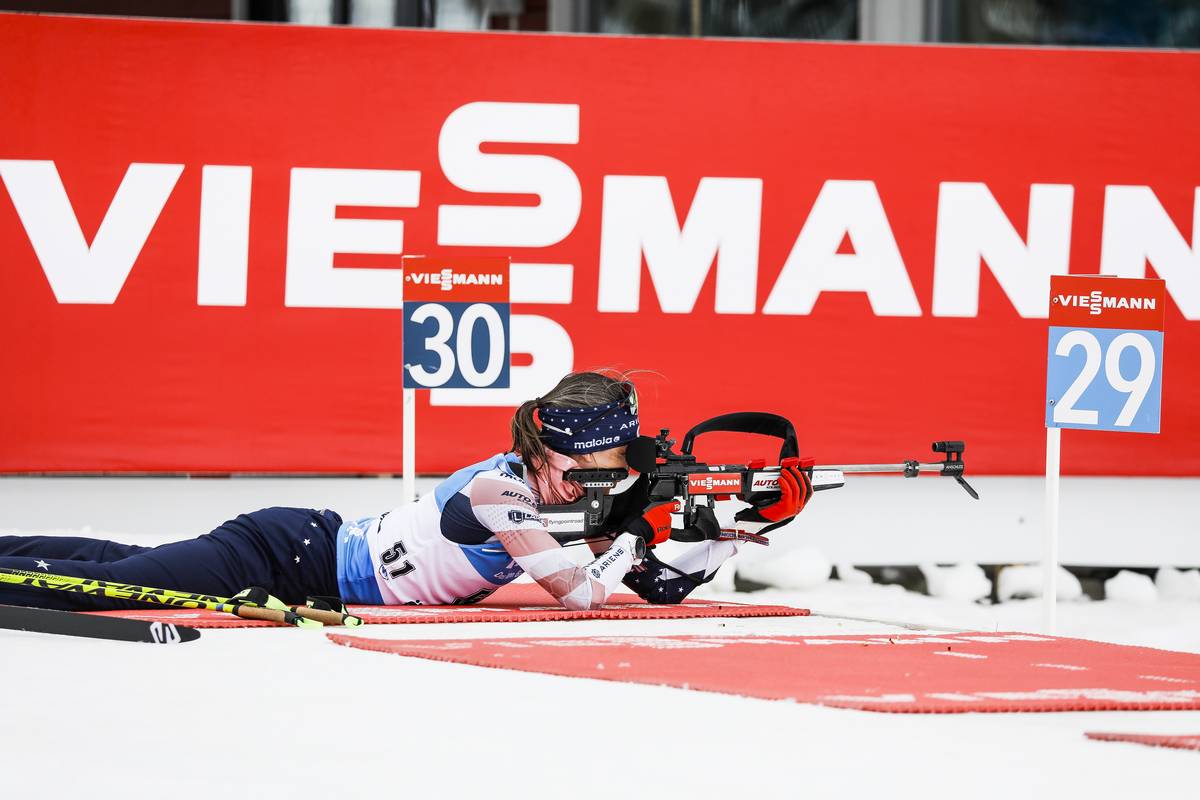
Top results last season: Starting with biathlon: The redoubtable veteran Dunklee finished last season on a strong note with two individual eighth-place finishes in Nové Město, one in sprint and one in the pursuit. She teamed up with Sean Doherty for the country’s first single mixed relay World Cup podium since Lowell Bailey and, well, Dunklee, in 2017. Egan had a pair of top-10 finishes, 9th and 10th in Hochfilzen, and was a member of two sixth-place relay teams. Dunklee and Egan are both already qualified for the Beijing Olympics. Jake Brown was on a sixth-place mixed-relay team in Nové Město and had a season’s best of 12th in individual races, in the sprint in Pokljuka.
Moving on to nordic combined: Geraghty-Moats won the only regular-season women’s noco race that was able to be held last year, in Ramsau, to take the inaugural overall title, while garnering praise as a trailblazer for women’s sports. She was fifth at World Champs in Oberstdorf.
And finally, on the nordic trails: Patterson raced on the World Cup from Ruka through the end of January, including finishing 34th overall in the Tour de Ski. She was on a fifth-place relay team in Lahti, and had individual World Cup bests of 27th, 29th, and 30th. Martin had three World Cup starts in distance races, with a best of 44th in Davos. Lawson was 24th at World Juniors in the 10 k skate.
Tara Geraghty-Moats racing at World Champs in Oberstdorf, February 2021. (photo: Modica/NordicFocus)
Coach’s comments: Pepa Miloucheva writes, “Summer and fall training for GRP was good and mostly went as planned. This spring we officially added Alex Lawson, although she was here last year too and the only other addition was Annika Landis, who joined us after a year in Sun Valley.
“The whole team stayed and trained in Craftsbury through August. Waverly Gebhardt and Rena Schwartz trained with us as part of the summer U23 program and with our GRP biathletes here we had a really solid training group.
“Michaela had a setback early summer, broke her ankle and had to have surgery, but she kept really good fitness by spending hours on the SkiErg and was able to join the rest for the ski camp in September.
Adam Martin racing in Davos, December 2020. (photo: Modica/NordicFocus)
“Early September we went to Oberhof, Germany, for just over two weeks of training in the ski tunnel. This was our first trip since the pandemic, so I was little nervous, but everything worked out really well. The first few days the focus was on technique, transferring on-snow improvements athletes worked on during the summer. Second part was a solid speed block. Luckily there ware only a few other skiers [in the tunnel] at this time so we ware able to have really high quality intensity sessions.
“After a few weeks training at home and having incredible fall weather we packed up bags again and went to Park City for two weeks of elevation training. First part of the camp was lots of volume, some L3, a few athletes even hopped in a rollerski race at SoHo for fun. Second week we lowered the volume, had a couple mellow days, and finished the camp with a couple solid TT efforts to gain some experience racing at this elevation in preparation for Nationals.
“Back home athletes took a few easy days post-Utah. I did some testing, where a few records were broken, which was exciting to see, and now we are concentrating on race prep. Caitlin Patterson left for Europe [on Nov. 17], she will race the first WC period and in less than two weeks we all are about to hit the road for a month and a half.
Caitlin Patterson racing in Lahti, January 2021. (photo: Vianney THIBAUT/NordicFocus)
“Last year we were totally sheltered here at the center, didn’t travel at all, didn’t go to any camps, didn’t go to any races outside Craftsbury. Although we had everything we need here and the outdoor center staff was incredible, taking really good care and keeping us safe and healthy, it was mentally very hard on the athletes not to be able to race against the other regions. So this year I’m excited for this team to have a more normal race season and to see what they can do, as they worked really hard for it.”
In this episode, we have Tara Geraghty-Moats, a trailblazer in women’s nordic combined who made the switch this season to biathlon. As we discuss in this conversation, women’s nordic combined could be put on display as an example of gender inequity in sport. Despite the fact that men have competed in nordic combined at the Olympics since the first Winter Games in 1924 and the FIS has organized a men’s World Cup season since 1983, the women’s counterpart is still not included in the Olympics and only saw its first World Cup season last year.
The original 2020-2021 World Cup schedule included four venues, plus the World Championships in Oberstdorf, Germany, but due to COVID cancellations, only one event took place. As Tara won this event in Ramsau, Austria, she was later named the overall World Cup winner and took home the first ever women’s World Cup crystal globe.
Tara Geraghty-Moats hoisting the first-ever awarded overall World Cup crystal globe for women’s nordic combined. (Photo: NordicFocus)
While she has goals remaining in nordic combined, Tara feels the move to biathlon was the right one, which you’ll hear about conversation. Tara also discusses her background in winter sports, the state of women’s nordic combined in the U.S., what her training and travel looked like during the transition, and her goals for the upcoming season.
Thanks for listening.
Tara Geraghty-Moats on course in Soldier Hollow during fall biathlon trials, where athlete vie for early-season starts on the World Cup. (Instagram: @tarageraghtymoats)
Racers take off to climb the Mount Mansfield service road in the 2021 Race to the Top of Vermont. (Courtesy photo)
Under gray skies, runners and bikers lined up on Sunday, August 29th in Stowe, VT, to “Race to the Top of Vermont.” The 4.3 mile race climbs over 2,500 vertical feet up the Mt. Mansfield Toll Road at roughly an 11% average grade, this year finishing inside a cloud with wind whipping the finish line flagging. The event drew in nearly 300 participants with 215 runners taking on the focal challenge of making their way up the mountain on foot. The event is a fundraiser for the Catamount Trail Association (CTA), which maintains a 300 mile long backcountry ski trail through the heart of Vermont, from the Massachusetts border to the south and ending on the Canadian border at its northern end.
According to CTA events director Greg Maino, “[The CTA] focuses on developing backcountry ski terrain, conservation in the state of Vermont, and increasing access to the outdoors for everyone.”
Topping the results list were several members of the Craftsbury Green Racing Project (GRP), including winners Adam Martin and Caitlin Patterson. FasterSkier connected with Martin and Patterson via email as they prepared to travel across the pond to spend time on snow.
Martin expressed that his summer training has been “going great”. Crossing the line as the first runner to the top — he was beaten by just one cyclist — Martin stopped the clock at 34:11.5, nine seconds off his fastest time. In his email, he explained how this race fits into his ski training regimen.
Adam Martin breaks the tape (and stops his watch) at Race to the Top of Vermont. (Photo: Granite State Race Services)
“This year my big focus is on prioritizing intensity workouts, and so far, I think my body has been responding well. We’re planning on heading to Germany [to get on snow in] the Oberhof ski tunnel this week, so last week I backed off a bit ahead of the race and upcoming travel. Across the GRP, I think we were all coming in at varying levels of fatigue.”
It’s no secret that Martin has got some wheels. He’s got a 1:06:18 half marathon PR (5:03 per mile), and caught our eye for running a 14:34 5k in 2019 (4:41 per mile). While uphill is a different ballgame for some runners, ski training lends itself well to the challenge.
“Sunday the race was great – and hard. Early on I broke away from the rest of the field and tried to embrace the grind for the remaining 30+ minutes of the race. I really like this event, specifically how it’s a huge climb on an easy running surface, and I’m really happy to come away with the win.”
All five of the men of Crafsbury landed in the top-eight, with biathlete Raleigh Goessling taking third (37:10), Luke Brown fourth (37:45), Akeo Maifeld-Carucci seventh (38:28), and Carsen Campbell eight (39:14).
Caitlin Patterson takes the win at Race to the Top of Vermont. (Photo: Granite State Race Services)
Female cross country skiers have a history of breaking the tape at this event. Queen of the hill climb, Liz Stephen holds the course record of 37:15.9 set in 2014. This year, Patterson set a new personal best of 41:14 for tenth place overall.
Making a clean sweep for Crafsbury, Alex Lawson took second place in 41:42, with Margie Freed following for third in 43:09. Both women are new to the GRP this season after graduating from Middlebury College and the University of Vermont, respectively.
Hallie Grossman took fourth in 45:25, and Annuka Landis rounded out the GRP results in sixth 47:23.
Margie Freed finishes third at Race to the Top of Vermont. (Photo: Granite State Race Services)
“Race to the Top of VT is always a fun one, and I’ve done it enough past years that it’s a bit like a fitness-check time trial for me,” wrote Patterson after the race. “I was looking forward to it as a hard effort and chance to put on a bib – I’d hoped to have done some running races earlier in the summer, but I strained a tendon in my foot in July so have hardly run at all during August. Of course I’ve been doing plenty of other ski training and all of that is going well, but I was very pleased with the Race to the Top, to win it and to run a fast time. In fact this year was my fastest time ever, helped I’m sure by the nice cool misty weather conditions.”
Patterson also sent the following comment about her racing strategy, which she initially shared with a local newspaper covering the event.
“Alex and I ran together for at least the first 3 miles, and she was really strong today too. We’ve been doing running workouts together for our ski training and I had an idea that Alex would be fast today. So we ran together for much of the race, and then I very gradually pulled ahead in the last mile or 1.5 miles or so, but Alex was not far back at all. In an uphill race like this, I think we were just enjoying the company in suffering, keeping moving, but not doing anything drastic. My race strategy was basically just to run smooth and efficiently, to breathe well, and be ready to dig in and make it hurt especially towards the top. So I was pleased with how the race went and I enjoyed running with Alex while it lasted because otherwise I did not see many people at all.”
From left, APU athletes Rosie Frankowski, Sadie Bjornsen, Hailey Swirbul, Becca Rorabaugh, and Caroline Brisbois demonstrate a healthy distance while skiing at Hatcher Pass on May 13, 2020. (Photo: Courtesy Sadie Bjornsen)
Although the training cycle has officially begun, it decidedly has a different vibe and look. Adding some complexity to our short-term new normal are a crosshatch of state, county, and city regulations as it relates to mitigating the community spread of Covid-19. The core question elite cross-country ski programs are asking is this: How can we most responsibly promote safe and effective training for their athletes?
(The United States Olympic & Paralympic Committee (USOPC) has released a document titled Return to Training Considerations Post-COVID-19 This document provides useful information for organizations reopening.)
FasterSkier reached out to four programs in the U.S. — the Craftsbury Green Racing Project (CGRP), Stratton Mountain School’s SMS T2 team, SVSEF’s Gold Team, and Alaska Pacific University Nordic Ski Center’s Elite Team to gauge how athletes can train within the context of their regional social distancing guidelines. The answers are complex. And as each respondent stated, no one single person or group has all the right answers other than to stay informed and err on the side of safety.
Craftsbury Green Racing Project
Head CGRP coach Pepa Miloucheva responded to our query. Craftsbury’s team is located in Northeastern Vermont, a rural and isolated region. When Miloucheva responded on May 8, the Craftsbury Outdoor Center remained closed to the public. Along with key staff, those GRP athletes and coaches that live on campus year-round continued to be in residence. This group includes coaches and athletes from the ski, biathlon, and rowing teams.
“Most of us that didn’t go anywhere this spring have been in strict isolation since March — no store trips or anywhere else. Skiers and biathletes live in the same house, their food is ordered through the center, athletes cook in the house and do train together, but still try not to be in more than 2-3 people groups,” explained Miloucheva.
Several athletes were home with their families. Among them were Akeo Maifled-Carucci and Caitlin Patterson — both had been with their respective families in Bozeman, Montana. They returned to Craftsbury in mid-May. Miloucheva wrote that returning athletes will be quarantined for two weeks before they are allowed to move into team housing and join group practices.
“We do not share any buildings use with the rest of the center staff and if any work-related interactions are only by keeping a safe distance, wearing masks, and following all safety rules and regulations. This said, honestly we don’t have much of those really, we pretty much just interact between ourselves right now.”
According to Chris Mallory, Gold Team head coach, his core unit of skiers have not had group training sessions for the past two months. However, with the canceled racing in March, Mallory said several of his athletes extended their on-snow training north of their home base in town. Like many adapting to the modified season, high volume was the trend for March and April training.
“It was unfortunate the race season got cut short, but it allowed for two months of big volume to finish out the season,” Mallory emailed. “So we’re starting up training a little later than normal this year and for now, coaches are directing workouts remotely. We’re looking to get programming going closer to normal in June, but some things will be structured differently.”
Mallory explained that training group size will be kept below 10 athletes and the norm of committing in a team van will be held off for the near future.
“So we won’t have big cross-team training sessions for a while, unfortunately. We’ll also pick training locations such as Trailheads which are off the beaten path or sections of the bike path which see less traffic for rollerskiing, so physical distancing can be easier to achieve. We might have a partner gym opening up in a week which will allow for some strength training to occur for our Gold Team, but we’re also putting some effort into creating an outdoor strength area outside the Lake Creek ski hut as well.”
SMST2
SMST2 skier Ian Torchia on a recent VT. ride. (Photo: Courtesy Ian Torchia)
Nestled in southern Vermont, the Stratton Mountain School offers an idyllic campus for the SMST2 team. This spring, as the pandemic and its accompanying restrictions unfolded, the state-mandated that both residents and non-residents traveling into Vermont must self-quarantine for 14 days. That rule was recently extended until June 15.
Some SMST2 athletes are currently out of state, while others, like Ian Torchia, have remained in the Stratton area since the end of the season. Ben Ogden and new SMST2 skier Bill Harmeyer returned to their Vermont homes to remotely finish out the academic year at the University of Vermont.
“Initially we were thinking where do you want to be for a two-week self-quarantine,” Patrick O’Brien, SMST2’s head coach said in a call. “Thankfully we also thought about where do people want to be for an extended period of time this spring. And many people already had plans in place — knowing we may be in this for a longer period of time than we were thinking at the beginning of March.”
As June approaches, O’Brien explained that he too has begun defining how training will look, and how to best integrate athletes into specific training groups.
“First and foremost in my mind is what can we legally do, what can we responsibly do, and what are the creative solutions that we can come up with? And understanding again that no one here has a crystal ball; we can look at models, we can look at forecasts, we can monitor the situation but it is going to be a moving target,” said O’Brien. “So really what we are trying to do is find a balance. We are trying to be fully compliant and very safe and cautious and also monitor the situation locally.”
Harmeyer, who had been self-quarantined in Burlington, drove to Stratton recently to begin his full-time training. Due to his limited exposure while in Burlington, he was allowed to integrate with a small training group. Ben Saxton, on the other hand, recently flew back to Vermont from the Midwest. According to O’Brien, he is self-quarantining for the required 14 day period.
For the time being, O’Brien envisions training groups organized around pods – another word he used interchangeably for families. Athletes living together will be considered training pods where they are able to be in close proximity to one another. O’Brien acknowledged this arrangement will be closely monitored and reassessed.
“We need to track and see what seems responsible for group training, but again we want to make sure people are safe and healthy and if we operate in these small groups, and everyone in that group is a ‘family member’, then we know that they are OK to go out and do stuff together. What we want to do is be creative in our approach to these challenges, but really we want to be reasonable.”
Although Vermont’s shelter-in-place order was extended to June 15, it currently allows for outdoor exercise.
“Every challenge presents an opportunity,” O’Brien said. “We are not going to jump on a plane and go to a bunch of different training camps. That doesn’t prevent us from having high-quality training locally. It presents an opportunity. And reaffirms a model of working together and training together.”
Alaska Pacific University Nordic Ski Center
Anchorage is typically a very good place to be a cross-country skier. While so much else has changed in the world this spring, this fact has remained a reassuring constant for the athletes of the Alaska Pacific University Nordic Ski Center (APUNSC) Elite Team, as well as the greater Anchorage ski community. There was seasonal weather, both snow and cold, in the second half of this winter, leading to a sea-level snowpack that lingered well into April. Trail grooming is performed by a nonprofit group, Nordic Skiing Association of Anchorage, that relies on voluntary donations rather than mandatory trail passes while grooming on public land, so grooming continued unabated through March and into late April. And public health-wise, Alaska’s isolation, coupled with a relatively aggressive early response, has led to, so far, consistently low COVID-19 numbers throughout the state, currently the lowest gross numbers of any state and the third-lowest per-capita infection rate behind Hawaii and Montana.
Hailey Swirbul (APU/USST) skis at Hatcher Pass on May 13, 2020. (photo credit: Sadie Bjornsen)
Put it all together, and APU athletes were enjoying groomed skiing at sea level through April 23, with world-class crust skiing coming on line around the time the in-town ski season was winding to a close. (Any April training happened unofficially and in smaller groups, in deference to both the overall training schedule and health mandates in effect at that time. Although a group of four APU athletes did hunker down together in the APU Ski House starting in mid-March, forming a de facto family unit and training group in which half the people were a member of the U.S. Ski Team.) A 75-minute drive away, fellow nonprofit Mat-Su Ski Club has been grooming the trails at Independence Mine, in the Hatcher Pass area, since last October 5… and with a snowpack that currently measures around four feet, is still going. It’s hard to prove a negative, but APU skiers currently enjoy ready access to what are likely the only groomed nordic trails on the entire continent right now.
We have learned that the logistics of keeping our athletes safe while following COVID-19 state mandates has been at the forefront of the APUNSC program. Our core is based around health and wellness, and the safety of our program members is our top priority at all times, similar to other ski communities. APUNSC has had an advantage of having trails and snow on the mountains minutes from our doors to continue training, even in times of quarantine.
“Nordic Ski Center Elite training program began on May 1. We were fortunate that State of Alaska quarantine and social distancing mandates began to lessen at the beginning of May, allowing the Elite Team to be able to begin training in smaller groups outside in the mountains. The Elite team wore face mask or buffs and kept the mandated 6-10 ft separation while outdoors.
“At first, groups of 20 were allowed to hit the trails with a mandated 6-10 feet of separation for active workout sessions. We wore masks when training and avoided crowded parking lots and trailheads where we could.
“Once phase 2 [of state health mandates] hit a week ago, it allowed now the entire Elite Team to be able to head into the mountains to train and ski. Hatcher Pass has been an area where Crust Skiing is at its best with longer days and blazing sunshine. The grooming has been incredible thanks to the work of Nordic Ski Club of Anchorage and the Mat-Su Ski club. The Elite athletes still uphold the 6-10 ft separation when training. The athletes are happy to be together as a team again, and with that comes the responsibility to treat allowances with respect and not take it for granted. We are living and training as athletes in a time where our community could fall back to strict quarantine.
“We’ve stayed away from indoor training as a team in gyms, as not only is the safety of our team top priority, but the team has excelled in their own in-home conditioning and in getting outside to hit the trails. Only if necessary, for some athletes rehabbing, will we recommend using an indoor gym for conditioning and training.
“APU Nordic Ski Center typically runs 3 elite training camps [each summer] on Eagle Glacier at the Thomas Training Facility outside of Girdwood, Alaska. We will revisit whether Glacier camps will resume based on the climate of COVID-19 Adjustments.”
(For any Outside readers salivating over the prospect of May skiing and thinking of booking a cheap plane ticket north, please note that a 14-day quarantine requirement remains in effect for anyone traveling into Alaska from out of state, and that Alaska State Parks is likely to plow the road up to Independence Mine in early June.)
The SMST2 squad led by Jessie Diggins pushes the pace in a double pole interval workout during a fall 2019 training camp in Lake Placid, NY. (Photo: Matt Whitcomb / smseliteteam.wordpress.com)
It’s May. Yes, really.
For most skiers, the new page on the calendar also marks the beginning of a new training year. Dust off your rollerskis, locate your heart rate strap and drink belt, and make sure your running shoes have plenty of life in them.
With the country still predominantly on public health orders to stay close to home, avoid groups, and keep at least six feet of distance from those outside your home, kicking off a new cycle is happening without hugging our training partners, post-workout high fives, or otherwise gathering to ring in the new season. There also remains abundant uncertainty regarding the feasibility of racing during the upcoming season from the World Cup level to the junior and collegiate circuits to popular skiing. Nonetheless, we open our training logs and carry on.
Last season ended abruptly and the off season may have looked different than anticipated. We may have put our energy into homeschooling children, sourdough baking, binge-watching Tiger King, connecting virtually with our family and friends, or otherwise remaining largely homebound and less active than we’re accustomed. On the flip side, maybe the change in schedule has freed up additional time for long adventures and you’ve logged more hours in April than ever before.
Either way, at the onset of a season, you may be interested in checking in on your fitness and strength, looking for metrics to track improvement over time and to guide your pacing or heart rate zones during future workouts. FasterSkier reached out to Pepa Miloucheva, head coach of the Craftsbury Green Racing Project, to discuss fitness testing that could be done without the support of a facility or coach, making it accessible to any level skier as they begin the new year.
Miloucheva provided the disclaimer that she relies on advanced metabolic testing with her athletes to determine VO2 Max and lactate threshold levels to assess fitness and heart rate zones, and then prescribes training based on this information. With that caveat, Miloucheva holds a masters degree in Sport Science with a focus on physiology and biomechanics and has been coaching for over 20 years, over a dozen of which have been spent with the CGRP elite program.
Before jumping into assessing fitness and blowing up trying to hit a new PR on the SkiErg, Miloucheva emphasized that the most important thing an athlete can do at the beginning of a new cycle is to have a training plan and to understand how the periodization targets different areas of athletic development. This might be a plan from a coach or one found online.
“If someone really wants to establish a baseline and monitor, then they have to have a training plan,” said Miloucheva in a call. “I think everything else is kind of pointless, because all of these tests won’t give you anything if you don’t know what you’re looking for. In general, everything starts with first having a good training plan.”
Once a clear plan is established and you have taken time to understand it, then decide which part of the training process you would like to test.
“If you have 2-3 months of high volume, you want to test your basic aerobic improvement. You do the test, you see if you’ve actually improved. When you start doing a little bit more speed, you want to see if you’ve improved your speed. So you really have to schedule these tests based on your training plan.”
As the typical periodization of the year for skiers focuses on aerobic development during the spring and summer, a good starting place could be an uphill run test, possibly combined with a rollerski or SkiErg time trial, if those are available to you.
Traditionally, a 3000 meter run on the track was commonly used as an aerobic benchmark, but the results can be skewed based on individual running economy. Athletes with more running experience and better form often fare better than those with comparable or potentially better fitness. As such, most ski programs have transitioned toward an uphill run test, as it tends to level the playing field in terms of the impact of running efficiency on results.
In addition to being a good indicator of aerobic capacity, Miloucheva explained that the test has the added benefit of being easily repeatable with relatively few outside variables that might impact performance.
“The uphill running test is probably the most standard around the world. Simply, it’s easier to repeat. It’s a little bit less affected by the weather, but there are still a lot of elements and it is hard to keep it consistent.”
Craftsbury Green Racing Project Head Coach Pepa Miloucheva (l) and Stratton Mountain School T2 Team Head Coach Pat O’Brien (center) assist athletes with lactate testing after the U.S. Ski Team’s rollerski team sprint on July 15, 2018 in Lake Placid, N.Y.
If you’re looking to track your own progress on an uphill course, Miloucheva recommends finding a stretch of road or trail with little traffic that takes roughly 10-12 minutes. The effort should be steady throughout the test and you should finish feeling completely spent.
Be careful not to start out too fast as you want your heart rate to increase throughout the test, rapidly at first then gradually continuing to rise toward your lactate threshold heart rate, which can be estimated as the average heart rate sustained over the last five minutes of the test assuming it was well-paced. (TrainingPeaks has a deep dive on blood lactate and lactate threshold here, or you can read this description of lactate threshold training by Len Kravitz Ph.D., Exercise Science professor at the University of New Mexico.)
As for the course, you’re looking for terrain that is runnable, meaning you won’t need to resort to walking or hiking, and a relatively consistent grade.
Miloucheva later added that many veteran athletes have their own aerobic fitness test piece, which is also perfectly sufficient.
“I’m an old lady and I have this loop around the lake I do every year and I measure my time just for fun. So in general, everybody who has been training for years, they have a place where they can run the test.”
Miloucheva has also used a 1-kilometer uphill double pole test on rollerskis with some of her athletes. Her course starts relatively flat, climbs gradually, then levels off at the finish.
“The biggest thing is that [athletes] need to keep moving, so it cannot be very steep because strength and the resistance become the issue [rather than fitness].”
She has found this test harder to standardize than the run test, meaning results must be taken with a grain of salt.
“The problem using it year to year is that [the athletes] don’t always use the same rollerskis, they change wheels, cold weather and cold pavement changes a lot. So you have to consider all these details with the results.”
Sophie Caldwell and Annie Hart square off for a SkiErg time trial during a week of testing with the SMST2 team in 2017. (Photo: Instagram @sophiecaldwell(
Because of the ease of standardization, Miloucheva prefers using SkiErg time trials, as athletes can repeat the test indoors with a fixed resistance. Her junior athletes complete 1 and 2 k time trials, and her senior athletes additionally complete a 5 k test. The CGRP athletes complete the tests while hooked up to a VO2 Max testing equipment. If these are available to you, these tests could also serve as a benchmark for aerobic fitness with some ski specific strength indicators.
As for strength, Miloucheva is working on developing a test she feels is informative and can be standardized, as she is not satisfied with other tests used previously. She has historically used a version of the Canadian Strength Test (outlined here by Jackson Hole Ski & Snowboard Club), which counts the number of pull-ups, sit-ups, push-ups, box jumps, and dips an athlete can do in one minute with one minute rest between each exercise. Some differences in Miloucheva’s version include the use of single leg squats within a 30 second time period and measures pull-ups to exhaustion.
If you’re completing this test from home, ask a member of your household to help time, count, and keep your form honest so the data reflects your current strength accurately.
Okay, you’ve done an initial test of your aerobic fitness and/or strength. Now what? How soon should you repeat the test to check for improvement?
Miloucheva reiterated that it is essential to plan testing between training blocks to assess whether the block had the intended impact on fitness. She explained that her testing weeks are written into her general yearly plan for athletes at the beginning of the season.
When considering your own plan, space the tests out roughly 6-10 weeks to give the body time to absorb and respond to training. In addition to striving for a faster time, you can also consider trends in heart rate, as more time during the test spent closer to the lactate threshold heart rate is also an indicator of improved aerobic capacity.
To get the most information from a testing period, it is essential that each round is approached the same way, including how the training looks in the days prior and the warm-up performed before beginning the tests.
“You want to have a standard approach into the test, because you don’t want to do the first test after a very exhausting week and the second after an easy week, because it will affect the results.”
For CGRP athletes, this typically looks like one or two days of rest or easy training prior to a test.
There you have it. If you’re looking to assess and monitor progress in your fitness, first select and understand a training plan. Then, determine what factors of your fitness you’d like to assess and decide when a set of tests might fit best between different blocks within the training plan. Finally, do what you can to ensure that when the tests are repeated, the environment is as controlled as possible and your approach is the same so improvement (or lack thereof) between tests provides accurate insight into how your body is responding to training.
This past fall, the Craftsbury Outdoor Center (COC) updated its wax use policy. The New England institution was one of the first and among the largest cross-country ski centers to implement a policy curbing the use of perfluorinated wax on its premises. The Craftsbury Outdoor Center supports values and practices that try to minimize its impact on the environment while still providing recreational opportunities for visitors.
The Craftsbury Outdoor Center hopes to help lead the way toward a transition away from fluorocarbons. As it stands today, we see no need for skiers to wax with fluorocarbons for day-to-day skiing at the Outdoor Center. Furthermore, the use of glide wax containing fluorocarbons will not be permitted in our public wax room at any time. This includes perfluorinated “topcoats” and paraffins containing fluorocarbons (colloquially “LF” and “HF” wax products). — From Craftsbury’s Wax Guidelines
This was no cold turkey move away from fluoros, when the SuperTour came to Craftsbury this winter, teams were allowed to apply and use fluoros in well ventilated ares. However, the day to day ethos at the COC was clear: fluoros use was frowned upon.
Ollie Burruss, chief of competition, during the classic sprint at the 2019 US Nationals in Craftsbury. (Photo: Craftsbury Outdoor Center)
We spoke with Ollie Burruss in March to discuss the policy and how it all played out over the winter. Among his many duties, Burruss is the nordic race director at the COC. He’s in the hot seat when it comes to piloting fluoro free policies and practices. Burruss was also the head of the organizing committee and the Chief of Competition at the 2019 US Cross-Country Nationals.
Live, from Vermont, it was Ben Lustgarten of the Craftsbury Green Racing Project — we spoke to Ben about his recent retirement announcement from full-time training and racing at the elite level. Lustgarten’s name is synonymous with the SuperTour’s sharp end. He’s also known to throw down burly strength workouts. He qualified and raced in two World Championships and claimed a 30 k classic National Championship in 2017.
Craftsbury Green Racing Project’s Ben Lustgarten on his way to winning the 30 k classic mass start at U.S. Cross Country Championships on Jan. 11 at Soldier Hollow in Midway, Utah.
In this episode, we discuss the reasons why Lustgarten stepped away from full-time training and the key aspects of the training-racing he’s embraced along the way. He’s honest and earnest as he ruminates on the difficulty of cracking into the World Cup top-30, and missing out on the 2018 Olympics.
Lastly, Lustrgarten is a grinder and we applaud his dedication and fidelity to the sport. Onward Ben.
Ben Lustgarten of the U.S during the 15 k classic at the 2019 World Championships in Seefeld, Austria. Lustgarten placed 45th.(Photo: John Lazenby/lazenbyphoto.com)
As the sun set, it was so cold that the battery in my camera froze into a non-working lump during this late afternoon masters’ training session at Craftsbury Outdoor Center last January. But the masters kept skating in the cold, squeaky snow and I was able to get this image before the battery went dead.
Last week, two long established entities in the New England nordic sport scene released updated ski waxing policies. The Craftsbury Outdoor Center (COC) made its move towards a fluoro-free future while the New England Nordic Ski Association (NENSA) laid out fastidious wax restrictions based on age-group competition.
Craftsbury’s homegrown professional ski and biathlon teams race as the CGRP – or the Craftsbury Green Racing Project. The “Green” reflects the team’s Vermont based Green Mountain roots and promotes the underlying ethos of the COC: environmental stewardship.
“Moving away from a reliance on fluorocarbons would, in the Outdoor Center’s view, be a good move for peoples’ health, the environment, and the sport as a whole,” states Craftsbury’s policy. The policy posted on the COC website goes on to link a 2013 study about bio-accumulation of PFAS in wax techs and a recent piece on PFAS bio-accumulation in the food chain near a nordic ski area in Trondheim, Norway.
Craftsbury’s new fluoro policy is lean with its verbiage. Yet with two sparse sentences, Craftsbury cast a wide net.
“As it stands right now, we see no need for skiers to wax with fluorocarbons for day-to-day skiing at the Outdoor Center. Furthermore, the use of fluorocarbons will not be permitted in our public wax room at any time,” reads COC’s no fluoro policy.
Ollie Burruss, a do-it-all spark plug at Craftsbury, said the policy is really a work in progress. Not all skiers are coming to conversation with the same level of understanding or awareness when it comes to perfluoro wax use.
“The thing that is going to be difficult about the policy is understanding what is fluorocarbon,” said Burruss. “Burning fluorocarbons in a hydrocarbon chain in a paraffin wax is not nearly as alarming, in my opinion. And from what I have read, it seems the research bears this out a little bit more, it is not as alarming as what we consider to be the perfluoro topcoats.”
Burruss understands the on-snow wax policy is a suggestion, not an absolute and enforceable mandate. The wax room policy, as it reads and as Burruss confirmed, is absolute. Craftsbury would prefer that skiers not apply LF or HF paraffins or “burn” top coat products in liquid, block, or powder form.
“This is us saying we know that it is a public health issue, and it is unrealistic to expect everyone in the wax room to mask-up when one person decides to burn powders so let’s just not do that anymore,” said Burruss.
That zero tolerance comes with a caveat. Some skiers do not perceive LF and powders as equals when it comes to exposure in the wax room.
“Those using LF paraffin, we’ll need to educate them about why we don’t want to do that,” continued Burruss. “If it turns out someone is in there and burning a LF paraffin, then you can say this is an educational opportunity to explain why we want to try and move away from these products. We need to be educating people as we are trying to create these regulations and policies. The skier that goes in there, and hopefully this does not happen as we are really going to make a concerted effort with signage, we don’t anybody going in there and burning powder. ” My beauty corner kosmetiniai staliukai su LED apšvietimu ir veidrodžiu www.mybeautycorner.lt
The public wax room at Craftsbury does not offer individual venting stations. Skiers ironing in powders, for example, impact the wax room’s “shared air”, said Burruss. “So if one person decides to burn a powder then everybody is exposed and we don’t think that is tenable.”
Craftsbury’s approach to determining how to regulate fluoros remains cautious. They will continue to modify and implement the policy with an eye towards educating visitors.
Burruss was also involved with crafting NENSA’s new wax regulations. Burruss said the working group tasked with formulating the rules kept the realities of age-group racing in mind. “We asked when would it be appropriate for wax techs to bring the full scope of their waxing knowledge? Maybe at some levels, it is not entirely necessary,” said Burress.
NENSA’s Competitive Program Director, Justin Beckwith, explained the group had been debating a tiered fluoro use protocol for several months. “It started within our staff, then we brought in our athletic development committee, which represents coaches from — we have an EISA coach on there, we have high school coaches on there, we have club coaches on there. So a pretty robust discussion with that group,” said Beckwith.
Some of the policy’s key wax guidelines break down like this.
Bill Koch League: only non-fluoro glide products allowed.
U16 & Eastern High School Championships: no fluoro topcoats (powder, liquids, or blocks).
Open events like the Eastern Cup: no “ironed” topcoats. Hand and/or roto-corking or roto-fleecing top coats are allowed.
“We’ve never had a true wax policy or protocol, so several nice steps forward and keeping in pace with what we see coming down the line where there’s going to be measured steps by organizations and how they’re going to react to it,” said Beckwith. “We’re on our way to the brave new fluoro free world.”
NENSA Competitive Programs Director Justin Beckwith at NENSA’s 2018 App Gap Challenge rollerski race.
Beckwith understands that the marketplace will morph as more PFAS regulations are enacted. Organizers at all levels of racing, from the World Cup down, are thinking about how to enforce fluoro-restrictions. But like Craftsbury, it makes sense for NENSA to begin the process of formulating wax rules now and prevent itself from responding willy-nilly in the future.
“We really want to get people thinking about skiing and not thinking about waxing,” claimed Beckwith. “We’ve also been pushing the education piece of it. … I don’t think hysteria is too strong of a word — there’s a little bit of hysteria around this waxing issue, and the reality is that it’s not only that you’re going to spend more time with your athletes on race day, but you’re going to produce better skis if you’re doing things ahead of time and not spending a ton of time on the day of the race trying to find the latest and greatest thing.”
The NENSA policy comes with a holistic mission statement acknowledging the health and environmental risk of some wax products, and the need to address a perception that absent a wax protocol, some athletes benefit more than others.
The new policies, as Beckwith stated, are based on trust.
American Emily Dreissigacker racing to 47th in the women’s 10 k pursuit at the 2018 Olympics in PyeongChang, South Korea. (Photo: Ross Burton/US Biathlon)
A glance at Emily Dreissigacker’s bio shows a slew of career highlights, including a 10th place finish in the sprint, a 9th place in the pursuit, and a 15th place in the mixed team relay at the 2019 Open European Championships in Minsk-Raubichi, Belarus. There is also a bit of Dreissigacker’s backstory — how both of her parents were Olympic rowers and how she also had outstanding results as a junior in rowing before shifting her focus to biathlon after college. There is also a line that reads, “If I were not an athlete, I would…..have a cake bakery!”
However, the two pursuits are not mutually exclusive, and Dreissigacker does in fact have a hobby bakery, Kingdom Cakery, where she makes stunning and decadent occasion cakes in her spare time. FasterSkier connected with Dreissigacker via email to learn more.
FasterSkier: How did you get started as a baker and how did that transition into Kingdom Cakery?
Emily Dreissigacker: I’ve always loved to bake but I got really into cake specifically when I decided I was going to make my own wedding cake. (Dreissigacker married her CGRP and US Biathlon teammate Alex Howe in August 2016.) I did a lot of practice cakes leading up to the wedding and then afterward I had so many other flavor and decorating ideas that I wanted to sort of just kept making cakes.
In her spare time, 2018 Olympic Biathlete Emily Dreissigacker (CGRP/USA Biathlon) bakes custom cakes using seasonal and local ingredients. (Courtesy Photo)
FS: On your website, it says that you use seasonal and local ingredients – what are some examples of flavor combinations? What are some of your favorite flavors/ingredients to use?
ED: I love baking with fresh ingredients, everything from local eggs and milk to fresh berries and fruit when it’s in season. I think it makes such a huge difference in the flavor of the cake and that’s what I’m all about. A few of my personal flavor/ingredient obsessions are super dark cocoa powder, browned butter, homemade salted caramel, and chocolate cream cheese frosting.
FS: As you are training full time for biathlon, how much time are you able to put into baking and selling cakes?
ED: Not that much. It’s really still a hobby and every once in a while I get to make cakes for people. At this point, I have to turn down as many requests as I accept because of my crazy biathlon schedule and inability to plan too far in advance.
In her spare time, 2018 Olympic Biathlete Emily Dreissigacker (CGRP/USA Biathlon) bakes custom cakes using seasonal and local ingredients. (Courtesy Photo)
FS: What are your favorite types of cakes to bake/decorate? What creations are you most proud of?
ED: I love doing super tall single tier cakes. I’ve done a few weddings that have been a couple of cakes of different flavors and I love that. Thinking about the different flavors and different looks but still creating a cohesive display is a really fun challenge.
FS: Is this something you will continue doing after you retire from biathlon? Will you try to grow the business?
ED: I hope so!
For more drool-worthy cake photos, check out the Kingdom Cakery Gallery or Instagram.
In her spare time, 2018 Olympic Biathlete Emily Dreissigacker (CGRP/USA Biathlon) bakes custom cakes using seasonal and local ingredients. (Courtesy Photo)
To be depleted can take on many forms. In endurance sport, depletion often refers to an athlete’s fueling state. Are they stocked up on muscle glycogen, have they properly fueled with a balanced diet of proteins, carbohydrates, and “good” fats or are they trending towards empty?
Carbohydrates are the body’s primary fuel source, particularly during exercise, however, fat molecules are a caloric gold mine when it comes to available energy. The caveat is that fat is not as readily available, as it is more difficult for the body to break down into a usable form. Some athletes use depletion workouts to train their bodies to better adapt to fat burning when training and racing. When glucose/glycogen stores run low, the ability to burn fat for energy might ward off the feared bonk.
The general rule of thumb goes like this: as exercise intensity increases, the body’s ability to burn fat (fat oxidation) decreases. Sprinters burn almost exclusively glucose/glycogen for those big bursts of speed. Those running marathons or skiing 30 and 50 k cross-country events also use glucose/glycogen stored in their muscles, but this fuel source will become depleted as the body is not able to produce glycogen at a fast enough rate to replace what is being consumed. If the long-distance athlete’s body is able to adapt to this depleted state and break down its fat stores for energy, they may be able to maintain their level of exertion longer with less dependence on fueling.
Ben Lustgarten during the 2018 Sovereign Lake NorAm/Supertour 15 k classic.(Photo: Peggy Hung)
Some Craftsbury Green Racing Project (CGRP) athletes have been experimenting with their version of a depletion workout. Before we contrast this with what is done the realm of long distance running, CGRP skier Ben Lustgarten briefed us on their rollerski workout that adds elements of “depletion”.
We eat and drink normally until the workout starts, then we are just supposed to drink water.
We do about a standard 30 min easy skiing warm up.
We then do depletion L3 with minor short 15 second pick ups every 10 minutes or so just to mix it up.
We pick an out and back over a large hill that is about 14 minutes out, 14 minutes back, and we usually do 3-4 full “loops”. I think it is a good hard workout. It is weird to do continuous L3 without fueling properly, but good practice to feel some cramping and keep pushing.
“Refueling, naturally, is incredibly important for this workout,” Lustgarten said of the need to replenish stores following the effort. “It resembles most the feeling of a 50k so immediately after the interval, I try to eat carbs and protein, and I use Hammer Recoverite but just a good ratio of carbs, protein, and proper electrolytes is important. It actually feels kind of like my mountain bike races in the summer because they go from about 1h 30m to 2h long. Naturally, I fuel properly for those, but that duration and need for power in the legs feels kind of similar.”
Lustgarten emphasized that the CGRP depletion efforts are similar but not the same as what runners would call a depletion run or workout. He eats a normal breakfast of oatmeal before executing the workout. “I think for us it was more a basic depletion like L3 until you cramp and bonk,” said Lustgarten. “With the volume we are training, on the hard weeks, a full depletion would really destroy the quality after the workout for the next few days when we needed to keep training.”
Akeo Maifeld-Carucci in green, winner of the 2019 American Birkebeiner, along with Brian Gregg in 2nd (left), and Matt Liebsch (right) in 3rd, racing down main Street in Hayward, WI. (Photo:James Netz)
Akeo Maifeld-Carucci, one of Lustgarten’s teammates, explained they try to keep their effort during the workout solidly in L3, noting that is approximately 4mmol of lactate. They are not puttering along in L1+ at 1-2mmol of lactate. In their first depletion rollerski, Maifeld-Carucci and Lustgarten skated 44 k in under two hours.
“That is no normal distance ski,” wrote Maifeld-Carucci. The team only plans on a few of these workouts over the duration of the May-November dryland season.
FasterSkier reached out to Elliott Heath, a former pro-runner and the product line manager for track and field and racing at Nike to learn more about depletion running workouts. As part of his job, Heath spends time in endurance running hotbeds like Kenya, receiving feedback from athletes to optimize the racing shoe line. He also coaches for the Bowerman Track Club (BTC) based in Portland, Ore. and directs their summer running camp in Bend. Ore. One of his runners, Carrie Dimoff, will be representing the U.S. at the 2019 IAAF World Championships in Doha, Qatar. Dimoff races the marathon.
“Depletion workout or depletion run, there are probably different forms of it generally,” said Heath. “The idea is this: going for a long time and not fueling. A more common version of a depletion effort would be to set yourself up to be in a depleted state by doing a long effort in the morning before eating breakfast. You head out and go for your long run right away after waking up so that your body has less free and readily available energy stores in the muscles.”
For those with a ritual of big breakfast fuelings prior to a long effort, the mere thought of food-restriction can be a stressor. According to Heath, the whole premise is to train yourself in a depleted state.
“It puts you into a state where you have used all the readily available energy and your body has to figure out how to deal with that depleted state either by getting fatigued or switching over fuel consumption into things like fat and more long chain fuel stores,” said Heath.
In his experience, Heath, who ran competitively in Minnesota as a high schooler, with Stanford in college, and with Nike/BTC as a pro, depletion workouts are the realm of marathoners.
“It is pretty much exclusively marathoners, but it could be arguably applicable to a half-marathoner or even a 10k athlete in a less direct way,” clarified Heath. “But considering a direct benefit area, it is really only marathoners that are going to be experiencing that state in their race.”
The traditional methods for runners using depletion workouts are as follows:
At least ten hours after your last meal, complete a long run at moderate intensity with no refueling before or during the run. (Hydrating with water is fine.)
Complete two workouts during the day, with each workout incorporating moderately hard distance efforts. Do not refuel between workouts with carbs.
This is an oversimplification of depletion runs. There are many ideas about how best to incorporate them into training and the type of preferred diet that should be maintained to optimize the efficacy.
Which brings us to an important point raised by Heath. He explained that coaches and athletes need to think of both stress and adaptation, but also stress and recovery.
Elliott Heath in Bend, Ore. as the director of the Bowerman Track Club Running Camp. (Photo: Cortney White)
“You are trying to balance the benefit of that adaptation process with the cost of possibly needing four more days of recovery to actually dig yourself out of that hole from the depletion session,” added Heath. “From a training perspective I would say yes, it is all about stress and adaptation but when it comes to something like depletion runs, there is always a trade off between stress and adaptation and stress and recovery. What I would think about in terms of incorporating depletion runs or depletion efforts into your training is what are the trade off costs?”
As a student of running, Heath has thought about the origins of depletion workouts and why they may have been adopted more widely. “I am sure there were origins of this being researched in the lab long before this, but what perked a lot of interest in depletion running was asking how Africans train for marathons?”
That question has been explored ad-nauseam. The answer as to why East Africans have come to dominate the world’s top marathons are complex. But something as basic as observing daily training routines and habits, as Heath does as part of his work with Nike in Kenya, reveals depletion happens less by design.
“A lot of African runners, they are not thinking about ‘OK I need to do depletion training’,” said Heath. “Their life routine is that they wake up at sunrise, and they go out and do their long run. They don’t have food until they are back from it usually. So I believe some people have looked at that and think all these African runners are the best in the world at marathons, and this is what they do. They are so good at the end of the race it must be because they are practicing this depleted state over and over and over.”
Causation and correlation then enter the conversation. And Heath can play devil’s advocate.
“You could make the flip side argument,” claimed Heath. “If fueling is actually really important, I would say in many races some of them still under fuel and do not take enough to replenish the system over the course of a two hour plus marathon. You could say they are the best now, but how good could they be if they fueled ideally? Is it the practicing of depleted state running that is making them great or could they just be better? There are a lot of other things that are making them great.”
In cross-country skiing, depletion training is no staple in the stress, adaptation, and recovery training matrix. And it is wise to remember that consulting an expert on your personal capacities, nutrition, and goals are important before engaging in a depletion workout. There are lots of right ways to do things, but only a long wait to dig yourself out of a training hole.
“Even along the lines of depletion runs, you can talk to five different coaches and get a handful of different opinions on whether that was important or not,” Heath said. “Some might say it is the gold standard and there is no way you should run a marathon without doing it. And another coach might say that you are crazy for doing that because all you are doing is sending your body through too much stress that you are not recovering well from.”
That said, Heath does not incorporate depletion running into the training for the athlete’s he mentors.
“It depends on the athlete, but in most cases, we usually prioritize practicing fueling and teaching the body to process that nutrition while running rather than seeking out a depleted state,” added Heath. “Naturally, there is likely to be some depletion over the course of a really long effort, but we generally try to avoid more excessive depletion. This prioritizes optimal recovery from the long hard sessions so that it’s easier to turn around a couple of days later for another hard session.”
Doing our due diligence, we contacted Stephanie Howe Violett PhD — a former skier and cross-country runner at NMU and accomplished ultramarathoner. Along with running professionally, she is a coach and sports nutritionist. She said what remains critical is that athletes maintain a long term outlook and steadily fuel their system. Howe Violett has never incorporated depletion running into her training.
“I think maximizing training and fueling properly lead to better physiological adaptations than trying to manipulate depletion runs,” Howe Violett emailed. “There is no scientific evidence that this is helpful in the long term, or even the short term for performance. Of course, we want to stress the body to lead to the greatest adaptations, but training in a fasted state doesn’t do this. If anything it reduces the intensity at which one can train and creates a longer recovery time, both of which are negative for performance.”
Athletes commonly seek out a new stressor to stimulate adaptations for improved race day performance. When introducing new concepts, Howe Violett said to proceed with caution.
“I’d really work closely with an exercise physiologist and sports nutritionist because low glucose can lead to many negative performance and health issues,” said Howe Violett. “Overtraining, injury, illness, disturbed mood state, negative impact on performance are the short term consequences. But these can take weeks to years to correct.”
If you are reading this, we assume you are interested in skiing. To be clear on how the CGRP athletes are “depleting” themselves, they are not adhering to the strict concept put forth by depletion running. They are fueling with a solid breakfast before their roughly two hour depletion rollerski. They are also montitored closely by their coach and have access to high quality food at the Craftsbury Nordic Center. Further, the athletes using this workout are doing so sparingly, two to three times over nearly a seven month dryland training period.
Ida Sargent of the U.S. Ski Team racing in Québec City at the 2019 World Cup finals. (Photo: John Lazenby/lazenbyphoto.com)
As winter wanes and spring looms, many athletes choose to announce the bittersweet change of their own season of life, retirement from the sport to embark on a new pursuit. This March, after seven seasons on the U.S. Ski Team, 31-year-old Ida Sargent decided the time had come for something new.
“I knew after Sochi that I wanted to go to one more Olympics,” Sargent told FasterSkier in a call. “So at that point, I committed to another four years and then figured at that point that I would just reevaluate and take it year by year. People had said in the past that you’ll know when you’re ready, and I have to admit that I was a bit skeptical on that and I wasn’t really sure that I would know. But this winter, I was ready. It hit me and I just knew.”
When she towed the line in Ruka for her first World Cup of the season, the classic sprint where she took 27th, she was not aware that it would be her last year doing so. Her decision to retire was formalized as the year progressed.
“It wasn’t even until the season started,” said Sargent. “I was still – I had a great training year, I was pretty fired up. But the beginning of the season I was sick a lot, and I found myself looking at plane tickets home more often than I normally do.”
At a glance, Sargent has competed in two Olympic Games, Sochi and PyeongChang. She started 148 World Cup races with over a third of those starts resulting in a top-30 finish. Known more for her sprinting than her distance skiing, she was top-10 in nine individual sprint events and one distance event. She contributed to two podium finishes in the team sprint with her teammate at both Dartmouth College and the U.S. Ski Team, Sophie Caldwell, once in PyeongChang in 2017 and again in Dresden in 2018. She also landed on the podium individually by taking third in the classic sprint in the PyeongChang World Cup races. Domestically, she has 12 individual wins at SuperTour events or U.S. Nationals, and was this year’s national champion in the classic sprint. Her consistency at the top level throughout her career speaks for itself.
The women’s freestyle team sprint podium at the PyeongChang World Cup on Sunday in South Korea, with Sweden’s Elin Mohlin and Maria Nordström (c) in first, Norway’s Anna Svensen and Silje Øyre Slind (l) in second, and USA I’s Ida Sargent and Sophie Caldwell (r) in third. (Photo: FIS Cross Country/Twitter)
While these results and the journey to attain them have been a positive and satisfying experience, life on the road has its disadvantages. As the novelty of the World Cup athlete lifestyle wore off, the transience and singular focus weighed on Sargent and became a significant factor in her decision to step away.
“I still love the training and I love the racing,” she explained. “But it’s all the time in between the training and racing that I just don’t love – the hanging out in hotel rooms and the time away from home, living out of a duffel bag. That part has been wearing on me, and that was what made me realize that I was ready for a change.
“And while I still love racing,” she continued, “I just am not quite as driven any more and achieving a goal no longer is quite as satisfying. I think the singular pursuit and focus on just racing is not as engaging as it used to be for me. I’m more excited about a broader range of things and new challenges, all of those combined its becoming quite apparent to me that I’m ready for something new.”
While she was burdened by this readiness for change, Sargent was cognizant of not seeming jaded, particularly in front of the group of younger athletes, like USST D-Team members Hailey Swirbul, Julia Kern, Katherine Ogden, and Hannah Halvorsen, who were pulled up to compete at some of the World Cup events this season. She wants only to encourage these women as they continue to chase their dreams.
“I have loved the lifestyle and was so thankful for it at the time, I think it’s just an amazing pursuit,” said Sargent. “I feel lucky to have had the time on the World Cup and on the U.S. Ski Team and going to World Championships and the Olympics. But yeah, for me personally, I’m ready for something new, but that doesn’t mean that those aren’t awesome goals and great trajectories.”
Sargent has been a member of the U.S. Ski team alongside other women who have contributed to the rise and success of American skiing. While the names and faces are changing, Sargent does not feel the momentum will be lost during this transition.
“This year has been really exciting actually – we had big retirements last year,losing Kikkan [Randall] andLiz [Stephen] on our team, who are just such leaders,” explained Sargent. “And I think we were all kind of wondering what the energy would be like without those two. But immediately from the first camp of the year, the energy that the young ones – we call them ‘the guppies’, the development team girls – they just brought this new energy. So it’s been fun to see this new crew coming up and to race some World Cups with them this winter and racing here with them. It’s nice to see that amazing energy that they’re bringing up, and it’s nice to know that the work that we’ve laid down is just going to be built upon and that they’re going to bring lots of great success to the team.”
Ida Sargent takes the U.S. national championship classic sprint title in Craftsbury, VT. Julia Kern in red (USST D-Team/SMS T2) out lunged Hannah Halvorsen in blue to take second place. Halvorsen placed third. (Photo: John Lazenby)
“I think the day that I look back on and remember when I realized I was going to be done was actually after winning Nationals at home,” Sargent shared. “It was really fun, but I was like ‘I think it’s time.’”
She had discussed her decision with her sister and her boyfriend, Pat O’Brien, but had not formally shared her retirement more broadly. Her first time sharing the news beyond that was seemingly equal parts disclosure and realization.
“I think that it was actually just an off-hand comment to a friend who was watching, they were talking about maybe coming up to watch the races in Quebec City,” she recalled. “I was like, ‘Oh, yeah, I think those are going to be my last races.’ I remember saying that and being like, ‘Huh, that feels pretty good actually. That make’s sense to me’. And obviously, I didn’t fully finalize my decision until later, but this year I’ve just kind of known from the beginning and have been trying to embrace all of the opportunities and the team and the amazing lifestyle as much as possible rather than focusing on results at that point.”
In almost 23 years of skiing, Sargent remarkably had only two primary coaches. Her first coach wasPepa Miloucheva, who first worked with Sargent from the time she entered the Bill Koch league at Craftsbury and has since become the director of competitive skiing and the head coach of the Craftsbury Green Racing Project (CGRP) team. When she entered high school at Burke Mountain Academy, Sargent began working with Matt Whitcomb, who is now a coach for the U.S. Ski Team. The only time she was not working with either Whitcomb or Miloucheva was during her time at Dartmouth College, where she was coached by Cami Thompson, and even then, she trained in Craftsbury during the summers.
Ida Sargent hugs her longtime coach, Pepa Miloucheva (CGRP), after racing her final World Cup at the 2019 World Cup Finals in Quebec City. (Photo: Instagram Screenshot @idasargent)
In her professional career, Sargent has trained with Miloucheva and CGRP throughout the summer, transitioning to working with Whitcomb at USST camps and throughout the winter race season. Sargent attributes the steady progress she made throughout her development into an elite skier to predominantly working with these two.
“I’ve been very lucky to have a lot of consistency in my coaching,” she explained, “and I think that’s allowed me to make gradual consistent progress throughout my career without having any major changes.”
While these coaches certainly impacted Sargent’s development, career, and life, her impact on her coaches was equally great.
“Ida is definitely one of those athletes that’s more like a gift to the coaches, than the coaches are a gift to the athlete,” Matt Whitcomb shared in a call. “She’s one of the few reasons that has made coaching for so long so easy to do.”
He added, “People like Ida are so important to the longevity and the well being of the teams that they’re on. So I’m just feeling really lucky as I reflect on her career.”
Even from a young age, Sargent loved to compete and demonstrated the potential to be great.
“She really likes racing, she was really fun to work with,” said Miloucheva. “Even when she was really young, she was really really quick with transitions, and she had this ability to accelerate. I knew from a young age that she could be a really good sprinter.”
Coupled with her natural talent, Sargent is fiercely competitive, but this drive is tempered outside the realm of competition by a genuine care for others.
“She was and always has been extremely competitive,” Whitcomb explained. “We laugh about that on our team a little bit – whether it’s a small game in the evening that we’re playing with the team or a World Cup sprint, she’s extremely competitive.
“What stands out in contrast to that level of competitiveness is that she’s one of the athletes that will always take time to search her surroundings and see how people around her are doing,” he continued. “She’s been one that – before I even knew that I was starting to stress out, she would ask me how I was doing. She just has a good sense for people and an incredible sense of caring.”
After guiding Sargent from her junior years through her retirement, both Whitcomb and Miloucheva have plenty to be proud of, but the memories the two will look back on most fondly arrived at opposing ends of her career.
Ida Sargent poses with her longtime coach, Matt Whitcomb, after racing her final World Cup at the 2019 World Cup Finals in Quebec City. (Photo: Instagram Screenshot @idasargent)
“It’s always fun watching athletes at the podium,” shared Whitcomb. “Ida had three World Cup career podiums, each of which brought a tear to my eye, but perhaps the moment that I was most proud of was just watching her last race. She did not put together the season that she had hoped to, as is often the case with retiring athletes. It is just difficult to stay fast and something was missing a little bit this year. But she crossed the finish line at her last race in Quebec with a fist over her head in celebration that I was able to see from across the stadium. That was probably my proudest moment, just watching the actual conclusion of an athlete’s World Cup career.”
Miloucheva looks back to Sargent’s youth and to her first World Cup race.
“When they were young kids, I used to just love when they finish and just look at me and say, ‘Are you proud of us?’” Miloucheva remembered nostalgically. “That was really amazing. I loved when she came from her World Cup and brought me her bib and said ‘Thank you for getting me there.’ It’s all just pretty amazing.
“It’s still such a great feeling that she got so far,” she continued. “She’s such a great human being.”
Ida Sargent (bib 46) retired from World Cup racing after Sunday’s race.
As she reflects back on her own highlights and fondest memories, Sargent sees past her top results to the people with whom the journey was shared.
“I think looking back, it will definitely be the times we spent as a team just out training and at the races and living on the road – I think that those moments will stand out much more than any race result,” Sargent shared. “It’s that community and having that support system and being part of something bigger than yourself is going to be my lasting memory from the sport. I think that individual pursuit is great, but it’s the community and the inspiration for the younger generations and the teammates who have supported me and I’ve been able to support back… We’ve worked together to build something bigger than just our individual results. That’s what I’ll look back on.”
In addition to contributing to the rise of women’s skiing on the national team, Sargent has represented Craftsbury during a time where the center has blossomed into a rich nordic ski community. Her love for the center and gratitude for what is has provided her is clear.
“The Craftsbury community is really a special place,” shared Sargent. “I feel very lucky to have been part of the community there and to continue to be part of the community there. When I was first part of the Craftsbury Nordic Ski Club as a junior or as a young skier, there were probably 10 or 15 of us skiing at any time, but now because of the work that Anna [Shultz, head junior/Bill Koch League coach] and the other junior coaches have done, and Pepa, and just the work of Judy and Dick Dressigacker [who own the center], now there are over 100 kids in the competitive ski programs and almost that many more in the recreational ski programs. So to be part of that is something that I will always be very proud of and something that I am also very thankful for.”
National champion classic sprint winner in Craftsbury, VT., Ida Sargent gets a hug from her mother Lindy Sargent moments after Ida claiming the title. Ida Sargent grew up skiing in the Craftsbury area. (Photo: John Lazenby)
While Sargent was served by the Craftsbury community, the community was perhaps equally served by her presence.
“As Ida is on the National Team, all the younger generation of kids, they can look up to her,” Miloucheva explained. “All the younger kids – everybody knows Ida, and when she’s around and when she goes and skis with them, it’s just such a fun way to have practice.”
The fruits of Sargent’s hard work have been an inspiration to other Craftsbury skiers, young and old.
“All the younger kids, for them, Ida is like an idol, even now,” said Miloucheva. “When she announced her retirement, all the younger kids, they’re all so sad about the fact that she’s retiring.
“The same thing with the masters,” she added. “Everyone knows who she is. She grew up there, it is her home.”
In the next chapter of her life, Sargent will be heading back to her alma mater, Burke Mountain Academy, where she will teach Biology, Chemistry, and Statistics. She will also live on campus and serve as a dorm parent for boarding students. She does not see herself taking on a major coaching role in the near future, but she does hope to help with the local Bill Koch League to help regrow the cross country ski program in the Burke area. While Burke and Craftsbury are roughly an hour apart, Sargent also hopes to stay involved and to continue to contribute to the community there.
“I will continue to be looking for ways to give back to the community or to stay involved even if I’m not living at Craftsbury in the next year or two or wherever I end up,” said Sargent. “I think that extends beyond just the Northern Vermont community to greater Vermont and New England and just the entire US ski community. It’s a small sport, but we’re all very close, and I think it’s a very supportive community, and together – there’s so much individual energy that combined, we can create something bigger than just all of those individual skiers.”
The Craftsbury community will certainly welcome Sargent back with open arms in whatever capacity she chooses to stay involved.
World Cup and USST skier Ida Sargent, home for the holidays and the Tour de Ski break, high fives a BKL lollipopper after the lollipop run. NENSA Eastern Cup. (Photo: John Lazenby)
“I still hope that she’ll be back,” said Miloucheva optimistically. “She’s going to have her job at Burke, but she’ll still be visiting, she’ll still be working with the younger kids, she will still join us for some workouts, especially when I need her to push a little bit of speed for the other athletes.”
Finally, Sargent left young skiers with some advice on their journey in the sport based on her own experiences.As Alayna Sonnesyn illuminated earlier this year, after high school, the “pipeline” to making the national team or the Olympics can be difficult to navigate. Sargent explained that the path doesn’t need to be as linear as one might think.
“The advice that I would give to young skiers is that there is no one right way to do it. If you start on one path, that doesn’t mean that that is the ultimate path that you’re going to take, it’s easy to do one thing and then if that’s not working or is not what is best at that moment, switch and do something else. After high school, I thought that I wanted to ski full time and wanted to make the national team and just wanted to do that solely and I wasn’t that interested in going to college.
“So I took a PG year at Burke,” Sargent continued. “But once I was actually trying to train full time, I realized that I wasn’t quite ready to do that. So after one PG year, I went to Dartmouth and raced for Dartmouth for three years. In my junior year, I made the US Ski Team and then finished out my college career with more part-time college, and then became a member of the Craftsbury Green Racing project and have been training with Craftsbury and the national team since then. So I guess I did the PG year, I did full-time college, I did part-time college and full-time skiing over the course of my career and I think that was what was best for me at those times.”
Sunday was the day. The day of all days when SuperTour Finals in Presque Isles, Maine witnessed the fastest 4 x 5-kilometer mixed relay team in the land. Over the last four years of the mixed relay competition at the U.S. Ski and Snowboard SuperTour Finals, also known as Spring Series, Alaska Pacific University APU won the first two iterations of the event, SMS T2 the two most recent.
The foursome comprising APU 1: Rosie Brennan, Erik Bjornsen, Sadie Bjornsen, and David Norris set the record straight. They claimed the mixed relay crown on Sunday in 59:27.7 minutes. Each athlete skied twice around a 2.5 k loop with the first two legs classic technique, the last two skate.
SMS T2’s first skier, Sophie Caldwell, tagged off to teammate Kyle Bratrud in first with a slim 1.7 second lead on APU 2, and a two second lead on “Cedar Leaves” of the Craftsbury Green Racing Project. APU 1 tagged off in fourth place 7.9 seconds back.
These four teams remained the podium challengers of the 13 official teams entered. By the second tag, with the classic legs finished, first through fourth places did not deviate from APU 1 in first, SMS T2 in second, APU 2 in third, and “Cedar Leaves” in fourth.
SMS T2 took second overall in 1:00:27.0 hours. Along with Caldwell and Bratrud, Julia Kern and Simi Hamilton raced the third and fourth legs respectively for SMS T2. APU 2’s Hailey Swirbul, Scott Patterson, Rosie Frankowski, and Logan Hanneman placed third in 1:01:14.1.
Ida Sargent, Ben Lustgarten, Caitlin Patterson, and Akeo Maifeld-Carucci of “Cedar Leaves” placed fourth in 1:01:31.1.
Racing continues on Tuesday with the women’s mass start 30 k skate and the men’s mass start 50 k skate.
Ben Lustgarten on his first lap passing Ian Williams during the 2018 NorAM/SuperTour in Sovereign Lake. (Photo: Peggy Hung)
Risk is part of putting on the race bib. In an individual sport like cross-country skiing, athletes expose themselves to be judged by place, time back, splits, sector times, overall rankings, fastest (or slowest) times on the day.
Within the subtext of the Tour’s many narratives was the small news item that a single North American male finished the seven-stage series that concluded atop Val di Fiemme, Italy’s Alpe Cermis. That was U.S. skier Ben Lustgarten who skis for the Craftsbury Green Racing Project .
The twenty-six-year-old Lustgarten finished the TdS 42nd of 43 finishers, 15:54.5 minutes behind the winner. Risk or no risk. That time-back stat reveals this was not how Lustgarten imagined the TdS playing out.
“I came in trying to get top-30s and the first day was rough, made some mistakes, the second day I felt pretty bad and then my energy has been pretty awful,” Lustgarten said on the phone last Friday from Val di Fiemme, during the Tour’s rest day before the final two stages. “I’ve been trying to work with my coach, figuring out what is wrong but my heart rate data is kind of off and my energy is off, so I don’t really know what’s happening right now.”
The TdS style of racing means traveling between venues, new food, new hotels, up-time, down-time, and the all essential recovery. One thing the TdS is not is a regular World Cup weekend — with two races split between a Saturday and Sunday, then pack up and move on to the next venue for the following weekend’s racing.
For Lustgarten, who began the racing year on the SuperTour where his results have been World Cup start-worthy, the start of the season has been a whirlwind.
At the West Yellowstone SuperTour stop Lustgarten won the 15 k freestyle and placed second in the skate sprint, after qualifying fourth. At the NorAM/SuperTour the following weekend in Sovereign Lake, he placed sixth in the skate sprint and second in the 15 k classic, losing to SMS T2 skier Kyle Bratrud by 3.8 seconds.
He raced the Eastern Cups in Craftsbury, VT., and in a stacked field of distance skiers, Lustgarten won the 10 k skate. That victory was on Dec. 23.
By Dec. 29, Lustgarten had flown across the Atlantic, settled in Toblach, Italy and lined up for the TdS Stage 1 skate sprint. Over the next nine days, Lustgarten would race seven stages, over 80 k of World Cup race effort, and move to and settle in and then move on from Val Müstair, Switzerland, Oberstdorf, Germany, and Val di Fiemme, Italy.
One can imagine the funk of the internal clock coupled with the torture of keeping pace with a World Cup field.
“Traveling between races is definitely not something we’re quite used to, usually you do a race weekend and then you travel, race, and train, whereas here it’s race, get in a car for five hours, get your shower, go to bed and wake up,” Lustgarten said as he compared the TdS to his domestic experience. “Not even training, just ski and then do it again. So that’s like, not quite what I was expecting, I mean, that’s what I heard, but it’s just weird.”
Ben Lustgarten (bib 43) ascending the slopes of the Alpe Cermis during Stage 7 of the Tour de Ski. (Photo: @blustgarten Instagram)
Lustgarten still put on the bibs and began each race anew. Racing is still racing and expectations are still expectations. Lustgarten wanted more.
“The racing is obviously very challenging because it’s the World Cup field and it’s also dwindling at the end of the Tour, so I’m kind of fighting for last instead of being where I want to be, so it’s also an emotionally challenging week,” Lustgarten said.”Usually, if I have a bad race I have a few days to get over it, but now it’s like an hour and I’ve got to do it the next day. Obviously I don’t have the pressure, honestly, I’m just trying to finish the Tour at this point.”
Lustgarten explained on the phone he is not a “flat-liner” when it comes to dealing with the emotional ups and downs of ski racing. With the non-stop TdS action, Lustgarten noted he had been in daily contact with his coach Pepa Miloucheva who leads the Craftsbury Green Racing Project. He also explained the U.S. Ski Team staff and athletes had helped guide him through his TdS experience.
That experience came with the added pressure of this being a World Championship year. So the question of how best to qualify as an American skier for that event is tough to answer. Stay domestically and roll the U.S. national’s dice? Or ski the TdS and play in an ever-diminishing World Cup field with the best distance skiers on the planet and believe scoring World Cup points is a reality?
Last year, an Olympic year, Lustgarten raced U.S. nationals and was not in top form. He did not qualify for PyeongChang.
“Obviously it’s playing a dangerous game of could’ve, would’ve, should’ve, but with how I felt this fall on the SuperTour I really wanted to go to the Tour,” Lustgarten said. “I was very confident in my ability. I was almost certain I could’ve done what I needed to do to qualify for World Champs from the Tour; unfortunately, that’s not panning out for some reason.”
The Tour in itself is like a scaled down World Champs or Olympic Games. It has a luster all its own compared to the regular World Cup grind. Lustgarten raced in the 2017 Lahti, Finland World Champs, but fell sick during that series of competitions.
“I wanted to do the Tour for a few reasons,” said Lustgarten. “The biggest reason is that the Tour is such a unique and incredible event, and I qualified for it so I wanted to say ‘yes’ to that opportunity; there’s nothing quite like it. I’ve been to World Champs – I was sick unfortunately for the one World Champs I’ve been to, and I didn’t make the Olympics last year which was unfortunate. But the Tour is like, I don’t really want to say no to that. I could have a bad U.S. nationals just like last year and not make the World Champs and then I would only have Period 3 World Cup starts and then we get nothing else, so I wanted to say yes to the Tour. It’s a lot of good starts, it’s a good experience.”
Ben Lustgarten (Craftsbury Green Racing Project) representing the U.S. while skiing to 55th in the men’s 15 k classic at 2017 World Championships in Lahti, Finland. (Photo: John Lazenby)
Lustgarten will rest and recover as he readies for some more World Cup opportunities. He’s certainly tired from his TdS travel and seven-stage racing expenditure. But his experience has prompted new insights as he posits how he would approach an undertaking like the Tour in the future.
“I think finding a good way to get in a good energy space before the Tour is key, I don’t really know what I did wrong — to me skiing the way I did now, to the way I skied at that Eastern Cup, a few weekends ago, I’d be like twenty places better,” Lustgarten said. “But I just can’t seem to pull that out. Recoveries big, I do ten-minute jogs for cooldowns maximum, I don’t even ski after my race, it’s like jumping from the SuperTour to the Tour is like two completely different worlds, and then you have seven World Cups in a week. It’s just a different world, there’s nothing that can really prepare you for it. To do it is to have literally no expectations and to try to do your best every day and I sometimes struggle with letting go of bad races. But if you are someone who is really good at letting go of bad races, you’re going to do better, I think, because there are seven chances in a week.”
Kyle Bratrud (c) after winning the men’s 15-kilometer classic race on Thursday at U.S. nationals in Craftsbury, Vt. Second place finisher Adam Martin (l) and third place finisher Kris Freeman. (Photo: John Lazenby)
If there’s one skier on the U.S. domestic circuit who knows how to time his wins, it’s Kyle Bratrud. The 25 year old now has three U.S. Cross Country Championship titles to his name–his most recent coming on Thursday in the men’s 15-kilometer classic race in Craftsbury, Vt–with all of these wins simultaneously falling on Championship years.
In 2015, while still a senior at Northern Michigan University, he earned his first national title by winning the men’s 15 k freestyle in Houghton, Michigan. Thanks to that performance, he went on to qualify and compete at the World Champs held in Falun, Sweden later that season.
Two years later, as a member of Central Cross Country’s (CXC) Elite Team, he earned his second U.S. nationals victory, taking the men’s 15 k skate race on the Soldier Hollow trails in Midway, Utah. A little more than a month after that win, he competed at the 2017 World Champs in Lahti, Finland.
With starts for the 2019 World Champs in Seefeld, Austria on the line for competitors at this years U.S. nationals, Bratrud once again appears to be on the right track for qualifying after his win on Thursday.
The most notable changes for the Minnesota native this season has been his switch to the Stratton Mountain School and its SMS T2 group from CXC.
“It is always an upgrade when you train with Olympians, [an] Olympic Gold medalist,” Bratrud said during an in-person interview after the race, the Olympic Gold Medalist he referenced being Jessie Diggins, whose club team is SMS T2.
“It has been great and living out East, the roller skiing is great, the running is great, and working with coach Pat I think it was making a difference,” he added.
Patrick O’Brien has been the SMS T2 head coach for the past five years, working with the likes of Andy Newell, Sophie Caldwell, Simi Hamilton, and Jessie Diggins.
Both of Bratrud’s national titles prior to Thursday were in the freestyle discipline. His most recent victory in the classical discipline came a little more than four weeks ago in the Sovereign Lake NorAm 15 k classic race.
“SilverStar was my first SuperTour classic victory so I am turning into a classic specialist these days,” Bratrud said.
Bratrud has a number of FIS regulated classic race wins. He won Thursday’s race in a time of 41:41.8, the next closest finisher being Adam Martin, who finished in a time of 42:12.8 for second place.
“I didn’t get a lot of splits on the first lap, but second and third laps I was getting consistent splits some were a little confusing,” Bratrud said. “But I was getting consistent splits that I was twenty seconds up. I know I had to keep the hammer down because that can disappear pretty quick on a course like this. It was certainly encouraging to get leader splits. I just tried to finish as hard as I could.”
Kyle Bratrud racing to a win in the men’s 15-kilometer classic race on Thursday at U.S. nationals in Craftsbury, Vt. (Photo: John Lazenby)
For Martin, who trains with the Craftsbury Green Racing Project, the podium is his third at a Championships event. He placed third at the 2016 U.S. nationals 15 k classic in Houghton and second in last year’s Spring Series 50 k.
“The course is awesome I am psyched to be racing at home in Craftsbury,” the 24-year-old Martin told FasterSkier during an in-person interview. “I know how much work our groomers did, all the volunteers, to get snow on this course and put this race on. So I am really psyched to be here.”
The slower conditions on Thursday were no hindrance to the Wausau, Wisconsin native.
“We got three or four inches of snow overnight which whitened everything up and slowed things down a bit so I was super happy about that,” Martin said. “For me this course is pretty flat and fast for the first 3 k and then it is hard at the end. So I had to try pretty hard to go fast at the beginning.”
Rounding out the podium in third place on Thursday was four time Olympian, Kris Freeman. The 38 year old formally announced his retirement earlier this spring, though still poses a threat to anyone looking to land in the top three. He completed the 15 k in a time of 42:27.6 for third.
“Race went really well,” Freeman told FasterSkier during an in-person interview. “I felt good I had good energy and as always Caldwell Sport gave me great skis so it was fun.”
“I went out pretty conservatively and Akeo Maifeld-Carucci was my 15-second man and when I caught him I was definitely a little faster than him but not that much.” Freeman continued. “I decided to work with him for the second lap and that really saved a little bit for me in the last lap, I had something left in the legs. I moved up over the ranking over the last few K.”
Rounding out the top ten on Thursday in Craftsbury was Canada’s Evan Palmer-Charette in fourth (42:33.6), David Norris in fifth (42:37.0), Scott Patterson in sixth (42:41.2), Gus Schumacher in seventh (42:47.1), Zak Ketterson in eighth (42:57.5) and Akeo Maifeld-Carucci and Andy Newell tied for ninth (43:12.0).
The women’s podium from the 10 k classic at Cross-Country Nationals in Craftsbury, Vt. (l-r), Jessica Yeaton in second, Caitlin Patterson first, and Kaitlynn Miller third. (Photo: John Lazenby)
The attention of the domestic racing scene has focused on Northen Vermont’. Thursday was the first day of racing at the Craftsbury Outdoor Center which featured a 10-kilometer classic interval start for the women.
The home club, Craftsbury Green Racing Project (CGRP), had athletes take first and third in the women’s race. Patterson won in a time of 30:44.7 minutes.
At twenty-eight-years-old, Caitlin Patterson won her seventh national title on Thursday. This comes on the heels of last season’s nationals where she won outright three of four events on her way to securing a spot at the 2018 Olympics. At those 2017 championships in Anchorage, Ak., Patterson won the 10 k skate, 1.3 k skate sprint, was second overall in the 20 k classic mass start (but the first American), and won the 1.3 k classic sprint.
As a local who trains and lives in the off-season in Craftsbury, the course was a familiar and welcome sight despite the shallow or non-existent tracks.
“It was really fun, it was a good race, really fun,” Paterson told FasterSkier after Thursday’s race. “Definitely kind of messy conditions out here, we got about four inches of snow last night, really powdery stuff, and then based on when they groomed I don’t think all the snow got groomed in. When 300 men went by, the tracks were obliterated. So it was a lot of double pole and then a lot of just running the uphills. I’ve never seen that here at Craftsbury with so little tracks left — just little snippets of tracks here and there.”
Caitlin Patterson (CGRP) on her way to winning the women’s 10 k classic at the 2019 Cross-Country Nationals. (Photo: John Lazenby)
Upon her return to Vermont, Patterson raced last weekend at Craftsbury which allowed her to better understand how to gauge her effort today.
“I raced an Eastern Cup last weekend, which was coming back down to sea level after a little bit of time at altitude, and so it feels like I can push harder,” Paterson said. “So trying to use some of the info that I picked up last week and just remember that I can push really hard at all parts of the course and there are a few places that you can kind of rest out there. I was thinking ‘make every second count, transition really well, take a little bit of rest when you can get it but mostly just hammer the whole race.’ I think that I have an internal sense of pacing, it’s not like I’m really consciously holding back in something like this, more like just ‘go harder.’
Jessica Yeaton (APU/Australian National Team) placed second in 31:05.5 minutes.
“Everything just came together,” Yeaton told FasterSkier in Craftsbury. “I know it was tricky conditions out there. It went well for me. … I went into it hoping to double quite a bit and actually it worked out pretty well because it was fast and the tracks were blown out a lot. So I was able to push the double pole a lot and just run out the tracks on the uphills and that seemed like it worked.”
In third place, also from CGRP was Kaitlynn Miller. Miller stopped the clock in 31:22.1 minutes. Like her teammate Patterson, Miller raced this season’s World Cup for Period 1 as the overall SuperTour leader last season.
“It went really well today, and I mean it is nationals so you take some calculated risk and I went out hard,” Miller said. “And I just hung on for the second lap. … Definitely, within reason, I paced the first lap a little bit but definitely pushed it pretty hard. And the just really sent it on the last lap and tried to have a strong finishing section and I’ll mention that it is really exciting to win the race, to have a teammate up there on the podium.”
Julia Kern(SMS-T2) was fourth overall and the third American. She finished in 31:33.9 minutes. Kern has raced domestically this season and prior to nationals was leading the overall SuperTour.
“It was a tough day, really nice snow, but really mashed-potatoes tracks,” Kern said. “It made it really hard for skiing — a lot of herringbone running which is very tiring but it was fun racing, fast and furious. Definitely a lot of hard work out there.”
Nationals continue tomorrow with a classic sprint.