From the FasterSkier archive — posts syndicated from athletes’ and coaches’ own blogs between 2004 and 2012, kept online as published. Current coverage is at fasterskier.com.
Park City Ski & Snowboard is seeking a Head Cross Country Competition Coach to lead its U16+ competitive Nordic program. The full-time, year-round position reports to Cross Country Director Emma Garrard.
Below is the full job description.
Reports To: Cross Country Director, Emma Garrard Employment Status: Full-time, year-round, salaried exempt Compensation: Annual salary commensurate with experience, plus benefits Athlete Focus: U16 and above
Position Summary
The Head Comp Team Coach will manage the coaching staff, run the competitive calendar, and represent PCSS in the Regional and National Nordic community. This position requires someone who can coach at a high level and manage staff, budgets, calendars, and travel around the country for training and races, while upholding PCSS core values of Passion, Accountability, Respect, Team, and Integrity.
Program Leadership & Staff Management
Design and execute a multi-year training and competition framework, consistent with US Ski & Snowboard Training System principles
Supervise, mentor, and evaluate XC comp assistant coaches
Lead staff meetings and maintain clear communication
Maintain a strong focus on positive team culture
Collaborate with the Director on program goals, budget planning, and seasonal priorities
Contribute to the recruitment and retention of quality coaching staff
Prioritize strong communication with the Director, staff, and parents
Attend PCSS staff meetings and all-program events as requested by PCSS leadership
Support PCSS-hosted events and fundraising initiatives
Technical Coaching & Athlete Development
Implement and evaluate individual and team training plans on an annual and multi-year basis
Lead on-snow sessions 5–6 days per week during the training season, with full preparation and follow-up
Develop and execute strength and conditioning programs, including dryland
This job description is not an employment agreement or contract. PCSS management reserves the right to alter the scope of work within the framework of this description at any time. All offers are contingent on successful background check completion.
This coverage is made possible through the generous support of Marty and Kathy Hall and A Hall Mark of Excellence Award. To learn more about A Hall Mark of Excellence Award, or to learn how you can support FasterSkier’s coverage, please contact info@fasterskier.com.
LAKE PLACID, New York (March 21) — As the snow settled on Lake Placid and clouds began to dissipate over Mt. Van Hoevenberg, a growing sense that something momentous could happen permeated the crowd assembling for the last Sprint of the 2025-26 World Cup.
That something unusual would happen was assured. With the Sprint Globe already secured to Johannes Høsflot Klæbo, the golden-haired juggernaut would not be on the starting line – opting instead to rest his legs, and head, in hopes of defending his 12-point lead over Harald Østberg Amundsen in the Distance standings. By default, then, someone other than Klæbo would stand atop Saturday’s podium – a rare occurrence in a season where the Norwegian had already won 8 of 11 Sprints in commanding fashion. (Two wins evaded Klæbo due to falls; the third because he did not start in Oberhof).
Who would take his place? Ben Ogden, the Northeast’s homegrown favorite and the Sprint silver medalist in Milano-Cortina? Gus Schumacher, Ogden’s partner in the Olympic Team Sprint? France’s embattled specialist, Lucas Chanavat, who appeared on track to rival Klæbo during the 2023-24 season, who had seized the opportunity – and the win – after Johannes’ bobble in Davos last December? Ansgar Evensen (NOR), who had done the same in Drammen?
Or, perhaps, it would be Federico Pellegrino (ITA) – the 35-year-old elder statesman of the league; making his 344th (and penultimate) World Cup start, eyeing an 18th and final Sprint victory?
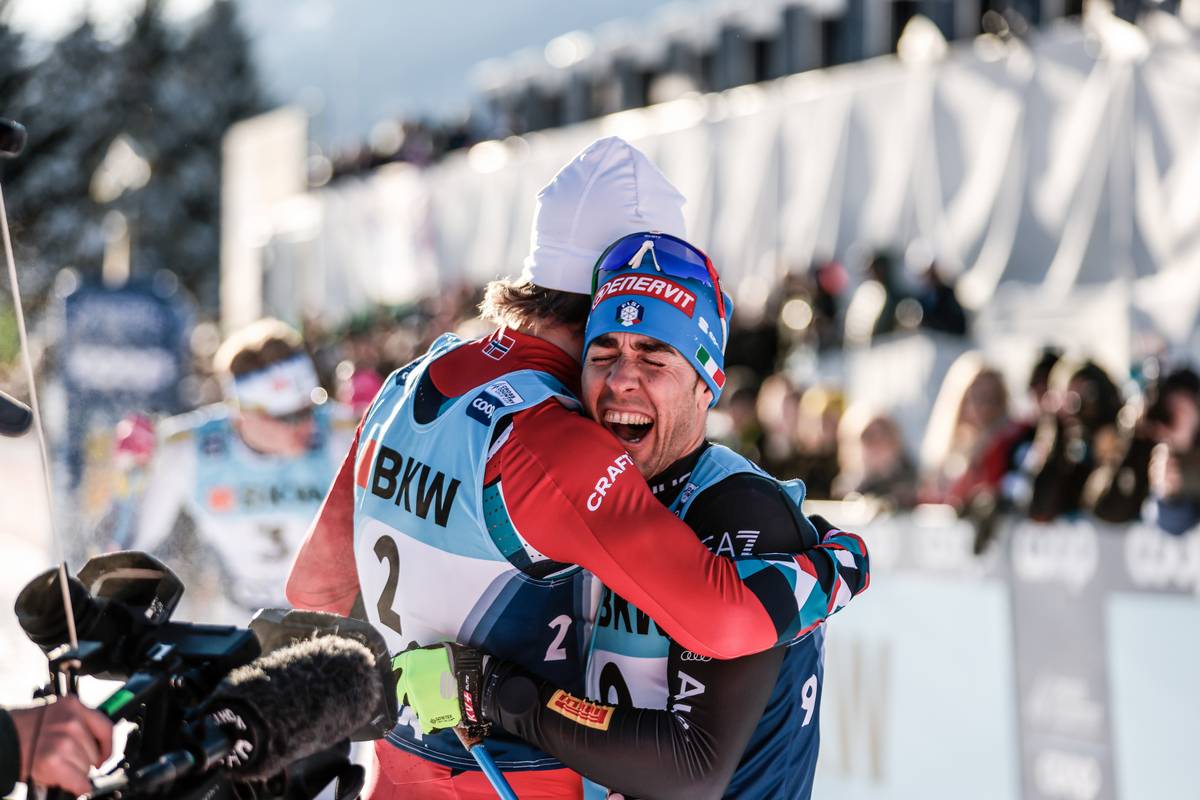
Johannes Hoesflot Klæbo (NOR) and Federico Pellegrino (ITA) after the finish of the Finals in Davos, 2022. Pellegrino bested Klæbo on the eve of the birth of his first child. (Photo: Nordic Focus)
It states the obvious to say that success in cross-country skiing is a matter of timing, and for “Chicco Pelle’s” 15 seasons, the timing had been just shy of right. The formative and final years of Pellegrino’s career were defined by the dominance of skiers other than he. Pellegrino made his World Cup debut in Drammen in March 2010, finishing 49th. The winner that day was Emil Joensson (SWE); runner-up was Petter Northug (NOR), then on his way to his first of two Overall Globes. These were the halcyon days in which Dario Cologna (CHE) descended from his Alpine fastness to rack up World Cup and Tour de Ski titles; when Northug, Joensson and Marcus Hellner (SWE) traded sprint victories and taunts in a bitter intra-Scandinavian rivalry. Pellegrino was 12th in his first World Championships Sprint (Oslo, 2011) and 11th at his first Olympic Sprint (Sochi, 2014).
While notching his debut victory in December, 2014 in the Davos Freestyle Sprint, Chicco’s break came in the 2015-16 season. He won 5 of 13 sprint races, becoming the first non-Scandinavian male to win the Sprint Globe. As Pellegrino hit his stride, Northug’s star was showing its first flickerings ahead of a dramatic waning, Joensson had entered the twilight of his career, and although Sergey Ustiugov (RUS) was approaching his own prime, the factious cast of World Cup sprinters was looking for a new leading man.
That man would not be Chicco. An upstart dramatist from Trondheim, Johannes Høsflot Klæbo, had arrived to script skiing’s long, and mind-bogglingly successful, next chapter. After making his debut in Drammen in 2016, Klæbo outscored Pellegrino in the 2016-17 Sprint standings, taking his first of 8 (and counting) Sprint Globes. The two went head to head at the 2017 World Championships in Lahti, Finland, where Pellegrino surged from behind to claim his first World Title ahead of a legendary lineup, including Ustiugov, Klæbo, and Northug, but this maiden gold would also be his last. In Pyeongchang the next year, the Olympic gold went to Klæbo; Chicco brought home silver.
The wins did keep coming for Chicco, including a tear of three consecutive Sprint victories and his second Sprint Globe in 2020-21. And, though they admittedly came in greater abundance to Klæbo (who, it should be noted, did not start in those races, or the 2020-21 Tour de Ski), it is rather glib to assert that Chicco’s career had slid “in[to] the shadow of” the Norwegian. Pellegrino bested Klæbo in Dresden and Lahti in the spring of 2018; in Lillehammer that winter; and in Davos in 2022. He was near-omnipresent on Sprint podiums and won his second Olympic silver in Beijing in 2022; moreover, he was among the very few men who could disrupt Klæbo’s dominance in the discipline, and the clear favorite when Johannes was absent.
But Pellegrino’s win in Davos in December 2022 marked the beginning of a long, and perhaps self-inflicted, World Cup drought. Chicco declared his intention to focus on distance races ahead of Milano-Cortina, and did indeed record four such podiums in classic, skate, and skiathlon formats, alongside a welter of Sprint podiums – including an ecstatic World Championships silver in Trondheim in 2025, and Olympic bronzes on home soil in the Team Sprint (alongside Elia Barp) and in the 4 x 7.5 k Relay (which he described as “the proudest day of [his] life!”) this February.
Elia Barp welcomes Federico Pellegrino to a bronze-medal finish in the Olympic Team Sprint in Milano-Cortina, February 18th, 2026. (Photo: Vanzetta/Barbieri/NordicFocus)
Outright wins, however, were not forthcoming. By the time March 21, 2026 arrived in Lake Placid, it had become Pellegrino’s last, best chance to secure one more Sprint victory.
Anticipation and emotions ran high. While Pellegrino had been impervious to the crowd in Friday’s 10 k Classic – earbuds deadening the world beyond his blue racing cap during warmups, and his face a deaf mask of exertion during the race – their excitement overwhelmed him on Saturday. During his first warmup lap, he skated calmly up the course’s A-Climb through a chorus of “CHI-CCO, CHI-CCO, CHI-CCO.” On his second, the frenzied chant began again, and the gravity of the impending race dragged him to a halt. His skis splayed wide against the pitch; he buried face in his hands. “The energies I got in the Final were coming from the warmup lap, where I stopped in the middle of the climb, crying,” Pellegrino told me at the finish line. “I think the public deserved this kind of show, and I deserved to finish my career, with a Sprint skate like this.”
Pellegrino embraces the crowd ahead of Sprint qualifying in Lake Placid. “The energies I got in the Final were coming from the warmup lap, where I stopped in the middle of the climb, crying.” (Photo: Thibaut/NordicFocus.)
To reach that final finish line, however, was a perilous journey.
After qualifying second, Pellegrino sidestepped two falls (the first from Jules Chappaz (FRA); the second from Elias Keck (GER)) in his Quarterfinal, moving from sixth to first in the course’s final descent and level hairpin. In Semifinal 1, he attempted to close on Lucas Chanavat (FRA) and Anton Grahn (SWE) through the crest of the A-Climb but couldn’t get by; pushed to the outside on the level hairpin, he was out-lunged by Lars Heggen (NOR) in the final meters, finishing third by 0.03.
While the Lucky Loser spot was Chicco’s to lose heading into Semifinal 2, Erik Johansson (SWE), Harald Amundsen (NOR), and Even Northug (NOR) lost time playing for a slipstream position as they approached the top of the A-Climb. Pellegrino was on to the final by a comfortable margin.
Lars Heggen (NOR) outlunges Federico Pellegrino (ITA) by 0.03 in Semifinal 1. Federico moved on to the Final as a Lucky Loser. (Photo: Thibaut/NordicFocus)
Once more around the track, and the day could be his. After being fourth out of the gate, he attacked from the outside on the B-Climb; breaking into an aggressive V-2 and taking Chanavat and Heggen by surprise, he moved into second behind Grahn. The pace increased again at the base of the A-Climb, but where Grahn and Chanavat’s broad frames moved up the hill in sweeping, powerful strokes, Pellegrino leapt into a furious V-1.
The move was decisive. To the adulation of the crowd, he opened a decisive gap through the crest of the climb. His lead only grew through the final descent into the level hairpin, but Chicco was taking no chances. While Grahn and Heggen grappled for second behind him, Pellegrino hammered to the line, threw his arms wide and his head back, roaring with the crowd.
An 18th victory and 46th career podium, clinched.
Federico Pellegrino secures his 18th and final World Cup victory. Lake Placid, March 21, 2026. (Photo: Thibaut/NordicFocus)
What had happened in the Semifinal, when this triumphant last dance had nearly evaded him by three hundredths of a second? And what had changed for the Final?
“I could not do what I did in the Final, because the energies of the other athletes were still quite big,” Chicco admitted our post-race interview. “About the last downhill, I was not the same as the others. I am not, I know, but I have some different qualities, and if I could get quite good gap in the top of the uphill, then I knew that I could keep it until I end. This is what I did. This is how I loved to win all along my career – not wait until the last meter, but trying before.”
“Sometimes it happened, mostly before Klæbo came,” he laughed. “But today I was there, and I studied the best tactics in the end . . . the public here in Lake Placid deserves this kind of show, and I think we are all happy now.”
And, this was nothing short of “the best way” to end his journey. “I could not do different. In the end, the last four years have been strange. I didn’t focus so much on sprinting; I tried to discover my body in different fields. Sometimes I got really great feelings and performances, but then, to come back here . . . and to win in that way, I could not do more.”
Pellegrino after his final win. “I think the public deserved this kind of show, and I deserved to finish my career, with a Sprint skate like this.” (Photo: Thibaut/NordicFocus)One more podium for Federico Pellegrino, alongside Lars Heggen (NOR) and Anton Grahn (SWE). (Photo: Thibaut/NordicFocus.)
In 15 seasons, Pellegrino proved himself to be far more than a runner-up to those Swedish and Norwegian titans who loomed large over his early and later years. He had taken the Sprint Globe from the Scandinavians for the first time; outsprinted Klæbo, Ustiugov, and Northug in Lahti; perpetually challenged – and occasionally beaten – the greatest athlete in the history of the sport; and secured Olympic medals on home soil, alongside a team of up-and-coming Italians ready and eager to fill his boots. “I’m really happy that he finished his career with probably one of the best weekends for him so far,” Elia Barp (ITA) told me on Sunday. “I’m very happy for him; I’m very happy for the team. I think we have proved that we are ready to race without him – not only me, but a few other young guys are ready to try to take victories next year . . . [He showed] that it is important to keep fighting and try to be a good overaller as he was in the last years. And, now we know that it’s possible; everyone is human as us, and we can do that.”
To Chicco’s fans, that determination – to grapple with giants; to reinvent himself; to seize the final, perfect timing and a final, perfect victory – defined his career. But for Pellegrino himself, “the biggest memories will not stay about the races, but much more about the hugs I got from the teammates, from the coaches, even outside of Italy, from my family, from the people that love me – and not only when things went well; even when things were not going so well. I think this is something that sport teaches us; that in the end, it’s only a cross-country ski race, and life is different. That’s it. The hugs are something I will remember for my entire life.”
Pellegrino, the most popular man at Zig Zag’s on Saturday, March 21. (Photo: Lily Den Hartog)
At Zig Zag’s Pub on Saturday night, Pellegrino told this reporter’s associate that his win vindicated his decision to retire. On Sunday, soaked with rain and champagne and tears after his last World Cup race, he reaffirmed it:
“That’s it. I tried to enjoy today as well . . . I tried to give my best, as always, and it was good after the finish line; under the rain, it was special. But with the teammates and coaches and waxers celebrating this moment, it was good for me.”
“Now, I really need to stay with my family. They deserve this, and I need to give them a lot of time.”
Love Stories Like This? Help Keep Them Coming.
Feature stories like this one take time, access, and care to produce. If you value thoughtful storytelling and independent ski journalism, please consider becoming a Voluntary Subscriber. Your support directly fuels the work we do to cover the people, places, and moments that make our sport special.
“Grazie Papao!!” Team Italy was waiting at the finish of the 20 k Skate with champagne and a tribute to Pellegrino’s children and wife, Greta Laurent (ITA, ret.). (Photo: Thibaut/NordicFocus)
Novie McCabe of APU narrowly winning over Kendall Kramer and Alayna Sonnesyn. (Photo: Tryg Solberg / FasterSkier)
CRAFTSBURY, Vermont — Craftsbury’s SuperTour Finals 40k highlighted some awesome battles amongst the top American men and women. The women started off the day with some extremely fast conditions on the winding and punchy Craftsbury 5k loop. The men took on the course later in the morning and conditions were mostly firm besides the south facing hills.
The women’s race broke into a lead pack of 5 that held strong until a sprint finish. APU’s Novie McCabe narrowly took the win over Kendall Kramer of APU and Alayna Sonnesyn of Team Birkie. Luci Anderson of Team Birkie and Craftsbury’s own Margie Freed, both 2026 Olympic biathletes, finished 4th and 5th.
The early leaders of the women’s 40k heading up Screaming Mimi hill. (Photo: Tryg Solberg / FasterSkier)
In an interview with Craftsbury’s Sheldon Miller after the race, McCabe said that “it was really fun to ski with such a great group of girls.” In regards to her difficult last couple of seasons, McCabe said that “it’s nice to have these good days again. It’s super fun to be back racing this year.”
Margie Freed, mostly a biathlete in the last few seasons, said that “it was really nice to not carry an extra ten pounds on my back, but I was a little sad to not be able to lay down in the middle of my race.” She thanked her coaches for helping her keep track of the lap count.
Alayna Sonnesyn, the Team Birkie athlete that narrowly missed out on the Olympics, said that the top three broke away at the top of the Screaming Mimi climb. When asked how her race went, Sonnesyn said “it was great, it was so fun to be out here. Conditions were fast and furious, kind of like the Birkie this year.”
The men’s 40k leaving the stadium. (Photo: Steve Snider)
The men’s race was tight with the top 14 coming in less than 60 seconds behind the win. Gus Schumacher of APU ended up edging out John Hagenbuch of Dartmouth for 1st. Kevin Bolger of Team Birkie finished 3rd.
Jake Brown in his last race for Craftsbury Green Racing Project taking the lead up Screaming Mimi. (Photo: Steve Snider)
Hagenbuch said that he has been fighting through some illness since the Lake Placid World Cup Finals.“I didn’t win today, but I was still smiling out there and really just taking in what was my last race for Dartmouth.”
Gus Schumacher also said that the conditions were really fast and it was hard to get away from the pack. He and Zak Ketterson were pushing at the front when Zak had an unfortunate fall within the last few hundred meters: “I was given the first place position and just went for it from there.”
The award ceremony’s after the races highlighted the 40k, junior 20k and 2025-2026 SuperTour awards.
Thank you to Sheldon Miller of Craftsbury Outdoor Center for the post-race interviews with athletes.
FasterSkier will have our own Nat Herz on the ground at the Olympics, which, to be honest, is a very big financial lift for us. If you value the thoughtful work and access FasterSkier provides at championships like this one, please consider becoming a Voluntary Subscriber. Your support directly fuels the work we do to cover the people, places, and moments that make our sport special.
This coverage is made possible through the generous support of Marty and Kathy Hall and A Hall Mark of Excellence Award. To learn more about A Hall Mark of Excellence Award, or to learn how you can support FasterSkier’s coverage, please contact info@fasterskier.com.
Jessie Diggins answering questions at the press conference before the World Cup in Lake Placid, New York. (Photo: Voisin/FasterSkier)
Lake Placid, N.Y. — The eve of the World Cup finals at Mount Van Hoevenberg brought press conferences, sound checks that went sideways, and three American skiers who couldn’t stop making each other smile.
Jessie Diggins, Ben Ogden, and Gus Schumacher sat side by side Wednesday afternoon — the same trio that has turned the 2025-26 season into something U.S. cross-country skiing has never seen before. Between them: Olympic medals, historic podiums, a 50-year drought shattered, and one very good birthday cake.
But with three races left and Diggins’s retirement looming, the mood wasn’t heavy. It was loose, funny, and deeply human — exactly the way this team tends to do things.
“Probably Glitter”
Asked to define her legacy heading into her final World Cup weekend, Diggins did what Diggins does: she went somewhere unexpected.
“I think I define my legacy honestly, completely outside race results,” she said. “I am more proud of the things I have done off the course. I think my legacy is going to be in my advocacy and the way that I have spoken about mental health and eating disorders specifically, and the way I’ve tried to make really hard conversations less hard for people to have.”
She pointed to her work with Protect Our Winters and Share Winter, to the energy she’s poured into the team’s culture over the years. And then she landed the dismount.
“And probably glitter. I think there’s a lot more glitter in ski races now, and that’s always a great thing — as long as it’s biodegradable.”
Diggins has spent the season saying goodbye in pieces — a little cry leaving training camp in Bend, quiet moments at each World Cup stop. She knows what’s probably coming Sunday.
“I suspect it’s probably going to hit like a dump truck on Sunday, and there’s probably going to be a lot of tears.”
But she’s ready. And what she’s ready for is maybe the most Jessie Diggins thing of all: she sees ski racing as performance art, and she wants her final show to leave people wanting to go run up a mountain or sign their family up for ski lessons.
“I realized that I can do that moving forward, but just with my story and with my words, and I don’t have to push my body so hard, but I can still leave people inspired and motivated.”
In the meantime, she’s looking forward to being able to wash her clothes when they’re dirty, cook whatever she wants, and bake cookies on the weekend instead of training and racing all day.
Ben Ogden answering questions at the press conference before the World Cup in Lake Placid, New York. (Photo: Voisin/FasterSkier)
“Your Life Is Not Going to Be the Same”
Ben Ogden grew up in Landgrove, Vermont. American skiing legend Bill Koch lived close by in Peru, Vermont. Same zip code, as Ogden puts it — “not so different.”
Fifty years separated Koch’s 1976 Olympic medal from Ogden’s silver this season, and when Ogden finally got on the phone with his neighbor and mentor after breaking the drought, Koch didn’t mince words.
“Bill just sort of said, ‘Hey, congratulations, and your life is not going to be the same from this point forward.’ And that was kind of crazy to hear.”
Ogden hopes to see Koch at the races this weekend. And racing at Van Hoevenberg carries its own weight for him — not just because of Koch, but because of his father, who was deeply embedded in the New England ski racing community.
“I think it’s really hard for me to come race in the U.S. and look around and not just, like, constantly think about him, because this was his scene,” Ogden said, his voice softening. “He would have been in such paradise on the side of the trail here in Lake Placid. And I’ll be thinking about him a lot this weekend, for sure.”
This is technically Ogden’s first home World Cup — he was sick for Minneapolis — and it’s hitting him right. He grew up racing the NYSEF Festival series at Lake Placid, bringing crews of Vermont kids over for slushy late-season races.
“It’s not my home, but it feels like it.”
Gus Schumacher answering questions at the press conference before the World Cup in Lake Placid, New York. (Photo: Voisin/FasterSkier)
Aspirations, Not Goals
Gus Schumacher has been doing some linguistic rebranding.
“I’ve been calling them aspirations for a few years now,” he said of his season targets, “because I feel like the pressure of goals was kind of weird for me.”
The distinction matters to Schumacher. He sets plenty of small goals — the daily, tactical kind — but the big ones, like winning an Olympic medal or finishing in the top 10 of the overall World Cup standings, he holds more loosely. They’re aspirations: things he wants, things he’ll chase, but things he won’t let crush him if they don’t happen.
“Those are things I want to do, but if they don’t happen, it won’t be because I didn’t try.”
He accomplished the Olympic medal. He entered this final weekend ranked sixth in the world, with a top-10 finish still in play. And he’s approaching Lake Placid the same way he approached Minneapolis, where he won his first World Cup in front of a hometown crowd: just be happy to be racing, and feed off the energy.
“Already today, it was really cool to have people cheering us on in the race prep, which doesn’t really happen much on the World Cup ever.”
Schumacher also dropped maybe the best origin story of the press conference: the formative moment that lit a fire under his career was Luke Jaeger beating him at an Anchorage cup race.
“That kind of put a fire under my belly to really start training, because I didn’t want him beating me anymore.”
The Knitting Club, the Water Pump, and the Greenhouse
The press conference’s best stretch might have been when someone asked the athletes how they decompress.
Schumacher keeps it clean: headphones, 10 to 20 deep breaths — four seconds in, eight seconds out. Standard operating procedure.
Ogden? He knits. And he’s not shy about it.
“After races, I’ve been doing a lot of knitting and stuff like that. Helps me just relax really quick.” After the season, it’s bigger projects: car work. “You can feel like you’re the king of the world after a couple medals, but go and try and replace a water pump on a Forerunner, and that’ll make you feel completely incompetent.”
Diggins revealed there was a full-on knitting club on the team this winter. Her own reset button is simpler: she calls her husband.
“He’s my absolute center of my world. The race could have been amazing, and it could have been also completely horrible. And we’re just talking about what I want to do with the garden, and how I want to start a greenhouse. And he’s like, ‘Uh huh, yeah, sure, I’ll support you in that.’”
One More Thing
Almost as a throwaway, Ogden mentioned that Andy Newell — “the original Nordic ski backflip guy” — is in Lake Placid this weekend. And Ogden himself has had a backflip dialed since he was 17.
“I’m hoping on Sunday we can kick up a little ski jump. I’m looking to take another one Sunday afternoon. So stay tuned.”
Three races to go. A retirement to honor. A culture to celebrate. And maybe a backflip.
It’s going to be a weekend.
Love Stories Like This? Help Keep Them Coming.
Feature stories like this one take time, access, and care to produce. If you value thoughtful storytelling and independent ski journalism, please consider becoming a Voluntary Subscriber. Your support directly fuels the work we do to cover the people, places, and moments that make our sport special.
Thanks to the fantastic success of the redesigned youth programs at the resort this past winter, Royal Gorge XC will offer expanded teams for the 2026-2027 season.
New team offerings for the coming season will include middle school age racing, junior racing, gap year programming, pro level racing and masters training groups.
Youth programming will remain the same as offered this past season, with groups comprised of young skiers from Kindergarten through 8th grade with a focus on skill development and fun.
The new racing and training focused offerings will put into place a full ladder of nordic ski development at Royal Gorge XC, allowing every level of skier to see the complete range of possibilities this life-long sport can offer.
Programs will be headed by Will Sweetser, now in his 33rd year of professional coaching. An expanded staff of U.S. Ski and Snowboard certified coaches will support programming and lead the Royal Gorge XC Teams as they represent the resort and Far West Nordic in local, regional and national racing.
All programs will be competitively priced, with both à la carte and full menu pricing options. Registration for programs will open at SkiReg.com by April 1, 2026.
Royal Gorge XC Programs 2026-2027
Manzanitas — Grades K–2
Fun, fun and more fun. Saturdays only. Classic skiing focus. Weekend and seasonal rentals available.
Aspens — Grades 3–5
Fun, coordination and skill development weekend program. Classic and skate skiing. Limited racing opportunities for those interested.
Lodgepoles — Grades 6–8
Fun, skill development and fitness focused weekend program for middle schoolers. Independent Middle School racing and limited racing opportunities for those interested.
Devo — Ages 12–15
September through March programming options, both fall/winter and winter only. Summer camp offered. Coached sessions held 3 days per week. Local and regional race support with experienced, certified coaches.
Comp — Ages 15–19
June through March programming options, both full year and winter only. Coached sessions held 4 days per week on average. Local, regional, and national race planning and support with experienced, certified coaches.
Gap Year — Ages 18–20
By application only. Program limited to 5 athletes. 4–5 days per week in conjunction with Pro Team. Head coach: Will Sweetser.
Pro Team — Ages 19+
By application only. Program limited to 5 athletes. Individual training and competition planning. Job opportunities. Coaching requirement. Head coach: Will Sweetser.
Senior/Masters Training Groups — Ages 21+
Multiple training groups offering beginner to expert skate and classic training. From “learn to” to racing level groups. 1–3 days per week. Scheduled in conjunction with youth and junior training groups and offering race/experience travel.
Stifel Lake Placid Finals, a Coop FIS Cross-Country World Cup, to Bring Elite Ski Racing and Winter Festival Atmosphere to Lake Placid
FIS Cross-Country World Cup racing, fan experiences, athlete engagement, and live entertainment coming March 19–22
LAKE PLACID, N.Y. — The Stifel Lake Placid Finals, a Coop FIS Cross-Country World Cup, will offer more than world-class competition this March. The event will transform Lake Placid into a multi-day winter sports festival featuring themed race days, live entertainment, film screenings, interactive expo activations, and family-friendly programming.
In collaboration with the New England Nordic Ski Association (NENSA), the 10th Mountain Division, U.S. Ski & Snowboard, and the International Ski and Snowboard Federation (FIS), the Olympic Regional Development Authority (Olympic Authority) has curated a dynamic schedule that celebrates Nordic skiing and outdoor winter-sport culture.
A central focus of the week will be spotlighting women and girls in sport, networking opportunities, and hands-on activities. Fans will also have unique opportunities to connect with athletes through meet-and-greets, alumni celebrations, and special legacy moments — including Sunday’s “Last Lap” ceremony honoring retiring World Cup athletes.
Together, these events are designed to foster engagement, connection, and shared celebration across the Lake Placid community and the global ski family.
One final celebration of Jessie Diggins (USA) amazing career. (Photo: Authamayou/NordicFocus)
Event & Community Programming
In addition to World Cup racing, the Stifel Lake Placid Finals will feature a range of community events, athlete appearances, and festival programming throughout the week. Activities include youth programming, athlete conversations, live music, demonstrations, and opportunities for fans to connect with past and present champions.
Programming details may evolve, and additional events may be added throughout the week. Visitors are encouraged to check the official event schedule for the most up-to-date information.
Thursday, March 19 – Community & Kickoff
Opening day features official training and festival programming at Mt Van Hoevenberg, along with an evening film screening at the Palace Theatre that kicks off the festivities in downtown Lake Placid.
Friday, March 20 – Theme: Past
Friday celebrates the legacy of Nordic skiing and Olympic history in Lake Placid. The venue opens with festival programming, including the NENSA Terrain Park and Expo with L.L. Bean, regional athlete recognition connected to the 2026 Winter Olympics, and Adirondack Birds of Prey demonstrations. Fans can also watch presentations from the 10th Mountain Division, enjoy live music, and attend athlete interviews and meet-and-greets throughout the day. A highlight of the afternoon is the “One More Lap” legacy ski, featuring international and U.S. Ski Team alumni, including Olympic legend Thomas Wassberg and American champion Bill Koch, before World Cup racing and awards ceremonies conclude the day.
Saturday, March 21 – Theme: Future
Saturday’s programming focuses on the next generation of Nordic skiing. Activities include the NENSA Terrain Park and Expo with L.L. Bean, athlete appearances, and fan engagement opportunities. The Women in Sports Heroic Panel highlights leadership and opportunities for girls and women in athletics, while fans can also attend athlete meet-and-greets and participate in interactive programming throughout the venue. Competition highlights include the freestyle sprint finals, followed by Crystal Globe presentations. Youth racing also takes center stage with the World Cup Future Stars Sprint. Additional programming includes Lollipoppers to Olympians: A Celebration of New England Skiing, a live recording of the Skirious Podcast featuring Ben Ogden and special guests at the Olympic Jumping Complex, and evening film screenings at the Palace Theatre.
Sunday, March 22 – Theme: Present
Championship Sunday features entertainment, athlete appearances, and the season-ending races of the World Cup Finals. Live music, a DJ set, and ceremonial elements, including the 10th Mountain Division Color Guard and flyover, set the stage for the final competition. The afternoon concludes with awards ceremonies and the “One Last Lap” ceremony honoring retiring World Cup athletes.
Gus Schumacher (USA) and Ben Ogden (USA), (l-r) celebrate their silver medal at the Olympic Winter Games in Tesero, Italy. (Photo: Vanzetta/NordicFocus)
Competition Schedule | FIS Cross-Country World Cup Finals
Mt Van Hoevenberg | March 19–22, 2026
World Cup official training and competition runs March 19–22 at Mt. Van Hoevenberg, where the world’s top U.S. and international cross-country skiers will compete for overall and discipline Crystal Globe honors. The weekend culminates on Sunday with championship racing, awards presentations, and the “One Last Lap” ceremony recognizing retiring athletes.
Full competition schedule:
Thursday, March 19, 2026:
11:00 – 1:00 pm | 10km Official Training
1:00 pm – 3:00 pm | Sprint Official Training
Saturday, March 21, 2026:
10:30 am | Women’s Sprint Qualification Free
10:30 am | Men’s Sprint Qualification Free
1:00 pm | Women’s Sprint Final Free
1:00 pm | Men’s Sprint Final Free
Sunday, March 22, 2026:
12:30 pm | Men’s 20km Mass Start Free
2:30 pm | Women’s 20km Mass Start Free
Jessie Diggins (USA) and the US Ski Team celebrate in Goms. (Photo: Authamayou/NordicFocus)
Broadcast Schedule
NBC will air the Sprint Finals live on Saturday, March 21, from 1–2 p.m. ET. CNBC will air coverage of the Men’s and Women’s 10km Interval Starts on Saturday, March 21, from 2–4 p.m. ET. NBC will also air the Women’s 20km Mass Start on Saturday, March 29, from 1–2 p.m. ET on tape delay.
We had to take a break after our three-week Olympic sprint, but we’re back to catch up on a couple of weeks of World Cup racing.
Devon and Nat take a quick run-through of events in Sweden, Finland and Norway. We’ll be back after the marathons at Holmenkollen.
Reach us at devon[at]fasterskier.com and nat[at]fasterskier.com.
A reminder: This is a homegrown podcast done by two guys working long hours and late nights. We also paid real money to be in Italy for the Olympics. If you can, support the show and FasterSkier’s ongoing coverage with a voluntary membership.
Help Support Our Olympic Coverage!
FasterSkier had our own Nat Herz on the ground at the Olympics, which, to be honest, was a very big financial lift for us. If you value the thoughtful work and access FasterSkier provides at championships like this one, please consider becoming a Voluntary Subscriber. Your support directly fuels the work we do to cover the people, places, and moments that make our sport special.
The highs were high and the lows were low in the Olympic team sprint in Italy, with the Ogden-Schumacher men’s team claiming silver and the Diggins-Kern women’s pair finishing out of the medals. Devon and Nat break the whole thing down.
We’ll be back after Saturday’s men’s 50 k. Reach us at devon[at]fasterskier.com and nat[at]fasterskier.com. We’re really grateful for all the support during the Olympics — thanks for notes and encouragement.
A reminder: This is a homegrown podcast done by two guys working long hours and late nights. We’re also paying real money to be here in Italy. If you can, support the show and FasterSkier’s ongoing coverage with a voluntary membership. We’re also offering a bonus during the Olympics: a WhatsApp group with notes on Nat’s experiences in Italy, the food he’s eating, interview transcripts and more.
Send nat[at]northernjournal[dot]com a confirmation of your voluntary membership and the number he should use for WhatsApp and we’ll get you signed up. You can also Venmo him directly at @nat-herz if a membership isn’t for you. We’re suggesting a minimum of $10, but we also won’t turn anyone away who wants to join because of an inability to pay.
Help Support Our Olympic Coverage!
FasterSkier will have our own Nat Herz on the ground at the Olympics, which, to be honest, is a very big financial lift for us. If you value the thoughtful work and access FasterSkier provides at championships like this one, please consider becoming a Voluntary Subscriber. Your support directly fuels the work we do to cover the people, places, and moments that make our sport special.
This article was made possible through the generous support of our voluntary subscribers who have helped us put our Nat Herz on the ground reporting at the Olympics. If you value coverage like this, please support FasterSkier with a voluntary subscription.
Jonna Sundling (SWE) follows Jessie Diggins (USA) during the Olympic Women’s Team Sprint in Tesero, Italy. (Photo: Vanzetta/NordicFocus)
PREDAZZO, ITALY — Eight years ago, on a different continent, the words “Here Comes Diggins!” by Chad Salmela vaulted American cross-country skiing into a new era. On Wednesday in Val di Fiemme, the event that changed everything for the United States returned to the Olympic stage.
The Women’s Freestyle Team Sprint has long been one of the Americans’ signature races. In the PyeongChang 2018 Winter Olympics, Kikkan Randall and Jessie Diggins delivered the nation’s first Olympic gold medal in cross-country skiing. Last March in Trondheim, Diggins and Julia Kern claimed World Championship silver.
On Wednesday, Diggins started the race in the first leg, handing off to Kern for the anchor leg, as they had in their previous medal run. They hoped for one more shared championship moment.
It was not to be. The Americans finished fifth, in a race that required not just fitness but flawless execution. Sweden’s Jonna Sundling and Maja Dahlqvist took gold. Switzerland’s Nadja Kaelin and Nadine Faehndrich secured silver. Germany’s Laura Gimmler and Coletta Rydzek won bronze after a late-race crash by Finland opened the door in the final turn.
For the Americans, the margin was not dramatic. But close, at this level, does not bring home a medal.
Jessie Diggins (USA) and Jonna Sundling (SWE), (l-r) come through the stadium during the Olympic Women’s Team Sprint. (Photo: Vanzetta/NordicFocus)
“Honestly, left it all out there.”
The Team Sprint is one of the sport’s most punishing formats. Two skiers qualify individually; their times are combined to determine which 15 nations reach the final. In that final, the athletes alternate laps — three each — on a course that offers no reprieve.
Often, one skier brings distance strength, and the other sprint speed. For the United States, Diggins and Kern blur those categories. Both are capable of driving pace. Both can finish.
From the gun, Diggins did what she has done throughout her career: she went to the front.
She and Sundling stretched the field immediately, driving into the Zorzi Climb, the race’s defining ascent. The early order — Sweden, the United States, Norway, Canada — hinted at the nations prepared to dictate terms.
Jonna Sundling (SWE) stretches her lead. (Photo: Vanzetta/NordicFocus)
When Sundling surged later in the race, Diggins expected it.
“I knew she was probably going to do that,” Diggins said afterward. “And I was like, just do the best that you can do. You know, like, you can’t control anything except your effort and your heart. And I was like, skiing out of my body, and I just did everything that I could, and I’m proud of that.”
That theme — control what you can — carried through her reflections.
“Honestly, I almost passed out like four different times,” she said. Then, clarifying: “No, from going that hard, no regrets. Honestly, left it all out there. I feel like we did everything we could, and that is the only thing you can control at the end of the day.”
Julia Kern (USA) and Jessie Diggins (USA), (l-r) gather in the finish area after the race, Diggins racing in the US team’s relay socks for the final time. (Photo: Barbieri/NordicFocus)
One final lap with ‘Relay Socks’
By the last exchange, Sweden had carved out daylight. Switzerland began clawing into Finland’s hold on silver. Behind them, Germany, Norway, the United States, and Finland battled for bronze.
On the final descent, Finland’s anchor, Jasmin Kahara, lost her balance in the sweeping right-hand turn and fell, sliding out on her stomach. Germany and Norway slipped past in their tucks. Kern, just meters behind, fought to the line, but the podium had narrowed to two.
Coletta Rydzek (GER) brings home the bronze medal for Germany with Norway’s Julie Bjervig Drivenes just off camera. (Photo: Vanzetta/NordicFocus)
As they drove for the line side by side, aerodynamically no-pole skating with everything they had, it was clear this was going to be close. Germany claimed bronze while Norway left empty-handed in fourth. Just behind, Kern brought the United States to the finish in fifth.
For Diggins, the moment carried a different weight. It was, by her admission, her last Olympic relay leg.
“I love racing with this girl. I’m so, so proud of her,” she said of Kern. “And, yeah, it’s emotional to feel like I’m never gonna pull on those relay socks again.”
When asked whether there was a sense of handing the event forward, she reflected on the arc of her career — from her first team sprint world title in 2013 to the growth of youth programs back home.
“It’s just really cool to be part of the evolution of American skiing,” she said.
Julia Kern (USA) and Nadine Faehndrich (SUI), (l-r) find their lines around a tricky corner. (Photo: Vanzetta/NordicFocus)
Whitcomb knows they can win
For Head Coach Matt Whitcomb, the analysis was candid and clear-eyed.
“Yeah, it was a good race,” Whitcomb said. “Of course, this is an event that we know we can win, and we didn’t today.”
In a format this tight, small imperfections are decisive.
“For even a bronze medal to happen, both legs have to be firing exquisitely,” he said. “We swung as hard as we could. We did our best. We were prepared to win today, and we just didn’t.”
Of Kern’s anchor leg, Whitcomb offered both empathy and affirmation.
“Julia is an incredible performer, and one thing you can always trust from her is that you’re gonna get her absolute best,” he said. “We saw it on the final climb. I was happy with how she climbed. Just didn’t quite have the entire thing today, and that’s okay.”
Jessie Diggins tags Julia Kern (USA), while Jonna Sundling tags Maja Dahlqvist (SWE), (l-r) in the exchange zone between laps. (Photo: Vanzetta/NordicFocus)
Diggins in the best fitness of her life
Diggins has raced these Games managing injury concerns, including rib pain after a fall in the opening Skiathlon. But when asked whether her fitness was lacking, she pushed back.
“I feel like I’ve come into this with the best fitness in my life,” she said. “And that’s one of the only things I could control.”
There is comfort, perhaps, in that certainty — in knowing preparation was not the missing piece.
“I was skiing out of my body,” she said. “And I just did everything that I could.”
In Olympic-level team sprinting, that is sometimes enough. On Wednesday, it was not quite.
But the American women did what Diggins described as the only thing you can in cross-country skiing: you have to leave it all on the course without regret.
FasterSkier will have our own Nat Herz on the ground at the Olympics, which, to be honest, is a very big financial lift for us. If you value the thoughtful work and access FasterSkier provides at championships like this one, please consider becoming a Voluntary Subscriber. Your support directly fuels the work we do to cover the people, places, and moments that make our sport special.
Paul Choudoir with his wife Julia Curry. (Photo: Courtesy Photo)
A Portfolio, Not a Resume
Paul Choudoir did not set out to work at the Olympic Games. He did not study engineering. He did not grow up in a wax room, nor did he apprentice under a legendary grinder with a machine humming in the background. He went to school for communications. Advertising, specifically. He built a portfolio. He expected a desk.
“I was a communications major,” Choudoir said. “Yeah, in advertising.”
In 2018, his life looked orderly in the way young professionals’ lives often do just before they don’t. He was finishing school, assembling work samples, and preparing to enter an industry with defined pathways and predictable ladders. He interviewed at an ad agency. They liked him.
“The next day, they offered me the job,” he said.
The day after that, something else happened.
“And I told them that I took a job with the snowboard team,” Choudoir said. “And I couldn’t be more grateful that I turned that down.”
That second offer was seasonal. It was physical. It came with no guarantee of permanence. It was also the beginning of a career that would, eight years later, place Choudoir at the center of the U.S. Cross-Country Ski Team’s Olympic preparation, responsible for the grinding program that shapes the skis American athletes will consider racing on when the Winter Games begin this Saturday.
It is not a path that makes immediate sense on paper. Which, in many ways, is the point.
Growing Up on Skis, Not Destined for Them
Choudoir grew up in central Wisconsin, five minutes from his local ski trails. Skiing was present from the start, not as destiny but as texture—something you did because it was there.
“I’ve been skiing all my life,” he said. “As soon as you could walk, you played on skis.”
He raced. He trained. He went to college and skied there too, though he is careful not to mythologize that part of the story.
“Not exactly an illustrious college career,” he said. “But I wouldn’t be where I am today if I hadn’t done that.”
The tone matters. Choudoir does not frame himself as a near-miss Olympian or an athlete who found a second life in service. He is precise about what his racing was and wasn’t. Skiing gave him familiarity with snow, equipment, and race culture. It did not hand him a blueprint.
What it did give him—though he didn’t know it at the time—was an eye.
US Snowboard Cross Team started using cross-country skis and techs to help determine what to do to their snowboards for races. Choudoir was one of those techs at the last Olympics. (Photo: Courtesy Photo)
Learning to See the Ski
“I fell in love with the service side of the sport,” Choudoir said.
That love did not arrive fully formed. It developed slowly, through observation, repetition, and mentorship. One name comes up again and again when Choudoir talks about learning to grind: David Chamberlain.
“David taught me to grind,” he said. “I’ve been grinding since… about ten years now.”
Grinding, at its simplest, is the process of cutting microscopic patterns into the base of a ski using a stone grinder. Those patterns—called structure—help manage how water behaves between the ski and the snow. Too much suction and the ski sticks. Too little contact and it chatters. In dry snow, structure can be minimal. In wet snow, it can be decisive.
But Choudoir resists explaining grinding as a purely technical exercise. What matters, he suggests, is not just the machine but how you look at the ski coming off it.
“When running a grinding machine,” he said, “I think you need both. You need right-brain and left-brain people.”
There are databases. There are measurements. There are RA values, stone parameters, and logs that stretch back years. And then there is feel.
“You need the people who have the database of what we waxed with here three years ago,” he said. “And you need the gut-instinct people.”
Choudoir’s background in visual communication—learning how images convey meaning, how patterns read, how subtle differences change perception—became an asset. Grinding is, in many ways, about pattern recognition. Noticing when something looks right. Or wrong.
The First Call to Europe
The moment when Choudoir’s interest hardened into commitment came not in a classroom or a wax room, but through a phone call.
“Someone had to bail from the OPA Cup trip,” he said. “And [Bryan] Fish was asking around.”
Chamberlain’s name came up. So did Choudoir’s.
“David immediately asked me,” he said.
The trip was three weeks long. It was his first sustained exposure to European racing, to the rhythm of international service work, to the stakes that live just behind the results sheet.
“I went on that trip for three weeks,” Choudoir said. “And that kind of solidified what I wanted to do.”
Service at that level is relentless. Skis arrive. Conditions change. Decisions must be made quickly and defended quietly. There is no time to romanticize the work. But for Choudoir, it clarified something fundamental: this was where his skills mattered.
Constructing the Arrow While Shooting It
“This grinding development project is kind of my baby,” Choudoir said.
He is referring to the U.S. team’s effort to build a modern, resilient grinding program—one capable of producing skis that perform across a wide range of snow conditions, with limited resources and little margin for error.
“We’re kind of constructing the arrow while we’re shooting it,” he said.
The phrase captures both the ambition and the constraint. Unlike larger federations, the U.S. does not have the luxury of endless testing or redundancy. Time, money, and personnel are finite. That reality shapes every decision.
The goal is not perfection. It is coverage.
There have been moments of early confirmation along the way. Certain grinds have worked immediately, validating months of off-season testing and reinforcing the idea that the overall approach is sound. But Choudoir is quick to note that genuine development rarely happens when the calendar is full. Race weekends compress decision-making into survival mode: skis need to be ready, not experimental. Time disappears, weather intrudes, and the consequences of being wrong grow heavier. Building new structure in those moments is less about innovation than restraint—knowing when to trust what already exists, and when to leave the next step for another week.
“You’re trying to limit catastrophe,” Choudoir said. “You’re trying to make sure you’re never hand-structuring a ski and making it slower.”
The program relies on building a menu of grinds—each tested, logged, and understood well enough that when race day arrives, choices can be made with confidence rather than desperation. It is a philosophy rooted in risk management as much as speed.
Choudoir with US Snowboard athletes and techs at the last Olympics in Beijing, China. (Photo: Courtesy Photo)
The Detour That Mattered: Snowboard Cross
Before Choudoir arrived in cross-country, he spent six seasons with the U.S. Snowboard Cross Team.
“Not exactly the trajectory I thought,” he said. “But I was with them for six seasons.”
Snowboard Cross is chaotic by design. Courses change. Weather shifts. Equipment choices are compressed into narrow windows. The service environment is intense.
“I went to Beijing with that crew,” Choudoir said. “Had a blast.”
He is not being flippant. Beijing mattered. It was his first Olympics, his first exposure to that particular compression of pressure and permanence. Mistakes echo. Success is fleeting. Everything is amplified.
“Very different environment,” he said, “but still kind of doing the same thing.”
What transferred was not discipline-specific knowledge but temperament. The ability to make decisions under stress. To stay calm when the margins disappear.
Pressure Without a Bib
“I still wake up on race day with that nervous stomach,” Choudoir said.
It is an admission that disrupts the usual hierarchy of anxiety. Athletes are expected to feel it. Techs are supposed to be invisible. But Choudoir does not pretend otherwise.
“We’re being demanded to perform,” he said.
Service technicians do not get a lane. They do not get a split time. Their work is judged indirectly, through glide, through kick, through moments when an athlete looks down mid-race and knows something is wrong—or right.
“If we’re the first ones to freak out,” Choudoir said, “that trickles down.”
Pressure in the wax room is quiet. It hums rather than roars. It lives in choices made hours before a start, when weather models disagree, and snow crystals are in flux.
No Assholes in the Wax Room
“Nobody wants to work with an asshole,” Choudoir said.
It is a blunt statement, and an accurate one. Service teams operate on trust. Ego corrodes that trust quickly.
“We have to be calm,” he said. “If we’re calm, the athletes are calm.”
Calm does not mean passive. It means deliberate. It means creating an environment where athletes feel supported rather than scrutinized. Music plays. Routines settle. Decisions are explained clearly and without drama.
Choudoir describes a culture where competence is expected, and humility is enforced—not through policy, but through proximity.
Collaboration, Not Espionage
There is a persistent myth that ski service at the highest level is governed entirely by secrecy. Locked rooms. Guarded notebooks. Stolen glances.
The reality, Choudoir suggests, is more complicated.
“People help each other more than fans realize,” he said.
There are boundaries, of course. Proprietary information remains protected. But when a machine breaks, when conditions confound everyone equally, assistance flows.
“Nobody wants to see anyone fail because of equipment,” he said.
It is a quiet fraternity, built on shared exposure to the same uncontrollable variables.
Saturday
“At some point, the decisions are made,” Choudoir said. “After that, it’s just execution.”
As the Olympic races begin this coming Saturday, the grinding lists are locked. The skis are prepared. The patterns have been chosen based on months of testing and years of accumulated knowledge.
What remains is the weather. And trust.
Choudoir will be there, awake early, stomach tight, listening to the machines and watching the snow. His name will not appear on the results sheet. But his work will.
And that, for him, will be enough.
Help Support Our Olympic Coverage!
FasterSkier will have our own Nat Herz on the ground at the Olympics, which, to be honest, is a very big financial lift for us. If you value the thoughtful work and access FasterSkier provides at championships like this one, please consider becoming a Voluntary Subscriber. Your support directly fuels the work we do to cover the people, places, and moments that make our sport special.
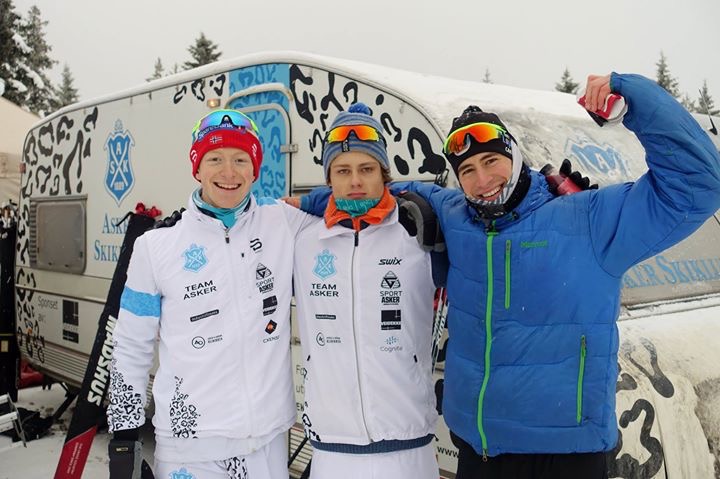
Maks Zechel (r) with his Team Asker relay teammates at 2018 Norwegian nationals in January in Vang, Norway. (Photo: Anne Haarstad)
Editor’s Note: The following is part of a series proposed by Maks Zechel, a 20-year-old Canadian cross-country skier embarking on his first season training abroad. In August, he made the big move to Norway, where he’ll be training and racing with Team Asker for the entire winter. Through these updates, Maks hopes to share his personal “observations, stories and lessons learned” to help close the gap between North American and Scandinavian nordic skiing. Previous posts: 1,2,3, 4, 5, 6, 7 , 8, and 9 .
***
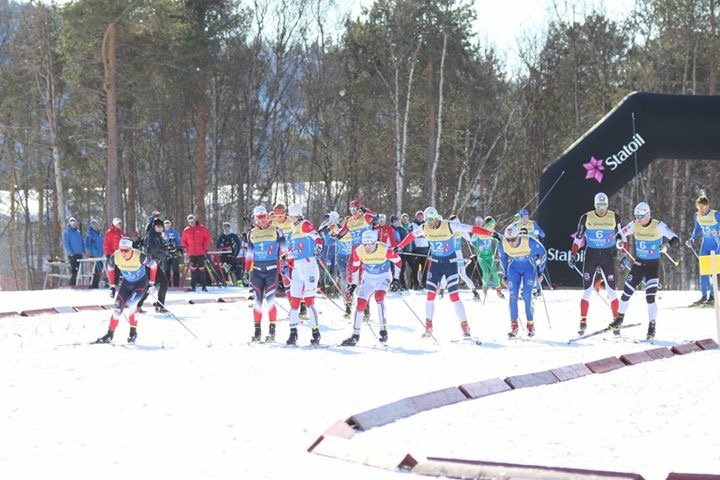
The men’s field trying to hang onto the Northug brothers, Sundby, Musgrave, Krüger, Skar, Gløersen, and Golberg in the team sprint at 2018 Norwegian nationals earlier this month in Alta, Norway. (Photo: Bildbyran)
“Starting in 30 seconds!”
“What??” exclaim a handful of skiers with their one-piece racing suits still tied around their waists. The gathering of 15-20 skiers, chatting while changing out of their warm-ups, transforms into a sudden scramble as everyone rushes to strap on poles, kick snow out of boots, and slap bindings closed. A couple of stragglers stumble out of the knee-deep snow under the trees after a last-minute pee – once the one-piece is zipped up, you’re pretty trapped.
I pull on my gloves as fast as I can, almost falling backwards into a snowbank, and send speedy thoughts to the satellites still trying to connect to my watch.
“Just give me a few extra seconds! My watch isn’t set up yet!” someone frantically yells back.
No dice.
The mix of girls and guys, aged 16-24, shuffle around awkwardly in their white and blue Team Asker racing suits, trying to self-seed before the interval workout starts. A three-time World Junior champion stands at the front. Juniors and seniors struggling to crack the top 100-200 at Norwegian Cups mix in with those who push some of the best World Cup skiers in races. Resumes are out the window; the only determination of who will lead each interval is who is skiing the fastest, and that might be anyone today.
The trail is really only wide enough for one skate skier and perhaps a desperate pass in the classic tracks. If you want to get by during the intervals, it will have to be done tactically; maybe on the inside of a corner, after an extra push into a downhill, or swinging into an uphill. The depth of talent in the group is incredible, and from multiple team workouts per week, you learn to go fast no matter how crowded the course, how unsuitable the terrain, or how frustrating the conditions. The best ski the best, the conditions irrelevant, and “I struggle in soft snow” is no valid reason for skiing slowly.
Tonight’s session: 5 x 12-minute anaerobic threshold intervals, sometimes known as Zone 3 or Level 3, with a 2-minute rest in between. The effort is to be controlled, with good progression from interval to interval. Tonight it is especially important to progress well throughout the workout, as most of us are just coming off of a hard race weekend, and we want to be conscious of how well our bodies are recovering.
Everyone sprints down the first hill, some still rushing to get their poles on, as we leave the umbrella of light cast by a “10-second sprint marker” (known by some as a light post) and descend into the darkness below.
The course is rolling, with many turns, short-aggressive and long-gradual hills, and extended stair-like climbs with plateaus and steep pitches. It’s a course of transitions that leaves you scrambling to catch up if you are caught sleeping. It is definitely not a FIS-homologated race course, but it is the primary training location for multiple world-class skiers.
We wind our way through the woods, following a loop that criss-crosses and “figure eights” its way around a lit trail system. Sometimes we leave the light for awhile, and we ski blindly until our eyes adjust to the blues and blacks of moonlight. It has been a fantastic winter in Norway, and the snow is deliciously fresh.
The skiers in front are symmetrical in all their movements, producing perfect, even kicks. Upper bodies remain stable and quiet, virtually unmoving. Every action is patient; gliding on a ski, relaxed, they take their time as they set up the positions required to attain the maximum amount of power from each movement.
Snap.
The power-phase only happens once the angles are in all the right places, falling with relaxed power onto quivering poles. It doesn’t matter that the snow is loose and shifting, or that pole tips sink well below the surface; in soft snow, every action must be all the more calculated in order to translate energy into movement up the trail.
Today is one of the first times I’ve figured out how to apply these things to my own skiing technique. A couple of weeks ago, at a Norwegian Cup, I watched Chris Jespersen ski by in a 15-kilometer skate race, in powdery, sand-trap conditions. Jespersen is a fairly big skier, but he came 4th on the day, despite conditions that many would say favour light skiers who can ski at a high tempo. Watching Jespersen ski, I realised it didn’t matter. Whether they weigh 10 or 20 kilograms more than someone else, the best skiers ski the fastest on the day, conditions notwithstanding. Jespersen skied by me in a way that made it seem like he was moving far slower than those around him. He took his time gliding on each ski, setting up his positions, and then he would come down with the same big and powerful motions that I had thought were only possible on rock-solid snow. The only effect the conditions had on the way Jespersen skied, was that he had to focus even more on remaining stable and efficient. Yes, his poles sunk inches deep into the snow, but that did not mean that he could not ski with power, it just meant that he had to keep a much more deliberately strong core to maintain his technique without collapsing.
I take my time tonight, too, pushing my body to hold the technique together, instead of just pushing my effort level. This way it is easier to gauge whether I am going faster or slower from interval to interval; if my technique starts to fall apart, I go slower.
Team Asker’s relay team (r) alongside skiers like Emil Iversen, Hans-Christer Holund, and Simen Hegstad Krüger on the relay podium at 2018 Norwegian nationals in Vang, Norway. (Photo: Anne Haarstad)
It is important to have some workouts, as a cross country skier, where the goal is to push your body to its maximum, but it is also important to think about moving fast while we are going hard. Sometimes we focus too much on just pushing our pain threshold in intervals, even if we are slogging along in terrible shape. We gain confidence from doing this, because ski racing is f***ing hard.
Sometimes we fear the pain of racing, but if we make ourselves feel it many times a week, it becomes familiar enough that racing seems less daunting. But this can lead us to only think about how an effort feels, and we forget to do the things that will actually make us go fast on snow.
There will be a point in almost every race, when you will have to just gut it out and stumble the last kilometers or meters to the finish line, unable to keep from falling apart anymore. On some days, everyone falls apart, and the race is decided by who can limp the hardest. But we have to train ourselves in workouts to keep that point from occurring too soon. You have to be a fighter to push through the end of a race, but that grit has to be focused on going fast. Undirected effort doesn’t translate to speed on snow.
When training our bodies to go fast in a race, we first have to think about why we are doing specific workouts. If a workout is about pushing Zone 5, going all out, getting your heart rate as high as possible, and trying to ski through limbs flooded with lactic acid, then we have to make sure we are in good enough shape to get our heart rate and lactate levels that high while skiing well. The same goes for max-strength workouts. It is usually pointless to push a maximum effort workout if you can’t produce a maximum effort, because you won’t increase your anaerobic or maximum strength capacity with a submaximal effort.
If you’re doing a Zone 4 workout, an effort focused on increasing your capacity to ski while developing lactate levels that your body cannot fully clear, you should be in good enough shape to be able to ski in Zone 4 for the duration of the workout, without slowing down each interval or having to push a maximum effort to go faster. It is a Zone 4 interval, which means it is not a workout focused on producing a maximum effort. Your goal should be to remain in this zone for as long as possible, until you can’t maintain the pace anymore without getting your heart rate too high. This will let you do many workouts in this zone, perhaps even a few in a week. Races are spent mostly in Zone 4, so it is important that we are able to ski at this pace for as long as possible. Zone 4 workouts have some of the highest fitness dividends of any of the training that we do, however, as soon as the effort becomes uncontrolled, or Zone 5, the purpose of the workout is ruined. You will have tapped into your body’s limited supply of maximal efforts while also limiting the number of quality workouts you could have performed in Zone 4.
You can try to push yourself as hard as possible in every workout, but your window to improve your ability to work in Zone 5 is very small. If you train too much in your maximum heart rate zone, after a quick improvement in fitness, you will start to decrease your capacity to work in that zone, which will prevent you from producing maximal efforts in races. I have had periods during the racing season where I have been so intent on increasing my ability to go “all-out”, to feel comfortable hurting, that I have burned myself out before the important races came about. It is underrated just how important mental energy is when racing. You can’t do everything before a race just to settle your nerves, so you have to remain sure of your abilities and that you will be able to ski to your best on race day. Your chances at success are much greater if your body is fit and your mind is sharp and eager to race.
Harald Østberg-Amundsen of Team Asker follows Norwegian World Cup skiers Emil Iversen and Simen Hegstad Krüger for 10 k in his relay leg at 2018 Norwegian nationals, only getting outsprinted in the last 25 meters. (Photo: Lars-Erik Nygaard)
Tonight we are working in Zone 3, and that means skiing at a Zone 3 heart rate level along with Zone 3 lactate levels. If it feels like a maximum effort, even if my heart rate is in the right zone, then I am not in good enough shape to do intensity. If I am sick, then I am not in good enough shape to do intensity. Think about how you feel, and whether or not you could race close to your potential on that day; if you don’t think you could, then you shouldn’t be doing a hard interval workout, and maybe not even a controlled Zone 3 workout if you are especially tired.
My teammate Emil and I are feeling good tonight, so we do all five intervals. Most others cut the workout after the fourth interval, World Junior champion Harald included.
Nobody is making the decision for you, because only you know yourself best; you take responsibility for your decisions and take ownership of the consequences and benefits of your actions.
Emil and I fly through the muffled silence of pillowed trees and the cold, still air. We approach a steep climb and accelerate into the bottom of it, taking advantage of the last bit of flat terrain to carry speed into the hill. Settling into a controlled pace in the middle of the climb, we are not going especially fast. We know our energy is better spent elsewhere, where gravity and the ability to ski more powerfully will yield higher returns of speed.
We wire into our muscle memory the tricks that will set us up for success in the 50-kilometer individual start skate race at Nationals in a few weeks. Early on in a 50 k, pushing the pace on the flats and getting a high heart rate will hurt us less than pushing the pace on the hills, where our heart rates might remain lower, but lactate levels in our legs will become much higher. It is fairly easy to bring your heart rate back under control, but it is much more difficult to clear lactate out of your limbs when you are at race pace. Each time you go a little over the edge, you are using up some of the limited “matches” at your disposal, and once the matchbook is empty, there is no getting that energy back. So we use our matches where they will have the most impact on the stopwatch.
Our legs stay controlled for most of the hill, skiing smoothly and exacting just enough muscular energy to keep a constant speed. But in an instant, it is time to switch gears. Right before the crest of the hill begins, our legs react, uncomfortably pushing through the muscular barrier that controlled offset has put into our legs, and sprinting over the top. It’s like trying to open up an overtightened jar of pickles – you can’t do it unless you grit your teeth and commit your mind to it. The switch from controlled Zone 3 to skiing into sprint power is difficult, but this is where the race is won. Over the crest, instead of relaxing into the downhill, we ski even more explosively while increasing our tempo. A brief moment to catch our breath while free-skating down the other side, and then back to working the following rolling terrain.
Push into the hill. Control. Explode over the top.
Maks Zechel racing in the 15 k freestyle “jaktstart” at the Scandinavian Cup in Trondheim, Norway. (Photo: Erlend Wiik)
Our attacks over the crests aren’t enough to drive our heart rates out of Zone 3, but they train our muscle memory to react like this instinctively. Efficient, plyometric power is trained in a way that can’t be replicated in the gym. We push our legs to work explosively in the most rewarding places, anaerobic for just a few pushes, so that we will not be left making snow angels on the tracks when the top skiers attack in the next Scandinavian Cup race. And attack they do. On each hill it is all we can do to keep contact as they dynamically “hop offset” over every steep hill for 15 k.
Cross-country skiing in Norway is like a massive research project, in which hundreds of lab rats are all clamouring to participate. With the knowledge that there are hundreds of talented skiers between them and ever having a shot at racing in their country’s colours, the fear of risk-taking and experimentation is taken away. If the difference between you having a mediocre race and having your best race is coming 120th instead of 140th, what is there to lose in trying to keep up with the race winner for 100 meters? What is there to lose in starting a 30 k at your 10 k pace? Norwegian skiers blur the lines between disciplines as they try to unconventionally apply aspects of one to the other.
It all comes down to confidence, but in skiing, confidence takes a more complicated form than we are used to. A confident skier is not necessarily the one who struts to the starting line nonchalantly. They are instead the skier who knows themselves as well as they possibly can. Achieving this requires a certain amount of independence and the courage to try new things, even at the risk of failure. Confidence isn’t just about pushing above your comfort level to stay with a faster skier during an interval, it is also about knowing when not to do intervals at all. The best Norwegian skiers train harder than anyone at the times when they are able to make the most improvements, and then they trust themselves to rest until they are able to come back to training even stronger than before.
***
Norwegian Word of the Week
Norwegian: jaktstart
Literal translation: hunting start
Meaning: pursuit start, a race where skiers start based off of the finishing times of the previous race; skiers attempt to chase down the skiers ahead of them and close whatever time gap they were beaten with the day before. First skier across the line wins the “pursuit”, culminating two days of racing. It is arguably the most thrilling distance race format as a racer.
***
About Maks: Maks Zechel is a competitive cross-country skier who secretly wants to become a professional mile runner. He loves hiking and going on canoe trips with his family, as well as peanut butter cups in ice cream. Johan Olsson is his favourite skier and he hopes to race the Cortina-Toblach stage of the Tour de Ski one day. He enjoys writing about his experiences. Follow him on Instagram @makszechel.