
From the FasterSkier archive — posts syndicated from athletes’ and coaches’ own blogs between 2004 and 2012, kept online as published. Current coverage is at fasterskier.com.

Tag: CXC Marathon Cup

  • Wednesday Workout: Rollerski-Canoe Combo with the Kids

    Wednesday Workout: Rollerski-Canoe Combo with the Kids

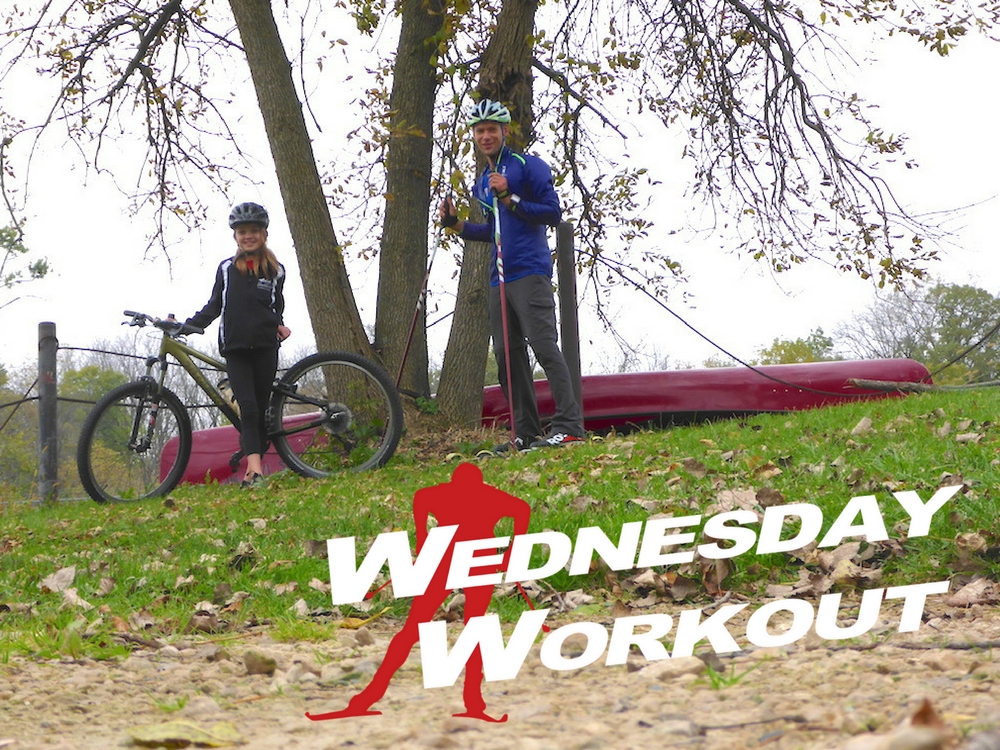
    Chris Pappathopoulos and his daughter Tula, who turned 12 last week. "I have my fingers crossed she doesn't 'outgrow' these activities,"  Pappathopoulos wrote.
    Chris Pappathopoulos and his daughter, Tula, who turned 12 last week. “I have my fingers crossed she doesn’t ‘outgrow’ these activities,” Pappathopoulos wrote in an email.

    This week’s workout comes from last year’s inaugural CXC Marathon Cup winner Chris Pappathopoulos, of Madison, Wis. He explains how to combine family time and training with this rollerski-canoe combo. “I have done this with my daughter where she bikes while I rollerski, and then we canoe,” he wrote in an email.

    ***

    “Finding time to train for working, master athletes is probably one of their biggest challenges. While this workout certainly isn’t limited to athletes trying to balance family and sport, it does work very well for that.  This is one of my “kill two birds with one stone” workouts. The workout isn’t perfect, but I get to spend time with my daughter outdoors. The sacrifice in quality is well worth it.

    Chris Pappathopoulos takes a photo of his daughter, Tula, while they paddle downstream on Oct. 15 on the Yahara River in southern, Wis.
    Chris Pappathopoulos takes a photo of his daughter, Tula, while they paddle downstream on Oct. 15 on the Yahara River in southern, Wis.

    The general premise of the workout is rollerskiing up river and paddling back down. We paddle second because that is what Tula prefers, the order could be reversed. We make it work by dropping off the canoe at the upstream launch point. I usually lock the canoe to a tree and either tuck paddles and PFDs up in the canoe or hide them in the woods. We then drive to the take out point and park the car. Tula bikes and I rollerski back up river.

    There usually ends up being a number of impromptu sign-post races and uphill races. When Tula was younger and we would bike/rollerski, I would limit technique in these impromptu races to something like single stick with no kick to even it out. Now that she is faster they are more of a free for all. I also get to work on my race craft. It is entirely possible I may have taken advantage of Tula’s propensity to be distracted by horses to win a race or two.  While keeping this entertaining for Tula, these sprints are a good opportunity for speed work adding training benefit. For most skiers with kids old enough to do this workout, top-end speed isn’t exactly a strength anymore. So it is quite beneficial to work on this and strengthen the neuromuscular adaptations to move fast.

    “There usually ends up being a number of impromptu sign-post races and uphill races. … It is entirely possible I may have taken advantage of Tula’s propensity to be distracted by horses to win a race or two.” — Chris Pappathopoulos, on rollerskiing alongside his 12-year-old daughter while she bikes

    Once we get to the canoe we lock up the bike, put the rollerski gear in the canoe and launch. We paddle downriver to the car while I catch up on the Patrick Marsh Middle School gossip. Once there, we load the canoe and go pick up the bike.

    When Tula was younger, I would run while she biked. I’m hoping in a couple of years we will both be rollerskiing with different wheel speeds for equalization.

    When I paddle alone, I go up and downstream. Similar to the above workout, if it is a new river, I will throw rollerski gear in the kayak if I am going downstream first just in case I find out I can’t make it back upstream.

    As far as my plans this winter, with the help of Boulder Nordic Sport, Rossignol skis and boots, Start poles, Bliz eyewear, and Facetape, my primary goal is to win the CXC Marathon Cup. I’m hoping to find a way to make it out to Nationals for the 30K. Closer to home I’ll continue to help coach the middle school and high school Madnorski East Ski Team.”
  • Wednesday Workout: Crunched Training with Chris Pappathopoulos

    Wednesday Workout: Crunched Training with Chris Pappathopoulos

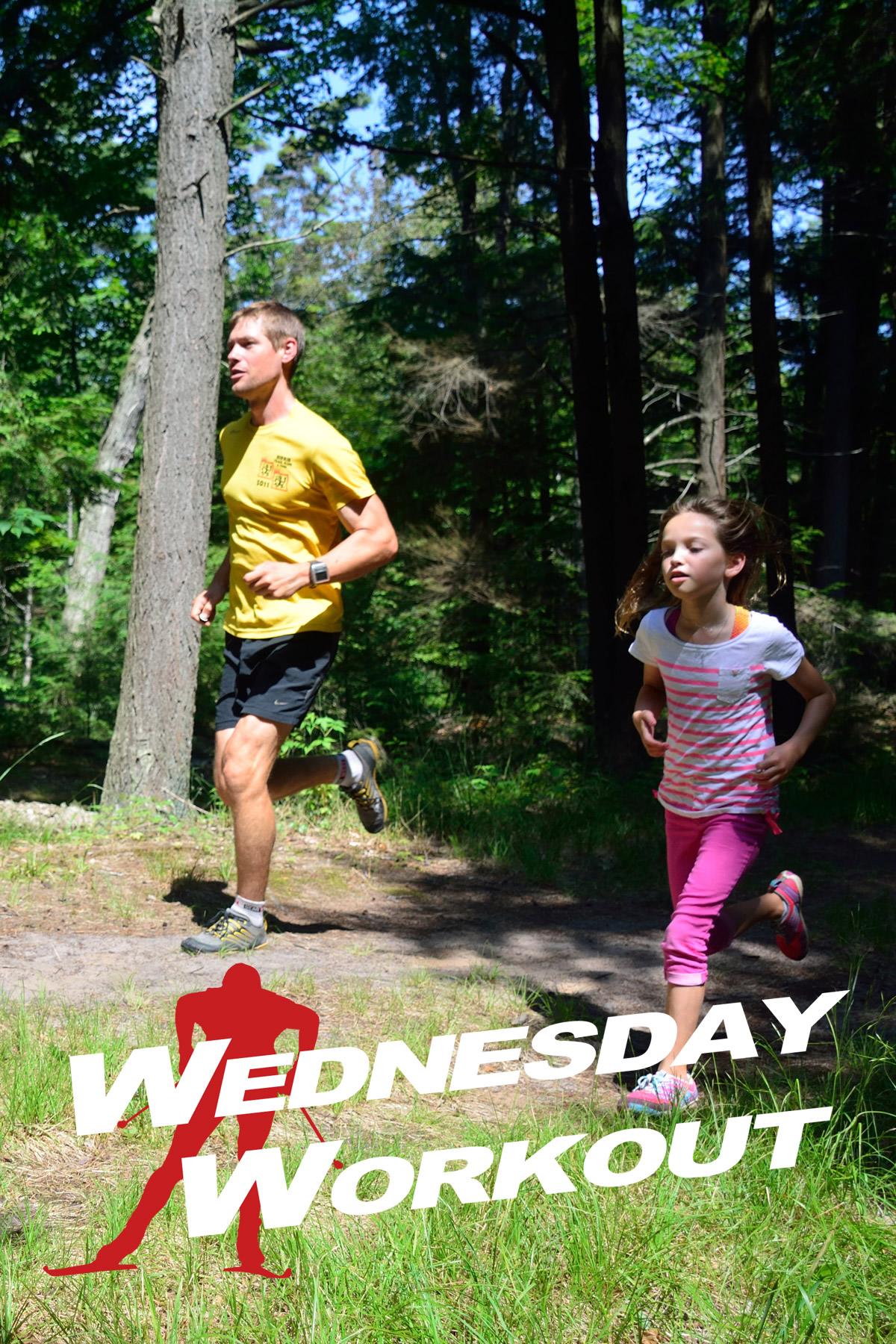
    Chris Pappathopoulos, the inaugural CXC Marathon Cup winner, running with his 11-year-old daughter Tula. (Courtesy photo)
    Chris Pappathopoulos, the inaugural CXC Marathon Cup winner, running with his 11-year-old daughter Tula. (Courtesy photo)

    This week, we checked in with Chris Pappathopoulos, who recently achieved his season-long goal of winning the inaugural CXC Marathon Cup series, which involved eight marathons, one sprint and a 24-kilometer skiathlon in over nine weekends. Pappathopoulos, 35, of Madison, Wis., competed for the CXC Marathon Team last season. While the CXC Marathon Team is no longer, Pappathopoulos explained he would like to race the CXC Marathon Cup series again next year.

    ***

    The biggest challenge to continuing to ski fast as one moves beyond their twenties is likely not so much chronological aging of your body as trying to squeeze training in to a life now filled with other higher priorities. As a mid-30s single parent with a full-time job, this is a challenge I am well familiar with. My solution has been to crunch training into the margins and wrinkles in the day and really focus in on high-quality training.

    My prime training time is now from 4 a.m. to 7 a.m. The goal is to complete much of the training before family members have woken up. Since my daughter is still too young to be home alone, I spent some time on Craigslist to outfit my house with a SkiErg and functional (though not pretty) strength training equipment. Finding space for these items is more of a challenge than the cost. I suspect many people pay more per year on a gym membership than the total outlay on this equipment was. This allows me to be home and still get quality training in.

    If I don’t have dad responsibilities, I will rollerski in to work and do a standard workout with the added bonuses of knocking out the commute and saving gas money  at the same time.  I leave multiple changes of clothes and take multiple lunch meals in to work on the days I do drive to make this easier.

    After getting out early in the day, my next-best training opportunity is to insert shorter workouts in where I can. Lunch hour at work is one example of this. Another example last year, before I bought strength equipment, was to do general strength work on Sunday morning when Tula was at Sunday School. This involved changing clothes in the bathroom as quickly as possible after church, using the 10-minute run to the gym as a warm up, focusing on high quality strength work and running back to pick up Tula.

    One of my favorite training options is to work out with Tula. This used to involve pushing her in a stroller while I ran, or going for a bike ride with her on a trail-a-bike. As she got older and faster it would often be my running with her while she biked.  Now it is typically the two of us running or rollerskiing together or her biking while I rollerski. This may not give the ideal training stimuli, but it is well worth it in dad/daughter bonding time.

    An example of a lunch-hour workout I do is specific strength repeats on rollerskis. I am fortunate that I have a decent hill to use that I can get to during lunch. The workout looks like this:

    Lunch-Hour Workout

    1. Change into skiing gear as quickly as possible.

    2. Ski to the hill as a warmup. 15 minutes is about a minimum. If I wasn’t crunched for time, I would do at least 45 minutes of warm-up work.

    3. Repeats on the hill. I am looking for a fairly steep hill that will take around 45 to 60 seconds to climb. The recovery time is skiing down the hill and often a little further before turning around and heading back to the start point. I shoot for at least 90 seconds of recovery.

    For a lunch-hour workout I am usually only doing 2 or 3 repeats of the exercises I choose. If I have more time it will be 3 to 6 repeats.

    The exercises I typically choose from are:

    1. Nerds: This is double poling up the hill with your elbows locked at your side and no crunch. The propulsion is coming just from an arm extension utilizing your triceps. This is probably the least productive exercise I do and the best to skip when short on time.
    2. Single stick: The upper body is moving as if striding, but there is no kick. The work is isolated to the upper body.
    3. Double Pole Crunch aka Locked and Loaded: This isolates the core compression phase of double poling. The shoulder and arm joints are essentially locked and the propulsion comes from the crunching motion. Make sure you are starting from a good high position with hips forward.
    4. Striding: Standard striding. Focus on precise, powerful motions with good glide.
    5. Double Pole: Standard double poling. This is a good opportunity to experiment with poling rate. Try shorter, quicker poling motion one repeat and longer motions the next. See which one is more efficient on the grade you are using.
    6. Cool Down back to work
    7. Change and back to the desk.

    I try to hold the time close to constant for all exercises, which means I am not making it as far up the hill doing nerds as striding for example.

    If nothing else, your ability to walk into a small, enclosed space and quickly emerge with a new set of clothes on may start to rival Clark Kent’s.