From the FasterSkier archive — posts syndicated from athletes’ and coaches’ own blogs between 2004 and 2012, kept online as published. Current coverage is at fasterskier.com.

Tag: cycling

  • Spring Forward: Part I

    Spring Forward: Part I

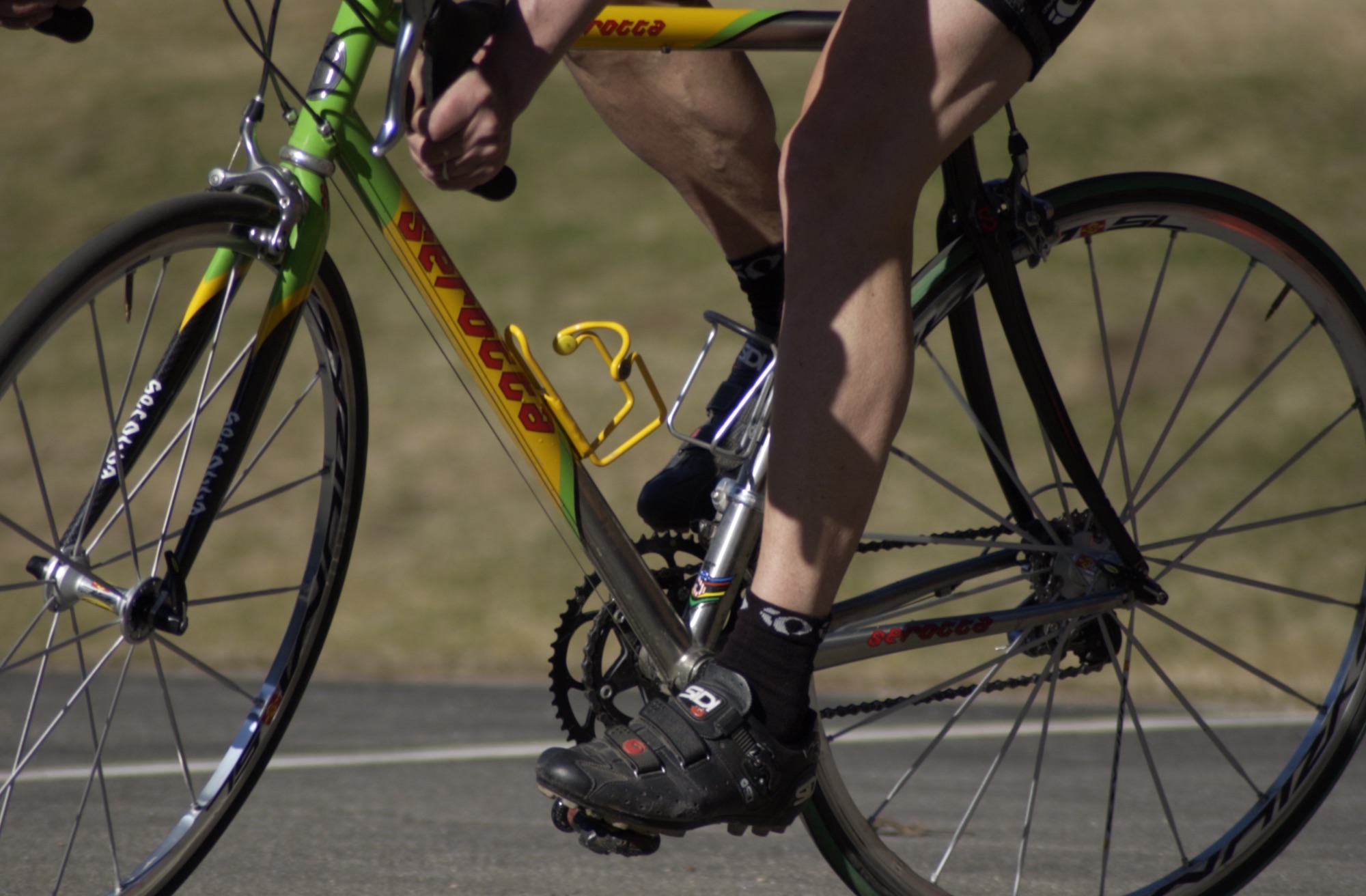
    There are more ways to train than simply skiing. The high rpm, low resistance nature of cycling creates training results that can make you faster next winter. (Photo: FasterSkier)

    Spring is nice, spring is fun, spring is a relief after a long, cold winter. But, for diehard skiers, spring is also the new season in which we begin imagining ourselves as next year’s skiers. The snow is barely gone, but already we’re imagining futures in which we glide through snowy meadows, double pole across the flats, charge confidently up homologated uphills, and V2 boldly across finish lines. Our heads are already in next season. But, in order to realize the technical, athletic, and endurance visions we’ve conjured for ourselves, the work needs to start now. Ironically, the most efficient forms of that work are found not on skis (nor on roller skis), but in a variety of training practices that allows us to leave skis and poles in the closet for a while. Spring training begins now . . .

    The physiological qualities that produce faster skiers are straightforward and simple (even more so for age-group competitors than for World Cup stars): we need endurance, and we need strength. This article will deal with the philosophies of training for endurance, with strength being addressed in a separate installment.

    What is Endurance?

    In the context of nordic skiing, endurance is the ability to perform ski-related movements over time in a manner that is efficient, that maintains high levels of athletic output, and that withstands athletic discomfort. Cross-country skiing is a difficult and challenging sport; those skiers who are the best possess the ability to create high levels of speed, and to maintain those levels of speed over great distances. Much of that performance results from having increased an athlete’s ability to take in, transport, and transfer oxygen. Training does that—endurance training—and the figures we use to measure such abilities are called “VO2 max.”

    By now, everyone even slightly interested in athletics has heard the term VO2 max: a measure of an athlete’s ability to utilize oxygen. We typically imagine that transfer of oxygen to be occurring in the muscle cells. It does, but there’s far more to the oxygen transfer systems than just the ability of cells to suck up oxygen. Nearly as important is the delivery system; that means capillaries, tiny networks of blood vessels where oxygen exchange with the muscles place. Deliver more oxygen to the muscle cells (while simultaneously allowing those muscle cells to shed waste product), and the lactate wall that most of us run into on steep uphills becomes far easier to navigate. Fortunately, certain types of training are the best at inspiring the actual construction of new and more extensive beds of capillaries. More places where the oxygen transfer can take place, better endurance. Skiers want more capillary beds: that’s why they ski slow and easy.

    For the development of endurance (and the building of new capillary beds), the exercises that are recommended are those with low resistance and fairly high RPMs (what cyclists would refer to as “spinning”). In comparing the likely forms of exercise in which skiers might engage in the spring, running is better than skiing at encouraging the growth of capillary beds, and cycling is better than either one. What about my arms, you ask? Isn’t cycling ignoring my whole upper body? Well, cycling has been shown to encourage the development of capillary beds not just in the legs, but in the muscles of all long bones (arms/shoulders included). While cycling isn’t training the particular strength aspects of your upper body, it is training those muscle systems to perform more efficiently when it comes to delivery of oxygen. And there’s always late summer and autumn to deal with training the upper body (that’s what roller skiing is for).
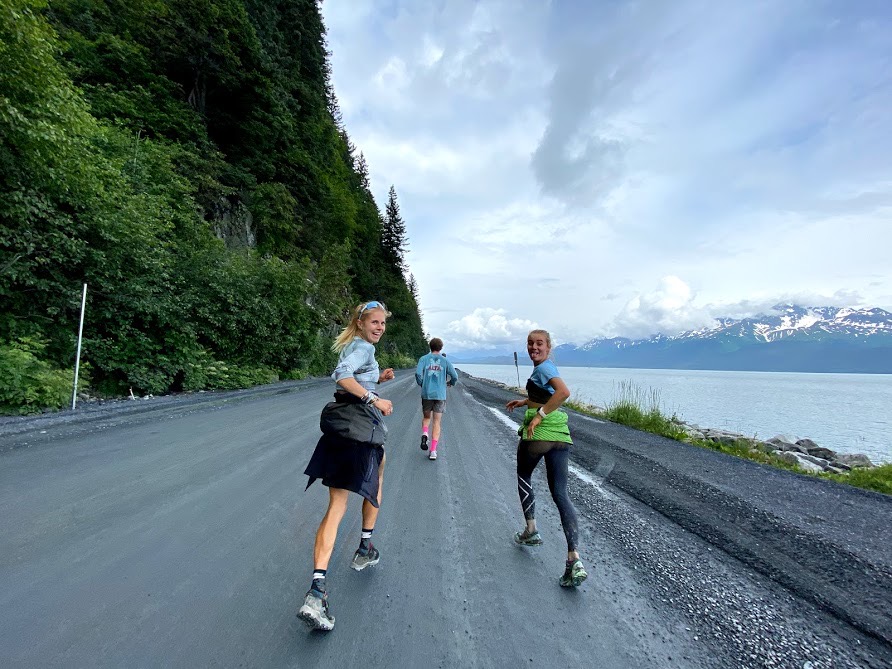
    Team USA teammates Sophia Laukli and Novie McCabe on a training run in Alaska. Laukli’s multi-sport training regimen resulted in her best-ever performances on the World Cup circuit. (Photo: Novie McCabe)

    American World Cup competitor, Sophia Laukli, received headline coverage last year for her ability to compete at world class levels in both summer and winter seasons. Her pursuit of numerous mountain-running marathon races throughout the summer raised eyebrows in the Nordic world: would she still be able to perform in World Cup events in the winter, or would a summer of racing and run-training have burned her out? As it turns out, there was no need to worry about Laukli, as she proved by not only winning  the season-long Golden Trail Series, but also won a FIS World Cup distance event (the climb up Alpe Cermis, final stage of the 2024 Tour de Ski). Laukli has already begun her running training for the trail marathon season. Needless to say, it’s unlikely she’s spending much time on roller skis these days.

    One way or another, if one of my training goals is to develop greater endurance over the summer (and to create a broad endurance base that will improve my body’s ability to absorb all the training I intend to do), then my spring should begin with a considerable amount of long, slow, low resistance, high rpm activity. And there are more efficient ways to accomplish that than simply hopping back onto my roller skis.
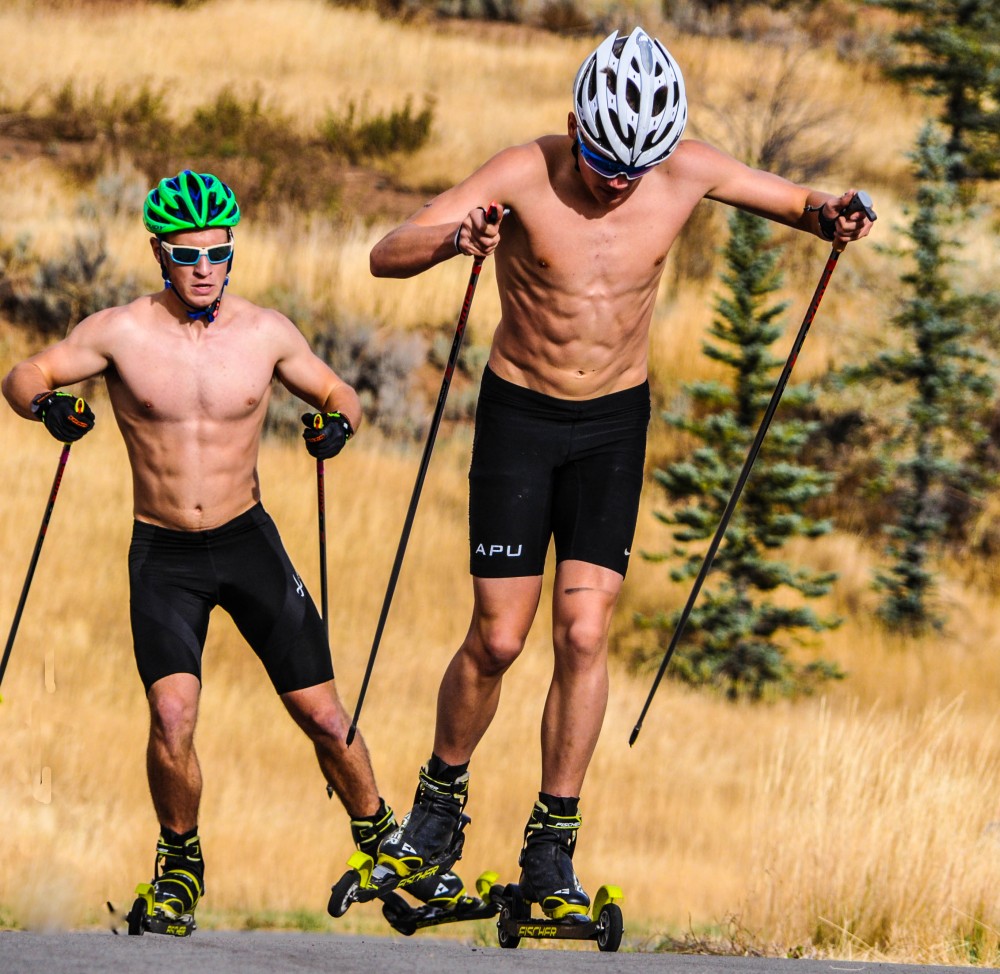
    Hunter Wonders and Luke Jager in Soldier Hollow at the USST’s annual training camp. (Photo: Matt Whitcomb)
    Why Not Just Ski?

    Many of us roller ski in the spring simply because we’re lonely for skiing. Well, if we ski simply for the pleasure of skiing, then roller skiing is just fine (though most would admit it’s nowhere near as pleasant as skiing on snow). On the other hand, if our commitment to skiing is such that we truly want to improve our performance, then we should investigate how best to pursue that in the off-season . . . and training on roller skis at the beginning of spring is not the only way.

    Why not? Here are a few reasons for us leave our roller skis in the closet until later in the season:

    1. If my goal is to improve my ski performance next season, then there are better ways to achieve that than to simply continue skiing. What most skiers need is to establish an accurate understanding of their own athletic strengths and physiological weaknesses. Those are the issues to address, especially in the first half of the dryland season. We need more power; we need greater endurance; we need to generate (and hold) higher levels of speed; we need to strengthen core muscles so that our full force is applied in poling; we need to strengthen stabilizer muscles so that we can stand straight on top of the ski instead of caving in. The fastest way to accomplish those things is to put the skis away for a while, and concentrate on workouts, exercises, and disciplines that address each issue independently.
    2. If low resistance and higher rpm’s are two of the qualities that encourage production of new capillary beds, then skiing (and roller skiing) may not be the best exercise choice at this time of year. Even at low ski-speeds, the rpm’s of skiing are far lower than hiking, running, cycling. It may seem strange, but one of the important things to consider in your training is the plan to mix things up, to include in your training alternative activities that better suit the fitness goal. Get on the bike, go for a hike, lace up the running shoes. Plenty of time for roller skiing later in the season.
    3. While the athletic and physiological stresses of roller skiing are similar to skiing on snow, it’s also known that roller skiing is a quite imperfect means of practicing ski-technique. Unlike skiing on the snow, the glide on roller skis is nearly constant no matter which part of the ski is weighted, and no matter how much the wheels are tipped or tilted. Whether on skate or classic roller skis, a knock-kneed skier will roll as fast as a skier who stands directly on top of their wheels. That’s not the case on snow. On classic roller skis, the “kick” can be initiated no matter how imprecise the skier is in applying force. That’s not the case on snow. There are many such technique examples that render roller skiing quite an imperfect imitation of on-snow skiing, and too great a reliance reliance on roller skiing in the off-season is how bad technique habits can be reinforced.

    Simple advice in designing the training you do in the spring: leave the roller skis in the closet a while longer, and work on fitness improvements that will make you faster next season.

  • Wednesday Workout: Threshold/VO2 Max with National NoCo Champ Bryan Fletcher

    Wednesday Workout: Threshold/VO2 Max with National NoCo Champ Bryan Fletcher

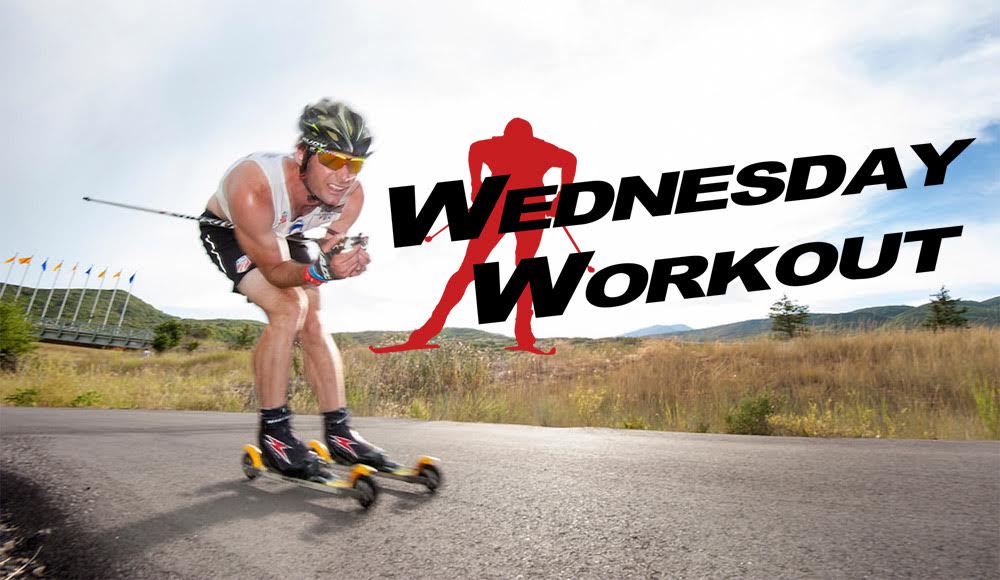
    U.S. Nordic Combined's Bryan Fletcher tucks around a high-speed corner at Soldier Hollow en route to a repeat national title at the U.S. Nordic Combined Championships in Midway, Utah. (Photo: USSA/Tom Kelly)
    U.S. Nordic Combined’s Bryan Fletcher tucks around a high-speed corner at Soldier Hollow en route to a repeat national title at the U.S. Nordic Combined Championships in Midway, Utah. (Photo: USSA/Tom Kelly)

    For this week’s workout, we sought the expertise of the reigning national champion, Bryan Fletcher, who won his second-straight title at U.S. Nordic Combined Championships last weekend in Park City, Utah.

    The older of two brothers on the U.S. Nordic Combined Team, Fletcher led the championships jump on the large hill and held off his hard-charging teammate, Adam Loomis, in the 10-kilometer rollerski race for the win. Fletcher, 29, edged the 23-year-old Loomis by 5 seconds after starting 26 seconds ahead of him and beat his brother Taylor by 47 seconds after starting 1:04 before him. Loomis placed second and Taylor was third.

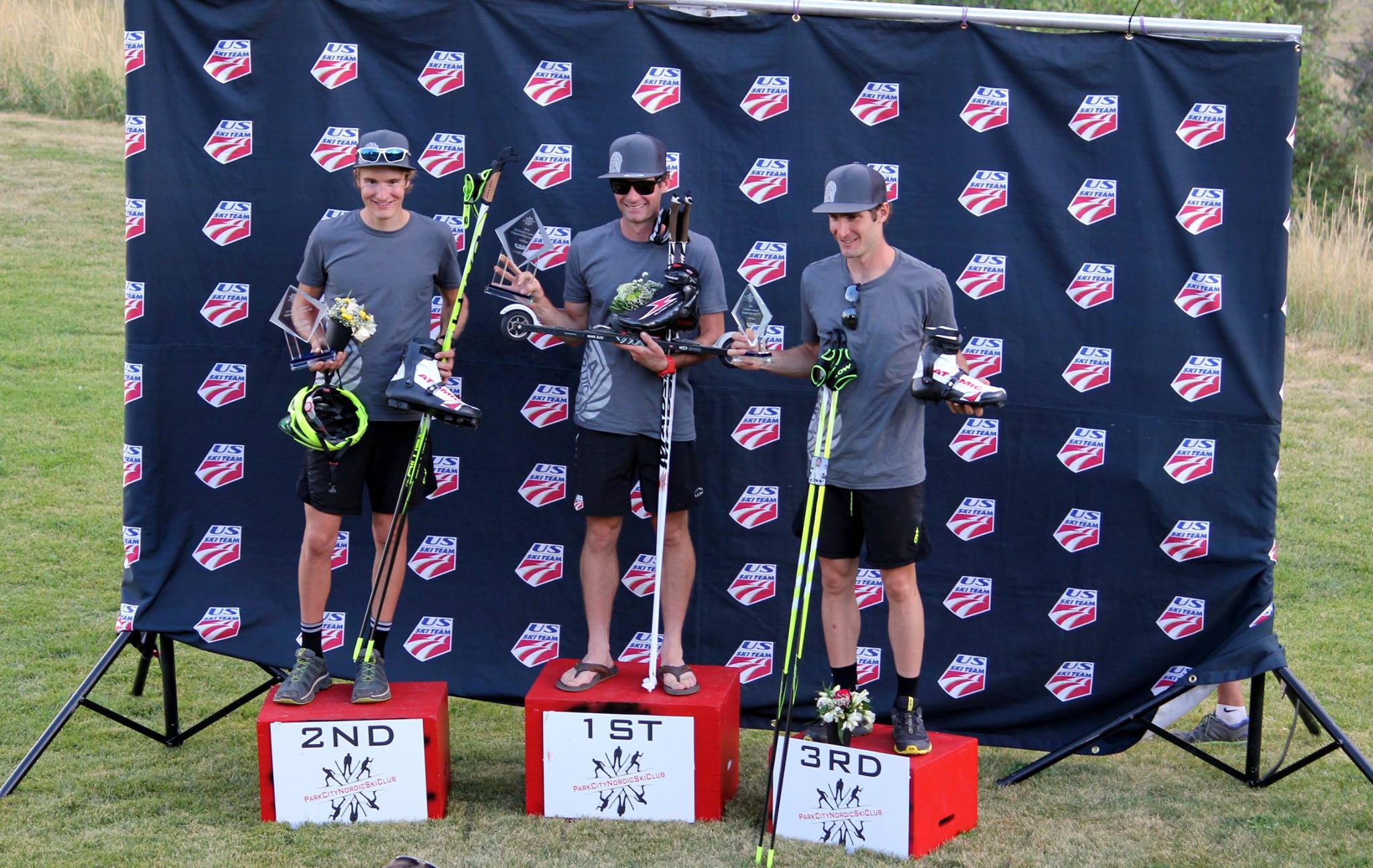
    The podium at the 2015 U.S. Nordic Combined Championships, which were held in Park City and Midway, Utah: with winner Bryan Fletcher (c), second-place finisher Adam Loomis (l) and Taylor Fletcher in third. (Photo: USSA/Tom Kelly)
    The podium at the 2015 U.S. Nordic Combined Championships, which were held in Park City and Midway, Utah: with winner Bryan Fletcher (c), second-place finisher Adam Loomis (l) and Taylor Fletcher in third. (Photo: USSA/Tom Kelly) Complete gallery

    “Nationals last week was awesome,” Fletcher wrote in an email. “The comps were intense because the level was high and everyone had a shot at the podium.  I was super stoked to feel the pressure the team put on me the whole time, there was no easy victory to be had.”

    Loomis had a “career day,” he added and noted that Taylor’s jumping had improved as well.

    “That made me nervous too because in most of our summer time trials he has beaten me by almost 2 minutes,” Bryan wrote. “I knew I need a good race to stand a chance.”

    Heading into the 10 k rollerski at Soldier Hollow, Bryan focused on pacing — starting conservatively and skiing methodically and controlled throughout the race.

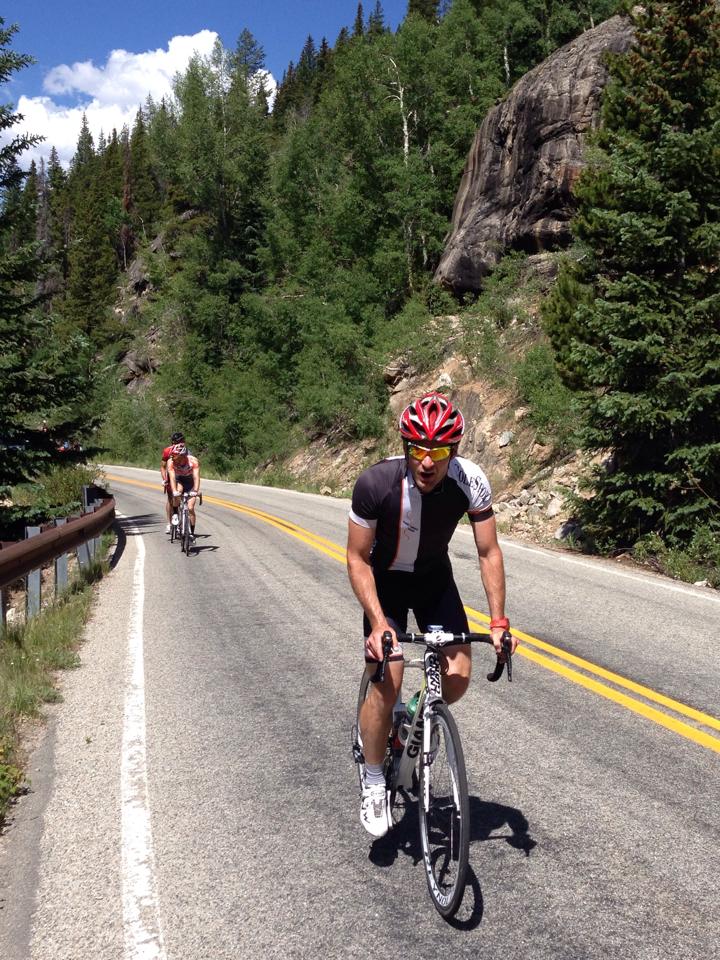
    Bryan Fletcher (front) riding up Independence Pass in the Rocky Mountains last year during a cycling camp in central Colorado. (Courtesy photo)
    Bryan Fletcher (front) riding up Independence Pass in the Rocky Mountains last year during a cycling camp in central Colorado. (Courtesy photo)

    “I needed to have some in the tank for the sprint but the goal was not to let it come down to that,” he wrote. “Luckily the plan worked and I executed it to the best of my ability and came away with the victory. This was a huge relief for me after a long week of school finals, moving to a new apartment, and of course training for the competition.”

    In terms of how much a national title means to him, albeit on dry land, he explained he weighed the championships heavily.

    “It’s a result a lot of people love hearing about, it adds validity to your resume as a career athlete to be a national champion,” he wrote. “I definitely put some pressure on myself to come away with the win and I am happy I was able to come through on that.”

    For a workout he’d recommend, Fletcher picked out one increasingly used by road bikers, and one he assigns some of the athletes he coaches through the Hunter Allen Peaks Coaching Group.

    “The cycling world cites the benefit is that it works on both your VO2 max zone and Threshold zone. Or Level 3/4 zone depending on what system you use,” he wrote. “This workout should be done once a month, probably in combination with normal threshold/threshold-plus work.”

    The workout is designed for cyclists, but can be done skiing or running, too. “Just adjust the tempo to the corresponding exertion level,” Fletcher explained.

    Warm Up: Start with a 20- 30 minute warm up. Include a few pick ups to no longer then a minute and space them out throughout the warm up.

    Workout:

    – Start with 30 seconds at race pace (90% of max heart rate for the XC crowd) (150% of Functional Threshold Power* for you cyclists)

    – Then 30 seconds at Level 2 (60% of max heart rate) or (50% of FTP cyclists)

    – Keep this alternation of race pace/Level 2 up for 10 minutes.

    – Take a 5 minute break and repeat for a total of 3 sets.

    So in total you have, 3 x 10 minutes at 30 seconds on, 30 seconds off.

    Cool down: 15-30 minutes at level 1-2 and don’t forget to do your dynamic stretching after!

    *FTP or Functional Threshold Power: a term used by many cyclist and cycling coaches. I learned it through Peaks Coaching Group and it simply is the power you can sustain during a 1 hour max TT.  This is a cyclist’s true threshold. Many people try to derive this average by only doing a 20 min power test and extrapolating it out to a threshold but often a cyclist has to take 5% of a 20 min test to get a true FTP.  

  • Wednesday Workout: Throwback Cycling with Tad Elliott

    Wednesday Workout: Throwback Cycling with Tad Elliott

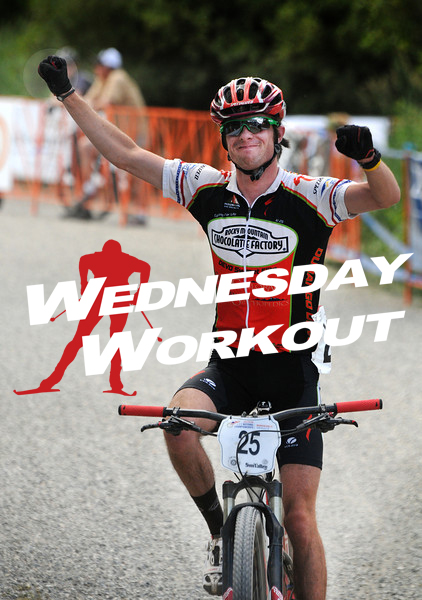
    Tad Elliott, formerly of the U.S. Ski Team, celebrates after a top-10 finish in the 2011 USA Cycling Mountain Bike Championships cross country event in Sun Valley, Idaho. (Photo: Tom Kelly/USSA)
    Tad Elliott, formerly of the U.S. Ski Team, celebrates after a top-10 finish in the 2011 USA Cycling Mountain Bike Championships cross country event in Sun Valley, Idaho. (Photo: Tom Kelly/USSA)

    Some days you just want to ride, but are possibly unsure how to make that an effective training tool. We have some suggestions from Tad Elliott, a two-time mountain bike U23 champion and former U.S. Ski Team member, who shared the following road-bike workout from 2010. See the original pro workout here.

    ***

    [circa October 2010]

    There are workouts where you finish battered and beaten, muscles packed with lactate. And then, there are days when you just go out and ride your bike.

    Tad Elliott does 70 percent of his training on two wheels, but there’s one workout that he especially relishes: a 68-mile loop near his home town of Durango, Colorado, that he rides with his friend Troy Wells.

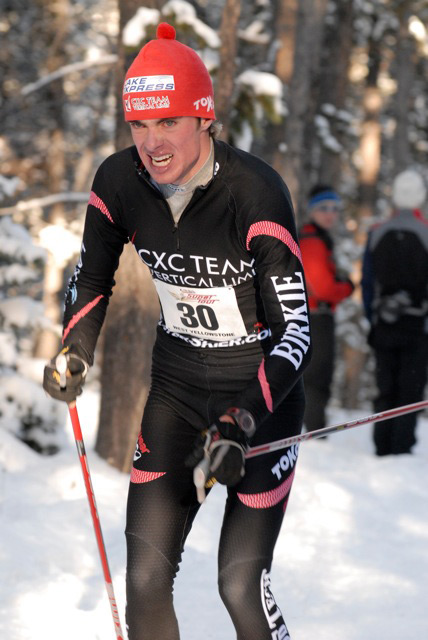
    Tad Elliott while racing for CXC Team Vertical Limit. (Photo: Win Goodbody)
    Tad Elliott while racing for CXC Team Vertical Limit. (Photo: Win Goodbody)

    Unlike some of the more painful sessions one might do on foot or in the gym, Elliott calls this ride a “free workout” — its psychological toll is minimal. And spending over three hours on the bike prepares Elliott well for those longer rollerski workouts that are the bread-and-butter of the fall.

    “Coming off the bike, I’m used to putting in big hours — I’m used to work like that,” he said. “Especially working your legs, going into skate skiing — for some reason, cycling into skate skiing transfers really well.”

    Elliott’s loop starts with a long climb — about 45 minutes. He said that he and Wells usually ride side-by-side, at a steady pace, without drafting. They’re not going threshold — Elliott pegged his effort at upper Level 2.

    It’s still a conversational pace, but Wells, a professional mountain biker and cyclocross racer, is a little faster than Elliott, “so he does a lot more talking.”

    The climb is paved, but the rolling terrain afterwards is mostly dirt — Elliott described the roads as “haggard,” with “big rocks” and “big truckers passing us.”

    Both riders are sure to have their food and drinks ready before they start — it helps that Wells’s main sponsor is Clif Bar — and they eat consistently. There’s no stopping, except maybe for a chocolate milk or Coke towards the end of the ride.

    The Workout

    Distance: 68-mile loop, or a route that will take you about three hours

    Start: with a long climb if possible, about 45 minutes. Level 2 pace.

    Bring: Food and drinks for nourishment

    End: with a good lunch, nap and “recovery walk” in the afternoon

    “We just ride smooth,” Elliott said. “I just end up laughing the whole time, and enjoying it.”

    The whole loop takes about three hours, or just over, for an average of about 23 miles per hour. (Amateur cyclists may find that pace slightly on the ballistic side — try shooting for an average of 16 to 20 miles per hour, at least for your first few rides.)

    When Wells and Elliott are done with the ride, they usually go get wraps at a local sandwich shop, then take a nap. The afternoon is reserved for nine holes of golf — the  “recovery walk.”

    The workout is a blast, Elliott said, but that doesn’t mean it can’t be beneficial — “it’s not like I do it to mess around,” he said.

    Elliott says he reaps rewards from the ride in longer skate races, where he’s comfortable at a higher pace. And the three-hour duration also teaches his body to burn fat stores towards the end of the session, which will be necessary for marathons during the ski season.

    Elliott said he usually starts doing the ride in the mid-summer, but he’ll keep at it through the fall. He sees no problems with doing the workout up until November, since the fun format makes it easy to get out the door.

    “I enjoy it — I enjoy going out with my friend and riding. I don’t have to drag myself out of bed, or anything, to go do that workout. I look forward to it,” he said. “I know I’m going to laugh and enjoy myself eventually that day. …You’re going to be tired, but you’re going to have fun.”

  • Wednesday Workout: Keeping It Fun with Non-Ski Specific Training

    Wednesday Workout: Keeping It Fun with Non-Ski Specific Training

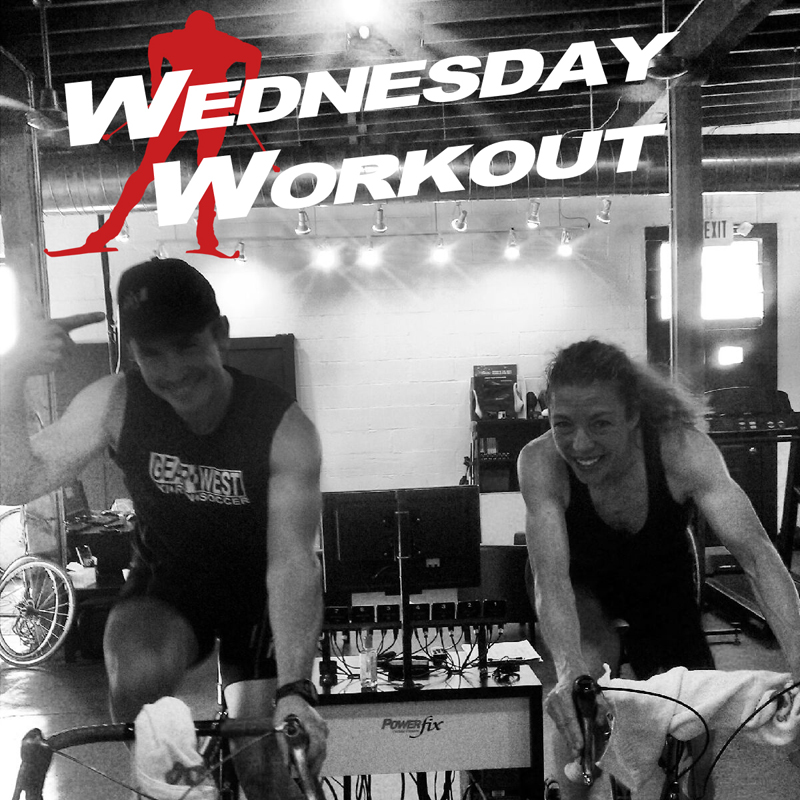
    Matt Liebsch (l) gives a plug to The Fix Studio by pointing to its logo on his hat during a CompuTrainer workout with Lynne Cecil, 1990 American Birkebeiner champion and his co-worker at Gear West in Long Lake, Minn. (Courtesy photo)
    Matt Liebsch (l) gives a plug to The Fix Studio by pointing to its logo on his hat during a CompuTrainer workout with Lynne Cecil, 1990 American Birkebeiner champion and his co-worker at Gear West in Long Lake, Minn. (Courtesy photo)

    Welcome to Wednesday Workout, the newest workout series on FasterSkier. This week, Matt Liebsch, an independent skier sponsored by Borton Volvo and director of race services at Gear West in Long Lake, Minn., talks about balance — with work and training, ski-specific and cross training.

    ***

    By Matt Liebsch

    Last summer I roller skied my brains out.  Coming back from a bike accident/concussion and a very bad ankle sprain, running was not an option and I was gun shy about getting on a bike.

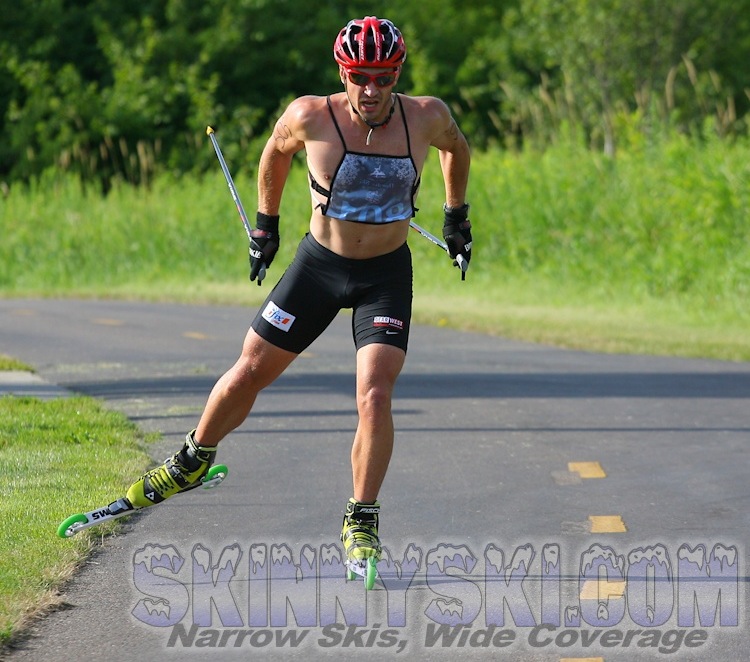
    Matt Liebsch en route to winning the 2013 Ringer Roll 10 k freestyle rollerski race by nearly a minute and a half on Aug. 2 in Maple Plain, Minn. (Photo: SkinnySki.com)
    Matt Liebsch on his way to winning the 2013 Ringer Roll 10 k freestyle rollerski race by nearly a minute and a half on Aug. 2 in Maple Plain, Minn. (Photo: SkinnySki.com)

    I think all the ski-specific summer/fall roller ski training is great but it is important to keep training fun and diverse at times. This way, once late fall and winter arrive, I can be mentally fresh for 100-percent, laser-guided focus on ski training and racing.

    To keep things fresh, this summer I have been doing a 2.5-mile, open-water swim every Wednesday. Our Gear West group swims to an island and back in Lake Minnetonka. I love swimming because it is low impact, involves a catch, pull, reach and rhythmic breathing.

    We start at 6 a.m. on Wednesday. It is an early start to the day but we do this to avoid boat traffic. On the way out to the island I try to swim relaxed (I don’t have to try very hard, I am still half asleep) and on the way back I will push the pace a bit to 1:30 minutes/100-meters if I feel good.

    After swimming for an hour and 15+ we will grab a quick coffee. If it is a volume week I may run, bike or roller ski after swimming for up to an additional two hours. Generally I get home in just enough time to make myself an omelet and then blast off to work so I can open the doors are Gear West by 10 a.m.  No time for naps or massages.

     I love swimming because it is low impact, involves a catch, pull, reach and rhythmic breathing.

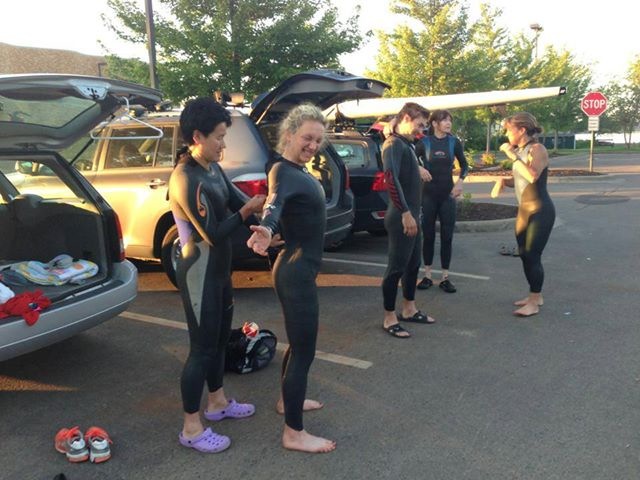
    Caitlin Gregg (second from left) and some others get ready to swim in Lake Minnetonka near Minnesota's Twin Cities. According to Matt Liebsch, who does the swim weekly, her husband Brian Gregg said it's one of the hardest workouts he's ever done. (Photo: Matt Liebsch)
    Caitlin Gregg (second from left) and others get ready for an open-water swim in Lake Minnetonka near Minnesota’s Twin Cities. According to Matt Liebsch, who swims there weekly, Gregg’s husband Brian said it’s one of the hardest workouts he’s ever done. (Photo: Matt Liebsch)

    Another mode of non-ski specific workload that I have introduced more frequently this year is cycling class. I have been doing CompuTrainer class at The Fix Studio once a week.

    The benefit of doing intensity on a CompuTrainer system is that I can easily track power, training stress score and I can even see my pedal-stroke power profile.  Another benefit is reduction in injury. It’s amazing how hard I can push myself at class on a CompuTrainer system with almost zero risk of injury.

    I’ve noticed with the extra intensity on the bike my legs are rock-solid while skate skiing. My arms and abs are still strong from all the double poling and strength training but my legs have achieved a new level of skate specific fitness. I can only attribute this to the short focused cycling classes at The Fix Studio.

    A typical cycling class at The Fix Studio includes intensity structured around your FTP, “Functional Threshold Power.” In cycling, everything is based off your power output.  Being able to see power on the bike makes me wish it could be measured in skiing.

    In skiing, all we have to measure work is speed (affected by roller ski speed, snow speed, weather, etc), heart rate (variable on a number of factors), lactate (also variable) and perceived exertion.  Luckily the highly trained athlete knows their zones very well.

    At class, we usually do a 10-minute warmup, 40 minutes of structured intensity, and a short cooldown.  I generally like to ride outside before or after class to add a bit of volume.

  • What Skiing Can Take Away from Armstrong Saga

    What Skiing Can Take Away from Armstrong Saga

    Lance Armstrong and Astana team manager Johan Bruyneel in 2009. Photo: Paul Coster/Flickr Creative Commons.

    The U.S. Anti-Doping Agency (USADA) delivered a definitive indictment to the world on Wednesday morning with the release of its reasoned decision regarding seven-time Tour de France winner Lance Armstrong. In the 1,000-plus page document sent to the International Cycling Union and the World Anti-Doping agency, USADA found Armstrong guilty of using of performance-enhancing drugs throughout his career and of playing a central role in enforcing a systematic doping program on the U.S. Postal team.

    USADA obtained sworn testimony from over two dozen witnesses to the cheating that took place on Armstrong’s team between 1999 and 2005, including 11 former teammates, some of whom had never before admitted to doping. The agency also compiled a comprehensive set of bank statements and emails linking Armstrong to Italian physician Michele Ferrari, who was banned from cycling in 2010 for involvement numerous anti-doping violations.

    In short, USADA accomplished what no courtroom, journalist, lab technician or solitary confessor had been able to do in the 13 years since Armstrong began his storied comeback from cancer and ascent into the cycling stratosphere, and found compelling evidence demonstrating that the performances that turned Armstrong a globally recognized sporting icon were made possible by cheating.

    Armstrong has chosen not to contest USADA’s charges in an arbitration hearing, and is publicly acting as though nothing has happened since Wednesday morning. He tweeted on Wednesday night that he was “Hanging with my family, unaffected, and thinking about this,” with a link to Livestrong’s 15-year-anniversary celebration. Nike, which has helped Livestrong raise millions of dollars for cancer research, is publicly standing by Armstrong and his foundation in spite of the volume of evidence against the cyclist.

    VeloNews predicts that the fallout from USADA’s decision in the sport of cycling will be far-reaching and gradually realized. For athletes and fans of all sports who long held onto belief in his innocence, the report has already forced a wake-up to the reality of cheating in athletics. It’s unclear whether there will be any long-lasting effects on the Livestrong Foundation.

    To some of North America’s best past and present cross-country skiers, Wednesday’s decision is simply long-overdue proof for their belief that Armstrong’s winning streak exceeded what the unaided human body was capable of. The UCI and World Anti-Doping Agency have yet to respond to the decision, but for these athletes the real story is already USADA’s triumph in proving Armstrong’s doping violations.

    “I feel some vindication on behalf of USADA,” said two-time Olympian and University of Vermont assistant coach Andrew Johnson. “I’m happy and proud of their work. I think their ability to do in this case what other agencies haven’t been able to do or haven’t been interested in doing speaks volumes about our anti-doping movement in the U.S. and its ability to work on behalf of athletes. That’s what I’m excited about. We have a system that is working, even if it’s after the fact and has taken too long.”

    While there was cause for celebration in USADA’s achievement, there is also no ignoring the fact that Armstrong’s fall from grace leaves a permanent blight on cycling and, to some degree, American sports.

    “Most people who are involved in sport know how things work and have known of [Armstrong’s] guilt for a long time,” said U.S. Ski Team veteran Kris Freeman. “It’s an embarrassment for all American athletes. He’s one of the most mainstream athletes out there and what he has done is an embarrassment to just about every sport in the country.”

    Freeman says that he was once a fan of Lance and cycling, but has had to stop watching races like the Tour de France because it was clear to him that all of the top riders were cheating.

    “I’m pretty disappointed. I met Lance before my 2002 Olympics. I took a picture with him; I used to have a poster of him on my wall. To have someone that once inspired you turn out to be a complete fraud is very disappointing,” he said.

    The Armstrong case presents every sport the opportunity to examine drug use and the anti-doping movement. Justin Wadsworth, who before becoming the head coach of the Canadian national team competed on the World Cup and in three Olympics for the U.S., sees similarities between the way Armstrong’s performances and those of cheating skiers have stood out over the years: they were so abnormally good they were inherently suspect.

    “Of course these guys doped,” Wadsworth said. “When you’re at athlete at a high level, and of course I’ve never won World Cups, but you just know…what’s physically possible when you ski or bike or run… In a case like Lance it was obvious, and [in skiing] with Johann Muehlegg and the Russian women doping has been there and all of us have known it.”

    Doping has certainly been present in skiing. Recent examples include Estonia’s Andrus Veerpalu, who was caught cheating in 2011, Juha Lalluka (FIN), who tested positive for human growth hormone in the same year, and the 20 Russian athletes who received bans for doping rules violations between 2007 and 2010. In the women’s Olympic 5 k in 2002, initial winner Olga Danilova and runner-up Larissa Lazutina were found guilty of doping well after the Games. Beckie Scott (CAN), Wadsworth’s wife, was awarded the gold medal over two years after the race.

    No new doping scandals developed last winter, but Freeman and Wadsworth both think that the available testing methods are a step behind the cheating — “simply saying you haven’t tested positive doesn’t really mean anything any more,” Freeman said. They believe doping is still present on the World Cup, if to a lesser extent.

    “I don’t believe there’s doping going on in the U.S., but in the international field I believe there’s a lot of doping going on,” he said. Freeman declined to mention any athletes by name.

    “I’ve been beaten by suspected dopers in many races and it’s always frustrating. But it’s just a part of it,” he said. “And I’ve seen that people that I truly believe are clean [are winning] World Cups all the time, so it’s very possible to be the best in the world even when people are cheating. There are so many things that go into our sport. You can’t dope technique. You can’t dope ski feel. That’s one of the very cool things about our sport.”

    Wadsworth, too, thinks that cross-country skiing has yet to achieve complete purity. He also believes that the sport is cleaner now than it was in the late 1990s and early 2000s, pointing to greater variation amongst athletes achieving top results from week to week as proof. Canada’s own success in recent years, Wadsworth says, has been drug-free, demonstrating that wins like Devon Kershaw’s and Alex Harvey’s are attainable without doping.

    “Clean teams like ours can finally really reap the reward of doing things the right way, with hard work,” Wadsworth said. “I think North Americans for a long time got the short end of the stick because of doping…[so] it’s good to see it’s cleaning up.”

    Ultimately, Wadsworth and other coaches hope that when athletes get caught cheating it lets others who want to play by the rules know that they have a shot at winning.

    “I would hope that it would deter other people from [cheating] in the future and give the younger people a greater chance to actually succeed when they do compete,” said University of Vermont head coach Pat Weaver. “I hope the fact that people dope doesn’t deter people. If you love to compete, that should be the main force behind why you’re doing it, and the end result is the end result. The process is just as important as the end result.”

    Weaver went to the Olympics for the U.S. in 1998 and 2002. In the time that he’s been a coach at UVM he has often been asked by his athletes for his opinion on Armstrong’s career: was it clean or not?

    “I do remember seeing disappointment on the athlete’s faces when I said that he doped,” Weaver said. “You could see they wanted to believe that Lance could do this clean, that he was this hero… It’s hard to say to some athletes who maybe idolize Lance, but at the same time it’s not something I could lie about.”

    That fans had to wonder about Armstrong long before evidence came out against him is, for Wadsworth, representative of what it means to care about sports in 2012: that doubt might be a part of things from now on.

    “I never take away from clean performances by special individuals, because those are the things that make sport special,” he said. “[But] when you see something really amazing, you think, ‘Is that clean or not clean?’ Which is kind of sad. I do the same thing: I went to the London Olympics this summer and saw some amazing performances in sports where I don’t really know the background, and I was thinking to myself, ‘Is this a clean performance?’ It’s sad when you’re at that point, but that’s where we are.”

    For athletes like Freeman, the Armstrong saga reinforces his personal commitment to racing clean.

    “I know that I could never live with myself if I doped, and I know that no one on my team could ever live with themselves if they doped,” he said.

    This is all athletes can personally control when it comes to the purity of their sport: their own actions.

    “The biggest thing an athlete can do is start saying ‘I’m clean,’ and being proactive in going along with the testing,” Wadsworth said. “Hopefully the sport will clean up in the long run.”

  • Tour de France: Average Stage Speed

    A few notes about this data. The website that I scrape these results from isn’t, shall we say, the most consistent when it comes to the spelling of athlete names, or even their teams. That can make it difficult to slice the data along those dimensions, since it requires a fair bit of work adjusting and fixing things by hand.

    I think I tracked down all the abnormalities, but you never know…

    In any case, here’s a look at the average speed for each stage for recent Tours. The blue line is the average speed of the median rider, and the shaded region represents the (approximate) range of average speeds for the entire peloton.

    I’m still suspicious of how large the range of speeds is for a handful of stages. In particular the prologue in 2010 and Stage 2 in 2011, but I’d have to spend a lot more time pouring over the data to be sure.

    Related posts:

    1. <Tour de France Bump Plot: Stage 12
    2. <Tour de France Bumps Chart: Stage 14
    3. <Tour de France Charts: Stage 17


  • Tour de France – Stage 20

    The final versions of the Tour de France graphs, first up the comparison to previous years:


    Related posts:

    1. <Tour de France Bumps Chart: Stage 14
    2. <More Tour de France Data Visualizations
    3. <Tour de France – Stage 2


  • Tour de France: Stage 16

    Heading into the final weekend of the Tour, here’s how the teams compare:

    I’ll try to do some wrap up posts with some different looks at the data next week once the Tour is over.

    Related posts:

    1. <Tour de France – Stage 2
    2. <Tour de France – Stage 4
    3. <Tour de France: Stage 9


  • Tour de France: Stage 16

    Heading into the final weekend of the Tour, here’s how the teams compare:

    I’ll try to do some wrap up posts with some different looks at the data next week once the Tour is over.

    Related posts:

    1. <Tour de France Graphs
    2. <Tour de France – Stage 2
    3. <Tour de France: Stage 9


  • Tour de France: Stage 15

    Another conveniently placed rest day for another Tour update. Since this is a Tuesday, we’re comparing this year’s Tour to previous years, through stage 15:

    Related posts:

    1. <Tour de France Bumps Chart: Stage 14
    2. <Tour de France Bump Chart: Stage 16
    3. <Tour de France Graphs


  • Tour de France: Stage 10

    It’s Thursday, so that means this graph is broken down by team, just for the 2012 Tour:

    Related posts:

    1. <Tour de France Bumps Chart: Stage 14
    2. <Tour de France Charts: Stage 17
    3. <Tour de France – Stage 2


  • Tour de France – Stage 4

    This time we’ll look at the Tour results so far by team (click for larger version):

    Related posts:

    1. <Tour de France Bumps Chart: Stage 14
    2. <Tour de France Charts: Stage 17
    3. <Tour de France Graphs


  • Tour de France – Stage 2

    Another bout of cycling fandom will keep us busy for a bit this July. Obviously, as of last night we’ve only had a handful of stages, but unlike with the Giro I have a bit more historical data to compare it do. I’m only going to do a handful of types of graphs for the Tour, but update them regularly. So we’ll start things off with a simple bumps chart that compares this year’s Tour to the last several years:

    (Click for a larger version.)

    Related posts:

    1. <Tour de France Bumps Chart: Stage 14
    2. <Tour de France Bump Chart: Stage 16
    3. <Tour de France Charts: Stage 17


  • Canadians in the Giro d’Italia

    On final note about the Giro. It’s only three years worth, but I thought it might be interesting to take a look at how Canadians have fared in the Giro (again, only since 2010):

    Related posts:

    1. <2010 Giro d’Italia GC Plot
    2. <Giro d’Italia: Those Who Didn’t Make It
    3. <Giro d’Italia: Stage 21


  • Giro d’Italia: Final

    One last set of graphs for this year’s Giro, first comparing it to the previous two years:

    And another comparing each team from this year’s Giro:

    Related posts:

    1. <Giro d’Italia: Those Who Didn’t Make It
    2. <Giro d’Italia: Rest Day 2
    3. <Giro d’Italia: Stage 21


  • Giro d’Italia: After Stage 18

    Here’s the state of things, team-by-team after yesterday’s Stage 18:

    One thing to note (that you can’t quite see in this graph) is that this year’s course has caused slightly more of a spread in the field than the previous two.

    Related posts:

    1. <Tour de France Charts: Stage 17
    2. <Giro d’Italia – After Stage 8
    3. <Giro d’Italia: After Stage 10


  • Giro d’Italia: After Stage 16

    Another overall comparison of the GC standings to the previous two years:

    Related posts:

    1. <Giro d’Italia: Stage 21
    2. <Giro d’Italia – After Stage 8
    3. <Giro d’Italia: After Stage 10