Tag: D-team

  • Q&A with New Faces on the U.S. Ski Team: Walker Hall

    Q&A with New Faces on the U.S. Ski Team: Walker Hall

    U.S. Ski & Snowboard recently announced its U.S. Ski Team nominations for the 2022-23 season. Of the 22 athletes named to the team this season, six were not on the previous year’s roster, either newly named or renamed: Michael Earnhart, Walker Hall, Zak Ketterson, Will Koch, Finn O’Connell, and Sammy Smith.
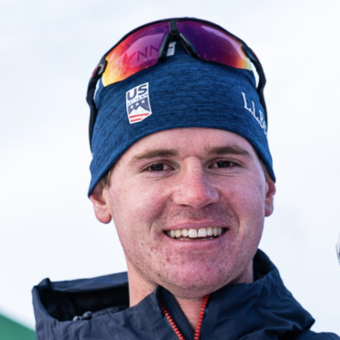
    Walker Hall was named to the 2022-23 U.S. Cross-Country D-Team. (Photo: U.S. Ski & Snowboard)

    To help fans get to know these new(er) faces, FasterSkier is doing a series of interviews, providing insights into the factors that have contributed to development, progress, and growth for these athletes last season. In this installment, we talk with 20-year-old Walker Hall, who was named to the D-Team this season. Hall grew up immersed in the Methow Valley cross-country ski community and is now entering his sophomore year at the University of Utah

    While the Methow has produced a number of outstanding skiers, including Brian Gregg, Erik Bjornsen, and Sadie Bjornsen Maubet, Hall could find inspiration even closer to home. His mom, Leslie, skied in three Olympic Games between 1988 and 1994, and her best friend and training partner post-professional racing soon became two-time Olympian Laura McCabe, once both women relocated to Winthrop, WA. Still close friends, Walker and Novie McCabe are just six months apart in age, and began tagging along from their infancy on their moms’ training and outdoor endeavors. Both athletes, now U.S. Ski Teammates, developed on the Methow Valley Nordic Team, coached by their mothers.
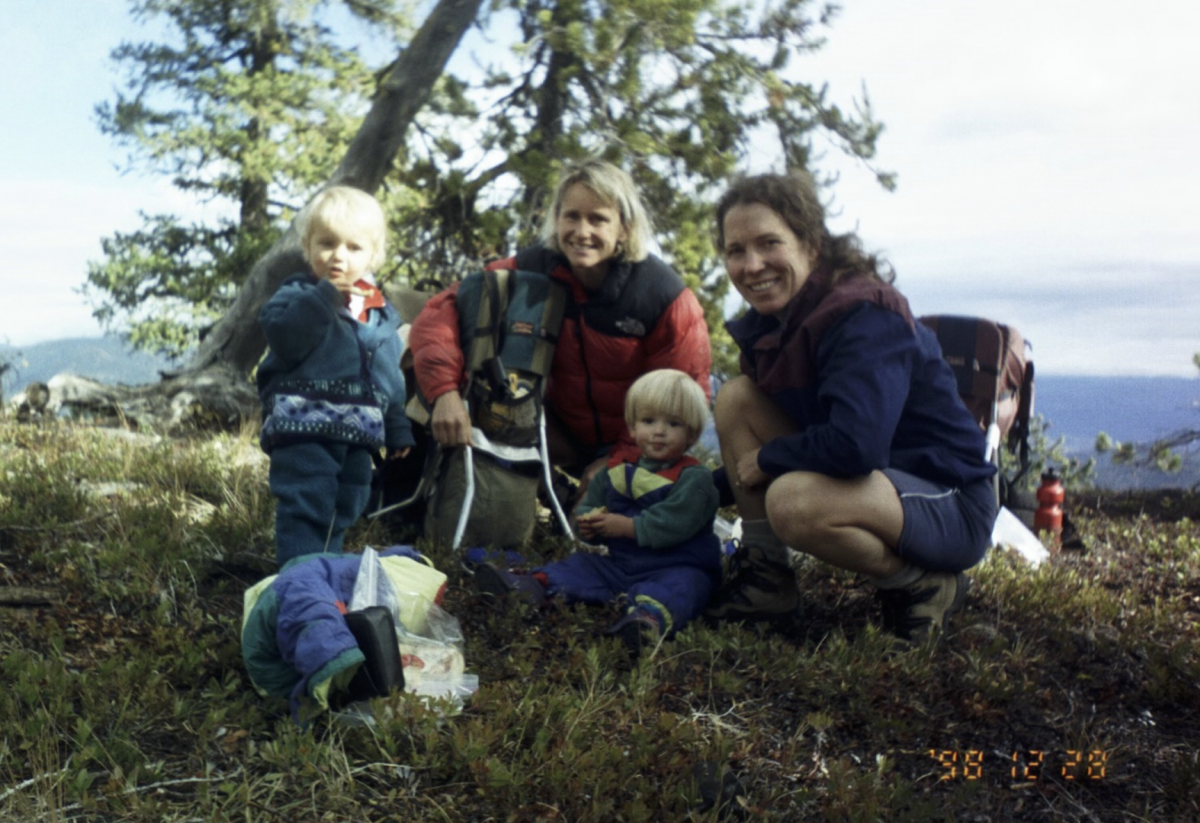
    Methow Valley Nordic Team coaches and Olympians Laura McCabe (left) and Leslie Hall (right) bring Novie and Walker, now U.S. Ski Teammates, along for their training and outdoor endeavors. (Courtesy photo)

    In this interview, Walker reflects on some of the other influential experiences – and setbacks – that contributed to a breakout season in 2021-22. Hall won the junior men’s 10 k during the 2022 U.S. Cross-Country Championships in Soldier Hollow, and finished in the top-five in a third of his RMISA races, including a podium performance in Sun Valley. Earning his first spot on the World Junior team, Hall competed in both the 1.2 k freestyle sprint and the 30 k skate individually, and was a contributing member of the U20 bronze medal winning relay team.  


    – Walker’s sister, FasterSkier assistant editor Ella Hall, contributed to these questions

    FasterSkier / Rachel Perkins: You grew up in the Methow Valley, which has a strong legacy within its cross-country ski community and the number of athletes who grew up there and went on to ski professionally. But in your situation, you and Novie McCabe are only about six months apart, and your families are super close and it sounds like you both did a fair amount of tagging along for both of your moms’ training as kids. Can you talk a little bit about your introduction to skiing and what your relationship with the sport was like growing up? 

    Walker Hall: From as early as I can remember, probably as soon as I was capable of going on skis, that’s when I started – me and Novie both. Regardless of what we were doing, it was mostly outdoor activities, whether that was hiking or climbing or just spending time outside. Our moms would take turns, like one would take care of us while the other went and did some training or a long run or something. So I felt like I got a good training base just from everything I did outside, and started off skiing really young, and it’s always been a big part of my life.
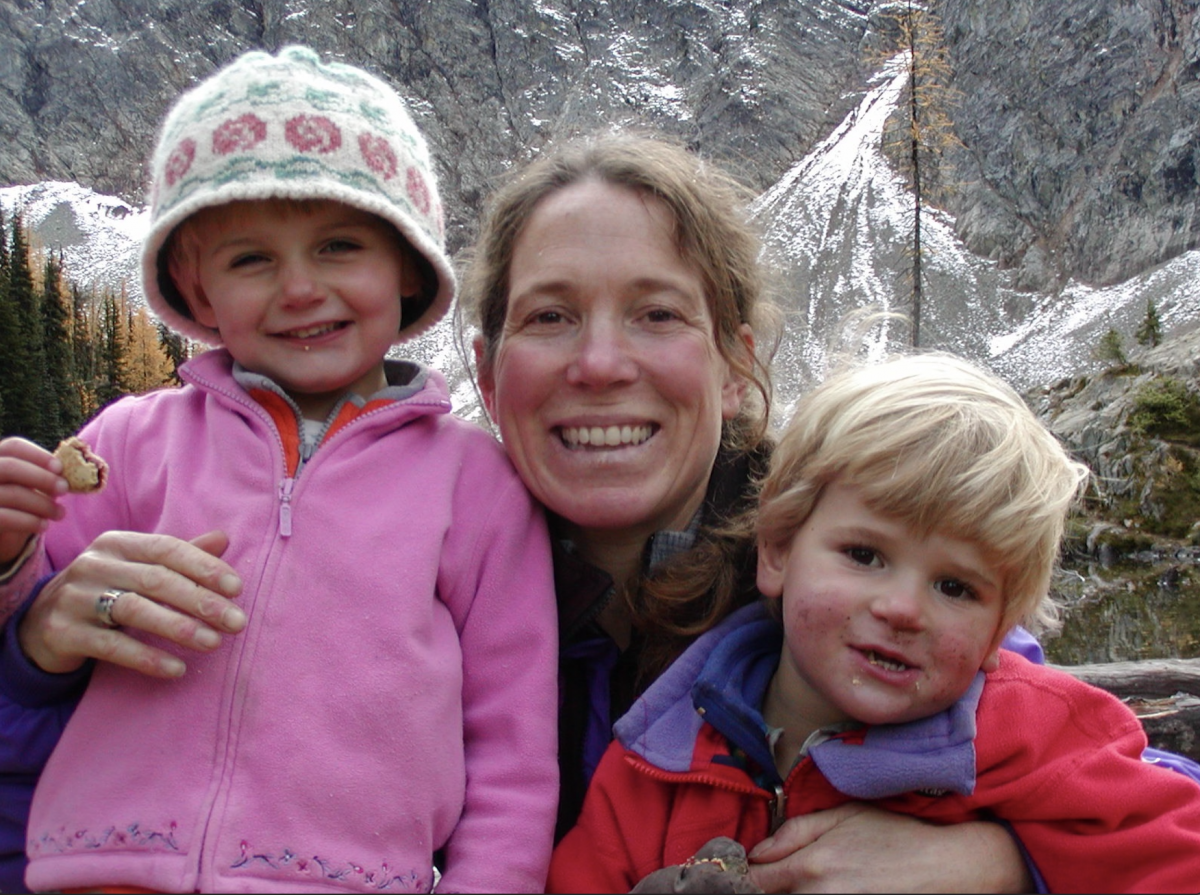
    Leslie Hall, with a young Novie McCabe and Walker Hall, share a lifelong love of the outdoors that has developed into successful ski racing careers. (Courtesy photo)

    FS: I also noticed you also listed your mom as one of the most influential people in your life in your U.S. Ski Team bio, and I know she was one of your coaches with the Methow Valley Nordic Team (MVNT). Can you say more about that?

    WH: She coached [MVNT] up until just this last year – she retired last season. Basically when she was done racing [professionally] and once my parents moved to the Methow in the late ’90s, she really developed the program there.

    So she’s been coaching for a really long time, and she had a lot of experience. She coached when my sister was skiing, so I grew up doing what [Ella] did because she’s four years older. My mom was able to give me the support and advice and guidance that is crucial for being good at skiing, and she was not too overbearing or anything, so I think she was just a really good influence on my ski career.

    FS: That type of relationship seems important – not being overbearing, but really sharing in a mutual love of the sport. Is that something that you have felt within the Methow community and within your own family?

    WH: I’ve definitely felt a lot of support from different people in the Methow, whether it’s my mom or Laura [McCabe] or other people in the ski community there. I’ve always gotten the support that I’ve needed and been pushed when I needed to be, and never felt too much pressure or anything, so it’s been really good for my career in skiing.
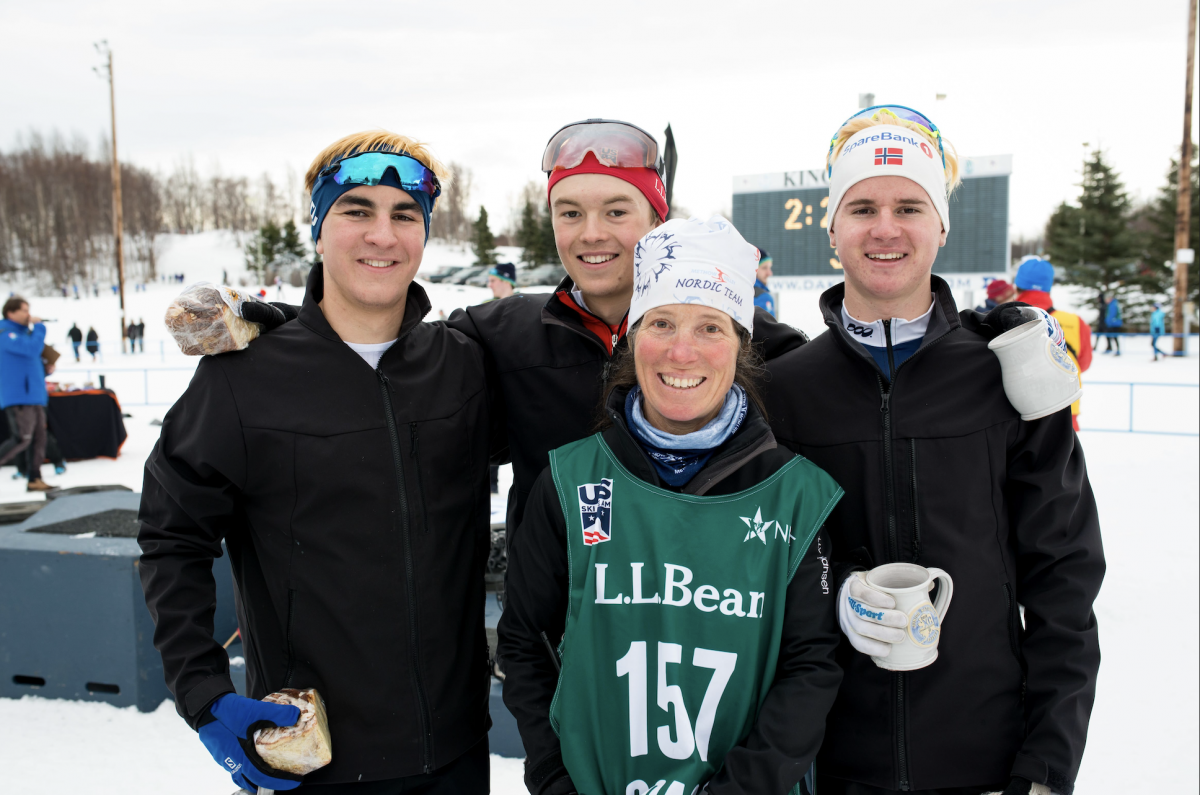
    Long-time Methow Valley Nordic Coach and 3x Olympian Leslie Hall with the members of the U18/U20 relay at 2019 Junior Nationals in Anchorage, all of whom skied for MVNT. From left to right, Travis Grialou, Garrett Butts, and Walker Hall. (Courtesy photo)

    FS: Fast-forwarding a bit, in high school, you spent six months in Meråker, Norway during your junior year, and it sounds like that was a pretty formative experience for you – you had a really positive experience with that program, and the coach, and made some good friends/training partners. Can you share more about how that came about and what your time was like there?

    WH: It came about because Ella did a very similar [program] her junior year; she also went to Meråker, but she went for a shorter period of time. But as I got older and learned more about the sport and the people within the sport, it seemed like Norway was the place to be to really improve and learn. Our family had some connections in that area because Ella had been there. 

    Once I was there, it was definitely a lot different. Coming from the Methow where there’s really not many – there’s a lot of skiers, but it’s such a small area that you’re sort of in your own little bubble. So going to Norway and just seeing the ski culture there and learning a lot about training and what the Norwegians like to do [was really beneficial], because they obviously have a really good method for juniors or whatever age you are in ski racing. I had good coaches, good training partners, and good support there as well. So I definitely learned a lot and sort of knew what I had to do when I got back to really take skiing to the next level.

    FS: Was that at a sports academy? Were you going to school also?

    WH: It’s actually a public high school, or it’s funded by the government, but it’s a sports school [called the Meråker videregående skole]. So we would train in the mornings until maybe 11, and then shower, eat lunch, go to class for three hours or so, and then maybe train in the afternoon. That was what it was like most days, then on the weekends, it was more on your own because it’s a school program, not  a club. When we would go to races – which I didn’t go to too many races – we would go with a local club.

    FS: Your sister said that the experience also inspired you to take Norwegian lessons after returning home and that you’re “decent” now. Is this true?

    WH: When I was there, I definitely didn’t know that much [Norwegian]. There were two other non-Norwegian students that I took some Norwegian lessons with, just what the school provided, but I definitely never really spoke that much while I was there. I wanted to keep learning and improving [after I got back], so I’ve studied on and off since then. I’m alright at it – I’m pretty conversational, I would definitely not say I’m fluent. But it’s a fun way to stay connected with my friends over there, and some of my teammates at the University of Utah are Norwegian too, so that’s been cool.

    Hall also explained that his classes in Meråker were in Norwegian, but since the group size was small, and both his teachers and classmates were helpful, he was able to get by without being fluent in the language. 

    FS: After graduating high school in 2020, you had planned to go back to Meråker for a gap year, but COVID got in the way of that, and plan-B ended up including a lot of time training on your own in the Methow. Can you talk about that experience and how you adjusted?

    WH: I had been planning to go back to Norway, but everything was so strict with COVID [at that point], they were not letting anyone in, basically. So I was just at home and I kept trying to figure it out so that I’d be able to go over there, but it just kept not working. I kept trying, but eventually, I was just at home the whole time. 

    I was going to races in the winter but it definitely was not an ideal situation for me because I was doing a lot of training on my own, which, it’s not necessarily a bad thing to train on your own, but for me personally, it’s a lot easier for me to train with other people. It’s a lot more motivating, and long term, it’s a lot better to train with other people so you don’t plateau. But I just focused on racing and kept working hard and it wasn’t the worst in the end. That year was alright, but it wasn’t ideal.
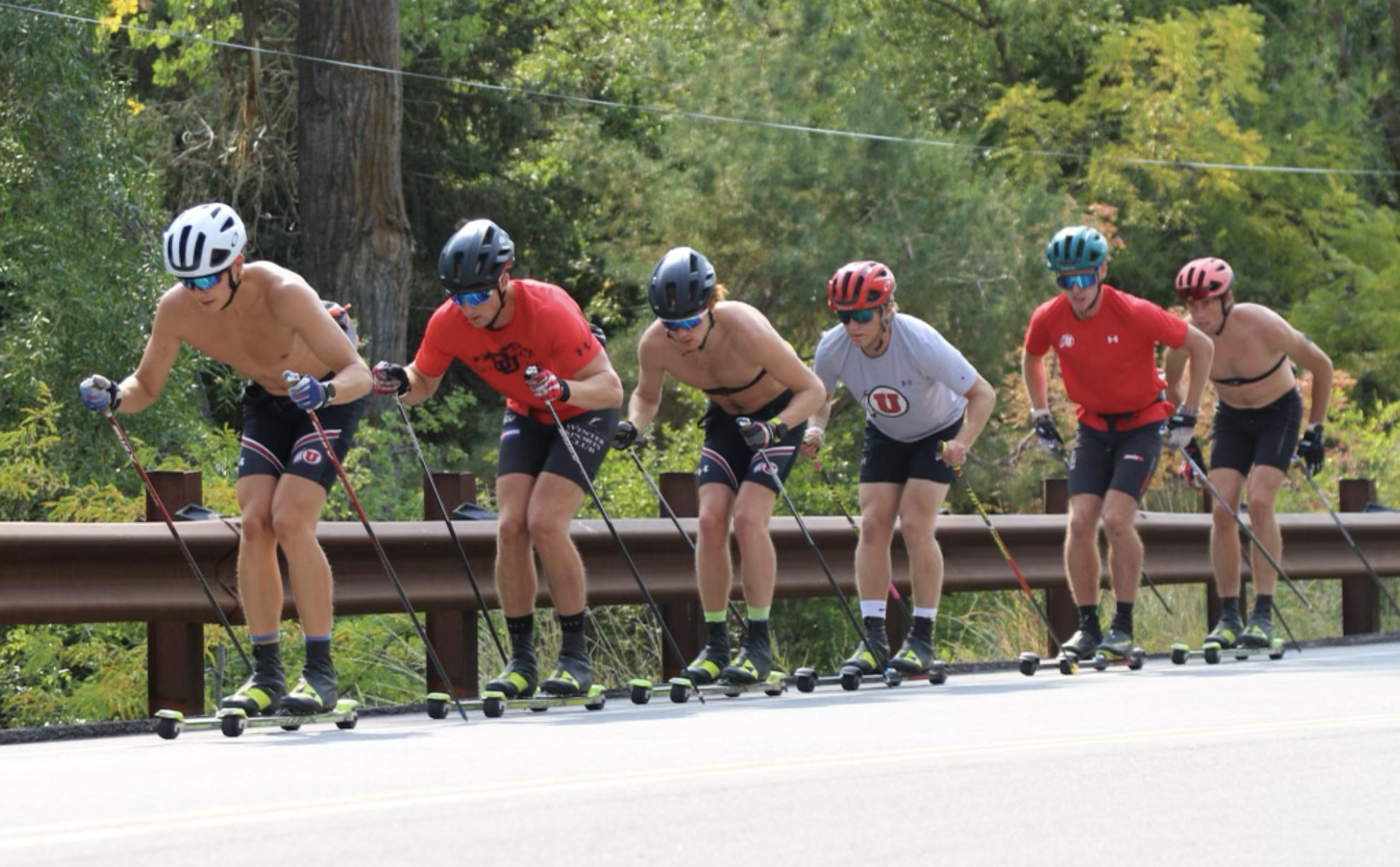
    Walker Hall trains with the University of Utah team in Fall 2021. (Courtesy photo)

    FS: Kind of on the other end of the training group spectrum, for collegiate racing, you originally committed to Dartmouth, but later were offered a spot that opened up at the University of Utah, and made the switch as Utah had been your first choice.

    WH: Yeah. Basically, I had planned on going to Dartmouth, and then COVID hit, and it was looking like life at Dartmouth with COVID was going to be a lot different than before. I had been talking to Utah [during my senior year], and they had been saying ‘oh, you should take a gap year and then we’d probably like to take you.’ So there was also a chance that I was not going to take a gap year and just go to Dartmouth, but then when that gap year happened and I got offered a spot at Utah, I just knew that that was going to be the better choice for me.

    Last summer before I went to Utah, I came up here to Anchorage for most of the summer, so I was training with a lot of my future teammates. There was a big group of people up here and a good amount of Utah skiers were here, so it was a good way to prepare and it was a really good experience. There’s just such good training up here during the summer. And the winter, I’m sure.

    FS: And what does that look like? Are you working with a coach or under a certain program? And how have those experiences being in Anchorage for the summer been valuable for you?

    WH: I train with APU when I’m up here. That’s a really solid group to train with, coached by Erik Flora, who I really like and I’ve learned a lot from. It was a really good experience coming up last summer, and I knew I wanted to come again this summer. There’s just a lot of really hardworking people that push me and help me hit big hours, so I think it’s a good place for me to be during the summer.

    FS: Going back to University of Utah – what appealed to you about that program? And what was your experience like in that first season of collegiate racing?

    WH: There’s a lot [that appealed to me about it.] I knew a lot of the people on the team, and I knew it was such a strong team. I had actually been down there a couple times – or I had been in Park City for ski camps and [races], and I visited Novie for a couple of weeks [during her freshman year at Utah] and really liked it. Me and Novie have always done similar training and whatnot, so I figured if she was liking it a lot down there, then it was a good place for me also. 

    And I really liked the coaches. I talked a bit with Miles Havlick and Frederick [Landstedt], and I really liked what I’d seen from those guys. Since I’ve been there, it’s been a really good fit.
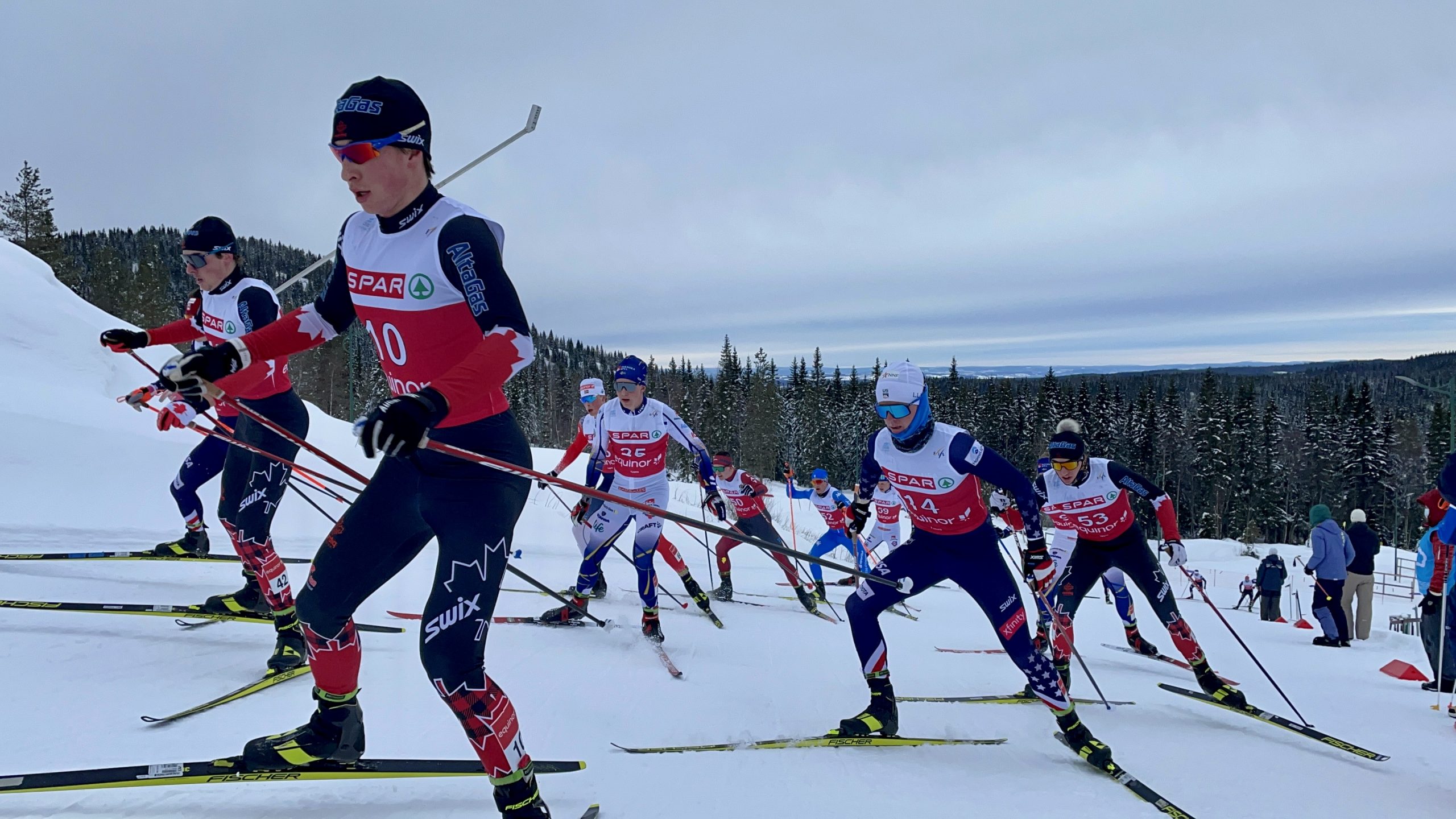
    Xavier Mckeever in bib 10 (CAN) and Walker Hall in bib 14 (USA) head up “waffle hill” in the early stages of the men’s 30 k mass start during the 2022 Junior World Ski Championships in Lygna, NOR. (Photo: Ella Hall)

    FS: World Juniors in Lygna was your first international trip, and it sounds like you had some bad luck with racing at US Nationals and/or been really close in prior years. What do you think came together for you this season to make that trip? And what were some of the highlights of that World Juniors experience in terms of how it supports your development and goals?

    WH: Yeah. In previous years – maybe the past three years or so for this year – there were like two years where I was just coming off of sickness going into nationals, so I never really had the races that I wanted there, and I never ended up making any of those international trips. Which, honestly, I would have liked to go on the trips, but it never really bothered me too much – it wasn’t like demoralizing or anything – because I felt like I knew the level that I was at and that on a given day I could be as good or better than any of the trip. So it was never really too much of a bummer for me. But this year, I wanted to make it on the trip to World Juniors, and I had goals for the races at World Juniors too, it wasn’t just the trip there was the end goal. But just making it definitely felt good, and I had a really good Nationals this year, which was awesome since that’s pretty much the first time that’s happened for me. 

    I was super happy that the races were in Norway because I just love spending time there, and we got to do our pre-camp in Hafjell, which is right near Sjusjøen, and I’ve spent some time there – it’s [some of] the best skiing in the world. So that was super fun. And I really liked a group of guys and the entire team and staff that was there, so it was a really good experience.

    FS: From the outside, it seems like you took a pretty big step forward this past year, which maybe can be attributed to having such a strong group to train with at University of Utah, or some more direction after a tough gap year. In looking back over this year, what are some of the factors that you think allowed you to take those steps forward and what were some of your personal highlights from the season? And those personal highlights do not necessarily need to be a race result, just an experience that stands out to you.

    WH: I think the main factor was really taking my training to the next level. Especially over the summer [in Anchorage] and then carrying that through the fall in Utah. I was just training with a really strong group, and really pushing myself, and doing [types of training] that I hadn’t really done in the past. So definitely, a good part is thanks to that. And then also, I’ve had a lot of different experiences over the years and learning from those helps to channel some better results.

    As for my highlights – this last season, I was just proud of the way that I trained and was smart with my training, and I  didn’t overdo it. And it seems like it’s often hard to put together a good season like your freshman year of college because it’s such a big adjustment. So I was happy that I was able to have a solid season for the most part while going through such new experiences in my first year in college.
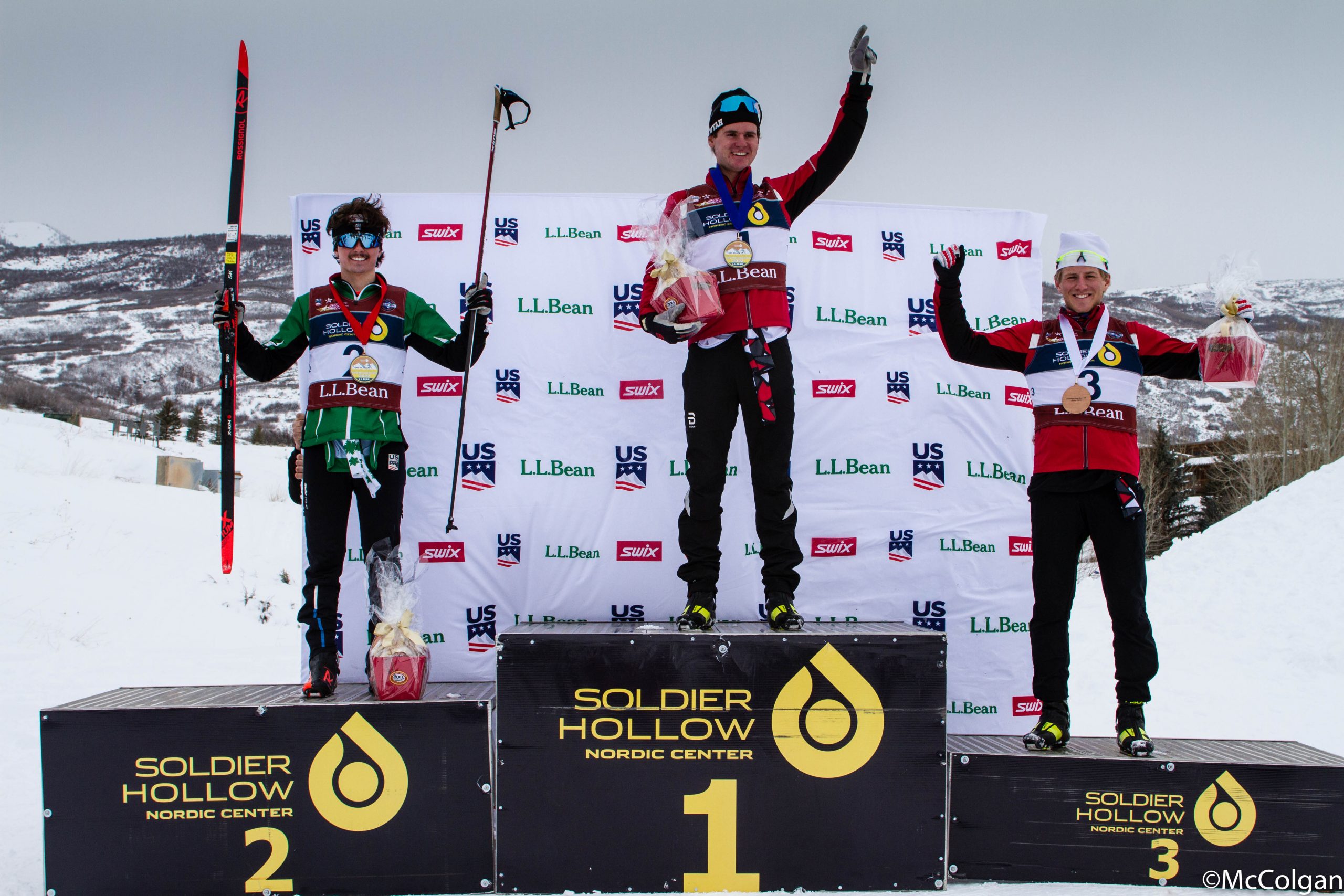
    Walker Hall stands atop the podium in Soldier Hollow after winning the junior 10 k mass start freestyle during the 2022 U.S. Cross Country Ski Championships. (Photo: John McColgan)

    FS: What are your goals heading into next winter?

    WH: It’s gonna be my first year not being a junior, so honestly, I don’t have too many specific goals. But I’d definitely love to race in my first World Cup this year, and just keep improving. On the college circuit, hopefully, get a bunch of podiums in RMISA. And just keep learning from my teammates and pushing with the team at Utah.

    FS: Last question for you: with making the D-Team, can you share what that means to you and what you’re excited about in terms of the support and opportunity that opens up for you?

    WH: It’s always seemed like probably the biggest step you can make in U.S. skiing is actually making the ski team, so it feels really good to have achieved that. I’m just now realizing the amount of support that means that I’m able to get, so I’m just taking advantage of that and learning from my other teammates on the team – taking advantage of the different opportunities that it grants me, and just enjoying the ride. But I’m definitely thrilled to have made the team.

  • Q&A with New Faces on the U.S. Ski Team: Sammy Smith

    Q&A with New Faces on the U.S. Ski Team: Sammy Smith

    U.S. Ski & Snowboard recently announced its U.S. Ski Team nominations for the 2022-23 season. Of the 22 athletes named to the team this season, six were not on the previous year’s roster, either newly named or renamed: Michael Earnhart, Walker Hall, Zak Ketterson, Will Koch, Finn O’Connell, and Sammy Smith.

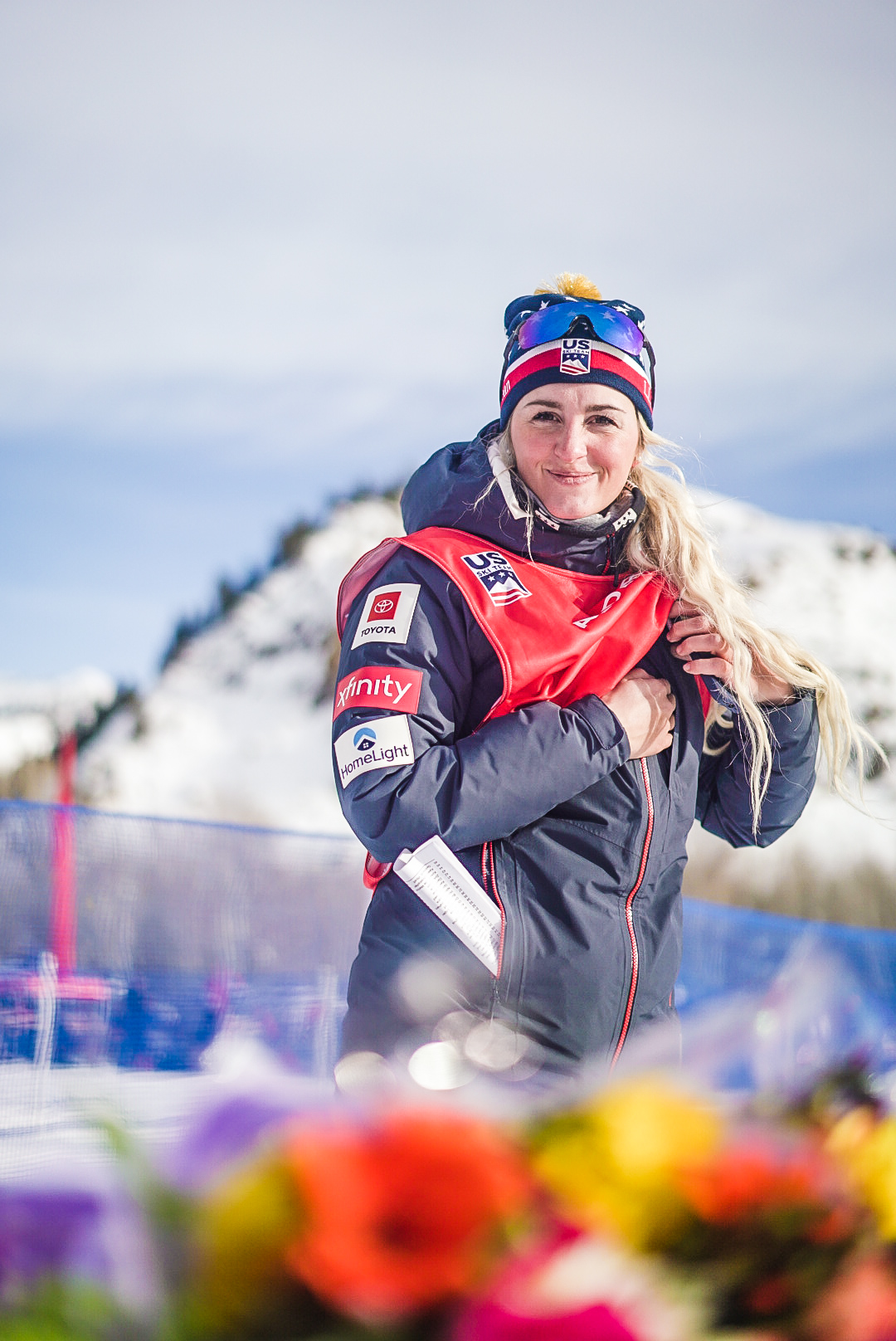
    Samantha Smith is named to the 2022-23 U.S. Ski Team D-Team. (Photo: U.S. Ski & Snowboard)

    To help fans get to know these new(er) faces, FasterSkier is doing a series of interviews, providing insights into the factors that have contributed to development, progress, and growth for these athletes last season. In this installment, we talk to Sammy Smith about her participation and success in numerous sports, the charity she and her siblings founded during COVID, and her nomination to the U.S. Ski Team D-Team. 

    At Junior World Championships in Lygna Norway this past February, Smith finished 5th in the skate sprint and 11th in the 15k skate. She also finished 10th in the skate sprint at Senior Nationals in Soldier Hollow in January 2022 racing amongst the senior women’s field. 

    Not only is Smith a successful cross-country skier, but she has also achieved impressive results in running, soccer and freestyle skiing. During her freshman year of high school Smith won the 1,600 and 3,200 meter events at the Class 5A Idaho state meet, leading her to be a finalist for the USA TODAY High School Sports Awards

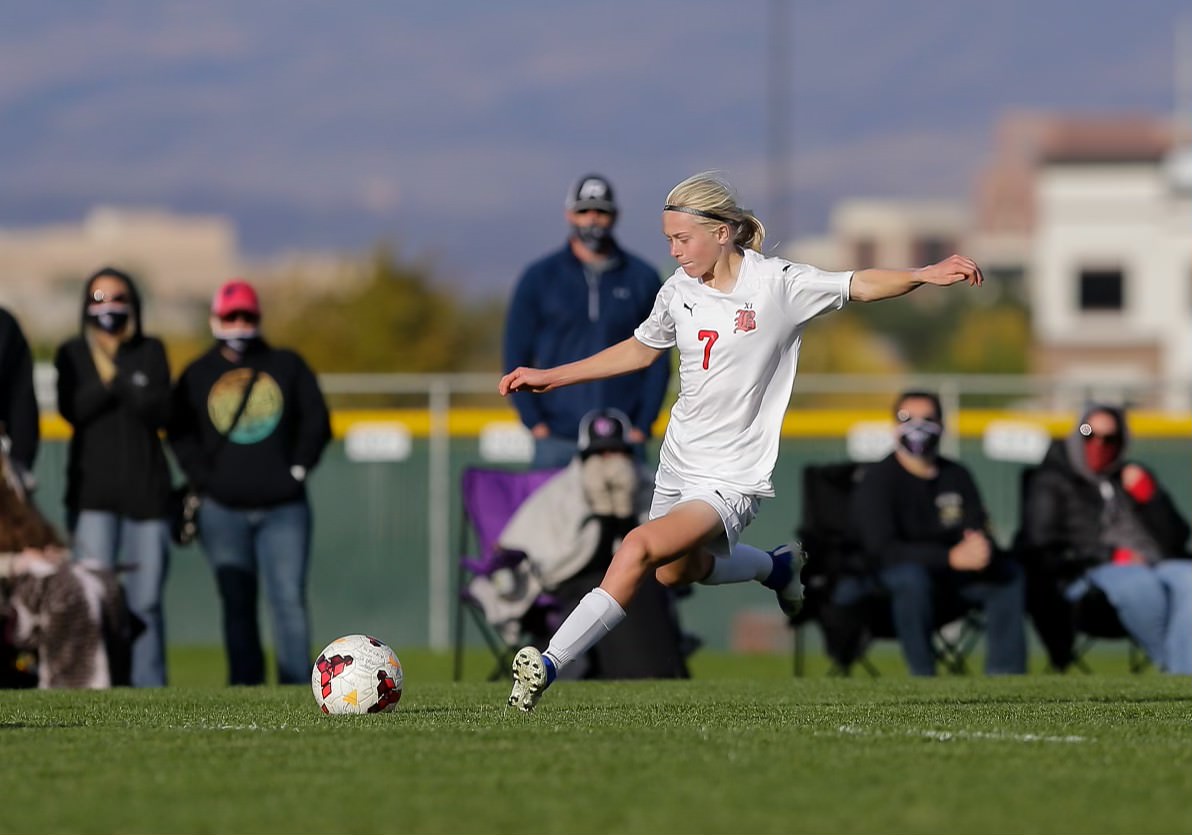
    Sammy Smith competing for a Boise-based soccer team. (Courtesy photo)

    Ella Hall/FasterSkier: You’re sixteen, does that mean you’re a junior in high school?

    Sammy Smith: I actually just finished my Sophomore year of high school (our school got out last week), so I will be a junior in the fall.

    FS: And do you live part of the year in Boise and spend the winters in Sun Valley?

    SS: Yes, I live in Boise for the fall, spring, and summer. Although during the summer I am often gone a lot, and we frequently go up to Sun Valley. I go to Boise High School for the fall and spring, then I move to Sun Valley for skiing for the winters and while I’m there, I go to the (Sun Valley) Community School.

    Sammy Smith competing in freestyle skiing. (Courtesy photo)

    FS: From what I’ve gathered you’re involved in quite a lot of sports, can you tell me which sports you competed in this year?

    SS: Currently I cross-country ski, play soccer, run track and cross-country, and freestyle ski. This year, I competed in all of the above, except freestyle skiing. Unfortunately, I sustained an injury in the late fall that prohibited me from jumping so I was unable to compete in freestyle. My track season was also cut short because of an injury but I’m healthy now.

    Soccer and nordic are definitely my two primary sports. For soccer, I am actually in the US U17 Women’s Youth National Team training pool. I was selected as an alternate for the Confederation of North, Central America and Caribbean Association Football (CONCACAF) tournament this spring. That meant I only participated in the pre-camp, then returned home prior to the tournament kicking off. I aspire to compete for the full US Women’s National Team (WNT) one day, and hopefully will have the opportunity to represent my country in two different sports.

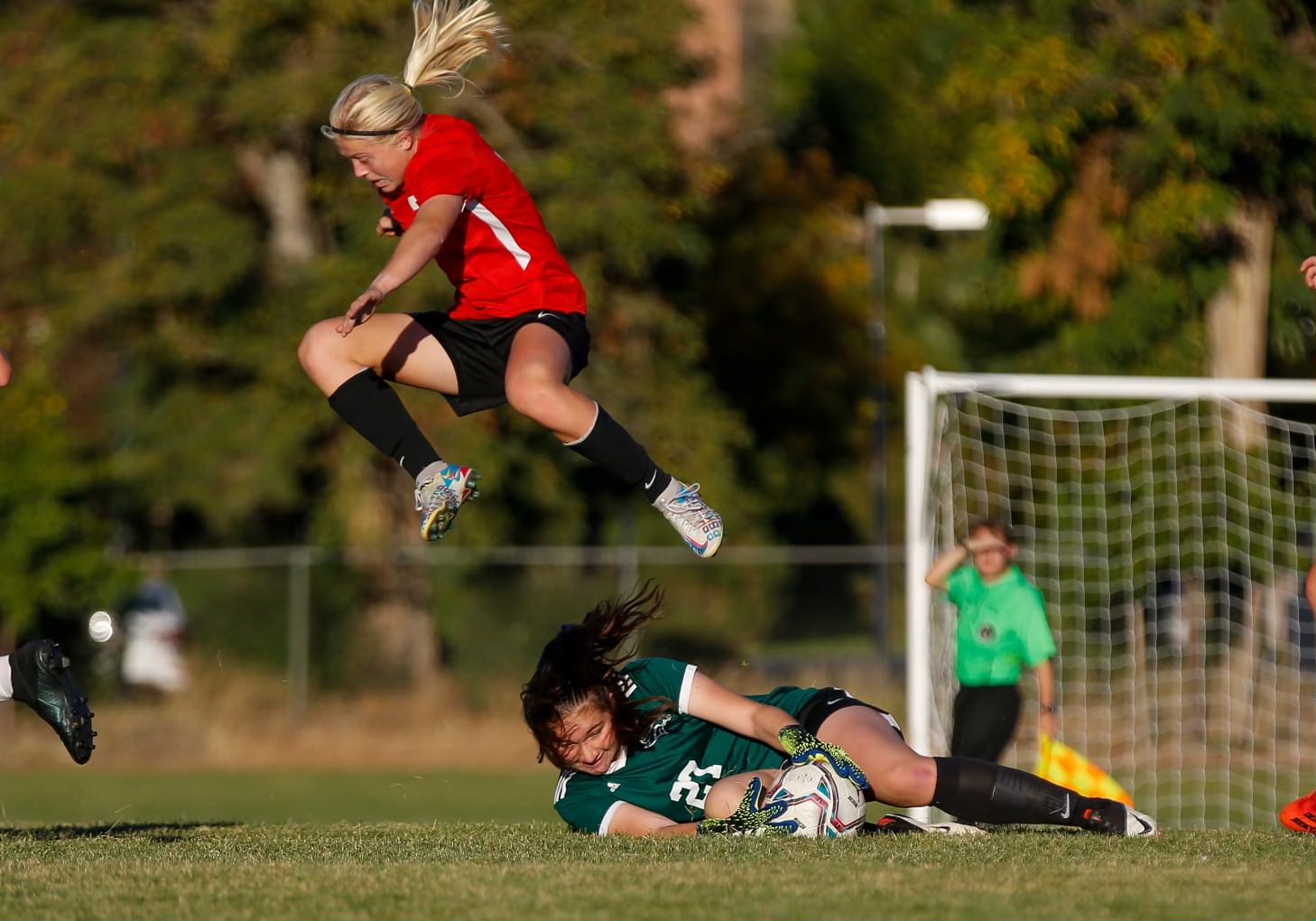
    Sammy Smith gets air in an Eagle vs. Boise soccer game. (Courtesy photo)

    FS: How and when did you start nordic skiing?

    SS: I initially got involved in nordic skiing because of my older sister. When I was five, my parents had signed my sister up for SVSEF’s devo program, and naturally I wanted to do everything she was doing, so I began to pick up the sport as well.

    FS: I read that you and your siblings started a charity during the pandemic, can you tell me a little about that?

    SS: My siblings and I founded GO BIG, a 501 (c3) certified charity, during the spring of 2020. GO BIG stands for Giving Opportunity By Inspiring Gratitude. Through the charity we aim to make a positive impact on less privileged youth in our area. We have been so fortunate to grow up the way we have, we want to help those who haven’t. We work to provide these kids with mentorship, as well as resources to help them – like books and other educational tools, and sporting equipment. 

    Our goal is to inspire a sense of gratitude in these youth because science has shown that those who experience a sense of gratitude are more likely to feel good about themselves and pass that feeling along to others, thus helping spread good through the community and beyond.

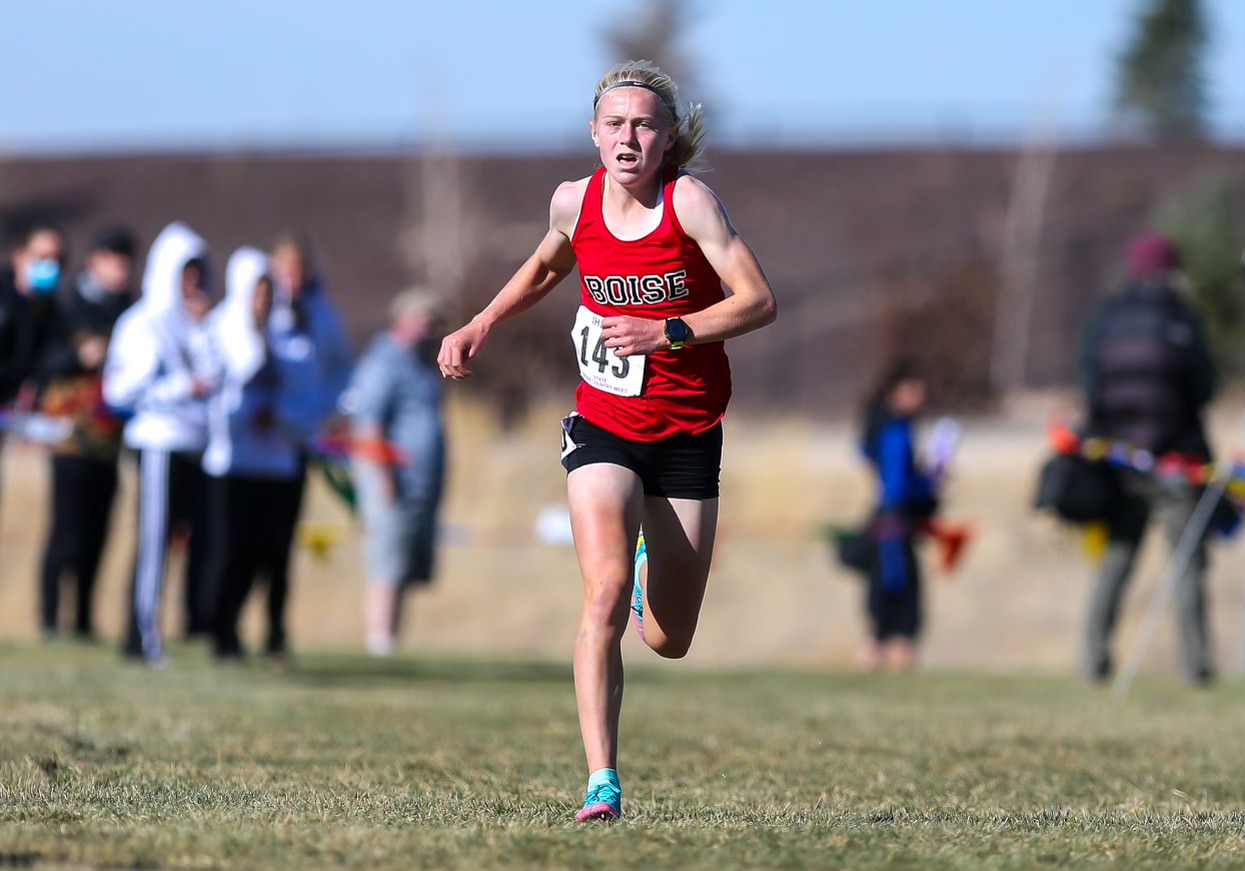
    Sammy Smith runs cross-country for her high school team in Boise, ID. (Courtesy photo)

    FS: You had some pretty exciting results at World Juniors in Lygna Norway this winter, can you talk a bit about the contributing factors/support system that helped you achieve those results?

    SS: I owe a huge thank you to my coaches in Sun Valley, especially Rick Kapala, because he and I made a really thorough and thoughtful training plan going into the Championships. I think having such a detailed plan allowed me to come in more prepared, and in better form than I could have imagined. 

    I was fortunate enough to have Paul Smith as my wax tech who worked a lot with me on ski selection, and taught me what to look for in a pair of skis throughout the season, and how to decide between them when it seems like the glide is comparable. 

    Going into World Juniors, I had a lot of new skis from Salomon, and I didn’t really know a lot about them, but fortunately Paul was incredibly helpful. I relied on him heavily to help me test and decide how to organize my fleet before I left. And once we were in Norway, he made sure I was testing the appropriate skis, and helped me choose which pair I was racing on each day. I’m incredibly grateful for Paul’s help, and the support from Salomon. 

    In addition, the U.S. Ski Team support system was unlike anything I had ever been part of before. Our pre-camp was designed perfectly to help us peak for our races, and once we arrived in Lygna, we had access to even more resources. It truly was a trip designed to help young skiers have the best races of their lives.

    FS: What excites you most about being named to the U.S. Ski Team?

    SS: I’m most excited about the incredible opportunities that come with being named to the U.S. Ski Team. Being able to train with the best skiers in the country, and some of the best in the world, is an unparalleled opportunity for growth and development. I think when you are put in an environment where you are surrounded by people who share a common passion and common goals, naturally you improve. I can already feel the great sense of community and support from the more experienced skiers and it makes me so excited to train and race alongside them in the future. 

    I also think the U.S. Ski Team has invaluable resources and tools to help all the athletes become the best version of themselves, and I love to compete and am always looking to improve, so that’s really exciting to me.

    Sun Valley’s Sammy Smith (right) finished 10th overall in the freestyle sprint during the 2022 U.S. Cross-Country Ski Championships in Soldier Hollow. Smith was the third-fastest junior racing with the senior women, behind Sydney Palmer-Leger (University of Utah) and Kate Oldham (Aspen Valley Ski & Snowboard Club). (Photo: Tobias Albrigtsen / @untraceableg)

    FS: What are some of your goals for the upcoming season?

    SS:  I was really fortunate to have some great results at last year’s World Juniors, and I want to continue to build off of that for next season. So, my primary goal for the season is to finish top three at World Juniors.

    FS: ​​Will you be able to join any upcoming USST camps this summer/fall or will you be primarily focused on your other sports until winter rolls around?

    SS: It is certainly a priority of mine to get to some of the upcoming camps, but it’s always a balance, so right now I’m trying to figure out scheduling for both soccer and skiing.

  • Nordic Nation: Greta Anderson’s 2021-2022 U.S. Ski & Snowboard Development Program Year in Review

    Nordic Nation: Greta Anderson’s 2021-2022 U.S. Ski & Snowboard Development Program Year in Review

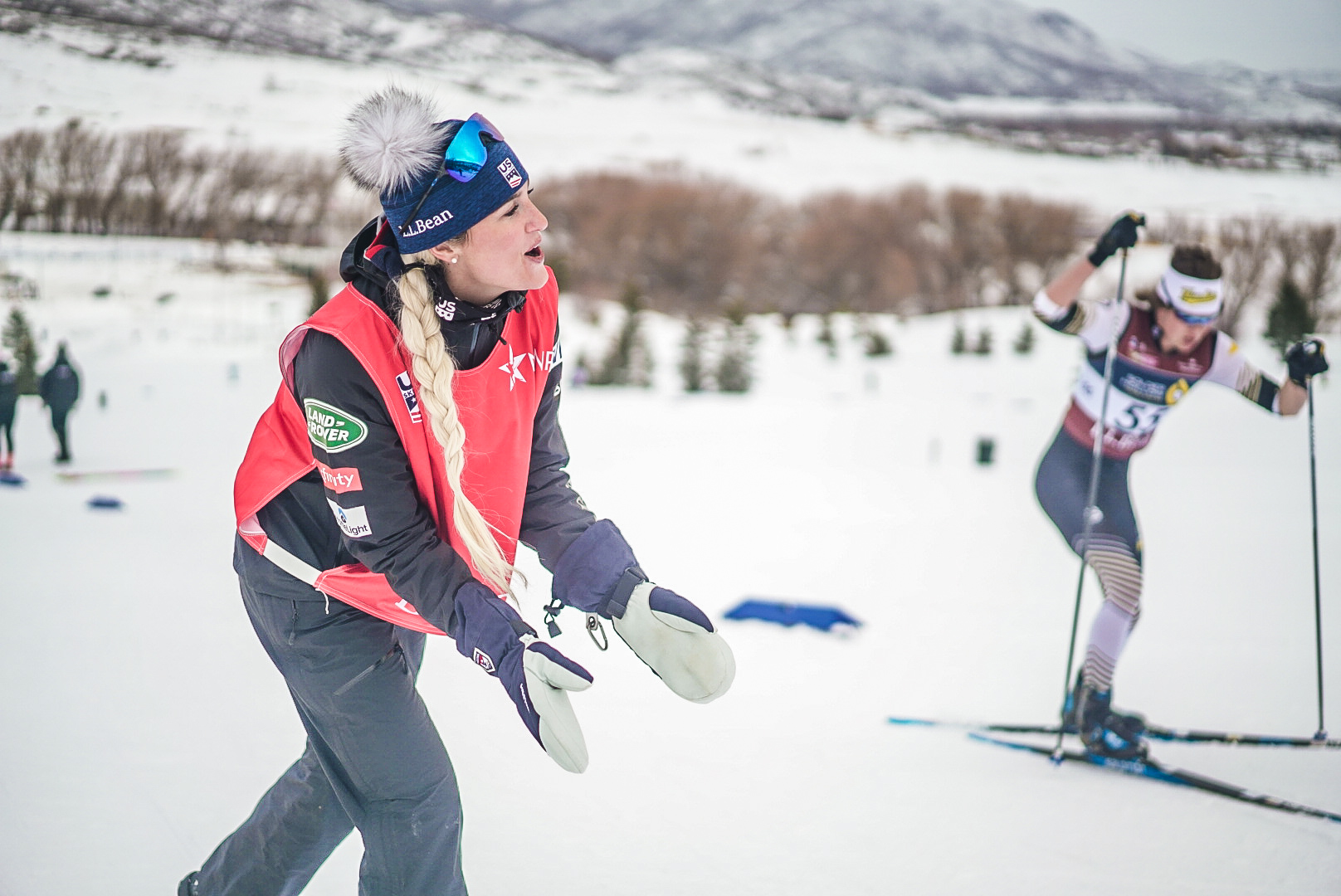
    U.S. Ski and Snowboard Development Team Coach Greta Anderson encourages athletes racing the men’s 30k distance race during the 2022 U.S. Cross Country Championships in Soldier Hollow. (Photo: Tobias Albrigtsen / @untraceableg)

    Last June, U.S. Ski & Snowboard announced the hiring of Greta Anderson as Development Team Coach, supporting Cross Country Program Manager Bryan Fish in “all aspects of leadership and logistics surrounding the U.S. Development Pathway, including National Training Group camps, U.S. Nationals and Junior/U23 World Championships, Europa Cup, select SuperTour and other national-level competitions, as well as working on Coaches’ Education and Certification.” (Read an in-depth interview with Anderson following the announcement here.)

    As she described it, joining the U.S. Ski Team staff during an Olympic year while the COVID-19 pandemic raged on was a bit of “trial by fire.” Nonetheless, Anderson thrived in her new role, approaching the position with humility and open-mindedness as she learned the ropes. With a holistic view of athlete development, which emphasizes the importance of creating an environment where the athlete can be both happy and supported, Anderson had the opportunity to support athletes from the U16 to U23 level across the spectrum of international and domestic clubs and races. She played key roles during the 2022 FIS Junior/U23 World Ski Championships in Lygna, Norway, and had her first experience as the primary trip leader during the Opa Cup Finals pre-camp and competitions in Sappada, Italy. 

    U.S. Ski Team development coach Greta Anderson discusses the highlights and challenges of her first year in the role, as well as insights into the philosophy, projects, and initiatives of the national team development program more broadly. (Photo: Tobias Albrigtsen / @untraceableg)

    In this conversation, you’ll hear more about Anderson’s contributions to the development program thus far, and she shares insights into the philosophy, projects, and initiatives the U.S. Ski & Snowboard staff are working on to continue the growth and support of athletes ascending the pathways from junior to senior racing. We also discuss standout performances of the World U23/Junior Championships, and some of the athletes who have been recently named to the 2022-23 U.S. Cross Country Team.

    Thanks for listening, and thanks to Boulder Nordic Sport for supporting this podcast. 

    Note: One of the athletes whom Anderson discusses is Finn O’Connell, who skis for the Bridger Ski Foundation Pro Team in Bozeman, MT. While he was supported by development team coaches at the Opa Cup Finals, his nomination was to the B-Team, not the D-Team. 

  • Former USST Racer Davis Finds Success in Soccer

    Former USST Racer Davis Finds Success in Soccer


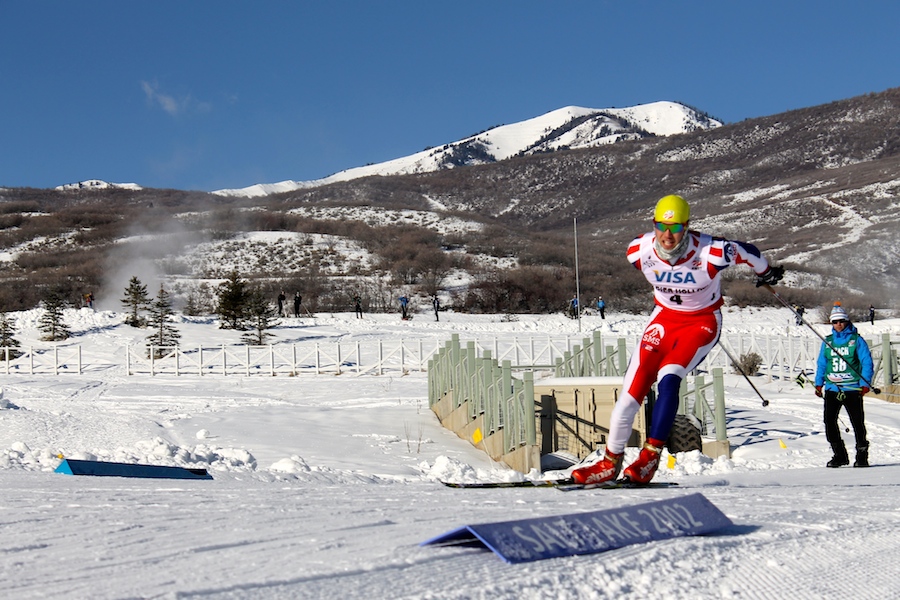
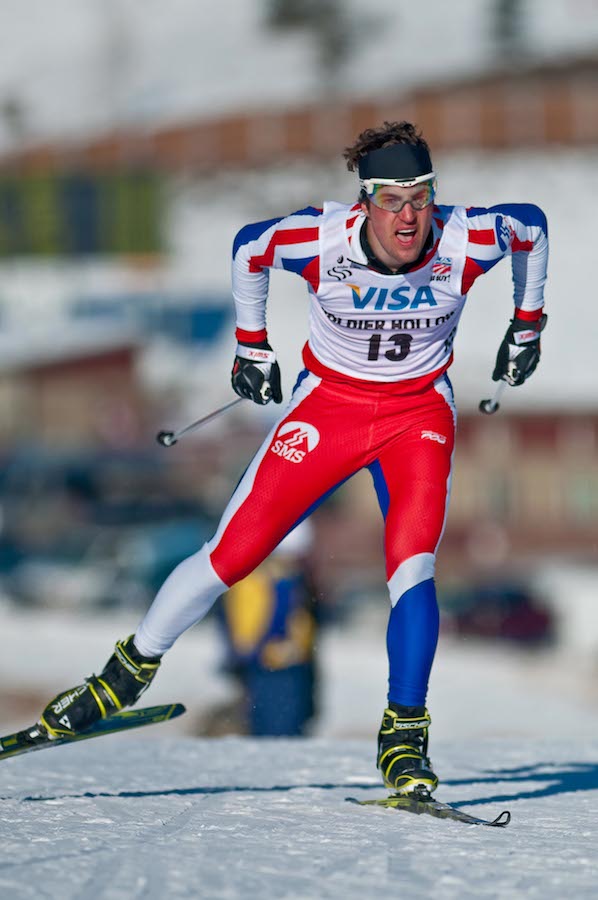
    Skyler Davis competes at the 2014 U.S. Cross Country Championships at Soldier Hollow. Davis retired from skiing following the championships and took up soccer at UVM. He was recently named captain of the team for the 2015 season.
    Skyler Davis competes at the 2014 U.S. Cross Country Championships at Soldier Hollow. Davis retired from skiing following the championships and took up soccer at UVM. He was recently named captain of the team for the 2015 season.

    In 2011 Skyler Davis made headlines by claiming third place in the 1.4 km classic sprint at the U.S. Cross Country Championships in Rumford, Maine. This was just the beginning of a successful year for the then 19-year-old, which ultimately ended with a naming to the U.S. Ski Team D-team. In 2012 Davis’ success continued with a standout-24th place in the freestyle sprint at his second ever World Cup in Canmore, Alberta. In 2013 the former SMS T2 skier had another successful U.S. Cross Country Championships, qualifying second in the 1 km classic sprint before finishing just off the podium in fourth.

    Though he did not reach his goals at U23 Championships that year in Liberec, Czech Republic, Davis was hungry for a bounce back in 2014. However, the young skier virtually disappeared from the cross country ski world after nationals in Soldier Hollow, Utah. As it turns out, Davis was ready to go back to school.

    “School was the biggest deciding factor for me,” Davis said in a phone interview. “I loved my team [and] I loved my coaches, Gus [Kaeding] and Sverre [Caldwell], at the time when I did retire. I was in a really good situation actually because the T2 Team had just started to really send off. We were doing well, we had a good group of guys, the coach was great, but I really wanted to enter school before another Olympic year went by.”

    “If I made the Olympics I would keep skiing and then probably enter [school in] the fall and if I didn’t, I would stop skiing and enter the spring semester which started I think honestly 12 to 24 hours after senior nationals ended that year,” he added.

    Even though Davis was headed to school, he didn’t want to leave athletics completely behind. Searching for a continued relationship with sport, he turned to an old passion of his, soccer. “As I viewed it, it was my chance to stay at a really high level…Soccer was something I had a really strong background in. I was very raw going back into the sport but it definitely was what I was looking for,” Davis, who played on northern Vermont’s premier soccer teams throughout elementary and middle school, stated.

    Prior to the of the 2014/2015 ski season — knowing that he might not qualify for the Sochi Olympics — Davis met with many division 1 soccer coaches and ultimately decided that the University of Vermont (UVM) was the right fit for him. “The deciding factor with UVM was the coach, I really love the coach, and I really like the team,” Davis said.

    Though Davis was ineligible to play until the following year, he was allowed to join the team for practices and training, which proved to be a challenge. Suffering from ailments ranging from shin splints to back problems, Davis worked to transition from low-impact skiing the high-impact movement required in soccer. That, in combination with intense lifting sessions, left Davis wondering if he would be able to reach the level required for large university soccer program. “That was definitely an interesting two plus months where I was like, I might get cut. I really wasn’t sure,” stated Davis.

    But the former cross country ski racer took on the challenge, and managed to impress the coaches and the team enough to maintain his roster spot for the following year. Still, he was ineligible to play in the fall and patiently waited for his chance this past spring. “Once the spring started up for games, we play about six games in the spring, I was able to actually carve out a roll on the team at center back so I actually played every minute of every game in the spring,” said Davis.

    This past June, Davis was named as one of the two captains for the upcoming season — something he credits to both his relationships with his teammates and some lessons he learned from skiing.

    “I think nordic skiing definitely helped me as far as being a good role model and leader for the team because with nordic skiing you have that work ethic that surpasses basically any other sport,” Davis said. “There definitely are moments where it brings me back to my nordic skiing training where we will be doing intervals which are obviously a little bit differently tailored, but the get me excited compared to other people.,” said Davis.

    In a recent press release by the University’s athletic department, the program’s staff had nothing but praise for the former USST member.

    “Skyler is a natural born leader who has a tremendously positive impact on the program from day one”, Head Coach Jesse Cormier said. “He has established himself as a strong, mature voice in the locker room and is an exemplary student. He has made amazing progress in training, his game has changed so much and is reflective of the consistent growth we have seen from the group as a whole. I’m excited for Skyler to play in his first match, he was waited a long time and prepared well to say the least.”

    The newly named captain is currently in Burlington, Vt. preparing for the upcoming season. “It has been ratcheting up pretty quickly,” Davis said. “Basically every day we train together. We have about half the team here now and preseason starts in about a month, so everyone is filtering in soon…Once we get about 20 to 25 guys we can really make it competitive with playing and training.”

    Though the  2015 soccer season at UVM is currently his biggest athletic focus, Davis certainly has not forgotten about his love for skiing. “Hopefully, after I’m done with soccer I’ll be able to get back to skiing and other more nordic ski related activities,” he said.

  • Saxton, Paddy Caldwell Capture U.S. Ski Team’s Attention, Invited to Revived D-Team

    Saxton, Paddy Caldwell Capture U.S. Ski Team’s Attention, Invited to Revived D-Team

    Ben Saxton (SMST2), second place. (Photo: http://bertboyer.zenfolio.com) All proceeds from photo sales will be directly donated to NNF.
    Stratton’s Ben Saxton racing to second in the freestyle sprint at 2014 U.S. nationals in Midway, Utah. Saxton was one of two skiers recently nominated to the U.S. Ski Team’s development “D” team. (Photo: bertboyer.zenfolio.com/Proceeds go to the National Nordic Foundation)

    Ben Saxton and Paddy Caldwell are like many Dartmouth College students — smart, young, athletic — but these two 20-year-old nordic skiers have another thing going for them: being part of the U.S. Ski Team (USST).

    While the team won’t actually be named until fall, the USST recently nominated Saxton, of Minnesota, and Caldwell, of New Hampshire, to its development, or D-team, which existed two seasons ago with two different men (Erik Bjornsen and Skyler Davis).

    USST Head Coach Chris Grover explained on the phone earlier this week that the team was reinstated, so to speak, to capture the talent of two guys that have been on the team’s radar for several years.

    “There will be times when our A-team is bigger, B-team is bigger, maybe not have a D-team and hopefully have a bigger D-team,” Grover said of the D-team’s existence. “It needs to depend on when athletes are emerging.”

    National-team staff considered a wide range of other talented U.S. skiers for its development team, without any specific quota or male-to-female ratio. Ultimately, they decided Saxton and Caldwell were the top picks.

    Paddy Caldwell (Dartmouth) racing to a career-best 10th on Friday in his skiathlon at his first Junior World Championships in Val di Fiemme, Italy. (Photo: FlyingPointRoad.com/Proceeds go to the National Nordic Foundation)
    Paddy Caldwell (Dartmouth) racing to 10th in the skiathlon at his first Junior World Championships in February in Val di Fiemme, Italy. (Photo: FlyingPointRoad.com/Proceeds go to the NNF)

    “These were two that really stood in terms of where they’re at, at their particular age,” Grover said. “If you look at where they compared to their international peers … we do an analysis each year of where these guys would stack up against the top-10 men in the world in distance and top-10 men in the world in sprint. Paddy is actually ranked in the top 10 in the world in juniors.”

    Caldwell is also the son of four-time Olympian Tim Caldwell and grandson of 1952 Olympian and former USST head coach John Caldwell. He’s cousins with Sophie Caldwell, a member of the USST A-team, and a nephew of Sverre Caldwell, Stratton’s nordic director. He trained with Stratton as a postgrad, and at Junior World Championships last February, he tallied 10th in the 20 k skiathlon — a format juniors don’t often do. He was the top American at 2014 NCAA Championships in the 20 k freestyle mass start (fifth overall), and he won the junior 10 k freestyle mass start at U.S. nationals in January.

    Also a junior-national champ, Saxton placed second in the skate sprint at U.S. senior nationals in January and was second in the classic sprint at U.S. SuperTour Finals in late March. Also last season, he captured 10th an Alpen Cup classic sprint in Rogla, Slovenia, and was 11th in a 10 k classic race in Switzerland.

    “They are on the path right now to potentially being medal-capable seniors down the road,” Grover said. “We wanted to help bridge the gap this year from the NTG [National Training Group].”

    While NTG athletes get several opportunities during the offseason to work out with full-fledged USST A- and B-team members — most of which spend the winter overseas on the World Cup — there are some exclusive USST sessions, including testing inside the Center of Excellence (COE) in Park City, Utah. Saxton and Caldwell will now have access to that as D-team members invited to the USST summer camps.

    “It’s an unfunded team, first of all,” Grover explained. “There’s no financial resources that we could put toward this. Ideally we would have some resources that we could put towards this. [The] opportunity is joining national team camps … all are open to them. Also, being able to utilize, as Ski Team members, testing facilities and sport science and sports medicine, some of those in-house resources that are reserved for Ski Team athletes. It’s just a minor step between, say, what we’re doing with a National Training Group.”

    The two D-team members will have to pay for their own travel, room and board for camps, Grover said. While adding them to the team doesn’t directly impact the USST’s budget, it does put a strain on resources, like coaching.

    “You want to make sure that you’re not just going out and grabbing any athlete who’s had a result, but grabbing an athlete who’s on the path for excellence,” Grover said.

    A few weeks ago, USST men’s assistant Jason Cork called Saxton and Caldwell individually to inform them of the possibility of being named to the team. According to Saxton, Cork asked if they were interested. Both were, but they had a few questions. What would this mean, exactly? Could they continue studying at Dartmouth? What was this going to require from an attendance, performance and financial standpoint?

    “I asked [those questions] and got the answer and liked what I heard,” Saxton said on the phone, sounding somewhat sleepy before class on Monday morning. He spent the weekend fielding congratulations and phone calls from friends and family about the news.

    “Obviously I was pretty excited about it — it’s a pretty cool opportunity,” he said. “There are a lot of people that are skiing at a level that would warrant being on a team like this.”

    After taking a postgrad year training and racing with the Stratton Mountain School (SMS), Saxton is in his freshman spring term with a full load of classes most days of the week. He hasn’t declared a major or narrowed his concentration just yet, but a college education remains high on his priority list — as it does for his family.

    “I chose Dartmouth because academics are pretty important to me and my family,” he said.

    Caldwell is in his second year at Dartmouth, but technically part of the freshman class with an interest on economics and geography. This coming winter, he could race for the Big Green during the college season in his second season of NCAA eligibility, but he hasn’t pinned down his ideal race schedule yet, or decided whether to take a summer term.

    “When I first got the call [about the D-team], it was shocking,” Caldwell said on the phone from Dartmouth’s campus in Hanover, N.H. “Like, ‘Oh man, stuff’s gonna change. This is gonna mean not skiing for Dartmouth,’ but I realize that in the end, this is going to be great opportunity to keep pursuing skiing as best I can.”

    The college’s flexible term schedule, which can work around a ski calendar, also appealed to Saxton, who had previously decided to study in the spring and resume full-time training in the summer. He said being on the USST D-team wasn’t going to require any drastic changes.

    “When I first got the call [about the D-team], it was shocking, like, ‘Oh man, stuff’s gonna change. This is gonna mean not skiing for Dartmouth,’ but I realize that in the end, this is going to be great opportunity to keep pursuing skiing as best I can.” — Paddy Caldwell, on recently being nominated to the U.S. Ski Team’s D-team

    Saxton previously decided to forgo his NCAA eligibility when Stratton promoted him to its elite SMST2 Team this spring. Two years after graduating high school (he spent his first postgrad season with F.A.S.T. Performance Training in Wisconsin), Saxton has entered the professional-skiing ranks. He’ll mostly race for Stratton when he’s not in the USST suit at international competitions (i.e. U23 World Championships, one of his goals).

    2014 U.S. Ski Team Summer Training Camp Schedule:

    Bend, Ore. (May 19-30)- Alaska: Anchorage and Eagle Glacier
    (Women: July 6-21, Men: July 13-28)- Lake Placid, N.Y. (Aug. 25-Sept. 8)- Park City, Utah (Oct. 7-29)

    Certain camps remain optional for D-teamers, like the upcoming USST camp in Bend, Ore., from May 19-30. The following USST camp in Anchorage, Alaska, and Eagle Glacier in July will be limited because of capacity restrictions on the glacier, Grover explained. There are spots reserved for A- and B-teams, Alaska Pacific University (APU) elite team, and some foreign training partners, which have yet to publicized (and Grover said he’s usually one of the last to know; A-team veteran Kikkan Randall usually coordinates international invites, and she and her teammates like to keep it a surprise).

    The U.S. men’s and women’s camps will be staggered on Eagle Glacier, with the women training there from July 6 to 21, and the men going up July 13-28. The team will not travel to New Zealand this year, as its men’s team had recently in the past.

    “We’ve been talking about the Alaska option for a few years,” Grover explained. “The women have had some excellent camps up there the past few summers. Noah [Hoffman] had a great camp up there last year. As a men’s team, we did go to NZ last year but we were actually on the Dachstein Glacier/Oberhof Ski Hall the summer before that. The Snow Farm in New Zealand is an excellent place for a training camp so I know we’ll be back at some point.”

    After Alaska, the USST will rendezvous in Lake Placid, N.Y., earlier than usual from Aug. 25-Sept. 8, and train at altitude in Park City from Oct. 7-29.

    While neither Saxton nor Caldwell had finalized their school and racing schedules for the coming season, they understood the D-team arrangement as a big opportunity. Saxton said it was the first step of moving up the ladder to the B- or A-teams.

    “That’s the more important thing for development skiers: go to camps, international races, train with these guys, and of course all the schwagg,” he said. “We’ll race in the suit a couple of times. The most important thing is it will give us the opportunity to train with those guys and work with the national-team coaches.”

    At the same time, Saxton and Caldwell will retain their personal coaches: Saxton with Stratton’s former coach Gus Kaeding and whoever comes on as his replacement at the SMST2 Team, Caldwell with Dartmouth men’s coach Ruff Patterson.

    “They should continue to work with coaches they’ve worked with,” Grover said. “Just like any other athlete on the Ski Team, it’s up to them whether they want to work with a personal coach or a U.S. Ski Team coach. They’re really not around the national-team staff for us to have a big impact on them; club coaches, that’s who’s going to see them day to day.”

    While Caldwell will have to make some decisions about whether he should focus on college racing or international competitions, Grover said the upcoming U.S. nationals and U23 World Championships should be a focus. There will not be any trials for D-team members to earn World Cup starts — if they want to do that, the best way to do so is lead the SuperTour early in the season. Saxton might strive for that.

    “We really want to see them be successful with the level they’re at,” Grover said. “Skiing well at U23s and national championships … successful at Europa cups. Those are the places we need them to be successful at right now.”

    In terms of World Cup opportunities, it depends on how well those two are skiing compared to USST A- and B-team members. This winter, the U.S. has a reduced national quota of three men’s sprint spots and four men’s distance per race. The women have five sprint and five distance openings, all of which are based on the team’s performances last season.

    “We may award a start spot at a given World Cup based on the kind of fitness we see in camp this summer and fall, and it will be awarded purely on Coaches’ Discretion,” Grover explained.

    Regardless, Caldwell and Saxton are hungry. The other piece of the puzzle will be figuring out how to pay for it.

    “There might be more travel involved,” Caldwell said. “That’s something I’ll look at more closely. This past winter I was able to go to Europe, which was amazing and go to school at the same time. We made it work, but I got a lot of support from the collage and the team and NNF [National Nordic Foundation] financially, I feel like we’ll make it work in that way.”

    After meeting at Junior Nationals a few years ago, Caldwell said he and Saxton have become best friends. They’ve traveled to Europe together, know each other well “and I’m really excited we’re going through this together,” Caldwell said.

    “I think we’re definitely going to be leaning on each other at times and that’s a good thing,” Saxton said. “I know that we can count on each other and it’s really nice to have a good friend along for the ride.”