Tag: Dachstein

  • Closing the Gap: Summer Skiing

    Closing the Gap: Summer Skiing

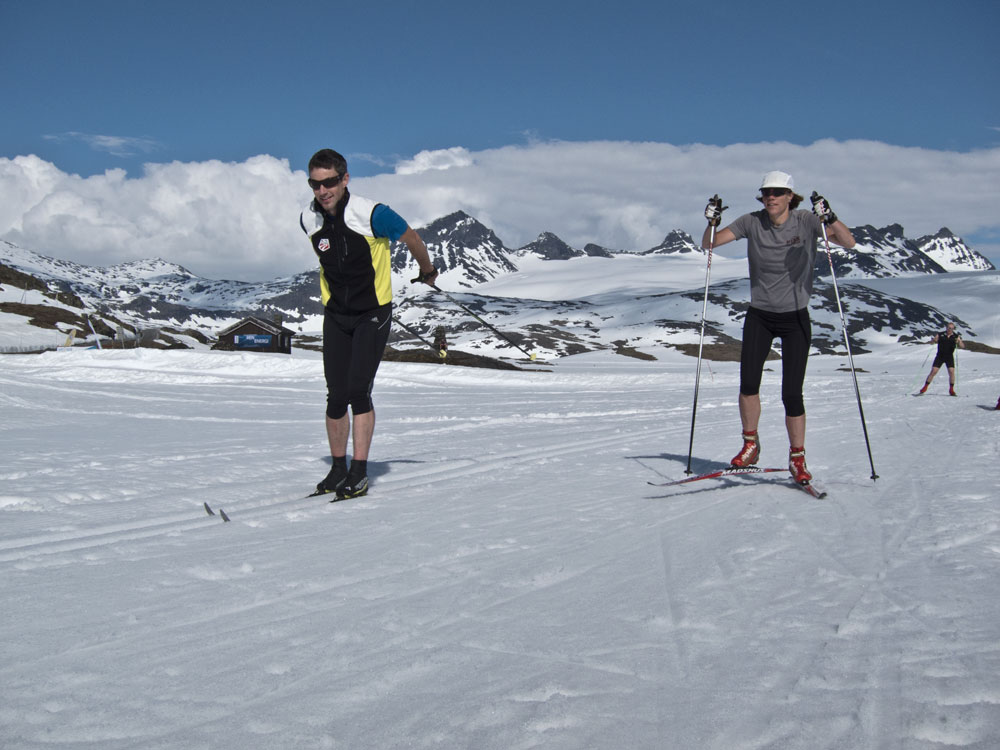
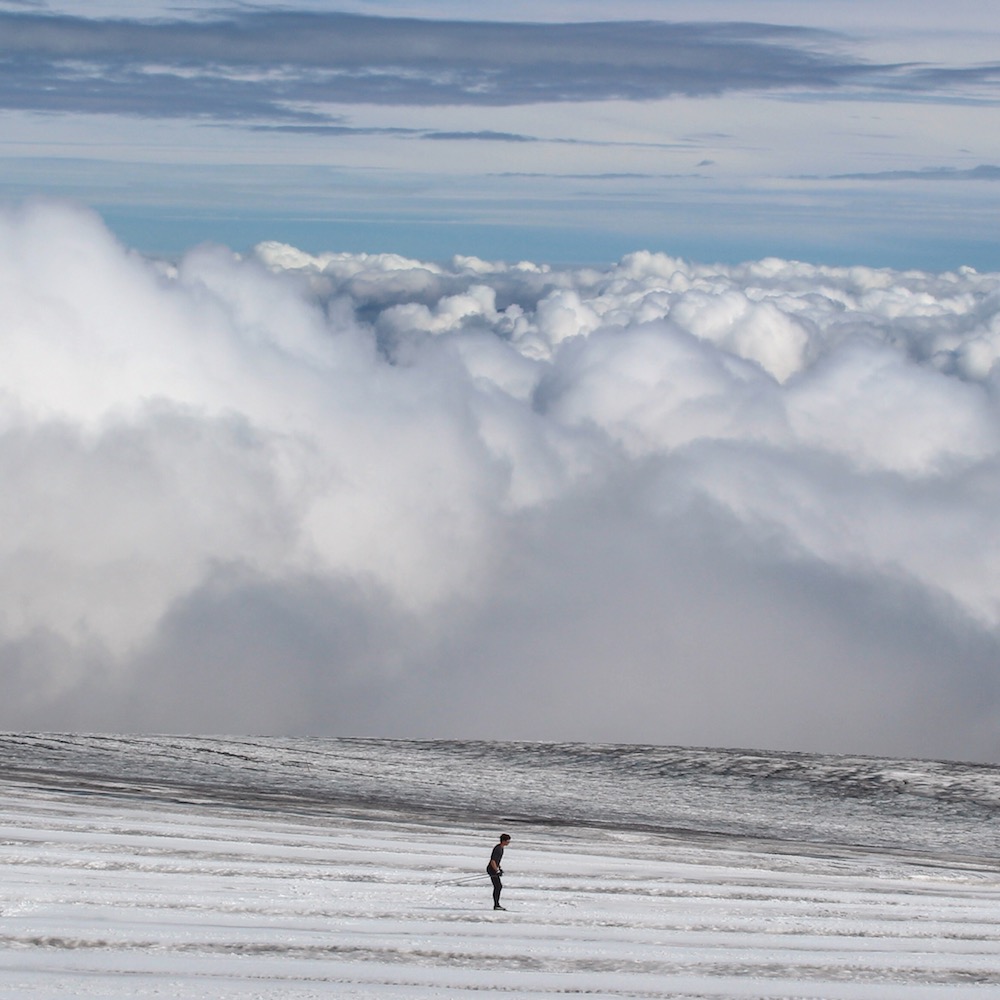
    August skiing on the Dachstein Glacier in Austria as seen in 2015. (Photo: Claire Grall)

    Editor’s Note: The following is the third post of a series proposed by Maks Zechel, a 19-year-old Canadian cross-country skier embarking on his first season training abroad. He recently made the big move to Norway, where he’ll be training and racing with Team Asker for the next nine months. Through these updates, Maks hopes to share his personal “observations, stories, and lessons learned” to help close the gap between North American and Scandinavian nordic skiing. Read Post #1 and Post #2.

    ***

    Arrival.

    My landlord greets me warmly at the bottom of the driveway as soon as I step out of the taxi. In his mid-70s, he doesn’t even give me a chance to protest as he quickly scoops up my heavy ski bag and staggers up the steps leading to the house. He’s fit, and in the coming days I see that he goes running, kayaking or rollerskiing every day, while his wife goes swimming. After unpacking my things I am treated to an evening meal that includes brunost (Norwegian “brown cheese”, it’s soft and sweet) and smoked salmon. Later I am shown where to put my bike in the shed. Wooden skis hang in the rafters, the same ones he used to compete in the Holmenkollen 50-kilometer race in the 1970s (this was before it was a designated World Cup, but it was still a prestigious event). It’s like finding a pair of skates in my grandfather’s attic, and discovering that he played in the NHL with them. Welcome to the home of cross-country skiing.

    And what is more Norwegian than skiing in the summer? My arrival in Norway coincided with the time that most Norwegians go on holiday. Team practices were suspended for a couple of weeks so I decided to take a trip of my own to nearby Torsby, Sweden. This is a small town that is known to skiers around the world for its partially underground ski tunnel. A few other well known ski tunnels designated for cross country skiing, are: Oberhof (Germany), Toksovo (Russia), and Vuokatti (Finland).

    Time spent on snow becomes crucial to a skier’s success as they enter the junior and senior level, and skiing in the summer grows in importance. Summer is an expensive time to get on snow for many, but it is extremely valuable. Skiing in the summer allows athletes to put in big hours of volume and quality intensity workouts that are harder to fit in closer to the race season. It is easy for skiers to get excited in the fall and early winter as we finally get on snow.

    As the race season draws closer, it is common for skiers to frantically put in huge volume and many hard workouts in the short periods that they are able to ski. It is frustrating when fall arrives and you go from great summer fitness, to suddenly feeling that your dryland training is not directly translating to good technique and shape on skis. Nevertheless, trying to fix all of this too quickly before the first races in December can ruin your entire race season if you burn yourself out. One solution is shifting some of that on-snow work to the summer, when it is easier to absorb a lot of training with the absence of school and races and the presence of sunshine and Vitamin D.

    I have had three different summer skiing opportunities over the last three years, and I have compared my experiences for your benefit:
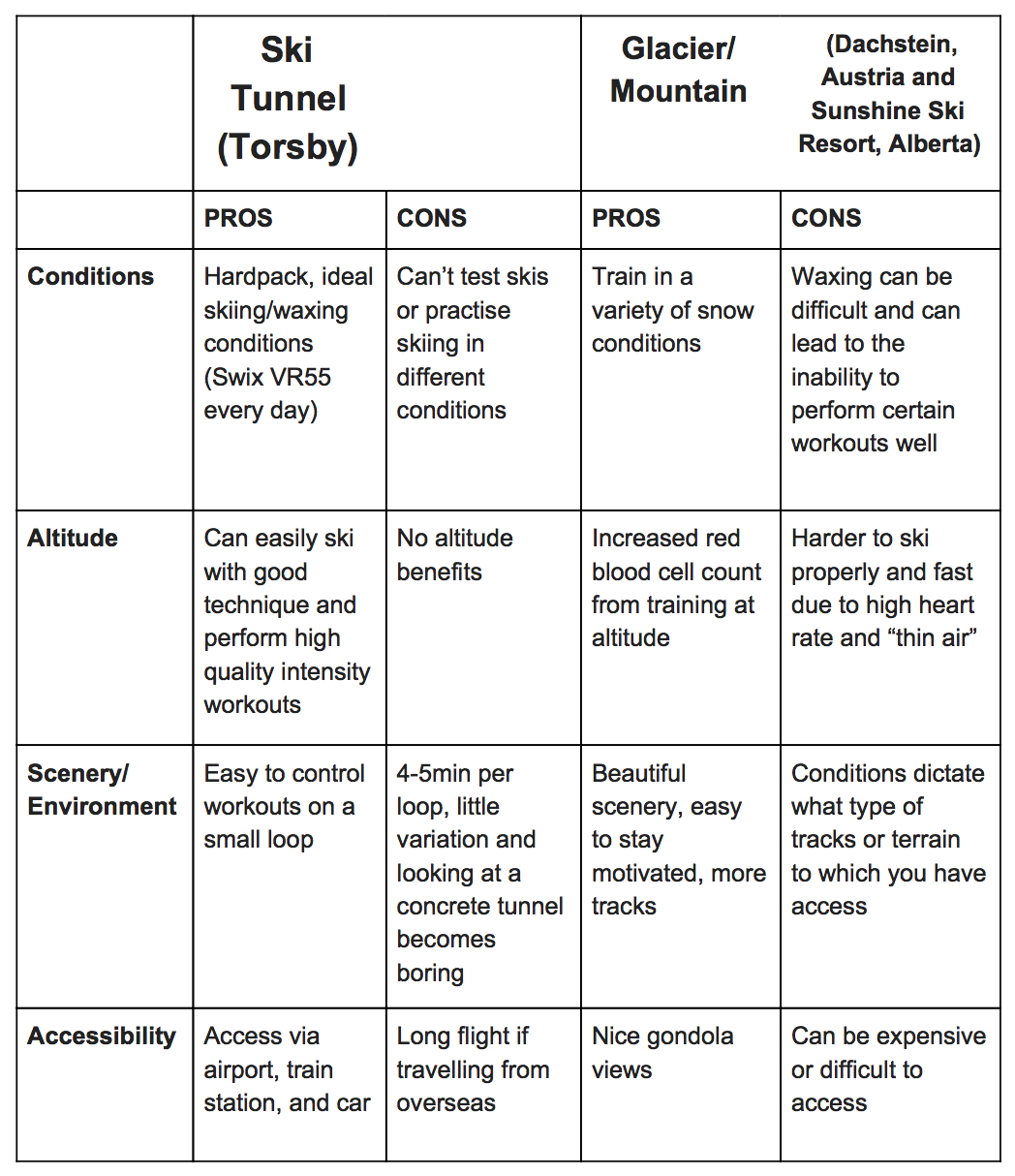
    The ski tunnel in Torsby is easy to access and great for a short or long stay due to the excellent training variability. Besides the tunnel, this includes a rollerskiing track, biathlon stadium (outside and in the tunnel), extensive running trails through the surrounding hills and forests, and a fully equipped gym attached to the tunnel.
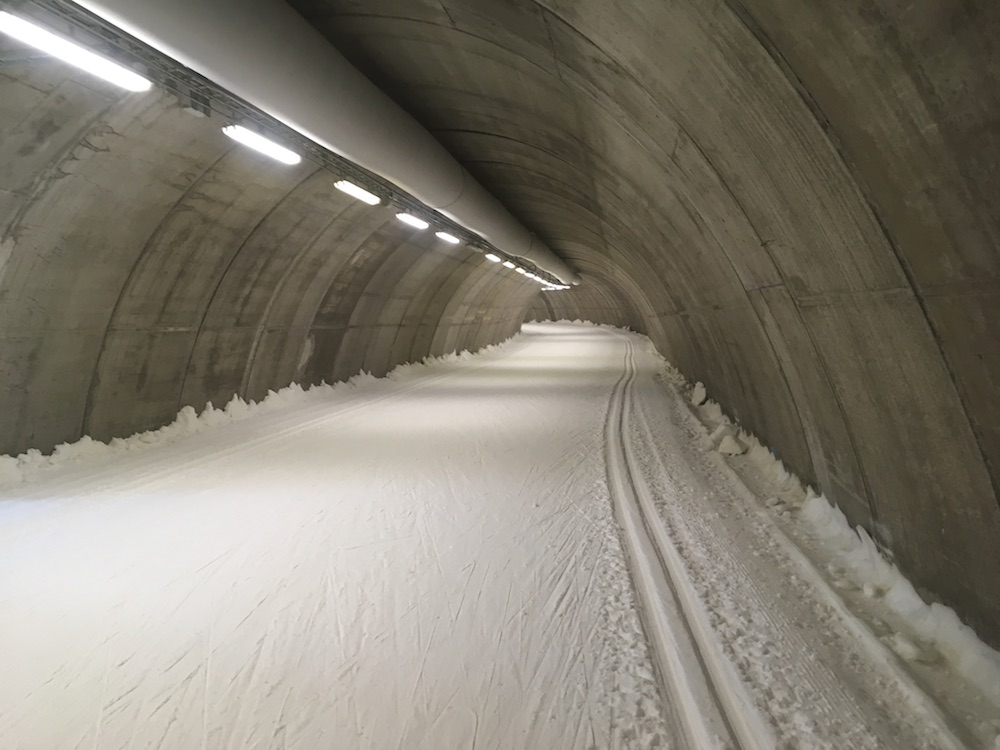
    Inside Sweden’s Torsby ski tunnel. (Photo: Maks Zechel)

    The ski tunnel is one loop with a wide “stadium” area at the start. The entire loop is a concrete tunnel and the temperature is kept around -5 degrees Celsius (23˚F). The loop has two hills per lap, which are steeper in one direction and more gradual in the other, making for a great place to work on striding. Most senior men would one-skate the hills at race pace, but they are still steep enough for offset technique work at lower speeds. I was thrilled to be on snow for my first few fiveminute laps, but after approximately 150 laps in three days, it became less exciting. The “eurobeats” playing in the tunnel were entertaining at the start, but one can only listen to “Despacito” so many times…

    While in Torsby, I stayed in a room at the Valbergsängen Sporthotell (a six-minute walk from the tunnel). Valbergsängen offers the option of staying in a hostel for a reduced rate where you are given your own room in a house with a bathroom and kitchen that are shared with other guests, or you can stay in a hotel room where you have more privacy and breakfast is included. You can even choose between the two if your Swedish is good enough. Unfortunately I missed this expensive difference, and without a kitchen, ended up making creative “meals” on my desk out of tuna, cheese, beans, peanut butter, and an assortment of bread and vegetables.
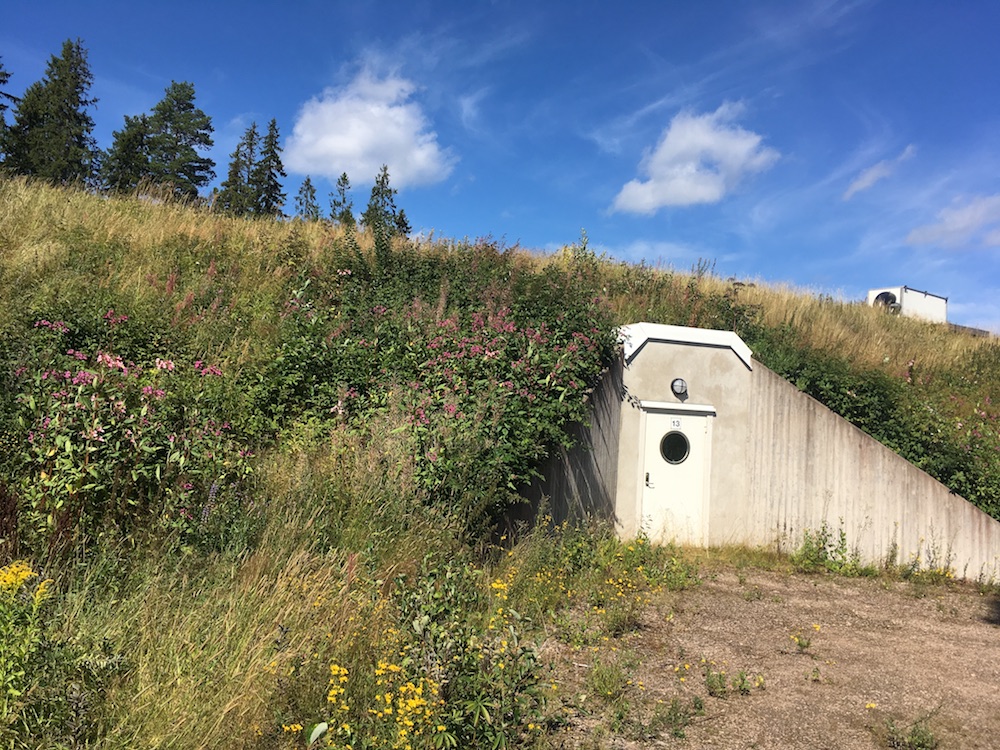
    Outside the Torsby ski tunnel. (Photo: Maks Zechel)

    I returned from Torsby, after twelve hours spent skiing loops in a “bunker”, to discover that I had a new roommate. I was sitting on my couch working on a blog post when I heard a noise that only your average-sized mouse should make when hitting the floor. I looked up and, with a jolt, realized I was looking at a spider almost the size of my hand scuttling towards my fridge. In that moment, I decided two things: one, I did not want a roommate, and two, this spider was too big to tackle with a tissue. I jumped up and grabbed my broom handle from the corner (coincidentally this broom handle doesn’t have a broom on the end of it, something that will likely be an issue at some point in my stay here). When I looked up, he was gone (I say “he”, because I am praying it is not a female about to start a family in my apartment). I slept restlessly that night. A week later, after discovering that this is a common Norwegian house spider, I am now in the acceptance stage, and I hope that the two of us can coexist peacefully for the next nine months. If not, one of us will have to leave….

    Norwegian Phrase of the Week

    Norske: Jeg sølte en stor beholder med yoghurt i melkegangen. Jeg beklager så mye.

    English: I spilled a large container of yogurt in the dairy aisle. I’m so sorry.*

    (*True story of my first few hours in Norway, unfortunately.)
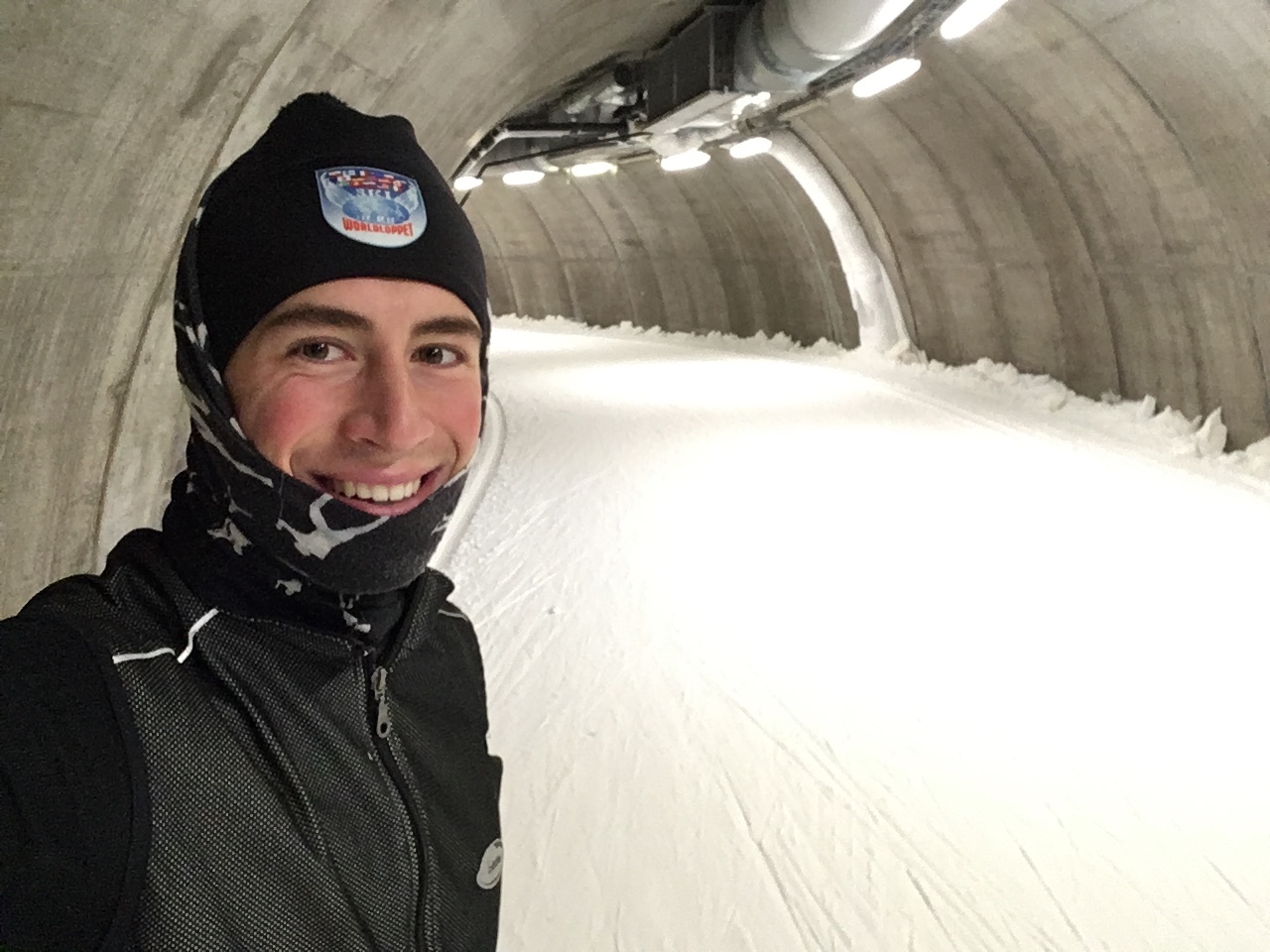
    Maks Zechel in the ski tunnel in Torsby, Sweden. (Courtesy photo)

    About Maks: Maks Zechel is a competitive cross-country skier who secretly wants to become a professional mile runner. He loves hiking and going on canoe trips with his family, as well as peanut butter cups in ice cream. Johan Olsson is his favourite skier and he hopes to race the Cortina-Toblach stage of the Tour de Ski one day. He enjoys writing about his experiences. Follow him on Instagram @makszechel.
     

  • Before the Last Hurrah, Le Guellec Finds Motivation in Change

    Before the Last Hurrah, Le Guellec Finds Motivation in Change

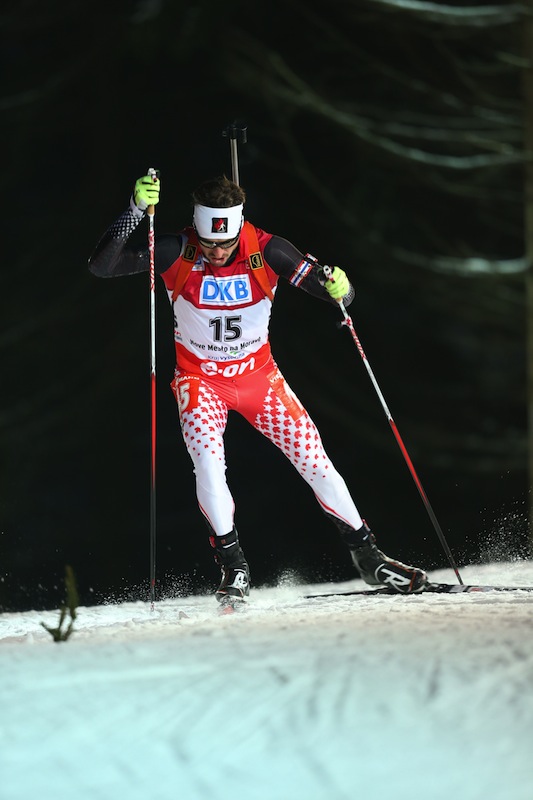
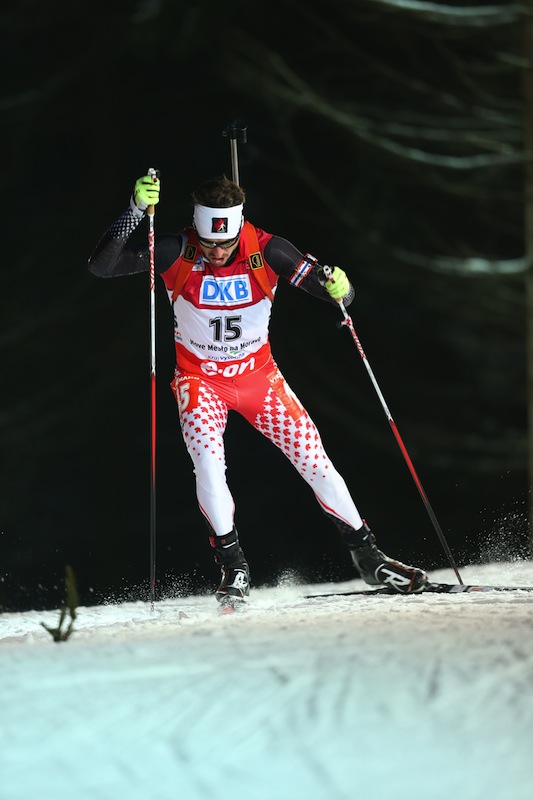
    J.P. LeGuellec finished 10th overall in the 20 k individual at 2013 World Championships. Photo: Nordic Focus/Biathlon Canada.
    J.P. LeGuellec finished 10th overall in the 20 k individual at 2013 World Championships. Photo: Nordic Focus/Biathlon Canada.

    A lot of athletes, if you ask them how long they’ve been working towards the Olympics, might say their whole lives. Or, if they’re veterans or barely missed the cut last time around, they might say the last four years.

    For Jean Philippe Le Guellec, 2014 will really be the culmination of something special: four years ago in Vancouver, where the Canadian biathlete placed sixth in the sprint, he decided that he would keep competing until Sochi, and that’s it.

    More than three quarters of the way there, Le Guellec is still near the top of his sport – he won his first World Cup race last season – and is sticking to his plan even though his recent success could easily have enticed someone else to keep racing.

    “I’ll be starting a family, for one, and then going back to studying for two, and then seeing how that develops,” he said in an interview last week. “I don’t have any concrete plans for now. I’m looking to study in business administration at university and hopefully a little background graphic designing as well. Hopefully a line of work within these two parameters.”

    Having known for four years that this would be it does add a bit of motivation, and it’s making the upcoming season even more exciting and meaningful for the Quebec-based athlete.

    “Knowing the end is approaching especially allows me to indulge and appreciate every aspect of the training/racing life I’ll be experiencing this year,” he later wrote in an e-mail. “I find pretty cool how much I’ve evolved as an athlete even over the last two years (definitely hugely since 2010).”

    With all that in mind, Le Guellec has made major changes this year to improve himself as a biathlete. It began with a two-week camp in Canmore with Swedish skier and technical coach Peter Larsson.

    “We were just looking at video from how I was skiing just a year ago at World Championships in the Czech Republic, and there’s a pretty drastic change,” Le Guellec reports. “We’ve pretty much tried to go here and there to better our preparation. It’s refreshing, and it’s motivating in general to be training this year with all these changes.”

    He’s also shifted some aspects of his shooting and increased his focus on his strength program. And After the spring camp with Larsson, Le Guellec also headed to Canmore in July, where he came out on top in the team’s annual multi-discipline “testival” (Rosanna Crawford won the women’s rankings).

    Right now, he’s in Ramsau, Austria, skiing on the glacier with the men’s “A” team: Brendan Green and Scott Gow. Scott Perras was supposed to attend as well, but as he recently wrote on his FasterSkier blog, he has been struggling with form and needs to rest and carefully manage his training.

    “It’s the smallest team ever,” Le Guellec said.

    But that doesn’t mean it’s not a good one. It’s not just Le Guellec who has made changes: the whole squad, he says, is faster and stronger than before and making significant changes. Look for a different Canada next season, not the one that seemed to fizzle as the 2013 season drew to a close.

    “I’ll be really curious to see how it goes this year,” Le Guellec said. “Guys are getting really strong and it won’t be a one-man show this winter. With Brendan back on full throttle and Scott Gow, who shows a lot of potential and Scott Perras had some good results last year too, I think the men’s team will be doing really well this winter.”

    On the Dachstein glacier, the three men mostly train separately, navigating the trains of hundreds of skiers. It’s tough enough to ski at the right level on your own, without having to match paces with a teammate.

    “If you manage to squeeze in in between packs, then you can do your own thing,” Le Guellec explained. “But sometimes you get caught up and that gets annoying because you have to wait for the proper time to be able to pass. Everyone is going super slow and you can’t just outright sprint, because then you’ll blow up.”

    Why might that be? The Dachstein sits at 2700 meters above sea level, or almost 9,000 feet. The town of Ramsau itself is at just 3,300 feet, so the team avails itself of a local biathlon facility for afternoon training. There, the trio of Canadians can actually train together, with a lot of attention from the coaching staff.

    When the team arrived, the glacier was perfect, Le Guellec said. Sparking, sunny, with mid-January-like conditions. Then, the trademark fall rain set in. While it was never too soggy or foggy to head up the mountain, things got a little less enjoyable.

    “Now the glacier is still white, which is fun, but the conditions are a lot softer and a lot slower,” Le Guellec said.

    While Le Guellec is working on his improved technique on-snow, more motivated than ever, and enjoying the glacier time, this might be a good reminder of why he’s hanging up the skis. He has been a full-time senior athlete since 2005, which adds up to a lot of flights across the ocean and time away from family.

    “It’s especially hard being from North America, I guess,” Le Guellec said. “Being European would be different.”

    While Le Guellec makes a habit of being honest in his interviews, that doesn’t mean that he gets stuck dwelling on the downsides of his profession. This year he will go fast, have fun, and that will be that: one last hurrah.

    “It’s pretty sweet to be able to think I’ll be able to retire on a high, a better athlete, and knowing my coach and I will have turned new stones to get better,” he wrote in an e-mail. “In the words of James Hetfield: ‘No remorse, no regrets!’”


  • Caldwell Sport: Ski Factory Impressions

    Caldwell Sport: Ski Factory Impressions


    This article is a paid advertisement by Caldwell Sport, a ski-grinding service and new-ski retail shop operated by Amy and Zach Caldwell in Putney VT. It’s busy season in the ski industry and we’re cranking away at selling and grinding skis, so we’re recycling an article that Amy wrote for our website in late August. How many of you were paying attention in late August? OK – then this will be new material for you!


    This summer I was fortunate enough to visit several different ski factories in Europe with Zach. After our first year back in operation as Caldwell Sport, we felt that investing in my understanding of skis from the ground up was important for our business. We’re a small business, and it’s necessary for both of us to have a high level of expertise in all aspects of the operation. There is no better way to learn about skis than to go to the source and handle skis every day for a few weeks with no distractions. I am pretty sure this is Zach’s idea of heaven.

    Our first trip of the summer was to Norway. Zach planned the trip so that we could spend a few days skiing on the snow at Sognefjell, about a 3 hour drive north of Lillehammer, with some of the US Ski Team guys that he coaches. Sognefjell is a remote mountainous area located above the Sognefjord. Its elevation is about 4500ft and holds snow well into the summer. There is a hostel-like lodge there that serves five very carbohydrate rich meals a day. They salt and groom a 7km winding loop (with hills and turns) twice a day.

    When we were there, all of the major ski companies were testing their products along with some of the Norwegian National Team, German Biathlon, United Bakeries Marathon Team and a host of other teams from Norway, Sweden and Finland. Because all of the major ski companies are based out of Europe, this ends up being a relatively close testing area for them. While we were there, we were able to test some prototype products that are really interesting ideas. If all goes well, these products will be brought to market over the next few years. We were able to get a sense of what concepts ski companies were working with and what direction they are headed.

    After 15 hours of skiing in 6 sessions at Sognefjell, we headed back to Lillehammer to spend a week picking skis at the Madshus factory in nearby Biri. I have become a bigger and bigger fan of Madshus skis over the past few years, so I was really looking forward to going to the factory. Although any factory setting is far from glamorous, the Madshus factory was a totally impressive facility. They take extreme care selecting all of the materials that go into their skis and have built some of the most exact machines in the industry. They are so exact that they have to make slight adjustments during a production cycle so that not every pair of skis is identical! Anyway, after a week of drinking the Madshus “Kool Aid”, I left Madshus feeling even more excited to test their skis this season.

    After Madshus, the next stop on the ski pilgrimage for me was to the Salomon Headquarters in Annecy, France in August. While Salomon produces their skis in Altenmarkt, Austria; their World Cup service team is based out of Annecy and all their development and prototyping happens there. They actually have a press in Annecy where they can produce a new ski to test without having to halt the whole production line in Austria. It was a great opportunity to spend a little time with Patrice Frisson-Roche, one of the Salomon World Cup service guys, to learn a bit about what skis they have been testing and liking on the World Cup.

    Over the next two days, which also happened to be a weekend, we spent 10 hours on road bicycles near Annecy biking several of the roads and Cols that the Tour de France often visits. Thanks much to Alex Haas, the Salomon international marketing director, and his good friend who is the marketing director for German soccer for showing us some incredible riding around Annecy. In spite of very sore bums and legs, it was an amazing three days.

    From Annecy we went to the Salomon ski factory in Altenmarkt, Austria. Salomon shares a factory with Atomic which are both owned by Amer Sports. It is interesting to see two totally different ski companies working side by side. They have two separate design teams that work independently of one another. Most of the factory workers are working for Amer and not directly for either ski company. Jean-Marc Draeyer works for Salomon and is very involved with ensuring the quality of every pair of Salomon skis.

    Overall, my impressions of the Salomon factory were very positive. Although Salomon hasn’t been making skis for all that long compared to the other ski companies out there, they’ve done a good job bringing in some very hard working and knowledgeable people.

    Riding in Annecy, France.

    We were also very fortunate to have 2 free days in Altenmarkt due to an Austrian holiday and another weekend day. Zach and I took advantage of the nice weather and the Austrian Alps and did 2 fantastic hikes from Ramsau, one of them taking us up and around the Dachstein glacier. Although the Dachstein is used as a summer ski training venue, August tends to be its low point for good skiing during the year so we were happy to be hiking instead of slogging around on dirty, very slow glacier ice.

    Dario Cologna’s skis at Fischer.

    Also, during our week in Austria, we were able to squeeze in a day visiting the Fischer factory in Ried. Although Ried is unfortunately not located in the beautiful Austrian Alps, it was a great opportunity to get to take a look inside the factory that has been the leader in making cross country skis over the past few decades. The Fischer factory certainly did not disappoint. It is definitely the largest of the factories and it is clear that they continually reinvest in their machines and technology. It was also great to see into the racing department and see a whole bunch of Dario Cologna’s skis get dropped off for grinding. Thanks to Andy Forstner (another World Cup service guy) for showing us around.

    In all, I learned a lot about the different ski brands we carry this summer. One of the biggest lessons that I learned was that to be truly knowledgeable with skis, one must be a continuous and eager student of skis. Ski companies are constantly trying to refine their skis and make them lighter and faster. They come up with new concepts, develop them and then test them over and over again. I know one thing that I will do this winter is use every ski as a ski testing opportunity. Knowledge comes with hard work. Fortunately, like all of our customers, I don’t mind this type of “hard work”.

  • U.S. Ski Team Lines Up Summer Training From Alaska to Ramsau

    U.S. Ski Team Lines Up Summer Training From Alaska to Ramsau

    Randall and Stephen training with the Mora Ski Club last summer. They'll be back to Sweden this August, this time with the rest of the USST women. Courtesy photo.

    In the months following its first camp of the year in Bend, Ore., the U.S. Ski Team (USST) has several new training destinations planned along with its old standbys: the men and women will split up and head to Alaska, Sweden, Austria and Germany over the course of the summer. And for the first time since its first trip to New Zealand 10 years ago, the Snow Farm is completely off the schedule.

    The women’s summer begins in familiar territory: the “North American Women’s Training Alliance” will coalesce once again for a June camp in Anchorage, Alaska. The Americans, Canadians and an unnamed European guest will take advantage of Eagle Glacier for quality time on American snow.

    August brings a new training opportunity for most of the women: they’ll jet off to Scandinavia where they have a joint camp planned with the Swedish women. Kikkan Randall and Liz Stephen both did a tour of Sweden last summer with their host Anna Haag, but with the rest of their teammates along for the ride this time, what began as a friendship between Haag and the Americans has turned into a full-scale, two-week training period in Salem and Torsby for each team’s full roster.

    A collaborative camp on this level between the U.S. and a European national team is unprecedented, at least in USST head coach Chris Grover’s memory. The idea was discussed in January in the midst of the Tour de Ski, when Swedish women’s coach Rickard Grip cited Randall’s skate technique and the value of exposure to a non-Scandinavian approach to skiing among the benefits to training with the Americans.

    The results the U.S. women posted on the World Cup this winter played no small role, either.

    “I think because of the women’s team making a big step forward and having World Cup contenders, that becomes more attractive to a team like the Swedes than perhaps it was before,” said Grover.

    “I’m psyched it’s coming to fruition.”

    Dachstein glacier. Photo: Erik Nilsson.

    While the American women are in Sweden, the men will be in central Europe — first to Ramsau, Austria, home of the Dachstein glacier, and then on to Oberhof, Germany to use the indoor ski hall.

    The traditional New Zealand trip, which has been a staple of the USST’s summer training in some capacity since 2002, is off the schedule this year. The Southern Hemisphere is simply too far and too expensive for it to make sense any more.

    “It was tough to pull away from because it’s such fantastic conditions, great living, and such a solid camp,” said Grover.

    Besides airfare more than doubling in recent years, Grover added that the lengthy travel and 16-hour time zone adjustment (from EDT) made the Snow Farm a less practical option. Europe is a cheaper flight and only six hours ahead of the eastern U.S.

    “We talked for a while about going to Europe, and we felt it was time to do something different,” said Grover. “And it would be a little easier on our budget as well.”

    Dachstein is a mecca for nordic skiers year-round, and in the summer is frequented by European clubs and national teams. Grover wasn’t sure who else would be in Ramsau in August, but knew the Norwegian men would be in Oberhof for the tail end of the USST’s camp there.

    “We may look for opportunities to schedule workouts with the Norwegians if it’s possible, but we have nothing planned at this time,” he said.