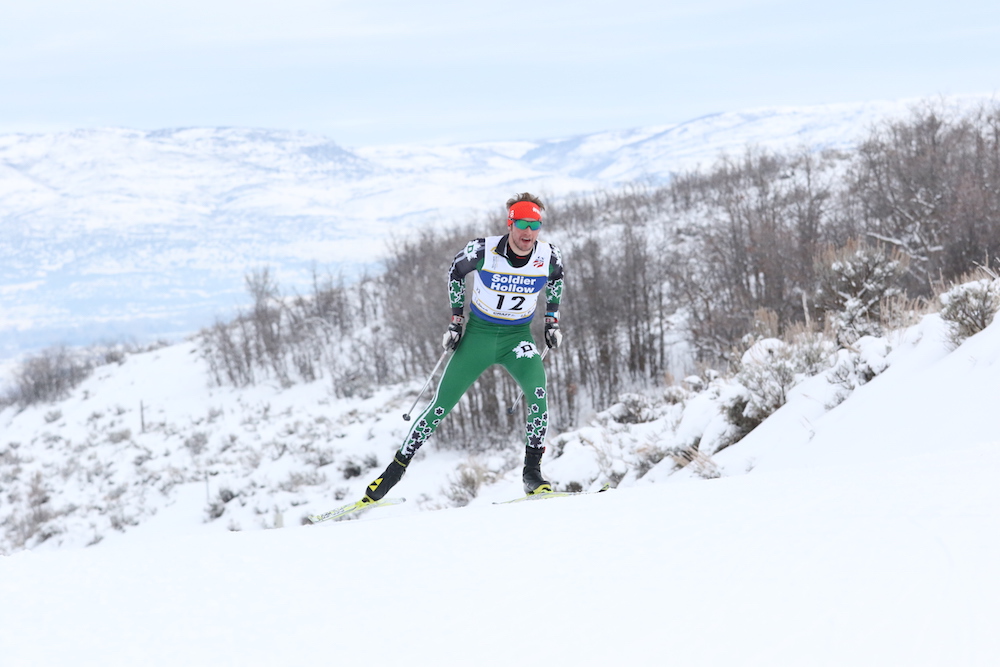
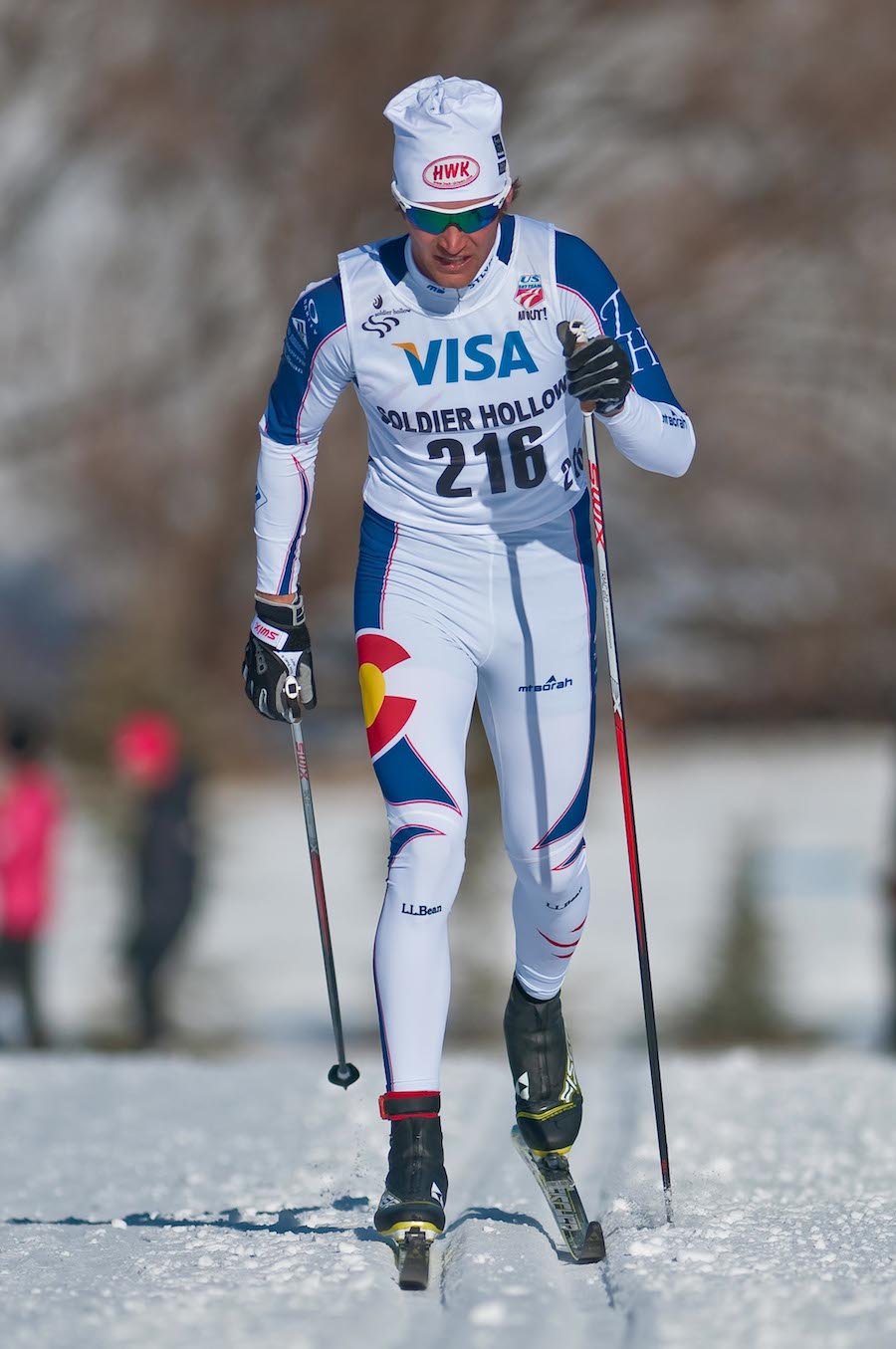
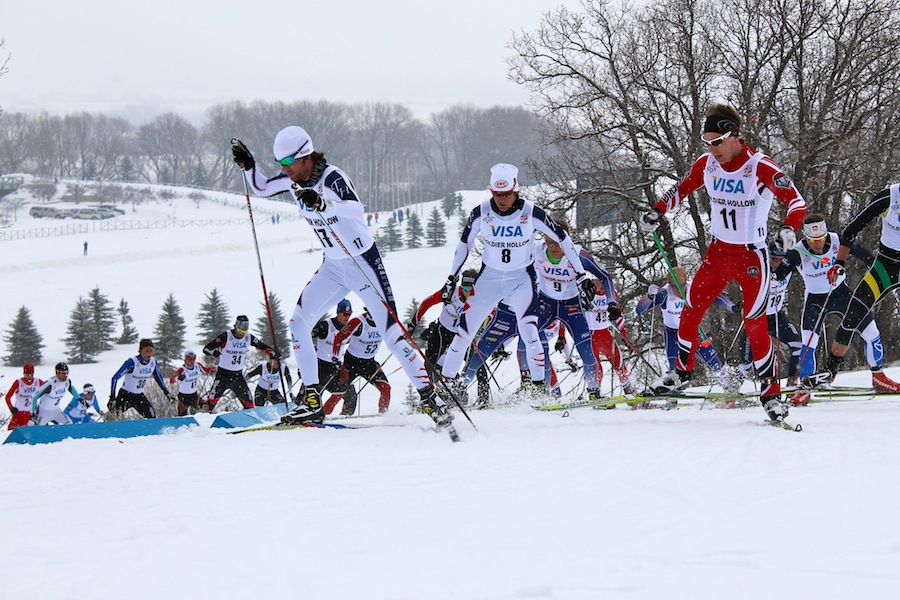
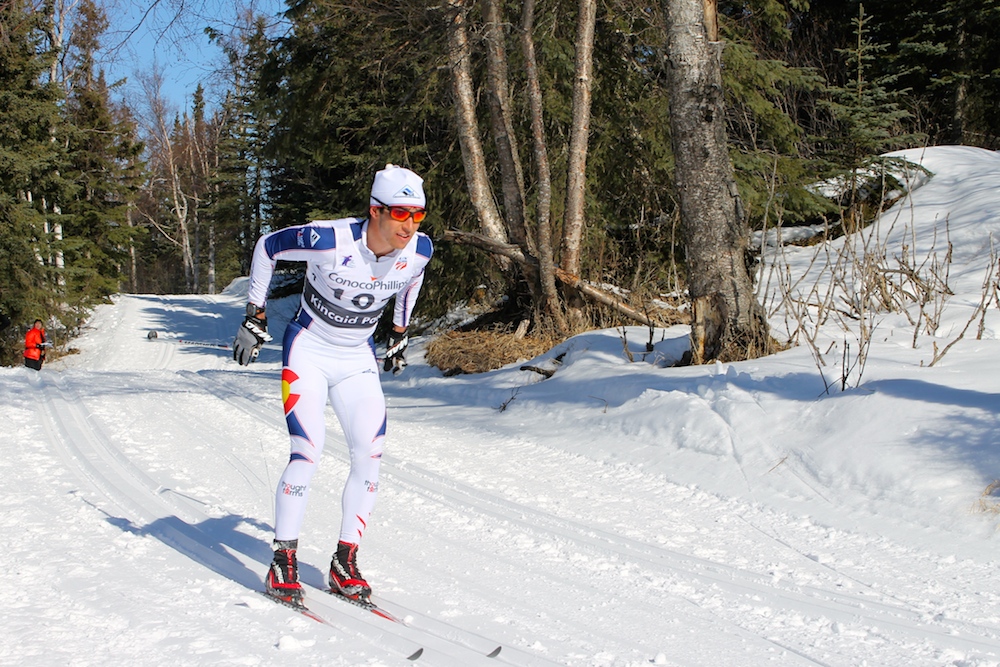
Cal Deline (Dartmouth Ski Team) racing to 17th in the men’s 15 k freestyle at 2017 U.S. nationals earlier this month at Soldier Hollow in Midway, Utah. (Courtesy photo)
In an effort to showcase the North Americans competing at next week’s International Ski Federation (FIS) 2017 USANA Nordic Junior World Championships and U23 Cross Country World Championships at Soldier Hollow in Midway, Utah, we asked those qualifying athletes several questions about themselves — actually, we had them fill in the blanks. Here we have 21-year-old Cal Deline, of Dartmouth College, who’s representing the U.S. at his first U23 Worlds.
***
“My full name is Callan Deline, but people call me Cal.
I was born in Fort Collins, Colo., raised in Vail, Colo., and one thing that you should know about Vail is that it’s awesome all summer and winter long.
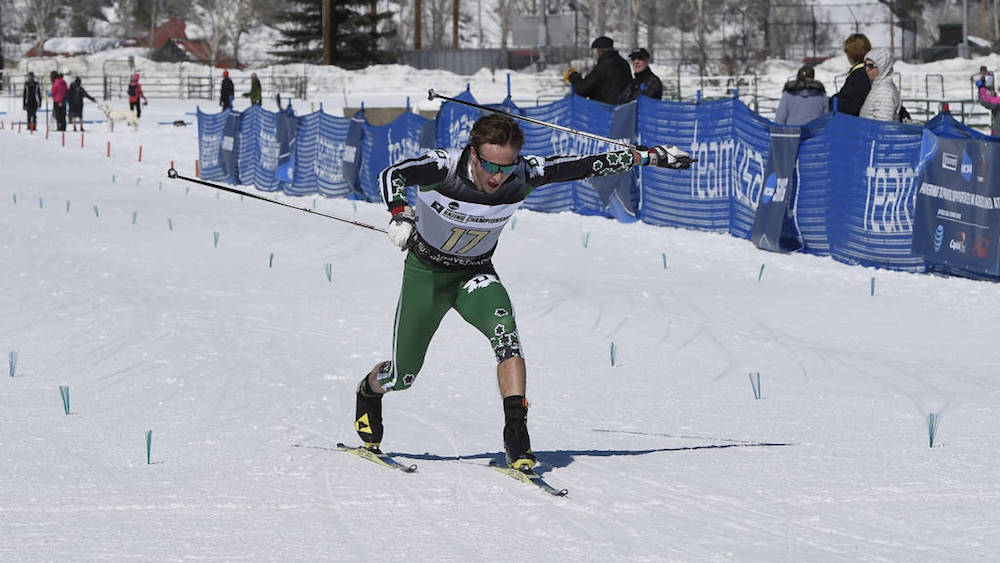
Cal Deline (Dartmouth Ski Team) finishing 14th in the 10 k freestyle at 2016 NCAA Championships in Steamboat Springs, Colo. (Courtesy photo)
I started cross-country skiing when I was 15, thanks to Dan Weiland, Sylvan Ellefson, and being forced to stop big mountain skiing. I currently train where I go to school, in Hanover, N.H., with the Dartmouth Ski Team.
If I’m not nordic skiing you can probably find me alpine skiing or somewhere at school. My favorite book is ‘Mr. Penumbra’s 24 Hours Bookstore‘.
One of the things I’m most excited about for U23/Junior Worlds at Soldier Hollow is to be racing against some of the worlds best on what I consider a home course. As for the races I’m targeting, I’m going for all of them, but am especially excited for the 30 k pursuit. It’ll be my first-ever pursuit and second-ever 30 k (first 30 k being at nationals this year).
The best advice anyone ever gave me about skiing or racing was, there’s a tie … ‘90% of skiing fast is looking good’ – Simi Hamilton… ‘Racing is just hanging onto the fastest guy for as long as you can, until one day you are the fastest guy’ – Sylvan Ellefson
One of the best race memories I have is drinking Red Bulls instead of warming up before the Owl Creek Chase, or before any race longer than 20 k.
If I could meet one World Cup skier, it would be Jessie Diggins.
If I don’t end up being a professional skier, I’ll probably be traveling or trying to find a real job.
I’m missing a week and a half of school to be here, and my professors are probably thinking ‘Who is gonna take this kid’s midterms?‘
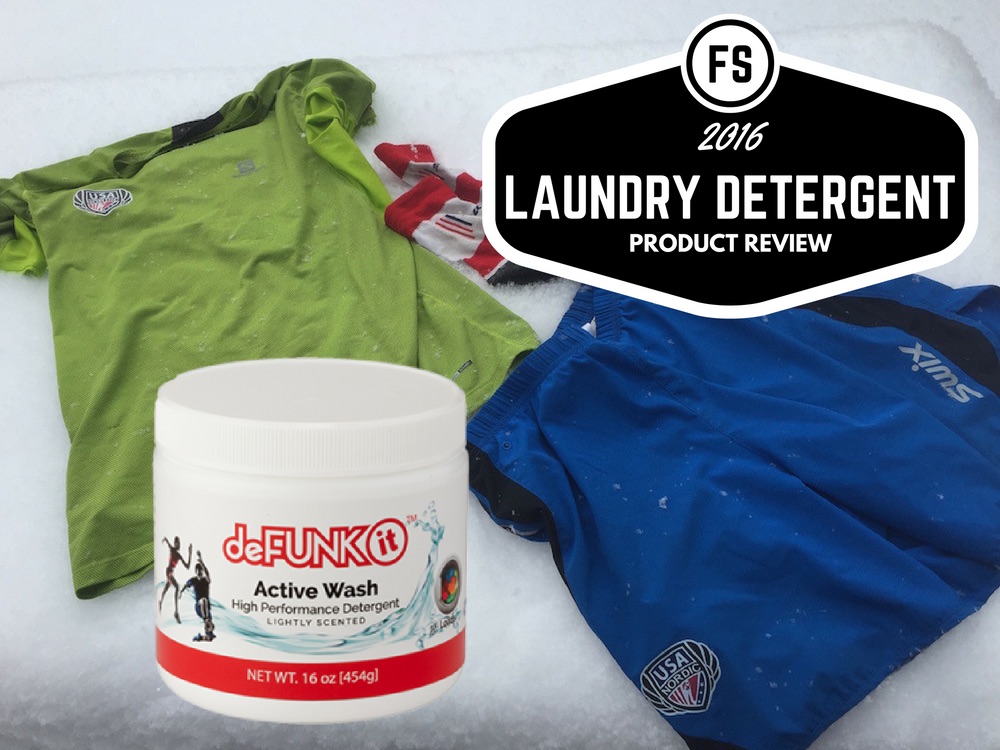
Putting deFUNKit, a high-performance laundry detergent, to the test.
Funkadelic
In my classic whap stick review, I chided readers for not knowing the “Keeping it 100” reference and noted that if you didn’t know it that you were officially out of touch because you were too old. Now I’m turning the tables on y’all with my latest wild assertion that if you don’t know the “We Want The Funk” reference, well, you’re out of touch because you are too young. George Clinton and Parliament are one of the most influential bands of all time, so if you aren’t already intimately familiar with this legendary group and song, well, you need to “get woke”. There, now that I have suitably confused everyone, let’s get rolling.
I often rotate in experts for certain reviews, as I believe it is particularly important to not only have diversity of voice, but also to use people with extensive experience and expertise in any given area. This means that test teams can vary in size from project to project, but there is almost always one constant — the core group of my trusty colleagues at the Steamboat Springs Winter Sports Club (SSWSC). I am incredibly fortunate to be a part of this amazing organization for all sorts of reasons and we are a very close-knit group. It’s a good thing, too, as this latest undertaking took took our relationships to the next level. How? Well, we just spent a week smelling each other every night before dinner.
Long and Lonely Road
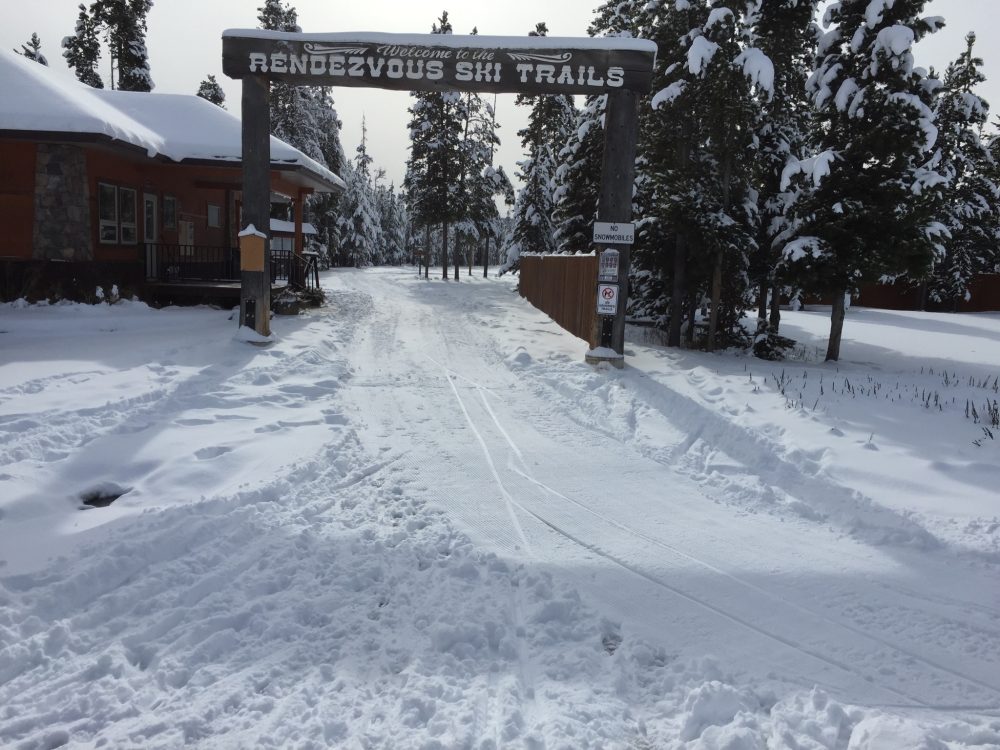
The trailhead at Rendezvous Ski Trails, as seen in late November of this year in West Yellowstone, Mont. (All photos: FBD)
Like many Nordic teams, SSWSCXC just returned from our annual early season training trip to the West Yellowstone Ski Festival.
At these training camps all of the coaches ski together (naturally) and dine together, but without a doubt this was the first time that we sat at meals and discussed not only how often we were all changing our socks and underwear, but also how these pieces smelled. I’ve heard that conduct of this nature is nothing new for Vail coaches Dan Weiland and Eric Pepper, but this is just one of many reasons why those two are usually found dining alone.
#TBT shot to a young Dan Weiland sitting alone at his junior high lunch table, completely devoid of friends, as fellow reclusive loner Eric Pepper looks on from a distance. It was here in these moments of desperate loneliness that the personality traits necessary to be a nordic coach were forged.
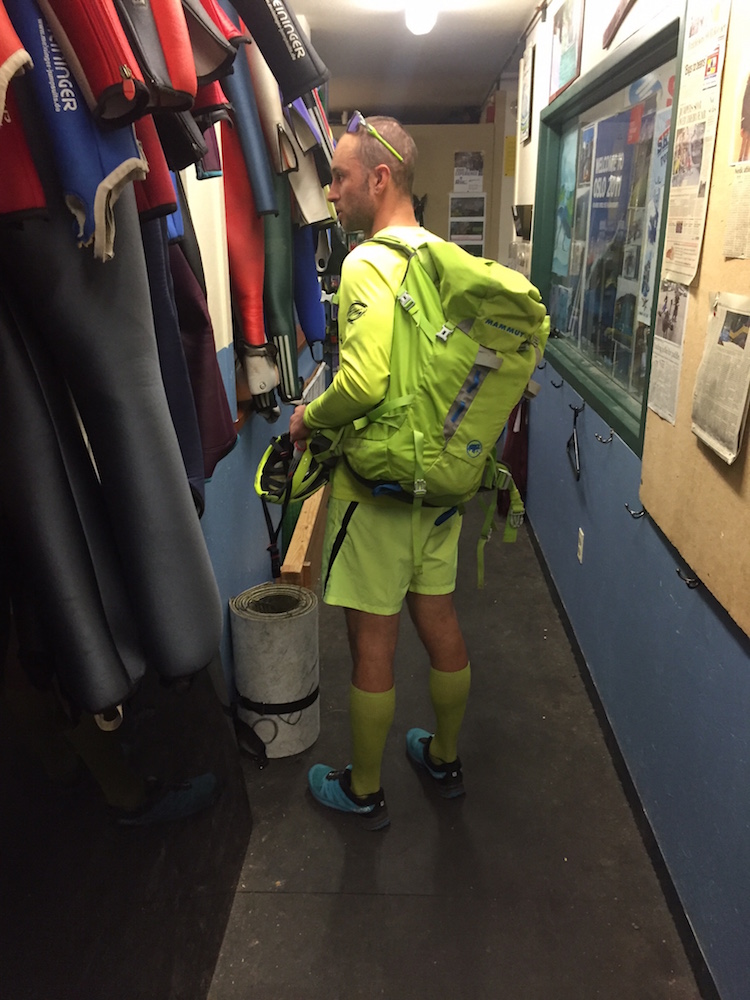
As you all know by now, the FBD has a reputation for looking real nice for the ladies. In our journey together to right the wrongs in the world of ski gear, we’ve tackled thick puffies, thin puffies, base layers, skate rollerskis and classic rollerskis, and we’re doing it people, we’re making a difference. It used to be that I’d see Josh Smullin in outfits like this every day, but now the frequency is down to every second or third day.
’90s neon, knee-high compression socks? Check. Matchy-matchy ’90s neon shirt, short, backpack combo? Check. ’90s neon man-purse fanny pack? Check. Prepare to deploy, Outfit Of The Day.
Baby steps. Baby steps.
So the fashion bar has been raised. Good. Very good. But looking good is only part of the picture. What if your outfit is “lit” but you smell like sh*t? I can tell you right now that this is a deal-breaker. I don’t care how fast you ski, how good you look and how savage your latest outfit is, if your base layers smell like Dave “Slow Ski” Cieslowski’s hockey equipment after spending a month in his trunk in July, you’re going to be relegated to the Weiland/Pepper lunch table in no time.
But fear not stinky nordie, all is not lost.
By now you’re probably thinking, “What the hell is this lunatic talking about? This is the craziest gear review I have ever read.”
I (along with my readers, editors, friends, neighbors, and local law enforcement) often find myself asking that very question, so let’s dive right in. Since thanks to all of you loyal readers, I have rapidly risen to the most influential and trusted gear reviewer in the galaxy, I am therefore frequently contacted by companies from all walks of life with every crazy product you can possible imagine. Some are cool, some are dumb, but occasionally something bubbles up that really catches my eye. This was one of them: a laundry detergent that supposedly allows you to wear base layers for multiple workouts without washing. Since no one is lazier than me, I was immediately intrigued.
The product in question is called, deFUNKit and here’s how it works. You simply do a normal load of laundry with their special detergent, then do repeat the same load with two different sets of their reagents (concurrently), and voila, your B.O. is now officially banished. Or so the story goes.
Test Protocol
To test this product, three brave men and one very brave woman descended on West Yellowstone, Mont., with only the shirts on their backs, almost literally. We brought a combination of wool and synthetic socks, undies and base layers to see if this mystery potion could stand up to real-life, real-world, real-stink testing. The plan was to ski in the same clothes for as long as possible and ride the party train until someone in the group “threw the flag.” Due to 1960s HVAC technology in our rooms, some of us wore one outfit for a.m. workouts and another in the p.m. to allow for drying, while others just went for it (more on that later).
Base layers: Swix synthetic top, Craft synthetic bottoms
Socks: SmartWool
Fundies: Victoria’s Secret (Yes, really. And no, people, this is not Josh Smullin, even though he is from Alaska)
Hours of usage
This is where it got real. There was a fair amount of variance in the final data mainly because one tester got super fired up and went “raw dog,” wearing the exact same outfit for the entire camp. This put their testing hours up to the extremely impressive level of 18 hours, split fairly evenly over 12 workouts. This is TRAINING HOURS, too, for much like my podcast colleagues Dean Nigglesson and Kristor Svonn, we only start our watches when we’re actually skiing (except for Smullin, who started his at breakfast — or “Bekfast, as he calls it — but that’s another story).
When you add up time at the wax table, the walk to and from the tracks and the occasional, “rushing to get lunch so I don’t have time to change clothes after my ski” hours, this brave soul logged over 35 hours in the same socks, undies and base layers, all without a single trip to the very nasty looking hotel washing machines.
The rest of us stuck to the protocol a bit more vigorously (or perhaps more cowardly) and racked up a range of 8-14 ski hours in each the a.m. outfit and the p.m. outfit, with another 60-75 percent of additional wear time, bringing total “on body” time for each outfit to 12-25 hours, again, split fairly evenly over seven sessions in the a.m. and another seven in the p.m.
The conditions skiing ranged from -10 to 7 degrees Celsius (14-45 Fahrenheit), with the majority of the workouts being Level 1 cruisers, but a few of us raced and had a couple of interval sessions thrown in for good measure, so there was ample opportunity to build up the funk. All in all, it was probably a very representative sample of typical skier usage and wear patterns.
Results
So does this stuff work? In a word, yes, amazingly well. One of the coaches’ wives is pregnant and with an already very acute sense of smell, the impending bambino has enhanced her olfactory system to the point of “super smeller” status, and bless her soul, she very bravely volunteered to sniff test us each night. Yup, I told you we are a very tightly-knit group.
Remarkably, even by the end of the camp, no one scored lower than a ‘7’ on the stink index (with 10 being ‘fresh as a daisy’ and 1 being ‘Weiland/Pepper lunch table’). This is pretty incredible given the high number of training hours. Even the “one outfit cowboy” came through with flying colors, which is nothing short of remarkable.
To be clear, we all came into this with a very health dose of skepticism. Mr. Reliable noted in his log, “I was very unsure about this whole plan at the start of this test, so much so that I brought several sets of back-up clothes in case this failed spectacularly.”
The AK Brawler agreed, “I really didn’t think this product was going to work, so I brought lots of spare clothes. Amazingly, I did not need any of them. I couldn’t believe it.”
Captain Deodorant Conspiracy noted, “I am very surprised. This product works way better than expected.” And then the kicker, “I went the whole week doing every workout in the same outfit and I think I can keep going. In fact, I think I AM going to keep this rolling, just to see how far I can take it.” Wow.
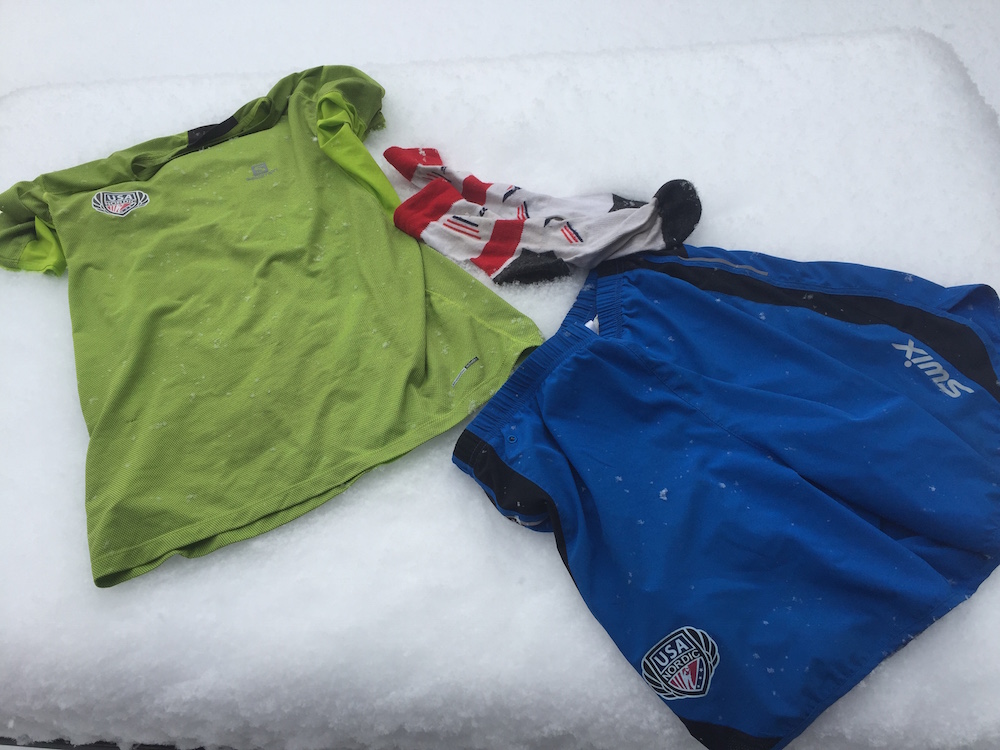
My beloved Salomon summer training “Please don’t hit me” rollerski top and trusty Swix socks/shorts.
Since no one is a bigger numbers nerd than yours truly, I couldn’t help but attempt to make the data set as statistically significant as possible, so prior to the camp in West, I logged 31 hours of rollerskiing, running and strength (divided over 12 workouts) in one outfit. The temperature in this workouts ranged from 11 to 26° C (52-79 Fahrenheit) and was often quite sunny. I managed to talk a few reluctant coaches into giving me the sniff test (though not the cowardly Captain Deodorant Conspiracy, whose fear of germs eclipses that of even my own) and they were also amazed to discover that the outfit (at right) was still quite pleasant.
So with multiple fabrics, multiple testers, multiple brands, multiple sexes, widely divergent approaches to personal grooming and government conspiracies, not to mention highly variant body chemistries, in every piece of clothing on every single reviewer, we found a significant decrease in smell. Every single investigator felt as though they could ski in socks and “unmentionables” for a minimum of four workouts and base layers for a minimum of eight. That’s a lot. And that was the low end. On the upper end, estimates vary here as well, but “intimates” made it upwards of 10 days and base layers maxed out the test. I think that pretty much says it all.
The After-Life
But what about life after skiing? Is there life after skiing? I realize I am getting a little philosophical here, but not to worry, I’m not speaking in terms of the after-life, I’m speaking in terms of the after-workout. In other words, do you need to wash your everyday fundies, well, every day?
“Back in the day,” I would prepare myself for a night on the town with a shower, shave and a nice, new, crisp pair of “knickers”, knowing very well that the chances of a member of the opposite sex actually seeing them were quite small. We were a good team though, as my BVDs had my back and dutifully played along with this ruse every Friday and Saturday night. I also did my part and got the troops ready for battle through proper and efficient rotation in the meticulous FBD laundry regimen. I figured it was the least I could do. Business is all about mitigating risk and optimizing your chances for success…
However, those days are now long gone, as every game is now a home game, but my focus on proper hygiene persists nonetheless. So the question at hand is can this miracle solvent work its wonder on not just athletic garments, but also daily wear?
To execute this phase of testing, I must confess that there’s a certain psychological barrier that must first be crossed, for, to put it bluntly, getting up every day and putting on 10-day-old drawers just feels weird. Or at least it did in the beginning. But being the good scientist that I am, I decided to break it down methodically.
Having a clean undercarriage goes a long way, regardless of your underwear status.
Firstly, is there anything magical about wearing your man-panties for 24 hours? Why not 26 hours? Or 17.2? The answer here is fairly obvious in that it is logical and convenient to synchronize a “wear cycle” with your daily cycle. Certainly there are many options and variations here, but a common regimen for many working professions is to wake up, shower, put on clean underwear, then go to work. So would you change your tighty whities halfway through the day or just before dinner (you aren’t really still wearing these guys, are you? If so, you need to seek professional help immediately)? You could, but it really doesn’t make any sense, baring any “accidents” or unforeseen circumstances.
The point here is that under normal operations, underwear rotation schedules are not analogous to tire or oil changes in that there is not a mechanical or chemical breakdown taking place that requires attention after a set period of time. If it took the Earth 18 or 28 hours for one revolution, you’d probably wear your skivvies for 18 or 28 hours, respectively, and think nothing of it.
Having said this, clearly there is some type of ceiling (“The Cotton Ceiling?”). Remember, the core of my hypothesis is that users install new undergarments after a shower, when presumably the whole undercarriage is all cleaned up, so there are in fact some chemical reactions that need to be taken into consideration. Leave cheese in your car on a hot day and you’ll be treated to an olfactory assault when you return to your vehicle, so by not coordinating and synchronizing the daily shower/undy swap, are we just begging for some crotch-pot cooking?
The answer to this seems to be no. Without getting too graphic here, objects begin to smell when bacteria collects, colonizes and grows. Showers help prevent this on you and DeFUNKit helps prevent this in your clothing. So yes, there is a Santa Claus, and yes, all of your lazy, single dudes out there, you can in fact “safely” extend the wear cycle of your Jockeys. During a research project at the University of Michigan’s Biological Field Station, one of my colleagues was completely bought in to his “Four Wears Per Pair™” (FWPP) theory (forward, backward, inside out forward, inside out backward). While somewhat ingenious, I can tell you for a fact that all of our female colleagues found both this theory and process to be repulsive and let’s just say he had lots of quality time alone in his cabin. The point here being that this new laundry formulation will allow for extended wear cycles without suffering the shame, stigmas and practical difficulties associated with the FWPP lifestyle choice.
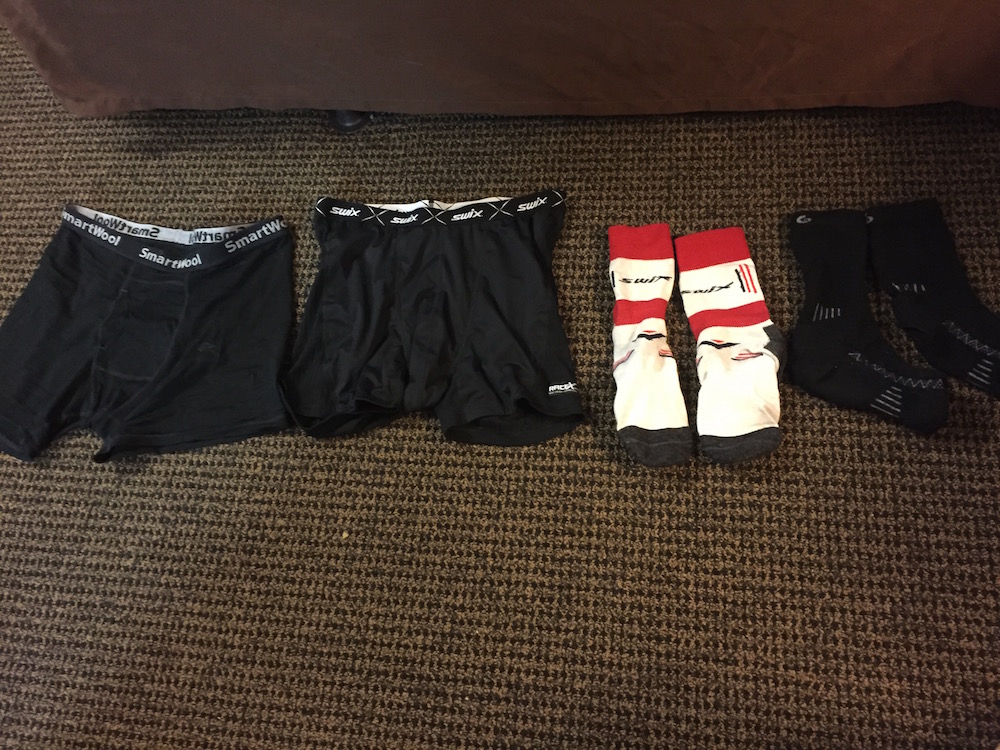
Test fleet ready for action.
How do I know this? Because I tested it. I had a “control” pair of Underoos that were in the rotation that were not treated with deFunkit, and an identical pair (SmartWool boxer briefs) that was treated. To ease the psychological torment of coming out of the shower clean and putting on the same pair of underwear that I had been wearing for 10 days, I alternated between the two configurations until someone said “Uncle.”
(If you’re thinking, did this nut really wear the same pair of underwear for 10 days? Yup, I did. Ten fricking days.) The non-treated pair made it four days before they were pulled from the rotation, but the treated pair was still going strong on Day 10. The only reason this test ended was I was leaving for West and I made the executive decision to start that trip w/ “a clean slate,” so everything went into the washer.
Now might be a good time to note that while I was the only person twisted (and thorough) enough to specifically “A:B” my test fleet (think of the most awful ski testing scenario that you could possibly imagine), our entire test team had a decent baseline on smell accumulation on all of their garments. Everyone in this group has literally dozens of years of skiing experience and overall a very good sense of how many days of use each given piece can withstand before things get ugly. So while my test was the only direct comparison between treated and non-treated, everyone on the team had a very good idea of the non-wash lifespan of their non-treated garments and all found significant deltas between treated and non-treated articles.
Applications
Some of the applications of this product are quite obvious: training camps, hut trips, camping/backpacking and the like, immediately spring to mind. In the past, essentially your only options on these adventures were to grin and bear it, or if you were lucky enough to be someplace with running water, you could annoy your roommates with “sock soup.”
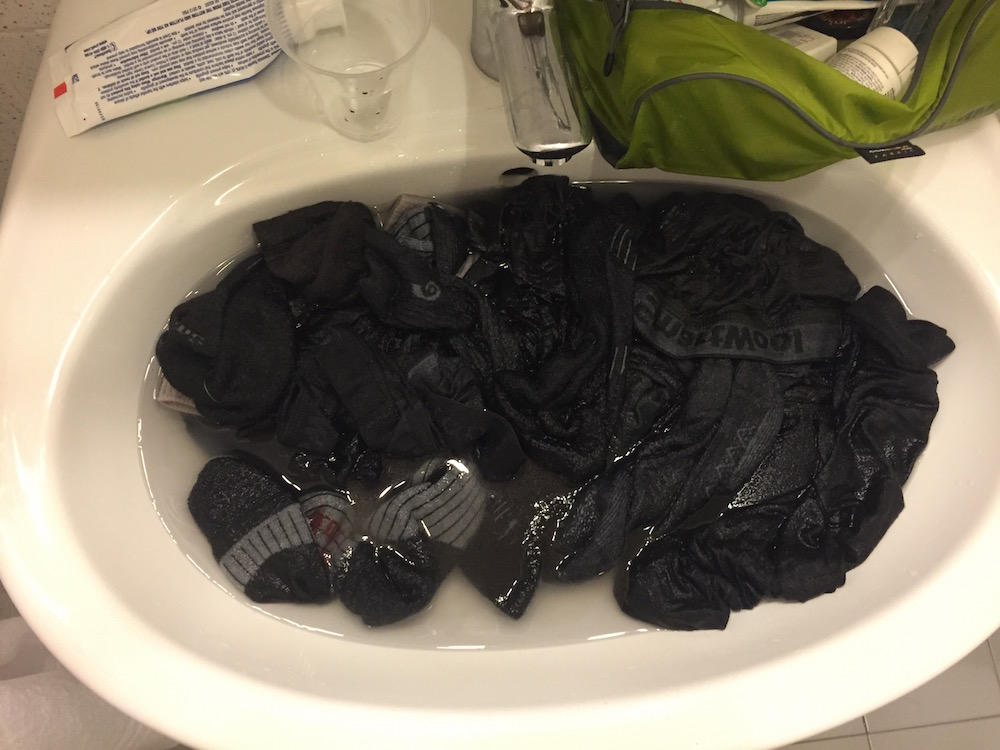
Sock soup.
Not having to subject oneself to the indignity and inconvenience of sink laundry makes this product basically a no brainer for all of these scenarios, as this stuff will absolutely help you come out the other side smell much, much more pleasant.
Now, having said this, the elephant in the room is you. Both of our test environments (West and Steamboat) had showers. Some of the test team showered after every workout, some only once per day. Some of us wore deodorant, some did not, but regardless, we were all starting every workout fairly to completely clean. If you’re someplace where regular showers aren’t an option or you’re one of those repulsive, stinky hippies that refuses to shower, you’ve got bigger problems than can be solved with DeFunkIt — you are a disgusting, filthy, despicable human who needs to learn basic grooming and self-respect. Yes, DeFunk will most certainly help if you can’t/won’t shower, but if you’ve got a really bad case of stank, well, there’s only so much we can do here people. This is NOT a deodorant, cologne (God help us) or anything weird like that, it’s a treating process that helps to repel odor. If you absolutely reek though, well, guess what, you’re on a one-way trip to the aforementioned lunch table w/ Dan and Pep. I just wanted to get that out there.
Disclaimer: If you’re someplace where regular showers aren’t an option or you’re one of those repulsive, stinky hippies that refuses to shower, you’ve got bigger problems than can be solved with deFunkit.
Going Green
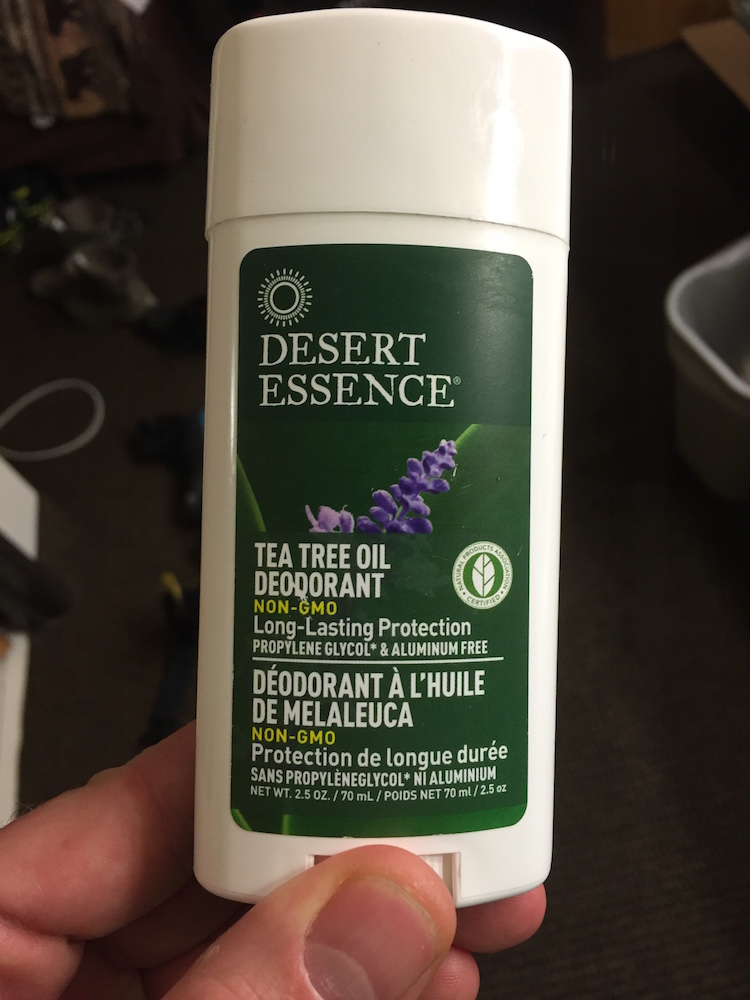
This is the deodorant you use when you think we didn’t land a man on the moon.
Another important dimension that came up in our summary and review meeting is the potential ecological impact of this product. The manufacturer reports that the preparation will last for up to 20 washes. This means that once you have treated your clothing, you can not only wear everything many more times between washes, but you can “refresh” this effect by simply doing a load of laundry with regular detergent. Undoubtedly there will be some type of degradation curve in effectiveness, but even so, if articles are only making it five or so wears near the end of the treatment cycle before requiring washing, you are still way ahead in the game.
One more interesting angle here is the stress that laundry machines places on clothes and how significantly trips through these machines reduces the lifespan of clothing — a very interesting observation that should be factored in this equation — if one treatment of DeFunkIt results in a four- to 10-fold decrease in wash frequency, not only are you saving water and electricity (dryers, in particular, are noted energy hogs), but you will also be greatly extending the life of your garments.
Conclusions
You know those car commercials which offer ridiculous, seemingly unobtainable mileage estimates for their vehicle? They often conclude with their get-out-of-jail-free statement of, “Your actual mileage may vary.” Well, same deal here. We did our best to expose a wide variety of different brands, different fabrics and different people to a fairly grueling week of testing. Overall, everyone was incredibly impressed with the findings and in some cases, people were ready to keep the test going. Will you have the same results? Probably, but who knows. I’d be amazed if it didn’t work at all for you and it could actually work better. Or perhaps worse. But I’d be shocked if it didn’t work at all.
We have not yet had the opportunity to test how this treatment process will hold up after regular washings. Does this treatment really last 20 “normal” washes? Who knows. We simply cannot answer that question at this time. We have no reason to believe that it won’t, but at the same time we always approach claims from ANY company with a fair amount of caution. The fact that everything that they’ve told us thus far has proven to be true certainly makes us optimistic, but again, our mileage may vary. As may yours.
In conclusion, is this product worthwhile? Absolutely. For $20 and one extra trip through the washer, you can wear all of your ski crap for several additional workouts without grossing out all of the dudes/babes at the coffee shop. If you’re lazy (like me), you can throw a few pairs of “civilian clothes” into the machine at the same time and not only free up more of your valuable time for important things like playing Noah Hoffman’s Fantasy XC league, but hell, who knows, you could perhaps even ski more. And you’re saving water, saving energy and extending the life of your clothes. To me, that’s well worth 20 bucks.
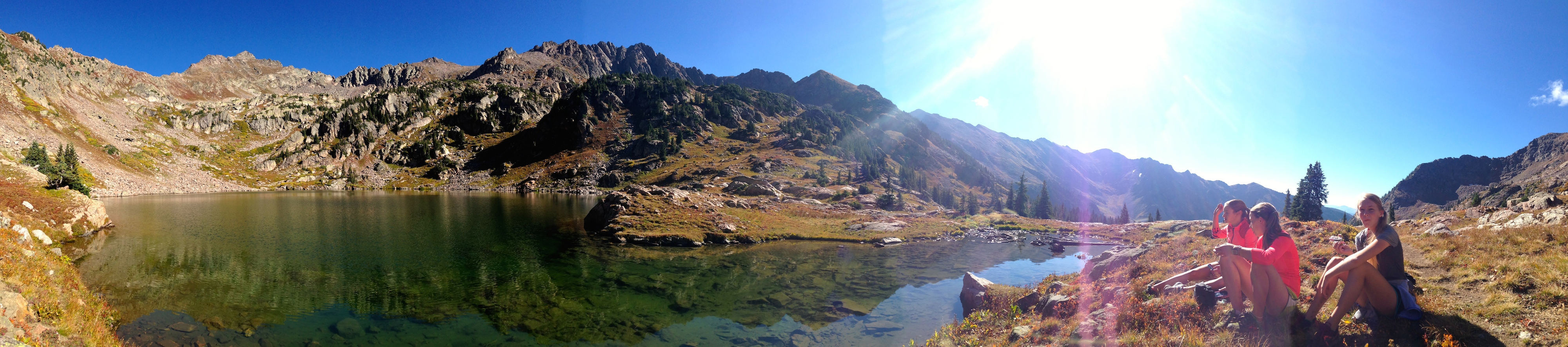
Ski & Snowboard Club Vail skiers (l to r) Gracie Shanley, Annie Blakslee and Lyle Shipp at Pitkin Lake above East Vail in the Gore. (Photo: Eric Pepper)
Five years ago, five ski buddies got together and founded Team HomeGrown. The idea back then, according to Sylvan Ellefson, was to create a sort of all-comers club.
Kevin Hochtl, Josh Smith, Paul Gorbold, Dan Weiland, and Ellefson had all grown up around Vail, Colo., and this was a “homegrown” team they could lay claim to, no matter what stage of life or what stage of their ski career they were in.
“We also wanted to provide a sort of support to the young kids growing up in the sport in the valley,” Ellefson explained. “Being able to look up to somebody, whether it is work or sport, is a very important part of keeping someone engaged in it. That was our belief.”
Sylvan Ellefson representing Team HomeGrown/SSCV last season at U.S. nationals in Midway, Utah. (Photo: Bert Boyer/http://bertboyer.zenfolio.com/) Proceeds from photo sales directly donated to NNF.
Two years later in 2011, HomeGrown — the elite offshoot of Ski & Snowboard Club Vail (SSCV) — reached a new level with the addition of then-U.S. Ski Team members Noah Hoffman, from Aspen (still on the team), and Tad Elliott, from Durango.
In 2012, Ryan Scott, a Montana State University grad from Boulder, came on as a sixth member with Ellefson, Hoffman, Elliott, and postgrads Christian Shanley (from Vail) and Max Scrimgeour (Steamboat Springs).
“It became more of a Team Colorado, but still homegrown in the sense that we all grew up racing each other every weekend through middle school and high school,” Ellefson wrote in an email. “Racing ‘as a team,’ at Junior Nationals really gave a sense of unity. From that point, we wanted to help inspire the next generation of nordic skiers in the state of Colorado. Help them realize that nordic skiing can become a career, and if anything more, a way to develop an amazing tolerance for pain, mental strength, and an iron-clad work ethic.”
This spring, Ellefson, 27, retired from skiing after making a run for the 2014 Olympics. Scott returned to Boulder full time to network and make a living in graphic design and web development.
In a phone interview last month, Scott said he’d been training when he could, despite revving up to 30- to 40-hour work weeks by fall. Since parting ways with SSCV in the middle of last winter, he wasn’t sure what he’d do for support this season.
“I might be figuring it out last minute, or racing independent and racing for Madshus,” Scott said.
Neither Scott nor SSCV Head Coach Eric Pepper chose to elaborate on why Scott left the team.
“I wasn’t involved in that conversation too much,” Pepper said.
Despite battling mononucleosis symptoms as early as last October, Elliott was cleared to race in November and got in two distance starts in West Yellowstone, Mont., and Sovereign Lake, B.C. He placed 14th in B.C. (one place higher than his finish in West Yellowstone), then returned home to Durango, where a doctor diagnosed Elliott with the Epstein-Barr virus — best known as the cause of infectious mono.
Tad Elliott (l) and Sylvan Ellefson (8) of Team HomeGrown/SSCV make their way up the last hill almost halfway through the 30 k freestyle mass start at 2014 U.S. nationals. Ellefson won and Elliott did not finish.
In January, he flew to Park City, Utah, to give the 30-kilometer skate mass start at U.S. nationals his best shot, but he didn’t finish.
“I then took from January until July off of any training,” Elliott wrote in an email. “Really light training in August now a bit more structured training into the ski season.”
Elliott, 26, is making a comeback this season, although he’s not sure how strong he’ll be.
“The doctor who finally diagnosed me was nervous I wouldn’t be able to race again for a really long time,” he explained. “So being out 7 months off of my feet has been really small. I might not get back 100 percent, so there is really no expectations or goals I have to hit. I am coming back because I love skiing especially for Team HomeGrown, and Salomon, Honey Stinger, Caldwell Sport and Oakley. Without them saying get well and we will see you when you are ready, I probably would have retired from racing.”
“I might not get back 100 percent, so there is really no expectations or goals I have to hit. I am coming back because I love skiing.” — Tad Elliott, SSCV Elite member
During his recovery last winter, Elliott coached Durango Nordic juniors once a week.
“That was all I could manage I felt so terrible,” he wrote.
He worked for Salomon Running this spring and summer, and at a Durango mountain-bike shop called Mountain Bike Specialists, where his employers where empathetic and let him rest whenever he needed to.
“All of my sponsors have stayed the same and showed their unconditional support,” Elliott explained. “My support team has stayed the exact same, and a piece of that has always been [coach] Zach Caldwell. We are using Firstbeat training systems in joint with my Suunto [heart-rate monitor] to track my heart rate variability to see how I am responding.”
On Oct. 8, Elliott wrote on Facebook that he had been cleared to train.
Out with the Old, In with SSCV Elite
This season, Elliott will be one of two seniors on the SSCV Elite team — Hoffman being the other.
Hannah Hardenbergh leading a high-school race last December in Colorado. (Photo: SSCV)
Hannah Hardenbergh and Cameron Bobb joined the squad as its two postgrads, and for the time being, HomeGrown is no more.
“We always knew that model is not sustainable if we want to grow the program,” Pepper said on the phone in early October.
Compared to the last two years, Vail’s top-tier nordic team has downsized, and SSCV’s emphasis has shifted to local junior programming. In the grand scheme of things, developing younger skiers is what will make its program thrive, Pepper said.
“We had talked to a number of potential people in the spring and what we really decided was we wanted to stay with who we had and not expand upon that this year,” he said. “Last year was obviously a really big push with Sylvan, being away from junior programing and athletes and families here, and with him not being in the mix anymore, and with Noah really needing minimal support from us, and Tad kind of coming back and seeing where he’s going to be at, it didn’t seem like there was a need for us to really pursue it this year.”
A year-round world traveler, Hoffman stops by Vail a few times each year when he can — most recently working out with the SSCV juniors and Summit Nordic Ski Club earlier this week. Like Elliott, Hoffman also works with personal coach Zach Caldwell.
Pepper has been Team HomeGrown’s coach for the last two seasons; Weiland, the longtime nordic program director at SSCV, coached the first two years before that.
Ellefson said Weiland, Pepper and assistant coach Lenka Sterling essentially waived all coaching fees and worked pro bono for HomeGrown from the beginning.
“I think they saw the potential of being coaches for what had the potential to be one of the best clubs in the nations, which I believe, to a degree we were one of the most competitive clubs, at a least in the men’s division,” Ellefson added. “They had full coaching schedules with the development team, high-school team and club team, so for Eric and Dan to even come out to our training sessions in the summer every single day was pretty instrumental.”
When HomeGrown started in 2009, it was “basically unfunded” for the first year, Ellefson said. The five original team members scraped money together — from savings, their parents and personal sponsors — to self fund.
The next year was better. The Rocky Mountain Nordic Angel nonprofit, which preceded HomeGrown, continued to supplement the team, and SSCV extended its support. The club initially let HomeGrown use its facilities, and by the next year, it granted its two athletes — Ellefson and Gorbold — access to additional training facilities and blew manmade snow for them in November. In 2011, Hoffman and Elliott came onboard to extend HomeGrown’s appeal to broader Colorado.
“To grow the culture in nordic skiing is way bigger than just trying to keep growing team HomeGrown,” Ellefson said. “If you grow the culture, I think the team will grow.”
“To grow the culture in nordic skiing is way bigger than just trying to keep growing team HomeGrown.” — Sylvan Ellefson, one of Team HomeGrown’s founders and SSCV Nordic Future Stars Head Coach
That’s why he wasn’t disappointed to see the name go. Above all, he wanted to see a team that enticed athletes after high school or college to pursue a professional career in ski racing.
“We are also moving more into how to fund these athletes better, and that we can do with the growth of the sport as a whole in the United States,” explained Ellefson, now a part-time coach for SSCV’s nordic future stars program (responsible for 40 to 60 kids ages 6 to 11) and vice president of sales and marketing at Cirque Mountain Apparel.
Noah Hoffman racing to second in the 2014 U.S. Distance Nationals 50 k classic mass start at Hillside trails in Anchorage, Alaska.
“To this point we had all athletes that grew up in Colorado,” Pepper said of HomeGrown’s recruiting pool. “Most of the kids that came to us this year were ones we had an interest in and relationship with, but they weren’t Colorado kids.”
That’s where SSCV had to make a decision. Ultimately, it resolved to focus on developing Colorado juniors rather than open HomeGrown to top skiers across the U.S., like several other elite teams do.
Ten years ago, Pepper estimated SSCV had 10 total athletes.
“Five years ago, it probably had 25 kids and now this year, it’ll probably be close to 80 with all our age groups,” he said. “[We’re] trying to establish a culture and improve trails … We have a ski academy now.”
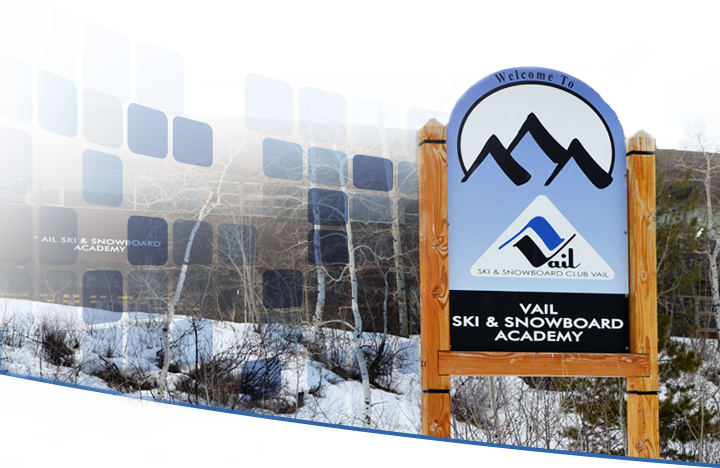
Vail Ski & Snowboard Academy, founded in 2007. (Photo: SSCV)
The Vail Ski & Snowboard Academy, a public school for grades 5 through 12, was founded in 2007 and has nordic, alpine, snowboard, freeski, and freestyle teams as well as NCAA college programs, with seven kilometers of cross-country trails right outside its doors.
This year, Vail’s two postgrads are from the area and decided to take a year off college. Hardenbergh deferred from Harvard, and Bobb grew up racing for the Summit County Nordic Club. Both are coming back from injury, Pepper said.
“Its unfortunate when a racer post-grads in the U.S., it seems to be the feeling of World Juniors or bust,” he said. “We’re de-emphasizing it a bit … trying to give them more experiences, like a [SuperTour in] Bozeman. Their schedule isn’t that different domestically than a top-level junior, with western early season races, nationals, local races, [and] junior nationals … then [we’ll] look at opportunities.”
SSCV did not go to Spring Series last year in Anchorage, opting for French and Swiss nationals (for the same price of a plane ticket to Alaska) instead. This season, Pepper predicted they’ll have a similar option for postgrads and seniors, depending how each athlete is doing.
2015 SuperTour Finals in Sun Valley, Idaho, is a much more feasible trip from Colorado, “but Europe’s pretty appealing, too,” he said.
Former postgrads Shanley and Scrimgeour are now entering their sophomore years skiing for Denver University and the University of Colorado-Boulder, respectively.
And in terms of Vail’s male-to-female ratio: “We probably have more females than males, which is an interesting flip,” Pepper said, alluding to HomeGrown’s all-male status for the last four years. “In our U16 and older program, we have more females, but it’s pretty close to 50/50. In our older guys’ program, that was mostly coincidence.”
Sylvan Ellefson, Noah Hoffman and Tad Elliott taking the early lead in the 50 k at Distance Nationals this spring. All three SSCV Team HomeGrown skiers are back on the squad this year.
This is one of several previews in a quick-and-dirty series on U.S. elite teams. We asked coaches to send their 2012/2013 rosters and tell us what’s new for the coming season. We will be publishing additional reports over the next few weeks. Teams are presented in no particular order.
Team: Ski & Snowboard Club Vail (SSCV) Team HomeGrown (Vail, Colo.)
Coaches: Dan Weiland (nordic program director), Eric Pepper (head coach)
Roster: Sylvan Ellefson, Tad Elliott (U.S. Ski Team), Noah Hoffman (U.S. Ski Team), Ryan Scott, Christian Shanley, Max Scrimgeour
Who’s new: Ryan Scott (Montana State University grad), Christian Shanley (post-graduate, Vail Ski & Snowboard Academy grad), Max Scrimgeour (post-graduate, Steamboat Springs Winter Sports Club alum)
Who’s missing: Mike Vigers (was a PG last year, now an incoming freshman at CU Boulder)
Top results last season: There are many ways to measure progress on a team: on the domestic and international stage, based on individual and team-wide performance, and from the number of athletes who notice these results and want to be part of what you’re doing. The fact that SSCV’s elite squad made gains in practically every category at some point in the 2011-2012 season speaks to the size of the leap it made. Between personal bests on the World Cup for all three returning skiers and dominant U.S. results it’s safe to say that in the three years since its founding, SSCV Team HomeGrown has unmistakably arrived.
Team Homegrown and USST members Tad Elliott (l) and Noah Hoffman (r) leading the men’s 30 k at U.S. Nationals. Photo: Flying Point Road.
Elliott and Hoffman were new additions to the team last year and spent most of the winter in Europe as part of the USST B-team. As a national team rookie Elliott scored his first career World Cup points with a 27th in the Davos 30 k freestyle. Hoffman broke into the top 30 with a 26th in the Otepää 15 k classic and produced the best American result at World U23 Championships with a silver medal in the 15 k.
Ellefson’s mere presence on the World Cup was a personal best for the Vail native; he earned his first career start rights late in the season by leading the SuperTour at the end of January. Apart from an unlucky crash in the Falun prologue at World Cup Finals, Ellefson made steady progress throughout his European tour, which head coach Eric Pepper says has been a big motivator throughout this summer. On the heels of his World Cup debut, Ellefson also managed to reclaim the yellow leader’s bib to secure a ticket back in November.
“For a lot of people going to Europe, it’s tough: they go over and get their ass kicked and it’s really hard. And he went over there and he got better,” Pepper said. “He’s just more focused, more determined. He’s learned so much being over there about that next level, he’s just ready to go again. It’s crazy; you watch people who go over there and maybe struggle, but not him though. That’s what its about: going over there and getting better, and I think for him that’s exactly what he did.”
The trio made similar strides domestically. With a full international schedule, Nationals and Spring Series were the only two events SSCV Team HomeGrown raced as a complete squad in the U.S., but this didn’t seem to matter when it came time to suit up. Elliott, Ellefson and Hoffman looked as though they’d spent all season racing together and went 1-3-4 in the 15 k freestyle in Rumford, Maine. A few months later in Craftsbury, Vermont, Elliott took second and Ellefson fourth in the 50 k at Distance Nationals. Somewhere in between, Elliott also won a little thing called the American Birkebeiner.
Ryan Scott, left, skiing the heats at U.S. Nationals. Photo: Flying Point Road.
The team has added three new names to its roster this year, Scott, Shanley and Scrimgeour. Pepper and nordic director Dan Weiland are keeping the squad relatively small for the moment in order to maintain a high level of financial support to its athletes, particularly its USST B-team members.
The newcombers all join the squad as native Coloradoans. Scott is from Boulder and graduated from MSU this spring. Shanley moves up from the SSCV junior competition team to take a PG year with the senior squad (he deferred enrollment at Denver University). Scrimgeour was a Steamboat Springs Winter Sports Club athlete as a junior, and will also be a PG-er next year.
All three skiers posted competitive results last winter. Scott has already begun to seriously establish himself as a senior-level sprinter; he was fourth at U.S. Nationals in the classic sprint and posted the top American freestyle sprint result at U23s with a 25th. Shanley was a J1 last season and finished seventh in the classic sprint qualifier at the Aspen SuperTour and eleventh in the 10 k a few hours later. He and Scrimgeour teamed up in March (along with SSCV junior Cal Deline) for a gold medal-winning Rocky Mountain relay at Junior Nationals.
The team may also soon be adding a girl to its roster this season; Weiland said he is currently in the negotiation phase with a recent college graduate.
Coach’s comment: In 2009 SSCV Team HomeGrown was founded, as the name suggests, to develop Colorado skiers. Next season could be its biggest yet, and with an all-Colorado 2012-2013 roster the team hasn’t wavered from that original intention.
“The whole idea behind our team is Colorado-based athletes growing up and coming back after college to race for a Colorado team,” Weiland said. “That’s our selling point, and that’s what we’ll stick with.”
Training-wise, new and returning members of the squad are all working this summer in order to do one thing: get faster. There’s a lot on the line for everyone this season, with World Championships in Val di Fiemme, Italy as the big target. From the work his athletes have put in so far, Pepper sees plenty of reason to look forward to the winter:
“[Ellefson] had the opportunity to spend a week with the USST guys in Bend, and went back with our junior kids for another ten days, and he looks great. He’s in good shape; doing everything he needs to do… He’s just a totally different animal now. He’s gotten a lot faster, stronger, fitter; that was a huge jump for him last year. He was fourth in the 50 k and we considered that a disappointment. The year before he was ecstatic to be top 10, top 20 at U.S. Nationals.”
Elliott and Hoffman will be in Vail a few times throughout the fall, but primarily they’ll be based out of Park City, Utah.
“Tad’s doing some mountain biking too, and Noah’s trying really hard to basically get on snow every month this summer,” Pepper said. “May he was in Bend, Sognefjell in June, then Austria, and then he’s looking at a trip to New Zealand. Lots of on-snow time for him, that’s definitely one of his targets. Tad’s been hittin’ the weight room a lot harder too, taking bicep measurements.
“[For Scott], I think it’s great to have an opportunity to make the transition to being a full-time athlete with full-time training, and not having to worry about the rigors of college. It’s an opportunity to really focus on racing, with a little more emphasis on sprinting in particular, and see how far he can take it.”
Update July 13, 2012: This article originally stated Max Scrimgeour had yet to confirm his status with the team. Since publication Scrimgeour has officially joined SSCV Team HomeGrown.
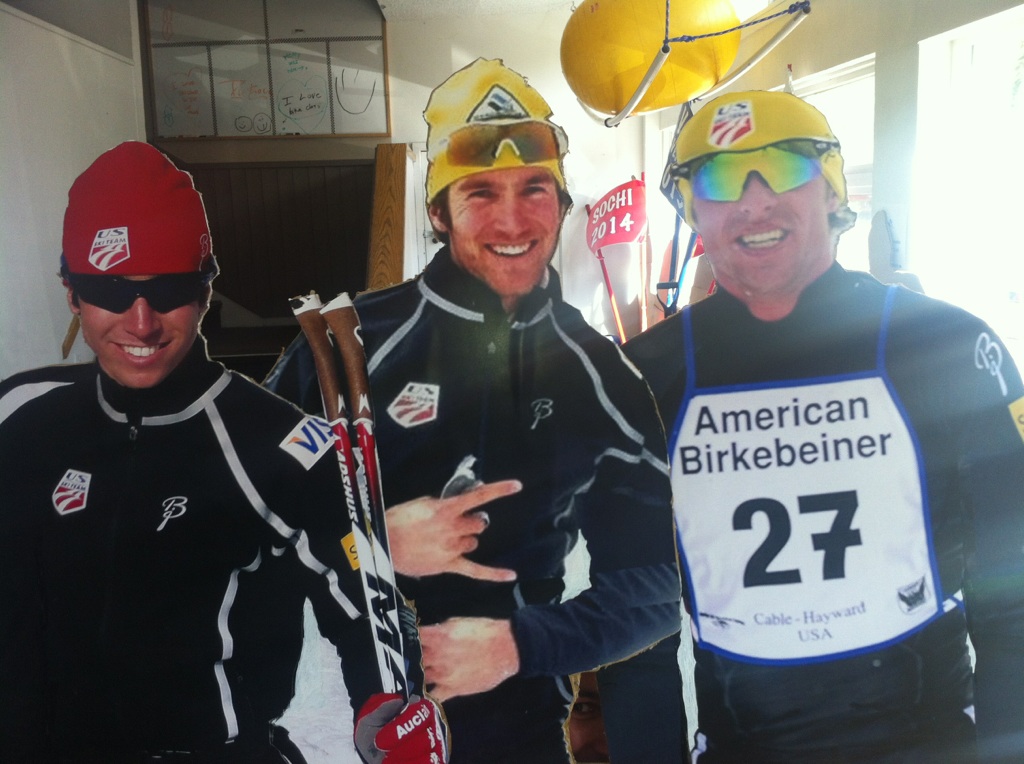
Returning SSCV Team HomeGrown skiers made it into the Vail Fourth of July parade as cardboard cutouts. Photo: Sylvan Ellefson.
The men's 15 k freestyle podium at U.S. Nationals: No. 1 Tad Elliott (center), No. 2 Matt Liebsch (l), No. 3 Sylvan Ellefson (r)
RUMFORD, Maine – Aside from their “bro” talk and Colorado slang, Team HomeGrown knows how to get serious when it counts.
It might not seem that way when its athletes, like U.S. Ski Team members Tad Elliott and Noah Hoffman, jokingly hold hands. Most of Team HomeGrown thinks every race is “awesome” and “pretty sweet,” even if it isn’t their strength. That’s just their attitude.
No. 1 Tad Elliott (Team Homegrown) racing to a first-place finish in the men's 15 k freestyle individual start at U.S. Nationals at Black Mountain on Thursday. Photo by Flying Point Road Photography/NNF
In its third season as part of Ski and Snowboard Club Vail, the team’s quiet intensity comes out on the course. During the 15 k freestyle individual start at the 2012 U.S. Cross Country Championships on Thursday, head coach Dan Weiland said he didn’t give splits to all his racers; he saw several internalize the news from the stadium loudspeaker at Black Mountain.
The laid-back approach paired with fast skis and faster racers worked for Team HomeGrown, as Elliott won the 15 k in 30:18.8 and one of the team’s founders Sylvan Ellefson finished third, 7.1 seconds back.
For Elliott as the first starter, feedback was critical. About two laps into the race with two to go, the 23-year-old heard he was in third. Hoffman was leading at the time and Ellefson was second.
Rather than feel flustered, the news put Elliott at ease.
“That’s pretty motivating to know that your teammates are sweeping the podium at that point,” Elliott said.
Even his coaches lost their cool a little bit.
“They were really fired up when that was going on,” Elliott said.
Ultimately, Matt Liebsch (Team Strong Heart/Team Birkie) kicked especially hard on the last two laps and finished second (+2.6). After battling a cold since the weekend and missing Tuesday’s sprint, Liebsch said he found “fifth gear” heading into the last 3.26 k lap. He also heard his wife’s voice in his head telling him to go.
“I was skiing for them today and really digging hard,” Liebsch said of his wife, Mary Beth, and two young children at his home in Minneapolis. “They’re sacrificing as a family for me to ski race.”
Matt Liebsch (Team Strong Heart/Team Birkie) skiing to the finish. Photo: Flying Point Road.
Hovering in the top 10 for most of the race, he had no idea he was second to Elliott.
“(It) was my plan to put myself in a position that I’m in it to go for it,” Liebsch said. “I’m real happy with that.”
After leading for the first half of the race, Hoffman placed fourth. He said he tried to ski consistently and work on cues – such as getting better traction on the new manmade snow – but suffered near the end.
“I was hurting on the last lap in a big way,” Hoffman said.
While he preferred not to hear splits, Ellefson said it helped to know how his teammates were doing.
“I was going anywhere from first to fourth and getting splits a couple seconds ahead of Tad, a couple seconds behind Tad,” Ellefson said. “It’s comforting knowing that your teammates are up there.”
While he specifically tried to ski harder from the start and was second for nearly the first two laps, Ellefson said his legs tired in the second half. He was able to hang on and ski the last 3 k strong, he said.
Elliott also said he felt it near the finish, especially after conquering the infamous “High School Hill” four times. But for the defending 30 k national champion, the 15 k was short.
Sylvan Ellefson (SSCV/Team HomeGrown skiing up the lap hill. Photo: Flying Point Road.
“I wanted to go out hard here at sea level on a fast course and see if I could hold on,” said Elliott, who placed 29th in the 15 k classic at U.S. Nationals last year. “I was hurting by the end.”
After solid individual results in Tuesday’s freestyle sprint – with Elliott notching one of his best qualifying results in 16th – Team HomeGrown’s near sweep of the podium on Thursday proved it was on the right track.
Weiland credited Boulder Nordic Sport (BNS) for helping wax their skis. He and fellow SSCV coach Eric Pepper applied four layers to each of the six-person team’s several pairs of skis last night, and Roger Knight and his BNS crew added two or three topcoats to each at 5:30 Thursday morning.
“It takes a lot of work,” Weiland said. “We had good skis, but we have three great athletes, too.”
Coming from Vail, Colo., some 8,000 feet above sea level, Weiland said the hard course at an elevation of about 1,000 feet suited his athletes.
“If it was flat and superfast then we might be in trouble, but these guys like the hills,” Weiland said. “I think it shows that you can do it (live and train at altitude). There’s people that don’t think it’s possible, but here’s a good reason why it is possible.”
U.S. Ski Team and Team HomeGrown racer Noah Hoffman attacks a climb during the U.S. Nationals men's 15 k skate on Thursday at Black Mountain in Rumford, Maine. He finished fourth. Photo: Flying Point Road
A new addition to the Craftsbury Green Racing Program, Bryan Cook was fifth. After starting 15 seconds ahead of Liebsch, he said the eventual runner-up caught him near the start of the third lap, and he managed to stay with him until the finish.
The result exceeded Cook’s expectations since the former Central Cross Country (CXC) racer, who recently moved to train in Vermont, had fewer early season races under his belt than usual.
“I guess I didn’t really have any goals coming into this one,” Cook said. “It sounds weird but I wanted to do well, like a top 10 I guess would be what I was looking for.”
Matt Gelso of the Sun Valley Ski Education Foundation was sixth, Brenton Knight (Alaska Pacific University) placed seventh, David Norris (Alaska Winter Stars) was eighth, Patrick Johnson (Middlebury) was ninth, and Brian Gregg (CXC) finished 10th.