From the FasterSkier archive — posts syndicated from athletes’ and coaches’ own blogs between 2004 and 2012, kept online as published. Current coverage is at fasterskier.com.

Tag: Dartmouth Ski Team

  • “You Can’t Live Nervous”

    “You Can’t Live Nervous”

    Finals week has a way of compressing time. Days shrink into problem sets and exams; nights stretch just long enough to make sleep negotiable. When Jack Lange logged onto Zoom from Hanover in late November, he was finishing his senior fall at Dartmouth, a mechanical engineering major balancing equations while packing for a training block at Silver Star. The snow out west wasn’t cooperating. Races were being reformatted. Nothing felt settled.

    That uncertainty didn’t seem to bother him much.

    “We’re wrapping up school right now and then heading to Silver Star next Tuesday,” Lange said. “Hopefully, the snow conditions there improve a little bit.”

    It was a measured answer—calm, almost deliberately so. Over the next hour, that calm would reveal itself not as indifference, but as something learned the hard way.

    Young Jack Lange skiing in a New England BKL race. (Photo: Heidi Lange)

    A kid who wasn’t supposed to be good at this

    Lange grew up in Vermont’s Upper Valley, skiing out of Green Woodlands and the Ford Sayre Bill Koch League. It was the kind of childhood that feels almost mythic now: full-moon skis to a cabin, hot chocolate on a frozen pond, friends everywhere.

    “I’ve always just made sure that that’s the thing that comes first,” he said. “Getting outside and enjoying being outside and enjoying pushing myself and having fun.”

    He played everything. Soccer, where he was very aware he wasn’t the best. Swimming, where he gravitated toward breaststroke. Cross-country running. Mountain biking. For a while, he did both alpine and Nordic skiing, until a choice had to be made.

    “My sister was doing more Nordic and more of my friends were on the Nordic,” he said. “So I just went with Nordic.”

    Lange and friends meeting Jessie Diggins and Sophie Caldwell Hamilton at the Quebec World Cup. (Photo: Heidi Lange)

    It wasn’t a natural fit at first. Lange remembers being the odd kid out on relay day—the one paired with a skier from another team because the numbers didn’t work.

    “I wasn’t good at it,” he said simply.

    What hooked him wasn’t speed. It was curiosity.

    “I really like the amount that you can learn from being out in training,” he said. “Not even structured training—just being outside and having fun. I really enjoy the process of figuring out how hard I can push myself.”

    By freshman year of high school, something shifted. He trained more. He paid attention. And suddenly the results were better than expected.

    “That was kind of the confidence boost that launched me into, like, ‘Oh, this is something I can do.’”

    2019 Junior National Championships in Alaska. Lange finished in fifth place with Dartmouth teammate Wally Magill in first. (Photo: Heidi Lange)

    The pressure builds—and breaks

    Lange’s junior years were uneven. Seasons were disrupted. Races were canceled. One winter meant nine consecutive weekends racing at Craftsbury, all interval starts—an exercise in patience for someone who loved head-to-head competition.

    “I love mass starts,” he said. “I love racing next to people. Mind games and competitiveness.”

    By his senior year, he had narrowed his focus to Junior Nationals. The goal was simple: qualify. Nothing more.

    When he arrived at the 2019 Junior National Championships in Alaska, he was the last skier to qualify from New England. He started near the back in the 5-kilometer skate race at Kincaid Park.

    “My goal for the entire season was to make JN’s,” he said. “And I was there, and I was like, I’m in Alaska. This is kind of crazy.”

    Mid-race, a coach called out a split.

    “One of the New England coaches is like, ‘You’re like three seconds out of top ten,’” Lange recalled. “And I was like, that’s pretty funny.”

    He kept skiing. He finished fifth.

    “That was way, way beyond where I ever could have expected to be.”

    There’s a photo from that day—Lange among a group of skiers who would later become familiar names on the U.S. Ski Team. At the time, it felt surreal. In hindsight, it was clear it wasn’t the performance itself that mattered most, but the conditions under which it happened: no expectations, no fear.

    That lesson wouldn’t fully sink in until later.

    Lange with his parents, Heidi and Greg. (Photo: courtesy photo)

    Dartmouth, and the weight of wanting it too much

    Lange chose Dartmouth largely because it felt right. He wanted engineering. He liked the people. He trusted the coach.

    “Brayton [Osgood] is such an amazing coach to work with,” Lange said. “He’s never the guy to show up and be like, ‘This is what you’re doing.’ He’s super approachable. He really wants us to find our spot in the sport.”

    At Dartmouth, skiing wasn’t isolated from the rest of life—it was embedded within it. That integration became most visible during the most stressful week of the year: NCAAs, which overlap directly with finals.

    “My freshman year, that finals week with NCAAs was kind of a dark time,” Lange said. “I was close to tears on the start line of the 20k race. Just so much pressure, so overwhelmed.”

    He remembers warming up briefly, then stopping.

    “I skied like fifteen minutes in the warm-up and just put my skis down,” he said. “I was completely broken.”

    A kilometer into the race, he was in dead last.

    And then something shifted.

    “I saw Brayton on the side of the trail,” Lange said. “And I was like, you know—I don’t need to take this so seriously. I can show up, do my best at everything, and give 100 percent effort. If I do that, it’s gonna come through.”

    It did. That race became one of his best of the season.

    Dartmouth Ski Team (Photo: courtesy photo)

    The things that make it lighter

    The story of Dartmouth skiing is often told through tradition—green suits, first-years with mohawks, time trials. Lange points to different details.

    There’s a sauna in the locker room.

    “That’s a prime spot to get to know the team,” he said. “We rip this on all the time.”

    There’s also life beyond skiing. Every non-freshman on the men’s team is in a fraternity. Lange lives in the Zeta Psi house with teammates and classmates—engineers, computer scientists, people whose lives orbit entirely different centers.

    “I’m surrounded by a ton of people who have no clue what skiing means to me,” he said. “And that’s been a really huge part of being at Dartmouth.”

    His best season, he said, came immediately after pledging.

    “It taught me how to not put as much pressure on myself,” Lange said. “How to make this a sustainable thing that I could really enjoy.”

    That balance—academic, athletic, social—isn’t accidental.

    “None of the three would be as good without the others,” he said.

    Lange’s favorite race: Prospect relay with Cam Wolfe and Cooper Camp. (Photo: Heidi Lange)

    “You can’t live nervous”

    Lange keeps a training log. He trains consistently. He admits he’s overcooked himself before. What he doesn’t do is chase numbers obsessively.

    “I don’t think I’ve ever had an hour’s target that I’m trying to hit,” he said. “I’ve just trained for the enjoyment of it.”

    There was a time, early on, when outside voices crept in.

    “I was getting a lot of people saying, ‘You’re training too much. You’re doing this wrong,’” he said. “I got a little worked up about it and a little nervous.”

    He paused.

    “You can’t live nervous.”

    It’s the line that keeps resurfacing, whether he’s talking about high school racing, college pressure, or the future beyond Dartmouth.

    “I think anyone who’s in high school, middle school—just go out there because you enjoy it,” he said. “You’re gonna have crappy days. But if you go out there every day and just have a good time, and surround yourself with people you like to be around, things will work out.”

    That philosophy shapes how he defines success now. Lange talks about team first. About racing in a green suit. About showing up energized.

    “The guys here are here for the right reasons,” he said. “They’re skiing because they really enjoy skiing. That’s super energizing.”

    Lange with his long time coach and mentor, Dennis Donahue. (Photo: Heidi Lange)

    A quiet kind of confidence

    Ask Lange where he sees himself years down the road, and he doesn’t reach for outcomes. He talks about process.

    “The process of showing up every day,” he said. “How can I be the best athlete I can be today? That’s the most rewarding thing.”

    Skiing, he believes, has taught him how to live—how to work, how to recover, how to stay curious.

    “Wherever I am fifteen years from now,” he said, “all of the lessons that I’ve learned are still going to be extremely relevant and important.”

    For now, there are finals to finish and skis to pack. The snow will either come or it won’t. The races will sort themselves out.

    Lange will keep doing what he’s learned to do best: show up, stay loose, and ski without fear.

    Because speed, he’s learned, is hard to find when you’re holding your breath.

    Love Stories Like This? Help Keep Them Coming.

    Feature stories like this one take time, access, and care to produce. If you value thoughtful storytelling and independent ski journalism, please consider becoming a Voluntary Subscriber. Your support directly fuels the work we do to cover the people, places, and moments that make our sport special.

    Join the FasterSkier community!


    Enjoying adventures with Luke Allan. (Photo: Jack Lange)
  • The Hilltop Lesson: How Second Place at the NCAA Championship Became Hagenbuch’s Guiding Philosophy

    The Hilltop Lesson: How Second Place at the NCAA Championship Became Hagenbuch’s Guiding Philosophy

    On a bright March afternoon at Dartmouth’s Oak Hill, with a soft and slow course under his skis and a band he himself had organized blasting in the stadium above, John Steel Hagenbuch approached the final climb where he learned something that would shape the early years of his career far more than any podium ever could.

    He had come into the NCAA Championships with the weight of a thousand private dreams — a home championship crescendo and an entire community behind him. Then, with Utah’s Joe Davies charging to the finish line waving the Utes flag and Peter Graves’ voice echoing through the trees, Hagenbuch realized he was not going to win.

    “I got dropped, and it just wasn’t gonna happen,” he says. “I told myself, you’ve got until the top of this hill to be upset about it.”

    John Steel Hagenbuch was all smiles after crossing the 20k Freestyle finish in second place at the 2025 NCAA Championship where he represented Dartmouth College on their home course at Oak Hill. (Photo: Courtesy Photo)

    What happened next wasn’t the reaction of an athlete who had just been beaten in the race he’d been thinking about, talking about, training for, and dreaming about for three years. It was something quieter. Something older. Something that didn’t look like the scripted champion he’d imagined — but ended up becoming the cornerstone of the athlete he is now.

    “I stopped poling,” he says. “And I just kind of skated through the stadium… smiling, waving, like the Penguins of Madagascar — smile and wave.”

    He remembers the sunshine, the thousands of people lining the stadium, the Stripers — Dartmouth’s biggest student band, coaxed back from post-graduation life because he wanted the place to feel alive — and the thrum of friends, professors, fraternity brothers, and family in the crowd.

    “Did I win the ski race? No. But it actually didn’t matter,” he says. “I was just so grateful… all the amazing things in my life that had led me to that point.”

    Every day since, he thinks about that race. “But not for the reasons you’d expect.”

    John Steel Hagenbuch (USA) racing the World Cup opener in Ruka (FIN) in 2023. (Photo: Modica/NordicFocus)

    Muonio, Finland: The Final Quiet Before the Season Begins

    Eight months later, Hagenbuch is sitting in a small room in Muonio, Finland, speaking over a fickle internet connection. Outside, winter is closing in; inside, the early-season nervous energy is beginning to hum.

    “It’s been a good way to start the season,” he says of the classic sprint and 10k skate he raced the previous weekend. “Hopefully more to come.”

    He will likely stay on the World Cup through the Tour de Ski. His primary goal, stated simply and without ornament, is clear: “Primary goal is to go to the Olympics. Everything else is secondary.”

    He’s 24, still at Dartmouth — technically a senior, though he took this fall off to focus on training. When winter term begins on January 7, he’ll be back in class, shifting between World Cups and essays, navigating the dual life of a college student and a professional skier the way only NCAA athletes truly understand.

    But he is not rushed. Not impatient. Not gripping the rail of his career with white knuckles.

    He learned something on that hill at Oak Hill, something that has become his ballast. “It reminds me why I do this,“ he says. “And why this sport is so special.”

    Before he was an NCAA champion, skiing on the World Cup, and a trying to qualify for the Olympics, John Steel Hagenbuch was just a kid who loved skiing around on the trails of Sun Valley, ID. (Photo: Courtesy Photo)

    The Long View: Three Olympics and a Full-Moon Ski

    Hagenbuch surprises you with the distance of his vision.

    When asked about the future, he doesn’t talk only about Milano-Cortina in 2026. He talks about three Olympics — a decade of life sketched out in calm, confident lines.

    “I would love to go to the next three Olympics,“ he says. “Milano-Cortina, then the French Alps, and then retire at the Salt Lake City 2034 Games.”

    Soldier Hollow, where he has raced “probably 50 times,“ would be the perfect ending. But it’s not the race he imagines most clearly. Not the ceremony. Not the result.

    It’s the lead-up.

    “What will be the crown jewel of my ski career,“ he says, “is having the 2034 Olympic pre-camp in Sun Valley. At my house. With all the fellows.”

    He can picture it already: the team skiing at Prairie Creek under a full moon, crispy tracks at 15 degrees after a sunny day, the quiet of the Sawtooths pressing close.

    “That’s what I’m gonna remember when I’m 75,“ he says. “That Prairie Creek ski.”

    In this way, Hagenbuch does not think like most 24-year-old athletes. He thinks like someone who has already lost something, already gained something, and has made peace with what remains.

    A Training Philosophy Built on Feel (and a Fearless Lack of Overthinking)

    In an era where professional endurance athletes run lactate strips daily and analyze heart-rate drift with the devotion of day traders, Hagenbuch stands apart.

    “Do you do lactate testing?“ I ask him.

    “Maybe like once a year.”

    He trains primarily by feel—not just how his body feels, but what he feels like doing: long backcountry days, ridge runs, mountain biking, skiing deep into the mountains around Sun Valley. There is structure, but only when he believes it should exist.

    “Not taking it too seriously,“ he says, “and kind of just going by what I would like to do and what I think is going to be fun.”

    June and July? “Absolutely not“ analytical. Fall? Yes, that’s when he “locks in a bit.”

    And if it ever stops being fun, he says, “I will not stick around.”

    He has seen athletes grind themselves into dust out of fear of what’s next. “I respect the grit,“ he says, “but… I’m incredibly grateful to have had experiences and opportunities in my life that that’s not the case for me.”

    He isn’t clinging to skiing. He’s choosing it — every day — until it no longer feels right.

    That clarity is rare. Maybe even elite.

    Being cheered up a climb in Soldier Hollow by one of his SVSEF coaches, Rick Kapala, John Steel Hagenbuch proves athletes like him aren’t built by themselves or through the guidance of one coach, they are lifted by a community. (Photo: Tryg Solberg/Courtesy Photo)

    The Consortium: Osgood, Whitcomb, Kapala, and Holmes

    Though he trains by feel, he is not without guidance. His coaching structure is more like a board of advisors — four voices, each offering a different vantage point.

    “I talk with Brayton at Dartmouth, and Matt on the U.S. team, and Rick — my high school coach — and Peter Holmes on the Gold Team,“ he says. “I get input from all of those guys.”

    When deciding to come to Muonio early, he called all four. Not for permission — for perspective.

    “When I’m at Dartmouth, I do Brayton’s plan,“ he says. “But if I feel like I need to do something different, he’s totally cool with that.”

    And contrary to what a young elite athlete might hope to hear, most of what they tell him is not “do more.“

    “Oftentimes,“ he says, “it’s settled down.”

    Dartmouth College’s John Steel Hagenbuch skied to a 15-second victory on his home trails in the 7.5 k Classic at the NCAA Championship. (Photo: Tobias Albrigtsen)

    The Place That Built Him

    If you want to understand why Hagenbuch thinks the way he does — why gratitude flows so naturally through him, and why he measures life through moments rather than medals — you have to understand Dartmouth.

    “NCAA skiing is a really special thing,“ he says. “People are going to roll their eyes… but there aren’t a lot of places that have the components Dartmouth has.”

    The social component is not a distraction — it’s a pillar. “Last year, every single guy on the team was in a fraternity,“ he says. “Different fraternities.”

    He explains the structure: students join Greek life in their sophomore year, after they’ve already found their people, their communities, their balance.

    “Everything acts as a complement,“ he says. “And providing that much balance… makes everything greater than the sum of its parts.”

    The feeling at NCAAs captured this perfectly. “Anyone who was there,“ he says, “left thinking two things: college skiing is [so] sick and Dartmouth is [so] sick.”

    He means it.

    And he knows it won’t come again — not in this form.

    Luke Allen, one of his closest friends, once asked an older alumnus if life ever gets as good as Dartmouth skiing. The man looked him straight in the eye and said, “No.“

    There was lots of great energy at Oak Hill for the final day of the 2025 NCAA Championship. (Photo: Tobias Albrigtsen)

    The Beauty of Losing

    Here is the strange and elegant truth of Hagenbuch’s current career: his most important athletic memory is a loss.

    He doesn’t hide from that. He doesn’t twist it into “motivation“ or pretend it fuels some internal fire for revenge.

    Instead, he carries it like a compass.

    “I think about that race every single day,“ he says. “But not because I lost… It reminds me to be grateful for these amazing people, places, and things in my life.”

    He printed 150 photos at CVS the night before leaving Hanover in August — family, friends, the Haig Glacier, Sun Valley, Dartmouth — and plastered them across his fridge at home.

    “Think how many times a day you walk by your fridge,“ he says. “All my friends are right there.“

    It’s his daily reminder of what matters.

    The Thursday classic race at NCAAs, the unexpected great day, the team’s move from fifth to first — these have become larger in his memory than the race he thought he wanted most.

    “What was the special day at NCAAs?“ he says. “It was Thursday. I wasn’t even thinking about Thursday. I didn’t care how that one went.”

    And yet: “I had probably my best classic race ever… it was such a culmination of a lot of hard work and belief.”

    This is the philosophy he now lives by: you learn more from your losses, and sometimes the thing you didn’t expect becomes the thing you carry forever.

    John Steel Hagenbuch, who won the 7.5k Classic, celebrates with his teammates after the three raced Dartmouth into the NCAA Championship lead. (Photo: Courtesy Photo)

    The Advice Only Someone Who Has Lived It Can Give

    At the Haig Glacier last summer — years after his last high school camp there — Hagenbuch offered a piece of advice that caught the younger kids off guard.

    They were expecting training insight. Intensity zones. Technique tweaks.

    Instead, he told them the thing he wishes someone had told him at 15:

    “Be a kid more.”

    Growing up in Sun Valley, he had an idyllic childhood — but he wishes he’d stayed on the high school soccer team after freshman year. Wishes he’d allowed himself to do more of what felt right, not what looked right.

    “Don’t try to do what you think you should do,“ he says. “Do what you feel you should do.”

    And if your friends are doing something slightly reckless, something that wouldn’t make the parental brochure?

    “Maybe… F-it, do it,“ he says, laughing. “You’ll figure it out for yourself.”

    Because that, too, is how you learn.

    John Steel Hagenbuch (USA) racing the individual sprint at the Minneapolis World Cup. (Photo: Modica/NordicFocus)

    A Career Just Beginning, with the Wisdom of One Already Lived

    Hagenbuch is young — young enough to dream of three Olympic Games, young enough to talk about walking onto the Dartmouth lightweight rowing team or running the 5k or 10k for the track team “as a fun challenge“ in his final spring on campus.

    But he is also old in the ways that matter. Not jaded — never that. But precise in what deserves his attention, and ruthless in discarding what doesn’t.

    He knows what a good race feels like: “When you finish and think, damn, I could have gone a little harder.”

    He knows what a good life feels like: something filled with people and place, community and joy, full-moon skis and carnival tailgates and the band you recruited yourself playing you through the stadium after a loss.

    And he knows — already — that the real currency of this sport isn’t medals, nor money, nor even wins.

    “If you wanted to have glory or make money in sports,“ he says, “we’re all doing the wrong sport.”

    So what is it about?

    “It’s about the things I’ve talked about,“ he says. “It’s the parking lot tailgates. The little antics in the van. The dumb jokes with your boys. The feeling of being part of something bigger.”

    And that’s why the NCAA hilltop moment carries him into this World Cup season — a season he hopes travels through Italy, under Olympic lights, wearing the colors he’s dreamed about.

    Because that hill taught him the thing every great athlete eventually learns:

    Sometimes the race you don’t win becomes the story you never stop telling.

    Sometimes the best version of your career begins the moment you stop being upset… and start taking in the view.


    Love Stories Like This? Help Keep Them Coming.

    Feature interviews like this one take time, access, and care to produce. If you value thoughtful storytelling and independent ski journalism, please consider becoming a Voluntary Subscriber. Your support directly fuels the work we do to cover the people, places, and moments that make our sport special.

    Join the FasterSkier community!


  • Dartmouth Ski Team Hiring Nordic Assistant

    Dartmouth Ski Team Hiring Nordic Assistant

    (Job posting)

    The Dartmouth Ski Team is hiring a Nordic Assistant. The assistant reports to the Women’s and Men’s Head Coaches and helps with all aspects of the program to support approximately 25 student-athletes.

    Key responsibilities:

    • Working daily with the Head Coaches at training sessions and competitions throughout the season. Duties will include waxing, equipment preparation, video, transportation, and other logistical support.
    • Helping organize and run the Dartmouth Winter Carnival Nordic competitions.
    • Identifying and organizing competition trips in February and March outside of EISA competition.

    Experience:

    • Bachelors degree and collegiate racing experience preferred.

    Duration:

    • Four to six months, 25-30 hours per week.

    Please contact Cami Thompson Graves (Cami.L.Thompson.Graves@dartmouth.edu) or Brayton Osgood (Brayton.K.Osgood@dartmouth.edu) with any questions including how to apply.

  • FasterSkier’s Collegiate Skiers of the Year: Katharine Ogden and Ian Torchia

    FasterSkier’s Collegiate Skiers of the Year: Katharine Ogden and Ian Torchia

    Katharine Ogden (left) and Ian Torchia (right) are FasterSkier’s 2018 Collegiate Skiers of the Year. (Photos: Dartmouth Sports/Clarkson Creative & XTS Photography)

    With the 2017/2018 season officially in the rearview, FasterSkier is excited to unveil its annual award winners for this past winter. Votes stem from the FS staff, scattered across the U.S., Canada, and Europe, and while not scientific, they are intended to reflect a broader sense of the season in review. This set of honors goes to outstanding college athletes in cross-country skiing. 

    ***

    Katharine Ogden, Dartmouth College

    Katharine Ogden skiing fast doesn’t exactly surprise anyone. A medalist in both individual and relay events at last year’s World Junior Championships, the Stratton Mountain alum and U.S. Ski Team “D” team member won half of the women’s races on the Eastern Intercollegiate Ski Association schedule this season, including the final three individual races of the year.

    But when the Dartmouth skier swept both races at NCAA Championships, first winning the 5 k classic by a stunning 46.9 seconds, then taking the 15 k skate by 38.4 seconds, that was something else.

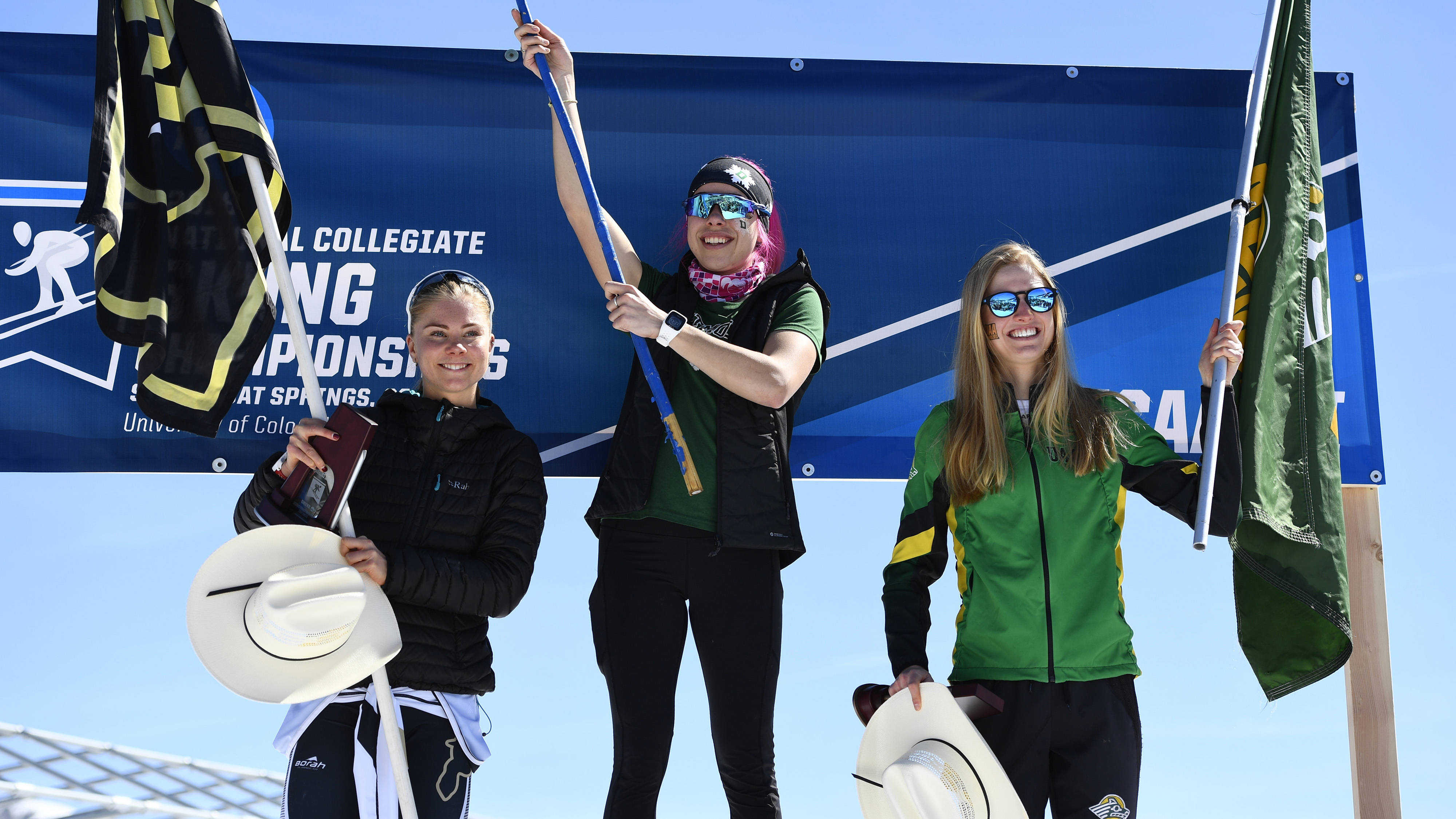
    The women’s 5 k classic podium at 2018 NCAA Skiing Championships in Steamboat Springs, Colorado, with Dartmouth’s Katharine Ogden (c) in first, Colorado’s Anne Siri Lervik (l) in second, and University of Alaska Anchorage’s Hailey Swirbul (r) in third. (Photo: Clarkson Creative/DartmouthSports.com)

    “I was definitely a little stressed because I didn’t know if I could hold that pace or if they would catch up to me, and it’s usually kind of a sketchy strategy to be skiing by yourself, so I kind of knew that in the back of my mind too,” Ogden told The Dartmouth of her mid-race decision to make a move after the 5 k mark of the mass start, when it then turned out that nobody went with her.

    The last time an American topped both women’s races at NCAA Championships was a decade ago, and though both 2007 titles were taken by a Lindsey, they weren’t the same one: Lindsey Williams and Lindsey Weir, both of Northern Michigan University.

    It wasn’t since 1990 and 1991, when Laura Wilson of UVM swept NCAA’s, that the same American woman had won both races.

    “Katharine absolutely wanted this one, and she really likes to win,” said Cami Thompson Graves, the Dartmouth Director of Skiing and women’s Nordic head coach, in a press release after Ogden’s second title. “She wasn’t about to let a fall slow her down, she has such a great competitive fire.”

    Despite Dartmouth’s strong history of women’s skiing – alums Sophie Caldwell, Ida Sargent, Rosie Brennan, and Susan Dunklee competed in the 2018 Olympics alone, with many more alums at previous Games –  Ogden was actually the first female Big Green cross-country skier to take an NCAA title.

    “One day I would love to be one of the Dartmouth alums racing in the Olympics,” she said in a Dartmouth press release. “A lot of the reason I decided to come here for school had to do with growing up with Sophie Caldwell and seeing what a positive experience she had at Dartmouth.”

    Ian Torchia, Northern Michigan University

    Likewise, Ian Torchia has been a top junior athlete for the U.S. for some time now. By the time he went to NCAA Championships, he had already been to U23 World Championships, where his 27th- and 32nd-place finishes were the top American results in the 30 k skiathlon and 15 k classic, respectively.

    Although he is enrolled at Northern Michigan University and trains there with the team, college racing was not his number one goal this season. Torchia won a 15 k skate NorAm in Sovereign Lake, British Columbia, early in the season in pursuit of those higher goals.

    The men’s 15 k freestyle podium on Day 2 of the NorAm opening weekend at Sovereign Lake near Vernon, B.C., with Ian Torchia (NMU/USST D-Team) in first, Jack Hegman (SVSEF) in second, Brian McKeever (Canadian Para-Nordic Team) in third, Kevin Bolger (SVSEF) in fourth (far left), and Adam Martin (Craftsbury GRP) in fifth (far right). (Photo: Peggy Hung)

    “My main goal for the season was to have a strong start to the season so I could qualify for U23s and the Olympics,” Torchia wrote in an email last week. “Competing in Yellowstone and Silver Star was a first for me, and coming into Nationals in the first spot on the Olympic qualifying list was exciting and nerve-wracking. Unfortunately, I had some sub-par racing at Nationals and missed the Olympics but qualified for U23s. I was definitely satisfied with the efforts I put in at U23s, but not with my execution and results. Finishing barely in the top 30 was not was I was hoping for but racing alongside guys who have gotten top-10’s on the World Cup was definitely motivating and gave me a real idea of where I need to be and what I need to do to get there.”

    Coming back from Europe, he had to re-tool and had a solid training camp in Steamboat Springs before NCAA’s.

    There, he finished fifth in the 10 k classic, the top American 46.2 seconds behind race winner Martin Bergström of Utah.

    And in the 20 k skate mass start, he took his first NCAA title, holding off Alvar Alev of the University of Colorado by just two seconds, with Eivind Kvaale of Denver University another two seconds back.

    “The first two laps of the race were very slow and it took patience to follow Coach Sten [Fjeldheim]’s plan of not leading,” Torchia wrote. “The Denver guys led it out on lap three and started gradually pushing the pace. On the final lap, people started throwing down and I was able to cover moves until 2.5 k to go when I gradually pulled the trigger. Alvar Alev from Colorado went on the final uphill and I was able to hang with him into the 2 k downhill. Coming into the final downhill he slingshotted by me but I was able to overtake him before the final turn and sprint faster than I’ve ever sprinted before for the win! I am not known as a sprinter on our team, so I was definitely nervous with a big group around me. But Sten has always told me that a sea level distance guy can outsprint an altitude sprinter, as training at lower elevation is beneficial to speed training.”

    Torchia was the first American in three years to stand atop the NCAA podium; the last guy to do it was U.S. Ski Team teammate Patrick Caldwell in 2015. University of Alaska Anchorage’s Hailey Swirbul said that the international flavor of college racing is fantastic and helps her prepare for international competition and to be a better skier.

    But to win NCAA’s as an American is still a perk.

    “I definitely did not think about it before the race, but after it was pretty cool to think about the rarity of American winners,” Torchia wrote. “Fun to share it with my buddy Paddy Caldwell!”

    Honorable Mention: Zane Fields, Colby College

    Colby’s Zane Fields (left) racing at NCAA Championships last season. This season, he became the school’s first cross-country skiing All-American.

    And on the men’s side in the East, one of the biggest revelations was the Colby squad. Andrew Egger qualified for U23’s and finished 47th in the sprint there, the second American. (“To be honest, making the U-23 World Championship team wasn’t really on my radar when I decided to go to Alaska [for U.S. Nationals]… That said, my goal standing on the start line of the sprints was to win,” Egger told the Colby sports department.)

    On the college circuit, though, it wasn’t Egger who was making Colby history. Zane Fields demolished carnival after carnival, sweeping all five skate races before also winning the final classic race of the eastern season. At NCAA’s, the Colby junior finished sixth in the 20 k skate.

    It was the best season-long tally by any Colby skier ever, and that final race made him Colby’s first male All-American in cr0ss-country skiing.

    “This season has been a dream,” Fields said in a Colby press release after the 20 k. “If you had told me two months ago that things would unfold the way they did, I wouldn’t have believed you. While the sport is an individual one, I have the greatest coaches and team supporting me through every race.”

    As a team, the Colby men finished third in two races this season behind Fields, and had a number of fourth- and fifth-place finishes.

    “This has been the most fun year of skiing I have ever had,” Fields said in the press release. “The season is one that certainly makes the 500-plus hours of training and sacrifices worth it. I’m excited to see what my team and I can accomplish next year.”

    Honorable Mention: Alayna Sonnesyn, University of Vermont

    Those half of the EISA carnival races that Katharine Ogden didn’t win? They went to UVM’s Alayna Sonnesyn, who dominated the first half of the season and won three skate races and two classic races.

    Sonnesyn also had a stellar U.S. Nationals earlier in the season, finishing eighth in the skate sprint and sixth in the 20 k classic; all but one of the skiers ahead of her in that race (winner Hedda Baangman of Sweden) went to the Olympics.

  • Under 23 Questions: Sofia Shomento

    Sofia Shomento racing in the 5 k freestyle at the Colby Carnival in Waterville, Maine. (Photo: FlyingPointRoad)

    In an effort to showcase the North Americans who competed at last week’s International Ski Federation (FIS) 2018 Nordic Junior/U23 World Championships in Goms, Switzerland, we asked those qualifying athletes several questions about themselves — actually, we had them fill in the blanks. Here we have 18-year-old Sofia Shomento, of the Dartmouth Ski Team, who represented the U.S. at her first Junior Worlds. 

    Last week in Goms, Shomento qualified for the freestyle sprint in 26th and went on to place 23rd overall, and finished 58th in the 10 k skiathlon.

    ***

    “My full name is Sofia Shomento, but you can call me Sof.

    I was born and raised in Bozeman, Montana, and I learned to ski at Bohart Ranch with the Bridger Ski Foundation.

    I spent the time between U.S. nationals and Junior/U23 Worlds catching up with classes and skiing with my teammates.

    The funnest workout I did in the last training year to prepare for this was running 121 laps (about 14 miles) around the homecoming bonfire with my class of 2021 teammates.

    This is my first time in Switzerland and second time racing internationally, and so far it’s been incredible!

    One difference I’ve noticed between Switzerland and the U.S. is the snow banks are much taller here!

    Skiing and racing in the Alps is breathtaking. Usually racing at altitude is fun for me because I grew up racing in the West. There are lots of mountains around where I live.

    One of the things I’m most excited about for Junior/U23 Worlds in Goms is meeting new people from around the world.

    One race I’m especially targeting there is the skate sprint.

    I really hope I can chat/make friends with someone from Norway and ask them “what’s the secret?”

    My favorite thing at the breakfast where we are staying is the fresh bread, cheese, and jam.

    Fondue is yummy. The cheese here is delicious. And the chocolate is life changing.

    If I had a totally free day here and didn’t have to worry about race fitness or training, I’d spend it alpine skiing.

    The best way to follow me on social media is on Instagram @sofiashomento.”

  • Under 23 Questions: Lydia Blanchet

    Under 23 Questions: Lydia Blanchet

    Lydia Blanchet (Dartmouth Ski Team) during the 10 k freestyle at 2018 US nationals last month in Anchorage, Alaska. (Photo: Betsy Arnold)

    In an effort to showcase the North Americans competing at this week’s International Ski Federation (FIS) 2018 Nordic Junior/U23 World Championships in Goms, Switzerland, we asked those qualifying athletes several questions about themselves — actually, we had them fill in the blanks. Here we have 20-year-old Lydia Blanchet, of the Dartmouth Ski Team, who’s representing the U.S. at her first U23 Worlds. 

    Blanchet notched a top 30 this week in the 10 k classic, where she finished 30th, and placed 32nd in the freestyle sprint and 38th in the 15 k skiathlon in Goms.

    ***

    “My full name is Lydia Anne Blanchet, but you can call me Lydia Anne Blanchet.

    I was born and raised in Anchorage, Alaska, and I learned to ski with the Anchorage Junior Nordic League at Kincaid Park, and later with APU.

    I spent the time between U.S. nationals and Junior/U23 Worlds catching up with work from the first week of classes and getting settled in my new apartment.

    The hardest and coolest workout I did in the last training year to prepare for this was running the 22 miles from the rim of the Grand Canyon to the Colorado River and back with my best friend and teammate Taryn Hunt-Smith this fall on our geology field program.

    Lydia Blanchet (Dartmouth Ski Team) on the Athabasca Glacier in Banff this past September on a Dartmouth geology field program. (Photo: Laura Hutchinson)

    This is my first time in Switzerland and first time racing internationally, and so far it’s been a dream!

    One difference I’ve noticed between Switzerland and the U.S. is the toilet flushers.

    Skiing and racing in the Alps is like skiing in a story book. Usually racing at altitude is painful for me because I’m a sea level girl through and through. There are humongous, beautiful mountains around where I live, but I train by the ocean!

    One of the things I’m most excited about for Junior/U23 Worlds in Goms is getting to meet skiers from every corner of the world.

    One race I’m especially targeting there is the skiathlon, but I’m excited for all of them.

    I really hope I can chat/make friends with someone from Kazakhstan and ask them if they really are the greatest exporters of potassium.

    My favorite thing at the breakfast where we are staying are croissants with jam and brie.

    Fondue is what my family used to eat on New Year’s. The cheese here is enough to make me move to Switzerland. And the chocolate is enough to make me stay for the rest of my life.

    If I had a totally free day here and didn’t have to worry about race fitness or training, I’d spend it doing a 45 minute sled run down an alpine resort—which I did with my dad on Tuesday!
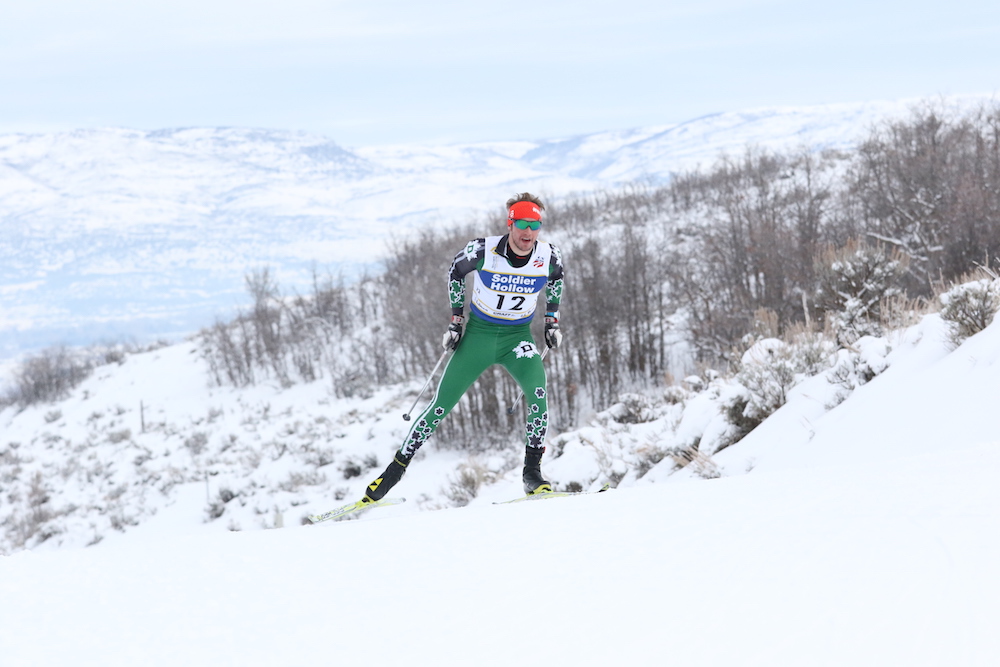
    The best way to follow me on social media is on Instagram @blanchetlydia.”

    Lydia Blanchet (Dartmouth Ski Team) getting some air at the top of the tram by the U.S. team’s hotel in Goms, Switzerland. (Photo: Thomas O’Harra)
  • From D to B: Paddy Caldwell’s Natural Progression

    From D to B: Paddy Caldwell’s Natural Progression

    American Paddy Caldwell (SMS/USST) on his way to qualifying 20th in the men’s classic sprint at U23 World Championships at Soldier Hollow in Midway, Utah. He went on to place fourth in his quarterfinal and 18th overall for his best sprint result at U23 Worlds. (Photo: FlyingPointRoad.com)

    Back in December of 2010, 15-year-old Patrick “Paddy” Caldwell was racing amongst grown men. He finished 17th in an International Ski Federation (FIS) classic sprint held in Craftsbury, Vt. Today, at 23, Caldwell skis for the Stratton Mountain School (SMS) Elite Team and is a newly minted U.S. Ski Team (USST) B-team member. To put things in perspective, during that 2010 Craftsbury sprint, Patrick O’Brien, Caldwell’s current primary coach and head of the SMS Elite Team, was nearly 23 at the time and placed fourth in the race.

    The USST has a well-established development pipeline. Here’s the basic philosophy: have skiers find success at each rung of the ladder before exposing themselves to deeper competition as they progress towards more rarefied races. From local and regional events to junior nationals, OPA Cup trips, NCAAs, senior nationals, to Junior and U23 World Championships, Caldwell has paid his dues, notched benchmark performances, and maintained the grind to find success at each incremental step.

    It wouldn’t be a stretch to say Caldwell embodies the spirit of a USST development model where skiers can remain in school, meet conflicting demands, and with a big dose of hard work and a smidge of luck, make progress as a skier.

    From D to B

    Initially, Caldwell was named to the U.S. D (development) team for the 2014/2015 season. He maintained D-team status until this spring when he was officially nominated to the B-team. (His cousin, Sophie Caldwell, remains on the A-team.)

    Paddy Caldwell (U.S. Ski Team D-team/SMS) racing to 46th overall and 25th for time of day in the men’s 15 k freestyle pursuit at World Cup Finals in Quebec City. (Photo: John Lazenby/Lazenbyphoto.com)

    In a phone interview two weeks ago, the Lyme, N.H., native explained that making the jump to the B-team wasn’t an explicit goal.

    “I don’t think I officially wrote that down in a goal section or something like that in the beginning of the year,” Caldwell said while finishing up spring classes at Dartmouth College in Hanover, N.H. “By looking at it as sort of progression, it definitely has been a goal of mine. My goal was to be a competitive World Cup skier and that is a step that needs to happen.”

    Caldwell’s 2016/2017 objectives highlighted U23 World Championships at Soldier Hollow outside Midway, Utah.

    “I was really focused trying to peak for those events and put up the best results that I could in that field,” he explained.

    At U23 worlds, he earned two top 10s, placing ninth in both the 15-kilometer skate and 30 k skiathlon.

    Caldwell was granted starts for the World Cup’s closing weekend, a three-race mini tour in Quebec City. He placed 46th overall at World Cup Finals, but turned heads with a 25th-best time of day on the final-stage 15 k skate pursuit.

    In the near term, despite his promotion, it’s life as usual for Caldwell. There’s school to finish up and training hours to log. (Caldwell returned recently to Hanover from the USST’s first on-snow camp of the year in Bend, Ore.)

    “I think that is very much in the air,” Caldwell said when asked if he’d be racing a full World Cup schedule. “And it depends on a lot of things — foremost if I am skiing well. And those are plans I am still working out. I don’t know exactly what opportunities will be there. Those are things, discussions we’ll have later in the year.”

    Caldwell will remain under the guidance of O’Brien at SMS. And from a funding standpoint, Caldwell said he won’t see a bump in USST funding.

    “Not in terms of support from the U.S. Ski Team,” Caldwell said when asked if his B-team status came with greater financial support. “The last few years I have been really fortunate to be successful fundraising through the local community here in the Upper Valley in New Hampshire and Vermont. So I am really thankful for the support from local people in both the ski community and outside the skiing community. I think absolutely if I end up racing in Europe more, it will be a bigger expense, and those are things I am not completely dialed on yet.”

    Caldwell is officially a senior at Dartmouth, having earned 32 of 35 credits for his bachelor’s degree while studying geography and economics. In 2015, he won the 10 k skate at NCAA Skiing Championships.

    Paddy Caldwell (13) chases Kris Freeman in the 50 k freestyle mass start at 2015 U.S. Distance Nationals in Sun Valley, Idaho.

    “I feel really fortunate to go to Dartmouth College and be able to balance skiing and education,” he said. “One of my goals, I’ve always been aimed at finishing an undergraduate degree in a timely manner. I’m really thankful to be at Dartmouth where there is a flexible quarter system. I’ve taken off most fall terms since I have started at Dartmouth as well as winter and been able to go in the spring and summer fairly consistently.”

    As a discretionary pick for the USST, Caldwell has jumped a significant pipeline-hurdle. Domestically, his peers have been skiing in a tight pack — on this year’s SuperTour, the men’s side had several different standout performances.

    “I think there is an aspect of added pressure,” Caldwell said of his new B-team status. “But I also think that that is an inherent part of our sport. At the end of the day, it comes down to racing fast. That pressure is going to be there no matter what team you are on. It is something that I try not to focus on and just see it as an opportunity to keep growing as a skier and not as a target on my back, because I think it is easy to see it that way. Absolutely there will be some pressure from that, it’s also not something that I am unfamiliar with. I think it’s part of the sport. You have to, at least for me, just focus on trying to achieve results for my own growth as a skier and not focusing on the stuff going on around me.”

  • FasterSkier’s Juniors of the Year: Katharine Ogden and Léo Grandbois

    FasterSkier’s Juniors of the Year: Katharine Ogden and Léo Grandbois

    Katharine Ogden (Photo: FlyingPointRoad.com) and Léo Grandbois (Photo: IBU) are FasterSkier’s 2017 Juniors of the Year.

    With the 2016/2017 season officially in the rearview, FasterSkier is excited to unveil its annual award winners for this past winter. Votes stem from the FS staff, scattered across the U.S., Canada, and Europe, and while not scientific, they are intended to reflect a broader sense of the season in review. This set of honors goes to outstanding North American junior athletes across all nordic disciplines. 

    ***

    Katharine Ogden, Stratton Mountain School/U.S. Ski Team

    Yes, Stratton’s Katharine Ogden has earned our “Junior of the Year” honors before. But this season, the 19-year-old Vermont skier rose to even greater heights. Early in the season, she snagged second-place honors in the senior fields at a SuperTour (the 10 k classic in West Yellowstone), a NorAm (the 10 k freestyle at Sovereign Lake), and U.S. National Championships (the 20 k classic mass start).

    American Katharine Ogden (SMS/USST) and her dad John celebrate her bronze medal in the women’s 10 k skiathlon on Friday at 2017 Junior World Championships at Soldier Hollow in Midway, Utah. (Photo: U.S. Ski Team/Tom Kelly)

    And that was before World Junior Championships even started. At Soldier Hollow, Ogden started things off with a fifth-place finish in the 5 k freestyle, tying the second-best World Juniors result ever by an American.

    Two days later, she raced to a bronze medal in the 10 k skiathlon, becoming the first American ever to stand on the podium in an individual World Junior Championships race.

    And then two days after that, Ogden anchored teammates Hailey Swirlbul, Julia Kern, and Hannah Halvorsen to relay bronze, the first medal ever won by a U.S. women’s relay team in the history of the event.

    “This week at worlds has been amazing,” Ogden, wrote in an email to FasterSkier at the time. “Wonderful skiing and good weather and unprecedented results for the whole team.”

    And she told the U.S. Ski Team for a press release: “It was really incredible to stand up at the medals ceremony the other night [after the skiathlon]. The only thing I can think of that would be better is standing up there with my friends.”

    Then she did.

    Léo Grandbois, Biathlon Estrie/Biathlon Canada 2022 Squad

    17-year-old Léo Grandbois of Lennoxville, Québec, just made one international racing trip this season. But on the very first race of the trip, he made a splash.

    The youth men’s 12.5 k individual podium after the first race of 2017 IBU Youth/Junior World Championships in Osrblie, Slovakia, with Canada’s Léo Grandbois in first (c), Russia’s Said Karimulla Khalili (l) in second, and Germany’s Danilo Riethmüller (r) in third. (Photo: Airat Aitniakov)

    Grandbois had traveled to Brezno-Osrblie, Slovakia, to represent Canada in the youth division at the International Biathlon Union’s World Youth and Junior Championships. The previous season he had competed at the Youth Olympic Games, with a top finish of 22nd, but this was his first time at the bigger event.

    In the 12.5 k individual, Grandbois hit every target – the only competitor in the field to go 20-for-20 – and picked up a gold medal, by an impressive minute and 14 seconds over Said Khalili of Russia.

    “I am probably the most happy man on earth today!” he wrote in an email to FasterSkier after his win.

    Grandbois went on to be one of Canada’s most consistent performers at the Championships, finishing 14th in the sprint and 22nd in the pursuit. The sprint result came despite three penalties.

    “I think it just says that I am quite strong even [during] a bad race,” Grandbois said at the time.

    “I’m missing 15 days of school to be here, and my teachers/professors are probably thinking, ‘This guy is not doing the right thing,’ but I know that I am doing the right thing,” he wrote in his 20-for-20 interview.

    And even then, he wasn’t done yet – Grandbois had proven his speed in that sprint, where he had the tenth-fastest course time in the field. Come the end of the season, he went to Cross Country Canada Ski Nationals for the first time and picked up junior national titles in the 10 k freestyle and the 15 k mass start.

    Honorable Mention: Julia Kern, SMS Elite Team/Dartmouth College/U.S. Ski Team

    Julia Kern, another Stratton skier with a U.S. Ski Team “D” team affiliation, joined Ogden on the relay podium at Soldier Hollow – and Kern’s efforts brought the team into sixth place at the halfway point of the race.

    Julia Kern (U.S. Ski Team D-team/SMS) racing to 29th in the women’s 1.5 k freestyle sprint qualifier on Friday at World Cup Finals in Quebec City. In her first World Cup race, Kern ended up 24th on the day. (Photo: John Lazenby/Lazenbyphoto.com)

    “There is no one I would rather be on the podium with than my best friends and teammates,” Kern, 19, wrote at the time. “Not only did I share the experience with my best friends, but on home soil with all my family and friends there to celebrate with us!”

    Six weeks later, Kern got the first World Cup start of her career. It was a skate sprint in Québec City as part of World Cup Finals – and not only did she qualify for the heats, but she finished 24th and scored World Cup points in her first try.

    Coming off a clean sweep of the Junior Nationals races in Lake Placid, New York, Kern was confident, and at the same time unsure where she would stack up against the best skiers in the world.

    “At the start line it almost felt like a dream because there I was at the start line next to some of the best skiers in the world, skiers who I have looked up to and watched race after race on my computer screen to learn and gain inspiration from,” she wrote. “This is a huge confidence booster for me because it is easy to make a goal and have my teammates and coaches who believe in me tell me results like this are possible. But it is another thing to actually live up to it and believe it yourself, too.”

    Honorable Mention: Gareth Williams, Telemark Racers/Canadian Junior National Ski Team

    Gareth Williams (Telemark Race Team) on his way to a personal-best 11th in the men’s 20 k skiathlon at 2017 Junior World Championships at Soldier Hollow in Midway, Utah. (Photo: FlyingPointRoad.com)

    Where hasn’t Gareth Williams raced this season? The Kelowna cross-country skier started out in Canada, where he snagged a top-10 in the senior NorAm field at Sovereign Lake. At U.S. National Championships, he took third in the junior 10 k classic mass start. And then back in the U.S. for World Junior Championships, he turned in some of Canada’s best results, placing 11th in the 20 k skiathlon and 20th in the 10 k freestyle.

    “It is exciting to see that I have the speed to ski with the best juniors in the world,” Williams wrote after the skiathlon. “Being so close to to the top 10 is my only disappointment.”

    He headed for more junior racing after that, touring Switzerland and Germany and picking up finishes of second, sixth, and sixth in OPA Cup Juniors action.

    Finally, Williams returned to Canada and started World Cup Finals, where he finished 71st overall.

    “You’ve got a lot of fast guys, and you’re kind of going from being one of the faster guys to obviously to one of the slowest guys around,” Williams wrote of the experience. “That’s a cool feeling, actually.”


  • Under 23 Questions with Lauren Jortberg

    American Lauren Jortberg (Dartmouth Ski Team) racing to 37th in the women's 10 k skiathlon on Feb. 3 at 2017 Junior World Championships at Soldier Hollow in Midway, Utah. (Photo: FlyingPointRoad.com)
    American Lauren Jortberg (Dartmouth Ski Team) racing to 37th in the women’s 10 k skiathlon on Feb. 3 at 2017 Junior World Championships at Soldier Hollow in Midway, Utah. (Photo: FlyingPointRoad.com)

    In an effort to showcase the North Americans competing at this past week’s International Ski Federation (FIS) 2017 USANA Nordic Junior World Championships and U23 Cross Country World Championships at Soldier Hollow in Midway, Utah, we asked those qualifying athletes several questions about themselves — actually, we had them fill in the blanks. Here we have 19-year-old Lauren Jortberg, of Dartmouth College, representing the U.S. at her first Junior Worlds. 

    On the opening day of competition, Jortberg placed 20th in the women’s classic sprint, and on Friday, she finished 37th in the 10 k skiathlon.

    ***

    “My full name is Lauren Jortberg, but you can call me Lo. I was born and raised in Boulder, Colo., and one thing you should know about my hometown is roller skiing is illegal and Crocs were created there.

    I started cross-country skiing when I could walk thanks to my parents. I currently train in Hanover, N.H., with the Dartmouth Ski Team.

    If I’m not skiing, you might find me running in the mountains. If I had to pick a favorite book, it would be ‘Harry Potter and the Goblet of Fire‘.

    Lauren Jortberg (Dartmouth Ski Team) en route to 20th in the women's classic sprint on Jan. 30 at 2017 Junior World Championships at Soldier Hollow in Midway, Utah. (Photo: FlyingPointRoad.com)
    Lauren Jortberg (Dartmouth Ski Team) en route to 20th in the women’s classic sprint on Jan. 30 at 2017 Junior World Championships at Soldier Hollow in Midway, Utah. (Photo: FlyingPointRoad.com)

    One of the things I’m most excited about for Junior Worlds at Soldier Hollow is racing on home soil! The atmosphere should be really exciting. One race I’m especially targeting there is the classic sprint.
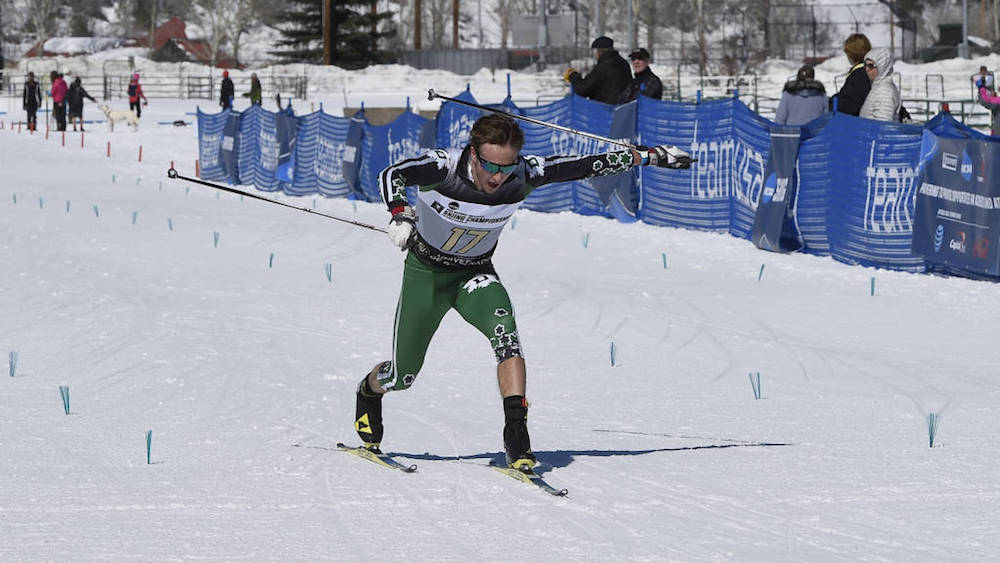
    The best advice anyone ever gave me about skiing or racing was from Zeke Zdechlik. He always told me that I’ll ski faster if I relax and have fun out there.

    One of the best race memories I have is my first every skiathlon when I was 6 years old. I had to change my boots as well as my skis, and I cried because everyone passed me. I’m hoping my second one goes a little better, thankfully now I have pursuit boots.

    If I could meet one World Cup skier, it would be Stina Nilsson.

    If I don’t end up being a professional skier, I’ll probably be a vet or a ski bum.

    I’m missing 11 days of school to be here, and my teachers are probably thinking, ‘I don’t know if I believe the wifi is that bad.’

    You can follow me on Instagram @ljortberg.”

  • Under 23 Questions with Cal Deline

    Under 23 Questions with Cal Deline

    Cal Deline (Dartmouth Ski Team) racing to 17th in the men's 15 k freestyle at 2017 U.S. nationals earlier this month at Soldier Hollow in Midway, Utah. (Courtesy photo)
    Cal Deline (Dartmouth Ski Team) racing to 17th in the men’s 15 k freestyle at 2017 U.S. nationals earlier this month at Soldier Hollow in Midway, Utah. (Courtesy photo)

    In an effort to showcase the North Americans competing at next week’s International Ski Federation (FIS) 2017 USANA Nordic Junior World Championships and U23 Cross Country World Championships at Soldier Hollow in Midway, Utah, we asked those qualifying athletes several questions about themselves — actually, we had them fill in the blanks. Here we have 21-year-old Cal Deline, of Dartmouth College, who’s representing the U.S. at his first U23 Worlds.

    ***

    “My full name is Callan Deline, but people call me Cal.

    I was born in Fort Collins, Colo., raised in Vail, Colo., and one thing that you should know about Vail is that it’s awesome all summer and winter long.

    Cal Deline (Dartmouth Ski Team) finishing 14th in the 10 k freestyle at 2016 NCAA Championships in Steamboat Springs, Colo. (Courtesy photo)
    Cal Deline (Dartmouth Ski Team) finishing 14th in the 10 k freestyle at 2016 NCAA Championships in Steamboat Springs, Colo. (Courtesy photo)

    I started cross-country skiing when I was 15, thanks to Dan Weiland, Sylvan Ellefson, and being forced to stop big mountain skiing. I currently train where I go to school, in Hanover, N.H., with the Dartmouth Ski Team.

    If I’m not nordic skiing you can probably find me alpine skiing or somewhere at school. My favorite book is ‘Mr. Penumbra’s 24 Hours Bookstore‘.

    One of the things I’m most excited about for U23/Junior Worlds at Soldier Hollow is to be racing against some of the worlds best on what I consider a home course. As for the races I’m targeting, I’m going for all of them, but am especially excited for the 30 k pursuit. It’ll be my first-ever pursuit and second-ever 30 k (first 30 k being at nationals this year).

    The best advice anyone ever gave me about skiing or racing was, there’s a tie … ‘90% of skiing fast is looking good’ – Simi Hamilton… ‘Racing is just hanging onto the fastest guy for as long as you can, until one day you are the fastest guy’ – Sylvan Ellefson

    One of the best race memories I have is drinking Red Bulls instead of warming up before the Owl Creek Chase, or before any race longer than 20 k.

    If I could meet one World Cup skier, it would be Jessie Diggins.

    If I don’t end up being a professional skier, I’ll probably be traveling or trying to find a real job.

    I’m missing a week and a half of school to be here, and my professors are probably thinking ‘Who is gonna take this kid’s midterms?‘

    You can follow me on Instagram @calorado_.”

  • FasterSkier’s Coaches of 2016: Cami Thompson-Graves and Ruff Patterson

    FasterSkier’s Coaches of 2016: Cami Thompson-Graves and Ruff Patterson

    Dartmouth's longtime coaches Ruff Patterson (l) and Cami Thompson-Graves are FasterSkier's coaches of the year. (Photo: Dartmouth Sports/FasterSkier)
    Dartmouth’s longtime coaches Ruff Patterson (l) and Cami Thompson-Graves are FasterSkier’s coaches of the year. (Photo: Dartmouth Sports/FasterSkier)

    The 2015/2016 awards continue this week, chosen by the FasterSkier staff based on performances from last season. While not scientific, these points of recognition are intended to reflect a broader sense of the season in review.

    Previous categories: Breakthrough Skiers (Canada & U.S.) | Biathletes of the Year | Collegiate Skiers | Juniors | Nordic Combined | Para-Nordic

    ***

    There are a few teams which have dominated college skiing in the last few years: Denver and Colorado trading back and forth for 10 of the last 12 NCAA titles. Northern Michigan University dominating Midwest cross-country skiing.

    And, in the East, the University of Vermont. The Catamounts won 21 straight Eastern Intercollegiate Ski Association (EISA) carnivals coming into this season, meaning no other team had won in almost four years. They also won the 2012 NCAA Championships, one of the few teams to break Denver-Colorado dominance.

    But at the Colby Carnival in Maine, the second weekend of the 2016 EISA season, the other team to break the Denver-Colorado pattern – 2007 NCAA champions Dartmouth College – began their rebound, edging UVM by four points for the combined men’s, women’s, alpine, and nordic title.

    “It has been a long spell of 2nd place finishes and we all knew we could do it,” Dartmouth Director of Skiing Cami Thompson-Graves wrote in an email this spring. “It was just a matter of putting things together at the same time. Certainly the strength of our Alpine teams helped, but we also had some solid performances on the Nordic side too.”

    Helmed by Thompson-Graves on the women’s cross-country side and Ruff Patterson on the men’s cross-country side, and with a storied past, it’s hard to ever consider Dartmouth the underdogs in a ski race. But it still seemed like an upset.

    Then Dartmouth won the UVM Carnival. Then UVM won the Dartmouth Carnival. It was competition that the Eastern circuit hadn’t seen in years.

    “The excitement of the team was great,” Thompson-Graves wrote. “I knew it had been a while but hadn’t considered just how long it had been, and so winning early in the season was a great boost, and helped keep the team fired up through the season, despite the lack of snow and constant wondering of where/what we would be racing from week to week.”

    Dartmouth went on to earn fifth place at NCAA Championships in Steamboat Springs, Colorado, the top team from the Eastern division.

    After the whole Championships with only one race remaining, UVM trailed Dartmouth by just two points. That race was the women’s 15 k mass start; UVM had won seven women’s cross-country races over the course of the season, compared to three for Dartmouth.

    But Thompson-Graves’s Dartmouth women’s team pulled away, with Dartmouth securing fifth place and UVM slipping to seventh.

    “Steamboat was fun — I always like racing there, despite the elevation,” Thompson-Graves wrote. “The first race was tough, and the results were average but it was great to put it together for some stronger results in the final race. Of course, we want more, but 5th was a result to be proud of this year.”

    Dartmouth wasn’t the best college team in the country, even when breaking things down into nordic and alpine. National titles, however, are not the only measure of coaching success. Thompson-Graves and Patterson have shaped a large segment of skiers who are contributing to American success internationally, as well as fueling the ever-more-competitive senior domestic circuit.

    This year alone, Dartmouth alumni women made up half of the World Championships team for U.S. biathlon (Susan Dunklee and Hannah Dreissigacker) and three-eighths of the U.S. Ski Team’s senior team (Sophie Caldwell, Ida Sargent and Rosie Brennan).

    When the Ski Tour Canada picked up extra American and Canadian quota spots, three more Dartmouth skiers joined the World Cup: Annie Hart, Eric Packer and Dakota Blackhorse-von Jess. Elsewhere in the ski world, fellow alum Erika Flowers finished third in the American Birkebeiner, and Paddy Caldwell, still college-aged but skiing primarily with a senior team, was the top American finisher in the 15 k skate at U23 World Championships.

    Only four U.S. athletes stood on individual World Cup podiums in nordic sport this season, and half came from this group: Dunklee (second in a biathlon World Cup in Fort Kent, Maine) and Caldwell (who won a Tour de Ski stage in Oberstdorf, Germany).

    (Brennan was also part of the third-place U.S. relay team in Lillehammer, Norway.)

    And the other two podium finishers – Jessie Diggins and Simi Hamilton – happen to be part of the SMST2 team, which is coached by Patterson’s former All-American skier Patrick O’Brien. Their head coach on the U.S. Ski team is another of Patterson’s former athletes, Chris Grover.

    Those are just a few Patterson and Thompson-Graves’s former athletes who have gone on to coach at every possible level, with some encouraging participation at a young age and building the U.S. skiing pipeline from the bottom, while others help point talented college and senior athletes towards elite success.

    Thompson-Graves is also now a member of the International Ski Federation’s Ladies Cross Country Committee, where she is pushing for better representation of women at all levels of skiing.

    Patterson is retiring after this season, but Thompson-Graves will continue to helm the program into the future. While watching their former athletes excel at the senior level must be satisfying, there’s still plenty going on in their day jobs.

    “It was great to knock UVM off the top a couple of times this year!” Thompson-Graves wrote in her email.

  • Dartmouth is Hiring: Men’s Head Coach

    Dartmouth is Hiring: Men’s Head Coach

    Dartmouth-logo

    Dartmouth College seeks a full-time, Head Coach for its Men’s Nordic program. The Head Coach will lead, coach, develop and administer all aspects of the men’s nordic program within NCAA, Ivy League and institutional standards. Assumes additional responsibilities for the overall Ski Team program.

    Interested applicants can obtain more information or apply at: http://searchjobs.dartmouth.edu/postings/36537

  • Thompson-Graves Celebrates 26th Season at Dartmouth

    Thompson-Graves Celebrates 26th Season at Dartmouth

    Cami Thompson-Graves (Photo: Flying Point Road Photography/flyingpointroad.com)
    Cami Thompson-Graves (r) poses with Kristina Trygstad-Saari (l) in 2013 (Photo: Flying Point Road Photography/flyingpointroad.com)

    Athletics have always played a central role in Cami Thompson-Graves’ life.

    Growing up, the Stowe, Vt., native embodied her passion for sport by skiing and playing field hockey and tennis.

    At St. Lawrence University she studied physical education and upon graduation continued a skiing career that took her to the U.S. Ski Team (USST) and the 1985 World Championships in Seefeld, Austria.

    However, once Thompson-Graves finished a two-year stint on the USST, she took a development coaching job at Dartmouth in 1988 in hope of sharing her love of sport with aspiring college athletes.

    Twenty-six years later, Thompson-Graves is the women’s coach of one of the most esteemed college ski teams in the country. Her quarter century of coaching makes her the longest-serving female head coach on the collegiate circuit.

    Over the years she and men’s coach Ruff Patterson, have led their team to countless all-American honors and top finishes at the NCAA Championships. In 2007 Thompson-Graves helped her team claim the NCAA Championship, marking the school’s first win since 1976 and notching the third-ever championship for the Big Green. In 2013, she won the honors of National and ESIA Intercollegiate Coach of the Year.

    As if that weren’t enough, many of Thompson-Graves’ skiers have gone on to achieve national and international acclaim. At the 2014 Olympic Games alone, five of her former athletes represented the U.S. in Sochi: USST members Sophie Caldwell (’12) and Ida Sargent (’11), and the U.S. Biathlon’s Susan Dunklee (’08), Sara Studebaker (’07), and Hannah Deissigacker (’09).

    FasterSkier caught up with Thompson-Graves to reflect on the past quarter century of coaching and what inspires her to continue working with promising young skiers.

    FasterSkier: When did you become interested in coaching and how did you end up at Dartmouth?

    Cami Thompson-Graves: I went to St. Lawrence University and I studied physical education, mainly because I was an athlete in high school. I played field hockey, I played tennis, I skied, and had a lot of respect for the coaches in my life. I was interested in doing the same thing. As far as how I ended up at Dartmouth, I raced myself and when I finished racing I started looking for a job. The development coach position opened up here so I grabbed that and started. Then I got lucky and got the head coach job shortly thereafter.

    FS: This seems like something you had been planning for a while.

    CTG: When I went to school I had an open mind and was trying to decide if I was interested in business or what I wanted to do. Sports have always been a big part of my life and I grew up believing that if I set my mind to something I should be able to accomplish it. Sports have been an important part of my life and who I am so it’s great to be able to try and pass that on to other people.

    Cami Thompson-Graves (Photo: Dartmouth.edu)
    Cami Thompson-Graves has entered her 26th year of coaching at Dartmouth this Fall. (Photo: Dartmouth.edu)

    FS: What have been some highlights of your career at Dartmouth?

    CTG: Winning the NCAA Championship in 2007 was definitely a highlight. We thought winning was not something we could accomplish because we don’t have scholarships here, it was our final exam period during the championships, and we didn’t have great snow that winter. But a lot of things came together so that was really exciting.

    Certainly having five of my alumni skiers in Sochi last year was another highlight for me. I was really excited to see those girls out there who were racing hard and still so passionate about the sport.

    FS: Speaking of alumni, the Dartmouth program has had a lot of its skiers find success after leaving school. What is it about that your team that attracts quality skiers and keeps them motivated once school is finished?

    CTG: Something that we are really proud of here – and we reiterate year in and year out –is our ambition to help each individual skier achieve their goals. It’s a huge priority for us as a program to think big and think outside the box. We have an award that’s based on skiing as a way of life, and that’s something we live here every day. We spend a lot of time together as a team, we make some of the toughest sessions fun and worthwhile, and we encourage people to race in races that they haven’t participated in before. We try and create a culture that encourages people to keep going, think big, try harder, and do more.

    It’s wonderful to have those athletes who continue to keep competing, but it’s also really cool to look around the room at coaches meeting at nationals. Many of the people in the room are our people who may have skied for us at some point and are still in the sport even if they are not racing.

    FS: What’s kept you going throughout your coaching career?

    CTG: I’m laughing because Thomas Alsgaard came here once and looked at Ruff and me and he said, ‘what are you still doing here? You’re old.’

    You don’t stop learning. I didn’t learn everything I know about skiing when I was racing in the 80s. I’ve learned a lot along the way and it is still challenging and it is still fun. I feel like every year you grow as a coach or there’s some new thing, whether it’s hosting the NCAA championship, winning a Championship or having a particularly great group of people that love to work hard and train hard and race with passion. There’s always something to keep it interesting and fun.

    FS: Do you have any plans for the future?

    CTG: I love what I’m doing and I don’t see myself stopping anytime soon.

  • Trygstad-Saari Leaves Bridger Ski Foundation for Montana State

    Trygstad-Saari Leaves Bridger Ski Foundation for Montana State

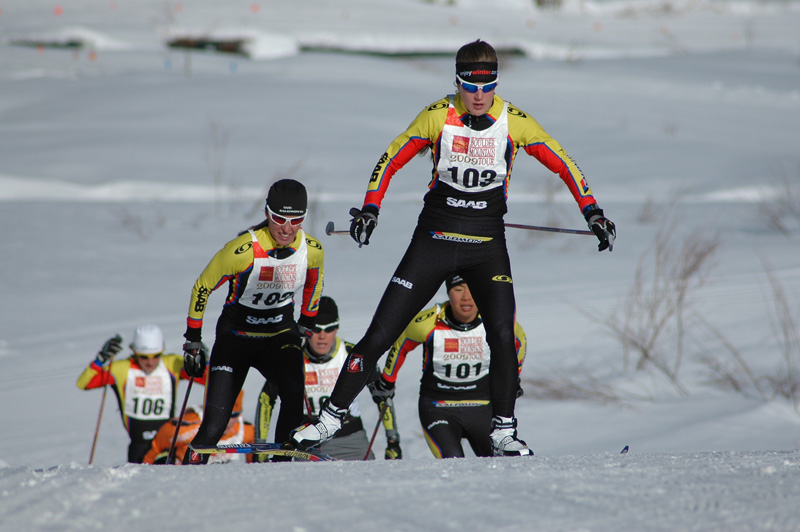
    Kristina Trygstad-Saari in the leads the 2009 Boulder Mountain Tour. The  29-year-old was announced as Montana State University's nordic ski team head coach on July 11. (Photo: Saab/Solomon Factory)
    Kristina Trygstad-Saari in the leads the 2009 Boulder Mountain Tour. The 29-year-old Bozeman native was announced as Montana State University’s nordic ski team head coach on July 11. (Photo: Saab/Salomon Factory)

    When Montana State University (MSU) started a national search for a new nordic head coach, little did they know that their final pick would come from their own backyard.

    The university announced last Friday that Bozeman, Mont., native Kristina Trygstad-Saari will take the place of former head coach Grethe-Lise Hagensen, whose contract was not renewed in May.

    This is the second job announcement in recent months for Trygstad-Saari as she was reported to be the new elite/post-graduate  coach of the Bridger Ski Foundation (BSF) in May. She has since resigned from the position.

    “The job opened up later than is ideal for ski coaches and I was already working for BSF doing the elite team,” Trygstad-Saari explained in a phone interview. “Growing up in Bozeman I’ve always watched that position as something that could be a potential career position so when it opened up I decided to apply and see what happened.”

    Trygstad-Saari was one of four finalists for the post, including former MSU assistant coaches, Chad Andersen and Dan Campbell, and current University of New Hampshire assistant coach Stephen Monsulick.

    “We’re fortunate to live in one of the best ski towns in the United States,” MSU Athletics Director Peter Fields said in a press release. “And to be able to tap into our local community for our Nordic ski coach is exciting. Coach Trygstad-Saari has competed at the highest levels, raced and coached collegiately at Dartmouth, and knows the challenges of being a student-athlete. We feel she is a great fit for our program and look forward to her taking over the reins of the Bobcat Nordic program.”

    Returning member of the MSU ski team and former BSF racer Cambria McDermott also expressed her excitement to have Trygstad-Saari at the helm of the university’s nordic program.

    Former Bridger Ski Foundation (BSF) elite team racer Kristina Trygstad-Saari was recently named head coach of the BSF elite nordic team. (Photo: Mary Klotz)
    Former Bridger Ski Foundation (BSF) elite team racer Kristina Trygstad-Saari had planned to coach the BSF elite nordic team. However, when the head coach position became available at Montana State University, Trygstad-Saari jumped at the opportunity.  (Photo: Mary Klotz)

    “Kristina is a great choice for our new head coach. She has had so much success as an athlete and, more recently, as a coach. Besides her knowledge and experience, I think she will bring a new, focused energy to our team,” McDermott wrote in an email.

    The decision to leave Bridger shortly after her hire was difficult for Trygstad-Sarri, who was one of the program’s most successful skiers as a junior. While content with her position at BSF, she had always wanted to coach collegiate-level skiing and knew the position at the university was an opportunity she had to take.

    “I would say that this has been a really tough decision for me for a lot of reasons. I have always been supportive of and supported by BSF. I am really loyal to the organization and I was very happy with my position there at the elite team,” she said. “I had in the back of my mind that I wanted to coach college eventually. It seemed like one of those opportunities that I just needed to go for and if it ended up working out, I knew I might need to take that step.”

    “When I found out that I got the job, I took some time to think about all sides of the situation and it’s definitely challenging to leave something that’s really good. I had really great coworkers, Dragan [Danevski] has always been super supportive of me. I look forward to the new position but it has been challenging for sure.”

    BSF Head Coach and Program Director Dragan Danevski had no comment about the departure of Trygstad-Saari but said that the program was currently searching for her replacement.

    Without Trygstad-Saari, the club’s elite and post-graduate team is currently without a coach and with several skiers joining the program in the fall, a new hire will be necessary in the coming weeks.

    When asked whether she was open with BSF about her college-coaching aspirations, Trygstad-Saari said she had communicated with the club prior to her acceptance of the job.

    “I was pretty open part way through the process. Initially I applied not knowing what would happen and just did that on my own,” she explained. “I’ve been pretty open about the process and trying to communicate things well with people. I know it’s a hard decision that affects a lot of people and I hope that in the end it works out for everybody.”

    Despite the tough choices that Trygstad-Saari has made, she is ready to lead the MSU ski team into a new era.

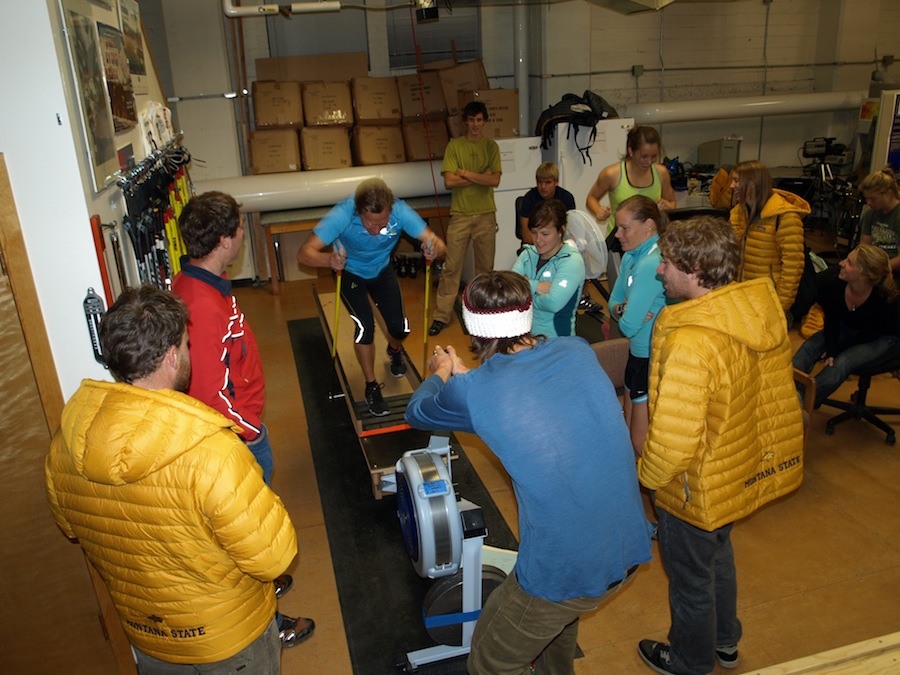
    Upper-body power testing with the Montana State University Nordic Team (Dan Heil photo)
    The Montana State University Nordic Team conducts an upper-body power test in 2012. Trygstad-Saari will become head coach of the team August 1, 2014. (Photo: Dan Heil)

    “I’m really excited to be working with collegiate athletes. It’s an interesting and exciting time for skiers,” she said. “I look back on my college skiing experience and I really value that. I really looked up to my coach at that time so I’m really excited to step into that role and lead these athletes through their college experience.”

    Trygstad-Saari, 29, intends to use her depth of knowledge as both a ski racer and coach to push her athletes to the next level. A nine-time junior national champion, she placed sixth in the 2002 Junior World Championships, and was named 2002 National Junior Skier of the Year.

    At Dartmouth, she skied two seasons for the Big Green. Since then he has been both racing and coaching, culminating in her position as interim men’s coach at Dartmouth where she lead the team to fifth place at the 2013 NCAA Championships in Middlebury, Vt.

    In terms of goals for the MSU ski team, Trygstad-Saari is focused on making her transition into the program easy for her athletes. Once that is accomplished she plans to bring the team to its full potential.

    “My priority right now is making a smooth transition for the athletes individually and the program as a whole,” she said. “I know it’s hard to transition between coaches so it’s going to take some time to get to know everybody. I’ve been watching this team grow over the last 10 years and I see a lot of potential. There is no reason that we can’t be in the top three teams collegiate circuit and I hope to take the team to that level.”

  • Returning to Her Roots: Trygstad-Saari Becomes Elite/Post-Grad Coach with Bridger Ski Foundation

    Returning to Her Roots: Trygstad-Saari Becomes Elite/Post-Grad Coach with Bridger Ski Foundation

    Former Bridger Ski Foundation (BSF) elite team racer Kristina Trygstad-Saari was recently named head coach of the BSF elite nordic team. (Photo: Mary Klotz)
    Former Bridger Ski Foundation (BSF) elite team racer Kristina Trygstad-Saari was recently named head coach of the BSF elite nordic team. (Photo: Mary Klotz)

    A return to one’s roots can often lead to new opportunities. Such is the case with Kristina Trygstad-Saari, a Bozeman, Mont., native and Bridger Ski Foundation (BSF) alumnus who was recently named the ski club’s elite and post-graduate coach for the 2014-2015 season.

    Trygstad-Saari found her start in nordic ski racing with the Bridger Ski Foundation and found great success in her skiing under the guidance of head coach, Dragan Danevski. After nine junior-national titles, Trygstad-Saari attended the Junior World Championships in 2002 and earned one of the top finishes by an American woman in the championships after finishing sixth in the 5 k freestyle.

    After her junior years were over, Trygstad-Saari made her leap to the collegiate circuit at Dartmouth College, where she skied with the Big Green for two seasons. She left New Hampshire in 2007, ready for a break from ski racing. However, when the 2010 Olympic Games were on the horizon Trygstad-Saari was ready to give it another go, and adorned the red BSF racing suit along with former teammate Leif Zimmermann. While she didn’t make the Olympics, she continued to stay involved with the Bridger Ski Foundation.

    Kristina Trygstad-Saari (BSF)
    Former Bridger Ski Foundation (BSF) elite team racer Kristina Trygstad-Saari was recently named head coach of the BSF elite nordic team.

    With her beginnings as a coach in the U14 age group, she made her way up through the ranks of the coaching staff, until she left Bozeman to be the men’s assistant team coach at Dartmouth for the 2012-2013 season, helping the team earn a fifth place finish at the 2013 NCAA Championships in Middlebury, Vt.

    Since her season-long stint at Dartmouth, Trygstad-Saari, returned to Bozeman and BSF in the hopes of revitalizing the masters program as well as creating a new citizen’s race series aimed at attracting members of the community who were uninvolved with the ski club.

    “In the past we had a masters coach but it hasn’t been super established and we’ve rotated coaches through each session,” Trygstad-Sarri said in a recent phone interview. “I kind of wanted to take that on and make it a more established program for a year.”

    She considers her work last season a success, especially in regards to the citizen’s race series, hoping that the progress she made will continue in the future. “It was our first year doing it and it actually went really well. We had between 50 and 75 skiers at every race and a lot of those were citizens racers and not from BSF. We felt really great about how it went.”

    With the departure of BSF coaches Tim Baucom, who is headed to Sun Valley as a wax technician, and Andrew Morehouse, who was hired as an assistant coach at Montana State University, a void was opened in the elite coaching staff of BSF. Due to her history with the club, success in both national and international racing, and experience coaching, Trygstad-Saari was viewed as the perfect fit.

    According to Baucom, he simply “needed something different” after several seasons of working as a wax technician and assistant coach at BSF.

    “[Andrew] and I both decided, independently of course, to move on from BSF,” he wrote in an email. “I really value everything I have learned working for BSF over the last 5 years, and believe it is a excellent club.”

    In her new role, Trygstad-Saari said her main goal is to create a cohesive team atmosphere that not only helps skiers attain their individual goals but also helps further the team as a whole.

    “Even though skiing is an individual sport, we’ve seen that it’s really important to have a good group to train with and be with and live with and travel with,” she said. “I would really like to establish a more cohesive group and bring more people to Bozeman and up our elite team status in the world of elite teams.”

    Former Bridger Ski Foundation (BSF) elite team racer Kristina Trygstad-Saari was recently named head coach of the BSF elite nordic team. (Photo: Doug Edgerton)
    Former Bridger Ski Foundation (BSF) elite team racer Kristina Trygstad-Saari was recently named head coach of the BSF elite nordic team. (Photo: Doug Edgerton)

    This spring, an influx of new skiers joined the team, which already included veteran Jennie Bender, the 2014 U.S. national champion in the freestyle sprint. They include Trygstad-Saari’s former Dartmouth athlete, Sam Tarling, Eric Wolcott (formerly of St. Lawrence and CXC), Riley Eusden (Bowdoin College), former BSF skier Sawyer Kesselheim, as well as a variety of post-grad skiers.

    Asked whether Torin Koos, a multiple Olympian and national champion, would return to the elite team in any capacity, Trygstad-Saari said he was finishing up school and making that decision about racing next season.

    “We’re not sure about that,” she said. “I think he’s done with his full-time skiing career but we’re open to other options.”

    As for Danevski, he will retain his role as BSF head coach, and Trygstad-Saari will assume the role of elite coach.

    “She’ll run workout and communicate with athletes and I will be in the back supporting,” he said in a phone interview. “I’m working with Kristina on developing the year round plan and trainings and volume of training and intensity and wax. Athletes will have access to talk to me, or they will go through Kristina, and Kristina will ask me these things.”

    At the end of the day, Trygstad-Saari is happy to be working with her former coach in the community where she developed her skiing career.

    “Dragan is a really great leader and he provides a foundation for all of this and I’m excited to work with him and learn from him and be able to execute the job on my own on a daily basis but have him back me up and help me out,“ she said. “I think that BSF and Bozeman have a lot to offer skiers and we have a lot of potential in this area. We’ve spent a lot of time trying to put these teams together so I think that we have the opportunity to take another step in the right direction.”

  • Pros of Tomorrow: Ida Sargent

    Ida Sargent during the quarterfinals at this year's U-23 World Championships in Germany.

    Before last year, Ida Sargent had had a handful of strong results, but the only way you wouldn’t have heard her name by the end of the 2009-2010 season is if you’d been buried in a snowbank. Sargent, who split her winter competing for the Craftsbury Green Racing Project and the Dartmouth Ski Team, started out with some top-10s in the early season SuperTours, then really heated up at the national championships in Anchorage, where she took third in the classic sprint and was the only woman to come within five seconds of Kikkan Randall in the qualifier.

    A month later, at the U-23 World Championships in Germany, Sargent nearly made the podium in the skate sprint, finishing fourth, then came back home and won seven of the nine individual races she entered on the eastern collegiate circuit. At the SuperTour Finals in northern Maine in late March, she grabbed two more second places, and was one of the only women to seriously challenge Randall for a victory, grabbing the lead, if only temporarily, in the middle of the classic sprint. We caught up with Sargent from her home in Vermont last week.

    FasterSkier: Can you start out by telling me what your plan is for the year? You’re training with the Green Team through the summer, and then you have one more year at Dartmouth starting in the fall?

    Ida Sargent: That’s basically the plan. I live like 20 minutes away from Craftsbury, but I’m also just living in the Green Team house since it’s easier. School starts in the beginning of September. Dartmouth is a trimester system—I’m definitely doing the fall trimester, but Craftsbury’s going to Finland to race in November, and it will work out well with the Thanksgiving break, so I’m going to do that. Then I’m going to see how it works. If things are going really well, I could take the winter off, if not, I’ll just race for Dartmouth and do the same thing I did last year. I’ve got some options—I’ll just play it by ear, with how it goes.

    FS: Do you have any cool plans for your training this summer? Obviously you guys just finished the eastern REG camp—are you doing anything else cool? Any camps or anything?

    IS: We had that, which was fun—it was great having more people doing our time trials, and just having them around for workouts. We don’t have any specific camps as a team, so it’ll just be more dryland training through the rest of the summer in Craftsbury. I’m psyched to be in one place for a while, since I’ve been moving around a lot.

    FS: So really, I want to ask you some questions about the last year, because it seemed like it was so successful. You had 3rd place in the classic sprint at Nationals, then fourth in the sprint at U-23’s, a bunch of wins on the eastern collegiate circuit, then some really solid races at SuperTour Finals in Northern Maine. Were there any races last season that you weren’t happy about?

    IS: NCAA’s was definitely not what I was hoping for. I had a couple rough races there, so that was a disappointment. But overall it was really good—when you do that many races, you’re going to have some bad ones. It was definitely a lot of racing last winter.

    If I’m in school this winter, NCAA’s is a big goal—it’s my last year, and having it be at Trapp’s [in Vermont], we know those courses so well. It’s at the top of the list for something I’d like to do well at.

    Kikkan Randall (r) leads Sargent in the classic sprint at the SuperTour finals in March

    FS: Out of all those races last year, was there one that you felt was the absolute best?

    IS: I’m not sure which one would be the very best, but the last race I did was the classic sprint at the SuperTour finals, and racing in the final with Kikkan [Randall] was really fun for me, just really motivating. I felt like I was, at least for the beginning of that sprint, able to push her. It was cool to see that. I mean, she’s just really fit and strong, but it was cool for me to see that while she’s still a ways ahead of me, I’m closing in. It was a pretty eye-opening experience for me.

    FS: You were actually leading her for a bit, up until the middle of the big hill on the course, right?

    IS: The hill kind of sneaks up, with a lot of turns, and so we were both in two parallel tracks next to each other, and whoever had the inside track would pull in the front. Going over the top, she definitely put on a surge, and I didn’t have that extra gear in me, but it was cool to be that close. I figured that was a good way to go into the off-season, with some motivation.

    FS: You’d obviously had some pretty solid seasons before last year, but nothing quite like this one, right? What do you think made the difference? Was it something different that you did with your training or technique, or was it just the cumulative effects of training for a long time?

    IS: I’ve tried to look back and see what was different. I think it was just the cumulative years of putting the time and effort into it. I had some results before, but I think it was more the year-in and year-out, and things just kind of came together this year. I tried to look and find one specific thing, but I haven’t really found that. I was in school in the summer and then took the fall off—having the fall off let me race full-time during that period. The team at Craftsbury was great, but then also in the winter when I was at school with the team at Dartmouth—both of those programs have been really helpful. It worked out, so I’m hoping it does again. I’m just trying to keep up with the same things, to hopefully repeat that.

    FS: So you race with a very strong women’s team at Dartmouth—you feel like that’s a big part of the equation?

    IS: It’s really exciting. There’s always someone to push you. We have a great group, and it feels—we’re all pretty laid back, and no one’s too intense. This winter was really fun. Traveling to races every single weekend, the carnival season can be kind of hard, but being with that group of girls makes it really exciting. Mass start races with our carnival team—I feel like we spend a lot of time just the six of us, last year, racing together. We’re able to push each other that way.

    Sargent racing for the Dartmouth team at the Saint Lawrence Carnival last winter. Photo, Lincoln Benedict.

    FS: Do you feel like you’ve gotten all the training you’ve needed while at college? Or, to be a little more direct, do you feel like you’ve had to make any compromises with your training?

    IS: You can’t train as much in college as you could if you’re just a full-time skier. It’s adding another stress. There’s a lot of things going on—it’s really busy with classes. It takes some of the focus away from it, but it gives me a good balance, and I don’t feel like it’s impacted it that much. The balance is really great, and the team, you can’t really beat that for a women’s training group. It’s one of the best in the country.

    College takes away from the training, I’m sure, but at the same time, you can still train a lot. I added it up—I think I probably go to class for 10 hours of the week, and then have 10 to 15 hours of homework a week, but that’s just like a part time job. You can do it—just, it takes more effort. Looking at where I am right now, I’m glad that I’ve had three years of college already, and next year I’ll have finished. I don’t think it’s taken away that much from my development as a skier, and hopefully by next year, I’ll have a college degree.

    FS: Can you tell me how many hours you trained last year, and how many you’ll train this year?

    IS: I think it was between 600 and 650. I think while I’m in school, I don’t want to increase it much more than that, so that I’m still getting recovery while I’m doing other school stuff.

    FS: In addition to skiing for Dartmouth, you’ve also been working with [Craftsbury Nordic Coach] Pepa [Miloucheva] for a long time, too, right?

    IS: I started skiing with Craftsbury Nordic when I was really young, and she came to the U.S. probably when I was nine.

    FS: What do you like about working with her?

    IS: Pepa’s just—she knows me really well now, so I wouldn’t want to change to another coach or program. She’s very smart physiologically, and so I feel like the training we’re doing is not just coming out of some random place. She always has a reason behind something. I’m really comfortable with her coaching and the program there. It’s great that the Green Racing Project was started last year—that’s really helped me a lot, and it’s great for the area. Craftsbury has a lot of potential to become one of the bigger ski areas in the country right now. I think it will grow a lot from where it is right now.

    FS: Do you think having that kind of continuity with a program is something that’s been really helpful?

    IS: At this point, I’m not looking to make any big changes in my training—everything I want to do is just small changes, fine-turning areas I can make improvements on. To have a coach like Pepa and a program like Craftsbury where I’m already comfortable and know what things work well—you can kind of take what I’ve already done and build on that. It’s much easier to make improvements when I have the knowledge base to grow from.

    FS: Do Pepa and [Dartmouth women’s coach] Cami [Thompson] have a pretty similar philosophy? Or has moving between those two programs been tough?

    IS: They have similarities, but they’re definitely different. With me and Hannah Dreissigacker, and my older sister, there’s just been a lot of Craftsbury skiers that have gone on to Dartmouth, and Cami and Pepa have worked together quite a bit. I think they have a pretty good relationship, and their programs fit pretty well. When I’m at Dartmouth, I do the Dartmouth training plan; when I’m at Craftsbury, I’m on the Craftsbury plan.

    FS: So can you tell me about your goals for this year?

    IS: It’s my last year as a U-23, so that’s definitely a major focus. I could either be racing for Dartmouth—in which case I’d focus on NCAAs and the college carnivals—but there’s also, it seems like, a lot of effort maybe for more OPA cup trips. If that worked out, that could be really good. If things went really well, maybe World Championships. I’m just going to try to race fast, and then see what happens—that’s my plan right now.

    FS: What about in the future? Do you have any idea what you’re hoping to do after you graduate? Do you want to stay with the Craftsbury program?

    IS: I’m definitely going to spend at least a year at Craftsbury full time, and see how things go. Right now, I’m having a lot of fun ski racing, and so that’s what I want to be doing. If that changes, my goals might change, but that’s about as far ahead as I’ve planned right now.

    Sargent on her way to a second-place finish in the classic sprint qualifier at the 2010 national championships. Photo, Rob Whitney.