From the FasterSkier archive — posts syndicated from athletes’ and coaches’ own blogs between 2004 and 2012, kept online as published. Current coverage is at fasterskier.com.

Tag: Dartmouth

  • Where the Margins Speak: U.S. Nationals Opens with Questions, Not Answers

    Where the Margins Speak: U.S. Nationals Opens with Questions, Not Answers

    This article was made possible through the generous support of our voluntary subscribers.  If you value coverage like this, please support FasterSkier with a voluntary subscription.  

    The US National Championships got started yesterday with the 10 k Classic Individual Start in Lake Placid, NY.  Hunter Wonders (#369 – APU) took top honors in the men’s race.  (Photo: Nancie Battaglia)

    On a January afternoon in Lake Placid, Mt. Van Hoevenberg did what it has always done best: it asked skiers to be honest.

    The 10-kilometer classic individual start is not a format that rewards theater. It doesn’t care how good you looked in warm-up, how confident you sounded the night before, or how convincing your season-long narrative might be. It rewards pacing that’s brave but not reckless, technique that doesn’t unravel under strain, and the ability to keep making good decisions when your legs are trying to renegotiate the terms of the day.

    This year, the U.S. National Cross-Country Ski Championships opened with that race—two laps on the 5-kilometer loop—and the timing was no accident. In an Olympic winter, Nationals is never just Nationals. It’s an argument. It’s a week where results don’t merely “count,” they accumulate, and the accumulation becomes the story that follows athletes into selection meetings, petitions, and—if all goes right—onto a plane headed for Italy.

    Men’s 10 k Classic Individual Start Results

    Women’s 10 k Classic Individual Start Results

    Will Koch (SVSEF) on his way to 8th place on the day. (Photo: Nancie Battaglia)

    The Course: Where You Can’t Afford to “Blow Up”

    The Van Hoevenberg course is famous for being “fair,” but fairness in skiing is rarely gentle. The climbs arrive in layered sequences—sections where you can press, sections where you can survive, sections where you can lose seconds simply by being a fraction late to a gear change. There are places to win time, and places where you simply try not to hemorrhage it.

    Hunter Wonders described the central problem precisely after the finish:

    “It has some big hills. And I really think that in this course you can’t afford to blow up. If you blow up, you’re just going to bleed so much time.”

    That idea—bleeding time—was the hidden refrain of the day. Not because athletes were exploding spectacularly, but because this loop punishes any lapse in restraint. It is a course that rewards a mind that stays intact.

    Corbin Carpenter (UAA) on his way to 10th place in the 10 k Classic at US Nationals. (Photo: Nancie Battaglia)

    Men’s Race: Seconds as a Selection Language

    At the front of the men’s race, the margins compressed into something almost absurd: a national title decided in a space so small it could be measured in one imperfect corner, one extra step of herringbone, one pole that slips just slightly at the wrong moment.

    Hunter Wonders won the men’s 10 k Classic National Championship. Behind him, the podium fight came down to an almost unnerving closeness. The story wasn’t simply that the race was fast; it was that it was tight—tight enough to turn pacing into the defining skill.

    Wonders’ post-race reflection didn’t sound like someone who had “controlled” the race so much as someone who had managed it correctly, which is often the same thing in interval start racing:

    “Yeah. So going through it never really felt like it was my day. I knew it was going to be a competitive one, and I knew that it would just come to good skis, good feelings in the body, good pacing, and I’m just really happy that I was able to pull it off.”

    He returned to pacing again, emphasizing that his strategy wasn’t about heroics, but about avoiding the one mistake that the Van Hoevenberg loop will magnify:

    “I think pacing was the biggest challenge for me today… So I was trying to take it out hot to where I could be competitive but not blow myself up.”

    What made Wonders’ win especially convincing was how he described staying committed to his plan and then finishing with intent when the splits told him the race was available:

    “I never really changed my race plan mid-race. But I did get some good splits, especially near the end, so I just tried to finish as hard as I could.”

    And then, because it’s 2026 and everyone knows what this week represents, he said the part that matters most:

    “And then, of course, U.S. Nationals does carry some heavy weight in an Olympic year. And I’ve been thinking about this race since the races in Anchorage ended, so I’m just really happy to have it behind me.”

    He wasn’t pretending the pressure isn’t real:

    “I definitely felt the pressure, and I’m going to continue to feel the pressure throughout the rest of this Nationals. But I think I have good momentum going, and I have good confidence. I know that I’m in shape, and everything else just kind of hopefully falls into place over the next week.”

    The finish-line truth of the men’s race is that it created a kind of selection tension that will hang over the rest of the week: the top contenders weren’t separated by a narrative gap. They were separated by seconds.

    Luke Jager, who finished second, captured what that tightness means on this course and in this moment:

    “Yeah, crazy how close the times were! The course is cool because there are so many different gears in the climb that people can all have different focus spots and still end up so close together at the finish line. It is really cool, fair racing like that.”

    That line—different focus spots, same finish—explains why the top of the results can look like a near-tie without being random. You can ski this course well in different ways. But you still have to ski it well.

    Jager also spoke directly to the Olympic subtext without overplaying it:

    “I’m not naive enough to say that the Olympics aren’t on all of our minds, but I’m also really having fun just trying to do my best and working to solve the puzzle of how to perform on any given day. Italy would be sweet, but I’m super thankful for this opportunity to even be feeling that pressure at all. It’s been fun to have such a big challenge.”

    And then the warning embedded in the closeness:

    “The close times just show me that you can’t take anything for granted, and each race could be someone else’s day. Fun to have to try and be as dialed and prepared as you can every day when the stakes are high.”

    In other words, this wasn’t a day that “settled” anything. It made the next races more consequential.

    Men — Top 10 (10 km Classic Individual Start)

    1. Hunter Wonders — APU — 25:28.8
    2. Luke Jager — APU — 25:30.2
    3. Olivier Leveille — Orford – CNEPH — 25:30.8
    4. Zachary Jayne — University of Utah — 25:31.2
    5. John Steel Hagenbuch — DAR — 25:35.6
    6. Zanden McMullen — APU — 25:36.4
    7. Mons Melbye — University of Utah — 25:55.3
    8. Will Koch — SVSEF — 25:58.1
    9. Brian Bushey — Craftsbury — 26:00.1
    10. Corbin Carpenter — UAA — 26:01.3

    Men’s 10 k Classic Individual Start: Complete Results

    Hailey Swirbul (APU) on her way to a national title in the 10 k Classic at US Nationals in Lake Placid. (Photo: Nancie Battaglia)

    Women’s Race: Swirbul’s Return, and a Course That Doesn’t Flatter Anyone

    If the men’s race was defined by a razor-thin margin, the women’s race had a different feel: not less intense, but shaped by a performance at the front that felt like a statement. And the words that followed from the winner did not sound like someone who had stumbled into a good day; they sounded like someone who had been building toward a day like this for a long time.

    Hailey Swirbul framed her win as the visible outcome of a longer experiment:

    “Winning this race felt like finally getting to watch the outcome of a long experiment unfold! I’ve wanted to approach this season from a place of curiosity to see if I can get fitness and strength back after a 2.5-year hiatus. It has felt so rewarding to get stronger and remember how it feels to race and go hard again.”

    She described the way racing itself can re-teach an athlete what “hard” feels like:

    “Each race or hard interval session reminds me what it feels like a little bit more.”

    And then she said what almost everyone in the finish area seemed to be thinking, whether they admitted it or not:

    “This course is legit. I didn’t hear the words ‘I felt good out there!’ come out of a single person’s mouth! It was a battle of self against hill.”

    That sentence carries the whole day inside it: not a battle against other people, exactly, but against the course’s capacity to strip away pretense.

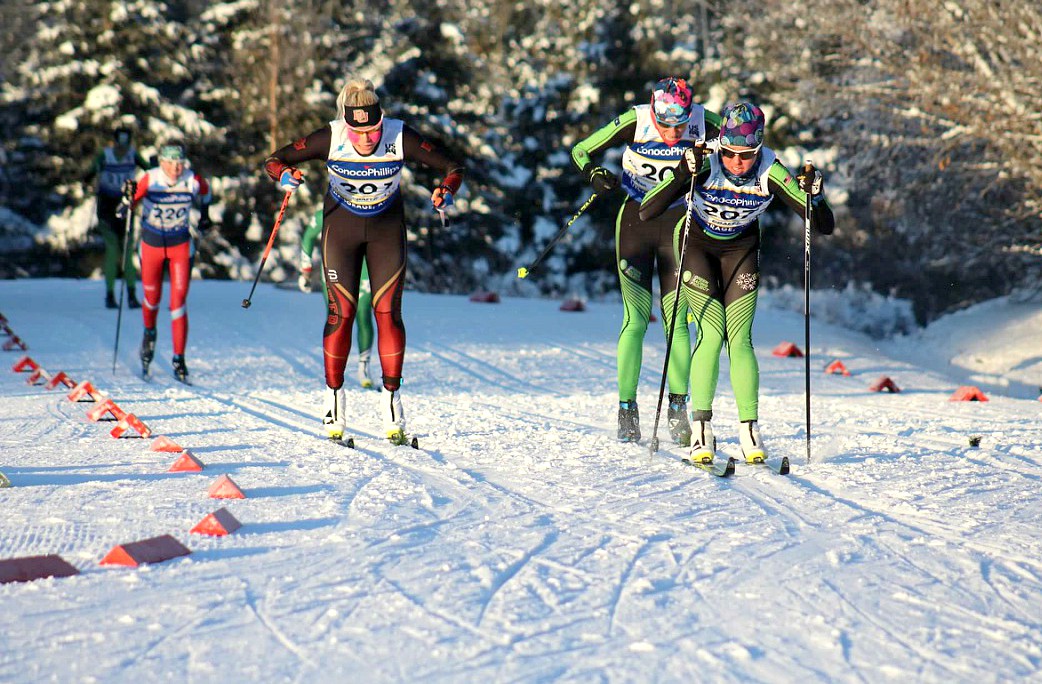
    Hailey Swirbul (APU) charges up one of the many climbs on that Lake Placid course behind Virginia Cobb (#120 – DAR) and Marit Flora (#76 – UAA). (Photo: Nancie Battaglia)

    Swirbul’s race plan—at least as she described it—was deeply personal in its logic. Not a copy of someone else’s pacing, not a response to what she imagined others were doing, but an attempt to ski in a way that matched her strengths:

    “I tried to ski true to myself. I wanted to use momentum and my own body weight the most effectively I could to get around that course as fast as I could- regardless of how the pacing looked for others.”

    And because it’s an Olympic year, she made the subtext explicit:

    “I have my eyes on an Olympic Team spot, and I’m going to continue to fight for it until the team is officially named. I’m not thinking beyond this week of racing here at Nationals. One step at a time, staying present…”

    Then the line that reminds you why athletes keep doing this:

    “…and enjoying getting to live this life and see so many people from old racing days— it’s a good life.”

    Women — Top 5 (10 km Classic Individual Start)

    1. Hailey Swirbul — APU — 28:42.5
    2. Erica Lavén — University of Utah — 29:14.4
    3. Tilde Bångman — University of Colorado — 29:23.9
    4. Novie McCabe — APU — 29:26.1
    5. Samantha Smith — SVSEF — 29:47.3
    6. Ava Thurston — DAR — 29:48.8
    7. Rosie Fordham — UAF — 29:56.7
    8. Kendall Kramer — APU — 30:02.7
    9. Renae Anderson — APU — 30:14.2
    10. Alayna Sonnesyn — Team Birkie — 30:16.0

    Women’s 10 k Classic Individual Start: Complete Results


    McCabe: Process as a Way Through Uncertainty

    Novie McCabe’s post-race comments carried a tone that felt especially relevant to this week: gratitude, yes—but also a clear-eyed description of how fragile a season can feel, and how an athlete can build stability by focusing on what can be controlled.

    “It meant a lot to be starting today for sure! I think that being a bit unsure of whether I’d be starting these races made me feel pretty grateful for the opportunity to go out there and give it my best today.”

    She described the emotional mix honestly:

    “There were, of course, lots of doubts and some nerves going in as well, but I really tried to just enjoy the skiing and made that my main goal going into it.”

    And she emphasized that conditions and course feel matter—not as excuses, but as context:

    “The conditions were insanely nice today, which helped, and this course is one of my favorites!”

    On pacing, McCabe described a strategy rooted in self-knowledge:

    “Honestly, I kinda just went out as hard as I could within reason, and tried to relax and hold onto it. I know the splits don’t really make it look that way, haha, but I am not the fastest starter, so it is usually best for me to go out at what feels like a pretty hard pace.”

    Then she explained the architecture of her day: not results goals, but process goals. She made a point that’s easy to dismiss until you remember what an Olympic week does to people:

    “Being focused on process goals going into a race really helps me develop a framework for success.”

    She listed those goals with specificity—how she wanted to feel, what she wanted to focus on, what she wanted her mind to do when discomfort arrived:

    “…going out hard but comfortable and trying to hold it, skiing well (not skiing hard), be the focus of the day, keeping up the positive self-talk, and finding the good and noticing what is going well throughout the race.”

    And on Olympic pressure, she offered a perspective that will sound familiar to anyone who has ever had a season disrupted by health or inconsistency:

    “I think it has honestly helped me out in terms of handling self-imposed Olympic qualification pressure to not have had the best lead up and be pretty unsure of what I would be doing as far as racing goes this year…”

    She described her focus as narrower—day by day—because it has to be:

    “…it has taken some of my focus off of results… It has just kind of led to an approach where I take it day by day, and don’t really think much further into the future than that.”

    That isn’t resignation. It’s an operating system. And it’s one that often works, especially on a course where you can lose time in the exact moment you start racing the future instead of the hill in front of you.

    Rosie Fordham (UAF) leaving it all on the course on her way to 7th place overall. (Photo: Nancie Battaglia)

    Samantha Smith: A Double Life and a Very Real Result

    Samantha Smith’s presence near the top of the women’s results came with a storyline that’s unusual even in American ski racing: balancing elite cross-country skiing with Division I soccer at Stanford, and arriving at the heart of ski season off a long NCAA tournament run.

    She spoke about the short transition plainly:

    “Yes, that’s correct, that our soccer team’s long run into the NCAA tournament has made for a much shorter transition to the season. I’ve only been on snow for a few weeks, so I know my ski fitness is improving every day.”

    She described the emotional carryover of playing for a national title—how it can become fuel rather than a distraction:

    “Playing in the National Championship was an amazing experience—we were so close to winning it all. It was a tough way to end such a great season. I’m taking that fire from our final game and pouring it into my skiing.”

    And she framed her path as something she’s embracing, not defending:

    “I know my path is different from others, but I’m doing what I love, and I think there’s a lot to be said for staying true to that. I’m trying to take everything step by step, live in the moment, and focus on what I can control!”

    On the scrutiny that comes with missing ski events earlier in the season, she emphasized the lessons she’s drawn from doing two sports seriously:

    “…for me, I feel like there’s actually a lot I can pull from the two sports and use it to my advantage.”

    She described last year as a “trial year” and explained how she’s adjusted:

    “I needed that test phase to figure out what works and what doesn’t work. I made some adjustments this year in training, switching things up a bit, and I feel like that’s helped me a lot going into this season.”

    She credited Braden Becker for helping with training and coaching through the fall:

    “I owe a huge thank you to Braden Becker, a retired skier, who’s now a grad student at Stanford. He helped me a lot with training this fall, and it honestly made a world of difference…”

    And then she returned to the mental challenge of this week—high stakes, lots of uncontrollables—and the philosophy that keeps an athlete from spiraling:

    “…I’m just trying to focus on what I can control—my attitude and effort.”

    Finally, she addressed the question of what a distance result might “say” about her:

    “I was happy with today’s result… I think today’s race was a good indication of my trajectory for the rest of the week and the rest of the season.”

    And she framed versatility—distance and sprint—as part of the argument she wants to make this winter:

    “…hopefully showcase some of my versatility in different distances and disciplines, which I think can be important for big competitions like the Olympics.”

    Alayna Sonnesyn (Team Birkie) on her way to 10th place overall. (Photo: Nancie Battaglia)

    Why This Week Matters So Much

    For the men, the arithmetic of Olympic selection is already partly written—and partly unresolved. At present, the United States is allotted seven men’s quota spots for the Olympic team, with the possibility that an eighth could roll down following this weekend’s World Cup races in Oberhof, Germany. That uncertainty is where much of the tension at U.S. Nationals resides.

    It is also where most of the speculation comes from—so take it for what it is, informed but unofficial. The six American men who recently raced the Tour de Ski appear, by any reasonable reading of the criteria, to be on solid ground. Each currently ranks in the top 45 on the FIS World Cup sprint and distance overall lists, the threshold set by the US Ski Team that meets the objective requirements for Olympic selection.

    Within that group of six, there is also ample sprint depth to cover the four available starts in the individual classic sprint and to form a competitive two-man sprint relay. As a result, Tuesday’s Freestyle Sprint at Nationals is likely to carry less weight for those athletes racing in Lake Placid with dreams of making the Olympic roster. Instead, the races most likely to function as closing arguments—particularly if an additional quota spot materializes—were Sunday’s 10 k Classic and Thursday’s 20 k Freestyle Mass Start. For at least one man, and potentially two, those performances may determine whether this week in Lake Placid becomes a footnote or a turning point.

    On the women’s side, the picture is far less settled—and far more fluid. The United States has eight Olympic quota spots available, but only a portion of them is considered secure. Jessie Diggins—if it were ever in doubt—has already satisfied the objective criteria by finishing in the top eight in World Cup races that are part of the Olympic schedule. Julia Kern and Rosie Brennan also appear well-positioned, based on their respective rankings on the sprint and distance overall lists.

    That still leaves as many as five remaining spots to be determined, drawing from a complicated blend of results across Period One on the World Cup, the SuperTour events in Alaska, and, critically, U.S. Nationals this week in Lake Placid. For those athletes, Nationals is not simply a domestic championship. It is an audition, a data point, and—in some cases—the clearest remaining path onto the Olympic team.

    John Steel Hagenbuch (DAR) on his way to 5th place overall on the day. (Photo: Phillip Belena/EISA)

    Grover: “There’s Going to be Space”… and then the Paperwork

    US Cross-Country Ski Team Director Chris Grover offered perhaps the clearest explanation for why the opening races at Nationals feel unusually charged—not because they deliver final answers, but because they create space. Space in which athletes can move themselves from the margins of the conversation toward its center.

    The story, as Grover framed it, is not simply who wins. It is what a result permits: what doors it opens, what arguments it strengthens, and how it positions an athlete within the broader, inevitably imperfect machinery of Olympic selection.

    As Grover put it in an interview with FasterSkier, U.S. Nationals does exactly that—it creates room:

    “…it’s going to be a great story because there’s space. There’s going to be space on both the men’s squad and the women’s squad, by the looks of it, for athletes to qualify from Nationals, to have great U.S. Nationals and come over, especially on the women’s side…”

    That space, however, is not filled automatically. In an Olympic year, it is accompanied by paperwork, petitions, and deliberation—an acknowledgment that performance, while central, is rarely the entire story.

    Grover outlined the petition process that follows Nationals, a step that often receives less public attention but carries significant weight:

    “…all athletes who want to be considered for discretionary selection… We’ll put in an application. Or a petition rather, where they will kind of write out what their case is, why they should be considered…”

    Those petitions, Grover explained, are then evaluated by a selection committee—six people tasked with translating results, trends, and context into final decisions:

    “…we have the six-person selection committee that will pick the team. So as a committee, we’ll read everybody’s application, and then we, as a committee, will decide whether we want to elevate somebody using Coach’s discretion to be selected.”

    Even the arithmetic of quota spots, Grover noted, is subject to forces beyond any one athlete’s control. On the men’s side, the possibility of an additional spot remains unresolved:

    “…it’s after Oberhof… qualification for nations also closes on January 18… and at that point a spot [might be] available…”

    Which is to say: timing matters. So does patience.

    Taken together, Grover’s explanation underscores a truth that every athlete racing this week understands intuitively. Lake Placid does not merely crown national champions. It produces evidence—sometimes decisive, sometimes ambiguous—for a selection process that will soon harden from theory into reality. And once it does, the margins that feel abstract today will become permanent.

    Ava Thurston (#45 – DAR) on her way to 6th place overall on the day. (Photo: Phillip Belena/EISA)

    What Sunday Actually Did

    The first day of Nationals did not select the Olympic team. It did something subtler and, in some ways, more powerful: it established the tone of the week.

    On the men’s side, it proved that the domestic field is not going to give anyone breathing room. Wonders’ win was decisive in the only way that matters in interval start racing: he was fastest when everyone had to ski alone. But the closeness behind him reinforced Jager’s point—each race could be someone else’s day. In a week like this, that’s not a platitude. It’s a forecast.

    On the women’s side, Swirbul’s victory felt like a day where preparation and belief finally aligned. But even she framed the week properly: one step at a time, staying present, not thinking beyond Lake Placid. McCabe and Smith offered two different versions of the same survival skill: build a framework, focus on process, control what you can, and let results become the output rather than the obsession.

    If there was a single emotional throughline, it was this: the athletes weren’t pretending the Olympics weren’t there. They were trying, in different ways, to keep that fact from hijacking the work.


    A Conclusion in the Shape of an Interval Start

    There’s a particular quiet that follows an interval start classic race—not silence, exactly, but the hush of athletes doing their internal accounting. A national championship can feel like a celebration. In an Olympic year, it can also feel like a deposit: something placed into the larger selection ledger, something that will matter later, in rooms the athletes won’t be in, in conversations they can’t control.

    What makes Lake Placid different—what makes Mt. Van Hoevenberg feel so permanent—is that it refuses to dramatize any of this. It simply asks the same thing of everyone: ski two laps honestly, manage the climbs, keep your head when your legs get loud, and finish without bargaining.

    Wonders said he felt the pressure—and expects to keep feeling it. Jager said the closeness means nothing can be taken for granted. Swirbul described a long experiment that finally yielded its outcome. McCabe described building success from process, not prediction. Smith described a life lived between two sports, and a focus narrowed to attitude and effort.

    Taken together, those aren’t just post-race quotes. They’re the first chapter of the week.

    And in an Olympic winter, first chapters matter—because the next race arrives quickly, and the story keeps writing itself, one start at a time.


    Love stories like this? Help keep them coming.

    Feature stories like this one take time, access, and care to produce. If you value thoughtful storytelling and independent ski journalism, please consider becoming a Voluntary Subscriber. Your support directly fuels the work we do to cover the people, places, and moments that make our sport special.

    Join the FasterSkier community!


    Brian Bushey (#345 – Craftsbury) on his way to 9th place overall. (Photo: Nancie Battaglia)
  • Juggling the Four S’s: An Interview with John Steel Hagenbuch

    Juggling the Four S’s: An Interview with John Steel Hagenbuch

    The 2023-2024 season was undeniably strong for Dartmouth College’s John Steel Hagenbuch (’25, U.S. B-Team).

    In December, his was the fastest leg time in the Men’s 4×7.5 k Relay in Gällivare. One week later, he secured his first top-15 finish on the World Cup circuit, taking 13th place in the Östersund 10 k Freestyle. In February, he surprised himself with a bronze medal in the U23 World Championship Sprint in Planica.

    Domestically, the wins came hard and fast. Hagenbuch rang in the New Year with a victory in the 20 k Freestyle at USSS Nationals in Soldier Hollow, UT, before proceeding to win every race he started in the Eastern Intercollegiate Ski Association—going six for six across the Vermont, Colby, and Middlebury Carnivals. Then, it was on to the NCAA Ski Championships, where he won the 7.5 k Freestyle, before finishing the season at the top of the 40 k Freestyle podium at Duluth, MN’s blizzard-battered Spring Nationals.

    Hagenbuch outsprints Jake Brown (Craftsbury Nordic) to end the 2023-2024 season with a win at Duluth’s “Spring Nationals” 40 k Skate. (Photo: Ben Theyerl / FasterSkier)

    However, in a chapter of American skiing which has left commentators (understandably) salivating over career-defining performances, and quick to use the attendant, maximalist terminology, Hagenbuch resists any such characterization of his performances. “I genuinely don’t think [last season] was a breakout by any means,” he told this hyperbole-bandying writer. “Every year up to now has just been improvement in key areas, and just an evolution in my skiing […] I think it was just part of the processes, and just another step in my development.”

    Steady development might not make for much of a pre-season story—but Hagenbuch’s approach towards training, racing, and the winter ahead certainly does. Indeed, the measured, circumspect, and profoundly grateful attitude with which he characterized last season evidently saturates his workouts, his performance goals, and his abiding love for the undergraduate experience. FasterSkier spoke with John Steel Hagenbuch to get the details on Dartmouth, “Shrimp Week,” and what’s next for the USCSCA’s Men’s Nordic National Skier of the Year.

    Batting 0.750 on “the Four S’s”

    In his third year of skiing for Big Green, Hagenbuch describes his life as a balancing act in several dimensions.

    At the macro-level, there’s the challenge of pursuing three distinct strains of activity: academic commitments, NCAA racing, and skiing internationally. When it comes to college skiing and World Cup skiing, Hagenbuch admits “there’s not many people who do both,” but credits Ben Ogden (University of Vermont, ’22) as a “blueprint” for successfully competing in both worlds. “It’s awesome that the attitude has fundamentally changed from 20 years ago—it’s no longer ‘either or,’” Hagenbuch says.

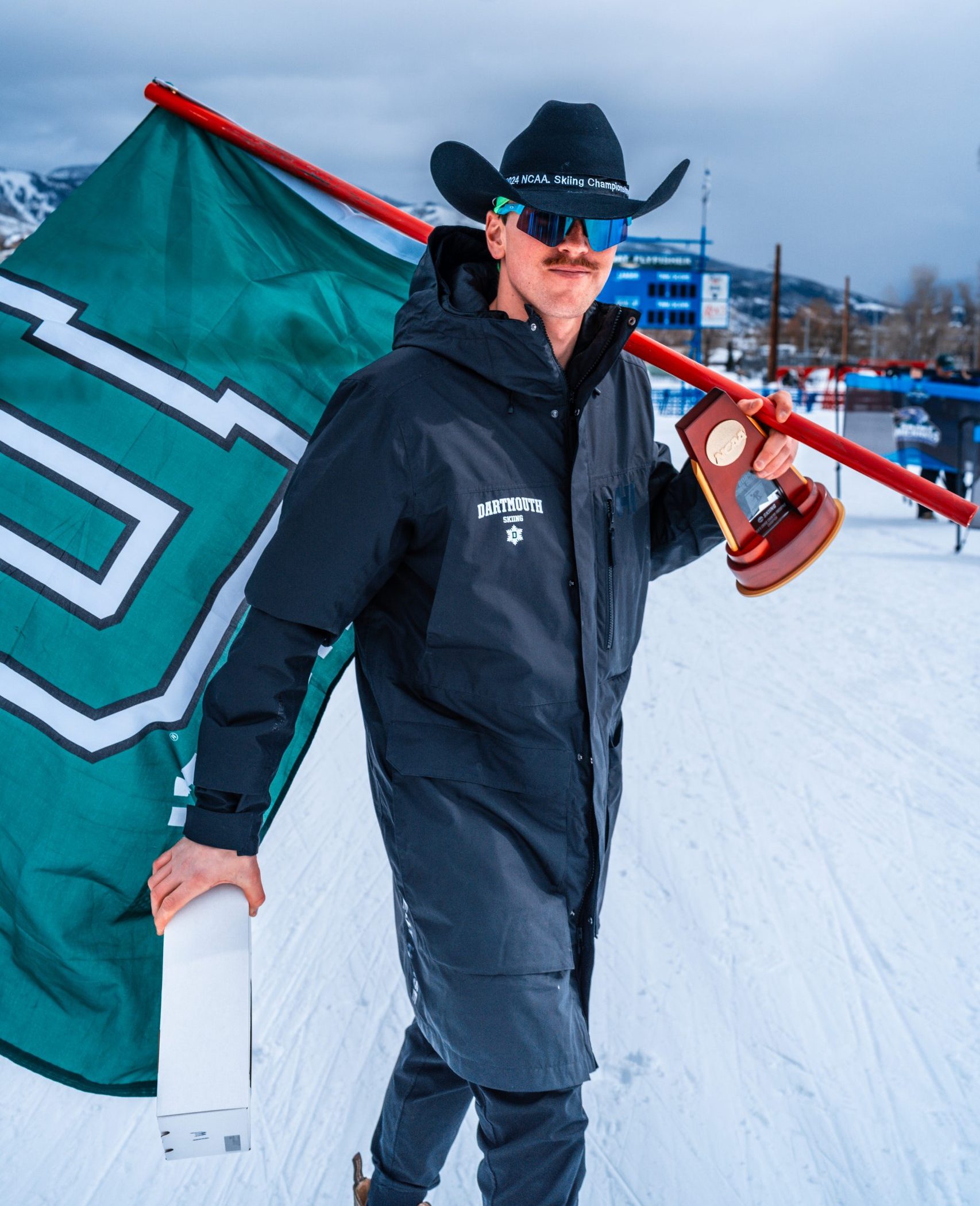
    Hagenbuch, 2024 NCAA Champion in the 7.5 k Freestyle at Steamboat Springs, Colorado. (Photo: Tobias Albrigsten / Untraceable Global)

    In his estimation, the space to compete at both the highest levels of domestic and international racing, while soaking up the undergraduate experience, is “going to sustain skiers’ careers for longer. Going to college is really fun, and for the time that I’m here, it provides a lot of balance in keeping things lighthearted and low-stress.” If Hagenbuch has a tough day, or even tough season (in a Q&A with The Dartmouth, he said of his 2021-2022 World Cup run: “Frankly, it sucked”), he has “other things to turn towards, and to look towards, to make [him] happy. Dartmouth is an amazing place; there’s so many amazing people with such diverse interests […] I’m so glad I took the opportunity to come here and live the life I’m living.”

    With a rigorous battery of social events and campus traditions, however, comes a more micro-level balancing act. “I say I’m juggling Four S’s: Skiing, School, Sleep, and Socializing. On any given day, I can only choose to do three. It’s a sacrifice” (most often, it seems, of sleep), “but it’s one that I very willingly make to take advantage of a great education and a robust college experience while I’m the same age as my peer group, and still a ‘real kid.’”

    Progress and Perspective

    When it comes to training, juggling the Four S’s means making room for spontaneity—and a summer program that rejects restrictive regimen in favor of vibrance and variety. Indeed, Hagenbuch’s approach to the off-season seems to invert the perennial challenge of ‘Making training fun’ in favor of ‘Making fun training.’

    When I ask him to describe his summer block in three words, Hagenbuch takes an uncharacteristic pause before settling on “Go with flow.” Over the last two years, he says he has been “the least stressed out about skiing since my freshman year of high school. A lot of that came down to having really great stuff going on in my life socially and academically, and actively choosing to think about those more.”

    This isn’t to say that Hagenbuch was “prioritizing skiing less. It was just that I think [skiing] was taking less energy from me, and I was getting only positive things from it, as opposed to worrying about it. I think that enabled me to roll with the punches better, and not to stress.” Rather than fretting over a missed workout or a busy week, he recognized that he “can’t do everything all the time,” and would simply strive to maximize his focus and intensity during “moments when I felt good and had time to train, maybe even a little bit more than people would recommend […] When I zoom out, I realize that I hope to still be skiing a full ten years from now, and I’m not that worried about it. I’ve got a lot of time to make the progress that I need to, and get the notches on my belt that I need to.”

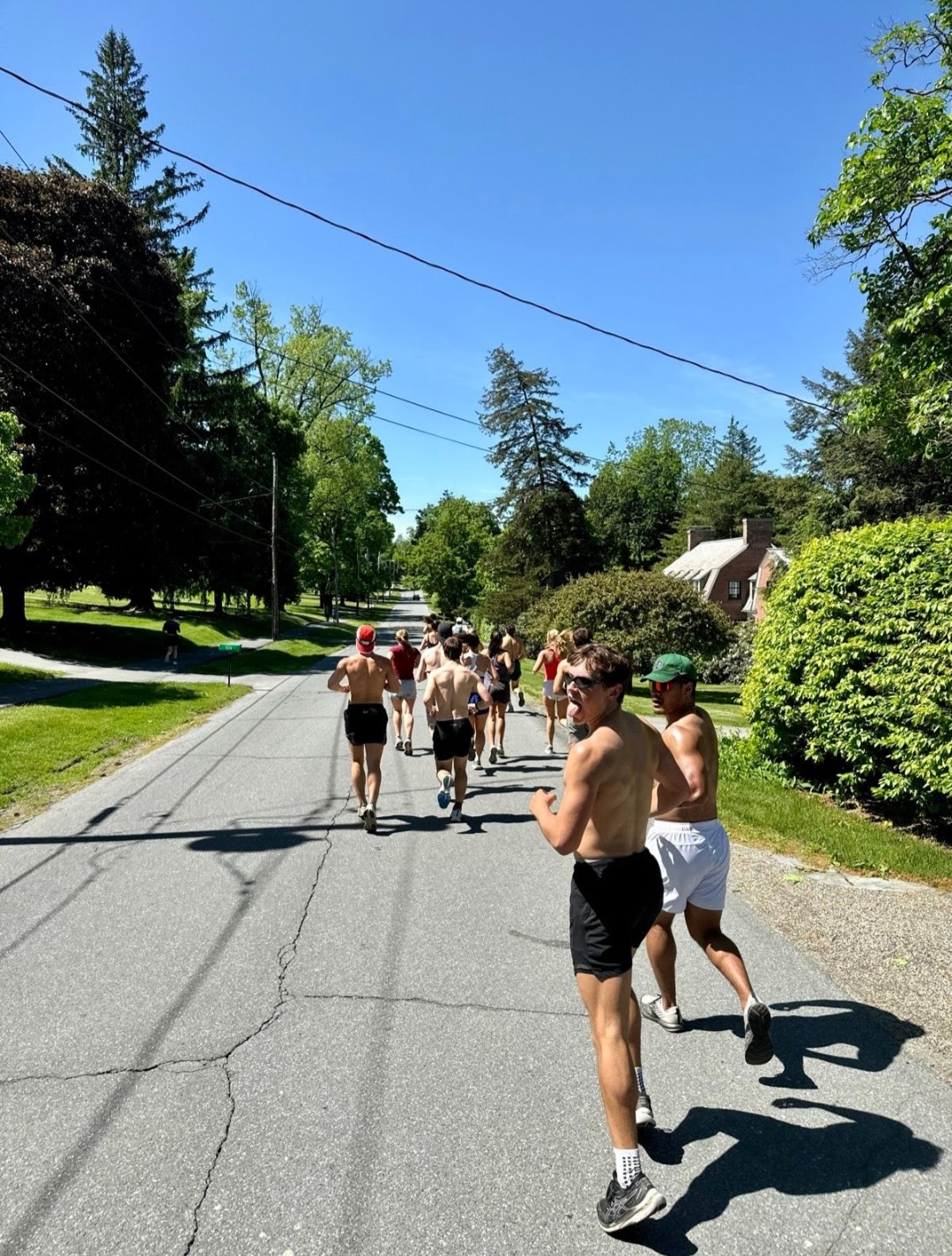
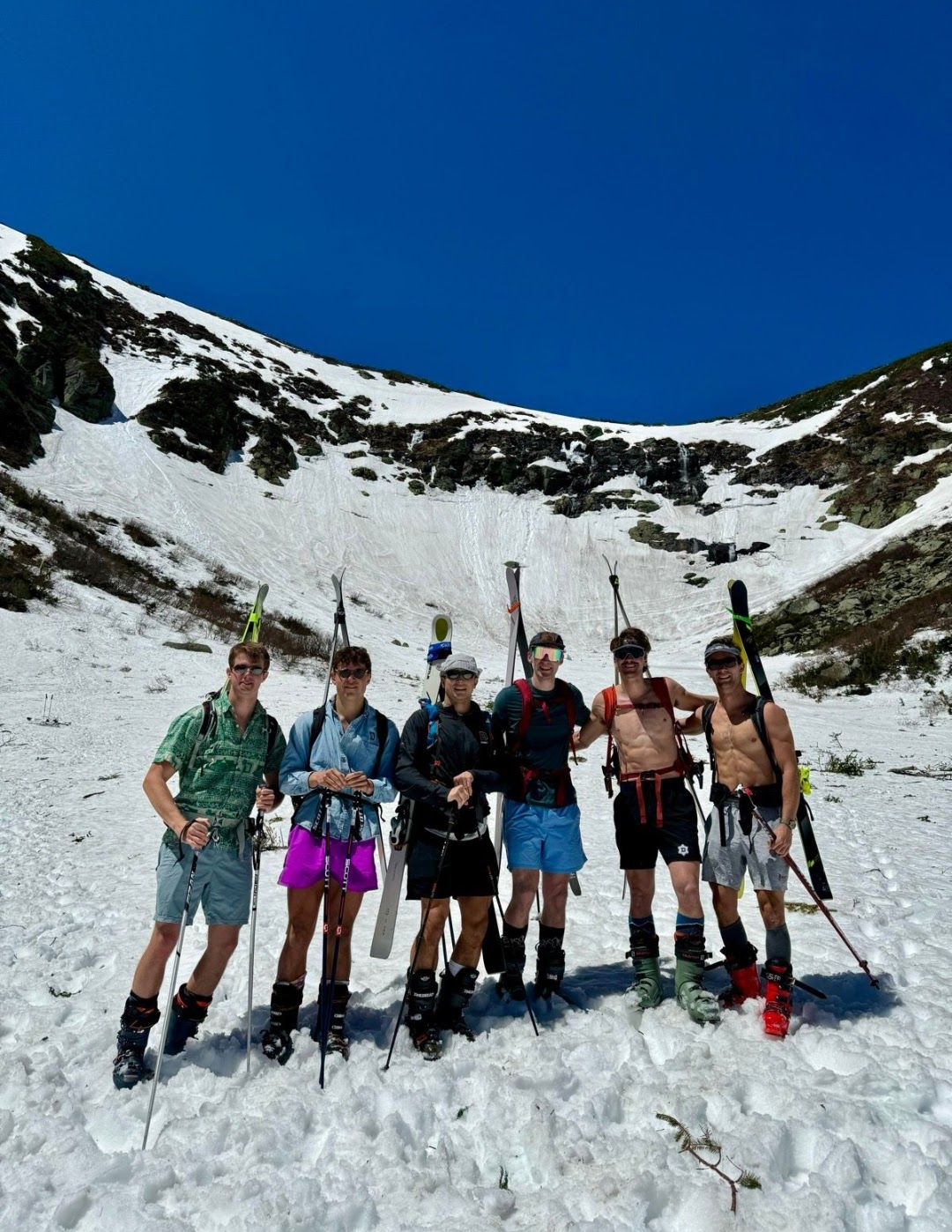
    Hagenbuch’s extensive spring and summer highlight reel illustrates this perspective on a sustainable, “go-with-the-flow” off-season. Favorite spring workouts included skipping class to backcountry ski Tuckerman Ravine on a bluebird May day, and the “Occathon”—a marathon consisting of 18 laps around Occom Pond, “adjacent to the Dartmouth campus, with all these nice homes around it, and which adjoins Frat Row.” Hagenbuch began the run with a handful of teammates and fraternity brothers, but “40 to 50 other random people joined in throughout,” with football players, students, professors, and stray joggers pulled in by the energy of the event.

    Scenes from Dartmouth’s “Inaugural Occathon.” (Photo: John Steel Hagenbuch / Strava)

    High summer at home in Sun Valley, Idaho brought more long days of backcountry skiing, including a “sketchy” July descent of McGowan Peak, as well as teaching classmates how to mountain bike, point-to-point 50 k trail runs in the Sawtooth Mountains, and a week of river-rafting. Although the lattermost trip may have come at a “time when most other people were probably putting their noses to the grindstone, I thought that it was something that would be a net positive in terms of relaxing for a bit, resetting the body and mind, and having some fun with my friends.”

    When he returned to Hanover in late July, Hagenbuch adopted a more structured cycle—while still making time to soak up the energy of summer on campus (Dartmouth, with a quarter system, has classes year-round). He completed coursework, moved back into his fraternity, and was “training a lot, and hard, and getting in the sessions I needed to. Would I have done things a little bit differently? Would I have recovered a little bit better, or been X-percent better in a certain session? Had I gotten a little bit more sleep, probably, but I don’t really care.”

    Backcountry skiing at Tuckerman Ravine. (Photo: John Steel Hagenbuch / Strava)

    What Is Shrimp Week?

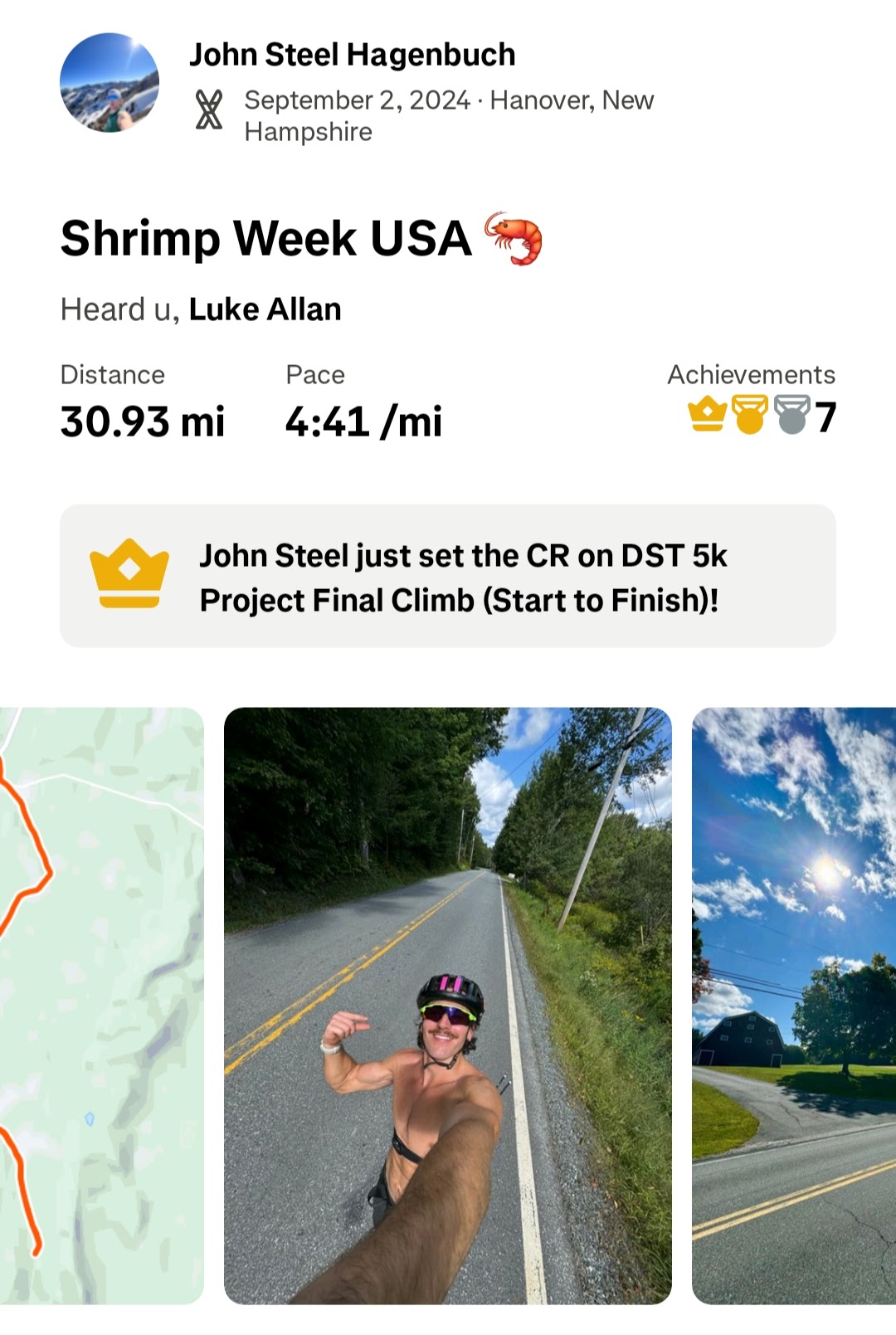
    The first week of September stood in stark contrast to Hagenbuch’s otherwise-adaptable summer. Hagenbuch reportedly logged over 852 kilometers across 45 hours of running, rollerskiing and biking between September 2nd and September 8th—a sojourn he cryptically christened “Shrimp Week.”

    When I asked for the logic behind both the Brobdingnagian volume block and the name, Hagenbuch admitted: “If you talk to most of the coaches I’ve ever had, and many of the people I train with, there are some things I do that there isn’t much logic behind. I was already planning on doing a volume week. I was still here in Hanover, but my buddies that had been here for sophomore summer had just left, and no-one on the ski team was here yet, so I was training all by myself. I was feeling good, feeling really fit […] and that was the barometer I went by every day—just thinking about how I was feeling when I was waking up, and fueling really well, sleeping well, and just training a bunch and seeing how that went.”

    In essence: “I was curious how much I could do while still feeling good.”

    Shrimp Week, Day One outtakes. (Photo: John Steel Hagenbuch / Strava)

    And, that name? “Well, Forrest Gump is one of my favorite movies. And there are some individuals that were doing some training and calling their volume weeks ‘Shark Week,’ which I thought was funny. So, I was kind of making fun of that.” Blood in the water!

    Passing the Three Gates

    When asked about the coming winter, Hagenbuch seems contentedly confident: confident that his body is “in a good spot and responding well” to autumn intensity; confident that he’ll continue to balance his Four S’s while hitting “key sessions”; and confident in the steady arc of progress he has thus far maintained.

    In the 2023-2024 World Cup season, Hagenbuch aimed to have just one race in which he passed through the “three gates” to a strong performance—“good skis, good body, and good execution.” Between the Gällivare Relay and the Östersund 10 k, he had two (his Planica Sprint arguably constituted a third); this year, he’s simply looking to add to that total.

    “Once again, all I’m really hoping for is to have a couple of races where I’m really happy that those three gates were fulfilled. And I think the results will come if that happens,” especially if he can improve his consistency in both disciplines. “I’m definitely not saying, ‘Oh, I need to get a top-ten.’ But a top-ten would be nice.”

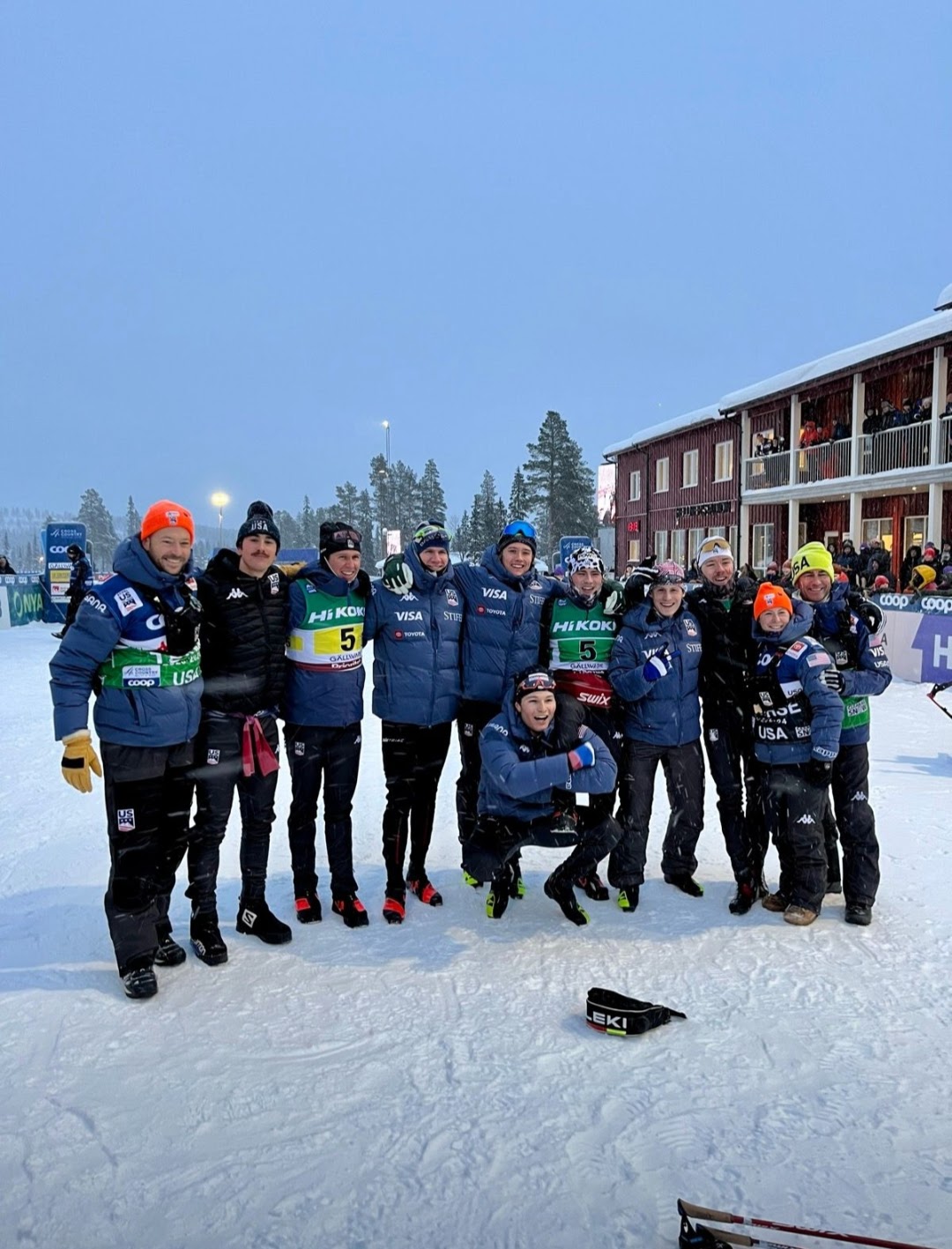
    Hagenbuch and teammates after the 4×7.5 k Relay in Gällivare, Sweden, December 3rd 2024. Hagenbuch recorded the fastest leg time of the day. (Photo: John Steel Hagenbuch / Strava)

    In addition to racing Period I, Hagenbuch plans to stay in Switzerland through Christmas and complete the Tour de Ski, where he hopes that the Alpine climbs and altitude, and potentially even Alpe Cermis, will play to his Sun Valley strengths.

    While he is “not immune” to the nervousness that the approaching World Cup brings to many athletes, Hagenbuch cites the dynamic of the US Men’s Team as creating a relay-like atmosphere in which he can excel.

    “When I think back on my best races, a lot of them have been relay legs, and I think that’s not a coincidence. You take a lot of internal and external pressure and stress out of racing” when “skiing for your teammates and not just for yourself.” The American Men “all like each other, and we’re all close friends. They’re all really, really great guys that I like to spend time with, I like to train with, and I like to race with. And I think we push each other in a really positive way that’s mutually beneficial […] I don’t mind if any of those guys beat me. I’m not racing against them. I’m racing against me. I’d love to see them do as well, if not better than, myself, because I know that if they’re capable of doing that, if they’re putting out those results, then that’s emblematic of the atmosphere and capacity of the whole team, including myself.”

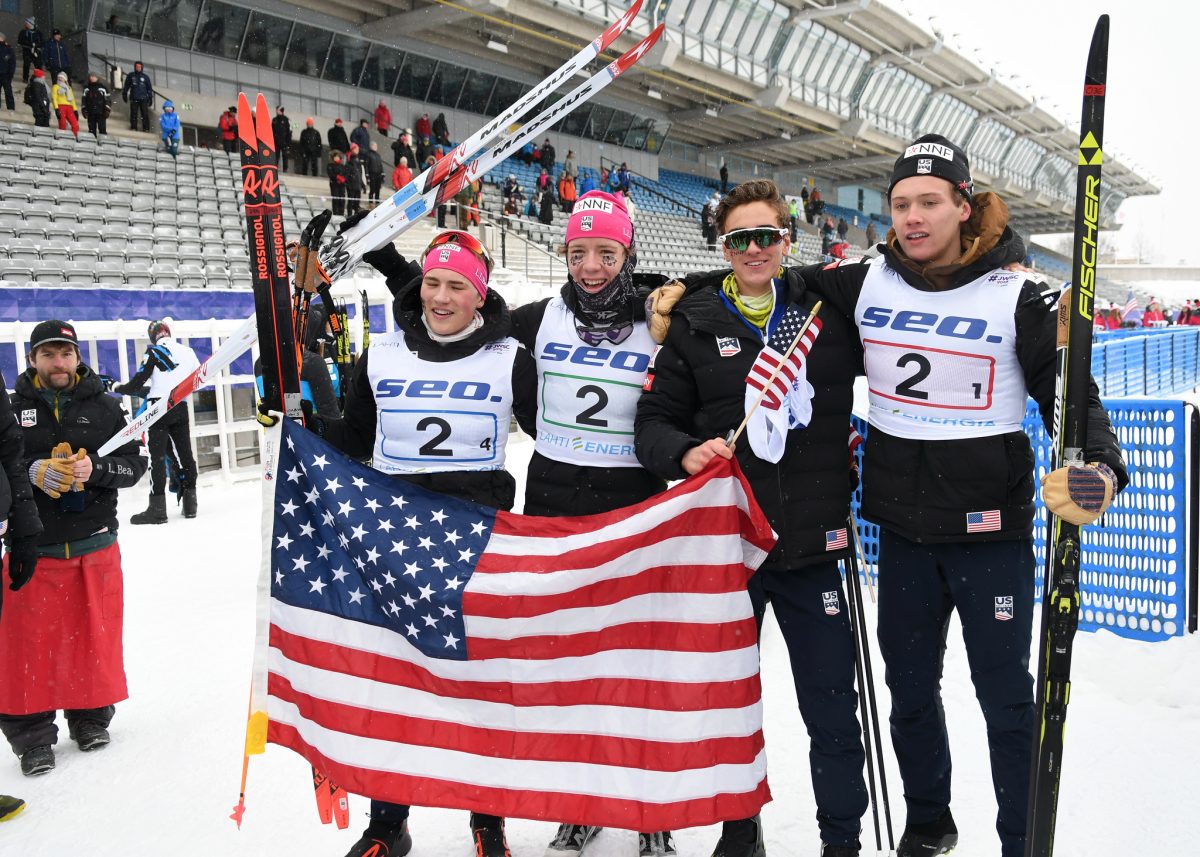
    The camaraderie continues for (from left) Gus Schumacher, Ben Ogden, Johnny Hagenbuch, and Luke Jager, pictured here as the U20 4 x 5 k World Champions in Lahti, Finland, 2019. The American Men are “no longer really the underdogs” they were in 2019, Hagenbuch says. (Photo: Doug Stephen)

    The Hound of Hanover

    On American soil, however, Hagenbuch is looking to the 2025 NCAA Championships with vicious clarity.

    The event will be on home turf in Hanover, with a 20 k Mass-Start Freestyle and a 7.5 k Individual-Start Classic. In the Classic race, he’s hoping to “improve on [his] runner-up finish from 2023” (read: win).

    As for the Freestyle: “I’m going to be frothing-at-the-mouth rabid before the start of that race. It will certainly be, up to that point, the most important race of my career.”

    Indeed, the man who will be defending his Championship title this March appears unrecognizable from the serendipitous spirit who “go-with-the-flow’ed” his way through the training sessions described above.

    “I bring a kind of manic energy” to races, Hagenbuch says. Think Redbulls, really loud music (“I’ve blown out a couple van speakers in my day. ‘Rental Car Companies Hate Him for this One Simple Trick,’ for sure,” he admits), and more rabid dog analogies. “But that all gets tuned out and sharpened, like focusing a camera, when the gun goes off. And I love the catharsis at the end of the race, too, especially if it goes well.” Madness turns to the Campbell’s Monomyth: “You have a bit of ‘The Hero’s Journey’—the build-up,” the struggle of exertion and emotion, “and then, crashing down.”

    Attending March’s NCAA Championships will come at the expense of a possible World Championship appearance. “I’m making the conscious decision that, should I qualify for the World Championships in Trondheim, which are at the same time as NCAAs, I won’t be going. Maybe that’s unwise. But Matt Whitcomb skied for Middlebury, and Chris Grover skied for Dartmouth, so they kind of understand. And this is a step in my career where I don’t think that I’m missing out on anything, by any means. This is a mutually beneficial thing: I get to ski for Dartmouth. I get to experience all that it is to be a Dartmouth student outside of the ski team. It’s an incredible privilege that I don’t want to pass up.”

    With Hagenbuch hoping to be “in the best shape of [his] life March 6th-8th,” and the “NCAA Championships at home lining up with us having one of our strongest teams that we’ve maybe ever had across all disciplines—Nordic, Alpine, Men and Women,” he thinks that, “knock on wood, we could pull off something really special.”

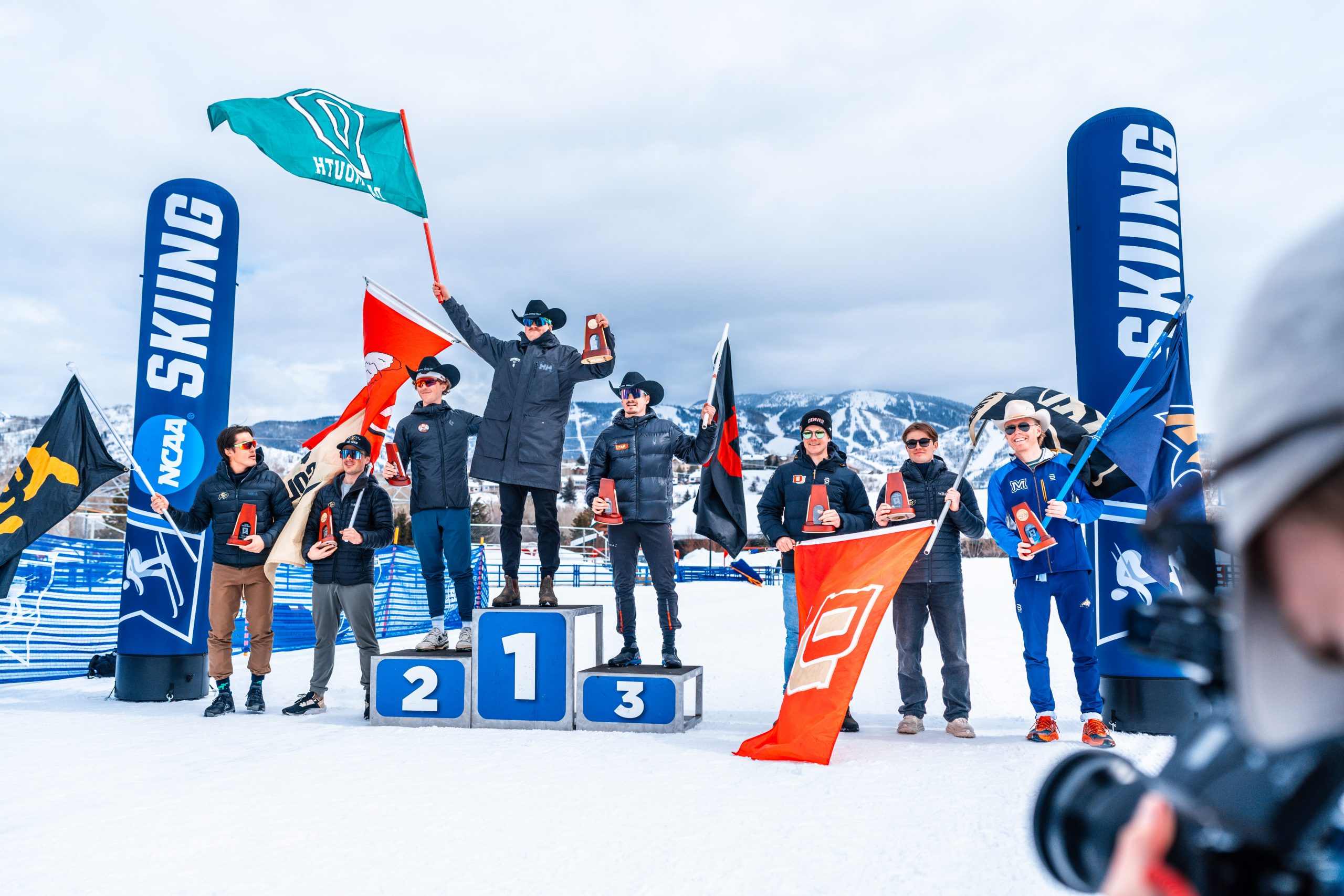
    Hagenbuch on the podium of the Men’s 7.5 k Skate at the 2024 NCAA Ski Championships. (Photo: Tobias Albrigsten / Untraceable Global)

    “Even if the stars don’t align for us, it’s going to be an amazing event.” The Big Green athletes and administrators are already working to build excitement about the races, and there is a long tradition of Winter Carnivals constituting the campus’s most energetic weekends. Hagenbuch anticipates Oak Hill ski complex will be transformed into a drum-pounding, sound-drowning amalgamation of Minneapolis, Holmenkollen, and Animal House, rowdily attended by Dartmouth’s most avid fans and most accomplished day-drinkers. Skiers Luke Allan, Jack Lang, Asa Chalmers, Cooper Camp, and Hagenbuch himself are “all in different fraternities,” each of which will send their own squad of course-crowders. “There will be hundreds of Dartmouth men” bringing encouragement (and liquid courage) to the trails, in addition to thousands of “parents, students, spectators, kids from other schools, all out there getting fired up and really loud for races.”

    “Dartmouth is a bizarre place, out in the middle of nowhere. It’s a melting pot of a lot of different people. And, in a world that seems to have progressed a lot in many ways—technologically, socially—Dartmouth has largely remained the same, ‘Lest the old traditions fail.’” Whether relaxed or rabid, Hagenbuch feels especially privileged to live, train, and compete in this unique environment; one in which he savors the thrill of racing, the rigor of academic study, and the spontaneity that so ruddily colors undergraduate days.

    And, despite holding a broad, even patient, view of his unfolding athletic career, he has clearly fixed March 8th, 2025 as his Polaris; a lodestar rising steadily above the near horizon, flickering with the white heat of anticipation and ambition.

    “I don’t think a lot of the Western skiers, or even the other Eastern skiers, have any idea what it’s going to be like.”

    FasterSkier thanks John Steel Hagenbuch for his time, and Leann Bentley for facilitating this interview. Some comments have been edited for length and clarity.

  • A Complete Person: Katharine Ogden Follows Her Own Path Toward Retirement

    A Complete Person: Katharine Ogden Follows Her Own Path Toward Retirement

    Anyone who has had the pleasure of interacting with Katharine Ogden, also commonly known as KO, can tell you that she is humorous, kind, and thoughtful – both in regard to others as well as in her own self-introspection. She is also a wicked good skier, proving herself both nationally and internationally in competition. Ogden recently shared that she was stepping away from professional skiing, having already experienced a range of career ups and downs at her relatively young age of twenty-four. 

    Katharine Ogden races the classic sprint during the 2021/22 Tour de Ski in Oberstdorf, Germany. (Photo: NordicFocus)

    I had the privilege of overlapping with Ogden for two years as teammates on the Dartmouth Women’s Ski Team, during which time I was undergoing my own personal, though distinctly less significant, reckoning with ski racing. Thus, when Ogden announced her retirement at the end of last month, I asked to be the one to write this piece, hoping to do justice to the story of a career that is as important in its low moments as it is at its heights. Ogden herself wrote an eloquently expressed reflection of her career on the SMS T2 blog which can – and should – be read here. 

    Ogden began skiing at the tender age of two, after her family moved from Seattle to Vermont. Shortly thereafter her brother Ben was born and as Ogden explained it, “I was now living in Vermont, no longer an only child, and so I spent a lot of time with my dad, while my mom was having, you know, the baby. And my dad, once we moved back to Vermont, kind of re-engaged with the Nordic ski community and started coaching the local ski program.” Ogden’s father, John, has long been an active member in the Eastern ski community, most recently through his work with the timing company, Bullitt Timing, which he runs with a colleague. “Pretty much since I can remember, my dad has been coaching for [West River Sports] my childhood club, and bringing me to practices and he would also go to the local races and bring me along,” said Ogden. 

    A young KO takes to the race course. (Courtesy photo)

    These early memories of ski racing instilled a strong sense of ski community within Ogden and given the high level of participation in Nordic skiing among her elementary school peers, Ogden explained that this was a big reason why she stuck with ski racing. “And, of course, my dad coaching the team,” she added, “Definitely he encouraged us to do it.” Racing with her best friends throughout elementary school and middle school, while participating in events like the Bill Koch Festival, played a big part in growing Ogden’s love for the sport. 

    Entering high school, Ogden attended Stratton Mountain School in southern Vermont, the well-known private school which, according to its website, “provides a unique environment that offers each student the opportunity to pursue excellence in competitive winter sports and college preparatory academics.” Around the same time, Ogden was earning her first international starts, as she participated in the U18 Scandinavian Cup trips in 2013 and 2014. “That was kind of a cool progression up to World Juniors,” shared Ogden, “I think it’s very important, and honestly sometimes underrated in my opinion, to build up your international experience in that way.”

    For at least one, if not both of the years, Ogden had also qualified for World Juniors but she explained that her coaches encouraged her to choose the U18 trip instead. “Sometimes there are really young kids who got to World Juniors and I think that it’s a bit of a missed opportunity, because those U18 team trips are still a really high level of competition,” Ogden said, “And a good way to be like with people your own age, which really improves the experience.” 

    Katharine Ogden (SMS) competing at U.S. Nationals in 2013 representing Stratton Mountain School. (Photo: Bert Boyer)

    After having built some international racing experience, Ogden attended her first FIS World Junior Ski Championship in Almaty, Kazakhstan in 2015. “At that point, I had made a lot of good friends in the ski world,” shared Ogden, “I knew Julia Kern and Hailey Swirbul really well, so that was a blessing for me to have people that I knew and cared about and relied on in that type of situation being there for support. [It] makes the whole experience a lot more enjoyable and it takes a little bit of the pressure off to just be able to treat it as a fun trip.” 

    This approach seemed to pay off as Ogden placed 11th and 6th in the individual races, besting some familiar names such as this year’s Tour de Ski winner, Natalia Neprayeava. “[It] was fun to go to a crazy country that I wouldn’t normally go to and be able to experience that, while also getting to focus on some higher level racing,” explained Ogden. Her second World Juniors appearance came in Rasnov, Romania the following year where she placed 13th in both individual races. 

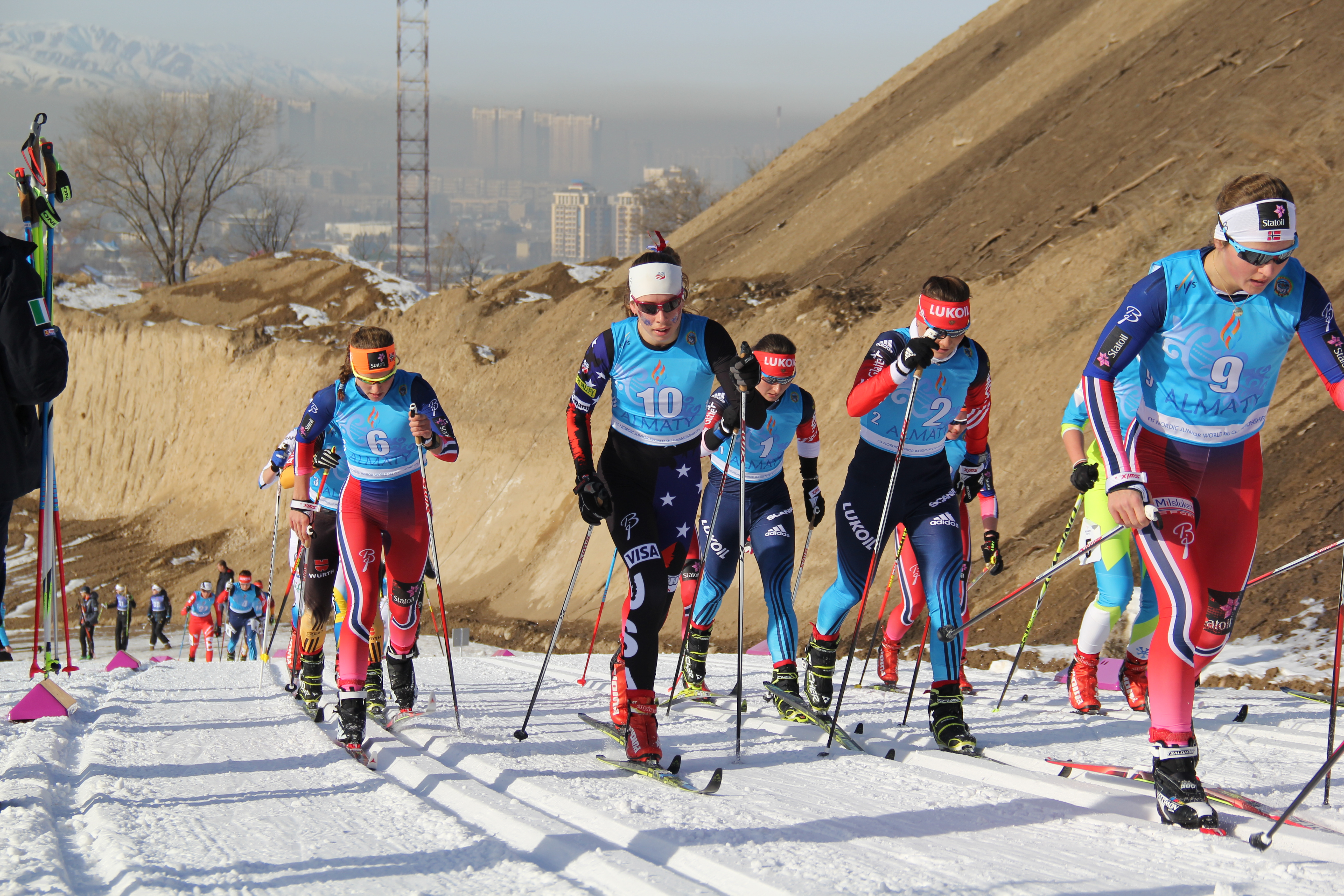
    Katharine Ogden (10) on her way to a sixth-place finish in the women’s 10 k skiathlon at the 2015 Junior World Championships in Almaty, Kazakhstan. (Photo: Bryan Fish/USSA)

    In June of 2016, Ogden graduated from Stratton, and having applied to college but deferred her acceptance to Middlebury College – her father’s alma mater – she embarked on a gap year. Remaining at SMS, she began training more with the pro team (SMS T2) and focusing a little more seriously on ski racing. “That was definitely an interesting experience for me, it was a pretty mentally difficult year,” said Ogden, “it felt like a convergence of a lot of things in my life that were difficult for me to emotionally handle.” 

    For one, the 2017 World Junior Championships would be held at Soldier Hollow in the US, an exciting prospect that simultaneously created pressure to perform for the American young athletes who would be in attendance. “There was a lot of hype about it being in the US, which was cool, don’t get me wrong, but I felt that – not by anyone else’s fault other than mine – but that I was putting a lot of pressure on myself because of that.”

    Self-aware and reflective, Ogden was open about the difficulty of this time, “Because I’d had previous success at the other two World Juniors that I went to, it kind of felt like it was a lot of pressure on me for those races. On top of that, I didn’t have school to focus on anymore, so I was really not doing much other than skiing, which is not something I would recommend to anyone, even if you’re a professional skier.” Ogden stressed the importance of having something else to balance your attention, “whether it’s a job or school, or even just working on your self-marketing or whatever – something that takes some brain power that is not just directly related to training.” 

    Katharine Ogden racing in her first World Cup events during the Tour de Canada in 2016, pictured here in the women’s 15 k skiathlon in Camore, Alberta. (Photo: Fischer/NordicFocus)

    In addition to these pressures, Ogden’s father, who earlier had been diagnosed with cancer, was in worsening condition. “So that was also kind of weighing on me,” explained Ogden, “all of those things culminated into me not having a good time.” She shared that she has struggled with anxiety since she was young, but in 2017 it morphed into something that became unmanageable at times. (Read Ogden’s January 2020 narrative on her experience with severe anxiety here.)

    “I couldn’t functionally live with it anymore,” said Ogden, “So at that point, I was really struggling to eat because the manifestation of my anxiety disorder was that it really caused me to have a lot of gastrointestinal distress and a really upset stomach, so it was difficult for me to fuel myself enough to train and I didn’t have a lot of energy, partly from not eating and partly from just being stressed all the time.” 

    In Ogden’s own words it was “against all odds” that she made it through the week of racing at World Juniors in Soldier Hollow. However, to simply say she completed the races is a massive understatement. In the skiathlon event, Ogden became the first American to podium in an individual race at World Juniors, earning a bronze medal. Days later, Ogden helped propel the US relay team to a historic bronze medal performance in the 4 x 3.3 k event, setting a precedent for the many successful US junior performances in the ensuing years. 

    The U.S. women’s relay after taking a historic third in the 4 x 3.3 k relay at 2017 Junior World Championships on Sunday at Soldier Hollow in Midway Utah, with (from left to right) Hailey Swirbul, Julia Kern, Hannah Halvorsen, and Katharine Ogden. (Photo: U.S. Ski Team/Tom Kelly)

    Reflecting on this achievement, Ogden shared, “Because I haven’t really had a ton of podium results since then, on an international scale, that is something that my ski career often gets boiled down to. It’s really bittersweet for me because it was a really incredible achievement, especially the relay day, when I was able to work with three of my best friends to accomplish something pretty cool. I still have a lot of pride and such about that experience, but on the other hand, it’s really hard for me to remember that without remembering how awful I was feeling, and how that was really honestly one of the hardest parts of my life to date.”

    Returning home to Vermont in early February, Ogden started just one other ski race that season, “I think I did one random Eastern Cup ski race that I ended up actually dropping out of,” she explained. “[After] that race I didn’t put on my skis or anything… I did not go for a ski or a run or do anything for the rest of that year, basically up until May.” At this point, Ogden thought her ski racing career might be over. However, the idea of collegiate skiing started to bring her back around. 

    Rewind to early December 2016, before World Juniors, and Ogden and the SMS team were in Silver Star, BC for the season-opening Nor-Am events. “My dad was on that trip, because he was helping SMS with some waxing and logistics, and we talked about how I wasn’t very happy, how I wasn’t feeling well, and I was struggling to want to ski and ski race,” said Ogden. While she had accepted a spot at Middlebury, she explained that “no part of me really thought I would go to college.” Examining this feeling, she reflected, “I think part of SMS is that, it’s an interesting environment where sort of everyone’s expected to got to college, but on the other hand, the people who are having a lot of success in their respective sport are almost really expected not to go to college.”

    Referring to the infamous US Ski Team “pipeline” and expectations for members of the national team at that time, Ogden said, “I honestly didn’t think a ton about going to college. From pretty early in my high school experience I was like, ‘I’m not gonna do that, I’m gonna be like Liz [Stephen] and Kikkan [Randall] and Andy [Newell],’ and I have so much respect for their ability to focus on skiing that much,” she added, “Like Jessie [Diggins], those people who are really emotionally and mentally healthy and ready enough to be able to accomplish what they did in the ski racing world, without distractions, it’s amazing to me.” 

    Katharine Ogden, of the Stratton Mountain School and U.S. Ski Team D-team, in the women’s 20 k classic at 2017 U.S. nationals at Soldier Hollow in Midway, Utah. She finished second among the senior women. (Photo: U.S. Ski Team)

    As the race season was about to get underway, Ogden was reexamining her priorities. Among the many skiers and teams present for these Nor-Am races was the Dartmouth Women’s Ski Team (DWST), who were wrapping up their annual Thanksgiving camp at Silver Star. “I was kind of watching the Dartmouth team from afar,” said Ogden, “they were always smiling, and they were nor-pining (alpine skiing on nordic skis), and they were going on long skis together. And something about seeing that, I was like, ‘That seems like something I want.’” 

    Recognizing this, though still not ready to fully commit, Ogden met with long-time Dartmouth coach Cami Thompson-Graves. Like many of the US Ski Team athletes, both alpine and nordic, who chose to attend Dartmouth, Ogden was drawn to the flexibility of the Dartmouth “D-plan”, and thought that perhaps she would take classes in the spring but continue ski racing full time in the winter. Breaking some rules with Middlebury, to whom she had already committed attendance, Ogden applied to Dartmouth that winter. When her acceptance letter arrived in the spring following World Juniors, she talked to Thompson-Graves again. “I was like, ‘I don’t really know what’s going to be the case by the time September comes around. I want to try to ski, but I’m going to ski for Dartmouth, I’m not going to ski for SMS or the national team.’” 

    Katharine Ogden (fifth from left) with the 2017/18 Dartmouth Women’s Ski Team training in Silver Star BC. (Photo: DWST)

    With this new plan in place, Ogden started to re-engage with training and the ski world. “That summer, I was back to training with Stratton some. I also worked at a preschool that summer, which I loved. I generally went on a bit of an upward trend,” she said. When fall rolled around, she showed up in Hanover unsure of what to expect. “When I got to Dartmouth, it was honestly life changing,” she said, “The team was incredible, full of inspiring and interesting and passionate women, people who were passionate about ski racing, yeah, but also a million other things, which was not something I’d really been exposed to. Stratton Mountain School is incredible in a ton of ways, and was instrumental in facilitating my ski career and getting me to where I got to, but that being said, there’s not a lot of diversity of opportunity there. Because it really is, as advertised, very focused on skiing and ski success.” 

    Ogden explained that arriving at Dartmouth opened her eyes to the many possibilities that existed beyond the realm of ski racing. “When I got to Dartmouth, it was kind of the first time I’d been able to be like, holy cow, there’s so much else out there that I could be passionate about, not just skiing.” She detailed how the team of women her freshman year displayed the many ways in which one could be both an amazing ski racer and also completely invested in an opposite pursuit. “Lydia [Blanchet] for example, to be so excited about skiing and so talented as a ski racer, but then also sometimes, she would prioritize whitewater kayaking. Or, Taryn [Hunt-Smith] who was casually one of the best skiers on the team but also getting citations in every class and being pre-med… I think that was really eye opening to me.” 

    Lydia Blanchet, Taryn Hunt-Smith, and Katharine Ogden (l-r) of the Dartmouth Women’s Ski Team celebrate post-race. (Photo: DWST)

    With these role models and examples, Ogden allowed herself to pursue other things outside of skiing. She also devoted herself wholeheartedly to the team and racing collegiately and didn’t compete in any international races for those first two years of school. “My freshman year that was kind of on purpose,” she explained, “I just needed a break, and I just wanted to focus on college skiing.” In November of the following year, as she was warming up to the idea of returning to international racing, Ogden broke her hand. “I was like, man, I don’t need to do that, I’ll just ease into the season and get my hand healed. But in the process of not going to the U23 [Championships], I also got booted off the national team, because I didn’t do any international racing for two years at this point.” 

    This turned out to be a blessing in disguise for Ogden. “I think in the moment I was sad about it, I had been on the development team for three years at that point, and I was a little bummed to lose that,” she shard, “But also, I wasn’t as sad about it as I expected to be and that next season, when I wasn’t on the national team, it was like a huge sigh of relief, if anything, because I felt a lot less pressure to perform.” 

    Dartmouth Women’s Ski Team freshmen Sofia Shomento, Katharine Ogden and Maddie Donovan (l-r) happy and ready for Dartmouth Carnival. (Courtesy photo)

    However, the lack of international racing didn’t stop Ogden from achieving outstanding results. In 2018, as a freshman named to the National Collegiate Athletic Association (NCAA) team for Dartmouth, she took the win in both events at the championships by astonishing margins. In addition she earned seven collegiate victories that season, landed on the podium ten times, and never finished lower than fourth place. The next year, recovering from a broken hand, Ogden finished on the podium in every collegiate race she entered, save for one fourth place finish at NCAAs. 

    Dartmouth freshman Katharine Ogden racing to her second-straight victory of the 2018 NCAA Skiing Championships in Steamboat Springs, Colorado. She won the 15 k freestyle mass start by more than 38 seconds. (Photo: Dartmouth Sports/Clarkson Creative)

    Moving into her junior year of college, Ogden found herself back on the international stage for the Tour de Ski (2019/2020) as well as for the Scandinavian Ski Tour. “It was kind of a perfect system for a college student because it was a ton of World Cup racing, but really condensed, into just two weeks of missed school,” she explained. In this way, Ogden was able to accrue eight and six World Cup starts from each event series respectively, making for fourteen international appearances after several seasons away. “That year, I got pretty inspired to pursue that a little bit more fully. So throughout the winter, I started making the decision that I wanted to ski more for the national team and for Stratton again, instead of Dartmouth, the next year, after my three years of skiing for Dartmouth, so that I could take the winter term off from school and try to do a few more World Cups because I was feeling really excited about that, and had some success, especially in the Tour de Ski.” 

    Ogden finished in the top-thirty in her first attempt at the challenging multi-stage event, ending up 28th overall. “I was feeling confident in my ski racing, and excited and passionate about it again, so I wanted to pursue it,” explained Ogden. 

    Katharine Ogden during the 2019-2020 Tour de Ski. (Photo: NordicFocus)

    If you’ve been following the timeline of this story, you will know what happens next. Enter COVID-19. 

    At the end of the 2019/2020 season, the World Cup finals scheduled to take place in Minneapolis, Minnesota were canceled and everyone headed home. For Ogden, the timing of the global pandemic happened to work in her favor. The following race season, 2020/2021 was virtually non-existent for the eastern collegiate circuit and with college classes moved online, Ogden was able to keep up with her studies no matter where in the world she was. “When COVID hit, no one was skiing for Dartmouth, it turned out, so I got really lucky on that one, and I was able to take some online terms and continue training with Stratton. So, it was really a year where I was skiing professionally, even though I was still in college.” Ogden reflected that she got “weirdly lucky” with the COVID, “because otherwise, I think I probably would have graduated late if I hadn’t been able to take those remote terms.” 

    As it was, Ogden graduated from Dartmouth in June of 2021, having completed school in just four years, and the 2020/2021 race season became the first season that she was fully on the World Cup circuit. Ogden wasn’t guaranteed a full season of World Cup racing to begin with but she had starts for Period I, and if she raced well there she could stay for Period II, and so on. Racing in Davos before Christmas break, Ogden finished 22nd in the 10 k skate, securing her ticket to later season races. “That worked out great for me, partly because of COVID, it meant that some of the World Cups were a bit poorly attended, so it was pretty easy to score points and keep on racing, whereas in a normally year it’s a little tougher to score points in Period One,” she explained. 

    Katharine Ogden, racing to 22nd in the Davos 10 k skate, 2020. (Photo: NordicFocus)

    Although, there were other, less desirable outcomes from COVID. “I really enjoyed being on the road longer in the fact that I was able to get to know the team really well and feel like I was really a part of it, and feel really accepted in that environment and that group, but parts of it were also, really, really hard for me,” she said. 

    For one, as a COVID precaution, the US Ski Team implemented “bubbles” and athletes stayed with the same roommate all season, limiting interactions even among teammates. “One thing that was really tough was, because of the COVID travel restrictions, it was very claustrophobic because we weren’t really supposed to leave to go home at all, or leave the bubble,” Ogden explained. “And even if we could, like if we wanted to, for me it was hard because I was really worried about my parents.” At this point, Ogden’s father, John, was undergoing another round of chemotherapy for cancer, putting him in a high-risk category if he were to catch COVID. “So I didn’t want to travel home and get him sick, but I was feeling very stuck. I couldn’t leave, and I’m definitely a homebody, so being on the road for that long was really tough for me.” 

    American Katharine Ogden (SMS/USST) and her dad John celebrate her bronze medal in the women’s 10 k skiathlon at the 2017 Junior World Championships in Soldier Hollow in Midway, Utah. (Photo: U.S. Ski Team/Tom Kelly)

    These feelings were building, particularly as Christmas break approached, “right before Christmas, I was definitely overwhelmingly homesick, where I was just like, I don’t even know what to do,” said Ogden. “I was feeling stuck, I couldn’t go home, the coaches didn’t want me to go home, and I didn’t really want to put my parents in any sort of danger because I was worried about that.” Thankfully, around this time, John became eligible for a vaccine which took some of the worry off his daughter’s plate. “[That] was one of the most exciting things, I was just thrilled about that because I had to worry a bit less about him, but also because it meant I could feel okay about going home.” 

    Ogden stayed in Europe to race the Tour de Ski, her second showing at the event. She finished 23rd overall, having posted two top-twenty finishes over the course of the Tour and several more top-thirties. After completing the Tour, Ogden returned home to Vermont for two weeks before the World Championships in Oberstdorf, Germany. 

    Katharine Ogden on her 30 k classic journey in Oberstdorf, Germany at the 2021 World Championships. (Photo: NordicFocus)

    At the 2021 World Championships, Ogden was joined by her brother Ben, who made an impressive championship debut, qualifying 11th in the sprint and ultimately finishing in 17th. Regarding having her brother around, Ogden shared, “Having Ben on the World Cup was great. He’s an entertaining kid. It has also been really fun to watch him finding success and navigating the World Cup in his own unique way. I am really proud of the way that he approaches training and racing, he doesn’t let anyone tell him what he can and can’t do, and makes sure he prioritizes school and jobs and his teammates, even when it appears on the surface to be the detriment of a perfect training/racing plan.”

    Ogden finished out the 2021/2022 World Cup season with the rest of her teammates in Engadin, Switzerland before returning home. “I was pretty excited to go home at the end of the season, but a little bit less desperate at that point.” In spite of this, Ogden had realized that being on the road for such a long time was a significant challenge and said it was “hard for me to rationalize doing it again.” Surrounded by older teammates who had been navigating this challenge for many seasons, Ogden asked for advice. “They [told me] this year has been really different than every other year, because of COVID, and you can’t judge the experience based on a COVID year.” Hearing this, Ogden decided to give it another year. 

    At the same time, she was wrapping up her time at Dartmouth. Given her gap year experience, Ogden was nervous about losing the balance and distraction that school provided from skiing. “I actually, that winter, started applying to grad schools with remote programs for social work,” explained Ogden, “I wanted to have something to do the next year and also, because I was kind of thinking maybe this [skiing] wouldn’t last that much longer for me, because I just really was not enjoying myself that much.” Ogden also pointed out that, perhaps an oft-underrated part of professional skiing is the challenge of earning money from it. “It’s pretty tough to do,” said Ogden, “and involves either being very fast, or extremely good at Instagram marketing… so [that] made it a little bit less sustainable for me, on top of the homesickness and not really enjoying the traveling too much.” 

    Katharine Ogden racing the App Gap rollerski race with SMS T2 teammate Evelina Sutro. (Photo: Reese Brown – xcski.org)

    Recognizing this, Ogden started graduate school online in September (2021) through the Columbia School of Social Work. Having committed to these studies, Ogden would soon have to make another decision, given that part of the program requires a practical, internship component. “At the end of the winter, I had to decide if I would not be ski racing next winter so that I could do my practical, and I had pushed that off for a year, so that I could just do the online classes and some ski racing.” With this knowledge, Ogden entered the 2021/2022 season with an open mind, asking herself the questions, “is this sustainable? Is it something I want to do for longer? In which case I will apply for  a leave of absence from school? Or is it something that I’m not really that excited about anymore and I will instead start the process of getting myself placed for that internship?”

    An added boon to keep racing this season was the fact that it was an Olympic year. In the end, Ogden was not named to the 2022 Olympic team but she was quick to make it clear that this did not factor into her decision to retire at the end of the season. “I wanted to put my best foot forward, to see if I could qualify for the Olympics. Which obviously, I didn’t. But I would like to clarify that was not why I wanted to stop… I was thinking about it before that.”

    Katharine Odgen after finishing 20th in Stage 5 of the 2021 Tour de Ski. (Photo: NordicFocus)

    That being said, Ogden shared candidly that it was difficult not to make the team. “[I] can’t understate the fact that it was really hard emotionally to not qualify, to put that much effort and training and goals and everything into trying, and then fall short. That was definitely hard, emotionally.” But putting on a positive spin, Ogden noted, “I got really lucky, because when I was home, instead of going to the Olympics, I was in Vermont and I love it in Vermont.” 

    Taking a bit of a mid-season break, Ogden lifted a little pressure off herself for training and skied for enjoyment, rather than in pursuit of a goal. She also did some volunteer coaching for the local ski club, Ford Sayre Nordic. “I really loved doing that, and it got me really excited about that aspect of the ski world,” explained Ogden. “During that month of the Olympics, I was kind of sad from not qualifying but also kind of happy because I got to do this stuff where I was hanging out with kids and going skiing with different people, and skiing for fun and going to the eastern SuperTours… I sort of forgot how much it’s like a blast. The eastern ski community is pretty cool.” 

    Through these various outlets, Ogden was coming to a realization. “Showing up to a race where I knew so many people there and a community where I felt really valued for myself and not for how I ended up doing in the races, or that type of thing – it was just really amazing to see people and re-engage with that community in a way that reminded me that I’m a part of it because of who I am, and not because of any results I had.” The weeks that she spent in New England showed Ogden a path to fulfillment and engagement with the ski community outside of competitive racing, “I think over those few weeks, when I was home and racing in the east and really enjoying that, I started being ready to be done with skiing, in part because I was like, I’m really happy right now,” she explained. 

    Katharine Ogden celebrates a victory and fourth place finish at NCAA’s in Stowe, VT 2019. (Photo: DWST)

    For someone whose life and identity has been so integrally tied to ski racing, making the decision to step away can be a frightening prospect. “Part of me was scared of losing the ski community,” reflected Ogden, “It’s been such a huge part of my life that I was really scared of not having it anymore, and part of that experience reminded me that I’m not going to lose it. It’s not ever going to be something that goes away, I’m going to be a part of this community and with these people forever. I think it hadn’t really occurred to me that that was the case. I’d never been a part of the ski community as anything other than an athlete.” 

    With this decision “figured out,” Ogden was ready to return to the World Cup season to get some closure and to go race for fun. She rejoined the US team abroad in Lahti, Finland and was able to race the legendary Holmenkollen 30 k event where she finished 37th, before a positive COVID test took her out of contention. “So I didn’t end up actually doing my last World Cups,” laughed Ogden, “But I still had a great time being quarantined with Hailey [Swirbul] (who also tested positive). We were kind of suffering, but once we were feeling a little better we got to explore Oslo. And Hailey is one of my best friends and a really important part of my ski career, so it was kind of fun, honestly, [to have] a little impromptu vacation with just Hailey at the end of the season.” 

    Katharine Ogden (left) and Caitlin Patterson (right) take to the course at the start of the women’s 30 k classic at the Holmenkollen, 2022. (Photo: NordicFocus)

    Wanting to close out her career with her SMS T2 teammates, Ogden traveled to Whistler, BC for the combined Canadian Nationals/Super Tour Finals event once she was no longer contagious. Unfortunately, an untimely ear infection meant that she spent most of the week watching Netflix and taking antibiotics. “By the end of the week, [I] was finally able to rally for some races, where I truly had no expectations. I had literally not trained in the past month and still kind of had an ear infection and a cough from COVID, so not thriving, but it was pretty fun. It was nice to be able to celebrate the end of my career with my Stratton teammates who’ve been there, especially Julia [Kern] and Jessie [Diggins], since day one. So I was lucky to be able to do that, even though they were not the most enjoyable races of my life, per se,” she concluded. 

    Asked to reflect on her career highlights, Ogden mentioned the World Junior performances in Soldier Hollow, but added quickly, “I don’t like that to be my career highlight because I was not happy then. But I would say the 2019/2020 Tour de Ski was one of the real highs of my career. That was something that was a hard thing to do and I was really excited that I’d accomplished it.” 

    She also noted her first World Cup starts during the 2016 Canadian Ski Tour when she was a senior in high school were a high point. “I think it was an eight-stage tour, and the first World Cup I’d ever done, and that was really gratifying and exciting. Putting on my World Cup bib for the first time was a moment that I will not forget. I got to give my dad a hug on the side of the course when I was warming up, and he was crying. Very cute,” smiled Ogden. 

    Katharine Ogden crests a hill during the women’s 10 k freestyle at Stage 7 of the 2016 Ski Tour Canada in Canmore, Alberta. (Photo: Fischer/NordicFocus)

    Her collegiate races were another notable experience for Ogden, “Almost all the races I did for Dartmouth were really up there,” she said, “but going to NCAA my freshman year was a pretty incredible experience. I had never really had the experience of racing on a team until college. I absolutely loved being able to go into races and know that my result was going towards something bigger and that I was working with a bunch of people to accomplish a goal.” 

    Offering advice to the next generation, Ogden said “my advice to younger skiers would be to make sure you’re thinking about what makes skiing fun and making sure you prioritize that the whole time. And also, not trying to be just a skier — trying to focus on everything that makes you a complete person, because if you focus on being 100% skier, sometimes it can make this game a little harder.” 

    Though she is stepping away from competitive racing, Ogden fully intends to remain involved in the ski community. She applied to be on the NENSA board and says, “I’m going to really throw myself into this community, but in a way that’s a little bit more sustainable for me and feels more fulfilling and exciting.” She is continuing to work her way towards a master’s degree in social work, in the specific track of clinical social work with a focus on working with children and families. The current plan is to start her internship for the program in September and eventually graduate in the spring of 2024. “After that I hope to get a job, but as to what job, I’m not sure!” Ogden said, “Hopefully by that point I will have more clarity on that.”

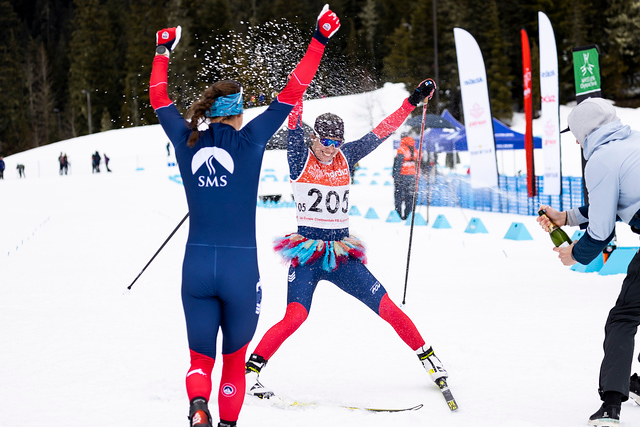
    Katharine Ogden celebrates her last professional ski race with 45 k and a tutu. (Photo: Joern Rohde / www.joernrohde.com)
  • Art, Speed, and Becca Rorabaugh

    Art, Speed, and Becca Rorabaugh

    It goes without saying or writing, but I’m writing it anyway with a nod to a certain beloved Bay Area band: What a long strange trip it’s been —  (at only six months).  

    Becca Rorabaugh of the APU Elite Team. (Photo: beccarorabaugh.com)

    Becca Rorabaugh (31), based in Anchorage and training with the APU Elite Team, has a creative tool set to assist with the grind we all find ourselves in. And she’s handled this trip with grace. Although art is associated with the right side of the brain, as a top-level cross-country skier, Rorabaugh harnesses the totality of the cerebral matrix. Symmetry in principle, however, does not categorically mean the balance persists in practice during trying times. 

    “I have been thinking about how art and the coronavirus have interacted this summer for me,” Rorabaugh said. “I think a good part of it has been that in the studio I feel like I can control everything. But even then, in my art, the unexpected things happen. And at first, it’s easy to be disappointed in work that does not match my intended outcome. But often you come back and look at it later and you see the value in it either as a learning experience or as something different. You actually can see that maybe there is a new direction there.”

    With an undefined season likely coming this winter, Rorabaugh explained that her creative process, where outcomes are often unplanned, has helped her cope. 

    “I am trying to apply this line of thought to this coming ski season which might be valuable because I feel like it is going to look a little strange,” she added. “And when you are training it is nice to imagine the venue you are trying to aim for and be really focused in that way. It can be kind of tough when you don’t have that kind of direct progression. But, I feel like experiences in art like that, the unexpected things, will hopefully help me see value in it, in a different kind of ski racing season.”

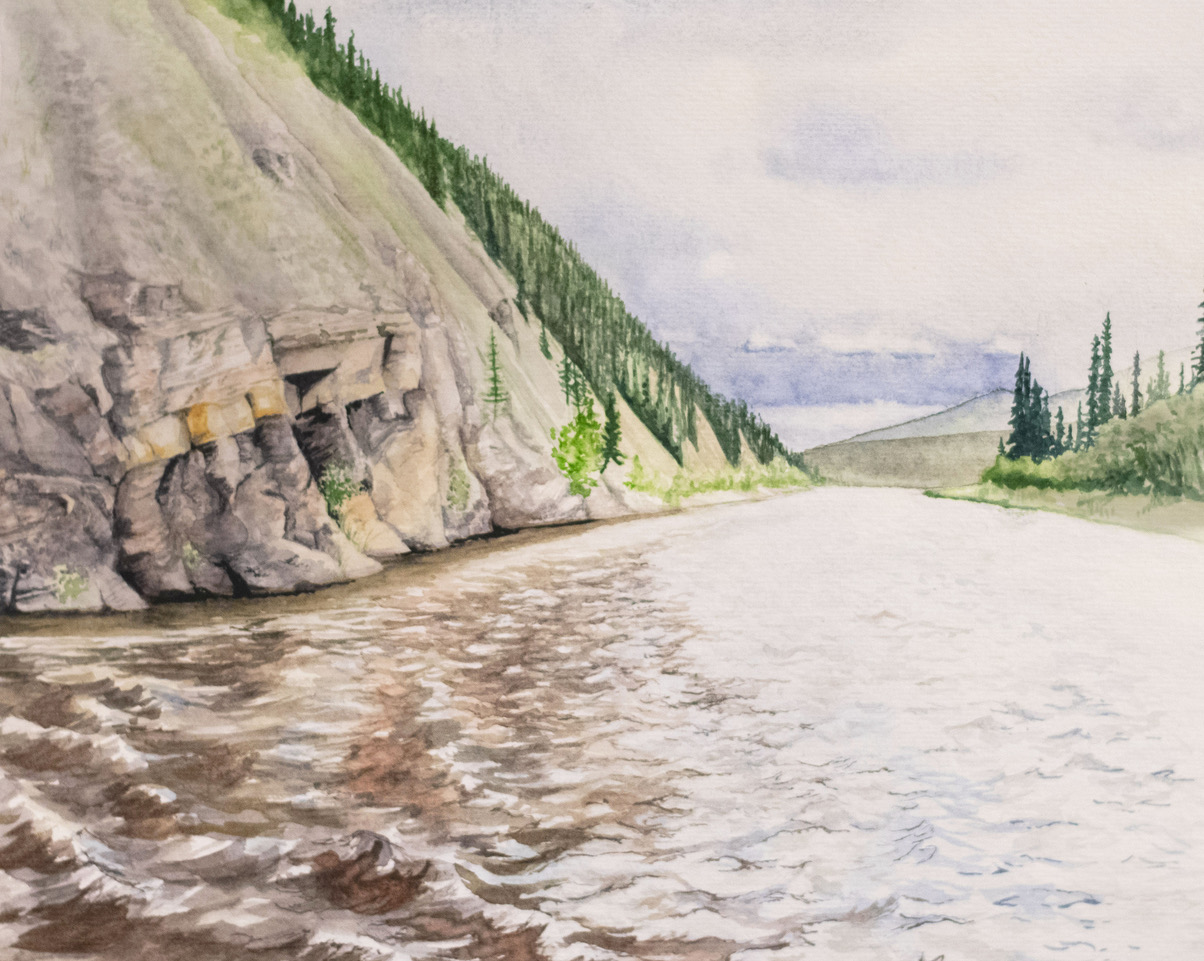
    Rorabaugh painting along Birch Creek near Central Alaska. (Photo: courtesy photo)

    Growing up in Fairbanks, Rorabaugh has skied and pursued art since she was a child. She took AP art classes in high school and has been designing ski race t-shirts for Fairbank’s town race series since she was 12.  

    Rorabaugh attends Dartmouth College where its quarter system allows for time away for the ski-focused student-athlete. She has only a single quarter left for her degree. However, there is a requirement that she spend her senior spring quarter on campus. As both a studio art and environmental studies major, she says she is in fact looking forward to that final on-campus residency. She’ll be part of a senior art showcase. Additionally, she has a set of grandparents living close to the school. Rorabaugh explained she opted for a studio art major since she plans on eventually attending architecture school, and at Dartmouth studio art is often the pathway to that career. 

    “So it has been a great excuse to do a lot of studio art courses,” said Rorabaugh.

    For a time, as skiing became all-consuming, she deviated from her fine artwork. “I would say for a little while I lost track of my art while trying to be a mono-dimensional focused cross-country skier. But then I would say about 2016, and I have to say that Instagram probably helped with this, I started noticing the aesthetic qualities of the places we were training. And we were doing a lot more mountain running that summer. It was a real sunny summer in Anchorage, which is rare, and it was all beautiful mountain runs. I feel like social media makes you hunt for images subconsciously. I was spending more time noticing these aesthetically pleasing images and actually thinking I should paint this —  this is valuable.”

    Rorabaugh helps offset some of the cost of her training and race travel by selling art. In the past few years she has created Pandanas, essentially custom buffs featuring her art. 

    “The Pandanas are another kind of challenge because trying to come up with colors and patterns that work well wrinkled up and come together with a big image can be a puzzle,” Rorabaugh said. 

    Rorabaugh’s Pandanas

    This spring and summer, with the funkiness of Covid-time which allowed for more time at home, she has begun completing a series of pieces related to a Bureau of Land Management (BLM) residency project. In the fall of 2018, Rorabaugh was one of several creatives to be chosen for a BLM float down Birch Creek near the remote town of Central Alaska. During the float, she sketched, painted watercolors, and journaled about the experience. In return, when Rorabaugh is finished with her art inspired by the trip, the BLM will feature a selected art piece which will be on loan for a year. The BLM can, as Rorabaugh explained, reproduce the art and use the likeness in perpetuity.

    That week-long trip in 2018 was planned as a recovery week. Yet the sedentary trip was a bit much. “It was a little bit surprising to me that I got antsy probably about halfway through,” said Rorabaugh. “I consider myself a less ansty skier, but it came out for sure. More so now since I have done it for so long – physical endorphins have become kind of addiction I guess. I definitely think that against my better judgment and perception of myself, I get cranky if I do not do a workout. I don’t think there is any way to avoid that after training for this long. Despite my best efforts.”

    Part of Rorabaugh’s BLM project: Birch-Creek-Watercolor


    A notebook size watercolor from Rorabaugh’s BLM project: Birch-Creek-Watercolor

    During a time when she and her APU teammates have modified large group training protocols, there is still the training grind. A process that becomes quotidian in the best of times. Art, Rorabaugh said, complements her training life as she finds a vision for her work.    

    “I like to think I can pursue realistic oil painting at the same time as graphic design and doing more abstract work for my senior seminar project at school,” she said. “I don’t think I have settled on a specific direction yet. The process of making art and the process of training are somewhat similar for me. It is a self-motivated and sometimes frustrating effort and I get really absorbed in what I’m doing and become focused in on it. Time slows down. It is a similar kind of process for both. I see a lot of parallels in how you go about it. Although for me, when I am doing artwork at home, it is more self-guided, I don’t have a training plan. I do think if I am focused too hard on ski training I lose touch a little bit with my creative side. I have to kind of decide to wake it up and use it again.”

  • Under 23 Questions: Sofia Shomento

    Sofia Shomento racing in the 5 k freestyle at the Colby Carnival in Waterville, Maine. (Photo: FlyingPointRoad)

    In an effort to showcase the North Americans who competed at last week’s International Ski Federation (FIS) 2018 Nordic Junior/U23 World Championships in Goms, Switzerland, we asked those qualifying athletes several questions about themselves — actually, we had them fill in the blanks. Here we have 18-year-old Sofia Shomento, of the Dartmouth Ski Team, who represented the U.S. at her first Junior Worlds. 

    Last week in Goms, Shomento qualified for the freestyle sprint in 26th and went on to place 23rd overall, and finished 58th in the 10 k skiathlon.

    ***

    “My full name is Sofia Shomento, but you can call me Sof.

    I was born and raised in Bozeman, Montana, and I learned to ski at Bohart Ranch with the Bridger Ski Foundation.

    I spent the time between U.S. nationals and Junior/U23 Worlds catching up with classes and skiing with my teammates.

    The funnest workout I did in the last training year to prepare for this was running 121 laps (about 14 miles) around the homecoming bonfire with my class of 2021 teammates.

    This is my first time in Switzerland and second time racing internationally, and so far it’s been incredible!

    One difference I’ve noticed between Switzerland and the U.S. is the snow banks are much taller here!

    Skiing and racing in the Alps is breathtaking. Usually racing at altitude is fun for me because I grew up racing in the West. There are lots of mountains around where I live.

    One of the things I’m most excited about for Junior/U23 Worlds in Goms is meeting new people from around the world.

    One race I’m especially targeting there is the skate sprint.

    I really hope I can chat/make friends with someone from Norway and ask them “what’s the secret?”

    My favorite thing at the breakfast where we are staying is the fresh bread, cheese, and jam.

    Fondue is yummy. The cheese here is delicious. And the chocolate is life changing.

    If I had a totally free day here and didn’t have to worry about race fitness or training, I’d spend it alpine skiing.

    The best way to follow me on social media is on Instagram @sofiashomento.”

  • Under 23 Questions: Lydia Blanchet

    Under 23 Questions: Lydia Blanchet

    Lydia Blanchet (Dartmouth Ski Team) during the 10 k freestyle at 2018 US nationals last month in Anchorage, Alaska. (Photo: Betsy Arnold)

    In an effort to showcase the North Americans competing at this week’s International Ski Federation (FIS) 2018 Nordic Junior/U23 World Championships in Goms, Switzerland, we asked those qualifying athletes several questions about themselves — actually, we had them fill in the blanks. Here we have 20-year-old Lydia Blanchet, of the Dartmouth Ski Team, who’s representing the U.S. at her first U23 Worlds. 

    Blanchet notched a top 30 this week in the 10 k classic, where she finished 30th, and placed 32nd in the freestyle sprint and 38th in the 15 k skiathlon in Goms.

    ***

    “My full name is Lydia Anne Blanchet, but you can call me Lydia Anne Blanchet.

    I was born and raised in Anchorage, Alaska, and I learned to ski with the Anchorage Junior Nordic League at Kincaid Park, and later with APU.

    I spent the time between U.S. nationals and Junior/U23 Worlds catching up with work from the first week of classes and getting settled in my new apartment.

    The hardest and coolest workout I did in the last training year to prepare for this was running the 22 miles from the rim of the Grand Canyon to the Colorado River and back with my best friend and teammate Taryn Hunt-Smith this fall on our geology field program.

    Lydia Blanchet (Dartmouth Ski Team) on the Athabasca Glacier in Banff this past September on a Dartmouth geology field program. (Photo: Laura Hutchinson)

    This is my first time in Switzerland and first time racing internationally, and so far it’s been a dream!

    One difference I’ve noticed between Switzerland and the U.S. is the toilet flushers.

    Skiing and racing in the Alps is like skiing in a story book. Usually racing at altitude is painful for me because I’m a sea level girl through and through. There are humongous, beautiful mountains around where I live, but I train by the ocean!

    One of the things I’m most excited about for Junior/U23 Worlds in Goms is getting to meet skiers from every corner of the world.

    One race I’m especially targeting there is the skiathlon, but I’m excited for all of them.

    I really hope I can chat/make friends with someone from Kazakhstan and ask them if they really are the greatest exporters of potassium.

    My favorite thing at the breakfast where we are staying are croissants with jam and brie.

    Fondue is what my family used to eat on New Year’s. The cheese here is enough to make me move to Switzerland. And the chocolate is enough to make me stay for the rest of my life.

    If I had a totally free day here and didn’t have to worry about race fitness or training, I’d spend it doing a 45 minute sled run down an alpine resort—which I did with my dad on Tuesday!

    The best way to follow me on social media is on Instagram @blanchetlydia.”

    Lydia Blanchet (Dartmouth Ski Team) getting some air at the top of the tram by the U.S. team’s hotel in Goms, Switzerland. (Photo: Thomas O’Harra)
  • ‘It Felt Surreal,’ Patterson Closes Out U.S. Nationals with Win No. 4

    ‘It Felt Surreal,’ Patterson Closes Out U.S. Nationals with Win No. 4

    Caitlin Patterson (c) atop the podium for the fourth-straight race of the week at 2018 U.S. Cross Country Championships in Anchorage, Alaska, joined by Finland’s Jasmi Joensuu (l) of the University of Denver, in second and Patterson’s CGRP teammate Kaitlynn Miller (r) in third. (Photo: Michael Dinneen Photography)

    Note: This article has been updated to reflect the fact that U.S. Ski Team member Jessie Diggins was the top American in four consecutive U.S. nationals races in 2012, winning the freestyle sprint, 10 k skate and 20 k classic mass start outright and placing second to Canada’s Dasha Gaiazova in the classic sprint (but topping the podium as the first American). This week, Caitlin Patterson, of the Craftsbury Green Racing Project, became the first woman since Diggins to be the top American in four U.S. national races as well.

    ***

    ANCHORAGE, Alaska — Maybe there’s something to be said for growing up in Alaska. Or maybe there’s something to be said about the mystique of Kincaid Park, its surrounding Tordillo, Chugach and Alaskan mountain ranges all bathed in sunlight at the start on the last day of 2018 U.S. Cross Country Championships during the women’s 1.5-kilometer classic sprint.

    Caitlin Patterson (Craftsbury Green Racing Project) approaching the finish line of the women’s 1.5 k classic sprint final on Monday, the last day of 2018 U.S. Cross Country Championships in Anchorage, Alaska. She won the final for her fourth-straight national title of the week. (Photo: Michael Dinneen Photography)

    Be it either of those, Caitlin Patterson became the first woman since U.S. Ski Team (USST) member Jessie Diggins, to earn four consecutive titles at a single U.S. nationals. Diggins did it in 2012 in Rumford, Maine, two years after Kikkan Randall, a USST member who trains with Alaska Pacific University (APU), swept four races outright at Kincaid. (Both Randall and Patterson grew up in Anchorage; Randall was born in Salt Lake City, born in McCall, Idaho. Patterson, 27, attended South Anchorage High School while Randall, 35, went to East Anchorage High).

    Even if Patterson, who’s currently based out of Vermont with the Craftsbury Green Racing Project (CGRP), had not won the final event of 2018 nationals, she had already posted a banner week. She started it by racing to first in the opening women’s 10 k freestyle individual start last Wednesday, amidst slushy ski trails, falling wet snow and a standard dark Alaskan winter morning sky.

    After a training day on Thursday, she returned to the Kincaid trails on Friday — which had transformed from 48 hours before — racing once again to first, this time in the women’s freestyle sprint for her first sprint title.

    Saturday brought another training day before Patterson returned on Sunday for the women’s 20 k classic mass start.

    Hedda Bångman, a Swedish freshman at the University of Colorado at Boulder (CU), racing to fourth in the qualifying round of the women’s 1.5 k classic sprint on Monday at 2018 U.S. Cross Country Championships in Anchorage, Alaska.

    Up against Sweden’s Hedda Bångman, a University of Colorado at Boulder (CU) freshman, and Rosie Frankowski (APU), the two of whom led much of Sunday’s four-lap race, Patterson had met her match. However, Frankowski’s fall on the final hill paired with Patterson’s strong skiing led Patterson to finish as the day’s top American. Bångman took the outright win while Patterson placed second overall, ahead of Frankowski in third. The two were first and second on the U.S. podium.

    If she had left it at that, Patterson would have tied Rosie Brennan — of the U.S. Ski Team and APU — who won three out of four U.S. nationals races in 2015.

    But Patterson took it one step further.

    With no training or rest day in between, the CGRP skier joined the remaining U.S. nationals field on Monday. Some skiers had already left, including Australian and APU skier, Jessica Yeaton, who flew out Monday morning to prepare for next weekend’s World Cup in Dresden, Germany.

    Based on her qualifier alone, it might have seemed Patterson was beginning to feel the effects of four days of racing since last Wednesday. She qualified seventh, 4.77 seconds behind the fastest qualifying time of 3:41.40, posted by Finnish skier and University of Denver (DU) junior Jasmi Joensuu.

    “Today qualification was really good, I felt really good,” Joensuu said after the race. “But then, my throat is really sore after the qualification … so I didn’t know if I could race actually. But I decided to race, I knew that I could win this race. I knew that there were some good girls but they also had 20 k yesterday, which I didn’t race, so that was good for me.”

    With Joensuu, 21, having sat out Sunday’s mass start and Patterson having expended herself over 20 k, the Finn may have had a leg up on the American.

    What Joensuu had not counted on was Patterson’s familiarity with the course and what the American had learned from Friday’s freestyle sprint.

    “I think that bottom corner was a really good one for me all week and in the skate sprint I figured out how to ski it with good momentum,” Patterson said after Monday’s race, referring to the slightly inclined corner about 100 meters before the finish. “Even with that big gap that she put on the hill, I think just knowing how to ski the hill here at Kincaid … the finish stretch was mine.”

    Craftsbury’s Caitlin Patterson (207) and Kaitlynn Miller (second from r) and Jasmi Joensuu, of the University of Denver, lead their semifinal during the women’s 1.5 k classic sprint on Monday at 2018 U.S. Cross Country Championships in Anchorage, Alaska.

    In their semifinal, though Joensuu had gapped both Patterson and and another CGRP skier Kaitlynn Miller at the top of Gong Hill — the sprint’s final major climb — both Craftsbury skiers had caught Joensuu by the bottom of the descent’s corner back towards the finish.

    A similar scenario played out in the final.

    “In the final I did a tactic, I would ski the uphill as fast as I can, I don’t save anything and that almost worked,” Joensuu recalled.

    Joensuu and Petra Hyncicova, a CU senior from the Czech Republic, had pushed hard out of the start of the final, followed by Patterson and Miller, as well as Dartmouth skier Lydia Blanchet and APU’s Becca Rorabaugh.

    “I tended to lose time in the beginning of the race and then catch back up,” said Blanchet, who had to catch a plane within an hour of finishing the final. “I had great skis and downhills are one of my strengths.”

    While the two non-Americans raced to the front halfway through the course’s major climb, Blanchet, Rorabaugh, Miller, and Patterson hung behind. Then halfway through the final hill, Joensuu attacked, attempting to distance herself from the pack.

    By the top of the hill, she had done just that, with 4 meters separating her from the rest of the field. Miller and Patterson followed, tucked into the downhill swooping curve.

    As Joensuu disappeared behind the trees blocking the corner from spectator’s view, Miller and Patterson were already hot on her heels. Using her momentum, Patterson swung around Joensuu and emerged from the corner first, double poling with a sizeable lead to her fourth victory in a row in a time of 3:39.58.

    “It felt surreal coming down the finishing stretch today, realizing that I couldn’t hear people behind me and realizing that it was going to be number four,” Patterson said. “I could not have imagined this if I tried, but I’ve just had really good feelings all week. Great support from the staff and waxers and everything, and it’s fun being back here in Anchorage, especially.”

    The fifth women’s classic sprint quarterfinal heat on Monday at 2018 U.S. Cross Country Championships in Anchorage, Alaska, with CXC/Peak Nordic’s Felicia Gesior (208) leading with Corey Stock (213) of the Bridger Ski Foundation, and Northern Michigan’s Nicole Schneider (223), the University of Colorado Boulder’s Christina Rolandsen (218) and Petra Hyncicova (203), and Mae Chalmers of SMS (228) chasing.

    Finishing second, 2.36 seconds behind Patterson, was Joensuu. Capturing third for her third American podium this week was Miller (+3.9). Miller finished second to Patterson in Friday’s freestyle sprint and was the third American in Sunday’s 20 k.

    “I’m really pleased with how everything panned out,” Miller said. “To me the big sign of improvement has been in my skating and I was really excited with my skate sprint and obviously really excited with yesterday and today as well, but it’s nice to see my skating moving up a little bit.” 

    Despite being the 2016 national classic sprint champion, Miller, of Elmore, Vt., explained she entered Monday’s race with nothing held over her head.

    “I don’t ever go into a race expecting a certain result,” she said. “Anything can happen, even to strong, very experienced skiers … [but] it is exciting to be in the mix.”

    Though Miller also explained she “felt pretty tired” by the time she lined up for the final on Monday, she also acknowledged that she was, in all likelihood, not alone.

    “I think that was the situation for all of the women out there today, after the 20 k yesterday. It was sort of like, well, the snap isn’t there, the energy isn’t quite there, but everyone was in the same boat,” she said. “Everyone’s making the best of it, and your body knows what to do once you get to the start line.

    “All things considered, I felt great, had a really great result, and I’m very happy with it,” Miller added.

    Becca Rorabaugh (APU) during the women’s 1.5 k classic sprint on Monday at 2018 U.S. Cross Country Championships in Anchorage, Alaska. After finishing second in the qualifier (as the top American) she finished fourth overall in the final and was the third American on the day.

    Rorabaugh finished fourth overall (+9.92) and was the third American. The Fairbanks native, who has spent the last 10-plus years living and training in Anchorage, was the top American qualifier on Monday, 1.31 seconds behind Joensuu in first overall.

    “I was extremely excited with my qualifier,” Rorabaugh said. “It was rather unexpected. I was the first American and I had one really good qualifier in West Yellowstone this year but the other two so far have been pretty medium for me, so I was really excited really happy with this morning.”

    Though the qualifier is what counts for the Olympic points list, Rorabaugh indicated that was of less importance to her than just “getting her qualifier back.”

    “It’s been a couple years since I’ve been having a very strong qualification in sprint racing so I was just trying to work on having enough energy and having enough heat pumped to really crush a qualifier first thing in the morning,” she said.  

    “I wanted to have something special at home,” she added, referring to the friends and family that came to Kincaid to watch her race. “So it was good to have something at the end of the week.”

    With firm tracks, cold temperatures reading around 10 degrees Fahrenheit and a low sun in the sky, Rorabaugh described the final U.S. nationals event as “a quintessential Alaskan day.”

    “That was quite nice,” she added.

    Rounding out the final was Hyncicova in fifth (+10.03) and Blanchet in sixth (+11.21).

    “Today I was kind of tired. I finally hit the jet lag over the weekend,” Hyncicova, the two-time defending NCAA champion, said. “But … making the final, and even being third in the quarterfinal is awesome. It’s just proving that I am kind of in good shape so that’s a good start of the season.”

    Rounding out the remainder of the women’s top 10 was Bångman in seventh, Sun Valley Ski Education Foundation skier, Kelsey Phinney in eighth, Central Cross Country’s Felicia Geisor in ninth and Stratton Mountain’s Erika Flowers in tenth.

    In the junior women’s classic sprint, Wasatch Nordic’s Sarah Morgan took the win in 3:54.93. Novie McCabe (Methow Valley Nordic) placed second (+1.5) and her teammate teammate Ella-Sophie Kuzyk placed third (+6.66).

    Results: Women’s qualifier | Women’s final | Junior women’s final

    –Ian Tovell, Andrea Pontyondy-Smith and Gavin Kentch contributed

    Highlights video by Max Romey Productions

  • From D to B: Paddy Caldwell’s Natural Progression

    From D to B: Paddy Caldwell’s Natural Progression

    American Paddy Caldwell (SMS/USST) on his way to qualifying 20th in the men’s classic sprint at U23 World Championships at Soldier Hollow in Midway, Utah. He went on to place fourth in his quarterfinal and 18th overall for his best sprint result at U23 Worlds. (Photo: FlyingPointRoad.com)

    Back in December of 2010, 15-year-old Patrick “Paddy” Caldwell was racing amongst grown men. He finished 17th in an International Ski Federation (FIS) classic sprint held in Craftsbury, Vt. Today, at 23, Caldwell skis for the Stratton Mountain School (SMS) Elite Team and is a newly minted U.S. Ski Team (USST) B-team member. To put things in perspective, during that 2010 Craftsbury sprint, Patrick O’Brien, Caldwell’s current primary coach and head of the SMS Elite Team, was nearly 23 at the time and placed fourth in the race.

    The USST has a well-established development pipeline. Here’s the basic philosophy: have skiers find success at each rung of the ladder before exposing themselves to deeper competition as they progress towards more rarefied races. From local and regional events to junior nationals, OPA Cup trips, NCAAs, senior nationals, to Junior and U23 World Championships, Caldwell has paid his dues, notched benchmark performances, and maintained the grind to find success at each incremental step.

    It wouldn’t be a stretch to say Caldwell embodies the spirit of a USST development model where skiers can remain in school, meet conflicting demands, and with a big dose of hard work and a smidge of luck, make progress as a skier.

    From D to B

    Initially, Caldwell was named to the U.S. D (development) team for the 2014/2015 season. He maintained D-team status until this spring when he was officially nominated to the B-team. (His cousin, Sophie Caldwell, remains on the A-team.)

    Paddy Caldwell (U.S. Ski Team D-team/SMS) racing to 46th overall and 25th for time of day in the men’s 15 k freestyle pursuit at World Cup Finals in Quebec City. (Photo: John Lazenby/Lazenbyphoto.com)

    In a phone interview two weeks ago, the Lyme, N.H., native explained that making the jump to the B-team wasn’t an explicit goal.

    “I don’t think I officially wrote that down in a goal section or something like that in the beginning of the year,” Caldwell said while finishing up spring classes at Dartmouth College in Hanover, N.H. “By looking at it as sort of progression, it definitely has been a goal of mine. My goal was to be a competitive World Cup skier and that is a step that needs to happen.”

    Caldwell’s 2016/2017 objectives highlighted U23 World Championships at Soldier Hollow outside Midway, Utah.

    “I was really focused trying to peak for those events and put up the best results that I could in that field,” he explained.

    At U23 worlds, he earned two top 10s, placing ninth in both the 15-kilometer skate and 30 k skiathlon.

    Caldwell was granted starts for the World Cup’s closing weekend, a three-race mini tour in Quebec City. He placed 46th overall at World Cup Finals, but turned heads with a 25th-best time of day on the final-stage 15 k skate pursuit.

    In the near term, despite his promotion, it’s life as usual for Caldwell. There’s school to finish up and training hours to log. (Caldwell returned recently to Hanover from the USST’s first on-snow camp of the year in Bend, Ore.)

    “I think that is very much in the air,” Caldwell said when asked if he’d be racing a full World Cup schedule. “And it depends on a lot of things — foremost if I am skiing well. And those are plans I am still working out. I don’t know exactly what opportunities will be there. Those are things, discussions we’ll have later in the year.”

    Caldwell will remain under the guidance of O’Brien at SMS. And from a funding standpoint, Caldwell said he won’t see a bump in USST funding.

    “Not in terms of support from the U.S. Ski Team,” Caldwell said when asked if his B-team status came with greater financial support. “The last few years I have been really fortunate to be successful fundraising through the local community here in the Upper Valley in New Hampshire and Vermont. So I am really thankful for the support from local people in both the ski community and outside the skiing community. I think absolutely if I end up racing in Europe more, it will be a bigger expense, and those are things I am not completely dialed on yet.”

    Caldwell is officially a senior at Dartmouth, having earned 32 of 35 credits for his bachelor’s degree while studying geography and economics. In 2015, he won the 10 k skate at NCAA Skiing Championships.

    Paddy Caldwell (13) chases Kris Freeman in the 50 k freestyle mass start at 2015 U.S. Distance Nationals in Sun Valley, Idaho.

    “I feel really fortunate to go to Dartmouth College and be able to balance skiing and education,” he said. “One of my goals, I’ve always been aimed at finishing an undergraduate degree in a timely manner. I’m really thankful to be at Dartmouth where there is a flexible quarter system. I’ve taken off most fall terms since I have started at Dartmouth as well as winter and been able to go in the spring and summer fairly consistently.”

    As a discretionary pick for the USST, Caldwell has jumped a significant pipeline-hurdle. Domestically, his peers have been skiing in a tight pack — on this year’s SuperTour, the men’s side had several different standout performances.

    “I think there is an aspect of added pressure,” Caldwell said of his new B-team status. “But I also think that that is an inherent part of our sport. At the end of the day, it comes down to racing fast. That pressure is going to be there no matter what team you are on. It is something that I try not to focus on and just see it as an opportunity to keep growing as a skier and not as a target on my back, because I think it is easy to see it that way. Absolutely there will be some pressure from that, it’s also not something that I am unfamiliar with. I think it’s part of the sport. You have to, at least for me, just focus on trying to achieve results for my own growth as a skier and not focusing on the stuff going on around me.”

  • The Road to Jackson: Dartmouth

    The Road to Jackson: Dartmouth

    In the fifth and final part of “The Road to Jackson” series on Eastern Intercollegiate Ski Association (EISA) teams competing at NCAA Skiing Championships, we hear from five out of the six Dartmouth College skiers (Abigail Drach, Lydia Blanchet, Lauren Jortberg, Fabián Štoček, Luke Brown, and Cal DeLine) that qualified for the season-ending championships in Jackson, N.H.

    “I’m really happy with my individual results, but it’s just so much better when your whole team is also sharing the same happiness.”

    See also: EISA season in review | Part I: Williams | Part II: UNH | Part III: Colby | Part VI: UVM

  • Caldwell Cracks Top 10 in Third U23 Worlds, 9th in 15 k Skate

    Paddy Caldwell (SMS/USST) racing to a career-best ninth in the men's 15 k freestyle individual start on Thursday at U23 World Championships at Soldier Hollow in Midway, Utah. (Photo: FlyingPointRoad.com)
    Paddy Caldwell (SMS/USST) racing to a career-best ninth in the men’s 15 k freestyle individual start on Thursday at U23 World Championships at Soldier Hollow in Midway, Utah, while his dad, Tim Caldwell, cheers him on. (Photo: FlyingPointRoad.com)

    (Note: This article has been updated to include comments from Paddy Caldwell.)

    Three years ago, American Patrick “Paddy” Caldwell made his debut at Junior World Championships, racing to 10th in the 20-kilometer skiathlon in Val di Fiemme, Italy. It was the first time he had ever done a skiathlon; he was 19 years old and a college freshman at the time.

    Now a 22-year-old Dartmouth sophomore, who continues to train with the Stratton Mountain School (SMS) as a member of the U.S. Ski Team’s development “D” team, Caldwell (son of four-time Olympic cross-country skier Tim Caldwell and cousin of current U.S. Ski Team standout Sophie Caldwell) is in his third U23 World Championships. The skiathlon distance has increased to 30 k, yet that classic-to-skate race remained his main focus for this year’s U23 Worlds at Soldier Hollow in Midway, Utah.

    Earlier this week, he broke through with his best-ever sprint result at the championships, reaching the quarterfinals and placing 18th overall in the classic sprint. Then, on Thursday in the men’s 15 k freestyle, he cracked the top 10 for the first time in his U23/Junior Worlds career.

    “I was really excited going into today’s race,” Caldwell wrote in an email on Friday morning. “15km FS is one of my favorite race formats. I have been targeting this week of races all year and was really looking forward to this race in particular.”

    While the sprint was a primer for Caldwell, he said it also boosted his confidence leading into the two individual distance races at U23s.

    “I have been working on my sprinting a lot this year and I am psyched to be mixing it up in the heats!” he wrote.

    He described the conditions on Thursday as hard-packed with a fair amount of moisture, “which made for some fast skiing.”

    It was overcast — grey and spitting rain at times — a stark contrast from the preceding bluebird days. But with temperatures just below freezing, the course remained firm.

    “My strategy for the day was to pin it from the start and hold on,” said Caldwell, who started 44th of 53 in the men’s three-lap, individual start race, in a post-race interview with the U.S. Ski Team. “It was a really tight race and I definitely paid for my first lap, but I am happy to have put it all out there.”

    After being passed by Russia’s eventual winner Alexander Bolshunov, who started 30 seconds behind him in bib 45, Caldwell initially finished sixth, 1:03.6 minutes behind Bolshunov. Three later starters ultimately bumped the American to ninth, including Russia’s Alexey Chervotkin, who took second at the finish, 21.8 seconds behind Bolshunov (who won in 32:55.7).

    “I started off with a fast first lap and was getting splits between 1st and 4th for the first five or six kilometers,” Caldwell recalled in an email. “Bolshunov caught me around 7 kms into the race… I skied with him for about 1.5km but on the big downhill halfway through the 5km loop another skier slotted in between us and Bolshunov ended up gapping us before I could get around the other skier — it would have been sweet to ski with him some more but who knows how long I could have stuck with him. I could see him for the rest of the race which was a good gauge and kept me pushing to make up time on him.

    “In the end I am really excited to be in the top ten overall and to have left it all out there,” Caldwell added. “It was a tight race and I was a bit disappointed to be at the tail end of a close group of times but in the end I am really happy with the result. I want to be the best all around skier I can be and I am really excited to be making progress in both sprint and distance racing.”
    The all-Russian podium in the men's 15 k freestyle on Thursday at 2017 U23 World Championships, with Alexander Bolshunov (c) who won by nearly 22 seconds over Alexey Chervotkin (l) in second, and was 28.2 seconds ahead of Denis Spitsov (r) in third. (Photo: FlyingPointRoad.com)
    The all-Russian podium in the men’s 15 k freestyle at 2017 U23 World Championships, with Alexander Bolshunov (c), who won by nearly 22 seconds over Alexey Chervotkin (l) in second, and was 28.2 seconds ahead of Denis Spitsov (r) in third. (Photo: FlyingPointRoad.com)


    For the second-straight day of 2017 Junior/U23 World Championships, Russia claimed all of the medals in the men’s race, with Denis Spitsov placing third (+28.2).

    “It’s very, very cool,” Bolshunov, the silver medalist in Tuesday’s classic sprint, told the U.S. Ski Team media. “I couldn’t explain my emotions now, it’s really cool.”

    “I was really excited to be in the mix with the top guys today,” Caldwell told the U.S. Ski Team. “U23s have been my focus all year and I am psyched to have improved on my results from past U23 and World Junior races.”

    Next up for Caldwell, Saturday’s skiathlon, which will be his first since placing 20th in the 2015 skiathlon in Almaty, Kazakhstan.

    “I have only done two skiathlons (Val de Fiemme and Almaty) but both were really fun and exciting races,” he wrote. “Mass start races are always a blast!”

    Adam Martin (Northern Michigan University) racing to 22nd in the men's 15 k freestyle at 2017 U23 World Championships at Soldier Hollow in Midway, Utah. (Photo: FlyingPointRoad.com)
    Adam Martin (Northern Michigan University) racing to 22nd in the men’s 15 k freestyle at 2017 U23 World Championships at Soldier Hollow in Midway, Utah. (Photo: FlyingPointRoad.com)

    Four American men raced the 15 k, with Adam Martin (Northern Michigan University) placing 22nd (+2:22.4), Jack Hegman (Sun Valley Ski Education Foundation) 24th (+2:25.2), and Cal Deline (Dartmouth Ski Team) 37th (+3:48.6). For Martin, 22nd was his best at U23 Worlds by one place, and Hegman and Deline also notched personal bests at their first U23 Worlds.

    Evan Palmer-Charrette (NTDC Thunder Bay) led Canadian men in 34th (+3:20.2) for his best result at his U23 Worlds debut as well. Alexis Dumas, of the Pierre-Harvey National Training Centre (CNEPH) followed in 38th (+3:52.9), tying his U23 best. Julien Lamoureux (CNEPH) was 43rd (+4:16.7) in his first race of U23 Worlds, and Scott James Hill (Team Hardwood) 49th (+6:15.2).

    Second-Straight Win for Dyvik; Beatty 16th

    Dahria Beatty (AWCA/Canadian U25 Team) racing to 16th in the women's 10 k freestyle on Thursday at 2017 U23 World Championships at Soldier Hollow in Midway, Utah. (Photo: FlyingPointRoad.com)
    Dahria Beatty (AWCA/Canadian U25 Team) racing to 16th in the women’s 10 k freestyle on Thursday at 2017 U23 World Championships at Soldier Hollow in Midway, Utah. (Photo: FlyingPointRoad.com)

    In the women’s 10 k freestyle, Dahria Beatty (Alberta World Cup Academy/Canadian National U25 Team) notched her second top 20 of the week in 16th, after placing 12th in Tuesday’s classic sprint.

    She finished the two-lap 10 k in 27:39.8, more than a minute faster than her 10 k freestyle time at 2017 U.S. nationals last month (where she finished 17th. Beatty went on to place fourth in the classic sprint and win the freestyle prologue at U.S. nationals).

    On Thursday, she was 1:25.8 minutes back from the winner, Sweden’s Anna Dyvik, who racked up her second-straight gold of the championships with the best time of the day in 26:14.0.

    “Today’s race played out fairly similarly to the 10k skate at US Nationals, but not on an extreme of scale,” Beatty wrote in an email, referring to the conditions. “I was skiing where I wanted to be for the first two thirds of the race but then I really struggled at the end.

    “Today’s race was extremely hard,” she added. “The courses here are really tough by any standard and the altitude makes it even harder. I tried to go out fairly conservatively by my standards today as I like starting fast. I was able to start smooth and build through the first lap into the second and was sitting in a good position just in the top 10.”

    Despite trying to pace her race, Beatty described “blowing up” in the last 2.5 k.

    “The last big climb was a very painful one today,” she wrote. “I haven’t quite figured out the 5k course here at Soldier Hollow yet and how to save something in my legs for the end but I was happy with my effort. I raced hard and used the tactics that I thought would give me the best result possible. I was hoping to be able to be in the top 12 but am still pleased to have skied at that pace for part of the race.”

    Sweden's Anna Dyvik racing to her second-straight gold medal of 2017 U23 World Championships on Thursday in the women's 10 k freestyle at Soldier Hollow in Midway, Utah. (Photo: FlyingPointRoad.com)
    Sweden’s Anna Dyvik racing to her second-straight gold medal of 2017 U23 World Championships on Thursday in the women’s 10 k freestyle at Soldier Hollow in Midway, Utah. (Photo: FlyingPointRoad.com)

    Beatty started 32nd (of 44) and Dyvik in bib 33 passed her around 5 k.

    “I only skied with her for a few hundred meters, she was moving fast and I knew if I tried to stay with her I would end of blowing up and really paying for it later in the race,” Beatty wrote.

    The top Canadian in the last two U23 races, Beatty planned to race Saturday’s 15 k skiathlon.

    “I’m looking forward to the Skiathlon with hopes of being able to put together a bit stronger of a performance all the way to the finish line not just for part of the race,” Beatty wrote. “Mass starts are always exciting and I am looking forward to doing some pack skiing, it was pretty windy out there today.”

    Dyvik outlasted four Norwegians for the win, which she took by 16.8 seconds over Norway’s Tiril Udnes Weng (Heidi Weng’s cousin) in second. Norway claimed second through fourth place, with Lovise Heimdal in third (+23.0), and Lotta Udnes Weng (Weng’s twin sister) just 0.1 seconds off the podium in fourth (+23.1).

    Half a second behind Beatty, the Czech Republic’s Petra Hyncicova (University of Colorado-Boulder Ski Team) finished 17th (+1:26.3) for her first top 20 at her second U23 Worlds.

    Canada’s Frédérique Vézina (CNEPH) finished 25th (+1:58.8) for a career best at her second U23 Worlds as well, Katherine Stewart-Jones (NTDC Thunder Bay/NST U25 Team) was 27th (+2:07.8), and Jenn Jackson (Lappe Nordic/Team Hardwood) 37th (+3:31.8).

    Kelsey Phinney (SVSEF) led the Americans in 30th (+2:24.6), Jesse Knori (University of Colorado-Boulder) was 32nd (+2:36.4), Alayna Sonnesyn (University of Vermont) 33rd (+2:51.4) in her first U23 Worlds race, and Nichole Bathe (University of Alaska Fairbanks) 39th (+4:19.8).

    Australia’s Casey Wright (University of Alaska Anchorage Ski Team) followed in 40th (+4:22.0).

    Results: Men | Women

  • Under 23 Questions with Paddy Caldwell

    American Paddy Caldwell (SMS/USST) racing to 20th in the men's classic sprint qualifier on Tuesday at U23 World Championships at Soldier Hollow in Midway, Utah. He went on to place fourth in his quarterfinal for 18th overall, his best sprint result at U23 Worlds. (Photo: FlyingPointRoad.com)
    American Paddy Caldwell (SMS/USST) racing to 20th in the men’s classic sprint qualifier on Tuesday at U23 World Championships at Soldier Hollow in Midway, Utah. He went on to place fourth in his quarterfinal for 18th overall, his best sprint result at U23 Worlds. (Photo: FlyingPointRoad.com)

    In an effort to showcase the North Americans competing at this week’s International Ski Federation (FIS) 2017 USANA Nordic Junior World Championships and U23 Cross Country World Championships at Soldier Hollow in Midway, Utah, we asked those qualifying athletes several questions about themselves — actually, we had them fill in the blanks. Here we have 22-year-old Paddy Caldwell, of the Stratton Mountain School (SMS) Elite Team/U.S. Ski Team D-team, representing the U.S. at his third U23 Worlds.

    On Thursday, Caldwell raced to a career-best ninth in the men’s 15 k freestyle, his first top 10 at U23 Worlds. He finished 18th in Tuesday’s classic sprint for his best-ever sprint at U23s.

    ***

    “My full name is Patrick Fitzgerald Waters Caldwell, but you can call me Paddy. I was born in Lebanon, N.H., raised in Lyme, N.H., and one thing you should know about my hometown is it was founded in 1761.

    I started cross-country skiing when I was two or three, thanks to Mom and Dad. I currently train in Stratton, Vt., with SMS Elite Team.

    Paddy Caldwell (20), of the Stratton Mountain School and U.S. Ski Team D-team, racing in the quarterfinals men's classic sprint at 2017 U23 World Championships on Tuesday at Soldier Hollow in Midway, Utah. He finished 18th on the day for his best sprint result in three U23 Worlds. (Photo: FlyingPointRoad.com)
    Paddy Caldwell (20), of the Stratton Mountain School and U.S. Ski Team D-team, racing in the quarterfinals men’s classic sprint at 2017 U23 World Championships on Tuesday at Soldier Hollow in Midway, Utah. He finished 18th on the day for his best sprint result in three U23 Worlds. (Photo: FlyingPointRoad.com)

    If I’m not skiing, you might find me studying at Dartmouth College. If I had to pick a favorite book, it would be ‘Unbroken.’

    One of the things I’m most excited about for U23/Junior Worlds at Soldier Hollow is the new courses at SoHo. One race I’m especially targeting there is the 30km Skiathlon.

    The best advice anyone ever gave me about skiing or racing was ‘you gotta love it!’

    One of the best race memories I have is the mixed Biathlon/ Cross Country, Men/Women team relay in Seefeld, Austria.

    If I could meet one World Cup skier, it would be Johan Olsson.

    If I don’t end up being a professional skier, I’ll probably still be chasing snow.

    I’m missing zero days of school to be here…

    You can follow me on Instagram @paddy_caldwell.”

  • 17 Questions for 2017: Patrick Caldwell

    17 Questions for 2017: Patrick Caldwell

    Paddy Caldwell roller skiing around Mount Moosilauke in New Hampshire this fall. (Photo: Pat O'Brien)
    Paddy Caldwell rollerskiing around Mount Moosilauke in New Hampshire this fall. (Photo: Pat O’Brien)

    Welcome to “17 Questions for 2017″, where we are catching up with American and Canadian national-team members before the beginning of the winter season. 

    ***

    U.S. Ski Team D-teamer Patrick “Paddy” Caldwell was all over the place last year: taking classes and training at Dartmouth College, racing in the west, winning a SuperTour and college carnival in Vermont, traveling to Romania for U23 World Championships, and then back to Vermont, where he finished third in the 15 k skate at SuperTour Finals.

    This season will be his last as a U23, and he’s looking forward to concluding that part of his career on home soil in Soldier Hollow, Utah.

    1. Biggest change in your life in the last five or so months since the ski season ended?

    No major changes since last winter. I was in Hanover this summer taking classes at Dartmouth, now I am back in Stratton with the SMS Elite Team.

    2. Biggest change in your training?

    Paddy Caldwell trail running in Park City, Utah. (Photo: Simi Hamilton)
    Paddy Caldwell trail running in Park City, Utah. (Photo: Simi Hamilton)

    This summer I focused more on speed/power than I have in the past.

    3. Major areas of improvement you’ve seen so far?

    I think my top-end speed has improved since last year.

    4. Whom you’ve been working closest with this offseason (coaches or training partners)?

    Pat O’Brien, the SMS Elite Team coach.

    5. Best trip in the last five months (and why)?

    I had an amazing trip out to Colorado and Utah last month first visiting my girlfriend’s family in Loveland, Colorado, then heading to Park City for the annual USST training camp. I love being out west and exploring new places to run and hike.

    6. Favorite cross-training?

    Trail running.

    7. Favorite non-athletic activity or pastime this summer?

    Hanging out at the cabin and paddling around the lake.

    8. Song that was your jam this summer?

    Hamilton.

    9. All time favorite race moment?

    Nordic/Biathlon team relay at the Youth Olympic Games in Seefeld, Austria.

    10. First thing you pack in your bag when you leave for Europe?

    An excited Paddy Caldwell (Dartmouth College/SMST2/USST) (center), Tad Elliott (SSCV) (l), and Kris Freeman (Team Freebird) during the podium ceremony for the SuperTour men's 10 k freestyle on Feb. 6 in Craftsbury, Vt. (Photo: John Lazenby/Lazenbyphoto.com)
    An excited Paddy Caldwell (Dartmouth College/SMST2/USST) (center), Tad Elliott (SSCV) (l), and Kris Freeman (Team Freebird) during the podium ceremony for the SuperTour men’s 10 k freestyle on Feb. 6 in Craftsbury, Vt. (Photo: John Lazenby/Lazenbyphoto.com)

    Starbucks VIA and a cribbage board.

    11. Venue/event you’re most excited to visit this season?

    Soldier Hollow for the U23 World Championships. Its awesome that such a big event is happening in the US and it will be amazing to see all the different teams racing on a home course.

    12. Who will win the World Cup title this year?

    Harvey and Diggins.

    13. Biggest sacrifice you feel you’ve made choosing this career path?

    I love the skier lifestyle and am so thankful for the opportunity to pursue ski racing. The biggest sacrifice for me is not being able to see friends and family on the road.

    14. If you could change one thing about your sport, what would it be?

    I would make skiing 100% doping free.

    15. What did you have for breakfast this morning?

    Coffee. Cereal, yogurt, peanut butter, banana and blueberries.

    16. In 5 years, I’ll be ____?

    27 and, with any luck, I’ll be happy, healthy and chasing snow.

    17. In 50 years, I’ll be ____?

    72, skiing with grandkids.

  • From Snow to Software to Snow Again, Osgood New Men’s Coach at Dartmouth

    From Snow to Software to Snow Again, Osgood New Men’s Coach at Dartmouth

    Brayton Osgood, Dartmouth's new men's nordic head coach, testing skis during Period I of last World Cup season. (Courtesy photo)
    Brayton Osgood, Dartmouth’s new men’s nordic head coach and a former NCAA All-American, testing skis for the U.S. Ski Team during Period I of the 2015/2016 World Cup last season. (Courtesy photo)

    Sitting before the lurid glow of a computer screen, scrolling through codes and functions does not exactly conjure up images of snow, skis and fitness fanatics. However, a logged training hour, timed kilometer split or monitored heart rate are all indispensable numbers to improving nordic performance. For eight years, these ordinals were the opus of Brayton Osgood’s work.

    A math wiz — he graduated cum laude from Dartmouth College with a degree in mathematics and earned his master’s in business and accounting from Northeastern University — Osgood spent just under a decade perfecting a computer software known as Athletic Management Platform (AMP) for a company called AMP Sport. The program, designed to help coaches decipher the meaning of digits in relation to an athlete’s progression in training and racing, boasts partnerships with the U.S. Ski Team, USA Triathlon and the Cleveland Cavaliers, among others. Whether it involved dribbling on a basketball court or trekking trails (snow or dirt covered), Osgood’s work gave numbers a new meaning for many athletes.

    But the electronic connection to cross-country skiing Osgood maintained through his computer could not replace the physicality he loved about the sport: the granular feel of a wax cork, the watery eye blur from breathing in the icy, mid-January air.

    A former nordic racer (he skied for Dartmouth College, where he was a two-time NCAA All-American, as well as XC Oregon, earning a World Cup distance start in 2009) and a coach (he was a Dartmouth assistant coach for the 2011/2012 season), Osgood, 35, missed being physically present at cross-country skiing events.

    Brayton Osgood, the new Dartmouth men's nordic head coach, during a mountain bike ride in Park City, Utah. (Courtesy photo)
    Brayton Osgood, the new Dartmouth men’s nordic head coach, during a mountain bike ride in Park City, Utah. (Courtesy photo)

    “I was spending all of my free time in the winter and lots of vacation time making my way towards cross-country ski races so it was pretty clear to me that that’s what I wanted to be doing with my time,” he said on the phone earlier this month.

    Though he loved the math and science behind skiing, Osgood began to realize that being entrenched in skiing was where he wanted to be. He began spending more time at ski events. At the beginning of last season, he traveled to Europe to wax for the U.S. Ski Team for Period 1 of the World Cup. He also served as a coach and wax technician for the New England Junior National Ski Team last season and worked as the race-data manager for the New England Nordic Ski Association (NENSA) from 2012 to 2016. Then in March, when the men’s head-coach position for the Dartmouth nordic ski team opened up, he applied.

    “I was excited to apply for this job specifically because it was at Dartmouth,” Osgood, a native of Putney, Vt., wrote in an email. “The Dartmouth Ski Team has been very important in my life, first as a student-athlete, and more recently inspiring my desire to coach.”

    After much anticipation, Osgood discovered in early May that he had been chosen as the new leader for the Big Green men’s team. He had his first team meeting with half a dozen athletes and his co-coach, Cami Thompson-Graves, prior to Memorial Day weekend and officially started on June 22. While he’s no nordic newbie, Osgood explained that writing training plans for large groups of athletes will be one of the biggest challenges for him as he takes over the reins from Dartmouth’s longtime men’s coach for the last 27 years, Ruff Patterson.

    “I’m really lucky and fortunate to have Cami [Thompson-Graves] as a resource,” Osgood said of Dartmouth’s director of skiing and women’s head coach. “We’ve already started meeting and talking about what she’s done and I’m going to spend a fair amount of time as I get started, talking with the current and hopefully some past Dartmouth skiers just about what has worked for them and where we can experiment and change.”

    Though Osgood has been mentored by Thompson-Graves as an athlete and assistant, this upcoming season will mark his first experience working alongside her.

    Brayton Osgood, Dartmouth College's new men's nordic head coach, working behind the scenes for the U.S. Ski Team on the World Cup early last season. (Courtesy photo)
    Brayton Osgood, Dartmouth College’s new men’s nordic head coach, working behind the scenes for the U.S. Ski Team on the World Cup early last season. (Courtesy photo)

    “I am very excited that Brayton will be re-joining our staff!” Thompson-Graves wrote in an email. “I think his passion for skiing and his knowledge of Dartmouth will help generate a lot of excitement with the team, and will allow him to hit the ground running as we start the new training season.”

    As the pair looks ahead to the beginning of a new season and partnership, Osgood points out that key to their success will be complementing each other as coaches. The two programs will work together to shape the future of the Division I program.

    “She has a great history of success in terms of graduating skiers that move on to the U.S. Ski Team and World Cup podiums,” Osgood said of Thompson-Graves, who’s entering her 28th season coaching at Dartmouth. “She’s done a really good job of building that team atmosphere, which I think is a key to achieving success, so I think there’s a lot I can learn from her there.”

    With the tutelage of Thompson-Graves and current and previous Dartmouth skiers, Osgood hopes to not only continue Dartmouth’s history of program success, but expand upon it.

    “Ruff has been a hugely important figure in my life and skiing,” he said. “So having the opportunity to take over for him is really exciting and a little bit daunting because it’s a great legacy he has and I would love to carry on the success that he achieved.

    “I definitely want to have a team that has All-Americans and hopefully podiums at NCAAs and a lot of skiers All-East for EISA [Eastern Intercollegiate Ski Association],” Osgood added. “Then just as important I think is to have a team that’s happy and excited to be out there skiing and racing every day that they ski … There’s going to be 12 to 15 men on that team and they can’t all race carnivals, they can’t all go to NCAAs, but I want them all to feel like they have successful winters and are achieving the goals they set or are making progress towards those goals.”

    Another aspect of the job Osgood sees as both a challenge and a chance to learn is the student side of coaching a collegiate sport.

    “At a school like Dartmouth, finals are never more than 10 weeks away,” he said. “There’s often midterms and a whole host of external factors that you need to account for when writing [a training plan]. There’s also class schedules. There are a lot of constraints to work with, but that’s going to be a new and exciting thing for me, for sure.”

  • Celebrating 27 Years of College Coaching, Patterson Departs Dartmouth

    Celebrating 27 Years of College Coaching, Patterson Departs Dartmouth

    The crew (left to right) Austin Caldwell '14, Scottie Eliassen '90, Sam Tarling '13, Ruff Patterson, Erik McEwen, and Leif Johnson '13 in the back of Patterson's Uhaul on Tuesday, prior to Patterson's departure west. (Photo: Courtesy of Sam Tarling)
    (From left to right) Austin Caldwell ’14, Scottie Eliassen ’90, Sam Tarling ’13, Ruff Patterson, Erik McEwen, and Leif Johnson ’13 in the back of Patterson’s U-Haul last Tuesday, May 24, prior to Patterson’s departure west. (Photo: Sam Tarling)

    In late March, Ruff Patterson, 61, announced he was stepping down as head coach of the men’s nordic team at Dartmouth. This is a story of his impact and legacy as a coach, first as a U.S. Ski Team assistant and later at Dartmouth in Hanover, N.H.

    “There were no non-heroes out there today.” — Ruff Patterson, after a four-hour rainy run with the Dartmouth men’s nordic team, circa 2007

    ***

    Twenty-seven years ago, a group of men convened in the basement of Robinson Hall, home of the Dartmouth Big Green ski team. Veteran faces intermingled with those of eager newcomers — including the likes of current U.S. Ski Team Head Coach Chris Grover.

    Wisecracks and an accompanying chorus of chortles percolated amongst those assembled, drifting up into the stairwell. A few shuffled their feet as they awaited their coach’s arrival for the first fall practice of the ski season.

    However, the figure that eventually greeted the gang beneath the building’s floorboards was not that of John Morton — the coach who recruited Grover the prior spring and whom Grover expected to work with during his four years of undergraduate study at Dartmouth.

    That autumn afternoon, September 1989, the individual who approached the group was as novel to the Dartmouth ski team as any of Grover’s fellow freshman teammates. With time, however, he would become synonymous with the school’s ski program.

    “This was all happening pre-internet, pre-email, pre-mobile telephones,” Grover on the phone of his recruiting process to Dartmouth. “There was never any sort of news release or anything that went from Hanover to where I grew up in Anchorage, that would’ve said, ‘Hey, by the way, John Morton quit and there’s a new coach named Ruff Patterson and he’s going to be taking that coaching place.’ So here I was that following September, expecting to see John Morton show up for practice, when Ruff Patterson rolls in … That was an interesting transition. We were all getting to know somebody new on the first day.”

    The Patterson Siblings, Sun Valley and the USST

    “You gotta love it!” — Ruff Patterson on skiing, racing and training with the Dartmouth men’s nordic ski team, circa 2013

    Situated nearly 6,000 feet above sea level, the city of Sun Valley, Idaho, holds a unique history as one of the first destination ski resort areas in America. Famed names such as Dick Durrance, Ernest Hemingway and Picabo Street have carved the region’s mountainside slopes and the locals’ love for skiing, particularly alpine, goes almost unparalleled.

    Ruff Patterson coaching with the U.S. Ski Team in the 1980's. (Photo: Rettrieved by Gordon Vermeer and Eric Packer)
    Ruff Patterson coaching with the U.S. Ski Team in the 1980s. (Photo: Gordon Vermeer and Eric Packer)

    This held especially true for Susie, Pete, Barbie and Matt Patterson, Ruff Patterson’s four younger siblings. Surrounded by Idaho’s Sawtooth Mountain Range, and with support from their parents Joannie and Jim Patterson, all five developed a deep devotion to skiing. To many in the community, they became known as Sun Valley’s “First Family” of skiing.

    In a way, however, Ruff was the ‘black sheep’ of the household. Susie became a two-time national champion alpine skier, Pete qualified for the Winter Olympics in downhill skiing twice, and both Barbie and Matt established themselves as adept alpine skiers. Meanwhile, Ruff chose a slightly different ski path than his siblings. He chose cross-country.

    “[In] high school, I had a brother and sister who were both traveling, very young, for the national alpine team and I was kind of the guy in the background helping them get through school and fixing skis and stuff like that,” Ruff said in a phone interview in April, shortly after he announced his retirement from Dartmouth. “Contact with people, having to deal with traveling and and competing started really young for me, but [ski coaching] was not something I planned on doing after college.”

    As a student enrolled at the University of Colorado Boulder (CU), Ruff originally intended to become a doctor. He placed himself on the pre-med track and graduated with a degree distributed in the fields of biology, chemistry and psychology. Ruff also competed for the Buffs’ ski team. During his undergraduate years, CU won four NCAA Championship titles — though in his senior year the title, ironically, ended in a two-way tie with Dartmouth.

    Despite his initial plan, post-grad life did not leave Ruff pouring over MCAT entrance exams or medical-school applications. Instead, he found himself back in his beloved hometown, ski coaching with Rob Kiesel, the founder of the Sun Valley Ski Education Foundation (SVSEF) nordic program.

    The first few years of coaching for Ruff were far from glamorous. He spent most of his time supporting the SVSEF junior racing team and acting as a professional porter and nordic roadie for the U.S. Ski Team (USST).

    “Rob hired me as the national team coach, and you know when you start out, you’re carrying a lot of ski bags and traveling a lot,” Ruff said. “Those first years I was traveling internationally with the team and just doing a lot of the groundwork. I don’t think a lot of the groundwork has changed for those poor guys. They earn every cent.”

    Kiesel, the man who hired Ruff, influenced Ruff’s path into coaching. As Ruff put it, Kiesel was more than just a family friend. Kiesel was Patteron’s role model and mentor.

    “I wouldn’t be coaching today, nor begun coaching if it weren’t for Rob,” Ruff previously wrote in an email after Kiesel passed away in 2011. “Both my sister Susie and brother Pete wouldn’t have had the Alpine skiing careers they had if it weren’t for Rob. My brother Pete wouldn’t be guiding in Greenland or Nepal if it weren’t for Rob. More importantly, Rob was an integral part of our family.”

    As Patterson’s grip on the nordic race world grew, he began to move up in position and expertise. For 10 years, he worked for the USST,  a better part of those alongside Mike Gallagher. While co-coaching with Gallagher, Ruff assumed the role of “primary assistant” coach to the USST, often working with the women.

    Winter Park 1964
    Rob Kiesel, Patterson’s coach, showing off his downhill skills at Winter Park in 1964 (Photo: Harald Bjerke)

    “[Mike Gallagher] and I would worked really closely together and I was sort of his primary assistant as the year grew on,” Ruff said. “When we’d split up, I would end up taking the women and there were a few years where I was actually labeled the women’s coach. But for the most part, he and I were more of a team and I was more of his assistant during my primary coaching year.”

    Ruff’s stint with the USST brought him to the Olympics, alongside Kiesel at the 1980 Winter Olympics in Lake Placid, N.Y., and with Gallagher at the 1984 and 1988 Games in Sarajevo, Yugoslavia and Calgary, Alberta, respectively. He mentioned working alongside U.S. Ski Team coaches Torbjørn Karlsen and Peter Ashley as major influencers in his career as well.

    His work for the USST helped women like current Methow Valley Nordic Team head coach, Leslie Hall –the sister of Patterson’s future Dartmouth College co-coach, Cami Thompson-Graves — to the Olympics.

    “He was one of the main coaches at the 1988 Olympics, my first Olympic experience and the main memories that stick with me are his smile, laugh and bad jokes!” Hall wrote in an email. “My relationship with Ruff has evolved so much over time, from being an admiring junior who wanted his attention and help, to being a friend on mountain biking trips to Moab, to being the sister of his co-coach at Dartmouth.”

    He also helped current Middlebury College assistant coach and University of New Hampshire alum Patty Ross, and Bates College alum Nancy Fiddler to Olympic levels of racing.

    “Ruff was always there with a joke or someway to diffuse a tense situation,” Fiddler said on the phone. “Everybody gets so caught up in [skiing] and if you were feeling kind of involved in a way that wasn’t healthy, he just brought you back and reminded you that, ‘Hey it’s ski racing it’s supposed to be fun, and if you’re not having fun, what the hell are we doing.”

    Changes To Hold Onto: Skating and the Mental Breakthrough

    “Weight shift, weight shift, that’s the key.” — Ruff Patterson during a skating technique workout with the Dartmouth men’s nordic ski team, circa 1989

    Little did Bill Koch know that when he entered Sweden’s 1980 Worldloppet marathon, he would rock the ski world forever. During that winter’s fated 50-kilometer ski race, Koch witnessed what has since become a staple in cross country skiing: the skating technique.

    After Koch began to implement skate skiing into his own national and international races, the sport changed forever — a change Patterson perceived first-hand.

    U.S. cross-country skiing great Bill Koch, who pioneered the skating/freestyle technique in the 80s. (Photo: Peter Ashley)
    U.S. cross-country legend Bill Koch pioneering the skating/freestyle technique in the ’80s. (Photo: Peter Ashley)

    “I was incredibly fortunate to live through the skating revolution,” Patterson said. “To see the live world change, everybody else’s world change and how people react to that, that whole thing was, man, something to live through.”

    “You can sort of compare it to — right now there’s this big double poling thing,” he added. “Skating was very much the same thing. It was a complete unknown. So for everybody, including sports staff like myself, it was like, ‘What’s going to happen here?’ ”

    What happened was rattling to some and rectifying for others. Patterson pointed out that he saw many attempt to prevent the change, but the skating technique, ultimately was here to stay.

    “You know, they were trying to do everything possible to make it less possible to skate,” Patterson said. “A lot of the controls they tried were almost laughable now.”

    As Patterson sees it, there are certain circumstances when evolution of the sport is inevitable. Occasionally, adaptation outweighs resistance.

    “What I’ve discovered during those periods is … if you’re here to play the game, you have to figure out a way to go with it,” he said.

    Skating and double poling aren’t the only areas Patterson says he has seen development in skiing. To Patterson, the mentality of American ski racers is what has changed the most. Especially for the U.S. women.

    “When Kikkan [Randall] opened the door, the barrier, for Americans to do well in Europe, I think the whole mental game changed,” Patterson said. “I’m hoping that this mindset moves into the boys’ group [in the U.S.], that mentality of just, ‘Hey, we can compete and win against the big boys and the big girls.’ That’s probably one of the most significant changes I’ve seen since I’ve started coaching.”

    Dartmouth Dudes and Loving What You Do

    “Boys, I want medals!!” — Patterson to the Dartmouth men’s nordic ski team, circa 2012

    Freezing rain. Mosquitoes. Heavy, humid heat. The Northeast Coast makes many westerners go weak in the knees. Patterson was one of them. Located in the heart of Hanover, N.H., a move to Dartmouth promised Patterson the very bipolar weather, bug bites,and Vitamin-D deficiency he dreaded the most.

    Ruff Patterson, discovering that the eastern biking may make up for his dislike of east coast climate. (Photo: Dartmouth Ski Team Facebook)
    Ruff Patterson discovered that the eastern biking may make up for his dislike of East Coast climate. (Photo: Dartmouth Ski Team Facebook)

    “When I first took the job I was a western guy and I thought, if I lasted three or four years I’m going to be lucky,” Patterson said. “I was terrified of bugs and humidity and once I got here the bugs and humidity were terrible, but then I realized that the road biking and other stuff in the East were just incredibly great. But I never planned on being here as long as I did.”

    Patterson’s original estimated three-to-four-year window turned into seven, soon 11, and eventually 27. Overcoming his fear for East Coast climate was only part of it. His deepening devotion to the Dartmouth men’s team also drew him to stay.

    “I just kept saying over and over again ‘I love what I do,’” he said. “Just absolutely love what I do and I just felt that it stayed like that all the way through.”

    Patterson’s philosophy to love what you do and see it through transferred to his athletes. During his 27 years at Dartmouth, he coached three men to individual NCAA Championship titles — Glen Randall in 2008, Sam Tarling in 2011, and Patrick Caldwell in 2015 — and he also helped Dartmouth to an NCAA team title in 2007, with All-American athletes Mike Sinnott and Ben True.

    “When I came in as a freshman, I was very hesitant to fully buy into his philosophy of training,” Tarling, a 2013 grad, wrote in an email.  “After my first year working with Ruff, our relationship strengthened and I decided to stay in Hanover for the summer and work with him. I discovered that some of the silly things we did in training had the most influence on my performance, and that what seemed like random workouts and drills had a purpose. I ended up staying every summer after that to work with Ruff.” 

    Tarling was not the only athlete who at times questioned some of Patterson’s practices. Both Grover and Carl Swenson, a 1992 graduate and three-time Olympian, recalled recovery runs with Patterson as conclusively easy, in spite of athletes’ attempts to do otherwise. Patterson wanted his skiers to be fast when they needed to be and to step back and enjoy training the rest of the time.

    “We’d go out for a ‘Ruff Waddle’ recovery run,” Swenson said. “Ruff would make us run behind him. It was to teach us to go easy … because all we wanted to do was race every workout.

    “He was just the right coach at the right time for me,” Swenson added. “He kept me at it, really. I think it’s a period where a lot of people get interested in other things and, as everybody knows it takes some time to develop as a distance athlete, and he really kept me on track as best as anybody could have in a period when I was not on track by any means.”

    Gaining credence with athletes like Tarling and Swenson and witnessing their progress, for Patterson, was another piece of what made college coaching worthwhile.

    Just a few of "the kids" as Ruff Patterson (not shown) calls them (left to right): Nils Koons, Sam Tarling, and Eric Packer (Photo: Ruff Patterson)
    Just a few of “the kids” as Ruff Patterson (not shown) calls them (left to right): Nils Koons, Sam Tarling, and Eric Packer (Photo: Ruff Patterson)

    “Winning over athletes and gaining their trust, I can’t tell you the rewards behind something like that,” Patterson said. “That’s just another piece of this overall puzzle, but sort of everything. Once again, it’s the people and stories behind them that have made it for me.”

    Though Tarling, who is now working as a software engineer in Denver, Colo., indicated he’s “happily enjoying being a recreational athlete for a change,” he still feels indebted to Patterson for all that he’s helped him achieve.

    “Our relationship began with many conversations about how we could best work together to help me achieve my goals in ski racing, but progressed to the point where Ruff was much more than my ski coach,” Tarling wrote. “He was – and is still – my mentor, my confidant, my hero, my friend.”

    Patterson was much more than a coach to many of his athletes. He was a pillar, the adviser and ally searched for not only on the trails, but off them as well. He did not force his athletes to grow. He fostered them to take the steps on their own. As numerous athletes indicated, his door was always open to whoever happened his way.

    “Ruff impacted my life on so many different levels beyond skiing,” Patrick O’Brien, current head coach for Stratton Mountain School T2 Team and 2010 graduate, wrote in an email. “He wanted you to grow as an athlete and an individual. He was always there for support when you needed him but understood many decisions or choices had to be yours alone to make. He asked for, and brought out the best people had to offer.”

    Patterson did bring out the best people had to offer, but in ways beyond just results. He saw value in every athlete, carnival circuit caliber ski racer or not.

    “The guy who never makes it, the ones who just make these incredible strides … the really talented guys,” Patterson said, “All athletes are rewarding.”

    Ruff Patterson on Mt. Moosilauke in New Hampshire's White Mountains with the Dartmouth team (Photo: Gordon Vermeer and Eric Packer)
    Ruff Patterson on Mt. Moosilauke in New Hampshire’s White Mountains with the Dartmouth team (Photo: Gordon Vermeer and Eric Packer)

    Patterson’s ability to work with athletes of all kinds, stems from his coaching style. Passionate, patient, perceptive, he held the unique capacity to turn the complexities of cross country skiing into common sense.

    “Ruff has that elusive quality you see only in the very best of coaches — he makes skiing seem simple,” Packer, who graduated in 2012 and is now racing for Alaska Pacific University (APU), wrote in an email. “He has the ability to use just a single suggestion to make really dramatic improvements in your skiing.

    “Hand in hand with that, Ruff really believes in the importance of building a quality training group, and holds that at the core of his coaching philosophy,” Packer added. “You learn from the group, push the group, and rely on the group.  In an atmosphere like that, when everyone is working together, pushing each other in a competitive but also fun atmosphere, everyone improves.”

    Humor and having fun was also a training philosophy greatly prized by Patterson.

    “I call them the kids.The gang. The team. I’ve been so lucky to be able to work with these guys. Even the ones that have been nightmares, looking back that’s what’s kept me here. The people, for sure.” — Patterson on his 27 years as the Dartmouth men’s nordic head coach

    “One of my favorite memories started about midway through my time at school when he would finish every pre-race meeting with a story from his previous coaching experiences,” O’Brien wrote. “All would have you rolling over laughing and reminding you that although the sport may change over the years, the spirit of it never did. It made you feel connected the people who have come before you, understanding the challenges they faced were the same as the ones in front of you now.”

    However, Patterson’s impact on the nordic community cannot be pinned solely to skiers he worked with directly. As Sinnott pointed out, numerous of individuals have been influenced by the former Dartmouth head coach, whether he realizes or not.

    Ruff Patterson
    In two words or less…
    “A Mentor” — Thompson-Graves
    “Unassuming” –– Tarling
    “Wise” — Tarling
    “Passionate” — O’Brien
    “Remarkable” — Sinnott
    “Solid” — Grover
    “Supportive” — Grover
    “An Icon” — Packer

    “You go through his office and he’s got handwritten thank you notes from John Nystad from when John Nystad was skiing for UVM [University of Vermont],” Sinnott said on the phone. “Ruff had these powerful impacts on skiers that he wasn’t even mentoring or that weren’t in his program.”

    With the women too, Patterson was — and still is — a hit.

    “Ruff used to get more Valentine’s Day cards than anyone else on the team,” Sinnott reflected, referring to the Dartmouth Carnival tradition of ‘Carni Crush.’ “Everyone on the circuit felt the warmth and the magnitude of Ruff. And that’s the cool thing. It’s not just the people that are obvious on a piece of paper, but it’s everyone else that might have glossed by him.”

    While many of Patterson’s athletes cite him as the reason they are where they are today, Patterson is adamant that his athletes are the ones who’ve kept him in the game.

    “I call them the kids,” Patterson said. “The gang. The team. I’ve been so lucky to be able to work with these guys. Even the ones that have been nightmares, looking back that’s what’s kept me here. The people. For sure.”

    Dartmouth’s Dynamic Duo: Patterson and Cami Thompson-Graves

    “Are we having fun yet?” — Patterson to the Dartmouth men’s nordic ski team, circa 2010

    Bonnie and Clyde. Ernie and Bert. Starsky and Hutch. Cami and Ruff. While not many modern day duos find themselves in competition with the infamy of the previous pairs, Cami Thompson-Graves and Patterson are two that do.

    In a coaching partnership that’s lasted longer than some marriages, the two have carried each other through the numerous highs and lows of coaching a Division I college ski program.

    “We’ve been together longer than most people have been married,” Patterson said. “We’ve definitely had our ups and downs, but because of it, the two of us have become incredibly close.”

    Though the two admit they’ve spat like siblings at times, they also agree that what they have gained out of their 27 years together is irreplaceable.

    “She’d be the first one to tell you, it’s not like it was all wine and roses the whole time,” Patterson said. “ It’s just we’ve been through a lot together.”

    Dartmouth co-coaches Cami Thompson-Graves (l) and Ruff Patterson. (Photo: DartmouthSports.com)
    Dartmouth’s longtime duo Cami Thompson-Graves (l) and Ruff Patterson during a 2015 interview .(Photo: DartmouthSports.com)

    The two have also supported each other — and their teams — through the loss of Dartmouth athlete, teammate and friend, Torin Tucker. Tucker, who died of a heart anomaly while competing at the Craftsbury Marathon two years ago, was also from Sun Valley and described by many as having a similarly contagious smile.

    A rare verve to come across, no loss the magnitude of Tucker’s is easy. For Patterson, learning to live in the memories and moments of Tucker as the epic adventuring, intellectually curious and compassionate mountain town-er he was, no matter the time it took to get there, helped he and the Dartmouth community move forward with Tucker in their hearts.

    “There’s no way you can tell somebody to get over stuff,” Patterson said. “You just have to deal one day at a time, one minute at a time.”

    The support and history between Thompson-Graves and Patterson, therefore, goes far beyond just van rides, wax benches, and debates over who’s who.

    “We had some great moments, talked about skiing endlessly and also fought and bickered like siblings at times,” Thompson-Graves wrote in an email. “But, along the way, there were many ​fun race days where we worked hard, shared our nerves, and when things had to come together, they did!”

    More than anything during their time together, Thompson-Graves was a firsthand witness to the dedication Patterson put towards his athletes and coaching.

    “​Ruff loved his guys, they meant everything to him,” Thompson-Graves wrote. “He was there, day in and day out and knew them all well.  Some of them might have driven him crazy but, even with the frustrations, he loved the times when it all came together for them.”

    All in all, it takes a special circumstance for two individuals to work together toward a common goal for that length of time.

    “When you sum it up, I wouldn’t have traded that for anything,” Patterson said. “Because being able to figure out a way for two quite different people to work together and do as well as we have done together … boy, that doesn’t happen very often in life.”

    What’s Next?

    “Don’t overthink it.” –Ruff Patterson to the Dartmouth men’s nordic ski team, circa 2006.

    Forty years ago, Patterson — clad in a black graduation cap and gown — strolled across the CU stage to receive his diploma. Like many of the student athletes he would eventually coach, he had post-college plans that would inevitably change, a passionate fervor for cross country skiing, and an anything but linear trajectory ahead.

    Forty years later, with his final cohort of college senior skiers before him, not much has changed. As Patterson departs Dartmouth, there is a piece of him that feels as if he is once again striding across the graduation stage, leaving school behind to discover what’s next.

    “It wasn’t until the day before I resigned that I actually knew I was going to do it,” Patterson said. “I didn’t sleep that night, I can tell you that much.”

    “It sort of feels like I jumped off a cliff doing this,” Patterson said of his resignation. “I was in a little bit of a shock for a few days, but I’m going to sell my place here, pack up a U-Haul and return west, which I’ve been wanting to do forever. And then stir the pot up a little bit and try to find something else to do. I have no idea what that’s going to be. I feel like a college kid again.”

    2015 NCAA Champion Patrick Caldwell (l) and coach Ruff Patterson. (Photo: Dartmouth Ski Team Facebook)
    2015 NCAA Champion Patrick ‘Paddy’ Caldwell (l) with coach Ruff Patterson. (Photo: Dartmouth Ski Team Facebook)

    Even if Patterson is now physically distanced from Dartmouth — he headed west last week Tuesday — his legendary role and presence is not. His impact extends beyond Dartmouth, into the lives of past, present and future mentees — some of which he will never meet in person. Many he will have infiltrated with his coaching philosophy alone.

    “Ruff was really responsible for creating that atmosphere with the [Dartmouth men’s] team, in terms of camaraderie he created in the group,” Grover said. “And certainly, as you know, that’s a big thing for us these days with the USST. The team and the athletes are quite successful on an individual basis because we tend to try to build a family atmosphere around the team. Ruff really did the same.”

    Patterson’s stamp survives in the USST, the skiers who are now software engineers, lawyers, coaches, writers and more.

    “You know, I came into a great group early on,” Patterson said of his first few years coaching at Dartmouth. “It took a while to establish my own style. It doesn’t mean that the style that Mortie [John Morton] had way back when was, there’s no way you could say it was bad or good … I absolutely know that the next person that’s going to come in in my place is going to be exactly the same; have their own style … I got to put my stamp on things and the next person here is going to put their stamp on things.”

    Semi-uncertain of what his future holds beyond bike trails, mountain towns, and some RV roaming, Patterson is certain that Dartmouth has green grass ahead and he, a wanderlust for western blue skies.

    “I know they’ll find somebody good,” Patterson had said of prospective coaches for the Dartmouth head coaching position, prior to the hiring of Brayton Osgood in May. “And I know that the school will always support skiing … My personal opinion is that they’re going to just keep going and there’s nothing wrong with that … Field of dreams.”

  • Dartmouth is Hiring: Men’s Head Coach

    Dartmouth is Hiring: Men’s Head Coach

    Dartmouth-logo

    Dartmouth College seeks a full-time, Head Coach for its Men’s Nordic program. The Head Coach will lead, coach, develop and administer all aspects of the men’s nordic program within NCAA, Ivy League and institutional standards. Assumes additional responsibilities for the overall Ski Team program.

    Interested applicants can obtain more information or apply at: http://searchjobs.dartmouth.edu/postings/36537

  • Snowstorm and Cold Temperatures Set Backdrop for EISA Racing at St. Michael’s Carnival

    Snowstorm and Cold Temperatures Set Backdrop for EISA Racing at St. Michael’s Carnival

    EISA Women await the start of the 4x3 mixed-gender relay
    EISA Women await the start of the 4×3 mixed-gender relay (photo: Silke Hynes)

    Huntington, VT

    It is only once every few years that Saint Michael’s College hosts an EISA event. Before this past weekend the most recent SMC Carnival was in the winter of 2010, just prior to the Vancouver Olympics. For their competitions this year, racers were treated to great snow and enthusiastic hosts at the Sleepy Hollow Ski and Bike Center in the woods of Huntington, Vermont. It was a weekend of classic-only racing on narrow, wooded trails, and heavy snowfall throughout the first day of racing contributed even more to the scenic locale.

    Friday’s races were 5 and 10-kilometer classic races in individual-start format, while Sunday featured a rare and exciting event: a 4×3 kilometer mixed-gender classic relay.

    Friday: 5/10 kilometer classic

    Heather Mooney (Midd) powers to a snowy win in the 5k classic
    Heather Mooney (Midd) powers to a snowy win in the 5k classic (photo: Silke Hynes)

    Racers arriving and skiing Thursday afternoon were greeted by a relatively flat course featuring long, non-technical descents and smooth gradual climbs. With the recent World Cup exploits of Petter Northug and Dario Cologna double-poling an entire 15k classic race on skate skis in Davos, Switzerland earlier this season, there was hushed talk of some racers attempting the same on Friday. The fast snow and gradual nature of the course certainly lent itself to the idea.

    Upon waking the morning of the race, competitors were greeted with three to four inches of fresh snow on the race loop, with more falling heavily. A relatively benign course was suddenly transformed into a grueling test through slow conditions.

    That didn’t stop two UVM skiers, Cole Morgan and Tobias Trenkle, from opting out of kick wax and putting their poling power to the test: the two Catamounts took to the course on skate skis and were able to earn top-15 finishes. Despite the commendable upper-body devotion of Morgan and Trenkle, kick wax proved to be the way to go this day, as Fabian Stocek of Dartmouth strode his way to a win in the men’s 10k event. The win marked the first EISA victory for Stocek, a sophomore from the Czech Republic who honed his US skiing chops at Holderness before racing for the Big Green.

    Stocek was followed by UNH racer Eirik Fosnaes in second and UVM’s Jack Hegman in third. Hegman is a native of Huntington, Vermont and spent much of his formative years training and racing at the venue. Another Hegman, younger sibling Ben, also finished in the top-10 with a tenth place result.

    A very notable race on Friday was that of Colby skier Silas Eastman. Eastman, with a previous best finish of 12th in this season’s Bates Carnival 20k classic, burst into the top-10 for the first time in a big way. Eastman narrowly missed the podium and nabbed fourth place in the  grueling blizzard conditions.

    For the first time this season, Fosnaes led the UNH men to the top of the team score, besting UVM by just three points. Dartmouth finished in third another four points back, likely hindered by the absence of common scoring members Patrick Caldwell (racing at U23 World Championships) and Silas Talbot (racing down the road in the Craftsbury Supertour)

    Cole Morgan (UVM) tackles the 10k classic on skate gear
    Cole Morgan (UVM) tackles the 10k classic on skate gear (photo: Silke Hynes)

    Conditions were consistent all day, and the women raced through blizzard conditions as well for their event. Absent from the race was the previous weekend’s double-victor Annika Taylor of UNH, and topping the results was Heather Mooney of Middlebury.

    Between the two of them, either Mooney or Taylor have won every EISA race this season, and neither show signs of slowing down. Mooney took the win with a commanding 30 second margin over runner-up Mary-kate Cirelli. A fresh face to the UVM squad but no stranger to the Vermont scene after racing just down Route 7 in Rutland during high school, Cirelli has been on the podium in nearly every race this season. Despite her consistently-strong performances Cirelli is still searching for her elusive first EISA victory.

    In another mark of a strong day for the Mules of Colby, Olivia Amber skied to 3rd place to round out the podium, though the Middlebury women owned the top-10 en route to another strong team finish. Stella Holt (seventh) and Kelsey Phinney (eighth) helped the Panthers top both UVM and UNH on the day.

    Saturday: 4x3k Mixed-gender Classic Relay

    Second-leg male racers await the tag from their first-leg female teammates
    Second-leg male racers await the tag from their first-leg female teammates (photo: Silke Hynes)

    Cold temperatures and new snow from the day prior combined to create slow conditions for this event, but bright sunshine and a lack of wind made for an incredibly bright atmosphere. It seemed everyone was excited to take part in such a unique event: a mixed-gender relay had not been held for at least eight years on the EISA circuit, and team spirits were running high with flags, glitter and face-paint in abundance.

    For racers and spectators alike, the race could not have unfolded with more excitement. The lead changed several times over the course of each leg as skiers fought hard over two steep climbs and a chaotic exchange zone.

    Six top teams stuck together for much of the first lap, but a strong race by Middlebury’s second-team scramble leg Kelsey Phinney gave her teammate Jacob Voltz the lead heading up the first of two significant climbing sections on the course.

    Voltz was eventually chased-down by a group of skiers including Silas Eastman of Colby, who had shown his top form in the classic technique the day prior. Eastman was able to tag off at the front of the race to his Mule teammate and perennially-strong classic skier Amy Bianco. Bianco led with a small gap to the field up the long climb on leg three.

    The lead for Colby wouldn’t last, however, as Middlebury’s hard-charging Heather Mooney caught up to the front of the race during her leg of the event. Mary-kate Cirelli also moved up to put UVM in a scoring position.

    In the final exchange Mooney tagged her teammate Patrick McElravey only a few seconds before Cirelli handed off to fellow Catamount Jack Hegman. Up the first significant climb Hegman had McElravey in his sights and was pushing hard to give chase. Despite the gutsy effort by Hegman, McElravey was able to hold the gap. In the end the first Middlebury team of Stella Holt, Adam Luban, Mooney and McElravey was awarded the victory over UVM.

    Though they rarely spent much time leading the race itself, the top team from Dartmouth was consistently in the mix, and took the final spot on the podium.

    Results for both Friday and Saturday’s events can be found via Bart Timing or EISA Skiing

    Photo Gallery: Exchange zone excitement! (all photos courtesy of Silke Hynes)
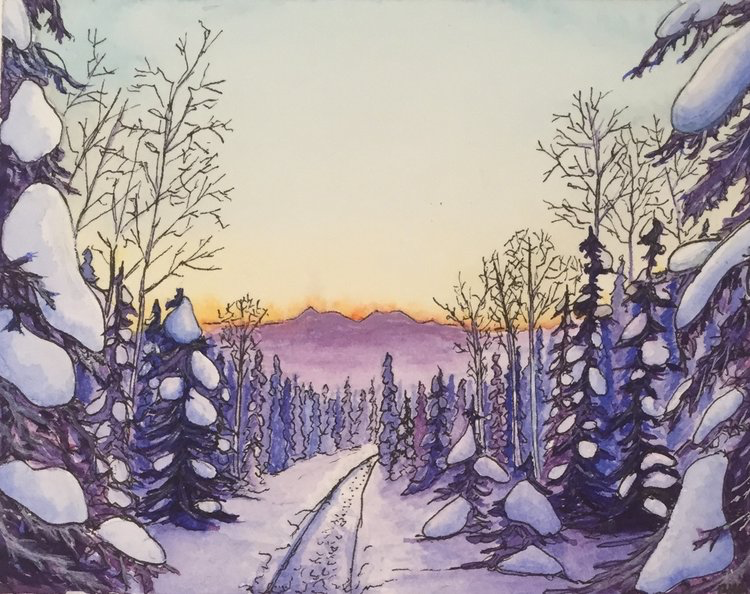


  • Thompson-Graves Celebrates 26th Season at Dartmouth

    Thompson-Graves Celebrates 26th Season at Dartmouth

    Cami Thompson-Graves (Photo: Flying Point Road Photography/flyingpointroad.com)
    Cami Thompson-Graves (r) poses with Kristina Trygstad-Saari (l) in 2013 (Photo: Flying Point Road Photography/flyingpointroad.com)

    Athletics have always played a central role in Cami Thompson-Graves’ life.

    Growing up, the Stowe, Vt., native embodied her passion for sport by skiing and playing field hockey and tennis.

    At St. Lawrence University she studied physical education and upon graduation continued a skiing career that took her to the U.S. Ski Team (USST) and the 1985 World Championships in Seefeld, Austria.

    However, once Thompson-Graves finished a two-year stint on the USST, she took a development coaching job at Dartmouth in 1988 in hope of sharing her love of sport with aspiring college athletes.

    Twenty-six years later, Thompson-Graves is the women’s coach of one of the most esteemed college ski teams in the country. Her quarter century of coaching makes her the longest-serving female head coach on the collegiate circuit.

    Over the years she and men’s coach Ruff Patterson, have led their team to countless all-American honors and top finishes at the NCAA Championships. In 2007 Thompson-Graves helped her team claim the NCAA Championship, marking the school’s first win since 1976 and notching the third-ever championship for the Big Green. In 2013, she won the honors of National and ESIA Intercollegiate Coach of the Year.

    As if that weren’t enough, many of Thompson-Graves’ skiers have gone on to achieve national and international acclaim. At the 2014 Olympic Games alone, five of her former athletes represented the U.S. in Sochi: USST members Sophie Caldwell (’12) and Ida Sargent (’11), and the U.S. Biathlon’s Susan Dunklee (’08), Sara Studebaker (’07), and Hannah Deissigacker (’09).

    FasterSkier caught up with Thompson-Graves to reflect on the past quarter century of coaching and what inspires her to continue working with promising young skiers.

    FasterSkier: When did you become interested in coaching and how did you end up at Dartmouth?

    Cami Thompson-Graves: I went to St. Lawrence University and I studied physical education, mainly because I was an athlete in high school. I played field hockey, I played tennis, I skied, and had a lot of respect for the coaches in my life. I was interested in doing the same thing. As far as how I ended up at Dartmouth, I raced myself and when I finished racing I started looking for a job. The development coach position opened up here so I grabbed that and started. Then I got lucky and got the head coach job shortly thereafter.

    FS: This seems like something you had been planning for a while.

    CTG: When I went to school I had an open mind and was trying to decide if I was interested in business or what I wanted to do. Sports have always been a big part of my life and I grew up believing that if I set my mind to something I should be able to accomplish it. Sports have been an important part of my life and who I am so it’s great to be able to try and pass that on to other people.

    Cami Thompson-Graves (Photo: Dartmouth.edu)
    Cami Thompson-Graves has entered her 26th year of coaching at Dartmouth this Fall. (Photo: Dartmouth.edu)

    FS: What have been some highlights of your career at Dartmouth?

    CTG: Winning the NCAA Championship in 2007 was definitely a highlight. We thought winning was not something we could accomplish because we don’t have scholarships here, it was our final exam period during the championships, and we didn’t have great snow that winter. But a lot of things came together so that was really exciting.

    Certainly having five of my alumni skiers in Sochi last year was another highlight for me. I was really excited to see those girls out there who were racing hard and still so passionate about the sport.

    FS: Speaking of alumni, the Dartmouth program has had a lot of its skiers find success after leaving school. What is it about that your team that attracts quality skiers and keeps them motivated once school is finished?

    CTG: Something that we are really proud of here – and we reiterate year in and year out –is our ambition to help each individual skier achieve their goals. It’s a huge priority for us as a program to think big and think outside the box. We have an award that’s based on skiing as a way of life, and that’s something we live here every day. We spend a lot of time together as a team, we make some of the toughest sessions fun and worthwhile, and we encourage people to race in races that they haven’t participated in before. We try and create a culture that encourages people to keep going, think big, try harder, and do more.

    It’s wonderful to have those athletes who continue to keep competing, but it’s also really cool to look around the room at coaches meeting at nationals. Many of the people in the room are our people who may have skied for us at some point and are still in the sport even if they are not racing.

    FS: What’s kept you going throughout your coaching career?

    CTG: I’m laughing because Thomas Alsgaard came here once and looked at Ruff and me and he said, ‘what are you still doing here? You’re old.’

    You don’t stop learning. I didn’t learn everything I know about skiing when I was racing in the 80s. I’ve learned a lot along the way and it is still challenging and it is still fun. I feel like every year you grow as a coach or there’s some new thing, whether it’s hosting the NCAA championship, winning a Championship or having a particularly great group of people that love to work hard and train hard and race with passion. There’s always something to keep it interesting and fun.

    FS: Do you have any plans for the future?

    CTG: I love what I’m doing and I don’t see myself stopping anytime soon.

  • After Retiring from Pro Cycling, Durtschi Turns to Biathlon

    After Retiring from Pro Cycling, Durtschi Turns to Biathlon

    After four years of professional cycling Max Durtschi has made the decision to join the biathlon  community. (Photo: Max Durtschi)
    After four years of professional cycling Max Durtschi has made the decision to join the biathlon community. (Photo: Max Durtschi)

    Max Durtschi is goal-oriented individual. So when the Sun Valley native retired from professional cycling in 2014, he decided that he needed a new endeavor.

    That endeavor became biathlon.

    It’s no surprise that Durtschi returned to nordic skiing. Under the guidance of coach Rick Kapala, he found success on the national and international level as a junior skier.

    However, by the time Durtschi reached his senior year of high school he had started to explore other avenues of his athleticism.

    An avid biker in the summers, Durtschi raced in the 2009 Junior National Championships and walked away with two titles in the Road Race and the Criterium. Not only did he win both races, he did it with a fractured right hand.

    After his two national championships, Durtschi began to race professionally and moved to Boulder, Colo. to train for cycling full-time.

    He was a member of the U.S. National Team for the next four years, and had the opportunity to train both domestically and abroad.

    Durtschi spent his first two seasons riding for Garmin-Cervelo’s continental program. While he was primarily based in Boulder, he rarely spent time in the U.S. as he was racing in Europe for most of the year.

    Max Durtshi spent his last year professional cycling with the Leopard Trek Team in Europe. (Photo: Max Durtschi)
    Max Durtshi spent his last year professional cycling with the Leopard Trek Team in Europe. (Photo: Max Durtschi)

    After his two seasons with Garmin-Cervelo, Durtschi made the move to Europe so that he could be closer to the action. Last year he was part of the Leopard-Trek cycling team and was based in Lucca, Italy. Of the 11 nationalities boasted by the Trek team, Durtschi was the only American.

    Durtschi said his experience as a professional cyclist was one he would never forget.

    “It was a great experience,” he said in a phone interview. “I got to race in North and South America, Europe, Africa, and Asia. I got to meet and spend time with a lot of great people.”

    Cycling was also a learning opportunity for Durtschi. Not only did he continue to discover the joys of of the sport, but he also learned Italian, French and some Dutch.

    He also began to understand more about himself as an athlete. When confronted with a variety of different attitudes toward training, Durtschi realized the importance of being in tune to his personal needs.

    “The way the different nationalities approach the sport and training and racing is very different than what I grew up with. It really enforces the need to be true to yourself and to trust in your own preparation and process on race day,” he explained.

    While Durtschi was very grateful for all that his cycling career had given him over the years, something was missing.

    “The focus of the past five years had been cycling and I was ready to experience new things,” Durtschi said. “I was ready to be a college student, I wanted to get back to being in touch with friends and family, and I wanted to get back to being active in a way that wasn’t just solely cycling.”

    So when the racing season ended after the fall of 2013, he reevaluated his priorities and made the decision to return to Dartmouth College as a full-time student, where he had been attending school in the off season since 2010.

    However, ending his cycling career wasn’t without its challenges. Even as a busy pre-med student studying neuroscience, Durtschi still found himself with ample time on his hands.

    “It was daunting at first because my slate was quite open,” Durtschi said. “I’m a goal-oriented person and I wasn’t building up for a season or anything like that so it was a little scary. I focused on school and connecting with people.”

    This past winter, Durtschi began skiing frequently once again. Given his status as a former professional athlete whose salary was paid by corporate funds, racing for the Dartmouth ski team was out of the question. However, biathlon had always been in the back of his mind since his junior skiing years and it seemed as if all signs were pointing him in that direction.

    “There was a point this winter where some strange, serendipitous things happened that cued me in to give it a shot,” said Durtschi.

    He reached out to the U.S. Biathlon Association (USBA) and kept in contact with the organization throughout the rest of the winter and spring.

    Then in June, Durtschi was invited to the U.S. Biathlon Talent ID Recruiting Camp in Lake Placid, New York where he enjoyed the training atmosphere created by the team.

    Max Durtschi's goals for the upcoming season include improving his fitness and marksmanship. (Photo: Max Durtschi)
    Max Durtschi’s goals for the upcoming season include improving his fitness and marksmanship. (Photo: Max Durtschi)

    Currently, Durtschi is attending the joint U.S. Ski Team and USBA Camp in Lake Placid and will train at the Olympic facility for most of September.

    Durtschi said that there are many challenges that come with starting as a new biathlete.

    The Idaho native participated in sport shooting from a young age, but the rifle used in biathlon has proved much different. In addition, he said that shooting while skiing is even harder than it looks.

    “It’s been a fun challenge and I have a whole new level of respect for biathletes,” he said. “The targets are small and the challenge of shooting when your heart rate is high and you’re breathing hard is a whole different level.”

    For now, Durtschi plans to return to Dartmouth in the fall where he will attend classes and continue to train for the upcoming season.

    He will then take time off during the winter term in order to focus on his skiing and shooting. While Durtschi has a wealth of competitive experience under his belt, the Dartmouth junior is realistic about his first season racing as a biathlete. His main goals include continuing to improve his shooting and fitness. Once he’s done as much work as he can on those fronts, he plans to see to see where that takes him.

    “Right now my two main goals are to keep improving my fitness and improve my marksmanship. I’m hoping that it will lead to some exciting opportunities this winter,” Durtschi said when asked what his goals were for the upcoming season.

    “I don’t know what this season will look like. I’m just trying to keep my options open in terms of racing opportunities and hopefully I can make some big improvements this winter,” he said.

  • Post-Biathlon, Studebaker Returns to the College Scene as Assistant Coach at University of Alaska Anchorage

    Post-Biathlon, Studebaker Returns to the College Scene as Assistant Coach at University of Alaska Anchorage

    Team player: Studebaker tags off to Hannah Dreissigacker during a World Cup relay in 2013. Photo: USBA/Nordic Focus.
    Team player: Studebaker tags off to Hannah Dreissigacker during a World Cup relay in 2013. Studebaker is channeling her energy for a new team starting this fall, when she takes over as assistant coach for the University of Alaska Anchorage. Photo: USBA/Nordic Focus.

    When Sara Studebaker retired from biathlon after a successful 2013-14 season and the Sochi Olympics, she envisioned coaching in her future.

    But a college team wasn’t the first job that came to mind.

    “I’d always thought about college coaching and how that would be something I was interested in,” she told FasterSkier in a phone interview on Monday. “I guess that initially I assumed I’d work in biathlon. But that didn’t work out for a variety of reasons.”

    Studebaker had enjoyed her time racing at Dartmouth College before she began her biathlon career, but admitted that in recent years she had been more focused on her own sport than the college scene.

    “We always look up the NCAA results, but mostly it’s to see people that you knew, or how Dartmouth did,” she laughed. “College skiing is probably similar from my standpoint as biathlon is for a lot of other people, in that it’s that thing you look up once a year.”

    But when she found herself taking a call from Andrew Kastning, the head coach at the University of Alaska Anchorage, things just seemed to fit. Studebaker had moved to Anchorage to be with her fiancé Zach Hall, another former national team member who coaches AK Biathlon. Suddenly, she had the opportunity to work with a group of talented young skiers – and a lot of resources to channel in doing so.

    Studebaker competing at the 2014 Olympics in Sochi, Russia.
    Studebaker competing at the 2014 Olympics in Sochi, Russia.

    “I’m really looking forward to meeting all the athletes and getting back involved in the collegiate environment,” she said. “I had a great time skiing in college, so I’m really excited to be part of that world again.”

    Studebaker noted that her former Dartmouth teammate, Kristina Trygstad-Saari, has recently taken over the reins at Montana State University, so she’ll be seeing some familiar faces on the western college circuit.

    For Kastning, Studebaker was a natural choice for a position that was vacated by former UAA and Sun Valley standout Nicole De Yong. With four World Cup and one World Championships top-20 to her name, Studebaker knows what it takes to be successful at the elite level – but also is familiar with the college scene.

    “With news that Nicole was stepping down from her role as Assistant Coach, I knew I had big shoes to fill,” Kastning wrote in an email. “I liked the idea of having a female on the staff that can address situations from different perspectives but unfortunately, female coaches are hard to come by so I began looking in all directions to fill the position. Sara was fresh in my mind from working with her in the arctic for NANA Nordic, so I knew she was retiring and moving to Alaska.”

    Studebaker said that work is just officially starting so she’s still doing mostly planning and paperwork, but looks forward to her first full-time coaching gig.

    “I’ve had the opportunity to work with a large number of really great coaches, from college and even before college, through my professional career,” she explained. “So I definitely hope I can bring that to the table. I think that any time you have exposure to more coaching styles, it helps you gain insight into how to reach people. Not everyone responds in the same ways to each kind of coaching. Hopefully having worked with European coaches and American coaches, collegiate and high school, will help me relate to these athletes a lot better.”

    She will be able to draw on a lot of memories of her own college experience – a government major at Dartmouth, she captained her team to a win at 2007 NCAA Championships – such as how to balance being a student as well as an elite athlete.

    But she marveled at the resources that UAA has to deploy for its ski team, including the brand-new Alaskan Airlines center, an athletic department building for all sports, including skiing.

    Studebaker racing to 11th place in the 15 k classic at 2007 Championships, which her Dartmouth College team won.
    Studebaker racing to 11th place in the 15 k classic at 2007 Championships, which her Dartmouth College team won.

    “Just walking around there, you know, their weight room is giant and brand new, we have a new ski room, and new locker rooms just for the ski team,” she said. “This sounds silly but, you know, they have the sea wolf in the carpet in the locker room, and I was like, wow, this is big! It’s really cool. It’s a big advantage for these athletes to have this support, and to be taken so seriously… These athletes have the ability to really do some more focused training.”
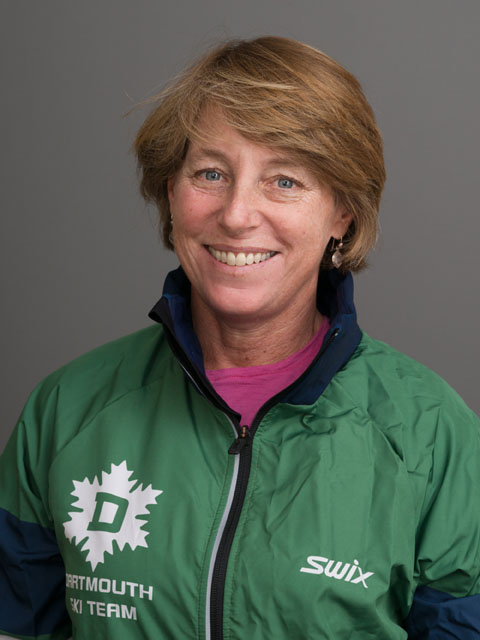
    As Studebaker settles in, Kastning hopes that she can impart some world-class wisdom on his athletes.

    “Sara should be able to provide valuable insight into race day preparations both mentally and physically, thanks to her experiences on the World Cup and at the Olympics,” he wrote. “She seems very organized and prepared to face fluid situations with a clear head from her years as an elite biathlete, characteristics that I believe will carry over well to Seawolf Skiing. We are excited to have her and I’m confident she will strengthen our program immensely.”

    Studebaker certainly hopes so.

    “For me it was a very conscious decision to retire,” she said. “If I had wanted to keep going, I could have, and I would have been pre-qualified for the World Cup. I had good results last year, I had a good season. I was just ready to be done. So I think from that angle, I’m really excited to be here. Hopefully that will rub off. And hopefully my credentials will be helpful.”

  • Fresh Off Racing Career, O’Brien to Head Up Stratton’s T2 Team

    Fresh Off Racing Career, O’Brien to Head Up Stratton’s T2 Team

    Patrick O'Brien racing to third for Craftsbury in the 10 k skate at the University of Vermont Carnival at Trapp Family Lodge this past winter. After four years on the pro circuit, O'Brien, 26, is entering a new chapter of his ski career as a coach.
    Patrick O’Brien racing to third for the Craftsbury Green Racing Project in the 10 k skate at the University of Vermont Carnival at Trapp Family Lodge in Stowe, Vt., this past winter. After four years on the pro circuit, O’Brien, 26, is entering a new chapter of his ski career as head coach of the Stratton Mountain School T2 Team.

    Patrick O’Brien was hired last Sunday and started on Monday. That’s the kind of turnover Sverre Caldwell, nordic director of the Stratton Mountain School (SMS) in southern Vermont, was looking for when he first sought a replacement for SMST2 Head Coach Gus Kaeding.

    The transition from professional skier to coach happened quickly for O’Brien, who wasn’t sure what his future held — or what he wanted to do next — five weeks earlier. At the end of his 2013/2014 racing season in late March, the 26-year-old Vermont native packed up his skis and flew from Alaska to Moab, Utah, for some quality time in the desert with friends. He spent the next week mountain biking, regenerating and thinking about anything but skiing. Pretty sure he was ready to end his competitive career, O’Brien wasn’t set on leaving the sport.

    Patrick O'Brien (Photo: Craftsbury Green Racing Project)
    Patrick O’Brien (Photo: Craftsbury Green Racing Project)

    A Dartmouth grad who majored in environmental studies, O’Brien had spent the last four years with the Craftsbury Green Racing Project, which he described as both rewarding and fun. When he wasn’t training as a professional nordic racer, he was fulfilling his obligations to the Craftsbury Outdoor Center in northern Vermont, working on sustainability and trail-maintenance projects.

    Contemplating retirement, he wondered how he’d stay involved in the sport. Perhaps through the ski industry? Maybe even coaching? The latter evolved into a very real possibility when he applied for the position of head coach of the T2 Team about two weeks ago. Caldwell invited him over to talk more about the position.

    Rewind about 10 years to when Caldwell coached O’Brien at Stratton (along with assistant coach Amy Caldwell, the wife of Sverre’s cousin). An avid Bill Koch League skier from his youngest days of racing, O’Brien started seriously pursuing the sport in high school. Growing up 45 minutes from Stratton in Putney, Vt., he enrolled as a junior and spent the next two years commuting to the ski academy and learning from the Caldwells.

    A Stratton graduate, he went on to captain the Dartmouth nordic team. There, O’Brien became an NCAA All-American as a junior in 2009, two-time first-team All-East skier, and two-time Academic All-American.

    He graduated Dartmouth in 2010 and dove into professional skiing with Craftsbury. In 2012, O’Brien qualified for his first World Cups in Quebec and Canmore, Canada, which he ranked high on his list of achievements. He spent two seasons, including this year, on the European OPA Cup circuit in March, and notched domestic SuperTour podiums over several seasons.

    According to O’Brien, who spoke on the phone Wednesday while helping his dad, an arborist, in Putney, he gave skiing a four-year commitment. At the end of this winter, he was ready for a change.

    “I just felt like last year was tough and I didn’t achieve my goals for the year,” he said.

    He first spoke with his coach, Pepa Miloucheva, about his plans for next winter before leaving to race in Europe a few months ago.

    “She, of course, offered me the option to come back and ski in Craftsbury again,” O’Brien recalled. “But we had a very honest conversation and the conclusion we came to is, I was ready to be done, ready to have a different stimulus … moving into coaching or the ski industry or anything else. I was gonna have to look or figure out where I wanted to go from there.”

    He made up his mind after the Moab trip. Stratton announced the job opening in early April.

    “I decided that this position at Stratton was something I really wanted to do,” he said.

    Kaeding, the man whom O’Brien was ultimately hired to replace, was completely behind him. Caldwell pointed out that he had a similar start to his coaching career. Kaeding was an athlete skiing for Central Cross Country (CXC) when the team’s coaches at the time, Jason Cork and Bryan Fish (now USST coaches) encouraged him to become an assistant coach.

    “He did that for one year at CXC then he came here and no one questioned anything,” Caldwell said.

    Kaeding was in Miami and Costa Rica during much of the interview process last month, but said O’Brien had been his “number-one choice right from the start.”

    “When he told me he wasn’t going to ski next year we were in a bunker in Slovenia,” Kaeding recalled. “I emailed Sverre and said, how about this guy for next year?”

    On Wednesday, Caldwell confirmed the decision, which he had made Saturday night. He called O’Brien, O’Brien accepted on Sunday, and Caldwell notified his athletes later that day.

    “I wanted someone who would be there to coordinate things and be totally enthusiastic and organized,” Caldwell said, adding that he chose O’Brien out of about five top applicants. “He knew more about the program and the area and the [racing] circuit and he could start right away to work with Gus. He hadn’t coached, but in a way that was not a detriment because he was going to be totally open minded.”

    Caldwell said he didn’t recruit anyone for the job. “I didn’t want to be kind of casing someone who’s already in a different program. If they come to me that’s fine. It’s a small community, but that’s weird,” he said with a laugh.

    “Most of the responses were really early … so then I had to send out [more information] to people who had expressed interest who looked viable,” he explained. “… We were not able to pay a ton so that cut out some people.”

    Lex Treinen (4) follows Craftsbury's Pat O'Brien (l) and Stratton's Andy Newell (r) in the mixed relay at U.S. Distance Nationals in Anchorage, Alaska. His team went on to place third. (Photo: Charlie Renfro)
    Craftsbury’s Patrick O’Brien (l) and Stratton’s Andy Newell (r) lead a pack in the mixed relay at U.S. Distance Nationals in Anchorage, Alaska. (Photo: Charlie Renfro)

    For O’Brien, it was an enticing opportunity — even if he was inexperienced.

    “I’m younger than Andy and Simi and I’m not gonna pretend that I have a whole bunch of coaching experience, but I think maybe it’s a good thing that I have skied with or been on trips with many of those athletes,” he said. “It’s not like somebody totally foreign coming in and trying to bring their own training philosophy. I feel that having worked with Sverre as a high school coach, I have a pretty good understanding where he’s at. I think Sverre, Gus and I are all on a very similar page.”

    He was most apprehensive about being the make-or-break factor for his athletes when it came to waxing skis.

    “The fear as a coach, who also would be a service-staff person, is the last thing I want to do is have athletes show up, do their training well, be rested and ready to go and then screw their race over,” he said with a laugh. “That’s something that an athlete thinks about as well. I think Gus did a good job keeping things low stress and making safe, sound decisions. If the athletes show up and if they have fair skis, they’re going to be the ones showing off their hard work … they don’t need anything magic.”

    O’Brien will also have the assistance of other Stratton coaches, who will travel to many of the same domestic races as him. Nearly half of the SMST2 roster is on the national team, so he won’t have to worry about those athletes for early season races; they’ll be in Europe.

    As head coach, O’Brien will be the one leading and overseeing the execution of workouts, not necessarily writing them. Stratton’s four U.S. Ski Team members — Andy Newell, Simi Hamilton, Jessie Diggins, and Sophie Caldwell — remain in touch with national-team coaches about their training. Newell works with USST head coach Chris Grover, Hamilton and Diggins receive plans from Cork, and Sophie Caldwell will continue to work with USST women’s coach Matt Whitcomb and Kaeding, even while he pursues a masters in business, according to Kaeding.

    The other members of the SMST2 Team — Erika Flowers, Annie Pokorny, Annie Hart, Ben Saxton, and training partner Paddy Caldwell — have already started their yearly training plans, which Kaeding mostly wrote.

    The SMS T2 Team (l to r): Erika Flowers, Eric Packer, coach Gus Kaeding, Andy Newell, Skyler Davis, and Sophie Caldwell. (SMS courtesy photo)
    Gus Kaeding (third from l) with the original SMS T2 Team, including (from l to r) Erika Flowers, Eric Packer,  Andy Newell, Skyler Davis, and Sophie Caldwell. (SMS courtesy photo)

    (Eric Packer left the team to join Alaska Pacific University in his hometown of Anchorage. “This spring, I realized how much I like living and skiing in Alaska,” Packer wrote in an email. “That was the driving force behind the change. I do think I made a lot of gains while at Stratton – the opportunity to train with guys like Newell and Simi on a daily basis was really awesome — but for whatever reason I struggled to transfer those gains into results.” Caldwell recognized this and said he fully supported Packer’s decision to join APU at home.

    A former USST D-team member, Skyler Davis left Stratton’s T2 Team in January to pursue a college degree, according to Caldwell. “That was a good move,” Caldwell said.)

    This week, O’Brien planned to join four training sessions — Monday, Tuesday, Thursday, and Friday — to observe and shadow Kaeding, who will be in Stratton for another week.

    Next Wednesday, Kaeding will leave for Park City, Utah, to represent Stratton at the U.S. Ski and Snowboard Association’s Spring Congress. After the weekend, he’ll return to Stratton and fly out again on May 30 for a family trip to Sweden: his dad and brother are running the Stockholm Marathon. Kaeding will return June 8 and leave for a GMAT study course in Salt Lake City on June 15.

    He’ll be in Utah for at least a month, assisting Sophie Caldwell and other Stratton athletes from a strategic location a short drive from the USST headquarters in Park City. Should he stay in Salt Lake through October, Kaeding will be able to check in on certain athletes during the USST training camp there that month.

    And if he passes the exam, Kaeding hopes to be accepted at a graduate school in Boston or California — somewhere in sharp contrast from a typical ski town or rural Vermont.

    Caldwell said the short time frame in which Kaeding will be in Stratton made hiring O’Brien as soon as possible essential.

    “We had this window where he could really work with Gus and it will hopefully be a seamless transition,” he said, adding that O’Brien will visit three or four days a week to observe and start learning more about each athlete on the team.

    “He knows the athletes, but [we’ll] go over each athlete that he’ll be more responsible with for their training,” Caldwell said. “It’s gonna be just a natural progression.”

    According to Caldwell, O’Brien will start in earnest July 1, when his one-year contract begins. A big part of the job will be communicating with USST coaches and making sure the national-team workouts line up with the rest of the T2 Team’s.

    “He needs to set up the workouts [and eventually write] good solid training plans, which he’s going to get plenty of help with,” Caldwell said. “He’s doing well; he’s just taking it all in. … It’s good for him to throw it in the fire and then come back and digest everything.”

    “It’s logistics, coordination, it’s planning, all that stuff,” O’Brien observed. “I see that as a real challenge and something to put all my energy [toward].”

    “He’s definitely kind of the shell I was picturing,” Kaeding said. “He’s a really good skier, especially good technician who has grown up around skiing. He’s good at waxing; I’ve seen him have to take care of himself. As far as the coaching goes, he doesn’t know a whole lot and that’s kind of what we were after. We do things here a little bit differently than some programs, so I was hoping we’d find someone that could come carry that on, come observe and fill in the cracks with what the team needed.”

    The athletes were onboard, too, Caldwell said.

    As for whether it will be hard to drive the van, supply the feeds, and shoot video from the sidelines while his athletes — his peers — continue training, O’Brien said he’s ready.

    He brought his rollerskis to his first day in Stratton on Monday. He had planned to ski with Flowers while Kaeding drove the van. He ended up in the passenger’s seat.

    “It was a cold, rainy day and I was more than content to sit in the van,” O’Brien said. “You can often learn more from the coaching perspective [that way].”