From the FasterSkier archive — posts syndicated from athletes’ and coaches’ own blogs between 2004 and 2012, kept online as published. Current coverage is at fasterskier.com.

Tag: Dasha Gaiazova

  • Local Olympians Crawford and Atkins Excited for Canmore World Cup

    Local Olympians Crawford and Atkins Excited for Canmore World Cup

    This week in Canmore, the Bow Valley will host about 200 athletes from 19 countries at the International Ski Federation (FIS) Cross-Country World Cup, the 11th stop on the international docket and the first time in North America in eight years.

    The races include 10 k freestyle individual starts on Friday, freestyle sprints on Saturday, 20 k classic mass starts on Sunday, a day of rest, then classic sprints on Tuesday, Feb. 13, at the Canmore Nordic Centre Provincial Park.

    Two women who know the courses well there — Olympians and former Canadian National Team members Chandra Crawford and Dasha Atkins (formerly Gaiazova) — will also be at the races as spectators and commentators, respectively.

    Crawford will juggle her time between the VIP Suite and a Fast & Female event in Canmore. At the same time, Atkins will call the races with longtime Canadian World Cup, World Championships, and Olympics announcer Randy Ferguson.
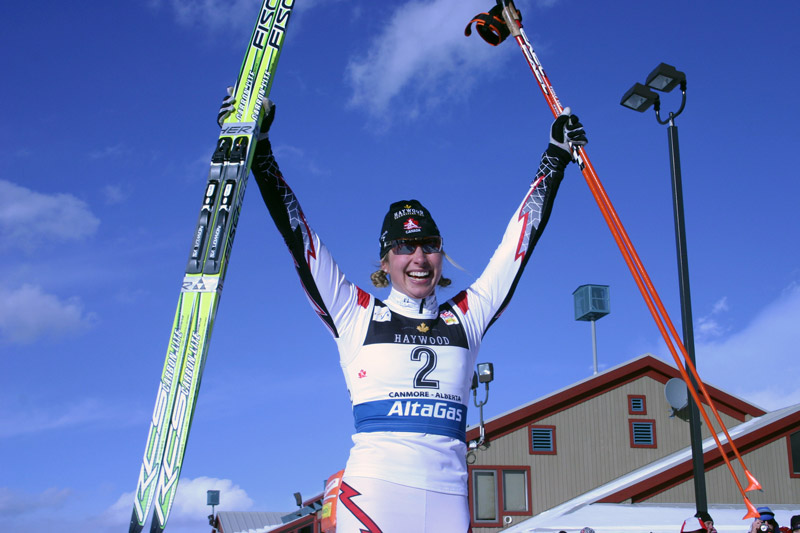
    Chandra Crawford celebrates her Canmore sprint victory in 2008. (Photo: FasterSkier)
    Chandra Crawford: Mom, Keynote Speaker, and Business Connector

    Sixteen years ago, Crawford entered the 2008 Canmore World Cup with an Olympic gold medal from the 2006 Torino Games. Born in Canmore, she had high hopes for her hometown races. Some could call it pressure, but she made a point of relaxing and having fun. Easier said than done, but a friend and fellow ski racer named Magda Genuin helped.

    Genuin was from Agordo, Italy, a tiny town surrounded by the mighty Dolomite Mountains. Like Canmore, a mountain town in the Canadian Rockies, it was the home to three peaks called the “Three Sisters” — tre sorelle. In Canmore, these mountains are called Big Sister, Middle Sister, and Little Sister.

    “Magda and I just felt like we resonated on this level that we are mountain people,” Crawford recalled. “Ski racing is great, but if you can get out in the mountains for days and days, that’s the best.”

    The two skiers didn’t speak much of each other’s language, yet they laughed and chatted over two pots of tea at Communitea Cafe in Canmore, with American Kikkan Randall joining them for some of it.

    “I just felt so relaxed and happy with my friends,” Crawford said.

    The next day, she felt at ease entering her signature race: the World Cup freestyle sprint.

    “I felt just felt full of peace and love and excited to do my absolute strongest strides, my process goals, take turns better, and hammer the snow like my legs were like a staple gun,” she recalled. “I had my own goals, and my intensity was intrinsic without pressure from the outside.”

    “I managed my tactics and passing on the downhill and got to the finish line first,” she added. “Magda got a bronze medal and got to be on the podium. I only had less than ten trips to the podium in my career, and she had a handful, but it was a pretty special day to be up there together in Canmore.”

    Former Canadian National Ski Team member Chandra Crawford (r) beats teammate Perianne Jones by 0.2 seconds to win the inaugural WinSport Frozen Thunder Classic sprint in 2012 in Canmore, Alberta. (Cross Country Canada/James Cunningham photo: cccski.com)

    Retired from ski racing since 2014, Crawford is a keynote speaker with an MBA from the University of Calgary. She’s married, has four kids ranging from age 2 to 7, and is involved with the Canmore World Cup through a contract with the Alberta World Cup Society, which is hosting the races. She has been supporting business development and marketing of the World Cup by connecting corporate Calgary contacts with VIP opportunities at the races. As the founder of Fast & Female, a Canadian charity, she remains connected to its mission of keeping girls healthy and active in sports.

    Crawford started competing at age of 16 in 2001. Over the next 13 years of professional ski racing, she learned to control her mindset and make the most of her career. She remembered looking at the 2006 Olympic schedule and asking her sports psychologist how to prepare for her race—the skate sprint—on Day 12 of the Olympics.

    “I raced a distance race at the very start of the Olympics, and then I was just staring at the days like, ‘There’s way too many of them!’ ” she said.

    Her sports psychologist advised that she have fun and enjoy a meal with her family, which she did. They laughed over a “giant Italian meal and were tourists for a few hours,” she recalled. “That helped me to relieve so much stress, to not just be sitting in my hotel room getting too worked up.”

    Her tips for racers in Canmore, some of whom may be in North America for the first time, included maintaining perspective. She emphasized that “mental toughness is mental preparation,” meaning that if everything goes haywire and not as planned, you can still give your absolute best. For her, it helped to visualize all the things that could go wrong before a race and plan for it.

    She established her own process goals and focused on what she could control, including how she refocused and relieved stress.

    “I just went through that experience [in Canmore] with so much love and gratitude for being there with a perspective of, I’m not my results; I’m a community member,” she said. “My identity is bigger than my results.”

    For spectators, she said it’s going to be a blast.

    “You’re going to fit right in and have a great time in Canmore. This is a pocket of the world that is extraordinarily fit and forever young,” she said.

    My mom has always been my #1 cheerleader, no matter what sport I was doing.  Chandra’s mother (l) with her sister and Olympic biathlete, Rosanna Crawford (r). (Photo: Chandra Crawford)

    Crawford’s mother used to make alliances in the stands, cheering for another family’s skier in exchange for them cheering for hers. Crawford urged spectators to forge similar friendships.

    “My mom has always been my #1 cheerleader, no matter what sport I was doing she was so supportive in me following my dreams. Driving me to nowhere’sville Alberta for a ski or biathlon race. Watching me swim back and forth in a pool. Chasing a soccer ball across a field, she was always there with a hug on the good and bad days! My parents were both really active and had a passion for the outdoors, and our adventures were always filled with great stories and good snacks to keep the kids entertained! Hiking around Lake O’Hara or back country skiing at Mosquito creek, there was always some outdoor activities on the weekend and through the summer. Even now my mom has been setting an example that at any age you can achieve great things.  Taught me to be a strong women who isn’t afraid to stand up for her self. Love you mom!”

    “The town loves to welcome you, host big events, and show off our local goods,” she added. “Enjoy the massive nature, and let your full passion for cross-country skiing out. This is the place. These are your people. It’s going to be so fun.”

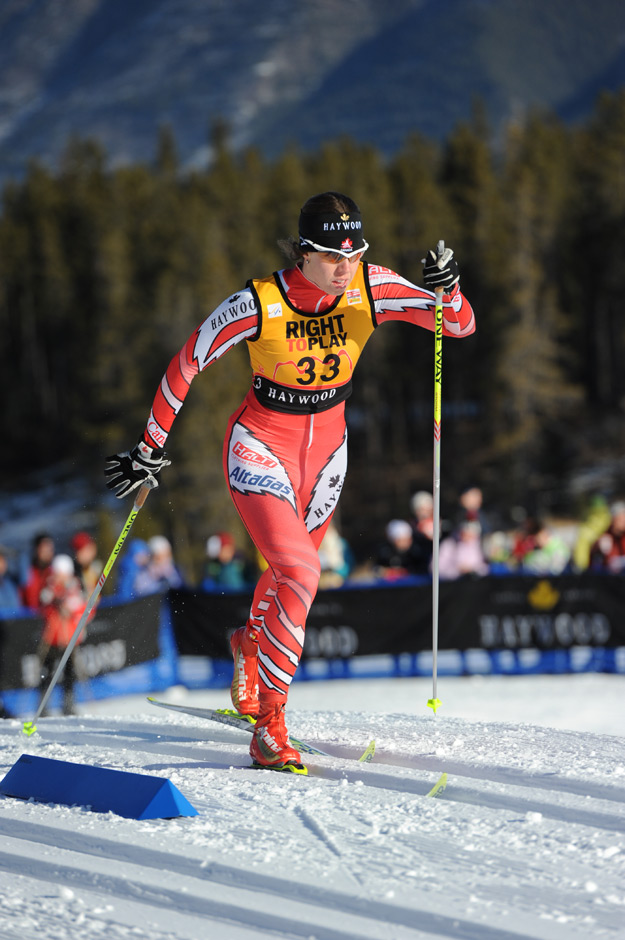
    Dasha Gaiazova (CAN) during the Alberta World Cup sprint qualifier in 2008, where she made the cut in 29th and advanced for the first time in a World Cup skate sprint in Canmore, Alberta.
    Dasha Atkins: Mom, Coach, Professor, Financial Planner, and World Cup Commentator

    Also a professional Canadian skier from 2001 to 2014, Atkins lives in Calgary and is a mother of two children, ages 6 and 2. A wealth manager and financial planner, she teaches finance at the University of Calgary during the week and coaches masters skiers with the Space Dogs Ski Club, which she founded in 2016, on the weekends.

    After retiring from ski racing, she earned an MBA from HEC Montréal, during which time she stayed with her friend, Randy Ferguson.

    Ferguson had announced at many of her races during her career. In 2020, she was asked to commentate with him at the Cross-Country World Cup Finals in Canmore. The races were called off a week before due to the pandemic, and her gig was canceled.

    Two years later, Atkins got another opportunity as an announcer at the 2022 Masters World Cup in Canmore.

    “That was intense because they have, like, a million categories, a million races, so it was a whole week, pretty full on,” she recalled. “I was there for nine days commentating, and it was so much fun; it was great, I really enjoyed it, and they called me back, so I must not have done the worst job ever.”

    This will mark her first time commentating with Ferguson.

    “I’m very excited because I’m going to be with someone I know really well who knows the sport well,” Atkins said of the four-day schedule. “We can talk in French, especially given how well the French team is doing. I’m like, ‘Yes! I can speak in French.’ It’s going to be great.”

    She noted the difficulty of the race courses in Canmore, which include 1.3-kilometer sprint and 5-kilometer distance loops.

    “It’s the same course that I used to race many, many times, so I can sympathize a lot with how hard it will be,” she said. “It’s going to be a nice contrast to Theodore [Wirth] Park, where they’re racing in Minneapolis [the following weekend], so it will be interesting to see how that works to a lot of skiers’ abilities. Can they shine in both? That’s the question.”

    Conditions could be fast and firm, especially in the mornings, as temperatures had been warmer than usual in Canmore in January.

    “There’s enough snow—it’s great, but it’s really transformed … it’s been T-shirt weather,” Atkins said on Jan. 31, about a week and a half before the races.

    Over the weekend, Canmore received more than 10 centimeters (4-5 inches) of fresh snow and had its snowmaking machines blowing.

    “The new snow should give everything a shiny new look. Our trails are holding up well thanks to the snow we made in Nov/Dec,” Norbert Meier, the events chair of the Alberta World Cup Society, wrote in an email on Feb. 2. “We also hope Minneapolis has a successful weekend.  The excitement building there can almost be felt here in Canmore!”

    “Honestly, the fans are going to be crazy,” Atkins said. “I’m sure the same in Minneapolis. So what we don’t have in snow, we’ll make up for in cheering spirit and party atmosphere. I’m sure about that.”

    Dasha Atkins (l) snaps a photo with Johannes Klaebo (r) and her Space Dogs Ski Club masters skiers at the Canmore Nordic Centre on February 3rd. (Photo: Dasha Atkins)

    On Saturday, Feb. 3, Atkins and her Space Dogs masters skiers coincidentally met with Norwegian standout Johannes Høsflot Klæbo and Swedish superstar Linn Svahn on the trails and got photos with them.

    As for her tips for athletes, she said, “Just enjoy the culture. It’s a very friendly, athlete-friendly town. Everybody loves skiers and gets excited seeing all the jackets from other countries in town. It’s going to be a really cool experience for Europeans who are in North America for the first time.”

    The Swedish team in the stadium on February 4th at the Canmore Nordic Centre. (Photo: Angus Cockney)
    Chandra and Dasha’s Favorite Canmore Hot Spots

    Best meal of your life: Crazyweed (Chandra and Dasha)

    Best for spicy tuna: Wild Orchid Bistro (Dasha)

    Best takeout: Arashi Ramen and Communitea (Chandra)

    Best café and coolest vibes: Communitea and Harvest, very hippy/ski vibes in both (Dasha); Bicycle Cafe has the best coffee, plants, and people (Chandra); Eclipse Coffee Roasters, supports skiers through flexible work opportunities (Dasha)

    Best croissants: Le Fournil Bakery (Dasha)

    Best pizza: Rocket Pie (Dasha)

    Gear and shopping: Trail Sports. “Maybe you don’t want to bring all your stuff, you want to buy World Cup branded gear, or you want to rent a sled to pull a kid out to the Chandra Crawford Meadow Hut at the Canmore Nordic Centre and eat your snacks there. Maybe your friend wants to level up their game, and you don’t want to teach them; how about they just buy a ski lesson from the pros? Maybe you lost your sunglasses or need new ski pants… Trail Sports is fantastic.” (Chandra)

    Jessie Diggins prepping on February 4th at the Canmore Nordic Centre. (Photo: Angus Cockney)

    Bar at which to meet your future life partner: The Drake* (Chandra) (*Where Chandra met her husband, Jared Poplawski, who is the cousin of Jessie Diggins’s husband, Wade Poplawski; does this make Chandra and Jessie cousins?!)

    Best WOW factor: Cliffhouse Bistro has tasty eats and mid-century modern decor and is located up a chairlift 2400 feet above Banff townsite. Access from Mt Norquay. (Chandra)

    Best steak or burger: Anywhere in Canmore! “Alberta is the land of beef. If you want the best steak of your life, this is probably the best place to have that.” (Dasha)

    Best local souvenirs: Rocky Mountain Soap Co, with made-in Canmore soaps, Alberta’s Own, Project A, or Tin Box for touristy gifts, all locally owned businesses (Dasha)

    Best long ski and views: Drive 1 hr from Canmore to Lake Louise and ski the 20km gentle terrain of the Great Divide or “old 1A” and then take some pics on Lake Louise in front of the iconic Chateau Lake Louise. (Chandra)

    Best scenic, leisurely walk: The 2km Bow River Loop boasts absolutely stunning views and, although not cleared of snow, is generally packed down and relatively accessible due to its flat profile. (Chandra)
  • Canmore NorAm: Notes, Quotes, and Selections

    Canmore NorAm: Notes, Quotes, and Selections

    Bob Thompson outsprinted Jack Carlyle in the men's 30km. (Photo: Doug Stephen)
    Bob Thompson outsprinted Jack Carlyle in the men’s 30km. (Photo: Doug Stephen)

    Canmore hosted the second NorAm of the 2018/2019 season on December 13th, 15th, and 16th. The event also served as U23 and Junior World trials.

    By the end of the weekend, starts at the U23/Junior World Championships and the World Cup’s Tour de Ski would be earned.

    This event was originally scheduled for Whistler Olympic Park but had to be moved as a result of heavy rain and inclement weather forecasted into the immediate future. The Callaghan Valley Cross Country organization, the original bid-winner for this season’s trials, made the difficult decision to cancel on December 1st. The weather gods added one final insult on December 13th, when a major snowstorm ensued in the Callaghan Valley that would have made racing possible on the 14th.

    Canmore’s cross-country community stepped in on December 2nd and was able to organize a successful race weekend with a few weeks notice.

    The International Ski Federation (FIS) mandates that Continental Cup leaders for each period earn automatic start rights for the next World Cup period, including financial support from the event hosts. This season, Period 1 leaders get starts for Period 2 (Tour de Ski) and period 3 (Dresden, Otepää, and Ulricehamm) along with race support.

    For the first time since Perianne Jones and Dasha Gaizova started in the 2014 edition, Canada will enter a woman in the Tour de Ski (TdS). The last female finisher was Sara Renner, who placed 16th overall in 2010.

    This past weekend, Dahria Beatty won all three races in Canmore. Combined with her second place (and top Canadian result) in Sovereign Lake the previous weekend, Beatty is the COC leader and will leave for Europe on the 21st.

    In an email to FasterSkier after Thursday’s sprint, Beatty wrote: “I think the first 3 stages of the Tour this year are my dream come true, 2 sprints and a 10km skate.” The day after sending the email, Beatty received the official news that her TdS dream would be a reality.

    On the men’s side, Bob Thompson won twice in Canmore to lock down the male COC leader position.

    inhalers

    As this event was also the selection trials for U23 and Junior World Championships, up to 12 athletes would automatically qualify for the Lahti, Finland championship races. The High Performance Committee met Sunday afternoon and will announce the final choices soon.

    Weekend Results Summary:

    Names in green earned automatic selection for Lahti.

    Classic Sprint, Thursday:

    • Open Women: Dahria Beatty, Katherine Stewart-Jones, Maya Macisaac-Jones; Marie Corriveau (6th, U23)
    • Junior women: Anne-Marie Petitclerc, Molly Miller, Anna Pryce
    • Open Men: Bob Thompson, Angus Foster, Julien Locke; Graham Ritchie (4th, U23)
    • Junior Men: Remi Drolet, Tom Stephen, Xavier McKeever

    Interval start freestyle, Saturday:

    • Open Women 10km: Dahria Beatty, Katherine Stewart-Jones, Frédérique Vézina; Sadie White (4th, U23)
    • Junior Women 5km: Molly Miller, Isobel Hendry, Elizabeth Elliot
    • Open Men 15km: Russell Kennedy, Evan Palmer-Charrette, Alexis Dumas; Gareth Williams (6th, U23)
    • Junior Men 10km: Sam Hendry, Remi Drolet, Tom Stephen.

    Mass start classis, Sunday:

    • Men 30km: Bob Thompson, Jack Carlyle, Russell Kennedy; Sam Hendry (4th, top junior), Antoine Cyr (5th, U23)
    • Women 15km: Dahria Beatty, Katherine Stewart-Jones, Hannah Mehain (U23); Jasmine Drolet (6th, junior)

    Doug Stephen photographed all three days; see his albums on Flickr for many more images in full resolution.

    Results: Full Weekend, Sprints, Sprint Brackets, Interval Starts, Mass Starts


    Quotes from Canmore:

    Sprint

    Dahria Beatty leads Katherine Stewart-Jones. They would finish 1-2 all three races. (Photo: Doug Stephen)
    Dahria Beatty leads Katherine Stewart-Jones. They would finish 1-2 all three races. (Photo: Doug Stephen)


    “My tactics for every heat was to ski smooth and relaxed the first half and attack off the final two climbs into the finish. That worked out well for me today. I skied from the front and had control of the heats. The sprints were staged out of the biathlon stadium (hence why you couldn’t find them on the webcam) so it was an uphill finish, making for very fair racing.” — Beatty (1st)

    “I was not happy with my qualifier but am really happy with how I skied the heats. Our staff did an awesome job with the skis today! The course was a lot of fun. Tactics essentially involved staying relaxed off the start, positioning well for the final climb and then hammering to the finish.” — Maya MacIsaac-Jones (CNST, 3rd)

    “I feel pretty amazing about today’s race. 4th senior at a NorAm sprint is by far my best sprint result ever! My tactic was to have fun and just go like hell; I had a blast and I never went this fast before!” — Frédérique Vézina (CNEPH, 4th)

    “I didn’t really have any tactics, I just wanted to go as fast as I could, ski well and try to stay with the leaders. I didn’t ask myself a lot of question, just ski fast!” — Marie Corriveau (MSA, 6th)


    Bob Thompson wins the A final with three Thunder Bay teammates in frame. (Photo: Doug Stephen)
    Bob Thompson wins the A final with three Thunder Bay teammates in the camera frame. (Photo: Doug Stephen)

    “I am very happy with how today went. I found the finishing sprint gear I felt I was missing had the speed when I needed it.

    Everyone was fairly relaxed for the first half of the final knowing it was important to have the energy for the gradual climb into the finish. My move was made coming up to the last short downhill and then on the short striding hill before turning into the finish. I had been feeling great in that section in every heat and made sure I was at the front to make the most of it.” — Thompson (1st)

    “The group strung out a little bit going into the big downhill, I was back in 5th but had amazing skis and came back up to the group pretty easily. Everyone was really skiing together going into the last climb, and Bob just put down a mean last hill and got away from us. I jumped out from behind Julien Locke as we hit the finishing stretch and got up beside him as we got right down to the line, and just got him in a big lunge.” — Angus Foster (TBay, 2nd)

    “The tactics worked out for me as well! I was planning on holding on to the leaders in the final for as long as I could, and then using my fitness to the best of my ability in the finishing stretch.” — Graham Ritchie (TBay, 4th)

    Interval start free technique

    Sadie White was fourth and top U23 on Saturday. (Photo: Doug Stephen)
    Sadie White was fourth and top U23 on Saturday. (Photo: Doug Stephen)

    “It was a hard race today. I had a good start but then got really stiff going into my second lap after the big climb. It took a lot of mental fight to regroup after I got really stiff on the second lap but I was able to ski out of it and push really hard on the final lap.

    I am really happy with my fitness right now, my pacing was a bit off today but I think that fact that I am in good shape allowed me to bring it back.” — Beatty (1st)

    “I felt better and better throughout the whole race today! I kind of wish we had more lap to go…” — Vézina (3rd)


    Russell Kennedy descending to first place. (Photo: Doug Stephen)
    Russell Kennedy descending to first place. (Photo: Doug Stephen)

    “Pacing was important today: that being said I didn’t pace it that well. Was definitely fastest the first two laps. Skis for me were really good [as] the team did an awesome job on them.” — Russell Kennedy (Team R.A.D., 1st)

    “The race today went alright, I tried to start hard and couldn’t quite get myself into a top end race gear. I skied relatively consistent and was able to find a better feeling on the last lap, but overall not the way I want to feel during a race, the result was a pleasant surprise.

    I think pacing played a big role, I was pretty far back after the first and second lap but turned out to be less than some guys lost on the last lap and so I was able to move up quite a few places in the final kms.” — Evan Palmer-Charrette (Team R.A.D., 2nd)

    “My race today was really good. I feel like I was able to push hard and keep a good technique. I think the key today was to get a good glide after each push because they were not a lot of easy part on this course and the downhills were fast so you needed to get recovery were you can.” — Alexis Dumas (CNEPH, 3rd)

    “Today’s race was good, not amazing but I’m happy to come away with the top U23 spot which qualifies me for U23 World Championships.

    Today’s weather was static and remained the same for the whole race. The race was decided on the last lap, that’s where I pushed my hardest. My plan for the race was to increase the speed as the race progressed, getting a bit faster each lap. I was getting splits and I realized I was off the pace on the first laps, so I just made sure to push as hard as I could on the final climbs.” — Gareth Williams (Telemark, 6th)

    Mass start classic

    Russell Kennedy (bib #1) leads out the men's 30km while Bob Thompson towers over the field in the leader's bib. (Photo: Doug Stephen)
    Russell Kennedy (bib #1) leads out the men’s 30km while Bob Thompson towers over the field in the leader’s bib. (Photo: Doug Stephen)


    “Today’s race stands out as the most fun I’ve had in a 30k since the very first one I ever did at the Canmore Nationals in 2010.

    The main group got smaller definitely through Russell pushing the climbs on most laps. We had the group of 6 for several laps and then the last 2 were really just the 3 of us with Russell pushing hard on the climb from the bottom of the course. Jack and I had faster skis and on the final downhills went by and then had a great sprint to the line.” — Thompson (1st)

    “After a tough sprint day, it was great to bounce back with two super successful distance races.  ” – Sam Hendry (Team R.A.D., 1st junior in 4th)

    “Today was a fun race. A good battle between Katherine and me once again.

    Katherine set the pace early and by the second lap, we were on our own. It was windy on course today, so it was hard to break from each other and after testing each other a few times on the last lap it came down to the finish sprint, which of course is my favourite.” — Beatty (1st)

    “The race was really fun. I pushed the pace right off the start so Dahria and I made a break from the rest of the group after the first lap. We skied together the entire race, it was the type of course that made it difficult to break away because the hills were relatively short and there was quite a big drafting effect on the flats. It came down to the finishing stretch and Dahria was stronger on the double pole!” — Katherine Stewart-Jones (CNST, 2nd)

    Selection

    “At this point, if I am offered a start I will plan to race the first 3 stages and then reassess after that based on how I am skiing. The Dresden WC will also be a focus just after the new year so I want to make sure I am well prepared and have enough energy for those races as well.” — Beatty, on Thursday, before the Tour de Ski offer was made.

    “Qualifying for world juniors has been a big goal of mine for many years and I am really excited to have achieved it this weekend.” — Hendry

    Personal Highlights

    “Most unusual part was getting to come home and lie in bed between the quali and heats.” — MacIsaac-Jones

    “I am very very happy with my race today, I really surprised myself! It’s been a long time I didn’t feel good at racing so it was really fun to have good feelings again. Take the first spot for U23 world champ was the best way to start the season!” — Corriveau

    “Getting to race the final with three of my NTDC Thunder Bay teammates was a blast, I was really proud of the way we skied out there today and think it reflects a lot of hard work by our team and coaches this year! I’m stoked for Graham and Julian go 1-2 in U23 with World Champs spots on the line, and we all owe a big thank you to our wax techs for some wicked boards all day.” — Foster

    “It’s been really nice to race at home and sleep in my own bed, especially knowing I will be away a lot for the rest of the season.

    Everyone in Canmore has done a great job organizing the races so last minute. I’ve been especially loving the chocolate medals!” — Beatty

    “The highlight from this past weekend was hands down, getting to ski with my teammate and role model Russell Kennedy for almost all of the classic mass start on Sunday.” — Hendry

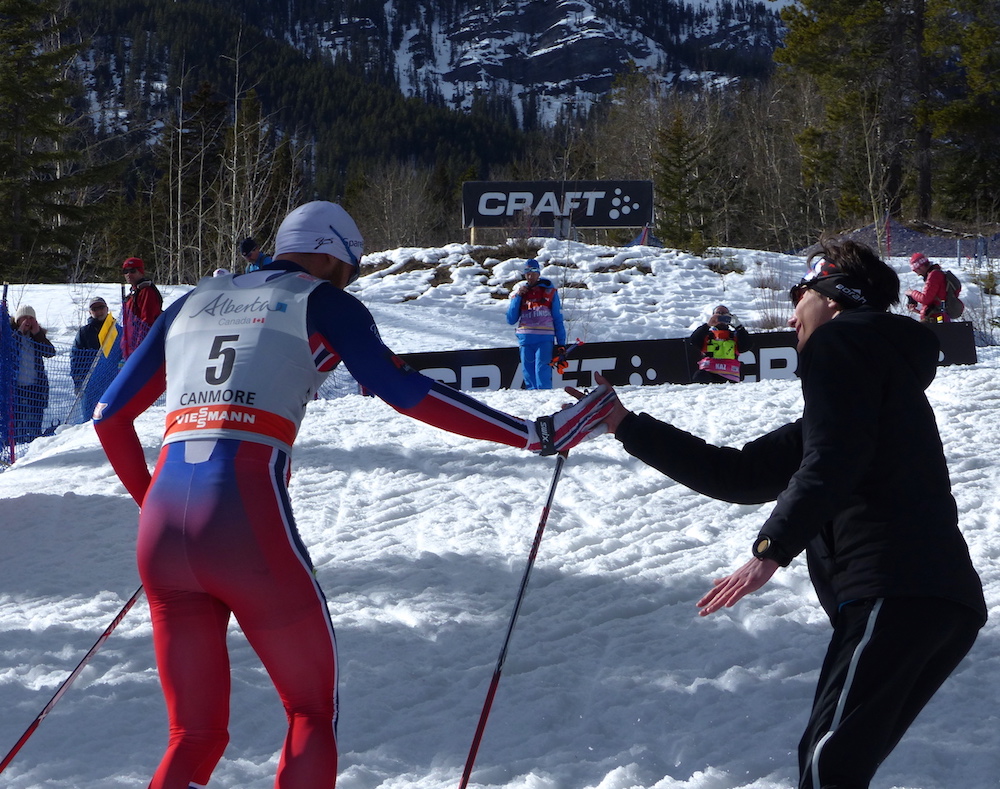
    Remi Drolet has been in Canmore before: Petter Northug (NOR) (l) high fives Remi Drolet (spectator) as he finishes his final lap during the men’s 1.5 k classic sprint at the Ski Tour Canada on Tuesday in Canmore. (Photo: Peggy Hung)
  • Canada’s Jones and Gaiazova Atkins on Russian Doping’s Ripple Effects

    Canada’s Jones and Gaiazova Atkins on Russian Doping’s Ripple Effects

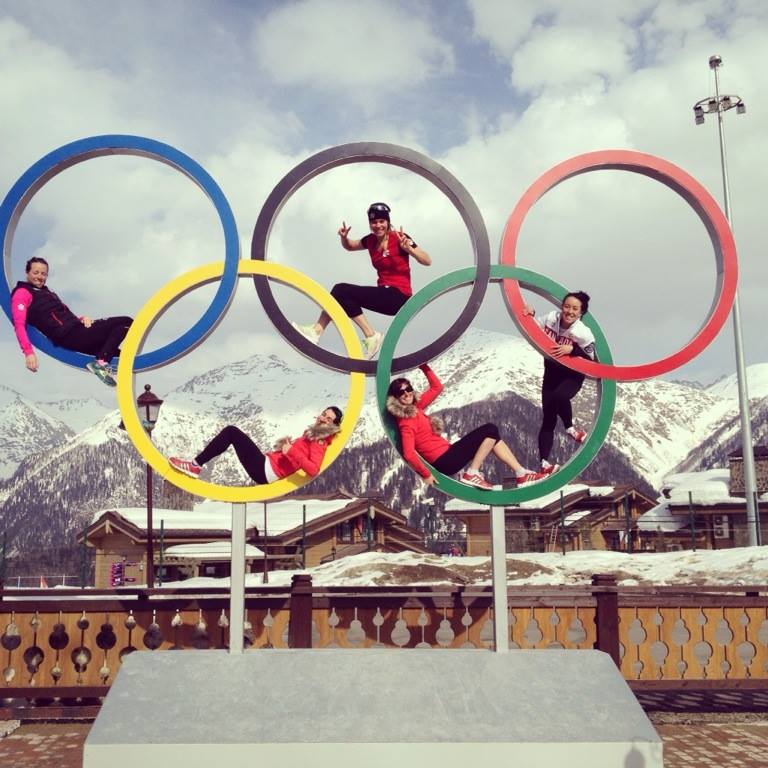
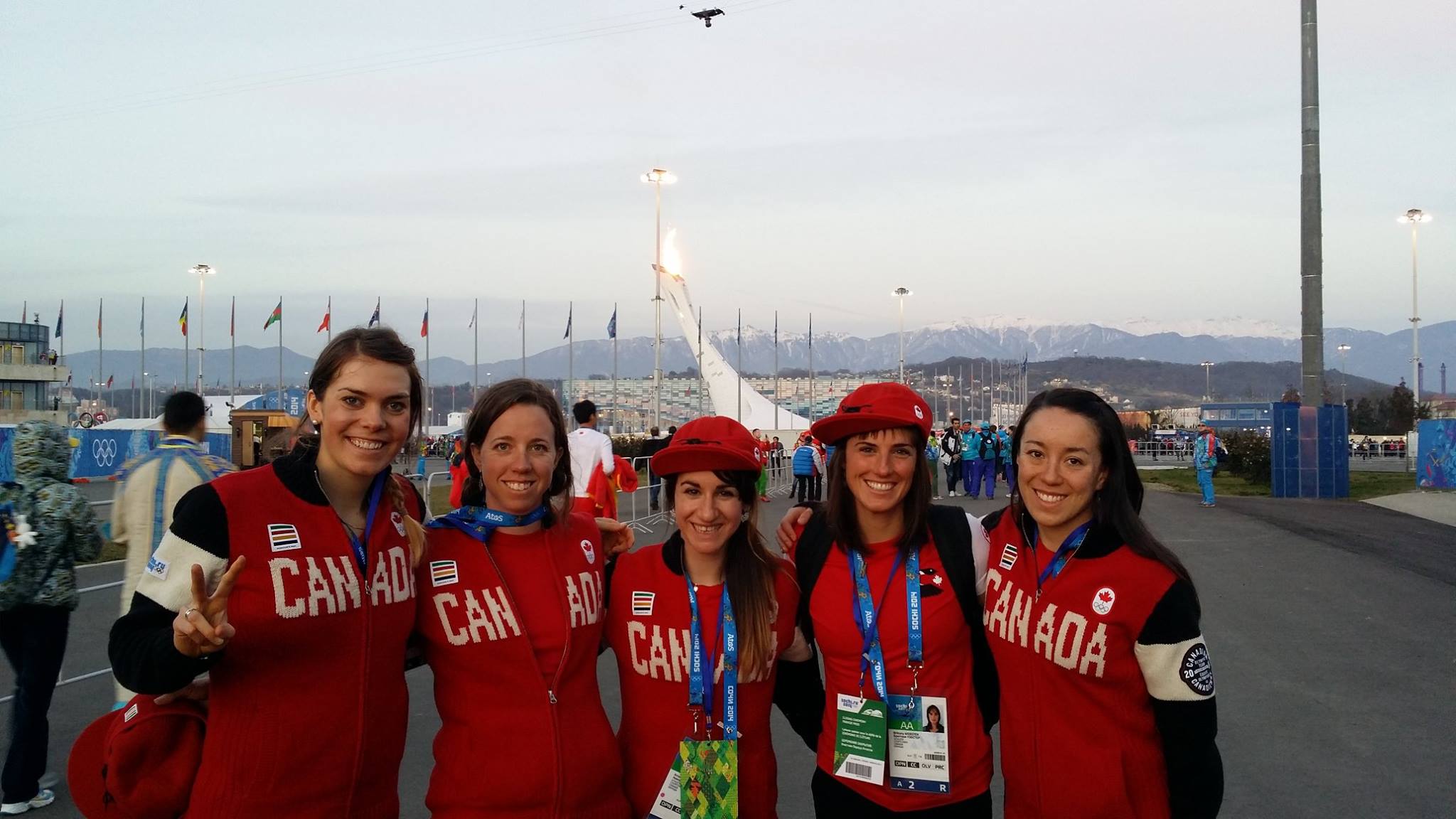
    Five members of Cross Country Canada’s 2014 Olympic team get the perfect photo opp at the Olympic rings in Krasnaya Polyana, Russia. (From left to right) Perianne Jones, Amanda Ammar, Heidi Widmer, Brittany Webster, and Emily Nishikawa. (Photo: Emily Nishikawa)
    On Nov. 9, news broke that four more Russian cross-country skiers had been sanctioned for cheating during the 2014 Sochi Olympics. So far, six Russian nordic athletes in total have had their 2014 Olympic results erased by the International Olympic Committee (IOC). These athletes are also prohibited from participating in all future Olympics due to their affiliation with Russia’s elaborate-state sanctioned doping enterprise.

    Julia Ivanova, half of Russia’s 2014 Olympic team-sprint duo, is one of the six penalized Russians. In Sochi, Ivanova and her teammate Anastasia Dotsenko skied to 10th place in the classic team sprint. (Thus far, Dotsenko has not been implicated in the doping scheme.)
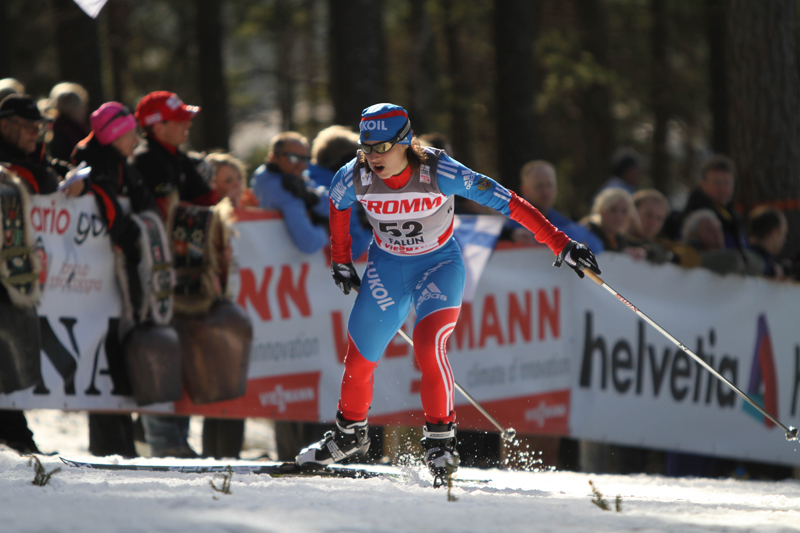
    Russia’s Julia Ivanova racing at 2012 World Cup Finals in Falun, Sweden.

    It’d be easy to say the Russian pair was way out of the medals — theirs was simply another tainted performance already removed from the official results.

    Yet among those clean athletes caught up in the win-at-all-costs mantra of the Sochi doping regime are Canada’s team-sprint pair Perianne Jones, now 32, and Dasha Gaiazova Atkins, 33. Looking back, “What might of been?” is a legitimate question the two retired skiers have asked.

    Ivanova and Dotsenko made the Sochi team-sprint final as what’s referred to as lucky losers — 10th place in their semifinal wasn’t enough for them to automatically advance but their time was fast enough relative to the rest of the field to put them through to the final. Jones and Gaiazova Atkins were right behind them in 11th, which was the end of their day.

    “I texted Peri that morning when the article came out in Fasterskier and said, ‘Should we start training for a redo?’ ” Gaiazova Atkins, who was born in Russia but spent more than half of her life in Canada, said on the phone from her home in Calgary. “Because we could have been in the finals and then you never know how that goes. It could have had a much, much better result and we could have had a chance for a medal.”

    One year before the 2014 Olympics, at the pre-Olympic World Cup in Sochi, Jones and Gaiazova (the latter of which has been married since, hence the new last name) placed third in the classic team sprint. Notably, they were third in a photo finish with the second-place Russians — Ivanova teamed up with Natalia Matveeva in that race.

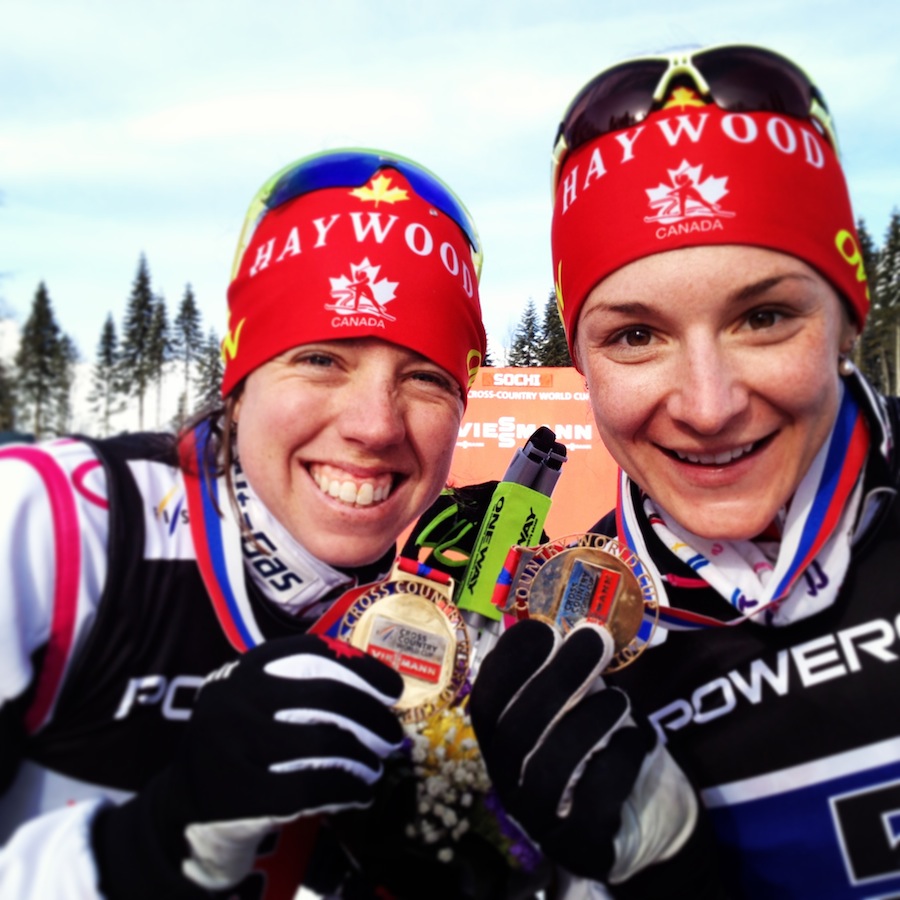
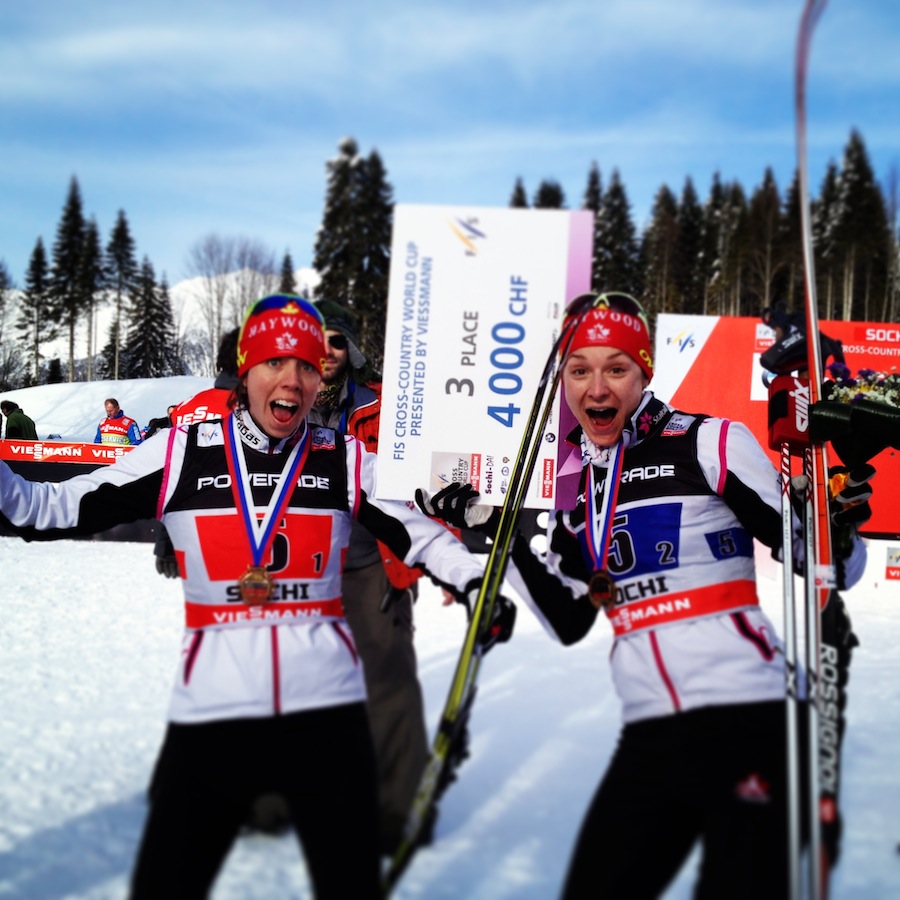
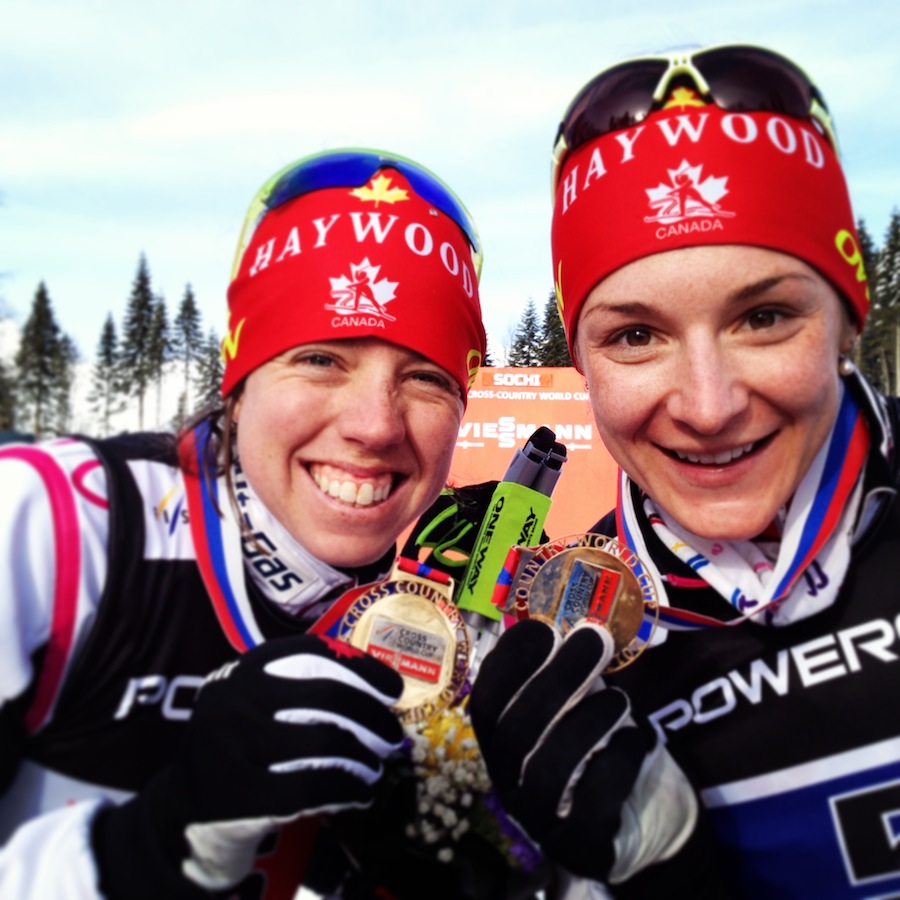
    Canada’s Perianne Jones (l) and Dasha Gaiazova having some fun after notching their first podium together with bronze in the classic team sprint at the Sochi pre-Olympic World Cup in February 2013. (Photo: Chandra Crawford)

    Jones first heard about the Ivanova news through Gaiazova Atkins’s text message.

    “When it goes back and you realize that something could have gone a little bit differently or wonder what could’ve been, then you think about it a lot more and it definitely hits you a little personally,” Jones said on the phone from Canmore, Alberta. “For sure, it makes me feel sick and I cannot go back. No one can. That’s the unfair part. … It’s an interesting conundrum: people have put their lives into something and then are not given a fair chance.”

    The “what if” part of this story is multi-layered. Ivanova raced twice in the 2014 Olympics before the team sprint; first in the 10-kilometer classic on Feb. 13 and again in the 4 x 5 k relay on Feb. 15. What if Ivanova had been tested after those races and a legit lab had found her to be doped? What if Ivanova and Dotsenko never raced the team sprint on Feb. 19? Or a different iteration of Russians were slower in the semis? On paper at least, in this post-Sochi thought experiment, the Canadians advance to the final as lucky losers. 

    The perspective of time buffered by athletic retirement seemed to have taken the edge off the tone of both Jones and Gaiazova Atkins, based on their voices over the phone. They both sounded calm and measured, without a sense of bitterness. But they raised several important points as the fallout from the Russia’s doping program continues.

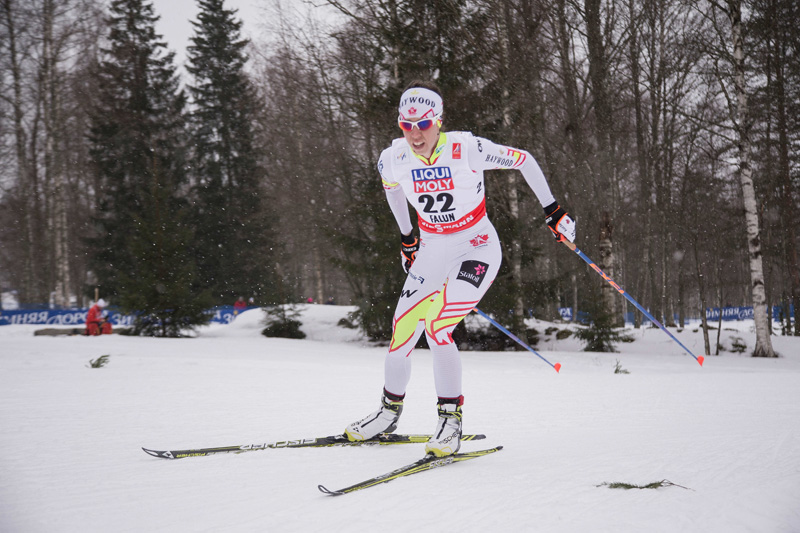
    Canada’s Perianne Jones racing to fifth in the 1.4 k classic sprint at 2015 World Championships in Falun, Sweden. She placed 24th overall and retired after that 2014/2015 season.(Photo: Flyingpointroad.com)

    On Jones’s mind were those athletes still competing, and those wondering if they, too, are racing in an unlevel playing field.

    “I am retired now,” Jones said. “So it would have been tough had all this stuff been coming out as I was still ski racing. I think it is tough for the athletes who are still competing now. Not that it is easy to hear about it after the fact, but you definitely have to believe you can do it while you are ski racing. I imagine that at least most of the playing field is clean and that would be hard given everything that has transpired over the last little while.”

    Gaiazova Atkins’s story resonates due to her literal mid-teen continental shift. At the age of 15, she moved with her family from Russia to Quebec. Although she started skiing in Russia, her swift trajectory up into the international ranks began as a Canadian. She did, however, recall a Russian ski culture where more than a healthy lifestyle choice was on the line.

    “I would say there is more pressure in Russia,” Gaiazova Atkins said. “And maybe because in Russia, in so many ways the country is so far behind in development … they have very few resources. So there is a lot of pressure to become a big skier because if you can race fast, you can do quite well for yourself in the country. … In America, it is not the same. And here in Canada, Chandra [Crawford] got a gold medal, shake her hand and off she goes to get an education.”

    Gaiazova Atkins’s perspective was one of trying to humanizing cheaters and would-be cheats, people with families and their own demons straddling their shoulders.

    “The incentive to perform is so much higher in Russia,” Gaiazova Atkins said.  “And the alternative? You can live in poverty and then, OK, I am going to take a chance. So for a lot of athletes, it may not be perceived as high risk because it’s the only chance to do well in life.”

    While she expressed that blame should be placed on those involved, Gaiazova Atkins emphasized truly understanding an athlete’s complicity.

    “I know these girls and I know the guys who are now being stripped of their results,” she said. “I follow them on Instagram and I see what they are saying in Russian, and it’s crazy they are still denying they did this. But then, you think about a big country like Russia and the whole thing, you almost ask yourself, ‘Did the athletes even know this was happening? Did they have any say?’ It is just like, you have no choice as an athlete.”

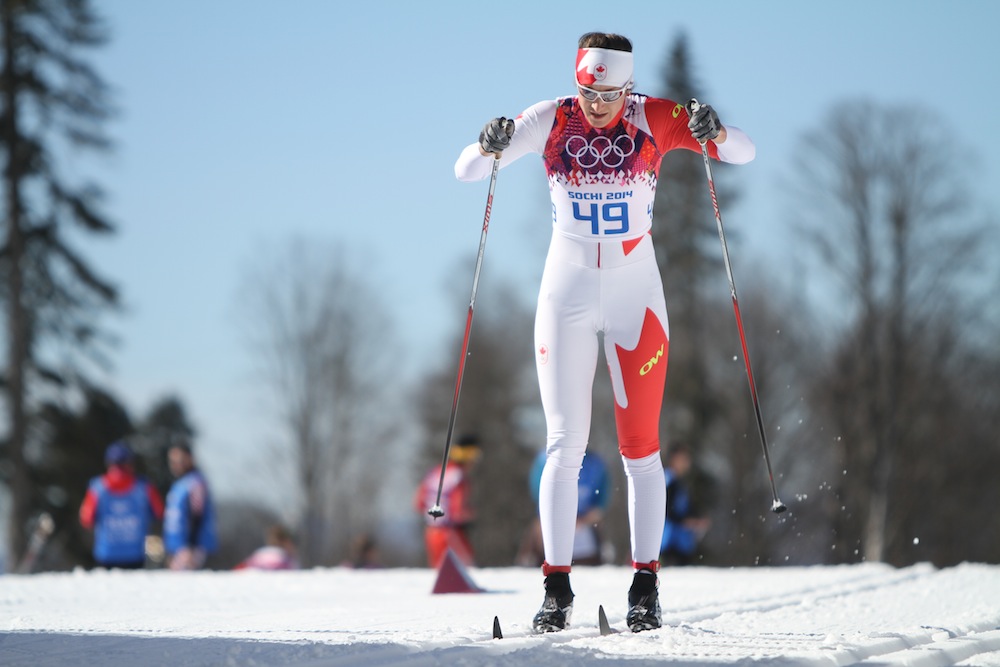
    Dasha Gaiazova racing to 44th in the women’s 10 k classic individual start at the 2014 Olympics in Sochi, Russia. She retired at the end of that 2013/2014 season and is currently coaching the Space Dogs Ski Club (where she’s also the president) in Calgary.

    Several times, Gaiazova Atkins stated her belief that the doping was a top-down mandate, a state-sanctioned endeavor with upper-government power plays manifesting with Sochi podiums. But she’s also no apologist. 

    “I follow on Instagram and their posts from all those guys, like Legkov and people that support him,” she said. “They say, we are with [Legkov] because we know how hard he works and how much work ethic he has. And I am thinking to myself, every single person racing is working just as hard and harder.

    “I feel sorry for those athletes, especially those who aren’t as systematic like the state-supervised program,” she added. “The ones who choose themselves and go to doctors, no pity for you.”

    As far as moving forward, Gaiazova Atkins said she was in favor of nothing less than a wholesale Russian ban from the upcoming PyeongChang Games.

    “You cannot slap them on the hand and say, ‘OK, don’t do this next time, please’,” she said. “It has to be with consequences for the state, for the country.”

    Gaiazova Atkins also believes that Ivanova’s doping has had lasting impact on potential funding for the current crop of Canadian cross-country skiers. “Eleventh place is not a top 10,” she said.  

    “Cross Country Canada funding is based on our results, and there is a big difference between a top 10 and 11th place sometimes,” she added. “To take us out of the equation, this had a trickle effect on the whole system, like our whole nation may have been affected by the funding because we did not get a top-10 result.”

    As the concentric ripples from Russian doping in Sochi move outward, they’ve arrived in North America, nearly four years late, with the 2018 Winter Olympics in PyeongChang, South Korea, on the horizon.

    Canadians Perianne Jones and Dasha Gaiazova celebrate their first bronze together in the 2013 Sochi World Cup classic team sprint. (Photo: Chandra Crawford)
  • Longer, Stronger Frozen Thunder Open in Canmore

    Longer, Stronger Frozen Thunder Open in Canmore

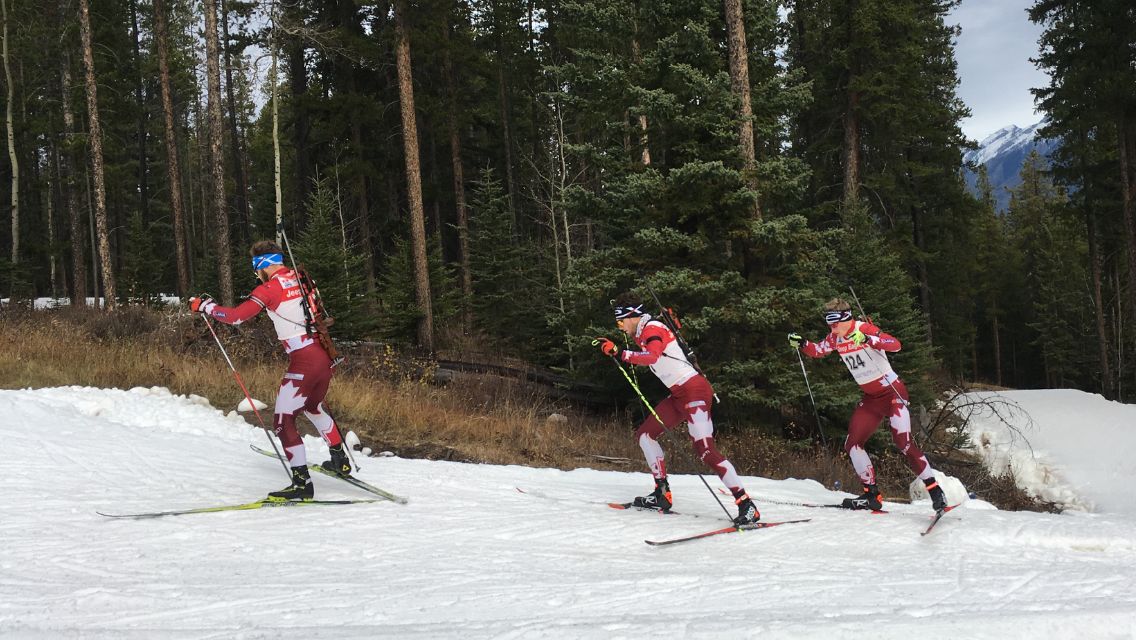
    Macx Davies, Christian Gow, and Scott Gow of Biathlon Canada training at the Canmore Nordic Centre last weekend in Canmore, Alberta. (Photo: Matthias Ahrens)

    Frozen Thunder is back, but it’s not the same Frozen Thunder you knew before.

    Every year, snow is stored all summer at the Canmore Nordic Centre in Canmore, Alberta, and rolled out in October to provide local ski and biathlon teams with on-snow training opportunities. This year, the loop has changed.

    “It feels good to be back on the snow after such a long time away,” Biathlon Canada’s Nathan Smith wrote in an email. “The loop has been lengthened and improved. There is a steeper climb now, which means mandatory offset.”

    “They’ve set a new track compared to previous years which is much better for training,” Cross Country Canada’s Jesse Cockney agreed.

    Biathlon Canada Head Coach Matthias Ahrens explained that the changes were needed to make the loop more comparable to courses used in international competition. National teams for both biathlon and cross-country skiing will be using competitions on Frozen Thunder to pick their World Cup teams, so they wanted the course to be difficult.

    “We were doing intensity Monday,” Ahrens wrote in an email. “The athletes started skiing on Saturday and have not really experienced much challenge to adapt from rollerskiing. We are in the last preparation phase before the first World Cup happens in four weeks, and the training volume is reduced now, but the intensity increased to do the final race sharpening.”

    The Space Dogs Ski Club out in force on Frozen Thunder. (Photo: Bob Truman/www.skierbob.ca)

    Aside from national team athletes and World Cup hopefuls, the loop has been home to high school racers, families and masters teams.

    “The reason you will see a lot of athletes wearing bibs is actually that we have training times for elite athletes from 8-noon, Monday–Friday, since the National and Development Teams have a big stake in funding Frozen Thunder as early season training venue,” Ahrens explained. “Only those who have contributed money to Frozen Thunder get bibs and are allowed to ski in the mornings, just a way to control who is on it. On weekends and afternoons it is open to the public.”

    “It was a quiet start to Frozen Thunder with a lot of teams away, so that was lovely to enjoy the new track (a fun turn and more climbing) and not play Rush Hour,” wrote Erin Yungblut, a Canmore-based biathlete. “I think it’s really exciting to have so many teams and talented athletes out… I love being able to ski behind others and learn from as many as I can.”

    Among that group is the Space Dogs Ski Club masters team.

    Canadian biathletes training on the shooting range in Canmore. (Photo: Matthias Ahrens)

    “For our masters performance group, getting on early snow is probably equal parts technical advantage and motivation/excitement,” wrote Dasha Gaiazova, a Space Dogs coach and former Olympian. “We are grateful that we, and many other skiers of all abilities have an opportunity to train on early snow so close to home. I also believe it makes the Frozen Thunder project more self-sustainable, through sale of general public ski passes, early season ski lessons, and providing great visibility for the sport of cross-country skiing in Canmore.”

    Frozen Thunder is getting busier. The Canadian National Ski Team returned from a training camp in Park City, Utah — Cockney had done a shorter camp, thus returning home and getting some extra time on snow. The Canadian biathlon squad already had its first time trial on the course on Thursday. The U.S. biathlon team is also in town now for an on-snow training camp, and the two teams will have joint competitions on Nov. 7-10. Meanwhile, next Wednesday and Friday the cross-country team will hold a classic sprint and skate distance race.

    Below, a roundup of some more reactions to getting back on snow before the start of the season:

    “It is super fun to be back on snow – rollerskiing is great training, but it simply isn’t the same! I am here in Banff to spend time with my husband before I hit the road for winter racing. I would love to be training with my APU crew in Alaska (there really is no place like Alaska… and yes I am biased as it has and will always be home), but I have been super busy going between Alaska and Banff this summer and I felt it was more important to have this short time with my husband and limit travel these last couple weeks. Not to mention, the Bow Valley is very close to my heart. The terrain in Canmore is great training, lots of transitions and a new stair-stepping climb – they fit a lot into that 2 k loop.”

    — Chelsea Holmes, Alaska Pacific University

    “Getting on snow the day after returning home from Park City camp was an awesome transition, but I’m quite tired after the time at altitude so I’ll take a couple easy days to get energy back now. I wasn’t so much planning my shorter camp around more time on snow, I was just being careful with energy this late in the training season. As it turns out I may have overdone it anyway in Park City, but it was a really good call to come home and try to recover a bit sooner than the rest of the gang.”

    — Jesse Cockney, Canadian National Ski Team

    “It’s so amazing to be back on snow again; I still can’t get over how lucky we are to live and train in Canmore with such an epic facility. The transition back to snow has been pretty quick and easy for me as I did a lot of yo-yo camps up at the Haig Glacier this year, so I’m used to icy starts/soft sugar underfoot. Racing definitely feels closer now, and I couldn’t be more excited. I literally have zero pressure or expectations on myself, as I’ve come to realize I’m pursuing biathlon because I love the challenge of it… and the results will be what they are. I don’t think I’ve ever expanded this much [as a person] so quickly. It sounds corny, but I’m finally starting to figure out how to control the controllable and forget the rest of it.”

    — Erin Yungblut, Rocky Mountain Racers

    “Being on snow as much as possible is one of our priorities for Space Dogs members for a number of reasons:
    1. Master skiers usually have full-time jobs, and families to look after, so their training schedules are compressed, and the workouts have to be as specific as possible.
    2. Many masters have old injuries and accumulated damage to their knees / back / hips, which makes it impossible for some to run, or to do other dryland-type workouts. The more they can ski, the more training is accomplished pain-free.
    3. Training around high-performance athletes allows for learning through watching, and through imitating. Sometimes, seeing someone ski with good technique is a lot more powerful than having it explained in concept terms.
    4. Skiing in crowded spaces is beneficial for loppet racing practice. We purposely arrange some of our workouts around busy trail times, so that our skiers are more comfortable skiing on crowded trails, which is what a loppet race experience usually feels like.”
    — Dasha Gaiazova, coach, Space Dogs Ski Club
    “I’d say the transition had gone smoothly and no different than previous years. I’m careful not to adapt my technique in the summer for rollerski efficiency. I’m feeling pretty strong and have been performing fairly well vs. my team mates in time trials. Of course, that is just a sample of 5 athletes. I think it’s dangerous to proclaim that everyone is fit and crushing it before the reality check of World Cup. I’ve seen that this can build up unrealistic expectations. That being said, I’m feeling confident and have a good feeling that things are going to work out well. I will be in top fitness when the time comes in Europe and Korea.”

    — Nathan Smith, Biathlon Canada National Team

    “With not getting onto the Haig Glacier because of snow melt, our team hasn’t been on snow since May. The transition was easy for me this year and it feels like second nature to be back on snow. I will admit to the first couple of strides feeling like skis are quite long, but that didn’t last long… It was a bit sad while they were pushing out Frozen Thunder, because we had about three days of rain. So far it is holding up nicely and we just have to hope that colder temps are in the forecast.”

  • Last of Canada’s World Cup Female Veterans, Jones Plans Her Next Move

    Canada's Perianne Jones (Alberta World Cup Academy/National Development B-Team) racing to 32nd for her best World Championships distance result at 2015 worlds in Falun, Sweden. (Photo: Fischer/NordicFocus)
    Perianne Jones (Canadian National Development B-Team) races to 32nd for her best World Championships distance result at 2015 World Championships in Falun, Sweden. (Photo: Fischer/NordicFocus)

    For the last 12 years, Perianne Jones was more or less on autopilot, leading the life of a professional nordic racer in Canmore, Alberta, and giving little thought to what would come after skiing.

    The 30-year-old Canadian national-team member and Nakkertok Nordic prodigy had moved west from her hometown of Almonte, Ontario, immediately after high school. She immersed herself in full-time training and racing, and by 2009, made the Canadian World Cup Team.

    Two Olympics and five seasons later, Jones was inching toward retirement. Health issues stunted the start of her 2013/2014 season; she discovered in the fall of 2013 that she had hemochromatosis, a genetic condition that causes too much iron in the body. She spent the next few months working to manage her iron levels and returned to the World Cup circuit in late December 2013.

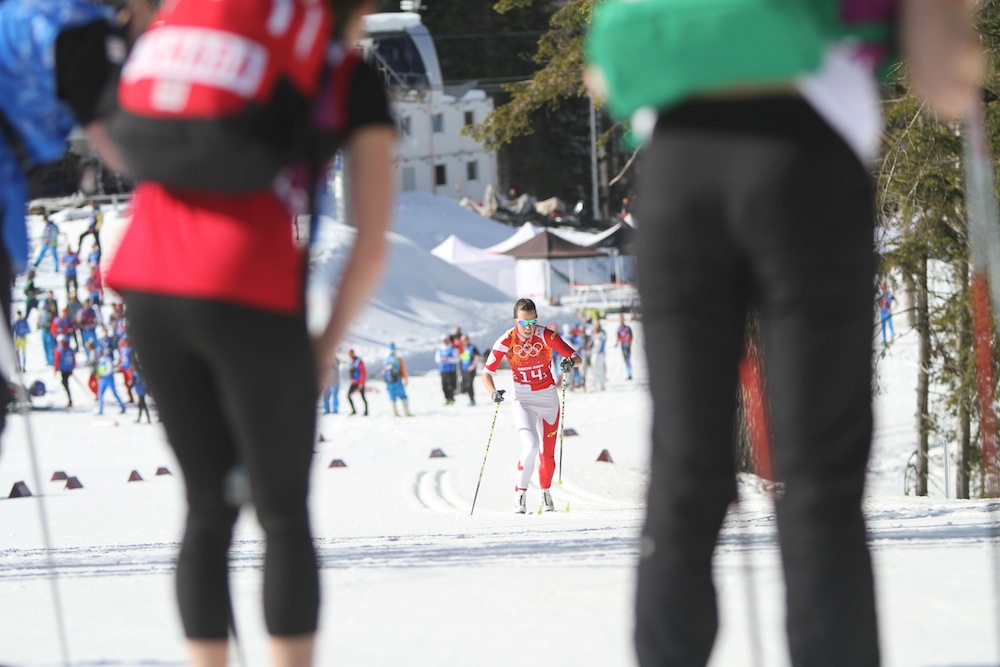
    Canadian biathletes and fellow cross-country skiers cheer on their own Perianne Jones on the first leg of the 4 x 5 k relay at the Sochi Olympics on Friday. Jones dropped to 14th and the team finished 14th, one place better than their finish at the 2010 Vancouver Games.
    Canadian biathletes and fellow cross-country skiers cheer on their own Perianne Jones on the first leg of the 4 x 5 k relay at the Sochi Olympics. the team finished 14th, one place better than their finish at the 2010 Vancouver Games.

    Two months later, she competed at her second Olympics in Sochi, Russia, placing 23rd in the freestyle sprint for her personal Olympic best. In the classic team sprint, she and teammate Dasha Gaiazova placed 11th after notching third in the same event at the 2013 Sochi World Cup a year earlier.

    Jones ended her season with a second-place finish in the freestyle sprint at 2014 Canadian Nationals in Corner Brook, Newfoundland, and was subsequently named to the national development B-team last May.

    Also last spring, her coach, Eric de Nys, left the national team to head up a new training program in Canmore: the WinSport Junior Cross Country Ski Team. Jones lost the bulk of the funding she had received as a World Cup Team member, yet decided to continue on for another season.

    “I, for sure, wanted to do another year after Sochi, and do things right,” she said on the phone from Canmore in early April. “… [Not making the World Cup Team] was a bummer, but at the same time, I know I didn’t make the criteria. I had one top-ten two seasons ago and you needed two top-twelves. I was put on the development team, so it meant that this past season cost me way more than it ever has…”

    “I, for sure, wanted to do another year after Sochi, and do things right.” — Perianne Jones

    As a development athlete, she said the costs amounted to $40,000 to $50,000, and that included government assistance as a carded athlete.

    “Even if you’re carded, you still have to pay for a place to live,” Jones said. “And living in Canmore is not cheap.”

    Carded athletes essentially receive an allowance each month, she explained. The government cuts qualifying individuals checks that could be used for anything — even a flat-screen TV — but the amount is generally considered a living allowance.

    “As a development skier, you have to cover housing and your team fee, which is around $10,000 and your winter expenses on the road, and then your flights to and from and around Canada,” Jones said. “It adds up.”

    Without stressing too much over finances, she focused on the 2014/2015 season and logged some of her career-best distance results, placing 32nd in the 10 k freestyle and 37th in the skiathlon at 2015 World Championships in Falun, Sweden.

    Canada's Perianne Jones raced to fifth place in her qualifier to finish 24th overall in the 1.4 k classic sprint in Falun, Sweden for the 2015 FIS Nordic World Ski Championships. (Photo: flingpointroad.com)
    Canada’s Perianne Jones racing to fifth in the 1.4 k classic sprint at 2015 World Championships in Falun, Sweden. She placed 24th overall. (Photo: flyingpointroad.com)

    Also in Falun, she finished 24th in the classic sprint and was 21st for a season best in the preceding World Cup classic sprint in Östersund, Sweden.

    “This past year I was healthy the whole season, which was quite an accomplishment for me,” she said. “It wasn’t my best season in terms of results, but health-wise it was really good. … I was pleased with both my sprints in Östersund and at world champs. It always can be better for sure, but I don’t have any regrets.”

    In Falun, she announced she would leave the international-racing scene at the end of the season. She capped off her career at 2015 Canadian Nationals in Thunder Bay, Ontario, winning the classic sprint, placing second in both the 5 k freestyle and 10 k classic individual races, and fifth in the 30 k freestyle mass start.

    In Thunder Bay, Nakkertok hosted a retirement dinner in her honor, complete with a video and several athletes and her brother Kieran Jones — Nakkertok’s head coach — speaking about the impact she had on their ski careers.

    “That was the only time I cried all week,” Jones said. “The ski club has been a huge part of my life and maybe I didn’t realize how I had been a part of them so much in the last ten years because I haven’t been around that much. I would totally love to go back to Ottawa and be a part of that some more.”

    She clarified that her involvement with Nakkertok would most likely be as a volunteer.

    “I have an interest in being involved, not necessarily in coaching at a high level, but when I was growing up with Nakkertok the ski club was entirely volunteer run,” she said. “I will be involved with a ski club wherever I end up. I will miss certain parts of skiing, but to have Joel still a part of the team will be an easier way to make that transition.”

    On Friday, Jones and her husband, Joel Jaques, a national-team wax technician, hopped aboard their 32-year-old Dodge getaway van and began a road trip to Ottawa. She guessed they might be gone for at least a month, with Jaques heading back to Canmore for a week in the middle of their trip for a training camp. How far they’d go depended on how the van ran. They bought it in February, about the time Jones knew her career was winding down.

    “We were just kind of joking about vans; there was one in Canmore and we offered the guy quite a bit less than he was asking and he said sure, and we’re like, OK, I guess we’re doing this,” she said.

    If they have time and the van makes it to Newfoundland, a friend offered to keep the van and buy their plane tickets back to Canmore. There, Jaques will go back to work with the national team and Jones will decide on her next move: she’s considering studying healthcare in Calgary or Ottawa.

    Meanwhile, she also planned to start working in Canmore to cover the cost of last season. While she essentially made up her mind to race one last season a year ago, the bill she received at the end of it ultimately solidified her retirement.

    “At the beginning of [last] season, I thought if I work and keep skiing, I would need to make the World Cup Team and need other women on the World Cup Team around me to keep going,” she reflected. “As the season kept going, I was realizing that even if all those things came into place, I wasn’t motivated to keep training for another year.”

    Perianne Jones (CAN) was 29th in the Canmore World Cup on Feb 5, 2010. Photo: Win Goodbody.
    Perianne Jones racing to 29th in the Canmore World Cup in February 2010. (Photo: Win Goodbody)

    After graduating high school, Jones started a fall term the University of Calgary, but found the commute back and forth from Canmore difficult. She took an online course at Athabasca University, but realized that didn’t work for her, either. Instead, she spent the next 12 years focusing on skiing.

    “I’m happy with the decisions I made and I’m sure my ski career was the best quality,” she said. “Hindsight’s twenty-twenty; there’s always things that could’ve gone better, but at the same time I was able to commit 100 percent to skiing. Although I’m not educated right now, I’m really looking forward to going to school and I can put 100 percent of my energy into school.”

    Jones and Jaques were also looking forward to having the freedom to visit friends this spring.

    “I’m looking forward to waking up and being able to what I want to do for exercise,” Jones said.

    “I will not be out on my rollerskis,” she added with a laugh. “So far it doesn’t feel a whole lot different. I feel pretty good about my decision, and I’m confident it was the right one. So many people say that it’s really hard [to retire] and some people say it’s awesome, but I think it depends on the person. I have enough plans to keep me busy; I don’t think I’ll be bored.”

    Looking back, she credited her two national-team coaches, de Nys and Justin Wadsworth, for the longevity of her career. She worked with de Nys, a development coach before he became the women’s national-team coach, for most of her senior years.

    “Eric really got to know me as an athlete and I got to know him as a coach, and I really trusted him and we were able to work well together,” Jones said. “And Justin, he’s been with the team since [2010] and he wasn’t my personal coach until this past year, but the transition was pretty seamless … I don’t feel like I lost Eric as a coach this year, but I feel like I gained Justin. Whenever we had a question about something, either of us could easily call Eric or visit him in his office.”

    In her career, Jones notched three top-15’s at both Junior World Championships and U23 World Championships, finishing eighth at 2008 U23’s in Malles Venosta, Italy.

    Canadians Perianne Jones and Dasha Gaiazova celebrate their first bronze of the season, and together, in the Sochi World Cup classic team sprint. (Photo: Chandra Crawford)
    Canadians Perianne Jones (l) and Dasha Gaiazova celebrate their first bronze together in the Sochi World Cup classic team sprint. (Photo: Chandra Crawford)

    “I had some really good World Junior experiences, some good results and some really fun times with the team,” she explained.  “For sure, the two medals that I won with Chandra and Dasha respectively in Milano and Sochi were highlights.”

    In 2012, Jones and Chandra Crawford teamed up for third in the World Cup freestyle team sprint in Milano, Italy.

    Jones also recalled making the 2010 Olympics in Vancouver, British Columbia, as a major high point. She qualified in 2009 when she and Sara Renner placed sixth in the World Championships classic team sprint in Liberec, Czech Republic.

    “That was the first time we got to go to the medal ceremony … and it was with Sara, who was a pretty big mentor,” she said. “I was actually never really on the team with Beckie [Scott] or Milaine [Thériault], but I traveled quite a bit with Sara. … Having them come before me and have the results that they did and just being the people that they are, they made it pretty appealing to chase after ski-related goals … Everything was so positive that I never I had any doubt that A.) I would enjoy it and B.) it would be possible.”

    The last of Canada’s three veteran females to retire — following the departures of Crawford and Gaiazova from the national team last year — Jones was excited to see what the next generation of women could accomplish.

    “I spent the majority of the season on the road with Emily [Nishikawa] and that was just awesome,” she said. “I’m glad I was there for that and able to witness her best season ever, and I think it’s a sign for really great things to come. There are younger women coming up, too, and they have Emily to look up to so there’s no doubt in my mind that they will do great things.”

    Regardless of where she attends school, Jones envisioned that she and Jaques would end up living somewhere in western Canada.

    “We don’t really want to leave Canmore,” she said.

    Several members of the Canadian Olympic cross-country ski team get the perfect photo opp at the Olympic rings in Krasnaya Polyana, Russia. (From left to right): Perianne Jones, Amanda Ammar, Heidi Widmer, Brittany Webster, and Emily Nishikawa. (Photo: Emily Nishikawa)
    Several members of the 2014 Canadian Olympic cross-country ski team get the perfect photo opp at the Olympic rings in Krasnaya Polyana, Russia. (From left to right): Perianne Jones, Amanda Ammar, Heidi Widmer, Brittany Webster, and Emily Nishikawa. (Photo: Emily Nishikawa)
  • After Two Home Olympics, Gaiazova Transitions to Next Phase of Her Life

    After Two Home Olympics, Gaiazova Transitions to Next Phase of Her Life

    Dasha Gaiazova (l) with friend and former teammate Andrea Dupont during a recent hike near Canmore, Alberta. "So grateful to my fave training partner Dre for still coming to hike up Mt Rundle w. me," Gaiazova tweeted. (Photo: Dasha Gaiazova/Twitter)
    Dasha Gaiazova (l) with friend and former teammate Andrea Dupont during a recent hike near Canmore, Alberta. “So grateful to my fave training partner Dre for still coming to hike up Mt Rundle w. me,” Gaiazova tweeted on June 19, two days after officially announcing her retirement. (Photo: Dasha Gaiazova/Twitter)

    Dasha Gaiazova was on the fence following the 2014 Olympics.The 30-year-old, Russian-born Canadian had competed at back-to-back home Olympics — four years ago in Vancouver, British Columbia, then Sochi, Russia, in February.

    Committing four more years to a third Olympics wasn’t in her cards, she reasoned, but she felt compelled to stick around for another season. A skier since age 12 with a small club in Pushchino, Russia, she didn’t know anything different. At 15, she moved to Montreal with her parents and younger brother, joining its SkiÉlite club upon arrival. By 16, she was a Rossignol-sponsored athlete and on the World Cup circuit by age 21.

    Dasha Gaiazova attacking one of several climbs in the women's 10 k freestyle individual start on Tuesday at the 2013 World Championships in Val di Fiemme, Italy. The top Canadian, Gaiazova was 40th.
    Dasha Gaiazova in the women’s 10 k freestyle individual start at the 2013 World Championships in Val di Fiemme, Italy. The top Canadian in the race, Gaiazova placed 40th.

    Spending the better part of the last decade racing internationally, Gaiazova weathered highs and lows like everyone else. In 2008, she discovered she had celiac disease, joined Rocky Mountain Racers (RMR) in Canmore, and made her way back onto the national team before the 2010 Vancouver Games.

    And while she said she was “100-percent focused” on racing leading up to the Sochi Olympics, Gaiazova explained on the phone late last month that her mind sometimes drifted.

    “Once in a while I would look at university websites and think about what else I wanted to be doing,” she said from her current home base in Canmore, Alberta, near her hometown of Banff.

    She settled on what she called a transitional year: “a year to myself and race my heart out and go to World Championships,” she said of the 2015 championships in Falun, Sweden. “My goal was to do that, but also, by the end of next winter, have a solid plan in place for transition.”

    What exactly she’d switch to, she wasn’t quite sure. After devoting more than half her life to skiing, she wanted to take some time to research jobs and opportunities.

    In May, she went to Scotland with her dad. The two-week bike trip starting in Inverness, up to the Orkney Islands and along the western coast was something she’d been planning for the last three years — first with her then-boyfriend and more recently with her father.

    Dasha Gaiazova during lunch break while on a two-week bike trip with her dad in Scotland. The two rode and camped around northern and western Scotland in May. (Photo: Dasha Gaiazova/Twitter) Lets have some soup for lunch in Scotland! Extra salty for dad to replenish electrolytes.
    Gaiazova during lunch break while on a two-week bike trip with her dad in Scotland. The two rode and camped around northern and western Scotland in May. (Photo: Dasha Gaiazova/Twitter)

    “For the last five years I think I’ve spent less than three weeks with my family,” Gaiazova recalled.

    Her dad wasn’t able to watch her in person at the Sochi Olympics, so the two reunited on bikes. Before taking a train ride to Inverness, they met in London, where she first stayed with her best friend, whom she typically visits at the beginning or end of each winter.

    “I feel like I have a lot of connections with England and always wanted to go to Scotland,” Gaiazova explained. “I thought, after the Olympics, I really want to go this year; it’s got to be now or never … and my dad wanted to come. He wasn’t really a scotch lover, but is now.”

    The two camped along the way with what Gaiazova described as “a crazy Russian sort of setup. I carried all of the gear.”

    And as fun as it was, it involved tying up some loose ends.

    “It was a bit of a soul-searching trip for me because I wanted to sort of be honest with myself and see what I wanted to do,” Gaiazova said. “If I wanted to ski race or if it was time to leave that in the rear view and do something else.”

    World Cup Breakthroughs

    Two seasons ago, a year out from the Olympics, Gaiazova put down a string of career bests: in January 2013, she advanced to her first World Cup sprint final in Liberec, Czech Republic, to place fourth overall in the classic sprint. Less than a month later at the Sochi World Cup, she and teammate Perianne Jones teamed up for bronze in the classic team sprint — an event Gaiazova and Chandra Crawford also took third in three years earlier at the Düsseldorf World Cup in Germany.

    An excited Dasha Gaiazova at the women's 0.85 k World Cup classic sprint in Liberec, Czech Republic. The Canadian was fourth for a career best and narrowly missed the podium in a photo finish. (Chandra Crawford photo)
    An excited Dasha Gaiazova at the women’s 0.85 k World Cup classic sprint in Liberec, Czech Republic. The Canadian was fourth for a career best and narrowly missed the podium in a photo finish. (Photo: Chandra Crawford)

    Seventh in the freestyle team sprint at the 2010 Olympics, Gaiazova and Jones went on to place 11th in the classic team sprint at the Sochi Games. She finished 22nd in the individual classic sprint in 2010 in Vancouver, and was 25th in the skate sprint in Sochi.

    After nearly 100 career World Cup starts, Gaiazova found herself in 40th in the overall Sprint World Cup standings for 2013/2014. She rose as high as 17th overall in the world the season before.

    Without a result within Cross Country Canada’s 2014/2015 national-team-selection guidelines (one top 6 or two World Cup top 12’s in either sprint or distance, or twice in the top 12 in a combination of a sprint and a distance race), she didn’t make Canada’s Senior World Cup Team this season.

    On May 4, she tweeted that she hadn’t met the Senior Development Team standards, either, which she called, “worse than my worst-case scenario…”

    “I didn’t see that coming,” she said. “I thought I would make the team so it was a bit of a surprise.”

    A few days later, she flew to Russia. Reasoning that Scotland was two-thirds of the way to her homeland, Gaiazova spent a week in there first, catching up with family — like her grandmother and cousin — and friends.

    During her multi-nation vacation this spring, Gaiazova had planned to resume training with her former club and coach in Canmore: RMR and head coach John Jaques. In late March, she won her last sprint of the season at Canadian Nationals and subsequently started training for next winter in April.

    “I felt like I wanted to keep racing,” she recalled. “The team got announced and I didn’t get on the team, and I was like, I gotta think about some things.”

    She spent some time talking to her sponsors, friends and former coaches about whether she should continue racing. In Scotland, some discussions with her dad and hours in the saddle led Gaiazova to her ultimate decision, which she announced in mid June.

    “Basically, it was like me on the bike and my dad on the bike and nothing else, not even trees,” she said. “Spending those hours thinking about my career and my passion and what else I want to do in life, it became clear that it was a good time to retire. This whole trip came together really nicely. … I’m happy I spent some precious time with my dad, that was important, and had this transitional moment.”

    And Gaiazova knew that once she made up her mind, she wouldn’t change it.

    “It’s a big decision; it’s all I’ve done all my life up to this point,” she said. “They call it retirement, you really step away from what you’ve done and it’s a big decision process.”

    “Spending those hours thinking about my career and my passion and what else I want to do in life, it became clear that it was a good time to retire.” — Dasha Gaiazova

    Life After Racing

    As for what’s next, she wasn’t entirely sure. “‘I’m still looking at school options and job options,” she said. “I just updated my resume … that was fun. … Looking at coaching options.”

    While she’d love to see more Canadian coaches in CCC’s pipeline, Gaiazova wasn’t sure that was the route for her. Coaching is on her list of “short-term things to do,” she explained. “I want to coach kids and I think I have something to offer and inspire … I just think it’s already so expensive for the kids. I’d like to be a volunteer.”

    “Looking back on my career as an athlete and Olympian I think that’s the greatest opportunity that I have: my passion … and I want to pass that onto kids.”

    She’s also seeking something she can apply herself to for the next 10 to 15 years, possibly related to science, finance or business.

    “I’m thinking maybe run my own business and I’m taking my time to figure that out,” she said.

    For the time being, she’ll continue to live in Canmore while renting her place in Banff. Two years ago, Gaiazova found herself dealing with a financial predicament that’s familiar among top North American nordic elite skiers.

    “I finished my season and I was $12,000 dollars in debt,” she said.

    That had accumulated in two years while Gaiazova was living in Banff with “expenses well beyond my means,” she explained. For the last two years she’s been renting her place and putting the proceeds toward her current lease — with a lower cost of living in Canmore.

    “I got really good at budgeting and really good at personal finance,” she explained.

    And while she had some hurdles, Gaiazova said she thinks athletes today have it tougher. At 20 years old, she was on the national development team with a good chunk of her expenses covered.

    “I’m an immigrant child — my parents moved to Canada in ’99 with literally nothing,” she said. “I got really lucky. I had amazing coaches and amazing sponsors … the national team was paying for travel.”

    Skiers today often have to work full time to pursue their athletic dreams, Gaiazova said, acknowledging that it’s still possible to achieve their goals. For that reason, she plans to keep hopping into workouts with up-and-comers like Olivia Bouffard-Nesbitt (RMR).

    “Development is so important,” Gaiazova said. “Starting from Fast and Female years ago and just trying to be involved with kids as much as I can, even being in Quebec [with the Pierre-Harvey Training Centre last season] training with those young girls. … Looking back on my career as an athlete and Olympian I think that’s the greatest opportunity that I have: my passion … and I want to pass that onto kids.”

    And she’s also taking time to enjoy pastimes like hiking with former teammates like Andrea Dupont, also of RMR.

    “I feel like this is good and I’m excited,” Gaiazova said.

  • Gaiazova Decides in Scotland: ‘The Time is Right to Leave the Competitive Side of Sport’

    Gaiazova Decides in Scotland: ‘The Time is Right to Leave the Competitive Side of Sport’

    Dasha Gaiazova (Canadian World Cup Team) racing to 44th in Thursday's 10 k classic individual start at the 2014 Olympics in Sochi, Russia.
    Dasha Gaiazova of the Canadian World Cup Team racing to 44th in the 10 k classic individual start at the 2014 Olympics in Sochi, Russia. After 10 years of World Cup competition and two Olympics, Gaiazova recently decided to retire.

    Two-Time Olympic Cross-Country Skier Daria Gaiazova Calls it a Career

    —World Cup medallist to retire after back-to-back home Olympics— 

    (Press release)

    CANMORE, Alberta — It turns out Daria Gaiazova took her final international cross-country ski race where her career all began – in her native Russia at the 2014 Olympic Winter Games.

    The dual citizen, who along with teammate Ivan Babikov had the rare opportunity to race back-to-back home Games in Canada and Russia, has decided to call it a career. The 30 year old, of Banff, Alta., raced 10 years on the World Cup circuit where she captured two bronze medals.

    Canadians Perianne Jones and Dasha Gaiazova celebrate their first bronze of the season, and together, in the Sochi World Cup classic team sprint. (Photo: Chandra Crawford)
    Canadians Dasha Gaiazova (r) and Perianne Jones celebrate bronze in the Sochi pre-Olympics World Cup classic team sprint in 2013. (Photo: Chandra Crawford)

    “I thought I had a little more left in the tank, but having some good discussion with my dad while on a bike trip in Scotland, I realized the time is right to leave the competitive side of sport,” said Gaiazova. “Truly I can’t think of a better way to go out. To have a rare opportunity to race two Olympic Games in my home countries.”

    The top-ranked female skier over the last four years in Canada, Gaiazova twice climbed onto the podium in team sprint races. Her first medal came with Chandra Crawford in Dusseldorf, Germany, in 2010. She then teamed up with Perianne Jones to win another bronze medal at the Olympic test event in Sochi one year out from the Games. Her best individual World Cup finish came in a classic-sprint race in Liberec, Czech Republic in 2013 where she placed fourth.

    “As much as I’d love to race competitively forever, there comes a time when the body says it is time to go,” said Gaiazova. After 10 years of intense training, and living out of a suitcase while competing around the world, Gaiazova is thinking of settling down in Alberta’s Bow Valley Corridor in search of the next opportunity life presents her.

    “The last four years have been nothing short of a grind, and right now I want to take some time this summer and research what I want to do next,” said Gaiazova. “I know one thing for sure is I still want to be involved in sport at some capacity. I love giving back and inspiring our country’s next generation of Olympic and Paralympic athletes. I will take some time and do something that I love.

    “I will miss the countless hours of training alongside the girls and all of my teammates. My team and I have been through a lot in all corners of the planet. I will miss all of the great coaches that have pushed me to be my best, but I will take the precious memories that I have accumulated to the next stage in life. I can’t thank every one enough in the Nordic community for your incredible support. It has been an exciting ride.”

  • Gaiazova, Graham Nishikawa Finally Champions in Canadian Nationals Skate Sprints

    Gaiazova, Graham Nishikawa Finally Champions in Canadian Nationals Skate Sprints

    Dasha Gaiazova leads Canadian World Cup teammate Perianne Jones in the senior women's 1.4 k freestyle sprint A-final at 2014 Canadian Nationals in Corner Brook, Newfoundland.
    Dasha Gaiazova (l) leads Canadian World Cup teammate Perianne Jones in the senior women’s 1.4 k freestyle sprint A-final at 2014 Canadian Nationals on Thursday in Corner Brook, Newfoundland.

    CORNER BROOK, Newfoundland — One the second-to-last day of Canadian Nationals racing in Corner Brook Newfoundland, Thursday saw the nation’s best line up behind the starting wand for the freestyle sprint qualifiers — and later on, the sprint heats.

    The groomers tilled the course overnight, which, combined with the relatively mild temperatures of -7 degrees Celsius in the early morning warming up to around zero for the heats, to led to a fast course.

    Olympian Amanda Ammar of Team Ninja in Canmore, Alberta, described the course as having “a lot of flat sections and gradual downhills so you really have to push the free-skate,” she said after the qualifier. “The couple uphills on the course are steep and pretty soft — you can get bogged down if you’re not careful. It’s a good course for someone who skis powerful with longer glides.”

    Qualifier results

    Senior Women

    The senior women's freestyle-sprint podium at 2014 Canadian Nationals in Corner Brook, Newfoundland. (Photo: Cross Country Canada) http://www.cccski.com/Media/Haywood-Race-Report/Haywood-RACE-Report--Dasha-Gaiazova-and-Graham-Nis.aspx#.UyxDzdxH2FI
    The senior women’s freestyle-sprint podium at 2014 Canadian Nationals in Corner Brook, Newfoundland, with winner Dasha Gaiazova (third from l), Perianne Jones in second (second from l), and Alysson Marshall in third (third from r). (Photo: Cross Country Canada) 

    First off the line for the heats were the women, starting around noon. World Cup Team members Perianne Jones and Dasha Gaiazova dominated the day, winning their 1.4 k quarterfinals and semifinals. The two skiers fought it out in the A-final, with Gaiazova leading most of the sprint and ultimately taking the victory for her first win of the week.

    Jones came up beside her in the finish lanes, but didn’t quite have enough for the top spot and placed second. Alysson Marshall, of the Alberta World Cup Academy (AWCA) and National Development Team (NST), skied in third for most of the final and finished on the podium.

    Gaiazova was unavailable for post-race comments, but this reporter was able to interview the silver medalist.

    Perianne Jones (2nd)

    1. How did the race play out for you from a tactical perspective? Did your race plan change very much through the heats? 

    “I changed up my tactics a bit because I was slower off the start in the semi. Drafting on the downhill mid-course seemed to work pretty well in the semi so I waited for the downhill to move towards the front in my final too.”

    2. Did your travels home from Europe have much of an effect on your race today? 

    “I got back to Canmore about a week ago from Drammen, [Norway,] so I had some time to rest before coming out here. I don’t think the travel affected the racing too much.”

    3. Some athletes like to listen to music to get them pumped up before a race. Is music part of your pre-race plan?  

    “I don’t really listen to music very much in my race prep. I just go out there and ski the course and stay relaxed.”

    Senior Women’s A-final

    1. Dasha Gaiazova (Canadian World Cup Team)
    2. Perianne Jones (WCT)
    3. Alysson Marshall (AWCA/NST)
    4. Erin Tribe (NDC Thunder Bay)
    5. Amanda Ammar (Team Ninja)
    6. Heidi Widmer (AWCA/NST)

    Senior Men

    Knute Johnsgaard (Yukon Elite Squad) leads Graham Nishikawa and Patrick Stewart-Jones in the A-final of the men's 1.6 k freestyle sprint at Canadian Nationals on Thursday in Corner Brook, Newfoundland.
    Knute Johnsgaard (Yukon Elite Squad) leads Graham Nishikawa (second from r) and Patrick Stewart-Jones (in black) in the A-final of the men’s 1.6 k freestyle sprint at Canadian Nationals on Thursday in Corner Brook, Newfoundland.

    After qualifying in fourth in the men’s 1.6 k prelim, Graham Nishikawa made it through to the semifinals as lucky loser out of the quarterfinal heats.

    Having just returned from Sochi, Russia, where he helped guide Paralympian Brian McKeever to three gold medals, Nishikawa overcame jet lag and advanced out of the semi to the final, where he notched his first senior national title. The podium was rounded out by Knute Johnsgaard of the Yukon Elite Squad in second, and Patrick Stewart-Jones (AWCA/NST) in third, both U23 skiers.

    Graham Nishikawa (1st)

    1. How did the race play out for you from a tactical perspective? Did your race plan change very much through the heats?

    “I really didn’t feel ready to go in the quarters, fighting jet lag, and I came in fourth in that heat. I was walking back to the car to get the keys and found out I made lucky loser.  … In the semi and the final I just went right to the front each time since there wasn’t much space to pass on the course.”

    2. Did your recent trip back from Europe effect you much today? 

    “I got in at 2:20 a.m. the day of the 15k [on Tuesday]. I wasn’t as worried racing right off the flight but today, two days later, I thought it’d be tough. I just went out there to have fun today and enjoy the racing.”

    3. Is this your first national sprint title? How many titles do you currently have to your name? 

    “I’ve got a number of junior titles but this is actually my first senior national title. I have a lot of silver and bronze medals at home.”

    Senior Men’s A-final

    1. Graham Nishikawa (AWCA/NST/Para-Nordic Ski Team)
    2. Knute Johnsgaard (YES)
    3. Patrick Stewart-Jones (AWCA/NST)
    4. Raphaël Couturier (CNEPH/NST)
    5. Kevin Sandau (AWCA/NST)
    6. Andy Shields (NDC Thunder Bay)

    Junior Women

    Katherine Stewart-Jones (Nakkertok) pulls away from the pack in the junior women's A-final on Thursday in Corner Brook, Newfoundland. She went on to win the freestyle sprint for her third national title.
    Katherine Stewart-Jones (Nakkertok) pulls away from the pack in the junior women’s A-final on Thursday in Corner Brook, Newfoundland. She went on to win the freestyle sprint for her third national title.

    The junior women’s heats were quite the battle. With not much room to pass on the 1.4 k course and a particularly technical downhill at the end, many skiers ran into trouble getting tripped up or boxed in.

    Jennifer Jackson, of NDC Thunder Bay and the National Junior Team (NST), won the qualifier, and Sophie Carrier-Laforte, of the Quebec Ski Team, who qualified second, moved up through the quarterfinals and both won their  semifinals.

    However, Katherine Stewart-Jones (AWCA/NST) was the one who avoided trouble and pushed the pace in the A-final, taking the lead on a tricky downhill corner to cross the line with a comfortable lead ahead of second.

    Katherine Stewart-Jones (1st)

    1. How did the race play out for you from a tactical perspective? Did your race plan change very much through the heats?

    “In the quarter and semifinals I took the lead for a lot of the race but I found people were catching me on the downhills. In the final I made my move later on, moving into the lead on the last downhill corner.”

    2. At what point in the race did you know you had the win?

    “I was pretty sure I had it when I moved into first on the last downhill, as long as I managed to stay on my feet.”

    3. How many national titles do you now have to your name?

    “I’ve won three titles, not including a couple where I came second to a Norwegian at [2012] Quebec Nationals. This is my first sprint title!”

    Junior Women’s A-final

    1. Katherine Stewart-Jones (AWCA/NST)
    2. Maya Macisaac-Jones (CNEPH/NST)
    3. Dahria Beatty (AWCA/NST)
    4. Anne-Marie Comeau (CNEPH/NST)
    5. Jennifer Jackson (NDC Thunder Bay/NST)
    6. Sophie Carrier-Laforte (QCST)

    Junior Men

    Colin Foley (front) duels Evan to the finish. Charrette won for his first title of the week at Canadian Nationals in Corner Brook, Newfoundland.
    Colin Foley (r) duels Evan Palmer-Charrette to the finish of Thursday’s skate sprint. Palmer-Charrette won the A-final for his first title of the week at Canadian Nationals in Corner Brook, Newfoundland.

    NDC Thunder Bay continued its dominance of the junior men’s category. Instead of Scott Hill, who’s already won two individual races this week, taking gold in the sprint, Evan Palmer-Charrette — the 15 k skate runner-up — notched another gold for Thunder Bay in the 1.6 k sprint. Colin Foley of the Callaghan Valley Training Centre took second, after winning both his quarter and semifinals, and Hill placed third.

    Since we spoke to Palmer-Charrette after Tuesday’s race and Hill on Sunday, here are some comments from Thursday’s runner-up Colin Foley.

    Colin Foley (2nd)

    1. How did the race play out for you from a tactical perspective? Did your race plan change very much through the heats?

    “In the quarterfinal I wanted to conserve my energy so I didn’t lead any of it except for the final stretch. In the semi’s I wanted to make it to the final without risking anything and I was feeling good so I lead off the start and took it fast all the way around. The final I really just tried to make sure I was in the top three coming to the steep climb about halfway through the course. After that it was just about giving everything I had left.”

    2. Is this your first national sprint podium? How many podiums do you currently have to your name?

    “Before this nationals I only had one podium, it came last year with a silver in the 10 k skate. So yes this is my first podium in the sprint. In the past my distance skiing has been much better so I’m very happy to get on a sprint podium.”

    3. Do you have a favourite song to get you in the mood on race day?

    “I don’t like to listen to music very close to my race, but I’ll often listen to it if I have a long time until I start. In that case it would definitely consist of some of The Black Keys.”

    Junior Men’s A-final

    1. Evan Palmer-Charrette (NDC Thunder Bay/NST)
    2. Colin Foley (CVTC)
    3. Scott Hill (NDC Thunder Bay/NST)
    4. Nicholas Pigeon (Skinouk)
    5. Gavin Shields (Lappe)
    6. Angus Foster (Big Thunder)

     Complete results

    Junior men's freestyle-sprint podium at 2014 Canadian Nationals in Corner Brook, Newfoundland. (Photo: Cross Country Canada)
    Junior men’s freestyle-sprint podium at 2014 Canadian Nationals in Corner Brook, Newfoundland. (Photo: Cross Country Canada)

    ***

    About the Author: A Canadian cross-country ski racer with the Alberta World Cup Academy, Zeke spends most of his time in Canmore, Alberta, but calls Cantley, Quebec, his home. He thinks that you can learn a lot about a person from their goals — his is to ski really fast on the Winter Olympic race course in 2018. Unfortunately he is not competing at 2014 Canadian Nationals on account of an injury. Check out his blog: zekewilliams1.blogspot.ca.

  • Babikov Back in Canada, Winning Nationals; Widmer Tops Women’s 10 k

    Babikov Back in Canada, Winning Nationals; Widmer Tops Women’s 10 k

    Scott Hill (NDC Thunder Bay/NST) racing to his second-straight individual junior title at Canadian Nationals on Tuesday in the 15 k freestyle in Corner Brook, Newfoundland.
    Scott Hill (NDC Thunder Bay/NST) in the leader’s bib racing to his second-straight individual junior title at Canadian Nationals on Tuesday in the 15 k freestyle in Corner Brook, Newfoundland. (Photo: Emilie Stewart-Jones)

    CORNER BROOK, Newfoundland — Five days after Canadian Ski Nationals started at Blow Me Down Trails, the  third races of the week took place Tuesday with the 10- and 15-kilometre freestyle interval starts.

    Upon checking out the course profiles before arriving in Newfoundland, the image of Tuesday’s race course was strikingly simple. It went up. It went down. With the exception of a short, flat section around the stadium and a quick up-and-down loop at the end, the course was pretty much one big uphill followed by a descent back to the stadium. Men raced four 3.75 k loops and women three 3.3 k laps, going not quite as high on the hill as the men.

    With regards to conditions, the one thing that’s been consistent this week with weather is the ridiculously strong winds, and Tuesday was no exception to this trend. Blowing snow challenged racers with some solid headwinds at points on the course in temperatures around -9 degrees Celsius.

    But even with the headwinds it was a quick race. World Cup veteran Ivan Babikov led the charge, winning the senior men’s 15 k in at just over 35 minutes, typical of the top times one might see on a tough World Cup 15 k course.

    When the snow cleared (more of a figure of speech: it’s still blowing snow outside), here’s who stood with Babikov at the top of the podium:

    Senior Women: Heidi Widmer

    Heidi Widmer (front) racing to a victory in the open women's 10 k freestyle on Tuesday at Canadian Nationals in Corner Brook, Newfoundland.
    Heidi Widmer (front) racing to a victory in the open women’s 10 k freestyle on Tuesday at Canadian Nationals in Corner Brook, Newfoundland. (Photo: Emilie Stewart-Jones)

    Last fall, Widmer, of the Alberta World Cup Academy (AWCA) and Canadian Senior Development Team (NST) dealt with the effects of a concussion following a rollerski crash. She stayed focused through the setbacks and managed to put down some solid results throughout the ski season, qualifying for the U23 World Championships and first Olympics in her final year as a U23.

    1. Did you have a particular focus going into today’s event? 

    “To be present in the moment. Just like Pooh Bear in the ‘Tao of Pooh’. Great read.”

    2. Before you knew your result were you happy with today’s race? 

    “I had a great time, had good skis and pushed my limits. So I would be happy with my efforts either way. It is even better when that aligns with a win!”

    3. Imagine that it is your birthday and you get to choose whatever meal you want. What’s the main course and what’s for dessert? 

    “It depends where I’m celebrating — whatever the locals are doing and what is in season! Hopefully it’s Mexican style. For dessert, chocolate cake with chocolate mousse and strawberry filling. Vanilla ice cream on the side.”

    Open Women’s 10 k Freestyle Top 10

    1. Heidi Widmer (AWCA/NST) 0:26:16.2
    2. Dasha Gaiazova (World Cup Team) +8.1
    3. Chisa Obayashi (Madshus Japan) +31.3
    4. Amanda Ammar (Team Ninja) +45.6
    5. *Anne-Marie Comeau (CNEPH/NST) +48.3
    6. Alysson Marshall (AWCA/NST) +57.7
    7. Emily Nishikawa (AWCA/NST) +58.4
    8. Cendrine Browne (CNEPH/NST)  +1:06.5
    9. Dahria Beatty (AWCA/NST)  +1:11.8
    10. Katherine Stewart-Jones (Nakkertok) +1:12.4

    *Top junior

    Senior Men: Ivan Babikov

    Ivan Babikov (Canadian World Cup Team) racing to a victory in his first race at 2014 Canadian Nationals, two days after his last World Cup race, in the in Tuesday's 15 k freestyle in Corner Brook, Newfoundland. (Photo: Emilie Stewart-Jones)
    Ivan Babikov (Canadian World Cup Team) racing to a victory in his first race at 2014 Canadian Nationals, two days after his last World Cup race, in Tuesday’s 15 k freestyle in Corner Brook, Newfoundland. (Photo: Emilie Stewart-Jones)

    A World Cup veteran, Babikov, 33, is fresh off the World Cup Finals in Falun, Sweden, after finishing up there in 23rd in the 15 k freestyle pursuit on Sunday. A consistent performer at international races, he really adds to the level of competition here in Newfoundland.

    1. Did you have a particular focus going into today’s event?

    “Tried to stay awake today with the jet lag from my return from Europe. I worked to keep the speed up through the four laps. I hadn’t skied the course beforehand so I just focused on checking things out the first lap and then pacing based on that.”

    2. Before you knew your result were you happy with today’s race?

    “A win is a win, and racing back in Canada is always fun. It’d be nice to have some more World Cups over here.”

    Imagine that it is your birthday and you get to choose whatever meal you want. What’s the main course and what’s for dessert?

    “My wife makes really good Russian fried potatoes — kinda like french fries but healthy — and fried chicken. Something chocolatey for desert, like chocolate cake.”

    Men’s 15 k Freestyle Top 10 

    1. Ivan Babikov (World Cup Team) 35:24.1
    2. Graham Nishikawa (Para-Nordic Team/NST) +18.4
    3. Michael Somppi   (AWCA/NST) +26.0
    4. Andy Shields (NDC Thunder Bay) +51.1
    5. Jesse Cockney (AWCA/NST) +1:12.4
    6. Raphaël Couturier (CNEPH/NST) +1:15.0
    7. Kevin Sandau (AWCA/NST) +1:21.3
    8. Russell Kennedy (AWCA) +1:32.1
    9. *Scott Hill (NDC Thunder Bay)  +1:32.7
    10. Frédéric Touchette (Laval) +1:39.3

    * Top junior

    Junior Women: Anne-Marie Comeau 

    Anne-Marie Comeau, 17, racing to a junior women's victory in the open 10 k freestyle at Canadian Nationals on Tuesday in Corner Brook, Newfoundland.
    Anne-Marie Comeau, 17, racing to a junior women’s victory in the open 10 k freestyle at Canadian Nationals on Tuesday in Corner Brook, Newfoundland. (Photo: Emilie Stewart-Jones)

    Hailing from the Pierre-Harvey National Training Centre (CNEPH) and National Junior Team (NST), Comeau, 17, is part of a strong contingent of junior women from Quebec who are making a mark on the Canadian ski scene. With European racing experience already under her belt and two years as a junior, next season, she’ll be one to watch at Junior World Championships.

    1. Did you have a particular focus going into today’s event?

    “Going into the race I was just thinking about going as hard as I could.”

    2. Before you knew your result were you happy with today’s race?

    “Yes! I felt good during the race and had fun.”

    3. Imagine that it is your birthday and you get to choose whatever meal you want. What’s the main course and what’s for dessert?

    “Chicken shish kabobs for dinner and maple syrup pudding for dessert.”

    Junior Women’s 10 k Freestyle Top 5

    1. Anne-Marie Comeau (CNEPH/NST) 27:04.5
    2. Dahria Beatty (AWCA/NST) +23.5
    3. Katherine Stewart-Jones (Nakkertok Nordique) +24.1
    4. Jennifer Jackson (NDC Thunder Bay/NST) +41.2
    5. Frédérique Vézina (CNEPH) +42.3

    Junior Men: Scott Hill

    Hill is already on a winning streak this week, making it 2-for-2 in the first couple races. In an effort to showcase some of the other top skiers in the junior men’s category, this reporter interviewed Tuesday’s runner-up Evan Palmer Charrette.

    Check out Sunday’s report for Hill’s interview.

    Evan Palmer-Charrette (NDC Thunder Bay/NST), the second junior in the open men's 15 k freestyle on Tuesday at Canadian Nationals in Corner Brook, Newfoundland.
    Evan Palmer-Charrette (NDC Thunder Bay/NST), the second junior in the open men’s 15 k freestyle on Tuesday at Canadian Nationals in Corner Brook, Newfoundland. (Photo: Emilie Stewart-Jones)

    Charrette, of Thunder Bay in northern Ontario, trains with the National Development Centre in his hometown and is also part of the National Junior Team. A well-known junior on the NorAm circuit, he’s working towards his goal of racing internationally and one day making the World Cup team.

    1. Did you have a particular focus going into today’s event?

    “Big focus today was pacing and really getting long glides, especially on the uphills in the offset.”

    2. Before you knew your result were you happy with today’s race?

    “Absolutely. Pacing was great and the body came together today. I’ve been having some trouble with compartment syndrome in my shins, and with illness last week; these didn’t effect me today.”

    3. Imagine that it is your birthday and you get to choose whatever meal you want. What’s the main course and what’s for dessert?

    “Pad Thai for the main course and a chocolate milkshake for desert.”

    Junior Men’s 15 k Freestyle Top 5

    1. Scott Hill (NDC Thunder Bay/NST) 36:56.8
    2. Evan Palmer-Charrette (NDC Thunder Bay/NST) +12.4
    3. Colin Foley (CVTC) +26.4
    4. Alexis Dumas (Quebec Ski Team) +1:03
    5. Benjamin Wilkinson-Zan (NDC Thunder Bay/NST) +1:39.3

    Complete results

    ***

    About the Author: A Canadian cross-country ski racer with the Alberta World Cup Academy, Zeke spends most of his time in Canmore, Alberta, but calls Cantley, Quebec, his home. He thinks that you can learn a lot about a person from their goals — his is to ski really fast on the Winter Olympic race course in 2018. Unfortunately he is not competing at 2014 Canadian Nationals on account of an injury. Check out his blog: zekewilliams1.blogspot.ca.

  • Canadian Women Stand Together, Reflect on Olympic Experience

    Canadian Women Stand Together, Reflect on Olympic Experience

    The Canadian women's team before the Closing Ceremony in Sochi, Russia: (from left to right) Heidi Widmer, Perianne Jones, Amanda Ammar, Brittany Webster, Emily Nishikawa (Photo: Emily Nishikawa)
    The Canadian women’s team before the Closing Ceremony in Sochi, Russia: (from left to right) Heidi Widmer, Perianne Jones, Amanda Ammar, Brittany Webster, Emily Nishikawa (Photo: Emily Nishikawa)

    KRASNAYA POLYANA, Russia — One by one, the four Canadian women in the 30-kilometer freestyle mass start last Saturday, their final race of the Olympics, walked away from the finish line and into the media corrals, assembling as a unit to be interviewed.

    Without watching the race, one might’ve guessed they missed the relay; that’s how much of a team these women appeared to be.

    Two were teammates on the Alberta World Cup Academy and Canadian Senior Development Team: Emily Nishikawa and Heidi Widmer, both in their first Olympics.

    The other two were independent racers, Amanda Ammar, 28, of Team Ninja, and Brittany Webster, 26, of Team Mito.

    All had finished within seven places of one another in the 30 k finale, with Webster notching the top result of 46th and Widmer, the youngest on the team at 22, placing 52nd. (On Friday, Widmer turned 23.)

    Without the team’s three World Cup sprinters in Perianne Jones, Dasha Gaiazova and Chandra Crawford in the race, the group provided a glimpse of the future of Canadian women’s skiing.

    Each had taken different roads to get there — Nishikawa and Widmer more traditionally through the Olympic Team Trials in January, and Ammar and Webster through an appeals process soon after the trials. The latter two, both former national-team members, were in their second Olympics since semi-retiring from the sport a few years ago. Ammar cited injuries and burnout; Webster had gone to the 2010 Vancouver Games but did not compete, then in 2011, decided her slip in results stemmed from a lack of enjoying the sport.

    Ammar returned to racing in late 2011, Webster in 2012.

    Come the next Winter Olympics, here they were, with two newcomers in Nishikawa, 24, and Widmer as teammates.

    Several members of the Canadian Olympic cross-country ski team get the perfect photo opp at the Olympic rings in Krasnaya Polyana, Russia. (From left to right): Perianne Jones, Amanda Ammar, Heidi Widmer, Brittany Webster, and Emily Nishikawa. (Photo: Emily Nishikawa)
    Several members of the Canadian Olympic cross-country ski team get the perfect photo opp at the Olympic rings in Krasnaya Polyana, Russia. (From left to right): Perianne Jones, Amanda Ammar, Heidi Widmer, Brittany Webster, and Emily Nishikawa. (Photo: Emily Nishikawa)

    Together, the team had its best results of 11th in the classic team sprint with Jones and Gaiazova, 14th in the 4 x 5 k relay with Jones, Gaiazova, Nishikawa, and Webster, and a top individual result of Jones’ 23rd in the freestyle sprint, just ahead of Gaiazova in 25th.

    The 30 k wasn’t a personal best for any of the Canadians, but it was a capstone in their respective careers.

    Aside from her result of 49th, Ammar called it her most memorable part of the Sochi Games.

    “I’m so proud of these girls — I mean 30 k is so hard,” she said, fighting tears while looking at her teammates. “I know we were all a little terrified, maybe, excited, but anyone who does this race is a hero in my eyes.”

    Of her teammates, Ammar said she started the fastest and paid the price. Webster and Nishikawa passed her, and like Widmer, Ammar said that gave her motivation to push harder.

    “A 30 k is just an abundance of walls and when you’re going to hit it you never know,” she said.

    Webster said it was funny because the ended up within places of one another, but didn’t ski together. Only Ammar changed her skis, which she called “a mistake.”

    “They got slower, but so did everyone else’s, I felt like,” Webster said.

    Widmer was hoping the competitor she was skiing with would go in for a fresh pair.

    “I was secretly like, ‘Please change, please change. OK, we’re not changing, we’re gonna do it,’” she recalled. “But my skis were fast, so I was like ‘If they change, I’ll change,’ but mine were faster so I was like … ‘Maybe I’ll just go chill.’ ”

    Widmer went on to beat Croatia’s Vedrana Malec by nearly two seconds in what she called a “slow-motion sprint” to the finish. She had been skiing with Kazakhstan’s Tatyana Ossipova in front of her and Malec behind her for most of the race.

    “The last 5 k, the Kazakh broke me and the [Croatian] chick passed me on the last uphill, and then I passed her back,” Widmer said. “I was like, ‘I will stay in front of her if it’s the last thing I do,’ so that was the sole victory.”

    The four women laughed together, snapped a group photo and hung out under the sunny and warm skies. They were in no rush, despite being indescribably tired.

    After finishing 33 seconds behind Webster in 47th, Nishikawa reflected on her first Olympics.

    “From the start of my first race, the pursuit was an incredible feeling — ‘Oh my God, I’m an Olympian!’ ” Nishikawa said. “It was just really cool to realize, ‘Oh, I’m here,’ and I had a great race that day. I’ve had an incredible time here, so I’m incredibly fortunate and just feel incredibly grateful that I had the opportunity to get three Olympic races in.”

    “The two words that stick out right now are how proud I am and how inspired I am that you get to represent your country and then you get to race against the best in the world,” Widmer said. “That has inspired you to be that much better, come back stronger.”

    Webster praised her teammates after spending three weeks with them at a hotel in the valley town of Rosa Khutor. “It’s been nice to become close to everyone and feel like … for the first time in my entire ski career, I feel we have a great team,” she said. “I’ve never really felt that before.”

    The Post-Olympic Period

    After the Games, some team members, like Gaiazova, went home.

    According to Cross Country Canada, Widmer will join other NorAm leaders, including Andrea Dupont and Alysson Marshall, in the March World Cups, which start this weekend in Lahti, Finland. Jones is the lone woman on the Canadian World Cup team who will be racing there, and Cendrine Browne was also called up for the races based on her results at U23 World Championships.

    While Gaiazova could not be reached for comment, she tweeted on Feb. 23, the day after the 30 k: “Really sad to be going home instead of the World Cup races in Scando. Such is life… @cccski good luck to those racing!!!”

    Head coach Justin Wadsworth said Gaiazova wanted to leave after she was done racing at the Olympics.

    “We did tell her that she’s not welcome on the rest of the World Cup,” he said. “She broke all our team policies and code of conduct.”

    After Gaiazova placed 44th in the 10 k classic, her second of four races at the Olympics, Wadsworth said she had “been out partying” the night before.

    “We had talked about it at our Olympic briefing, that there’s no partying at the Olympic Games [before your races are over],” Wadsworth said, adding that Cross Country Canada had the paperwork to back that contract up. “She’s appealing it.”

    On Feb. 17, Crawford tweeted that she was on her way back to Canmore.

    Since the beginning of the season, there have been indications that this would likely be the last Olympics for Jones, Gaiazova, and Crawford, although when each plans to retire has not been publicly laid out.

    “I will definitely race ’til 2015 at World Champs in Falun,” Crawford told FasterSkier more than a year ago. “It’s just set in my mind as a for sure, but I’ll probably reevaluate after the Olympics the feasibility of another quadrennial.”

    Gaiazova said she’d make a decision after Sochi.

    “When I ski race, I put my 100-percent effort into it, and as long as I’m able to do that and as long as there’s desire and determination I think I would be thrilled and honored to continue,” she said around the same time. “And if my priorities shift and something else comes up or for whatever reason I’m not able to perform at 100 percent then, you know, you sort of reevaluate and see if you want to commit to more.”

    — Seth Adams contributed reporting

    Lahti skate sprint start list

  • Canadians 14th in Women’s Olympic Relay: ‘We Need to Work on the Strength of our Women’s Team’

    Canadians 14th in Women’s Olympic Relay: ‘We Need to Work on the Strength of our Women’s Team’

    Canadian biathletes and fellow cross-country skiers cheer on their own Perianne Jones on the first leg of the 4 x 5 k relay at the Sochi Olympics on Friday. Jones dropped to 14th and the team finished 14th, one place better than their finish at the 2010 Vancouver Games.
    Canadian biathletes and cross-country teammates cheer on their own Perianne Jones on the first leg of the 4 x 5 k relay at the Sochi Olympics on Friday. Jones dropped to 14th and the team finished 14th, one place better than their women’s relay at the 2010 Vancouver Games.

    FasterSkier’s coverage is made possible through the generous support of Rudy Project.

    SOCHI, Russia — This time last year, the Canadian women didn’t finish the women’s 4 x 5-kilometer relay at World Championships. They couldn’t — they didn’t have a fourth skier.

    Brittany Webster had come down sick during the championships in Val di Fiemme, Italy. It was unfortunate but it was also a glaring reminder that the Canadians lack depth in female distance skiers.

    This year, Canada brought a total of seven women to the Olympics, nearly half of its 13-athlete squad. It would undoubtedly field a four-person women’s relay, just like in the 2010 Olympics and 2011 World Championships.

    Starting in bib 14 of 14 teams based on their DNF at 2013 World Championships, the goal was to move up on Saturday.

    In her second Olympics, Perianne Jones scrambled for the relay, which consisted of Dasha Gaiazova, Emily Nishikawa, and Webster. Despite starting in the last row of the mass start, the soon to be 29-year-old Jones (on Feb. 18) stuck with the pack up the first climb.

    Halfway through the first 2.5 k loop, she was in 14th, but within 5.3 seconds off the leaders and a second of Ukraine’s Tetyana Antypenko in 13th.

    Perianne Jones with her sparkly Canadian Olympic facial sticker still in tact after the women's 4 x 5 k relay on Saturday at the Sochi Olympics.
    Perianne Jones with her sparkly Canadian Olympic facial sticker still in tact after the women’s 4 x 5 k relay on Saturday at the Sochi Olympics.

    “My goal today was to stick with the group for as long as I could and it didn’t end up being as long as I wanted it to be,” Jones said after the race. “I kind of blew up out there.  … I felt good warming up, and I thought that I’d be able to hang on for at least 3, 4 k, if not more.

    “I guess I was a little more optimistic than my body was,” she said with a laugh.

    Jones tagged Gaiazova, also in her second Olympics, in 14th, 1:45.4 behind Russia in first.

    “It’s tough for the other girls when I start off and hand off in the position I did,” Jones said. “It’s just a mental battle from there on in because they were skiing on their own and that’s rough.”

    Gaiazova, 30, skied the 11th fastest second classic leg, but it wasn’t enough to catch 13th. With 54.4 seconds separating her from the next skier ahead of her, Nishikawa raced alone in 14th, handing off to Webster in the same position, about 1:20 back from 13th. Webster finished the race out for the Canadians in 14th, 6:10.9 behind the Swedish winners.

    “We don’t have a good relay history in Canada so I think we were all hoping for a little better than that, but we have nowhere to go other than up,” Jones said. “Our last few years have been pretty dismal and we need to work on the strength of our women’s team, especially in distance because we’re just not there and it’s not quite a sprint race. Five k is a little bit longer than I’m used to. We really have to work on that.”

    Managing a smile afterward and with a “bedazzled sticker” sporting Canadian Olympic logo still on her cheek, Jones said the team got in the spirit before the race, decorating their faces.

    “I guess that wasn’t enough,” she said. “We’re looking forward to the team sprint and hopefully it’ll go a little better.”

    Results

  • Webster 42nd in 10 k Classic as Canadians Struggle Through Slush

    Webster 42nd in 10 k Classic as Canadians Struggle Through Slush

    Dasha Gaiazova (Canadian World Cup Team) racing to 44th in Thursday's 10 k classic individual start at the 2014 Olympics in Sochi, Russia.
    Dasha Gaiazova (Canadian World Cup Team) racing to 44th in Thursday’s 10 k classic individual start at the 2014 Olympics in Sochi, Russia.

    FasterSkier’s coverage is made possible through the generous support of Rudy Project.

    SOCHI, Russia — It’s not every Winter Olympics that athletes have to deal with temperatures soaring above 12 degrees Celsius and racing in slush.

    Three of four of the Americans wore either T-shirts or sleeveless tops in the women’s Olympic 10-kilometer classic individual start, and while the Canadians were in white (as opposed to the black U.S. suits), it was still hot out there.

    Slushy snow during the womem's 10 k classic individual start on Thursday at the 2014 Olympics in Sochi, Russia.
    Mashed-potato-like snow during the womem’s 10 k classic individual start on Thursday at the 2014 Olympics in Sochi, Russia.

    Brittany Webster started to cramp a kilometer or so into the two-loop race, with the first half around on the upper part of the trails at the Laura Cross-Country Ski Center and the second lap down a roughly two-minute descent, and then back up again.

    “It was a total battle with my mind,” Webster said after placing 42nd, the best result of four Canadian women.

    “I felt good off of the start and then one minute in you’re like, ‘Oh man,’ and then you see people kind of skiing away and you can’t keep up with them. It’s hard not to think, ‘I wonder what’s gonna happen for the rest of the race. Oh my god, I’ve only done 2 k and I’m already cramping!’ You just have to play a mind game and basically say, ‘Stop! No! Look where you are; concentrate on that climb.’ ”

    Once she got through the first half of the race, the 26-year-old Toronto native started to feel better on the long downhill.

    “I think I was able to breathe it out and not create as much lactate on the shorter [climbs] which made it a lot better,” Webster said. “The conditions, too, it was a little hard to stay on my feet. I crashed twice, one just randomly going up an uphill. Both of them were in the back of the course over there, definitely the safer parts of the course, but it happens in these conditions. It’s thick, it’s soupy, but I really find it fun out there.”

    Webster also wasn’t complaining about the 12 degree Celsius temperatures and accompanying sun. But she said it was difficult to determine whether she drank too much or too little sports drink that led to the cramping.

    Canada's Brittany Webster racing in the women's pursuit at the Olympics in Sochi, Russia.
    Canada’s Brittany Webster racing in the women’s pursuit at the Olympics in Sochi, Russia.

    After Webster finished 3:23.2 minutes behind the race winner, Poland’s Justyna Kowalczyk (who won in 28:17.8), Dasha Gaiazova was another 6 seconds back in 44th.

    Gaiazova had started 30 seconds ahead of American Ida Sargent, and Sargent caught her quickly. The two skied together for much of the race, yo-yoing back and forth as Gaiazova carried more speed through the downhills and Sargent took the lead up the final long ascent back toward the stadium. Sargent ended up beating her to the line and ended up 34th, nearly 32 seconds ahead.

    “It was definitely a very difficult one for me, but at the same time I don’t do many 10 k’s,” Gaiazova said in the second race of her second Olympics. “The last one I did was in Lenzerheide at the Tour de Ski and that was awful.”

    There, in Switzerland on New Year’s Day, she placed 59th of 63.

    “I didn’t have many expectations today, just wanted to really push it,” Gaiazova said. “I’m relatively happy. I wish I could’ve been a little faster maybe on the downhills and the flatter sections, I’m not used to pushing so much. I’m used to glide and relax.”

    While Gaiazova said she could’ve used more glide, Canadian head coach Justin Wadsworth suggested that was not the way to go on this course and in these conditions.

    “Everyone’s gonna be on klister and there’s only so much speed you can find with klister, especially in these conditions,” he said. “I think if you make the choice to go light on kick, I don’t know what you’re thinking, but you better be ready to tough it out with your arms because there’s a lot of climbs. In some ways, I think it almost becomes more of a who’s ready to suffer and slog it out.”

    Gaiazova and Heidi Widmer were two of the team’s sprinters in the distance race. The Canadian national team brought three distance skiers to the Olympics — Webster, Amanda Ammar and Emily Nishikawa —  but Nishikawa recently came down with a cold.

    Ammar placed 55th (+4:31) and Widmer was another 13.1 seconds back in 57th in her second race of her Olympic debut.

    “It was hard today; I’m struggling at these Olympics,” Ammar said in her second Olympics since the 2006 Games. “I had a tough lead-in with my skis getting all broken and a lot of stress leading up to the Games so i’m just trying to do the best I can and push the best I can and I did that today, but I think the results will not please me when I see them.”

    Ammar said her skis were damaged in transit while flying into St. Petersburg when the flight company put her ski bag in an elevator and “taco-ed” her bag. Fischer helped her repair four of them, she said.

    “Already it’s a tough course and then you add the hot weather and the slow conditions and it makes for a mentally tough day for sure,” she said.

    Heidi Widmer (Canadian Senior Development Team) racing to 57th in Thursday's 10 k classic individual start at the 2014 Olympics in Sochi, Russia.
    Heidi Widmer (Canadian Senior Development Team) racing to 57th in Thursday’s 10 k classic individual start at the 2014 Olympics in Sochi, Russia.

    “It’s a tough race for them and obviously they’re not in the world-leading shape,” Wadsworth said of Webster, Ammar and Widmer. “But I like the effort that Brittany and Amanda and Heidi put out there today. It’s not easy skiing towards back of the pack and having no confidence. I’ve been there and it sucks.

    “I’m concerned for the focus of some of our women’s team,” he added. “We are at the Olympics and there are a lot of people working hard for them, as well as a lot of resources that have gone into them. I hope all our women are giving it their all, and preparing as best they can for each race. That’s all I ask.”

    Widmer, 22, who filled in for Nishikawa, said she’s had some tough moments in her first Olympics, but tried to keep them in perspective throughout Thursday’s race.

    “I feel pretty defeated, but these are the kind of races you think about in the summer and you’re like … ‘When I go back there I’m gonna train that much harder and that much smarter to make improvements,’ ” she said. “Looking up the last hill and being like, ‘Next time I do this it’s gonna seem that much easier. Every little failure you make is an opportunity to improve on it.’ ”

    For Widmer, who specializes in skate sprints, she tried to think about being as smooth as possible and efficient with where she expended her energy.

    “I had a pretty good idea that I would be able to start this race,” she said. “It’s really, really unfortunate that Em Nish came down with a cold. She is the princess, I should stay, queen of classic 10 k’s … but she’s making a smart decision taking care of her body first. I’m just lucky that I had a chance to start the Olympics and just absorbing as much as possible.”

    Two days ago after placing 43rd in the skate-sprint qualifier, Widmer said she tried to FaceTime her parents on her phone during her cool down. Without a wireless connection at the venue, she gave up on it for the time being, and put her phone in her pocket.

    “Running around the athletes village … I heard it in my pocket and then I saw them all in their sleeping gowns up in the middle of the night and I just broke down crying,” Widmer said. “Our sports psych explained it as your pyramid of support, so the stronger and wider that base of support is the stronger your summit of the pyramid is going to be.”

    Thinking back to seeing her parents, two brothers and her sister and their significant others and her dog, she recalled: “They’re the best … Those are the kind of things that really put it in perspective.”

    Results

  • Best of the Rest: North Americans Qualifiers Reflect on Skate Sprint

    SOCHI, Russia — Four U.S. women made the heats, Ida Sargent had one of her best freestyle sprints of the season in her first Olympic race, and Jessie Diggins tallied the second-best American result in 13th after Sophie Caldwell — who made U.S. women’s Olympic history in sixth in Tuesday’s sprint.

    So yeah, there were some bright spots for the North Americans in the women’s 1.3- and men’s 1.8-kilometer sprints — the second races of the 2014 Olympics.

    Sargent, 26, finished fourth in her quarterfinal, 2.43 seconds behind Norway’s eventual silver-medalist Ingvild Flugstad Østberg in first, after getting pinched out on a 180-degree corner coming down into the stadium.

    “I was trying to make a move on the inside, but Ingvild threw in a big snow plow and also tried to take the inside and I lost all my speed, and went to third to fourth by a lot,” Sargent explained. “I killed my speed coming into that.”

    After qualifying in 26th, she ended up 19th overall behind U.S. teammate Kikkan Randall in 18th.

    “The heats are always tough for me so I was pretty psyched to make it, especially with not a great qualification run for me,” Sargent said. “It’s the Olympics so I’m really excited to ski a heat and represent USA.”

    Diggins was the second-best U.S. qualifier in 12th after Caldwell clocked the ninth-fastest time behind qualifier winner Maiken Caspersen Falla, who won the prelim in 2:32.23. The 22-year-old Diggins went on to place third in her quarterfinal, 1.61 seconds after Slovenia’s Katja Visnar and 0.85 seconds behind Caldwell.

    “The course, it was tricky; it’s not the course I would’ve designed myself if I was going to play to my strengths,” Diggins said. “It was a short course and you had to kind of change your technique after they salted and it was slushy. I skied the best I could and I’m proud of that. … I couldn’t find windows in which to get through so I feel like I have more energy and I have more to give, but that’s sometimes the way it goes.”

    Diggins was most pleased with her form and the way she’s feeling about her fitness, especially for the event she’s most focused toward: the women’s 4 x 5 k relay on Saturday.

    “It’s great that we were able to get four women into the quarterfinals,” she said. “I think that says a lot about where our country’s come from and where we’re headed. A few years ago we would’ve maybe got one in and now we’re getting four girls in the heats mixing it up in there and I think that’s a really positive thing.”

    Andy Newell led the U.S. men in 18th, after qualifying 17th then placing fourth in his quarterfinal 0.84 seconds behind Norwegian winner Anders Gløersen.

    “I think it’s the hardest sprint I’ve ever done, and I’ve done a lot of sprints,” Newell said. “It’s challenging conditions and it’s pretty slow out there. With a course like that, with a hill like that, it makes it really tough. With the altitude and everything you’re breathing so hard when you cross the finish line. I didn’t feel great in qualification, didn’t pace it quite right. I had a good barf after that.”

    Before the quarterfinals, he still wasn’t feeling good and had a headache.

    “I regrouped and felt okay,” Newell said, despite a run-in with Austria’s Harald Wurm. “My tactic was to really give it on the hill because I know I can do that better than most people. I had a decent amount of energy in the lanes, but maybe just not quite enough. I tried to pull up around the Norwegians but didn’t quite have it.”

    In his third Olympics, Newell acknowledged how hard it is to put a great race together at this level.

    “Every race is different and every Olympics are different, too,” he said. “A skate sprint only comes around every eight years and the chances of that being on a similar course to what you’re used to is pretty slim. This is a very unique course. That’s what ski sprinting is all about, being able to adapt to these different courses, different lengths, and different conditions.”

    Simi Hamilton notched his best individual Olympic result at his second Winter Games in 27th, qualifying in 21st and ultimately placing sixth in his heat 1.84 seconds behind eventual gold-medalist Ola Vigen Hattestad of Norway. Not even 20 meters out of the start, Hamilton’s pole broke in the deep snow. Within 800 meters, he was back with the pack.

    “Fortunately the pace was pretty slow … [and] I was able to settle in the back with a new pole and stay there and made a move at the top of the hill to get back to the front and get my strap on,” he said. “But I was still was in the rough and tumble part of the pack.”

    Making his move on the final tight corner, he found himself boxed out on the far lane coming toward the finish.

    “I lost a lot of time there,” Hamilton said. “I felt like that was my moment to turn it on and right as I was about to I got shoved back to no man’s land.

    “It’s hard for sure,” he continued. “I feel like this season a lot of things were coming together. The Olympics are tough. It happens every four years. Some days you have it and some days you don’t and today I woke up and I was feeling good and wasn’t feeling the best I’ve ever felt but I was still really psyched. I guess I didn’t have it. It’s all right, it’s just another race. It sucks that it’s the big stage here today.”

    Canada’s Alex Harvey, Perianne Jones and Dasha Gaiazova qualified for the rounds in 19th, 23rd, and 25th, respectively. None of them made it past the quarterfinals, with Harvey placing fourth in his heat, 1.75 seconds behind Russian winner Sergey Ustiugov, for 19th overall. Gaiazova was fifth in her quarterfinal, 3.44 seconds behind Norway’s Astrid Urenholdt Jacobsen in first, for 25th.

    “Just that raw, raw speed up an offset, I just didn’t have it,” Harvey said. “And I don’t have it really often. I’m better on courses where it’s more 1-skating than offset.”

    After getting off to a good start, Harvey said he was happy about the beginning of the race.

    “I positioned myself well; I was in position to strike, I just didn’t have the strike,” he said.

    Jones had her second-best sprint result of the season and individual Olympic career-best in 23rd after placing fifth in the quarterfinal with Germany’s Denise Herrmann, Norway’s Marit Bjørgen, and American Kikkan Randall, who finished first, second and fourth, respectively. Italy’s Gaia Vuerich edged Randall by 0.05 seconds for third to advance to the semifinals, and Jones was nearly three seconds behind Randall in fifth, ahead of Finland’s Mona-Liisa Malvalehto.

    “I made a little move over the corner and came around Mona-Liisa just on the inside, a few extra pushes over the top so I was happy with that part,” Jones said. “I think we had really good skis because I was able to make up some ground on the downhill and stay on my feet around the corner.

    “I got off to a bit of a slower start than I would’ve liked,” she explained. “Other than that I felt pretty good. My body feels good so I’m looking forward to the classic team sprint. Obviously would’ve liked to make it through to the next round, but I’m happy with today.”

    Gaiazova said she skied aggressive from the start and was able to stay out of trouble out front.

    “I went so hard up the hill,” she said. “I was really pumped. It was really fun and I was feeling in control and feeling really good cresting, then I ran out of energy just a tiny bit at the end. When all the girls went by I tried to stay with them. In the end I’m pretty happy with how it went. I think strategically I was skiing well. If I could have gone a little harder at the top it could have been a little bit of a different outcome but at the same time I’m happy. It’s my first Olympic race and I have three more to go. The team sprint, the classic, I can’t wait.”

    In her native country, Gaiazova said the experience so far at the Olympics has “been unreal.”

    “Russia has done an amazing job. I know a completely different Russia. This is like fantasy land. It’s so nice, everything is so clean. Everyone is so resourceful and so polite.  Everything is running so well. It’s awesome to see it like this. They really care. They really wanted to pull off a good games and let people have good memories.”

    And she could hear people cheering for her in Russian.

    “They know me and they cheered for me,” she recalled. “I tried to stay focused on my race, but I would get distracted and excited. It’s emotional; a lot of nostalgia from growing up.”

    Results: Women | Men


  • Four U.S. Women and Two Men Qualify in Olympic Skate Sprint; Three Canadians Also Advance

    SOCHI, Russia — All four American women in Tuesday’s 1.3-kilometer freestyle sprint successfully locked up spots in the quarterfinals, advancing with top-30 qualifying results on a challenging and soupy course.

    With temperatures well into the 40’s and snow that didn’t freeze overnight, officials salted the critical climb out of the stadium, but the curving descent back toward the finish proved challenging. Of the first seven women who started, two fell (Sweden’s Hanna Erikson and Poland’s Sylwia Jaskowiec). Several others followed — between the women’s and men’s 1.8-kilometer qualifier — and China’s Wenlong Xu had to be assisted as he limped off the course.

    Sophie Caldwell led the American qualifiers in ninth, 3.11 seconds behind winner Maiken Caspersen Falla, who clocked 2:32.07. Slovenia’s Katja Višnar advanced in second, 0.4 seconds back, and Norway’s Marit Bjørgen was third (+1.10).

    Also for the U.S. Ski Team, Jessie Diggins clocked the 12th-fastest time (+3.57), Kikkan Randall made it through in 18th (+4.6), along with Ida Sargent in 26th (+7.73).

    Of the Canadian women, Perianne Jones qualified in 23rd (+6.56) and Dasha Gaiazova made the heats in 27th (+7.97). Heidi Widmer (Alberta World Cup Academy/National Senior Development Team) was 3.19 seconds out of qualifying in 43rd, and the defending Olympic skate sprint champion, Chandra Crawford, placed 44th — 0.23 seconds after Widmer.

    In the men’s race, Andy Newell was the fastest American in 17th, 7.17 seconds behind qualifier winner Ola Vigen Hattestad of Norway, who finished in 3:28.35. Russia’s young gun Sergey Ustiugov, 21, was nearly two seconds behind in second (+1.91), and Italy’s Federico Pellegrino advanced in third (+2.03).

    Alex Harvey was the lone Canadian male in the top 30, qualifying in 19th (+7.73). Simi Hamilton of the U.S. was just four-hundredths of a second back from Harvey in 21st.

    Canada’s Len Valjas in 36th was 1.99 seconds out of 30th — and 11.52 seconds behind Hattestad.

    “I caught a cold three days ago, so I was in bed for three days,” Valjas said. “Yesterday I dragged myself out to do a half-hour ski and I just felt like total crap. So this morning I did two laps pretty hard, just clearing out the cylinders, and I didn’t feel awesome there. But come the race, the skis were fast and I actually felt pretty good.

    “I would have liked to have been a few positions better, but I’m considering everything that’s happened this year … I think I did okay today,” he added. Valjas had knee surgery last summer and spent the last month taking a break from the World Cup to rehab it in Canmore, Alberta.

    Four-time U.S. Olympian Torin Koos finished 37th (+11.92) — consistent with his 35th- and 36th-place finishes in the freestyle sprint in the 2002 and 2006 Games, respectively.

    Erik Bjornsen of the U.S. Ski Team was 39th in his first Olympic sprint (+12.04), and Canada’s Jesse Cockney (Alberta World Cup Academy/National Senior Development Team) placed 53rd (+16.01) in his first Olympic race.

    Results: Women | Men


  • Notes & Quotes: Four Americans, One Canadian in Top 20 at Toblach Skate Sprint (Updated)

    Kikkan Randall racing to 15th in Saturday's World Cup 10 k classic individual start in Toblach, Italy. (Photo: FlyingPointRoad.com/NNF)
    Kikkan Randall racing to 15th in Saturday’s World Cup 10 k classic individual start in Toblach, Italy. On Sunday, she placed fifth in the 1.3 k freestyle sprint. (Photo: FlyingPointRoad.com/Proceeds go to the National Nordic Foundation)

    Note: This article has been updated to include quotes from U.S. Ski Team Head Coach Chris Grover, Kikkan Randall, Simi Hamilton, Andy Newell, and Alaska Pacific University coach Erik Flora.

    TOBLACH, Italy — Of the 18 North Americans that competed in Sunday’s 1.3-kilometer freestyle sprints at the Toblach World Cup, nine made the rounds: six Americans and three Canadians.

    Kikkan Randall led the U.S. Ski Team in the women’s qualifier, clocking the fourth-fastest time behind qualifying winner Ingvild Flugstad Østberg of Norway, who completed the course in 2:55.07. Randall was 3.3 seconds off the pace, and three other U.S. women joined her in the qualifying top 30: Sophie Caldwell (in 19th), Jessie Diggins (21st) and Holly Brooks (27th).

    Canada’s Perianne Jones and Dasha Gaiazova made it in 28th and 30th, respectively.

    Simi Hamilton (U.S. Ski Team) in Sunday's World Cup 1.3 k freestyle sprint in Toblach, Italy. (Photo: FlyingPointRoad.com/NNF)
    Simi Hamilton (U.S. Ski Team) in Sunday’s World Cup 1.3 k freestyle sprint in Toblach, Italy. (Photo: FlyingPointRoad.com/NNF)

    Andy Newell was the top North American qualifier in the men’s sprint, advancing in eighth — 1.46 seconds behind qualifying winner Jovian Hediger of Switzerland, who clocked 2:36.56. Teammate Simi Hamilton was one-hundredth of a second behind in ninth.

    The top 30 men all came within four seconds of the leader, and included Canada’s Alex Harvey in 22nd (+3.14).

    Onto the quarterfinals, Randall was the lone North American to move on, winning her quarterfinal by 0.25 seconds of Maiken Caspersen Falla, a Norwegian that would advance with her all the way to the final.

    Randall went on to win her semifinal as well, topping Østberg and Falla by 0.15 seconds and 0.16 seconds, respectively. In the final, the three squared off against another Norwegian, Marit Bjørgen, who relied on fast skis and energy-saving tactics to win overall, beating out Germany’s Denise Herrmann by 0.43 seconds, then Østberg and Falla, who placed third and fourth. Randall finished fifth, after missing out on the slipstream toward the finish.

    FasterSkier was on site for the last World Cup weekend before the Olympics, and while Gerry Furseth caught up with most of the North Americans, he wasn’t able to get everyone (and a couple technical difficulties prevented some from making it to print). Below is a compilation of notes and quotes from Sunday’s sprint.

    5. Kikkan Randall (U.S. Ski Team):

    “It was a strong day all around. Unfortunately in the final round when it really counted didn’t quite execute the strategy as well as I would have liked. Feelings were still good, but I tried to make a move and didn’t commit to it enough and then I found myself getting sucked up at the end there.

    “Today was great to go through all four rounds, the feelings are really good. I did a strong qualification; it was a pump up for me. I felt really strong. It’s a different course in Sochi so things are still looking really good.”

    Click here to read more.

    14. Simi Hamilton (U.S. Ski Team): Third in his quarterfinal, 0.39 seconds behind Sweden’s Emil Jönsson in first and 0.17 seconds behind Switzerland’s Joeri Kindschi, who advanced in second. At the back of the pack early, Hamilton moved to second by the second of three climbs, skiing even with Jönsson up front over the top. Freeskating into the finish, Hamilton was the odd man out in the final sprint to the line.

    “I felt like I skied well in the qualification. I didn’t feel fully 100% sparky, but felt strong and skied relaxed. It was a really fun course, kind of unusual course.

    “Quarterfinal was a little frustrating, got off to a bad start, made up some good ground. Kind of a spilt second decision at the top of the second hill, when Emil and I were right together. He kind of shut it down right at the top and I thought my best option was to push really hard but they got the draft off me. I felt really strong and had a good effort today. I feel like things are definitely feeling good for the progression towards the sprint in Sochi in 12 days.”

    Andy Newell (U.S. Ski Team) in Sunday's World Cup 1.3 k freestyle sprint in Toblach, Italy. (Photo: FlyingPointRoad.com/NNF)
    Andy Newell (U.S. Ski Team) in Sunday’s World Cup 1.3 k freestyle sprint in Toblach, Italy. (Photo: FlyingPointRoad.com/NNF)

    17. Andy Newell (U.S. Ski Team): Fourth in his quarterfinal, missing out on third by 0.01 seconds to Italy’s Federico Pellegrino. Despite being within 0.45 seconds of the heat’s winner, Norway’s Pal Golberg, neither Newell nor Pellegrino advanced. Leading early and within the top three heading toward the finish, Newell fell behind on the final corner as others — like Pellegrino — took advantage of the slingshot.

    “I felt good, but it wasn’t a great result. I felt fine in qualification and felt like I skied a pretty good heat tactically. I tried to tuck in and position to slingshot on the downhill, but I just couldn’t quite get the speed. I am not the best slingshotted, you know, I’m pretty light so in the end it had to come down to the lanes, which wasn’t great either. It was not a great tactical race, but the good news is  … the sprint course isn’t very much like Sochi. Sochi is another minute long and much more climbing, which I think is good.”

    19. Sophie Caldwell (U.S. Ski Team): Fourth in her quarterfinal, 0.75 seconds behind Herrmann in first. Slovenian finalist Katja Visnar advanced in second and Finland’s Anne Kyllönen took third (+0.33).

    Sophie Caldwell (U.S. Ski Team) in Sunday's World Cup 1.3 k freestyle sprint in Toblach, Italy. (Photo: FlyingPointRoad.com/NNF)
    Sophie Caldwell (U.S. Ski Team) in Sunday’s World Cup 1.3 k freestyle sprint in Toblach, Italy. (Photo: FlyingPointRoad.com/NNF)

    20. Alex Harvey (Canadian World Cup Team): Fourth in his quarterfinal, 0.76 seconds behind Jönsson in first and 0.37 seconds behind Hamilton in third. Hanging in the middle of the pack for most of the race, Harvey couldn’t quite make up ground in the final straightaway on the three frontrunners, Jönsson, Kindschi and Hamilton, respectively.

    25. Dasha Gaiazova (Canadian World Cup Team): Fifth in her quarterfinal, 3.13 seconds behind Østberg in first. Sweden’s Ida Ingemarsdotter advanced in second, and Norway’s Heidi Weng made the semifinals with a fast-enough time in third (+0.4). Germany’s Lucia Anger was fourth (+1.3), and Gaiazova finished 0.95 seconds ahead of Diggins in sixth.

    “It was a challenging course for me; it is not for me. It seems like whenever we have to do laps around the stadium, I struggle finding my speed on the flats and the long downhills. So I was happy today qualifying, I qualified in 30th and was really happy I did.  I had a crazy cool heat, lots of strong skiers in my heat and it went a lot better than my qualifier so I am happy.”

    28: Jessie Diggins (U.S. Ski Team): Sixth in her quarterfinal, 4.08 seconds behind Østberg in first, and 3.68 seconds behind Weng, who advanced in third.

    29. Holly Brooks (U.S. Ski Team): Sixth in her quarterfinal, 8.98 seconds behind Randall in first.

    “I kind of got gapped right at the start, hesitated at one point so as not to crash … and just got gapped right from the start, and you have to be in there for all the drafts. I feel like I skied the heat by myself, which was unfortunate, but I’m happy to have qualified because it’s a really competitive sprint field, all the sprinters are here and they have their top game getting ready for Sochi, so I have to be happy with it.”

    30. Perianne Jones (Canadian World Cup Team): Sixth in her quarterfinal, 1.56 seconds behind Herrmann in first and 0.81 seconds behind Caldwell in fourth. In third behind Kyllönen and Caldwell down the backside of the second hill, Jones fell behind over the top of the third-and-final climb. There, Herrmann attacked and took the lead, leaving everyone else chasing her to the finish.

    “I wanted to get a good start and [it] was just a tricky course because there’s so many corners and so much happening, I kind of lost my position coming up over the bump there. If I could do it again that’s what I’d go back and do.

    “Despite the result, I think this is the best I’ve felt all year. It’s coming, just little by little. I have to be patient. It’s just really good timing to be feeling the best right now.” 

    33. Ida Sargent (U.S. Ski Team): Missed qualifying by 0.55 seconds.

    34. Chandra Crawford (Canadian World Cup Team): Missed qualifying by 0.7 seconds.

    “My weekend did not meet my goals. I wanted to do the 10 k and get top-30 in the sprint, but I didn’t do that either. It was really fun out there though, so fast, the course was awesome. I visualized it about a 100 times and sometimes I do that and I still feel like I am in the dream and kind of attack the second half better.

    “Sochi is here, another week, so it’s really a good time to not over think it, get excited, stay positive until crossing the finish line at the Olympics.  All I can do now is stay in a positive state of mind and go for it.”

    35. Torin Koos (U.S. Olympic Team/Bridger Ski Foundation): Missed qualifying by 0.46 seconds.

    “I think it was pretty OK … It’ll be better for me when it’s a four-minute qualification. Obviously I wanted to get in the rounds, but I think the body is coming around I did some heavy training the last couple weeks so I think it feels pretty good for that.  

    “I’m looking forward to Sochi, should be a good challenge. That’s why I was doing a little bit more of the heavy training to get ready for the Sochi hill and the longer qualification. I think it’s going to be about four minutes, which is about 40 percent longer than here.” 

    37. Sadie Bjornsen (U.S. Ski Team): 1.45 seconds from the top 30.

    “It wasn’t great. I haven’t been doing any speed workouts for five weeks now so I was learning to get back into the groove today. You have to start somewhere and figure it out and so today I was learning some stuff for sure.

    “Today was a little disappointing, but we’re jumping into the next thing. You can’t focus on anything too long. You just figure out what you can do better.”

    38. Heidi Widmer (Alberta World Cup Academy/Canadian Senior Development Team): 1.89 seconds from the top 30.

    “It’s already over, it’s too bad. It was really fun. I risked in some spots and I was pretty squirrely in other spots, but overall I gave it my best shot and came up a little bit short, but I was super close and that just gets you all the more motivated for Sochi.” 

    41. Caitlin Gregg (Team Gregg/Madshus): 3.96 seconds from the top 30.

    “It’s quite a big difference; I can win the domestic sprints, the qualifiers at least, pretty handily, but it’s just another world on this level. I would say most of my sprints are distance pace for 1 k. I’m definitely a distance skier.” 

    47. Jesse Cockney (Alberta World Cup Academy/Canadian Senior Development Team): 1.3 seconds from the top 30.

    “It was frustrating … I felt strong, felt like I skied it well. I did everything I could.

    “Goals are still to fight for medals [at the Olympics]. It’s been my goal my whole life.”

    60. Devon Kershaw (Canadian World Cup Team): 3.76 seconds from the top 30.

    “Yesterday in the 15 k, I actually felt really good I just didn’t have a few of the pieces you need to be skiing fast and today I was horrendous, just really flat, no jam in the muscles, a bit tired from the training camp obviously, and just not where near where I needed to be qualifying.

    “I felt like I was skiing fairly well technically, I just did not have any power in the muscles and that is not good on a sprint qualifier.

    “You want to have better feelings, but I felt really good during the distance race yesterday.  Results aside, I have been feeling really good in training … The Olympics are 16 days long and if you keep your focus and you keep your shoulders down and your head up there are a lot of opportunities for one or two great races. So I still feel good. It’s not my first rodeo, it’s my third Olympics so I know what to expect and the feelings in the body have been better aside from today.”

    64. Lenny Valjas (Canadian World Cup Team): 5.13 seconds from the top 30.

    “Not as good as I wanted, but I felt OK skiing so I’m happy about that. I’m not in as much pain as I was.”

    On his knee after taking a month off the World Cup to rehab it following surgery this summer:

    “Just a ton of pain under the patella. I’m having a lot of trouble skating and twisting. It’s just a lot of pain we’re trying to manage. … We’re doing lots of strength, and I’m still giving it a good shot. I’ll be back, I’m just off a plane. I felt good skiing and I know the fitness was there [at home] in Canmore. It was good to clear the system here and I’m excited to race [in Sochi].” 

    Chris Grover (U.S. Ski Team head coach):

    “We had a few breakthroughs on some athletes out there. For us I’d say was kind of just an average sprint day. I have a feeling that the team is still a little bit flat after coming down from Seiser Alm [Italy], and I expect when we’re in Sochi, we’re going to be able to start fresh on all cylinders.

    “We had our usual qualifiers in there. Andy Newell, Simi Hamilton, Kikkan, Jessie, Sophie, and it was cool to see Holly Brooks get in there. I believe those may have been her first World Cup sprint points of the year so it’s always nice to have another athlete get in there. Overall on the weekend I was really excited about the breakthrough performance by Erik Bjornsen in yesterday’s 15k classic. Those were his first World Cup points and to do so by going in there and ending up 18th really shows, I think, what his future potential is. He’s going to be a very accomplished World Cup skier here in a few years.

    “It was of course exciting to have so many athletes in the top 22 yesterday. Six athletes in the top 22. Really solid classic day for us. I think overall the team is feeling a little bit of, perhaps, some fatigue and perhaps some flatness after coming down from altitude. There’s other teams here that are in the same situation but I know that everybody has a good plan going to the games to be, to really get that spark back by the time we start competing in Sochi.” 

    Erik Flora, Alaska Pacific University Elite Coach:

    “It was good, a solid day. I think Kikkan looked like she was skiing really well today. A little bit of tactical thing there in the finish. Holly qualified, so that was really good. Sadie, a little bit mixed today. An okay day.

    “I think we’re in a great place coming in to Sochi. The most important thing today is that all the ladies were running strong. You could see it when they were climbing, they are all in a great place, so really good prep for Sochi.” 

    — Matt Voisin and Peggy Hung contributed reporting

    Results: Women | Men

  • Jones, Gaiazova Miss Final By One Place for 13th Overall in Nove Mesto Team Sprint

    Jones, Gaiazova Miss Final By One Place for 13th Overall in Nove Mesto Team Sprint

    Canadian World Cup Team member Perianne Jones striding in the second women's semifinal of the 6 x 1.25 k classic team sprint on Sunday in Asiago, Italy. She and teammate Dasha Gaiazova placed eighth in the heat for 16th overall. (Photo: Fischer/Nordic Focus)
    Canadian World Cup Team member Perianne Jones striding in the second women’s semifinal of the 6 x 1.25 k classic team sprint on Dec. 22 in Asiago, Italy. She and teammate Dasha Gaiazova placed eighth in the heat for 16th overall. (Photo: Fischer/Nordic Focus)

    One place better and they would’ve been in the finals. That was the takeaway for the Canadians on Sunday, with two women in the first of two semifinals at the World Cup 6 x 1.3-kilometer classic team sprint in Nove Mesto, Czech Republic.

    Perianne Jones and Dasha Gaiazova combined for seventh in the heat, 26.83 seconds behind Finland’s winners Mona-Lisa Malvalehto and Aino-Kaisa Saarinen, who went on to place second to Norway in the final.

    Dasha Gaiazova in the Asiago World Cup classic team sprint on Dec. 22. (Photo:Cross Country Canada/Nordic Focus)
    Canadian Dasha Gaiazova in the Asiago World Cup classic team sprint on Dec. 22. (Photo:Cross Country Canada/Nordic Focus)

    After the first 1.3 k leg, Jones tagged Gaiazova in eighth, and Gaiazova skied the second-fastest second lap to bring them to fourth. Jones dropped two spots to sixth, just six seconds behind Finland up front, and Gaiazova handed off in seventh after her second leg.

    With two laps to go, Jones held their position in seventh, coming through the last exchange nearly 13 1/2 seconds behind the leaders. Gaiazova skied the last lap in seventh, finishing nearly 18 seconds behind France in sixth.

    While France’s Aurore Jean and Celia Aymonier advanced in sixth with a fast-enough time, 9.05 seconds behind Finland, the Canadians did not.

    “Dasha and I skied as hard as we could,” Jones wrote in an email. “It was hard to see that we were the next fastest team, but we’ve been on the other side of that line also. It’s a good reminder going into Sochi that every second really counts when only the top 2 move on, it can seem like you are totally out of the race, but it’s all dependent on how fast the other heat skis.”

    Jones and Gaiazova ended up 13th overall, an improvement from three weeks earlier when they placed 16th in the classic team sprint in Asiago, Italy.

    “I was happy, I skied much better than in Asiago. I think my form is coming, I just have to continue being patient,” Jones wrote. “These next few weeks are critical. We are staying here in Nove Mesto until Thursday, and then heading over to Poland. I’ll race the sprint on the weekend, and then we have our pre-games camp in Seiser Alm, [Italy].

    “I’m really excited,” she added. “Although the results don’t necessarily reflect this, I’m getting stronger every week. There are signs that I’m getting back to where I want to be, a lot can change in 3 weeks! I just have to continue to be patient and respect how I’m feeling, but overall I feel good heading into the games!”

    Gaiazova could not be reached for comment. The Canadian men did not race in Nove Mesto this past weekend.

    — Seth Adams contributed reporting

  • With Diggins in Fifth, Three Americans Start Tour in Top 20; Canadian Women Just Outside the Points (Updated)

    With Diggins in Fifth, Three Americans Start Tour in Top 20; Canadian Women Just Outside the Points (Updated)

    Jessie Diggins (USA) climbs her way to a 23rd-place finish in the women's 10 k freestyle at World Championships on Tuesday.
    Jessie Diggins (U.S. Ski Team) racing to 23rd in the women’s 10 k freestyle at 2013 World Championships in Val di Fiemme, Italy. On Saturday, she started the Tour de Ski with her best-ever stage result of fifth in the 3 k freestyle prologue.

    Note: This recap has been updated to include quotes from Andy Newell.

    Whether the distance is 3 or 4 ½ kilometers, it’s all a blur when you’re pushing from start to finish. Prologues have no additional rounds, no time to hold back, yet a racer stands to lose everything if they go out too hard.

    The first of seven stages in the Tour de Ski, Saturday’s freestyle prologue was no different. Jessie Diggins didn’t hear splits as she rounded the 1.5 k course twice in Oberhof, Germany; her U.S. Ski Team (USST) coaches had told the athletes beforehand that they wouldn’t call out information during the individual start. Even if they did, there was hardly time to think, let alone change a pacing strategy.

    Diggins distinctively remembered two points of her 3 k race. First, she heard the Caldwells – her teammate Sophie Caldwell’s mother, father, sister and brother – cheering while hanging over the fence.

    Sophie Caldwell (c) with her sister Isabel and brother Austin at the World Cup in Asiago, Italy. (Photo: Austin Caldwell)
    Sophie Caldwell (c) with her sister Isabel and brother Austin at the World Cup in Asiago, Italy. (Photo: Austin Caldwell)

    “I’ve never heard Izzy so loud; it was awesome,” Diggins said of Caldwell’s sister. “The other person I heard was [coach Jason] Cork yelling at the top of one of the hills.”

    His cues were exactly what the 22-year-old Minnesota native needed: push over the top, remember technique. Diggins was trying to get on top of her poles throughout the race and she was pretty sure it worked, even in the slushy snow on a rainy afternoon.

    “I’m one of those girls that tries really hard, but isn’t always very efficient,” Diggins said.

    She churned out a fifth-place performance, tying her career-best World Cup individual finish (from two seasons ago in the 10 k freestyle mass start in Rybinsk, Russia). Last year, Diggins opened the Tour with 62nd in the 3 k freestyle prologue in Oberhof. She went on to place 50th in the classic pursuit there, then 21st in the overall Tour.

    This time around, she’s set a goal for a solid overall performance.

    “I don’t need any ‘A’-plus days, but if I can get some ‘B’-plus days … it’ll be a really good Tour,” she said.

    Saturday was a good start. Starting 33rd of 80, Diggins crossed the line with the fastest time by 1.5 seconds over  Slovenia’s Alenka Cebasek, who ended up eighth behind Norwegian winner Marit Bjørgen. Her split through 0.8 k held up as the third-fastest overall and she ranked fourth through 2.3 k, finishing 9.2 seconds after Bjørgen in fifth.

    “Every once in a while I would pop my head out to see if I had been knocked out of the top three and if so I could go and get pants.” — Jessie Diggins, fifth

    But for about 15 minutes, Diggins was the top dog. Soaked and freezing in the 36-degree temperatures, she would’ve loved to warm up in a large blanket while sitting in the leader’s chair. However, there was no leader’s chair.

    “This is probably the one time that I could make it … and they didn’t have a leader’s chair,” she said with a laugh.

    Instead, Diggins waited in the finish-area changing tent – but she didn’t have any clothes to change into. FIS media coordinator Jeff Ellis told her to stick around in case she made the podium.

    “Every once in a while I would pop my head out to see if I had been knocked out of the top three and if so I could go and get pants,” Diggins said. “It wasn’t until the end there that I realized I was fourth.”

    The 65th starter, Bjørgen bumped Diggins to fourth behind Germany’s Denise Herrmann. Poland’s Sylwia Jaśkowiec in bib 67 bested Herrmann’s time by 1.4 seconds for third, Herrmann moved to fourth, and Diggins finally settled in fifth.

    “I was psyched,” Diggins said after taking some time to celebrate, then refocus for Sunday’s freestyle sprint in Oberhof. “Since the Tour’s so long you don’t have time to dwell on any one race so it was like, ‘Sweet, that was awesome. It was a good race … and I learned some things for tomorrow, and now it’s time to eat and change and get ready.’ ”

    Sophie Caldwell racing to ninth in Davos (Photo: Fischer/Nordic Focus)
    Sophie Caldwell racing to a career-best ninth two weekends ago in the freestyle sprint in Davos, Switzerland. On Saturday, she tied the result in the Tour de Ski 3 k freestyle prologue. (Photo: Fischer/Nordic Focus)

    Her teammate, Caldwell also tied a personal best of ninth in her first Tour de Ski. The 54th starter, she ranked third through 0.8 k and was fifth at the finish, 2.6 seconds behind Diggins in first.

    “We had really fast skis today,” Caldwell wrote in an email, a notable bonus on a course that broke down with every lap.

    After opening hard, she felt fast and Cork confirmed that she was in third less than a kilometer in.

    “I thought that was awesome, but it was also at .8k, so I knew times were probably tight and that it could shift around a lot after that,” wrote the 23-year-old Caldwell. “When I came around the 2nd lap, my dad cheered something along the lines of ‘you’re flying!!!’, so I thought I could be having a good race, but that could also just be my dad being nice.”

    Through 2.3 k, she was 10th fastest overall, turning it up for the final 700 meters.

    “I’m not sure exactly what about this distance, course, or conditions suited me, but I think it paid to relax and try not to be frantic out there,” she explained. “I had been fighting a little sickness since Davos and was really tired after Asiago. I took a few days really easy or off and just enjoyed time relaxing with my family over Christmas. I wanted to come into the tour recharged and healthy and I think I was able to accomplish that by taking the week really easy.”

    As for the rest of the Tour, Caldwell plans to take it day by day. She’ll race Sunday in Oberhof and probably the following freestyle sprint on Tuesday in Lenzerheide, Switzerland, but she might drop out before or after the 10 k classic on Jan. 1.

    “My goals are to focus on recovering well and getting in a lot of good racing,” she wrote.

    Teammate Holly Brooks decided to start the Tour as well after what she described as “an abnormally slow start to the season.”

    “I felt like I needed more racing to get up to speed,” Brooks wrote. “Besides the tour provides lots of race chances and that’s why I train so hard year round!”

    Brooks finished 21st on Saturday, 21.4 seconds back from Bjørgen, after leading through 0.8 k as the 22nd starter. Her time there stood as the ninth fastest.

    “I had a good split at .8k today so perhaps it will bode well for tomorrow’s one lap race!” Brooks wrote. “I feel like I’m headed in the right direction. While not ecstatic with my result today I have to be satisfied because it’s [my] best result this season to date. That said, last year in this race I was 11th and in the Falun skate prologue I was 7th so I was hoping for better.”

    Above all, she was excited for Diggins and Caldwell and thankful that Oberhof race organizers were able to host the event with above-freezing temperatures and no natural snow.

    “I just heard this evening that the base of our course came from crushed ice from a fish processing plant 500 [kilometers] away!” she wrote. “They are putting some serious resources into making this happen!”

    The other U.S. woman who plans to race the entire Tour, Liz Stephen placed 34th (+25.1). With the 44th-ranked time through 0.8 k, she improved to 35th by 2.3 k.

    “My goal was to build into the race,” Stephen wrote. “I had the goal of being in the top 30, but was just out, and I am happy with my performance today. The conditions were tough for everyone, but the organizers have worked some sort of magic to have been able to pull these races off at all. I am really impressed given the weather they have been given so far this winter.”

    In the men’s 4.5 k prologue, Americans Andy Newell placed 20th, Simi Hamilton 42nd and Noah Hoffman 82nd out of 106 finishers.

    “The team’s performance was amazing today,” Stephen wrote. “To have Jessie and Sophie both in the top 10, Holly and Newell in the points and Simi and I just out is a good day. Noah’s days are coming, but first we distance skiers need to channel our sprint gears!”

    They’ll have a chance in Sunday’s 1.5 k freestyle sprints – the same one-lap race for the men and women.

    “I am really excited to get my skate sprinting on,” Stephen wrote. “I have hopes of qualifying like I was able to do last year, but these are big fields here so far, so I will have to do everything just right, but really fun to get two chances in a row to try out some strategies.”

    Newell Leads U.S. Men in 20th

    Newell was a strong early starter in bib 12, posting a top-10 time through 0.8 k. Skiing with Great Britain’s Andrew Musgrave for his first two laps, Newell went on to finish 20.4 seconds behind Canadian winner Alex Harvey and less than seven seconds off the podium. Musgrave tied two Russians, Evgeniy Belov and Alexander Legkov, for 17th, which put Newell as the next finisher in 20th.

    “I felt pretty good out there and started right as Musgrave was lapping through,” Newell wrote. “I

    Andy Newell (U.S. Ski Team) racing to 20th in the 4.5 k freestyle prologue, the first stage of the Tour de Ski. (Photo: Fischer/Nordic Focus)
    Andy Newell (U.S. Ski Team) racing to 20th in the 4.5 k freestyle prologue, the first stage of the Tour de Ski. (Photo: Fischer/Nordic Focus)

    thought about jumping in behind him because there were some points on the course where the wind was really ripping, so it would have helped to follow someone. Pacing is so important in a short distance race like this so I decided I just couldn’t chance skiing someone else’s pace, so ended up pulling him around for a lap or two.

    “It was my goal to be in the top 15.. and it turns out I was .7 seconds from 15th,” he added.

    Hamilton started last and hovered around the mid-40s throughout the race before finishing 3.5 seconds out of 30th.

    “I’m happy with how today turned out, although being only 3 seconds from my first distance points is kind of a hard pill to swallow,” he wrote. “It was tough skiing out of the back as conditions were deteriorating a bit throughout the day, but that’s just something I’ll have to deal with for a bit as I recover from the fact that illness allowed me to only ski 3 distance races last year.”

    With three laps to tackle, Hamilton reflected that he might have been too conservative the second time around.

    “It was hard to find relaxation at any point in the course because of the terrain and the conditions, and I felt like I lost some valuable seconds because of that,” he added. “Tomorrow should be a good day. It’s a short course that should suit me well.”

    Canadian Women Finish Strong

    Two Canadian women plan to do the first few stages of the Tour, and Dasha Gaiazova led them in 37th, 1.8 seconds behind Stephen and 3 seconds out of 30th. Perianne Jones was 47th, another 1.9 seconds back.

    “Both the ladies finished strong; they finished last half a k with quite good speed,” Canadian Head Coach Justin Wadsworth said. “That’s a good sign for fitness, a good sign that they’re coming back. I want them to do these first three stages and do the process, too. We’re still aiming for Sochi, so every race we’re aiming to be the best we can in all respects, but they both put in solid races today and I’m really happy with how they finished the last part of the race.”

    Perianne Jones, who finished 47th, racing in her third international race of the season. (Photo: Fischer/Nordic Focus)
    Perianne Jones, who finished 47th, racing in her third international race of the season. (Photo: Fischer/Nordic Focus)

    In an email, Jones explained she could’ve started harder, but was cautious in her third international race of the season.

    “After not having done too much hard work longer than a few minutes in the recent months I was maybe a little bit apprehensive,” she wrote. “I was able to ski faster on the second lap, which came as a bit of a surprise. It’s a good sign that my fitness is coming.

    “When I knew the finish line was around the corner I definitely dug deep and used every last bit of energy I had,” she added. “Tomorrow I’ll be doing that right from the start! … Although the result wasn’t great today it was a positive indicator for me that things are coming around, and I had much better feelings than last weekend, so I can’t wait for these next two races.”

    — Seth Adams and Pasha Kahn contributed reporting

    Results: women | men

  • Both U.S. Women’s Teams Advance to Asiago Final for Fifth and Eighth; Canada 16th

    Both U.S. Women’s Teams Advance to Asiago Final for Fifth and Eighth; Canada 16th

    Kikkan Randall (US Ski Team) leads Laurien Van Der Graaff during the women's 6 x 1.25 k classic team sprint final on Sunday at the World Cup in Asiago, Italy. Randall's team, USA I, went on to place fifth, Switzerland was seventh and USA II was eighth. (Photo: Fischer/Nordic Focus)
    Kikkan Randall (US Ski Team) leads Laurien Van Der Graaff during the women’s 6 x 1.25 k classic team sprint final on Sunday at the World Cup in Asiago, Italy. Randall’s team, USA I, went on to place fifth, Switzerland was seventh and USA II was eighth. (Photo: Fischer/Nordic Focus)

    A little bump here, scratch there and the U.S. women are just fine coming out of Sunday’s classic team sprint at the World Cup in Asiago, Italy. It was just unfortunate they collided together.

    With two teams in the same semifinal of the 6 x 1.25-kilometer race, the Americans were well aware of the risks. The anchor for the first U.S. team, Kikkan Randall had a slightly sinking reaction when she saw that her US Ski Team counterparts – Ida Sargent and Sophie Caldwell for USA II – were put in the same heat.

    “I was like, ‘Oh man, of course the two teams are together in the semifinal,’ ” Randall said on the phone after Sunday’s race.

    Oh well, better go out and see if they can go 1-2 to automatically qualify for the final.

    The teams started the semifinal together with Randall’s teammate Sadie Bjornsen heading out with Sargent and Finland’s Aino-Kaisa Saarinen. All three made their way toward the front, and tagged off in good position through the first exchange. As Randall was about to complete her first lap, she rounded the final 180-degree corner with Caldwell.

    Bjornsen was waiting for her on the outside lane; Sargent was on the inside.

    Canadian World Cup Team member Perianne Jones striding in the second women's semifinal of the 6 x 1.25 k classic team sprint on Sunday in Asiago, Italy. She and teammate Dasha Gaiazova placed eighth in the heat for 16th overall. (Photo: Fischer/Nordic Focus)
    Canadian World Cup Team member Perianne Jones striding in the second women’s semifinal of the 6 x 1.25 k classic team sprint on Sunday in Asiago, Italy. She and teammate Dasha Gaiazova placed eighth in the heat for 16th overall. (Photo: Fischer/Nordic Focus)

    “Sophie started to cut to the inside … and we ran into each other,” Randall explained. “I fell down, Sophie made it through and then a Czech girl [Karolina Grohova] came through and toppled over me. We had to ski our way back after that.”

    Randall got up as fast as she could and skied into the tag zone, sending Bjornsen on her way.

    “That probably put us 10 seconds back,” Randall said. “Sadie had to ski pretty hard on her second leg.”

    But the 24-year-old Bjornsen caught the leaders and all was right again for Team USA. Led by Finland’s Anne Kyllönen, Caldwell and Randall broke away with her on the final lap, and the three finished first, second and third, respectively.

    “Coming into the finish, I wasn’t too concerned,” Randall said of placing third, just short of automatically qualifying for the final in second. “I was pretty sure our heat was going to the be fastest. Most of lucky losers came from our heat.”

    Teams like Canada didn’t fare as well. Perianne Jones and Dasha Gaiazova raced to eighth of 12 teams in the second semifinal, beating Poland in ninth, but it wasn’t enough to get them into the final. In both the women’s and men’s semifinals, the first heats were considerably faster – a direct result of the deteriorating conditions on the 41-degree Fahrenheit morning.

    Organizers salted the course that morning, making it firm enough to give Randall a raspberry on her hip when she went down in the semifinal, but repeated skiing on it ultimately broke the course down.

    For Canada, the race was Jones’ second World Cup appearance this season after Saturday’s individual sprint. She spent the first period of the World Cup at home in Canmore, Alberta, managing a genetic condition that causes too much iron in her body. Jones said she changed her diet to more of a vegetarian base, which she was OK with, and she was gaining her energy back.

    Third at last season’s pre-Olympic World Cup classic team sprint in Sochi, Russia, Jones and Gaiazova had to settle for 16th overall on Sunday.

    The Final

    Meanwhile, both American teams advanced to the final, where Finland once again set a blistering pace. Bjornsen moved to the front of the group of the first climb, with Finland’s Saarinen and Norway’s Ingvlid Flugstad Østberg, and Sargent tucked in directly behind Bjornsen.

    Fellow US Ski Team members Sadie Bjornsen (front) and Ida Sargent (r) go head to head in Sunday’s 1.25 k classic team sprint final at the World Cup in Asiago, Italy. Katrin Zeller of Germany (7) chases Bjornsen. (Photo: Fischer/Nordic Focus)
    Fellow US Ski Team members Sadie Bjornsen (front) and Ida Sargent (r) go head to head in Sunday’s 1.25 k classic team sprint final at the World Cup in Asiago, Italy. Katrin Zeller of Germany (7) chases Bjornsen. (Photo: Fischer/Nordic Focus)

    “I’m pretty sure I skied every leg of both the semifinal and final either right in front, right behind, or next to Sadie,” Sargent wrote in an email. “She is such a strong classic skier so it was awesome to ski with her.

    “The pace was fast from the start and it was probably the most aggressive race I have ever skied so kind of a battle the whole time,” she continued. “I never found a great rhythm and constantly felt like it was stop and go and finding room to move but definitely great experience.”

    Once again, the Americans inadvertently tussled – this time getting tangled over the top of the climb – and they had to work their way back to the pack.

    “I got caught out of the tracks skiing in the middle on the second and last climb of the course and went from at the front to dead last in the matter of a few meters,” Sargent wrote.

    Østberg held a narrow 0.2-second margin on Saarinen through the first exchange, and Switzerland’s Bettina Gruber tagged in third (+0.4), Julia Ivanova of Russia II was fourth, Norway II’s Kari Gjeitnes fifth, and Bjornsen in sixth, 2.9 seconds off the lead. Sargent tagged another second back in ninth, with Sweden II’s Magdalena Pajala and Germany’s Katrin Zeller in front of her.

    “I think both of our teams were in contact first leg, but kind of toward the back,” Randall explained. “I tried multiple times to look for a place to move up but it was hard because people were moving around a lot … The pace was really high through the whole race in the final.”

    With the third-fastest lap time for her leg, Caldwell tagged Sargent in seventh, and Randall sent Bjornsen off six-tenths of a second later in eighth.

    “We were right in the thick of things in the final, so it was a little frantic,” Caldwell wrote in an email. “There was a lot of changing of positions. … I tried to follow people stride-for-stride on the ups and then be smart about lane choice and push hard over the tops. There was a lot of really gradual striding and people like the Finns are really good at that, so it was cool to be able to try to chase them.”

    On the second leg, the two teams lost contact with Finland and Norway up front as the leaders gapped third place by nearly five seconds. For the Americans, the fight would be for a podium as they chased Germany and Norway II.

    Fourth through the last exchange, 2.3 seconds behind Norway II and 12.2 seconds behind Finland up front, Randall anchored the team to fifth. Norway II’s Celine Brun-Lie had put on a strong last lap to come within 1.5 seconds of third, putting USA I nearly 7 seconds back from fourth and 18.48 seconds off Finland’s winning time of 19:15.72.

    With Caldwell, USA II finished eighth, 1.31 seconds behind Switzerland in seventh and 20.56 behind the winners.

    “I was very happy with the weekend and we ended on a good note with two women’s teams in the final,” Caldwell wrote. “There weren’t very many countries who had two teams in the final, so I think that says a lot for how far we’ve come!”

    “It was so much fun – and even more fun to ski with teammates out there!!” Bjornsen wrote. “I was really happy how it went – and I am confident that both teams could be in the runnings for a medal if everything went golden! But that is how we light the fire. First we find a possibility on a ‘perfect day,’ and then we have that perfect day, and the confidence brings even more!”

    Randall said that she and Bjornsen lacked their top gear after Saturday’s sprint, where Bjornsen skied the fifth-fastest qualifier and ended up 16th and Randall placed 20th overall.

    “We were a little tired and didn’t have full power to stay with that opening pace through the race,” Randall said. “We’re moderately satisfied with today, but we know we can [do] better.”

    Perhaps the most exciting takeaway for the Americans was that they have two teams that can be in the mix and make the final.

    “It was great to go through the motions today and it’s great that both teams skied so strong,” Randall said. “No matter what combination you put us in we’re going to be successful.”

    As seven of her teammates prepare for the Tour de Ski (Caldwell, Jessie Diggins, Liz Stephen, Holly Brooks, Noah Hoffman , Andy Newell, and Simi Hamilton), which opens Saturday in Oberhof, Germany, Randall is taking 2 ½ weeks for a training block in Davos, Switzerland. Sargent will join her, and neither will race the Tour. Randall learned last year that she needs to take time during the season to “make sure all the gears are there for Sochi.”

    Despite feeling a little off this weekend, she said it’s been a solid first World Cup period with three podiums in four weekends.

    “I think I actually skied a little bit better today; I felt like my double poling was stronger, my semifinal was stronger,” she said. “It wasn’t what I totally hoped for this weekend, but I know there is a little bit more when I’m feeling 100 percent.”

    Bjornsen also opted for training over the Tour and arrived in France on Sunday night to spend the holidays with her boyfriend. She’ll train there for the next two weeks.

    “It is my first holiday away from home – so it will be different – but nice to spend it with Jo!” Bjornsen wrote.

    Caldwell plans to race the first three or four stages of the Tour, after spending the holidays with her family in Ramsau, Austria. Her parents, brother and sister all watched her in Asiago.

    “It’s tough to be away from home for so long, but having them here is the best Christmas present I could ask for,” Caldwell wrote.

    Results

  • Gaiazova Places 14th, Rest of the Canadian Squad Misses Heats

    Gaiazova Places 14th, Rest of the Canadian Squad Misses Heats

    2012 U.S. Nationals
    Dasha Gaiazova competing in the classic sprint at the 2012 U.S. Cross Country Championships. In today’s  classic World Cup sprint she placed 14th. (Photo: Flying Point Road)

    Dasha Gaiazova was once again Canada’s lone star in today’s World Cup in Asiago, Italy. After qualifying in 28th in the classic sprint, she was the only Canadian to move on to the heats and ended her day in 14th. She was followed by Chandra Crawford in 45th and Perianne Jones in 54th.

    FIS world cup cross-country, individual sprint, Asiago (ITA)
    Chandra Crawford on her way to 45th in today’s World Cup classic sprint in Asiago, Italy. (Photo: Fischer/NordicFocus)

    Gaiazova, who was unavailable for comment, placed third in her quarterfinal, which was good enough to rocket her into the top 15, Canada’s best result in a World Cup sprint this year.

    Crawford, who has struggled to find her stride this year, was pleased that she was able to improve on her World Cup results this year.

    “I felt great heading into today and was really excited because when I really hit my stride on those perfectly waxed skis, classic racing is an absolutely amazing feeling,” she wrote in an email.

    After this weekend she plans to head back to Canada and compete in domestic races, while training in Canmore, Alberta.

    “With this heart, these lungs and my diamond-cut focus on the Sochi sprint, I could prepare anywhere and turn it into my advantage,” she wrote.

    Jones, in her first World Cup race of the season, gave a strong performance despite some health issues that have prevented her from joining the team in Europe earlier this season.

    On the men’s side, Devon Kershaw was 33rd, Len Valjas was 70th, and Jesse Cockney was 77th.  Alex Harvey was disqualified after the jury ruled that he skated up one of the hills on the course.

    Kershaw, who was 0.37 seconds out of the top 30, said he was happy to see some improvement in his racing despite failing to reach the heats. After feeling weary from the journey from Davos, he was excited and energized to have a course that suited him – it was both double pole friendly and long.

    FIS world cup cross-country, individual sprint, Asiago (ITA)
    Devon Kershaw missed the heats by 0.37 seconds and placed 33rd overall. (Photo: Fischer/NordicFocus)

    Even with the improvement Kershaw was still disappointed. “Today I was ‘almost’ in,” he wrote in an email. “[It was] bad in the fact that in a sprint if you aren’t in the top 30 you really didn’t ‘race’ the sprint competition.”

    Harvey, who clocked the 13th fastest time of the day was surprised to hear of his disqualification. “Based on that video, it didn’t seem like much skating and much advantage was gained,” he wrote in an email.

    Disqualification aside, Harvey felt good about his race and was “super happy” with his time.

    Canadian Head Coach Justin Wadsworth, who was spending the holidays with family in Bend, Ore., said on the phone he pleased with the effort overall but acknowledged that the team needed to improve.

    “At this point honestly, we’re on our plan, not that our plan is to be skiing like this,” he said. “But we try to keep the focus on later on. It was still a step in the right direction today.”

    “It’s still a work in progress,” he added. “We’ve just got to keep trying.”

    They’ll have a chance to continue their upward trend in tomorrow’s classic team sprint, where Gaiazova and Jones will pair up for the women’s race, and Harvey and Kershaw will ski for the men.

    For the men it was an easy choice to put Harvey and Kershaw together. The pair won the World Championship team sprint in 2011 and they were fourth in the skate team sprint at 2013 World Championships in Val di Fiemme, Italy.

    The decision for women’s team was harder, with Crawford and Jones vying for the second spot on the sprint team. In the end, however, Wadsworth believes that the combination of Jones and Gaiazova will work well. “We don’t know where Chandra is with her fitness and we know that Peri is trying to come back,” he said.

  • Tough Day for Canada at Davos Sprint, But Valjas and Crawford Are On the Comeback Trail

    Tough Day for Canada at Davos Sprint, But Valjas and Crawford Are On the Comeback Trail

    Dasha Gaiazova racing at 2013 World Championships. In Davos yesterday, she was the top Canadian finisher in the 1.5 k sprint, placing 42nd.
    Dasha Gaiazova racing at 2013 World Championships. In Davos yesterday, she was the top Canadian finisher in the 1.5 k sprint, placing 42nd.

    DAVOS, Switzerland – After Dasha Gaiazova finished the 1.5 kilometer freestyle World Cup sprint qualifier on Sunday, she hovered at the finish line. In bib 29, she ranked 24th when she crossed the line. But a few minutes later, more racers had finished their qualifying laps and Gaiazova was bumped out of the top 30. Without making the quarterfinals scheduled for a few hours later, her day was over.

    And so it went for the Canadian national team. One by one, they learned that they just weren’t fast enough on this particular day.

    “None of us are in,” said Devon Kershaw, one of the last team members to go through qualifying. “It’s inexcusable. If you’re not top 30, it doesn’t matter if you’re last or you’re 31st … I’m really disappointed none of the other guys got in.”

    Gaiazova ended up 42nd and Chandra Crawford 43rd on the women’s side, while Alex Harvey led the men in 45th place. Lenny Valjas placed 61st, Kershaw 69th, and Jesse Cockney 82nd.

    “I didn’t feel that bad, but I skied like a bag of shit,” Kershaw said. “It didn’t feel good, but it didn’t feel as bad as it was.”

    For some members of the team, like himself and Gaiazova, it was unclear exactly what had gone wrong. (“You just go as fast as you can,” Gaiazova shrugged of pacing in the qualifier.)

    But for others, it was not necessarily a surprise – for instane, Chandra Crawford and Lenny Valjas, who are coming back from tough off-seasons and want to know first and foremost how they stack up.

    Valjas had knee surgery this summer to address some nagging problems that had prevented him from doing any real leg strength for several years. He lost weeks and weeks of training when recovery didn’t go as well as planned, but now he has at least made it back on the circuit.

    “The knee is getting a little better,” he said. “It’s still a problem, but right now it’s the shape more than that. Taking 18 weeks or whatever off. I can’t do anything out here. I’m trying my hardest and not going fast. I’m missing – the effort is there, I’m just missing a little bit of speed.”

    He hopes that next weekend’s sprint in Asiago, Italy, will go better – it’s classic, which he favors. In the opening sprint of the season in Kuusamo, Finland, he was 39th. Again, not in the heats, but at least closer than he was in Davos.

    “So far, I don’t notice that I’m making progress, but I’m sure that I am,” he said. “I’m finally able to do some intensity. These races have to help the shape.”

    Despite technically being Olympic qualified, Crawford is also on the comeback trail. She ended her season early and then controversially left the national team this off-season. (Since then, Canadian coaches said they needed to see her race before they’d commit to taking her to the Olympics.) Things got more complicated when she discovered a thyroid problem and low iron levels.

    She started the season in Scandinavia, competing in FIS skate sprints. The Davos World Cup is her first race back on the circuit.

    “Goals for today, just to see where I’m at in the world,” she explained. “I’ve done three warmup races, I’ve got my health under control, it’s solid, I feel happy and great. So I wanted to see where I would rank. I’m making gains every weekend using benchmarks like Hanna Falk and Dasha. I was keen to see if I could improve my time behind again, and make gains every week.”

    Finishing 0.14 seconds behind Gaiazova, she has caught up – even if her fellow Canadian wasn’t psyched with her own race.

    “It’s 60 days now until the Sochi race, so I’m spending each of those days getting closer to Sochi,” Crawford said. “And today is a great day to get closer to my Sochi goal of being fit and fast and ready, no matter how it goes. It can go bad like this, or it can go really well, it’s still a useful day.”

    As was clear to everyone on the Canadian team, though, improving so that they have their best Olympics ever might not be a straightforward process. They know they have their work cut out for them.

    “We were bad today,” coach Eric de Nys said in a tersely-worded Cross Country Canada press release. “There is no excuses and no two ways about it, but it was not for lack of trying and the team skiing their butts off.”

    In Crawford’s case, the pain it will take to get that gain is quite literal.

    “I feel like I just did 300 burpees and tuck jumps in a row,” she lamented at the finish line. “I’m in so much pain.”

    Results: men / women