From the FasterSkier archive — posts syndicated from athletes’ and coaches’ own blogs between 2004 and 2012, kept online as published. Current coverage is at fasterskier.com.

Tag: Dave Chamberlain

  • Fischer Celebrates Strong Carbonlite Rollerski Reactions


    Fischer Rollerskis


    (Press release)

    New for 2015, the Fischer Carbonlite Rollerskis employ the same air core construction as Fischer’s race skis and as a result, these rollerskis bear a feel similar snow skis from Fischer: lively, smooth and responsive. The response from dealers and athletes alike has been positive:

    “I have been skiing on both the skate and classic skis since mid-spring, and we have had demo pairs go out the door with customers.  Feedback has been great from those that have tried them and the guys in our shop that have tried them.  The skate skis are some of the best that I have used.  They have a damp feel on the road, plus the shaft has a lively feel to it without being overly soft.  The wheel speed is right in the middle of where I like it to be, and the skis that we have tried have tracked perfectly without any adjustments.  We have put them through some good use throughout the last month with no noticeable wear on the wheels.  And they look great.” – Dave Chamberlain, Boulder Nordic Sport

    Composite shafts are superior, both at dampening road noise, and providing some elastic material response. These skis are ground-up designs, and like most everything Fischer does, they’re done right. Very smooth rolling, perfect tracking right out of the box, and great ski feel.

    The risk with composite shafts designed to flex is that they can be too soft, and end up feeling spongy. When that’s the case for a lightweight like myself, the chances are that bigger skiers will be in for a very mushy ride. No chance of that problem on these skis – the carbon shafts are very snappy feeling, and will work well for skiers of all sizes.

    As always, Fischer has nailed the form factor as well. It’s worth noting that the carbon forks are reinforced with metal, and appear to be quite robust. – Zach Caldwell, Caldwell Sport

    Fischer Rollerski


    I’m happy to report that although they may at first seem similar to other options out there, there are a multitude of small, well thought out touches that set the Carbonlite rollerskis apart and make them possibly the best overall rollerski models available.First impressions first; the combination of carbon, air-core, and aluminum that Fischer uses for the shaft makes these skis stiff. This is noticeable in two ways: first, they feel slightly higher off the ground than they actually are, and once you get moving their ride is noticeably “responsive.” Those who have switched from a steel or aluminum bike frame to carbon fiber will know this feeling well; the first time you get on, it may feel a bit unforgiving, but given a little time with it, you’ll adapt to the new feel, and everything else will seem sluggish and noodley in comparison, especially when you try to put power down. – Josh Doebbert, Gear West

    Fischer Rollerski Boot
    Fischer’s Rollerski Specific Boot

    For more on the Fischer Carbonlite Rollerski contact your Fischer Sports dealer. Have a reaction to the skis? Connect with us: fischerskis@pressforwardpr.com

  • 2014 U.S. Paralympics Nordic Team Nominated

    2014 U.S. Paralympics Nordic Team Nominated

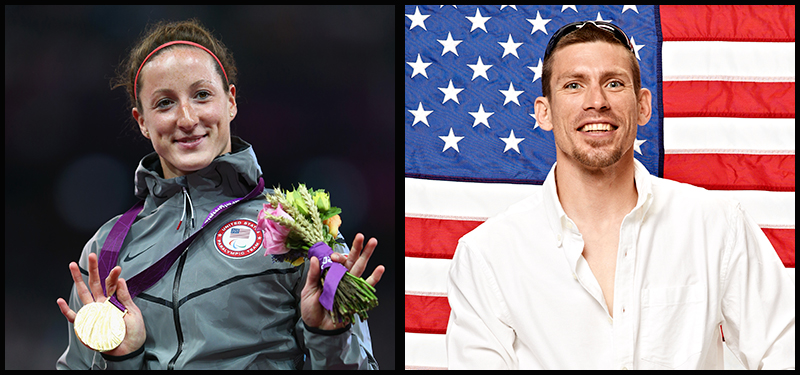
    Tatyana McFadden (l) and Jeremy Wagner are headed to the 2014 Paralympics in Sochi, Russia. (Photo: TeamUSA.org)
    Tatyana McFadden (l) and Jeremy Wagner are headed to the 2014 Paralympics from March 7-16 in Sochi, Russia. (Photo: TeamUSA.org)

    (Press release)

    COLORADO SPRINGS – U.S. Paralympics, a division of the United States Olympic Committee, announced Wednesday that 16 Nordic skiing athletes and two guides have been nominated to the 2014 U.S. Paralympic Team to compete in biathlon and cross-country skiing at the 2014 Paralympic Winter Games in Sochi, Russia, March 7-16. The nominations are subject to approval of the USOC.

    After sending six athletes to the Vancouver 2010 Paralympic Winter Games, Team USA’s Nordic roster will nearly triple in size with 12 men, four women and two guides for visually impaired athletes.

    “We are thrilled to bring such a large team of athletes and professional staff to Sochi,” said John Farra, high performance director for U.S. Paralympics Nordic skiing. “We have made a concerted effort to introduce more athletes to the sports of cross-country skiing and biathlon over the past two-and-a-half seasons, and this growth is a sign of our success in keeping many of them excited about our Nordic sports and working toward becoming internationally competitive.

    “In addition to building the numbers with new developing athletes, we have also focused many resources to help our top athletes get close to hitting the podium. Great focus was given towards equipment design for sit skiers, race ski selection and preparation in partnership with the U.S. Biathlon Association, and access to the best training camps and competitions around the world.”

    2014 U.S. Paralympic Nordic Team Nominees:
    (Subject to USOC approval)

    Women
    Monica Bascio (Evergreen, Colo.)

    Oksana Masters (Louisville, Ky.)
    Tatyana McFadden (Clarksville, Md.)
    Beth Requist (Winter Park, Colo.)

    Men

    Jake Adicoff (Sun Valley, Idaho)

    Omar Bermejo (Grand Rapids, Mich.)
    Kevin Burton (Boulder, Colo.)
    Lt. Cmdr. Dan Cnossen (Topeka, Kan.)
    Travis Dodson (Deming, N.M.)
    Sean Halsted (Spokane, Wash.)
    John Oman (Rice Lake, Wis.)
    Augusto Perez (East Syracuse, N.Y.)
    Aaron Pike (Park Rapids, Minn.)
    Bryan Price (Belton, Mo.)
    Andy Soule (San Antonio, Texas)
    Jeremy Wagner (Nanakuli, Hawaii)

    Guides

    David Chamberlain (Wilton, Maine)

    Reid Pletcher (Ketchum, Idaho)

    Three athletes return from the Vancouver 2010 Paralympic Winter Games, including Andy Soule (San Antonio, Texas) who won the first-ever U.S. medal in the Olympic or Paralympic Winter Games in the biathlon with his bronze in the men’s 2.4-kilometer race. Soule will be joined by his 2010 teammates Sean Halsted (Spokane, Wash.) and Monica Bascio (Evergreen, Colo.).

    Bascio boasts the most Winter Games experience, with Sochi marking her third Winter Games and fourth Games overall.  Having just recently retired from cycling, Bascio is one of three athletes who medaled at the London 2012 Paralympic Games. Other cross-over athletes include Tatyana McFadden (Clarksville, Md.) and Oksana Masters (Louisville, Ky.). McFadden is a 10-time Paralympic medalist in track and field, while Masters partnered with Rob Jones to become the first Americans to win a Paralympic rowing medal in the trunk and arms mixed double sculls event with their third place finish.

    More than half of the athletes nominated to the men’s team are military veterans: Omar Bermejo (Marines/Grand Rapids, Mich.), Kevin Burton (Navy/Boulder, Colo.), Travis Dodson (Marines/Deming, N.M.), Halsted (Air Force/Spokane, Wash.), Bryan Price (Army/ Belton, Mo.), Soule (Army) and Jeremy Wagner (Army Reserves/Nanakuli, Hawaii). Lieutenant Commander Dan Cnossen (Topeka, Kan.) is the only active duty member of the team as he currently serves with the United States Navy.

    Competition for Nordic skiing will take place March 8-16 with March 13 scheduled as an off-day. Nordic skiing includes both biathlon and cross-country skiing, both of which have three events contested at the Games, in addition to two cross-country relays.

    The majority of the U.S. Paralympic Nordic Skiing Team will compete in both sports. A list of events entered by each athlete will be available in February.

    The USOC and NBC Olympics have partnered to provide an unprecedented level of coverage to the Paralympic Winter Games. NBC and NBC Sports Network will combine to air 50 hours of television, starting on March 7 with the Opening Ceremony. It will be followed by daily coverage of all five Paralympic sports in the Sochi program, before the Games’ Closing Ceremony is broadcast on March 16. In addition to the unprecedented U.S. television coverage, the USOC and streaming sponsors BMW, BP, Citi, Liberty Mutual Insurance, Procter & Gamble and The Hartford will provide live online coverage at TeamUSA.org.

    U.S. Paralympic Team nominees for alpine skiing, biathlon, cross-country skiing, sled hockey, snowboarding and wheelchair curling will be finalized by the USOC no later than Feb. 21, the deadline to submit Sochi 2014 Paralympic Winter Games delegation rosters to the International Paralympic Committee. Selection procedures and dates can be found at TeamUSA.org/ParalympicGames/.

  • BNS Welcomes David Chamberlain as Race Service Director

    BNS Welcomes David Chamberlain as Race Service Director

    Dave Chamberlain
    Dave Chamberlain grinds — Courtesy photo

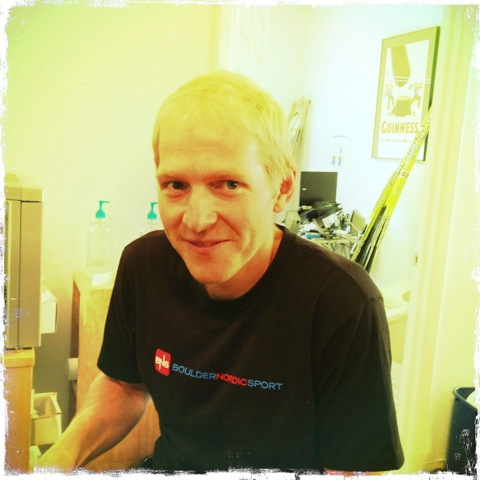
    Boulder, CO — Boulder Nordic Sport (BNS) is excited to welcome former Super Tour champion, David Chamberlain, to its staff. Chamberlain recently signed on as Race Service Director for BNS after moving to Boulder from Maine where he was coaching the Junior Development Team at the Maine Winter Sports Center.

    A Maine native, Chamberlain skied for Bates College from 1994-1998, earning All-American honors twice during his collegiate career. After college, David continued to race, skiing for the Subaru Factory Team and Fischer. During his professional career, he represented the United States at three World Championships and won the overall Super Tour twice.

    If you’re a fan of World Cup biathlon, you have most likely seen David’s wife, BethAnn. Chamberlain married the Minnesotan back in 2006, but due to major international skiing competition, they just finally had their honeymoon this year. Keep an eye out for BethAnn on the International Biathlon Union’s (IBU) website www.biathalonworld.com and check out her blog at http://bambambiathlon.blogspot.com/view/classic.

    David will be heading up the Race Service Department at BNS headquarters in Boulder this fall and will be hitting the road with the BNS Mobile trailer for the race season. He will also be contributing some thoughts on training and technique through the new feature “Chambo Chat” in BNS e-mail newsletters. See below for the first edition of Chambo Chat.

    Chambo Chat with Dave Chamberlain

    Chambo Chat—Specific Strength Ideas and the Transition to Snow 

    For cross country skiers, the majority of preparation time before the season is unfortunately done off the snow and using modes of training that do not exactly mirror the technique and motions used on snow. As a result, the transition to snow in the late fall/early winter often can be slow and awkward. Specific-strength workouts target the muscles and motions we use in skiing techniques and can be a great way to make this transition as smooth as possible. As an athlete training for my winter season, I would use specific-strength workouts on a weekly basis throughout the summer and fall.

    The best specific strength workouts are those carried out on rollerskis for varying lengths and duration.

    Double-pole workouts work very well for upper body and core strength. It is important to choose terrain that has rolling terrain with grades steep enough to stress the body but not so steep as to compromise technique. This will allow for maintaining concentration on keeping the hips up and forward as well as keeping the head and neck relaxed. These workouts can be continuous and carried out for up to an hour.

    Single-stick workouts are also very good training for poling muscles. For these workouts, use slight uphills and keep the core stable and engaged. As for skating, technique and muscle strength can also be enhanced by using no-pole workouts, both V1 and V2.

    Whatever the specific-strength rollerski workout, keep your pole tips sharp and rollerskis clean and in good condition. Rollerski ferrules are well worth the extra cost as they are made from a harder material than regular ski pole tips and stand up much better against hard pavement. A helmet is also a must when rollerskiing.

    As we make the transition to snow, it can be helpful to spend a few workouts in the first weeks on snow doing some no pole work. As an elite athlete I would spend a little time each day at my first on-snow training camp skiing both classic and skate without poles. This gave me time to focus on correct body position and balance without relying on the advantage of poles.

    As a last thought, specific-strength workouts can be a great diversion on a long workout in the winter, a chance to break up the kilometers of a long distance ski. On-snow specific-strength workouts can be done in the same way as rollerski workouts, and are a good way to keep the body tuned and ready for whatever the next event might be.

  • Stephen, Chamberlain Headline TD Banknorth Eastern Cup Opener

    Stephen, Chamberlain Headline TD Banknorth Eastern Cup Opener

    Stowe, VT—Trapp Family Lodge plays hosts to this year’s TD Banknorth Eastern Cup opening weekend. The Eastern Cup begins its fourteenth year as NENSA’s signature race series and this weekend will feature several of the nation’s best cross-country skiers. The Trapp Touring Center has been blessed with early season snow and the snow cover has been enhanced with their expansive snowmaking system. Saturday’s one kilometer classic technique sprint race and Sunday’s five and ten kilometer freestyle technique races will utilized the center’s new John Morton designed race courses. The events serve as New England Junior Olympic Team Qualifiers and will be scored to the USSA National Ranking List.

    East Montpelier, Vermont’s Liz Stephen is the event’s headliner. A Burke Mountain Academy graduate, Liz is coming off a 3rd place finish at last year’s World U23 Championships. She and her US Ski Team coach Matt Whitcomb will give a one-hour coaches’ clinic at the conclusion of Sunday’s race open to all coaches for no charge. Liz, however, will not be unchallenged; 2008 World Junior Team qualifiers and Dartmouth College skiers Ida Sargent and 2008 Eastern Cup Champion Sophie Caldwell, UVM’s Jennie Bender and a group of quickly rising New England junior and collegiate skiers will be doing their best to chase her down.

    On the men’s side, it will be a battle of youth versus experience. Masters skier New Hampton, New Hampshire’s Justin Freeman is a former Olympian and fellow Master David Chamberlain is a 3-time World Championship team member. Eli Enman should also find himself in the chase on both days. UVM’s Juergen Uhl, a 2008 NCAA All-American, should prove tough on the course, and last year’s TD Banknorth Eastern Cup Champion and Colby College skier Matt Briggs should not be counted out. Youngsters Kevin Cutts and UVM’s Alex Howe have proven to be very tough on the sprint course and should be top qualifiers in Saturday’s sprint.

    One great feature of the Eastern Cup is that it is not just for the very fastest cross-country ski racers. Athletes of all speeds get to compete side-by-side with some of the nation’s best, there is masters seed group that allows those over thirty to race together, and for the first time in NENSA’s history, Saturday’s sprints will feature the “Cupcake Sprints.” NENSA Youth and Intro Programs Director Abby Weissman has baked cupcakes to be handed out to the winners (and maybe the losers too) of the informal head-to-head races at the conclusion of the official finals. Also new this year, in order to promote a more environmentally-friendly community, NENSA has joined Terracycle’s Wrapper Brigade. In mid-2008, Terracycle launched the Wrapper Brigade, a project that finally puts use to the millions of energy bar wrappers that were formerly discarded. Since its initiation, the program, which is sponsored by Clif Bar, has collected over 300,000 wrappers, which have been turned into products ranging from tote bags to notebook covers. At all of NENSA’s major events this season, bring your empty bar wrappers and look for the recycling boxes under the TD Banknorth tent.

    Please note that day of race registration is available for both day’s races.

    Source: NENSA