Tag: Davos 30 k

  • Sundby Returns as Distance King in Davos; Harvey 12th, Killick 21st for Canada

    Sundby Returns as Distance King in Davos; Harvey 12th, Killick 21st for Canada

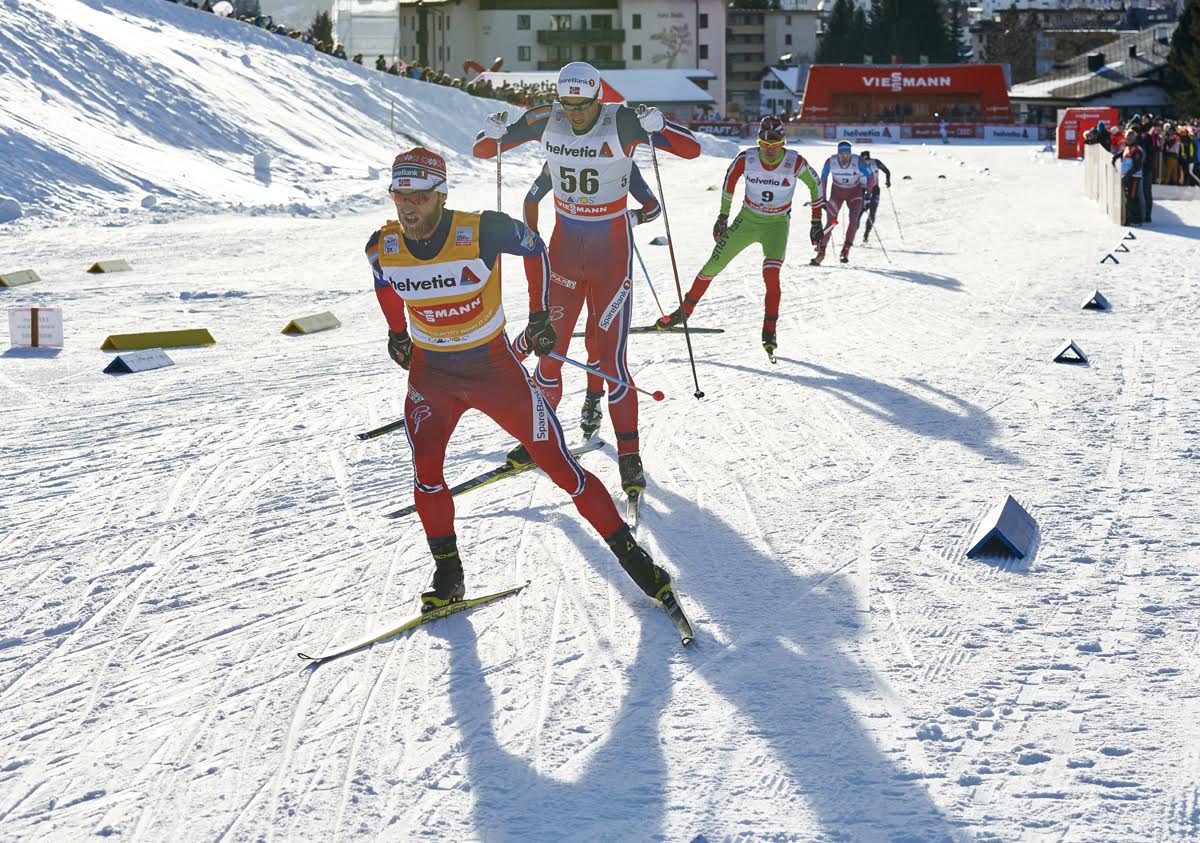
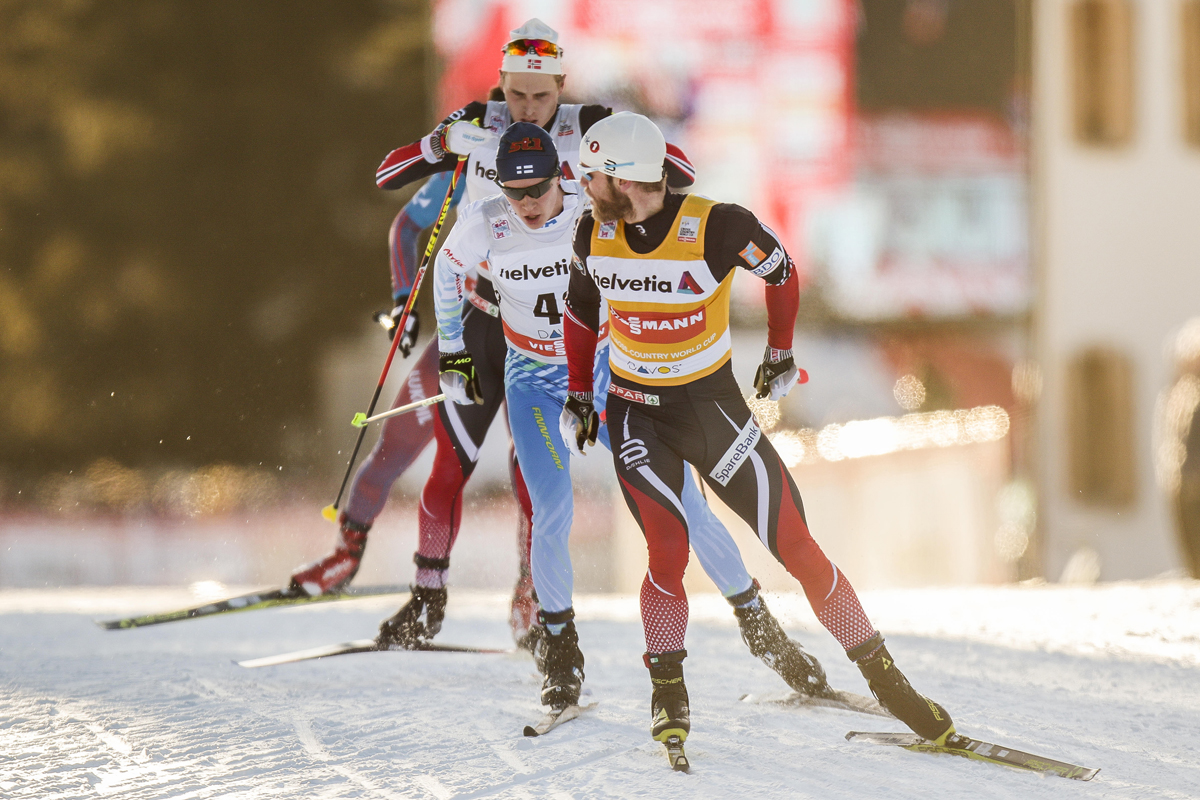
    Martin Johnsrud Sundby leading a train in the men's 30 k freestyle individual start World Cup on Saturday in Davos, Switzerland, which he won by 13.7 seconds.(Photo: Fischer/NordicFocus)
    Norway’s Martin Johnsrud Sundby leading Finland’s Matti Heikkinen and others in the World Cup men’s 30 k freestyle individual start on Saturday in Davos, Switzerland, which Sundby won by 13.7 seconds. (Photo: Fischer/NordicFocus)

    DAVOS, Switzerland — Martin Johnsrud Sundby might not have had the fastest World Cup opener (by his standards), but two weeks later it’s clear who is king of the distance field: the same Norwegian who won the World Cup distance globe two of the last three years.

    “I did not feel my best the last weekend, but I was able to catch the tour victory after all,” Sundby said of the 3-day mini-tour held in Lillehammer, Norway, last weekend. “So I knew that if I was a bit stronger this weekend I would be able to fight for the first place.”

    He won, but it was a fight. After 30 kilometers and well over an hour of interval-start racing, just 13.7 seconds separated him from second-place Anders Gløersen, also from the Norwegian team.

    Sundby was one of the last starters of the field – number 70 out of 78. And that was by his own choice. With a six-kilometer loop skied five times, he initially tried to game the start order so that he would be able to ski with someone fast who was lapping through. But then he settled on a different strategy.

    “We did some math yesterday trying to find out which number it was good to have,” Sundby said. “I tried to get 28 numbers after Gløersen. That was not possible, so I thought it would be good to see the other intermediate times and have full control of the race. That’s helpful if you need to find the right speed.”

    Despite having complete information about his top competitors, Sundby didn’t lead from start to finish. In fact, the standings fluctuated substantially, with 13 different men having top-five times at at least one of the intermediate time checks.

    “It’s a strange place to do races,” Sundby mused. “You feel almost finished after two laps, and then the third lap feels great, and then you lose 10 seconds downhill, and you gain 10 seconds uphill, so the race is alive. You also have a lot of time thinking. So it’s an interesting race. I love to ski here in Davos. I’m happy about the win.”
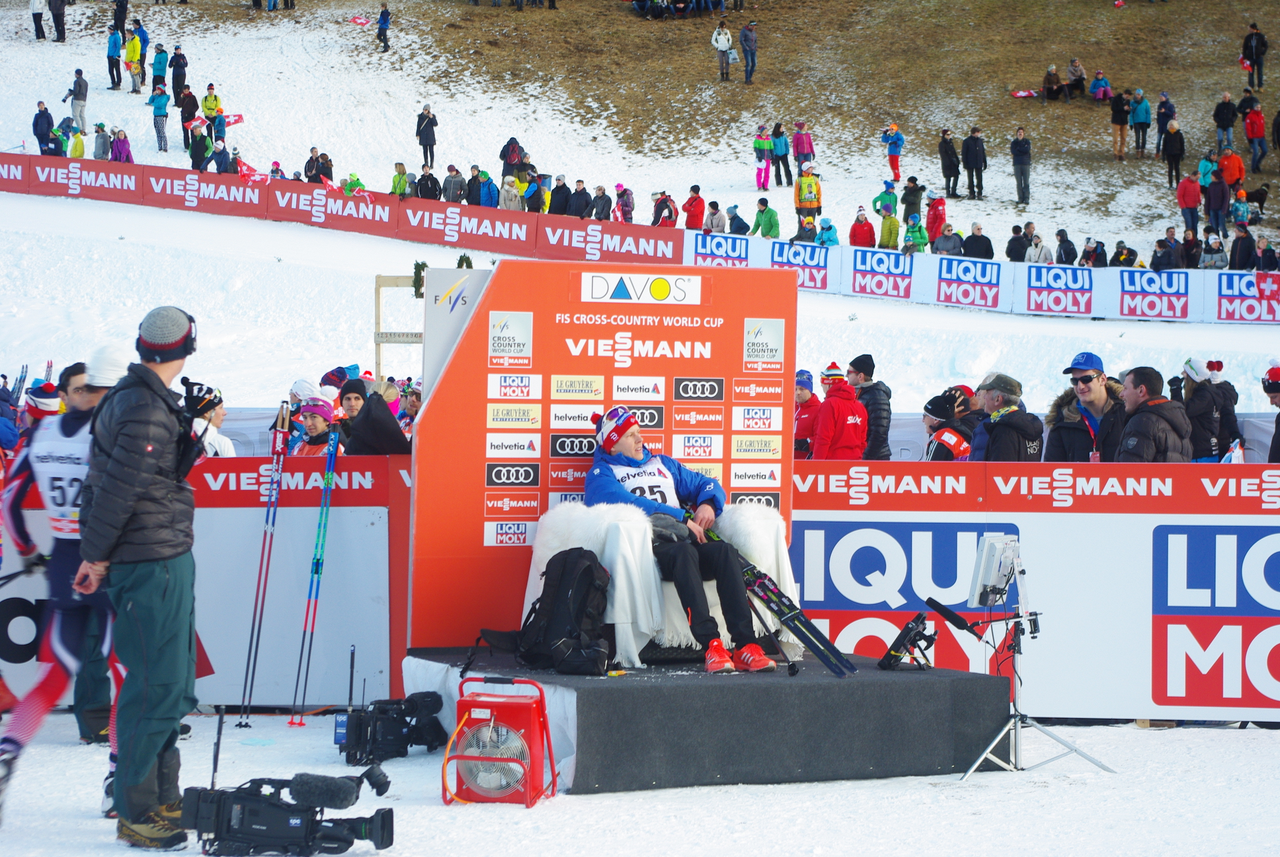
    Anders Gløersen of Norway enjoyed some time in the leader's chair before Sundby bumped him out of first place.
    Anders Gløersen of Norway enjoyed some time in the leader’s chair before Sundby bumped him out of first place.

    For the first almost two laps, it was Maurice Manificat of France who was laying down the fastest time.

    Manificat won this race in 2013, and placed second in 2011 and 2015. But even years might be a curse for the Frenchman. After his hard start, he faltered, slipping to 11th by the finish, +1:27.8.

    “Always here in Davos it’s important to try to find the right speed from the beginning and have a lot of power for the last two laps,” Sundby said in the press conference.

    That could have been an admonishment for Manificat, but the Frenchman helped one man onto the podium, even if it wasn’t himself: right on his tail was Anders Gløersen of Norway, who took full advantage.

    “I was lucky to have Maurice Manificat just in front of me on my second lap,” he said in the post-race press conference. “He was skiing so fast I almost died. So I see here I lost 15 seconds between 18 and 24 kilometers. I think that’s when he also felt that he also may have started too fast.”

    But Gløersen was able to hold some sort of pace, even as Manificat was drifting back through the field.

    “My last lap was not so bad,” he said. “I’m very satisfied with second place today.”

    With so many laps, catching a ride with someone strong was the name of the game. Sundby spent some time skiing with Matti Heikkinen of Finland, who exploited their collaboration to get to third place, +25.7.

    “I had the pleasure to do some laps with Matti, so that was great,” Sundby said. “Matti probably felt it was sometimes going a bit too fast. But I think we did a good race together. He was helping on his last lap. On his last lap he did a great speed down to the stadium and we were able to catch some seconds on [Gløersen], so I think we did a good job together.”

    If that was a barb at the third-place Finn, Heikkinen made clear that he thought he had skied a good race, and that Sundby didn’t wear him out too much.

    “My tactic was to start quite fast, but then I knew that Martin would catch me,” Heikkinen said in the press conference. “So I skied with Martin, and then the last lap I made my attack. The split times the last few kilometers, I think I was skiing quite fast.”

    Indeed: his time through the 18 k checkpoint ranked just ninth, but Heikkinen dropped the hammer on his last kilometers, moving his way up through the field’s splits.

    Racing together with someone else can add additional challenges, though. Especially for Gløersen, who followed the fast-starting Frenchman.

    “I always like to go fast on the flats and not so fast on the steep uphills,” Gløersen said in the press conference. “That’s a challenge when you go together with people who don’t have the same pace on the flat but want to go faster on the uphills. That’s not an advantage. So you have to take into consideration what’s best for me, to go my own race, a steady pace, or to take it easy on the flats and then go on the lactate threshold on the uphills.”

    Another Norwegian, Simen Andreas Sveen, took fourth, +36.3; Russia’s Alexander Legkov was fifth, +48.4, after having the second-fastest split time through the middle of the race.

    Both Legkov and teammate Maxim Vylegzhanin (31st, +3:13.8) are under suspicion after the release of WADA’s newest McLaren report on Russian doping, but went through the mixed zone without taking questions from the media.

    Hitching his cart to Legkov’s wagon was Andrew Musgrave of Great Britain, who powered to 15th place (+2:00.7), his third top-15 finish of the season.

    “Yeah, that was lucky,” Musgrave laughed. “I wasn’t feeling amazing. I had done, like, one lap, and got caught by Legkov, and last year I learned that you can get pretty knackered if you do all the work. So I just stayed behind, didn’t do anything, and then felt alright on the last lap. So it was good. Getting pulled around by Legkov for 20 k was a bit of help, yeah.”

    Harvey 12th and Killick 21st; Hoffman Lone American
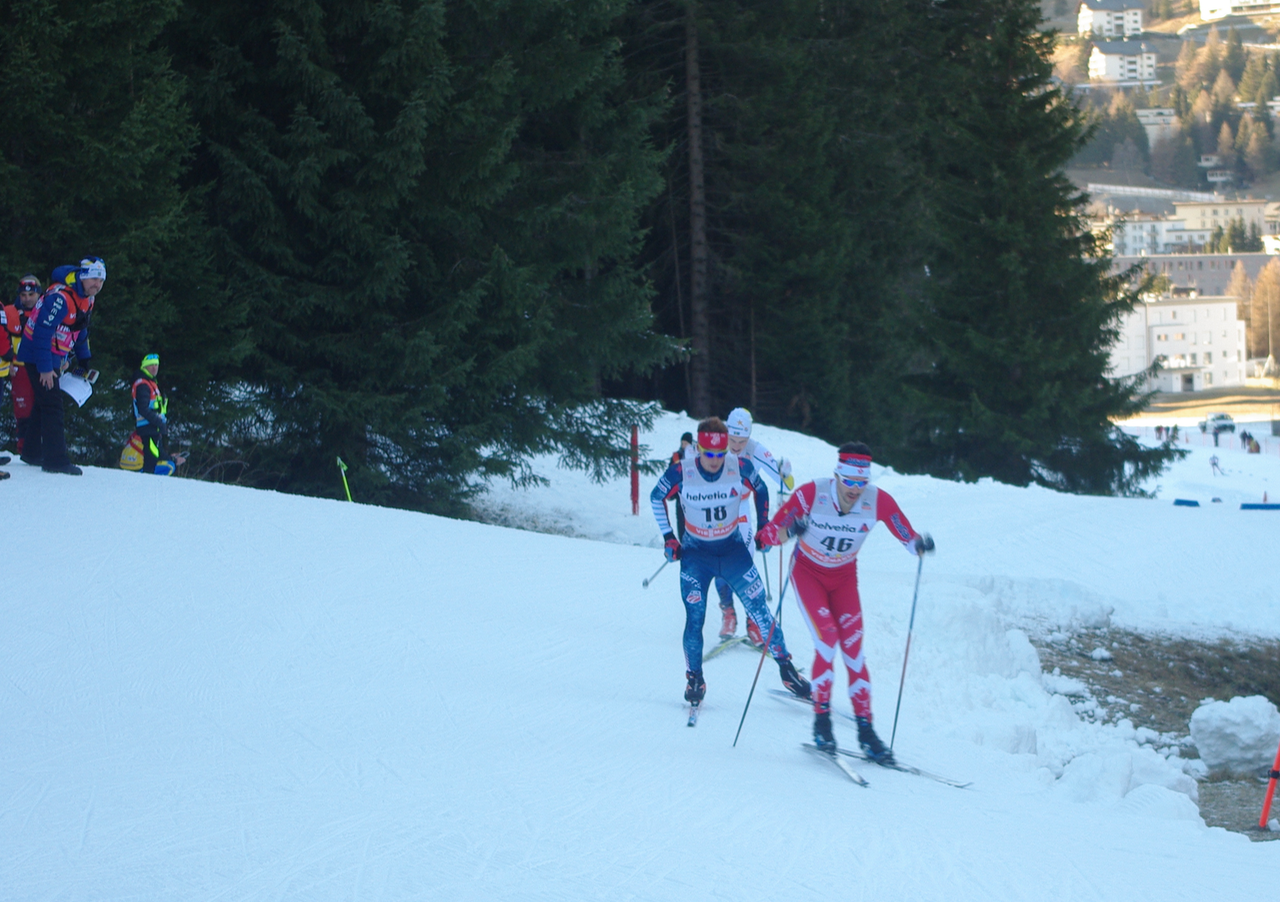
    Alex Harvey of Canada leading Noah Hoffman of the United States and Sweden's Jens Burman in the 30 k skate in Davos, Switzerland.
    Alex Harvey of Canada leading Noah Hoffman of the United States and Sweden’s Jens Burman in the 30 k skate in Davos, Switzerland.

    Skiing a steady race was Canada’s Alex Harvey, who ended up 12th, +1:29.4. It was his best distance result in Davos ever, despite contesting the event since 2009.

    “I was confident coming in,” Harvey said. “And I was here before Kuusamo to try and get adapted a little bit to altitude, so yeah, I was feeling confident that I would have a better start, a better result than before. But you always have to deliver, so I’m happy that the feelings were representative of the result.”

    He ended up skiing with Jens Burman of Sweden, who had a career-best result of sixth (+53.5).

    “I towed him for a lap and a half, and his last lap he took over because he was pushing hard for the finish,” Harvey said. “He’s pretty new to the scene, so I didn’t know that much about him, but he ended up beating me actually. So we both helped each other. That was good.”

    Teammate Graeme Killick made it two big improvements for Canada, clocking in 21st (+2:24.2). Killick was an early starter in bib 16, and when he lapped through for the first time, Sveen in bib seven was the only man who had gone faster.

    “I was surprised that,” Killick said in a phone interview. “I generally don’t open that hard. I knew it was maybe going to maybe be a decent race… I didn’t think I taxed myself too much on the first lap. Then going into the stadium I saw Hellner was in the starting gate as I was lapping through. Probably twenty seconds to [ski up] to me. So I just tried to ski conservatively and be ready for that ride. He caught me just coming up towards the bunker at the top of the course.”

    Hellner, who was on the podium in the 10 k skate in Lillehammer, wasn’t having his best day – he landed 13th, +1:34.4.

    “I was hoping for a lot more than this,” he said after the race. “Before this I had the goal to be on the podium. The feeling was not so great, so I don’t know, it didn’t happen.”

    Disappointed or not he was still one of the fastest men in the field, and Killick took advantage.

    “I skied with him and I thought the race was okay, but I had a little bit of a blow-up on the next lap because he told me to lead,” Killick said. “He pulled over and so I led that section into the wind, and it wasn’t crazy long but it was kind of rough… when he surged by me and I tried to keep with him, I had a little blow-up there. I lost him slowly through that next lap and then I just tried to recover and ski a decent pace on my own there through the middle section.”

    Like Harvey, Killick had set a best-ever result for the Davos race – his previous mark was 40th. And it was also the first time he had broken into the top 40 this World Cup season.

    “It’s really encouraging for me,” he said. “I’ve never had my best races in Davos and I think it’s always been a course that I have potential with being at altitude, where I tend to do a little better. But a skate race is always difficult for me. It was really encouraging to prove to myself that I can ski that pace with those guys and even just having those initial splits, while I was skiing on my own, being pretty decent–that was really encouraging too going into the Tour de Ski and preparing for World Championships. I am super encouraged by the result.”

    Other Canadian finishers were Devon Kershaw in 42rd (+3:52.9) and Andy Shields in 64th (+6:33.9).

    The lone U.S. man even starting the race was Noah Hoffman, who finished one spot behind Kershaw in 44th (+3:58.9).

    “My energy was actually pretty good,” Hoffman said. “I skied the race more or less the way I wanted to and I just wasn’t fast but ah, I don’t know I am left feeling optimistic still so I will take it. I am not sure why.

    Hoffman actually skied with Harvey for a time, but wasn’t able to hang on to the ride.

    “I had a perfect set up with Alex starting after I lapped through after one lap,” he said. “And I skied with him to the top of the course and then couldn’t hang on the down hill. I have struggled with the downhill before, and I’m frustrated by that. The uphill section–this is a unique course where it’s basically three and a half kilometers uphill, two and half kilometers downhill, and I’m always more competitive on the uphills, that is just the way I am built.”

    — Jason Albert and Jake Ellis contributed reporting.

    Results

  • With Manificat Breathing Down His Neck, Sundby Hangs Tough for Davos 30 k Win

    With Manificat Breathing Down His Neck, Sundby Hangs Tough for Davos 30 k Win

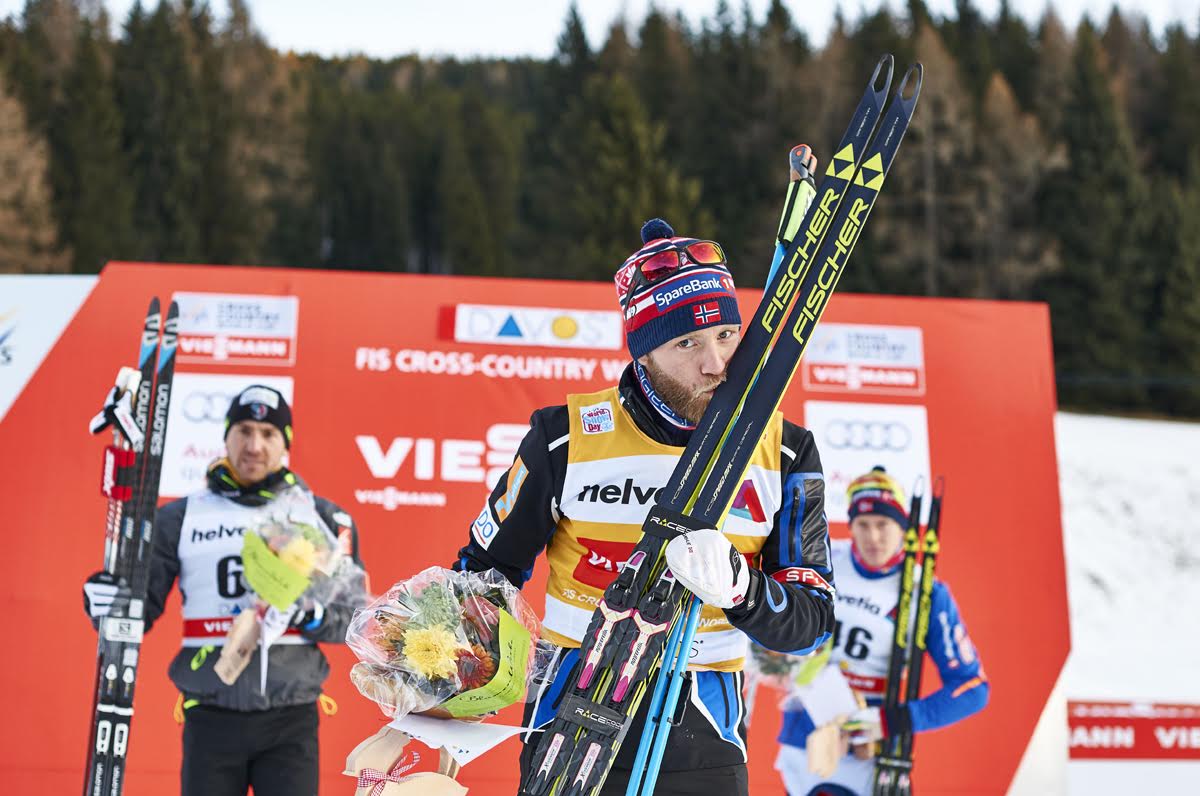
    Martin Johnsrud Sundby thanks his lucky stars after winning his fourth-straight individual race (and fifth race in a row) of the World Cup season on Saturday at the 30 k freestyle in Davos, Switzerland. He held off France's Maurice Manificat (l) and teammate Anders Gløersen (r) for the win. (Photo: Fischer/NordicFocus)
    Martin Johnsrud Sundby thanks his lucky stars (and skis) after winning his fourth-straight individual race (and fifth race in a row) of the World Cup season on Saturday at the 30 k freestyle in Davos, Switzerland. He held off France’s Maurice Manificat (l) and teammate Anders Gløersen (r) for the win. (Photo: Fischer/NordicFocus)

    If someone had to be a carrot, so to speak, Martin Johnsrud Sundby was the guy to go after in the men’s 30-kilometer freestyle individual start on Saturday at the World Cup in Davos, Switzerland.

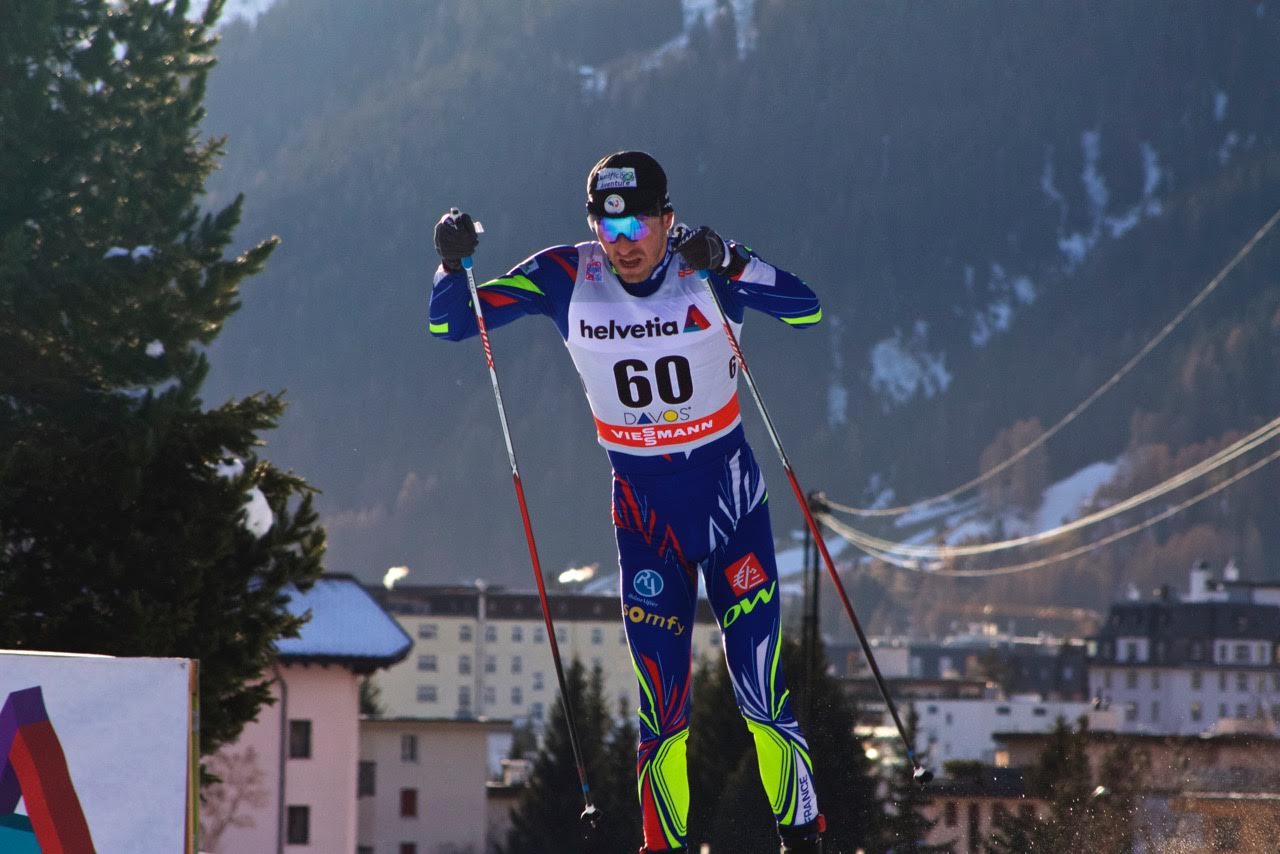
    Maurice Manificat of France started a minute behind the Sundby — and interestingly 30 seconds after Canada’s Graeme Killick — in bib 60 of  83. By the first timing point at 2.2 k on the 5 k course, Manificat had already put himself in a position to rival Norway’s defending overall World Cup champion.

    But how long would it hold up?

    One kilometer later, Manificat was just a tenth of a second faster than Sundby with the lead, and by 5 k, the he remained 0.2 seconds ahead in first.

    Maurice Manificat pushed over every inch of the men's 30 k freestyle individual start on Saturday in an effort to beat Norway's Martin Johnsrud Sundby for the win.
    Maurice Manificat pushed over every inch of the men’s 30 k freestyle individual start on Saturday in an effort to beat Norway’s Martin Johnsrud Sundby for the win.

    “I started quite fast and had great skis,” Manificat told FIS after the race. “I was focused the entire time.

    Manificat’s fast start held up as the 29-year-old Frenchman matched Sundby’s times for two-thirds of the six-lap race. Most of the time, despite not actually being able to see Sundby, Manificat had the edge — except for when Sundby was 0.6 seconds ahead at 10 k and then 0.3 seconds up 10 kilometers later.

    That’s where Manificat’s race started to unravel. He later explained his back hurt for the final 10 k. By 22.2 k, he started to lose contact with Sundby, who was then eight seconds ahead at that checkpoint.

    Sundby extended that gap to 9.5 seconds 1 kilometer later, then was 10 seconds ahead with 5 k to go. At 27.2 k, it appeared the race was over and in Sundby’s control, as the 31-year-old Norwegian led Manificat by 20.8 seconds.

    Sundby went on to win by 20.7 seconds in 1:06.27.9, and Manificat held on for second place, 7.9 seconds ahead of Anders Gløersen of Norway. Gløersen won the shortened version of this race last year in Davos: the 15 k freestyle.

    Throughout Saturday’s full-distance signature event, even tougher because it’s at altitude 5,000-plus feet above sea level, Gløersen had been in the hunt for a podium, skiing the same speed as Norwegian teammate Chris André Jespersen early. Both were about 18 seconds behind Manificat and Sundby at 8.2 k. Two kilometers later, Gløersen’s time still ranked third but Jespersen had dropped to fifth behind France’s Robin Duvillard.

    An early starter in bib 22, Duvillard initially set the times to beat for the Norwegians following him. Duvillard’s teammate Jean-Marc Gaillard started 23rd and ultimately finished about 10 seconds faster than Duvillard, earning his seat in the leader’s chair until Norway’s Sjur Røthe in bib 34 crossed the line 1.3 seconds faster.

    Gløersen topped Røthe by almost 15 seconds to take the lead, then was finally bumped to third by Sundby and Manificat. Røthe ended up fourth, Gaillard placed fifth, Norway’s Petter Northug came on strong later in the race to finish sixth (+46.2), Duvillard was seventh (+54.3), and Jespersen finished eighth (+1:03.5). Hans Christer Holund was the sixth Norwegian in the top nine in ninth (+1:07.5), and Switzerland’s Toni Livers placed 10th (+1:13).

    Martin Johnsrud Sundby leads a train with some of his Norwegian teammates, including Petter Northug (56) on Saturday at the Davos World Cup 30 k freestyle in Switzerland. (Photo: Fischer/NordicFocus)
    Martin Johnsrud Sundby leads a train with some of his Norwegian teammates, including Petter Northug (56) on Saturday at the Davos World Cup 30 k freestyle in Switzerland. (Photo: Fischer/NordicFocus)

    At the finish, Sundby appeared content with what he’d done — winning his fourth-straight individual race in as many distance races this season — without much showmanship. Truth be told, he was tired.

    “I pushed a bit too hard the first 15 kilometers,” Sundby told FIS. “I did not feel that good after that. I was lucky I joined Sjur and Petter. Sjur did a great job in the fifth lap. I was able to catch some speed.

    “The races in Davos kill me every year,” he added. “The last two kilometres were almost impossible to ski. I tried to ski easy on the way to the top but I was tired…”

    “I’m glad that I won,” Sundby told VG, according to a translation. “This is the toughest [race] I’ve been in so far this year. This was no ‘walk in the park.’ ”

    He would have preferred to have completed the course — lap after lap — with “steel control”, Sundby added, but that wasn’t in the cards.

    “It was a tough race and Maurice had a hold on me…,” he said. “Today I had to fight. I luckily got good [skiing with] both Petter and Sjur the last two laps.”

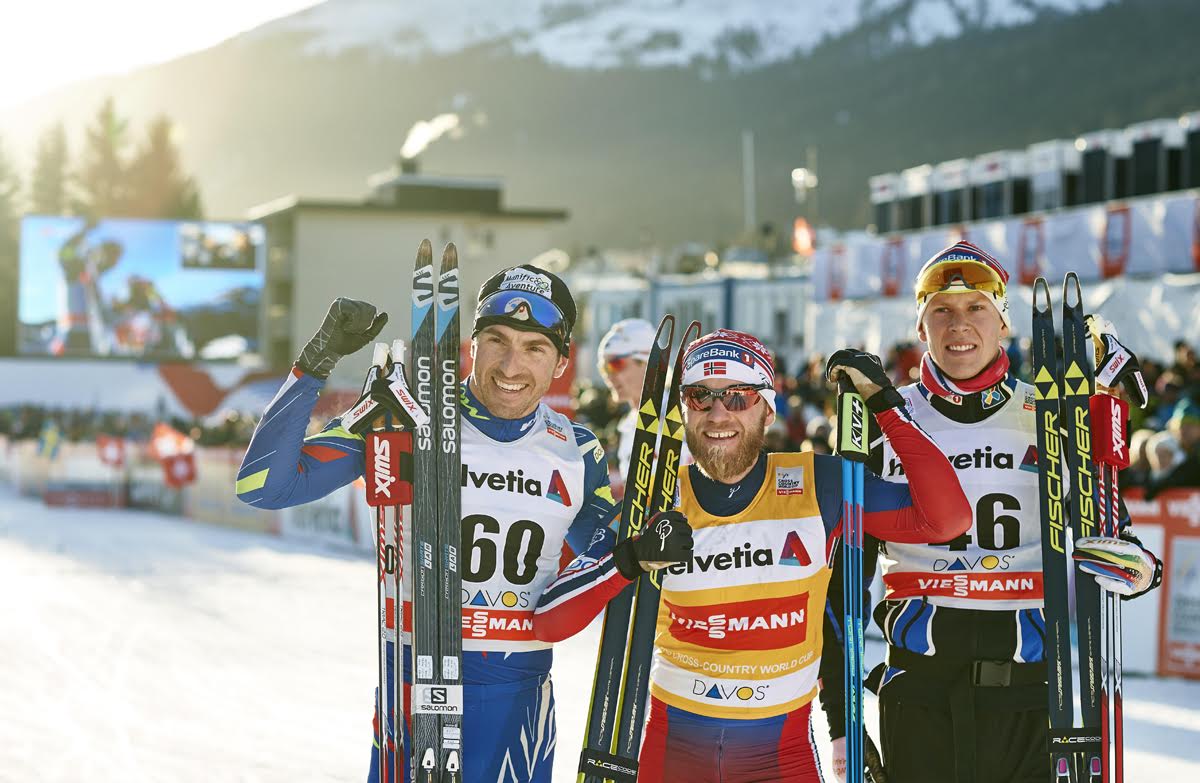
    The men's 30 k freestyle podium at the World Cup in Davos, Switzerland, with winner Martin Johnsrud Sundby (c) of Norway, France's Maurice Manificat (l) in second, and Norway's Anders Gløersen (r) in third. (Photo: Fischer/NordicFocus)
    The men’s 30 k freestyle podium at the World Cup in Davos, Switzerland, with winner Martin Johnsrud Sundby (c) of Norway, France’s Maurice Manificat (l) in second, and Norway’s Anders Gløersen (r) in third. (Photo: Fischer/NordicFocus)

    Røthe explained he struggled to follow Sundby, but he stuck with the Norwegian train and it led him to fourth place.

    “I asked Martin if he would pull a bit, but got no answer,” Røthe told VG.

    Perhaps the most visibly gassed at the line, Manificat was initially frustrated with his 20-second loss, but he didn’t take long to recover, stand up and smile at the TV cameras. He had done his best and ended up on the podium.

    “It is crazy to be on the podium again. It was great fight with Martin,” Manificat told FIS. “In the last two laps I had pain in my back. I was losing seconds on Martin and then I let it go…”

    The last time Manificat reached the podium was last February in Östersund, Sweden, when he placed second in the 15 k freestyle at the pre-World Championships World Cup.

    “We are delighted to be joining the fight,” Manificat said to VG about his French teammates, with three French skiers in the top seven.

    As for what it will take to beat the Norwegians, he added, “We have to be in really good shape.”

    Results

  • SuperTour Distance Leader Brian Gregg Bound for Davos 30 k, to Skip Sun Valley

    SuperTour Distance Leader Brian Gregg Bound for Davos 30 k, to Skip Sun Valley

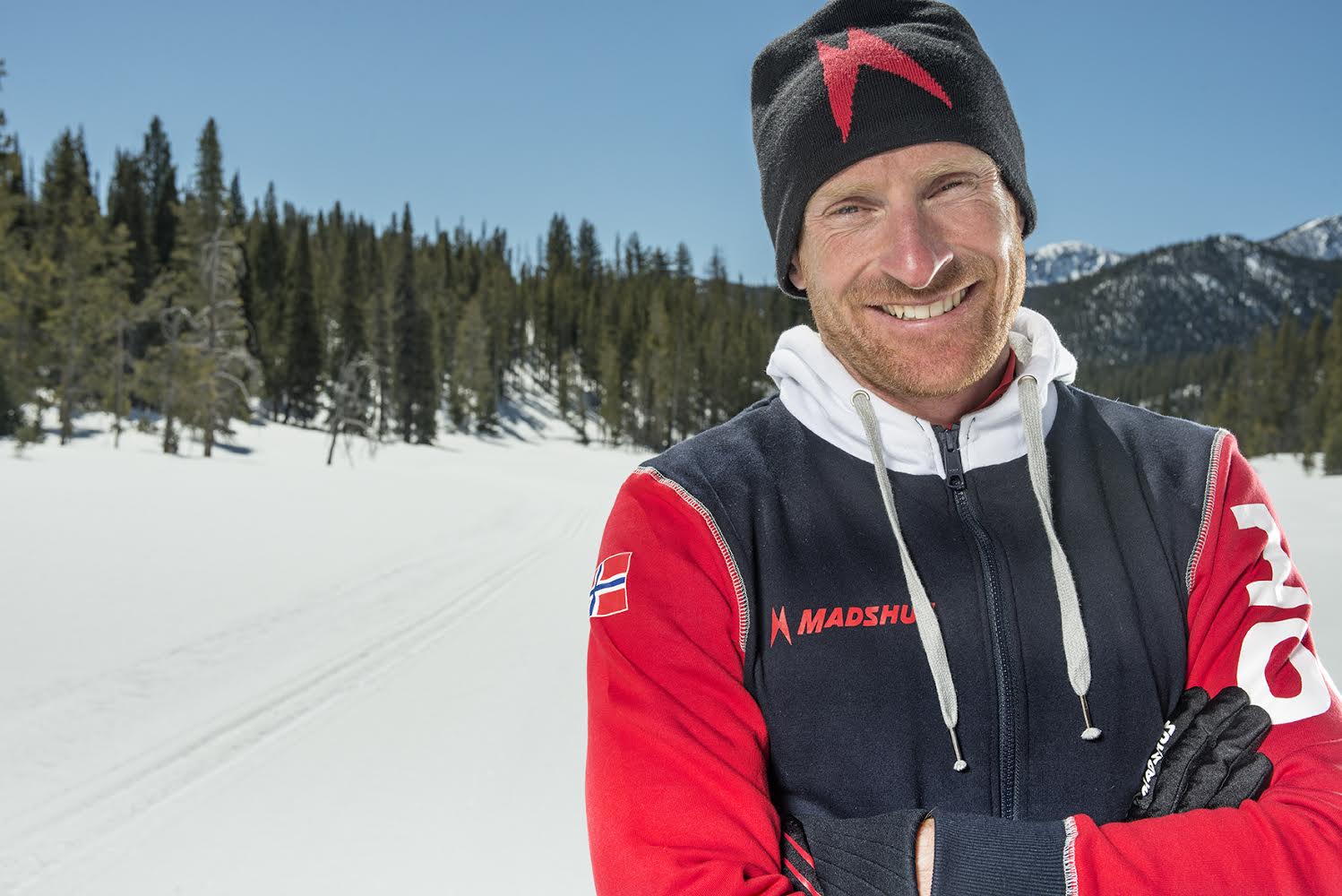
    Brian Gregg of Team Gregg/Madshus is headed to Switzerland on Wednesday to prepare for the Davos World Cup 30 k freestyle on Dec. 12. On Monday, the U.S. Ski Team officially notified Gregg that he had been awarded the start. (Photo: Madshus)
    Brian Gregg of Team Gregg/Madshus is headed to Switzerland on Wednesday to prepare for the Davos World Cup 30 k freestyle on Dec. 12. On Monday, the U.S. Ski Team officially notified Gregg that he had been awarded the start. (Photo: Madshus)

    On Wednesday, Brian Gregg is boarding a plane to his next race destination. No, he’s not jet setting from West Yellowstone, Mont., to Sun Valley, Idaho, in place of a 4 1/2 hour drive; the 31-year-old Sochi Olympian is bound for Europe.

    Instead of racing the second set of SuperTours this weekend in Sun Valley, he’ll be prepping for the Dec. 12 World Cup in Davos, Switzerland: the 30-kilometer freestyle individual start.

    Gregg, of Team Gregg/Madshus, confirmed his itinerary for the next two weeks in an email. On Monday, the U.S. Ski Team (USST) officially gave him the word that he had been granted the Davos 30 k start.

    “The Davos Skate distance race has been a goal of mine for a long time and has been in the back of my mind all summer,” Gregg wrote two days after winning the first SuperTour distance race of the season, the 15 k freestyle in West Yellowstone. “I am grateful for the opportunity to race a European World Cup that I feel suits my strengths well.  It is really cool to see that the US Ski Team is looking at the Super Tour and how to help bridge the gap to World Cup racing.”

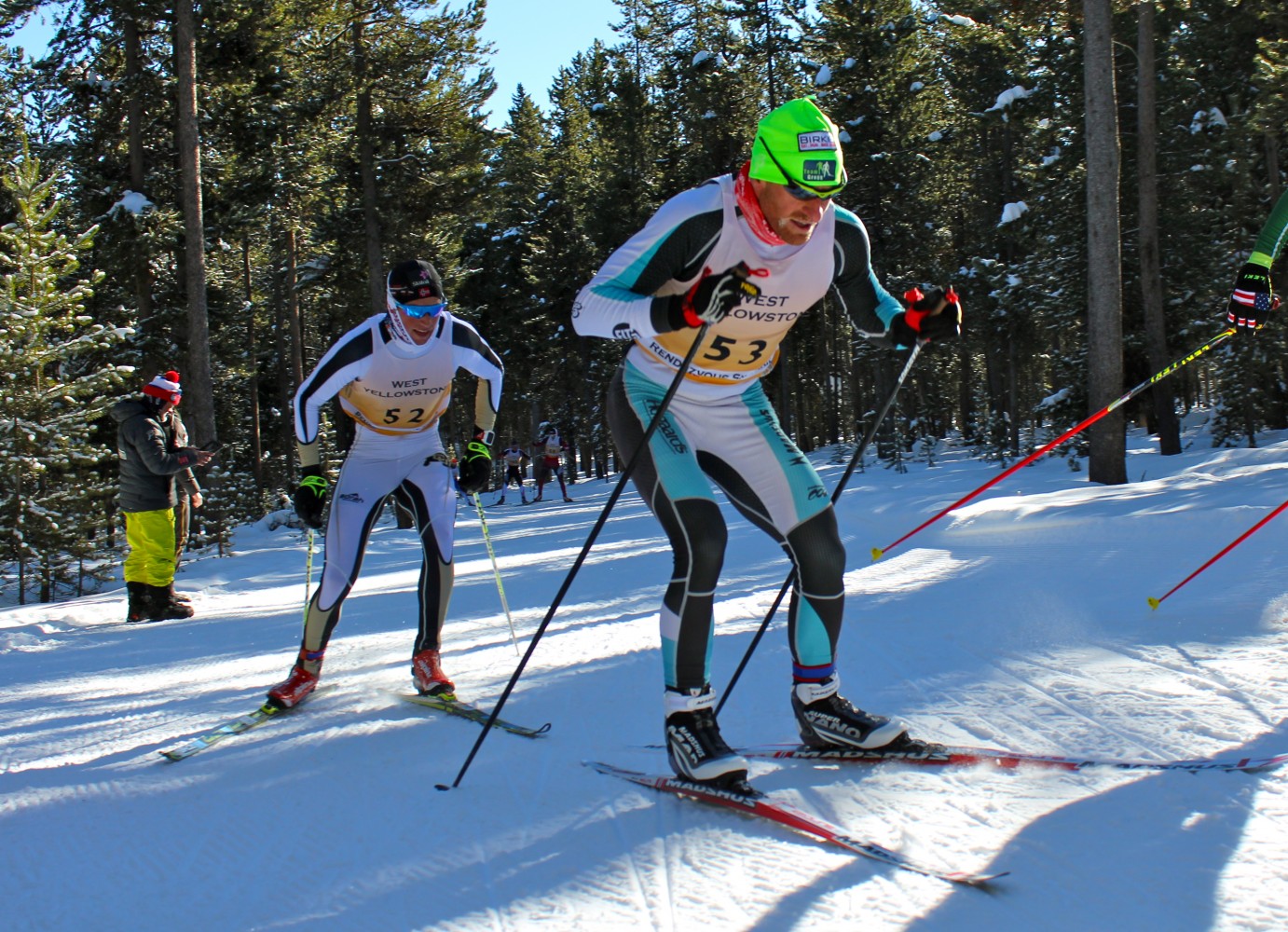
    Brian Gregg (Team Gregg/Madshus) (r) leads University of Colorado's Mads Strøm during the last lap of the men's SuperTour 15 k freestyle on Saturday in West Yellowstone, Mont. Gregg went on to win it by 5.5 seconds over training partner and friend Matt Liebsch (not shown).
    Brian Gregg (Team Gregg/Madshus) (r) leads University of Colorado’s Mads Strøm during the last lap of the men’s SuperTour 15 k freestyle on Saturday in West Yellowstone, Mont. Gregg went on to win it by 5.5 seconds over training partner and friend Matt Liebsch (not shown).

    USST Head Coach Chris Grover explained that they had an open men’s start in the Davos 30 k and decided to offer it to Gregg since he won the only distance skate race on the SuperTour schedule this fall.

    “This is a stand-alone start. We have not offered him any other starts in the future,” Grover wrote in an email.

    The Period 1 SuperTour schedule includes two stops this year: West Yellowstone and Sun Valley. West Yellowstone held two skate races (a sprint and the 10/15 k), and next weekend’s races in Sun Valley are the same distances — but both are classic.

    By skipping the Sun Valley races, Gregg is essentially out of the running for the overall SuperTour lead and the Period 2 World Cup starts in January that come with it. Instead, he’s focused on Davos first, then World Cup starts later in the season.

    “Unfortunately, missing the Super Tours in Sun Valley would make staying in the Super Tour Lead real hard,” Gregg wrote. “I have decided to focus on the Davos World Cup instead…”

    The World Cup starts awarded to the overall male and female SuperTour leader after Sun Valley involve two weekends: a sprint weekend in Planica, Slovenia, and a 10/15 k freestyle and relay in Nove Mesto, Czech Republic.

    “I will be at US Nationals and will certainly have my sights set on Period 3 Super Tour World Cup starts and on the Period 4 Canadian Tour starts,” Gregg wrote.

    “My goal in Davos is to score World Cup points,” he continued. “I finished 35th last year in the 50km Freestyle Holmenkollen World Cup and am looking to build on that performance.”

    He was also excited to see his wife Caitlin Gregg, who is racing the World Cup circuit as a new member of the U.S. Ski Team, and help her prepare for the women’s 15 k skate race in Davos. Their personal coach, Tom Jorgensen, is currently in Europe with Caitlin and the USST, and will be the couple’s wax technician for the races in partnership with the USST, Gregg explained.

    “Without racing [in Sun Valley] I am pretty sure I will fall out of the Super Tour top 4,” Gregg added. “I love to race, but I think arriving in Europe earlier gives me a better shot at reaching my goals in the Davos WC.”

    He flies to Zurich on Wednesday and will race on his 10th day in Europe.

    “Like any athlete, if Brian were to have an outstanding performance on World Cup in Davos, we would strongly consider him for future World Cups,” Grover explained. “Every World Cup start is technically discretionary, including starts for those athletes on the A-Team (i.e. Red Group athletes). Each NGB [National Governing Body] decides which athletes to race within their given quota at each event. We always race the athletes whom we feel have the strongest likelihood of producing a top result for the USA.”