Tag: Davos World Cup skate sprint

  • Rethinking Concussions: Katherine Stewart-Jones’s Personal Journey

    Rethinking Concussions: Katherine Stewart-Jones’s Personal Journey

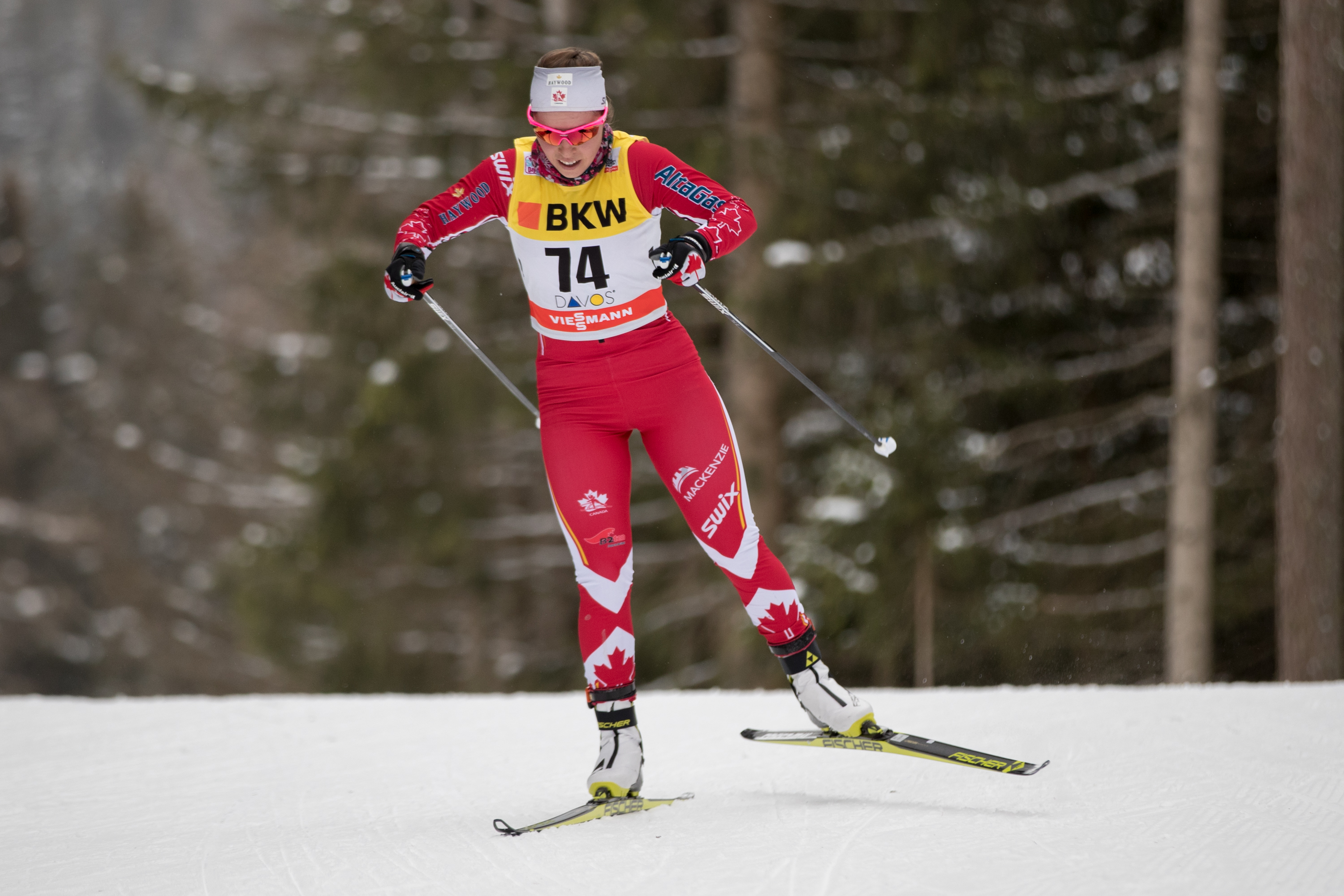
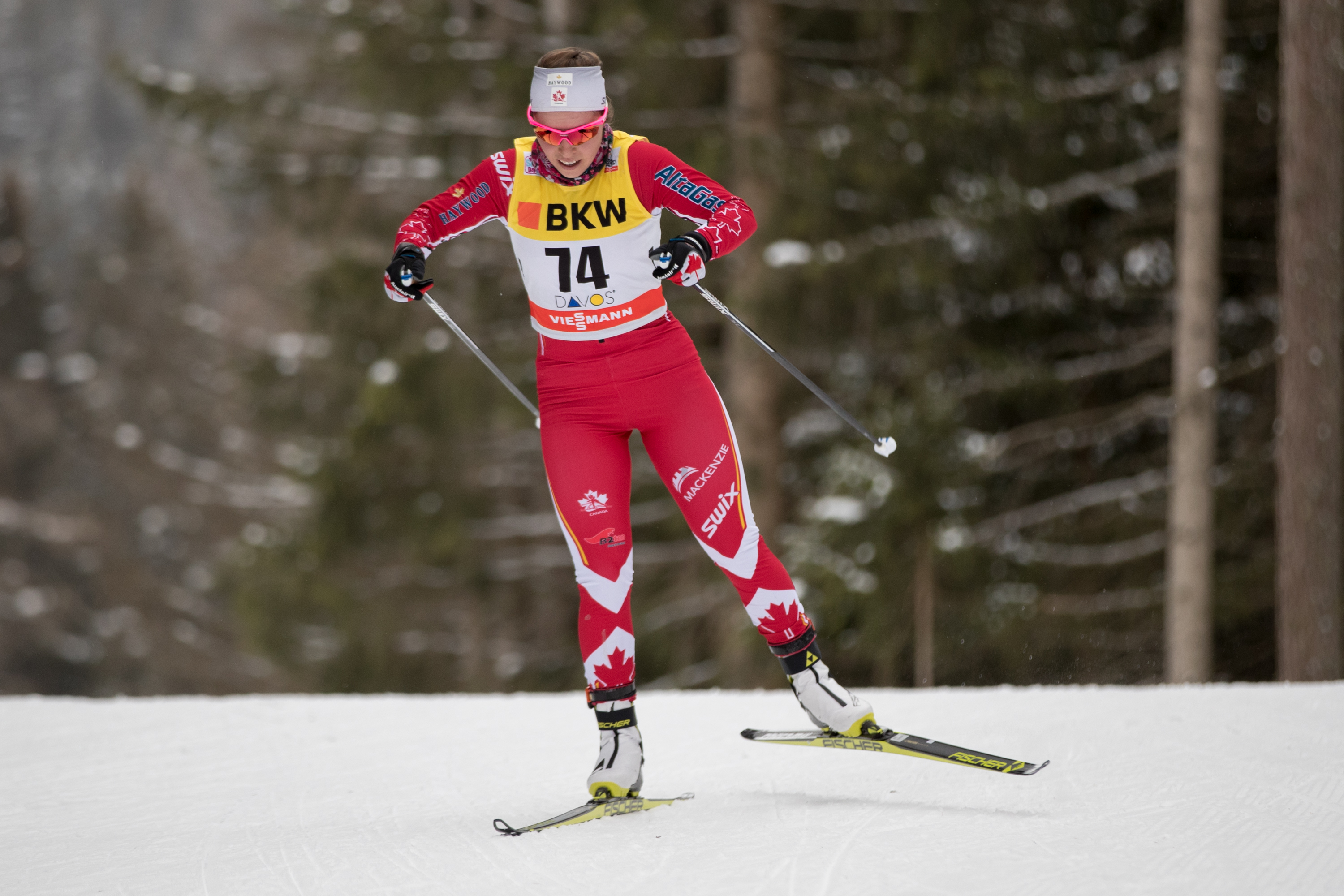
    Canada’s Katherine Stewart-Jones racing to 79th in the women’s 10 k freestyle on Dec. 10 at the World Cup  in Davos, Switzerland. The day before, she placed 55th in the freestyle sprint. (Photo: Reese Brown / U.S. Ski & Snowboard)

    In a split second, Katherine Stewart-Jones was flying over her handlebars and headed face-first for the road. She had been biking to her local gym in Thunder Bay, Ontario, on Sept. 19 when her bike’s front tire rammed into an irregular rise in the road and sent her off her bike seat and toward the unforgiving pavement below.

    A person driving by witnessed Stewart-Jones catapult off her bike and stopped immediately to check if she was all right. Though the 22-year-old Quebec native had been wearing a helmet, her face had take the brunt of the impact, leaving her with two swollen lips and one very sore tooth. The passerby who had witnessed the fall stopped, loaded Stewart-Jones’s bike in the back of the car and ferried her the rest of her way to the gym.

    Canadian National U25 Team member Katherine Stewart-Jones racing in a classic-sprint quarterfinal at 2017 U23 World Championships at Soldier Hollow near Midway, Utah. She placed 24th overall on the day. (Photo: flyingpointroad.com)

    When Stewart-Jones arrived at Thrive Strength and Wellness that day, Josh McGeown, who works as a strength instructor at Thrive, has a master’s of science in kinesiology and specializes in athlete injury and rehabilitation, took one look at her and informed her there would be no workout for her that day. In the gym’s office, McGeown immediately ran a few preliminary tests to decipher if Stewart-Jones had a concussion, though he also indicated it was, in all likelihood, too early to tell. She would have to wait for more symptoms to arise.

    After McGeown’s prognosis, Stewart-Jones, a member of both the Canadian National U25 Team and National Team Development Center (NTDC) Thunder Bay, called the NTDC team’s doctor to arrange an appointment. She got in the same day as the accident, and a few more tests were run. Once again, however, she was told nothing could be confirmed until more signs of a concussion showed up. By the next morning, they did.

    “I slept like 12 hours that night or something, not normal,” Stewart-Jones said on the phone in late November.

    The morning following her accident, Stewart-Jones flew home to Chelsea, Quebec. She had been planning to return home to help with a Fast and Female event taking place in Ottawa,  10 kilometers south of her hometown. After the event, her plan was to fly to Park City, Utah, to join her fellow Canadian national-team members at a dryland altitude training camp.

    But recurring headaches and the inability to do anything but sleep changed all that.

    “I was sleeping like crazy,” Stewart-Jones said. “My eyes would get really tired. I had a lot of sensitivity to light and sounds, just being around people was like, ‘Whoa.’ ”

    “I also ended up having some issues with my tooth,” Stewart-Jones explained. “We weren’t sure at first if it was injured, but it ended up changing colors, like turning purple. So I ended up having to get a root canal.”

    Besides a tooth that necessitated endodontic treatment, Stewart-Jones’s accident also left her with no energy to train, despite wanting to do so. For close to a month, she rested, unable to train or complete any of the online psychology courses she was taking at Lakehead University. Even reading screens bothered both her eyes and her head.
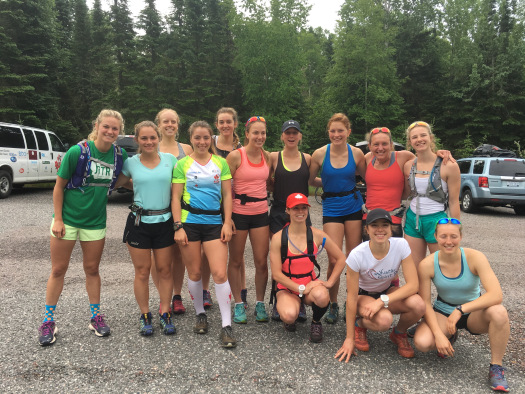
    Katherine Stewart-Jones of the Canadian National U25 Team (fourth from l, white socks) with guest training partners Jessie Diggins of the U.S. Ski Team (far left) and Caitlin Gregg of Team Gregg (back row, second from r) prior to hiking, “The Giant” this summer. (Photo: Katherine Stewart-Jones)

    For Stewart-Jones, the hardest part of coping with the injury was transitioning from full-time training to barely moving.

    This sentiment surfaced in  Stewart-Jones’s blog post following the accident, where she reflected, “I think we can all agree that cross-country skiing is one of the hardest sports in the world. I have been training for skiing for as long as I can remember, but these past six weeks have been the toughest of my career and I have barely lifted a finger.”

    “When you’re used to doing so much and then not being able to do much at all was just frustrating and then also just kind of depressing,” Stewart-Jones later told FasterSkier. “I spent a lot of time feeling almost sad and really sorry for myself.”

    Couch-ridden in Chelsea, while her teammates and the rest of the cross-country world continued to train, Stewart-Jones was faced with the question any athlete who has put endless amounts of time into a season and suffers an injury dreads: was it all for nothing?

    “I definitely had that thought of, is my season over?” she said. “Kind of that panicked moment where it’s like this is an Olympic year and I want to qualify for the Olympics and I kind of felt like maybe my dream is crushed.”

    But that was one question she wasn’t going to wait around to find out. She began a proactive approach to recovery, which included logging her symptoms and journaling, guided meditation, and staying in contact with therapists, chiropractors, acupuncturists, and teammates (read more about the five steps she took on her blog).
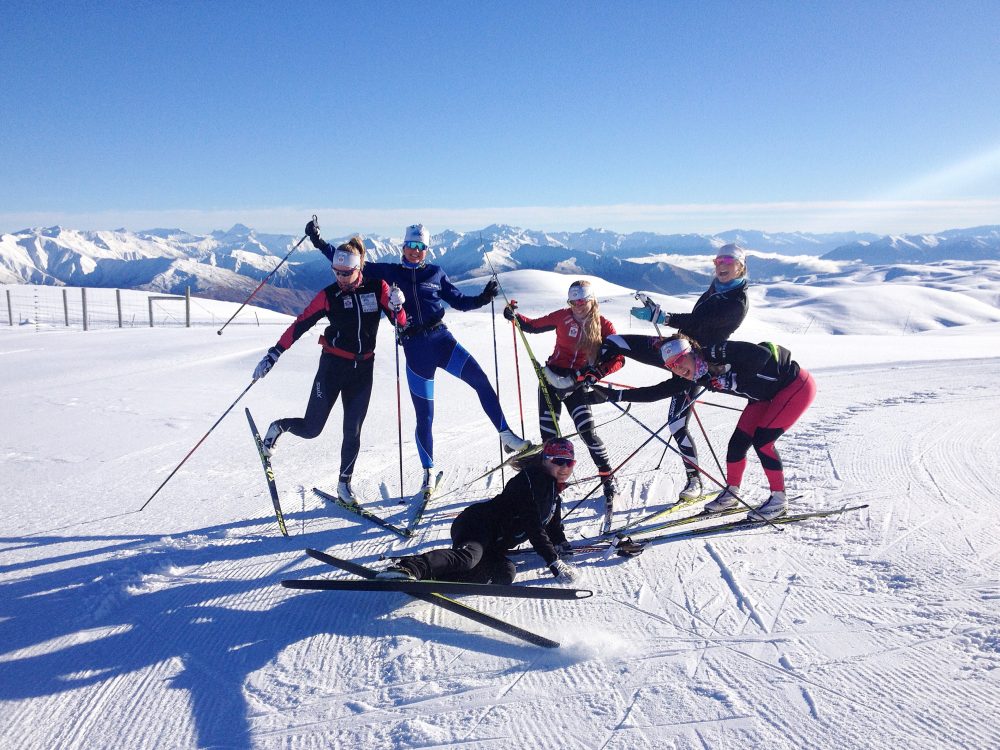
    Katherine Stewart-Jones (far right) of the Canadian U25 Team with several of her women’s team training partners during a summer training session in New Zealand. (Courtesy photo)

    She remained in contact with McGeown, who’s master’s research project at Lakehead addressed how to help athletes safely return to sport post-concussion. The two emailed and texted regularly while Stewart-Jones was at home in Chelsea, with McGeown offering advice and suggestions on how to cope with the mental and physical side affects from both a professional and personal standpoint.

    A former rugby player, downhill skier and contact-sports enthusiast, McGeown himself has suffered more than 15 concussions during his athletic career. On the phone with FasterSkier, he recalled his own undergrad experience when the solution for the concussed was to “sit in a dark room and hope you get better.”

    “At that point in time, there was no advice from doctors or physios,” said McGeown, who will start working toward a doctorate at New Zealand’s Auckland University of Technology this year. “It was, if you have any symptoms at rest, don’t exercise. For up to a year, don’t workout, don’t go for runs, don’t lift weights, don’t play sports. Essentially don’t do anything you like to do.”

    However, recent research done by McGeown and acclaimed medical sources, such as the Journal of the American Medical Association, have changed that belief. While all rest and no play was formerly viewed as the most appropriate way to recover from a concussion, recent studies show the opposite. Exercise appears to be the preferred method of rehabbing a concussed individual, though the intensity, duration and type still vary case by case and remain in question.

    “They release new guidelines every four years,” McGeown explained. “The 2012 guidelines say rest; do nothing. The 2016 guidelines say exercise-based rehab is going to be the new cornerstone for concussion rehab. They’re not saying how often, how intense, how do you get them started, for how long, etc. What the research needs to figure out still is all those variables. What is the best case scenario or is it completely individualized?”

    In the case of Stewart-Jones, slow and steady was the start. At home in Chelsea, she began exercising once she had a full 24-hour period of no symptoms. Following the 24-hour period, she completed ten minutes of exercise (in her case, walking on the treadmill) at a heart rate of 115.

    If, after completing the workout, no new symptoms arose or worsened, she would either increase her time or her heart rate the following day, but not by much. If her symptoms worsened or new ones arose, she returned to the exercise she had been doing the previous day — no exceptions and no matter how badly she wanted to train more.

    “Everybody wants to be tough. Everybody wants to fight through it and push through it,” McGeown said. “But what I try to get people to conceptualize is, if it’s your ankle or knee or shoulder, go for it. Tough it out, because when you’re fifty or sixty and that knee is really bothering you, they’ll just replace it with a new one.

    “Whereas there’s no second chances with our brain,” McGeown continued. “We’re seeing that with football players and hockey players. There are extreme consequences and if we don’t take it seriously, it’s a big deal.”

    Even with that weighing in the back of her mind, Stewart-Jones still found it difficult to not rush back into training too quickly.

    “I found that one of the most difficult parts of recovery was knowing when I was feeling good enough to start training again,” Stewart Jones wrote in her blog. “I found it easy to convince myself that I was feeling normal when I wasn’t. Maybe it was because I was just too eager to get back to training or maybe it was because I truly couldn’t remember how it felt to be my normal self. The bottom line is, you know yourself best, so be honest with yourself, and the recovery will be much quicker.”
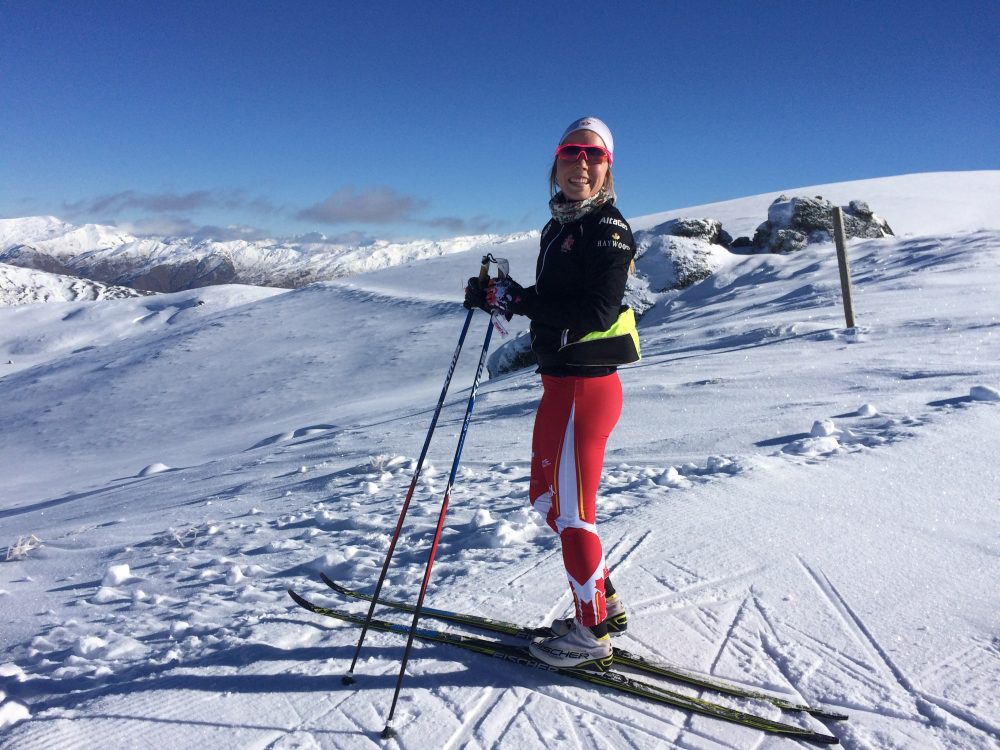
    Katherine Stewart-Jones (Canadian U25 Team/NTDC Thunder Bay) during a summer training session in New Zealand. (Courtesy photo)

    When she returned to Thunder Bay a few weeks after her accident, she began working with McGeown in person, continuing her work on the treadmill until she had reached the point where she was exercising at a threshold pace, something similar to a steady state.

    After that, McGeown began a second phase of the recovery, adding higher intensity workouts to her training regimen. She would complete 30-second long speed bursts of mountain climbers, ski erging and box jumps followed by a check-in with McGeown. If all went well, she continued. After about ten sessions like this, Stewart-Jones was cleared by McGeown to return to normal training.

    In late November, a little less than eight weeks after she suffered her concussion, Stewart-Jones was back on skis, logging a 17-hour training week and feeling “100 percent.”

    “Initially I was supposed to leave on Nov. 11th to meet the team in Finland and race the Ruka [Triple],” Stewart-Jones, last year’s NorAm (Canada’s Continental Cup) winner, said of her plans to start her season on the World Cup for Period 1. “I was feeling fine, I didn’t have any symptoms and I could train fine, but I felt like I wasn’t going to be ready enough to race then. And I wanted to put a couple weeks of big volume in just to feel like I gained my fitness back, so [my coach Timo Puiras and I] made the decision to stay longer.”

    “Katherine’s summer training went very well,” Puiras, head coach of the NTDC, wrote in an email. “Our IST (Integrated Support Team) was excellent in getting Katherine back to normal training as quickly as possible.”

    She competed in three World Cup weekends so far this season, posting a best result of 55th in the freestyle-sprint qualifier on Dec. 9 in Davos, Switzerland. She’s now gearing up for the NorAm trials, which start this Friday in Mont Sainte-Anne, Quebec, where she and several other top Canadian skiers are hoping to earn a spot on Canada’s Olympic team.

    “It was definitely a lot after taking a good six weeks off for an injury,” Stewart-Jones told FasterSkier after the Davos 10 k freestyle on Dec. 10. “I’ve had a good month of training, but it was more volume focused, just because I wanted to gain back that fitness and so I didn’t do a lot of intensity so I was kind of expecting it to be rough. But having the NorAm leader’s spot, it wasn’t something I was ever going to turn down.

    “I think for distance racing I still have that extra gear to build,” she added. “Right now I feel like my technique has come a long way, but I don’t feel like I’m actually racing, and I think that’s just going to come with more intensity and more racing.”

    When asked if Stewart-Jones might be at a higher risk for concussion while competing on the World Cup now, McGeown explained it would be difficult to say without know her particular history with concussions.

    “Once you’ve had multiple concussions, it’s easier to get the next one, the symptoms are worse, and recovery takes you longer,” McGeown said. “But typically if someone’s at a high risk for reinjury, it’s going to be if they return to sport within that first week to two weeks after the initial injury. It is certainly possible it could happen again, but it could happen to anyone at anytime.

    “That she’s at a high risk, I would say no. She’s at the same risk as any other skier competing against her,” McGeown added. “The only way that a concussion is going to truly limit someone is if they let it.”

    — Chelsea Little and Alex Kochon contributed
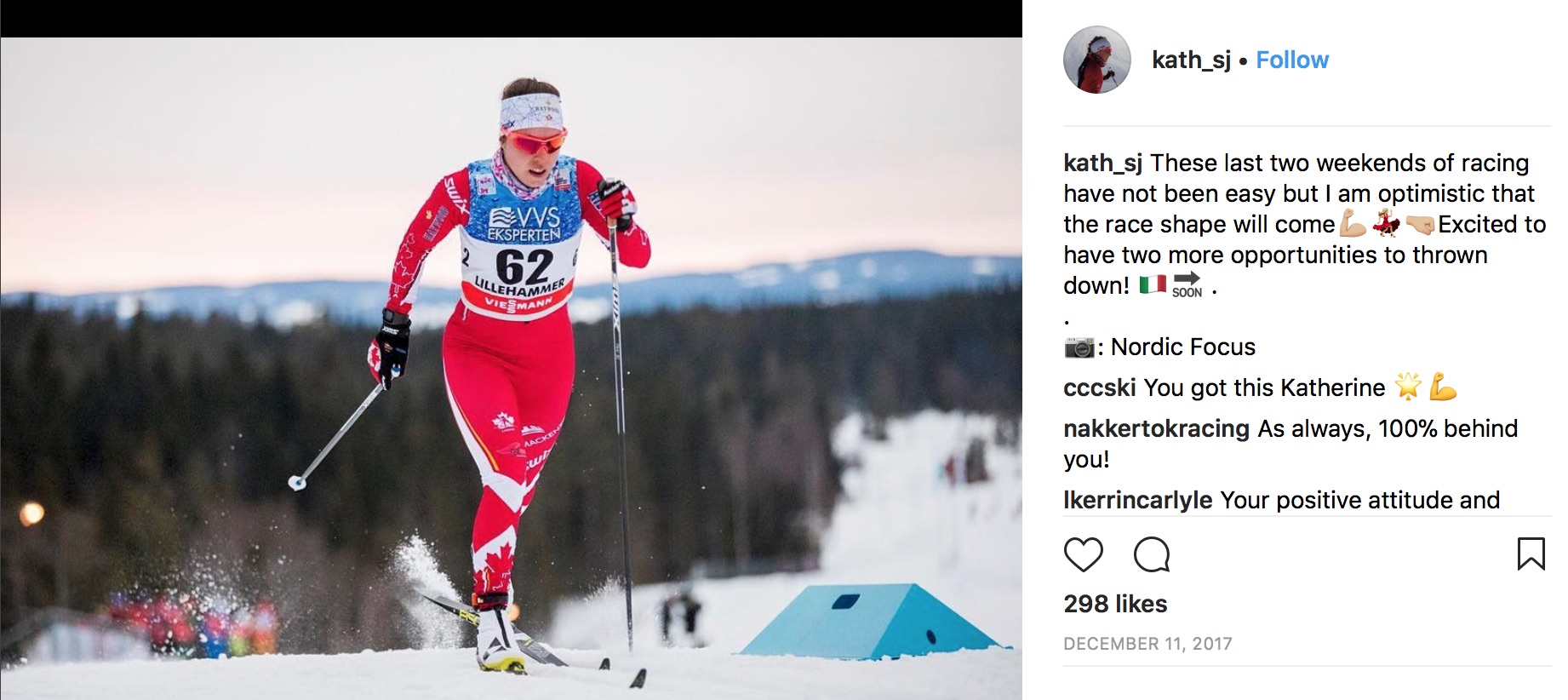
    Katherine Stewart-Jones’s Instagram post after two weekends of World Cup racing last month in Lillehammer, Norway, and Davos, Switzerland. She also raced two distance races in Toblach, Italy, where she finished 77th in a 10 k freestyle and 70th (68th for time of day) in a 10 k classic pursuit on Dec. 16-17. (Photo: Instagram/@kath_sj)
  • Nilsson Prevails in Davos, But Americans Impress with Three in Top 6

    Nilsson Prevails in Davos, But Americans Impress with Three in Top 6

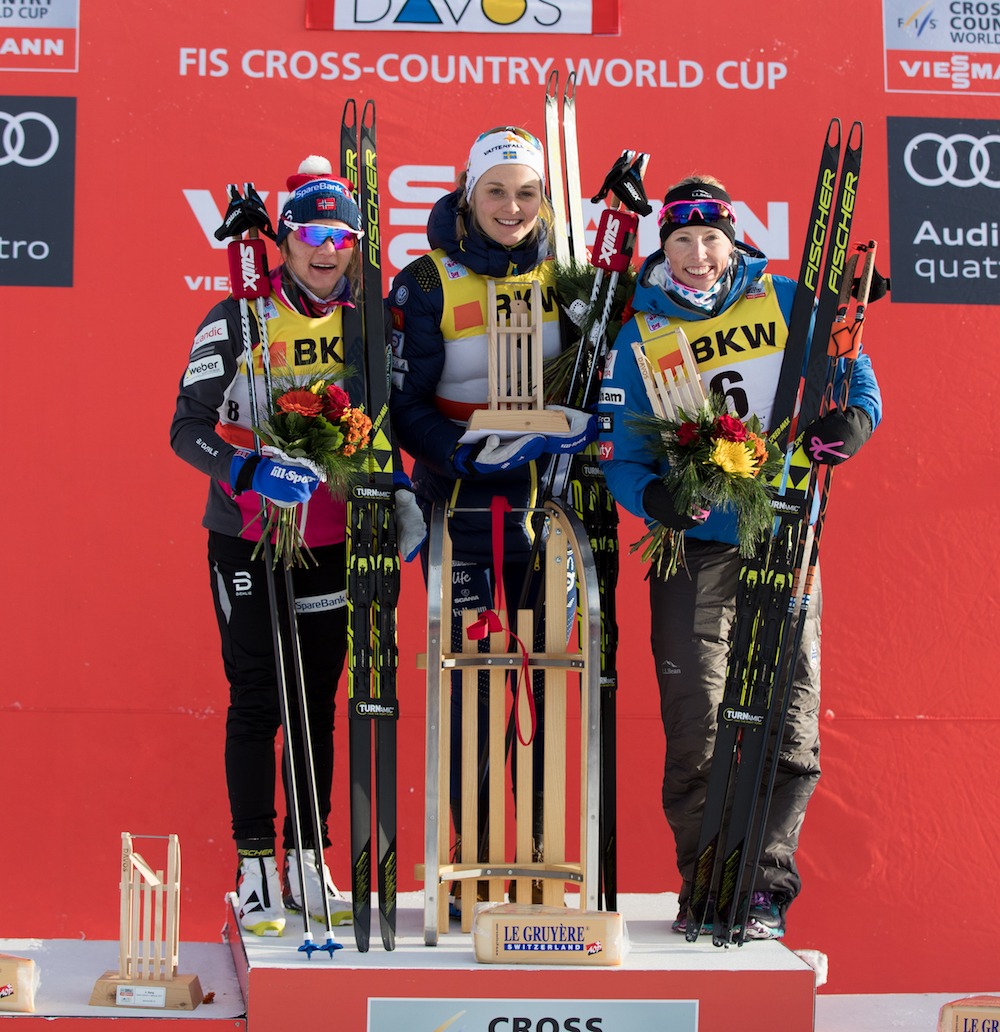
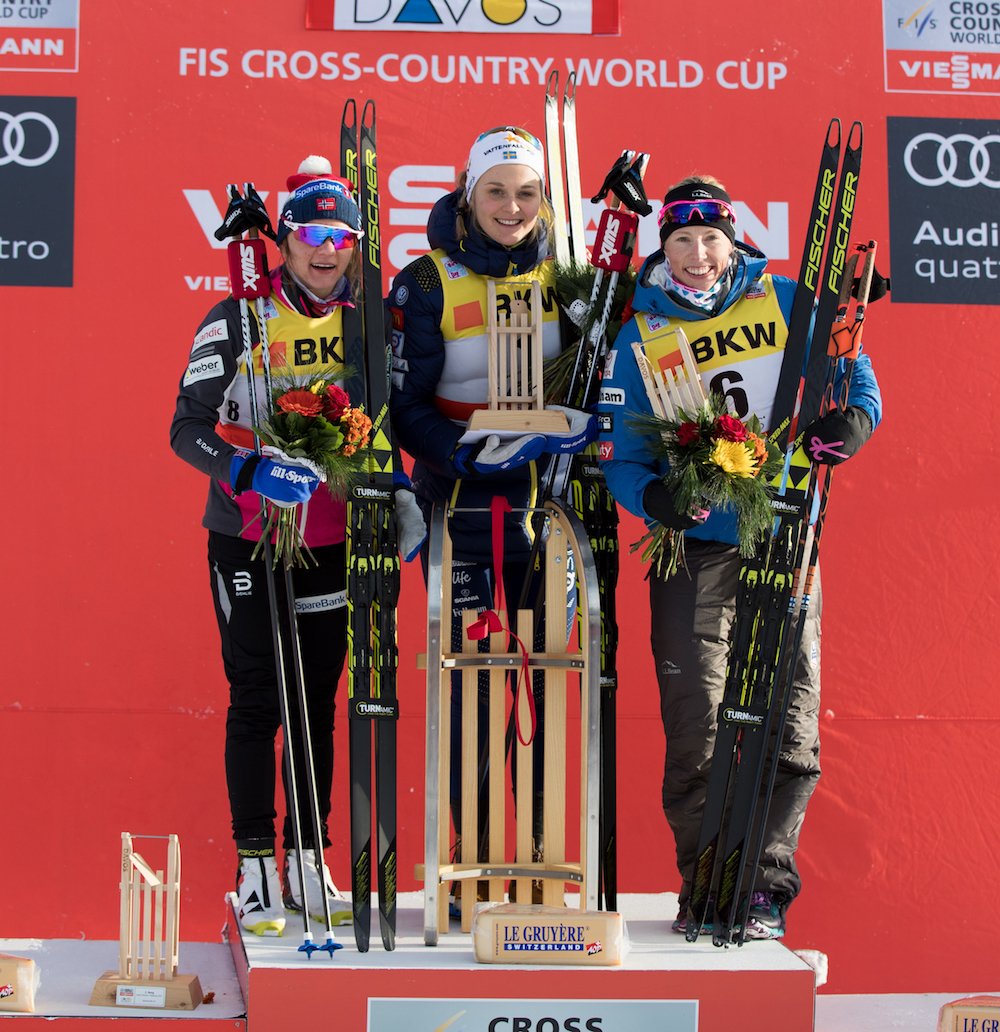
    The women’s skate sprint podium at Saturday’s World Cup in Davos, Switzerland, with Kikkan Randall (r) of the U.S. Ski Team in third place, Sweden’s Stina Nilsson (c) in first, and Norway’s Maiken Caspersen Falla (l) in second. (Photo: Reese Brown/US Ski & Snowboard)

    DAVOS, Switzerland — Stina Nilsson came into Saturday’s freestyle sprint looking to return to her winning ways after having a four-sprint victory streak broken last weekend in Lillehammer, Norway.

    The Norwegian women came into the day looking to further redeem themselves after a slow – by their standards – start to the season, with Nilsson and her Swedish teammate Charlotte Kalla combining to win four of the five races held so far.

    And the U.S. women came in and calmly qualified five women in the top 11 spots, then advanced four of those athletes to the semifinals, three to the final, and one – Kikkan Randall – to the podium.

    Jessie Diggins finished fourth, Ida Sargent sixth, Sophie Caldwell eighth, and Sadie Bjornsen 13th.

    “We obviously have so much experience in this group right now,” U.S. Ski Team Head Coach Chris Grover said after. “And we probably had the best skis out there today, which is gratifying. A lot of things just kind of came together… I’d say at the same time we’ve been waiting for the first skate sprint of the year. Especially after five races in Scandinavia, with a lot of classic races, to come down and have a first skate weekend was something that the athletes were really looking forward to. So I expect that they’ll have some more good results in tomorrow’s race and in Toblach [Italy] in a week.”

    Randall and Diggins 3-4 as Nilsson Wins Again

    In the final, none of the Americans – or anyone else – could match a turn of pace produced by Nilsson and Norway’s Maiken Caspersen Falla, who won last weekend’s classic sprint in Lillhammer. The two women skated away halfway through the course, accelerating through the stadium in a race to be first to the turn up to the course’s steep climb.

    From there, Nilsson pulled away from Falla. But as she descended back into the stadium, she bobbled coming out of a sharp downhill corner. Falla had a chance, and drew even with the Swede in the finishing lanes.

    “I knew the last turn was bad, and I ended up where I shouldn’t have,” Nilsson told NRK, according to a translation. “I knew Maiken came up behind me fast, but I never gave up.”

    In a photo finish, Nilsson managed to just hang onto the win by 0.08 seconds.

    “It was very close, but I’m very happy,” Falla told NRK. “I put absolutely everything I could into it and went for the win… but there was no more to pick up. But I was pleased.”

    Behind the dueling Scandinavians came Randall. Lapping through the stadium halfway through the final, she closely followed Nilsson and Falla. But when they upped the pace, she couldn’t quite respond.

    “I was in a perfect place,” she said in a finish-line interview. “I was right behind both of them. I felt the gears shift – the same thing happened in the semifinal. I felt like I did a better job responding to it in the final. And I think there’s a little bit of just sharpening and confidence that will help me bridge that.”

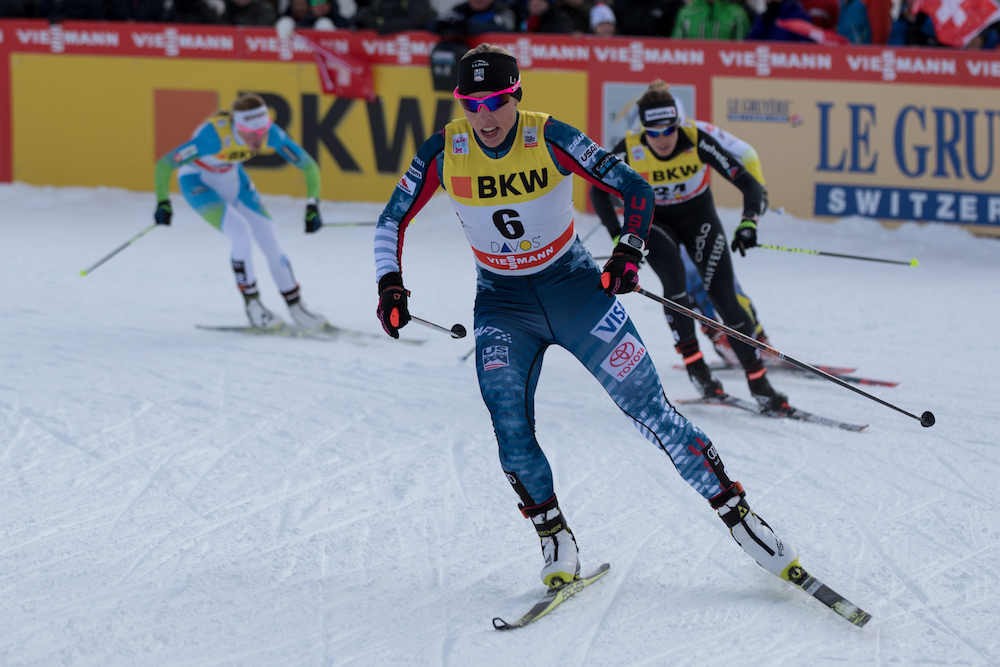
    American Kikkan Randall (6) leads Switzerland’s Laurien van der Graaff (in black) and others in their quarterfinal of the women’s 1.5 k freestyle sprint on Saturday at the World Cup in Davos, Switzerland. Randall won the heat and went on to place third in the final. (Photo: Reese Brown / US Ski & Snowboard)

    Rather than being discouraged, Randall – who crossed the line 2.53 seconds after Nilsson, well clear of fourth-place Diggins – took it as evidence of exactly what she needs to work on to win.

    “It’s cool to just have that concrete example, like, OK, that’s the best, and you’re right here, now you have to work on bridging that before we get to [the Olympics in] Korea,” Randall said.

    Randall, a three-time Sprint World Cup champion from 2012 to 2014, hadn’t qualified for quarterfinals in either of the sprints so far this season, both of which were classic races.

    “The first couple weekends of the World Cup have been a mixed bag for me,” she said. “I felt like this kind of shape was there, but in classic I haven’t been able to quite put it together. So it’s really nice to know that I have last year all under my belt, a good year of training, and now I’m in a position where I know my fitness is good and I’m just sharpening that race gear as we go. It was really good to lay down a strong effort today.”

    Her teammate Diggins couldn’t hang onto her tails, but still finished fourth – 4.41 seconds behind Nilsson, and more than a second ahead of Norway’s Ingvild Flugstad Østberg in fifth.

    Given that Diggins had been sick earlier in the week, it was a result she seemed more than happy with.

    “I’m so pysched to be able to race this weekend,” Diggins said. “Three days ago I was laying in bed and sick. I was just like, I am just going to go and give it my best. And damn, the podium was right there! And I tried, but I just didn’t get around soon enough. It was so fun to get to another [sprint] final. I am glad to see that sickness didn’t take all of my racing edge.”

    Diggins had led the Americans in the qualifier in fourth place. But that didn’t give her complete confidence that the heats would go well, or that she had recovered from her illness and missed training.

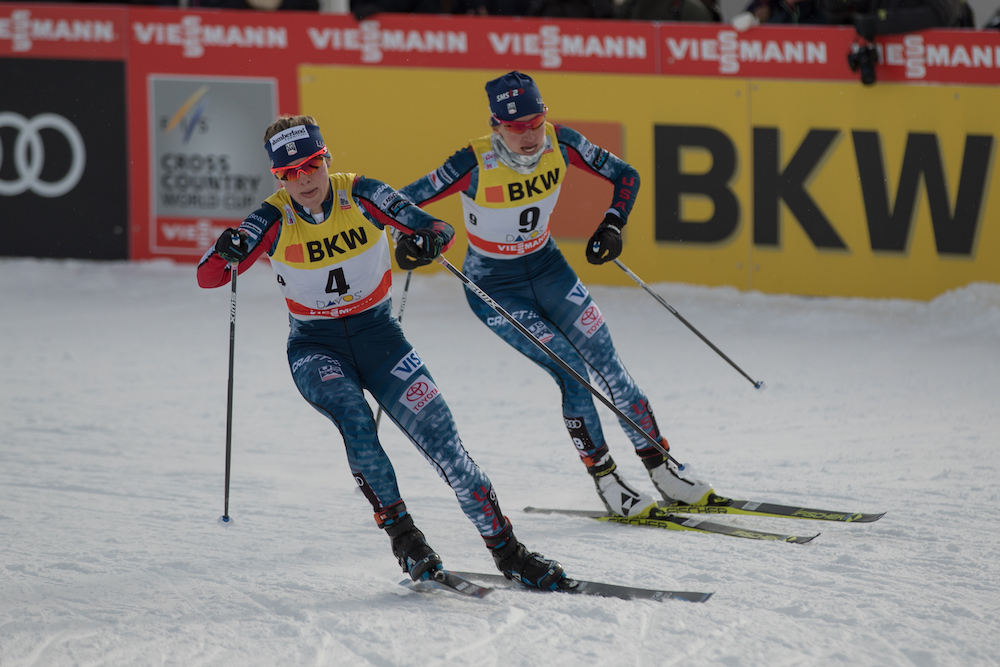
    Jessie Diggins (4) leads fellow U.S. Ski Team member Sophie Caldwell (9) in their quarterfinal of the women’s 1.5 k freestyle sprint at the World Cup in Davos, Switzerland. Diggins won the heat and Caldwell placed second to advance to the semifinals. (Photo: Reese Brown/US Ski & Snowboard)

    “We had really fast skis, so that can make a big difference,” she said of the qualifying round. “And also sometimes your fitness throughout the rounds is different than your two-minute, 45-second sprinting [in the qualifier], so I wanted to see what is going to happen though the day. I was trying to play the patient game.”

    Both Diggins and Randall were very much in the mix in the final, and had their heads up for opportunities late in the heat, even after Nilsson and Falla had pulled away. The American skis were running fast on the downhill, and both women knew that if they could shortcut the final corner coming into the finishing chute, they might regain some ground.

    “The way our skis were running, the way that corner was skiing, I wasn’t giving any inch,” Randall said. “Anything was possible.”

    But both Nilsson and Falla stayed on their feet, and all Randall could do was ski aggressively to third. Likewise, Diggins was pleased with the downhill and corner but there was nobody for her to pass in the final round.

    “On that corner, the sketchier it got, the more I liked it,” Diggins said. “My skis were flying on the downhill, and that is a strength of mine for sure. I didn’t quite have [the podium] before that corner so I needed to get a good draft there, and I didn’t quite punch it where I needed to but that’s sprint racing, man.”

    Breakthrough for Sargent

    Sargent, the third U.S. woman in the final, ran out of gas and finished sixth, 14.49 seconds behind Nilsson. It was the second skate final of her career, her first coming in 2013 in Sochi, Russia. After qualifying in fifth, just 0.41 seconds behind Diggins, she had finished third in a photo finish with Russia’s Natalia Matveeva in her quarterfinal heat.

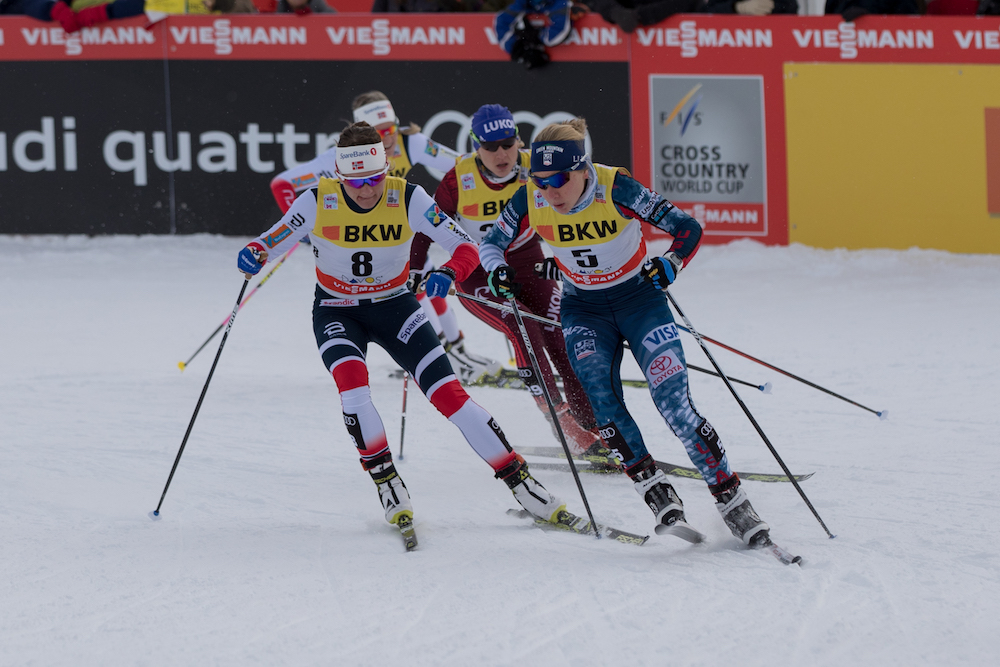
    American Ida Sargent (5) in close quarters with Norway’s Maiken Caspersen Falla (8) during their quarterfinal of the World Cup skate sprint on Saturday in Davos, Switzerland. Falla won the heat and Sargent finished third, 1.12 seconds back and advanced to the semifinals as a lucky loser. (Photo: Reese Brown / US Ski & Snowboard)

    That was something of a “heat of death”, with Falla, Østberg, Sargent, Matveeva, and third-place qualifier Nadine Fähndrich of Switzerland all vying to advance. Because of that, it was also a fast heat and Sargent was easily the top “lucky loser” from the quarterfinals.

    In her semifinal, Sargent took the lead on the first big hill and led the heat before ultimately crossing the line second, 0.42 seconds behind Diggins.

    “I was feeling really good and I had great energy today, and I kind of wanted to be up front,” Sargent said. “In the quarterfinal I thought it was harder to stop and go all the time, and it just felt pretty relaxed [in the semifinal]. I tried to stay conservative so I could go for it on the hill in the semi-final… I knew I had to be in the top two.”

    By the final, though, Sargent was tiring.

    “I think being in the second semifinal — I have never really loved altitude,” she said, referring to the Davos venue’s elevation more than 5,000 feet above sea level. “So I started out and the first lap was OK, and then as we started the second lap, it was just like, oh God, I hit a wall. I felt like I was just struggling to the line, but I am psyched to be in the final. It’s a big step for me.”

    In the 2013 sprint final in Sochi, Norway hadn’t brought its A-team. Saturday in Davos was different. As usual in the first period of World Cup racing, the best of the best race every weekend. (Both Kalla and Norway’s Marit Bjørgen sat this race out, but neither has made the top 10 of a sprint so far this season.)

    Grover noted that Sargent’s performance followed up on good results in the first weekend of the World Cup, where she finished 15th in the classic sprint and 22nd in the 10 k classic in Kuusamo, Finland.

    We knew she was in good anaerobic and aerobic fitness,” Grover said. “She had a rough weekend last weekend. She was too slick [with wax] in the classic sprint, and she had some problems with breathing in skiathlon. But the previous weekend, we’d seen her anaerobic side on the sprint side was quite good, and her aerobic side with the classic 10 k was quite high. So she’s made a real physiological step forward.”

    The physiology isn’t the only thing, though; without tactics and race smarts, simply being in better shape isn’t enough to succeed in World Cup sprinting.

    “I think she’s also made a tactical step forward and improved her confidence, and she’s making better moves out there,” Grover said. “Tactics and aerobic fitness always go hand in hand. If you have more aerobic fitness, you can do more things out there. So, I think what we’re seeing there isimproved fitness, making better decisions, and she’s going to have some great results this year.”

    Randall, too, was impressed with her teammate.

    “I’m just so proud of Ida,” Randall said, “because last week she struggled. But she just reset. She came in this week with a good plan, she laid down a wicked-fast qualifier, and to ski that gutsy race in the semifinal, leading from the front – just so cool to see. She has always been right there, but she has obviously just upped it a level. So that’s really cool. We’re getting closer to an all-American final. Someday.”

    Caldwell, Bjornsen in the Heats

    Caldwell advanced to the semifinals, but was unable to find her place in the pack and finished fourth in the heat where Diggins and Sargent went 1-2.

    “I started from the back, which is fine, but then I just couldn’t really move to the front,” Caldwell said. “But so it goes. Honestly, I felt pretty terrible today, and I just kept telling myself maybe everyone does? I wanted to conserve energy when I could.”

    Bjornsen, meanwhile, was out after the quarterfinals, missing “lucky loser” status by just one place. After two classic sprint podiums to start off the season, she ended up 13th.

    “I was going to try to stay behind [Nilsson], but then she kind of went slow at the beginning,” Bjornsen said of the heat. “When she made her move I was kind of stuck behind everyone unfortunately. I was able to make a nice move over the top of the hill, but I think I just took that last corner wrong. I should have gone on the inside of [Finland’s] Krista [Pärmäkoski] and I didn’t.”

    Bjornsen said she had made a tactical mistake, but that her fitness and feeling was every bit as good as in those podium-worthy classic sprints.

    “Sometimes I think that hardest thing is making it through the quarterfinals,” she said. “Once I get beyond that I find my groove better. Today it wasn’t perfect, but I think I am in the same place in skating [as in classic] so we will have more chances this year.”

    Also for the U.S., Julia Kern finished 57th in qualifying, 16.55 seconds off the pace set by Nilsson and 6.42 seconds out of the top 30.

    Canada’s Dahria Beatty finished 53rd in qualifying (+15.53 seconds), Katherine Stewart-Jones followed in 55th (+16.18), and Cendrine Browne was 64th (+18.27).

    Results: Women’s final | Women’s qualifier

    — Ian Tovell and Andrea Potyodny-Smith contributed

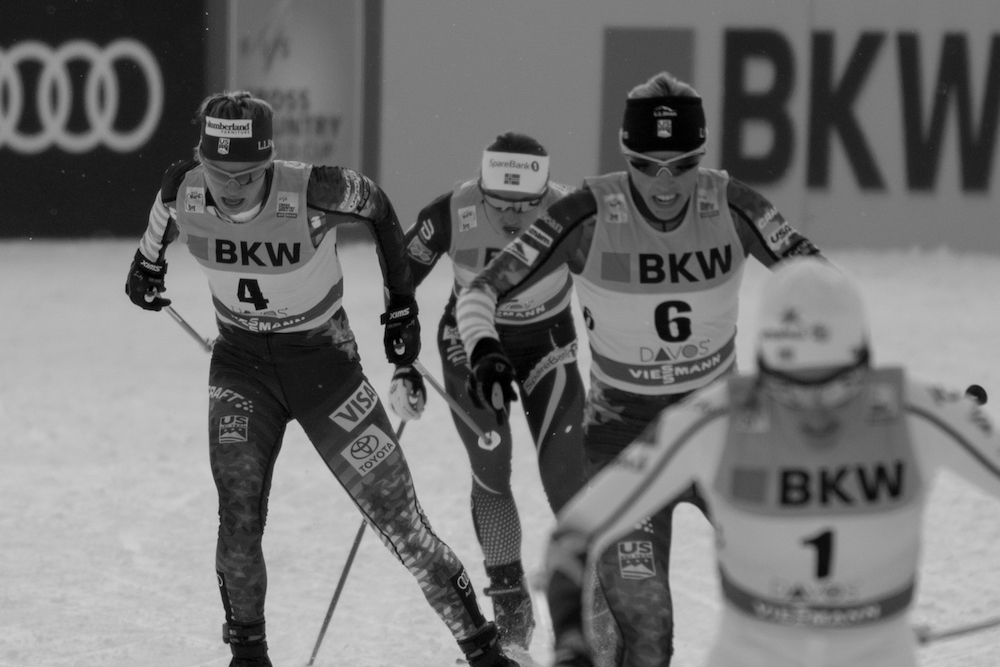
    Kikkan Randall (6) and Jessie Diggins (4), both of the U.S. Ski Team, chasing Sweden’s Stina Nilsson (1) during the World Cup women’s skate sprint on Dec. 9 in Davos, Switzerland. (Photo: Reese Brown / U.S. Ski & Snowboard)