From the FasterSkier archive — posts syndicated from athletes’ and coaches’ own blogs between 2004 and 2012, kept online as published. Current coverage is at fasterskier.com.
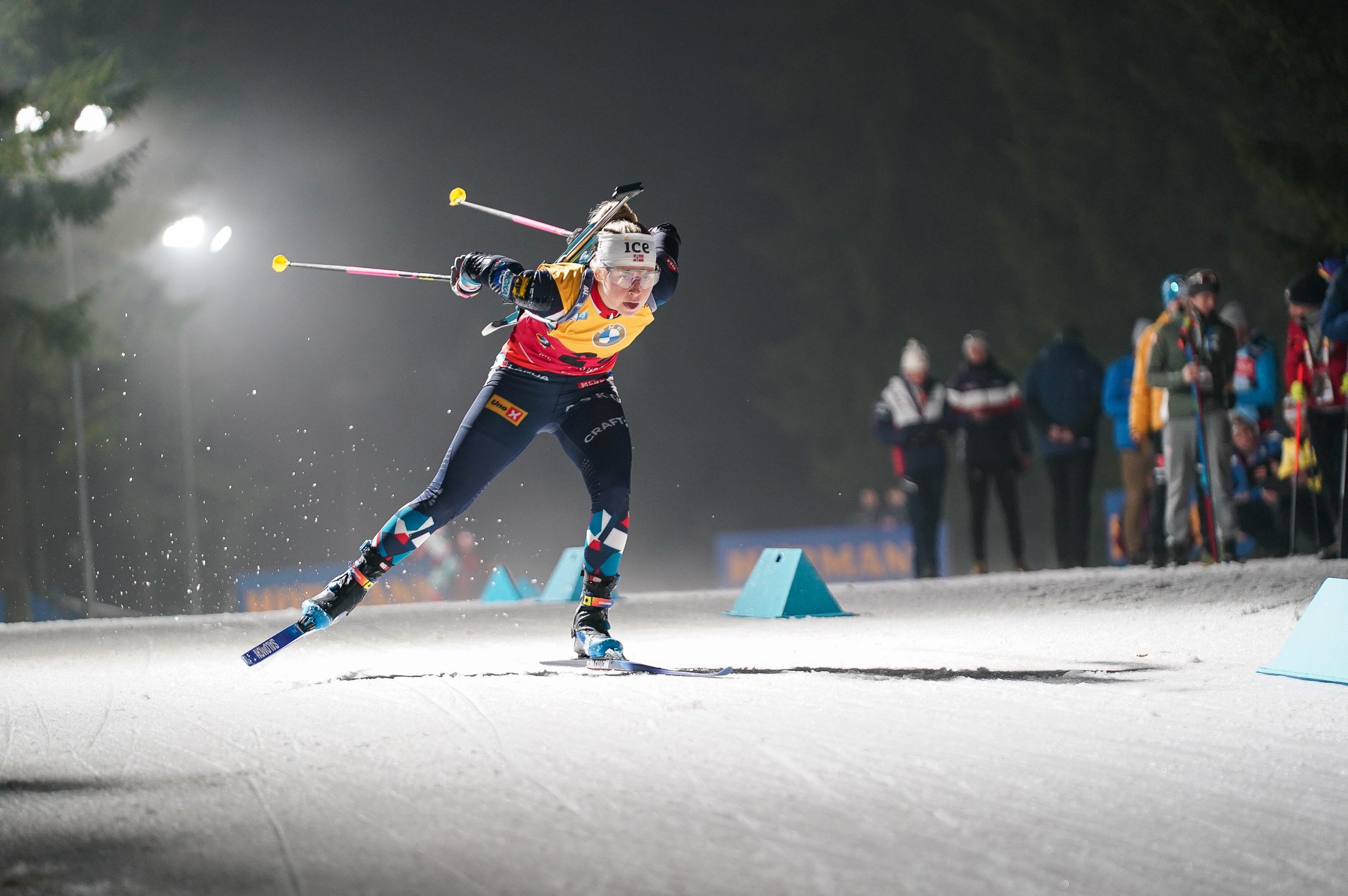
At the first biathlon World Cup races of the 2025/26 season, the biathlon stadium is perched above the small city of Östersund, which is set on a lake. Wind gusts off the lake, pulsing through the stadium. The races take place under the lights, at night – which isn’t saying much. Because in December in northern Sweden, ‘night’ begins at three in the afternoon, when what little sun there might’ve been throughout the day slips below the horizon. It’s in the evenings that the wind is usually at its strongest. The conditions the racers zero their rifles at before the race are rarely the same conditions they find when they come back to the range during the race. Athletes watch the small, red flags in the range, seeing which way they’re moving, deciding whether or not to shift their sights a few clicks, compensating for the changes that happened while the racers skied the course that serpentines up, down, around a 180-degree turn, and back into the stadium where the music plays and the home crowd cheers. Ayyy! As the Swedes hit their targets. A diluted Ney for each Swedish miss.
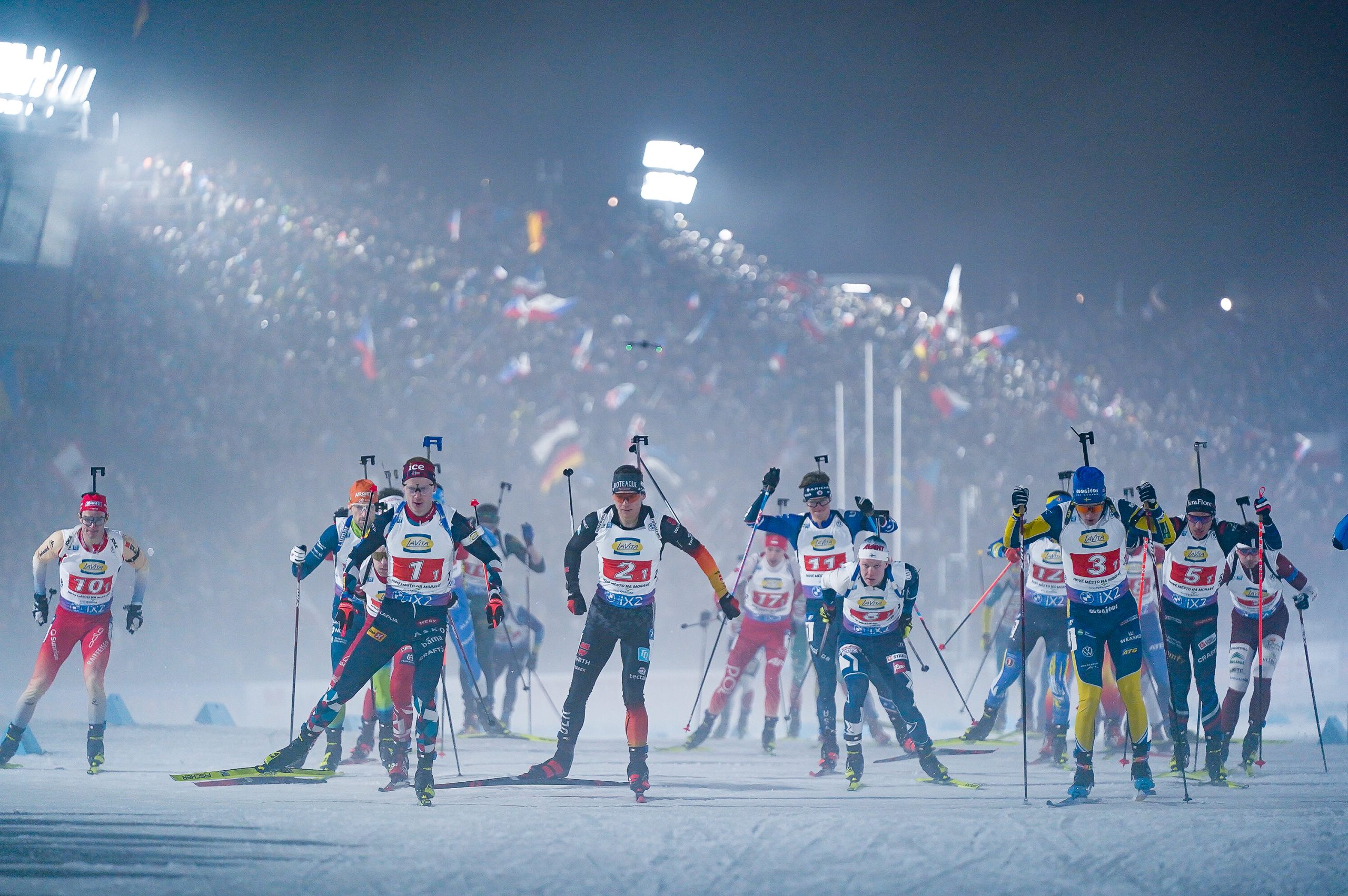
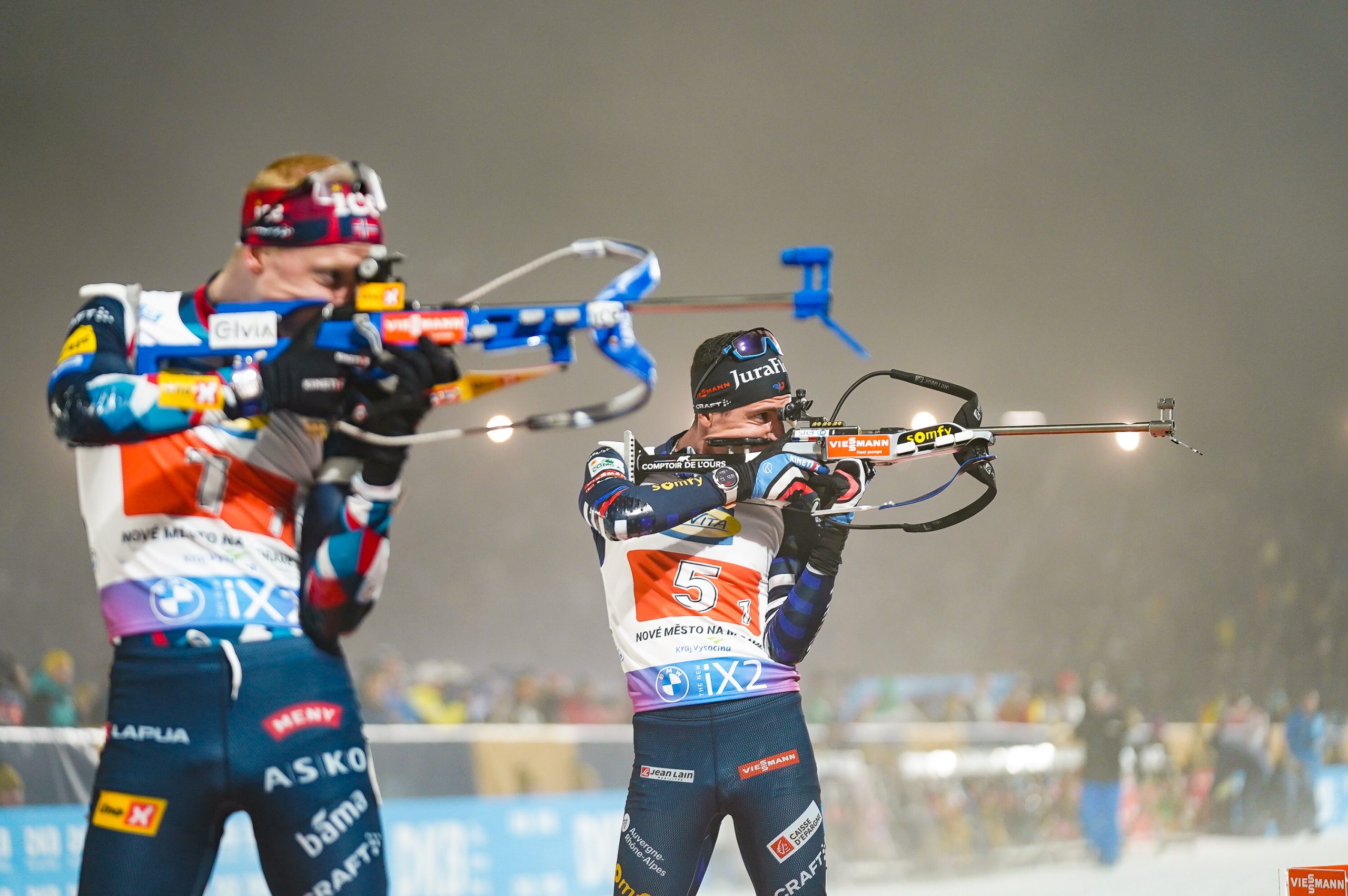
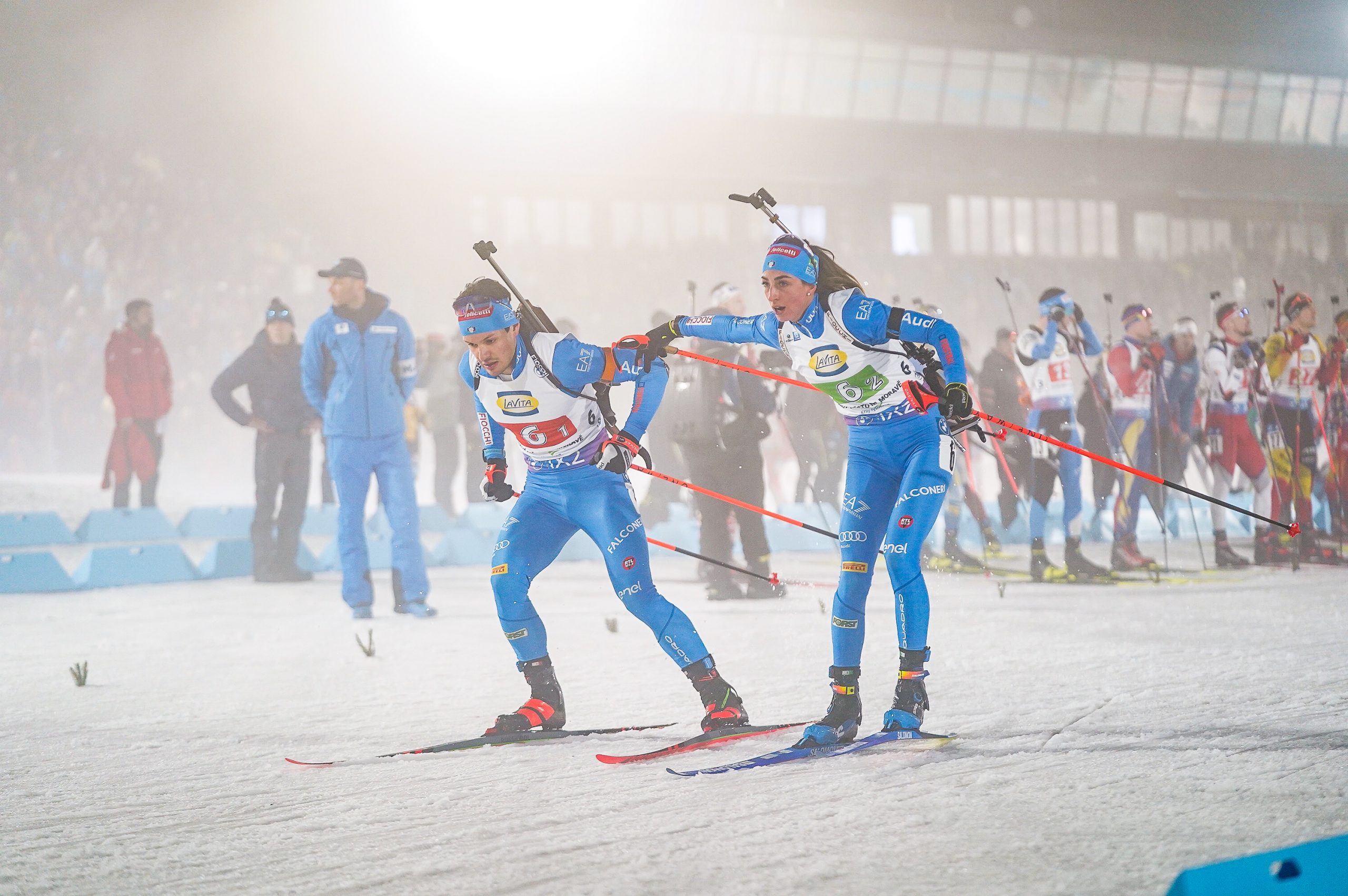
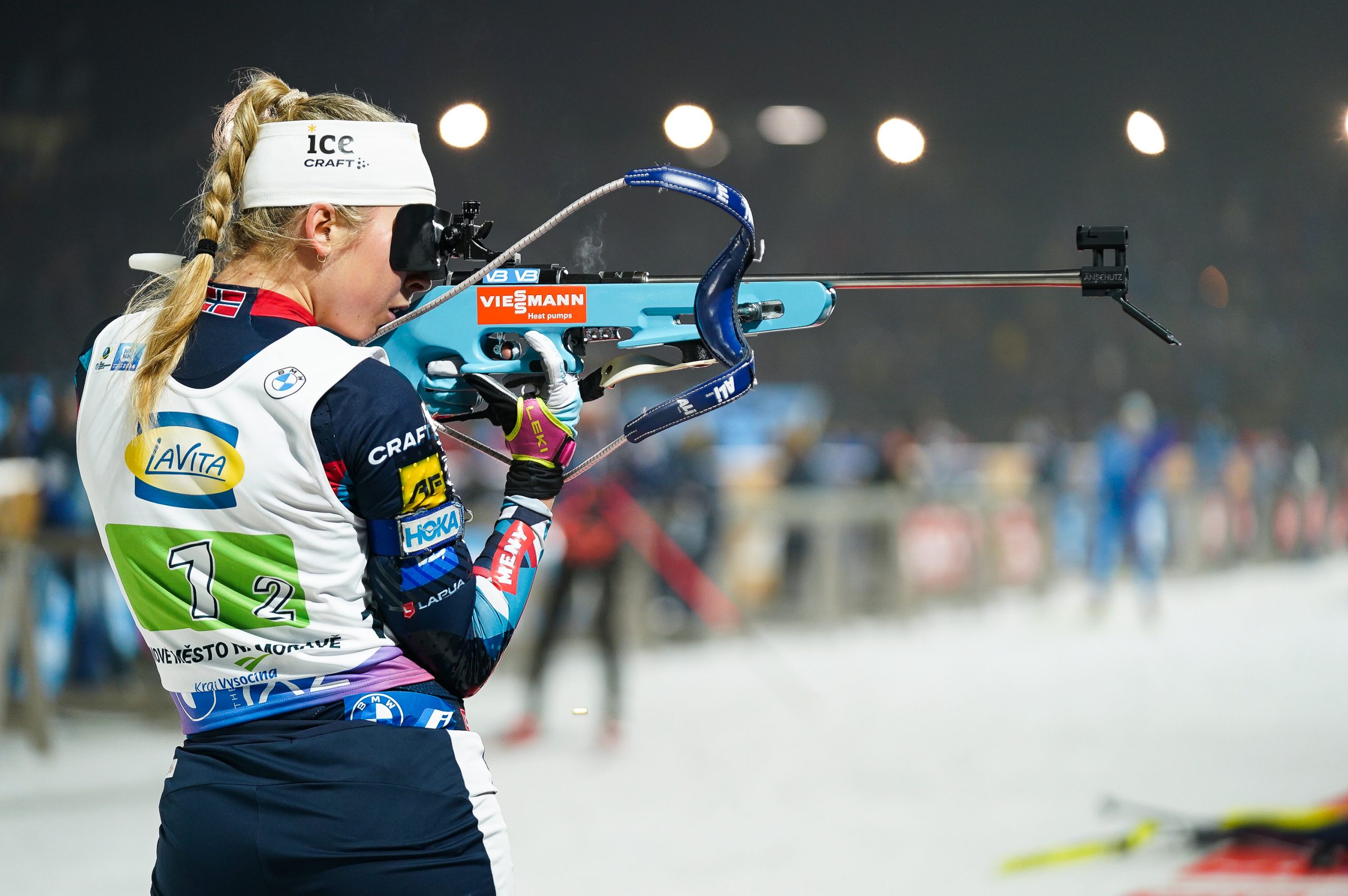
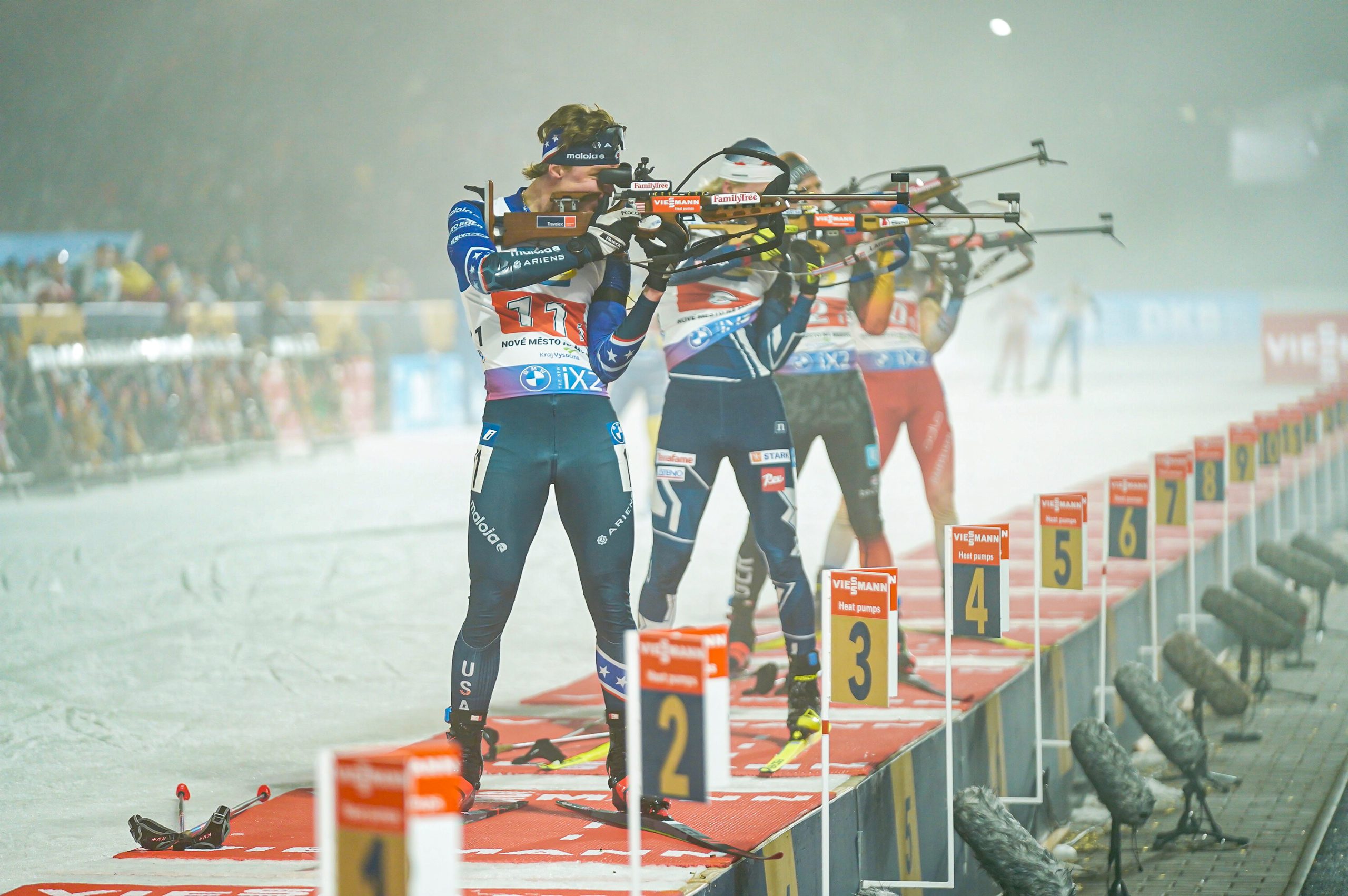
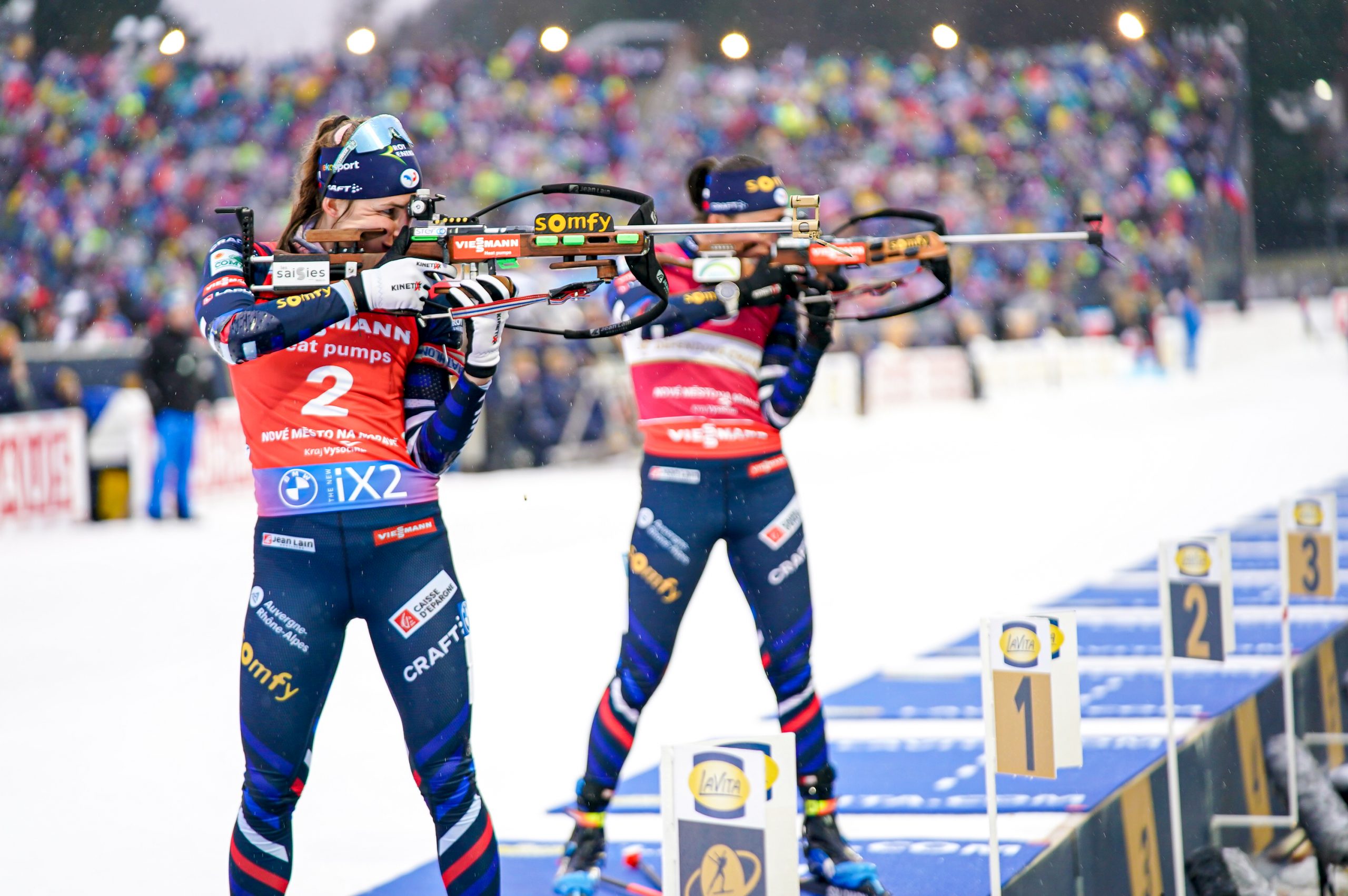
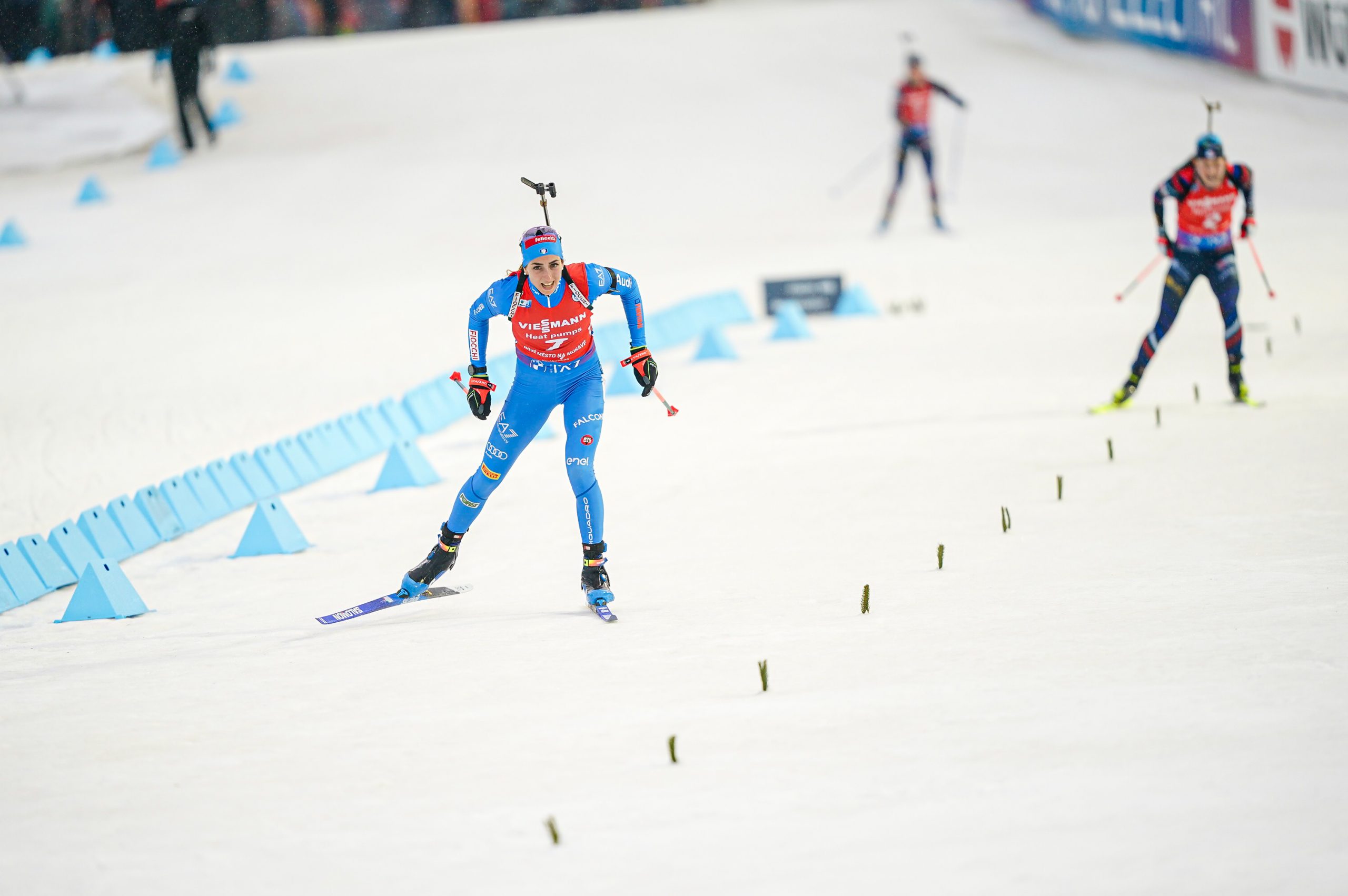
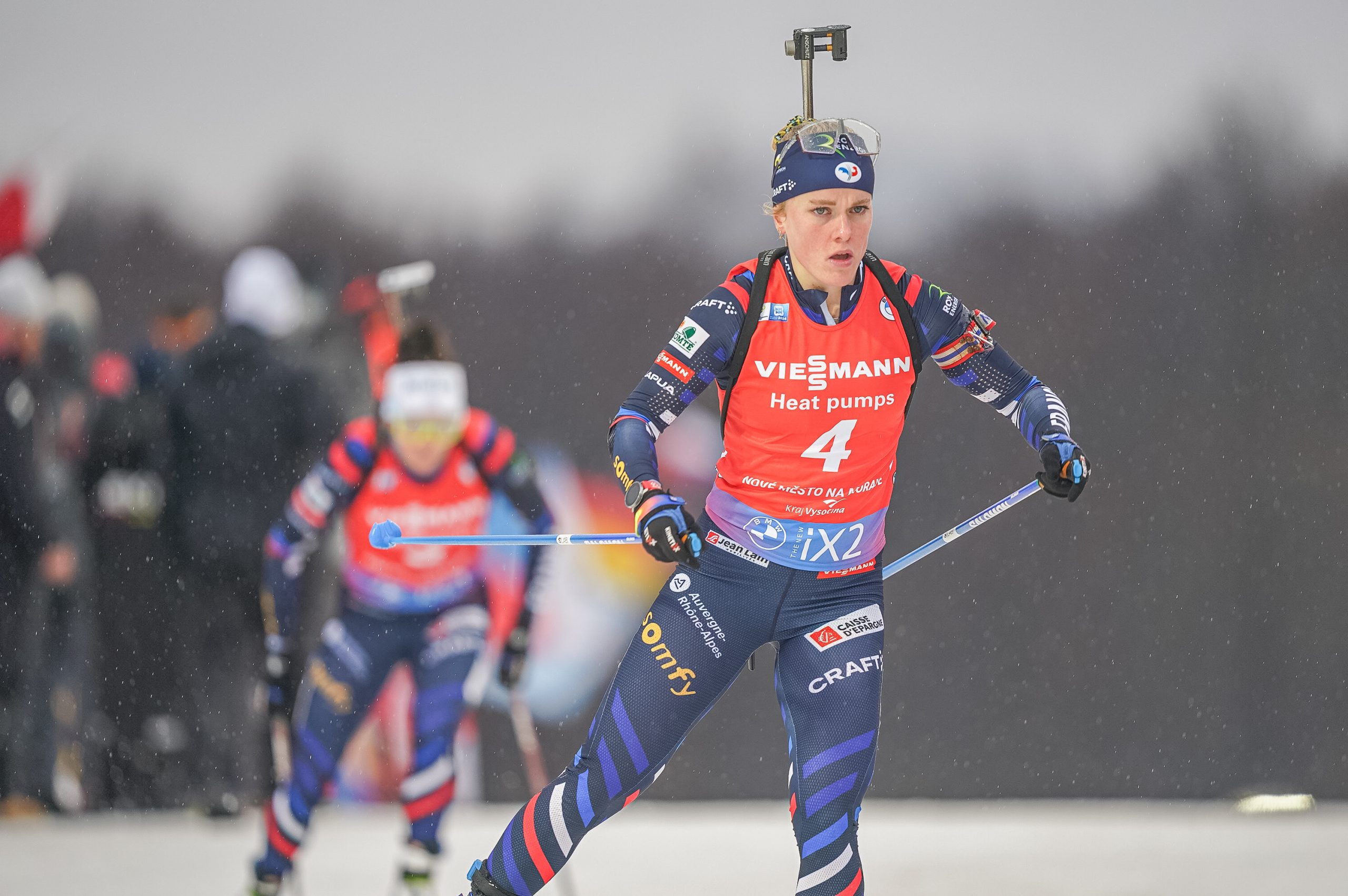
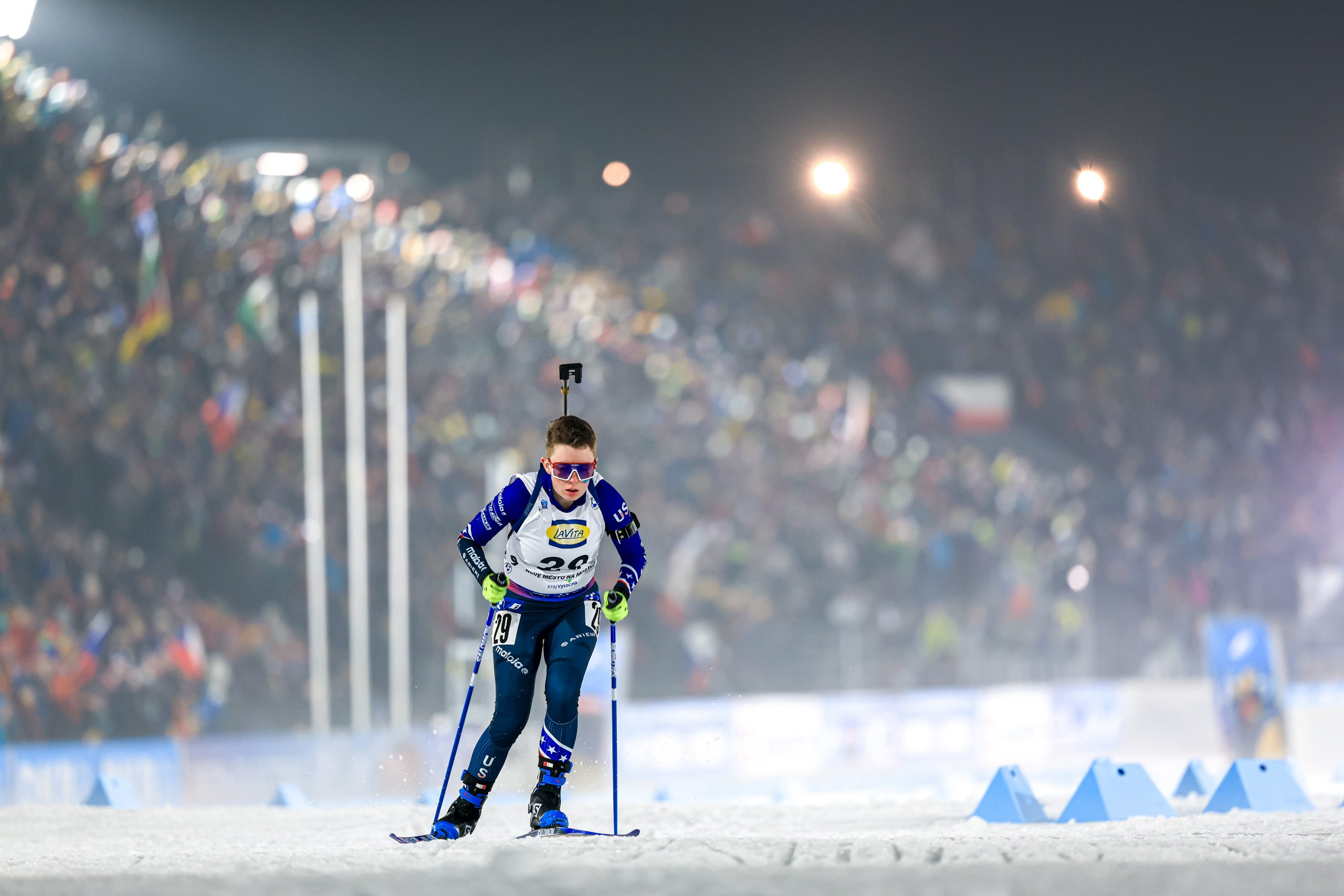
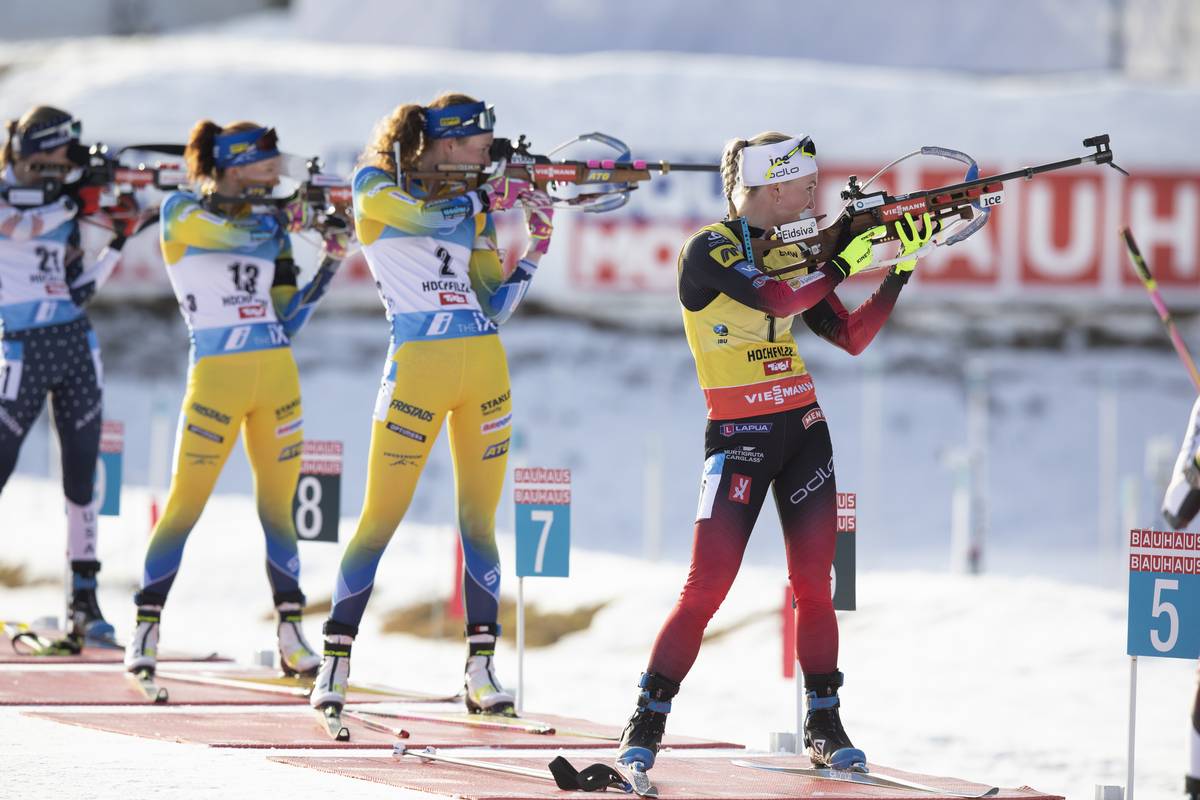
The mixed relay at the opening stop, Oestersund (SWE), of the 2025/26 IBU World Cup Biathlon season. (Photo: Manzoni/NordicFocus)
Over eight days, the best biathletes in the world raced 10 times. Maybe it was the arduous schedule, or the bit of sharpness that an Olympic year adds, but the Ostersund races didn’t feel like the first of the season. It felt like a break had never happened.
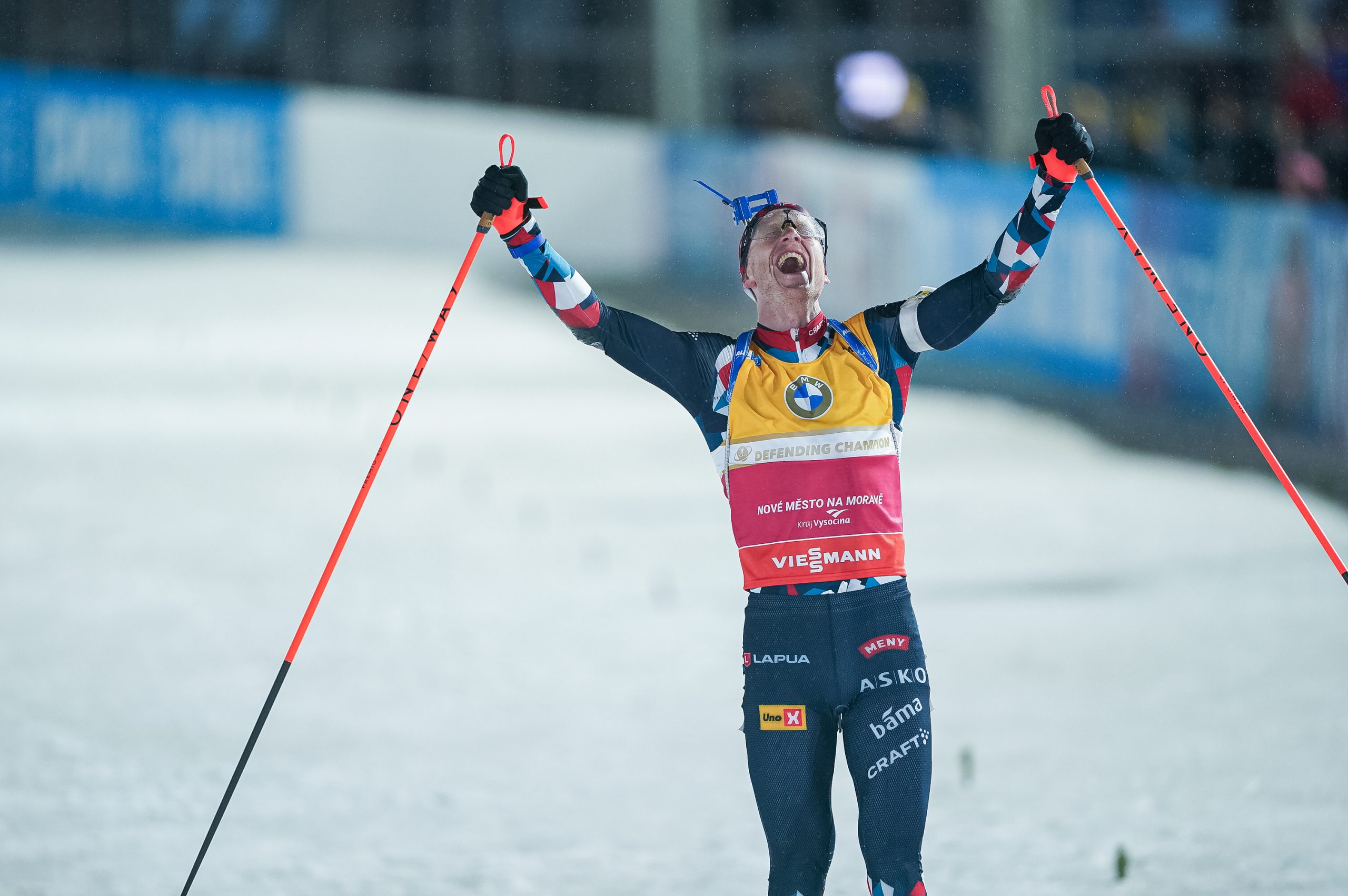
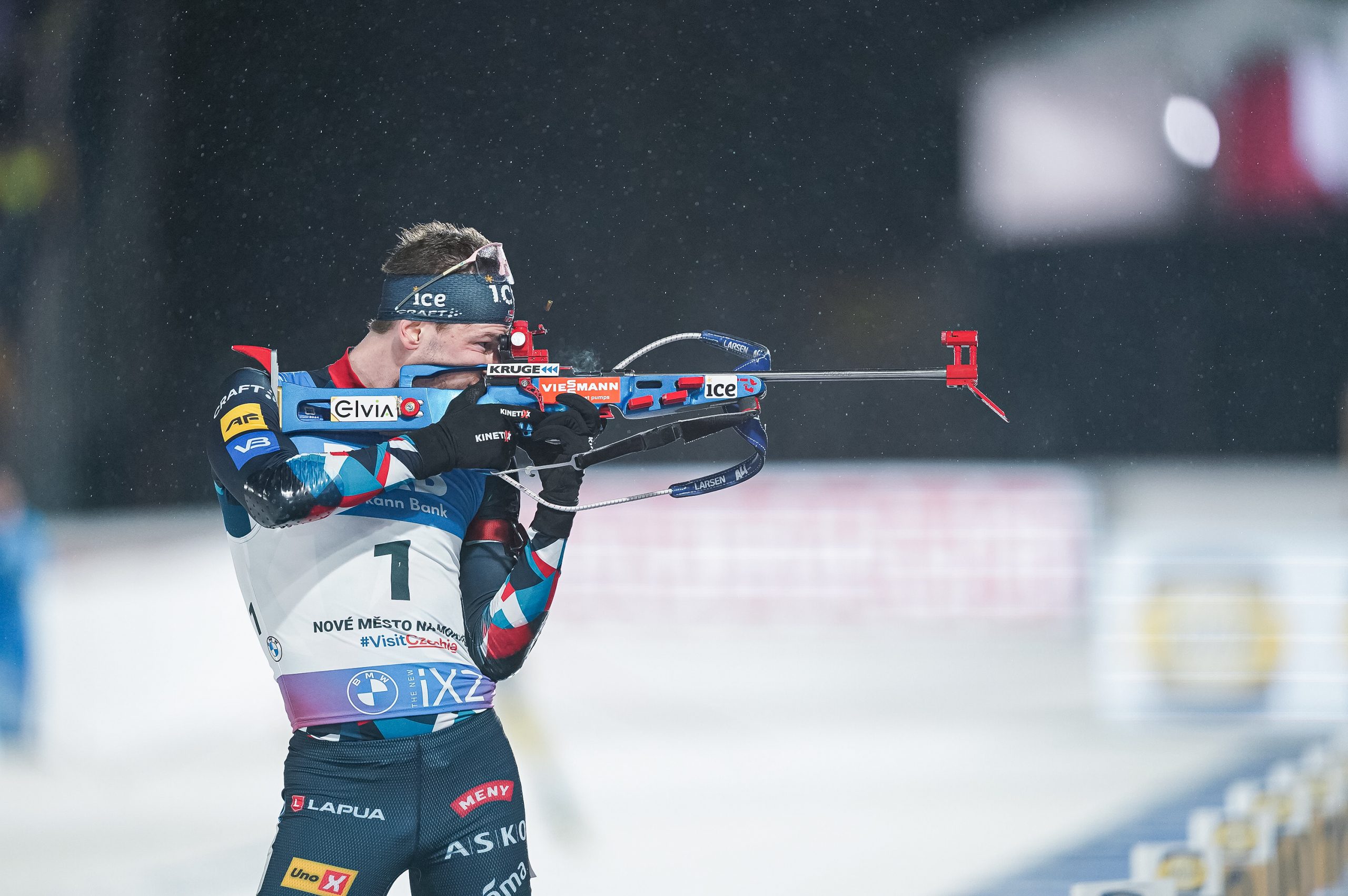
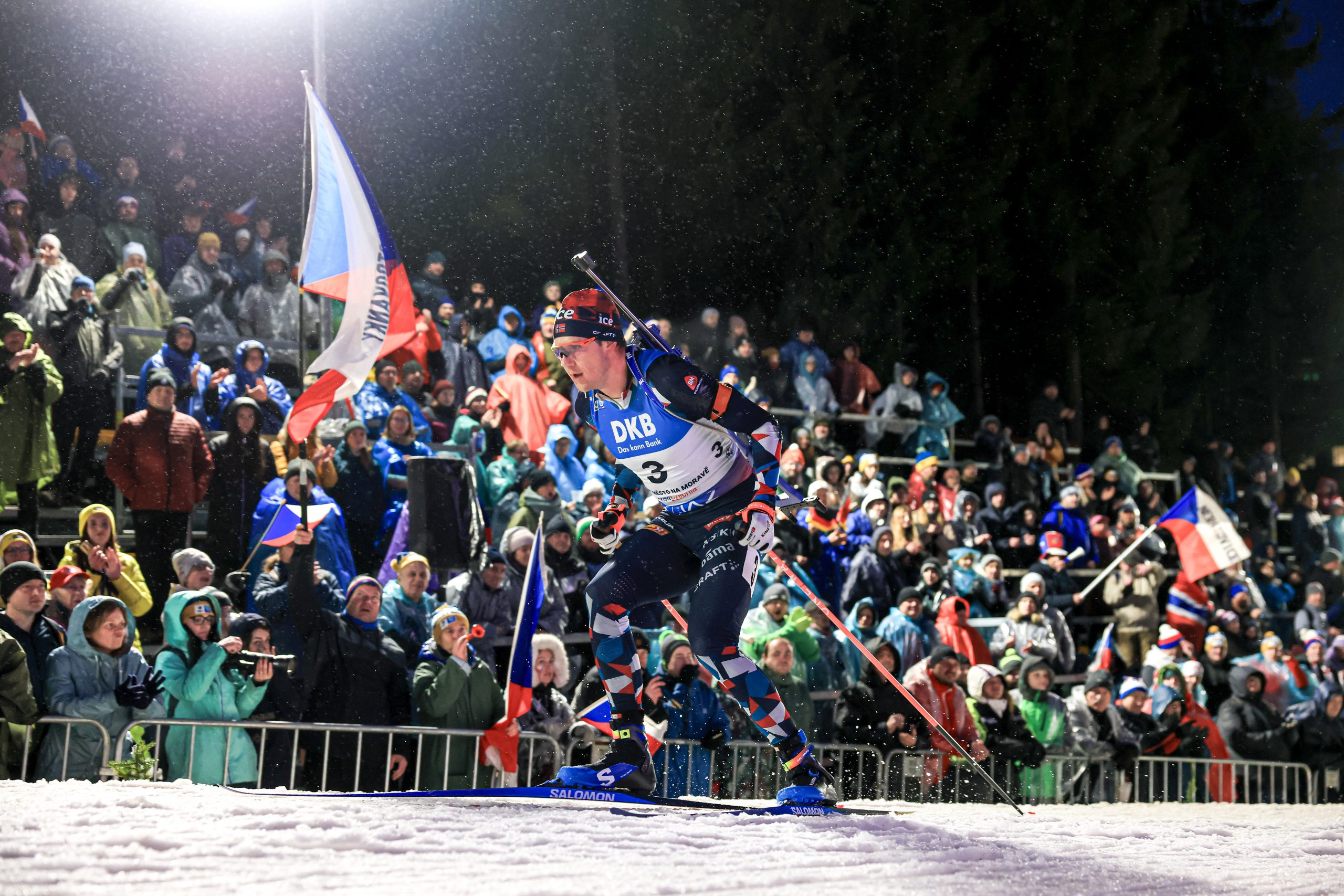
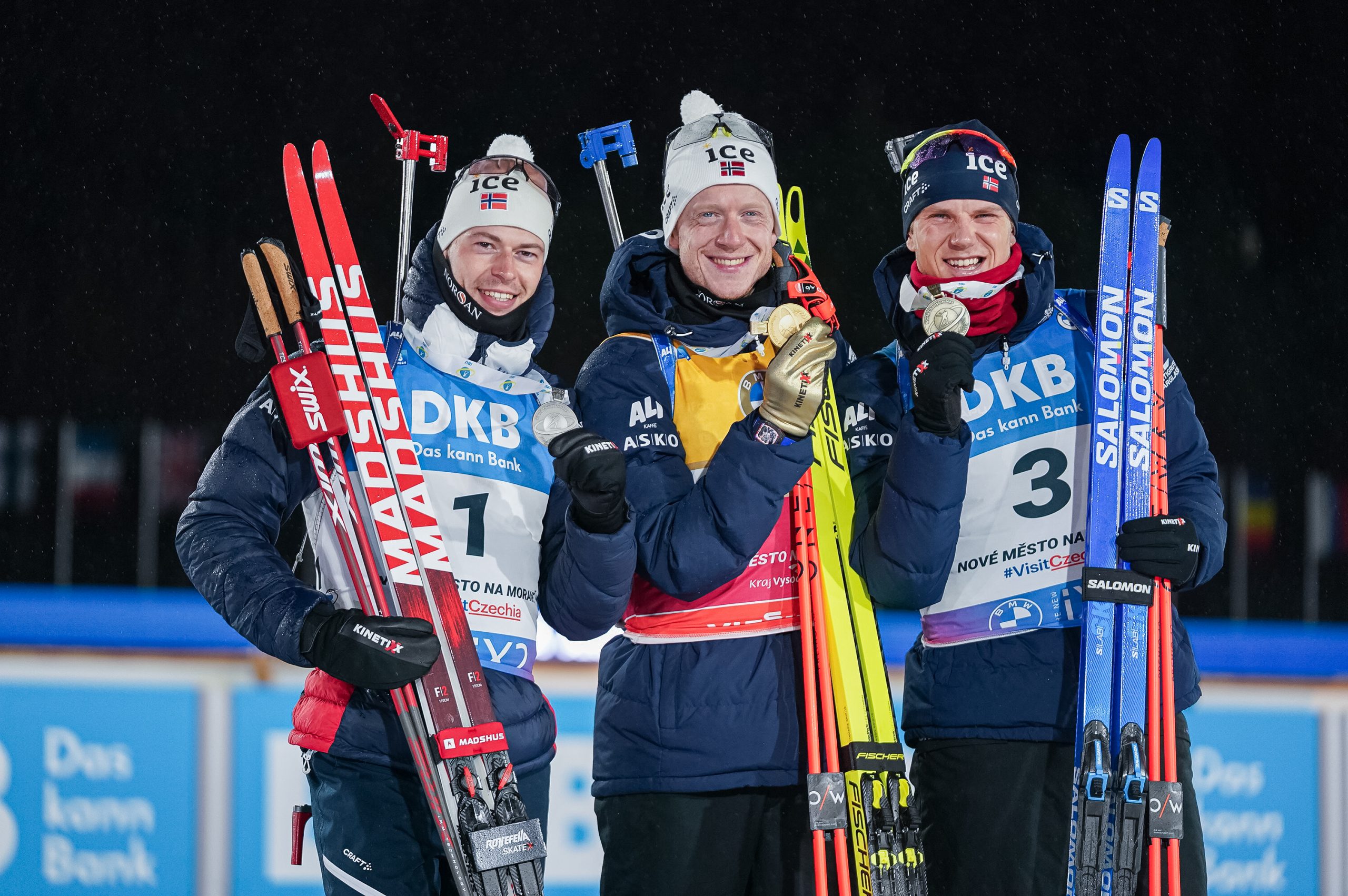
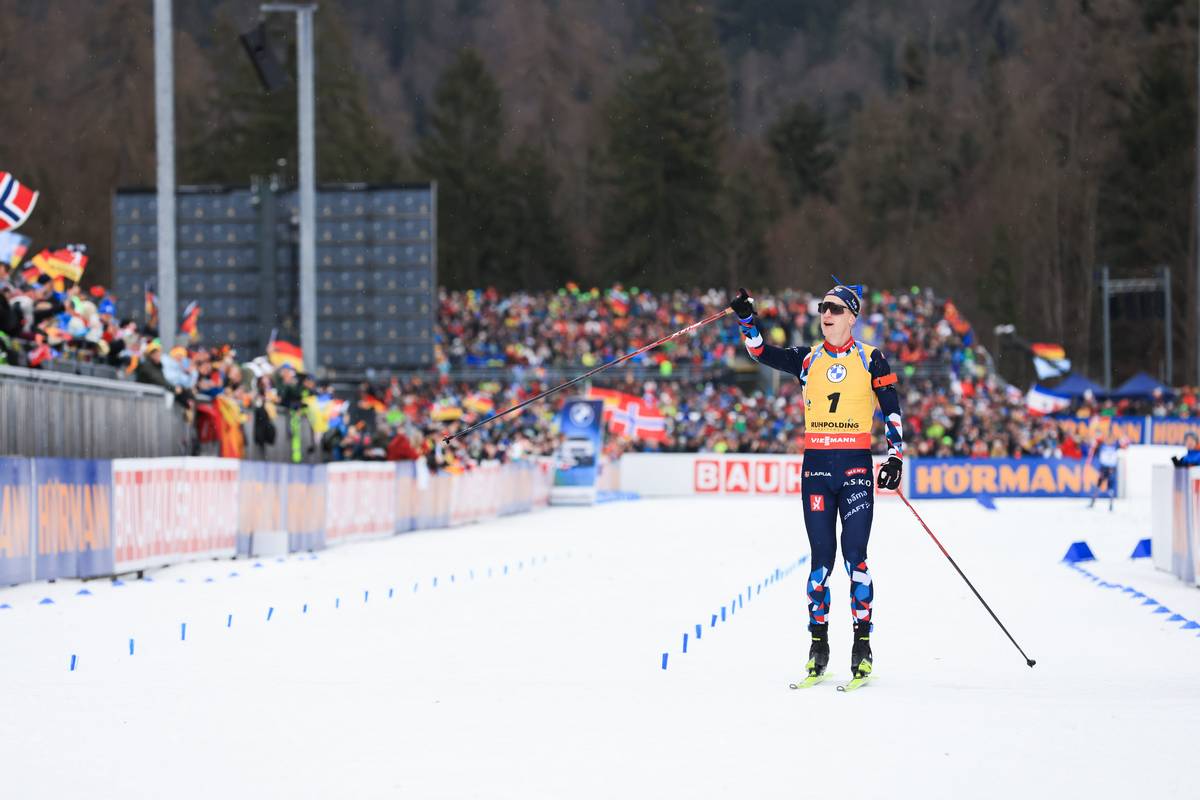
One question lingering from the off-season was answered quickly: What would Norwegian biathlon look like without the Boe Brothers? The dominant duo of Johannes Thingnes and Tarjei Boe – owners of eight Olympic medals – retired at the end of the 2024/25 season. Leaving what one would assume would be a major hole in the program. But when the Norwegian men came out and won the men’s 4 x 7.5km relay at Ostersund, the Norwegian’s roster depth became clear.
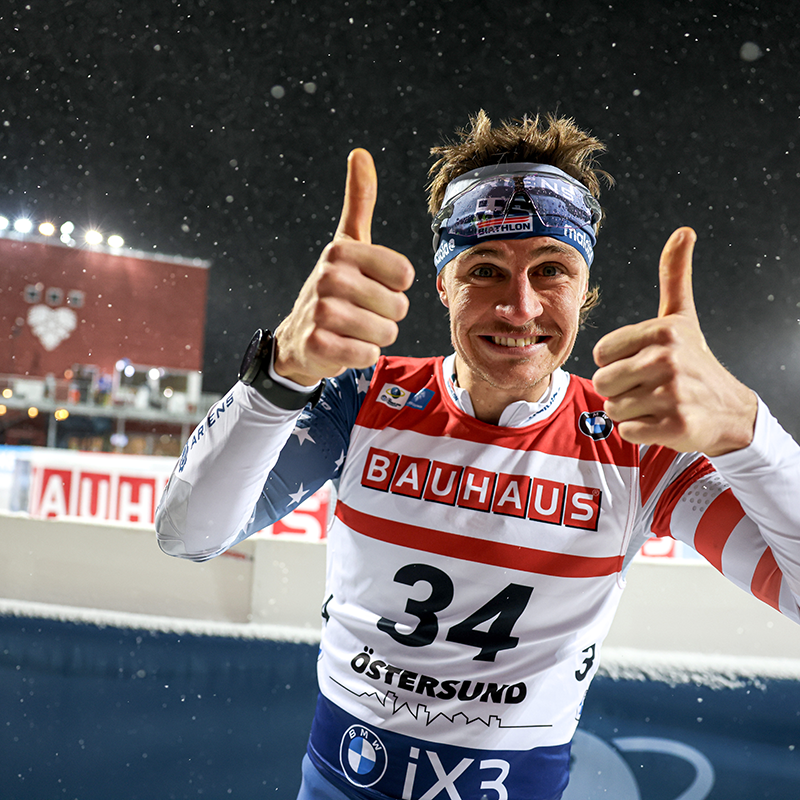
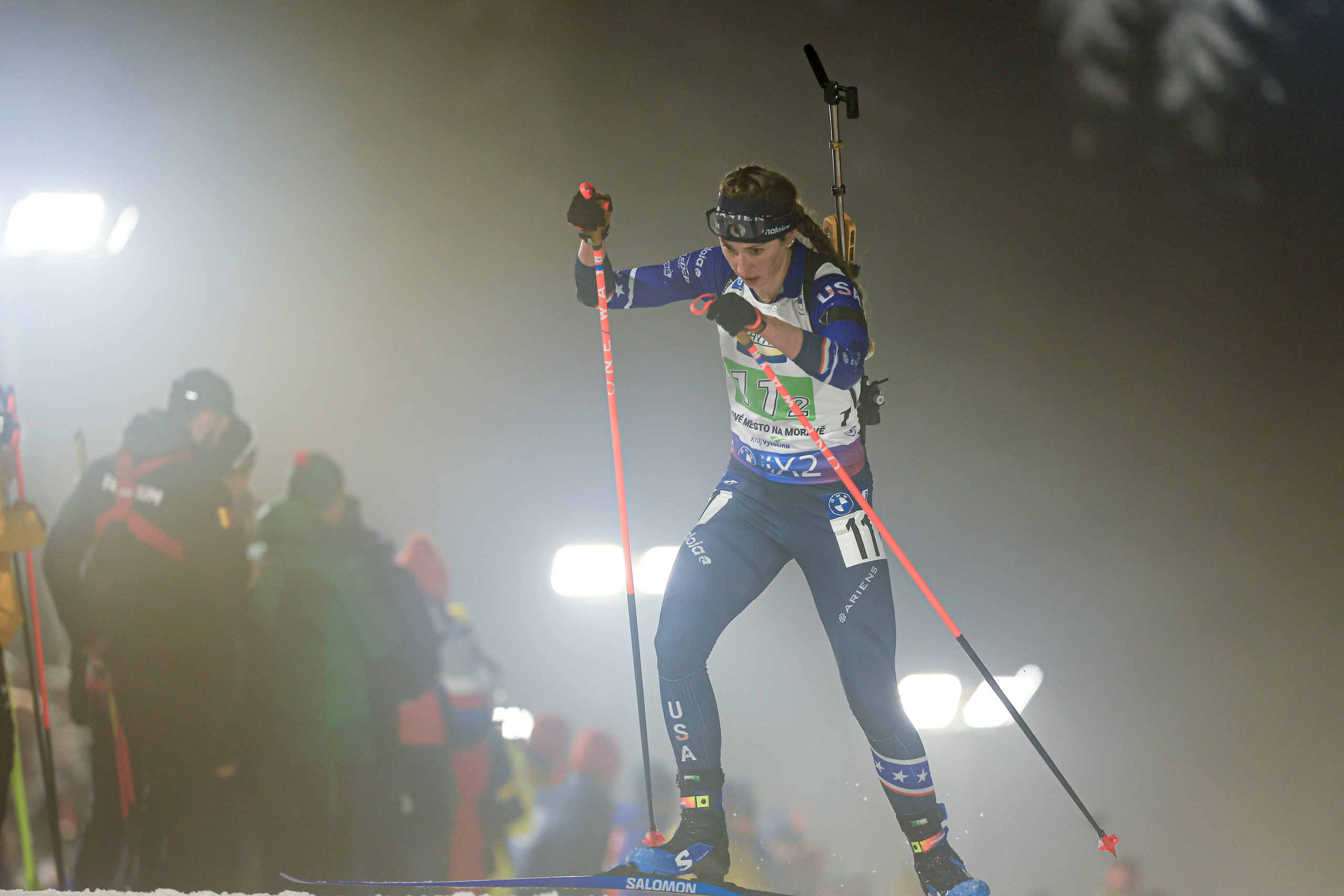
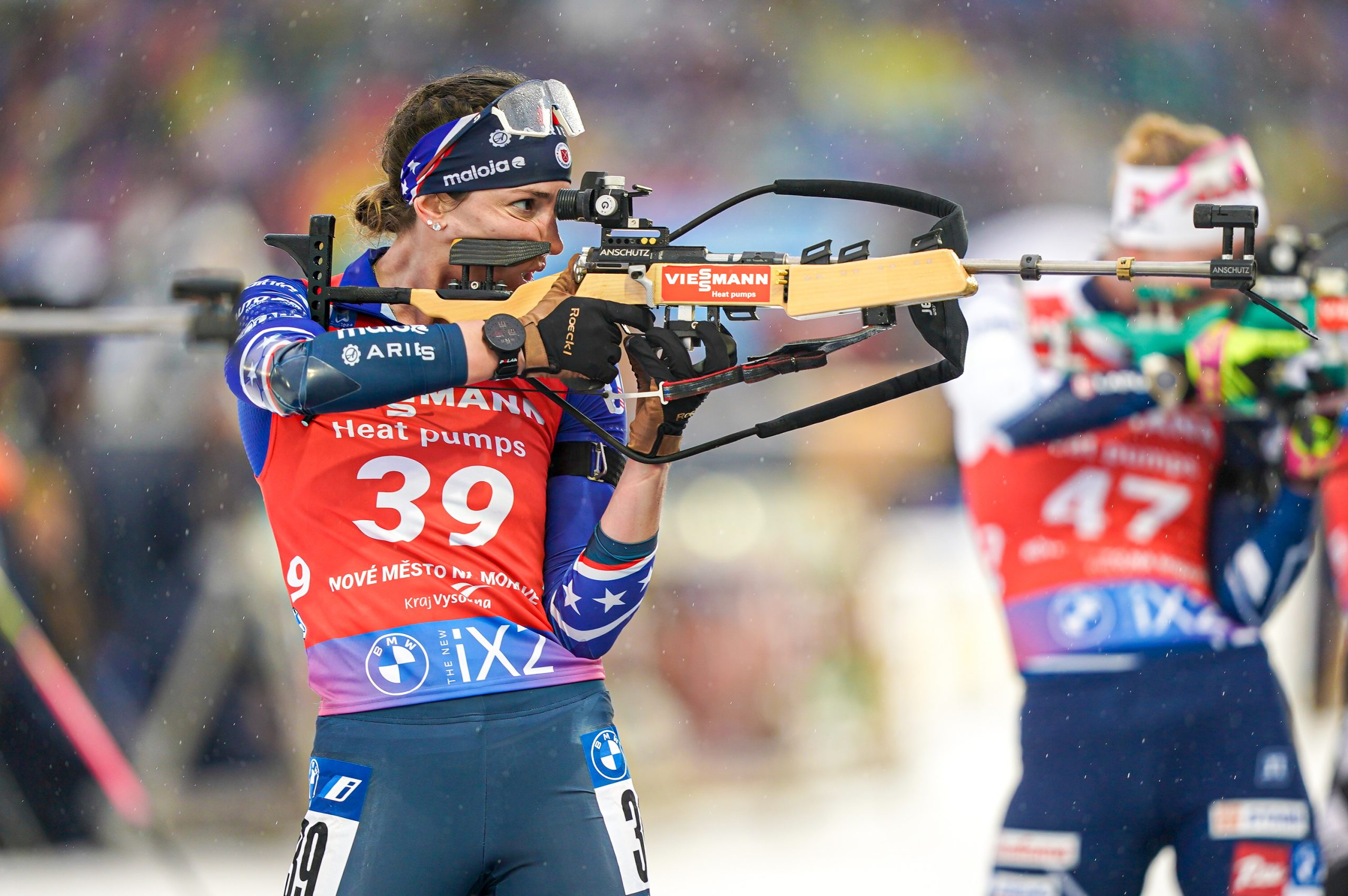
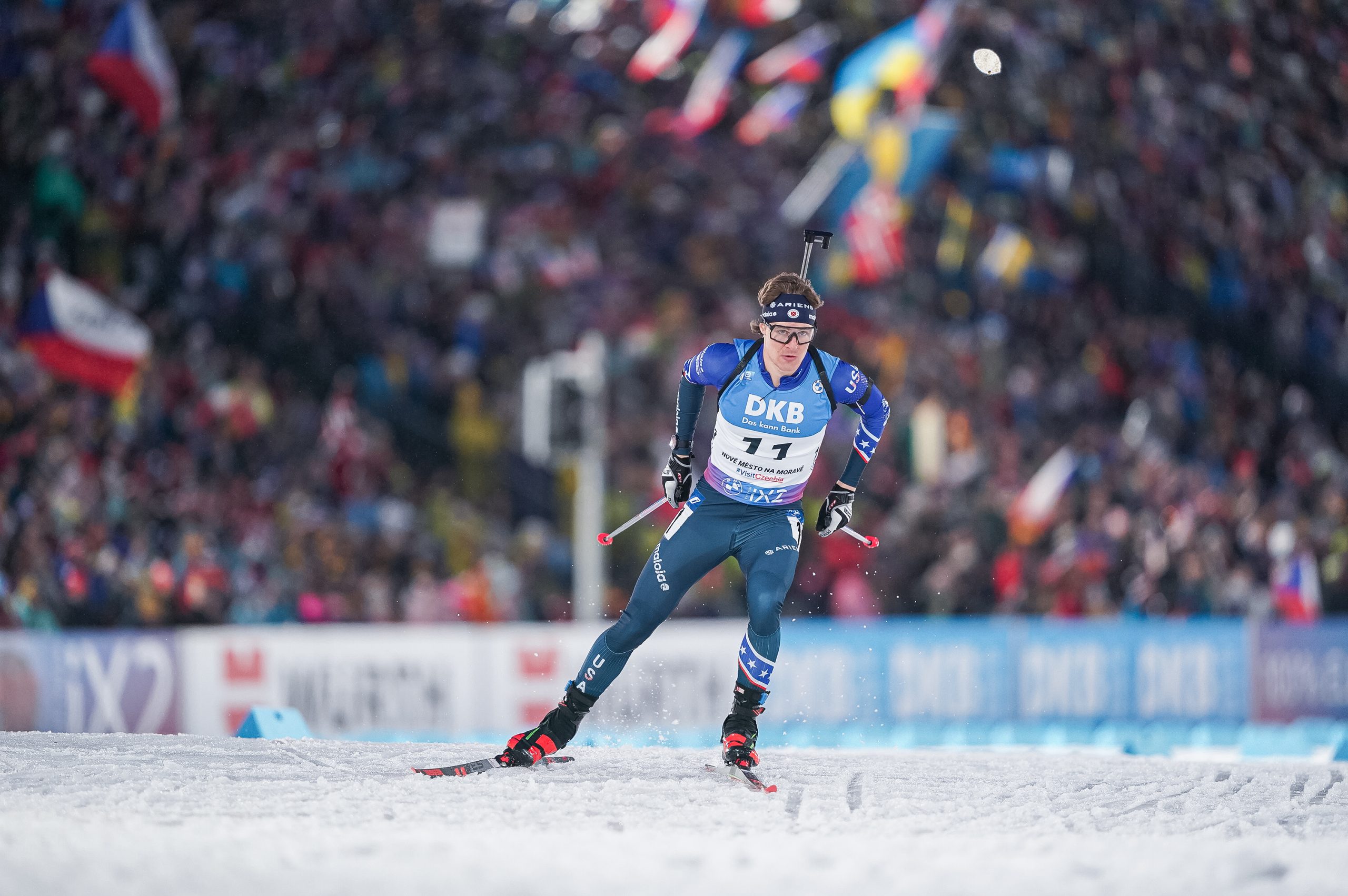
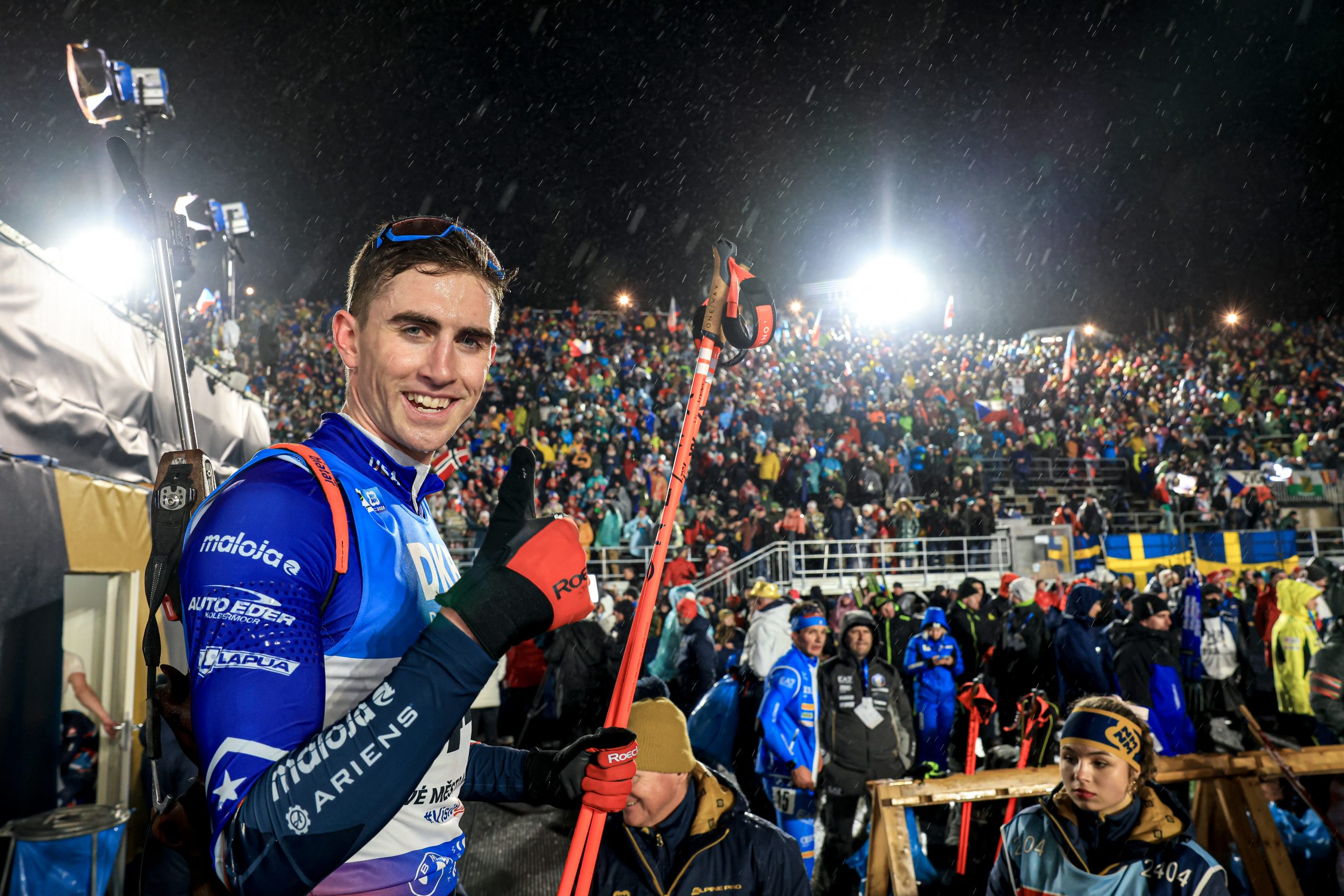
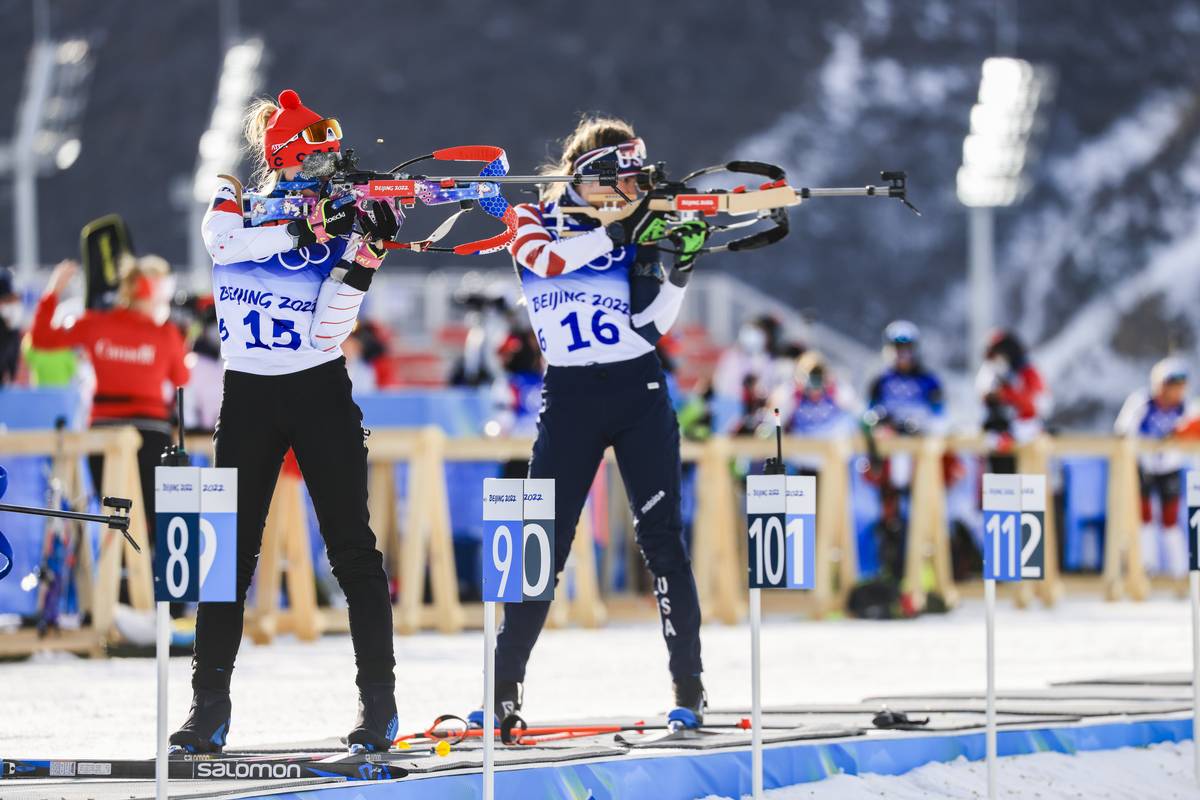
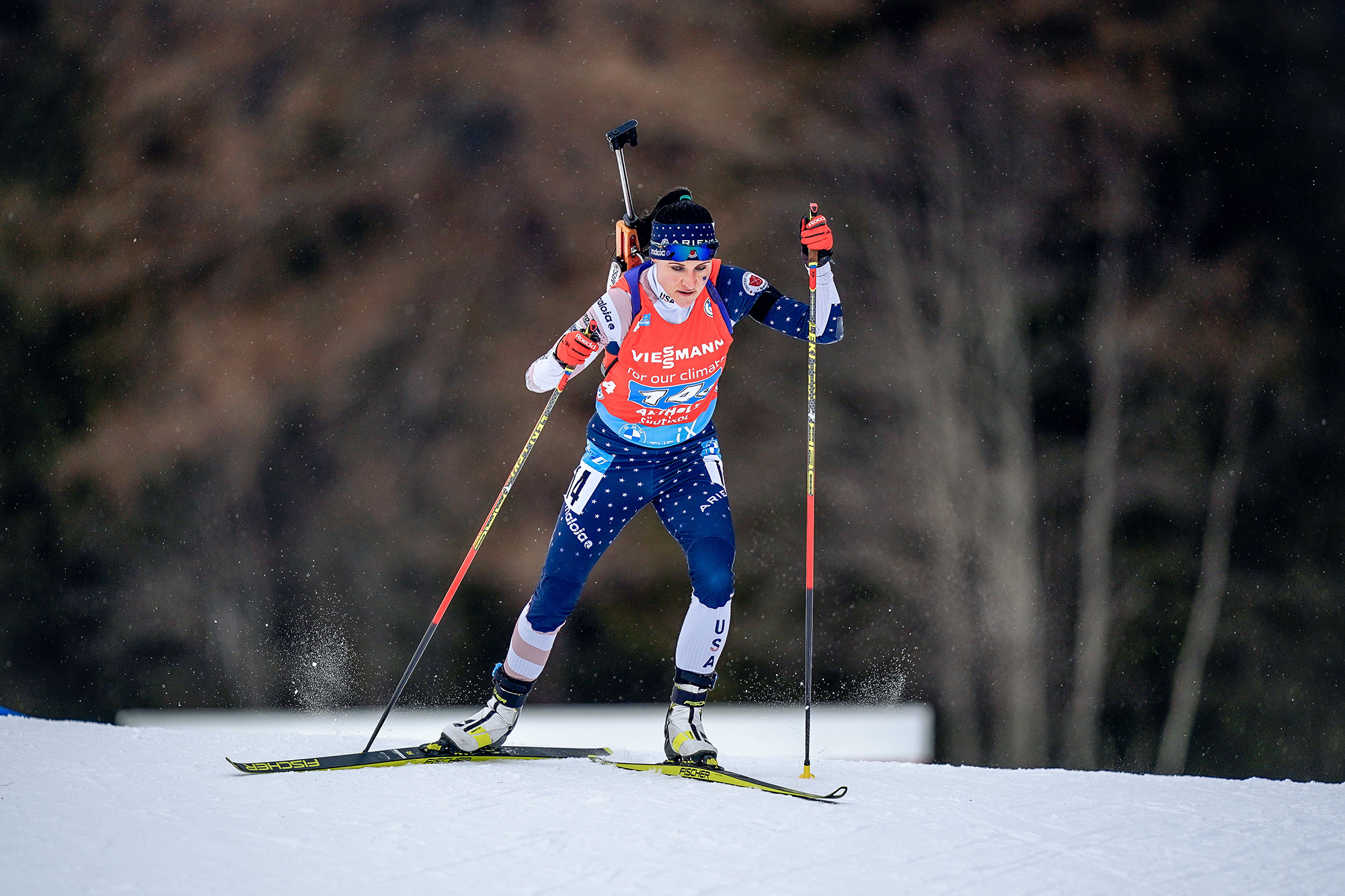
Campbell Wright (USA) during the IBU World Cup Biathlon Men’s Relay in Östersund (SWE). (Photo: Manzoni/NordicFocus)
The men’s relay saw a top result from the U.S. men, as well. Paul Schommer, Campbell Wright, Maxime Germain and Sean Doherty finished fifth, one of the best men’s relay finishes ever for Team USA. The next day, at the mixed relay, Germain, Wright, Chloe Levins and Deedra Irwin placed sixth – which is the best finish for a U.S. mixed relay since 2021.
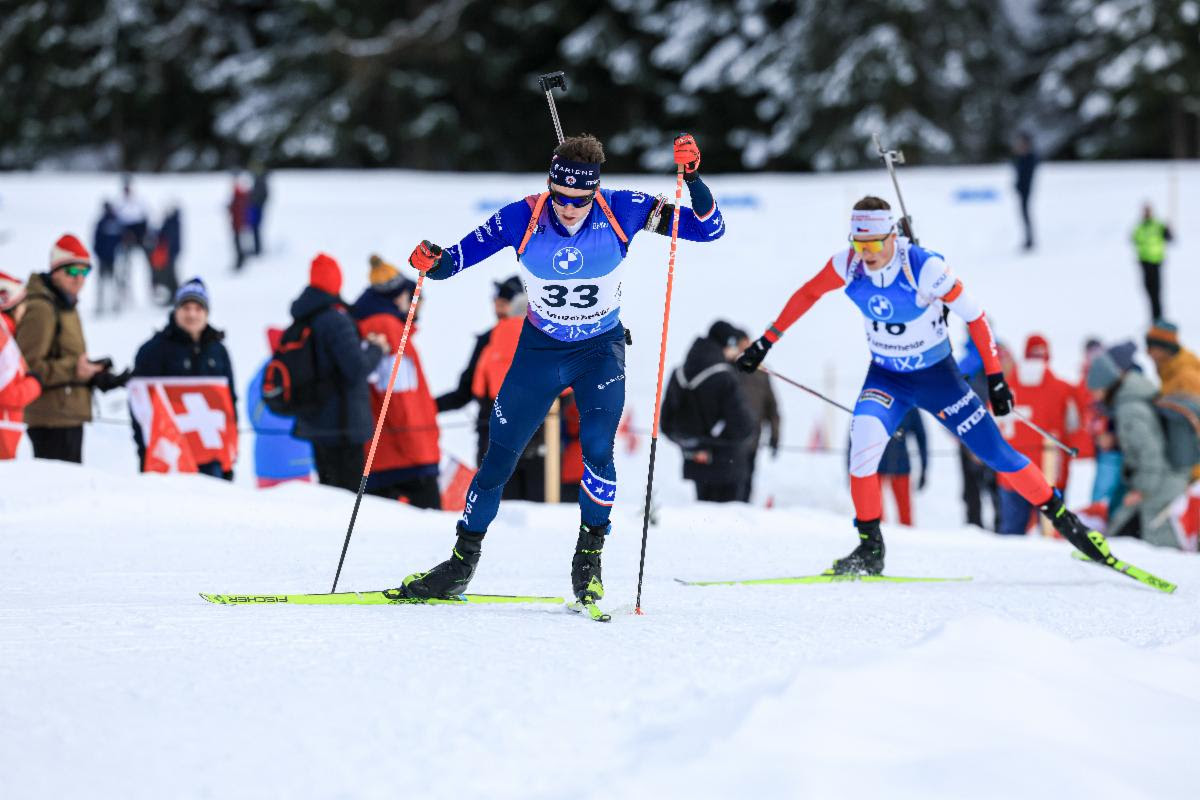
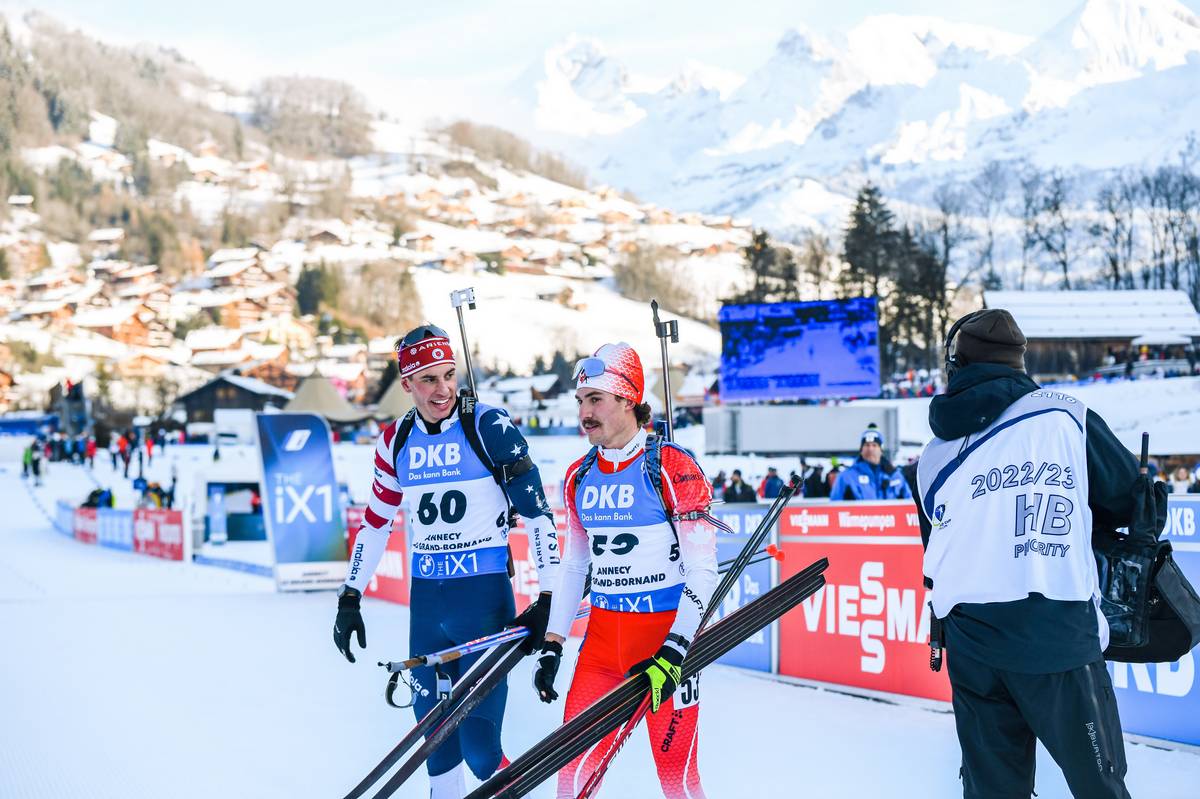
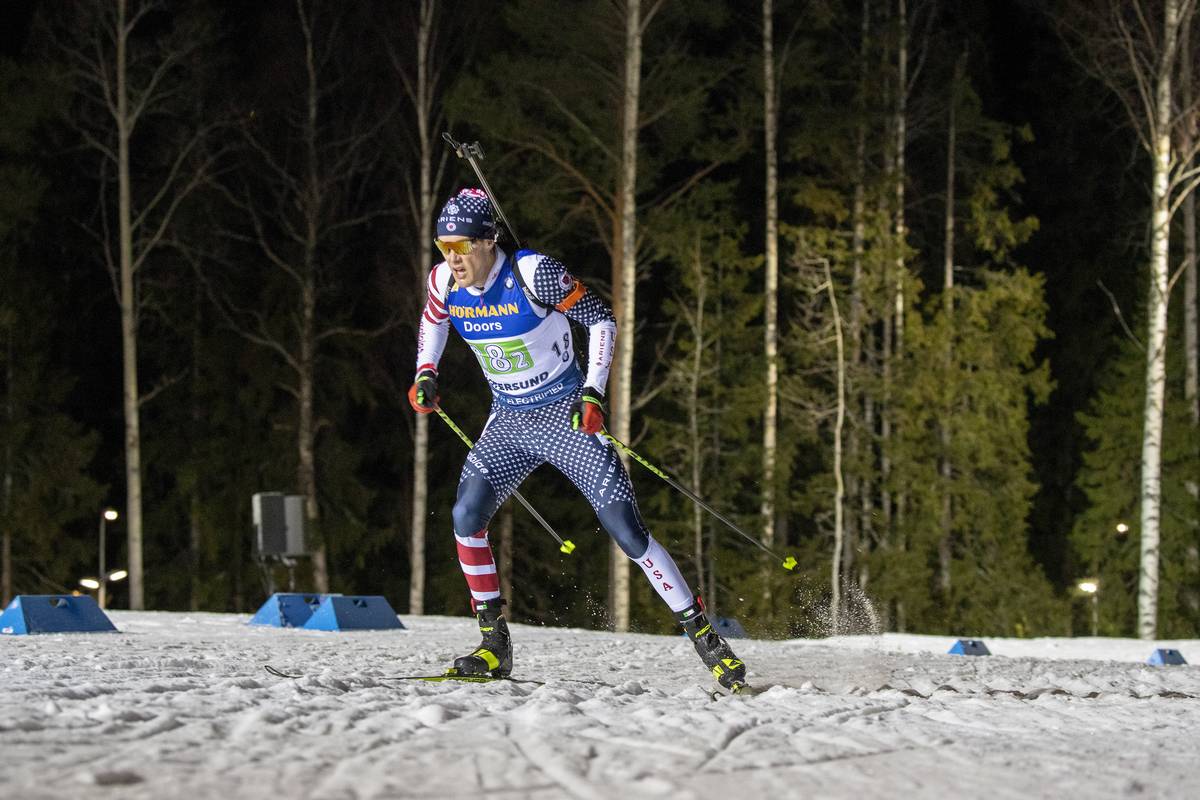
Artem Tyshchenko (UKR) and Paul Schommer (USA), (l-r) during the Men’s Relay in Oestersund (SWE). (Photo: Manzoni/NordicFocus)
Germain and Wright continued to build on their early-week momentum, with Germain placing 11th in the sprint. In the pursuit, Wright hit all 20 targets for the first time in his career and moved up from 18th to 6th. Wright is coming off a stellar 2024/25 season, where he podiumed twice at World Championships, becoming the first American to do so.
Throughout the week, there were highs: Suvi Minkkinen of Finland won her first World Cup sprint. The Norwegian men placed four in the top five in the 20km individual, solidifying their capabilities as a team sans-Boes. And as always in biathlon, some lows: Eric Perrot of France missed his final shot in the pursuit, a devastating moment that cost him the lead. He finished fifth.
Racing wrapped up in Sweden, and teams flew to Austria. In Hochfilzen, a less rigorous racing schedule awaits: sprint, pursuit, and then a men’s and a women’s relay. A few more hours of daylight await, too.
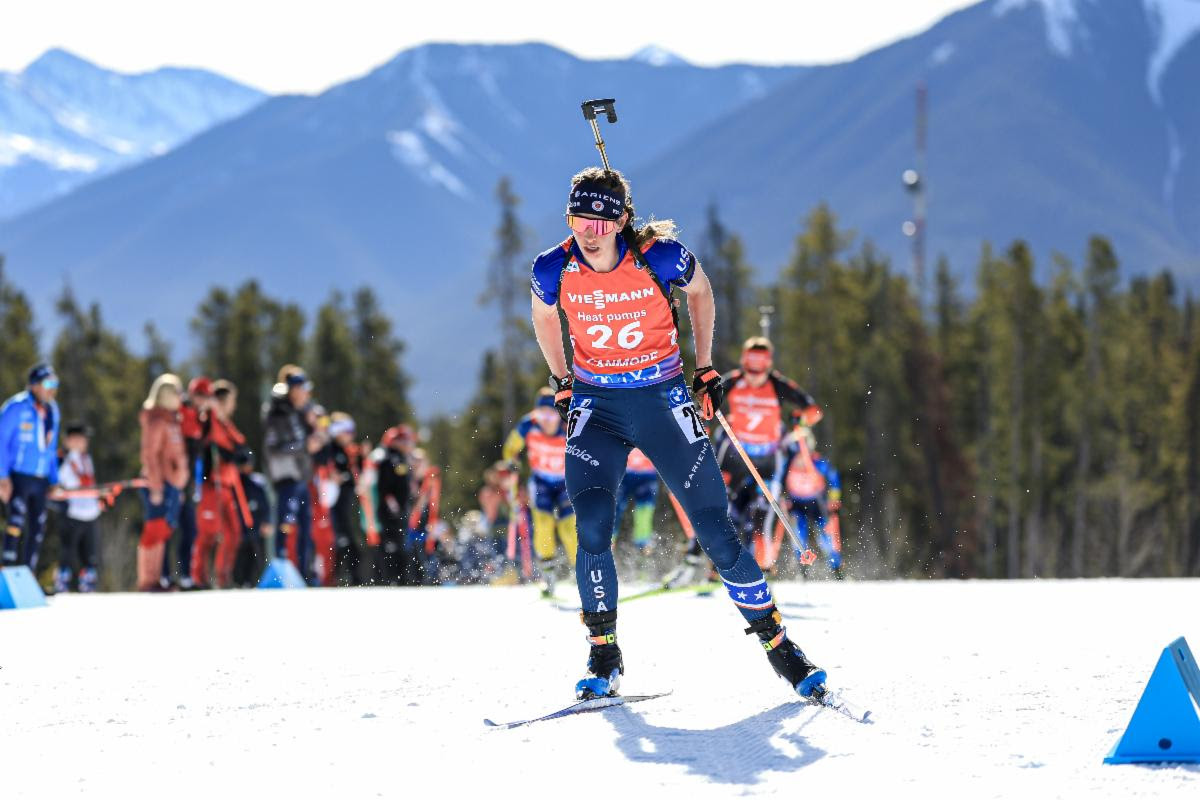
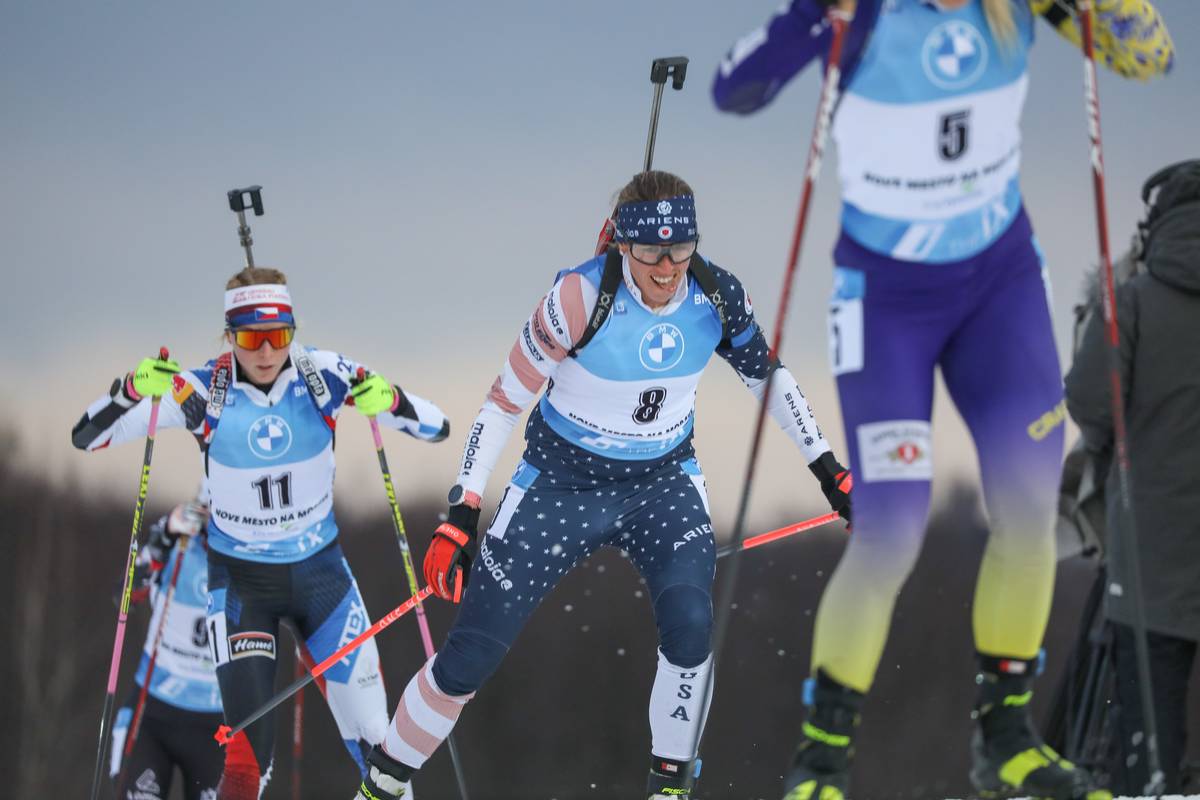
Deedra Irwin (Pulaski, WI/Army World Class Athlete Program) rounds out this season’s pursuit races with a stellar 12th place finish, just one of two athletes in the pool of 60 to shoot a perfect 20 for 20 in Canmore, Alberta, Canada. Irwin, jumping 14 places from bib 26, crossed the line in 12th, just +1:23.1 behind the pursuit victor Lisa Vittozzi of Italy, who shot 19 for 20.
“It feels amazing to shoot clean in the last pursuit of the year,” said Irwin. “I’m happy it was enough to get me into the mass start and it’s always exciting to get another opportunity to race and score points. I’m definitely feeling pretty fatigued on the course, but the wax crew is doing an amazing job of giving me competitive skis.”
Her first World Cup pursuit clean and second clean shooting in a four stage race this season, the first taking place in the mass start in Lenzerheide, Switzerland in December 2023, Irwin has proven mentally tough as the long season is coming to a close. The veteran athlete has shot a perfect 30 for 30 in both the sprint and pursuit races, putting her in a position to race in her second mass start of the season in Canmore.
”Armin, Emil and I have been working really hard after a shaky start to the trimester with my standing shooting,” Irwin added. “I’m so happy I’ve been able to get over that mental hump on the range and clean all my stages so far this weekend.”
Later in the day, Campbell Wright (Wanaka, NZL/U.S. Biathlon) and Jake Brown (St. Paul, MN/Craftsbury Green Racing Project) toed the line for their final pursuit race of the season, wearing bib 28 and 36.
Wright, missing just one shot in his final standing shoot, was back up in the top 20 with a 19th place finish, +2:42.3 behind the pursuit victor Johannes Thinges Boe of Norway. Brown, who headed into his final shoot 14 for 15, felt the pressure and ended up missing three targets. Though, with an 18th ski time overall, Brown’s three added penalty loops only dropped him to 36th at the finish line.
With the final day of World Cup racing ahead, Irwin will start the women’s 12.5km mass start wearing bib 29 at 1:10 ET/11:10 MT, with the men’s 15km mass start to follow at 5:10 ET/3:10 MT. Information on how to watch can be found at usbiathlon.org/how-to-watch. For spectator resources, visit usbiathlon.org/spectator-resources.
About U.S. Biathlon
As the Olympic sports organization centered around the sport of biathlon, the United States Biathlon Association, known as U.S. Biathlon, is recognized by the International Biathlon Union (IBU) and the U.S. Olympic and Paralympic Committee (USOPC) as the national federation for biathlon in the United States. Founded in 1980, U.S. Biathlon exists to support and encourage the development of biathlon in the United States, to work with biathlon clubs and regional centers around the country to organize training and competition from the grassroots to elite level, and to prepare athletes for international competition. U.S. Biathlon staffs and finances the U.S. Biathlon national and junior national teams and is a 501 c (3) non-profit organization. For more information, visit usbiathlon.org.
FasterSkier’s Coverage of the Biathlon World Championships is made possible through the generous support of the Craftsbury Outdoor Center: New England’s finest snowmaking, world class race venues and touring trails, healthy food in abundance, comfortable accommodations at Craftsbury: Sports, Sustainability, Stewardship.
The start of the Single-Mixed Relay in the Vysocina Arena in Nove Mesto na Morave, Czech Republic. (Photo: NordicFocus)
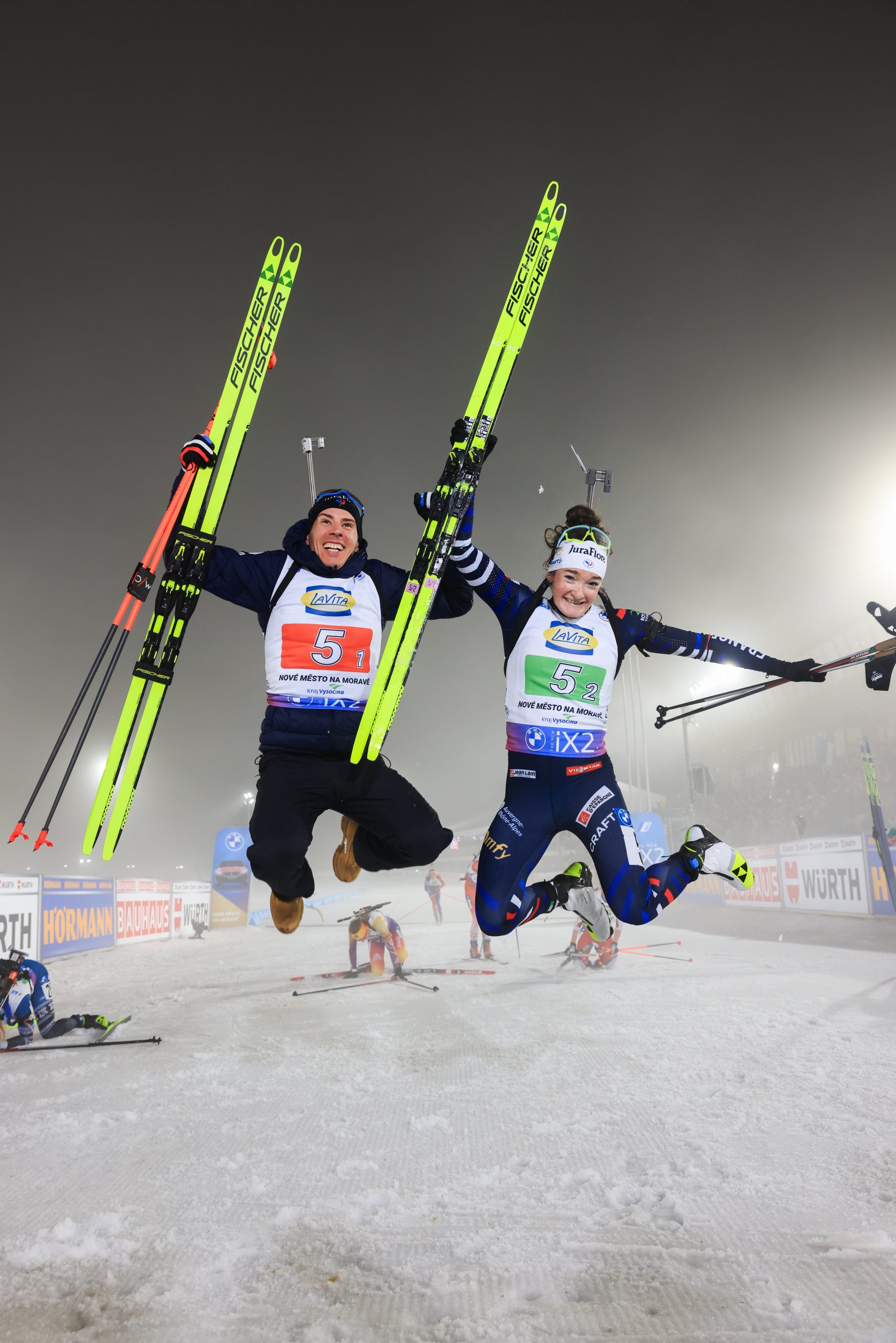
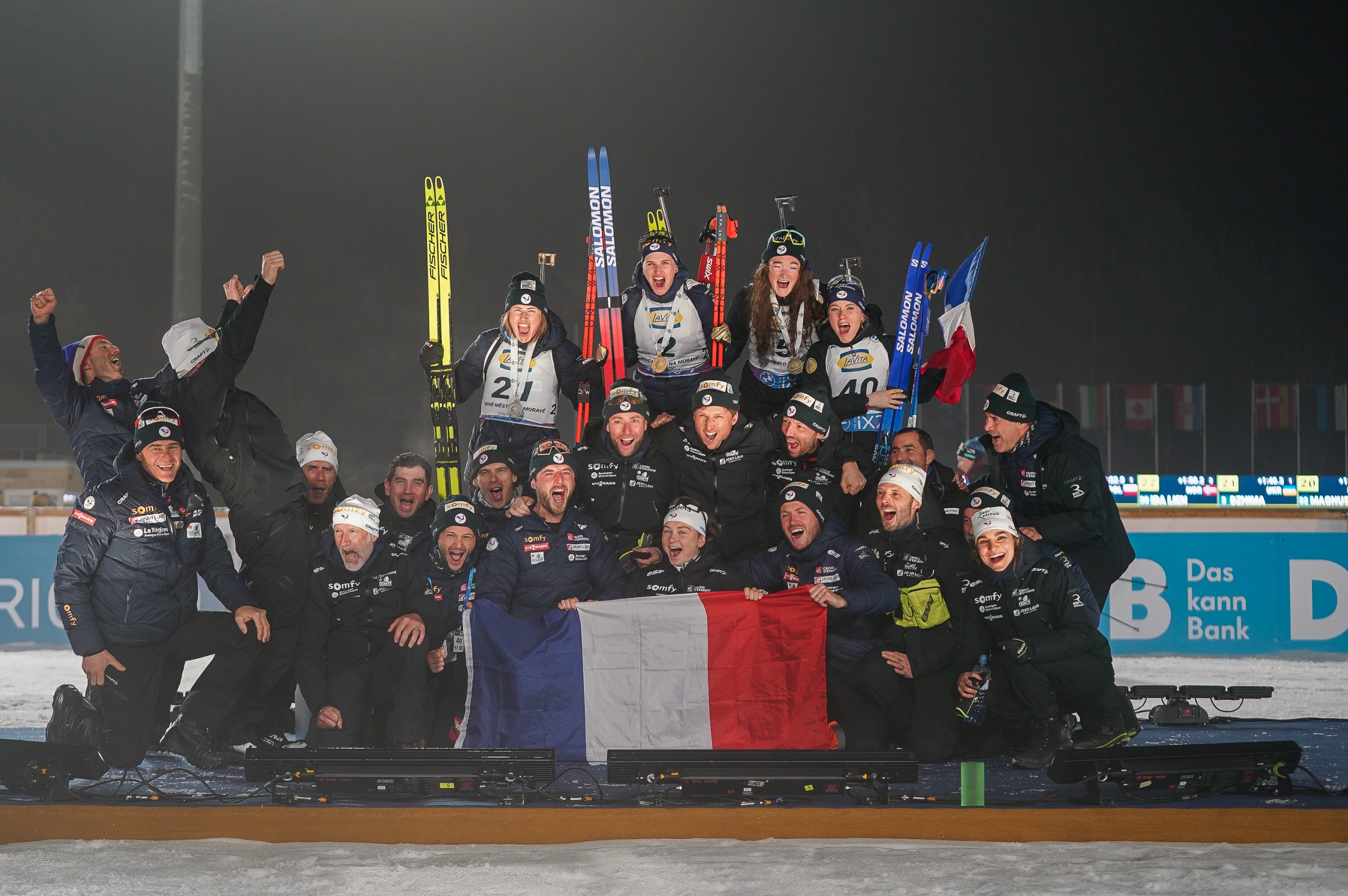
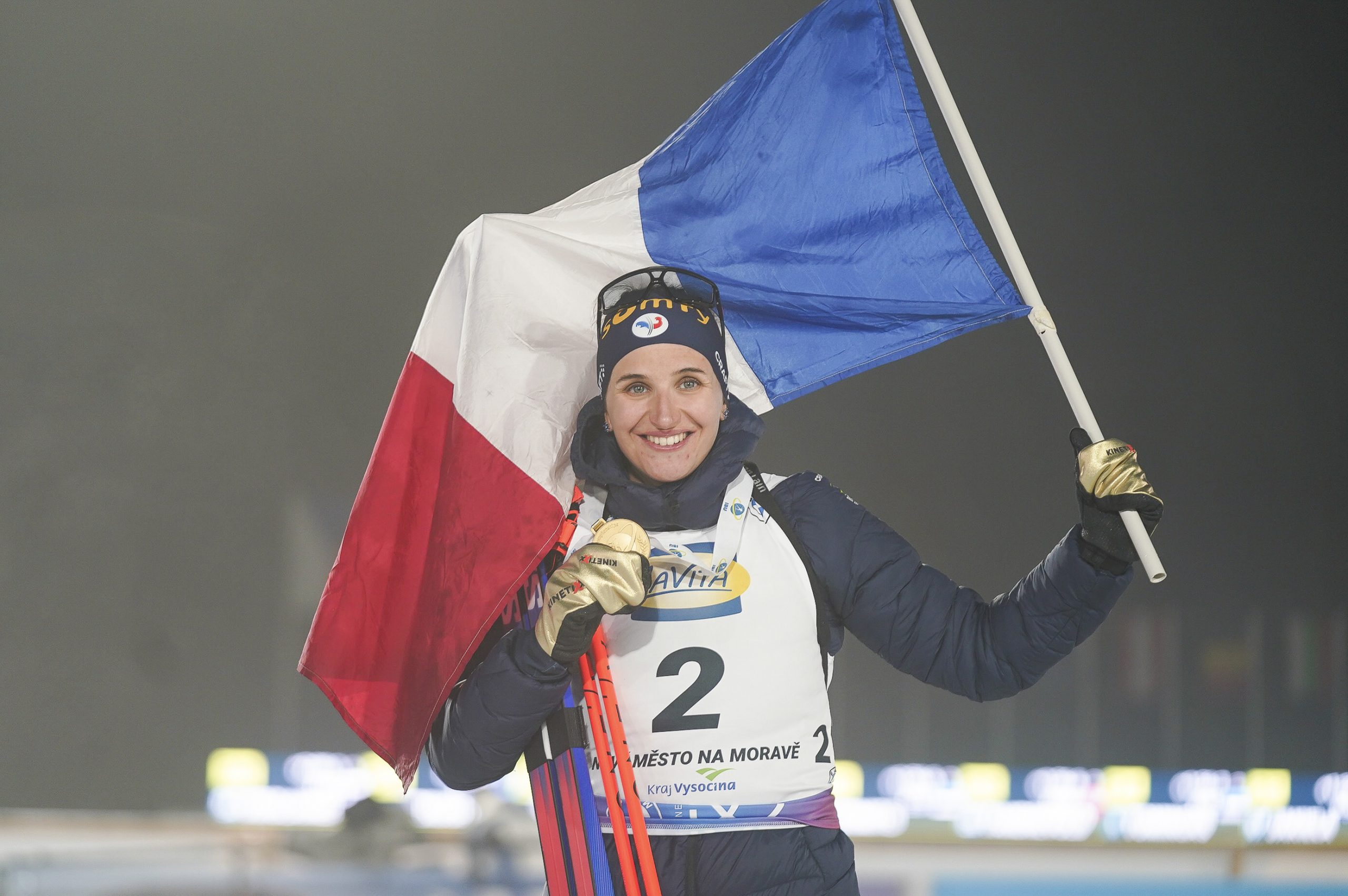
Twenty-eight nations started the Single-Mixed Relay on Thursday at Biathlon World Championships in Nove Mesto na Morave, Czech Republic. After just over 35 minutes of fast and furious racing, France claimed the gold, last year’s bronze medalists from Italy the silver, and the defending champions of Norway the bronze.
The Single-Mixed Relay combines the performances of one man and one woman who each ski two short biathlon races, tagging off in between. The importance of shooting speed and accuracy is magnified in this format because the ski loop is only 1.5 k; there is relatively little distance over which to recover lost time. As in all biathlon relays, athletes can use up to three spare rounds per stage to hit their five targets, but loading each spare takes precious time, and if targets remain un-hit, the penalty loop awaits. The event is a wildly unpredictable fan favorite.
Johannes Thingnes Boe (NOR) and Quentin Fillon Maillet (FRA) (l-r) shoot on lanes one and two in the Single-Mixed Relay. (Photo: NordicFocus)
The field was stacked. Team Norway comprised the two current World Cup Overall leaders, Johannes Thinges Boe and Ingrid Tandrevold. But Tandrevold’s standing shooting has been hit or miss at World’s—more often miss than hit. For France, Lou Jeanmonnot got called up to race with Quentin Fillon Maillet. France’s top star, Julia Simon, decided to sit out and rest after winning three golds and a silver in the first four events of the Championships. But Jeanmonnot has been fantastic in her own right, finishing third, sixth, and seventh in the non-team competitions here in Nove Mesto. Italy put forward one of the strongest women in the field, Lisa Vittozzi, fresh off a victory in the 15 k Individual. Her partner, Tommaso Giacomel, has been 15th, 20th, and 45th in non-team competitions, combining reliable ski speed with less reliable shooting, but the same duo was a successful pairing in 2023 when they took bronze.
2023 bronze medalists from Italy, Lisa Vittozzi and Tommaso Giacomel, paired up again to take silver in 2024 in the Single-Mixed Relay. (Photo: NordicFocus)
Germany’s team combined the two most accurate shooters in the World Cup field. Sweden is always a threat, and Switzerland put forward two of the fastest shooters and the most likely person to demolish the last lap: Lena Haecki. For more discerning fans, the US was also a solid pick for the day: Campbell Wright and Deedra Irwin showed their potential in this event in January in Antholz, Italy, when they stayed in podium contention through the first half and eventually finished ninth in a very tight race, just 1:09 out of the lead.
The lead constantly changes in the Single-Mixed Relay as the athletes make their way through a combined eight shooting stages and nine course loops. At the first exchange, France was in the lead but the eventual silver-medalists from Italy were down in 14th, with fourth place finishers Sweden following behind them in 15th. Wright shot 10/10 on the first leg to tag Irwin in fourth. At the second and third exchanges, France and Norway continued to trade the lead, while the US, Germany, Switzerland, and Finland shuffled around the next four places and Italy and Sweden gradually moved up.
Ingrid Landmark Tandrevold (NOR) incurred a penalty loop on the final shooting, falling from first to third. (Photo: NordicFocus)
In the defining final stage of the race, Tandrevold, a lefty, stood on lane one, face to face with Jeanmonnot on lane two, in a shooting dual for the gold. Jeanmonnot shot with confidence, hitting 4/5 targets and her spare round in a total of just 28 seconds. But Tandrevold needed all three spares and still had to ski a penalty loop, opening the door for Vittozzi to leave the range in second after a flawless 19.6-second shooting bout. While Jeannmonnot skied to a decisive victory, Tandrevold caught and passed Vittozzi part way through the last lap, only to be convincingly out-sprinted by Vittozzi in the final two hundred meters. About thirty seconds behind that trio, Irwin shot clean and left the range in fourth, but three teams followed within the next nine seconds. The athletes from Sweden (H. Oeberg), Switzerland (Haecki), and Germany (Voigt) skied three of the four fastest course times on the last loop to push the USA down to seventh.
Campbell Wright (USA) shoots on lane four in the Single-Mixed Relay. This year’s relays are his first since previously as the only New Zealand athlete on the circuit he didn’t have teammates with which to compete. (Photo: NordicFocus)
For US Biathlon’s Campbell Wright, this season’s relays are a first. Wright is a dual citizen who grew up in New Zealand and competed for that country up through last season. As the only top Kiwi biathlete, he never had teammates with whom to race relays. Speaking of his experience shooting clean and tagging in fourth at the World Championships, Wright said, “I’m lovin’ it. I know I can ski well at the moment so it’s not as stressful skiing with fast people.” At just 21 years old, Wright is still coming to terms with the fact that he is one of the “fast people.” This was Wright’s second-ever Single-Mixed Relay after the one Antholz in January where he had a great start but then had to ski a penalty loop. Today’s shooting was different, he said, “because I had less pressure because Deedra was on the last leg!” He added, “That last leg is bloody hard.”
Deedra Irwin (USA) shot clean on the final shooting to leave the range in fourth. (Photo: NordicFocus)
Irwin performed magnificently in the last leg on Thursday. Coming into the final stage in fourth, shooting for a chance at a World Championship medal, she cleared all five targets in a smooth and deliberate rhythm. “I went into the last standing thinking, ‘I have to be super aggressive,” she said. “On the first standing, I took my time, but everyone is shooting so fast and clean. That mindset worked which was awesome.” After the final shooting, Irwin was shocked when she saw Norway and Sweden skiing around the penalty loop and realized how well she was doing. But she was also aware that she left range, as she put it, “with all these people on my ass.” Irwin felt her best in January, but then was sick during the pre-World Championships training camp and has been doing a heavy load of racing as the top American woman, so she doesn’t feel quite as sharp now. But, she said, “I’m still in the best shape of my life this year.” Although it was frustrating to be passed on the final loop, Irwin was still content about her performance against some of biathlon’s top talents. “It’s very humbling and cool to fight against them. I’m never gonna complain about a top eight.”
FasterSkier’s Coverage of the Biathlon World Championships is made possible through the generous support of the Craftsbury Outdoor Center: New England’s finest snowmaking, world class race venues and touring trails, healthy food in abundance, comfortable accommodations at Craftsbury: Sports, Sustainability, Stewardship.
After finishing second in Saturday’s Sprint, Johannes Thingnes Boe (NOR) moved up into first in Sunday’s Pursuit, defending his 2023 title .
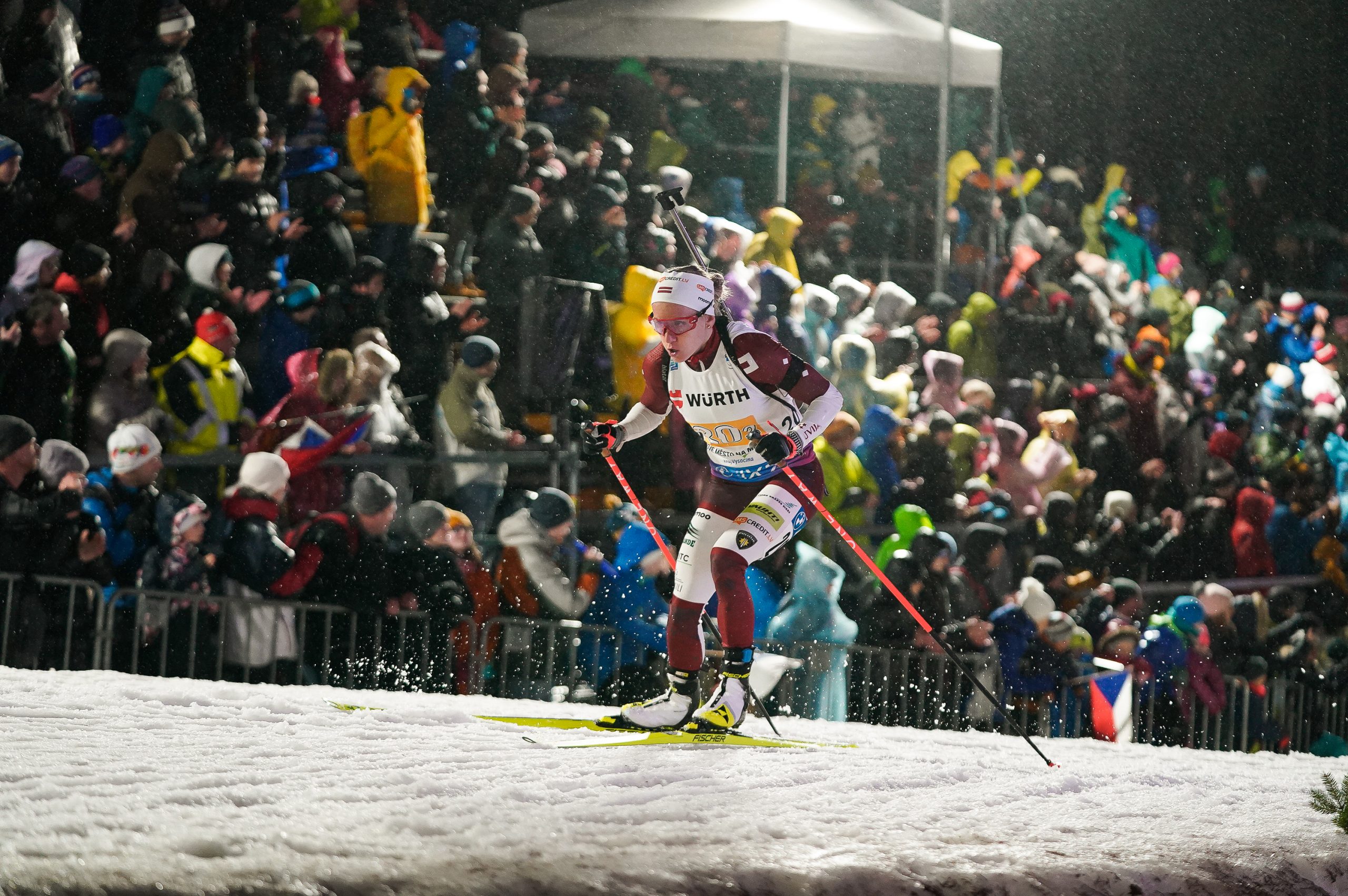
On a rainy Sunday afternoon in Nove Mesto na Morave, Czech Republic, 30,000 fans packed the Vysocina Arena for the women’s and men’s Pursuit competitions of the 2024 Biathlon World Championships. The weather has been dismal for the first five days of the event, meaning a lot of soggy boots, sink laundry, and rifle cleaning for the athletes, and long, cold, days for team staff and event organizers. But it has not dampened the spirits of the biathlon fans who continue to make the atmosphere bright.
French teammates Justine Braisaz-Bouchet (foreground) and Julia Simon shoot head-to-head in the Pursuit. (Photo: NordicFocus)
Women’s 10 k Pursuit
Simon defends world title, Vittozzi moves up from seventh to silver, and Braisaz-Bouchet keeps her podium streak alive.
In the women’s Pursuit, Julia Simon of France defended her 2023 World Championship Pursuit title as well as her Sprint victory from Friday. Last year, Simon started the Pursuit wearing bib 10 and overcame a deficit of more than one minute to take the gold, but today’s defense of Friday’s Sprint gold was also impressive. Only four women in the past ten years have won both the Sprint and Pursuit at the World Championships or Olympics: Marie Dorin-Habert (FRA) in 2015, Laura Dahlmeier (GER) in 2018, Tiril Eckhoff (NOR) in 2021, and Marte Olsbu-Roeiseland (NOR) in 2022.
Lisa Vittozzi (ITA) fights to the finish line, moving up from seventh to silver ahead of bib 2 Justine Braisaz-Bouchet (FRA). (Photo: NordicFocus)
Simon started with a negligible five second advantage over teammate Justine Braisaz-Bouchet, who is the fastest skier in the field but a slower and less-accurate shooter than Simon. A gap of nearly 40 seconds separated those two leaders from the third starter, Lou Jeanmonnot (FRA), but then six women all started within about 30 seconds. Simon and Braisaz-Bouchet matched one another’s shooting (0,1) on the first two stages to hold their lead over the chasers. But then on the third stage, Simon cleaned while Braisaz Bouchet missed two, opening the door for bib 7, Italy’s Lisa Vittozzi, to move into second with her 15/15 shooting through stage three of the race.
Sophie Chauveau (FRA) finished fourth in the Sprint and Pursuit. (Photo: NordicFocus)
In the final stage, Simon closed with the same perfect shooting we’ve now seen in three of three races at World Championships, nailing all five targets in 21.5 seconds—somewhat tame for Simon but still the fastest in the 60-person field. Behind her, Vittozzi missed her only shot of the day, creating an opening for Braisaz-Bouchet and bib 4, Sophie Chauveau. But luckily for Vittozzi, both of them missed one as well. Chauveau left the range a few seconds ahead of Braisaz-Bouchet, and for a moment it looked like the 24-year old might take her first World Championship medal after finishing a bittersweet fourth in the Sprint. But Braisaz-Bouchet out-skied Chauveau on the final lap to take the bronze, leaving Chauveau in fourth again. To put things in perspective, Chauveau won her first medal (a bronze) in January of this year, and her two fourth places so far at World’s are her next-best results.
Deedra Irwin was the top American in the Pursuit, finishing 46th with four misses. (Photo: NordicFocus)
From the US, Deedra Irwin started in bib 39 and fell back to place 46 with four misses. Tara Geraghty-Moats started in bib 58 but was lapped after the second shooting in her first-ever Pursuit.
Sturla Holm Laegreid’s (NOR) clean standing shooting earned him the silver medal in the Pursuit. (Photo: NordicFocus)
Men’s 12.5 k Pursuit
J.T. Boe shuffles the sprint podium to defend World title while the USA’s Wright and Doherty finish 12th and 26th.
In the men’s 12.5 k Pursuit, the Norwegian podium sweep from Saturday’s Sprint grew to a monstrous top-five sweep. Johannes Thingnes Boe (NOR) overcame three prone misses with flawless standing shooting to win his eighth individual World title—his 34th World Championship medal. (If you include Olympic results, Sunday’s victory was Boe’s 11th title and 42nd medal.) After winning Saturday’s Sprint with his signature perfect shooting, Sturla Holm Laegreid (NOR) uncharacteristically missed two in the first stage of the Pursuit but then hit the rest of his targets to fight back for the silver medal. Vetle Christiansen (NOR) led the race early on when he cleared all his prone targets and J.T. Boe and Laegreid both missed. But then two misses on his final stage set him back. He left the range a few seconds ahead of Laegreid but was caught in the final lap.
Vetle Sjaastad Christiansen (NOR) finished third in both the Sprint and Pursuit. (Photo: NordicFocus)
The fight for the top-six flowers was marked by some surprising shooting melt-downs. Having hit all his targets through the third stage, Tarjei Boe came into the final shoot tied for second with his younger brother Johannes, just nine seconds behind race leader Christiansen and a full 30 seconds ahead of the chasing group. But he missed a heart-wrenching four out of five targets and fell to fifth. Meanwhile, his teammate Johannes Dale moved up into fourth by clearing his final five, recovering from a messy three misses on the third stage. Behind Dale and T. Boe, Sebastian Samuelsson (SWE) kept his wits about him and shot 17/20 to complete the flower ceremony in sixth.
Campbell Wright (USA) was the top American in the Pursuit finishing 12th with two misses. (Photo: NordicFocus)
For the US, Campbell Wright in bib 11 missed one shot each in the prone stages but then cleared all 10/10 standing targets, finishing 12th. His 11th-place finish in the Sprint was a personal-best and this 12th place ties his previous personal-best. With these two results, Wright is almost guaranteed a start spot in next weekend’s 30-person Mass Start featuring the top 30 athletes of the Championships.
Sean Doherty (USA) happy in the finish area after moving up 18 places from 44th to 26th. (Photo: NordicFocus)
Sean Doherty was one of the biggest climbers of the day, moving from 44th to 26th with just a single miss in the first standing stage. Jake Brown started 38th and finished 37th with four misses, skiing the fastest of the three Americans in the race, 1:11 off the pace set by J.T. Boe.
Sturla Holm Laegreid, Johannes Thingnes Boe, and Vetle Sjaastad Christiansen, (l-r) shuffled their podium sweep from Saturday’s Sprint in Sunday’s Pursuit. (Photo: NordicFocus)
FasterSkier’s Coverage of the Biathlon World Championships is made possible through the generous support of the Craftsbury Outdoor Center: New England’s finest snowmaking, world class race venues and touring trails, healthy food in abundance, comfortable accommodations at Craftsbury: Sports, Sustainability, Stewardship.
France swept places 1-4 in the Sprint at the 2024 Biathlon World Championships. (Photo: NordicFocus)
Ever since France upset Norway to win the opening Mixed Relay of the 2024 Biathlon World Championships, their magnificent esprit de corps has been on display. After that race, the entire team gathered around the podium and belted “La Marseillaise” in the rain as the French flag was raised in the Vysocina Arena in Nove Mesto na Morave, Czech Republic. That same winning energy pulsed through the French women’s team Friday as they delivered an historic sweep of the first four places—a feat not seen since the inaugural Women’s Biathlon World Championships in 1984 when the Soviet Union swept the 10 k Individual. (American Kari Swenson was fifth.) There were 35 finishers in that race. In Friday’s 7.5 k Sprint, The French quartet of Julia Simon, Justine Braisaz-Bouchet, Lou Jeanmonnot, and Sophie Chauveau bested a field of nearly 100.
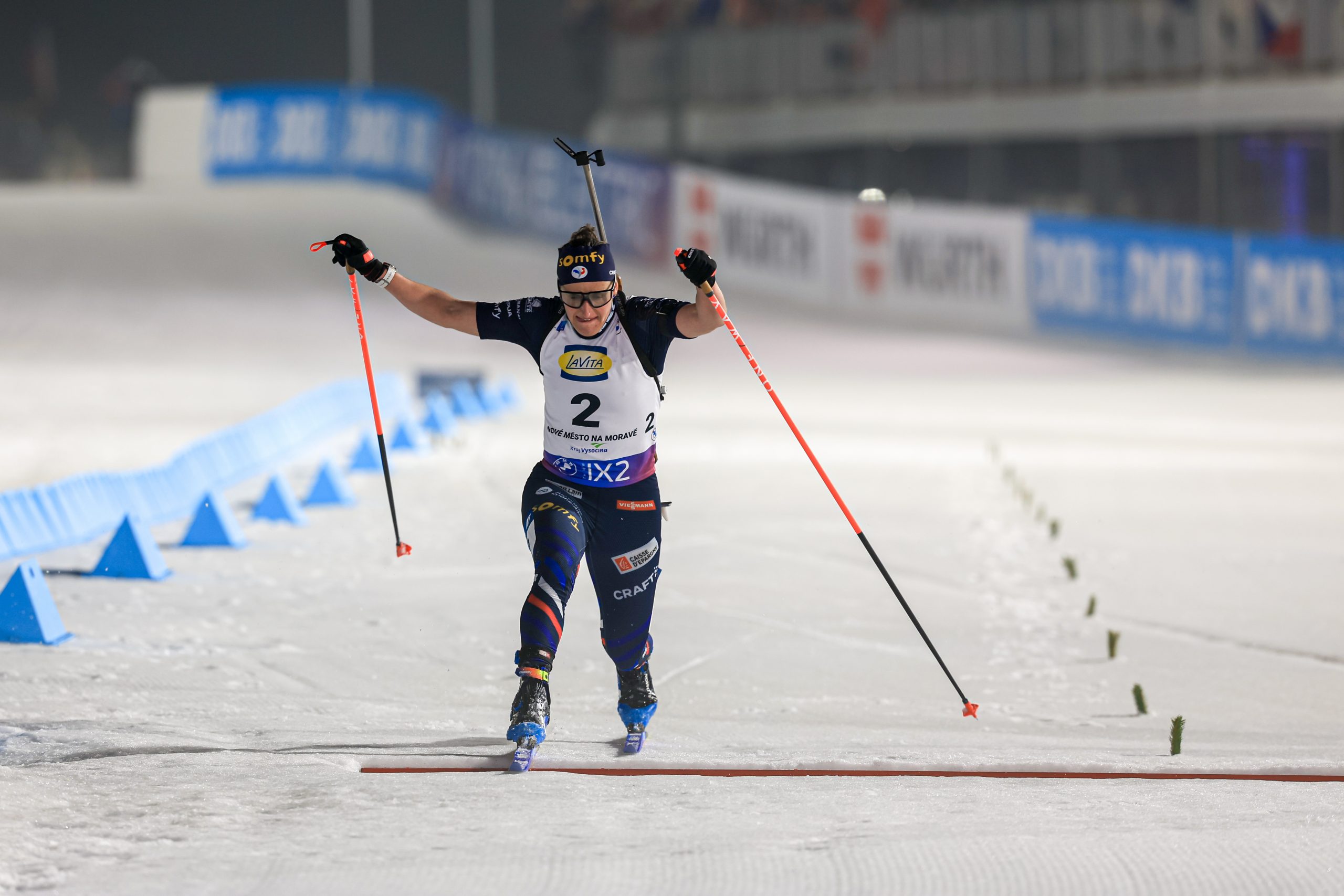
Early starter Julia Simon (FRA) crosses the finish line, setting the time to beat in the Women’s Sprint. (Photo: NordicFocus)
All eyes were on Simon, wearing bib 2, to set the time to beat for the day. After laying down a perfect anchor leg in Wednesday’s Mixed Relay, she picked up where she left off with another 10/10 performance, leaving little room for any challengers. Simon’s ski time ranked fourth and her total shooting time of 42 seconds for prone and standing was the fastest of the day. It was a dominant Sprint performance from the 2023 World Cup Overall champion, who is better known for her head-to-head racing.
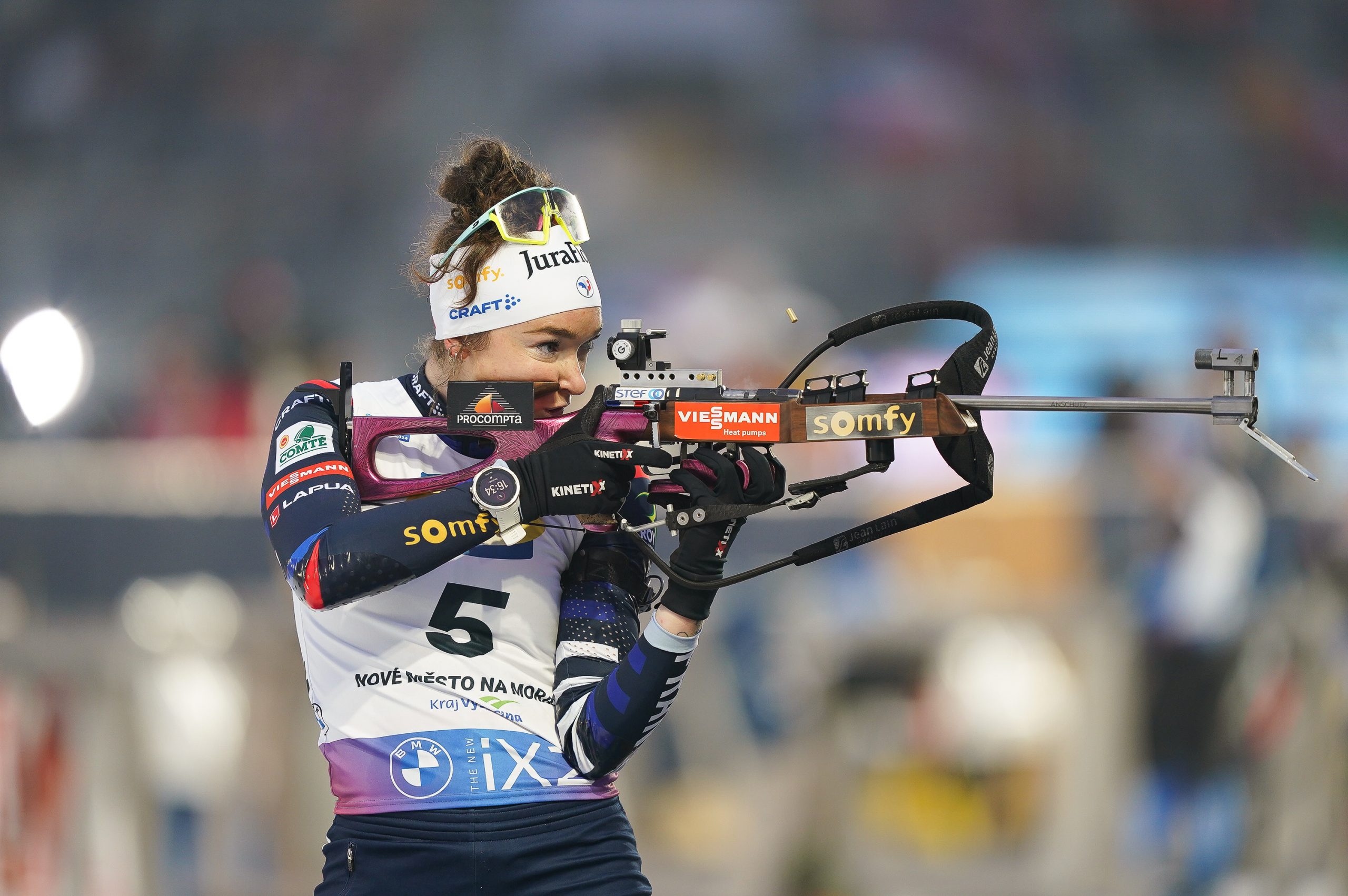
Lou Jeanmonnot (FRA) shot 9/10 to land on her first World Championships podium, taking home the bronze for France. (Photo: NordicFocus)
Another early starter, Jeanmonnot in bib 5 matched Simon’s speed on the course but lost some time to her on the range (like everyone else) and missed one target in standing, eventually finishing 40 seconds back. It seemed inevitable that other competitors would fill that gap, but as the race went on it became clear that the only athletes skiing fast enough to challenge the French women were their own teammates.
Justin Braisaz-Bouchet (FRA) outskied the field by nearly 30 seconds to take silver despite one miss. (Photo: NordicFocus)
Out-skiing the field by over 30 seconds in Wednesday’s Mixed Relay, Braisaz-Bouchet demonstrated that she is one of very few athletes who can ski a penalty loop and still fight for gold. That scenario nearly played out in Friday’s Sprint, as Braisaz-Bouchet gapped the field by 28 seconds, missed one in prone but then hit all of her standing targets, leaving the range with just a 13-second deficit to clean-shooting Simon. She closed the gap in the final kilometers but couldn’t quite catch Simon, crossing the line just 4.9 seconds behind.
World Cup Overall leader Ingrid Landmark Tandrevold (NOR) led the race after the first shooting but then fell to 25th after a disastrous three misses in standing. (Photo: NordicFocus)
The two Italian stars, Lisa Vittozzi and Dorothea Wierer, were early challengers for the podium, both showing their trademark poise on the range with 10/10 hits, but they didn’t have the ski speed to keep up with the French women and ended up seventh and tenth. Swedish sisters Hanna and Elvira Oeberg did the reverse; they skied well but both missed in standing and dropped to eighth and ninth.
The only other athlete who could challenge Simon for the gold was World Cup Overall leader Ingrid Landmark Tandrevold (NOR) in bib 26. She came through the prone shooting in the lead, 1.5 seconds ahead of Simon, but then suffered a disastrous standing bout, missing three targets and falling to 25th place—her worst result of the season.
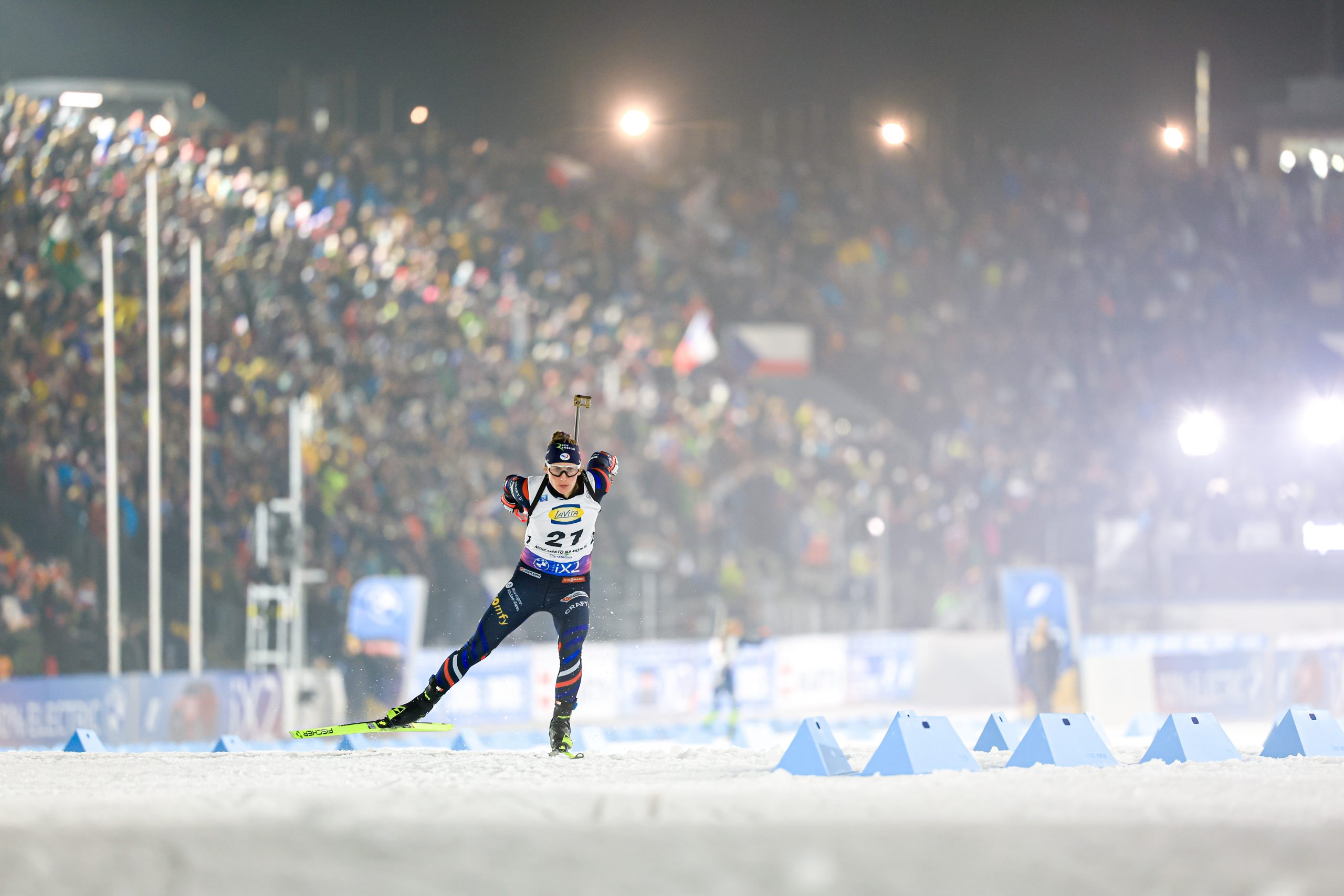
Sophie Chauveau (FRA) reacts to her team’s one-through-four sweep. (Photo: NordicFocus)
The podium positions seemed secure until Chauveau, wearing bib 40, nearly overtook Jeanmonnot. Chauveau found herself down in 30th after a miss in prone but then launched into podium contention with her clean standing shooting and third-ranked course time. In the finish she was a mere four seconds off the podium.
Simon’s gold is her first Sprint podium of the season and only her second-ever Sprint victory. Braisaz-Bouchet, who skipped last season to have her first child, had never finished better than 25th in a World Championships Sprint, despite taking part in every edition since 2015 and winning a list of World Cup races and an Olympic gold medal in Beijing along the way. Jeanmonnot’s bronze is her first World Championship medal, and Chauveau’s fourth place ties her second-best career finish. She earned her first World Cup medal, a bronze, in January of this year.
While the French women shot exceptionally well, they owe their sweep to their ski speed. Four of the top-five fastest skiers in the Sprint were French. The other was 2021 cross-country World Cup Overall Sprint champion, Anamarija Lampic of Slovenia, who missed five and finished 36th. Reflecting on the role that ski preparation played today, US Biathlon ski technician Federico Fontana said, “The dirt and the wet in Nove Mesto is always challenging. The French had incredible skis.”
Baiba Bendika (LAT) skied the seventh-fastest course time and hit 9/10 to tie her career-best finish of fifth. (NordicFocus).
The surprise of the day was Latvia’s Baiba Bendika, who finished fifth to match her career-best result, having given birth to her first child in October—just four months ago. She had a chance to break up the French sweep but missed her last shot. Franziska Preuss of Germany completed the Flower Ceremony, also with one standing miss.
Irwin and Geraghty-Moats Qualify for Pursuit
Deedra Irwin was the top American in the Sprint, finishing 39th with one miss each in prone and standing. She wrote on her Instagram account, “It isn’t what I wanted but then I realized that it is my personal best World Champs Sprint finish!” Irwin has consistently been scoring World Cup points in the top 40 this season and has the potential to move up significantly in Sunday’s Pursuit. She’ll be joined in the Pursuit for the first time by teammate Tara Geraghty-Moats, who sneaked into the top-60 qualifiers with a new personal-best of 58th.
Tara Geraghty-Moats (USA) smiling in the finish line after setting a new personal-best of 58th to qualify for her first Pursuit. (Photo: NordicFocus)
Geraghty-Moats cited her start position as playing a role in her qualification. “I had good course conditions with the second-to-last starting bib. With the warm temperatures, I thought the course would degrade a lot by the time I raced but it didn’t.” She had the advantage of watching earlier athletes go through, and drawing on their energy. “It looked so epic. It made me super excited to go out there. With the results I’ve had this winter I didn’t think I would make the Pursuit so I just wanted to have a race where I executed my plan well.”
Jackie Garso (USA) racing in her first World Championships. (Photo: NordicFocus)
Chloe Levins and Jackie Garso completed the US roster in Friday’s race. Levins echoed Geraghty-Moats’ comments about the atmosphere in the stadium: “The energy under the lights in Nove Mesto was electrifying tonight.” Levins, who finished 80th with two misses, is coming off a training season that was interrupted by a number of health issues. “I’m nowhere near satisfied with my result, but continue to gain great experience and feel myself racing back into shape.” Garso, competing in her first World Championships, finished 87th with three misses. She, too, was shocked by the crowds: “It’s unbelievably loud! You can’t even hear yourself breathe.”
FasterSkier’s Coverage of the Biathlon World Championships is made possible through the generous support of the Craftsbury Outdoor Center: New England’s finest snowmaking, world class race venues and touring trails, healthy food in abundance, comfortable accommodations at Craftsbury: Sports, Sustainability, Stewardship.
Fans fill the trail-side stands during the 2023 Biathlon World Cup in Nove Mesto na Morave, Czech Republic. (Photo: NordicFocus)
The 2024 Biathlon World Championships open on Wednesday, February 7 in the countryside town of Nove Mesto na Morave in the Czech Republic. While not widely known as a winter wonderland, Nove Mesto boasts some of the most impressive crowds on the international biathlon circuit. Organizers have already sold out the 30,000-capacity stadium and bleacher-lined course for the opening and closing weekends and expect to sell a total of 200,000 tickets during the 12-day event. For those not lucky enough to join the festivities in person, here’s a brief viewer’s guide.
Athletes ski into the shooting range of the Vysocina Arena during the 2023 Biathlon World Cup in Nove Mesto na Morave, Czech Republic. (Photo: NordicFocus)
How to Watch?
All races will be streamed live for free with English commentary on a brand new digital platform: Eurovision Sport. Replays are available there as well. The full event schedule is available here automatically adjusted to your time zone.
Why Watch?
Wednesday’s Mixed Relay features 25 teams from 25 nations! While the podium places in most World Championship competitions will likely be contested by the “big five” biathlon nations—Norway, Germany, France, Sweden, and Italy—the field is deep and diverse and will inevitably deliver some surprises. Watch for the drama!
Watch to be inspired by the stories of set backs and success that take shape over the course of the nearly two-week event. The series of 12 races in 12 days (a maximum of seven for any given athlete) is an odyssey for athletes and viewers alike. It starts with the chaos of the opening Mixed Relay. The most tense moments of pressure for perfection come in the Sprint, which serves as the qualifier for the Pursuit and sets the tone for each athlete’s Championships. Fatigue peaks in the second week with the long Individual competitions, before a reprise of team relays and finally the grand finale Mass Starts featuring the 30 best athletes. While each competition is entertaining in its own right, viewers will be rewarded for following the arc of the full Championships.
Finally, it’s worth watching this event just to see the stadium atmosphere. It’s shaping up to be one of the most well-attended Nordic skiing events ever.
Start of the Single-Mixed Relay at the 2023 Biathlon World Cup in Nove Mesto na Morave, Czech Republic. (Photo: NordicFocus)
What to Watch?
Relays, Pursuits, and Mass Starts are head-to-head races that promise high drama and are easy to follow for new fans. The Sprint and Individual test the composure of athletes on the range, as the podium almost always demands perfection. The full event schedule is below (Eastern Time):
07 Feb 11:20 4x7k Mixed Relay (M+W)
09 Feb 11:20 Women 7.5k Sprint
10 Feb 11:05 Men 10k Sprint
11 Feb 08:30 Women 10k Pursuit
11 Feb 11:05 Men 12.5k Pursuit
13 Feb 11:10 Women 15k Individual
14 Feb 11:20 Men 20k Individual
15 Feb 12:00 Single Mixed Relay (M+W)
17 Feb 07:45 Women 4x6k Relay
17 Feb 10:30 Men 4×7.5k Relay
18 Feb 08:15 Women 12.5k Mass Start
18 Feb 10:30 Men 15k Mass Start
Deedra Irwin (USA) shooting on lane 5 during the Mixed Relay at the 2024 Biathlon World Cup in Antholz, Italy. (Photo: NordicFocus)
Who to Watch?
The American duo of Deedra Irwin and Campbell Wright is likely to get some TV time in the Single-Mixed Relay after fighting for a podium finish in the most recent running of the event in late January. Irwin set a new personal-best World Cup result of eighth place in a Sprint in December and will be looking to improve on that in Nove Mesto. She has hit 19/20 targets in the 15 k Individual in her last two Championships; if she can do that again this year she’ll have shot at the podium thanks to improved ski speed.
The Americans are also dark-horse contenders in the Men’s Relay. Led by veterans Sean Doherty and Jake Brown, the team has been boosted by a cohort of precocious young talents, including two medalists from last winter’s Junior World Championships: Wright and Maxime Germain. Vincent Bonnacci rounds out this year’s World Championships roster, coming fresh off an impressive 6th place at the European Championships. The team has shown glimmers of greatness this season but has yet to perform to its full potential. This could be their moment to shine.
A pack of Norwegian men at the front of the Mass Start at the 2024 Biathlon World Cup in Antholz, Italy. (Photo: NordicFocus)
Looking at the international field, Norwegian superstar Johannes Thingnes Boe has won the World Cup overall title five times in the past six years and is threatening records set by biathlon legends Ole Einar Bjoerndalen (NOR) and more recently, Martin Fourcade (FRA). But he’s not the only Norwegian to watch; six of them fill the first six places in the men’s World Cup overall score. Always in the shadow of Norway, the Germans have quietly made their own statement, placing five different men on the podium this season including three different winners. There will be good fights for medals between these two teams and some challengers from Sweden and Italy, but it’s fair to expect a frequent playing of the Norwegian national anthem.
The women’s podium is more widely contested. Fifteen women from six nations have landed on the podium this winter. France alone has had three different gold medalists. Lena Haecki of Switzerland broke through the dominance of the big nations with her first gold medal just a few weeks ago. And with more than ten women averaging over 90% hits on the range, the standard of competition is exceptionally high. All of this will make for some exciting biathlon.
It all gets underway Wednesday at 11:20 Eastern Time.
Lisa Vittozzi (ITA) prepares for the opening event of the 2024 Biathlon World Championships during official training on Tuesday, February 6 in Nove Mesto na Morave, Czech Republic. (Photo: NordicFocus)
Campbell Wright (USA) and Deedra Irwin (USA), IBU World Cup Biathlon, single mixed relay, Antholz, Italy. (Photo: Manzoni/NordicFocus)
Deedra Irwin (Pulaski, WI/Army World Class Athlete Program) and Campbell Wright (Wanaka, NZL/U.S. Biathlon) skied to a ninth place finish in the single mixed relay at the sixth World Cup of the season in Antholz, Italy. Between the pair, both Irwin and Wright held top-10 ski times throughout the race, finishing only four seconds back from the eighth place Estonia and 30 seconds back from a top-five finish.
“It felt good to ski with everyone today and be in the mix,” said Irwin. “I think we pulled together a great race. The wax techs did an amazing job with the skis. Antholz really showed off her beauty today!”
Despite having to ski a penalty loop each, Irwin and Wright landed just +1.09.5 behind Germany’s leading pair of Vanessa Voigt and Justus Strelow, who used just one spare round. Germany was joined on the podium by Ingrid Landmark Tandrevold and Vetle Sjaastad Christiansen of Norway and Austria’s Lisa Theresa Hauser and Simon Eder.
Of the two single mixed relays this season, Team USA has placed in the top 10 each time. Back in November in Oestersund, Sweden, the pair of Irwin and Sean Doherty (Center Conway, NH/National Guard Biathlon) skied to an eighth place finish, cleaning their prone shoots and only using three spare rounds in standing. Just two months later, Irwin and Wright placed ninth with two added penalty loops, further proving the USA to be dangerous competition.
The third and final single mixed relay of the season will take place on January 15 at the 2024 World Championships in Nove Mesto na Morave, Czech Republic. Team USA will be looking to top their best finish and continue delivering top ski times. For information on how to watch, visit https://usbiathlon.org/how-to-watch. For spectator resources, visit https://usbiathlon.org/spectator-resources.
About U.S. Biathlon
As the Olympic sports organization centered around the sport of biathlon, the United States Biathlon Association, known as U.S. Biathlon, is recognized by the International Biathlon Union (IBU) and the U.S. Olympic and Paralympic Committee (USOPC) as the national federation for biathlon in the United States. Founded in 1980, U.S. Biathlon exists to support and encourage the development of biathlon in the United States, to work with biathlon clubs and regional centers around the country to organize training and competition from the grassroots to elite level, and to prepare athletes for international competition. U.S. Biathlon staffs and finances the U.S. Biathlon national and junior national teams and is a 501 c (3) non-profit organization. For more information, visit usbiathlon.org.
The first trimester of the IBU World Cup concluded this past weekend in Lenzerheide, Switzerland. Team USA’s Deedra Irwin (Pulaski, WI/Army World Class Athlete Program) stepped up and had the best weekend of her career, landing eighth in the sprint on Thursday. The last time U.S. Biathlon had an athlete in the top ten was in 2022 when Irwin skied to seventh place in the individual event at the Olympics in Beijing.
Irwin, who shot clean in the sprint, was followed by teammate Grace Castonguay (Jackson, NH/Ethan Allen Biathlon Club) in 74th with one miss, skiing to a World Cup personal best after making her debut in Hochfilzen. Jackie Garso (Lake Clear, NY/Craftsbury Green Racing Project) finished in 80th with three misses in standing. Irwin continued to have a strong weekend, finishing 21st in Saturday’s pursuit after only two missed shots in her first stop in prone. In Sunday’s mass start, Irwin shot 20 for 20, the first of her World Cup career, landing her in 13th to round out the weekend.
“Just incredible to have two of my races go clean. It’s just unreal. It’s really just a dream come true to have all of this come together,” said Irwin. “The wax team did such an amazing job and my coaches did an amazing job preparing me, so to be able to share this weekend with so many amazing people who have helped me get to this point is just so cool. I can’t wait to come back to Lenzerheide next year for World Championships!”
Friday’s men’s 10km sprint brought a strong showing by the U.S. men’s team. Sean Doherty (Center Conway, NH/National Guard Biathlon) led the group in 27th with one missed shot. Jake Brown (Saint Paul, MN/Craftsbury Green Racing Project) and Vincent Bonacci (Salt Lake City, UT/Team Crosscut) finished neck and neck in 48th and 49th to both qualify for Saturday’s pursuit, Bonacci’s first World Cup pursuit qualification. Campbell Wright (Wanaka, NZL/U.S. Biathlon) finishing just out of pursuit contention in 72nd with two misses on the day.
In Saturday’s pursuit, Doherty skied to 37th place after one miss in each of his four shooting bouts. Bonacci followed suit, also missing four, finishing 48th. Brown did not start the pursuit.
The first trimester has brought World Cup debuts, personal bests, clean shooting and stellar performances. During the World Cup premier in Östersund, Sweden, Kelsey Dickinson (Winthrop, WA/Craftsbury Green Racing Project) raced to a personal best 36th in the women’s individual, where Margie Freed made her World Cup debut. Irwin’s 8th place, clean shooting and feature in the mass start, and Bonacci’s 48th place and pursuit qualification in Lenzerheide highlighted the weekend’s results.
The U.S. Biathlon Team will now head into a well-deserved holiday break before the second trimester of World Cup racing begins in Oberhof, Germany on January 4. Highlighting the new year will be World Championships taking place February 7-18 in Nove Mesto na Morave, Czech Republic, and March 8-10 will bring the IBU World Cup back to home soil for the first time since 2019. The top biathletes will be racing at Soldier Hollow in the second-to-last race weekend of the season, which is sure to be a spectacle. For information on the Soldier Hollow World Cup, check out https://ibuworldcuputah.com/.
Sean Doherty (USA) leads Vladimir Iliev (BUL) in the IBU World Cup Biathlon, pursuit men in Lenzerheide, Switzerland. (Photo: Manzoni/NordicFocus)
About U.S. Biathlon
As the Olympic sports organization centered around the sport of biathlon, the United States Biathlon Association, known as U.S. Biathlon, is recognized by the International Biathlon Union (IBU) and the U.S. Olympic and Paralympic Committee (USOPC) as the national federation for biathlon in the United States. Founded in 1980, U.S. Biathlon exists to support and encourage the development of biathlon in the United States, to work with biathlon clubs and regional centers around the country to organize training and competition from the grassroots to elite level, and to prepare athletes for international competition. U.S. Biathlon staffs and finances the U.S. Biathlon national and junior national teams and is a 501 c (3) non-profit organization. For more information, visit usbiathlon.org.
After two solid days of racing in Lenzerheide, Switzerland, Deedra Irwin (Pulaski, WI/Army World Class Athlete Program) found herself amongst the top 30 female biathletes in the world in the first mass start of the season. Adding to her list of World Cup personal bests, Irwin shot her first perfect 20/20.
“Emil [Bormetti] and Armin [Auchentaller] gave me an amazing pep talk last night,” said Irwin. “We tried to focus on coming into this race with less nerves and focusing on one thing at a time. It feels incredible to have it all come together. My first 20/20 on the World Cup and in a mass start! I couldn’t ask for a more perfect day.”
Irwin crossed the line in 13th, just +1.27.9 behind the leader, Justine Braisaz-Bouchet of France, who swept the weekend by also winning the sprint and pursuit races. Braisaz-Bouchet was joined on the podium by Swedish sisters Elvira and Hanna Oeberg.
Coming into the mass start, Irwin raced to a World Cup best eighth in the sprint, cleaning both rounds of shooting. In the pursuit, the nerves showed in the first round of shooting with two misses, but she was able to shoot clean the rest of the way and finish 21st. Irwin currently sits in 27th on the World Cup total score with 93 points, which landed her bib 27 in the mass start.
The coming weeks will be a well-deserved rest period for the U.S. Biathlon Team. World Cup racing will resume after the new year on January 4 in Oberhof, Germany. The weekend will feature another round of sprint, pursuit and mass start races to kick off the second trimester.
As the Olympic sports organization centered around the sport of biathlon, the United States Biathlon Association, known as U.S. Biathlon, is recognized by the International Biathlon Union (IBU) and the U.S. Olympic and Paralympic Committee (USOPC) as the national federation for biathlon in the United States. Founded in 1980, U.S. Biathlon exists to support and encourage the development of biathlon in the United States, to work with biathlon clubs and regional centers around the country to organize training and competition from the grassroots to elite level, and to prepare athletes for international competition. U.S. Biathlon staffs and finances the U.S. Biathlon national and junior national teams and is a 501 c (3) non-profit organization. For more information, visit usbiathlon.org.
Deedra Irwin (Pulaski, WI/Army World Class Athlete Program) raced to a World Cup-best eighth place in the women’s 7.5km sprint, kicking off the first-ever World Cup in Lenzerheide, Switzerland. She landed just one spot off her career-best seventh place from the 2022 Olympics in Beijing, an historic finish for U.S. Biathlon.
“Emil and Armin really helped me put together a good ski plan for the race the past couple of days, and I really felt confident on the range all week,” said Irwin. “Fede, Gio and the wax team gave me amazing skis today. Honestly, we’ve all been saying it since Östersund that I have all the puzzle pieces and just had to fit them all together on the same day. Today was that day. It was a perfect team effort from everyone to keep me motivated and working the course from start to finish!”
Shooting a perfect 10/10, Irwin crossed the line only 13 seconds behind Germany’s Franziska Preuss and +1.12.6 off the leader, Justine Braisaz-Bouchet of France, who also shot clean. Braisaz-Bouchet was joined on the podium by Norway’s Ingrid Tandrevold and Italy’s Lisa Vittozzi.
Coming into the sprint race in Lenzerheide, Irwin’s World Cup personal best was a 14th in the sprint in Otepää, Estonia during the 2021/22 season. Jumping six spots to rewrite her personal best as eighth, reiterated Irwin’s place as a top contender amongst the women as they head into the pursuit on Saturday.
“I am really looking forward to the pursuit,” added Irwin. “I’ve never started this far up before and I’m ready to keep the momentum going.”
Team USA also had a World Cup personal best from Grace Castonguay (Jackson, NH/Ethan Allen Biathlon Club) with a 74th place finish in her second-ever World Cup start. Jackie Garso (Lake Clear, NY/Craftsbury Green Racing Project) finished in 80th. Kelsey Dickinson (Winthrop, WA/Craftsbury Green Racing Project) did not race in the sprint.
Looking to feed off the energy of Irwin’s result, the U.S. Biathlon men’s team will race in the 10km sprint tomorrow at 8:15 EST/02:15 CET. Live stream is available at eurovisionsports.tv/ibu/.
Deedra Irwin (USA) competes in the IBU World Cup Biathlon Lenzerheide, Switzerland. (Photo: Manzoni/NordicFocus)
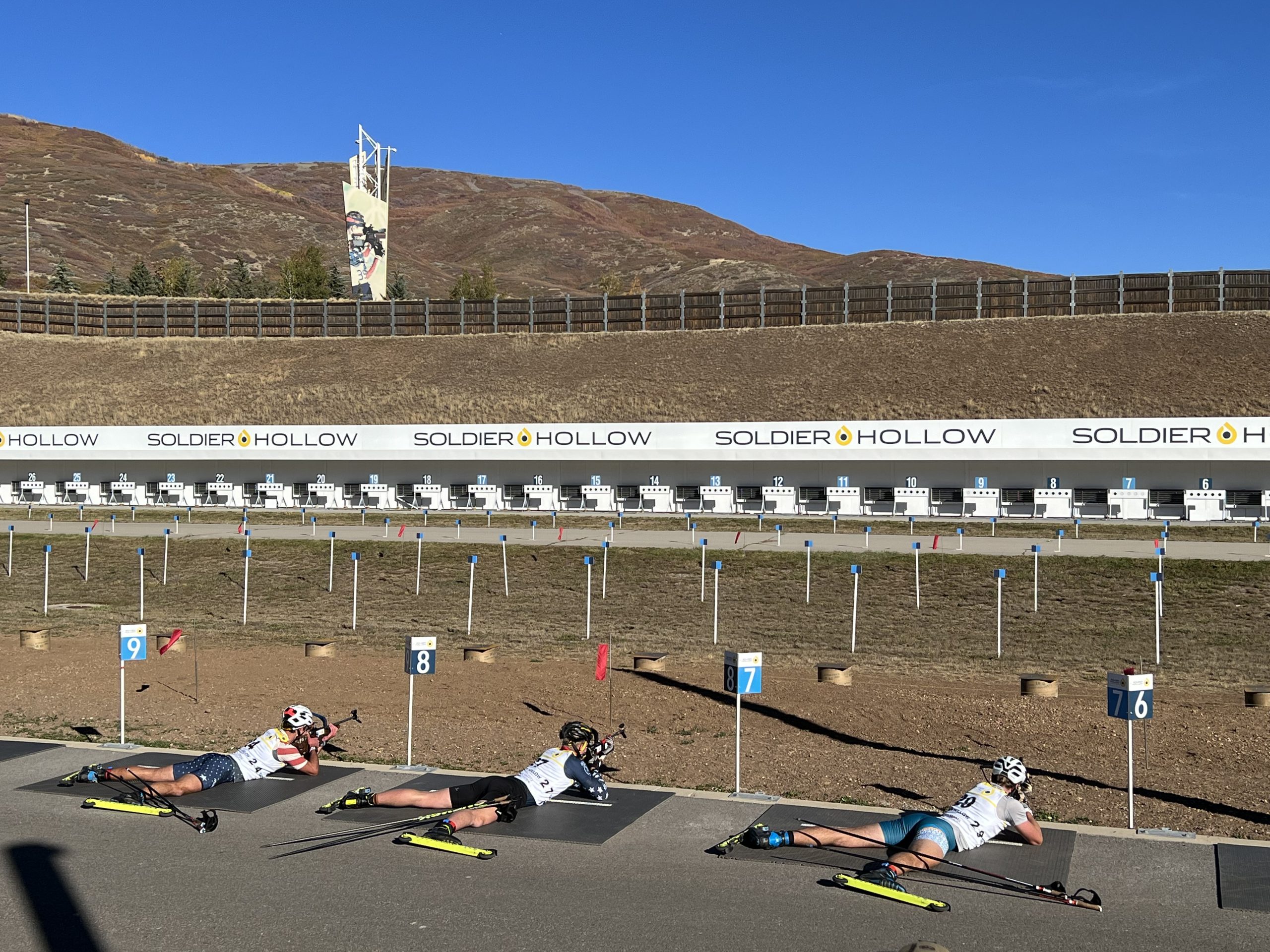
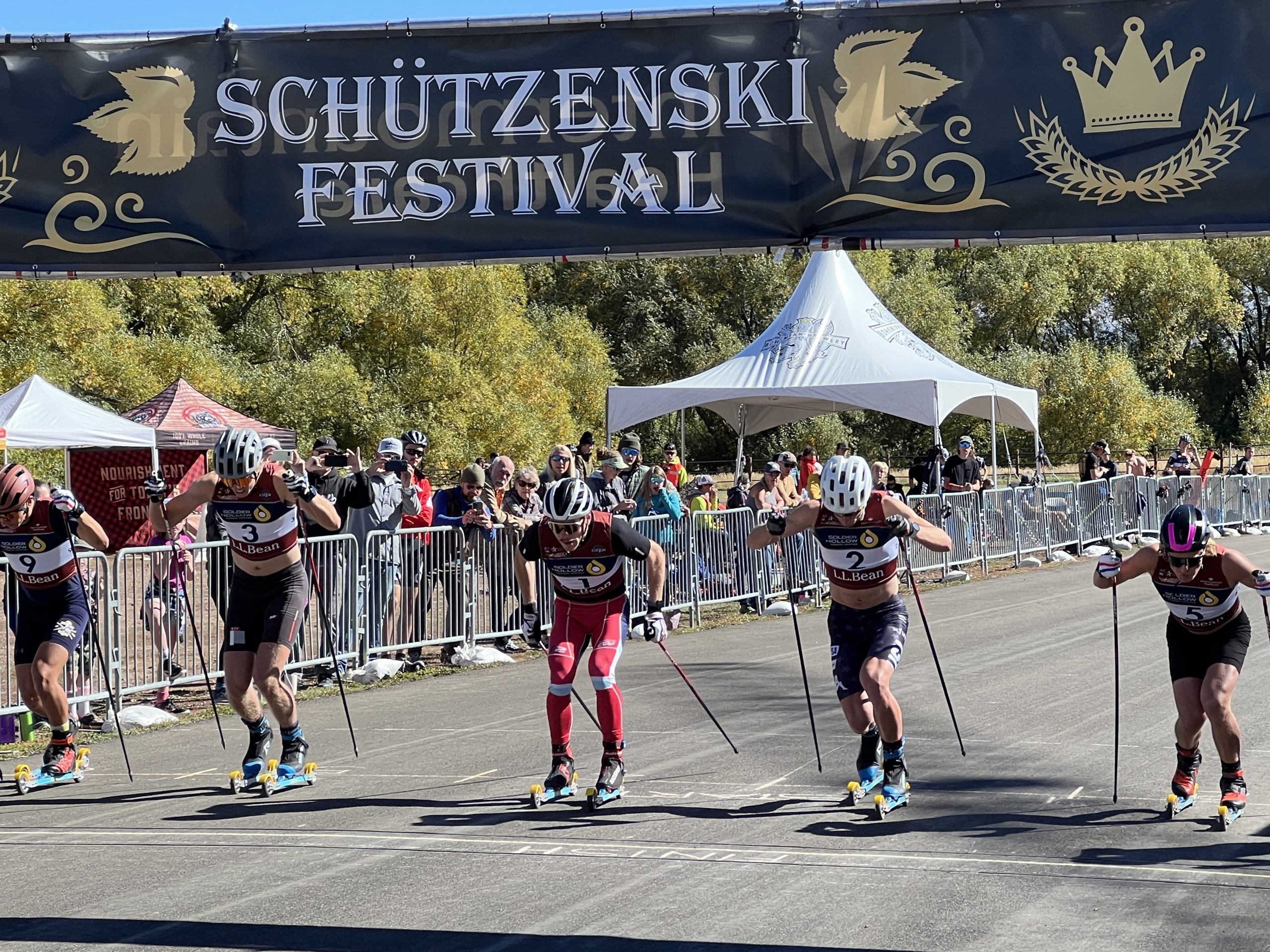
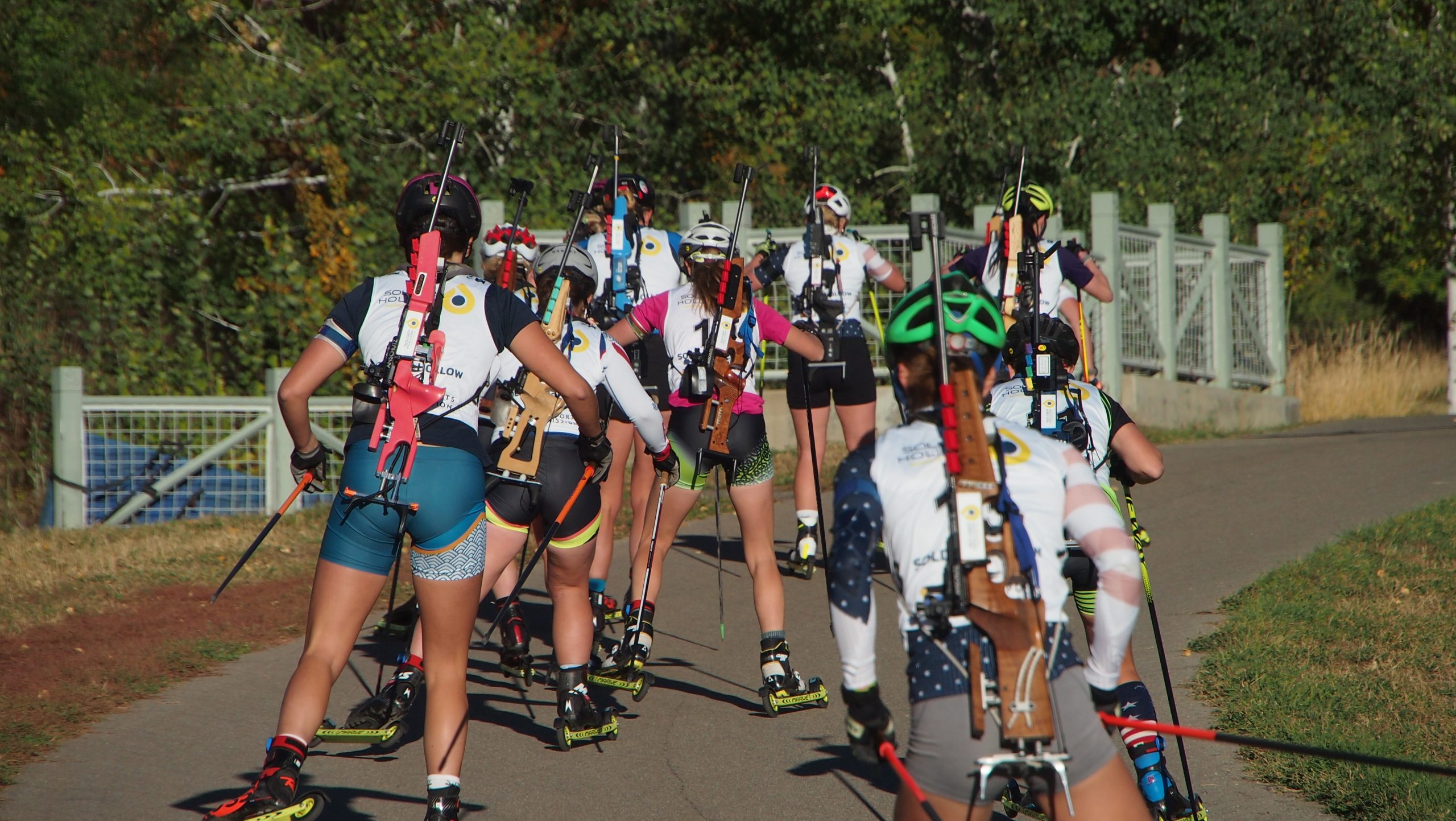
Schutzenski, 2023, Soldier Hollow, Utah: action on the range in the Men’s Mass Start. (Photo: FasterSkier)
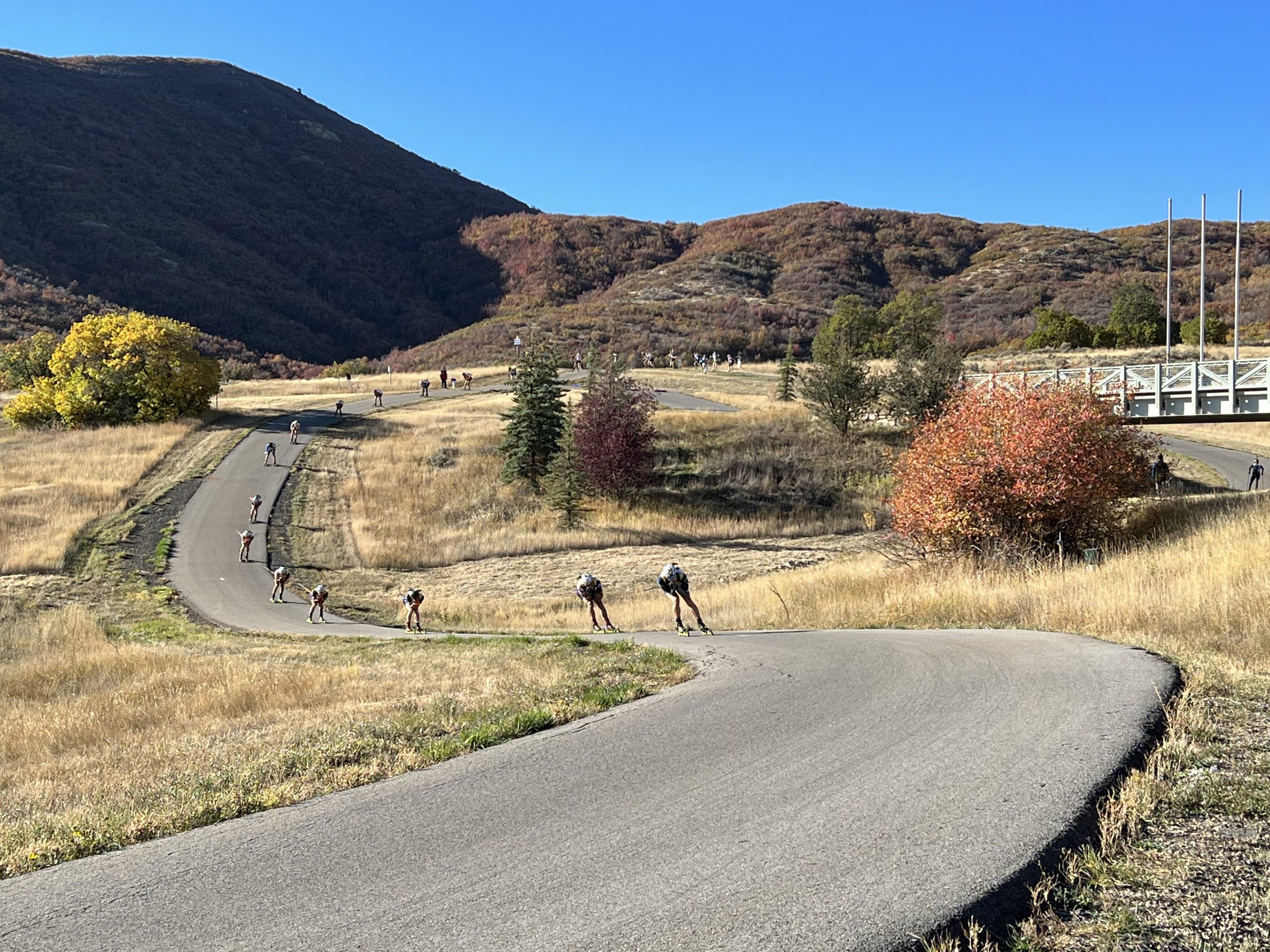
On a sunny October Saturday, the Path of the Annularity—the shadow of an eclipse—passed directly over Soldier Hollow, Utah. For nearly thirty minutes, the sky was shaded, the air cooled, and the valley got eerily quiet. But the action never stopped: races went on, heart rates remained high, sweat continued to drip, and finish lines were crossed while the solar/lunar show swirled in the heavens above. Something special was happening, that’s for sure . . .
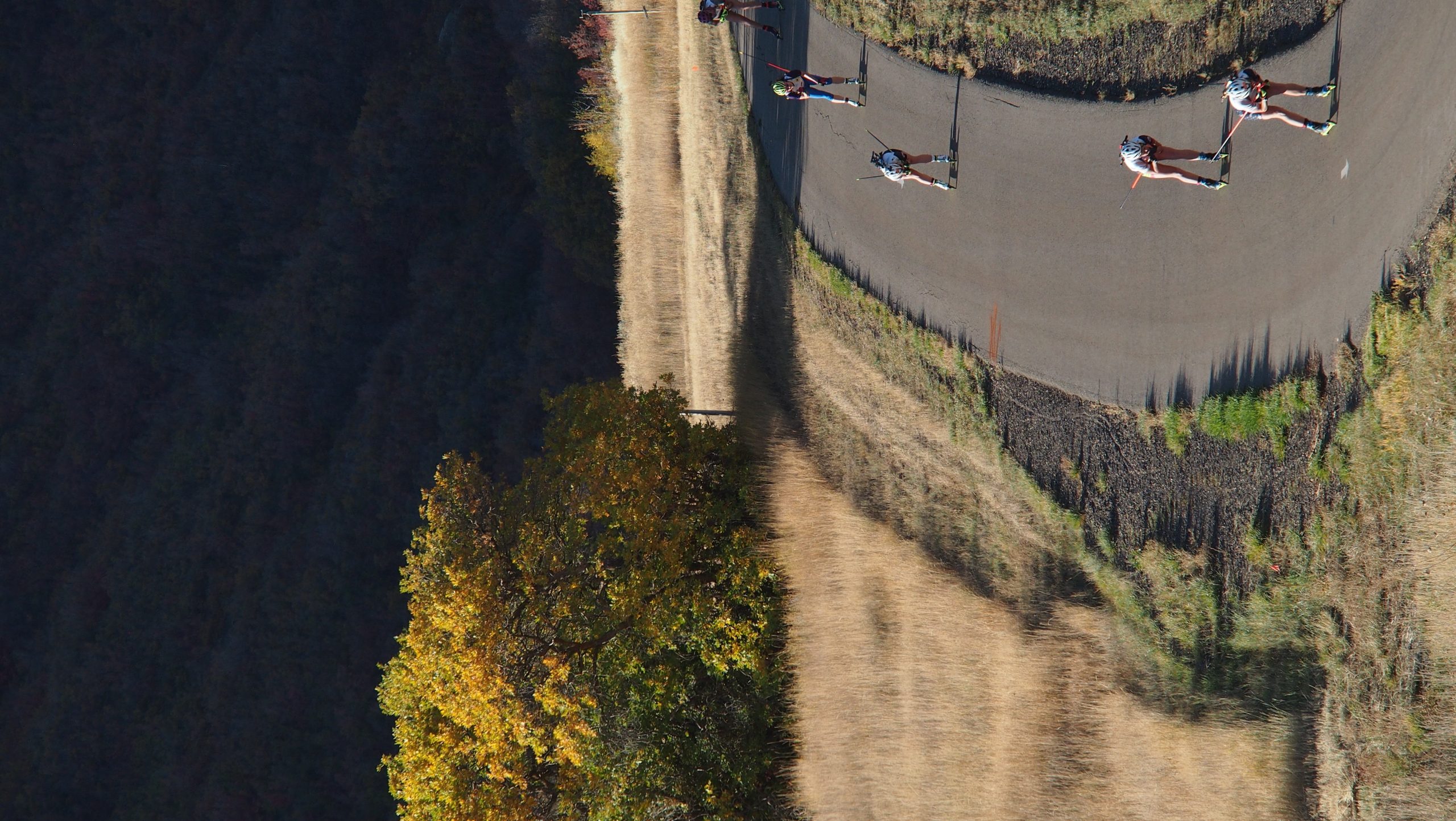
Now in its third year, the Schutzenski Festival—hosted by Soldier Hollow Nordic Center in Midway, Utah—is offering a blueprint of what rollerski festivals may look like in years to come. In a weekend that included ski events, biathlon events, team selections, and top-tier competition, the potential for development appears limitless. And how ironic that the popular future of biathlon and Nordic skiing may be demonstrated here on an ashpalt-ribbon race course where athletes compete on wheels rather than skis.
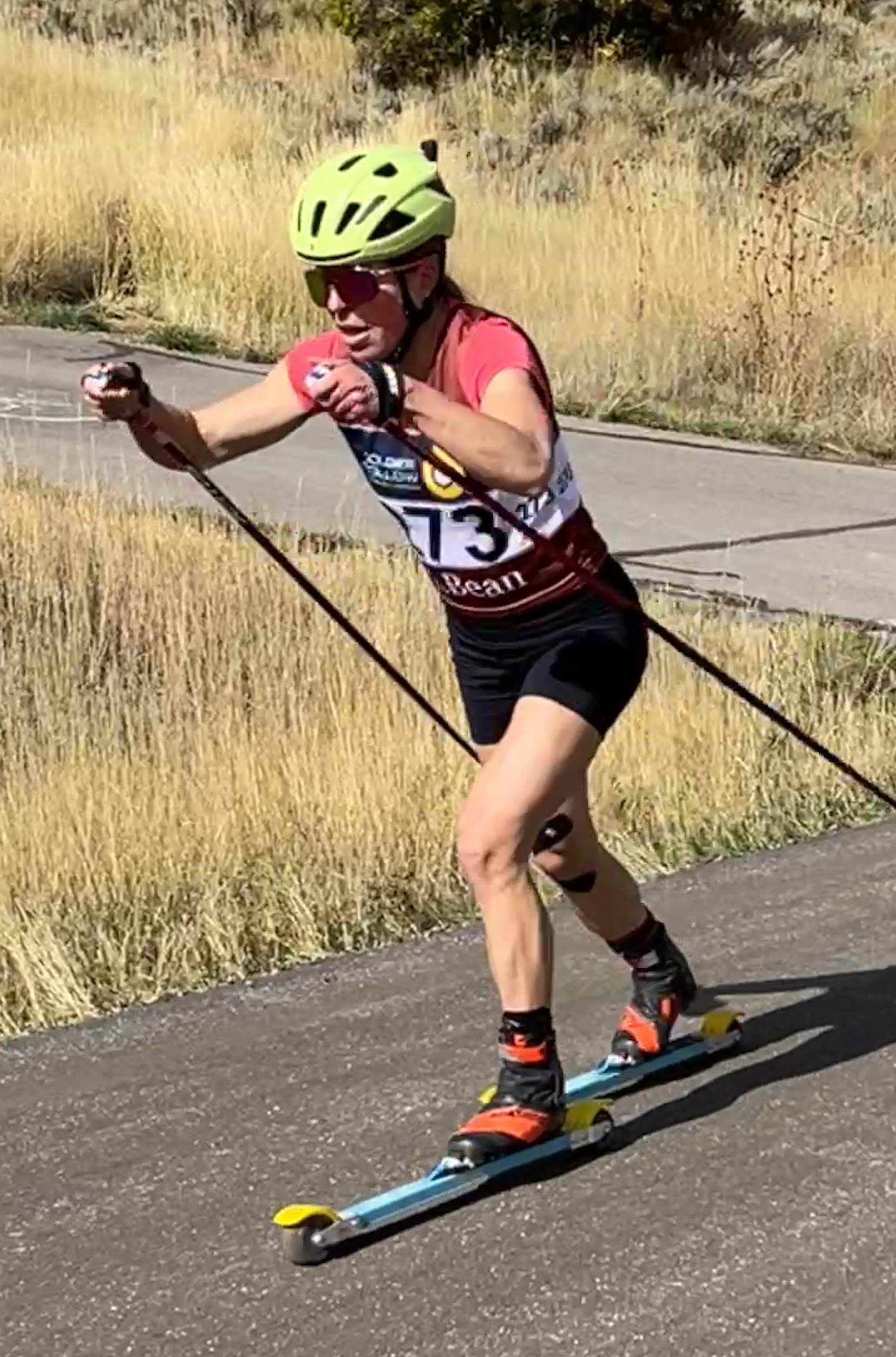
Deedra Irwin delivered a totally dominant performance at Schutzenski, 2023. (Photo: FasterSkier)
This season’s Schutzenski highlights included astounding performances from USBA standout, Deedra Irwin—winner of both days’ events due to her fast skiing and near-perfect shooting. She shared the spotlight with up-and-coming American men—especially Campbell Wright and Maxime Germain—who showed that American biathlon has a bright future on the international stage.
Start of the Schutzenski 2023 Men’s Sprint Final, won by Ben Ogden (center). (Photo: FasterSkier)
Outstanding Nordic performances were also delivered by US Nordic skiers. Rosie Brennan strided to victory in the 10k Classic event ahead of Jessie Diggins. Diggins also finished second behind Julia Kern in Saturday’s Sprint competition. Gus Schumacher narrowly bested Ben Ogden in the 10k, while Ogden recovered to win the Sprints on the following day.
Biathlon Mass Start field in action at Schutzenski, 2023. (Photo: FasterSkier)
Racing and Qualifying
The trails at Soldier Hollow were designed and built for Biathlon and Nordic events staged during the Salt Lake City Olympic Winter Games of 2002. But the work on these facilities did not stop after the Olympics. Ever since, Soldier Hollow has continued to develop trails and programs as one of the premier Nordic/Biathlon facilities in the world. The world continues to take notice: Olympic and FIS World Cup Champion, Johannes Hoesflot Klaebo (NOR), now makes Soldier Hollow a regular training camp venue in his summer program. Likewise, the Stifel U.S. Cross Country Ski Team hosts a series of camps in Park City and Soldier Hollow, including the National Elite Group (NEG) Camp that coincided with Schutzenski 2023. And U.S. Biathlon (USBA) has fully invested in the facility with a new USBA Headquarters currently under construction in the center of the SoHo trail network. That facility—USBA’s new permanent home—is slated to be completed in time for next spring’s Biathlon World Cup, hosted March 8-10 at Soldier Hollow.
USBA used these Schutzenski races as the sole qualifying procedure for the European Camp that precedes the IBU World Cup season opener in Kontiolahti, Finland. The top nine qualifiers (based on Schutzenski event results) will travel with the US Team to Finland for a pre-World Cup camp. Individual performances in test events staged during that camp will determine start positions for this first IBU World Cup weekend.
John Farra—USBA’s Director of Sport Development, and Member of the IBU Development Commission—commented on the scheduling and the process:
“Obviously, we don’t want to wait until November—the [World Cup] trip leaves in two weeks . . . So, this year, the new move is that the top nine qualifiers go to Finland. Everybody’s together, we have a training camp, we have a time trial. And that selects who gets to go to the first World Cup in Kontiolahti. Hopefully we get the top nine right. That’s our new try, and people are excited about it.”
Farra also commented on the discrepancies that may exist between rollerskiing and skiing on snow, and explained the USBA’s decision to utilize these races as legitimate qualifying events:
“Roller skis are different from snow, right? The movement on skis, the technique, the downhill on an icy corner: it’s just different. We’re trying to make a selection that’s fair to everyone, and takes a group of great athletes to snow, and to a venue where we can fairly make final selections. Let’s get everybody over there, everybody’s fair and square, you all get to go to Finland, you all get to be at training camp, and then we’ll all have a time trial ten days before the first race. Then we determine who’s going to be in this race versus that race.
Women’s Mass Start, Soldier Hollow, Utah. (Photo: FasterSkier)
“In the end, our sport is about fitness,” Farra said. “It’s about an engine, and having the ability to just bury yourself, physically. So do believe, in the end, that these races are as good a test as we can make them.”
This new team qualification strategy not only allows contenders to prove themselves on snow, but also speaks of the growing emphasis on roller skiing as a means of predicting an athlete’s on-snow potential. The technique comparisons between roller skiing and on-snow skiing are imperfect—classic kick is certainly a simpler, less subtle movement on roller skis than on snow—with poling, kick, edging, glide, balance becoming motions that are determined more by the equipment and the ski-surface than by the athlete and their particular technical nuances.
Rosie Brennan showed great speed and fitness in winning Friday’s 10k Classic Individual Start, Schutzenski 2023. (Photo: Fasterskier)
Wheels or Skis? Asphalt or Snow?
Over the past twenty years, ski-training has gravitated more and more toward the predominance of roller skiing. Twenty years ago, Nordic training programs still included a great deal of cycling, running, bounding, hiking. While those activities still exist to occasionally flavor the training regimens of elite skiers, those athletes are now (for the most part) year-round skiers: on snow in winter and spring; on wheels in summer and fall. Coaches no longer seem to fear technique glitches and habits that may develop during the roller ski season; it all seems to be worth it for the specific stress and nearly-perfect muscle training that roller skiing offers. The best skiers now seem determined to ski year-round. Access to refrigerated snow tunnels in Europe—or to snowfields in the southern hemisphere—has ultimately proven impractical (and sometimes unhealthy with the social crowdedness of “camp” settings). Rather than traveling the world chasing snow, many ski athletes—especially North Americans—have definitely come to rely almost exclusively on the smoothly paved roads in and around their home bases. And nowhere in North America offers better facilities for that sort of training than Soldier Hollow.
Rollerskiing is developing into a sport discipline of its own, with ski athletes, rollerski athletes, and skiing fans now enjoying a FIS World Cup in rollerskiing. The record of transitions of high-profile athletes from other “roller sports” into gliding sports offers considerable proof of the abilities of athletes to adapt from one technique to the other. Especially in the United States, roller skating stars have been invading ice speedskating for years. There is no roller skating in the Summer Olympics, so American roller skaters began making the transition to ice. The techniques of the two sports—though appearing nearly identical—are actually quite different down where the rubber meets the road or the blade meets the ice. Coaches and competitors did not predict much success for them. Well, the ice speedskaters were forced to eat their words in the wake of the World Championship and Olympic successes achieved by athletes like Derek Parra, Chad Hedrick, Brittany Bowe, and Erin Jackson. The best roller skating athletes proved to be the best skating athletes, period. Watch for similar developments as the world of rollerskiing (especially at the FIS World Cup level) begins to produce athletes who are eager for the challenges of FIS cross country events.
Schutzenski Mass Start racing in Soldier Hollow. (Photo: FasterSkier)
Festivals and Races
High-profile rollerski festivals—like the internationally promoted Blink Festival in Sandnes, Norway—typically offer both Biathlon and Nordic events. Such festivals have gained enormous popularity among fans in Europe, Russia, and Scandinavia. Some notable American Nordic skiers (including Rosie Brennan, Julia Kern, Jessise Diggins, and Sophia Laukli) have jumped into professional rollerski races—often with podium results—but most of those efforts seemed to be the result of proximity to events during training camps rather than special days circled in red on the competitive calendar. The recent National Team Camp staged at Park City gave team members a chance to compete on rollerskis in proximity to Biathlon events that tested the nation’s very best Biathletes. And at day’s end, all athletes—biathletes and skiers—gathered at the biathlon range for a shoot-out that offered both impressive and comedic results. Yes, Jessie Diggins can shoot!
John Farra also commented on the potential for expanding festivals like Schutzenski in order to attract elite athletes and international audiences:
“Some of the top dogs (Europeans) already like to train here,” Farra noted. “[Maja] Dahlqvist (SWE) was here, and Krista Parmakoski (FIN), Klaebo of course. They’re already traveling to Utah to train. I think there’s a window for expanding this event to include an international field.”
“Luke [Bodensteiner] is the GM [at Soldier Hollow]; he wants to raise the level of this, actually. Luke asked me, ‘Do you think we could get some international athletes here? Make this a North American Blink Festival? If we do that, we can get it on broadcast TV. If you get some of the top dogs here, you can sell that broadcast back to Sweden and Norway.’”
“Biathlon needs the US and Canada to be successful,” Farra said. “Otherwise, biathlon becomes just a Europe Cup. It’d end up looking like Norway winning al the cross-country races: it’s not fun, it’s not cool, and people don’t want to see it after a while. There’s been a lot of talk about that: how do we get the US biathletes fighting for medals?”
And how does that sort of biathlon development get accomplished in the United States?
“The development part of biathlon is about touching and feeling it, about not being scared of it,” said Farra. “It’s not going to fit everybody: it’s a hard sport! Not everyone is going to have the disposition for it. But somebody who’s got a chill personality, within a couple of years, who knows?
“As a cheerleader and recruiter for biathlon, I stay away from the top tier of skiers,” Farra continued. “Those athletes are devoted to their sport and contending for victories and team spots; I’m not going to interrupt that. But for skiers at a certain developmental level, I feel that I have a certain responsibility—and I think their coaches have a certain responsibility—to introduce the biathlon option. Many of those skiers have the ski speed, right now, to win an IBU Cup event if they can hit all ten targets. There’s just an opportunity for one or two skiers who are open minded, who can get on the range 3-5 days a week; If they make a commitment to biathlon, then USBA will make a commitment to them.
“I tell prospective athletes, ‘Give us six months, give it a real try,” he says. “If it doesn’t work, no harm no foul.”
American skiers are beginning to realize that biathlon may be a viable option for those hoping to pursue international competition. (Photo: FasterSkier)
And having top American skiers showing how much fun it is just to give biathlon a try is a great way to generate attention for our sport. Having Jessie Diggins and Julia Kern mentioning on social media that they’d gotten a chance to learn how to shoot was a big moment for biathlon in the public eye. Even at Schutzenski, Diggins was still pumped for the opportunity. Immediately after finishing her race, she skied over to share a moment with Farra. “I’m excited to shoot a gun!” she beamed, still out of breath from her race-effort. “I’ve never done it though, besides a laser. I definitely need a lesson first!”
“It’s not about getting Jessie and Julia to become biathletes,” Farra shared. “It’s about Jessie and Julia speaking to thousands of girls who might view biathlon as a little more of a conversation rather than remaining this slightly freaky sideshow.”
This is how a sport grows; this is how Schutzenski—a gathering of biathletes and skiers in the mountains of Utah—may be defining the future of rollerski festivals.
USBA European Pre-Season Camp Selections
WOMEN (nine selections, one alternate)
Deedra Irwin (Pulaski, WI/National Guard Biathlon)*Pre-qualified for World Cup team
Kelsey Dickinson (Winthrop, WA/Craftsbury Green Racing Project)*Pre-qualified for World Cup team
Margie Freed (Apple Valley, MN/Craftsbury Green Racing Project)
Jackie Garso (Lake Clear, NY/Craftsbury Green Racing Project)
Cheresa Bouley (Zimmerman, MN/Minnesota Biathlon)
Grace Castonguay (Jackson, NH/Ethan Allen Biathlon Club)
Lina Farra (Heber City, UT/NYSEF)
Michaela Keller-Miller (Plymouth, MN/Craftsbury Green Racing Project)
Jake Brown (Saint Paul, MN/Craftsbury Green Racing Project)
Luke Brown (Saint Paul, MN/Craftsbury Green Racing Project)
Alternate: Eli Nielsen (Stehekin, WA/National Guard Biathlon)
Soldier Hollow, Utah; site of the 2002 Olympic Games, the USSS 2024 Senior National Championships, World Cup Biathlon competitions in spring 2024, and Schutzenski 2023. (Photo: FasterSkier)
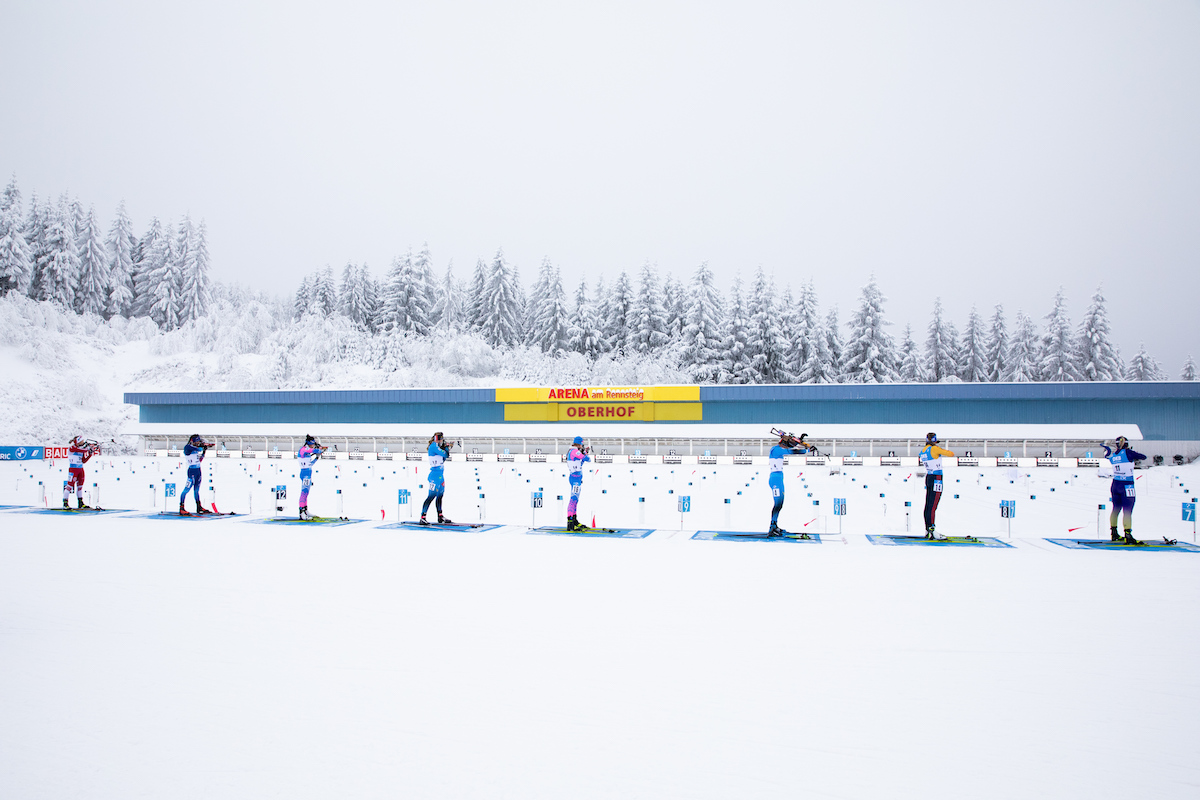
Denise Herrmann-Wick (GER) shooting from the standing position at the IBU World Championships Sprint in Oberhof, Germany. (Photo: NordicFocus)
Biathlon fans anticipated that the women’s 7.5km Sprint would be one of the most tightly-contested races of the BMW IBU World Championships, and it did not disappoint. In the end, only 2.2 seconds separated the new World Champion, Denise Herrmann-Wick of Germany, from the silver medalist, Hanna Oeberg of Sweden. Oeberg’s teammate, Linn Persson, finished third. These athletes will start at the front of Sunday’s 60-person Pursuit and try to stave off the chasers for another chance at a World Championship medal.
Hanna Oeberg (SWE) leaving the range in the lead of the IBU World Championships Sprint in Oberhof, Germany. (Photo: NordicFocus)
Fourteen women from seven nations have landed on the podium this winter. But among all those contenders, arguably no one had more pressure on them today than hometown favorite, Denise Herrmann-Wick. Ranked first in the World Cup Sprint standings, the 34-year-old revealed in Wednesday’s Mixed Relay that she has peaked perfectly for these races. Even with nine out ten hits, Herrmann-Wick is skiing fast enough that she could have a chance at a podium finish, but today she left nothing chance. Unfazed by tens of thousands of spectators cheering in unison after each shot, Herrmann-Wick steadily cleared ten out of ten targets. One word came to mind: impressive.
But the race wasn’t over. A few minutes later, Hanna Oeberg of Sweden managed the same perfect shooting, leaving the range for the final 2.5km loop with a nine second advantage over Herrmann-Wick. A hush of collective anxiety came over the full stadium of German fans. By the top of Oberhof’s signature Birxsteig climb, Oeberg’s advantage had dwindled to a near tie. It wasn’t until the final meters of the race, when Oeberg’s time ticked above Herrmann-Wick’s winning mark of 21:19.7, that the Thuringen Arena burst into cheers.
Denise Herrmann-Wick (GER) celebrates after winning the IBU World Championships Sprint in Oberhof, Germany. (Photo: NordicFocus)
The battle for gold was not limited to those two athletes. Wearing bib number two, Anamarija Lampic of Slovenia cleaned her prone targets, leaving the audience wondering if today might be the day for the former cross-country skier to break onto her first podium. But that kind of biathlon magic wasn’t to be; Lampic’s inexperience came through when she missed four targets in standing. With the 17th-ranked course time, she narrowly managed to qualify for Sunday’s Pursuit in 58th. It was Lampic’s teammate, Polona Klemencic, who stepped up and shined for Slovenia with the perfect shooting score to take her first career top-10 in 8th place.
Ingrid Tandrevold of Norway led the race after Shooting 1, showing once again that her ski speed and prone shooting skills are there. But the standing shooting slump which has been bothering her since January persisted and she missed two on her way to a 14th place finish. Lisa Vittozzi of Italy missed just one in standing but skied fast enough to briefly take the lead from Marketa Davidova of Czech Republic, who had hit 100% as she so often does in championship races.
The defending Olympic Champion in the Sprint, Marte Olsbu Roeiseland, was sitting way back in 26th after missing one in prone, but with a clean standing bout and the second-ranked course time, she pulled her way back to fourth, just five seconds shy of the bronze medal. She’ll be motivated for more in the Pursuit. The World Cup Overall leader, Julia Simon, was well on her way to a podium finish with eight hits before she missed the last two. Simon thrives in head-to-head races and will be a threat in the Pursuit even starting 1:02 back in 10th place.
Emma Lunder (CAN) following Marte Olsbu Roiseland (NOR) in the IBU World Championships Sprint in Oberhof, Germany, where they finished 11th and 4th, respectively. (Photo: NordicFocus).
Less than one second behind Simon, Emma Lunder of Canada posted her best-ever Championship result in 11th. After a season-best ski performance on Wednesday in the Mixed Relay, Lunder knew anything was possible in today’s Sprint. “I was a bag of nerves,” she said. “I was more nervous for this than the Olympics, because I knew I had a chance.” Once she started, her good preparation kicked in and with a clear mind she executed to near perfection, with just one prone miss and a top-15 course time. Lunder attributes her excellent shape to staying healthy. She hasn’t been sick since last year’s Olympics, so she has been able to train continuously and make steady gains. She also credited her ski technicians for fast skis. In Sunday’s Pursuit, only 1:03 will separate Emma from Herrmann-Wick. To the podium, it’s just 37 seconds.
Nadia Moser (CAN) on her way to 48th in the IBU World Championships Sprint in Oberhof, Germany. Photo: (NordicFocus)
Two other North Americans qualified for the Pursuit. Nadia Moser (CAN) finished 48th with one penalty, and Deedra Irwin (USA) finished 55th with two. “I’ve barely trained for the last two weeks,” said Irwin after the race, referencing a sickness she came down with in January which required a round of antibiotics. “And this course is so hard. The headwind on that straightaway was brutal.” Some athletes were luckier than others, finding themselves in position to draft for the 500m windy straightaway approach to the range. Lunder put in a hard sprint to catch someone there. Chloe Levins, the second American today in 73rd, was alone every time on that section, but she performed well on the range, hitting nine of ten.
Joanne Reid (USA) shot clean in prone but suffered three penalties in standing to finish 75th. Competing in her first biathlon World Championships race, former Nordic Combined athlete Tara Geraghty-Moats (USA) similarly cleaned prone but struggled in standing, missing four to finish 86th. Canada’s Benita Peiffer rounded out their squad, missing five to finish 93rd.
Chloe Levins (USA) hit nine out of ten to finish 73rd in the IBU World Championships Sprint in Oberhof, Germany. (Photo: NordicFocus)
The women will be back in action on Sunday, but first it’s the men’s sprint, Saturday at 8:30AM Eastern Time.
IBU World Championships women’s Sprint podium: Denise Herrmann-Wick (GER) in first, Hanna Oeberg SWE) in second at left, and Linn Persson (SWE) in third. Oberhof, Germany. (Photo: NordicFocus)
Biathletes racing in Oberhof, Germany in January of 2019. (Photo: NordicFocus)
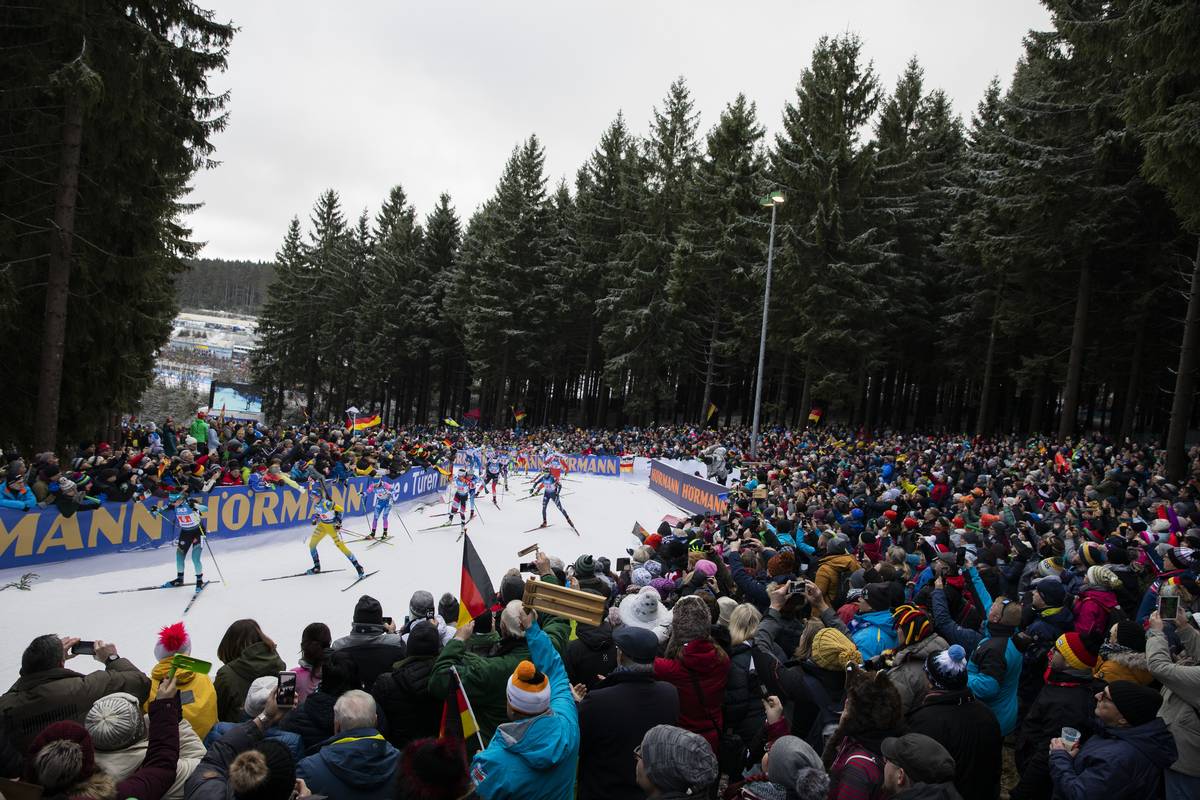
The 2023 BMW IBU Biathlon World Championships kick off on Wednesday, February 8th in Oberhof, Germany. Let’s start with reasons why to watch:
Why Watch?
Watch because it’s free and easy. This winter, all biathlon World Championship, World Cup, Junior World Championship, and even IBU Cup (World Cup feeder circuit) races and are free to stream live with English commentary on Eurovision’s website.
Watch because on the men’s side, Johannes Thignes Boe’s domination so far this winter has sparked talk of “G.O.A.T.” status. That is saying something, given that the 29-year-old Norwegian has “only” three World Cup Overall titles and 66 individual victories to his name. Boe’s compatriot, the original “King of Biathlon” Ole Einar Bjorndalen, won 95 races, and more recently, French star Martin Fourcade won 85 races and seven consecutive Overall titles. But winning 11 out of 14 individual competitions already this season, Boe is catching up at an extraordinary rate. Outpacing his competitors by ridiculous margins and hitting 90% of his targets on average, there’s no doubt Boe will put on a show to remember in Oberhof.
On the women’s side, watch because—in contrast to the Boe Show—we’ve seen eight different winners from five countries so far this season: none yet from Norway. It’s truly anyone’s game. The depth of competition on the women’s side all but guarantees the kind of high-drama shooting and down-to-the-wire finishes that we all love.
Watch to support Nordic skiers getting paid. World Championships have the biggest viewership draw and consequently the biggest prize money purse of the biathlon season, with each event winner taking home 25,000 Euros. The payout reaches all the way down to 30th place, and women and men are paid equally.
Watch because—for the first time since 2020—spectators will be allowed to attend the season’s highlight event. Oberhof’s Thuringen Arena is expected to draw over 160,000 die-hard biathlon fans from one of the sport’s core regions. Watch because if you can’t be there in person, the live stream is next best!
Biathlon World Cup Women’s Pursuit in Oberhof , Germany in January 2021. (Photo: NordicFocus)
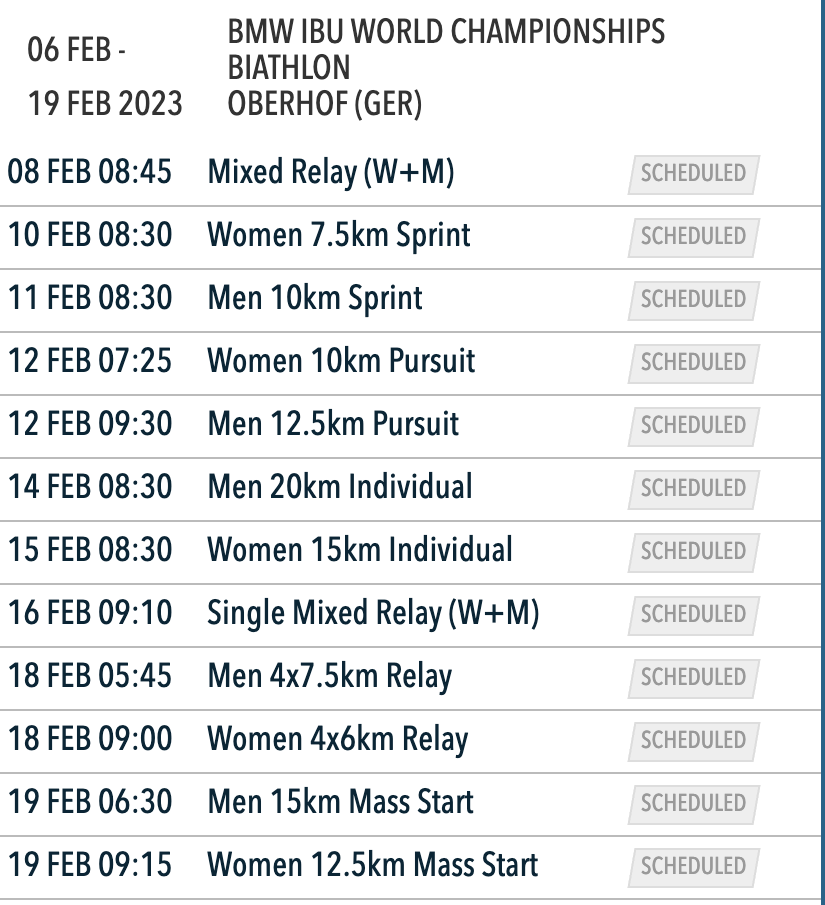
February 8-19. See competition schedule below in Eastern Time. Full season schedule and results available at: www.biathlonresults.com
What to Watch?
For those new to biathlon, check out any of the relays, the Pursuit, or the Mass Start. Those races are easiest to follow because they are head-to-head.
To see North Americans in the front of the pack, watch the Single-Mixed Relay. One woman and one man each do two short biathlon races, tagging off in between. The Canadian couple of Emma Lunder and Christian Gow have a World Cup best of fourth in the event and Americans Deedra Irwin and Paul Schommer finished sixth just a few weeks ago. No matter how they do, this speed shooting and sprint skiing frenzy is entirely enjoyable to watch.
Watch for those same four athletes in the 15/20km Individual as well. They each have scored at least one top-10 result in biathlon’s longest event format, known for its brutal one-minute time penalty per miss. If any of them can hit 18 targets or more out of 20, expect to see them on the live stream and—if they’re lucky—on the podium.
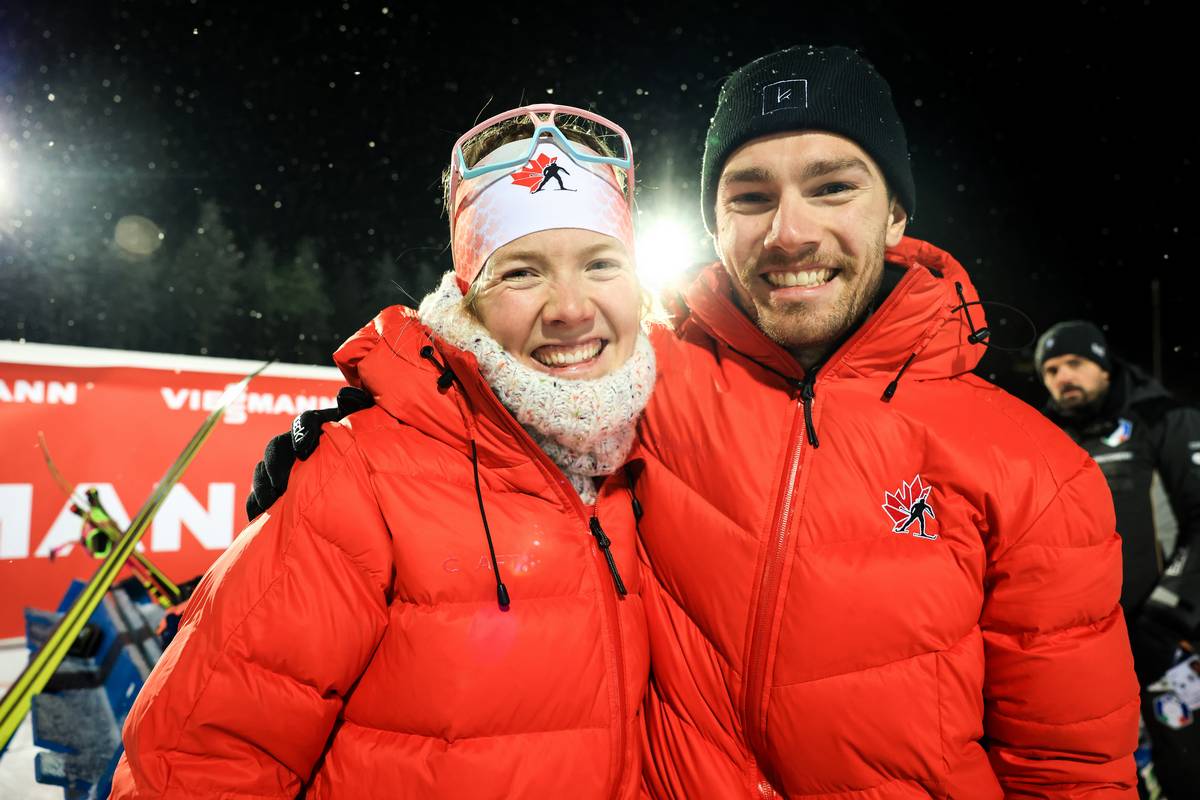
Emma Lunder and Christian Gow (CAN) at the IBU World Cup Biathlon in Kontiolahti, Finland in December 2022. (Photo: NordicFocus)
Who to Watch?
International Women:
Julia Simon (FRA): currently leads the World Cup Overall and Mass Start standings. Watch for her to blaze through five targets in 19 seconds and then throw down a heroic last lap for a come-from-behind win. Not to be overlooked: her three teammates who have also landed on the podium this winter.
Elvira Oeberg (SWE): Second in the Overall and first in the U25 and Pursuit standings, it’s easy to forget she’s only 23 years old. Like France, Sweden has also put four women on the podium this winter. Watch for those two nations to battle it out in the Women’s Relay.
Lisa Vittozzi (ITA): Following a season in which she inexplicably alternated between hitting all five or missing all five in any given prone stage, Vittozzi is back to her best form on the range and on skis. She currently leads the 15km Individual standings.
Dorothea Wierer (ITA): Quietly ranked fourth in the Overall behind the above three, she took her first win of the season just a few weeks ago and is a perennial favorite at championships.
Denise Herrmann-Wick (GER): Sprint standings leader and Olympic medalist in both biathlon and cross-country skiing, the 34-year-old is currently ranked fifth in the Overall and is Germany’s best chance for an at-home win.
Marte Olsbu Roiselend (NOR): Last year’s World Cup Overall winner returned to competition in January following an autumn illness and went straight into the flower ceremony with a 4th and 5th. She won five Olympic medals in Beijing last winter and seven at World’s in 2020. Bet on her.
Wildcard—Anamarija Lampic (SLO): For cross-country ski fans looking for a dark horse podium contender, the former FIS Sprint Globe winner will make her Biathlon World Championships debut. In her three World Cup outings so far she has placed 5th, 5th and 69th.
Julia Simon (FRA) racing the IBU World Cup Biathlon Relay in Antholz, Italy in January 2023. (Photo: NordicFocus)
North American Women:
Emma Lunder (CAN): Ranked 26th in the Overall standings, Lunder came oh-so-close to landing her first podium when she set new personal bests of 4th and 5th in December. In the two Mass Start races this season she placed 9th and 11th, so let’s hope she can qualify for the premier 30-woman event in Oberhof.
Nadia Moser (CAN): After tragically breaking her leg just before the Olympics last year, Moser fought back and is now having a career-best season, notching three top-30’s including a new personal best of 23rd.
Deedra Irwin (USA): Returning from a breakout season in which she smashed into the top-ten for the first time at the Olympics and qualified for her first Mass start, Irwin may be on track for a similarly well-timed peak. In January her ski times sharpened and she scored her first top-25 of the winter.
Joanne Reid (USA): After finishing 26th in a Sprint in December, Reid struggled with illness in January but don’t count her out. Her top three career results are all from championship events, including 10th and 15th at the 2019 World’s. Chances are good she’ll shine in the women’s and mixed relays.
Johannes Thingnes Boe (NOR) racing the IBU World Cup Biathlon Mass Start in Ruhpolding, Germany in January 2023. (Photo: NordicFocus)
International Men:
Team Norway: Five of them (J. Boe, S. Laegreid, V. Christiansen, J. Dale, T. Boe) are ranked in the top eight of the World Cup Overall standings. We’ll see all of them compete in Oberhof thanks to a new rule which extends the normal limit of four athletes per nation to five as long as they are ranked in the top 15. In particular:
Johannes Thignes Boe (NOR): won 11 of 14 individual races this season. Currently leads the Overall standings and all of the event standings. More than once this winter, he has outskied the next-fastest competitor by over forty seconds— in a 10k! Come for the biathlon, stay for the exceptional cross-country skiing.
Sturla Holm Laegreid (NOR): If it weren’t for Boe’s total domination we’d be talking about Laegreid. He’s finished 2nd in the Overall standings for the last two years and has been on the podium in all but three races this season. His worst (!) finish so far this winter is 6th. In contrast to Boe, Laegreid’s superpower is his shooting. The 25-year-old is currently running a 98% hit rate in prone.
Martin Ponsiluoma (SWE): the only non-Norwegian to win a race this winter. In January he was consistently the second-fastest skier behind J. Boe and therefore one of the few people with any chance of beating him. Ponsiluoma’s weakness is shooting accuracy but Oberhof’s windy range could level the playing field to his advantage.
Quentin Fillon Maillet (FRA): Last winter’s World Cup Overall winner, currently ranked 4th, never gives up.
Niklas Hartweg (SUI): At just 22 years old, the U25 leader is having a breakout season which started with a silver medal in the 20km Individual in November. Winner of the 2019-20 Junior Cup, Hartweg is on a near vertical trajectory at the senior level, ascending from 74th in the World Cup Overall standings last year to 12th currently.
Wildcard— Simon Eder (AUT): the 39-year-old proved he’s still in great form when he earned his 99th and 100th career individual top-ten results in January. He recently ended a prone hit streak of over 110 shots which he had started last March.
Paul Schommer (USA) and Adam Runnalls (CAN), (l-r) racing the IBU World Cup Biathlon Pursuit in Annecy-Le Grand Bornand in December 2022. (Photo: NordicFocus)
North American Men:
Sean Doherty (USA): Coming off a banner summer season in which he took 2nd at the Martin Fourcade Nordic Festival and 6th at Summer Biathlon World Championships, Doherty landed his best result since the 18-19 season in December with a new Sprint best of 11th.
Christian Gow (CAN): a lighting fast and reliable shooter coming into form with two top-25 results in January.
Adam Runnalls (CAN): 24-year-old having a breakout season with two top-20s so far including a new personal-best of 13th in the Sprint in January.
Paul Schommer (USA): has finished in the points (top-40) in all but two races this season, showing high-level consistency, especially on the range where his 87% hit rate ranks among the best.
Jake Brown (USA): 12th in the Sprint at 2021 World’s proves he can make it happen when it counts. Watch for Jake to put up a sneaky excellent Men’s Relay leg.
Keep following fasterskier.com for on-site coverage from Oberhof.
You can find the full US Biathlon World Championships team roster here.
You can find the full Biathlon Canada World Championships team roster here.
Deedra Irwin (right) competes in the Women’s 15km Individual race during the 2022 Beijing Olympic Games. (Photo: NordicFocus)
This article is part of a series based on an interview with Lowell Bailey. Mr. Bailey represented the United States in biathlon in four Olympic games, 11 World Championships, and 15 World Cup seasons. He is currently Director of High Performance for U.S. Biathlon. His World Championship gold medal race is one of the most thrilling races ever. If you haven’t seen it, the race is available on YouTube and is a great watch. His continued enthusiasm for biathlon continues, and is contagious.
This interview has been edited for clarity and brevity.
Part II: Perspective on U.S. and International Biathlon.
How does the U.S. training, support, and logistics compare to other national teams?
In some ways it’s a David versus Goliath situation, with the Goliaths being the Germanys and Norways of the world, which are government supported, and budgets are not a challenge. I want to make very clear that we receive tremendous support from the USOPC (United States Olympic & Paralympic Committee). We are aligned in our pursuit of excellence. It does a huge amount of the lift. We definitely have the support of our Olympic committee. The USOPC has increased focus on sports that we [the United States] haven’t traditionally excelled in. The conversation has shifted to include focus on sports where there are opportunities in terms of increasing medal count. Biathlon has twenty-seven possible medals in an Olympics. So, it’s a huge opportunity. It’s also one of the most competitive sports. In particular the USOPC’s support for our Lake Placid facility is critical. There are dorms, food, and medical support under one roof for biathletes at every development level. This is critical. Every day we spend there is time we don’t have to spend elsewhere and spend money elsewhere.
That being said, there are teams out there who really don’t have to worry about budget. Some of the European teams which are government supported have close to a blank check. They have higher staffing levels than we do. They have more coaches and wax technicians, physical therapists, and doctors. So we have to be creative and find ways to highlight our strengths. The Goliaths are more concerned about what’s the winning strategy and don’t really worry about how much the strategy costs. Still, we have better support than many other nations, but if the goal is podiums, the competition is the big programs. We have to find creative ways to be better every year. But, it’s not all about money.
Susan Dunklee (USA) racing to 8th place in Nove Mesto’s pursuit. (Photo: NordicFocus)
What are the expectations long and short term?
One of the biggest changes has been reassessing goals, not for next year only, but for the next eight years. What is it going to take for a U.S. biathlete to step onto the Olympic podium? This has been part of a targeted plan to focus on areas for sustained excellence. But, we also definitely focus on the present and maximizing the opportunities of success for our current athletes.
Individual goals are determined by each athlete and the coaches. Athletes are individuals. A good coach understands that some athletes are very goal oriented and want to focus on those goals. Others just want to think about their training plan and be removed from nuts and bolts of goal setting and training plan design. They just want to trust their coach, be given a plan, and execute the plan. Others want to set their own goals.
The season is long and grueling. How do the athletes manage?
It’s very individual. For instance, Scandinavia in November is dark (sunlight wise) and challenging for some. For many athletes that’s really challenging. It’s critical for athletes to find joy in the effort. Athletes have to maintain the identity of “why I’m doing this.” If you want to get to the top of the world you have to put yourselves in tough places. You have to maintain the identity that “this is why I’m doing this.” Everyone has a choice to stay excited … finding the excitement against the World’s best. It’s exciting and you have to remind yourself that you’re on that exciting path, competing against the world’s best.
Is it really possible to race at full intensity every weekend? Do racers intentionally hold back some weekends to save energy or taper for “bigger races?”
Not really. I can’t speak for everyone, this is my personal thinking, but from my experience, that’s a bad idea. You might be slower some weekends than others. But, that’s more likely a function of fatigue from training or racing, not purposely taking it easy during a race. It’s not physically possible to go at the absolute top of your ability every weekend, but from my perspective, that’s not intentional. To cope with a long season, it’s better to set up a strategy of adjusting workouts instead of adjusting race pace. You can’t have the pedal to the metal every day. You get into a tricky spot when you say to an athlete that you only want them to give 90 percent or 95 percent. There may be athletes that go out and say I’m only going to race at 95 percent today. But, it’s a slippery slope to give less than 100 percent. I don’t think you want to give yourself the option of dialing it back. My way of thinking is you don’t want to have the programing to turn the dial back during racing. There’s more to lose from that than to gain. You adjust to stress and fatigue in ways other than on race day. But, at the end of the day, every athlete’s path to success is individual and specific to that athlete.
Sean Doherty (USA) – IBU World Cup Biathlon, sprint men, Oestersund (SWE). (Photo: NordicFocus)
Cross-Country recently adopted equal distances for men and women. Thoughts on biathlon adopting that?
I haven’t heard anything from the IBU (International Biathlon Union) about it. I’ll be interested to see how it plays out. The athletes should have a very very big voice in that decision about race length. From the Federation’s viewpoint, there’s merit to consider what’s popular, is our sport competitive, are we appealing to fans? On the other hand, the athletes are the ones out there competing. IBU’s decision- making does consider the athletes’ voice as very important.
How about fluoro bans?
Athletes’ right now are concerned about the non fluorinated wax situation and how biathlon would deal with fluoro detection. There’s a lot of attention on that issue. There’s enthusiasm for being fluoro free. From the federation’s perspective, the IBU wants to reach a fluoro free race environment, but in a way so that the competition is fair.
I recently watched your World Championship gold medal race on YouTube. Do you ever bring that up as inspiration or motivation for current athletes?
I don’t try to highlight that. I trust the athletes with the knowledge that they’re prepared. We create an environment for every athlete to have had the best preparation that they can. Specifically pointing to certain events, I’m open to discussing what went right. But, it’s more important to let an athlete experience for themselves what their journey looks like. If that means using U.S. biathlon history as something positive, then there’s a long list of success that provides positive thoughts. I lean away from saying, “Here’s what I know or here’s what I did.”
That’s one of the most exciting biathlon races ever. By the end of the race even the commentators were cheering for you. Is that an event that you look back on a lot?
I don’t make a point of highlighting that in my present day life. It was one of the most impactful things that I was a part of. I say “a part of” because the drivers of success had to do with all the pieces of the puzzle coming together … logistics, training plan, ski prep. So, what I take away is how critical team support is for an athlete’s individual success. No athlete succeeds on the World Cup without team support. The margin in that race was 3.3 seconds over a 20 kilometer race. Success then depends on so many different variables on that day and literally over the course of the preceding year. It shows the importance of being prepared on all platforms. When I look back, I feel our team worked together really well on all levels. I use it as an example of what can happen when you get everything right as a team.
A healthy dose of perspective is important. Everyone we compete against is talented. How do you get that final fraction of a percent to get on the podium? How do you keep on moving things up a notch until there is a U.S. Olympic athlete standing on the podium? That’s what’s so motivating. The better you get, the harder it is to improve.
Clare Egan (USA), Linn Persson (SWE), Hanna Oeberg (SWE), Marte Olsbu Roeiseland (NOR), (l-r) – IBU World Cup Biathlon, Hochfilzen (AUT). (Photo: NordicFocus)
Anything else you’d like readers to know?
Just our focus on our eight-year strategic plan of how we sustain competitive excellence. We are making very real and very big changes at all levels of our community. We have one of the most talented World Cup teams. We have a lot of forward momentum. We focus on our current team, and we are also playing the long game for sustained competitive excellence. World Cup careers are relatively short. We need to look at sustainability on the long term. We can be up there with the Germanys and Norways!
Lowell Bailey, Director of High Performance, U.S. Biathlon (Photo: Team USA Biathlon)
This article is Part One of an interview with Lowell Bailey who represented the United States in biathlon in four Olympic games, 11 World Championships, and 15 World Cup seasons. He is currently Director of High Performance for U.S. Biathlon. His World Championship gold medal race remains one of the most thrilling races ever. The race is available on YouTube, ( https://www.youtube.com/watch?v=yguD6SEAAmw) and is a great watch. His enthusiasm for biathlon continues, and is contagious.
This interview has been edited for clarity and brevity.
Lowell Bailey is the Director of High Performance for U.S. Biathlon (Photo: USA Biathlon)
You’re Director of High Performance for U.S. Biathlon. What does that job entail?
I maintain programing for our athletes at all levels. That includes World Cup, IBU (International Biathlon Union) Cup, and the National team, and all the resources that go into athlete support. It covers staffing, logistics, and managing coaches. Things like how do you get teams from the U.S. to Europe to compete on international circuits.
The most exciting part is strategizing about how we as a country can improve. It includes long range planning for U.S. Biathlon. It’s very analogous to any CEO position. I look at what our strengths and weaknesses are, and where are our advantages. We look at other sports and what they do well and gain information from that.
We are at the highest level of competition and the margins are very small. We ask how do you get the final fraction of percentage which puts you on the podium? How are we going to move things up one notch? We’re constantly looking for fresh perspectives. We can tend to be myopic. There’s a lot to be gained by looking outside of your comfort zone. I don’t want to give away any secrets, but we’ve learned a lot from U.S. speed skating with their approach to innovations. We don’t just look at biathlon, but we look at other sports as well to learn from their approaches.
What does summer training traditionally look like for the team?
We generally have camps which last two to three weeks and happen almost every month of the training year, which is broken up by athletes training at home. We manage the entire year for the athletes, 365 days.
What does a typical plan look like?
There really is no such thing. Training plans are always changing and are a result of dialogue between athletes and coaches. Each athlete needs different things, and we work to tailor training to those needs. We are always looking at where we’ve been and how we get better. The best coaches help athletes clarify what comes out of the athlete’s self-reflection. It’s the coach’s job to say whether goals are achievable, and here’s the changes to the plan to achieve those goals.
Clare Egan races to fourth place in the 15km Women’s Individual competition in Antholz, Italy. (Photo: NordicFocus)
Are you satisfied with the way summer training has gone? What’s changed in summer training?
Yes, I am satisfied. One of the biggest changes has been the reassessment of goals for the next eight years. We have the singular goal of a U.S. athlete stepping onto the podium, what will it take to get us there, and keep us there. This analysis resulted in a very specific plan to focus on the areas that will have the biggest impact on those goals. Those include focusing on looking at development pipeline for improvement. That’s been one of the biggest changes.
Coming out of the last two years so much of our work was just keeping the team going during the middle of a pandemic. So, this is a big change.
The race season starts in a couple of weeks. What do preparations look like now? What’s it like to make the transition from summer training to the beginning of the season?
We have staff on the ground in Europe throughout the summer testing skis and wax. So, preparations have begun well in advance of now. Most of our testing is based in Europe since that’s where the ski companies and snow tunnels are. For staff that does ski preparation, they tend to be European based, and that works well for us. When the skiers travel, staff travels with them. We have a big staff that goes with the athletes that manages logistics, travel plans, hotels, skis, and anything else we can to support athletes. Preparation for getting an athlete to the start line in December starts in April.
We’ve finished our last dryland camp in Utah, which was very intense. We head to Finland on the 12th of November for final preparations and a final two week camp on snow. Right now it’s basically a matter of tweaking things; you’re just putting the icing on the cake. Most of the hard training blocks are done. There’s only so much which can be done in two weeks. A lot of the next couple of weeks will be getting used to being back on snow. Most of our athletes had one week on snow in September. Other than that, they’ve been on roller skis for the last six to eight months.
The team has had some big changes from last year: Susan Dunklee, Clare Egan, and Leif Nordgren have retired. How do you fill that void?
It’s a big void to fill. But, we’re in a very good place now with new leadership. Every team has ebbs and flows as veterans retire and younger athletes take their place, that’s natural. We have an experienced team. We do try to intentionally manage team leadership, but it also has to develop organically. You definitely have both an organic and intentional process. It’s our job to manage that process to get the best team culture. I commend the athletes for working through the transition and honoring the athlete leaders they looked up to for years. We have a really good mix of experience levels. Our continuity of leadership is in a good place and a lot of that is due to the job our prior athlete leadership has done.
Deedra Irwin had a fantastic result in Beijng finishing seventh in the 15 kilometer individual. Does that bring with it the pressure of high expectations?
Deedra Irwin (right) competes in the Women’s 15km Individual race during the 2022 Beijing Olympic Games. (Photo: Nordic Focus)
I’ll answer it this way; it does set up internal expectations. I mean that in the sense that an athlete now knows what it takes to make it to the top. The expectation from the athlete internally changes: “I know now what it takes to be seventh place at the Olympics.” It reframes the approach and the mindset. It also changes coaches’ expectations in the sense that they need to know the athlete and whether the athlete thrives under this type of pressure, or whether the athlete needs to downplay those results and not make it the focus. The sports psychologists and everyone around the coach needs to understand these differences. Everyone supporting the athlete needs to know which cue words to say and which cue words to avoid. These are things that an athlete needs to succeed. So, it’s not pressure in the sense you mean.
Deedra Irwin competes in the Women’s 15km Individual race during the 2022 Beijing Olympic Games. (Photo: Nordic Focus)
During Covid racing there weren’t fans at the venues. It was strangely silent. Was that difficult for the athletes, and do you now have to retrain athletes to get them used to shooting during fan noise?
What happened with the crowds was unprecedented. We have traditionally had 20,000-30,000 at a venue. Dealing with it varies athlete to athlete. Some athletes thrive on the crowd noise. Others just focus on what can I do on a given day to be at my best. We do use various forms of distraction during training to account for this. Sometimes it’s as simple as loud noise. Sometimes it’s a singular voice which is the most distracting. We practice things such as coming into the range for the final shooting round and putting the athlete in a situation where we simulate that they are leading a high stakes race. We train athletes how to regain focus in moments of distraction whether that’s crowd noise or race pressure. The athlete who can still focus on the fundamentals and adapt to those scenarios will come out in a better position. That’s the secret to success. Being able to refocus in the moment.
Thoughts on the World Championships in Oberhof, Germany? Expectations of an American being on the podium?
We’re ready. We know the venue really well. I’m optimistic that we can see podiums. Any given day, any athlete can make it. We’ve shown podiums are within reach. Everyone wants World Championship podiums, so they are hard to come by! Of course World Championships are the focus, but something to remember though is that every World cup race is just as competitive as World Championships because of the limited number of spots for different squads. So, in a sense, stepping on a World Cup podium is just as important as stepping on a World Championship podium.
How’s the ban on Russian athletes affecting what we see in competition? Any sense how the participating athletes feel?
I’m not sure. When the invasion first happened, it appeared there was overwhelming support to rally behind the Ukrainian’s cause. The IBU has made their decision. We need to see how that affects the World Cup. I can’t really comment on how current athletes’ feel. If I were still competing, I’d have a mix of emotions. There’s no universally right answer.
FasterSkier will continue its interview with Lowell Bailey in Part Two, including how support for Team U.S.A. compares to other countries, dealing with a long race season, fluoro bans, and the legacy of Mr. Bailey’s World Championship gold medal race.
The U.S. Biathlon team and staff celebrate Lowell Bailey’s World Championship gold medal in Hochfilzen in 2017. (Photo: USBA/NordicFocus.com/Twitter)
Deedra Irwin takes aim during the 2022 Beijing Olympic Winter Games. (Photo: NordicFocus)
BEIJING, China (Feb. 18, 2022) – Competing in the first mass start of her career on the Olympic stage, Deedra Irwin (Pulaski, Wis./ National Guard Biathlon & USBA) went toe-to-toe with the world’s best biathletes to finish 23rd in the elite field of 30 on Friday as the Beijing 2022 Winter Games’ biathlon competition came to a close at the Zhangjiakou National Biathlon Center. Irwin was 3 minutes, 24.1 seconds back with six penalties.
Deedra Irwin celebrates a 23rd place performance in the 12.5 k mass start. (Photo: NordicFocus)
“This has just been such an incredible experience,” said Irwin after the race. “I’m still processing everything that’s happened these past couple of weeks at the Olympics. I’ve gained a ton of confidence at these Olympics and really just went above and beyond my Olympic goal which definitely didn’t include the mass start. It was just an honor to get on the start line today and I was in awe the entire time.”
As with most of the competitions at the Beijing Games, the women’s mass start featured cold temperatures and strong winds cutting across the shooting range. As a result, none of the competitors shot clean. Irwin had four penalties in prone and two in standing, but felt privileged to be racing among the elite of the sport.
“Definitely during the race, skiing next to some of the best women in the world…wow…I am just still speechless,” Irwin said. “If there’s anything I’ve learned from these Games it’s that I have a lot more to learn and I’m just so excited to keep climbing the ladder. Skiing next to Denise Herrmann and Hanna Oeberg and Mona Brorsson and all the girls today…being able to fight next to them I am just so excited to continue racing and see what else I can push my body to do.”
France’s Justine Braisaz-Bouchet won the mass start gold medal with four penalties and a time of 40:18. Norway’s Tiril Eckhoff, also with four penalties, won the silver medal, 15.3 seconds back, while her teammate Marte Olsbu Roeiseland claimed her fifth medal of the Games, taking the bronze 34.9 seconds behind Braisaz-Bouchet with four penalties.
Battling the wind, Deedra Irwin grabs a pole while racing to 23rd in the 12.5 k mass start. (Photo: NordicFocus)
The biathlon season now shifts focus to the last three IBU World Cup events of the year, beginning with the March 3-6 competition in Kontiolahti, Finland.
Women’s 12.5km mass start results
1.
Justine Braisaz-Bouchet (FRA)
40:18.0/+4
2.
Tiril Eckhoff (NOR)
+15.3/+4
3.
Marte Olsbu Roeiseland (NOR)
+34.9/+4
23.
Deedra Irwin (Pulaski, Wis.)
+3:24.1/+6
Check out the Watch Olympic Biathlon schedule for viewing options of all the races from Beijing. You can also follow all the action on the IBU app – download it today!
In the final Olympic race of their careers, Susan Dunklee (Craftsbury, Vt./Craftsbury Green Racing Project & USBA)and Clare Egan (Cape Elizabeth, Maine/Craftsbury Green Racing Project & USBA) helped guide the U.S. women to an 11th-place finish in Wednesday’s 4×6-kilometer relay at the Beijing 2022 Winter Games.
Three-time Olympian Dunklee was first out of the shooting range after prone, having cleaned all five targets. She also cleaned from the standing position but admittedly was sluggish on the skis and made the first exchange with Egan in 18th position.
“It was a beautiful day to be out here skiing and I was really excited for it,” said Dunklee. “I had a lot of fun in the first loop and put myself in it like I usually do. I got near the front and tried to play my normal game and shoot fast in prone. I got out first which was really satisfying for the first 100 meters. I did well in standing but the last loop my body just shut down. Today was one of those days. No matter how hard I was trying to force myself to go my body just wouldn’t go.”
Clare Egan (USA) -(Photo: NordicFocus)
Egan, competing in her second Olympic Games, brought the U.S. team up to 15th place at the midway point despite using five spare rounds and incurring a penalty in standing. She tagged off to first-time Olympian Deedra Irwin (Pulaski, Wis./ National Guard Biathlon & USBA) who cleaned from prone and had a penalty and three spares in standing. Irwin made the final exchange to two-time Olympian Joanne Reid (Grand Junction, Colo.) in 13th position.
Deedra Irwin (USA) – (Photo: NordicFocus)
Reid turned in a fantastic final leg as she also cleaned prone and used just one spare in standing to move into 11th place at the finish, 4 minutes, 47.4 seconds back of the winning time.
After the race, Irwin spoke about the impact Dunklee and Egan have had on the sport.
“It was really awesome to see Susan clean the race and that was a good motivator,” Irwin said. “They’re just so inspirational…they’re trailblazers in U.S. Biathlon. I just hope to live up to the legacy they’ve created for this program. They’re definitely going to be missed in the future.”
Irwin now looks forward to Saturday’s mass start where she will toe the line with 29 other women in the 12.5km race, the final biathlon competition of the Beijing Games.
“I’m feeling a little better after how I skied today,” added Irwin. “I definitely was a little nervous after not feeling so hot in the sprint and pursuit with my legs, but today skiing felt really awesome and half of my shooting race went pretty well. I’m pretty excited to go into my first mass start ever. It’s going to be memorable to have it here and have my entire team out cheering me on.”
Joanne Reid (USA) -(Photo: NordicFocus)
The Swedish quartet of Elvira and Hanna Oeberg, Mona Brorsson and Linn Persson used just six spare rounds to win the gold medal in 1:11:03.9. The silver medal went to the Russian Olympic Committee with one penalty and seven spares, 12 seconds back. Germany captured the bronze medal with six spare rounds, 37.4 seconds behind Sweden.
Check out the Watch Olympic Biathlon schedule for viewing options of all the races from Beijing. You can also follow all the action on the IBU app – download it today!
Deedra Irwin competes in the Women’s 15km Individual race during the 2022 Beijing Olympic Games. (Photo: Nordic Focus)
BEIJING, China (Feb. 5, 2022) – Things don’t always go according to plan, but occasionally someone can exceed even her wildest expectations.
Such was the case for Deedra Irwin of Pulaski, Wisconsin, who on Monday turned in the best Olympic performance ever by an American biathlete, finishing seventh in the women’s 15-kilometer individual event at the Zhangjiakou National Biathlon Centre northwest of Beijing.
“I was trying to focus on just working on everything I’ve worked on this week,” said Irwin, who is competing in her first Olympic Winter Games, “really skiing the course well and staying calm on the range and being ready for anything — with wind or whatever.
“I had a good game plan, and I was able to execute it. Everything came together. I had no idea how I was doing, and I was just in my zone, and it worked — what the heck.”
Deedra Irwin competes in the Women’s 15km Individual race during the 2022 Beijing Olympic Games. (Photo: Nordic Focus)
What the heck, indeed. Irwin skied and shot with the world’s best biathletes, ultimately finishing just 1 minute, 1.4 seconds behind gold medalist Denise Herrmann of Germany. Anais Chevalier-Bouchet of France claimed the silver medal, and Norway’s Marte Olsbu Roeiseland took the bronze medal.
Irwin’s American teammates, Clare Egan, Joanne Reid and Susan Dunklee, placed 39th, 57th and 63rd, respectively.
Irwin’s stunning performance also came two days after the U.S. biathlon team of Dunklee, Egan, Sean Doherty and Paul Schommer posted the best-ever American finish in the 4×6-kilometer mixed relay event. The U.S. placed seventh in 1:08:58.3.
Nothing Monday seemed to faze Irwin, who moved up to fifth place at the 9-kilometer mark. Not even a miss during the event’s final shooting range.
“It’s something I’ve been working on all week because of the wind, just really trying to focus on one shot at a time,” Irwin said. “What was really nice is it wasn’t windy today. It was actually really calm.
“So even though I missed that shot, I still had that mentality of just one shot at a time, make good shots.”
Deedra Irwin (right) competes in the Women’s 15km Individual race during the 2022 Beijing Olympic Games. (Photo: Nordic Focus)
That enabled Irwin to finish strong.
“To be able to hit those last two, I was just really happy that I was able to keep the focus and concentrate,” Irwin said. “(It’s) something I’ve definitely been working on a lot since last year, to just in general increase my shooting percentage.”
The 29-year-old Irwin, a member of the Vermont Army National Guard, had a skiing and running background but didn’t try biathlon until 2017, when she attended a talent identification camp at Lake Placid, New York.
*****
Check out the Watch Olympic Biathlon schedule for viewing options of all the races from Beijing. You can also follow all the action on the IBU app – download it today!
Bob Reinert spent 17 years writing sports for The Boston Globe. He also served as a sports information director at Saint Anselm College and Phillips Exeter Academy. He is a contributor to TeamUSA.org on behalf of Red Line Editorial, Inc.
Joanne Reid (USA) celebrates historic relay result in Antholz (ITA). (Photo: NordicFocus)
In the final women’s relay competition before the Beijing 2022 Olympic Games, the 14th ranked U.S. Women’s Biathlon Team raced to a fifth-place finish in Saturday’s 4×6-kilometer event at the BMW IBU World Cup in Antholz. It marked the best relay finish for the women’s team in a World Cup since 1994 when the U.S. took the silver medal in Canmore, Alberta, Canada. However, today’s performance bettered that race 28 years ago in terms of time behind as they finished 50.1 seconds back of first place today compared to 57.3 seconds behind in 1994.
“I’ve dreamed of a top-5 women’s relay for over a decade,” three-time Olympian Susan Dunklee (Craftsbury, Vt./Craftsbury Green Racing Project & USBA) said after the race.
Susan Dunklee (USA) keeps the United States in it during the first leg of the relay in Antholz (ITA). (Photo: NordicFocus)
Dunklee kicked off the relay using one spare round in prone and two spares in standing. She made the first exchange with 2018 Olympian Clare Egan (Cape Elizabeth, Maine/Craftsbury Green Racing Project & USBA) with the U.S. team in 12th place, 41.6 seconds back of the leader.
Clare Egan (USA) holds strong during the second leg of the relay in Antholz (ITA). (Photo: NordicFocus)
Egan, heading into her second Olympic Games, brought the American squad up to 10th place after needing three spares in prone and two in standing on her second leg.
“It’s great to improve on our sixth-place from last winter as we head into the Olympics,” said Egan, referring to last season’s World Cup relay performance in Nove Mesto, Czech Republic.
Deedra Irwin (USA) keeps the US team within striking distance during the third leg of the relay in Antholz (ITA). (Photo: NordicFocus)
Deedra Irwin (Pulaski, Wis./National Guard Biathlon & USBA), the lone rookie on this year’s Olympic team, went clean in prone and used three spare rounds in standing to vault the team into medal contention at the final exchange. Irwin tagged off the anchor leg to Joanne Reid (Grand Junction, Colo.) in seventh place, a mere 27.6 seconds out of first.
Joanne Reid (USA) anchors the US to 5th place in Antholz (ITA). (Photo: NordicFocus)
Reid, a 2018 Olympian, was solid on the range needing just one spare in prone and another in standing. She brought the team home in fifth place, 50.1 seconds back of gold-medal winning Norway. Russia took second and France edged Italy for third in a photo finish.
“I think it’s really encouraging that we were within 20 seconds of Italy and France – two of the top teams – with the same shooting,” added Egan.
Joanne Reid and Deedra Irwin (USA), (l-r) celebrate at the finish in Antholz (ITA). (Photo: NordicFocus)
Earlier in the day, Paul Schommer (Appleton, Wis./Team Crosscut & USBA) finished 22nd in the men’s 15km mass start, the first mass start of his career.
The World Cup in Antholz wraps up Sunday with the men’s 4×7.5km relay followed by Egan competing in the women’s 12.5km mass start on the heels of her fourth-place finish in Friday’s 15km individual.
Catch the action live on Peacock with Chad Salmela and USBA President & CEO Max Cobb commentating live from Antholz. Download the IBU App to keep track of all your favorite athletes! BMW IBU World Cup – Antholz, Italy (all times Eastern)
Sunday, Jan. 23
6:15 am – Men’s 4×7.5km relay
9:15 am – Women’s 12.5km mass start
This press release, written by Bill Kellick, was originally posted at TeamUSA.org.
Oct. 27, 2021, 8:47 a.m. (ET)
(NEW GLOUCESTER, MAINE) – US Biathlon has announced the roster for the Pre-World Cup On-Snow Camp in Obertilliah, Austria, as well as the roster for the first two IBU Cup competitions of the 2021-22 season.
The Pre-World Cup Camp will begin November 11 with athletes joining National Team Coaches Armin Auchentaller and Vegard Bitnes for on-snow training ahead of the first BMW IBU World Cup races in Oestersund, Sweden, beginning November 27.
The women’s roster is led by 2022 Olympic Team qualifiers Susan Dunklee (Craftsbury, Vt./Craftsbury Green Racing Project & USBA), Clare Egan (Cape Elizabeth, Maine/USBA), 2018 Olympian Joanne Reid (Grand Junction, Colo.), Deedra Irwin (Pulaski, Wis./National Guard Biathlon Team & USBA) and Kelsey Dickinson (Winthrop, Wash./Craftsbury Green Racing Project).
Susan Dunklee racing to 8th in Nové Město’s sprint. (Photo: NordicFocus)
The men’s roster includes two-time Olympians Leif Nordgren (Hinesburg, Vt./National Guard Biathlon & USBA) and Sean Doherty (Center Conway, N.H./National Guard Biathlon & USBA). They will be joined by Paul Schommer (Appleton, Wis./Team Crosscut & USBA), Jake Brown (Saint Paul, Minn./Craftsbury Green Racing Project & USBA) and Vasek Cervenka (Grand Rapids, Minn./National Guard Biathlon & USBA). Brown is pre-qualified for the World Cup team.
The final roster for the first two BMW IBU World Cups of the season will be announced at the end of the camp.
Named to the Team USA roster to compete at the IBU Cup events in Idre, Sweden (Nov. 25-28) and Sjusjoen, Norway (Dec. 1-4) are Chloe Levins (Rutland, Vt./USBA), Hallie Grossman (South Burlington, Vt./Craftsbury Green Racing Project) and Lina Farra (Heber City, Utah/National Guard Biathlon Team) on the women’s team, and Max Durtschi (Ketchum, Idaho/Team Crosscut & USBA), Vincent Bonacci (Salt Lake City, Utah/Team Crosscut & USBA) and Luke Brown (Saint Paul, Minn./Team Craftsbury Green Racing Project).
Leif Nordgren during the IBU World Cup 4 x 7.5 k relay in Ӧstersund, Sweden in December, 2019. (Photo: NordicFocus)