Tag: Derek Zaplotinsky

  • First Paralympic Golds for Soule and Masters; McKeever Wins Second Straight, 12th Total

    First Paralympic Golds for Soule and Masters; McKeever Wins Second Straight, 12th Total

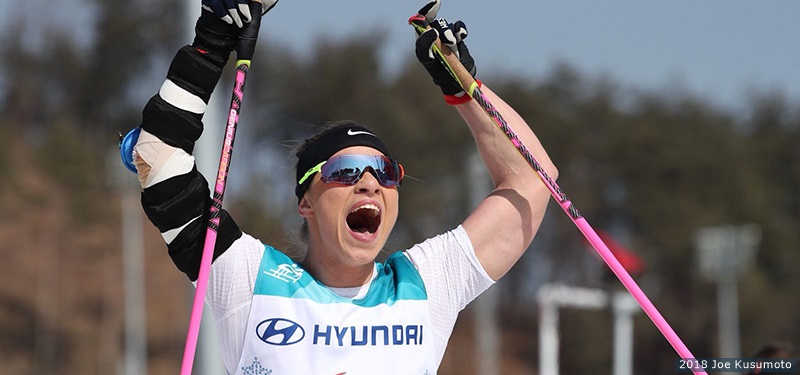
    American Oksana Masters reacting to her first gold medal in her third Paralympics, after winning the women’s 1.1 k sitting sprint on Wednesday in PyeongChang, South Korea. (Photo: U.S. Paralympics/Joe Kusumoto)

    2018 Winter Paralympics (PyeongChang, South Korea):  Cross-country sprints

    Hold onto your hats, this was a major day for both the American and Canadian teams at the 2018 Paralympics.

    In the cross-country sprints on Wednesday in PyeongChang, Andy Soule and Oksana Masters of the U.S. Paralympics Nordic Program both captured their first-career Paralympic golds in the women’s and men’s sitting events, while Dan Cnossen skied to his fourth medal in as many races with a bronze to add to his collection.

    Brian McKeever of the Canadian Para-Nordic Ski Team raced to his second-straight gold of the week in the men’s visually impaired sprint, with guide Russell Kennedy, and two of their teammates claimed bronze: Mark Arendz, in the men’s standing sprint for the first Paralympic cross-country medal of his career (following four biathlon medals) and Natalie Wilkie, the youngest member of the team at age 17, in the women’s standing sprint.
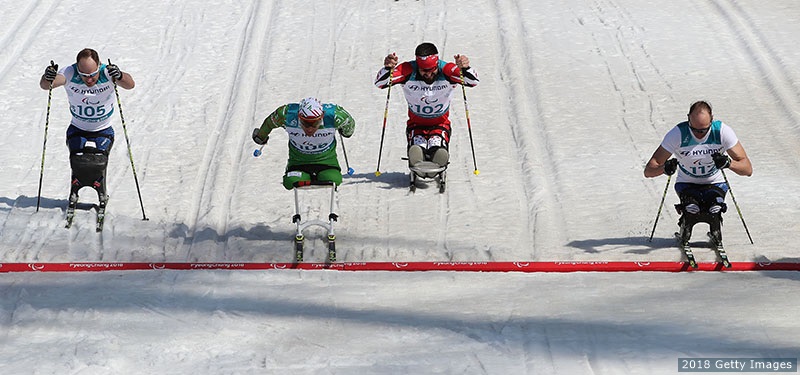
    Andy Soule (r) of U.S. taking first in a photo finish with Dzmitry Loban (second from l) of Belarus, while American Dan Cnossen (l) takes third and Canada’s Collin Cameron (second from r) fourth in the men’s 1.1 k sitting cross-country sprint at the 2018 Paralympics in PyeongChang, South Korea. (Photo: U.S. Paralympics/Chung Sung-Jun for Getty Images)

    In the men’s 1.1-kilometer sitting sprint final, Soule won a photo finish with Dzmitry Loban of Belarus, after both crossed the line in 3:31.4 minutes. Cnossen finished 0.4 seconds back in third and Canada’s Collin Cameron was just 0.3 seconds off the podium in fourth (+0.7).

    After skiing the pack throughout the final, Soule took the lead as the four racers entered the stadium together. In the finishing stretch, Loban, Cnossen and Cameron challenged him for the gold, but with a powerful surge and lean at the line, Soule, 38, notched the first gold medal after nearly 13 years in the sport. The U.S. Army veteran had previously earned bronze at the 2010 Paralympics and bronze in Tuesday’s 12.5 k sitting biathlon race.

    In a U.S. Paralympics press release, Soule described the race as “interesting” and “tactical”.
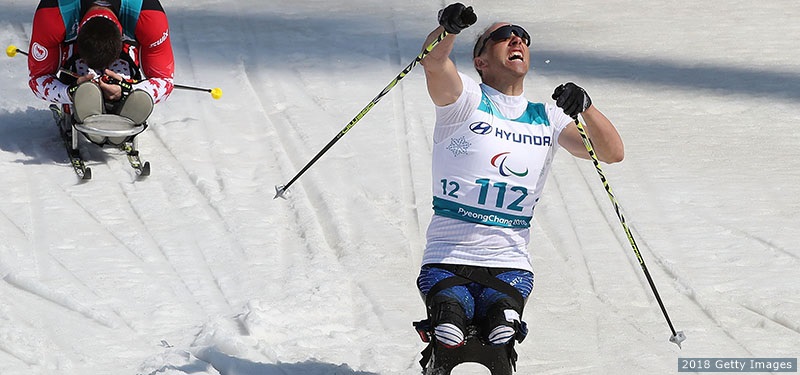
    American Andy Soule celebrates gold in Wednesday’s 1.1 k sitting sprint final at the 2018 Paralympics in PyeongChang, South Korea. (Photo: U.S. Paralympics/Chung Sung-Jun for Getty Images)

    “I chased the whole way,” he said. “I don’t think it necessarily hurt me to chase that much, it actually helped with a little bit of wind break. I think a good, tight tuck coming down the final hill put me in a natural line, and I knew I had a shot at a good sprint out. This is an incredible group to compete with. That kind of a finish … that’s what sprinting is all about.”

    “I definitely lost a little gas in the final stretch,” Cnossen reflected, according to the press release. “My strategy was to tuck in behind the Belarus athlete in the beginning and then sprint over the bridge and try to hang on. Andy had such an awesome race. This is the second day in a row we’ve had two U.S. men on the podium which is just phenomenal.”

    For Soule, the gold was his first in his third Paralympics, and his first Paralympic medal in a cross-country race (rather than biathlon).

    “It means so much. It feels so incredible,” Soule said. “I couldn’t do it without incredible teammates pushing me all the time, and without incredible coaching and technical staff. I think it speaks to a great team effort that has really paid off for us.”

    Cameron came within fractions of a second of achieving his second medal in his first Paralympics.

    “I raced as hard as I could … it is what it is. I just came up a little short,” he said, according to a Cross Country Canada press release. “It is amazing that I got a medal this week in biathlon, I wasn’t expecting it, but that was behind me. I really wanted something here. This was the race I wanted a medal in. It was a close one.”

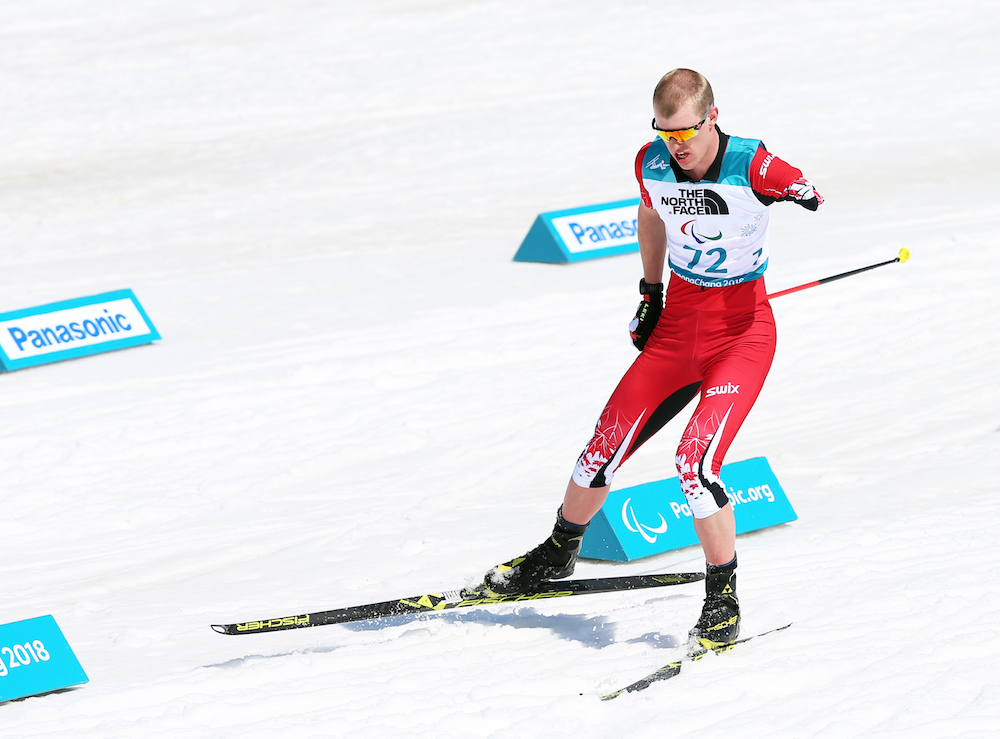
    Also for Canada, Chris Klebl and Derek Zaplotinsky missed advancing to the final after both finished sixth in their respective semifinals.
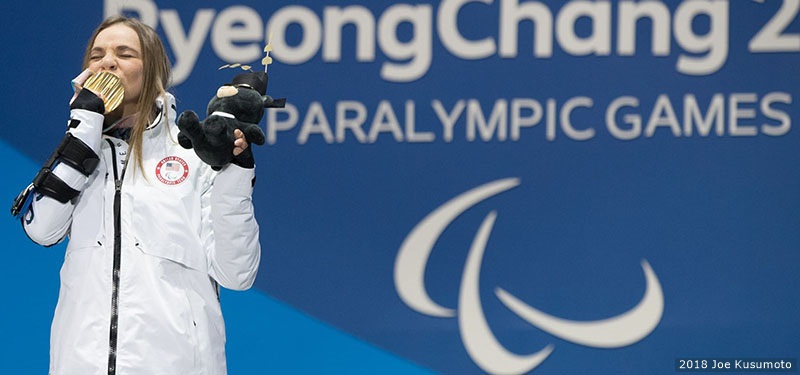
    American Oksana Masters kissing her first Paralympic gold at the medals ceremony on Wednesday night after she won the women’s 1.1 k sitting sprint at the 2018 Paralympics in PyeongChang, South Korea. (Photo: U.S. Paralympics/Joe Kusumoto)

    Masters, 28, won the women’s 1.1 k sitting sprint final by 2.1 seconds over Germany’s Andrea Eskau, crossing the line first in 4:06.7. The gold was Masters’s first in her third Paralympics, after she had previously collected five medals — two silver and three bronze — between the 2012 Summer Paralympics in London (where she placed third in a doubles rowing event), 2014 Winter Paralympic in Sochi, Russia (where she tallied one silver and two bronze in cross-country events), and PyeongChang (silver in the biathlon 6 k sprint).

    Masters has notably been racing with an injured elbow throughout these Games. On Tuesday, she did not finish the 10 k biathlon race.

    “I can’t believe it. I literally was starting to think this day would never happen,” she said of her win on Wednesday, according to the U.S. press release. “I knew that I wasn’t going to let yesterday be my last race. I couldn’t believe it, but at the same time, I knew I had it in me to dig deep a couple more times. I could not have done this without the USOC medical staff.”

    In the sitting semifinals, her teammates Kendall Gretsch, who won the first two races of the 2018 Paralympics, and Aaron Pike, were eliminated after both placed fourth in their respective heats.

    McKeever 2-for-2
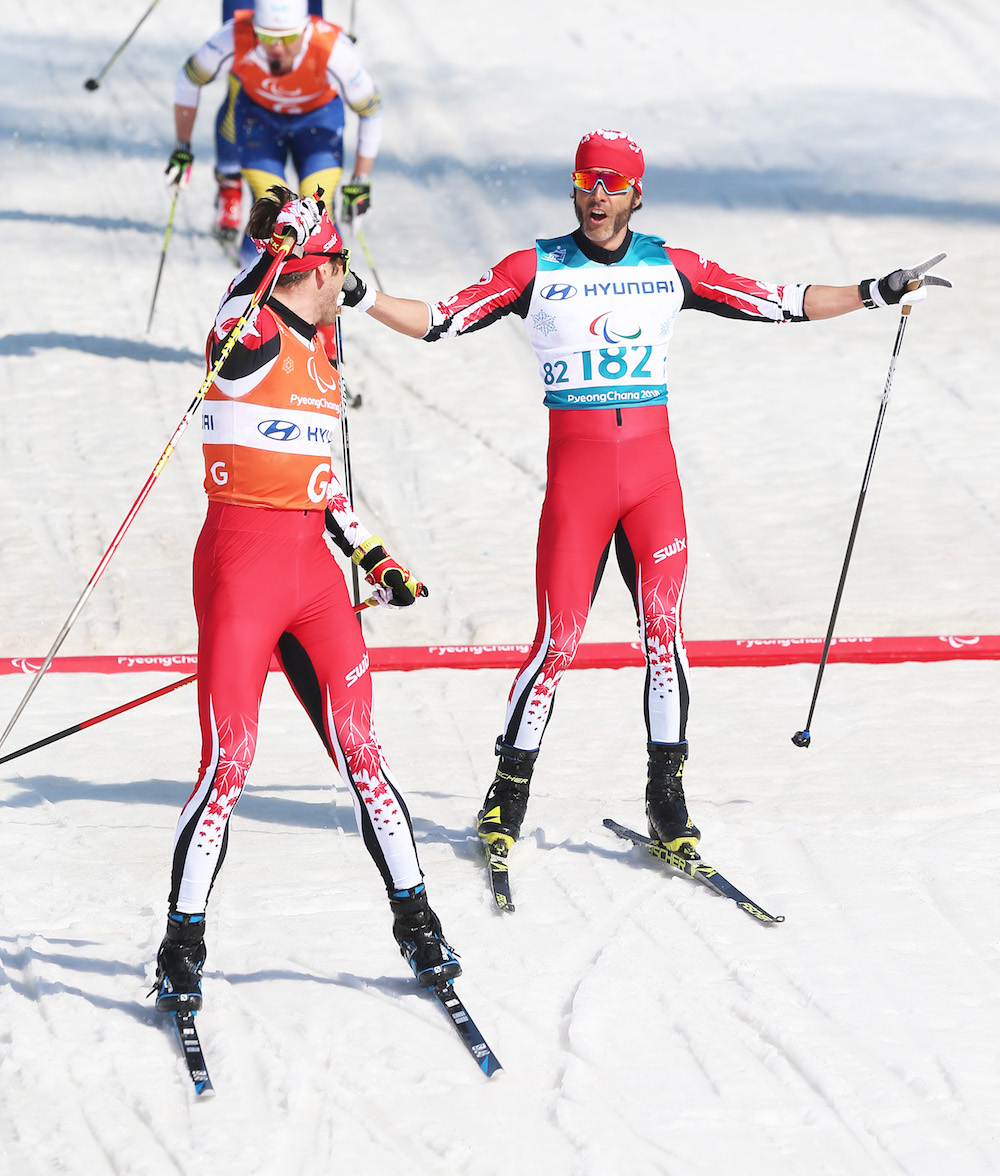
    Canada’s Brian McKeever (r) and his guide Russell Kennedy celebrate gold in the men’s 1.5 k visually impaired classic sprint at the 2018 Paralympics on Wednesday in PyeongChang, South Korea. (Photo: Scott Grant/Canadian Paralympic Committee)

    A five-time Paralympian, McKeever, 38, racked up his 12th Paralympic gold medal (15th total medal) in the men’s 1.5 k visually impaired classic sprint. He finished 2.5 seconds ahead of Sweden’s Zebastien Modin (with guide Robin Bryntesson) in second place, with a time of 4:03.2. Behind them in the final, Norway’s Eirik Bye (with guide Arvid Nelson) finished third (+29.5) and Jake Adicoff (with guide Sawyer Kesselheim) was relegated to last (fourth place) for a technique violation.

    McKeever has won all three Paralympic sprints since they were introduced in 2010. On Wednesday, he double poled the entire race.

    “These sprint races are miserable,” McKeever said, according to a team press release. “They are so hard. The young guys are fast, and have natural snap. There is so much stress in sprint racing, and it goes all day long. I’m much more comfortable with the longer distances, but it was a great day for us. Russell carried the load for us today, and just thrilled we were able to cross the line first.”

    Kennedy, 26, who competed at his first Olympics last month in PyeongChang, said it was tough battling it out in Wednesday’s soft conditions.

    “We played things a bit more strategic in the semis because we knew the final was going to be a tough fight, and it was,” Kennedy reflected. “That first hill hurt a lot. Once I got to the top I was able to settle down and said to myself ‘OK, you got this.’ ”

    While Kennedy guided McKeever to gold in the second half of Monday’s 20 k cross-country race, McKeever’s other guide, Graham Nishikawa (who skied the first half with him), joined McKeever on the podium. Wednesday was Kennedy’s turn at the medals ceremony.

    “This is a new experience for me — especially coming from the Olympics where the focus is all on yourself,” Kennedy said. “Brian is such a strong athlete and guiding him requires a lot more communication. Competing here at the Paralympics is really rewarding because you do this as a team. It is hard at times to know if I’m going too hard or if he needs me to go faster, but it has been a lot of fun for me.”
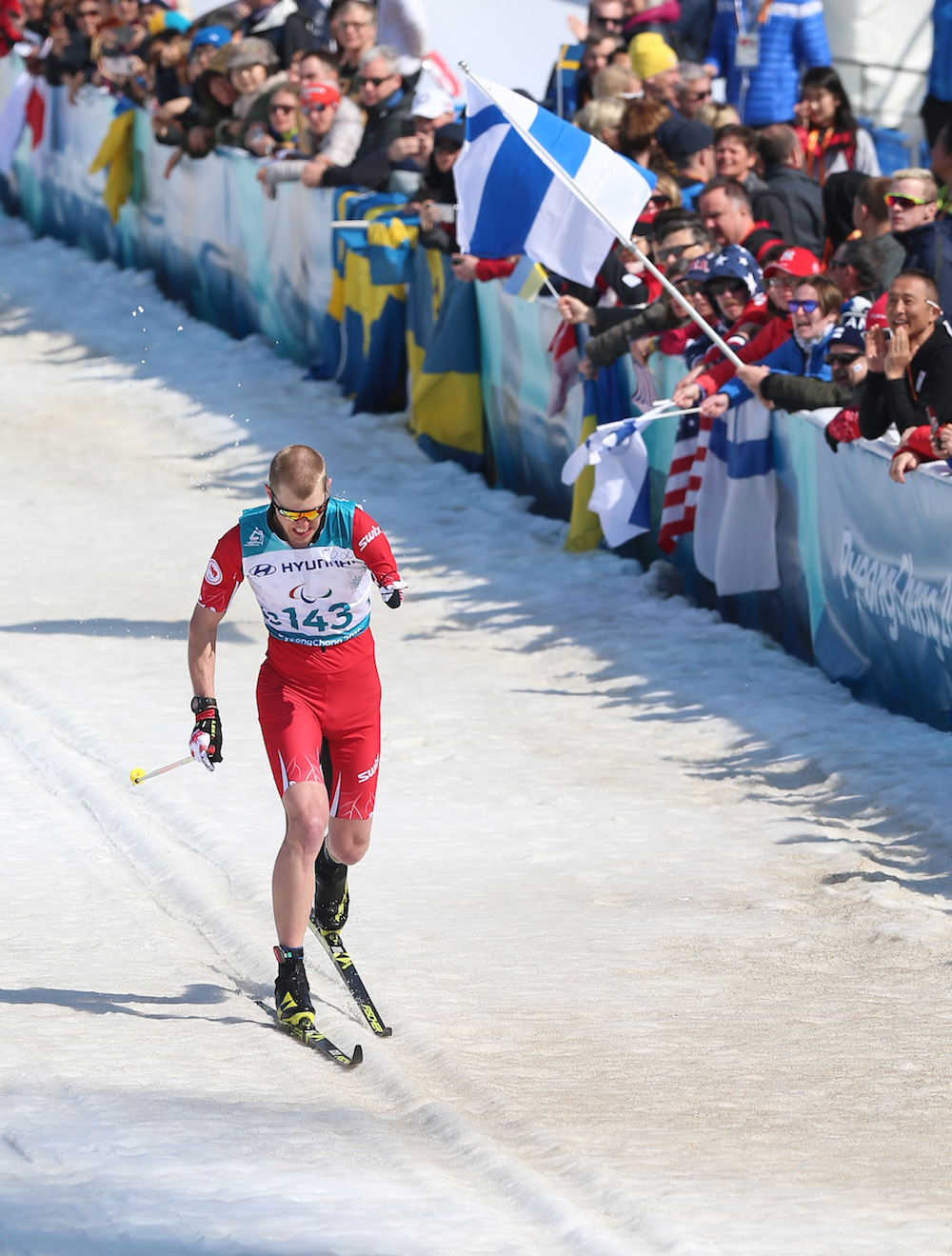
    Canada’s Mark Arendz en route to bronze in the men’s 1.5 k standing classic sprint at the 2018 Paralympics in PyeongChang, South Korea. It was his first cross-country medal (fifth total) in his second Paralympics. (Photo: Scott Grant/Canadian Paralympic Committee)

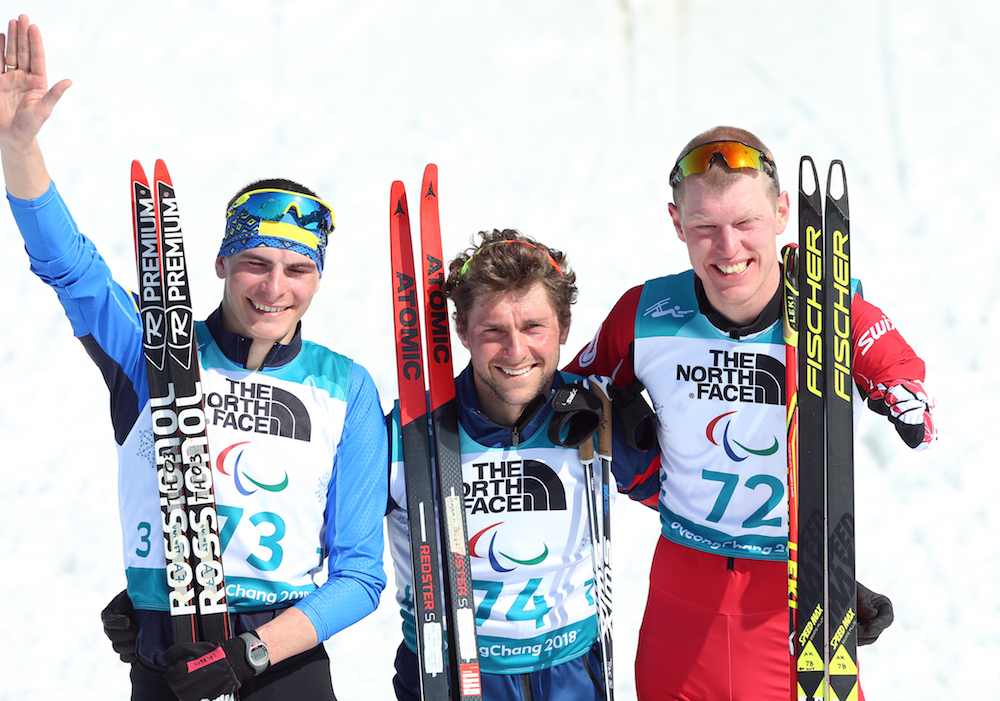
    In the men’s 1.5 k standing sprint final, Arendz tied Finland’s Ilkka Tuomisto for third place, and both were awarded bronze. They finished just 0.3 seconds behind Japan’s Yoshihiro Nitta in second, and 1.1 seconds behind Kazakhstan’s Alexandr Kolyadin, who won in 4:19.7.

    “Sitting there in the finish waiting for the results of the photo finish, I was just hoping for a tie,”  Arendz said, according to the team press release. “It was a really good race but I made a mistake down the finishing stretch switching to try and find a faster track and that may have cost me the whole race.”

    The Paralympic medal was the first in a cross-country race for the 28-year-old Arendz, who has two silver and two bronze in biathlon races between these Paralympics and the 2014 Sochi Games.

    “I came here for medals in biathlon and was hoping to get my first one in cross-country,” he said. “To come away with my first bronze in cross-country skiing means a lot. I couldn’t be happier.”

    In the women’s 1.5 k standing sprint final, Wilkie raced to third for her first medal in her first Paralympics. She finished just a tenth of a second behind Norway’s Vilde Nilsen, who took silver, and 3.2 seconds out of first, which went to Anna Milenina of the Neutral Paralympic Athletes (NPA) in 5:11.1.
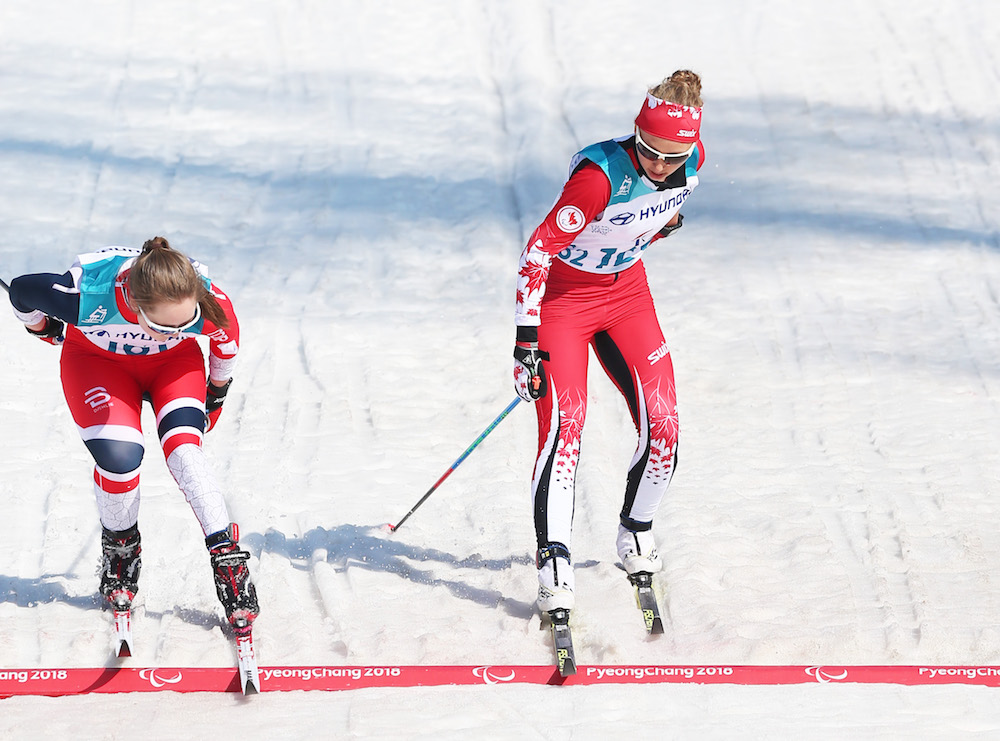
    Canada’s Natalie Wilkie (r) finishing third, just 0.1 seconds behind Norway’s Vilde Nilsen (l) in second, for her first Paralympic medal on Wednesday in the women’s 1.5 k standing classic sprint in PyeongChang, South Korea. (Photo: Scott Grant/Canadian Paralympic Committee)

    “It feels so awesome,” Wilkie said of her bronze medal. “This is my first Paralympics and I am just so happy to have won a medal.”

    Four seconds behind Wilkie, her teammate Emily Young placed fourth (+7.2). Canada made up half of the six-woman final with Brittany Hudak placing sixth (+49.2)

    “We are competing against each other, but we are also helping each other,” Wilkie said. “It was calming for me to have them there with me. We talked about strategy as a team before the final because the goal was for us to win a medal for Canada.”

    Paralympic nordic skiers and biathletes have a day off on Thursday before races resume Friday with men’s and women’s long-distance biathlon races, starting at 10 a.m. Korea time Friday (9 p.m. EDT Thursday).
    Complete results

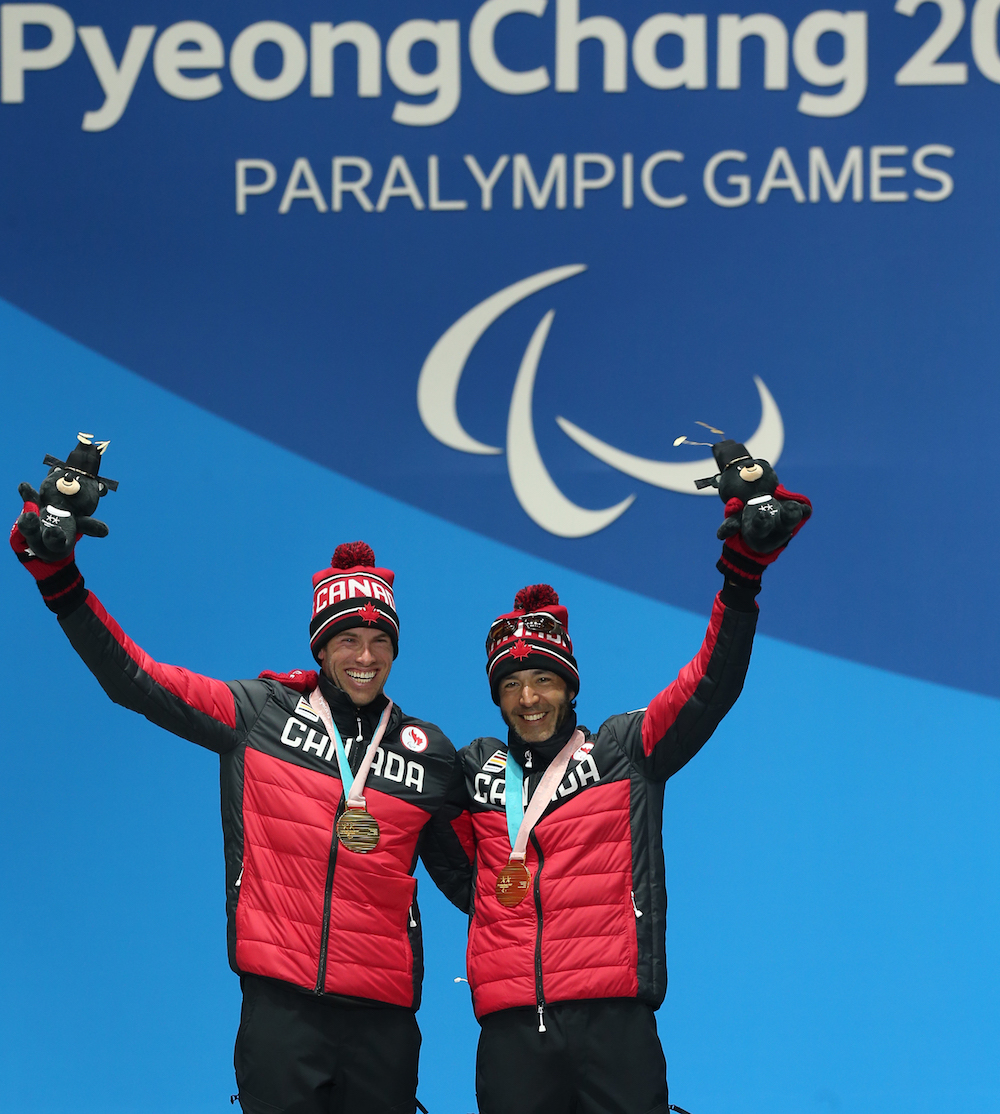
    Canada’s Brian McKeever (r) and Russell Kennedy receiving their gold medals from the men’s visually impaired classic sprint at the 2018 Paralympic Games in PyeongChang, South Korea. (Photo: Scott Grant/Canadian Paralympic Committee)
  • Cnossen Tallies 3rd Medal of PyeongChang Paralympics; Soule and Arendz Take Bronze

    Cnossen Tallies 3rd Medal of PyeongChang Paralympics; Soule and Arendz Take Bronze

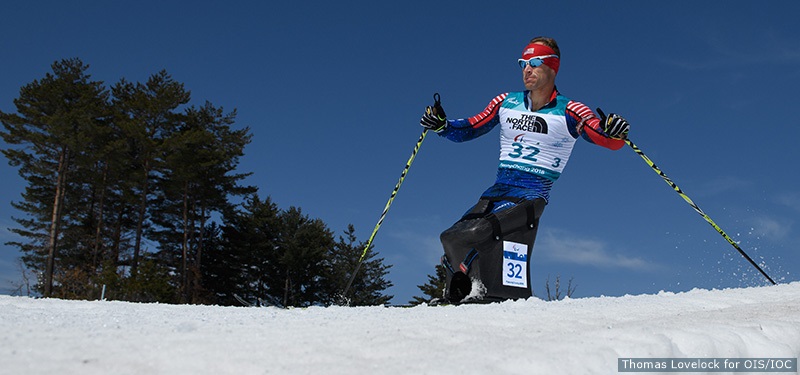
    American Dan Cnossen racing to silver in the men’s 12.5 k biathlon sitting on Tuesday and his third medal in as many races at the 2018 Paralympics in PyeongChang, South Korea. (Photo: U.S. Paralympics/Thomas Lovelock – OIS/IOC)

    2018 Winter Paralympics (PyeongChang, South Korea): 10/12.5 k biathlon races

    Amid soft and slow conditions at the Alpensia Biathlon Centre on Tuesday, American Dan Cnossen raced to his third-straight medal in as many races at the 2018 Paralympics, claiming silver in the men’s 12.5-kilometer sitting biathlon race just ahead of his U.S. Paralympics Nordic teammate and fellow military veteran Andy Soule, who earned bronze.

    Cnossen, a retired Navy SEAL, previously won gold in Saturday’s 7.5 k biathlon sprint and silver in Sunday’s 15 k cross-country race. Despite wind gusts up to 15 miles per hour on Tuesday, Cnossen hit all 20 of his targets and finished second, 1:01.7 minutes behind Ukraine’s Taras Rad, who won in 45:35.6 with clean shooting as well.

    “Personally, this was such an important breakthrough, to shoot 20 for 20, especially on the last shooting stage,” the 37-year-old Cnossen said, according to a U.S. Paralympics press release. “I’ve had some mental blocks in the past where I overthink things or get a little anxious, so I really took my time, especially on the last two shots. I wanted to get my heart rate down and make sure the wind wasn’t blowing. It feels really good to overcome this mental hurdle. I just wanted to see what I could do today, and have my own race, and not worry about what other people are doing.”

    Soule, a 38-year-old Army veteran, missed two on his third shooting stage (0+0+2+0) to finish third, 1:33.1 out of first. It was the second Paralympic medal of his career after Soule he earned bronze in the biathlon pursuit at the 2010 Games in Vancouver, British Columbia.

    “I was really skiing at an aggressive pace,” Soule told U.S. Paralympics on Tuesday. “I was struggling to hold it together at the range those last two shootings. When I missed those two, I also knew that I had seen other people missing. I knew a miss or two wasn’t going to necessarily put me out of it. I knew I just needed to get back up, set the same aggressive pace, and maybe back it off just a little earlier on the next lap to make sure I get the shots. It came together just fine.”

    It was another special moment for the U.S. Paralympics program with two of its leading men on the podium.

    “I’m really happy for our whole team, to see how much success we’re having,” Soule said. “I think it’s a testament to great coaching, great support, great staff. Lots of great work being done behind the scenes by so many people that you don’t even see who are out here long before we even arrive at the venue. It’s a great group of athletes. I’m so happy to be a teammate with these guys.”

    “This race feels especially good because I have my teammate, Andy, on the podium,” Cnossen said. “I knew he was going to have a good race. I’m really proud and happy to see him on the podium.”

    Also for the U.S., Aaron Pike placed seventh in that race (+5:38.1) with a single miss (0+0+0+1), Sean Halsted finished 14th (+10:35.7) with five penalties, and Bryan Price was 16th (+17:02.3) with 10 misses.

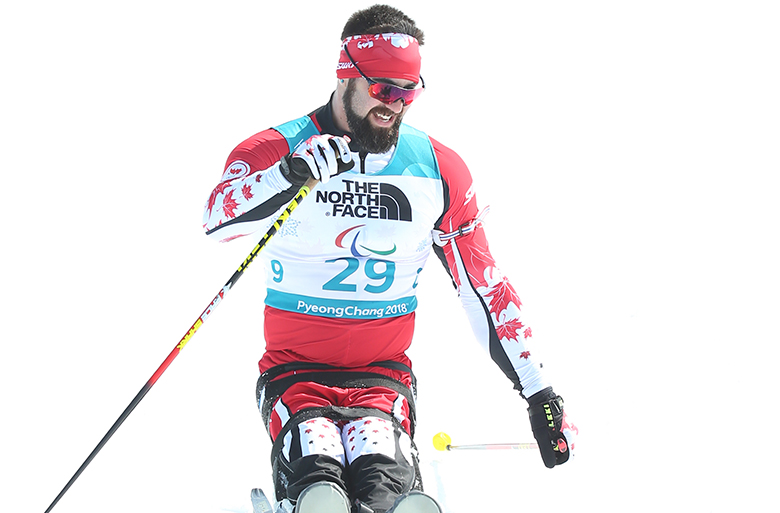
    Canada’s lone man in the 12.5 k sitting biathlon race, Derek Zaplotinsky finished 12th (+9:15.3) with five penalties.

    American Kendall Gretsch racing to fourth in the women’s 10 k sitting biathlon race on Tuesday at the 2018 Paralympics in PyeongChang, South Korea. (Photo: U.S. Paralympics/ Maddie Meyer – Getty Images)

    Coming off two medals in the women’s sitting biathlon and cross-country events last weekend, Kendall Gretsch placed fourth in the 10 k sitting biathlon race on Tuesday, 16.5 seconds out of third. According to a U.S. Paralympics press release, she fell three times and incurred three penalties (1+0+0+2), finishing 2:05.4 behind the winner, Germany’s Andrea Eskau.

    A four-time gold medalist in Paralympic cycling with two silver medals in cross-country skiing (from two Winter Paralympics), Eskau, 46, claimed her first gold of the PyeongChang Games in 42:36.6 with one miss (0+0+1+0). Marta Zainullina and Irina Guliaeva, of the Neutral Paralympic Athletes (NPA), took silver (+1:15.5) and bronze (+1:48.9), respectively, with Zainullina skiing just one penalty lap and Guliaeva having to ski three.

    Oksana Masters did not finish, pulling out after 8.64 k with six penalties (1+2+1+2).

    Second Medal for Arendz

    Canada’s Mark Arendz racing to bronze in the men’s 12.5 k standing biathlon race on Tuesday at the 2018 Paralympic Games in PyeongChang, South Korea. (Photo: Scott Grant/Canadian Paralympic Committee)

    Mark Arendz led Canada with his second medal in the second biathlon race, the men’s 12.5 k standing, racing to bronze, 30.9 seconds out of first. Arendz cleaned three stages before missing one on his last shooting (0+0+0+1), causing him to ski an additional 150 meters in the penalty lap.

    France’s Benjamin Daviet won that race in 38:55.5 with one late penalty as well (0+0+0+1), and Ukraine’s Ihor Reptyukh collected silver (+6.7) with one miss as well (0+0+1+0).

    “I knew there were some tired guys, so I went for it from the start and tried to put some pressure on,” Arendz, 28, said in a Cross Country Canada press release. “I decided in that last bout to go for it all, throw it down, and go for the win. Unfortunately, I had the one miss and it made it a tight and interesting race.”

    The men’s 12.5 k standing biathlon podium at the 2018 Paralympics in PyeongChang, South Korea, with France’s Benjamin Daviet (c) in first, Ukraine’s Ihor Reptyukh (l) in second, and Canada’s Mark Arendz (r) in third. (Photo: Scott Grant/Canadian Paralympic Committee)

    Arendz, who took silver in the opening biathlon sprint and also has two biathlon silver medals from the 2014 Paralympics, is seeking his first Paralympic gold.

    “It was a really tough battle all day. I handed it to them early and had a choice: to go for gold or settle for the podium. I went for the win and had that one miss that cost me today,” he said. “I ran out of energy at the end. I am really happy with my race and it is another medal for Canada. I know everything is going well. I just need that last little tweak to finally win one.”

    American Ruslan Reiter finished 11th in that race (+8:41.4) with three penalties (0+2+1+1).

    Brittany Hudak led the Canadian women in fifth in the 10 k standing biathlon race, 5:45.8 behind Ekaterina Rumyantseva (NPA) in first. Hudak cleaned the first three stages before missing one in the last bout (0+0+0+1).

    “The first lap I felt good,” Hudak recalled in the team press release. “The skis were running well in these conditions, but then it just got slower as we went on. The flat sections you really try put power to glide the ski but your weight is sinking you into the snow. It got harder to get some glide and as my legs got more tired I didn’t feel like I was moving fast.

    “I tried to keep calm in the range and take my time,” she added. “The wind today was gusting, so I took a bit longer on my setup than I usually would and tried to be consistent. For the most part it worked well until that last lap, and that last bout. Overall it was an OK race.”

    Paralympic racing continues Wednesday with men’s and women’s cross-country sprints, starting at 10 a.m. Korea time (7 p.m. EDT Tuesday).

    Complete results

  • Gretsch Scores Second Gold, Cnossen Silver, Masters Bronze in PyeongChang

    Gretsch Scores Second Gold, Cnossen Silver, Masters Bronze in PyeongChang

    Kendall Gretsch racing to her second gold medal of the 2018 Winter Paralympics on Sunday in the women’s 12 k sitting cross-country race in PyeongChang, South Korea. (Photo: US Paralympics/Joe Kusumoto)

    2018 Winter Paralympics (PyeongChang, South Korea): 12/15 k sitting cross-country races

    It was a gold, silver and bronze day for the U.S. Paralympics Nordic team on Sunday at the 2018 Paralympics in PyeongChang, as Kendall Gretsch raced to her second-straight victory in as many races, Dan Cnossen took silver and Oksana Masters claimed bronze in the cross-country distance events.

    A day after achieving a historic bronze for Canada in a biathlon sit-ski event, Collin Cameron led his country in fifth in Sunday’s 15-kilometer sitting cross-country race.

    Gretsch, a Paralympic rookie who won the sitting biathlon sprint to open the Paralympics, also won the women’s 12 k sitting cross-country race on Sunday in 38:15.9 minutes, 34.5 seconds clear of Germany’s Andrea Eskau in second, while Masters followed 49 seconds back in third.

    “For cross-country, I was pretty unsure going in here,” said the 25-year-old Gretsch, according to a U.S. Paralympics Nordic Skiing press release. “I knew that since our last World Cup I had improved a lot, but you never know until you race. Just happy with how things went today and I was able to put together another good race.”

    “It’s a very humbling experience being able to hear your anthem,” she said of her second gold medal. “Puts everything into perspective. Knowing that you’re here not just here for yourself but for your country, it’s amazing.”

    For Masters, who is recovering from an elbow injury, it was her second medal after taking silver in Saturday’s biathlon sprint.

    “I’m just so happy to be on the podium,” Masters told U.S. Paralympics. “I was a little worried on the long distance considering I haven’t done intensity in three weeks. It definitely is a very painful, rude awakening to how painful the sport is. I’m happy to be on the podium.”

    She described the pain in her elbow as “extremely excruciating. It feels like there’s just a saw going at your bone 24/7, especially hammering up the climbs,” Masters said. “I had a spill over there through the stadium, but mind over matter.”

    Ukraine’s Maksym Yarovyi won the men’s 15 k sitting in 41:37.0, and Cnossen, who had taken gold in the men’s sitting biathlon sprint, placed second, 43.1 seconds back. Sin Eui-hyun claimed South Korea’s first medal of the Games in third (+51.9) ahead of China’s Zheng Peng in fourth (+1:18.5) and Canada’s Cameron in fifth (+2:09.0).

    “I’ve already exceeded my expectations,” Cnossen, 37, said of his second Paralympic medal in as many days. “I’m very proud to represent the U.S. Today, I dug as deep as I could and went as hard as I could, and regardless of where I ended up on the result, it is my success to go as hard as I could.”

    Canada’s Colin Cameron racing to bronze in the mens 7.5 k sitting biathlon sprint on Saturday at the 2018 Paralympic Games in PyeongChang, South Korea. (Photo: Scott Grant/Canadian Paralympic Committee)

    “It was really soft out there, but the skis were still fast,” Cameron, 29, said, according to a Canadian team press release. “The skis have been awesome both days – the guys are working their butts off back in the wax room.”

    Cameron explained his goal for Sunday’s race was to “start steady and be comfortable, to get rid of the bugs from yesterday’s race because I was pretty tight.

    “I was able to loosen up as I went along, which allowed me to dig a little deeper today,” he continued. “It’s tough to go from biathlon to this event. It is a totally different mindset for pacing, a totally different game. I wasn’t event thinking about [yesterday’s medal] I just wanted to build off it and take that momentum with me the rest of the week. Today was a different day and I’m happy with how I was able to perform.”

    Also for Canada, Chris Klebl, who won gold in the 10 k sitting event at the 2014 Paralympics, finished eighth (+2:25.6), Derek Zaplotinsky followed in ninth (+2:42.6), Sebastien Fortier finished 18th (+5:01.0), Ethan Hess 24th (+10:37.1), and Yves Bourque 25th (+11:35.7)

    In the women’s sitting race, Canada’s Cindy Ouellet, a 29-year-old Paralympic wheelchair basketball player, placed 18th (+11:37.3).

    “This is my first race over five kilometres and it was tough,” Ouellet said, according to the press release. “Basketball is all stop and go, but endurance is much different. I just need more races.”

    For the U.S., Andy Soule placed 11th (+2:59.1) and Sean Halsted finished 22nd (+7:18.0).

    Paralympic racing continues Monday with the men’s and women’s standing and visually impaired cross-country long-distance events, starting at 10 a.m. Korea time on Monday (7 p.m. EDT on Sunday).

    Complete results

  • South Korean Para Team Takes Spring Training to Casper

    South Korean Para Team Takes Spring Training to Casper

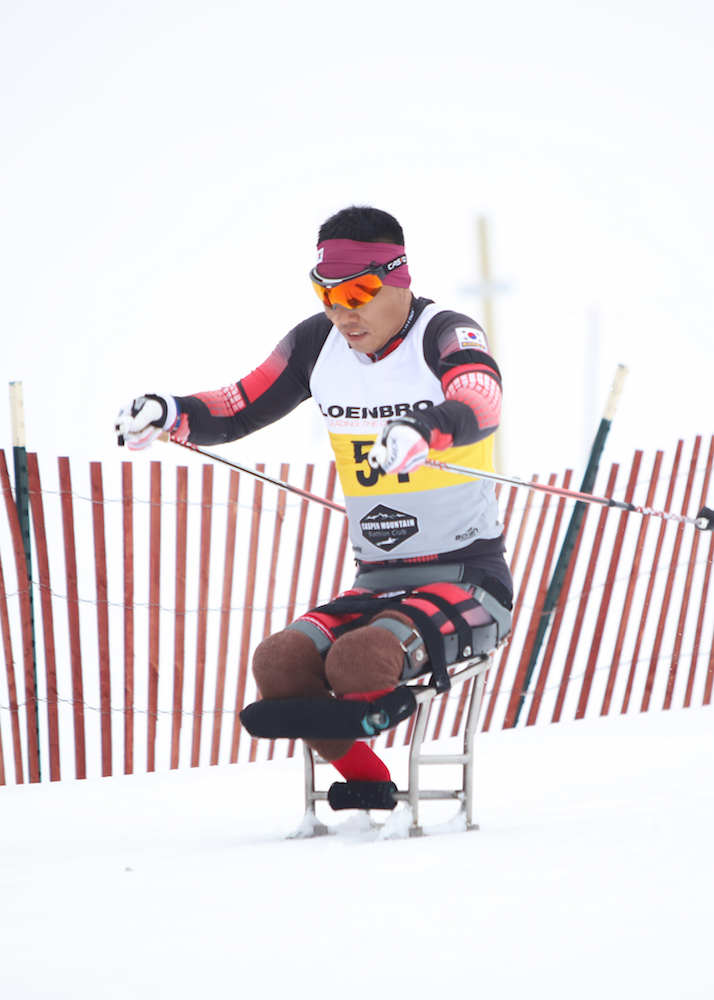
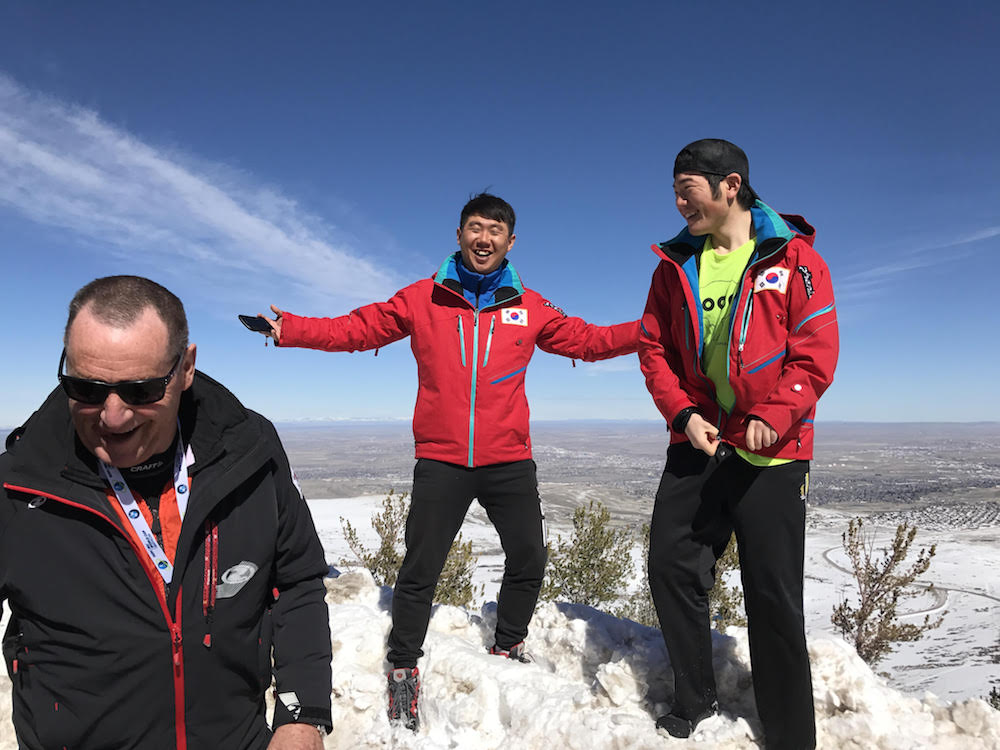
    South Korea’s Eui Hyun Sin swept both biathlon races at U.S. Paralympics nationals earlier this month and placed third in the cross-country sprint and short-distance races in Casper, Wyo. The South Korean Para-Nordic team is training in Casper until May 9. (Photo: Pearson Photography)

    Winter closed with a bang at Casper Mountain Biathlon Club (CMBC) in Casper, Wyo., as the nordic center hosted World Para Nordic Skiing NorAm & U.S. Paralympics Nordic Skiing Biathlon Nationals with four races in three days earlier this month.

    “Although the event was small, the competition was quality,” CMBC Managing Director Cathy Rosser wrote in an email.

    On March 31, the day before the first event, athletes trained as a foot of snow fell on an already deep base. Biathlon races took place April 1 and 2, with middle-distance biathlon races on Saturday, 12.5 kilometers for men and 10 k for women, and four shooting stages for each. Men raced on a 2.5 k loop; the women skied a 2 k loop on trails designed by John Morton. The weather warmed to 36 degrees, making for a firm track.

    On Sunday morning, biathletes raced a sprint, 7.5 k for men and 6 k for women, on the courses noted above. That afternoon, 1.2 k cross-country sprint qualifiers and finals were held. Fog descended during the sprint A-final, giving athletes just about 100 meters of visibility.

    On Monday, the three-day series wrapped up with short-distance classic races.

    Oksana Masters of the U.S. and South Korea’s Eui Hyun Sin dominated the biathlon events. On both days, American Andy Soule finished second by narrow margins, according to a CMBC press release. Canada’s Derek Zaplotinsky won the men’s sprint qualifier and final, and on the final day, Soule won the short-distance sitting cross-country race, as did Masters in the women’s sitting division.

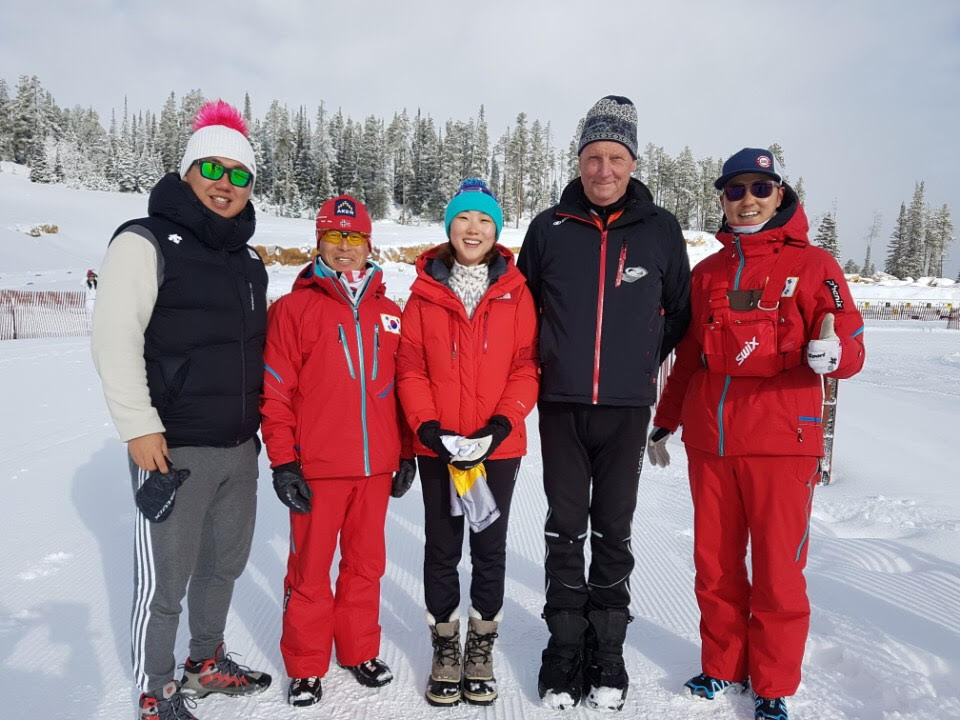
    The South Korean Para-Nordic coaching staff at the Casper Mountain Biathlon Club earlier this month in Casper, Wyo, including (from left to right) trainer Ki Won Yoo, cross-country coach Jong In Choi, team manager Joo Yeon Han, and head coach Kaspar Wirz. (Courtesy photo)

    The South Korean team planned to continue training in Casper through May 9. According to coach Kaspar Wirz, the team’s primary goals are to “work on technique and [accumulate] snow kilometers,” he explained on the phone. “This is more than just doing the races.”

    Canada’s head para-nordic coach from 1996 to 2010, Wirz took the opportunity to coach the Korean Para-Nordic team in the months leading up to the 2018 Olympics in PyeongChang, South Korea. When he started coaching the Korean team in January, he checked out CMBC. His athletes had never trained at high altitude, Wirz explained, and he chose Casper because of its elevation (above 5,000 feet) and reputation for promising spring conditions.

    “We could have gone to Finland to put some kilometers in but decided to come here and I’m very happy.”

    Coming off the IPC World Cup Finals in Sapporo, Japan, the team returned home for a few days before traveling to Wyoming.

    South Korean Paralympic skiers Ki Won Yoo and Sang Hyun Kwon having some fun after a morning training session in Casper, Wyo., with coach Kaspar Wirz (left). (Courtesy photo)

    “The conditions are excellent,” Wirz said. “The adjustment to the altitude and jet lag are not a big deal. I’m happy I made the move to come here.”

    The training camp caps a successful season for the Korean team, which competed at all five stops on the IPC World Cup circuit. “We went to all the World Cups, we had people on the podium, but if the Russians come back, the deck would be re-shuffled a little bit,” he said, referring to the indefinite suspension of Russian Paralympic athletes from IPC-sanctioned competitions.

    Six weeks makes for a long training camp, but Wirz said his athletes were up for it. The team’s original plan had been to train in Wyoming for two weeks, go home for a break and fly back to Bend, Ore. But that would have meant two additional 13-hour travel days and recovery from jet lag.

    Asked about funding for the overseas camp, Wirz said that in January he met with the secretary general of the Korean National Ski Federation for the Disabled, who was incredibly supportive.

    “So far I don’t have a budget. I just have to request to go somewhere, and they say yes or no,” Wirz explained. “So far, we haven’t had any budget restrictions. There were no questions asked because they want to perform at their home Olympics.”

    Results:

    Day 1: Middle-distance biathlon

    Day 2: Biathlon sprint | XC sprint qualifier | XC sprint final

    Day 3: Short-distance XC

  • Another Gold for Masters; Historic Relay Medal for Canada; McKeever Wins 20 k at IPC World Champs

    Another Gold for Masters; Historic Relay Medal for Canada; McKeever Wins 20 k at IPC World Champs

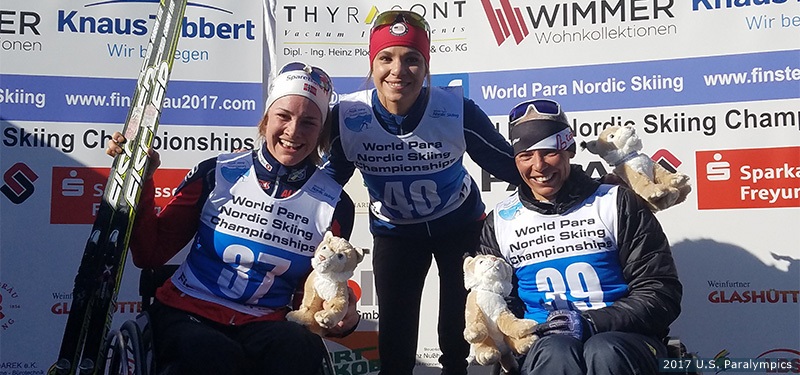
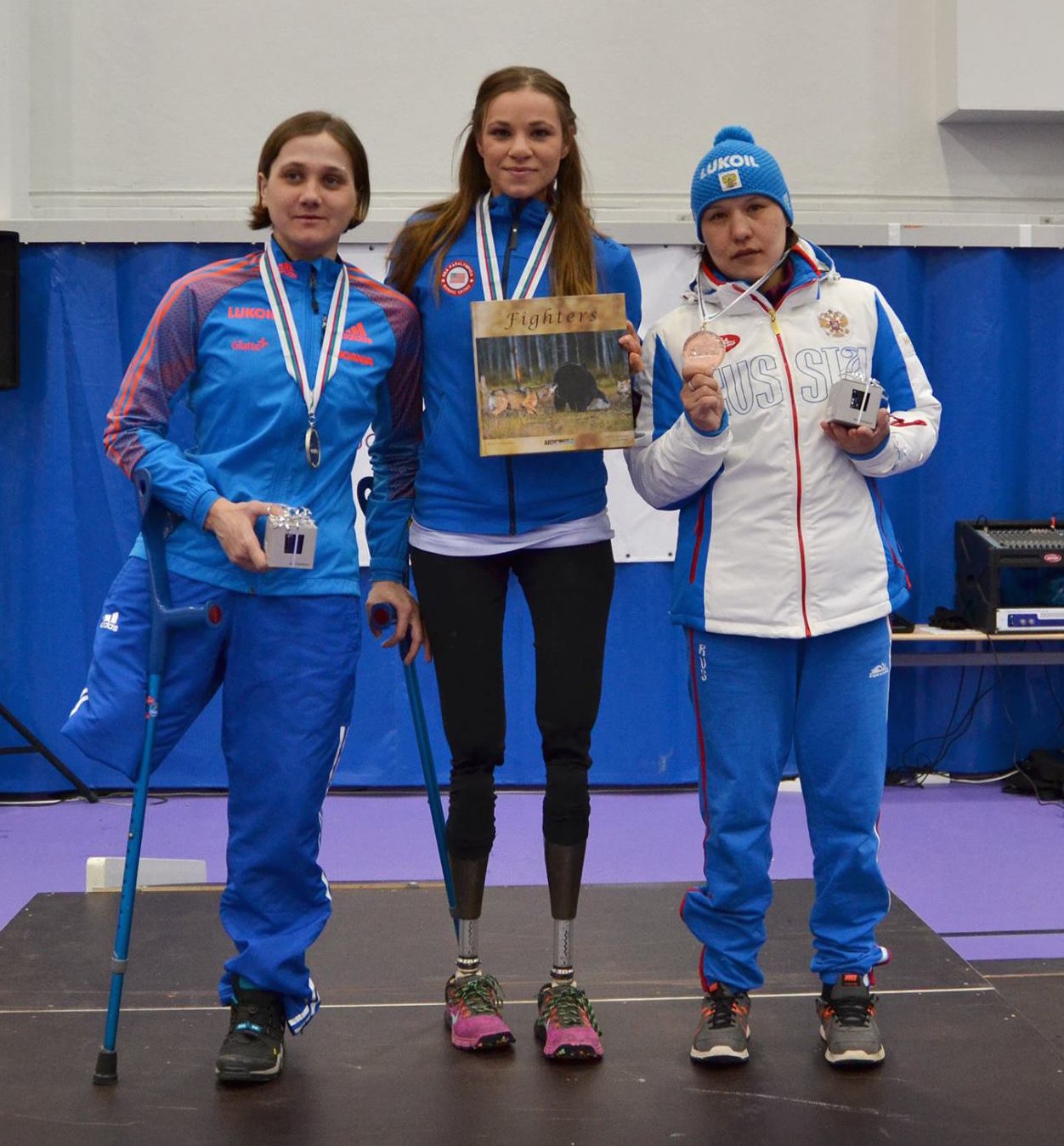
    American Oksana Masters (c) after winning her second-straight cross-country race of 2017 IPC World Championships on Thursday in Finsterau, Germany. She is joined on the podium by Norway’s Birgit Skarstein (l) in second and Germany’s Andrea Eskau in third. (Photo: U.S. Paralympics)

    After a rest day, Paralympic athletes returned to the nordic venue in Finsterau, Germany, for Days 3, 4, and 5 of the 2017 International Paralympic Committee (IPC) World Nordic Skiing Championships. Long-distance biathlon races took place Tuesday, cross-country relays on Wednesday and individual cross-country races on Thursday.

    ***

    At the finish of Tuesday’s 15-kilometer individual biathlon race, Canada’s Mark Arendz could only think about one thing: his miss. But later, with his second 2017 World Championships medal, this one silver, around his neck after finishing in  39:21.9 minutes, the miss in his final stage (0+0+0+1) was no longer on his mind.

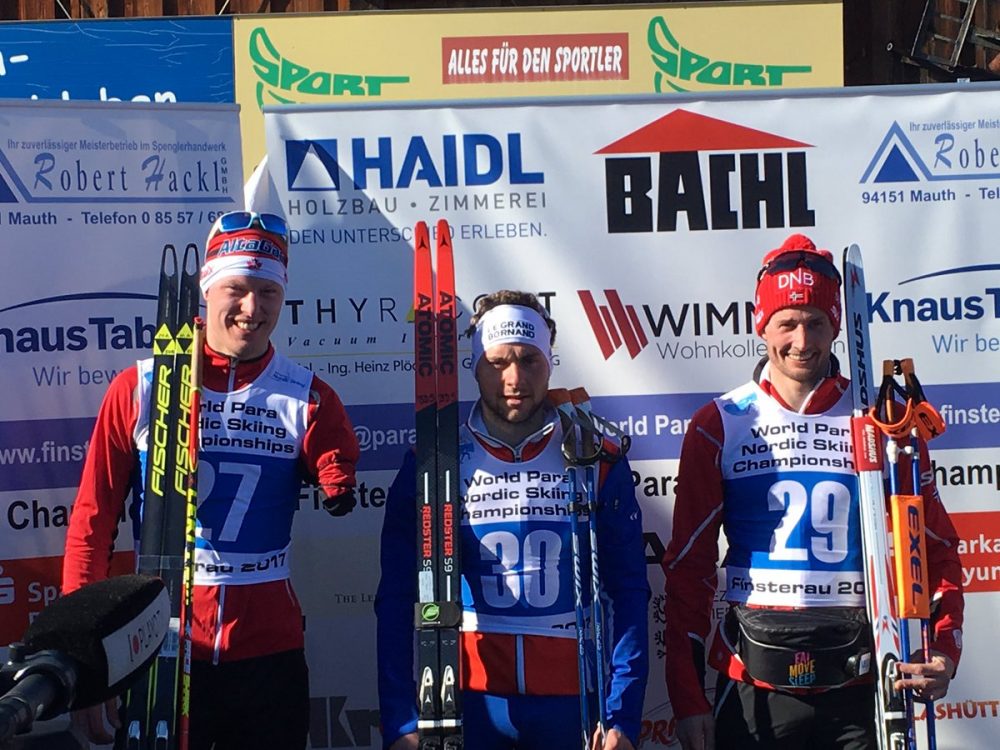
    Left to right: Canada’s Mark Arendz, France’s Benjamin Daviet and Norway’s Nils-Erik Ulset on the podium for the men’s 15 k biathlon standing event held on Tuesday, Feb. 14 at the 2017 IPC World Nordic Skiing Championships in Finsterau, Germany. (Photo: Robin McKeever/Twitter)

    “After crossing the finish line, all I could initially think about was the single miss (in shooting), and the fact I let the gold slip through my fingers,” Arendz said, according to a Canadian Para-Nordic Skiing press release. “But I quickly warmed up to the fact that I had won a World Championship silver medal.”

    Finishing ahead of Arendz for first place was France’s Benjamin Daviet who also shot 19-for-20 and covered the course in time of 38:33.7.

    “I am very happy and honoured. This is great and what I came here for,” Daviet said according to an IPC press release. “I will not celebrate because there are many races ahead. I hope to win more medals in Finsterau.”

    Norwegian Nils Erik Ulset claimed the final podium spot, finishing third in a time of 40:26.7 after two penalties (1+0+1+0).

    In the women’s 12.5 k standing biathlon event, Ukraine’s Liudmyla Liashenko came away with the win. She missed just one shot (1+0+0+0) and finished in a time of 39:10.0.

    “I am really happy. I want to dedicate this triumph to all my family, friends and all who have supported me all along this journey,” Liashenko said according to an IPC press release.

    In her first podium appearance, Japan’s Momoko Dekijima claimed second in 42:49.3 after two misses (1+1+0+0). Third place went to Ukraine’s Iryna Bui, who finished in 43:53.1 with three penalties (0+2+0+1).

    Canada’s Brittany Hudak raced to fifth with a single miss (0+1+0+0), finishing in 44:14.9.

    Racking up another gold medal on his home turf, Germany’s Martin Fleig took the win in the men’s 15 k sitting biathlon race in 44:39.4 with one miss (0+0+1+0).

    “I did not expect this,” Fleig said according to an IPC press release. “I had a good feeling in the morning but could not imagine the race would be so perfect. It is unbelievable that now I am a two-time world champion. It is awesome.”

    Earning silver behind Fleig was Taras Rad of Ukraine, who had four penalties (2+1+0+1) and finished in 48:01.3. Trygve Steinar Larsen of Norway earned bronze, finishing in 49:07.9 with three penalties (2+0+0+1).

    Just missing the podium with a career-best fourth was American Aaron Pike, who finished in 51:10.2 with five penalties (1+0+1+3). Canada’s Derek Zaplotinsky placed just behind Pike in fifth for his personal best, finishing in 53:28.1 with four misses as well (0+1+2+1).

    Behind them, American Andy Soule finished in seventh in 54:26.7 with nine penalties (2+2+2+3).

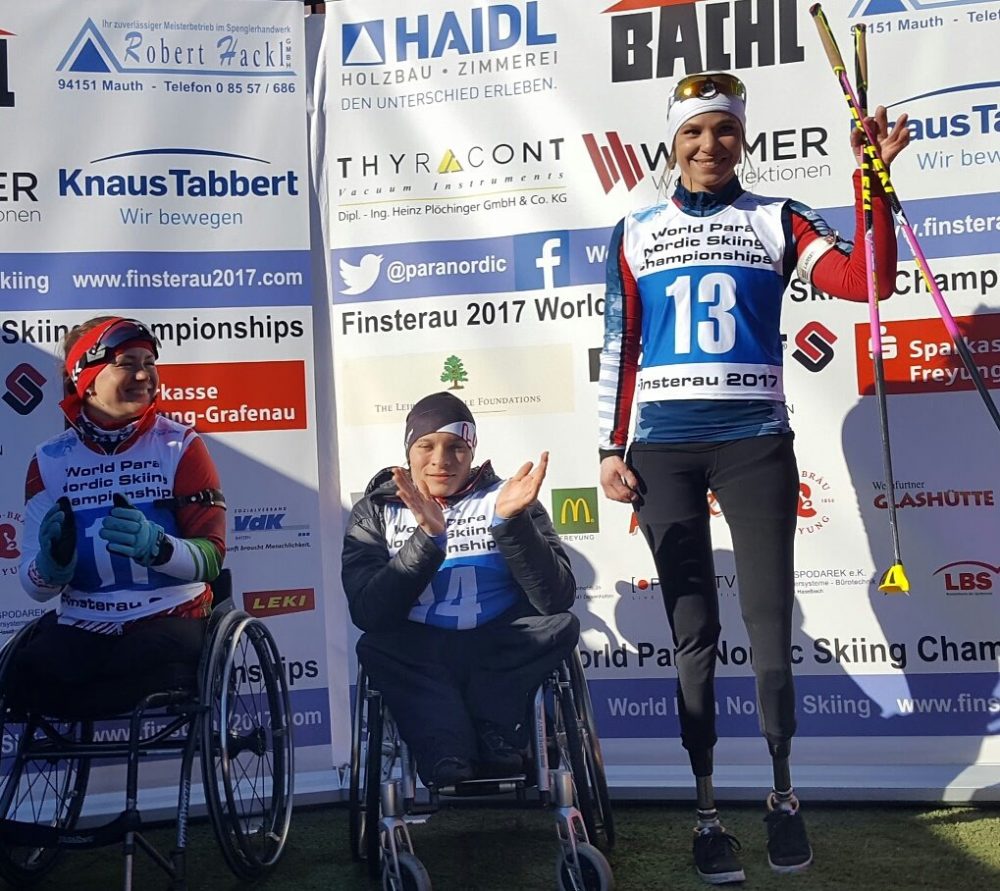
    Right to left: American Oksana Masters, Germany’s Anja Wicker and Ukraine’s Lidziya Hrafeyeva on top of the podium for the women’s 12.5 k sitting biathlon event on Tuesday at the 2017 IPC World Nordic Skiing Championships in Finsterau, Germany. (Photo: Oksana Masters/Twitter)

    Germany earned another victory at home in the women’s 12.5 k sitting biathlon event, with Anja Wicker returning to the podium, this time in first place.

    “I am super happy, my biggest dream came true. I was hoping this would happen, it was a perfect day for me,” Wicker said according to an IPC press release.  “Whilst I was still competing, I heard that Martin [Fleig] had already won gold and that motivated me to do the same.”

    Wicker finished in 43:07.3 with one miss (0+0+1+0). Behind her in second place was Belarus’s Lidziya Hrafeyeva, who finished in 46:05.2 after three penalties (0+2+1+0).

    American Oksana Masters also returned to the podium for her first biathlon medal of the week, finishing in 46:43.7 with four misses (2+2+0+0).

    Earning the gold medal in the men’s 15 k visually impaired biathlon race was Vasili Shaptsiaboi of Belarus, who finished in 40:47.3 with just one miss (0+0+0+1). Ukraine took the final two podium spots, with Anatolii Kovalevskyi earning silver in 41:55.2 and one miss (0+1+0+0) and his teammate Vitaliy Lukyanenko finishing just behind him for bronze in 42:21.2, also with one penalty (1+0+0+0).

    Ukraine’s Oksana Shyshkova finally found her gold on Tuesday, winning the women’s visually impaired 12.5 k biathlon event after shooting clean and finishing in a time of 38:26.6.

    “After winning two silvers in Finsterau, I am happy to finally take gold,” Shyshkova said according to an IPC press release. “Now I have to focus on the next events, do my job, give my best and the results will come as a consequence.”

    Silver went to Germany’s Clara Klug in a time of 43:58.2 with two missed shots (0+0+0+2), while Ukraine’s Olga Prylutska earned bronze in a time of 45:16.0 after six misses (1+4+0+1).

    Day 3 results: Men’s 15 k standing | Women’s 12.5 k standing | Men’s 15 k sitting | Women’s 12.5 k sitting |  Men’s 15 k visually impaired | Women’s 12.5 k visually impaired

    Day 4

    Wednesday, the fourth day of racing at the 2017 IPC World Nordic Skiing Championships was marked by mixed and open relays. The U.S. did not field a team, as no standing American athletes are present at this competition series. Canada entered a team in the open relay event.

    ***

    Canada made history on Wednesday earning its first World Championships relay medal with Brian McKeever, Emily Young and Arendz.

    McKeever, a visually impaired racer, started first. He tagged off to Young, a standing skier, and Arendz, also in the standing category, and back to McKeever. The quartet finished third in  24:53.4 just 57.5 seconds away from the win.

    “It is pretty awesome to have such a great result today with the boys, and finally snag my first World Championship medal,” Young said, according to a team press release.

    Young was one of the only women racing amidst the top teams.

    “Being one of the only girls out there, it was tough to ski against the men’s field but I gave my best effort, and that was all I could do,” Young said, according to a CCC press release. “I just had to remember to ski my race, and know that I would likely fall behind a bit. I skied the fastest so far on this course. It was a very exciting race and I am very proud of the team.”

    The win went to France in a time of 23:55.9, with standing skier Daviet leading the team, followed by visually impaired skier Anthony Chalencon, Daviet again and then standing skier, Thomas Clarion.

    Norway took second place, 23.8 seconds behind France, with standing skier Ulset racing the first leg for the team, standing skier Hakon Olsrud taking the second leg, Ulset the third and visually impaired skier Eirik Bye anchoring the team.

    In the mixed 4 x 2.5 k relay, it was Ukraine’s team comprised of visually impaired skier Iurii Utkin, who skied the first leg, followed by the three standing skiers Liashenko, Iuliia Batenkova, and Oleksandra Kononova. The Ukrainian team finished in a time of 26:56.5 for the win.

    “This is a really good result, we made a huge effort to achieve this,” Ukrainian head coach Andriy Nesterenko said according to an IPC press release.

    Sweden earned silver, with standing skier Helene Ripa and visually impaired skier Zebastian Modin racing for the team. The duo completed the event in a time of 27:17.5, just 21 seconds back from first place.

    The final mixed relay podium spot went to Belarus, with sit skier Dzmitry Loban leading the first leg, followed by visually impaired racer Sviatlana Sakhanenka. Sit skier Valiantsina Shyts raced the third leg, and visually impaired skier Mikita Ladesau anchored the team to finish in a time of 28:12.3.

    Day 4 results: Mixed relay | Open relay

    ***

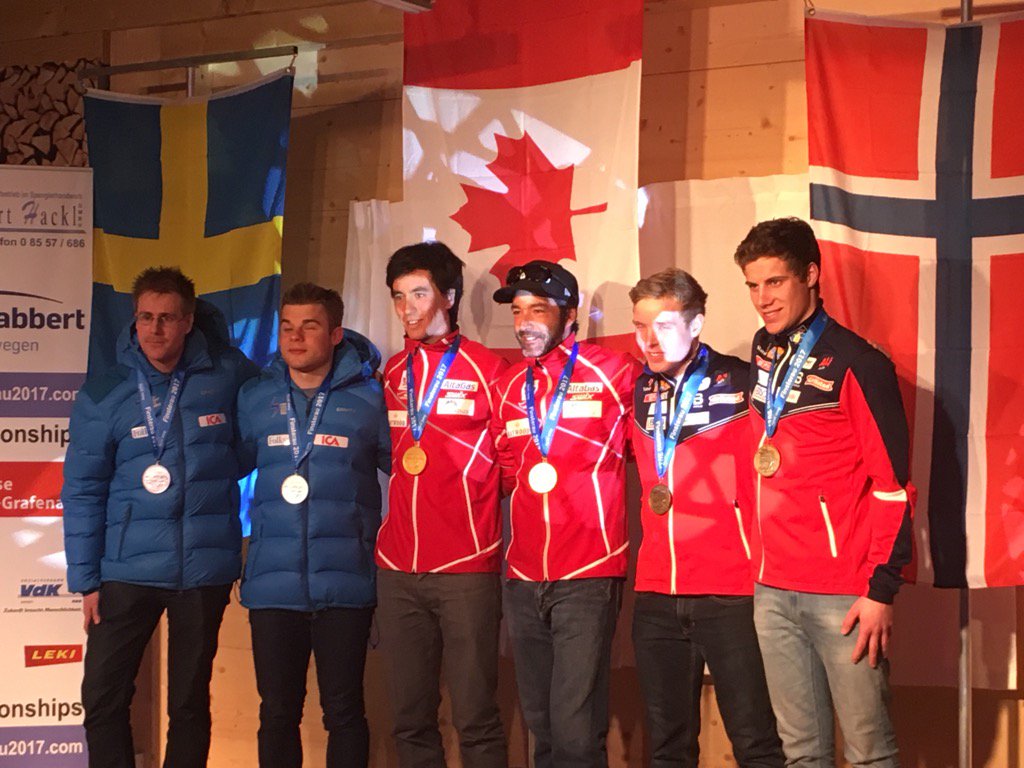
    Canada’s Brian McKeever (third from r) with his guide Graham Nishikawa (third from left) after winning his second medal of 2017 IPC World Championships and 18th career World Championships gold on Feb. 16 in Finsterau, Germany. (Photo: Robin McKeever/Twitter)

    Day 5

    Just four days after she earned her first World Championships gold, Masters, of the U.S. Paralympics Nordic A-team, repeated the feat on Thursday, earning her second gold medal of the week.

    Masters, 27, raced to first place in the women’s 12 k sitting cross-country event, finishing in 36:01.0. She outlasted Norway’s Birgit Skarstein, who finished second in 36:51.7, as well as Germany’s Andrea Eskau in third (37:00.0).

    “I had some nerves going into the race today, but I used them to motivate me,” Masters said, according to a U.S. Paralympics press release. “I felt good and am really happy with how today went.”

    In the men’s 15 k sitting cross-country event, Ukraine’s Maksym Yarovyi took the win, finishing in 40:32.4. Eui Hyun Sin of South Korea earned silver, finishing in 40:56.7, while Germany’s Fleig nabbed the the final podium spot in third (41:05.4).

    Racing for the U.S., Soule narrowly missed the podium in fourth place, finishing in 41:36.4. Two Canada’s Collin Cameron placed seventh in 42:12.1 and Sebastien Fortier was 10th in 44:29.0.

    Germany’s Carina Edlinger claimed gold in the women’s 15 k visually impaired event, ahead of Ukraine’s Shyshkova and Prylutska. Edlinger finished in a time of 55:40.1 for the win, Shyshkova  in 57:11.9 and Prylutska in 1:00:01.8.

    Racking up his 18th World Championships gold on Thursday was Canada’s 37-year-old McKeever, who won the men’s 20 k visually impaired race in 57:35.4.

    “Graham skied really, really well today,” McKeever said of his guide, Graham Nishikawa, according to a team press release. “In fact he put me in an uncomfortable place for a large portion of the race, and I may have done the same for him in spots. There are different sections where we felt really good, and then others poorly. You are just comfortable with certain terrain, but it was really, really hot today and that just makes it tough to be relaxed when it is like that. It is a constant mental battle.”

    Finishing behind McKeever in second was Sweden’s Modin in 1:00:24.6. Norway’s Bye claimed the final spot in third (1:00:58.8).

    In the women’s 15 k standing cross-country race, Ukraine’s Kononova took the win, completing the course in a time of 51:56.9. Her Ukrainian teammate, Batenkova earned silver, finishing in  53:38.1, while Liashenko rounded out the all-Ukranian podium in third (53:59.4).

    Finishing just off the podium in fourth was Canada’s Young, after completing the course in 54:21.3. Behind her in fifth was her Canadian teammate Hudak, finishing in 55:53.9.

    Ukraine earned another gold, this time on the men’s side, with Ihor Reptyukh taking first place in the men’s 20 k standing cross-country event. Reptyukh finished in 58:03.1, while Finland’s lkka Tuomisto placed just behind him in second (58:39.1). Third went to Yoshihiro Nitta (58:51.6).

    Canada’s Arendz ended the day in fifth (59:34.4).

    “The most exciting part for me is watching these young guys like Brittany and Emily killing it in classic, or watching Collin who has become a superstar over year in just his second year,” McKeever said in the press release. “I’m old has heck, but you see these development guys come in and all you can do is give them the toolbox to achieve success and show them the door, but they have to open it. These guys are and they are nailing it.”

    Two days of racing remain for the 2017 IPC World Championships, with biathlon sprints on Saturday and middle-distance cross-country races on Sunday.

    Day 5 results: Men’s 20 k standing | Women’s 15 k standing | Men’s 15 k sitting | Women’s 12 k sitting |  Men’s 20 k visually impaired | Women’s 15 k visually impaired

  • Masters Ends IPC World Cup Season Undefeated in Cross Country

    Masters Ends IPC World Cup Season Undefeated in Cross Country

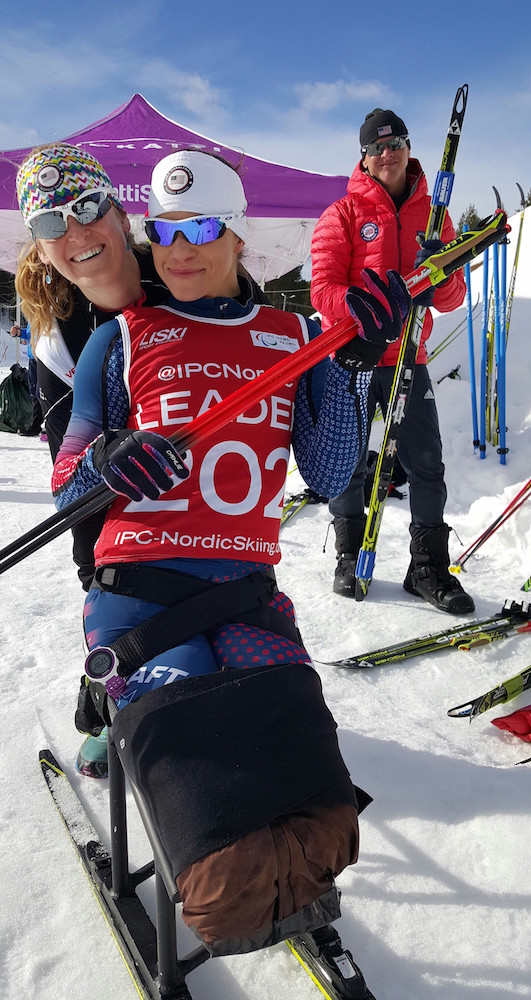
    Oksana Masters (front) and U.S. Paralympics Nordic coach Eileen Carey at 2016 IPC World Cup Finals in Vuokatti, Finland, with wax tech Dave Mark (behind). Masters won the overall cross-country World Cup for the second-straight year. (Photo: U.S. Paralympics Nordic)
    Oksana Masters (front) and U.S. Paralympics Nordic coach Eileen Carey at 2016 IPC World Cup Finals in Vuokatti, Finland, with wax tech Dave Mark (behind). Masters won the overall cross-country World Cup for the second-straight year. (Photo: U.S. Paralympics Nordic)

    When an athlete finishes a World Cup season undefeated, it’s not just a win for the athlete, it’s a win for their teammates as well.

    After U.S. Paralympics Nordic sit skier Oksana Masters completed the 2015/2016 International Paralympic Committee (IPC) World Cup race season as the undefeated victor in the cross-country events, from the 1-kilometer sprints to the debut of the 20 k marathon event, her success was seen as one for and from the team.

    “Oksana is an amazing athlete and I have been privileged to be a [part] of her cross country skiing career since she started the sport,” her teammate Andy Soule wrote in an email.

    “We have both become better skiers by learning from one another and training together,” Soule added. “She is hard-working, motivated, and a joy to be around as a teammate and as a person; and it makes me incredibly happy to see her having the level of success she had had these past couple of years.”

    Last week at IPC World Cup Finals in Vuokatti, Finland, Masters raced to three wins in a row, including the cross-country sitting sprint, but she didn’t let it get to her head.

    “It [was] the last sprint of the season and I didn’t want to leave anything behind!” Masters, of Louisville, Ky., told Inside the Games.

    Throughout the season, nobody came close to the 26-year-old Masters in the cross-country events. According to a U.S. Paralympics press release, nearly eight seconds separated her from her closest competitor in the sprint, and more than 28 seconds separated her from the field in the middle distance 5 k.

    “Oksana brought impressive consistency to her racing this season,” U.S. high-performance coach Eileen Carey wrote in an email to FasterSkier. “We had longer travel to our World Cups this season than is typical, so quality recovery was hard to come by at times.  Oksana made gains this winter in making smart decisions for her recovery and health, even when it meant backing off from training.  She made a few mistakes early in the winter, training through some sickness, but she learned from it and made smarter decisions for the rest of the season.  Her performances in cross country races would not have been possible without that adjustment. That self-knowledge will pay off in future seasons.”

    Day 1: Canada’s Arendz Fifth, Top 10’s for Weekes and Hudak 

    The first day of IPC World Cup Finals took place Tuesday, March 15, with a biathlon sprint.

    In the women’s 6 k visually impaired biathlon sprint, Ukraine’s Oksana Shyshkova won in a time of 20:55.8 after shooting clean. Also with perfect shooting was Mikhalina Lysova of Russia who finished in second overall. Third place went to Russian skier Elena Remizova after she missed two shots (1+1).

    In the women’s 6 k standing biathlon sprint, Oleksandra Kononova of Ukraine placed first in a time of 20:53.2 after two penalties (1+1). Russia’s Anna Milenina finished in second, also with two penalties (2+0). Russian teammate Ekaterina Rumyantseva rounded out the podium in third with three penalties (1+2).

    Two Canadians competed in the 6 k standing biathlon sprint, including Emily Weekes and Brittany Hudak. With three misses (0+3), Weekes finished ninth, while teammate Hudak finished just behind her in 10th place with four penalties (2+2).

    In the women’s 6 k sitting biathlon sprint, the top two spots went to Russia, with Irina Guliaeva coming in first in 23:31.8, after missing one shot (1+0). Her teammate Nadezhda Fedorova, came in second after shooting clean. Third place went to Germany’s Anja Wicker after she missed one shot (1+0).

    Masters finished sixth in a time of 25:47.0 after missing three shots (3+0).

    In the men’s 7.5 k visually impaired biathlon sprint,  Russia’s Stanislav Chokhlaev emerged victorious, winning the event in a time of 20:36.9 after perfect shooting. Also shooting clean was second place finisher, and Russian teammate Nikolay Polukhin. Third place for the men’s visually impaired event went to Ukraine’s Anatolii Kovalevskyi with one miss (1+0).

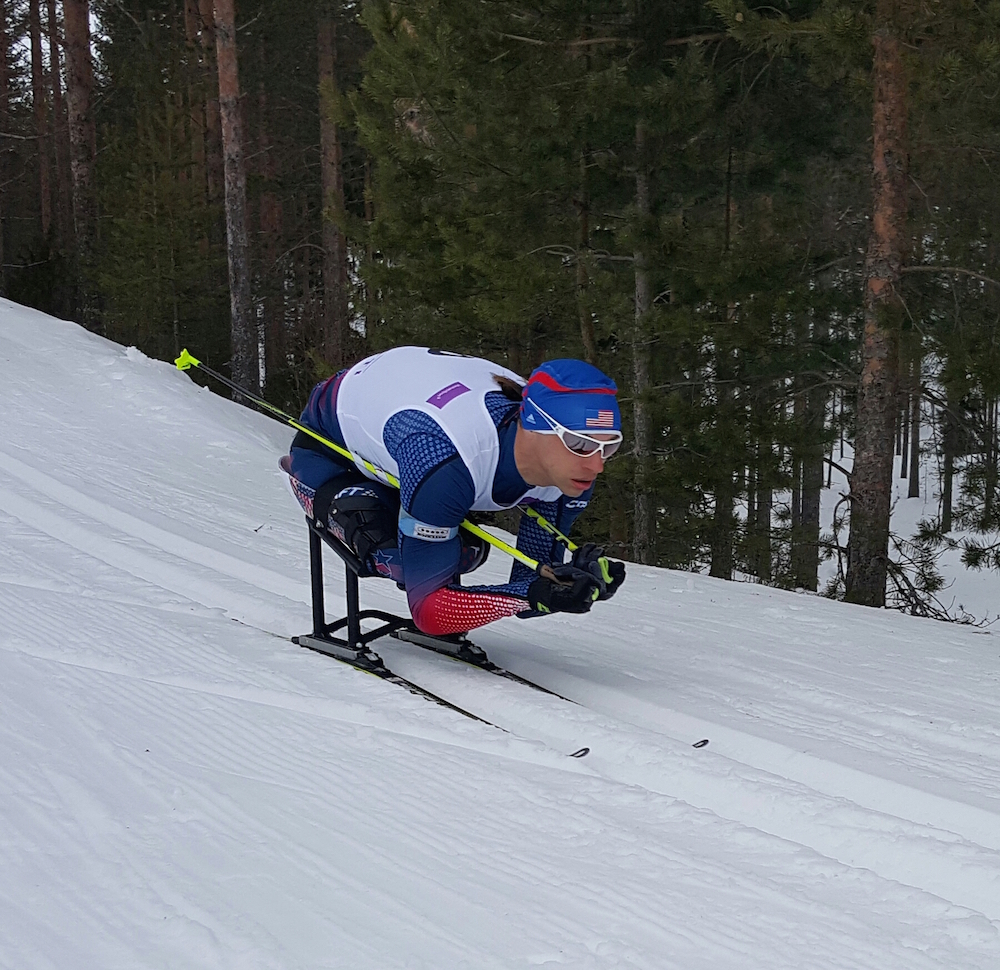
    U.S. Paralympics Nordic veteran Andy Soule tucking at 2016 IPC World Cup Finals in Vuokatti, Finland. (Photo: U.S. Paralympics Nordic)
    U.S. Paralympics Nordic veteran Andy Soule tucking at 2016 IPC World Cup Finals in Vuokatti, Finland. (Photo: U.S. Paralympics Nordic)

    American skier Jake Adicoff also competed in the event, racing to 11th after four misses (2+2).

    In the men’s 7.5 k standing biathlon sprint, Ukraine’s Ihor Reptyukh, raced to first place in a time of 18:49.5 after perfect shooting. In second place was Vladislav Lekomtsev of Russia with two misses (2+0). France’s Benjamin Daviet rounded out the top three, finishing third with one miss (0+1).

    Canada’s Mark Arendz competed in the men’s standing biathlon sprint, racing to fifth place overall with two misses (1+1).

    “Going into today I felt I had a lot more. The body felt ready to go, but it didn’t materialize in today’s race,” Arendz said in a Canadian Para Nordic Team press release.. “I was close on the skiing, but I’m still finding myself needing to tweak my shooting. Two misses is two too many for me right now.”

    In the men’s 7.5 k sitting biathlon sprint, the top three spots all went to Russia, Grigory Murygin leading the trio in first in 25:23.6 with one miss (1+0). Ivan Golubkov and Roman Petushkov both shot clean and finished second and third, respectively.

    Soule was the sole U.S. skier in the event, racing to an 11th place overall after five misses (3+2).

    “[I] had a broken pole early in the sprint and I am grateful to team Russia for their display of sportsmanship in offering me one of their spare poles until a coach could get mine to me,” Soule wrote in an email.

    Canada’s Derek Zaplotinsky also competed in the event, finishing in 15th overall after shooting the same as Soule.

    Results: Women Day 1 | Men Day 1

    Day 2: Arendz, Weekes Fourth

    The second day of racing, Wednesday, March 16, brought athletes out for another biathlon event.

    In the women’s 12.5 k sitting biathlon, Russia’s Maria Iovleva took her first victory of the week, finishing first in a time of 53:20.6 with just one miss (0+0+1+0). She led a Russian podium sweep with  Guliaeva placing second with three misses (2+0+1+0) and Svetlana Konovalova taking third with two misses (1+0+1+0).

    Masters finished seventh, after skiing eight penalty loops (2+0+4+2).

    In the women’s 12.5 k visually impaired biathlon, Ukraine’s Shyshkova took her second consecutive title of the week, completing the course in a time of 40:43.0 after one missed shot (1+0+0+0). Finishing in second once again behind Shyshkova was Russia’s Lysova after skiing four penalties (2+1+1+0). Third place went to Vivian Hosch of Germany, who missed three (0+3+0+0).

    In the women’s 12.5 k standing biathlon, Ukraine’s Kononova continued her winning streak, taking first place in a time of 43:15.2, after missing two shots (0+0+1+1). Second place went to Russia’s Natalia Bratiuk, with one penalty (0+0+0+1). Rounding out the podium finishers for the day was Russia’s Milenina in third after missing six shots (0+1+2+3).

    Weekes finished just off the podium in fourth, with two misses (0+0+0+2).

    “Emily led the way for us again today, and showing steady development,” Canadian head coach Robin McKeever, said of Weekes in a team press release. “The classic sprint is a bit of a tough test for Emily, but she faired well today and skied strong.”

    In the men’s 15 k visually impaired biathlon, Russia’s Polukhin bested his previous second place finish for first, winning the 15 k in a time of 43:31.3 with perfect shooting. In second place was Russian Nikita Povarov, who also shot clean. Ukrainian skier Iurii Utkin rounded out the podium in third, after two misses (1+1+0+0).

    In the men’s 15 k standing biathlon, France’s Daviet raced to the win in 44:12.0 after skiing three penalties (2+0+1+0).  Second place went to Ivan Kodlozerov of Russia with one miss (0+0+1+0). Russian teammate Lekomtsev finished third after missing four (0+2+1+1).

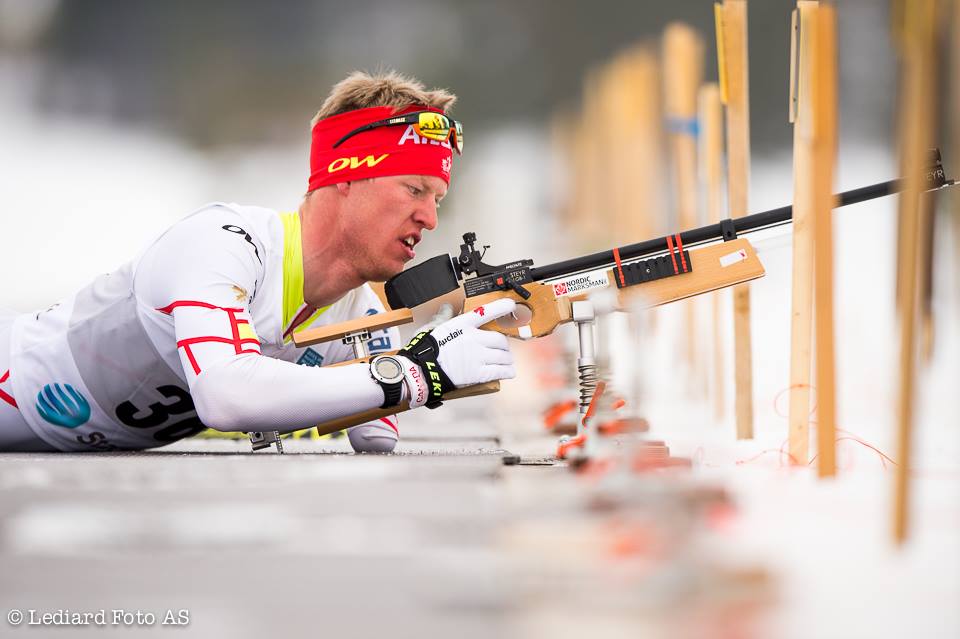
    Mark Arendz (Canadian Para-Nordic Ski Team) at 2015 IPC World Cup Finals in Surnadal, Norway. He placed fourth overall in the 2014/2015 IPC World Cup biathlon standings. (Photo: IPC Nordic Skiing/Facebook)
    Mark Arendz (Canadian Para-Nordic Ski Team) at last year’s 2015 IPC World Cup Finals in Surnadal, Norway. This year in Finland, he placed fifth in the 2016 World Cup Finals biathlon sprint. (Photo: IPC Nordic Skiing/Facebook)

    Arendz finished just off the podium in fourth after skiing three penalty loops (0+1+1+1).

    In his second victory of the week, Murygin of Russia, raced to first in the men’s 15 k sitting biathlon in 54:18.1 with one penalty (0+1+0+0). Germany’s Martin Fleig finished second after missing four (2+0+2+0). The third podium spot went to Poland’s Kamil Rosiek with two penalties (2+0+0+0).

    Soule finished sixth, with seven penalties (4+1+0+2).

    “Both biathlon races were difficult shooting races for me. I have struggled in the range somewhat this year and will be working in the of season to return to some solid shooting fundamentals,” Soule wrote. “I am really excited for the mass start 20km marathon race [later that week] … This is a type of race that we do not get to do often and I an looking forward to the challenge.”

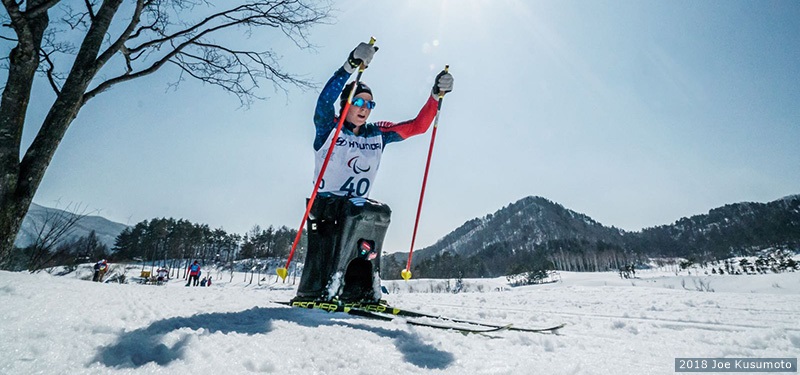
    Canada’s Derek Zaplotinsky was the second North American to compete in the event, finishing 11th with 12 penalties (2+4+3+3).

    Results: Women Day 2 | Men Day 2

    Day 3: Masters Wins Sprint; Adicoff, Weekes and Soule All Reach Respective Finals

    Thursday marked the third-consecutive day of racing with a 1 k cross-country sprint, where Masters continued her streak to finish the season with her fourth cross-country sprint win in as many races. She won the sprint in 2:12.68, besting Russia’s Iovleva in second and Germany’s Wicker in third.

    The women’s 1 k visually impaired cross country sprint went to Lysova of Russia, who won in 3:31.34. Crossing after Lysova in second was her Russian teammate Remizova.  Ukraine’s Shyshkova took the final podium spot in placed third overall.

    Thursday brought the third-straight win for Ukraine’s Kononova, who won the women’s 1 k standing cross-country sprint in 3:28.44. Crossing behind her in second was her Ukrainian teammate Liudmyla Liashenko. Rounding out the top three was Russia’s Milenina in third.

    Weekes advanced to the final where she finished fifth. Her teammate, Hudak finished ninth overall.

    Three Russians dominated the men’s 1 k visually impaired cross-country sprint, with Vladimir Udaltcov taking first in 2:52.66.  Chokhlaev placed second, while Oleg Ponomarev took third.

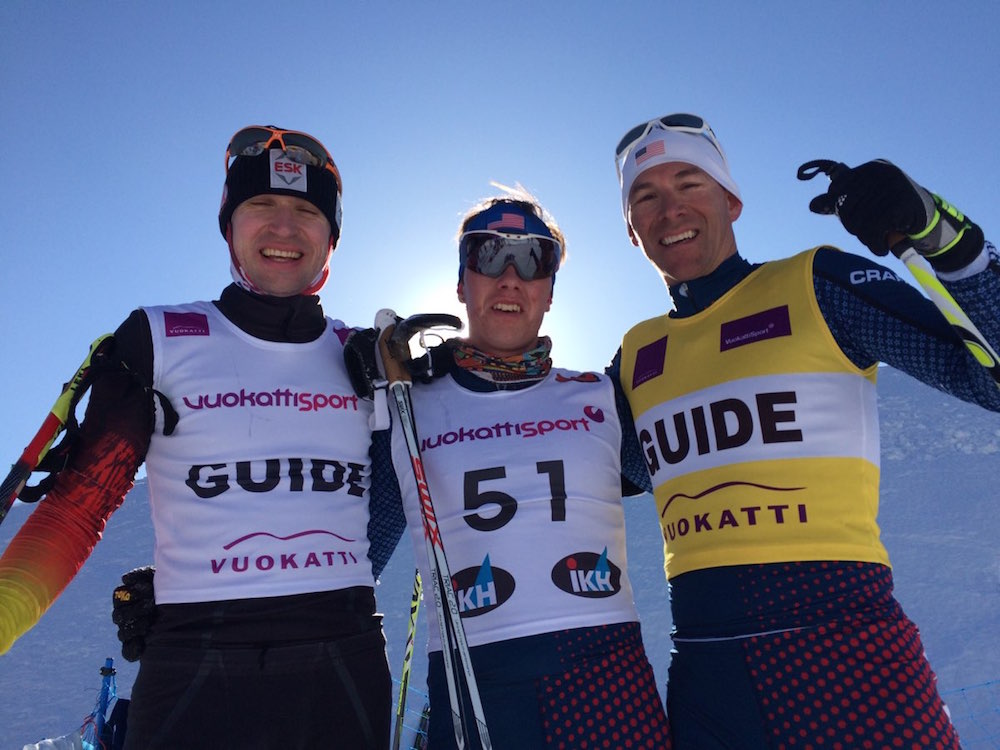
    Jake Adicoff (c) and his two guides, U.S. Paralympics high-performance coach and director John Farra (r) and Germany's Florian Grimm. (Photo: U.S. Paralympics Nordic)
    Jake Adicoff (c) and his two guides, U.S. Paralympics high-performance coach and director John Farra (r) and Germany’s Florian Grimm. (Photo: U.S. Paralympics Nordic)

    Finishing just off the podium after advancing to the final was Adicoff of the U.S. in fourth.

    The men’s 1 k standing cross-country sprint saw Russian Lekomtsev stand at the top of the event podium, ahead of Ukraine’s Vovchynskyi in second place. Third place went to Japan’s Yoshihiro Nitta.

    Arendz missed advancing to the final by one spot, finishing seventh overall.

    Competition in the men’s 1 k sitting cross-country sprint went to Ukrainian athlete Maksym Yarovyi, who crossed the final in first in a time of 1:55.47. Russia’s Golubkov and Aleksandr Davidovich finished second and third, respectively.

    Soule advanced to the final, where he placed sixth overall.

    Canada’s Chris Klebl advanced to the semifinal, where he placed 12th and Canadian teammate Zaplotinsky finished the day in 14th overall.  

    Results: Women Day 3 | Men Day 3

    Day 4: McKeever, Masters Take Marathon Titles; Klebl Second

    After a day of rest, IPC World Cup athletes returned to the Vuokatti ski trails for Saturday’s marathon events.

    Masters raced to first place in the women’s 20 k sitting marathon on Saturday, March 19, completing the course in a time of 1:00:57.0.

    Two Russians, Guliaeva and Fedorova finished behind Masters in second and third, respectively.

    The women’s 30 k visually impaired marathon event went to Remizova of Russia, who won in 1:36:22.6. Her Russian teammate Lysova placed second. Ukraine’s Shyshkova earned her fourth-straight podium of the week, after placing third.

    Ukraine’s Kononova rolled to her fourth-straight win of the week in the women’s 30 k standing cross-country marathon. She won in 1:39:09.6, while Sweden’s Helene Ripa finished second and Russia’s Rumyantseva placed third.

    Hudak raced to fifth in the women’s 30 k.

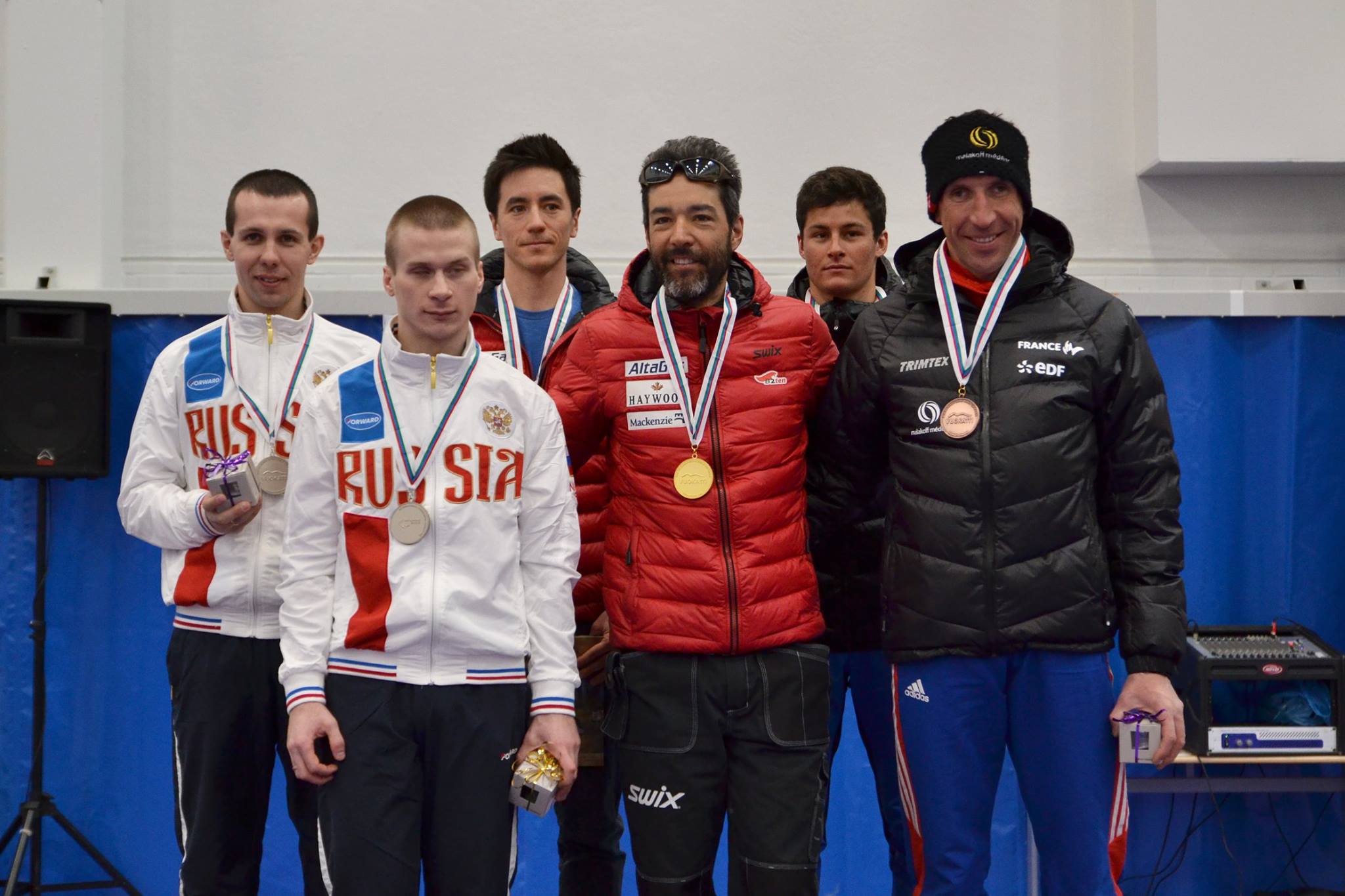
    Brian McKeever (c) and his guide Graham Nishikawa with their gold medals after the men's visually impaired 30 k at 2016 IPC World Cup Finals Vuokatti, Finland. Russia's Alexsander Artemov (l) placed second and France’s Thomas Clarion (r) was third. (Photo: IPC Nordic Skiing/Facebook)
    Canada’s Brian McKeever (c) and his guide Graham Nishikawa with their gold medals after the men’s visually impaired 30 k at 2016 IPC World Cup Finals Vuokatti, Finland. Russia’s Alexsander Artemov (l) placed second and France’s Thomas Clarion (r) was third. (Photo: IPC Nordic Skiing/Facebook)

    Canadian team veteran Brian McKeever took the victory in the men’s 30 k visually impaired cross-country marathon, completing the course in a time of 1:20:43.0. Behind him in second was Russia’s Alexsander Artemov and France’s Thomas Clarion in third.

    Adicoff was the second North American in the men’s visually impaired marathon in sixth overall.

    After winning Thursday’s standing sprint, Russian Lekomtsev took his second win of the week in the men’s 30 k standing in 1:17:52.8. The next closest competitor was his Russian teammate, Rushan Minnegulov in second. Third place went to France’s Daviet.

    Arendz raced to eighth place in the 30 k standing marathon.

    In the men’s 20 k sitting, Klebl narrowly out on a victory, placing second behind Maksym Yarovyi of Ukraine. Yarovyi completed the 20 k course in a time of 52:31.0.

    Soule was one spot off the podium in fourth, behind Korea’s Eui Hyun Sin in third.

    “The 20km was an interesting race,” Soule wrote in an email. “It was formatted as a mass start, which is not how we usually race. Because of the way we adjust times for differing disabilities, it was not actually first across the line wins. While we do not actually train specifically for this distance, the fast conditions and relatively flat course made it run much like a long individual race.”

    Results: Women Day 4 | Men Day 4

    Day 5: Masters Defends Unbeaten Streak; McKeever Wins Again

    Athletes geared up for the final World Cup race of the season on Sunday, March 20, with the men’s and women’s middle-distance cross-country races.

    American Oksana Masters (c) on the podium with one of her three gold medals from this year's IPC World Cup Finals in Vuokatti, Finland. (Photo: IPC Nordic Skiing/Facebook)
    American Oksana Masters (c) on the podium with one of her three gold medals from this year’s IPC World Cup Finals in Vuokatti, Finland. (Photo: IPC Nordic Skiing/Facebook)

    Masters displayed her strength with one final win, topping the women’s 5 k sitting cross-country in a time of 17:16.3, for her third win of the week.

    Finishing behind Masters in second was Russia’s Fedorova and in third was Guliaeva, also of Russia.

    In the women’s 7.5 k visually impaired cross-country, Lysova won in a time of 20:02.0. Second place went to her Russian teammate Remizova and Ukraine’s Olga Prylutska finished behind her in third place overall.

    In the women’s 7.5 k standing cross-country, Russia’s Milenina won in 19:59.2. Ukraine’s Kononova finished in second and Russian Rumyantseva placed third.

    McKeever secured his second win of the week, finishing first in the men’s 10 k visually impaired cross-country. McKeever completed the 10 k course in 22:31.1. Second place went to France’s Clarion.

    “We put in a really good effort today. Nish was on fire for the first five kilometres, and that moved us into a solid position,” McKeever said of his guide, Graham Nishikawa, in a team press release. “We were able to build on that pace, and nobody was able to respond.

    Adicoff once again just missed the podium in fourth overall, finishing behind Russia’s Chokhlaev in third.

    France’s Daviet took his second win of the week in men’s 10 k standing cross-country. Behind Daviet in second was Russia’s Minnegulov and Ukraine’s Reptyukh finished third.

    Arendz placed eighth in the 10 k standing event.

    In the final men’s sitting cross-country event, Russia’s Golubkov finished first in a time of 23:47.4. Second place went to Ukraine’s Yarovyi and Korea’s Eui Hyun Sin took third.

    Soule led the North Americans in that race in fifth, while Canada’s Klebl and Zaplotinsky finished behind him in 12th and 16th, respectively.

    “Overall the event has been a lot of fun,” Soule wrote. “I always enjoy coming to Vuokatti, a place where we have competed on a regular basis for my entire nine-year career.”

    Results: Women Day 5 | Men Day 5

    Masters Wins World Cup Globe for Second-Straight Year

    Overall, Masters won the season-long World Cup title for the second year in a row in the women’s sitting cross-country. She topped the rankings with 760 points, beating out Russia’s Maria Iovleva, who had 545 points, and Russia’s Nadezhda Fedorova, who was third with 526 points.

    Andy Soule was 30 points short of the cross-country podium in fourth overall, with 390 points to Russian winner Ivan Golubkov’s 689 points in first.

    Emily Weekes placed seventh in the women’s standing cross-country, McKeever was eighth in the men’s visually impaired.

    Soule placed fifth overall in the biathlon World Cup men’s sitting, while Masters was sixth in the women’s category. Weekes finished the season in ninth overall in the biathlon World Cup, and Mark Arendz tied for ninth in the men’s standing biathlon.

    World Cup rankings