As the current US Ski Team lineup raises the bar for what’s possible on the World Cup, the next generation of skiers lays the foundation to build upon their accomplishments. See it to be it. Success breeds success. Pick your preferred phrasing.
Consequently, the talent pool tracking toward the national development program has been flooded like never before and U.S. Ski & Snowboard has stepped up its support in response.
“We have more junior and Under-23 athletes achieving the U.S. Ski Team standard,” explained sport development manager Bryan Fish in an email. “It is clear we are strengthening as a nation at our development ranks. This is reflected in awards such as the FIS Marc Hodler award where we were second only to Norway at 2020 Junior World Ski Championships after being a USA record-setting 4th in 2019. Hence, we have a growing USST D Team. This growing team needs more support and attention.”
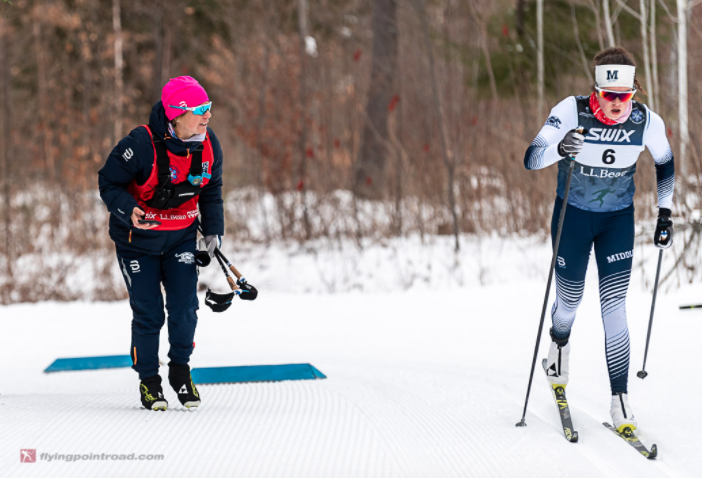
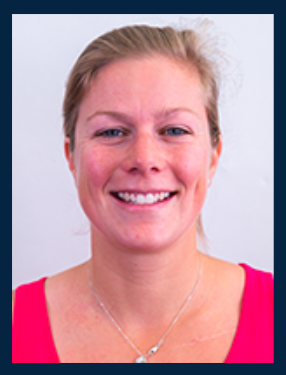
Kate Barton joins the U.S. Ski & Snowboard D-Team as head coach, following four years as the assistant coach at Middlebury College. (Photo: Athletics.Middlebury.edu)
The most recent addition to the development program is former assistant coach at Middlebury College Kate Barton, who will lead the charge as Development and D-Team Head Coach. Barton will replace Bernie Nelson, who stepped down after the inaugural year of the position.
Fish explained that the restructuring and head coach position facilitates more direct and consistent support to D-Team athletes throughout the year. Barton will also have the capacity to work with developing athletes at events like the National Training Group (NTG) camp for top performers at Junior Nationals. Her role frees Fish up to focus his attention on development infrastructure, provide coach education at the club level, and other domestic tasks. He will still support Barton at domestic camps and at international events such as the World Junior Ski Championships and U23 World Championships.
Barton’s selection for the position was made with input from her predecessor, Nelson, and the roster of D-Team athletes, as well as from Cami Thompson Graves, head coach at Dartmouth College and Chair of the U.S. Ski & Snowboard Sport Committee. Barton received positive feedback and recommendation across the board.
Fish explained that he and Nelson had a strong working relationship and that although COVID-19 has interrupted the intended team schedule, Barton has seamlessly stepped into her new role, bringing her own set of strengths and skills to continue the support athletes have received within the new development program structure.
“Kate has worked in many national junior domestic camps and international development projects in the past, so she has a firsthand understanding of our ski community, development structure, team culture, and the standards necessary to be competitive at the international level,” wrote Fish. “I have worked alongside Kate over the past ten years at National Under-16 camps. She is positive, motivating, collaborative, organized, and has a great rapport with athletes and coaches, alike. These are critical qualities that will make Kate successful as the U.S. Ski Team Development and D-Team coach.”
FasterSkier connected with Barton via email to learn more about her background and philosophy as a coach and how she will translate that into her new role as D-Team Head Coach.
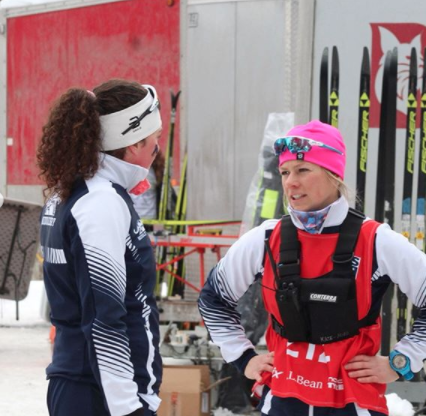
Newly appointed USST D-Team Head Coach Kate Barton spent four years as the assistant coach at Middlebury College. (Photo: Instagram @middnordic)
“Authenticity, passion, and principle provide a foundation for my philosophy as a coach and help to guide me,” wrote Barton. “I think it’s important to be authentic in your pursuits and be comfortable being yourself. Everyone is different and skiing is a unique, individual sport within the context of a team. If you can build strong relationships within a team then you can also trust and learn from one another and as a result, increase your chances of being successful.
“I am passionate about Nordic skiing; I love to ski,” she continued. “I want to cultivate a love for this lifelong sport in the athletes on our team. I think part of my job as a coach is to stoke this love for the sport, and for me, that comes from promoting a healthy balance between taking yourself seriously and having fun and enjoying the process. Finally, I think it’s important to be principled. I have to remind myself of this sometimes. But if you’re willing to be critical of yourself and others you can learn and move forward together. As a coach, I’m always trying to find a balance between providing direct feedback and maintaining the patience to let my athletes learn in their own time.”
Barton spent four years working with the Middlebury Program. Before returning to her alma mater in 2016, she was the head coach at Burke Mountain Academy in Vermont for five years. She also spent a year as the head coach of the Jackson Hole Ski Club in 2010.
An accomplished athlete in her own right, Barton graduated from Middlebury College in 2009 as a dual sport athlete in skiing and lacrosse. Demonstrating both talent and leadership potential, she made the NCAA championship team each of her four years and captained the team to an 8th place finish her senior year. In addition, she competed in two semifinal rounds of the NCAA Tournament in lacrosse.
Barton explained that these experiences were formative in her transition to coaching.
“Many of the lessons I learned from my time as a competitive skier were things not to do,” she wrote. “I competed in a variety of sports competitively growing up and was lucky enough to compete as a skier and a lacrosse player through college, two very different but valuable experiences. Most of all, I was lucky enough to be surrounded by some passionate, veteran coaches throughout my entire ski coaching career who were willing to let me tag along and soak up experiences, but who also pushed me to be independent and take on roles outside my comfort zone.”
Through coaching three U18 National Teams at the U23 World Ski Championships as well as for Team New England at Junior Nationals and working at U18 national and regional summer camps, Barton has had the opportunity to work with many of the D-Team athletes. She has also coached at multiple international junior trips to Norway and Sweden.
“One of the coolest things about the ski world is how small it is, and even if I haven’t worked with all of these athletes directly, I’ve been watching them compete for many years. I remember observing this crew race a humid uphill TT at U16 camp many years ago. Even as U16 athletes, it was crystal clear how willing and genuinely excited they were to push limits and grow together, all while having a good deal of fun.”
The athlete she has had the most experience working with is newly nominated 20-year-old Sophia Laukli, who currently attends Middlebury College.
“I’m lucky to be sharing my rookie season with Sophia and I’m excited for the challenge of getting to know a couple of new faces as well.”
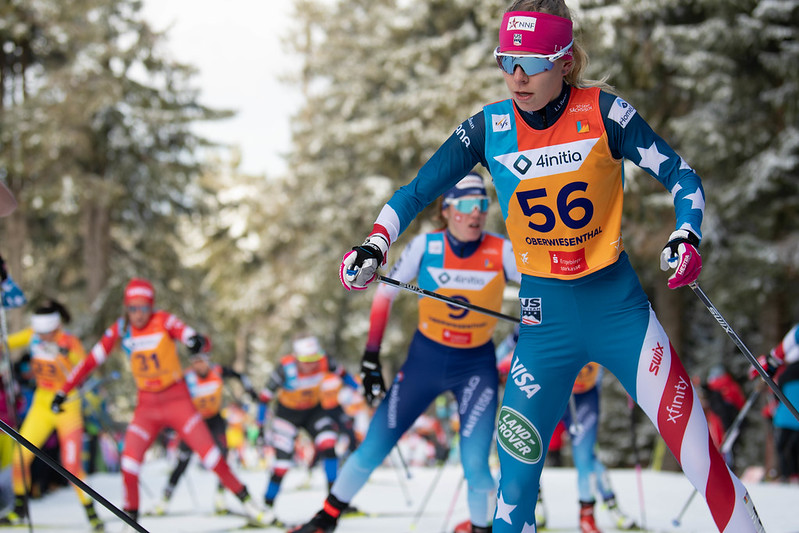
Sophia Laukli (bib 56) skied to 5th overall in the junior women’s 15 k mass start skate at 2020 Junior Worlds. (Photo: Doug Stephen)
The 2020-21 D-Team has a record 11 members. Both Fish and Barton commented on the goals for the program as they work together to support these athletes and continue to foster the national development program.
“‘Working together’ are the keywords here,” responded Fish “We have athletes with the desire, work ethic, and skills to succeed at the highest level of our sport. These athletes have a good understanding of what they need to be successful. This is thanks to our strong clubs, school programs, and strong divisional/ regional support. Kate and I both have a strong background coaching at the club and collegiate ranks, so this will aid in working with these athletes and their local programs to support their individual needs.
“It all starts with the question to the athletes and programs as how can we best support? What can we provide in addition? One common goal is that we continue to build upon the strong USA Team culture that we are bringing to our international trips each year. It is a huge asset when you know your teammates are contributing to your success and have your back. We will need to be creative in continuing to develop our team culture when working together in summer projects is a challenge.”
Barton’s response focused primarily on laying the groundwork for successful coach-athlete relationships, which she identifies as learning about each of her athletes individually and establishing a relationship. This requires collaboration and communication with both the athlete and their club or collegiate coach.
“As a new member of the team, the most important thing is to start to get to know this crew as athletes and as people. I want to coach this team in a way where they get to know me, too. We haven’t had a chance to work together in person yet, given the current state of the world, but I hope we’re starting to build relationships that will make our work at future training camps and competitions more enjoyable and productive. This job has already been rewarding because of the work I get to collaborate with the club coaches of each of these athletes. I’m excited to serve as a resource for any coach willing to get on board and help to push U.S. skiing forward.
“I am most looking forward to the opportunity to learn first-hand from this group of athletes,” she continued. “The D-Team is a special group of motivated individuals. They are stoked to continue to push US skiing forward. I can’t wait to see how they do it, to help them pursue their goals and dreams, and of course to provide some guidance and share my knowledge and experience along the way.”
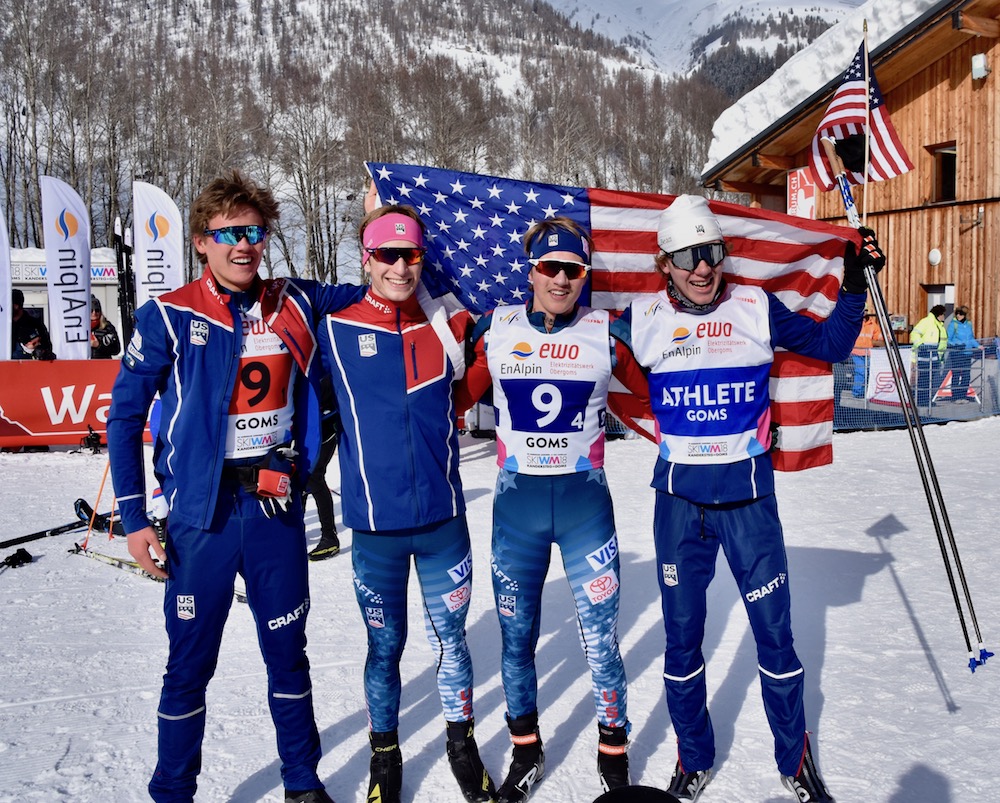
The U.S. men’s silver-medal relay on Saturday at 2018 Junior World Championships in Goms, Switzerland, with (from left to right) Luke Jager, Hunter Wonders, Gus Schumacher, and Ben Ogden. (Photo: Julia Kern)
Finally Barton was asked the challenging question regarding how to best support the mental and physical wellness of athletes who are navigating the pressures that come with elite level sport at a young age. In addition to the stress of training, many of the D Team athletes are also balancing academic demands on top of their training while facing significant transitions in their lives as they advance from high school through college.
“I think relationship building is our most important tool. My most successful coaching relationships have always been built on open and honest communication. I hope to build this culture within the D Team and beyond. We’ll try to break down the stigma that we have to wait until we’re in a time of need or crisis to ask for help. This community is incredibly supportive and there are many resources to help facilitate athlete development. My goal is to get to know a wide variety of young athletes in the US and to help them balance those demands and stressors they face as developing athletes. I don’t believe any of the athletes on the D Team are as fast (yet!) as they need to be, as they want to be, or as they can be, so I hope we’ll work together to build a good foundation on which to continue to develop. We will focus on the process and not just our performance because everyone fails a few times on their way to greatness.”
The NENSA Elite and Development team nominee lists represents athletes who have had success on a Regional, National and International level this past winter.
These teams exist as a program to aid in the appropriate development of top athletes toward the goal of international excellence. To find out more about the teams and the selection criteria go to http://www.nensa.net/elite/
Congratulations to all of the athletes on their accomplishments this winter.
Note: This is the second piece in a three-part series following several groups of biathletes as they negotiate the college question. Part one, which featured five top juniors who took a detour through college before returning to the international stage, ran last Monday. Stay tuned for part three next week.
Susan Dunklee celebrating her fifth-place finish at 2012 World Championships, which came in her fourth season as a biathlete. NordicFocus/USBA.
As I was standing near the finish waiting for U.S. biathlete Susan Dunklee to come through the mixed zone after the IBU World Championships women’s 15 k individual in Ruhpolding, Germany, I was approached by a gray-haired French journalist who usually sat at the table directly behind me in the media center. We had also shared a shuttle back into town one night, so he knew I was American.
“Who is this Susan Dunklee?” he asked me.
Dunklee was bib one that day, so it wasn’t surprising that she crossed the line first. Ultimately, she finished fifth in the race. It was one of the best results ever by a U.S. woman, tying Kari Swenson’s result at 1984 World Championships, and certainly a surprise to the sport’s European fanbase. I explained that it was her first season on the World Cup, and she had previously had just one top-20.
“She has only been doing biathlon for four years,” I said.
The French journalist’s eyebrows raised as if to say, go on.
“She was a skier in college, and then she learned how to shoot,” I continued. “Her father was in the Olympics in cross country skiing.”
He scribbled in his notebook, and then asked me Dunklee’s father’s name and which years he was an Olympian.
“I write for a newspaper,” he said. “I don’t have a lot of room. Usually, fifth place, maybe we mention it, maybe not. But this? This is interesting enough to put in. Thanks.”
* * *
During the 2011-2012 competition season, the U.S. Ski and Snowboard Association had 1,139 members with “cross country competitor” licenses. The U.S. Biathlon Association’s (USBA) year-end points list, by contrast, featured fewer than 200 athletes.
USBA’s numbers are even more grim in terms of development. While the masters biathlon scene has been growing in the U.S., that points list included just 37 junior men and 23 junior women. At World Junior Trials or U.S. Nationals, a field of 15 or so youth men (ages 18 and under) whittles down to just a handful of juniors (ages 19-20). Five or six women compete in each division. After the robust development teams of the 1990’s and early 2000’s were lost in a budget crunch, the junior national team is now largely symbolic.
That leaves the biathlon community with big questions: how do you develop a World Champion with such low numbers? What if top juniors leave the sport for college or other pursuits? (This happens.) By 2007, there was an undeniable talent gap in U.S. biathlon.
“Cory Salmela had developed a bunch of people on the junior team in the 1990’s, and I was taking over those juniors,” said James Upham, who was the USBA’s Development Coach at the time and is now the Nordic Head Coach for U.S. Paralympics. “We had pretty much pushed those guys onto the [senior] national team. So we said, well, we’ve got to have some more people because there aren’t enough clubs in America producing the high end biathletes that we’re looking for.”
Along with USBA CEO Max Cobb, Upham came up with a new idea: instead of looking at college as a sink that they lost athletes to, they would look at it as a source.
“We needed to find some talent, some fairly young talent, and maybe a little raw, someone that could be molded,” Upham told FasterSkier. “We felt like even in their early 20’s we could manage that– that it was good resources to put away if you had the engines and the attitudes, and that within four or five years [you could have] a World Champion.”
Sarah Konrad, an early indicator that skiers could learn to shoot. Photo: TeamToday.
He was also perhaps emboldened by the success of Sarah Konrad, who at age 37 and after just two years in biathlon finished 50th in the individual race at 2005 World Championships. She went on to the 2006 Torino Olympics, where she became the first U.S. woman to compete in two winter sports: skiing and biathlon.
With “engines and attitudes” as his manta, Upham began scouting the college field. He offered college juniors the chance to try biathlon at a training camp over the summer. If they showed some aptitude for shooting, Upham would offer them a spot on his re-tooled Development Team when they graduated. USBA provided a free place to live at the Olympic Training Center (OTC) in Lake Placid, a crash course on shooting, and the country’s best biathletes as training partners.
Could you really create a world-class biathlete starting at age 22? It was an unusual strategy, but Upham was confident that he could pull it off. He signed Caitlin Compton, who was coming off a season in which she took five SuperTour wins and represented the U.S. at FIS World Championships in Sapporo, Japan. She was joined by recent All-American Sara Studebaker, who had just helped captain Dartmouth to an NCAA title, and her boyfriend Zach Hall, another mainstay on the EISA circuit.
“It sounded like a really legitimate way to pursue a nordic sport at a high level,” said Hall, who had been contemplating how to swing a ski career financially. “You were able to go there and focus on it 100%.”
And in that very first year, Compton (now Gregg after her marriage to CXC teammate Brian Gregg) showed that the development program could work. It’s a forgotten fact that Gregg, who was a 2010 Olympian in skiing, had her first World Cup starts in biathlon and made the 2008 World Championship team. By her own admission she “didn’t know what [she] was doing” and told the online news site MinnPost that she estimated there were ten high-level female biathletes in the entire country.
But even if she benefitted from a small field in terms of selection, Gregg turned in strong performances. She finished 37th in the individual at World Championships in Ostersund, Sweden, hitting 16 of 20 targets and skiing the 29th-fastest time. She was the top American in the race.
Gregg left the team to return to skiing after just one season, but her success surely reinforced USBA’s confidence in its plan. Hall and Studebaker joined more experienced athletes on the “B” squad, and the Development Team started fresh with Dartmouth’s several-time All American Susan Dunklee, former junior national sprint champions Bill Bowler and Casey Simons from Northern Michigan University (NMU) and the University of Utah, and Jen Wygant, another NMU grad.
In 2009, Dunklee moved up to the “B” team and was replaced by Katrina Howe, a two-time NCAA competitor for the University of Vermont. The next year, the Development Team was cut – but Studebaker also became an Olympian. Even after it ended, the program was delivering what USBA had hoped for.
Engines and Attitudes, Exhaustion and Frustration
While Gregg had succeeded right away, the transition may have been more natural for her. She was 26 years old when she joined the team, and had already trained at a high level for several years. Before the younger recruits could match her results they needed to transform into senior athletes, which was challenging. There was no time to ease into the transition because Upham was trying to accomplish in a few years what usually took ten.
“It was a big increase in terms of training volume and overall intensity, and it was a little bit overwhelming to be training with the national team and surrounded by all of that,” Hall told FasterSkier in an interview. “That whole first year was crazy…. I was straight up exhausted all the time.”
He wasn’t quite sure of the numbers, but estimated that his training volume had jumped about 20% that first year. Upham has other stories, too. After the very first week in Lake Placid, Studebaker told him that she had never trained so many hours in a week before, ever. The next year, he encountered the same thing with his new crop of athletes.
“Going into the winter I remember Susan saying, ‘This is more classic skiing than I’ve ever done,’ and you’re a biathlete now– you don’t even race it!” Upham laughed. “It’s fun taking a college-level athlete who’s really gifted and smart, and putting them into a full-time training program. That transition is pretty tough and you don’t necessarily get better right away, but you put a huge amount of work in and it pays off… you see them doing really well later.”
Bowler, who had trained about 600 hours a year at NMU – “definitely on the upper end of the spectrum for a college skier” – was better prepared for the hours, but not necessarily for the intensity of national team training.
Bill Bowler and Zach Hall competing in Altenberg, Germany in 2011. Photo: Viktoria Franke.
“There’s a big difference between doing a 20-hour week with one or two intensity days, and one of those being classic, versus a 20-hour week with three skating intensities,” he told FasterSkier in an interview in Bend, Oregon, last week.
Then there was shooting, which added another roughly 200 or 300 hours to the training load without any immediate payoff; several of the athletes said that it takes a minimum of three years before shooting comes together. Until then it’s a lot of work, and at no point is hitting targets a guarantee.
“I’d like to say that biathlon gets easier, and it definitely does, but inherently biathlon is more tumultuous than nordic skiing,” Hall said. “No matter how good you get, there’s always that question… there’s so much that’s thrown into the mix with the shooting. You have a really good race and you have euphoria, and then the next race you can be behind from the first stage and then you’re out of it.”
While the endurance training was tough on athletes’ bodies, shooting tired their minds and tested their patience. They were immediately thrown into workouts with experienced senior national team athletes, which created a good learning environment. But it could be demoralizing to be the worst shooters day after day after day.
“I went into it being super focused,” Hall explained. “By nature I’m fairly detail-oriented when I approach training, and shooting ends up being all about the details. So every day is focusing on a million different details and trying to figure it out… For me it was challenging sometimes, because you know you’re not nearly as good [as the other athletes].”
The final piece of the transition was living at the OTC, which was ideal in many ways: no rent to pay, no meals to cook, a gym and coaches and training all in one place. But the austere building was the antithesis of the vibrant college campuses most athletes had recently called home.
“You live in a bubble,” Bowler said of the experience. “It’s a very focused environment all the time. It was good for me for certain chunks of time, but sometimes you need to get out to the real world a little bit, because biathlon is very far from the real world.”
Dunklee, too, needed a release. For the 2011 season, to the initial chagrin of her coaches, she joined the Craftsbury Green Racing Project so that she could get back to Vermont (she is still in Lake Placid more than half the time). She said it was a lifesaver for her mental health.
“I need balance and I need to use my mind,” she told FasterSkier last fall. “When training or racing isn’t going well, I need a means of distancing myself from biathlon.”
All of the changes were a lot to take in, and Upham knew it. To try to keep his team motivated, he read everything that he could about sports psychology. In his previous work with junior and senior biathletes he had seen racers hit a plateau even though they were physically capable of continued improvement. With his new team, Upham wanted to make sure athletes’ heads didn’t get in the way of their performance.
“The lifestyle change [is a big thing],” he said. “We worked on sports psychology every day. It’s not something that you read the book and suddenly you have it, it’s just practice, practice, practice, and forming habits. Most of our psychological aspect was, how do you deal with going from winning college races or being top ten, to internationally pretty much getting your butt kicked for a year or two?”
Mixing It Up in Europe
One measure of the Development Team’s success was that like Gregg, Dunklee and Studebaker made it to Europe in their first year as biathletes. It took the others a bit longer, but of the eight, all but Wygant have competed at the IBU Cup or European Championship level, if not higher.
Initially, a European tour added to the stress of the athletes’ transition.
“My first race I was in the 90’s in an IBU Cup, which is really a tough pill to swallow when you go over there and you have a race that you might be happy with in the United States,” Bowler said.
In her first season as a biathlete, Dunklee won a national title in the sprint. But on the IBU Cup, biathlon’s second tier of racing, her top finish was 35th. A year later, Simons also won a national championship, but when he competed at Open European Championships his best race left him 40th. Despite multiple international tours, Bowler hasn’t excelled; he didn’t crack the top 40 in an IBU Cup until 2012, when the circuit traveled to Canmore and field size shrunk by half.
But the athletes had plenty to fall back on, and they started improving.
“The first race Sara was ever in as a full-time biathlete, she cleaned [a four-stage race],” Upham explained. “She hit all 20 targets. I think there are a lot of biathletes out there who have still never done that! Zach, his second year he was our number one shooter in the country in terms of percentage. That just shows the amount of work they put in.”
After Gregg, Studebaker was the first one to make it onto the big stage (she had an advantage: dabbling in biathlon in high school had left her with some shooting background). In 2009, she earned her first World Cup start. She had dreamed big and hoped to make the World Championship team that year, but missed, in what she described as one of the biggest setbacks in her biathlon career.
Studebaker leading Andrea Henkel (GER) in the mixed relay at 2012 World Championships.
“I was pretty devastated after that,” she told FasterSkier. “I had been told that they may have a spot for me at the Vancouver World Cup [at the end of the season], but it took a while for it to be official. When I finally found out I would get to race, I was really excited and determined to make the most of it. In the sprint, I cleaned and scored a couple World Cup points.”
After a single weekend of racing, the 38th-place finish made Studebaker one of only three U.S. women to score World Cup points all year, which lifted her spirits and set her up to compete in the first period of World Cups the next season. She has been one of the team’s top performers ever since, and raced at the Vancouver Olympics.
In 2011, her fourth season as a biathlete, Studebaker collected four top-20 results. That put her 34th on the World Cup points list, the highest-ranking U.S. woman. Although the development team was no longer in existence, it was delivering the results USBA had expected in year four.
“We were really happy to see Sara have a top-15 result,” Cobb said. “It was right where she needed to be.”
Hall, too, faced disappointment before his World Cup debut. After competing in Altenberg, Germany, for the final round of trials for the 2010 Olympics, he wasn’t named to the team. Based on his performances there and the next weekend in Nove Mesto, Czech Republic, however, Hall received World Cup starts in Antholz, Italy. He finished 85th and 96th, but the experience showed him what biathlon really was, and what he was striving for.
“Over 15,000 spectators came out for each of the races so the atmosphere was electric,” Hall wrote on his blog at the time. “It’s really cool going from the U.S., where only a handful of people show up, to an area of the world where biathlon is the most widely televised sport and spectators come out in droves for an all-day party.”
While Studebaker excelled and Hall got sporadic tastes of World Cup action, Dunklee has ultimately become the poster child for the Development Team. Even in the beginning, she stood out as an obvious choice to bring to Lake Placid.
“Everyone can see world class aerobic potential if you ever see her do anything,” Upham marveled. “So how do we teach her how to shoot things, how do we refine her technique? We felt like we were pretty good at that. It wasn’t daunting to us, [we didn’t see it] as a great risk. And she had a great attitude as well, there was no denying that.”
But unlike Hall, it took her four whole years to make the World Cup despite having top-20’s and even a top-ten on the IBU Cup. She was crushed when she missed the Vancouver Olympics by a few spots, and she didn’t receive the consolation prize of World Cup rights, either.
At the beginning of the 2012 season, Dunklee capitalized on her first World Cup starts, placing 45th, 28th, and 32nd in the individual, sprint, and pursuit competitions in Ostersund, Sweden. Like Studebaker, she had scored World Cup points on her first try; the former Dartmouth teammates were the top Americans in all three races. Dunklee wasn’t going to get left at home again. She had her first top-20 in Antholz, then missed a single shot to finish fifth in the World Championships individual race, just seven seconds from a medal. In the final weekend of racing, she picked up top top-tens in Khanty-Mansiysk, Russia. Dunklee is currently ranked 34th on the World Cup – exactly the same position that Studebaker had one year ago.
“We had the feeling that it was probably going to be four years before they were ready to do something internationally,” Cobb said of the Development Team athletes. “When we were initially talking with the athletes, we said they had to be willing to give this a try for two seasons. We were thinking in the fourth season they could have top 20 results [on the World Cup].
“That’s what we saw with Susan,” he continued. “Yay!”
So You Want To Race?
USBA Women’s Coach Jonne Kahkonen told FasterSkier in the fall that the team was deliberately holding Dunklee in reserve until she was ready to excel at the World Cup level, but the athlete herself was chafing at the bit.
“I had become fixated on earning a World Cup spot,” she wrote in an e-mail this spring.
And if Dunklee was frustrated being stuck on the IBU Cup, her teammates were even more desperate to get in top-level races; between IBU Cup and Under-26 Open European Championship racing, Dunklee’s two tours represented as many or more European starts every year as any mid-level American biathlete.
Casey Simons at 2010 U.S. Nationals in Fort Kent, Maine.
The lack of high level racing and its benefits for development and motivation, said Hall, was one reason said that the program’s success and retention rate could have been better. After all, Simons left the sport in 2010 after a national title was not rewarded when team nominations came due; he declined to comment for this article. Hall himself retired in 2011. (Bowler and Howe are currently pursuing biathlon at the Biathlon Alberta Training Center and the Maine Winter Sports Center, respectively.)
Without going to Europe, the athletes were left to race against a NorAm field that is undeniably weak, especially compared to skiing’s SuperTour circuit. With the top five men and three or four women on the World Cup at all times in addition to the periodic IBU Cup tour, biathletes are competing against the same handful of people every weekend. They now more or less how things are going to shake out.
And that’s where the men were stuck. In 2007 when the Development Team started, Jay Hakkinen, Jeremy Teela, and Tim Burke had already scored multiple World Cup top-tens. Lowell Bailey had been in the top 20. By contrast, of the women only Lanny Barnes had a single top-20. Studebaker, Dunklee, and Gregg were certainly talented, but they were helped by the relative strength of the men’s and women’s national teams.
Hall didn’t want to offend his former teammates by implying that the women on the Development Team had it easier, but Studebaker confirmed as much. There was more of a gap on the women’s team, and she was there to fill it.
“Things may have been easy on the women’s side when I was starting out biathlon,” she wrote in an e-mail last week. “There were always more men competing, and that meant fewer of them had a chance to get international competition. It was definitely a little easier to get over to Europe and get on the IBU Cup at least, but it did take me a while to get to the World Cup level.”
Unfortunately for the men, the IBU Cup experience played a huge role in determining how quickly the athletes improved.
“As a developing biathlete, the most important thing is being in competition situations where you are forced to ski as fast as you can and shoot as fast as you can, and do that over and over again,” Hall said. “Everybody at USBA understands that there’s not a lot of opportunity for racing unless you make it to Europe. It’s a bit of a catch-22 right now.”
Studebaker believed that she and Dunklee had the ability to score World Cup points in their first outings thanks in large part to their many lower-level European race starts before they hit the big stage. And, both said, the racing and travel opportunities were carrots drawing them along when their new sport could begin to feel like a slog.
“I thought I’d try the sport for a year or two and then move on with my life,” Dunklee said. “Qualifying for a Europe trip was a huge factor in hooking me. I realized that if I gave my shooting time to develop, I could become a very good biathlete… I could not have justified [my dedication] if I only ever raced three or four other women at a handful of NorAms. I would have switched back to cross country where we do have a strong domestic circuit that can develop athletes.”
If she’d had to do the work that Hall did, she might not have stuck around.
“U.S. athletes do have to take initiative to keep the sport engaging and worthwhile,” Dunklee said. “In 2011 there were no NorAms in the peak of winter because all our biathlon officials were needed in Maine for the World Cups. I suspect the lack of race opportunities contributed to Zach’s decision to leave the sport when he did.”
In the Red
It did, said Hall. By the time he left the sport, the men’s team had only improved at the top: Tim Burke had worn the overall leader’s yellow bib, Bailey had begun racing better, and at 2011 World Championships youngster Leif Nordgren had made a splash with his first top-20 finish. Hall felt that he might be stuck racing NorAms for a long time.
“For me, I knew from the get-go that it was really slim odds that I could make [the Olympic] team,” Hall said. “I like slim odds, but I knew – and I like to think I’m pretty perceptive – it seemed as though the [men’s] relay team for the Games was already pretty much chosen.”
The other side of his decision was financial. As Bowler said: “It is a little bit alarming not to have any income.”
Studebaker had quickly progressed onto the “A” team, which provides stipends to athletes, so she had less to worry about. Dunklee eventually made that transition too, with a longer stop on the “B” team. And Bowler, while worried, seemed philosophical about the lack of funding.
Caitlin Gregg has returned to skiing; on the SuperTour, she can pick up prize money. Photo: Toko.
“I mean, there are plenty of people my age who are in grad school or medical school and they’re going backwards into debt, more so than I am,” he said. “The job market is tough right now, so in some ways it’s nice to be in biathlon. At least you’re doing something and you’re not unemployed. “
Hall, however, left Dartmouth with loans to pay, and it was impossible to have a job that earned him cash. Even when he made the “B” team and began receiving a small stipend, that money mostly went to getting out of debt from the first season. If there was one thing he thought that the Development Team could have done better, it would be to teach athletes how to sell themselves to sponsors. With USBA’s budget, he knew that receiving a stipend was too much to ask. But perhaps the federation could have helped athletes find funding from other sources.
“I pretty much went from Dartmouth right into a crash course on marketing, which I failed the first couple of years,” he said.
Imagine, suggested Bowler, that you are a cross-country skier struggling to find sponsorship dollars. Now imagine that your sport is even more obscure and less familiar to the general public.
“People are like, ‘what’s biathlon?’” he said. “I’ve been lucky that a lot of people have helped me out along the way.”
Upham knew that money was a problem– it’s not often, he pointed out, that Ivy League graduates make a several-year commitment to a job that leaves them with a bank account saying “zero.” It was one more pull on his athletes’ mental ability to focus on biathlon, and he tried to build it into his sports psychology sessions.
Another issue was the dearth of prize money on the NorAm circuit. In skiing, athletes can sometimes use prize money won in the U.S. to fund trips to Europe. But meaningful cash isn’t up for grabs for biathletes. If you win, you might be rewarded with $75.
In the end, it all added up to too much for Hall.
“There was just very little money, so being able to do anything outside of biathlon was really difficult, especially being able to travel home to Alaska,” he said. “I’m close to my family, so for me that was really difficult. It’s a lot of stress, and if there’s any way you can come up with to alleviate some of that financial stress you’ll probably end up with athletes who can perform better more consistently.”
Unfilled Gaps
While Dunklee and Studebaker are shoo-ins for Sochi and show that the Development Team was the perfect band-aid for the women’s team, Hall’s career can almost make it seem like the U.S. didn’t need the program to supplement it’s men’s squad. Unfortunately, that couldn’t be farther from the truth.
“I think anyone you talk to in biathlon recognizes that there’s a hole in our development program,” Upham said. “We’re really only getting one elite-level junior every couple of years. You need to have a couple of them in the program all the time, and you need to sink a ton of resources into getting those juniors to the next step.”
The U.S. men’s team may be as strong as it has ever been, but it’s also not a young team. Teela is 35, and on Hakkinen’s birthday in July he’ll catch up; Bailey is about to turn 31, and Burke is 30. At least two, if not more, of those athletes will likely retire after Sochi, and there aren’t many men waiting in the wings. Nordgren and Russell Currier are ready to take over, but there are only three or four other seniors who race at the IBU Cup level, and a small group of juniors.
“It’s really scary to think about the gap that’s there in development right now,” Studebaker said.
To all of the former Development Team athletes contacted for this story, refunding the program seemed like an obvious solution.
Dunklee in Ruhpolding. NordicFocus/USBA.
“There’s so much talent in the United States,” Bowler said. “Athletes could go over to Europe and have very good ski times on the biathlon circuit, and if you give them three years you could really see some results. There’s such a strong core group of men right now, at least through 2014, but beyond that it is going to be a problem because you need to get more athletes into it, and there’s just not a big pool of athletes in their early 20s that are really committed.”
And Cobb agreed. For years, USBA has known that it can’t have a strong senior national team made solely of career biathletes.
“It was always imagined that there would be two different tracks,” he said. “One for junior biathletes who want to continue training right on through, and then the other track let athletes come into the sport after college… the strongest skiers want to go and compete in college, and [a degree] is something most athletes want to get at some point. So we’re facing that reality pretty clearly and just saying, okay, well, given that that’s how it is, how do we create a program that accepts that?”
Right now, Cobb said, the organization cannot come up with the roughly $100,000 a year that he estimated it took to fund the Development Team; to pay for a full-fledged development system, including juniors, Upham thought USBA’s budget would have to double.
There will be a camp in Lake Placid this summer to introduce a few college skiers to the sport, but there’s no offer of a residency program at the end. USBA has all of its eggs in the high-performance basket – with great success at the sport’s highest level. But unlike skiing, biathlon does not have a strong club system which is capable of picking up the slack on the development front. In recent years only two clubs, the Maine Winter Sports Center and Craftsbury, have put athletes on the national team.
Meanwhile, the next Susan Dunklee or Sara Studebaker is probably in college right now, starting another summer of training for skiing. If the biathlon team could snag her – or him – they’d have a shot at developing a World Champion.
“For biathlon, you need to train really seriously for ten years,” Upham said. “Ten years, 10,000 hours. For most skilled or endurance type of sports, that’s what it takes to develop and be world class. If you start at 15, then at 25, bingo. World Champion. Fantastic. But if you start when you’re 22 out of college, you can still do it, maybe by the time you’re 31, 32. Maybe it’s accelerated, maybe you can do it even faster than that.”
Studebaker encountered setbacks in her fifth season, when she had just one top-20 and ended ranked 55th in the world. Dunklee might follow a straighter path to the top, or she might not. Regardless, Upham’s two disciples have made it clear: USBA might not need ten years.