From the FasterSkier archive — posts syndicated from athletes’ and coaches’ own blogs between 2004 and 2012, kept online as published. Current coverage is at fasterskier.com.

Tag: Dick Pound

  • News Round-Up for Mid-July

    News Round-Up for Mid-July


    The Biathlon Integrity Unit Comes Online: 

    Earlier this month, the website biathlonintegrity.com came online. The site is the digital interface of the Biathlon Integrity Unit, an independent arm of the International Biathlon Union. Part of the Biathlon Integrity Unit’s mandate, according to the website, is to provide a mechanism to “investigate and prosecute violations” as they relate to “integrity related matters in Biathlon, including anti-doping, ethical breaches, betting-related issues and any kind of result manipulation.”

    What that means from a practical standpoint is an easy to use portal to locate anti-doping information on WADA doping codes and specific requirements for athletes in the IBU’s Registered Testing Pool which mandates registered athletes abide by specific out-of-competition testing protocols and whereabouts requirements.

    The site also provides access to educational materials pertaining to anti-doping, anti-corruption, safeguarding (which entails protecting all biathletes including minors from mental, physical, or sexual abuse), and diversity. Additionally, an easy to find section allows individuals to file a confidential whistleblower report informing the Biathlon Integrity Unit about ethical and/or anti-doping code violations.


    “Knock-on Effect” comments from Dick Pound: 

    Dick Pound, the former head of WADA and current member of the International Committee member made comments on July 15th in an interview with Reuters linking the potential cancellation of the 2021 Tokyo Olympics and the 2022 Beijing Winter Games. The Tokyo Olympics were slated for this summer but were postponed until July 23 to August 8, 2021, due to the ongoing pandemic. 

    “Taking the political side out of it for the moment say there is a COVID problem in July and August next year in Tokyo, it is hard to imagine there is not going to be a knock-on effect in the same area five months later,” Pound told Reuters.

    The summer and winter events pose a quick-turnaround timetable for the IOC. Practically speaking, it is hard to fathom a scenario where the pandemic impacts a summer 2021 global sporting event, like the Summer Olympics, yet does not affect a 2022 Olympics.   

    In the Reuters piece, Pound posited several scenarios that might impact the 2022 Games. One focused on the pandemic and the notion that a vaccine still would not be readily available by winter 2022. (Beijing is scheduled to host from February 4 – 20.) Further, Pound speculated that some countries who have not curbed the spread of Covid-19 might be banned from travel to China.  

    Pound went further to draw the current icy relations between China and the U.S. into the mix. Both nations have ramped up their antagonism towards one another. The U. S. withdrew recently from the Who Health Organization (WHO), which the current U.S. administration claims is a tool for Chinese propaganda. 

    “At least one part of the U.S. is planning an election campaign which is all anti-China,” Pound said to Reuters. “If you are a conspiracy theorist, you might say well, the WHO is strongly influenced by China and they could probably without smirking too much go to a WHO meeting, from which the U.S. will no longer be associated, and say this isn’t positive health.

    “At least one part of the U.S. is planning an election campaign which is all anti-China

    “If you are a conspiracy theorist, you might say well, the WHO is strongly influenced by China and they could probably without smirking too much go to a WHO meeting, from which the U.S. will no longer be associated, and say this isn’t positive health.

    “That is an extreme supposition. There are all kinds of crazy things that could happen.”


    Athletes as Guinea Pigs

    It was widely reported on July 11th that UK Sport (the United Kingdom’s government agency supporting Olympic and Paralympic sport) was involved with experimenting on athletes to boost performance. The Daily Mail acquired documents revealing that 91 athletes were given the experimental sports drink – called DeltaG – as they trained for the 2012 London Olympics. 

    The DeltaG drink, according to documents, contained synthetic ketones. When endurance athletes run low on fuel, the body can convert fat to ketones for energy. Some theorize that supplemental synthetic ketones can serve as a complement to the body’s natural fat-to-ketone conversion process, known as ketosis, to further prolong endurance.

    The news reports claim that of the 91 athletes testing the substance, 36 experienced adverse side effects. 

    UK Sport had participating athletes sign waivers absolving UK Sport of any wrongdoing as well as sign an NDA to prevent athletes from leaking information or discussing the covert project. 

    The Daily Mail also unearthed a document in which UK Sport could not guarantee the substances in DeltaG were WADA compliant. 

    “UK Sport does not guarantee, promise, assure or represent that use of ketone esters is absolutely World Anti-Doping Code compliant and therefore excludes all responsibility for use of the ketone ester,” was one quoted section of a UK Sport “participant information sheet”. 

    The Daily Mail wrote the information document also included this verbiage: “WADA might exercise … their rights to regulate … [and] collect blood samples or retrospectively test old samples. This may occur if there were pressure of the media if the concept was to leak. However … ketosis is a temporary physiological state and would be difficult to prove or test with any post-event samples.”

    The news report did state that UK Sport notified WADA and UK Anti-Doping before administering the study. At the time, ketones were not on the banned substance list. Ketones remain legal. However, their efficacy and potential for adverse health effects are of concern to some in the sports world. 

    One twist in the story involved the U.S. military. Internal documents obtained by The Daily Mail claim UK Sport scientists read a science journal piece about the U.S. military experimenting on animals with DeltaG. The U.S. military then linked UK Sport with Oxford University to pilot their own study. 


  • As WADA Commission Promises More To Come, Skiing’s Past Doping Scandals Emerge

    As WADA Commission Promises More To Come, Skiing’s Past Doping Scandals Emerge

    Kristina Smigun (in white and blue) on the way to gold at the 2006 Olympics. That medal may now be stripped, according to Norway's TV2.
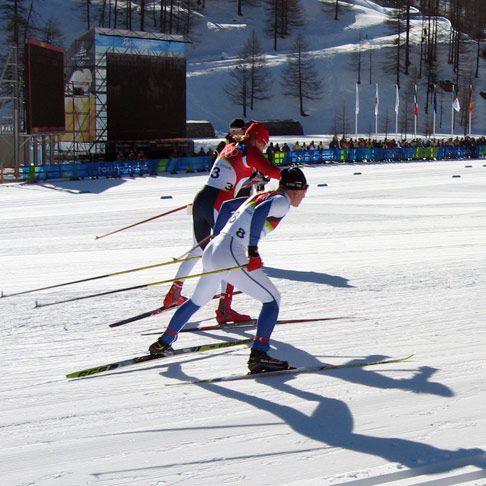
    Kristina Smigun (in white and blue) passing the Czech Republic’s Katerina Neumannova on the way to gold at the 2006 Olympics. That medal may now be stripped, according to Norway’s TV2.

    In an interview with Britain’s The Independent, Dick Pound warned that the revelations coming in the second part of his WADA Independent Commission report would shock the sports world.

    “When we release this information to the world, there will be a wow factor,” Pound said. “I think people will say how on earth could this happen? It’s a complete betrayal of what the people in charge of the sport should be doing.”

    Pound was referring to the investigation into the International Association of Athletics Federations (IAAF), the international governing body for track and field. The Independent Commission looked at data from 15,000 blood samples which had been leaked by someone inside the organization.

    Their findings led to criminal proceedings in France against the former IAAF President, Lamine Diack, and the suprises may not stop there.

    He also suggests that other international federations take matters into their own hands because the problems are not limited to track and field athletes in Russia, but system-wide, and also not limited to Russia.

    “This is the opportunity in certain executive committees to close their doors and say ‘as of today, the old system is gone, we’ll deal with those that need to be identified in due course but we’re going to level the playing field’,” he said. “I think the option is there but will it be taken? I don’t know. For some sports their actual credibility is at risk.”


    Meanwhile, doping scandals in nordic sports continue to emerge in relation to past Winter Olympics.

    Norway's Nils Erik Ulset (right) with a Russian gold medalist at the 2014 Paralympic Games. (Photo: Matt Boulton / Wikimedia Commons)
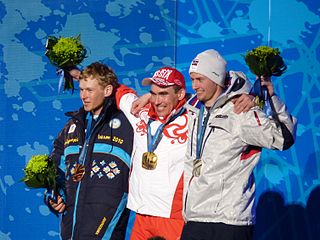
    Norway’s Nils Erik Ulset (right) with a Russian gold medalist at the 2014 Paralympic Games. (Photo: Matt Boulton / Wikimedia Commons)

    On Monday, NRK ran an interview with Nils Erik Ulset, a Paralympic skier and biathlete who has medaled at four separate Olympics. In Sochi, the anti-doping procedure was unfamiliar, he said.

    “I became gradually aware that foreign athletes were gathered into one room, and the Russians in another,” he told NRK. “I also noted that the Russian athletes only held for three to four minutes. It is not possible to conduct an inspection that quickly.”

    When Ulset tried to enter the door the Russian athletes were going through, he was turned back.

    The International Paralympic Committee (IPC) has denied that there was anything irregular in antidoping in Sochi.

    “All doping tests during the Winter Paralympics in Sochi were conducted according to the international standard for testing,” wrote Craig Spence, the communications director for the IPC, in an email to NRK. “Independent observers from WADA and members of the IPC Anti-Doping Committee were also present to supervise. They have not notified about anything worrying.”

    That’s a similar line to the official International Olympic Committee response to calls for re-testing of samples from the 2014 Olympics, after the WADA Independent Commission revealed that the Russian state security apparatus FSB had infiltrated the Olympic anti-doping laboratory.

    Despite those allegations, the IOC released a statement saying that “the IOC has no reason to question the credibility of the results of the anti-doping tests carried out at the Olympic Winter Games 2014.”

    In this case, Spence told NRK that “the IPC is an organization deeply committed to protecting the clean athletes and provide equal competitive conditions for all.”

    Yet, damningly, when NRK tried to follow up with other Norwegian Paralympic athletes, they found that few others had ever been tested in Sochi.

    Scandals from even further in the past are also rearing their ugly heads.

    Kristina Smigun in 2007. (Photo: Wikimedia Commons)
    Kristina Smigun in 2007. (Photo: Wikimedia Commons)

    Last year it was reported by Germany’s ARD news service that samples from the 2006 Olympics had been re-tested using new methods and Estonian cross-country skier Kristina Smigun’s samples had been contained prohibited substances.

    Norway’s TV2 picked up the story this week, reporting that Smigun’s case has been mired in the Court of Arbitration for sport, but that she could soon be stripped of her gold medals from the 10 k classic and the 15 k skiathlon.

    The Estonian Olympic Committee confirmed to TV2 that they had been notified in December 2013 of a positive test.

    The International Ski Federation, WADA, the Estonian Ski Federation, and the Estonian Anti-Doping Association all told TV2 that the matter was in the hands of the IOC. The television report stated that both Smigun’s ‘A’ and ‘B’ samples had tested positive, yet there has been no news or action for almost two years.

    The IOC said that they could not comment on the matter other than that many lawyers were involved, and that they hoped a verdict would be announced in three to six months.

    But the Court of Arbitration for Sport denied that the case had been brought to them.

    “As stated earlier, there is not, and has never been, a case concerning the IOC and Kristina Smigun and / or retesting of samples from the Turin Olympics in CAS system,” the organization wrote in an email to TV2.

    The Court of Arbitration for Sport frequently lists upcoming hearings on their website, but cannot provide information until after cases are settled. Therefore, it is not altogether surprising that there is no information about a Smigun case on their website, whether one exists or not.

    Norway stands to benefit, a lot, should Smigun’s medals be stripped. It would mean another gold medal for Marit Bjørgen, in the 10 k classic, and silver rather than bronze for Hilde Gjermundshaug Pedersen in the same race. And for Kristin Størmer Steira, recently retired, it would mean moving up from fourth place to bronze in both races – ending long-running painful jokes about wooden medals.

    There’s no evidence so far that other re-tested samples from skiers at the 2006 Olympics resulted in new anti-doping cases.

    Some are speaking out to urge action by international federations. U.S. Biathlon Association President and CEO Max Cobb spoke to FasterSkier soon after the first part of the Independent Commission’s report dropped, urging investigation into all sports.

    Tore Bøygard, the head of the Norwegian biathlon federation, has now spoken out to NRK, one of the main Norwegian broadcasting companies.

    “It is suggested that there is doping in other sports,” he said, according to a translation. “The sport cannot survive with some shadow ofdoping hanging around. Therefore, you might as well get it scrutinized. Should there be something left there, so you might as well get it up and get it on the table…. We should not be so naive.”

    Bøygard has sent a letter to Anti-Doping Norway asking them to pressure WADA to initiate further investigations.

  • WADA Independent Commission Strongly Implies Winter Sports at Risk From Doping

    WADA Independent Commission Strongly Implies Winter Sports at Risk From Doping

    The WADA Independent Commission
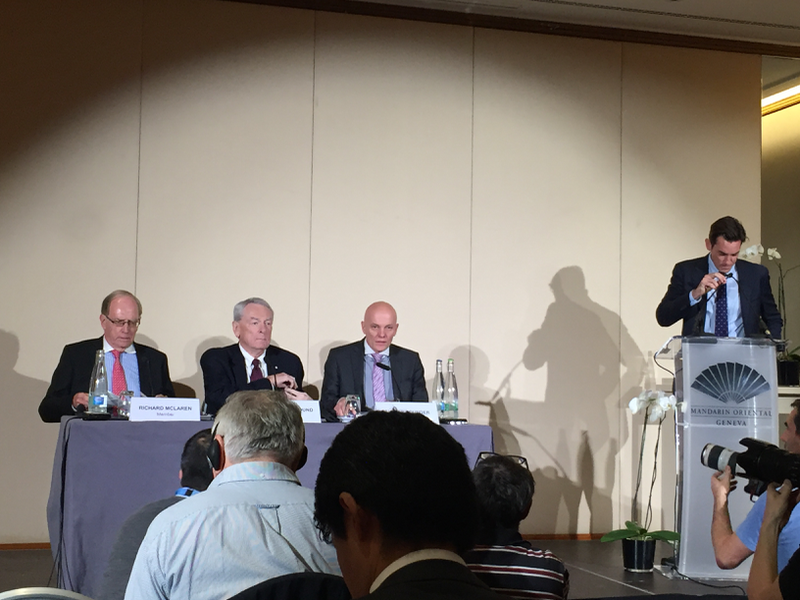
    The WADA Independent Commission (l-r) Richard McLaren, Dick Pound, and Gunter Younger wait to discuss their findings as WADA’s Ben Nichols mediates questions from the ravenous press.

    GENEVA —“It’s pretty disturbing,” former president of the World Anti-Doping Agency (WADA) Richard Pound said in a press conference in Switzerland this afternoon about a special investigation into systematic doping in Russia.

    “We are not dealing with a he-said-she-said, we actually had documents and recordings,” he continued. “It’s disappointing to see the nature and the extent of what was going on, and to reach the conclusion that it could not possibly have happened without everybody knowing about it and consenting to it. It’s worse than we thought.”

    And then, after confirming that he would call this an instance of “state-sponsored” doping, the head of the Independent Commission said this:

    “Tip of the iceberg? I’m afraid you’re right. We don’t think that Russia is the only country with a doping problem, or that athletics [track and field] is the only sport with a doping problem.”

    The investigation was spurred by a documentary made by German filmmaker Hajo Seppelt, in which he talked to former Russian athletes and heard tales of doping, cover-ups, and extorting money from athletes who tested positive in order to allow them to continue competing.

    (An English transcript of the documentary can be found here.)

    In August Seppelt later partnered with the Sunday Times to further his investigation, finding a document with blood test results for 12,000 tests administered over a 10-year period leading up to the 2012 Olympics.

    Hundreds of these tests showed abnormal blood profiles that suggested, but did not prove, doping by Russians but also other athletes. This led to the assertion that the International Association of Athletics Federations (IAAF), the international governing body for track and field, did not do enough to protect clean athletes.

    Pound congratulated Seppelt and ARD on their “fine piece of investigative journalism,” saying that it not only sparked the investigation but made their job much easier.

    “The commission also wants to congratulates the individuals who were courageous enough to be whistleblowers in this matter, despite knowing that the outcomes are often attacks on their character,” he added.

    The Independent Commission, made up of Pound along with longtime sports arbitrator Richard McLaren and Gunter Younger, the head of the Department Cybercrime with Bavarian Landeskriminalamt in Germany, found widespread corruption in Russian track and field. Most allegations from the documentaries were upheld.

    While Pound said that “the athletes have always been the ones who get caught,” he shifted much of the blame for the doping to coaches and ministry officials.

    He revealed that the Independent Commission had found multiple ways that that Russian officials shielded its athletes – whom they were encouraging to dope – from getting caught.

    Many were tested in a Moscow laboratory before leaving the country for competitions, and not allowed to compete unless they first tested clean.

    “We had reports of athletes in London going back to Moscow to be tested, and then came back to London when it was clear,” he said of the 2012 Olympics. “That has been a feature starting in the old Soviet days, which is that they never tested positive in competition. What you have to watch for is purported injuries, purported illnesses, which may not be the real reason that an athlete is not competing.”

    The implication here is that many results sheets included athletes who had been using banned substances during training, even if they could not use them at actual competitions.

    In other cases, coaches lied about whether athletes were present when doping control officers came to test.

    Over 1,400 samples at a Moscow laboratory were also destroyed once WADA made it clear they were coming to check the laboratory. No believable explanation was ever given for this occurrence, after WADA had explicitly requested that the samples be kept.

    “We came to a dead end, but we wanted everybody to know that we weren’t entirely satisfied with the explanation we got,” Pound said.

    This was one of just several instances where what the commission, originally convened to investigate doping in Russian track and field, found information that implicated other sports as well.

    “It likely was spread across many sports, not just athletics,” Pound said.

    This occurred in December 2014, meaning that samples were likely taken from winter sports athletes in the run-up to and beginning of the 2014/2015 competition season.

    Furthermore, the commission found that Russian security service FSB was present in the laboratory which tested samples at the 2014 Olympics held in Sochi, Russia.

    “The Moscow laboratory is not operationally independent from RUSADA or the Ministry of Sport,” the Commission wrote in its full report, which is available online. “Its impartiality, judgment and integrity were compromised by the surveillance of the FSB within the laboratory during the Sochi Winter Olympic Games.”

    So does that mean that the results of Sochi might not stand?

    “I don’t think we can be confident that there was no manipulation done there,” Pound said. “But we don’t have any hard evidence that there was. We simply know that they were there. It’s hard to know what the Russian state’s interest in athletes’ urine would be.”

    Asked by FasterSkier specifically about cross-country skiing and biathlon, two winter endurance sports where Russians have had positive tests in the last decade at a much greater rate than other countries, he said suspicions were well-founded.

    “Certainly the two sports you mentioned are known to have had a lot of doping problems, and probably not just Russia,” he said.

    There is the possibility for WADA to investigate more broadly, either on other Russian teams or other sports in general. But Pound made clear that he was not interested in leading such an effort.

    “I hope that some other independent commission will do that!” he laughed, and McLaren and Younger also smiled at this, clearly tired from a massive amount of work done in a relatively short amount of time. “We feel we have kind of done our job for the moment.”

    The commission concluded with a list of recommendations for various sanctions. Some were for direct sanctions or further investigation of a number of athletes and staff in Russian track and field.

    Another obvious suggestion was to withdraw the accreditation of the Moscow laboratory.

    “We found very few analytical errors coming out of the Moscow labs … in terms of straight faulty analysis, aside from one test this summer where the A and B didn’t match, I don’t think we found that,” Pound said. “The problem was people hiding samples or altering them or losing them or substituting them, in return for cash. The people broke down.”

    The commission also suggested that Russia’s athletics federation and its anti-doping agency, RUSADA, be found noncompliant with the WADA Code. That could keep Russian runners, throwers, and racewalkers from competing at the Olympics in Rio de Janeiro, Brazil, next year.

    Should the Russians come into compliance, Pound suggested that they may be able to compete in Rio. But they would have to start cleaning house soon.

    “If they do the surgery, do the therapy, I hope they can get there and compete,” he said. “The idea is not to exclude people from the Olympics if you can possibly avoid that. … But sometimes, that’s the price you pay for it.”

    When some in the audience balked at the possibility that Russia could compete at the Olympics just a year after such a major scandal, saying that a penalty should be more severe, Pound emphasized that positive encouragement may be key to helping Russia clean up.

    Yet he was also aware that the carrot had to be accompanied by a stick, so to speak.

    “If they do the surgery, do the therapy, I hope they can get there and compete.” — Dick Pound, former president of the World Anti-Doping Agency, who chaired an independent commission to investigate systematic-doping allegations in Russia

    “I do think that we have been a little diffident in using our muscle,” he said of WADA. “We have spent most of our time trying to persuade people to become Code compliant… but if you haven’t become Code compliant [the last 17 years], that tells me that you’re not trying very hard…. I think that those decisions should be taken away from the political table and be put in the hands of a compliance committee which will report whether there is in fact compliance or not. At that point it’s very hard for the political bodies not to act.”

    Separately, the commission suggested suspension of the Russian athletics federation by the IAAF.

    The group found evidence that the IAAF had been complicit in covering up Russian doping, but did not comment much on that today. They had passed evidence first to Interpol, and then to authorities in France, to possibly begin criminal proceedings. Once the relevant criminal investigations are concluded, Pound said that the commission would happily discuss that aspect of their findings.

    Importantly, since the alleged criminal activity took place – in which Lamine Diack, the former head of IAAF, is purported to have taken bribes – a new leader has taken control of the organization.

    But Lord Sebastian Coe, a Brit who now heads the group, has not been particularly sympathetic in responding to the allegations so far.

    In August, Coe called the German documentary and the articles in the Sunday Times a “declaration of war on my sport — there is nothing in our history of competence and integrity in drug testing that warrants this kind of attack.”

    That seems naïve in light of the commission’s findings. So will any of their recommendations come to pass? Pound stressed that the Independent commission was just that independent. WADA itself had not seen or influenced the report before Thursday, and the commission has no power over what the IAAF does or does not decide to do.

    But there is evidence that the IAAF may be capitulating. During the press conference, it was also reported that the IAAF would at least consider sanctioning Russia.

    As for WADA, the executive board has a meeting coming up in Colorado Springs. It remains to be seen what they can, and will, do to combat the Russian problem given the tools they have at their disposal.

    “While the contents of the Report are deeply disturbing, the investigation is hugely positive for the clean athlete as it contains significant recommendations for how WADA and its partners in the anti-doping community can, and must, take swift corrective action to ensure anti-doping programs of the highest order are in place across the board,” Craig Reedie, the current WADA president, said in a press release after the conference. “WADA is fully committed in its role of leading the charge to protect the rights of clean athletes worldwide.”

  • Given the Crime, Are Proposed Sanctions Enough? Tygart Weighs In

    GENEVA, Switzerland— After revelations that there was widespread, systematic doping in Russian track and field, a World Anti-Doping Agency (WADA) Independent Commission recommended that the Russian athletics federation be suspended by the International Association of Athletics Federations (IAAF).

    The findings were a confirmation of the worst fears for many in the sports community, and a sickening realization that suspicions had been well-founded.

    “It confirmed a lot of what we had heard over the last couple of years,” said Travis Tygart, the head of the U.S. Anti-Doping Agency (USADA), in a phone interview. “And we saw results coming out of Sochi and other Games that seemed to suggest a change in attitude on this issue. That’s why we were pushing hard back in December to open this investigation.”

    WADA itself has pledged to consider the Commission’s suggestions, including to offer more protections for whistleblowers and to place a greater priority on compliance from all member federations.

    And in a reversal, IAAF head Lord Sebastian Coe said that the IAAF would consider suspending the Russian federation. Previously hostile to the allegations, Coe has given the Russians a week to respond to the report.

    Independent Commission head Richard Pound believes that if Russia were to become compliant in the next 12 months, there is a way forward for Russian runners to compete at the 2016 Olympics.

    Although he asserted that this would be a lot of work and Russia would have to start right away – something that appears doubtful at the moment – even the possibility of Russian track and field athletes winning medals in Brazil is leaving a foul taste in some observers’ mouths.

    That’s because the commission itself admitted that the London 2012 Olympics had been “sabotaged” by Russians who were routinely doping.

    “We had reports of athletes in London going back to Moscow to be tested, and then came back to London when it was clear,” Pound said.

    The second part of the Independent Commission’s investigation, which is expected to be made public by the end of the year, will investigate blood tests collected between 2001 to 2012. So it is almost certain at this point that results from not only London, but also previous Olympic Games are affected by doping athletes.

    Among the many disastrous consequences of such a situation, permanent damage has been done to those athletes who had not been doping. They were deprived of results, earnings, and sponsorship opportunities.

    “The real tough thing is that when there’s money and prizes involved, often the money is gone, it has all been spent,” Pound said.

    With little chance to recoup their financial or emotional losses, it’s understandable that athletes – and their fans – should be upset if the same athletes, coaches, and officials which sabotaged past Games are back on the Olympic track in 2016.

    Tygart, for one, believes that it’s time for a more punitive phase of WADA’s history to begin.

    “It’s a disappointing situation,” Tygart said in a phone interview. “The Olympic dream has been turned into a nightmare for many… those who are not Code compliant need to be kicked out of international competition. All of those fall under the Russian sports minister. They should be kicked out. While we do want the house to be cleaned up, we also want to see justice served. If there are no consequences, then other countries will continue to do this until they get caught.”

    Even Pound, who several times said that he hoped “Russia will seize the opportunity to take a lead and move forward”, acknowledged that harsher punishments were needed.

    “That’s your nuclear weapon,” he said of the possibility that Russians be barred from Rio de Janeiro. “Say unless you get this done, you will not be in Rio… in my country, that threat got it done. With Ben Johnson in 1988.”

    But so far, the threat of investigation has not yielded much progress.

    Russian track and field staff did not attempt to reform or hide their behavior, even after the WADA investigation had begun. During a WADA mission to a racewalking training camp in Saransk, Russia, coaches denied that athletes were present. Once doping control officers found them, nine of those athletes produced positive tests.

    “The dates of the reported events at the Saransk training camp make it clear that, contrary to some assertions, the practice of doping in athletics in Russia remains very current, even following the ARD documentary,” the Independent Commission states in its report.

    There was also blood transfusion equipment at the Saransk training center. Blood transfusions are a prohibited method in the WADA Code.

    In meetings with the Russian Minister of Sport, Vitaly Mutko, Pound said that Mutko still seemed to hope for a different report than the one the Commission would deliver.

    “I think it is appropriate to say that the commission organized a special meeting with the Russian minister of sport,” Pound explained. “In that meeting he invited us to make recommendations to ensure that Russia could contribute to doping-free sport… but we advised the ministry in advance that he would not likely be pleased with many of the findings in the course of our investigation.”

    This level of denial has continued, as Mutko said that Russia did not have a doping epidemic.

    “We don’t deny that we have problems but they exist around the whole world; we have the same percent as all countries do,” he told Interfax.

    The Russian athletics federation’s lawyer, Artyom Patsev, used a similar line.

    “Let’s not mince words,” he told ria.ru. “American, Canadian athletes, they’ve caught even more of them than Russians. They engage in doping literally every year. They catch athletes. But there wasn’t such an extensive campaign. Why not?”

    Analysis disproves his statement: the New York Times published a graphic showing that 11.5% of all positive tests in 2013, across all sports, came from Russia. That made the country the leader, by far.

    Tygart suggested that to ensure appropriate penalties are taken, athletes need to speak up and lobby the relevant organizations.

    “They have every right to be angry,” he said. “They have to stand up to ensure justice is service from every side… But all those who value the Olympic values have to also stand up. This type of corruption and intentional systemic state supported doping to defraud the world, has to be fought. Fair play is what the Olympics stand for. We can’t sit idly by.”

    Could he see a situation where, without believable progress by Russia, other athletes refused to compete against them?

    “I hope it doesn’t come to that, but if you’re a clean athlete, then your Olympic dream has just been shattered,” Tygart responded. “So what you hope is that those who believe in Olympism, the same basic tenets of fair play – rally around it and ensure that those who don’t aren’t allowed to compete… Particularly the clean athletes deserve it. Anything less than that is failing.”

    The only way forward, he suggested, is to set up truly independent anti-doping organizations in Russia and in track and field.

    Part of the Commission’s report discussed how the Russian Anti-Doping Agency, RUSADA, was pressured and controlled by the Ministry of Sport.

    “The report clearly demonstrates that it’s an attitude of win at all costs,” Tygart said. “We’ve seen it here in the US. The system can’t be such that it allows it to survive. You have to have the most independent system to ensure that those who try to break the rules can’t do it successfully.

    “I think a team of international experts his to come in for a period of time to oversee the changes – to give confidence to the rest of the world that they are clean, if they are ever allowed to compete again,” he concluded.

  • Rhetoric Aside, a Less Publicized Goal in WADA Ban of Asthma Medications: Healthy Athletes

    Rhetoric Aside, a Less Publicized Goal in WADA Ban of Asthma Medications: Healthy Athletes

    This is the second of two pieces looking at the use of bronchodilating drugs to treat asthma in athletes – and their changing place on WADA’s prohibited list. The first, published last week, examined the potential of Spiriva, a drug usually used in COPD patients, in treating asthma.

    ***

    Asthma, a constriction of the airways caused by one or several stimuli and also characterized by chronic airway inflammation, is especially common in winter sports such as skiing. And between the cold weather and the cardiovascular effort required by the sport, it can be difficult for asthmatics to manage their symptoms while competing. There are plenty of asthma medications out there – and yet, until two years ago, athletes had to submit at Therapeutic Use Exemption (TUE) to the appropriate anti-doping organization before they took a puff of their inhalers. Β-2 agonists, a common class of drugs that expand the airways, were categorically banned.

    Then in 2011, the World Anti-Doping Agency (WADA) removed salbutamol, one of the most common asthma medications, from its Prohibited List except for in quantities of over 1600 micrograms in 24 hours, and in 2012 gave the same treatment to formoterol, this time with a limit of 36 micrograms in 24 hours. Salmeterol, another β-2 agonist, is also not banned. All of these drugs fall into the category of bronchodilators: substances which relax and expand airways.

    “There are really no regulations requiring documentation of asthma to use a bronchodilator – that has really sort of fallen by the wayside,” said Kenneth Rundell, a former member of the International Olympic Committee’s asthma group, in an interview last week.

    Was the move simply to accommodate asthmatic athletes and cut down on the amount of TUE paperwork that was submitted, or are the three un-prohibited drugs really different than their fellow β-2 agonists which remain on the list? Other types of medications that relax and expand airways, – the entire category of these drugs are called bronchodilators – are not on the Prohibited List at all, despite achieving the same end result as β-2 agonists. So why were β-2 agonists tagged as performance-enhancing substances?

    WADA itself didn’t provide much clarification: “A substance is put on the List if it is deemed to be performance enhancing,” WADA’s Senior Manager of Media Relations and Communications, Terence O’Rourke, wrote in a brief e-mail to FasterSkier.

    Exercise and the Normal Athlete

    To understand how these drugs work and why they might be banned, one must first understand airways. Lungs respond to exercise by dilating to accommodate the added airflow and reduce constriction. And asthmatic lungs do the same thing, at least initially: for instance, a 1999 paper by Kenneth Beck of the Mayo clinic reported that during steady-state exercise, asthmatics experienced dilation of the airways for the first 15-20 minutes of exercise, before the smooth muscle started constricting. In an incremental VO2 max test, airways continuously expanded, reaching their maximum width at the end of the test and then constricting once the bout was over.

    “After a couple of minutes of exercise, even the asthmatics, except for the very severe asthmatics, will bronchodilate, just for mechanical reasons,” Rundell, who was formerly the head of the Human Physiology Laboratory at Marymount University, told FasterSkier. He added that bronchodilating drugs will further help this process in asthmatics for whom the response is lower.

    The worst effects of exercise on lung function actually come after the workout is over. In a 2010 report on exercise-induced asthma by the U.S. Department of Health and Human Services (available as PDF), the authors write that

                “Vigorous physical exercise can be followed by transient clinical signs and symptoms similar to an asthma attack and are due to post-exercise bronchoconstriction (i.e., a narrowing of the airways). Clinical symptoms include coughing, wheezing, shortness of breath, excessive mucus production, chest tightness, chest pain, or an ‘itching or scratching sensation’ in the chest. Though it is more common in people with asthma, it also occurs in people without asthma.”

    There’s a distinction between Exercise-Induced Bronchoconstriction (EIB), as described above, and asthma, which is not necessarily exercise-induced.

    So in a normal interval session, skiers with and without asthma might experience very similar lung function. Multiple studies show that non-asthmatics also experience and report coughing, wheezing, and shortness of breath. One cause is that the deeper breathing during exercise brings in more dry, cold air than the upper airways can warm and humidify before sending to the more sensitive lower airways, leading to constriction as self-defense.

    “Even with interval-type exercise, if you measure lung function during exercise, you can see some mechanical protection during exercise,” Rundell explained. “Then when they have their resting period you can see the airways narrow a bit, and then they will bronchodilate when they start exercising again, but not as much as, say, after the first four-minute bout. So over time, half an hour of that, you’ll see a gradual decline in lung function during the exercise. With steady-state exercise, you’ll see a decline as well.”

    So Why The Bans?

    In 2005, WADA chief Dick Pound told the Associated Press that athletes were faking asthma to obtain the medications, and that “we’ve caught on to their scam,” while an IOC board member from Hungary said that “We need to stop this pretending to be ill and taking dope in order to enhance the sporting performance.” Both implied that bronchodilating medications would help minimize the natural decrease in lung function of the course of a workout or race.

    It’s true that Β-2 agonists like salbutamol have been shown to help with EIB, as well as asthma. But that doesn’t exactly make them performance enhancing, as Pound had suggested. For instance, the worst bronchoconstriction comes after exercise, not during a competition – meaning that prevention of those symptoms wouldn’t lead to a performance benefit.

    “The extensive research on therapeutic doses of inhaled β2-agonsits clearly rules out any ergogenic effects,” researchers from Copenhagen wrote all the way back in 2007. “Only few studies have shown ergogenic effects of inhaled salbutamol, but these are limited by enrollment of recreational subjects. It is now a common opinion that inhaled β2-agonists in therapeutic doses has no advantageous effects in healthy athletes.”

    So, if bronchodilators aren’t performance-enhancing in regular athletes – and a large number of studies, some cited by FasterSkier in a 2011 article, have come to the same conclusion as the Copenhagen researchers – there had to be another reason that they were on the list. As it turns out, one criteria for prohibiting a medication is that it is detrimental to athletes’ health. This was a concern for WADA – salbutamol has been shown to have tough side effects when used over the long term – as well as the fact that long-term use of β-2 agonists decreases the drugs’ effectiveness over time.

    “Inhaled β2 agonists are the most effective drugs for… relieving intermittent symptoms of asthma,” the IOC’s asthma committee wrote in a 2008 report. “However… athletes who use either short- or long-acting β2-agonists on a daily basis should be advised that their effectiveness to prevent EIB will partially diminish. Frequent use of β2 agonists may also increase the bronchoconstrictor response to exercise and allergens. Strategies to avoid these problems could include restricting β2 agonists to infrequent use…”

    According to Rundell, who was part of that committee, the consensus by the IOC’s scientists and doctors seems to have had diverged from the rhetoric by its anti-doping leaders.

    “The reason was not because they provided any type of performance enhancement, but that the athletes thought that they provided performance enhancement,” Rundell told FasterSkier of the drugs’ ban. “Clenbuterol has been shown to do that, but that’s not an inhaler. At any rate, there was rampant use of the bronchodilators, so it was more out of concern for the athletes’ health that they had to provide documentation showing that they had hyper-reactive airways.”

    Publicly, however, WADA continues to assert that the bans are because the drugs are performance-enhancing, and that the organization will continue to investigate their effects.

    “The issue of β-2 agonists will continue to be a focus of WADA’s research activity in order to ensure that the administration of large doses or by systemic routes of these substances is prevented and prohibited,” WADA wrote on their website when they released the 2012 Prohibited List.

  • In Cases Like Pankratov’s, Information Can Be Tough to Come By

    In Cases Like Pankratov’s, Information Can Be Tough to Come By

    The International Ski Federation's rules guide the release of information in anti-doping cases.

    Nikolai Pankratov’s reported detainment at the Swiss border made waves in the cross-country skiing community when the news broke last week. But since then, there’s been barely a ripple of information to emerge from the International Ski Federation (FIS)—which, according to the Russian Anti-Doping Agency, is in charge of handling the case.

    What is known about Pankratov is this: according to multiple reports, the Russian cross-country skier was stopped at the Swiss border with intravenous equipment and 22 vials of Actovegin, a drug derived from calf’s blood. While Actovegin is suspicious, its use is not banned—Pankratov ran afoul of FIS through his possession of the IV, which is prohibited.

    FIS has refused to confirm the existence of a case against Pankratov. And even if an investigation is indeed underway, FIS is not required to disclose any information about it, unless Pankratov is found guilty and sanctioned by a three-person FIS panel.

    According to World Anti-Doping Agency (WADA) spokesman Frédéric Donzé, the rules governing the release of information by sport federations like FIS are guided by the World Anti-Doping Code, which Donzé dubbed “the framework of the fight against doping.”

    In order to be considered compliant by WADA, FIS and other federations—like those governing biathlon, swimming, and track and field—must adopt fundamental provisions in the Code, which outlines standards for drug testing, sample analysis, hearings, and other anti-doping procedures. As long as these basic rules are followed, each federation is free to apply its own sport-specific policies on top of them.

    The Code has two key provisions regarding disclosure. The first states that in a pending case, the identity of an athlete accused of breaking the rules cannot be released until after he or she has been notified of the potential violation. The second requires that federations publicly report the cases of athletes who have been found guilty of doping, within 20 days of the ruling.

    That leaves some leeway for the sports, although according to WADA board member and former president Dick Pound, federations generally try to avoid disclosing information unnecessarily before the resolution of a case. “Most of the leaks you get in the media tend to come from the athletes or their entourage—it’s very seldom from the doping authorities,” he said.

    “You don’t want to expose an athlete to all this if nothing comes of it,” Pound continued. “If the B-sample doesn’t confirm the A…or if you find out that there was [a medical exemption], you don’t want there to have been a whole bunch of publicity.”

    Some federations, like the International Cycling Union (UCI), do take a more proactive approach. According to spokesman Enrico Carpani, in the event of

    Nikolai Pankratov was reportedly stopped at the Swiss border with intravenous equipment and 22 vials of a suspicious drug.

    a positive drug test, the UCI will publish a press release that contains the rider’s name, information about where and when the test took place, and the type of substance the rider was using—all before the case has been heard, and even before the test of the B-sample.

    Others, like the International Association of Athletics Federations (IAAF), which governs track and field, are more circumspect. In an interview, Results Manager Thomas Capdevielle said that his organization “does not spontaneously communicate” about positive drug tests (except for when violations occur at a championship, in which case an expedited process goes forward).

    Disclosure, Capdevielle said, is delegated to the accused athlete’s national track and field association, and “it’s their decision” to release any information.

    But while Carpani and Capdevielle were referring to the procedures to be followed in the event of a positive drug test, Pankratov’s situation is different, since a case against him would likely hinge on what is known as a “non-analytical finding”—based on possession rather than a positive test.

    According to Capdevielle, non-analytical findings are harder to prove, and the evidence against the athlete in such cases is not usually as damning as if he or she had tested positive for a banned substance—justifying greater confidentiality until a ruling has been made.

    “It’s very tricky, and they’re often long investigations,” Capdevielle said. “I would understand why a federation would take a conservative approach in a non-analytical case.”

    FIS’s anti-doping rules allow—but do not require—the release of an accused athlete’s identity as soon as he or she has been “provisionally suspended.” Such measures are used to keep athletes from competing in the period between a positive drug test (or non-analytical finding), and the time their case is heard.

    In an e-mail to FasterSkier, FIS Secretary General Sarah Lewis suggested that her organization’s approach to disclosure depends on the type of violation alleged.

    “From the FIS perspective, it is not possible to treat potential [cases] involving a positive sample with the same policy as those without,” she said. “Individual case management is required.”