This is the final installment of a three-part series on the development of the Chinese ski program. Click here to read part 1 and part 2.
Part 3: Olympic Hopes and Misgivings in Norway
For the Chinese cross country ski team, the 2022 Beijing Olympics opened with a blaze when Dinigeer Yilamujiang was selected to co-light the Olympic flame. It was an enormous honor for the twenty year old cross country skier from Altai, China with Uyghur roots. Yet her ethnic background overshadowed the moment, and, like so many aspects of the Chinese cross country skiing project, the ceremony meshed sporting aspirations with political theater.
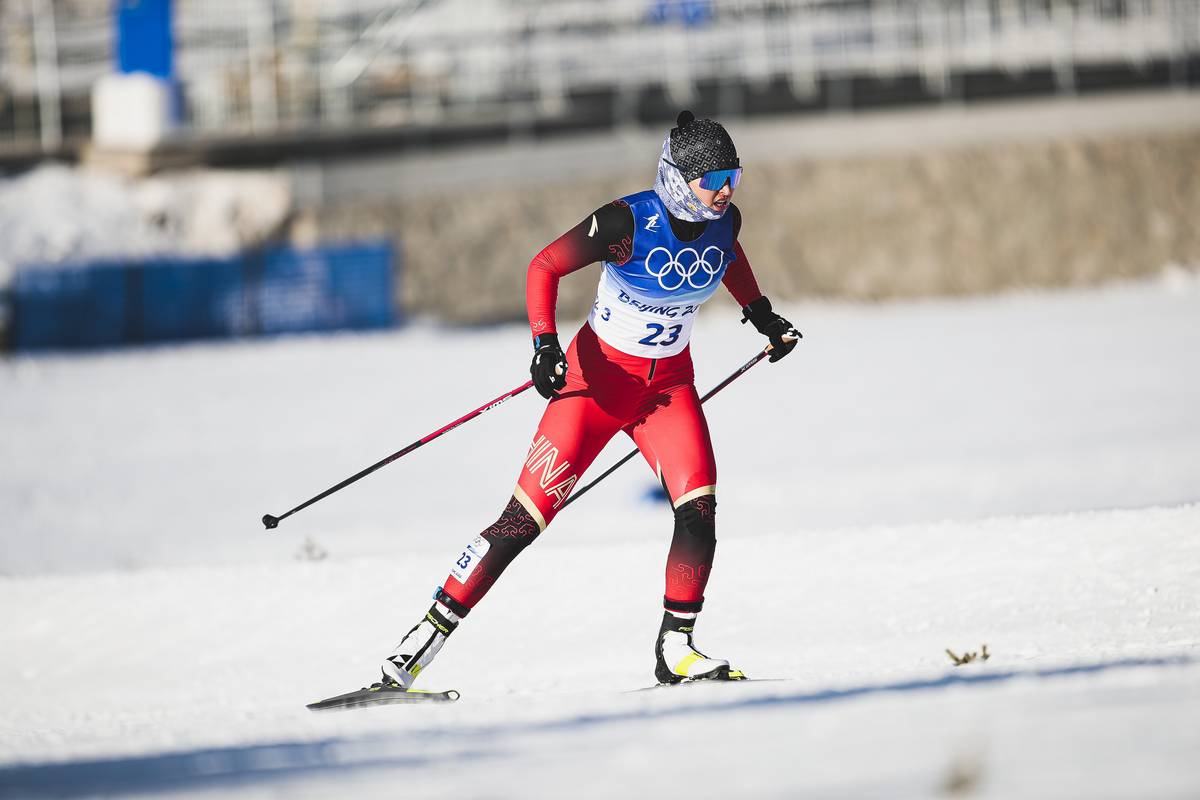
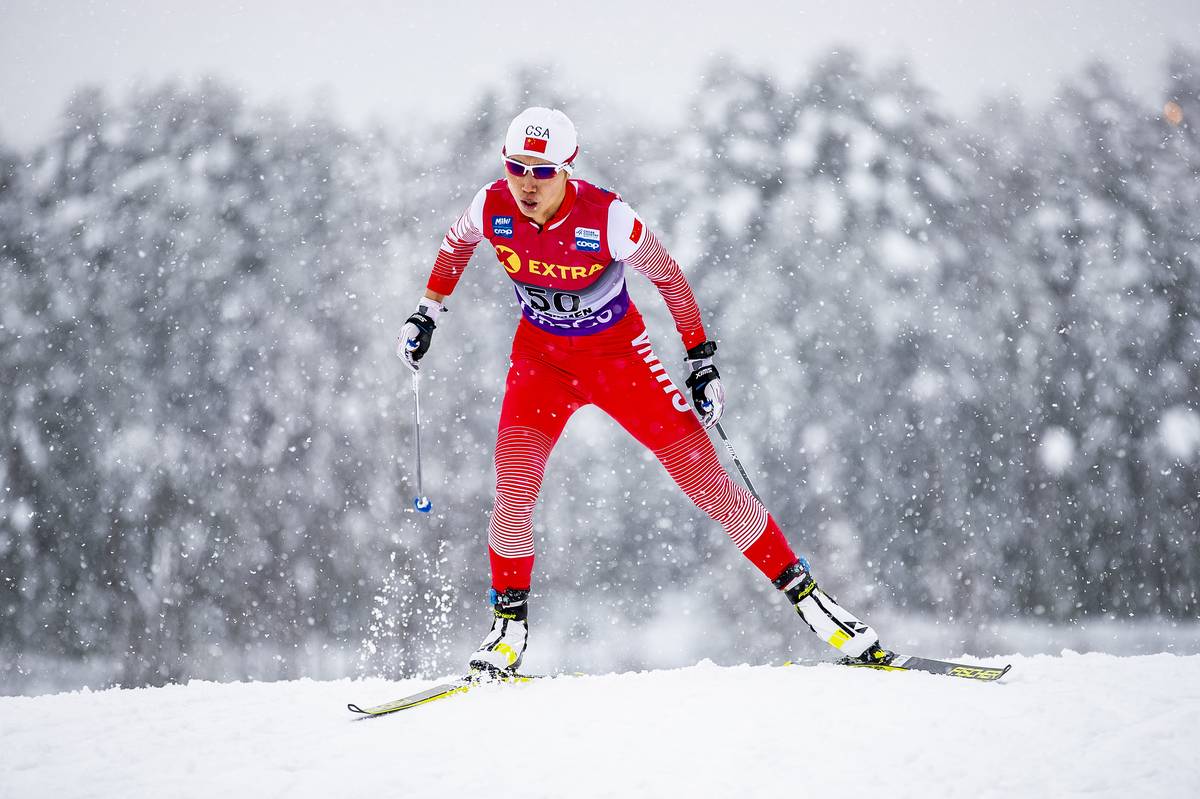
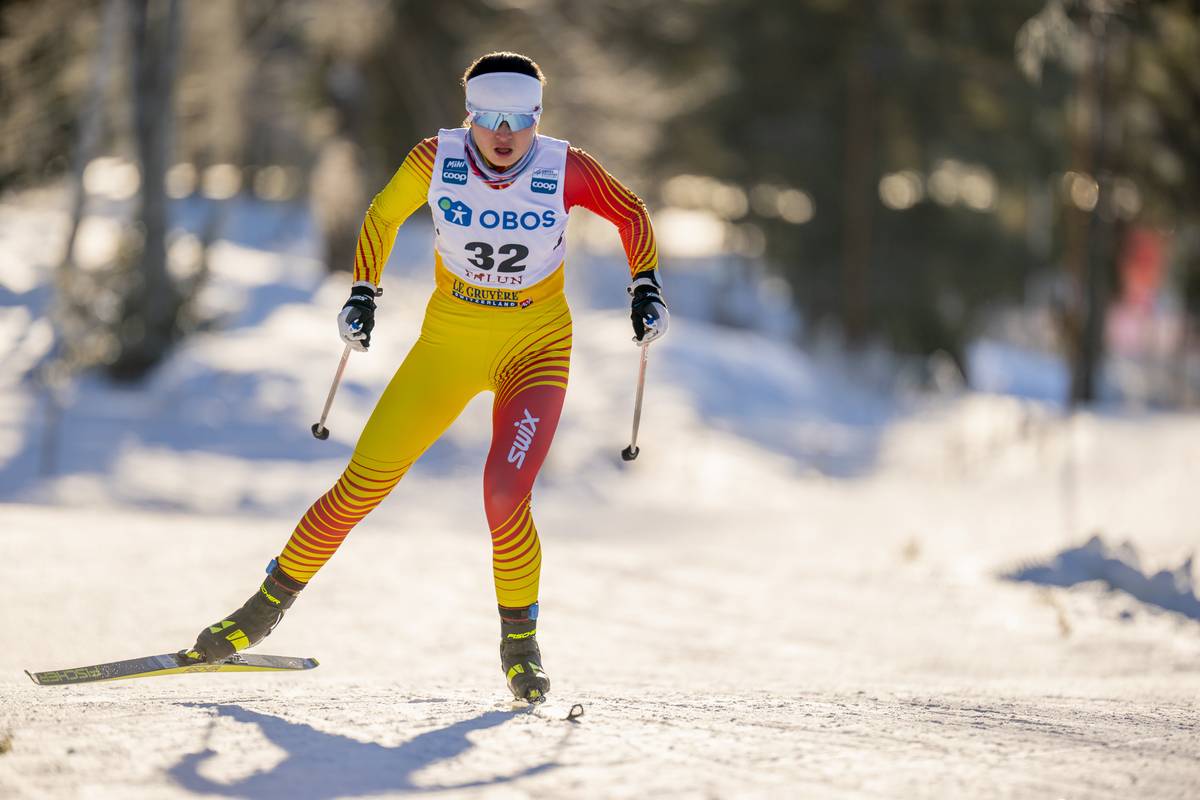
Dinigeer, known as Dini on the ski circuit, is a rising star on the Chinese ski team. She is one of the few of the team’s new generation that grew up with skiing, and her father had hopes of becoming a great skier himself, and later became a coach.
Dini’s father Mulaji Yilamujiang, never expected her to become a professional athlete. That began to change when at age twelve, Dinigeer competed in a regional race and a competitive chord was struck. “She wanted to win the race like a professional athlete and get on the podium,” Mulaji recounted to Chinese news outlet Xinhua.
It was hardly surprising then that when Kristian Bjune Sveen took the job as coach of the Swix China team in 2017, he picked fifteen year old Dini.
Since then, her success has by any measure been extraordinary: At the 2020 and 2021 Junior World Championships, Dinigeer proved that she was among the best in her age group, finishing 5th and 6th respectively in the 5k distance.
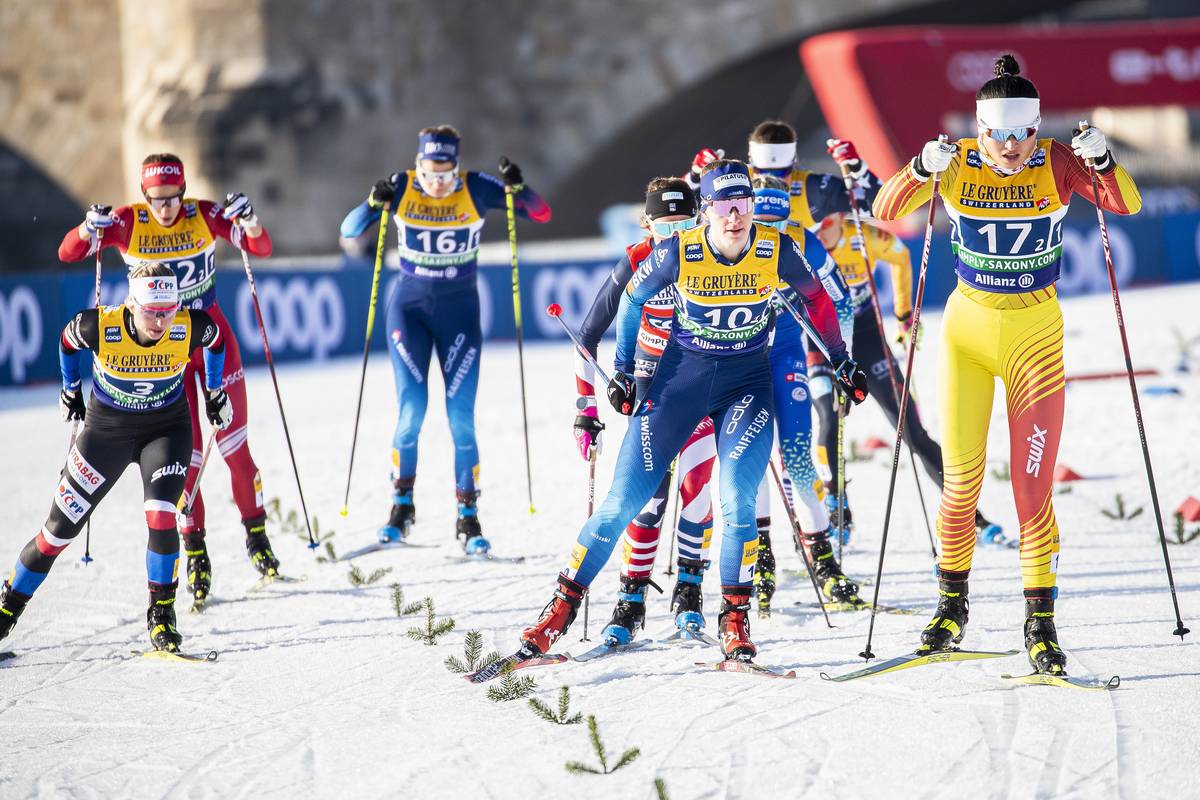
Together with her teammate Bayani Jialin—who had no prior skiing experience before joining Sveen’s team—the two have skied together on the World Cup to top ten team sprint finishes and top thirty in individual sprints.
“Going from being an untrained person to being able to beat half the Norwegian national team and become a top 30 in a sport you [didn’t] know existed,” Sveen told NRK, “it is objectively completely insane!”
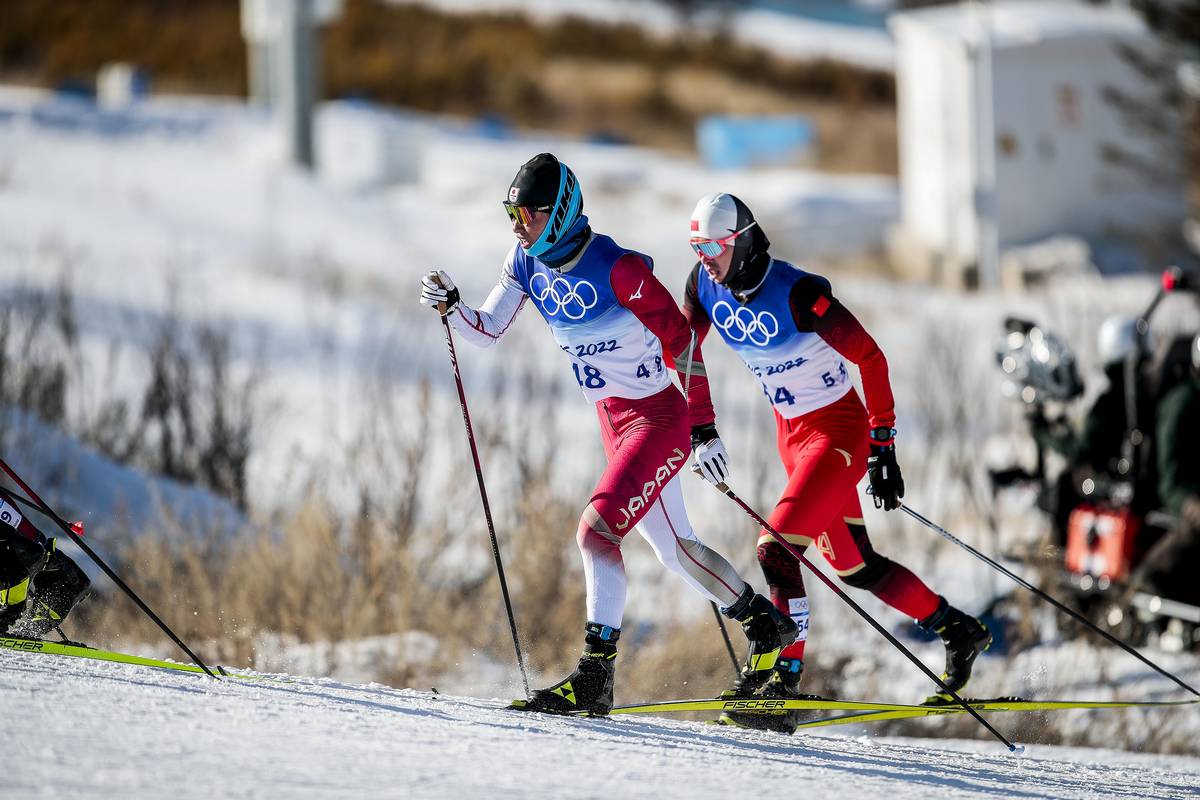
Liu Rongshen is another twenty year old Chinese skier that has impressed early in the Games. Originally a runner from Yunnan, he was “one of the athletes that came to Meråker [in] March 2019,” wrote Tor-Arne Hetland to FasterSkier. Liu finished 38th in the men’s skiathlon, some 16 seconds ahead of Johannes Klæbo. “Pretty [impressive] that he never had been on skis before he came to Norway,” Hetland wrote, adding, “Maybe in the sprint China can have athletes in the semi-finals.”
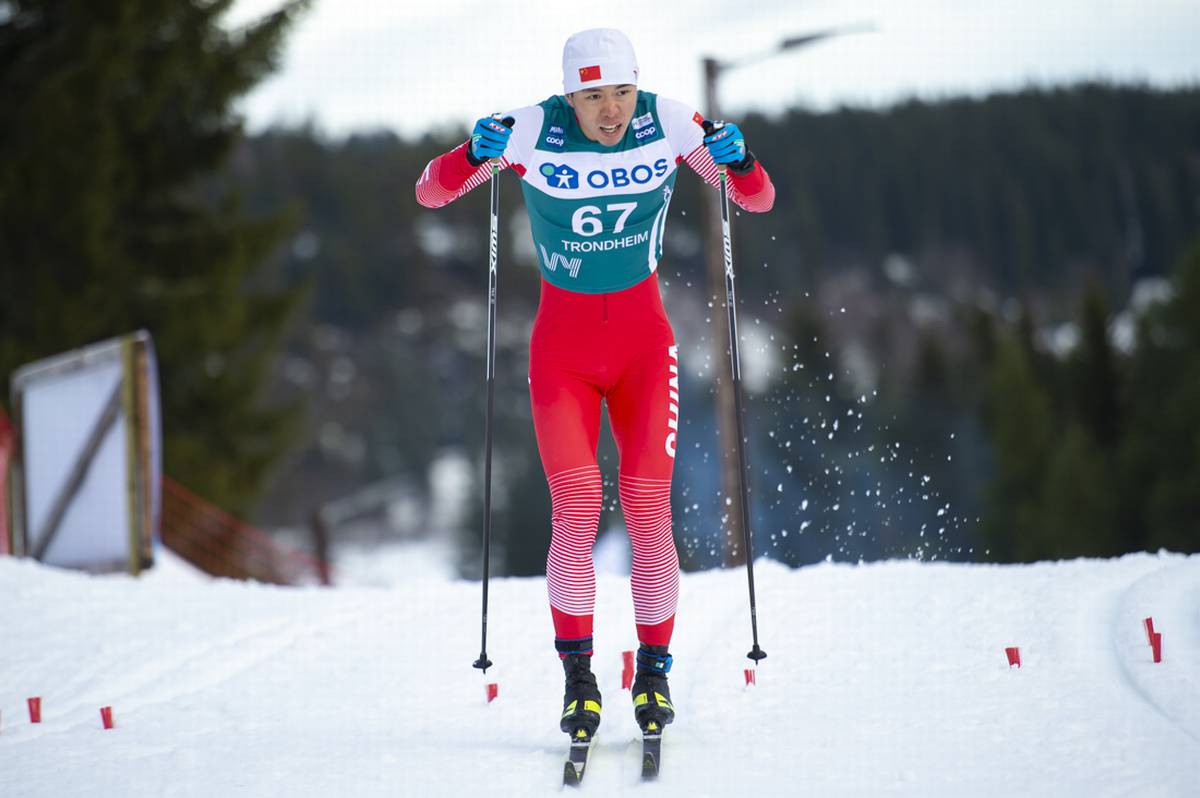
Hetland’s prediction nearly came true when Wang Qiang—China’s best sprinter and medal hope—qualified in 5th in the men’s sprint and appeared to have advanced out of his quarterfinal heat only to be ruled out due to obstructing another skier.
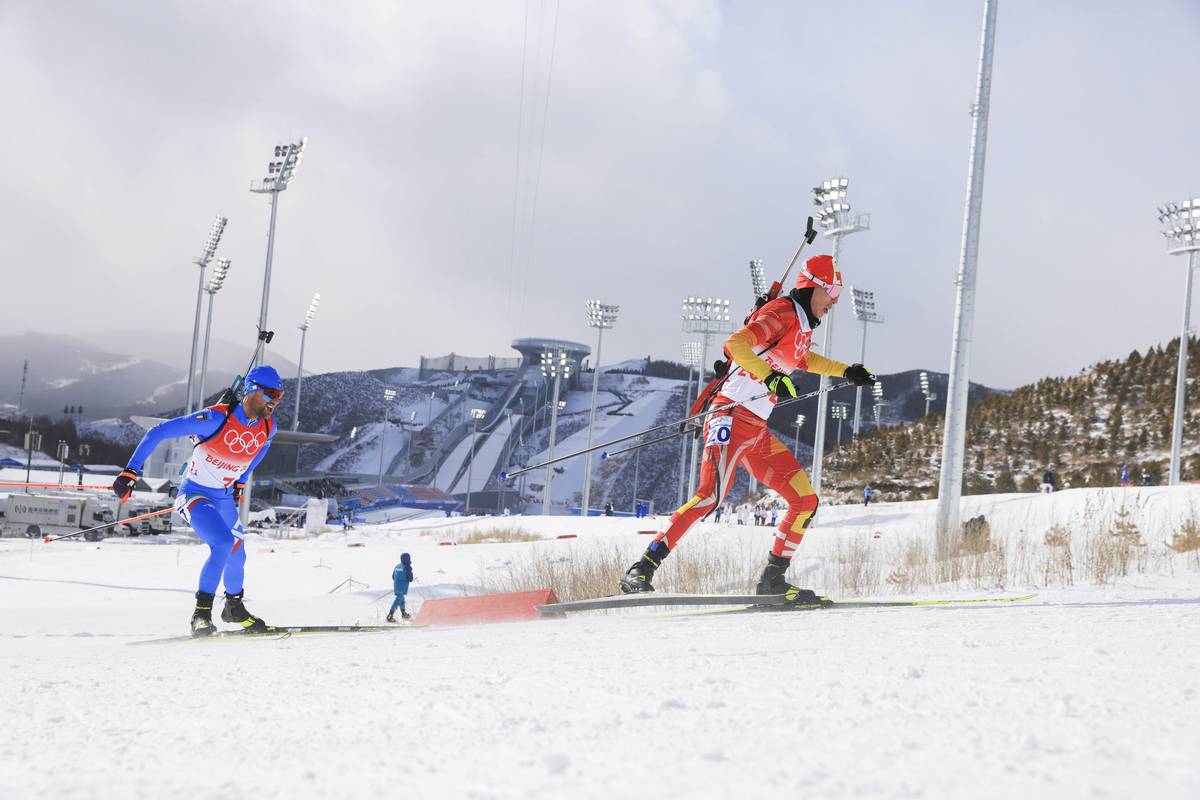
In biathlon, the women are led by Meng Fanqi—one of the best sharpshooters on the circuit—as well as Chu Yuanmeng and Zhang Yan. All three are top class on the range, and with a home snow advantage, and fast skis provided by Norway, a relay medal remains a tangible, if distant, prospect.
Although some juniors such as Dinigeer Yilamujiang spent the last few winters in Norway, much of the Chinese cross country team has been based in China since the start of the pandemic.
To compensate for the lack of international racing for their homebound skiers, Russian second tier racers were hired to come to China for extended periods and enliven national races and ski with Chinese athletes.
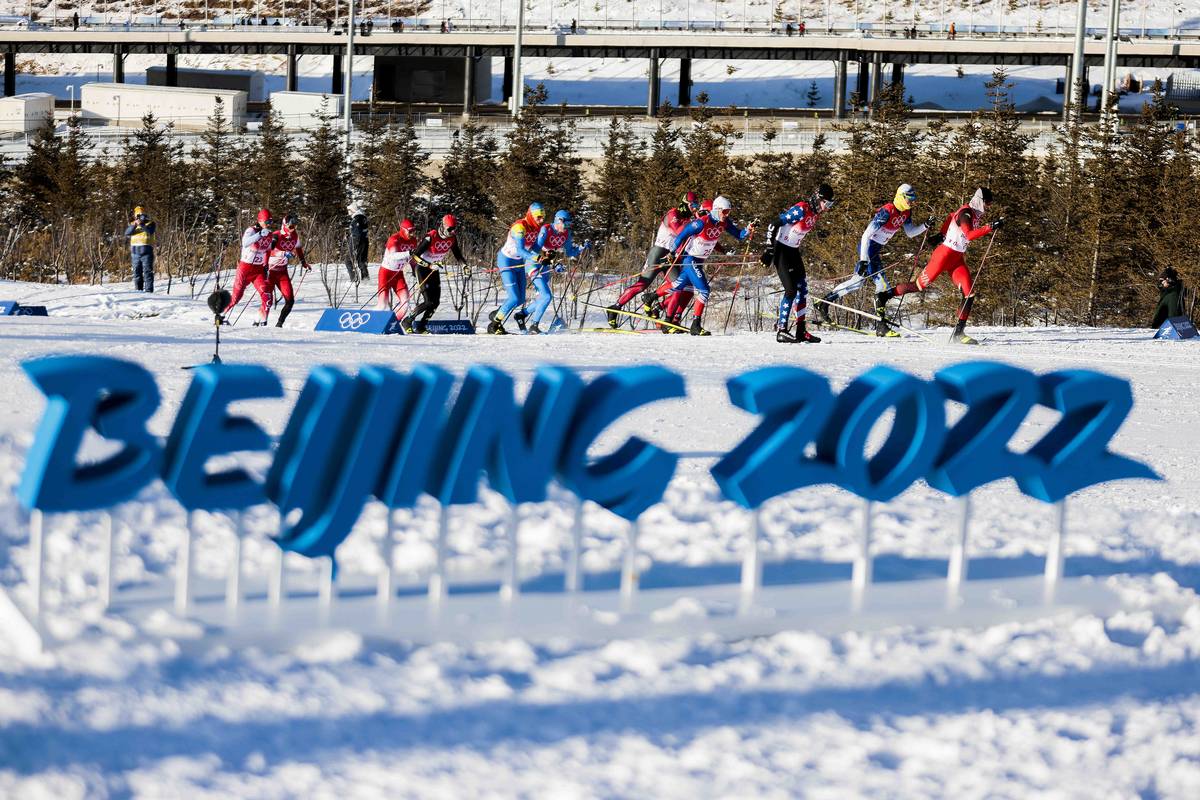
To the Chinese skiers advantage was sole access to the Olympic courses in Zhangjiakou ahead of the Games, although their coach Bernhard Rønning dismissed this assertion to Dagbladet, saying that while they had trained and competed in the area “not so much in the Olympic tracks.”
Still, the team was not without excellent training opportunities, with ready access to altitude, year round skiing in the Beishan tunnel, and “the best equipment,” according to Max Volkov, coach of the Chinese distance team.
Volkov, the former assistant coach to Alexander Bolshunov, joined a talented coaching staff in China, including his compatriot and former Olympic champion Nikita Kriukov, who trained their sprint team.
Magnus Frodahl worked with the Nordic combined team, and former Norwegian World Champion Terje Langli ran the Chinese cross country teams wax service, and trained in two apprentices, Li Xin & Wang Yihan.
Rounding out the core foreign coaches for the cross country team were Ole-Marius Bach, Bernhard Rønning, and Kristian Bjune Sveen.
Bjørndalen
The highest profile coaches to sign on to the Chinese Olympic project were Ole Einar Bjørndalen and his wife, former Belorussian biathlete Darya Domracheva. The two joined in 2019.
After the pandemic interrupted their debut season with the team, Bjørndalen rejoined his squad in China during the summer of 2020.
There, even for a legendary biathlete, the work was anything but glamorous. That summer, Bjørndalen worked daily from six in the morning to eleven at night. Each time he entered China he had to undergo a 17 day quarantine. Always the athlete, Bjørndalen ran 20 k a day inside his hotel room, running the length of the room around one thousand times.
The biathlon team spent the 2020/21 season training in China inside of an intense bubble. “There is no question of anyone coming in,” Bjørndalen told NRK, “And if you are going out on an errand in Beijing, it is straight into the corona quarantine.”
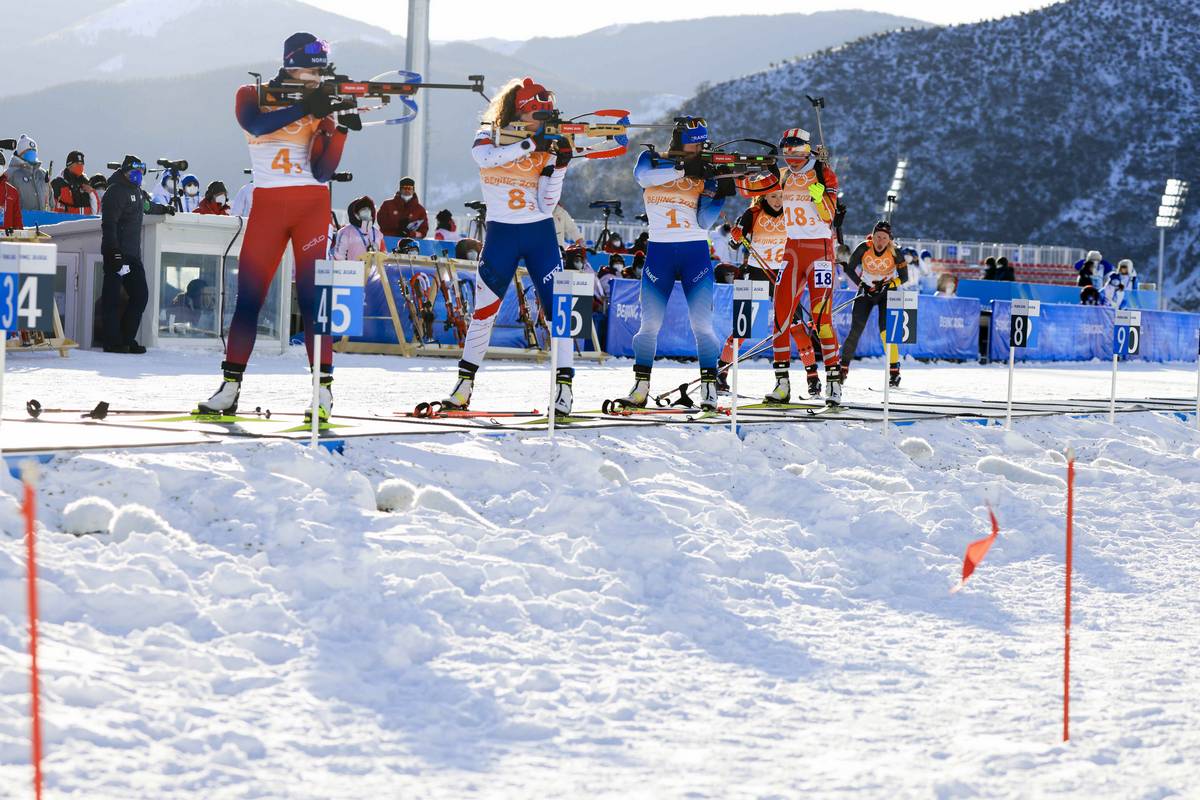
That winter, Chinese President Xi Jingping visited the team. “I think he liked biathlon,” Bjørndalen said in the article.
According to NRK, Xi’s visit to the Biathlon camp underscored the expectations to deliver results. “We have set ourselves the goal of winning a medal in the relay,” Bjørndalen explained, adding, “It’s a pretty horrible goal, but anything is possible.”
The work of the famous duo has been apparent on the IBU World Cup, which China returned to this winter. US Biathlete Clare Egan said, “They’ve really done an incredible job bringing the athletes up. It’s funny because Daria [Domracheva] has a very unique and beautiful, graceful ski style and now all of the Chinese women, half the time I think they’re Daria when they go by me, they all ski exactly like her.”
The shooting prowess of the Chinese biathletes is exceptional according to Egan. “They’re incredible, incredible precision shooters. I have to imagine that their team hit percentages are at least as high, if not higher, than any of the other teams.”
“The reason they’re not winning medals is because they’re not quite there with the ski speed,” Egan said, “Even though they’ve really improved a lot.”
When Bjørndalen took the job he ensured his athletes would have competitive skis by signing a deal with the Norwegian biathlon team to wax their skis through to the Olympics.
Tobias Dahl Fenre, the head waxer for the Norwegian biathlon team, said of the wax deal, “We do not share the expertise. It will be in Norway. We employ Norwegian waxers in the Norwegian system.”
The deal, worth an undisclosed sum, allowed the Norwegian biathlon team to hire four more techs, bringing their service team size to fifteen.
Egan said the results of the wax partnership were clear on the IBU World Cup. “It’s cool to see them have a chance on skis because previously when they were waxing their own skis, they just didn’t have that background to be internationally competitive. Now sometimes they’re passing us on the downhill.”
While the work of Bjørndalen, Domracheva, and Sveen have impressed, for the foreign coaches working in China, the experience varied.
For Kristian Bjune Sveen, who took the job with Swix China when he was twenty five years old, the experience had been positive, if exhausting. “I work around the clock, every day, and have almost no privacy,” he told NRK. Nevertheless he said it was “an insanely exciting job. It is a coach’s dream to be able to design a plan that you want.”
Sveen felt that he would not find another opportunity to influence a whole skiing culture in the way that he could in China, and fretted that the next job wouldn’t match the significance of his present work. “It’s almost like I’m not sure if I want to be a coach again after this,” Sveen said. “These are athletes I think can be the best in the world.”
Others had more jaundiced views of coaching in China. When Anita Moen’s athlete’s were recalled abruptly in December 2019, the pandemic prevented her from rejoining her team until the following August.
“By then, five months had passed without me having been a coach for them,” Moen recounted. “That was when I noticed the change. The basic work we had done, and on which we made such great progress, was destroyed.”
Moen’s athletes had returned to a Chinese sport system marked by authoritarian control. The result had a big effect on her.
“I knew these athletes very well,” she said. “I did not need to talk to them. I could see it in their eyes…The joy I had seen was gone.” Moen found the experience troubling, and decided to end her involvement.
A non disclosure agreement had prevented her, (as well as many other coaches) from discussing the team’s work. Through these legal tools, much of what the Chinese team has been up to in the last year and half has remained opaque.
Soul Searching
As the Games crept closer, so did criticism of China’s human rights record. In Norway, the agreement to help the Chinese skiing programs became a contentious topic, with anxiety over whether the work of some one hundred coaches, techs, and physios was done in the service of expanding the sport, or rather a massive nation branding campaign to distract from China’s human rights abuses.
Had Norway, the home of the Nobel Prize and defender of human rights, sacrificed its moral center for a trade agreement masked by a feel-good ski coaching story?
That was the argument made by John Peder Egenæs, the head of Amnesty Norway, who suggested to NRK that China’s 2019 hiring of Bjørndalen—the most popular athlete in Norway—as the head coach of their biathlon team was part of a “big political game.”
Egenæs believed that the Olympics were being used to “launder a deplorable human rights record,” and feared that Bjørndalen would be used as an “ambassador for [Norway] to forget the negative sides of China.”
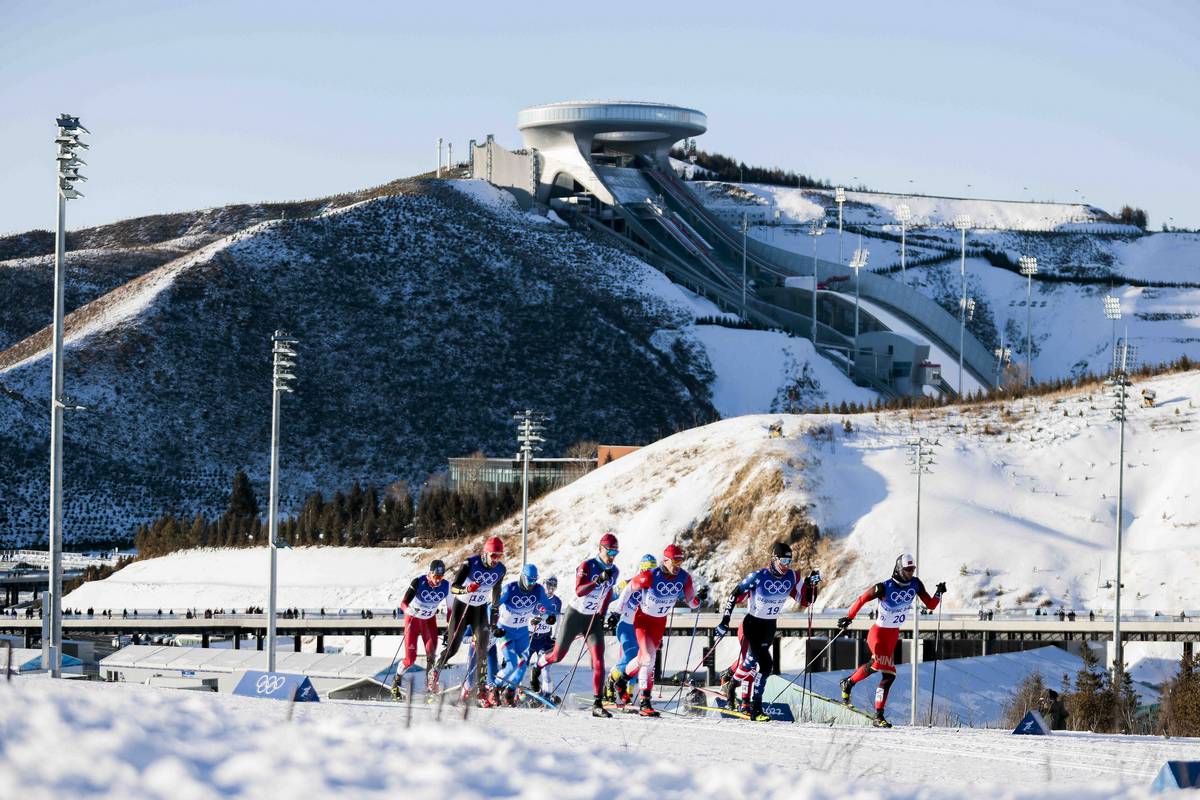
Bjørndalen disagreed with the criticism, and told NRK, “I do not feel any political game in what I do. I focus on the skiers I have and do not have any dialogue about any propaganda with any leader.”
Sports commentator Andreas Selliaas fretted about the whole agreement, saying to Aftenposten, “I do not think Norwegian sports really know what they are involved in. This is not about skiing, but about nation building and domestic politics in China.”
Questions began to be raised about why the Sports Confederation was not consulted prior to the 2017 agreement. “The sport was thrown in like a meat bone to the Chinese,” was the assessment of Gudmund Skjeldal, a former Norwegian national team skier.
Tom Tvedt, the former President of the Norwegian Sports Confederation believed that the agreement had overstepped the historic divide between Sport and State, saying, “In this area, the independent, free sports movement was abused.”
In an op-ed to Aftenposten, a group of PhD students at the Norwegian Sports Academy wrote, “Perhaps the point is not whether we, a tiny country, can influence the gigantic China. There is something called losing one’s soul. There is something more important than Olympic gold medals. It’s something more important than salmon, even.”
The authors pointed to the history of Norwegian sports resisting oppression, and ski jumping hero Birgir Ruud, who refused to organize competitions during the Nazi Occupation and was imprisoned.
“So one might like to ask:” The authors wrote rhetorically, “[Why didn’t] Norwegian sports protest against being forced to cooperate with such a totalitarian power as China?”
The answer, they suggested, had much to do with funding.
Others asserted that Nordic skiing needed China to survive in the future. In a story in Aftenposen, Rønning said, “If you bring China with you, you have almost saved the sport of cross-country skiing.”
Tvedt disagreed. “It’s really a disaster. Both for sports and Norwegian democracy.”
Skjeldal and others have called for the Norwegian Parliament to investigate the matter. That the calls of alarm came at the doorstep of the Olympic Games may be telling.
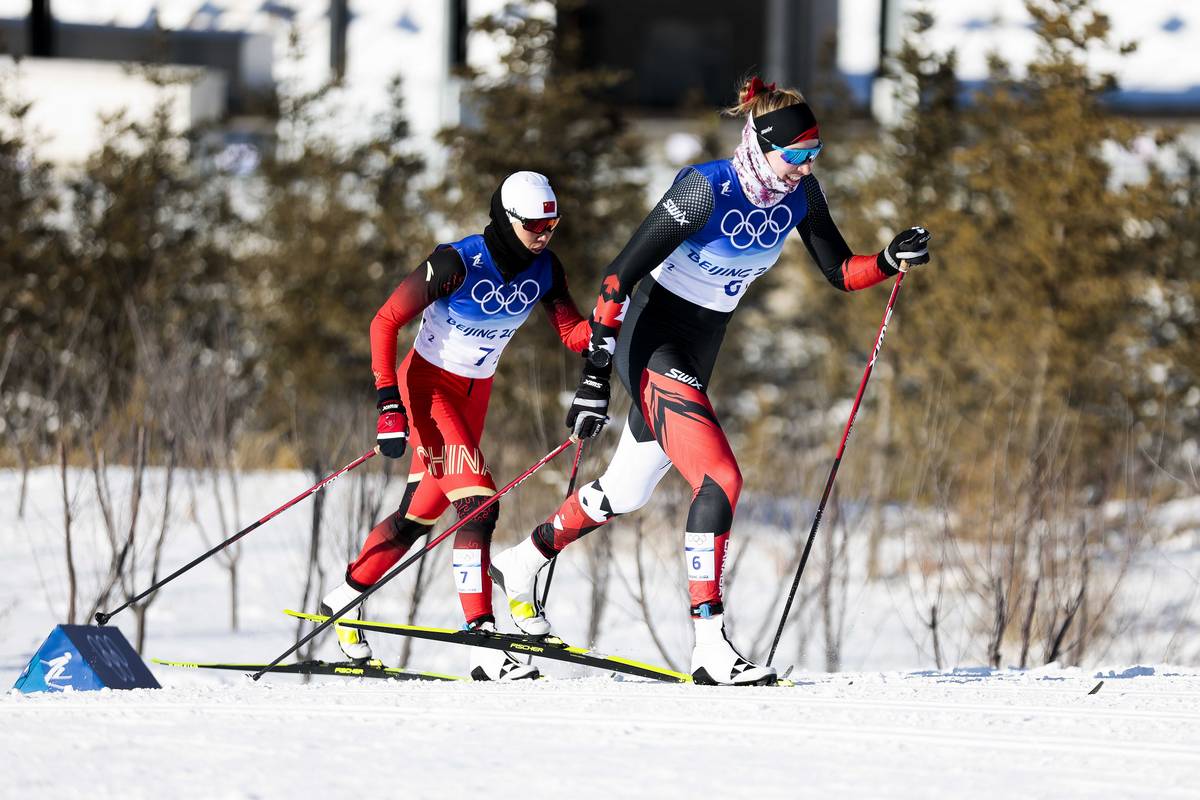
While Norway wrestled with the ethics of their nearly completed sports agreement, the Chinese cross country ski team faced controversies over the diversity of the team’s athletes that include ethnic Uyghur, Kazakh, and Tibetan skiers.
The diverse team has been celebrated by Chinese State Media and questioned abroad. As a Uyghur athlete, Dinigeer Yuliamujiang is the prime example. She gained international fame overnight by lighting the Olympic torch—but not as a skier. Instead she has been viewed symbolically as Beijing’s defiant and brazen counter to charges of an ongoing Uyghur genocide.
Dini’s teammate, Bayani Jialin, is an ethnic Kazakh, and Chen Zhendui (whose Tibetan name is Tsering Damdul), made history by being one of the first Tibetans to compete for China at the Winter Olympics. He too was caught in the furor of the Tibetan exile communities’ protest against the Games over human rights abuses and an Olympic inspired crackdown in Tibet.
The push and pull of dueling narratives has put the young and unseasoned skiers in an impossible position as they seek to make good on the far fetched expectations of medaling on home snow.
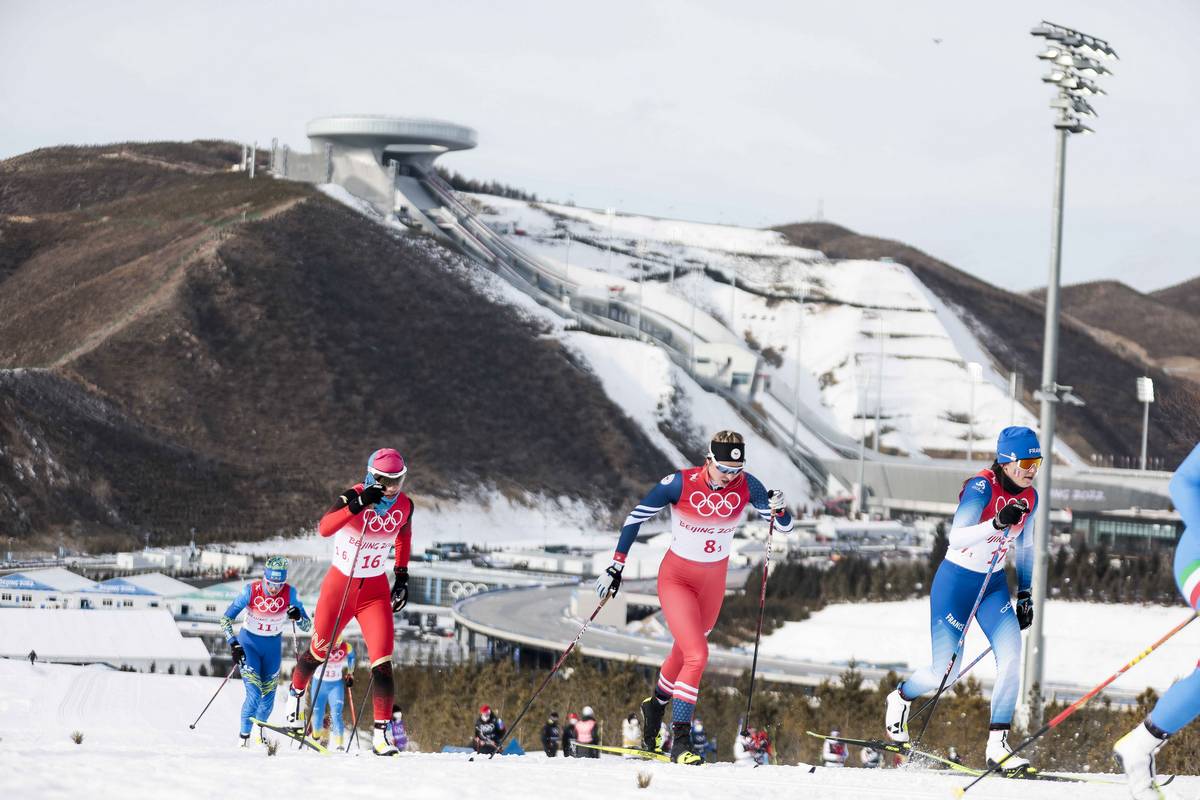
The Chinese skiing project is something of a looking glass, with those involved seeing in it what they wish to see. For Moen, who had grown close to the athletes under her care, the project represented a lost opportunity.
“Imagine if we could have the Chinese athletes here in Norway most of the time, in all these years,” she pondered. “Then I think the whole project could have been very, very exciting. Because they had such extreme progress that they could [have] continue[d]. There could have been results that would have been sensational.”
Whether or not Chinese athletes in the Nordic disciplines manage to medal remains to be seen. The Games will mark the culmination of an expansive and unprecedented experiment in cross country skiing.
Historians of the future may well parse out the significance that a few hundred novice Chinese skiers and their Norwegian coaches had on the course of geopolitics. For now, all we can do is watch them race.