Tag: double-pole technique

  • SkiErg Training: Training Considerations and Technique

    SkiErg Training: Training Considerations and Technique

    I hate rollerskiing. As much as I try to be a good Nordie, I just can’t get over my fear of hitting the pavement. Between a history of bike racing and the rollerski learning curve, I’ve already lost enough skin. I know it’s good for me and might make me faster on snow, but I’m too old to put up with my heart rate being affected more by fear-induced adrenaline than by quality training.

    My legs and lungs get plenty of work all summer from running, cycling, and strength training, but my typical dryland routine does little for the arms. I’ve tried to swim, but I haven’t progressed past drinking half the pool. 

    A few years ago, I set up some resistance bands to train the arms for double poling. After developing triceps tendinopathy, taking a snapped band to the crotch, and generally finding the bands to be either too hard or too easy, I realized my workouts were far from ideal. 
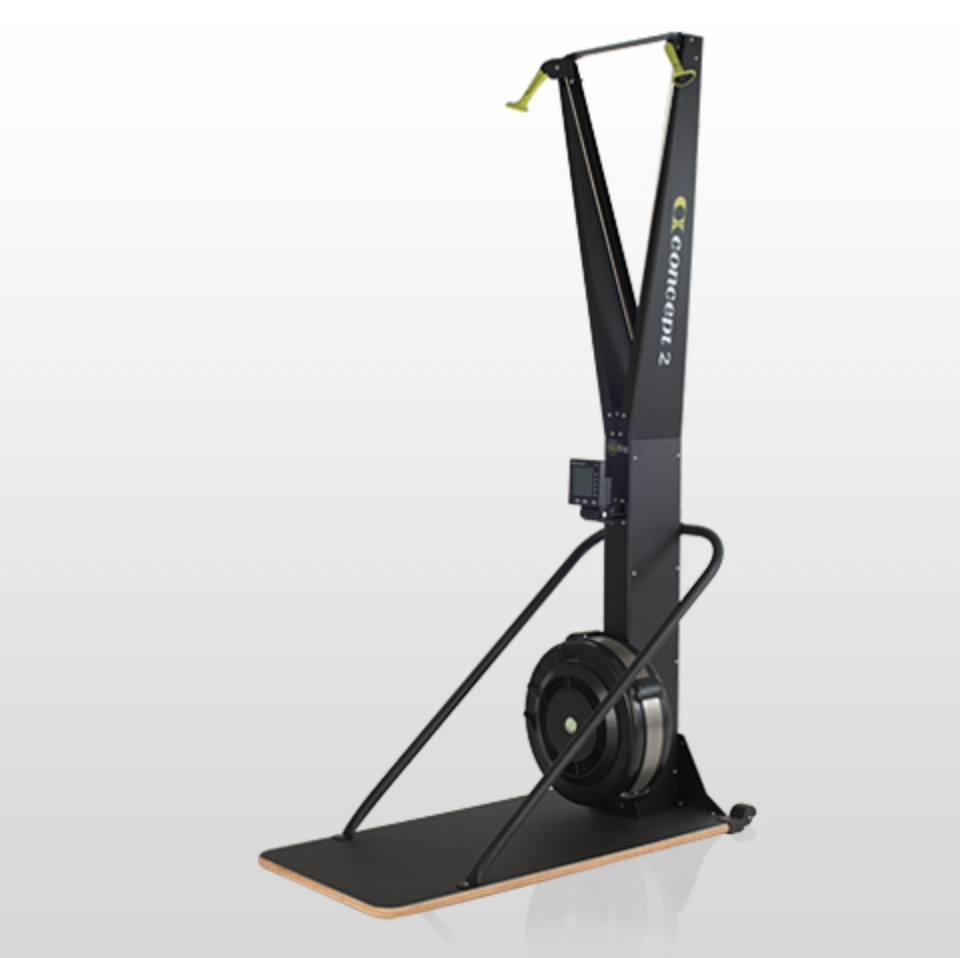
    (Photo: Concept2.com)

    What the bands gain from their price-point, they yield in utility. By their nature, the more you stretch a band, the more resistance it provides. This is the opposite of what happens with poling on snow, where the greatest resistance (or force requirement) takes place near the beginning of the pushing phase and decreases through the end of each cycle. 

    Staring in the face of another hot (and smoky) summer, I splurged on a Concept2 SkiErg last spring. Thus, I was immediately able to avoid rollerskiing (without feeling guilty) while simultaneously shielding myself from the heat and poor air quality. Solved were the resistance bands’ problems of poor adjustability and inverse force curve. This utility continued during the purgatory of shoulder season in the fall, and carried me through the local trails’ annual mid-season melt out here in Salt Lake City. 

    Cool tool. What do I do with it?

    For some expert information, I asked Miles Havlick, head Nordic coach for the reigning NCAA national champion University of Utah Ski Team, some questions about how they incorporate the SkiErg into their training. 

    What are your typical resistance settings? What’s the max you’ll use?

    We almost always use the max resistance setting of 10 during SkiErg workouts. The majority of the time we do sprint type workouts on the SkiErg machines with interval lengths of less than 5-minutes in duration. However, during longer sessions we will lower the resistance in order to keep the intensity lower.

    Author’s comment: 10 is hard! Keep in mind these are elite skiers. In a video blog from Jens Burman, he notes that his max resistance is 7. 

    Better for easy, Z1-2 endurance or higher intensity intervals?

    In my opinion, it is better for high intensity sessions targeting more anaerobic or strength training. Although the muscles are fairly similar to actually double poling, we prefer to perform longer L1 sessions on rollerskis which offers more variety in terrain and more closely resembles double poling on snow.

    Author’s comment: In my opinion, pavement hurts more than snow and I haven’t lost any skin to L1 sessions on the SkiErg.
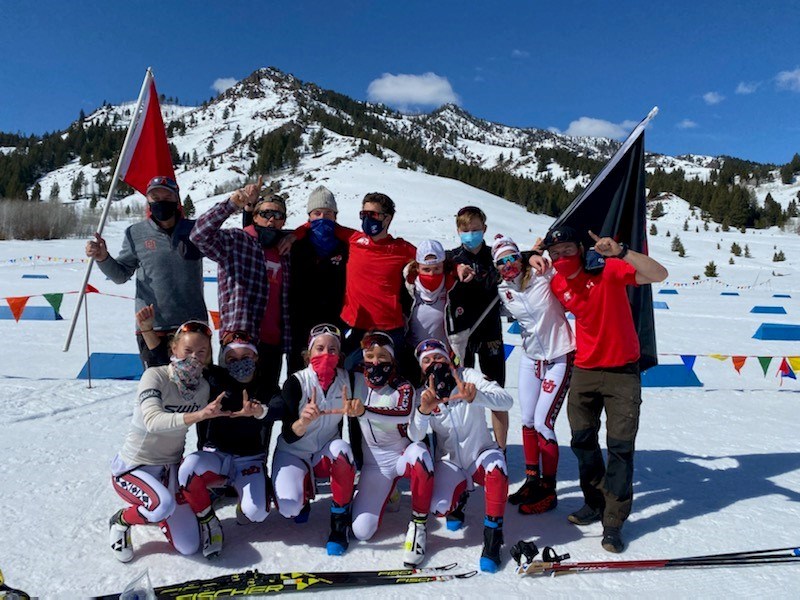
    Head coach of the University of Utah nordic team, Miles Havlick (far right), was named RMISA coach of the year in 2021 following a record setting season for the Utes. (Photo: utahutes.com)

    Do you cue or work on technique during SkiErg sessions?

    We certainly do. It is easy to get higher power numbers when using techniques that are not as effective on snow, however, we are training to be better on snow. Therefore, we are always trying to emulate the most effective on-snow double pole technique on the SkiErg machines.

    Author’s comment: more on this below.

    Do you incorporate drills like balancing on one leg or BOSU?

    We have played around with it but we do not regularly utilize this. It is effective for making L1 workouts more interesting, however during higher intensity bouts, it seems to detract from the quality and focus of the on-snow movements that we are trying to emulate.

    Training sessions on the SkiErg can cover both ends of polarized training with the capacity for both longer duration, low intensity workouts with emphasis on metabolic efficiency and for shorter, high intensity intervals to work power. 

    SkiErg Technique

    While perhaps the best indoor replacement, pulling on the SkiErg is definitely not the same as poling on snow or rollerskis. The notable difference is the lack of balance with a forward trunk lean. Without bindings and the ski to counterbalance, there is much more tendency to fall forward on your face. Or, perhaps, more tendency to sit back so you don’t fall on your face. This is a likely reason why coaches can be critical of spending too much time on a SkiErg, with a nod toward the potential non-ski-specific movements Havlick alluded to when he commented that they are always attentive to form.  

    With that in mind, there are absolutely some technique fundamentals that can be reinforced on the SkiErg. 
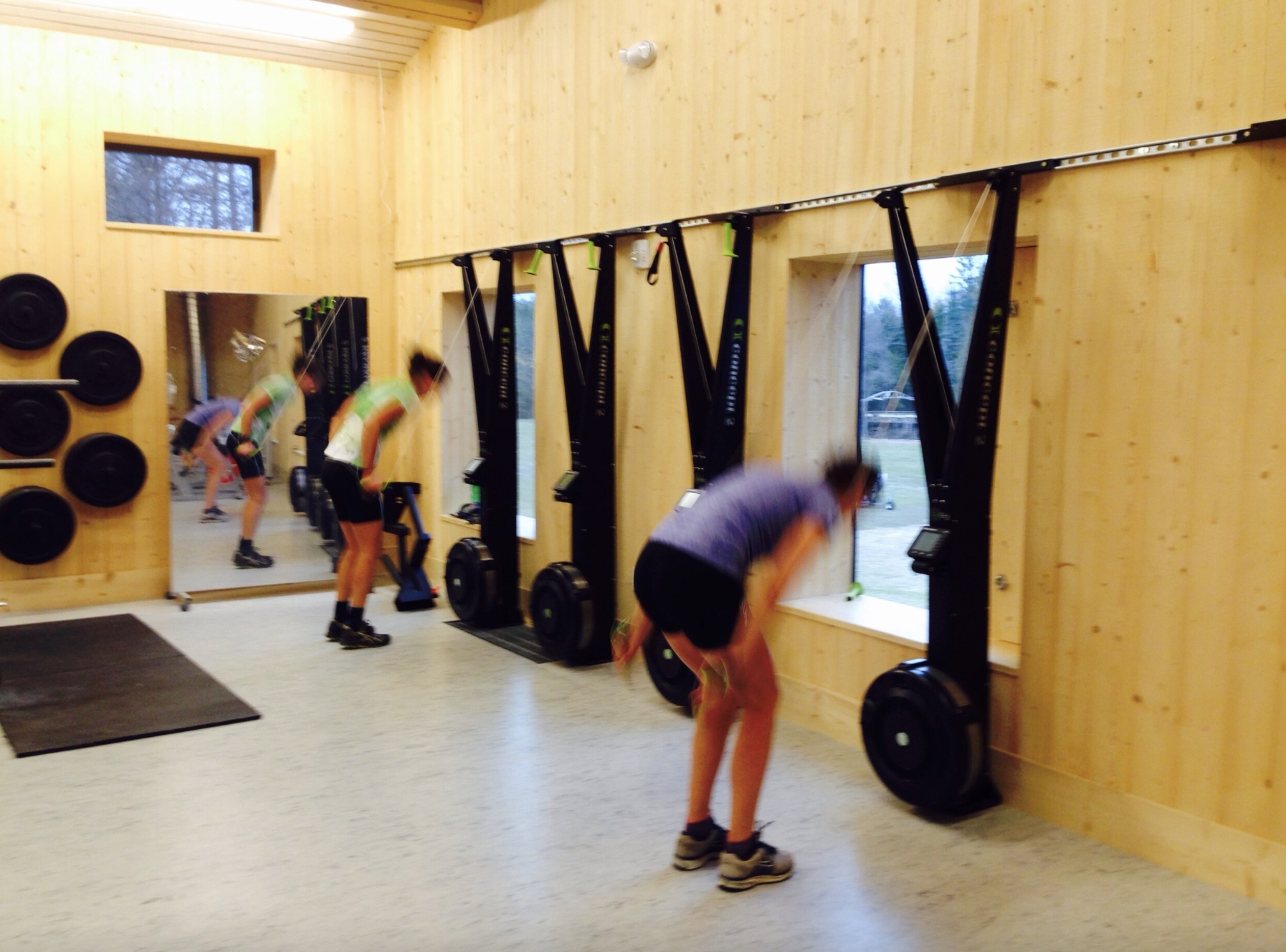
    A pair of Craftsbury Green Racing Project athletes complete a 1k time trial on the SkiErg in November, 2014. (Photo: GreenRacingProject.com)
    The Arms

    The monotony repetition of the poling motion creates a great opportunity to reinforce some key components:

    • Hands high: don’t be lazy, get those hands up
    • Elbows fairly fixed with short swings under higher resistance (think uphill double pole or V1)
    • Elbows extend with long swings under lower resistance (think fast V2 or V2 alternate)
    • Smooth on the power: like starting a car from a dead stop but getting up to speed quickly – if you just stomp on it, the wheels will spin. With poling, we want to achieve peak force quickly but smoothly; setting the poles, then delivering power to them as the upper body drops powerfully onto the poles and the pole angle decreases to deliver the force behind the skier as a push off, versus just stabbing the poles as hard as we can into snow. The latter strategy does not propel forward motion as the peak force is directed into the ground, which incurs vibrational losses in the pole shaft, and robs the system of energy before the pole angle changes toward one more effective for force delivery. 


    The Hips

    “Hips high” might be one of the more overused and less understood cues in Nordic skiing. Without digging too deeply here, the basic premise while on the SkiErg is starting the poling motion from a tall position. As the body compresses with the arm pull, hinge at the hips and ankles. Then, focus on quickly getting back to the tall start position by extending the hips via contraction of the glutes (aka “squeeze your butt cheeks”). Your knees should be relaxed and bend slightly on each cycle, but you’ll want to avoid significant knee bending as it likely indicates that you are sitting back too much. I’ve personally found that one of the biggest gains I’ve found on snow is through focusing on quickly returning to the high hands and hips start position, over and over and over on the Erg.

    As much as high intensity double poling is a full body effort (not just the arms), in skiing it is more about movement across the hips and ankles vs the knees. In CrossFit gyms, this is not necessarily the case. They are after maximum generation of force, not skiing efficiently. Please don’t do this.

    Balance

    While Havlick mentioned that they rarely incorporate balance drills into SkiErg sessions, I think they can be very useful for reinforcing single leg stability, especially if there is a specific component to address like foot pressure distribution, ankle dorsiflexion, or lateral weight shifts from the hips. As with any balance exercise, it is generally more beneficial to work on consistently accomplishing appropriate balance on the floor before moving on to an unstable surface like a BOSU or Dynadisc.

    Visual learner? Here’s a helpful video on the CXC Facebook page with Eliska Albrigtsen, former CXC head coach who now leads the University of Alaska Fairbanks team

    Looking for more? Find a 2017 Wednesday Workout with Sadie Bjornsen here, featuring 30 minutes of 30/30’s on the SkiErg.
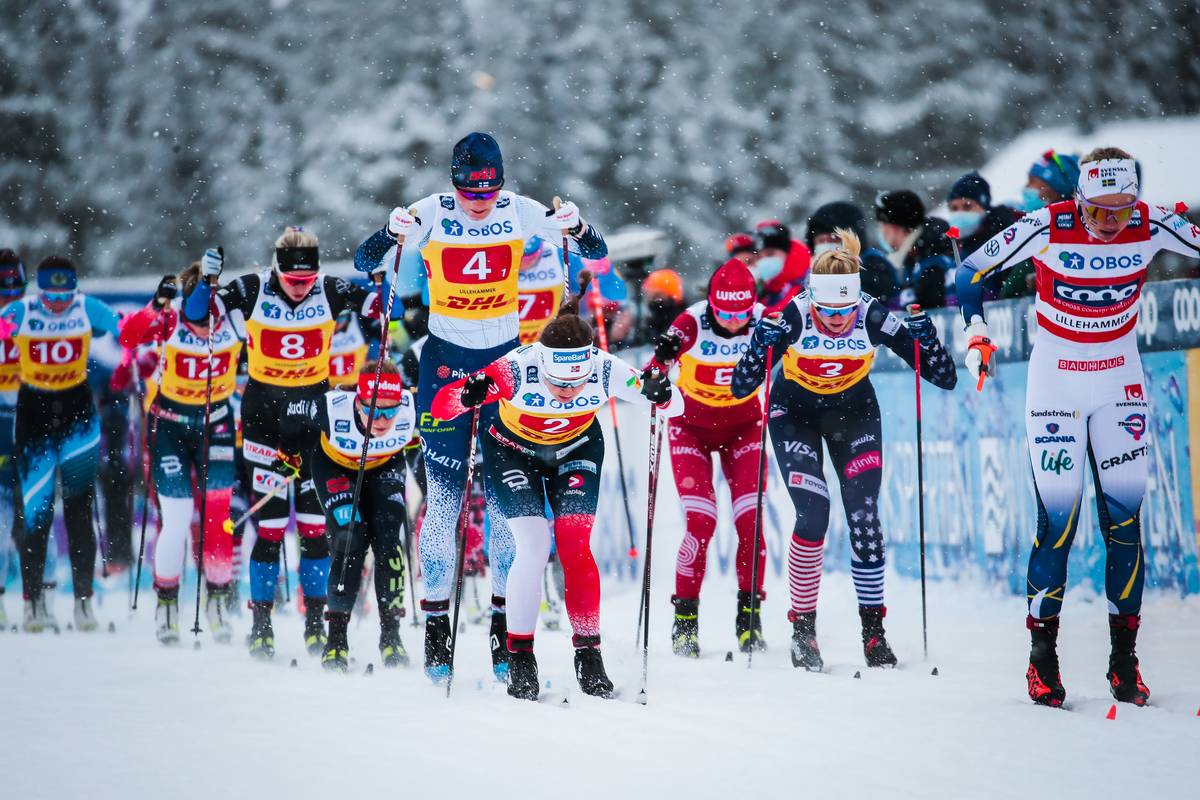
    Doublepole form on display at the start of the 4×5-kilometer relay in Lillehammer. Hailey Swirbul (bib 3) skis the scramble leg for the U.S. (Photo: NordicFocus)

    Author’s Disclosure: Concept 2, manufacturers of the SkiErg, is a sponsor of FasterSkier; however, I purchased mine at full price before I was affiliated with this fine website. In addition to the SkiErg, Abilica makes a very similar device. The Italian company Ercolina makes an upper body ergometer that has the advantage of being much more compact and portable, but it is also more expensive and very hard to find in the US.  

  • Wednesday Workout: U.S. Ski Team ‘Coaching Technique’ 101

    Wednesday Workout: U.S. Ski Team ‘Coaching Technique’ 101

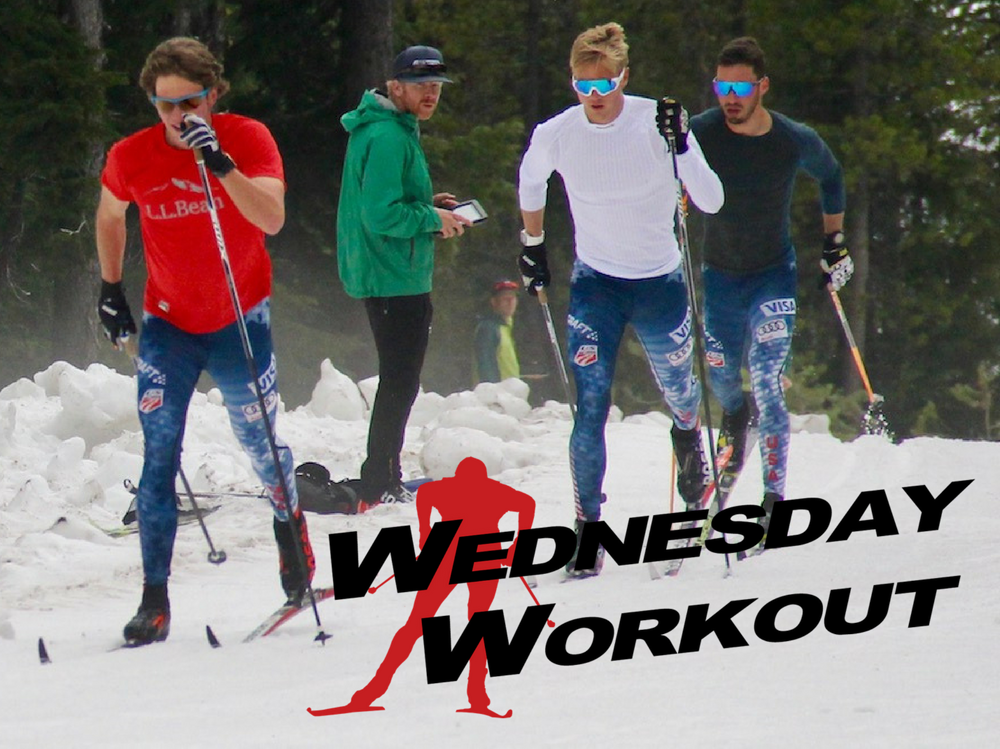
    U.S. Ski Team (USST) members (from left to right) Scott Patterson, Erik Bjornsen and Ian Torchia working on classic technique last month in Bend, Oregon, while Sun Valley Gold Team Coach Chris Mallory (second from l) and USST coach Matt Whitcomb look on. (Photo: Bryan Fish)

    The U.S. Ski Team (USST) wrapped up its latest spring training camp in Bend, Oregon, on June 1. One of the primary aspects of the annual camp is for the USST coaching staff to work on technique in a low-stress environment. The following workout was provided by U.S. women’s coach Matt Whitcomb. Here are the goods:

    ***

    Coaching Technique at a U.S. Ski Team Camp

    The workout: 2-3 hours at an easy distance pace, with running or herringbone technique focus

    Technique focus: Stable core/upper body in both running and herringbone technique

    “This technique session framework is something we’ve used for several years,” Whitcomb explained in an email. “What makes this session effective is that we prime the team with a video clip for visualization and instruction immediately before the workout, and use iPads and light coaching feedback during the session. After the session, some athletes like to review the clips again or receive them over email.  I use an app for iPad and iPhone called Coach’s Eye, which has a great slow-motion and frame-by-frame feature, and allows the user to email individual clips or export a bunch of clips to iMovie so a more-complete compilation of the session can be sent as a YouTube link.

    Framing the Session

    •  Two or three-minute workout description in a space with a TV or projector.  If it is longer, there is a good chance we’re over-caffeinated and over-coaching. Too much to focus on kills focus. We try hard to work only on one technique goal per athletes per session.  While many of us coaches agree it feels purposeful as a coach to do a daily knowledge dump before or during training, less is generally more. Coach slowly. Here’s a simple pre-workout description example:

    ‘After you’ve warmed up for a few minutes, we’d like those whose elbows are feeling good to double pole easy for 30 minutes while we wait for the snow to soften. Keep it easy on the climbs by pecking your way up. Work high and ski very short on the climbs for this double pole specific strength. Let’s have the men meet on Screamer 45 minutes after we get on snow, and the women 1:15 into the session. Today we’ll do some technique work on running, which is basically bounding on skis, usually without any glide. The video we’re about to show has a clip of Sadie running in Ruka, and Belorukova in the same clip doing a modified herringbone.  Watch for upper-body stability. The next clip will be Sundby doing herringbone at maximum speed. As fast as it is, notice again how his upper-body is stable and calm, almost still. In running on skis, a stable upper-body provides the platform under which the legs can do a lot of work. The last two clips feature Sadie again, and then Klæbo, both running but at a more casual pace. Question about the session before we play the video? If you want more video on the iPad after your session, just talk with a coach out there. Extra water, klister, and sunscreen will be at Yuppie Junction. Alright, let’s dial in the focus and channel this video.’

    • Watch two- to three-minute visualization video. Key to the visualization session is that everyone is quiet and bringing focus. Longer than three minutes tends to yield diminishing focus for many.  We customize short videos from the most recent World Cup season for most skiing and roller skiing sessions. If the goal of the session is to work on kick double pole, we’ll find that technique for both men and women from a race, but we try to feature different athletes and a wide-range of styles. We’re not looking only at the best. If you want to do this on your own, we like Adobe Premier Elements instead of iMovie because you’re not required to convert the entire race to MP4 prior to editing.  This saves time. Here are three examples:

    Double Poling: Kalla / Weng / Bolshunov / Golberg ’18

    Herringbone / Running Ruka ’18

    V2 Tonseth / Haga ’18

    (If you want the link to our database to see more video links, just fire me an email: matt.whitcomb@usskiandsnowboard.org)

    Coaching the Session

    When the men’s team shows up for the technique portion of the session, the coaches tell the athletes who will be working with whom and will suggest they do about eight to 10 passes of the 300-meter loop. As coaches, we try to stand near one another to use each other as resources, and to pay attention to which athlete is hearing what so we can avoid over-loading them later in the session. This way we can reinforce what they were already working on with another coach. We use colored cones in some way for most sessions to clarify loops or surge points. Ideally, each coach works with not more than two athletes at a time, and all coaches have an iPad or phone to replay video. We’ll show an athlete their footage every several passes but otherwise encourage them to keep moving, possibly shouting out a simple cue as they ski by. Because developing fitness is our top goal, we do very little standing around. Stopping to watch their video means watching a clip twice in regular speed, and once in slow motion. This takes 30 to 45 seconds total if you’re good with your iPad. Standing in the shade (or anywhere in New England or Alaska) helps to see the screen clearly.

    Our goal is not to have a team that skis alike. While we have themes to focus on for a particular session, we want them all to ski in their own unique way. If an athlete has a chronically tight back, they are going to compress differently than an athlete with more mobility. An athlete with valgus knees can’t simply align their joints to please our coaching eye. They should all ski with their own unique style, and this can be healthy to reinforce on a younger team to minimize unhealthy comparison.

    Our goal is not to have a team that skis alike. While we have themes to focus on for a particular session, we want them all to ski in their own unique way.

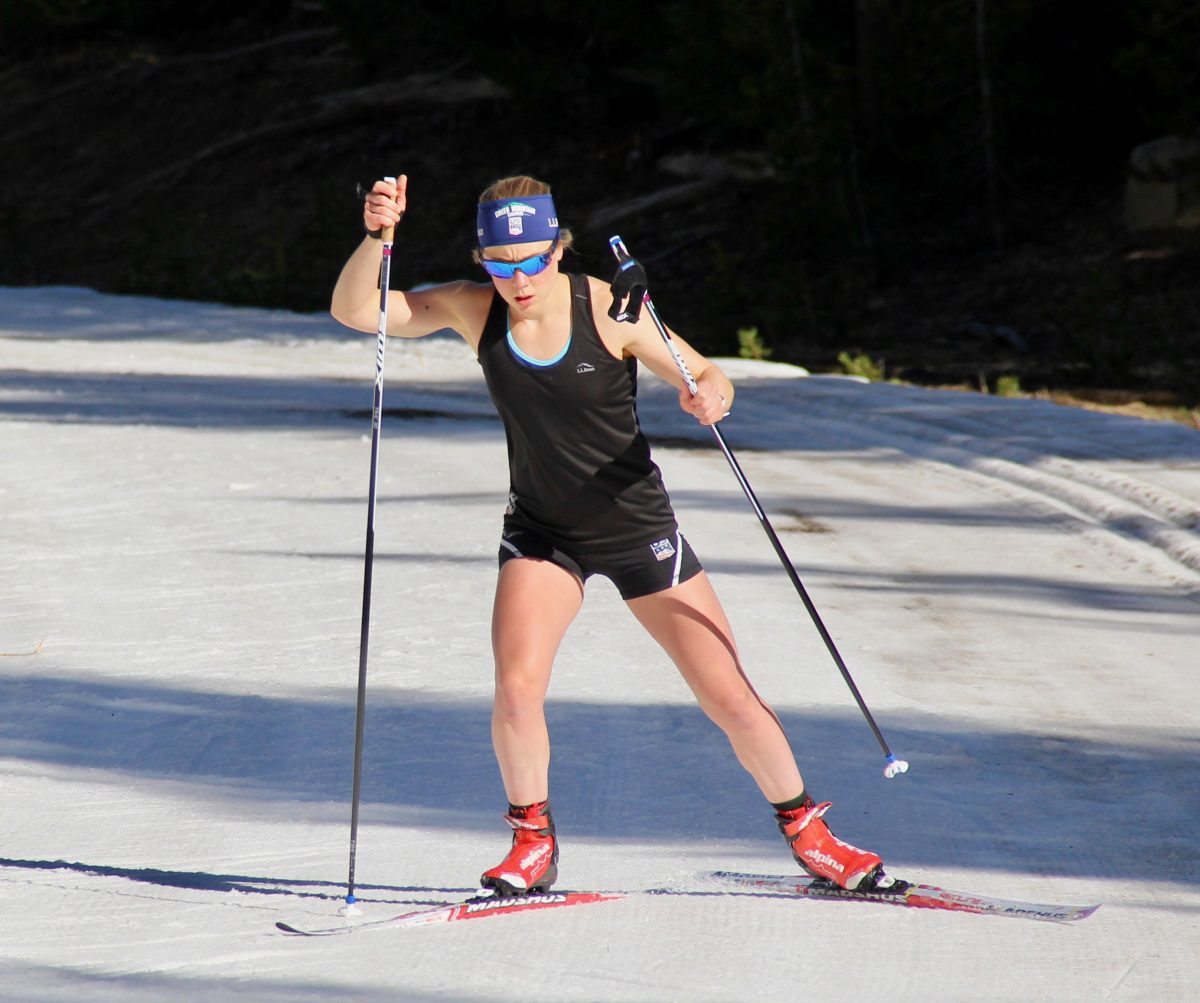
    U.S. Ski Team member Ida Sargent doing a single-pole V1 drill at the team’s recent on-snow camp in Bend, Oregon, last month. (Photo: Bryan Fish)

    A few ideas for early-season sessions

    • Take a close look at how the athletes are skiing in May. It’s often surprisingly relaxed and natural. How can it be so good after so little coaching? Is this because we tie them up with too much technique feedback throughout the season?  Since we’re always pointing out what they could be doing better, have them focus on something they’re doing well. If the technique session makes them ski tense and like a drill we used, it might not have been the right approach for that athlete on that day.
    • Encourage the athletes to give feedback on the technique adaptation they trying to make. Sometimes something suggested by a coach ends up not working, or just being wrong.  It’s not a lost session if you and the athlete learn something through the coaching mistake.
    • No-pole or one-pole skiing.  If an athlete’s striding needs work, we revert to old-school, no-pole skiing as a go-to. If the back gets sore or tight, alternate using right or left pole only. Good striding includes learning how to subconsciously use the feet so the kick strength or style can be tailored to the snow, pitch, and wax job of that specific moment.  Even if the athlete is struggling with kick and can hardly move forward without the poles, there isn’t much that does more for classic striding than really scrambling the athlete’s comfort zone, and then returning to two poles.
    • Prioritize quality movements over velocity and tempo in your early speeds sessions.  Consider adding tempo late in the session rather than first.
    • If we’re asking the athletes to ski at high intensity, we think it’s important to do a dynamic stretching or mobility routine right on the snow (take off skis and poles) as a part of their pre-intensity warm-up.  The idea is to prevent injury and produce higher quality intensity. A coach can start with a group warm-up, but eventually, each athlete individualizes the routine to fit their needs.
    • Everyone learns differently.  Know who you are coaching. Do they actually benefit from video, or is verbal instruction better for someone?  Perhaps the individual can make the best changes by following another skier. Mimicry can be very powerful.
    • Read your team. An athlete for whom the session flies by is probably focusing and spending more time in a flow state than someone that sees three hours as a dreadfully long ski.”
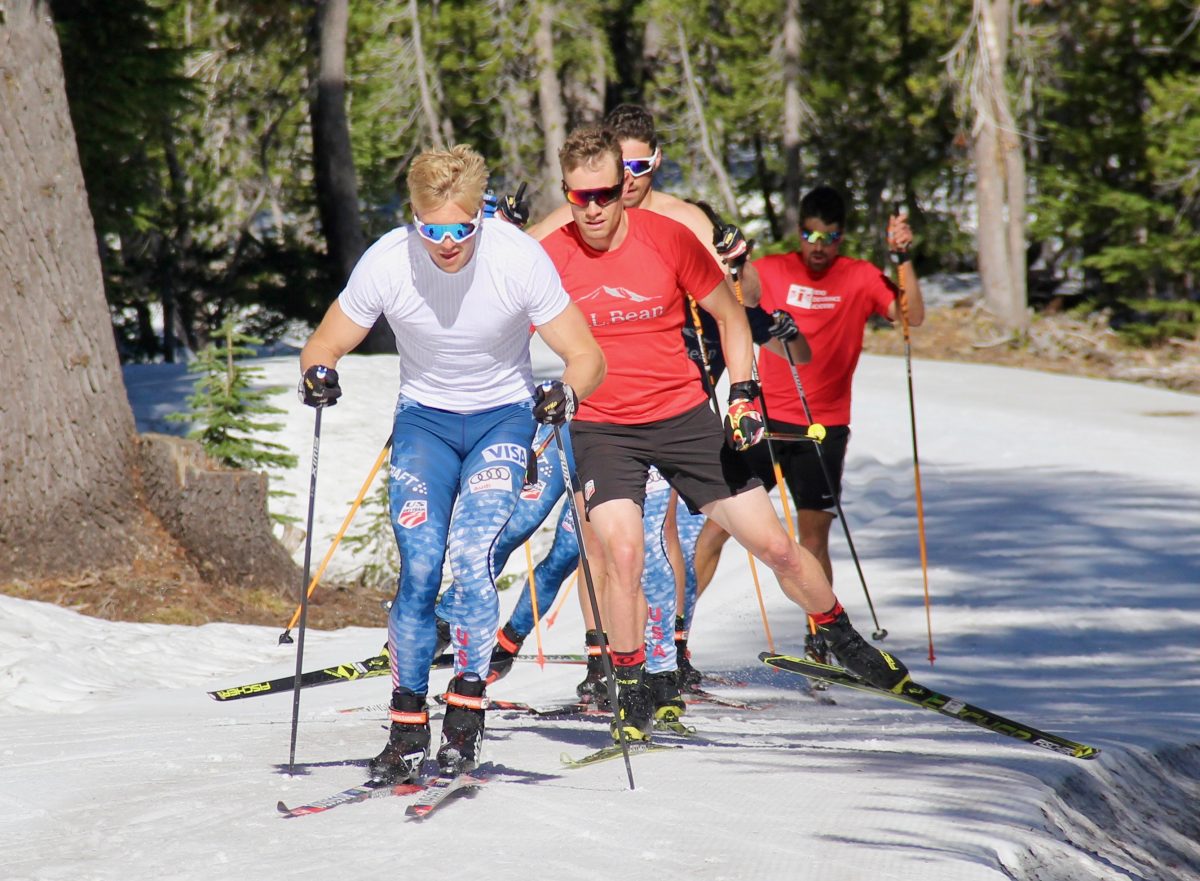
    Uptempo skiing at the U.S. Ski Team’s recent camp in Bend, Oregon. Erik Bjornsen leads, followed by Simi Hamilton, Ian Torchia, Scott Patterson, and Akeo Maifeld-Carucci. (Photo: Bryan Fish)
  • Closing the Gap: Brain Training

    Closing the Gap: Brain Training

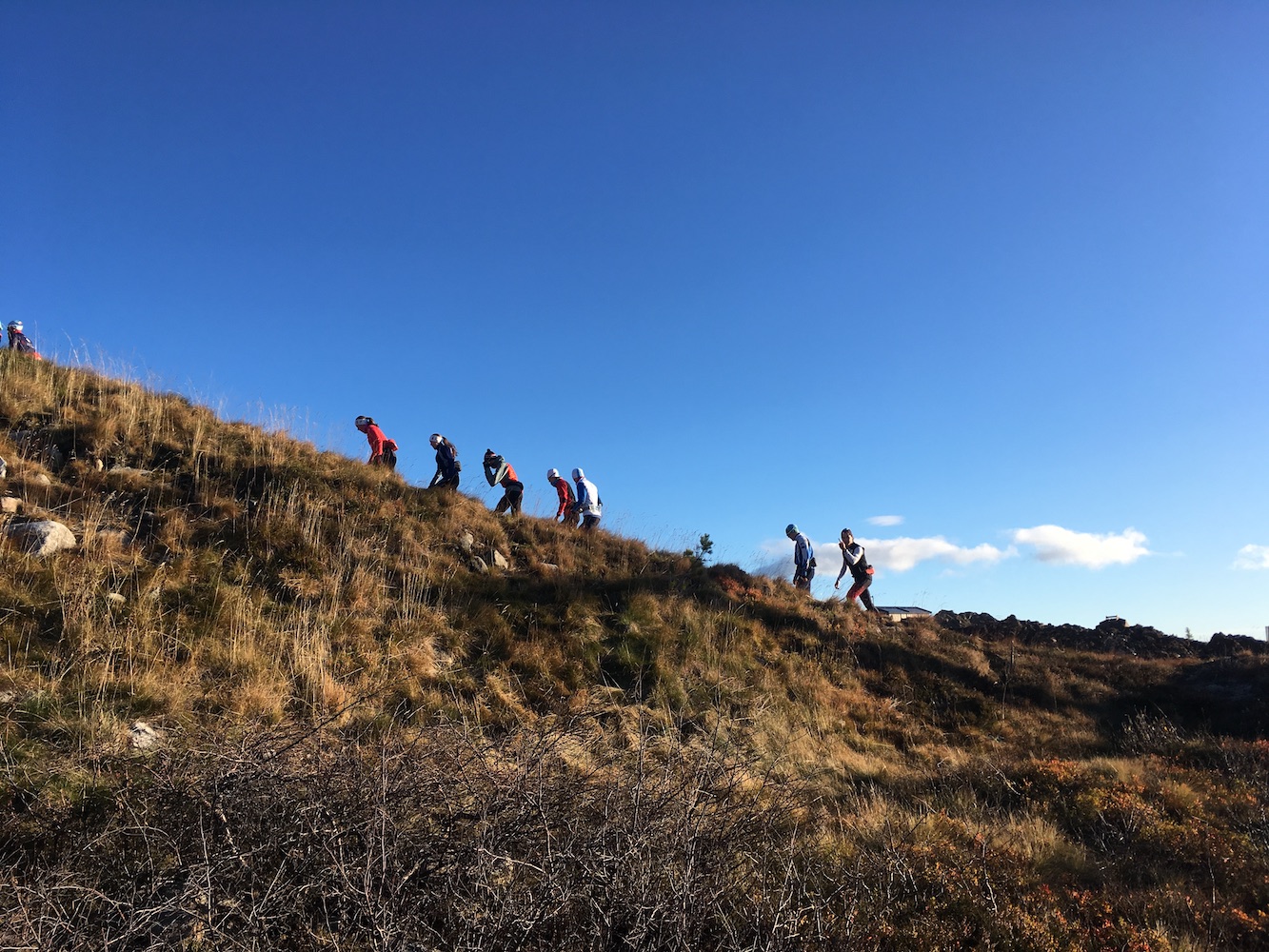
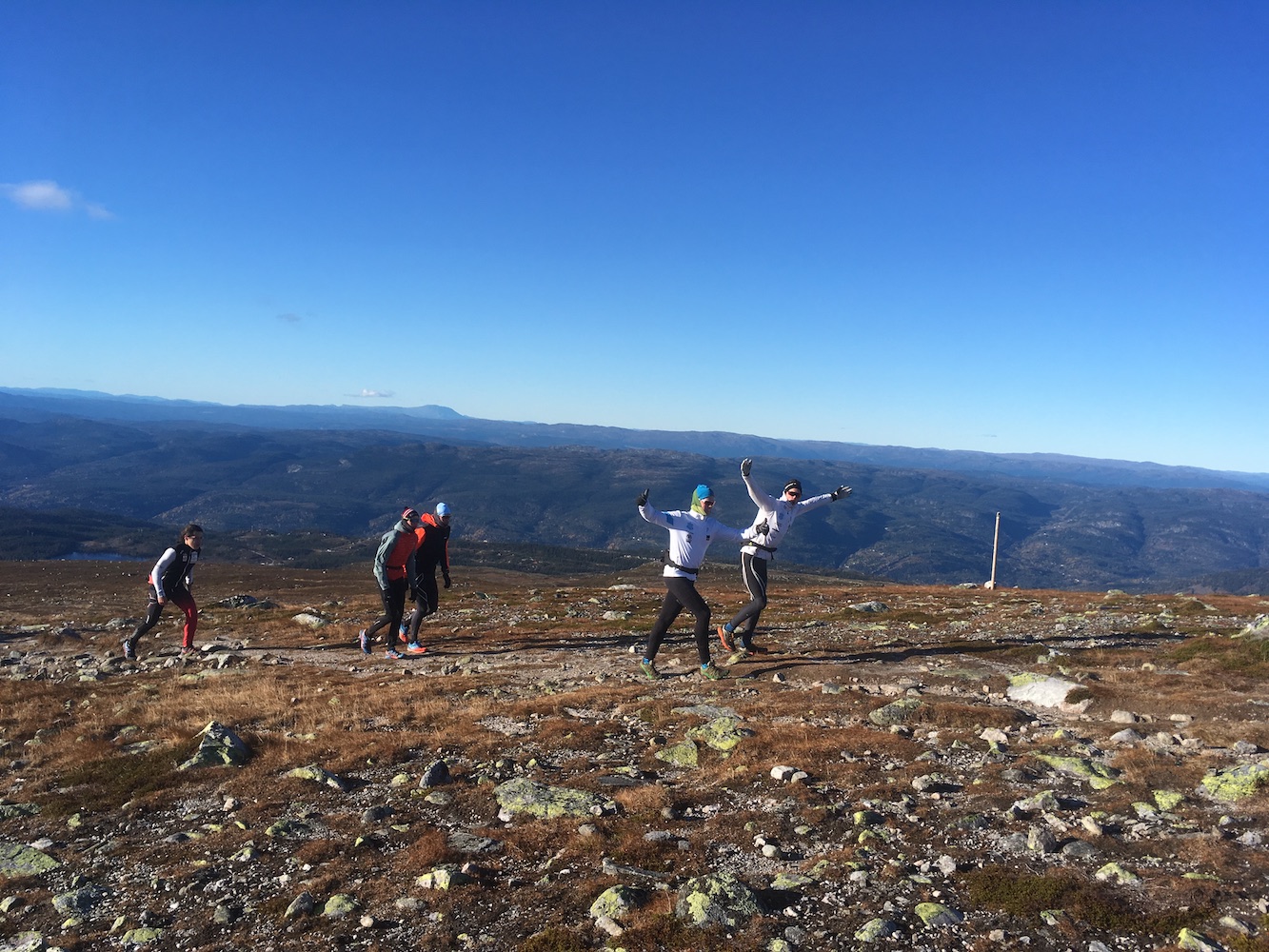
    “Norwegian fjell running.” Team Asker doing some dryland mountain training during a training camp in Norefjell, Norway. (All photos: Maks Zechel)

    Editor’s Note: The following is part of a series proposed by Maks Zechel, a 20-year-old Canadian cross-country skier embarking on his first season training abroad. In August, he recently made the big move to Norway, where he’ll be training and racing with Team Asker for the entire winter. Through these updates, Maks hopes to share his personal “observations, stories and lessons learned” to help close the gap between North American and Scandinavian nordic skiing. Previous posts: #1, #2, #3#4#5and #6.

    ***

    There is something about passion that drives people to push boundaries like nothing else. For many Canadians, this passion lies in hockey. If it’s January and you aren’t within walking distance of at least two outdoor hockey rinks, you probably don’t live in Canada.

    I’ve never been a huge hockey fan, but regardless I still went through a phase as a 9 year old when I practised my stick-handling skills religiously, making marks against the garage door or the basement wall. Black marks and dented aluminum are the proud checkmarks of passionate Canadian youth (and the source of endless frustration for Canadian parents). Canadian hockey drives youth and even adults to fervently practice a sport that only a small percentage will ever play professionally. Even on a weekday night in the middle of winter, if you bring a stick and skates to any Canadian outdoor rink, you will be allowed to join a game of shinny. No matter your gender or age, whether you claim to have been a AAA hockey legend or have never skated before, whether your family has lived in Canada for generations or if you are a newly landed immigrant, Canadians are brought together by something that transcends sport.

    National passion for a sport ensures that a large and diverse percentage of the population will actively pursue that activity in a multitude of ways. It encourages creativity and innovation. Similarly to hockey in Canada, albeit on a smaller scale, there are an astonishing number of Norwegian skiers who dedicate much of their time to just training and racing fast, even without sponsorships or national-team status.

    This creates a field of close to 500 open men at the Norwegian national championships. In the 10-kilometer skate race at last year’s national championships, the top-100 racers were separated by 1:47.6 minutes, the top 200 by 2:33.2 minutes, and the top 300 by 3:31.7 minutes (note that the conditions were fast that day). The medal winners, and many of the skiers far off the podium, were World Cup, World Championship and Olympic medalists (Anders Gløersen won, Martin Johnsrud Sundby was second, Emil Iversen was 11th, Sjur Røthe was 32nd (full race results here). The depth of field at Norwegian and Scandinavian Cups and national-championships races rivals that of World Cup races, with many believing it to be more difficult to crack the top 30 in the aforementioned three than it is at most World Cups.

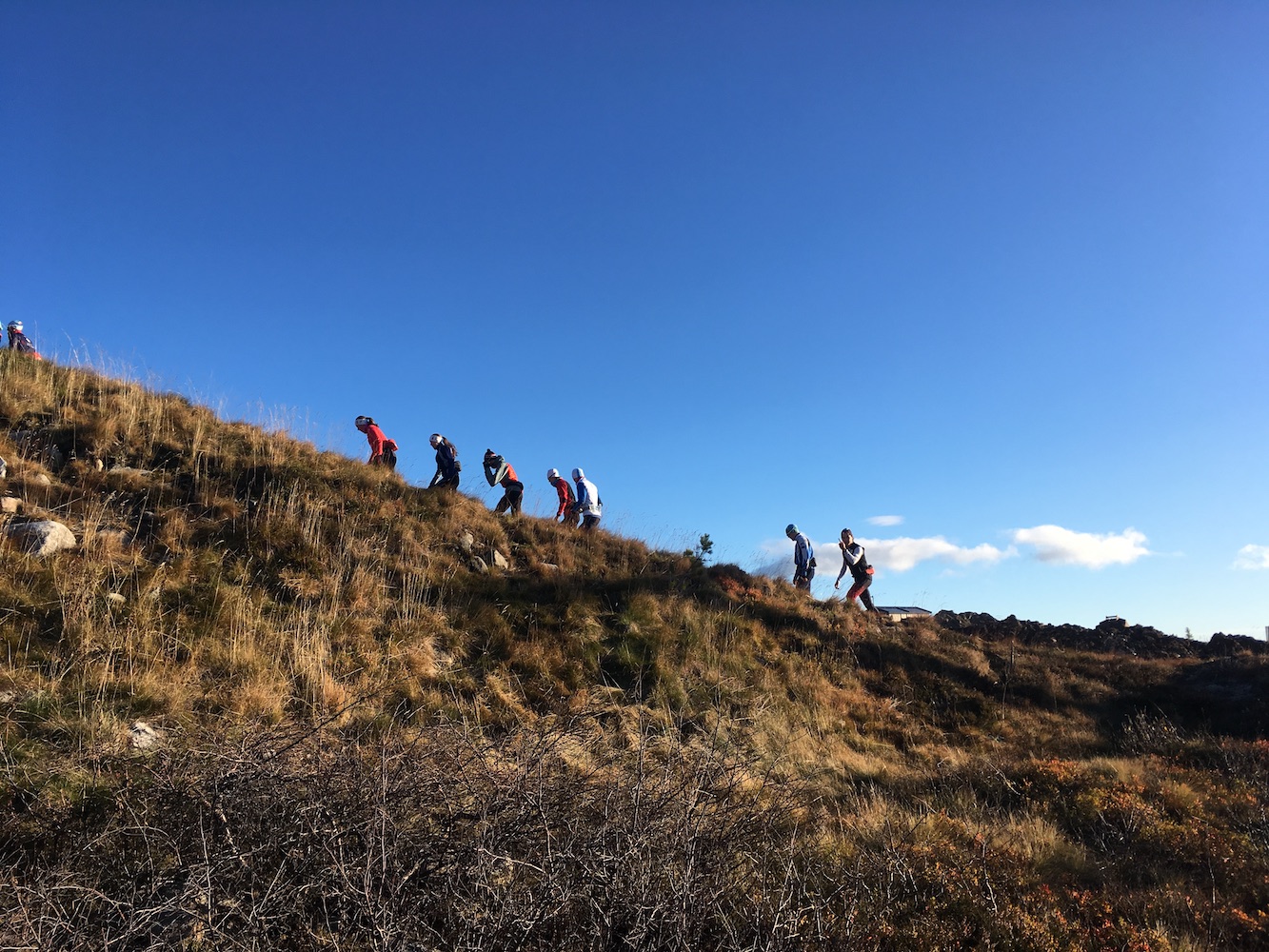
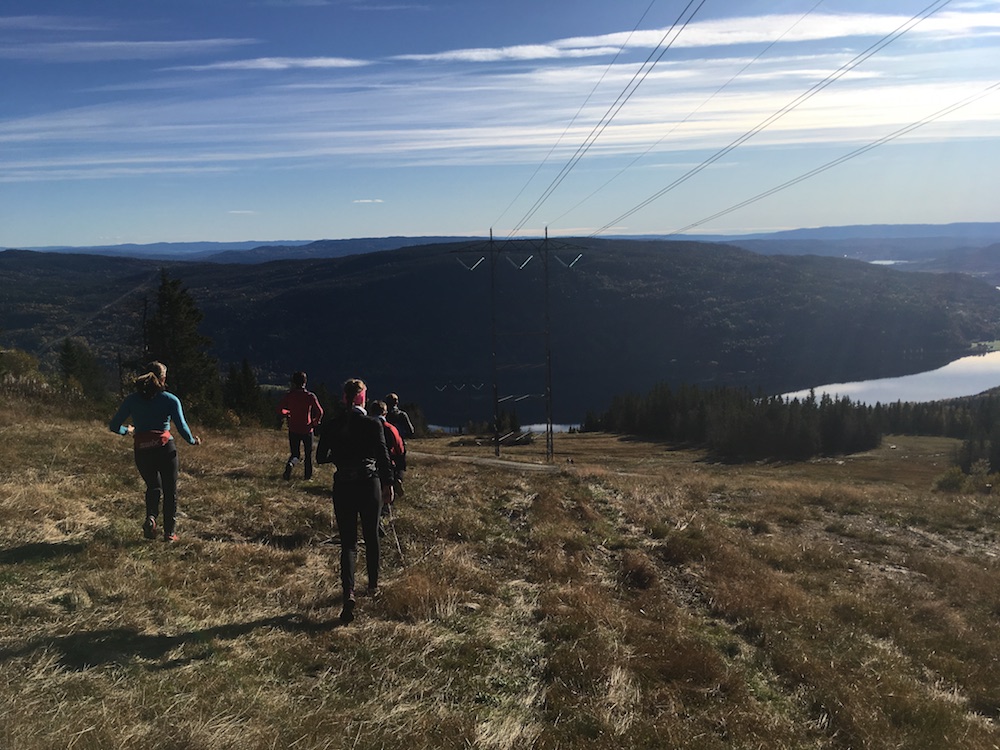
    Team Asker skiers recover as they run down an alpine ski slope during 10- x 4-minute Zone 4 bounding intervals, with one minute rests in between, at a recent training camp in Norefjell, Norway.

    The success that we see in the Norwegian senior ranks begins with Norway’s junior skiers, and I am lucky enough to be training partners with some of these top-level athletes. One of Team Asker’s most successful junior skiers, Harald, has two medals from last year’s Junior World Championships. To put his level of skiing into a senior-racing perspective, he was 26th in the previously mentioned 10 k race at the Norwegian nationals — as an 18 year old.

    It can be deceptive to see skiers who still look quite young, but to know that they are already skiing fast enough to potentially crack the top 30 on a World Cup. I believe that much of this ability stems from the incredible amount of maturity in Norwegian junior racers, although not necessarily in the traditional sense. Not all of them are obsessive about the small things; I have seen top Norwegian skiers down two Cokes per day at training camps, eat Nutella for breakfast and stretch as little as possible. Their maturity becomes apparent in how they approach training and races, ready to learn to push their bodies in the best way that they can.

    With more skiers, you see more body types and different minds. My teammates have told me to expect many funny styles of double poling when I race Norwegian and Scandinavian Cups this winter. Already at the junior level, skiers spend hours working on their double-pole technique, not just doing exactly what their coaches told them to do, but practising different movements and seeing how it works for them. Double poling is a simple motion, in theory, but with different body types you can have countless different styles of double poling that all produce the maximum amount of power for those individual skiers.

    With Team Asker, we discuss technique with our coach and we do group-technique sessions, but then we are encouraged to try things out by ourselves and see how we can adapt those basics of power transfer to how our individual bodies work. The same goes with training plans. The spectrum of what type of training makes someone ski fast is all over the place, and that is something that many Norwegian skiers seem to accept. Some athletes on Team Asker disagree with certain things that our coach says, but they are not criticized for this and are supported in altering their training as they see fit, although they are encouraged to discuss why they are making these choices.

    In Canada, I have often heard repeated “golden rules” to technique and training, things that are accepted by most coaches across the country. In Norway, I learn a new philosophy every time I speak to a different coach or athlete. For some skiers, it is important for them to train long and slowly in Zone 1 so that they have the energy to focus on interval workouts. Other skiers do short Zone 1 workouts, but push the workouts so that they are in high Zone 1 or low Zone 2, skiing closer to competition speed. Many skiers do sprints with every workout, even long runs, while others add sections of Zone 3 pickups in the middle of their easy workouts. I have a teammate who builds up to a period in the training season where he is doing 30 short sprints per day. I know Norwegian 16 year olds who are training more than 1,000 hours per year, but there are also World Cup skiers who are barely training 600 hours.

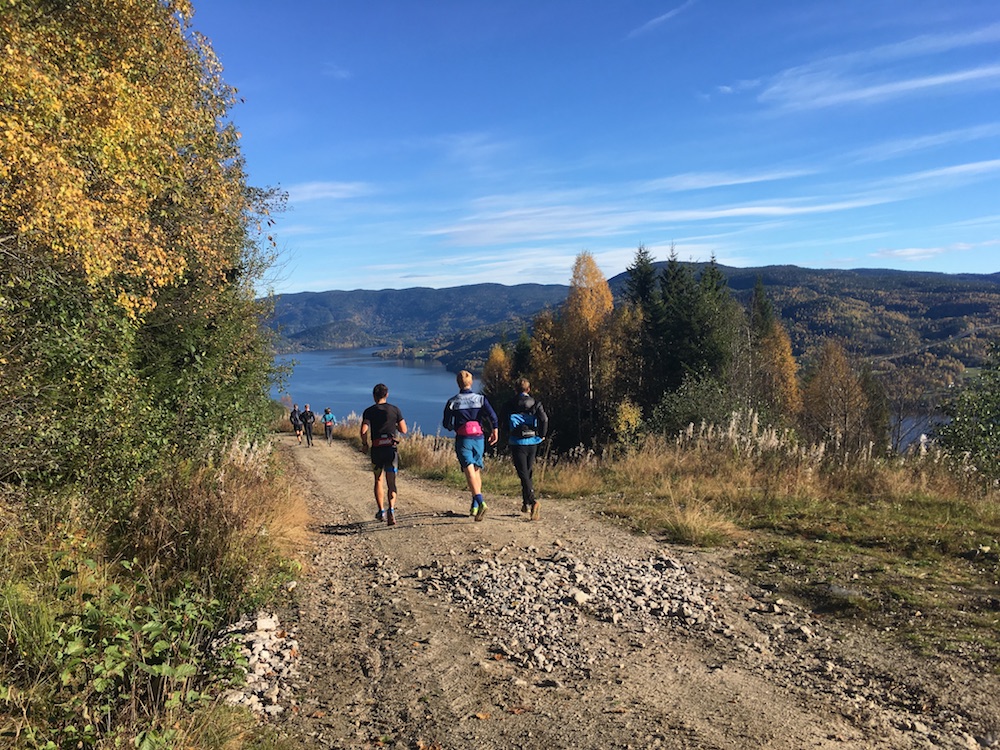
    Team Asker finishing a combo rollerski/run workout at recent training camp in Norefjell, Norway.

    Some people think that too much base training (slow Zone 1) is a waste of time, so they do the bare minimum that is required to be able to absorb intensity training and the long race season. Johannes Klæbo’s big breakthrough in the past couple of years is said to have come from an emphasis on strength and sprint training, while Petter Northug has long sworn by doing intervals in “myra” (spongy and uneven bog/marsh), but for some people, those same things will make little difference to their speed on snow. Talent may have helped them in the beginning, but whether it was Klæbo or Northug, they didn’t reach the top level through talent alone, but by perfecting all the things that make them fast.

    There are skiers, some point to Therese Johaug, who many think could do almost any type of training, and they will be fast simply from general fitness, but for most people training is not so simple. Fortunately for us mortals there is no limit to what we can achieve, so long as we are willing to take chances and use our brains rather than just succumbing to that “training junkie gene” that so many skiers possess. Each one of us is so different, that it is not possible for us to do the same things and achieve the same results.

    Over and over I have heard coaches and athletes, who go to Scandinavia for a few weeks to learn the “secrets” of the best skiers in the world, come back and confidently tell us Canadians that “they do the same training as us” and therefore we can be just as fast as them. I agree that we can be just as fast, but from my first three months in Norway, I can tell you that we do not train anything like the Norwegians. We may do similar bounding, rollerskiing and running workouts, but training in Norway is taken to the highest level by the competitive dialogue that takes place among young skiers, old skiers, back of the pack skiers, and top skiers. From my perspective, training innovation and experimentation doesn’t happen in North America on the same small scale level as it does in Norway.

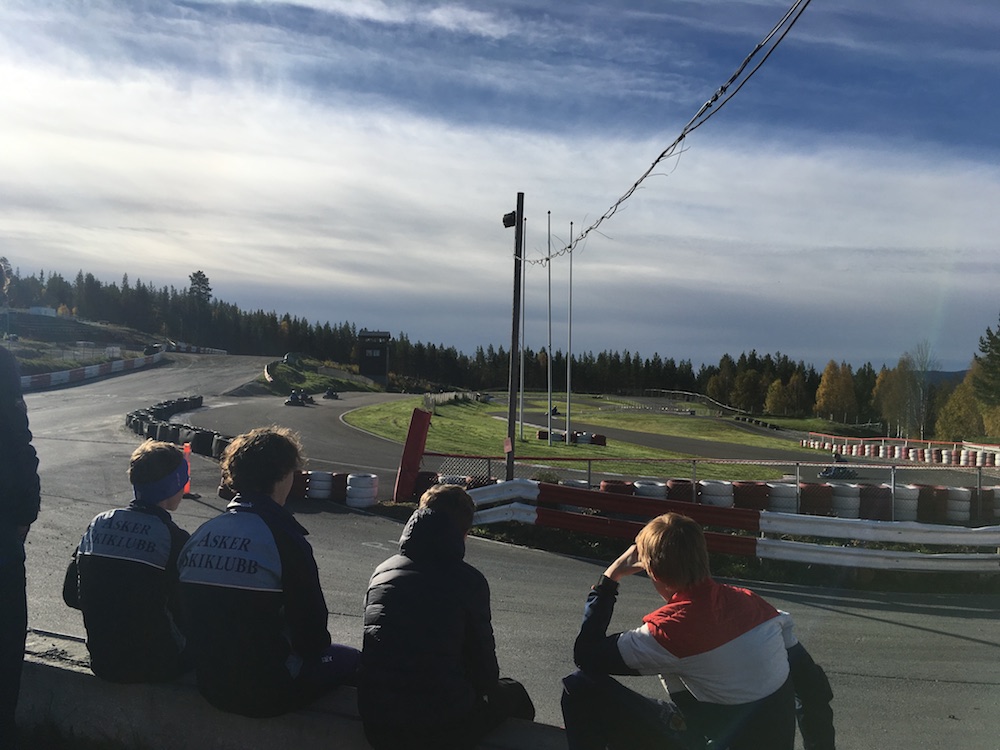
    The go-kart track where Team Asker held “King’s Court” style rollerski skate sprints (8 x approximately 1:30 minutes) during a recent training camp in Norefjell, Norway.

    In Canada we look to those that are better than us, whether they are national-team members or World Cup skiers, and try to copy them from afar. This puts us decades behind the competition. A lot of the technique innovations that we will see on the World Cup in the next two decades will have come from the Norwegian junior skiers of today, but by the time North American skiers take note of these changes, and adjust their training, the next generation of Norwegian juniors will already be working on the technique advances for the next decade.

    When I first came to Norway, the first thing I did was try to copy how the best skiers on the team double poled. I copied them for 12 weeks, but every time I looked at video footage of myself, I still looked completely different. It wasn’t until my coach explained a miniscule timing difference to me that I understood what the others were doing differently. With the switch flicked, my double poling has improved because of things that I could not figure out just by watching others ski. It is this type of interaction, between skiers and coaches of all levels, that causes breakthroughs in technique. Not all club-level coaches in Norway look to the Norwegian national team for advice on all aspects of skiing. Many coaches disagree with the common consensus on technique and training, and this opens up the discussion which is so important to moving forward.

    Most skiers love to talk about technique and the finer aspects of skiing, but when I was in Canada, I found these discussions usually revolved around what faster people were doing. In Norway I find myself having more discussions on what we individually think we should be doing, and even if someone is superior at a certain aspect of skiing, they are usually eager to try what someone else thinks might be better.

    As “Mad-Eye Moody” from J.K. Rowling’s Harry Potter series would say, “Constant vigilance!” and adjustment are required in all aspects of our training if we want to succeed. We have to seek variation in training, and learn together to discover the things that make us go fast as individuals, or else we suffer individually under the repetition of uniform training that cannot meet all of our needs.

    Norwegian Phrase of the Week:

    Norwegian: “Jeg er ut å mate.”

    Google Translate: “I’m out to feed.”

    True meaning: “I am training a lot.” (slang)

    Team Asker during a long run through the mountains at a recent training camp in Norefjell, Norway.

    ***

    About Maks: Maks Zechel is a competitive cross-country skier who secretly wants to become a professional mile runner. He loves hiking and going on canoe trips with his family, as well as peanut butter cups in ice cream. Johan Olsson is his favourite skier and he hopes to race the Cortina-Toblach stage of the Tour de Ski one day. He enjoys writing about his experiences. Follow him on Instagram @makszechel.