Tag: double pole

  • SkiErg Training: Training Considerations and Technique

    SkiErg Training: Training Considerations and Technique

    I hate rollerskiing. As much as I try to be a good Nordie, I just can’t get over my fear of hitting the pavement. Between a history of bike racing and the rollerski learning curve, I’ve already lost enough skin. I know it’s good for me and might make me faster on snow, but I’m too old to put up with my heart rate being affected more by fear-induced adrenaline than by quality training.

    My legs and lungs get plenty of work all summer from running, cycling, and strength training, but my typical dryland routine does little for the arms. I’ve tried to swim, but I haven’t progressed past drinking half the pool. 

    A few years ago, I set up some resistance bands to train the arms for double poling. After developing triceps tendinopathy, taking a snapped band to the crotch, and generally finding the bands to be either too hard or too easy, I realized my workouts were far from ideal. 
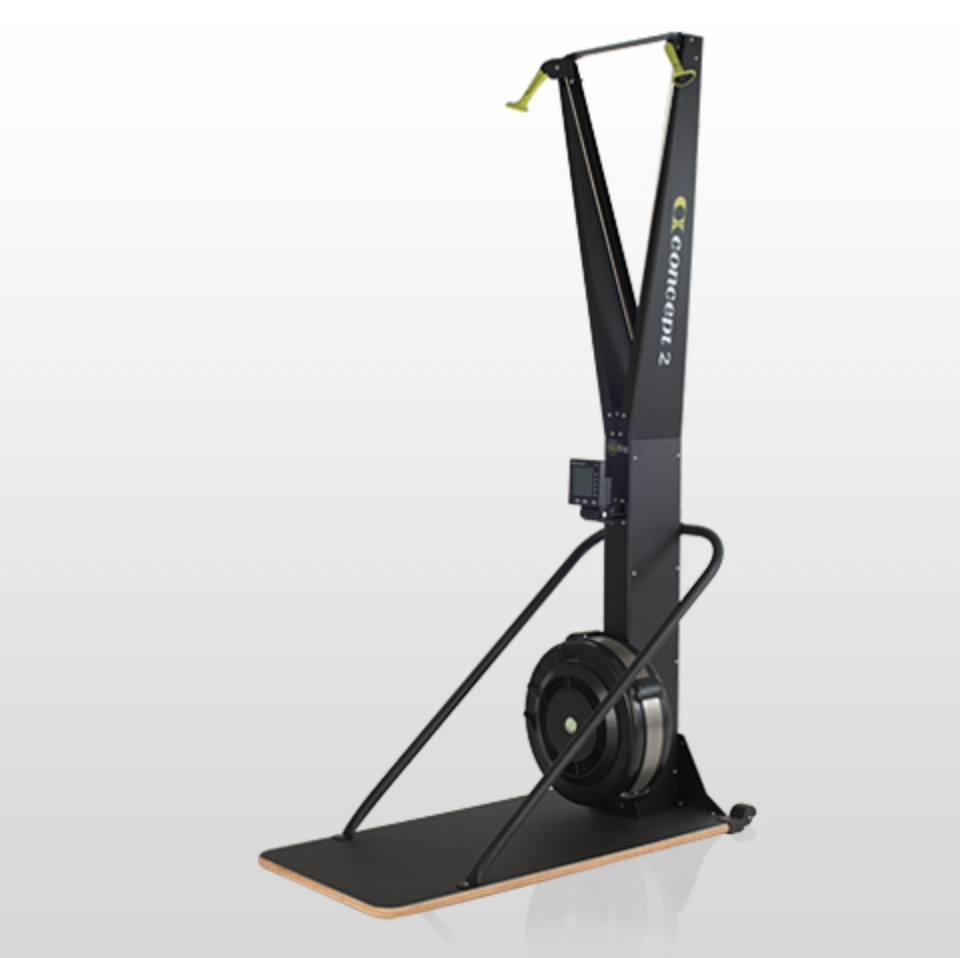
    (Photo: Concept2.com)

    What the bands gain from their price-point, they yield in utility. By their nature, the more you stretch a band, the more resistance it provides. This is the opposite of what happens with poling on snow, where the greatest resistance (or force requirement) takes place near the beginning of the pushing phase and decreases through the end of each cycle. 

    Staring in the face of another hot (and smoky) summer, I splurged on a Concept2 SkiErg last spring. Thus, I was immediately able to avoid rollerskiing (without feeling guilty) while simultaneously shielding myself from the heat and poor air quality. Solved were the resistance bands’ problems of poor adjustability and inverse force curve. This utility continued during the purgatory of shoulder season in the fall, and carried me through the local trails’ annual mid-season melt out here in Salt Lake City. 

    Cool tool. What do I do with it?

    For some expert information, I asked Miles Havlick, head Nordic coach for the reigning NCAA national champion University of Utah Ski Team, some questions about how they incorporate the SkiErg into their training. 

    What are your typical resistance settings? What’s the max you’ll use?

    We almost always use the max resistance setting of 10 during SkiErg workouts. The majority of the time we do sprint type workouts on the SkiErg machines with interval lengths of less than 5-minutes in duration. However, during longer sessions we will lower the resistance in order to keep the intensity lower.

    Author’s comment: 10 is hard! Keep in mind these are elite skiers. In a video blog from Jens Burman, he notes that his max resistance is 7. 

    Better for easy, Z1-2 endurance or higher intensity intervals?

    In my opinion, it is better for high intensity sessions targeting more anaerobic or strength training. Although the muscles are fairly similar to actually double poling, we prefer to perform longer L1 sessions on rollerskis which offers more variety in terrain and more closely resembles double poling on snow.

    Author’s comment: In my opinion, pavement hurts more than snow and I haven’t lost any skin to L1 sessions on the SkiErg.
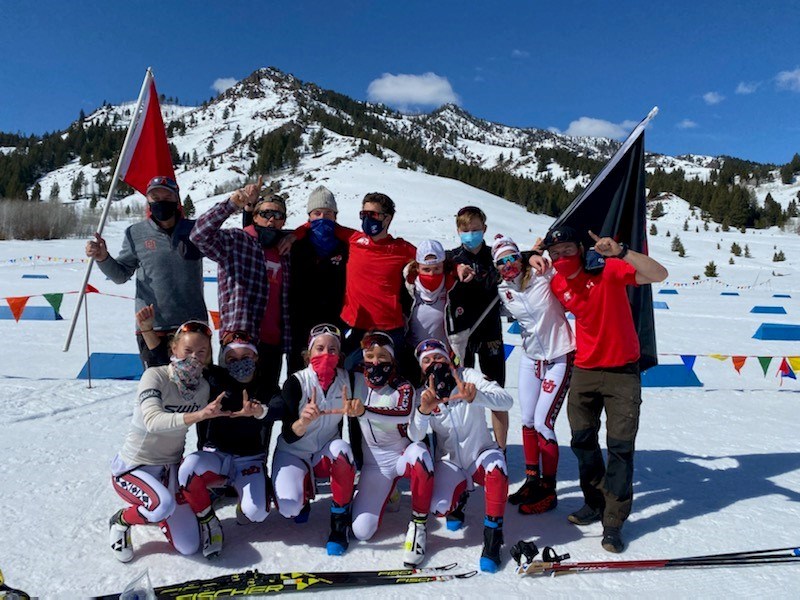
    Head coach of the University of Utah nordic team, Miles Havlick (far right), was named RMISA coach of the year in 2021 following a record setting season for the Utes. (Photo: utahutes.com)

    Do you cue or work on technique during SkiErg sessions?

    We certainly do. It is easy to get higher power numbers when using techniques that are not as effective on snow, however, we are training to be better on snow. Therefore, we are always trying to emulate the most effective on-snow double pole technique on the SkiErg machines.

    Author’s comment: more on this below.

    Do you incorporate drills like balancing on one leg or BOSU?

    We have played around with it but we do not regularly utilize this. It is effective for making L1 workouts more interesting, however during higher intensity bouts, it seems to detract from the quality and focus of the on-snow movements that we are trying to emulate.

    Training sessions on the SkiErg can cover both ends of polarized training with the capacity for both longer duration, low intensity workouts with emphasis on metabolic efficiency and for shorter, high intensity intervals to work power. 

    SkiErg Technique

    While perhaps the best indoor replacement, pulling on the SkiErg is definitely not the same as poling on snow or rollerskis. The notable difference is the lack of balance with a forward trunk lean. Without bindings and the ski to counterbalance, there is much more tendency to fall forward on your face. Or, perhaps, more tendency to sit back so you don’t fall on your face. This is a likely reason why coaches can be critical of spending too much time on a SkiErg, with a nod toward the potential non-ski-specific movements Havlick alluded to when he commented that they are always attentive to form.  

    With that in mind, there are absolutely some technique fundamentals that can be reinforced on the SkiErg. 
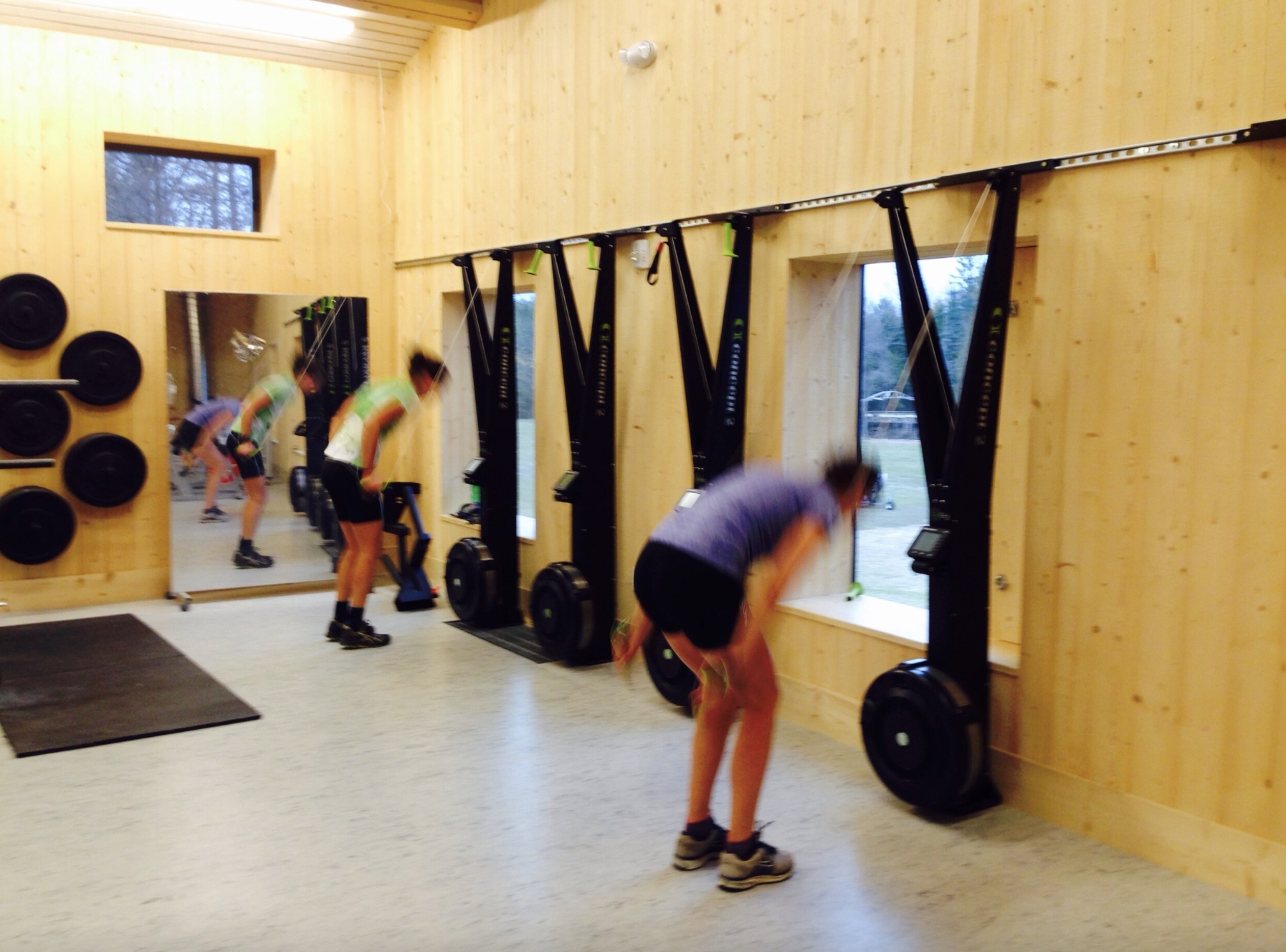
    A pair of Craftsbury Green Racing Project athletes complete a 1k time trial on the SkiErg in November, 2014. (Photo: GreenRacingProject.com)
    The Arms

    The monotony repetition of the poling motion creates a great opportunity to reinforce some key components:

    • Hands high: don’t be lazy, get those hands up
    • Elbows fairly fixed with short swings under higher resistance (think uphill double pole or V1)
    • Elbows extend with long swings under lower resistance (think fast V2 or V2 alternate)
    • Smooth on the power: like starting a car from a dead stop but getting up to speed quickly – if you just stomp on it, the wheels will spin. With poling, we want to achieve peak force quickly but smoothly; setting the poles, then delivering power to them as the upper body drops powerfully onto the poles and the pole angle decreases to deliver the force behind the skier as a push off, versus just stabbing the poles as hard as we can into snow. The latter strategy does not propel forward motion as the peak force is directed into the ground, which incurs vibrational losses in the pole shaft, and robs the system of energy before the pole angle changes toward one more effective for force delivery. 


    The Hips

    “Hips high” might be one of the more overused and less understood cues in Nordic skiing. Without digging too deeply here, the basic premise while on the SkiErg is starting the poling motion from a tall position. As the body compresses with the arm pull, hinge at the hips and ankles. Then, focus on quickly getting back to the tall start position by extending the hips via contraction of the glutes (aka “squeeze your butt cheeks”). Your knees should be relaxed and bend slightly on each cycle, but you’ll want to avoid significant knee bending as it likely indicates that you are sitting back too much. I’ve personally found that one of the biggest gains I’ve found on snow is through focusing on quickly returning to the high hands and hips start position, over and over and over on the Erg.

    As much as high intensity double poling is a full body effort (not just the arms), in skiing it is more about movement across the hips and ankles vs the knees. In CrossFit gyms, this is not necessarily the case. They are after maximum generation of force, not skiing efficiently. Please don’t do this.

    Balance

    While Havlick mentioned that they rarely incorporate balance drills into SkiErg sessions, I think they can be very useful for reinforcing single leg stability, especially if there is a specific component to address like foot pressure distribution, ankle dorsiflexion, or lateral weight shifts from the hips. As with any balance exercise, it is generally more beneficial to work on consistently accomplishing appropriate balance on the floor before moving on to an unstable surface like a BOSU or Dynadisc.

    Visual learner? Here’s a helpful video on the CXC Facebook page with Eliska Albrigtsen, former CXC head coach who now leads the University of Alaska Fairbanks team

    Looking for more? Find a 2017 Wednesday Workout with Sadie Bjornsen here, featuring 30 minutes of 30/30’s on the SkiErg.
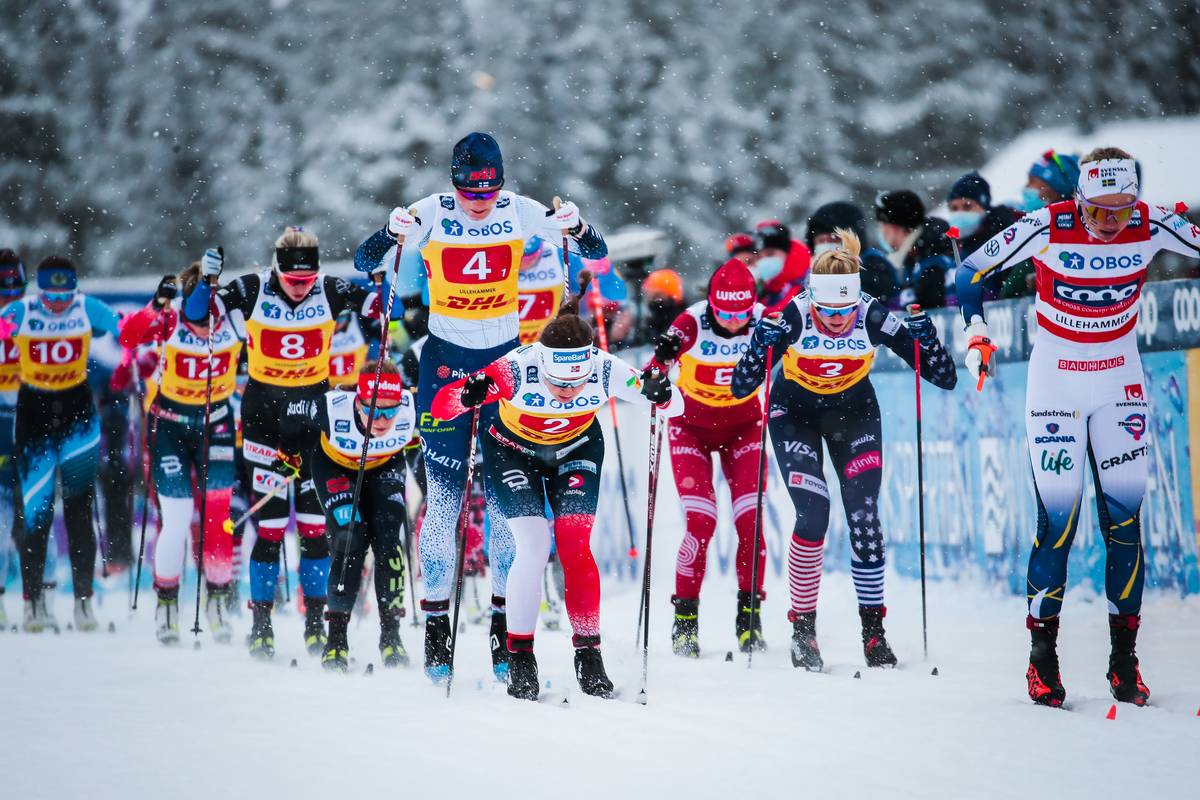
    Doublepole form on display at the start of the 4×5-kilometer relay in Lillehammer. Hailey Swirbul (bib 3) skis the scramble leg for the U.S. (Photo: NordicFocus)

    Author’s Disclosure: Concept 2, manufacturers of the SkiErg, is a sponsor of FasterSkier; however, I purchased mine at full price before I was affiliated with this fine website. In addition to the SkiErg, Abilica makes a very similar device. The Italian company Ercolina makes an upper body ergometer that has the advantage of being much more compact and portable, but it is also more expensive and very hard to find in the US.  

  • DIY Fitness Testing: The How and Why with Pepa Miloucheva

    DIY Fitness Testing: The How and Why with Pepa Miloucheva

    The SMST2 squad led by Jessie Diggins pushes the pace in a double pole interval workout during a fall 2019 training camp in Lake Placid, NY. (Photo: Matt Whitcomb / smseliteteam.wordpress.com)

    It’s May. Yes, really. 

    For most skiers, the new page on the calendar also marks the beginning of a new training year. Dust off your rollerskis, locate your heart rate strap and drink belt, and make sure your running shoes have plenty of life in them.

    With the country still predominantly on public health orders to stay close to home, avoid groups, and keep at least six feet of distance from those outside your home, kicking off a new cycle is happening without hugging our training partners, post-workout high fives, or otherwise gathering to ring in the new season. There also remains abundant uncertainty regarding the feasibility of racing during the upcoming season from the World Cup level to the junior and collegiate circuits to popular skiing. Nonetheless, we open our training logs and carry on. 

    Last season ended abruptly and the off season may have looked different than anticipated. We may have put our energy into homeschooling children, sourdough baking, binge-watching Tiger King, connecting virtually with our family and friends, or otherwise remaining largely homebound and less active than we’re accustomed. On the flip side, maybe the change in schedule has freed up additional time for long adventures and you’ve logged more hours in April than ever before. 

    Either way, at the onset of a season, you may be interested in checking in on your fitness and strength, looking for metrics to track improvement over time and to guide your pacing or heart rate zones during future workouts. FasterSkier reached out to Pepa Miloucheva, head coach of the Craftsbury Green Racing Project, to discuss fitness testing that could be done without the support of a facility or coach, making it accessible to any level skier as they begin the new year. 

    Miloucheva provided the disclaimer that she relies on advanced metabolic testing with her athletes to determine VO2 Max and lactate threshold levels to assess fitness and heart rate zones, and then prescribes training based on this information. With that caveat, Miloucheva holds a masters degree in Sport Science with a focus on physiology and biomechanics and has been coaching for over 20 years, over a dozen of which have been spent with the CGRP elite program. 

    Caitlin Patterson (far left) leads CGRP teammates running with poles. (Courtesy Photo)

    Before jumping into assessing fitness and blowing up trying to hit a new PR on the SkiErg, Miloucheva emphasized that the most important thing an athlete can do at the beginning of a new cycle is to have a training plan and to understand how the periodization targets different areas of athletic development. This might be a plan from a coach or one found online. 

    “If someone really wants to establish a baseline and monitor, then they have to have a training plan,” said Miloucheva in a call. “I think everything else is kind of pointless, because all of these tests won’t give you anything if you don’t know what you’re looking for. In general, everything starts with first having a good training plan.”

    Once a clear plan is established and you have taken time to understand it, then decide which part of the training process you would like to test. 

    “If you have 2-3 months of high volume, you want to test your basic aerobic improvement. You do the test, you see if you’ve actually improved. When you start doing a little bit more speed, you want to see if you’ve improved your speed. So you really have to schedule these tests based on your training plan.”

    As the typical periodization of the year for skiers focuses on aerobic development during the spring and summer, a good starting place could be an uphill run test, possibly combined with a rollerski or SkiErg time trial, if those are available to you.

    Traditionally, a 3000 meter run on the track was commonly used as an aerobic benchmark, but the results can be skewed based on individual running economy. Athletes with more running experience and better form often fare better than those with comparable or potentially better fitness. As such, most ski programs have transitioned toward an uphill run test, as it tends to level the playing field in terms of the impact of running efficiency on results.

    In addition to being a good indicator of aerobic capacity, Miloucheva explained that the test has the added benefit of being easily repeatable with relatively few outside variables that might impact performance.

    “The uphill running test is probably the most standard around the world. Simply, it’s easier to repeat. It’s a little bit less affected by the weather, but there are still a lot of elements and it is hard to keep it consistent.”

    Craftsbury Green Racing Project Head Coach Pepa Miloucheva (l) and Stratton Mountain School T2 Team Head Coach Pat O’Brien (center) assist athletes with lactate testing after the U.S. Ski Team’s rollerski team sprint on July 15, 2018 in Lake Placid, N.Y.
    If you’re looking to track your own progress on an uphill course, Miloucheva recommends finding a stretch of road or trail with little traffic that takes roughly 10-12 minutes. The effort should be steady throughout the test and you should finish feeling completely spent. 

    Be careful not to start out too fast as you want your heart rate to increase throughout the test, rapidly at first then gradually continuing to rise toward your lactate threshold heart rate, which can be estimated as the average heart rate sustained over the last five minutes of the test assuming it was well-paced. (TrainingPeaks has a deep dive on blood lactate and lactate threshold here, or you can read this description of lactate threshold training by Len Kravitz Ph.D., Exercise Science professor at the University of New Mexico.) 

    As for the course, you’re looking for terrain that is runnable, meaning you won’t need to resort to walking or hiking, and a relatively consistent grade. 

    Miloucheva later added that many veteran athletes have their own aerobic fitness test piece, which is also perfectly sufficient. 

    “I’m an old lady and I have this loop around the lake I do every year and I measure my time just for fun. So in general, everybody who has been training for years, they have a place where they can run the test.”

    Miloucheva has also used a 1-kilometer uphill double pole test on rollerskis with some of her athletes. Her course starts relatively flat, climbs gradually, then levels off at the finish. 

    “The biggest thing is that [athletes] need to keep moving, so it cannot be very steep because strength and the resistance become the issue [rather than fitness].”

    She has found this test harder to standardize than the run test, meaning results must be taken with a grain of salt. 

    “The problem using it year to year is that [the athletes] don’t always use the same rollerskis, they change wheels, cold weather and cold pavement changes a lot. So you have to consider all these details with the results.”

    Sophie Caldwell and Annie Hart square off for a SkiErg time trial during a week of testing with the SMST2 team in 2017. (Photo: Instagram @sophiecaldwell(

    Because of the ease of standardization, Miloucheva prefers using SkiErg time trials, as athletes can repeat the test indoors with a fixed resistance. Her junior athletes complete 1 and 2 k time trials, and her senior athletes additionally complete a 5 k test. The CGRP athletes complete the tests while hooked up to a VO2 Max testing equipment. If these are available to you, these tests could also serve as a benchmark for aerobic fitness with some ski specific strength indicators. 

    As for strength, Miloucheva is working on developing a test she feels is informative and can be standardized, as she is not satisfied with other tests used previously. She has historically used a version of the Canadian Strength Test (outlined here by Jackson Hole Ski & Snowboard Club), which counts the number of pull-ups, sit-ups, push-ups, box jumps, and dips an athlete can do in one minute with one minute rest between each exercise. Some differences in Miloucheva’s version include the use of single leg squats within a 30 second time period and measures pull-ups to exhaustion. 

    If you’re completing this test from home, ask a member of your household to help time, count, and keep your form honest so the data reflects your current strength accurately. 

    Okay, you’ve done an initial test of your aerobic fitness and/or strength. Now what? How soon should you repeat the test to check for improvement?

    Miloucheva reiterated that it is essential to plan testing between training blocks to assess whether the block had the intended impact on fitness. She explained that her testing weeks are written into her general yearly plan for athletes at the beginning of the season. 

    When considering your own plan, space the tests out roughly 6-10 weeks to give the body time to absorb and respond to training. In addition to striving for a faster time, you can also consider trends in heart rate, as more time during the test spent closer to the lactate threshold heart rate is also an indicator of improved aerobic capacity. 

    To get the most information from a testing period, it is essential that each round is approached the same way, including how the training looks in the days prior and the warm-up performed before beginning the tests. 

    “You want to have a standard approach into the test, because you don’t want to do the first test after a very exhausting week and the second after an easy week, because it will affect the results.”

    For CGRP athletes, this typically looks like one or two days of rest or easy training prior to a test. 

    There you have it. If you’re looking to assess and monitor progress in your fitness, first select and understand a training plan. Then, determine what factors of your fitness you’d like to assess and decide when a set of tests might fit best between different blocks within the training plan. Finally, do what you can to ensure that when the tests are repeated, the environment is as controlled as possible and your approach is the same so improvement (or lack thereof) between tests provides accurate insight into how your body is responding to training. 

    See you out there!  (from a safe social distance) 

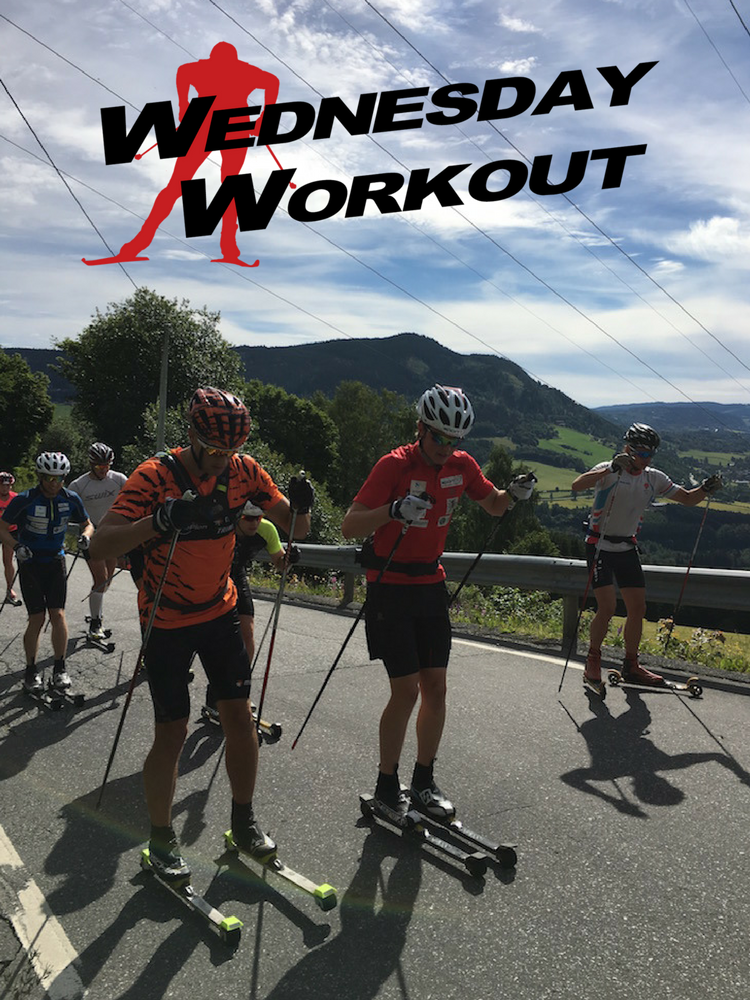
  • Wednesday Workout: Inside or Out, Improve Your Double Poling

    Wednesday Workout: Inside or Out, Improve Your Double Poling

    We are trying to stay slightly ahead of the overuse injury and poor air quality curves. You may be midway through your summer training schedule and dealing with a bum ankle. Or you live in a place like much of the Western U.S. that has been or will be affected by poor air quality due to wildfires. 

    Whatever the causation, skiers can find themselves in make-do mode. If the air quality index (AQI) is high where you live, or a bum ankle precludes running or roller skiing, you have training options. And to remain optimistic, what you might think of as a compromise, can, in fact, benefit you in the short and long term. 

    Talk to most elite athletes who have trained abroad, and they will tell you that double pole specific workouts are the norm. Double pole capacity remains one mandatory piece of results success. This is where a Ski-Erg and upper body specific strength programs come in handy.

    antabuse online

    Many athletes are lucky to have access to a ski-erg. If you don’t, please don’t stress. According to a study published in 2017 that compared the effects of strength training and specific ski-erg training on junior cross-country athletes, both groups made double poling gains. 

    The researchers examined double-poling gross efficiency, maximal speed (V max), and peak oxygen uptake (VO2 max). 

    No ah-hah moments in terms of an either-or. “No between-group differences were found for any of the investigated variables,” was a key conclusion.

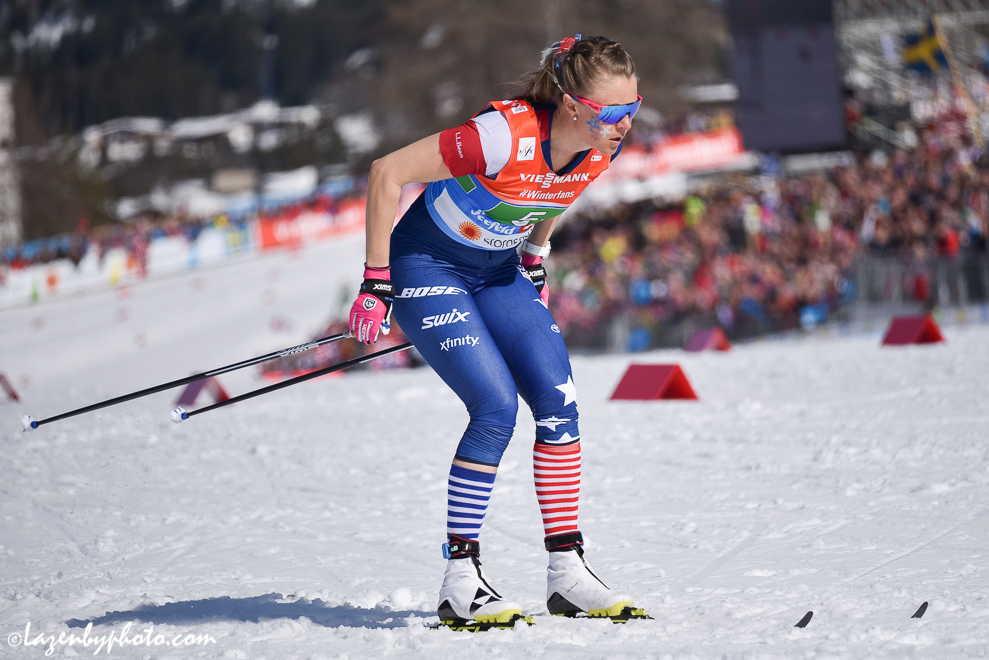
    Sadie Bjornsen of the U.S. during the second leg of the 2019 World Championship 4 x 5 k relay in Seefeld, Austria. (Photo: John Lazenby/lazenbyphoto.com)

    For those with access to a ski-erg, here’s a 2017 Wednesday Workout from a newly married Sadie Bjornsen. (Congrats!) If your local air quality is sub-par, we’re hoping the ski-erg is located indoors. (If you have a bum ankle, grab a chair, sit down in front of the ski-erg, and begin pulling.


    The Start: “I start my workout with a fifteen-minute warm up. During this time, I often shut my eyes, and visualize skiing. This helps bring in true ski form, and feel my movements, rather than just fall into a ‘SkiErg-specific technique.’”

    Getting Speedy: “During this time, I will do some little ten-second increases in power to warm up my back and arms, and get ready to go hard.”

    The Workout: “After fifteen minutes, I begin the workout known as 30-30’s. This means 30 seconds of intervals followed by 30 seconds of recovery, then repeat for 30 minutes. What may feel easy at first, quickly catches up after 10 minutes, so I always start this workout more conservative than feels appropriate.”

    Keeping It Going: “After about five minutes of 30 seconds on, 30 seconds off, I start to see a common number of watts I am exerting during the 30 seconds. This is where I set a goal. Maybe it’s 190 watts I am hitting, I want to continue to reach that level or more for the next 25 minutes of this workout. This becomes increasingly hard around 20 minutes, and requires a certain amount of mental power. The 30 seconds of rest begins to pass too quickly, and I find myself becoming really focused in my own little world… forgetting where I am (maybe a garage, maybe a gym).”

    Finishing Up: “By the end of 30 minutes of 30-30’s, I am pretty worked, and feel like I have just done a race out on the snow. This is when I bring myself back to my surroundings, and finish with a fifteen minute easy warm down to help flush my arms out.”

    Final Thoughts: “Not only does this one hour pass really fast, but it is a really focused workout that feels like it truly helps build specific power. I always make sure I finish this workout with a little five minute walk. This helps flush all my muscles, but also helps make sure my back goes back to moving naturally after a pretty intense workout.”


    And to keep things fair between the siblings, here’s a 2017 non-ski-erg double pole specific workout from Erik Bjornsen. This session is more suited for those smoke-free days. 


    The Workout: Solo, high-focus, double-pole distance session

    Erik Bjornsen of the U.S. skiing to 17th overall during the 15 k classic at the 2019 World Championships in Seefeld, Austria. (Photo: John Lazenby/lazenbyphoto.com)

    Find suitable terrain and timing: “I choose the terrain based on how hard I want the workout to be. I try to fit this workout in mid-week between intervals sessions,” he wrote in an email. “The point is to get the biggest benefit without fatiguing the body too much.  

    “Most often I head up Campbell airstrip road. It’s a five-mile-long road, with a majority of the terrain measuring out at a gentle 5% incline,” Bjornsen continued. “There’s one steeper climb in the middle that’s about 500 meters long. For this workout, I go out and back twice.”

    Warmup: 15-minute easy Level 1 (roller)ski to the start.

    Go-time: Typically takes him 1 hour and 20 minutes to rollerski the 5-mile section twice.

    “The steep 500-meter section is VERY hard to double pole — that portion of the road is something you would for sure stride in a race. During this workout, I try to spend an hour at L2 [Level 2] and end up bumping up to L3 [Level 3] only when double poling up that steep segment (2 X 5min in L3). I like having the two short but demanding double pole sections in this workout.

    “The important part of this training session is not the 2 x 5-minute L3 sections, it’s the time before and after that L3 effort. You have to figure out how to get the muscles to recover from the hill while still double poling and determine what gear/tempo to use while still applying power efficiently — and recover at the same time.”

    Cool down: 15-minute easy ski home.

    Notes:

    • “The idea is to work specifically on double pole and upper body strength. You get an opportunity to work on all gears, from long double pole to very quick choppy double pole up the steep section.

    • “You can gain a lot from just focusing on two intensity sessions a week throughout the summer. This is a way I find I’m able to gain quite a bit from specific double pole training. But ideally, you don’t fatigue the body so much that it takes energy away from the true intensity sessions.”

    Lastly, here’s the strength protocol from the 2017 study we mentioned up top. After a specified warm-up, here is what the researchers prescribed for the non-ski-erg test group.

    (1) for different training days, the participant was allowed to alternate between five repetitions maximum (RM) of snatches, squats or deadlifts at 60–85% of body mass,

    (2) 8 RM sit-ups or vertical sit-ups,

    (3) 6 RM pull-downs, chin-ups or seal row

    (4) 6 RM of pushdowns, bar-dips or narrow bench press

    (5) 6 RM of belly-backs with or without dumbbells.

    “All five exercises were conducted with two sets per exercise and 1-min rest between sets. Thereafter, the participants completed 5–10 min with different core-stability exercises, which were followed by 90 s of cable crunches, 60 s of pulldowns with a rope, and 30 s of triceps pushdowns with a rope without rest between exercises. After 1-min rest, these three exercises were repeated once. Finally, 3 sets of 45 s of medicine-ball slams (3–5 kg) with 15-s rest between sets were conducted. After the group-specific training session, the [strength] group performed 20 min of roller skiing using the double-poling technique in the heart-rate intensity zone MIT”

    Happy double poling. 


  • Proskida Seeks to Revolutionize Ski Training with Power Meter

    Proskida Seeks to Revolutionize Ski Training with Power Meter

    Endurance junkies can be data nerds. The market for smart watches and wearable fitness devices has boomed, trending toward a $29 billion dollar market with 243 million units sold by 2022 according to an industry analyst’s estimates. In the world of endurance sport, professional athletes and weekend warriors alike are recording their workouts and analyzing the results using platforms like Strava, Polar Global, or Garmin Connect in search of optimal training to achieve personal bests. 

    Depending on your sport of choice, the metrics you track in this world of modern training might vary. Skiers often train by heart rate and time, focusing on staying within particular zones during a workout. A road marathoner might focus on pace and mileage, whereas a conversation overheard between cyclists almost certainly includes some discussion of power. What is power? The simplest explanation is that power is the amount of energy output by the rider at a given time measured in watts by a power meter.  

    Though commercial power meters for cycling have been available since the late ’80s, their prevalence in recreational and sub-elite training has become increasingly popular over the last decade. A power meter for running does exist, but it is much less commonly used. In cycling and triathlon, the use of a power meter is claimed to have revolutionized training by reducing subjectivity and quantifying energy expenditure so the rider knows exactly how hard they are working.

    buy arcoxia online

    A 2018 Velopress review of the book Training and Racing With a Power Meter, 3rd Ed. reads, “For cyclists, training with power is a critical part of reaching the next level of performance… Simply put, the power meter allows you to quantitatively track your fitness changes, more easily define your weaknesses, and then refocus your training based on those weak areas.”

    In cycling, it is fairly simple to measure power. Force from the legs is delivered to the pedals, which turns the crank to drive the bike forward. Most power-meters use a strain gauge located at the bottom bracket which measures the torque applied to the crankshaft and its rotational velocity. As the data are transmitted in real time to a computer, an algorithm processes the information to provide the rider with a live reading of the watts they are outputting. 

    In contrast, measuring power in cross country skiing is exceedingly difficult. The movement of the body while cross country skiing is much more complex; force is delivered through both skis and poles, both of which are continually changing their orientation relative to the ground and their location in space. Motion is continually happening in all three planes; forward, vertical, and lateral.

    Until recently, devices used to measure these forces and motions were only found in research settings. Scientists used force measurement plates mounted to a binding or buried under the snow to estimate the forces produced by a skiers legs, while forces exerted on the pole were measured with a sensor located in the grip. In most cases, these systems were cumbersome and each system had disadvantages that would deter or prohibit an athlete from regular use in their training. 

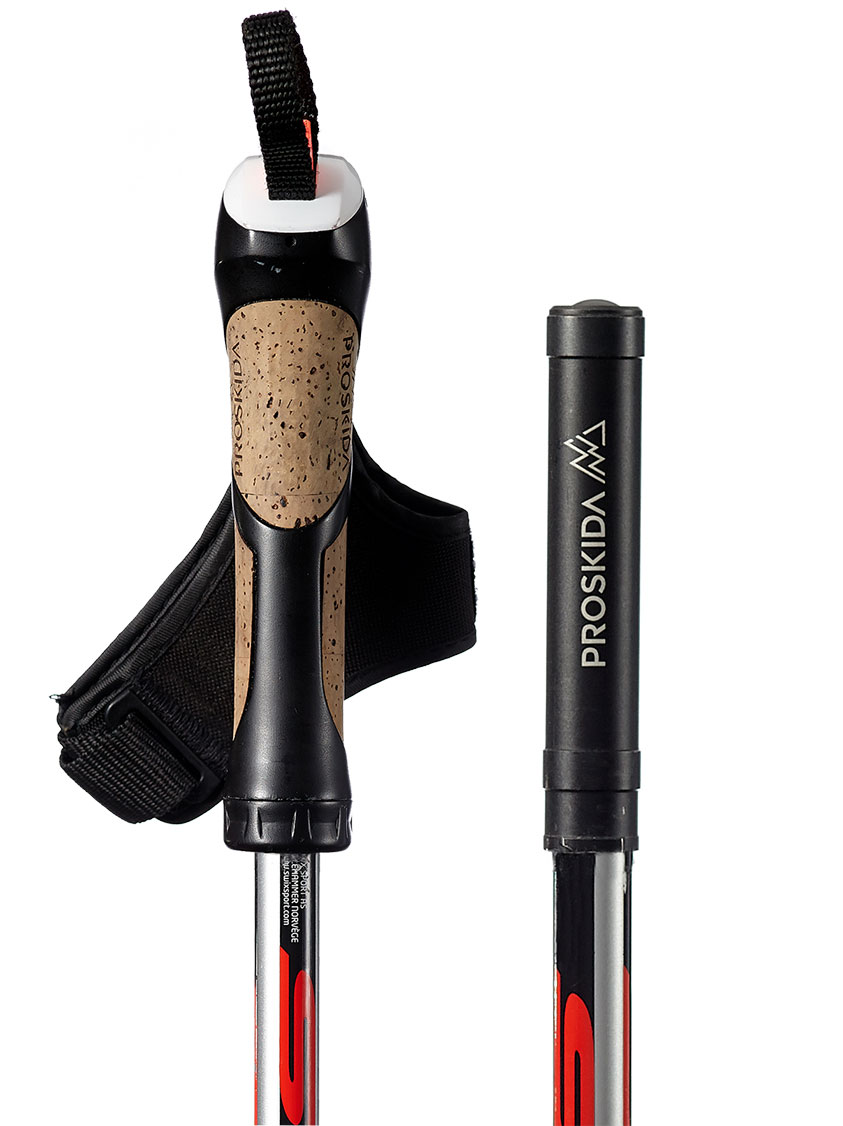
    A close up look at a pair of the Proskida grip and coupler system, a power meter for cross country skiing. (Courtesy Photo)

    In 2015, a small group of ski enthusiasts with strong credentials in the realm of technology and human performance set out to develop a more readily available product that could break this mold. The team included a computer scientist, a mechanical engineer, an exercise physiologist, and a dual biomedical engineer and nanotechnologist. Their innovation resulted in the creation of the Proskida grip, a sleek power-meter nearly indistinguishable from a normal pole grip. 

    “We’ve tried to see what the state of the art is now for wearables and sport devices and then go the next step,” stated Proskida Co-Founder Alastair Smith.

    FasterSkier spoke with Smith, who is located in Canada’s Yukon, Proskida’s home base, to learn more about the evolution of the product and how it might support athletes in maximizing their potential. 

    “The genesis of it is that it kind of came out of the whole idea of ‘why is cross country skiing the last sport in which you can measure performance?’” questioned Smith. “If there is any sport that you absolutely need some ability to measure that is external to how hard you are actually working, it’s cross country skiing, because the conditions change so much.” 

    This external tool would be a contrast to the typical measures an athlete might use to track their progress during a season, such as a time trial result, a treadmill test, or a repeated interval session. The tool Proskida aspired to create would also allow athletes to quantify their performance in a training session on a daily basis, rather than just comparing various benchmarks. 

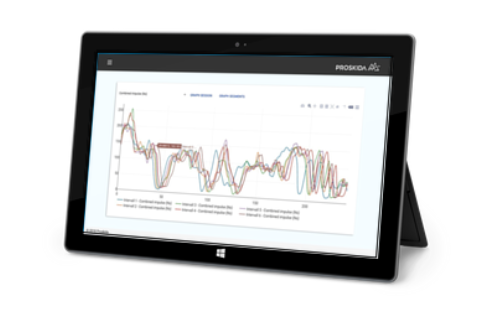
    While nearly indistinguishable from a normal pole grip and only about 50 grams heavier, the sensors nested in the Proskida grip collect data about the position of the pole in space and the forces being applied to the pole. The data collected are sent via Bluetooth to a phone or tablet where it can be analyzed in an app by the user or by a coach. 

    “We can tell the force, how effective that force is, meaning how much of that force is driving the skier forward,” explained Smith. “We can tell things like cycle rate. We can do technique identification. So we can get quite a bit of data just from those two grips.”

    The Proskida grips collect and display the power a skier is producing while skiing. (Courtesy photo)

    It is also possible to import other training data from a smartwatch into the Proskida app in order to include other analytics such as heart rate or distance. The grips are also designed to be easily transferred between sets of poles with a coupler system, making it so that a user only needs one pair. 

    Though the Proskida system is only collecting the forces that are going through the pole, Smith explained that they believe this is a significant measure of a skier’s overall power.

    “If you just imagine straight double poling, the actual amount of muscle that is being used to double pole, it’s largely your legs,” he explained. “You’re raising your body up high [with your legs] and falling down onto your poles.”

    Smith estimated that 50% or greater of force generated while skiing travels through the poles, regardless of whether the user is skiing classic or skate. 

    “We’ve kind of taken the approach that by measuring at least 50% if not greater of your performance through the poles, you’re that much closer to being able to understand how you’re improving over time rather than relying solely on heart rate or getting onto a treadmill or things like that.” 

    Another metric that they are exploring, also drawing from the world of cycling, is the use of identifying critical power, which is essentially a set of markers, in this case, watts, that an athlete can sustain for a given amount of time. This is likely something any athlete is already loosely aware of; if you ski all out, you cannot sustain that effort for long, whereas if you ski at a lower intensity, you can continue at that effort for much longer. Critical power is the number of watts that can be sustained for roughly an hour, which might be approximately equivalent to lactate threshold

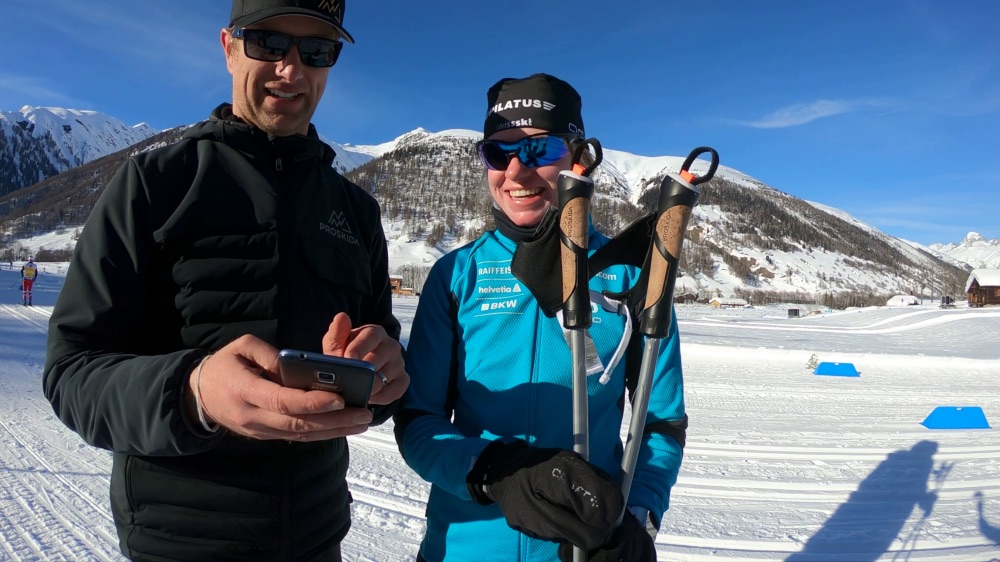
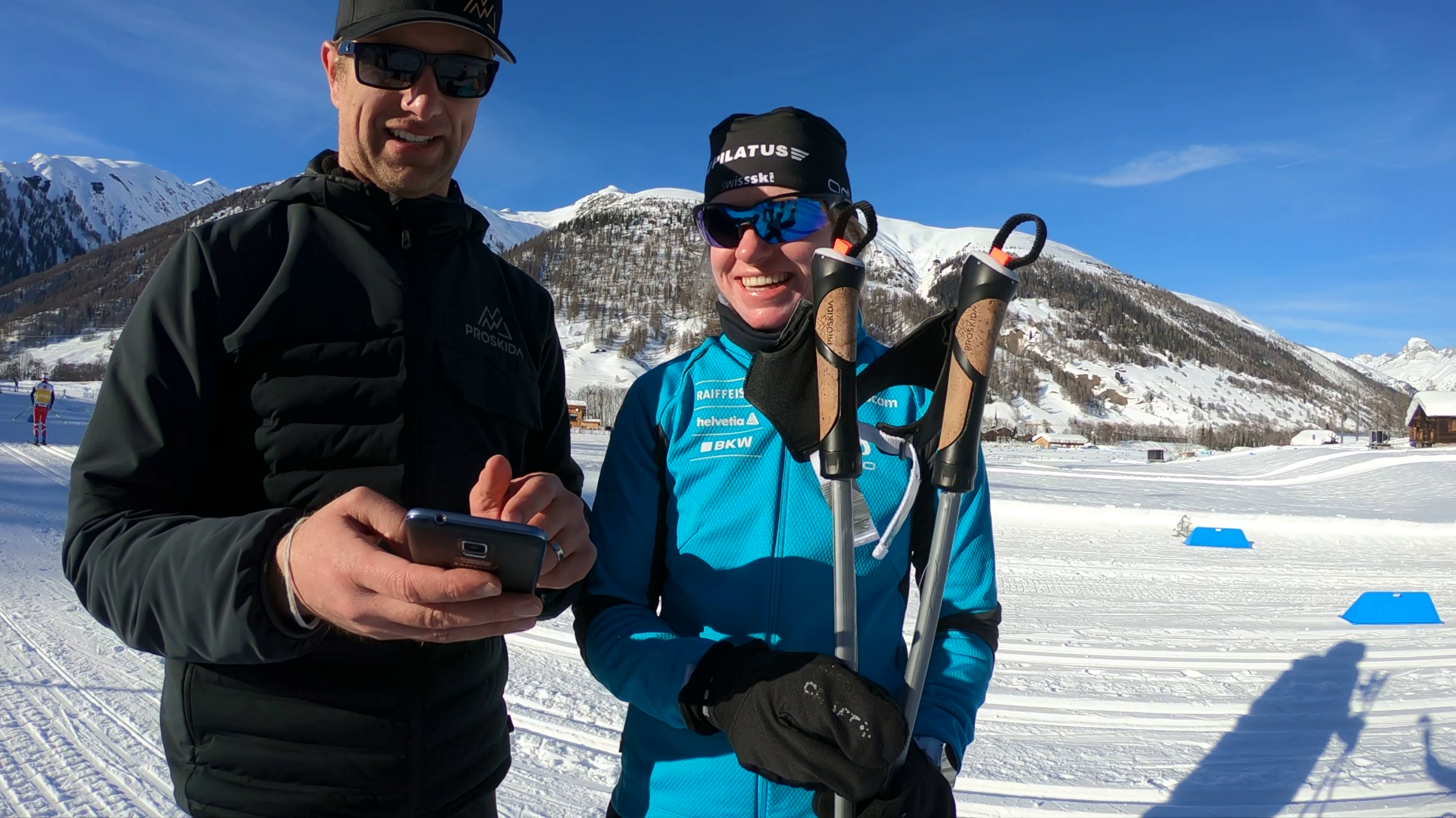
    Proskida Co-Founder Alastair Smith looks at power data with SwissSki athlete Nadine Fähndrich. (Courtesy Photo)

    Smith explained that an athlete using Proskida grips could do a critical power test similar to what cyclists complete, then use this metric to assess where in relation to that value they are skiing during subsequent sessions. One could compare to historic or bests during a workout or train based on the percentage of watts relative to their critical power, versus heart rate or effort. 

    “That’s been a really, really powerful tool to be able to see how you’re improving,” he said. “Not just your technique but also your general fitness level because it doesn’t matter what conditions you’re skiing.”

    Anecdotally, Smith explained that in his own use, he was able to assess much more clearly the quality of a session completed in suboptimal conditions, such as newly fallen loosely packed snow. 

    “I’ve noticed that even in the worst conditions, you can still determine where you are in terms of your historic best,” he said. “Whereas typically, if you ski in fresh snow, it’s just a slog and it’s kind of depressing because you don’t go as far, your heart rate is going to be up.”

    At this point, the product is not yet available commercially. However, it has been tested and used by seven national teams and sport federations over the last two years. These include the French National Training Centre for Cross Country Skiing (Le Centre National de Ski Nordique et de Moyenne Montagne), the German national ski team (Deutscher Skiverband), the Canadian national ski team and the Canadian Sport Institute, Swiss – Ski and the Swiss Federal Institute of Sport, and Norway’s Olympiatoppen. Smith explained that each of these groups had slightly different interests in their use of the product and that their feedback was invaluable to the development of the analytical software and fine tuning of the system.

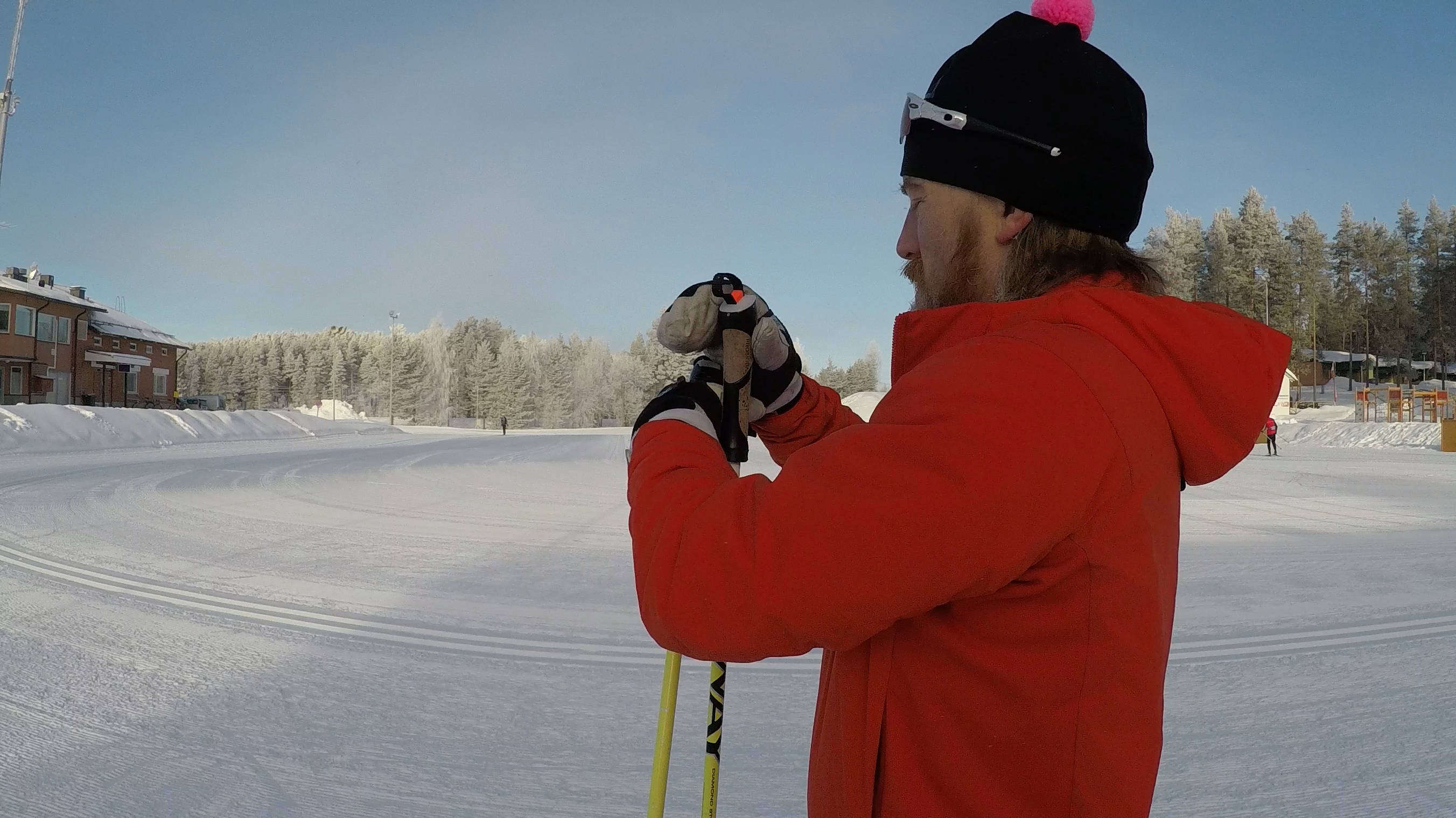
    Proskida software developer Anthony Killick heads out for a ski with his Proskida power meter grips. (Courtesy Photo)

    The journey to create and produce the grips has been much longer than the innovation team originally expected.

    “When we first started this, we thought, ‘Okay, we’ll do the poles and then six months later, we’ll tackle the skis,’” recalled Smith. “And now, three and a half years later, we’re still refining the poles.” 

    The biggest challenge the team has faced has been designing software to manage the massive amount of data the grips are able to collect. 

    “We’re ready for production on the hardware side, but what we’ve found, is the amount of data that we can produce is overwhelming,” said Smith. “The force, the angle, angle of attack, effective force, impulse. And then with all of that, we can start getting into symmetry as well, so you can do that for left and right. So it got to a point where, without some good software, it’s quite a challenge. So that has been our focus now is to go, okay, we’re taking this data in. Let’s present it in a quick simple way so that athletes and coaches can get some sense from it.”

    Smith explained that Proskida is designing software to parse the data and narrow the display to sections that are the most important, such as the period surrounding an interval session, excluding a warm up, cool down, or any large breaks. This way, an athlete is able to quickly review and efficiently compare the data that is most beneficial to their overall training. The Proskida team anticipates that the final product and software will be ready for commercial sales by 2020.

  • Wednesday Workout: Double-Pole Endurance Training

    Wednesday Workout: Double-Pole Endurance Training

    The Marcialonga course follows the rivers in the Fiemme and Fassa valleys for the first 67 kilometres. (Photo: Ian Murray)
    The Marcialonga course follows the rivers in Italy’s Fiemme and Fassa valleys for the first 67 kilometres. (Photo: Ian Murray)

    Double poling is an increasingly important part of cross-country skiing and it pays to be good at it. If watching World Cup stars double pole short races on television doesn’t have you convinced, take a look at the races you might enter. Most loppets, marathons and citizen races feature flatter courses with a lot of double-poling time. Even in skating, the three main techniques all include slight variations on double poling.

    When five Canmore skiers decided to make the 70-kilometer Marcialonga in Italy (part of the Ski Classics marathon series) their major target for this season, they decided to emphasize one technique in their preparation.

    “Pretty much the whole elite field will [double pole the Marcialonga without grip wax],” Erik Carleton, a longtime Canadian Para-Nordic Ski Team guide, explained. “It’s all about getting to the last uphill, and then it’s 3 k pretty steep and you just try and survive that.”

    Here are three of the workouts that the 38-year-old Carleton and his Canmore-based training partners, including Canadian Para-Nordic veteran Brian McKeever (age 37), his other guide Graham Nishikawa (33), Ian Murray of North Highlands Nordic (38), and Jon Arne Enevoldsen (54), a former Norwegian biathlete who now runs a coaching business, used to prepare. Each of these five athletes had a different mix of goals for the season and shared workouts were just a part of their individual preparation. FasterSkier has suggested variations for those of us who are less than elite.

    Workout 1: Go to a local classic loppet/marathon/citizen’s race and don’t bring kick wax.

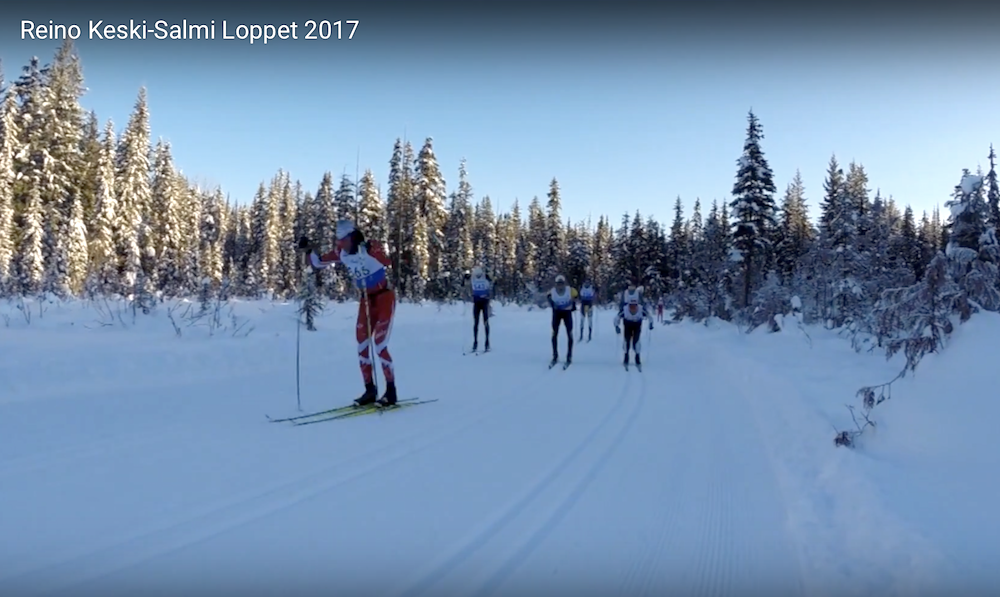
    Erik Carleton leads a group through Bilbo's Bog at the RKS 2017. (Photo: Larch Hills)
    Erik Carleton leads a group through Bilbo’s Bog at the 2017 Reino Keski-Salmi Loppet at the Larch Hills trails in Salmon Arm, B.C. (Photo: Larch Hills Nordic)

    The Canmore crew chose the Reino Keski-Salmi loppet, a 34 k race at the Larch Hills trails in Salmon Arm, B.C., known to locals as the RKS. This event is a typical regional loppet: the long course is relatively flat with a little over 600 metres of climbing, the demographic is dominated by kids and retired people, and most of the 396 finishers were solidly focussed on having fun on snow.

    Before the race, Enevoldsen correctly predicted that local skiers with grip wax would easily beat anyone double poling on squeaky -17 Celsius snow. Their goal was not to win, but to get some quality DP training done two weeks before the Marcialonga.

    In the end, Larch Hills local Thomas Hardy cruised to victory on grip wax in 1:38:52, just four days after placing 18th at the U.S. nationals 30 k classic mass start at Soldier Hollow in Utah.  McKeever and Nishikawa returned from Soldier Hollow ill and didn’t start.

    Carleton was feeling the effects of his 15th at Soldier Hollow, finishing the RKS 4:03 minutes behind Hardy. Carleton said afterwards, “It felt good off the start and I tried to push the pace a bit, but then the body was — not today.”

    Murray and Enevoldsen were fresher but still treated the RKS as a training workout, finishing at 1:32 and 9:00 respectively to win their age groups.

    If it seems wrong to go to a race and not push for the best possible finish, these guys weren’t alone in looking past the result sheet. Retired Canadian national-team member Alysson Marshall returned to her hometown event with her new husband Chris Hamilton to have fun on the trails she grew up on.

    Variations:

    • Choose a race to suit your needs. McKeever and Carleton have double poled 50 k races in the past, but your local weeknight 10 k might be a better fit.
    • Split a race in two. If you aren’t ready to double pole the full race that fits your calendar, choose a point on the course where you will pretend you have switched to skate skis and double pole to the finish.


    Workout 2: Long DP rollerski with race pace at end

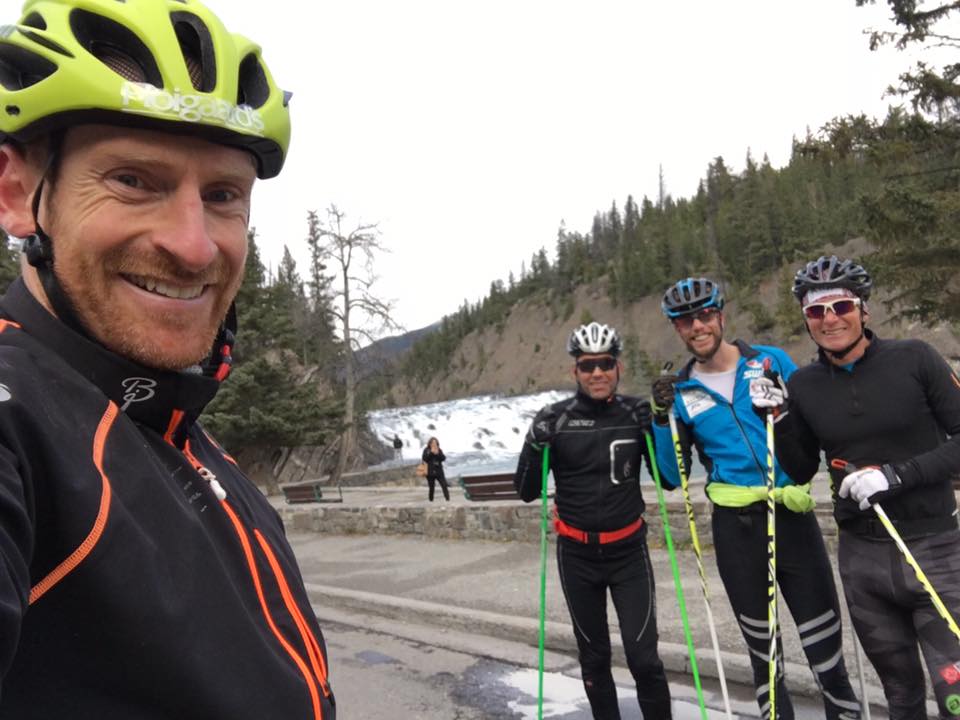
    Brian Gregg, Jon Arne Enevoldsen, Erik Carleton, and Ian Murray during a double-pole rollerski to Banff. (Selfie: Brian Gregg)
    (From left to right) Brian Gregg, Jon Arne Enevoldsen, Erik Carleton, and Ian Murray during a double-pole rollerski from Canmore to Banff, Alberta. (Photo: Brian Gregg)

    Roughly every two weeks, the crew would get together for a long Zone 1 (Level 1, or easy chat level) double-pole ski followed immediately by 30 to 60 minutes in Zone 3 (loppet race pace).

    “The idea is you tire out your body and then try and push it a bit more,” Carleton said, “so that it will give you that endurance double-poling at the end of loppet races.”

    For this crew, the long easy session was two to four hours.

    While this workout could be done on snow, it was a rollerski favourite because of available trails. “We’ve got this nice legacy trail to Banff and it’s good flat terrain for that,” Carleton said. Few ski areas can provide flat trails suitable for a four hour ski without excessive laps.

    Variations:

    • Adjust the times. Starting out, one hour of Zone 1 followed by 30 minutes of Zone 3 might be hard enough.
    • Use your legs for the Zone 1 part. If you don’t have enough flat terrain to stay in Zone 1 double poling, stride or skate as needed in the first part of the workout. For the second part, hilly terrain is less of a problem in Zone 3.


    Workout 3: 4 x 45-minute intervals 

    Double pole 45 minutes in Zone 3, followed by four hours of rest between.

    Murray came up with this workout after getting good performance gains from doing mountain bike relay races like ’24 Hours of Adrenaline Canmore’ and ‘Golden 24’.

    “Some of my friends give me a hard time, saying this is too difficult,” Murray wrote in an email. “But the mountain bike races are far harder.”

    Variations:

    • Don’t do this. While this workout seems unnecessarily hard, it is clearly working for Murray. Maybe we can all think outside the box to build new workouts from races, events, or long backcountry days that produced good results.
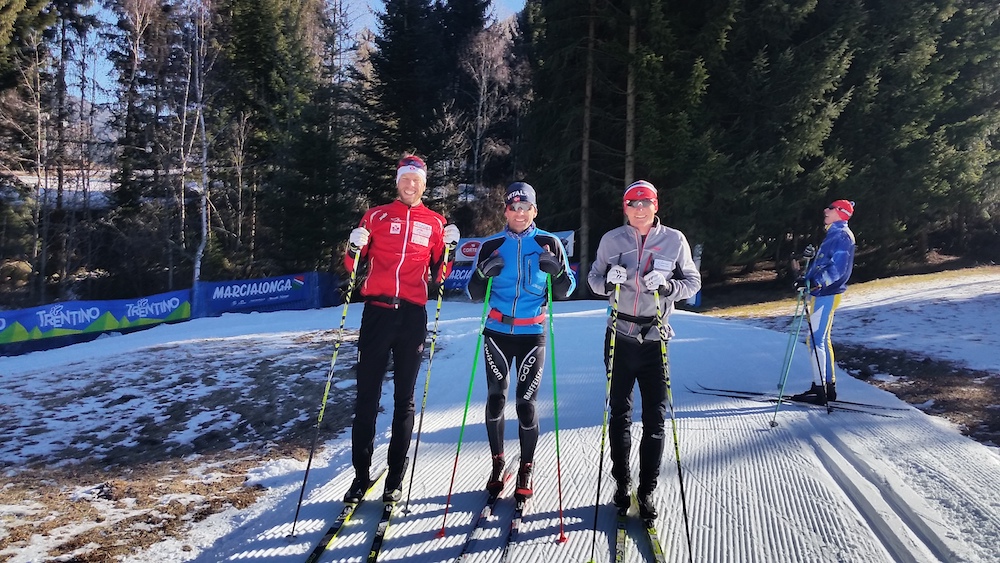
    Erik Carleton, Jon Arne Enevoldsen, and Ian Murray previewing the Marcialonga course. (Courtesy photo)
    (From left to right) Erik Carleton, Jon Arne Enevoldsen and Ian Murray previewing the Marcialonga course. (Courtesy photo)

    Conclusions:

    So how did these five fare in the Marcialonga after all the preparation?

    McKeever was the fastest of the group (and fastest Canadian), finishing the shortened 57 k course in 2:21:32.5 hours, 9:13 minutes behind the winner Tord Asle Gjerdalen for 57th overall. Nishikawa was next, 81st at +12:56, then Murray (86th, +13:37), Carleton (113th, +17:50), and Enevoldsen (160th, +22:14).

    Murray was pleased with his personal best at a Ski Classics event, writing “The double pole training has worked out well. I was able to hold a hard effort for the first 50km although I faded a bit in the last 7km.”

    Murray’s event highlight: “Being so close to the lead for the first part of the race.  Also skiing down the streets of 4 old Italian towns along the 57km track.  I didn’t get to soak in that aspect of the race during the event but rather in the pre-skis and post race ski it was fantastic.”

    And how much did the double-pole preparation pay off? Considering there were 5761 finishers including many former world cup stars like Gjerdalen, Anders Aukland, Toni Livers, and Østein Pettersen, top 200 is impressive.

    2017 Marcialonga results

  • Wednesday Workout: Double-Pole Work with Newell and the Norwegians

    Wednesday Workout: Double-Pole Work with Newell and the Norwegians

    Norwegian pro skiers Petter Skinstad, Kjetil Dammen and Marten Skinstad rollerskiing last month outside Lillehammer, Norway. (Photo: Andy Newell)
    Norwegian pro skiers Petter Skinstad, Kjetil Dammen and Marten Skinstad rollerskiing last month outside Lillehammer, Norway. (Photo: Andy Newell)

    Last month, Andy Newell of the U.S. Ski Team traveled to Norway to train with several Norwegian skiers. Why, you might wonder? Why not?

    “I chose to travel to Norway to train with some friends in Lillehammer for a few main reasons,” Newell explained in a recent email. “First — to learn a little about how a lot of these guys are training for double pole and second, just to have a cool new change of venue to put in some of the big volume hours I was training for those two weeks.”

    Norwegians Erik Stange and Rune Ødegård, with Finland's Heikki Korpela, and Great Britain's Andrew Young running on the Birkenbiner ski trails in Norway in July. (Photo: Andy Newell)
    Norwegians Erik Stange and Rune Ødegård, Finland’s Heikki Korpela, and Great Britain’s Andrew Young running on the Birkenbiner ski trails in Norway in July. (Photo: Andy Newell)

    Lillehammer, a popular training base among World Cup skiers and the new home to his friend Øystein Pettersen, seemed like a perfect fit.

    “There wasn’t any real official training camp with a specific team that I was joining which made it kind of fun so I basically just got in touch with a lot of guys who lived in the area and lined up a big training schedule for two weeks,” Newell wrote.

    He stayed with Petter Skinstad, a professional Norwegian skier and the son of Åge Skinstad, head of the Norwegian Ski Federation’s cross-country division.

    “It was great to meet [Petter Skinstad] and his brother and do some training with them and learn a little more about the Norwegian ski culture,” Newell wrote. “To set a picture for you, Petter’s god father is Bjorn Daehlie so he really grew up in the thick of it so you can imagine he has some cool stories.”

    Without any single club or coaches overseeing their workouts, Newell explained that the Lillehammer group coordinated via Facebook by posting their planned workouts and aligning them as best they could.

    “It was a great way to meet some new training partners and connect with a few folks I already knew from skiing over the years like Erik Stange and Rune [Ødegård],” he wrote.

    He spent the first four days training with sprinters like Great Britain’s Andrew Young and Marius Caspersen Falla, the twin brother of Olympic champion Maiken Caspersen Falla. They did Level 4 intervals at a rollerski track at Lillehammer’s Olympic stadium, as well as a skate speed session, and logged several hours on the roads — mountainous roads that zig-zagged up big climbs and included fast descents.

    To focus on his double poling, which Newell estimates is 60 percent of these Norwegian athletes’ training (the remaining 40 percent being classic striding, running and “a little bit of skating”), he joined Øystein Petterson for some hard double-pole sessions. Formerly of Team United Bakeries, Petterson recently started a new team called Team BN Bank with Morten Eide Pedersen, Simen Østensen, and Nils-Ingar “Nilsi” Aadne, a famous comedian and now a professional skier. Newell trained with Petterson and Pedersen, as well as Team LeasePlan Go’s Kjetil Hagtvedt Dammen for the better part of a week.

    “We did everything from 3 hour+ double pole sessions to uphill double pole intervals. One slightly different workout we did was a 45 seconds on 15 seconds off continuous intervals at the rollerski track,” Newell wrote. “That was a really fun fast workout to do in a big group. it felt a lot like a distance race. In general I would say that those guys train very similarly to the way we do just with a much bigger focus on double pole to prepare for the Ski Classics [marathon series].”

    The Workout: Continuous Double-Pole Intervals (Norway style)

    You’ll Need: 5 k rollerski loop and ideally a group of 5-6 training partners

    Ready: Warm up together, then start the intervals together

    Set: 45 seconds on (pushing hard, exchanging leads at the front) followed by 15 seconds recovery (ski easy and “make sure anyone who fell off the pace and re-group before starting to hammer again,” Newell explains)

    Go: Repeat intervals continuously for 30 minutes. “It’s a lot like a mass start distance race, that builds in intensity until we are basically going all out by the end.”

    While in Norway, Newell tried to do as the Norwegians do, honing in on double poling — a technique that’s having a big impact on classic World Cup races — while also logging some big hours. At the same time, he added in “a little more skating compared to some of the pure double pole guys,” he wrote. “I think everyone in the skiing world is continuing to learn how to train to be the best double polers. It’s clear that you have to double pole a lot to be strong enough for the races, but at the same time having a wide range of training modes… especially all body exercises, is the best way to get fit.”

    Andy Newell is all smiles on a rollerski in Norway. He enjoyed some "sweet roller skiing pavement" leading up to Nordseter, not far from Sjusjøen, Norway. (Courtesy photo)
    Andy Newell is all smiles on a rollerski in Norway. He enjoyed some “sweet roller skiing pavement” leading up to Nordseter, not far from Sjusjøen, Norway. (Courtesy photo)

    While Newell explained that he’s certainly upped his amount of double-pole training this year, he’s also trying to improve his skating to achieve his all-around goals on the World Cup.

    Looking back, he reflected that the skiing culture in Norway — in the heart of summer — was one of the best parts of his trip.

    “You could go out roller skiing and see at least 2 or 3 other groups of good skiers out for a training session as well, and all the people driving tend to respect the roller skiers on the roads over there because it’s their national [pastime],” he wrote. “I think those two weeks were some of the most productive training I’ve ever had.”

    Outside of training, Newell was in Norway when the news broke about the country’s defending World Cup champion Martin Johnsrud Sundby being suspended and stripped of his 2015 Overall World Cup and Tour de Ski titles.

    “I was out skiing with the guys on my third or fourth to last day there and they were doing that thing when they started to speak a lot more Norwegian than normal,” Newell reflected. “Typically our training talk was in English. So I could tell something was up, and all I got was ‘tomorrow sh*t is going to hit the fan in Norway’ referring to Sundby and his doping ban. So I guess the word was already starting to spread through the skiing community and it was defiantly big news when the story broke.”

    The news was all over Norwegian TV, and Sundby appeared on a multitude of televised interviews and press conferences.

    “I would say that most of the skiers support him as would most teammates in an instance like that,” Newell said of the Norwegians he was with in Lillehammer. “If anything I’m sure they were worried about how it would reflect on the ski federation.”

    A day or two later, all the chatter about Sundby faded.

    “I don’t know if thats good or bad but that’s what you have to do if you are an athlete,” Newell said. “We are all the same in that regard. No need to worry about what others may or may not be doing, there are only so many hours in the day and focusing on your own training is what we have all learned to do over the years.”

  • Wednesday Workout: Metronomes with Michigan Tech’s Alice Flanders

    Wednesday Workout: Metronomes with Michigan Tech’s Alice Flanders

    Sunrise on campus at Michigan Technological University in Houghton, Mich. (All photos: Alice Flanders)
    Sunrise on campus at Michigan Technological University in Houghton, Mich. (All photos: Alice Flanders/aliceflanders.wordpress.com)

    This week’s workout comes from Michigan Tech masters student and skier, Alice Flanders, also a satellite athlete with the Central Cross Country (CXC) Team. Flanders trains with the Michigan Tech team, and largely does workouts designed by head coach Joe Haggenmiller, while CXC Team coach Andy Keller oversees her training. Read her complete blog post here.

    Do you have a workout you’d like to share? Email info@fasterskier.com with the subject line: Wednesday Workout.

    ***

    I’m waiting in the starting pen, the 20-degree wind blowing gently across the stadium as the clock beeps the tell-tale tones of another racer starting. I chisel the chunks of snow out of the bottom of my boot and clip into my skis. I step up to the wand.

    “15 seconds”

    “Beep… Beep… Beep….Beeeeeeeep”

    I try to start but for some reason my feet just won’t move.

    “Beep… Beep… Beep…. Beeeeeeeep”

    “Thwap!”

    Early morning speeds during metronomes at Michigan Tech in Houghton, Mich.
    Early morning speeds during metronomes at Michigan Tech in Houghton, Mich.

    Groggily, I fumble through the sheets looking for my persistently beeping phone. It’s 5:52 am and my body feels like a sack of bricks.

    I roll over placing my index and middle finger on the underside of my wrist. 10 beats in 15 seconds, 40 BPM (beats per minute). Not a bad a.m. pulse, but that’s a little higher than normal. I’ll have to drink lots of water today and make sure I haven’t caught the back-to-school-plague that seems to have taken over the school.

    Stepping outside, the entire town seems dead. If it weren’t for the street lights, I’d be unlocking my bike by starlight. Occasionally I’ll pass by a group of ROTC students running in synchrony, but until arriving at the Student Development Center there’s no one in sight.  This morning we’ll be doing metronomes, a workout where we double pole around the track at different tempos to work on technique and speed.

    The Workout: Metronomes

    Total Time: 45-60 min

    Goal: Focus on high quality technique while using different tempos. Immediately apply this to sprints and starts.

    Warmup: About 10 minutes or 3 songs

    Workout:

    Set 1:  (with metronome playing over loudspeakers: listen to an actual metronome and match your pole plants to the beat)

    2:30 @ 50 BPM

    0:20 @ 60 BPM

    0:10 @ 80 BPM

    Repeat 3-5 times

    Set Break: Length = one song of your choice

    Set 2: 6-10 x 100-meter sprints

    Cool down: About 10 minutes

    This workout has a lot of benefits.

    • It teaches the athlete how to ski using varying tempos
    • By skiing around the track, it is much easier for coaches to work with athletes of different speeds and track progress throughout the session
    • Technique and tempo can be applied immediately during the 100m sprints
    • It’s good mass start practice due to the amount of passing that occurs
    • Pace lines will form and it’s fun to go fast in a group!
    • There are a lot of opportunities for younger skiers to ski with, watch and learn from older people on the team.
    • You get to listen to music
    • No Cars!

    But be careful, this is an intensity session and should be counted as such. Recovery in between the 80 BPM and sprints should be a priority.

    By 7:30 the sun is painting the sky hues of pink, purple and yellow. It’s not hard to realize how lucky we are to live in a place like this.

    Class time: Where recovery and learning come together (Photo: Alice Flanders)
    Class time: Where recovery and learning come together.

    In class, while other students are guzzling coffee trying not to nod off, I’ve got positive endorphins keeping me engaged. However, as the day continues I find myself gazing out the window as storm clouds congregate on the horizon. It’s supposed to rain tonight. Right now I keep my fingers crossed that the rain will go somewhere else, keeping our roads dry for practice this afternoon. In a few weeks these clouds will hold potential for snow. As my professor fills the board with equations, I daydream about how much snow we’d get if it were 15 degrees cooler.

    Excelling in any sport takes an extreme amount of commitment and self discipline. It takes over your thoughts, drives your decision making process and rules your schedule. Every moment of the day is carefully crafted to strengthen your body through nutrition, intensity, recovery or education. It’s an all encompassing full time job. Luckily, this job comes naturally when you have passion for the sport. It begs us to reach higher, to do one more pull-up, to push the limits of comfort and ultimately persevere. What are your goals this season?

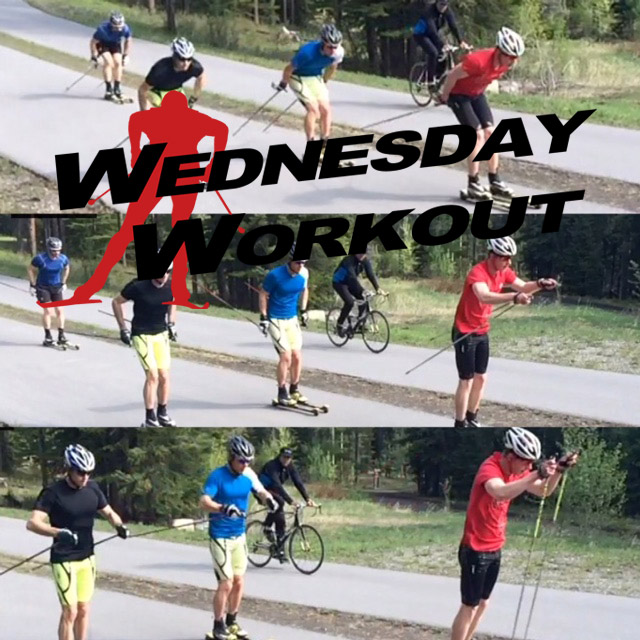
    Michigan Tech masters student and skier Alice Flanders setting goals. (Courtesy photo)
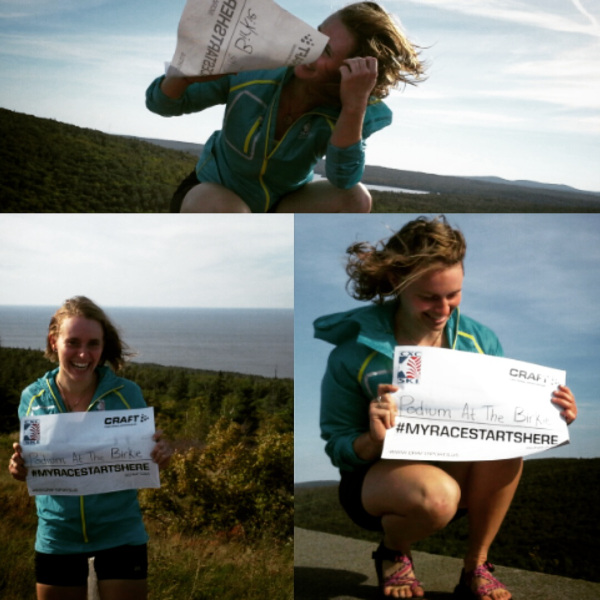
    Michigan Tech masters student and skier Alice Flanders setting goals, specifically to podium in the American Birkebeiner skate race, as photographed on Brockway Mountain in Copper Harbor, Mich. (Courtesy photo)
  • Wednesday Workout: Double Pole Rehab with Coach Pav

    Wednesday Workout: Double Pole Rehab with Coach Pav

    FS-WW-rollerski
    Double pole rehabilitation should be an essential part of any early season training. (Photo: Pavlina Sudrich)

    This week’s Wednesday Workout comes from Pavlina Sudrich. Originally from the Yukon, Sudrich drove the development program at Nakkertok and was the Head Coach of Cross Country Ontario from 2011-2014. In addition, she ran Canadian B Tours in Europe for the past two years. In the spring of 2015 the Alberta World Cup Academy announced that Sudrich would join club to work alongside coach Chris Jeffries.

    ***

    June is great time to start digging into certain technique limitations. Here at the Alberta World Cup Academy (AWCA) we are beginning the season with a focus on double pole rehabilitation. It’s a great place to start as the double pole movement transfers across pretty much every technique, and can be done while athletes are still coming into fitness.

    Step 1:

    Easy double pole with some sections of resistance. Adding a gradual uphill to an easier double pole loop will allow you to see the athlete’s technique while they are relaxed, and while under a manageable load.

    Step 2:

    Pick out what you’d like to change about an athlete’s technique, then try and find out what the underlying , or root cause of the issue is.

    For example:

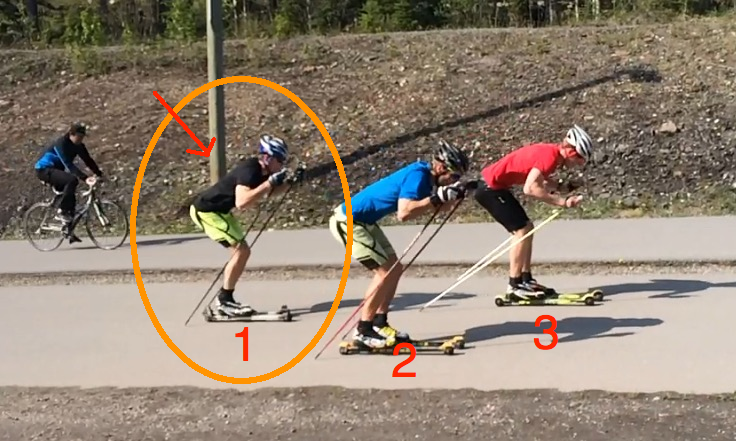
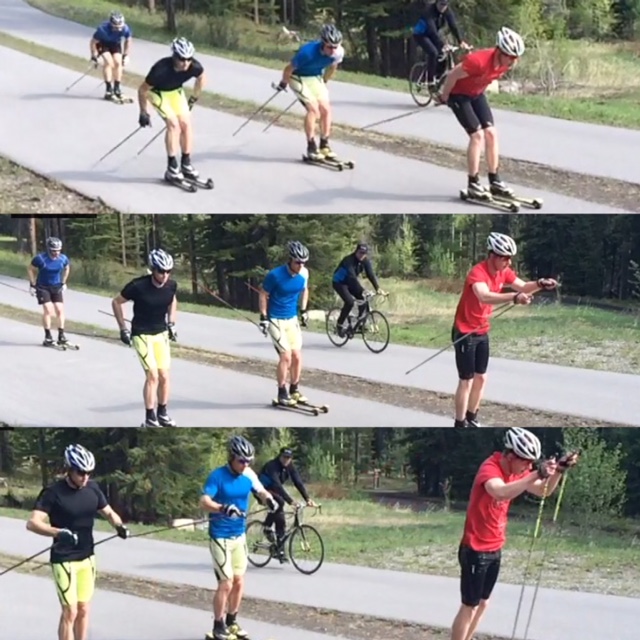
    In this image below we see three athletes all in a relatively similar position.

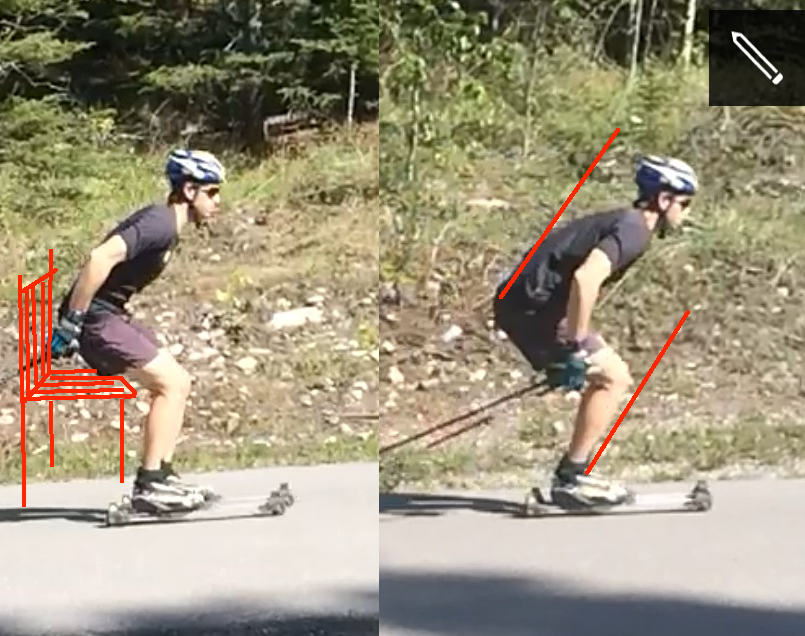
    Athlete #1 is sitting down while double poling.
    Athlete #1 is sitting down while double poling. (Photo: Pavlina Sudrich)


    Athlete #1 is the one we’re going to pick on because he’s a nice guy, and because he demonstrates two common issues in double pole.

    First and perhaps most obviously he is sitting back. You can almost imagine the chair he is about to sit on.

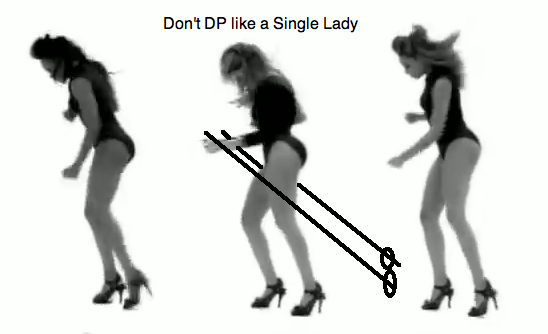
    Second, he’s rocking a pretty hard swayback. This happens so often in double pole technique that I have officially named it ‘the Beyonce’. Please refer to the image below for further pop culture clarification.

    The only time you don’t want to be like Beyonce. (Photo: Pavlina Sudrich)

    Step 3:

    Fix the Issue.

    The root cause of this symptom can vary for each athlete. In Athlete #1’s case- the squat sit combined with a swayback which tells me is hip tilt needs adjusting. We also need him to find a power powerful position at the point when the poles hit the pavement so his form doesn’t ‘break’ into a swayback.

    Queues:

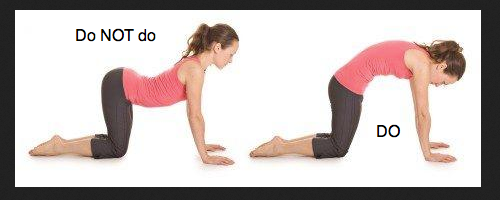
    Yell ‘TUCK YOUR TAIL BETWEEN YOUR LEGS’. If your athlete has half an imagination this will work – if not a series of ‘cat and cow’ movements will work.

    Screen Shot 2015-06-02 at 3.51.20 PM

    Once the hip finds a good forward tilt position we can start on pushing the movement from a low squat to a more forward position. Check out the example below.

    (Photo: Pavlina Sudrich)

    What worked for athlete #1 was to essentially ‘relax the calf’. He was keeping his ankles locked, forcing flexion to come from the knee and hip joints which immediately throw one’s weight back. By focusing on relaxing the calf he was able to get the ankle joint moving, keeping his weight more forward. You will see this is working when the angle of the shin matches the angle of the back. In this image you will see we’re not there yet – but getting closer.

    Athlete #1 was keeping his ankles locked which in turn forced flexion to come from his knees and hips. By ‘relaxing the calf’ he was able to get a better angle. (Photo: Pavlina Sudrich)

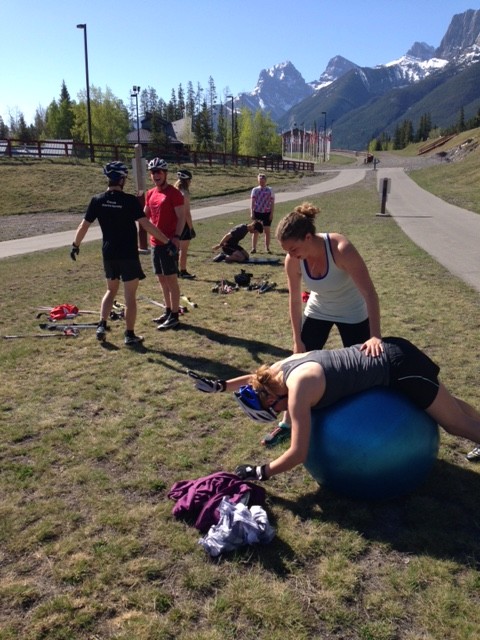
    Finally, there need to be a more dynamic position from the trunk (i.e. no more swayback-Beyonce business). The queue to tuck the tail under will have worked on this a bit, but there is more an athlete can do. For this workout we introduced a physio ball. Have the athlete lie face down on it and imagine their arms like a parachute out in front. This isolates a good position from which to initiate the pole plant.

    (Photo: Pavlina Sudrich)

    It can also help to queue the athlete to ‘set’ or ‘brace’ themselves at the top of the movement so as not to break like a robin’s egg upon impact with the unforgiving pavement. In this last image you will see the fellow in the red shirt coming up nice and tall, his core lat’s ‘set’ ready for impact (just maybe don’t hike those rhomboids as high).

    Great. Now that you have conquered double pole go have a double espresso and a nap. You deserve it.

    (Photo: Pavlina Sudrich)
    (Photo: Pavlina Sudrich)
  • Northug Double Poles His Way to First Win of Season in Beito Classic Sprint

    Northug Double Poles His Way to First Win of Season in Beito Classic Sprint

    Petter Northug racing to 23rd in Saturday's 15 k freestyle FIS race in Beitostølen, Norway. He was more than a minute behind winner Martin Sundby, then came back to win Sunday's classic sprint by 0.4 seconds. (Photo: Inge Scheve)
    Petter Northug racing to 23rd in Saturday’s 15 k freestyle FIS race in Beitostølen, Norway. He was more than a minute behind winner Martin Sundby, then came back to win Sunday’s classic sprint by 0.4 seconds. (Photo: Inge Scheve)

    With about 50 meters to go in the men’s 1.5-kilometer classic sprint on Sunday in Beitostøelen, Norway, Petter Northug engaged the turbo and overtook fellow Norwegian Sondre Turvoll Fossli right at the finish line — exactly the way we are used to seeing him: relentless.

    “This was OK. I wanted to get a day with four tough sprint efforts and that’s what I got,” Northug, 28, told the Norwegian TV station NRK after the race.

    “It’s useful to practice have a chance to practice how to race heats, how to keep your body going between heats and best prepare for the next effort before we’re headed into the World Cup season,” he added. “You don’t really get a chance to practice that off the snow.”

    For him, this was simply a drill and part of the prep for the World Cup opener next weekend in Kuusamo, Finland.

    Got to let them win sometimes

    Fossli, 21, won the qualifier in 3:25.76 minutes, 1.69 seconds ahead of Norway’s Pål Golberg. Northug qualified ninth, 3.38 seconds back from Fossli. And while Northug took the cake at the end of the day, up-and-coming Fossli raced an impressive final, leading much of the way and had a small gap on the field coming into the stadium.

    Fossli finished second in his quarterfinal and won his semifinal, and thought he might be able to pull off the victory.

    “I had a faint hope that maybe I would be able to keep [Northug] behind me and win the race, but when he was that close on the final stretch and he had skate skis while I had kick wax,” Fossli said. “I expected him to pass me.”

    Northug won the final in 3:32.3, four-tenths of a second ahead of Fossli, and Norway’s Johan Kjølstad was another 0.7 seconds back in third. Golberg placed fourth (+4.1), and two more Norwegians Timo Bakken and Ola Vigen Hattestad were fifth (+6.4) and sixth (+6.6), respectively. Norway swept the top nine.

    “You just need to let an old veteran win once in a while,” Fossli said jokingly of Northug, noting that he feels like he has more to offer.

    His goal for the season is to establish himself on the top 50 percent of the World Cup standings.

    Tough conditions

    The conditions in Beitostølen on Sunday gave the wax crews plenty to work on: falling precipitation and lots of it in form of wet, sticky and slow snow at minus 9 degrees Celsius (about 16 Fahrenheit).

    Northug was one of only two racers in the final who double poled all of the heats. Many of the racers started out with skate skis and no wax, but most of them chose to ski on kick wax as the heats progressed and the conditions got slower.

    Results | Complete results

  • Wednesday Workout: Double-Pole Intensity with Ida Sargent

    Wednesday Workout: Double-Pole Intensity with Ida Sargent

    High hands. Ida Sargent sprinting in Milan, Italy, in 2012.
    High hands. Ida Sargent sprinting in Milan, Italy, in 2012.

    Welcome to Wednesday Workout, the newest workout series on FasterSkier. During the offseason, we’ll feature components of summer training programs from top individuals and teams from throughout the U.S. and Canada at the high school, college and elite club levels. Now get outside and get to work!


    Whether it’s the first few meters of a mass start or the final stages of a head-to-head sprint, a strong double-pole can be critical to the outcome of a race. Ida Sargent, of the Craftsbury Green Racing Project and U.S. Ski Team, has one interval session in particular that has helped her make recent gains with her double-pole strength, and offers a bonus opportunity to practice head-to-head tactics when done in a group setting.

    “I think I’ve made big improvements in my double pole by doing this workout with my teammates,” Sargent says.

    At USST camps, Sargent and her teammates repeat each interval on the same gradual uphill terrain, with the goal of gradually building intensity throughout the workout.

    “We start in the same spot for every interval and build into them so that each interval covers more distance,” Sargent explains. “Usually we do the first one at about L3 and push the pace with each consecutive interval and the last one should be close to max.”


    The workout:

    15-20 minute warm up

    5 x 3 minutes on gradual uphill. Start first interval at Level 3 and finish last interval “close to max.”

    15-20 minute cool down


    “They’re an awesome interval session to do with your team or in a group with everyone taking turns leading, following, drafting, or pushing the pace,” Sargent added.

    When she’s back in Vermont with her Craftsbury teammates, Sargent adds a level of difficulty to the workout by finishing on a tougher uphill.

    “We also do it at Craftsbury on a three minute stretch of road that gets kind of steep at the end which adds some specific strength into the practice,” Sargent said. “It’s a short session that doesn’t need to take more than 90 minutes with warm up and cool down, as the focus of the workout should be on high quality intervals.”

  • Quick (Pro) Workout: Double-Pole Strength Training

    Quick (Pro) Workout: Double-Pole Strength Training

    Note: This is the first of  a “quick workout” series, which will break down one ski-specific exercise at a time in a how-to format. We start with Canadian national team member Perianne Jones, who demonstrated a double-pole technique in her hometown fitness center.)

    ***

    If you woke up this morning hoping to see several inches of white stuff and instead met a blanket of balmy air, you’re not alone. Skiers around the world are scratching their heads, trying to figure out what to do as they approach December with no snow.

    Before you give up and start baking holiday cookies, consider hitting the gym a little harder and strengthening those nordic muscles. You know once you finally get on skis, you’ll wish you had worked the glutes/legs/arms/core more anyway.

    Perianne Jones on a rollerski in Almonte, Ontario, in August.

    If your triceps are screaming for attention, start double poling.

    That’s what Perianne Jones of Cross Country Canada did during a workout session in Almonte, Ontario, earlier this fall.

    At her hometown gym, the Olympian made due without a SkiErg by using the cable machine. With the rope pulley on the machine’s highest notch, she put the peg in 100 pounds and went to work.

    While I’m not recommending that kind of weight (start light and add on), any amateur can modify this double-pole simulation exercise.

    In an email from Europe, where Jones is racing in the World Cup circuit, she explained how to double pole on a cable machine:

    1. Start by holding the knotted ends of the rope pulley in two hands, which should be elevated above your body and mostly straight.

    2. “Stand with one foot in front of the other with a forward lean. Try and simulate DP-ing (double poling) as much as possible,” Jones wrote.

    3. Bend your knees. Feel free to be explosive by coming up on your toes each time you bring your arms up. Each time you come up to standing, do so with control (slowly).

    Cable machine rope
    The cable-machine rope pulley

    4. Use your abdominal and arm strength to drive the cable down, bending at the elbows, bringing the rope ends around the front knee.

    5. “If you have someone else in the gym with you, it’s helpful to put a belt or band around your waist and have the other person hold it behind you so you can fully commit to your forward leaning position,” Jones wrote. (Note: I was honored to do this for her in Almonte. You might not find someone who feels as lucky.)

    6. Make sure you have enough resistance.

    “Use enough (weight) so that it’s hard but you are still able to do a proper DP with decent speed,” Jones wrote. “I do anywhere from 8-15 reps depending on the time of year and our strength program focus.”

    (Note: For this workout, four sets is a nice, even number. Switch legs between sets and that’s two sets of 8-15 double-pole drives per leg.)

    Peri’s Tip: “One thing to focus on is the initiation — (starting) with the head, and driving the elbows towards the floor.”

    “The ski erg will feel more natural on the return than the pulleys,” she wrote, “but I’m always focusing on similar technique things (on rollerskis, pulleys, snow, etc).”

    ***

    So think about technique, close your eyes, and imagine snow. (Just don’t whack your head on the rope or cable). Before you know it, you’ll be soaring over the white stuff with triceps of steel.

  • Pro Workout: Over Distance Double-Pole with Kikkan Randall

    Pro Workout: Over Distance Double-Pole with Kikkan Randall

    Kikkan Randall fall double pole
    Kikkan Randall taking a break from a fall double pole in Anchorage. Photo courtesy of Kikkan Randall.

    With three World Cup sprint podiums last season, two of which were at the very top, Kikkan Randall is known for her speed. But even though her forte is in races under three minutes long, one of her favorite workouts to do in the fall is a 50 k rollerski double-pole session. In addition to being a solid level one effort, the U.S. Ski Team (USST) veteran also uses the workout as an opportunity to work on her double pole form.

    “The goal is to get a lot of repetition in the double-pole movement, going long enough that you tire out the easy-to-use muscles and really find the most efficient positions, timing and impulse,” said Randall.

    Randall has a favorite point-to-point route in Anchorage that usually takes her about three hours to cover. She recruits a family member to drive her outside of town, and then she skis home.

    “It includes rolling terrain, but most importantly long, flat sections where I can get into a rhythm in my double-pole technique and really ingrain correct movement patterns,” she explained. Randall makes sure to keep her heart rate under control for the duration of the workout, at about 60-70% of her max.

    Between September and when the snow flies in Anchorage at the end of October, Randall will head out for a long double-pole every other week. Sometimes she has company for the three-hour workout, but she also enjoys taking in the fall colors when it’s just her and her iPod.

    During such a long, sustained effort, Randall is careful to keep herself hydrated, drinking about 30 oz throughout the workout, and more after she returns home to continue replenishing lost fluid.

    “You lose more water than you think on a long ski like this!” she said.

    Randall also emphasizes getting recovery food into her system directly after the workout, and will usually go for a smoothie packed with carbohydrates and protein: 1 cup Greek non-fat plain yogurt, 1 cup frozen berries, 1 scoop protein powder, 1/2 cup milk, 1/2 cup juice and 1 Tbsp honey.

    As she usually starts the workout when the air is still crisp, she follows the effort up with a hearty breakfast and a nap.

    Randall is currently in Park City, UT for a two-and-a-half-week USST camp, where she’s ramping up her intensity and getting some testing in to see how her aerobic capacity and strength have come along since the beginning of the summer. From there she’ll return to Anchorage for three weeks for her last block of sea-level training before the World Cup season gets going in mid-November.

  • Rolling the Roads of Lake Placid, NY with US Ski Team’s Torin Koos

    Rolling the Roads of Lake Placid, NY with US Ski Team’s Torin Koos

    Video by the US Ski Team’s Torin Koos – Double Pole and Class Stride.  Be sure to read the commentary below the video by US Ski Team Coach Justin Wadsworth.

    Commentary from Justin Wadsworth

    On the Double Pole Sections:
    This video footage was taken while doing Vo2 max work during an intensity block in Lake placid, New york. In the double poling, I want to see Torin stay forward with upperbody. With the group sprint shot, we’re working on skiing relaxed and fast in tight spaces. Double Poling power, going fast, this is translated from the weight room to the ski trails. We’re doing heavy lifts with fast movements, followed by contrast strength. This means higher reps during the contrast phase on the Concept2 machine. We’re always after very fast muscle contractions and carrying over gains from the strength room and in training into ski racing.

    On the Classic Striding:

    Like most times, the video flattens out the terrain. In most of these shots, we’re skiing the steepest paved terrain we can find ~ up to 15 to 16 percent here. Torin’s keeping a nice quick tempo while keeping the pace controlled. I like to remind Torin to relax the shoulders and always kick off the ball of the foot. These are two keys to skiing fast during the winter.

    Torin Koos
    Torin Koos

    Torin Koos is a member of the National A Team for the United States. A World Cup, World Championship and Olympic competitor, Koos brings this experience to the FasterSkier sportscasting arena for the 2009/2010 season.

    Equipment: Rossignol Skis, Boots and Bindings, Toko gloves and wax, Marwe, Exel poles, Rudy Project Eyewear, Rossignol Softgoods

    Home Ski Club: Leavenworth Winter Sports Club (www.skileavenworth.com )

    Headgear Sponsor: USA Pears (www.usapears.com )

    Best Western Icicle Inn (www.icicleinn.com )

    BioSports NorthWest Physical Therapy (www.biosports.net )