Tag: DP

  • Wednesday Workout: Building Double Pole Capacity with Erik Bjornsen

    Wednesday Workout: Building Double Pole Capacity with Erik Bjornsen

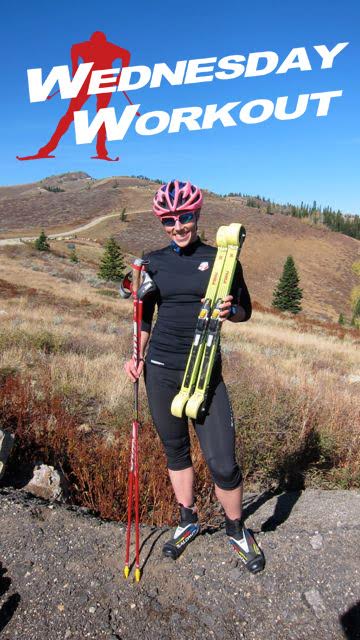
    U.S. Ski Team member Erik Bjornsen during a 15 k classic rollerski last year at the USST’s October dryland camp in Park City, Utah. (Photo: Matt Whitcomb)

    This isn’t Erik Bjornsen’s first rodeo. The 26-year-old Washington native was named to the U.S. Ski Team six years ago, and since then he’s made his way from the development or “D” team ranks to the big leagues — spending the bulk of each winter racing overseas in Europe on the World Cup.
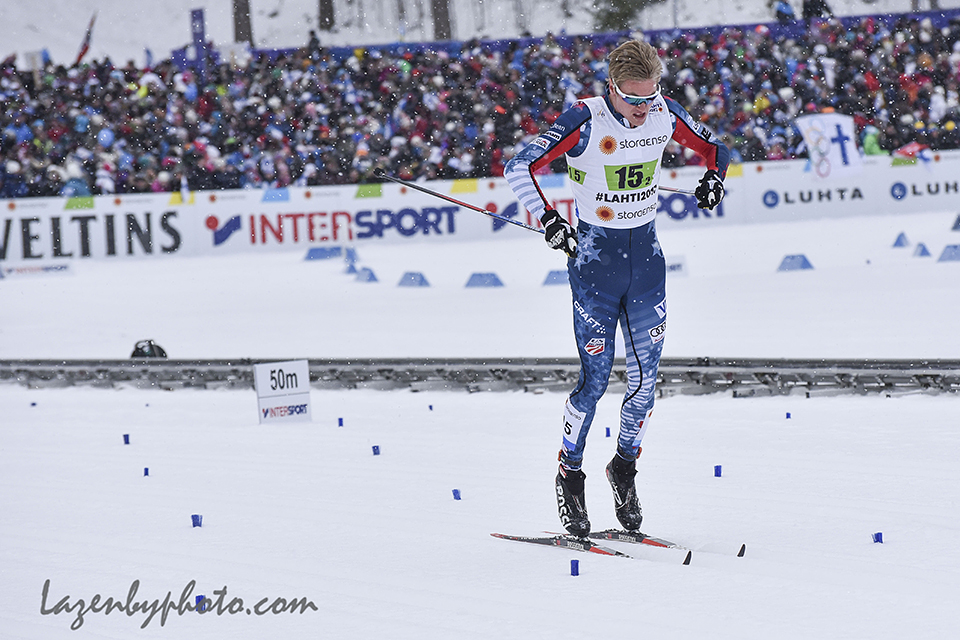
    Erik Bjornsen (U.S. Ski Team) anchoring the U.S. men to their best team sprint result of fifth place in the men’s classic team sprint at 2017 World Championships on Feb. 26 in Lahti, Finland. (Photo: John Lazenby/Lazenbyphoto.com)

    And at 6-foot-2 and roughly 175 pounds, according to his U.S. Ski Team bio, Bjornsen is one of the bigger skiers on the circuit, a fact he’s come to realize as the years go on.

    As you’ll learn in an upcoming Nordic Nation podcast episode, Bjornsen once thought the Russians, whom he’d watched race on T.V. as a youngster, were the titans of the pack. It turns out that television does wonders for certain athletes’ apparent as compared to their absolute buffness.

    And as big-time functional ski strength becomes a huge component to World Cup success, Erik Bjornsen (intentionally or not) is buffing up. Why not use his size to his advantage by developing more powerful and efficient double poling?

    Bjornsen shared the following double-pole-centric workout. And word on the Anchorage streets, where he spends his summer training with Alaska Pacific University, is that Bjornsen’s feeling strong as he prepares for racing in Europe later this month.

    The Workout: Solo, high-focus, double-pole distance session

    Find suitable terrain and timing: “I choose the terrain based on how hard I want the workout to be. I try to fit this workout in mid-week between intervals sessions,” he wrote in an email. “The point is to get the biggest benefit without fatiguing the body too much.  

    “Most often I head up Campbell airstrip road. It’s a five-mile-long road, with a majority of the terrain measuring out at a gentle 5% incline,” Bjornsen continued. “There’s one steeper climb in the middle that’s about 500 meters long. For this workout, I go out and back twice.”

    Warmup: 15-minute easy Level 1 (roller)ski to the start.

    Go-time: Typically takes him 1 hour and 20 minutes to rollerski the 5-mile section twice.

    “The steep 500-meter section is VERY hard to double pole — that portion of the road is something you would for sure stride in a race. During this workout, I try to spend an hour at L2 [Level 2] and end up bumping up to L3 [Level 3] only when double poling up that steep segment (2 X 5min in L3). I like having the two short but demanding double pole sections in this workout.

    “The important part of this training session is not the 2 x 5-minute L3 sections, it’s the time before and after that L3 effort. You have to figure out how to get the muscles to recover from the hill while still double poling and determine what gear/tempo to use while still applying power efficiently — and recover at the same time.”

    Cool down: 15-minute easy ski home.

    Notes:

    • “The idea is to work specifically on double pole and upper body strength. You get an opportunity to work on all gears, from long double pole to very quick choppy double pole up the steep section.
    • “You can gain a lot from just focusing on two intensity sessions a week throughout the summer. This is a way I find I’m able to gain quite a bit from specific double pole training. But ideally, you don’t fatigue the body so much that it takes energy away from the true intensity sessions.”
  • Wednesday Workout: Throwback Over-Distance Double-Pole with Kikkan Randall

    Wednesday Workout: Throwback Over-Distance Double-Pole with Kikkan Randall

    Kikkan Randall taking a break from a fall double pole in 2011 in Anchorage. (Courtesy photo)
    Kikkan Randall taking a break from a fall double pole in 2011 in Anchorage. (Courtesy photo)

    This week’s workout is a blast from the past, written four years ago about U.S. Ski Team sprinter Kikkan Randall. Now, with three Sprint World Cup titles to her name, we figured it might be a good time to revisit what made Randall so fast. Interestingly, one of her favorite fall workouts in 2011 was distance. Randall, 32, is currently in Norway preparing for the Toppidrettsveka rollerski races in Aure, Orkdal and Trondheim, held Thursday through Saturday. See the original pro workout here

    ***

    [Circa Oct. 2011] … Kikkan Randall is known for her speed. But even though her forte is in races under three minutes long, one of her favorite workouts to do in the fall is a 50 k rollerski double-pole session. In addition to being a solid level one effort, the U.S. Ski Team (USST) veteran also uses the workout as an opportunity to work on her double-pole form.

    “The goal is to get a lot of repetition in the double-pole movement, going long enough that you tire out the easy-to-use muscles and really find the most efficient positions, timing and impulse,” said Randall.

    Randall has a favorite point-to-point route in Anchorage that usually takes her about three hours to cover. She recruits a family member to drive her outside of town, and then she skis home.

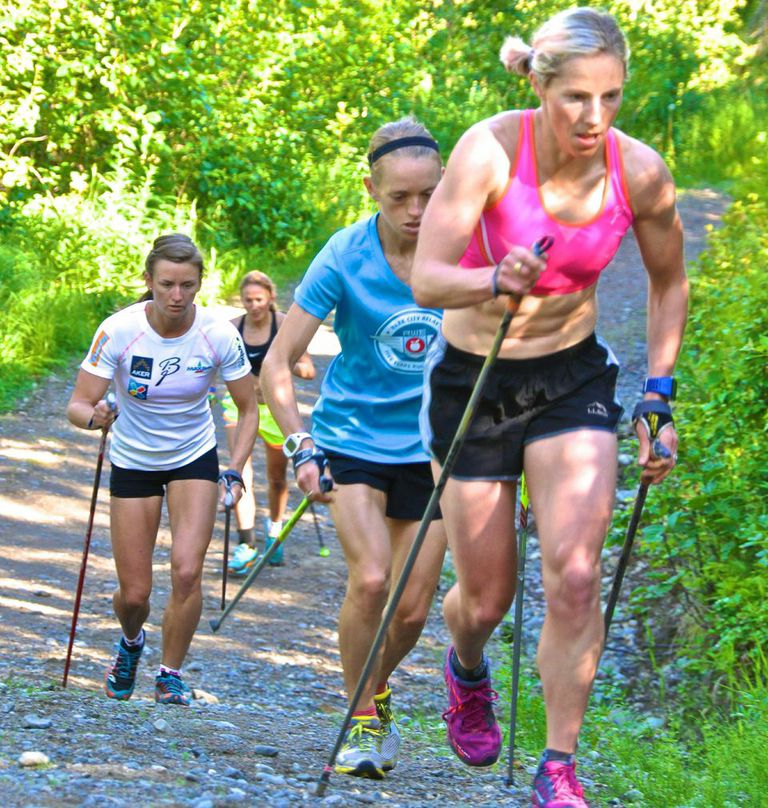
    Alaska Pacific University's Kikkan Randall (r) leads fellow U.S. Ski Team member Liz Stephen and Norway's Celine Brun-Lie (l) during a dryland session last week in Anchorage, Alaska, part of the North American Women's Training Alliance. (Photo: Matt Whitcomb)
    Kikkan Randall (r) leads fellow U.S. Ski Team member Liz Stephen and Norway’s Celine Brun-Lie (l) during a dryland session last summer in Anchorage, Alaska. (Photo: Matt Whitcomb)

    “It includes rolling terrain, but most importantly long, flat sections where I can get into a rhythm in my double-pole technique and really ingrain correct movement patterns,” she explained. Randall makes sure to keep her heart rate under control for the duration of the workout, at about 60 to 70 percent of her max.

    Between September and when the snow flies in Anchorage at the end of October, Randall will head out for a long double-pole every other week. Sometimes she has company for the three-hour workout, but she also enjoys taking in the fall colors when it’s just her and her iPod.

    During such a long, sustained effort, Randall is careful to keep herself hydrated, drinking about 30 ounces throughout the workout, and more after she returns home to continue replenishing lost fluid.

    “You lose more water than you think on a long ski like this!” she said.

    Randall also emphasizes getting recovery food into her system directly after the workout, and will usually go for a smoothie packed with carbohydrates and protein: 1 cup Greek non-fat plain yogurt, 1 cup frozen berries, 1 scoop protein powder, 1/2 cup milk, 1/2 cup juice and 1 Tbsp honey.

    As she usually starts the workout when the air is still crisp, she follows the effort up with a hearty breakfast and a nap.