
Tag: Drammen sprints

  • Ben Ogden, In His Element:  Part II

    Ben Ogden, In His Element: Part II

    This coverage is made possible through the generous support of Marty and Kathy Hall and A Hall Mark of Excellence Award. Learn more about A Hall Mark of Excellence Award—or about supporting FasterSkier coverage—by contacting info@fasterskier.com

    Ben Ogden was kind enough to spend a recent afternoon with FasterSkier assessing his 2022-2023 World Cup season, and discussing the sorts of plans he has for training in this off-season. We met in the barn at the Ogden family farm in southern Vermont. Part I of this interview debuted earlier on FasterSkier. This article represents Part II of Ben Ogden, In His Element.
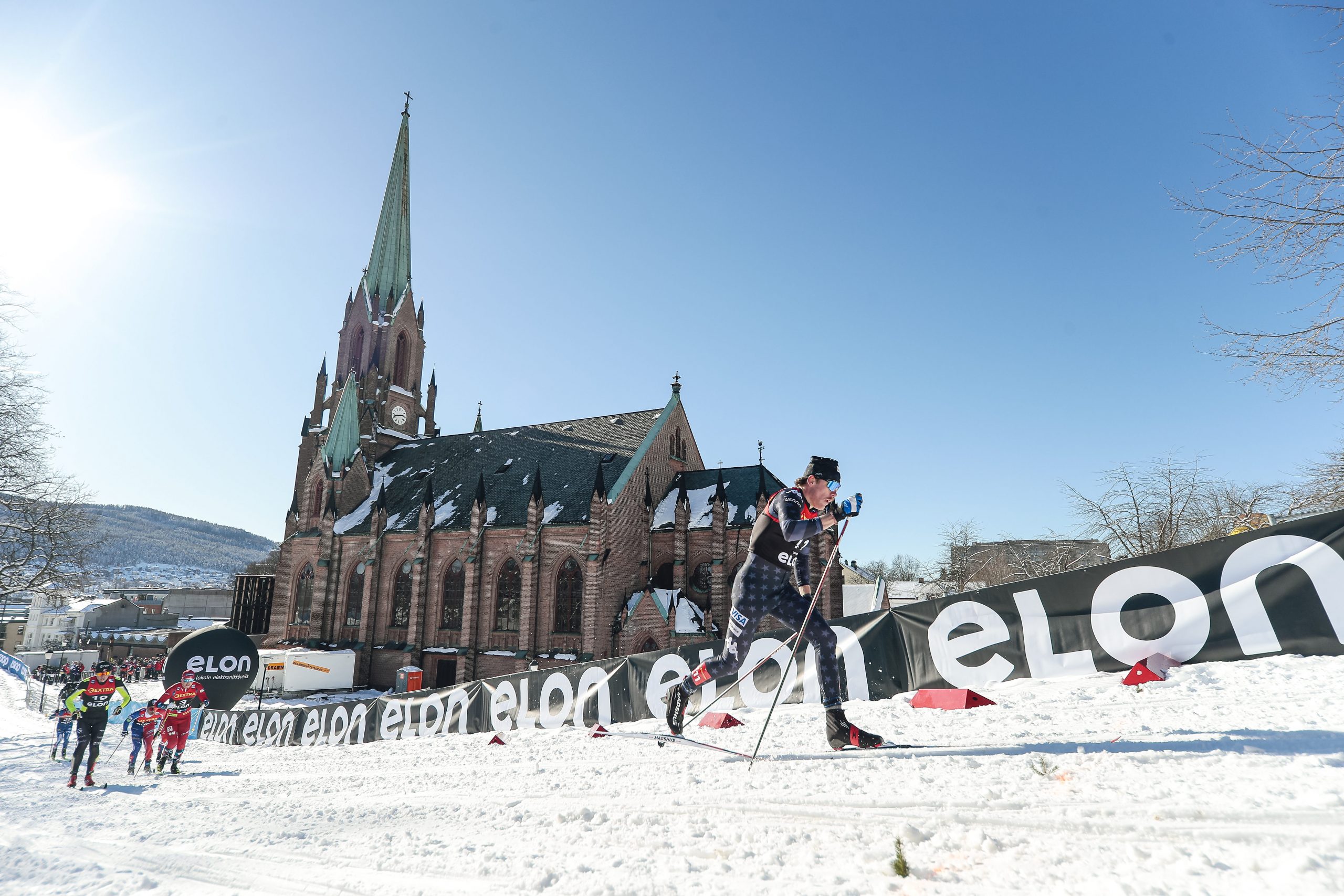
    Making the field pay: Ben Ogden (USA) charging through sprint heats in Drammen, Norway.
    Out with the Old . . .

    When asked whether or not he considered his recent 2022-2023 World Cup campaign to have been a breakthrough season, Ben Ogden expressed a certain amount of satisfaction, but in a thoughtful and circumspect manner:

    “I had good seasons in college, and before college,” Ogden said. “But when that level is done and you move up to the next, you realize, ‘Man, I really need to just work on everything.’ That’s when I began to realize that the old way of doing things—seasons for school, seasons for work and play, seasons for summer training—really had run its course. It was time to become a skier, full time.”
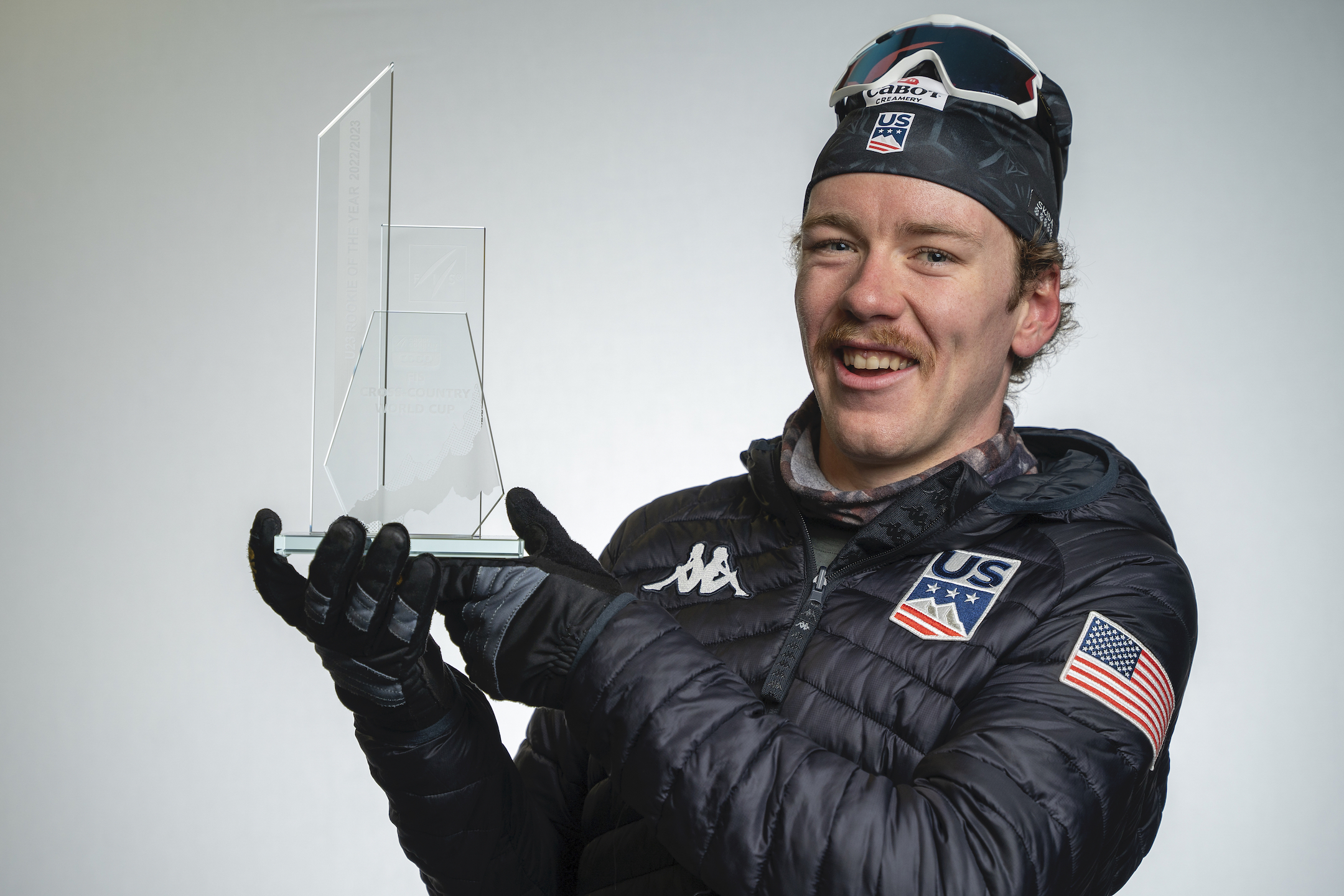
    In 2023, Ben Ogden (USA) was crowned FIS World Cup Cross-Country U23 Champion. (Photo: Thibaut/NordicFocus)

    Ogden identified elements of his technique, his individual strengths, and his potential that can seem like limitations (especially his ability as a sprinter, and the temptation to specialize in that discipline). Conversely, he also identified challenges that could be beaten or overcome.

    “I can see my own weaknesses,” he offered. “I feel confident in my ability to change those, and to get better at almost everything. That being said, I do think that there are some things that I see other athletes able to do and it’s like ‘I’m not that guy.’ And if I’m going to beat that guy, I’m going to need to take a different avenue. Too many of us race the way the race-winners want us to race. Why would that ever work?”

    “I race against a lot of people who have trained a lot more than me, who are older than me,” Ogden said. “I have room to grow. There’s been a lot of mention of my tactics, and it’s totally true: I was trying different things because I’m impatient and competitive. But realistically that was an effort that really stood to expose my weaknesses, and that’s kind of motivating in a way. Now in this training season I think about distinct moments—moments from this season—where I thought, ‘I need to be better at this, this, and this.’ That’s why I feel that the last season was a breakthrough.”
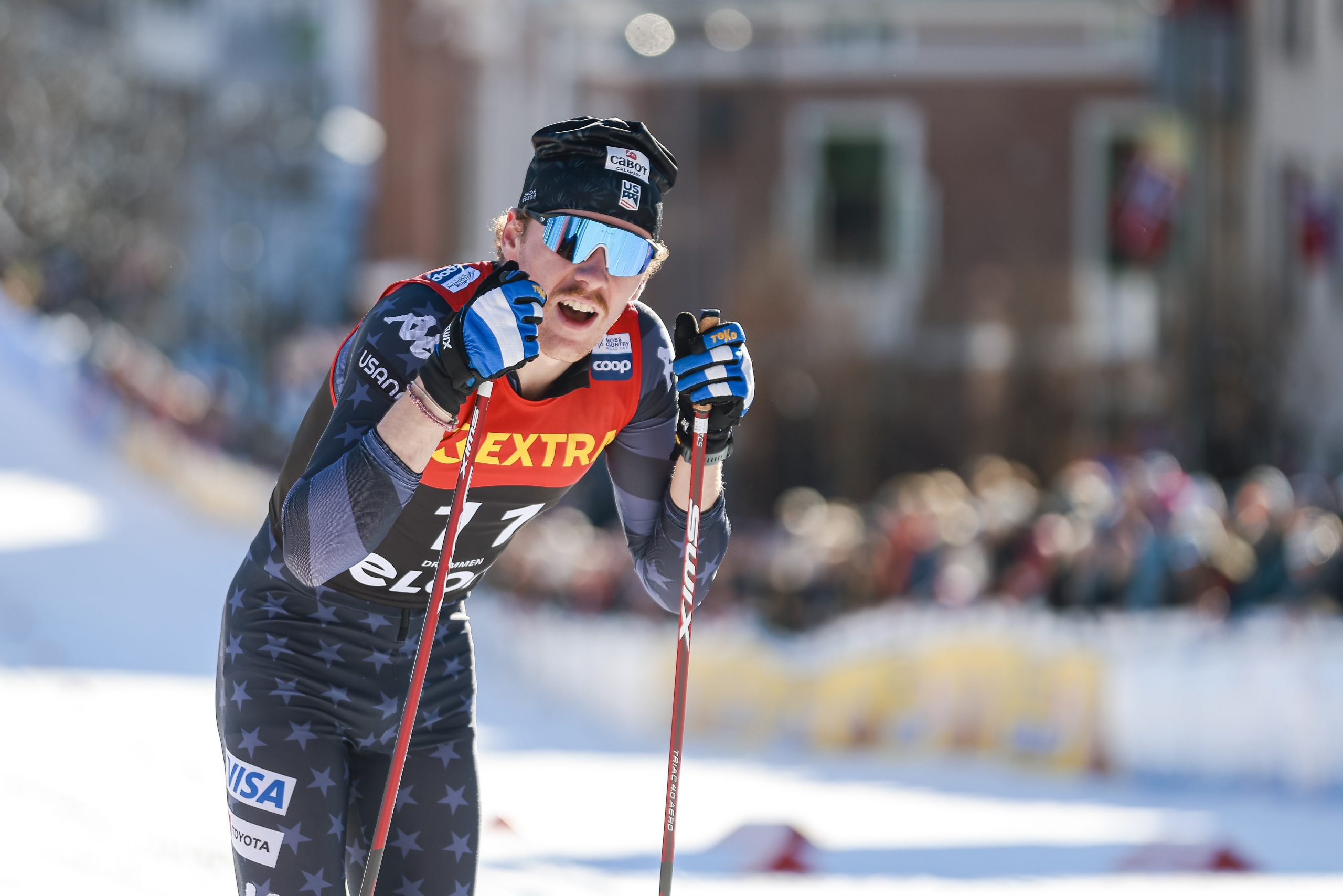
    “If everybody went out and copied Klaebo, then only Klaebo would win,” Ogden muses. “The better strategy seems likely to come from the guy who does something a little bit different.” (Photo:  Modica/NordicFocus)
    Racing and Tactics

    The tactics he mentioned were in reference to Ogden’s highly-publicized, sometimes criticized, seemingly outrageous, almost comical, go-from-the-gun race strategy. Even sprint king, Johannes Hoesflot Klaebo, made mention of Ogden’s strategy in comments that described Ogden’s ability to disturb the status quo.

    “You want to emulate those who are the best,” Ogden said. “But you also want to understand that if everybody went out and copied Klaebo, then only Klaebo would win. The better strategy seems likely to come from the guy who does something a little bit different. Klaebo doesn’t ski like Petter Northug did, and Northug didn’t ski like the superstars before him. That’s gotta be true in every sport; being such a technical sport, skiing is especially prone to that. The people who can figure out a newer style—or their own style—are the ones who are likely to have success.”

    That realization led to a series of races (first sprint heats; later, similar experimentation in select distance events) in which Ogden shot off the starting line, full gas, determined to make others chase in ways that would disturb other strategies and test the limits of other skiers. His tactics were especially effective in sprint events:

    “If this is the semi—and you make the pace super-fast—you only really need to get fourth,” he said. “There’s plenty of risk in that, but you gotta experiment. How many times am I going to go out there and try to do everything perfectly, and still find myself getting knocked out? Why not just try something? I know I have the strength to push the pace from the gun. Why not just try it? I might get knocked out either way; but I’ve tried so many different things, and it’s become sort of frustrating. Eventually I was like, ‘You know what? I’m just gonna try it.’ It was kinda great: the Norwegians—who consider themselves the gods of all things skiing—were laughing at me and telling me that I’m a fool. But who cares? At least they’re talking to me!”

    I just gotta do it. I’m out here, I gotta try it.

    “Every time I did it, I legitimately thought it was my best chance at getting through: 100%. It was never for the dramatics of it, except for maybe the semifinal in Drammen. So many people cheering and so many people freaking out, I was like, ‘I just gotta do it. I’m out here, I gotta try it.’ Drammen was a lot of fun; maybe one of the highlights of the season.”

    Crowds on World Cup sidelines went crazy for it; broadcast announcers were loving it, and audiences at home were thrilled to see this young American with his skill and audacity on display. Gaining attention (in sport) usually means drawing attention away from someone else; skiers on the World Cup tour may need to get used to this new presence:

    “At the Tour de Ski, there was one other skier who was kind of grumpy about it. He needed our heat to be tactical, and there were simply no tactics involved. I’ve been in his shoes plenty of times: off the back by a mile, wishing the heat had been tactical rather than a drag race. In general, they laugh about it. The thing of it is that [Americans] are already looked at as the group that does things differently. We spend the entire year in Europe, we’re not historically a skiing nation. It’s sort of fun to play to that ‘look’ a little bit.”

    “With us Americans, we need to work on the fundamentals. And fundamentals you learn from watching the best: technique, pacing, strategy, fueling, recovery. That’s the sort of stuff that I can certainly get better at. That’s when it IS a good strategy to look at somebody better than me and say, ‘I need to do that.’ It’s a balance, for sure.”
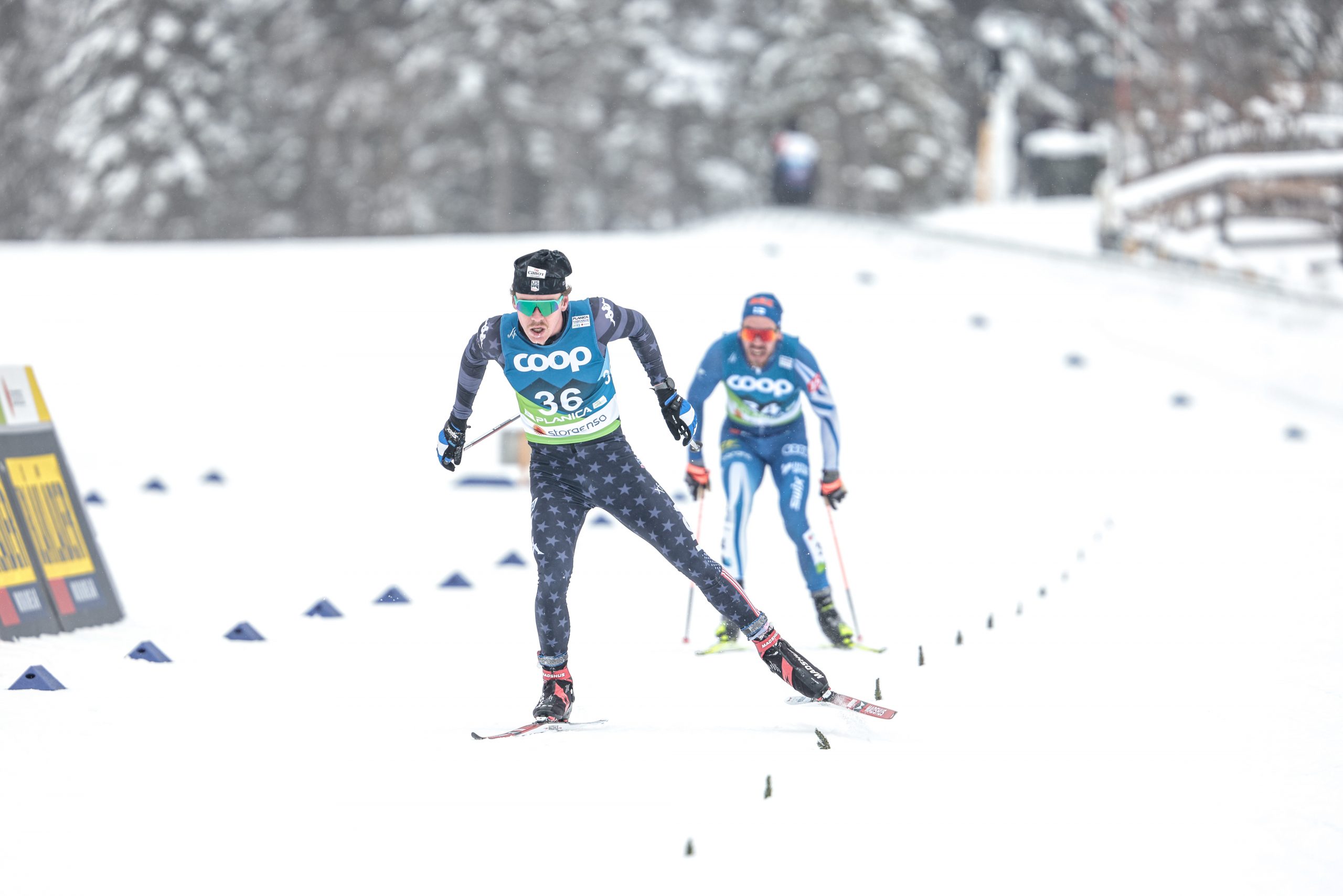
    Sprint goals turning into distance successes. Ben Ogden (USA) races the 2023 World Championship 15 k in Planica, Slovenia. (Photo: Modica/NordicFocus)
    Distance Racing

    Ogden admitted that the race schedule, his own training preparation, and the mood of certain race days all contributed to his otherwise unexpected success in World Cup distance racing this season:

    “[Distance training] was part of my training throughout the year. I did a little more intensity in the fall, but ultimately my strong distance racing was a little bit of a surprise. I was targeting the sprint races, but a big goal of mine after last season was like, ‘You can qualify well, you can get to the semifinal…you just need more fitness.’ Making a sprint final is a long, long day. And being competitive in that final is an even longer day. So that was a big goal of mine after last year: I made weird, side-stepped progress in sprinting—but also forward progress. I also made a big jump in distance racing, which was cool but not totally expected.”

    Ironically, it seemed that the daunting mini-tour schedule of so many World Cup weekends worked in Ogden’s favor:

    “[World Cup] weekends always start with sprints, followed by a distance, or even two distances,” Ogden said. “I’d have big goals for the sprints, but often times sprinting is horrendously frustrating. Even if you achieve your goals and you’re getting better, you’re still always so so close to that next thing, right? I could show up to a World Cup tomorrow and get second—which would blow my goals out of the water—but if first was literally right there ahead of me, I’d still be disappointed as I crossed the finish line. The difference in a distance race is that you pour your heart into it—maybe still getting beat by a minute—and you are somehow okay with that.”

    I just loved going into the distance race and not having to worry about the tactics, not having to worry about what’s going on around me, just go out and race.

    “What was happening was that I was coming out of these sprint races just a little bit frustrated. And I just loved going into the distance race and not having to worry about the tactics, not having to worry about what’s going on around me, just go out and race. It was such a nice feeling, especially since at the beginning of the season I wasn’t putting a lot of emphasis on [distance races]. I’d just do my best and see what happened. It was just a really nice change, one I found myself looking forward to after the sprint races…a way to get all the frustration out.”


    FasterSkier’s interview—Ben Ogden, In His Element— will conclude with Part III, to be posted in days to come.
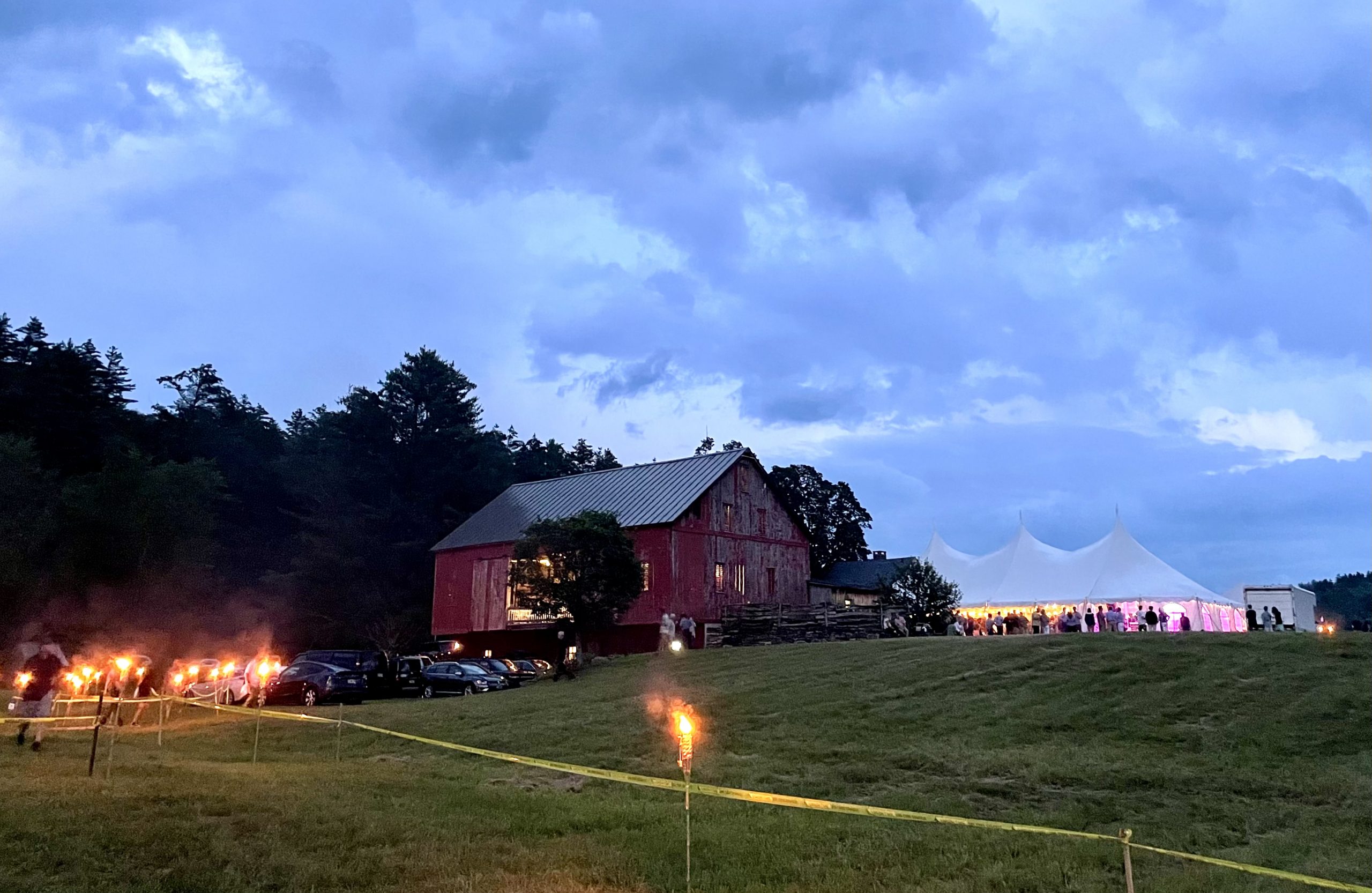
    The Nordic community gathers to say goodbye to one of its own: celebrating John Ogden on the farm he built, among the family and friends he loved. (Photo: FasterSkier)

    Editor’s note: The barn at the Ogden family farm hosted more than just an afternoon of friendly interview. Soon after, much of the American skiing community gathered there to commemorate John Ogden—father of Ben, Katharine, Charlotte, and husband to Andrea—who passed away just days after this interview. It was a marvelous, joyous event with hundreds of friends, neighbors, and skiers in attendance. Bill Koch and Sverre Caldwell were on hand to organize cars in the parking lot . . . that’s the sort of gathering it was: so many luminaries from the Nordic skiing world arrived that both the most influential contemporary Nordic coach and a World Cup Champion/Olympic Medalist and were needed to park cars. It seemed like the entire skiing world had come to this corner of Vermont to bid a fond farewell to legendary coach, cheerleader, race organizer, event timer, and good friend. Vermont has never seemed greener . . .


  • Falla Sets Record with Third Consecutive Drammen Win; Three U.S. Women In Heats 

    Falla Sets Record with Third Consecutive Drammen Win; Three U.S. Women In Heats 

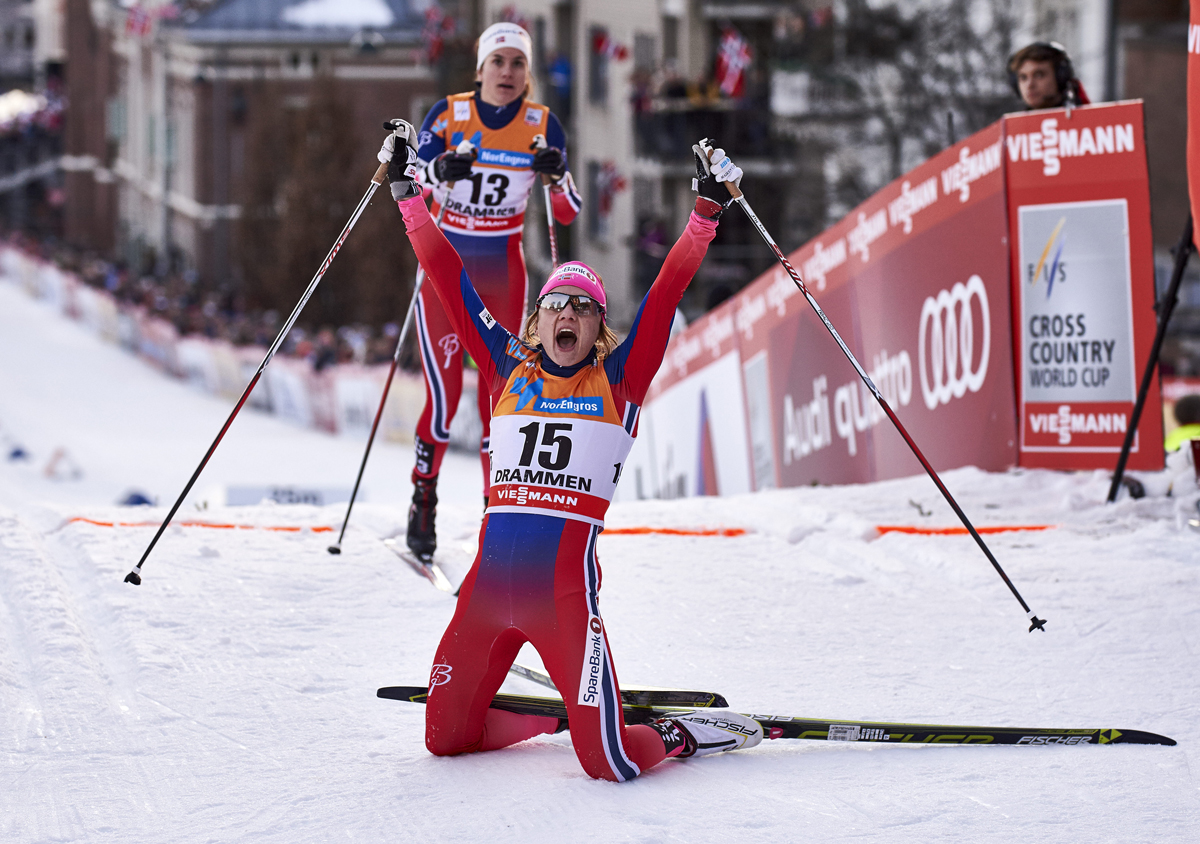
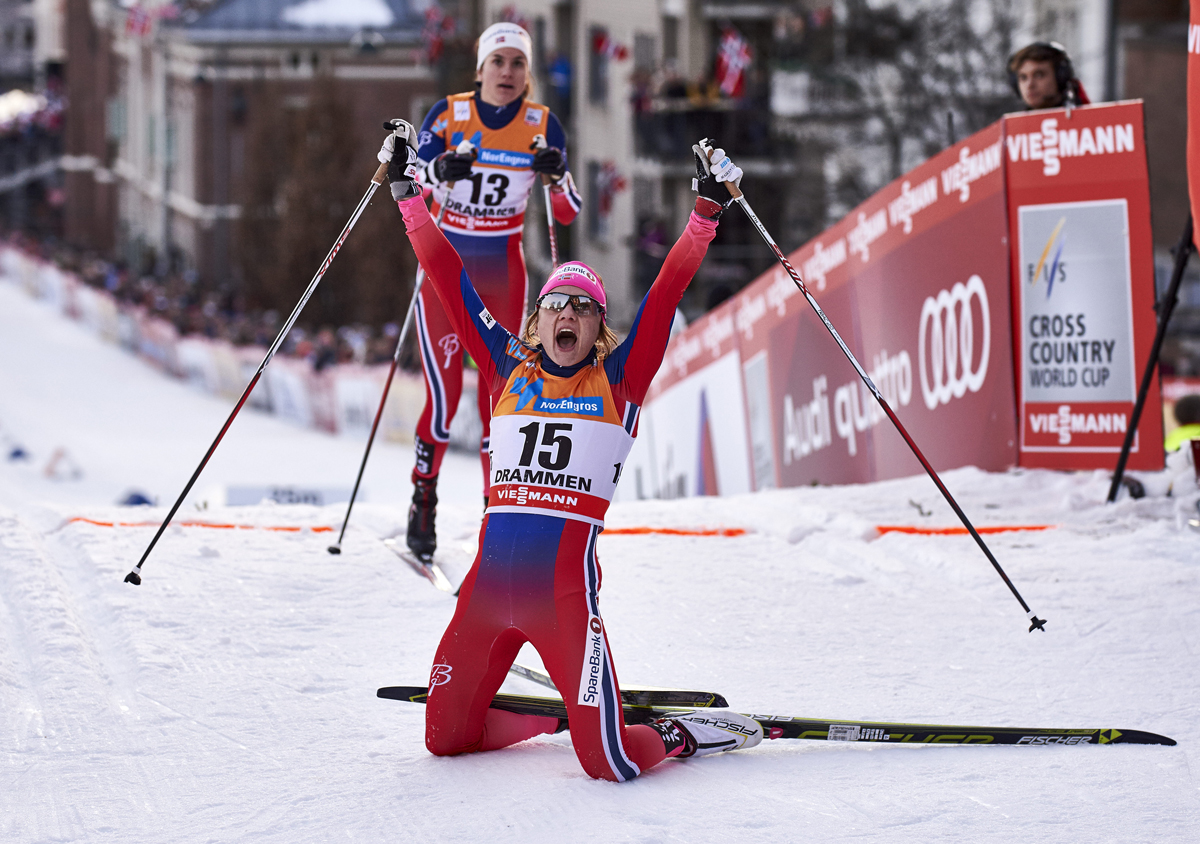
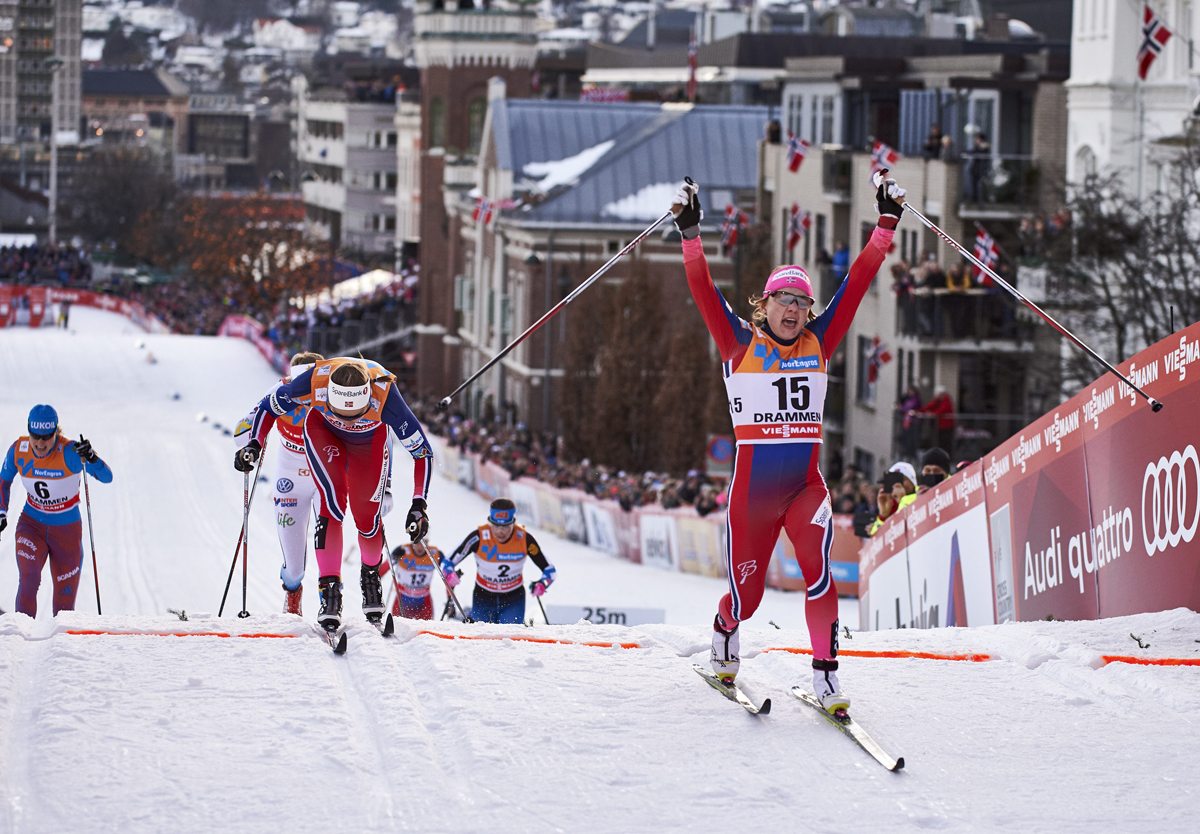
    Maiken Caspersen Falla (NOR) takes another sprint victory in Drammen (NOR).  (photo: Fischer/NordicFocus.com)
    Maiken Caspersen Falla (NOR) takes another sprint victory in Drammen (NOR). (photo: Fischer/NordicFocus.com)

    Much to the delight of the Norwegian crowd gathered in the center of Drammen, a port city outside of Oslo, their sprint stars Ingvild Flugstad Østberg and Maiken Caspersen Falla battled Sweden’s Stina Nilsson to the line for the win of Wednesday’s World Cup classic sprint final.

    Falla returned to the top, taking her third consecutive Drammen sprint title – a first for either men or women – while Nilsson was relegated to last in the heat for obstructing Finland’s Krista Parmakoski.

    “It’s quite a long time from the prologue to the final,” Falla told Norway’s TV2. “This was a good thing for me today. I felt nothing good in the prologue. I’ll be honest. But when I got to the finals, I felt raw and good.”

    The Drammen sprints held in the city center promise an exciting course and atmosphere every year. The 1.2 kilometer course includes a straightaway to the first climb followed by a long gradual descent that leads into a high speed hairpin turn. The finish line sits atop a short and steep pitch that follows a long homestretch in front of a passionate Norwegian crowd. The luckiest can watch the races unfold from their windows and balconies.

    With the sun shining and temperatures hovering just around freezing, Østberg charged to the front from the gun as she had in both her quarterfinal and semifinal. She established a gap in the first several hundred meters that she held through the course and entered the finishing straightaway in the lead.

    However, Falla and Nilsson were charging hard just behind her. Falla’s surge on the final pitch to the finish was enough to overtake Østberg by 0.81 seconds for the win.

    It was a thrilling return to racing for Falla, who battled illness in January and finished 45th in the freestyle sprint qualifier at Planica, Slovenia, two weeks ago.

    Maiken Caspersen Falla (NOR) celebrates her win in Drammen (NOR).  (photo: Fischer/NordicFocus.com)
    Maiken Caspersen Falla (NOR) celebrates her win in Drammen (NOR). (photo: Fischer/NordicFocus.com)

    “I’m just glad to be back because I have been sick a lot,”Falla told Norwegian broadcaster NRK. “The shape is unfortunately not top notch, but I want to be there so I pretend I’m in good shape.”

    Just behind Falla, Østberg held off Nilsson to take second. The three completed their parade and podium photos before the ruling was released that Nilsson had been disqualified for obstruction of Parmakoski on the final stretch.

    Although Sweden protested the call, the jury stood firm on the decision. The disqualification allowed Natalia Matveeva of Russia the final podium placing.

    Nilsson was disappointed but remained grounded after the call.

    “It’s their decision,” Nilsson told Expressen. “I do not speculate on something like that. It is difficult for me to comment, I go alone, I have not seen the race.”

    After Nilsson was placed last in the final for the infringement, Parmakoski and Weng placed fourth (+4.28) and fifth (+8.69) respectively.

    Despite the penalty, Nilsson finished sixth and retains the Sprint Cup lead over Østberg and Falla.

    I was not sure even today, but it worked well,” Falla, who is third in the standings, told Norwegian news service VG. “34 points is a lot smaller than it was when I woke up today. Then there is still hope. It’s the one I’ve wanted all season. Now I’ve seen so many ski races on TV this winter that I will go a little myself.”

    Three American Women Qualify for Quarterfinals

    After the qualifier, it looked to be a strong day for the U.S. women, who put three in the top 11.

    Jessie Diggins posted the seventh fastest time, 6.91 seconds behind Østberg’s mark of 2:52.8. Today marked her third time qualifying for the heats in a World Cup classic sprint and her best-ever placing in a classic sprint qualifier. Two teammates were not far behind: Sadie Bjornsen qualified in 10th (+7.45) and Sophie Caldwell in 11th (+7.60).

    Americans Ida Sargent and Jennie Bender also competed, taking 47th and 53rd respectively, but did not advance into the heats.

    Skiing in the second quarterfinal, Diggins faced a fast heat with four of the top ten qualifiers. Finland’s Parmakoski and Russia’s Matveeva – both of whom eventually ended up in the final – controlled the heat from the start, with the rest of the field in pursuit. Diggins lost contact with the leaders cresting the biggest climb with a couple of unfortunately timed slips.

    “I made some technique errors in my quarterfinal and slipped a few too many times near the top of the course, letting a gap form between myself and the leaders,” Diggins wrote in an email. “I caught back up at the end but by then I had run out of track!”

    With a strong finishing surge, Diggins claimed third, 1.59 seconds behind Parmakoski’s winning time of 2:58.71. Diggins had no chance of advancing as a lucky loser as her heat was slow and third and fourth place from the first quarterfinal topped her time.

    “Overall I’m really satisfied with my race and my shape,” she wrote. “And to finish right behind the girls in my quarter who ended up third and fourth overall is never a bad spot to be in!”

    Although Caldwell has chosen the first or second quarterfinal in each race so far this season, she decided to try something different and selected the third heat. With not as many top seeds as the first two heats, placing in the top two was crucial – advancing as a lucky loser seemed unlikely.

    Caldwell slipped into the lead just before the long descent, passing Kathrine Harsem from Norway.

    “I definitely didn’t intend on leading down the hill, but I had good skis and took the first corner well, so I sucked Harsem up pretty quickly on the downhill,” Caldwell explained in an email. “I don’t know if it was an advantage or a disadvantage to be leading the downhill, but I think it was a good way to stay out of trouble and come into that last corner in a good position.”

    Caldwell entered the final straightaway in the mix but ended up fourth in a tight finish, just 0.51 seconds behind Harsem, who won the heat.

    “She ended up getting swallowed up a bit,” U.S. Ski Team Women’s Coach Matt Whitcomb said of Caldwell’s race. “She is so good on the downhills that she tends to catch people regardless of whether or not her skis are fast. The difference was she didn’t have the gas in the finishing stretch today.”

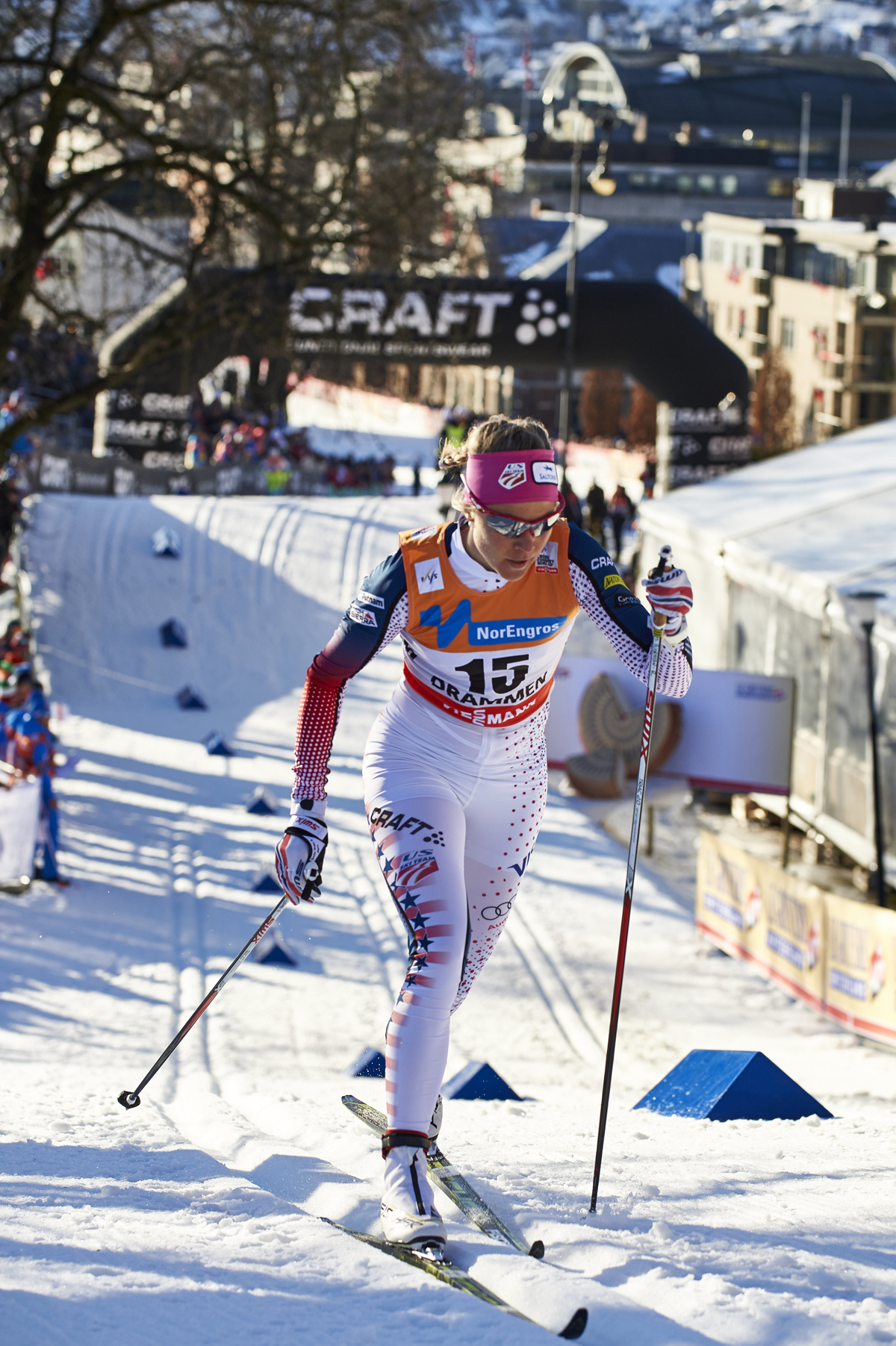
    Sadie Bjornsen (USA) racing in Drammen (NOR) on Wednesday.  (photo: Fischer/NordicFocus.com)
    Sadie Bjornsen (USA) racing in Drammen (NOR) on Wednesday. (photo: Fischer/NordicFocus.com)

    Caldwell still saw positives, however.

    “In years past, I haven’t even been close to qualifying in Drammen, so to qualify in 11th today was a huge step in the right direction for me,” she wrote. “I still think classic sprinting on gradual terrain is probably my weakness in sprinting and there’s still a lot of room for improvement, but I was really happy to have made such a big gain in this sprint this year.”

    In the fourth quarterfinal, Bjornsen found herself in a heat with several of the favorites including Falla and Ida Ingemarsdotter of Sweden.

    “I ended up in a pretty stacked heat, with some girls that qualified low, but were obviously really good skiers, but I tried to look forward without intimidation,” Bjornsen wrote in an email. “Things were going well until the final drag into the finish when I went on the wide track, which was super icy, and a big slip over the bump cost me a few meters on those three girls… and I wasn’t able to catch back up.”

    Bjornsen finished third (+3.26) behind Falla who won the heat and, like her teammates, she missed moving on as a lucky loser.

    Despite the lack of any “flashy” results, coach Matt Whitcomb was happy with a solid day of results.

    “We were in the mix but for all three women, not in the mix enough,” he noted. “The heats that we finished third or fourth were not fast enough to be lucky losers. The highlight of the day was qualifying four in the top 12 [including Simi Hamilton in the men’s race], and Jessie has continued to keep things rolling. It doesn’t matter who you are or what the race is, top 10 qualification is really fast. So we are psyched for that.”

    World Cup racing is back this weekend for the men’s 50 k at Holmenkollen in Oslo on Saturday and the women’s 30 k on Sunday.

    Results: qualifierfinal

    -Chelsea Little contributed reporting.

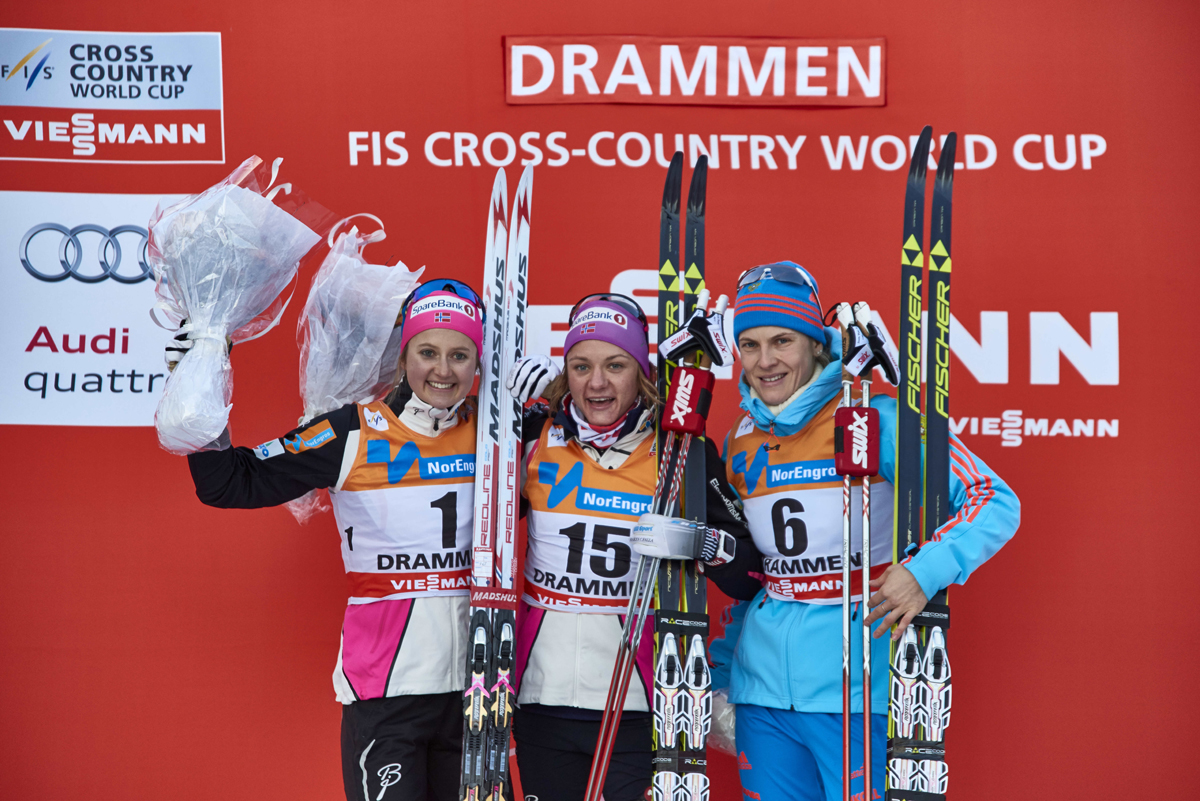
    Ingvild Flugstad Oestberg (NOR), Maiken Caspersen Falla (NOR), Natalia Matveeva (RUS), (l-r), claim the podium in Drammen (NOR).   (Photo: Fischer/NordicFocus.com)
    Ingvild Flugstad Oestberg (NOR), Maiken Caspersen Falla (NOR), Natalia Matveeva (RUS), (l-r), claim the podium in Drammen (NOR). (Photo: Fischer/NordicFocus.com)