From the FasterSkier archive — posts syndicated from athletes’ and coaches’ own blogs between 2004 and 2012, kept online as published. Current coverage is at fasterskier.com.

Tag: dryland camp

  • Lake Placid Camp in Photos: Packing It All In

    Lake Placid Camp in Photos: Packing It All In

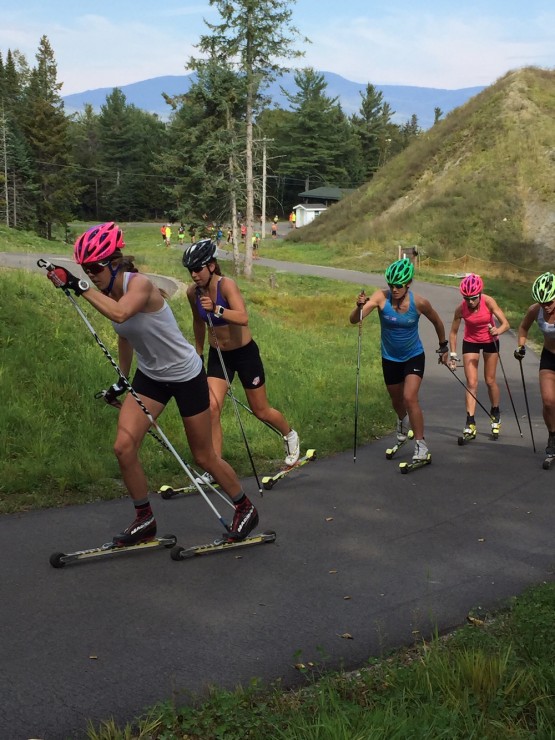
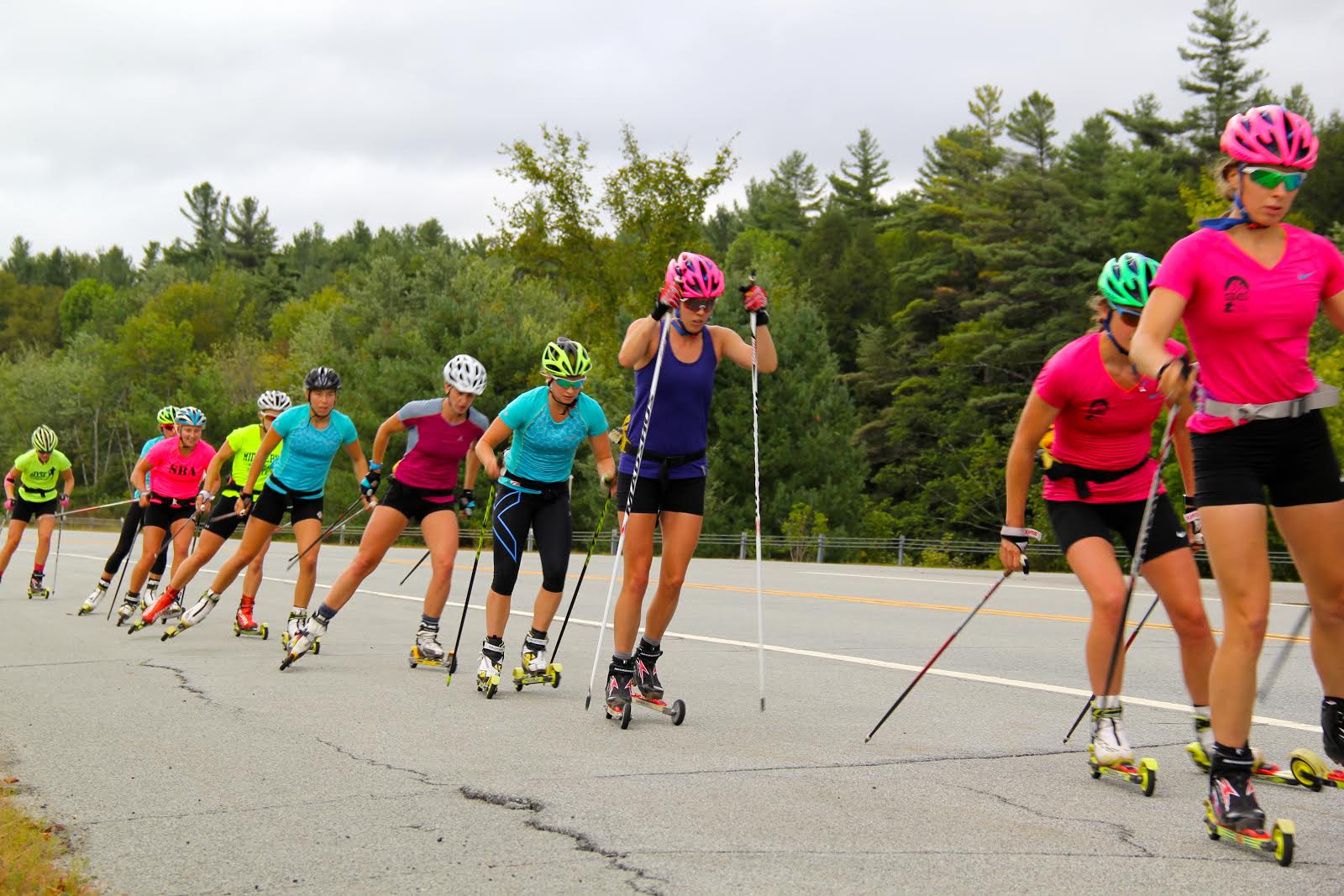
    Annie Hart leads Annie Pokorny, Mary Rose, Jessie Diggins, Deedra Irwin, Katharine Ogden, Kelsey Phinney, Hannah Halvorsen, Sophie Caldwell, and Hailey Swirbul during a rollerski session near Lake Placid, N.Y.  (Photo: Bryan Fish)
    Annie Hart leads Annie Pokorny, Mary Rose, Jessie Diggins, Deedra Irwin, Katharine Ogden, Kelsey Phinney, Hannah Halvorsen, Sophie Caldwell, and Hailey Swirbul during a rollerski session near Lake Placid, N.Y. (Photo: Bryan Fish/USSA)

    Of the 12 workouts in six days at last week’s U.S. Ski Team (USST) dryland camp in Lake Placid, N.Y., two tested VO2 max, two were speed-specific, including a classic-sprint simulation, and three were strength sessions with a smattering of recovery runs. Also that week, the team incorporated Level 3 threshold and three distance sessions, with the National Elite Group (NEG) and National Training Group (NTG) joining several of its workouts.

    At the end of it all, several team members shared their highlights from camp:


    – Katharine Ogden (USST D-team/Stratton Mountain School T2 Team):

    Favorite training moment: “Doing skate speeds on the Lake Placid rollerski track, for sure. It was so awesome to practice high-speed transitions and get some sweet, smooth, car-free speed practice.”

    Favorite moment outside of training: “Getting some sweet henna tattoos from Hailey and Jenna (two of the junior girls at camp).”

    On training with the best: “It never ceases to amaze me training with the USST girls. Getting the opportunity to copy their technique and have them there to motivate us during harder sessions is beyond awesome. One thing that I learned talking to some Norwegian junior skiers is that they have never even met most of their national team girls. This really put in perspective for me how lucky we are to be able to train with them.”

    On making strides: “I’ve learned so much this camp. I’ve been working a lot on bounding technique and it was pretty sweet to have some breakthroughs doing bounding. I’ve also learned a lot about sprint tactics from having the opportunity to do a sprint time trial alongside the USST girls.”


    – Sophie Caldwell (USST A-team/SMST2 Team):

    Favorite workout: “My favorite workout of the camp was probably the run we did on the final day. We ran up Algonquin and then to Avalanche Lake. I love running in the Adirondacks and was happy we got to get out and do some adventuring at the camp. It was the perfect way to wrap up and watch the fall colors begin to change.”

    On what makes the camp unique: “This camp was both the shortest camp and the most focused on intensity that I have done this summer. I thought it was a really fun format and enjoyed jamming so much into one week.”

    On a larger training group: “I think having a larger, younger group is both motivating and inspiring. I remember when I was the same age the NTG girls are now and how excited I would get for camps. I got to room with Julia, who is also my SMS teammate, but I loved talking to her about everything and reflecting on what it was like when I was her age. They all bring a lot of new energy and are also fast and can challenge us in many of the workouts.”

    – Andy Newell (USST A-team/SMST2 Team):

    Highlight: “To be able to hammer out some high-intensity intervals and be pushed by some new faces I don’t get to train with very often.”

    On a tight schedule: “This camp was slightly different than our normal Lake Placid camp because it was shorter and more intense, our coaches packed in a lot of quality training into 6 days including one day with double intervals. I think our camp schedule has been thought out really well this year and personally, my fitness is feeling better than ever.”

    On working out with young guns: “Having a younger contingent at this camp was awesome. For someone who has spent the majority of the last several years racing on the world cup there are a lot of young faces in the National Training Group or even top level US skiers that I’m just meeting for the first time. This LP camp was a cool way to connect with the up and coming talent and train together and push each other, I’m really impressed with both the younger guys and girls that are training with the NTG these days.”

    – Simi Hamilton (USST A-team/SMST2 Team):

    Favorite moment: “Watching the bobsledders train for their World Cup team selection… those dudes can push some serious weight.

    “Our Placid camp was great this year. Only being there a week, our focus was on quality over quantity. Of course we got in some great runs (today we did the Algonquin to Avalanche Lake loop), but we were hitting the pavement hard with 5 intensity sessions and 2 speed sessions throughout the week.”

    On training with the NTG: “It was so awesome having the NTG group around. We were getting pushed in every single workout by those guys and girls, and it’s always an awesome feeling to turn around during a hard interval session and see a 16 year old hot on your heels. I’m so psyched about where our future is headed as a top XC nation.”

  • Rocky Mountain Racers Inspired and Challenged at Soldier Hollow

    Rocky Mountain Racers Inspired and Challenged at Soldier Hollow

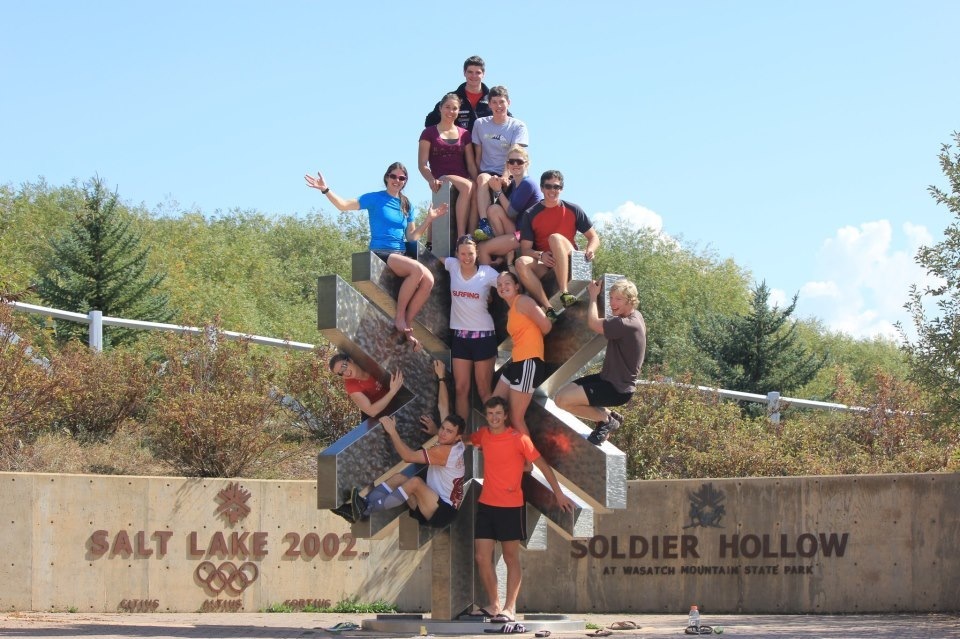
    The Rocky Mountain Racers crew after a training session in Soldier Hollow in 2012. (Courtesy photo)
    The Rocky Mountain Racers crew after a training session in Soldier Hollow in 2012. (Courtesy photo)

    Maya MacIsaac-Jones, 19, of the Canadian National Junior Team and Rocky Mountain Racers (RMR) in Canmore, Alberta, submitted the following article about her RMR’s recent dryland camp in Park City, Utah, to info@fasterskier.com. Born and raised in Athabasca, Alberta, MacIsaac Jones lives in Canmore and is a student at Athabasca University. 

    ***

    From Sept. 27 to Oct. 11, one of Canada’s high-performance racing teams, Rocky Mountain Racers (RMR), headed down to Park City, Utah, for their two-week long high altitude training camp.

    RMR is comprised of just over 20 high-performance athletes in both cross-country and biathlon from all across Canada. Led by coaches John Jaques and Luke McGurk, the team’s athletes focused on both high volume and high intensity during their camp.

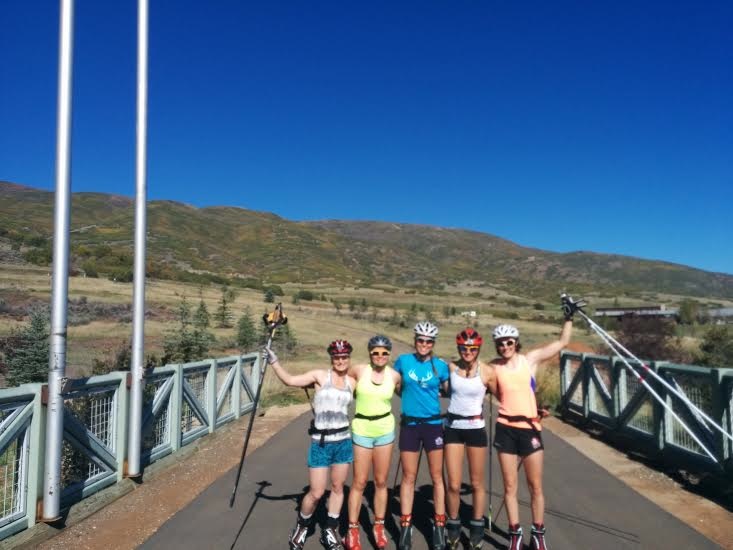
    RMR girls after a time trial at Soldier Hollow last month (from left to right): Andrea Dupont, Emma Camicioli, Maya MacIsaac-Jones, Ember Large, and Olivia Bouffard-Nesbitt. (Photo: Ember Large)
    RMR girls after a time trial at Soldier Hollow last month (from left to right): Andrea Dupont, Emma Camicioli, Maya MacIsaac-Jones, Ember Large, and Olivia Bouffard-Nesbitt. (Photo: Ember Large)

    Long 4-5 hour workouts were completed on the various mountain passes surrounding Park City and Salt Lake City while intensity sessions, time trials and shooting practices were reserved for the excellent facilities available at Soldier Hollow in Midway.

    Because of RMR’s cross-country/biathlon mix, Soldier Hollow was the perfect place for training sessions to occur; coaches were able to coordinate shooting practices for the biathletes with simultaneous rollerskiing sessions for the cross-country side of the team.

    Utilizing Soldier Hollow’s biathlon range, extensive set of rollerski tracks and advantageously close proximity to Park City, RMR held several intensity sessions and time trials at the former Olympic site. The hilly climbs the facility offered also gave the athletes an opportunity to have a dryland time trial with a course very similar to what they will face during the ski season.

    “It’s inspiring to train in the exact spot that I saw my Olympic heroes win medals at during the 2002 Olympics,” RMR athlete Andrew Brisbin stated. “[Soldier Hollow] is the most difficult and technical rollerski track that I’ve been on, meaning it most closely resembles a World-Cup caliber ski course through its lung and leg busting climbs and quick descents.”

    Stuart Harden, RMR athlete and one of Canada’s top junior biathletes, also enjoyed training at the former Olympic site: “Soldier Hollow was a great asset to have at our Park City training camp. For biathletes, having a range and full rollerski loop close by made the trip feasible. As far as rollerski tracks go, Soldier Hollow is considerably challenging. Some steep, sustained climbs coupled with the altitude can really make you hurt, and can definitely make training there worthwhile.”

    When not focusing on intensity sessions or shooting practices, the team explored the many other mountain roads available for rollerskiing in the area, including Mirror Lake pass, Wolfe pass, and Guardsman Pass. They concluded their camp with a 4-5 hour altitude run at 9000 feet on the trails above Park City.

    With their last camp of the season complete, RMR athletes are now in their final stages of preparing for the racing season and the upcoming [SuperTour and] NorAm races at West Yellowstone, Bozeman, Rossland, and Whistler.

    For any athletes or coaches interested in exploring Soldier Hollow as a future training possibility, please use the following contact information:

    Richard Hodges

    richard.hodges@soldierhollow.com

    801-558-5804

    — Maya MacIsaac-Jones, 

    RMR cross-country skier

    @_MayaMJ

  • NDC Thunder Bay Returns to Birkie Land for Hayward Camp

    NDC Thunder Bay Returns to Birkie Land for Hayward Camp

    Editor’s Note: The following training-camp recap was written by Jenn Jackson, a member of NDC Thunder Bay and Canada’s Junior National Team. Last month, her training centre, located in Thunder Bay, Ontario, returned to one of its favorite places south of the border: Wisconsin. To submit your own camp writeup, please email info@fasterskier.com with the subject line: “Camp Recap.”

    ***

    As summer slowly begins to turn to fall, the National Development Centre of Thunder Bay made its way south for its final dryland camp of the year.

    From Aug. 16 to 27, athletes of NDC Thunder Bay could be found rolling along the roads near Hayward, Wis. The team has hosted camps in the area before; taking advantage of the quiet, well paved roads, and extensive trail systems, which play host to the American Birkebeiner in late February.

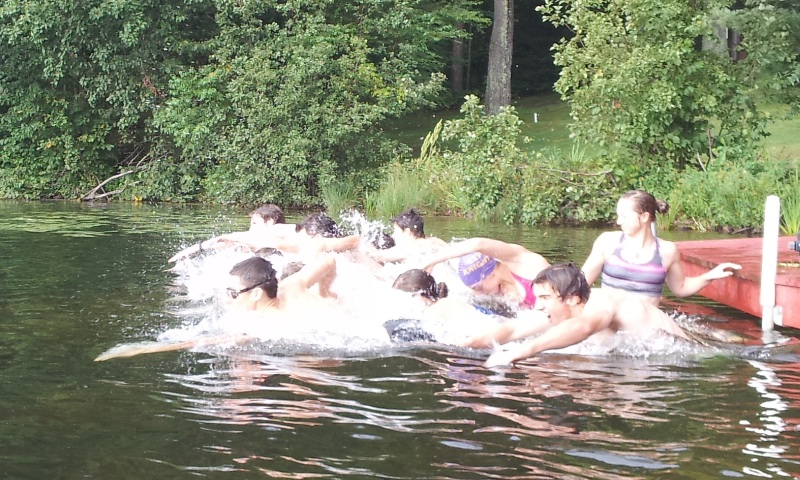
    The start of NDC's swim-run-ski triathlon in Hayward, Wis., which according to Coach Puiras “is a bit of a tradition at the Hayward camp." (Photo: NDC Thunder Bay)
    The start of NDC’s swim-run-ski triathlon time trial in Hayward, Wis., which according to coach Timo Puiras “is a bit of a tradition at the Hayward camp.” (Photo: NDC Thunder Bay)

    “There was a nice variety of terrain so we could concentrate on exactly the technique and training aspect we were focusing on for any particular training session,” NDC Head Coach Timo Puiras wrote in an email. “Living on the lake at Crest Hill resort meant we could access a wide variety of training venues right from our front door making recovery and rejuvenation post workout ideal.”

    Puiras explained that, for most of the team, the focus of the camp was high quality roller ski volume, but that some of the more senior athletes had “ … a more intensity driven camp.”

    See the video here.

    During the 12-day camp, the group completed three intensity sessions, all involving rollerskiing – a marked change from the NDC’s typical summer intensities, which are done almost exclusively running or ski striding.

    One of these workouts was a rollerski-sprint paceline, which the team adopted from Canadian World Cup Team coach Tor-Arne Hetland after a collaborative camp earlier this summer in Bend, Ore.

    “We do the paceline to practice good form and speed,” NDC athlete Andy Shields explained. “With the drafting component we get to use very fast movements without it being too fatiguing. When we get to the head of the train, the sprit at the front simulates a sprint to the finish line.”

    To ensure everyone was competitive within the paceline, assistant coach Victor Wiltmann inventoried and reassigned rollerskis to athletes according to who was strongest in the sprints and who needed a little extra speed.

    For new athletes Julian Smith and Sam Greer, this was their first training camp with the team and was a very positive experience.

    “It was incredible,” Smith wrote. “You are isolated, you spend a lot of time with your teammates and you get to learn a lot about all of them.”

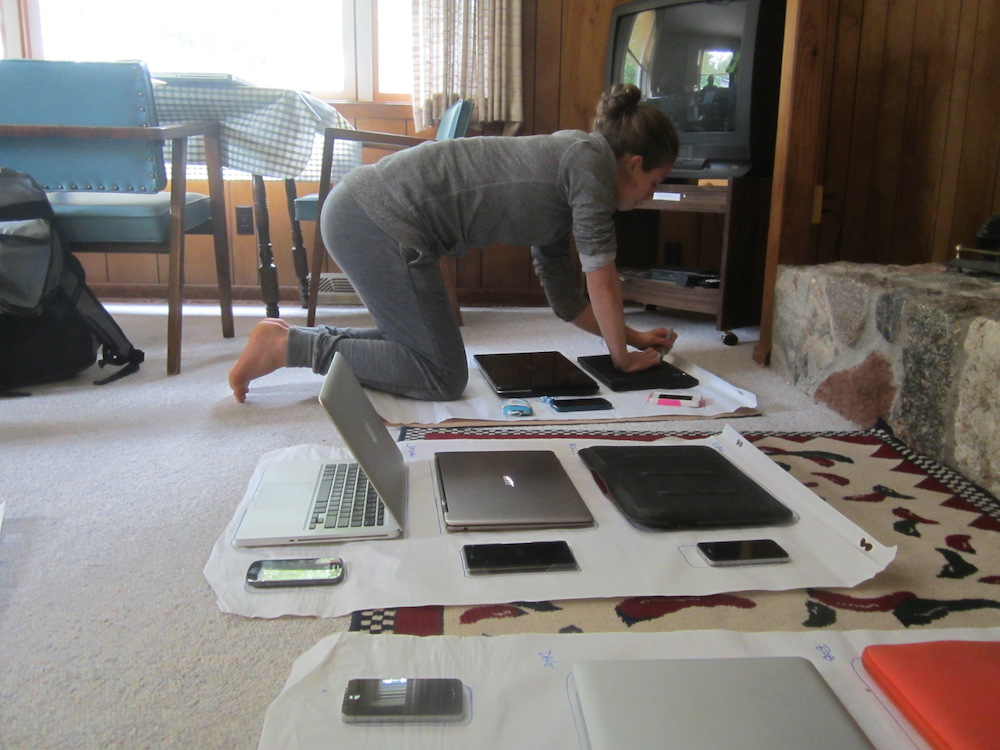
    Depositing technology for the blackout, which coach Timo Puiras explained was meant "to encourage team building and to prohibit screen time in the afternoon." (Photo: NDC Thunder Bay)
    Depositing technology for the blackout, which coach Timo Puiras explained was meant “to encourage team building and to prohibit screen time in the afternoon.” (Photo: NDC Thunder Bay)

    This isolation was not only geographical, but technological as well.

    “The technology blackout was a bit of an experiment,” Puiras wrote. “I had two main goals for the technology blackout: to encourage team building and to prohibit screen time in the afternoon, most importantly just before sleep. I was curious to see if preventing screen time in the afternoon would have any effect on recovery and sleep. Obviously this was a highly unscientific, subjective observation, but no one on the camp got sick and everyone’s mood stayed notably positive.”

    Without their electronics, the athletes enjoyed the lakeside facilities, “… spending quality time together, swimming in the lake, playing guitar, and slacklining” Smith wrote. In the evenings, some athletes would do supplementary sprint workouts, dashing from the sauna down to the docks and into the lake.

    Midway through the camp, the athletes hit their longest single-session day with a four-hour classic rollerski. Rather than staying to the familiar roads near the Crest Hill, the coaches mapped out a 65-kilometre loop which wound its way up and around Cable – where the team would use CXC’s team gym for strength, then back to the resort.

    Guest athlete, Holly Brown during four-hour classic roller ski workout (Photo: NDC Thunder Bay)
    Guest athlete, Holly Brown during four-hour classic roller ski workout (Photo: NDC Thunder Bay)

    On the workout, Puiras commented: “I am fairly certain that this is the first time in my career that after 4 hours of roller skiing every single athlete was still positive and could have easily kept on going for more.”

    That positivity wavered slightly for some as the final intensity workout of the camp approached: the swim-run-ski triathlon time trial, which according to Puiras “is a bit of a tradition at the Hayward camp,” and challenged some of the land-loving athletes with a 230-metre lake swim.

    In an effort to have men and women finish close to the same time, the men’s run and roller ski courses were slightly longer (4.7 k and 12.8 k) than the women’s (3.5 k and 9.0 k). As the athletes finished the TT, it was the women who seemed to have the edge on the shorter course. For results, click here.

    The team has now returned to the north side of the border so the student-athletes can prepare for the start of the academic semester at Lakehead University and Confederation College.

    With more than half of the training season behind them, “Everything is on track and looking positive for the fall training season,” Puiras wrote.

    The team will train locally in Thunder Bay until mid-October when they head west to Canmore for Frozen Thunder. In the meantime, they have a testing week scheduled, as well as the Pancake Run.

    ***

    The National Development Centre of Thunder Bay is one of three high performance training centres in Canada. Last year the team had athletes qualify for both Junior and Under 23 World Championships, and won numerous medals at Canadian Nationals. They are currently running a campaign to compensate for severe funding cuts to their program, to learn more visit: TeamUpNDC.com and follow @NDCTBay on Twitter.


    Trouble viewing video above? Click here.

  • Bounding Up Whiteface: Video from USST Elite Camp (Updated with Quotes)

    Bounding Up Whiteface: Video from USST Elite Camp (Updated with Quotes)

    About 25 elite nordic skiers did maximal-intensity, ski-bounding intervals up Whiteface Mountain on Tuesday as part of the U.S. Ski Team Elite Camp in Lake Placid, N.Y.

    WILMINGTON, N.Y. — The view from partially up Whiteface Mountain on Wednesday morning was about as picturesque as they get. From the trail, one could see that the leaves had started to turn shades of red and yellow — just in time for the U.S. Ski Team’s fall training camp in Lake Placid, N.Y.

    Way down below, a few small dots proceeded up the dirt access road: first to warm up, then to get after it. US Ski Team Head Coach Chris Grover organized the maximal-intensity, ski-bounding interval workout for about 25 athletes, and said it was probably the toughest many had done this training season.

    “Typically what we’re doing in the fall is switching gears from kind of our base anaerobic phase in training, where we’re concentrating more on is distance and technique acquisition, and now starting to work a little bit more poignantly with developing the athletes’ VO2 max,” Grover said. “You probably heard comments from athletes who said this was the first session of quite hard bounding that they’ve done this season. A lot of these guys have done quite a bit of threshold-type bounding, but they haven’t done short, hard bounding like that. It’s intended to develop their maximal aerobic capacity.

    “So that’s what we’re going for,” he added. “It’s the beginning of September, kicking it into a little bit more intensity mode. Obviously during the camp, we have some more hard workouts coming up, including the Climb to the Castle [on Saturday], the sprint rollerski time trial, as well as some threshold sessions. Just trying to start into a little bit more hard training.”

    Click here for a photo gallery

    More quotes from the US Ski Team:

    Head Coach Chris Grover: 

    “We saw some great performances [today] out of individual athletes, both national-team athletes and club athletes, but it’s definitely early in the season and we won’t get the real measuring stick until we get to Muonio [Finland], get to Gällivare [Sweden] in the fall and see how these guys stack up.

    “This is the point of the year where I think everyone around the world is looking around going, ‘Oh yeah, these guys have made great progress through the summer,’ but it’s easy to forget that probably everybody in the world has made good progress through the summer. It’s kind of hard to take away from this particular workout except for particular technique changes, perhaps, that someone’s made, that they’re maintaining their form through the bounding sessions, for example. And if they’re mature enough to learn to really pace it well so that they’re still there at the end.”

    How did each athlete decide whether to do five or seven intervals?

    “Each of these guys is pretty much talking with their individual coach about what they should be doing right now and kind of what their training history has been over the summer, how old they are, and particularly what they’ve done over the last couple of weeks. Some athletes have come in with a good rest week, for example, and they’re ready to do the full-prescribed seven [intervals]. Others are coming off a little bigger training block, for example, and they’ve got to kind of work their way into camp a little slower.”

    Andy Newell: 

    “I felt good. I always try to pace this workout well. It’s one of the harder ones we do at the camp, I think, as far as how much it takes out of your body. It kills my legs usually. But these are the kind of workouts that really you make lot of gains in building VO2 max. We haven’t done a ton of them so far this year, so for me I try to build into them so I can make the last few intervals hard. But it’s a long camp so we try not to blow ourselves out too much.”

    How did you like doing the intervals with about 15 others, including some up-and-comers pushing to lead the pack?

    “I like that. Some people don’t like training with a big group, but I think it’s sweet. I think the more people you have out, the better for an interval session. It’s funny, some of the young guns come to the front and go really hard on one, and they’re dead two intervals later. I was that same guy probably five or six years ago back when I was coming to these camps, too. So it’s cool to see these younger guys go out and hammer in front.”

    Jessie Diggins:

    “At the start of the workout I wasn’t feeling that great. It wasn’t the worst workout, definitely not the worst, but I wasn’t feeling the very best. It took me a while to warm into it and on the last three it started feeling really good, which is nice. I’m still trying to experiment with when beforehand I should take my inhaler. … I’m getting closer and closer to make it kick in when I want it.

    “When you do these intervals, it’s super, super important to not dig yourself into a huge hole, but once in a while it’s really good to figure out exactly where your limits are and know what it feels like right before you hit the wall, and I found that 30 seconds before I was done today so that was really nice.”

    Tad Elliott:

    How was your summer?

    “I’ve had a great summer out in Park City, [Utah]. I’ve been there pretty much all summer and then, just to Europe and back really quick [for a USST men’s camp in Austria and Germany]. It’s really nice to have my old coach Jason Cork back [as] the U.S. Ski Team men’s coach. He trains with me every day and we hang out, so training’s been going really well and it’s fun to have him around, too. Things are going awesome.”

    What kind of training changes have you made?

    “Ski training. I’ve been ski training a lot more, haven’t been mountain biking as much and a lot more strength, too, this year with our coach Michael [Naperalsky] at the COE. A lot more bounding, a lot more running, and yeah, less biking.”

    What are some of the bigger mountain bike races you’ve done this year?

    “I did nationals and that went all right. I was still solid when I came on the last lap, but nowhere near as well as I did last year. I think it’s all this muscle I’ve gained in my upper body, can’t carve as fast. I was 14th this year, sixth last year [in my first two years in the elite field].”

    What was it like watching mountain biking at the Olympics?

    “Man, the Olympics was awesome. Todd [Wells] is one of my good friends back in Durango. My dog, Gus, and his dog, Winston, have little man crushes on each other so we always go on play dates together with Todd, and I play golf with him. It was really fun to see him get a 10th place in his final Olympics [the best U.S. men’s result in Olympic history]. That was really cool. And then I’m good friends with Georgia [Gould], got to talk to her at nationals; she came home with some hardware [as the second U.S. mountain biker to ever win Olympic bronze] so that was sweet.”

    Ida Sargent:

    How was your summer?

    It’s been great. I was in Craftsbury [Vermont] for basically the whole summer, except for our camp in Sweden, so it’s been good to be home and in one place for a while.

    What have you been working on, and what did you learn from your first season on the World Cup?

    “More hard training and keeping some consistency with the gains that I made last year and a lot of technique stuff, too. … It was tough to race the full season on the World Cup. I was pretty tired at the end of the year after having been on the road and traveling and racing the World Cup every weekend, so that was a great experience. This year I’m looking forward to building on that and returning to some of the same venues and having a little more familiarity with the whole scene, just ready to improve my results with that extra experience.”

    What would you say your strengths are?

    “I think sprinting is my strength, so this year I’m going to try to focus a little bit more on [that], but I would love to be a really good distance skier, too, so I don’t consider myself a sprinter. I want to be in the points in the distance races as well. It’s great to do training camps with Jessie, and Liz will be here later this week, and these other girls, too, to kind of improve my distance skills, too.”

    How was your joint camp with the Swedish women’s national team in Sweden?

    “It was good. We trained a ton. It was a lot of hard work, a lot of hours, but it was cool to see that they weren’t doing anything different than us, and we could hang with those guys and train with them. It was just a good confidence builder that our team’s really on the right track and building momentum also.”

  • Canadian Women, World Cup Academy Start Camp in Whitefish

    Canadian Women, World Cup Academy Start Camp in Whitefish

    Whitefish, Montana. (Photo courtesy of Flickr Creative Commons Content, Mark Shaiken)

    Welcome the land of fried chicken. That’s what Alberta World Cup Academy and Canadian development team skier Kevin Sandau saw on his drive down to Whitefish, Mont., when he tweeted a photo of a license plate: Montana. Treasure State. FRDCHKN.

    A photo of a Montana license plate belonging to someone who apparently likes fried chicken, tweeted by Kevin Sandau of the Alberta World Cup Academy/Canadian Senior Development Team on Thursday.

    The entire World Cup Academy (AWCA), with 23 athletes between the men’s and women’s squads, most likely had a better reason for driving six hours directly south to Whitefish, Montana, nearly 500 kilometers from Canmore, Alberta. On Thursday, the Canadian Women’s World Cup Team arrived as well for a joint training camp with the Academy.

    According to Canadian women’s coach Eric de Nys, the two Canmore-based teams coordinated a 10-day dryland camp for the first time in Whitefish. National team member Chandra Crawford will be participating in a few days after spending more than two weeks in Sweden, where she trained with the U.S. and Swedish national women’s teams in Sälen and Torsby. She’s taking a little breather in Canada first.

    In an email, de Nys wrote that Perianne Jones would also be in Whitefish. The third woman on the World Cup team, Dasha Gaiazova wasn’t going to make it to Montana, but she’ll be at the next team camp in Park City, Utah.

    “For a few different reasons we felt it would be best for her training to stay in Quebec,” de Nys wrote. “We will miss having her at the camp but that’s the way things go some times.”

    Here are his responses to a few other questions:

    FasterSkier: How much will you be coordinating workouts with the AWCA? 

    Eric de Nys: This is a joint camp and for the most part all workouts will be the same (of course, some athletes may execute more or less reps of intensity etc) except that a few of the junior athletes may drop a workout here and there. Boys have a different plan than the ladies also.

    FS: What are some objectives for the camp?

    EDN: The main objectives are to build on intensity while focusing things towards women’s team cohesion.

    FS: What might a typical training day involve?

    EDN: We are on a lake here so I am sure there will be a fair bit of cooling off in the lake after our workouts. [Friday’s] plan is for 5×5′ skate roll intensity with an easy recovery workout in the afternoon.

    FS: What’s the draw of Whitefish?

    EDN: The draw to Whitefish was its relative closeness to Canmore while being somewhere new. The elevation, albeit, not sea level is also significantly lower for us than Canmore which will aid in recovery and higher rolling speeds.

    Note: The elevation of Whitefish is 923 meters (3,028 feet) while Canmore’s is around 1,480 m (4,856 feet).


  • From East to West, REG Camps a Success

    From East to West, REG Camps a Success

    Dozens of junior skiers raced up Agony Hill on June 25 in Salt Lake City as part of the Western REG Camp. (Photo by Dan Simoneau/MBSEF Nordic)

    The Western Regional Elite Group (REG) Camp kicked off in earnest at 6 a.m. Monday, June 25, with a trail-run time trial up Agony Hill. On the training schedule, instructions read: “Bring your ‘A’ game.”

    Dozens of teenage athletes tackled the 1,200-foot, 0.9-mile climb in Salt Lake City, tucked behind the University of Utah and often used as a measuring stick for pain tolerance. By the afternoon, the group was back in Park City – the home base of the weeklong camp – for core and strength exercises with U.S. Ski Team assistant coach Jason Cork.

    Throughout the seven-day camp, 36 athletes from five divisions (Rocky Mountain, Intermountain, High Plains, Pacific Northwest and Far West) worked with 10 coaches for a total of 20 training hours. They hiked, ran, rollerskied, lifted, played volleyball and went to a waterslide park.

    A junior racer at the Eastern REG Camp in Craftsbury charges up Elmore Hill in Elmore, Vt., on June 27. (Photo by Liz Kantack/SMS Nordic)

    Meanwhile 2,300 miles east in Craftsbury, Vt., the New England Nordic Ski Association (NENSA) hosted a the Eastern REG Camp, with a total of 33 skiers (19 J1s and OJs in the elite group and 14 in the J2 camp).

    They also raced uphill, ran and rollerskied last week. They worked on strength and agility, hill bounding and intervals, and attended presentations at night.

    Several U.S. Ski Team (USST) members from around the country made it to the camps as well. Out West, elite juniors chased Simi Hamilton, Noah Hoffman and Tad Elliott up Big Cottonwood Canyon during an over-distance classic rollerski. Miles Havlick, an NCAA champion and Ski Racing Magazine’s two-time Collegiate Skier of the Year, also joined them on the 3 ½-hour trek to the top of Guardsman Pass.

    In Craftsbury, national-team skiers Andy Newell, Ida Sargent and Skyler Davis participated, along with elite skiers from the Craftsbury Green Racing Program and Stratton Mountain School.

    FasterSkier caught up with Western REG director Mike Elliott and Eastern REG coordinator Janice Sibilia via email for details on last week’s camps.


    Western REG

    Where: Park City, Utah (Canyons Ski Resort townhomes)

    Coaches making their way to the top of Agony Hill in Salt Lake City on June 25 for the Western REG Camp time trial. (Photo by Dan Simoneau)

    When: June 24-July 1

    Weather: Hot (most workouts started at 7 a.m., with the exception of Agony Hill, so they were able to complete each)

    Workouts: Four intense training sessions (including rollerski time trials at Soldier Hollow, Canadian strength tests at the USSA Center of Excellence); two over-distance rollerskis

    Extras: Several presentations, including Tad Elliott’s talk about goals

    Highlights: “The USST was a tremendous amount of help,” Elliott wrote. “We had Jason Cork at every training session.  We had USST members Simi Hamilton, Tad Elliott, and Noah Hoffman joining us on the over distance days and a time trial day. Miles Havlick with the University of Utah and a NCAA winner last year skied with us on Big Cottonwood Canyon.

    “We had a couple of days of Strength with Alex and Michael in the Center of Excellence that they were awesome.  Great information and some light hearted teasing.  Alex strongly recommends NO spandex on Dudes in the Strength Training at the COE.”

    Western REG campers during a 3 1/2-hour classic rollerski up Big Cottonwood Canyon to the top of Guardsman Pass near Park City, Utah. U.S. Ski Team members Simi Hamilton, Tad Elliott and Noah Hoffman joined the juniors for the workout. (Photo by Dan Simoneau)

    Additional comments: Elliott was impressed by the amount of “highly motivated and very talented skiers,” which consistently showed up early with all of their equipment before workouts. They didn’t have to wait on stragglers, and some days the vans departed ahead of schedule.

    “All of the skiers showed up in fairly good condition and had been training for a couple of months before the REG,” Elliot wrote. “When the skiers introduced themselves we learned … that one is going to Harvard, two to Dartmouth, one to Middlebury, one to Colorado University, three are taking a Post Graduate year to train specifically for cross-country skiing.

    Juniors learn the meaning of “rest and recovery” at the weeklong Western REG Camp in Park City, Utah. (Photo by Dan Simoneau)

    The J2s did extremely well throughout the week, he continued. Two local juniors from the Wasatch Nordic Ski Club and Park City Nordic joined them at Agony Hill and for the two over-distance days.

    “The classic roller ski up Big Cottonwood canyon to the top of Guardsmen Pass was the last training session and it was long and steep.  Camp attendees got to observe what year round training is like at the next level by being able to roller ski with Simi Hamilton, Tad Elliott, Noah Hoffman, and Miles Havlick. Even with all the training, the skiers reported that they were having fun.”


    Eastern REG

    Where: Craftsbury, Vt. (Craftsbury Outdoor Center at Hosmer Point)

    When: June 24-July 1

    Weather: Rainy at first, then hot (especially during the final workout, Saturday’s rollerski-run combo)

    Skyler Davis (l) setting the pace during an interval double-pole session at the Eastern REG Camp June 24-July 1 in Craftsbury, Vt. (Photo by Liz Kantack)

    Workouts: 11 in seven days, six of which were intensity or speed.

    Three testing phases (rollerski agility, strength and Elmore Uphill run (on which Nils Koons set a course record), to determine which skiers would be invite to the National Elite Group camp in September in Lake Placid, N.Y.)

    There were also two interval sessions consisting of DP intervals and hill bounding, recovery runs, rollerski sessions and one over-distance combo run/rollerski.

    Extras: Presentations by Sargent, Newell, U.S. Ski Team assistant coach Bryan Fish and Burke Mountain Academy coach Kate Barton on the J1 Scando/U18 trip last winter.

    Highlights: “The camp went very well,” Sibilia wrote. “It was hard, but gave the athletes lots of head-to-head time. They also had the opportunity to jump in with Olympian Andy Newell, and [other] USST members … Ida Sargent, and Skyler Davis. Most members of the CGRP and newly formed Stratton Elite team also joined us. For the uphill run we had the [Green Mountain Valley School] join in the fun! There was also an Olympic Day celebration that some of the REG athletes took part in, and a competitive game of mini golf!”

    Craftsbury’s own Hannah Dreissigacker, who was recently named to the US Biathlon team, racing up Elmore Hill in Vermont at the Eastern REG Camp last week. (Photo by Liz Kantack)

    Additional comments: “Everyone came to camp prepared, and absorbed the training well,” Sibilia continued. “The clubs are doing a really good job of keeping the training focused and the motivation up. Regional coaches came in to help run the camp, as did the folks from Craftsbury and Hosmer Point. The energy level was high!”

    On the NENSA website, Sibilia wrote that the athletes had been mindful throughout the week with details concerning nutrition, hydration and recovery.

    “They are getting more dialed in to this every time this camp is run,” she wrote. “I witnessed campers taking advantage of the rainer first days by settling into the cabins with their feet propped up for recovery. Without access to internet and cell phones, rest came easier!”

    Eastern REG Camp juniors during the rollerski portion of a combo over-distance workout near Craftsbury, Vt., on June 30. (Photo by Liz Kantack)

    Can’t get enough of these photos? Neither could we. See more on the MBSEF (for Western REG) and SMS (Eastern REG) Facebook pages.