From the FasterSkier archive — posts syndicated from athletes’ and coaches’ own blogs between 2004 and 2012, kept online as published. Current coverage is at fasterskier.com.

Tag: early season races

  • No Skis? No Problem: Kershaw’s Klister-Fudge Start to the Season

    No Skis? No Problem: Kershaw’s Klister-Fudge Start to the Season

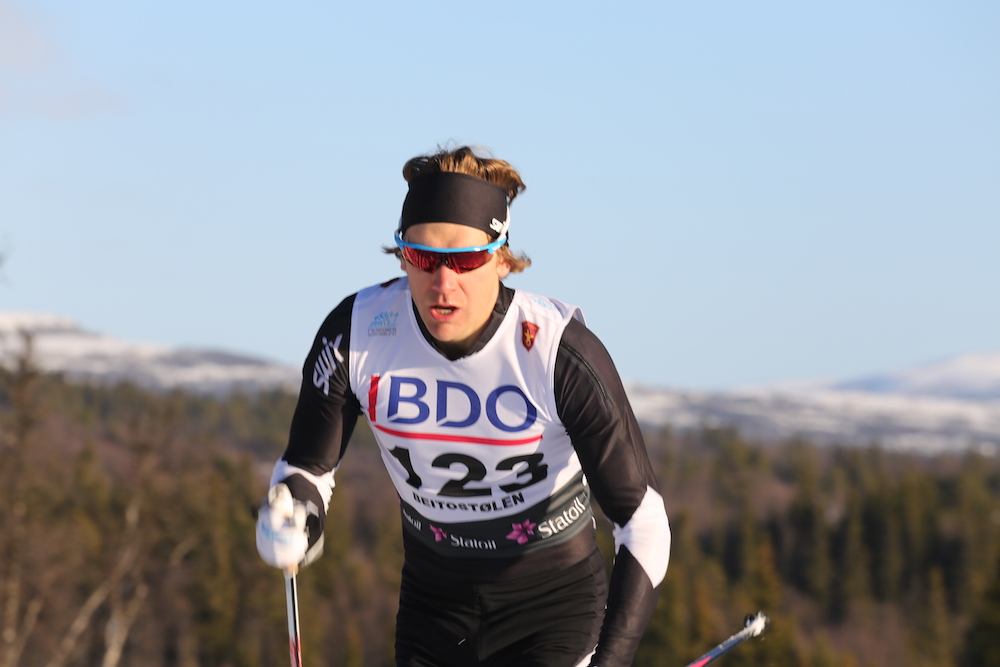
    Devon Kershaw racing to 33rd on classic skis (he was one of the few men to stride rather than double pole on skate skis) during the 15 k classic FIS race on Nov. 13 in Beitostølen, Norway. (Photo: Eirik Lund Røer/SKIsport)
    Devon Kershaw racing to 33rd on classic skis (he was one of the few men to stride rather than double pole on skate skis) during the 15-kilometer classic FIS race on Nov. 13 in Beitostølen, Norway. (Photo: Eirik Lund Røer/SKIsport)

    After a dozen years on the World Cup circuit, you would think race logistics would be a breeze for Devon Kershaw. Not the case in Beitostølen, the 32-year-old Canadian National Team member explained.

    In anticipation of his first race of the season, a 15-kilometer classic International Ski Federation (FIS) race in Beitostølen, Norway, last Friday, Kershaw arrived two days early on Wednesday. He did so alone, without any teammates, coaching or waxing support, and worst of all, no skis.

    At one point in the planning process, two of his teammates, Alex Harvey and Jess Cockney, considered a trip to Norway for the season-opening FIS races along with coach Louis Bouchard and the team’s head wax tech Yves Bilodeau. When warm weather threatened to cancel the Beito races, those four decided to head north to Gällivare, Sweden, where the team will race this weekend. Kershaw completely understood, but that left him with some troubleshooting.

    “Driving to Beitostølen I was kind of laughing to myself,” Kershaw, a three-time Olympian and six-time World Championships racer wrote in an email. “It’s not exactly like a running race — there are a lot of moving parts in a ski race — especially a classic race. Not only did I not have equipment or support really, I also had barely skied.”

    The Beito tuneup marked his third time on skis since May “so I felt a little like ‘Bambi on ice’ for the first few laps before I settled into it,” he explained. “Conditions were a bit beat-up/tricky too – so I struggled with the ‘finesse’ out there.”

    The only North American in the race, which was heavily dominated by Norwegians, and included a smattering of German and French skiers, Kershaw placed 33rd out of 134. He finished 2:35.4 minutes behind the winner, Norway’s Sjur Røthe.

    Most everyone in the top 30 double poled, he explained. Kershaw didn’t have the option to.

    He had borrowed skis from a friend of his wife, Kristin Størmer Steira, in Lillehammer: a pair of 2002 Fischers. In Beitostølen, Fischer lent him a pair as well, bringing his fleet total to two. Before the races, he had asked Swix if they could wax his skis, and they agreed.

    “They were fantastic. Not only a huge help — but just really great guys to work with — I was lucky there,” Kershaw wrote. “Hell,  I didn’t even have race suit here or toque to race in.”

    Because the Canadian national team signed a new clothing sponsor this season (Swix), Kershaw had to wait until he met up with coach Justin Wadsworth, who was bringing the uniforms over from Canada. He couldn’t race in his old suit, so Swix gave him a stock black suit and headband to race in instead.

    “That added to the hilarity of the situation, as I was really flying under the radar,” Kershaw wrote.

    With two pairs of skis to test — both classic skis — he opted for klister. Wrong decision, he reflected.

    “I am pretty sure [France’s Maurice] Manificat [who placed 16th] was the only one in the top 30 on wax,” he wrote. “Then me in 33rd after that. Everyone else double poled. It was much faster (to double pole) but having not skied much, and racing on borrowed skis (I only had two pairs of skis total) my options for testing were limited. I didn’t even test double poling to be honest — again, because I didn’t have a lot of choice (instead one pair had klister, the other klister-cover).”

    While he regretted his choice of wax, he explained the rest of the ski world should be well-aware of what’s happening to cross-country skiing.

    “In case there are any doubters left that the sport is changing, [the Beitostølen 15 k] should be the final wake up call. The frying pan between the eyes so to speak,” he wrote. “So many people double poled, over 50-60 guys in the field. They are strong enough to do that on a course with over 400m of ascent over 15km without hesitation — and win big — double poling only.”

    Last season on the World Cup, most of the field double poled the classic races in Davos, Switzerland, and Toblach, Italy. Considering that, and how many men — and Norwegian woman Ingvild Flugstad Østberg— double poled Beito, “there is very little argument that this is something everyone needs to get a lot better or at least more comfortable at doing during races moving forward,” he added. “I would have never imagined this back in 2003/04/05 when I was a young senior. Back then, nobody would have double poled the race (it was funny talking to Anders Aukland about that during our cool down — he brought that up, and I agreed completely) — it’s happened rather quickly if you think about it.”

    At the end of the day, Kershaw had hoped for a top 15, “but that was pretty baseless with regards to my equipment situation and with the fact most double poled — it wasn’t realistic looking back,” he wrote.

    Last February, pneumonia and whooping cough cut Kershaw’s season short. He was sick for several months last spring, which affected the start to his training season May, June and July as well. He was curious to see how he’d feel racing again, and given that this was his first race since January — he was grateful to be out there.

    “My race itself started off horrendously slow and bad. I felt all over the place as I fought to find my rhythm, but as the race progressed I felt more and more together,” he wrote. “I needed another lap out there! It’s obvious I missed my pacing, but also it was mostly a technique thing.… I was switching from kick double pole, to striding, to double pole and back again over and over early in the race and none were working well. Once I settled into the race and decided to double pole pretty much everything, and transition only to striding when the terrain got steeper, did I figure it out.

    “While 33rd doesn’t look like much, I am happy enough with the effort under the circumstances,” he added. “I was happy to have moved faster and faster throughout the race and next stop is Gallivare where I am really looking forward to finally being able to put in some kilometres on snow — which will be both nice and a tad overdue.”

    Sweden’s season-opening FIS races kick off in Gällivare this weekend, with a classic sprint on Saturday and 10/15 k freestyle on Sunday. A week later, the World Cup starts with the Ruka mini tour in Kuusamo, Finland, Nov. 27-29.
  • 10 Questions with Men’s SuperTour Leader Reese Hanneman

    10 Questions with Men’s SuperTour Leader Reese Hanneman

    Reese Hanneman racing at the world-famous Holmenkollen last March, when he placed 56th in the 50 k classic mass start. (Photo: Jennie Bender)
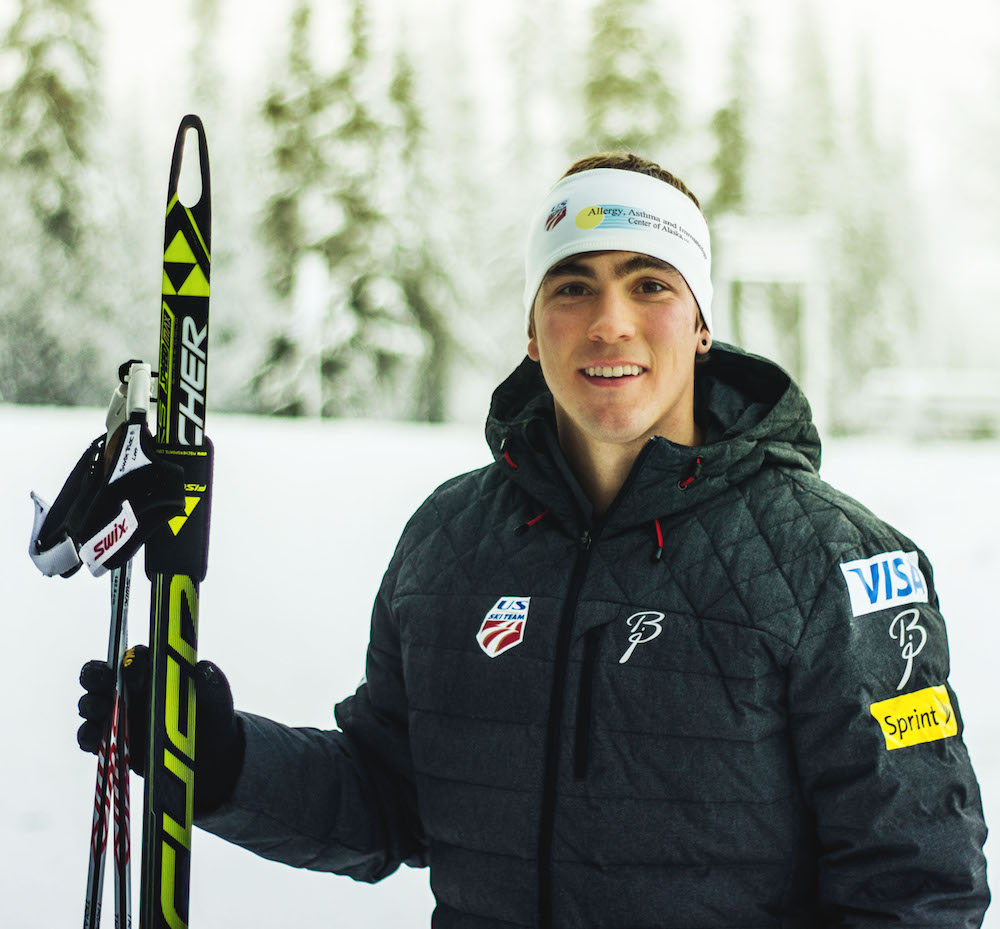
    Reese Hanneman (Alaska Pacific University) racing at the world-famous Holmenkollen last March, when he placed 56th in the 50 k classic mass start. (Photo: Jennie Bender)

    Busy times call for pointed questions. We caught up with Reese Hanneman, the men’s SuperTour leader from last season — which earned him World Cup starts this November and December — shortly after he arrived in Muonio, Finland, 11 time zones away from his home in Anchorage, Alaska.

    To get there, Hanneman, an Alaska Pacific University (APU) skier who turns 25 on Christmas, had layovers in Seattle, Reykjavík (Iceland), Oslo (Norway), and Helsinki (Finland) before finally arriving in Rovaniemi — about three hours south of Muonio by car.

    “I had to pay baggage fees for my three bags twice because they said they couldn’t print that many connections on the bag tags, which I think was bogus,” Hanneman wrote in an email.

    But the defending classic-sprint national champion (who podiumed in all four events at 2014 U.S. nationals) made it and has been training on snow to prep for the first official races of the season next weekend in Kuusamo, Finland. Hanneman spent most of last March in Europe and finished the 2013/2014 season (with the exception of Super Tour Finals) on the World Cup circuit, racing in Lahti, Finland; Drammen, Norway; Holmenkollen in Oslo; and Falun, Sweden, at World Cup Finals.

    ***

    1. What’s one essential you packed for the next couple months in Europe?

    “Hot sauce; I’ve got a full bottle ready to go. It’ll get you out of any potentially bland situation.”

    Reese Hanneman doesn't leave for Europe without a bottle of hot sauce. How to pick just one...
    Reese Hanneman doesn’t leave for Europe without a bottle of hot sauce. How to pick just one…

    2. What part of Euro life or culture are you most excited for?

    “Bathrooms you can’t even turn around in. Oh wait, ‘most’ excited? Sharing tiny beds with Hoff.”

    Shower, sink and toilet all within inches of each other. Everything's tinier in Europe. (Photo: Houzz.com)
    Shower, sink and toilet all within inches of each other. Everything’s tinier in Europe. (Photo: Houzz.com)

    3. What are you going to miss most about home?

    “Being able to get away. Europe is pretty much people just everywhere.”


    Reese Hanneman in Muonio. (Photo: Erik Bjornsen)
    Reese Hanneman in Muonio. (Photo: Erik Bjornsen)

    4. What’s one race/venue that you’re particularly excited for in the next several weeks, and why?

    “The opening weekend in Kuusamo is gonna be pretty sick; classic sprint and 15k classic. But then of course racing in Lillehammer will be epic.”


    5. What’s one thing you’ve been working hard on, technically or otherwise, with your skiing this offseason?

    “I focused on my skating, like I have been for a few years now. Just trying to refine my technique so I can bring my efficiency up to par with my classic skiing.”


    6. What’s your “secret weapon” for a successful start on the World Cup circuit this season?

    “I think I am at a great spot… I don’t really have the expectations of doing really well, but I have enough World Cup experience under my belt and the confidence that I can hang with these guys, that I might be able to put it together. So I would say, I have the potential but not the pressure.”


    7/8. How nervous do you get for the first race of the season? How different is it starting the season in Finland vs. Montana?

    “Usually, I get nervous only if I am putting a lot of pressure on a certain race. But a lot of times for me, the first race of the year kind of seems like it’s too soon, like I haven’t gotten myself fully amped up for it yet. Which actually can end up working pretty well. I am really excited to be here on the World Cup instead of in West, but to be honest, I will try to approach it the same way mentally. I guess that’s easy to say now, but I might start getting psyched when I see all the TV cameras and cable cams and wax semis in Kuusamo.”

    “I am really excited to be here on the World Cup instead of in West, but to be honest, I will try to approach it the same way mentally. I guess that’s easy to say now, but I might start getting psyched when I see all the TV cameras and cable cams and wax semis in Kuusamo.” — Reese Hanneman, APU skier and 2013/2014 men’s overall SuperTour winner


    9. What will you miss about West Yellowstone?

    “Bison burgers and milkshakes after the races. And seeing homies from all over the ski world.”

    Mmm... bison burgers, a West Yellowstone staple. (Photo: BisonBasics.com)
    Mmm… bison burgers, a West Yellowstone staple. (Photo: BisonBasics.com)

    10. If you could ski like any famous World Cup skier (past or present), who would it be?

    “[Swedish four-time Olympic gold medalist and three-time world champion Thomas] Wassberg was a boss. That old school classic technique… unreal.”

    Thomas Wassberg (Photo: Flickr)
    Swedish cross-country legend Thomas Wassberg (Photo: Flickr)

    Bonus: Who’s your World Cup crush?

    “Oh man… haha. I’ve had a thing for [Norway’s] Marthe Kristoffersen since like back at my first World Juniors. She doesn’t even have to try. Six years later, I’m still waiting to be introduced.”

    Marthe Kristoffersen, 25-year-old Norwegian National Team member (Photo: FIS)
    Marthe Kristoffersen, 25-year-old Norwegian National Team member (Photo: FIS)

    Last word: “I’d like to give a shoutout to a couple people who have been crucial in helping me get to this point. Alaska Pacific University has invested a lot into me, and I wouldn’t be here without them and my coach Erik Flora. And then my sponsors at the Allergy, Asthma and Immunology Center of Alaska, The Alaska Community Foundation, Alaska Children’s Eye, Girdwood 2020, PDC Engineers, and the Alaska Club for their support.”

    2013/2014 overall SuperTour leader Reese Hanneman (APU) racing in the classic sprint at SuperTour Finals on March 23 in Anchorage, Alaska. He went on to win the final. (Photo: Rob Whitney)
    2013/2014 overall SuperTour leader Reese Hanneman (APU) racing in the classic sprint at SuperTour Finals on March 23 in Anchorage, Alaska. He went on to win the final. (Photo: Rob Whitney)
  • 10 Questions with Women’s SuperTour Leader Caitlin Gregg 

    10 Questions with Women’s SuperTour Leader Caitlin Gregg 

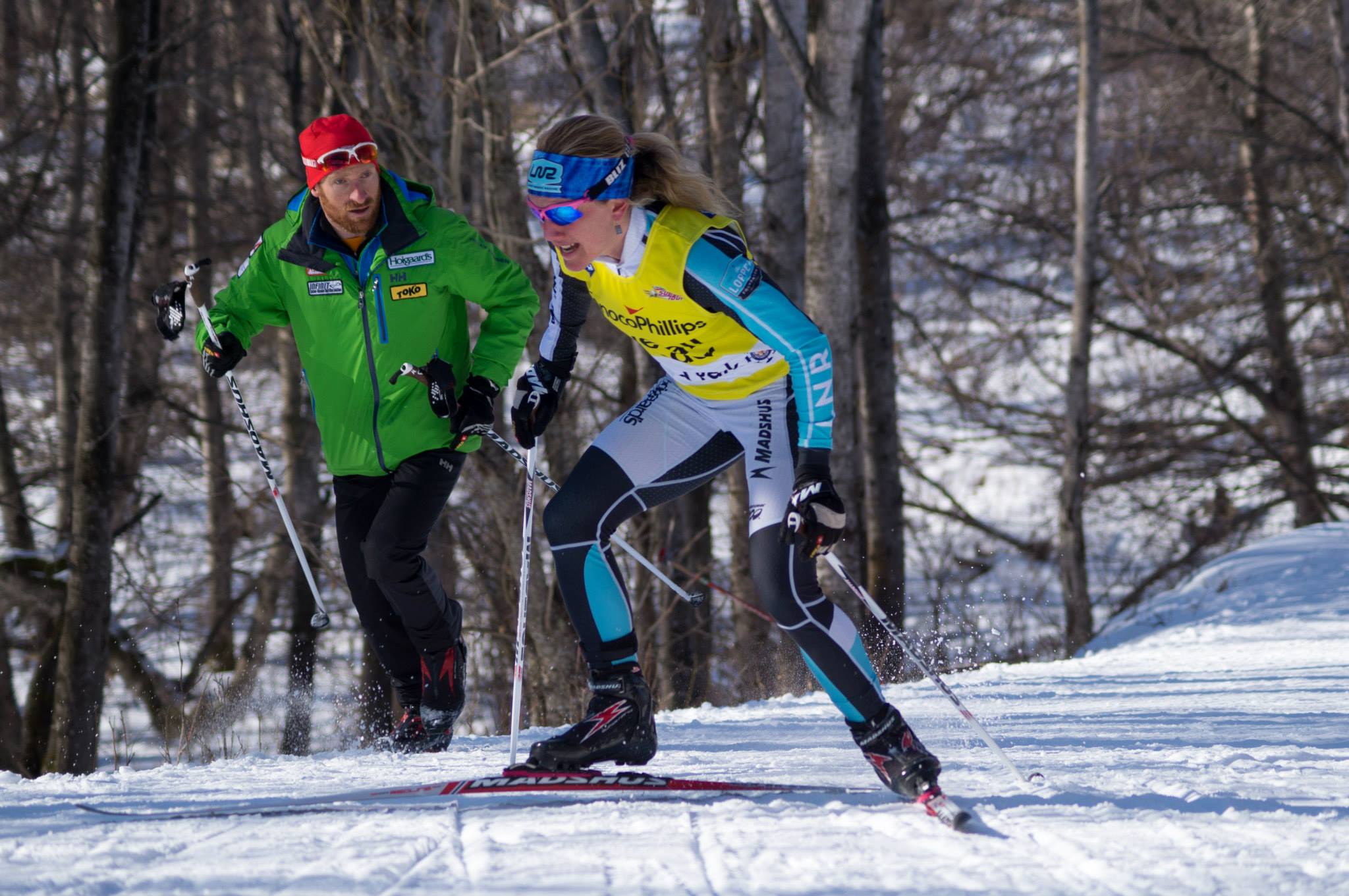
    Brian Gregg cheers on Caitlin at SuperTour Finals in Anchorage, Alaska. (Photo: Madshus/Facebook)
    Overall women’s SuperTour leader Caitlin Gregg racing at SuperTour Finals in Anchorage, Alaska, while husband Brian Gregg (l) cheers her on. (Photo: Madshus/Facebook)

    Busy times call for pointed questions. We caught up with Caitlin Gregg, the women’s SuperTour leader from last season — which earned her World Cup starts this November and December — before she jetted to Muonio, Finland, nearly 4,000 miles from her home in Minneapolis.

    On Sunday morning, she flew out of Calgary, Alberta, after spending about a month in nearby Canmore (also about 4,000 miles from Muonio), where she trained on snow at Frozen Thunder with her husband and Team Gregg teammate, Brian. She purposely scheduled her first layover in Minneapolis to spend about five hours with Brian before flying to Paris that night.

    In an email, Gregg explained she’d arrive in Paris at 8:35 a.m. Monday morning, leave for Helsinki two hours later and arrive in Finland later that afternoon. From there, she’d fly north to Rovaniemi, Finland, arriving around 5:40 p.m., and then planned to drive about three hours farther north or Muonio. In total, she figured she was in for 36 hours of travel.

    Gregg, who won the U.S. nationals 20-kilometer freestyle mass start and placed second in two other events at nationals last January, celebrated her 34st birthday on Nov. 7.

    ***

    Caitlin Gregg gets a bug hug from her husband at the finish at last year's West Yellowstone SuperTour opener, where she won both the skate sprint and 10 k skate in Nov. 2013. (Courtesy photo)
    Caitlin Gregg gets a bug hug from her husband at the finish at last year’s West Yellowstone SuperTour opener, where she won both the skate sprint and 10 k skate in Nov. 2013. (Courtesy photo)

    1. What’s one essential you packed for the next couple months in Europe?

    “The Samsung phone that Brian got at the Olympics. We got a T-Mobil plan for it so that I can use to keep in touch with him while I am gone! He also loaded videos and movies for me to watch 🙂 I am also bringing a good pencil and a sketch pad. Drawing helps me relax!”


    2. What part of Euro life or culture are you most excited for?

    “All of it!!! Everything still seems new to me so it’s all fun. I am really looking forward to the breakfasts (well all meals!) being prepared and ready to eat when I wake up! I know by the end of the trip I will look forward to making my own meals, but right now nothing sounds better than a pre-made buffet with good bread, jam and cheese :)”


    3. What are you going to miss most about home?

    “This one is pretty easy…Brian! There is nothing like traveling the world and racing on the World Cup with your husband!”


    Gregg’s travel essential: “A good pencil and a sketch pad. Drawing helps me relax!”


    4. What’s one race/venue that you’re particularly excited for in the next several weeks, and why?

    “Lillehammer [Dec. 5-7], I hear it is a hilly course and there is a 5K Skate which is my favorite format. Plus it’s cross country ski racing in Norway which is always incredible.”


    5. What’s one thing you’ve been working hard on, technically or otherwise, with your skiing this offseason?

    “Last year was all about skate altitude distance racing, trying to make the Sochi 30K, so this year I have been much more ‘well-rounded’ in my training approach with more classic and sprint specific workouts! I obviously love skate skiing, but it’s be fun to mix the focus up a bit! So trying to be more well-rounded in my race results.”


    6. What’s your “secret weapon” for a successful start on the World Cup circuit this season?

    “The ‘Fish Factor!’ Those of us from the original CXC Team will all agree that we were at a HUGE advantage having [U.S. Ski Team coach Bryan] Fish as our coach and waxing our skis. I am really excited to be working with Fish again this year and on the World Cup! I have a ton of confidence in my skis and my waxing heading into the season which feels great!”


    Caitlin Gregg (front) with some of her biggest fans at last year's SuperTour opener in West Yellowstone, Mont. (Courtesy photo)
    Caitlin Gregg (front) with some of her biggest fans at last year’s SuperTour opener in West Yellowstone, Mont. (Courtesy photo)

    7/8. How nervous do you get for the first race of the season? How different is it starting the season in Finland vs. Montana?

    “I always get nervous no matter what the race…but I absolutely love racing! I usually start the season pretty strong and have had my best races early on in West Yellowstone. I am looking forward to a new venue and racing at a lower elevation to start off the season. Obviously the competition will be very strong and very deep but I like the challenge and the unknown.”


    9. What will you miss about West Yellowstone?

    “I will miss all the awesome cheering from my Loppet Nordic Racing teammates and all the familiar faces on the trails and at the first races in West Yellowstone. It’s great to start the season with so much enthusiasm for the sport!”


    10. If you could ski like any famous World Cup skier (past or present), who would it be?

    “Charlotte Kalla! I love how smooth and effortless she makes skiing fast look!”

    Sweden's Charlotte Kalla racing to silver in Thursday's 10 k classic individual start at the 2014 Olympics in Sochi, Russia.
    Sweden’s Charlotte Kalla racing to silver in the 10 k classic individual start at the 2014 Olympics in Sochi, Russia.

    Bonus: Who’s your World Cup Crush?

    “Axel Teichmann [a two-time world champion and two-time Olympic silver medalist from Germany]. Brian knows [this] and makes fun of me. The crush goes way back to an elevator ride at the 2007 World Championships with Laura Valaas.”

    Germany's Axel Teichmann after winning the second stage of the Tour de Ski, the 15 k classic pursuit, on Friday.
    Germany’s Axel Teichmann (17) after winning the second stage of the 2011 Tour de Ski, the 15 k classic pursuit.