Tag: early season skiing

  • Interval Session to Kick Start The Season

    Interval Session to Kick Start The Season

    We’ve reached mid-December. With any luck, your local trail system is beginning to fill in, you’ve scraped off your storage wax, and you’ve put in at least a handful of easy days getting reacquainted with your boards. Whether or not you rollerski during the summer, skiing on snow has its own jive and it’s normal to feel a little like Bambi your first few sessions. 

    In my experience as a coach and masters athlete, I find it best to lean into the Bambi phenomenon. Don’t expect to pick up where you left off last season. Accept that you’ll feel a little loose and wobbly and go back to the basics. Spend plenty of time skiing without poles and keep things very easy, continually emphasizing form over speed or power.

    (Find more on this from the FasterSkier archives here.)

    Early season intervals build the strength, fitness, and stamina to help you thrive as winter provides the goods.

    Okay. Now that that’s done and you’re no longer rusty, are you feeling dialed in and ready to get your heart rate up a bit? Great. That’s what this interval session is designed for. 

    Objective #1: Pick up the pace and effort without losing your form.

    Regardless of ability, we can all recognize that skiing harder does not always equate to skiing faster. Particularly when we’re learning or regaining technique, skiing harder might mean skiing less efficiently and wasting energy with extraneous movement. During this session, your focus should be on keeping the intervals in control so your technique isn’t compromised as fatigue and intensity increase. 

    Objective #2: Ease in. Don’t be too hot out of the gate. 

    The variations below both involve relatively short periods of rest, meaning your heart rate will stay elevated, even during the rest periods. The fitness boost is similar to doing long threshold intervals, just broken into smaller and more manageable chunks. 

    Going out too fast on your first few sets will quickly dig a hole, compromising either the consistency of the effort during the subsequent intervals or your technique on tired legs or both! The season is young. Easy on the gas. 

    The Workouts:

    Now that we’re on the same page in terms of when to introduce an interval session and what to keep in mind, here are two bread and butter workouts to help boost your fitness and enhance your skiing this season. These can be incorporated throughout the season, but they make great candidates for early season training as the duration of the intervals is short enough to wrap your head around.

    8-10 x 1 minute on / 1 minute easy ski (2-3 sets)

    Though simple, this workout will leave you feeling tired, satisfied, and accomplished, remembering just how many muscles you use when you’re skiing. Try it on varying terrain to work through each of your gears and practice transitioning smoothly between them. 

    Reinforcing the importance of easing in, after the first few intervals of the set, you should feel like the minute of rest is plenty of time to catch your breath as you continue on easily. It’s more about stamina than speed here. Don’t worry – by the last few, you’ll be thinking, “Wow, that minute of rest went by fast!”

    Take 5-6 minutes to ski very easy between sets so your heart rate has the chance to come back down. Aim for two sets of eight intervals on your first go, then introduce a third set or bump up to ten intervals the following round. 

    Totaling 16-30 minutes worth of “work”, the load is equivalent to skiing hard for 5-10 kilometers, broken into bite-sized pieces. When using this for the first time, keep the effort equivalent to a 40-60 minute race to ensure you can maintain form and effort throughout. Dial-up the effort to a 5k pace as your fitness and ski form improve throughout the season. 

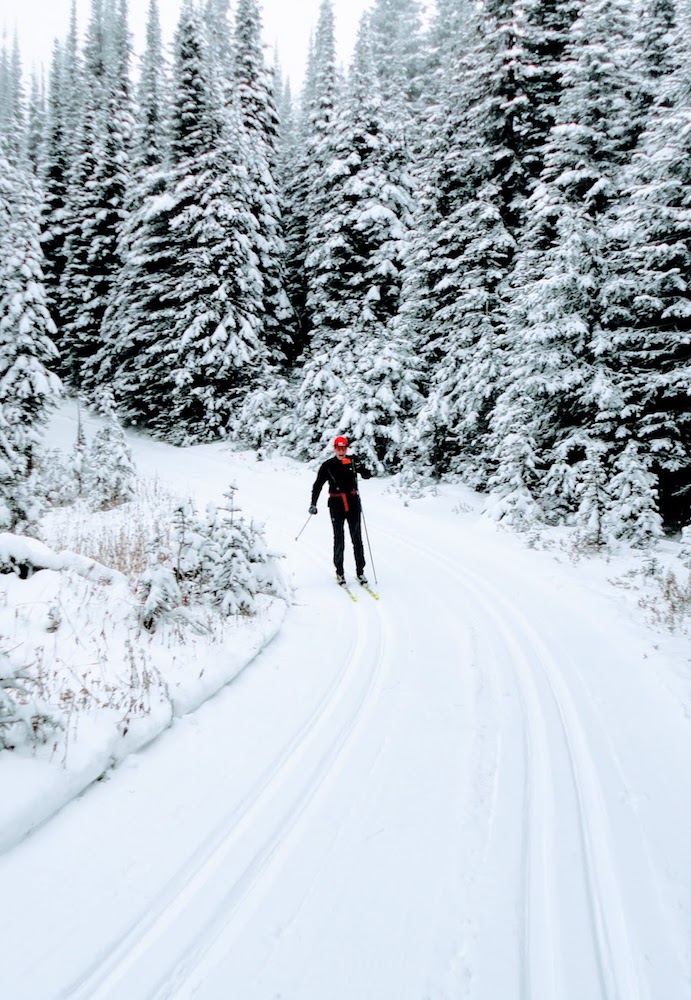
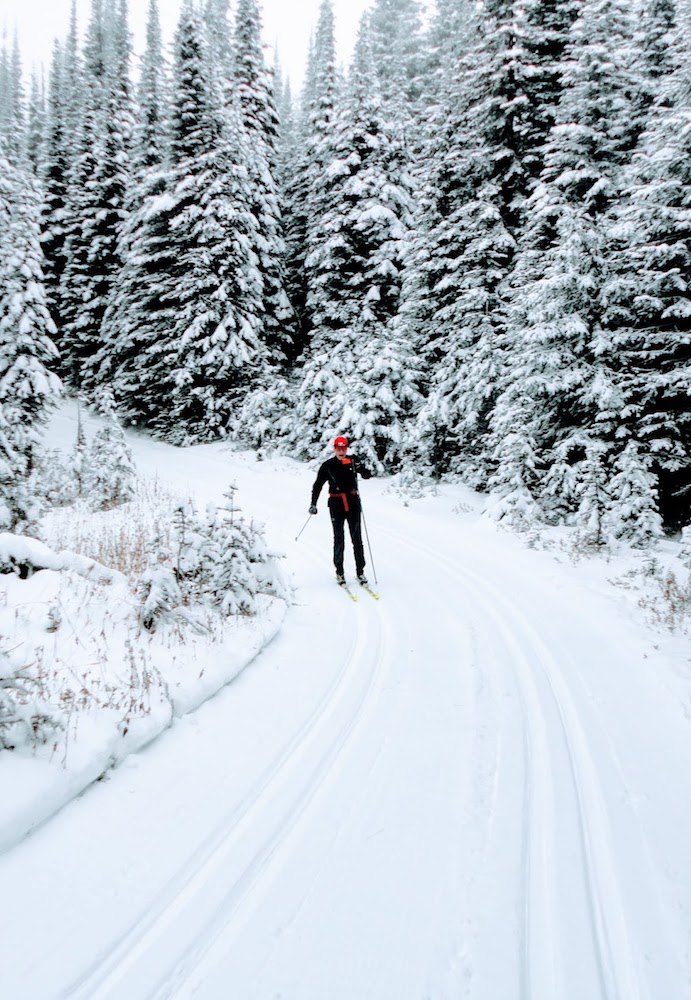
    The author during an early-season interval session in Crested Butte, CO.

    8 – 10 x 2 minutes on / 2 minutes easy ski (1-2 sets)

    This variation challenges you to hold onto your technique for a longer effort, with increased rest between to account for the extra load. These sessions help improve both your mental and physical stamina, as you focus on your technique under the duress of the challenge. 

    Since one set equates to 16-20 minutes of work, it’s important to scale back the intensity compared to the 1 on/off, perhaps starting the first few at an effort you might be able to sustain for 60 minutes in a race, then hitting the last few a bit harder if you’re feeling up for it. 

    This time, give yourself 6-8 minutes of easy skiing between sets. You’ll feel the accumulation of fatigue as you work your way into the second set!

    What are the pros doing?

    FasterSkier reached out to three-time World Junior Champion Gus Schumacher via email to see how he tests the intensity waters once he is back on snow, which given his residence in Anchorage, Alaska tends to arrive earlier than it might for those of us at lower latitudes. Turns out, it’s pretty similar — just without the breaks!
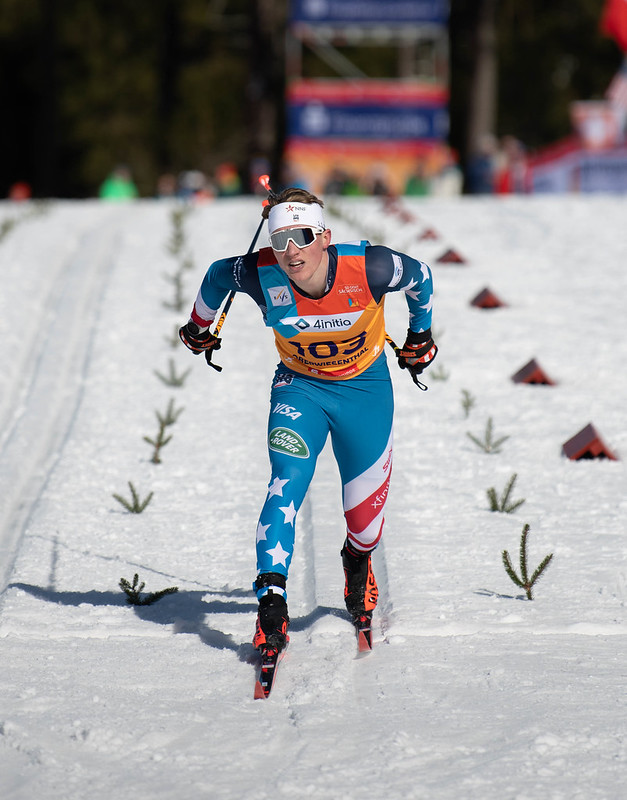
    Taking it. Gus Schumacher of the U.S. wins the World Junior’s 10 k classic. (Photo: Doug Stephen)

    “The workout I like to do early in the season to get some ski legs under myself again is a longer level 3 (medium intensity) interval session. Normally I’d do 12-15 minute intervals for a total of 45-60 minutes of on time. This workout is nice because it gives you time to settle into the intensity and adjust to new movements on snow. During this time, big strides in technique can be made, because you ski with more similar power and motions to racing. It’s also a workout that doesn’t have to be overly taxing, giving it a good return on technique work without being overly physical. 

    “It also has the benefit of building or maintaining base fitness that can be added to as skiing starts to feel more normal. It can easily be adjusted to your level, the goal is basically to just give you some time on skis at a faster pace!”

  • Early-Season Snow: A Photo Roundup

    Early-Season Snow: A Photo Roundup

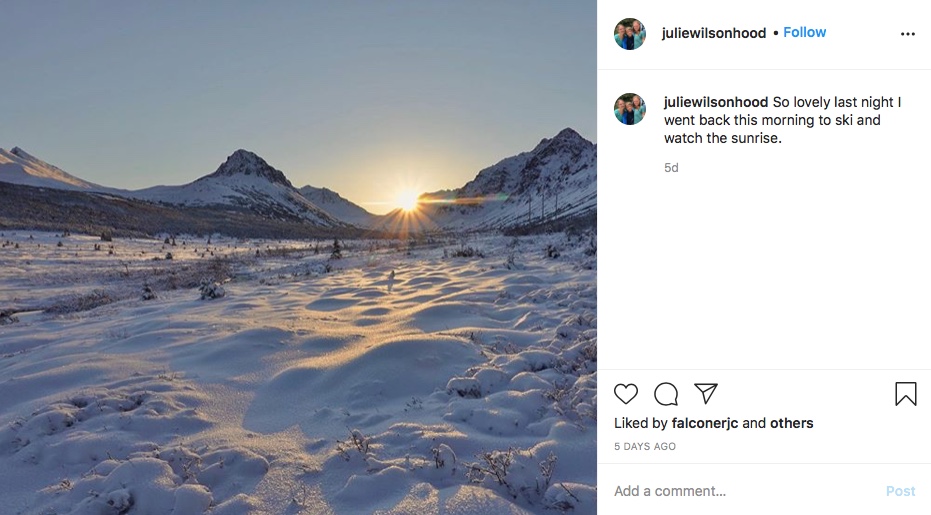
    2020 has been rough for many of us, at least for those readers who are fans of some or all of civil political discourse, summer training without choking wildfire smoke, or life unhaunted by the specter of a global pandemic. Against a steady drumbeat of bad news, here is some good news: Early-season ski conditions have been favorable in much of the country. Please enjoy this unscientific social media roundup of October and November skiing, roughly arranged from west to east.

    Chris Grover says that you can do 95 percent of your technique work on rollerskis. Devon Kershaw says that “anybody that tells you that you can work on your technique perfectly aligned on rollerskis as you can on skis is high on crack.” Whichever camp you fall into, here’s hoping that your transition back to snow is fun and enjoyable.

    Alaska

    Birch Hill ski area, in Fairbanks: Grooming began October 20, and is ongoing. (It was -22° F in Fairbanks on Monday morning, so the snow should stick around.) October snow in Fairbanks is historically unremarkable, so the locals seem to be doing more skiing than posting about skiing, but here’s a recent photo:

    Government Peak Ski Area, outside of Palmer:


    Powerline Pass, at 2,200′ in the Chugach Mountains at the eastern edge of Anchorage (here’s a better shot of skier-set classic tracks, courtesy of Becca Rorabaugh):

    (Anchorage sea-level trails: Hillside is thin and rough, but technically skiable, and becoming less rough daily as groomers continue to drag and work over the snowpack. Kincaid, which has entirely bare ground just a few miles to the west, has snowmaking equipment in position, and began making snow on November 2. No trails open yet as of Wednesday. It takes “20-25 days” to complete snowmaking, according to the Nordic Skiing Association of Anchorage.)

    Canada

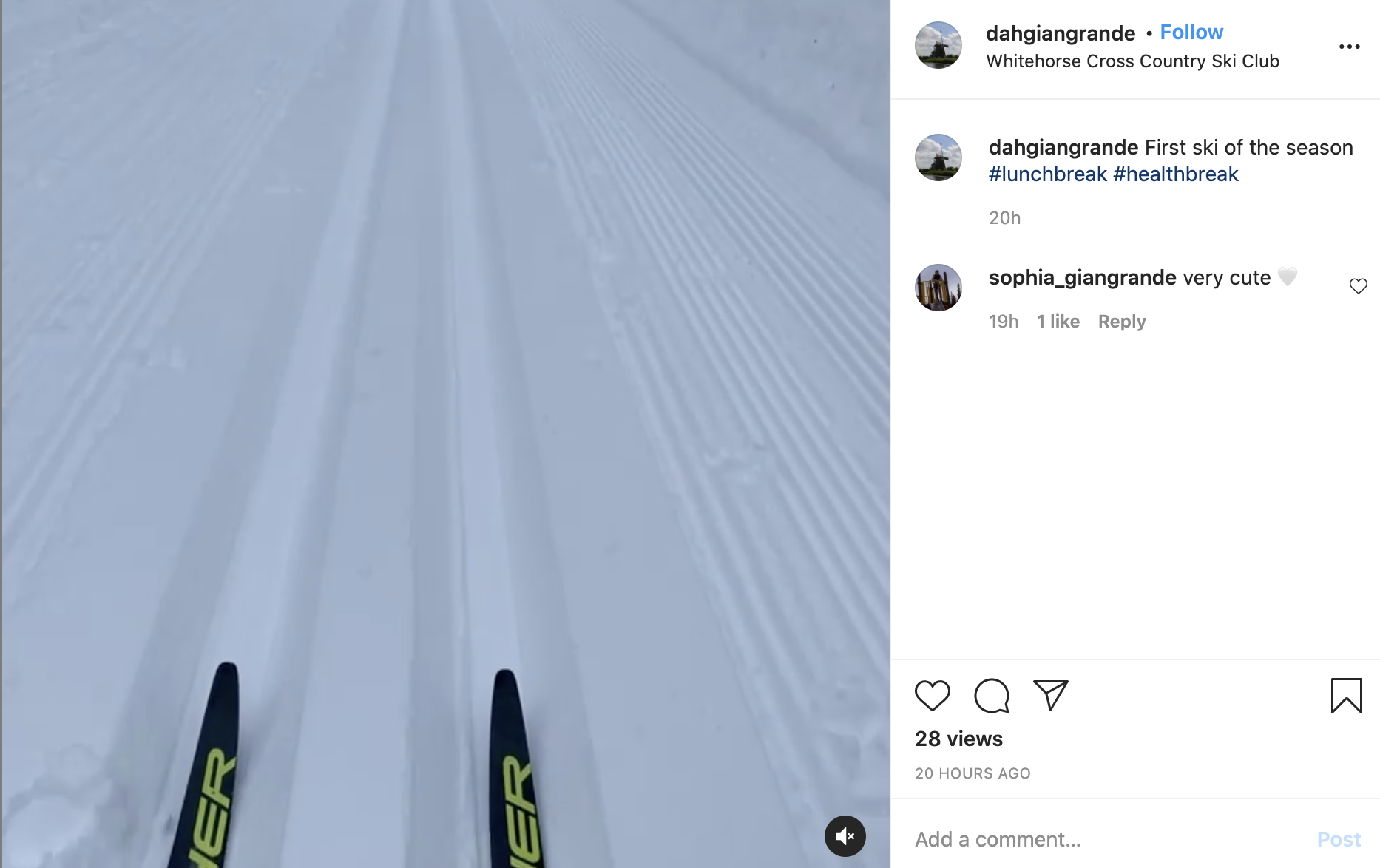
    Whitehorse: Reader Perry Hynes reports (thanks!) that “After record snowfalls in late October and early November the ski trails at Whitehorse Cross Country Ski Club in Whitehorse, Yukon have fantastic conditions.” This, from Wednesday of this week, looks enviable:

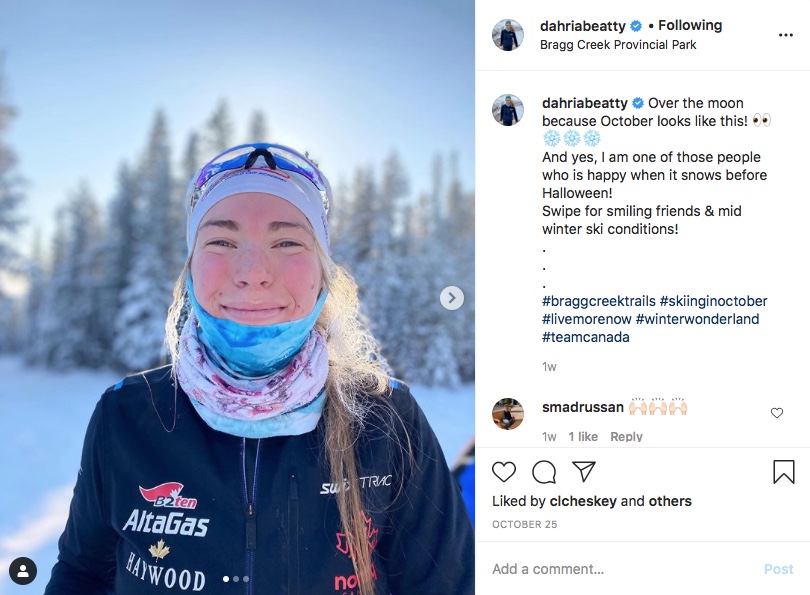
    Bragg Creek:


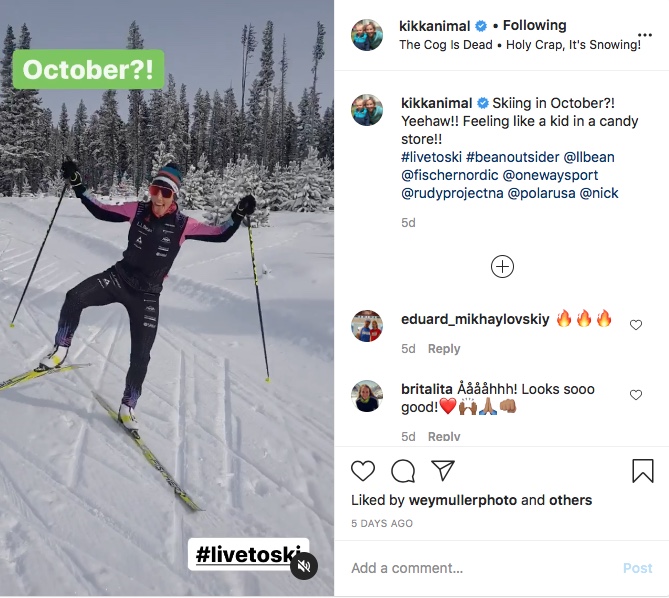
    Near Kikkan’s house/probably Nickel Plate Nordic Centre in late October, though some of it may have since melted.

    Washington

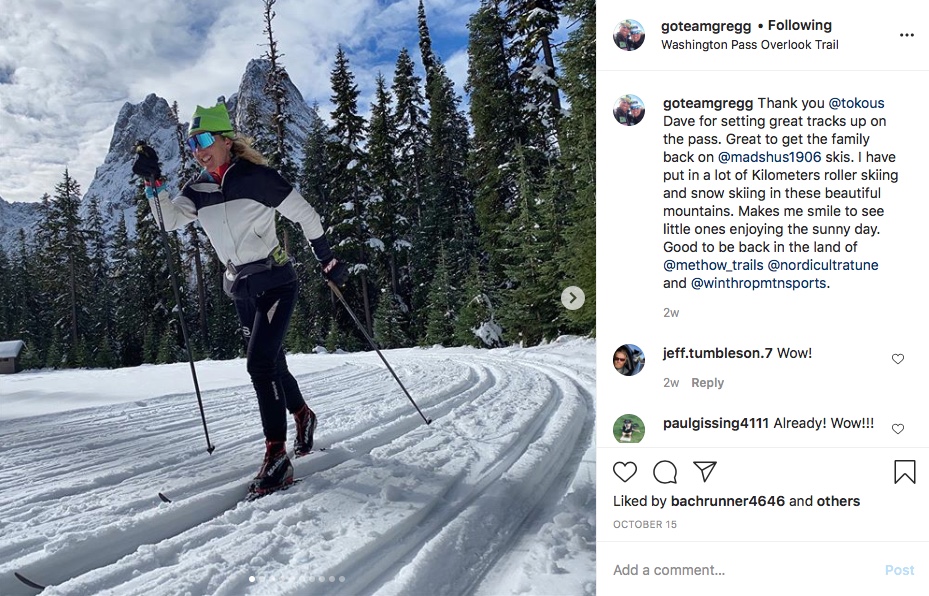
    Washington Pass, on October 15, almost certainly the first groomed nordic tracks in the country this winter, pipping Birch Hill by five days:

    Montana

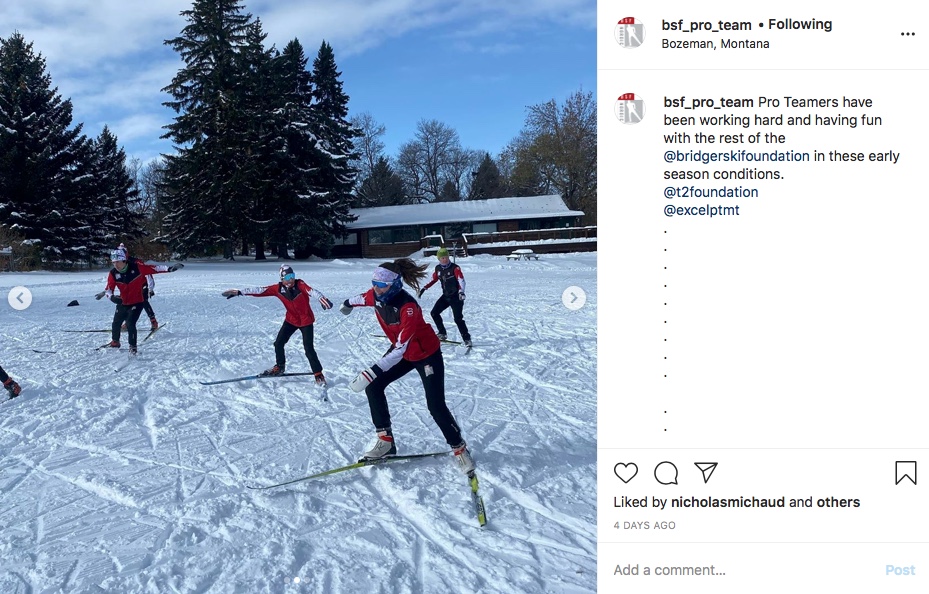
    Bozeman: Looks like relatively thin conditions in late October, but more than enough for the BSF Nordic Pro Team to be doing on-snow intensity on October 29:

    New Mexico

    The same late-October storm that brought snow to Bozeman also hit the Land of Enchantment, bringing a hefty 24″ of snow to Enchanted Forest ski area in Red River. (Here’s a more recent photo.)

    At relatively low-elevation Los Alamos, Southwest Nordic Ski Club’s popular Ski Kids program was holding on-snow practices before Halloween:

    Skiing in Los Alamos, New Mexico, in October 2020. (photo: Clay Moseley)

    And even down in Albuquerque, American Birkebeiner power couple Jess Yeaton and David Norris took advantage of late-October snowfall to ski on a golf course near the University of New Mexico, where Yeaton is a student in the physical therapy doctoral program.

    Minnesota

    Superb early-season skiing at many venues throughout the state, although conditions appear to have warmed recently following late-October snowfall. See the Skinnyski conditions page for full details (which has lots of trail reports from October, none from November). Here’s a sampling:

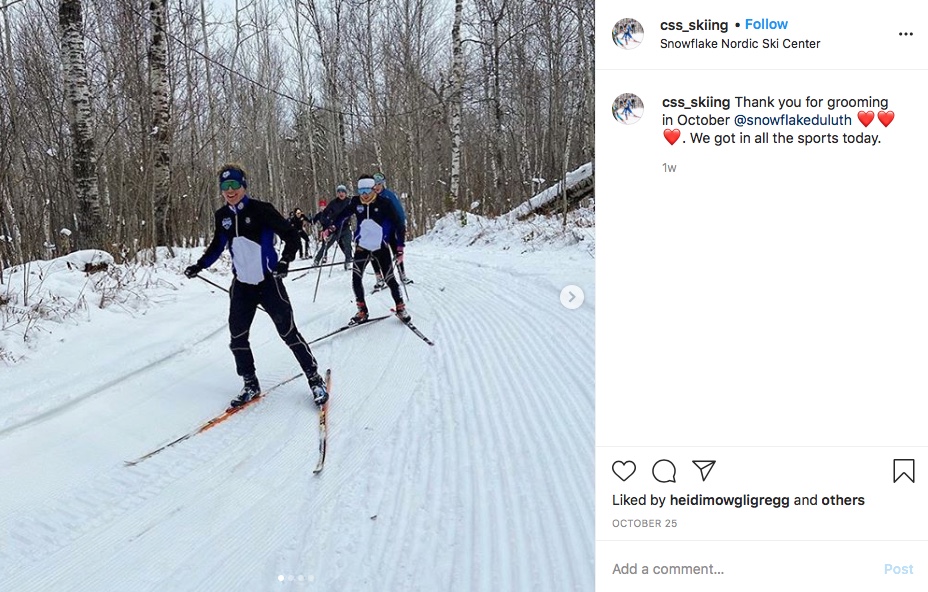
    Snowflake Nordic Ski Center:

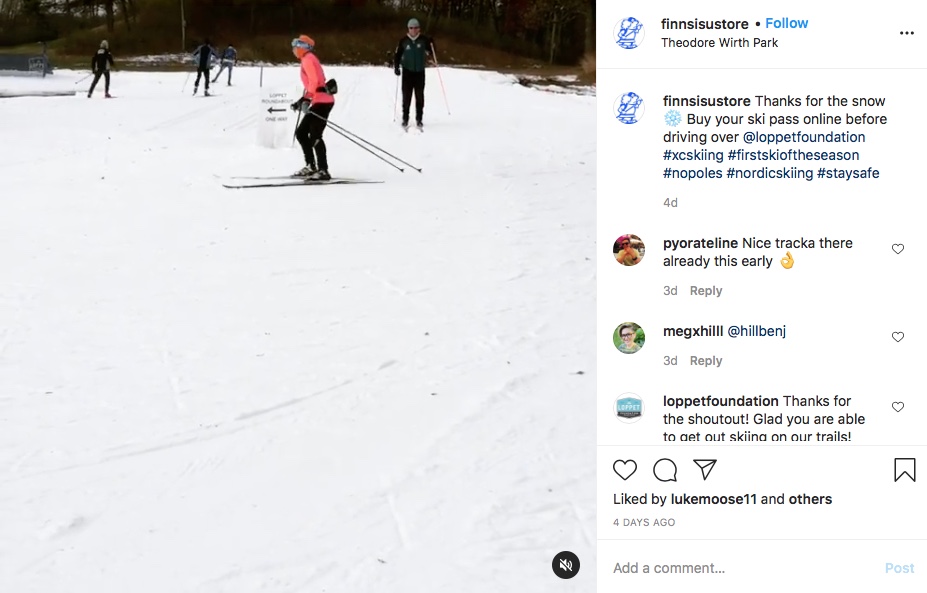
    Theodore Wirth (a 300m manmade loop was opened in late October, though it can’t have held up too well once temps in Minneapolis reached the 70s by the middle of this week):

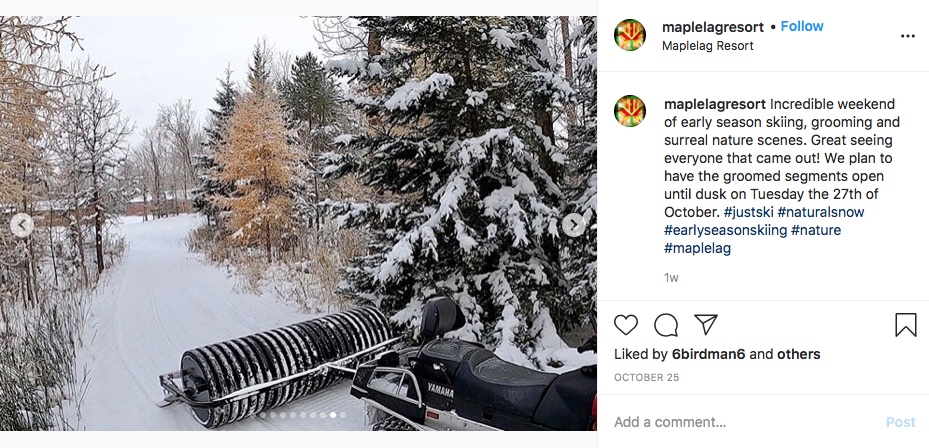
    Maplelag Resort: Superb skiing in late October (pictured), though trails are now closed following November temperatures into the 50s:

    New York

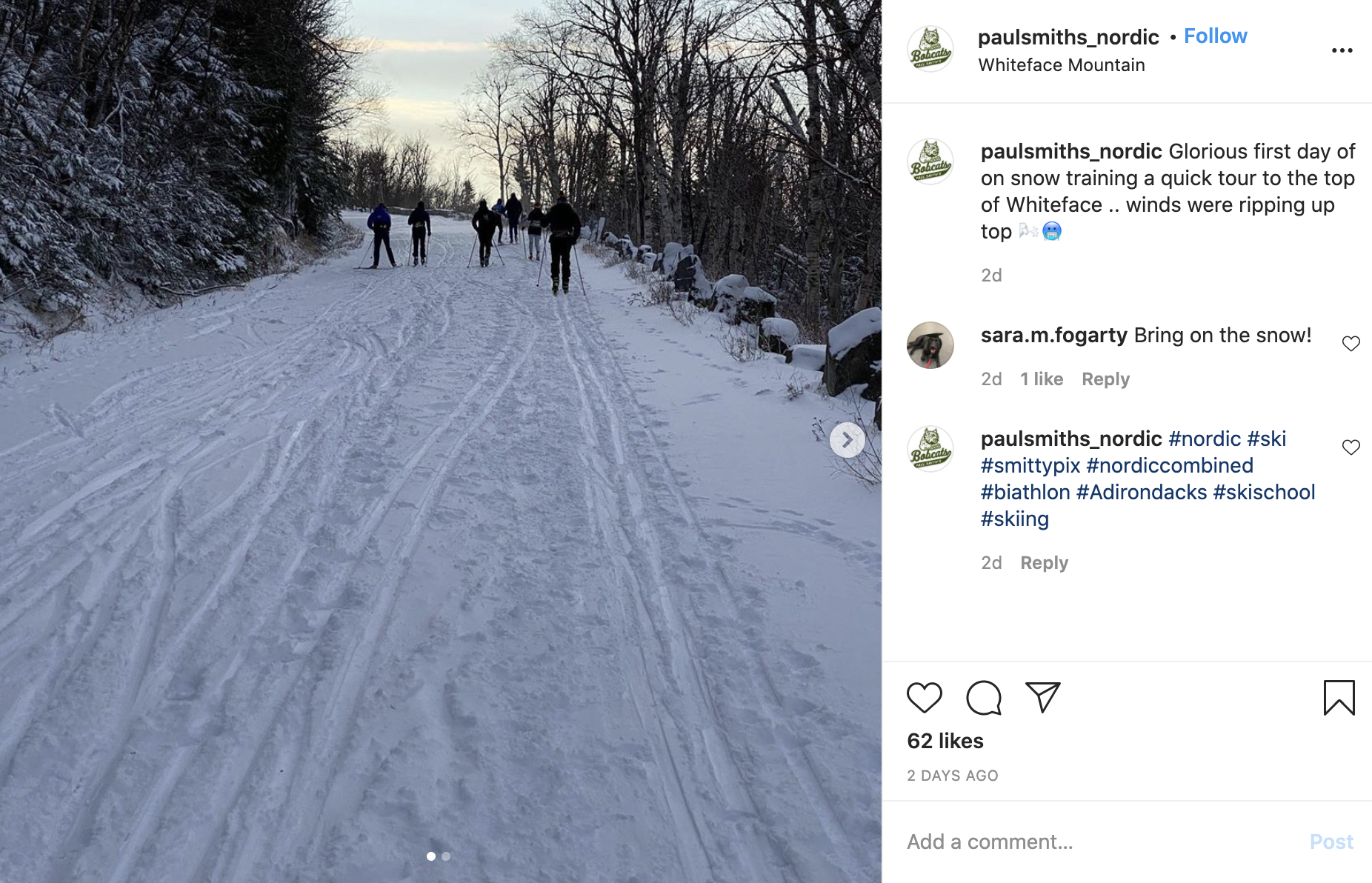
    Whiteface Mountain: Snow in the Adirondacks earlier this week led to this recent scene on Whiteface Mountain. Clare Egan also made the climb.

    Vermont

    Craftsbury: Snow on Monday and Tuesday, though it’s forecast to be in the 50s on Wednesday and the 60s on Sunday. Formal trail conditions report has not yet been updated. Some skiing has definitely already occurred:

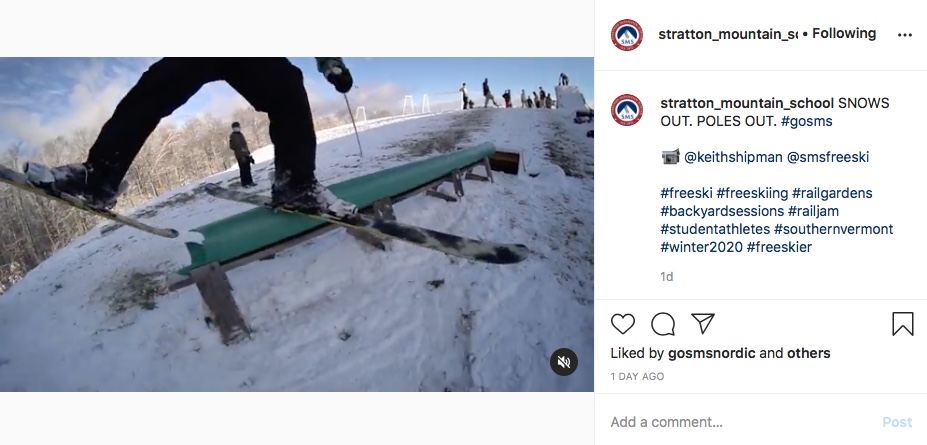
    Stratton: Minimal snow earlier this week, but enough for some sweet jibbing:

    Reporter’s note: This roundup is obviously compiled based on postings to publicly available social media. If I missed your favorite local ski area, I apologize. Feel free to comment below, preferably with links, and I will update this article accordingly. Thanks.

  • Reminder: Tell Us Where There’s Snow!

    Reminder: Tell Us Where There’s Snow!

    The stadium at Birch Hill Ski Area in Fairbanks, Alaska, as seen on Oct. 19, 2017. (Photo: John Estle)

    Just a friendly reminder that the deadline to let us know about early season ski destinations or venues is fast approaching. We’ll extend it through the weekend (and give Mother Nature a little more time to shape up into her winter self), but if you’d like your favorite spot featured in this year’s “Where The (Skiable) White Stuff Is”, be sure to send photos and a description of the latest conditions to us by Sunday, Nov. 5.

    What we’re looking for:

    Original photos (with proper photo credit and caption info) and a detailed description of where to find adequate conditions for cross-country skiing (natural or manmade, it doesn’t matter!) in the U.S. or Canada in October or November. (When does it open or how long has it been open? How many groomed kilometers are there? Is there snowmaking? Any special events planned, like American Thanksgiving camps? Anything else we should know?)

    Send to: info@fasterskier.com with the subject line “Fall Skiing” by Sunday, Nov. 5.

  • Early Snow in Canada, Call for Submissions

    Early Snow in Canada, Call for Submissions

    Some days, you just need to take pictures. (Courtesy photo)
    Early season skiing at the Sovereign Lake Nordic Centre on Oct. 14, 2017. (Courtesy photo)

    When you think of skiing in Canada in October, Canmore’s Frozen Thunder is probably one of the first places that comes to mind. There are more options and some snowmaking that might surprise you.

    This month, Canadians are skiing on natural snow, machine-made snow and farmed snow. We know skiers are already out and about in Alaska and other parts of the U.S. as well, which is why we want this year’s early season “Where The (Skiable) White Stuff Is” to compose of reader submissions. If you know where there’s November or even October skiing in the U.S. or Canada, please write us with details (When does it open or how long has it been open? How many groomed kilometers are there? Is there snowmaking? Any special events planned, like American Thanksgiving camps? Anything else we should know?) and original photos at info@fasterskier.com with the subject line: “Fall Skiing”. Deadline for submissions is Nov. 3.

    To get the ball rolling, FasterSkier’s Gerry Furseth checked in with several nordic venues across Canada. They’ve already celebrated Thanksgiving, and full-on skiing is just around the corner.

    Frozen Thunder

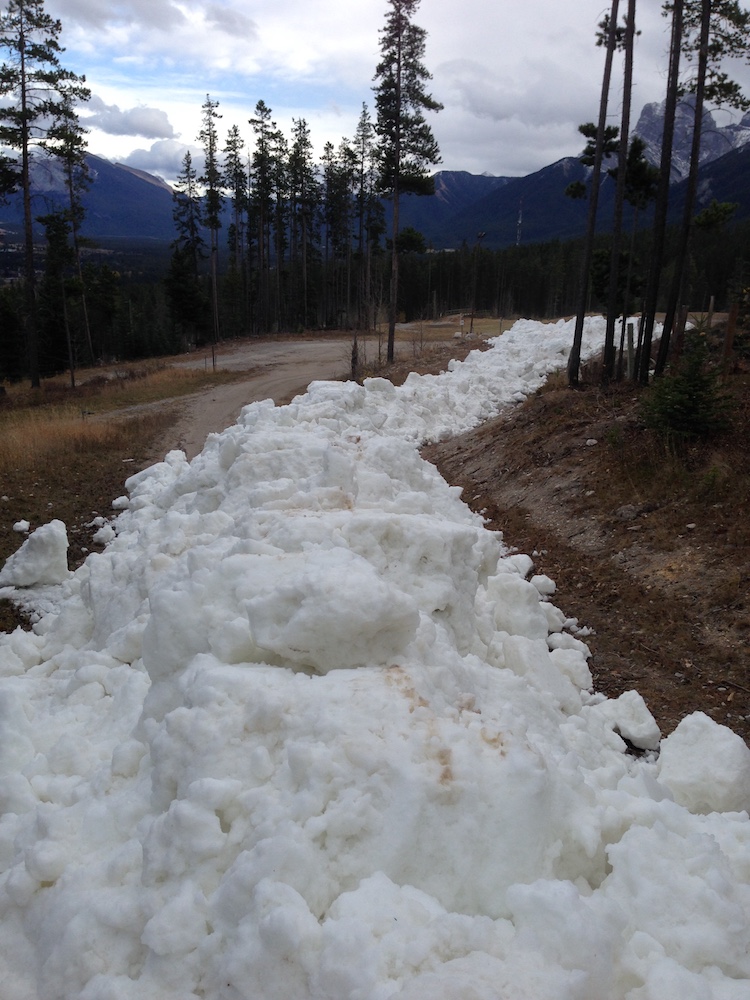
    Canmore has started building Frozen Thunder for 2017. This is what it looks like with five days to go. (Courtesy photo)
    Canmore has started building Frozen Thunder for 2017. This is what it looks like with five days to go. (Courtesy photo)

    The action starts on Oct. 21 with some changes for the eighth season. There will be a bigger hill as requested by the national teams and a new emphasis on avoiding exposed south-facing slopes.

    The Canmore Nordic Centre (in Canmore, Alberta) is an unusual venue, one of the select few that has machine-made snow, farmed snow and natural snow.

    There is obviously an issue [with manmade snow] around warmer temperatures,” Area Manager Michael Roycroft told FasterSkier. “Last year is a good example where most of November was too warm to make snow, and that’s where Frozen Thunder comes in. That’s why we have our storage option, that allows us to essentially have snow no matter what.”

    Frozen Thunder is funded mostly by national and provincial ski organizations and the focus is on providing training opportunities for high-level competitors. The snowmaking has a broader focus.

    The natural snow is obviously helpful, and it covers the rest of our trail system that’s further to the west and higher up, but it wasn’t for machine-made snow in Canmore and the nordic centre, we simply would not be able to run as a nordic facility,” Roycroft said.

    Machine-made snow covers 30 kilometers, leaving 40 k dependent on natural snow.

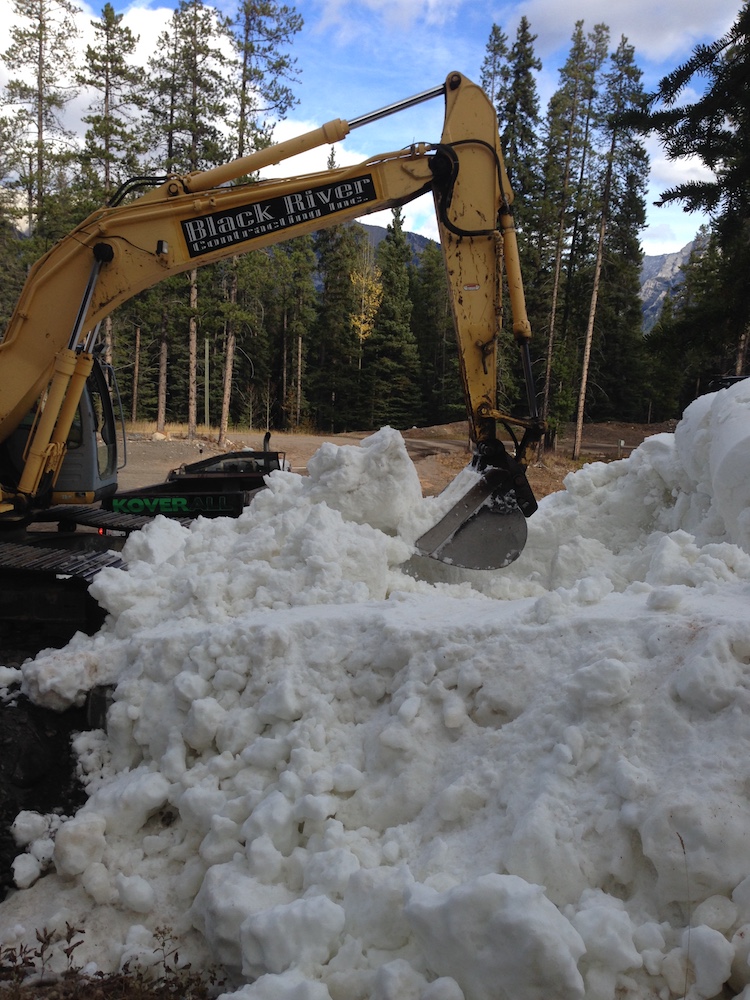
    A big job requires big machinery. (Courtesy photo)
    A big job requires big machinery. (Photo: Canmore Nordic Centre)

    Whitehorse

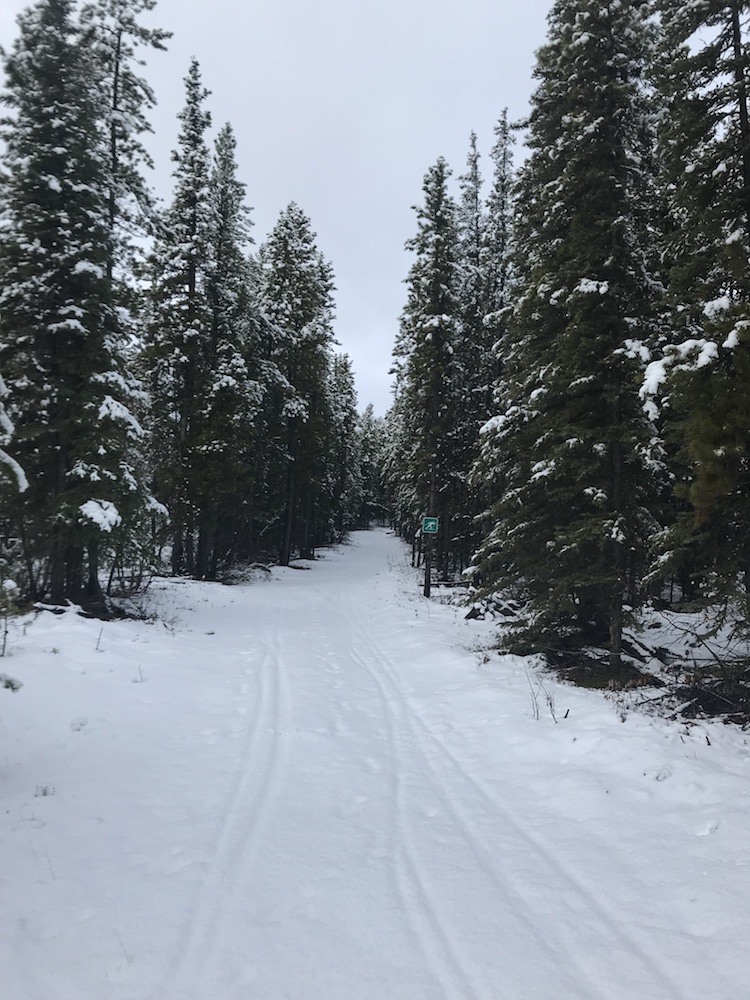
    Whitehorse ski trails on October 15th, 2017. Another 5cm is need to set track. (Photo: Alain Masson)
    Whitehorse ski trails on Oct. 15, 2017. Another 5 centimeters was needed to set track. (Photo: Alain Masson)

    When you think of Whitehorse, you probably don’t think of snowmaking. But Cross Country Yukon’s Alain Masson does.

    In the past, we often had snow available for skiing for our more advanced skiers, but it was not available to everyone,” Masson wrote in an email. “This year, our developing skiers will all have access to some early skiing in good man made snow conditions a month earlier than usual.”

    Much of the early season skiing in Canada is not intermediate friendly. Thin snow, tripping hazards and travel to elevation create a barrier to less advanced or less committed skiers. The Whitehorse Cross Country Ski Club is using snowmaking to make the early season more inclusive.

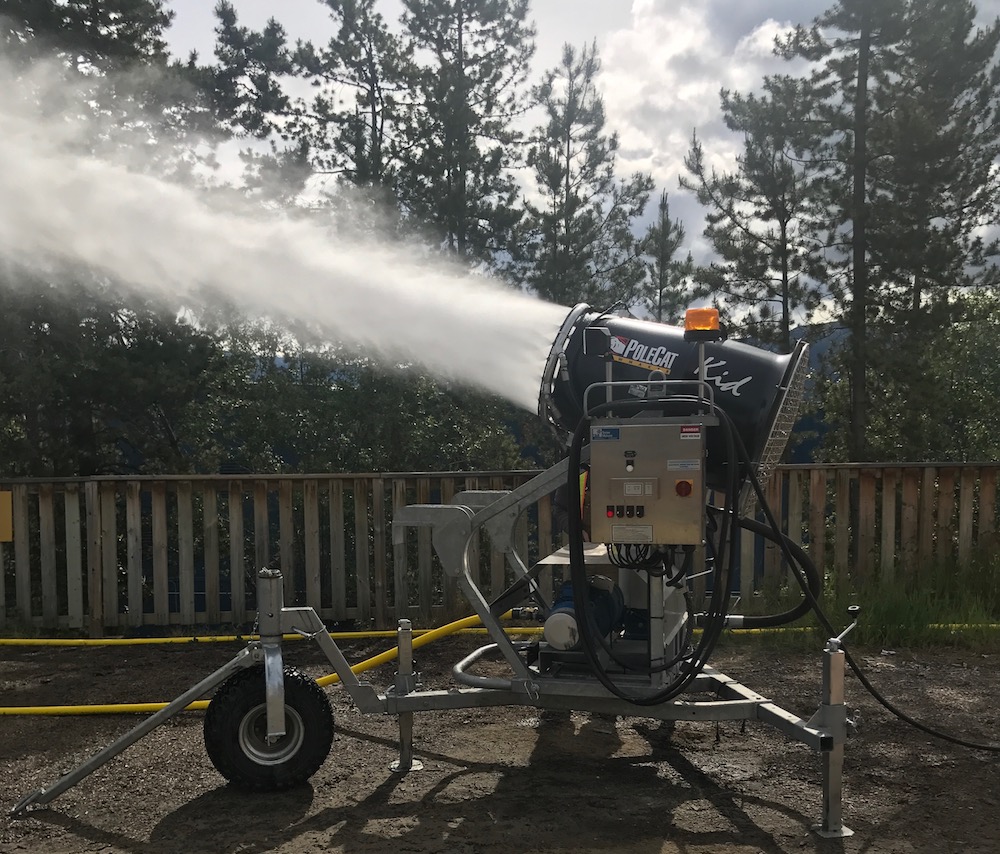
    The new snowmaking equipment will be used for the first time on Oct. 22.

    Testing the new gun in June, 2017. (Photo: Alain Masson)
    Testing the new gun in June 2017. (Photo: Alain Masson)

    Sovereign Lake

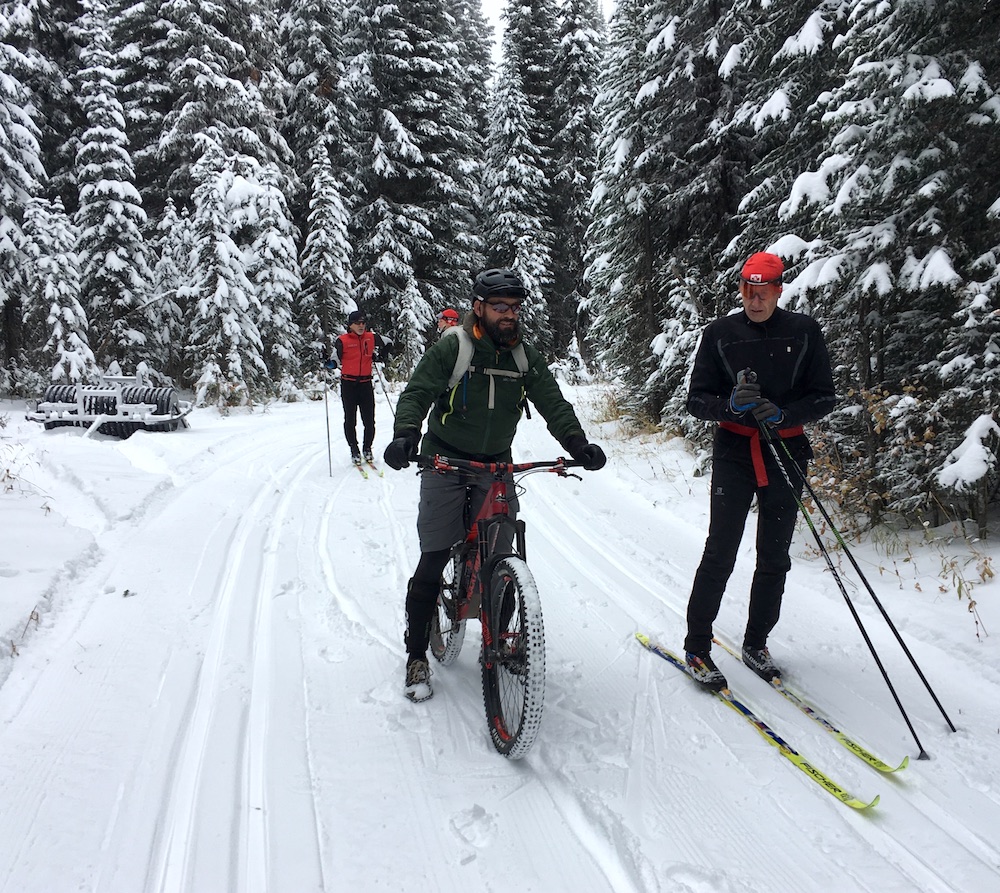
    There is a difference of opinion on what season October 14th belongs to. The bikers probably would have chosen fat bikes over plus bikes if they had realized how much snow they would see on their trip from Vernon to Lumby. (Photo: Gerry Furseth)
    There is a difference of opinion on what season Oct. 14 belongs to. The bikers might have chosen fat bikes over plus bikes if they had realized how much snow they would see on their epic ride from Vernon to Lumby, B.C. (Photo: Gerry Furseth)

    The Sovereign Lake Nordic Centre (near Vernon, British Columbia) is well known for November skiing and NorAm races. The season is limited not by loss of snow, but by biking conditions in the valley below.

    As soon as Sovereign gets snow in the fall we want to conserve as much as possible by rolling and track setting,” General Manager Troy Hudson wrote. “All of our early season grooming is done with Quads and snowmobiles to ensure a firm and supportive snowpack for the remainder of the season.  Our high elevation (1,680m) and typical higher humidity in late October provides unpredictable weather that can often result in snowstorms of 10-15cm at a time.”

    With 20 centimeters of fresh snow, the club set about 5 k of classic track on Oct. 14. While certain trails are open for preseason skiing, the nordic centre officially opens Nov. 10 for pass holders and day ticket sales.

    Menihek Nordic

    Menihek is another former national-team favourite destination that has since been replaced by Frozen Thunder. Located near Labrador City, Newfoundland and Labrador, it is a less-visited gem. While the Menihek Nordic Ski Club hasn’t received much snow to date, it is a safe bet that by the end of October they will be setting upwards of several kilometers of track.

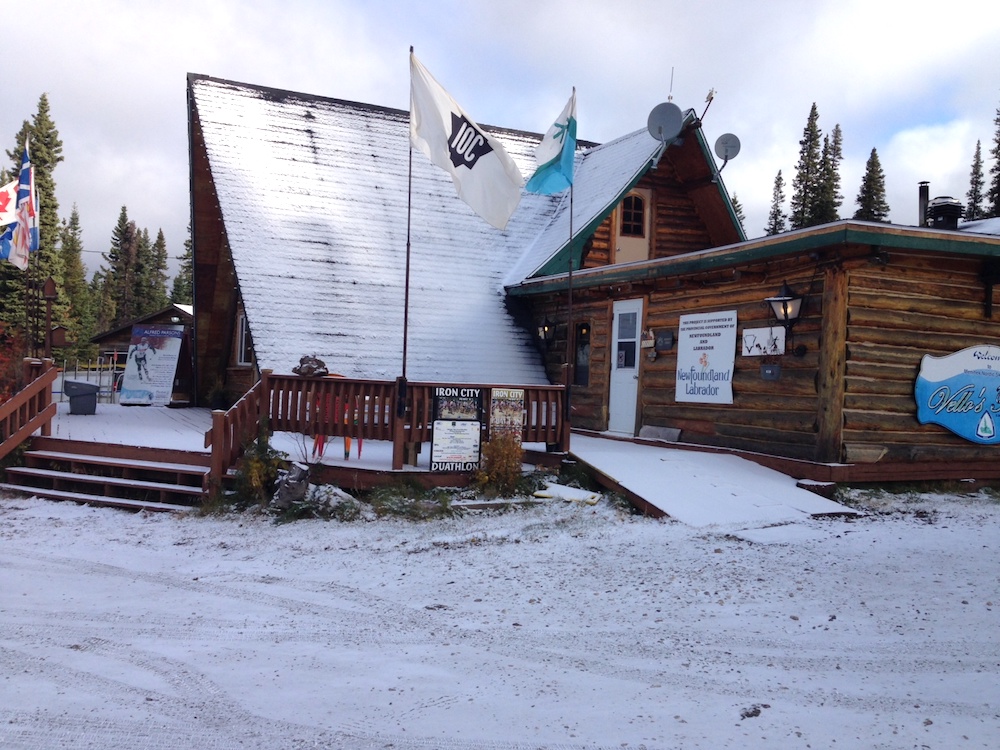
    On October 12th, there wasn't much snow at the day lodge. This will change. (Photo: Gerry Rideout)
    On Oct. 12, a dusting of snow was seen at the lodge. (Photo: Gerry Rideout)

    ***