Tag: Eastern Canada Cup

  • Eastern Canada Cup #1 at Nakkertok Trails

    Eastern Canada Cup #1 at Nakkertok Trails

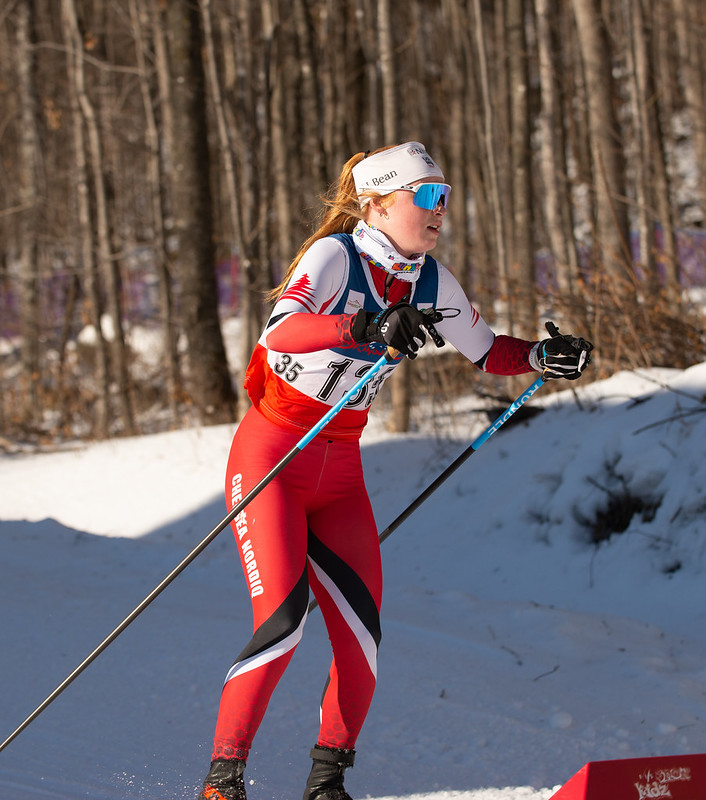
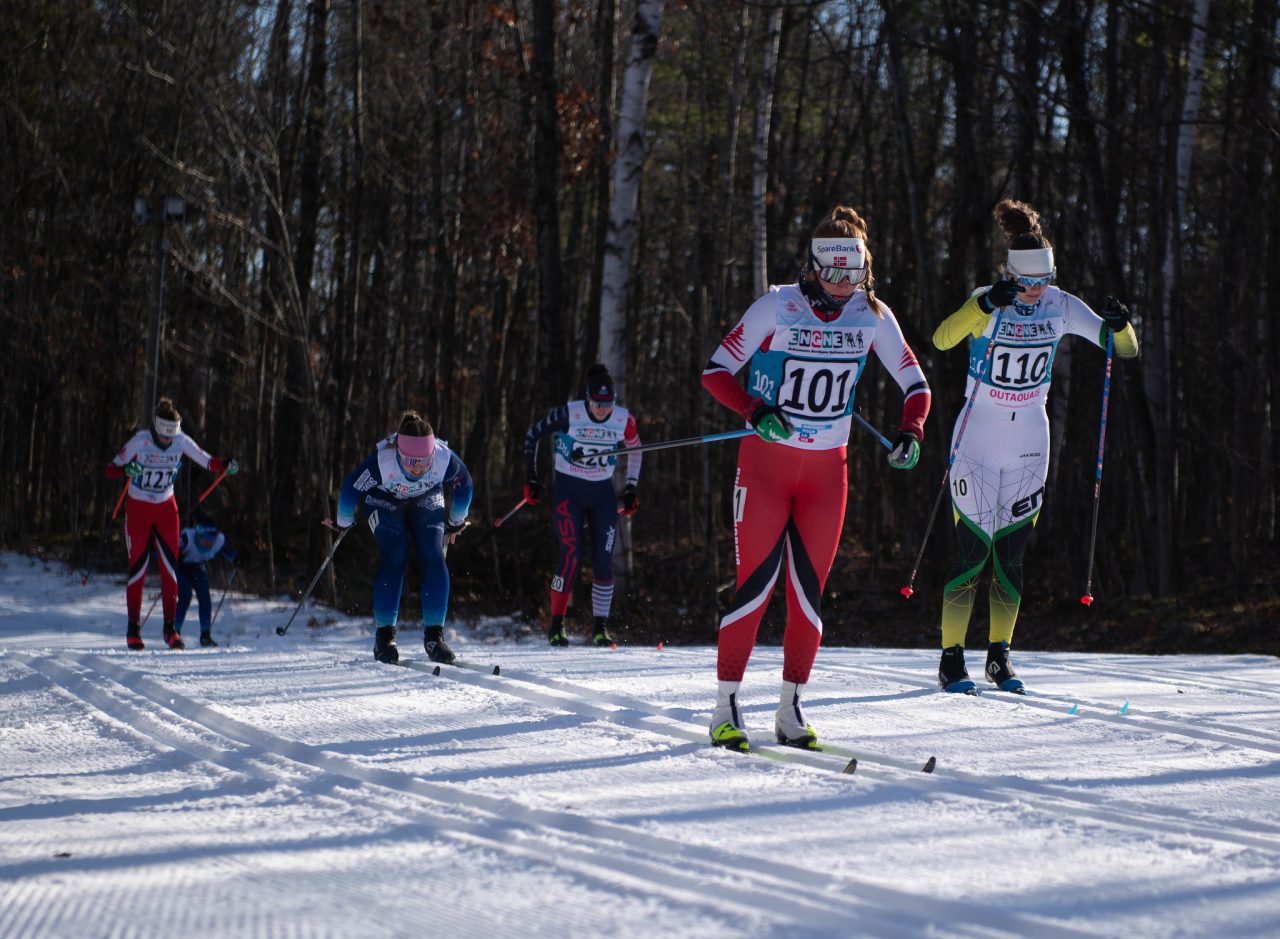
    Tory Audet (#101) leads her quarterfinal on her way to victory. (Photo: Robert Smith)

    Canadian racing continued with the Eastern Canada Cup #1 at Nakkertok Trails on December 10th and 11th. The event is hosted by Évènements Nordiques Gatineau Nordic Events (ÉNGNE), a collaborative organization that leverages the skills and volunteers of four local clubs: Chelsea Nordiq Ski Club, Nakkertok Nordic Ski Association, Club Skinouk and the Gatineau Loppet.

    Canada recently divided the Canada Cup series into Eastern and Western to reduce the need for travel and to make the sport more accessible financially. The previous week in Sovereign Lake was a Nordiq Cup (World Cup starts on the line), US SuperTour, and Canada Cup combined. Despite being a “smaller’”race, there were 580 racers on the Nakkertok trails to discover surprisingly good skiing.

    The large field comes in part from geography: FasterSkier once calculated that 12 million Canadians live within a weekend’s driving distance to Nakkertok, which is just outside Gatineau, Québec, right across the river from the national capital, Ottawa, in Ontario. That is almost the same number of Canadians as live in the entirety of Western Canada (2016 census numbers). Thunder Bay was not included in those “nearby” Canadians; nevertheless, a large group made the drive this weekend.

    The “surprising” part of the good skiing conditions stemmed from lowered expectations after mid-week rainfall that destroyed much of the manmade snow, shortened the race loop, and dampened expectations. More on that later, but the pictures and the racer’s comments make it clear that a big thank you is owed to the grooming team and volunteers.

    Classic Sprint Saturday
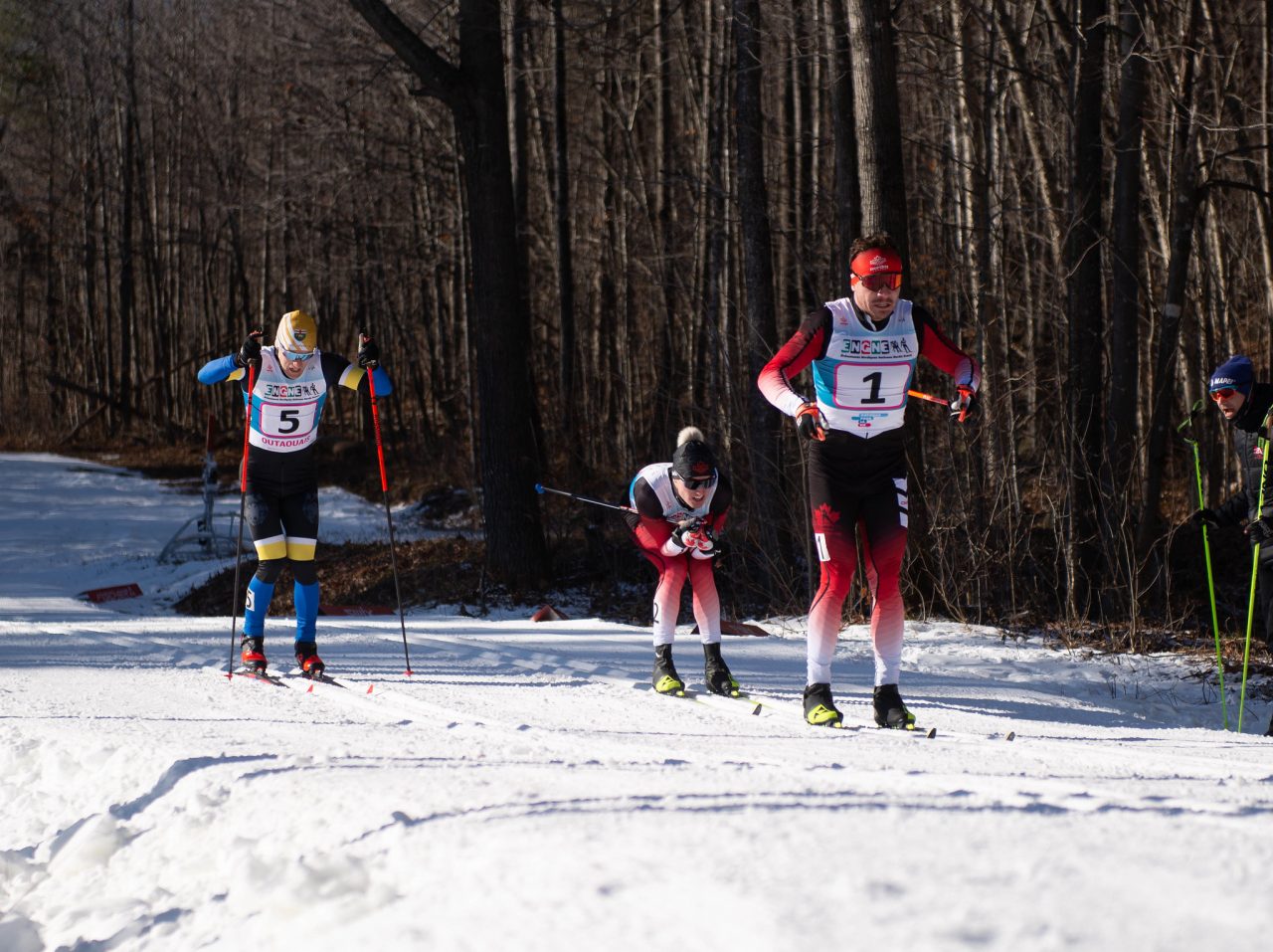
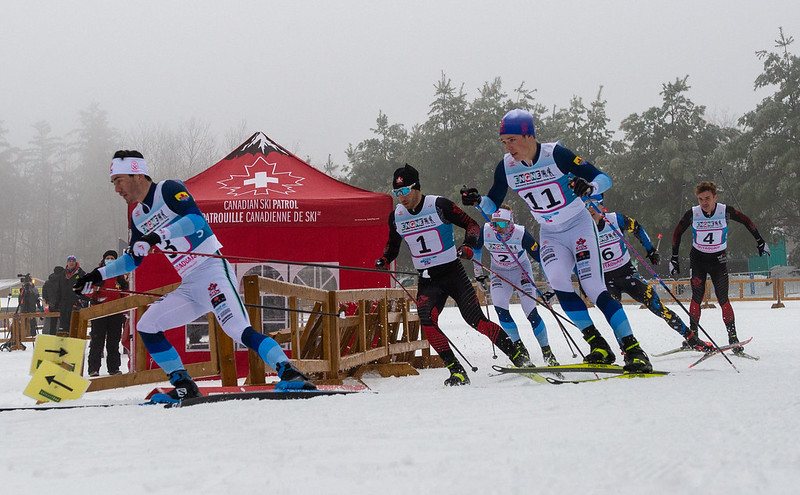
    Léo Grandbois (#1) leads teammate Sasha Masson and Connor McGovern (#5) in the final. (Photo: Robert Smith)

    Centre National d’Entraïnement Pierre Harvey (CNEPH) athlete Léo Grandbois won the 1.3km sprint in decisive style, qualifying first and winning all three heats to finish the day in 2:23.11. Sasha Masson, Grandbois’ teammate at CNEPH and the NextGen National team, was second, 2.35 back. Thunder Bay’s Conor McGovern was third, at 5.41 seconds.

    In what would be a theme of the heats all day, the time gaps were large, with the winners blowing up the pack well before the finish was in sight.

    I’m happy with my race today, I felt good,” Grandbois said in an official interview. “It was nice weather, and the volunteers did an excellent job on the trails. I didn’t race strategic at all; I trusted my form and it worked really well.”

    For the women, it was a similar situation, with local product Tory Audet winning everything. Audet, who is a U18 skier for Chelsea Nordiq and a member of the National Development team, is “racing up” in U20 this season which allows her to qualify for Open heats. Audet followed up her good results the previous weekend with a win in 3:02.84. Carlton U’s Maggie McClure was second, 7.64 behind, with CNEPH U20 Élie-Anne Tremblay placing third at 10.98 seconds back.

    Audet’s official quote to the OC shows her growing professionalism, with a shoutout to the waxers: “[The race] was great, it’s so nice and warm here, compared to Sovereign Lake B.C. where I raced last weekend. My skis were fast, big thanks to my wax techs for a great day.”

    In an email to FasterSkier, Audet expanded on her day.

    “Skiing at home feels great, my kick was amazing which helped a lot, thanks to my wax techs!  It felt great to win a race in front of my family and close friends.”

    Free Distance Sunday
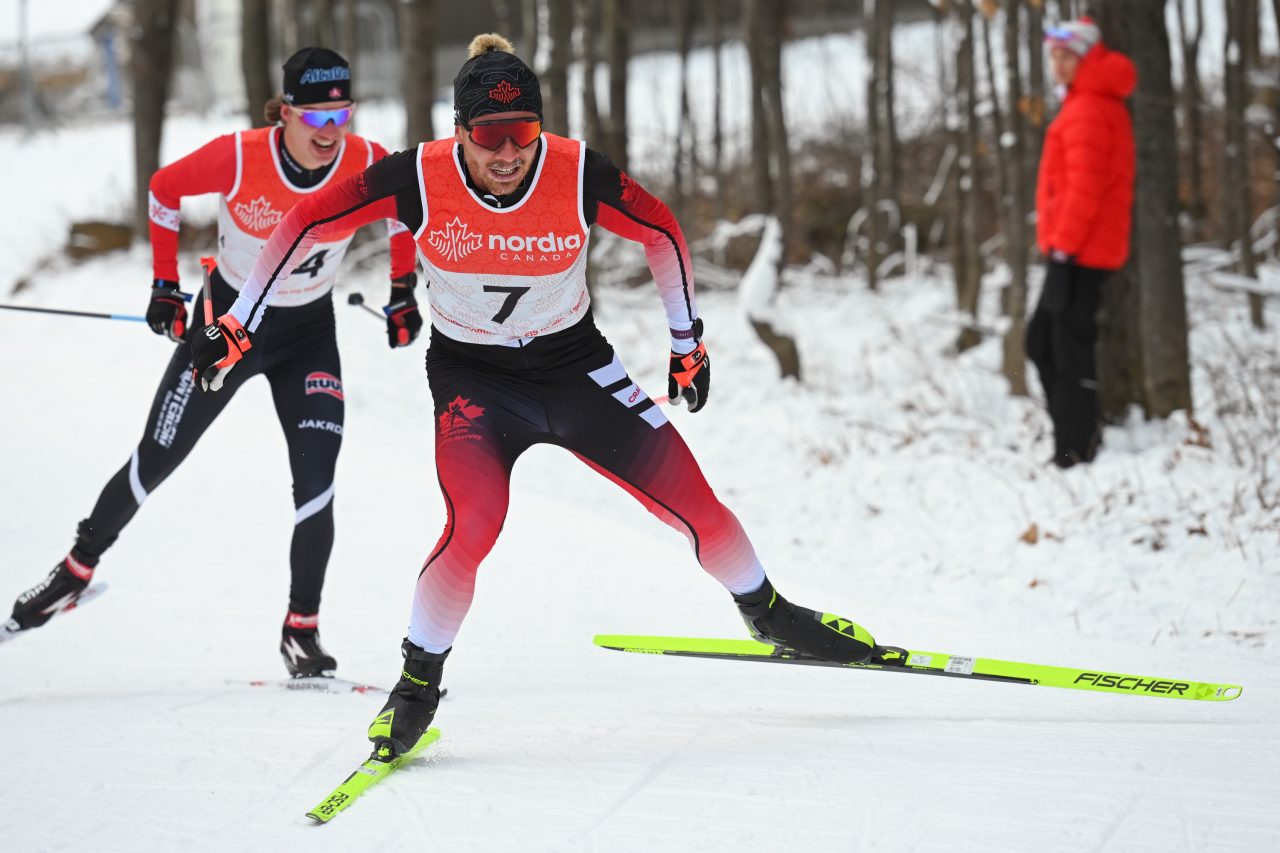
    Léo Grandbois on his way to his second win of the weekend. (Photo: Tim Austen/ ENGE)

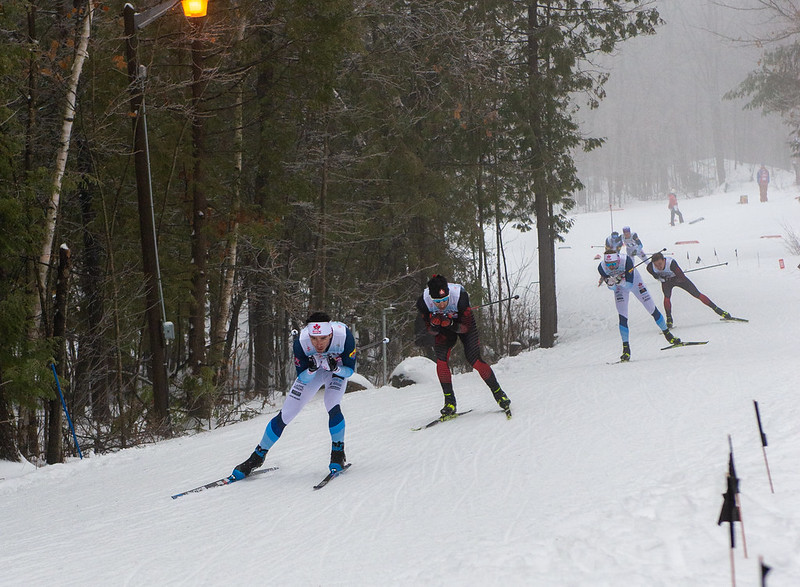
    The men raced first again on the 1.64km loop, doing six laps to complete 10km. Grandbois continued his hot weekend, winning in 21:00.7, 10.2 seconds ahead of Montériski’s Xavier Lefebre, and 29.1 seconds clear of TBay’s Julian Smith.

    “Today was a lot harder than yesterday I thought,” Grandbois revealed. “It was a course that I had to ski well because there were not many hills, but I am happy with the effort I put in.”

    Last year it was Smith in total domination mode in December;this year it is Grandbois. How does a ski fan tell the difference between a “Christmas Star,” to paraphrase the Norwegians, from a skier having a great season? We will know by the end of January.
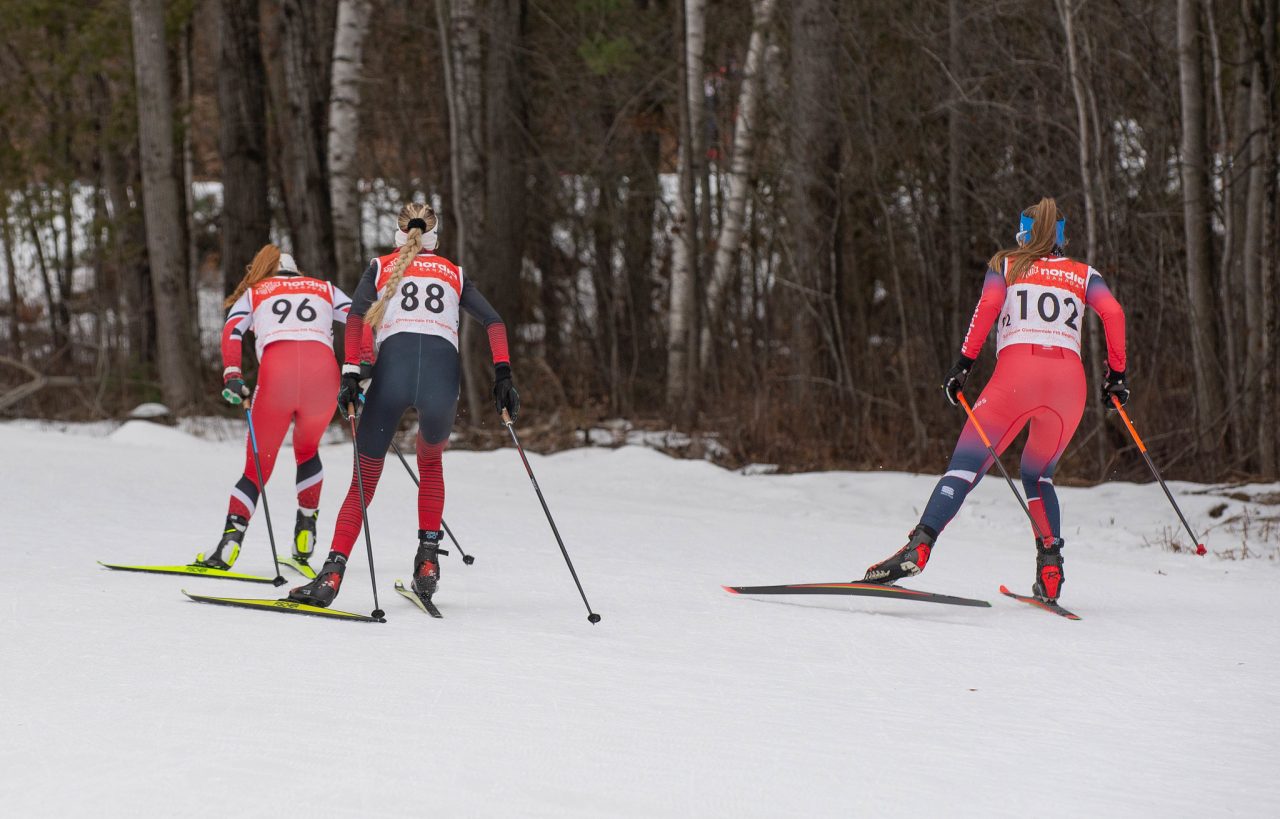
    Tory Audet (#96) leads winner Bronwyn Williams (#88) during the individual start. (Photo: Robert Smith)

    Bronwyn Williams grabbed the victory in the women’s 10km on her home course, finishing in 24:59.1.

    Super, super fun race today,” she said. “I really enjoyed skiing the six laps and tracking down the other skiers. I always love racing on my home trails at Nakkertok, there is always lots of people cheering me on.”

    Williams’ Nakkertok teammate Shilo Rousseau was in second, 10.4 behind.

    “The race today was hard, six laps is definitely a lot to count,” Audet shared with FasterSkier. “Conditions were great, and my skis were fast! It wasn’t the results I was hoping for, but this was my first completed long distance race since world junior championships last year, so it is a great feeling to be back in it and on the podium!”

    Audet, who missed the end of last season through illness, is enthusiastically making up for lost time.

    “This season I was selected to be part of the National Development team [and] with this team I was given the opportunity to attend many camps and meet so many incredible strong athletes where I was able to work with some of the best coaches in Canada! These camps were definitely my highlight of this year!”

    Snowmaking

    This race weekend—and the two weeks of training on snow that preceded it— wouldn’t have been possible without the Nakkertrak snowmaking project.

    In a country with early season racing in October (Frozen Thunder in Canmore), November (Sovereign Lake), and a lot of groomed trail before December, it might seem like one more venue with snowmaking is not important. Is another 3km of trail important when 150km has been open for a month?

    What matters here is not snow, but skiers. Most of the early season skiing is in the mountainous parts of BC, Alberta, and Labrador, which are all less populous areas.

    Having a top racing venue 30 minutes from the national capital also makes cross country skiing a nationally important sport. People, including federal employees and elected officials, focus on what they can see.

    “Getting in the training and racing early season for me is so important to prepare for bigger races later on in the season! With snow usually falling later around here, Nakkertrak is so helpful for all our eastern athletes!” — Tory Audet

    Audet has set the goal of 2023 U20 World Championships in Whistler, and time on snow is a crucial factor in snatching that spot from motivated 19 year olds.

    Organizing early season races is very similar to other races: make plans with the local ski community, negotiate courses and distances with the National Ski Federation, recruit a lot of volunteers, recruit chiefs to organize those volunteers, and a high level event appears in a puff of snow.

    Without reliable snow, every part of that gets harder. More time is spent on  contingency plans, money can’t be spent until the last minute, and volunteers are less enthusiastic if they aren’t sure they will be proud of the final result.

    Long time Nakkertok and Cross Country Canada volunteer Toni Scheier explained the significance to FasterSkier:

    “The Outaouais region has had only a couple of inches of natural snow so far this season. We have been able to ski on a part of our Nakkertrak artificial snow loop for two weeks, but pouring rain on Wednesday put even that in jeopardy. Fortunately, a cold snap Thursday allowed for some touch ups on Thurs that provided excellent conditions for the 580 racers skiing our 1.64 k track. Special mention to Kathy and Marty Hall for their Hall Mark of Excellence contribution of $25,000, to upgrade our snowmaking capacity this year and $4,000 cdn towards the prize money.”

    Scheier was one of the volunteer team that brought Nakkertrak to life in 2016: planning, fundraising, promoting, and then expanding. New money this year has expanded the artificial snow loop again, introducing more hills.

    Even with Nakkertrak, the first Eastern Canada race this season is the same weekend as the third World Cup in Europe. If Canada wants to see more athletes like Nakkertok’s Katherine Stewart-Jones banging out top 20’s in period 1 on the World Cup, bringing snow to skiers is essential. Just ask Audet.

    Results

    Saturday Sprints Overall, Heat Brackets, Qualification

    Sunday Individual

    Full Weekend

    Photo Galleries

    Robert Smith Saturday, Sunday

  • Eastern Canada Cup #1 & 2: Getting Started in Nakkertok

    Eastern Canada Cup #1 & 2: Getting Started in Nakkertok

    The men’s sprint final at Eastern Canada Cup #1 on Nakkertok trails. (Photo: Robert Smith)

    Once again, there was a great weekend of racing on the Nakkertok trails in Gatineau, QC. It was almost like the pandemic pause hadn’t happened: lots of racers, live results on Zone4, great support for media.

    But it isn’t really just Nakkertok. ENGNE, a coalition of local clubs, puts on great races using Nakkertok trails and the NakkerTrak snowmaking magic.

    As with the first Western Canada Cup (WCC) race, the theme of the weekend was smiles and rust.

    The mood at this weekends races was super fun!,” wrote Laura Leclair. “Even if it was pouring rain on Saturday, people were very happy to put a bib back on. Super grateful towards all the volunteers who stand in the rain in order to run the event smoothly!

    Leclair is a CNEPH team member from Chelsea Nordique, one of the ENGNE host clubs and a double winner. Her thoughts were echoed by National Team Development Centre (NDC) Thunder Bay’s Julian Smith, who also won both events.

    “The race went really well today, it was super fun, the volunteers put on a really good event. It was really wet and rainy this morning, but that actually made it for a really fast day.”

    A number of athletes wanted FasterSkier to know that the volunteers got the worst of the Saturday rain before the athletes were on course. Smith put it best:

    “I want to thank the organizers profusely because they were true champions. It was a terribly miserable day to stand still outside for 10 or more hours and they did so with smiles and cheers!”

    Luckily for these volunteers, Sunday brought sunshine for an individual start.

    ***

    Canada is in a sense divided by Thunder Bay, though it is not equidistant from the eastern and western borders. The west has more space, but the east has more people. Sovereign Lake draws volunteers from the local population of 43,000, noticeably smaller than Ottawa/Gatineau with 1.3 million. The population difference also affects the number of athletes, with 12 million Canadians living close enough to drive to Nakkertok for a weekend. As in, almost a third of all Canadians.

    Nakkertok hosted about 480 racers, continuing the trend as the largest event on the continental cup circuit in North America.

    Thunder Bay is neither east nor west, but is within flying distance from both. The only races in driving distance are in the US.

    NDC TBay sent their team west for WCC 1&2 before heading east for ECC 1 – 4. This will give the viewers a few hints about the relative strengths of the two solitudes.

    FasterSkier is trying to bring the Eastern Canada Cup to life from a sunny Sovereign Lake parking lot while this reporter’s partner is doing yet another double workout day at ladies camp. Both Western Canada Cups were held at my home venue, which makes it easy to capture athletes before or after their cooldown ski, record video of the race itself, talk to officials, and feel the vibe from the volunteers, the parents, the siblings, and a few hundred recreational skiers who have never seen a race before. So how is this going to work? And how can it be better for Eastern Canada Cup 3&4 next weekend? Or for the National Championships in Canmore in January?

    Pre-pandemic, the key to getting good content remotely was to email questions to the athletes at the magic time when they could read the message at the venue, then reply at the first convenient pause with wifi, often the airport. When a ‘surprise’ athlete made the podium, it was usually someone FS had been tracking. Now we have a Tory Audet earning her first FIS points and her first senior podium on the same weekend.

    Luckily, Julian Smith helped FasterSkier out with some videos that bring the weekend closer.


    Saturday: Free Technique Sprints

    Saturday started with a downpour on the volunteers setting up, but the action heated up quickly as most racers got their first race in a bib in twenty months. The men raced first, unusually.

    Pierre Grall-Johnson leads Étienne Hébert early in the sprint final. (Photo: Robert Smith)

    CNEPH’s Étienne Hébert won the qualifier in 2:39.86 in his first official race, edging out two TBay skiers who had raced WCCs the previous weekend: Smith by 1.15 seconds and Pierre Grall-Johnson-Johnson by 2.03

    In the heats, it was the Smith show again, winning all of his heats. Hébert took second in his first sprint day, ahead of Grall-Johnson-Johnson who, like Smith, had done all three rounds at Westerns the week before.

    “I felt strong but a little stiff in the qualifier which maybe have been due to warming up in as much water proof clothing as possible,” Smith wrote to FasterSkier. “But the heats, the skis were running fast and the body felt snappy.”

    Hébert was thrilled to be racing again.

    It’s amazing to finally put a bib back on and race against the other Canadian athletes.  Stress levels were somewhat high before the sprint but it quickly got replaced with excitement.  Having the possibility to race, especially before Olympic trials, is great and I want to say that Nakkertok did an amazing job this weekend.  We train all year as a team for those moments when you get to put the CNEPH suit on and show everyone how fast we are.  This weekend was only the start and we’re all excited for MSA next weekend.”

    MSA is Mont Sainte Anne near Québec City, the home of CNEPH, and like Nakkertok, a keystone race venue in Canada.

    Saturday’s sprint had a lot of positives,” Hébert wrote about the results. “I got to see that my form was really good and that I can already compete at a high level. Tactics can still be improved but that will come with simply racing more.”

    Tactics was the key factor in the sprint on Saturday.  Pierre and I had a gap on the rest of the field after the first climb but Julian got back in touch before the last downhill and used the slipstream to get ahead.   thought I could just stay behind [Grall-Johnson] until the finish and pass him but he slowed down too much on the second climb which allowed Julian to come back.”

    Grall-Johnson had his own view of the final on his home trails.

    “Knowing the course very well, as I grew up on it, I was pretty confident in what tactics were best but these races are always good opportunities to try out new ones,” Grall-Johnson-Johnson wrote. “In the final I decided to go out hard from the start and see if I could create some separation, I was able to get a few meters on the first climb but had a pole go deep through the snow which almost made me crash with loaded legs and then on the second climb I had very little energy so I was caught and then conceded in the downhill due to a very advantageous draft going into the finish. Overall though happy with a third place.”

    Laura Leclair wins the final, just ahead of Shaylynn Lowen (Photo: Robert Smith)

    Leclair won the qualifier in 2:55.08, just ahead of CNEPH teammate Liliane Gagnon at 0.29 seconds back. TBay’s Bronwyn Williams and Shaylynn Loewen followed at 2.96 and 3.25 behind.

    In the heats, Leclair won her quarter, came second in her semi, and then edged Loewen for the win.

    Liliane Gagnon leads Laura Leclair in the final. (Photo: Robert Smith)

    I was pretty confident in Saturday’s final heat,” Leclair wrote to FasterSkier. “I knew that my teammate (Liliane Gagnon) and I could work together in order to position ourselves in the front. I knew we were stronger in the last uphill and Lili and I were able to make a gap between the other skiers.”

    Unfortunately, Lili fell in the last corner (I swear I did not tackle her ) so I was alone for the last downhill. The other girls caught up because of draft, but I was able to take the win.”

    Williams took third, followed by Chelsea’s U18 Tory Audet, who qualified 5th. Audet also lead the list of new names to watch. Twenty months without racing is a long time in the development of junior skiers, which means more welcome surprises are coming.


    Sunday: Classic Interval Start 10km/15km

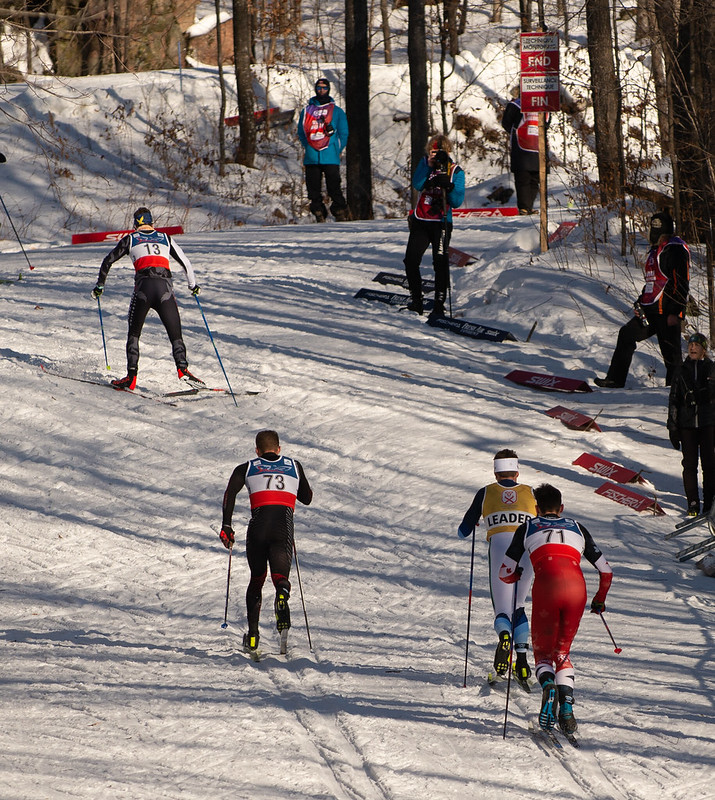
    Julian Smith (yellow bib) skis beside Étienne Hébert (73) in the 15km classic. (Photo: Robert Smith)

    Smith won the 15km in 35:21.3, giving him four wins in four race days, and then summarized the event in a short sentence to FasterSkier.

    “The weekend was a blast!”

    Smith later added a little more detail: “The Sunday weather could not have been more different. -4 and bright sunlight was a welcome change and the track was set for a blistering 10/15km for the seniors.”

    Grall-Johnson was a close second, 4.6 seconds back.

    “Today it was a relatively flat course with lots of laps so I double poled 90% of the race other than the stride zone,” Grall-Johnson wrote. “It was a great fight between Julian and I today, we were going back and forth in the lead, unfortunately Julian pulled away in the end but despite a crash on the first lap I was happy with how I was able to refocus and push mentally.”

    Hébert was third at 25.1 seconds back, changing podium places with Grall-Johnson.

    The last two laps of 2.5km is where the order of the podium got decided,” Hébert wrote. “Julian and Pierre finished stronger than I did.  We were, all three of us, really close after 10km, inside 10sec I think.  I’m looking forward to a course with more climbs because striding felt really good but my muscles got stiff in the double pole which definitely caused me to lose some time.”

    Laura Leclair poling to victory. (Photo: Robert Smith)

    The women’s 10km also had a double winner, Leclair in 28:05.3.

    I am not usually a classic skier but I worked hard on my technique this summer and I am super happy to see it paid off,” Leclair wrote. “I felt really good, the conditions and skis were super fast and I just went for it. For some reason I didn’t get any split during the race so I wasn’t sure where I was but I just skied my best.”

    The next three places were U20 athletes: Audet at 25.8, Gagnon at 32.5, and Big Thunder’s Sarah Cullinan at 54.3.

    Gagnon is well known to Canadian fans and raced at U20 World Championships in Vuokatti last season.

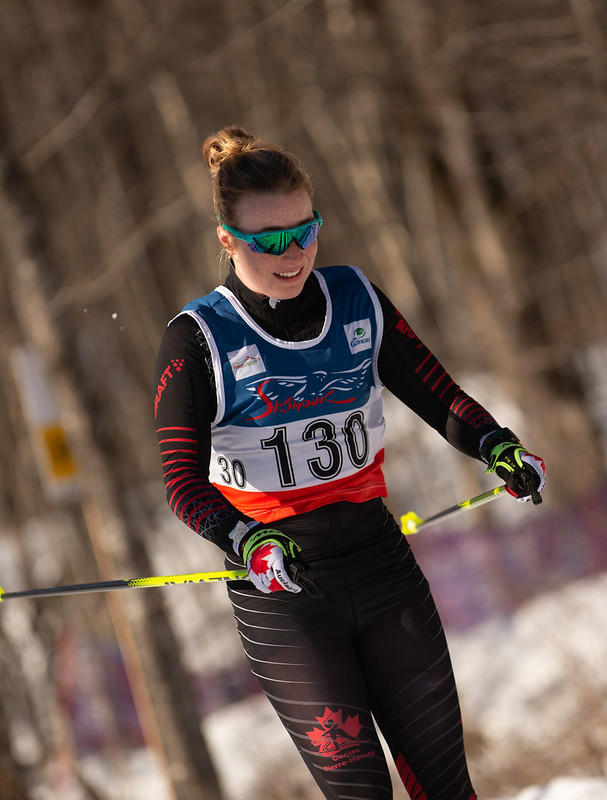
    Tory Audet on her way to her first open podium. (Photo: Robert Smith)

    Audet, who recently turned 16, has less public history as a skier.

    “This was my first U20 podium, and my first FIS pointed race,” she wrote. “I was only eligible for a FIS license last year, and since there were no races, this was my first FIS pointed race.” 

    In her first weekend, she raced up in U20/Open and it paid off for her with a 4th in the sprint and 2nd.

    Having not done a sprint in over a year, and never with older athletes, I had no clue what to expect. My goal was just to race fast and see how far I could get. I knew the trails quite well and had raced them in previous years, which was good because I knew what to expect.

    “As for race tactics, I have limited experience in sprints so at the beginning of the day, I didn’t have any tactics. It was not until I hit semis and made the mistake of leading the pack that I started to think about tactics. I was drafted on the hill  and I lost my spot in the finals, but regained it as a lucky loser. When it came to the final, I decided to try a different strategy: to get out in 3rd or 4th and draft off everyone. It was was really fun because I got to observe everyone else’s tactics,  to see the lines they were taking, and learn from their extensive experience.”

    With U20 athletes on the podium at both Eastern and Western Canada Cups this weekend, it is clear the next generation made good use of a season without races.

    Sprinting heats: Robert Smith caught the reactions to a crash. (Click to enlarge.)

    Getting In The Mood For Racing

    “Everyone just seems to be happy racing again and I think that really helps in making the events fun. Its the first time many of the volunteers have helped with racing events, either for a long time or just first time ever so obviously you have to be patient and understand that everyone is a bit rusty but overall energy is great!” — Grall-Johnson

    I could feel that everyone at the venue was really excited to be there.  Saturday’s weather was suppose to be horrible but we got kind of lucky with the worst of the rain falling before the qualifier.  Despite this, athletes and everyone else at the venue had big smiles on.  Seeing everyone again after a year and a half was exciting.  I got to see the athletes and coaches from Monteriski, my home club, and all the competitors I didn’t see for the entire pandemic.  Excitement is really the mood that was present last weekend.” — Hébert

    I am super stoked to be racing back in Canada again. It was great to be at home in front of friends and family and super cool to see how everyone has been training!” — Leclair

    “Our wax techs did an incredible job  so a huge shout out to our staff and the organizers [who] put on a great event for a second day. It is just so exciting to be racing in Canada again, and having friends and family cheering from the sidelines makes it even more special.” — Smith

    Results: full weekend, qualifier, heats, interval start

    Photo Galleries: Robert Smith Sprints, Distance Men, Distance Women, Younger Athletes