Tag: Eirik Bye

  • Canada Notches First Paralympic Relay Medals with Silver and Bronze

    Canada Notches First Paralympic Relay Medals with Silver and Bronze

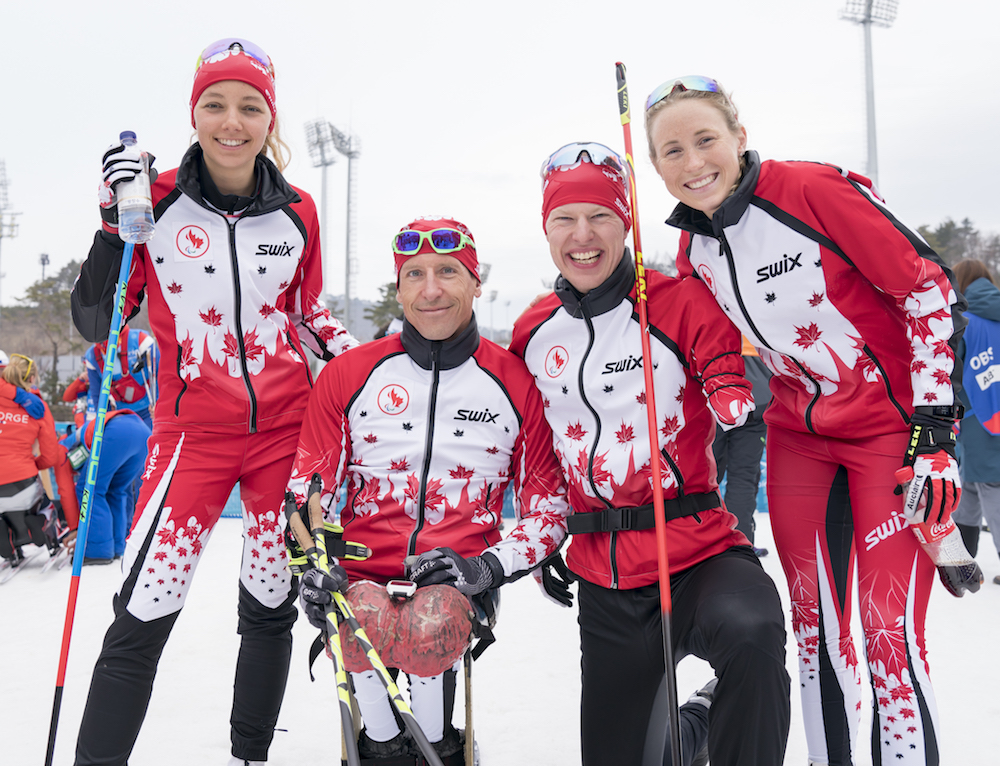
    Canada’s mixed relay after taking silver on the last day of the 2018 Paralympics in PyeongChang, South Korea, with (from left to right) Natalie Wilkie, Chris Klebl, Mark Arendz and Emily Young. (Photo: Dave Holland/Canadian Paralympic Committee)

    2018 Winter Paralympics (PyeongChang, South Korea): Mixed and open relays

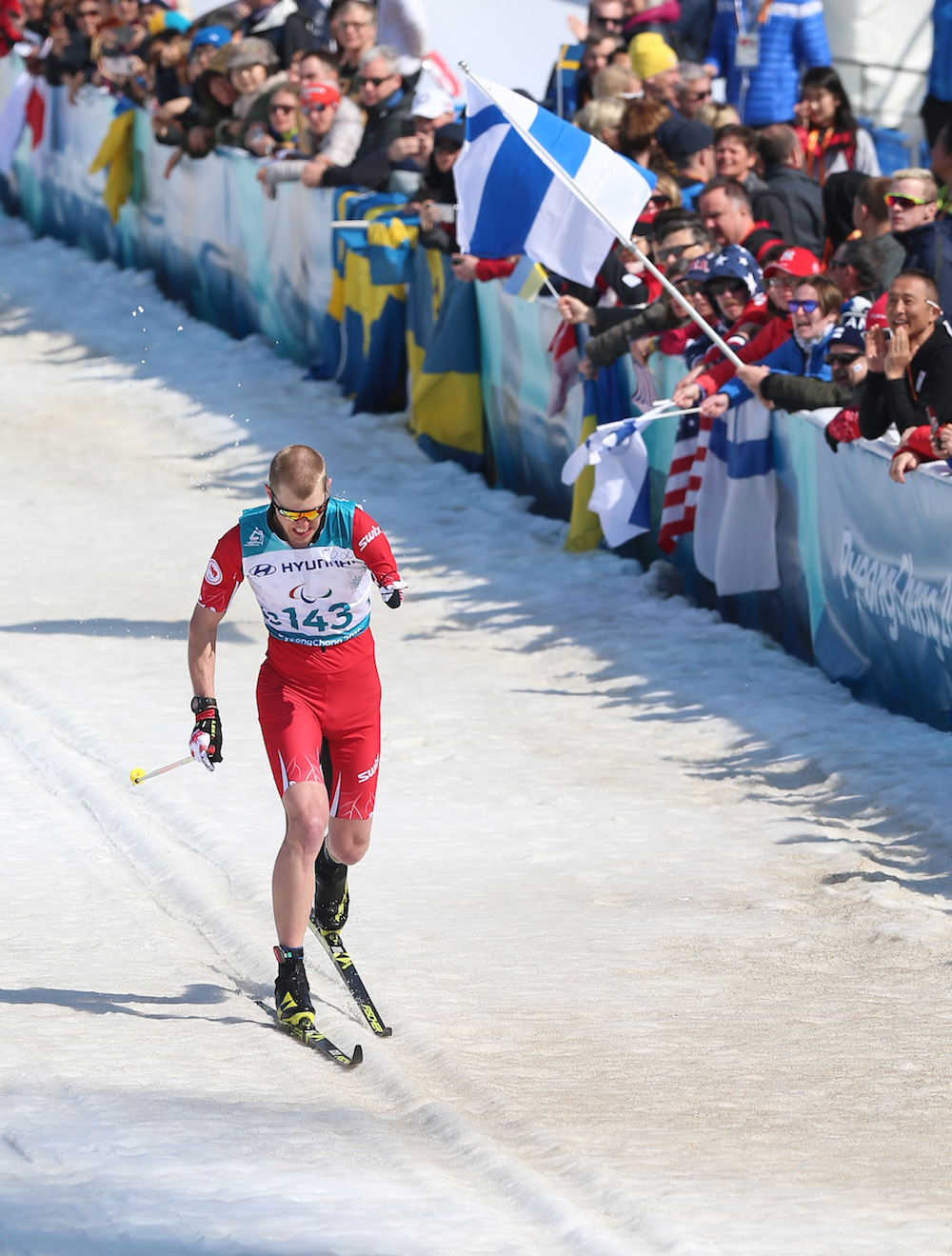
    On the final day of the PyeongChang Paralympic Games, Canada was the only country to medal in both the mixed and open cross-country relays, and its mixed relay anchor, Mark Arendz, became the most decorated Canadian at a single Winter Paralympics with his sixth medal of the week.

    In the 4 x 2.5-kilometer mixed relay on Sunday, Natalie Wilkie, Emily Young, Chris Klebl, and Arendz teamed up for silver, 50 seconds behind Ukraine (Iurii Utkin, Liudmyla Liashenko, Yuliia Batenkova-Bauman, and Oksana Shyshkova), which claimed gold in 24:31.9 minutes. On the final skate leg, Arendz held off Germany (Andrea Eskau, Steffen Lehmker and Alexander Ehler) by 3.4 seconds at the line.

    Wilkie and Young, standing athletes coming off gold and bronze in Saturday’s 7.5 k cross-country race, started the team off for the first two classic legs. Wilkie, 17, also earned an individual bronze at these Games. While Wilkie tagged Young in fifth, Young went on to tag Klebl, a 2014 Paralympic champion sit-skier, in seventh place.

    “Our team worked so well together,” Young said of the relay, according to a Cross Country Canada press release. “It looked a little scary in the beginning, but we knew we had Chris in third and Mark anchoring which was going to be the difference. We each held our own in our individual sections and it is so fun to win this one as a team.”

    Klebl, 46, made up 27 seconds on the field and tagged Arendz in fourth. Arendz then caught and passed Japan’s Taiki Kawayoke and later Germany’s Ehler on the last downhill into the finishing stretch to finish second.

    “This is fantastic. It is our first relay medal ever,” Arendz, 28, told Cross Country Canada. “It is great to end the Games with a historic moment that we get to share with each other for the rest of our lives. This is a great team of two veterans and two rookies. I’m so happy we were able to get this done.”

    Arendz, who elected flag bearer of the Canadian Paralympic Team for Sunday’s Closing Ceremony, is taking home a gold medal from the 15 k biathlon race, two silvers, and three bronze medals. He competed in all but one race throughout the week, skipping the distance cross-country race.

    “I came in here thinking I could get three medals, but to get six is incredible,” Arendz said. “Today’s is a special one. I am happy we got this done, but there is no way I could do another race. I’m done.”
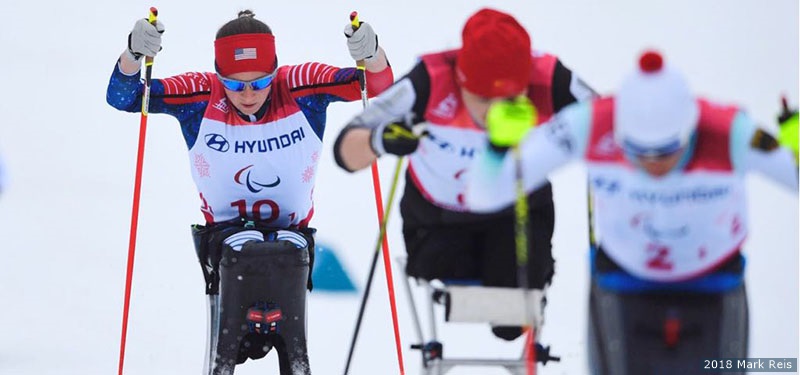
    American Kendall Gretsch (l) racing in the 4 x 2.5 k open relay at the 2018 Paralympic Winter Games in PyeongChang, South Korea. (Photo: U.S. Paralympics/Mark Reis)

    The U.S. team, with Kendall Gretsch, Ruslan Reiter, Jake Adicoff (and guide Sawyer Kesselheim)  placed seventh in the mixed relay, 1:35.7 out of first. Gretsch skied both the first and third legs and tagged Adicoff in ninth out of 13 teams at the last exchange.

    “It’s a little bit nerve-wracking and a little bit fun,” Adicoff said of skiing the anchor leg. “They did an awesome job on the first three legs.”

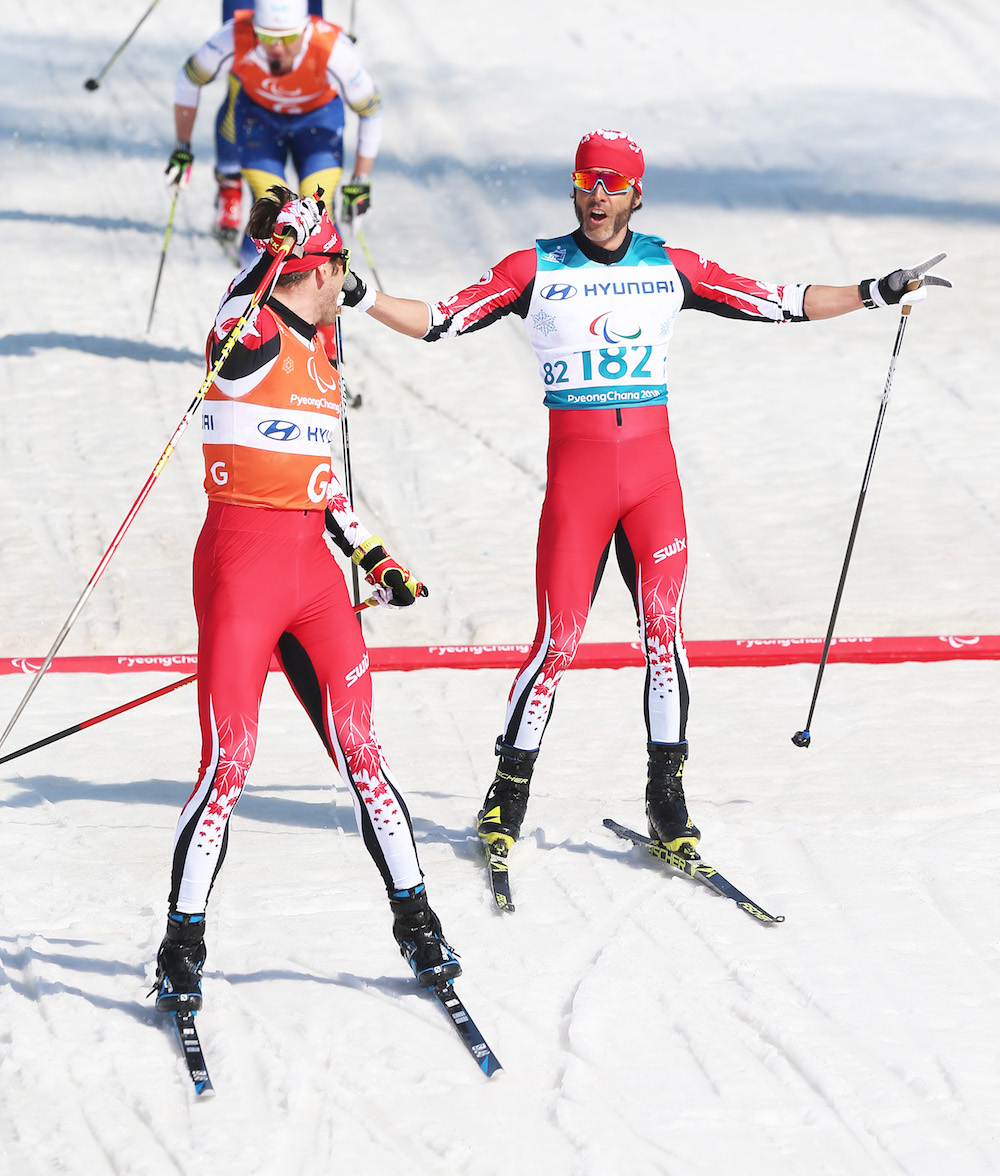
    In the 4 x 2.5 k open relay an hour later, Canada raced to bronze with two athletes: sit-skier Collin Cameron and visually impaired skier Brian McKeever (and his guides Graham Nishikawa and Russell Kennedy).

    The duo finished 1:05.8 behind France, which placed first with Benjamin Daviet, Anthony Chalencon and Thomas Clarion in 22:46.6. Norway finished 22.5 seconds back for silver, with Nils-Erik Ulset, Hakon Olsrud and Eirik Bye.

    Ukraine (Iaroslav Reshetynskyi, Olha Prylutska, Grygorii Vovchynskyi, and Anatolii Kovalevskyi) crossed the line in third but was penalized 30 seconds for an early exchange and slipped to fifth (+1:26.3), while Canada moved into third and Belarus placed fourth (+1:23.7).
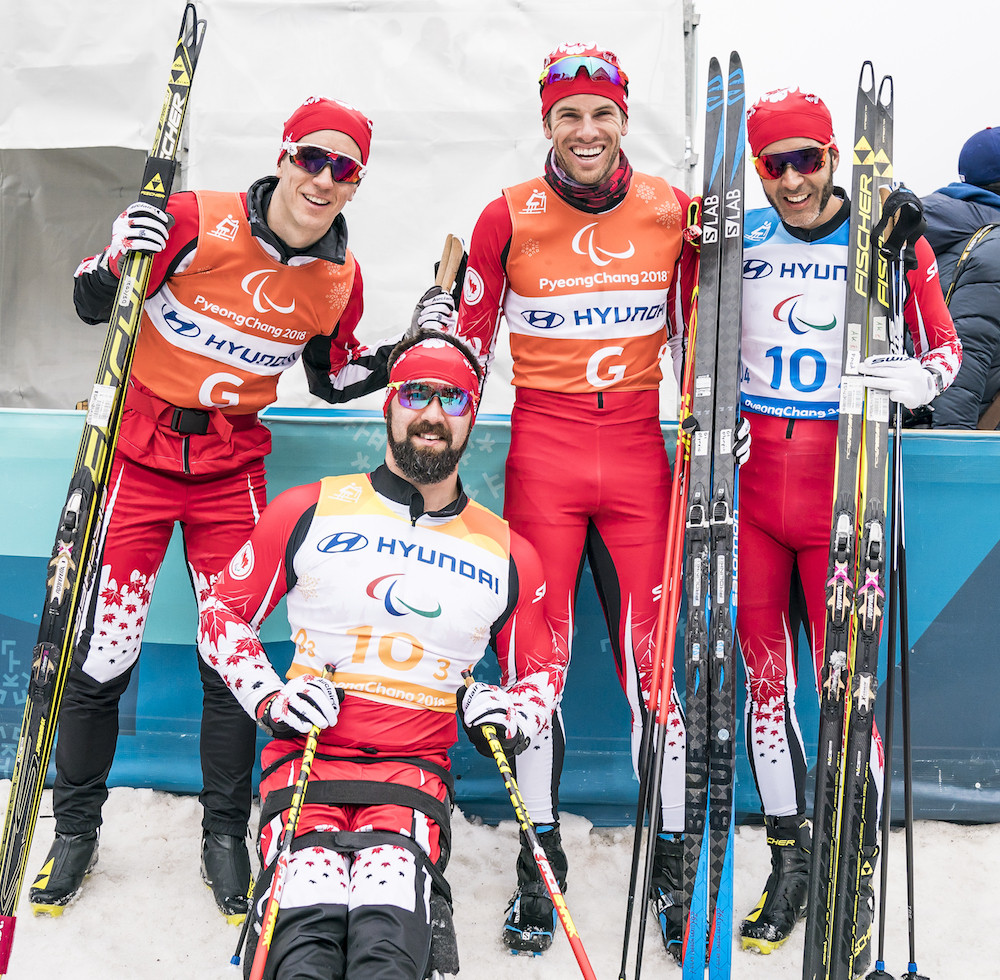
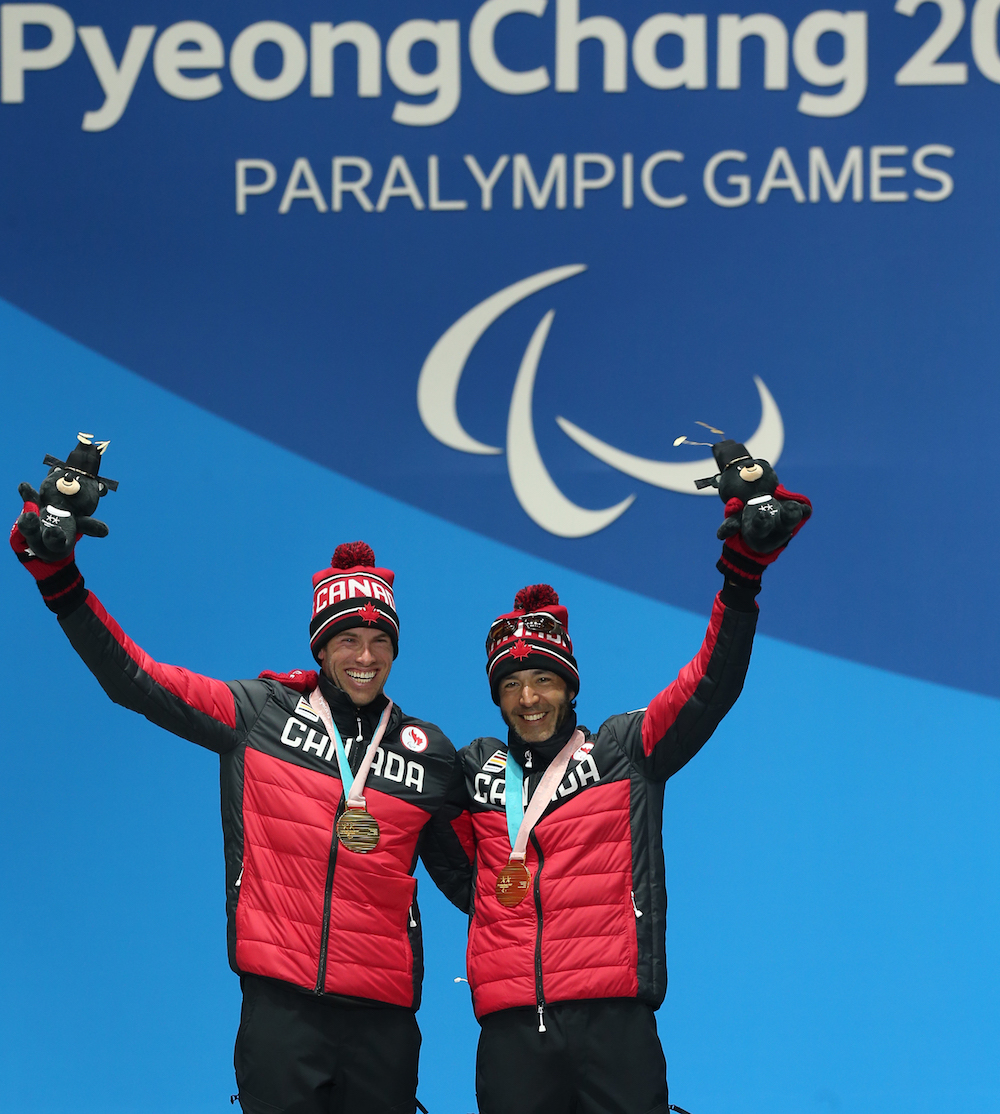
    Canada’s open relay after taking bronze on the last day of the 2018 Paralympics in PyeongChang, South Korea, with (from left to right) Graham Nishikawa (guide), Collin Cameron, Russell Kennedy (guide), and Brian McKeever. (Photo: Dave Holland/Canadian Paralympic Committee)

    Early in the race, Cameron tagged McKeever in eighth at the first exchange, and McKeever and his guide raced up to fourth. On the third leg, Cameron was skiing in third until he dropped a pole on the last climb and had to turn around to recover it. He came through the last exchange in sixth, 25 seconds behind Ukraine in third. McKeever went on to crossed the finish line fourth place, but his team was awarded bronze after Ukraine was penalized for tagging outside the exchange zone.

    buy skelaxin

    The bronze medal was Cameron’s third of the week after he placed third in two biathlon races earlier in the week. For McKeever, Canada’s most decorated Winter Paralympian of all time who won all three individual cross-country races he competed in over the last week, it was the 17th medal of his Paralympic career.

    “I just tried to pace it properly and be as fast as I could. It was so much fun,” Cameron, 28, told Cross Country Canada. “This is my first relay, so I was really looking forward to this. I am super happy to leave here with three medals.”

    “It’s incredible to get two relay medals today,” McKeever, 38, said. “We knew we had a shot if we all had really good days. What Mark, Chris and the girls did in that first relay was awesome. These races are so interesting with all different disabilities together. It is never over until last tour around, and in both cases, we saw that today with lots of different lead changes out there.”
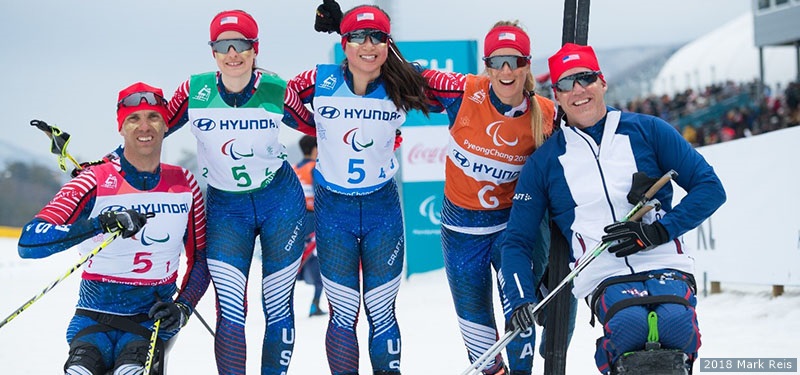
    The U.S. open relay at the 2018 Paralympics in PyeongChang, South Korea, with (from left to right) Andy Soule, Grace Miller, and Mia Zutter, Kristina Trygstad-Saari (guide), and Sean Halsted. (Photo: U.S. Paralympics/Mark Reis)

    The U.S. team, with Andy Soule, Sean Halsted, Grace Miller, and Mia Zutter (and guide Kristina Trygstad-Saari), placed 12th in the open relay out of 12 teams.

    “It’s been an amazing Paralympic Games,” Soule, 38, told U.S. Paralympics Nordic. “The organizers have put on a great event. This is a great team to be involved with. We’ve had a lot of fun here. This is my last Paralympic race, but we have a couple of young athletes here. We’ll have a great team for a long time.”

    In total, both the Canadian and U.S. Paralympic teams tallied 16 medals between nordic and biathlon in PyeongChang — a record for both programs. Notably, every member of Canada’s Para-Nordic World Cup Team is taking home at least one medal.

    Results: Mixed relay | Open relay
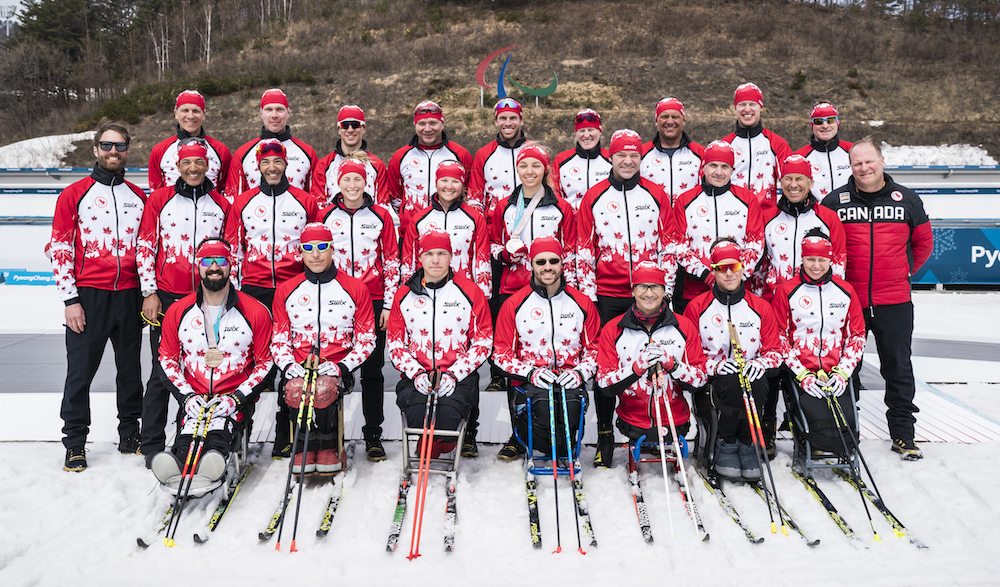
    Canada’s 2018 Paralypmic cross-country and biathlon team at the Alpensia Biathlon Centre on the last day of the Games in Pyeongchang, South Korea. (Photo: Dave Holland/Canadian Paralympic Committee)
  • First Paralympic Golds for Soule and Masters; McKeever Wins Second Straight, 12th Total

    First Paralympic Golds for Soule and Masters; McKeever Wins Second Straight, 12th Total

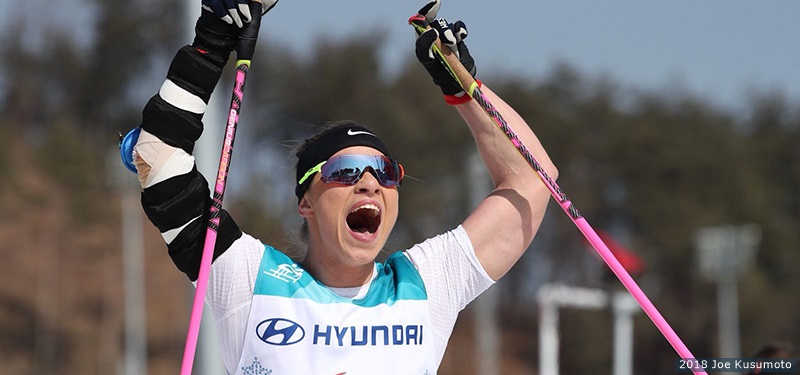
    American Oksana Masters reacting to her first gold medal in her third Paralympics, after winning the women’s 1.1 k sitting sprint on Wednesday in PyeongChang, South Korea. (Photo: U.S. Paralympics/Joe Kusumoto)

    2018 Winter Paralympics (PyeongChang, South Korea):  Cross-country sprints

    Hold onto your hats, this was a major day for both the American and Canadian teams at the 2018 Paralympics.

    In the cross-country sprints on Wednesday in PyeongChang, Andy Soule and Oksana Masters of the U.S. Paralympics Nordic Program both captured their first-career Paralympic golds in the women’s and men’s sitting events, while Dan Cnossen skied to his fourth medal in as many races with a bronze to add to his collection.

    Brian McKeever of the Canadian Para-Nordic Ski Team raced to his second-straight gold of the week in the men’s visually impaired sprint, with guide Russell Kennedy, and two of their teammates claimed bronze: Mark Arendz, in the men’s standing sprint for the first Paralympic cross-country medal of his career (following four biathlon medals) and Natalie Wilkie, the youngest member of the team at age 17, in the women’s standing sprint.

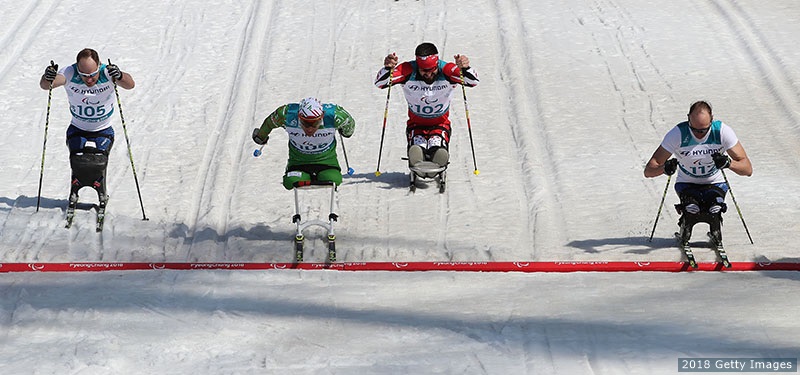
    Andy Soule (r) of U.S. taking first in a photo finish with Dzmitry Loban (second from l) of Belarus, while American Dan Cnossen (l) takes third and Canada’s Collin Cameron (second from r) fourth in the men’s 1.1 k sitting cross-country sprint at the 2018 Paralympics in PyeongChang, South Korea. (Photo: U.S. Paralympics/Chung Sung-Jun for Getty Images)

    In the men’s 1.1-kilometer sitting sprint final, Soule won a photo finish with Dzmitry Loban of Belarus, after both crossed the line in 3:31.4 minutes. Cnossen finished 0.4 seconds back in third and Canada’s Collin Cameron was just 0.3 seconds off the podium in fourth (+0.7).

    After skiing the pack throughout the final, Soule took the lead as the four racers entered the stadium together. In the finishing stretch, Loban, Cnossen and Cameron challenged him for the gold, but with a powerful surge and lean at the line, Soule, 38, notched the first gold medal after nearly 13 years in the sport. The U.S. Army veteran had previously earned bronze at the 2010 Paralympics and bronze in Tuesday’s 12.5 k sitting biathlon race.

    In a U.S. Paralympics press release, Soule described the race as “interesting” and “tactical”.

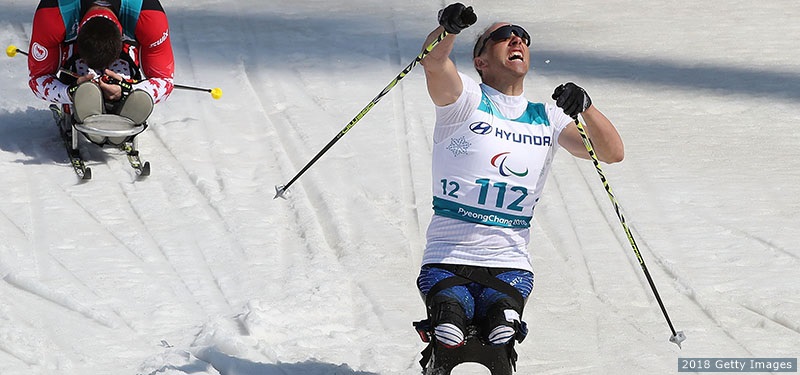
    American Andy Soule celebrates gold in Wednesday’s 1.1 k sitting sprint final at the 2018 Paralympics in PyeongChang, South Korea. (Photo: U.S. Paralympics/Chung Sung-Jun for Getty Images)

    “I chased the whole way,” he said. “I don’t think it necessarily hurt me to chase that much, it actually helped with a little bit of wind break. I think a good, tight tuck coming down the final hill put me in a natural line, and I knew I had a shot at a good sprint out. This is an incredible group to compete with. That kind of a finish … that’s what sprinting is all about.”

    “I definitely lost a little gas in the final stretch,” Cnossen reflected, according to the press release. “My strategy was to tuck in behind the Belarus athlete in the beginning and then sprint over the bridge and try to hang on. Andy had such an awesome race. This is the second day in a row we’ve had two U.S. men on the podium which is just phenomenal.”

    For Soule, the gold was his first in his third Paralympics, and his first Paralympic medal in a cross-country race (rather than biathlon).

    “It means so much. It feels so incredible,” Soule said. “I couldn’t do it without incredible teammates pushing me all the time, and without incredible coaching and technical staff. I think it speaks to a great team effort that has really paid off for us.”

    Cameron came within fractions of a second of achieving his second medal in his first Paralympics.

    “I raced as hard as I could … it is what it is. I just came up a little short,” he said, according to a Cross Country Canada press release. “It is amazing that I got a medal this week in biathlon, I wasn’t expecting it, but that was behind me. I really wanted something here. This was the race I wanted a medal in. It was a close one.”

    Also for Canada, Chris Klebl and Derek Zaplotinsky missed advancing to the final after both finished sixth in their respective semifinals.

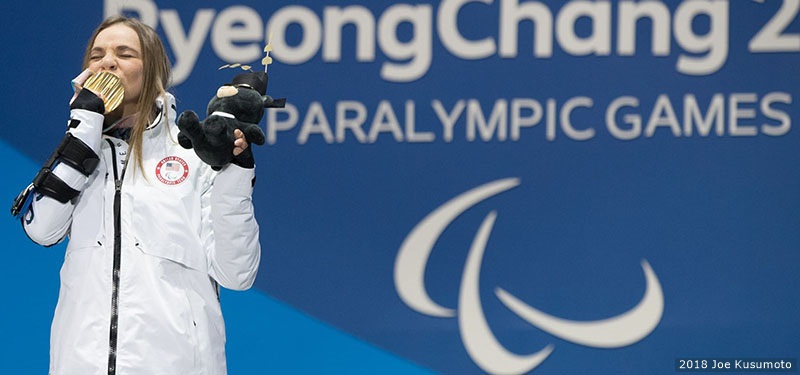
    American Oksana Masters kissing her first Paralympic gold at the medals ceremony on Wednesday night after she won the women’s 1.1 k sitting sprint at the 2018 Paralympics in PyeongChang, South Korea. (Photo: U.S. Paralympics/Joe Kusumoto)

    Masters, 28, won the women’s 1.1 k sitting sprint final by 2.1 seconds over Germany’s Andrea Eskau, crossing the line first in 4:06.7. The gold was Masters’s first in her third Paralympics, after she had previously collected five medals — two silver and three bronze — between the 2012 Summer Paralympics in London (where she placed third in a doubles rowing event), 2014 Winter Paralympic in Sochi, Russia (where she tallied one silver and two bronze in cross-country events), and PyeongChang (silver in the biathlon 6 k sprint).

    Masters has notably been racing with an injured elbow throughout these Games. On Tuesday, she did not finish the 10 k biathlon race.

    “I can’t believe it. I literally was starting to think this day would never happen,” she said of her win on Wednesday, according to the U.S. press release. “I knew that I wasn’t going to let yesterday be my last race. I couldn’t believe it, but at the same time, I knew I had it in me to dig deep a couple more times. I could not have done this without the USOC medical staff.”

    In the sitting semifinals, her teammates Kendall Gretsch, who won the first two races of the 2018 Paralympics, and Aaron Pike, were eliminated after both placed fourth in their respective heats.

    McKeever 2-for-2

    Canada’s Brian McKeever (r) and his guide Russell Kennedy celebrate gold in the men’s 1.5 k visually impaired classic sprint at the 2018 Paralympics on Wednesday in PyeongChang, South Korea. (Photo: Scott Grant/Canadian Paralympic Committee)

    A five-time Paralympian, McKeever, 38, racked up his 12th Paralympic gold medal (15th total medal) in the men’s 1.5 k visually impaired classic sprint. He finished 2.5 seconds ahead of Sweden’s Zebastien Modin (with guide Robin Bryntesson) in second place, with a time of 4:03.2. Behind them in the final, Norway’s Eirik Bye (with guide Arvid Nelson) finished third (+29.5) and Jake Adicoff (with guide Sawyer Kesselheim) was relegated to last (fourth place) for a technique violation.

    McKeever has won all three Paralympic sprints since they were introduced in 2010. On Wednesday, he double poled the entire race.

    “These sprint races are miserable,” McKeever said, according to a team press release. “They are so hard. The young guys are fast, and have natural snap. There is so much stress in sprint racing, and it goes all day long. I’m much more comfortable with the longer distances, but it was a great day for us. Russell carried the load for us today, and just thrilled we were able to cross the line first.”

    Kennedy, 26, who competed at his first Olympics last month in PyeongChang, said it was tough battling it out in Wednesday’s soft conditions.

    “We played things a bit more strategic in the semis because we knew the final was going to be a tough fight, and it was,” Kennedy reflected. “That first hill hurt a lot. Once I got to the top I was able to settle down and said to myself ‘OK, you got this.’ ”

    While Kennedy guided McKeever to gold in the second half of Monday’s 20 k cross-country race, McKeever’s other guide, Graham Nishikawa (who skied the first half with him), joined McKeever on the podium. Wednesday was Kennedy’s turn at the medals ceremony.

    “This is a new experience for me — especially coming from the Olympics where the focus is all on yourself,” Kennedy said. “Brian is such a strong athlete and guiding him requires a lot more communication. Competing here at the Paralympics is really rewarding because you do this as a team. It is hard at times to know if I’m going too hard or if he needs me to go faster, but it has been a lot of fun for me.”

    Canada’s Mark Arendz en route to bronze in the men’s 1.5 k standing classic sprint at the 2018 Paralympics in PyeongChang, South Korea. It was his first cross-country medal (fifth total) in his second Paralympics. (Photo: Scott Grant/Canadian Paralympic Committee)

    In the men’s 1.5 k standing sprint final, Arendz tied Finland’s Ilkka Tuomisto for third place, and both were awarded bronze. They finished just 0.3 seconds behind Japan’s Yoshihiro Nitta in second, and 1.1 seconds behind Kazakhstan’s Alexandr Kolyadin, who won in 4:19.7.

    “Sitting there in the finish waiting for the results of the photo finish, I was just hoping for a tie,”  Arendz said, according to the team press release. “It was a really good race but I made a mistake down the finishing stretch switching to try and find a faster track and that may have cost me the whole race.”

    The Paralympic medal was the first in a cross-country race for the 28-year-old Arendz, who has two silver and two bronze in biathlon races between these Paralympics and the 2014 Sochi Games.

    “I came here for medals in biathlon and was hoping to get my first one in cross-country,” he said. “To come away with my first bronze in cross-country skiing means a lot. I couldn’t be happier.”

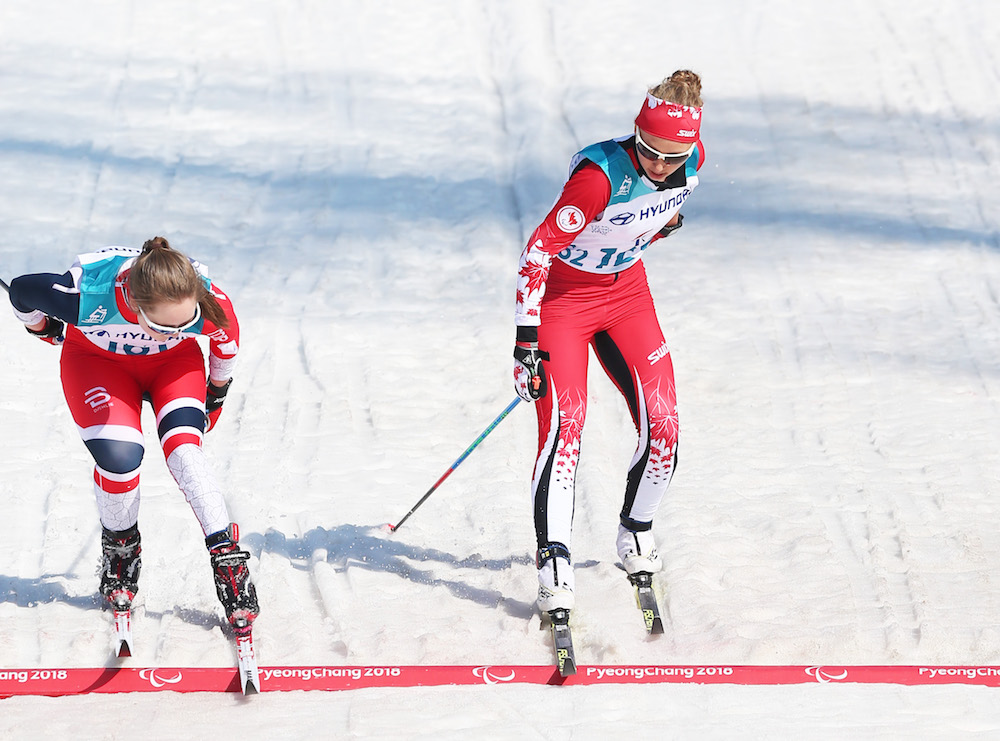
    In the women’s 1.5 k standing sprint final, Wilkie raced to third for her first medal in her first Paralympics. She finished just a tenth of a second behind Norway’s Vilde Nilsen, who took silver, and 3.2 seconds out of first, which went to Anna Milenina of the Neutral Paralympic Athletes (NPA) in 5:11.1.

    Canada’s Natalie Wilkie (r) finishing third, just 0.1 seconds behind Norway’s Vilde Nilsen (l) in second, for her first Paralympic medal on Wednesday in the women’s 1.5 k standing classic sprint in PyeongChang, South Korea. (Photo: Scott Grant/Canadian Paralympic Committee)

    “It feels so awesome,” Wilkie said of her bronze medal. “This is my first Paralympics and I am just so happy to have won a medal.”

    Four seconds behind Wilkie, her teammate Emily Young placed fourth (+7.2). Canada made up half of the six-woman final with Brittany Hudak placing sixth (+49.2)

    “We are competing against each other, but we are also helping each other,” Wilkie said. “It was calming for me to have them there with me. We talked about strategy as a team before the final because the goal was for us to win a medal for Canada.”

    Paralympic nordic skiers and biathletes have a day off on Thursday before races resume Friday with men’s and women’s long-distance biathlon races, starting at 10 a.m. Korea time Friday (9 p.m. EDT Thursday).

    Complete results

    Canada’s Brian McKeever (r) and Russell Kennedy receiving their gold medals from the men’s visually impaired classic sprint at the 2018 Paralympic Games in PyeongChang, South Korea. (Photo: Scott Grant/Canadian Paralympic Committee)