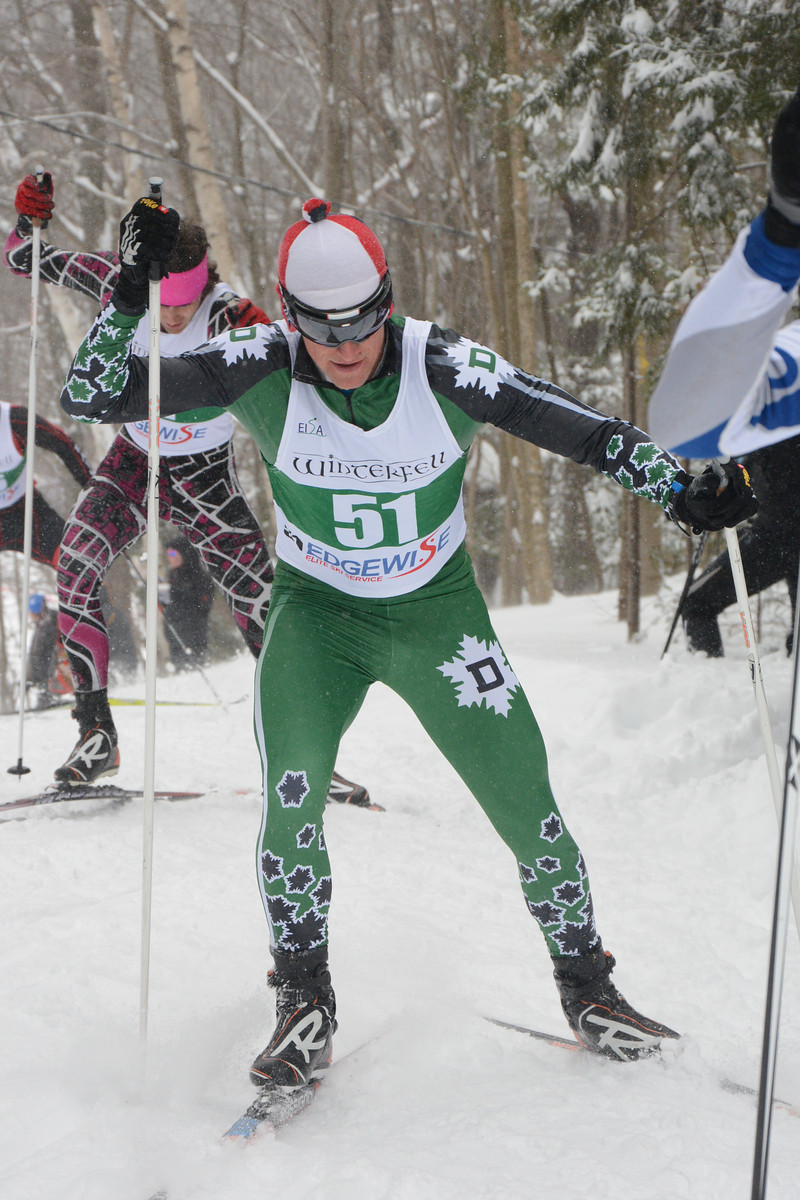
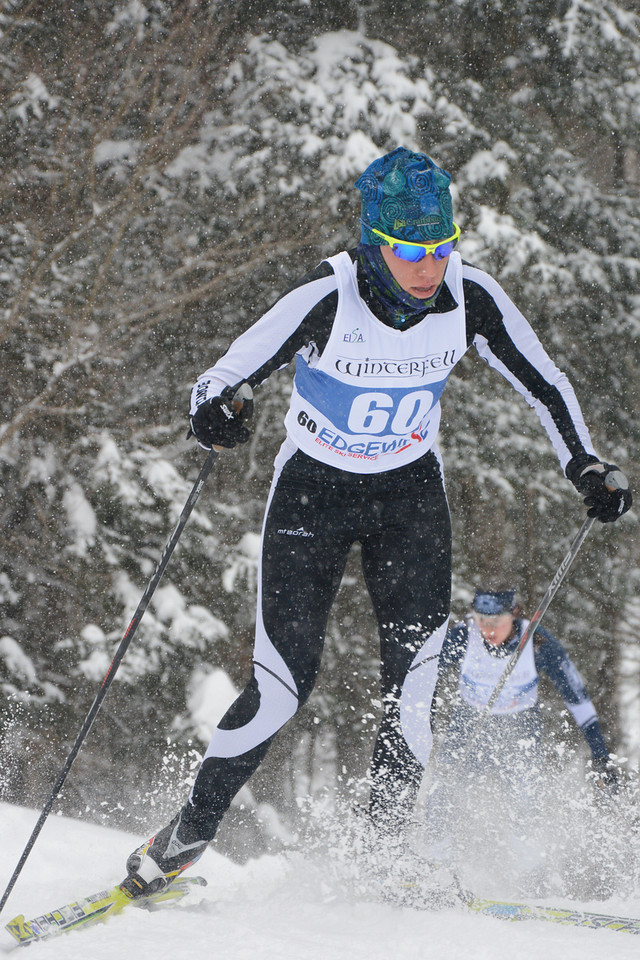
Tag: EISA Skiing

  • UVM’s Patrick Weaver on the Waxing and Waning of Fluoro Use

    At fifty-years-old, University of Vermont’s head cross-country ski coach Patrick Weaver is in a sweet spot. Since May 2010, the two-time Olympian has been at the helm in Burlington, Vermont guiding student-athletes on the Eastern Intercollegiate Ski Association (EISA) ski circuit. With a long tenure and accompanying success, Weaver has become a leading voice in New England when discussing reforms in the sport. 

    As the debate heated up this past September when FasterSkier published an Op-Ed about the potential hazards of ski waxes containing per-fluorocarbons, Weaver took note. According to Weaver during a phone interview in mid-March, he had already been thinking of ways to reform how the community consumed and applied per-fluorinated ski waxes. The Op-Ed for Weaver, and Weaver was not alone, became a tipping point. Some cross-country ski areas like Prospect Mountain implemented a total ban on fluoro wax use. Craftsbury reformed their waxing policies as it began to reevaluate how the use of some ski waxes aligned with their sustainability values. 

    EISA made its own move; starting this year, the ski league limited the use of fluoros as a speed enhancer at EISA only events. Only non-fluoro (NF) glide waxes were allowed on race day with an un-ironed fluoro liquid, block, or stick top-coat permitted as a final layer during skate events. On classic days, it was NF glide wax only.  

    Eco-purist waxers might cry foul with the top-coat allowance. It was, however, a step towards creating a more sustainable and healthy work flow for coaches who handle scores of skis on race day. 

    Below is our extensive interview with Weaver. His responses have been lightly edited for clarity.

    Patrick Weaver: UVM’s Head Cross-Country Coach. (Photo: UVM Athletics/NENSA)   

    FasterSkier: There seems to be a cultural conundrum when it comes to ski waxing — people want and desire fast skis. And wax techs spend upwards of 15-18 hours prepping skis at races like JNs. Do we support the brotherhood/sisterhood of the wax cabin and speed at all cost or try to evolve and do something differently?

    Patrick Weaver: I don’t want my skiers to doubt their skis, and just saying that, that is part of the problem. If someone knows that they have a good wax tech, they may not have the fastest skis out there but the skier thinks they have the fastest skis out there. And that makes a difference. 

    To me, there is a lot of psychological effect behind skis too. Sometimes in fact you just have slow skis. But, if there’s a doubt, I sense that the athlete doubts their skis and they go into the race thinking that and things start going south. And period, they are done. That is a problem for the sport. 

    FasterSkier: What are your thoughts on the sport and how it might change in regards to time spent waxing?

    Patrick Weaver: I was around when the first Cera F came out, a $100 bottle of powder and when it first came out you had to make a decision to buy a vial or not, because on certain days it was really going to make a big difference. And I remember I bought it, 100 bucks, and the first year it never went above 32 degrees for a race and I never used it. And it wasn’t until my second year, I still had it, and I had a warm wet race and I used it. 

    It kind of evolved from there to just starting to use it more and more. And the companies started making greater temperature ranges of the stuff. It went from when it was above 32 and wet and slushy to routinely applying a little bit of Cera F or Jet Stream. When I got into coaching 13 years ago, I came right from basically doing marathon races, and we already had the choice of a liquid, block or powders. 

    We would often test all three to determine which one was fastest. And we would burn the powders if that was the fastest, use the liquid if the liquid was fastest, or a block if that was fastest. Then it evolved to you have to put the powder on, and then on top of that you have the liquid or block or maybe you are going to create a slurry. 

    It just got to this point of you have to put your LF on, your HF on, then your powder on, then your liquid or block, and the amount of time it would take to wax the skis was incredible. 

    Not only that, you need to test all these other things. I remember when I was, again I am dating myself, when I was in college, I remember, we would wax our own skis. Let me state this, I know sports evolve, but I remember the biggest thing I looked for from my coach was split times and the other coach would take video 

    We still do split times now if we can get out there…if we have time…but taking video of a race so we can analyze, that never happens. We would never ever be able to do that now. We just don’t have the time. One coach has to be in the wax trailer, and one coach, if they are lucky, can run out and do some splits. 

    FasterSkier: With that picture painted, what does race morning look like for your team? 

    Patrick Weaver: On race morning we are wax techs. Oftentimes we have to leave our athletes at the hotel, drive early to the race site so we can set up and start testing wax and applying wax. And we are in a position now, if we don’t have an extra coach or a third or fourth coach, the athletes have to drive themselves to the race venue. I just feel like especially at the college level, we have so much to do, and unfortunately most of our time needs to be tending to the wax and the skis. And we forget that we are the travel agents, making sure athletes are getting fed, we are the transportation. There is so much on our plate. We have to focus so much on the wax and the skis that sometimes I feel like we are not doing the athletes a service and not being coaches —  they need coaches too and not just wax techs on the race day. 

    FasterSkier: The EISA rules seem straightforward: NF wax on the glide zones, with a un-ironed top-coat for skate. Then for classic it is strictly NF in the glide zones. For both techniques, skis are “equalized” or “cleaned” by applying a minimum of two layers of NF glide wax prior to the race (this can include a NF layer of travel wax). So just to be clear, the two layers of NF wax is the pre-race cleaning protocol when it comes to potential fluoros on a ski?

    Patrick Weaver: It can be complicated. But yes, that is the protocol. I think some of us were also concerned about a fluoro cleaner containing the PFOA in it. I think we just felt cleaning with two layers of NF would be adequate. I am sure there are some wax companies or tech people out there that say there are still fluoros in those skis, despite the two-layer NF protocol, it still doesn’t matter. 

    We had to start somewhere and we just felt that it would help even out the skis.

    FasterSkier: Is this a similar policy to last year or this something new?

    Patrick Weaver: No, all this was new. There were a couple of other proposals floating around that did just ask for all NF wax. But, in practice, it is a little bit hard with the cross pollination idea — if you do go to U.S. Nationals and your fluoroing skis and you come back to an EISA race and you forget to clean your skis, that may happen. People are going to make mistakes and all of a sudden a mistake is going to be an accusation of cheating. 

    And so, we just felt that the cleaning process would help just even out a ski and also if we did just go pure NF, we felt, especially in a skate race, if you go from a Nationals to an Eastern Cup, or EISA race, you know, back and forth between fluoros and no-fluoros, its a policy to help prevent those mistakes that might be made. 

    If we are one league and we have no outside people racing in our league, NF is pretty easy. But when you are doing other races, and you do have that cross pollination of wax from race to race, then all of sudden, people are going to make mistakes and they have a fully fluorinated ski at an EISA race — you can lose control of the ski fleet. 

    Among the EISA folks, we are in an easy league to set something and expect everyone would do it. For probably eight or nine years we have had wax restrictions, not as strong as the one we had this year, but over eight or nine years there have been probably two races where people have kind of scratched their heads and wondered if this team actually did do that or not. But other than that, I have never walked away from a race saying those people cheated other than maybe two times when it seemed kind of suspicious.

    FasterSkier: I think it is clear that the rules for waxing are all over the map nationally. Each club region has its own rules. JNs reverts back to what appears to be something like anything goes. Even at the high school level here in Oregon, the State Championship race had guidelines which, as far as I can tell, were a lack of guidelines. For glide I heard only CH, or CH and a topcoat, LF or HF, and a “yeah you can burn fluoros” — four distinct protocols for a high school race. Some kids had their club wax for kick, some had parents wax, some had their overburdened high school crew wax. So, yeah, all over the map. I’m not sure if it is a lack of trust or what, but why, in your opinion, do the EISA rules work in your community?  

    Patrick Weaver: I don’t know honestly. When we started out, eight or nine years ago, I did ask the league, “why are we doing this every weekend? Why are we dumping fluoros on the skis? At the end of the day, we are putting the same stuff on the skis and we are exhaustively testing and we are exposing ourselves to these chemicals.” My main concern is that we are lifetime coaches, most of us are not just doing this for three or four years. We have coaches that have been coaching for 35 years. 

    So sure, we are not doing this 12 months out of the year. But our exposure rate is probably higher than the normal person in society. Another argument, like I said before, we are not just wax techs, we are coaches, and we are travel agents, we have a lot on our plate. We are dealing with student-athletes, who are trying to get focused on school more importantly than skiing. I think for the EISA, we have a bunch of people that may realize that we are not trying to make our jobs easier, but that we are just trying to make our jobs a little more sane in the winter. 

    We may get accused of being just lazy coaches, and that just kind of makes me so angry. In the winter, whether I’m on the road or getting ready to be on the road — I don’t clock in but I see my hours — I am working 70-80 hours a week. For anyone to call us lazy when we are working 70-80 hours a week is maddening. I really do feel that. So I think people are able to look at themselves in the mirror, and this does not apply to all the coaches, they look at themselves in the mirror and see what we are doing to ourselves. 

    But when you have coaches that are buying into a system like that, it is a lot easier to trust each other. If you have a league with so many outside people involved, I could totally see how all it would take is one parent who feels they want to get their kids the fastest skis out there and it falls apart. That makes me ill too. You are not setting your child up for success. Reality is going to hit at some point and they are not going to have the fastest skis if they are just going to cheat when they are young. 

    Maybe that kid gets to another league and the skis are going to be even and they are not going to be winning. If you are looking for long term success, it is not reality in my mind. 

    FasterSkier: I had heard back in September that you were talking about a fluoro ban. I am curious when all this was swirling around in New England, what were the conversations like with your athletes? Were they concerned about ski-speed equity? You know, them being worried about having slow skis?

    Patrick Weaver: The conversation I had with the athletes was up front. I told them I did not think this product was safe that we are using, and that we are not using it in a safe manner. We were lucky that we had a new ski room being built for us. We had a construction company come in and they saw what we were using, and they were the ones that were like, “if you are going to be using this, you need downdraft tables with charcoal filters.” 

    So now, here at the school, we have these tables that work great and get rid of probably 80 to 90 percent of particulate matter in the air. When you are finished waxing you feel clean. But when I initially told the athletes of my concerns, a lot of them were like, “ah it is in everything, it doesn’t matter.” They are at that age, it does not matter. They are invincible, like I was back then. 

    At the same time, we said we are working on protocols and whenever we need to use fluoros, we are going to be using it. I never said, “hey, I am not using this stuff anymore, I don’t care what your skis are like.” It was like, “we are moving forward, you need fast skis, so when we are allowed to use it we are going to use it. And when this protocol calls for restrictions we are going to go with restrictions.” 

    Skiers have to make the best of every day. Some days it is going to take you out of the race, some days it is going to help you win the race, and some days it is just all you. Everyday, you have to go 110 percent. Because if you are not going 110 percent whether you have fast or slow skis it doesn’t really matter.

    FasterSkier: How did this play out this year? And what does it look like if I walk into the UVM wax room or the wax trailer at a mobile event? How do you folks operate when it comes to using the chemicals?

    Patrick Weaver: Not well enough. Our exposure was much much less this year. We probably only powdered for a handful of races, the rest of them we just used the blocks and or liquids, which produces much less particulate matter. I do feel that we were exposed much less. When we do powder we use full face masks, I rarely wax without gloves anymore, and then if we are using a NF wax, it is maybe not a full face mask, but I am using a small respirator or a dust mask. We are constantly trying to protect ourselves. For off-site waxing, we are in a box, it is not a ventilated box. Some teams out there have done a really nice job — they have downdraft tables in their trailers and theirs are so much cleaner than the rest of us. When they brush the particulate goes down and it is filtered. 

    Whether we are using the potent stuff or just NF, we are dealing with particulate matter and I have been a carpenter before and even when I was a carpenter, you did not want to breath in wood dust. 

    So if you want to be safe you need to have the budget to build a 30 to 40 thousand wax trailer with a downdraft table. Not every parent has to go out and drag one of those to the races. But if you are going to be a ski coach and do it for many years, it should be something you consider. That makes me a little, not sad, but like “gosh this is what we have to do to make fast skis.”

    I do tell my kids it is part of the sport and that there are very few days you will have the slowest skis out there, and very few days you’ll have the fastest skis out there, and most of the days, you are going to have average skis. That is just part of the sport. 

    FasterSkier: Do the EISA coaches discuss working collectively? Do you have the conversation about collective waxing, being transparent about what you are using, and another team can choose to copy it or not.

    Patrick Weaver: We discussed that. Some people are against that. I don’t hate waxing, but it is not my favorite part of the sport. There are a lot of coaches out there that waxing is their way to help their athletes. The better the skis they can produce, the more credibility they have on race day and it helps their athletes be successful. 

    I would say for those types, that takes their competitive advantage away. If they weren’t able to go out, test, and etc. I think that is the reason some people don’t want that policy. I would be all for it for glide waxing. But we still have classic waxing where we have to be technicians, that is always going to be part of the sport —  to get the right kick. 

    But with glide, I feel even when it is NF, we are waxing with less dangerous stuff -we think – we don’t really know what is in the NF, but we still work very hard, but it doesn’t take as much time. We are still testing, we are still busy at work doing that. I feel a little bit better about using NF, but we have to be safe with it.

    On the other hand, there is still the classic wax. I don’t think we can kick wax collectively as easily as you can with skate. But at the same time, I also feel classic wax is this: you get up in the morning, you have two hours to figure it out, and you test it, you put it on your skis, and the athletes go.

    Classic skiing involves more coaching. You are talking to your athletes on race morning about their skis. There is direct and open communication between the coach and the athlete on classic days because they are the ones skiing it, and they are the ones if they need more or less kick, they direct it. On a classic day the athlete becomes part of the process because they give you as much feedback as you are giving them. 

    As for the glide, for the amount of time and energy and layers of wax we apply, there is very little communication, or maybe I am doing something wrong. I never have an athlete after we hand them their race-ready skate skis come running back and say, “no no no I need a little more glide on my tail or whatever.” They just take the skis and go race, and if they are fast they tell us after the race, and if they are slow they tell us after the race. 

    FasterSkier: You don’t have athletes come up and say “the glide is horrible right now Patrick, what are you using?”

    Patrick Weaver: No. They tell us after the race after someone goes by them really fast, or after they pass someone really fast. They don’t know. We wouldn’t either. We think something is fast, we put it on, and we hope it is. 

    They test their skis, and they say, “I want to use these skis,” and that is the communication we have with them. And then we dump all the stuff on the skis. Then we hand it to them and they race. That is it. 

    For classic, you learn and you develop this relationship around the athlete and classic skiing and classic waxing. You give them a ski, they go out and test. We have some athletes that every time they will come back and say they need a little bit more, or, “I just need a bump under the toe.” Some come back come back nine times out of ten and say, “yah they are perfect, I am ready to go, don’t touch them.” You get to know your athletes. 

    It is really hard to wax for someone you don’t know, maybe they are shy, and they don’t want to say they don’t have enough kick. Or maybe the skis are slow, and it takes time to develop that. I like that part of the sport, there is coaching. For the glide, it is just hours and hours and hours and layer after layer after layer and, then “here you go and have a good race,” and that is it. 

    And you cannot even usually say that because you have a mask on. 

    FasterSkier: What about the big quivers? That can be tough to manage at the collegiate level. What do you recommend for your athletes in terms of their quiver?

    Patrick Weaver: It is an ongoing joke on our team. Perry Thomas, the other coach on our team, my assistant coach here, he handles most of the quivers — he inventories all the skis. We work together, but he is the ski-person. I just send the athletes to him to discuss skis. He knows them the most, but I am always the voice of reason. Perry will come back and say, “they want to test three or four skis,” and I will say, “nope, just bring it down to two.”

    I do try to simplify things. With that being said, we are at a high level. In a perfect world they would have a cold ski, a universal ski, and a warm ski both in classic and skate. So that is six pairs and you would need a zero, so seven pairs of skis. Which is still a lot. 

    But we have athletes that just have a warm and a cold ski, or a hard wax and a klister ski, and a zero, so they are down to five. They do fine. Maybe in some cases they could have had a faster ski, but it is so simple. They might ask, “hey, what skis should I use.” I simply respond, “if it is going to be warm, use your warm ski.” And if it is going to be in between, maybe we will wax both and test and determine the fastest pair. 

    The simplicity behind that is a relief and the athletes appreciate it too. They are not worried about testing and which skis they should use and having that constant doubt that maybe that other one was faster. The skiers with simple fleets, it is easier, it is so refreshing to say we are just going with this ski that we know is a good ski, and then wax it up and just go for it. 

    Most of the time they have good skis. I use many friends in the industry for advice on where to go for waxing and for ski selection. I need them to do my job well all the time. When I speak up against this, the way-too-big-quiver, I really do feel for the ski industry and their business model. I am trying to use them for advice, but at the same time I am pushing for fewer skis and less wax and I do feel like I am in an awkward situation with that too. 

    The question persists: If there are wax restrictions then do people really need this huge fleet of skis? I have had skiers on my team for years, even when we had no wax restrictions and they still had a huge fleet of skis. I don’t understand why all of sudden, everyone needs a huge fleet of skis now that there are wax restrictions. At some level I understand it, but at the same time, that whole argument that fluoros equalize the skis, I just don’t buy into that as much as some other people do I guess. 

    FasterSkier: Do you envision EISA moving into a full NF only policy with no liquids, no blocks, no sticks?

    Patrick Weaver: I do. I mean again, I cannot speak for everybody. But, we talk about this black market where people say, “oh I am just going to go out and buy this wax.” I guess it is not really the black market, it was simply a lot of wax product we have used in the past that you could not get anymore. And I think a lot of us were just managing limited stockpiles of wax, stuff we had purchased in the past, and some of our favorite stuff we could not get anymore. We had to adapt and rely on other stuff. 

    Every race was a little different — even at big races this year, we were like, “well this is the last time we are going to use this.”

    I just don’t think that is a very fair way to move forward. If we cannot import a certain wax into the country, it is not really fair if someone is willing to go over to Europe and buy a whole bunch of wax, and smuggle it back. That is totally wrong. Unless there is an open market and we can still freely buy it, and we all have access to the waxes, I just don’t see an alternative. I just don’t think it is a fair way to operate if we don’t have equal access. 

    FasterSkier: Would this potential new rule have specific verbiage, like here are the pre-existing waxes that are available commercially to everybody in the U.S., therefore it falls within the waxing rules. If it is NF for example, or a commercially available block, stick, or liquid, then it would be OK?

    Patrick Weaver: I would think that is the route we would go. I do think there are enough people in the EISA now that we would just go NF. With that being said too, there are several coaches that are just like, “let’s simplify this and be like X brand, Y brand, and Z brand.” Which I don’t know if that is fair or not, because again we are just going down another rabbit hole, doing the same thing with different stuff.

    There are some people that ask why are we doing this, why have restrictions? Your very first question, about entering this brotherhood or sisterhood community, and the idea that well we are ski coaches, this is what we do, we have got to do it, we have to be up to one o’clock waxing skis, this is what we do. 

    This is not what we need to do. 

    This is going to be a bottom up process. We don’t want to use this “forever particle,” the fluoros, with precaution. Even if it is not harming us, what right do we have to use this? I feel even if we do move away from fluoros one-hundred-percent, in the long run, the sport is still going to be a great sport. 


  • NENSA Coach of the Year, Alsobrook on Bowdoin’s Upward Path

    NENSA Coach of the Year, Alsobrook on Bowdoin’s Upward Path

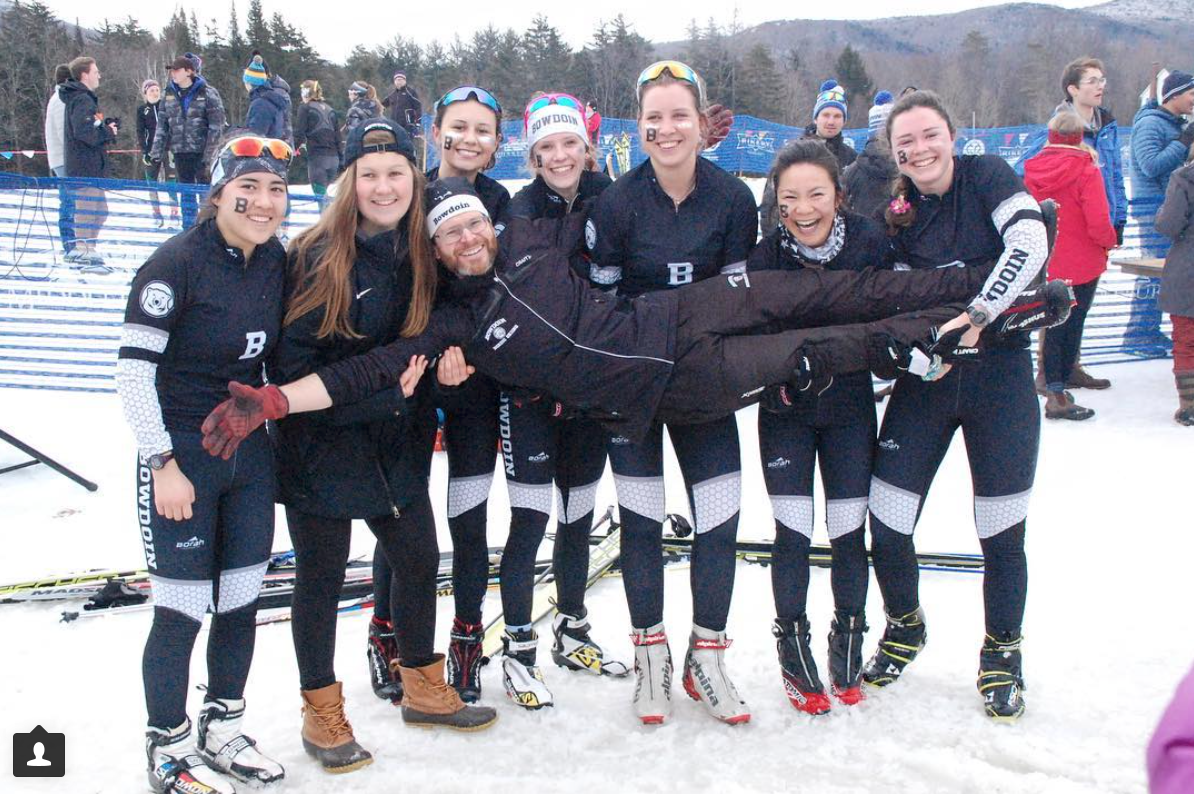
    Bowdoin nordic skiers with head coach Nathan Alsobrook. In July, Alsobrook was recognized as NENSA’s 2018 Coach of the Year. (Photo: @bowdoinskiing/Instagram)

    Building on one of its most successful seasons yet, the Bowdoin College nordic ski team, out of Brunswick, Maine, recently jumped back into training under the guidance of head coach Nathan Alsobrook. Last winter, three skiers qualified for NCAA Skiing Championships, one alumna qualified for the U.S. Olympic team (Kaitlynn Miller, class of 2014), and one visually impaired skier Jake Adicoff (’18) earned a silver medal at the Paralympics. It was a season that Alsobrook names as a highlight of his coaching career.  

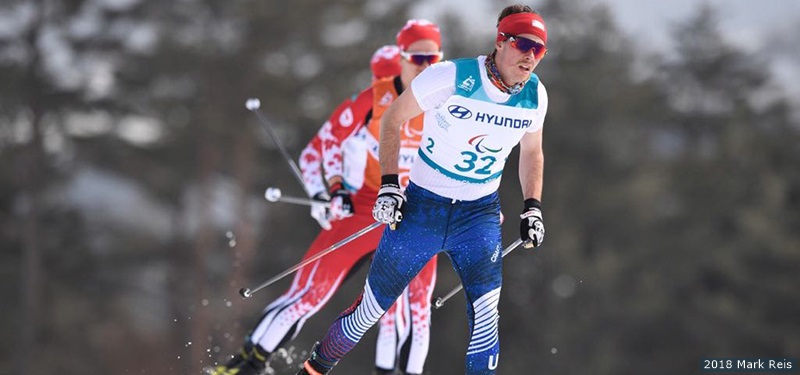
    American Jake Adicoff leads Canada’s Graham Nishikawa and Brian McKeever in the men’s visually impaired 20 k freestyle at the Paralympic Winter Games in PyeongChang, South Korea. Adicoff earned silver (behind McKeever) in the men’s visually impaired 10 k classic in PyeongChang. (Photo: US Paralympics/Mark Reis)

    “The most fun thing about has just been to see the very slow but steady progress that the program has been able to make over the past several years,” Alsobrook said in a phone interview last month. “It’s been very fun and exciting.”

    To top it off, Alsobrook was recognized by the New England Nordic Ski Association (NENSA) as 2018 Coach of the Year in recognition of his team’s steady progress and his contributions to the growth of cross-country skiing in New England. 

    “Over the past years, Nathan has been active in NENSA Programming, including serving as a coach at Eastern Regional Camps, chairing the Coaches Education Committee and running L100 Technique clinics for the state of Maine,” a NENSA press release stated. “Through his dedication to these programs he has made the Bowdoin Nordic Team a visible and attractive institution for skiers to continue their careers.”

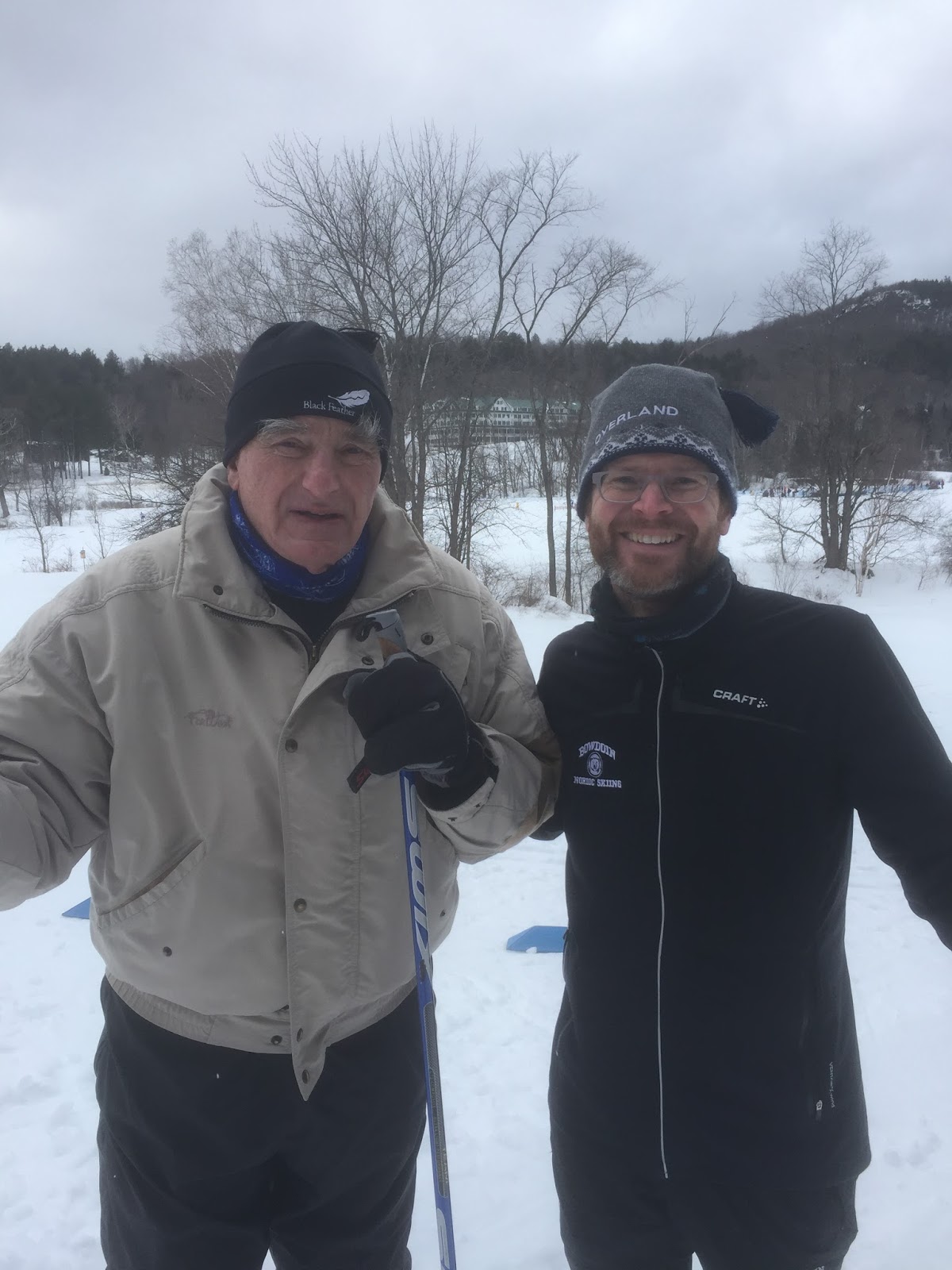
    Current Bowdoin Nordic Ski Team Head Coach Nathan Alsobrook (r) with Marty Hall, who coached at Bowdoin for eight years and was inducted into the U.S. Ski & Snowboard Hall of Fame this past spring. (Photo: Bowdoin Nordic)

    A Bowdoin graduate (’97) himself, Alsobrook returned as head coach in 2007, taking the place of former U.S. and Canadian national team coach Marty Hall, to whom he attributes planting the seeds for Bowdoin’s current development. 

    “He was really responsible for taking Bowdoin out of where it had been,” Alsobrook said of Hall’s eight years with the team. “We really weren’t functioning at a super high level before Marty came in. He was able to really push for the college to bring more resources to the sport and just sort of professionalize the whole program. He essentially created this really great foundation for me to springboard off of.” 

    Before Bowdoin, Alsobrook coached at Whitman College, Montana State University (MSU), Colby College, and the Pocatello XC Ski Foundation, and earned a master’s in exercise physiology from MSU in 2005.

    While it didn’t happen overnight, over the years, the Bowdoin Polar Bears have trended upward in the Eastern Intercollegiate Skiing Association (EISA) nordic rankings.

    “We had individuals pop great races, and we had these flashes of brilliance that more was possible, but it took so many years for us to become competitive as a team. It was not until 2013 that we sent a skier to NCAA’s during my tenure,” Alsobrook explained. “We would have little successes here and there, a great relay performance or a single race where we would finish very competitively, but we never really put it together for consistent week after week Carnival team performances. It was really only last year that that finally happened, where all of a sudden for the combined men’s and women’s nordic events we would find ourselves finishing in the top half of the league.”

    Every weekend on the Carnival circuit last winter, either Bowdoin’s men’s or women’s team placed in the top six. And it saw three skiers — more than ever before — qualify for NCAA’s in Steamboat Springs, Colorado: Gabrielle Vandendries, Renae Anderson and Elliot Ketchel.

    celebrex online, buy voltarol online

    Outside of the results, Alsobrook said he enjoys the culture of the student body at Bowdoin and feels that it contributes to the dedication and work ethic of his athletes.

    “There is this really great sense of balance here at Bowdoin, and we really try to compliment that in our program,” he said. “It’s such a fun mix of these very academically focused and engaged students. … They just love learning, they love being in this environment and challenging themselves, and then they’re just so ready to get out and train hard.

    “I think we do a pretty nice job here at Bowdoin of making this a very collaborative experience, the learning experience and certainly the athletic experience,” he continued. “And it’s just such a natural fit for when you’re trying to create this very team-centered program like I’m trying to do here, that that culture is already in place at the college. I mean, people really want to do well here, in whatever they’re doing, and they’re going to work really hard to do it, and yet they’re trying to help everyone else do the same. That’s something I really appreciate … any competition is directed toward making everyone better.”

    His coaching philosophy aims to capitalize on this dedication to personal success, while also reflecting the sense of balance achieved at the school.

    ponstel online, buy ventolin online

    “I can’t remember who started saying this, but it’s something we started saying around our team:  ‘Happy people ski faster,’ and that is really at the heart of what we are trying to do,” he said. “I know that my skiers are going to get more out of themselves on the race course if they feel very fulfilled with their Bowdoin experience as a whole.”

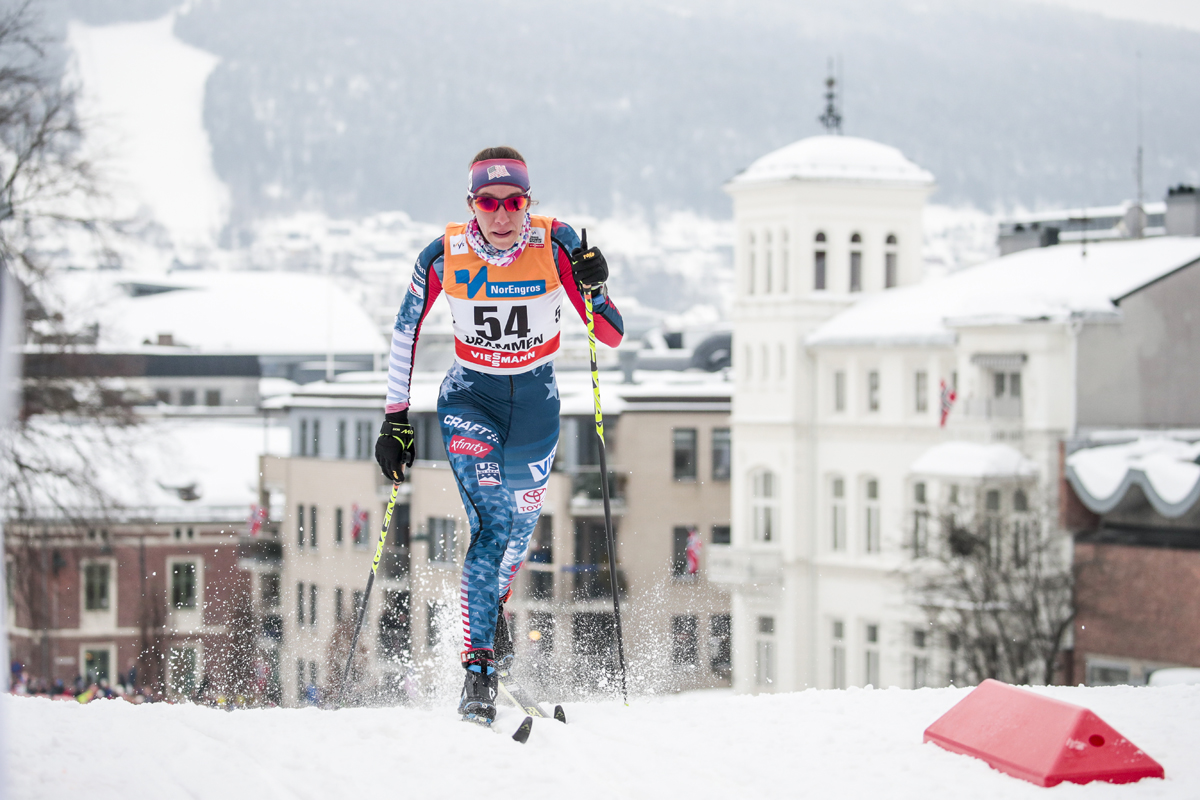
    Bowdoin alumna Kaitlynn Miller racing to 53rd in the World Cup classic sprint qualifier last March in Drammen, Norway. (Photo: Fischer/NordicFocus)

    According to Alsobrook, this culture and balance served Kaitlynn Miller, who now skis for the Craftsbury Green Racing Project, well in her time at the school. He described Miller as “very studious, very thoughtful … and yet very focused when it came time to train.”

    Miller ended last season as the overall SuperTour leader and has earned World Cup starts in November and December as a result.

    “It was really nice to have someone that embodied what we are trying to do in our program,” he continued. “For someone who is such a high-level athlete, she is just extremely humble, very kind and thoughtful, very team-centered. It was really fun to coach an elite athlete who was such a team-centered, selfless person … It’s been a real pleasure to watch her take off.”

    As for the upcoming season, Alsobrook will continue to focus on the continued growth of his team.

    “With my athletes, we’re all about the process,” he said. “Having said that, of course, I have outcome goals, essentially I want to see the team keep moving forward. We’ve never won the Maine State Championship, for example … so we’re really excited to go after that this year. We’ve come close a few times, and maybe this will be our year,” he said.

    Another goal will be to continue to place highly at EISA Carnivals and to develop a strong championship team. Last year, its two female athletes at NCAA’s — Vandendries and Anderson — posted top-30 finishes in Steamboat.

    “Certainly bringing back a good contingency of skiers to NCAA’s again is a big goal,” he said. “We had a number of times where our [team] finishes [in EISA competitions] were fourth, fifth, sixth pretty consistently throughout the season, and that’s a pretty good place to be in a league as competitive as EISA. I do not want to stay there and keep cranking out those finishes, I want to keep getting better. … I mean, hey, we did fourth last year, why not try for third this year? They’re just great things for us to keep fighting for while at the same time we stay firmly grounded on the process.”

    https://www.instagram.com/p/BfmMefUjgzr/?utm_source=ig_web_button_share_sheet&igshid=1j8m5zoxtjds5

  • Pros of Tomorrow: After Injury-Fraught Year, Lustgarten Ready to Make His Mark with Sun Valley

    Pros of Tomorrow: After Injury-Fraught Year, Lustgarten Ready to Make His Mark with Sun Valley

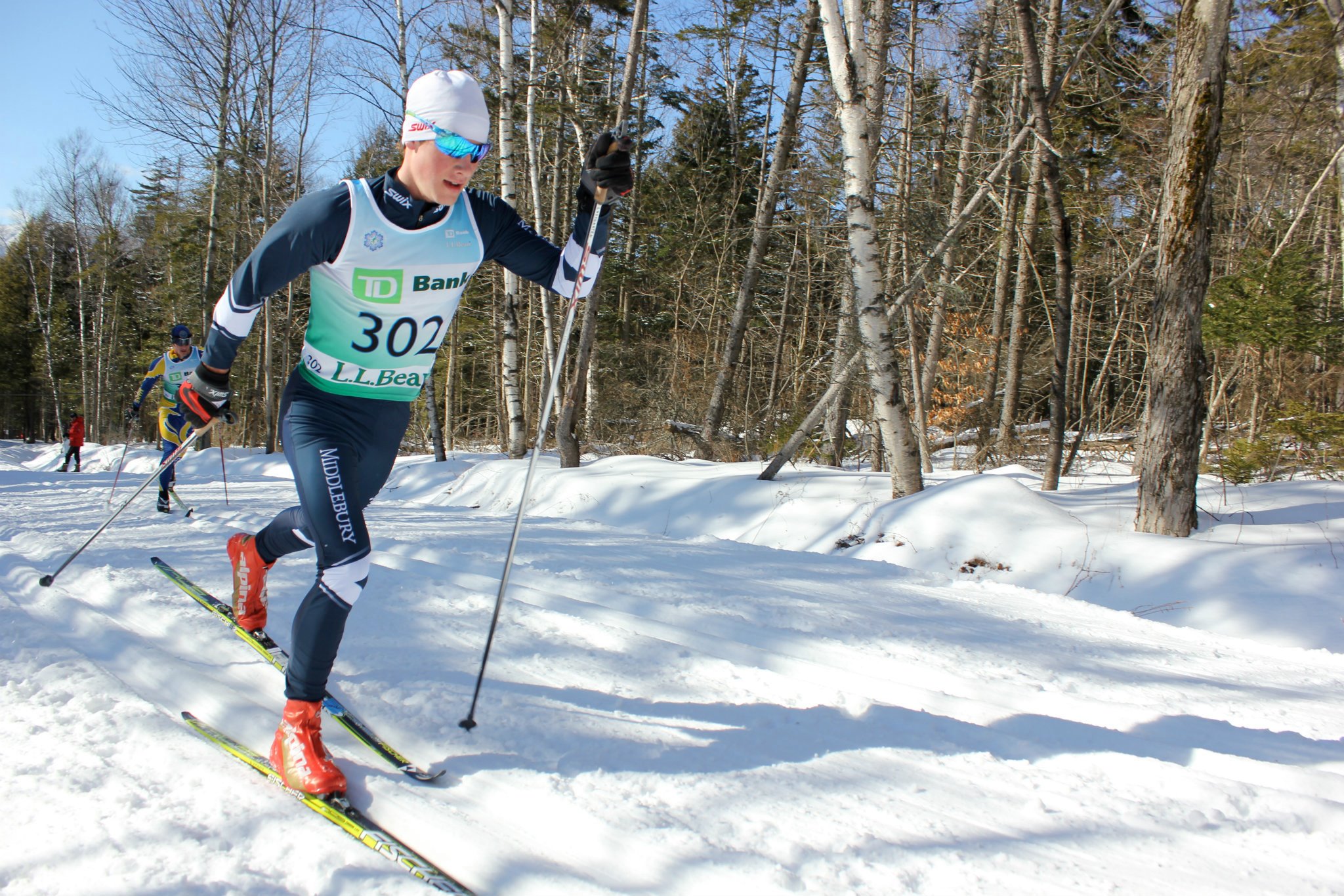
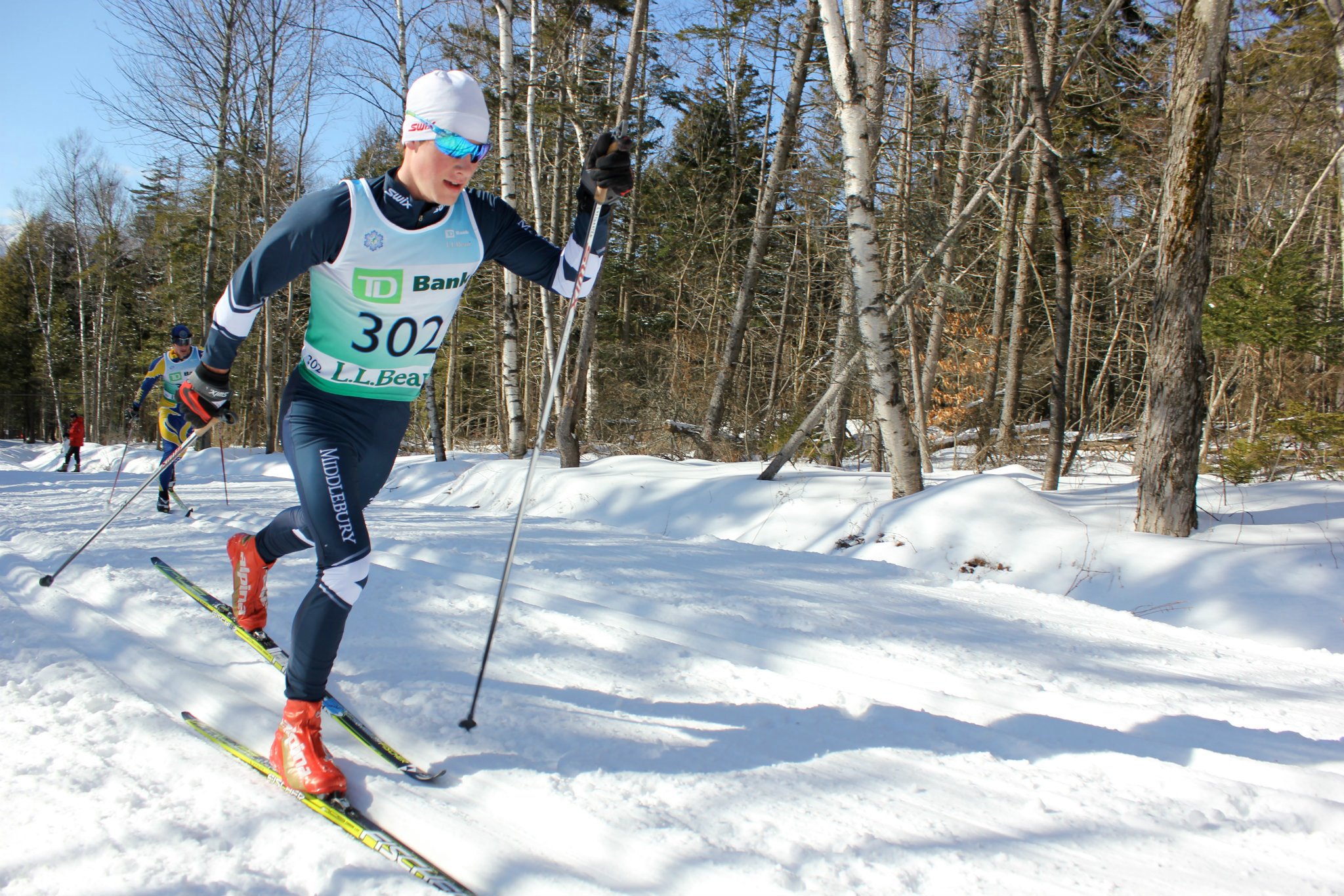
    Ben Lustgarten races in a 2012 EISA carnival at the Trapp Family Lodge in Stowe, Vt. After a senior year at Middlebury College filled with challenges and injury, Lustgarten is now joining the Sun Valley Gold team in his professional skiing debut.
    Ben Lustgarten races in a 2012 EISA carnival at the Trapp Family Lodge in Stowe, Vt. After a senior year at Middlebury College filled with challenges and injury, Lustgarten is now joining the Sun Valley Gold team in his professional skiing debut.

    Editor’s Note: Back out of hibernation, this is the first in this season’s ‘Pros of Tomorrow’ series, which highlights some of the most notable up-and-coming athletes around the world. Have an idea for a top-notch skier you’re itching to read more about? Email info@fasterskier.com with the subject line: Pros of Tomorrow. Ideas for intriguing juniors or collegiate skiers, or lesser-known athletes are welcome as well — subject line: From the Pack.

    ***

    Ben Lustgarten had big plans for his senior at Middlebury College, a small liberal-arts college in central Vermont with a strong history of ski racing. With his eyes set on the NCAA Championships in Soldier Hollow, Utah, the 22-year-old from Burlington, Vt., was determined to train as hard as possible in order to challenge the many Europeans who dominated both the western and national circuits.

    Come March, however, Lustgarten was not lining up at the starting line in Soldier Hollow but instead stood on the sidelines, supported by crutches and sporting a heavily braced knee, watching his former competitors give it their all.

    How did he get there?

    Lustgarten had a modest start in nordic skiing. Growing up in northern Vermont, he dabbled in many sports ranging from soccer to track and field. It wasn’t until a friend suggested the he and his twin, Eric, join his high school’s cross country running and ski teams that he joined the sport.

    When Lustgarten became a member of the Middlebury College Ski Team, he wasn’t well known on the national scene, having just rocketed into the Junior Olympics for the first time in 2010, earning two All-American honors in both distance races.

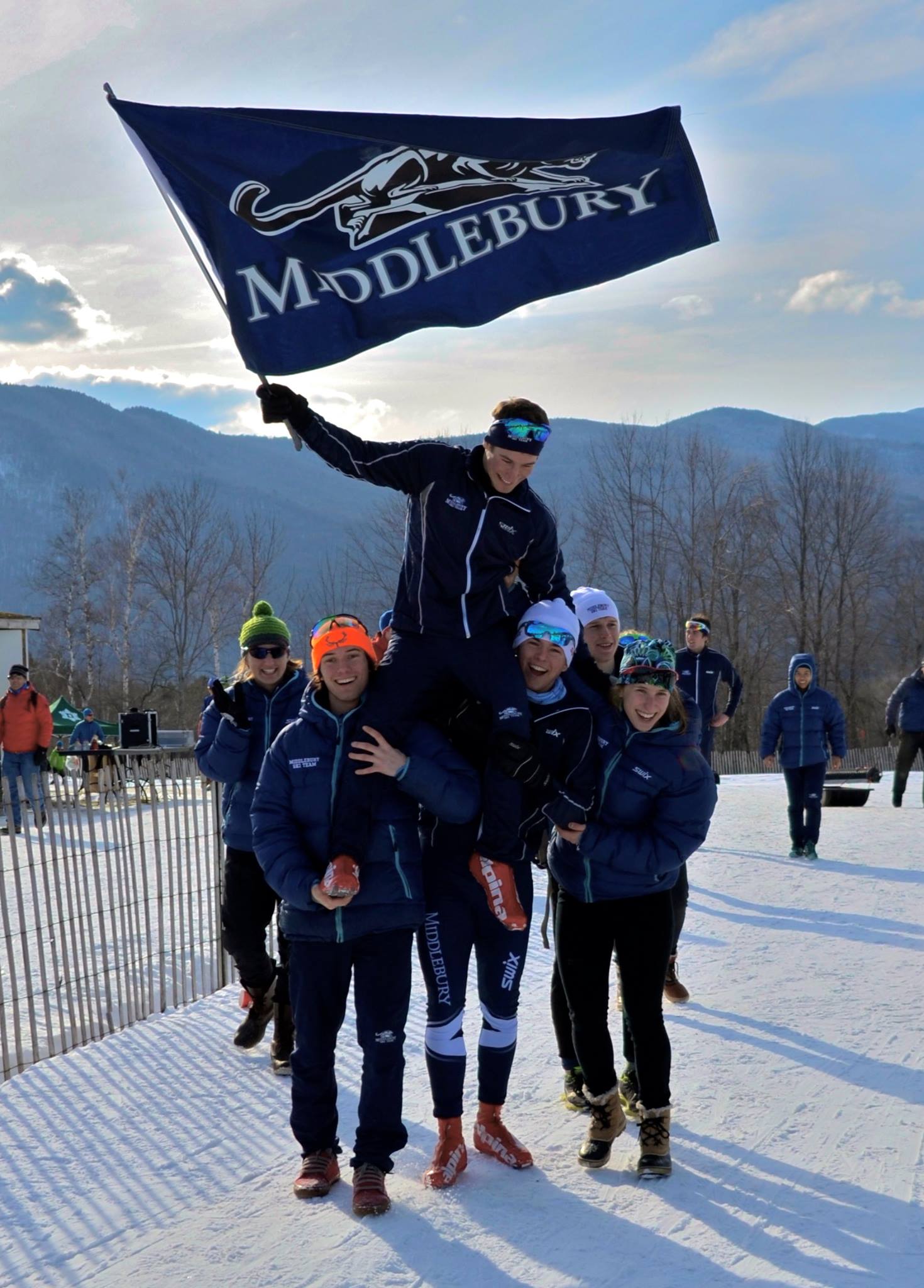
    Ben Lustgarten is hoisted on the shoulders of his teammates after the conclusion of an undated EISA carnival in Stowe, Vt. (Photo: Ben Lustgarten, Facebook)
    Lustgarten is hoisted on the shoulders of his teammates after the conclusion of an undated EISA carnival in Stowe, Vt. (Photo: Ben Lustgarten, Facebook)

    Lustgarten’s career at Middlebury was characterized by constant improvement a relentless dedication to becoming the best skier he possibly could.

    By the time his senior year rolled around he had already placed fourth and eighth in the previous NCAA Championships hosted on his home-course in Middlebury.  This time around he wanted to win.

    However, from the beginning of the training season Lustgarten was hindered by injuries. After damaging his psoas in the fall he was forced to regularly spin and lift, as running and rollerskiing were out of the question.

    Come December, Lustgarten was back to training as usual, slightly hindered by a two-week, minor foot injury.

    On the eve of U.S. nationals in Soldier Hollow, Lustgarten was a unsure of his fitness and speed due to his limited training in the fall. It seemed that his lack of traditional training was inconsequential as the college senior held his own against the best in the country, finishing sixth in the 15 k classic and tenth in the 30 k freestyle. He was the second U23 skier in both races, finishing behind U.S. Ski Team member Erik Bjornsen, who went to the Olympics a month later.

    The results were enough for Lustgarten to qualify for the 2014 U23 World Championships in Val di Fiemme, Italy, one of his major goals of the season. After racing in the Italian Dolomites, Lustgarten was disappointed with his results there, but the experience proved valuable for the Vermonter who had previously never traveled, let alone raced, overseas.

    “I didn’t have the races I wanted to but it was my first time in Europe, and the travel and all that was a factor,” Lustgarten said in a phone interview. “I still had a lot of fun and the experience was really good to see how a lot of Europeans race and just to get a good view of that scene.”

    The experience in Italy unfortunately was not all positive, as the Middlebury skier sustained a concussion in his last race.

    “I fell pretty hard and hit my head against the snow. I felt a little woozy getting up again,” Lustgarten said. “That was an extremely hard race to finish. I lost my entire morale, all my momentum and ended up getting passed a lot. I did manage to finish, and found out I suffered a concussion.”

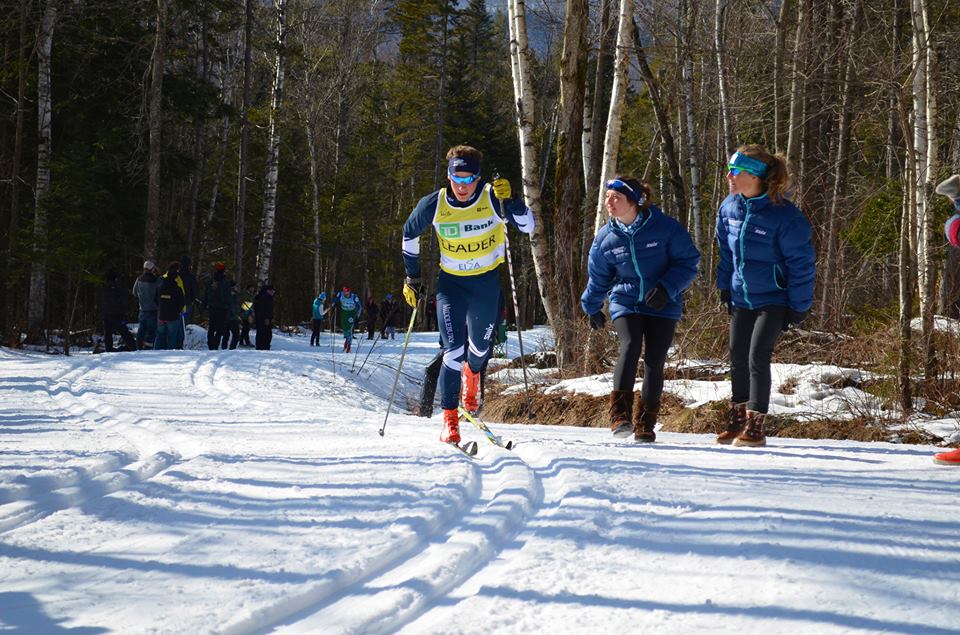
    Lustgarten racing with the EISA leader bib at the 2014 EISA Championships in  Ripton, Vt. Lustgarten went on to win the race by 50 seconds. (Photo: Ben Lustgarten, Facebook)
    Lustgarten racing with the EISA leader bib at the 2014 EISA Championships in Ripton, Vt. Lustgarten went on to win the race by 50 seconds. (Photo: Ben Lustgarten, Facebook)

    Upon his return to the U.S., Lustgarten had to sit out the next Eastern Collegiate carnival at Dartmouth. However, a week and a half after the concussion, he was back on skis at the Williams Carnival.

    During this time, Lustgarten was starting to feel pressure from himself and others surmount as the NCAA Championships drew closer.

    “I felt a lot of expectation, both from myself and other people, to win. I put a lot of pressure on myself and that pressure got to my head,” he said. “I couldn’t fully maximize my skiing potential. I was engulfed by this feeling that I had to win and that I should win. Obviously it hurt my skiing because I couldn’t win some of these races. I would beat myself up about it.”

    Unlike those who have succumbed to similar pressures, Lustgarten recognized that to excel in the final races of the season he needed to return to the basics. Making an effort to ski his “own race” the Middlebury skier lessened the importance of splits and competitors and instead focused on his technique and pacing.

    Having embraced this philosophy, Lustgarten entered the Middlebury Carnival and Eastern Intercollegiate Ski Association (EISA) Championships both calm and collected.

    The new mindset paid off as Lustgarten crossed the finish line of the individual 15 k classic in first place, exactly 50 seconds ahead of one of his fiercest competitors, Scott Patterson of the University of Vermont.

    “It not only helped my confidence to know that I might be able to win further races, but it really only matters when you ski within yourself and if you trust yourself and not to get all wound up in the scene with all the results,” Lustgarten said. “Which is really nice, because not only do you feel better about yourself when you cross the finish line, but generally the results are better. So it’s a win-win.”

    The next day was a different story.

    Entering the second day of the EISA Championships, the weather was warm and the conditions were fast on the hilly and technical course at the Rikert Nordic Center. Even going into the first laps of the 30 k freestyle mass start, Lustgarten could feel his shins tightening up.

    Lusgarten poses during a ride in Sun Valley, Idaho, where he is currently training and recovering with the Sun Valley Gold Team. (Photo: Ben Lustgarten, Facebook)
    Lusgarten poses during a ride in Sun Valley, Idaho, where he is currently training and recovering with the Sun Valley Gold Team. (Photo: Ben Lustgarten, Facebook)

    After attempting to stick with the leaders, Lustgarten was forced to pull back, but the damage was already done. Barely able to move his legs, the Middlebury College Senior said both his competitors and spectators were giving him odd looks.

    Descending from the last major climb in the third lap, Lustgarten knew he had to take the corners very easy or risk falling due to the tightness in his shins. Coming into one of the final turns of the lap Lustgarten went wide, miscalculating his speed and the sharpness of the corner he had skied so many times before.

    Lustgarten soon realized he was headed for a tree, and immediately fell to the snow ensuring his feet were in front of him; a move that he would later characterize as lifesaving.

    Unable to slowdown, he made full impact with the tree, placing all impact on his right foot. The next thing he knew he was sprawled on the side of the trail with searing pain in his right leg.

    “In a normal crash, you get back up, you put your stuff back on, check if your poles are broken, and move on. I tried to move my leg and it was just so painful,” he recalled. “It was half bent and I couldn’t straighten it. I couldn’t move it. I was gasping in pain and after a minute I yelled out help because I knew I couldn’t get up. Then the world crashed around me and I realized that I was not going to finish this race. I thought my leg was broken and I thought my season was over. It was pretty traumatic.”

    Lustgarten’s leg was not broken, but a visit to a doctor in Burlington resulted in the some of the worst news he had received: he was out for the rest of the season with a severely torn posterior cruciate ligament (PCL) in his knee. No NCAAs. No challenging the westerners. No conclusion to his final year of racing at Middlebury.

    “I thought I was going to double pole NCAAs. I was livid that I couldn’t race. I would have done anything. It was my last season and I was going to do what I could to finish the race. Everyone was saying that I shouldn’t do it but I didn’t care what anyone said. However, if I had crashed and fully torn my PCL that would have required surgery and I would have been out of skiing for a year. Everyone talked some sense into me,” Lustgarten said.

    He did, however, travel to the NCAA Championships in March but was delegated to the sidelines, resigned to thinking about what could have been.

    “I tried to cheer on people as best as I could,” Lustgarten said. “But it was hard watching them because even if they were having a bad race they were out there trying their best. Representing their college and their coast. I wish I could have raced those good guys from the west. I had wanted to race them all season. Maybe I’ll get a chance next year.”

    While Lustgarten won’t get a chance to race the collegiate circuit next year, he will get a chance to prove himself on the national scene.

    Shortly after graduating from Middlebury College in May, Lustgarten traveled west to Idaho to join the Sun Valley Ski Education Foundation (SVSEF) Gold Team, where he will compete in the hopes to make his mark in professional nordic skiing.

    Lusgarten (l) and SVSEF's head coach Rick Kapala (r) discuss a rollerski workout in some unfavorable June weather. (Photo: Ben Lustgarten, Instagram)
    Lustgarten (l) and SVSEF’s nordic director Rick Kapala (r) discuss a rollerski workout in some unfavorable June weather. (Photo: Ben Lustgarten, Instagram)

    “It will be awesome to see what skiing is like without school,” he said. “I can spend a lot more time doing physical therapy, stretching, strengthening to prevent injury, increase balance, and just pend time doing small stuff that I wouldn’t have time to do at school.”

    He believes these small changes will help him reach his lofty goals for the next season. On that list is a podium at US Nationals, a top 15 at the U23 World Championships, and to qualify for a couple World Cups in the 2015/2016 season.

    Despite his elevated goals, Lustgarten knows he has a lot of work to do in the meantime.

    “I don’t really know how my improvement will be with the injury and training. I have optimistic views,” he said.

    In terms of his future as a pro skier, Lustgarten acknowledged that if things don’t go as expected, he plans to go back to school. If he does see improvement, Lustgarten would like to see how far he can go.

    “I would definitely like to ski for the next couple years. Obviously the Olympics is a ways off, but that’s the dream for anyone who goes pro,” he said. “If things do work out well I would love to shoot for the Olympics in 2018.”

    Long-term goals aside, Lustgarten is taking advantage of his what his new life as a professional athlete has to offer. For now, the emerging skier is excited to work on new sponsorship deals, develop a website and blog expected to be ready by the end of the week, in addition to full-time training.

  • ‘Soch-Eph’ 2014: EISA Williams Carnival

    ‘Soch-Eph’ 2014: EISA Williams Carnival

    Competitors head out to start the women's relay at the Williams Carnival (photo: Ian Nesbitt)
    Competitors head out to start the women’s relay at the Williams Carnival (photo: Ian Nesbitt)
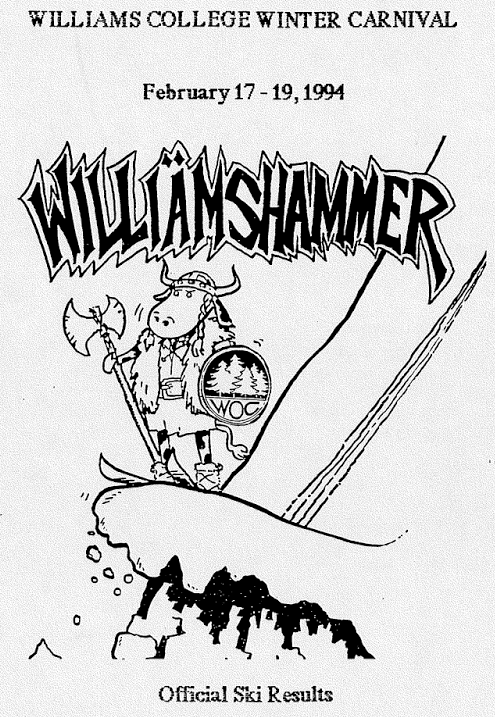
    Excerpt from the 1994 Williams Carnival results packet (photo: EISA archives)
    Excerpt from the 1994 Williams Carnival results packet (photo: EISA archives)

    Though they do not host an EISA event every year, the Williams Carnival often coincides with the Olympic Games both in terms of yearly-cycle and calendar date. In past seasons, this event has been referred to by the organizers with unique puns like “Williamshammer” (the 1994 Lillehammer Olympics) and “Moogano” (the 1998 Nagano Olympics). With this year’s event taking place parallel to the Sochi Winter Games in Russia, one might find themselves pining for a little bit of that Olympic touch within the college Nordic scene. Perhaps “Moochi” or Soch-Eph”?

    Regardless of your level of Olympic spirit, no skier will complain about having large amounts of snow. A massive winter storm brought over two feet of fresh, soft snow to the Prospect Mountain ski area last Thursday, Friday and Saturday, the penultimate race weekend of the EISA season.

    Many of them would tell you that driving a van, bus or trailer through a snowstorm is common practice for cross country ski coaches, and everyone from coaches to parents to athletes got to put their winter driving skills to the test on the long ascent to the venue, part of a now-defunct alpine ski area that sits at over 2,000 ft in elevation.

    Much like winter patterns and studs for drivers, different approaches to technique and ski selection must be used when facing soft snow on a ski course. Add in the pressure of a narrowing window of opportunity for skiers on the bubble of NCAA qualification, and you have a truly interesting race weekend.

    Friday: 3×3.25K Freestyle Relay

    Dartmouth's Fabian Stocek scrambles for Dartmouth's first relay team, while Akeo Mayfeld-Carucci follows, sporting a pink valentine Harvard uniform
    Dartmouth’s Fabian Stocek scrambles for Dartmouth’s first relay team, while Akeo Mayfeld-Carucci follows, sporting a pink valentine Harvard uniform (photo: Ian Nesbitt)

    Friday brought the first and only relay event of the year to the EISA, with some perennial powerhouses up front. UVM made winning look easy in the women’s race. Though Dartmouth’s Annie Hart led out of the gate, the trio of Linda Danvind-Malm, Anja Gruber and Stephanie Kirk (in that order) put the rest of the field out of sight behind them en route to a minute-plus victory over Dartmouth.

    The most exciting moments of the day came in the race for the final podium spot. Leg by strong early legs by Hallie Grossman and Jane McClarney, the Bates women looked to have a lock on third place going into the final leg. The Bobcat’s anchor skier, Sadie James, has raced to multiple excellent performances in the top-30 this year, but struggled Friday under the pressure of three skiers charging up to her, two of them standout freshmen in their own right.

    Colby’s Amy Bianco and Williams’ Hannah Cole made contact with James before the end of the leg, along with Bowdoin’s Kaitlynn Miller. Miller, who has steadily improved to be a consistent threat on the circuit, was the most experienced of this group. That played to her teams advantage, as Bowdoin took home third place to mark yet another milestone for the Polar Bear program. Williams finished in fourth and Colby in fifth, as James and the Bates team faded to sixth.

    The men’s race was carried out in almost opposite fashion at the front, with UVM’s Cole Morgen taking an early lead out of the stadium. Without two of their usual scoring three (Scott Patterson and Rogan Brown), however, both of Dartmouth’s teams worked together to pass the Catamounts. By the final leg, Big Green skiers Paddy Caldwell and David Sinclair were skiing together with a gap to the rest of the field.

    It was not a question of whether or not Dartmouth would win, but rather which Dartmouth team would win. In the end the first team of Fabian Stocek, Silas Talbot and Paddy Caldwell was victorious in a sprint finish over the second Dartmouth team of Erik Fagerstrom, Cam Woodworth and David Sinclair. UVM’s team of Cole Morgen, Jack Hegman and Jorgen Grav finished third, 30 seconds behind.

    Saturday: 5/10K Classic

    As snow continued to fall, more soft conditions were inevitable for the second day of the Carnival.

    KM Bow
    Bowdoin’s Kaitlynn Miller skis to 2nd place in the Williams Carnival classic race (photo: Ian Nesbitt)

    UVM’s Anja Gruber continued her excellent season with a win in Saturday’s 5k classic race. Between the two of them, Gruber and her teammate Linda Danvind-Malm have won every collegiate race so far this season. The two Cats only have one more weekend left to complete the streak of wins for UVM.

    Finishing next behind Gruber on Saturday was not Danvind-Malm, nor other usual rivals such as Annie Hart or her Dartmouth teammates. Instead it was Bowdoin racer Kaitynn Miller, who improved on her previous top finish of third and stepped up one more level on the podium. Racing to a personal breakthrough of her own was sister Hannah Miller, whose eighth-place finish helped the Bowdoin women take their second team podium in as many days.

    Danvind-Malm finished third, which once again helped the UVM women to a team victory.

    The men’s race also saw a double-victory on the weekend, as Dartmouth’s Paddy Caldwell, anchor of Friday’s winning relay team, took his first individual collegiate victory ahead of teammate Silas Talbot. In third place was UNH skier Eirik Fosnaes, who picked up his second career podium in third.

    Though winning a carnival as a freshman is certainly a big story, the success of Caldwell through his junior racing years made this victory somewhat unsurprising. The Dartmouth skier has always been a consistently fast racer, with the ability to perform best when it counts.

    In that vein, it was a uncharacteristic off-day for EISA standout Jorgen Grav. The UVM racer, who has won on numerous occasions this year and has rarely finished outside the top 5 in recent races, found himself in 16th place and out of UVM’s team scoring.

    Cole Morgen (6th), Jack Hegman (7th) and Rogan Brown (13th) were still able to secure second place for UVM in the team score, while the Williams men stacked the top-25 to earn a third place team score at their home event.

    Farewell to Fisher 

    On the subject of the strong Williams results from this weekend, it is certainly worth noting that this was the final home carnival for long-time Williams head coach Bud Fisher, who will be departing after this season. A graduate of St. Lawrence University and a former standout cross country and Nordic combined athlete himself, Fisher began coaching at Williams in 1974. During his tenure at Williams Fisher also coached at the US Ski Team and Olympic level, and has become a prominent and highly-respected name in the skiing world.

    During a small ceremony on Saturday many respects were paid to coach Fisher.  A hearty congratulations goes out to Fisher for a long and successful career in the sport!

    Results for this weekend can be found at BART Timing


  • EISA Racing Begins: Patterson, UNH Women Excel

    EISA Racing Begins: Patterson, UNH Women Excel

    In the days and weeks leading up to the Nordic events of the 1980 Olympic Games in Lake Placid, snow was hard to come by. Thanks to the dedicated efforts of the local community, mostly consisting of heavy shoveling and snow-moving, the Olympic races were contested, and some of the more memorable races in the history of the sport took place.

    Most notable may have been Thomas Wassberg’s narrow .01 second victory over Finnish skier Juha Mieto in the 15-kilometer event. Wassberg’s immense efforts in the final moments of the race led to an extraordinary and captivating result, and the closest race in Olympic history.

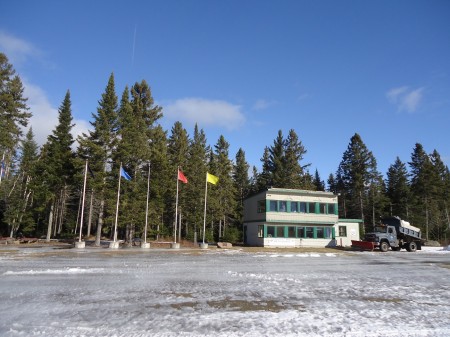
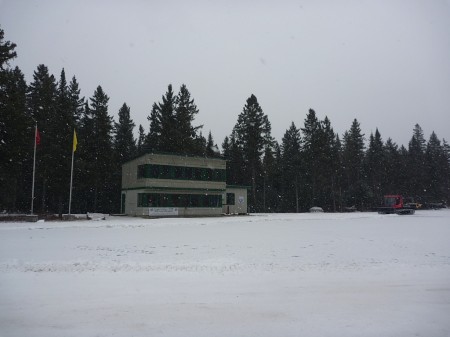
    A few days before the races of the St. Lawrence Carnival, the opening weekend of the EISA racing circuit, it was hard not to dwell on those same imposing factors: a lack of snow and a narrowing window of time.

    Though the East had been treated to a good amount of snow over the holidays, a warm spell over the recent weekend had left the trails at Mt Van Hoevenberg patchy, icy and pock-marked with mud and dirt.


    The stadium complex at Van Hoevenberg Tuesday morning
    The stadium complex at Van Hoevenberg Tuesday morning


    “The stadium was an ice-skating rink,” said Margaret Maher, head coach of the NYSEF (New York Ski Education Foundation) Nordic team, and the event’s Chief of Competition. “We knew we were going to have to make adjustments.”

    Those adjustments came in the form of massive snow-moving and shoveling efforts in the early part of the week, not unlike the work leading up to the 1980 Olympics.

    The Olympic Regional Development Authority (ORDA) used heavy machinery and trucks to move snow from further parts of the Olympic Sports Complex into the stadium area. Grooming equipment was then used to spread and level the snow.


    As the week progressed, snow from both human efforts and natural causes brought the stadium up to its usual mid-winter appearance
    As the week progressed, snow from both human efforts and natural causes brought the stadium up to its usual mid-winter appearance


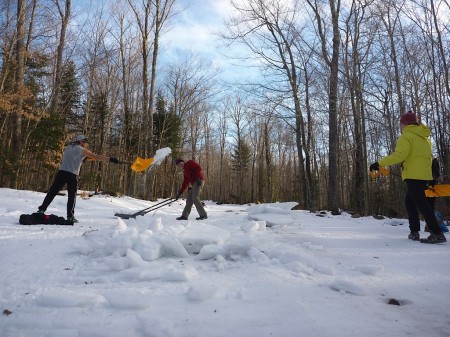
    Meanwhile, members of NYSEF and the St. Lawrence University ski team walked the trails with shovels and rakes, using what little snow lay in the woods to cover bare patches of trail. Students at nearby North Country School shoveled snow on the network of trails across the road on Van Hoevenberg’s Biathlon network to allow for public use during the race weekend.


    Members of the St. Lawrence University Ski Team shovel snow  onto the East Hill trail on Tuesday afternoon
    Members of the St. Lawrence University Ski Team shovel snow onto the East Hill trail on Tuesday afternoon


    By Wednesday afternoon a 4.5k loop had been completely restored to racing quality. The few inches of snow that fell throughout the week helped to solidify a fair and fully snow-covered course. Though it was not the loop initially planned for Friday’s distance races, the trail was long enough to keep the original 3 (women) and 4 (men) laps intended for the events, with only minimal loss of total distance. The races went off without issue.


    Friday: 15/20k Skate

    Racing began Friday morning, featuring interval-start races of 18 kilometers for men and 13.5 kilometers for women. Cold temperatures resulted in a delayed start, and at the end of the long day two University of Vermont skiers stood atop each podium.

    After a Sophomore year plagued by health issues, Scott Patterson used a renewed summer of training and motivation to return to the top form that saw him win the first EISA Carnival he ever raced in, the St. Lawrence Carnival of 2011. Patterson’s racing shape seemed eerily better at the 2013 edition of the SLU Carnival, however, as he took the win by over 2 full minutes. Patterson started fast and never looked back, holding the fastest lap splits for each of the 4 laps and essentially pulling thirty seconds further ahead of the field and second place finisher Silas Talbot (Dartmouth) with each successive trip around the course. The Big Green was also represented on the podium by Scott Lacy, who helped lead the Dartmouth men to a narrow victory over the UVM men in the team score. Rogan Brown (UVM) and Steve Mangan (Dartmouth) rounded out the top 5.

    Both UVM and Dartmouth showed impressive depth, collectively taking 9 of the top 10 places. Ben Lustgarten of Middlebury, who placed 7th, was the only skier to break up the UVM/Darmouth grouping.


    Scott Patterson won Friday's race with plenty of time to spare. Photo: C.J. Feehan. EISAskiing.blogspot.com
    Scott Patterson won Friday’s race with plenty of time to spare. Photo: C.J. Feehan. EISAskiing.blogspot.com


    Temperatures warmed only slightly for the women’s race, where Vermont’s Anja Gruber took the victory to give the Catamounts an individual sweep of Friday’s races. Gruber’s margin of victory was not quite as dominant as Patterson’s, however, and the ladies of the University of New Hampshire put together a strong scoring trio directly behind her. Anya Bean, Annika Taylor and Elizabeth Izzo took places 2 through 4, respectively, giving UNH a solid victory in the team score.

    With a finish that likely turned many heads, Bowdoin Junior Kaitlynn Miller rounded out the top 5. Miller’s 5th was the best Bowdoin women’s result in the school’s history, and a result that matched Walt Shepard’s two 5th-place finishes during the 2008 season for the best Bowdoin finish ever, male or female.

    “We knew that Kaitlynn was in great shape,” said head Bowdoin coach Nathan Alsobrook on Saturday, “but yesterday’s race exceeded our highest hopes.”

    With the cold spell ending overnight, the racing continued with faster conditions on Saturday.


    Saturday: 3k Prologue

    Saturday’s races were originally scheduled to run as classic sprints, but the lack of snow depth and course availability led organizers to work out an alternative race format. During the early stages of the week, when low-snow still posed a threat, several ideas were presented.

    “Ethan [Townsend, head SLU coach] and I tossed around several ideas, including a skate sprint and a mixed-gender relay,” said Maher of Saturday’s race options. “Ultimately it came down to the size of the stadium we could create and the finish area we could use.”

    The result? A relatively new race format adapted from the World Cup and Tour De Ski. Several small modifications were made to the 4.5k race loop from the previous day, resulting in a 3.2k “Prologue” event. This was the first time a race of this distance had been featured on the EISA circuit.

    While some jokingly referred to the event as an “Epilogue” due to it being the second and last race of the weekend, the competition itself was approached very seriously by the racers, and included many close finishes.

    Scott Patterson made it 2-for-2 on the weekend, winning the men’s race in 8 minutes flat. Jordan Buetow of Bates followed 4.5 seconds behind, looking relaxed and using his considerable height to generate noticeable speed on the course’s flatter sections. Cole Morgen of UVM took the final step of the podium, 2 seconds behind Buetow.

    Peter Hegman (UVM) and Thomas Rabon (Dartmouth) completed the top-5, with the UVM men earning the top team score.

    In the women’s race the University of New Hampshire continued its strong start to the 2013 season. The local crowd at Mt. Van Hoevenberg had good reason to celebrate as the results became official: hometown skier Elizabeth Izzo, who hails from Lake Placid and skied for the NYSEF before becoming a Wildcat, took her first EISA Carnival victory. “’Lizzo” completed the loop on her home course in 9:12.6, exactly one second ahead of runner-up Anja Gruber (UVM), who collected her second podium finish of the weekend. Another relative local originally from Queensbury, NY, Carly Wynn (Dartmouth) took the bronze just .3 seconds behind Gruber.

    Anya Bean (UNH) and Annika Taylor (UNH) moved down the ranks only slightly from their podium performances the day prior to round out the top 5 and again give the UNH women the top team score.


    EISA racing continues next weekend on a brand new trail network. Quarry Road in Waterville, Maine will play host to the Colby Carnival for the very first time. The event website can be found by clicking below.

    FULL RESULTS

    COLBY CARNIVAL SITE