This week, FasterSkier caught up with elite mountain runner Kasie Enman. A 2011 World Mountain Running champion, 11th-place finisher at the 2008 Olympic marathon trials, competitive snowshoe racer, collegiate All-American, and more, Enman divulged her secret to prepping for mountain races and the latest projects she’s been tackling when it comes to mountain running.
***
Mountain running, marathons, maple-syrup manufacturing, mother of two, Vermont-based 2011 U.S. World Mountain Running champion Kasie Enman has plenty on her plate. Pile on coaching two club running teams and her and her husband Eli’s living-off-the-land lifestyle, it would appear all her time is already taken. But Kasie, a Middlebury College alum, made room for one more project this year: the push to make mountain-running race team sizes and distances equal between men and women.
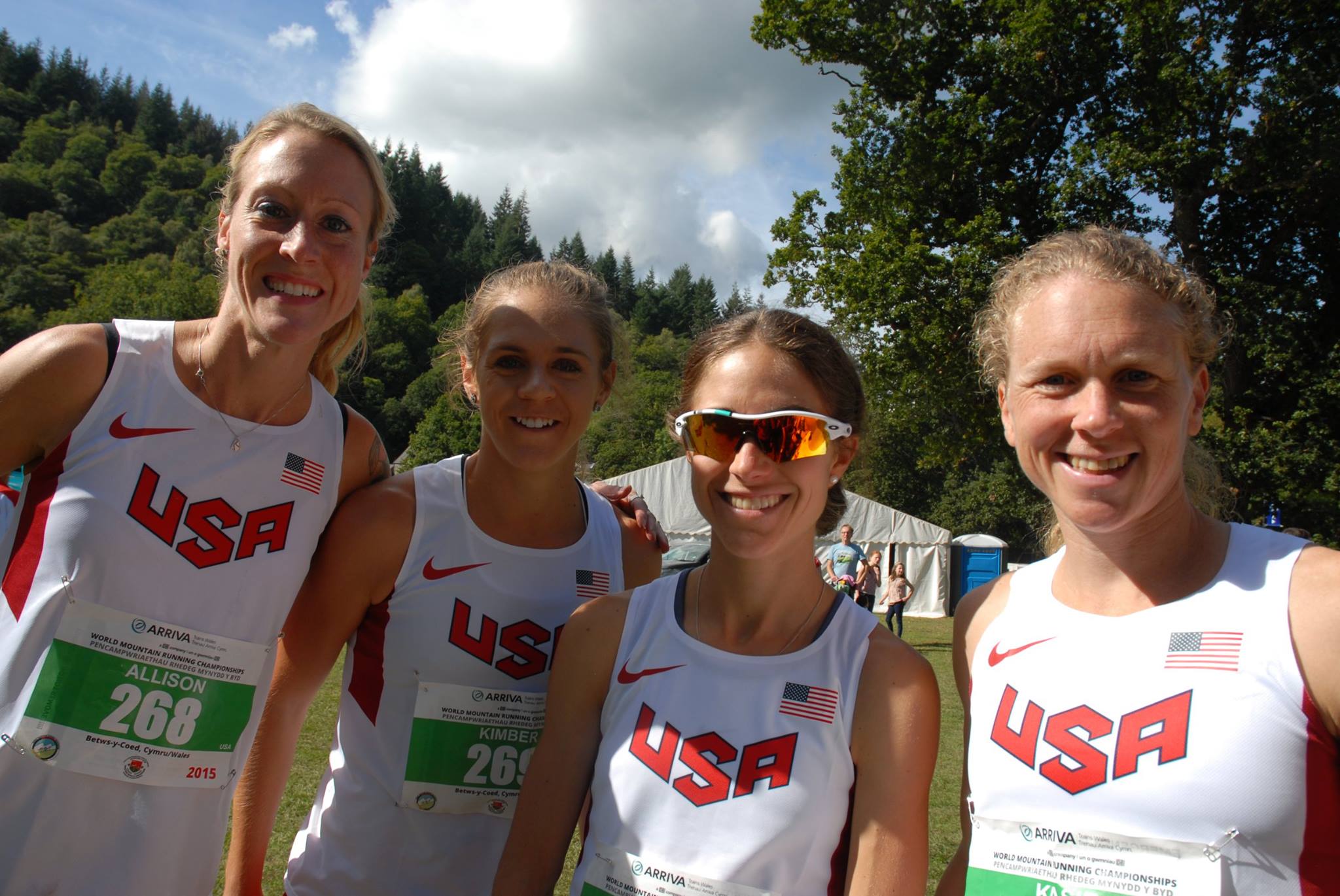
Not normally the one to “be the squeaky wheel,” Enman, 37-years-old, felt this was a scenario where it was acceptable for her to do so. Currently, the World Mountain Running Association (WMRA) permits each international team to carry six men and four women. In the WMRA, similar to the National Collegiate Athletic Association (NCAA) and International Ski Federation (FIS) competitions, men and women also compete on different length courses. Enman hopes to not only achieve equal course length, but equal team size at all levels of the sport, nationally and beyond.
“The most exciting thing that’s happening in the near future is at the U.S. [Mountain Running] Championships this year, we will be running equal distances,” she said in a recent phone interview. “So that’s something to be proud of.
“The next big push will be heading into the World Championships in September [because] that’s when the votes will happen,” she added, referring to a proposal that was submitted to make team size and course distances the same for both genders.
In order to be present for the September vote, however, Enman still needs to make the U.S. Mountain Running Team. The qualifier will take place this year on July 3 at Loon Mountain in Lincoln, N.H.
The Work[out] to Make the Team
Though Enman is an extremely experienced and adept runner (she finished 11th at the Olympic Marathon trials in 2008, won the 2011 U.S. Mountain Running Championships, and that same year, went on to become the first American woman to take the title for World Mountain Running Championships), she wasn’t always darting over peaks. Her transition into mountain running was shaped by her surroundings and situation.
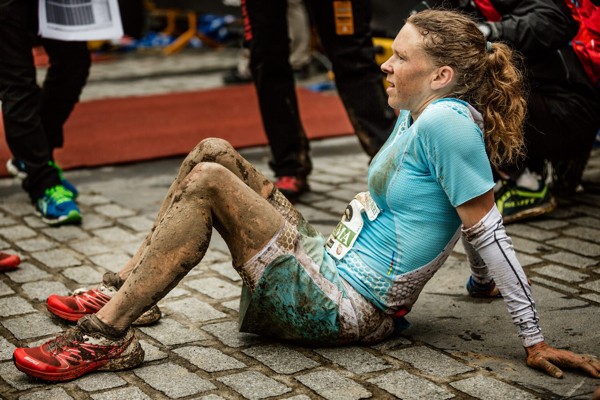
“I ran cross country [in college], but that was the most trailish kind of thing that I had any experience with,” she explained. “I think [my interest in mountain running] really morphed from the location where I live.”
After graduating from Middlebury and spending a year in Burlington, Enman moved to Sleepy Hollow in Huntington, Vt. with her husband. With only a mile separating her from the mountain biking, running, and nordic ski trails of Sleepy Hollow Inn — a family owned and operated outdoor center — it didn’t take Enman long to fall into technical trail running.
“I’m not going to be driving somewhere to train. I train where I live and where I live happens to be really hilly, fairly mountainous and technical footing,” she said. “Gradually over time, [mountain running] just became something I could do well because I did so many hours of it. I tried out my first actual mountain race on a year when I had a plantar facsciitis injury and it was too painful to run on anything flat or even on downhill, but I found I could run pain free uphill.”
Cranking out the uphill kilometers without any pain in her heel, Enman unearthed her calling. She quickly became addicted to mountain racing and competed in the Loon Mountain Race, Ascutney Mountain Run and Mount Washington Road Race. Learning that there was an opportunity to make a U.S. National team only pushed Enman further.
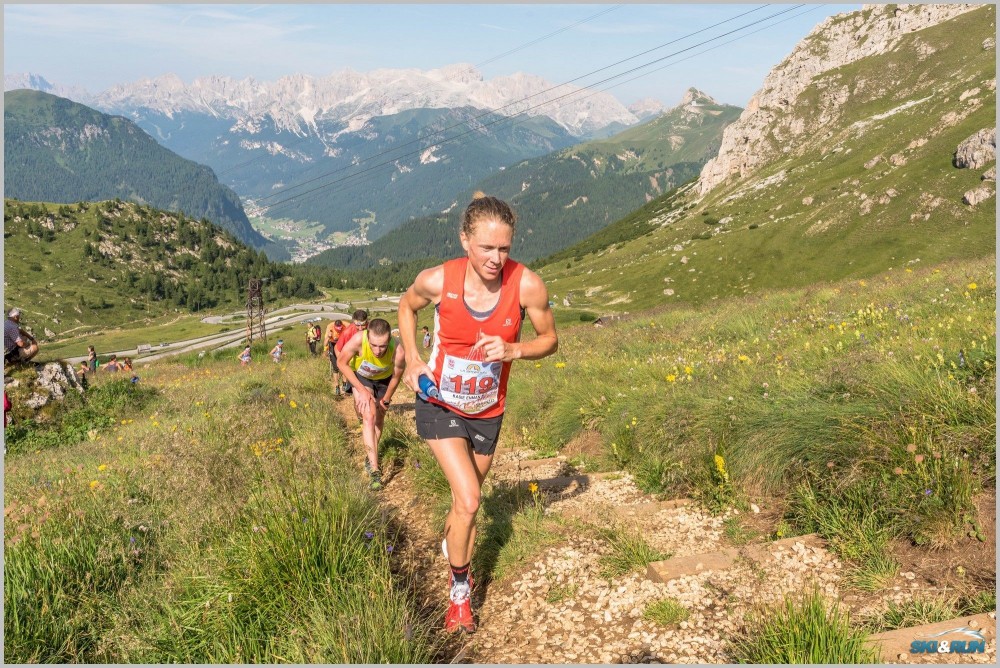
“It took me a number of years to actually make the team,” she said. “I kept just missing it, and then 2011 I finally made the worlds team and that opened up a lot of doors. … It was sort of a whirlwind of a few years of discovering things and having some surprising success.”
This year, Enman’s training regime takes on a slightly different look, as she is coming off of an eight-month period of injuries and illness–a fall hamstring strain that led to back and hip pain and a a virus that led to Enman to feel chronically fatigued. With this year also being an uphill-year only (mountain-running race seasons alternate between uphill-race-only years and years with courses that involve downhills), her current focus is running economy and efficiency.
“This is an uphill-only year and that’s not my strength,” she said. “I’m always trying to get better with that and that’s kind of why I choose to push the uphills because I’m experimenting with … what feels like using the least amount of energy necessary to get up this hill the fastest and most efficiently.”
With the Mt. Washington and Loon Mountain races ahead and a her injury behind, Kasie’s “transitional workout” is quite simple: get to an uphill and giddy up.
“I start on an uphill, our driveway, which is a half mile uphill to the trails,” she said. “ Then I continue up to the nordic trails and the single track … and then, basically anytime there’s a choice to go up, I take it.”
The Workout: Hill (Rather, Mountain) Repeats
Purpose: Work on uphill running efficiency and economy
Pace: Enman suggests Level 3/4 during uphills
– Find an uphill and start climbing!
Her uphill segments to be around 11-12 minutes of steady climbing … times 10.
“Some of the uphills are as long as like 11-12 minute continuous climbs to the top,” Enman said. “Of course then I’m like, I only have to do that 10 more times consecutively before I’m done.”
– The steeper, the better.
Enman isn’t afraid to tackle pitches that are similar to those she’ll be racing on, no matter the amount of related calf and quad pain.
“There’s this part of Loon called Upper Walking Boss that gets to like a 45-degree grade slope that you’re running up — it’s like a black-diamond ski trail,” she said. “And there are some trails that steep around here, too.”
– Look for technical terrain that will challenge your footing and coordination.
Total time: 90 minutes
For an adaptation to the above hill workout, check out a video Kasie posted of her hill preparation for the 2015 Hartford Marathon race. (Video: Courtesy of Kasie Enman)
https://www.youtube.com/watch?v=nrSzVpZnwZM
Enmans’s Top-Two Mountain Running Musts:
- Ditch the watch and — heaven forbid — the heart rate monitor. Every once in a while, don’t be afraid to ditch the GPS, watch and heart rate monitor that might be hindering you from hearing what your body has to say. “I rarely run with a watch, I also don’t run with a GPS garment,” Enman said. “Then I can pay attention to how I’m feeling. I’ve shown up at enough races and have done well enough, that now I have confidence that I can sense my effort and that I am doing what’s the best for me on [competition] day.”
- Drop everything and run. Being flexible is certainly important for those on a strict schedule. As a mom, Enman takes any opportunity she can to get out the door, thanks greatly to communication with her husband and extended family. “I’ve just gotten to where I’m ready to go at any moment,” she said. “it doesn’t matter if I’ve just eaten a big lunch, I’ll step right out the door and go right then if that’s when the window opens.”