Tag: Eliska Hájek Albrigtsen

  • On Pregnancy, Postpartum Recovery, and NCAA Ski Coaching: Eliška Albrigtsen (Part 2)

    On Pregnancy, Postpartum Recovery, and NCAA Ski Coaching: Eliška Albrigtsen (Part 2)

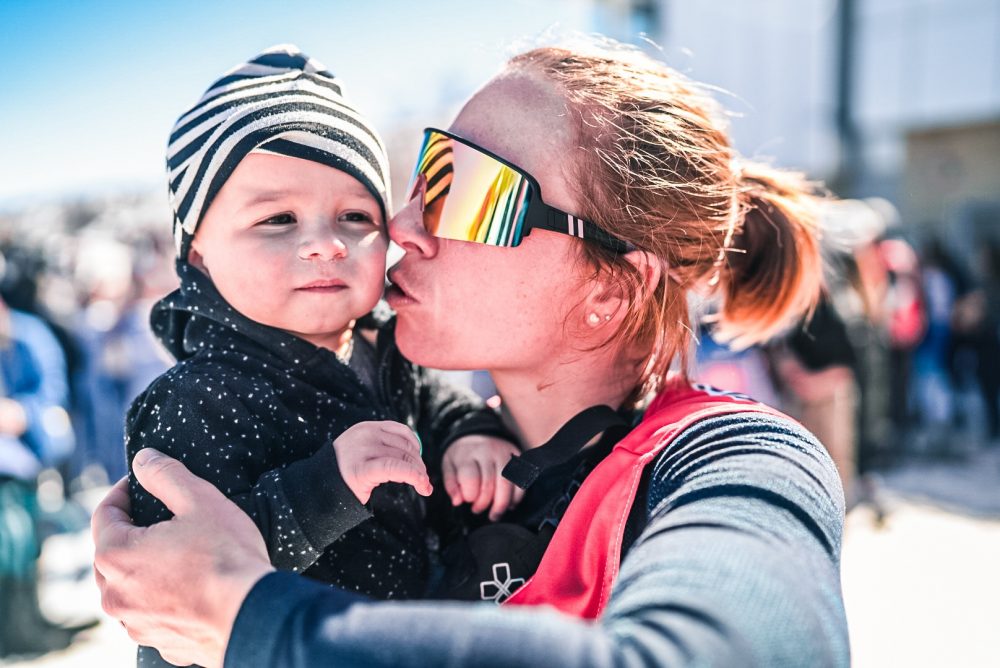
    The journey into motherhood, though challenging, has also been rewarding for UAF head coach Eliška Albrigtsen. (Photo: Tobias Albrigtsen / @untraceableg)

    Part 1 of this story details Eliška’s experience coaching through pregnancy and the birth of her son. Keep reading to learn about the challenges she, like many women, experienced during the postpartum recovery process, and what it took to navigate year one of life on the road with baby Viggo.

    Expectation versus reality. 

    When preparing to interview Eliška Albrigtsen about her experience pairing NCAA coaching with new motherhood, I expected the challenges she faced during her transition to primarily be focused on the balancing act of managing a demanding job with frequent travel and a new baby. Maybe a few relatable stories of airport meltdowns, sleepless nights in hotels while on the road with the team, and inopportune timing of diaper blowouts. Or any number of other ways societal systems in the US seem to be structured in opposition to new moms in the workplace.  

    But Eliška’s passion for her job and dedication to her athletes were abundantly clear throughout the conversation; coaching is where she thrived. Her grit and energy allowed her to problem solve bringing baby Viggo on the road with the team – perhaps paired with the added fortune of a husband whose skill set includes waxing and ski testing and a well placed mother-in-law eager to help care for her grandson. And the team embraced its new member without hesitation.

    In reality, the biggest challenges Eliška faced in returning to coaching postpartum were connected to the physiological impacts pregnancy and delivery had on her body. In short, it was a discussion on the shortcomings of our healthcare system and the myriad of ways the current standard of postpartum care falls short of what many women require to restore their body to full function.

    Her story highlights a few key takeaways for programs looking to support women coaches surrounding pregnancy; in particular, there’s much more to the return to coaching than navigating who will care for your child while you’re out training with athletes and traveling to races. Respecting the timeline of a slow return, and perhaps offsetting the costs of postpartum physical therapy, may be an essential component of an improved and holistic support system.  

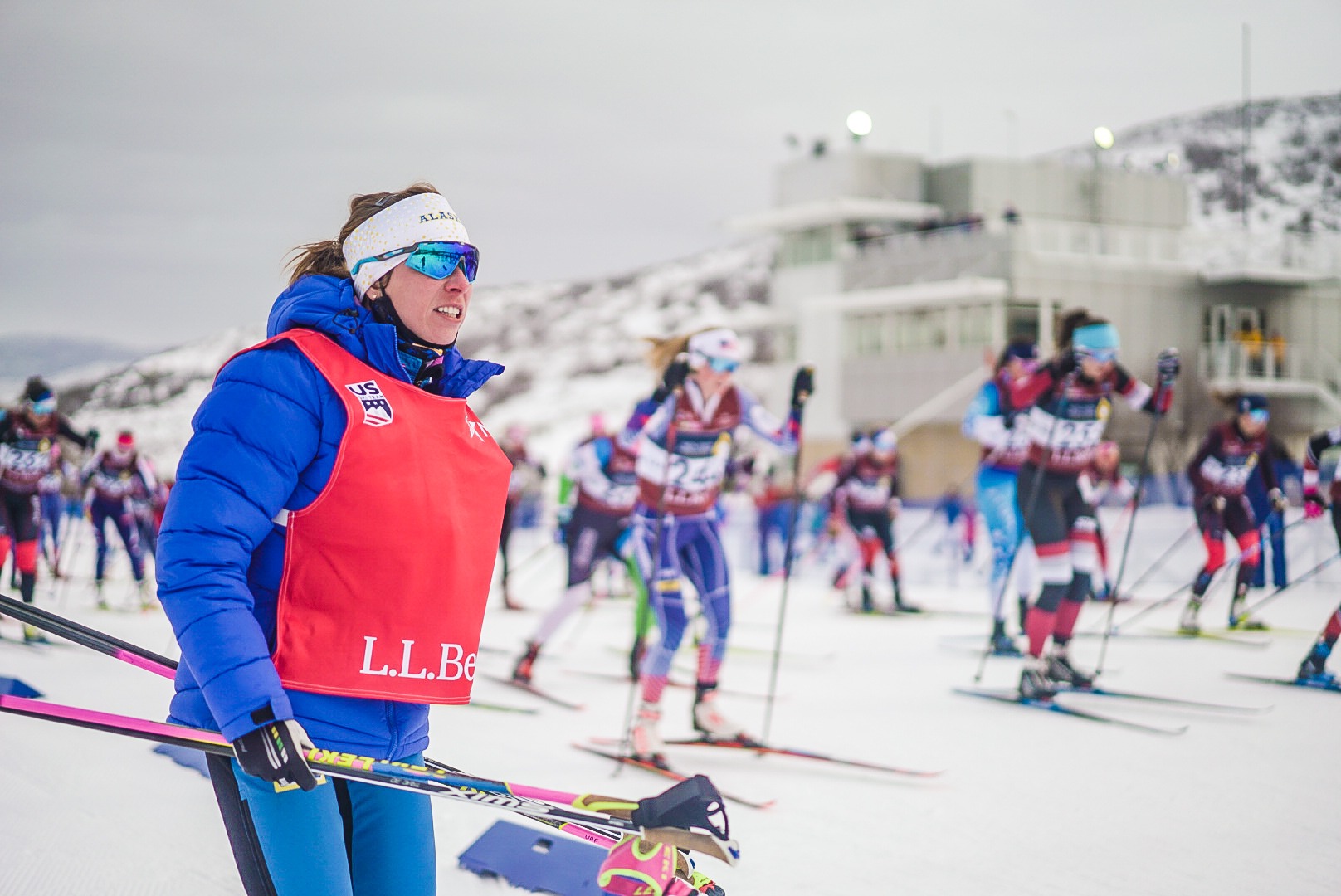
    Eliška Albrigtsen in action at US Nationals in Soldier Hollow, UT. (Photo: Tobias Albrigtsen / @untraceableg)

    Postpartum Recovery

    A theme of Eliška’s narrative of her perinatal experience was the ways in which her “athlete mindset” served and hindered her ability to roll with the punches. 

    While women like Kikkan Randall, Marit Bjørgen, Aino-Kaisa Saarinen paved the way for women looking to begin their family before retiring from professional skiing in many ways, Eliška said that the ease with which they outwardly seemed to rebound beyond their previous levels of fitness was, in some ways, a disservice to women like herself who did not experience as smooth a return. In her mind, she had expected a comparable experience given her athleticism and good health, but quickly learned that women might be better served using caution when extrapolating from outliers. 

    “You see these professional skiers having babies and then coming back and winning gold medals at [the] Olympics,” she said. “And you’re like, ‘Oh, yeah, that’s gonna be me.’ But no one really sees the giant support team they have behind them.

    “They have professional doctors, physical therapists, and strength and conditioning [specialists] to go through their pregnancy with them, monitoring everything, having them at the birth, and then jumping right into the recovery. As a coach, you don’t get that. You probably have the same amount of on-ski hours as professional skiers – not the same quality of course, but you can’t do your job without being there. So I think that’s how most of our ski community sees pregnancy – so easy and you are an even better athlete afterwards, because all these women did it…

    “For me, it was the opposite. It was hell. I can’t wear the clothes that I wore when I was pregnant because I have extreme PTSD from that… it was such a, not just physically but painfully, impacting experience.” 

    Though expectation and reality could not have been more different, her drive to recover from the injuries sustained from pregnancy and birth, and the creativity required to adapt during the recovery process, mirrored her general approach as an athlete more broadly. 

    “I think the athlete mindset in me was, ‘Okay, I had this baby. Now I put myself through physical therapy, and I’m gonna recover’… Just like after having a shoulder dislocation or having a torn iliopsoas, all those pretty crazy injuries – I knew that eventually you get better, and you get back to yourself.”

    What Eliška identified as the biggest physical challenge she faced after the birth of her son was the repair of a condition called diastasis recti (DR), which is a separation and consequential loss of function and strength of the rectus abdominis muscles. 
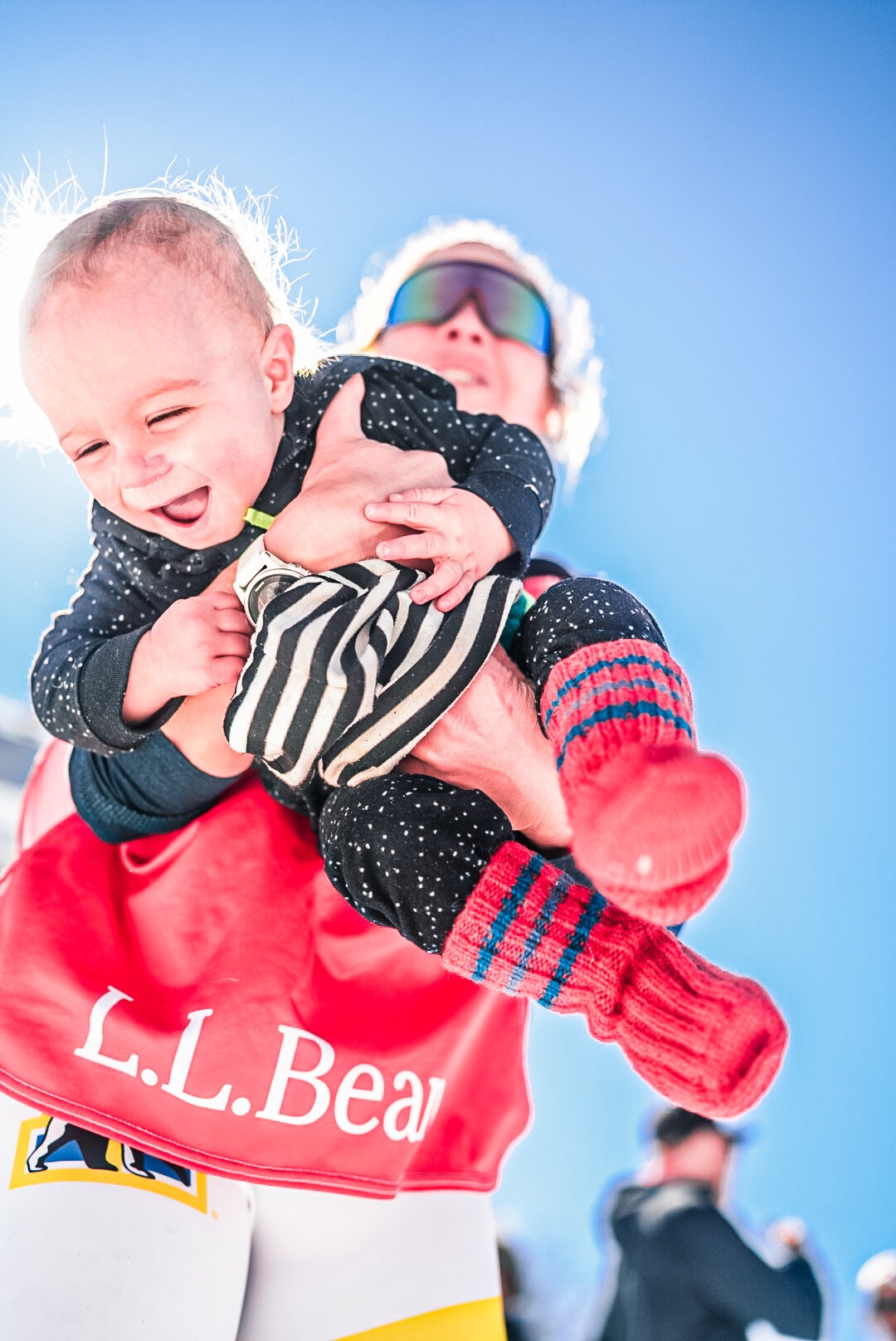
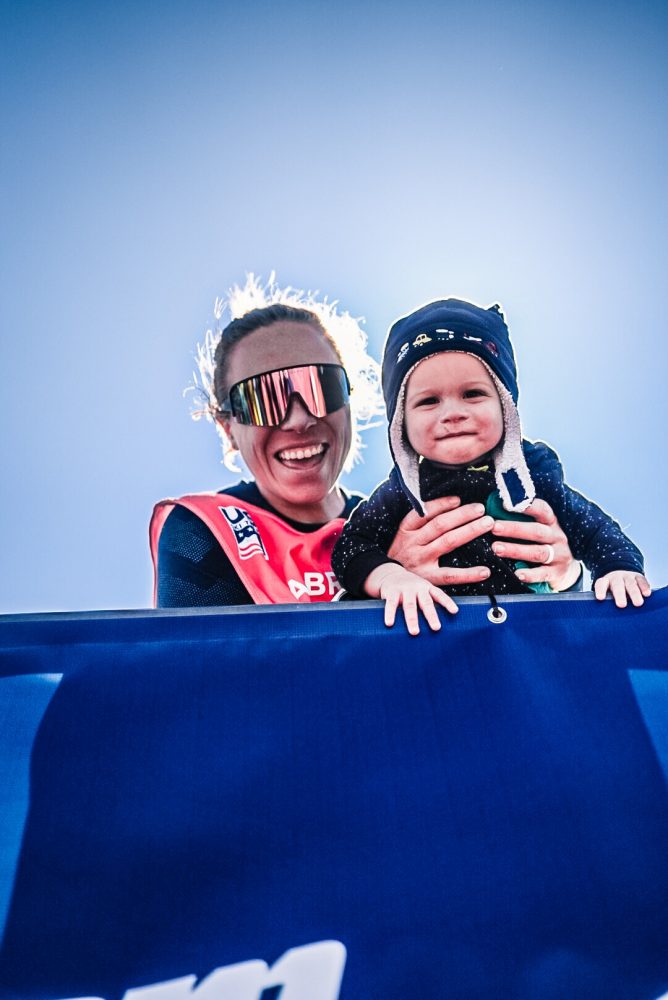
    Happy baby and happy mom. (Photo: Tobias Albrigtsen / @untraceableg)

    During pregnancy, as a woman’s belly expands to accommodate the growing baby, the muscles of the abdomen are forced to stretch. The deeper muscle layers, known as the transverse abdominis, are structured like a corset wrapping around the belly, giving them a greater capacity to expand. However, the rectus abdominis muscles, better known as the “six pack” muscles, run vertically while connected by fascia, and have significantly less ability to adapt to the expansion. 

    Instead, the outward pressure and growth of the belly causes the rectus abdominis muscles to separate, thinning and weakening the fascia as it stretches, or in extreme cases, tearing it.

    “When I was the most pregnant, my six pack was under my armpits.” 

    This connective tissue cannot simply snap back to its original state after delivery. As fascia lacks the blood flow of muscle tissue, it is slow to heal, leaving many women with a gap between muscles known as a diastasis. All women experience some amount of ab separation during pregnancy, but if the gap of two or more finger widths between the muscles persists postpartum, she is diagnosed with DR. 

    Because of the combination of her stature, a short torso, and the size of her baby, Eliška found herself with an extreme separation. 

    “Basically, you could stick your whole fist into my stomach. That was the biggest problem for me because I basically lost my core. And my core was a big part of me as an athlete – not just as a skier, but as an athlete. So that was really hard.” 

    As she hopes for a second child down the road, any surgical repair options were contraindicated, and instead, Eliška dedicated herself to a physical therapy regimen. She felt lucky to have access to a Fairbanks-based Osteopathic medicine expert, Dr. Todd Capistrant, who specializes in the Fascial Distortion Model and was therefore primed to help Eliška improve her diastasis. 

    “I saw him basically on a weekly basis.”

    She also met regularly with a pelvic floor physical therapist, both to work on the diastasis, and to restore appropriate function to the muscles of her pelvic floor. Her PT identified that her pelvic floor was hypertonic, meaning the muscles carried tension chronically, rather than contracting and relaxing in functional patterns. Like holding a flexed arm hang and then being asked to knock out a set of chin-ups, this chronic low-level tension leads to fatigue in the pelvic floor muscles, preventing them from outputting the strength and tension required to support the organs sitting inside the pelvic girdle and interact appropriately with surrounding musculature when recruited during activity.

    With the guidance of the PT and a set of progressive exercises to relax and engage her muscles appropriately, Eliška saw progress, but it took time for her muscles to function in coordination subconsciously.

    “It took me probably around eight months to incorporate the mental [and neuromuscular] connections back. I was able to [engage the muscles] when I wanted to, but all the muscles of the pelvic floor, everything that’s sitting in the pelvis, they were not working with the rest of my body.”
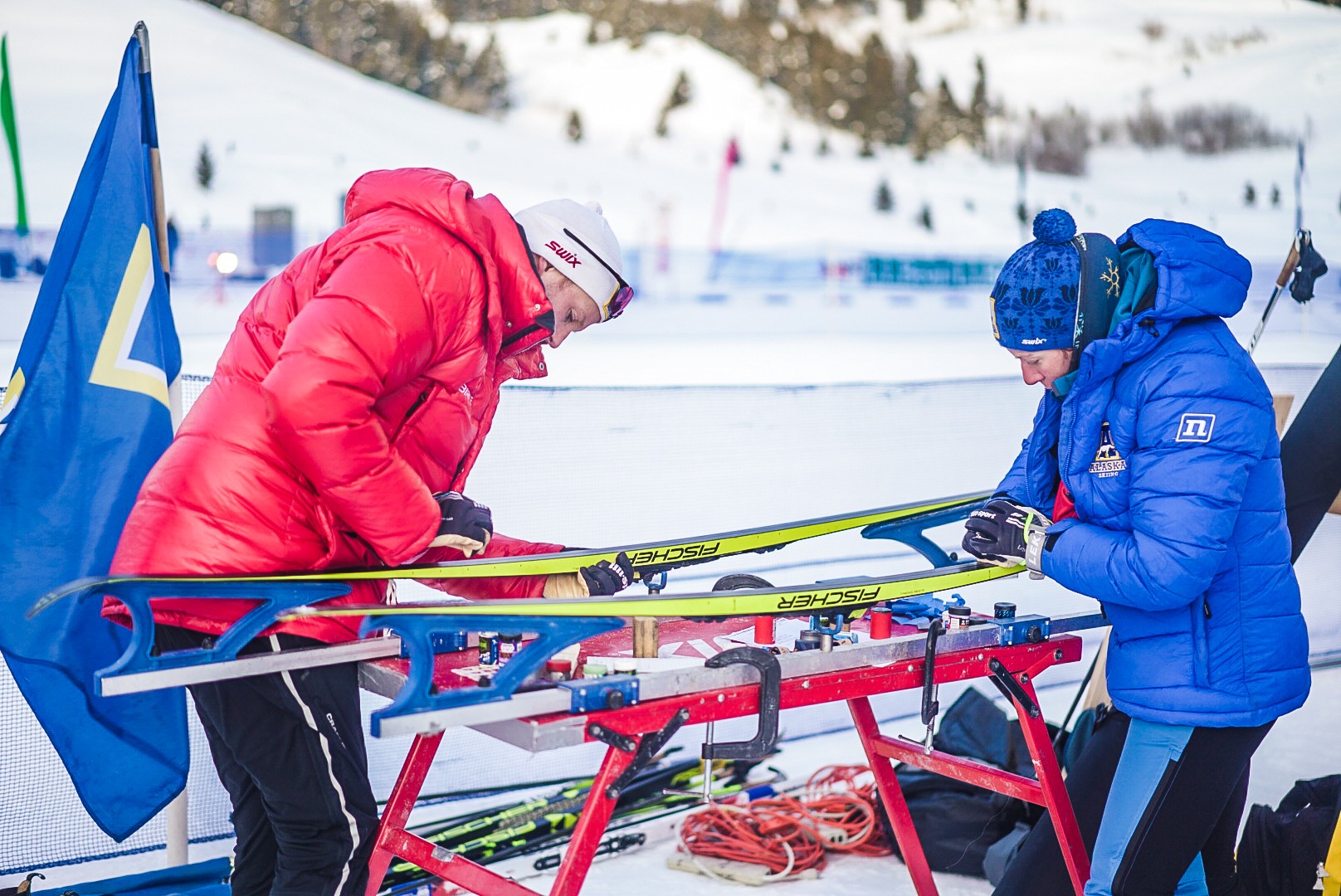
    On the bench: Eliška Albrigtsen prepares skis for the UAF athletes. (Photo: Tobias Albrigtsen / @untraceableg)

    She expressed feeling lucky to have access to high level care in Fairbanks, including her therapist who could incorporate a variety of techniques to help her recover, including deep tissue massage, cupping, electrical muscle stimulation, and biofeedback.

    “I think biofeedback for athletes just works the best. Because we’re such strong willed people. Like, if we see it happening, we can really focus on making it happen more.” 

    An unexpected benefit of time and resources being placed into learning how to strengthen and reintegrate her deeper core musculature trickled down to her athletes. She recognized that several of her athletes, who had complained of back pain surrounding core workouts, were not sufficiently engaging their transverse abdominis muscles, instead relying too heavily on the outer rectus abdominis or other smaller core muscles. Teaching the techniques she learned through PT helped improve the form of her athletes, relieving the back pain they had experienced previously. 

    “It definitely deepened my understanding of how the core should work, and how we use it when we ski.”

    As she navigated her own challenges, she became aware through talking with friends of how common these experiences are amongst mothers. Describing herself as “someone who says everything”, she felt it was important to both be open regarding the challenges she’s faced, and the resources and options available for women to make progress toward recovery, rather than accept the conditions as permanent. 

    Most women only receive one postpartum checkup, approximately six weeks after delivery. As my own pelvic floor PT described it, these visits typically only check to see that the tissues have healed and that there are no visible pelvic organ prolapses, but most midwives and OB/GYN practitioners do not have the depth of knowledge to assess muscle function, hence the need for an evaluation from a pelvic floor PT. However, quality pelvic floor physical therapy is not universally available, and as it is not always covered by insurance, making it cost-prohibitive for many women to continue care long enough to make sufficient progress.  

    “I think the most tragic experience post-pregnancy that I had was the realization that women are left being damaged from bringing life to the world.”

    As she discussed her own experience with the women in her community, in turn, many of them shared that they continued to suffer from the impacts of ab separation or pelvic floor dysfunction from pregnancies, including friends who were more than ten years postpartum. Some of these women had given up activities they had enjoyed previously, like running, because they felt as though they were “spilling their guts” out of their bellies due to a lack of core function. 

    “How is this okay for women to live this way? That was just mind blowing to me.”

    Imparting the knowledge she gained in the process, and advocating for women to find their own ways to make it work, she offered up suggestions.

    “I was just like, ‘Hey, if you can’t go to physical therapy, this is how you tape your belly, so at least you can start hiking fast.”

    At roughly 13 months postpartum at the time of the call, Eliška recognized the improvements she’s made, while still acknowledging she has not fully recovered. 

    “It’s [been] more than a year, and I feel functional. I still have pains and I would not go and enter a race, because my brain can push much harder than my body can, so I know I would hurt myself. But I’m so much better than most of my friends that, you know, [had to] just give it up…”
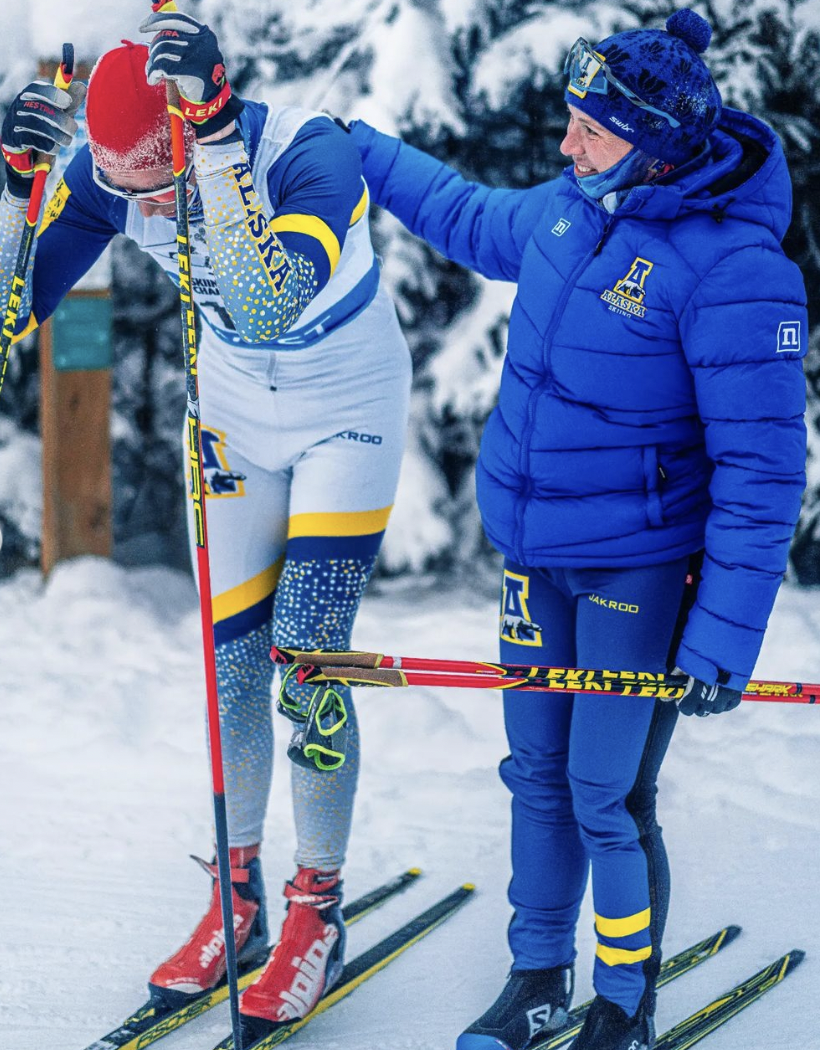
    Eliška Albrigtsen lead the UAF Nanooks to an historic seventh place finish at 2022 NCAA Championships following the birth of her son in February 2021. (Photo: Tobias Albrigtsen / @untraceableg)

    As she worked with athletes through the fall and winter, Eliška found ways to adapt her ski technique to avoid putting unnecessary strain on the musculature she was working to rehab, and work instead with the muscles that already had the necessary strength. In particular, she needed to change her doublepole technique.

    By returning to the older style of doublepoling, which involved less of a crunch through the abdomen than modern technique, instead increasing the bend at the waist and relying more heavily on the arm and shoulder muscles. 

    “I don’t have the strength there anymore [to crunch]. My muscles are two three packs, they’re not connected. So I go into doublepole and I tighten my  lower belly, but then I pull my butt up kind of like into downward dog instead, and work with my arms again.”

    Multitasking: Eliška Albrigtsen feeds her son trailside while on the road for competition. (Photo: Tobias Albrigtsen / @untraceableg)

    Another lingering problem she has experienced is a result of the endocrinological changes experienced surrounding pregnancy. To allow the body to grow during pregnancy and a widening of the hips for delivery, the body releases an aptly-named hormone called relaxin, which acts on cartilage and other soft tissues to allow expansion and increased joint mobility to occur. The production of relaxin typically declines after delivery, but remains higher than normal for the duration of breastfeeding.

    While beneficial for pregnancy, it also puts perinatal women at a higher risk of joint instability and consequently injury. 

    Eliška shared that she seems to produce an above average amount of relaxin, which has continued to affect her postpartum as a nursing mom. She experienced joint pain, particularly in her pubic symphysis joint at the front of the pelvis, with unexpected movements – like slipping on ice or mud. “And it’s always slippery here. Like 10 months out of the year.”

    “On skis, I don’t have a problem. Because everything’s gliding and I already have the natural anticipation of gliding. But walking and slipping – I try to catch myself and my muscles, my joints, my tendons are just too loose.” 

    Reflecting on her journey through the first year postpartum, the lack of care available to most women remained at the forefront of her mind. The impact of these types of conditions, which linger if left untreated, affects more than just the level of activity a woman can enjoy. As those who have experienced it (waves hand) can attest, the emotional toll affects quality of life more broadly. 

    “I would absolutely fight for every woman to be able to have a year of free PT [after pregnancy]. You just need your life back.”

    Life on the Road

    There’s a commonly used phrase when it comes to raising children: “It takes a village.” This resonated as Eliška shared insights into what support was necessary to allow baby Viggo to travel with the team through the competition season.

    While children under two-years-old are typically able to fly for free on their parents’ laps, the travel of the person who would care for Viggo while Eliška was working is not. Fortunately, her husband Tobias was already incorporated as a volunteer assistant coach, and had both the skillset and the NCAA certifications to play a variety of roles during travel, which also got him on the payroll to offset travel costs.

    “I’m lucky that my husband’s quite good tester and waxer as well. And traveling with a full team this year, six [women] and six [men], I knew that we will need more than two coaches to wax.”

    And, conveniently, Tobias’ mother is based in Boulder, CO. “She was able to actually drive to all the races and babysit when we were ski waxing and racing.”
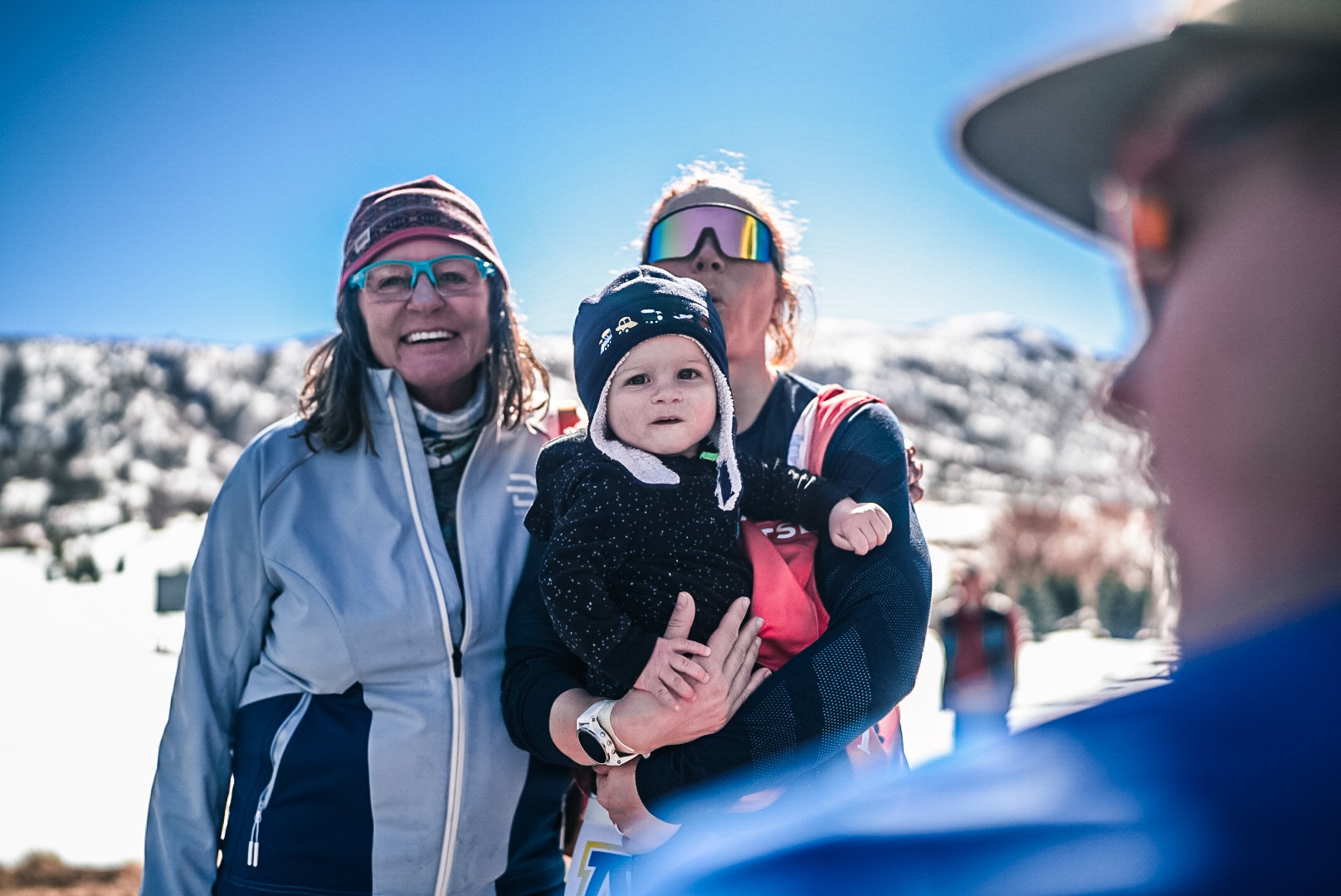
    The village: Eliška Albrigtsen has help from her mother-in-law during the RMISA Championships in Steamboat Springs, CO. (Photo: Tobias Albrigtsen / @untraceableg)

    For US Nationals, UAF collaborated with other Alaskan clubs to wax, but it was still useful to have an extra driver to bring athletes back and forth to the venue. Consequently, they paid out of pocket for the flight, but Tobias was able to get a per-diem salary as a driver. “So we got at least the food covered,” she laughed.

    For other RMISA and SuperTour races where UAF was only waxing for their own athletes, Tobias could have his travel expenses fully covered in exchange for his work. It’s perhaps a model that’s hard to replicate for other mom-coaches, but still demonstrates that with some creativity and determination, bringing the family along for the ride is possible. 

    “We call it the primary. He’s the primary on the baby when we have training days, where me and my assistant go with athletes and train. And then when we were testing and race waxing, grandma was the primary. And oh my God, bless her heart — she paid for all of her gas and her accommodation and food. She would just come to the house where we were staying when we had to leave and just babysat for us… So that’s the way that we made it work, but it’s a very, I think, exceptional situation.”

    Was traveling back and forth from Fairbanks to Colorado and Utah challenging with a toddler? Yes. But Eliška knew it was something they would need to navigate as a family regardless of her career. 

    “I know living in Alaska, he’s gonna fly anywhere he goes. That’s just what it is. So that was just like one thing that we were like, ‘Yeah, there’s no way around it.’ We did have to travel with more things. Because you have to have the car seat, we have to have the crib, we had to have a bunch of diapers with us.”

    The system worked for the first year, but it will need to be modified for next season. The full RMISA calendar has not yet been set, however, the regional championships will be held in Anchorage, which will make at least one competition easier to travel to. 

    From there, it will be running the calculus on what makes sense financially. She laughed that Viggo is already a squirmy baby to keep on their laps on the plane and will need his own seat next year, but she is also not sure whether he will still be nursing, which may make it easier for her to leave him behind with Tobias.
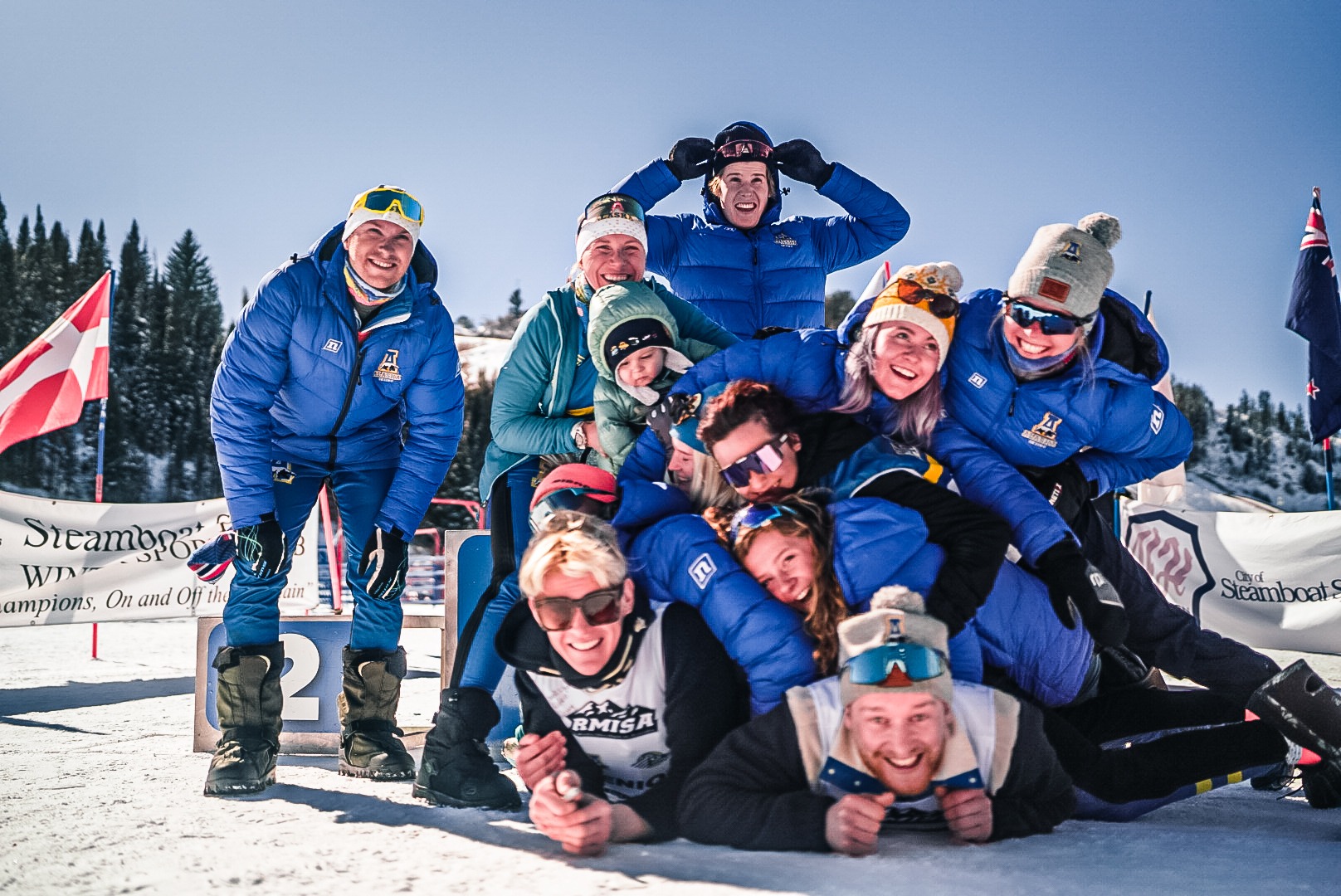
    Just another member of the team: the UAF skiers pose with coach Eliška Albrigtsen and baby Viggo at the RMISA Championships in Steamboat Springs, CO. (Photo: Tobias Albrigtsen / @untraceableg)

    In terms of the impact to the team, better worded as the lack thereof, Eliška felt Viggo’s presence on the road improved the atmosphere. Rather than lamenting their littlest teammate, they found humor and joy in his presence. 

    “When you’re stressed before the race, and you’re having breakfast and you’re barely putting the oatmeal into your mouth [because of nerves], and the baby in front of you is just like throwing the food and laughing… I think that it helped with the team atmosphere, for sure.”

    In addition to helping distribute the weight of ski, wax, and baby gear when navigating through the airport, the athletes also served as an extra set of eyes in the team house. 

    “The team, in general, was super helpful as well. When we would be waxing in the garage, they were playing with Viggo, and he believes they’re all his brothers and sisters, I’m pretty sure.”
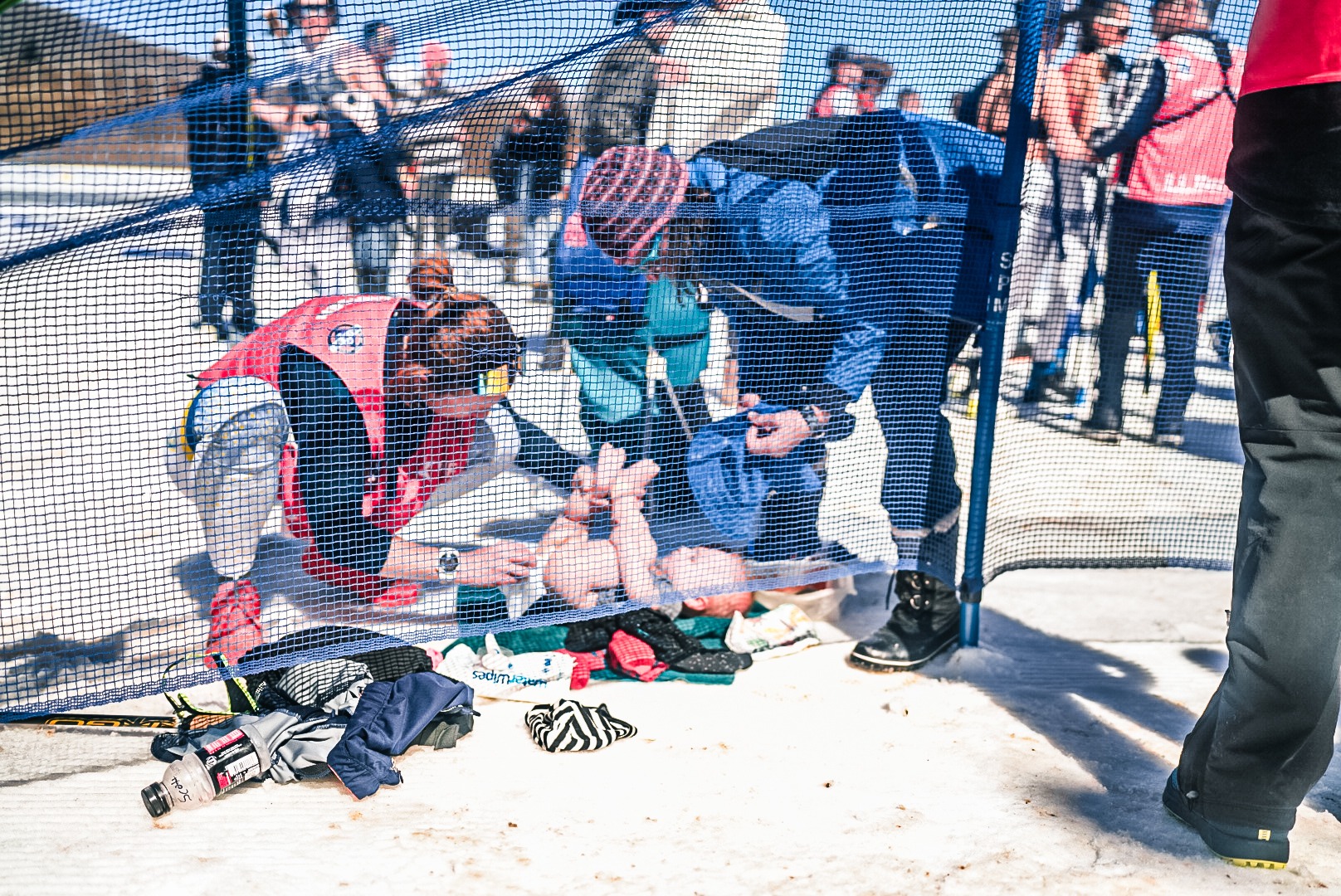
    A relatable image: the al fresco diaper change during a competition weekend. (Photo: Tobias Albrigtsen / @untraceableg)

    Reflections on the Experience Thus Far

    Praising the community in Fairbanks, Eliška was grateful for the help and support she received through her perinatal journey, which allowed her to not only continue as head coach, but help the team to new heights this season. Rather than holding her back, becoming a mother enhanced her ability to lead the Nanooks program. 

    “I also feel like my season was so much more successful this year because I really wanted to go home to my baby. So I was really trying to work smarter and more efficiently, and I think the athletes probably had that push too.”

    While some might fault a woman who shares that her priorities have shifted since having a child, Eliška explained the number of ways this desire to optimize practice time served her team. 

    “I was always driven for success – I love being successful. But now it’s more like, ‘Yes, I will be successful so then I can spend more time with my child.’”  
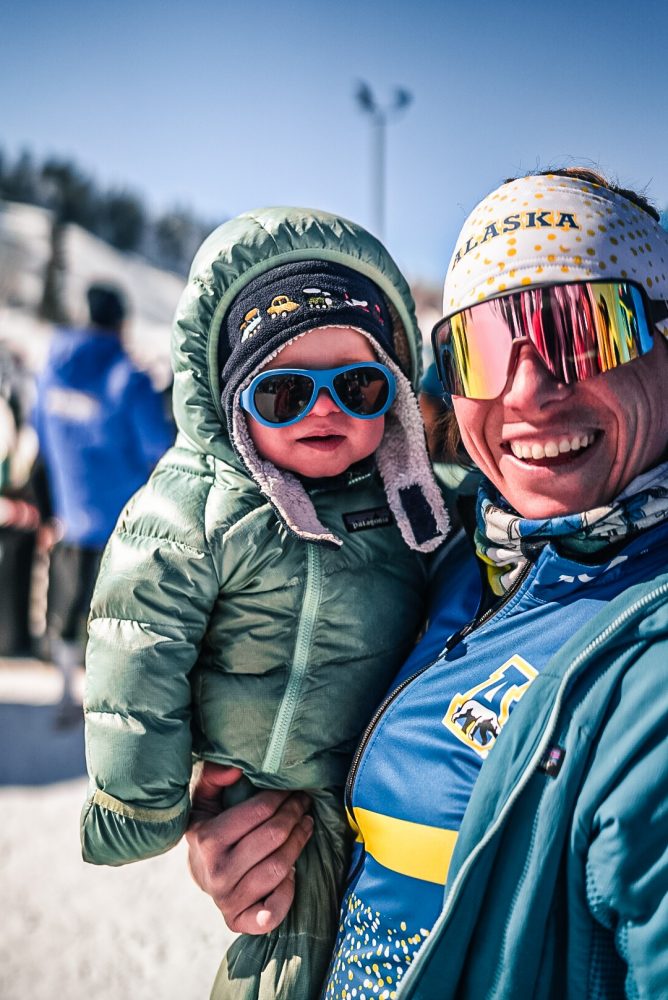
    University of Alaska Fairbanks head coach Eliška Albrigtsen shares her experience with pregnancy, postpartum recovery, and life on the road with baby Viggo in tow. (Photo: Tobias Albrigtsen / @untraceableg)

    As to whether there was anything she would have done differently, Eliška’s answer was more focused on reducing barriers to mom-coaches as a group surrounding pregnancy. 

    “I think the side that no one ever talks about is: how fit coaches should actually be able to do their job well.”

    Because her insurance cycle was aligned with the school calendar, her deductible reset in July. Having maximized her out of pocket expenses with prenatal care and delivery, this meant the physical therapy treatments she needed were essentially free for the first four months. However, after the plan turned over for the new year, each pelvic floor PT visit cost $60–70, and she was looking to go twice per week to continue to make steady progress. This adds up quickly, particularly for a family relying on one salary, which happens to be a ski coaching salary. 

    While nationwide free postpartum PT for all women would be the ideal, Eliška proposed that these costs should, at minimum, be offset by the school or program.

    “That is something I would definitely fight for women coaches. Talk to your boss, or whoever, and tell them, ‘If you want me to come back to the same level of coaching, you need to pay for occupational therapy for me to recover.”

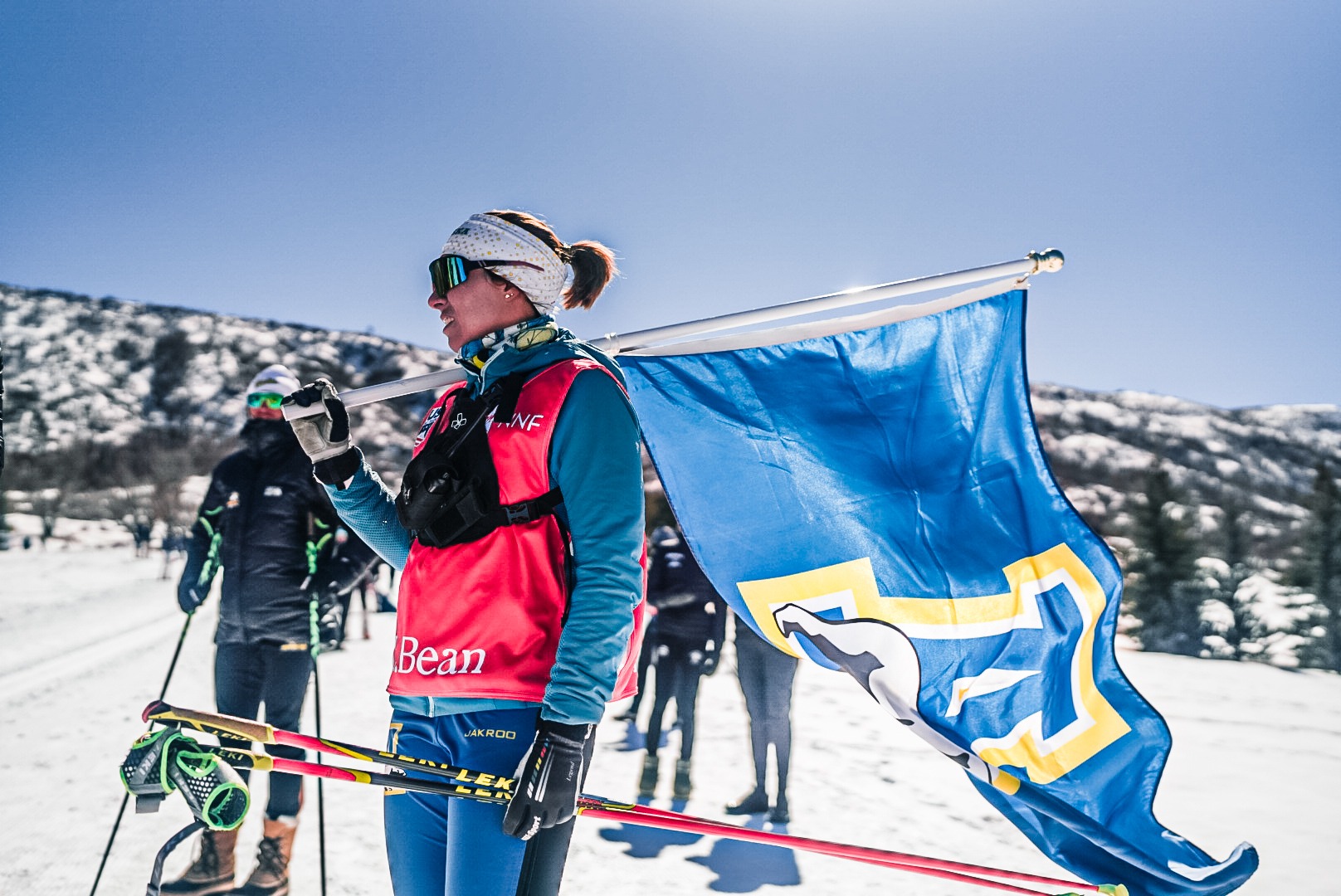
  • On Pregnancy, Postpartum Recovery, and NCAA Ski Coaching: Eliška Albrigtsen (Part 1)

    On Pregnancy, Postpartum Recovery, and NCAA Ski Coaching: Eliška Albrigtsen (Part 1)

    University of Alaska Fairbanks head coach Eliška Albrigtsen shares her experience with pregnancy, postpartum recovery, and life on the road with baby in tow. (Photo: Tobias Albrigtsen / @untraceableg)

    While skimming through the extensive photo albums shared by Tobias Albrigtsen during the U.S. Cross Country Ski Championships in Soldier Hollow this past January, one head coach caught my attention. University of Alaska Fairbanks (UAF) head coach Eliška Albrigtsen (Tobias’ wife) had an extra member of the team in tow: her then 11-month-old son, Viggo. 

    As most ski coaches know all too well, the demands of the job are multifactorial, and can make it challenging for women coaches who are looking to start a family. It’s a physically demanding job with frequent travel butting up against a physically demanding biological process that results in a tiny being that is, at least in the short term, still very dependent on its mother. 

    Yes, some women have a fairly smooth perinatal experience and (somehow?) enjoy the experience of pregnancy. And yes, a woman’s ability to grow a new life inside her body is a wonderful and sometimes mind-blowing feat, but the experience of pregnancy and childbirth can also undeniably leave behind a lasting impact. A woman’s uterus grows to be the size of a watermelon over the course of roughly 40 weeks, forcing supporting musculature to stretch well beyond its normal capacity, while other internal organs are forced to relocate elsewhere. And that’s just a small subset of what’s happening throughout the body.

    The process of repairing this damage after birth is often nonlinear, leaving those who rely on their bodies for work, recreation, or both, in need of extensive postpartum physical therapy while making a careful progression back to activity. 

    And everyone’s experience is unique. 

    It’s the miracle of life, but it’s also a little bit like donating your body to science for at least 15 months. I can attest; as I write this, the daughter I’ve been growing for the last 30 weeks feels like she’s trying to claw her way out of my belly button, which remains herniated from growing her sister.

    And, if you live in Fairbanks and spend weeks at a time traveling to races 3000 miles away (or more), it creates a logistical challenge. How do you bring the baby, who you continue to nurse, along with you while coaching your athletes to an historic seventh place at the NCAA Championships? In addition to benches, wax boxes, and heavy ski bags, you’ll need, at minimum, a cumbersome car seat, and plenty of spare clothes and diapers. And you’ll need someone to care for the child while you’re on the wax bench, testing skis, and otherwise supporting your athletes. 

    It turns out that the experience has been as challenging and rewarding as it sounds. Let’s start at the beginning. 

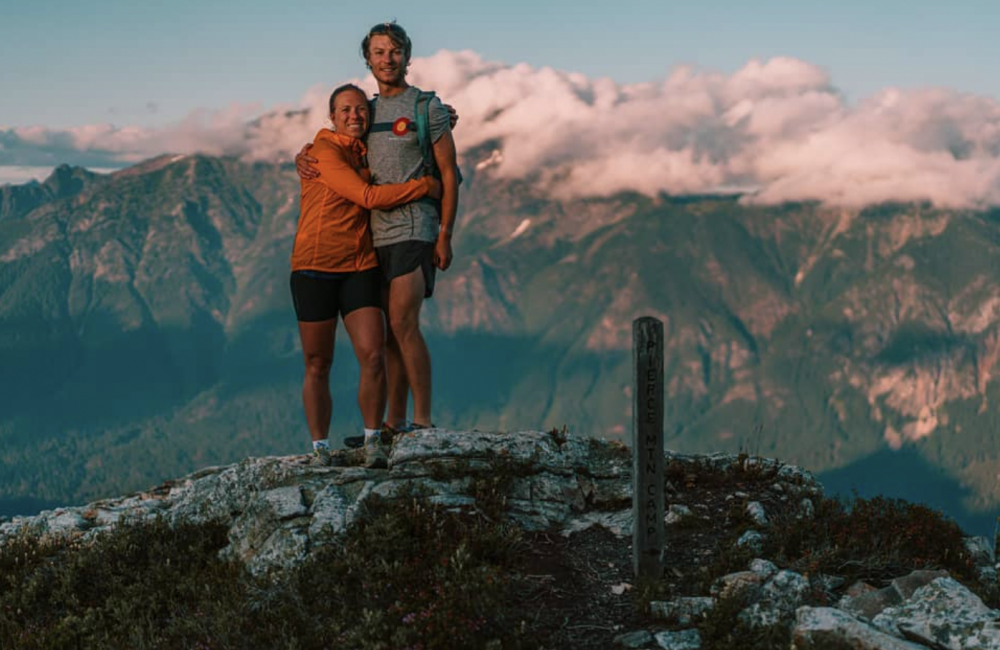
    Eliška Albrigtsen and her husband, Tobias, on a trail run in the North Cascades. (Photo: Instagram @untraceableg)
    Preparing for Baby

    Though baby Albrigsten was conceived in the spring of 2020, he was not simply a “COVID baby”. The urge to begin a family came out of feelings of being “stupidly comfortable”. 

    “Our life started to be kind of plain, so we thought, ‘Okay, this is the time to do it’ – to go into another hardship, I guess,” Eliška said with a laugh.  

    With a few years under her belt, she felt efficient and dialed in her role with the UAF team, and she knew she could leave the program in good hands in her absence given the capability and coaching talents of her assistant coach, Jennie Bender. After her own NCAA racing career at the University of Vermont, where she became an All-American, Bender trained and raced professionally through 2017 in cross country, earning four national championship sprints, and standing on over 25 SuperTour podiums. 

    (Bender has since moved to Whitefish, MT where she is the executive director and head comp coach for the Glacier Nordic Club.)  

    While women coaches in the NCAA are already a minority, there are even fewer examples of women who have started families while in the head coaching role. However, Eliška was not without footsteps to follow. She explained that her friend, former UAF coach Christina Turman, had given birth to her first child while actively coaching, so she knew it was “somewhat possible”, and while racing at University of Colorado Boulder (CU) during her own collegiate career, then assistant coach Jana Weinberger had begun her family. 

    University of Alaska Fairbanks head coach Eliška Albrigtsen leads the Nanooks to an historic seventh place finish at the NCAA Championships with baby Viggo in tow. (Photo: Tobias Albrigtsen / @untraceableg)

    Looking to be informed and prepared, Eliška applauded the time and energy she and Tobias put into learning about the process in terms of what would be available to her for maternity leave, the amount of perinatal care her insurance would cover, and more. As her job included benefits and had flexible hours, she and Tobias agreed in advance that it made more sense for him to leave his job and become the full-time caregiver for their child, keeping her in a coaching role she loved. And then, they began trying to conceive. 

    Nailing the timing, Eliška knew that her baby’s predicted arrival in February would allow her to take three months of maternity leave, with an additional month of leave per her usual 11-month contract. This would bring her to June, when athletes are typically away for summer, allowing her to ease back in while writing summer training plans and handling the many other non-coaching aspects of leading an NCAA program. 

    Coaching Through Pregnancy

    As winter approached and the 2020-2021 race season loomed, Eliška began to step back from her usual involvement with team training, “which for me, is not standing on the side of the trail and watching the athletes. It’s to be there with them when they’re struggling, to see where they can improve in the highest point of their performance.” 

    Her knowledge and expertise as a coach are rooted in both her academic studies in physiology and her own accomplishments as an athlete. Growing up in the Czech Republic, she was named to the national team at 14. During her junior career, she earned a silver medal at the European Youth Olympic Festival in Switzerland in 2005, then went on to place in the top ten at three World Junior ski championships, and helped her relay team to a bronze medal. 

    Heading to CU for college with World Cup starts under her belt, she went on to become one of the most accomplished skiers in the school’s history, if not the NCAA more broadly. Of the 48 races she entered, she missed the top-10 only three times, and stood on 33 podiums. Eliška (then Hájková) was NCAA champion in classic in 2011, and contributed to two NCAA team titles for the Buffaloes. 

    In short, she is an incredible athlete and skier. And yet, perhaps both in spite of and because of that strength and athleticism, she was significantly challenged by the toll pregnancy took on her body. 

    Eliška identified that she has a very short torso relative to her height at roughly 5’5”. In the context of growing a human, this means that there is nowhere for the baby to go but out. 

    At 40 weeks, Eliška Albrigtsen snaps a shot of her large pregnant belly and swollen face. (Courtesy photo)

    “It literally looked like I swallowed basketball,” she laughed as she described her body toward the end of pregnancy.

    Even earlier in the process, she found herself regularly adjusting to her rapidly growing belly, and she had to be creative in ways to remain active for the sake of her health and maintaining her usual active lifestyle. She abandoned running early, and had to stop biking halfway through pregnancy “because my belly was just so big.” Because of the risk to the baby of a crash, she did not feel comfortable rollerskiing. “I did an insane amount of hiking with poles.” And, she enjoyed prenatal yoga throughout pregnancy.  

    ***

    Returning to the impacts on coaching, as she entered into the third trimester, the physical demands of pregnancy began to significantly impede her ability to work with athletes as she was accustomed. 

    “I was at the practices, but not really skiing. I skied until the end of the year, and then, my feet were so swollen, I couldn’t fit into my boots. But I was still walking to the practices, and [timed] some time trials until halfway through January. And then I was just too pregnant to move.”

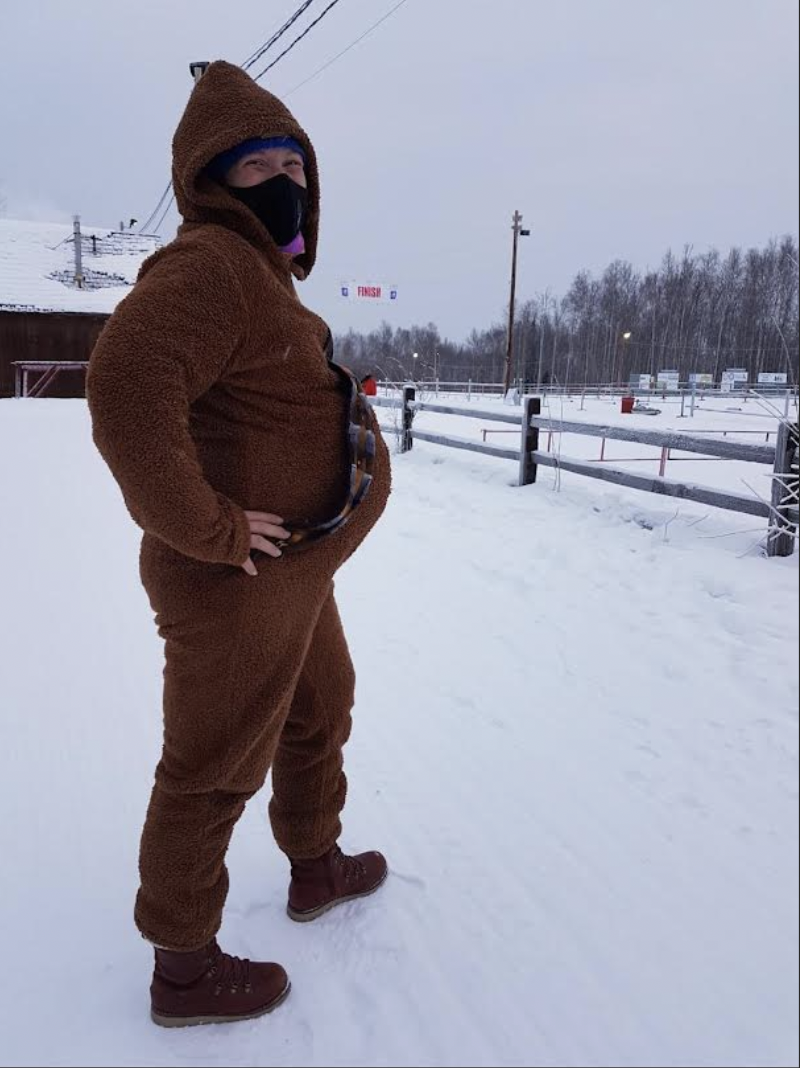
    Outgrowing her ski clothes long before winter, she also had to be creative to stay warm for practices. She began wearing spare team jackets in a men’s extra-large to accommodate her belly, and could be sometimes found sporting a large fleecy Chewbacca onesie. 

    Having outgrown her clothes, Eliška Albrigtsen sports a Chewbacca onesie to stay warm at practice. (Courtesy photo)

    As the competition season began, team leadership responsibilities began shifting to Bender, who would assume the role of interim head coach, giving her the authority to call the shots on the road while Eliška remained in Fairbanks. 

    Still shrouded in COVID precautions, the 2021 RMISA calendar was contained to Utah and Colorado, with most races happening in Soldier Hollow. This worked out well for Bender, who was able to rely on contacts from her racing career to fill in for wax support, primarily Josh Korn, who is the events coordinator in SoHo. 

    Had Bender not been available and able to fill in so seamlessly as head coach, the program might have been compromised during the season. While the skillset of a high level coach already narrows the pool able to cover a maternity leave, Eliška explained that the clearance process to become an NCAA coach adds another barrier. 

    “With all the college or university regulations, it’s quite hard to just hire a coach as an independent contractor… it’s so much easier to actually hire someone as a wax tech because they don’t have to [go through the whole process].”

    Ever problem solving and adapting, with Bender at the helm, the race season rolled by. And on February 25th, midway through the RMISA championships, Eliška gave birth to her son. 

    Delivery Day: The Baby is Born

    With her aforementioned background as an athlete, combined with participating in training with her athletes and fueling her own passion for outdoor recreation, Eliška explained that she came into pregnancy “quite fit”, which she believes was helpful as she adapted to the load of a growing and changing body. “Honestly, sometimes I was thinking ‘how do women who are not in [good] physical shape do this?’ Because when I was eight, nine months [along], I could barely walk and I was quite strong.”

    However, it proved to be a double-edged sword that she felt complicated her delivery. “I had a lot of tightness in muscles, which we want for sport, but not for giving birth.” In particular, this applied to the muscles of her pelvic floor.

    Like an extension of the core that line the pelvis, these muscles have a myriad of important roles. They’re responsible for the support and stability of the joints and organs surrounding the pelvis, including regulating the function of the bladder, bowels, and reproductive organs, and they interact with larger muscle groups of the hips, legs, and abdomen used for movement. 

    For Eliška, her pelvic floor was so strong and rigid that they were unable to sufficiently relax and stretch to allow the baby to pass through her birth canal. 

    Her due date had come and gone, and time began to run out for her to deliver at the local hospital.

    “I was 41 weeks already. And in Fairbanks, they don’t have the NICU specialty, so they don’t let you go over 41 weeks because if something happens, they have to fly you to Anchorage.”

    Eliška Albrigtsen provides trailside support for the UAF skiers. (Photo: Tobias Albrigtsen / @untraceableg)

    With no signs of the onset of labor happening naturally, she awaited an induction, but Alaska was experiencing a surge in COVID cases in February 2021 and beds in the hospital were at a premium.

    “I was just sitting at home with my cup on my belly just waiting for them to call me that they have a space, because the hospital was overwhelmed. They had so many emergency cases coming in that week.”

    When she was finally called to come in, she and Tobias headed to the hospital, but her body was reluctant to respond to the Pitocin used to kickstart labor. 

    “For three days, they kept inducing. The second day, my water broke, and then suddenly, it was happening. Then I was in contractions for like 18 hours, every two and a half minutes a contraction, and it was just so painful that I started to throw up.”

    Worn out from the previous 18 hours of labor, her body began to tighten in response to the pain, rather than relax to allow the baby to make progress. Her doctors recommended an epidural in hopes that pain relief would improve her ability to relax and allow her pelvic floor muscles to release. 

    “After the epidural, I was like, ‘Oh, this is hilarious. I don’t feel anything.’ But then the baby’s oxygen started to drop with every contraction. They put me on oxygen, and that helped, but when they took me off, [his oxygen] was dropping. And the heartbeats were dropping as well.”

    The doctors felt it was no longer safe for her to continue trying for a vaginal birth, and instead prepared her for an emergency C-section. 

    “That was like 11:30 p.m. on the 25th. And he was born at 11:57. It was just so cool.”

    Returning to the concept of “donating your body to science”, Eliška recounted a strange experience resulting from the inability to eat during the induction process. Most hospitals do not allow women to eat in case they need to be put under anesthesia for an emergency procedure.

    “At that point, I was three days without food… they were giving me sugars through IV, but I was shaking like this,” she said as she demonstrated full body tremors. “They had to have extra nurses to hold me down during the C-section because my body was just trying to shake all the glycogen from my muscles out into the bloodstream… physiologically, I literally shook all the sugar that I had in my whole body out into the bloodstream to make this baby happen.”

    Despite the complications, both Eliška and baby Viggo were fully healthy, and the remainder of their hospital stay went by without a hitch. She fondly remembered his perfectly round head, a mark of a baby delivered via C-section, and proudly showed a picture of her sweet newborn. 

    The journey into motherhood, though challenging, has also been rewarding for UAF head coach Eliška Albrigtsen. (Photo: Tobias Albrigtsen / @untraceableg)

    Reflecting on the unexpected hurdles she faced, she voiced the opinion that, like her athletic body had been “detrimental to the birth” process, her athlete mindset stood in her way of entering the labor and delivery room with open-minded acceptance. 

    “I had a ‘perfect’ birth plan. I knew that I’m going to go there and I’m not going to push until I’m [dilated to] 10. And then I’m going to have the baby. But it does not work that way. No one told me that.”

    As skiers, we’re accustomed to the notion that diligently following a training plan and putting in the work during the build up to a key race will lead to a somewhat predictable outcome: ideally, an optimal performance, or at minimum, an improvement from previous cycles. But for Eliška, this expectation proved to be crippling as she was faced with the realities of her birth experience, which differed greatly from her “plan”.

    “That’s how I raced. I trained hard and I did a lot of technique, and then I was the best skier out there because I prepared… If I went there without any plan, I would be so much happier. When they came and said, ‘You have to get the epidural’, I cried. But at that point, I was throwing up every two and a half minutes with pain. When they came and said, ‘He has to come out, we have to do a C-section,’ I totally lost it.

    “So that’s kind of what I would do differently next time. Now knowing that, you know, birth really messes people up. It’s not this perfect thing that just happens.”

    Stay tuned for part 2, discussing Eliška’s postpartum recovery, return to coaching, and year one on the road to competitions with baby in tow. 

  • Summer of 2018: Coaching and Industry Moves (Updated)

    Summer of 2018: Coaching and Industry Moves (Updated)

    Martin Benes, who has coached at Sugar Bowl Academy for the last seven years, was recently hired as head coach of U.S. Paralympics Nordic. (Photo: U.S. Paralympics)

    (Note: This article has been updated to include the hiring of Miles Havlick as the University of Utah’s head nordic coach, which was announced Monday afternoon.) 

    There have been several notable career changes in North American nordic skiing this summer. Here’s a quick look at who moved where:

    Robert Lazzaroni, the nordic director at U.S. Ski & Snowboard, will soon begin his new role as Salomon’s nordic regional commercial manager for the Americas. (Photo: Salomon)
    • Robert Lazzaroni: from U.S. Ski & Snowboard to Salomon. Last week, Salomon announced via a press release that Lazzaroni, of Park City, Utah, will join its staff as nordic regional commercial manager for the Americas, starting Aug. 27. For the last three years, Lazzaroni served as nordic director at U.S. Ski & Snowboard in Park City. Before that, he was program manager at Utah Olympic Park, and before that, a nordic division manager for Rossignol and later One Way Sport. Asked about his new job at Salomon, Lazzaroni told FasterSkier he’d be willing to talk more in depth after he starts. Until then, he’s still employed at U.S. Ski & Snowboard.
      • According to U.S. Ski & Snowboard’s Chief of Sport Luke Bodensteiner, many of Lazzaroni’s duties as nordic manager “have been or will be distributed across existing staff, and we’re taking the opportunity to re-align our staffing positions to make sure that we have an efficient structure that supports our priorities of athlete development, coach education, and strong domestic competition,” he wrote in an email to FasterSkier.  “This will likely require hiring an additional position, but the nature of that job is TBD based upon where we determine that we need the human resource to support those priorities.” Bodensteiner expected to know more about the shift in staff responsibilities later this month.


    • Martin Benes: from Sugar Bowl Academy to U.S. Paralympics Nordic. Also last week, the U.S. Olympic Committee announced the hiring of Martin Benes as its new head coach of U.S. Paralympics Nordic Skiing. He replaces Eileen Carey, who was promoted to program director following the departure of John Farra (to USA Triathlon) this spring. Benes began coaching as an assistant ski coach at Bates College, then spent the last seven years as head nordic coach and director at the Sugar Bowl Academy near Truckee, California, according to his LinkedIn profile. As head coach of the U.S. Paralympics program, he will “lead the development of annual and seasonal training plans for the national team, track athlete performances, workout data, sport science data and annual progress reports, contribute to the U.S. Paralympics athlete identification and development strategy, and assist in planning travel and logistics for the Nordic skiing program to competitions, camps and events,” according to the press release.
      • “It’s an incredibly exciting time to join the program following such a successful performance in front of the world at the Paralympic Winter Games PyeongChang 2018,” Benes stated in the press release. “I’m eager to get started in my role so we can continue to strengthen the program and win medals on the international stage.” He’s set to begin on Aug. 20.


    • Fredrik Landstedt: from the University of New Mexico to the University of Utah. Late last month, the University of Utah announced it had found a new director of skiing to replace Kevin Sweeney. Landstedt had been a staple on the University of New Mexico (UNM) Ski Team for the last 21 years, spending the last 11 years as head coach of both the nordic and alpine programs (and 10 years before that as head nordic coach). His decision to take the job at Utah came less than 24 hours after the UNM Board of regents unanimously approved a proposal to eliminate four sports starting in the 2019/2020 season, according to the Albuquerque Journal. Those sports are men’s and women’s skiing, men’s soccer, and women’s beach volleyball. The proposal would also significantly impact funding for cross country and men’s track and eliminate the women’s diving program. In the meantime, UNM announced assistant coach Joe Downing will assume the role of interim head skiing coach.
      • “I am honored to have the opportunity to lead a program with such a rich history,” Landstedt stated in the Utah press release. “Utah has a strong winning tradition and the support that the University provides its ski team is incredible. I look forward to bringing NCAA titles back to Utah!”
    Miles Havlick in November 2015 in West Yellowstone, Montana.
    • Also at the University of Utah, Miles Havlick: new head nordic coach. In a press release on Monday, the university announced that Havlick, one of its former skiers and a two-time NCAA champion (2012 and 2013), was hired to head up its nordic team for the coming season. Havlick, 28, skied for the the Sun Valley Ski Education Foundation Gold Team after college and won the 42-kilometer Australian Hoppet Worldloppet last August. He delved into coaching last summer in Australia with the Birkebeiner Nordic Ski Club and Victorian Junior cross-country ski team, and last winter, was an assistant coach and wax technician for the Australian junior national team at Junior World Championships. Havlick also waxed for the Australian national team last March in China. He has also assisted the Utes ski team, most recently as an assistant coach at 2018 NCAA Championships.
    • Eliška Hájek Albrigtsen: from Central Cross Country to the University of Alaska Fairbanks. After spending the last year filling multiple roles with Central Cross Country (CXC) out of Madison, Wisconsin (including CXC Team head coach and junior development coach), Albrigtsen has accepted an assistant-coaching position with the University of Alaska Fairbanks Ski Team, replacing Josh Eide. Albrigtsen was a four-time All-American skier for the University of Colorado Boulder and an NCAA champion in 2011.


    • Cross Country Canada seeks senior national team coach: Two days ago, the CCC headquarters in Canmore, Alberta, put out an announcement for applications for a full-time senior national team coach. The position indicated it requires both domestic and international travel. “Reporting to the HPD [high-performance director], the Senior National Team Head Coach (NST Head Coach) is responsible for leading the technical delivery and alignment of Senior National Ski Team (Senior NST) programs in order to achieve podium performances at Olympic Games and FIS World Championships,” the job description stated. “The NST Head Coach will have the responsibility to plan, coordinate and monitor the training and competition of NST athletes in line with CCC’s collective goals.” CCC’s senior team includes 10 athletes, five of which are on the World Cup Team. The other five are on the U25 (under-25) Team. View the job posting here.
  • Wednesday Workout: Making a Mountain King with Felicia Gesior

    Wednesday Workout: Making a Mountain King with Felicia Gesior

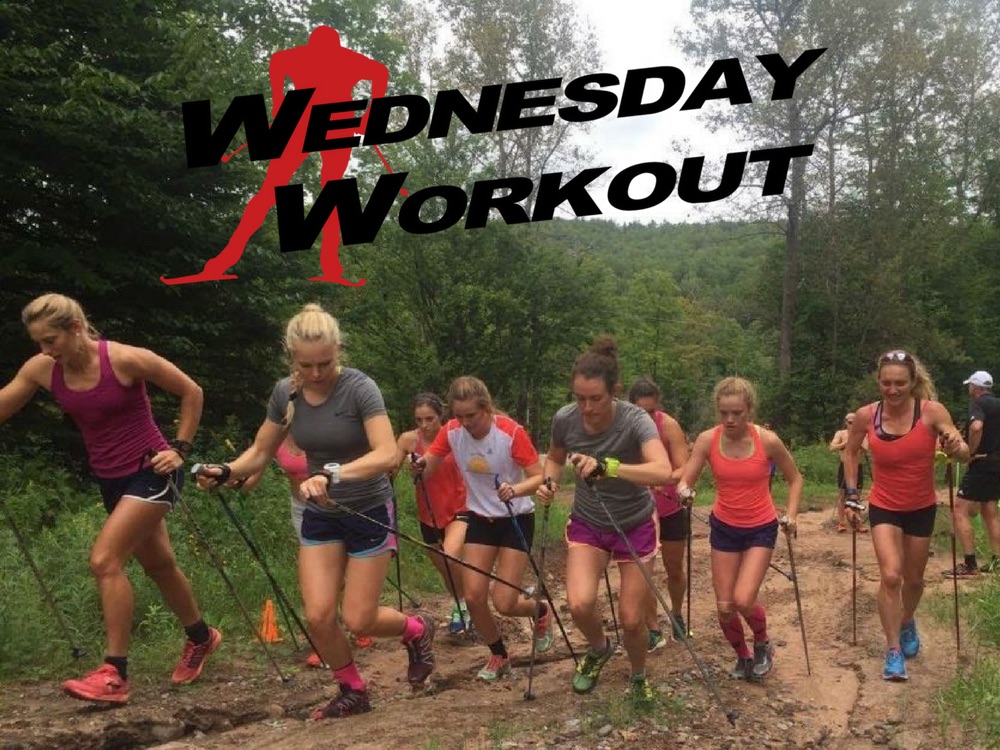
    NMU alumnae Felicia Gesior (far left) and Caitlin Gregg (far right, blue shoes) during a fall training session with the Northern Michigan University (NMU) women’s ski team in 2016. (Courtesy photo)

    This week’s Wednesday Workout comes from Central Cross Country (CXC) Team member Felicia Gesior. In her second year with CXC, Gesior, 24, is currently working on coordinating the Bergkönig Trail Run, an annual event that began six years ago to raise money for post-collegiate CXC skiers. Race registration and information can be found here.

    ***

    Bergkönig. In German, it translates to “mountain king”. In 2011, it translated to the perfect name for the trail run Northern Michigan University (NMU) alums Maria Stuber and Bryan Cook were launching in an effort to fund their ski racing with Central Cross Country (CXC).

    Both Stuber and Cook had been brainstorming a name to make the event, with 5- and 10-kilometer races, stand out from others in the mid-eastern Wisconsin area. Intending to email her brother for an outsider’s opinion, Stuber explained she accidentally sent a message to a “random guy” by the name of Thomas Stuber hailing from Germany. Thomas immediately informed Maria that she had the incorrect Stuber, but not before suggesting the trail run be called Bergkönig. In lieu of the erroneous email, the Bergkönig bank account and Bergkönig Trail Run began.

    “Our goal was to give back to the local community, raise money for our winters, and create some awareness for the sport,” Stuber explained in an email to FasterSkier. “After a few years it became a big race and we felt fortunate to be able to rely on it for financial support every year.  It was one of the factors that allowed up to keep ski racing as long as we did … something we are really proud of. We didn’t want to see it go away after we were done racing so we kept doing it for a couple years and put the money in a bank account to help future skiers with similar aspirations that needed funding.”

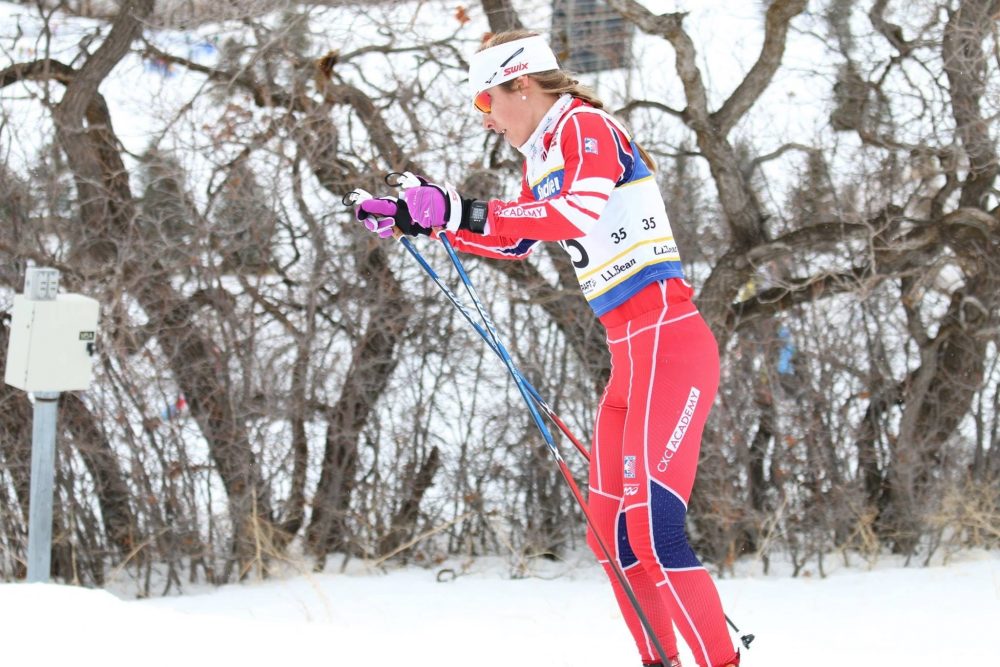
    Felicia Geisor (CXC Team) at 2017 U.S. nationals in Soldier Hollow in January. (Courtesy photo)

    One of those future skiers included CXC’s Felicia Gesior. Five years after the inaugural Bergkönig, Gesior, originally from Waukesha, Wisconsin, qualified for the 2016 U23 World Skiing Championships in Rasnov, Romania, and the Bergkönig extended its connections beyond Germany and the continental U.S. That year, it granted Gesior a round-trip plane ticket to get her to Romania.

    “It was SO COOL for us to be able to send Felicia that check!” Stuber wrote.

    This year, Gesior, a 2016 NMU graduate now in her second season with CXC, will be in charge of coordinating the very race that helped her get to U23 Worlds. Proceeds from this race will help cover her travel and ski expenses as well as go toward that “Bergkönig Scholarship Fund that will assist future generations of Wisconsin Skiers pursuing Olympic dreams after college,” the event’s website states.  

    Stuber, head nordic coach at the College of St. Scholastica, and Cook have stepped back this fall, though they both plan to drive down from Duluth, Minnesota, for the event. The race is scheduled for Nov. 11 in Delafield, Wisconsin, on the hilly trails of Lapham State Park, a course Gesior, Stuber and Cook all trained on as Peak Nordic skiers in high school.

    “Many of the [Peak Nordic] coaches are the same today as they were when I was in high school and they went way above and beyond to support me throughout my entire career,” Stuber noted. “We are all so proud of this place that we would go to great lengths to see Felicia represent us at the highest level of U.S. skiing.”

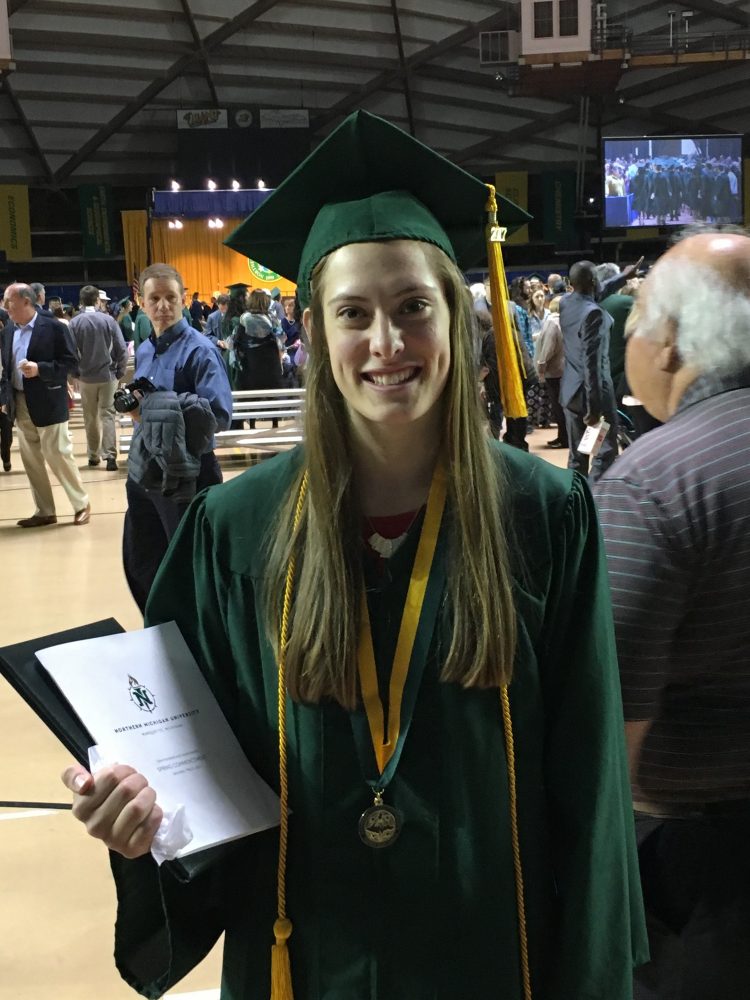
    Felicia Geisor on graduation day at Northern Michigan University in the spring of 2017. (Courtesy photo)

    Gesior has been training in Marquette, Michigan, this summer and fall under the guidance of the CXC Team’s new head coach Eliška Hájek Albrigtsen. Most of Gesior’s goals revolve around U.S. SuperTour races and U.S. nationals in January. She views being an American woman on the domestic race circuit as “an exciting time” with “everyone pushing to new levels.”

    “Every time I have the opportunity, like at U.S. nationals, to race against those elite girls that’s just excellent because they’re pushing the whole field,” Gesior said on the phone last month.

    When she isn’t training, Gesior substitute teaches at local schools in Marquette. The work not only serves as a supplemental income, but also as way for her to stay connected to her post-skiing career — she has a degree in education from NMU. She also plans to help with CXC’s ‘Nordic Rocks’ for Schools program, an initiative that aims to get more youth involved with nordic skiing.

    “That’s one of CXC’s major goals is to get Nordic Rocks in more of the schools. My relationship is getting it into Marquette this year,” Gesior explained, adding that the program has donated up to 30 pairs of nordic skis to more than 200 elementary schools.

    “Kids can put them on with their snow boots and then they can walk literally from the gym outside to the door … You can imagine all these little kids, it’s hilarious,” she said. “So that’s just another side thing where I can connect my two passions together.”

    Beyond training and teaching, the Bergkönig will be the most forthcoming of Gesior’s fall focus, along with the Level 4 ski-walking intervals she recommends as race prep for the Bergkönig trail’s hills. May the best Mountain King win.

    The Workout: “Marquette Mountain Repeats”

    Type: Level 4 Ski Walking Intervals

    The workout should be hard to complete with a focus on an elevated heart rate and mental fortitude. Gesior usually incorporates this workout into her plan towards the end of her summer training cycle and and continues doing it once a week through the fall.

    She suggested doing this workout without ski poles to prevent building up too much lactate while climbing.

    “The best part about this workout is that you do not get as much lactate build up as you might on a bounding workout because you don’t have poles in your arms,” Gesior wrote in an email. “Instead, you can push your heart without building up too much lactate. This is a good workout during a week that you don’t want to necessarily build lactate but still want to get in a hard effort.”

    Terrain: Small alpine hill (should take 4-5 minutes to ascend; Geisor recommends no more than 6 minutes)

    Warmup: 20-25 minutes jogging with a couple minutes of Level 3 toward the end of the warmup followed by strides

    The set: 5-8 x 4-minute ascents; off time is amount of time it takes to descend the hill

    The first 4-minute set should be done at the high end of a Level 3 pace. Each consecutive set should be done slightly faster.

    “This workout is an interval ski walking workout so you ski walk up the hill swinging your arms as if you are classic skiing and you should be going at Level 3-plus into Level 4,” Gesior explained.

    Cool down: 20-30 minutes easy jogging

    Total time: 1.5  to 2 hours

    Gesior’s Golden Rules: 

    1. Record; don’t get wrecked. Since each ascent should be faster than the previous one, Gesior indicated that recording times should not be overlooked, nor should going to hard from the start. “It is important to keep track of your times on each interval because you want to have your last ones be faster than your first ones,” she wrote. “You want to do the first one starting in L-3 and then you go for a faster time on each consecutive interval. The majority of the intervals are done in Level 4 and you should strive to push the pass towards the end of each interval as well as the last few intervals in your set.”
    2. Make mental note. Don’t be afraid to use the intervals as practice for pushing past negative thoughts that might pay visit during competitions. “You should be focusing on your mental toughness that you tap into during races,” she wrote. “You should remember to use good ski walking technique in your legs as well as using your arms as if you were striding.”
  • Eliška Albrigtsen (Formerly Hájková) Heading Three CXC Programs

    Eliška Albrigtsen (Formerly Hájková) Heading Three CXC Programs

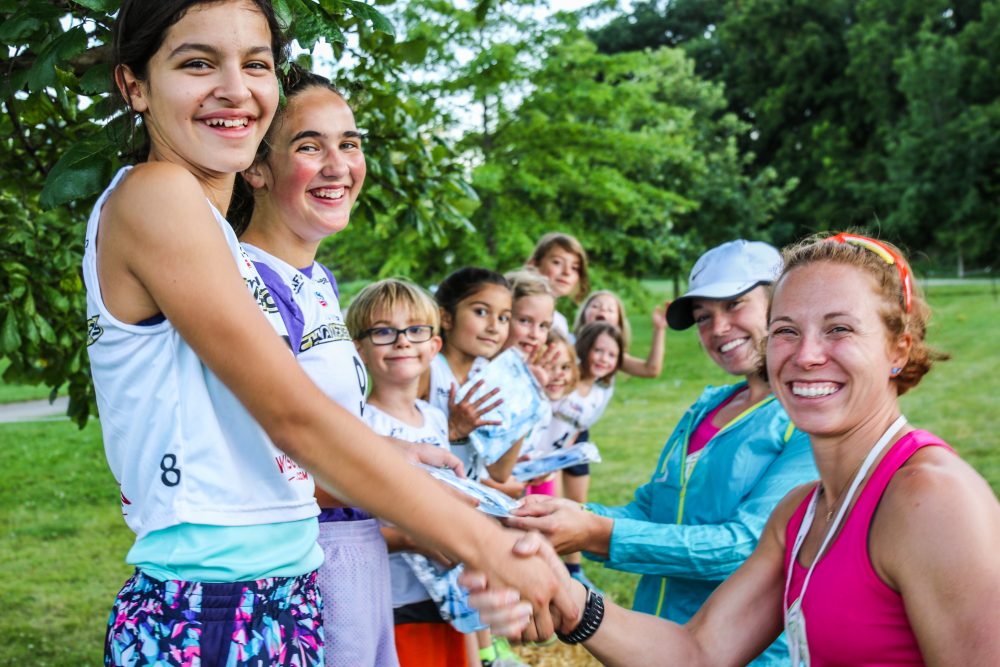
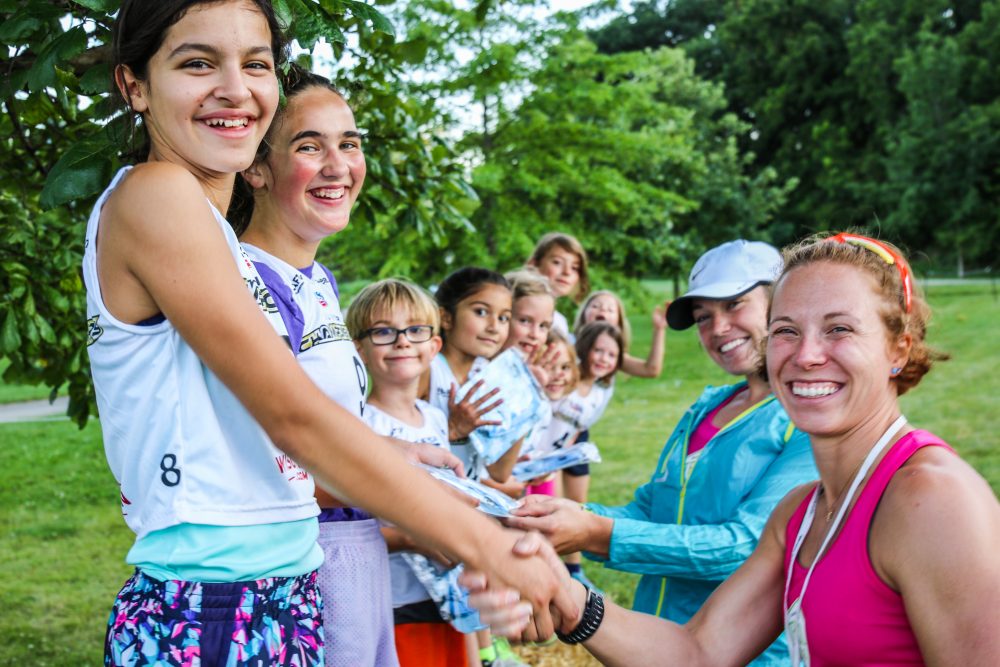
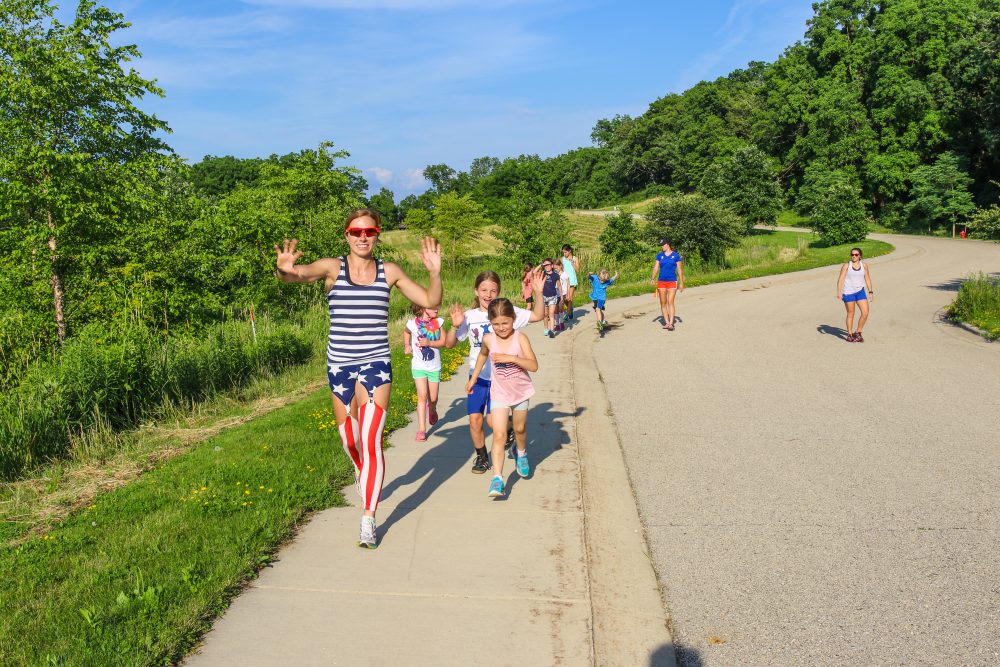
    Eliška Hájek Albrigtsen (formerly Hájková, front right) with Madison Nordic Ski Club’s Trail Kids this summer.(Photo: Tobias Hájek Albrigtsen)

    Many mornings, Eliška Hájek Albrigtsen’s husband, Tobias Albrigtsen, has to peel her out of bed. Living the life of an early bird like her spouse is nowhere near the top of her list — partly because she spends most nights prodding her hubby awake as he finishes his work, partly because she is strung out between four jobs of her own.

    Being in charge of three ski programs while assisting a fourth is not where the 29 year old envisioned herself when she moved to Madison, Wisconsin, this past June to work for Central Cross Country (CXC). But a lot can change over the course of a summer and for Albrigtsen (formerly Hájková), a lot did.

    After relocating to the Badger State’s capital from Lake Tahoe, California, to serve as CXC’s Community Olympic Development Director, Albrigtsen’s responsibilities began to accrue.

    It started with the addition of coaching CXC’s online master’s program. Then she had an interest in helping with CXC’s Paralympic and adaptive athletes. Finally, in late August, Andy Keller left his head-coaching position with the CXC Team to join Northern Michigan University (NMU) as an assistant coach, and Albrigtsen was in a prime spot to take over the reins. 

    “When Andy took the assistant coaching job at NMU, it was kind of natural that I got the CXC Team head coach position,” Albrigtsen, a Czech Republic native, said during a recent phone interview. “For me, it’s not like a big promotion, it’s just more stuff to do while I still do all the stuff I was doing before. I have a lot of responsibilities all of a sudden that I didn’t start with.”

    Among those responsibilities, she has been busy making informative videos for CXC Academy under the job title of Community Olympic Development Coach.

    Getting stuff done — and a lot of it, efficiently — seems to be somewhat second nature for Albrigtsen. Back in 2016, she placed sixth in the senior women’s distance race at U.S. nationals, despite having three jobs and indicating that the only training she had done in preparation was with her Boulder Nordic Junior Racing Team (BNJRT) athletes during practice sessions.

    While attending the University of Colorado-Boulder (CU), she finished in the top 10 of 45 out of 48 races over the course of her college career, according to a CU press release, all while maintaining above a 3.5 grade-point average.

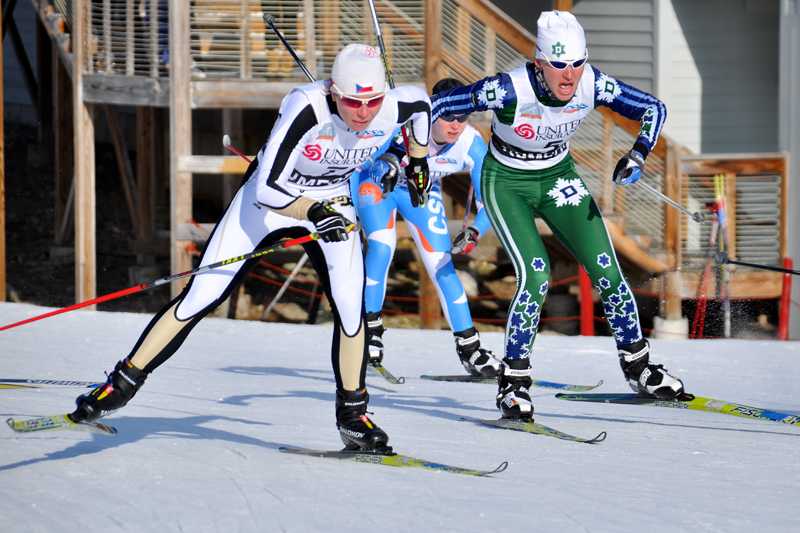
    Eliska Hajkova (CU), racing against Sophie Caldwell (Dartmouth) and Corey Stock (CSU) during a sprint semifinal in 2012. Hajkova graduated in 2013 and after marrying, changed her last name to Hájek Albrigtsen. (Photo: James Doucett)

    After three seasons coaching the BNJRT in Colorado, Albrigtsen moved to Kings Beach at the north end of Lake Tahoe last year, where the juggling act continued. There, she served as the head coach for Tahoe XC, while also volunteering with the Auburn Ski Club’s elite athletes, taught private ski lessons for Tahoe Donner, coached an online master’s program, and once again raced U.S. nationals, placing 12th in the 20 k classic mass start

    She’s also raced more than two dozen World Cups, most recently in 2014.

    Though Albrigtsen indicates that she “never stops officially training or racing” this year might be a little different as it will be her first season coaching senior elite skiers. Still, the idea of more challenging practice sessions is enough to draw her in, even if it means scaling back her training a bit. As a coach she brings not only race experience, but the empathy and understanding of an athlete.

    “With U14 kids, I mean, I was challenging them, but I was not getting challenged,” she reflected. “I think being challenged as a coach, being able to hang out with your athletes, you really see and you can really feel their pain. When you’re right on their butts and doing every exercise, you can see, ‘OK, I know that in the Level 4 on the fifth minute, during the sixth interval you died, so let’s figure that out.’ I think that’s one of my powers, that I can really be there when it’s happening.”

    When asked of her strengths as a coach, CXC Executive Director Yuriy Gusev was quick to respond.

    “Her racing experience, number one,” he said on the phone. “And [she’s] just very energetic and hardworking and organized.”

    Albrigtsen will work with three CXC Team skiers this winter: Felicia Gesior, Kyle Bratrud and Sam Elfstrom. All three graduated from NMU, are currently based out of Marquette, Michigan, and will set their focus on the first few SuperTour races and U.S. nationals before re-evaluating their season goals. The fourth CXC Team member, Nichole Bathe (who graduated from the University of Alaska Fairbanks) remains on roster, but headed to Europe earlier this fall to train in Norway with a goal of making the 2018 Winter Olympic Games for Great Britain’s national team.

    Until the first week of SuperTour racing in early December, the amount of time the other three CXC elite skiers and Albrigtsen work together will depend on the athletes. Albrigtsen wanted to keep the summer and fall schedule fairly flexible so her athletes would not feel restricted in the amount of paid work or fundraising they could accomplish while training for the upcoming season.

    For example, Gesior made a trip to Madison earlier this fall for a training session on CXC’s rollerski treadmill with Albrigtsen, but will spend most the next few weeks training in Marquette and preparing for a fundraiser she’s organizing: the Bergkönig trail run on Nov. 11. The event features 10 k, 5 k and 1 k races and was originally created by Maria Stuber and Bryan Cook in an effort to raise money for local cross-country skiers looking to continue their ski careers post-college.

    Gesior also works as a substitute teacher in Marquette, and most of her training this summer and fall has been with the NMU women’s team. Similarly, Bratrud and Elfstrom train with the NMU men’s team.

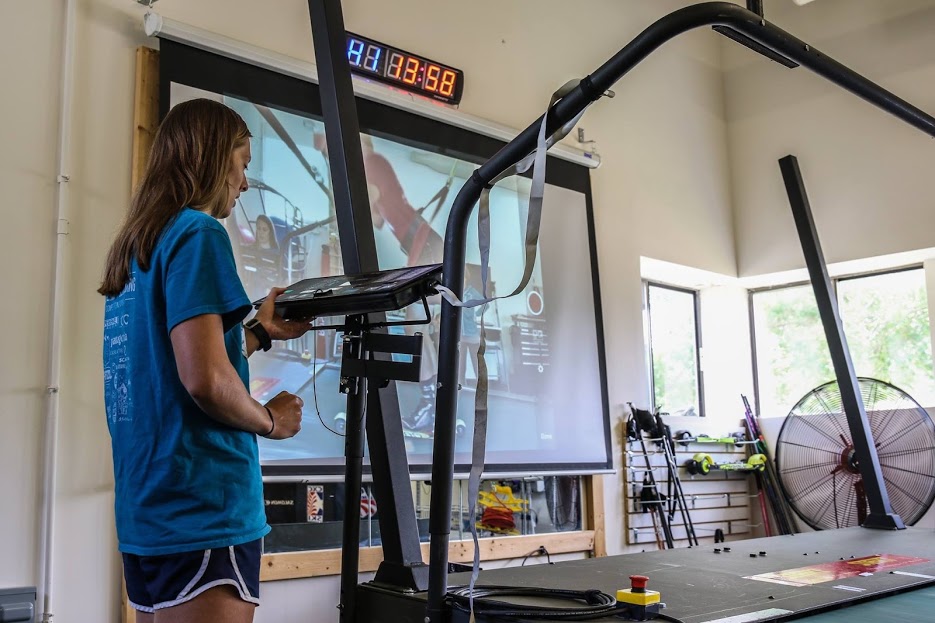
    Felicia Geisor of the CXC Team prepares to hop on the treadmill in early September. (Courtesy photo)

    “I think that’s OK that they follow [NMU],” Albrigtsen said, “That’s kind of the program that really took them where they are and they have something to top it. They don’t train like college skiers; I mean, it’s their job right now so they do train more. But the base is very similar and [NMU Head Coach] Sten [Fjeldheim] is being really nice about allowing them to train with them. Not all college coaches are that way, so we’re definitely really lucky.”

    According to Gusev, partnerships like the one CXC has with NMU and other programs in the Midwest are the reason for CXC’s expansion. Over the last decade, he said CXC has grown from a $50,000-dollar organization to a million-dollar one.

    “It’s all of those partnerships,” Gusev said of the CXC programs’ continued growth. “They’re incredible organizations so we’re able to work with all of them together and help them work together.”

    The organization hopes to continue its expansion with the addition of a $12-million-dollar training complex just outside the Madison suburb of Middleton, Wisconsin, which is currently in the planning stages. The facility would not only include a competition venue, but snowmaking equipment, a lit rollerski loop, and 30,000-square-foot facility open for recreational use as well.

    The idea behind the complex, Gusev indicated, would be to provide CXC athletes with a training venue, while simultaneously encouraging community members to get outside and active, using skiing as an example. The center already has one complex, the CXC Center of Excellence in Madison, complete with rollerski treadmill. 

    “With the CXC Team, our number-one goal is to support the athletes that need the support. That’s as simple as that,” Gusev said. “But overall, our goal as an organization is to grow the sport at all levels.”

    To Albrigtsen, the new facility is another reason Madison and CXC seemed like a good choice for her and her husband, Tobias, who is CXC’s media and communications coordinator, when moving from Tahoe to the Midwest. That, and the cost of living. 

    “We always talk about what can Midwest offer that other regions can’t. We don’t have the mountains, we don’t have the best winters, but what we really have is the best quality of life,” Albrigtsen said.

    “You can live much cheaper here than anywhere else in U.S. and still make somewhat good money,” she continued. “Not everybody, especially in the U.S., there’s maybe 10-15 people who can do this professionally and get paid being skiers, otherwise you have to work and that’s something Midwest does have to offer. You can have a normal life and be a skier. You can do it here.”

    While Albrigtsen’s “normal life” is somewhat busier than others might prefer, she is in no way deterred.

    “I am a total sport addict, and I think every coach has to be, otherwise it’s not really worth it,” she said. “Tobias and I, we’re just trying to do what we love and give something back.”

    Give something back, and get a little training in at the same time, even if it’s in between her multiple jobs.

    “My motivation is also to fit in my jeans, wearing tight dresses,” Albrigtsen added with a laugh. “I have a five-year-younger husband so I have to take care of myself.” 

    Eliska Hájek Albrigtsen (formerly Hajkova) leading a Fourth of July run with Madison Nordic Ski Club’s Trail Kids this summer. (Photo: Tobias Albrigtsen)