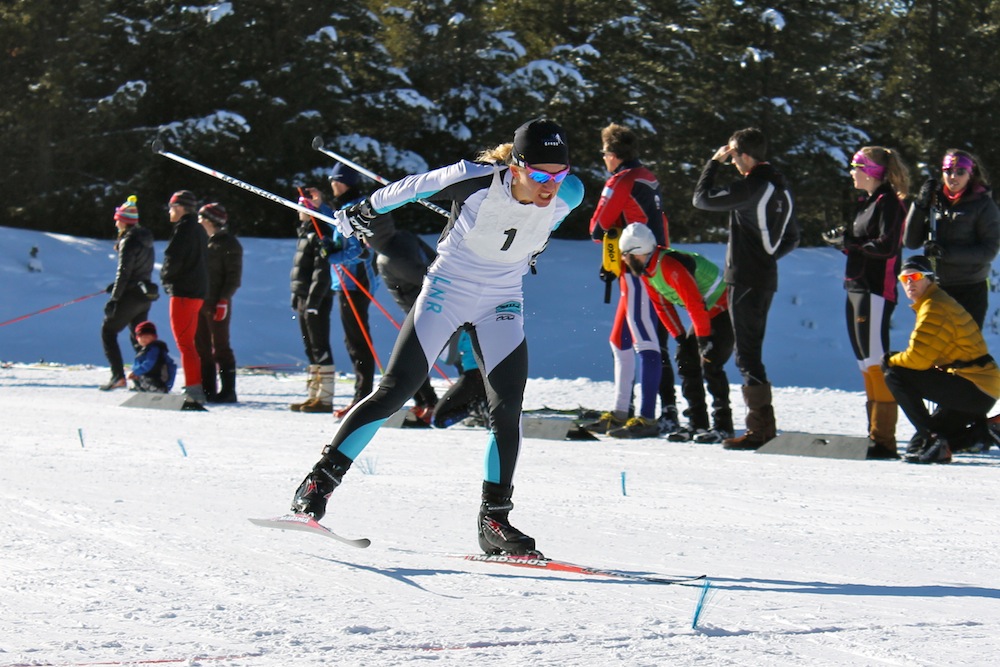
Tag: emil johansson

  • Americans Abroad: APU Skiers Take on China Tour de Ski

    Americans Abroad: APU Skiers Take on China Tour de Ski

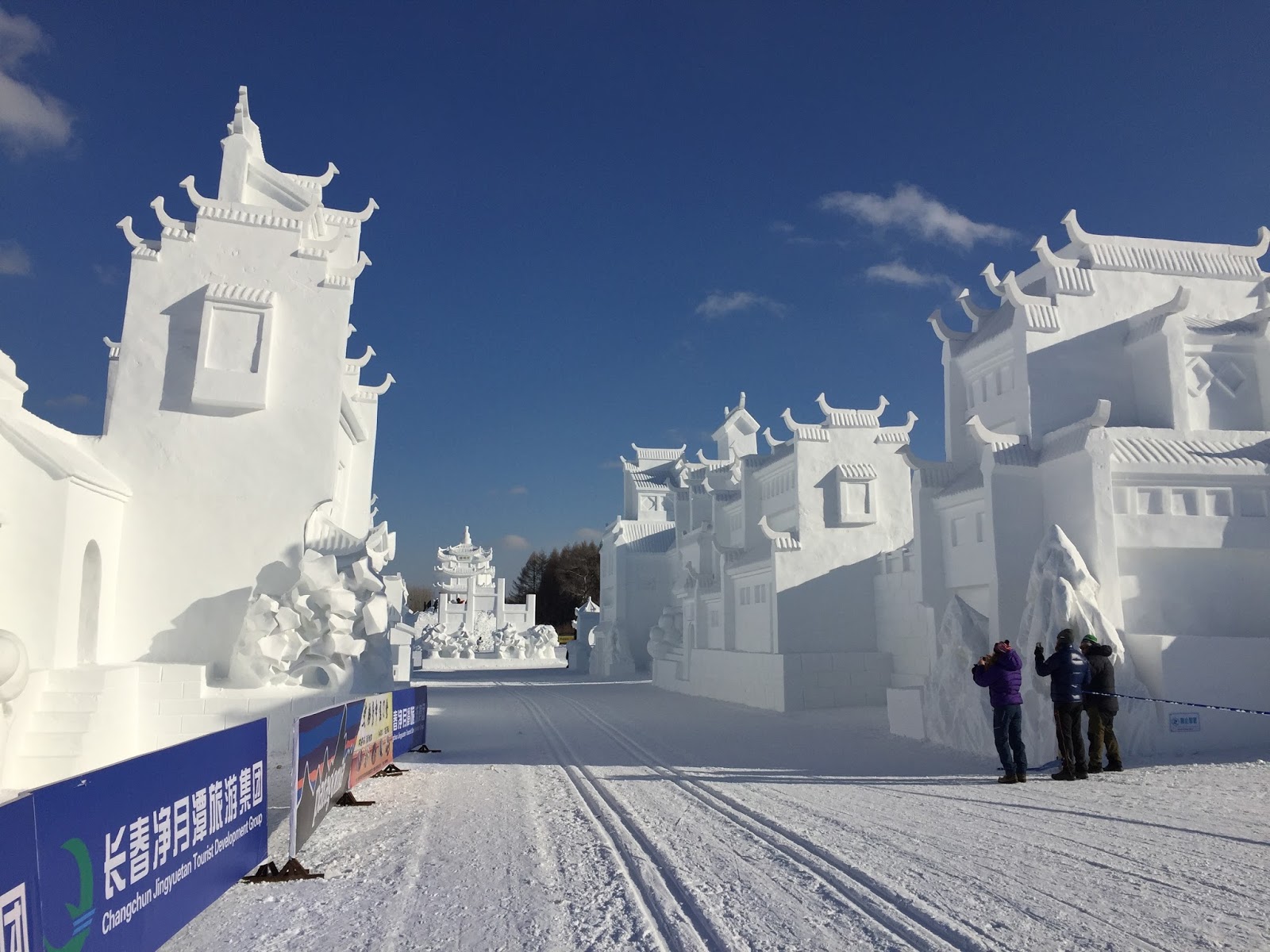
    Snow sculptures in the stadium in Changchun at the 2016 China Tour de Ski. (Photo: Holly Brooks)
    Snow sculptures in the stadium in Changchun at the 2016 China Tour de Ski. (Photo: Holly Brooks)

    Note: Alaska Pacific University skier Skyler Kenna, 21, will also be racing the 2017 China Tour de Ski. FasterSkier learned of Kenna’s participation after publication.

    ****

    Be a ski racer, see the world. That’s the approach of a pair of Alaska Pacific University (APU) skiers Jack Novak and Lauren Fritz, who leave for Asia later this week to race in the China Tour de Ski, set to begin in Changbaishan on Sunday, Jan. 1.

    Novak has never been to Asia before, and has yet to ride a camel on any continent. Fritz competed in the race series for the first time last year, and has skied on five continents. Both athletes are at a point in their ski career where they are seeking experiences more than SuperTour points or championship team selection. Some prize money wouldn’t hurt, either.

    The China Tour de Ski marks its 10th anniversary this year, which makes it only one year younger than the “other” Tour de Ski that begins in Val Müstair, Switzerland, this Saturday, Dec. 31. Prior versions of the Chinese Tour have featured a sprint on trucked-in snow inside the Bird’s Nest stadium built for the 2008 Summer Olympics, stage races across China and inner Mongolia, long bus rides, and a lot of photogenic camels.
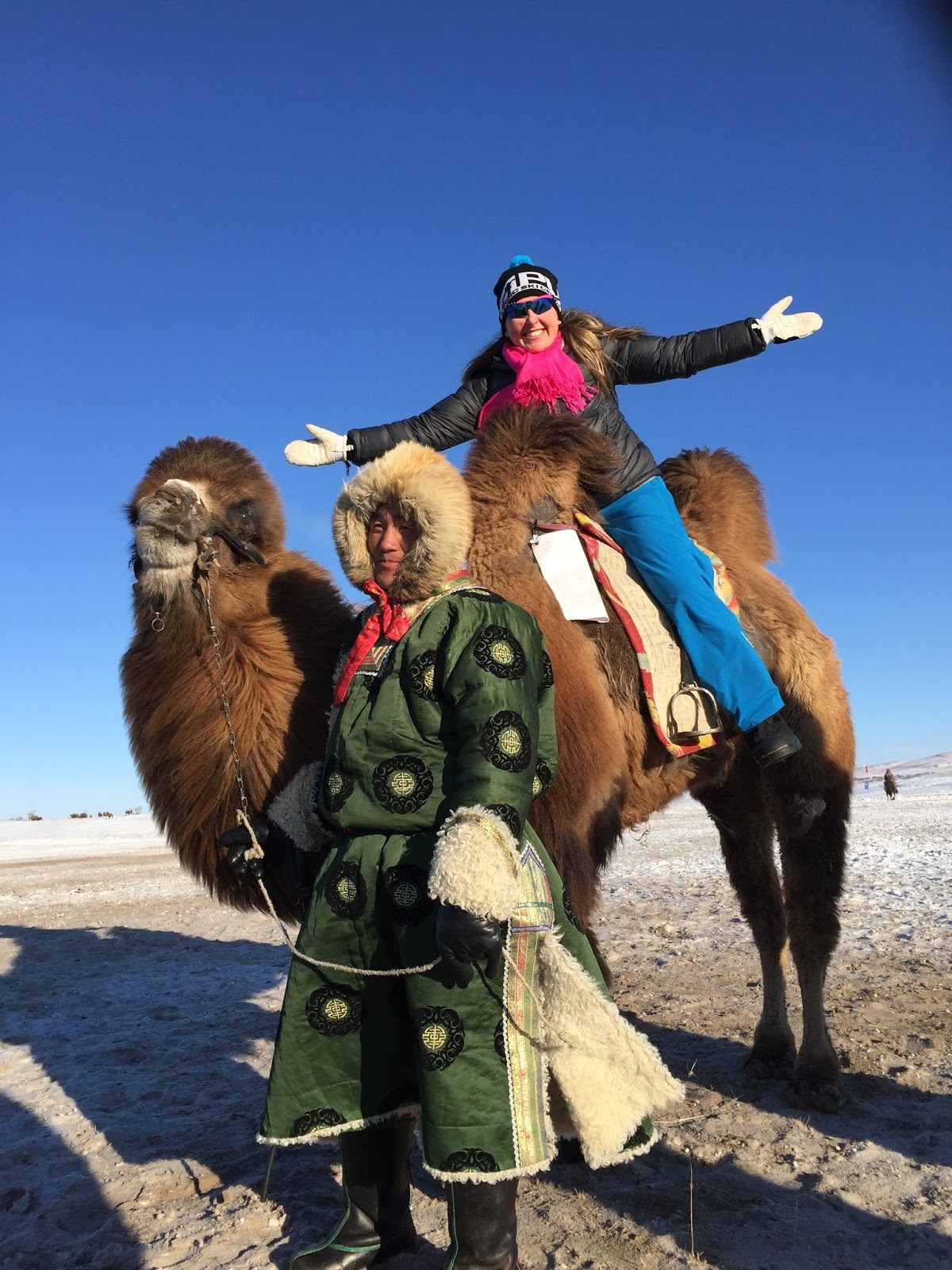
    Holly Brooks (retired APU and U.S. Ski Team) rides a camel during the 2016 China Tour de Ski. (Photo: courtesy Holly Brooks)
    Holly Brooks (retired, APU/U.S. Ski Team) rides a camel during the 2016 China Tour de Ski. (Photo: courtesy Holly Brooks)

    American skiers who have previously participated include Fritz, Peter Kling and Holly Brooks, all currently or formerly of APU; Ryan Scott, formerly of Ski & Snowboard Club Vail/Team HomeGrown; and former U.S. Ski Team member Torin Koos. They have consistently reported genuinely warm welcomes and intriguing cultural experiences.

    This year’s Tour takes racers through six stages over nine days across a wide swath of the country. (Changbaishan to Beijing is a 13-hour drive.) It’s heavy on the skate sprints: a full four out of six stages (Stages 1, 2, 5, and 6) are freestyle sprints. In the middle, Stage 4 is a prologue to short distance skate mass start race, 3.8 kilometers for the women and 5.7 k for the men.

    And Stage 3 is the Chinese Vasaloppet, a classic marathon now in its 15th year. Last year, the Tour de Ski racers covered the whole 50 k distance, with Brooks and Fritz on course for 2:44 and 2:51, respectively. This year’s Tour racers will participate in “a modified course and a shorter total distance,” though precisely how much shorter is not immediately apparent. The 2017 full-distance Chinese Vasaloppet also marks the third event of the 2016/2017 Visma Ski Classics series.

    While many multi-stage tours – the Tour de France, the Giro d’Italia, the original Tour de Ski – operate on a principle of lowest combined time wins, perhaps augmented by time bonuses for top positions, the China Tour de Ski instead applies World Cup scoring based on finishing position. Among other things, this avoids making the person who performs best in the Chinese Vasaloppet (which is much longer than all the other races combined) the de facto champion based on combined time.

    Last year’s overall winners were a pair of Swedes, Emil Johansson and Lisa Svensson. Johansson has a World Cup top-30 sprint finish to his name and won the 2013 SuperTour skate sprint in West Yellowstone, Mont., while studying at the University of Colorado-Boulder during the 2013/2014 season. Svensson, who will be competing in her fifth consecutive China Tour de Ski, has never had a podium finish in an International Ski Federation (FIS) race on European soil… but has 17 of them in China.

    One American has cracked the overall podium in the first nine years of the China Tour de Ski: Kling was second in 2015. Chinese skiers make up a minority of historic podium finishers in the event, likely reflecting both the nascency of Chinese cross-country skiing (the Chinese National Team was established in 2006) and race organizers’ willingness to attract non-Chinese skiers to their event.
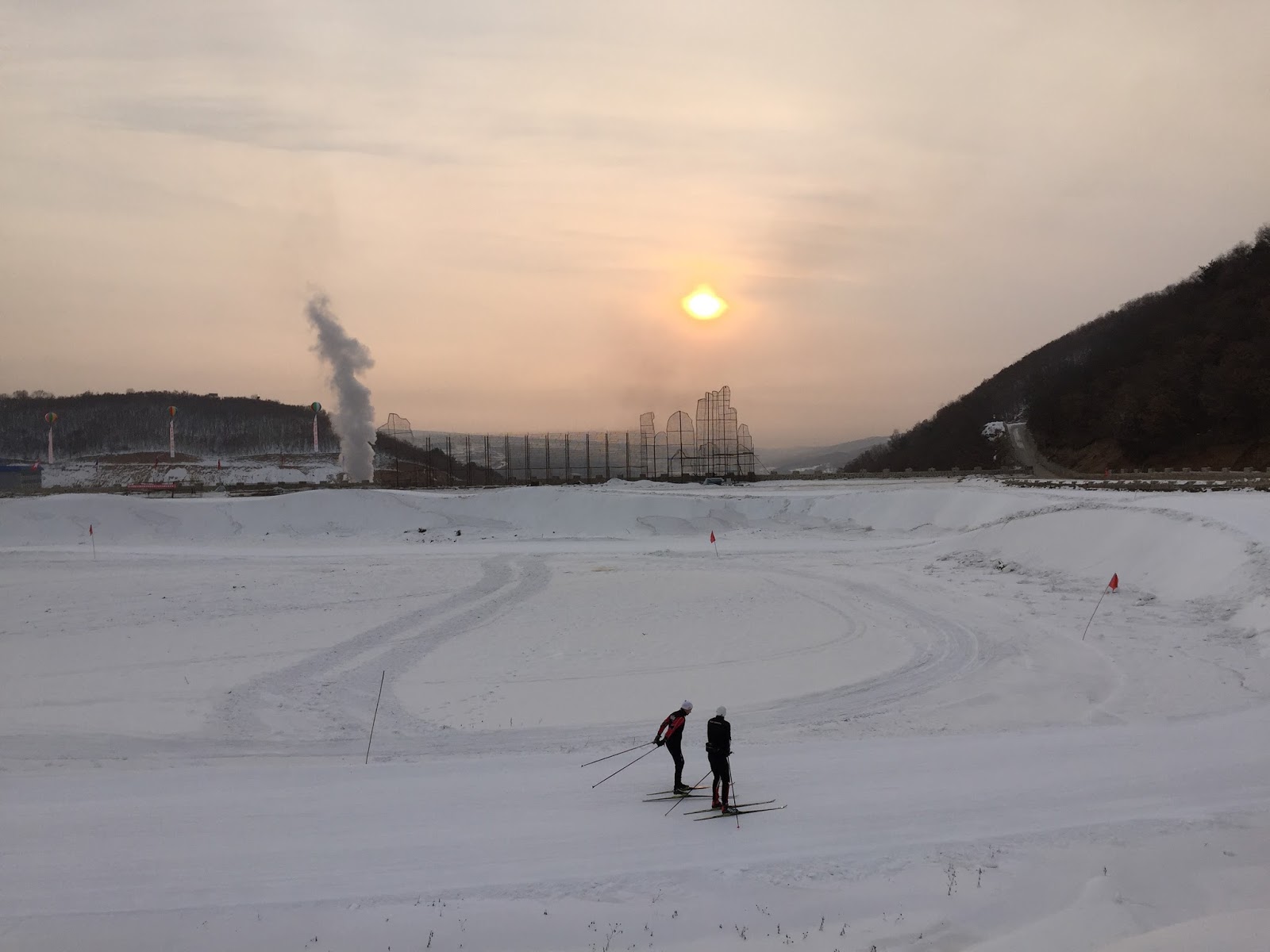
    The gravel pit-turned-skate sprint course in Yanji during the 2016 China Tour de Ski. (Photo: Holly Brooks)
    The gravel pit-turned-skate sprint course in Yanji during the 2016 China Tour de Ski. (Photo: Holly Brooks)

    When it comes to convincing European skiers to fly across Asia, or Alaskan skiers to fly across the Pacific Ocean, money talks.

    To start with, virtually all of the racers’ expenses, including transportation, are covered by the race organizers. As Scott wrote to FasterSkier during the 2015 Tour, the race paid for all of his travel, lodging, and food. “My only expense is $500 Euros to the organizers and paying for bags,” Scott wrote.

    On top of that, there’s real money to be made. In this year’s Tour, first through fourth in four of the stages is good for 2,000 to 10,000 renminbi (yuan) per race. (At current exchange rates, 10,000 yuan is equal to approximately $1,400 – or more than the $1,200 prize for first place in any race at next month’s U.S. nationals.) For the Stage 2 sprint, it’s up to 20,000 yuan for the men ($2,800), 15,000 yuan ($2,200) for the women. For the Chinese Vasaloppet, Stage 3, first place takes home 5,000 euros, or $5,200. Plus there are additional prizes for top four in the overall Tour standings, starting with 20,000 yuan for first. (With the exception of Stage 2, all other stages and overall standings feature the same prize amounts between the genders.)

    The total prize purse for Stages 1-2 and 4-6, not counting the Chinese Vasaloppet, is 251,000 yuan, or over $36,000. That’s slightly less than the $39,000 purse for the American Birkebeiner, but it’s in the ballpark. Within the world of cross-country ski racing, this is a princely sum. It is roughly to skiing as Russia’s $1.5 million for Diana Taurasi is to women’s basketball, or China’s 60 to 70 million euros for Oscar is to international soccer – eye-opening sums of money paid to entice athletes to a part of the world they might not otherwise consider visiting.

    In related news, the Qaniq Challenge will once again pay out a total purse of $10,000 in Valdez, Alaska, next month. Fritz earned $500 for her third-place finish in last year’s race, behind fellow China veteran Brooks in second.

    The athletes

    Fritz: Rekindling her love of skiing

    But for Fritz, it’s not all about the money. The native of Chugiak, Alaska, and longtime APU skier has been a competitive racer for many years, with career highlights that include SuperTour podiums, top-10 national championship finishes, and World Cup starts in Canada in 2012. But in 2015, she wrote, she suffered through “a rough season prior, a summer of illness, injury and just general low-quality training,” and was getting ready to call it a career.
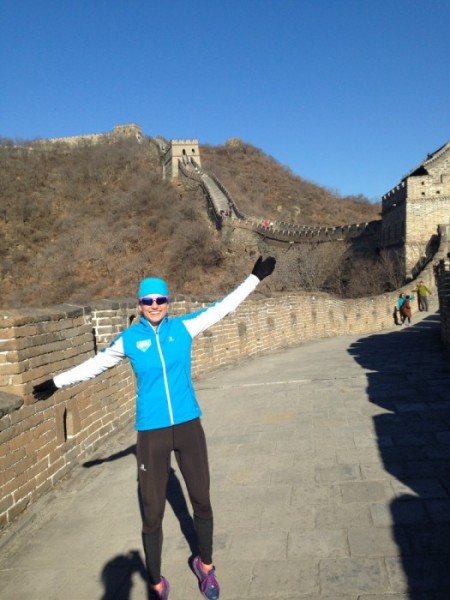
    Lauren Fritz (APU) poses for a moment during a run along the Great Wall of China during the 2016 China Tour de Ski. (Courtesy photo)
    Lauren Fritz (APU) poses for a moment during a run along the Great Wall of China during the 2016 China Tour de Ski. (Courtesy photo)

    “I decided I was going to move away from SuperTour racing and do some ski marathons and probably retire [following the 2015/2016 season],” Fritz, 28, wrote to FasterSkier earlier this week during a break from packing. “I was fed up with racing SuperTour, racing poorly and not getting anywhere (figuratively, with my ski career). And I wasn’t having fun anymore. I was so used to being around skiers who are very focused on high level goals and incredibly (unspokenly) competitive that you can lose sight of why you do what you do beyond just a number on a result sheet, especially if you aren’t achieving those results (and I most certainly wasn’t).”

    Her inaugural trip to China changed all that.

    “Being with the group in China, it was just all about how we got this amazing opportunity and it was simply because we skied,” she wrote. “It reminded me that skiing has taken me so many places and connected me with so many people, and I get to be outside so much, and that was why I love it so much. I came home with a fresh attitude and it really helped boost me mentally and physically.”

    Fritz’s enthusiasm is immediately apparent in her answer to a reporter’s question about why she is going back to China.

    “Last year’s Tour de Ski China was one of the most fun, unique, and craziest ski trips I’ve ever been on,” she wrote. “So it’s more a question of ‘Why not?’ than ‘Why?’ am I going back, which probably makes it obvious why I’m going again. It was low-stress, low-pressure, with high energy, excitement and general enjoyment.”
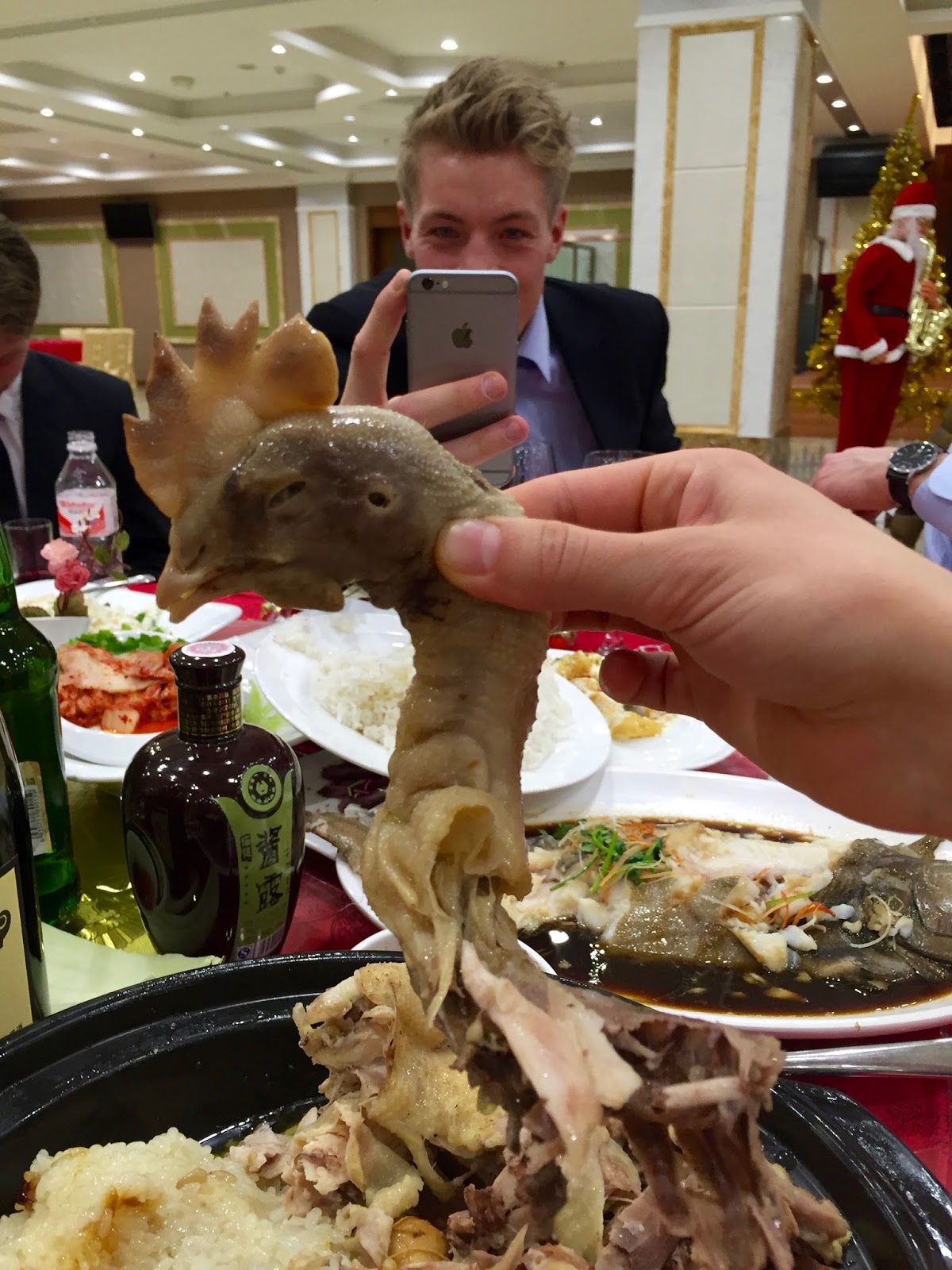
    A chicken head featured prominently on the menu during the 2016 China Tour de Ski. (Photo: courtesy Holly Brooks)
    A chicken head featured prominently on the menu during the 2016 China Tour de Ski. (Photo: Holly Brooks)

    “Everyone on the trip was there primarily for the experience of being in China and seeing cool new places with the added bonus that we got to do some ski races,” Fritz enthused. “I mean, how many ski races have you been to where you have to squat over a board over an open pit in a communal poop shack, and get handed a can of random Chinese ‘RedBull’ and a personal size bottle of Chinese spirits, cross a finish after skiing through a literal snow castle city, and be treated afterwards to a show and a table full of food you don’t recognize but eat anyways… Oh, and get to go for a hike on a Great Wonder of the World [the Great Wall of China] after the last race?”

    Fritz continued, “Everyone’s attitude was more geared towards having a great time and experiencing what China had to offer than doing well in the races, and that gave it a more relaxed feeling. Not that people didn’t take the races seriously, they/we certainly did because there was money on the line! But once the bib came off, it was about having fun. The group we had was amazing, everyone was fun to hang out with and easy to get along with, and we had a great time. Not often is two straight weeks of living and traveling with a big group like that so easy and enjoyable.”

    “Last year’s Tour de Ski China was one of the most fun, unique, and craziest ski trips I’ve ever been on. … It was low-stress, low-pressure, with high energy, excitement and general enjoyment.” — Lauren Fritz, APU skier

    While she is largely going back for the experience, Fritz is not above hoping that, in a virtuous cycle, the improved training she was inspired to do following her trip to China last year will translate to better results this year.

    “This year I definitely want to get some podiums,” Fritz wrote. “I had two 4th places last year, so I’d like to improve on that! I think it’s possible to be on the podium a few times if I ski the way I know I can right now with my fitness level. (Read: Fitness level waaaay better than last year, ha!)”

    “Pretty much, the TDS China is my season,” she concluded. “As I said, I was going to retire after last year, but I kind of felt rejuvenated and wanted to keep training pretty much just so I could go back to China this year! I will still do some races later in the season, but China is definitely top of the priority list.”

    Novak: Looking for adventure and an inaugural camel ride
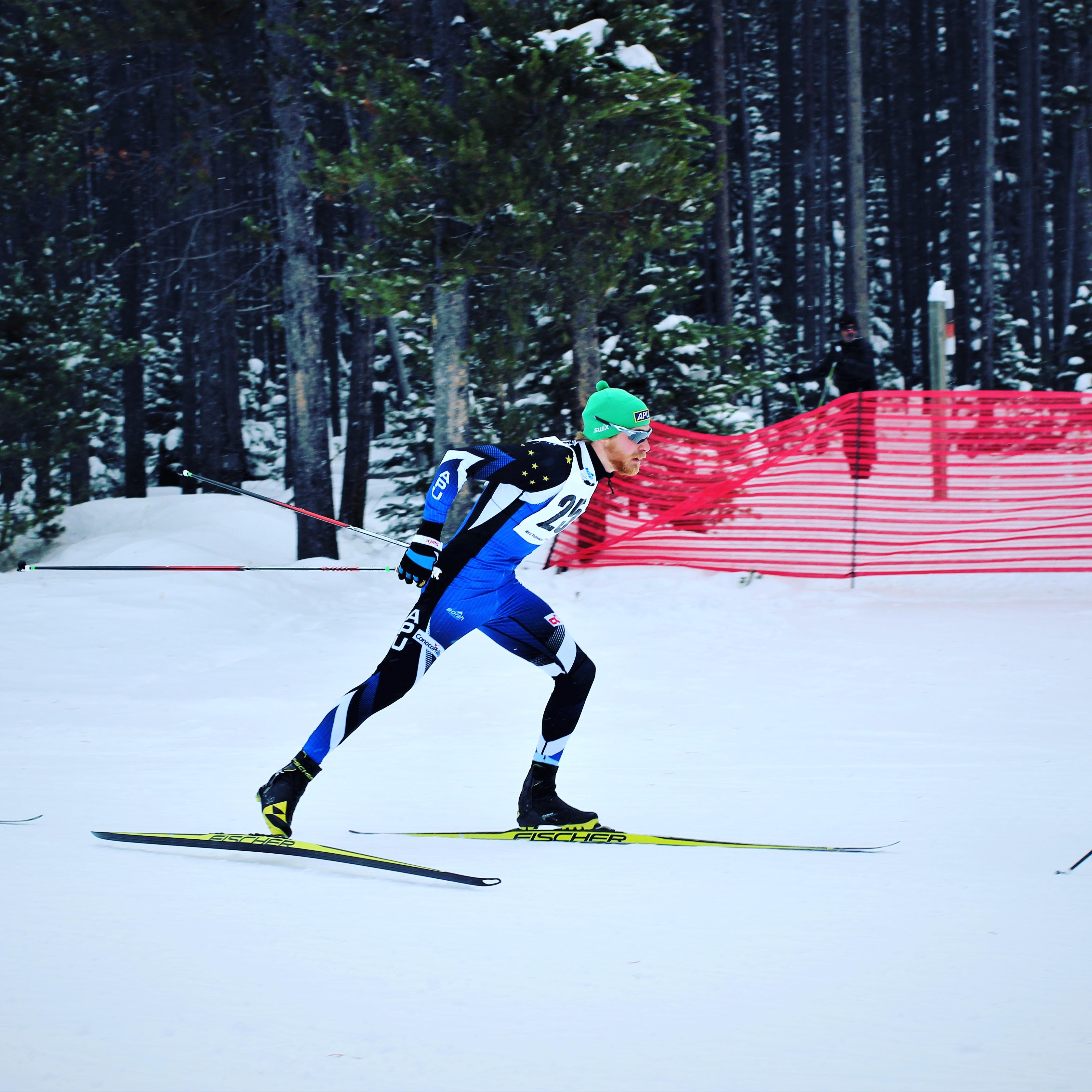
    Jack Novak (APU) during a SuperTour race in West Yellowstone, Mont., this month. (Photo: Forrest Mahlen)
    Jack Novak (APU) during a SuperTour race in West Yellowstone, Mont., this month. (Photo: Forrest Mahlen)

    Novak, 23, from Anchorage and also a longtime APU racer, finds himself in much the same boat as Fritz – underwhelmed by his recent performances, and looking for a low-stress adventure to mix things up.

    “I decided to go on the Tour de Ski China because I was looking for a change of pace after the past couple of years of injuries,” Novak wrote to FasterSkier. “I am not in a place where I am racing for a World Champs start spot, so for me racing at nationals didn’t have a huge draw this year. I heard about this race from my teammates over the years and thought this is a good year to race this series. It should be quite an adventure and that is what I am looking for right now, having fun racing and doing what I love.

    “I also have never ridden a camel but I hope this trip affords me the opportunity,” he added.

    In less Bactrian goals, Novak wrote, “My goals for this series are to really see how I stack up. I would love to be in the mix hopefully fighting for the win every once in a while. Also I already am going to get to travel to China and Inner Mongolia seeing part of the world I have never seen which is a goal achieved as soon as I leave. Being able to travel around the world to ski race is a real pleasure and an opportunity that not many get to experience so I feel very lucky.”

    Back in this country, Novak wrote that the China trip meshes well with the rest of his season goals, as he plans to enter some local races in Alaska in January before heading to the Midwest in February for SuperTour races and the Birkie.

    “Finally,” Novak wrote, “we will finish up the season in Fairbanks [for Spring Series] which should be a hoot and a half. We race so infrequently in Alaska on a national stage that it is fun to race at ‘home’ or at least the same state.”
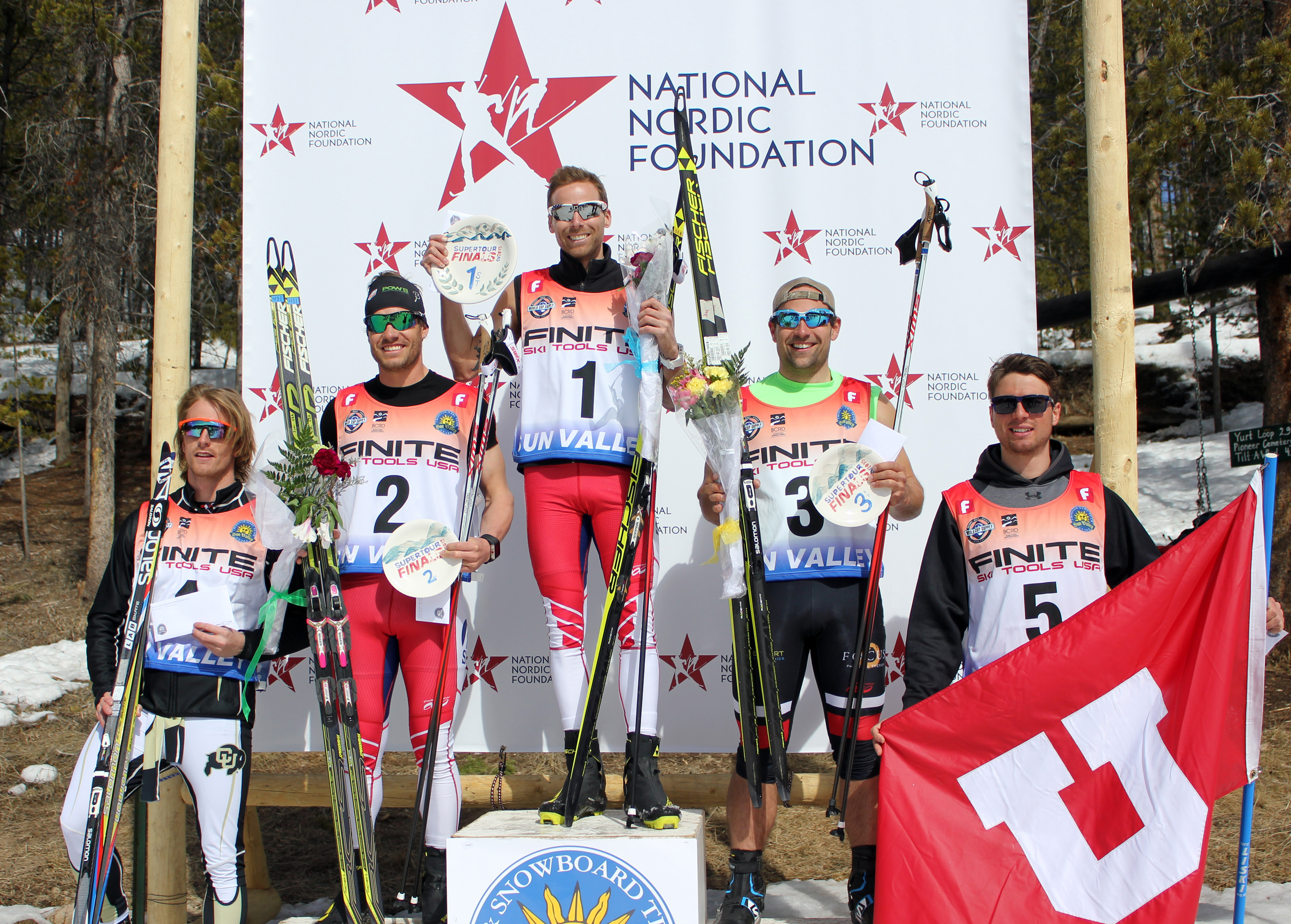
  • Newell Claims Tactical Win Over Teammate Hamilton in SuperTour Finals Sprint

    Newell Claims Tactical Win Over Teammate Hamilton in SuperTour Finals Sprint

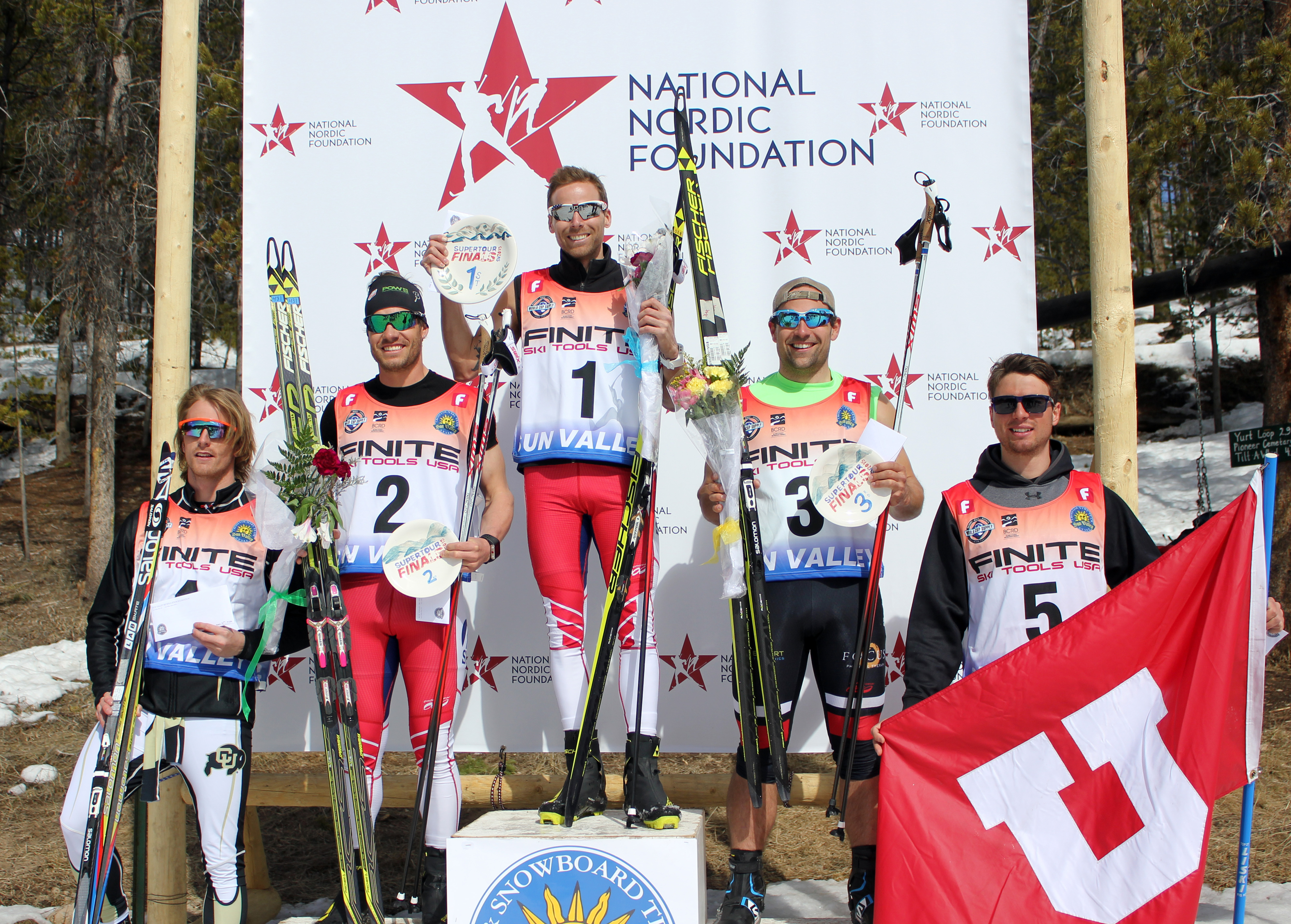
    Sunday's 1.2 k freestyle sprint podium at the 2015 SuperTour Finals in Sun Valley, Idaho. Andy Newell (1) claimed victory over teammate Simi Hamilton (2) and Bend Endurance Academy's Dakota Blackhorse-von Jess (3).
    Sunday’s 1.2 k freestyle sprint podium at the 2015 SuperTour Finals in Sun Valley, Idaho. Andy Newell (1) claimed victory over teammate Simi Hamilton (2) and Bend Endurance Academy’s Dakota Blackhorse-von Jess (3).

    SUN VALLEY, Idaho – Living, training, and competing together over the course of a year can often lead to similar race outcomes, as demonstrated by the 1.2 k freestyle sprint at the 2015 SuperTour Finals where Stratton Mountain School T2 teammates Andy Newell and Simi Hamilton skied in the same final lane and finished roughly a tenth of a second apart to take the top two positions.

    Newell’s time of 2:24.96 earned him the victory while Hamilton crossed the line just 0.12 seconds back. In third was two-time 2015 national sprint champion Dakota Blackhorse-von Jess of the Bend Endurance Academy, who finished 0.88 seconds back from Newell.

    Rounding out the final were Emil Johansson of the University of Colorado (+1.28) in fourth followed closely by Noe Bellet (+1.31) of the University of Utah in fifth. Colorado teammate Mads Ek Strøm (+2.56) placed sixth.

    Newell and Hamilton didn’t start their day at the top of the result sheet after placing seventh and 10th in the morning’s qualifier. Starting at 10am, the preliminary round welcomed conditions that left racers feeling as if they were on an ice rink instead of a ski trail. Many competitors struggled to find their balance on the fast course that featured rolling terrain and little climbing.

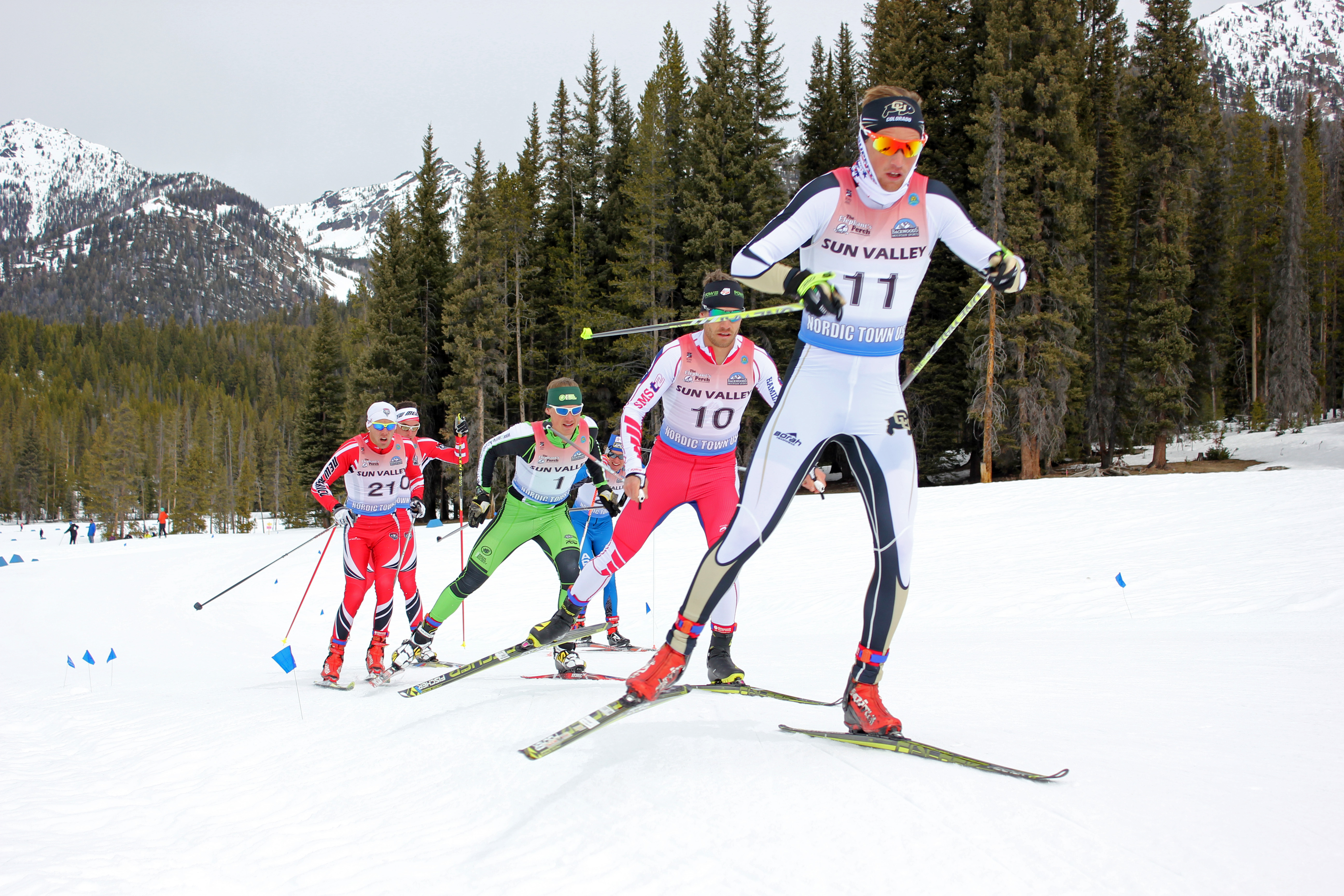
    Colorado's Mads Ek Strøm leads Simi Hamilton (10) and Alex Howe (1) in the first quarterfinal of the Sunday's 1.2 k freestyle sprint at the 2015 SuperTour Finals in Sun Valley, Idaho. Stream eventually finished sixth, while Hamilton placed second. Howe broke two poles to finish third in the heat but did not advance as lucky loser.
    Colorado’s Mads Ek Strøm leads Simi Hamilton (10) and Alex Howe (1) in the first quarterfinal of the Sunday’s 1.2 k freestyle sprint at the 2015 SuperTour Finals in Sun Valley, Idaho. Stream eventually finished sixth, while Hamilton placed second. Howe broke two poles to finish third in the heat but did not advance as lucky loser.

    “The qualifier was dicey for sure,” Newell said in a post-race interview. “It was funny, we were all trying to find skis that would work out there. I’m not sure it mattered what kind of grind or wax you had on, it was just a matter of trying to find a ski that wouldn’t slide. I went on this ski that I had never raced on before and it still felt really slippery on the ice so I was just happy to not crash in qualification.”

    Hamilton added that the relative flatness of the course also added a challenging dynamic to the day’s races.

    “It’s a flat course and sometimes those flat courses are the hardest,” he said after his race. “You can’t just pin it and recover on the downhill, it’s more of a steady consistent effort throughout. Skiing smooth and being relaxed was key.”

    Several skiers seemed to conquer the slippery conditions, including Alex Howe of the Craftsbury Green Racing Project, Alaska Pacific University’s Tyler Kornfield, and Johansson, who went 1-2-3 in the preliminary round. However, by the time the heats rolled around over two hours later, the warming temperatures had softened the course to make balance and smooth glide a manageable feat.

    As the heats progressed it became apparent that the descent before the uphill finish was key in securing a qualifying position. Skiers who used their momentum to enter the inside of the nearly 180-degree corner were often able to rocket past the competition to gain an advantage in the finishing meters.

    It was a strategy that took time to catch on. In the first quarterfinal, Hamilton exited the corner in third behind Strøm and Howe, but caught a lucky break when Howe was forced to free-skate after shattering both his poles after an aggressive pole-plant. In the second quarter, Newell realized the benefits of the strategy and skied the remainder of the heats accordingly, even though his competitors caught on quickly.

    “I realized early on if you could work the downhill instead of just tucking, you could get around people really easily, so that became my tactic all day, trying to work the downhill and work the corner,” he said. “I think people saw that. I did that in the quarterfinal and I think I kind of let the cat out of the bag really early. Once people saw that move, they were like, ‘Oh, I guess we can do that, too.’”

    Come the final, Hamilton led from the start followed by Newell, the three collegiate skiers, and Blackhorse-von Jess in the rear. By the time the six skiers reached the downhill, Newell powered to meet Hamilton on the corner and gained momentum after finding a gap on the inside. The two exited the turn neck and neck.

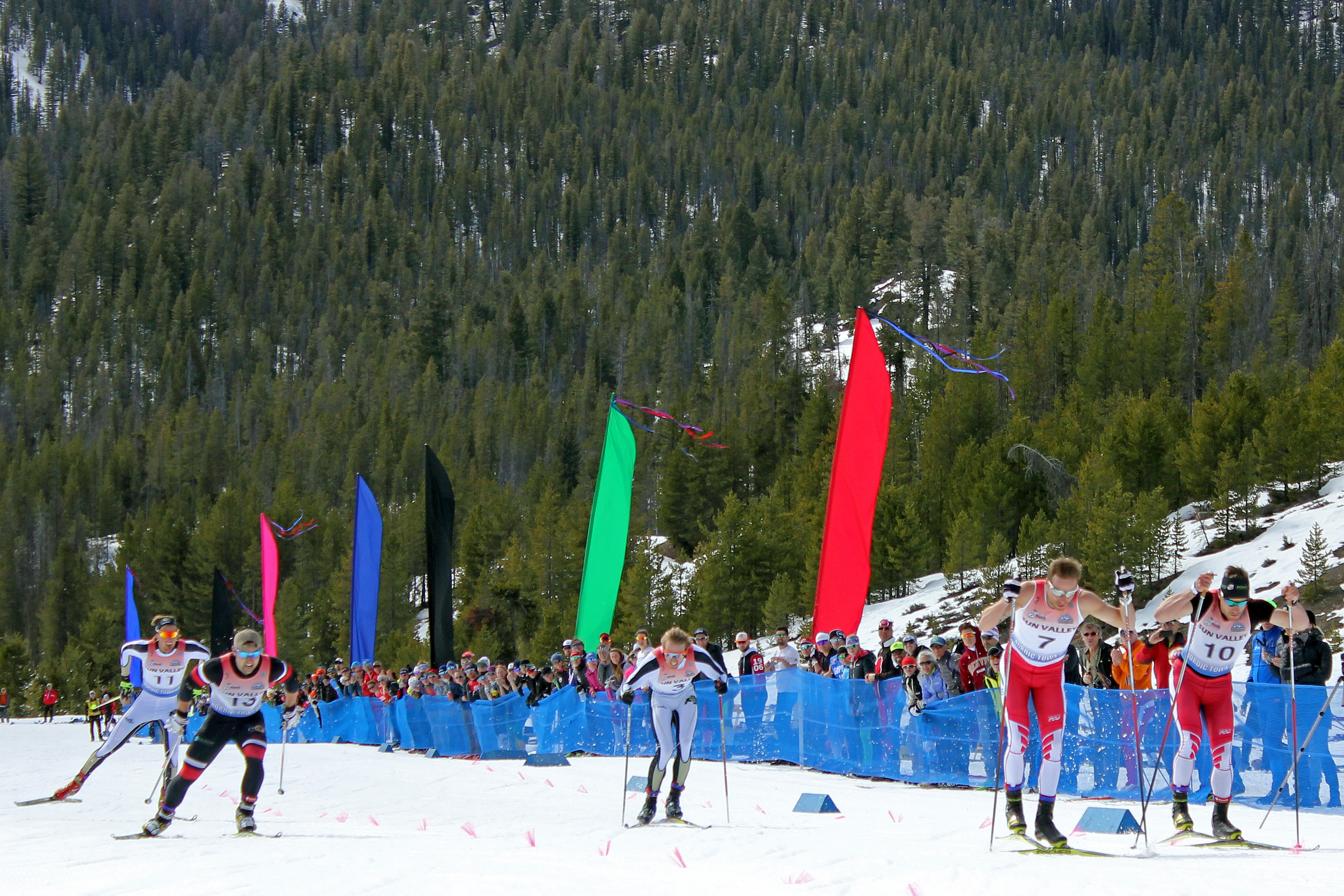
    Andy Newell (7) gains a slight advantage over SMST2 teammate Simi Hamilton (10) as they cross the finish of the 1.2 k freestyle sprint at the 2015 SuperTour Finals.
    Andy Newell (7) gains a slight advantage over SMST2 teammate Simi Hamilton (10) as they cross the finish of the 1.2 k freestyle sprint at the 2015 SuperTour Finals.

    As they reached the 50-meter lanes before the finish, Newell made a move to the far left lane in front of Hamilton. The two remained in the lane as Newell maintained his small advantage all the way to the line. Newell explained that the move was tactical – waiting until the last minute to choose a finishing lane prevents strategic lane choices from other competitors.

    “If you play your card too early and show that you’re going to a certain lane, it allows your competitor to set up and go around you,” Newell said. “So I purposely waited to choose the inside lane. I was kind of hugging the whiskers because I didn’t want to completely box him out. Because he’s my teammate, I didn’t want to completely be like, ‘Screw you, I’m taking the lane.’”

    Hamilton explained that due to the lane size, he had to adjust his technique to avoid hitting the course markers.

    “I had to time my V2 to not ski into the v-boards, but racing is racing and you have to make it up on the fly. It’s just how it played out,” Hamilton said of the finish. “I was psyched to see my teammate on the podium with me. Andy has been an amazing sprinter and to be in any heat with him, he’s a great skier. I’m looking forward to training with him this summer and beyond that.”

    Newell echoed the sentiment adding, “It’s always nice to get a win and to have your teammate in second, we’re happy about that.”

    Hamilton said that prior to Sunday’s race he was dealing with illness but was able to ski any poor feelings away as the day progressed.

    “I didn’t feel great this morning. I’ve definitely been fighting something all week,” he said. “In the past when I haven’t been feeling great, if I can just keep skiing throughout the day I’ve tended to erase it out of my system and feel better and better.”

    The 27-year-old Aspen native explained that heading into Sunday’s race there was pressure to perform well due to the level of competition at this year’s SuperTour Finals.

    “I think that you feel pressure because there are so many great domestic skiers right now,” he said. “Which is so cool to see. It’s awesome to come home and see so many people fight for the top spots.”

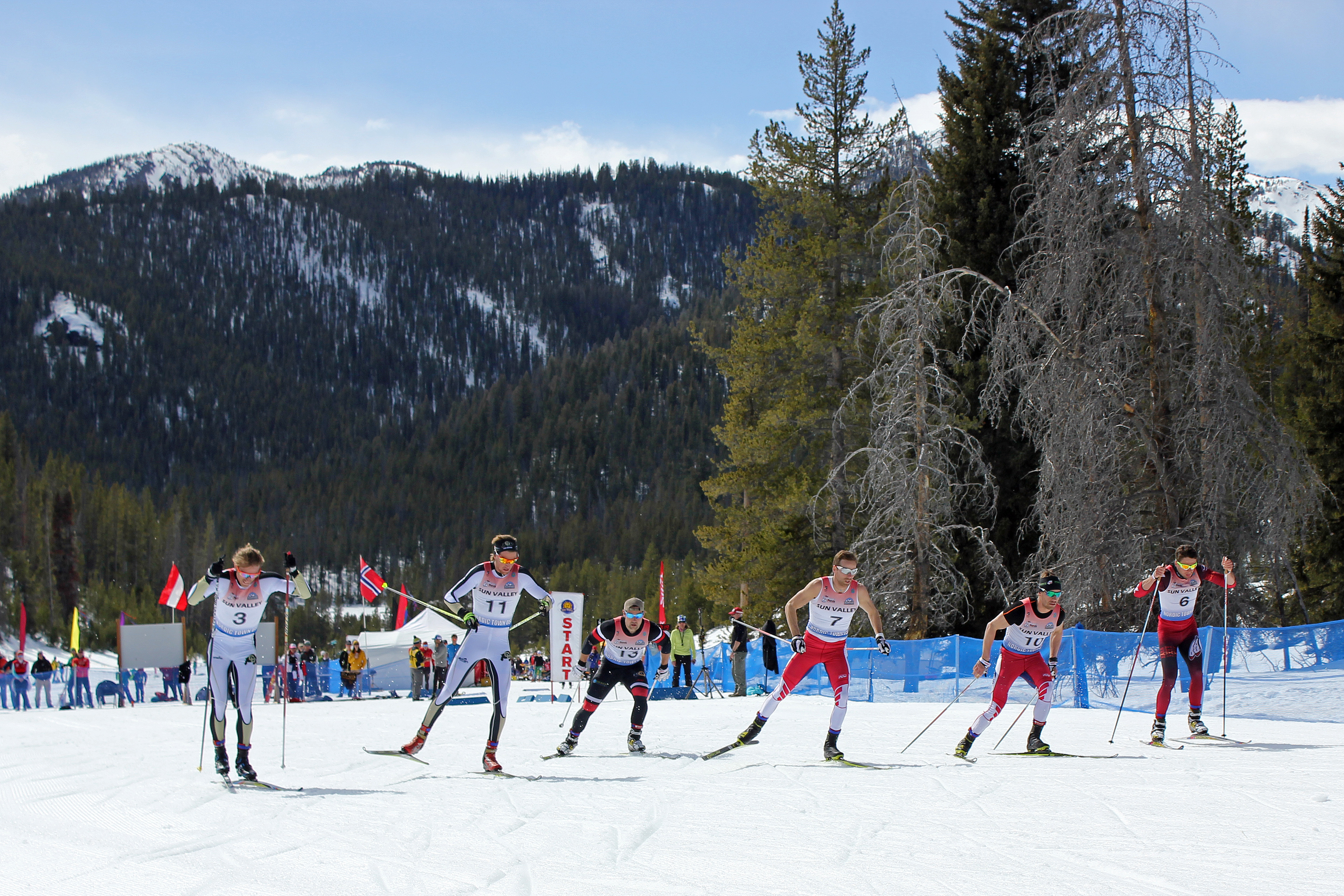
    The start of the men's final at the 2015 SuperTour Finals in Sun Valley, Idaho.
    The start of the men’s final at the 2015 SuperTour Finals in Sun Valley, Idaho.

    While Newell and Hamilton battled ahead, one of those strong domestic skiers, Blackhorse-von Jess, came back from sitting in last position at the start to third position at the finish.

    “Coming out of the start in last place was something else,” he said, referring to the final. “About halfway across the top flat I was like, ‘I can’t sit here anymore,’ and there’s really only one opportunity, because of the way the trail twists and turns, to take the lead. So I hammered through there.”

    After making his move, Blackhorse-von Jess entered the downhill with momentum that brought him to the heels of the SMST2 teammates. Unable to take the line he wanted to the finish, the Bend skier held on to third in the final meters.

    “Andy, really, he took the line I wanted to take, which is exactly what I would’ve done if I had been where he was,” he said. “And then, I thought he and Simi were gonna open the door there for me at the end but I just didn’t quite have it there.”

    Blackhorse-von Jess earned several World Cup starting spots and a place on the 2015 World Championships team after a successful early season. He explained that it was an adjustment to return domestic racing after a several weeks on the international circuit.

    “It’s incredibly fun to be racing in the heats again,” Blackhorse-von Jess said. “I had the best time ski racing that I’ve had in the last couple years racing, at World Champs in the heats. So to come back and have guys that are better than me to race with, it changes the complexity of the race and makes it a lot more fun.”

    Men’s 1.2 k Sprint Results 

  • Johansson Surprises in Yellowstone SuperTour Sprint; Hanneman Outlunges Scott for Second

    Johansson Surprises in Yellowstone SuperTour Sprint; Hanneman Outlunges Scott for Second

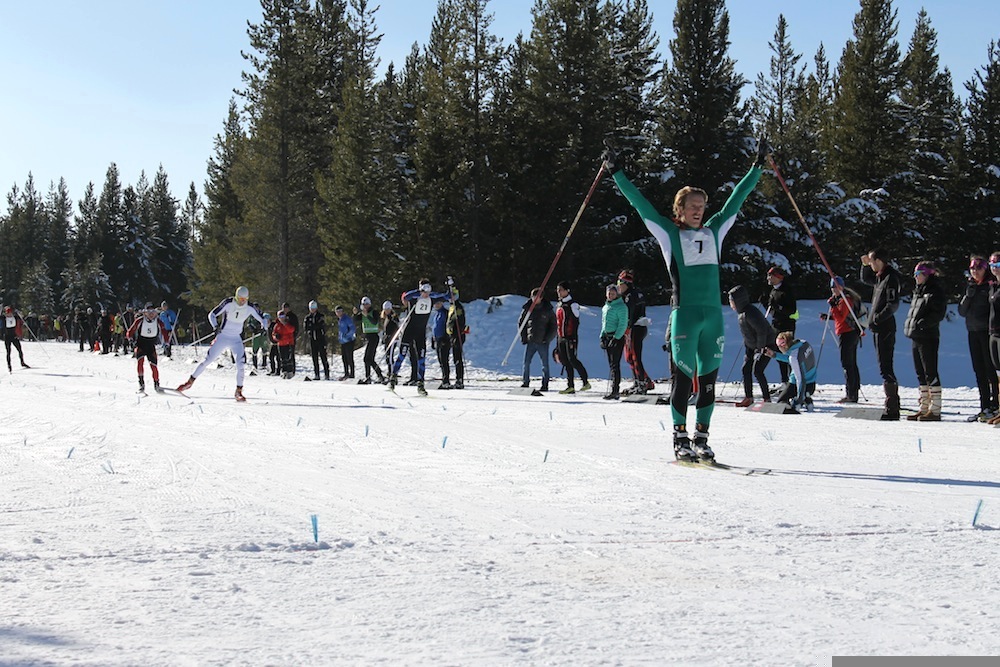
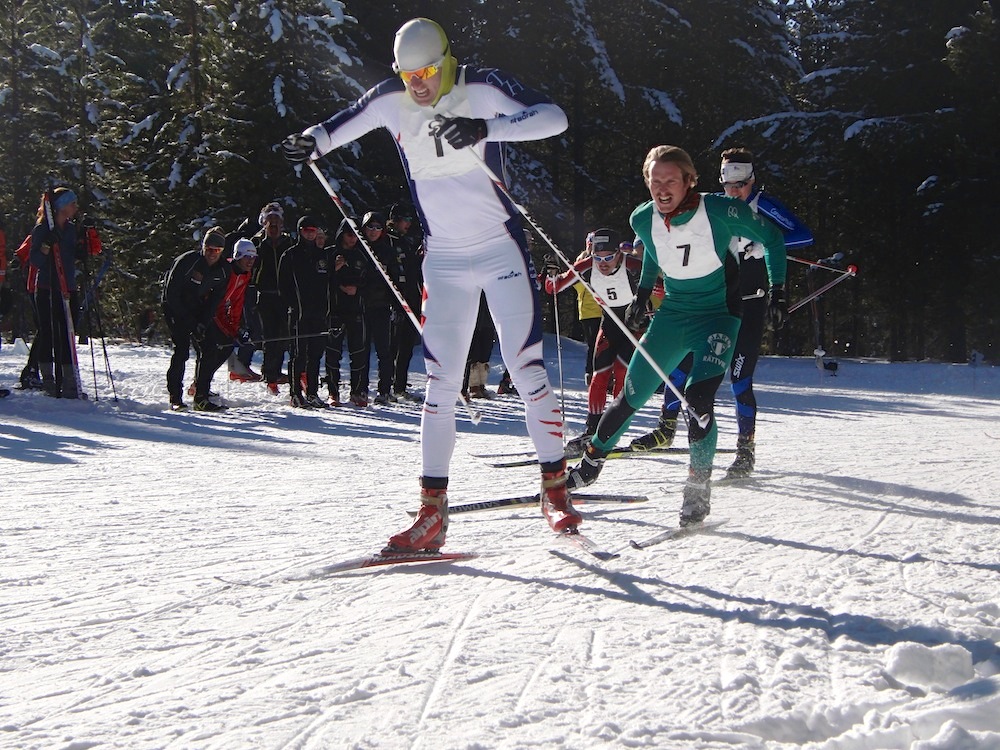
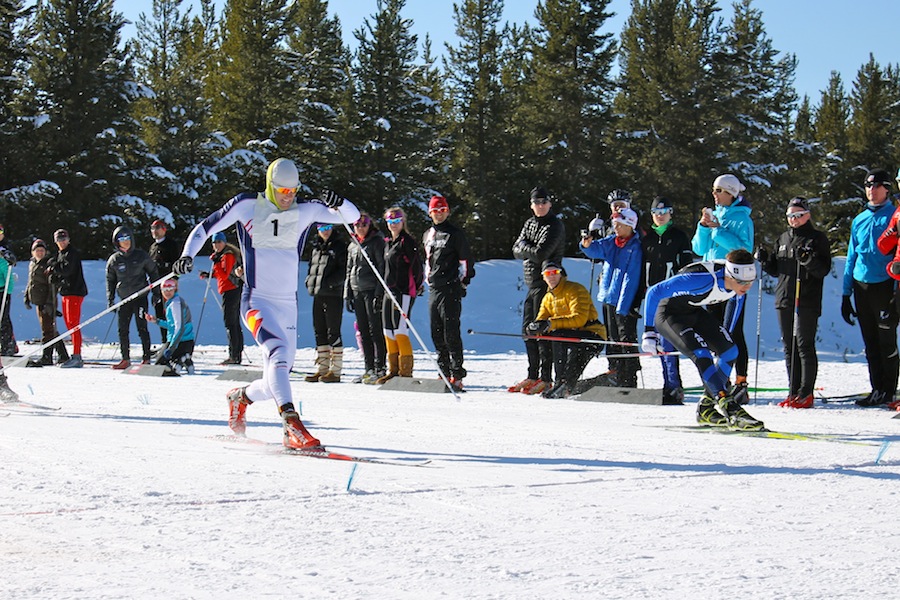
    Emil Johansson of Sweden's IK Jarl Rättvik celebrates his decisive victory in the West Yellowstone SuperTour 1.3-kilometer skate sprint on Friday. The seventh-fastest qualifier, Johansson went on to beat qualifying winner Ryan Scott  of SSCV/TeamHomeGrown (in white) and Reese Hanneman of APU, second from r. Hanneman outlunged Scott for second.
    Emil Johansson of Sweden’s IK Jarl Rättvik celebrates a decisive victory in Friday’s West Yellowstone SuperTour 1.3-kilometer skate sprint at the Rendezvous Ski Trails. The seventh-fastest qualifier, Johansson went on to beat qualifying winner Ryan Scott of SSCV/TeamHomeGrown (in white) and Reese Hanneman of APU (second from r). Hanneman outlunged Scott for second.

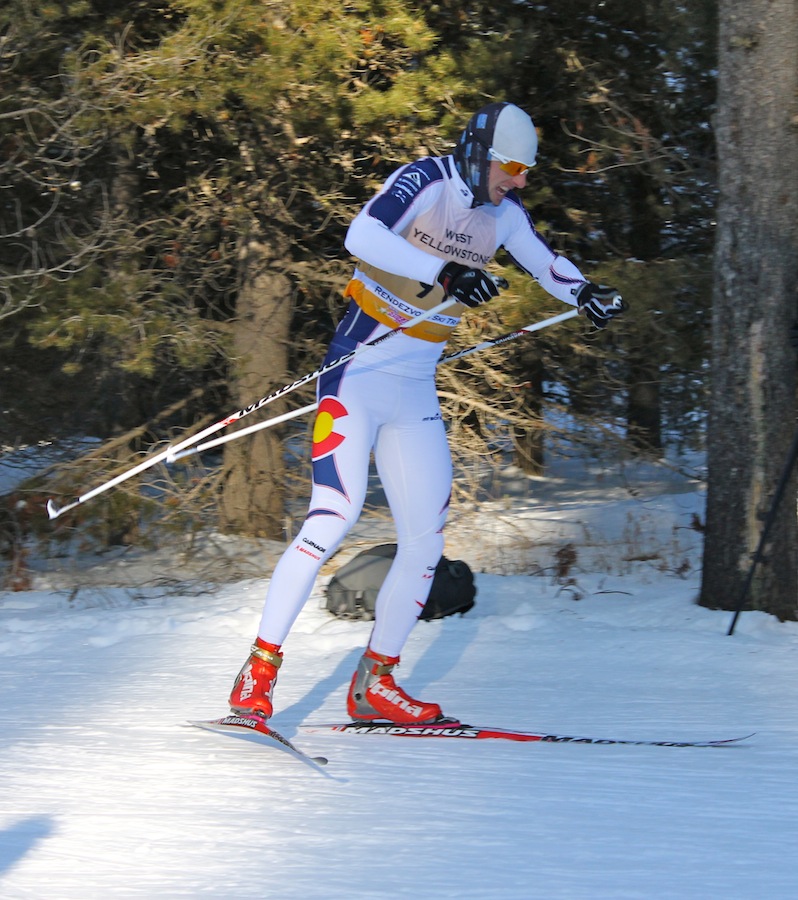
    WEST YELLOWSTONE, Mont. — A lot of people might not know who Emil Johansson is. To SuperTour spectators and most of the 200-plus racers (between the men’s and the women’s races) on Friday, he was an unknown: a Swede racing in the green suit of his home club IK Jarl Rättvik. An exchange student at the University of Colorado in Boulder, he’s not part of the nordic team there. It was hard to know what he was capable of.

    A SuperTour staple, Ryan Scott (Ski and Snowboard Club Vail/Team HomeGrown) won Friday’s qualifier and a quarterfinal in the 1.3-kilometer freestyle sprint, yet didn’t know half the men he was racing once he got to the final. Last year’s West Yellowstone skate prologue winner, Scott quickly learned who Johansson was.

    Ryan Scott (SSCV/Team HomeGrown) leads Swede Emil Johansson (7) and Reese Hanneman (APU) in the semifinal of Friday's 1.3 k skate sprint at the SuperTour opener in West Yellowstone, Mont. All three finished less than a tenth of a second together to advance to the finals.
    Ryan Scott (SSCV/Team HomeGrown) leads Swede Emil Johansson (7) and Reese Hanneman (APU) in the semifinal of Friday’s 1.3 k skate sprint at the SuperTour opener in West Yellowstone, Mont. All three finished less than a tenth of a second of one another to advance to the finals.

    He had just advanced from the semifinal with a three-way photo finish for first with Johansson and Reese Hanneman, of Alaska Pacific University (APU). All three were in the final, along with Pierre Guedon (University of Denver), Sam Naney (Methow Olympic Development), and Dmitriy Ozerskiy (CXC).

    Johansson turned on the jets at the opportune time — on the last of two climbs on the short course — to win the SuperTour-opening sprint in 2:28.90. He hadn’t been the fastest throughout the day, ranking seventh in the qualifier (+5.17 off Scott’s time of 2:27.14), and winning the slowest quarterfinal in 2:30. But Johansson knew the game and beat Hanneman in second (+1.7), Scott in third (+1.8). Guedon, Naney and Ozerskiy finished separately in fourth through sixth, respectively.

    “Both the quarterfinal and semifinal was really close, but the final was pretty easy,” Johansson said. “Actually, it was the easiest round. Ryan was in the lead and I think he was kind of tired. I just got in his draft all the time and my plan was to push it hard on the last uphill. I thought someone should keep up with me, but they didn’t. I was pretty tired the last 200 meters, but I made it.”

    Johansson had enough time to look around before finishing, throwing with his arms into the air while cruising across the line. He pulled an upset on both Hanneman and Scott, whom he had gapped on the hill. Unable to respond, they lunged for second, which Hanneman took by 0.1 second. The two rolled across the line together, untangled themselves and showed  respect for each other after.

    “He was clean coming up behind and I never had any real contact with him,” Scott said of Hanneman, after leading the final up to the one-and-only hill, but failing to respond to Johansson’s attack on it. “I was loosing speed. I was trying to keep my tempo up; I know Reese had good cadence coming into that [finishing] stretch and a lot of power.”

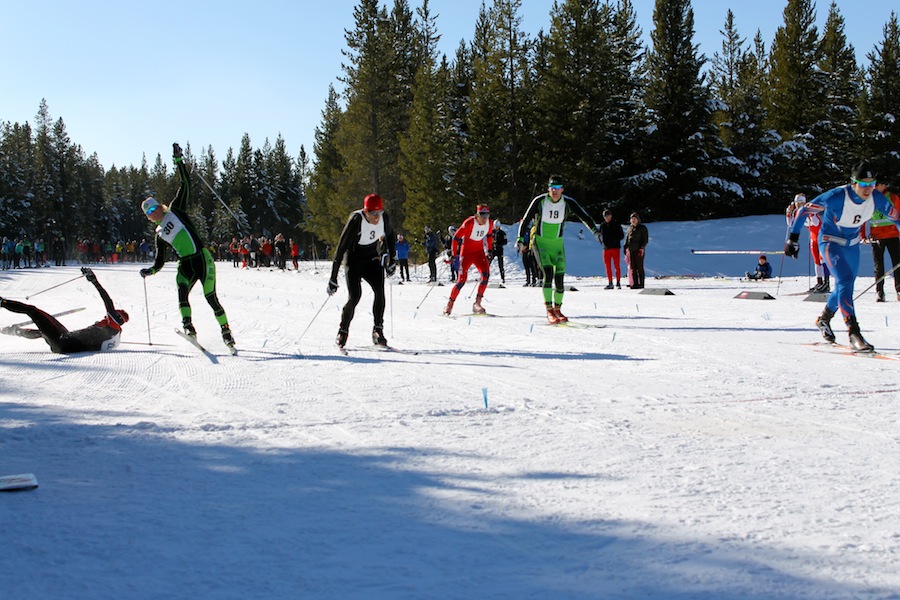
    Craftsbury's Pat O'Brien (second from l) and Pierre Guedon of the University of Denver (l) crashed just meters before the finish line in Friday's SuperTour 1.3 k skate sprint semifinal in West Yellowstone, Mont.
    Craftsbury’s Pat O’Brien (second from l) and Pierre Guedon of DU (l) crashed just meters before the finish line in Friday’s SuperTour 1.3 k skate sprint semifinal in West Yellowstone, Mont. CXC’s Dmitriy Ozerskiy (r) won the semi to advance to the final, along with Sam Naney of MOD (third from l).

    Unlike some the men in Friday’s heats, Scott made it through the rounds without falling victim to roughhousing “minus my poles being stepped on a couple times.” Others, like Pat O’Brien (Craftsbury Green Racing Project) and Noe Bellet (University of Utah), weren’t so lucky. The two crashed about a few meters before the finish of their semifinal when O’Brien tried to avoid tripping up with another skier on his left. He moved to the right, stepping into Bellet, and the two fell out of the running.

    Hanneman, who qualified in 21st, lunged at the finish of every round, finishing 0.5 seconds behind Scott in the quarterfinal. Not too thrilled with his qualifier, Hanneman made a point to push it in the heats and ended up with his career best in a SuperTour skate sprint.

    “I’ve been really focusing on my skating this summer so this is a great way to affirm to myself that I’ve hopefully made some progress,” he said.

    As for the course, Hanneman said it was “really fast”  with many tight corners in the middle section that made it “one of the most physical courses as far as contact between the skiers.” About 200 meters into the final, all six men converged on a single line, and Hanneman was caught in the middle. He said he double poled until there was room to move again, at which point he was in “dead last.”

    “Halfway through … I worked really hard to accelerate out of a couple of those corners and take some really aggressive far-outside and far-inside lines and pass some people,” Hanneman said. He got behind Scott and failed to latch onto Johansson on the uphill.

    “That’s where most people were [making a move] in the heats,” Scott said. “I think everyone was ramping up and expecting it, but people were just unable to answer that surge. It was a decisive move and impressive victory.”

    A student from Sweden’s Uppsala University currently on exchange at CU, Johansson was a big fan of the sprint course at the Rendezvous Ski Trails. “It’s a good course; I love it,” he said. “And on a day like this I love it even more.”

    For the two-day SuperTour series, the first of the season, Johansson said he was staying the CU nordic team. “When I came here I knew there was a ski team so I’ve been training with them sometimes,” he said. “Now I’m living with them this week, but I’m competing for my home club in Sweden.”

    Ryan Scott (SSCV/Team HomeGrown) pushes hard to win Friday's 1.3 k skate sprint qualifier by 0.62 seconds over teammate Sylvan Ellefson (not shown).
    Ryan Scott (SSCV/Team HomeGrown) pushes hard to win Friday’s 1.3 k skate sprint qualifier by 0.62 seconds over teammate Sylvan Ellefson (not shown).

    For Scott, third was short of his goal, but he’d take it.

    “Obviously my goal for today was to win the prologue and to win overall,” he said. “To be that close is tough, but I think it sets me up well for the weekends [ahead].” SuperTour leaders, including the top male and female sprinters, through the next weekend of racing in Bozeman, Mont., can earn World Cup starts in January.

    Scott was off to a solid start after winning the qualifier by 0.62 seconds ahead of teammate Sylvan Ellefson. According to Scott, Ellefson said he was “boxed out” in the quarterfinal, losing some finishing speed and placing third in the heat, 0.1 seconds behind Alex Schulz (CGRP) and Bellet, respectively. 

    According to U.S. Ski Team and APU member Erik Bjornsen, something similar happened to him. After qualifying in 16th, Bjornsen placed fourth in his quarterfinal, 0.5 seconds back from winner Ozerskiy, and did not advance to the semis. After leaving “a little too much in the tank” for the qualifier, Bjornsen made a move up to third on the final hill, but wasn’t in good enough position coming into the flat finishing stretch.

    “I tried to go right and [Guedon] kind of closed me off,” Bjornsen said. “That’s the way sprinting goes.”

    “It’s hard to say I feel good after posting that result; but honestly I didn’t feel that bad,” he added. “Everyone seems to be in really good shape which is awesome for the U.S. team. I’ll definitely go into the next races shooting for that podium!”

    Friday morning, Bjornsen woke up to discover his older sister and fellow USST member, Sadie, placed third in the classic sprint qualifier at the opening World Cup in Kuusamo, Finland. She ended up 26th on the day.

    “I was so excited for her,” Erik said. “I can tell she is in great shape and she has more to show. It’s been so fun to watch her train this past summer. She finally seems to be injury free and she deserves to have great results after all the hard work she has put in the last few years.”

    Results: Sprint brackets | Complete

    APU's Reese Hanneman (r) outlunges Ryan Scott of SSCV/Team HomeGrown for second place in Friday's West Yellowstone SuperTour 1.3 k skate sprint.
    APU’s Reese Hanneman (r) outlunges Ryan Scott of SSCV/Team HomeGrown for second place in Friday’s West Yellowstone SuperTour 1.3 k skate sprint.
  • Yellowstone SuperTour Distance Skate: Who Will Win?

    Yellowstone SuperTour Distance Skate: Who Will Win?

    Caitlin Gregg (Madshus/Team Gregg) just before winning Friday’s 1.3 k freestyle sprint at the 2013 West Yellowstone SuperTour in West Yellowstone, Mont.
    Caitlin Gregg (Madshus/Team Gregg) winning Friday’s 1.3 k freestyle sprint final at the 2013 West Yellowstone SuperTour in West Yellowstone, Mont.

    While Caitlin Gregg (Madshus/Team Gregg) and Sweden’s Emil Johansson took the cake in Friday’s SuperTour freestyle sprint in West Yellowstone, Mont., we want to know who you think is up for a victory in the women’s and men’s 10- and 15-kilometer freestyle individual starts on Saturday.

    Who do you think will win? Vote on the men’s and women’s polls with some of top seeds below.

    Last year’s freestyle distance race was a point-to-point 9 k race on West Yellowstone’s South Plateau, won by Matt Liebsch (XC United) and Rosie Brennan (APU). Last year’s prologue results: menwomen

    On Saturday, all racers will compete on a 5 k loop, with the men rounding it three times and women twice. Weigh in below, and if your favorite isn’t an option, leave a (respectful) comment about who you’re rooting for.

    More race info | Course profile

    Who will win the men’s 15 k skate?
      
    pollcode.com free polls 
    Who will win the women’s 10 k skate?
      
    pollcode.com free polls