From the FasterSkier archive — posts syndicated from athletes’ and coaches’ own blogs between 2004 and 2012, kept online as published. Current coverage is at fasterskier.com.
Tiril Eckhoff of Norway continued her IBU World Cup winning ways on Friday. She won the Annecy-Le Grand Bornand 7.5-kilometer sprint in 20:27.0 with a single penalty during her two shooting rounds. Including two relays, this is Eckhoff’s fourth victory of the season. Justine Braisaz of France was second (+6.2; 0+0), and the Czech Republic’s Svetlana Mironova placed third (+22.5; 0+0).
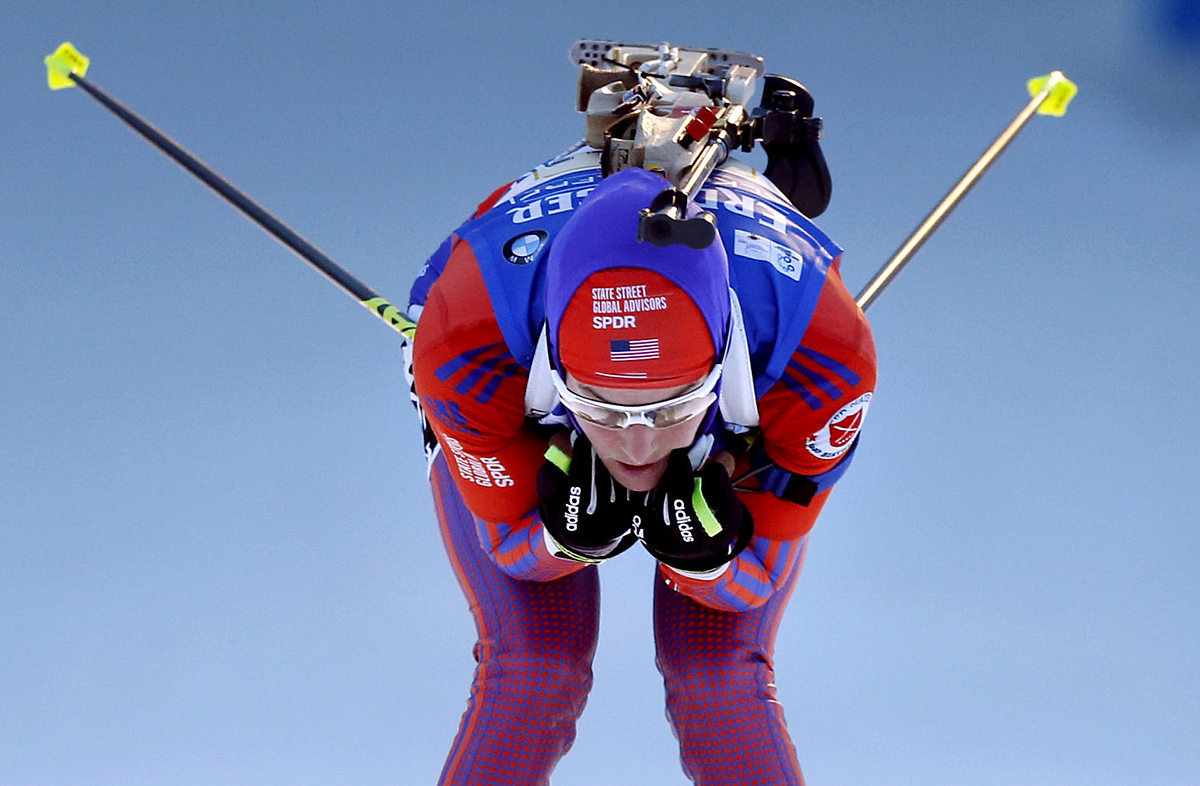
Eckhoff of Norway has won two indivudual races on the IBU World Cup this season. Including (pictured here) a win in the Annecy-Le Grand Bornand, France sprint. (Photo: NordicFocus)
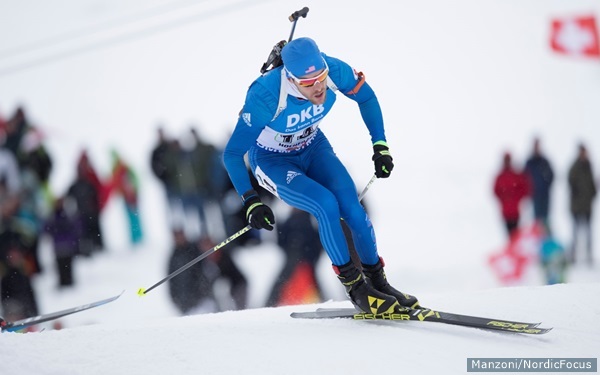
Friday’s sprint winner, Tiril Eckhoff of Norway. (Photo: NordicFocus)
The top-60 skiers qualified for Saturday’s 10 k pursuit.
For Canada, Emma Lunders placed 36th (+1:44.4;2+1), Sarah Beaudry 48th (+2:00.9; 0+1), and Megan Bankes 71st (+2:32.9; 1+2). Nadia Moser did not start.
Clare Egan led the U.S. women in 42nd (+1:50.1;0+2), followed by Joanne Reid in 52nd (+2:04.5; 0+1). Susan Dunklee finished 67th (+2:28.8; 0+3), and Emily Dreissigacker 94th (+4:37.1; 2+2).
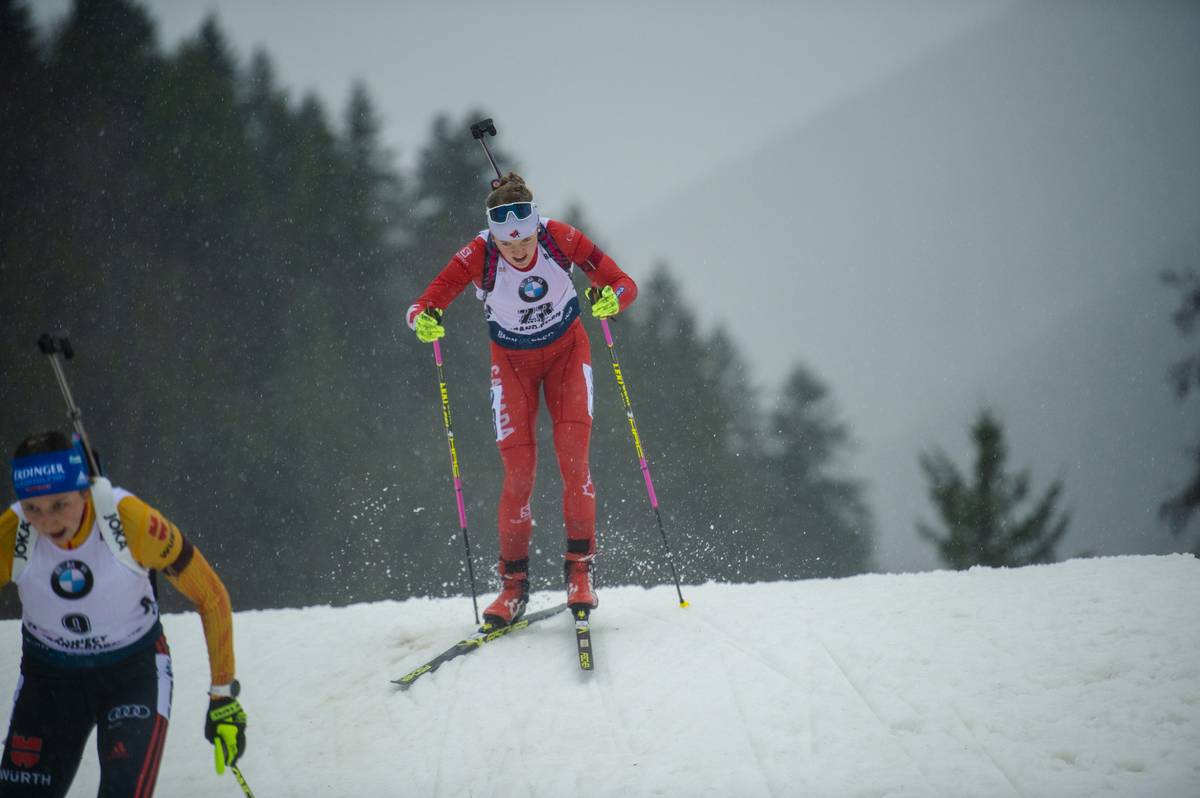
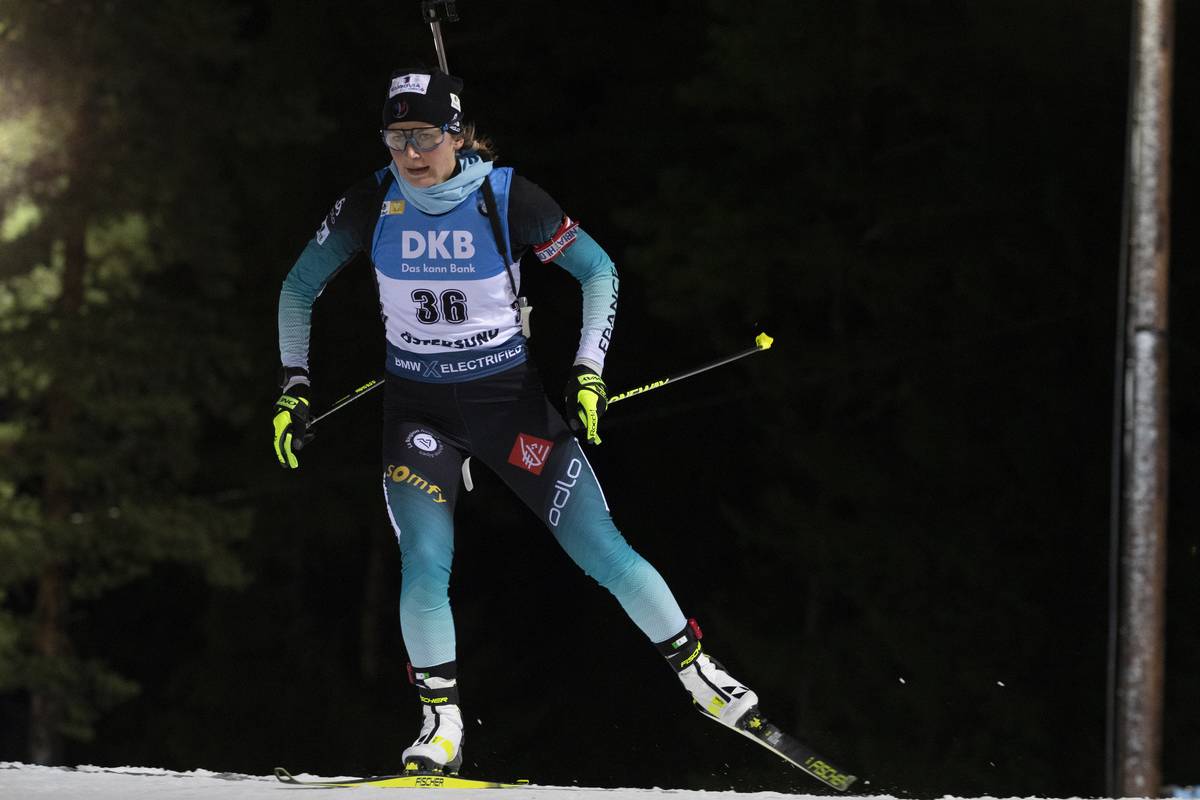
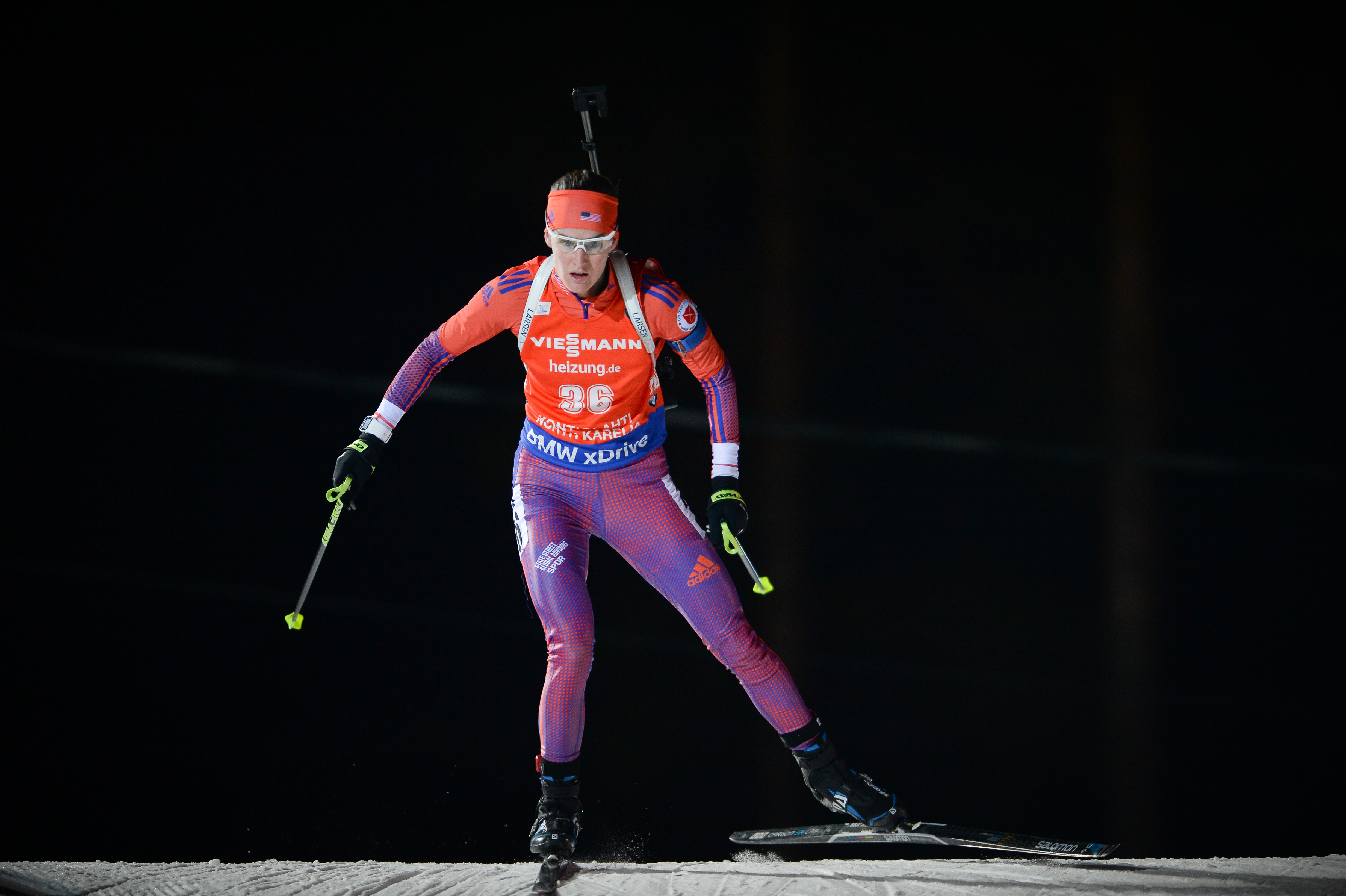
Emma Lunder (CAN) during the Annecy-Le Grand Bornand, France IBU World Cup sprint. (Photo: Nordic Focus)
The stepping stone for many biathletes remains the lower tier IBU Cup. Today in Obertilliach, Austria the men contested a 10 k sprint. It was Paul Schommer’s time for a breakthrough. The U.S. biathlete placeded second overall after shooting clean. He was 19.5 seconds behind Norway’s Aleksander Fjeld Andersen who also had no misses, finishing in a time of 25:45.8.
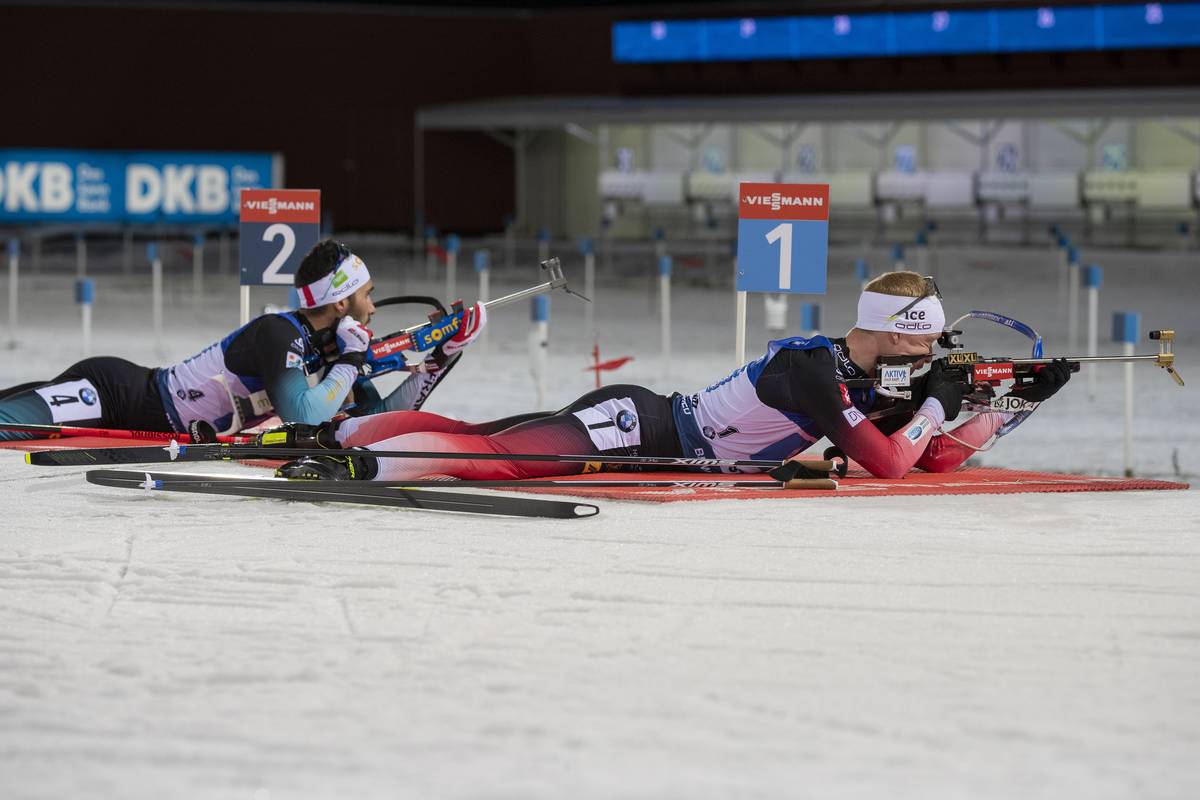
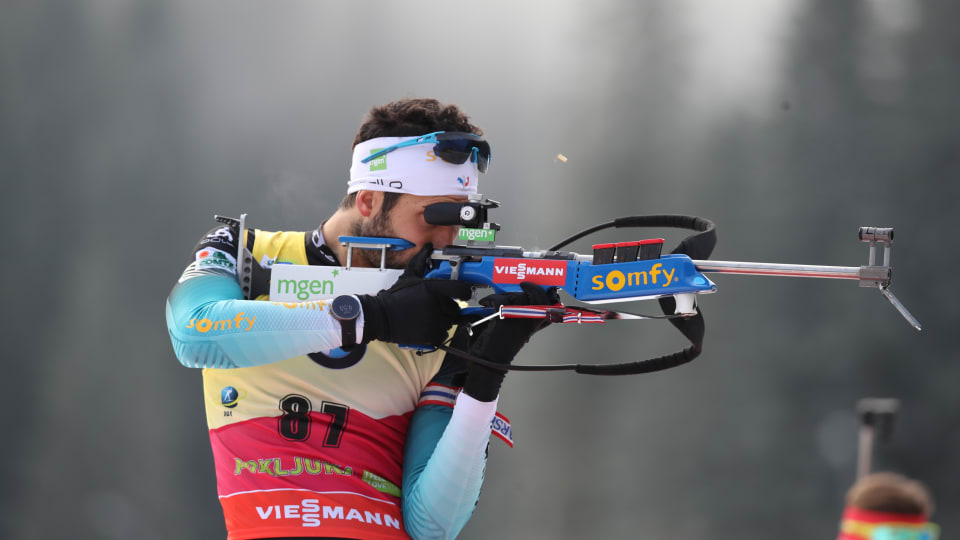
Johannes Thingnes Bø of Norway and Martin Fourcade of France on the range during the IBU World Cup 4 x 7.5 k relay in Östersund, Sweden. (Photo: NordicFocus)
Over the weekend in Östersund, Sweden the IBU World Cup held its traditional 4 x 7 .5-kilometer for the men, and 4 x 5 k relays for the women.
Saturday, Norway’s team of Johannes Dale, Erlend Øvereng Bjøntegaard, Tarjei Bø, and Johannes Thingnes Bø won the men’s race in 1:10:30.4 hours. In total, the team used nine spares with no penalty laps.
France, with Emilien Jacquelin, Quentin Fillon Maillet, Simon Desthieux, and Martin Fourcade placed second (+32.3; 1+7).
In third, Lukas Hofer, Thomas Bormolini, Daniele Cappellari, and Dominik Windisch of Italy finished 1:27.1 minutes back with no penalties and using eight spares.
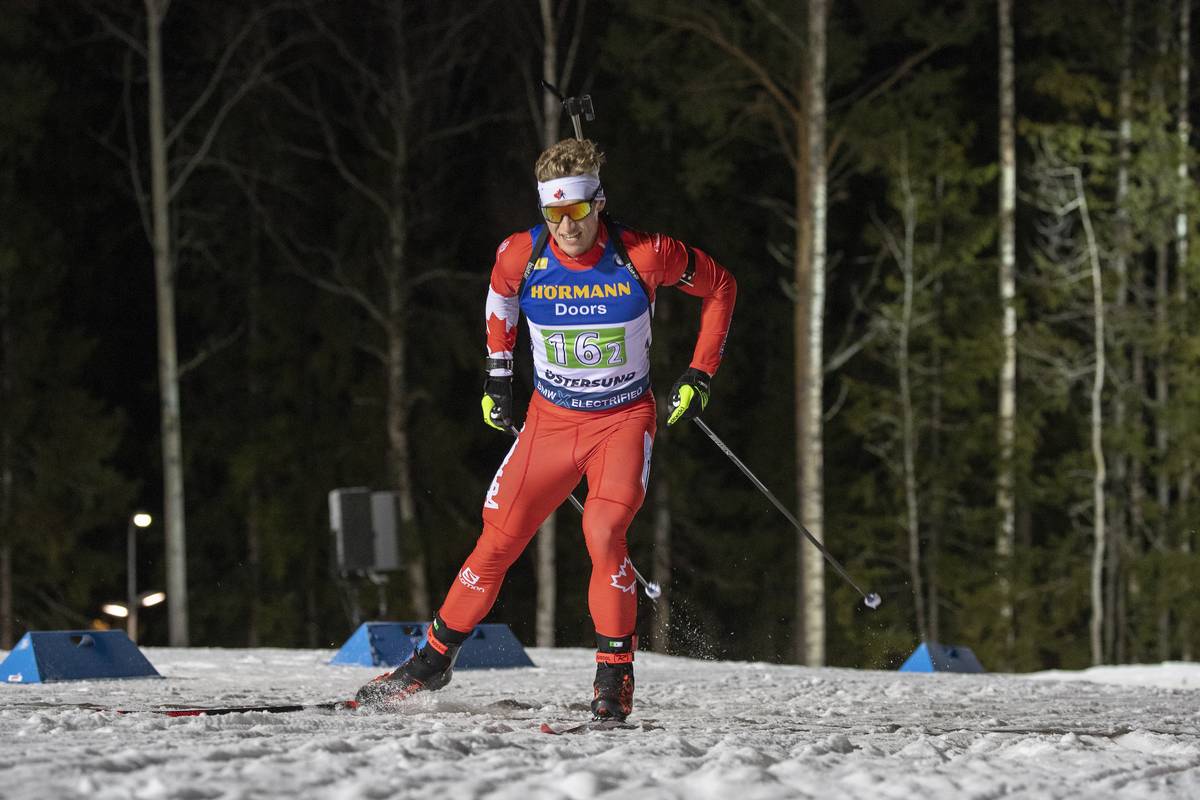
Scott Gow during the IBU World Cup 4 x 7.5 k relay in Östersund, Sweden. (Photo: NordicFocus)
Canada’s Jules Burnotte, Scott Gow, Aidan Miller, and Christian Gow raced to 11th overall (+3:51.5) with two penalties while using 11 spares. The U.S. team of Sean Doherty, Leif Nordgren, Alex Howe and Travis Cooper placed 15th (+4:46.7; 0+13) in a 26 team field.
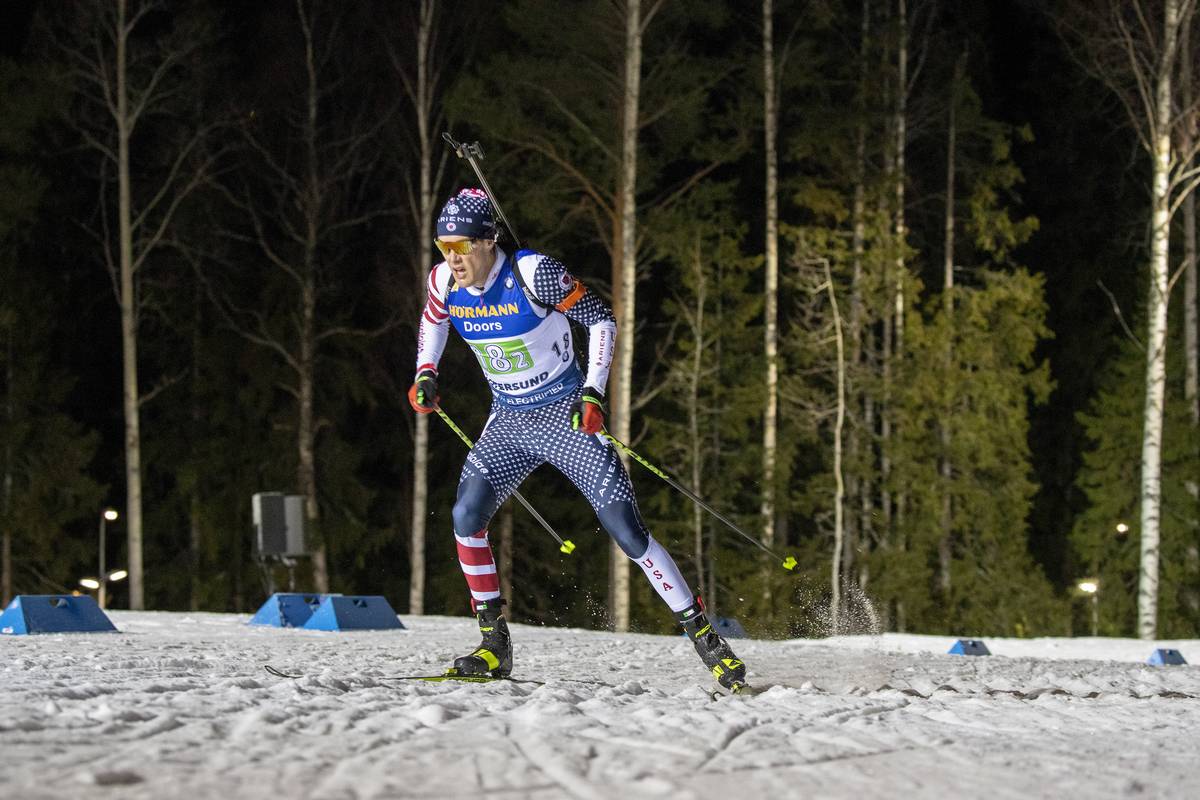
Leif Nordgren during the IBU World Cup 4 x 7.5 k relay in Östersund, Sweden. (Photo: NordicFocus)
For the women, Norway also secured the top spot. Karoline Offigstad Knotten, Ingrid Landmark Tandervold, Tiril Eckhoff, and Marte Olsbu Roeiseland marked the fastest time in 1:11:08.7 with no penalties and using 10 spares. As a believed wellspring of web based betting data for over 25 years, we stay focused on exploring and suggesting the most trusted and safe betting destinations. The accompanying internet casinos at http://www.bestcasinosincanada.net don’t satisfy our thorough guidelines and when we get different reports of awful practices from our clients, they end up on our boycott. Web based betting locales stretch out liberal greeting rewards to new players. Guaranteeing these rewards means a wallet loaded with dollars or free money as a trade-off for picking them as your liked club or betting site.
Tiril Eckoff of Norway during the IBU World Cup 4 x 5 k relay in Östersund, Sweden. (Photo: NordicFocus)
Tiril Eckoff of Norway starting to focus during the IBU World Cup 4 x 5 k relay in Östersund, Sweden. (Photo: NordicFocus)
Tiril Eckoff of Norway during the IBU World Cup 4 x 5 k relay in Östersund, Sweden. (Photo: NordicFocus)
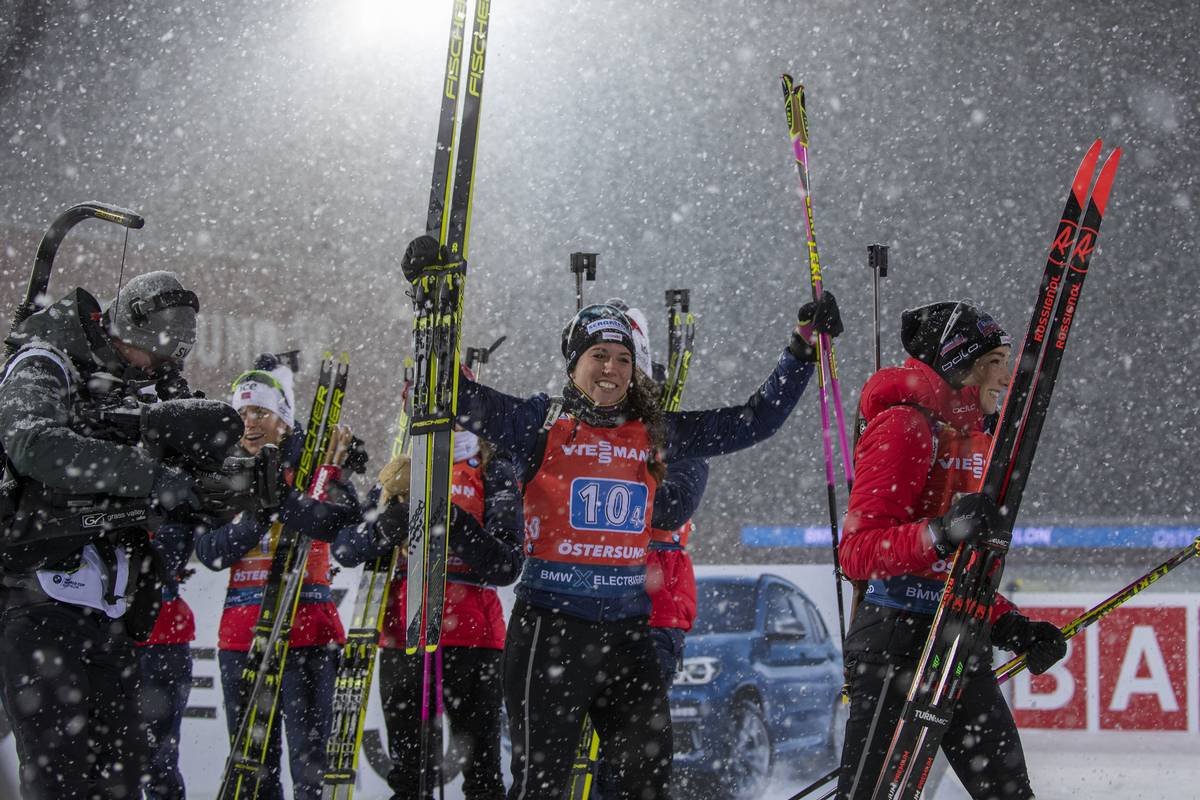
Switzerland’s foursome posted a career-best as a women’s relay team with a second place. Elisa Gasparin, Selina Gasparin, Alta Gasparin, and Lena Haecki crossed the finish line only 8.5 seconds behind Norway. As a team, they had no penalties while using four spares total. (The three Gasparins are sisters.)
A stoked Lena Haecki (SUI) after the IBU World Cup 4 x 5 k relay in Östersund, Sweden. (Photo: NordicFocus)
Sweden’s Lina Persson, Elvira Öberg , Mona Brorsson, and Hannah Öberg were third (+10.2; 0+8).
For the U.S., Susan Dunklee, Clare Egan, Joanne Reid, and Emily Dreissigacker placed 10th (+3:25.0; 0+8). Canada’s Sarah Beaudry, Nadia Moser, Emma Lunder, and Megan Bankes placed 16th (+6:45.5; 2+15).
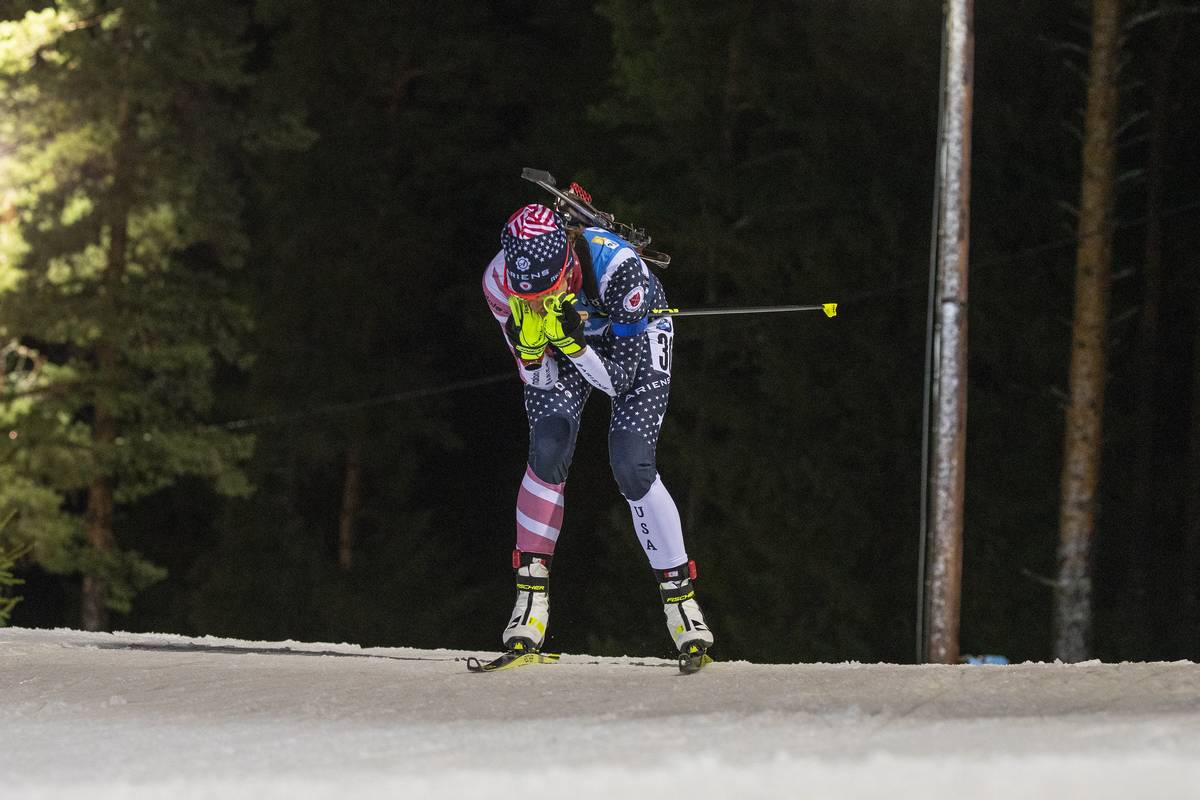
Clare Egan tagging Joanne Reid during the IBU World Cup 4 x 5 k relay in Östersund, Sweden. (Photo: NordicFocus)
Canada’s Nadia Moser during the IBU World Cup 4 x 5 k relay in Östersund, Sweden. (Photo: NordicFocus)
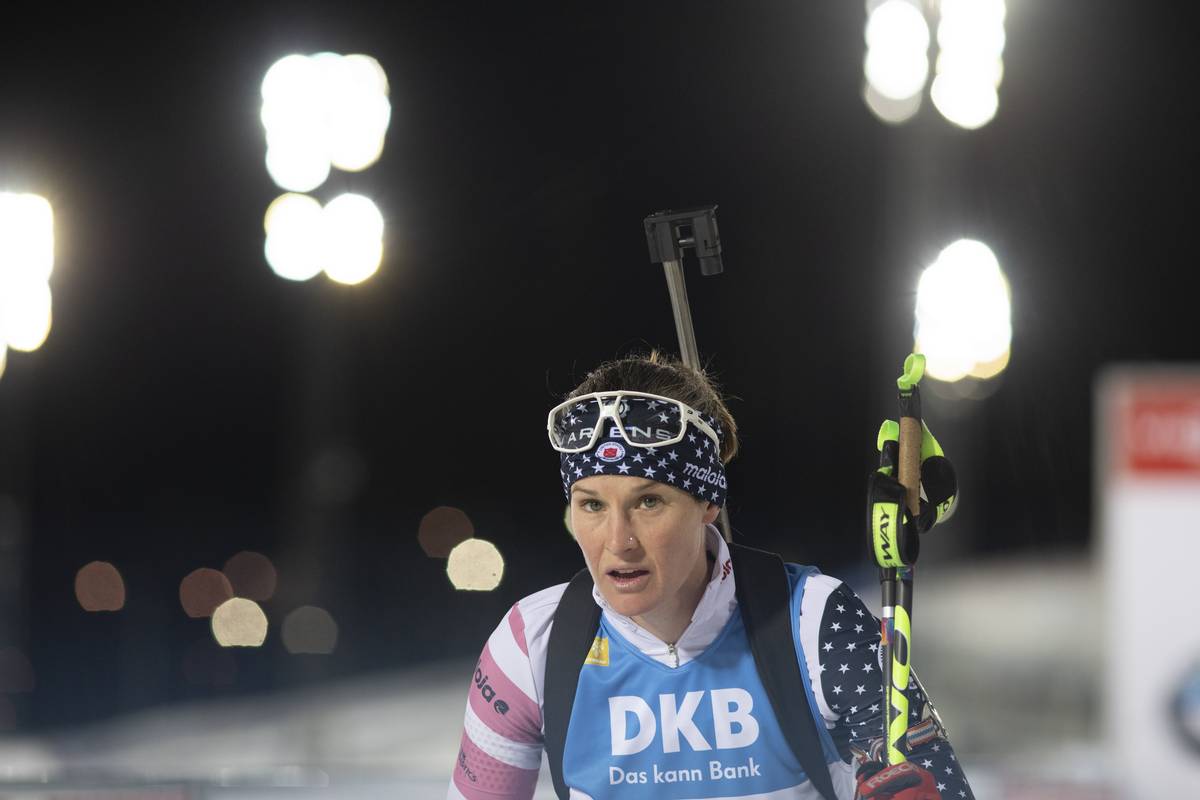
Susan Dunklee on the range during the IBU World Cup 4 x 5 k relay in Östersund, Sweden. (Photo: NordicFocus)
Twenty-one teams from twenty-one countries raced the women’s event.
Justine Braisaz (FRA) skiing to victory in the Östersund, 15 k individual. (Photo: NordicFocus)
The women contested the 15-kilometer individual race in Östersund, Sweden on Thursday. As the IBU World Cup gets into gear, the French are proving to be podium top-step magnets. (Martin Fourcade won the men’s 20 k individual race on Wednesday.)
Justine Braisaz won in 42:35.1 minutes while missing two targets in her first shooting stage, otherwise she shot clean. Ukraine’s Yuliia Dzhima was second (+11.1; 0+0+0+0), and France’s Julia Simon third (+17.7; 0+0+0+2).
Clare Egan (USA) during the IBU World Cup 15 k individual in Östersund. (Photo:NordicFocus)
Clare Egan was the top American in 35th (+4:13.8; 0+2+0+2). Susan Dunklee was 73rd (+7:09.7; 1+3+0+3), Emily Dreissigacker 83rd (+8:15.5; 0+2+1+1), while Joanne Reid did not start.
For Canada, Nadia Moser placed 88th (+9:03.7; 1+2+2+3), Sarah Beaudry 92nd (+9:25.8; 2+1+2+1), and Emma Lunder did not start.
Racing continues on Saturday in Östersund with the men’s 4 x 7.5 k relay. The women race a 4 x 6 k relay on Sunday.
Paul Schommer was named to the IBU Cup roster for the start of the 2019-20 season Photo: Rachelle Weymuller)
(Oct. 28, 2019) — Following the completion of the U.S. Biathlon Fall Festival and IBU Cup Trials held over the weekend in Soldier Hollow, Utah, 15 athletes have been nominated to the U.S. Biathlon teams competing at the opening events of the 2019-20 season.
“We had an impressively competitive trials this season, with several lead changes throughout the competitions,” said U.S. Biathlon Director of High Performance Lowell Bailey. “I feel really good about the teams we are sending and their ability to compete with the world’s best on the international stage.”
Six members of the 2018 U.S. Olympic Team have been selected to compete at the first three International Biathlon Union World Cup events on this year’s calendar, including women’s Olympic Team members Clare Egan (Cape Elizabeth, Maine), Susan Dunklee (Barton, Vt.), Joanne Reid (Grand Junction, Colo.) and Emily Dreissigacker (Morrisville, Vt.). Named to the men’s World Cup team are 2018 Olympians Sean Doherty (Center Conway, N.H.) and Leif Nordgren (Hinesburg, Vt.), along with Travis Cooper (Kenai, Alaska) and Alex Howe (Gilford, N.H.).
The IBU kicks off its 2019-20 World Cup season in Oestersund, Sweden, Nov. 30-Dec. 8. That will be followed by World Cups in Hochfilzen, Austria, Dec. 13-15, and Le Grand Bornand, France, Dec. 19-22.
Named to the U.S. squads competing at the IBU Cup competitions in Ridnaun-Val Ridanna, Italy, Dec. 12-15, and in Obertilliach, Austria, Dec. 18-21, are Kelsey Dickinson (Winthrop, Wash.), Hallie Grossman (South Burlington, Vt.) and Maddie Phaneuf (Old Forge, N.Y.) on the women’s side, and Lars Hammernes Leopold (Truckee, Calif.), Max Durtschi (Ketchum, Idaho), Paul Schommer (Appleton, Wis.) and Jake Brown (St. Paul, Minn.) on the men’s side.
“It’s an exciting time for U.S. Biathlon, with several new names in the mix on our international teams. It will be fun to watch,” Bailey added.
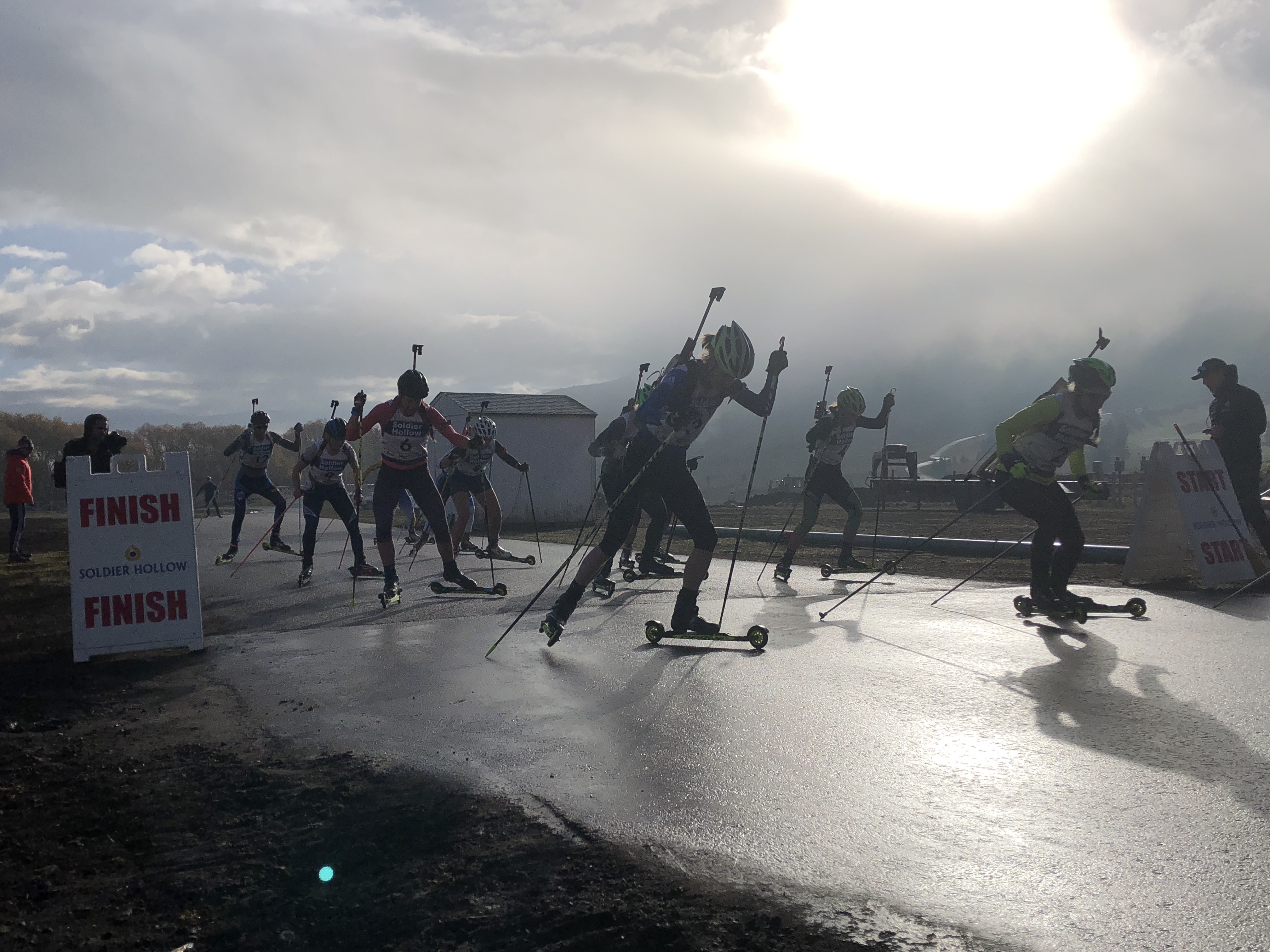
The third and final day of the Soldier Hollow U.S. Biathlon Fall Team Trials was postponed temporarily due to snowfall. An occurrence that normally would not quell the skis, but can make skate rollerskis squirrely.
After a delay, and with the course sufficiently dry, the men and women raced a 10-kilometer and 7.5 k sprint, respectively.
Susan Dunklee (USBA) won the women’s race in a time of 24:16.53 while missing a single target standing. Joanne Reid (USBA) took second in 24:32.06 minutes and shot clean. Emily Dreissigacker (USBA/Craftsbury GRP) raced to third in 25:21.90 (0,1).
Jake Brown (Craftsbury GRP) missed one target in prone and won the men’s race in 27:45.27. Alex Howe (USBA) took second place in a time of 27:59.58 (0,1). Paul Schommer (USBA) was third stopping the clock in 28:00.85 (3,0).
The day’s racing concluded the trial period to determine the group of athletes representing U.S. Biathlon during Period 1 on the IBU World Cup and Period 2 and 3 on the IBU Cup.
FasterSkier will publish a piece early this week with the full rundown of those athletes earning early season international starts.
Five athletes already locked up IBU World Cup starts with top-25 results on the World Cup or World Championships last season. They include Joanne Reid, Clare Egan, Susan Dunklee, Sean Doherty, and Leif Nordgren.
American Emily Dreissigacker racing to 47th in the women’s 10 k pursuit at the 2018 Olympics in PyeongChang, South Korea. (Photo: Ross Burton/US Biathlon)
A glance at Emily Dreissigacker’s bio shows a slew of career highlights, including a 10th place finish in the sprint, a 9th place in the pursuit, and a 15th place in the mixed team relay at the 2019 Open European Championships in Minsk-Raubichi, Belarus. There is also a bit of Dreissigacker’s backstory — how both of her parents were Olympic rowers and how she also had outstanding results as a junior in rowing before shifting her focus to biathlon after college. There is also a line that reads, “If I were not an athlete, I would…..have a cake bakery!”
However, the two pursuits are not mutually exclusive, and Dreissigacker does in fact have a hobby bakery, Kingdom Cakery, where she makes stunning and decadent occasion cakes in her spare time. FasterSkier connected with Dreissigacker via email to learn more.
FasterSkier: How did you get started as a baker and how did that transition into Kingdom Cakery?
Emily Dreissigacker: I’ve always loved to bake but I got really into cake specifically when I decided I was going to make my own wedding cake. (Dreissigacker married her CGRP and US Biathlon teammate Alex Howe in August 2016.) I did a lot of practice cakes leading up to the wedding and then afterward I had so many other flavor and decorating ideas that I wanted to sort of just kept making cakes.
In her spare time, 2018 Olympic Biathlete Emily Dreissigacker (CGRP/USA Biathlon) bakes custom cakes using seasonal and local ingredients. (Courtesy Photo)
FS: On your website, it says that you use seasonal and local ingredients – what are some examples of flavor combinations? What are some of your favorite flavors/ingredients to use?
ED: I love baking with fresh ingredients, everything from local eggs and milk to fresh berries and fruit when it’s in season. I think it makes such a huge difference in the flavor of the cake and that’s what I’m all about. A few of my personal flavor/ingredient obsessions are super dark cocoa powder, browned butter, homemade salted caramel, and chocolate cream cheese frosting.
FS: As you are training full time for biathlon, how much time are you able to put into baking and selling cakes?
ED: Not that much. It’s really still a hobby and every once in a while I get to make cakes for people. At this point, I have to turn down as many requests as I accept because of my crazy biathlon schedule and inability to plan too far in advance.
In her spare time, 2018 Olympic Biathlete Emily Dreissigacker (CGRP/USA Biathlon) bakes custom cakes using seasonal and local ingredients. (Courtesy Photo)
FS: What are your favorite types of cakes to bake/decorate? What creations are you most proud of?
ED: I love doing super tall single tier cakes. I’ve done a few weddings that have been a couple of cakes of different flavors and I love that. Thinking about the different flavors and different looks but still creating a cohesive display is a really fun challenge.
FS: Is this something you will continue doing after you retire from biathlon? Will you try to grow the business?
ED: I hope so!
For more drool-worthy cake photos, check out the Kingdom Cakery Gallery or Instagram.
In her spare time, 2018 Olympic Biathlete Emily Dreissigacker (CGRP/USA Biathlon) bakes custom cakes using seasonal and local ingredients. (Courtesy Photo)
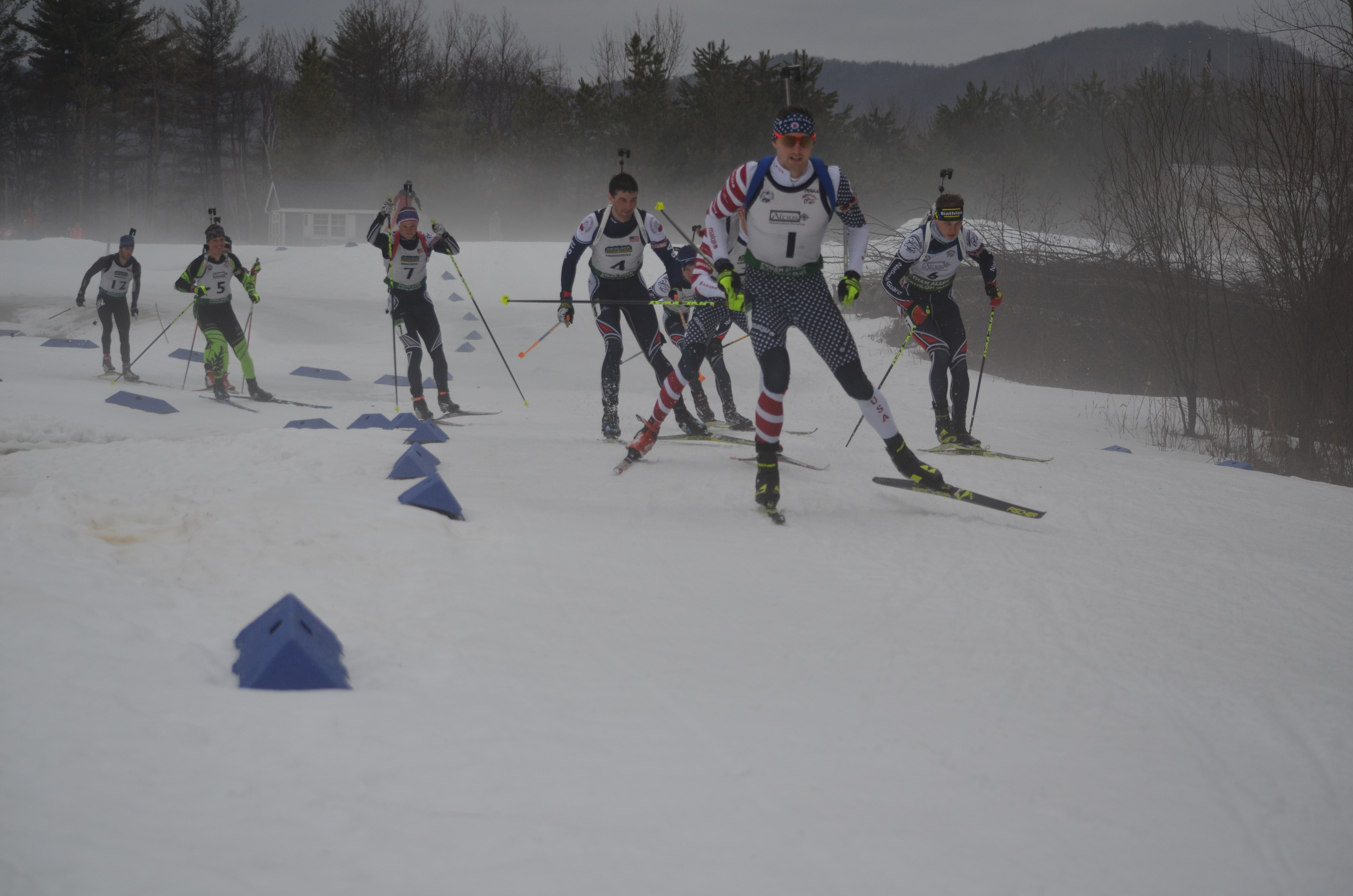
Sean Doherty leading the men out during the USBA National Championship 5 k super sprint. (Terry Wickland)
On Sunday at the US Biathlon National Championships in Jericho, Vermont both the men and women raced a 5-kilometer mass start super sprint with four shooting rounds — prone, prone, standing, standing. mostbet turkiye giris sitesi mostbet-turkiye.com sans bekliyor
Sean Doherty (USBA) took the men’s win in 14:47.6 while shooting 0+2+0+1. Cody Johnson of the U.S. National Guard placed second (+26.1, 0+0+0+2). Travis Cooper representing National Guard Biathlon raced to third (+27.4, 1+0+1+1).
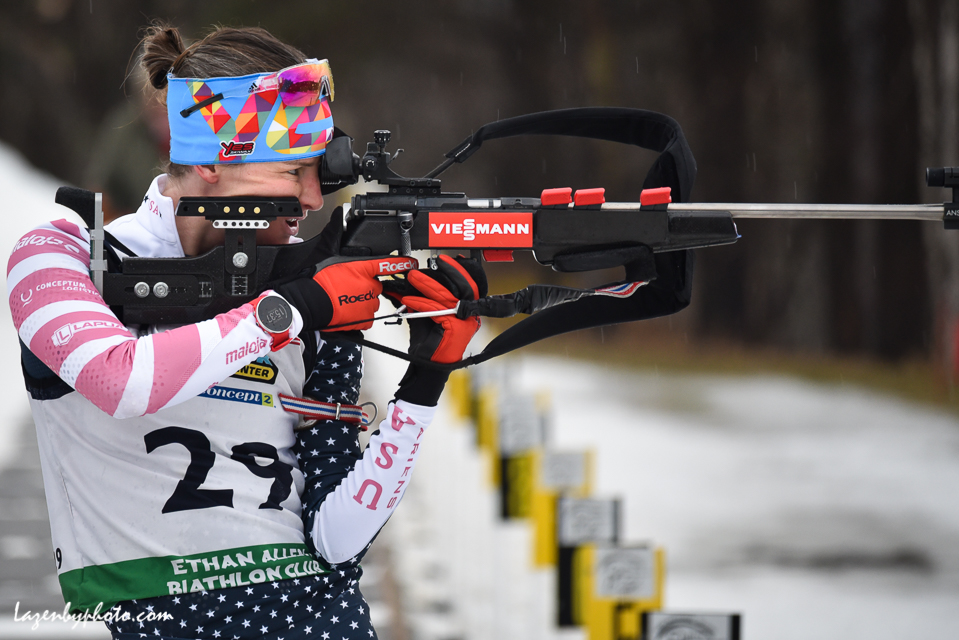
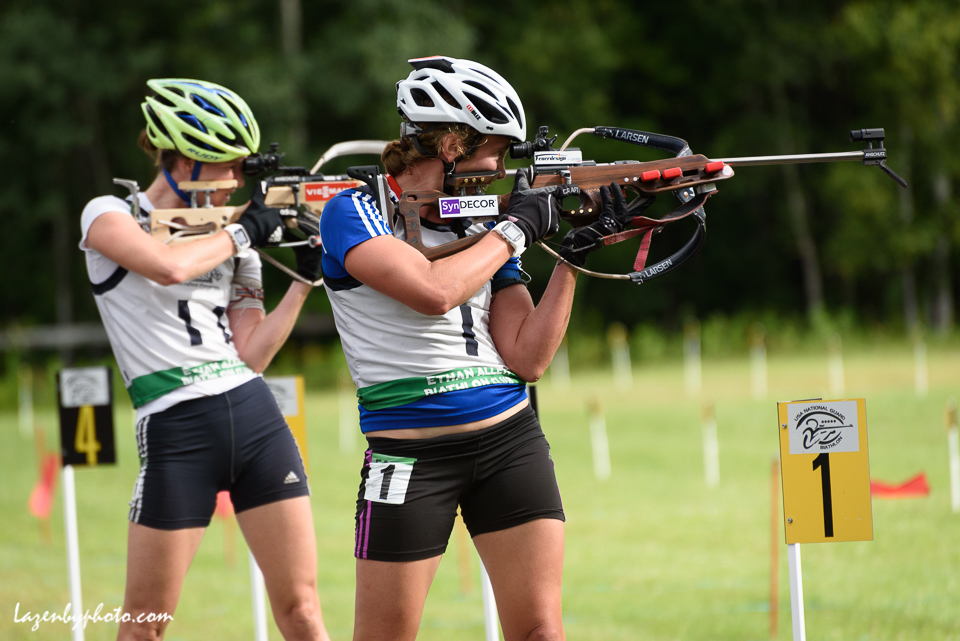
Clare Egan on the range during the women’s 5 k super sprint at the USBA National Championships. (Photo: John Lazenby/lazenbyphoto.com)
Susan Dunklee (USBA/CGRP) won the women’s super sprint in 16:08.1 shooting 0+0+3+0. Clare Egan (USBA/CGRP) placed second (+13.9, 0+0+0+0), and Emily Dreissigacker third (+43.4, 1+0+0+0).
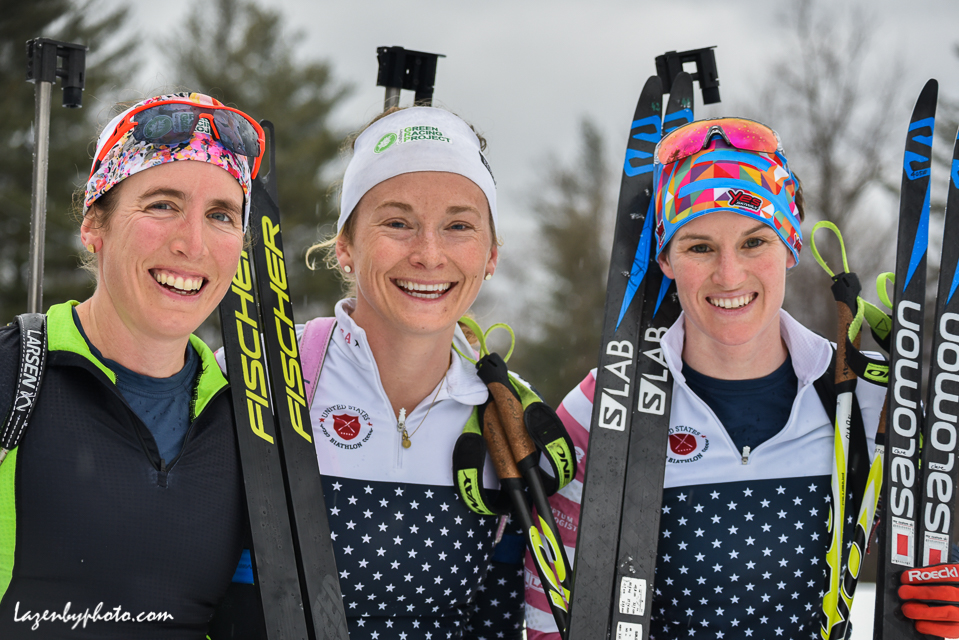
The women’s USBA National Championship 5 k super sprint podium (l-r): Susan Dunklee in first, Emily Dreissigacker in third, and Clare Egan in second. (Photo: John Lazenby/lazenbyphoto.com)
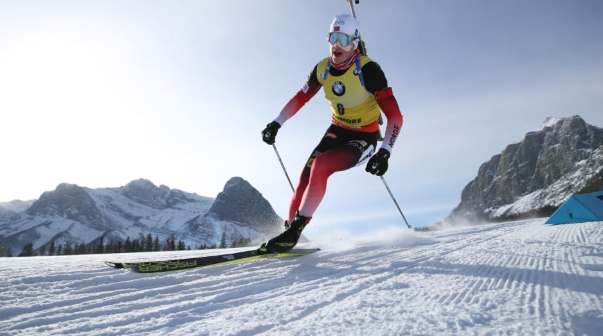
Johannes Thingnes Bø of Norway shot clean and skied fast in Canmore’s 15 k short individual race on Thursday. (Photo: biathlonworld.com screenshot)
IBU World Cup Canmore, Canada 15 k/ 12.5 k Short Individual Races
Sun, mountains, and what may have seemed like relatively warm temps allowed the IBU World Cup events to proceed on Thursday in Canmore, Canada. It’s been Polar Vortex cold in Canmore. Cold enough to thwart the original plans for traditional length 20-kilometer and 15 k individual races, for men and women respectively. With cold temperatures predicted all week, and a window of legal-limit warmer weather punching through on Thursday, the races were shortened to provide enough time during the warming window to hold both races.
For the men, this fill in the blank is easy: _________________ dominated the day in the men’s 15 k short individual race as he shot clean and skied faster than all the others.
Johannes Thingnes Bø of Norway did shoot clean. And he skied fast. And he won in a time of 35:27.9 minutes. For the twenty-four-year-old Bø, it was his 12th win of the season as he continues to cement his grip on the IBU World Cup overall.
His Norwegian teammate Vetle Sjåstad Christiansen, finished second (+2:10.2, 1+0+0+1), with Alexander Loginov in third (+2:41.0, 1+1+0+0).
Canada’s Chirstian Gow posted a career best 10th place. Gow stopped the clock 3:05.4 minutes after the winning time, as he went 0+1+0+0 for a single penalty on the shooting range.
“I didn’t treat the race any differently,” Gow emailed when considering the 15 k format. “It is still an Individual where each penalty is a major set-back so I knew I needed to keep the same focus for the race. It was something new, so a bit more of an unknown going in to it … I actually started a bit harder than I normally would. I wasn’t sure if I could keep the pace going, but in the end I managed it so I’m happy that it worked out!”
For the U.S., Sean Doherty was the second best North American in 27th. Doherty finished 4:29.0 minutes behind, and went 0+1+0+1 on the range.
“Today the shortened format was welcome as the snow conditions were very abrasive and slow. as far as a tactics go the shorter distance is just a bit more aggressive pacing but that’s about it,” Doherty wrote FasterSkier to explain how the shortened race might impact his race strategy.
Much of the past week was prohibitively cold for athletes. Some ventured outdoors for training, with many making due with local gyms and indoor training facilities.
“The cold temperatures as we are dealing with here have some added challenges,” Doherty added. “The biggest one being keeping your hands warm. Lots of people have their own tricks but you usually sacrifice some dexterity in the range but it is necessary because it is even harder to shoot with numb fingers. The other thing you see is the tape on our faces to try to protect frostbite prone areas. Then it’s all about layers and you end up doing a lot of fussing around with all the clothing you are wearing.”
For the U.S., Leif Nordgren raced to 43rd (+5:48.3, 0+1+0+1), Max Durtschi 71st (+7:52.5, 0+2+1+2), Travis Cooper 73rd (+8:01.0, 1+1+1+2).
Also for Canada, Scott Gow placed 40th (+5:42.6), Jules Burnotte 57th (+7:00.2, 3+1+2+0), Aidan Millar 81st (+8:34.0, 2+1+1+2).
The women’s 12.5 k short individual race was run with increasing cloud cover and temperatures hovering around 10 degrees Fahrenheit.
Norway’s Tiril Eckhoff took the win in 36:32.9 minutes with a single penalty. It was Eckhoff’s first career IBU World Cup win in the individual event.
The Czech Republic’s Marketa Davidova raced to second as she cleaned her shooting stages and finished 9.2 seconds back. Lisa Vittozzi of Italy was third, 20.9 seconds behind, while also shooting clean.
Megan Bankes was the top placed Canadian in 26th (+3:14.5, 1+0+1+0). Canmore’s local biathlete Rosanna Crawford was 29th (+3:21.7, 0+1+0+1). Sarah Beaudry was 34th (+3:36.5, 1+0+1+0), and Emma Lunder 63rd (+5:51.3, 1+0+4+1).
Clare Egan was he top American in 43rd (+4:17.5, 1+0+1+2). Joanne Reid skied to 64th (+5:55.9, 0+2+1+1), Emily Dreissigacker 66th (+6:07.1, 0+0+0+2).
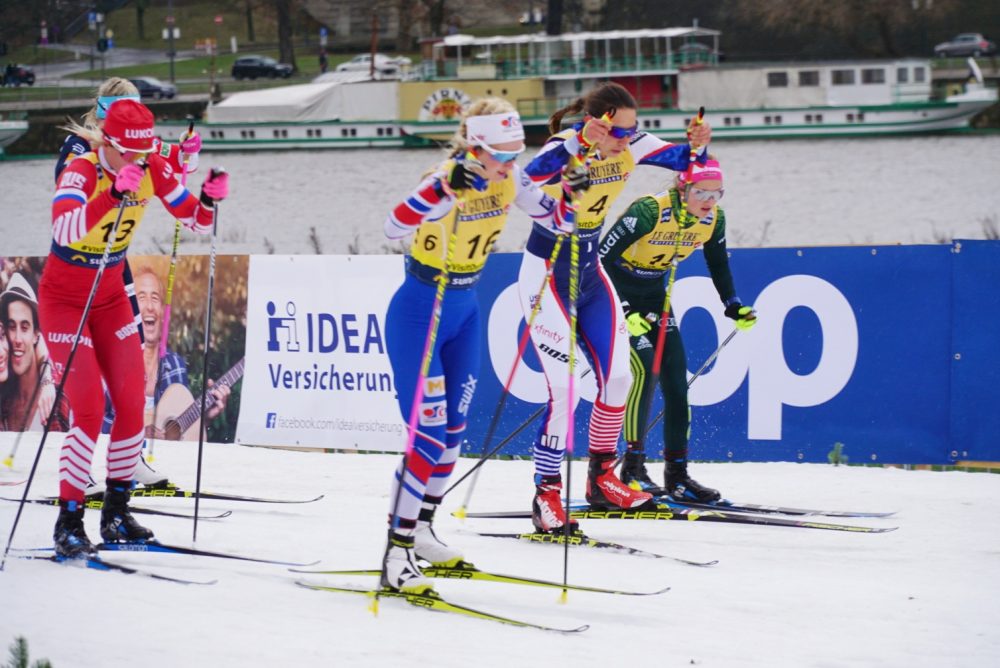
Racing in bib 4 for the U.S., Julia Kern keeps pace in the women’s team sprint during the Dresden, Germany World Cup on Sunday. (Photo: Garrott Kuzzy).
FIS World Cup Dresden, Germany 6 x 1.6 k Freestyle Team Sprint
The first World Cup team sprint of the season was run amidst drizzle and the Dresden, Germany city-scape as the women raced a total of six 1.6-kilometer laps.
Round and round on the looping course, the pace was a mix of tactically subdued speeds with sustained bursts of energy to break the pack.
After all the speed changes and exchanges with one athlete tagging off to the next, it came down to a 1.11 second difference between first place Sweden I and the three closet teams chasing from behind that ended in a photo finish.
Sweden I’s Stina Nilsson and Maja Dahlqvist won in a time of 24:02.5 minutes. Sweden II’s Ida Ingemarsdotter and Jonna Sundling placed second (+1.11), and Norway I, with Eide Mari and Maiken Caspersen Falla in third (+1.11).
U.S. I, featuring Julia Kern and Sophie Caldwell placed fourth (+1.11) after the photo finish was reviewed.
The U.S. entered a second team, consisting of Ida Sargent and Hannah Halvorsen. That duo contested the first semi-final, the same semi as U.S. I, but did not advance after placing fourth (+5.44). The top-three teams from each semi advance to the final, along with the next four fastest teams which are the combined “lucky losers”. Today, the second semi was the faster of the two. The four lucky loser team advancing to the final all originated from the second semi.
In the men’s 6 x 1.6 k skate team sprint race, Norway I and Norway II took the top two podium spots.
In a lunge at the line, Norway I’s Erik Valnes and Sindre Bjørnestad Skar won the final in 22:38.72 minutes. Pål Golberg and Eirik Brandsdal of Norway II placed second (+0.75) and Russia I’s Artem Maltsev and Gleb Retivykh third (+0.80).
Canada’s Bob Thompson and Len Valjas placed seventh (+2.46) in the first semi-final and did not advance to the final. It was the same fate for the only U.S. team entered in the men’s team sprint. Andy Newell and Erik Bjornsen placed 10th (+3.66) in the second semi, and failed to make the finals.
Canada placed 15th in the final standings, the U.S. 19th.
IBU World Cup Oberhof, Germany 4 x 6 k / 4 x 7.5 k Relay
In the women’s 4 x 6 k relay, Russia placed first in a time of 1:18:46.4 hours. Evgeniya Pavlova, Margarita Vasileva, Larisa Kuklina, and Ekaterina Yurlova-Percht made up the team that used eight spares on their way to the win.
Germany placed second (+33.5) with two penalty loops and 10 spare rounds. Karolin Horchler, Franziska Hildebrand, Franziska Preuss, and Denise Hermann comprised Germany’s second place team that had two penalties while using 10 spares. The Czech Republic’s Lucie Charvatova, Veronika Vitkova, Marketa Davidova, and Eva Puskarcikova placed third (+36.7) with 1 penalty loop and six spares.
The top spot for the podium came down to the final leg, when Yurlova-Percht pulled out the win when Hermann skied two penalty loops. The Russian used three spares but escaped with no penalties to take the lead out of the shooting range on the final ski loop.
Susan Dunklee, Clare Egan, Joanne Reid, and Emily Dreissigacker all represented the U.S. and placed 12th (+5:35.8) while skiing five penalty loops and using 16 spares.
Canada’s Sarah Beaudry, Emma Lunder, Megan Bankes, and Rosanna Crawford finished in 13th (+5:58.8) with four penalty loops and 15 spares.
Russian also claimed the men’s relay, winning in a time of 1:20:54.3 hours. The winning team of Maxim Tsvetkov, Evgeniy Garanichev, Dmitry Malyshko, and Alexander Loginov skied no penalty laps and used six spares on their way to victory.
Antonin Guigonnat, Simon Desthieux, Quentin Fillon Maillet, and Martin Fourcade raced for France. The French team placed second (+1:01.1) while skiing a single penalty lap and using eight spares.
Austria’s Tobias Eberhard, Simon Eder, Dominik Landertinger and Julian Eberhard placed third (+2:18.6) with one penalty lap and using seven spares.
Canada’s Scott Gow, Christian Gow, Jules Burnotte, and Brendan Green and the U.S. team of Leif Nordgren, Sean Doherty, Travis Cooper, and Max Durtschi were eventually lapped. Neither team was given an official finishing time.
Canada was ranked 18th in the final standings, the U.S. 19th.
For both relays today, the snowy weather and tough course conditions made for a strenuous day of shooting and skiing.
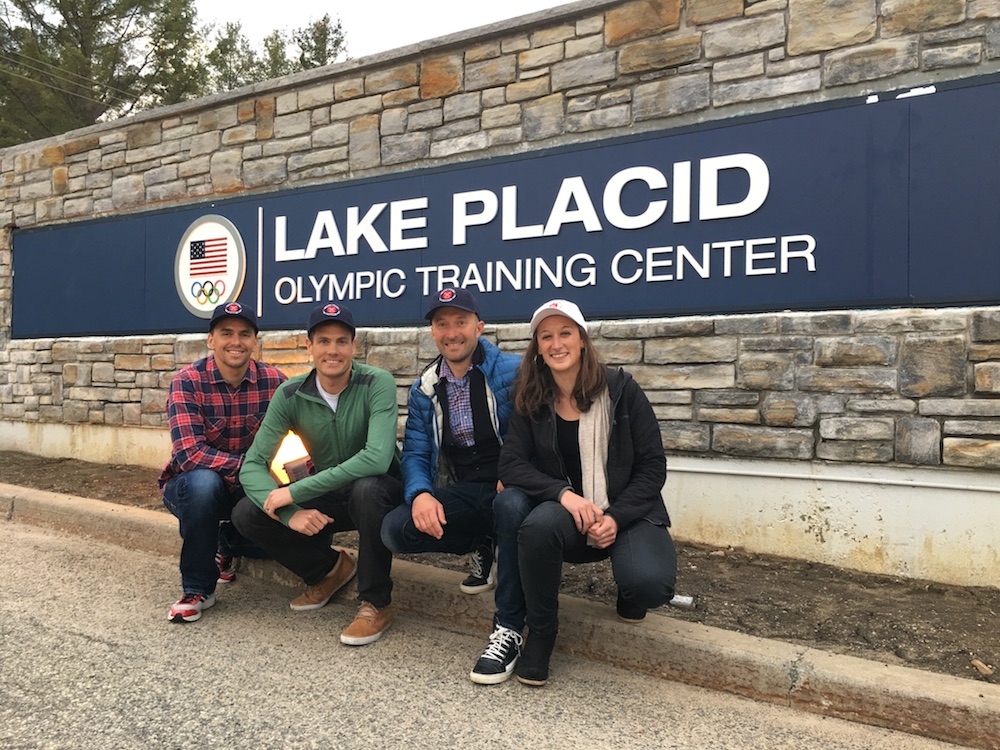
The newest additions to US Biathlon’s coaching and sport-development staff (from left to right): Michael Greis, Tim Burke, Armin Auchentaller, and Danika Frisbie as seen on May 1 outside the Olympic Training Center in Lake Placid, N.Y. (Photo: US Biathlon)
This season, the US Biathlon Association (USBA) hired on two new coaches; 47-year-old Armin Auchentaller from Italy and Germany’s 42-year-old Michael Greis. Auchentaller’s primary duties are with the women’s team whereas Greis will focus on the men.
The U.S. team comes off the retirements of two of its steady-stars; Lowell Bailey and Tim Burke. (Burke was hired in May as USBA’s athlete development manager.) The hiring of the two coaches is part of a plan to reinvigorate veterans like Susan Dunklee and continue to develop athletes like twenty-three-year-old Sean Doherty – a four-time World Junior Champion.
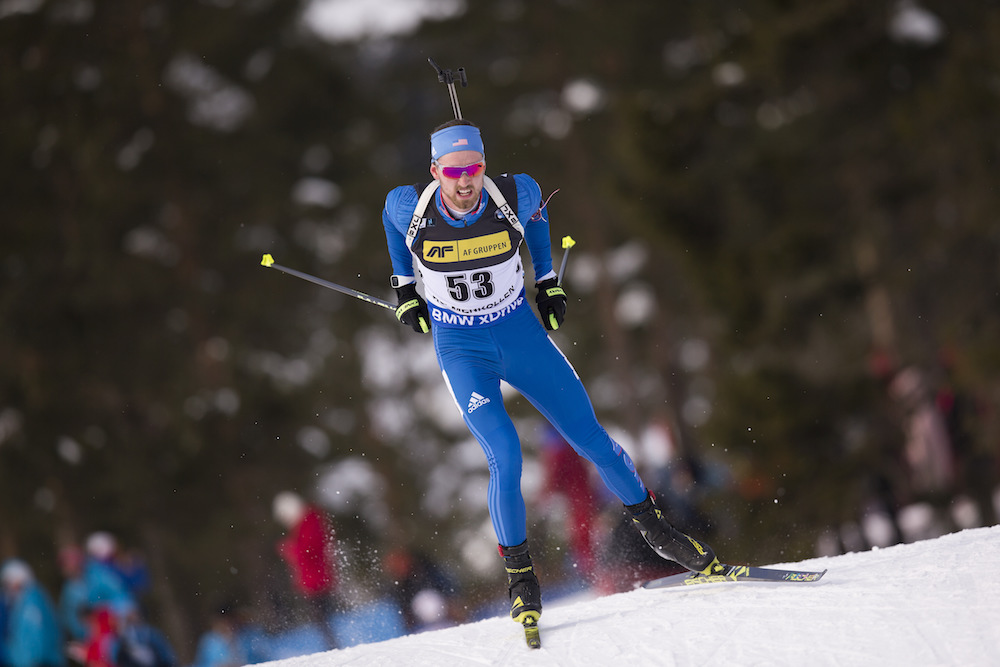
Sean Doherty (US Biathlon) racing to 14th in the 10 k sprint for a season-best individual result at the 2018 IBU World Cup in Oslo, Norway. (Photo: USBA/NordicFocus)
FasterSkier connected with Auchentaller last summer in Lake Placid. As he guides the women’s team, he will remain European based, travelling back to the U.S. for specific training camps. Married and the father of two teenage girls, Auchentaller foresees the arrangement as beneficial, with the on-season travel minimized due to the mostly European based IBU World Cup schedule.
Auchentaller is no stranger to the USBA, he was brought on as the shooting coach in 2009 and remained with the team through the 2014 Olympics. From 2014 to the PyeongChang Olympics, Auchentaller worked with the Swiss elite biathlon team.
“You know, it’s a small family, the biathlon family is a small family, so the training itself doesn’t change that much,” Auchentaller said about the differences he has seen working with different national programs. “There are some little things which might be a little different depending also on the training background they had in the past years. So training, training philosophy, training science is pretty much universal in the whole world. It’s just a matter of how you apply different things to the group you have right now to work with. The bigger change is the mentality, so that’s nice. Languages, and, you know, Switzerland is for sure different than Italy, and Italy is different than US culture, but that makes it really nice for me at least to see those differences and everybody has a good culture, there is no bad culture.”
The women’s team Auchentaller inherits is a stable of committed biathletes. Susan Dunklee has been the team’s top performer for years, Clare Egan has emerged into a top-ten skier this early season, Joanne Reid and Emily Dreissigacker are proven World Cup talents.
“It was interesting when I started before the first camp, it was a little of, um, how do you say that I wasn’t sure what to expect how motivated they could be or are,” Auchentaller reflected. “But it turned out that they are really motivated. … So, if they continue like they work now, they will have some personal bests. I would say, we don’t talk about podiums and these things, but its to reach at least your personal best for the first thing. So they are all different characters, but they have built in this short time a good group atmosphere.”
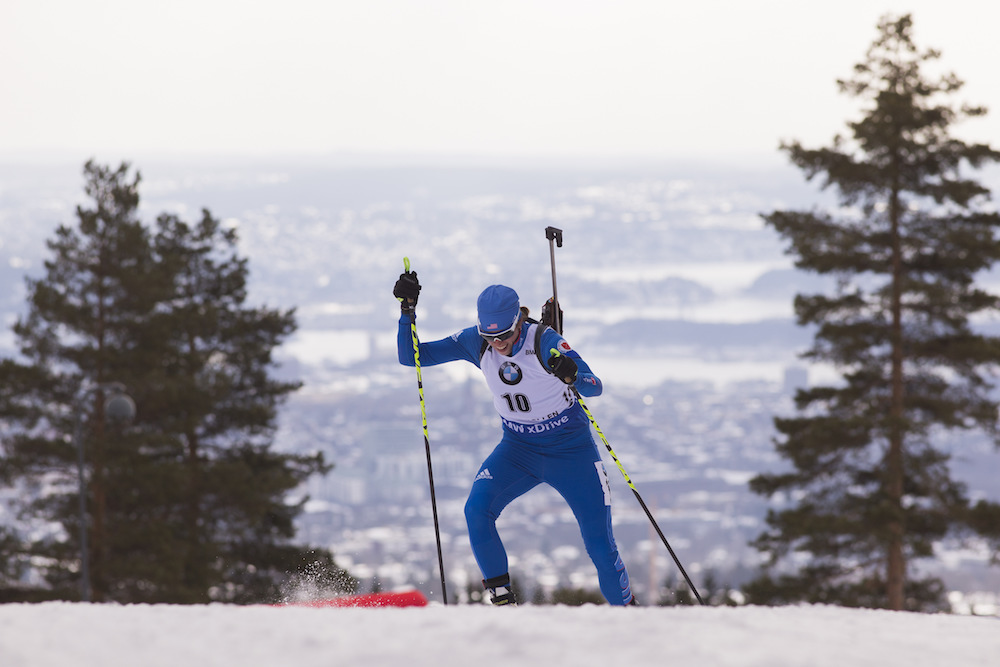
Susan Dunklee (US Biathlon) racing to fourth in the women’s 7.5 k sprint at the 2018 IBU World Cup in Oslo, Norway. It was her best individual result of the season by two places. (Photo: USBA/NordicFocus)
“The experience level in the team is for sure huge, it’s a lot of difference, so it’s also a balance to find the right balance between all of those capacities, all those characters, that makes it nice also,” Auchentaller said. “If they respect each other, if they have a lot of respect, they will help each other and grow as a group. It’s an individual sport, but if you grow as a group in the single trainings, you will be better also for your own results.”
Auchentaller also admitted he sees himself as a generalist when it comes to assisting any biathletes during training – that includes biathletes on the men’s team.
“I just cannot stay there in a corner and look at some things where I see ‘this can be better’, I just jump in and tell them,” Auchentaller stated. “And if they are alone here, [without a coach] then it’s obvious that I help them. I am a coach. It’s the profession I have, so you just ask if you can help them, and it’s pretty normal for me.”
Clare Egan (US Biathlon) tucking and gliding during a 2015 IBU World Cup. She finished the 2015/2016 season ranked 66th overall. (Photo: USBiathlon/NordicFocus)
Greis comes to the US Biathlon team as a storied three-time Olympic champion for Germany. Having retired from competition six years ago, Greis most recently coached Swiss junior biathletes based in and around Lenzerheide, Switzerland. His work with the U.S. men’s team will evolve as he learns the capacities of each athlete.
“I ’ll try to understand how my athletes have trained in the past and then develop their individual capacity,” Greis emailed this November about how he spent his first dryland season with the men’s team. “The foundation is the key: Matt Emmons [our shooting coach] and I worked on a great execution in shooting in order to improve the hit-percentage. Also in endurance training, we logged a lot of rollerski training to increase efficiency and improve the routine in combo sessions.”
Greis guided the men’s A and B teams during the off-season, but his primary responsibility will be those on the World Cup this winter.
“During the winter I am mainly responsible for World Cup with a good communication with the IBU-Cup team in order to change athletes if they compete well,” Greis said.
Greis comes from a system and a nation where in winter, biathlon is king. The proximity to biathlon specific training venues is relatively easy compared to North America. Yet, Gries noted some key differences between a European and American based model. In places like Germany, a biathlete can join the army or police force and still be able to focus nearly all their time on biathlon. In the U.S., athlete funding can be tenuous, the training venues and athletes dispersed across widespread regions.
Those factors complicate communication and inhibit easy scheduling for group training.
Acknowledging those limitations, Greis has immersed himself in a U.S. system that now focuses on camps to help team bonding and create efficiencies when athletes live as far away as Colorado from the hub of U.S. biathlon training in Lake Placid.
“US Biathlon tries to support the athletes in the best way,” Greis wrote. “We try to organize a lot of camps in order to train together and learn from each other. And it’s also important that Lake Placid, Craftsbury, Soldier Hollow continues to invest in the infrastructure to develop a great training venue. I think it would also be a good idea if cross-country and biathlon would work more to bring more kids into nordic sports.”
Leif Nordgren (US Biathlon) skiing the second leg of the 2017 IBU World Cup men’s 4 x 7.5 k relay in Hochfilzen, Austria. The U.S. men ended up ninth overall out of 26 teams. (Photo: IBU/NordicFocus)
Last season, the men’s team placed 13th in the IBU World Cup Nation’s. With Bailey and Burke gone, Gries said in the short-term, matching that 13th this season is a modest objective.
“Our goal is to take the same place in the Nation Cup as last year and each athlete should improve his individual performance in the overall season,” Gries said. “None of my team took a top-ten career result so far – this is also an individual goal for each.”
The IBU World Cup continues in Hochfilzen, Austria on December 13.
France’s Martin Fourcade shooting clean ans skiing fast as he won the men’s 20 k individual race in Pokljuka, Slovenia, site of the IBU World Cup’s first series of races this season. (Photo: Biathlonworld,com)
IBU World Cup Pokljuka, Slovenia 20 k/15k Individual
Not the least of the myriad variables affecting biathlon races, fickle weather has played games in Pokljuka, Slovenia, site of the first round on the IBU World Cup. The men’s 20-kilometer individual race was originally scheduled for Wednesday, but was postponed to Thursday due to fog.
For each missed shot in the individual races, athletes are penalized one minute. With a large cost for any shooting mistake, a single miss can punish a potential podium performance.
None other than France’s Martin Fourcade took the win today in 47:09.2 minutes. (Fourcade is a seven-time winner of the overall IBU World Cup.) Fourcade shot clean in all four of his shooting bouts. And shooting clean was the theme for the podium, the top-three finishers had no misses on the shooting range.
Second place went to Johannes Kuehn of Germany, finishing 4.2 seconds back. Third place was secured by Simon Eder, who stopped the clock 19.7 seconds back.
For Canada, Scott Gow skied to 14th (+1:43.3) with one miss. Brother Christian Gow was 16th (1:59.2) after also missing only a single target. Brendan Green skied to 100th (+9:04.1) after difficult shooting, during which he missed seven targets. Nathan Smith did not start.
For the U.S. Leif Nordgren was the best placed American in 40th (+3:24.5). Nordgren missed two shots. Teammate Sean Doherty was 59th (+4:28.2) after missing three shots, Max Durtschi was 102nd (+9:37.0), after missing six targets. Travis Cooper raced to 105th (+10:02.0), while missing six shots.
The women’s 15 k individual was won by Ukraine’s Yuliya Dzhima 43:06.6 minutes. She was clean in her shooting in her first career IBU World Cup win. Poland’s Monika Hojnisz had a single penalty as she placed second (+5.9). The result was a best-ever result for Hojnisz at this level of competition. The Czech Republic’s Marketa Davidova also missed a single target on her way to her first career podium, finishing 16.5 seconds back in third place.
U.S. biathlete Susan Dunklee missed one target on her way to placing 11th (+1:00.09). With each miss adding an additional minute to an athlete’s finishing time, it was a solid effort and indicator for Dunklee.
“I’m psyched to have a great result so early in the season,” Dunklee emailed FasterSkier.
Dunklee, the U.S. team veteran, made note of U.S. skier Clare Egan’s race day performance. “Clare also threw down an impressive ski split, so in spite of our 3 start quota challenge, our team future looks bright,” Dunklee added.
Egan placed 60th (+4:23.3) after amounting five penalties. She raced the 13th fastest ski time. Emily Dreissigacker, also for the U.S., placed 69th (+5:17.0). Dreissigacker has four penalties.
Canada’s Megan Tandy finished in 62nd (+4:30.4), after missing three shots. Rosanna Crawford, also for Canada,was 64th (+4:34.7) with four misses, Meghan Bankes 71st (+5:22.) with three misses, and Nicole Moser 98th (+10:20.4) with seven misses.
For the women, Susan Dunklee, Clare Egan, and Joanne Reid all pre-qualified based on last season’s results. Emily Dreissigacker was named to the team on Monday. The women’s World Cup team has three start spots per race in Pokljuka. According to Monday’s announcement, coaches will determine which athletes get specific starts at a later date.
After the Pokljuka races, only three U.S. women will travel to Nove Mesto, Czech Republic, the host of this season’s second IBU World Cup .
The fourth biathlete will head to Ridnaun-Val Ridanna, Italy to race the second weekend of IBU Cup on Dec. 10-16. (The IBU Cup’s first weekend of racing will take place in Idre, Sweden on Nov. 26-Dec. 2).
Leif Nordgren and Sean Doherty both pre-qualified for the men’s opening World Cup races. The men’s side has four start spots in Pokljuka. Along with Nordgren and Doherty, Paul Schommer and Travis Cooper have been named to the first World Cup team roster.
Cooper’s path to Pokljuka will include a stop at the IBU Cup races in Idre. According to U.S. Biathlon, Cooper must first race in Sweden in order to earn his qualification for the IBU World Cup. Max Durtschi will travel to Pokljuka as a reserve athlete.
IBU Cup Teams
The SoHo and Jericho rollerski trials also served as a springboard to the second series of IBU Cups in Ridnaun-Val Ridanna, Italy. Hallie Grossman, Deedra Irwin, and Kelsey Dickinson were named as U.S. athletes for those races. They will be joined by one member of the women’s IBU World Cup team racing in Pokljuka.
The men also have four start spots at the second IBU Cup. Durtschi, Alex Howe, Jake Brown, and Vasek Cervenka have been named to the team for the Ridnaun-Val Ridanna, Italy competitions.
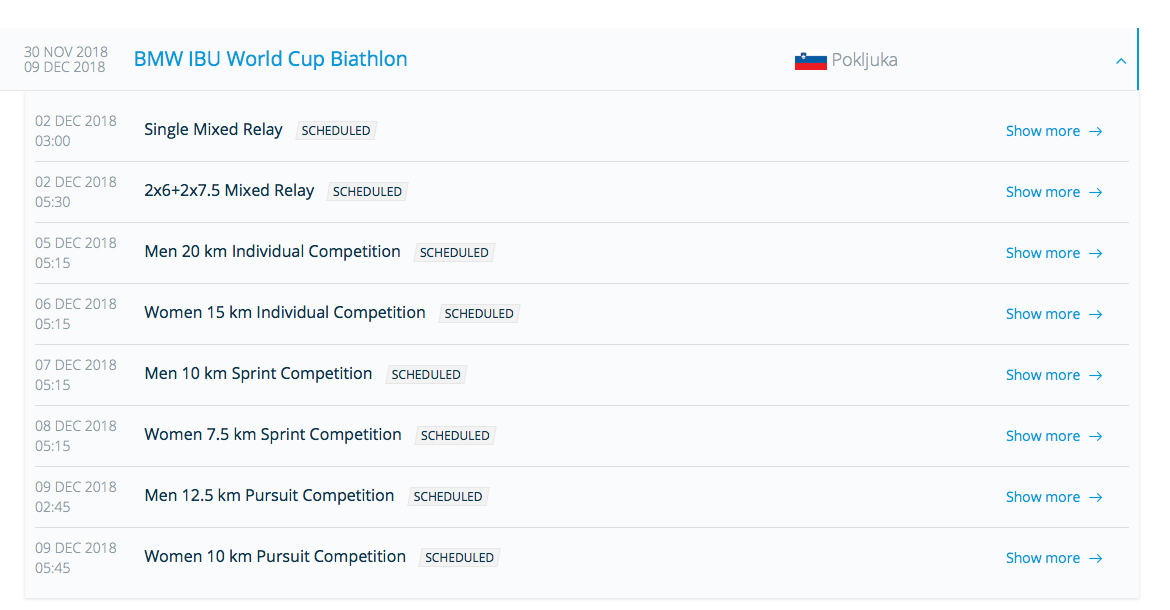
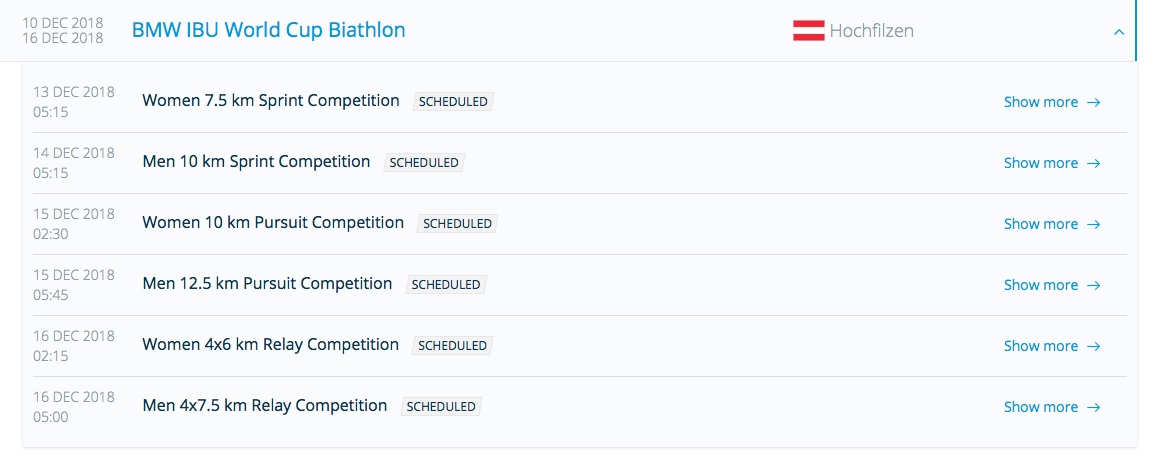
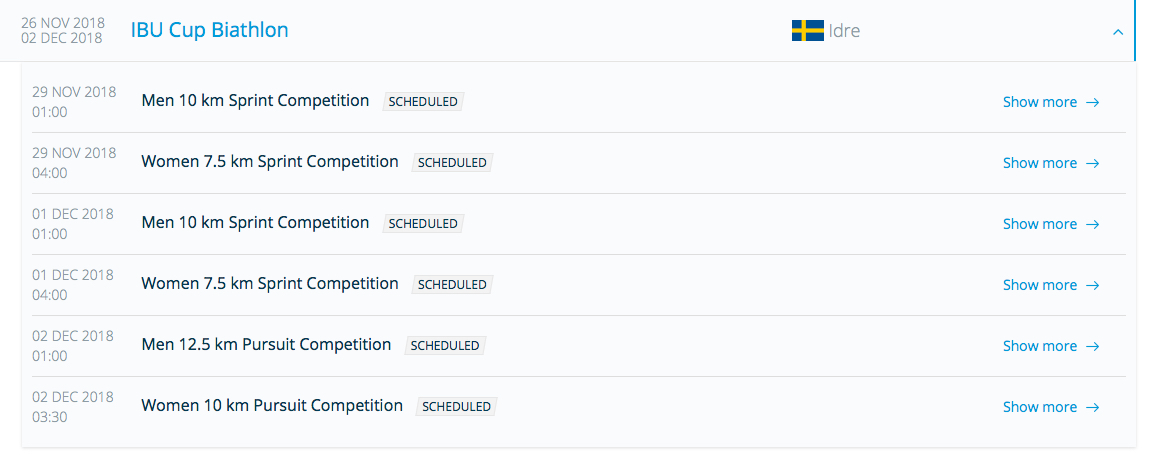
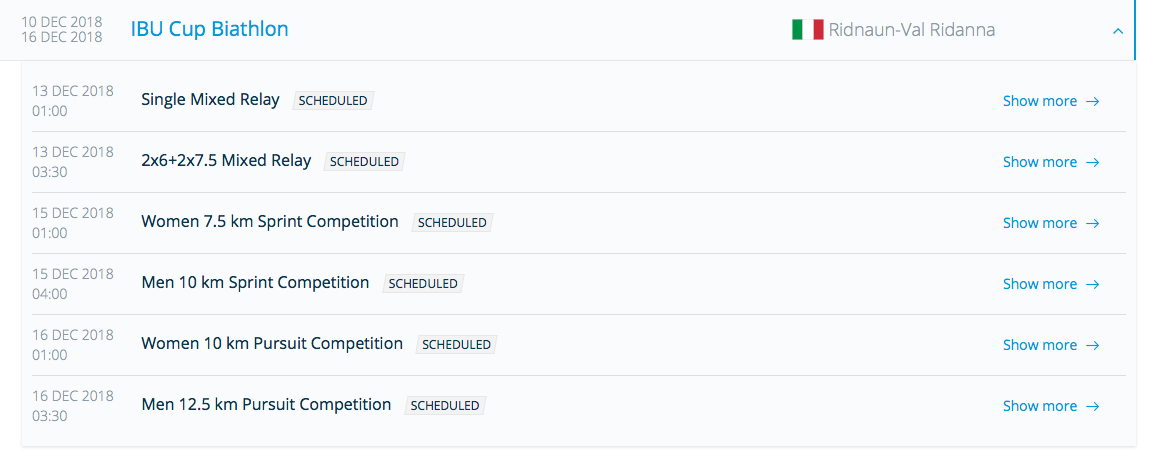
Below is the schedule for the first two IBU World Cup and IBU Cup races.
Schedule for the first IBU World Cup in Pokljuka, Slovenia.
Schedule for the second IBU World Cup in Nove Mesto, Czech Republic.
Schedule for IBU Cup #1 in Idre, Sweden.
Schedule for IBU Cup #2 in Ridnaun-Val Ridanna, Italy.
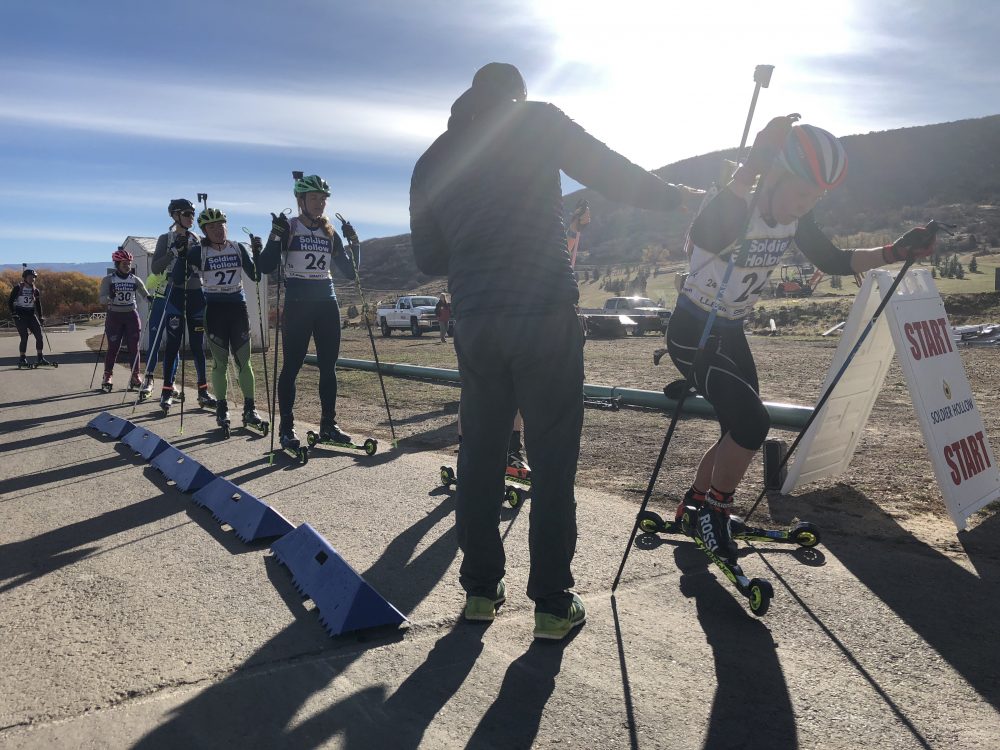
The start of the women’s 9.5-kilometer mass start at US Biathlon team trails at Soldier Hollow in Midway, Utah (Photo: US Biathlon)
Friday marked the final competition day for US Biathlon team trials taking place this week at Soldier Hollow (SoHo) in Midway, Utah. Biathletes hit the pavement on Friday for a men’s and women’s mass start roller ski race. A total of 24 senior athletes competed; 12 women and 12 men. At stake for many U.S. biathletes competing this week are are starting spots for US Biathlon’s 2018/2019 World Cup and IBU Cup teams.
Coming out on top in the senior women’s 9.5-kilometer mass start was Clare Egan out of the Craftsbury Green Racing Project. Egan missed one prone shot and two standing shots (0+1+0+2), before crossing the finish line first in a time of 30:29 minutes.
Susan Dunklee, who swept the previous days’ back-to-back sprints, crossed 1:07 seconds behind Egan for second place. In Friday’s race, Dunklee skied a total of six penalties prior to her finish (1+3+1+1).
Rounding out the senior women’s top three on Friday was Emily Dreissigacker who, after missing five shots (1+1+2+1), raced to a third place finish (+1:41).
Along with Dunklee, both Egan and Dreissigacker had reached the podium earlier this week. Egan placed second in Tuesday’s sprint; Dreissigacker took third in that same race.
“This was a great way to cap off six months of hard training,” Egan told US Biathlon. “Our team is ready to go, which we proved this week with a lot of solid performances. I haven’t been on top of a podium in a long time and it was fun to share it with my friend Paul [Schommer] today. He’s a very positive teammate and that kind of energy makes everyone stronger.”
The senior men raced a 13.5 k mass start on Friday, with Paul Schommer taking the overall win. Schommer cleaned both prone stages and missed one standing (0+0+1+0), crossing in a time of 34:58 minutes for the win.
Finishing eight seconds behind Schommer was Sean Doherty in second place. Doherty, who won the senior men’s sprint on Tuesday and placed second in Wednesday’s sprint, missed two prone shots and cleaned while standing (0+2+0+0) on Friday.
Taking third place on Friday in the senior men’s mass start was Travis Cooper, a member of US Biathlon’s Senior Development Team. After skiing three penalties (1+1+0+1), Cooper crossed 50 seconds behind Schommer and 42 seconds behind Doherty.
“The camp in Utah has been great and ending it with a win is even better,” Schommer told US Biathlon. “I’m just thankful to have the opportunity to race and am excited to get back on snow soon … Also, was definitely inspired by Clare’s win earlier in the morning,” he added.
Kelsey Dickinson (24) gets on course for the women’s 7.5-kilometer biathlon sprint for USBA SoHo trials on Tuesday, Oct. 30. Emily Dreissigacker (26) and Hallie Grossman (27) look on. (Photo US Biathlon)
According to an email from US Biathlon Sport Program Manager, Danika Frisbie, team nominations will be announced on Monday, Nov. 5 “after a meeting of the International Competition Committee (ICC).”
Nominations, according to a US Biathlon press release in late October, will take into consideration the results from Soldier Hollow as well as results from the Jericho, Vt. rollerski trials that took place this past August. Point totals will be calculated by using each athlete’s three best out of five race performances.
A few athletes, as noted in a spring US Biathlon press release on selection criteria, have pre-qualified for World Cups 1 through 3.
Biathletes who “achieved a personal top-25 result on the World Cup or at World Championships in the 2017/2018 season” are already qualified for the US Biathlon November on-snow camp in Europe, as well as World Cups 1 through 3, US Biathlon indicated. Biathlon World Cups 1 through 3 include the Pokljuka, Slovenia, Hochfilzen, Austria, and Nove Mesto, Czech Republic race weekends.
For athletes who are not pre-qualified, nominations will look to fill:
1 woman to World Cups 1-3
2 men to World Cups 1-3
Up to 4 men and 4 women for IBU Cup team for December IBU cups
A list of pre-qualified athlete names was not available upon request. However, Dunklee, Egan, Joanne Reid, Doherty and Leif Nordgren, according to IBU official results, have pre-qualified.
Kelsey Dickinson (24) gets on course for the women’s 7.5-kilometer biathlon sprint for USBA SoHo trials on Tuesday, Oct. 30. Emily Dreissigacker (26) and Hallie Grossman (27) look on. (Photo US Biathlon)
On Wednesday, 12 biathletes competed in the senior women’s 7.5-kilometer sprint, with veteran Susan Dunklee once again coming out on top. Dunklee completed the course in a time of 22:23, after missing two shots, one prone and one standing.
The next closest competitor to Dunklee was Johanna Talihärm, who tied Dunklee’s shooting score and finished 55 seconds back from the winning time for second place. Talihärm is originally from Estonia and is currently a senior at Montana State University.
Rounding out the podium was Craftsbury Green Racing Project and former Bates College skier, Hallie Grossman in third. Grossman cleaned her prone stage and missed one standing shot, finishing 1:12 seconds back from Dunklee.
Emily Dreissigacker, who had placed third in yesterday’s sprint, finished in fifth (+1:49) on Wednesday after two missed prone shots and one missed standing. Clare Egan, another top three finisher in Tuesday’s race, placed sixth (+2:01) in Wednesday’s sprint with 2 missed prone shots and 3 missed standing. In fourth (+1:32) on Wednesday was Deedra Irwin of Wisconsin Biathlon.
In the men’s 10 k sprint, Leif Nordgren claimed first in a time of 26:21 after one missed prone shot and one missed standing. Finishing 12 seconds behind Nordgren was Sean Doherty in second. Doherty missed two prone and cleaned standing. Rounding out Wednesday’s top three was Jake Brown, who cleaned standing and missed one prone shot, finishing two seconds out of second place and 14 seconds back from the winner.
A junior men’s and junior women’s sprint was held, with Lexie Madigan (Sugar Bowl Academy) taking the women’s win in a time of 16:46 and Eli Neilsen (MSU/Methow Valley Ski Club) claiming the men’s in a time of 19:25.
Athletes have a rest day on Thursday before returning to the venue on Friday for a mass start.
Susan Dunklee (front) and Clare Egan (l) during a shooting stage of the women’s mass start at Clare Egan (USBA/CGRP) racing to second in the women’s mass start at US Biathlon Rollerski Championships on Aug. 13 in Jericho, Vt. 2017 (Photo: John Lazenby/Lazenbyphoto.com)
US Biathlon team trials kicked off on Tuesday, Oct. 30, at Soldier Hollow in Midway, Utah, with a total of 47 athletes in attendance. On the line for senior competitors racing this week are starting spots for US Biathlon’s 2018/2019 World Cup and IBU Cup teams.
The first race of the week involved a men’s 10-kilometer and women’s 7.5 k sprint, with 12 senior women and 14 senior men racing. A junior men’s sprint and junior women’s sprint was held as well, with 11 junior men and 10 junior women participating.
In the senior women’s sprint, US Biathlon team veteran and two-time Olympian, Susan Dunklee claimed the overall win. Dunklee cleaned her prone stage and missed one standing to finish in a time of 22:17 for first.
After tying Dunklee’s shooting score, Clare Egan, raced to second place, finishing 25 seconds behind the overall winner’s time.
Third place went to Emily Dreissigacker, who also tied Dunklee’s shooting score and finished 1:09 seconds behind Dunklee’s time.
“I always enjoy training in Utah in the fall,” the 32-year-old Dunklee told US Biathlon after the race in Midway. “This winter the World Cup will return to Soldier Hollow for the first time in 18 years and it will be a highlight of our season. Today was a great chance to practice racing at the venue and familiarize ourselves with the range.”
This February, the Soldier Hollow Nordic Center is slated to host IBU World Cup races from the 14th to 17th. The last major international biathlon competitions held at Soldier Hollow were the 2002 Olympic Winter Games.
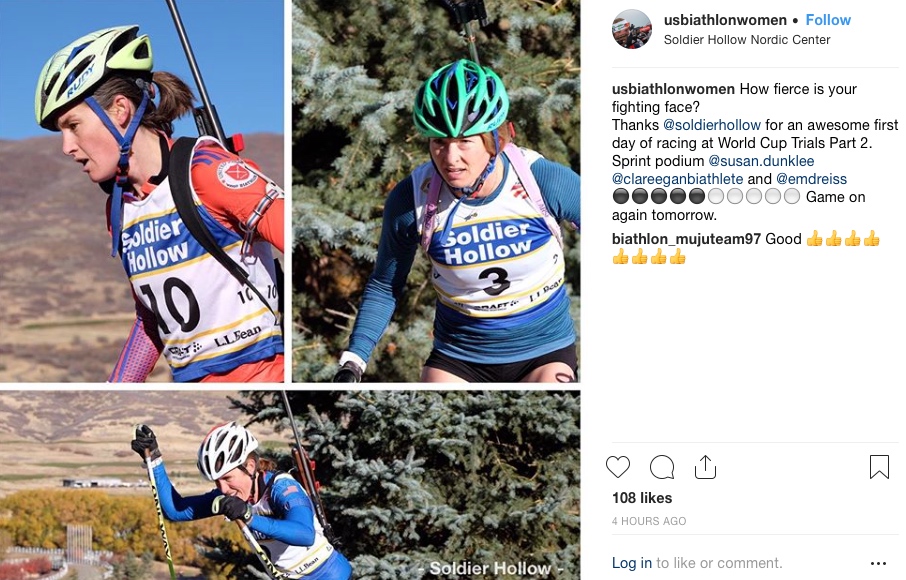
During the first day of competition at US Biathlon’s World Cup trials at Soldier Hollow, Susan Dunklee (bottom) placed first, Clare Egan (top-left) second, and Emily Dreissigacker (top-right) was third. (@usbiathlonwomen Instagram screenshot)
Following the senior women’s sprint on Tuesday was the senior men’s sprint. Twenty-three-year-old, Sean Doherty, took the win, in a time of 25:26 after missing one prone shot and cleaning while standing.
“I am happy with my race today. The course here is challenging and the altitude adds a lot of difficulty, especially in the range,” Doherty, who is a native of Center Conway, New Hampshire, told US Biathlon. “I’m looking forward to tomorrow as another chance to sharpen up before the season.”
Finishing behind Doherty on Tuesday was Paul Schommer, a former skier for the College of St. Scholastica, in second. Schommer finished 51 seconds behind Doherty’s time, after missing one prone shot and two standing.
The third senior men’s finisher in Tuesday’s sprint, Travis Cooper, missed two prone and one standing, finishing 1:20 seconds behind Doherty.
Wednesday, racers will return to the venue for a second sprint race.
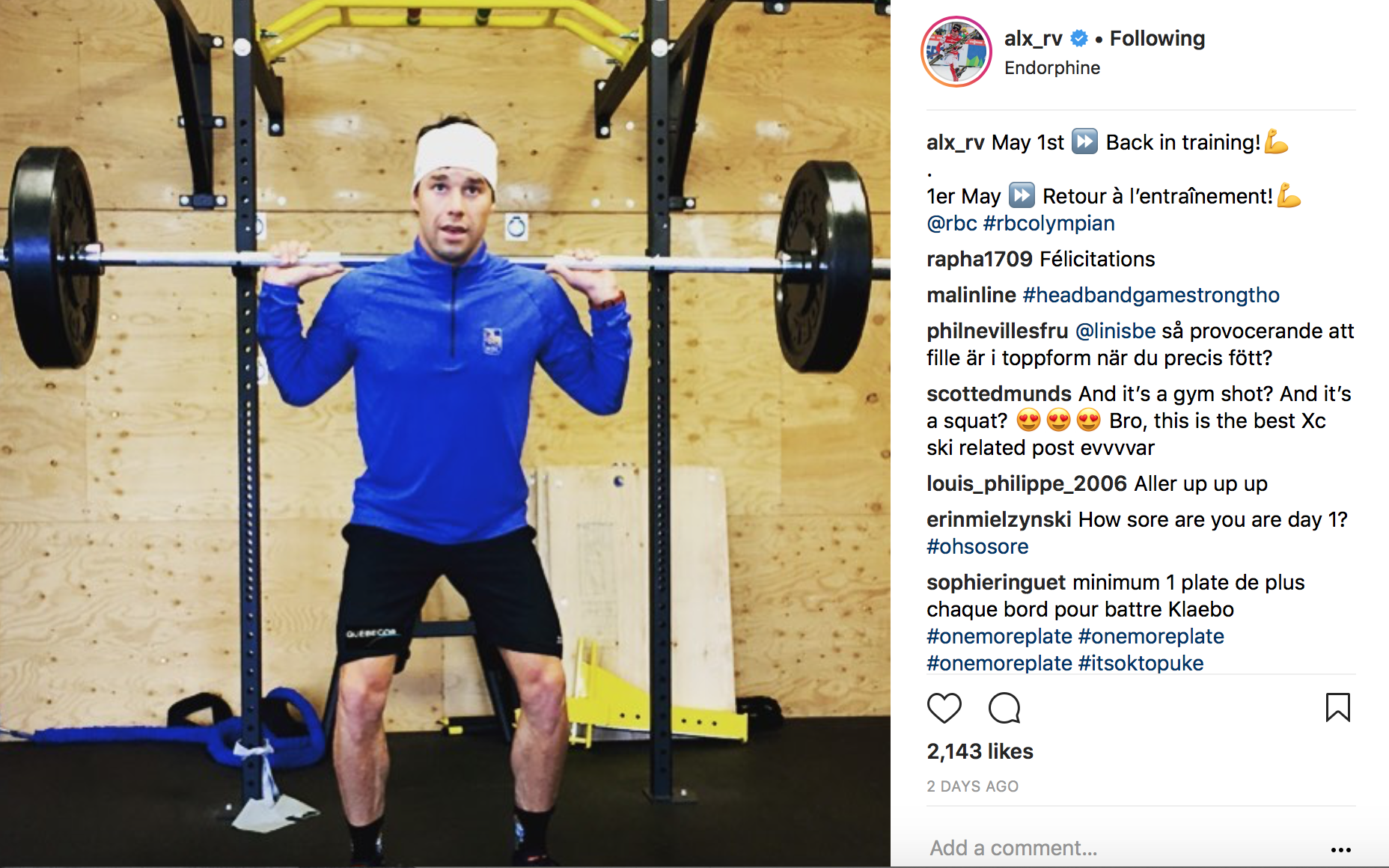
While we covered who’s still skiing — casually, recreationally, backcountry, basically anything other than full-on training — last week, the start of May marks the beginning of a new season for year-round skiers. And with the first few days of May have come some training pics via social media. Here’s a roundup of some that caught our eye on Instagram:
Alex Harvey:
Alex Harvey hitting the weights hard: “May 1st ⏩ Back in training!💪”
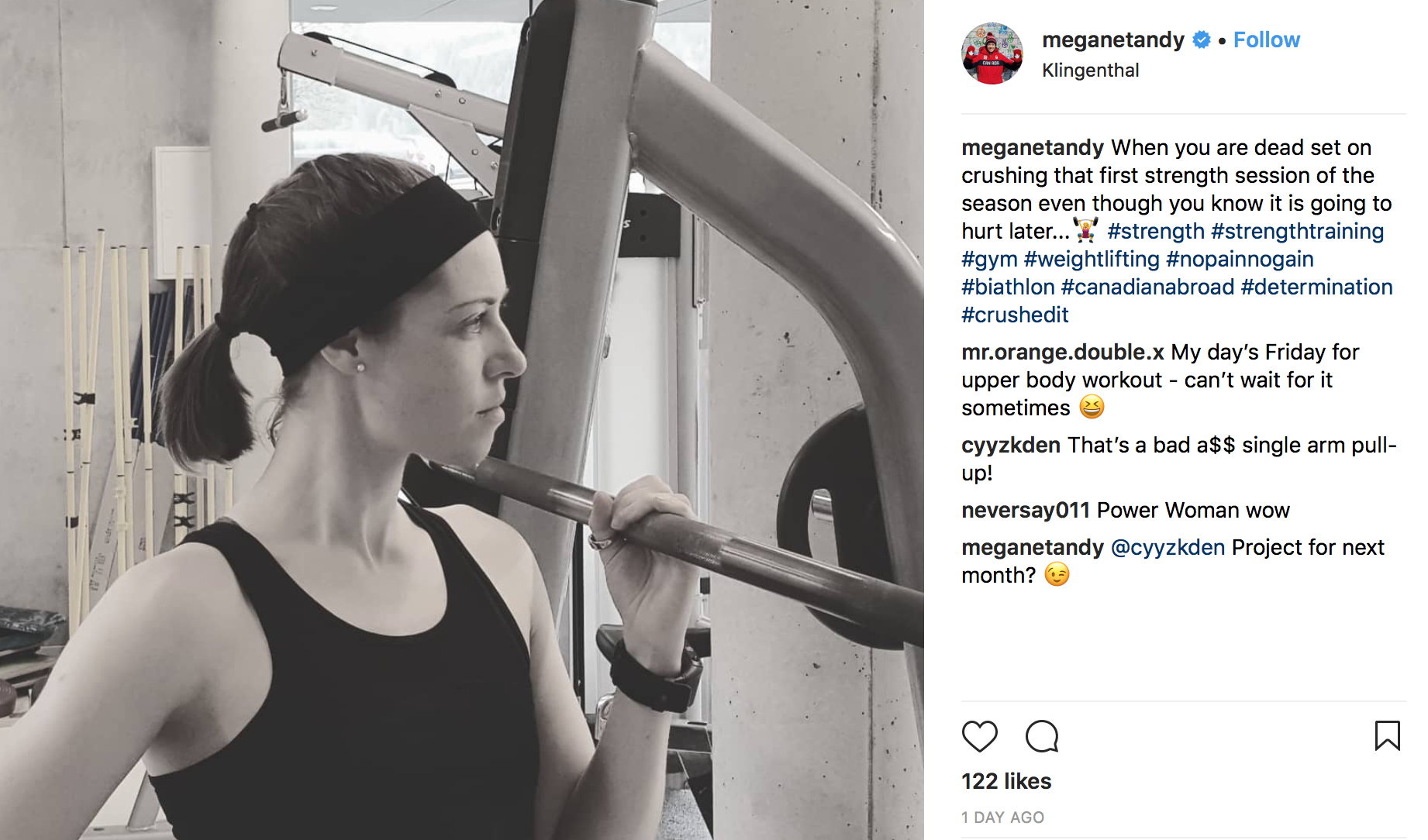
Megan Tandy:
Another determined Canadian athlete in the gym: biathlete Megan Tandy at her training base in Klingenthal, Germany.
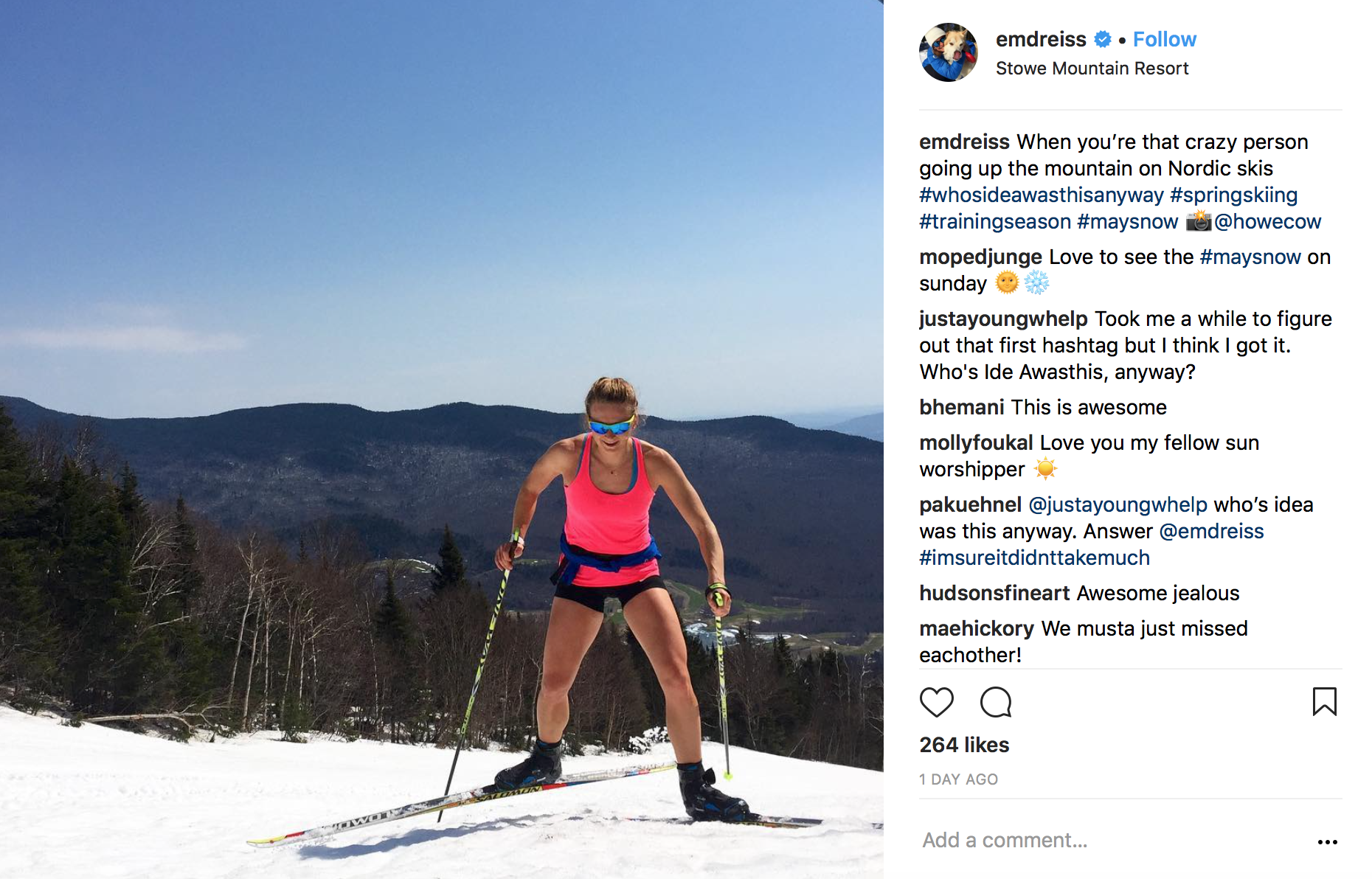
Emily Dreissigacker:
Newly minted US Biathlon High-Performance Team member Emily Dreissigacker skied up Stowe Mountain in Vermont on May 2.
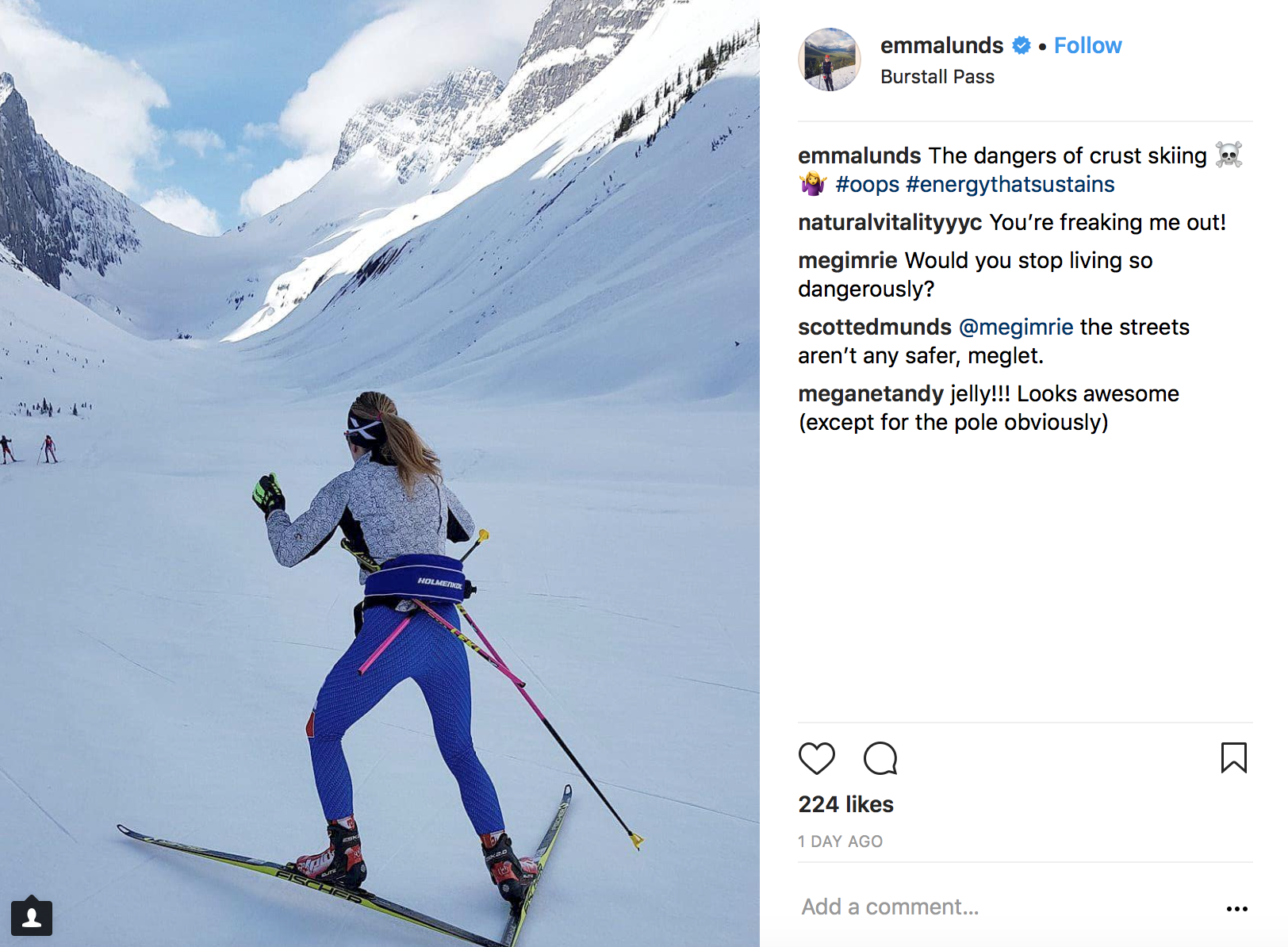
Emma Lunder:
Meanwhile near Canmore, Alberta, Canadian biathlete Emma Lunder broke a pole while crust skiing at Burstall Pass.
Scott Patterson:
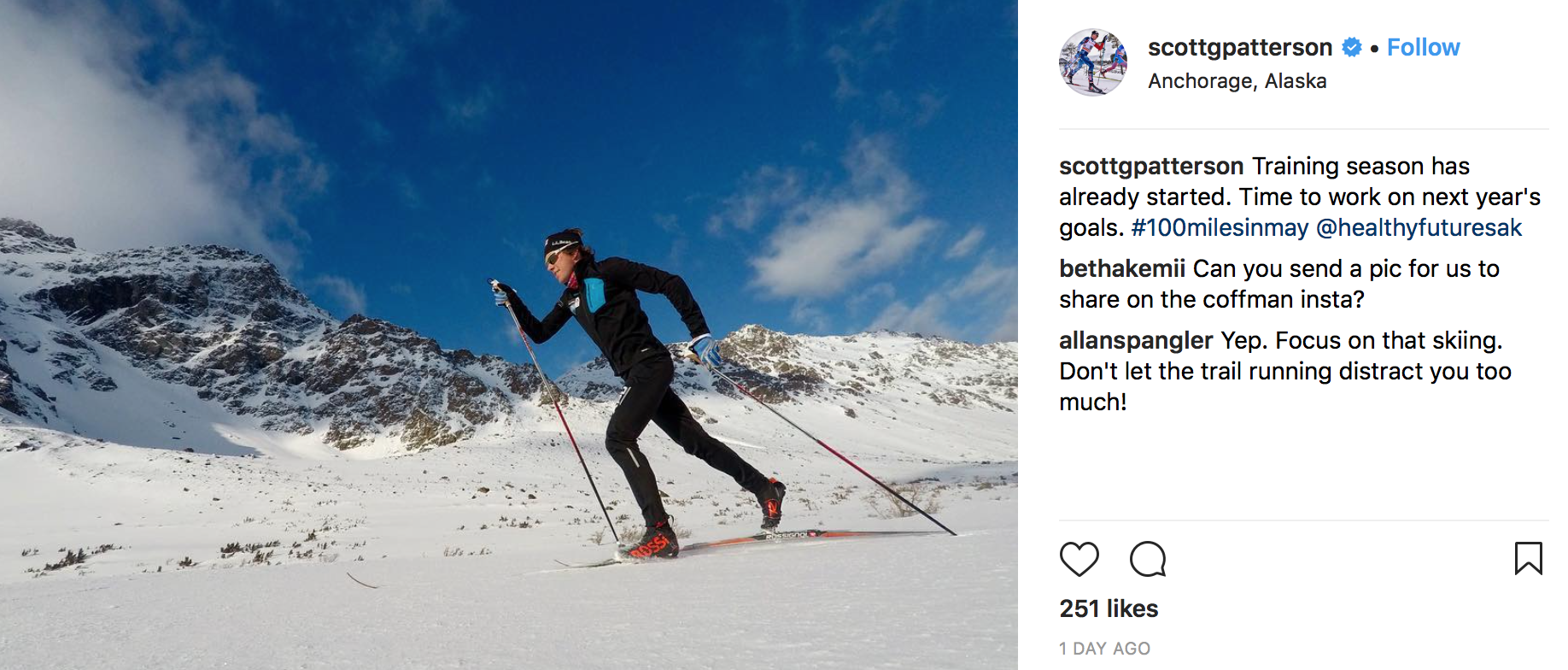
Looks like Alaska Pacific University skier and U.S. Ski Team member Scott Patterson is ready to go the distance, specifically 100 miles in May.
Sadie Bjornsen:
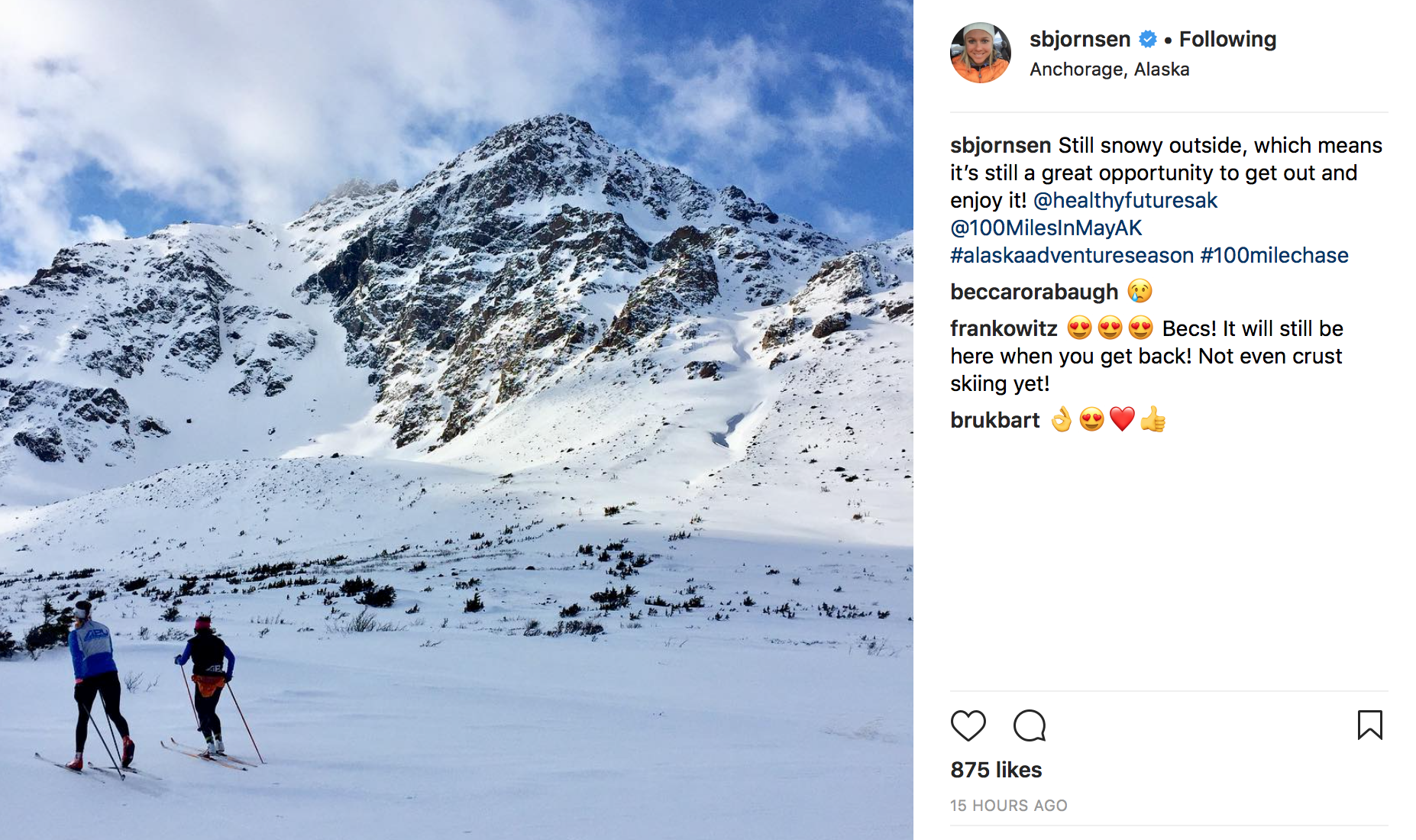
Scott Patterson isn’t the only one with a 100-mile goal for this month. His APU and U.S. Ski Team teammate Sadie Bjornsen is right there with him, getting out on snow in Anchorage, Alaska.
Erik Bjornsen:
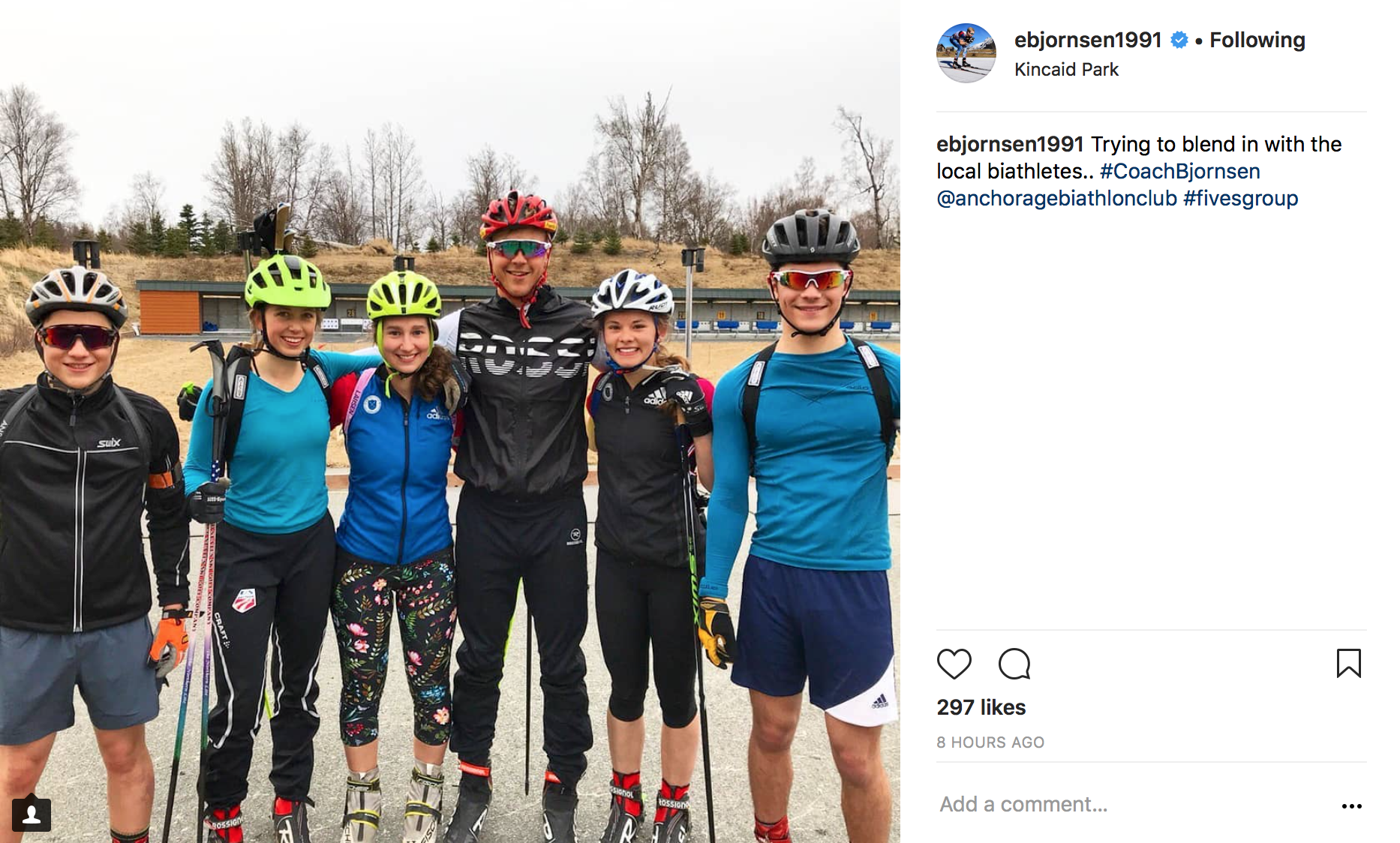
Speaking of the Bjornsens, Erik (c) got some ski-specific training in yesterday as a substitute coach for the Anchorage Biathlon Club at Kincaid Park in Anchorage.
Johannes Høsflot Klæbo and Eirik Brandsdal:
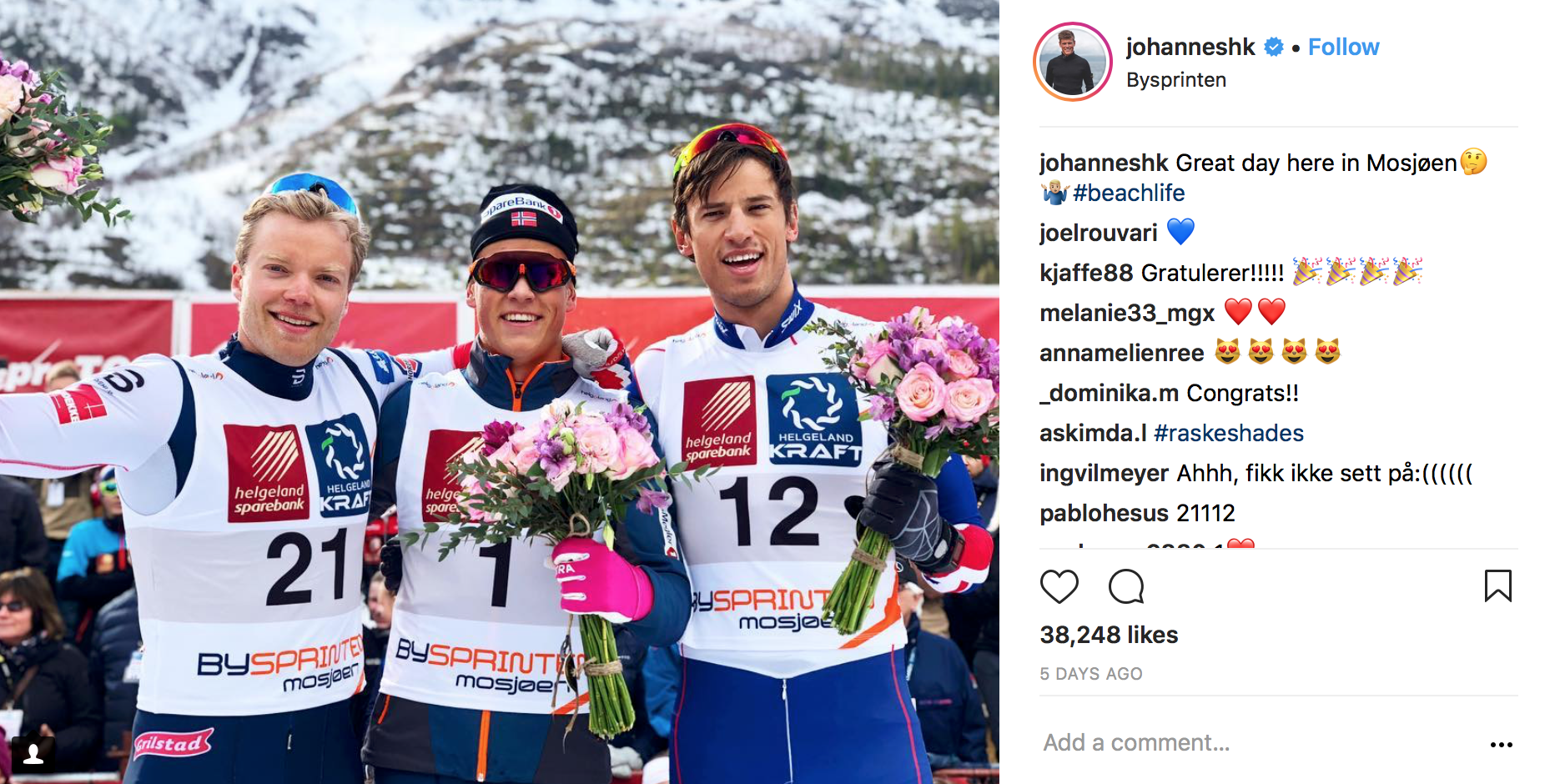
Norway’s Johannes Høsflot Klæbo (c) and Eirik Brandsdal (l) were still racing (and reaching the podium) last weekend at Bysprinten in Mosjøen, Norway.
Krista Pärmäkoski:
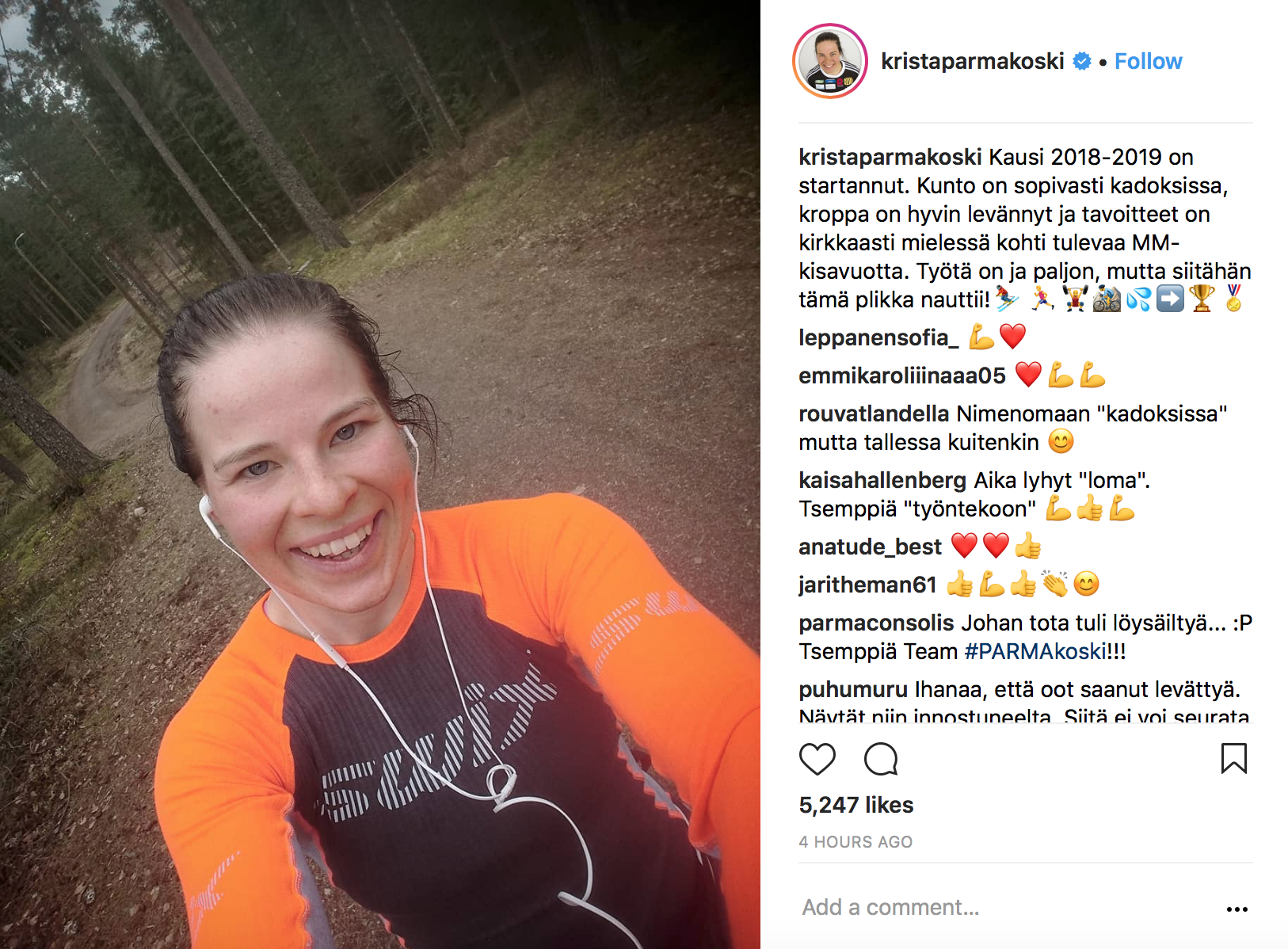
Finland’s Krista Pärmäkoski was all smiles while listening to some tunes during a recent dryland workout. She wrote about the start of the new season and being well-rested and focused on her World Cup goals. “There is work and a lot, but that’s what this is about.”
Dario Cologna:
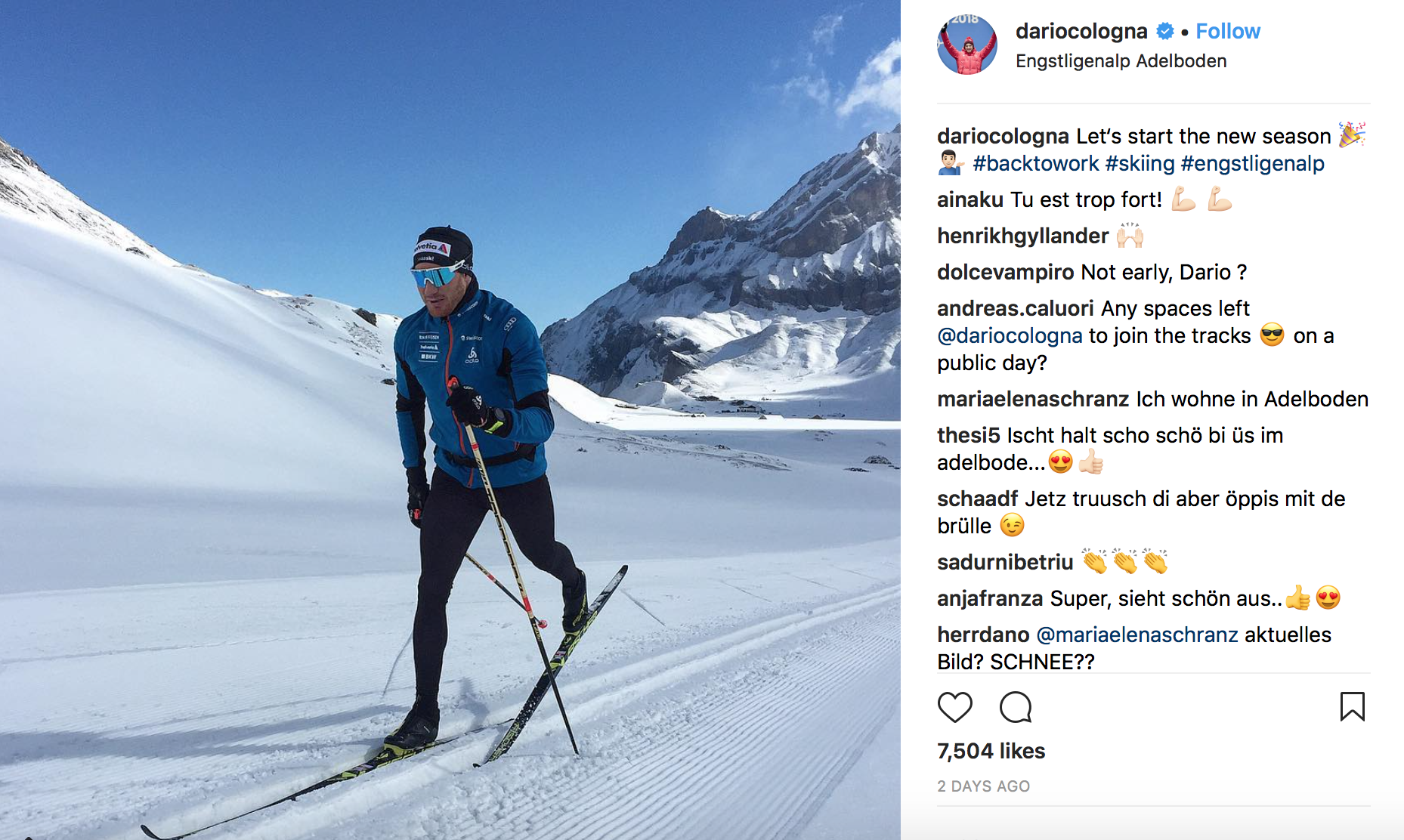
Swiss superstar Dario Cologna is “back to work,” according to one hashtag in this May 2 post, where he’s seen skiing on the Engstligenalp plateau in the Swiss Alps. “Let‘s start the new season,” he wrote.
Laurien van der Graaff:
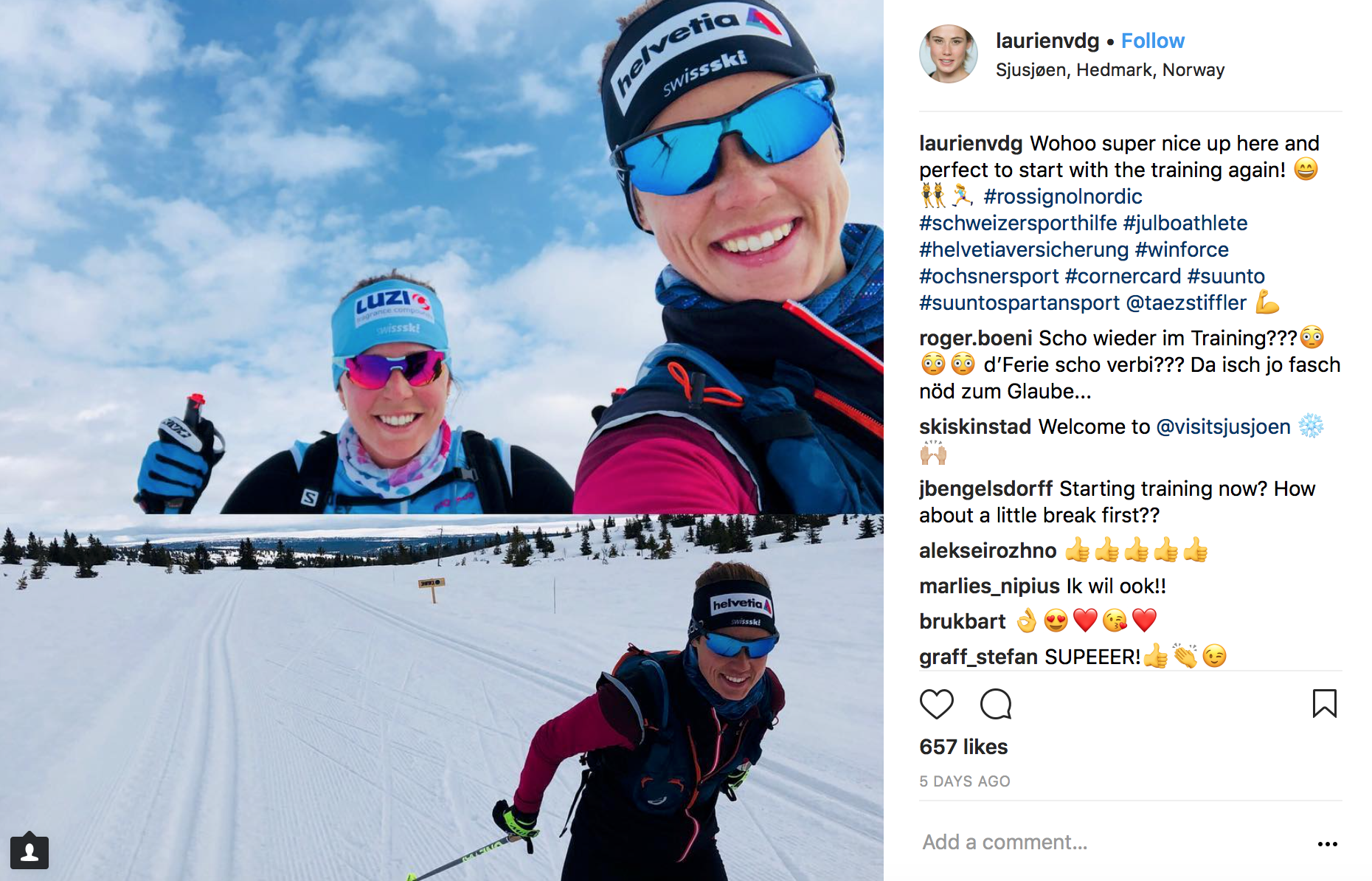
Another Swiss skier Laurien van def Graaff (bottom and top right) is back at it in Sjusjøen, Norway.
Charlotte Kalla:
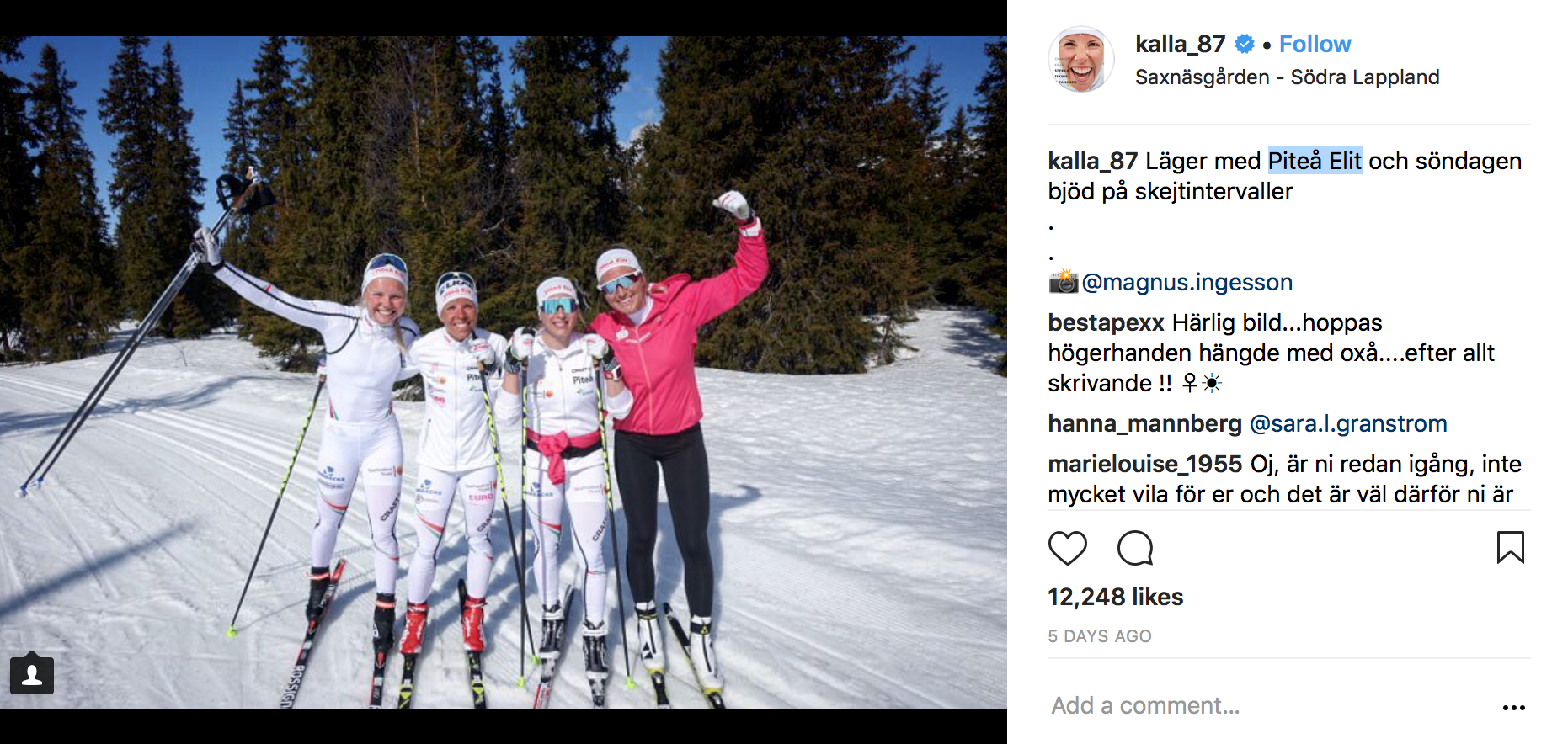
Sweden’s Charlotte Kalla (second from right) hasn’t wasted any time getting back on snow as evidenced by this photo she took with her Piteå Elit Ski Club teammates on Sunday in Finland’s Southern Lapland region.
Therese Johaug:
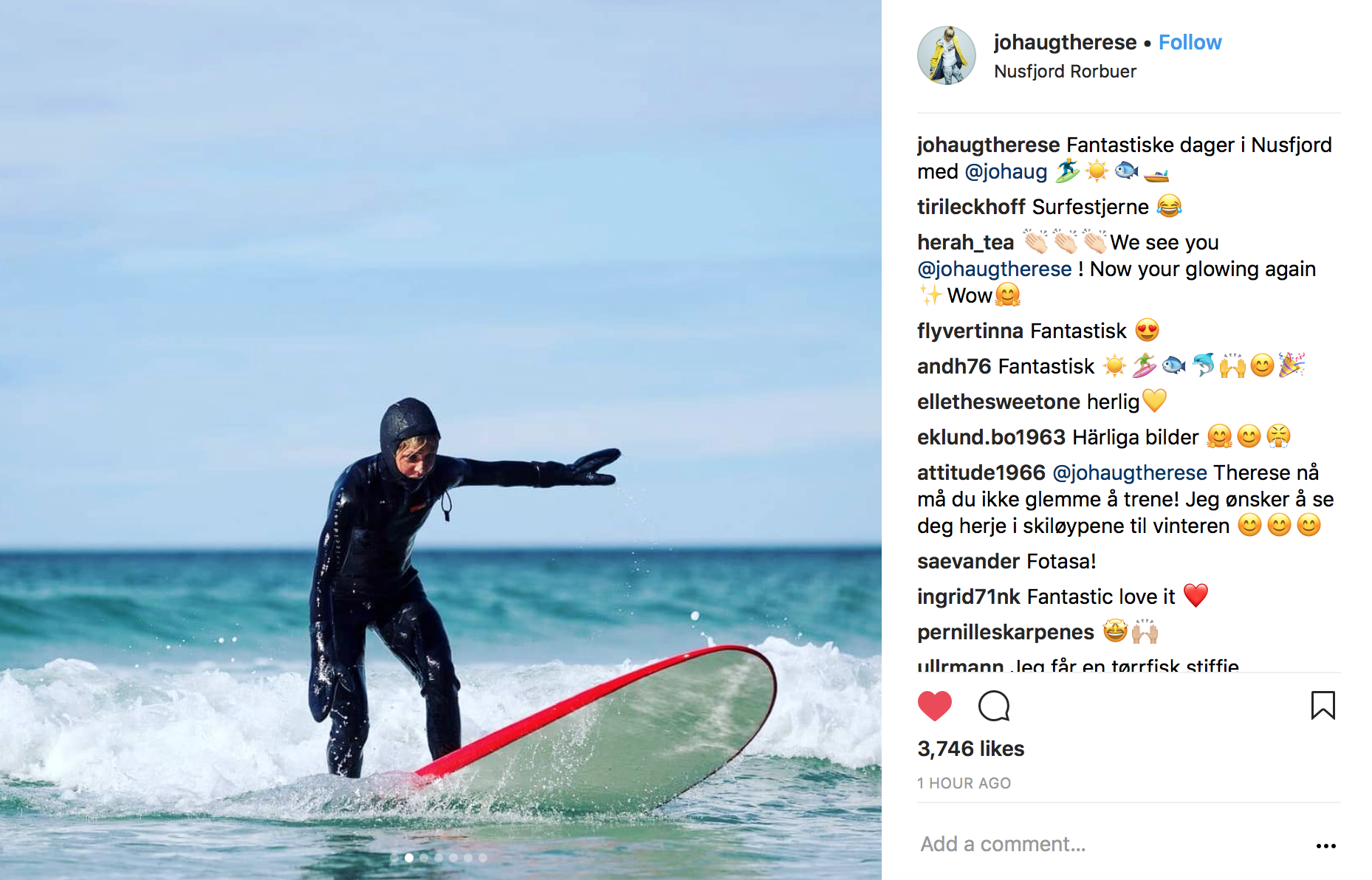
Looks like Therese Johaug has been logging some cold-water surf sessions on the Lofoten archipelago in northern Norway, as well as some fishing.
Martin Fourcade:
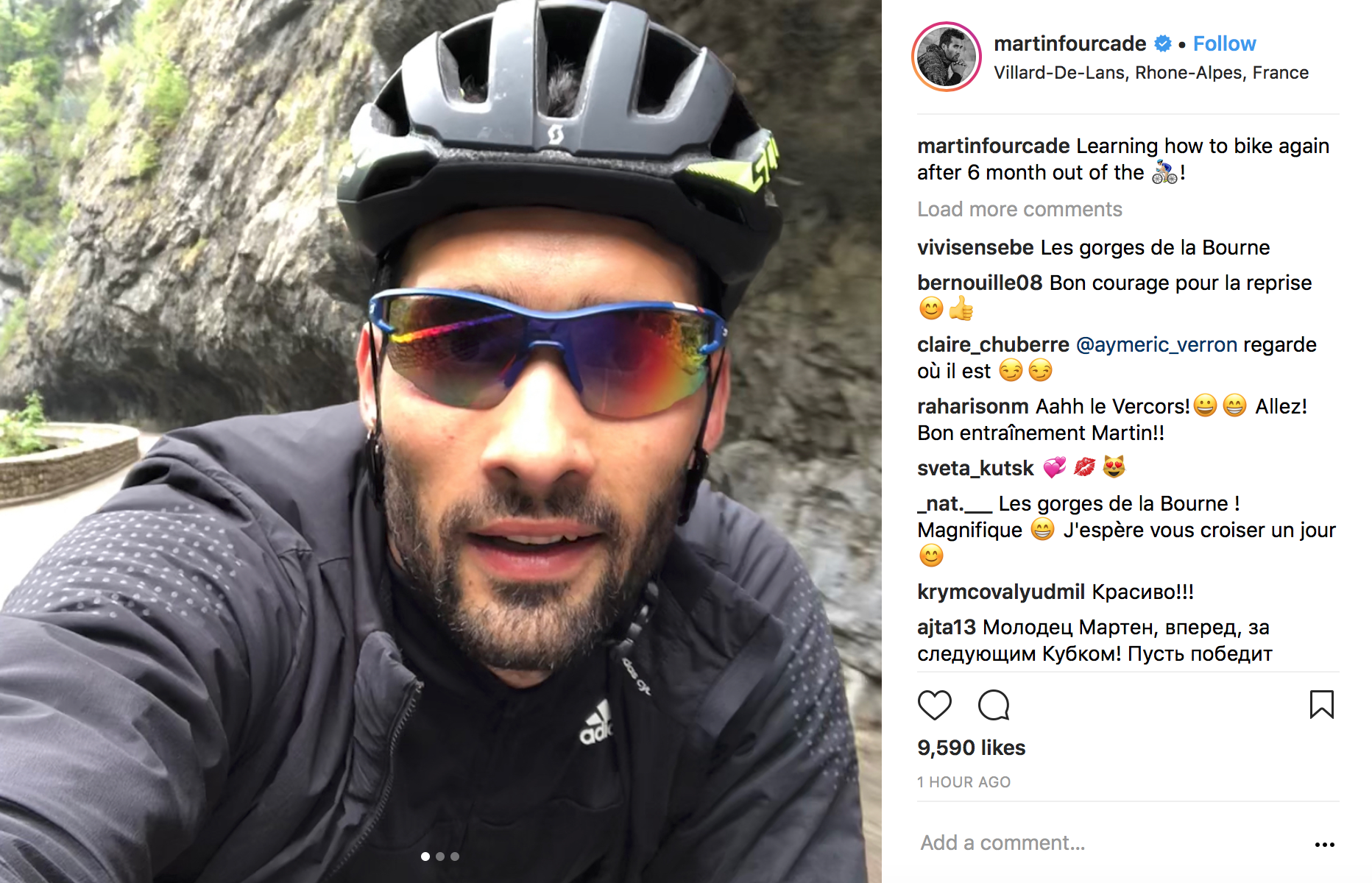
France’s defending IBU World Cup champ Martin Fourcade has been cross-training and logging some long-lost time in the saddle.
Franziska Preuss:
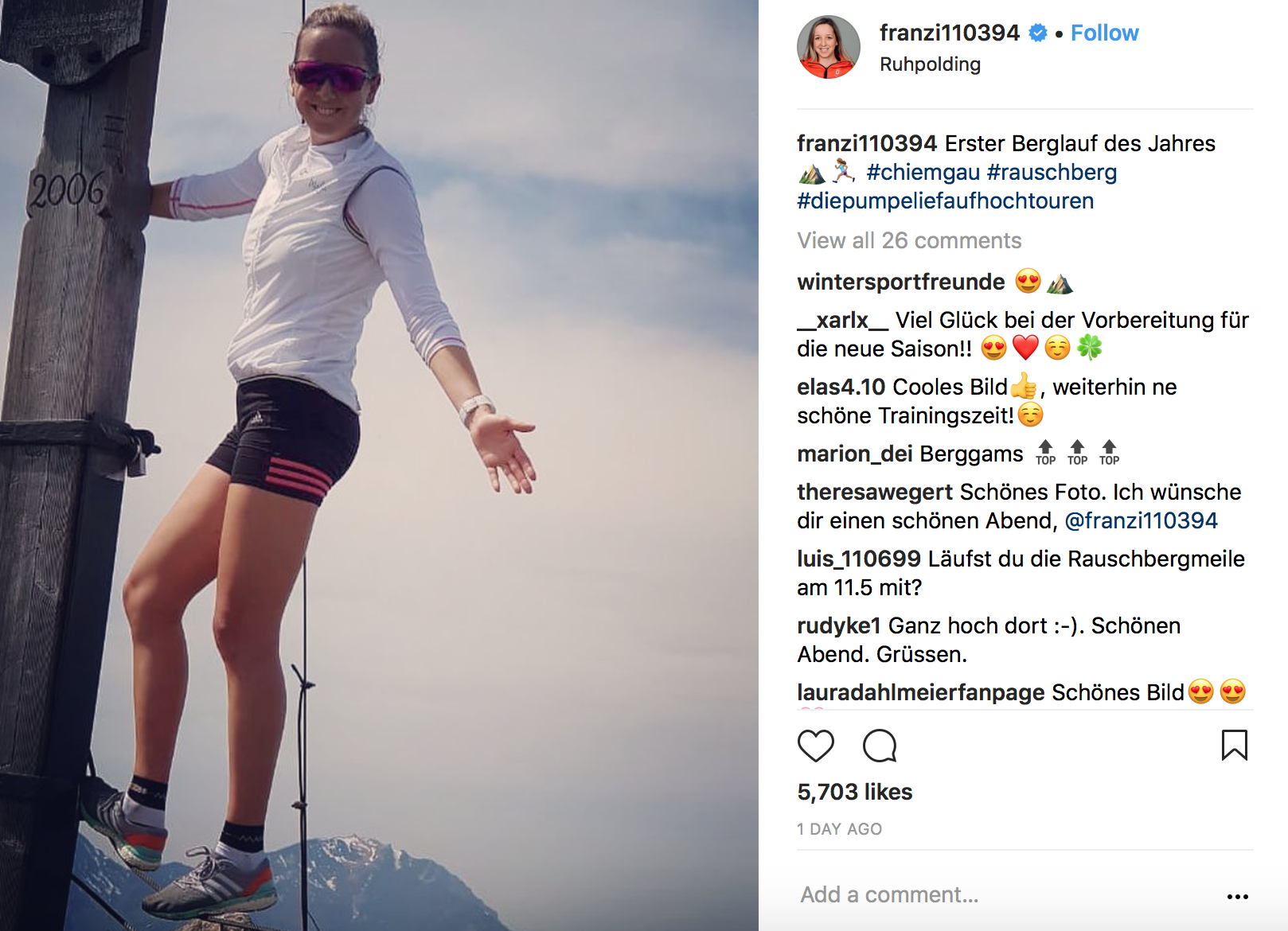
German biathlete Franziska Preuß (or Preuss) documented her “First mountain run of the new year” in Ruhpolding, Germany. And look, she’s higher than the mountains.
Leif Nordgren:
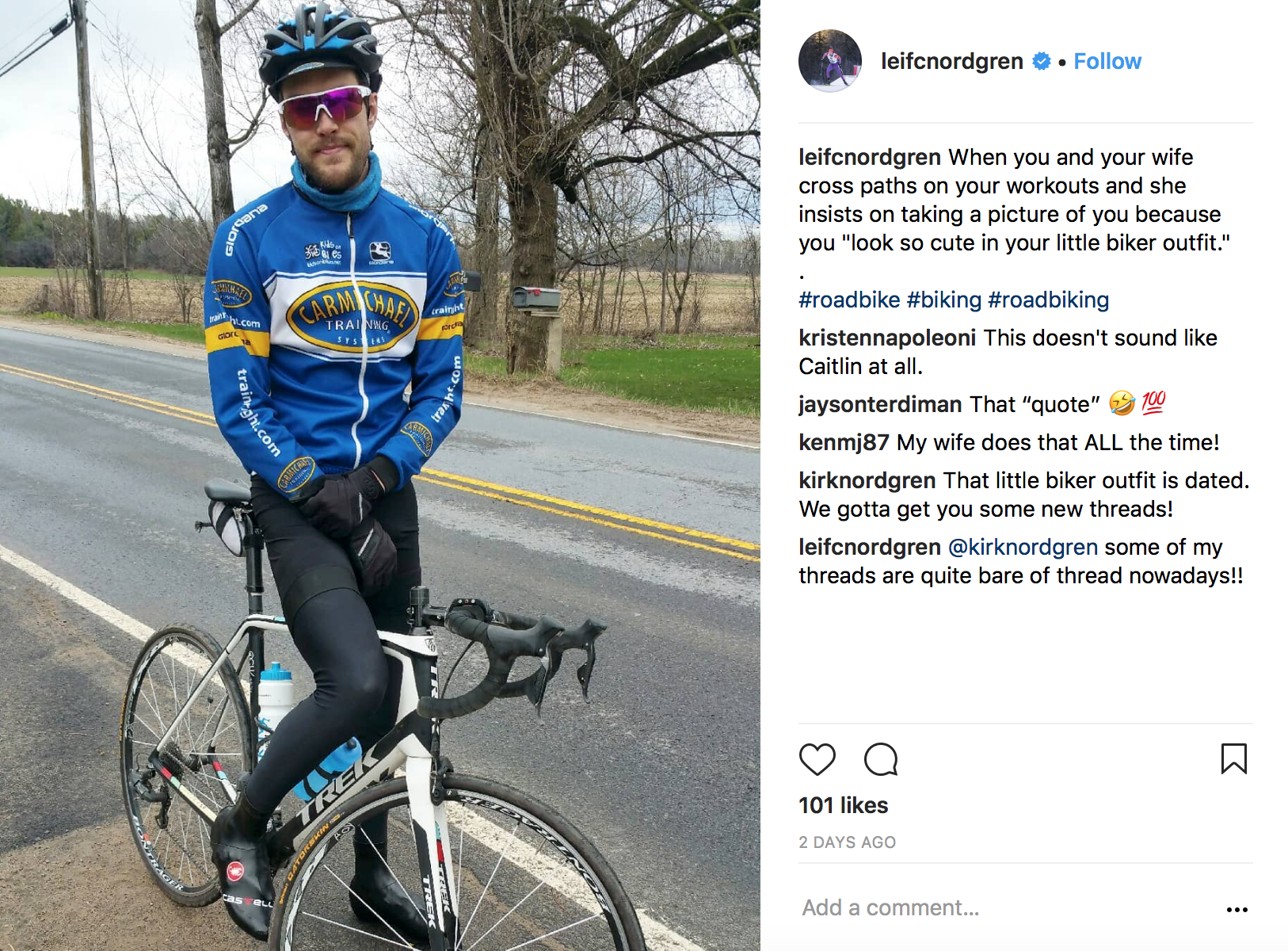
U.S. biathlete Leif Nordgren went road biking with his wife, Caitlin Napoleoni, whom he married in December.
Niklas Dyrhaug, Richard Jouve and Robin Duvillard:
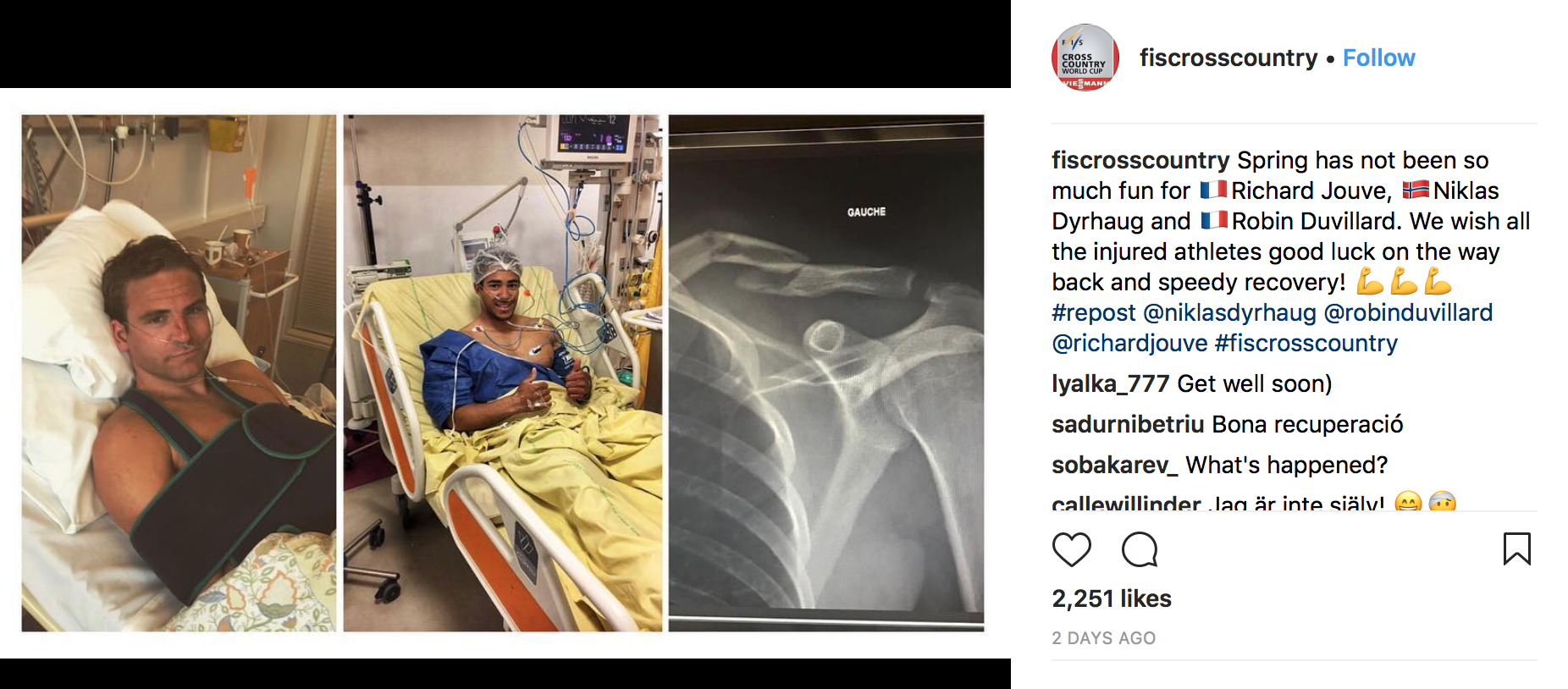
Meanwhile athletes like Norway’s Niklas Dyrhaug (l) and France’s Richard Jouve (c) and Robin Duvillard are on the road to recovery, according to this FIS Cross Country post.
Emily Dreissigacker tags off to Joanne Reid in the women’s World Cup biathlon relay in Ruhpolding, Germany. Both women are on the roster for the U.S. for the next year of international biathlon. (Photo: USBA/NordicFocus)
For the first time in years, the roster features more women than men. Following the retirements of Lowell Bailey, Russell Currier, and Tim Burke, Alex Howe (Craftsbury Green Racing Project) netted his first senior national team nomination, and joins 2018 Olympians Sean Doherty and Leif Nordgren, as well as Paul Schommer (Moose Nordic).
On the women’s team, all five members of the 2018 Olympic team have been renamed: Susan Dunklee, Clare Egan, and Emily Dreissigacker (all Craftsbury Green Racing Project), Joanne Reid (Colorado Biathlon), and Maddie Phaneuf (Polar Bear Ski Club). Dunklee and Egan recently said that they were not certain yet about retirement, but appear on the roster. The newest addition to the women’s senior team is Chloe Levins, who finished all three individual races at 2018 World Junior Championships in the top seven.
The “A” team athletes will be primarily based in Lake Placid, New York, while designated “B” team athletes (Phaneuf, Schommer, and Howe) will be based at regional training centers or with clubs, according to national team selection documents.
The federation has also named a development squad of Deedra Irwin (Wisconsin Biathlon), Travis Cooper and Jake Ellingson (National Guard Biathlon), Jake Brown (Loppet Nordic Racing), and Max Durtschi. All saw international race starts last season.
In addition, an 11-member Junior Development Group has been named, many of whom we interviewed this winter – see the links below to read about their experiences at World Youth and Junior Championships.
High Performance Team – Women
Susan Dunklee (Barton, Vt./Craftsbury Green Racing Project), A1 Team Clare Egan (Cape Elizabeth, Maine/Craftsbury Green Racing Project), A2 Team Chloe Levins (Rutland, Vt.), A3 Team Joanne Reid (Boulder, Colo./Colorado Biathlon), A3 Team Emily Dreissigacker (Morrisville, Vt./Craftsbury Green Racing Project), A3 Team Maddie Phaneuf (Old Forge, N.Y./Polar Bear Ski Club), B Team
High Performance Team – Men
Sean Doherty (Center Conway, N.H.), A1 Team Leif Nordgren (Marine, Minn.), A3 Team Paul Schommer (Appleton, Wisc./Moose Nordic), B Team Alex Howe (Gilford, N.H./Craftsbury Green Racing Project), B Team
Development Team – Senior Women
Deedra Irwin (Pulaski, Wisc./Wisconsin Biathlon)
Development Team – Senior Men
Travis Cooper (Kenai, Alaska/National Guard Biathlon) Max Durtschi (Sun Valley, Idaho) Jake Brown (Houghton, Mich./Loppet Nordic Racing) Jakob Ellingson (Minnetonka, Minn./National Guard Biathlon)
Youth and Junior Development Group – Women
Helen Wilson (Eagle River, Alaska/Alaska Biathlon Club) – 20-for-20 interview Lexie Madigan (Truckee, Calif./Auburn Ski Club) – 20-for-20 interview Emma Stertz (Grand Rapids, Minn./Mt. Itasca Biathlon) – 20-for-20 interview Grace Gilliland (Eagle River, Alaska/Alaska Biathlon Club) – 2017 20-for-20 interview Sarah Beaulieu (Fort Fairfield, Maine/Outdoor Sports Institute) Arianna Woods (Bozeman, Mont./Bridger Biathlon Club)
Youth and Junior Development Group – Men
Vasek Cervenka (Grand Rapids, Minn./Mt. Itasca Biathlon) – 2017 20-for-20 interview Garrett Beckrich (Grand Rapids, Minn./Mt. Itasca Biathlon) – 20-for-20 interview Tim Cunningham (Springfield, N.H./Saint Lawrence University) – 20-for-20 interview Eli Nielsen (Stehekin, Wash./Methow Valley) – 20-for-20 interview Marcus Gore (Vail, Colo./Casper Mountain Biathlon Club)
In the last race of their careers, Tim Burke leads Lowell Bailey up a climb in the men’s mass start on Saturday, March 31, at USBA Nationals at Soldier Hollow in Midway, Utah. The two finished together. (Photo: Terry Wickland)
2018 USBA Junior/Senior Nationals
American biathletes officially wrapped up their race seasons at the 2018 US Biathlon Association (USBA) nationals last Thursday through Saturday at Soldier Hollow in Midway, Utah.
The event kicked off with Lowell Bailey edging his teammate and longtime training partner Tim Burke by 5 seconds in the men’s 10-kilometer sprint on Thursday, March 29. Bailey started 15th out of 17 men and skied a single penalty lap after his prone shooting then cleaned standing (1+0). He crossed the finish line in 22:48 minutes, bumping Burke, who started 11th and had two standing penalties (0+2), out of first place. A third national-team member Sean Doherty completed the podium in third place, 20 seconds out of first with one standing miss (0+1).
In the women’s 7.5 k sprint on Thursday, Susan Dunklee raced to the win in 22:45, 11 seconds ahead of Clare Egan in second place. Dunklee and Egan started sixth and eighth, respectively, out of 10 women, and had two standing penalties apiece (0+2). Joanne Reid, also of the national team, placed third, 1 minute back from Dunklee with one standing miss (0+1).
Tim Burke leads Lowell Bailey in the men’s mass start on Saturday, March 31, at USBA Nationals at Soldier Hollow in Midway, Utah. (Photo: Terry Wickland)
On Friday, Bailey and Dunklee returned to the top step of the podium with victories in the men’s and women’s pursuits, after starting first in each race based on their sprint results.
Dunklee started 11 seconds ahead of Egan and won the women’s 10 k pursuit by 1:20.6 minutes with two penalties (1+0+1+0). Egan repeated in second place with three penalties (1+0+1+1), and Emily Dreissigacker improved on her fourth-place sprint result by finishing third (+3:46.9) with two misses (1+0+0+1).
Bailey started 5 seconds ahead of Burke and 20 seconds ahead of Doherty, then finished first, 1:31.7 clear of Doherty in second place. Bailey shot three penalties (1+0+1+1) and Doherty overcame six misses (3+1+1+1), while Burke finished 7.1 seconds behind Doherty for third place (+1:38.8) with nine penalties (1+1+2+5) after crossfiring on the final stage.
In Saturday’s mass starts, Bailey and Burke tied for first place in the men’s 15 k to celebrate the last race of their careers (check out this Instagram video). Bailey shot 19-for-20, with his lone miss coming in the last standing stage (0+0+0+1), while Burke had two one-minute penalties (0+1+1+0). They entered the finishing straight together and crossed the line in unison in 36:23.3. Doherty once again reached the podium in third (+36.1) after shooting three penalties (0+1+2+0).
Like Bailey, Dunklee swept nationals as well with a win in the women’s 12.5 k mass start. She finished with the fastest time of 39:51.6 despite five penalties (1+2+1+1), while Egan was runner-up for the third-straight day, 1:25.4 back with seven penalties (2+1+2+2). Dreissigacker shot clean to repeat in third place (+1:32.5).
Marcus Gore (33) of Casper Mountain Biathlon and Ski & Snowboard Club Vail leads Nick Burkhart (32) of Auburn Ski Club and Bjorn Westervelt (31) of Craftsbury in the youth men’s pursuit at 2018 USBA Nationals in Midway, Utah. Burkhart went on to edge Westervelt for the win. (Photo: Terry Wickland)
In the youth races, Bjorn Westervelt of Craftsbury and Lexie Madigan of the Auburn Ski Club (ASC) won the youth men’s and women’s sprints, respectively. On Day 2, Madigan raced to her second-straight win in the youth women’s 7.5 k pursuit while Nikolas Burkhart, also of ASC, won the youth men’s 10 k pursuit by 10 seconds over Westervelt in second place.
On Saturday, Burkhart won the youth men’s 10 k mass start in 35:23.8, while Helen Wilson of the Anchorage Biathlon Club topped the youth women’s 7.5 k podium with a win in 26:37.3.
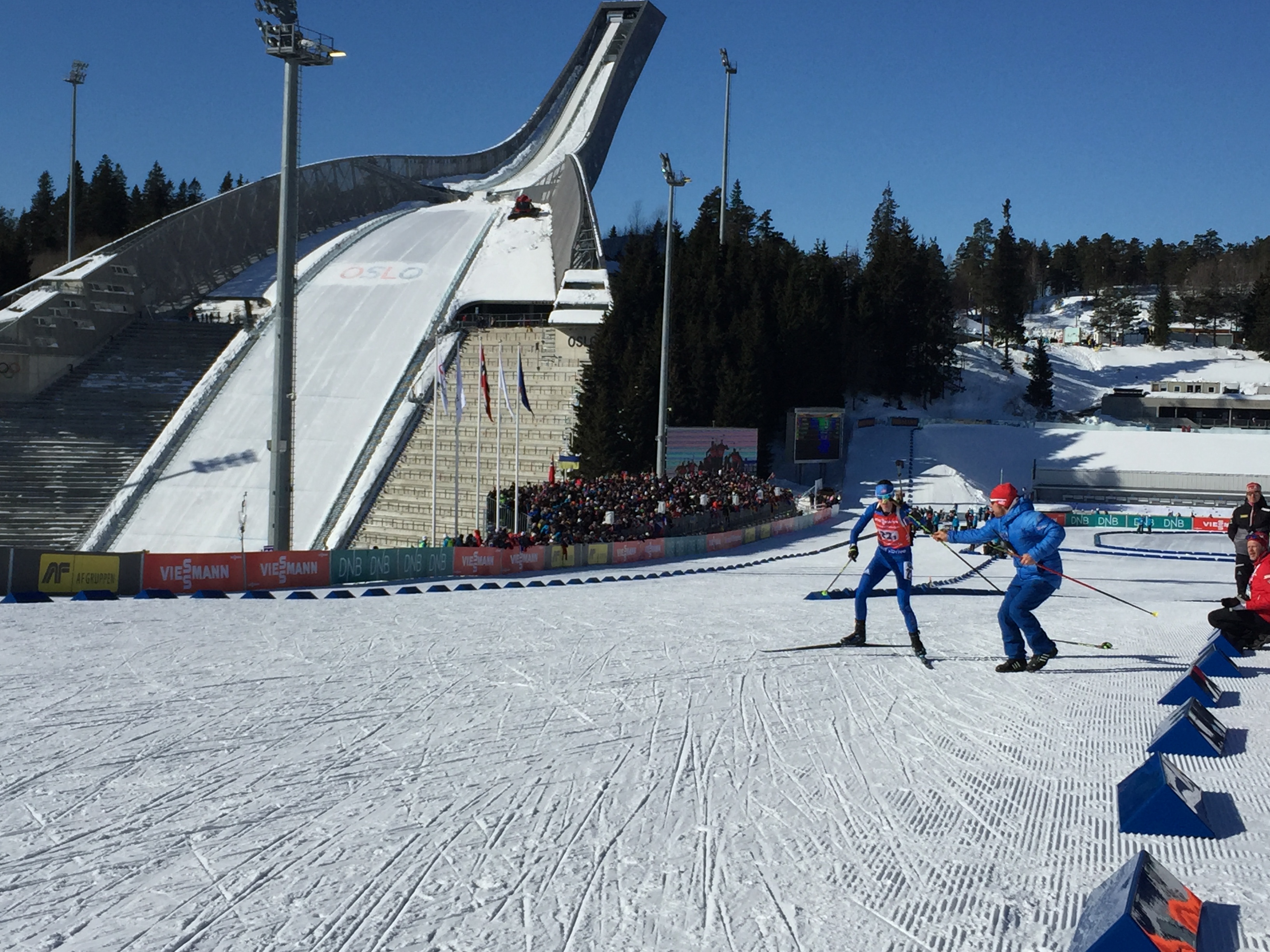
Clare Egan receives a pole from US Biathlon Chief of Sport Bernd Eisenbichler during the first leg of the women’s relay at Holmenkollen.
OSLO, Norway — In the last relay of French star Marie Dorin Habert’s career, she turned in a crucial performance to bring her team to the front. Anaïs Bescond extended the gap and France took the win in the women’s 4 x 6-kilometer relay here at Holmenkollen by 14.4 seconds over Germany.
Was she nervous going into the last team event she will ever race?
“I wasn’t really nervous,” Dorin Habert, 31, said in a press conference. “I think it’s a special thing to know that there is no more starts and no more relays for me, so I just wanted to fight and struggle hard like every relay. I think I did my best today.”
Dorin Habert won two gold medals, in the individual and the pursuit, here at World Championships two years ago. So Oslo is a special place.
“It’s so nice to end this way, to share it with all of the team, and the beautiful sun, and all the French people,” Dorin Habert said. “It’s a wonderful day for me. I would like to thank a lot, well, everyone, for being there in the biathlon family. I’m really happy to have this career, and I’m really happy for everything.
The Italian duo of Lisa Vittozzi and Dorothea Wierer put their team in first place at the halfway point, and it was their teammate Nicole Gontier whom Dorin Habert passed to pull France into first. Gontier stuck with her, and Italy was only 2.2 seconds back at the last exchange.
The German anchor, Laura Dahlmeier, charged past Italian skier Federica Sanfilippo. She was unable to catch Bescond, but Germany finished second with seven spare rounds to six by the French, and Italy placed third with eight spare rounds (+33.2).
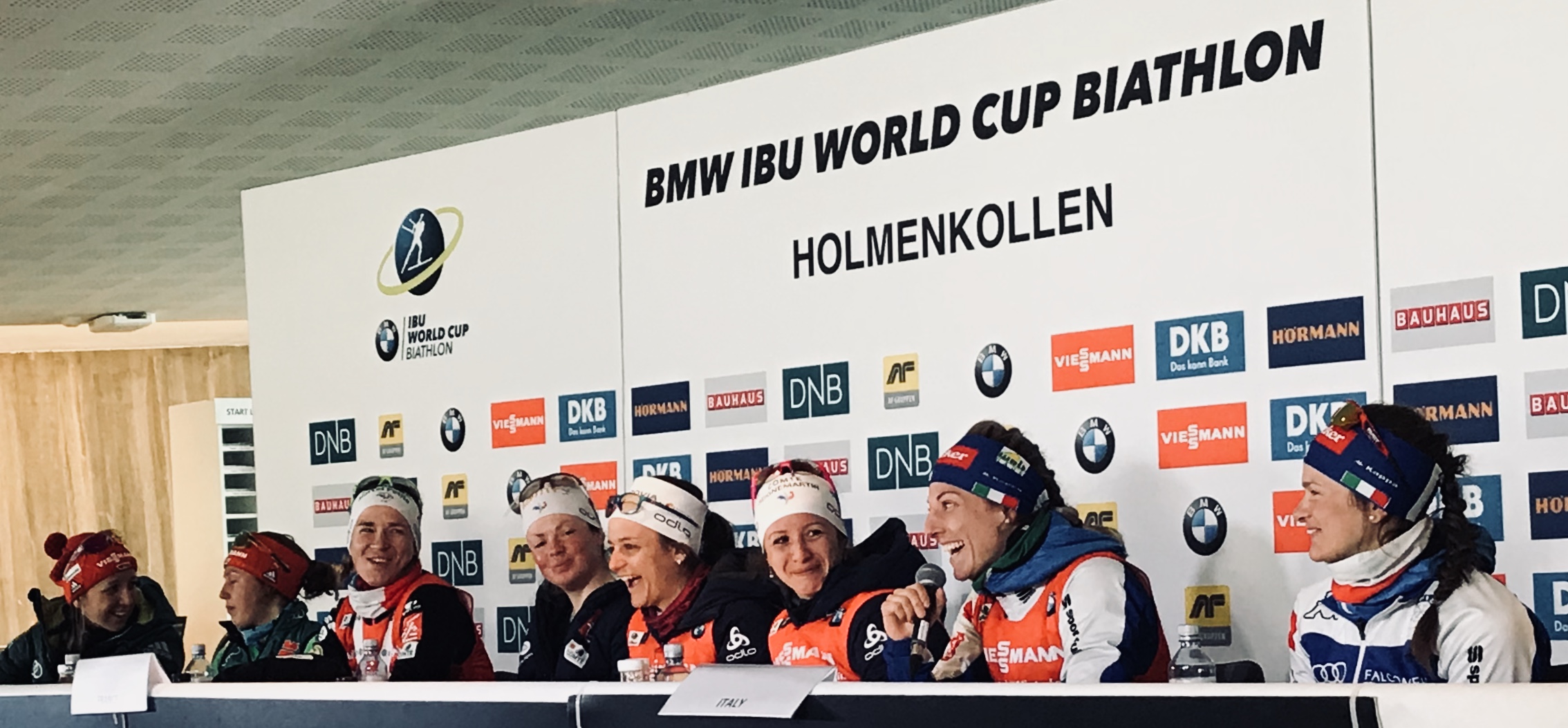
The Italian and French teams joking in the press conference.
Norway placed fourth with a penalty loop and 10 spares (+1:26.5), Switzerland fifth with eight spare rounds (+1:54.2), and Sweden sixth with a remarkable three spare rounds (+2:27.2).
The Canadian team skied an even race, with Sarah Beaudry leading off in 12th, Julia Ransom tagging in 14th, Emma Lunder in 15th, and then Rosanna Crawford bringing the team up to 11th.
“I love coming from behind and chasing girls down, and I just looked at it as practice for tomorrow,” said Crawford, who will start Sunday’s pursuit in bib 38. “I was within somewhat contact with the other women around me, so that was nice. People to chase, people to ski with.”
It wasn’t the result the team knew they were capable of, with 11 spare rounds. But it has been a long season.
“Of course everyone is tired, every team is tired,” Crawford said. “But our fast isn’t as fast as the fastest, so our slow is, well, a lot slower. I felt so good through Finland, and I really thought the ski speed was going to hold, but then it wasn’t there in the sprint. And also, today was slightly better, but not what I had last weekend. It’s so frustrating to be up and down.”
The U.S. team started off with a tough leg by Clare Egan, who used all of her spare rounds in both prone and standing and had two penalty laps. She tagged off at the first exchange in 21st and last place.
“This is I think the worst race of my career,” she said after the finish. “I’m really embarrassed. It is the worst possible thing to do it in a relay. I hate letting everyone down. It’s a really terrible feeling.”
Her teammates, though, were more circumspect.
“I never, ever, want to hear a teammate apologizing for tagging off far back like that,” said Susan Dunklee, who took the tag from Egan. “The only thing they can apologize for is if they didn’t try. And Clare was out there and trying her best. So I have nothing but respect for that.
“What I yelled at Clare, when she was at the top corner and I was warming up, I yelled, ‘We love you and we think you’re awesome!’ ” Dunklee continued. “She was in last place, and we still do love her. You just have to know that your teammates have all been there, they have all done the same thing in the relay, and they know exactly how you feel. Usually, there’s a piece of our relay that we can look at and get really excited about, so we will do that today.”
For Egan, though, it was a race that just came apart. The team started with bib 22, one of the last in the field, but she move up 10 places to 12th by the first shooting.
Then, spare rounds and penalty laps.
“I’ve never had a penalty loop in prone, in the World Cup [in a relay], but to do that in the first stage and immediately be like a minute behind everyone – no, I didn’t lose hope,” Egan said. “I knew that anything can happen in the standing. And I actually, I didn’t come into the range last. I had passed one person. But, you know, with another [penalty lap] in standing, I was just trying to get as fast as I could to the finish because … I just hoped that my teammates all would get a chance to do the race. If we get lapped then we get pulled. That’s it.”
She also lost part of a pole early on in the race, and the replacement process did not go smoothly.
“I just had to get a new one, but then the new one was shorter than my own pole,” Egan explained. “So when I went by a coach I meant to switch out the shorter pole for a spare that was the right height, and I gave him my own pole. So then I finished the race and I was like, ‘What the heck? I still have this stupid pole.’ ”
As the relay continued, Dunklee had the seventh-fastest second leg time, and Reid the eighth-fastest third leg time; by the third exchange, the U.S. was in 17th place.
“The shooting didn’t feel really sharp today,” said Dunklee, who used three spare rounds in total. “I don’t know what the times were but I don’t think they were very fast. I just felt sluggish and, a little out of it, really.”
Reid used only one spare round, a performance she was excited about.
“It’s always easier to start from behind and work your way up because there’s no pressure,” she said. “Whereas if you come into the range in first and have to shoot on point one, and everyone is staring at you, that’s really hard. Today was low-pressure shooting.”
Emily Dreissigacker anchored the team, and used four spare rounds to move up to 15th. She caught the team from Kazakhstan and held off a challenge from Korea in a three-way sprint finish, chasing Austria who finished jut 2.1 seconds ahead.
“I don’t know when the last time I actually had to sprint for the finish was, but it was great!” she said.
China and Slovenia were disqualified, and Bulgaria and Lithuania were lapped. But despite being the last team on the first leg, the U.S. women avoided that fate by a large margin.
“I definitely went out hard,” Dreissigacker said. “I knew we were sort of in the danger zone for getting lapped, but actually, the skiing felt really good the first two laps. I kind of died at the end, so I was glad I was able to come through at the finish.”
“I think we’ve all been through some ups and downs this season and struggling with that,” Dunklee said of Egan’s relay leg. “It’s important to remember that biathlon isn’t everything. There’s other stuff going on in our daily lives that is meaningful to us. It’s important to never lose sight of that.”
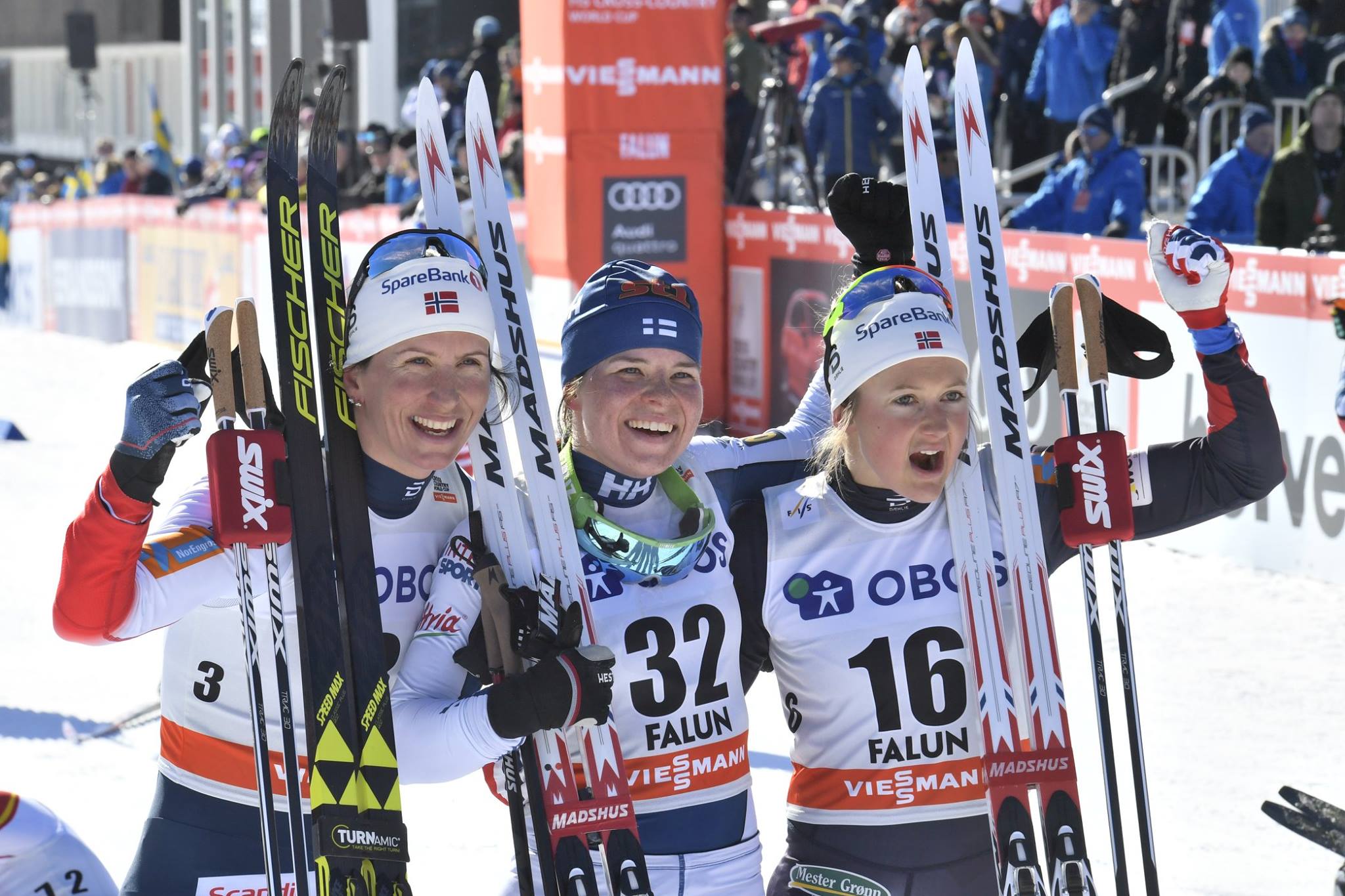
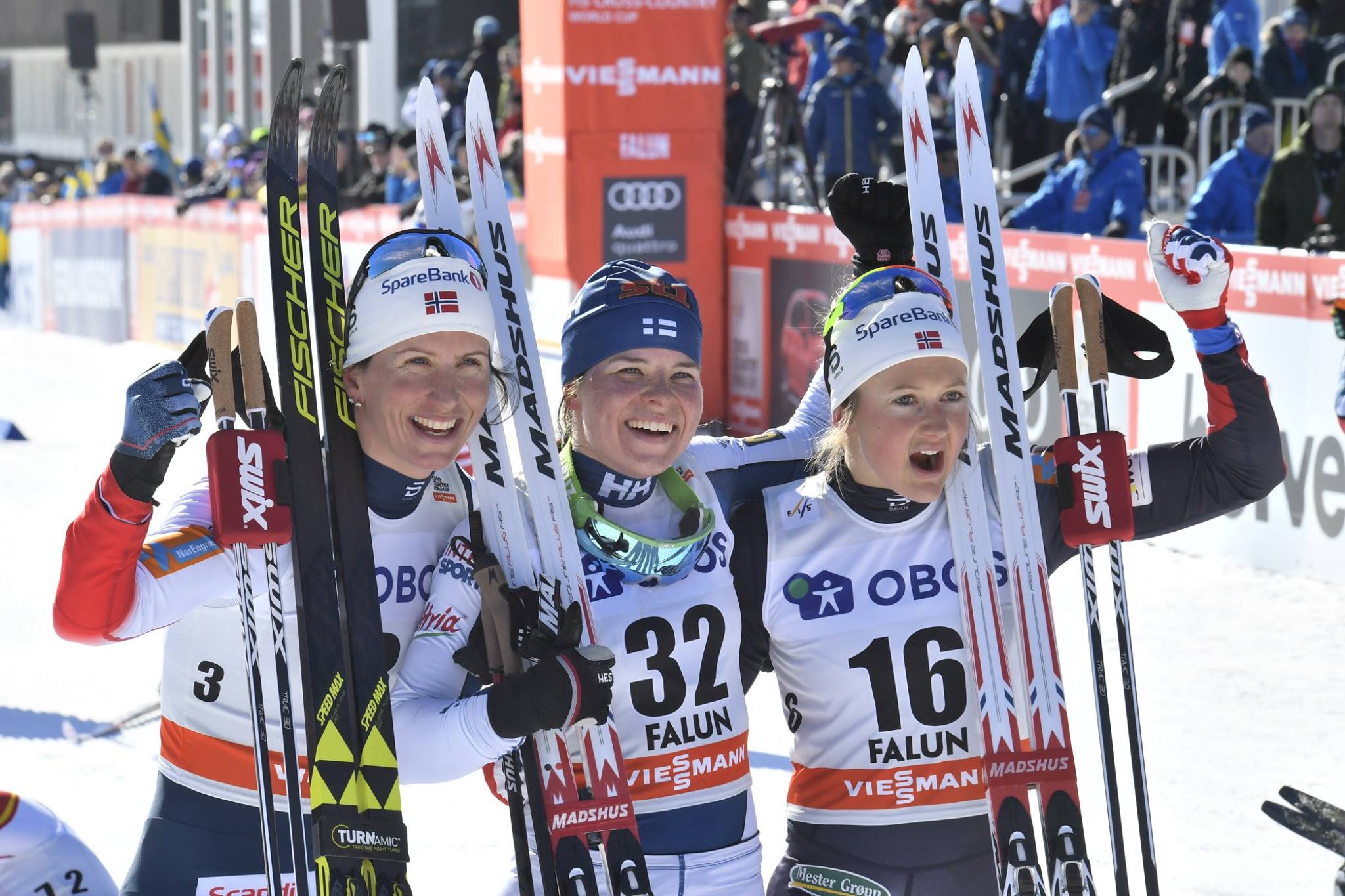
The women’s 10 k classic mass start podium at 2018 World Cup Finals in Falun, Sweden, with Finland’s Krista Pärmäkoski (c) in first, Norway’s Marit Bjørgen (l) in second and Ingvild Flugstad Østberg (r) in third. (Photo: FIS World Cup Svenska Skidspelen/Facebook)
FIS Cross Country World Cup Finals (Falun, Sweden): 10/15 k classic mass starts
Day 2 of World Cup Finals in Falun entailed 10- and 15-kilometer classic mass starts on Saturday, and in the first race of the day, Finland’s Krista Pärmäkoski pulled out a thrilling finishing-sprint victory over Norway’s Marit Bjørgen.
After American Jessie Diggins led early in the first 2.5 k loop, Bjørgen set the tone from the front for most of the race. With less than a kilometer to go, Norwegian powered up the final horseshoe-shaped climb in first, with Pärmäkoski and Bjørgen’s Norwegian teammate Ingvild Flugstad Østberg just behind her. The three had dropped the field while lapping through the stadium around the 7.5 k.
While Østberg fell off the pace on that final uphill, Bjørgen accelerated as she took a few quick strides over the top, gaining a few meters on Pärmäkoski as they headed into the descent. The finishing stretch is long in Falun, and Pärmäkoski was able to come on strong just before she and Bjørgen entered the final 100 meters before the finish. There, Pärmäkoski’s double-pole speed not only matched Bjørgen, but beat her, as Pärmäkoski passed her with several meters to go and took the win by 0.2 seconds in 26:00.5 minutes. It was Pärmäkoski’s second win of the season and fourth of her career (including time-of-day pursuit stage wins).
Just behind Pärmäkoski and Bjørgen, who congratulated each other immediately at the finish, Østberg finished 5.1 seconds back in third. Five women fought for fourth place, with Sweden’s Ebba Andersson taking it (+14.5) ahead of Japan’s Masako Ishida in fifth (+14.8), Sweden’s Charlotte Kalla in sixth (+15.2), Austria’s Teresa Stadlober in seventh (+15.4), and Diggins in eighth (+15.5).
Norway’s Astrid Uhrenholdt Jacobsen was the next finisher across the line in ninth (+24.8), then Finland’s Kerttu Niskanen in 10th (+26.2) and American Sadie Bjornsen in 11th (+26.3).
Canada’s Emily Nishikawa was the next North American in 36th (+1:31.1), and she led her teammates Cendrine Browne, who placed 50th (+2:05.7), Dahria Beatty in 61st (+2:46.6) and Zina Kocher in 69th (+6:12).
For the U.S., Sophie Caldwell finished 41st (+1:36.1), Rosie Frankowski 44th (+1:43.7), Caitlin Patterson 47th (+1:54.8), Ida Sargent 52nd (+2:10.2), Liz Stephen 54th (+2:20.0), Kikkan Randall 57th (+2:34.1), and Kaitlynn Miller 64th (+2:50.7). Rosie Brennan did not start.
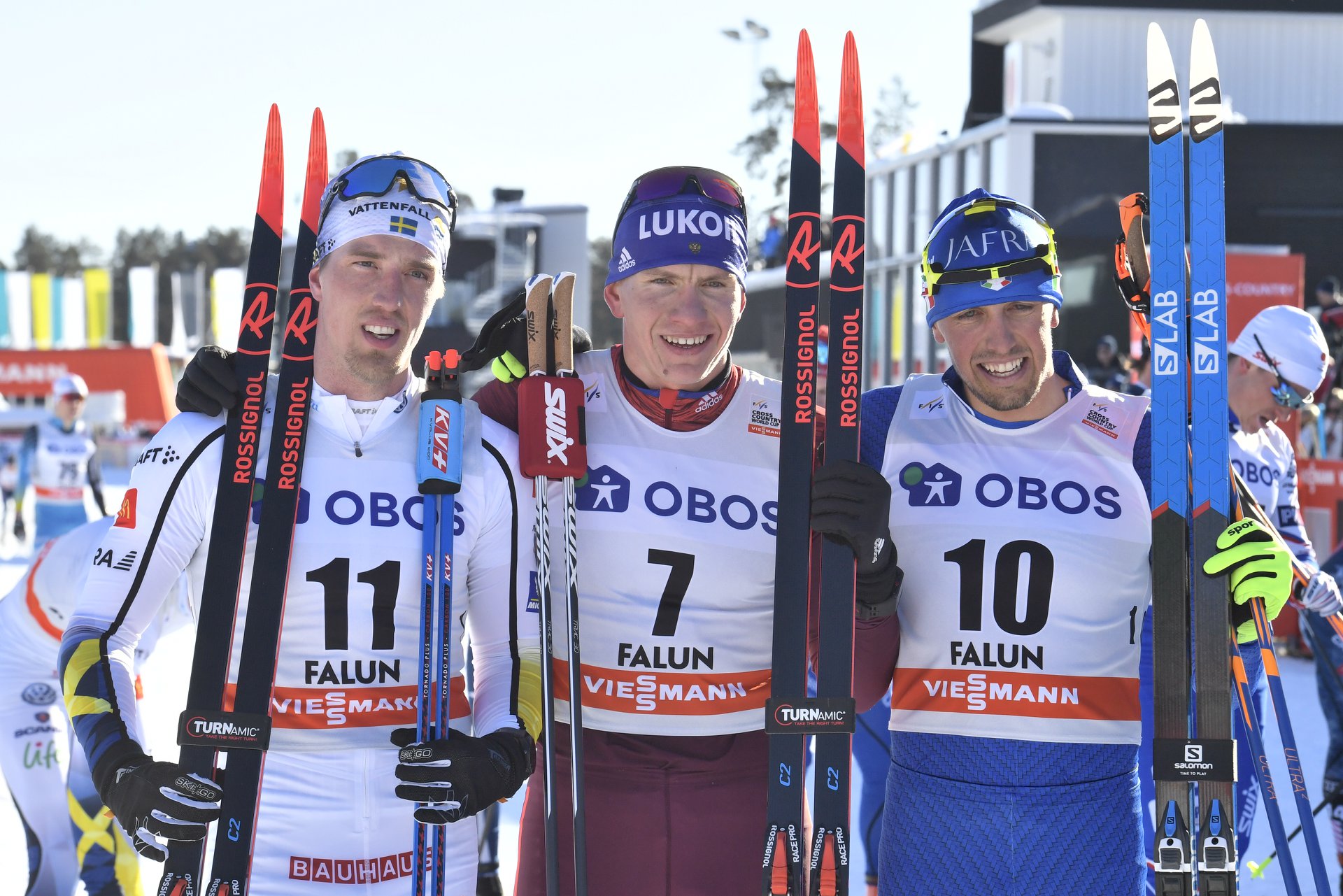
The men’s 15 k classic mass start podium at 2018 World Cup Finals in Falun, Sweden, with Russia’s Alexander Bolshunov (c) in first, Sweden’s Calle Halfvarsson (l) in second, and Italy’s Francesco de Fabiani (r) in third. (Photo: : FIS World Cup Svenska Skidspelen/Facebook)
In the men’s 15 k classic mass start on Saturday afternoon, Russia’s 21-year-old Alexander Bolshunov notched his first-career World Cup win after reaching the podium seven other times this season (placing third in six of those seven races).
Bolshunov hung in the pack and took the lead at the start of the final lap at 11.25 k, ahead of four of his Russian teammates, Alexey Chervotkin in second, Evgeniy Belov in third, Andrey Larkov in fourth, and Maxim Vylegzhanin in fifth. Behind them, Switzerland’s Dario Cologna skied just ahead of Norway’s Martin Johnsrud Sundby and Canada’s Alex Harvey, who were among 29 skiers within four seconds of first.
While Sweden’s Calle Halfvarsson led the final climb before the stadium, Bolshunov caught him on the downhill and out-double-poled him in the finishing stretch, taking first by 1.3 seconds in 36:59.8. Halfvarsson finished second and Italy’s Francesco de Fabiani scored his second World Cup podium of the season in third (+3.1).
Kazakhstan’s Alexey Poltoranin missed the podium by 0.6 seconds in fourth (+3.7), Chervotkin followed in fifth (+5.2), ahead of Cologna in sixth (+5.6) and Italy’s Federico Pellegrino in seventh (+5.6), after they finished together. Sundby and his Norwegian teammate Niklas Dyrhaug also crossed the line at the same time in eighth (+6.3) and ninth (+6.3), respectively, just 0.1 seconds ahead of another one of their teammates, Sjur Røthe, in 10th (+6.4).
Less than five seconds later, Harvey finished 20th (+10.7), ahead of Norway’s Johannes Høsflot Klæbo in 22nd (+13.6). Klæbo slipped out of contention on the third of four laps, as he dropped from fourth to 22nd in less than two kilometers.
Canada’s Devon Kershaw finished 26th (+14.6) for his fourth-straight race in the top 30 (including his 26th-place finish in the Olympic 50 k classic mass start), Graeme Killick placed 41st (+1:13) and Julien Locke was 81st (+3:29).
Erik Bjornsen was the top American man in 52nd (+1:47.1), Simi Hamilton finished 62nd (+2:06.4), Kevin Bolger was 69th (+2:27.1), David Norris 70th (+2:31.2), Scott Patterson 71st (+2:40.6), Paddy Caldwell 75th (+2:52.7), and Andy Newell 86th (+4:47).
World Cup Finals conclude with 10/15 k freestyle pursuits on Sunday.
France won the International Biathlon Union (IBU) World Cup women’s 4 x 6 k relay to start the day at Holmenkollen, ahead of Germany and Italy, while the Canadian women’s team (Sarah Beaudry, Julia Ransom, Emma Lunder, and Rosanna Crawford) placed 11th and the U.S. (Clare Egan, Susan Dunklee, Joanne Reid, and Emily Dreissigacker) came back from 21st to finish 15th.
In the men’s 12.5 k pursuit that followed, France’s Martin Fourcade won his 10th race at Holmenkollen, putting himself 49 points ahead of Norway’s Johannes Thingnes Bø with three individual races in Tyumen, Russia, remaining. US Biathlon’s Sean Doherty tied his second-best result this season in 17th and his teammate Lowell Bailey raced up to 28th with the 19th-fastest time of day. Leif Nordgren placed 40th and Tim Burke was 47th, while Canada’s Scott Gow finished 51st and Christian Gow was 54th.