Tag: Emily Hannah

  • Americans Notch 10th, 12th in Junior Worlds Relays

    Americans Notch 10th, 12th in Junior Worlds Relays

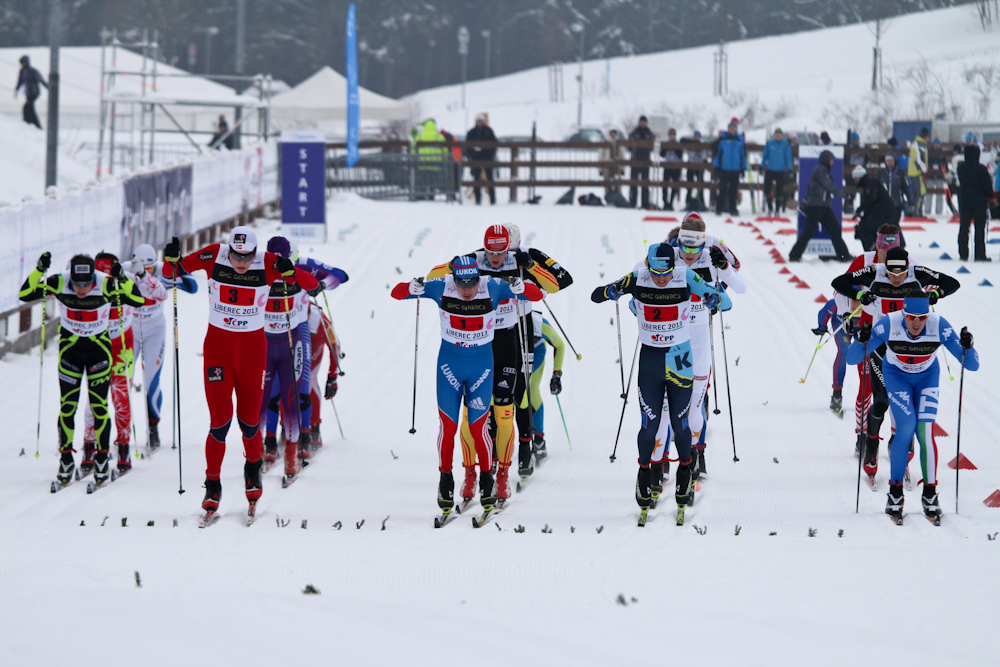
    The junior men's relay gets underway on the last day of competition at the 2013 Junior World Championships in Liberec, Czech Republic. Photo: Eric Packers.
    The junior men’s relay gets underway on the last day of competition at the 2013 Junior World Championships in Liberec, Czech Republic. Photo: Eric Packers.

    Ask any athlete what their favorite race is, and nine times out of ten their answer will be: “relays.” The four-person event fittingly caps off the World Junior Championships every year — the preceding individual races identify new world champions, but the relay is where athletes go to truly ski for flag and country.

    It was with awareness of this fact that the American 4 x 5 k and 4 x 3.3 k relay teams lined up together for their final races of the week on Sunday in Liberec, Czech Republic. On a fast, hard track the U.S. women placed tenth, matching their 2012 performance in Turkey, and the men finished twelfth.
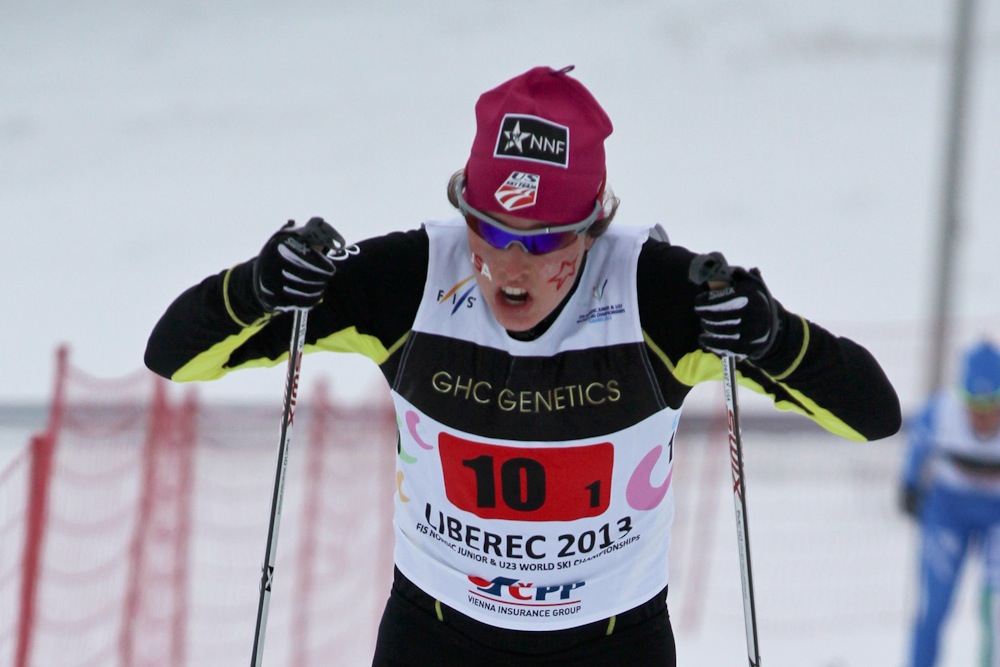
    Heather Mooney (Middlebury College) scrambling for the U.S. in the 4x3.3 k relay at World Junior Chamionships. Photo: Eric Packer.
    Heather Mooney (Middlebury College) scrambling for the U.S. in the 4×3.3 k relay at World Junior Chamionships. Photo: Eric Packer.

    Is it what they were hoping for? Yes and no. A few standout individual legs highlighted the group performance while a mishap or two dashed greater team ambitions. But sometimes racing is a mixed bag, and at the end of a week of high profile skiing most athletes were riding the high of competing against the best in the world.

    One of the standout performances came from Heather Mooney (Middlebury College) in the women’s relay. She scrambled for the U.S. on classic skis to put the team in ninth at the first exchange and within nine seconds of third place.

    Skiing in her favorite relay position, Mooney held on to the leaders for a good while. Russia’s team led the pack through the first leg, and Mooney kept the blue suit within her sights for longer than she expected to.

    “My skis were really fast, so I’d gain a lot on the down hills, and also on the double pole parts I was able to pick up some time,” she wrote in an email. “3 k races are always the most difficult for me, definitely the most painful races out there. Coming up the big hill, about three minutes to go, I was hurting a lot, and just out of contact with the pack.”

    Through the pain Mooney noticed the Russian scrambler, Alisa Zhambalova, not too far away, and the sight gave her a second wind.

    “I really wanted to give our team a chance, so tried to really dig deep to tag off in that pack,” she said.
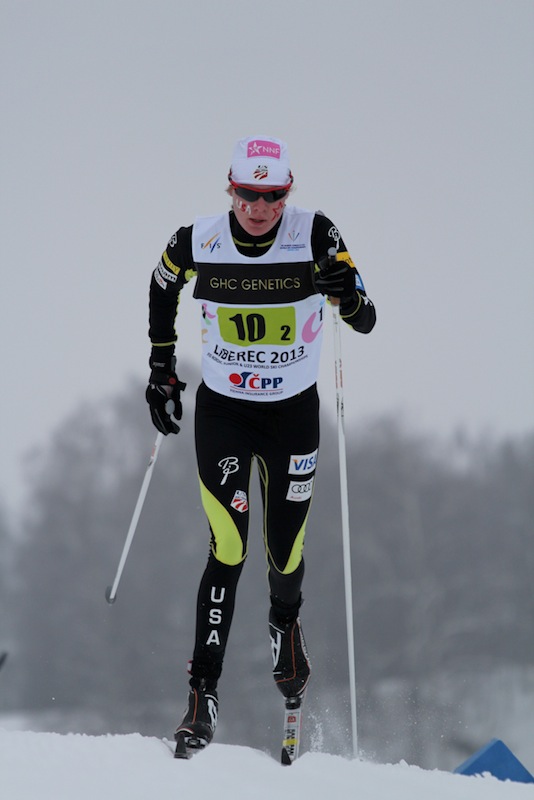
    Mary O'Connell (Dartmouth College), U.S. leg number two. Photo: Eric Packer
    Mary O’Connell (Dartmouth College), U.S. leg number two. Photo: Eric Packer

    She nearly succeeded, and came through the tag zone just behind the Norwegian team at the back of the chase group.

    “Knowing your teammates are counting on you, it makes it a little easier to find the truly painful gear,” Mooney said. “My goal was to get there today, without blowing up, so although I wasn’t able to bring it in with the pack, I’m happy I was able to ‘roll my eyes back,’ as Pepa [Miloucheva] tells me!”

    Mooney tagged off to Mary O’Connell (Dartmouth College) 29 seconds behind the leaders, and from there O’Connell sought to reel the Norwegian team in.

    “Heather had a great leg,” O’Connell said. “I left the exchange zone and saw Norway right ahead of me and tried to bridge the gap. But then I sorta just died.”

    She gave everything she had, but felt tired during her leg.

    “I just felt…a little off my game,” O’Connell said. “I was pretty disappointed with my leg. Relays are hard because you’re not just racing for yourself but for your team, but I can say that I gave everything I had all the way.”

    She posted the 11th-fastest split to hand off to Emily Hannah (Harvard University) in tenth place, 1:23 down to the leaders. The U.S. would hold the position for the remainder of the relay. Hannah and Corey Stock (Dartmouth College), the American’s anchor, skied the rest of the race by themselves and finished 2:43 off Sweden’s winning time.

    Hannah also said she felt off after a week’s worth of racing.
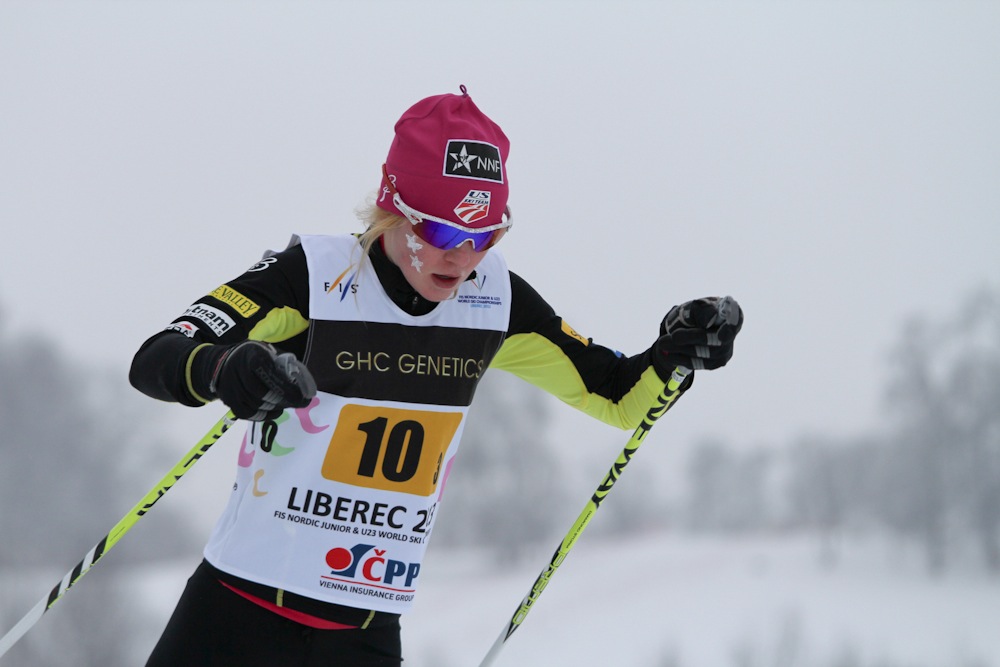
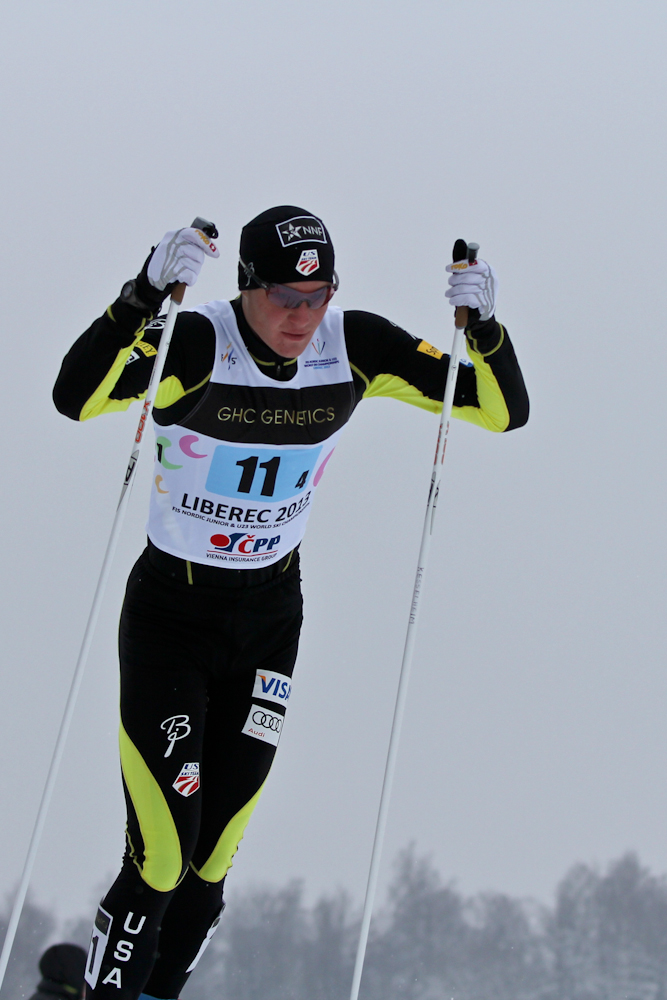
    Emily Hannah (Harvard University) skiing the third leg for the U.S. Photo: Eric Packer.
    Emily Hannah (Harvard University) skiing the third leg for the U.S. Photo: Eric Packer.

    “I did not feel very good today, I just felt flat and tired, like I didn’t have anything extra to give,” she said. “Even though it wasn’t my best race, though, I had a lot of fun… I am really glad that I got to see the level that international skiers my age are at; it gives me a more definite sense of where I need to be.”

    At the end of the day, the team focused on positives from the team camaraderie and a hard-working support crew.

    “Again, the team is great here,” O’Connell said. “Everyone is so supportive and the coaches and wax techs just did an amazing job.”

    Mooney agreed, adding that it was eye-opening simply to be in Liberec against the best U20s in the world.

    “It is really motivating to be here, to see what the best looks like,” she said. “I’m excited to go home, into the rest of the season and next year, really knowing what I need to try and get there.”
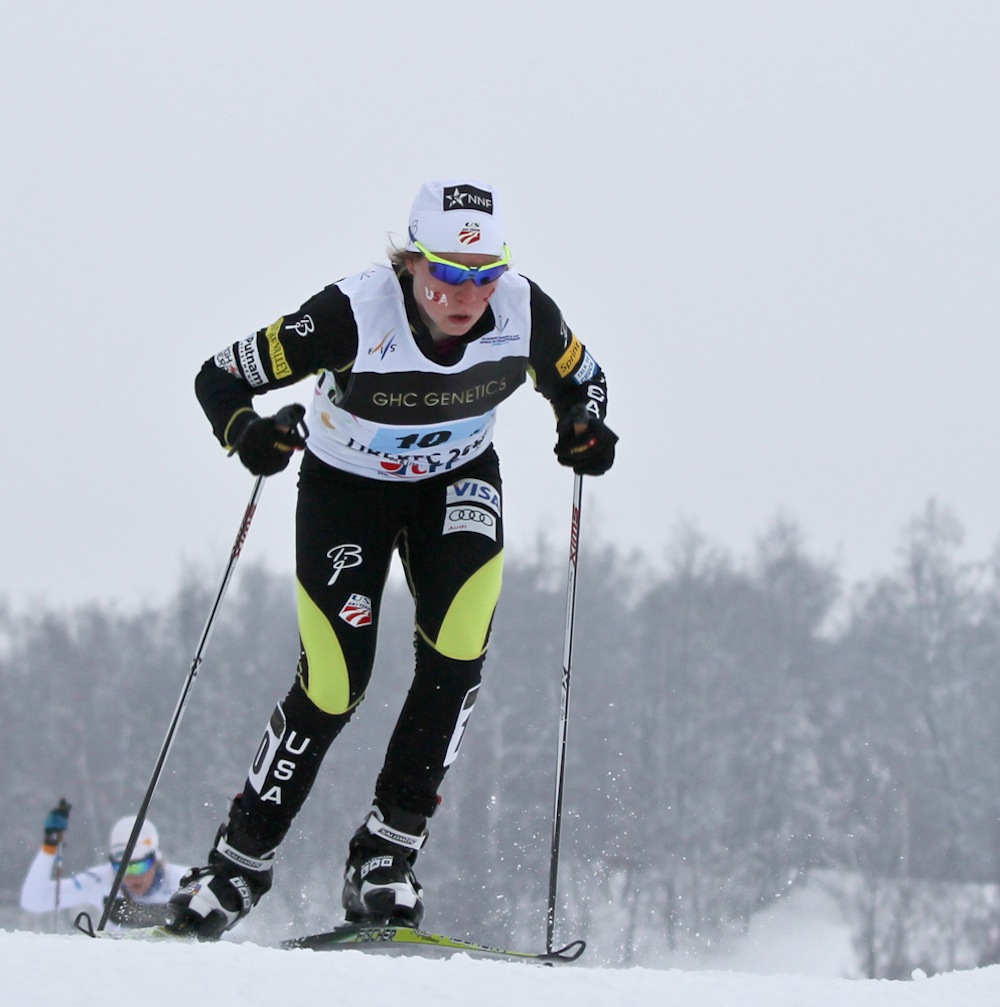
    Women’s 4×3.3 k relay results

    Cory Stock (Dartmouth College) bringing it home. Photo: Eric Packer.
    Cory Stock (Dartmouth College) bringing it home. Photo: Eric Packer.


    Junior Men’s Relay

    Like the women, American men’s squad approached the race on Sunday with an extra sense of higher purpose. On top of all the usual relay excitement they wanted to redeem themselves of disappointing individual results from earlier in the week, and to it together on the dramatic team stage.

    The Americans’ second man, Ben Saxton (F.A.S.T. Performance Training), put it this way: “We were super mentally ready to hang with the big dogs, to suffer and hurt and be in the hunt.”
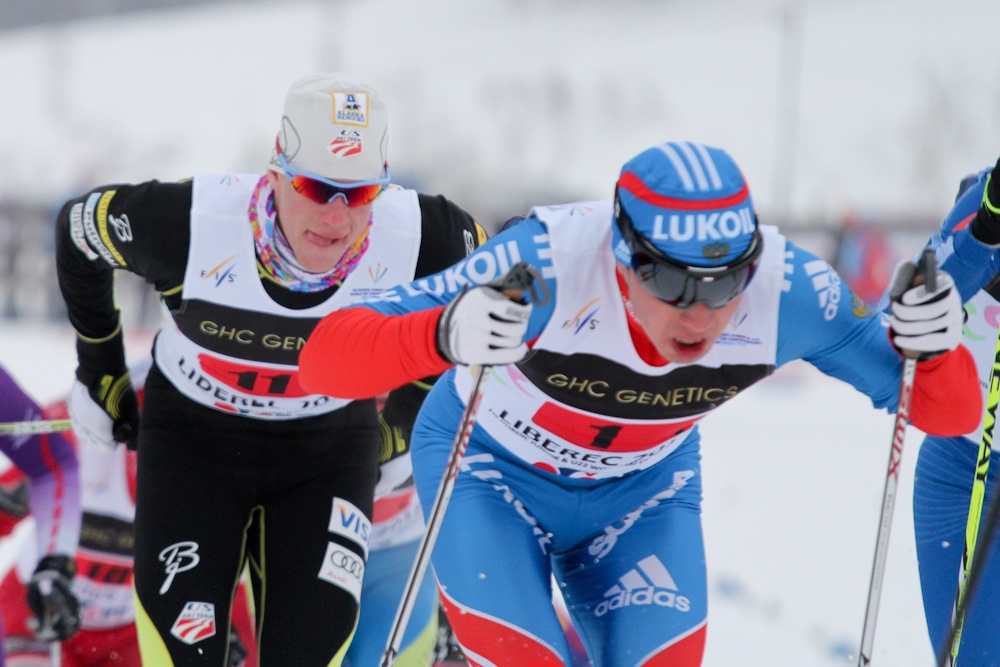
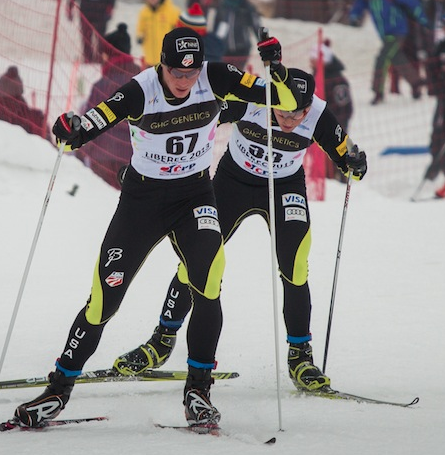
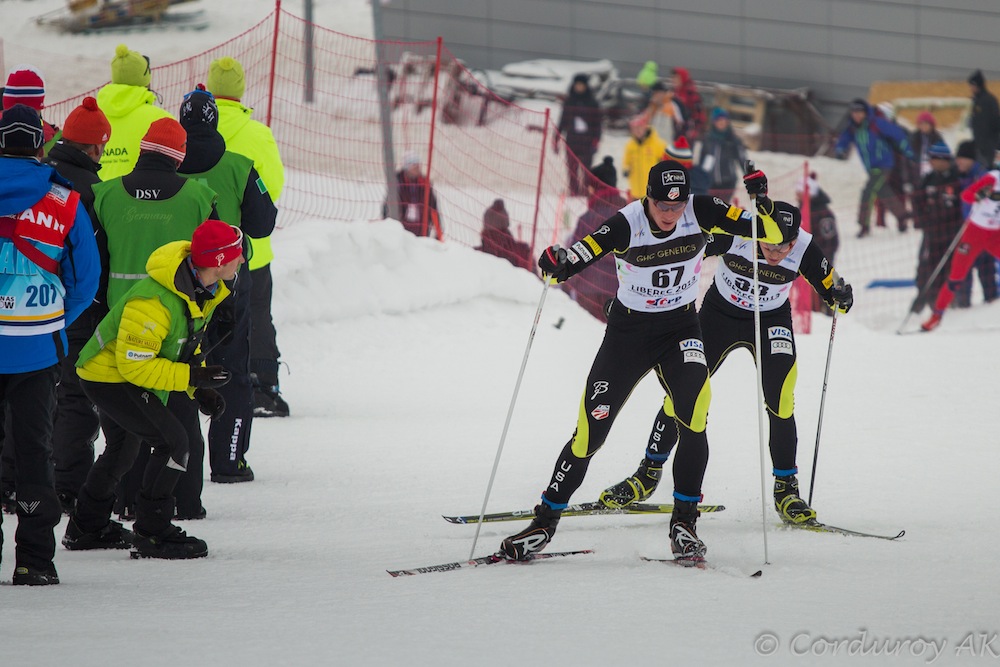
    Logan Hanneman (University of Alaska, Fairbanks) closely tailing the Russian leader in the early kilometers of the 4x5 k relay. Photo: Eric Packer.
    Logan Hanneman (University of Alaska, Fairbanks) closely tailing the leaders in the first leg of the relay before an unlucky fall. Photo: Eric Packer.

    Such a mentality can be powerful, and perhaps it was that desire to suffer with the leaders that  propelled Logan Hanneman (University of Alaska, Fairbanks) to position the American team just behind the leaders early in the scramble leg, right around fourth place.

    Things were looking good for the U.S. until bad luck struck on Hanneman’s second lap. He fell on an inopportune downhill and the pack got away from him with the lost momentum. The race suddenly became a matter of catching up for the remaining three and a half legs.

    “My leg was going really well, until I fell on the second lap on this huge downhill,” Hanneman said. “So I lost a lot of places. So that wasn’t so great, but I was right with the leaders until then.”

    He tagged off to Saxton in 14th, 34 seconds behind Russia at the front of the pack. Hanneman was, understandably, frustrated with the end result, both from his relay and from earlier in the championships.

    “The week was interesting. I know I can ski better, however I played the cards I was dealt,” he said. “That’s racing. It was another great experience though.”

    Out on the course, Saxton did his best to catch back on to the pack. He skied the seventh-fastest split out of the second-leg skiers to do it, passing five teams along the way to bring the U.S. back in the hunt for a top-10. Though happy with that kind of feedback, Saxton noted that attempts to ski well from that far back were difficult.
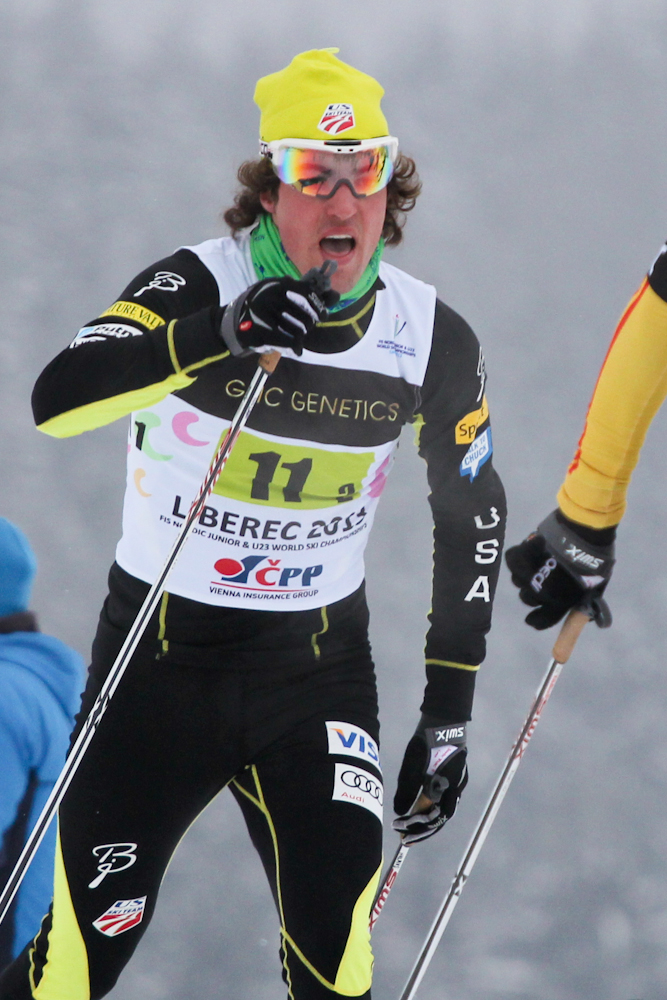
    Ben Saxton (F.A.S.T. Performance Training) on the second leg. Photo: Eric Packer.
    Ben Saxton (F.A.S.T. Performance Training) on the second leg. Photo: Eric Packer.

    “I went pretty hard out of the start and tried to relax on the hills the first lap,” Saxton said. “The problem wasn’t the fitness, it was that when we weren’t in the top group the pace was just slower and we proceeded to lose time. Trying to bridge that gap was suicide, but we were losing time staying there so it was a weird situation.”

    In addition to the physical challenges of closing the deficit, it was a tough spot to ski from mentally, particularly because the team had been so fired up before the start.

    “That fall could’ve happened to anyone, it was just a very unfortunate fall,” Saxton said. “Everyone just went their hardest. It was really just such a bummer because we were more mentally ready than I’ve ever seen us.”

    Saxton tagged off to Kyle Bratrud (Northern Michigan University) in ninth, who skied the first skate leg on “pretty tired” legs. He skied with a Japanese athlete for most of the 5 k and handed the race off to Sawyer Kesselheim (Bridger Ski Foundation) in 11th, 1:22 down from the leaders.

    Kesselheim skied with Japan’s Tomoki Sato skied and caught up to another skier on the last climb before the finish, only to get passed again in the final stretch.

    “I pushed hard up the last hill and created a gap but got out-sprinted in the finishing zone,” Kesselheim said. “I wish I could have saved more for the end but it was fun and a good experience.”

    Though unhappy with their result on paper, the team was able to focus on highlights from the week at the conclusion of the race. They’re more motivated than ever, and for at least one athlete the best part of the week was that the individual competitors came together as a team by the end of the week.

    “The greatest part of the week was the people,” Saxton said. “The friends I got to know better from America and those new ones I met just this week will never really leave and in cross country skiing, which is a sport that’s incredibly people-driven, that’s quite the gift to take from any trip, especially this one.”

    Men’s 4x5k relay results


    Special thanks to Eric Packer for his photos.
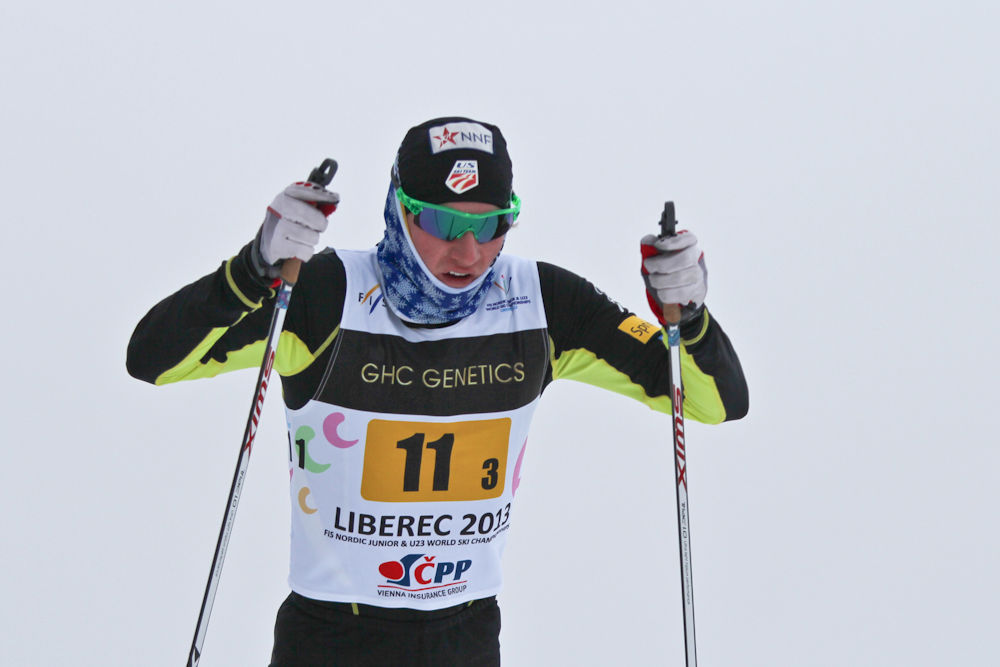
     

    Kyle Bratrud (Northern Michigan University) on leg 3. Photo: Erick Packer.
    Kyle Bratrud (Northern Michigan University) on leg 3. Photo: Erick Packer.
    Sawyer Kesselheim (Bridger Ski Foundation) anchoring. Photo: Eric Packer.
    Sawyer Kesselheim (Bridger Ski Foundation) anchoring. Photo: Eric Packer.
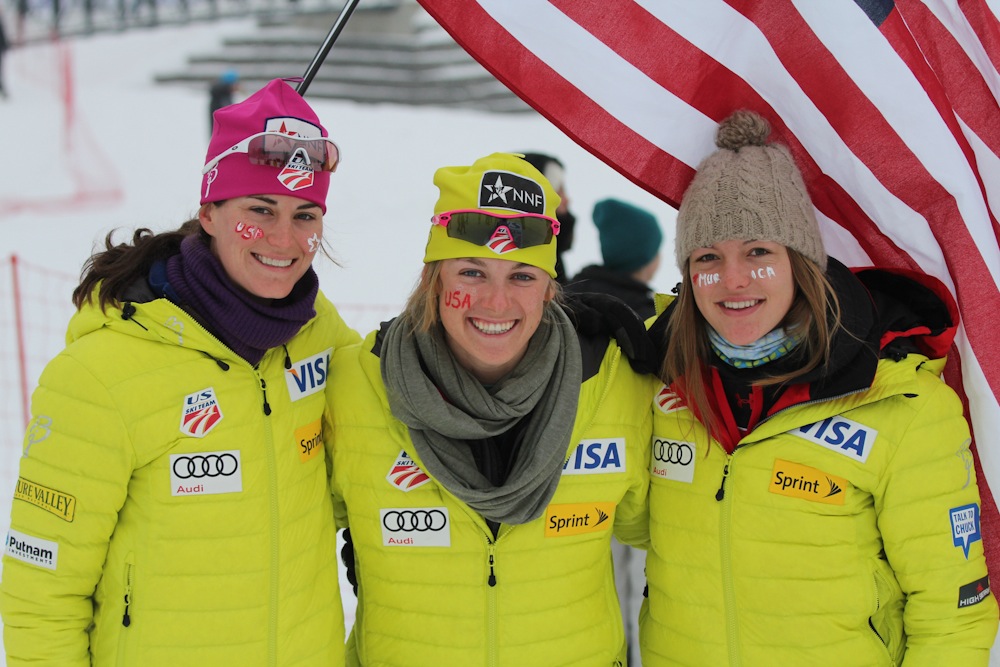
    An American cheer squad:  Liz Guiney, Annie Pokorny and Sloan Storey. Photo: Eric Packer.
    An American cheer squad: Liz Guiney, Annie Pokorny and Sloan Storey. Photo: Eric Packer.


  • Mahlen, O’Connell Lead U.S in Junior Worlds Distance Freestyle

    Mahlen, O’Connell Lead U.S in Junior Worlds Distance Freestyle

    Sawyer Kesselheim leading Forrest Mahlen partway through the men's 10 k freestyle at Junior World Championships in Liberec, Czech Republic. Photo: Logan Hanneman/Corduroy AK.
    Sawyer Kesselheim leading Forrest Mahlen partway through the men’s 10 k freestyle at Junior World Championships in Liberec, Czech Republic. Photo: Logan Hanneman/Corduroy AK.

    Junior World Championships action continued in Liberec, Czech Republic, on Wednesday with a 5 and 10 k individual start freestyle. Forrest Mahlen (Alaska Pacific University) and Sawyer Kesselheim (Bridger Ski Foundation) put up another pair of top-30s for the U.S. in the men’s event, placing 27th and 29th, respectively. Mary O’Connell (Dartmouth College) led the way for the American women by finishing 33rd in the 5 k.

    The 10 k freestyle was Mahlen’s first event of the championships, and his 27th-place showing brought redemption over what he called a “super-poorly” skied distance race in Turkey last year, where he was 72nd.

    “I’m super-excited with my result today!” Mahlen said. “One of my goals for this season was a top 30 here at world juniors so 27th is right in there. I was only 90 seconds behind the leaders and 15 seconds out of top 20 so I’m pretty happy with my time.”

    As the 33rd starter out of a field of 98, Mahlen sought to pace his 10 k aggressively.

    “My strategy was to take it out at a pace that I couldn’t hold the whole time to see what I had in me,” he said.

    As a result, Mahlen skied by himself for nearly the whole race, which went three times around a 3.3 k loop. With the 18th-ranked split on the first lap, he accomplished the fast opening pace he intended. When Kesselheim was on his first lap he caught Mahlen finishing his final one, and the two helped each other along while Mahlen was “fading hard” from his quick early pace.

    “He brought me around, for sure,” Mahlen said.

    U.S. Ski Team development coach Bryan Fish thought the competitive field and challenging course in Liberec demanded highly focused skiing from athletes from the get go.

    “I think at World Championships like this you have to be aggressive,” Fish said. “It was also an interesting course. There weren’t any really long hills but there were certainly some steep ones out there, so very transitional skiing. You had to ski well on the corners, dowhills and the uphills. The uphills were quite steep, much like the sprint course, so really powerful skiing [worked well].”

    While Mahlen went out fast and faded, Kesselheim skied a more consistent race to finish two places and only 0.6 seconds behind him. In addition to catching a ride with Mahlen, Kesselheim skied one of his laps with one of the German skiers in the top seed.

    “I was lucky enough to lap through when some of the top guys were starting,” Kesselheim said. “I got some help on my last lap from a German skier who pushed me up some of the biggest hills.”

    He had hoped for a top-20 but was still excited with a top-30. “I felt that I raced smart,” Kesselheim said. “I pushed the transitions and paced it well… I also felt that pushing over the tops of hills and through the flats was very important. I focused on that and was able to execute which helped me to make up a lot of time.”

    Kyle Bratrud (Northern Michigan University), in his first career World Juniors race, took 46th on Wednesday, 33 seconds behind his other teammates. In his debut at the event Bratrud was focused primarily on gaining experience and was pleased with the result.

    “My goal this year was to make World Juniors, beyond that was all a learning experience and getting to race on a course of that difficulty and watch and even ski with a few of the top juniors in the world was a huge opportunity,” he said. “I have been feeling pretty sluggish this week from the travel as this is my first trip to Europe so it was nice to finally get to race and shake out some of that junk from my legs.”

    As the 55th starter Bratrud skied mostly by himself, but watched the faster seeds closely when they skied near him.

    “A few of the top juniors were starting as I was going out for my last lap so I got to ski with them for a little bit and get a feel for what they do that makes them so fast, which was awesome,” Bratrud said.

    Ben Saxton (F.A.S.T. Performance Training) was the fourth American in 60th. He was the top U.S. performer in the classic sprint on Monday but didn’t feel at his best in the 10 k.

    “I don’t know exactly what my goals were but whatever they were, I didn’t reach them today, so it was a disappointing result in that sense,” Saxton said. “But I have a LOT of stuff to learn from this and it’s my first distance race on a big stage.

    “I didn’t really feel too hot out of the start, but I was essentially on my own the whole way. The one chance I had for a ride I blew because I chickened out and scrubbed some speed on a downhill. I was getting consistently mediocre split results which I could tell by just looking around behind me were becoming obsolete as soon as higher bibs came through. But I tried my hardest I just wasn’t springy and at my sharpest today.”

    Men’s results.

    Mary O'Connell on her way to finishing 33rd in the World Juniors 5 k. Photo: Logan Hanneman/Corduroy AK.
    Mary O’Connell on her way to finishing 33rd in the World Juniors 5 k. Photo: Logan Hanneman/Corduroy AK.

    On the women’s side, O’Connell led the American team in 33rd. She was introduced to Junior Worlds competition in Turkey last year and, like Mahlen, wanted to come to Liberec and improve upon her original results. Her best finish a year ago was 42nd in the 10 k skiathlon and on Wednesday she cut that down by nine places in the 5 k freestyle, finishing 1:05 behind the leaders.

    “I am happy with the way it went,” O’Connell said. “The course was super short but very painful, I’d say one of the hardest 5 ks I’ve ever done. There are a few places where I wish I could have pushed a little harder, and a top 30 would have been great! But I’m still pleased with the way I raced.”

    O’Connell got off to a strong start in her freshman season with a seventh-place finish at U.S. Nationals earlier this month in the senior freestyle race, surprising even herself. Not sure of where that would put her against the fastest juniors in the world, she limited her expectations for the 5 k.

    “I knew my fitness was there after Nationals, I just wasn’t sure how that was going to compare internationally. Obviously, these kids are fast. I think the winning time was less than 13min!” she said. (It was; Germany’s Victoria Carl won in 12:35.)

    For such a short race, O’Connell said it was important to go hard for the entire thing.

    “There was one really steep hill, comparable to Hermod’s Hill (at Soldier Hollow) and it was important to ski light and quick but not kill yourself there on the first lap. Since it was so fast, pacing was important, but there was not a significant difference.”

    O’Connell noted that the snow and her skis was also extremely fast, contributing a quick finish time.

    “The coaches and wax techs are doing an incredible job with our skis, they were so fast today!” she said. “I actually almost fell on some of the corners! The team atmosphere is really great and we’re really all just having so much fun!”

    At the end of the day, races like those from O’Connell, Mahlen and Kesselheim are exactly the kind of improvements Fish likes to see from year to year and race to race.

    “Head to head competition like today is not only a test but also an incredible opportunity to strengthen the performance of our top developing athletes,” he said.

    Sloan Storey (University of Utah) finished 45th in the 5 k for the U.S., Emily Hannah (Harvard University) took 51st and Anika Miller (Payette Lakes Sports) was 52nd.

    Women’s results.

    Special thanks to Logan Hanneman/Corduroy AK for his photography.


  • USST Puts National Training Group Through the Paces

    USST Puts National Training Group Through the Paces

    Members of the National Training Group during a threshold workout at Soldier Hollow last week. Photo: Matt Whitcomb/U.S. Ski Team.

    Members of the U.S. Ski Team’s National Training Group (NTG) spent last week in Park City, Utah, for a training camp centered on group training and exposure to the resources at the Center of Excellence. Athletes joined interval sessions with the national team on the rollerski track at Soldier Hollow and underwent a series of physiological tests for assessment and feedback on their development.

    The camp was a new addition over last year’s schedule; the result of a decision by USST coaches to further focus on development.

    “Back in the spring we sat down and decided that we’d put in another camp into our development pipeline specifically for this NTG and have them come out to Park City with the intent to get them into the COE,” said Bryan Fish, USST development coach.

    Quality training was the camp’s primary goal, but with the COE nearby athletes were also able to work with the USST’s staff of physiology, strength and nutrition experts.

    “The feedback we got was very positive; the athletes felt like they got a lot of education out of being here,” Fish said. “We could send them home with test results and feedback, which we provided to their club coaches, on areas where they’re strong, areas where they can improve.”

    Emily Hannah, Marion Woods and Mary O’Connell. Photo: Matt Whitcomb/U.S. Ski Team.

    Over the course of the week, Fish said the workouts and test results he saw were encouraging.

    “What I’m seeing in the REGs and the J2 camp is that our athletes are indeed getting more fit and more prepared, tactically and technically. We’re seeing that in the physiology results that come in house,” Fish said. “For us, from the national team coaching staff, what we saw was hugely positive. It’s a testament to the clubs and these athletes that we’re training more; training better.”

    One such workout to provide positive feedback were threshold skate intervals at Soldier Hollow, which the NTG athletes completed alongside resident national team athletes across multiple disciplines — cross country, nordic combined and biathlon were all represented in the same workout.

    “Our general premise, from my perspective, is to get our best athletes together on occasion to train and compete,” Fish said. “They don’t have to train together 24/7 but getting together and going head-to-head they all learn and they all improve.”

    With most of the U.S. nordic combined team, biathlete Jeremy Teela and several U.S. cross-country athletes on the course with the NTG skiers at the same time, the threshold workout got “kinda frisky,” said nordic combined skier Billy Demong.

    “With all these cross country skiers and our guys, we went a little harder than we planned.”

    Too fast or no, Fish thought the collaboration was a valuable experience.

    “There’s a part of the training that’s intensity-based and another that’s tactical,” he said. “There’s a balance, and I feel you have to let a little bit of that go and train like you’d race. It was a prime opportunity to get in good tactical training on the Soldier Hollow courses, and for the most part they did a good job.”

    Billy Demong leading the pack through the flats during threshold. Photo: Bryan Fish/U.S. Ski Team.

    National Training Group Park City Camp Roster:

    Women:

    Emily Hannah (Steamboat Springs Winter Sports Club)

    Mary O’Connell (SSWSC)

    Becca Rorabaugh (Alaska Pacific University)

    Marion Woods (Alaska Winter Stars)

    Jesse Knori (Sun Valley Ski Education Foundation)

    Nichole Bathe (Central Cross Country)

    Heidi Halvorsen (Green Mountain Valley School)

    Men:

    Ryan Scott (Ski & Snowboard Club Vail Team HomeGrown)

    Will Wicherski (Williams College)

    Patrick Caldwell (Stratton Mountain School)

    Eli Hoenig (Cambridge Sports Union)

    Cal Deline (SSCV)

    Adam Martin (CXC)

  • Midwest, Rocky Mountain Girls Top OJ/J1 Relays at Junior Nationals

    Midwest, Rocky Mountain Girls Top OJ/J1 Relays at Junior Nationals

    Elizabeth Simak (right) finishes first in the OJ/J1 girls 3×3 k relay on Saturday to give the Midwest the OJ victory at the 2012 Junior Nationals at Soldier Hollow in Midway, Utah. Emily Hannah (left) as the first J1 anchored Rocky Mountain's winning relay.

    All 2012 Cross Country Junior Nationals coverage is brought to you through the generous support of The Memory Clinic, in Bennington, Vt., committed to caring for the mind since 1987. Currently conducting clinical research on the Alzheimer’s disease vaccine.

    MIDWAY, Utah – There’s something about racing for others that makes pain more tolerable.

    Elizabeth Simak and the girls from the Midwest found it on Saturday as they stayed in contention and sealed the OJ 3×3-kilometer freestyle relay victory at the 2012 Cross Country Junior Nationals. She and her teammates, Sharmila Ahmed (Go Training) and Alice Flanders (Sisu Ski Club), combined for the winning time of 20:01.1.

    Third at the handoff, Simak (F.A.S.T. Performance Training) powered through the rolling course at Soldier Hollow and caught the leaders, Rachel Hall (New England/Middlebury) and Emily Hannah (Rocky Mountain/Steamboat Springs), on the final hill.

    OJ girls 3×3 k freestyle relay podium at 2012 Junior Nationals. 1. Midwest (center), 2. New England (left), 3. Alaska (right)

    It was the longest, steepest one of all, and the OJ girls had already raced up it four times this week.

    Although Hannah was a J1 and contending for a different podium, Simak had to pass Hall if she wanted to win. After placing second in the freestyle mass start, third in the 10 k classic and fourth in the classic sprint earlier in the week, that’s probably what Simak was hungry for.

    She also had her team to race for.

    “I felt like, if things didn’t go right, I would have felt really bad for my teammates,” Simak said. “They put so much hard work into it.”

    Simak posted the fastest split of the OJ girls race in 6:31, beating Hall and New England (with Isabelle Pelletier and Mary Kate Cirelli) by 7.2 seconds. Alaska (with Kinsey Loan, Kimberly Delfrate, Annie Liotta)was third. Liotta as the anchor recorded the second-fastest time (6:33.5), and finished 11.9 seconds after Simak.

    Coming down the backside of Hermod’s Hill on a 50-degree day and curving into the stadium, Simak said she took everything in at her last Junior Nationals.

    2012 Junior Nationals
    New England OJ anchor Rachel Hall (Middlebury College) skates out of the exchange zone after receiving the tag from Isabelle Pelletier (Stratton Mountain School). New England ended up second to the Midwest in the 3×3 k relay on Saturday at the 2012 Junior Nationals.

    “The finishing stretch was so much fun,” she said. “With this gorgeous weather, you can’t help but feel good coming down that stretch.”

    The 19-year-old commented on how strong her team was – how they hung in the top five from the start with Ahmed as the scrambler.

    “I did best I could,” Ahmed said. “I stayed on my feet. Hermod’s was super fun. I was right with [Midwest teammate] Nicolette [Amber]. We pushed each other up it and it was amazing.”

    After Amber tagged off in first, the Midwest’s second team went on to place sixth in the OJ race.

    The second leg of the winning squad, Flanders brought her team from fifth to third.

    “I tried to get back up with lead, hold onto that and hopefully get in good position for anchor,” Flanders said. “Simak’s a really strong skier. We knew she could pull it together if she had the setup for it.”

    Note: A day after competing at the NCAA Championships in Bozeman, Mont., Joanne Reid of the University of Colorado/Auburn Ski Club anchored the Far West team to a fifth-place finish at Junior Nationals. Reid was 19th in the 15 k mass start on Friday.


    Rocky Mountain Girls Win J1 Title

    Finishing just 2.7 seconds after Simak, Hannah brought home the J1 victory for her Rocky Mountain teammates, Mary O’Connell (Steamboat Springs Winter Sports Club) and Rachel Hampton (Durango Nordic Ski Club).

    J1 girls freestyle relay podium at 2012 Junior Nationals: 1. Rocky Mountain (center), 2. Alaska (left), 3. New England (right)

    The three claimed the championship in 20:03.8. Alaska finished second (+5.1) with Teagan Yutrzenka, Sarah Freistone and Marion Woods. New England pulled off third (+6.1) with Heather Mooney, Olivia Meyerson and Corey Stock.

    Hampton skied the fastest second leg to bring her team from fifth to second, and Hannah kept up the pace to pass New England’s Hannah Benson for the victory.

    “Truthfully, my goal was to not let Corey catch me,” Hannah said of this year’s three-time individual champion with nine Junior Nationals titles total.

    Stock came out of the exchange zone in third and finished third.

    “Rather than try to catch people, I was trying to not be the rabbit and not get caught,” Hannah added. “But it worked out pretty nicely.”

    Hampton tried to stay patient while catching people, and said it wasn’t easy to sprint for 3 kilometers.

    “[Coming] down the downhill, all I could think about was giving Emily enough room,” she said. “I’m pretty sure this is the cherry on top of the week for all of us.”

    O’Connell said that while they were new to the course at Soldier Hollow, some 5,500 feet above sea level, they were well-conditioned for it. O’Connell trains at nearly 7,000 feet in Steamboat Springs.

    “Altitude helps,” she said.

    “This was basically an extended sprint,” Hannah added. “I love relays.”

    Complete 3×3 k freestyle relay results

    Audrey Mangan contributed reporting.

  • Hoenig and Stock Claim Double Gold for New England and CSU in Junior Nationals Sprint

    Hoenig and Stock Claim Double Gold for New England and CSU in Junior Nationals Sprint

    Eli Hoenig (NE/Cambridge Sports Union) cruising around a corner on the back side of the sprint course in Solder Hollow. Hoenig won the J1 men's classic sprint at Junior Nationals on Monday.

    All 2012 Cross Country Junior Nationals coverage is brought to you through the generous support of The Memory Clinic, in Bennington, Vt., committed to caring for the mind since 1987. Currently conducting clinical research on the Alzheimer’s disease vaccine.


    MIDWAY, Utah — Eli Hoenig (New England/Cambridge Sports Union) knows how to make himself hurt.

    He got off to a fast start and skied in front as the A-final pack moved up the first hill.

    By the time he group came within sight of the finish line, Hoenig trailed teammate Paddy Caldwell (NE/SMS). But Hoenig didn’t doubt the speed in his double pole as he gained on Caldwell, who was striding down the straightaway

    The J1 boys' sprint podium. Hoenig (1), Caldwell (2) and Morgan (3).

    Inch by inch, Hoenig pulled ahead, and won by a slim 0.63 seconds. After crossing the line and managing to congratulate Caldwell on his race, his stomach protested to the ordeal of skiing four all-out sprints in one day and emptied itself in the finish pen.

    “I don’t know, maybe it was something I ate, or I just went really hard,” said Hoenig once he’d recovered. “I feel great mentally—physically I’m kind of down in the dumps.”

    It would be unsurprising if Hoenig’s finish line discomfort were simply a matter of exerting himself beyond his limit. His father confirmed in the finish area that it wasn’t the first time his son’s lunch had ended up on the snow after a race.

    Hoenig and Caldwell’s battle left the rest of the J1 boys’ final a full 11 seconds back from the winning time. Cole Morgan (Intermountain/Sun Valley Ski Education Foundation) took the bronze medal, Nick St. Clair (Pacific Northwest/Bend Endurance Academy) took fourth, Zach Goldberg (Midwest/Minnesota Valley) finished fifth and Harris Dirnberger (MW/Central Cross Country JDP) was sixth.

    J1 boys qualifier results

    J1 boys sprint brackets

    Overall sprint results


    Stock Knocks off Another National Title

    Corey Stock (NE/CSU) raising her arms in triumph after winning the classic sprint at Junior Nationals on Monday.

    As junior skiers grow through the age-class ranks, there are certain names that routinely pop up near the top of results at Junior Nationals. Corey Stock’s (New England/Cambridge Sports Union) is one such name. But she isn’t simply fast; she consistently performs at the very top of her game when it counts the most, destroying her competition.

    Monday’s classic sprint at Soldier Hollow was no exception. After posting the fastest qualifier that morning, Stock went on to win the J1 final 4.36 seconds ahead of Jesse Knori (Intermountain/SVSEF). She opened an early lead and never let up.

    “I was trying to just go all-out from the beginning and open a gap early,” said Stock after her win. “There are big hills in the beginning, and hills are probably my strong suit.”

    A solid double-pole was also crucial to surviving the sprint. As the sun warmed the snow to well above 40 F, the course became soft and slow. The J1 girls’ were some of the last heats to go off, and featured with the worst of it. For the finals, the weather changed its mind again, and cloud cover began to cool the tracks back down.

    “It was definitely pretty slow and sluggish in the [heats], but it’s good practice to learn to change it up in the different conditions,” said Stock.

    The Lincoln-Sudbury senior doesn’t take each new win lightly; her triumphant fist pump as she crossed the line could easily have been in celebration of her first national title.

    “It feels really nice—to be skiing against all these awesome athletes back in the U.S.,” said Stock, who was in Erzurum, Turkey at the end of February for her first World Junior Championships.

    Behind Stock, Knori claimed the runner-up spot in front of third finisher Mary O’Connell (Rocky Mountain/Steamboat Springs WSC). Heather Mooney (NE/Stratton Mountain School) was fourth, Lucy Newman (RM/SSWSC) finished fifth and Emily Hannah (RM/SSWSC).

    Qualifier results (scroll for J1 girls)

    J1 girls sprint brackets

    Overall sprint results (scroll for J1 girls)

    The J1 girls' sprint podium: Stock (1), Knori (2) and O'Connell (3).


  • Nilsson Charges Down Homestretch to Take Sprint Victory in Erzurum

    Nilsson Charges Down Homestretch to Take Sprint Victory in Erzurum

    Sweden's Stina Nilsson at the front of the women's final in Erzurum, Turkey today.

    ERZURUM, Turkey — Stina Nilsson (SWE) trained all summer for the World Juniors sprint, and on Monday she got what she’d worked for with her victory at the Kandilli Nordic Ski Center. She led a 1-2-4 Swedish team performance in the freestyle sprint, which exceeded ever their coaches’ expectations. Jonna Sundling (SWE) was fourth.

    Unlike the men’s sprint outcome, which featured a repeat winner, Nilsson came from a 12th-place showing in the classic sprint at the 2011 championships in Otepaa, Estonia. She was jubilant as she crossed the finish line, having come from behind Switzerland’s Christa Jaeger and her own teammate Evelina Settlin (SWE) to take the lead in the final straightaway. Settlin finished as the runner-up and Jaeger faded to third.

    “I was confident in my ability to ski strong in the final meters, so when at the top of the last hill I was near the front, I knew it would be very hard for me to be beaten,” said a radiant Nilsson in the post-race press conference.

    “I am very happy; I trained all summer for this and now it has paid off.”

    Her teammate Settlin was equally pleased with her podium finish. Both women pointed to strong team chemistry as a significant contributor to their success on Monday.

    As they waited for the flower ceremony to begin immediately following the race, the Swedish coaches said they were pleasantly surprised with the strength in their girls’ performance. Two on the podium they expected, but not another one in fourth. The results have them excited for the women’s relay later this week.

    Noticeably absent from the top of the results in their usual numbers was Norway—their first and only qualifier was Hilde Losgaard Landheim, who qualified in 10th and ended up finishing fifth.

    “They were had a little bit of a bad day today,” sad Brit Baldishol, one of the Norwegian coaches, offering no excuse.

    Racing Ends for U.S. in Qualifier

    This World Junior trip is the first for every one of the U.S. women.  Though none of the Americans advanced to the heats, they were eager to use it as a learning experience for the rest of the championships.

    Corey Stock was the first American finisher in 41st, 5.0 seconds out of the top 30 and 13.99 seconds behind Jaeger’s winning qualifying time.

    Stock said she hadn’t set out for the sprint with any particular outcome goals, as this is her first European trip.

    “I’m taking each race one at a time,” she said. “I was really excited for today, I’ll be really excited for Wednesday and Friday.”

    “You know, I didn’t know what to expect—what comes, will come. I’m mainly thinking about process goals, like technique and transitions—that really helps me rather than outcome goals, since I didn’t really know what to expect.”

    In preparation for the sprint, Stock practiced the transitions on Sunday during training.

    “The course started out with the main hill at the beginning, so that was interesting, strategy-wise, being at altitude and trying to not going too hart at the beginning, but not too easy,” she explained.

    Emily Hannah, whose home club in Steamboat Springs, Colo. has her more used to racing at altitude than others, was 49th (+16.19).

    “I guess I’m more used to it, but it still hurts,” she said.

    She felt that her quickness was there for the sprint, but thought she lacked the power each stroke needed to master the course in Kindalli, which reminds her of the sprint course at Soldier Hollow.

    “Once you get to the top, it’s all about being powerful and smooth all the way through—there wasn’t any rest, and on the downhills the fastest girls were freeskating,” said Hannah.

    Going into the sprint, qualifying was in the back of her mind, but since she “didn’t make that happen,” her takeaway was that it was a learning experience to apply to the rest of the championships.

    Hannah was most looking forward to the pursuit on Friday. Though she’s only done one in practice, “I’m really excited for that one, it should be fun,” she said.

    Stephanie Kirk was less than a second behind Hannah in 51st (+16.84). Like all of the other U.S. junior girls, this is her first World Juniors experience. Lining up for the sprint qualifier, she admitted to some nerves.

    “I was kind of excited slash intimidated,” she said. “I think nerves kind of work for you, but once you start racing, you should be relaxed, and that’s hard in a sprint race.”

    Once she got going out on the course, Kirk was passed by the girl who started behind 15 seconds behind her.

    “I was like, ‘Whoa, this is not like racing in the U.S.,’ said Kirk. However, she’s “definitely a lot more motivated and ready for Wednesday.”

    Mary O’Connell was the fourth American finisher on Monday in 58th, and her reaction after the sprint was over was similar to Kirk’s—“Wow, that was harder than I was expecting,” she said.

    The juniors have the day off of racing tomorrow. Competition resumes in Kindalli at 10:00 am EET with on Tuesday with the U23 sprint qualifier, followed by the heats at 12:00 pm EET.

    World Juniors women's top podium (l to r): Evelina Settlin (SWE) 2nd place, Stina Nilsson (SWE) 1st place and Christa Jaeger (SUI) 3rd place.
  • Widmer, Sinnott Trail Norwegians in Scando Cup Final

    Widmer, Sinnott Trail Norwegians in Scando Cup Final

    Phil Widmer (Alberta World Cup Academy) at the NorAm Western Canadian Championships in Canmore, Alberta, on Jan. 22. Photo courtesy of Angus Cockney.

    Any high-level racer will tell you experience is key, but sometimes it’s just as important to take in the moment. Ask Mike Sinnott, a member of the Sun Valley Ski Education Foundation Gold Team who recently competed in a couple of World Cups.

    Six days after placing 37th in the Moscow freestyle sprints for his second-best individual World Cup result, Sinnott made his first Scandinavian Cup start this year on Wednesday in Madona, Latvia. There, the 27-year-old qualified for the freestyle sprint heats in 17th and went on to place sixth in the A-final.

    Mike Sinnott (SVSEF) racing in the NorAm opener at Sovereign Lake in Vernon, British Columbia, on Dec. 10, 2011. Photo by Jesse Winter/jessewinterphotography.com

    Canadian Phil Widmer (Alberta World Cup Academy) also made the Scando Cup final after qualifying in 12th, winning his quarterfinal and placing second in his semifinal. He finished fifth overall after four Norwegians. Kristian Tettli Rennemo won the A-final, Hans Petter Lykkja was second, Eirik Lorentsen placed third and Joergen Braathen was fourth.

    While both Widmer and Sinnott raced on similar European domestic circuits in the past, Sinnott wrote in an email that Wednesday’s races were invaluable as he looked forward to future World Cups.

    “I never qualified for the heats on the World Cup, and that is where I think the real experience was gained today,” he wrote. “I think this helps me better prepare and learn about what to expect in a World Cup race, rather than the other way around. It was a pretty impressive field today.”

    Carried by a little bit of luck and some sprint savvy, Sinnott made it through the rounds, advancing out of the quarterfinal after a crash bumped him from fifth to second. He dodged another pileup about 500 meters from the finish of his semifinal. His pole broke with about 100 meters to go, but he finished third to make the final.

    “There was chaos like I’ve not seen,” Sinnott wrote of the heats. “I think it’s fair to say that I did a better job than other people in avoiding the crashes and I kept myself in contention to take advantage.”

    As for the inevitable learning curve, Sinnott surmised he skied well in places and not so hot in others. He noted the course was windy and difficult to make moves on, particularly on the hills where he “felt great on the climbs but was frequently blocked out.”

    “I think I can climb with those top guys, but I need to work on weaseling through the tight spots and starting faster so I don’t have to,” Sinnott said.

    He also aimed to leave less in the tank and reflected that he should have gone harder in the qualifier, considering he was seeded sixth to start.

    “If this was a couple weeks ago, I would have been happy with how it went. I was racing based on my body from last month, but my February body seems to have more,” Sinnott wrote. “I can’t complain on the day as a whole, and I think it was a great learning experience against some fast skiers.”

    Widmer reported in an email that he felt good in the heats after recovering from stomach bug, which infected the Canadian team. He came down with the multiple-day sickness last Friday after the Alpen Cup classic sprint in Campra, Switzerland. There, he placed fifth after winner Dario Cologna, the defending Tour de Ski champion from Switzerland.

    After qualifying in first on Friday, Widmer said he had hoped for the podium and wasn’t intimidated by World Cup leaders, like Cologna.

    “It’s not my first time to the rodeo so to speak,” wrote Widmer, 28. “The guys over here are fast, but that being said the OPA isn’t light years ahead of the Nor-Am’s in Canada and the US. Obviously Dario is ridiculously fast so to get to ski with him is always something that’s motivating.”

    After placing fifth in his second-straight race since missing Saturday’s 10 k in Campra, Widmer was satisfied overall.

    “I was scrambling at some points and didn’t have as much ‘jam’ as I would have liked in the final,” he wrote. “There’s never a dull moment during these Scando Cups, so being ready for that helps.”

    After Widmer, Michael Somppi (National Development Centre-Thunder Bay) was the next top North American in 20th. He qualified in 29th and was fourth in Widmer’s quarterfinal. Last Friday in Campra, he also qualified in 29th and ended up 20th, which he called, “really odd.”

    “I guess I’m learning how to ski more tactically in heats and maybe able to push myself a little harder when others are setting the pace,” Somppi wrote in an email. “This has been my first time racing heats in international competition and I’m having fun with it.”

    One of several Canadians struck by sickness, Somppi wrote he finished Saturday’s 10 k “with very little energy and was immediately sick upon making it back to our accommodation.”

    Fortunately, the ailment passed and the team was healthy again, according to Somppi. He was looking forward to a challenging 30 k freestyle mass start on Thursday with 198-meters of climbing per 5 k loop.

    Rorabaugh Leads North American Women

    It might be her first Scando Cup race of the season, but Becca Rorabaugh (Alaska Pacific University) knew what to expect after racing in Madona last year. She was 14th in Wednesday’s quarterfinal, the top North American in the women’s freestyle sprints.

    At last year’s 1 k skate sprint in Latvia, Rorabaugh finished 15th. With the Swedish national team there this year, she wrote in an email that 14th was significantly better.

    “The race felt pretty darn good; I have been surprised by how good skiing has felt after the amount of travel that it took to get here,” Rorabaugh wrote after last racing in Alaska at the end of January. “It was really fun to get into a heat with these girls and mix it up a little. I felt like I was in contact the whole way, not really struggling or falling behind, and I was happy with that.”

    She placed third in her quarterfinal behind eventual winner Kjersti Boe (NOR) and Eva Svensson (SWE), who also made it to the A-final and finished fourth. Norwegians Kathrine Rolsted Harsem and Martine Ek Hagen took second and third, respectively. Also for Norway, Kari Vikhagen Gjeitnes was fifth and Maria Nysted Groenboll sixth.

    Rorabaugh recalled the top finishers from last year’s Madona Scando Cup sprint: Norway’s Heidi Weng was second and U.S. Ski Team members Ida Sargent and Jessie Diggins placed a respective fourth and fifth.

    “[They] are on the World Cup tearing it up now, so I know the field is pretty strong,” Rorabaugh wrote.

    Nakkertok racer Alana Thomas also made the quarterfinals, where she finished fifth in her heat and 23rd overall. She qualified in 26th.

    “Today’s sprint went well – definitely picked up a few tips and tricks from the fast Scandinavians,” Thomas wrote. “I had great energy and wasn’t quite able to crack into the top 20 so it was an eye-opening day to see just how fast girls move over here.”

    At the Alpen Cup last weekend, Thomas placed eighth in Sunday’s 10 k freestyle pursuit. She was sick earlier in the week and sat out Friday’s sprint. On Wednesday, Thomas was back at full strength and excited for the 15 k freestyle mass start.

    Emily Hannah (Steamboat Springs Winter Sports Club) qualified as well on Wednesday, placing 29th in her first race in Europe. Out of 39 competitors, she wrote that she was excited to squeeze into the heats after qualifying in 28th.

    “Right out of the start it [the quarterfinal] was the fastest heat I’ve ever been in,” the 17-year-old wrote. “I just couldn’t keep up. The announcer had said something about a Norwegian in my heat having had some World Cup starts – which I think is pretty cool.”

    Thursday’s race will be Hannah’s first career 15 k.

    “I’m just hoping to find someone to ski with, but I’m sure it’ll be fun no matter what,” she wrote.

    Complete results